



A good black hair color rarely looks like one flat bottle shade. The strands that make it interesting are the tiny shifts—blue at the window, brown near the nape, wine at the ends, a glossy ribbon around the face. When black hair goes flat, it usually isn’t because the color is “too dark”; it’s because every section reflects the same amount of light.
Soft dimensional color fixes that by changing where the light lands. A few cooler ribbons, a smoked glaze, or a hidden panel underneath can make the whole head read richer without turning streaky. On curly hair, the difference shows up in the bends. On straight hair, it shows up in the shine.
If you’ve ever seen black hair look heavy under bathroom LEDs and suddenly alive in daylight, you’ve already seen the whole trick. The best black hair color ideas work with that shift instead of fighting it. Some stay almost invisible until the sun hits them. Others give you a little more contrast, but never the chunky, striped look nobody asked for.
Why These Shades Work
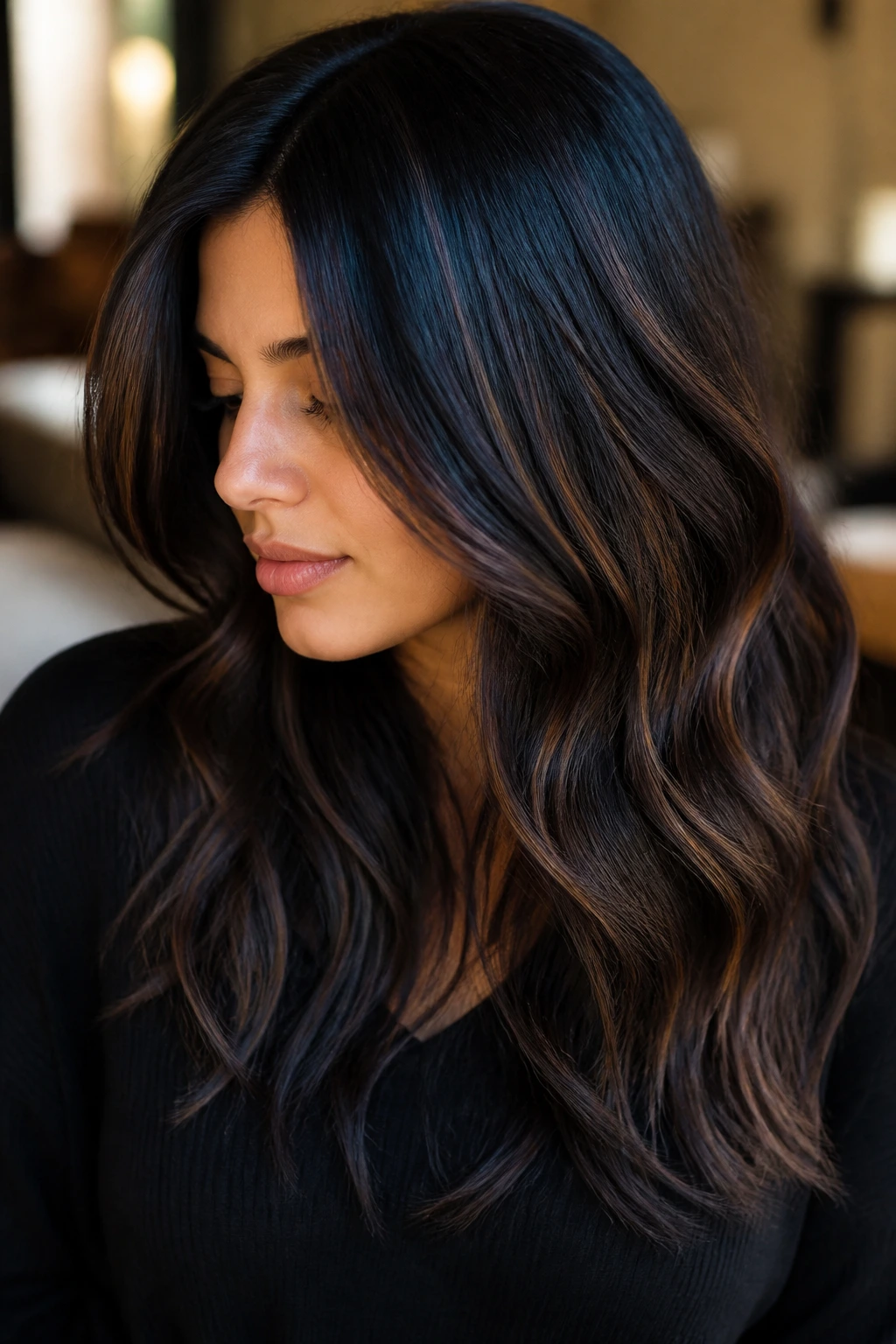
- Soft movement: Every idea here uses ribbons, gloss, or hidden panels, so the black base stays deep instead of turning one-note.
- Lower-commitment options: Some looks need only a demi-permanent glaze or toner refresh, which is a lot kinder than a full lift.
- Cool, warm, and in-between: Blue-black, cherry, bronze, ash, and mocha live in different temperature zones, so there’s room for your undertone.
- Texture-friendly: Curls, waves, coils, and blunt cuts all show color differently, and these ideas lean into that instead of ignoring it.
- Salon-language friendly: Terms like babylights, underlights, money pieces, and shadow roots make the ask much clearer at the chair.
Why Black Hair Needs Movement at the Mid-Lengths
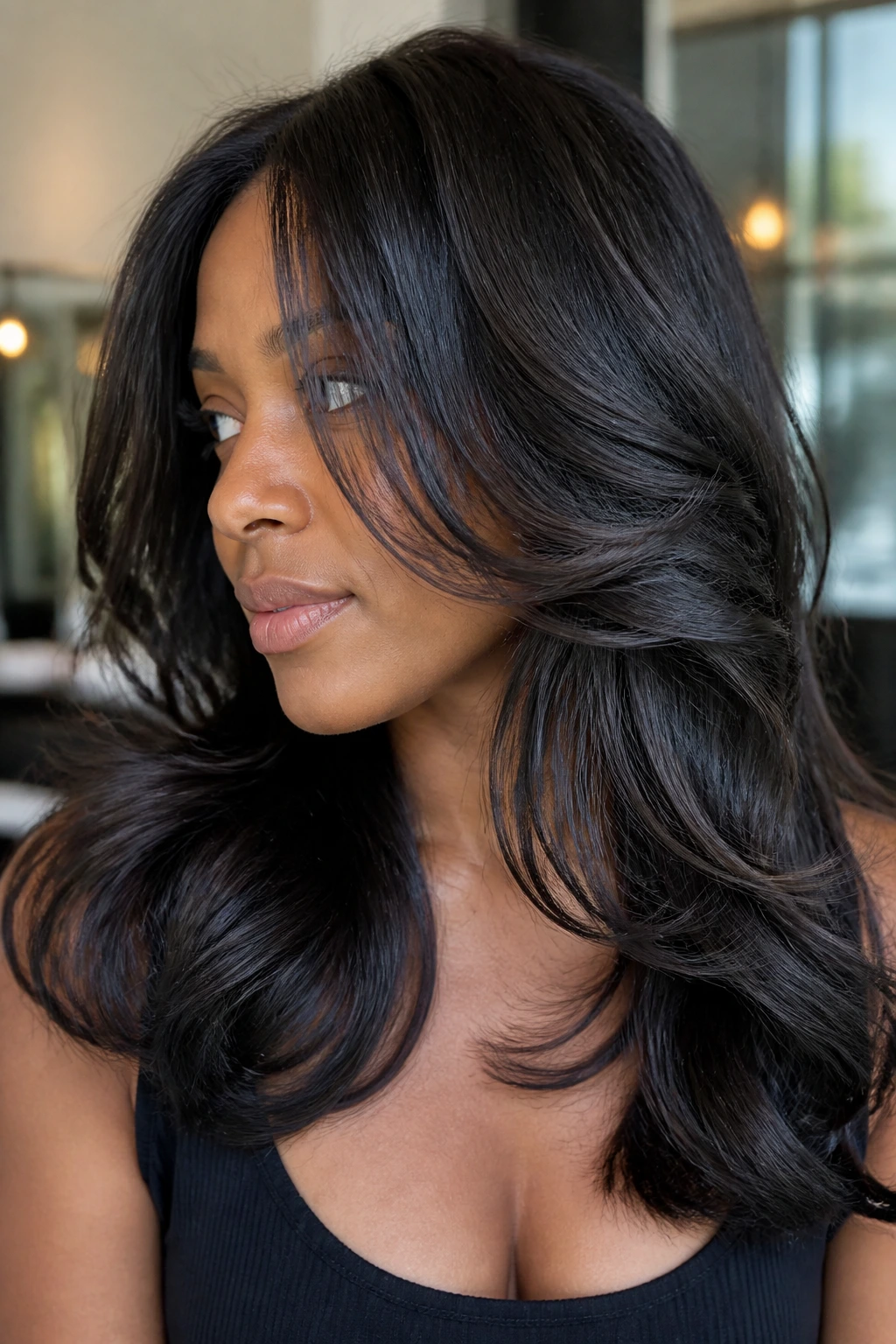
Black hair swallows light fast. That’s the first thing people notice when they try to color it like lighter brunette hair and end up disappointed. A single, flat black can look sleek for a minute, then turn heavy, especially when the cut has no layers and the finish is too matte.
The fix is rarely “go lighter everywhere.” That’s how you get stripes. Better results usually come from placing softness in the mid-lengths and ends, where the eye reads shape first. A few level-4 or level-5 ribbons can do more for depth than a whole head of brighter panels, because the darker root still anchors the look.
The cut changes the color
A blunt bob shows every shift in tone. Long layers hide some of the placement, which means you can go a little more playful with highlights or underlights. If the cut is one-length and the color is one-depth, the whole style can feel like a helmet under indoor light. Nobody wants that. A soft bend from a curling iron or blow-dry brush is often enough to wake the shade up.
The tone matters more than the contrast
On black hair, soft dimension usually lives in the same family: espresso, cocoa, plum, bronze, blue-black, cherry. The goal is movement, not a loud color change that announces itself from across the room. If the lifted pieces look like blonde on black hair, the look stops being soft and starts being obvious. Sometimes that’s the point. Most of the time it isn’t.
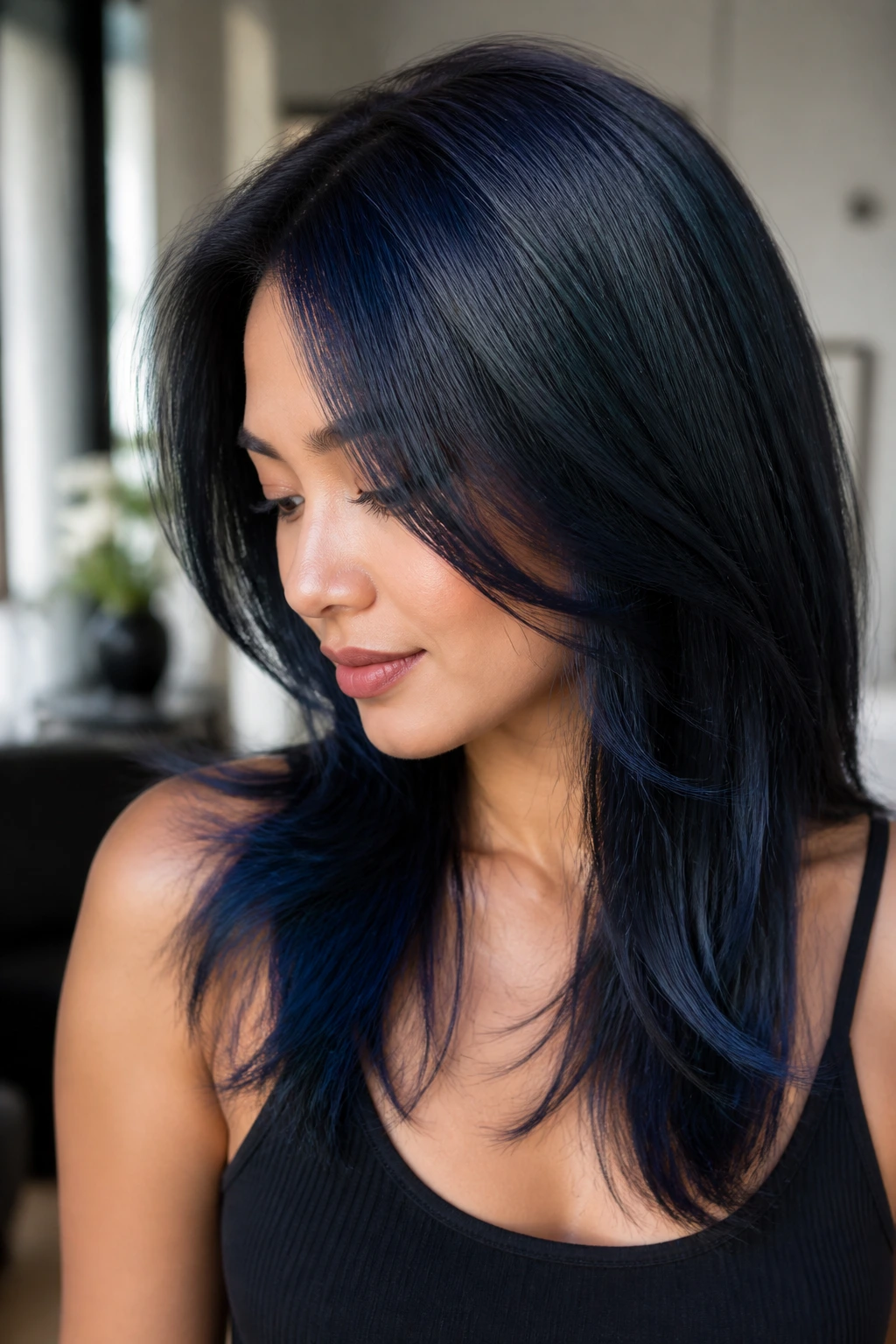
1. Blue-Black Midnight Shine
Blue-black is the shade people think is black until the light catches the blue-violet cast. On level 1 or 2 hair, it reads like an inky gloss with a cool edge; on dark brown hair, it can look almost sapphire at the ends. The trick is keeping the pieces thin and the tone deep, so the hair still looks like one shape instead of a patchwork.
Why it stays soft
A demi-permanent blue-black glaze over a black base gives you reflection without obvious contrast. Ask for the color to be placed through the outer veil and around the part line, not in wide stripes underneath. That keeps the shine visible when the hair moves and invisible when it doesn’t.
- Best on blunt cuts, silk presses, and sleek ponytails.
- Works with cool or neutral skin tones.
- Needs only a gloss refresh every 4 to 6 weeks if the shade is deposit-based.
My favorite version: a blue-black glaze on mids and ends, with the root left a touch darker for depth.
2. Espresso Ribbon Balayage
If you want the smallest possible step away from flat black, this is the one I’d hand to a cautious client. Espresso ribbons sit just a shade or two lighter than the base, so the hair keeps its darkness but stops looking like one block under indoor lighting. On a layered cut, those ribbons bend with the hair and catch only the top layer of light.
The placement matters more than the tone. Put the lighter ribbons around the face, crown, and upper mid-lengths, then leave the underside almost untouched so the result stays soft. A good colorist will paint these pieces freehand, then smudge the root shadow so there isn’t a hard line at the regrowth. That blur at the root is what keeps the whole look from reading stripey.
This shade works best on longer hair where the movement can actually show. On a very short crop, the ribbons can disappear unless they’re concentrated near the front.
3. Smoky Charcoal Veil
Why does ash-toned black look softer than blonde highlights on dark hair? Because the contrast stays inside the same dark family. You still get dimension, but it’s the kind you notice when the head turns, not the kind that shouts from the mirror.
Smoky charcoal works when the lifted pieces stay close to the base—think dark ash brown rather than pale blonde. A cool toner knocks out the orange that black hair likes to throw when it lightens, and that matters more than people think. Without that toner, the whole thing can veer brassier than intended. With it, the hair reads like smoke under light.
How to ask for it
Bring a photo with fine placement, not thick panels. Say you want soft charcoal ribbons through the top layer and around the face, with the underside left dark. If your hair is curly, ask for the pieces to be painted where the curl opens, not where the hair lies flat. That one detail makes the difference between dimension and random streaks.
4. Cherry Cola Black
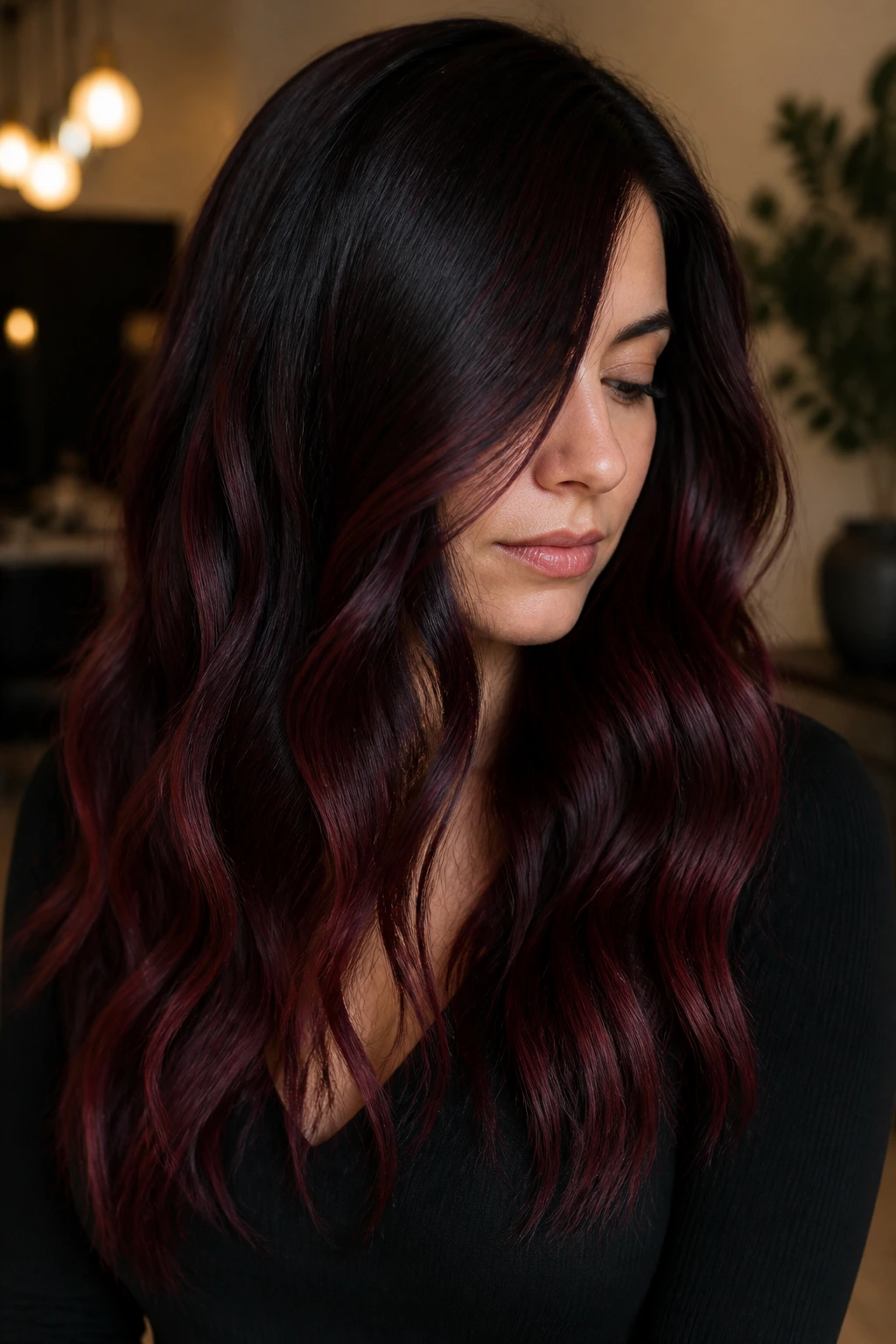
Cherry cola black sits between brunette and red, which is exactly why it works so well on a black base. In shade, it reads almost like a deep neutral black. Outside, the burgundy and cherry tones come forward in a way that feels glossy, not loud.
This is one of the easiest ways to make black hair feel dimensional without obvious lightening. A red-violet glaze can shift the tone even on very dark hair, especially if the hair has been prepped with a clear gloss first. The result is warmer than blue-black, but still restrained. Think wine at the edges, not red velvet everywhere.
Cherry cola also wears well on waves and curls because the bends expose the pigment. On straight hair, it looks sleeker and a little more formal. Either way, it gives black hair a soft pulse of color that changes with the light.
5. Plum Noir Gloss
Plum noir is for the person who wants the black hair color idea to look expensive in a quiet, moody way. Violet-black pigments have a habit of making hair look deeper rather than brighter, which is useful when you want dimension without visible highlights. The shade is especially flattering if your hair tends to pull warm or red when colored.
A plum gloss can be applied over natural black hair, color-treated black hair, or dark brown hair that’s been deepened. On the right base, it looks like black silk with a hidden purple cast. On a slightly lighter base, the plum shows more clearly around the ends and around the face.
This one is strongest under sun or warm indoor lighting. In flat daylight, it still reads polished, but the undertone is gentler. If your whole aim is soft movement, plum noir does the job without asking for much drama in return.
6. Mushroom Black Melt
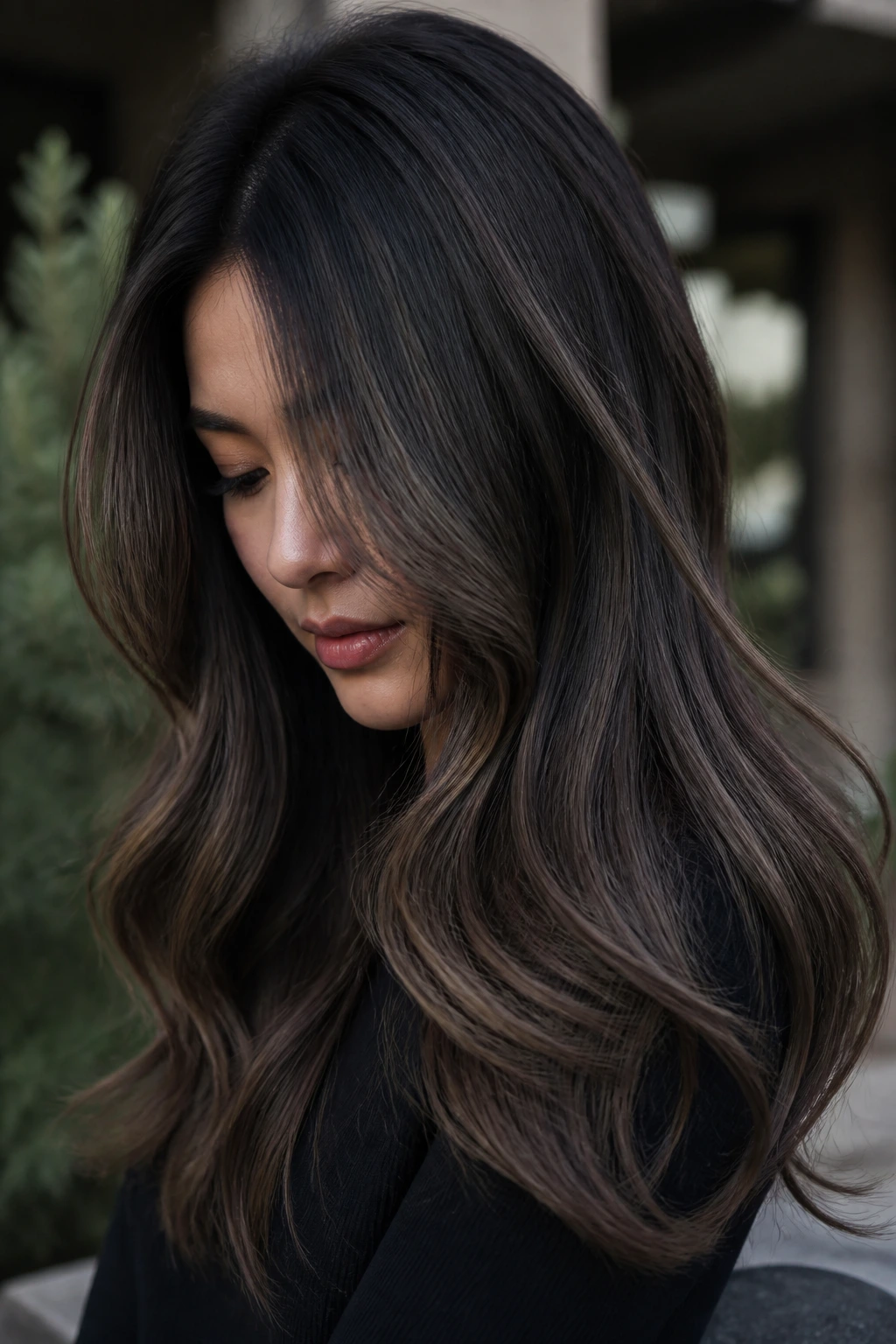
Mushroom black is the oddball in the group, and I mean that as a compliment. It mixes ash brown, taupe, and soft neutral brown so the black base loses its hard edge. The result feels cooler than caramel, softer than jet black, and a little more lived-in than a single gloss.
This look works best when the lighter pieces never jump too far from the base. If the lift gets too pale, the mushroom effect disappears and the hair starts looking highlighted instead of blended. The sweet spot is usually a muted level 4 or 5 with a cool toner over it. That keeps the melt believable.
It’s especially good on layered cuts because the different lengths catch the various tones at different times. The color looks almost matte in low light, then suddenly shows texture once the hair moves. That change is the whole reason people ask for this shade in the first place.
7. Caramel Peekaboo Panels
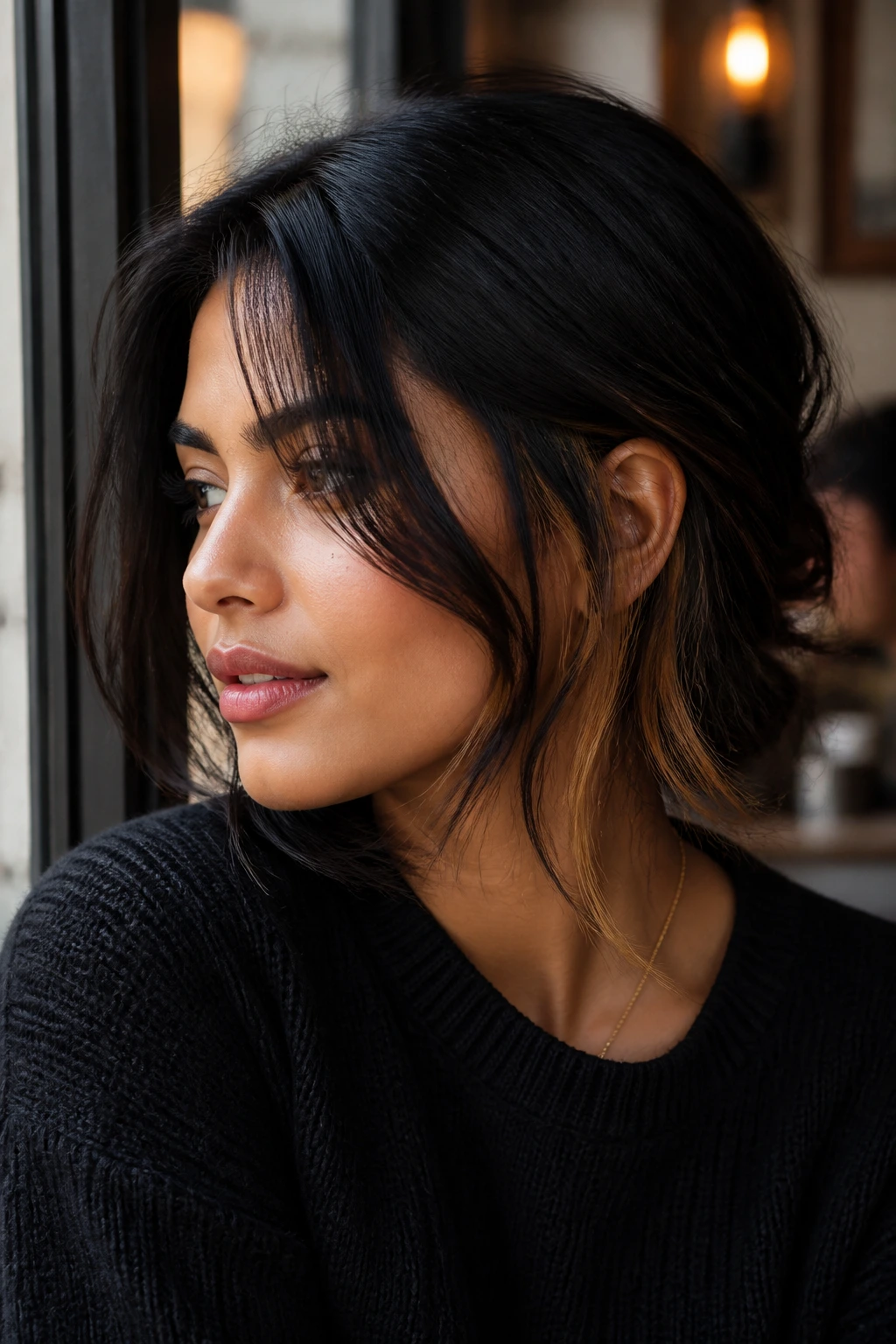
Peekaboo panels are the cleanest way to have fun without making the top layer loud. Caramel hidden underneath a black veil gives you warmth and movement when the hair swings, lifts, or gets pulled into a ponytail. Wear it down and the effect stays soft. Tie it up and the caramel flashes like a secret.
The key is placement. Keep the top section dark enough to cover the panels when the hair is worn loose, then place the caramel in the underlayers around the ear and nape. If the panels are too wide, the color stops feeling hidden and starts behaving like full highlights. That’s not the same look.
Best of all, this is one of the friendlier ideas for people who need a conservative everyday style. At work, it reads as black hair. At dinner, it looks like you changed your mind halfway through the day.
8. Mahogany Underlights
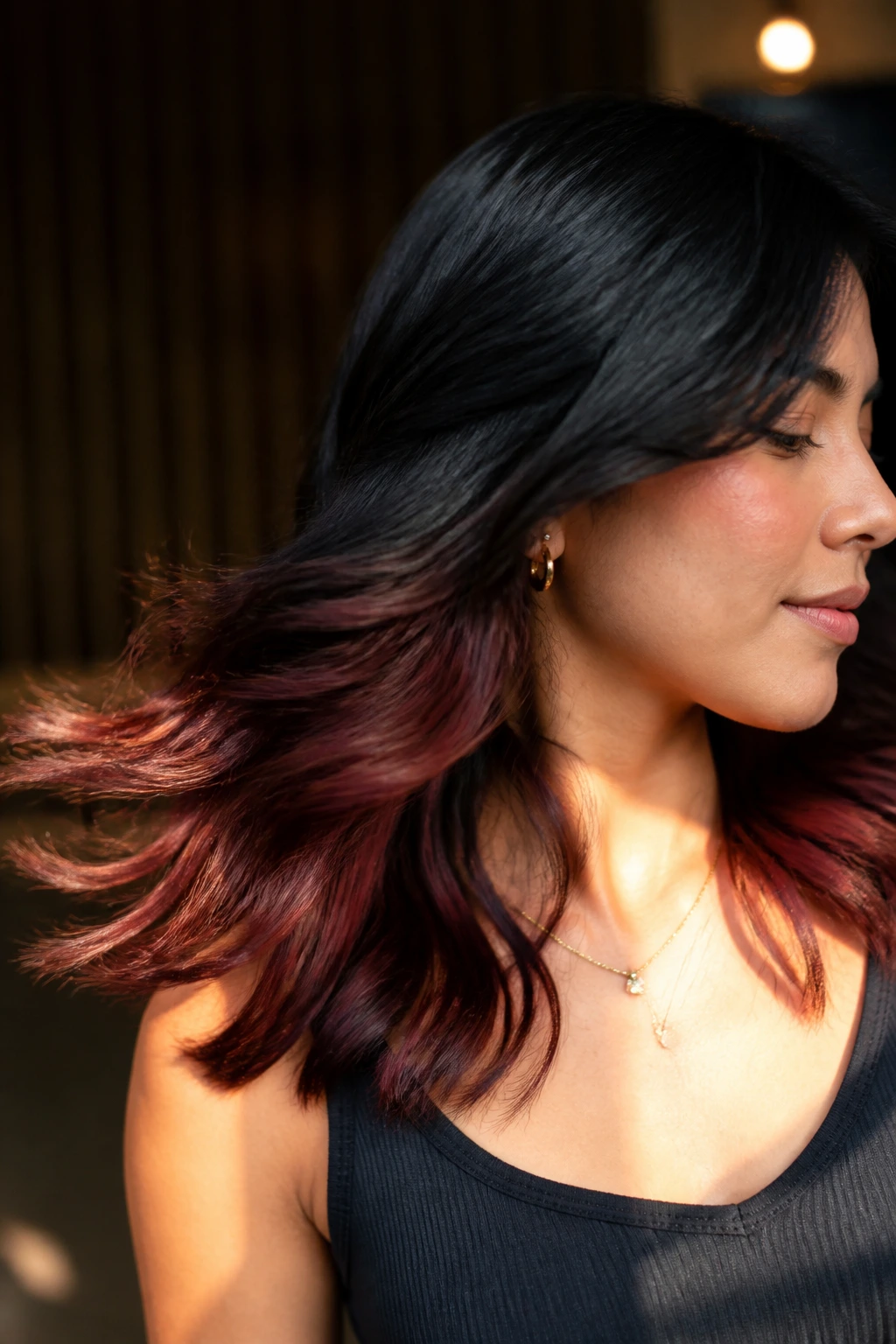
Mahogany underlights are richer and darker than caramel, which makes them a little easier to wear on black hair. The red-brown tone shows up most clearly in motion and at the ends, especially on hair that’s shoulder-length or longer. It’s a warm look, but not a copper explosion.
This is one of my favorite options for someone who wants depth without obvious contrast near the face. Because the color lives underneath, the top layer still gives you that deep black frame. Then the underlights peek through when the hair lifts or separates. That’s enough. You do not need more.
On straight hair, mahogany can look subtle almost to the point of hiding. On curls and waves, it gets better because each bend catches the color differently. If you’ve ever wanted black hair with a red undertone that doesn’t scream red, this is the route.
9. Mocha Money Piece
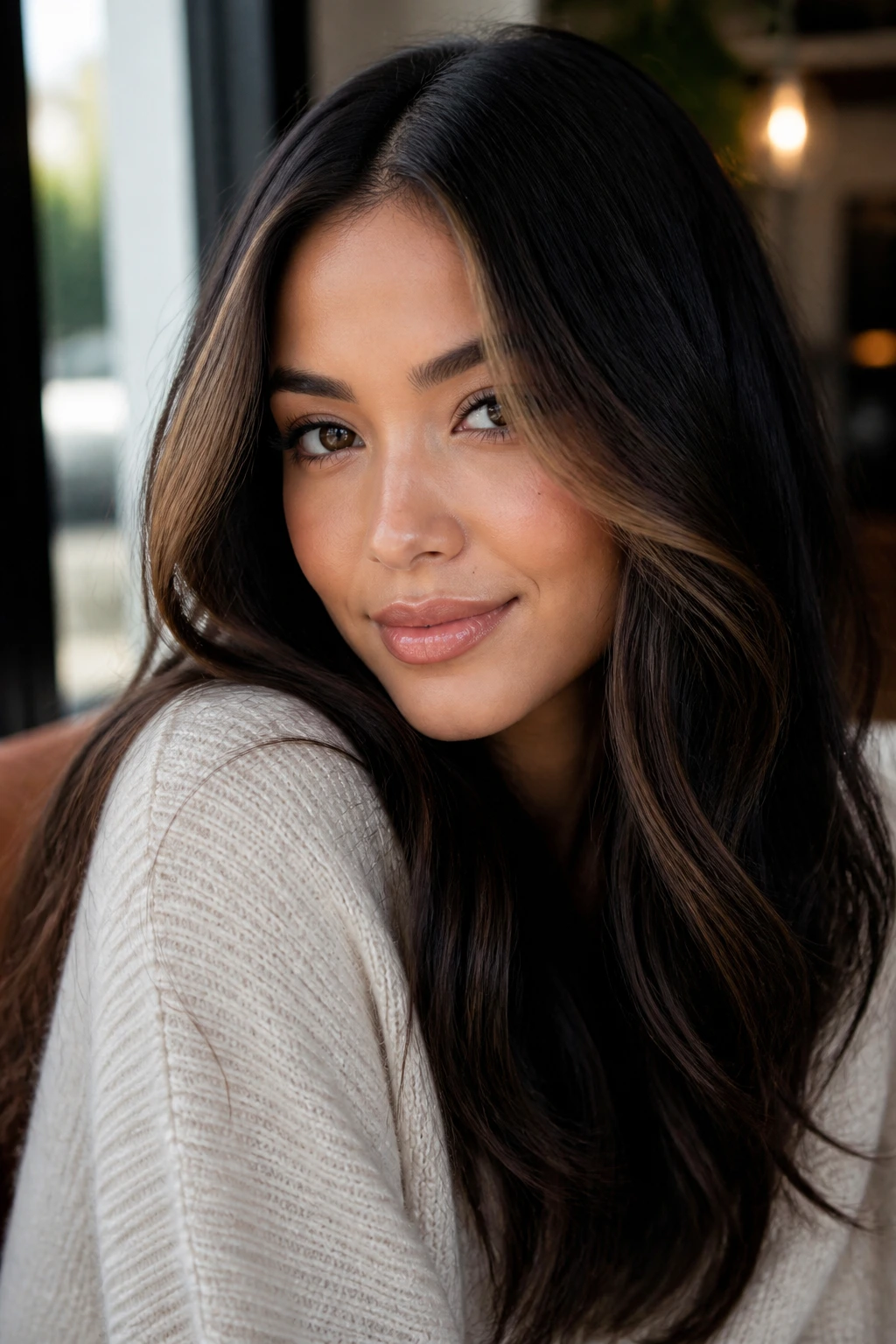
A money piece on black hair works when it’s soft, not bright. The right mocha tone sits one to two shades lighter than the base and frames the face without turning into a hard stripe. Around the cheekbones and temples, it can soften a blunt black cut fast.
The trick is the edge. Ask for the front pieces to be feathered at the root and blended into the side layers, not sliced in a thick block from the part line. A broad money piece can look modern for about five minutes and then start feeling severe. A soft mocha frame ages better and moves better.
This idea is especially good if you wear your hair off your face a lot. It changes how the whole style reads in photos and in real life. You still keep the dark hair identity, but the face gets a little more light where it matters.
10. Velvet Jet Black Gloss
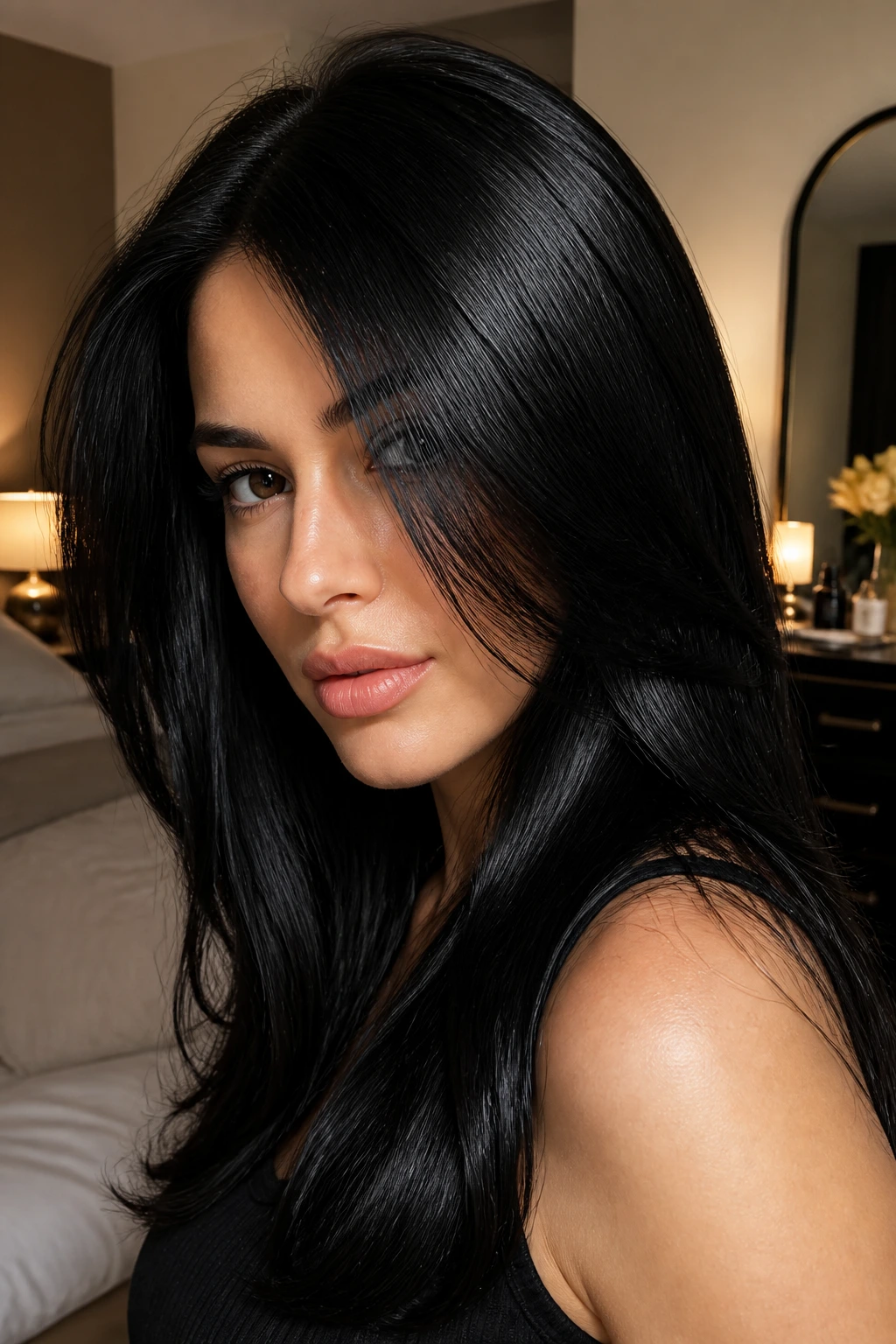
Sometimes the softest dimensional color is no lightening at all. A velvet black gloss can make black hair feel richer because the shine becomes the dimension. The surface goes from flat to reflective, and on healthy hair that shift is enough to change the entire mood.
This is the cleanest-looking option on the list. It suits people who like deep black but hate the idea of visible highlights. A clear or black-dyed gloss over the full head can tighten up faded ends, smooth out patchiness, and make the color look more even from root to tip. It’s especially useful if the hair has already been through a lot and needs a gentler route.
I like this option on long layers and polished bobs. If the cut is good, the gloss does a lot of the work. If the cut is not good, the gloss will tell the truth very quickly. That’s the downside, and it’s worth saying.
11. Ash-Brown Babylights
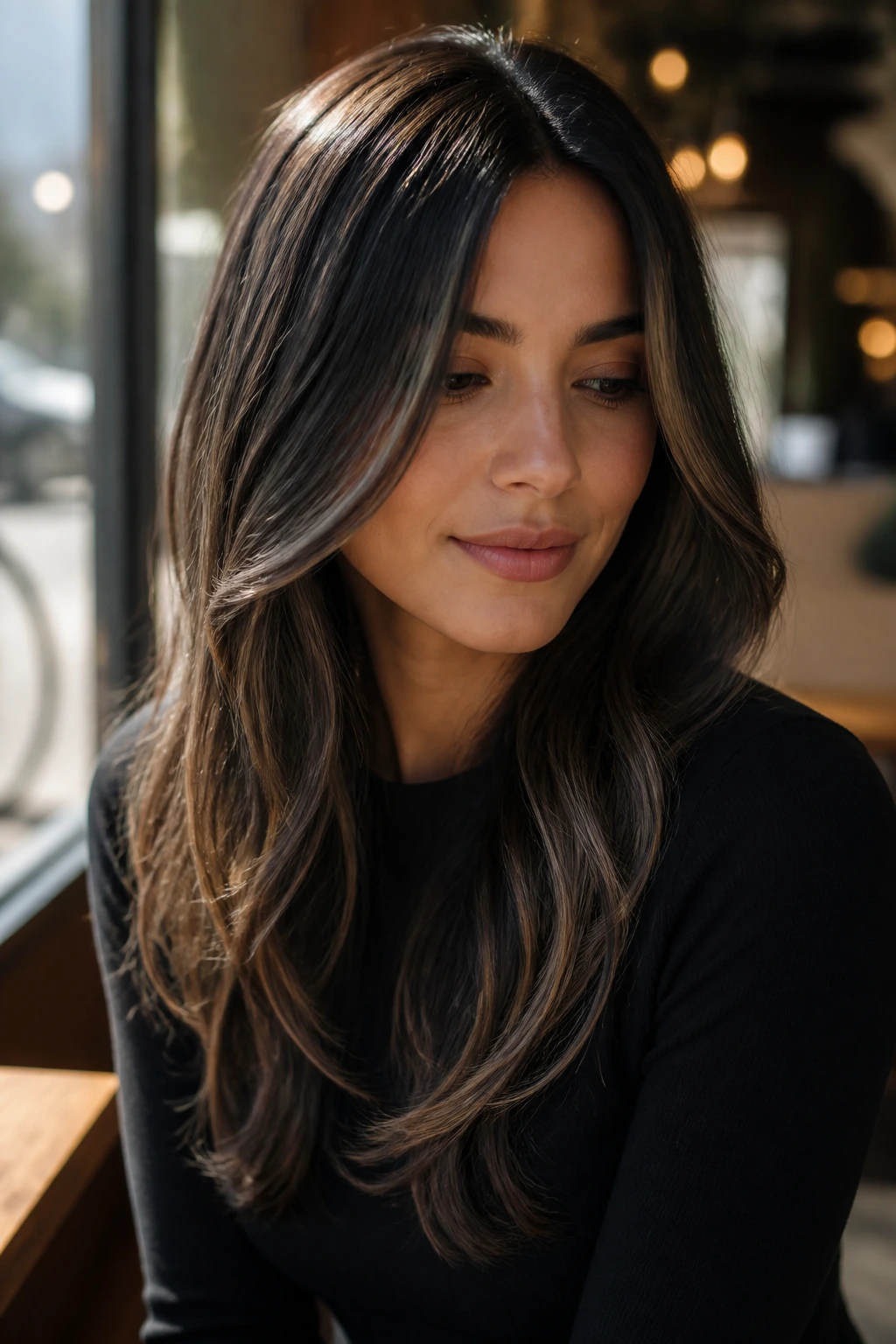
Ash-brown babylights are for someone who wants hair that looks like it has light moving through it rather than actual highlights. The strands are so fine that they read as shimmer first and color second. On black hair, that kind of detail is a win because it avoids the chunky look that thicker pieces can create.
The best version keeps the pieces densely scattered but still very fine. Think lots of tiny ribbons, not a few chunky streaks. The ash tone cools the warmth that dark hair often throws when lightened, which is why this style feels softer than a typical brown highlight. It’s subtle from a distance and more visible when the hair bends.
This is a good choice if you wear layers, because the different lengths catch different amounts of light. It’s less forgiving on blunt cuts if the placement is too sparse, so density matters here. Done right, the finish looks like the hair has its own internal glow.
12. Chestnut Contour Highlights
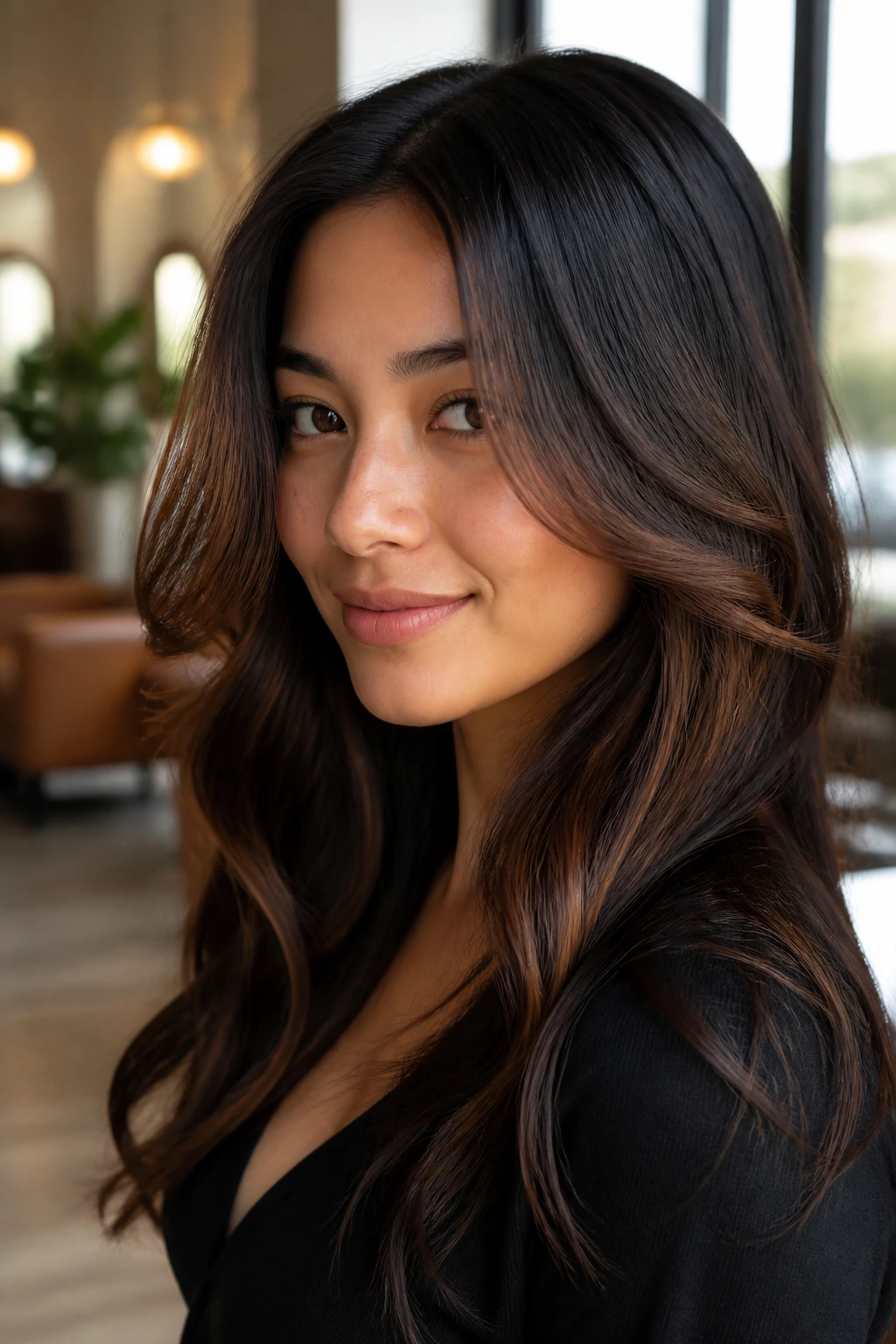
Chestnut contour highlights are the practical cousin of face framing. Instead of putting brightness only at the front, you place soft chestnut pieces around the temples, crown, and upper sides so the whole haircut reads more dimensional. The color is warm, but not honeyed, which keeps it from fighting black hair.
I like this idea on lobs, shoulder cuts, and long layers. The highlights follow the shape of the cut, which means they help the style look intentional even when it’s not heavily styled. You don’t need a full head of lightener to get that effect. A few carefully placed chestnut pieces can make the silhouette easier to read.
If you like warmth but hate orange, chestnut is the safer lane. It gives the hair depth without turning the tone brassy. That balance is hard to find, and it’s one reason this shade keeps showing up on dark hair that needs a little life.
13. Sapphire Halo Balayage
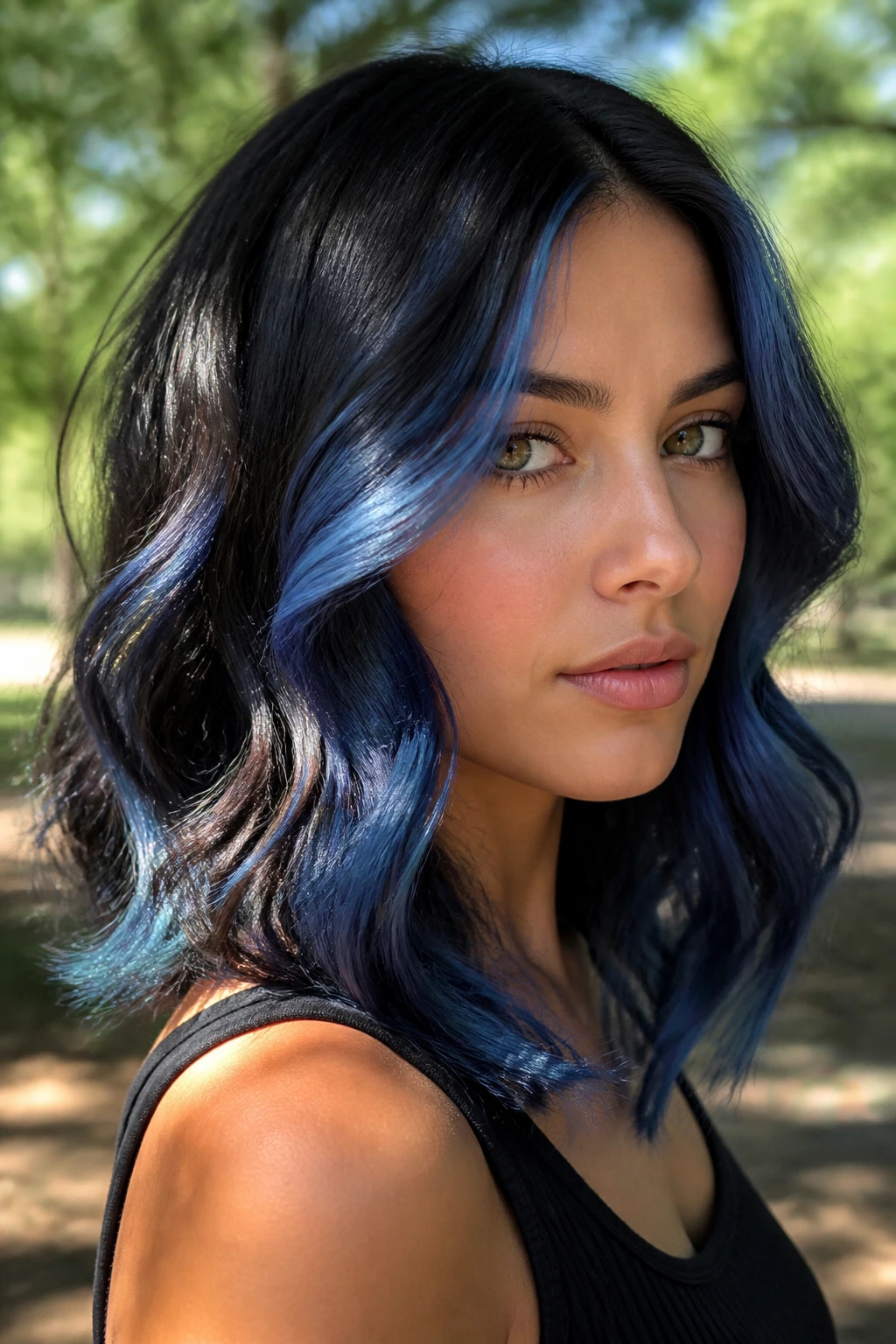
Sapphire halo balayage sounds dramatic, and it can be, but the soft version is all about placement. Thin cool-blue pieces around the perimeter and ends create a halo effect that shows up when the hair swings. Because the blue sits against black, it doesn’t need to be loud to be visible.
This is the one I’d choose if the goal is artistry with restraint. The color stays cooler than cherry or bronze, and the edge of the shade can look almost smoky in low light. On straight hair, the halo creates a clean outline. On curls, it turns into flickers of blue through the bend.
The safest version keeps the blue concentrated in the outer veil and lower lengths. If you spread it everywhere, you lose the halo effect and end up with a cooler fantasy color instead of a dimensional black look. That may be fun, but it’s a different conversation.
14. Bronze Whisper Ribbons
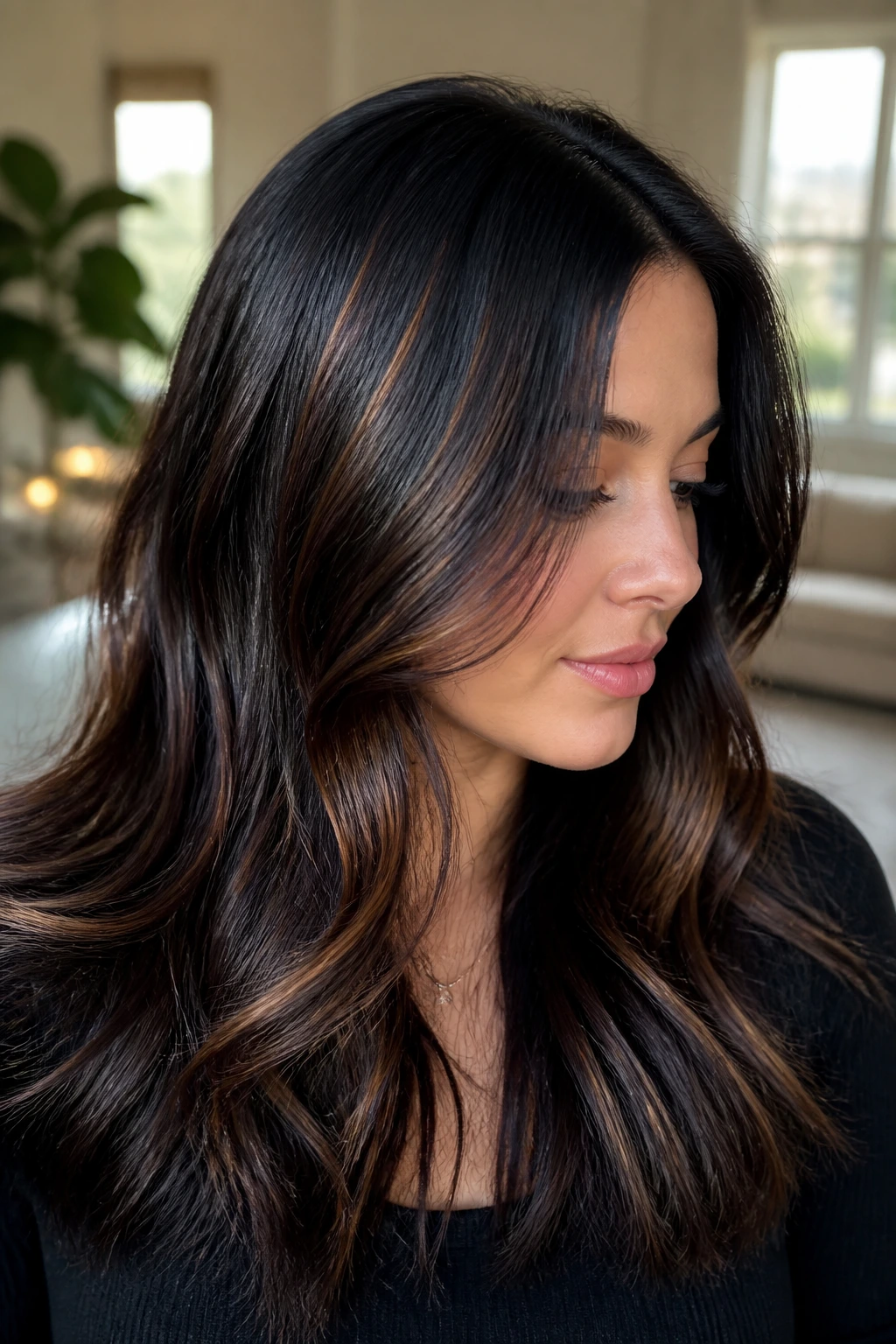
Bronze whisper ribbons are what I recommend to people who want warmth without obvious gold. Bronze sits between brown and copper, which makes it easier to wear on black hair than a bright caramel. It adds a warm flicker that reads especially well in sunlight.
The placement should stay soft and irregular. A few thin ribbons around the crown and mid-lengths are enough. If the pieces are too wide, bronze can take over and stop looking subtle. If they’re too few, the effect disappears. There’s a narrow middle ground here, and that’s where the nicest version lives.
This shade looks especially good on wavy hair and layered cuts because the light bends with the hair. It also suits warmer skin tones beautifully, though I’d avoid making that claim too broadly. What matters more is whether you want the black base to feel cooler or warmer in the end.
15. Wine-Tinted Ends
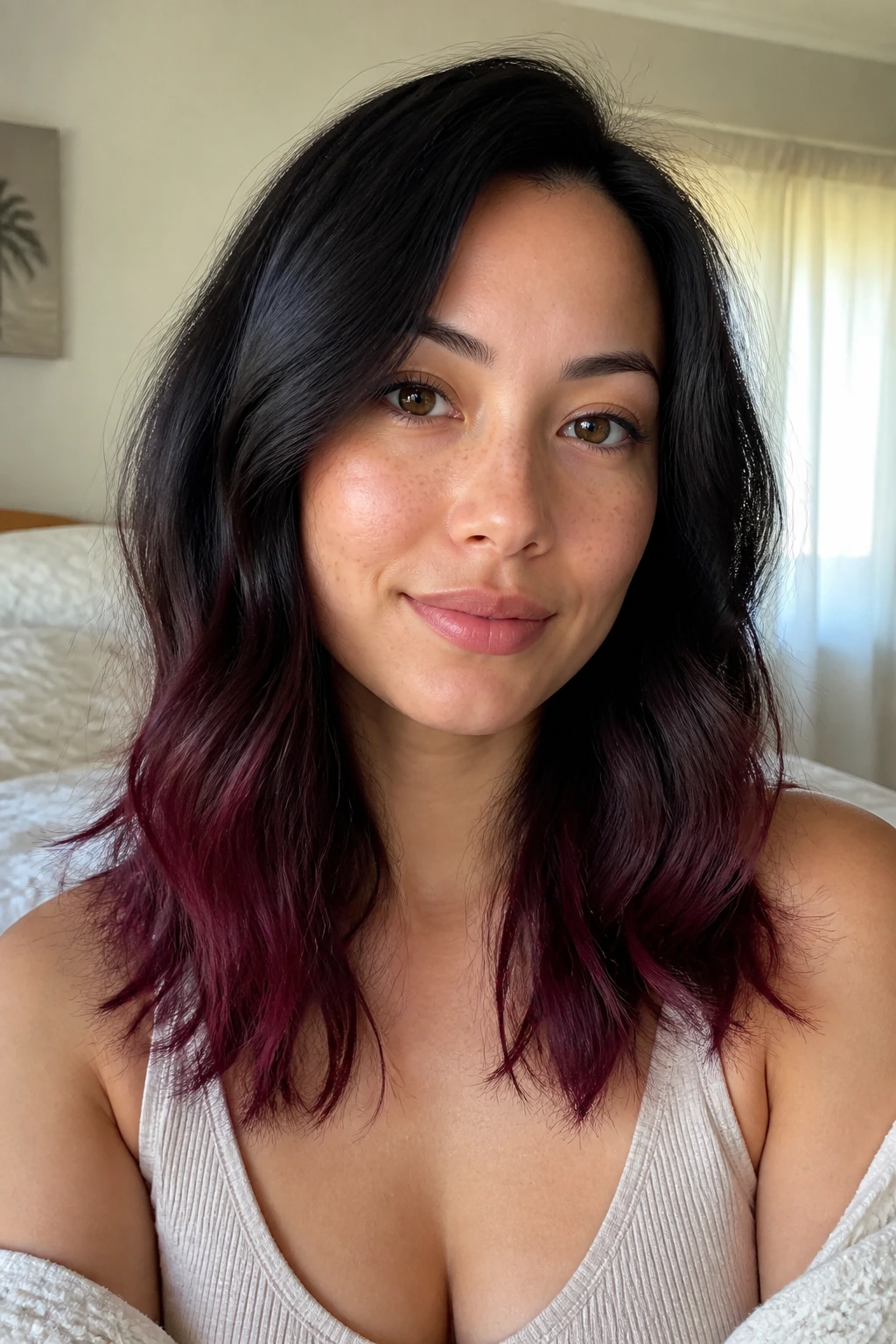
Wine-tinted ends are a smart compromise if you like color but don’t want to change the whole head. The roots and mid-lengths stay black, while the last few inches pick up burgundy, merlot, or dark wine tones. The color shift is enough to soften the outline of the hair without turning it into an obvious ombré.
This works best when the tint is concentrated on the ends and feathered upward lightly. If the line between black and wine is too sharp, the look loses its softness. A gentle melt over the last 3 to 4 inches keeps the color believable and gives the cut a little movement.
It’s also one of the easier ideas to live with because the darkest color stays close to the scalp. Grow-out is less stressful, and if the ends fade, they usually fade into a pretty dark brown rather than something awkward. That makes maintenance easier than a lot of people expect.
16. Tortoiseshell Black
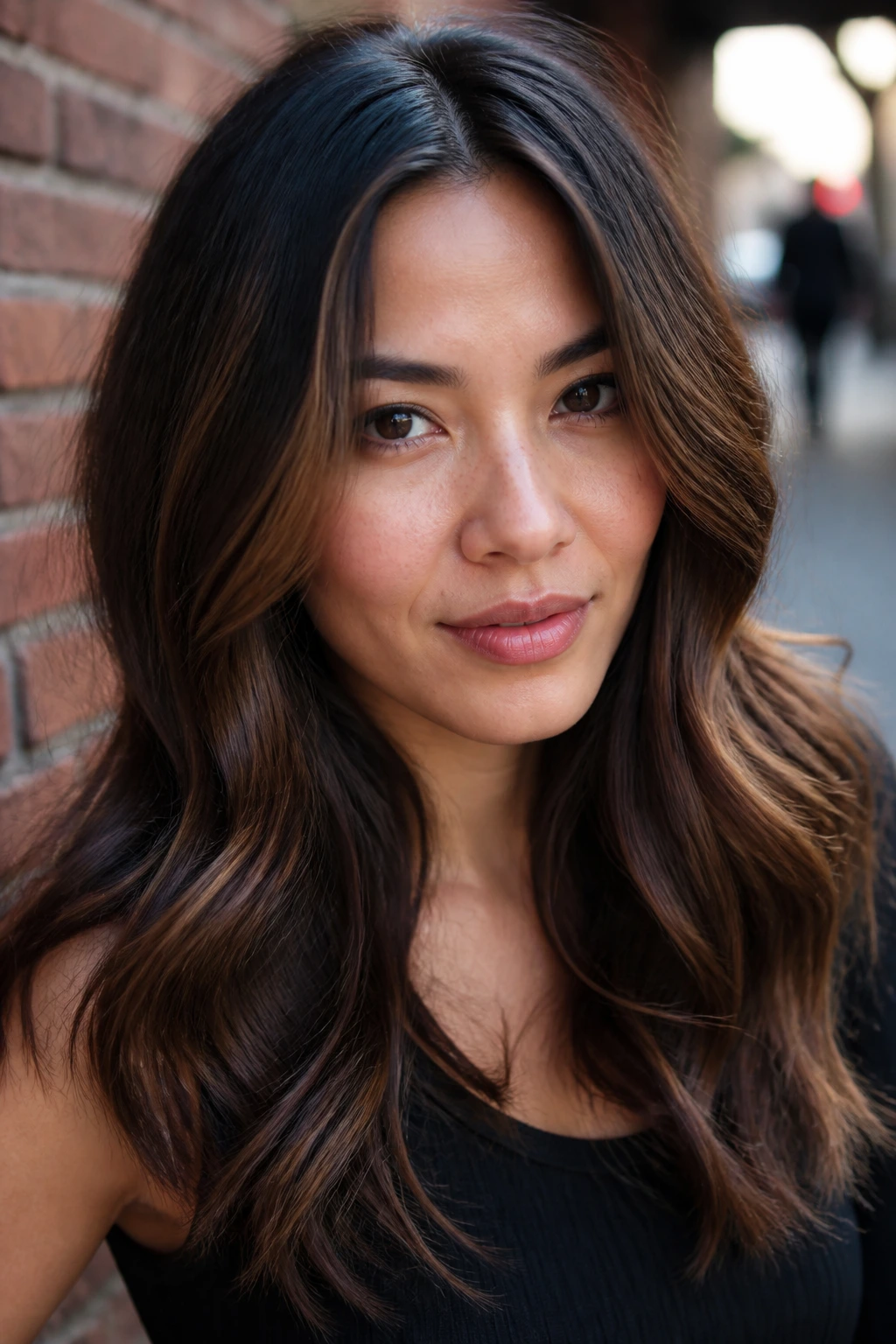
Tortoiseshell black is one of those color patterns that looks more expensive in person than in a photo, which is saying something. It blends caramel, chestnut, mocha, and black in a way that feels layered rather than streaked. The tones stay close enough together that the whole head still reads dark, but not flat.
The placement is the hard part. Each tone needs to sit near another similar depth so the blend looks natural when the hair moves. If the caramel sits too close to the black without a buffer shade, the contrast gets noisy. A good colorist will weave the tones through the mids and ends instead of stacking them in obvious bands.
Long hair is the easiest canvas for this look, though a layered bob can also carry it well. It works because the eye keeps catching different pieces as the head turns. That little shift is what makes tortoiseshell feel alive instead of painted on.
17. Soft Ombré to Dark Cocoa
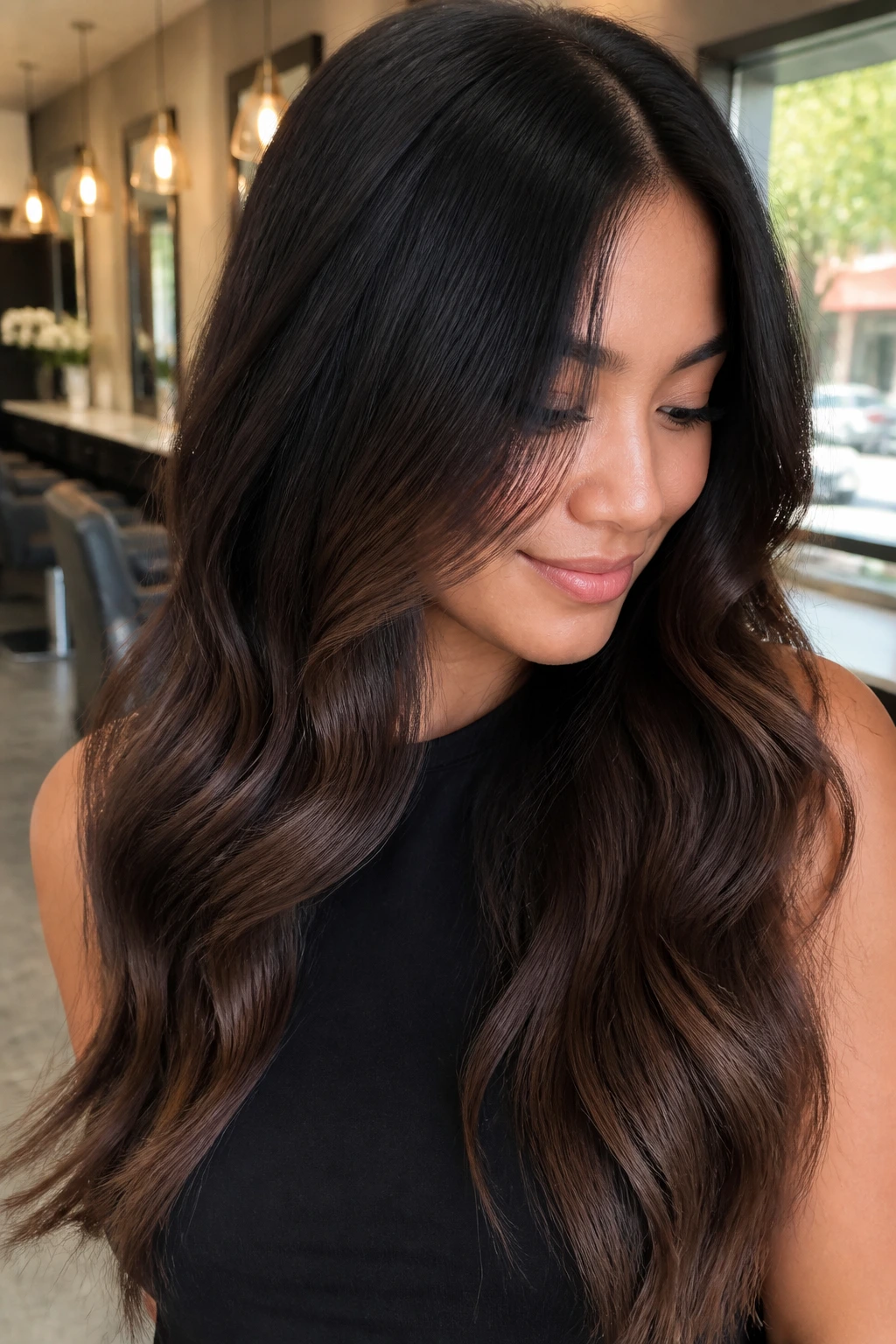
A soft ombré on black hair does not have to mean blonde ends and a hard fade. The best version shifts only a few levels lighter, usually into dark cocoa, so the ends feel lighter without leaving the black family. That subtle drop in depth can make long hair look lighter and more layered without looking processed.
The blend matters more than the endpoint. You want the transition to happen gradually over a few inches, not in one blunt line. When the hair is curled, the darker root and lighter ends separate in a way that feels airy. When it’s straight, the fade looks like a shadow moving down the length.
This is a strong choice if you want lower maintenance than a full highlight service. The grow-out can be softer because the root stays dark, and the ends don’t need to match the scalp exactly. That makes it friendlier to busy routines without feeling boring.
18. Micro-Babylight Lattice
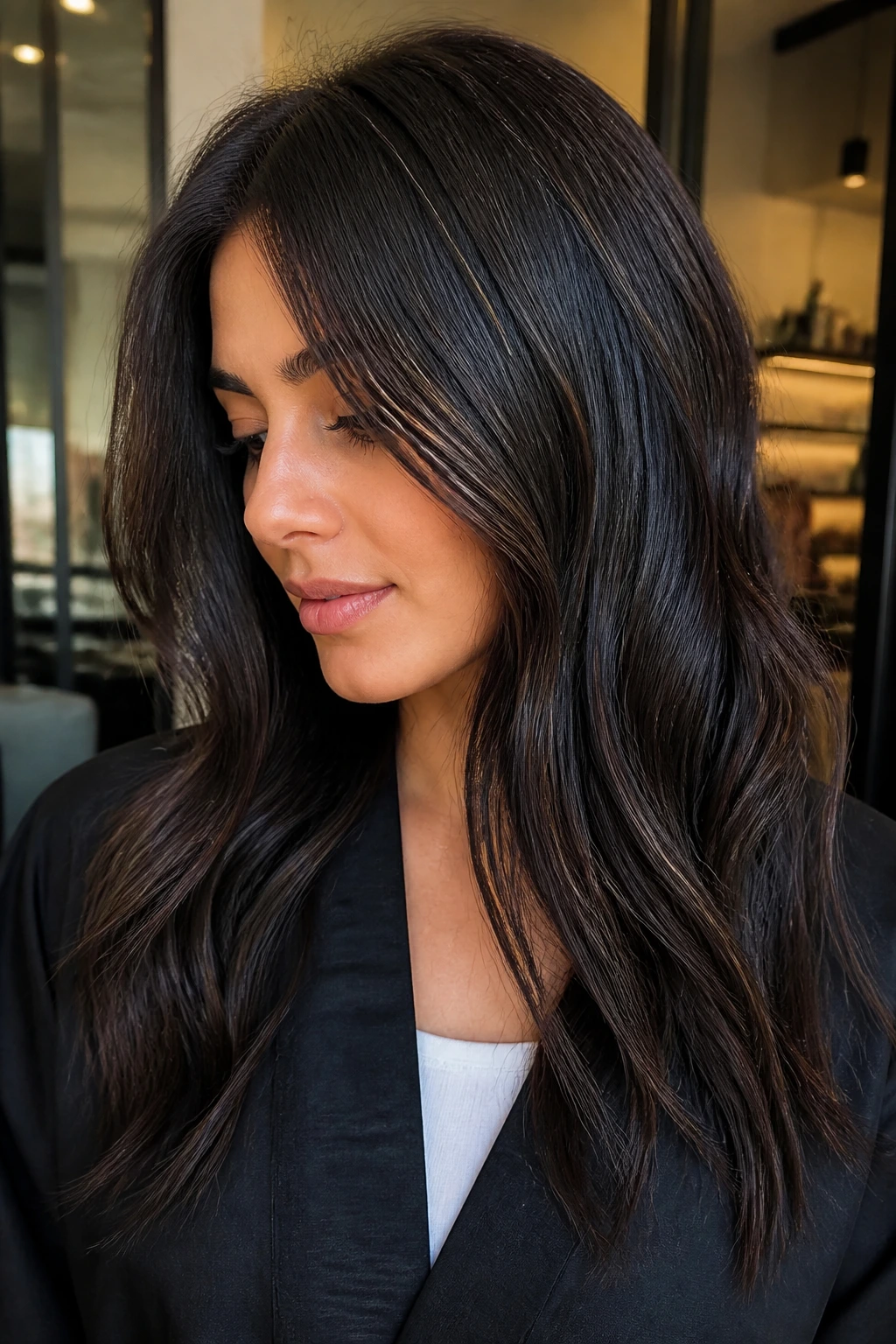
Micro-babylight lattice is for people who like the idea of highlights but hate seeing the highlight pattern. The pieces are so fine and so evenly scattered that the hair reads as shimmer rather than stripes. On black hair, that’s a very useful trick because thickness can ruin softness fast.
This method takes patience. A lot of sections. A lot of small foils. The payoff is that the dimension sits everywhere instead of only in a few obvious streaks. From six feet away, it looks like the hair has more movement. Up close, you can see the detail.
It’s not the lowest-maintenance idea on the list, but it’s one of the most elegant when done well. If the goal is to make black hair look like it catches light from the inside, this is the route. It just asks for a careful hand.
19. Shadow Root with Luminous Ends
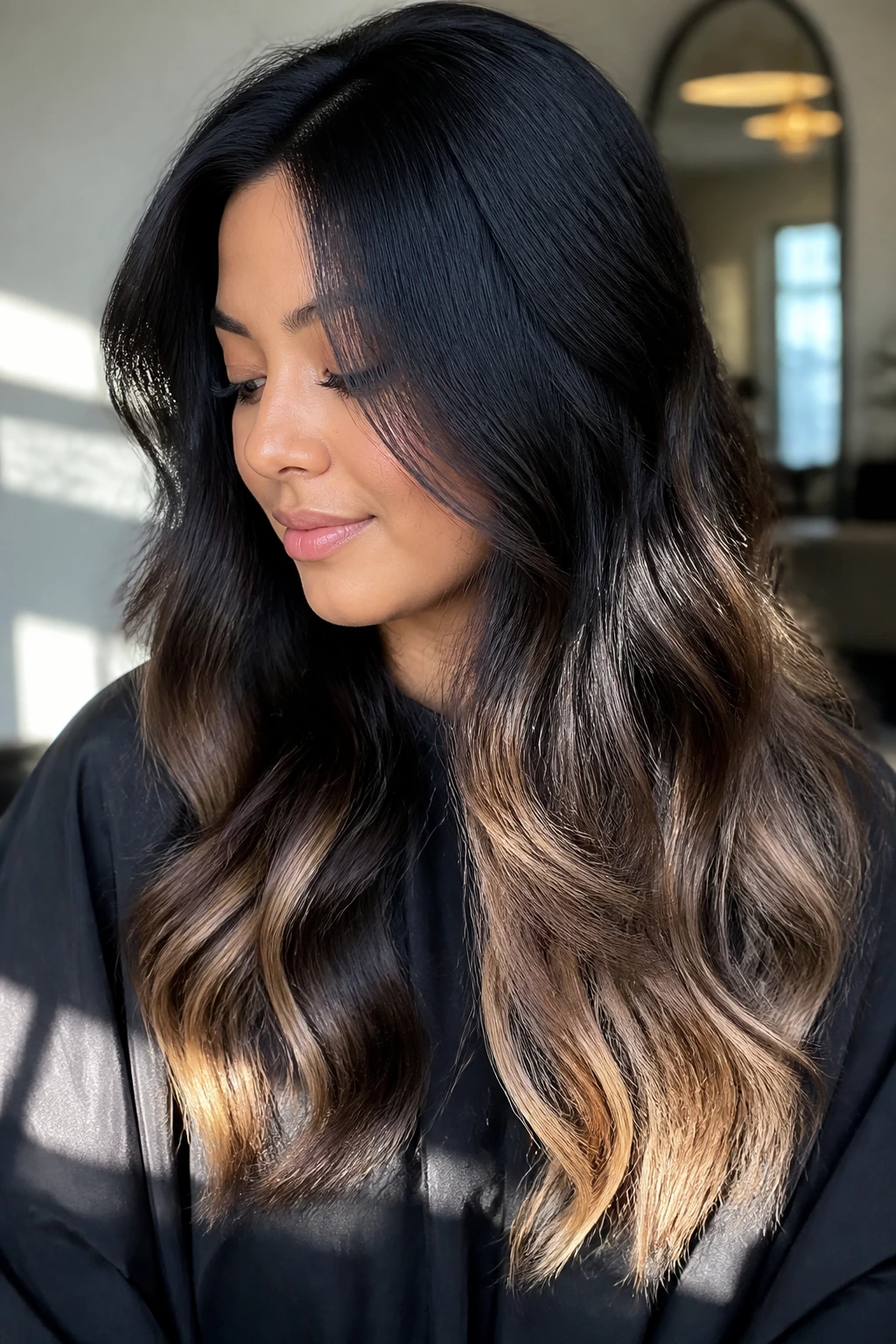
Shadow roots are popular for a reason: they keep the regrowth soft. On black hair, a shadow root paired with slightly brighter ends gives you dimension without fighting the natural depth at the scalp. The contrast lives lower on the hair, which can make the whole style look airier.
This is a nice option if you already have old highlights that need blending. Instead of trying to erase every trace of the previous color, you can deepen the roots and refine the ends into a controlled glow. The result feels intentional rather than grown out.
I’d use this on longer cuts where the ends have space to show. Short hair can carry it too, but the fade has less room to breathe. The best version keeps the ends within a narrow depth range, so they look luminous rather than bright.
20. Copper Threading on Black
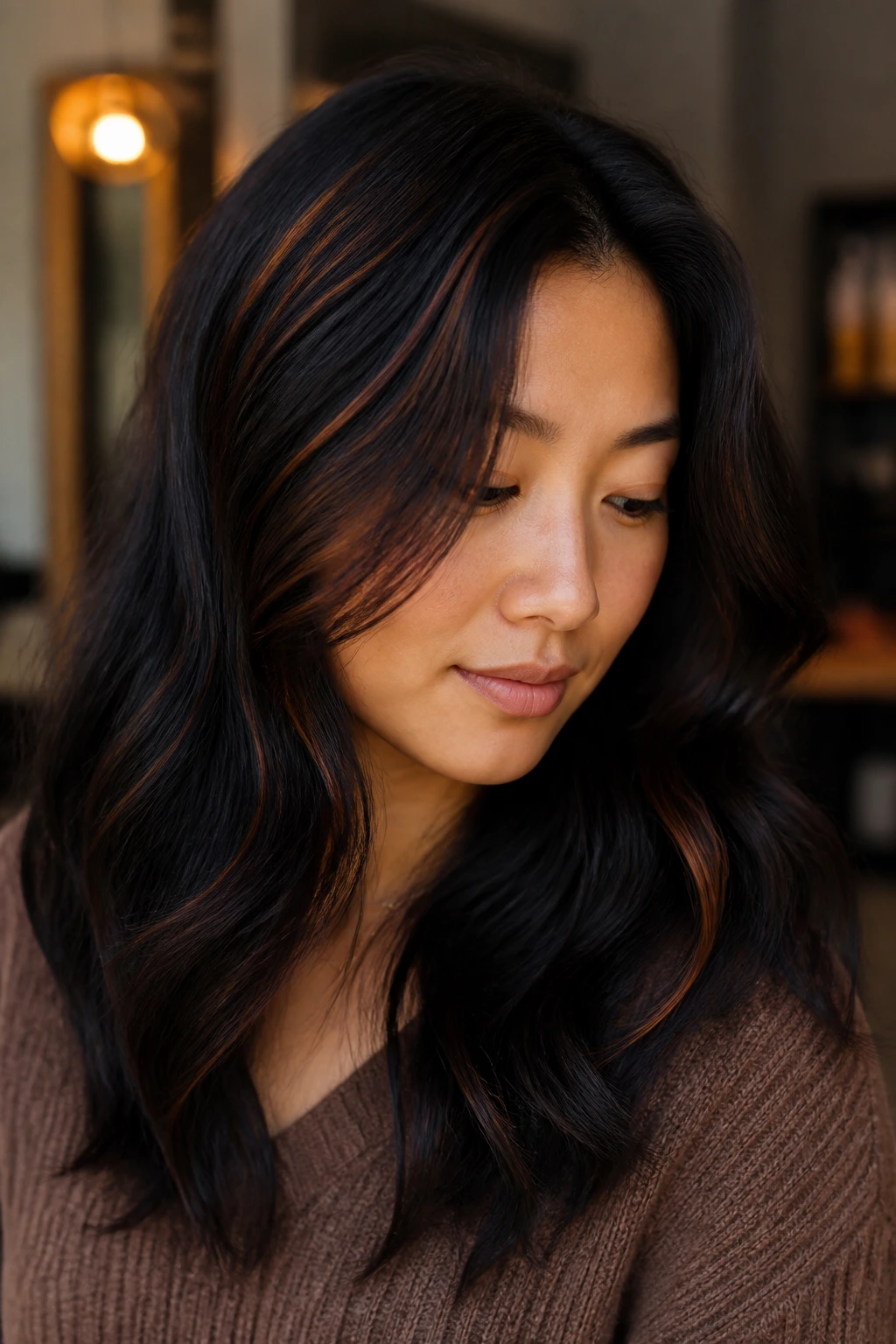
Copper threading is for someone who wants warmth in small doses. Thin copper strands woven through black hair flicker in the light without taking over the whole head. That’s the key. Threading, not flooding.
The danger with copper on black hair is obvious: it can turn loud fast. Keep the pieces sparse, and keep them fine. Around the face and through the top layers, a few copper threads can make the hair look alive without turning it orange. On curls, the copper catches the curve of each ringlet. On straight hair, it appears and disappears as you move.
This is one of the easier warm looks to wear if you’re nervous about red or bronze. It gives a little energy without asking you to commit to a full warm palette. Small placement. Big payoff.
Why Soft Dimension Beats a Single Flat Black
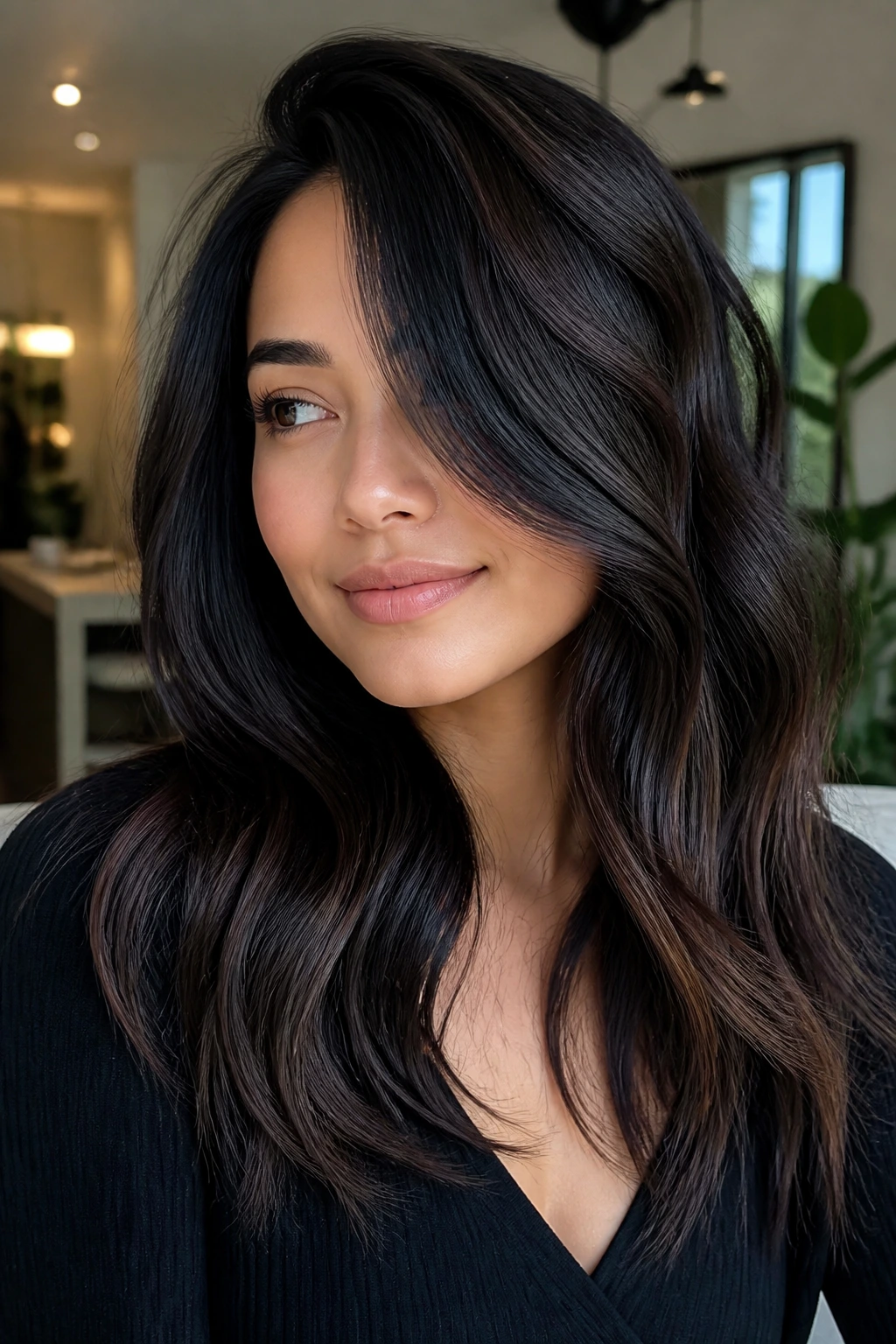
Flat black can be striking, but it’s also unforgiving. Every split end shows. Every heavy line shows. Every bit of brass from old color shows. Soft dimensional color gives the eye something to follow, which is why the hair looks more finished even when the style itself is casual.
A single black shade also changes the way cuts behave. Blunt shapes can look harder than they really are. Layers can vanish. A hint of lighter brown, smoke, or wine in the mid-lengths fixes that by separating the planes of the haircut. It’s not about making the hair lighter for its own sake. It’s about giving the cut some shape.
Essential Tools for Creating Dimensional Black Color
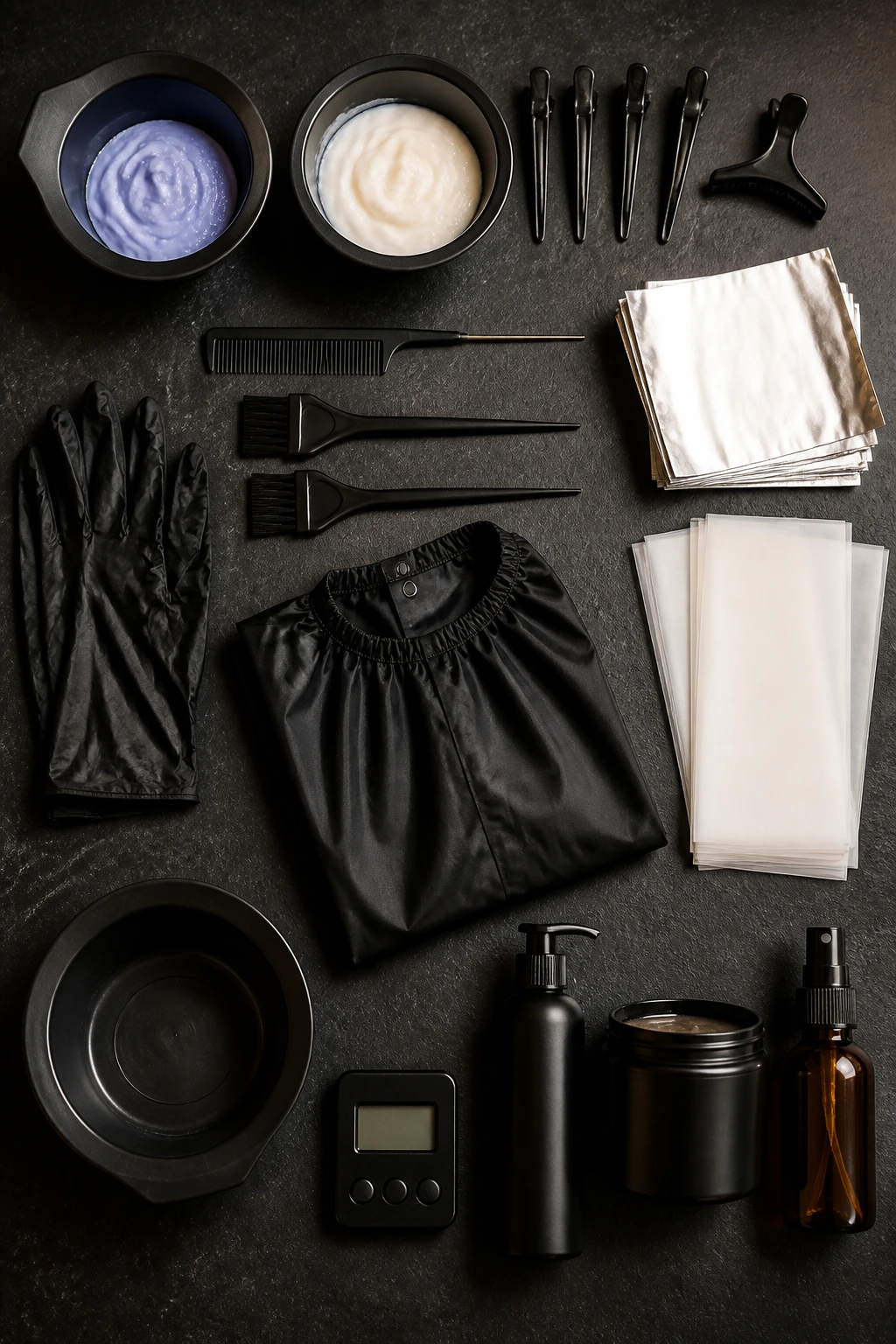
- Tint bowls and brushes: Use separate bowls for different shades so the tones don’t muddy together.
- Sectioning clips: Four to six sturdy clips keep the hair organized while you place ribbons or panels.
- Tail comb: Sharp partings matter for babylights and money pieces, and a tail comb gives you cleaner slices.
- Foils or balayage sheets: Foils help with lift and control; balayage sheets help keep painted sections neat.
- Gloves: Dark dyes stain fast, and gloves also keep you from shifting toner with bare hands.
- Color cape or old towel: Black pigment gets everywhere. A dark towel saves you from panic.
- Timer: Soft dimension depends on timing. Even a few minutes can change how a ribbon lifts.
- Color-safe shampoo and conditioner: Gentle cleansing keeps gloss from fading too fast.
- Deep mask: Useful after any lightening service, especially on ends that were already dry.
- Heat protectant: Necessary if you style with irons or a blow-dryer. Black hair shows heat damage in a way people underestimate.
Smart Shopping and Product Notes
Choose the product based on how much change you want. A demi-permanent gloss is ideal when you want sheen, tone, and a little richness without hard grow-out. A permanent color makes more sense if you’re deepening gray coverage or shifting the whole base tone. For soft dimension, demi-permanent often wins because it fades more gently.
If you’re actually lifting pieces, stay conservative with developer. 10 volume is enough for deposit or very slight tone shifts; 20 volume is common for controlled lightening on dark hair when the goal is only a few levels of lift. Stronger developer can chew through the cuticle faster than you expect and leave the pieces rough before the color even settles.
A blue or violet toner helps cancel the orange that often pops out of dark hair when it lightens. If you want warmth, use a caramel, bronze, or chestnut toner instead of trying to fight the undertone later. That’s where a lot of home color jobs go sideways. The color choice is not the only decision. The toner is part of the color.
Bond builders can help when you’re lightening black hair, but they are not magic. They buy you a little more safety margin. They do not make over-processing harmless. Keep a sulfate-free shampoo on hand, and if your hair is porous, add a weekly mask that isn’t overloaded with protein. Too much protein can leave hair stiff and dull.
How to Wear and Style These Shades
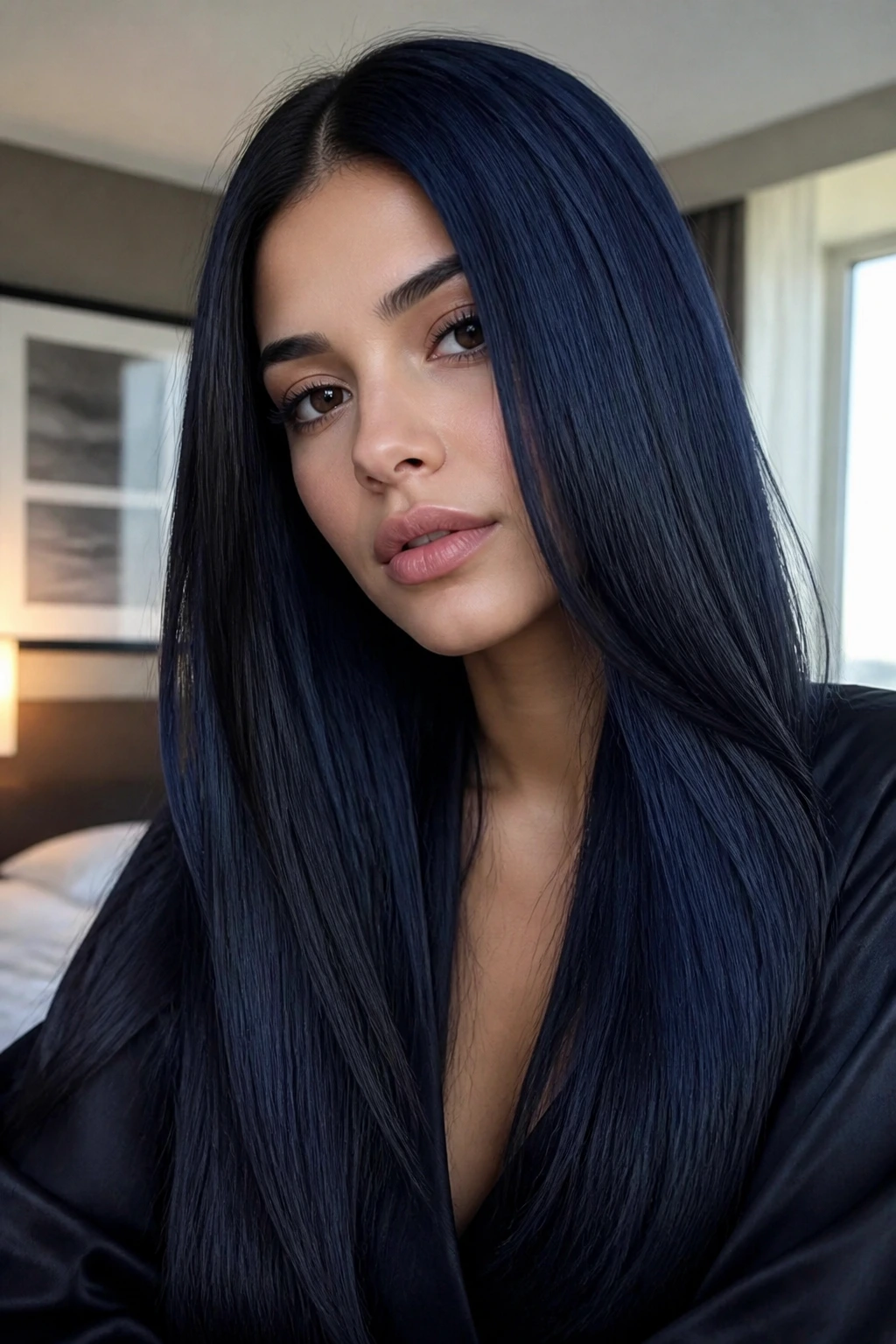
Straight and glossy: Blue-black, plum noir, and velvet jet black show their best side when the hair is smooth and reflective. A center part or slightly off-center part keeps the line clean, and a flat iron finish lets the undertone show without making the color noisy.
Soft waves: Espresso ribbons, tortoiseshell black, and ash-brown babylights come alive with a loose wave or a bend from midshaft to ends. The color shifts every time the hair moves, which is exactly why those looks feel dimensional instead of painted on. A wave pattern that isn’t too tight is enough.
Braids, half-ups, and ponytails: Caramel peekaboo panels, mahogany underlights, and copper threading are the most fun here because they reveal themselves only when the style moves. A braided crown or high ponytail can expose hidden color in a way that a simple down style won’t.
Best cuts: A blunt bob makes cool shades look crisp. Layers help ribbons and underlights do more work. Curtain bangs are useful if you want a face-framing tone like mocha or chestnut without committing to a hard front highlight. The cut and the color should help each other. If they fight, the style feels confused.
Practical Tips for Getting the Softest Result
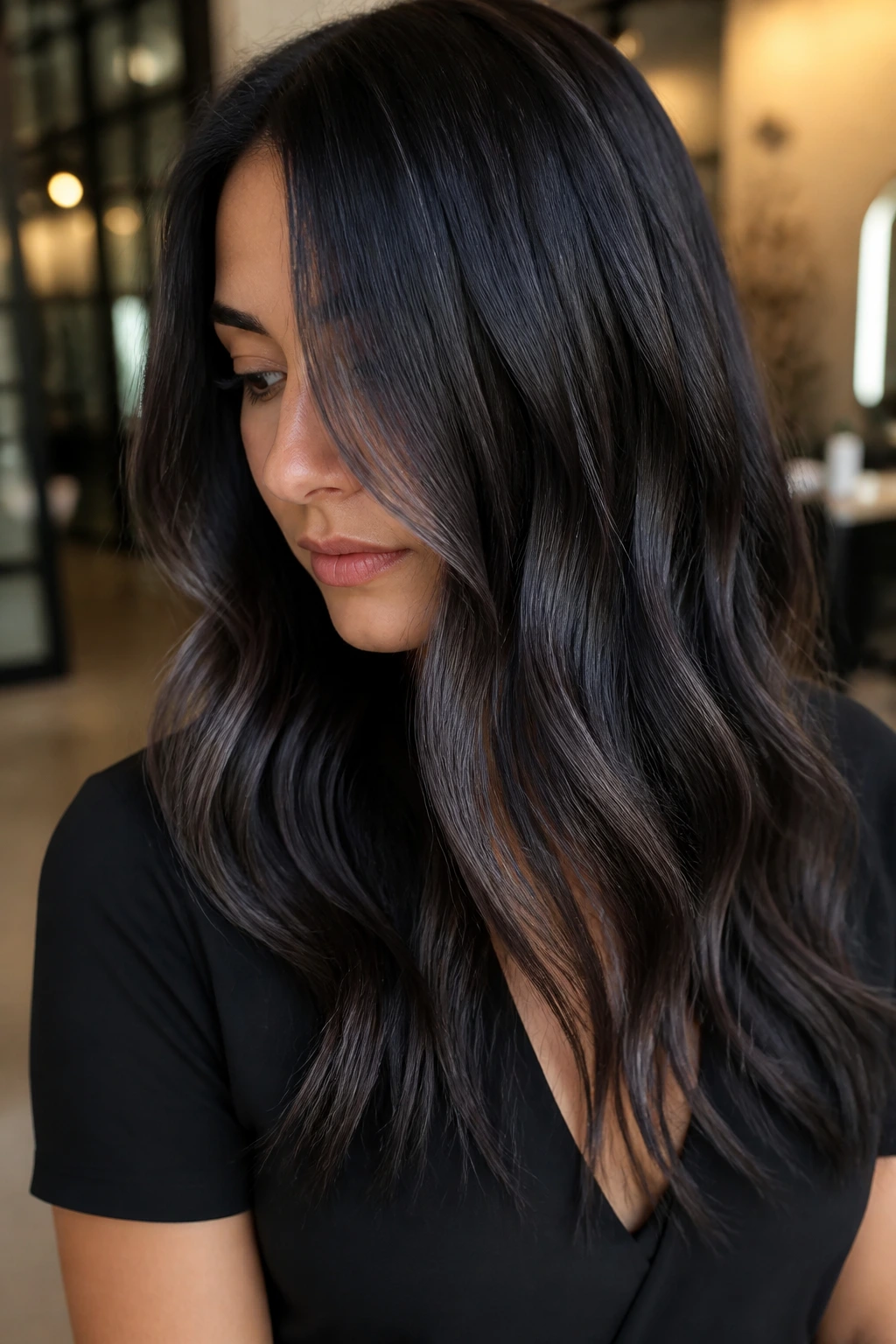
Placement: Keep the lightest pieces near the outer veil, face frame, and top layers if you want the color to stay whisper-soft. The underside can stay deeper. That little bit of restraint keeps black hair from looking busy.
Tone control: Ask yourself whether you want the dimension to read cool, warm, or neutral before you choose the shade. A level-5 ash brown gives a very different effect from a level-5 bronze brown, even if the lift is the same. Tone is what makes the color feel soft instead of random.
Photo check: If you’re in a salon, look at the foil placement or painted sections before processing ends. If the pieces are wide enough to read from across the room, they’re probably too wide for soft dimension. Fine placement almost always looks better on black hair.
Finish: A gloss after the coloring service helps all the tones sit together. It softens any harsh edges and gives the black base a smoother, richer look. I’d take a gloss over a bigger highlight panel almost every time.
Common Mistakes That Flatten Dimensional Black Color
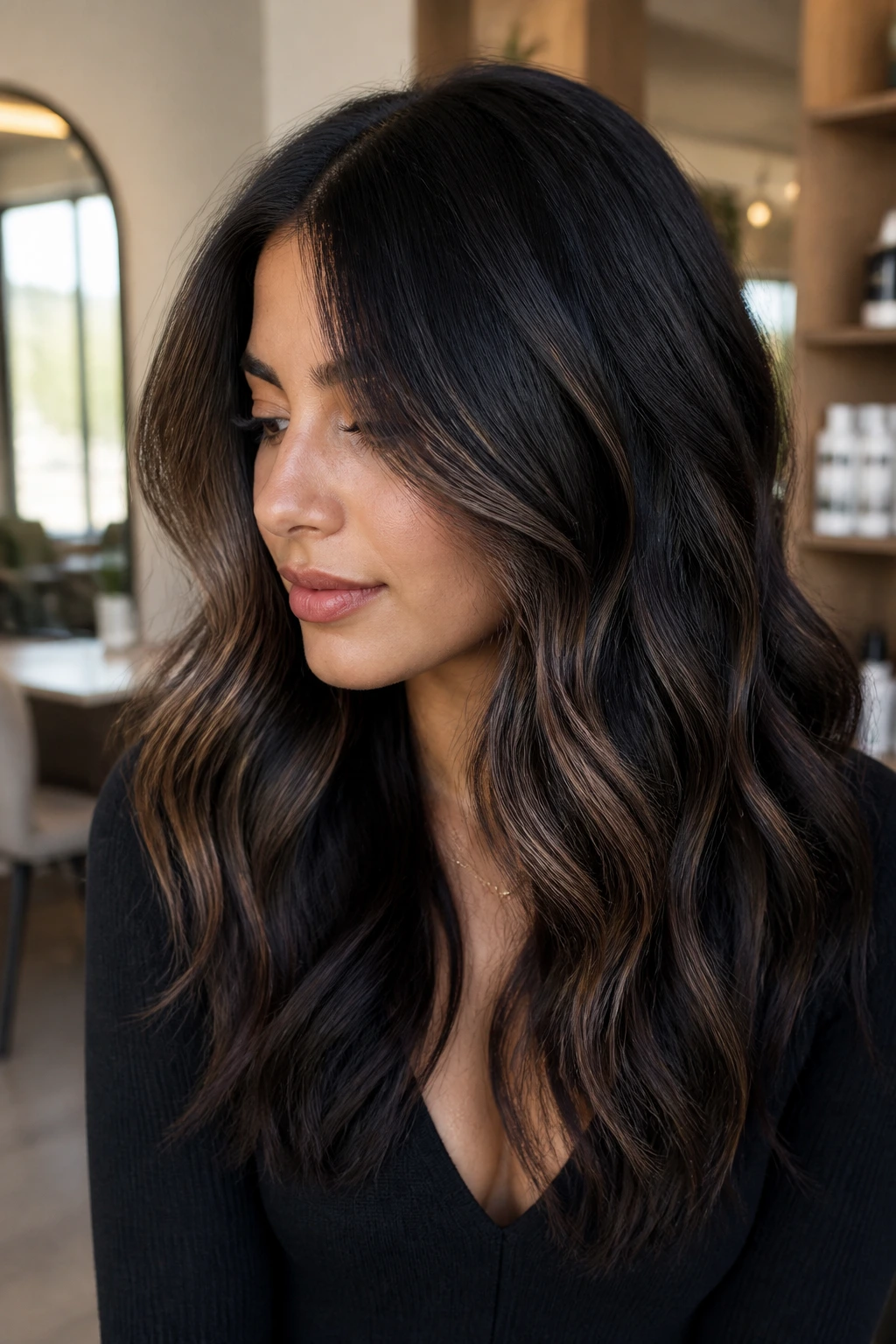
- Going too light too fast: Pale blonde pieces on black hair can look stripey instead of soft. The fix is to stay in the brunette family—espresso, chestnut, mocha, bronze, or muted ash brown.
- Using too much contrast: One chunky front highlight can overpower the whole style. If you want softness, keep the bright pieces fine and repeat them in more than one spot so the eye sees a blend.
- Skipping toner or gloss: Lifted hair without toning can throw orange or yellow, which is why the result looks rough. A toner or glaze brings the pieces back into the same family as the base.
- Overwashing the color: Washing every day strips the shine and makes black hair look dull faster. If you need to cleanse often, use a gentle formula and keep the water cool.
- Trying to fix box-dye black in one sitting: That’s how ends get chewed up. Black box dye can be stubborn, and a slower plan usually gives a cleaner result with less breakage.
Variations and Adaptations to Try
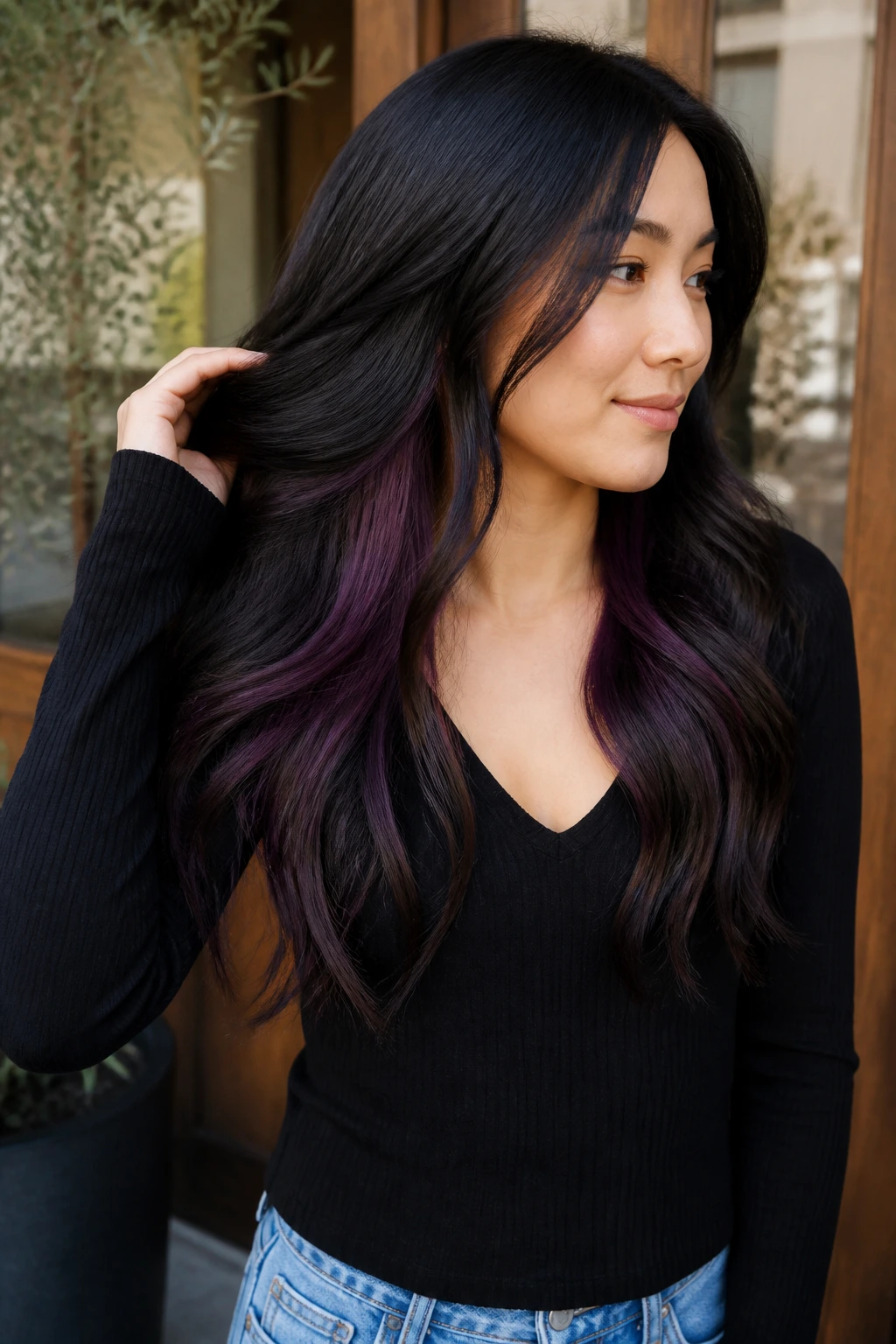
Gloss-Only Black: If you want almost no visible contrast, lean into blue-black, plum, or clear gloss instead of lightening. This keeps the hair deep while still giving it a reflective finish. It’s the easiest route if your hair is already in decent shape and you want low maintenance.
Hidden-Panel Black: This is the peekaboo route taken a little further. Add caramel, mahogany, or copper to the underside and keep the top layer dark. It’s a good choice if you need your color to stay conservative in daylight but still want a flash of personality when the hair moves.
Curly-Ribbon Black: Curls need lighter placement where the curl opens, not where the hair sits flat. Use finer ribbons and a softer toner so the dimension shows through the curl pattern instead of sitting on top of it. The result is more natural and less patchy.
Warm Smoke Black: If ash tones make your face look washed out, switch to bronze, chestnut, mahogany, or cherry cola. Warm shades can still be soft; they just sit closer to the black base in temperature. That makes the whole look feel richer rather than brighter.
High-Contrast Face Frame: If you want a little more punch, keep the front pieces one or two shades lighter and leave the rest deep. The face frame becomes the focal point, while the back and underside stay moody. It’s the boldest option here, but still manageable if the pieces stay fine.
Keeping the Color Glossy Between Appointments
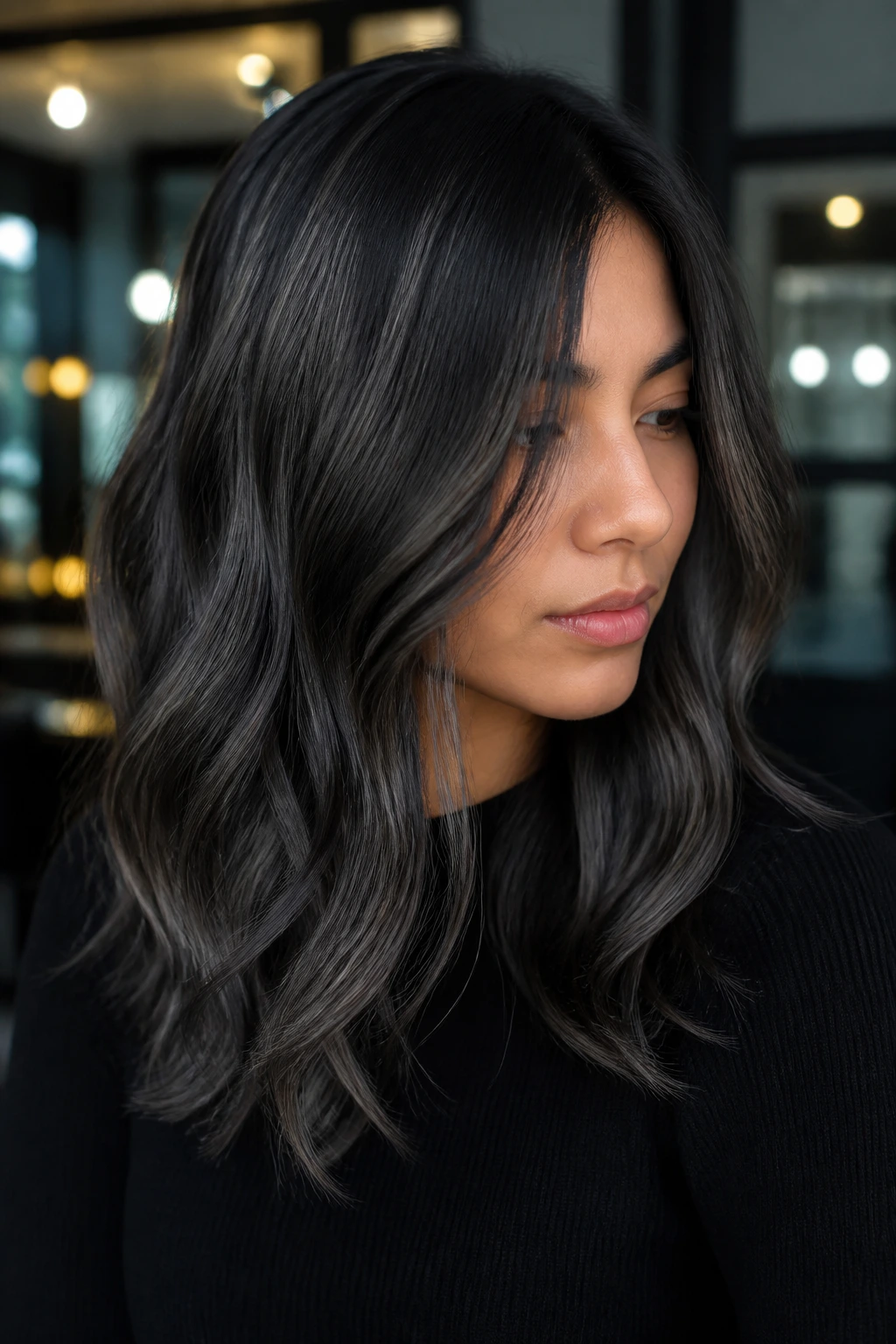
Color on black hair fades in a sneaky way. It doesn’t always turn pale; sometimes it just loses reflection first. That’s why a maintenance routine matters even when the shade looks dark. Start by waiting at least 48 to 72 hours before the first shampoo after a color service if your stylist says the formula needs that window.
Wash two to three times a week if you can, and use lukewarm or cool water. Hot water strips the cuticle and makes dark tones look dusty. If you’re wearing a cool shade like blue-black, plum, or charcoal, a blue or purple shampoo once every 7 to 10 days can help keep warmth from creeping in. Don’t overdo it. Pigmented cleansers can make hair look dull if you use them too often.
For lifted pieces, a gloss refresh every 4 to 6 weeks keeps the tone crisp. If the hair is only glossed and not lightened, you may stretch that a little longer. Lightened ribbons and panels usually need a more regular touch-up, often around 6 to 10 weeks depending on grow-out and how soft you want the blend to stay.
Heat styling is where a lot of good color gets worn down. Keep hot tools around 300 to 375°F depending on the tool and the hair’s condition, and use a protectant every time. If the ends feel dry or rough, switch one wash a week to a mask with more slip and less protein. Dry ends drink up light in the wrong way. That’s when the dimension looks flat.
Frequently Asked Questions
Can black hair have dimension without bleach?
Yes, and honestly, that’s often the cleaner route. Blue-black, plum noir, cherry cola, and many gloss-only options can add movement without lifting the hair at all. The change is subtle, but on black hair subtle is often the point.
What highlights look best on black hair if I want softness, not stripes?
Espresso, mocha, chestnut, ash brown, bronze, and muted caramel all stay in the dark family and blend better than pale blonde. Fine placement matters as much as the shade. If the pieces are wide, even a soft tone can start to look loud.
Is balayage better than foils for black hair?
Balayage is usually softer because the painted edges blur the lift, while foils can give a more controlled and brighter result. For soft dimensional color, balayage or foilayage tends to read less sharp. Foils still have a place if you want more lift but don’t want the lines to look chunky.
How light do the pieces need to be to show up on black hair?
Not as light as people think. Often a level 4 or 5 brown is enough if the placement is fine and the hair has shine. The eye reads movement before it reads exact level, especially on layered cuts or wavy textures.
Can you do dimensional black hair at home?
You can do gloss-only color at home with more confidence than actual lightening. Once bleach enters the picture, black hair gets harder to predict, especially if it’s previously colored. A strand test is non-negotiable if you go that route.
What if the highlighted pieces turn orange?
That means the undertone wasn’t toned enough, or the lift stopped too early. A blue or ash toner can help pull the warmth down, but the fix depends on how porous the hair is. If the orange is strong, it’s smarter to tone gently than to keep lifting and risk damage.
Which black hair color idea works best on curly hair?
Curly hair usually looks best with ribbons, underlights, or peekaboo placement that follows the curl pattern. Fine, well-placed highlights show more movement than broad panels because curls already create their own shape. Heavy contrast can get noisy fast on tighter textures.
How often does this kind of color need maintenance?
Glosses usually need refreshing every 4 to 6 weeks if you want them to stay shiny. Lightened pieces may need attention around 6 to 10 weeks depending on how fast your hair grows and how visible you want the contrast to stay. If the goal is softness, gentle upkeep beats dramatic touch-ups.
Keeping Black Hair Rich Instead of Flat
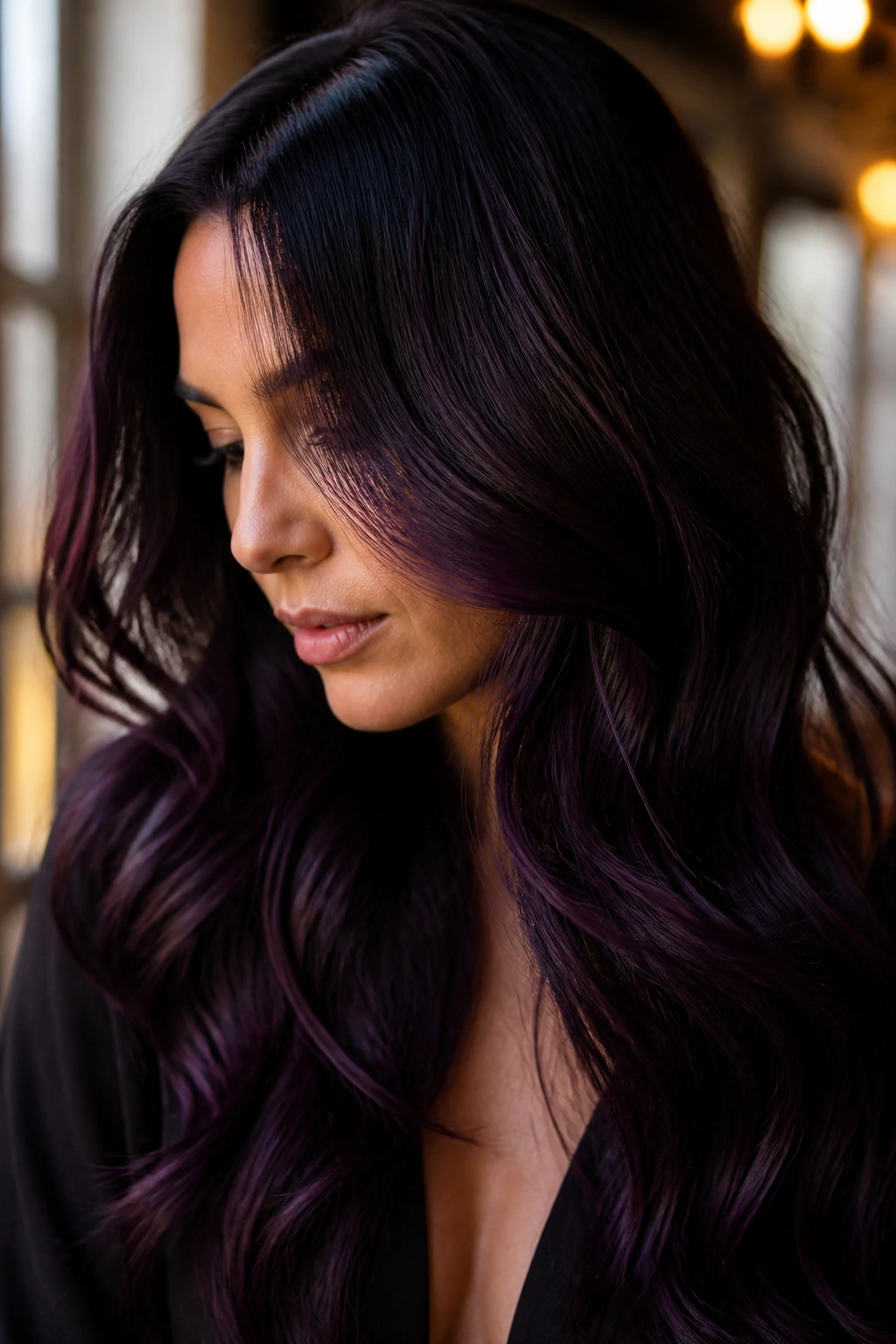
The best black hair color ideas don’t shout. They shift. A blue-black glaze in sunlight, a mocha frame near the cheekbones, a hidden caramel panel in a ponytail—those little moments are what make black hair feel dimensional instead of heavy.
If you want the cleanest result, start by choosing the undertone you actually want to live with: cool, warm, or neutral. After that, keep the placement fine and the contrast controlled. That’s where black hair looks most expensive in the real world, not just in a photo.
Choose the idea that suits your haircut and your maintenance tolerance, and let the light do the rest.
