



Brunette hair color ideas get a lot more interesting once warm tones enter the picture. A flat brown can disappear under indoor lighting; chestnut, caramel, maple, and cocoa-brown shades keep moving when you move. They catch a little gold at the ends, a little amber around the face, and suddenly the whole head has shape instead of sitting there like one solid block.
The part people miss is placement. Warm brunette hair color works best when the tone is tied to the cut and the base color, not pasted on like decoration. A level 4 espresso with a clear gloss reads sleek and expensive-looking in a different way than a level 6 caramel balayage, and neither one needs to look brassy if the undertone is handled with a steady hand. That’s the whole game. Depth first. Warmth second. Shine last.
What follows is a mix of subtle, rich, and face-brightening brunette shades that actually make sense in real life, not just under salon lighting. Some are low-maintenance. Some ask for a little more care. All of them give brown hair a warmer pulse, which is usually what people are trying to get when they say their color looks “flat” but can’t quite explain why.
Why Warm Brunette Shades Are Worth Your Time
- They keep dark hair from looking one-note: Caramel, chestnut, and amber ribbons create movement, especially on long layers or waves that can swallow solid brown.
- They soften grow-out: A root-shadowed brunette with warm mids and ends usually looks decent for weeks longer than a high-contrast highlight job.
- They work with more skin tones than people think: Golden chestnut, toffee, and auburn-brown shades can lift olive, neutral, and warm complexions without screaming for attention.
- They give fine hair more body: Lowlights and dimension make strands look thicker because the eye reads contrast, not just shine.
- They can be quiet or bold: A demi-permanent gloss gives you a whisper of warmth, while copper-brown or chocolate cherry pushes the whole look into richer territory.
- They age better than icy brunettes on many heads: Warm pigments fade toward soft gold and red-brown, which usually looks kinder than a muddy ash fade.
1. Espresso Brunette With a Glassy Finish
A deep espresso brunette is what I reach for when someone wants brown hair that looks deliberate, not accidental. The color sits around a level 3 or 4, so it feels rich and dark without crossing into the flat-black territory that can erase texture.
What makes this shade work is the finish. A clear or warm-neutral gloss is doing a lot of the heavy lifting here, because espresso can go dull fast if the cuticle is rough or the color has too much ash. On straight hair, it looks sharp. On waves, it gives the kind of depth that makes every bend show up a little more clearly.
How to wear it well: keep the base dense and let shine be the feature. If the hair is long, I like a soft center part or a clean side part so the reflectiveness has somewhere to land. On shoulder-length cuts, this shade looks best with movement at the ends instead of a bunch of scattered light pieces.
Best fit: people who want a dark brunette with polish, especially if they dislike obvious highlights.
A small warning. If your hair is naturally porous, espresso can soak in unevenly and look patchy at the ends. A prep gloss or filler before the final color keeps the brown from turning hollow.
2. Milk Chocolate Brown With Soft Creamy Warmth
Why does milk chocolate brown work on so many people? Because it sits in that middle zone where the color is warm enough to feel rich, but not so warm that it goes red on you. The tone usually lives around a level 5, sometimes a touch lighter, and that makes it kinder than a very dark brunette if your hair is fine or your skin likes softness around the face.
How to use it without losing the chocolate note
Ask for a brown base with golden-beige warmth, not an orange lean. That sounds small. It isn’t. The difference between creamy and brassy is usually one toner level and a decent consultation. I’d keep any highlight work tiny here — think fine babylights or a very light gloss on the mids, not chunky streaks.
This shade is a smart pick if you want warmth that still feels grounded. It pairs well with curtain bangs, collarbone cuts, and soft waves because the movement shows the color change. Air-dried hair can look a little one-note, so a round-brush blowout or loose bend with a curling iron helps.
Quick notes:
- Best on level 4–6 brown bases
- Looks rich with minimal highlight work
- Needs a gloss refresh every 4–6 weeks to keep the creamy tone
- Less red than auburn, less bright than caramel
3. Chestnut Brunette With Amber Threads
A chestnut brunette with amber threads is the shade I recommend when someone says they want “warm brown” but they’re nervous about going too gold. Chestnut gives you brown first, warmth second, and that amber trace makes the whole thing feel sun-touched instead of painted on.
Picture a medium brunette base with ultra-fine hand-painted ribbons through the top layer and around the temples. That’s the sweet spot. The color should move when you turn your head, not announce itself from across the room.
What to ask for: a chestnut base with fine amber balayage or a gloss that nudges the mids toward golden-red. The front pieces should be a touch brighter than the back, because that’s where the color catches the eye first.
This shade is especially kind to green, hazel, and warm brown eyes. It also saves curly hair from looking too heavy. On curls, those amber threads peek through the pattern and make the shape read better.
A good chestnut should never look dusty. If it does, the formula was too cool. Simple as that.
4. Cinnamon Brown With a Warm Spice Glow
Cinnamon brown is for people who want warmth with a little edge. Not copper. Not auburn. Something in between, with a spiced-red undertone that shows most clearly in daylight and near windows. Indoors, it can read like a deep warm brown; outside, it wakes up.
Why this shade feels different
Cinnamon works because it doesn’t rely on brightness. The warmth comes from the undertone, not from lighter pieces scattered everywhere. That means you can keep a fairly deep base and still get visible color change, especially if the hair has some texture or a layered cut.
If your skin is neutral to warm, this shade can be a lovely fit. If your skin runs cooler, keep the red note softer and ask for more brown than spice. The balance matters. Too much red and the whole thing starts fighting your makeup.
A glaze or demi-permanent color is usually enough to get this effect on a lighter brown base. On dark hair, you may need a little lift first, but I would not push it too far. Cinnamon looks better with depth under it. That’s what gives it that folded-in warmth instead of a loud, flat red-brown.
5. Caramel Balayage Over a Deep Brunette Base
Caramel balayage is the classic move for anyone who wants visible dimension without signing up for weekly root touch-ups. The contrast is the point. A deep brunette base, then painted caramel pieces through the mid-lengths and ends, gives the hair a soft, expensive-looking ripple when it moves.
What makes it different from full highlights
Full highlights can scatter brightness everywhere, which sometimes muddies brunette hair. Balayage keeps the lighter pieces where they help the cut. Around the face. Through the top layer. A little more at the ends. The rest stays dark enough to keep the color grounded.
That placement is why the grow-out is calmer. When the root comes in, it blends into the painted transition instead of drawing a hard line. On longer hair, that’s a gift. On curls, it’s even better, because each coil picks up a different amount of caramel and the whole head gets dimension for free.
Best for: layered cuts, medium to long hair, and anyone who wants brunette balayage that still reads warm rather than blonde.
Ask for caramel pieces that are thicker around the front and finer in the back. That keeps the face bright without turning the whole head stripey.
6. Toffee Ribbons Through Mid-Lengths
Toffee is a little deeper than caramel and a little softer than gold. That’s why I like it in the mid-lengths. It looks like brown hair that has been warmed by indoor light, not hair that has been aggressively highlighted to prove a point.
The color works best when it stays under the top layer. You want the toffee to peek through, not sit on top like a stripe. On long hair, that subtle placement makes the ends look thicker. On medium cuts, it gives movement where the eye naturally follows the line of the hair.
H3: Why toffee reads soft instead of loud
Because the contrast is gentle. A level 5 or 6 toffee ribbon beside a level 4 brunette base creates enough difference to show shape, but not so much that the look turns high-maintenance. That’s the sweet spot for people who want dimension but hate obvious regrowth.
If your hair is very dark, this shade may need a bit of lift first. If it’s already medium brown, a gloss alone can do a surprising amount. Either way, the warm note should feel melted in, not pasted on.
7. Honey Brunette Face-Framing Pieces
A few bright face-framing pieces can change the whole mood of brunette hair. Honey brunette is the lighter, sunnier side of warm brown, and the trick is restraint. Two narrow pieces near the front can do more than a full head of highlights if the rest of the hair stays rich and dimensional.
The placement matters. Keep the brightest pieces around the cheekbone area and just off the hairline. Too high, and the color can look chunky. Too low, and you lose the lift around the face.
This shade is a strong option if you wear your hair up a lot. Ponytail? Bun? Half-up twist? The front pieces still do their job. They frame the face without requiring the whole length to be brightened.
A honey brunette tends to suit warm and neutral undertones best, but the exact tone can be adjusted. More beige for softness. More gold if you want energy. More brown if you’re trying to stay subtle. That’s the nice part. It’s flexible.
8. Auburn Brunette With a Soft Red Bend
Auburn brunette is the move when brown alone feels too safe. It brings red into the conversation, but in a way that still keeps one foot in brunette territory. The effect is richer than cinnamon, deeper than copper, and often a touch more dramatic in daylight than people expect.
The key is the word soft. You do not want a bright red overlay sitting on top of brown hair. You want the brown base to remain visible while the red-brown undertone changes the way light lands on it. On layered cuts, that can look nearly liquid.
H3: Who should ask for it
People with naturally warm hair usually wear auburn brunette well because the shade blends into their undertone instead of fighting it. It also helps dull brown hair look lively again after a few too many ash toners or a long stretch of flat color.
One caution: red pigments fade fast, especially on porous ends. A color-depositing conditioner or a salon gloss every few weeks helps keep the auburn note from dropping out and leaving you with a tired brown.
9. Copper-Kissed Brunette Gloss
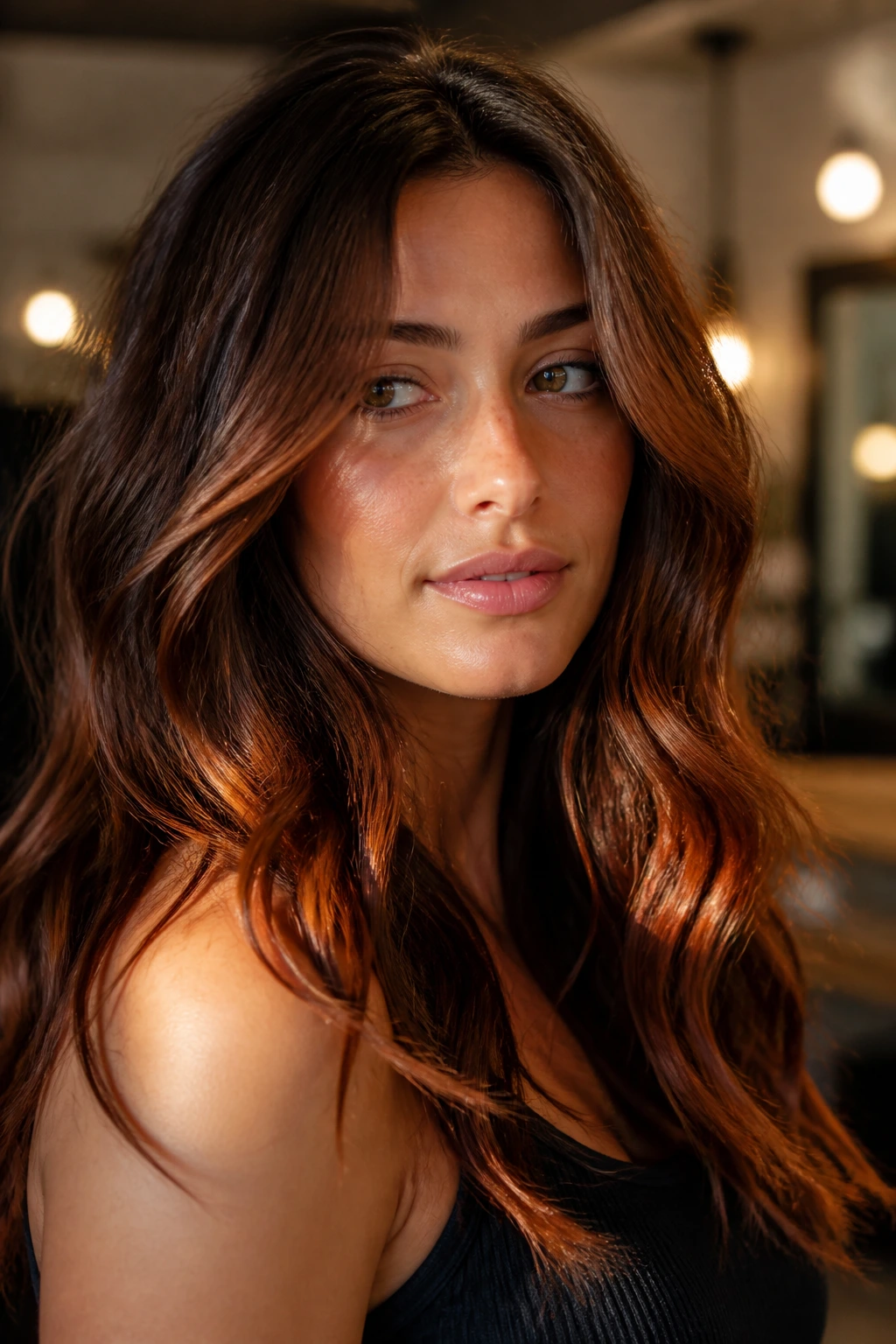
If you want warmth you can actually see, copper-kissed brunette is where things get interesting. Not orange. Not full-on copper. Just enough of that metallic red-gold shine to make dark hair look like it has heat in it.
This shade is lovely on medium brown hair that needs a refresh. A gloss can shift the whole head without a major lift, especially if the goal is reflection more than brightness. On darker bases, the copper note may show mostly in the sunlight or under warm indoor bulbs. That can be a good thing. It keeps the color from getting shouty.
Watch the porosity. That’s the part nobody wants to hear, but it matters. Very porous ends can grab copper fast and go a little too bright while the roots stay quieter. A good colorist will protect the ends or use a gentler formula there.
This one works especially well if you like warm makeup tones — bronze shadow, peach blush, a lip with a little brick in it. The hair and face start speaking the same language.
10. Mocha Brunette With Warm Lowlights
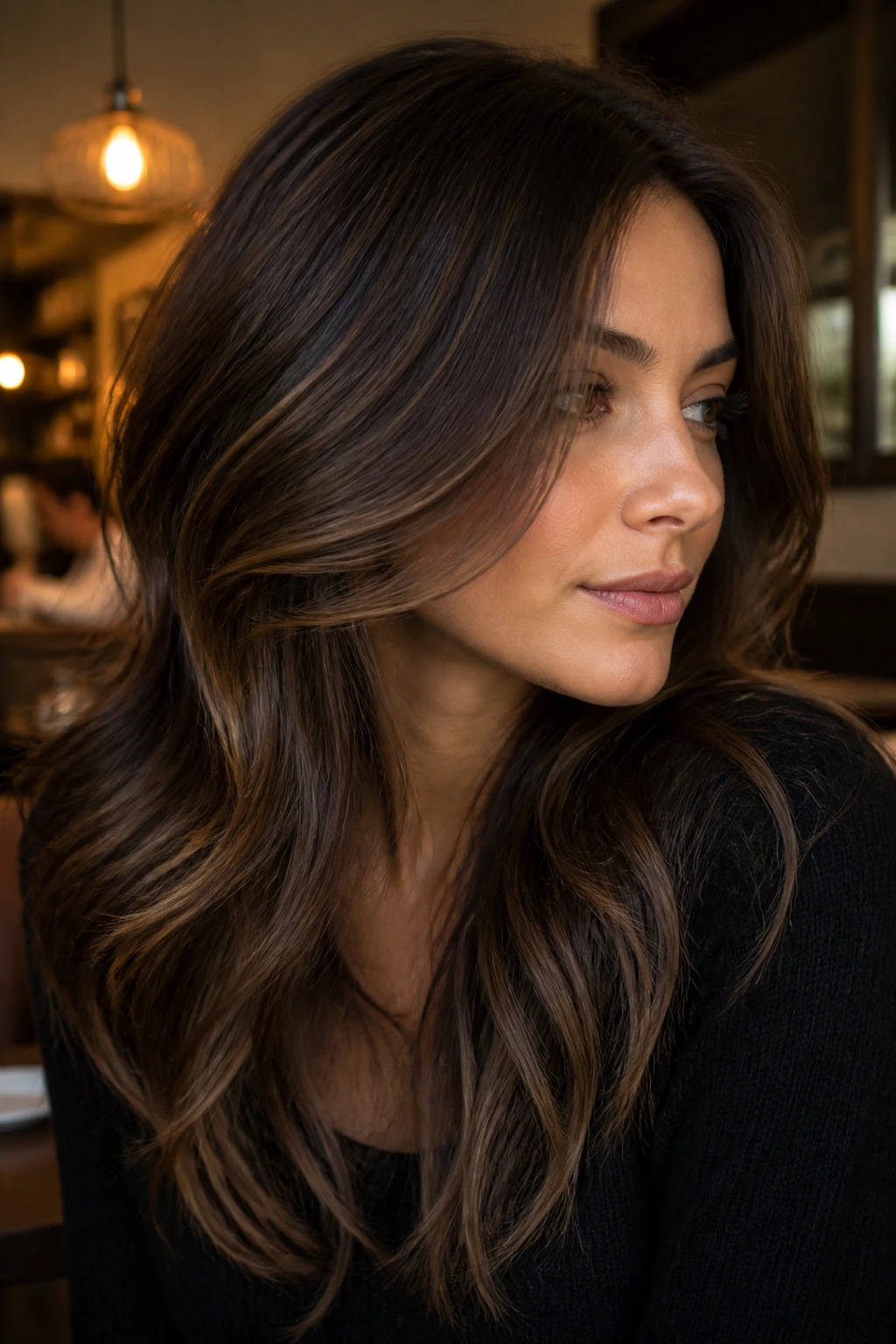
Mocha does not have to mean ash. I’ll say that plainly because too many brunettes get pushed into cool, dusty brown when they really want depth with a little heat. Warm lowlights fix that. They keep the base dark, but they swap in strands of chestnut, cocoa, or soft caramel-brown so the hair doesn’t look like a single painted sheet.
The payoff is body. Fine hair especially benefits from darker and warmer pieces underneath the top layer. The eye reads fullness. The strands look less see-through at the ends. Nice trick, and it works.
What to look for
- A mocha base that stays around level 4 or 5
- Lowlights one step warmer than the root, not three steps lighter
- Placement mostly under the top layer and through the back
- A gloss that keeps the brown reflective, not flat
This is a quiet shade, but it’s not boring. Quiet is the point. If you want something polished that won’t fight your wardrobe, mocha with warm lowlights is a very safe bet.
11. Golden Hazelnut Brown
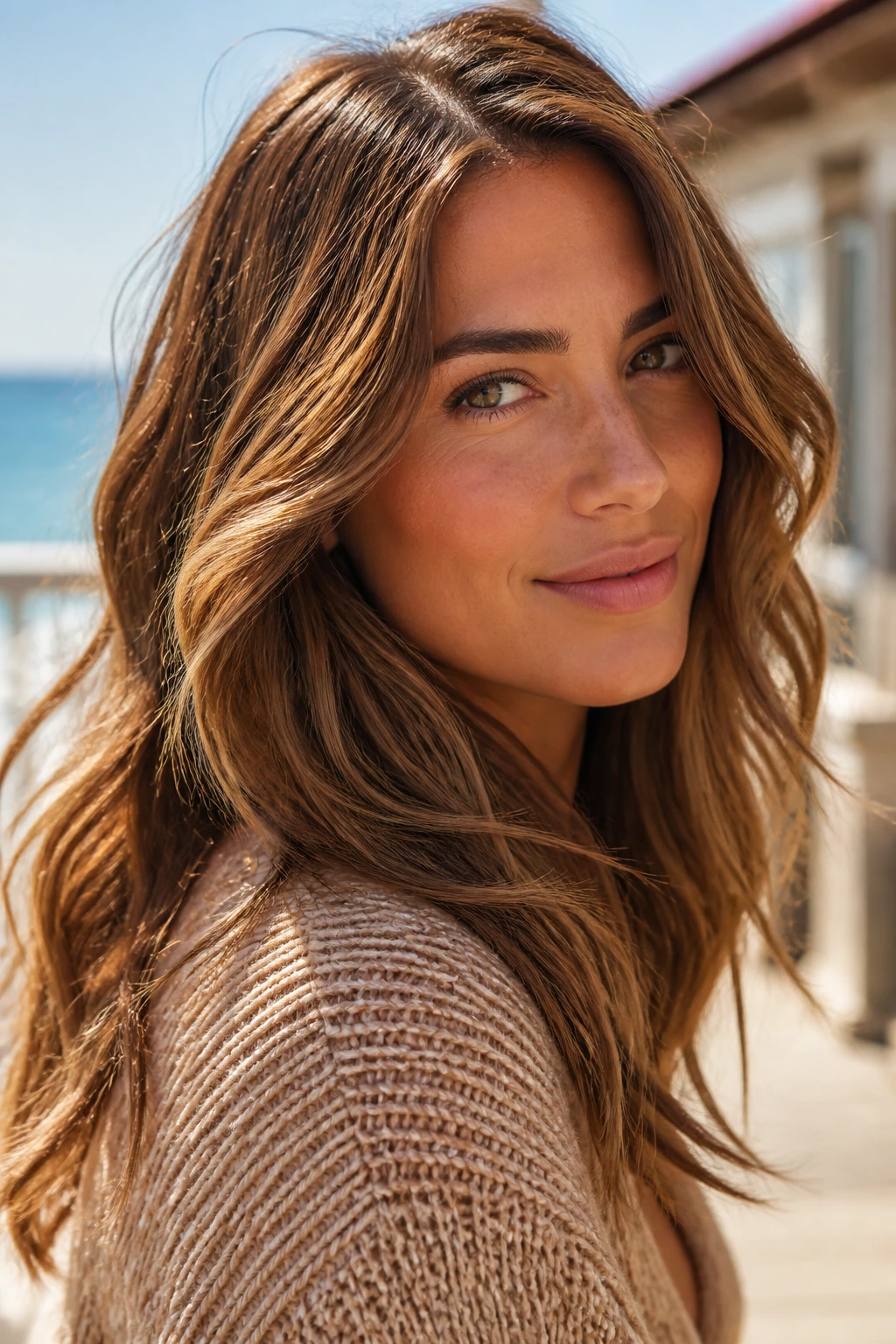
Golden hazelnut brown sits in that sweet place between brunette and bronde. It’s warm, nutty, and light-catching without tipping into blonde territory. The color looks especially good when the highlights are thin enough to blend but bright enough to show movement.
Why it stands out in motion
A hazelnut brunette should never look striped. It should look layered. The golden pieces live beside the brown base, not above it. That’s why this shade works so well on waves, curls, and long cuts with some face framing. Every bend of the hair picks up a different tone.
If you have a medium brown base, this is a natural place to go. If your hair starts darker, ask for a little lift through the mids and ends so the gold has somewhere to sit. A glossy finish keeps the warmth from reading dry or stale.
This shade also plays nicely with brows that aren’t ultra-dark. Too much contrast can make hazelnut feel disconnected. Keep the whole look in the same warm family and it falls into place.
12. Praline Brunette With Beige-Gold Dimension
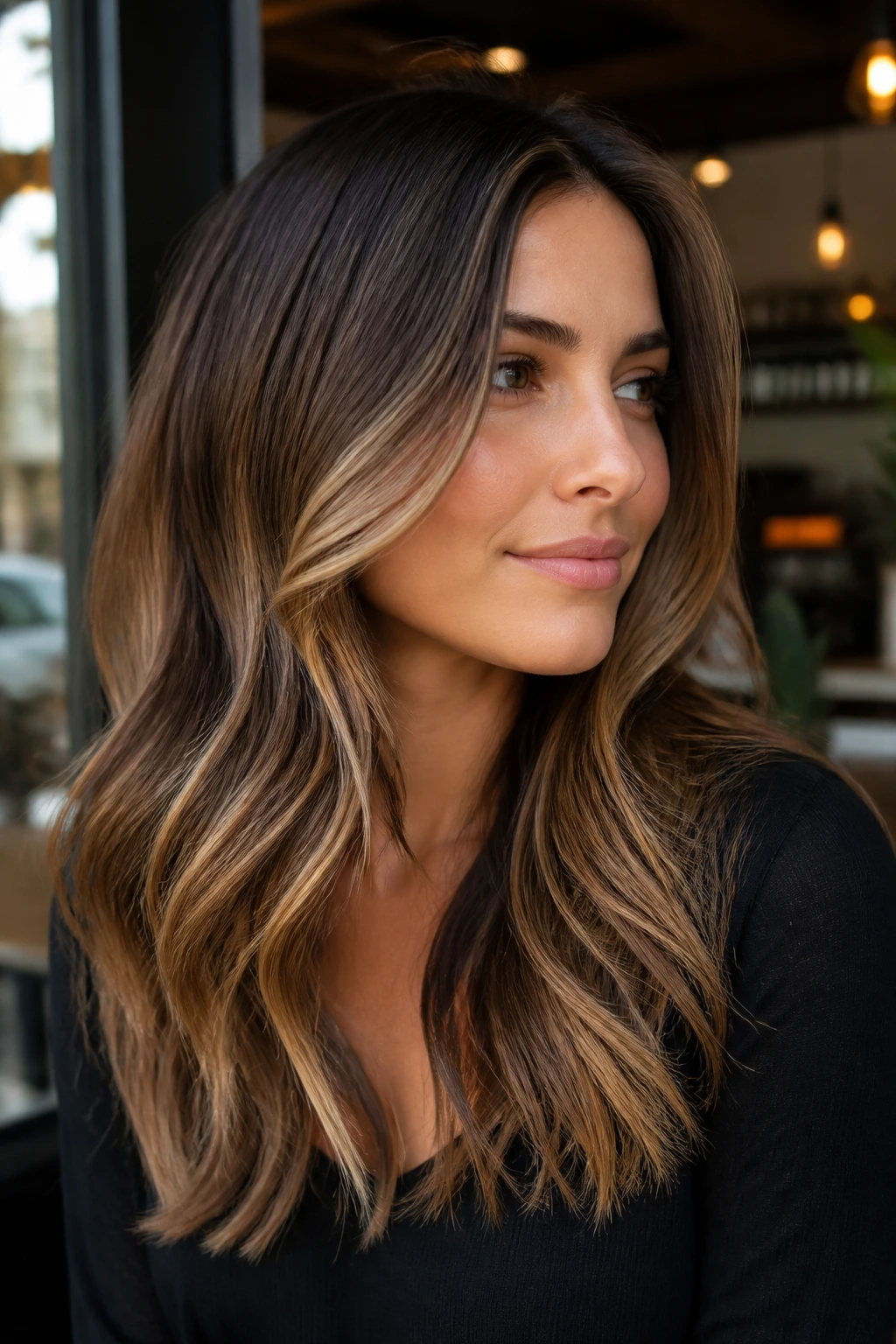
Praline brunette feels a little softer than caramel and a little more polished than plain golden brown. It has that beige-gold lift that makes brown hair look sun-touched without looking bleached. On medium-length hair, it can be especially good because the lighter bits show up in the movement of the cut instead of sitting in obvious bands.
H3: Why it’s a smart middle ground
People who want warmth but don’t want a red tone usually land here. Praline leans creamy, not spicy. That means it stays wearable on a lot of skin tones, and it doesn’t fight blush or lip color the way stronger copper shades sometimes do.
A praline brunette looks best when the base stays rooted and the lightness starts below the crown. That gives you depth up top and softness around the ends. If you go too high with the light pieces, the whole thing can lose its brown identity.
This is one of those shades that looks even better after a few washes, once the toner settles and the pieces blend a bit more. Crisp on day one. Softer by week two. That’s the good part.
13. Maple Brown With Syrupy Warmth
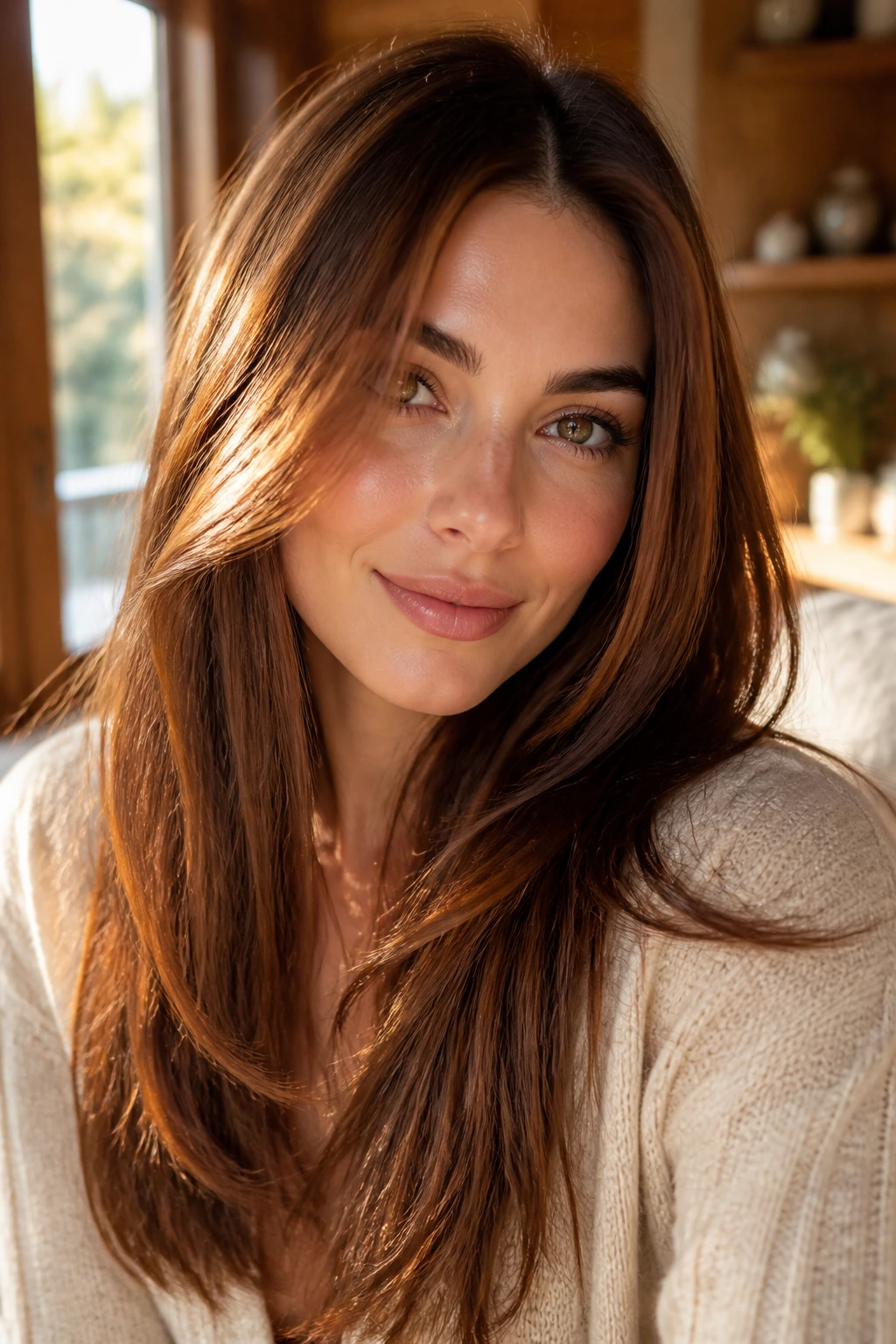
Maple brown has a round, syrupy feel that makes brunette hair look richer without pushing it into obvious red. It sits somewhere between chestnut and auburn, with a warm amber-brown glow that shows up best when the hair moves through the light.
The shade works especially well on straight or softly waved hair because the gloss has a chance to show. If the cut is blunt, maple brown can keep the shape from looking severe. If the cut is layered, the warmth makes each section separate a little more clearly.
A gloss or demi-permanent color is often enough to create the maple effect on a medium brown base. Dark hair may need strategic lightening, but not much. You want depth under the color. Too much lift and maple starts drifting toward copper.
This is one of the easiest warm brunettes to wear with gold jewelry and peachy makeup. The whole look feels connected, which is more useful than it sounds.
14. Mahogany Brown With Deep Wine Notes
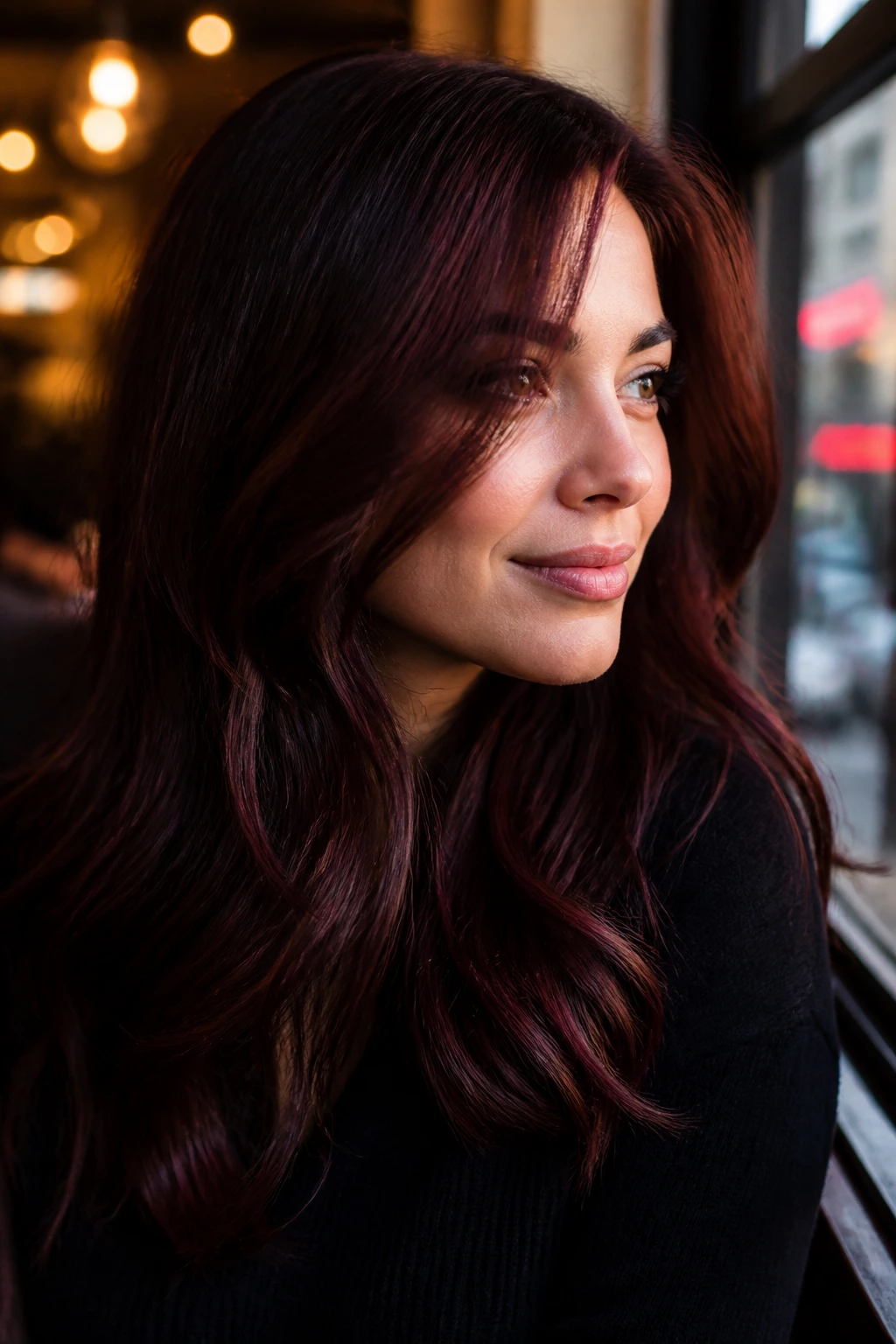
Mahogany brown is where brunette meets red wine. It’s deeper than auburn and less fiery than copper, which gives it a moody richness that still counts as warm. The red note is there, but it’s folded into the brown instead of sitting on top of it.
H3: When mahogany beats auburn
If auburn feels too bright or too seasonal, mahogany can be the better answer. It’s especially good on darker bases because you can get the red-brown depth without forcing a lot of lift. That keeps the hair healthier and the color more believable.
Mahogany also likes shine. A low-gloss finish makes it look flat, which is a shame because the shade has a lot going on when it’s handled well. On layered bobs, it can read almost jewel-like. On long hair, it has that slow, rich movement that people often want from brunette color.
This is a strong choice for someone who wants warmth with a little seriousness. Not cute. Not sugary. Just deep.
15. Chocolate Cherry Brunette
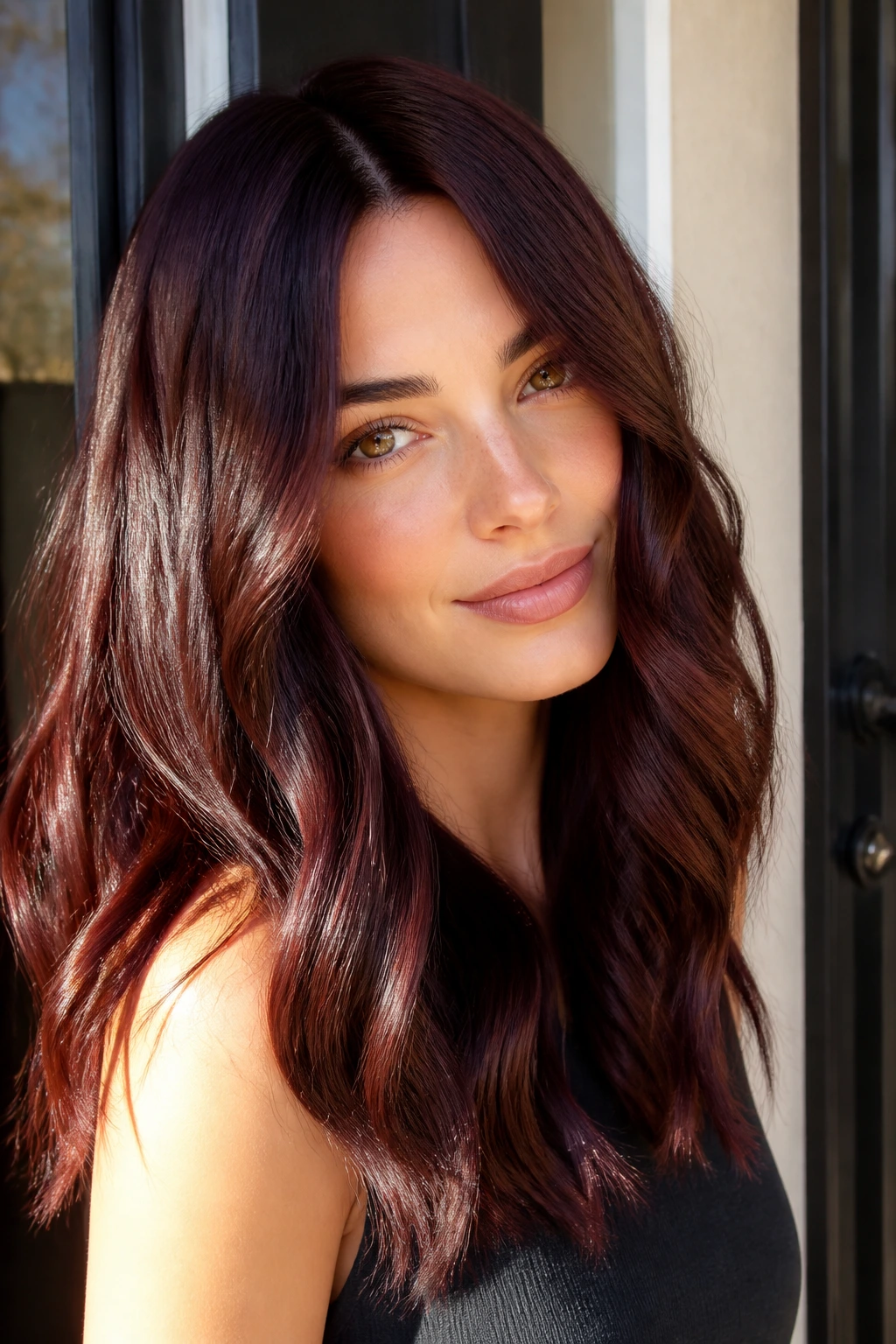
Chocolate cherry brunette is one of my favorites because it gives you a hidden surprise. From a distance, it reads as dark brown. Up close, or in daylight, the cherry note shows through and the whole head has this dark fruit shimmer to it.
The trick is keeping the brown dominant. If the red gets too loud, it turns into something else. What you want is a chocolate base with cherry reflect, usually from a gloss or a demi-permanent overlay. On very dark hair, the red may only bloom in the light. That’s enough.
This shade is a good fit if you want warmth but don’t want caramel pieces everywhere. It’s also useful when your ends look tired and need a tonal refresh rather than a stripy highlight job. The cherry tone can make the lengths look healthier because the color catches light instead of swallowing it.
A blunt cut with chocolate cherry hair looks especially sharp. So does a soft wave. The shine matters. A lot.
16. Bronze Brunette With Metallic Shine
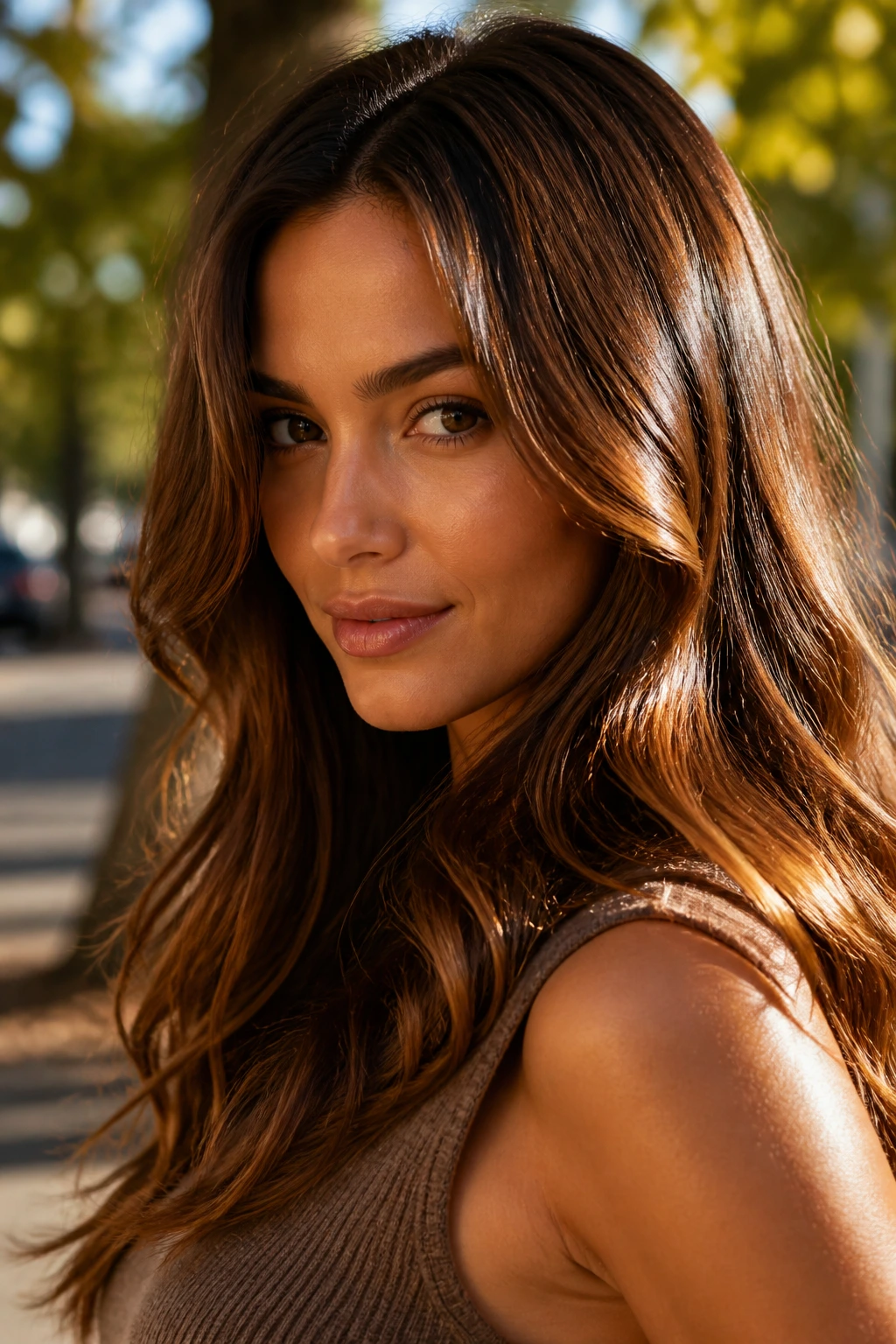
Bronze brunette brings a little metal into the mix, and that can be a smart move if you want brown hair that feels lively without going light. Bronze sits warmer than mocha and a touch deeper than caramel, so the result is glowing rather than blonded-out.
This shade tends to look better when it’s layered through the mids and ends instead of painted all over the roots. You want the bronze to read as a highlight tone, not a full base color, unless the hair is already light brown. That placement helps the hair move visually and keeps the grow-out easier.
Best for: layered cuts, waves, and people who want a warm brunette that catches light on every bend.
Bronze can go orange if the formula is too strong. That’s the catch. The fix is usually a steadier gloss and better placement, not more color. Keep the warmth controlled, and it looks polished instead of loud.
17. Butterscotch Balayage on Brunette Hair
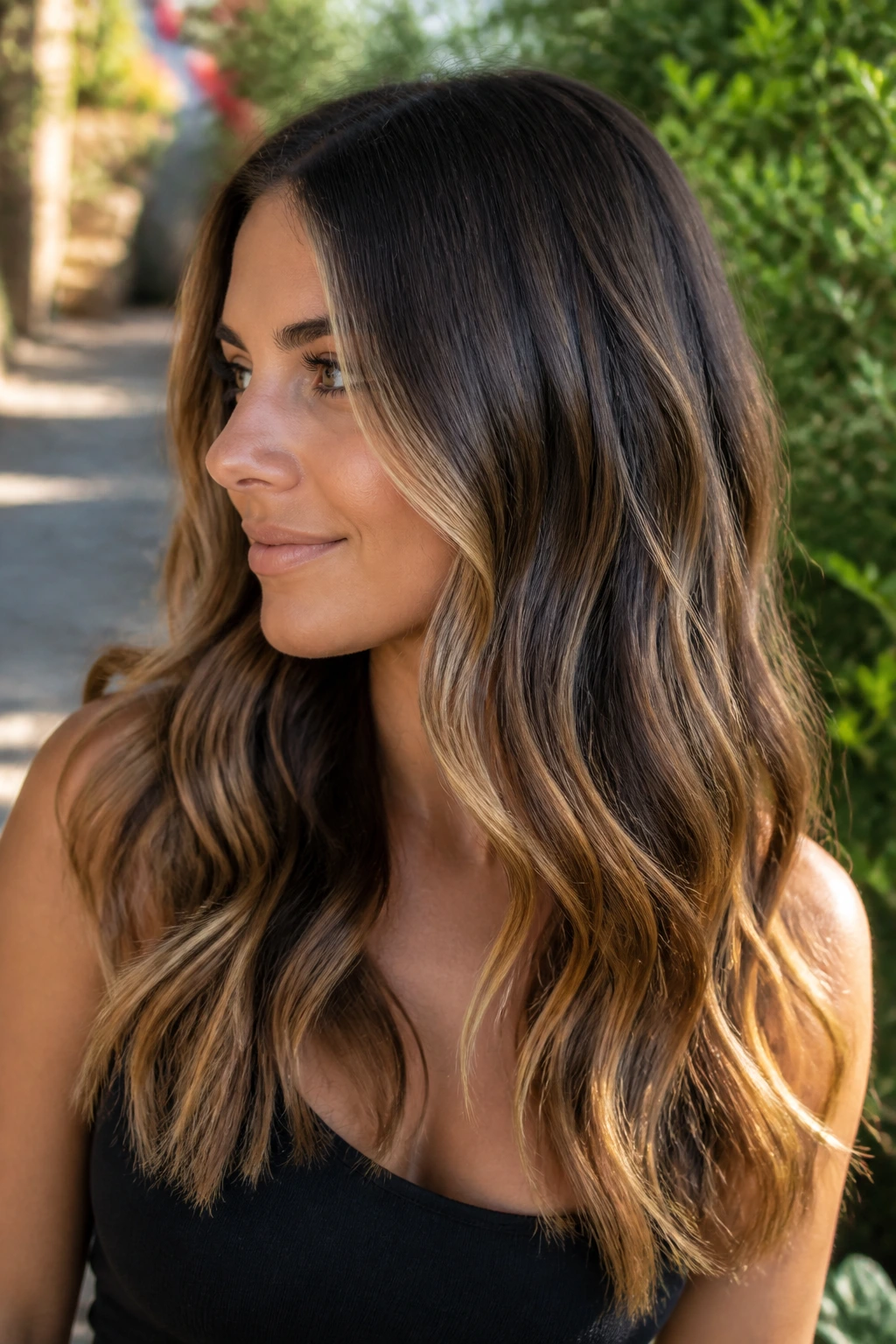
Butterscotch balayage is brighter and sweeter than caramel. The pieces are lighter, the warmth is a little more golden, and the contrast on a brunette base gives the hair a clear, sunlit lift. If caramel is soft drizzle, butterscotch is a little more pronounced.
H3: Why it works on brunette bases
A darker base gives butterscotch somewhere to land. Without that contrast, the shade can blur. With it, the highlights look creamy and dimensional, especially when they’re painted in wider pieces through the lower half of the hair and kept finer near the crown.
This is a good option for long hair that needs some motion. It also works on layered cuts where the lighter ends can break up the shape. If your hair is very dark, you’ll probably need a stronger lift to make butterscotch show. If it’s medium brown, the effect can be gentler and still visible.
I like this shade when a client wants a brighter brunette but doesn’t want to become a blonde maintenance project. It still lives in brown territory. Barely leaves it, really.
18. Caramel Money Piece on Dark Brunette
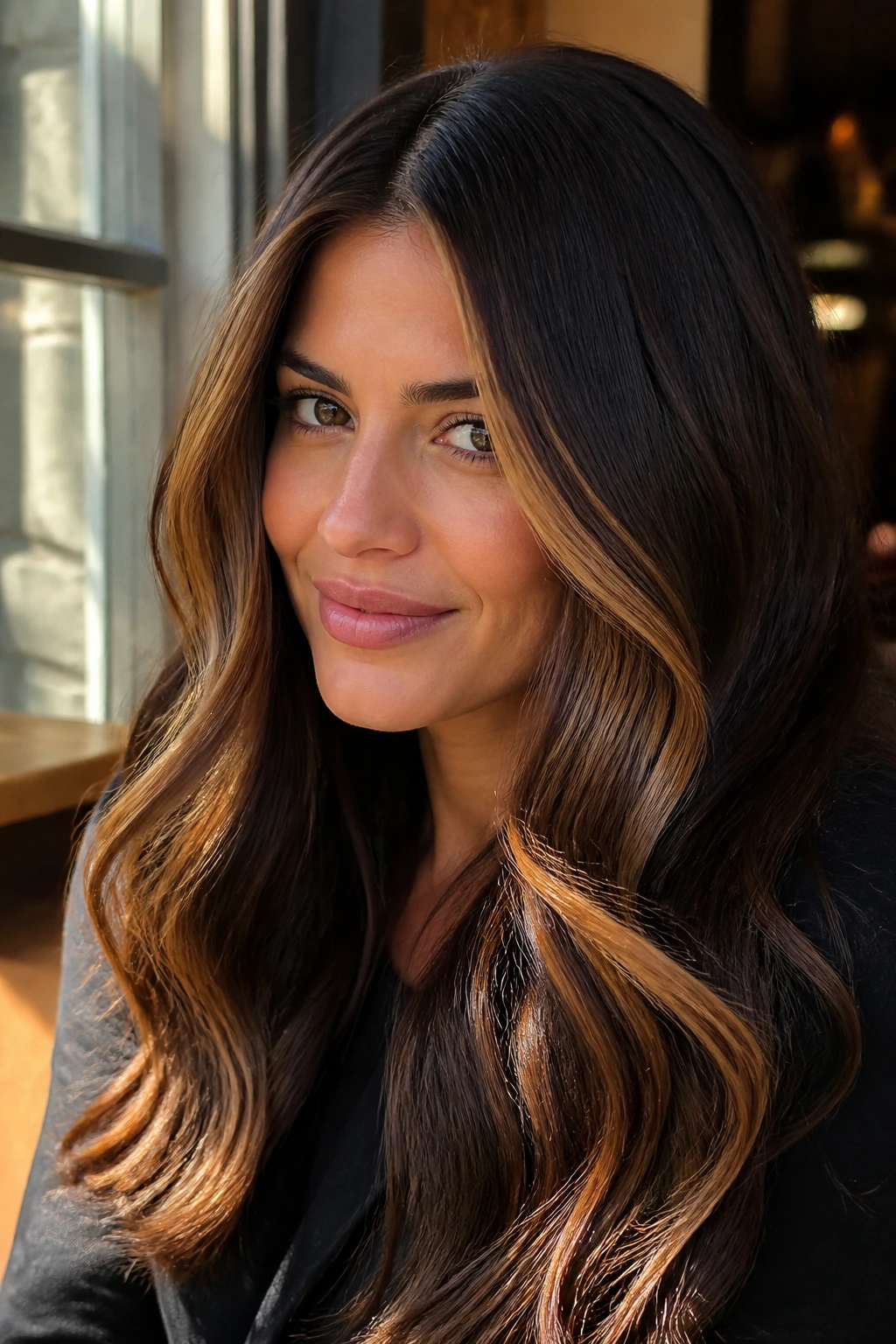
A caramel money piece can do more for a dark brunette than a whole head of highlights if the rest of the color is strong. The front pieces do the face-brightening work. The back stays deep. The contrast gives you impact with less salon maintenance.
The placement is the whole trick. Keep the brightest caramel around the hairline, then let it melt back into a darker root and mid-length. On waves, the light catches those front pieces every time you turn your head. On straight hair, the effect is cleaner and a little sharper.
What to ask for
- Two front sections one to two levels lighter than the base
- A soft root shadow so the grow-out doesn’t look harsh
- Fine blending at the temples to avoid obvious stripes
- A warm caramel tone, not a beige blonde
This is a practical choice if you mostly wear your hair down and want visible brightness without committing to full dimension everywhere. It’s also nice for ponytail people, because the front still does the talking even when the rest is pulled back.
19. Warm Bronde Melt
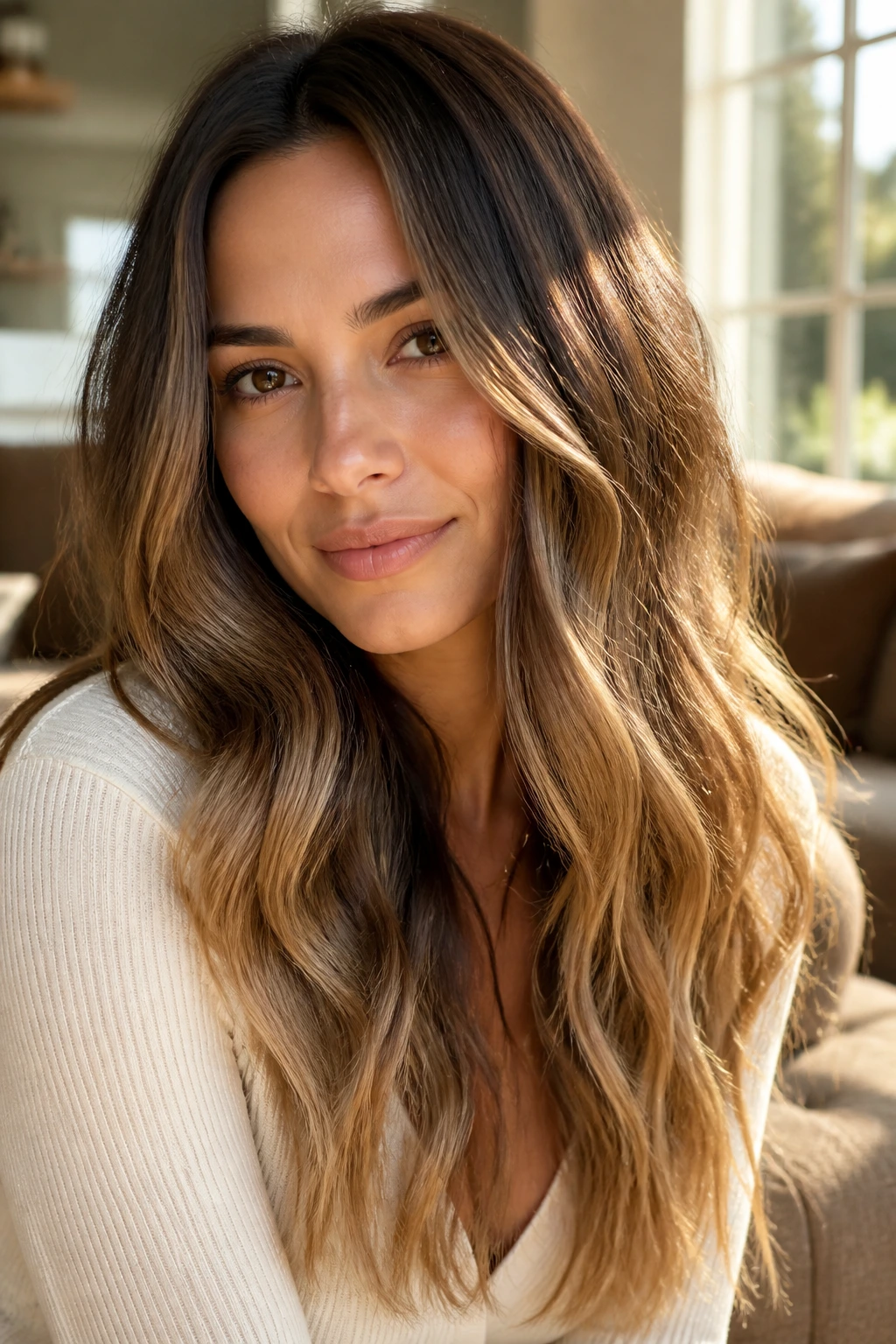
Warm bronde sits in the middle of brown and blonde, but the warm version needs a brown root and a gold-softened end, not a cool beige fade. The melt is what matters. You want the colors to move into each other so the hair looks naturally sun-shifted instead of two-toned.
The best bronde jobs usually start with a brunette root that’s kept close to the natural level. Then the mids get warmed with honey or caramel, and the ends are light enough to show clear contrast. If the jump is too sudden, the hair starts looking choppy. The melt is what saves it.
This shade is especially useful if you’re growing out lighter hair and don’t want to slam back into one flat color. A warm bronde melt lets you keep brightness while anchoring the look with brown. That matters more than people think. Hair feels intentional when the root and ends make sense together.
20. Burnt Sugar Brunette
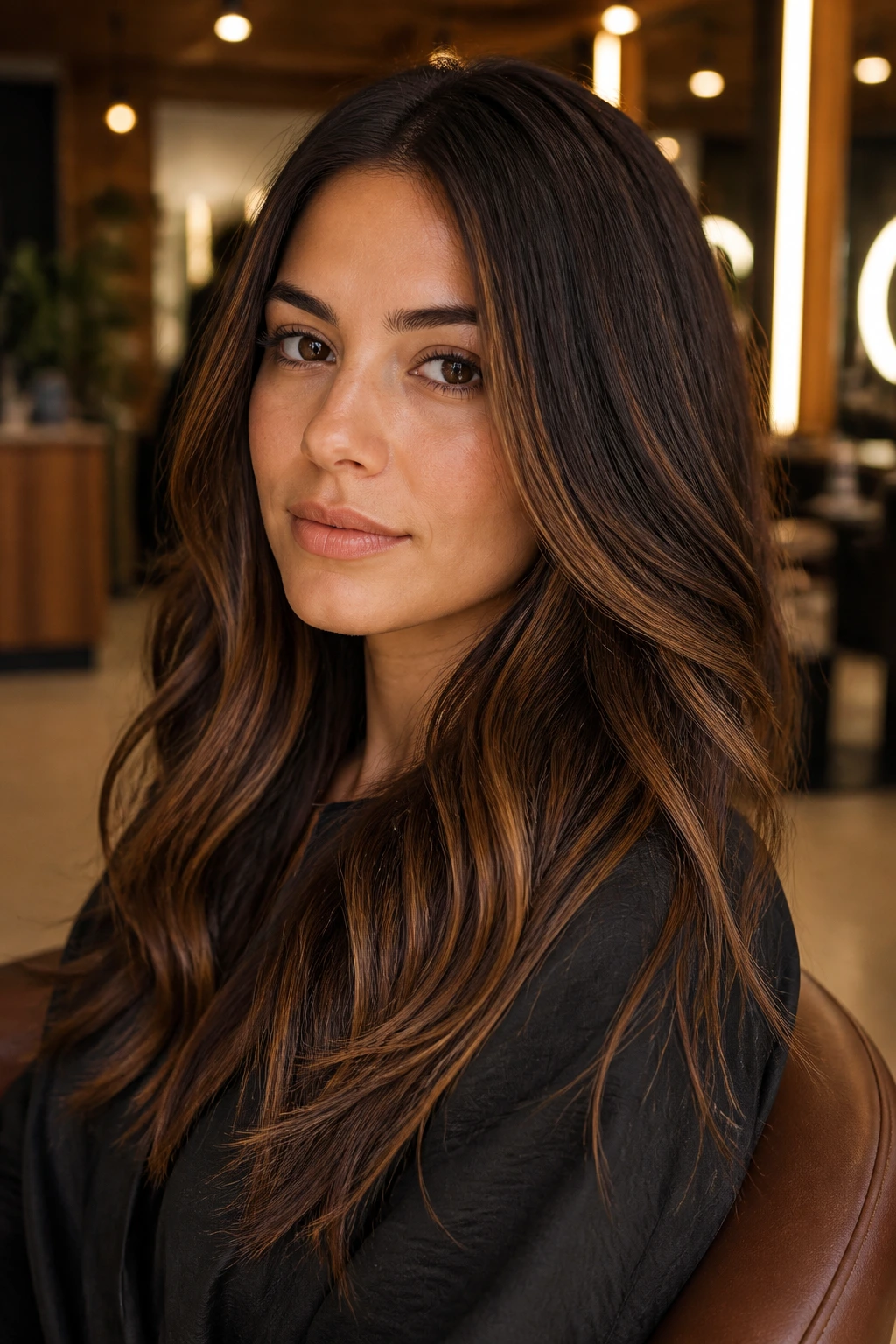
Burnt sugar brunette has a toasted, almost lacquered look. Dark brown at the base, then a warm amber-brown or deep caramel reflection that flashes when the light hits. It feels a little more dramatic than toffee and a little less red than auburn.
What I like about this shade is the depth. It doesn’t need a lot of obvious light pieces to do its job. A strong gloss and a few well-placed ribbons through the ends can be enough. On curls, it looks layered and dimensional. On straight hair, it reads sleek with a tiny edge.
Burnt sugar is also forgiving when you’re not ready for big maintenance. Because it stays on the darker side of warm brunette, it can grow out with less drama than brighter balayage. The warmth softens the regrowth line.
If you’ve been living in ash-brown territory and everything looks a little dead, burnt sugar is a useful correction. Warm, but not candy-sweet. That balance is the charm.
21. Tawny Brown With Earthy Warmth
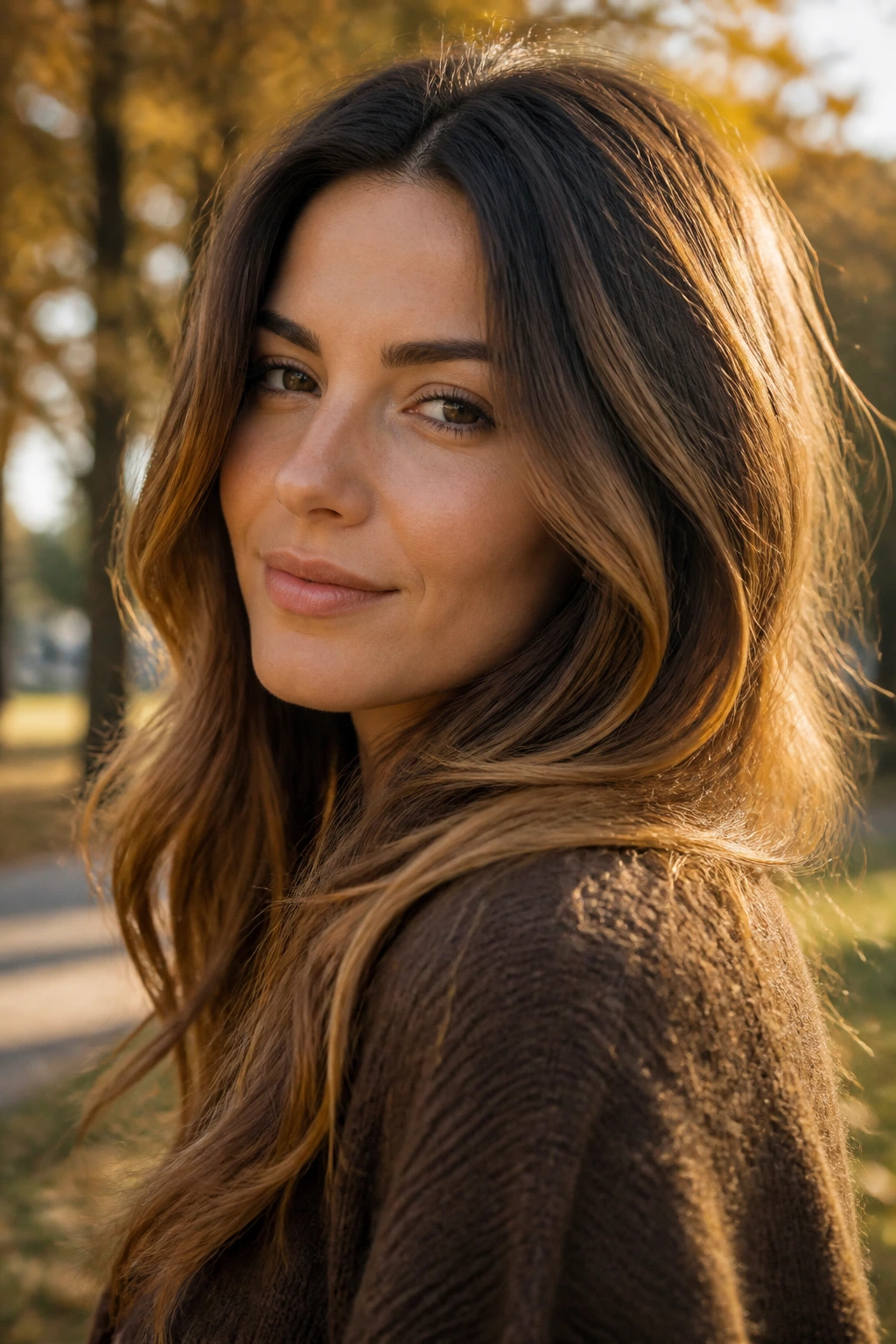
Tawny brown has an earthy, grounded warmth that feels more natural than flashy. It’s a brown shade with golden and soft bronze notes, the kind of color that looks like it belongs on textured hair, layered cuts, and anyone who wants warmth without a visible red cast.
The shade works well when the highlights are sparse and blended. You do not want a lot of obvious stripes here. Better to keep the lightness scattered and soft, almost like the hair caught a little sun in a few spots and kept it.
This is also one of the more wearable warm brunettes for people who don’t want to baby their color every week. It grows out gently. The tone fades in a believable way. And because it stays earthy, it doesn’t turn sugary or too bright as fast.
Tawny brown is a strong choice if your wardrobe leans warm neutrals, olive, cream, rust, and deep green. The hair fits right in.
22. Rosewood Brunette

Rosewood brunette is a warmer brown with a soft rosy cast, and it can be a very pretty answer for people who want something more nuanced than copper or auburn. The red note is there, but it leans muted and elegant rather than fiery.
The best rosewood shades usually start on a medium brunette base. Add a red-brown gloss, then let the undertone stay subtle. Too much red and the effect gets loud. Too little and you lose the rosewood character. The balance is narrow, but it’s worth it.
This shade is especially flattering when paired with softer makeup tones — rose blush, berry lips, warm nude shadows. The hair doesn’t need a lot of styling to look finished because the color itself has enough movement.
One practical note: red-brown tones fade faster than plain brown. If you want rosewood to keep its shape, plan on a gloss refresh or color mask before the color gets dull and muddy. That part matters more than washing frequency.
23. Sunlit Chestnut Bob
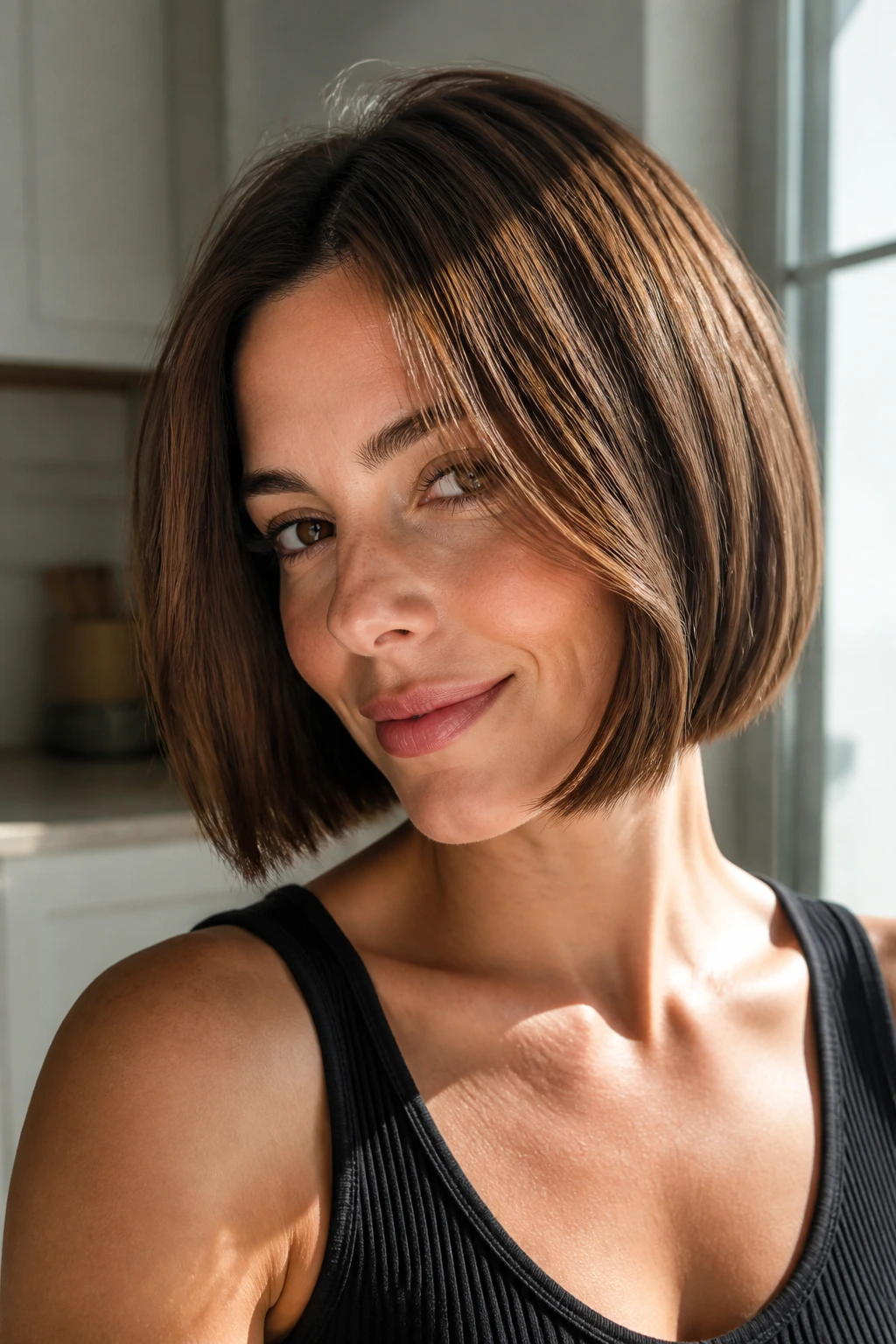
A chestnut bob is one of the easiest places to make warm brunette color look expensive. Shorter hair shows tone shifts fast, and chestnut gives the cut enough warmth that it doesn’t read like a helmet. Add a few sunlit ribbons, and the whole shape wakes up.
The cut matters here. On a blunt bob, keep the highlights ultra-fine so the line stays crisp. On a textured bob, you can use a slightly stronger chestnut dimension because the piecey movement can handle it. Either way, the color should follow the haircut, not fight it.
H3: Why short hair makes chestnut look sharper
There’s less length to hide uneven tone, which means the gloss and placement have to be cleaner. But the payoff is worth it. Every turn of the head catches light. Every bend at the jawline shows the warm pieces. The bob becomes the frame, and the color fills it.
This is a strong option for someone who wants brunette color ideas that feel fresh without needing beachy length to make them work.
24. Soft Cinnamon Ombré
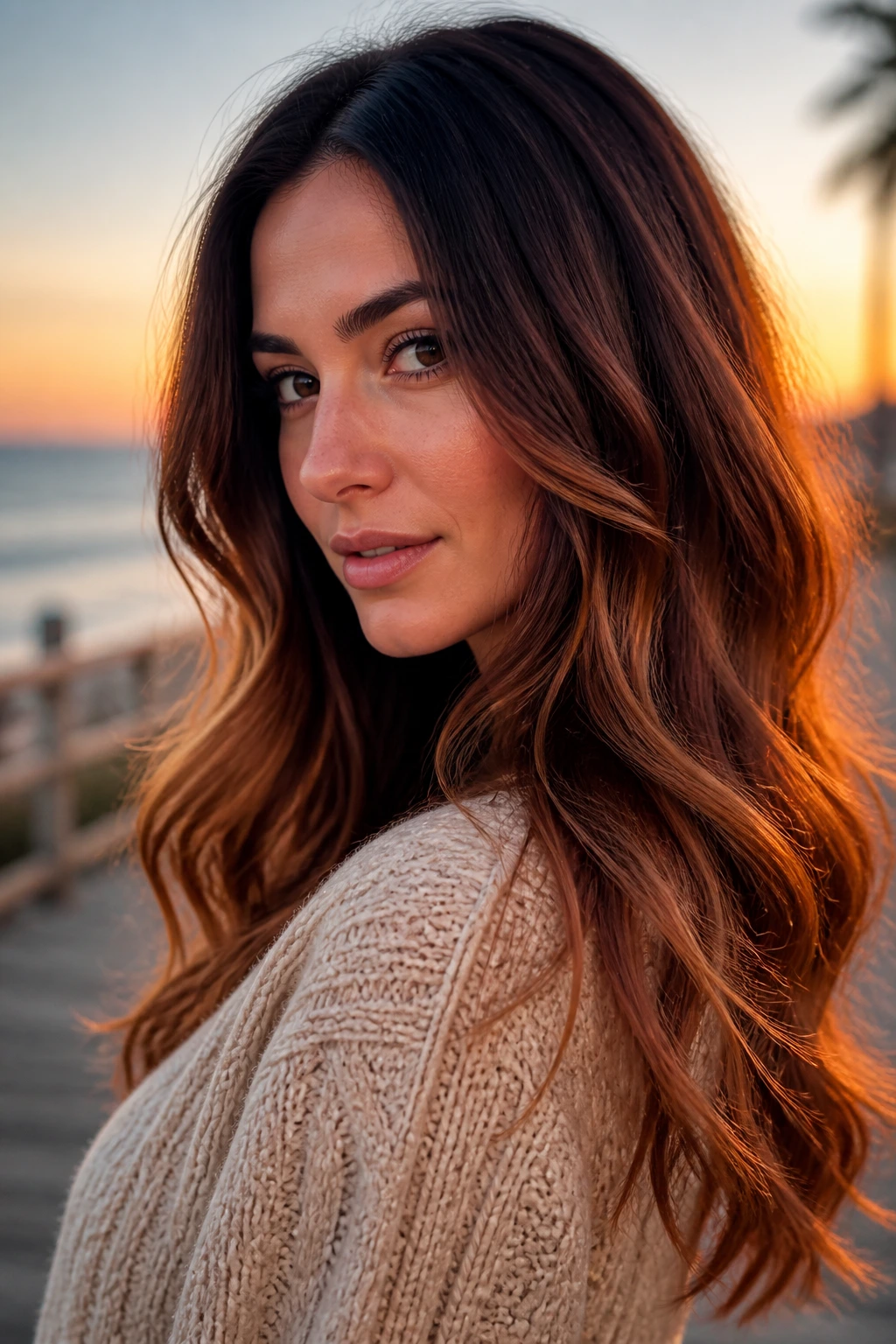
Soft cinnamon ombré gives you a gradual shift from deep brunette roots to warm spice at the ends. The fade is the whole point. Instead of one consistent warm shade from top to bottom, the color deepens toward the scalp and warms up as it falls.
That structure makes it lower maintenance than a full all-over warm brunette. The roots can stay close to natural. The cinnamon ends carry the style. It’s a useful setup if your hair grows fast or if you like to stretch salon visits without letting the color look forgotten.
This shade works especially well on wavy hair because the gradient shows up in the bends. Straight hair can wear it too, but the transition should be feathered carefully or it can look abrupt. On curls, the ombré reads softer and more organic.
If you want warmth without constant root work, this is one of the cleaner answers. It feels finished, but not fussy.
25. Cocoa Velvet Brunette
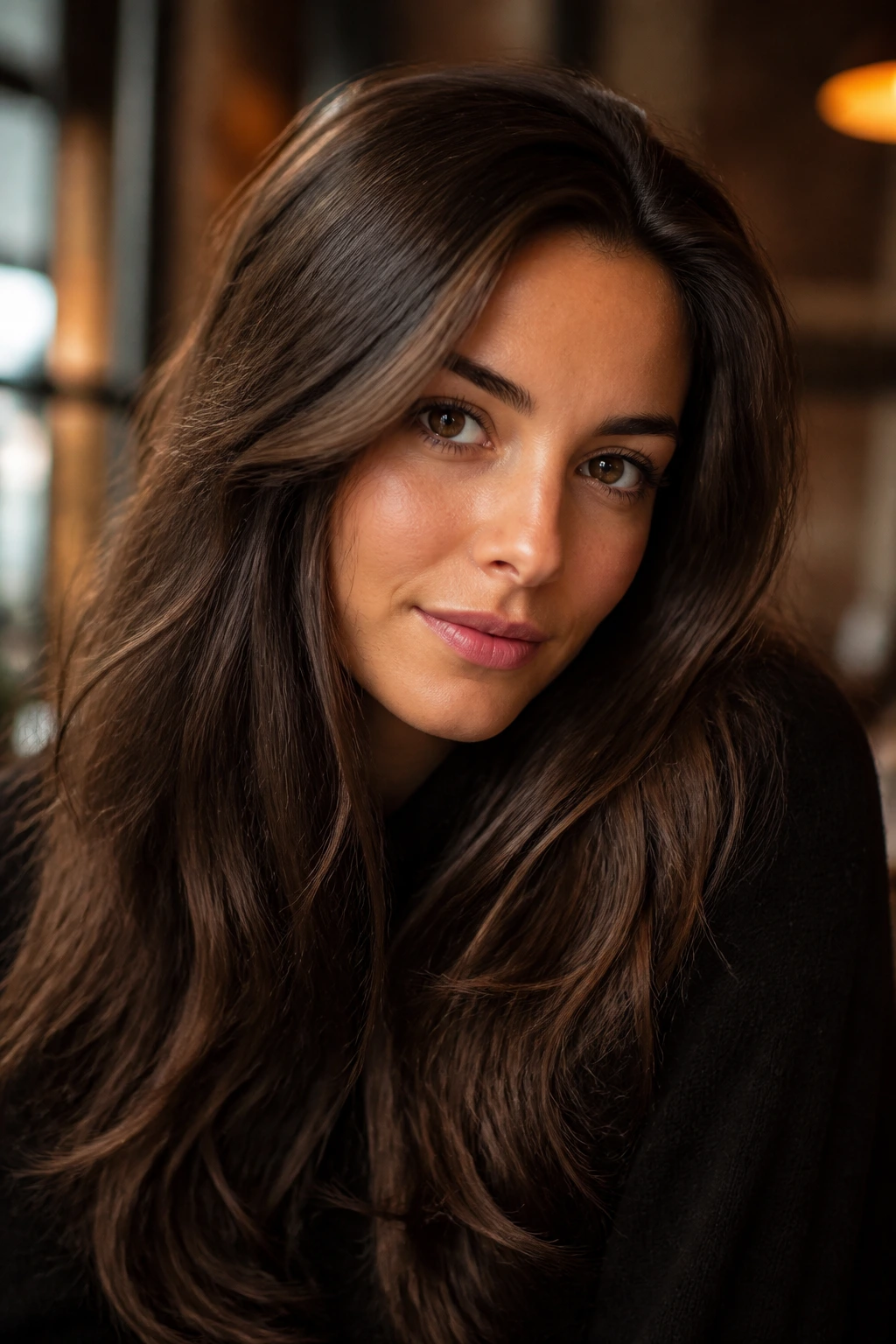
Cocoa velvet brunette is the shade I’d send someone to if they want deep brown that still feels warm, touchable, and rich under low light. It isn’t flashy. That’s part of the appeal. The color looks plush, like the hair has been given a warm brown filter that still lets shine do its thing.
The trick is keeping the tone from drifting muddy. Cocoa velvet needs a warm-neutral balance, not a dusty ash finish. A gloss can make all the difference here, especially on hair that tends to dull out after a few washes. When it’s done well, the brown looks deep but never dull.
This shade is a nice final note because it works on almost any length and almost any haircut. Short, long, straight, curly — the warmth gives shape without needing a lot of contrast. If you like rich brunette hair color ideas that stay grounded, cocoa velvet is the one that quietly does the job.
What Makes Warm Brunette Color Look Rich Instead of Flat
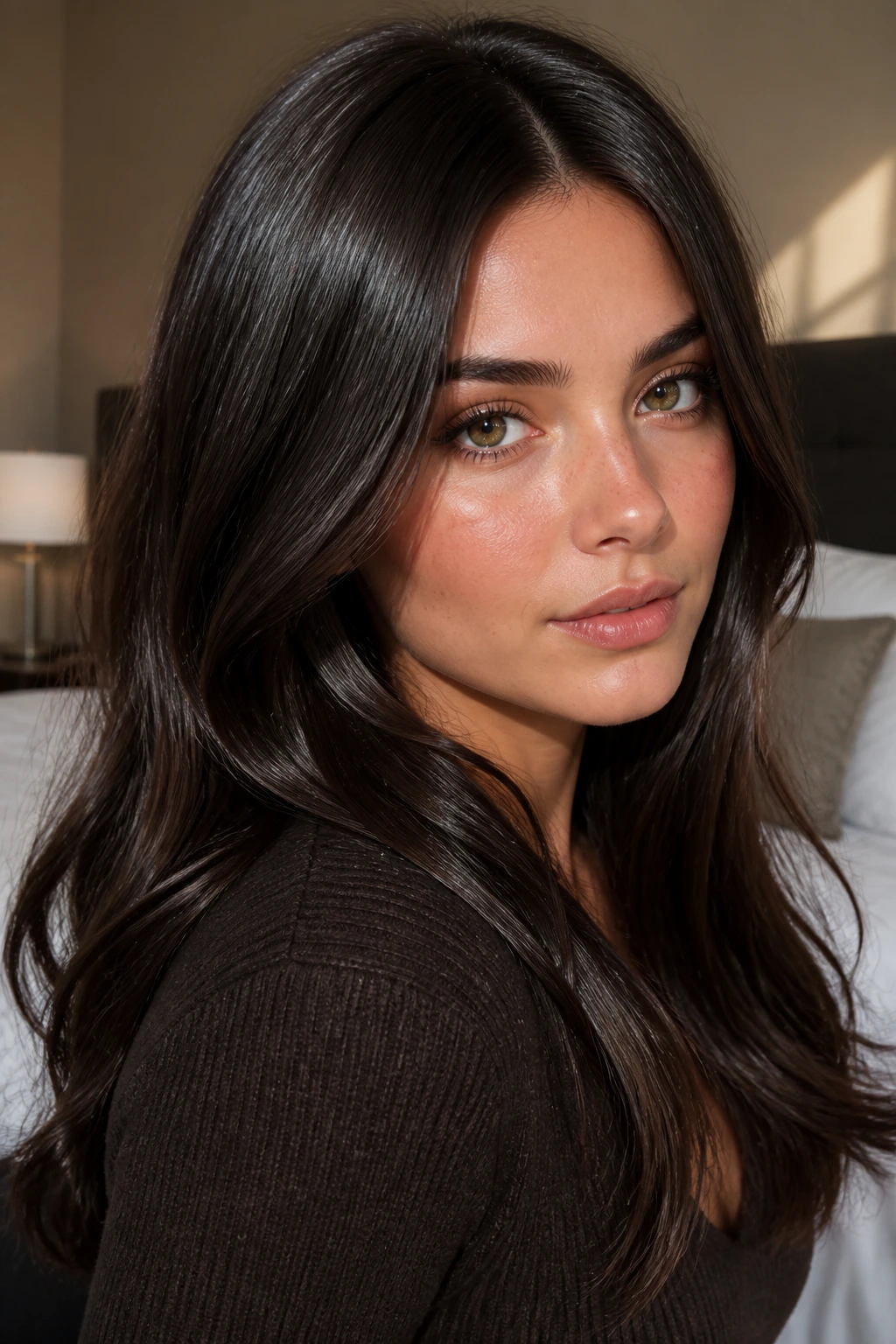
Warm brunette color looks expensive — and I mean that in the literal “it has depth and shine” sense — when the undertone matches the base and the placement follows the haircut. That’s the part people skip. They ask for caramel or chestnut, but the color is dropped randomly through the head, so the result feels noisy instead of dimensional.
A brunette base needs something to hold it together. That can be a darker root shadow, a warm gloss through the mids, or fine highlights placed where the hair bends. If the pieces are too chunky, the eye reads streaks. If the tone is too cool, the brown can turn dusty. If the finish is neglected, even the best formula will look tired by week two.
H3: Undertone matters more than brightness
A chestnut brunette and a caramel brunette can both be warm, but they don’t sit in the same place. Chestnut leans brown-red. Caramel leans gold. Maple drifts amber. The exact choice changes how the color sits against skin, makeup, and even clothing. That is why a good consultation sounds a little fussy. It should.
A warm brunette usually looks richest when the darkest pieces stay near the roots or underlayers, then the warmest pieces show up through the top layer and around the face. That layered look creates the illusion of thicker hair, too. One tone everywhere rarely gives you that.
Essential Tools for Keeping Brunette Hair Color Fresh
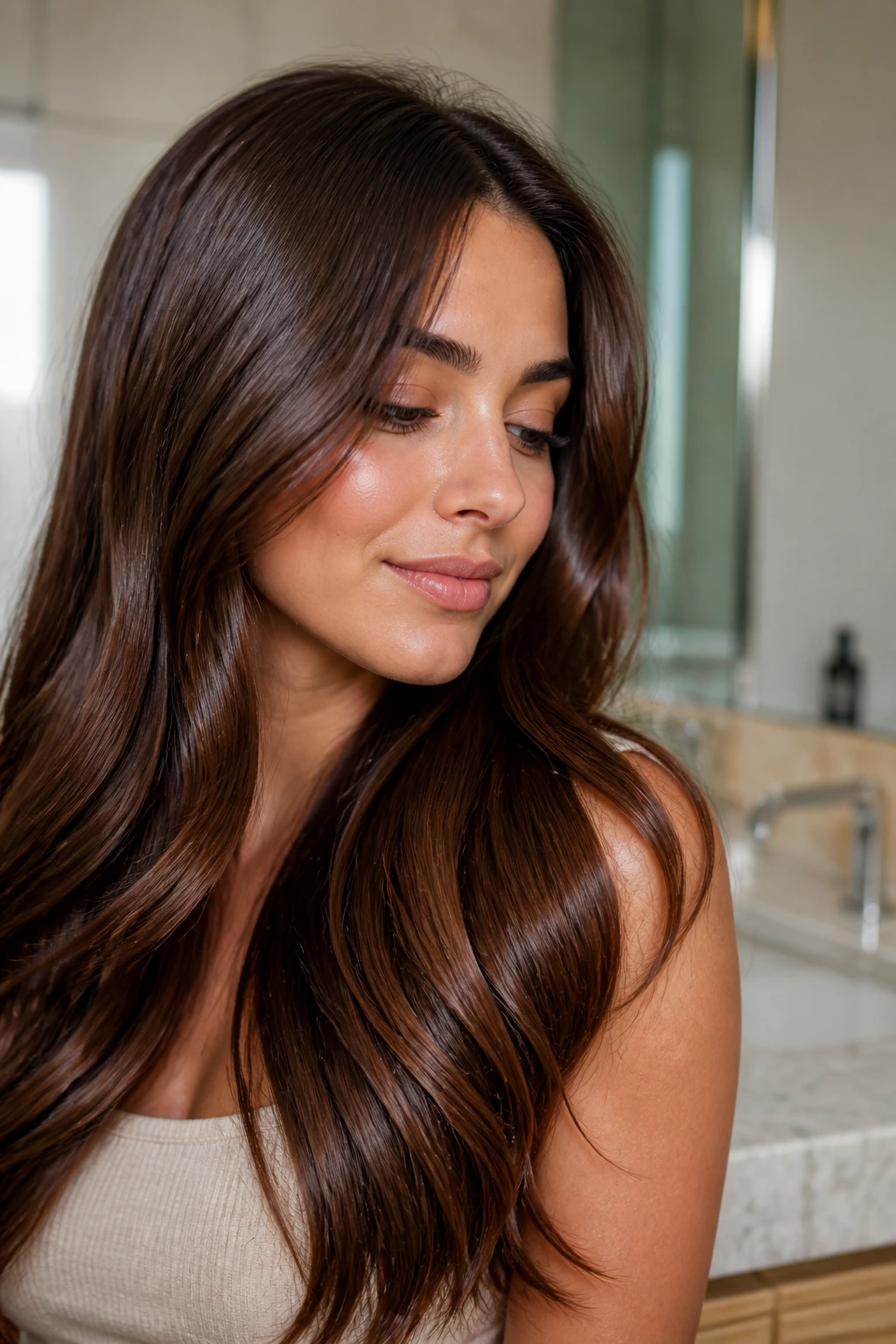
You do not need a drawer full of gadgets, but a few good tools make warm brunette hair much easier to live with.
- Sulfate-free shampoo: Helps keep warm pigments from fading too fast and keeps the color from stripping out on wash day.
- Color-safe conditioner: Adds slip without dulling the tone, which matters a lot for brunettes that depend on shine.
- Heat protectant spray or cream: Brown hair can go flat fast under hot tools, and a protectant keeps the ends from looking toasted.
- Wide-tooth comb: Works through wet hair without roughing up the cuticle, which helps glossed brunettes stay smoother.
- Tint brush and mixing bowl: Useful if you do at-home glosses or root touch-ups, because brown color needs clean, even application.
- Sectioning clips: Small thing. Big help. They keep balayage pieces and face-framing sections neat when you style or color.
- Shower filter, if your water is hard: Mineral-heavy water can make warm brunettes look dull or muddy after repeated washing.
- Microfiber towel or soft cotton tee: Reduces friction on wet hair, which helps preserve shine on darker brunettes.
How to Choose the Right Warm Brunette Shade for Your Face and Hair History
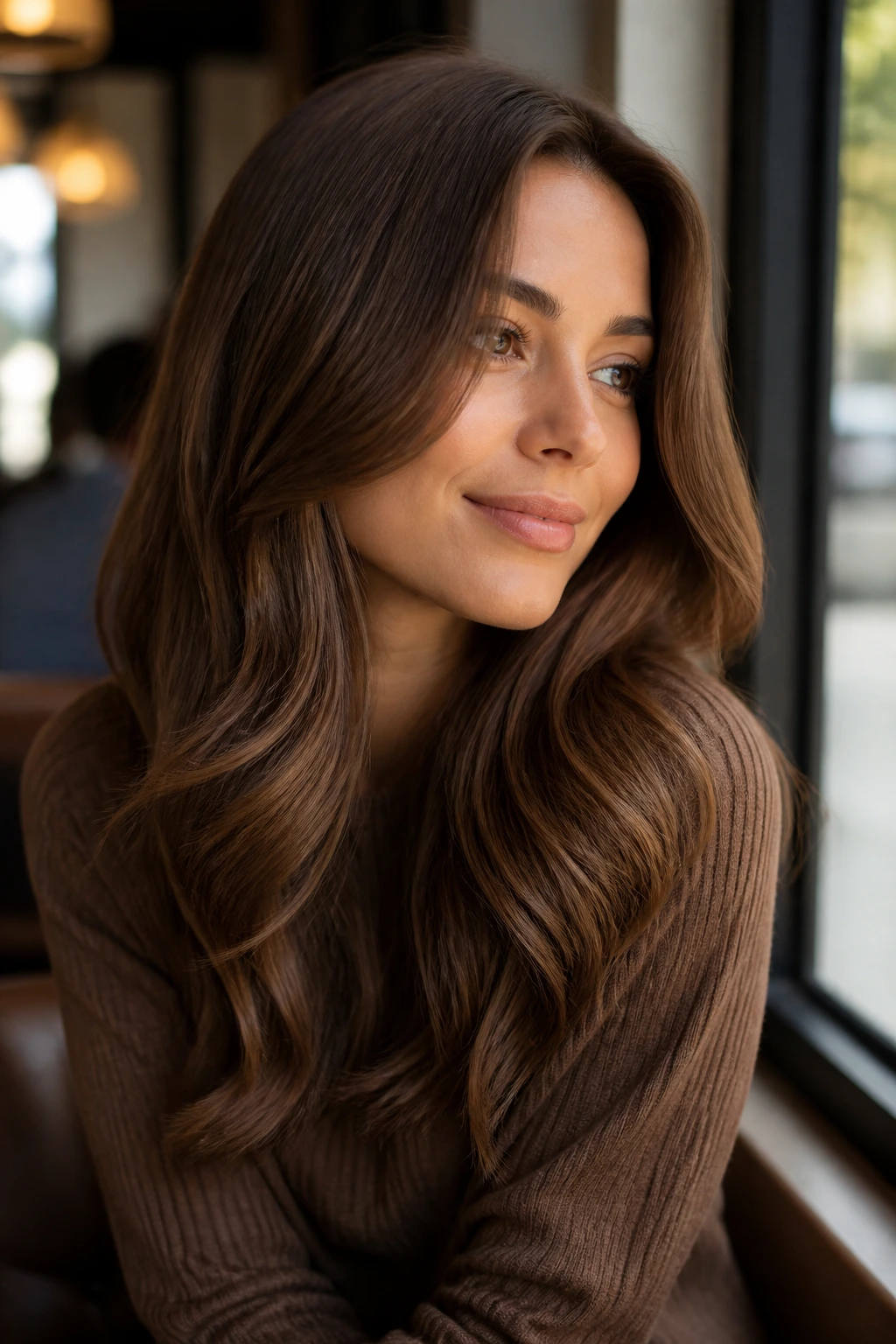
The shade that looks best on the swatch wheel can be the wrong choice on your head. Hair history changes everything. So does porosity, previous bleach, and whether your natural base is level 3 or 6. Start there.
If your hair has been lightened before, warm tones will usually show faster and brighter. That can be useful if you want caramel or honey ribbons, but it also means the color may grab unevenly. Porous ends drink up pigment. Roots do not. A thoughtful formula should account for that.
Match the warmth to your undertone
- Warm or golden skin: chestnut, caramel, maple, toffee, honey
- Neutral skin: milk chocolate, praline, hazelnut, cocoa velvet
- Cool skin that still wants warmth: rosewood, mahogany, muted auburn, soft cinnamon
That list is a starting point, not a prison. Brows matter. Eye color matters. Makeup habits matter too. If you live in bronzer and peach blush, a honey brunette will fit more naturally than a smoky mahogany. If your face leans cool but your wardrobe is full of earth tones, rosewood may look easier than golden caramel.
Hair texture matters as much as undertone. Curly and coily hair often shows dimension better with warmer lowlights and ribboned highlights than with one single all-over shade. Straight hair can handle cleaner contrast. Fine hair usually benefits from a few well-placed darker pieces so the shape feels fuller.
How to Wear Warm Brunette Shades So They Actually Show Up
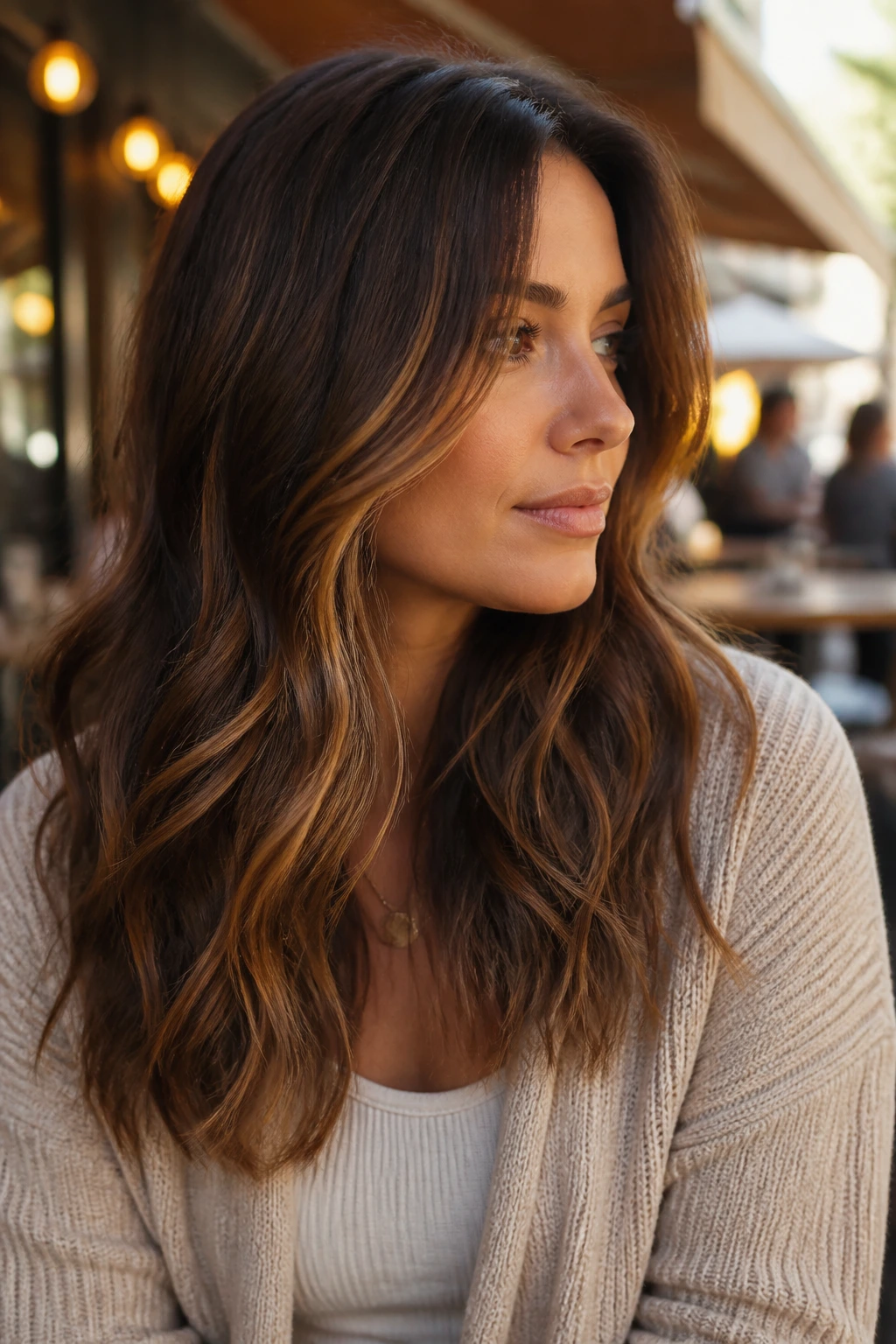
Presentation: Wear warm brunette shades with a finish that shows reflection. A soft blowout, loose bends, or a smooth flat-iron pass on the mid-lengths will make chestnut, caramel, and maple tones visible in a way air-dried hair sometimes doesn’t. A little shine spray at the ends helps, but don’t drown the roots.
Accompaniments: Pair the color with a cut that gives it movement. Curtain bangs, long layers, a collarbone lob, or a textured bob all let the warm pieces break up the shape. Brows in a soft brown, bronzy makeup, and clothes in olive, cream, rust, or deep green also make the tone read richer.
Portions: If your hair is short, keep the warmth concentrated. One strong gloss or a few face-framing ribbons is enough. Medium-length hair can handle more scattered dimension through the mids, while long hair usually needs a root shadow or darker lowlights to stop the ends from getting too light.
Beverage Pairing: Skip that label in your head and think in terms of mood. A glossy espresso brunette wants polish. A honey or caramel brunette wants texture. A mahogany or chocolate cherry shade wants a smoother finish and a little edge.
Extra Ways to Deepen Warm Brunette Tones Without Letting Them Turn Orange
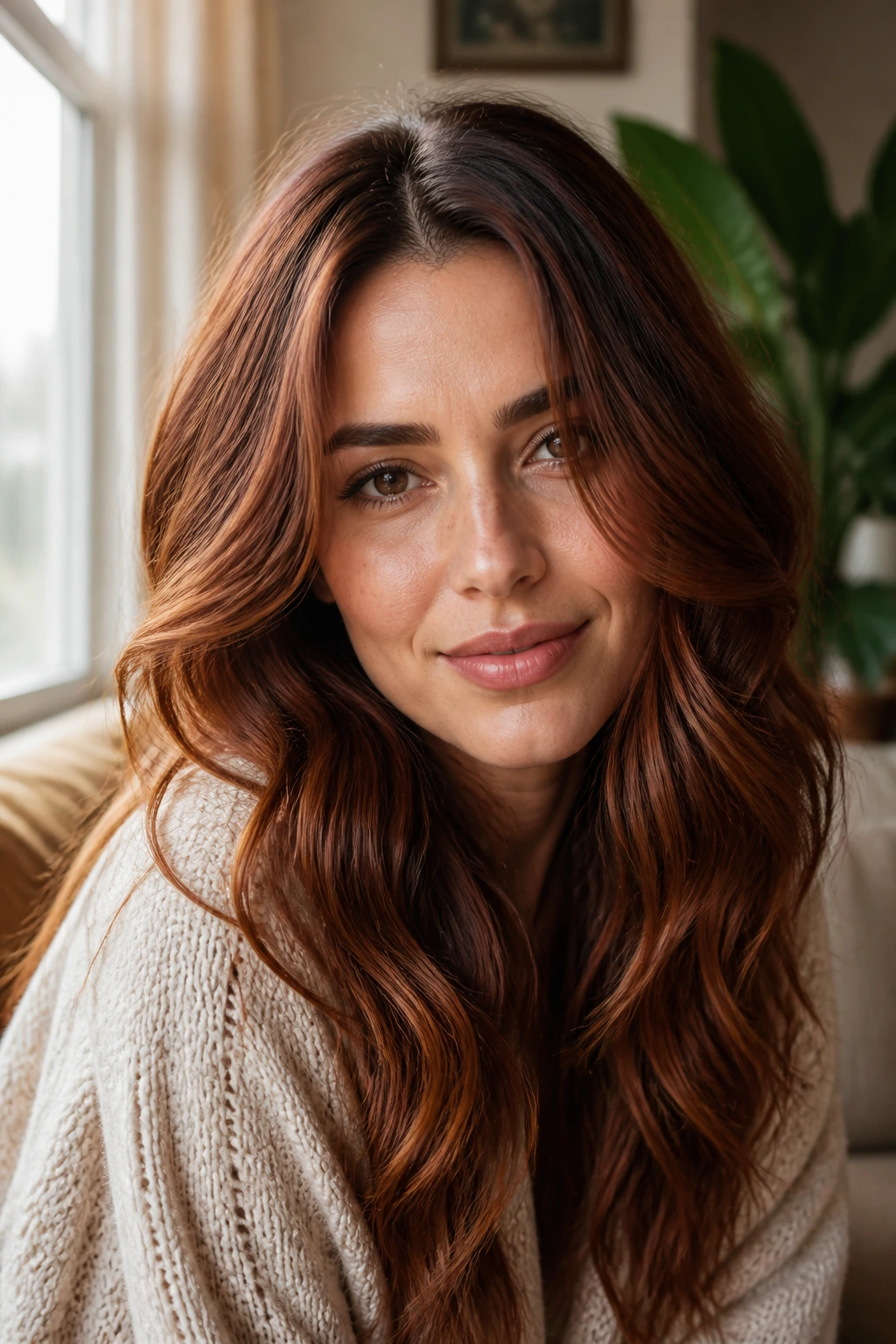
Gloss booster: A salon gloss or at-home clear glaze every few weeks can keep brown hair reflective and can nudge the tone warmer without needing another full color service. I like glosses for brunettes because they solve the “flat and dry” problem faster than most people expect.
Customization: If your brunette hair pulls too red, add beige ribbons instead of more copper. If it pulls too dull, add a chestnut or golden-brown toner rather than trying to lighten it. More light is not always the answer. Tone often is.
Serving suggestions: Wear warm brunettes with soft curls, a sleek blowout, or a half-up style that shows the face-framing pieces. A little texture goes a long way here because it breaks the color into small reflective sections.
Make-it-yours:
- For fine hair, choose lowlights and a gloss instead of heavy highlight placement.
- For curly hair, keep the brightest pieces slightly lower so the root area doesn’t puff out visually.
- For gray blending, pick a warm neutral brown with soft babylights; hard contrast is the enemy.
- For low-maintenance hair, go with a root melt or ombré instead of all-over warmth.
Maintenance, Fading, and Grow-Out Timing
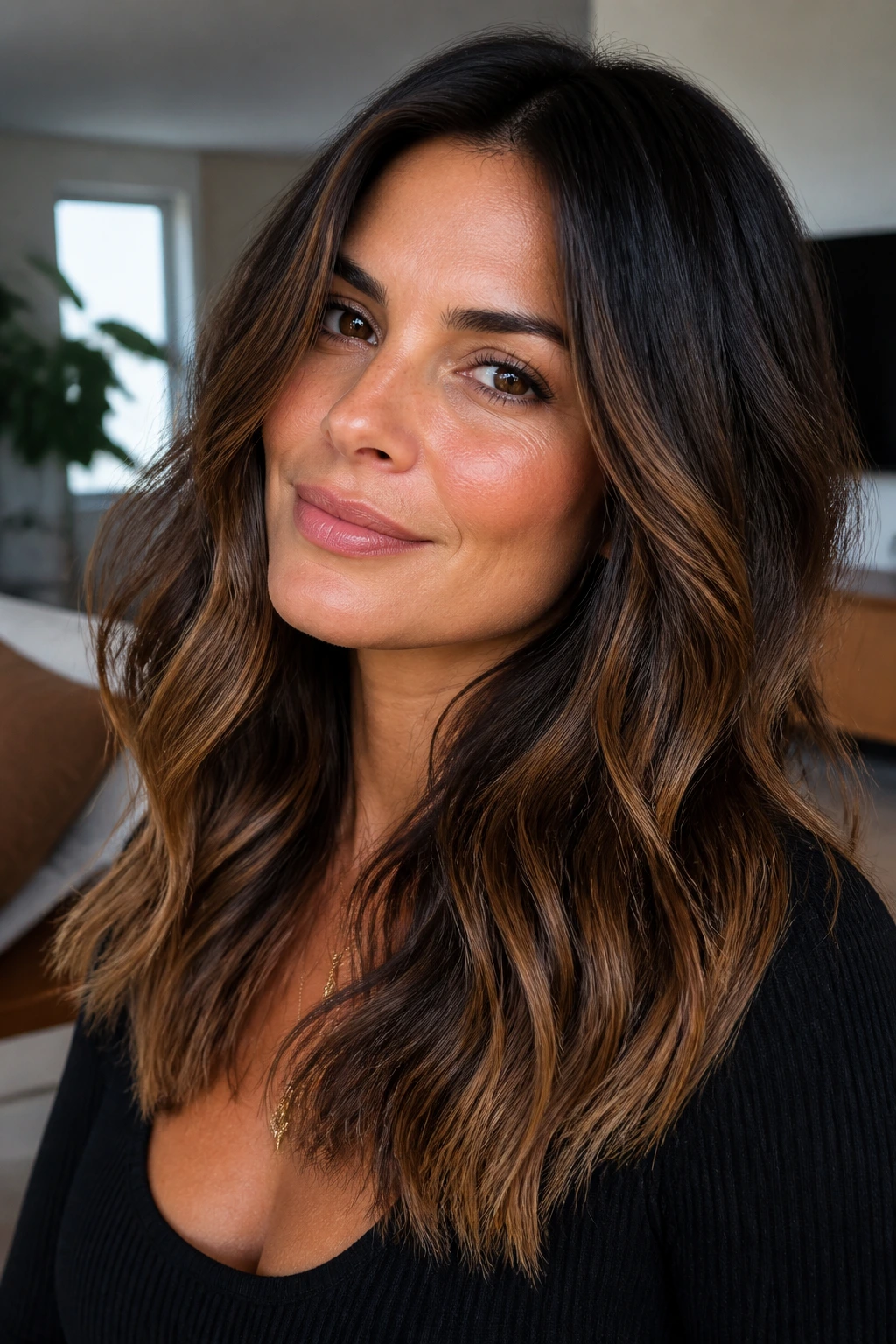
Warm brunette shades usually behave better than icy brunettes, but they still need a plan. Most brunettes look freshest with a gloss refresh every 4 to 6 weeks if the tone is noticeable, or every 6 to 8 weeks if the color is subtle and rooted. Balayage can stretch longer. Root-heavy all-over color usually cannot.
Wash less often if you can. Two to three times a week is kinder to warm pigments than daily washing, and cooler water at the rinse stage helps the cuticle lie flatter. Hot water is a color thief. It pulls pigment out faster than people think, especially from red-brown shades like auburn, mahogany, and chocolate cherry.
If you heat-style often, a protectant is non-negotiable. High heat roughs up the surface, and rough hair reflects light poorly. That’s why a brunette can go from glossy to tired in a matter of weeks, even if the tone itself is still decent.
For grow-out, balayage and money-piece placement are the easiest to live with. Full warm brunettes need root touch-ups sooner. If you hate salon upkeep, ask for a root shadow from the start. It buys you breathing room.
Common Mistakes That Make Brunette Color Look Muddy
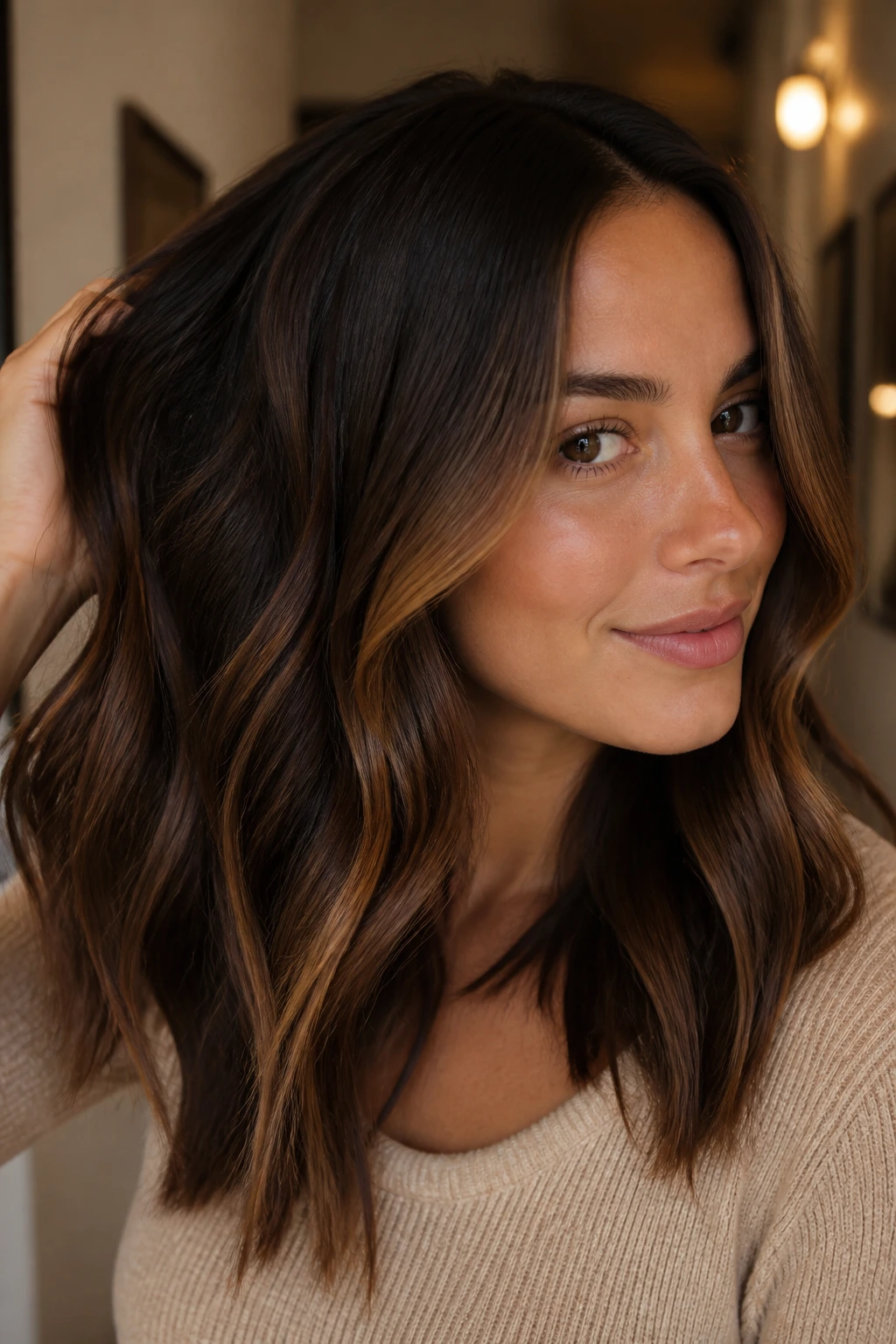
The first mistake is choosing the wrong warm tone for the base. A too-gold gloss on an already golden brunette can go brassy. A too-red gloss on porous hair can go loud fast. The fix is matching the formula to the natural level and undertone, not picking a shade because the name sounds pretty.
The second mistake is putting light pieces everywhere. When highlights are scattered from root to tip with no structure, brunette hair loses its depth. You get noise instead of dimension. Keep the brightest pieces around the face, the crown, or the lower half of the hair, depending on the cut.
The third mistake is fighting warmth with too much ash shampoo. A purple or blue shampoo can be useful, but overusing it on warm brunettes can make the hair look dull, greenish, or strangely dry. Use it only when you actually see brass you want to calm down.
The fourth mistake is skipping the gloss. Warm brunette color depends on reflectiveness. Without shine, the warmth can look muddy instead of rich. A glaze or color mask often solves more than people expect.
The last one is ignoring porosity. Ends that absorb pigment too fast will turn darker or redder than the roots. That leaves the color looking uneven even when the formula was good on paper. Prep porous ends, or the whole service gets compromised.
Variations and Adaptations to Try
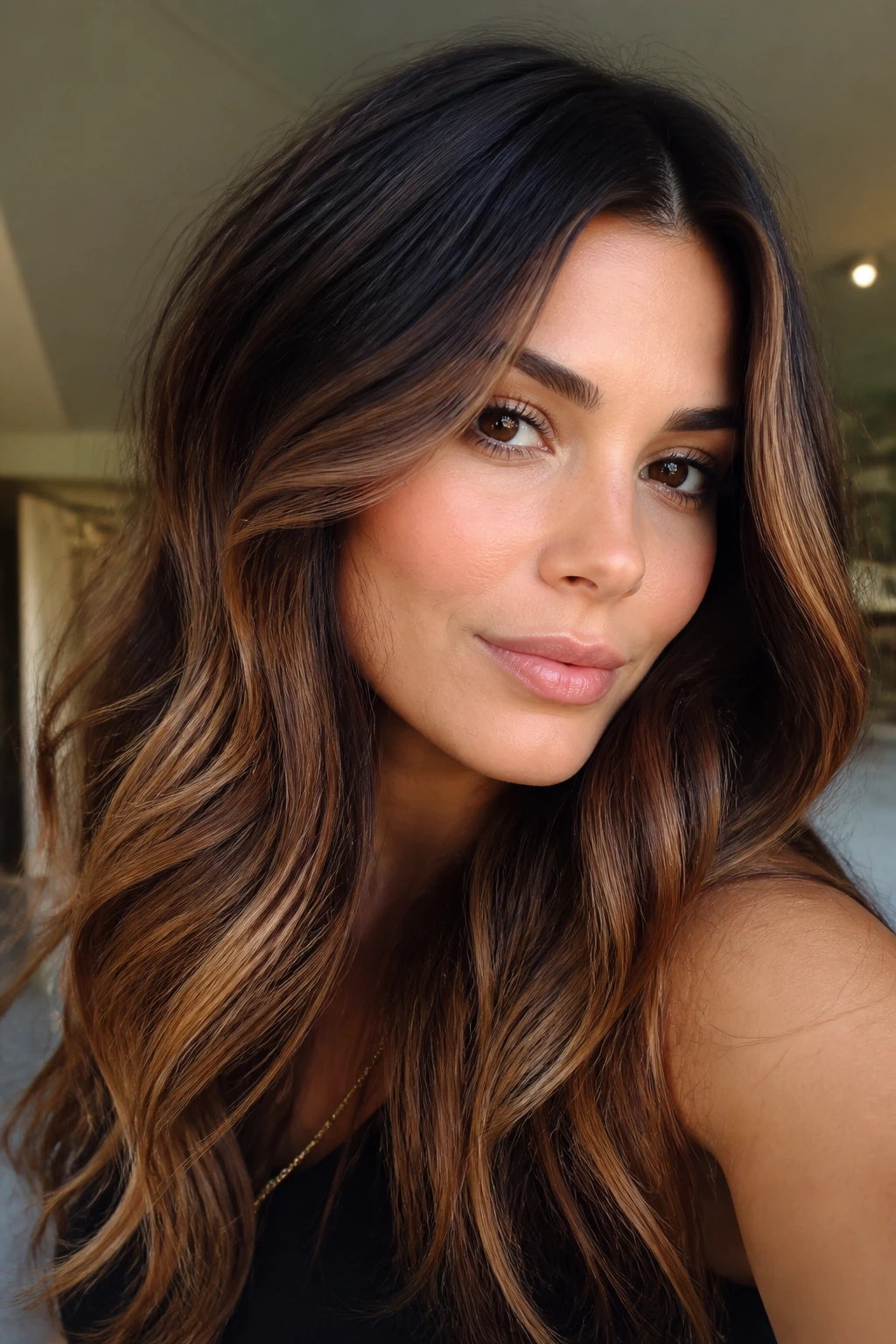
Soft-Root Melt: Keep the roots one shade deeper than the mids and ends. This is the best path if you want warm brunette color that grows out with less drama and still looks polished on week six.
Ribboned Curly Brunette: Use warm highlights placed to follow the curl pattern instead of straight lines. The lighter pieces should sit where curls naturally separate, which gives the color depth without making the hair look striped.
Muted Red Brunette: Pull the copper back and lean into mahogany or rosewood. This works when you want warmth that feels a little quieter and more wearable for office settings or cooler wardrobes.
Low-Lift Gloss Refresh: If your hair is already brown and healthy, skip big lightening and refresh the warmth with a demi-permanent gloss. That keeps the tone rich without stressing the ends.
High-Contrast Face Frame: Brighten the front sections two to three levels above the base and keep the rest deep. Good choice if you want a strong face-brightening effect without committing to a full blonde overhaul.
Frequently Asked Questions About Warm Brunette Hair Color
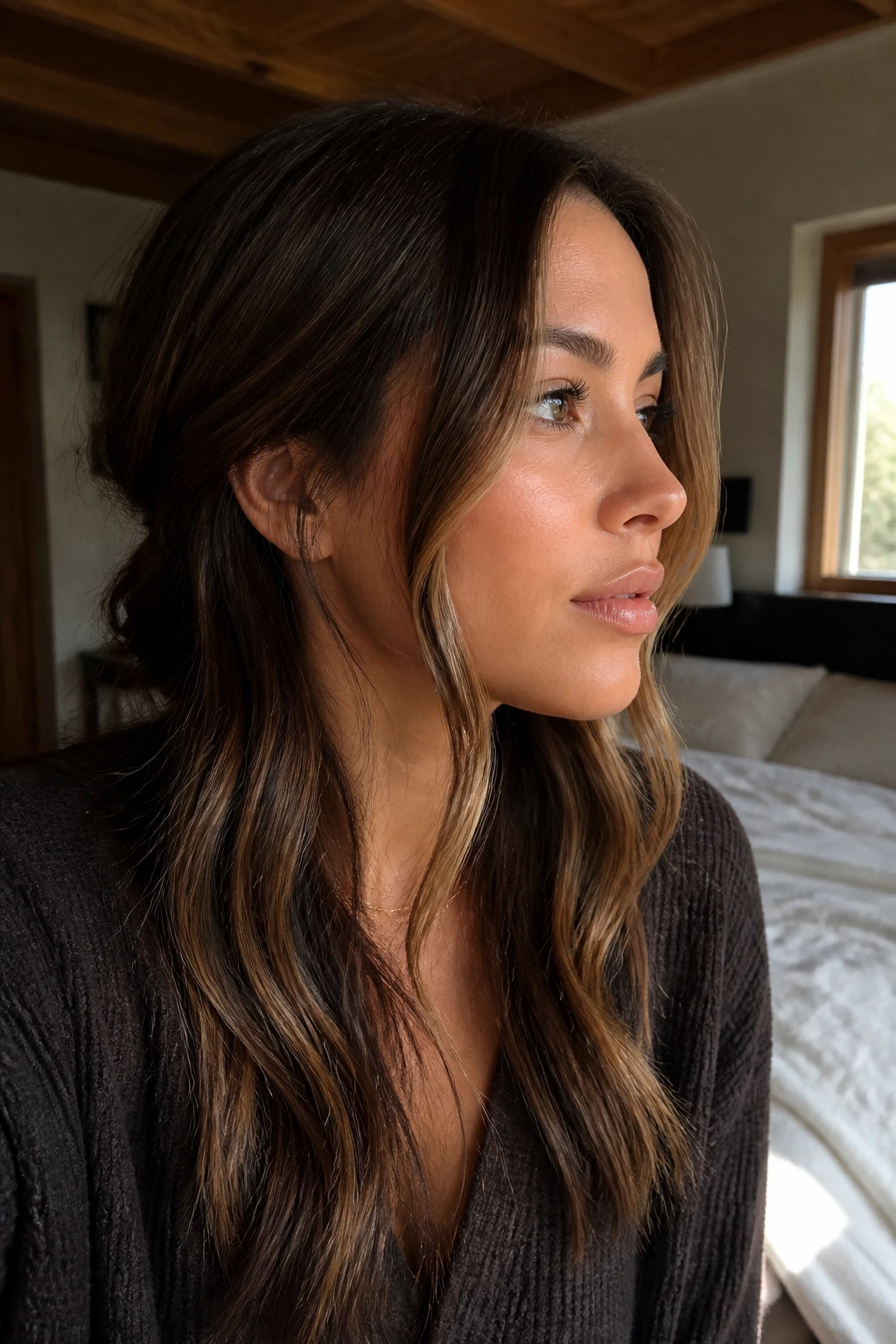
Does warm brunette hair color work on cool skin tones?
Yes, but the shade has to be chosen carefully. Cooler skin usually looks best with rosewood, mahogany, or a soft cinnamon-brown rather than a bright gold caramel that can clash with the undertone.
What is the difference between chestnut brown and caramel brown?
Chestnut leans deeper and red-brown, while caramel leans lighter and golden. Chestnut reads richer and darker; caramel brings more contrast and brightness through the mids or ends.
Can I get warm brunette hair color without highlights?
Absolutely. A gloss, toner, or demi-permanent color can add warmth to a brunette base without adding visible light pieces. That route is cleaner if you want low-maintenance shine rather than high contrast.
Will warm brunette color cover gray hair?
It can, but the result depends on the formula and how much gray you have. Full-coverage permanent color usually does the best job, while glosses or demi-permanent shades may blend gray instead of fully hiding it.
How often do warm brunette shades need to be refreshed?
Gloss-based tones usually need refreshing every 4 to 6 weeks. Balayage and rooted styles can stretch longer, but red-brown shades tend to fade faster than golden-brown ones.
What if my brunette hair keeps turning orange?
That usually means the formula is too warm for your base or the hair is porous and grabbing pigment unevenly. A softer golden-brown or beige-brown tone, plus a good filler or gloss control, usually fixes it better than adding more lightening.
Is balayage or all-over color better for warm brunettes?
Balayage is better if you want softer grow-out and visible dimension. All-over color is better if you want depth, simplicity, and less contrast around the roots.
Can I do a warm brunette gloss at home?
You can, if your hair is already brown and in decent shape. Use a color-depositing gloss that stays close to your natural level, do a strand test first, and stay away from anything that promises a big lift in one step.
Keeping Warm Brunette Shades Looking Rich
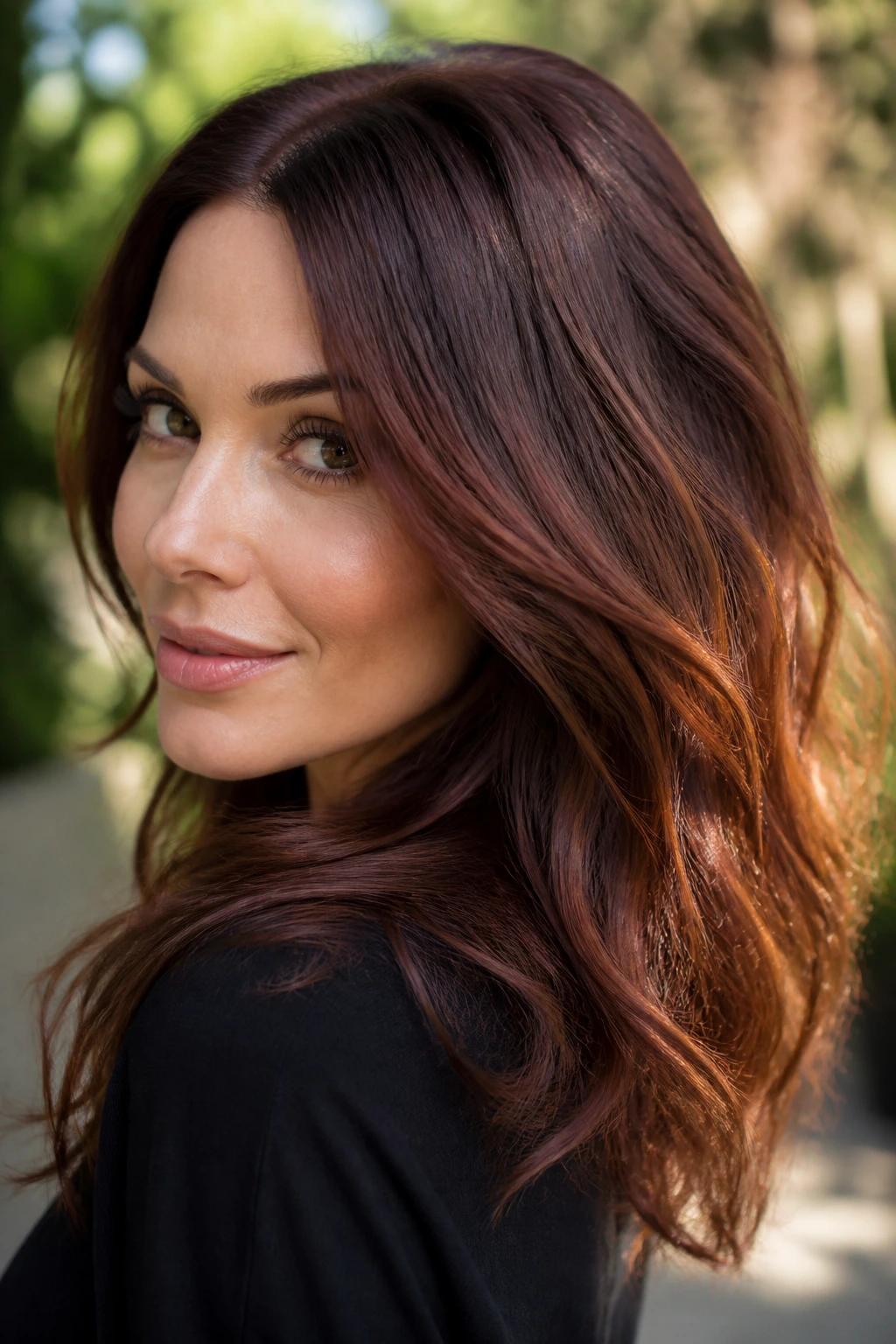
Warm brunette hair color has staying power because it works with the grain of brown hair instead of fighting it. That’s the part I like most. Chestnut, caramel, maple, auburn, and cocoa-brown shades all give you different versions of the same useful idea: depth with light in it.
Pick the tone that fits how much upkeep you’ll tolerate, then ask for the placement that fits your cut. That combination matters more than a pretty swatch. Get those two things right, and the hair will look warm, dimensional, and lived-in in the best sense of the word — not overworked, not over-processed, just brown hair that finally has somewhere to go.
If you’re stuck between two shades, choose the one with the cleaner grow-out. That choice tends to age better on the head, and honestly, it saves you from color regret in the mirror three weeks later.
