



The best highlight ideas for short hair don’t need a lot of length to make a point. On a bob, pixie, shag, or collarbone cut, a few well-placed lighter pieces can change the whole silhouette; the wrong placement makes the hair look banded, while the right one gives the cut movement even when it’s air-dried and a little rough.
Short hair is unforgiving in a way long hair isn’t. There isn’t much room to hide a stripe that sits too high or a toner that lands too ash, so the shape of the cut matters as much as the color itself. The pieces around the fringe, temple, crown, and nape do most of the talking, which is why highlight ideas for short hair have to be chosen with a little more care.
I keep coming back to one rule: if the highlight doesn’t explain the haircut, it usually doesn’t belong there. A good placement should show up when you tuck the hair behind one ear, bend it with a brush, or let curls separate on their own. The ideas below cover subtle, bright, warm, cool, playful, and low-maintenance options — because short hair can wear all of them, if the placement is smart.
Why These Highlight Ideas for Short Hair Work So Well
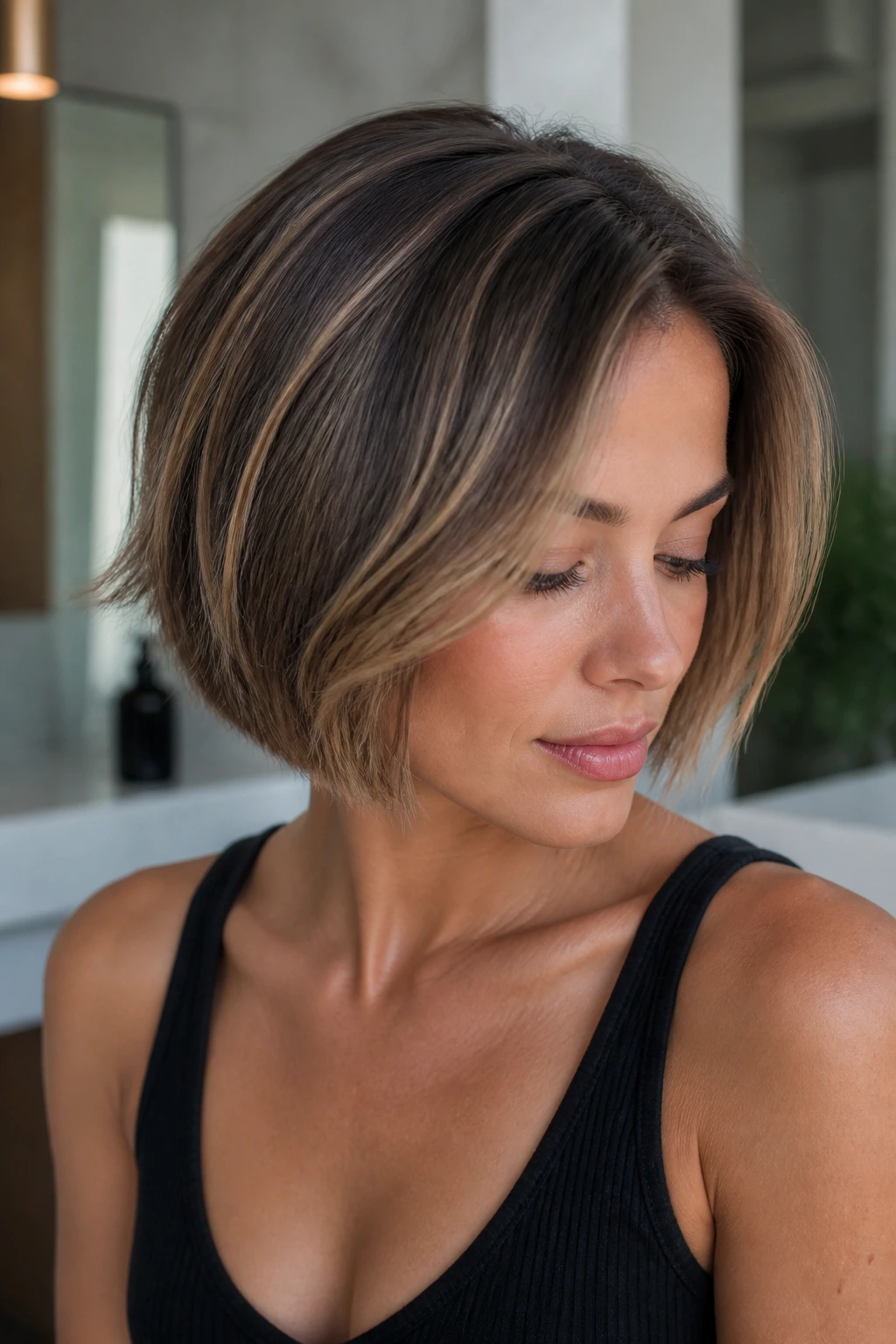
- Built for short silhouettes: Every idea here is chosen for bobs, pixies, shags, and lobs, where placement matters more than sheer amount of blonde.
- Soft grow-out options: Several looks use babylights, root melts, or peekaboo panels so the color still looks intentional after a few weeks.
- Warm and cool choices: You’ll see caramel, copper, beige, silver, ash, berry, and mushroom tones, so there’s something here for nearly every base color.
- Salon-friendly language: The names are descriptive enough to bring to a colorist without sounding like a vague Pinterest wish list.
- High impact, low bulk: Short hair can turn busy fast; these ideas keep the cut readable instead of crowded.
- Easy to personalize: Most of them can be dialed up with chunkier foils or softened with finer weaving.
1. Caramel Ribbon Highlights on a Textured Bob
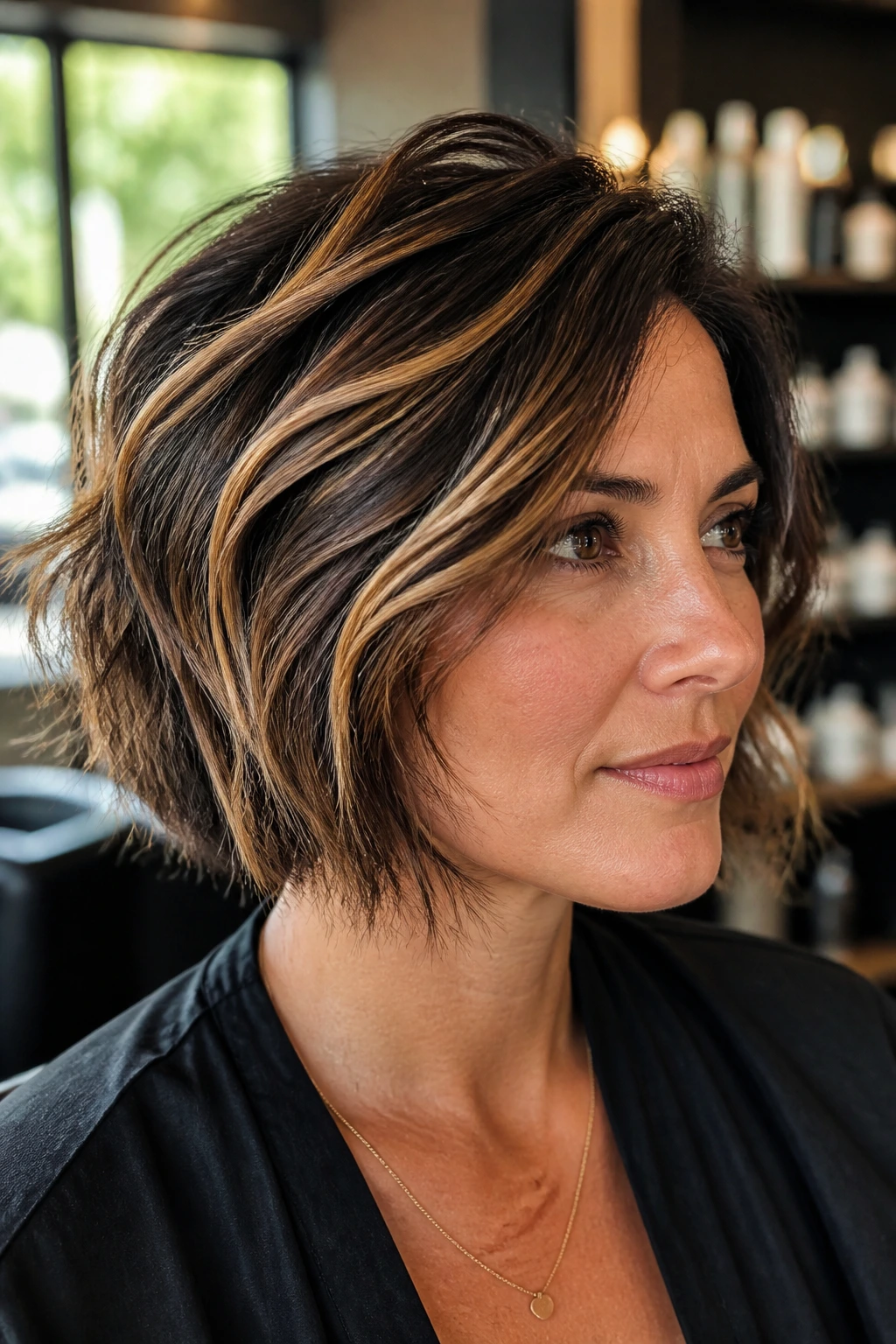
Caramel ribbon highlights on a textured bob do one thing very well: they soften a blunt line without stealing the cut’s shape. On medium brown or dark blonde hair, a few warmer ribbons placed just above the ear and through the top layer make the ends look thicker, not lighter. Keep the brightest pieces near the face and crown; if they creep too far into the nape, the bob can start to look dusty instead of dimensional.
Why It Reads So Well on a Bob
Texture is the trick here. A bend from a round brush or a flat iron set to a loose wave lets the caramel show in separate ribbons instead of one flat stripe. Ask for a gloss that leans golden, not orange. The result feels polished in the haircut sense, not the flash sense.
2. Cool Beige Babylights on a French Bob
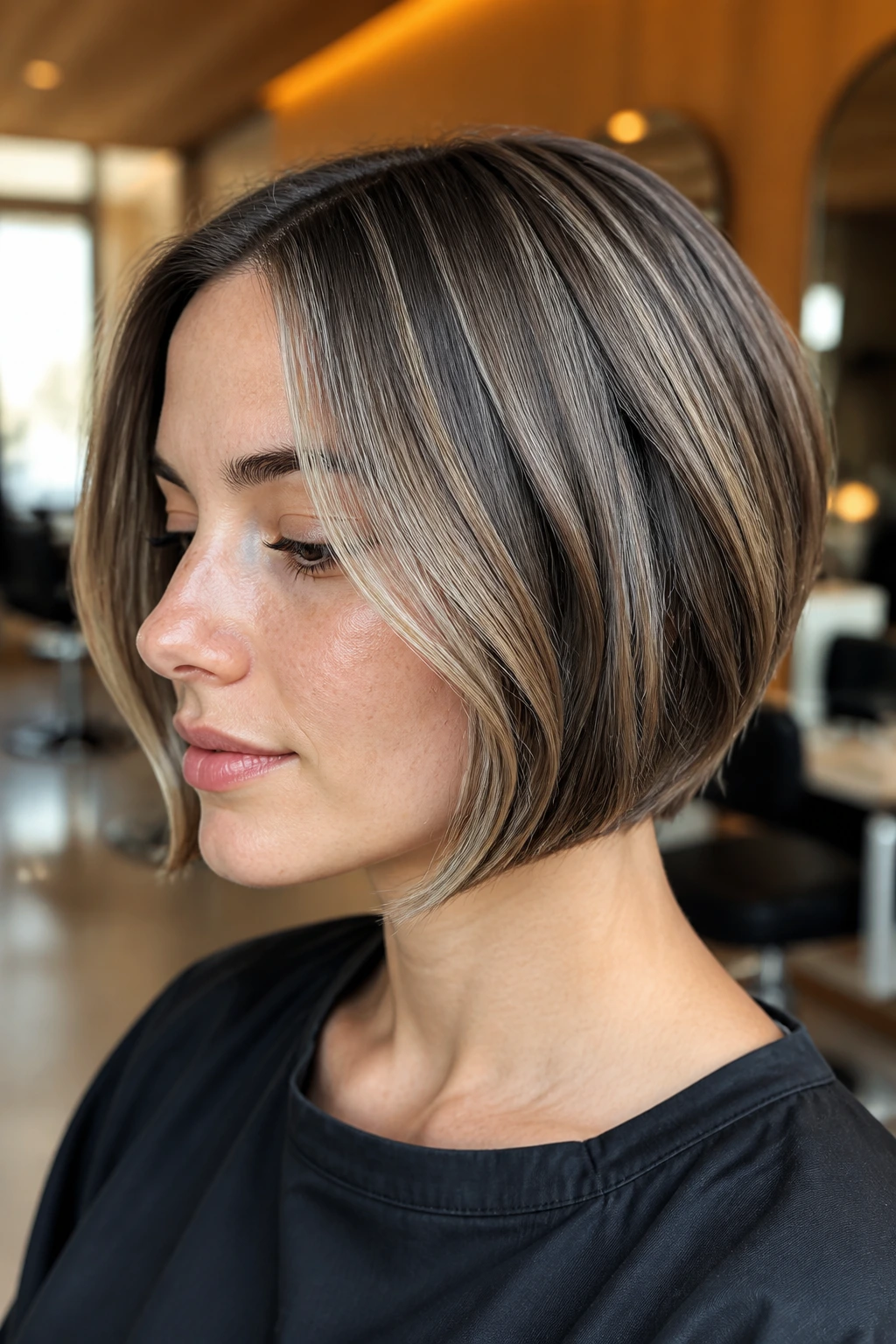
Cool beige babylights are the move when you want short hair to look deliberate and a little expensive without screaming “I just got my color done.” A French bob loves this treatment because the shape is already neat; the babylights add softness at the part line, around the cheekbones, and just through the surface. The color should sit between ash and sand, not icy white.
This is the kind of placement that makes fine hair look fuller. Tiny foils, woven tightly, create a soft shimmer instead of obvious streaks. If your hair tends to go warm fast, a beige toner keeps the finish from drifting yellow.
3. Icy Platinum Face-Framing Pieces on a Pixie Cut
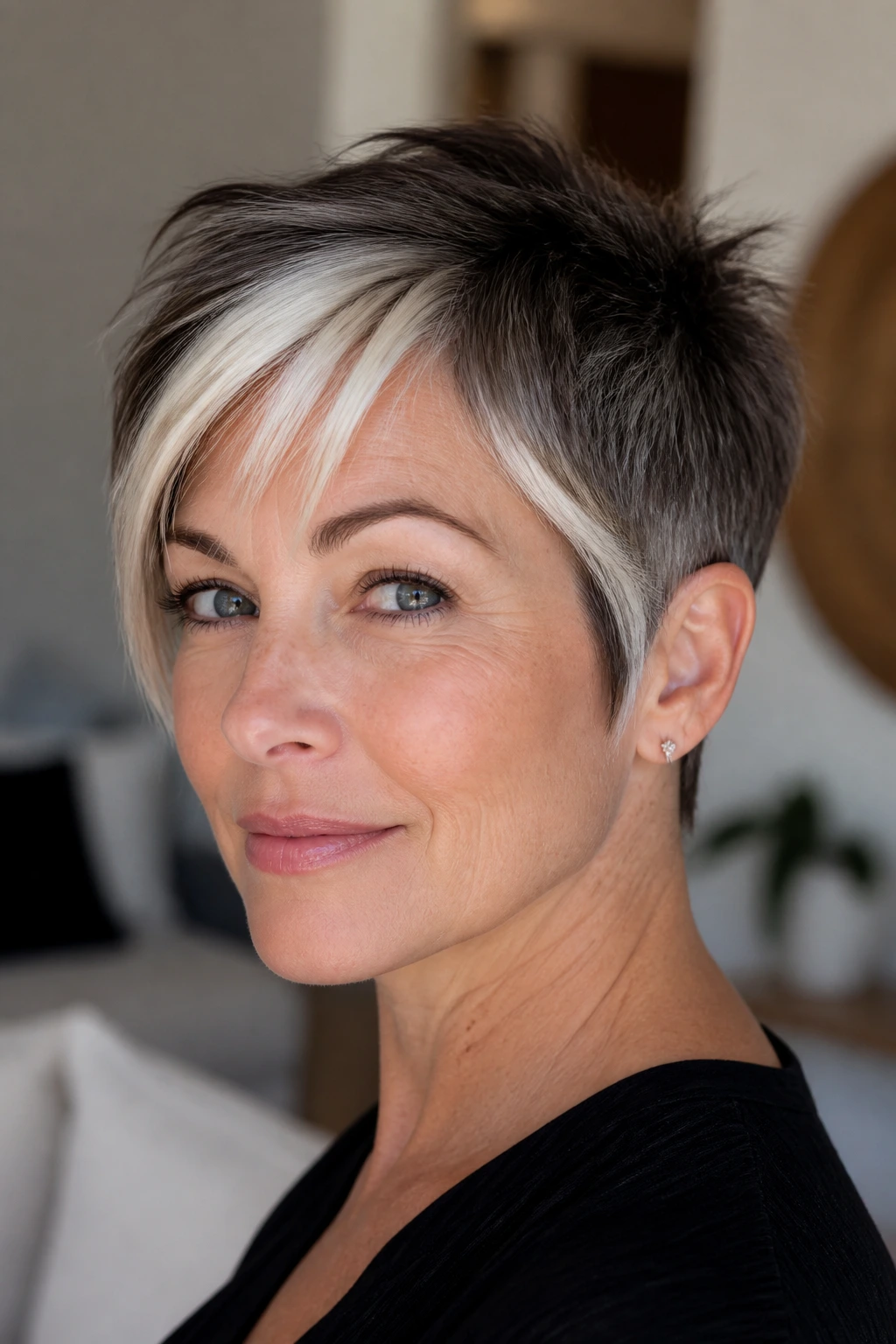
What makes a pixie cut pop? Usually, it’s not an all-over blonde job. It’s two or three narrow platinum pieces right where the fringe falls, plus a small hit at the temple so the cut has a bright edge when you turn your head.
The rest of the head can stay deeper. That contrast keeps the pixie from looking over-lightened, which is a real risk on short cuts because there’s nowhere for the eye to rest. On dark or medium brown bases, these front pieces look strongest when they’re kept clean and narrow, almost like punctuation marks.
4. Cinnamon Balayage on a Wavy Lob
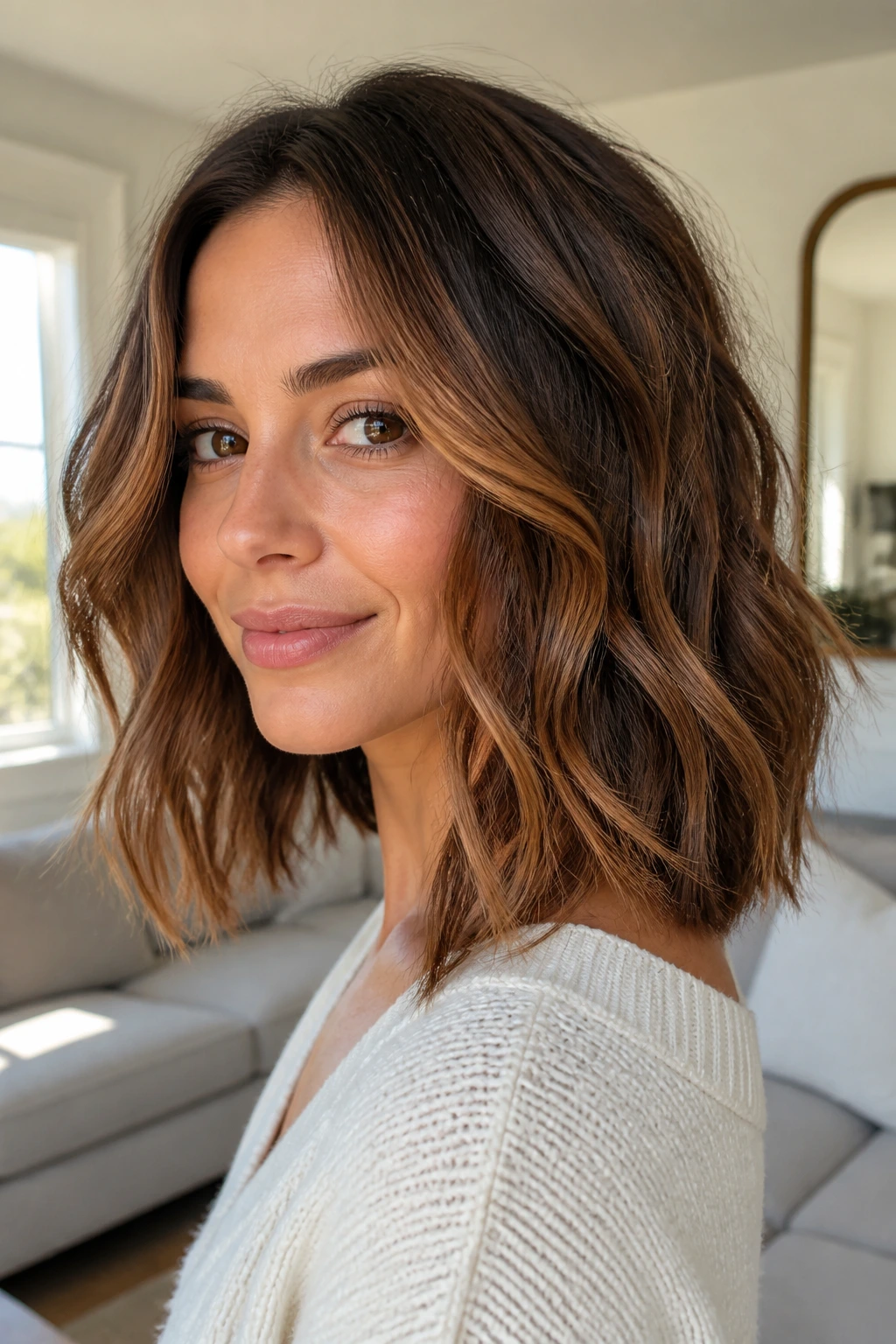
A wavy lob and cinnamon balayage get along fast. The wave gives the color somewhere to bend, and cinnamon gives the shape a warm glow that reads without being harsh. Ask for the lightest strokes around the face and a softer hand through the back so the cut still has depth at the nape.
This works especially well if your hair already has chestnut or deep brown notes. On a short lob, balayage should be tighter than it is on long hair; the painted pieces need to sit close enough together that the dimension shows when the hair moves, not only when it’s curled.
5. Toasted Honey Highlights on a Curly Crop
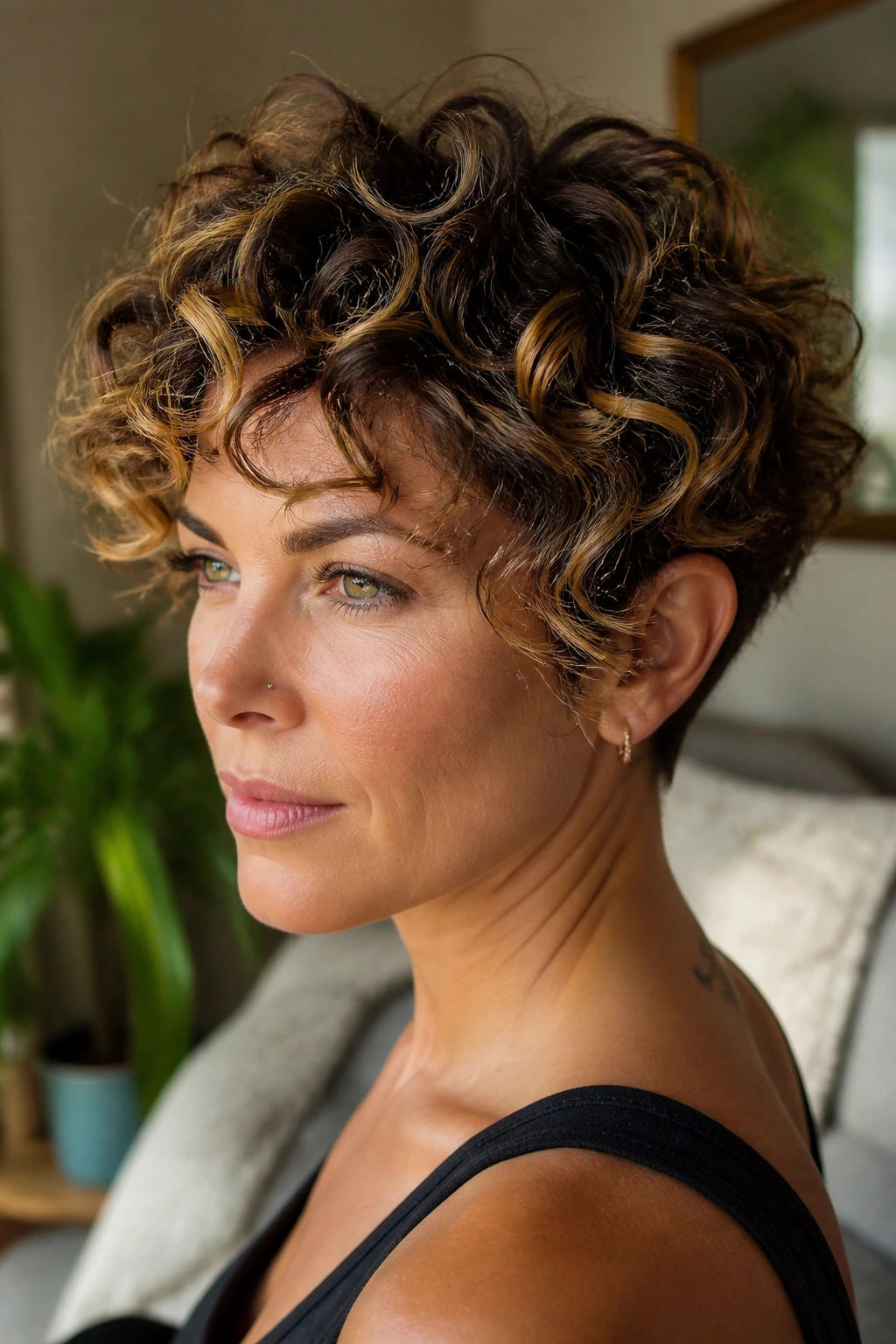
Toasted honey highlights are one of the easiest ways to wake up a curly crop without flattening the curl pattern. The color sits in the warmer blonde family, so it catches light on the bends instead of tracing a straight line through the hair. That matters. Curly hair needs the highlight to follow the curve, not fight it.
- Placement: Ask for fine, woven pieces around the outer layer and near the face.
- Tone: Keep the honey more toasted than yellow so it doesn’t turn brassy.
- Shape: Concentrate brighter pieces where the curls separate most.
A curly crop with honey highlights tends to look lively even when it’s worn a little messy. That’s the point.
6. Mushroom Brown Dimension on a Sleek Chin-Length Bob
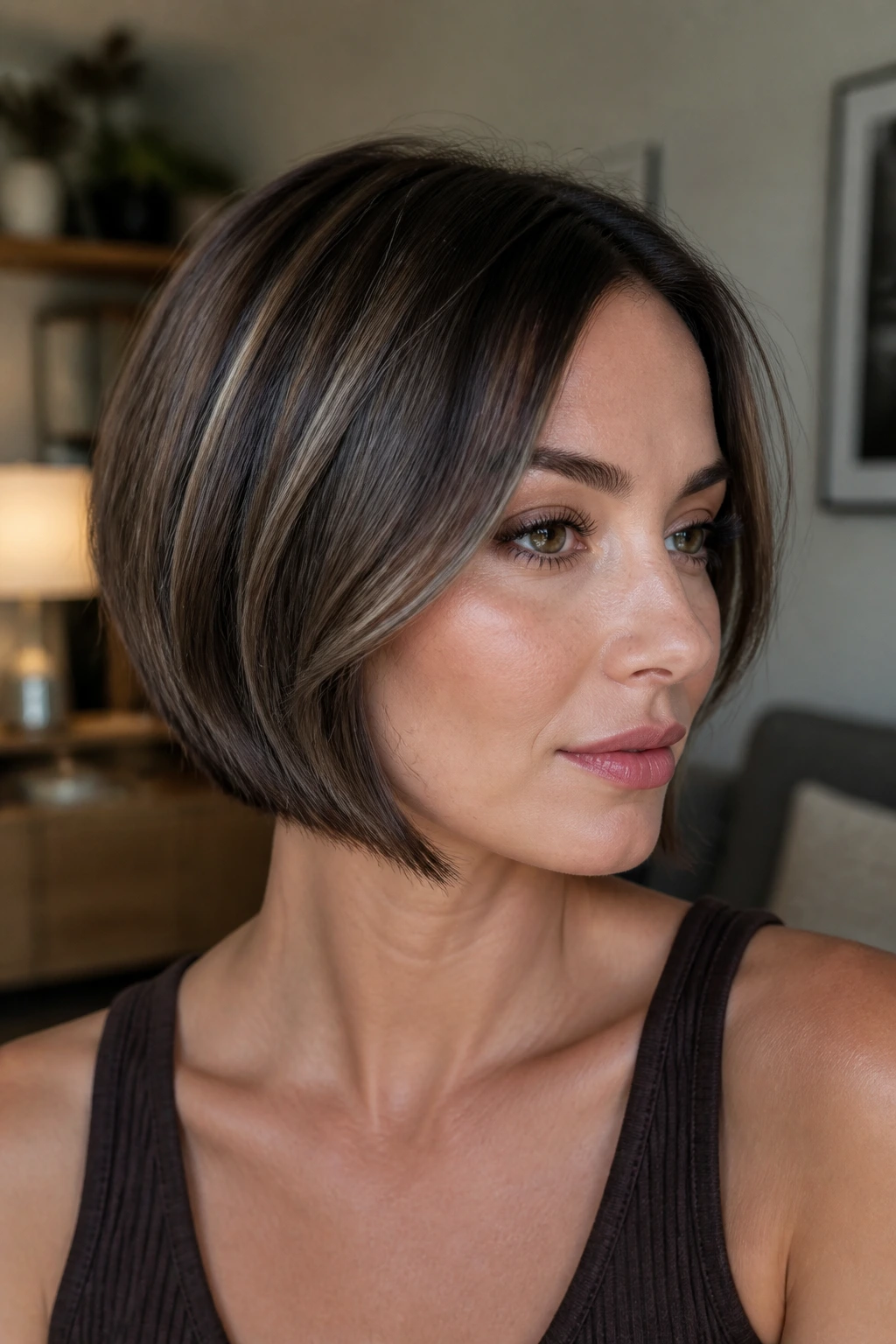
Not every short cut needs blonde. Mushroom brown dimension is the choice for people who want movement but don’t want the hair to read loud. It mixes cool taupe, soft beige, and deeper brown in a way that makes a sleek chin-length bob feel thicker and more expensive-looking under indoor light.
The best part is how little maintenance this usually asks for. Because the tones stay close to the base, the grow-out is softer and the root line doesn’t shout. On straight hair, this color shines in the sections near the face and underneath the top layer, where the contrast shows when the bob swings.
7. Copper Peekaboo Panels on a Layered Pixie
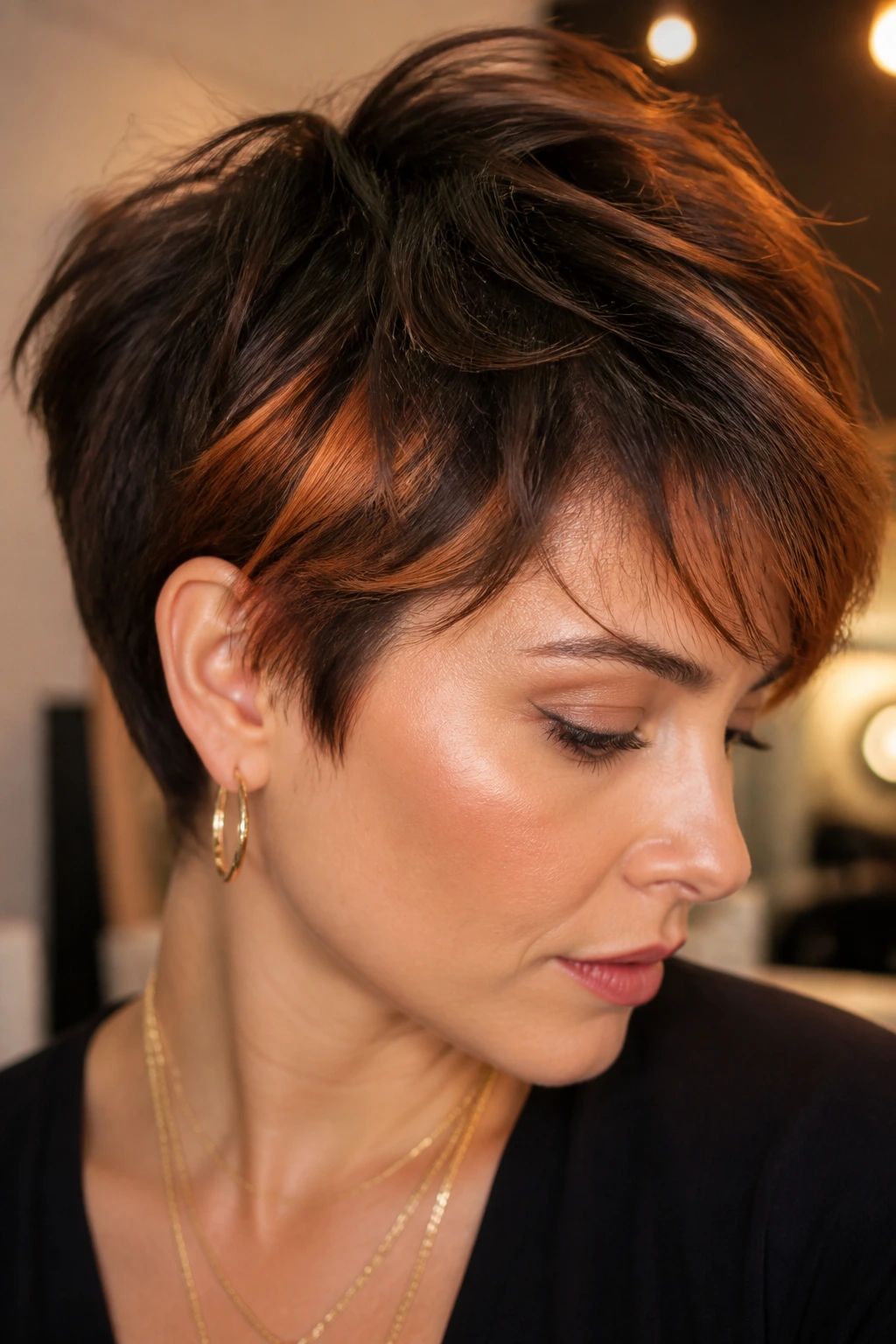
Copper peekaboo panels are for the person who wants a little drama but doesn’t want the whole head to be bright. The color sits under the top layers and flashes through when the hair shifts, which makes a layered pixie feel alive instead of flat. It’s a good match for dark brunettes, redheads who want more warmth, or blondes who are tired of looking pale.
The placement matters more than the shade here. Keep the copper closer to the temple, side panel, and a strip under the crown. If you wear glasses, this color does a nice thing near the frame line; it catches just enough light to look intentional without taking over your face.
8. Champagne Blonde Foils on a Short Shag
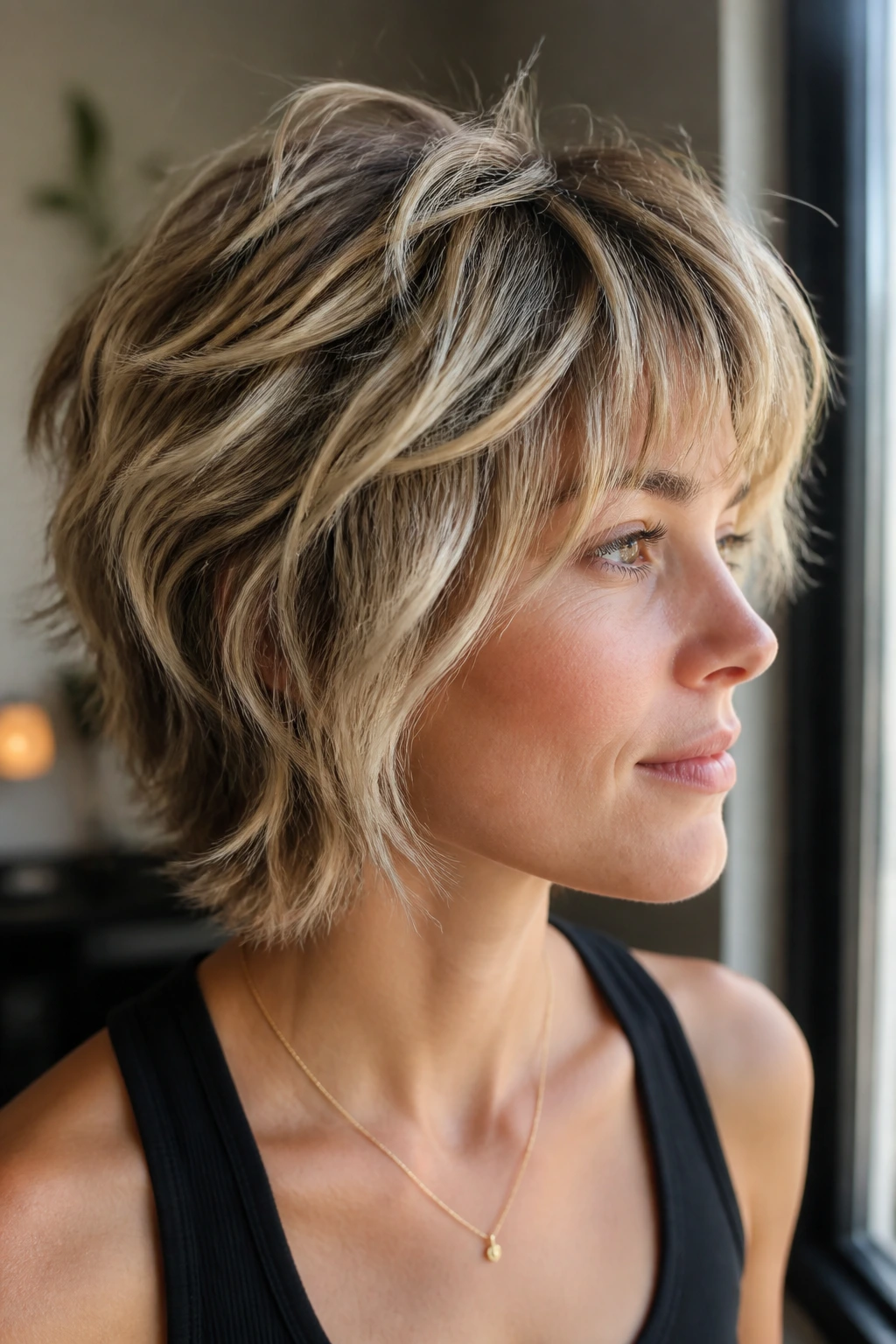
Champagne blonde foils on a short shag give the cut some sparkle without turning it into a neon billboard. The shag already has broken layers, so the highlights should be scattered, not lined up like stripes. That unevenness is what makes the style look easy.
Where the Light Should Land
The brightest pieces belong around the fringe, crown, and outer edges where the layers flip. A champagne tone — soft gold with a little beige — keeps the result from looking too cold on short hair. If the cut is heavily feathered, a few brighter foils near the ends help the shape show up from across the room.
9. Rose Gold Tint on a Soft Wedge Bob
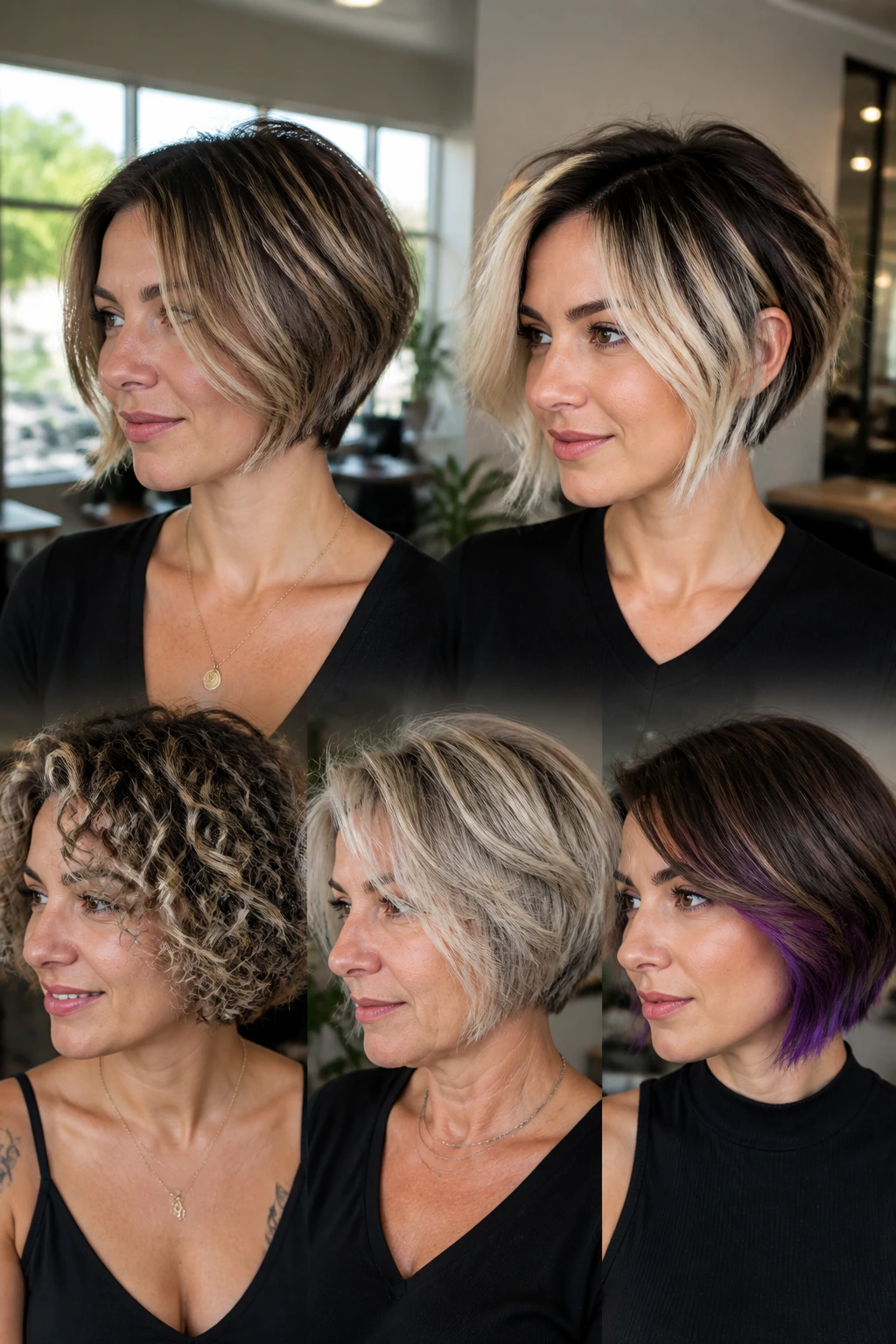
Rose gold on a soft wedge bob has a nicer job than being “cute.” It warms the hair, gives the cut a faint blush, and softens the hard line that a wedge can sometimes carry at the back. The trick is translucency. You want the base to show through so the rose tone reads like a tint, not a costume color.
This works best when the hair is styled smooth or with a slight bend under the ends. The color catches on the rounded shape and keeps the bob from looking too severe. If your skin tone leans neutral or warm, this shade can look surprisingly natural. If it leans cool, keep the pink side muted.
10. Ash Beige Money Piece on a Bouncy Lob
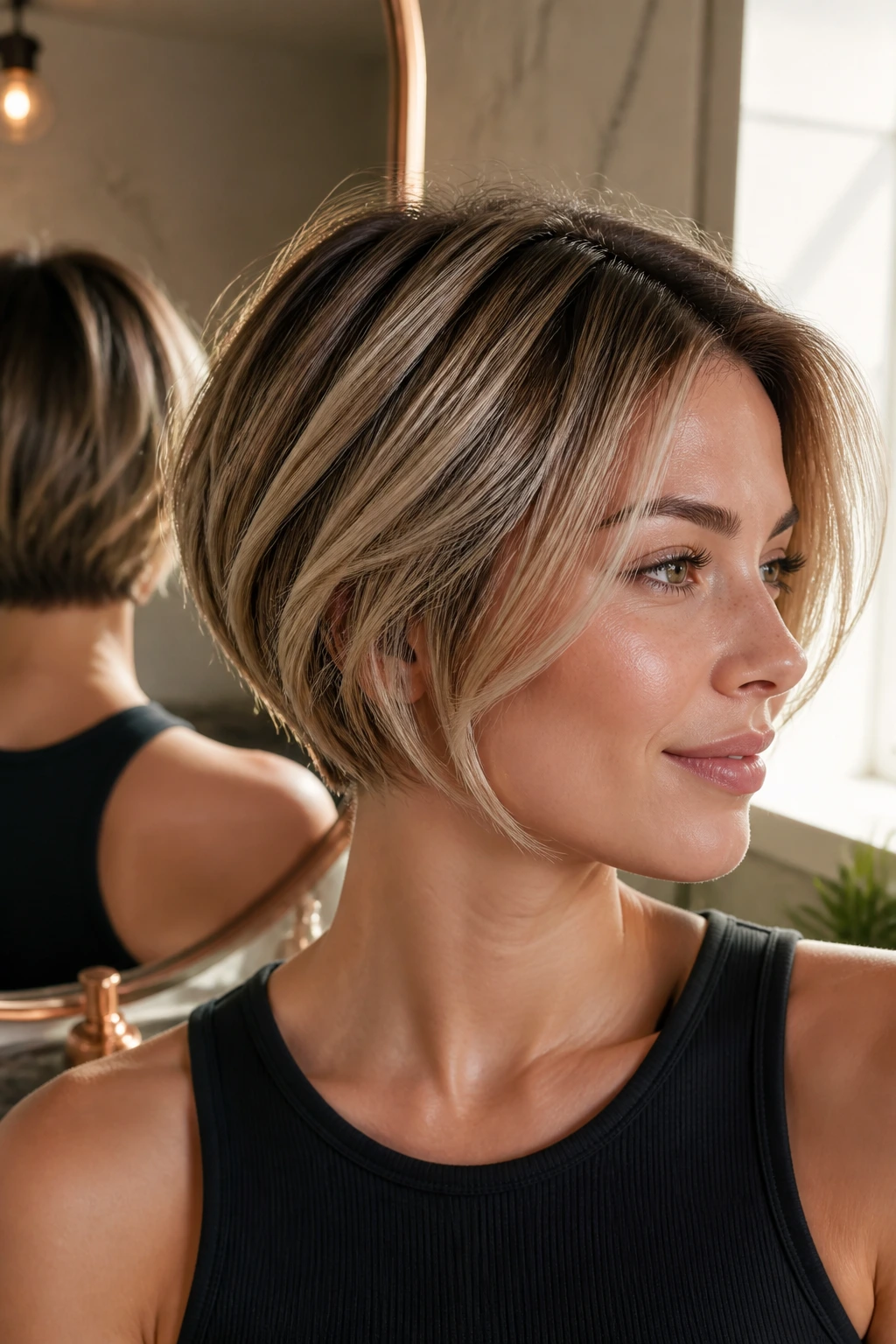
Can a money piece stay subtle? Yes, if the front slices are ash beige instead of bright blonde. That softer tone frames the face without yanking attention away from the cut itself, and on a bouncy lob it keeps the movement feeling airy.
The front should be a shade lighter than the rest of the highlight pattern, but not so light that it turns into a stripe. Think of it as an edge softener. If you like round-brush volume or a bend at the ends, this is the kind of placement that makes the whole shape look finished rather than styled in a rush.
11. Chestnut Lowlights with Sand Highlights on a Brunette Bob
A brunette bob can go flat fast if every piece is lifted in the same direction. Chestnut lowlights fix that. Add sand highlights on top, keep the chestnut tucked underneath and through the interior, and the whole cut starts to look fuller from the crown down.
This is one of my favorite options for fine hair. Lowlights create the illusion of density, while the sand pieces stop the color from sinking into one dark block. On short hair, that mix is stronger than a blanket of blonde, because the depth makes the bob look thicker at the edges.
12. Sunlit Bronde on a Collarbone Cut
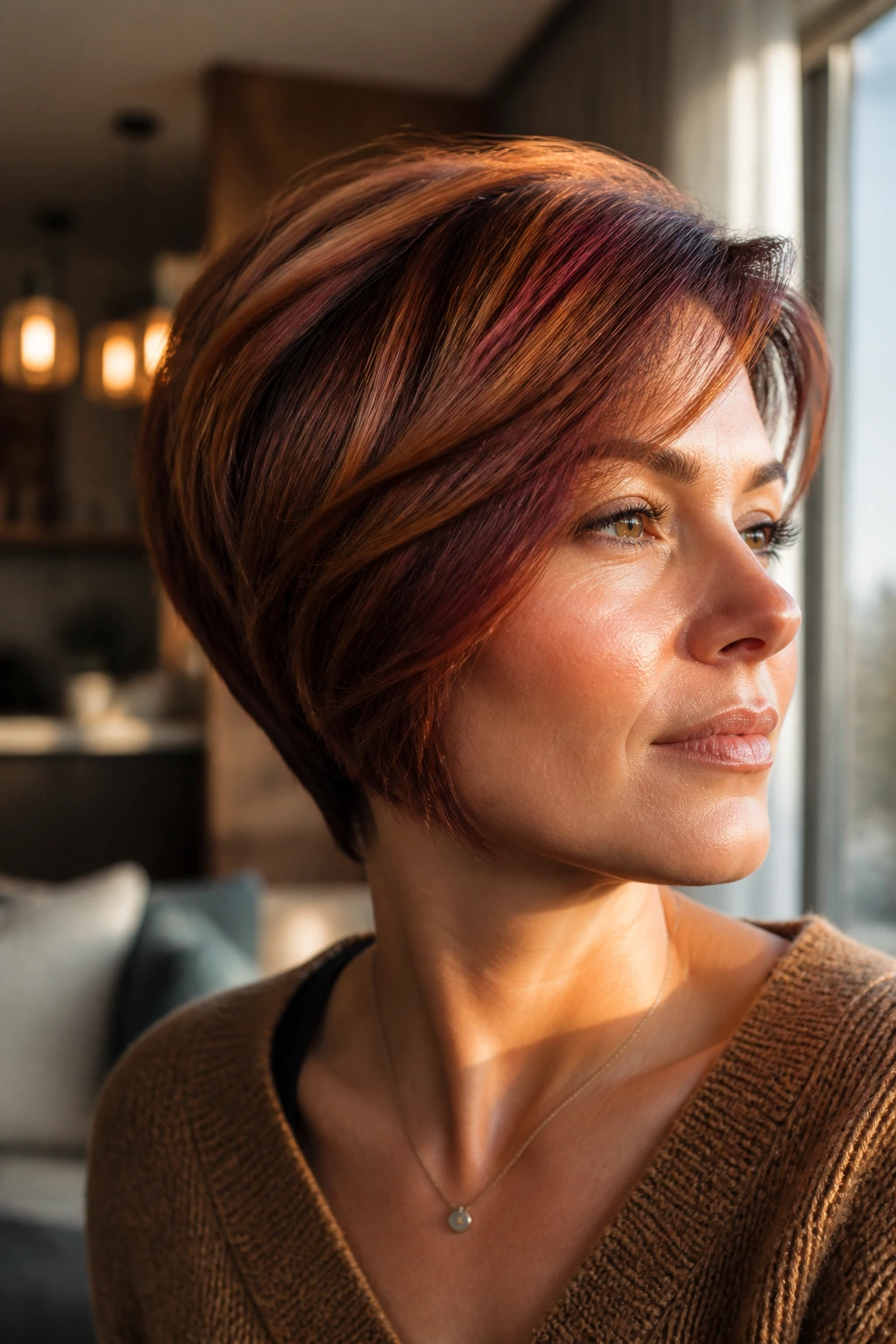
Bronde is a useful color on a collarbone cut because the length gives the blend somewhere to land. On a shorter shape, it works best when it’s built from two or three tones: light brown, beige blonde, and a touch of honey. None of them should shout alone.
The payoff is motion. When the hair moves, the mix catches light at different points instead of all at once. If you wear the cut straight, the bronde still reads through the surface. If you wear it with a bend, the lighter strands wake up near the face and through the mid-lengths.
13. Smoked Silver Streaks on a Dark Pixie
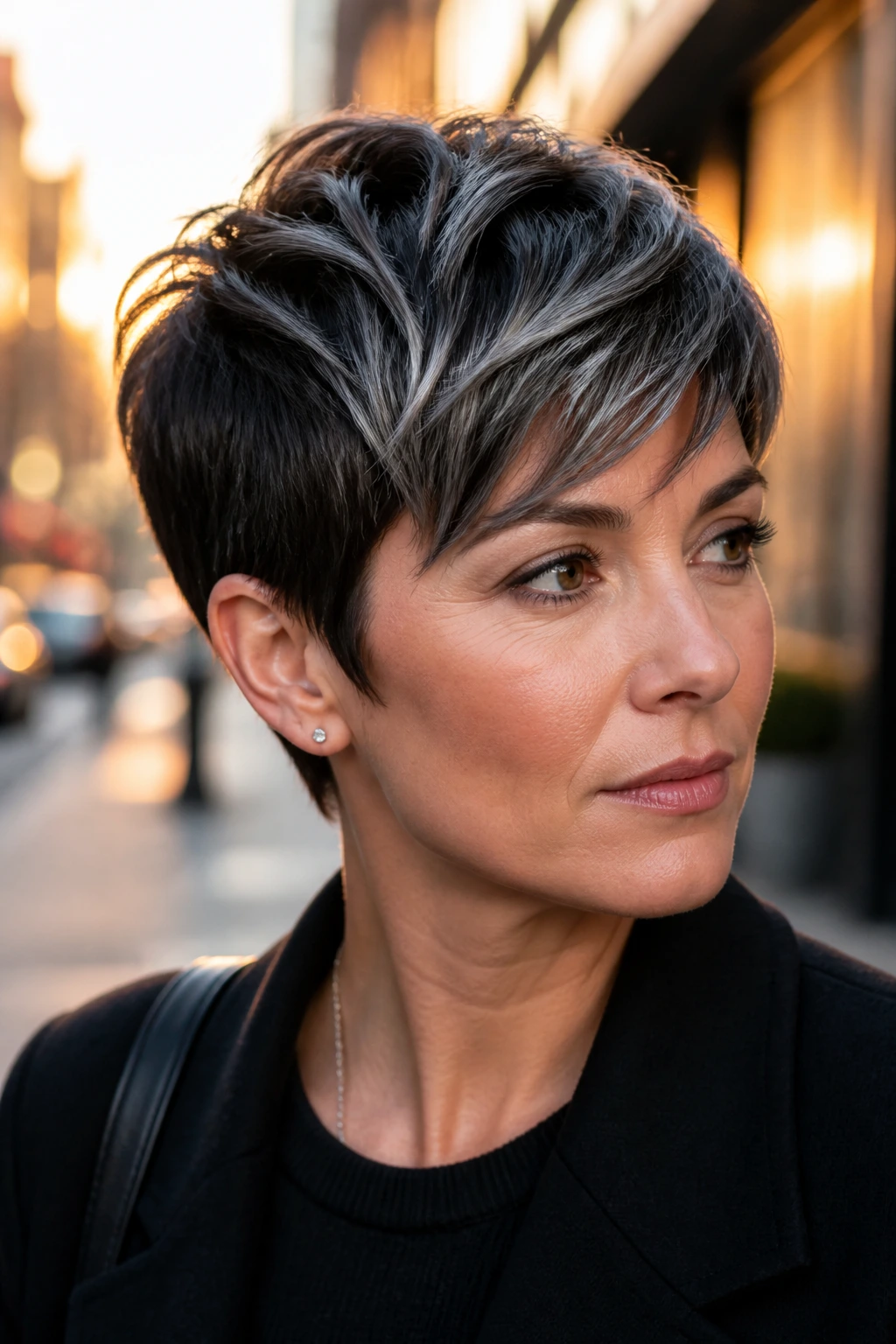
Smoked silver streaks on a dark pixie are bold, but they look best when they’re handled with a light hand. A few streaks on the top layer and fringe can give the cut a cool, almost metallic edge. Keep the root deeper. That contrast keeps the pixie from losing its shape.
Don’t Make It All Silver
A full silver pixie can erase the haircut if the placement is too broad. Smoked silver works because it leaves some darkness underneath, which makes the light pieces pop harder. It’s also the safer route if your hair pulls warm during lifting, since the darker base helps balance the tone.
14. Apricot Glow Highlights on a Feathered Crop
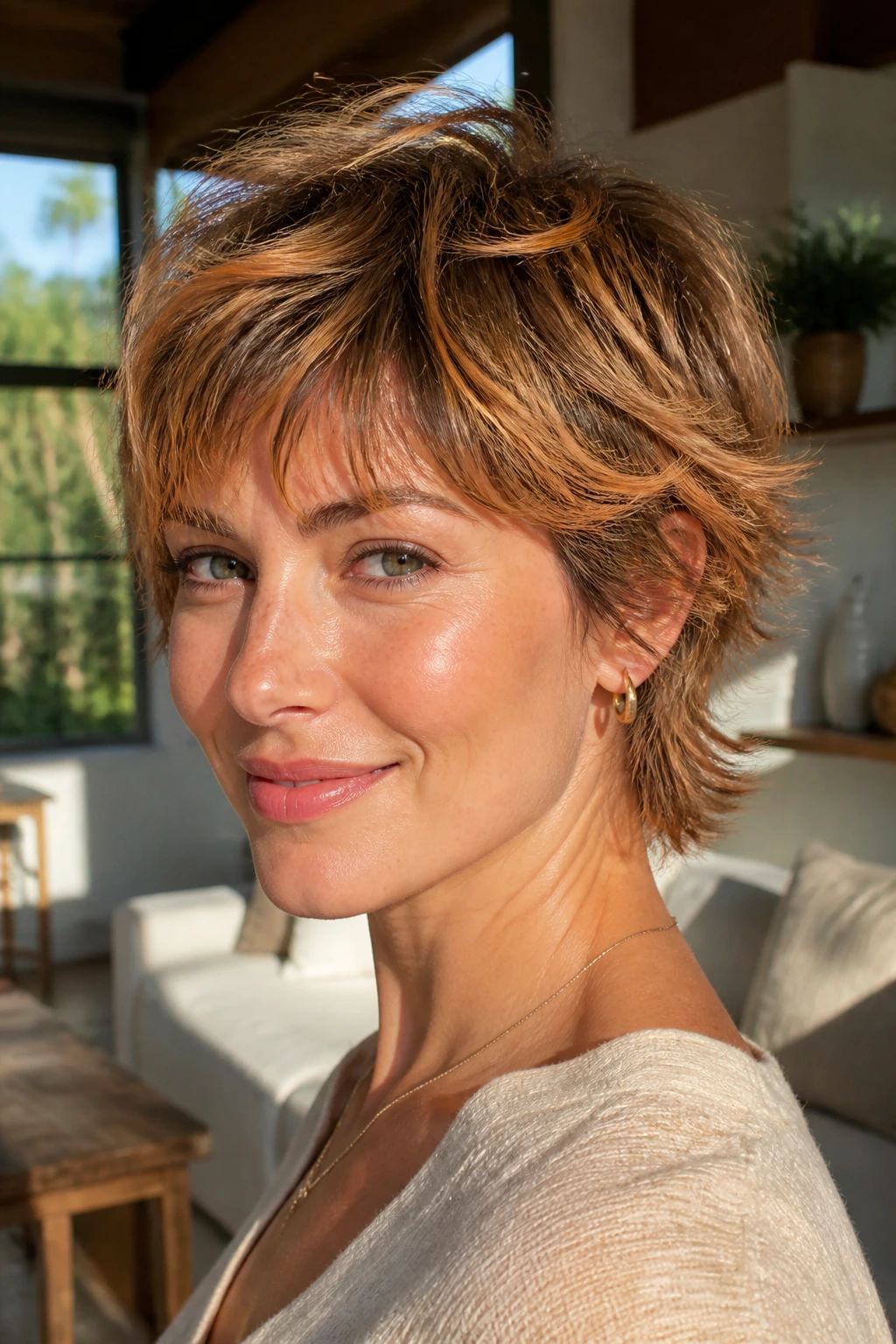
Apricot is one of those shades people skip because they assume it’ll look too playful. On short hair, that’s exactly why it works. The warmth feels softer than peach and less coppery than red, so it adds brightness without turning brassy.
On a feathered crop, apricot glow highlights should sit around the fringe, crown, and the outer layer where the ends flick out. The result is gentle, a little sunny, and easier to wear than a fully vivid pastel. If your base is warm brown or dark blonde, apricot usually lands better than a cooler fashion shade.
15. Brushed Copper Ends on a Curly Bob
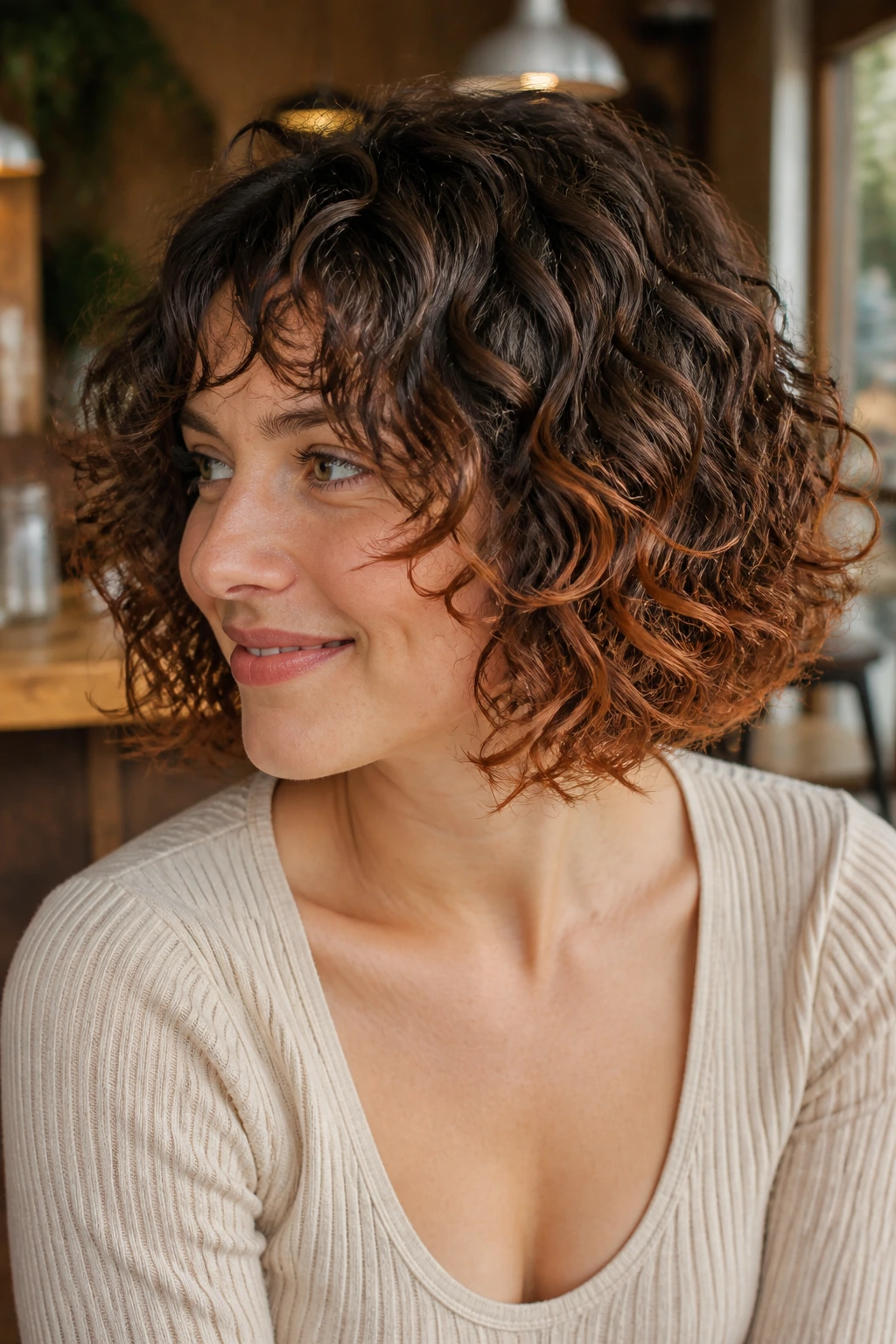
Brushed copper ends on a curly bob let the curl pattern do half the styling. Instead of lifting the whole head, the color sits lower and brighter at the tips, so the ends glow when the curls spring up. That’s a smart choice if your bob is shaped with some bounce and a little lift at the bottom.
Let the Curl Carry the Color
The best placement follows the curl ring, not a straight line. Ask for copper to be concentrated on the outermost ends and a few face-framing tendrils. If the color is pushed too high, the bob can get loud fast. Kept lower, it looks textured and warm.
16. Sandstone Balayage on a Tousled French Crop
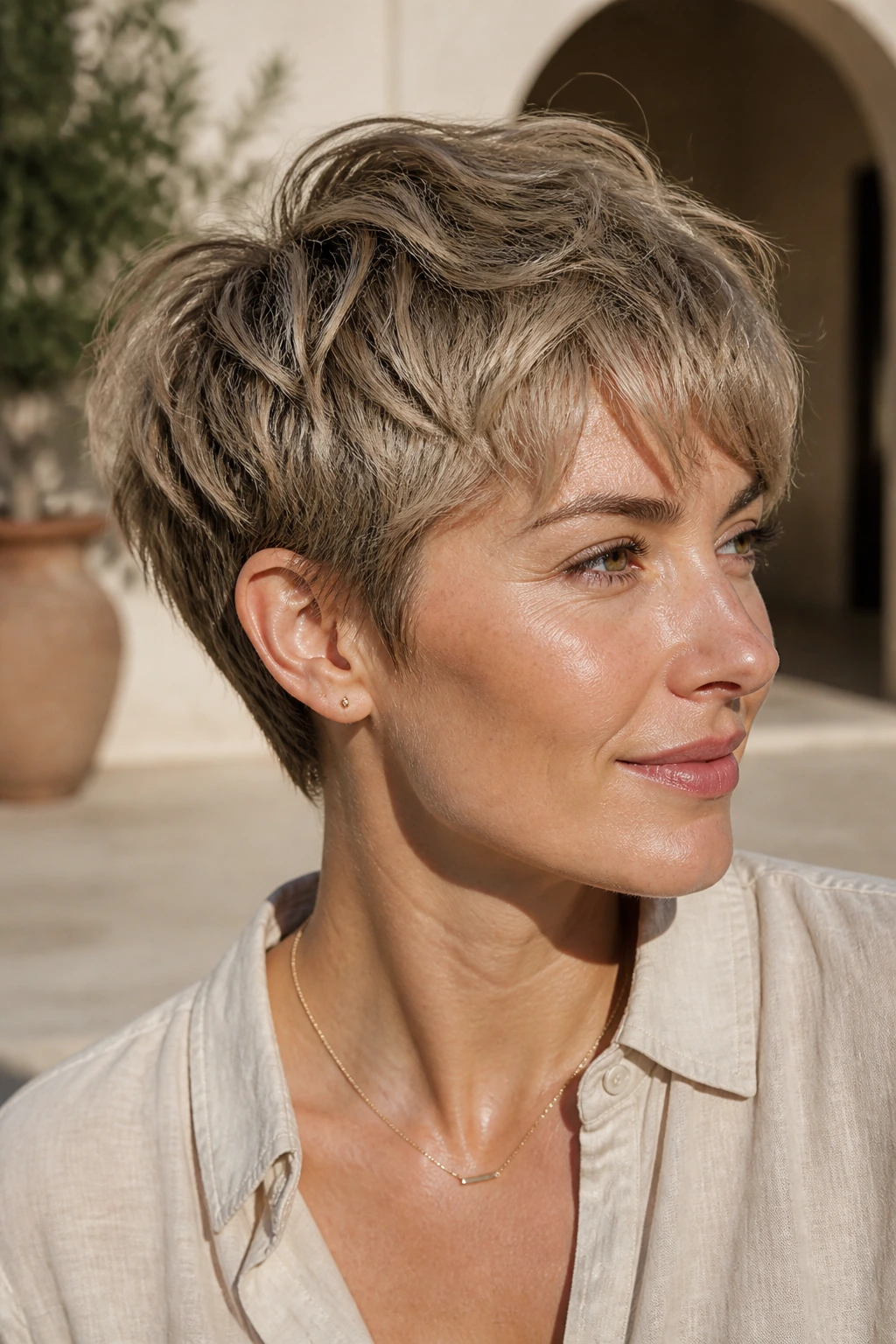
Sandstone balayage is for the person who wants hair that looks like it has air in it. The shade mixes beige, taupe, and pale gold, which gives a tousled French crop a soft mineral look instead of a blonded-out finish. It’s subtle, but not bland.
This is a good fit for textured styling products — a little cream, a little spray, a little grit. The color shows best when the crop is broken up with fingers instead of brushed flat. If you hate hard contrast, sandstone is one of the safer ways to lighten short hair without losing the cut’s edge.
17. Pearl Blonde Babylights on a Slicked-Back Bob
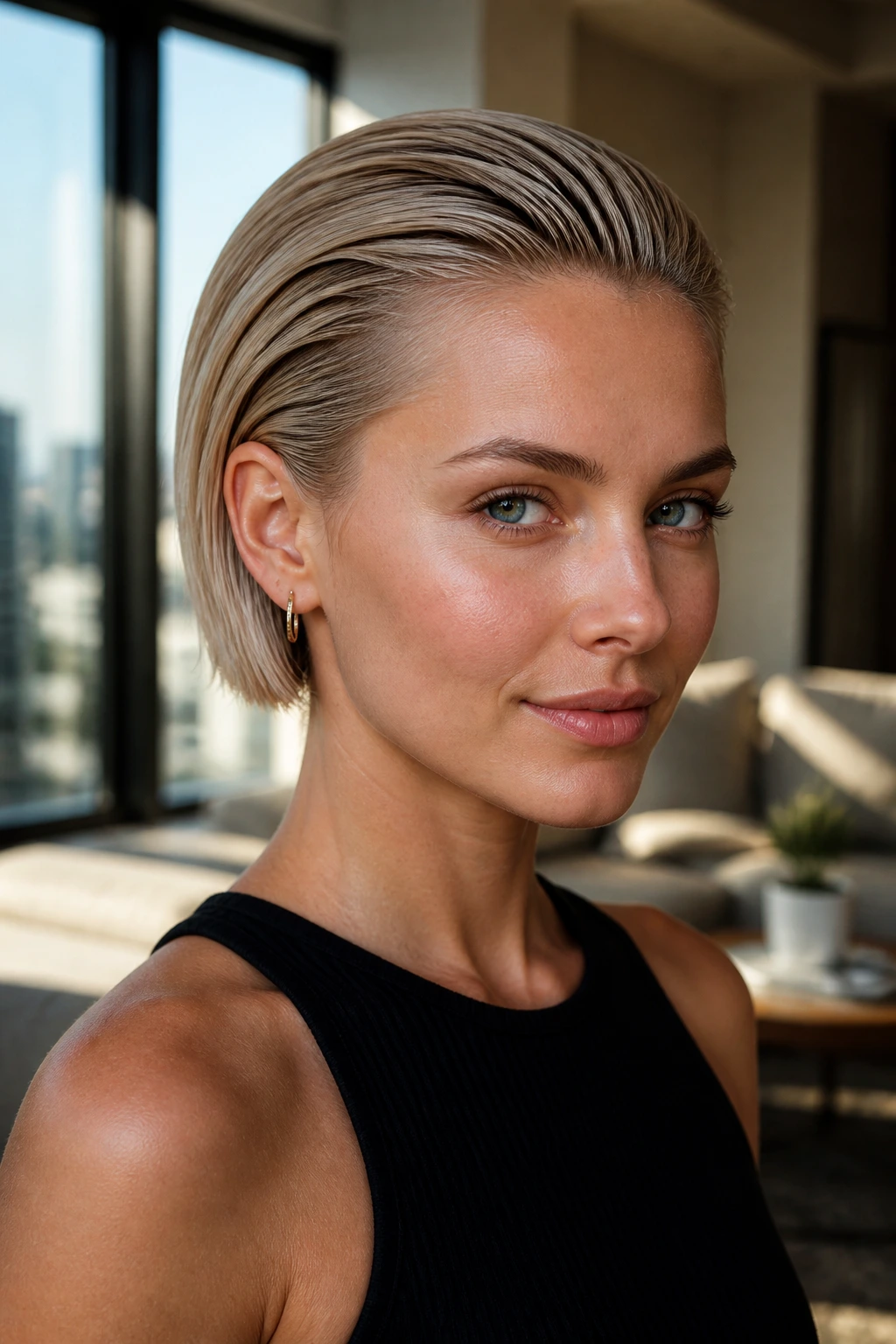
Why does a sleek bob need tiny lights? Because when the hair is smooth, every surface shows. Pearl blonde babylights keep a slicked-back bob from looking like one solid sheet, and the tone is soft enough that it doesn’t fight the polished shape.
The lighter strands should be very fine, almost threaded through the top layer. Pearl blonde lands cooler than champagne, but it isn’t harsh platinum. On short hair, that distinction matters. You want brightness that shows in the shine, not brightness that takes over the whole cut.
18. Berry-Toned Peekaboo Highlights on Short Dark Hair
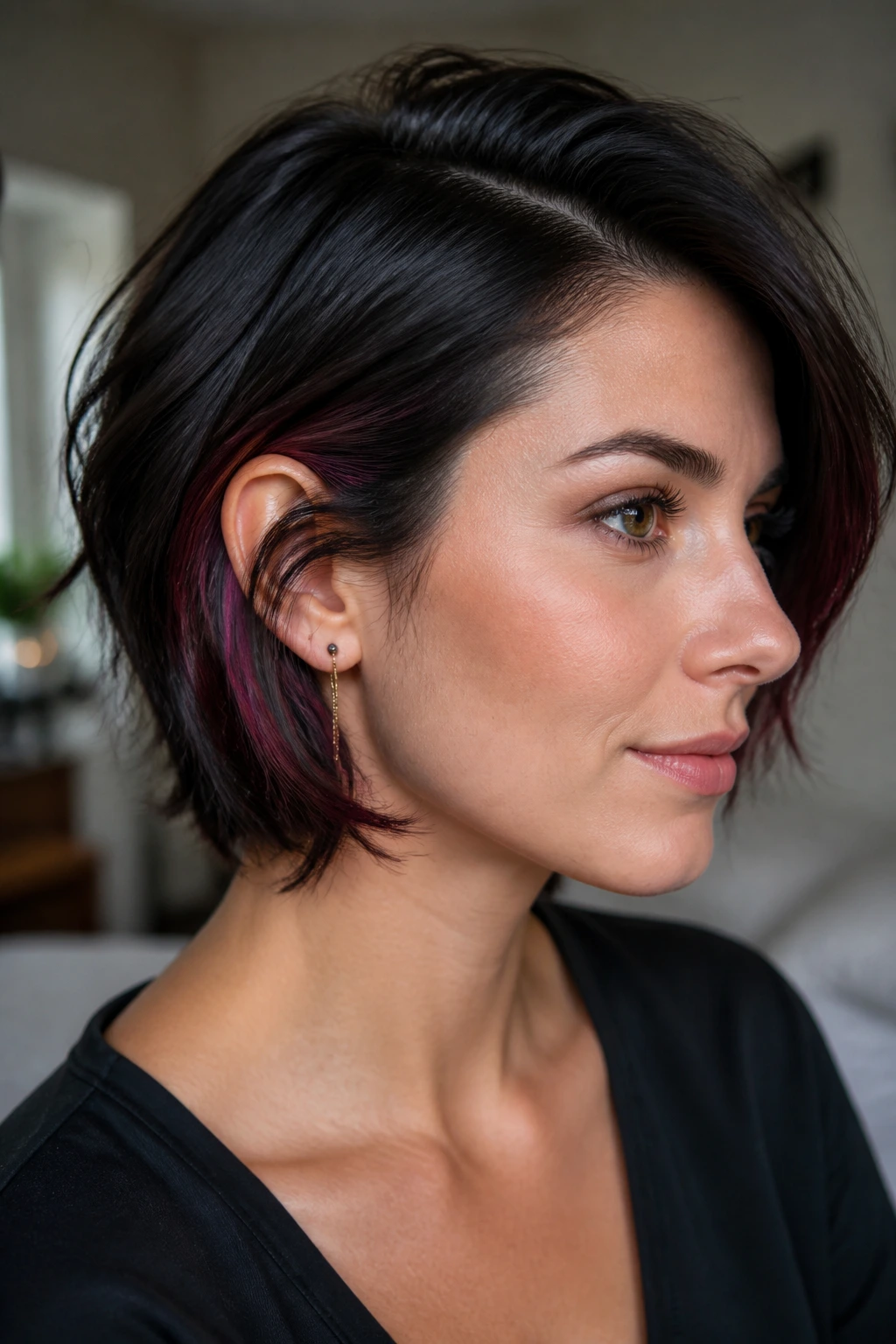
Berry-toned peekaboo highlights are the easiest way to wear a fashion shade on short hair without committing to a full vivid head. The color hides under the top layer, then flashes when you tuck the hair behind the ear or move through a room. On dark hair, that hidden contrast has real punch.
This look works best if the base stays deep and glossy. Keep the berry closer to plum if you want it muted, or push it toward raspberry if you want more surprise. The underlayer placement also means the color grows out with less drama than a full all-over tint.
19. Wheat Blonde Micro-Highlights on a Crop
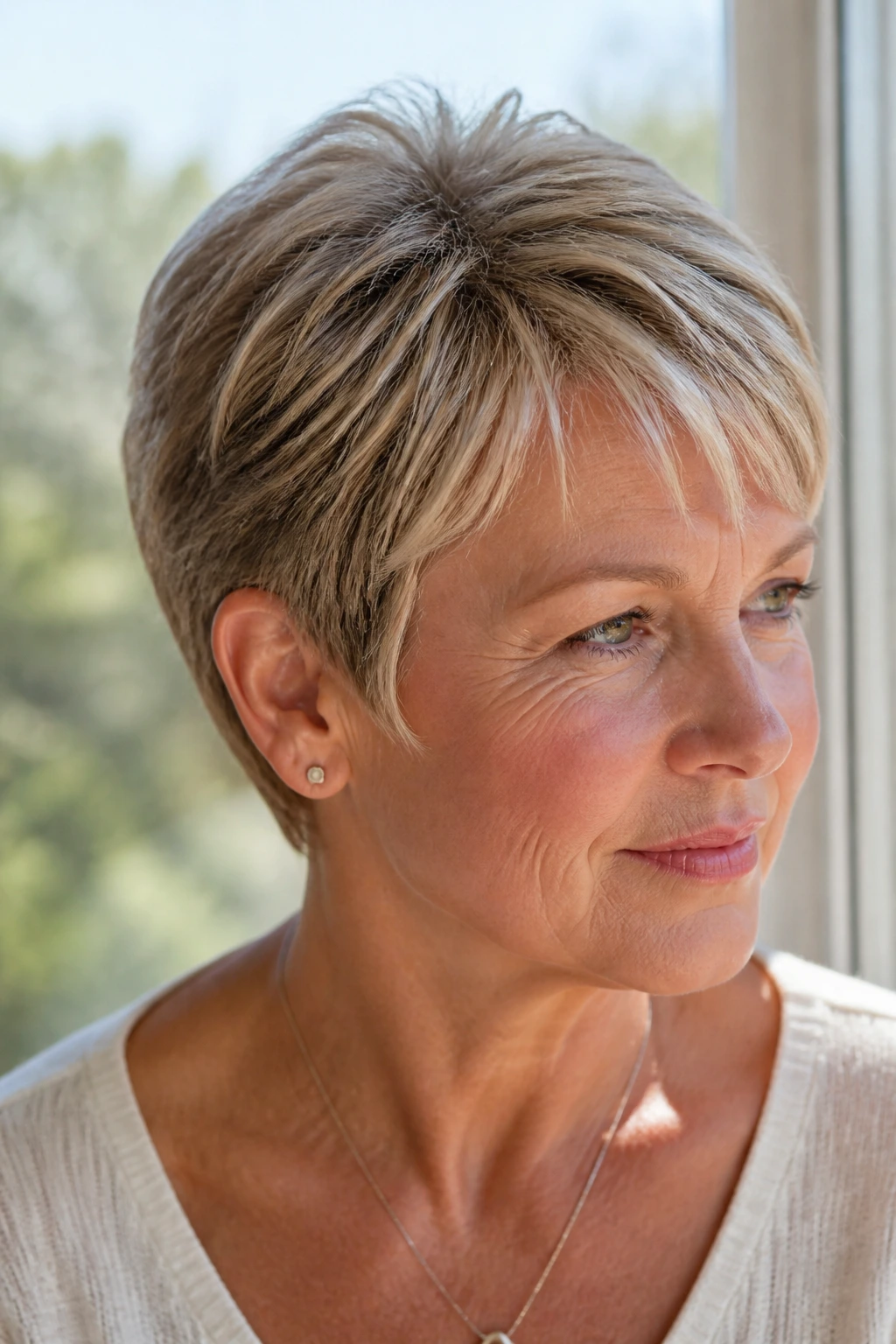
Unlike chunky highlights, wheat blonde micro-highlights are about texture, not contrast. They sit just a little lighter than the base and create that soft, sun-touched effect that can make short hair feel fuller without showing obvious stripes. On a crop, that subtlety is the whole point.
This is a very good option for gray blending. The fine pieces weave through the hair in a way that softens silver strands rather than fighting them. The finish should be warm-neutral, not bright gold, because wheat blonde disappears into the cut better and keeps the look calm.
20. Espresso and Caramel Contrast on a Stacked Bob
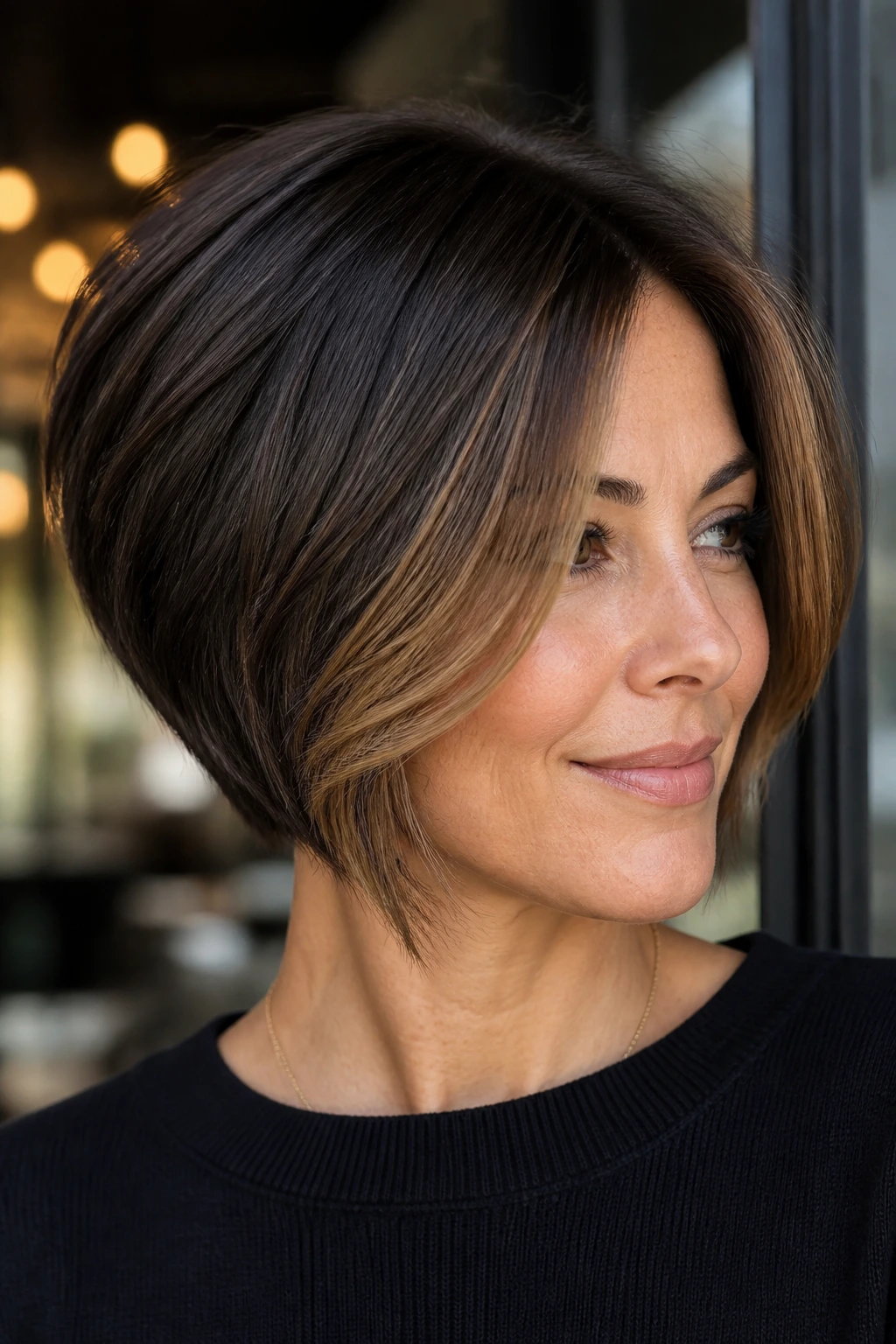
A stacked bob can look almost too neat if every panel sits in the same shade. Espresso and caramel fix that. Keep the deeper espresso through the back and interior, then lift the face and upper layers with caramel so the shape has a little movement at every angle.
This contrast works because the back of a stacked bob already carries strong shape. The darker sections make the cut look dense, and the caramel keeps the front from feeling heavy. If you like a polished finish, this is one of the strongest short-hair color combinations around.
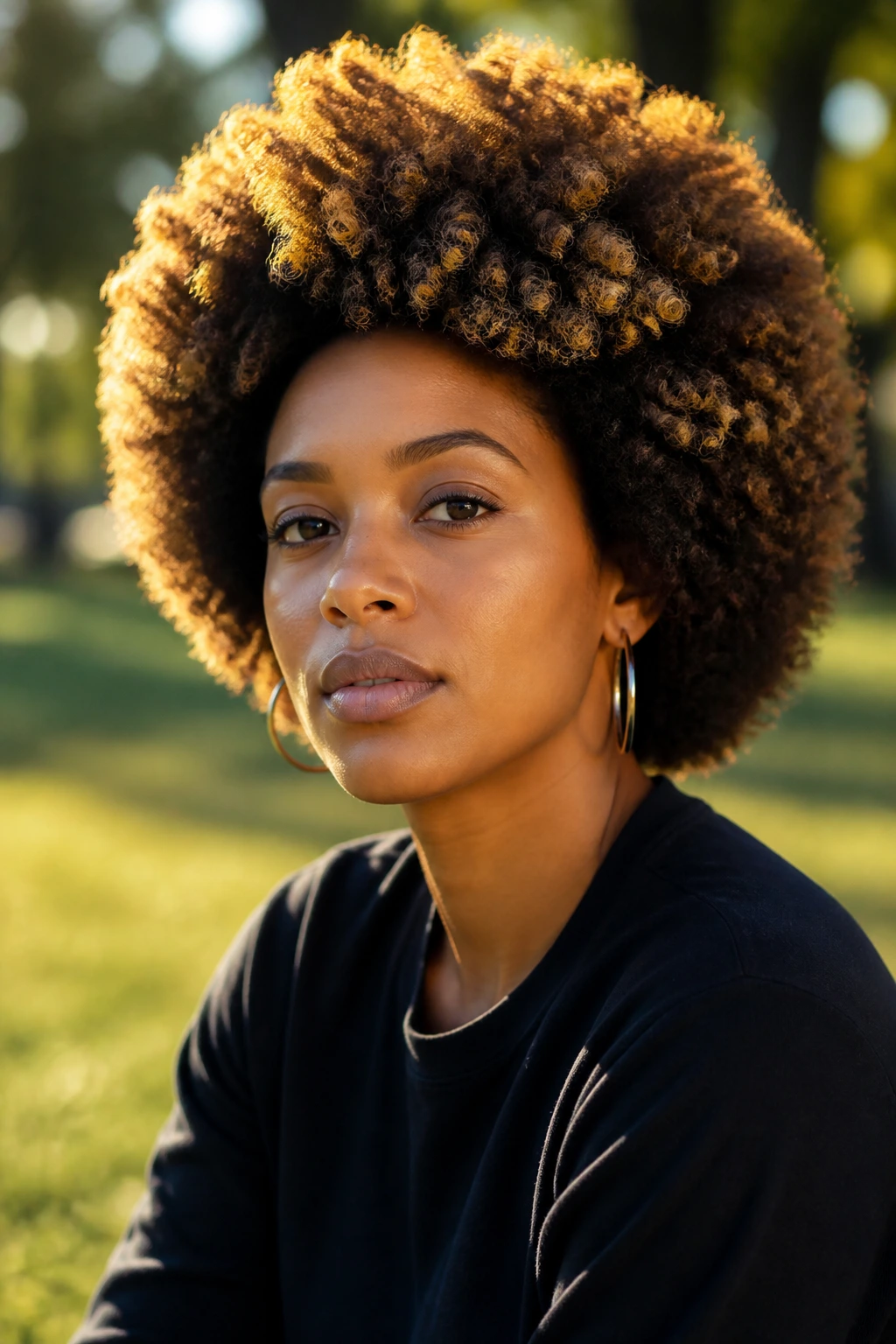
21. Golden Halo Highlights on a Rounded Afro
Highlight the Shape, Not the Part
Golden halo highlights belong where the eye follows the silhouette: around the outer perimeter, near the crown, and through a few front coils. On a rounded afro, that placement makes the shape glow from the outside in, which is better than scattering light at random and hoping for the best.
The shade should be warm but not brassy. Think soft gold rather than yellow. When the coils shrink and spring, the lighter pieces show as a halo around the shape instead of a line, and that is where short curly texture really comes alive.
22. Soft Root Melt on a Bob with Bangs
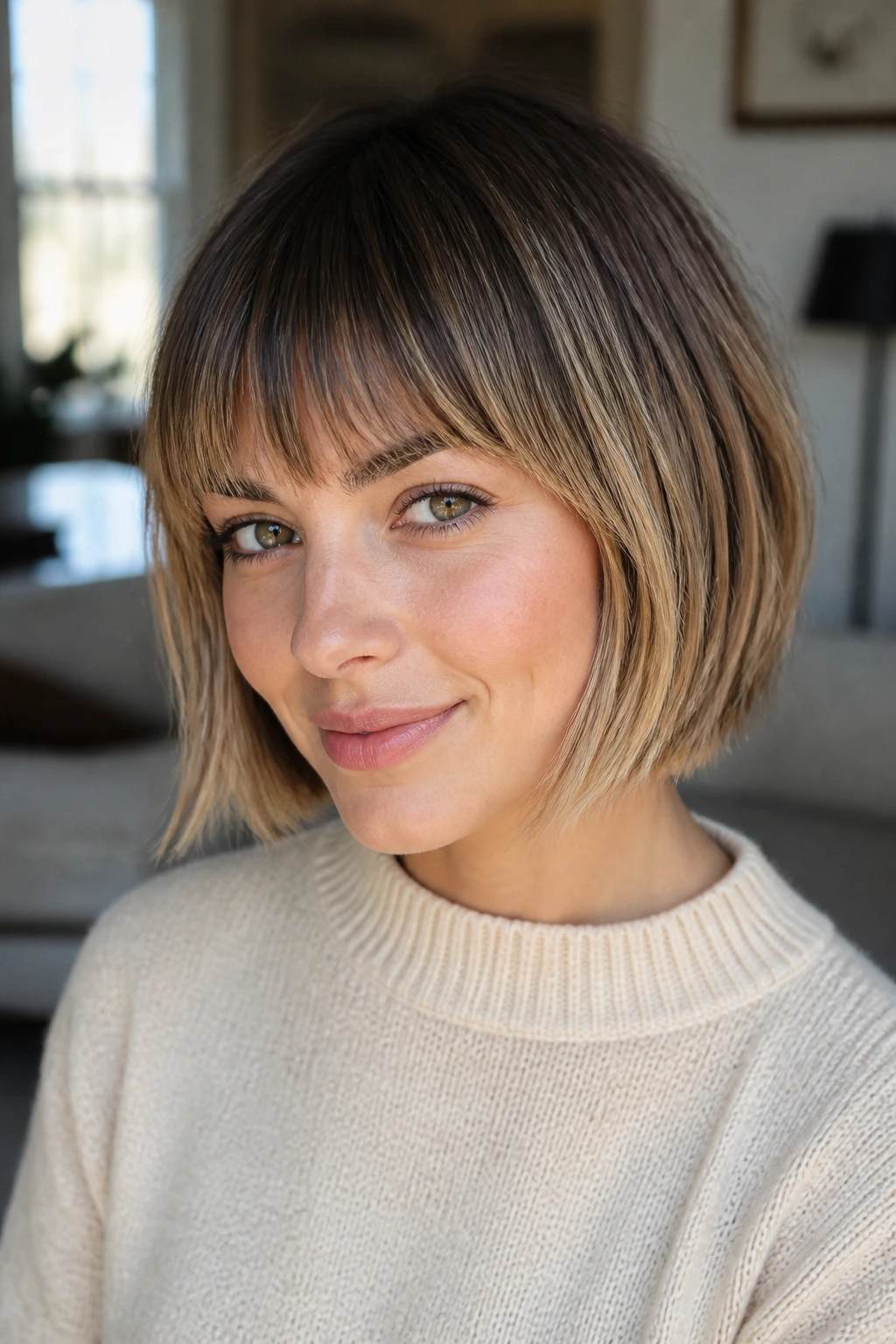
Can bangs and highlights live together without looking disconnected? They can, if the root is softened. A root melt on a bob with bangs keeps the fringe from looking like a separate section and gives the color a cleaner grow-out line.
This is especially good if you wear your bangs full or piecey. The lighter pieces should start a little lower than the fringe line, so the eye reads movement instead of a hard stripe. The bonus is maintenance: a root melt buys you more time before the color looks overdue.
23. Smoky Lavender Highlights on a Short Shag
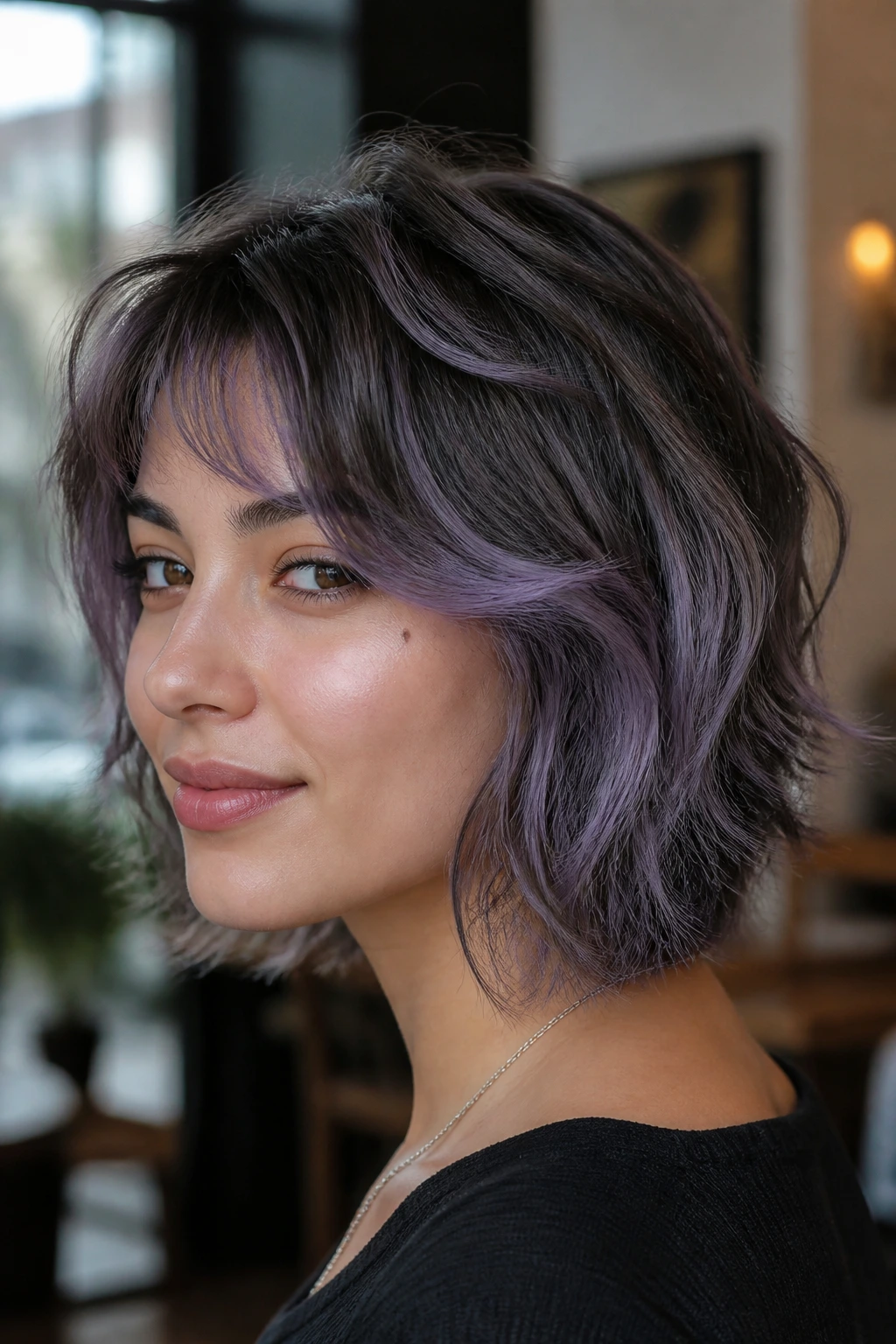
Smoky lavender works because it doesn’t behave like a candy pastel. The grayish undertone gives it enough grit to sit inside a short shag without looking sugary, and that matters when the cut already has layers and texture doing a lot of work.
This color likes the ends, the fringe, and the lifted outer layers. A cool base — ash brown, soft black, or even deep brunette — keeps it believable. If you want a fashion color that still feels wearable on short hair, this is one of the better bets.
24. Beige Blonde Streaks with a Shadow Root on a Lob
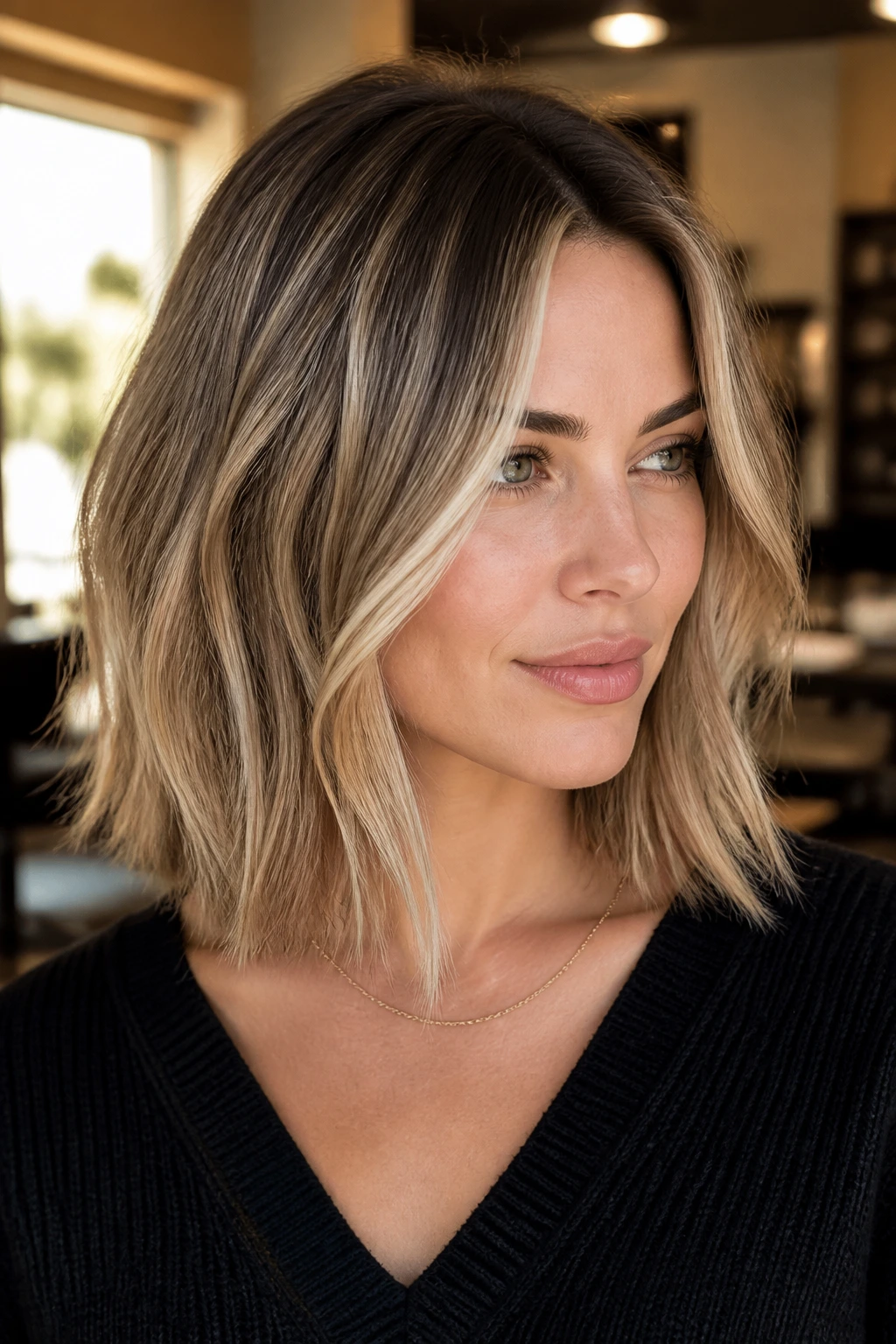
A beige blonde lob with a shadow root looks polished because the root isn’t pretending to be invisible. It’s part of the design. The beige streaks give brightness, while the shadow root keeps the grow-out soft and the whole color grounded.
- Best for: Dark blonde or medium brunette bases.
- Tone: Beige, not gold, if you want the finish to stay calm.
- Placement: Keep the front a touch brighter than the back.
- Maintenance: A soft root lets you go longer between full refreshes.
This is a solid choice if you wear your hair loose more than pinned up, because the blended root helps the color read from every angle.
25. Autumn Auburn Ribbons on a Wavy Pixie Bob
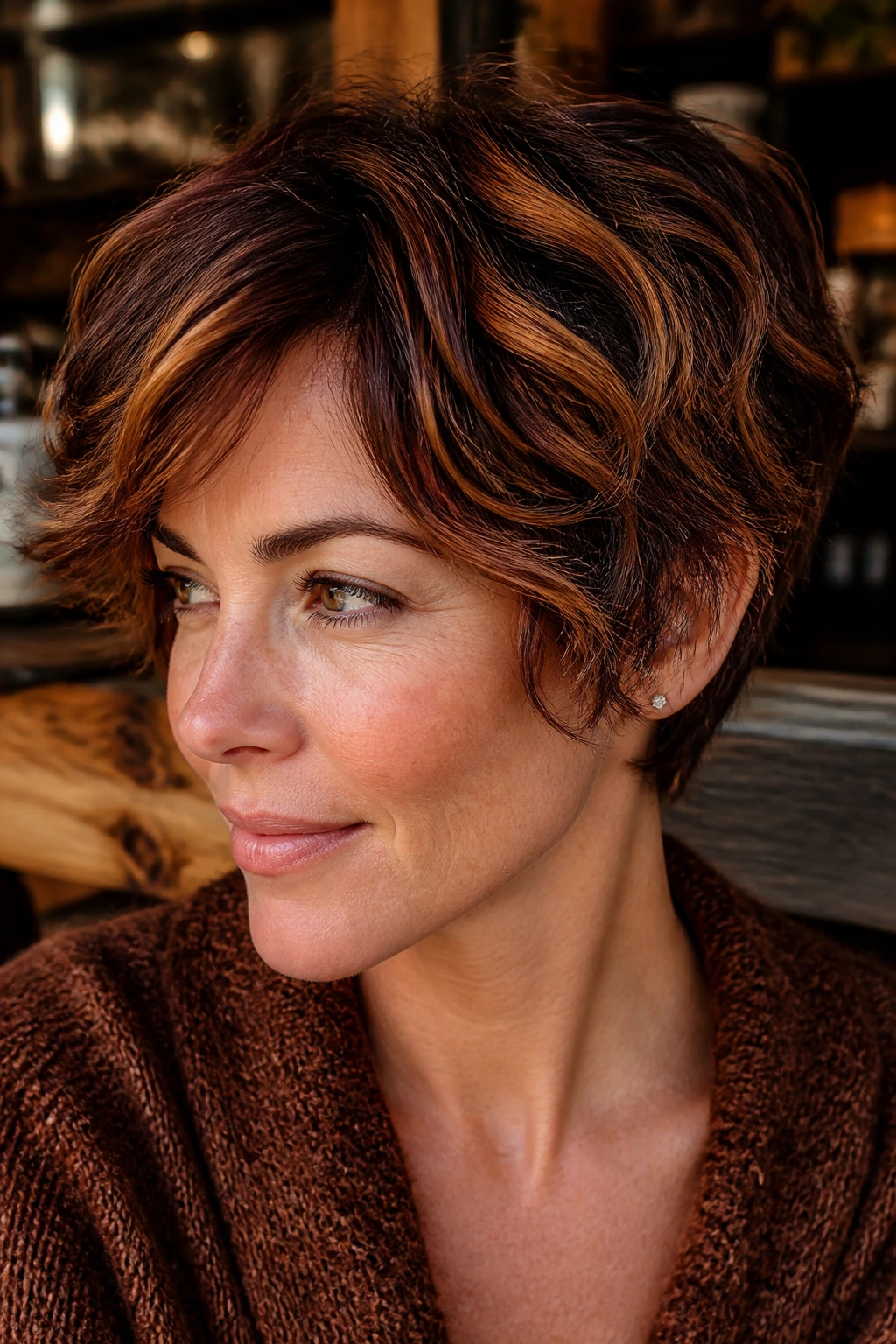
Autumn auburn ribbons on a wavy pixie bob bring warmth without flattening the shape. The auburn should sit in thin ribbons, not broad patches, so the wave can break up the color and keep it lively. On brown or dark blonde hair, the result has depth right away.
The best pieces usually live around the temple, top layer, and a few underlayers near the ear. That gives the cut a little flicker when the hair moves. Auburn also has a useful side effect: it softens early gray in a way that looks intentional, not hidden.
26. Frosted Tips on a Modern Pixie
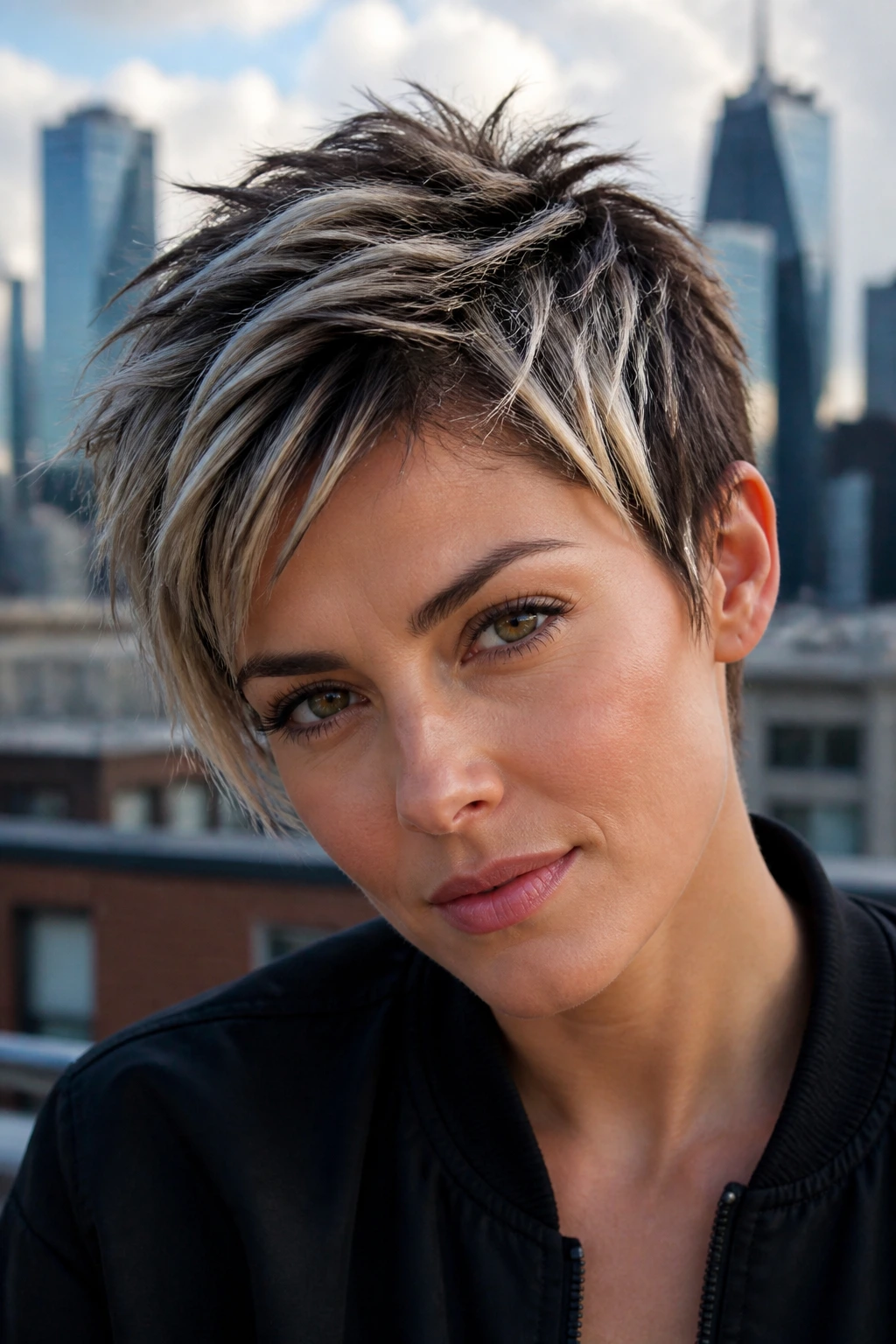
Frosted tips don’t have to look like a throwback. On a modern pixie, the idea is softer, with lightness only on the ends of the top layers and a few front pieces. Keep the root deeper and the finish piecey, and the whole cut reads current instead of costume.
This works best on short hair with some texture, because the tips need separation. If the hair is very smooth, the effect can slide toward flatness. A cool toner helps the frosted pieces stay crisp, especially on brunette bases that lift warm.
27. Vanilla Cream Balayage on a Short Curly Cut
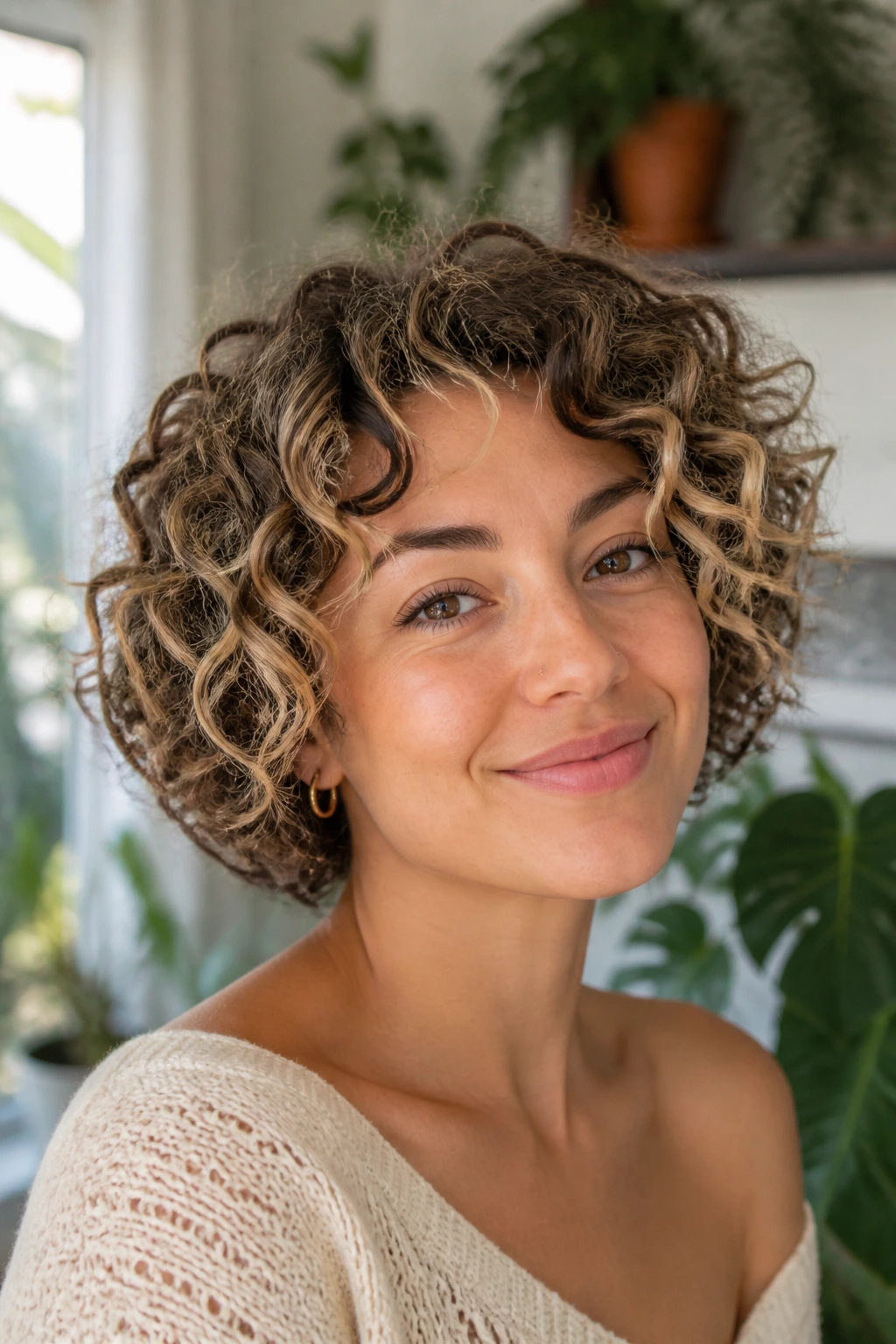
Curly Hair Needs a Softer Lift
Vanilla cream balayage is a good answer when curls need brightness but not stripes. The lighter pieces should be painted where the curl opens, not where the hair falls straight, because that’s where the light actually shows. Vanilla cream stays softer than yellow blonde and looks more expensive when the curls spring up.
This is one of the better choices if you want a soft, airy finish around the face. A few brighter ribbons near the front, plus lighter tips through the outer layer, can make the whole cut feel lighter without wrecking the curl pattern.
28. Dimensional Mocha Lights on a Sleek Short Cut
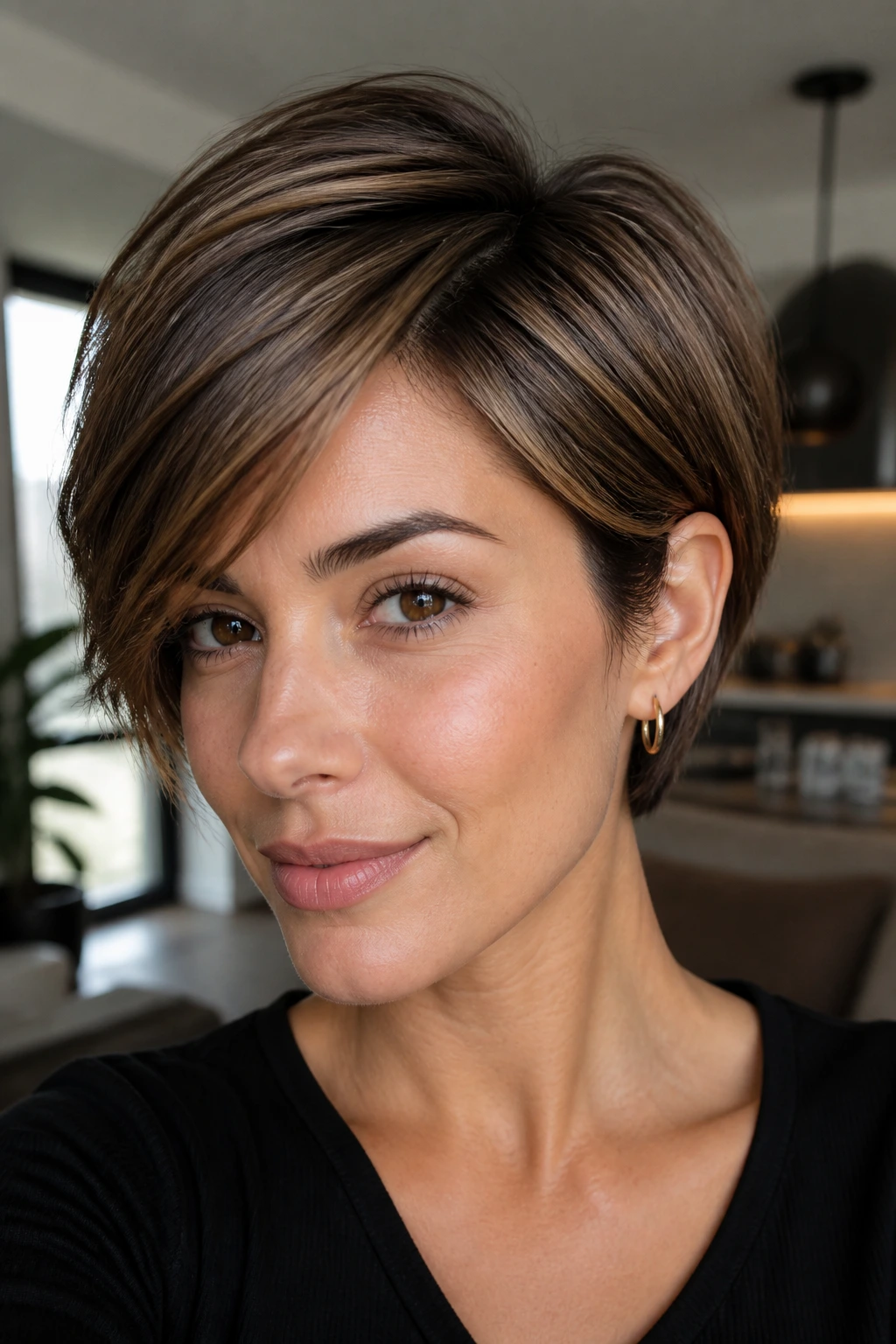
Dimensional mocha lights are the dark-hair answer for people who like shine more than contrast. The trick is to stay inside the mocha family: deep espresso, soft milk-chocolate, and a lighter mocha ribbon here and there. On a sleek short cut, that blend shows up in the reflection rather than in hard stripes.
This is an underused option because people assume highlights have to be blonde to matter. They don’t. On a sharp bob or polished crop, mocha-on-mocha color makes the haircut look richer, cleaner, and a little thicker at the same time.
Why Highlight Placement Matters More on Short Hair
Short hair shows every decision. That’s the whole game. There isn’t enough length to hide a badly placed foil behind a curtain of ends, so the color has to work with the cut line, the part, and the way the hair bends when it moves.
A bob, pixie, or shag doesn’t need more highlight for the sake of more highlight. It needs the light in the right places: around the face, across the crown, and through the texture points where the haircut naturally breaks. That’s why babylights, money pieces, micro-foils, and root melts show up so often here. They fit the scale of the haircut.
The Bend Matters More Than the Length
On short hair, a highlight lives or dies by the bend. If the hair is straight, the pieces need to sit close enough together to read on a flat plane. If the hair is wavy or curly, the lighter sections need to follow the movement or they disappear into the pattern. That’s why a color that looks loud on a long head of hair can look tame on a pixie, and the reverse is true too.
Why Lowlights Matter as Much as Bright Pieces
A lot of short-hair color goes wrong because people chase brightness and skip depth. The result is thin, dusty, or too patchy. A couple of lowlights under the top layer give the cut body, especially around the nape and interior. If the hair is fine, lowlights often do more for fullness than adding another level of blonde ever will.
Essential Salon Tools and At-Home Products
- Three to five reference photos: Bring shots of the front, side, and back if you can. One front-facing photo is never enough for short hair.
- Sectioning clips: Short hair still needs clean paneling, especially around the crown and fringe.
- Tail comb: Useful for precise parting and for showing exactly where you want the face frame.
- Foils or balayage board: Foils give cleaner lift; a board helps when hand-painting softer dimension.
- Tint brush and bowl: The basics for controlled placement and gloss application.
- Color-safe shampoo and conditioner: These help the tone last longer and keep the cut from looking dry.
- Purple shampoo or blue shampoo: Use the one that matches your tone family; purple for blonde brass, blue for orange brunettes.
- Heat protectant: Short hair gets heat-styled often, and the ends show damage fast.
- Gloss or glaze: A demi gloss keeps beige, copper, rose, and ash shades from fading into noise.
- Microfiber towel or soft cotton T-shirt: Less friction means less frizz, which matters on short, highlighted hair.
How to Choose Highlight Ideas for Short Hair That Suit Your Base Color
A good consult starts with the base, not the inspiration photo. If your natural color is level 4 or 5 brown, a buttery blonde ribbon is going to behave differently than it would on a level 7 dark blonde. The darker the base, the more the light pieces need support from lowlights or a root shadow so the cut doesn’t look hollow.
Tone matters too. Warm bases like copper, caramel, apricot, honey, and auburn usually sit more naturally on hair that already has warmth in it. Cool bases can carry ash beige, mushroom brown, pearl blonde, smoked silver, and smoky lavender without fighting the natural undertone. If your hair pulls yellow or orange fast, ask how the toner will be maintained between visits.
Bring the Right Photos
Photos that match your cut length matter more than celebrity photos with long hair. A pixie photo tells a colorist one thing; a lob photo tells them another. The best reference shows texture, parting, and whether the highlight is meant to look soft or loud. If the photo doesn’t match your haircut, it’s just decoration.
Think About Your Styling Habit
A sleek bob wants a different highlight map than a wavy shag. If you air-dry, focus on pieces that look good when the hair bends naturally. If you flat-iron every day, you can get away with finer ribbons and cleaner contrast. If you wear your hair up, tucked, or clipped back, make sure the back and sides get enough attention to hold their own.
How to Wear and Style the Color
Presentation: On short hair, the easiest way to show off highlights is usually a bend, a tuck, or a clean part. A loose wave on a bob lets caramel, beige, and bronde pieces separate. A slicked-back pixie or bob does the opposite; it shows surface shine and makes fine babylights read more clearly.
Best Pairings: The cut shape should support the color. Pixies look strongest with face-framing light or tiny crown pieces. Shags want scattered dimension through the fringe and ends. Curly crops need the color where the curl opens up, not in straight stripes that disappear once the hair dries.
Finish: Warm colors usually look better with a soft, brushed finish and a little gloss. Cool colors need shine, but not heavy oil. A matte texture spray can help mushroom brown, smoked silver, and smoky lavender read with more depth, while pearl blonde and champagne usually want a smoother surface.
Accessories: Small hoops, bold glasses, clips, and headbands all change where the eye lands. If your highlights sit near the temples or fringe, a side clip can show them off in a way that feels deliberate. If the color is peekaboo or underlayer-based, a tucked ear or half-up style reveals the surprise without overthinking it.
Additional Tips and Color Boosters
Gloss Trick: A demi gloss 4 to 6 weeks after the main color can save a shade that’s starting to look tired. This matters more on short hair because the ends and face frame are seen first, not last.
Dimension Trick: Leave a little root shadow even on bright looks. It keeps platinum, ash, pearl, and beige from looking pasted on and gives the haircut a cleaner outline.
Customization: Warm the formula one step if your skin looks flat with ash tones, or cool it one step if caramel tends to turn orange on you. That small adjustment is often better than chasing a whole different color family.
Styling Move: A 1-inch iron with alternating bends can make ribbons show up without turning the style into curls. On short hair, the aim is not volume everywhere. It’s separation. That one detail changes how the highlight reads.
Common Mistakes to Avoid
- Going too chunky too fast: Big stripes can look harsh on short cuts, especially around the fringe and temple. If you want more contrast, add it with placement and tone, not width.
- Ignoring the haircut’s movement: Highlights placed only where the hair lies flat often disappear when the cut moves. Ask where the hair naturally bends, then put the light there.
- Skipping lowlights on fine hair: A lot of people chase brightness and then wonder why the hair looks thin. Lowlights underneath create depth and make the cut look fuller.
- Choosing a toner that’s too cool for the base: Ash can turn flat or smoky in a bad way, especially on warm brunette hair. Beige or neutral usually ages better if you’re unsure.
- Forgetting the bangs or fringe: A short fringe with no color plan can disconnect the whole haircut. If the front is bright, the bangs need some support so they don’t look like a separate piece.
- Over-lightening porous ends: Short hair has older ends near the perimeter, and they take light fast. If those ends are already dry or previously colored, ask for a slower lift or softer placement.
Variations and Adaptations to Try
Soft Melt for First-Time Color: If you’re nervous about a change, ask for a soft root melt with fine highlights two shades lighter than your base. It grows out with less drama and gives you a chance to live with the placement before pushing brighter.
High-Contrast Face Frame: For people who want the front to really show, keep the back deep and make the face frame noticeably brighter. This version works well on pixies and short bobs because the shape stays clean while the front gets all the attention.
Curly Ribboning: On curls, move the lighter pieces in thin curved ribbons instead of straight sections. The result looks softer, and the curl pattern does the rest. This is a better fit than chunky foil lines nearly every time.
Gray-Blending Beige: If the goal is to soften silver instead of cover it, use fine beige highlights and lowlights around the crown and part. The gray disappears into the mix without looking dyed out.
Fashion Shade Peekaboo: If you want something playful, tuck berry, lavender, or copper under the top layer. The color shows when the hair moves, and short hair gives you enough impact without a full vivid commitment.
Maintenance, Toner, and Touch-Up Timing
Short hair needs color maintenance a little more often than people expect, mostly because the face frame and crown are always visible. For blonde, beige, and silver looks, a purple shampoo once every 5 to 7 washes helps keep brass down. If your brunette highlights are turning orange, blue shampoo can help, but use it sparingly or the hair starts to look smoky in the wrong way.
A gloss or toner every 4 to 8 weeks keeps the shade looking intentional. Bright platinum, pearl, and ash tones usually need refreshes sooner. Copper, rose gold, and apricot often fade a bit softer, which can be lovely, but they still benefit from a glaze before they go muddy. If your short cut is trimmed regularly, the color line changes too, so the haircut and the tone should stay on the same schedule.
Between Salon Visits
Wash less if you can. Two or three washes a week is enough for most short highlighted hair, especially if you use dry shampoo at the roots. Heat protection matters on every blowout, but it matters even more when the highlights sit close to the perimeter, because that’s where dryness shows first. A lightweight mask once a week keeps the ends from getting wiry.
Frequently Asked Questions
Which highlight ideas for short hair look the most natural?
Babylights, beige bronde, mushroom brown, wheat blonde micro-highlights, and soft root melts usually read the most natural. They work because they add movement without drawing a hard line around the cut.
Are highlights or balayage better for short hair?
Foils often give more control on short hair, especially on pixies and chin-length bobs. Balayage can work well too, but it has to be tighter and more deliberate than it would be on longer hair because there’s less length to blend.
Can I get highlights on very dark short hair without it looking stripey?
Yes, but the placement and tone matter. On very dark hair, ask for fine ribbons, a softer face frame, or low-contrast caramel and chestnut tones so the color doesn’t look like isolated stripes.
How often will short hair highlights need a touch-up?
That depends on the contrast. Subtle beige or brunette dimension can hold for 6 to 10 weeks, while icy blondes and vivid fashion tones often need a refresh sooner, especially around the hairline.
Do highlights damage short hair more than long hair?
Not automatically, but damage is easier to spot on short hair because the ends are always visible. If the hair is already porous or has been colored before, a gentler lift and a good gloss matter more than the number of foils.
What’s the best way to ask for subtle highlights on a pixie?
Ask for fine babylights, a softened temple area, and maybe two brighter pieces near the fringe. That gives the pixie dimension without turning the top into a patchy blonde helmet.
Can curly short hair handle highlights well?
Yes, and sometimes it handles them better than straight hair because the curl pattern breaks up the placement. The trick is painting where the curls open, not drawing straight lines that disappear once the hair dries.
What if my blonde turns brassy fast?
That usually means the toner isn’t strong enough for your base, or your water and heat habits are rough on color. Use a color-safe shampoo, cut back on hot tools, and ask for a gloss with a cooler beige or ash direction next time.
The Right Light for Short Hair
The best short-hair color does more than brighten the hair. It explains the cut. That’s why caramel on a bob, pearl on a sleek crop, copper in a pixie, or berry under dark layers can feel so different even when the overall amount of color is small.
If you’re choosing between two ideas, pick the one that makes the haircut look cleaner from the side view. That angle reveals more than the front ever does. A smart consult, a good toner, and a placement that follows the cut’s movement will usually beat a louder color with sloppy sections.
Bring one photo of the shade you like and one photo of a cut that matches your length. That tiny bit of homework saves a lot of guesswork, and it gets the color closer to the haircut you actually wear.
