



A bob can go wrong in three different directions: it can sit flat at the crown, puff out at the sides, or land in that awkward helmet zone where the ends feel too heavy and the top feels too small. A layered bob fixes that by changing where the weight lives. That’s the whole trick. Not the length. The weight.
That’s why layered bobs keep showing up on real heads, not just in glossy photos. The right layers let hair bend instead of fight itself. They also buy you a little mercy on busy mornings, which matters more than people admit. A cut that still looks decent after a rough dry and a quick finger-comb is worth a lot more than one that only behaves after twenty minutes with a round brush.
The versions worth your time are not all the same. Some are soft enough to air-dry into shape. Some need a little structure in the back to stop thick hair from hanging like a curtain. Some keep the perimeter blunt and hide the layers inside, which is one of my favorite moves for women who want movement without losing the clean line that makes a bob feel like a bob. The sweet spot is matching the layer pattern to your hair, your face, and your patience level. Start there, and the rest gets much easier.
Why These Layered Bobs Earn Their Place
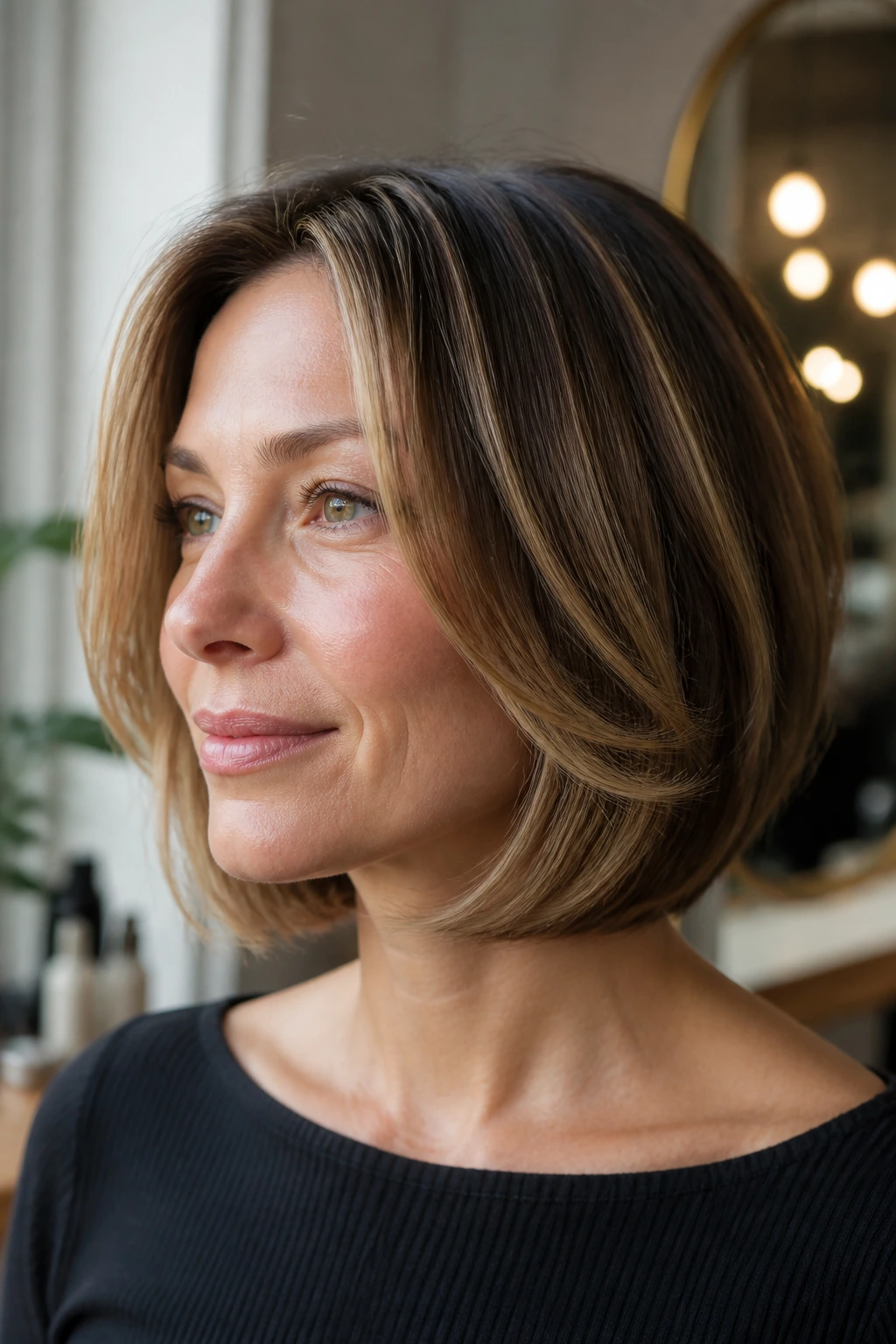
- Less daily fuss: A smart layered bob moves the weight line so the ends bend instead of sticking out like a shelf.
- Better shape for thick hair: Internal layers can pull bulk out of the middle without turning the bottom edge wispy.
- More lift for fine hair: A slight stack or a face frame that starts at the cheekbone keeps the cut from collapsing by lunchtime.
- Easy grow-out: Collarbone and shoulder-grazing versions blur into longer hair without that blunt grow-out stage that gets annoying fast.
- Styling wiggle room: The same cut can look smooth, piecey, or air-dried depending on your part, product, and how much time you’ve got.
- Face framing that actually matters: The right shortest layer can soften the jaw, open up the cheekbones, or lengthen a round face without doing anything dramatic.
1. The Soft Collarbone Layered Bob

This is the cut I reach for when someone wants a bob but refuses to babysit it. The length sits right around the collarbone, and the layers stay soft enough that the shape still feels like a bob, not a shag that wandered off and got lost. The whole point is movement that shows up when you turn your head, not aggressive pieces flying everywhere.
What makes it easy is the way it grows out. A blunt chin-length cut can look sharp for a few weeks and then turn fussy. This one holds its line longer because the perimeter is forgiving. If your hair bends a little at the ends already, this cut will work with that bend instead of against it.
I like this best on medium-density hair, especially if you want a cut that can go from air-dried to polished with one quick pass of a brush. Ask for the shortest layers to start below the cheekbone so you keep fullness around the face. Shorter than that, and it starts to feel airy in a way that is less easy and more thin.
2. The Chin-Length French Layered Bob
Why does a French bob feel easier than it looks? Because the shape does half the job for you. The cut usually sits near the chin, sometimes a touch below, with soft internal layers and a little movement around the cheeks. It is neat, but not stiff. That matters.
The best version keeps the ends light without turning them shredded. If you want this to stay easy, resist the urge to over-style it. A dab of mousse at the roots, a quick rough dry, and a tuck behind one ear are often enough. The fringe can be softened into a tiny curtain or worn piecey so it doesn’t demand perfect symmetry every morning.
Best for: women with straight to slightly wavy hair who want a short cut with personality.
Style with: a light volumizing mousse and a small round brush or just your fingers.
Skip if: you hate regular fringe trims, because the front of this cut will show growth fast.
3. The Stacked Back Bob
A stacked back does one job: it gives the bob a spine. The layers in the back are cut shorter and layered tightly enough to create lift at the crown, which is a gift for thick or straight hair that tends to sit like a block. The front stays a little longer, so the shape doesn’t feel helmet-like.
This cut is especially useful if your hair grows downward fast and makes your head look flat from the side. The stacked section builds shape where the hair naturally wants to collapse. You do need a precise cut, though. If the stack is too high, the back can puff out. If it’s too low, the whole thing looks heavy.
I think this is one of the easiest layered bobs for women who like structure. It looks intentional even on a lazy day. A little blow-dry at the roots and a touch of smoothing cream on the ends is usually enough to keep it clean.
4. The Curly Layered Bob
If your curls turn into a triangle by the end of the day, this is the cut that fixes the silhouette. Curly layered bobs work because the layers are placed to follow the curl pattern, not fight it. The goal is to keep the shape rounded and open through the sides instead of building weight at the bottom.
A good curly bob is usually cut dry or nearly dry, so the stylist can see where each curl actually lands. That matters more than the textbook length on the cape. The shortest layers should never be so short that they spring up into a halo unless that is the look you want. For most women, a little length in the top layers keeps the shape calm.
Use a leave-in conditioner, a curl cream, and a diffuser if you want lift without frizz. Or let it air-dry and touch only the ends when the cast breaks. The shape should look good even when you do not coax every curl into place. If it doesn’t, the cut is wrong, not you.
5. The Feathered Side-Part Bob
This one has a little 70s softness, but it doesn’t feel costume-y if the layers are handled well. The side part shifts the weight away from the center, and the feathered ends give the bob a softer edge around the jaw. It’s a nice answer for women who want movement without a choppy finish.
Feathering helps a bob avoid that blunt, boxy feeling that can show up on straighter hair. The ends move a little when you walk. That sounds small, but it changes the whole haircut. The side part also gives you a built-in lift on one side, which is useful if one side of your face feels flatter in photos.
A quick blow-dry with a paddle brush or a large round brush is enough here. You do not need perfect curls. You need bend. That’s the difference. A little serum on the mids and ends keeps the feathering from looking frayed.
6. The Razored Textured Bob
A razored bob lives and dies by the hand of the person cutting it. Done well, it gives you piecey movement and a light, airy finish that looks especially good on thick, straight hair. Done badly, it chews the ends into a dry, wispy mess. So yes, precision matters here.
The easy part is the styling. The cut already has texture, so you don’t need to force it into shape with a lot of tools. A small amount of texturizing spray or a pea-sized bit of styling paste can separate the ends and show off the layers. I would not choose this if your hair is fragile or very fine, because razoring can make the ends look see-through fast.
What it does well: removes heaviness and adds movement.
What to ask for: soft, controlled razoring, not a heavily shredded finish.
What to watch: if the ends start flipping in different directions after air-drying, you likely need a cleaner perimeter.
7. The Layered Bob with Curtain Bangs

Curtain bangs and a layered bob play nicely because they blend instead of compete. The fringe opens the face, and the layers below carry that softness down through the sides. It gives you shape without forcing you into a hard line at the forehead.
This cut is practical because the bangs can be worn three ways: centered, parted wider, or tucked into the sides of the bob when you don’t feel like dealing with them. That flexibility is the reason so many women keep coming back to it. If the bangs are cut too short, though, the whole thing becomes much more high-maintenance. Let them graze the cheekbones or the bridge of the nose so they can move.
A round brush at the front is enough for most people. You do not need to curl the rest of the bob into submission. The fringe and the face frame do the heavy lifting, which is exactly why this cut feels so wearable.
8. The Inverted Bob
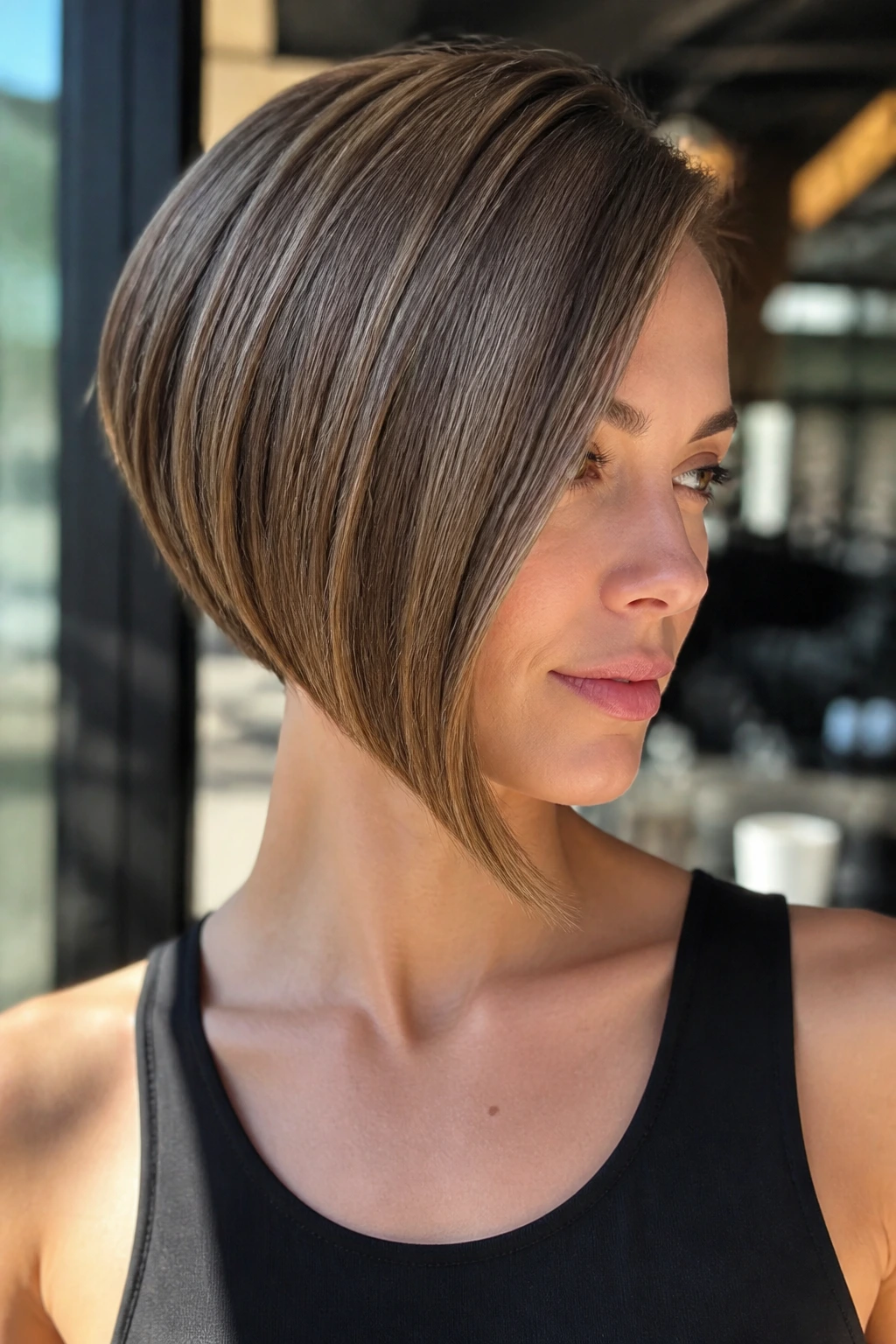
The inverted bob is the clean line-lover’s version of a layered cut. It stays shorter in the back and longer in the front, which creates a sleek diagonal that can make the neck look longer and the jaw look softer. It’s neat without being flat.
The reason it’s easier than it seems is that the front length gives you options. You can wear it tucked, smooth, or slightly bent under. The back does most of the shaping work, so the cut keeps its outline even on days when you don’t style every section. I like this on straight or slightly wavy hair because the angle shows up clearly. On very curly hair, the geometry can get lost unless the cut is tailored carefully.
A good inverted bob should not look severe. The layers need to support the line, not compete with it. If the back is too short, it can feel fussy. If the angle is too soft, you lose the point of the cut.
9. The Tousled Wavy Bob
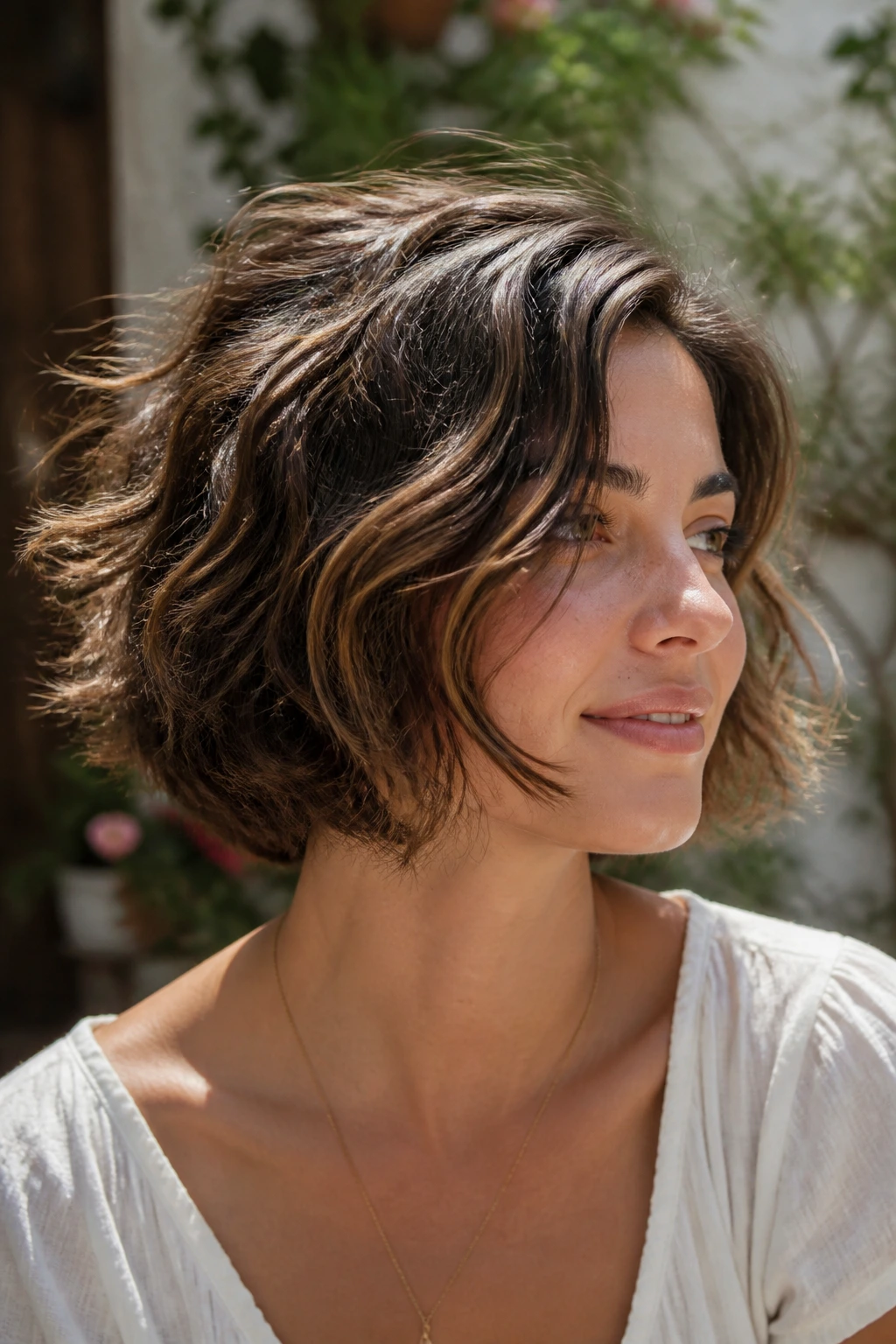
This is the cut for women who want hair that looks like it had a casual life, not a hard morning. The layers are usually cut to encourage wave and keep the bulk from collecting at the bottom. On naturally wavy hair, that means you can scrunch in a little cream and let it dry with some movement already built in.
The easy part is that this bob looks better when it’s not perfect. A few bends, a slightly uneven part, and a little lift at the crown are part of the charm. Overbrushing kills it. So does heavy oil. You want the ends to separate a bit and the surface to stay soft, not slick.
If you like a style that tolerates some mess, this is one of the best layered bob options. It’s forgiving on day two, too. A mist of water, a touch of leave-in, and a quick scrunch can wake the whole shape back up.
10. The Rounded Layered Bob
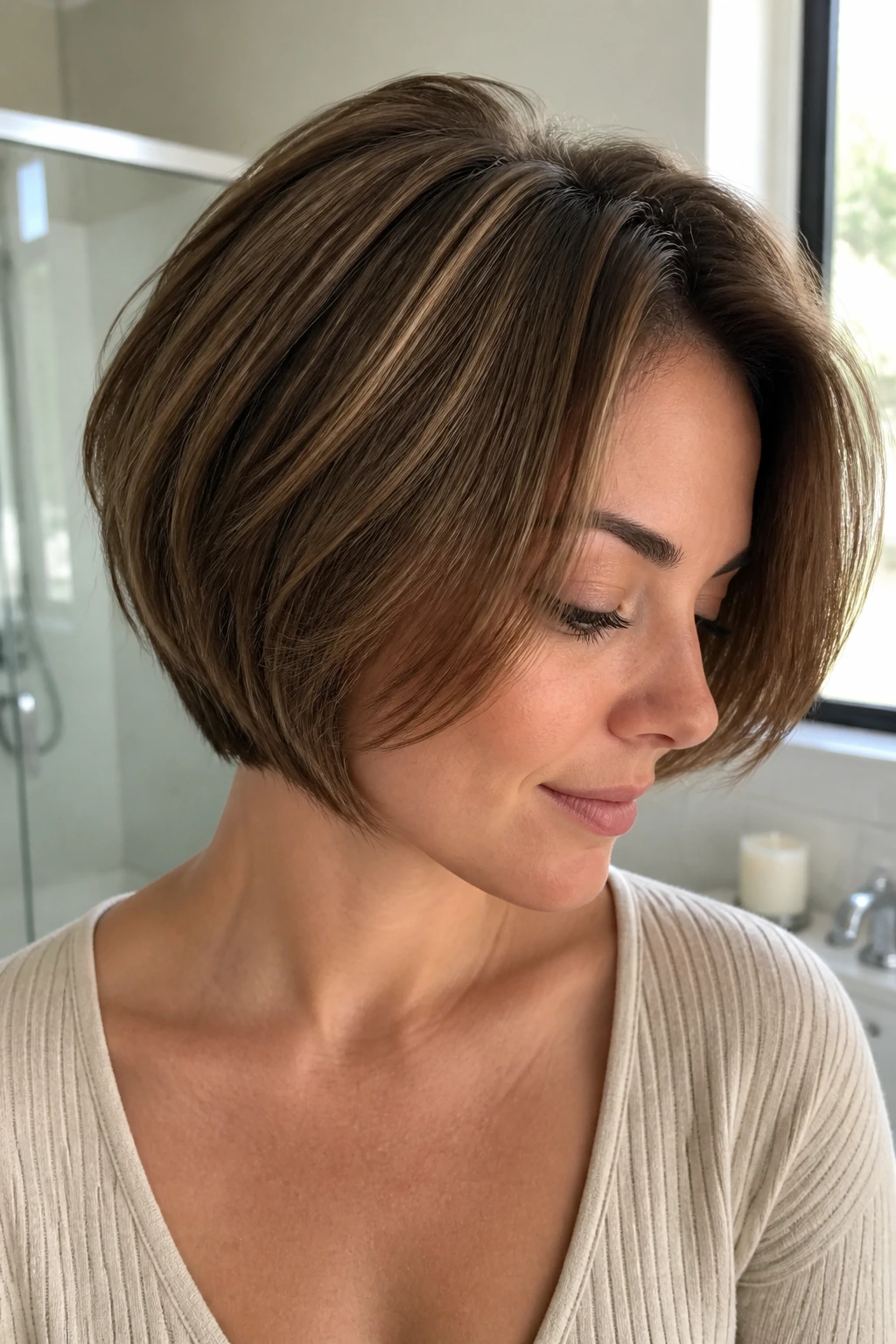
A rounded bob curves in a controlled way around the head, and the layers keep that curve from turning stiff. It feels polished, but not severe. The soft roundness makes it useful for straight hair that needs some body and for faces that look better with a gentler outline.
What keeps it easy is the silhouette. The shape is already doing the styling work, so you don’t need a lot of extra tricks. The only catch is that this cut benefits from a bit of blow-drying to keep the roundness visible. If you let it dry completely flat, the shape loses some of its appeal. A medium round brush or even a paddle brush with a bit of root lift is enough.
I would call this one a controlled bob, not a fussy one. It holds together well in humid weather if the layers are cut with restraint, and it can look especially good with a center part. There’s nothing noisy about it. That’s the point.
11. The Shoulder-Grazing Lob with Face-Framing Layers

This is the cut for women who want the safety net of extra length. The shoulders give you a little more styling room, and the face-framing layers stop the lob from feeling heavy or shapeless. It’s one of the most forgiving layered bobs because you can still tie it back, twist it, clip it, or leave it loose.
The face-framing pieces should start near the cheekbone or just below it. That’s the sweet spot. Start them too high and you get a disconnected look. Start them too low and the layers disappear. This cut works especially well if you wear your hair in a side part or like a soft bend through the mids.
I think this is a smart choice for women who are nervous about going too short. It gives you the feeling of a bob without the panic of losing all your length. And yes, it still counts. Hair people are allowed to split hairs about this. We do it all the time.
12. The Fine-Hair Airy Bob
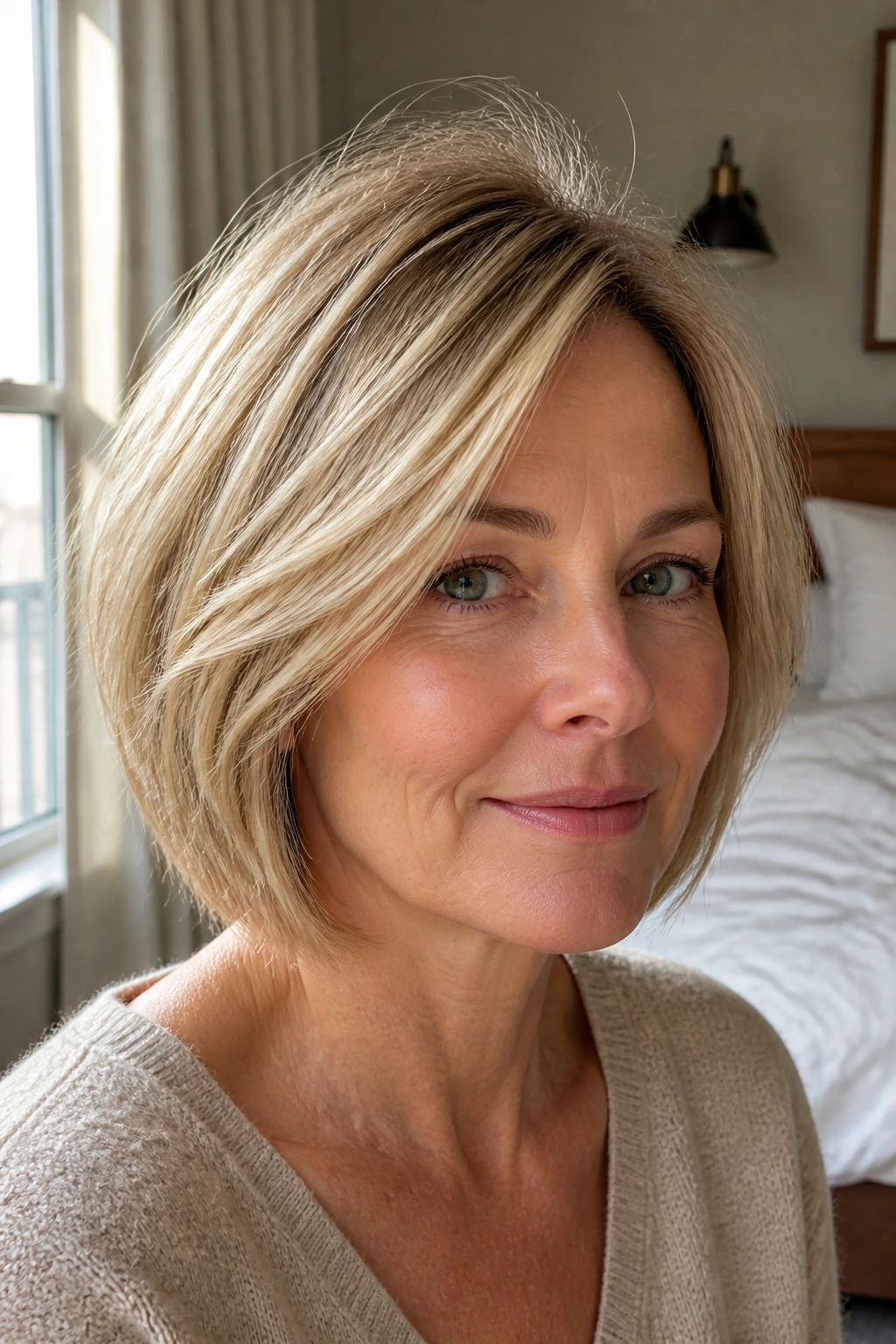
Fine hair needs a different kind of layering. Too many short pieces and the ends go scraggly. Too little structure and the whole cut collapses. The airy bob gets around that by keeping the perimeter strong and using only a little internal layering where the hair needs lift.
The result is movement without see-through ends. That’s what you want. A root-lifting mousse, a quick blast of the blow dryer at the crown, and maybe a little texture spray at the ends are usually enough to keep this cut from lying flat. Heavy creams are not your friend here. They make fine hair look smaller than it is.
Best for: hair that loses shape fast and needs a bit of lift at the crown.
Ask for: soft internal layers, not aggressive thinning.
Avoid: short choppy layers around the perimeter, which can make the shape look sparse.
13. The Thick-Hair De-Bulked Bob
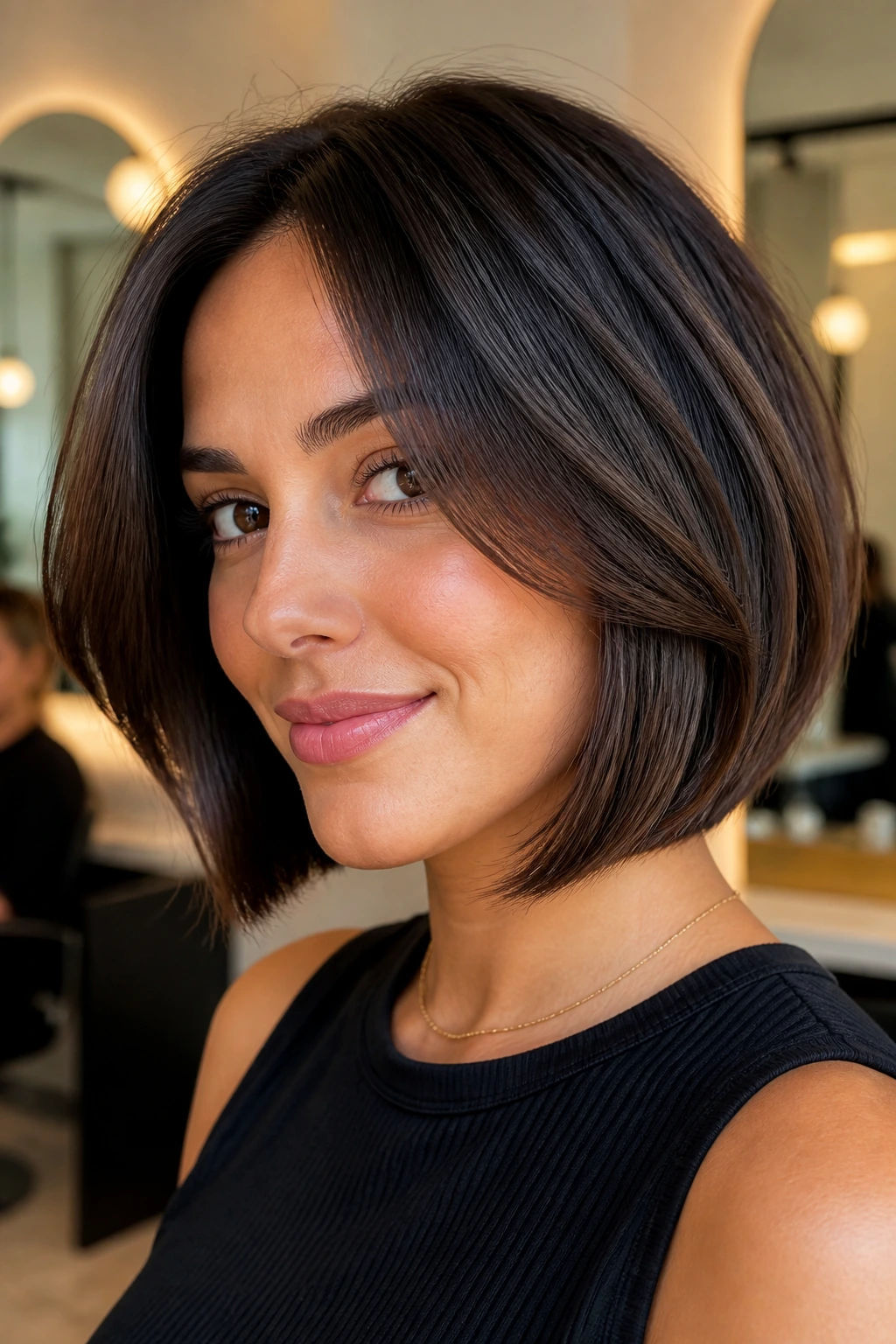
Thick hair can wear a bob beautifully, but only if the weight is handled with some care. This cut removes bulk from the right places so the bottom doesn’t feel like a brick. The perimeter stays clean while the inside gets enough movement to keep the shape from ballooning.
A good de-bulked bob should feel lighter on your head the minute it’s cut. You’ll notice it when you dry it, too. Brushing becomes easier. The roots don’t have to fight so hard. That’s the entire appeal. But be careful: too much thinning can leave the ends looking frayed and the shape looking wide instead of sleek.
I prefer this version with subtle face-framing pieces and a blunt-ish bottom line. That combination keeps the cut from getting fluffy. If your stylist reaches for thinning shears all over the place, ask them to slow down. Thick hair needs relief, not shredding.
14. The A-Line Layered Bob
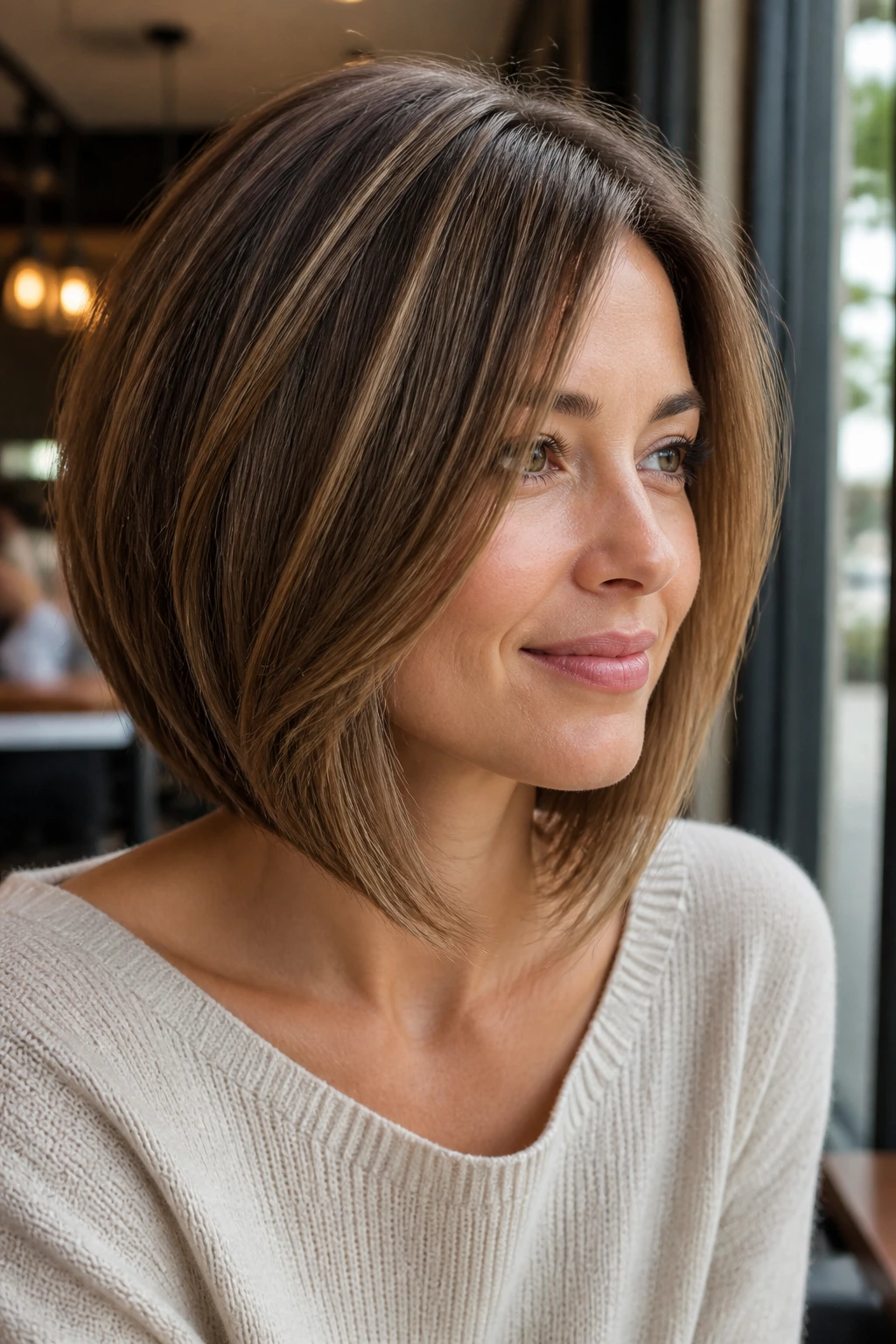
The A-line bob angles forward gently, so the front pieces are longer than the back. Add layers, and the cut becomes lighter and easier to wear. It gives you that clean forward swing without the heaviness that sometimes drags an angled bob down.
This shape works well if you like tucking one side behind your ear or wearing the front pieces loose around your face. The angle creates visual length, which can soften a fuller jaw or balance a wider cheek area. It also holds up nicely on straight hair because the line stays visible even with minimal styling.
A lot of people think A-line bobs are formal. They don’t have to be. Keep the layers soft and the ends slightly piecey, and the cut feels relaxed rather than sharp. The important thing is that the front needs enough length to show the angle. If it’s too short, the whole idea gets muddy.
15. The Shaggy Bob with Piecey Ends
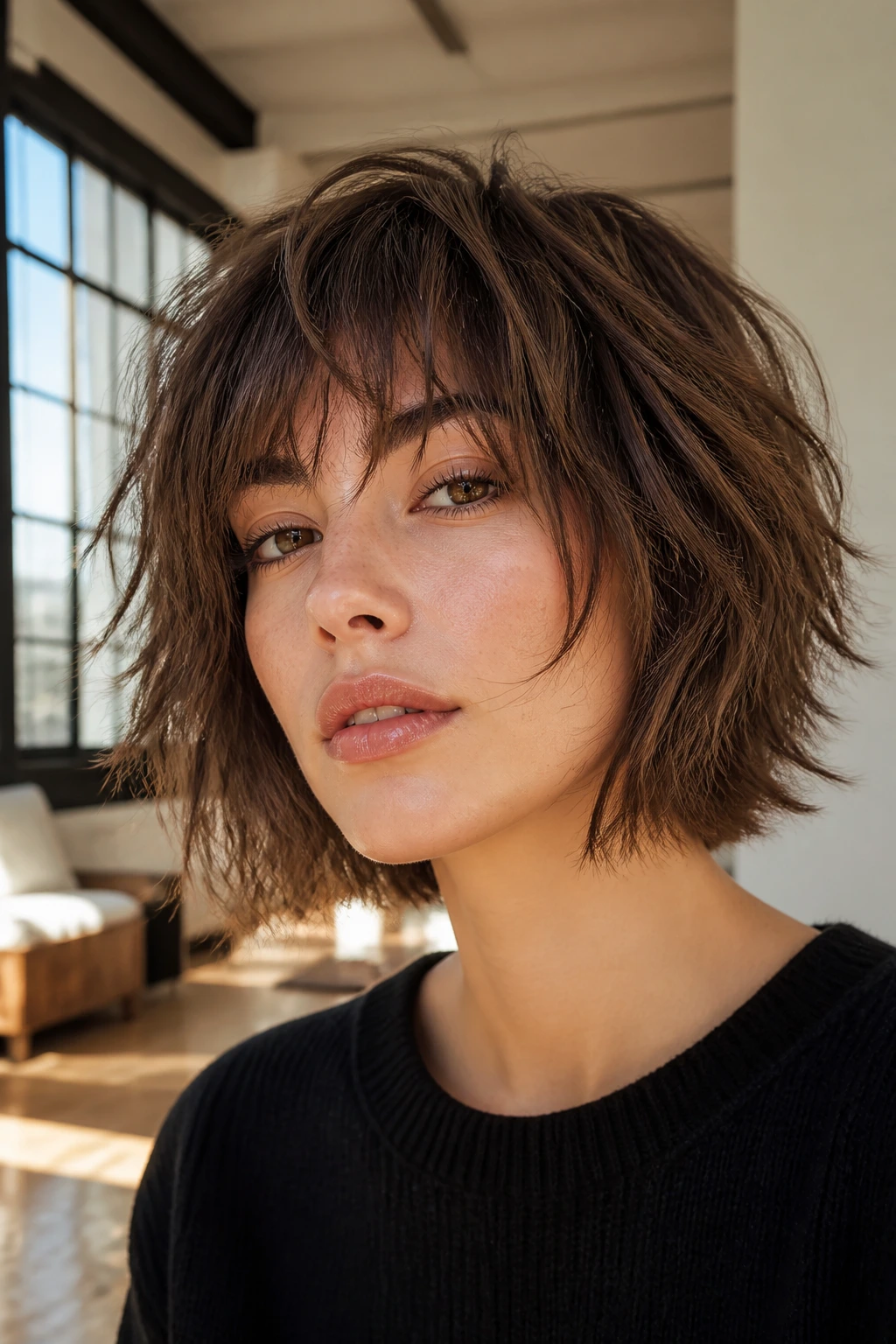
This is the layered bob for women who like a little grit in the texture. The cut is choppier, the ends are more separated, and the overall effect is casual in a way that reads modern instead of messy. It’s especially good for wavy or thick hair that looks too polite when it’s cut blunt.
The piecey finish hides a lot. A bad hair day becomes less obvious when the cut is supposed to move around a bit. Use a light texture spray or a touch of cream wax on the ends, then separate pieces with your fingers instead of a brush. That keeps the shape from turning overworked.
It’s not the best choice if you want a polished, smooth outline every day. But if you want a cut that forgives a little sleep, a little humidity, and a little laziness, it’s a strong one. The charm is in the looseness.
16. The Sleek Layered Bob
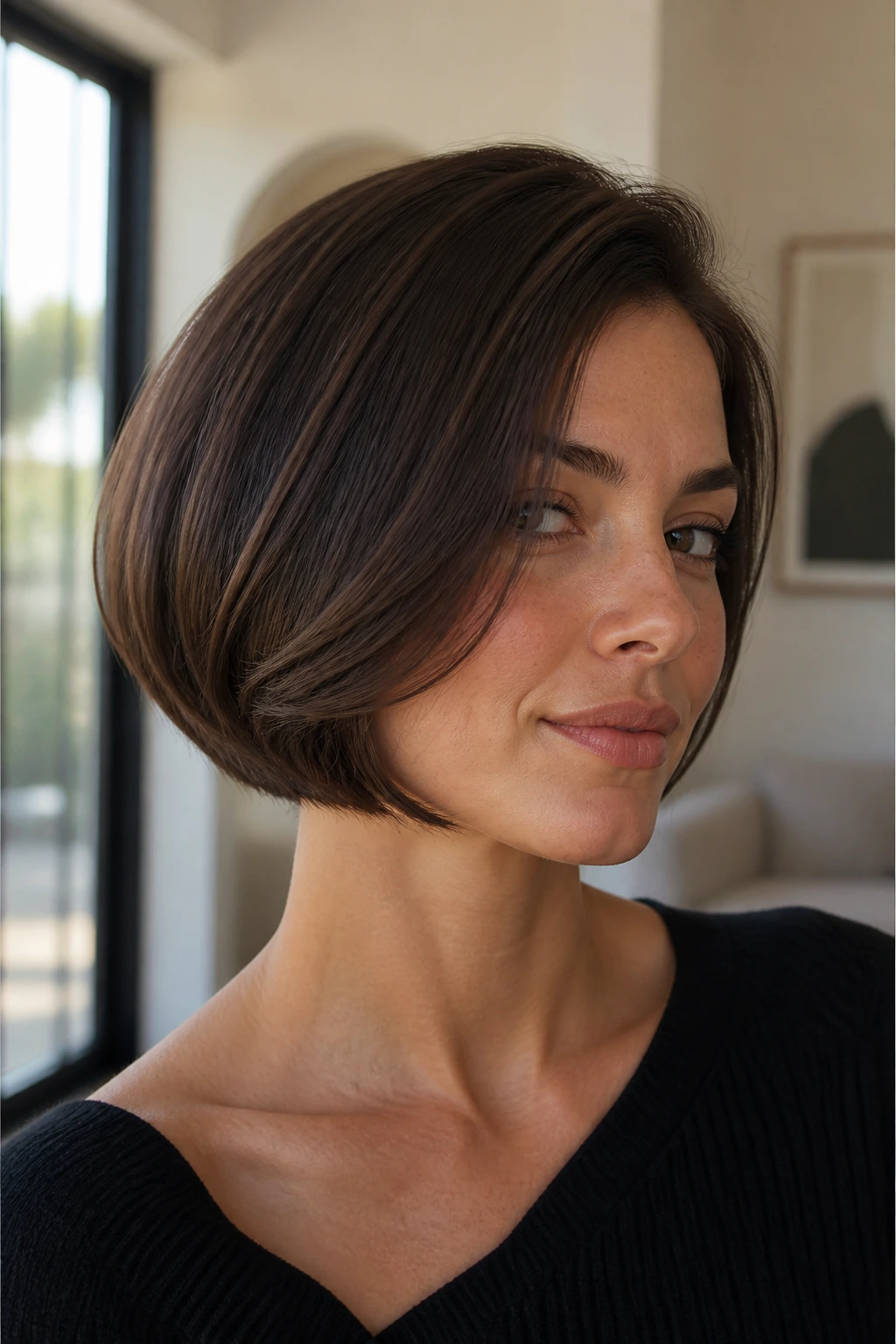
A sleek layered bob is for women who still want a clean line but don’t want the cut to look stiff. The layers are tucked in enough to add movement, while the top stays smooth and controlled. It’s the version you wear when you want your hair to look finished with the least amount of visual noise.
The easiest way to wear it is with a quick blowout and a flat brush. The layers show up as soft bends near the ends, not obvious chops. That’s what makes it feel more wearable than a one-length bob on many hair types. It can be especially good on medium-density hair that needs a little motion but not a lot of texture.
I like this cut because it doesn’t need to scream for attention. It just sits well. That is a bigger compliment than it sounds like.
17. The Wavy Bob with Long Bangs

Long bangs solve a common problem: they give you face framing without the maintenance of a full fringe. When paired with a layered bob, they create a soft sweep that blends into the sides. The result feels relaxed, not precious.
This cut works well if you have a little wave in your hair or you like to curl just the front sections away from the face. The bangs should be long enough to tuck behind the ears when you’re tired of them. Shorter than that and you lose the flexibility. That flexibility is the whole reason this style is easy.
A light bend through the mids and a soft part are enough. The bangs can be air-dried, brushed over, or curled out with a barrel iron for a more polished finish. The rest of the bob can stay understated. That’s the nice part.
18. The Graduated Bob
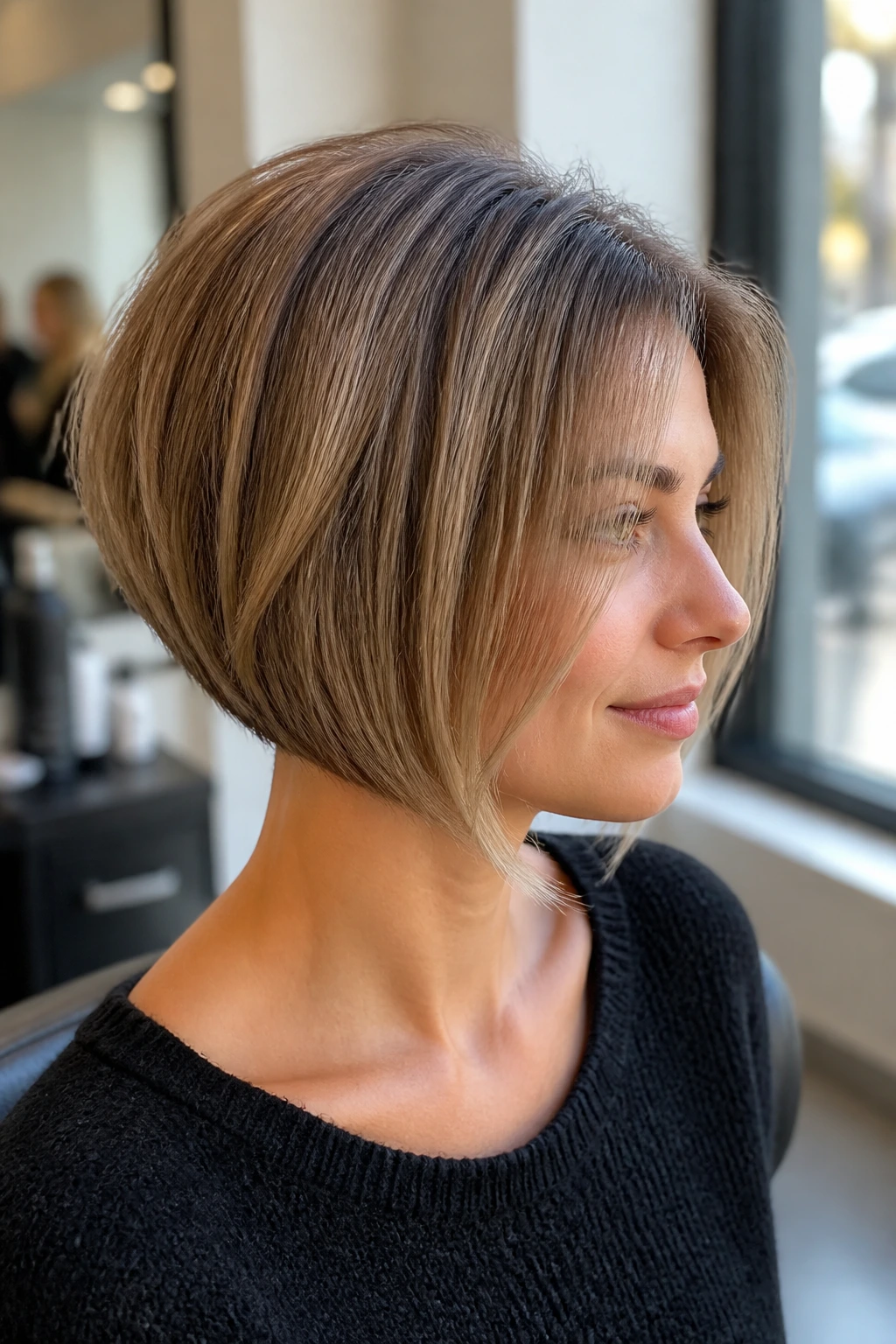
The graduated bob is built for shape. The back is softly stacked, but the transition into the sides is smoother and more structured than a dramatic inverted cut. It gives you fullness at the crown without a lot of extra length to manage.
This cut often looks best on straight or slightly wavy hair because the graduation shows clearly. It’s a strong choice if you want the bob to hold its outline with very little product. A bit of root lift and a brush-through at the ends is usually enough. Still, the cut has to be precise. If the graduation is uneven, the silhouette gets awkward fast.
Why it works: the shorter back lifts the shape, and the longer side sections keep it soft enough for daily wear.
What to ask for: a gradual shift from shorter back to longer sides, not a sharp step.
19. The Jaw-Length Layered Bob

Jaw-length is bold. There’s no hiding behind extra length here. The upside is that the cut feels fresh and quick to style, because there isn’t much hair to wrestle with. The layers soften the line so it doesn’t cling too hard to the jaw.
This length is especially nice if you want your cheekbones and eyes to do more of the talking. It frames the face in a direct way. A side part can soften it even more, while a center part makes it feel clean and modern. If your jaw is already strong and you don’t want to emphasize it, keep the layers a little longer around the front so the cut curves instead of stopping abruptly.
A jaw-length bob can be easy, but it does not forgive a sloppy cut. The ends need to sit right. The layers need to be subtle. Get that part right, and this cut has a crisp little confidence to it.
20. The Deep Side-Part Bob

A deep side part changes the whole mood of a bob without changing the haircut itself. It creates a built-in lift on one side, softens the forehead, and gives the layers a better chance to fall in a flattering way. For fine hair, this can be a lifesaver.
The easy part is that the part does the work. You do not need a dramatic styling session to make the cut feel different from day to day. Flip the part, add a little root spray, and tuck one side back if you want a little asymmetry. The layers will follow that line and create shape.
I like this approach when someone wants movement but doesn’t want to commit to bangs. It’s one of those small changes that quietly improves the whole haircut. Small, yes. Boring, no.
21. The Bixie-Bob Hybrid
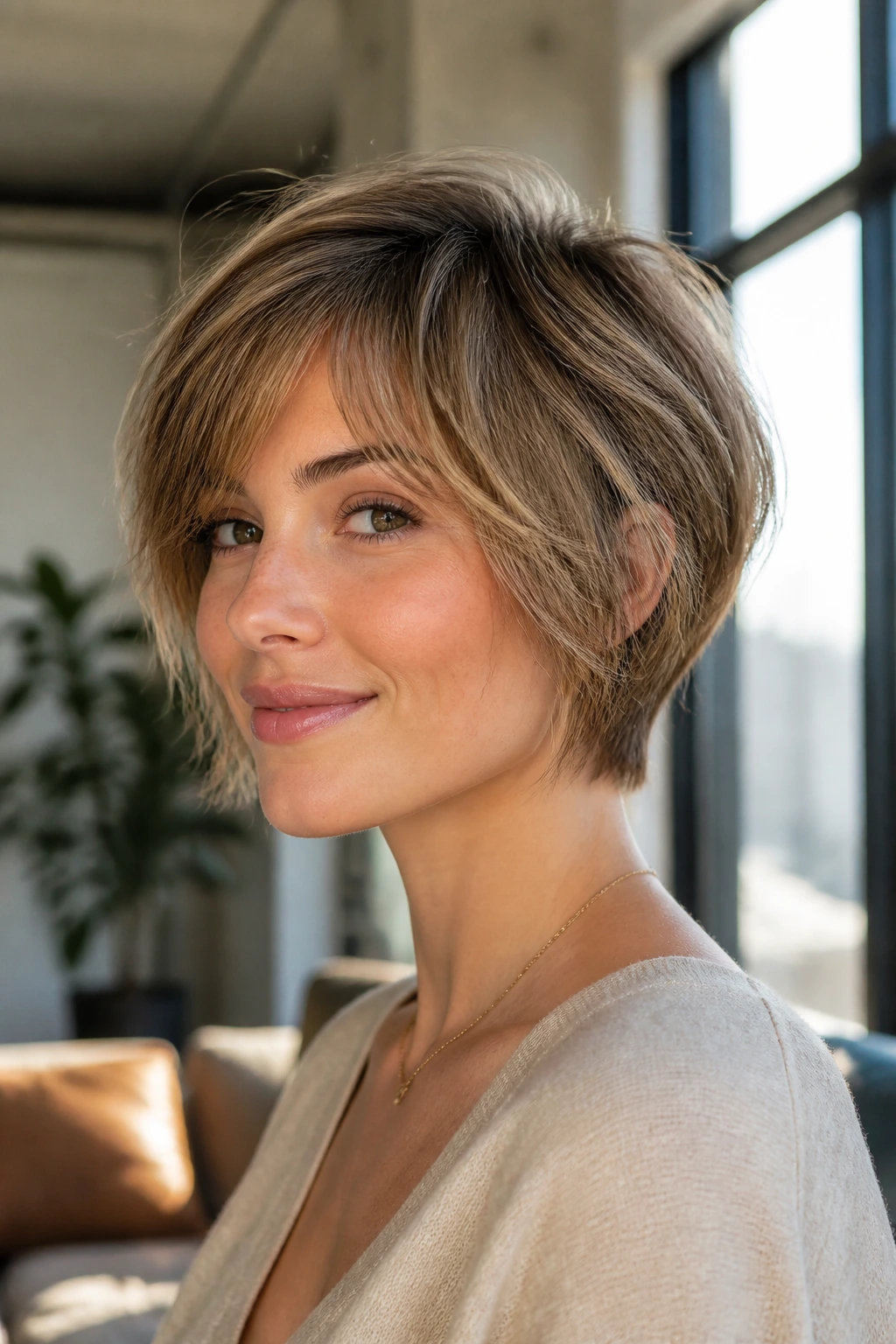
This cut sits in that in-between space where a bob gets a little shorter, a little choppier, and a little more playful. It keeps enough length to feel like a bob, but borrows the lightness of a pixie. That makes it a good fit for women who want less hair on the neck and a faster morning routine.
The Bixie-bob works best when the texture is slightly rough on purpose. A tiny bit of paste through the ends is enough. You are not trying to smooth it into obedience. You are trying to give it shape. If your hair is very fine, keep the layers soft so the cut doesn’t break apart. If your hair is thick, the choppiness can be your friend.
It’s a confident cut. Not loud. Just confident. And it grows out better than people expect, especially if the top is kept a little longer than the sides.
22. The Naturally Curly Chin Bob

A chin-length curly bob is one of the cleanest ways to show off curl pattern without drowning it in length. The chin mark gives the curls a clear frame, and the layers help stop the shape from puffing out too wide. It feels lively without looking overworked.
The key is respecting shrinkage. A cut that looks chin-length wet may sit a few inches shorter when dry, depending on your curl pattern. That is why a dry cut or curl-by-curl trim is so useful. The stylist needs to see where the curls actually land, not where they pretend to land when wet.
Use moisture-heavy products here: leave-in, curl cream, maybe a light gel for hold. The cut will do more of the styling than you think. That’s why it’s easy. The curls already know what to do.
23. The Choppy Bob with Micro-Layers
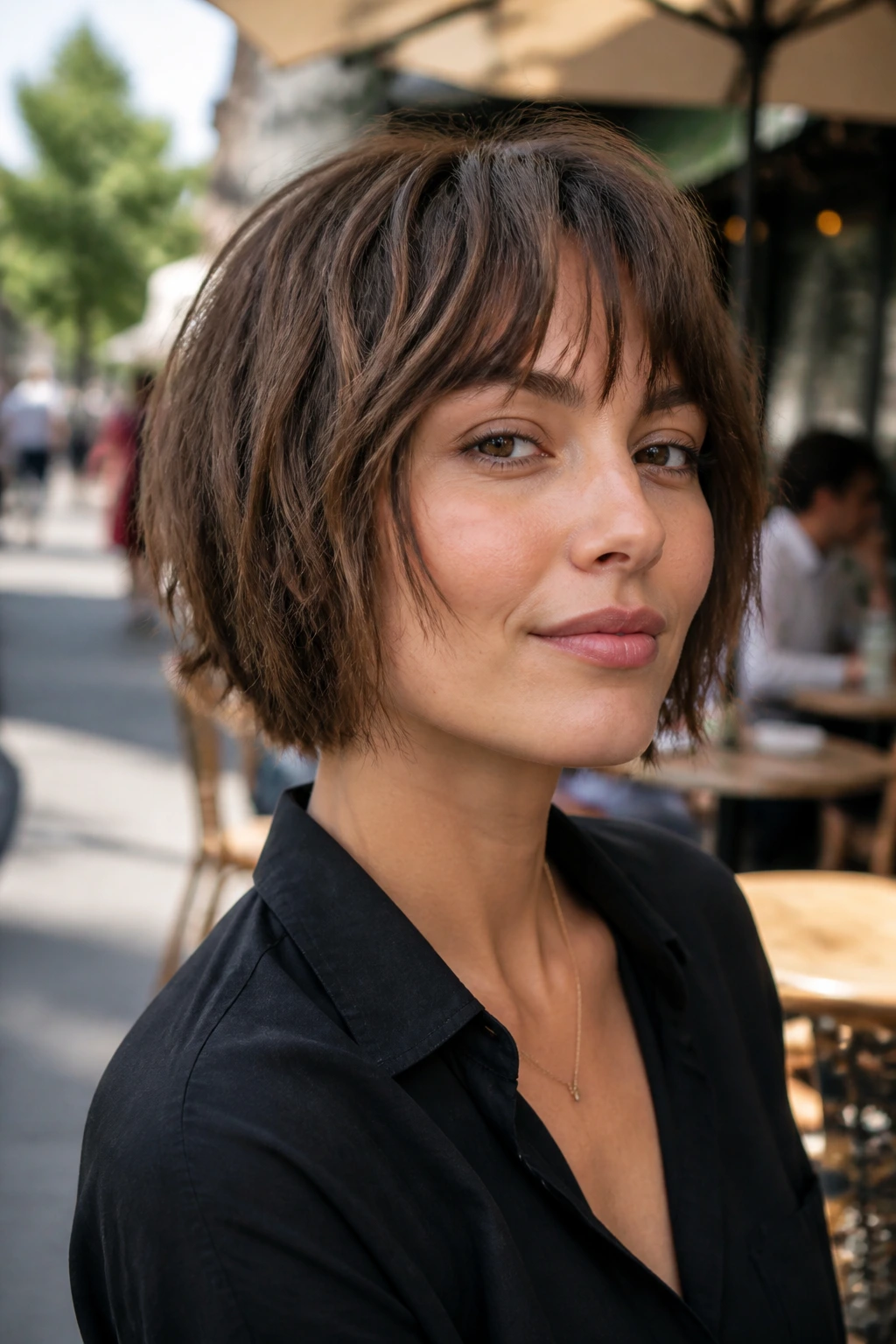
This is the bob for women who want texture in small doses. Micro-layers break up the surface just enough to keep the hair from feeling like one solid sheet, but the cut doesn’t become shaggy. It lands somewhere between polished and undone.
The charm here is that the shape looks interesting even when the styling is minimal. The tiny layers catch light and movement as you turn your head. Use a texturizing spray or a dry paste to separate the ends, but don’t overdo it. Too much product and the layers start to clump.
If your hair is very fine, go easy on this cut. It can tip into thinness fast. Medium hair usually wears it better. Thick hair can handle more choppiness, but the layers still need to be controlled so the bottom doesn’t fray.
24. The Soft U-Shaped Bob
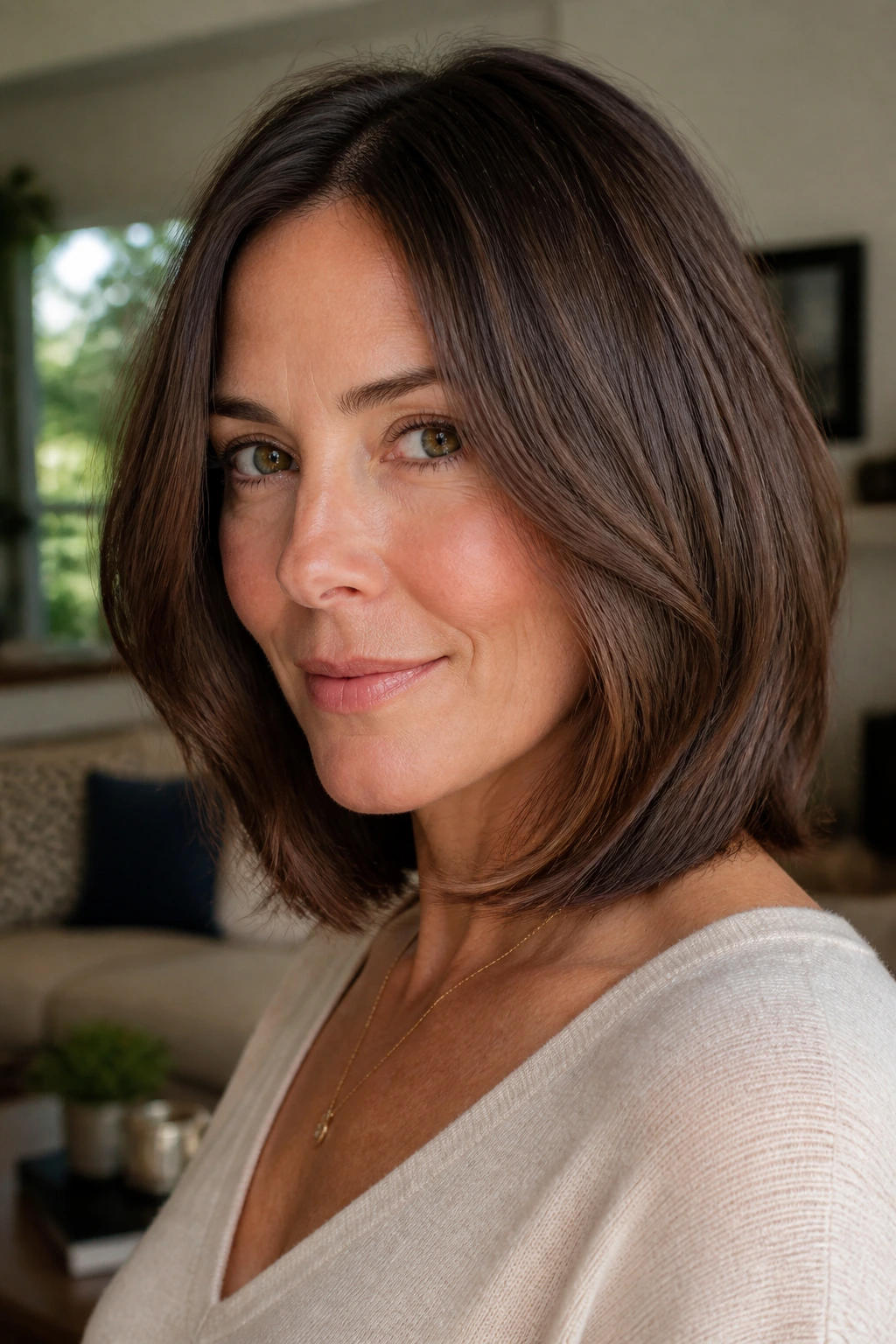
A U-shaped bob keeps a little extra length at the sides and a softer curve through the back. Add layers, and the whole cut becomes gentler on the eye and easier to grow out. It’s one of the nicest options for women who want a bob that doesn’t feel boxed in.
The U-shape gives the front pieces a bit more swing, which is useful if you like the hair to graze the shoulders. It also softens the silhouette around the face without needing dramatic face-framing layers. I like this for straight or wavy hair because the curve is visible but not fussy.
If the cut is done well, it’s one of those shapes that seems to settle into place on its own. That’s the best kind of haircut. The one that doesn’t argue with your mirror.
25. The Effortless Air-Dry Bob

This is the layered bob stripped down to its most practical version. The layers are placed to respect the hair’s natural bend, not to force a blowout. If you have waves, a loose curl pattern, or hair that likes a bit of texture, this one can save a lot of morning effort.
The trick is restraint. Too many short layers and the cut gets puffed up in the wrong places. Too few and it hangs limp. You want enough shape to keep the ends from sticking out, but not so much that the bob needs a full styling session. A leave-in, a little cream, and a finger-scrunch is often enough. If you diffuse, use low heat and stop when the roots are about 80 percent dry.
This may be the most honest version of the layered bob. It works with real hair, not fantasy hair. And that’s why people keep wearing it.
Why Layer Placement Changes Everything
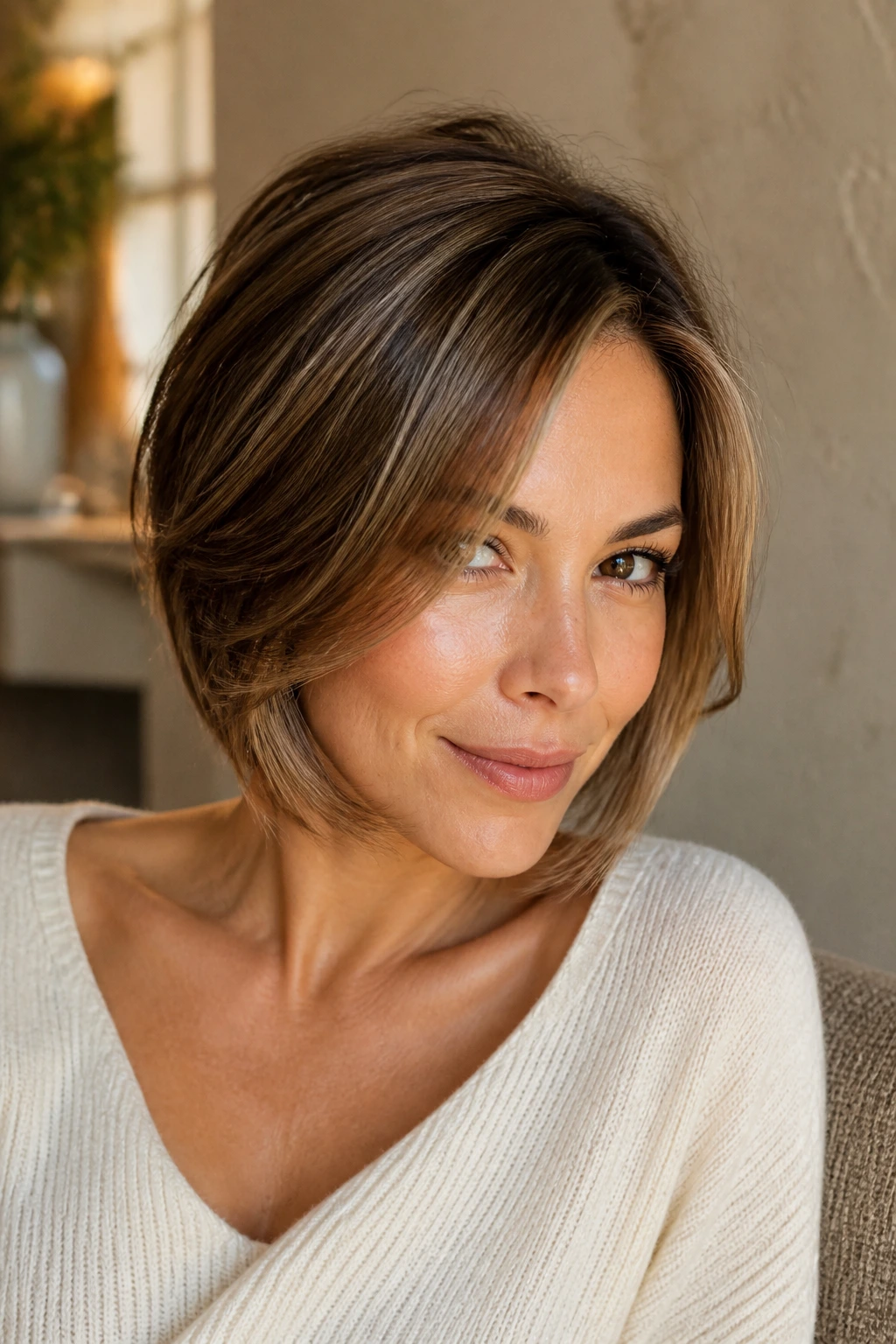
A layered bob is not just a shorter haircut with extra texture. The placement of the layers changes where the hair sits against the head, where the eye lands, and how much work you do each morning. Put the shortest layer too high, and the cut can feel fluffy. Put it too low, and the bob loses movement and starts to look blocky.
That’s why the best layered bob haircut feels tailored. The crown, the cheekbone, the jawline, and the neck each matter. A layer that starts at the cheekbone can open the face. A layer that lives lower can keep the perimeter stronger. On thick hair, internal layers are often more useful than visible choppiness. On fine hair, too much internal cutting can make the ends look sparse.
The real job of layers is weight control. That sounds technical, but it’s simple in practice. Hair falls where gravity tells it to fall. The cut either helps that or fights it. Good layering helps.
How to Ask for the Bob You Actually Want

Bring a picture, sure, but do not stop there. Photos lie about texture all the time. They also hide styling time. What you really want is a plain-language conversation about where the shortest pieces should land and how much fullness you want to keep at the bottom.
Say things like: “I want the shortest face-framing pieces at my cheekbone,” or “I want the back lightened, but I still want a blunt-looking edge.” That gives a stylist something useful to work with. If your hair is thick, ask how they plan to remove weight. If your hair is fine, ask how they’ll keep the ends looking full. Those are not small details. They are the haircut.
A good salon conversation also includes your styling reality. If you air-dry, say so. If you use a flat iron once a week, say that too. A layered bob for a person who rough-dries and leaves is not the same as a layered bob for someone who wants a smooth finish every morning.
Tools and Products That Keep the Shape Clean

- Blow dryer with a nozzle: The nozzle directs airflow and helps keep the layers from puffing in random directions.
- Small to medium round brush: Useful for bending the ends under or away from the face without over-curling them.
- Paddle brush: Good for smoothing a sleek layered bob or stretching out waves with less volume.
- Volumizing mousse: Best at the roots for fine or flat hair that needs lift at the crown.
- Texturizing spray: Helps piece out choppy ends and keep a shaggy bob from looking too fluffy.
- Leave-in conditioner: Useful for curly and wavy cuts that need moisture before air-drying.
- Heat protectant spray: Non-negotiable if you use a hot tool more than once a week.
- Styling cream or light serum: Tames frizz without making the bob look oily, especially on the ends.
- Wide-tooth comb: A better choice than a small brush for curls and damp hair.
- Silk or satin pillowcase: Helps keep a layered bob from getting mashed flat overnight.
Styling a Layered Bob Without a Full Blowout
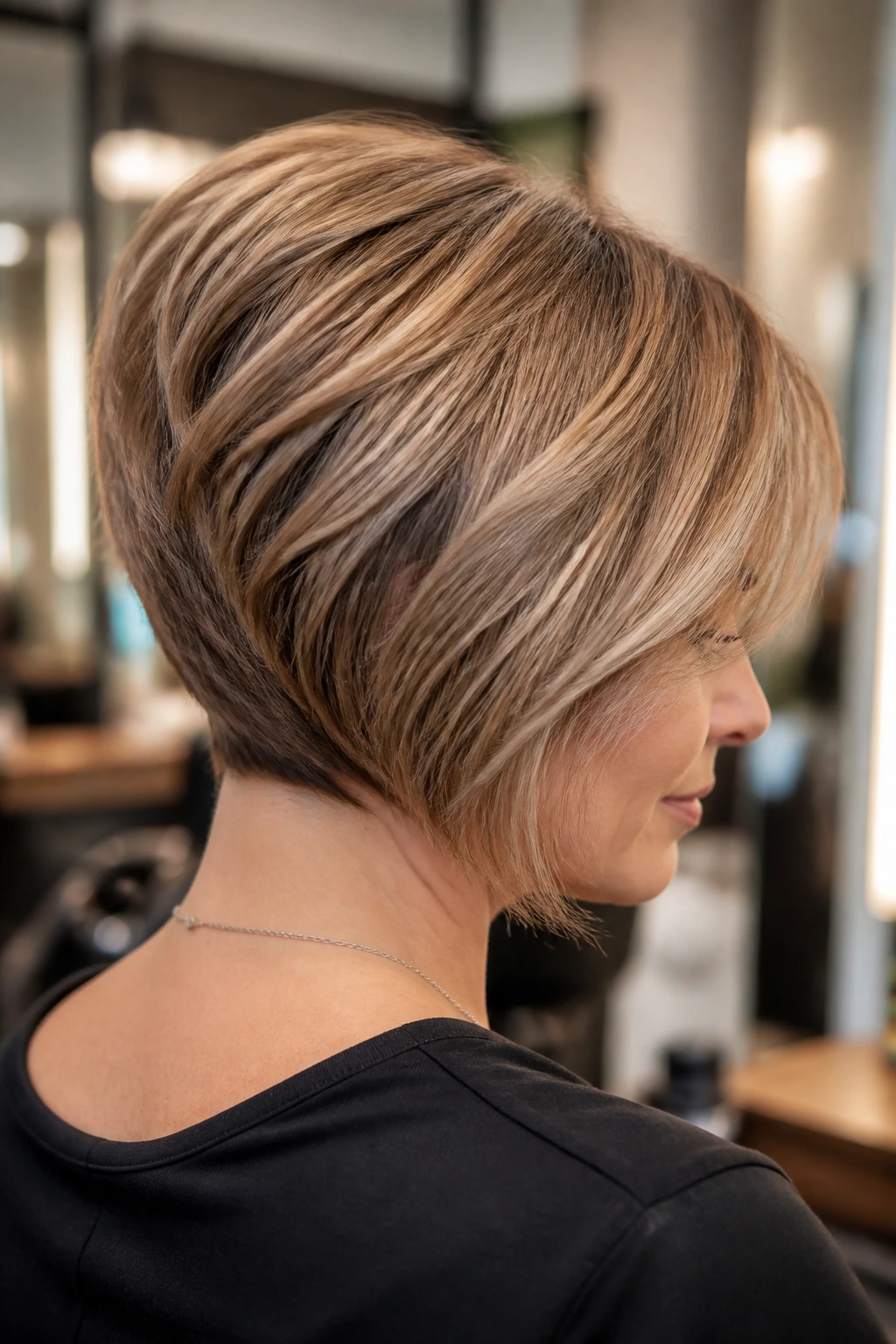
The easiest layered bobs are the ones you can style in one of three ways: quick blow-dry, air-dry, or day-two refresh. Each one needs a different hand. For a blow-dry, focus on the roots first. Lift them with your fingers or a brush, then bend only the ends. You do not need to curl every section. A slight turn under the perimeter is enough to make the cut look polished.
For an air-dry, work product through damp hair in sections, not all at once. A leave-in and a light cream will help the layers settle. Scrunch the mids if your hair has wave, or twist a few front pieces if it’s straighter and you want movement. Then leave it alone. Touching it every five minutes creates frizz and flattening in equal measure.
For day two, dry shampoo at the roots and a small amount of texture spray on the mids usually does the trick. If one side has gone dead flat, flip the part for five minutes while you get dressed. It’s a small thing. It works.
Common Mistakes That Make a Bob Look Busy
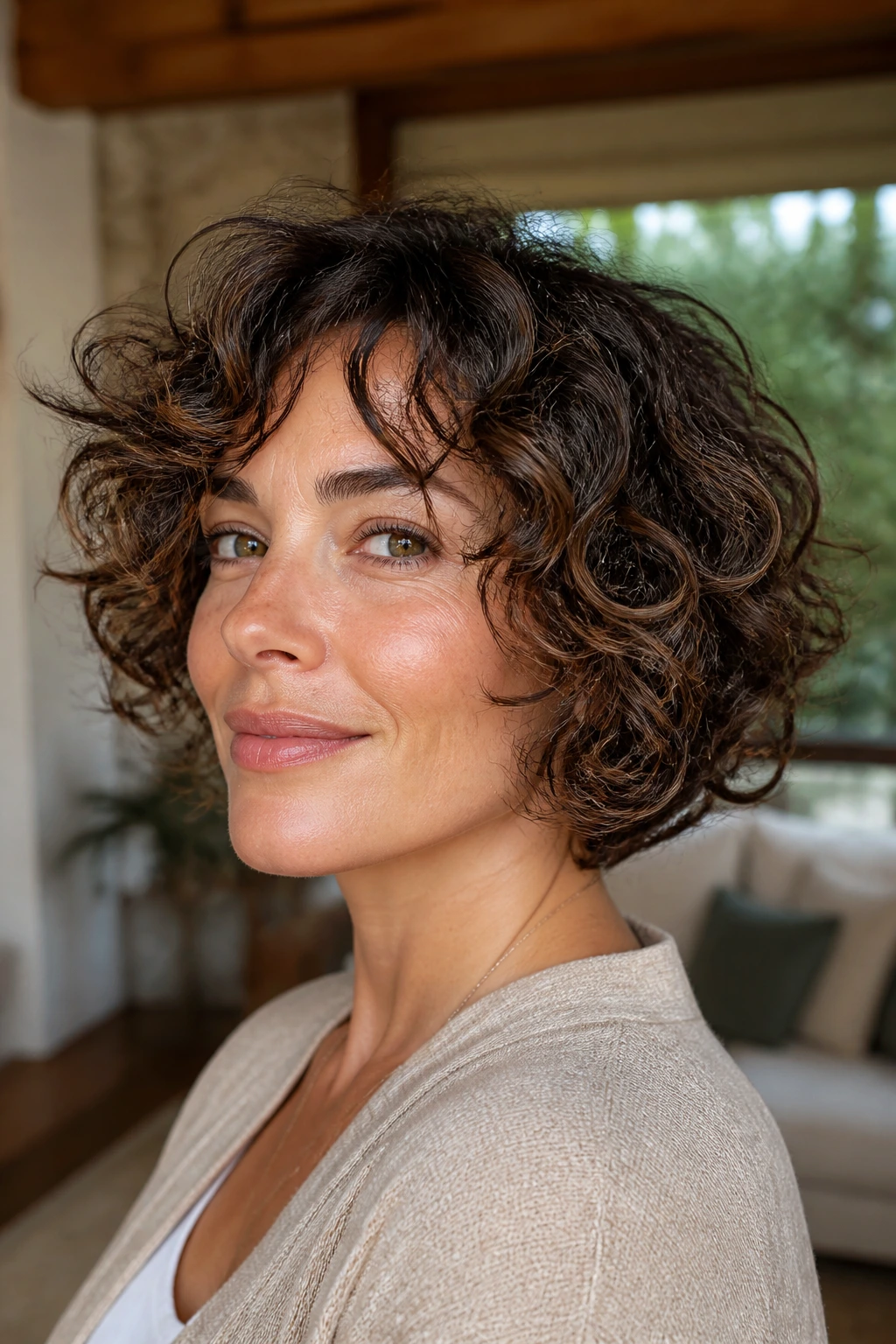
The first mistake is cutting layers too high on fine hair. The symptom is a fluffy top and thin ends, which reads more as stress than style. The fix is to keep the perimeter stronger and make the layers softer and lower.
The second is over-thinning thick hair. Hair feels lighter in the chair, then looks broken and wide when it dries. That is not a win. Ask for bulk removal in the interior, not a general attack with thinning shears.
Another big one: choosing a bob length that fights your hairline or neck. If your hair flips out hard at jaw length, that cut is going to demand more styling than you may want. A slightly longer collarbone version may behave better. Better to work with the bend you already have.
And then there’s the classic mistake of copying a photo without checking density, curl pattern, or styling time. The picture may be nice. Your hair is still your hair.
Variations and Adaptations to Try

The Bang-Free Version: Keep the face frame long and let the front pieces slide into the sides. This works well if you want softness without the upkeep of fringe trims.
The Fringe Upgrade: Add curtain bangs or long side-swept bangs to any of these bobs if you want a quicker face refresh. The layers and bangs should connect, not fight each other.
The Extra-Soft Version: Ask for longer internal layers and a gentler perimeter. This is a good fit if you like movement but don’t want visible choppiness.
The More Structured Version: Keep the bottom line blunt and add only enough layering to control weight. This is the better choice if you like a bob that looks sharp even when air-dried.
The Low-Maintenance Air-Dry Version: Ask the stylist to cut the bob around your natural bend, not against it. That usually means less layering near the top and more attention to the ends and face frame.
Keeping the Shape Between Salon Visits
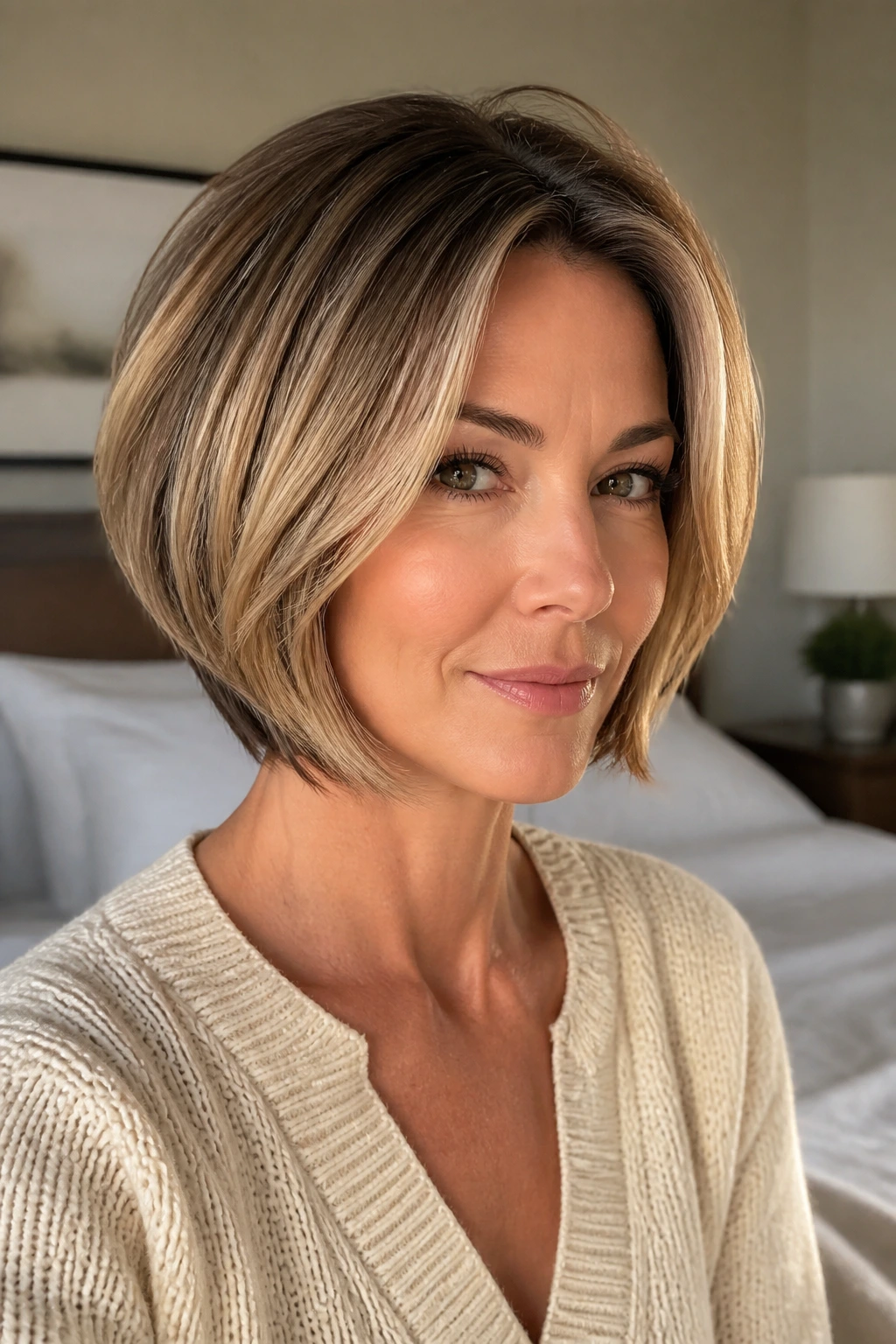
Most layered bobs look best with trims every 6 to 8 weeks. Shorter bobs, especially jaw-length and fringe-heavy cuts, may need a cleanup a little sooner. If the shape is longer and softer, you can often stretch to 8 to 10 weeks before it starts losing its outline. The danger zone is usually the front pieces and the nape, where growth shows first.
At home, protect the shape at night. A loose clip, a satin pillowcase, or even just tucking the bob behind your ears before bed can keep the ends from getting mashed in odd directions. In the morning, water isn’t always necessary. Sometimes a little dry shampoo at the roots and a hand-run through the mids is enough to wake it back up.
If your bob starts to flip outward in a way you dislike, don’t assume you need a new cut right away. Often you just need the perimeter cleaned up or the front length adjusted by a quarter inch. Tiny changes matter a lot on bobs. That’s the annoying part. It’s also why a good trim can make the whole haircut feel new again.
Frequently Asked Questions About Layered Bobs
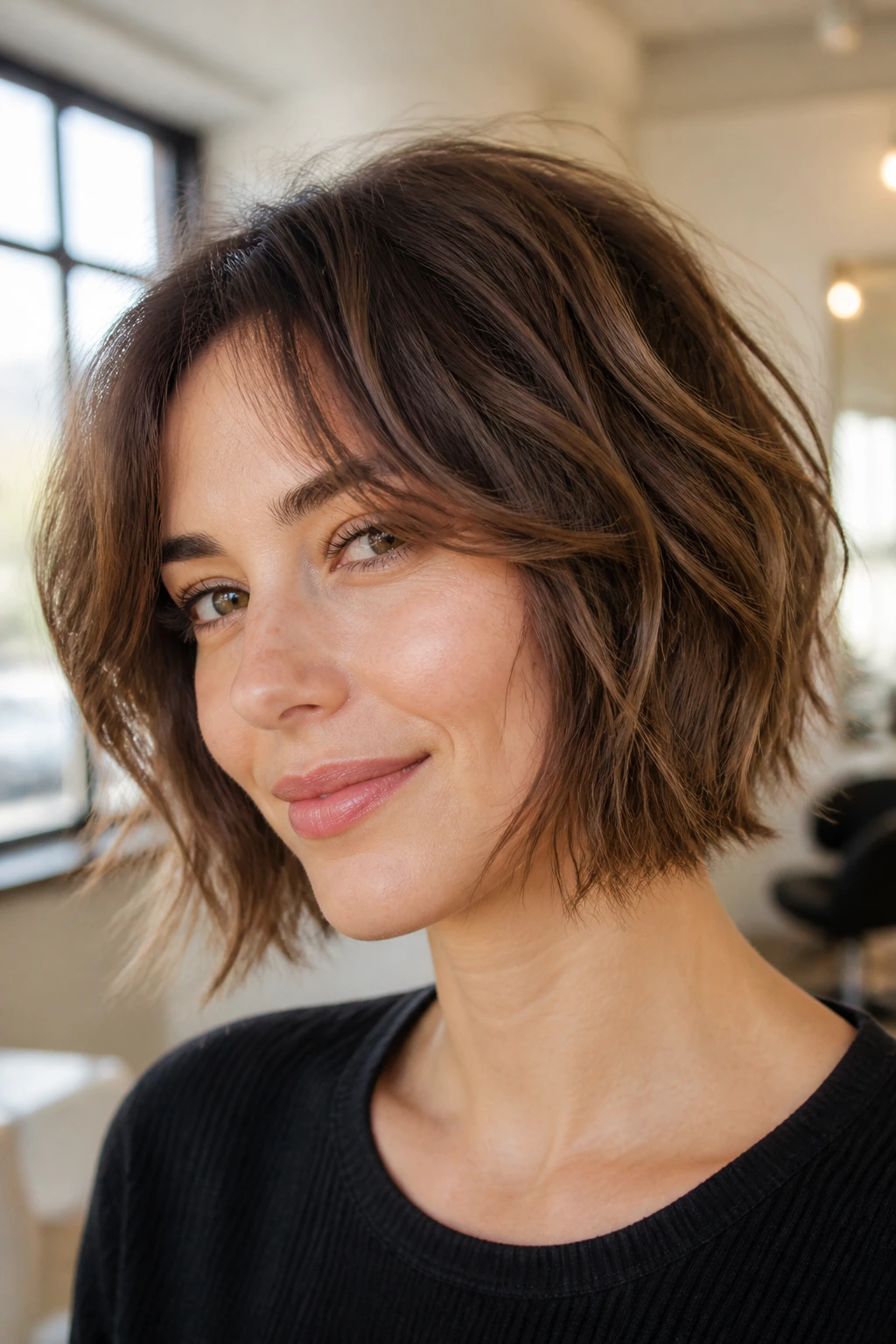
Which layered bob is easiest to style?
The collarbone layered bob and the soft lob with face-framing layers are usually the easiest because they grow out softly and do not need precision every day. They can be air-dried or lightly blown out without losing their shape. If you want the lowest-friction option, start there.
Do layered bobs work for fine hair?
Yes, but the layering has to be subtle. Fine hair looks best with a stronger perimeter and only a little internal movement so the ends stay full. Too many short layers can make the whole cut look thin.
Are layered bobs good for thick hair?
They can be excellent for thick hair when the weight is removed in the right places. The trick is not to shred the ends. Ask for controlled bulk removal so the cut feels lighter but still holds its shape.
Can curly hair wear a layered bob?
Absolutely, and a good curly bob is often better than a blunt one because the layers stop the curls from stacking into a triangle. The cut should be shaped around the curl pattern, ideally dry or nearly dry. That’s the part that makes the difference.
How often should I trim a layered bob?
A good rhythm is 6 to 8 weeks for shorter, sharper versions and 8 to 10 weeks for softer, longer ones. Fringe-heavy cuts usually need a little cleanup sooner. If the shape starts turning heavy at the ends or flat at the crown, it’s time.
What should I ask for at the salon?
Ask where the shortest layers will land, how much weight will be removed, and whether the perimeter will stay blunt or soft. Those three details tell you almost everything about the cut. A photo helps, but the wording helps more.
Can I air-dry a layered bob and still make it look intentional?
Yes, if the layers are cut with your natural texture in mind. Use a leave-in or light cream, keep your hands out of it while it dries, and resist the urge to brush it repeatedly. A good air-dry bob should look shaped, not accidental.
Why does my bob flip out at the ends?
Usually because the perimeter is sitting right at a bend point in your hair or because the cut was too blunt for your texture. A slight length adjustment or softer layering often fixes it. Sometimes all you need is a round brush pass at the ends for a few days.
The Cut That Keeps Its Shape
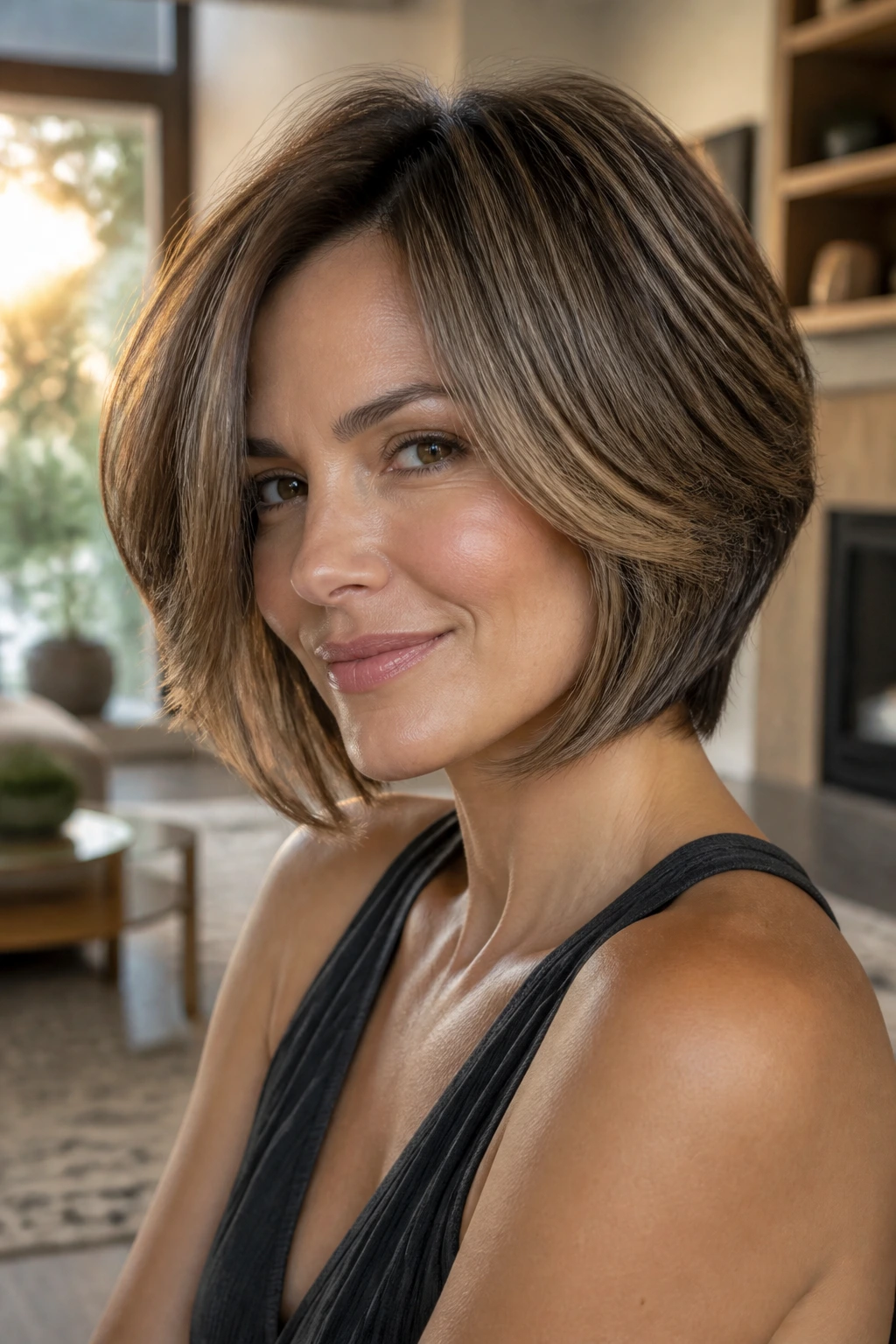
The best layered bobs do not feel like a style you have to manage. They feel like hair that has found its place. That’s the difference between a cut that looks nice in the mirror and one that still looks decent when the day gets away from you.
What makes these versions useful is not flash. It’s balance. The right amount of weight, the right amount of texture, the right amount of softness around the face. Get those three things lined up, and a bob stops being a compromise and starts being a very smart habit.
Pick the version that matches how you actually wear your hair, not the version that asks you to become a different person at 7:00 in the morning. That’s where the good cuts live.
