



Medium length bobs for older women work best when they stop pretending hair is one uniform thing. Hair changes. It gets finer in some spots, coarser in others, a little more stubborn around the crown, a little flatter at the sides, and suddenly a cut that looked charming on paper starts doing odd things in real life.
The sweet spot sits between the jaw and the collarbone. Too short, and the line can feel boxy or severe. Too long, and the shape gets lost under the weight of your own hair, especially if you have soft waves, gray regrowth, or ends that like to flip outward the second they touch a brush. A good bob doesn’t fight those traits. It uses them.
That’s why the best versions here are so specific. Some build lift at the back. Some keep the perimeter blunt so the hair looks thicker. Some soften the face with side bangs or feathered ends. Some are sleek and polished; others are a little broken up and loose, because not every bob needs to look like it spent an hour under a round brush. The right one makes your hair behave without making it look stiff.
Why These Medium-Length Bobs Work So Well on Older Women

Length that still has weight: A bob that lands between the jaw and collarbone keeps enough mass at the ends to look fuller, which matters when hair has thinned a bit at the temples or crown.
Shape without fuss: Medium length gives you enough room for movement, but not so much that the cut collapses by noon. That middle ground is where most faces start looking cleaner.
Friendly to gray and silver: A crisp bob shows off gray blending, salt-and-pepper streaks, or bright silver strands instead of swallowing them in too much length.
Better around the neck and jaw: When the cut sits at the right point, it can skim past the neck rather than sitting on it. That one detail changes everything in profile.
Easy to adapt: A blunt edge, a little layering, a side part, or a soft fringe can shift the whole mood of the haircut without starting from scratch.
1. Soft Collarbone Bob with Airy Layers
A collarbone bob has a useful habit: it gives you shape without forcing you into a strict blowout. The ends brush the collarbone and move enough to feel light, but not so much that the style falls apart by lunch.
Why It Works
This cut earns its keep on hair that has lost a bit of spring. The length holds the perimeter together, while the airy layers stop the shape from turning into one heavy curtain. If your hair is fine, ask for the layers to stay low and soft; too much layering at the top can leave the crown thin and see-through.
It also plays nicely with a side part or a deep tuck behind one ear. That tiny adjustment keeps the style from looking too symmetrical, which is where a lot of bobs start to feel dated. A collarbone bob has movement built in.
A few things to notice
- The ends should graze, not hang.
- The layers should move, not fray.
- The front pieces should sit a touch longer than the back.
Best for: women who want a soft line without sacrificing the option to pin one side back.
2. Blunt Shoulder-Length Bob with Clean Ends
Sharp doesn’t have to mean severe. A blunt shoulder-length bob gives the hair a solid edge, and that edge makes the whole head of hair look denser right away.
The trick is in the placement. If the line sits a hair below the jaw, it lifts the face. If it hits right at the jaw, it can widen the lower half a little too much. That’s the part most people miss. A blunt bob is not just about the cut; it’s about where the cut lands.
I like this version for hair that is a little fine, a little straight, and tired of being overworked. A clean one-length perimeter gives you the look of thickness even when the individual strands are modest. Add a slight bend under the ends with a flat brush or round brush, and the whole cut looks intentional rather than plain.
3. Side-Part Lob with Long Face-Framing Pieces
Why does a side part keep showing up in good medium length bobs for older women? Because it breaks up the face before the hair ever has a chance to sit flat. It shifts the weight, adds lift at the crown, and keeps the front from looking too uniform.
How to wear it
The long face-framing pieces should start somewhere around the cheekbone or just below it. That gives you softness without dragging the eye straight down. If you wear glasses, this cut is especially useful, because the frames and the hair do not compete for the same real estate.
A side-part lob also forgives a little grow-out. That matters. Hair grows. Life happens. This shape still looks decent when it is a bit past salon-fresh, which is more than I can say for some stricter bobs that go sad the second the necklines get longer.
Styling note: a root-lift spray at the part and a quick blow-dry with the nozzle pointed up at the roots will give this cut the lift it needs.
4. Feathered Bob with Light, Flicked-Out Ends
You can spot a feathered bob from across the room. The ends aren’t blunt and boxed off; they’re softened, separated, and a little airy, which helps the haircut move instead of sitting like a helmet.
This version is useful when hair has a tendency to puff at the bottom. Feathering breaks up that heavy edge. On thicker hair, it can remove just enough bulk to keep the sides from widening. On finer hair, the danger is going too far and making the ends look wispy, so ask for feathering that lives mostly through the mid-lengths, not all the way through the perimeter.
A good feathered bob still has a line. It just isn’t a hard one.
5. Angled A-Line Bob with a Sharp Front Line
An angled bob looks quiet from the front and very deliberate from the side. Shorter at the back, longer toward the front, it creates a diagonal line that lengthens the face and keeps the neck clear.
This shape is one of my favorites for women who want structure without a hard crop. The longer front panels skim the jaw and collarbone, which can be useful if you prefer a little coverage there. The back stays cleaner and lifts the overall silhouette.
It does ask for a careful cut. If the angle is too steep, the style can feel dramatic in a way that doesn’t age well. Softer graduation is the better move here. You want movement, not a wedge.
6. Piecey Textured Bob with Broken-Up Ends
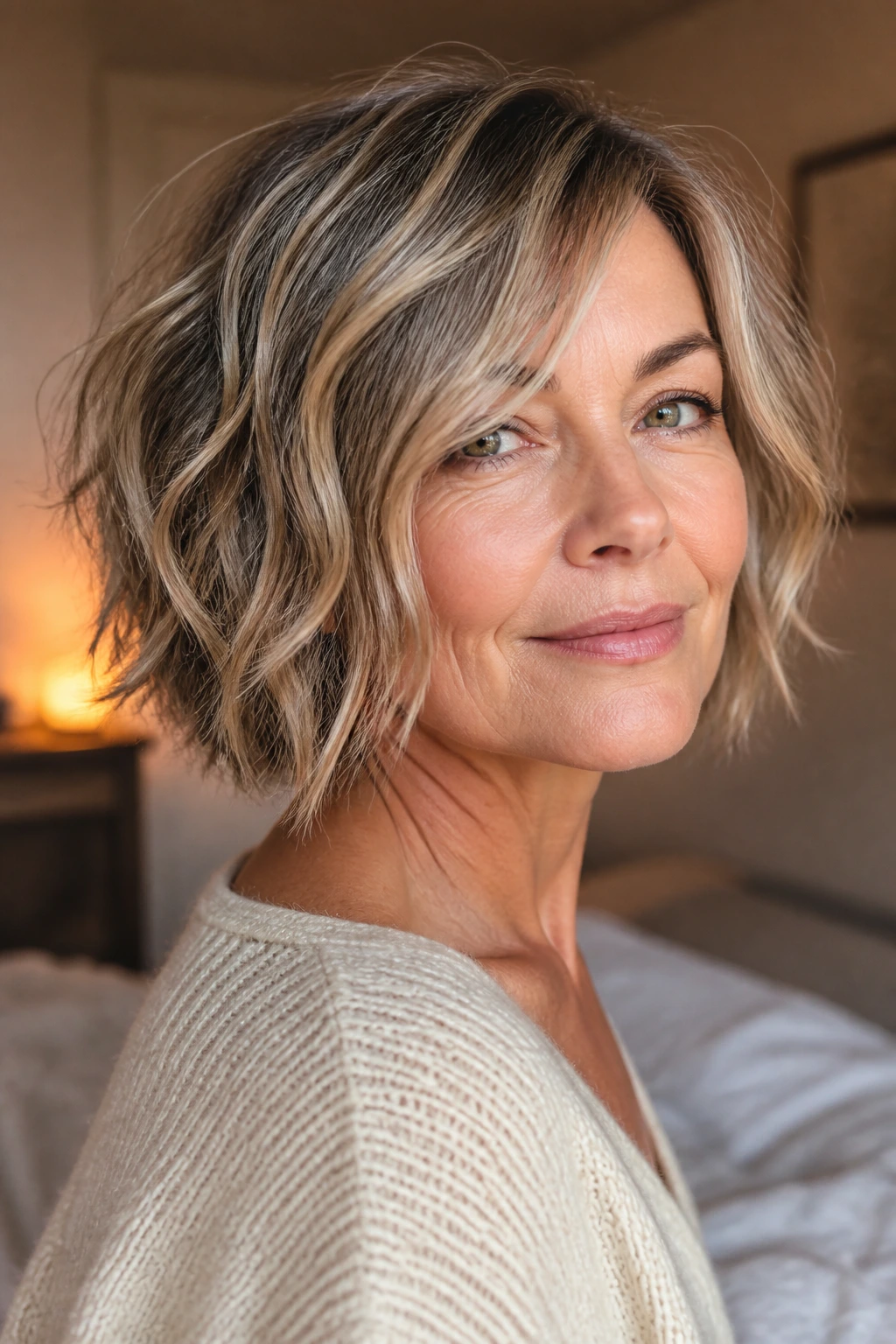
This is the cut for hair that refuses to behave on command. Instead of trying to force every strand into the same smooth line, a piecey textured bob lets the ends separate a little, which can make the whole style look less rigid and more modern.
Texturizing works best when it happens in controlled doses. Too much, and the bob starts to look shredded. Too little, and the texture disappears by noon. I like this shape on wavy hair that wants a little direction but not a full blowout. A dab of mousse, a rough dry, and a small amount of paste on the ends is often enough.
The payoff is real. You get movement around the face, lift at the crown, and a cut that doesn’t mind a little natural bend.
7. Curved-Under Bob with a Polished Finish
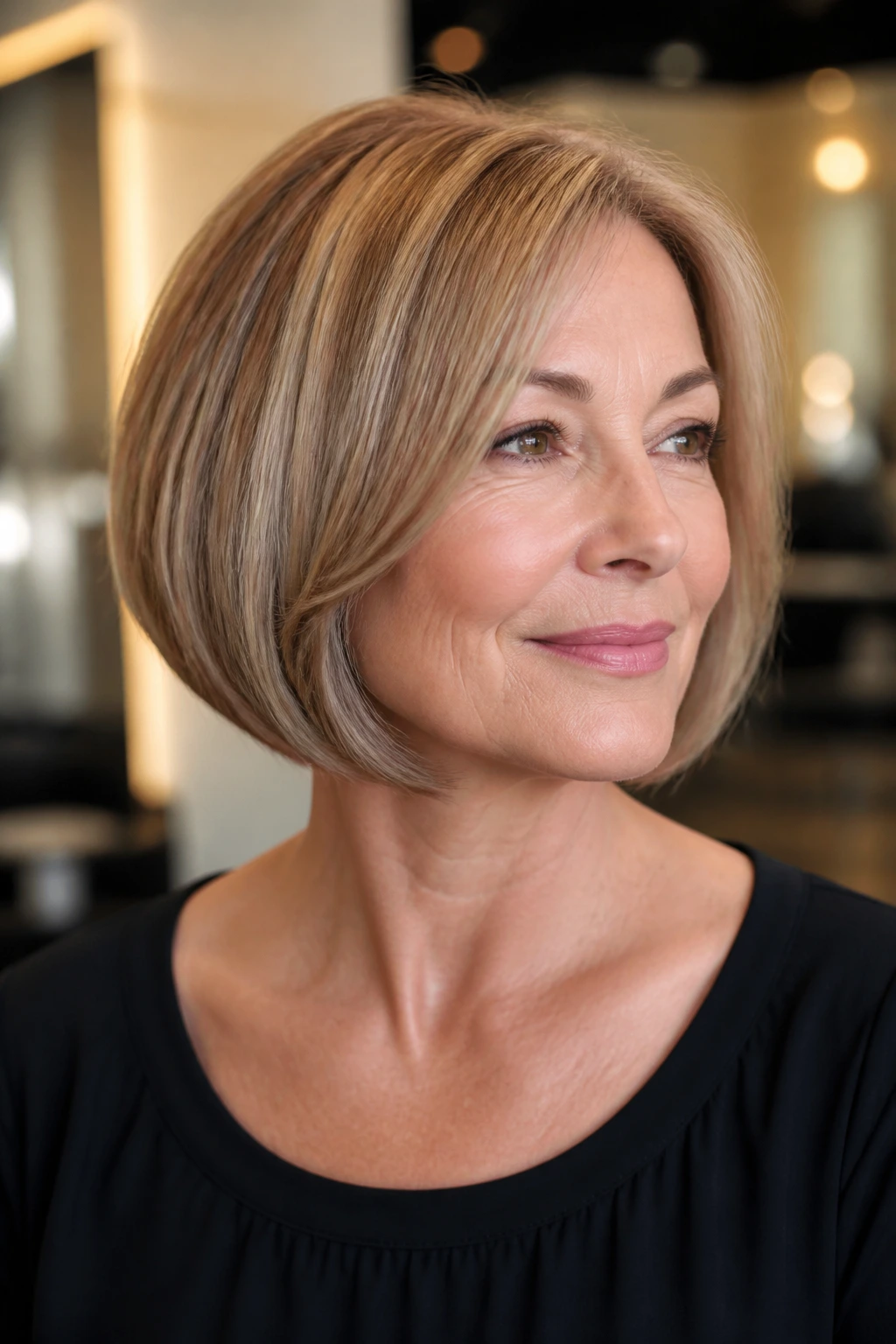
A curved-under bob is the haircut equivalent of a well-made jacket. It has shape, structure, and enough polish to make a plain outfit look considered.
Shape and movement
The key is the underbend at the ends. That soft inward curve keeps the perimeter tidy and stops the hair from flipping out around the shoulders. If your hair naturally kicks outward, this is the version that gives you the best shot at taming it without endless heat styling.
The curve also softens the line around the jaw. That’s handy on a square or long face, where a blunt edge can feel too hard. A round brush, a dryer with a nozzle, and a little patience at the ends are enough. You do not need to chase every strand into perfect symmetry.
8. Silver-First Bob That Lets Gray Shine

Silver hair looks best when the cut respects the shine. A bob with a clean perimeter and gentle movement gives gray or white strands a place to live without making the overall shape feel thin.
The problem with longer hair as it grays is that the contrast can look patchy in all the wrong places. A medium bob makes the color read as deliberate. If your silver hair has different tones—a bright white streak near the hairline, softer charcoal through the back—the shorter shape shows that off instead of hiding it.
What to ask for
- Keep the edge clean so the silver looks full.
- Avoid heavy layers at the crown if the top is sparse.
- Use a soft gloss or toning treatment if yellowing is an issue.
A silver bob doesn’t need to look formal. It just needs to look cared for.
9. Bottleneck Bang Bob with a Narrower Center Fringe

Bangs can be a blessing or a helmet. Bottleneck bangs split the difference. They sit narrower in the center, then open up a little at the sides, which means you get forehead coverage without a heavy block of fringe.
That shape works especially well with a medium bob because the bangs and the length balance each other. The fringe gives the cut some focus up front, while the bob keeps the rest of the hair easy. If you wear glasses, this can be a smart choice, since the narrow center leaves more room for the frames and doesn’t crowd the eyes.
The one thing to watch: the bangs should not sit too thick. A lighter center with soft side tapering is what keeps them looking modern instead of blunt.
10. Stacked Nape Bob with Gentle Lift at the Back
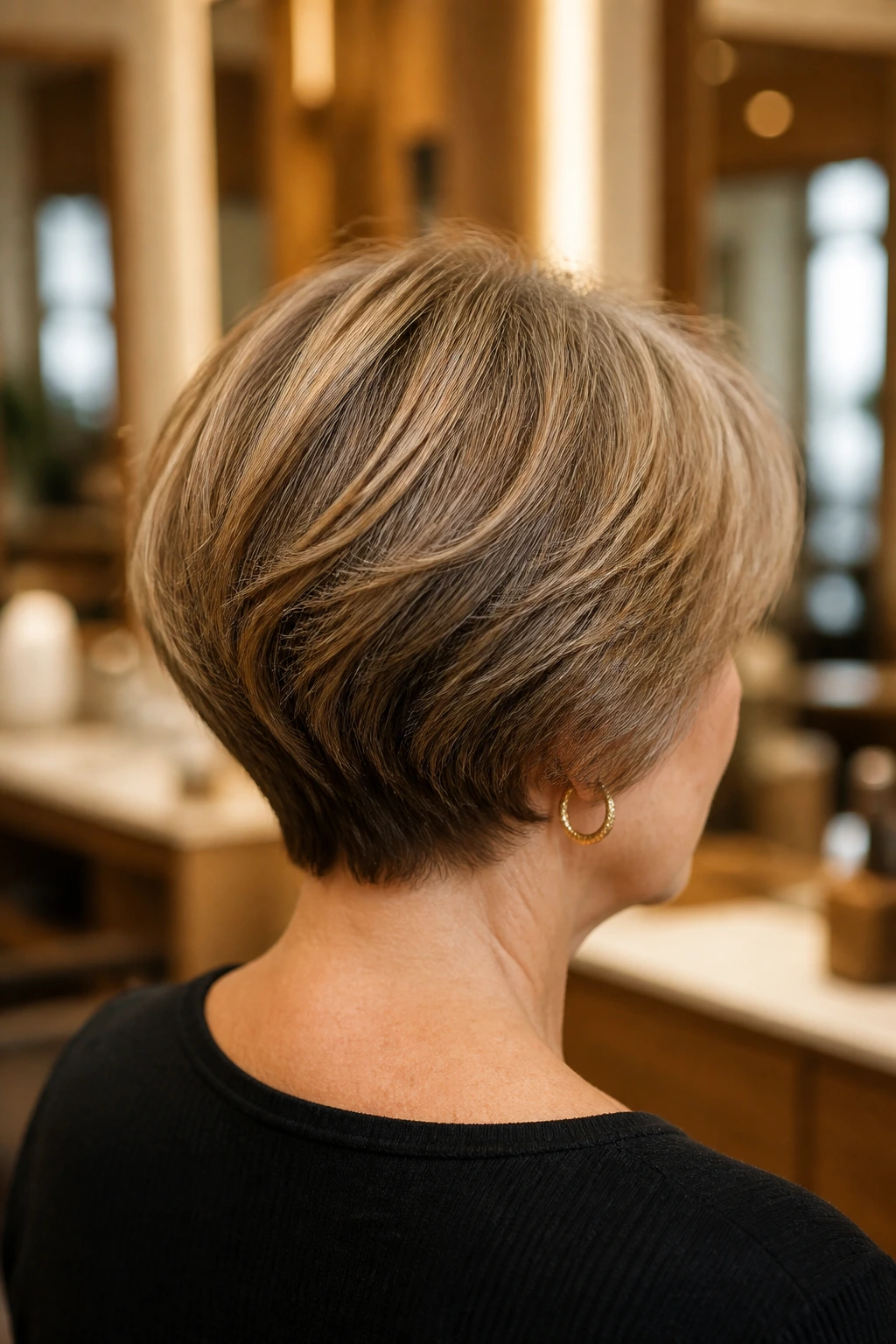
At the salon chair, a stacked bob is the one that asks for precision. The back gets a little lift through graduation, so the neckline looks neat and the crown gets a touch of height without teasing or hairspray drama.
This cut is good for fine hair that collapses at the back of the head. The stacked area creates a shape that holds up better than one long flat layer. But there’s a line you don’t want to cross. Too much stacking and the cut starts to look dated or stiff. Keep it soft, with the front leaving enough length to feel like a medium bob instead of a short crop.
If you want your hair to look alive from the side view, this is a strong contender.
11. French-Inspired Mid-Length Bob with a Soft Fringe

French-inspired bobs are all about lightness, not fuss. The fringe softens the forehead, the mid-length keeps enough swing, and the shape around the cheekbones gives the face a neat frame without trying too hard.
This cut works best when it feels a little undone. Not messy. Just not overblown. The ends should move when you turn your head, and the fringe should rest in a way that looks like it belongs there, not like it was glued down. That is the difference between charming and costume-like.
A soft fringe can be especially useful if your hairline is changing. It gives coverage where you want it, but because the edges are airy, it doesn’t take over the whole face.
12. Tousled Mid-Length Bob with Soft Waves
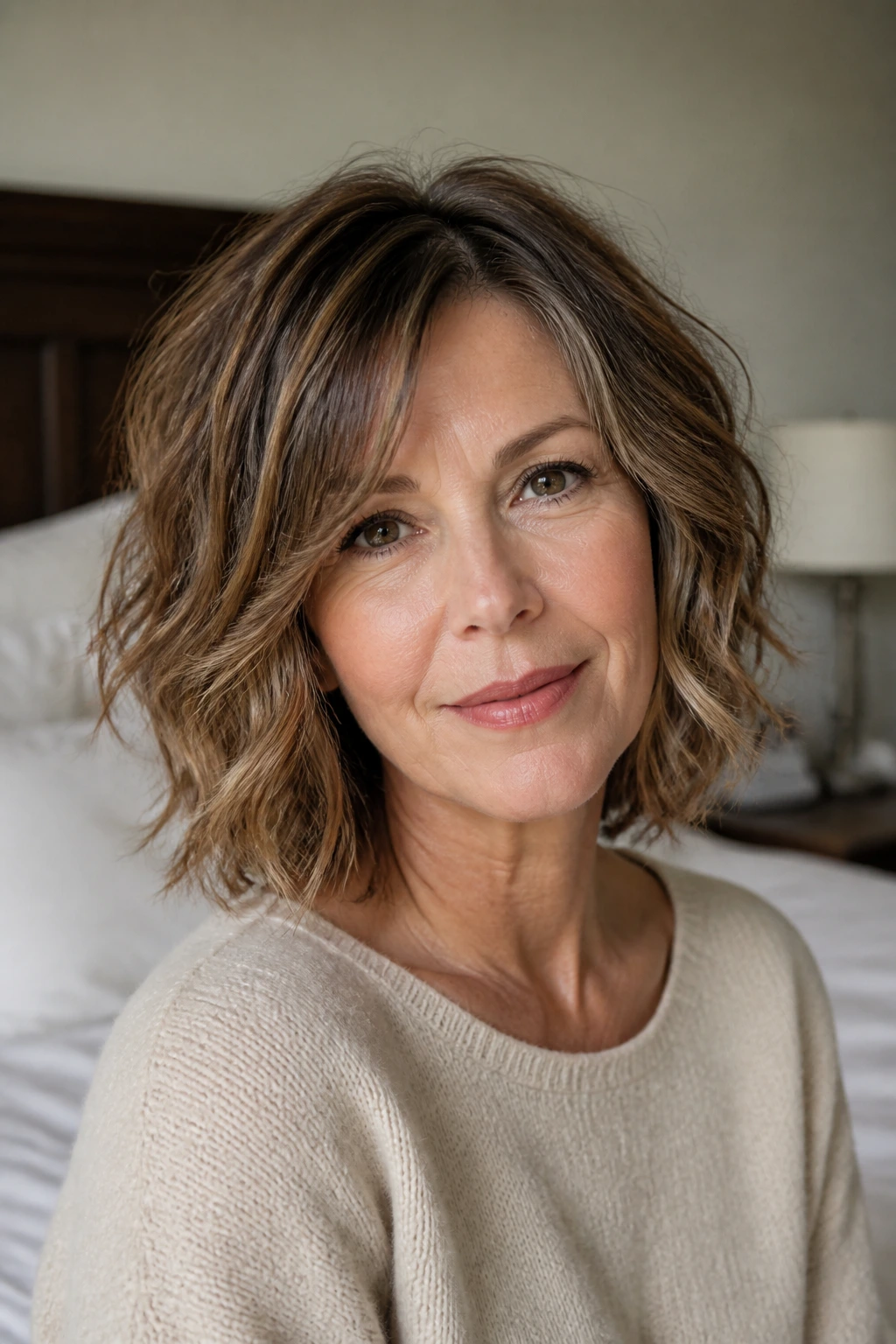
If your hair bends on its own, don’t fight it. A tousled mid-length bob works with natural wave and makes the texture look like a feature instead of a problem.
How it behaves
This cut needs a little interior shaping so the waves don’t swell into a triangle. Keep the perimeter medium and let the inside layers remove just enough bulk for the bend to sit nicely. A mousse or light curl cream on damp hair, followed by scrunching or a diffuser, often gets the job done.
It’s a particularly good choice if you want less heat styling. The trick is to stop touching it while it dries. Once the wave pattern settles, messing with it too much only frizzes the ends and flattens the roots.
Good sign: the hair should look soft and separated, not crunchy.
13. Curly Bob with a Rounded Shape

Curly bobs fail when people cut them as if they were straight. Curls need room to spring, and a rounded medium bob gives them that room without letting the shape balloon outward.
The perimeter should sit at a point where the curls can stack softly, usually somewhere between the jaw and the upper shoulder. Too short, and you get the dreaded triangle. Too long, and the curl pattern can get heavy and lose bounce. The rounded shape keeps the silhouette balanced and lets the curls frame the face instead of swallowing it.
This is one of those cuts that looks best when it’s left a little imperfect. A few curl clumps will sit higher than others. Fine. That’s the point. Uniformity is not the goal here.
14. Lob with Sweeping Side Bangs
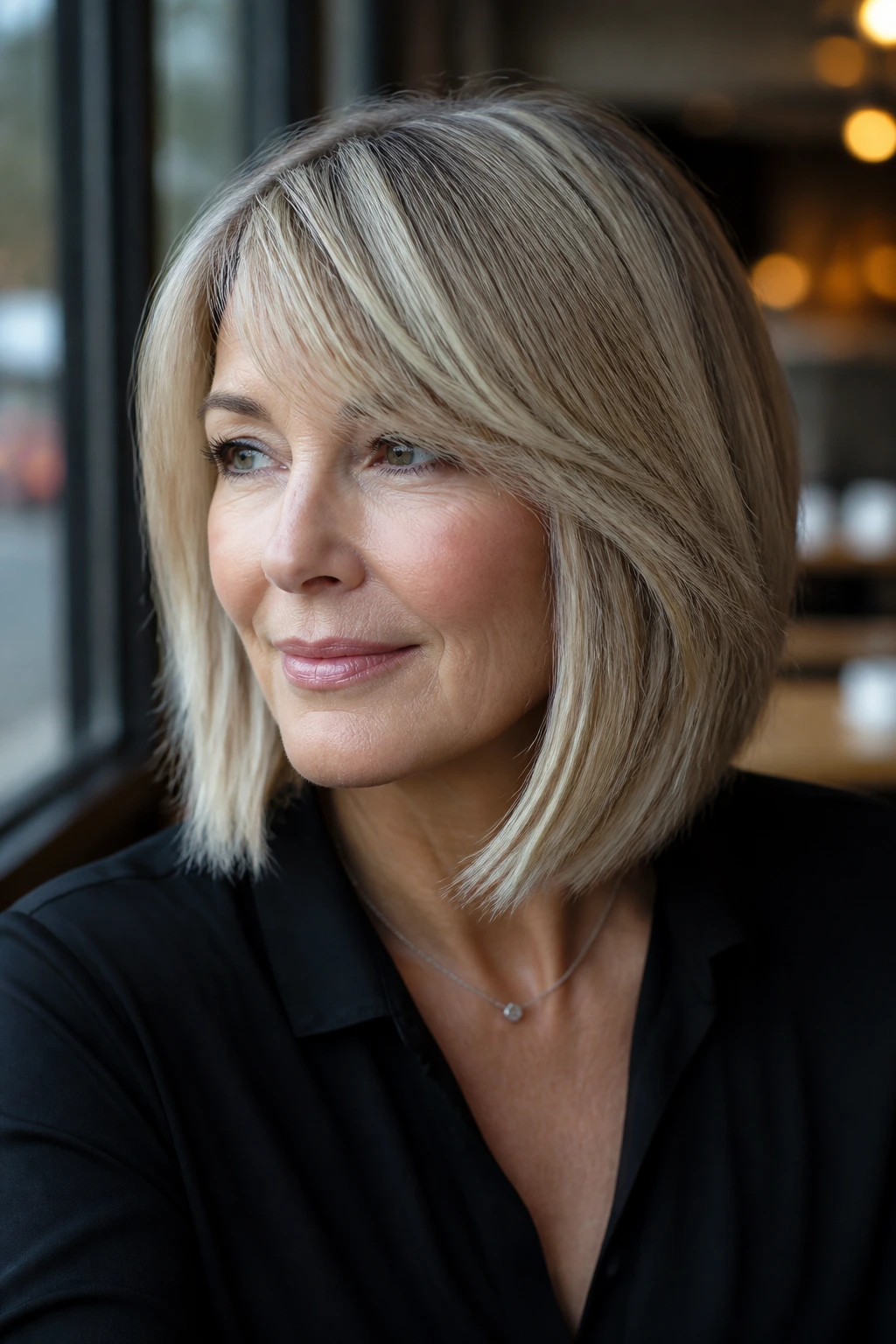
A side bang can do more work than a face cream and half the blow-dry time. It shifts attention, softens the forehead, and creates movement that blends into the rest of the lob.
This version is useful if you like the length of a lob but want the front to feel less plain. The bangs should sweep rather than sit flat. That means they need enough length to move across the brow and blend into the side pieces. Cut too short, and they can look abrupt. Too long, and they disappear.
The rest of the bob can stay clean and simple. That contrast—the easy fringe up front, the calm perimeter below—is what makes the cut feel balanced.
15. Razor-Soft Shag Bob with Movement
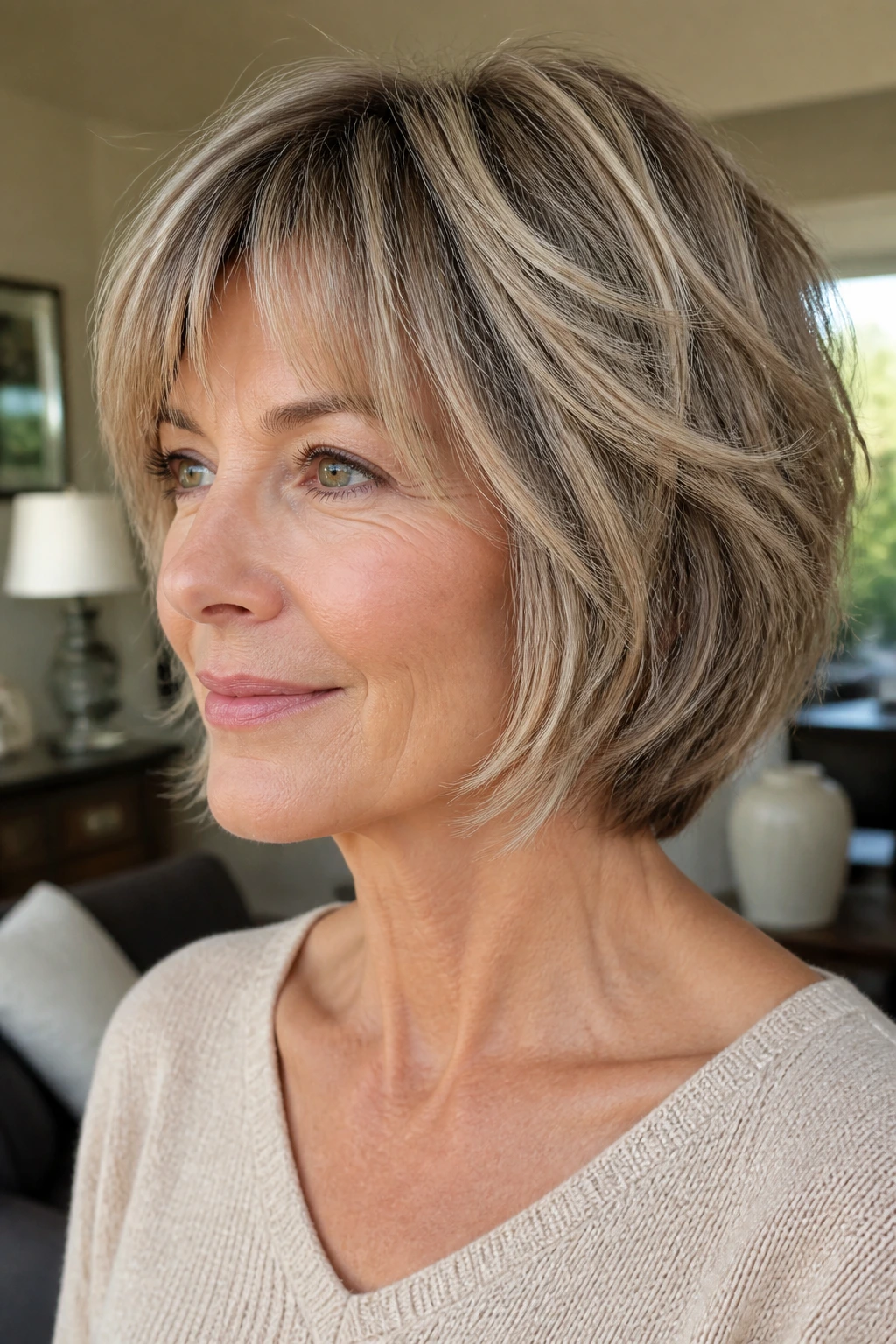
A razor-soft shag bob should never look shredded. The point is movement, not fraying. With the right cut, the layers fall in loose, soft pieces that keep the hair light around the face and around the crown.
This shape is a good answer for thick hair that feels too solid in one length. The layers take weight out of the interior, so the ends stop bulking up. It also works if you want a bob that feels a little less formal. There’s a relaxed edge to a shaggy bob that can be a relief if sleek hair makes you feel too polished.
Ask your stylist to keep the perimeter visible. That keeps the haircut grounded. Without a clear edge, a shag bob can wander into mullet territory fast.
16. Wavy Bob with Hidden Interior Layers
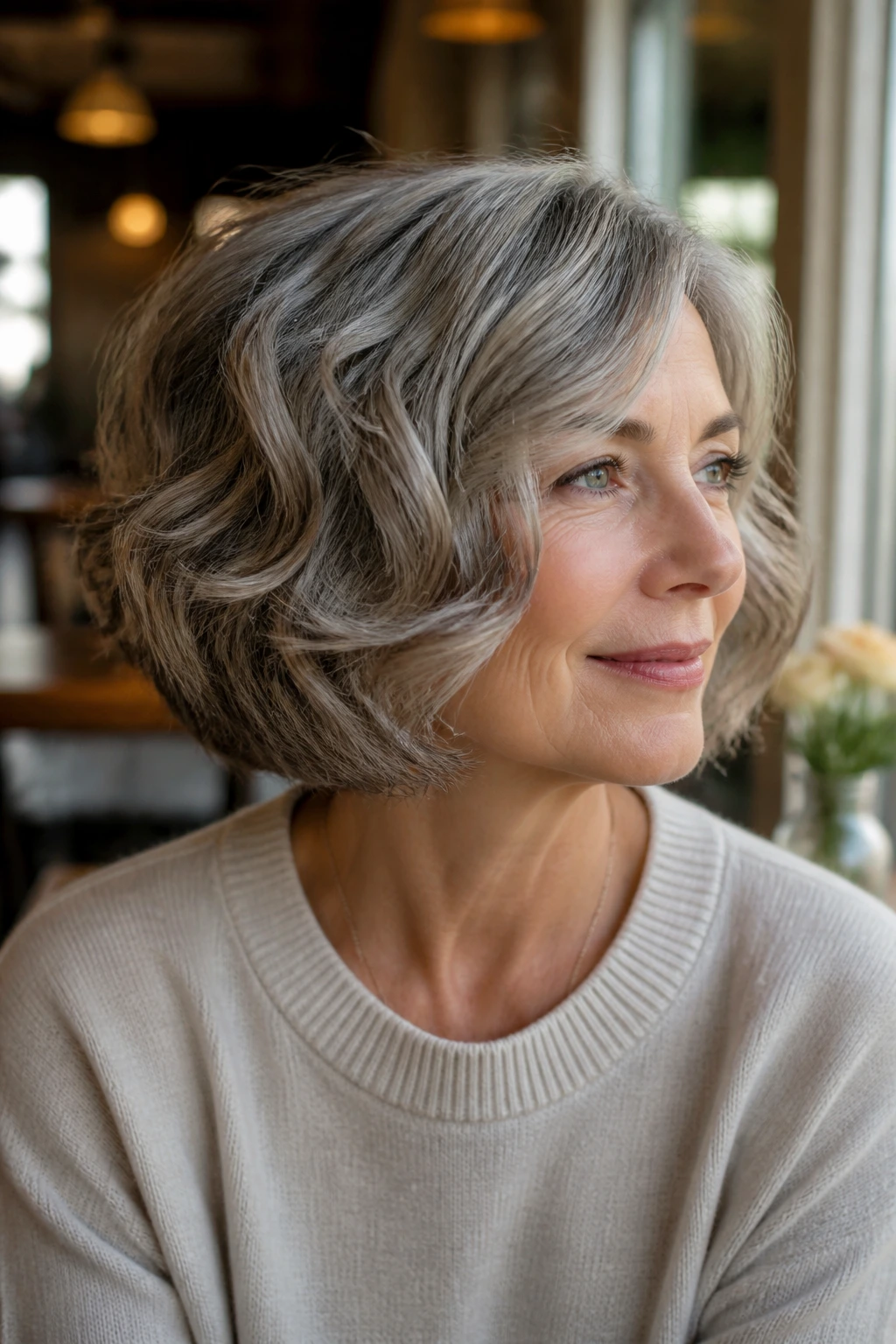
Hidden interior layers are a clever little cheat. They take weight out where you don’t need it, but they leave the outside line intact, so the haircut still looks full and neat.
That matters on wavy hair, where too many visible layers can create a bubbly, uneven shape. The hidden kind keeps the perimeter strong while helping the wave sit flatter through the body of the haircut. You get motion when the hair moves, but from the front it still looks like a clean bob.
If you’ve got a lot of hair and don’t want it ballooning at the sides, this is the version to ask about. It’s practical. Quietly so.
17. Glassy Blowout Bob with Smooth Surface
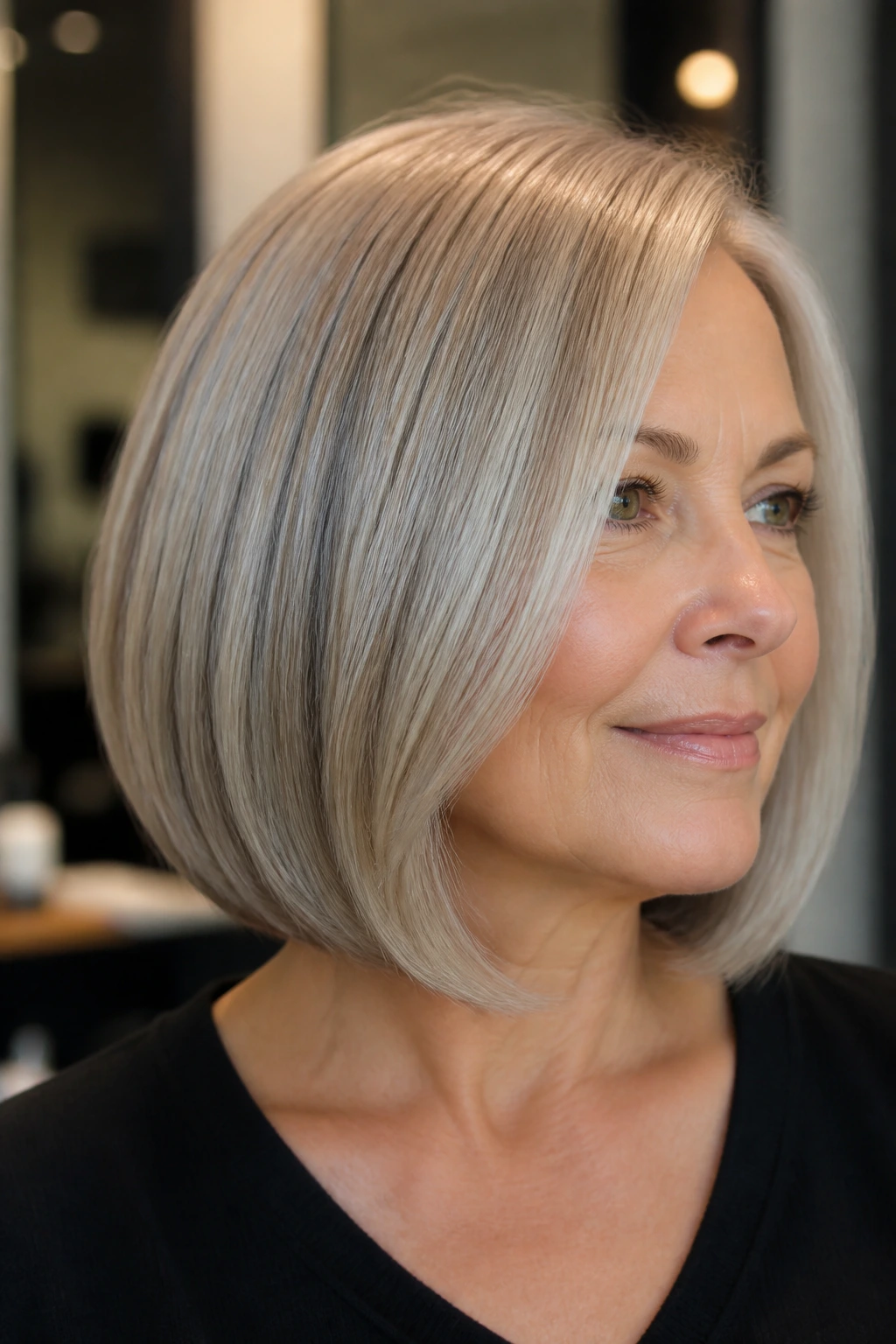
Some people want smoothness more than movement. A glassy blowout bob gives you that slick surface, a bit of bend at the ends, and enough polish to make the whole cut look expensive without being fussy.
This style loves healthy ends and a good cut line. If the perimeter is ragged, the smooth finish only shows it more. It also rewards a disciplined blow-dry: nozzle on, brush tension steady, and the dryer kept moving so the hair doesn’t puff. Heat protectant is not optional here. Neither is a little patience.
The upside is how clean the result looks. The line reads clearly. The shine shows. The haircut looks deliberate from every angle.
18. Face-Framing Bob That Opens the Jawline
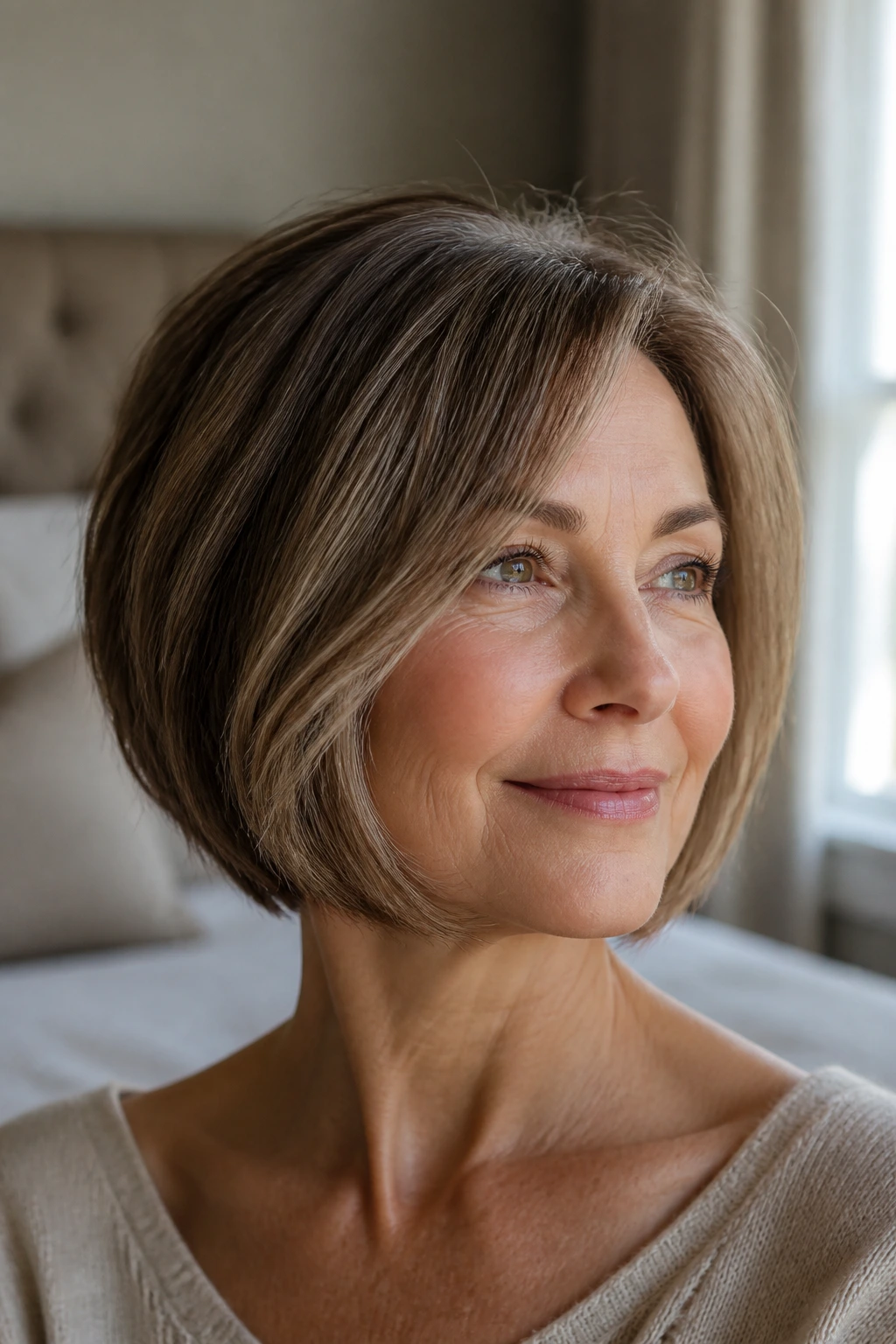
A jaw-opening bob lives or dies by the front pieces. If they start at the wrong place, the face can look heavier than it is. If they start just below the cheekbone and sweep softly past the jaw, the whole face opens up.
This is one of the best options if you want a little contour without heavy bangs. The front pieces act almost like a frame in a portrait. They guide the eye where you want it, then blend into a medium-length base that still feels easy to wear.
What makes it work
- The front should be longer than the back.
- The shortest face-framing pieces should not hit directly on the jaw.
- Soft beveling is better than harsh layering.
19. Inverted Bob with Soft Graduation
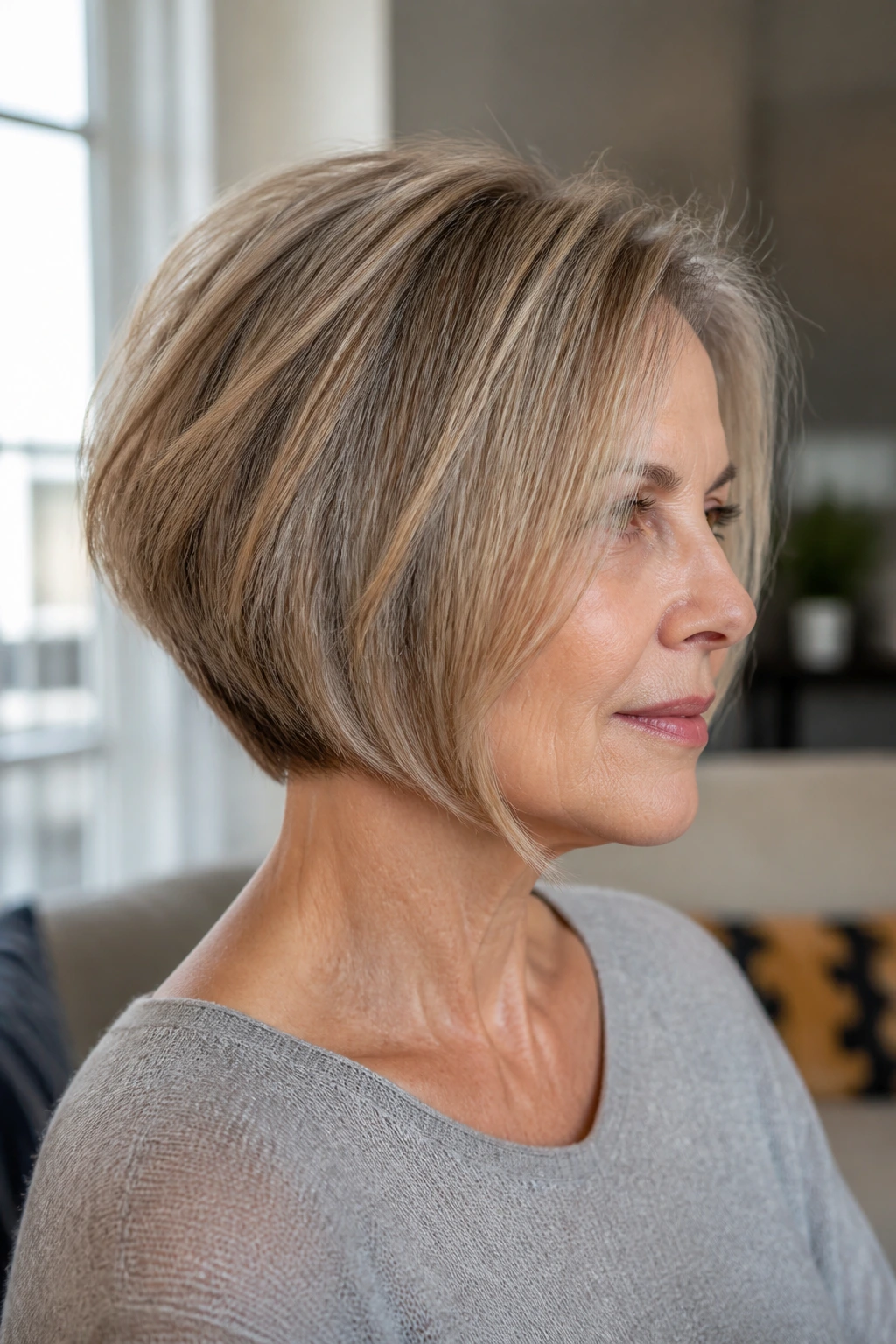
An inverted bob is one of those cuts people either overdo or get exactly right. The version that works here has a shorter back, a longer front, and enough softness in the graduation that the whole shape moves instead of locking into a wedge.
This shape can be useful if your hair is straight or slightly wavy and tends to sit flat at the back of the head. The graduation gives the crown a little lift, while the front length keeps the overall look in medium-bob territory. The result is neat without being severe.
The line should feel deliberate, not aggressive. If you can see every level in the cut, it may be too stacked. Softness is what keeps this version wearable.
20. Warm-Highlighted Bob with Dimensional Color
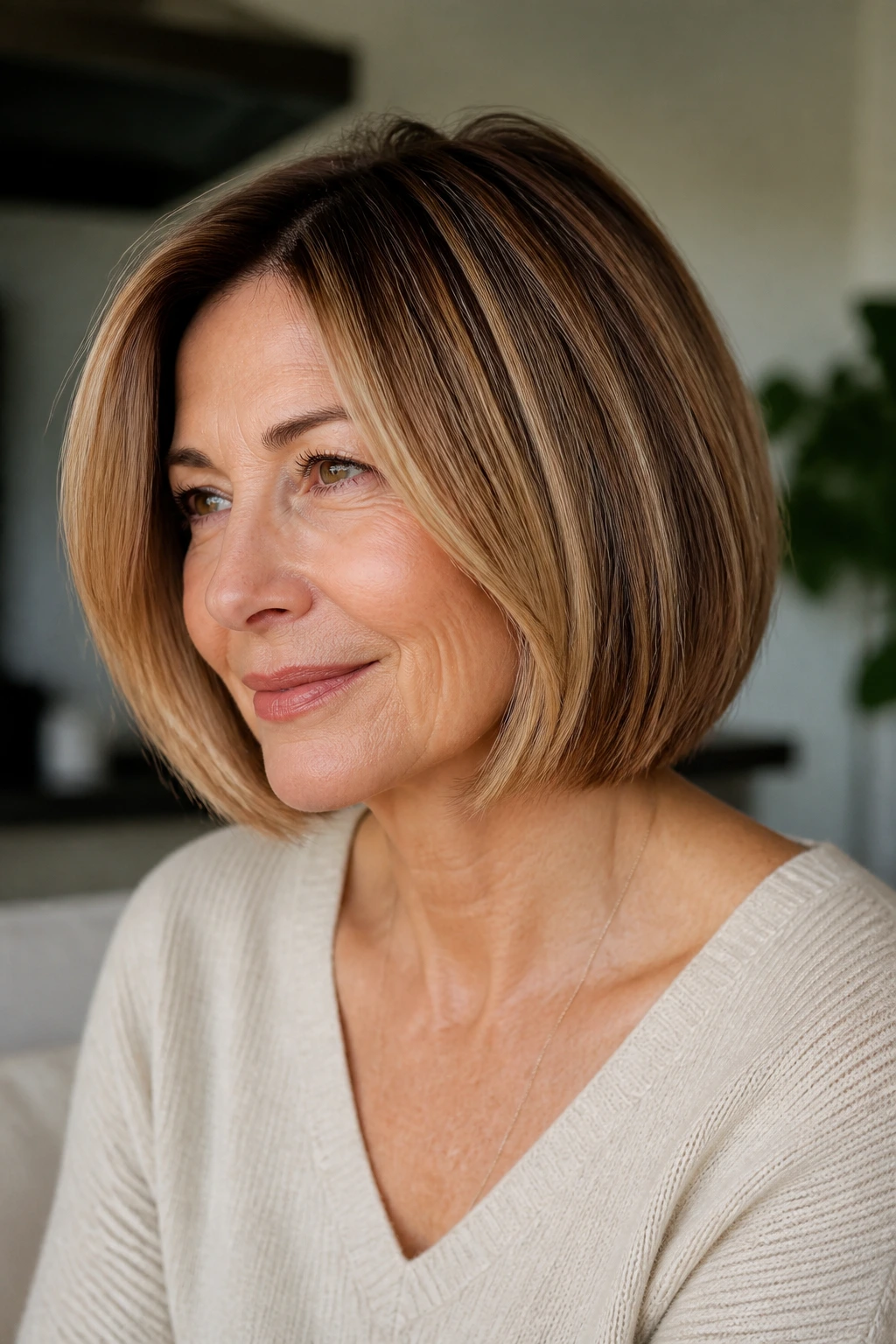
Color can change how a bob reads from six feet away. Warm highlights—honey, caramel, soft copper, beige blonde—catch the ends and make the cut look fuller because the light breaks up the surface.
This matters if your hair is fine and the shape needs help. A blunt bob with dimension often looks thicker than a flat one, even when the actual hair count is the same. The contrast is subtle up close, but from across a room it changes the whole shape.
If you color your hair, keep the placement soft around the face and through the top layers. Heavy stripes can pull attention to the wrong places. Gentle ribbons do more useful work.
21. Low-Maintenance Air-Dry Bob

The easiest bob is the one you can air-dry without apologizing for it. This version is cut to work with natural texture, not against it, so the hair can dry with shape instead of looking like it gave up halfway through.
It usually needs a little internal shaping and a clean perimeter. That combination lets the hair fall into a believable outline even when you skip the brush. A leave-in conditioner, a touch of mousse, or a light curl cream can be enough, depending on whether your hair is straight, wavy, or somewhere in between.
A simple approach
Let the roots dry with a bit of lift, then tuck or pinch the ends into place as they set. If one side likes to flip out, don’t battle it with too much product. A small round brush or a quick pass with a low-heat tool at the ends is usually enough.
Why a Medium Bob Keeps Working When Hair Changes

Hair tells the truth after a certain point. It shows where it is finer, where it has a little extra body, where it has started to resist heat, and where it wants to break into its own pattern the second you stop looking. A medium bob handles that honesty better than longer cuts because it keeps enough weight to sit well while still moving cleanly around the face and neck.
The other reason it works is simple: medium length gives you choices. You can wear it straight and neat one day, then rough-dry it the next. You can tuck one side behind the ear, clip it up on a warm afternoon, or let the front pieces fall where they want. That flexibility is not a small thing. It is the difference between a haircut that behaves and one that demands a full styling ritual every morning.
And the cut does not need to be dramatic to be useful. Sometimes the smartest bob is the one that sits just under the jaw, has enough fullness at the ends, and lets your features do the talking.
Essential Tools for Styling a Bob at Home
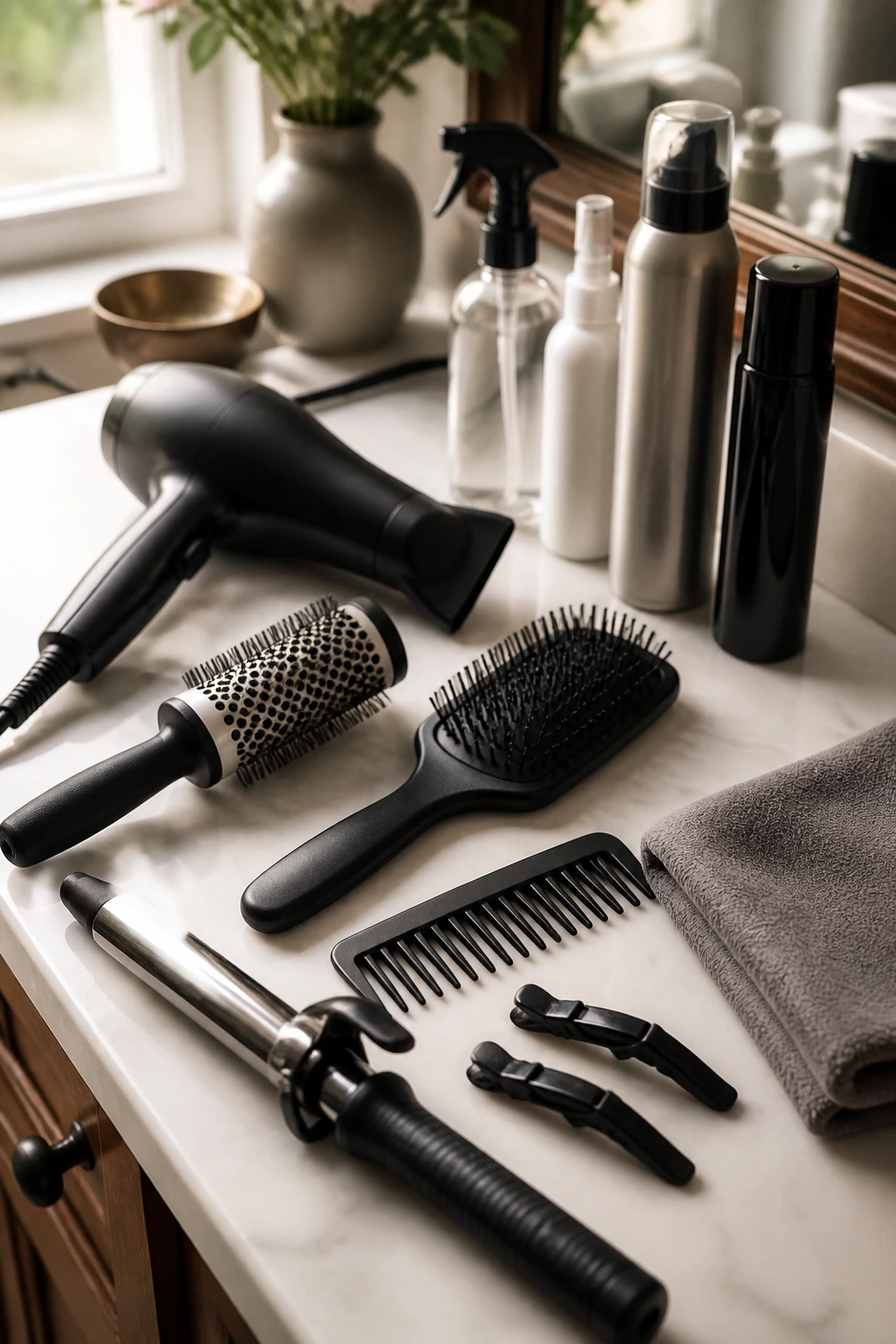
- Blow dryer with a nozzle: The nozzle gives you direction, which matters when you want a smooth bob instead of puff at the sides.
- Round brush, 1 to 1.5 inches: Smaller for bend and lift; larger for a softer curve through the ends.
- Flat brush or paddle brush: Good for straightening the surface quickly without adding too much roundness.
- Wide-tooth comb: Handy for wavy or curly bobs when you want to detangle without breaking up the shape.
- Duckbill or sectioning clips: They keep the top layers out of the way while you dry the back and sides.
- Lightweight mousse or root-lift spray: Use this near the crown if the hair needs help standing up.
- Heat protectant spray: A non-negotiable if you use hot tools, especially on finer or color-treated hair.
- Texturizing spray or light paste: Best for piecey ends and softened layers, not for stiff, crunchy hold.
- 1-inch curling iron or flat iron: Optional, but useful for fixing one flipped-out section without redoing the whole head.
- Microfiber towel or cotton T-shirt: Less rough on the cuticle than a regular bath towel, which helps preserve the finish.
Practical Styling Notes That Make the Cut Easier to Wear
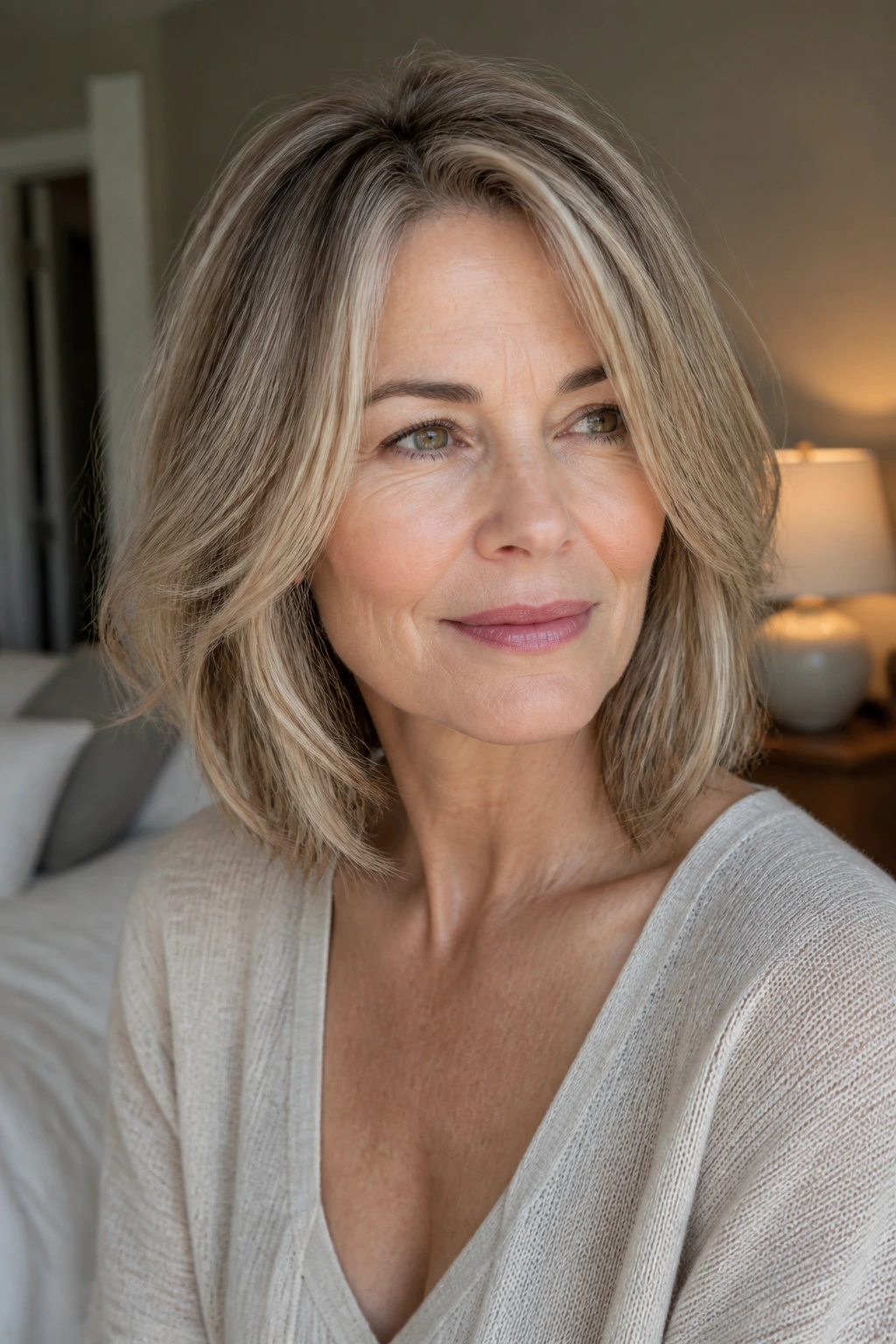
Ask for the perimeter first. That line at the bottom decides whether the bob feels full or stringy. If the perimeter is weak, no amount of styling will save it.
Tell the stylist where your hair parts on its own. Fighting a natural part is a waste of everybody’s time. The bob should sit with your cowlicks, not against them.
Keep layers low if the hair is fine. Short layers at the crown can make the top look airy in the wrong way. A better move is to keep the weight at the ends and add only a little internal movement.
Bring side and back photos, not just the front. The back of a bob changes the entire mood of the cut. A stacked nape, a curved under-edge, or a blunt line all read differently from behind.
Use less product than you think. A dime-size amount of mousse can feel like enough for one side, then suddenly the other side looks heavy. Start small and build if needed. Hair remembers.
Common Mistakes That Make a Bob Look Flat or Boxy
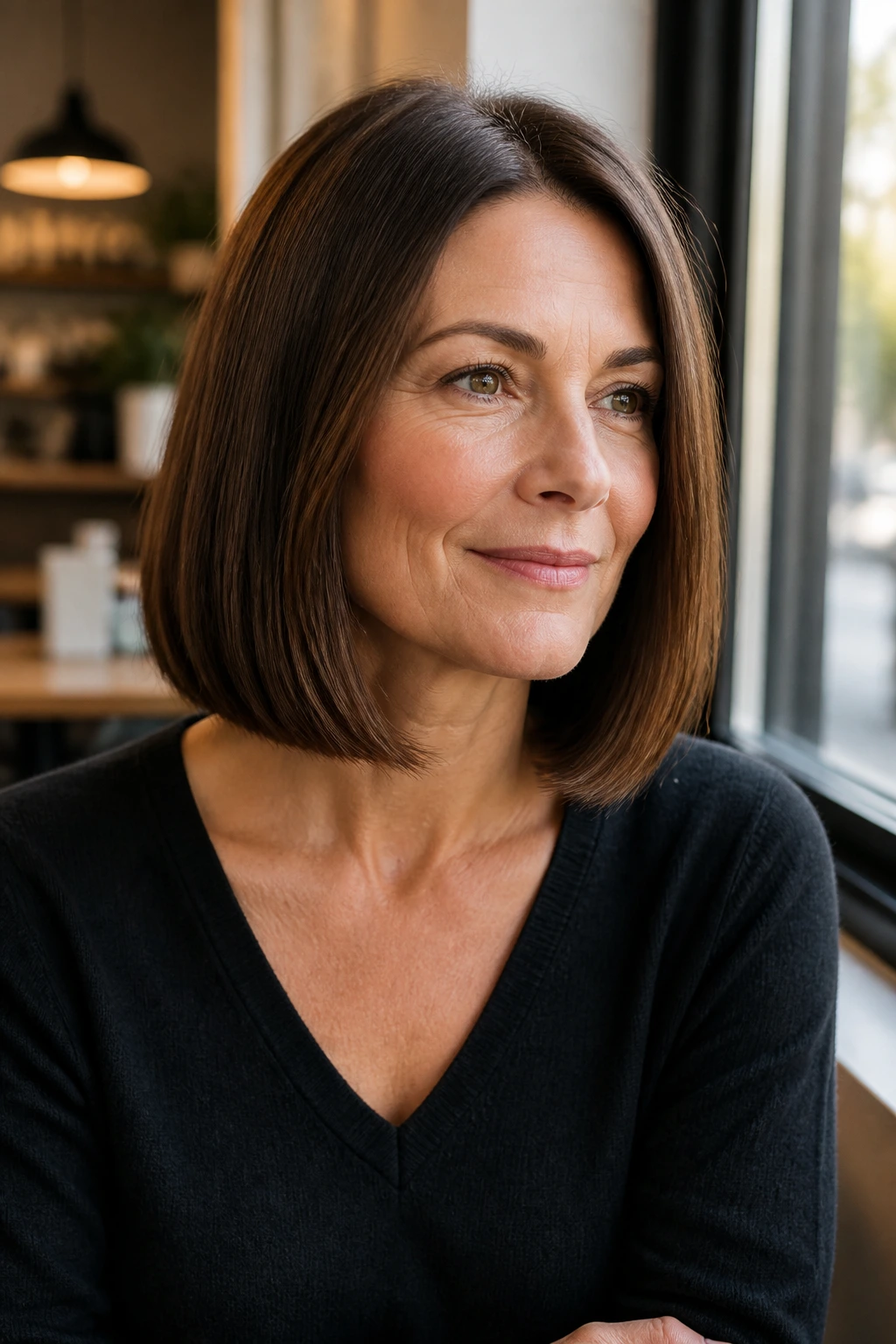
- Cutting the bob too short at the jaw: The symptom is a cut that makes the lower face feel wider or heavier. The fix is to let the line fall slightly below the jaw or angle it forward so the eye keeps moving.
- Over-layering fine hair: You’ll see see-through ends and a hollow crown. Ask for subtle internal shaping instead of lots of short layers around the top.
- Ignoring a cowlick at the crown or nape: The hair flips, splits, or refuses to lie where you want it. The fix is to have the cut customized around the growth pattern and to style that spot first, not last.
- Using heavy cream products on a light bob: The shape goes limp and the ends look stringy. Swap to mousse, spray, or a tiny bit of paste only on the tips.
- Letting thick hair grow too far between trims: The shape turns triangle-like, especially through the sides. A regular trim keeps the perimeter from swelling out.
- Forcing every bob into a perfect smooth blowout: Some hair can do that. A lot cannot, and the struggle shows. A looser finish often looks more modern and takes half the time.
Variations and Different Ways to Wear the Same Idea
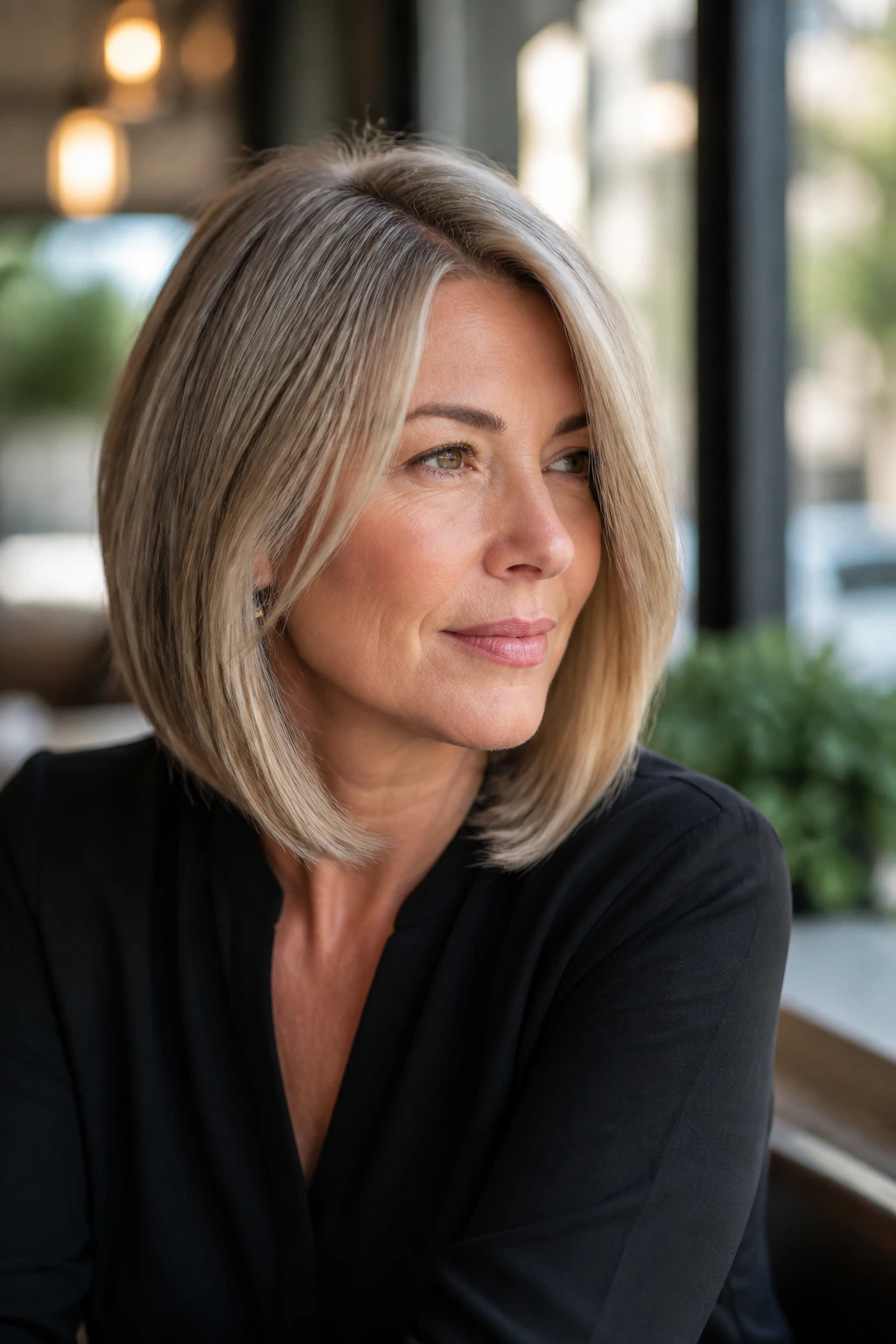
The Glassy Lob: Keep the length just above the collarbone and style it sleek with a strong side part. This version is good if you like polish and want the hair to move in one clean sheet.
The Soft Shag Bob: Add airy layers through the mid-lengths and keep the ends visible. It suits wavy or thick hair that needs weight removed without losing the bob shape.
The Curly Halo Bob: Let the curls form a rounded frame around the face and keep the bottom line a little longer in front. This works well when you want shape without squashing the curl pattern.
The Fringe-Forward Bob: Pair a medium bob with bottleneck bangs, side bangs, or a light curtain fringe. It’s a smart choice if you want softness near the eyes and forehead without going heavy.
The Lifted Nape Bob: Ask for a touch of graduation at the back and a cleaner front line. You’ll get a little extra height where hair tends to collapse, which can make the whole haircut feel younger without being shouty.
How to Keep the Shape Between Salon Visits

A blunt or curved bob usually needs a trim every 6 to 8 weeks if you want the edge to stay crisp. Layered, wavier, or shaggier versions can stretch closer to 8 to 10 weeks, but once the ends start flipping at odd angles, the cut has gone past its sweet spot.
Wash rhythm matters too. Fine hair often looks best washed more often because oil softens the line fast. Thicker or curly hair can go longer between washes, but it needs moisture so the ends do not frizz out and crack apart. Dry shampoo is fine at the roots. It is not a cure for stale-looking ends.
Heat styling should stay light. If you blow-dry, use a nozzle and keep the airflow moving. If you flat iron, keep the passes to a minimum and use heat protectant every time. And if you color your hair—especially gray, silver, or highlighted hair—a gloss or toner every few weeks can keep the tone from turning flat or brassy.
Sleep matters more than people admit. A bob that looked neat at bedtime can wake up with one side bent weirdly into the pillow. A silk pillowcase or a loose clip can help, but so can a quick mist and a 60-second re-bend at the ends the next morning.
Frequently Asked Questions
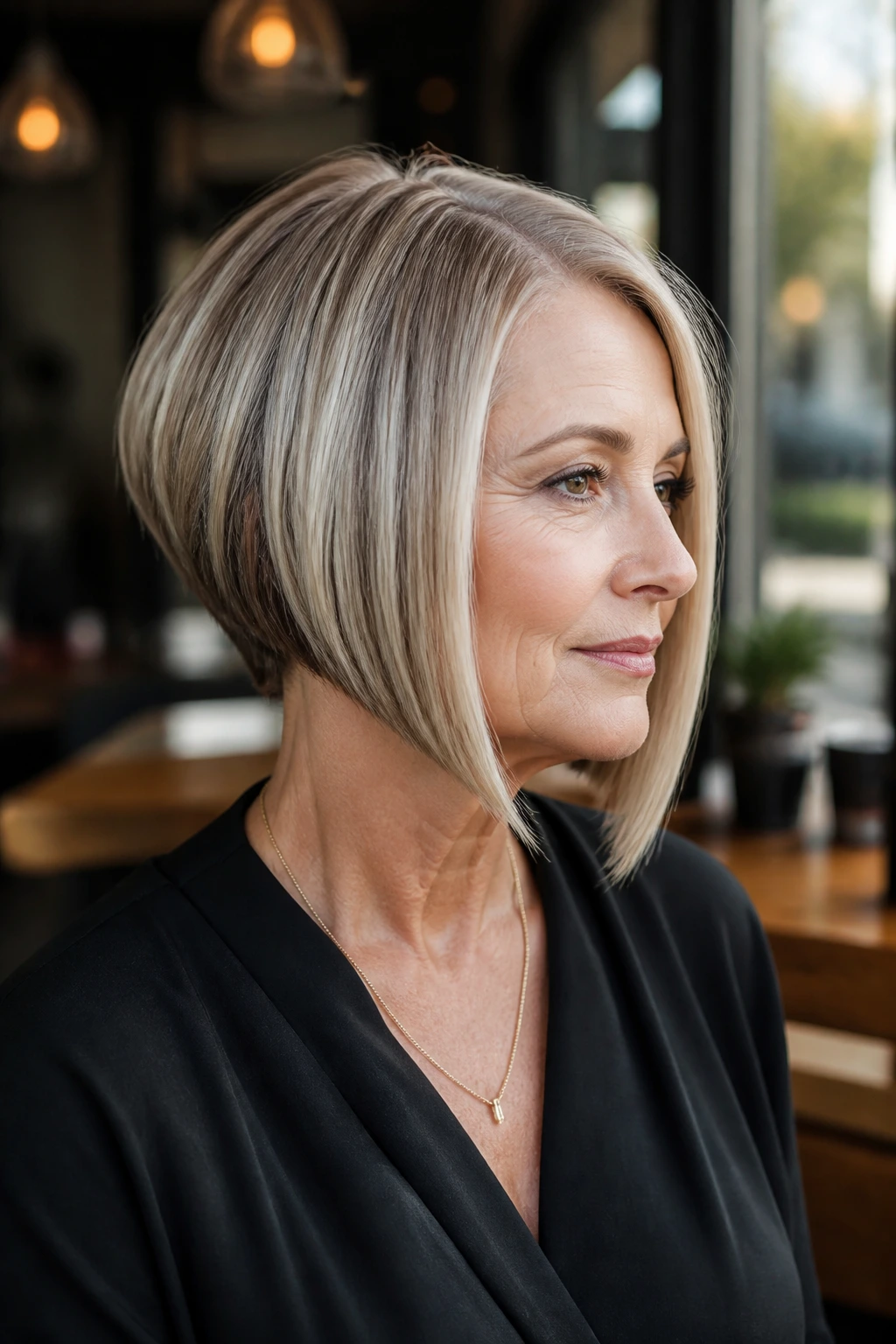
What length counts as a medium bob?
Usually, it’s somewhere between the jaw and the collarbone. That range gives you enough hair to tuck, bend, or wave, but not so much that the cut loses its shape.
Is a blunt bob or layered bob better for fine hair?
A blunt perimeter usually makes fine hair look fuller because the ends stay together. If you want movement, ask for light internal layering rather than a lot of short pieces around the crown.
Will a bob work if I wear glasses?
Yes, and some of the better versions actually look better with glasses. Side parts, face-framing pieces, and softer fringes keep the hair from crowding the frames.
What if my hair flips out at the ends?
That usually means the cut is hitting a spot where the hair wants to bend outward—often near the shoulders. A slightly shorter or slightly longer line, plus a small underbend with a brush or iron, usually solves it.
Can curly hair wear a medium bob without looking triangular?
Absolutely, but the shape has to be cut for curls, not straight hair. Keep enough room for the curls to spring and avoid stacking too much volume at the sides.
How often should I trim it?
Most medium bobs stay sharp with trims every 6 to 8 weeks. If the haircut is softer and more textured, you can sometimes go a little longer, but the line will still need cleanup before it starts to blur.
Should I ask for bangs?
Only if you want the hair to do more work around the face. Side bangs and bottleneck bangs are easier to live with than heavy straight fringe, which can get sweaty, flat, or fussy faster than people expect.
What’s the easiest version if I don’t want to blow-dry much?
A soft air-dry bob with hidden layers or a natural wave works well. The cut should support your texture so you’re refining the shape, not rebuilding it every morning.
The Cut That Fits the Way You Live

A medium bob earns its place when it does three things at once: it gives shape, it keeps enough weight to look full, and it does not ask for a long argument with your mirror every morning. That’s the quiet beauty of these cuts. They can look neat, soft, polished, or a little undone, but the best ones still feel like your hair, just better arranged.
Bring the photo, yes. But also bring the facts: where your part falls, how your hair bends, how much time you want to spend with a brush, and whether you want the ends to tuck, swing, or sit still. Those details matter more than a dramatic before-and-after shot ever will.
Pick the version that works on a Tuesday morning, not just the one that looks good in a still image.
