



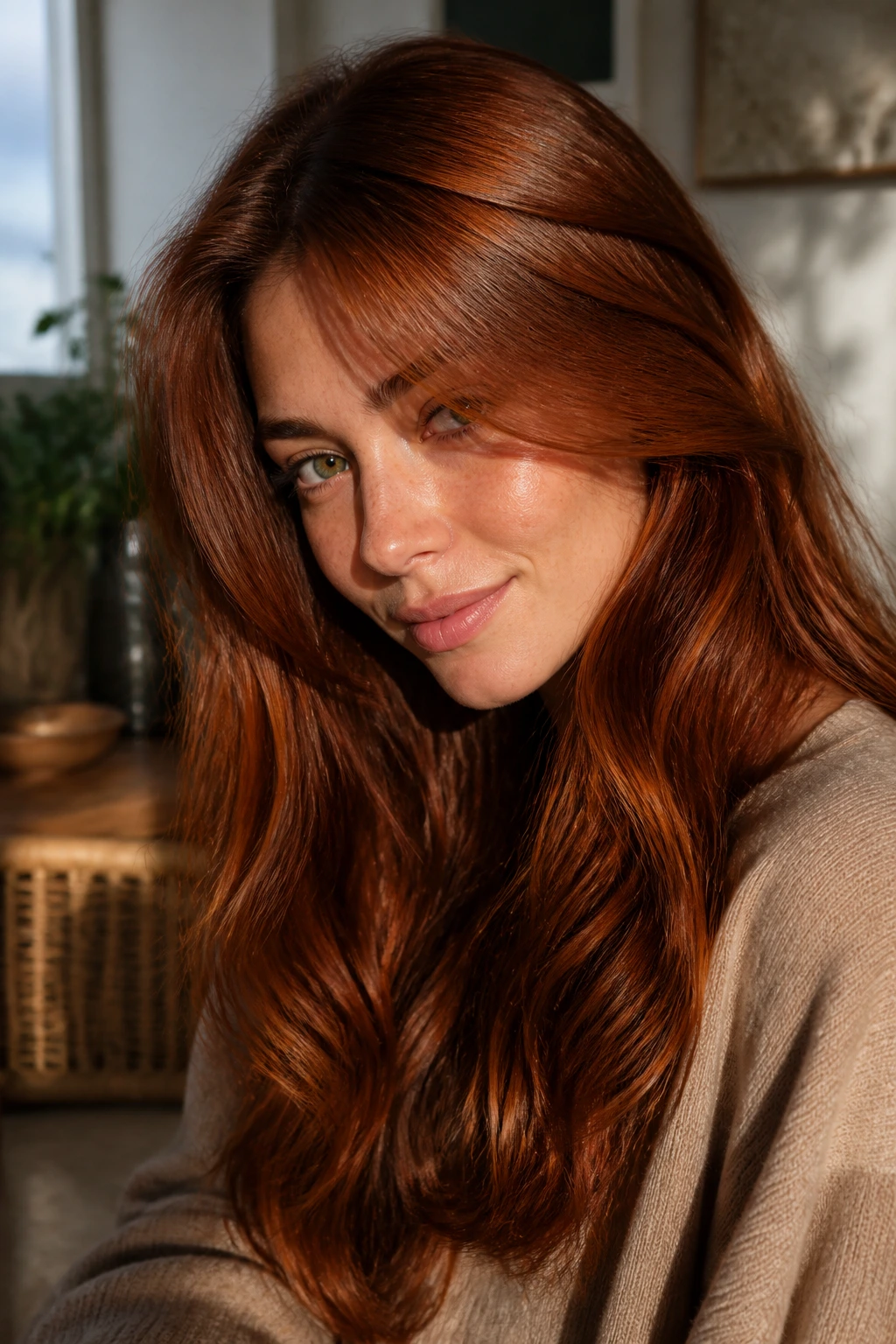
A bad auburn can look orange in daylight and brown by dinner. The good kind sits in that narrow, flattering lane between copper and chestnut, where the red shows up first as shine, then as warmth, then as depth. Auburn hair color ideas work because they can lean penny-bright, cinnamon-soft, mahogany-dark, or wine-rich without losing that red-brown pull that makes the shade feel alive.
That’s the part people usually miss. Auburn isn’t one color; it’s a family of tones, and the ratio of red to brown changes everything. Put the warmth in the wrong place and the hair looks flat. Put too much copper over porous ends and it can go loud fast. Get the balance right, though, and even a simple cut starts to look more expensive because the color keeps catching the light in different ways as you move.
The best versions almost always have depth at the root, a clear undertone in the mids, and enough gloss to stop the red from looking dusty. Some are soft enough for a work setting, some are bold enough to stop traffic, and a few are so strategically placed that you barely need a haircut to make the whole style feel fresh. That range is why auburn keeps showing up in color menus, Pinterest boards, and salon consultations — it has range, but it still feels like one coherent idea.
Why You’ll Love These Auburn Hair Color Ideas
-
Low-Drama Grow-Out: A lot of these looks use shadow roots, balayage, or face-framing placement, so you’re not trapped in a hard regrowth line every four weeks.
-
Brown Hair Gets Real Movement: Auburn adds warmth to flat brunette hair without forcing you into bright copper everywhere, which is a relief if you want depth and shine, not a costume.
-
There’s a Shade for Every Maintenance Habit: Some ideas are glossy all-over color, others are just a money piece or ombré ends, so you can choose how much upkeep you actually want.
-
The Color Reads Differently in Every Light: Indoors, some auburn shades look chestnut or wine-dark; in sunlight, the red and copper come forward. That shift is the fun of it.
-
It Plays Well With Cuts and Texture: Lobs, shags, pixies, waves, curls, and straight hair all show auburn differently, and that makes the color feel tailored instead of copied.
-
Salon Language Is Easy Here: Words like copper, cinnamon, mahogany, berry, gloss, balayage, and shadow root give a colorist a much clearer picture than saying “reddish brown.”
1. Copper Penny Lob
A copper penny lob is what happens when a medium brown base gets a bright copper glaze and a blunt cut that lets the color do the work. It has that polished, metallic warmth people notice first at the ends, then around the face. On a lob, the shade looks cleaner than it does on very long hair because there’s less room for the red to fade into the background.
Why It Works
The blunt length keeps the color from getting lost. A lob that lands between the chin and collarbone gives copper enough surface area to show shine, but not so much length that the tone drifts into flat rust.
This shade is strongest on level 5 to 6 hair, especially if your base already leans warm. Ask for a neutral brown root with a copper glaze through the mids and ends, then keep the root a shade deeper so the color doesn’t look like one solid orange sheet.
- Best base: Medium brown or dark blonde hair.
- Best finish: Straightened with a slight bend, or soft waves.
- Salon note: Ask for copper, not bright orange.
- Upkeep: Refresh the gloss every 4 to 6 weeks.
Tip: Keep the root one level deeper than the mids. That little bit of depth makes the copper look expensive instead of loud.
2. Cinnamon Chestnut Melt
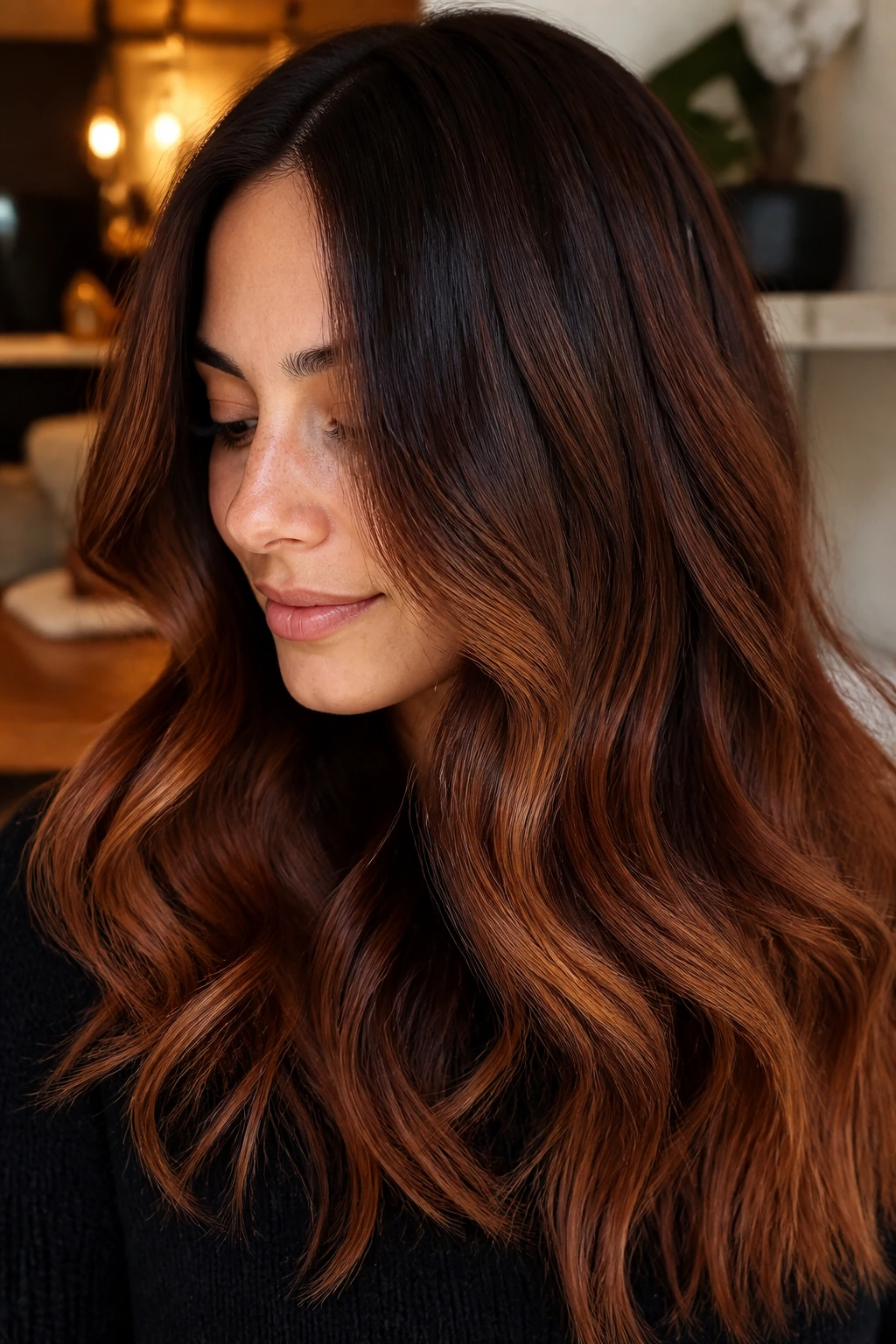
If you want auburn hair color ideas that look rich in bad lighting and even better in sunlight, start here. Cinnamon chestnut is brown first, red second, and that order matters. The shade feels calm, not flashy, which is exactly why it works so well on people who want warmth without a full copper commitment.
The melt matters more than the color name. You want a soft transition from deeper chestnut near the scalp into cinnamon warmth through the mid-lengths and ends. That keeps the red from sitting on top of the hair like dye and gives the whole look a soft, smoky finish.
This is one of the easiest auburn directions for first-timers, especially if your natural hair is already medium brown. It also grows out cleanly because the root stays close to your natural base, and the warmer tone lives where it can catch light instead of fighting with regrowth.
How to wear it: Loose waves show the cinnamon ribbons best. Straight hair makes it look darker, which can be useful if you want the red to stay subtle.
3. Cherry Cola Auburn Bob
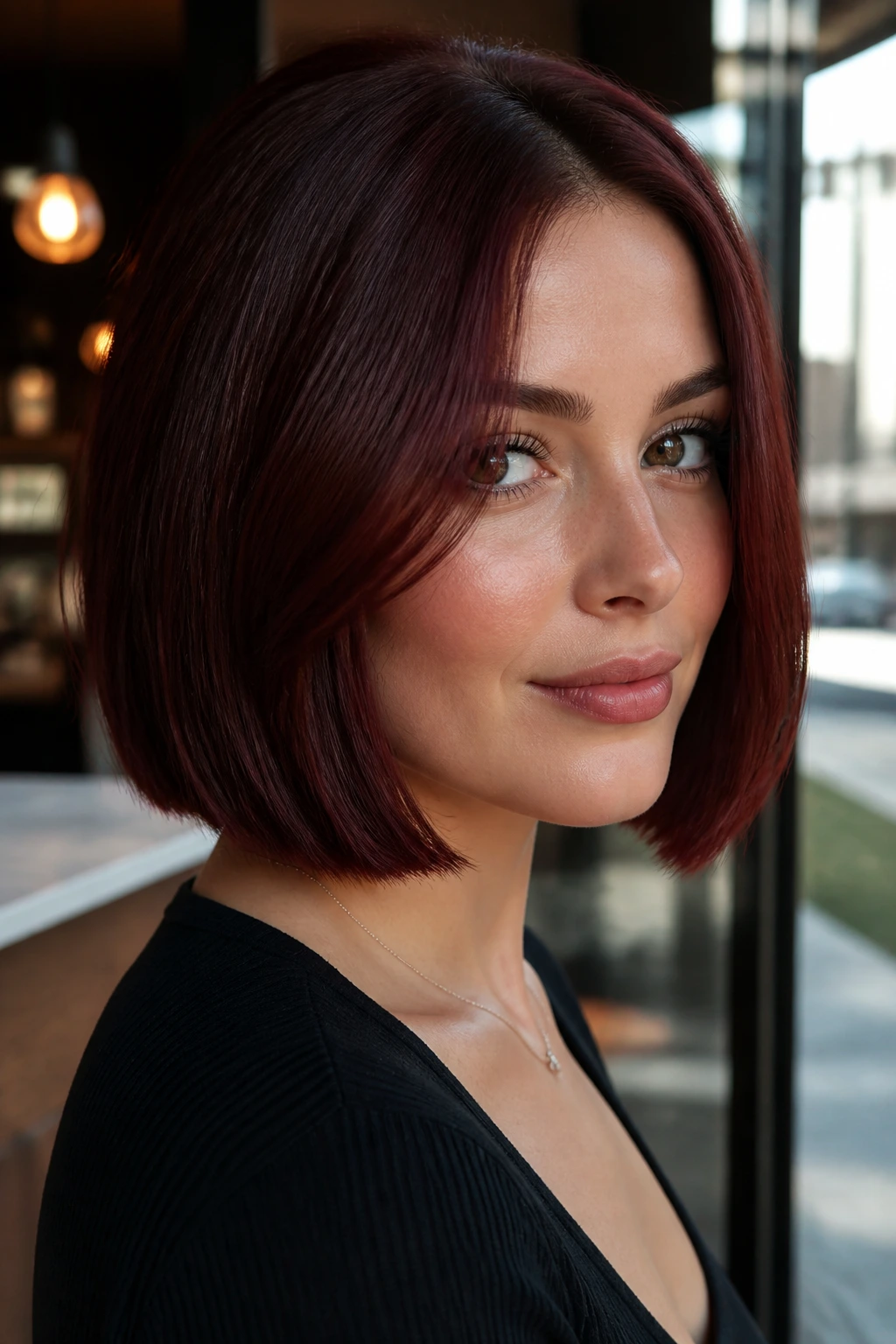
Why does cherry cola auburn look richer on a bob than on long hair? Because the blunt edge gives the color a place to stop. A bob keeps the red-brown tone from sliding into the ends and disappearing, so the shade reads deeper, glossier, and more deliberate.
This version leans red-violet instead of orange-copper. Think dark cherry, mahogany, and a little brown sugar in the background. On a bob, that mix feels modern because the haircut itself is tidy and direct; the color adds the softness.
How to Ask for It
Ask for a level 4 to 5 brown base with a cherry-red gloss or demi-permanent color layered over it. If your hair is porous, the stylist may need to keep the red more muted at the ends so it doesn’t go too bright after a few washes.
- Best on: Straight or lightly waved bobs.
- Good match for: Cool or neutral undertones that still want warmth.
- Avoid if: You want a subtle look. This one has presence.
- Finish: Shine spray, not matte texture cream.
A bob like this looks especially good when the ends are crisp and the color is even. If the cut is fuzzy or grown-out, the shade loses some of its clean edge.
4. Rustic Copper Balayage
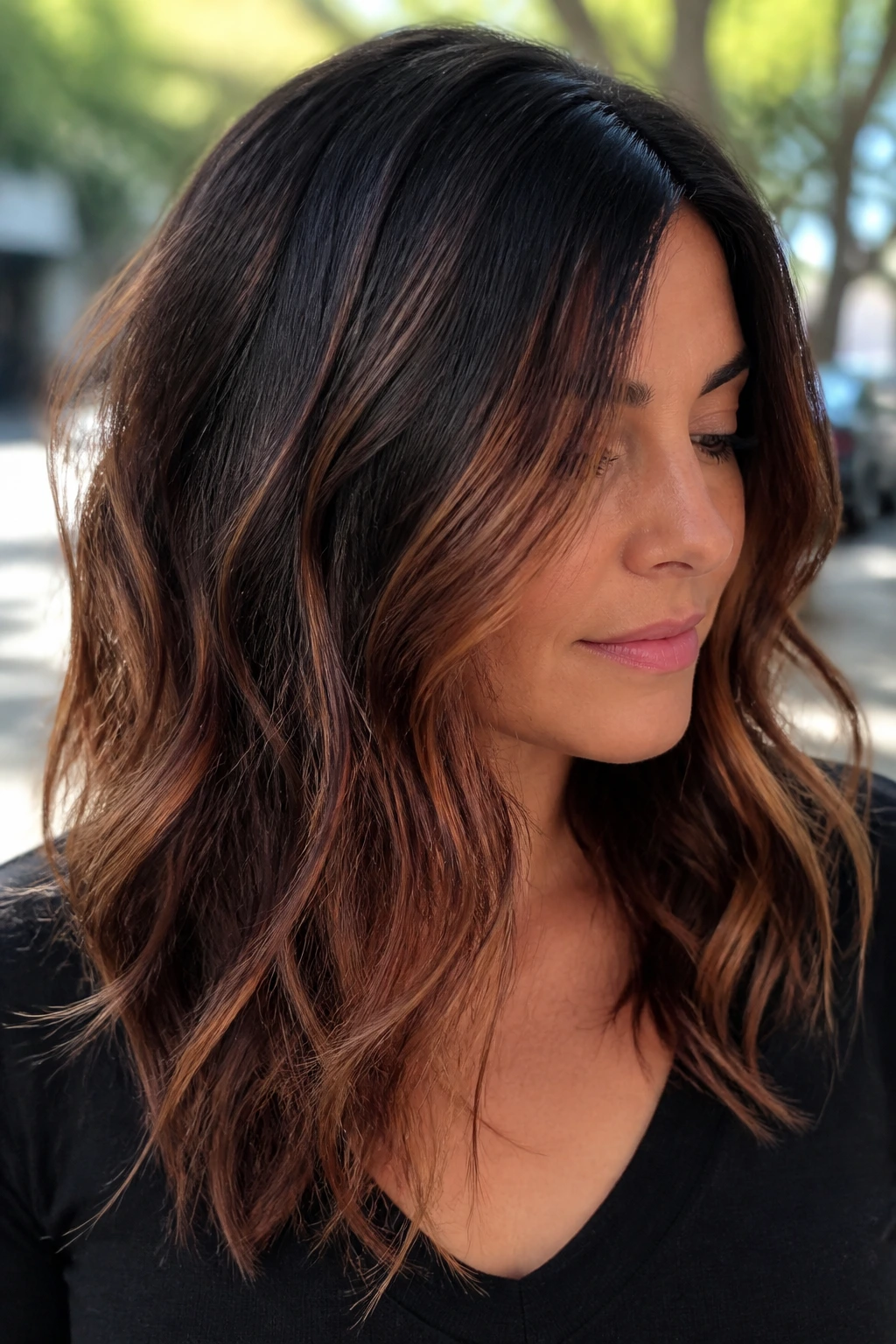
Picture dark brown hair with hand-painted copper ribbons that show up first in the wave, then disappear under the surface when the hair falls straight. That’s rustic copper balayage. It has the irregular, sun-hit feeling people want from balayage, but the copper keeps it warmer and more autumnal than classic caramel.
The trick is restraint. Too many light pieces and you end up with a stripey mess. Too little contrast and the copper doesn’t show. The best versions keep the crown and underlayers deeper, then paint the surface and face frame so the warmth appears where the hair moves.
- Placement: Mid-lengths, ends, and face frame.
- Tone: Copper with a chestnut base underneath.
- Styling cue: Beach waves make the ribbons obvious.
- Maintenance: Gloss between appointments keeps the copper from dulling.
One thing to ask for: Leave at least 60 to 70 percent of the hair darker. That ratio keeps the balayage from looking thin.
This is a smart choice if you like dimension more than brightness. It gives brunette hair a warm flicker instead of a full color change.
5. Mahogany Auburn Waves
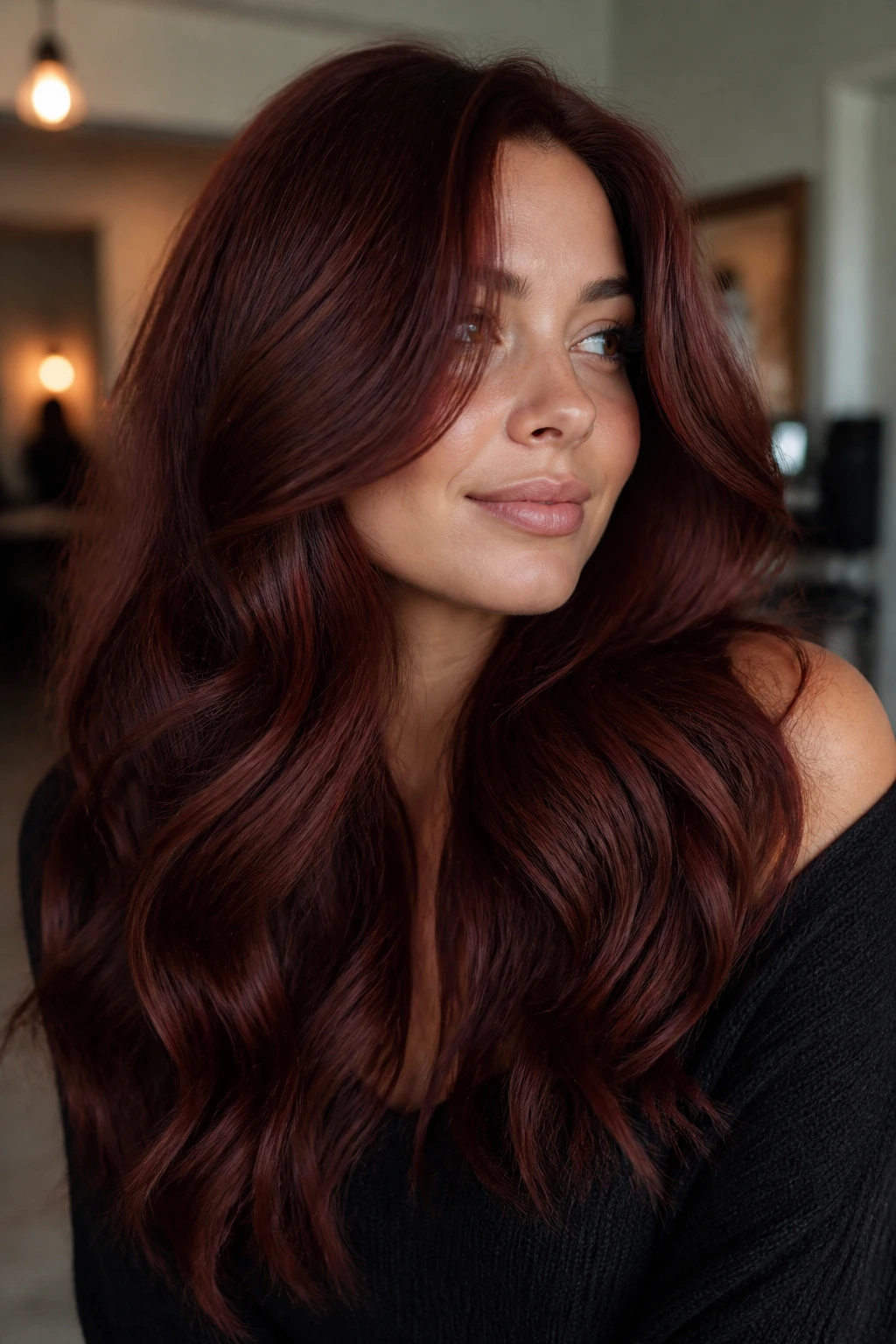
Mahogany auburn is the dark, velvety end of the family. It has that red-brown depth that reads almost wine-colored indoors, then wakes up with a soft burgundy glow in daylight. On waves, it looks richer than bright copper because the curl pattern keeps catching shadow and shine in alternating bands.
I like this shade on hair that already has some density. Fine hair can wear it too, but the color looks best when there’s enough body in the cut for the mahogany tones to move around. A one-length lob, soft long layers, or a collarbone cut all help the color feel plush instead of heavy.
The maintenance is kinder than people expect. Because the tone sits dark, it fades toward brown rather than screaming orange. You still need a color-safe shampoo and the occasional gloss, but the grow-out is gentler than brighter auburns.
This is the version I’d hand to someone who wants red hair without a red-hair-first introduction. It stays elegant, but not sleepy.
6. Ginger Root Melt
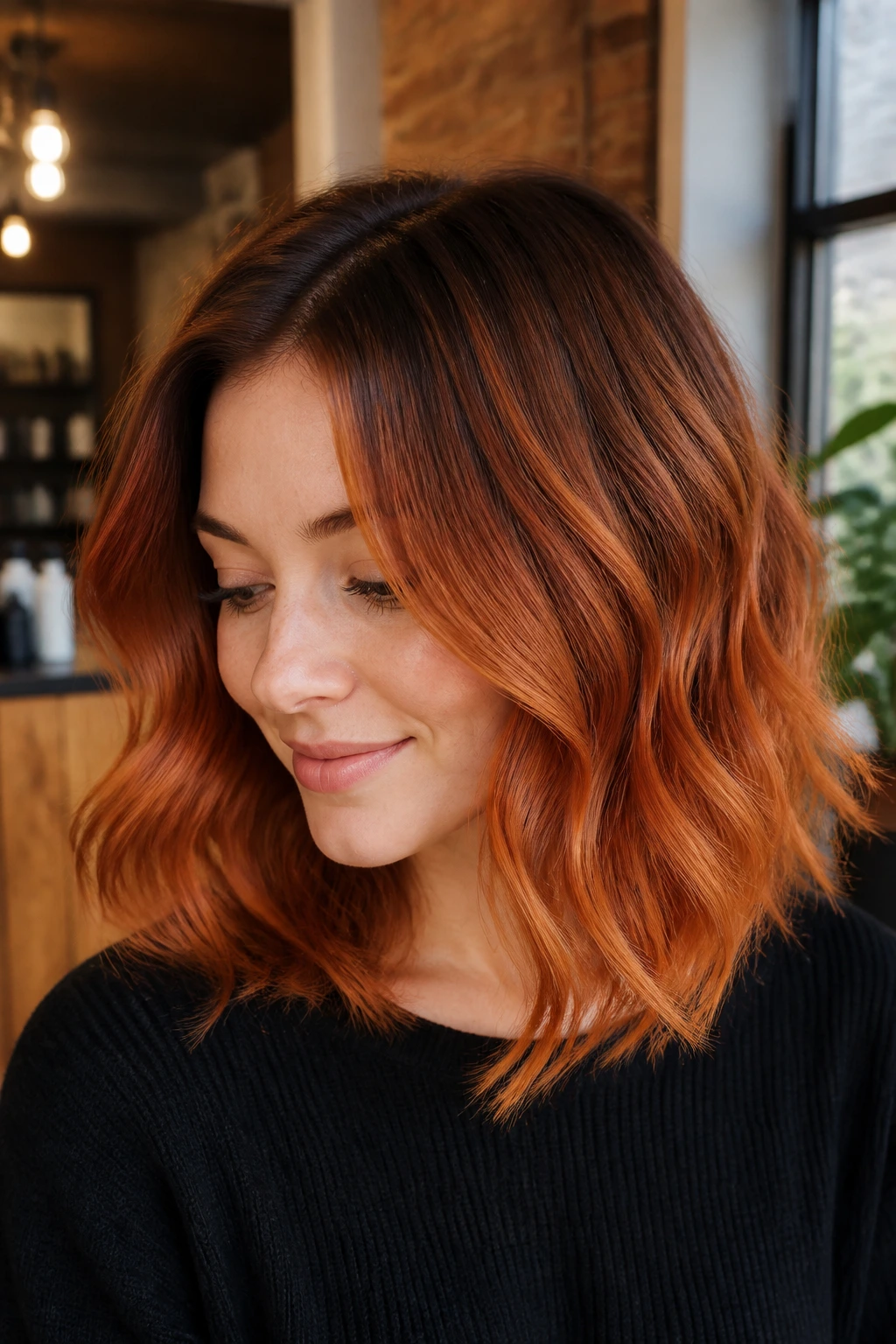
Unlike bright ginger, a ginger root melt keeps the scalp area deeper and lets the copper come forward through the mids and ends. That single choice changes the whole mood. The color looks softer at the root, brighter around the face, and easier to live with when the new growth starts showing.
The reason this works so well is simple: the eye sees the transition, not the line. A darker root tap keeps the look grounded, while the ginger tone gives the lengths enough life that they don’t disappear against the skin. If you have a medium brown base, this is a very smart way to test warmth without bleaching the entire head.
It’s especially good on shoulder-length cuts with movement. The melt shows best when the hair bends around the collarbone and the ends aren’t too blunt. A demi-permanent formula can be enough if your base is already light brown or dark blonde.
This shade is for people who like warmth but don’t want to babysit a bright copper every single week. It fades politely. That matters.
7. Auburn Money Piece
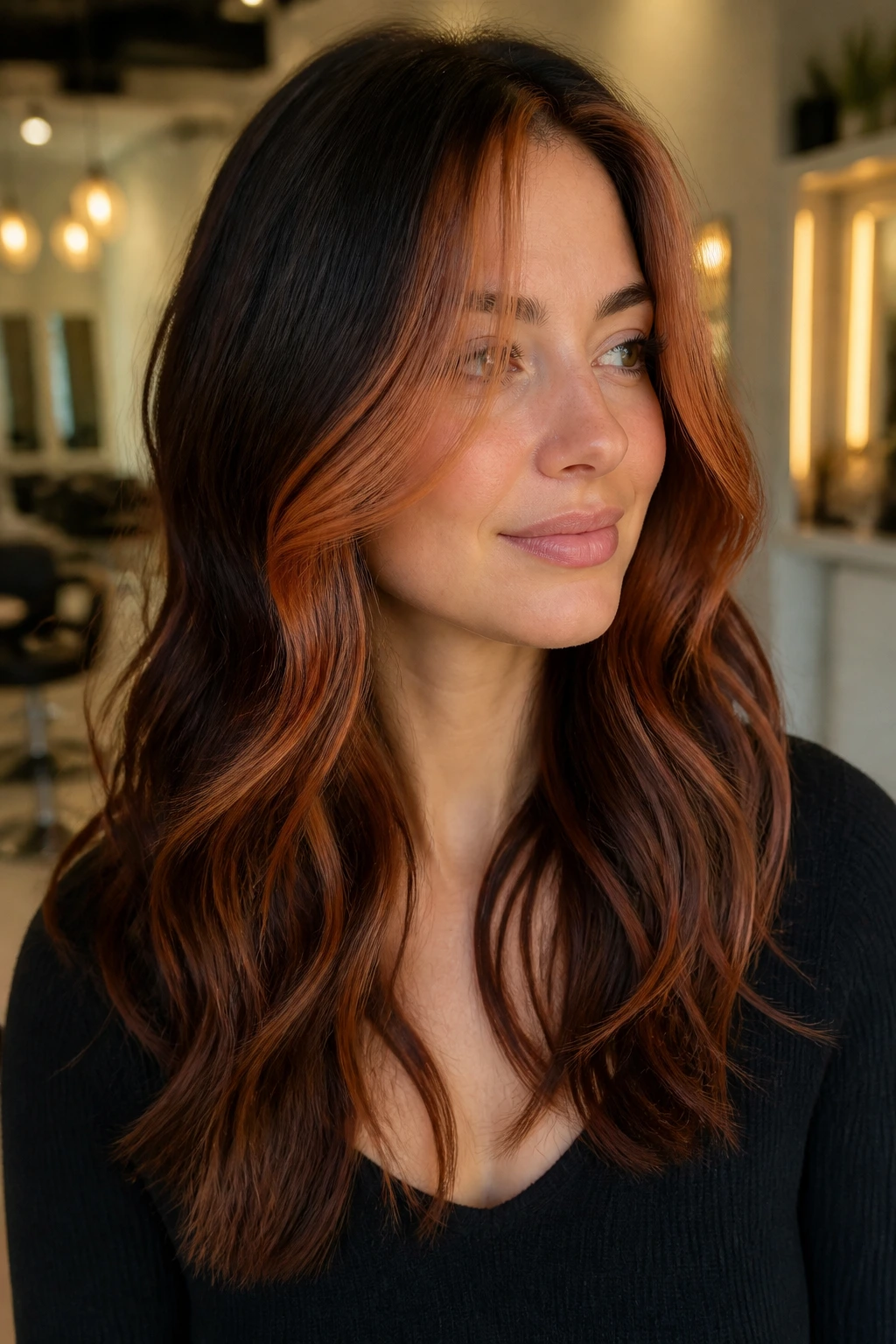
Auburn money piece is the easiest way to get red-brown brightness without changing the whole head. Two to four front sections, placed around the face, do most of the work. You get copper where people actually look, and you keep the rest of the hair in a deeper brunette or auburn base.
Where the Brightest Pieces Should Start
Start the light pieces about half an inch off the scalp so they don’t look painted on. If they begin too high, the contrast can feel harsh near the part line. A clean auburn money piece usually works best when it’s one tone lighter than the mids, not three.
- Best for: Ponytails, loose waves, and layered cuts.
- Color choice: Copper, strawberry auburn, or soft ginger.
- Maintenance: Refresh around the face every 5 to 6 weeks.
- Styling note: Blow-drying the front pieces away from the face keeps them visible.
A money piece is useful if you want a visible change but don’t want to commit to all-over red. It also plays nicely with roots, because the rest of the head can stay low-maintenance.
8. Smoky Auburn Pixie
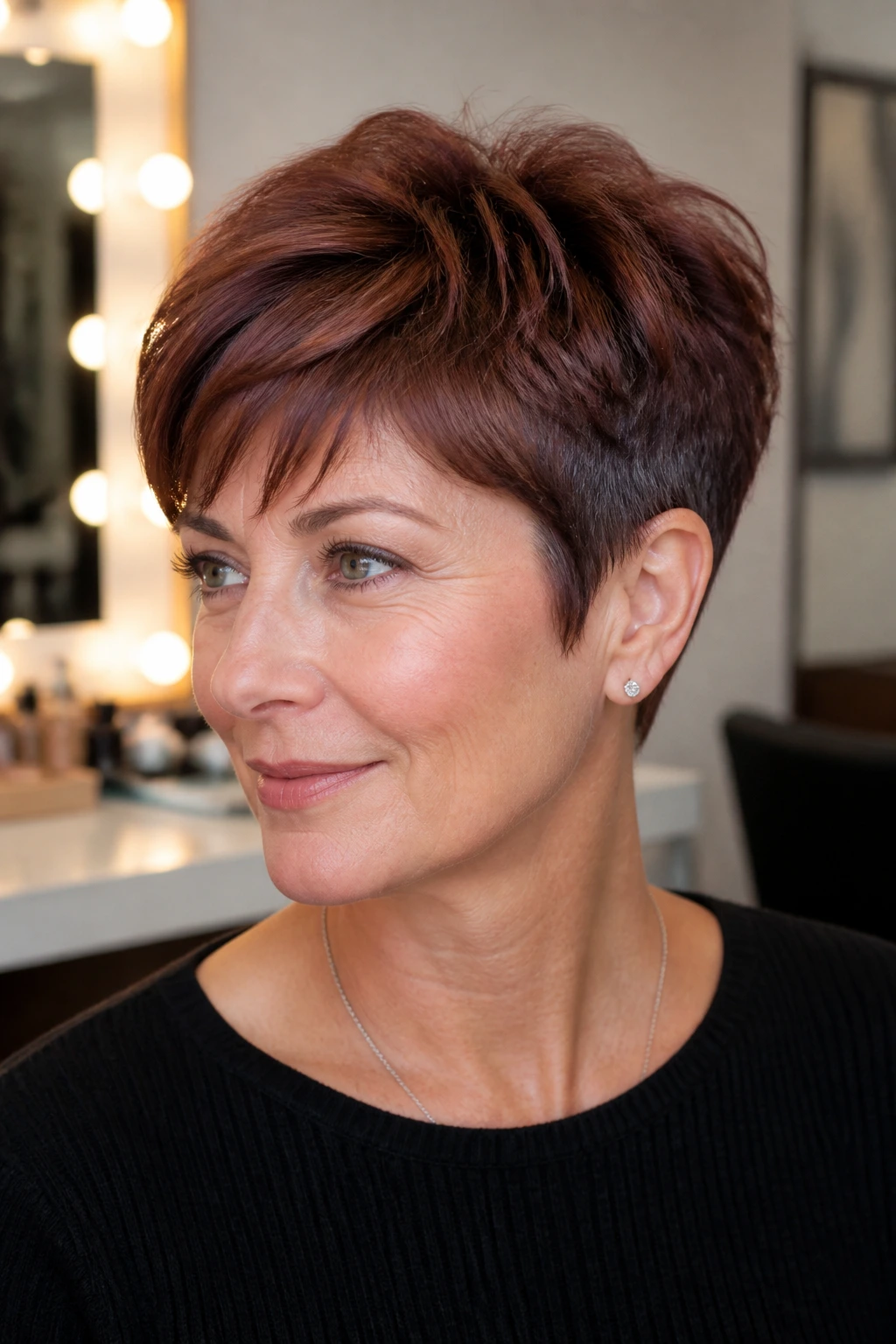
A smoky auburn pixie is the easiest way to make short hair look deliberate instead of accidental. The shade stays dark enough to keep the cut sharp, but the red-brown tone stops the pixie from reading flat. On short hair, color matters more than length, and this is one of those shades that proves it.
The “smoky” part comes from muting the copper. Think brown-red with a tiny ash edge, not bright copper or cherry. That makes the style work on fine hair, because the color adds the illusion of thickness without the need for heavy highlights.
You don’t need much contrast here. A soft all-over demi-permanent auburn, paired with slightly deeper roots, gives the pixie shape. If the cut has texture on top, a matte paste on the ends can separate the pieces, but too much product will kill the shine.
This is a good option if you want color that feels clean, sharp, and easy to style. One pass of the brush, one quick blow-dry, done.
9. Golden Auburn Gloss
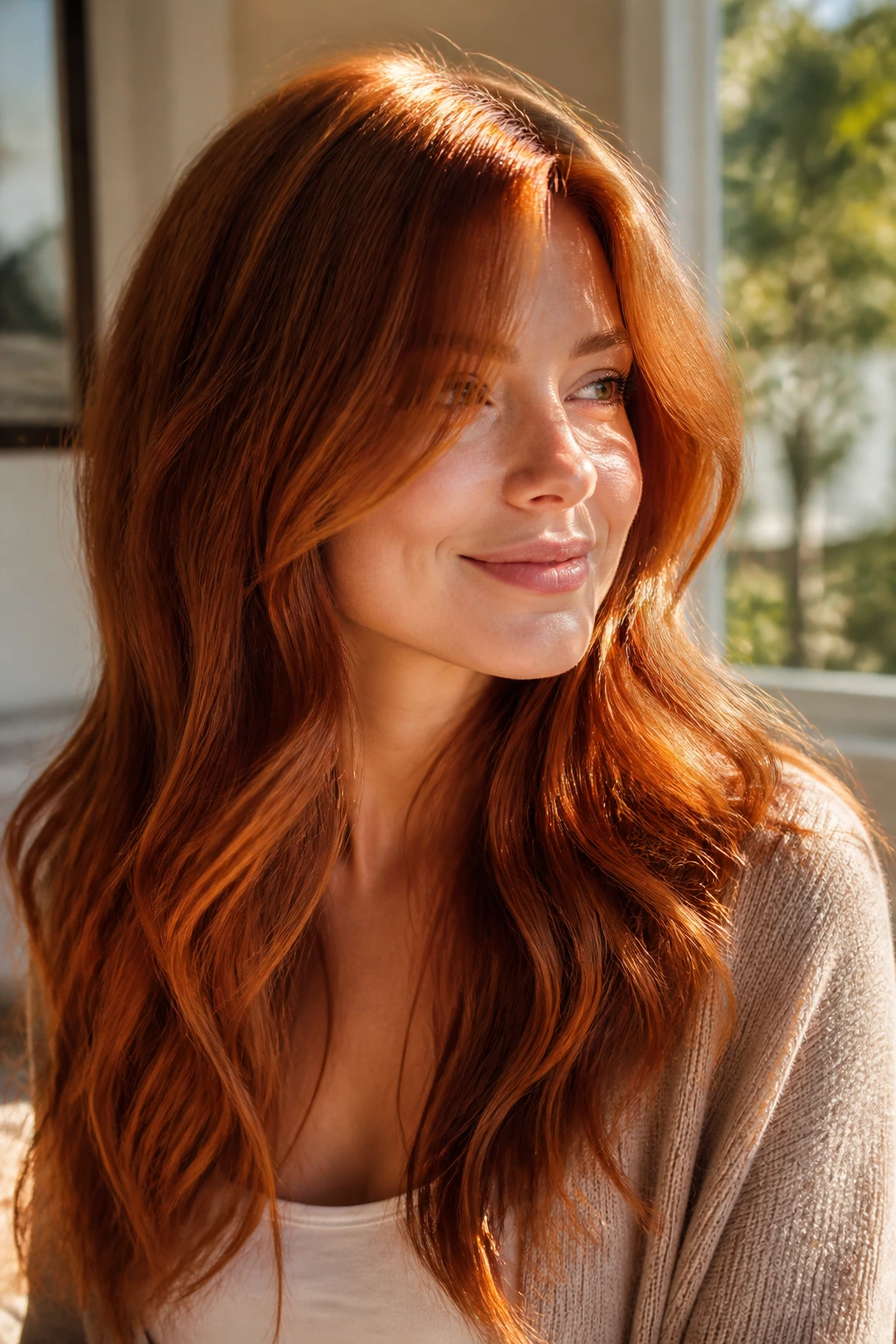
Why do some auburn shades look sunlit while others look a little muddy? Gold. Not too much. Just enough to stop the red from going flat. A golden auburn gloss gives warmth a clearer edge, so the hair reads copper-brown instead of rusty brown.
This version works best when you want softness more than drama. The gold tones sit in the light, especially on waves and layered cuts, and the red stays in the background instead of shouting. On level 6 or 7 hair, a gloss can do a surprising amount of work without needing a full color correction.
What to Ask For
Ask for a golden copper or warm auburn gloss, not a strong orange toner. If your hair already has highlights, the gloss can pull the lighter pieces into the color family so everything looks connected instead of striped.
- Best base: Light brown to dark blonde.
- Best finish: Loose bends or soft blowout.
- Salon wording: “Warm, golden auburn with brown depth.”
- Maintenance: Gloss every 4 to 8 weeks.
This is a solid pick if you want the color to feel lighter and more reflective without crossing into strawberry blonde.
10. Auburn Balayage on Dark Brown Hair
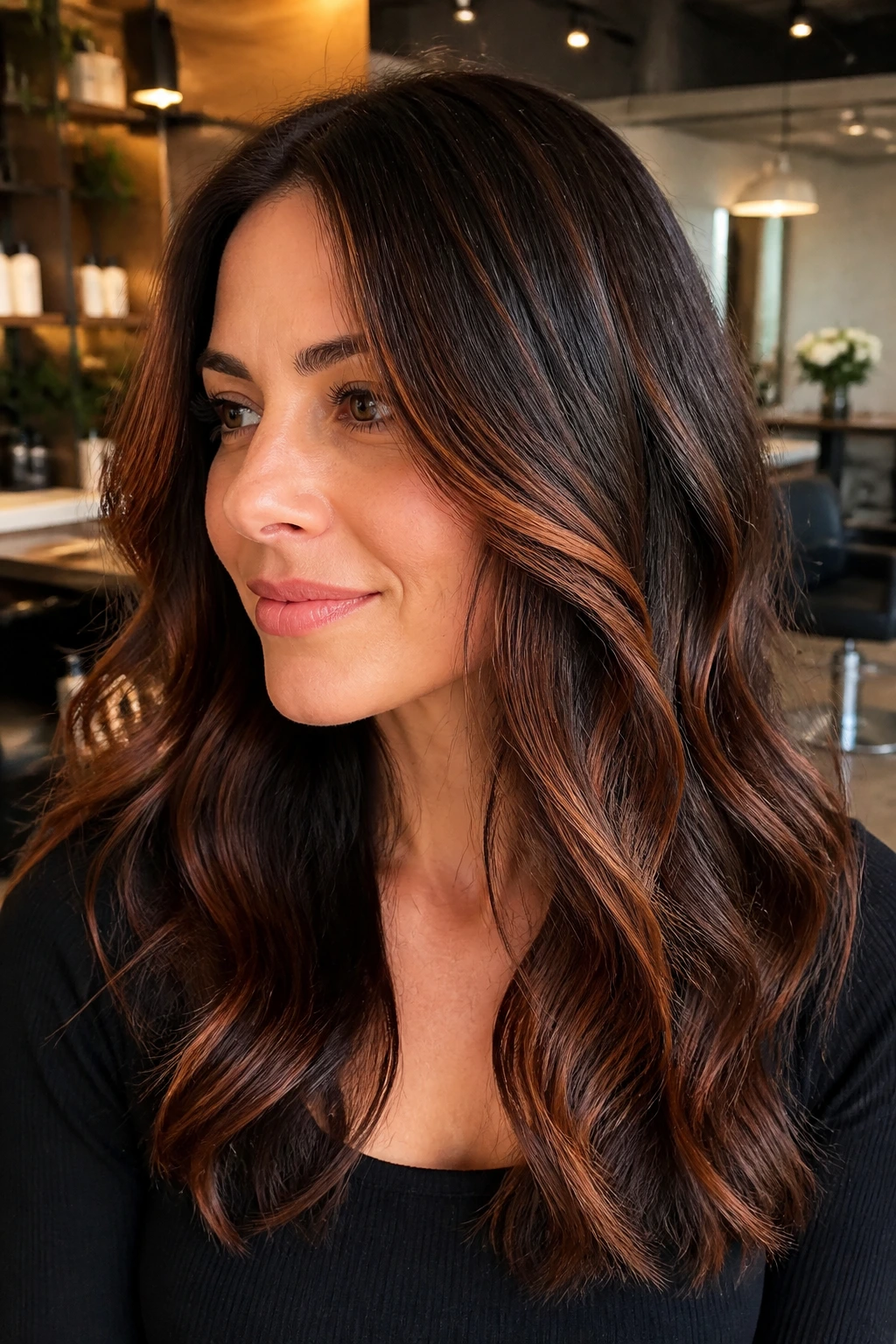
Dark brown hair doesn’t need to be dragged all the way to copper to look good in auburn. A few hand-painted auburn ribbons through the surface are often enough. The best results keep the base dark, then let the red-brown show up where the hair bends and the ends catch light.
The appeal here is control. You can keep most of your natural color and still add warmth in a way that feels visible. On very dark hair, the auburn may read as sheen in low light and show more clearly outdoors, which is exactly what a lot of people want. It’s not loud, but it isn’t invisible either.
- Lift needed: Usually 1 to 2 levels, not a full bleach-out.
- Placement: Around the face, crown surface, and ends.
- Tone: Copper-brown or cinnamon auburn.
- Maintenance: Low, if the root stays dark.
This is the sort of auburn that makes brown hair look more alive instead of more colored. That distinction matters.
11. Burgundy Auburn Curls
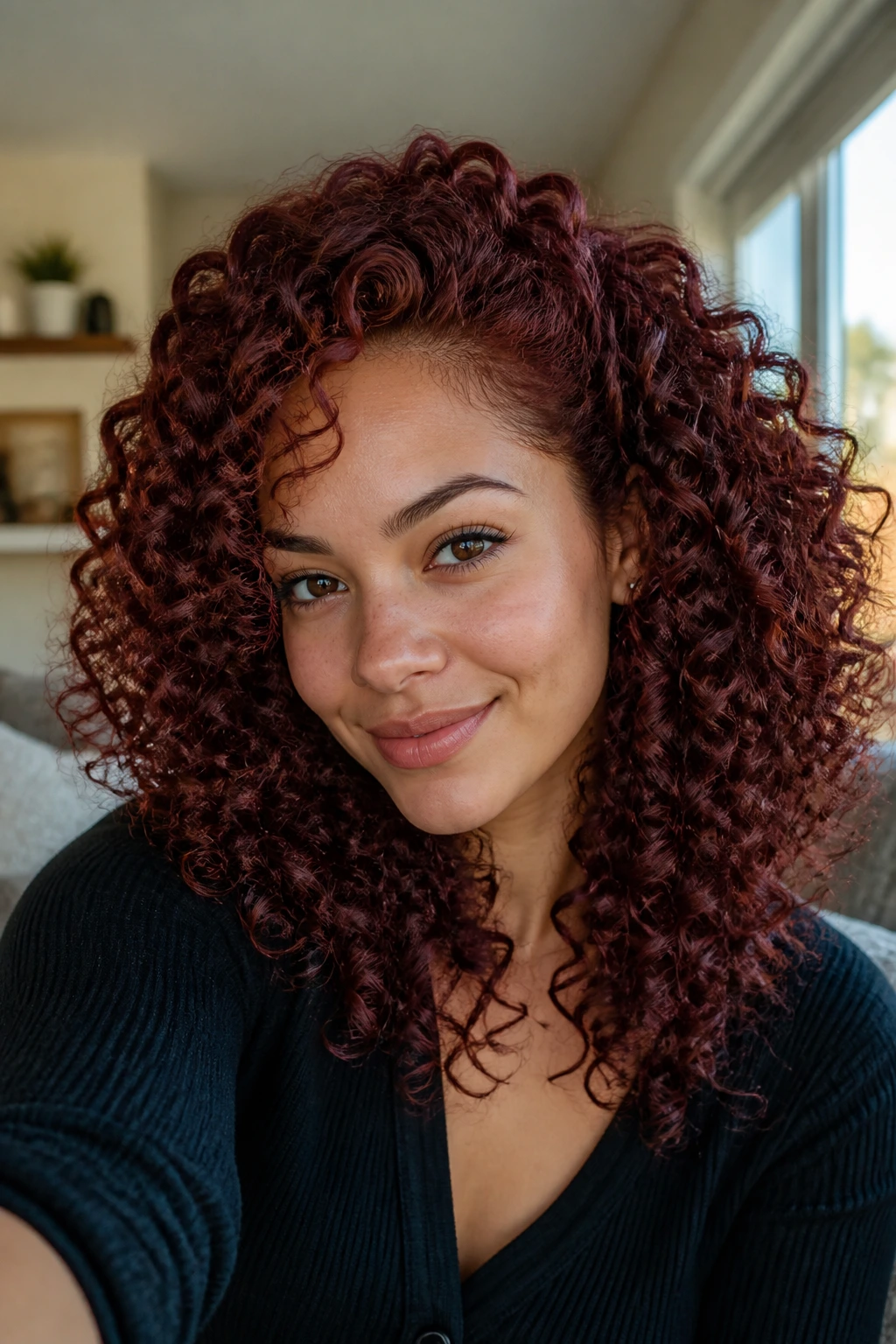
Burgundy auburn curls have a richer, deeper read because curl pattern drinks in color and spits it back as shine. The red shifts toward wine, the brown stays underneath, and the whole look feels plush instead of bright. On coils and curls, that depth can be gorgeous because every bend in the hair gives the shade another place to land.
I like this on hair that already has texture, especially if the curls are dense or springy. The darker red can make the shape look fuller without needing heavy highlights. A gloss or demi-permanent color usually keeps the tone more fluid than permanent red, which can harden if the formula is too strong.
This shade is not for people who want faint warmth. It has real color. Indoors, it can look like dark mahogany; near a window, the burgundy edge appears and keeps the style from collapsing into brown.
One practical note: highly porous curls can swallow red pigment fast. If that’s your hair, use a deep conditioner between color services and avoid washing with very hot water. That tiny habit change makes a difference.
12. Auburn Bronde Blend
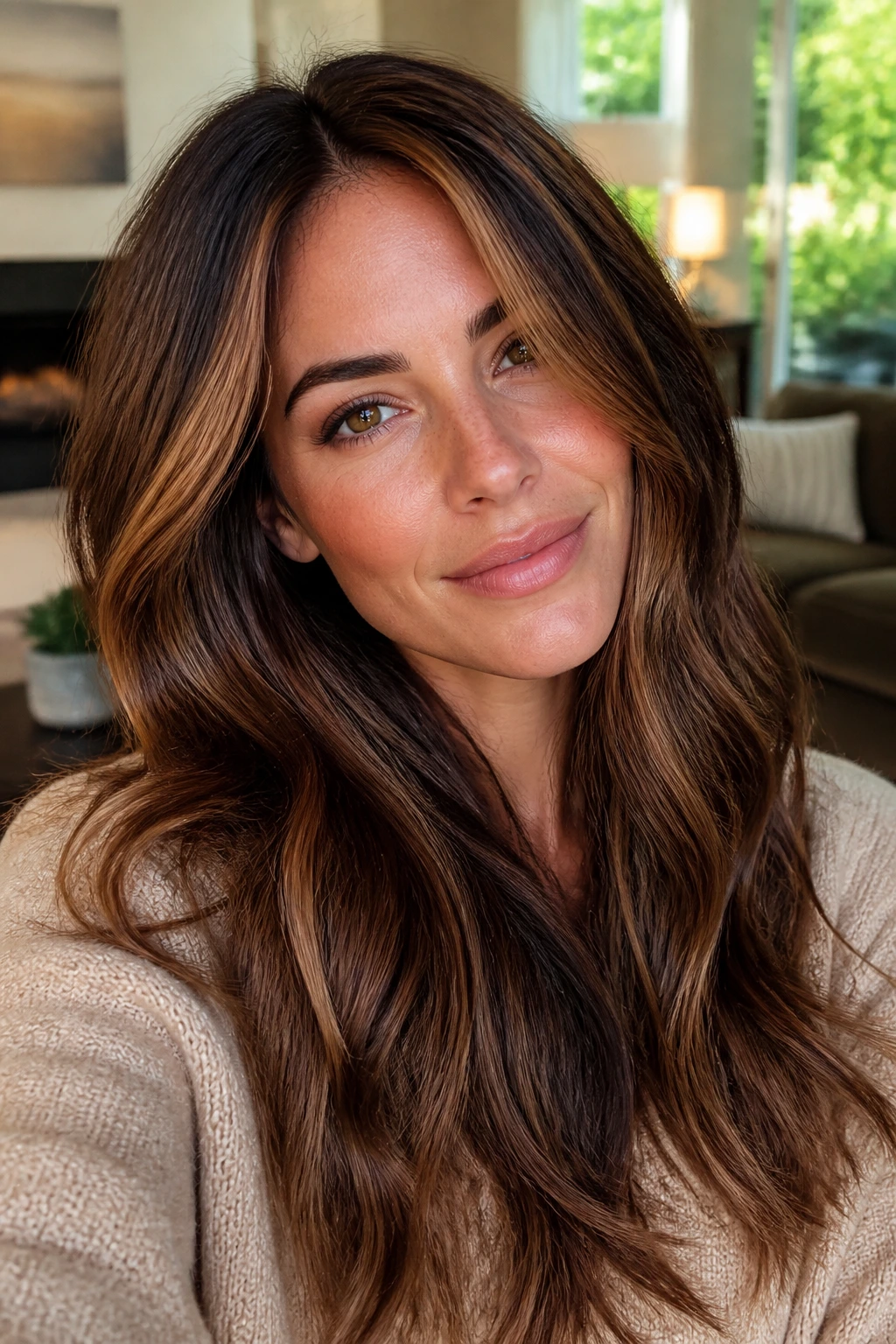
If you can’t decide between brunette and blonde, auburn bronde gives you both sides of the argument without the drama. The base stays brown, the lighter pieces live in the caramel-copper range, and the finish lands somewhere between warm brunette and soft gold-red. It’s one of the least fussy ways to wear auburn if you already have highlights.
The appeal is balance. Blonde-only highlights can feel stark against brown hair. Auburn bronde softens that contrast, so the hair looks warmer and more blended. The red tone can sit in the mid-lights while the deeper brown stays near the root and underneath.
This is a good direction for people who want dimension but not a full red transformation. Ask for fine, warm highlights and a coppery gloss rather than chunky streaks. On wavy hair, the blend looks richest because the light pieces are broken up by movement.
If you want one auburn style that works at the office, at dinner, and on a messy bun day, this is a strong candidate. It’s quiet in the best sense.
13. Copper Rose Lob
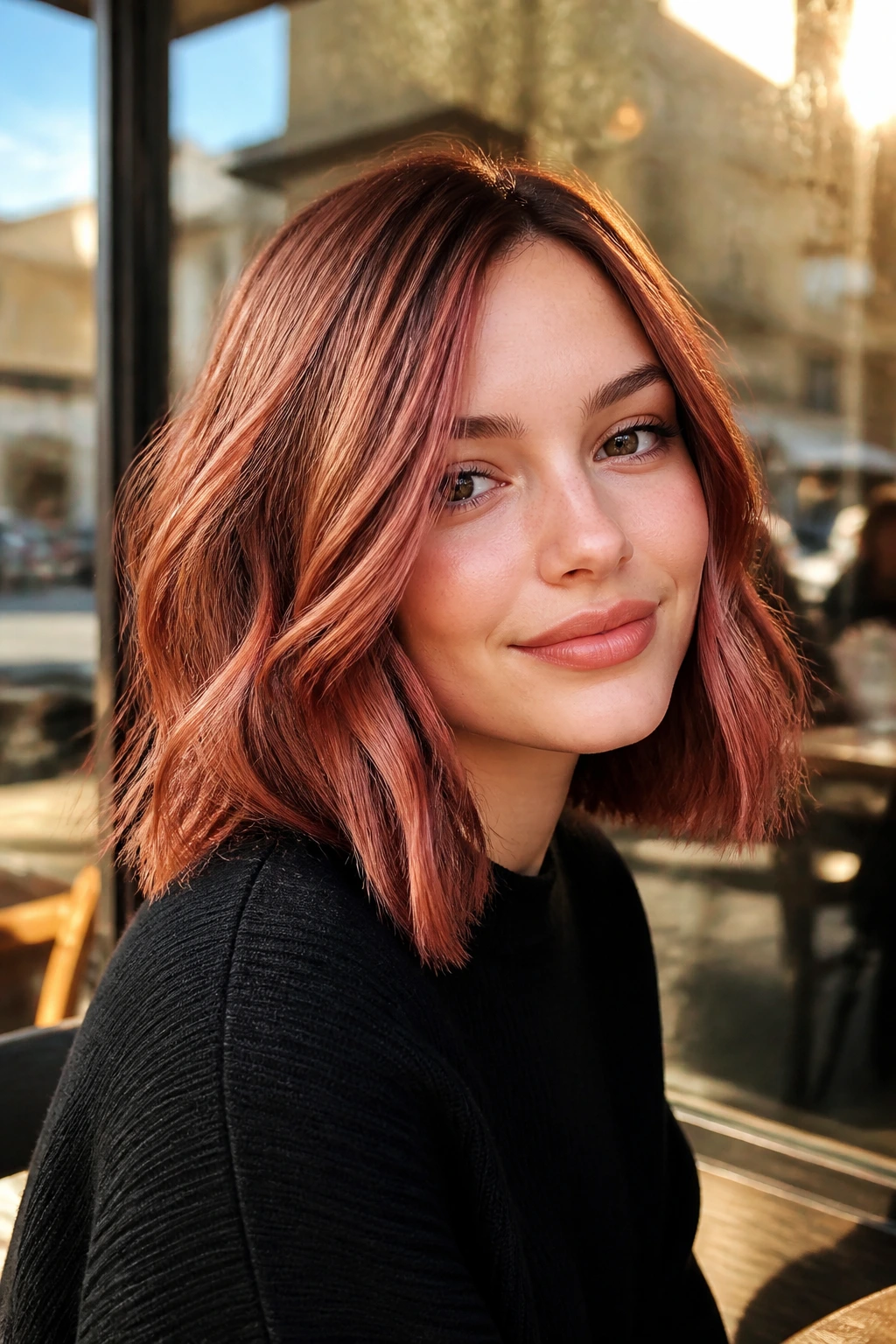
Copper rose auburn softens the usual red-brown mix with a faint rosy note, and that little bit of pink keeps the color from looking too orange. On a lob, the tone feels modern because the cut is clean and the color has just enough curve to it. The result is warm, but not blunt.
What Gives It the Rose Note
A rose or red-violet additive in the formula is what shifts the copper away from pumpkin territory. The rose tone also helps if your skin tone leans cool or neutral and you still want warmth in the hair. It’s a smarter version of copper than people expect.
- Best on: Level 6 or 7 hair.
- Best cut: Lob, collarbone length, soft layers.
- Styling: Glossy waves or a smooth blowout.
- Upkeep: Use color-safe shampoo and a warm-toned gloss as needed.
The color looks best when it has shine. A dry finish can make the rose-copper read dull, and nobody wants that.
14. Dark Auburn Shag
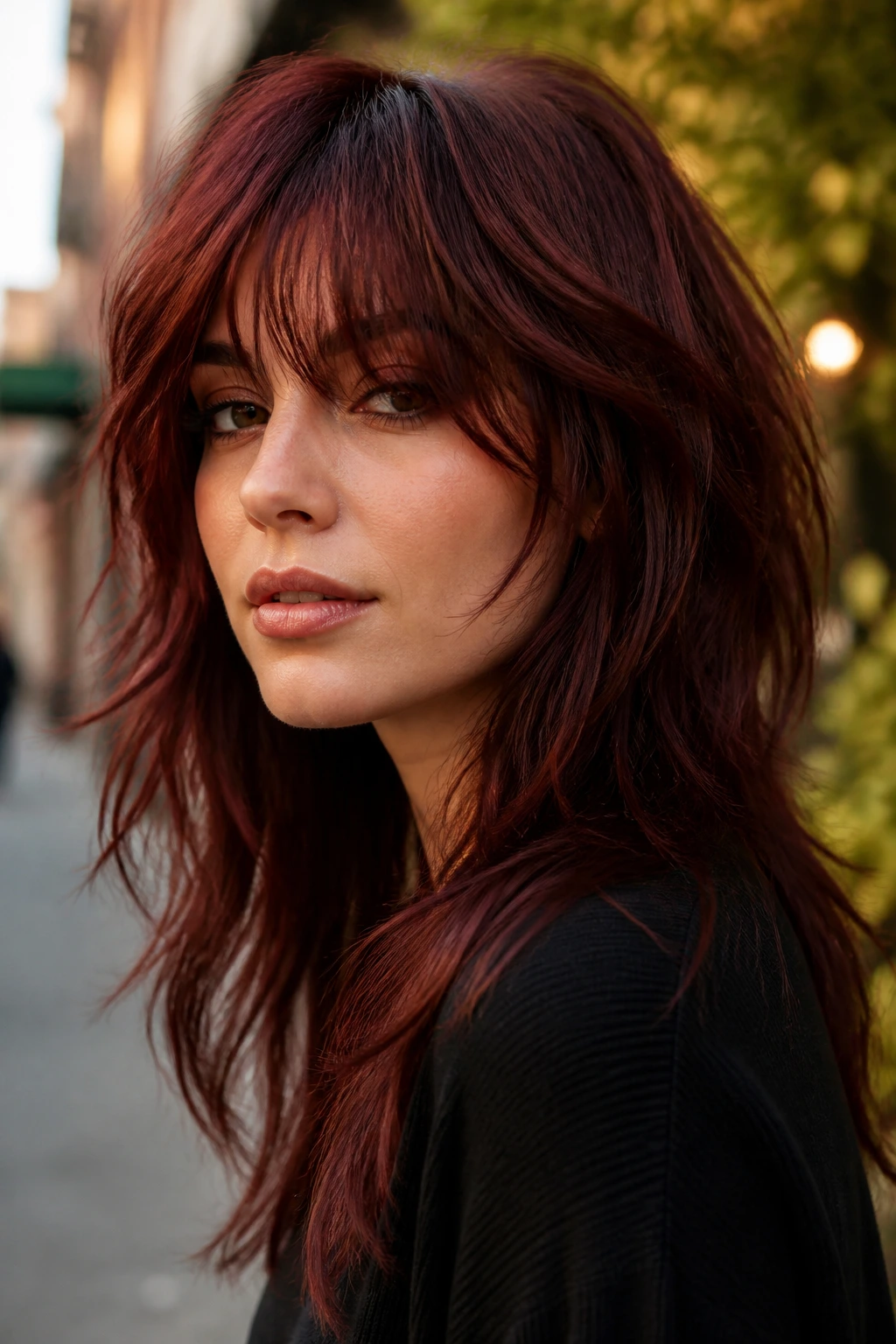
The shag cut is where auburn stops behaving politely. A dark auburn shag gets all its personality from layers, movement, and that slightly undone edge that makes the color look piecey instead of heavy. The darker base keeps it grounded; the red-brown warmth keeps the layers from disappearing.
This is a cut-color pairing that works because the shag loves texture. Curtain bangs, choppy ends, and feathered layers all give the auburn more surface area to show up. If your hair is naturally wavy, the color will look more dimensional with almost no effort. Straight hair can wear it too, but the style reads sharper and less tousled.
Ask for a dark auburn base with a soft gloss through the layers rather than bright highlights all over. Too much contrast would fight the cut. You want the shade to move with the shape, not sit on top of it.
If you’ve ever felt like auburn looked too neat on you, the shag fixes that. It gives the color some edge.
15. Strawberry Auburn Ends
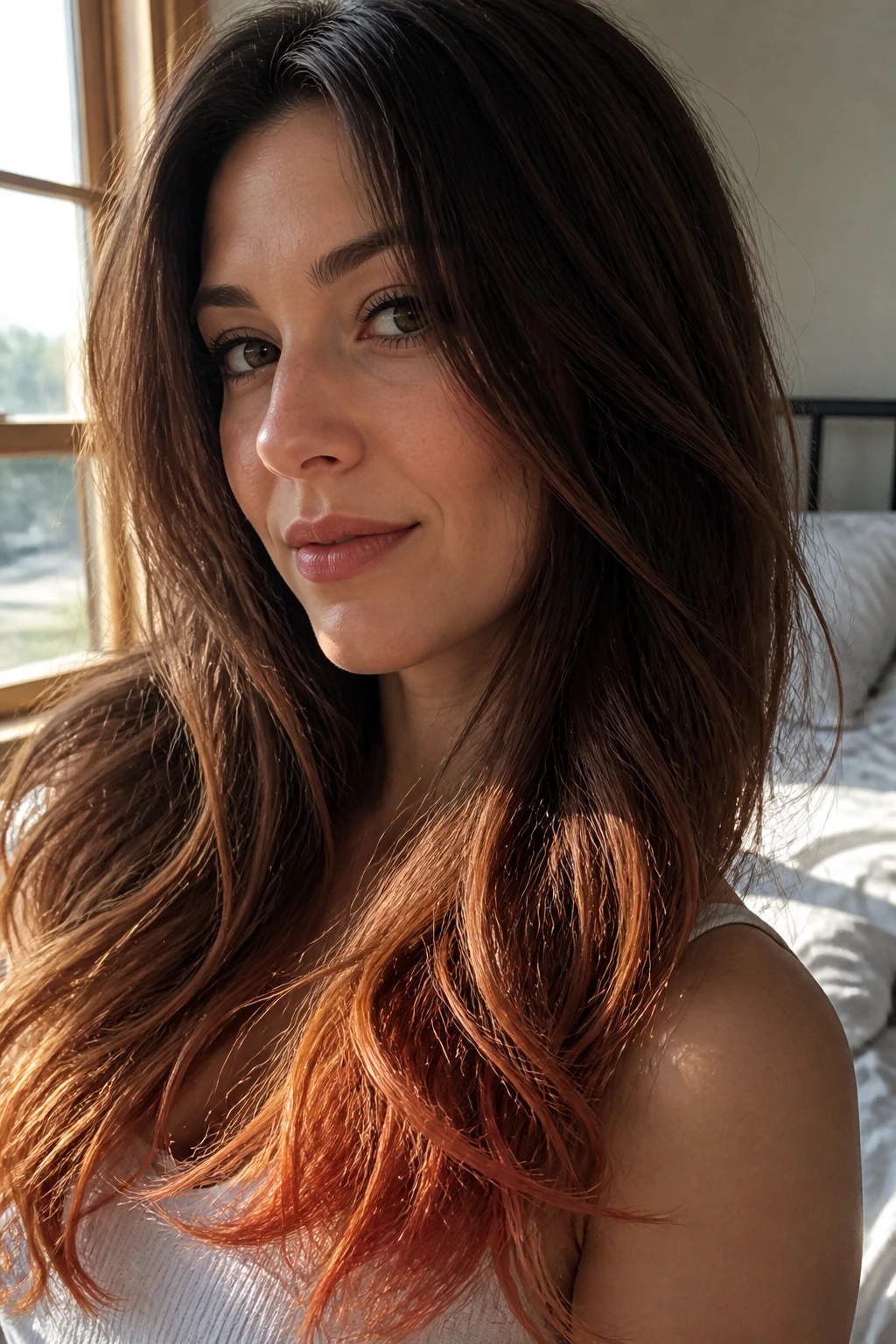
Want warmth without a full color change? Keep the base neutral and brighten only the ends. Strawberry auburn ends are a good entry point because they let you test red-brown tones where the eye naturally lands, especially when hair swings or curls under.
How Much Lightening You Need
Usually, you need the ends lifted to about level 7 or 8 before the strawberry tone will show cleanly. If the ends are too dark, the red looks muddy. If they’re too light, it can slide into pink-blonde territory, which is a different job entirely.
Auburn ends work well on long hair, layered cuts, and curls because the color sits where movement is strongest. The root can stay close to natural brown, which keeps upkeep low and lets the red feel playful rather than committed.
This is one of the easiest ways to soften your look without changing your whole base. It also pairs well with a ponytail, where the ends become the whole point.
16. Chestnut Auburn Curls
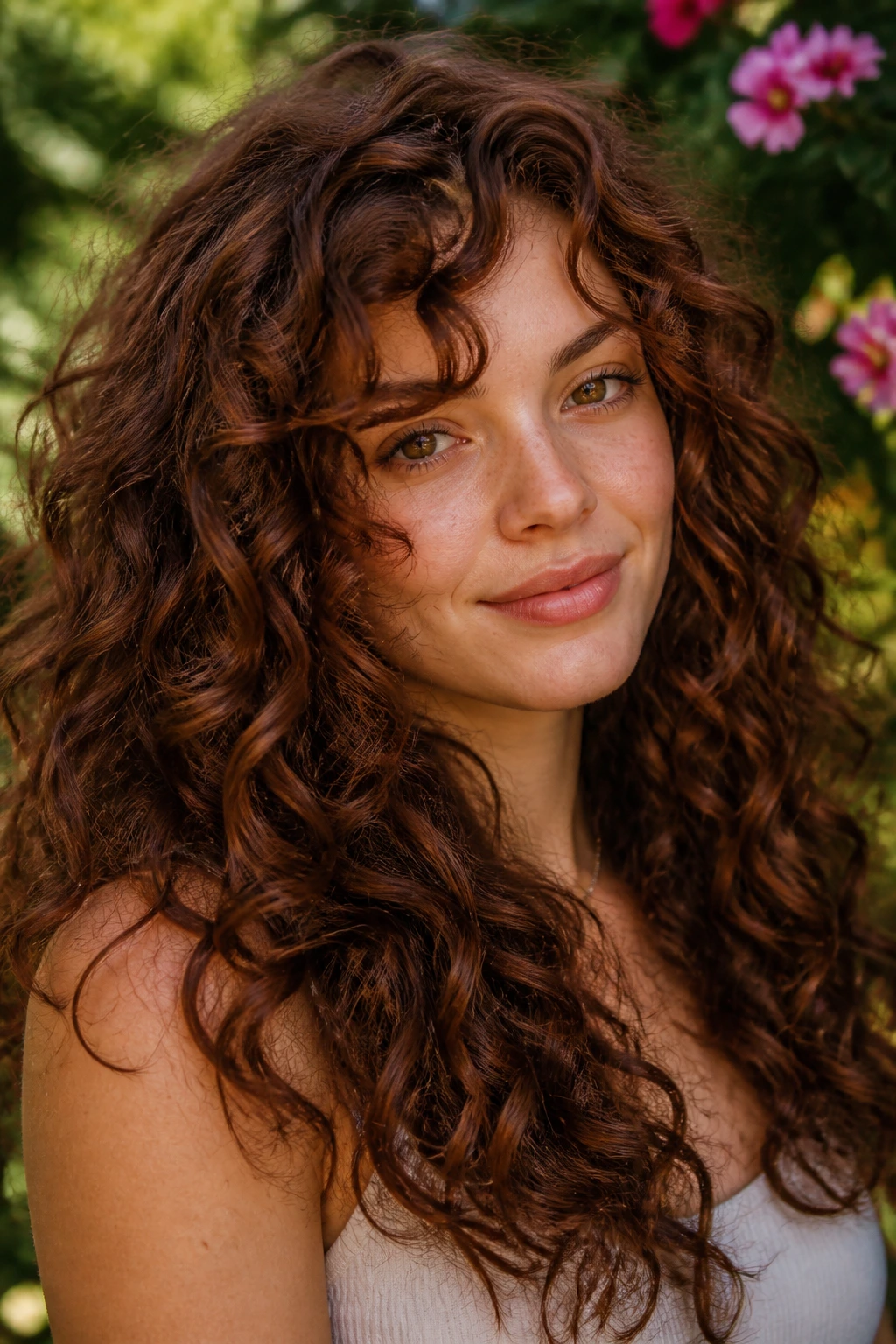
Chestnut auburn curls sit at the calmer end of the red-brown spectrum. The tone is brown enough to feel grounded, but the auburn warmth keeps the curl pattern from going dull. On curls, that matters. A plain brown can sometimes swallow texture. This shade doesn’t.
The color works especially well when the curls are moisturized and defined, because the shine catches on the curl clumps and shows the color shift. A demi-permanent gloss over a deeper brown base gives chestnut auburn a soft, plush finish. You do not need hard highlights here; in fact, too much contrast can make curls look busy.
- Best on: Medium to tight curls.
- Best tone: Brown-heavy auburn with a warm red glow.
- Styling: Leave-in conditioner, curl cream, diffused dry.
- Maintenance: Refresh gloss before the fade turns flat.
If you want auburn that feels rich rather than bright, this is one of the safest bets. It’s warm without getting loud.
17. Auburn Ombré Fade
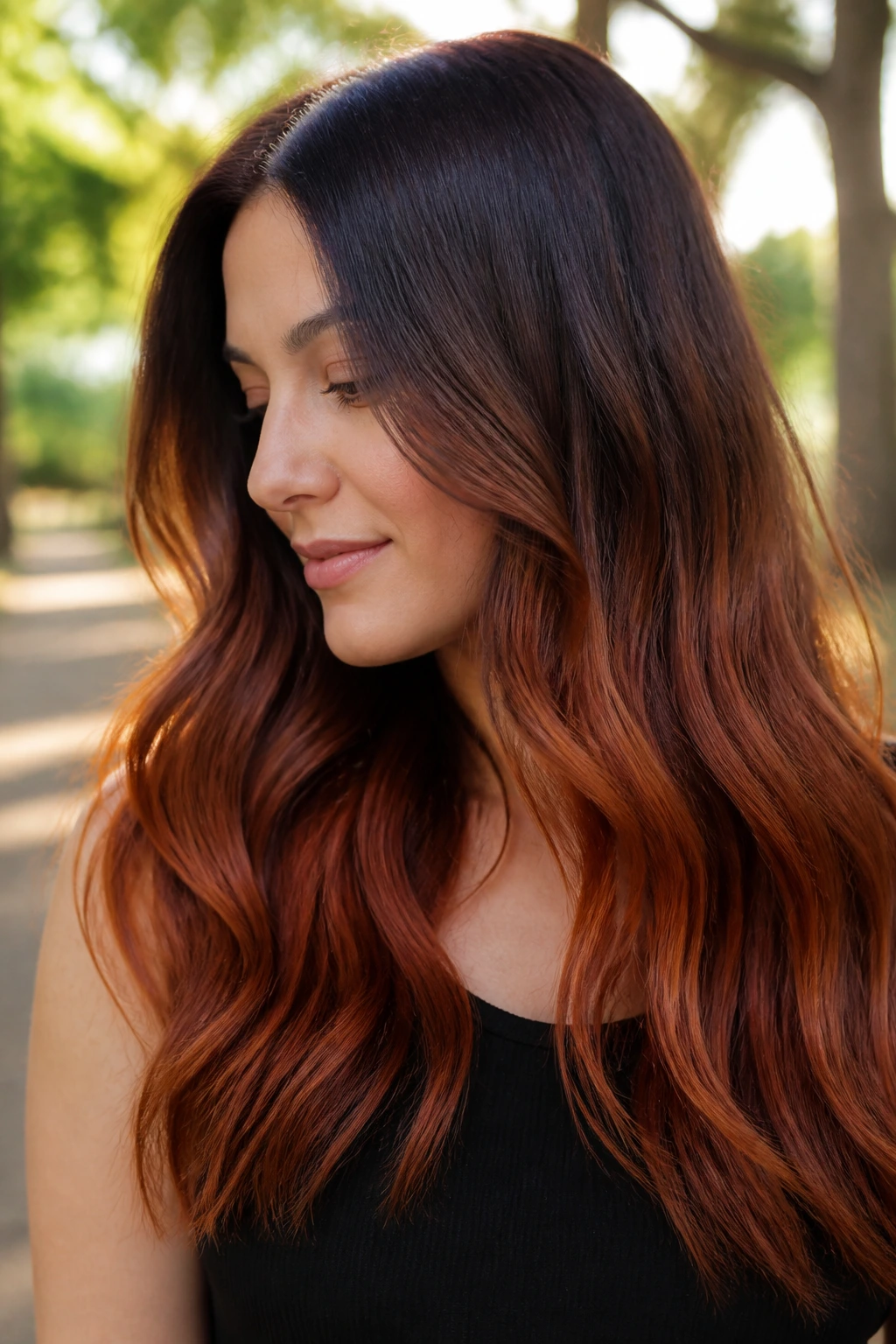
Auburn ombré is for anyone who likes the idea of red-brown hair but does not want the root area to be precious. The fade starts dark near the scalp and gradually opens into warmer auburn through the mids and ends. Done well, the transition looks like sunlight moved through the hair over time, not like a color service that was stretched for too long.
This style is especially smart on long hair. A topknot, braid, or half-up style still shows the color shift, which means the whole point survives real life. The fade can be subtle or dramatic depending on how much lift the ends have before color is applied.
I prefer ombré when the base is a natural brown and the ends have a little previous lightening. That keeps the auburn tone cleaner and reduces the chance of the lower half turning muddy. If your hair is very dark from root to tip, the ombré effect needs more pre-lightening and more careful toning.
This is one of the easiest auburn ideas to live with if you hate obvious regrowth.
18. Firelight Copper Bob
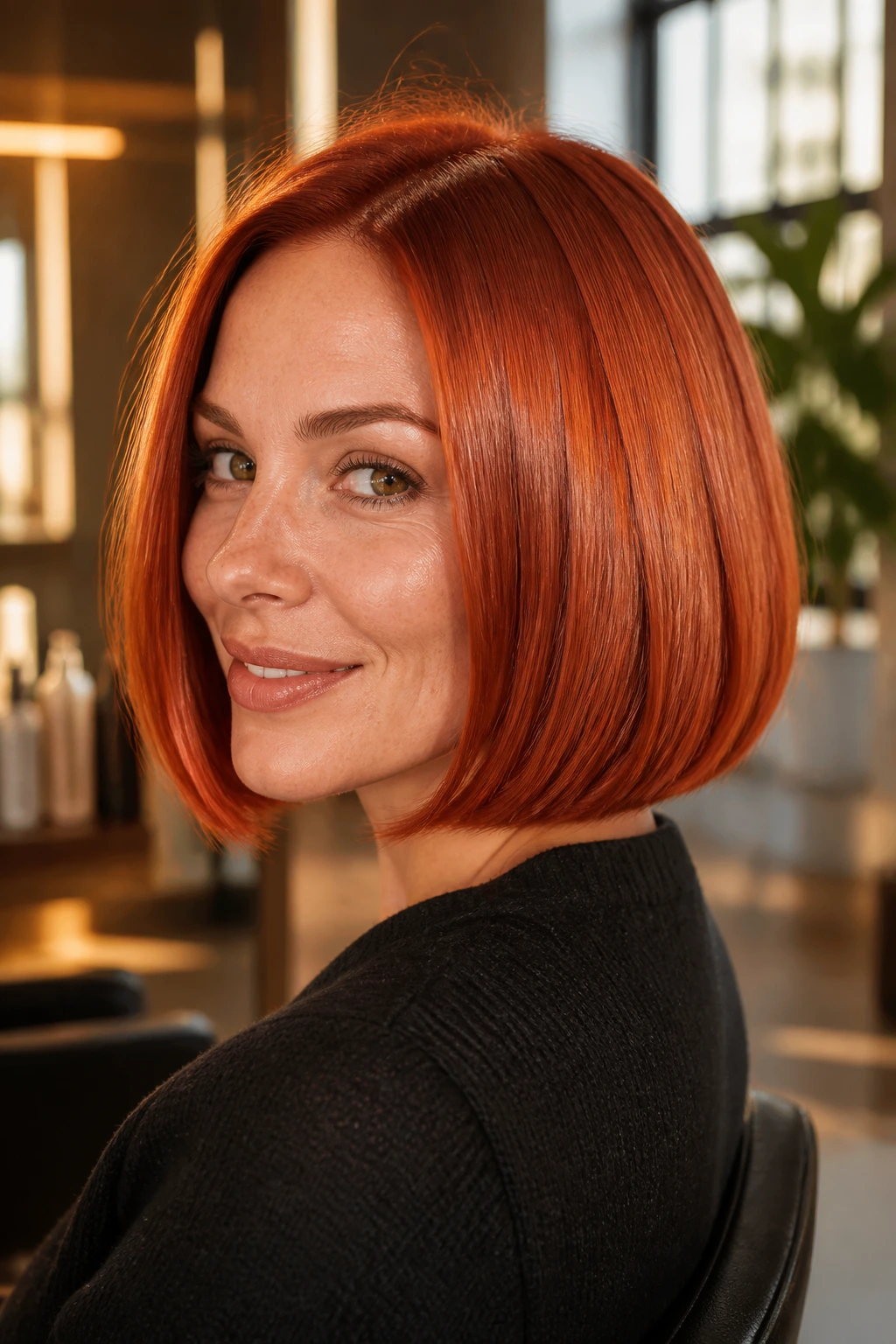
A firelight copper bob is brighter and more direct than the copper penny lob. The difference is intensity. This version pushes farther into vivid copper-red, which gives the bob a sharper edge and more visual punch. On a short cut, that kind of color makes sense because there’s no excess length to dilute it.
Compared with a softer auburn, firelight copper needs a little more maintenance and a steadier hand with the formula. You want the red to stay clean, not veer orange. That usually means glossing and using color-safe products with no harsh sulfates.
This is the choice for people who like clear warmth and don’t mind that the shade gets noticed. It works best on sleek cuts, sharp ends, and hair that can hold shine. A round brush blowout makes the copper look smooth; air-dried hair can make it look rougher if the cut isn’t tidy.
If you want auburn that announces itself the second you walk in, this is the loudest one in the group.
19. Spiced Auburn Face Frame
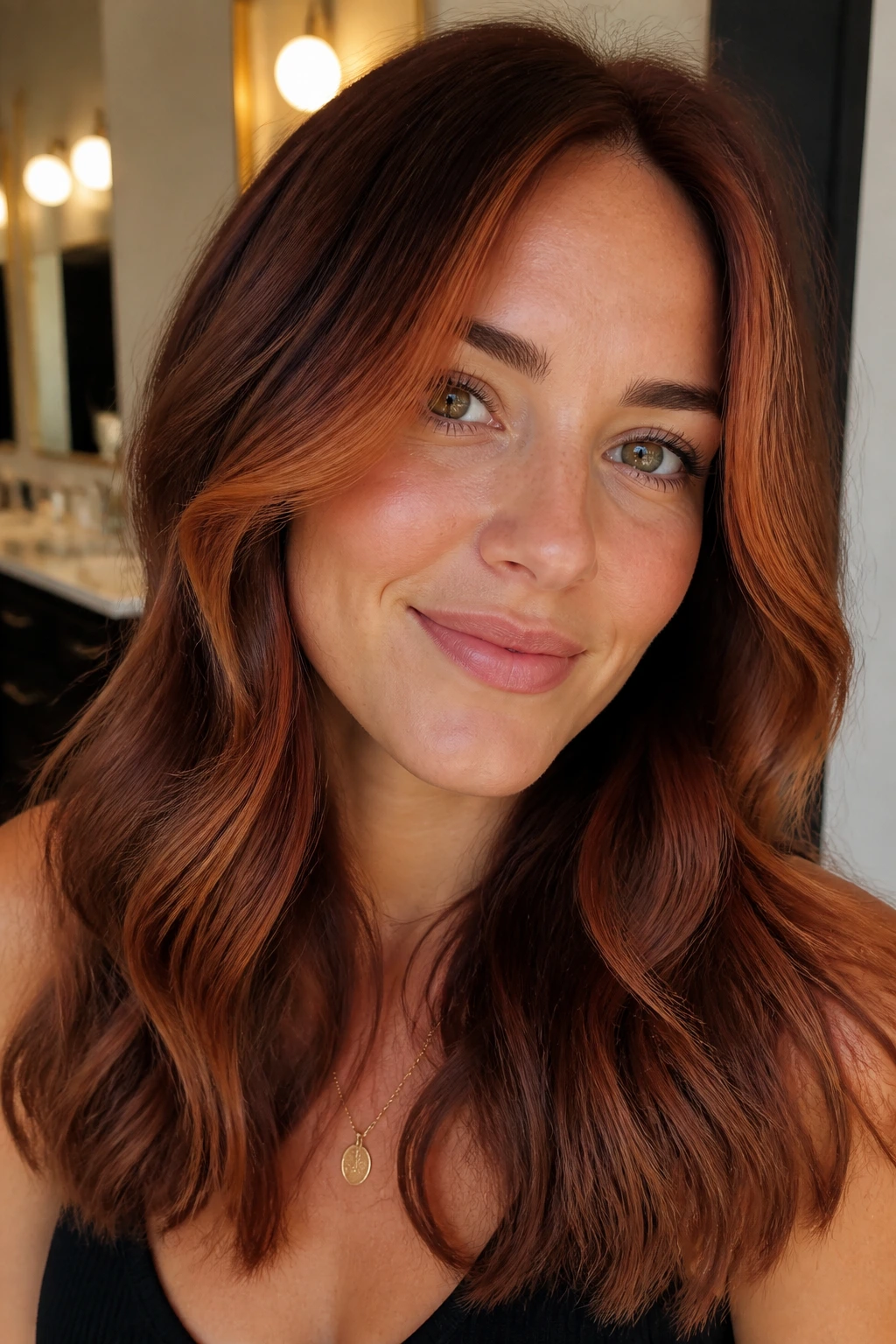
A spiced auburn face frame gives you the look of color without shifting the whole head. It’s a few strategically placed pieces near the temples, cheekbones, and front hairline, usually a tone or two lighter than the rest. The warmth makes the face look brighter, but the rest of the hair stays grounded.
Why It Shows Up in Real Life
Because the pieces sit right where your hair moves most. Tucking hair behind the ears, pulling it into a ponytail, or letting it fall forward all shows the color in a different way. That makes it a useful choice if you want something visible in a mirror and on a bad-hair day.
- Placement: Temple line, front layers, and around the part.
- Tone: Soft copper, cinnamon, or rose-auburn.
- Best style: Layers, lob cuts, curtain bangs.
- Upkeep: Easy to refresh without recoloring the whole head.
This is a smart middle ground. You get warmth and dimension without a full commitment to auburn from root to tip.
20. Soft Cinnamon Auburn
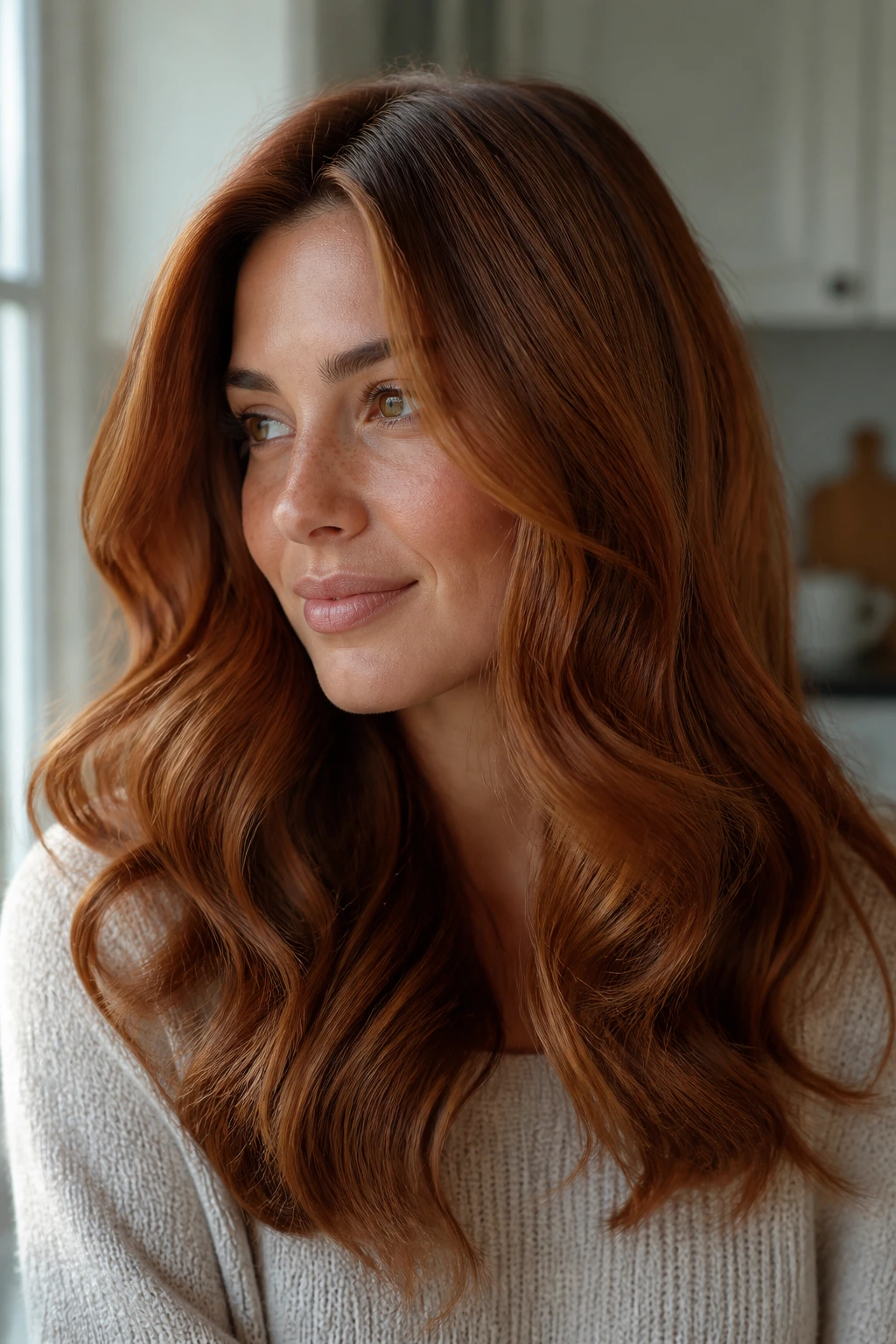
Soft cinnamon auburn is the shade I’d hand to someone who wants red-brown hair but doesn’t want strangers noticing it before the espresso order is finished. The red is there, but it’s tucked under the brown, so the color feels cozy instead of flashy. It’s the shade that makes people say, “Your hair looks better,” not “Did you dye it?”
That softer read comes from keeping the formula muted and the base level close to your natural color. On level 5 or 6 hair, a cinnamon glaze can be enough. On darker hair, the same tone may need a little lift to show clearly, but not much. You want warmth, not a full copper event.
This is a very good pick for straight hair and polished blowouts because the smooth surface shows the tone clearly. It also suits people who wear minimal makeup and want the hair to carry some of the color story on its own.
It’s quiet. That’s the point.
21. Mulled Wine Auburn
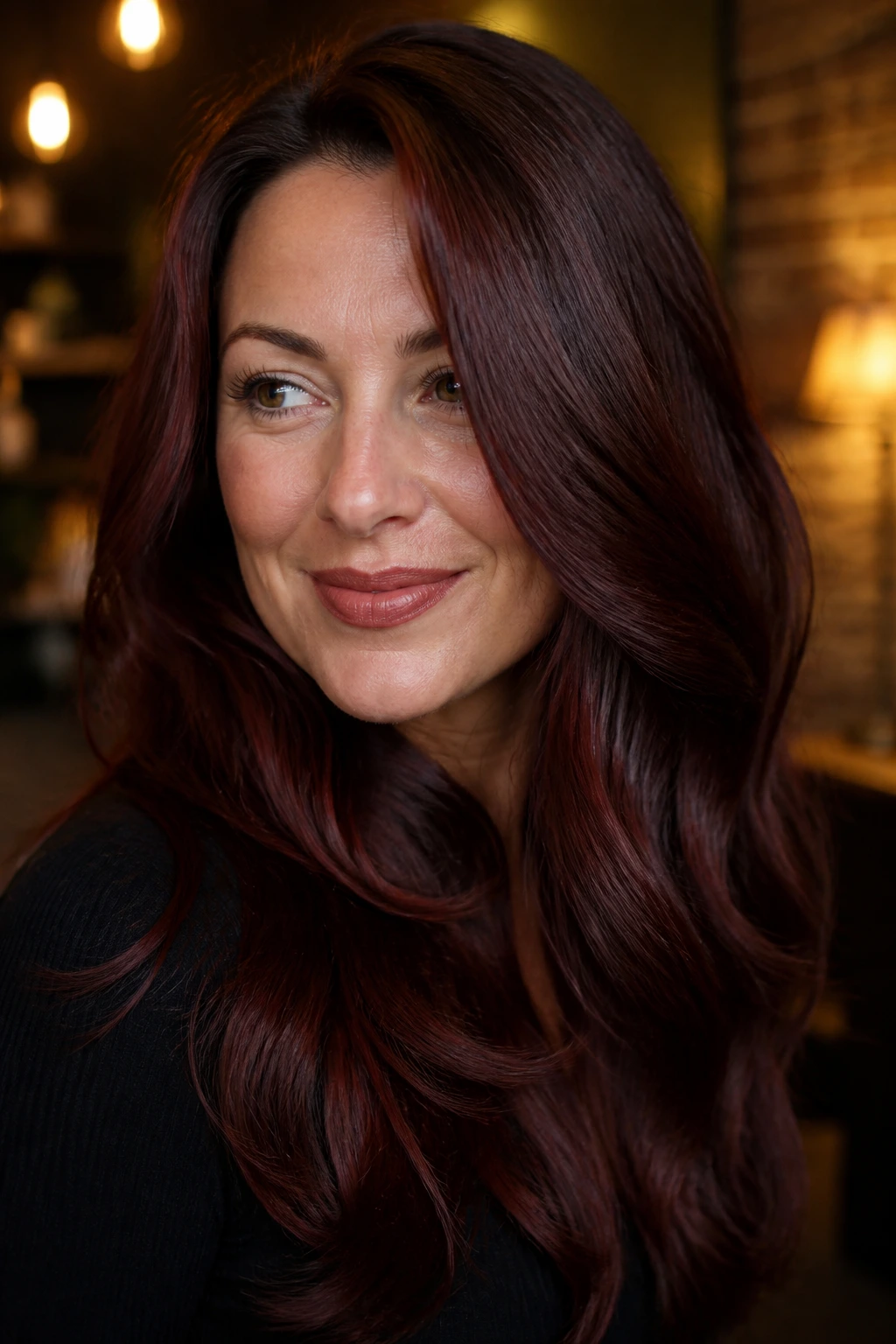
What happens when burgundy meets chestnut and the finish stays glossy? Mulled wine auburn. It has a darker red body than standard copper and a brown base that keeps it wearable. The result looks rich, slightly spiced, and more grown-up than bright red, which is why it lands so well on thicker hair.
This shade loves dense hair because the color can hide in the body of the cut and then surface when the hair moves. On thin hair, it can still work, but the formula should stay lighter on deposit so it doesn’t darken too much. A deep side part or layered blowout makes the tone show up in pieces instead of one solid block.
If you already wear dark lipstick or berry tones in makeup, this is the auburn family that will feel most at home. It also fades toward a softer brown-red, which is kinder than some of the brighter copper options.
Mulled wine auburn has presence. Just enough to matter, not enough to feel loud every minute of the day.
22. Satin Auburn Gloss and Layers
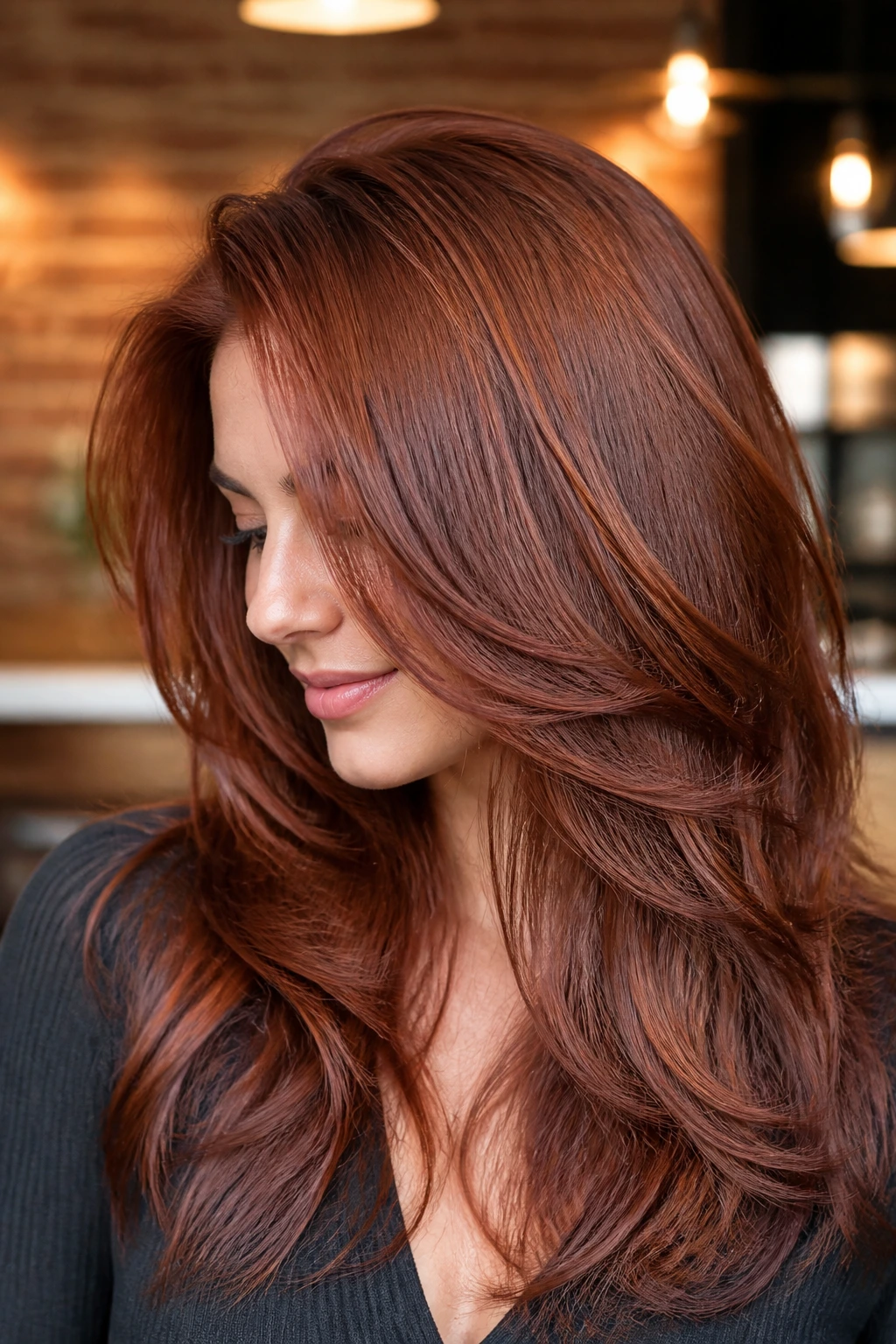
Satin auburn is the polished end of the story. It’s not the brightest copper, not the darkest mahogany, and not the most obvious red-brown in the room. Instead, it’s the version that looks expensive because the shine is doing half the work and the layers are doing the rest.
The best satin auburn colors are usually built on a brown base with a balanced red-copper gloss, then cut into layers that keep the movement visible. A one-length cut can wear it, but layers help the color show in bands rather than as one flat sheet. That’s where the satin effect comes from: smoothness, depth, and light.
- Best cut: Long layers, lob layers, or soft face framing.
- Best tone: Balanced copper-brown, not too red or too orange.
- Finish: Shine serum or gloss spray.
- Maintenance: Refresh with a demi gloss before the warmth turns dull.
If you want one auburn idea that feels polished without being stiff, this is a strong finish to the whole palette.
Why Auburn Hair Color Works Best When Brown Stays in the Mix
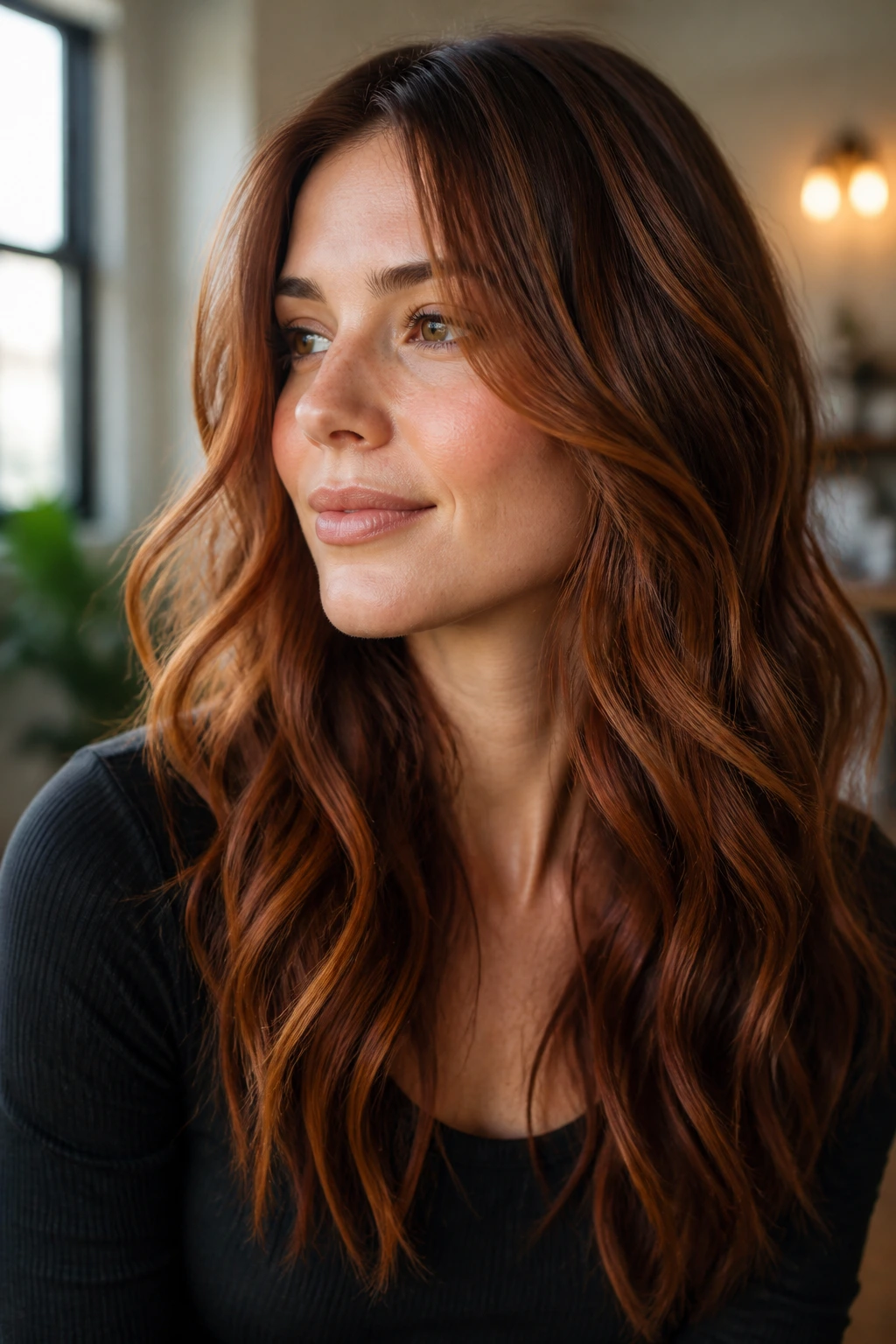
Auburn works because it borrows the richness of brunette hair and the energy of red at the same time. Pure red can be harder to control. Pure brown can flatten out, especially on hair with fine texture or a single-tone base. The sweet spot is where the brown keeps the color grounded and the red keeps it moving.
That’s also why placement matters so much. A shadow root, a lowlight, or even a little darker depth under the surface can keep the auburn from turning brassy. On the other side, a face frame, gloss, or a few copper ribbons can stop brown hair from feeling sleepy. The color has to breathe.
Auburn tends to look best when there’s one clear job for each part of the head. The root anchors. The mids carry the tone. The ends either brighten or deepen, depending on the look. That structure keeps the shade readable, even in weird lighting, which is half the battle with red-brown hair.
How to Choose the Right Auburn Shade for Your Base Color
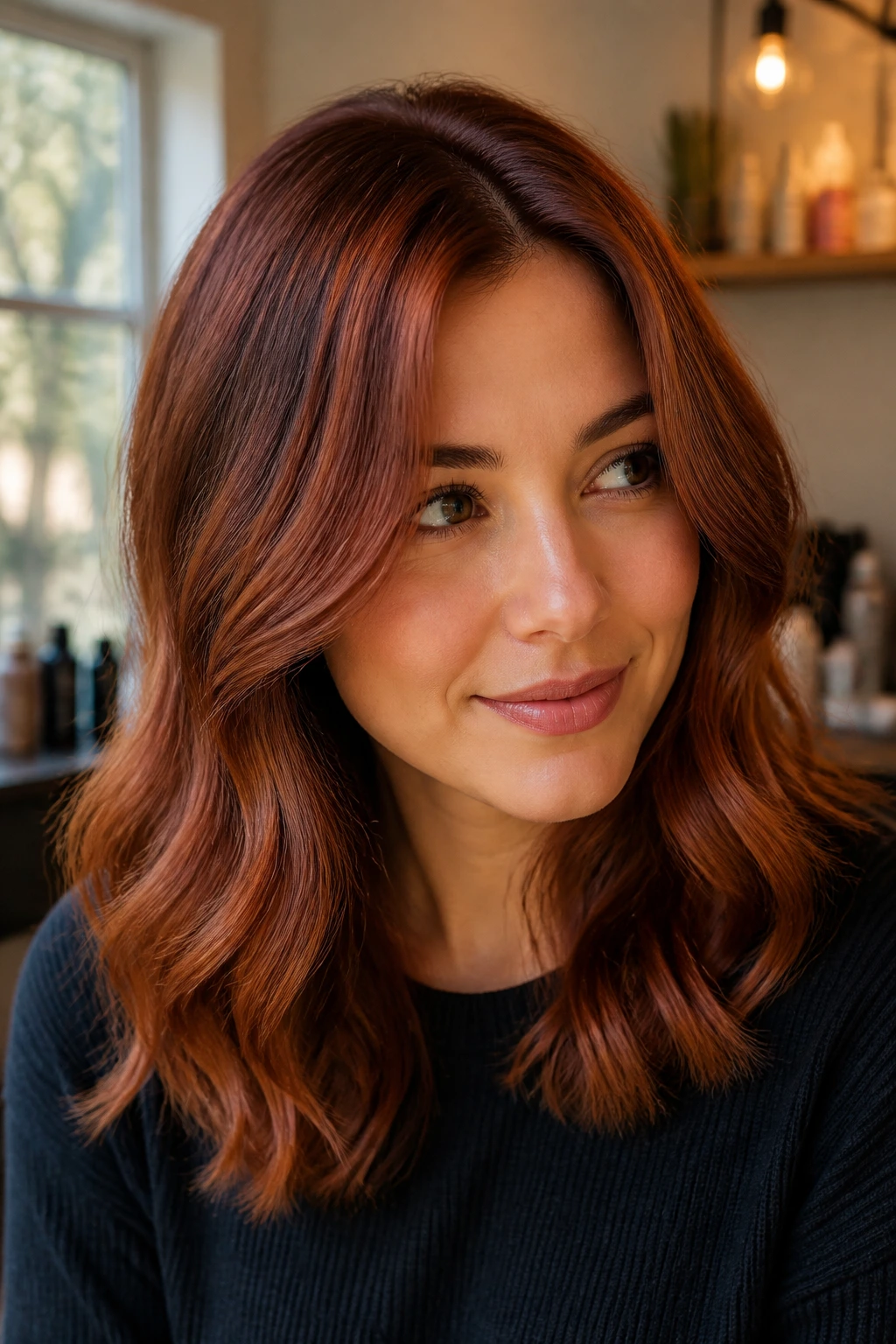
Start with your natural level, then decide how much maintenance you can tolerate. A level 3 or 4 brunette can wear mahogany, burgundy, and deeper copper-brown with less lift. A level 5 or 6 base can hold cinnamon, ginger, and golden auburn more easily. If you’re lighter than that, the shade can swing brighter fast, so a gloss or root shadow helps keep the tone in check.
Dark brown hair: Ask for balayage, money pieces, or a warm gloss instead of all-over brightness. The darker the base, the more important subtle placement becomes. If you push too much copper onto very dark hair, it can look disconnected rather than blended.
Medium brown hair: This is the easiest starting point for most auburn shades. You can go chestnut, copper, cherry cola, or cinnamon without much pre-lightening, and the result usually feels believable. If you’re unsure, this is the safest base to test with a demi-permanent color.
Light brown or blonde hair: Auburn can show fast here, which is useful and dangerous at the same time. Ask for a softer formula or a gloss first, because porous light hair grabs red quickly. A pinker or goldier auburn often looks cleaner than a blunt orange-copper on light bases.
Gray hair: Gray can take auburn beautifully, but it often needs good coverage or a warm demi formula so the color doesn’t skip over resistant strands. A red-brown base with a warm topcoat usually blends the silver instead of fighting it.
Essential Tools for Auburn Maintenance and At-Home Refreshes
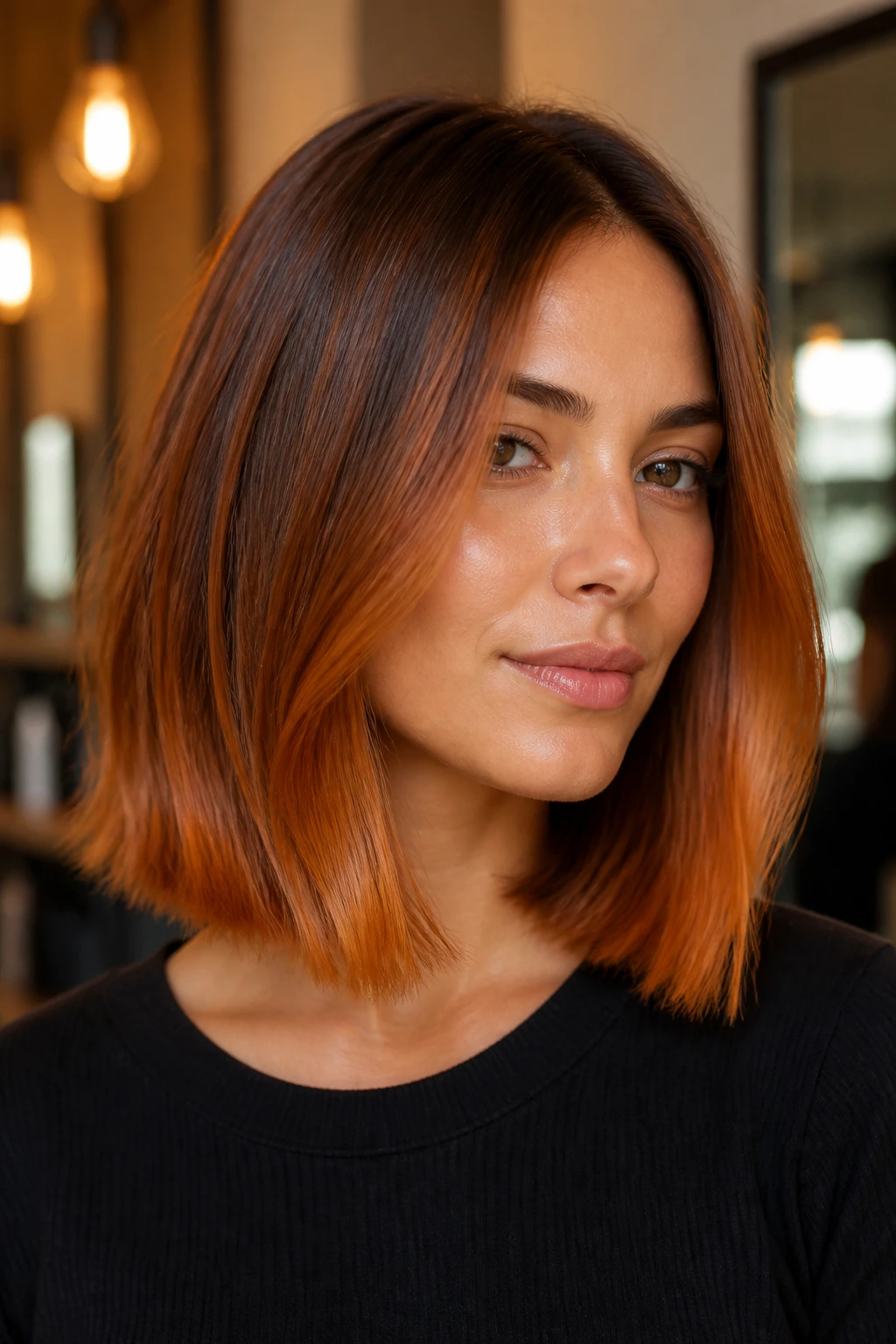
-
Color-safe sulfate-free shampoo: Keeps red pigment from sliding out too fast in the shower.
-
Moisturizing conditioner or mask: Auburn shows dryness faster than brown hair, especially on porous ends.
-
Color-depositing gloss or mask in copper, red, or warm brown: Useful for refreshing tone between salon visits.
-
Heat protectant spray: Blow-dryers and irons dull red tones faster than people think.
-
Microfiber towel or soft cotton T-shirt: Cuts down on rough friction after washing.
-
Wide-tooth comb: Helps you detangle without tearing up the cuticle.
-
Tint brush and bowl: Only needed if you’re doing a gloss or root refresh at home.
-
Gloves: Non-negotiable if you’re handling color-depositing products.
-
Shine serum: A tiny amount on the mids and ends keeps auburn from looking dusty.
-
Salon consultation photos: Not a tool in the literal sense, but useful. A clear photo beats vague words every time.
How to Wear Auburn So the Color Reads Clearly
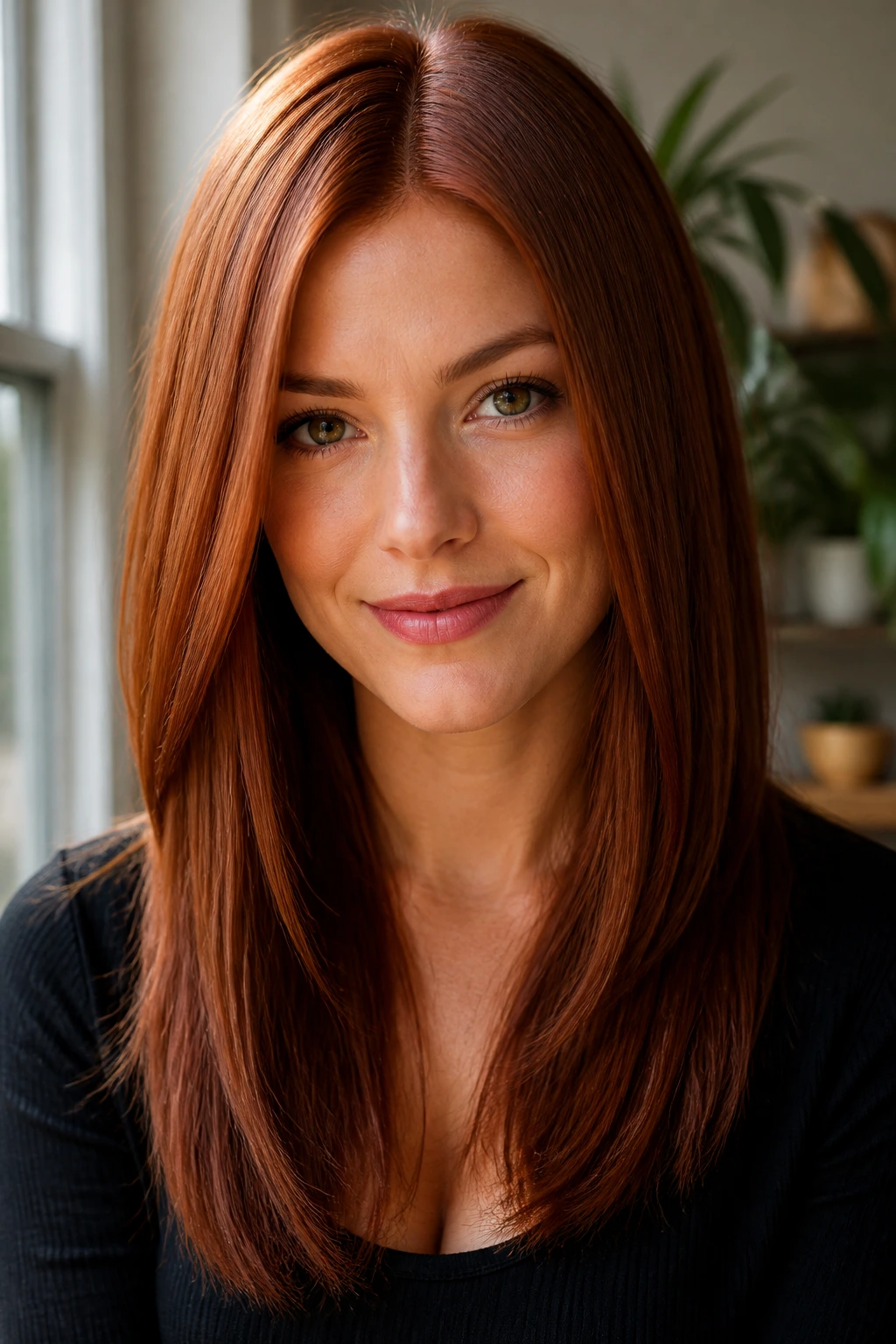
Straight hair shows auburn as a clean, even band of color. That’s useful if you want the tone to look polished and controlled. If the hair has layers, the color reads even better because the different lengths catch light at slightly different angles.
Waves are the easiest way to make auburn look dimensional. Loose bends break up the surface, so copper pieces and darker lowlights can appear in the same style without any extra work. A 1-inch iron or a big round brush gives the hair enough movement without making it look overdone.
Curly hair needs moisture first and color second. If curls are dry, auburn can look patchy because the color sits unevenly on the surface. A leave-in conditioner, a curl cream, and a diffuser help the tone stay rich. On textured hair, a little shine is not optional.
Fine hair: Keep the auburn a touch deeper and use layers or a blunt edge to avoid see-through ends.
Thick hair: You can handle more contrast, more dimension, and darker roots without the style getting muddy.
Keeping Auburn Hair Fresh Between Appointments
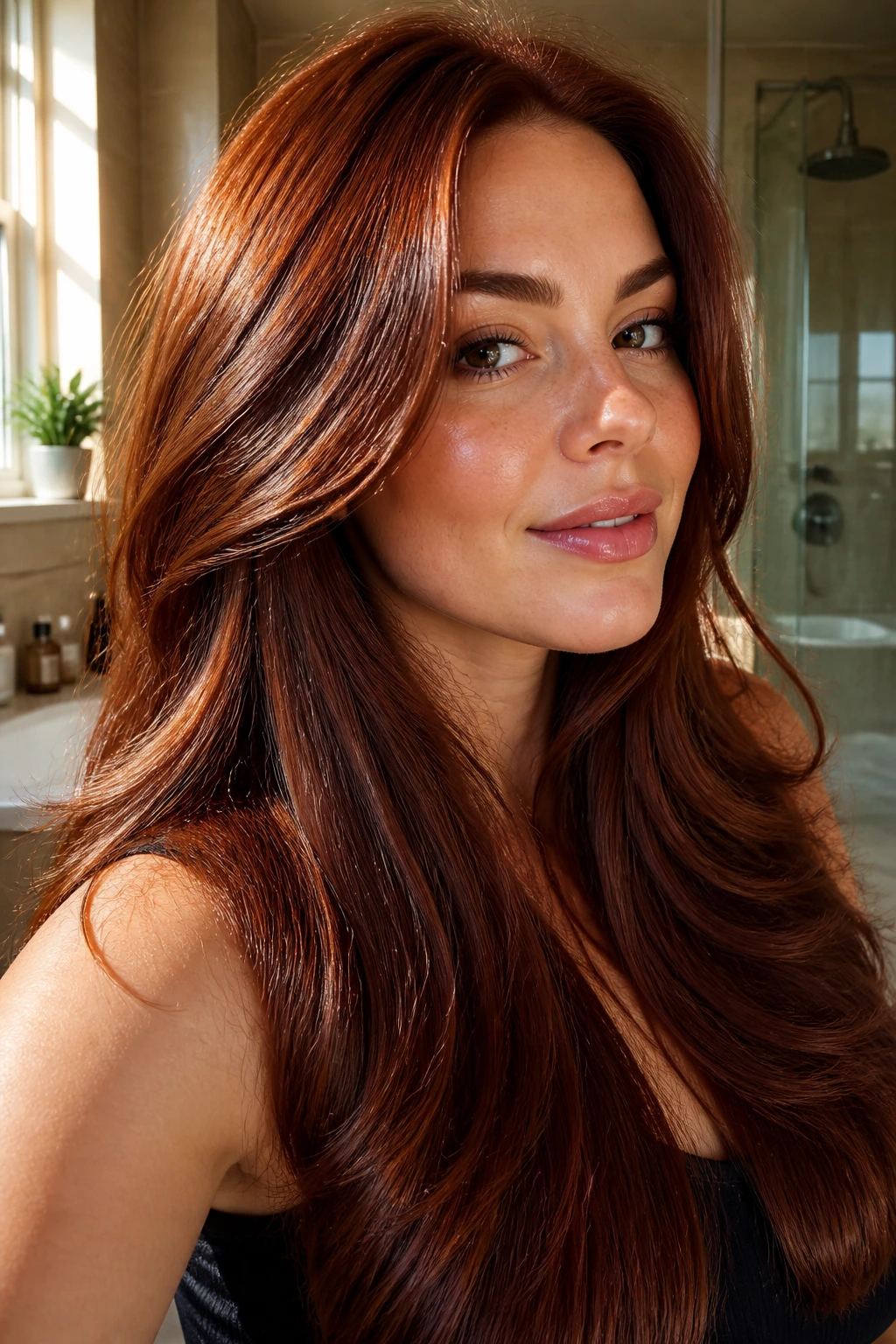
Auburn fades faster than people expect because red molecules are small and cling loosely. Washing less often helps, but the water temperature matters too. Hot water opens the cuticle and drags color out, so lukewarm rinses are a better habit if you want the tone to last.
For most shades, a color-safe shampoo two or three times a week is enough. If your hair is dry, stretch that further and use a cleansing conditioner on one of the wash days. Once the color starts to lose its shine, a warm gloss or color mask can bring the tone back without a full appointment.
Hard water can dull auburn fast. If your shower water leaves a mineral film on glass, it’s probably doing the same to your hair. A chelating shampoo once every couple of weeks can help clear that buildup, but don’t overuse it.
For heat styling, keep the iron under 375°F unless your hair is very coarse. And if you do go higher, use protectant every time. Red-brown tones show heat damage quickly because dull ends make the whole color look tired.
Common Mistakes That Make Auburn Turn Orange or Flat
-
Choosing the wrong depth: If the base is too light and the red too strong, auburn turns pumpkin-fast. Fix it by adding brown depth or a shadow root.
-
Ignoring porosity: Bleached or very porous hair grabs red pigment like a sponge. The symptom is ends that go much brighter than the root. The fix is a softer formula, shorter processing time, and a conditioning gloss.
-
Using purple shampoo all the time: Purple shampoo is for yellow-blonde hair. On auburn, it can mute the warmth and leave the tone muddy. Color-safe shampoo is the better default.
-
Skipping shine products: Dull auburn looks flat even when the tone is right. A pea-sized amount of serum on dry ends makes the color read cleaner.
-
Washing with hot water: This speeds fading and roughs up the cuticle. Lukewarm water keeps the color in better shape.
-
Trying to go too bright in one step: On dark hair, pushing straight to vivid copper can look disconnected. A staged lift or balayage usually looks more believable.
Variations and Adaptations to Try
Gloss-Only Auburn: If you want the easiest change, a gloss over your natural brown can add warmth without major lift. It fades softly and is the least stressful version to maintain.
Balayage Auburn: Hand-painted pieces through the mids and ends give the hair movement without lighting up the whole head. This works especially well if you like dimension but hate obvious regrowth.
Copper-Heavy Auburn: Push the red side harder and keep the brown as support rather than the lead. This suits people who want the color to look brighter in sunlight and more dramatic indoors.
Wine-Toned Auburn: Add burgundy or red-violet into the formula for a darker, moodier finish. It reads richer on thick hair and tends to fade toward soft brown-red rather than orange.
Gray-Blending Auburn: Use a warm demi-permanent formula and keep some variation at the root so gray strands blend instead of fighting the color. This is a smart route if you want warmth without perfect coverage everywhere.
Frequently Asked Questions About Auburn Hair Color Ideas
Can I get auburn without bleach?
Yes, if your hair is already light brown or medium brown. On darker bases, you can still get auburn, but it may show more as a rich tint than a bright copper unless some lift happens first.
What’s the difference between auburn and copper?
Copper leans brighter and more orange-red, while auburn keeps brown underneath the red. Auburn usually feels softer and deeper, which makes it easier to wear for longer.
Will auburn turn orange on me?
It can, especially on porous hair or if the formula is too light for your base. The fix is usually more brown depth, less lift, or a gloss with a cooler red-violet note.
How often do I need to refresh auburn?
Most auburn shades need a gloss or color refresh every 4 to 8 weeks, depending on how often you wash and how light the shade is. Bright copper fades faster than mahogany.
Does auburn work on gray hair?
Yes, but gray often needs a warm formula or a better coverage color line so the silver doesn’t show through in patches. A softer red-brown usually blends the gray more cleanly than a very bright copper.
What highlights look best with auburn?
Warm caramel, copper, rose-gold, and chestnut lowlights work best. Very pale ash blonde highlights can fight the warmth and make auburn look striped instead of blended.
Is auburn high-maintenance?
Some versions are, some aren’t. A shadow-root balayage or gloss-only auburn is pretty forgiving, while all-over copper needs more frequent tone refreshes and better aftercare.
What if my auburn looks too dark after coloring?
Give it a wash or two before panicking. Red tones often soften a little after the first few shampoos, and a clear gloss can open the shine back up if the color still feels heavy.
Warm Red Brown That Feels Like You
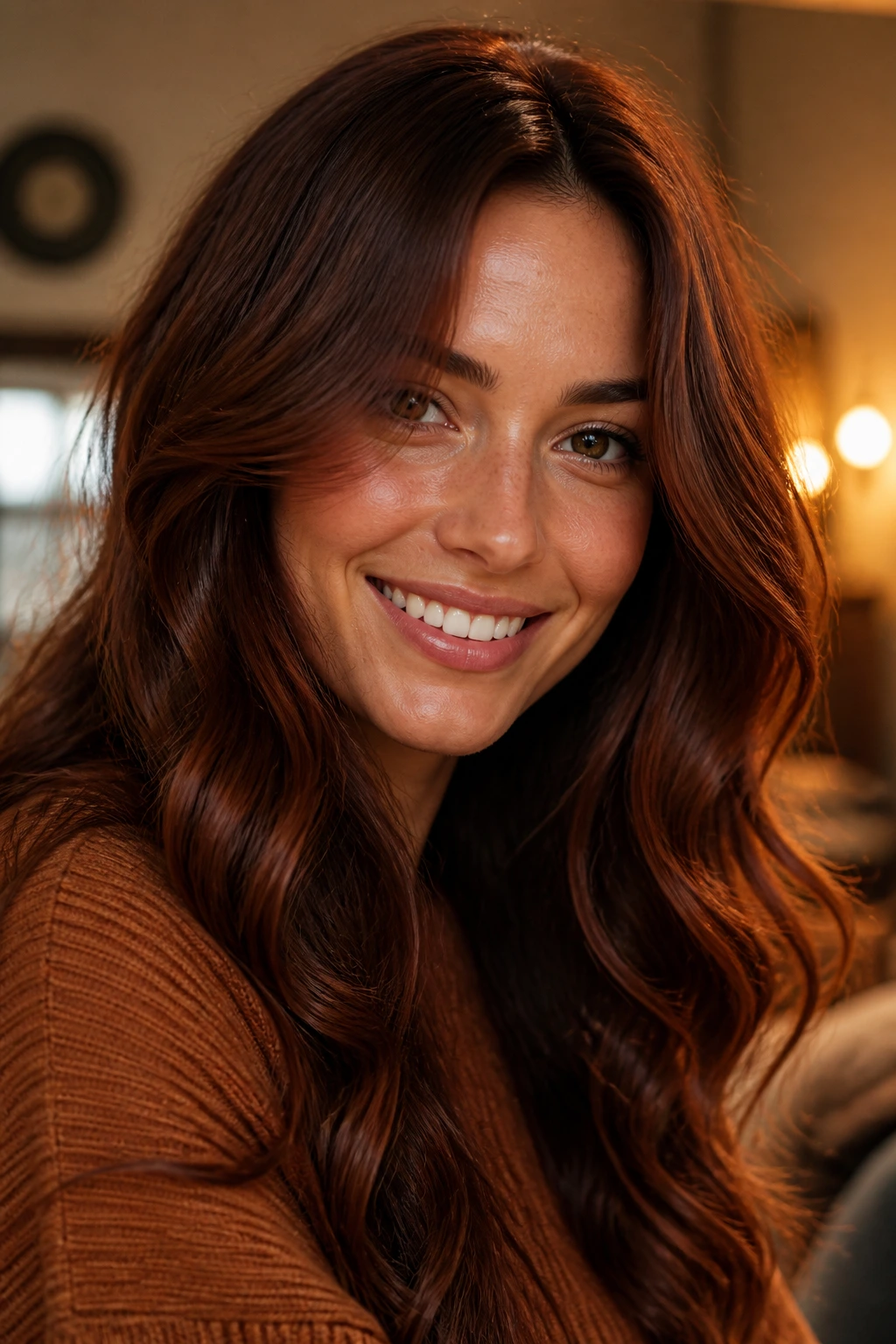
Auburn works because it gives you room to choose your own temperature. Brighter copper, darker mahogany, cinnamon brown, cherry cola, satin gloss — they all live inside the same family, but they don’t behave the same way on the head. That’s the part worth paying attention to.
If you’re picking one of these looks, start with your base color and your patience level, not a photo alone. A shade that looks perfect on a level 7 wave might read very differently on level 4 curls or porous blonde ends. The right auburn is the one that fits the hair you have, not the hair you wish you had at the salon chair.
Choose the version that gives you warmth where you want it, depth where you need it, and enough shine to keep the red-brown balance intact. That’s where auburn stops being a trend word and starts looking like a real hair color.
