



Bob haircuts with curtain bangs have a useful trick: they make short hair feel softer without turning it mushy. The bob gives you a clean line. The curtain fringe breaks that line in the right place, usually around the cheekbone or the bridge of the nose, so the cut moves instead of sitting there like a helmet.
That matters more than people admit. A blunt bob on its own can look severe. Curtain bangs on their own can feel too trendy or too “I need a round brush and a prayer.” Put them together, though, and you get a shape that can look polished, casual, sharp, or a little undone depending on how the ends are cut and how much weight you leave through the front.
The best versions are not all the same haircut with a different label. A chin-length French bob with soft curtain bangs behaves very differently from a sleek box bob with long, center-split fringe, and both are miles away from a shaggy bob with feathered bangs. That difference lives in the length line, the amount of layering, and where the bangs start to open. Get those details right, and the cut does a lot of the work for you.
Why This Collection Keeps Working

-
The fringe softens the edge: Curtain bangs break up the bluntness of a bob, which keeps the cut from looking too hard around the jaw or chin.
-
The shape grows out better: A bob with a curtain fringe usually looks intentional for longer because the bangs can be tucked, parted wider, or blended into face-framing layers.
-
It works with different hair textures: Straight hair gets a crisp line, wavy hair gets swing, and curly hair gets a frame that does not fight the curl pattern.
-
You can steer the mood: Blow it smooth for a sharper finish, bend the ends for something softer, or let the fringe air-dry for a looser look.
-
The front does real work: Curtain bangs pull attention to the eyes and cheekbones, which gives a bob more shape from the front than a plain one-length cut.
-
It does not need a huge styling kit: A round brush, a blow dryer, and a little heat protection can change the whole read of the haircut in ten minutes or less.
1. Jaw-Grazing Blunt Bob With Soft Curtain Bangs
A jaw-grazing blunt bob is the cut that makes a clean neckline look expensive without trying too hard. The curtain bangs in this version are soft enough to keep the line from feeling boxy, but not so wispy that they disappear. The whole thing sits right at the hinge of the jaw, which is exactly why it has such a strong shape.
What Makes It Work
The blunt edge gives the haircut weight, so it does not puff out at the sides. The curtain fringe starts around the bridge of the nose and opens toward the cheekbones, which keeps the front from looking heavy. On straight or slightly wavy hair, this shape falls into place fast. On thicker hair, a stylist who point-cuts the bang ends can keep the fringe from building into a shelf.
Best Matches
- Oval and heart-shaped faces
- Hair that holds a line without collapsing
- People who want a sharp bob without a severe bang
One small trick: ask for the fringe to sit a touch longer at the temples than in the center; that tiny angle makes the cut look more settled as it grows out.
2. French Bob With Brow-Skimming Curtain Bangs
The French bob has attitude. Not loud attitude. The kind that shows up in a crisp white shirt and a smudged lip stain. Add brow-skimming curtain bangs and the whole cut gets softer, but the profile stays compact and chic.
What I like about this version is how little it asks from the hair. The bob is usually cut shorter, around the lips to chin, and the bangs are light enough to split without covering the eyes. That means the cut can air-dry with a little bend and still look deliberate.
It suits finer hair especially well because the short length keeps the ends from looking sparse. If your hair is dense, though, the bang section needs careful thinning or it can balloon at the center and lose that easy split. That is the part many stylists get wrong: the fringe should skim, not sit like a curtain rod.
3. Rounded Chin-Length Bob With Airy Curtain Bangs
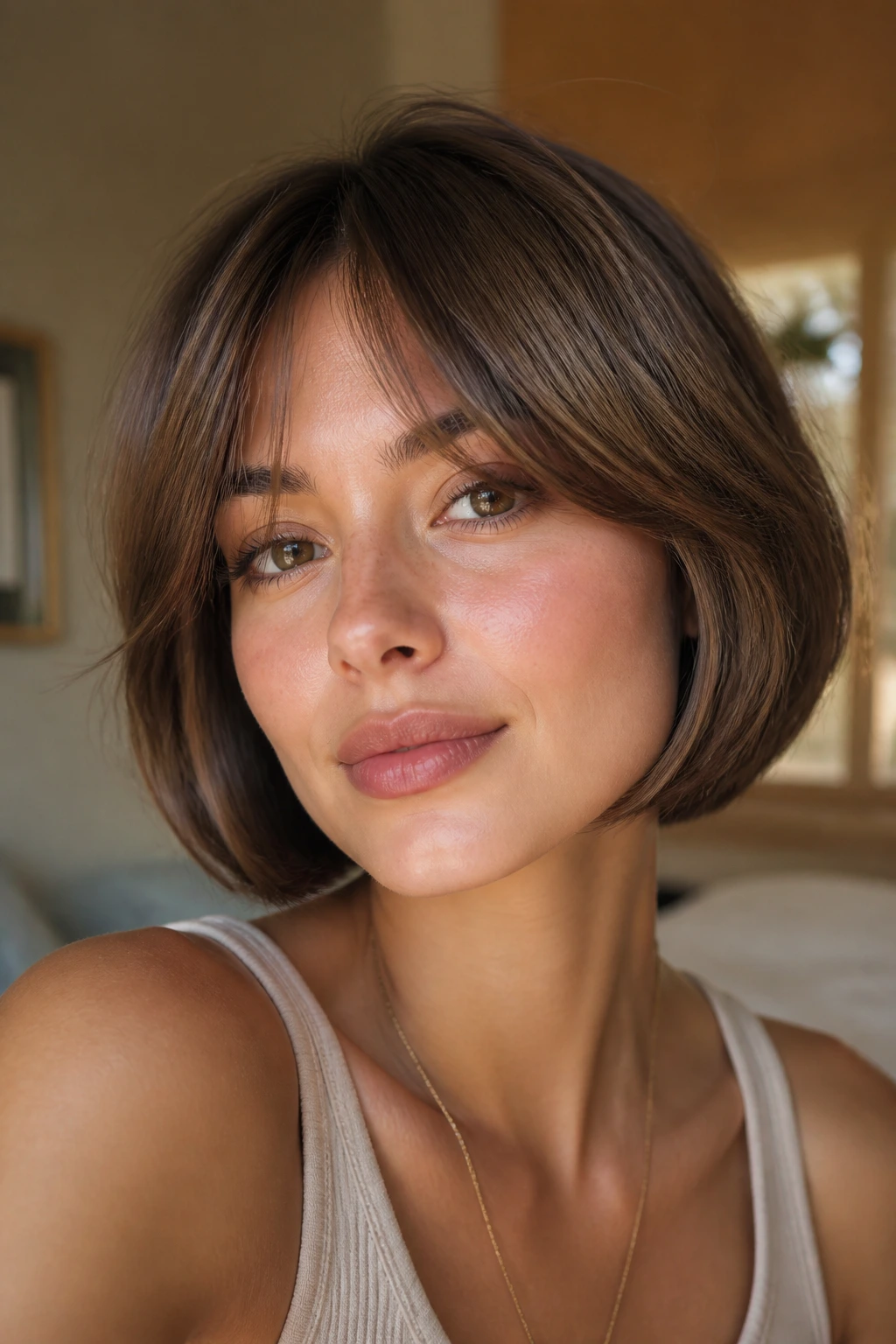
This is the bob for people who want softness without losing shape. The hem curves under the chin instead of hanging flat, and the curtain bangs are cut light enough to brush away from the face instead of clinging to it. It looks polished in daylight and even better in motion.
Here’s the reason it works: the rounded perimeter echoes the curve of the cheek and jaw, so the cut feels intentional from every angle. That helps if your face is narrow or long, because the bob adds a bit of width where you want it. The airy fringe stops the whole thing from becoming too neat.
Best for:
- Medium-density hair
- Faces that need a little width through the sides
- People who like a blowout but do not want a flat finish
Keep the longest curtain pieces around cheekbone length. If they get much shorter, you lose the gentle opening effect and the cut starts to read like a classic fringe instead.
4. Sleek Box Bob With Long Curtain Bangs
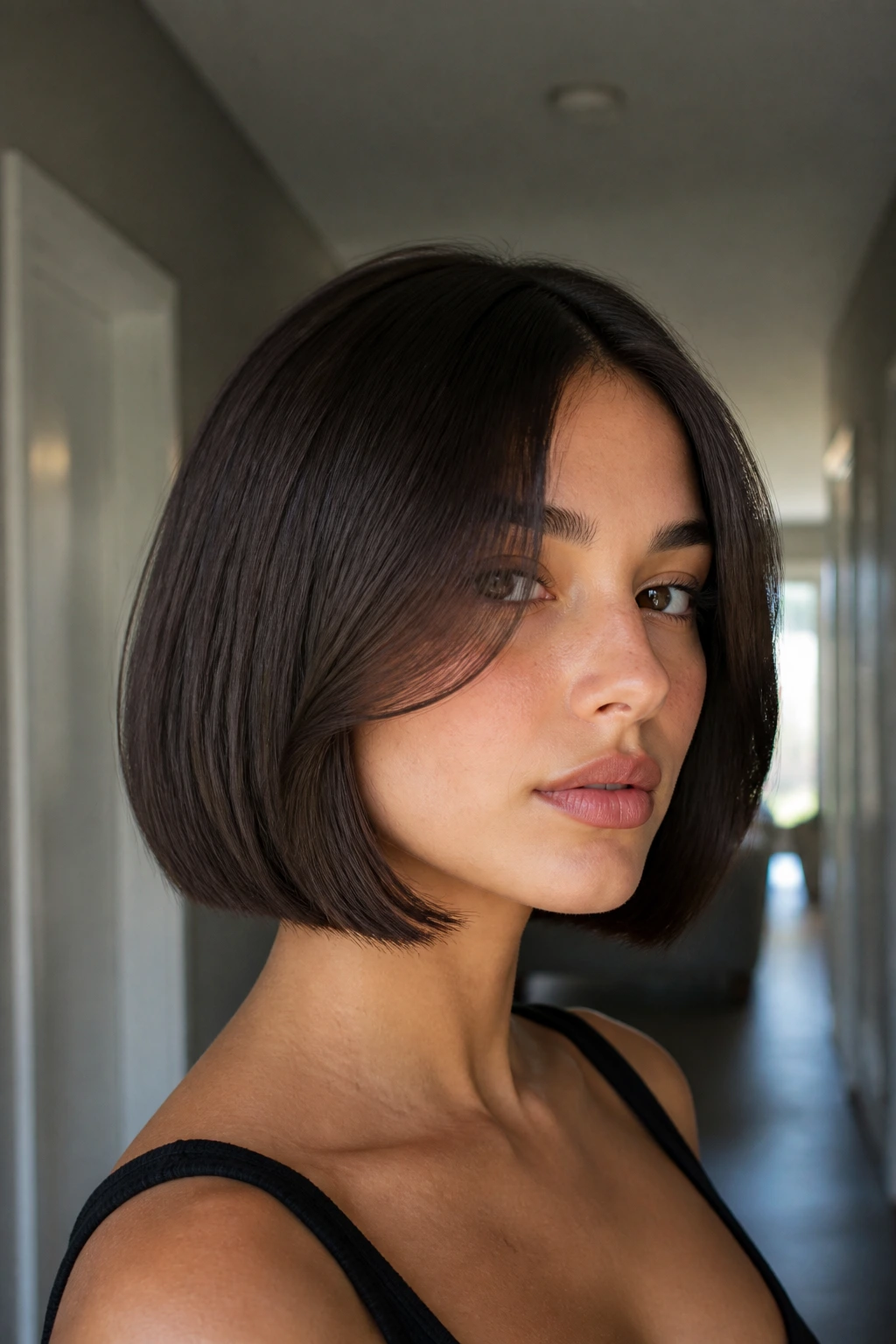
This one is all geometry. The bob is blunt, the corners are clean, and the curtain bangs are left longer so they can sweep back instead of hanging in the face. It is the cut that looks especially sharp with a center part and a smooth finish.
Unlike a shaggy bob, this version leans on precision. The strength of the line is the whole point. Long curtain bangs give you a way to soften that precision just enough so the haircut does not feel rigid, which is useful if you like sharp clothes, clean makeup, or a more tailored look.
It suits straight hair best, though a good flat iron pass can tame mild waves. If your hair has a strong bend, ask for the bang section to be cut a bit longer than you think you need. Curtain bangs shrink visually when they curl inward, and the box bob will start to feel shorter if the front is too high.
5. Wavy Collarbone Bob With Broken-Up Curtain Bangs
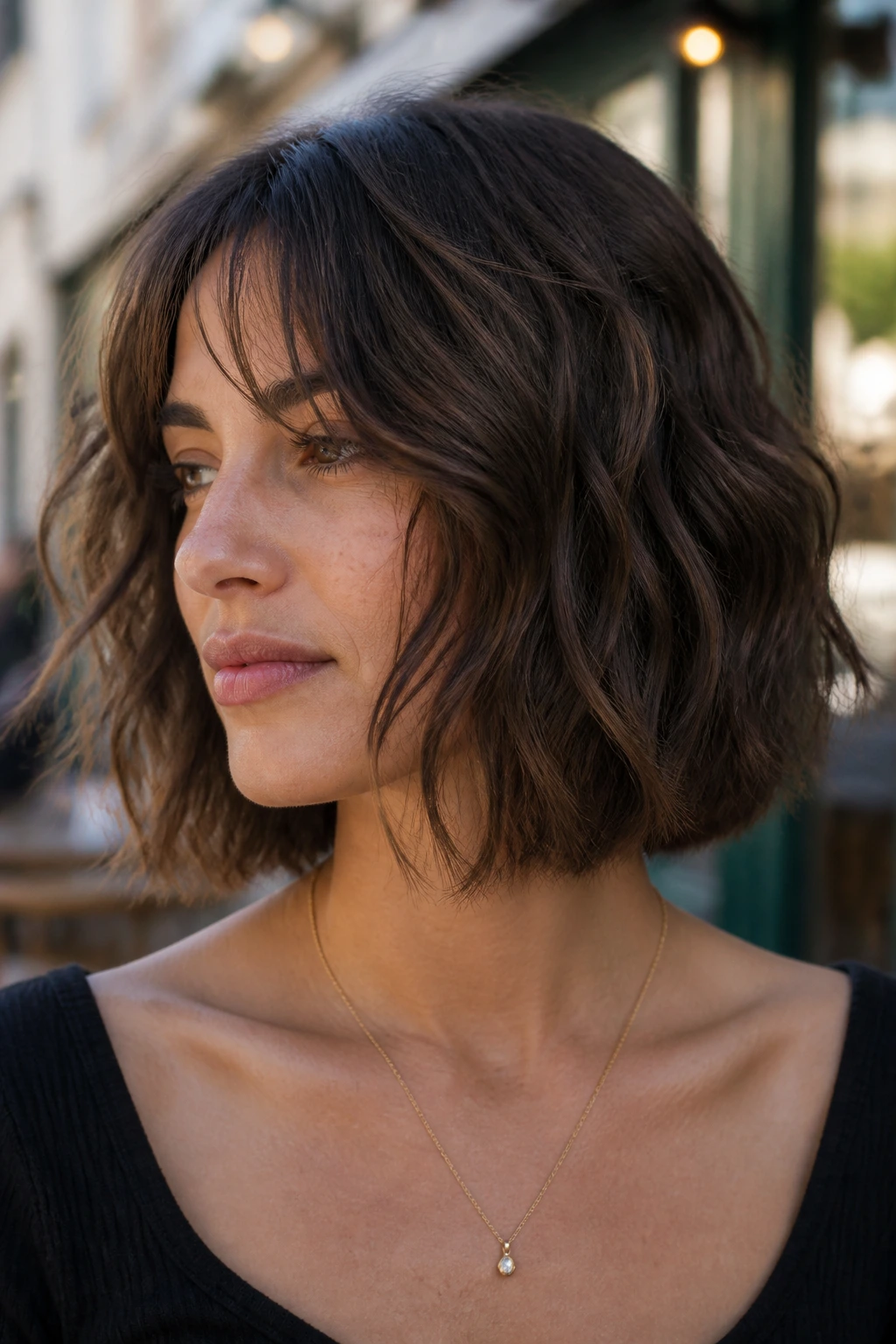
Can a bob still count as a bob when it brushes the collarbone? Absolutely. This version keeps enough length to tuck behind the ear or pull into a tiny clip, but the curtain bangs and broken-up ends make it read as a bob rather than a plain lob.
The bangs are the important part here. They should not be blunt. They should fall into loose pieces that separate a little as the wave dries, which gives the front that lived-in bend people keep asking for at the salon. The cut looks best when the waves are loose and not too polished.
How to style it
A loose bend, not a curl
Wrap the front pieces around a 1-inch or 1.25-inch curling iron for a few seconds, then brush them out once they cool. The goal is a bend that falls across the cheek, not a polished ringlet.
Why it suits wavy hair
The wave gives the bob movement at the ends, while the bangs keep the face from getting lost in the length. If your hair gets puffy in humidity, leave the perimeter a little heavier. Thin ends are the first thing to frizz.
6. Layered Lob With Center-Part Curtain Bangs

A layered lob with curtain bangs is what happens when someone wants movement but does not want to give up ponytail length. The layers start low, the front opens cleanly, and the whole cut feels less committed than a shorter bob. That sounds practical because it is.
This version is especially useful if you are testing whether a bob will suit you. The curtain fringe gives you the face-framing effect right away, but the extra length around the shoulders makes the grow-out painless. You can tuck it, wave it, straighten it, or pin one side back and it still behaves.
The key is keeping the layers from creeping too high. If the cut is over-layered, the lob loses that soft swing and starts looking choppy in an awkward way. Ask for long interior layers, not a stack of short ones. There is a difference, and it shows.
7. Curly Bob With Feather-Light Curtain Bangs
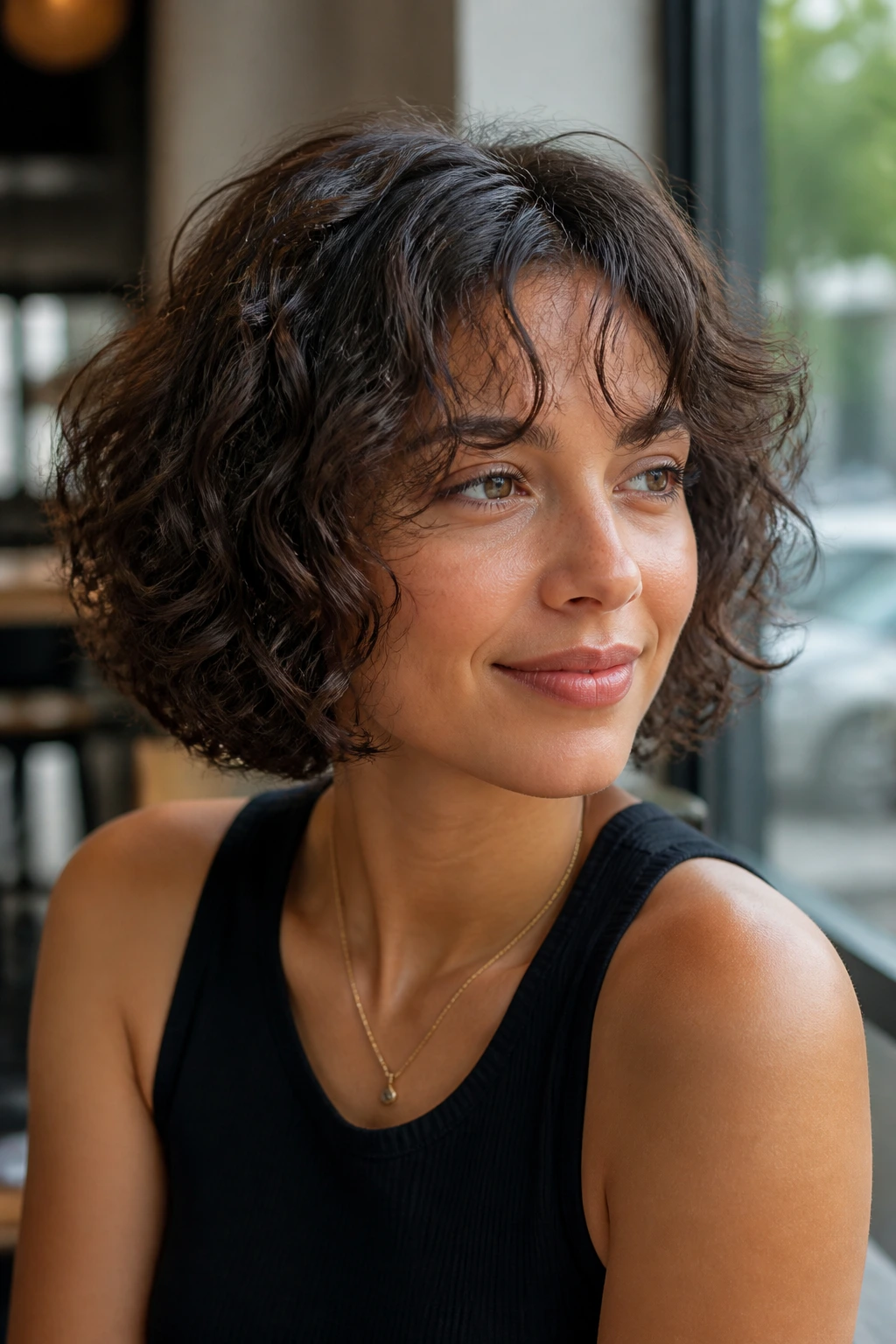
Curly hair and curtain bangs can be a great match, but only when the bangs are cut with shrinkage in mind. This bob keeps enough length for the curls to coil without springing into a triangle, and the fringe is feather-light so it frames the forehead instead of sitting in one thick block.
The smartest way to cut this shape is dry or mostly dry, so the stylist can see where each curl lands. A curly bob with a center-split fringe looks best when the bangs are left longer than a straight-hair version. If they are cut too high, they bounce up and expose the forehead more than you wanted.
Good details to ask for
- Longest bang pieces that land near the cheekbone when dry
- Internal shaping that removes bulk from the sides
- A perimeter that follows the curl pattern, not a blunt straight line
The result is not fussy. It looks like the curl pattern belongs there, which is the whole point.
8. Asymmetrical Bob With Face-Opening Curtain Bangs

This is the cut for anyone who wants a little edge but does not want the haircut to do all the shouting. One side sits longer than the other, and the curtain bangs soften the diagonal line so the asymmetry feels deliberate instead of accidental.
The trick is balance. The longer side should not drag so far down that it feels like a separate haircut. The bangs need to open the face enough to keep the front light, especially if the back is shorter and more structured. Without that softness, the asymmetry can read as harsh.
It works well on strong jawlines and rounder faces for different reasons. On a square jaw, the longer front line softens the edges. On a round face, the diagonal cut creates a longer visual line. Either way, the curtain fringe keeps the shape from becoming too severe.
9. Textured Shag Bob With Feathered Curtain Bangs
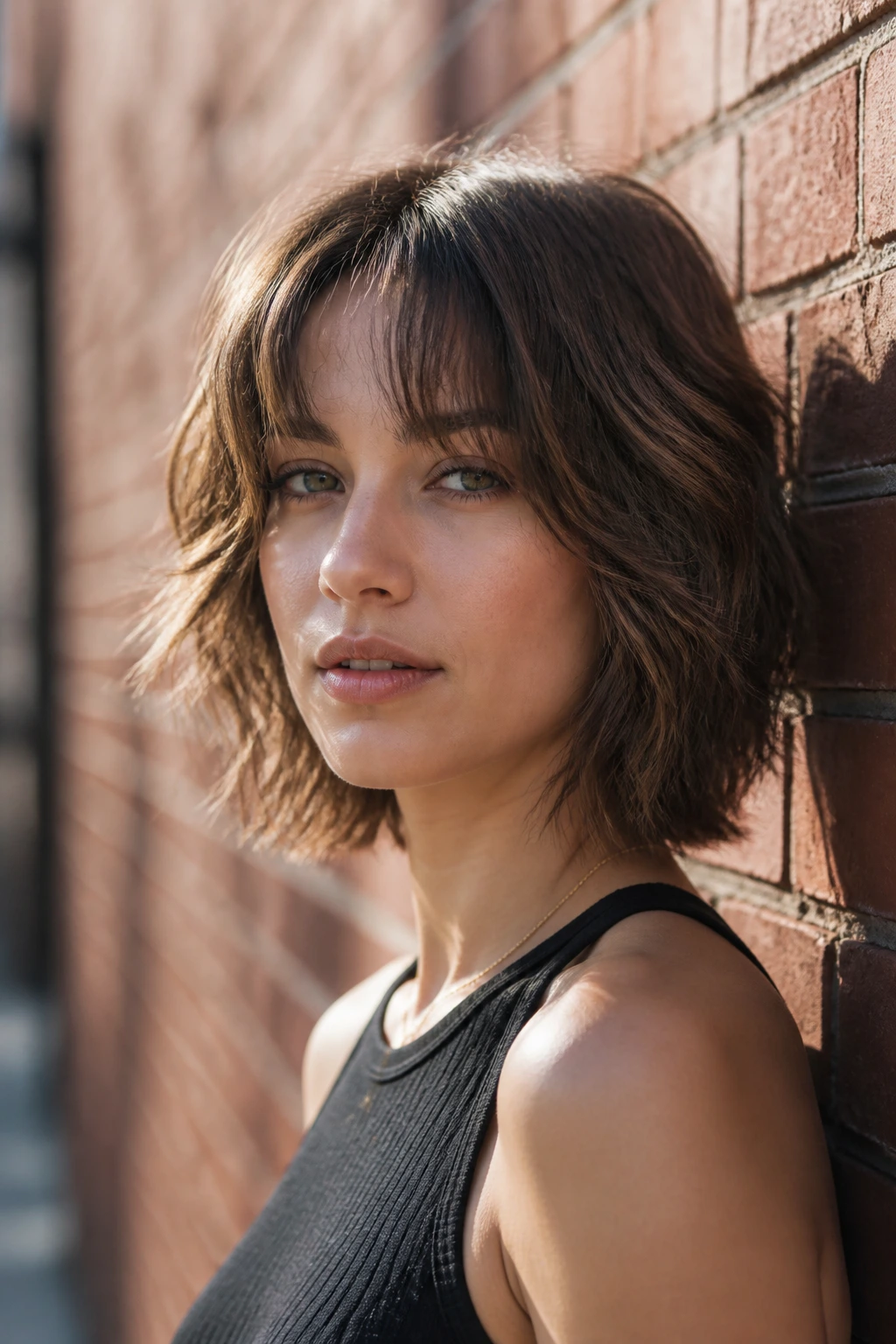
A shag bob is basically what happens when a bob takes a little rock-and-roll attitude and refuses to stand still. The curtain bangs here are feathered and piecey, not smooth and clean, and the ends are cut to move in separate sections rather than one thick sheet.
Why does that matter? Because texture changes how the eye reads the whole cut. If every inch of the bob is blended the same way, it can look flat. Feathered curtain bangs create a break in the shape, which gives the haircut lift around the eyes and cheekbones.
What makes it different
The hair around the face gets more attention than the back. That means the styling can be looser, and second-day hair often looks better than freshly washed hair.
Best for
- Natural waves
- Hair that gets limp when it is cut too blunt
- People who like a piecey finish instead of a smooth one
A little texture spray at the roots and a dab of cream through the fringe is enough. Too much product kills the movement fast.
10. Angled A-Line Bob With Longer Curtain Bangs
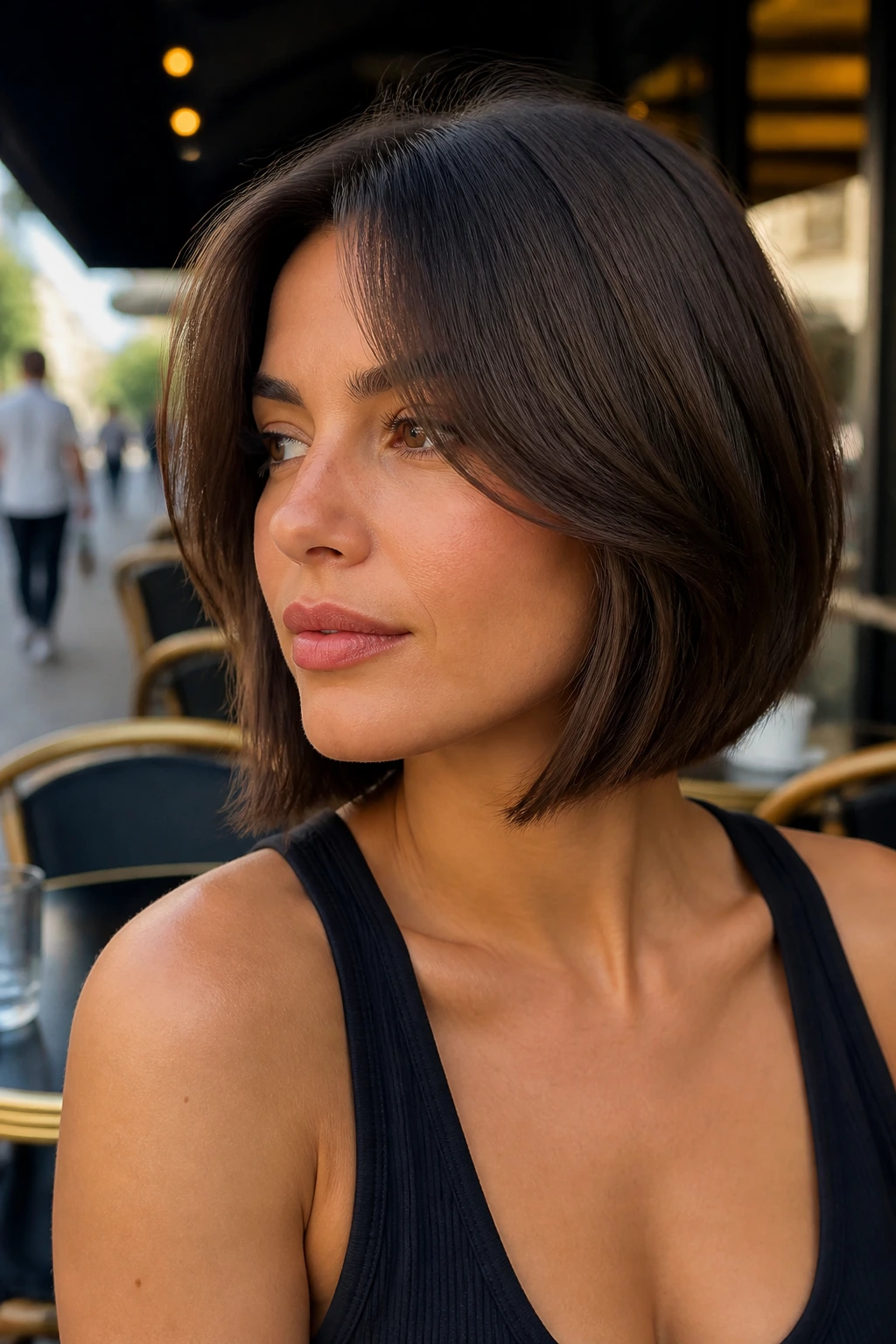
An angled A-line bob gives you a longer front and a shorter back, which means the silhouette has built-in direction. Long curtain bangs keep that angle from feeling too sharp at the front, especially if the hair is dense or naturally straight.
This cut is useful if you want your hair to visually lengthen your neck and slim the jawline. The longer front pieces create a taper, and the curtain bangs echo that taper instead of cutting across the face. It is a smart shape, honestly. A little architectural, but not cold.
If your hair is thick, this bob helps remove bulk where it usually sits widest. If your hair is fine, be careful not to over-thin the front; the angle needs enough mass to show. A wispy A-line can collapse into something shapeless by lunch.
11. Micro Bob With Wispy Curtain Bangs
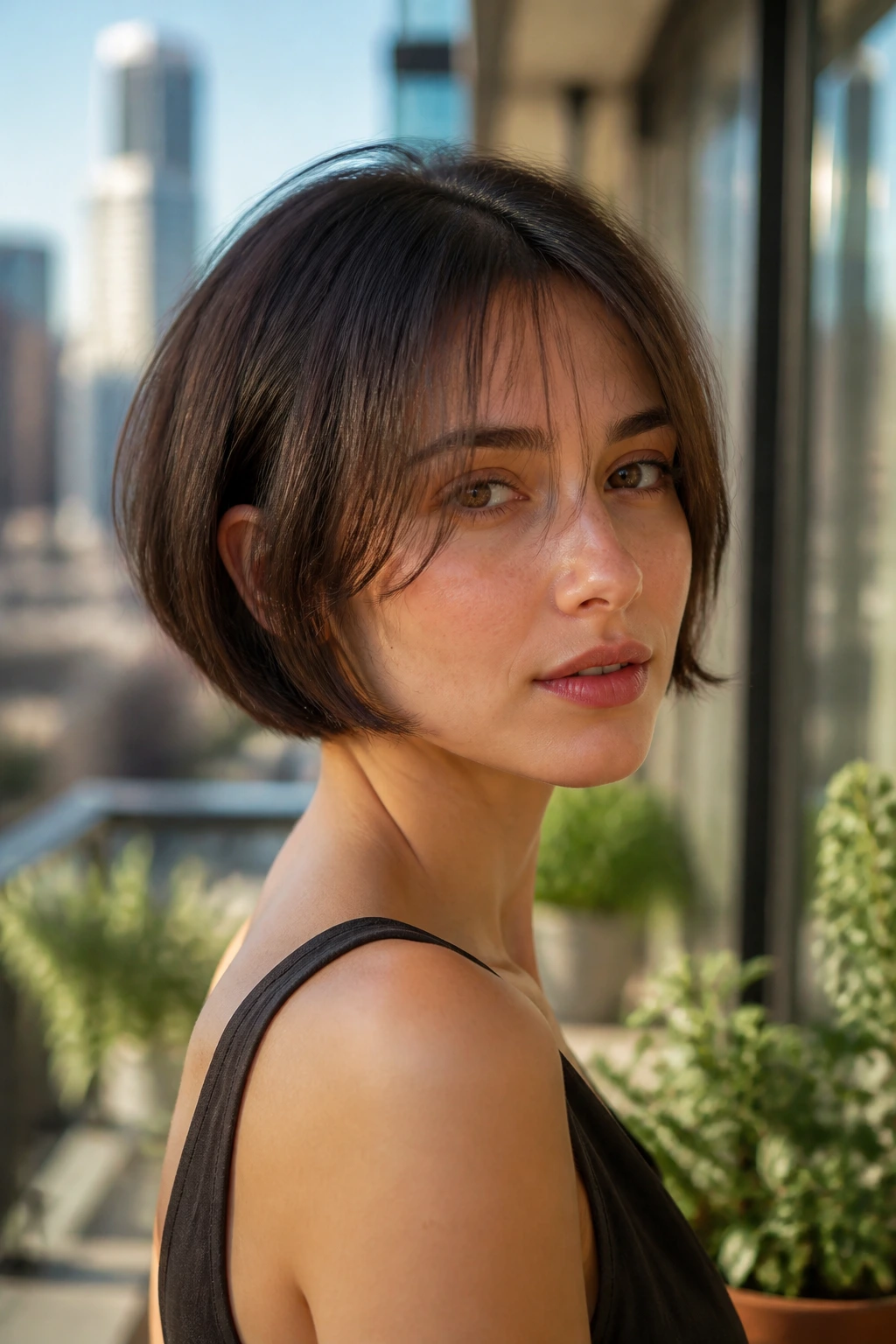
Short hair can still have softness. A micro bob, cut around the ear to just below the jaw, gets that softness from wispy curtain bangs that split lightly and fall away from the center rather than laying heavy across the forehead.
This cut is not trying to be invisible. It is a statement, but a clean one. The fringe matters because a micro bob without face-framing pieces can feel abrupt, almost unfinished. The wispy curtain bangs solve that by bringing the eye back toward the front of the face.
It works best on straight or softly wavy hair with not too much density. Thick hair can overpower this shape unless the interior is thinned carefully. And if you have a strong cowlick at the hairline, the bangs need to be long enough to fight it. Too short, and they split wherever they want.
12. Inverted Bob With Sculpted Curtain Bangs
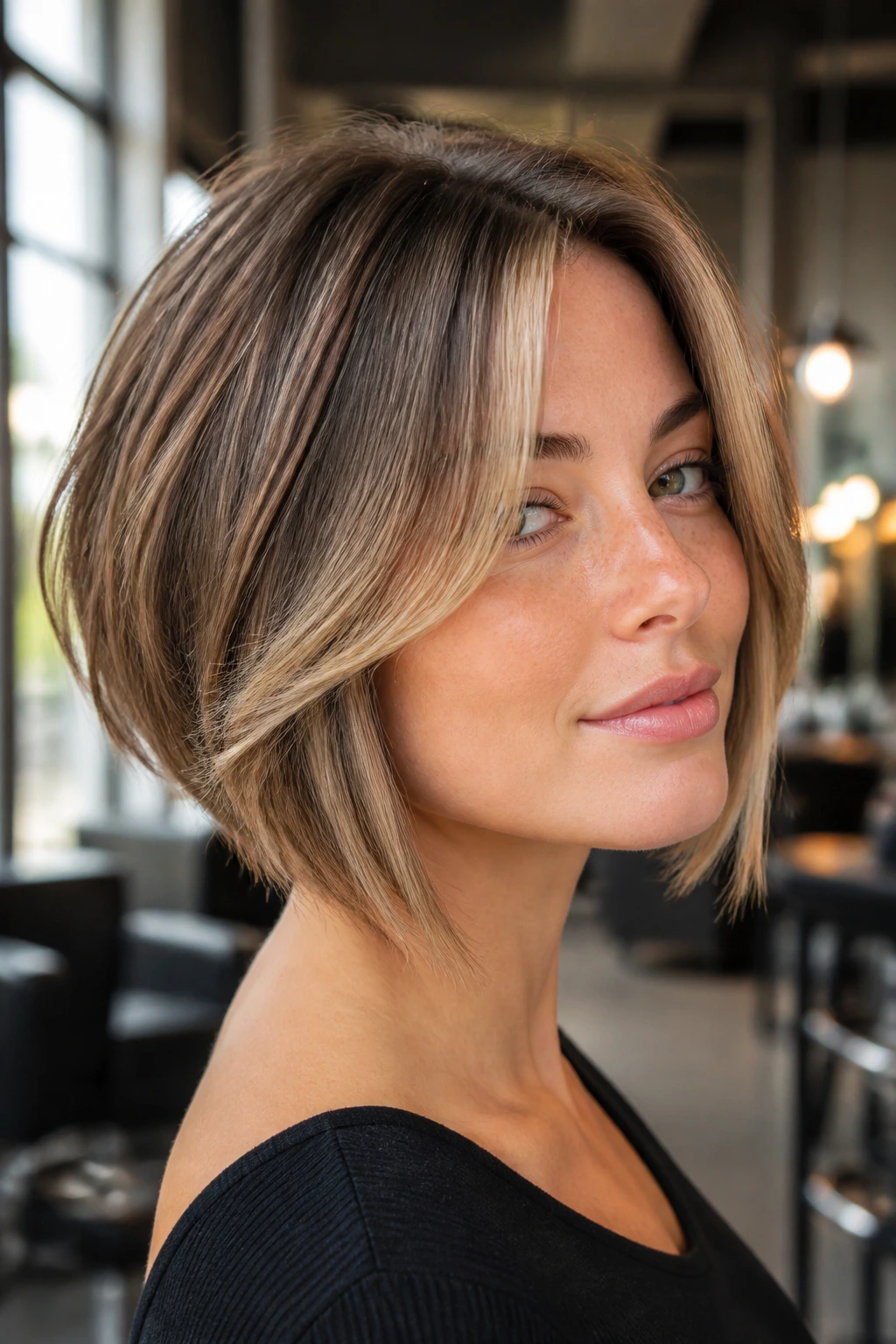
An inverted bob stacks shorter in the back and leaves more length toward the front, which gives the haircut a neat, lifted shape. The curtain bangs should echo that sculpted line, opening from the center and blending into the front pieces instead of hanging as a separate section.
Here’s the part that makes this cut work: the back creates volume, but the front prevents it from looking dated. Older versions of the inverted bob could feel too fixed, almost stiff. Curtain bangs loosen that up. They make the front move, which is what keeps the haircut from reading like a relic.
Watch for this
If the back is stacked too aggressively, the front can feel disconnected. Ask for the angle to be visible, not dramatic enough to steal the whole show.
Best on
- Medium to thick hair
- People who like a lifted crown
- Faces that can carry a bit of structure at the sides
A round brush at the crown and a small bend through the bangs is usually enough. No need to over-style it.
13. Razor-Cut Bob With Piecey Curtain Bangs
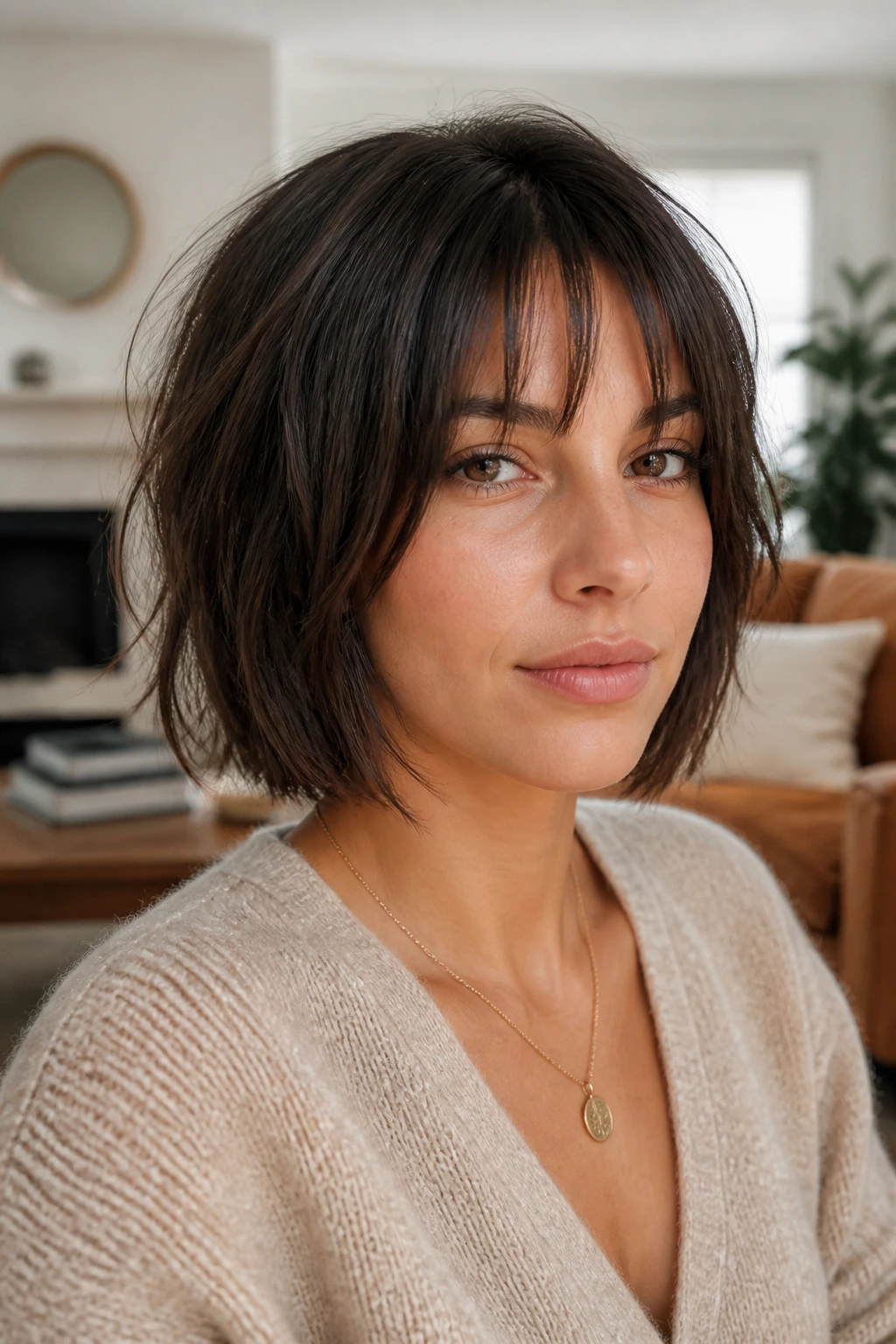
A razor-cut bob has a softer, more broken edge than a blunt cut, which makes it a natural match for piecey curtain bangs. The ends look lived-in even when they are freshly cut, and the fringe falls apart in a flattering way instead of forming one solid curtain.
This is one of my favorites for thicker hair because the razor removes weight without leaving obvious steps. The bangs can still be full, but they do not sit like a block. That lets the whole cut breathe. If your hair is very fragile or prone to fraying, though, a razor can make the ends too fuzzy. That is not a good trade.
How to use it
- Blow-dry with your fingers first, then refine with a brush
- Use a pea-sized amount of cream, not a heavy serum
- Keep the ends slightly irregular so the texture shows
The look is best when it is not too polished. If you want mirror-smooth shine, this may be the wrong bob.
14. Choppy Bob With Rocker Curtain Bangs
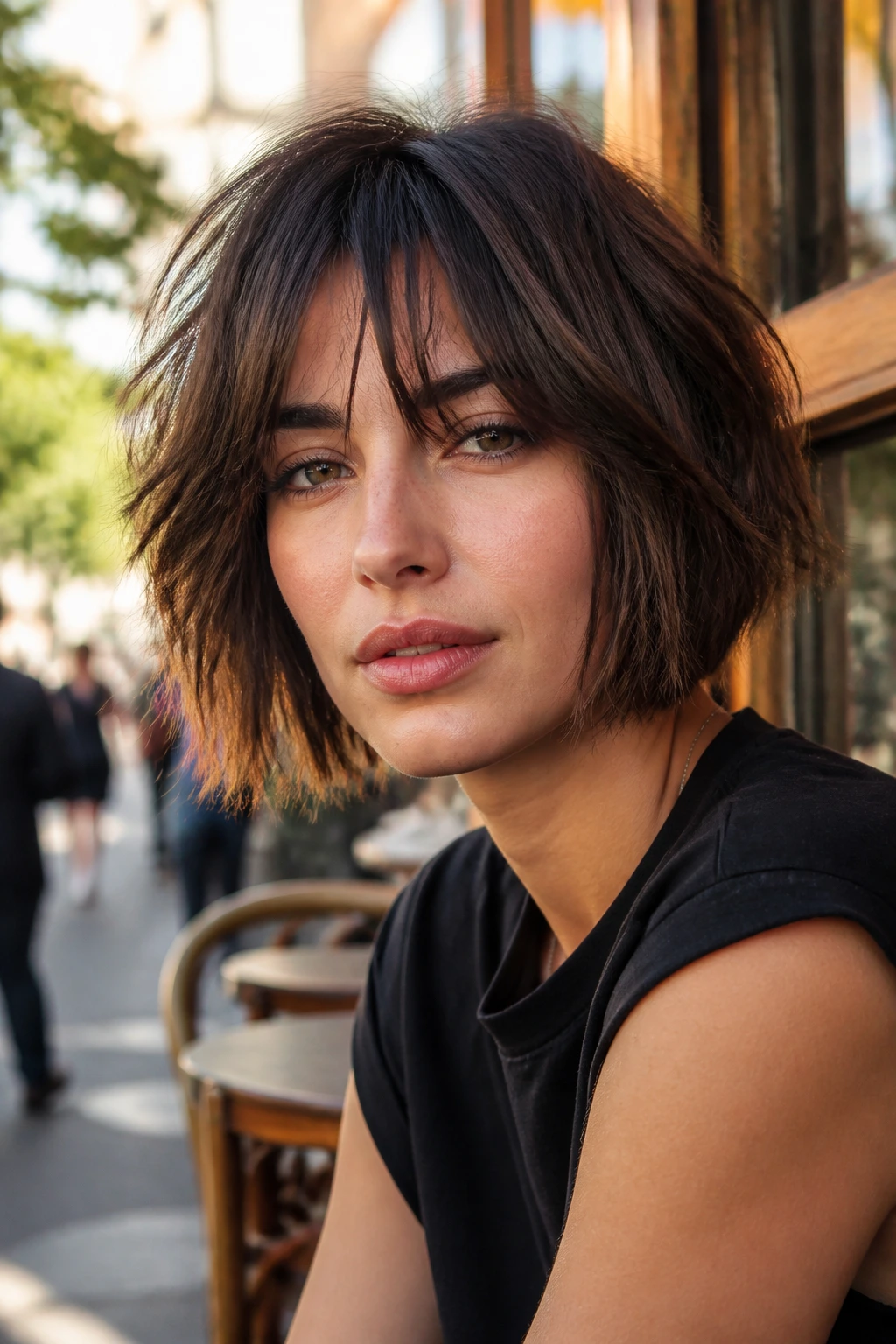
This cut does not pretend to be sweet. The bob is chopped into visible pieces, and the curtain bangs have a rough, uneven bend that gives the front a little attitude. It is messy in a controlled way, which is harder to do than it sounds.
The reason it works is that the bangs keep the choppiness from looking random. They frame the face and give the haircut a center point. Without them, a choppy bob can look like you just needed a trim and the stylist got aggressive with the scissors.
This version is strongest on hair that holds texture well. If your hair is pin-straight, you will need a styling paste or matte spray to keep the separation visible. If your hair is wavy, it can look like the cut was made for you, because the movement falls into the cut instead of fighting it.
15. One-Length C-Cut Bob With Curtain Bangs
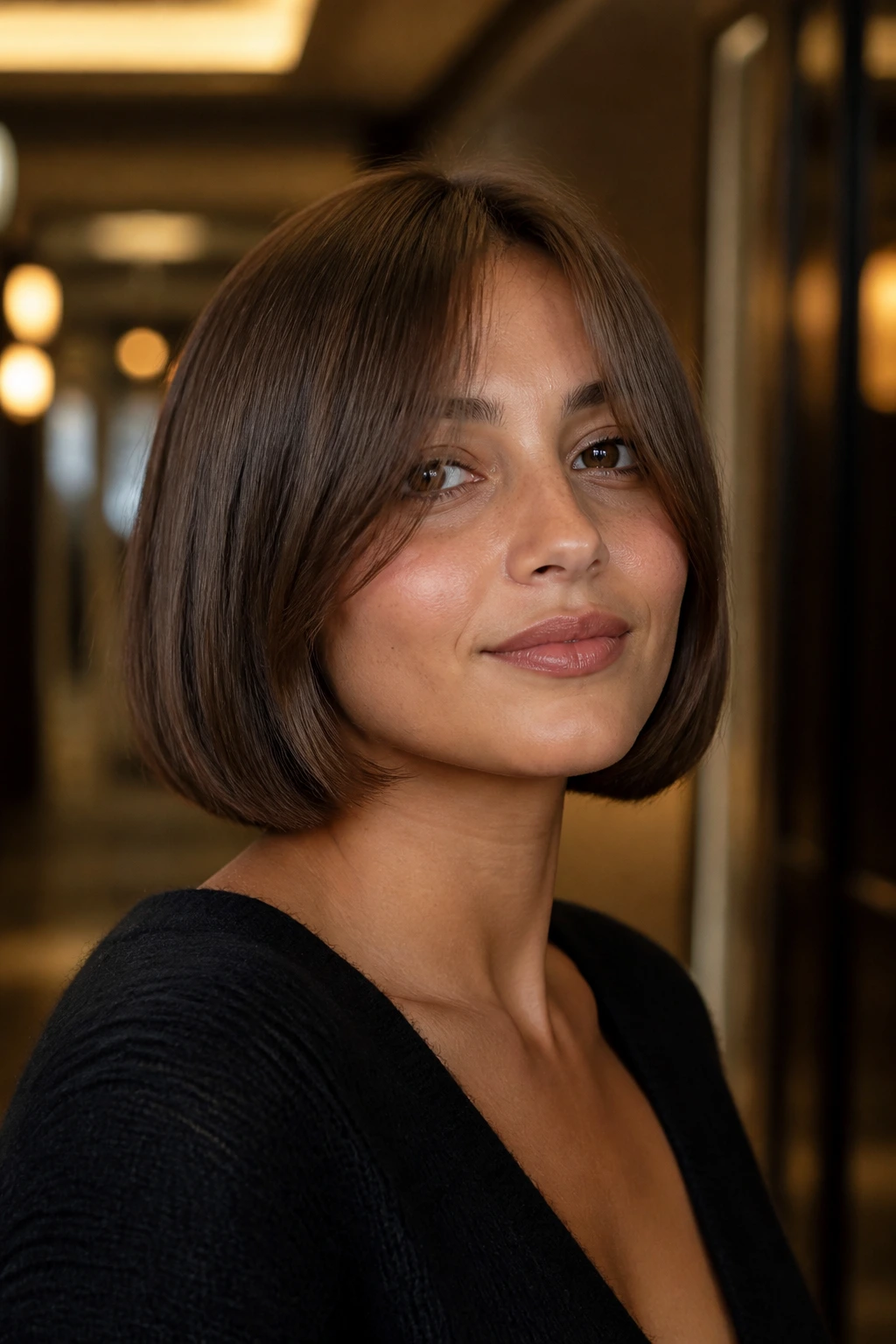
A one-length C-cut bob curves inward at the ends so the shape hugs the neck and jaw a little more than a plain blunt bob. Curtain bangs keep that curve from getting too tidy. They open the face and stop the whole style from looking too uniform.
This is a strong choice if you want clean lines but dislike a sharp boxy finish. The C-shape gives you softness at the hem without losing density, which is handy for medium hair that needs a little body at the perimeter. The bangs should be long enough to blend into the front arc rather than fight it.
It suits people who like a polished blowout and do not mind a few minutes with a round brush. Air-dried, it can look a little too rounded at the sides. Styled, though, it has that crisp-but-soft thing that photographs well in real life, not just in salon mirrors.
16. Side-Part Bob With Swept Curtain Bangs

Not every curtain bang needs a strict middle part. A side-part bob with swept curtain bangs feels a little easier, especially if your cowlick resists a center split or you simply dislike how a hard middle part sits on your face.
The sweeping front piece gives the haircut motion from the first glance. One side opens the forehead; the other falls closer to the eye line, which makes the cut feel relaxed without losing shape. It is a good answer for people who want the softness of curtain bangs but do not want the commitment of a middle part every day.
Why people keep choosing it
Because it behaves. That sounds boring, but boring in hair is often a compliment. It’s the kind of cut you can change fast with one clip, one tuck, or a quick flip of the part.
A little root lift spray at the front helps the sweep stay up instead of collapsing flat.
17. Glass Hair Bob With Split Curtain Bangs
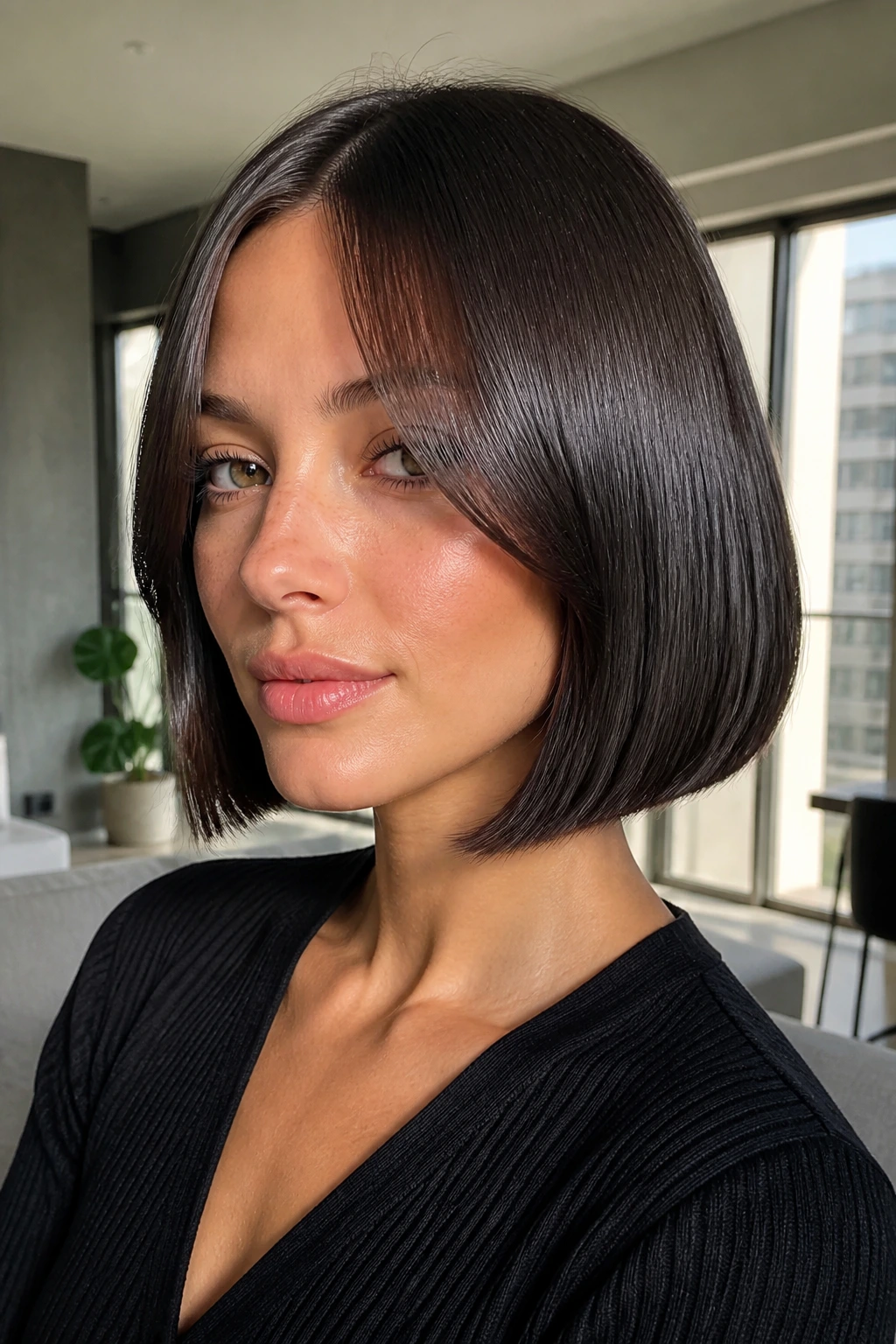
Glass hair is all about shine, precision, and a smooth surface. Put curtain bangs on it and you get a sharp bob that still has movement in the front. The split fringe keeps the look from becoming too severe.
This haircut loves healthy ends. Split ends show fast on glassy styles, so the perimeter has to be trimmed clean and kept in shape. The bangs should be cut with enough length to fall into a graceful split, not a tiny gap. If they’re too short, the look loses its calm, polished line.
Use a flat brush, a nozzle on the dryer, and a finishing cream or light oil. That’s the whole game. Heavy products ruin the shine and make the front separate in clumps, which is the opposite of what this bob needs.
18. Graduated Bob With Long Curtain Bangs
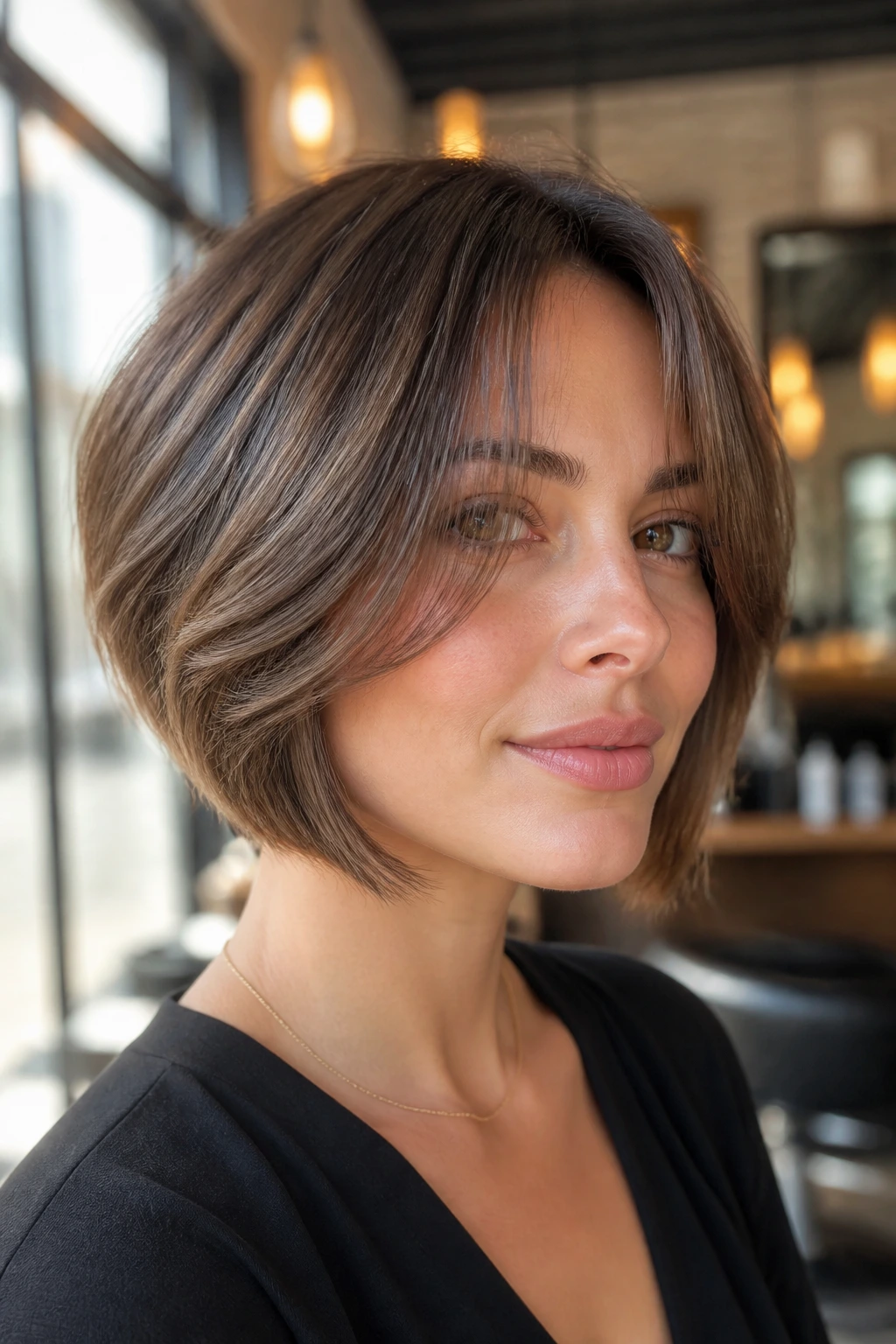
A graduated bob builds subtle volume in the back while keeping the front longer and softer. Long curtain bangs are a smart companion here because they keep the shape from feeling heavy at the crown or too stacked through the nape.
This cut is one of the best choices for fine hair that needs body without a lot of length. The graduation gives the back lift, while the fringe breaks up the front and keeps the overall look from becoming a helmet. If the bangs are too short, though, the shape can tip into old-fashioned territory fast.
The trick is restraint. You want the angle to show when you turn your head, not scream from across the room. A soft bend through the bangs and a clean line at the ends give the haircut its polish.
19. Soft Mullet Bob With Curtain Bangs

Yes, it’s a bob. And yes, it borrows a little from the mullet. The result is a soft, layered shape with more length at the back or nape and shorter pieces around the crown and face. Curtain bangs make the whole thing feel wearable instead of costume-y.
This cut suits people who want movement first and neatness second. The fringe should be airy enough to blend into the top layers, which helps the haircut feel connected from front to back. If the bang section is too thick, the top can look flat and the ends can start to feel disconnected.
It’s a good choice for wavy hair that likes to separate into pieces. It’s also one of the better options if you want a grow-out that doesn’t require weekly maintenance. The layers can get a little wild, but in a useful way.
20. Classic Parisian Bob With Loose Curtain Bangs
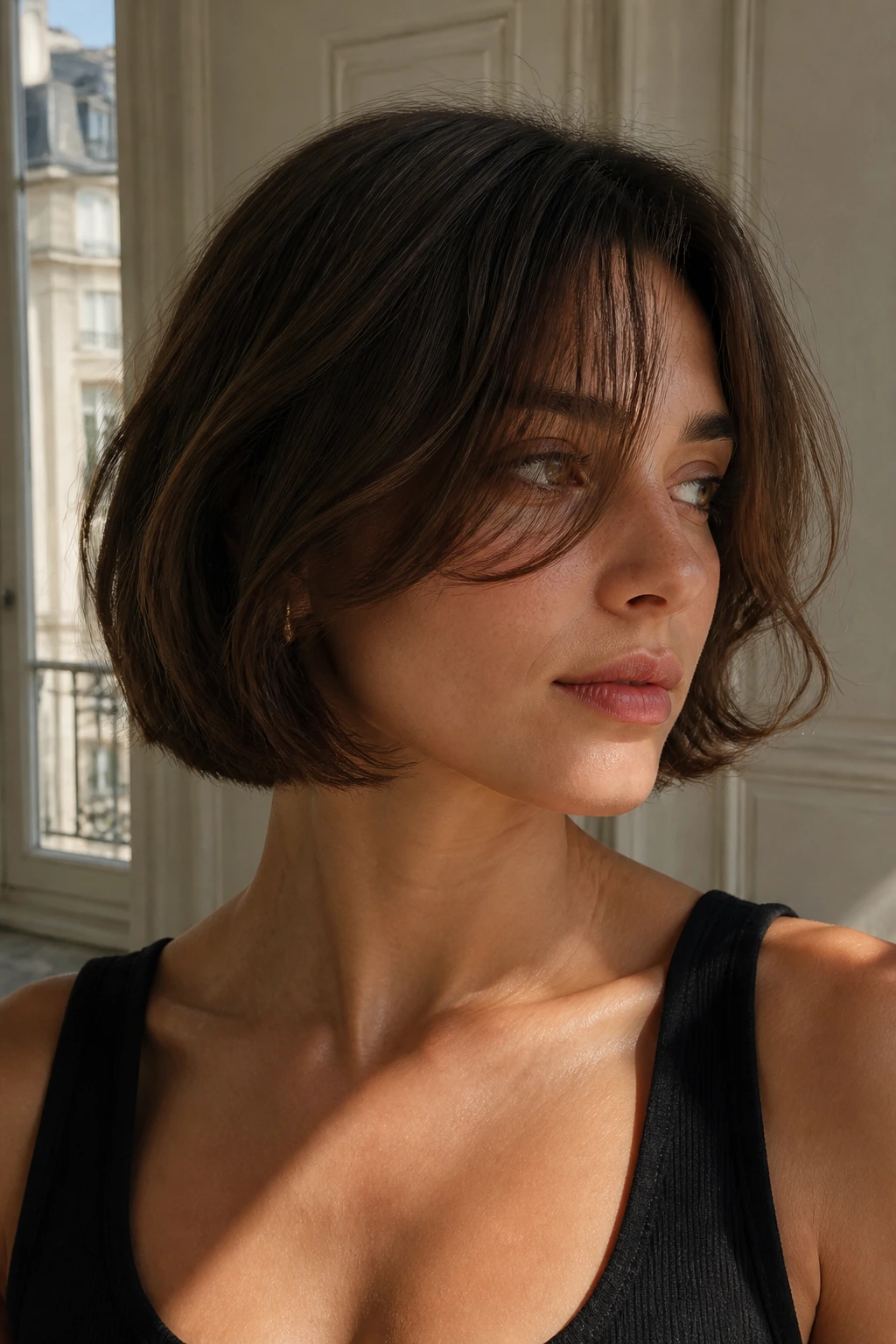
This is the quiet one. Chin-length, softly curved, just enough fringe to open the face, nothing overworked. The loose curtain bangs are what keep it from becoming a strict little cap of hair.
The reason this style lasts is simple: it doesn’t depend on perfect styling. A small bend at the ends and a soft split through the fringe are enough. You can wear it smooth, a little messy, or tucked behind one ear. None of those choices fight the cut.
It works on almost every hair type if the length is adjusted correctly. Straight hair gets the clean outline, wavy hair gets movement, and finer hair gets a compact shape that doesn’t drag. If you only want one bob idea in this whole batch, this is the safest place to land. Not boring. Safe.
Why Bob Haircuts With Curtain Bangs Keep Looking Current
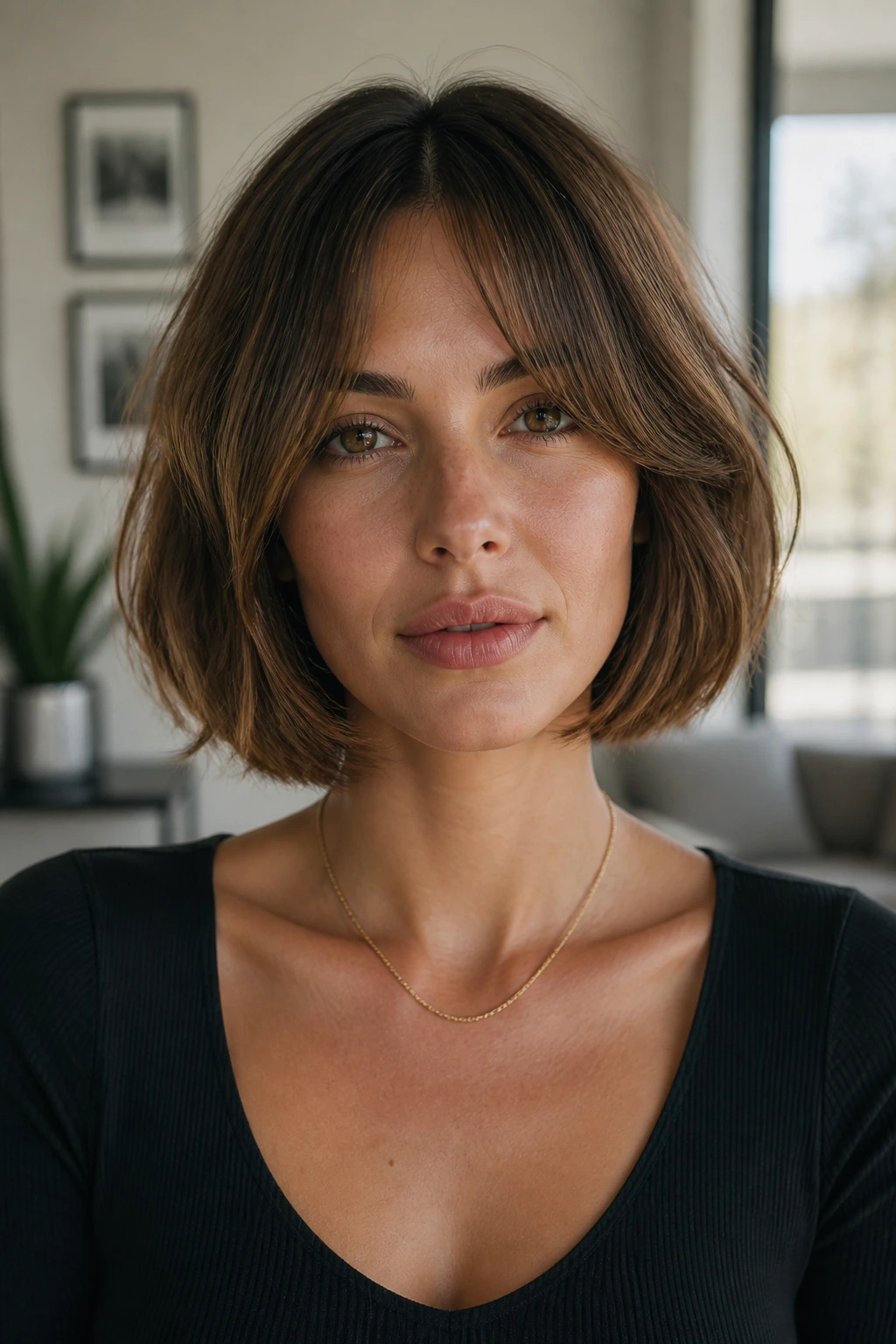
The pairing works because it solves two hair problems at once. A bob gives structure, but structure alone can look stiff. Curtain bangs give softness, but softness alone can look shapeless. Put them together and you get a front edge that opens the face while the back keeps the haircut grounded.
There’s also a practical reason this combination hangs around. Curtain bangs grow out in a way that feels useful, not awkward. If the fringe gets a little long, it becomes face-framing layers. If the bob loses a bit of edge, it usually still reads as intentional because the bang line keeps the front active.
That is the part most people notice only after they wear it for a while. You are not buying one frozen look. You are getting a haircut with a few built-in stages.
How to Choose Bob Haircuts With Curtain Bangs for Your Hair Texture
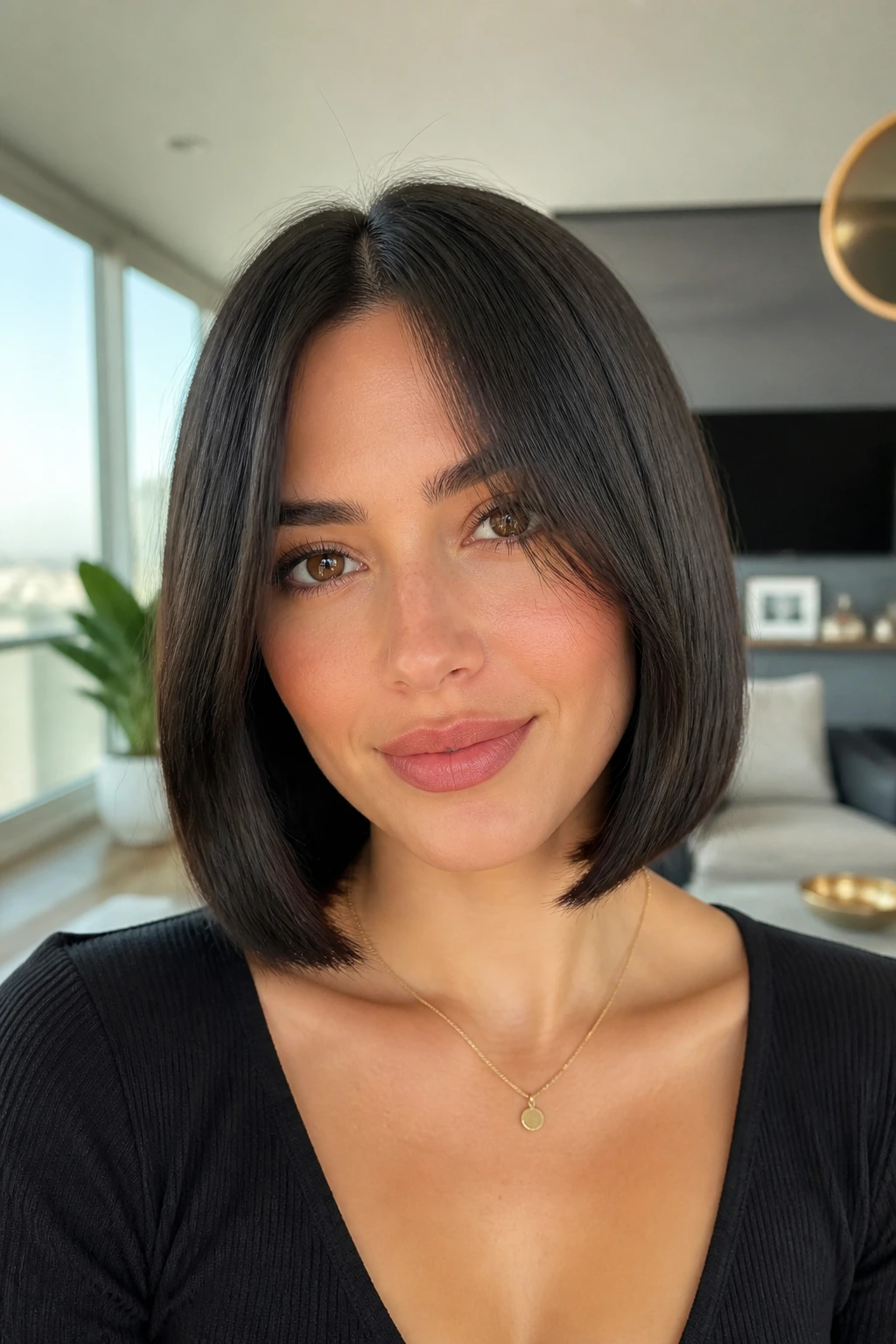
Texture changes everything. A blunt bob that looks sharp on straight hair can look bulky on dense curls, and a feathered curtain fringe that looks airy on fine hair can disappear if you over-layer it. The cleanest way to choose is to start with what your hair already does on an ordinary day.
Straight hair
Straight hair shows every line, which is useful if you want a precise bob. Go for sharper edges, longer curtain pieces, and a bang section that can fall into a neat split. If your hair lays flat, ask for a little internal lift at the crown rather than more layers through the ends.
Wavy hair
Wavy hair likes cuts that leave a bit of freedom. Collarbone bobs, shaggy bobs, and French-inspired shapes usually sit well here because the waves can bend the fringe and ends without turning them into a mess. Ask for the bangs to be cut a touch longer than the shortest visual point so they do not bounce too high.
Curly hair
Curly texture needs room for shrinkage. The fringe should usually be longer, and the bob should be shaped around the curl pattern instead of against it. Dry cutting helps. So does a stylist who knows not to chop the curtain section into a heavy block.
Fine hair
Fine hair usually looks best in cleaner shapes with less internal thinning. Blunt lines, box bobs, and gently rounded bobs give it enough body to show the cut. Too many razor layers and the outline starts to vanish.
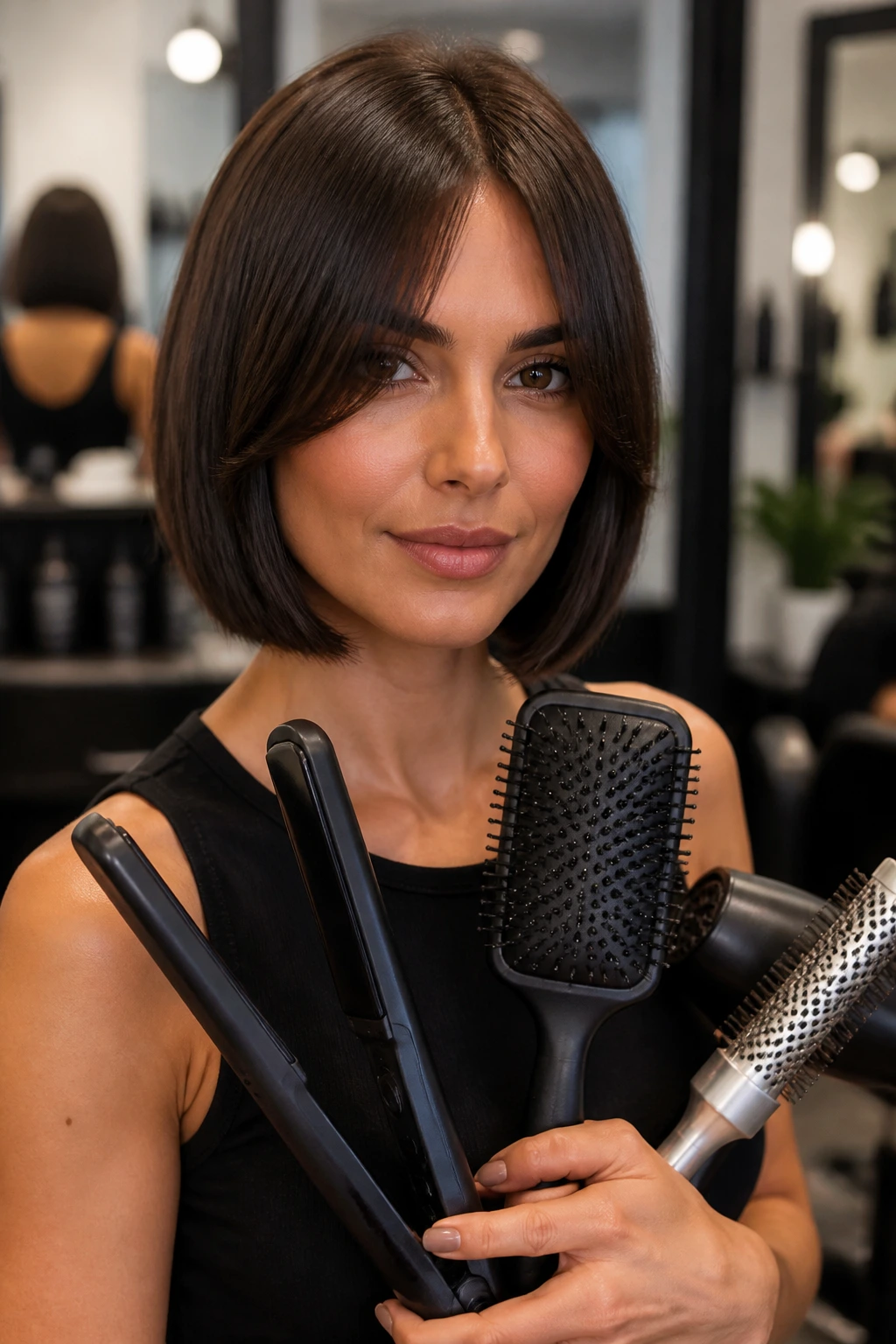
Styling Tools That Make These Cuts Behave
-
A 1-inch or 1.25-inch round brush: This gives the curtain bangs a bend without making them look curled under in an old-fashioned way.
-
A blow dryer with a nozzle attachment: The nozzle helps aim the airflow at the fringe and ends, which matters more than most people think.
-
Heat protectant spray: Use it before any brush-dry or iron pass. Fine hair needs a light mist; thicker hair can take a slightly richer formula.
-
Duckbill clips: These are useful for setting the bangs while they cool or pinning one side back when the fringe needs to reset.
-
A flat iron: Handy for glassy bobs, blunt ends, or smoothing the longest pieces of a curtain fringe.
-
A curling wand, 1 inch or smaller: Good for creating a loose bend in wavy or collarbone-length bobs when the air-dry falls too flat.
-
Texturizing spray: Best on shaggy, choppy, or razor-cut bobs. A little goes a long way.
-
Lightweight mousse: Useful for fine or wavy hair that needs lift at the roots without feeling sticky.
-
A small finishing comb: This helps keep the middle part neat and prevents the fringe from splitting in a crooked way.
How to Style and Wear Them Day to Day
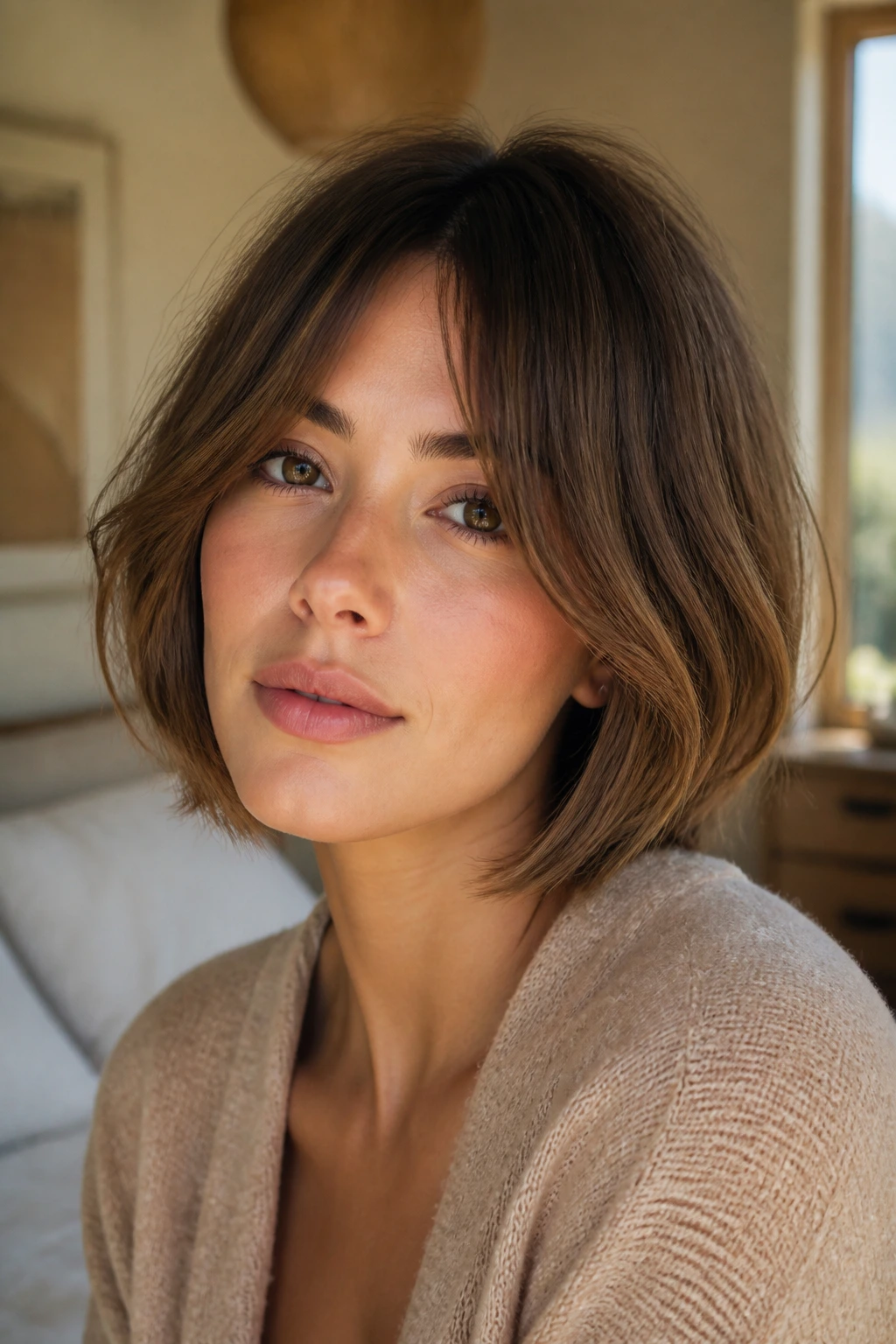
Finish: Decide whether you want the bob to sit smooth, bent, or piecey before you touch a tool. A sleek finish works best on box bobs, glass hair bobs, and blunt chin-length cuts. A looser finish suits shaggy, wavy, or curly versions because the texture gives the fringe its shape.
Pairings: These cuts sit especially well with open necklines, simple collars, and earrings that show the jawline. That’s not because the haircut needs “matching” clothes — it’s because curtain bangs and a bob both do their best work when the face is not crowded.
Length Guide: If your face is round, a bob that lands at the jaw or just below it usually gives a longer line. If your face is long, a chin-length bob with wider curtain bangs can add width at the sides. Square jaws often like softer, longer front pieces that skim instead of stop.
Style Mood: Keep one version polished and one version a little undone. That way the haircut stays useful instead of feeling like a one-note look. A smooth blowout for work, a rougher bend for weekends, and a pin-back option for hot days covers most of real life.
Styling Boosters and Personal Tweaks
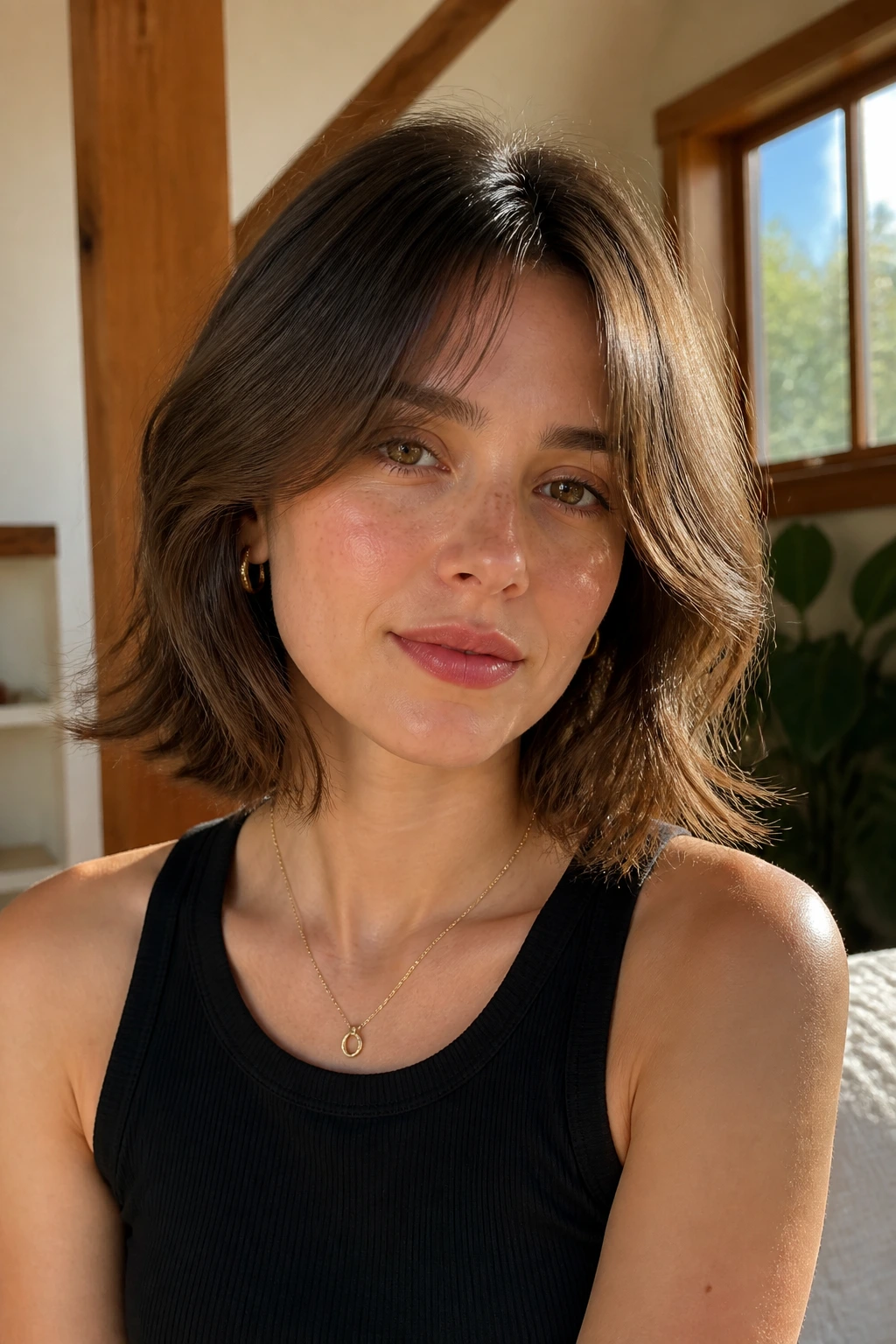
Volume Boost: Blow-dry the fringe forward first, then sweep it back and out with the brush. That little two-step lifts the root so the curtain bangs do not collapse into your forehead by noon.
Texture Trick: If the ends look too neat, twist the last inch around your finger while they cool. It works especially well on wavy and choppy bobs, where a tiny bend looks better than a perfect curl.
Face-Framing Help: Ask your stylist to leave the first front pieces a little longer than the center of the fringe. That gives the haircut room to frame the cheekbone instead of cutting straight across the face.
Low-Maintenance Version: Keep the bangs slightly longer and the bob slightly softer through the ends. You will still have shape after a few weeks of growth, and the cut will not demand a trim the minute it starts to move.
Common Mistakes to Avoid
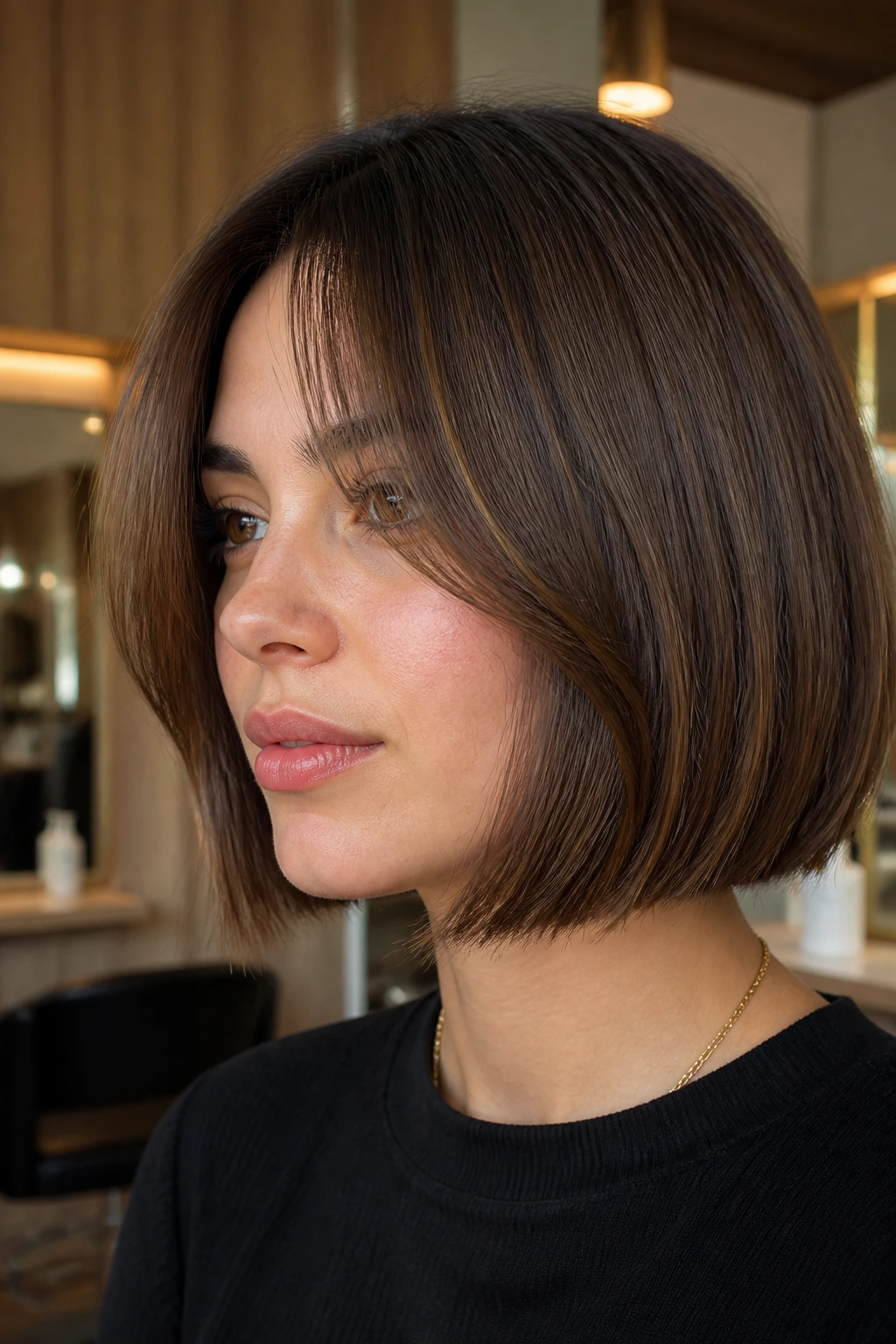
Cutting the curtain bangs too short. This is the easiest way to lose the whole effect. Short curtain bangs stop framing and start behaving like regular fringe, which changes the balance of the bob. Fix it by leaving the center longer than you think and letting the sides fall into the cheek area.
Over-thinning the front. If the bang section gets chopped into wisps with no body, the face frame vanishes. The result is limp, not airy. Ask for controlled point-cutting instead of aggressive thinning if your hair is already fine.
Ignoring the hairline swirl or cowlick. A stubborn front swirl can split the fringe in the wrong place and make the middle part drift sideways. The fix is to cut the bang section long enough to sit through the bend, then teach it where to fall with a round brush and clips.
Stacking too many layers into a bob that needs weight. Fine hair in particular can lose its shape when too much interior bulk is removed. The bob should still have a clear outline; if it starts looking wispy at the sides, the cut has gone too far.
Treating every bob the same way. A French bob, a shag bob, and a box bob do not want the same styling. One needs polish, one needs movement, and one needs texture. Match the product to the haircut or you’ll fight the shape every morning.
Variations and Adaptations to Try
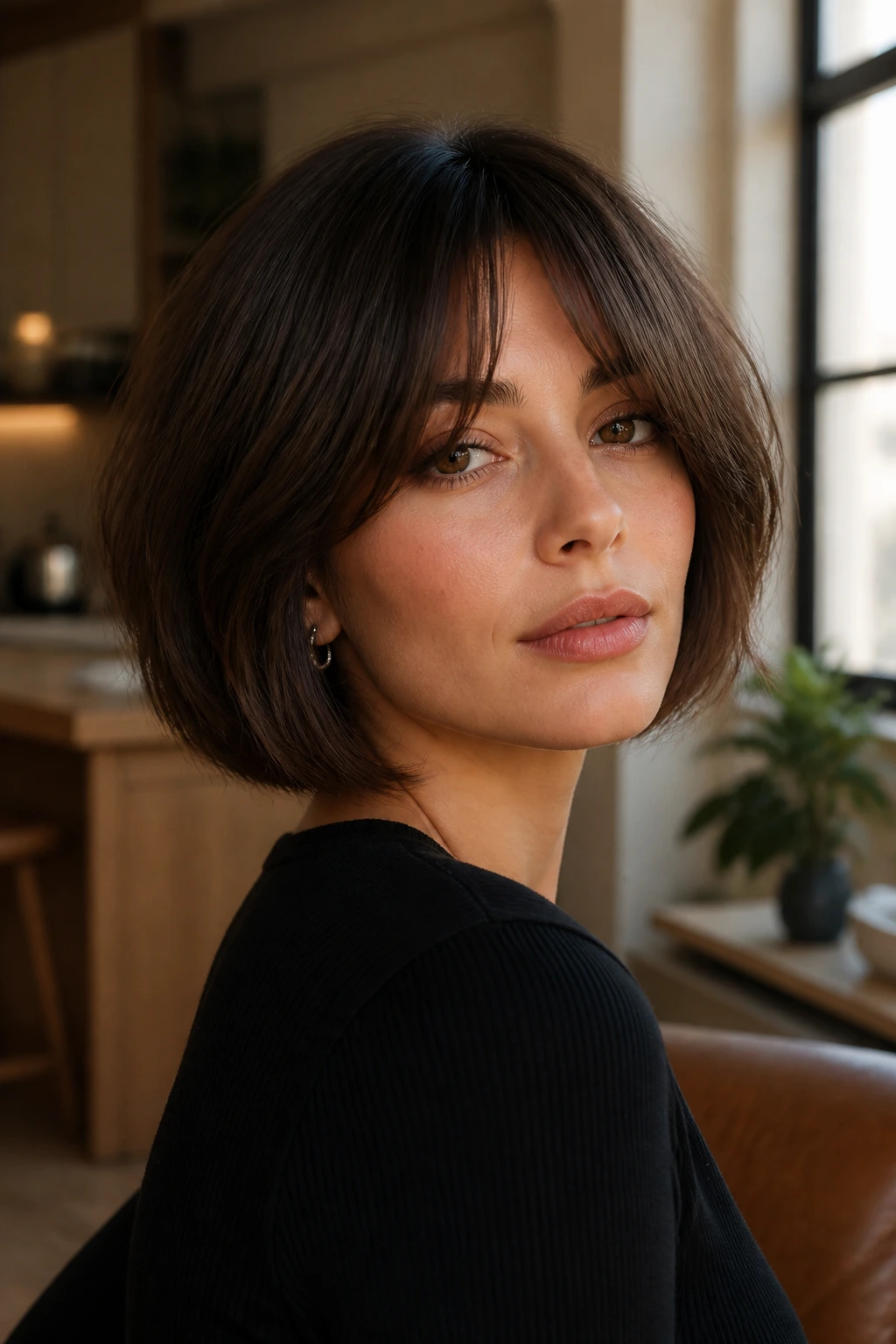
Fine-Hair Lift: Ask for a blunt bob with longer curtain bangs and almost no thinning at the ends. The blunt edge makes the hair look fuller, while the fringe keeps the front soft enough to avoid a heavy block.
Curly-Cut Version: Keep the bob longer and let the bangs start below the shortest shrink point. This keeps the curl pattern from springing too far up and gives the front a gentle split instead of a short puff.
Thick-Hair Clean-Out: Choose an angled or rounded bob with internal weight removal, not surface-layer chaos. The curtain bangs should be cut with enough density to hold shape, then softened at the tips so they do not sit like a shelf.
Low-Commitment Grow-Out: Let the bob land at the collarbone and keep the curtain pieces long enough to blend into face-framing layers. This version grows out cleanly and can shift into a lob without looking like an awkward in-between stage.
Edgy Texture Version: Try a choppy or razor-cut bob with broken-up curtain bangs. This suits hair that naturally separates and people who like a finish that feels a little lived-in rather than polished.
Keeping the Shape Between Salon Visits
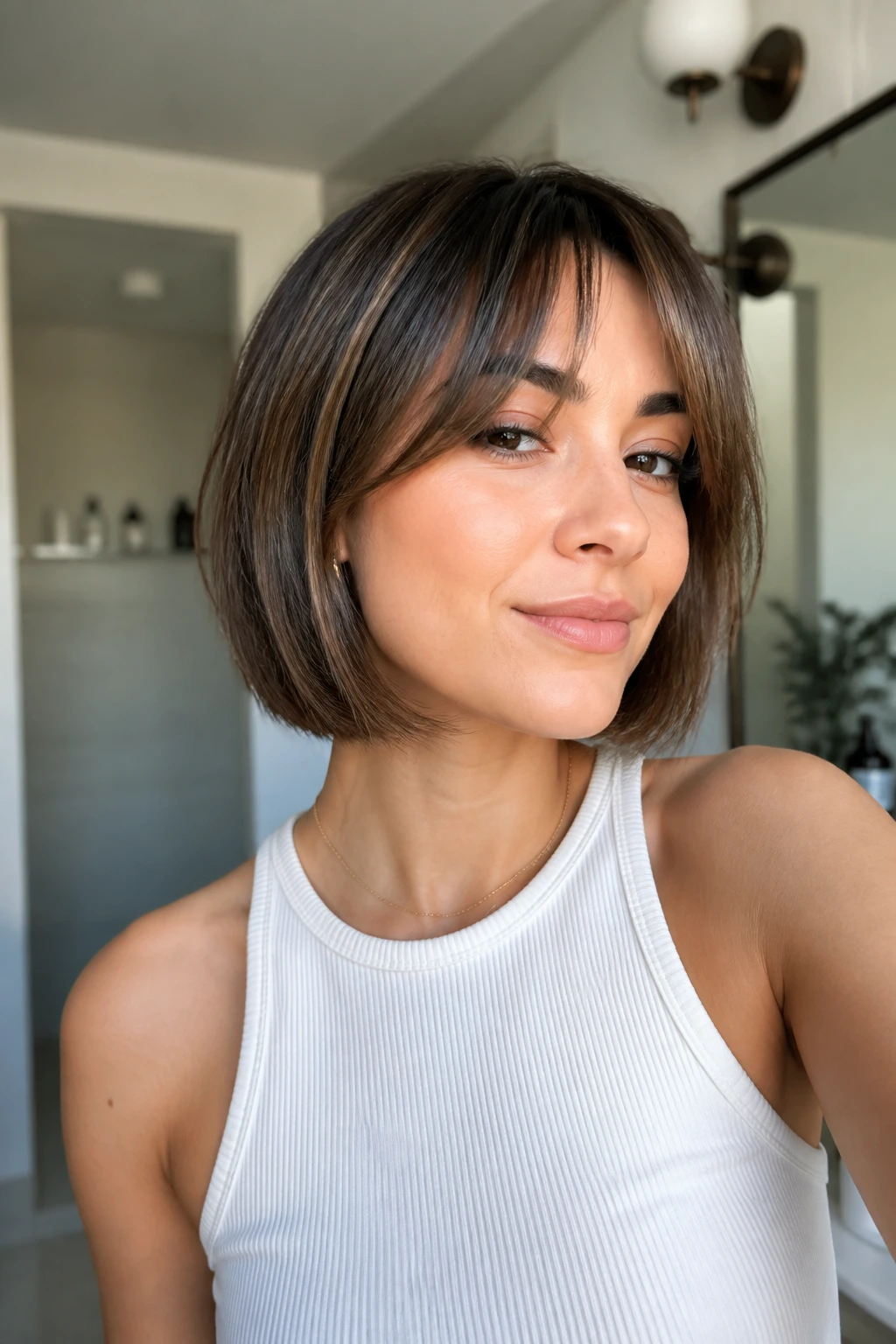
A bob with curtain bangs usually needs a trim every 6 to 8 weeks if it’s short and precise, or every 8 to 10 weeks if it leans into lob territory. The bang section often needs attention first. Hair grows about half an inch a month for many people, and that shows fast at the front of the face.
The easiest way to keep the style readable is to manage the roots and the fringe, not to over-style the whole head. A quick blow-dry of the curtain pieces around a brush, followed by 20 to 30 seconds of cool air, keeps them from collapsing. On day two, dry shampoo at the roots and a light mist of water at the front can reset the split without a full wash.
Sleep matters too. If the bob has a smooth finish, tuck the ends loosely behind your ears or sleep on a silk pillowcase so the front does not kneed itself into odd angles. For wavy or textured versions, a loose clip at the crown can protect the shape better than trying to pin every piece flat.
Frequently Asked Questions
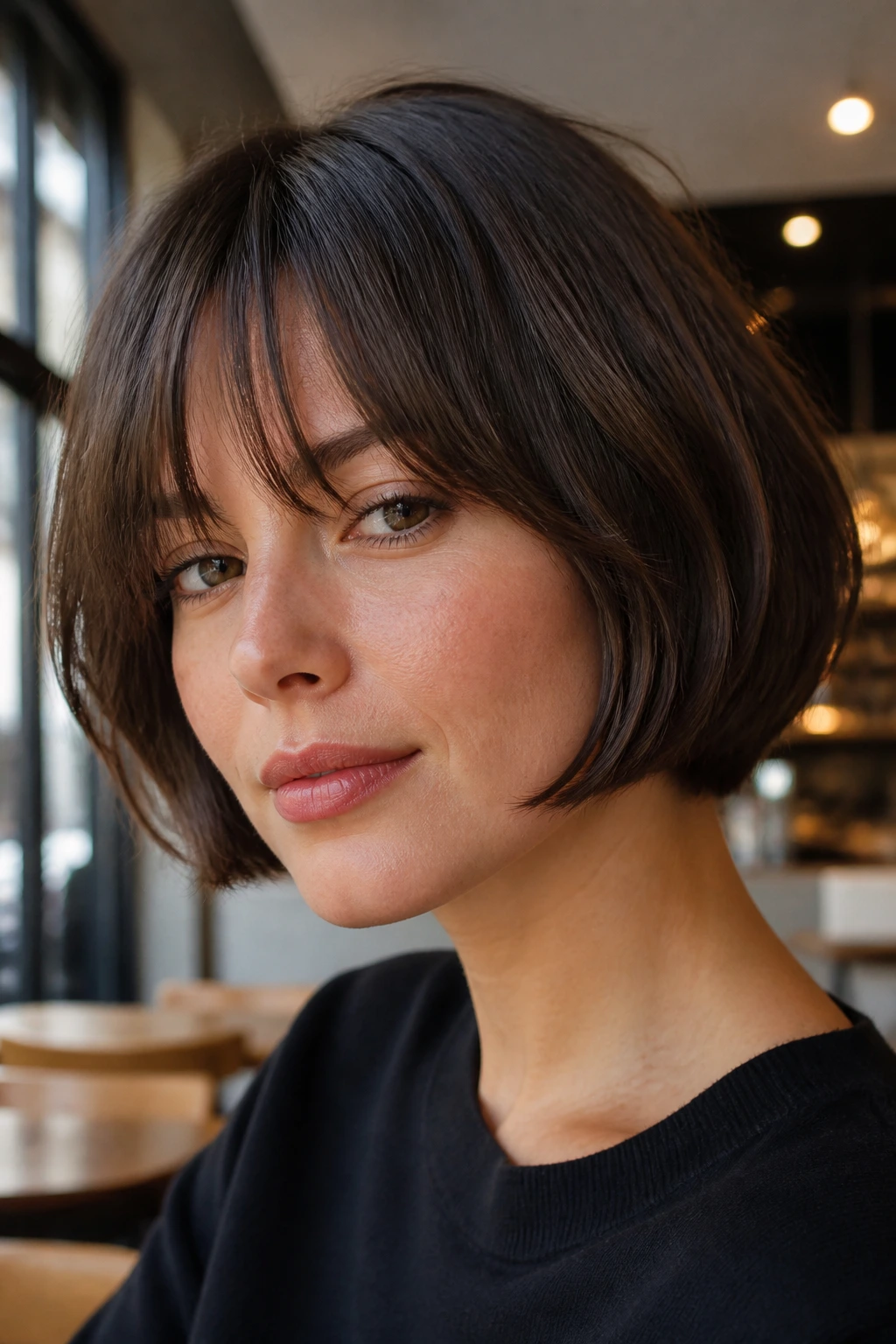
Will curtain bangs make my bob look shorter?
Sometimes, yes — but that can be a good thing if you want more face focus. The bangs pull the eye upward and inward, so the haircut reads a little shorter even when the length stays the same.
Do curtain bangs work with curly hair?
They do, as long as the bang section is cut with shrinkage in mind. Curly curtain bangs usually need more length than straight ones, and they work best when they’re shaped dry or in a very accurate wet-to-dry consultation.
How often do curtain bangs need a trim?
Most people need a bang cleanup every 3 to 5 weeks, even if the bob itself can go longer. The fringe is what changes first because it sits right on the face and grows into the eyes fast.
Can I air-dry a bob with curtain bangs?
Yes, but the result depends on texture. Wavy and curly hair often air-dries into a better shape than pin-straight hair, which may need a little round-brush lift at the front to keep the split open.
What if my cowlick keeps breaking the middle part?
Try a slightly off-center split or a side-part version instead of fighting the swirl. Curtain bangs are more forgiving than blunt bangs, and a small shift in the part can save you a lot of morning frustration.
Which bob length is easiest to live with?
Collarbone-length bobs with long curtain bangs are usually the easiest to grow, pin back, and restyle. They keep the face-framing effect without demanding the same exact upkeep as a chin-length blunt cut.
Do I need lots of styling products for this look?
No. Most versions need one heat protectant, one root-lifting product or smoothing cream, and maybe a texture spray or light serum depending on the finish. More product usually makes the fringe heavier, which works against the cut.
Can I wear this haircut without heat styling every day?
Absolutely, especially if you choose a bob that matches your natural texture. The less your hair has to fight its own pattern, the less you’ll need a round brush before coffee.
A Cut That Keeps Its Shape
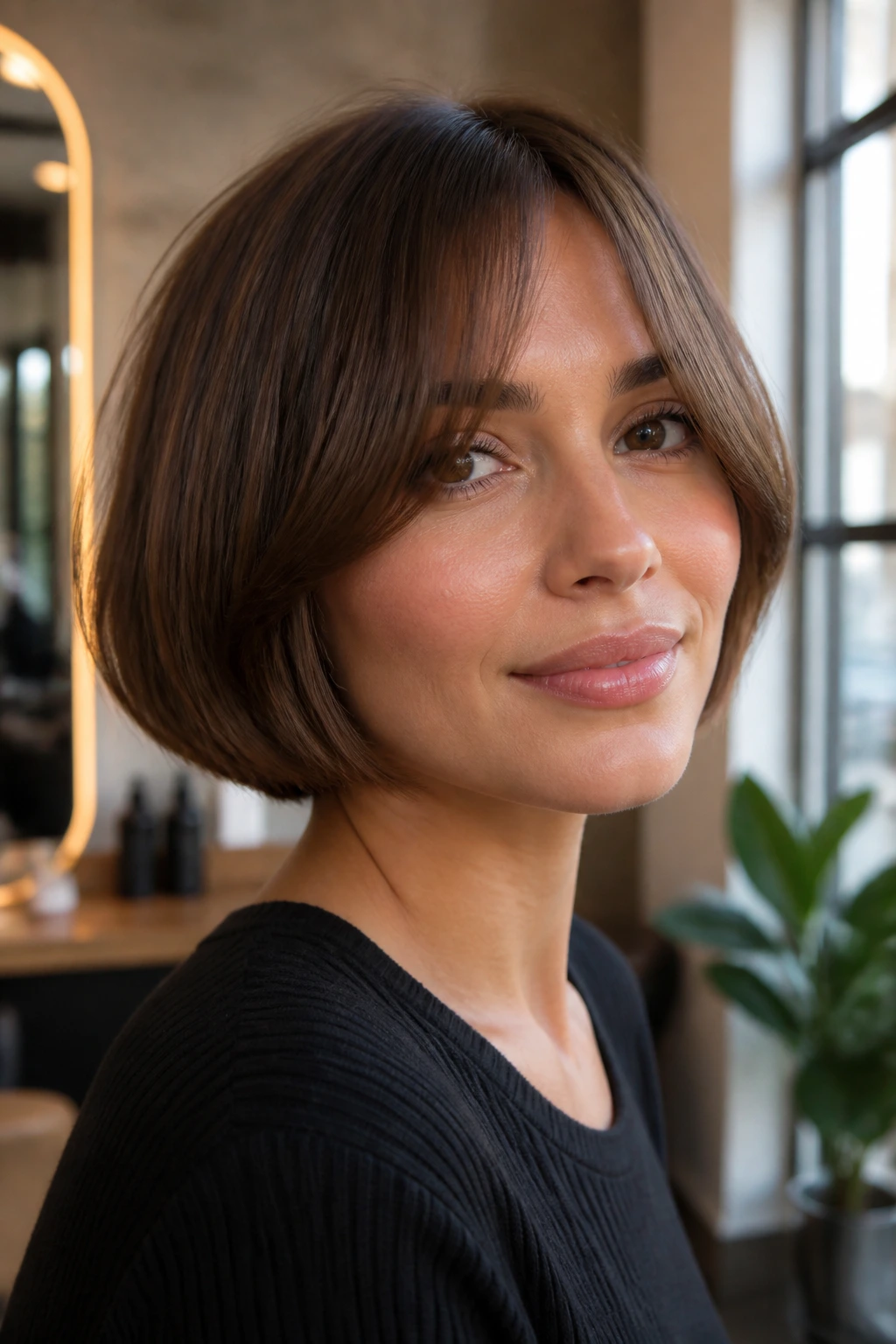
There’s a reason bob haircuts with curtain bangs keep showing up in salons: the shape gives you structure, and the fringe keeps that structure from feeling stiff. That is a useful combination, not a trendy accident. It lets you move between polished and undone without changing the haircut itself.
The smartest version for you is the one that respects your texture instead of pretending everyone’s hair behaves the same way. That may be a sharp box bob, a soft French crop, a wavy collarbone cut, or something more choppy and lived-in. The right choice is the one that looks good after a normal day, not just right after a fresh blowout.
Bring a photo, yes. But also bring a clear opinion about line, length, and how much front softness you actually want. Get those details right, and the cut keeps paying off every time you look in the mirror.
