



A blunt fringe can make a round face feel boxed in. A short swoopy bang does the opposite: it cuts a diagonal across the forehead, leaves air around the temples, and pulls the eye up and out instead of straight across. That little slant matters more than most people think. Hair has a way of changing the whole read of a face, and this shape is one of the few that can soften fullness without hiding it.
The best versions are not the ones that sit stiffly on the brow. They move. They skim, bend, and fall a touch off-center, sometimes with a feathered edge, sometimes with a cleaner sweep. If the center is too dense or the corners stop at the widest part of the cheeks, the cut starts working against you. If the ends are too wispy, it can look accidental. The sweet spot lives somewhere between those two extremes.
Round faces do not need to be “fixed.” They need direction. Short swoopy bangs give you exactly that—direction, lift, and a little bit of attitude without a hard line. Some styles are polished, some are shaggy, some are barely there, but the ones below all share the same useful trick: they guide the eye in a way that flatters a round shape instead of fighting it.
Why These Bangs Earn Their Keep
-
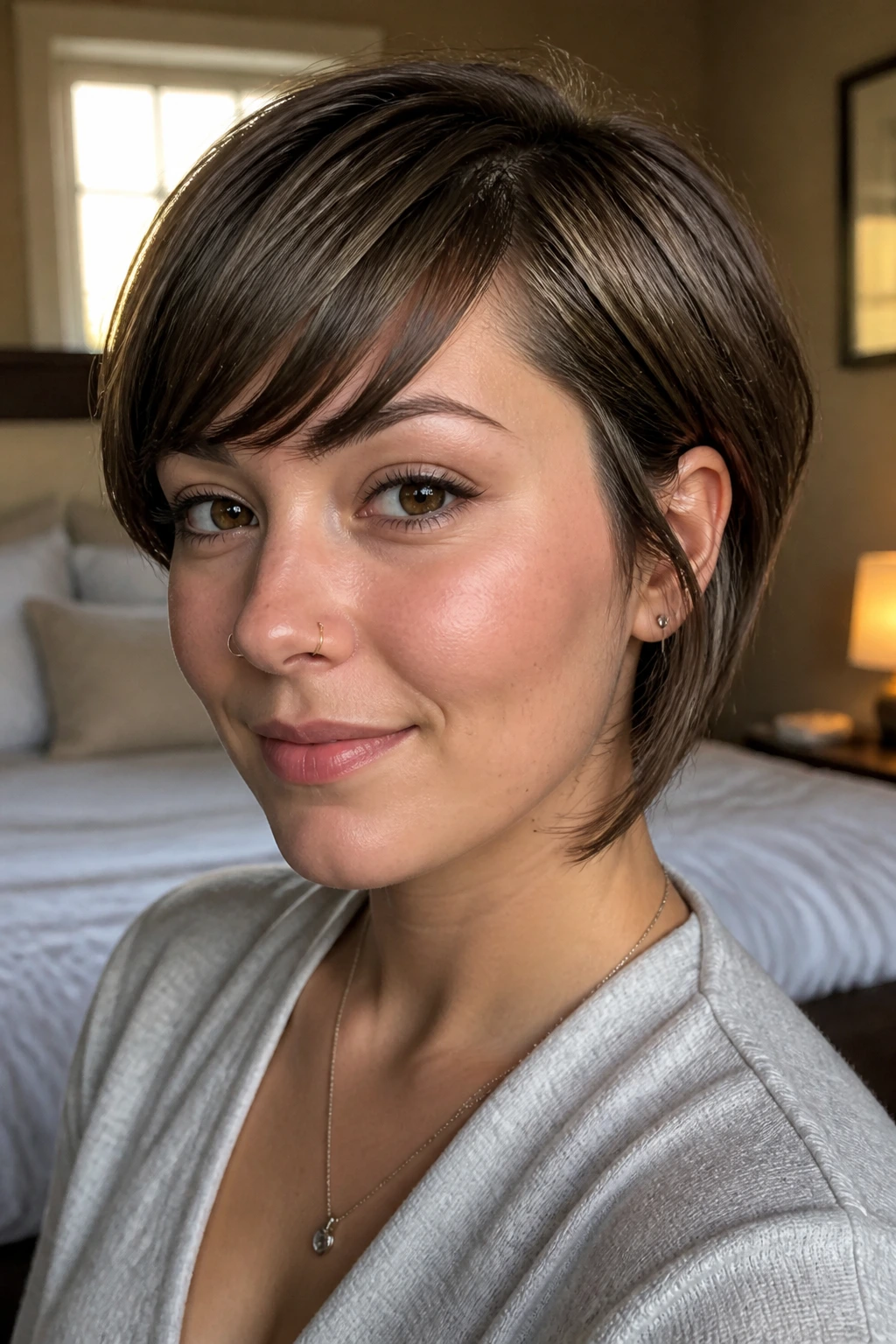
Diagonal lines do the heavy lifting: A sweep that angles from one side of the forehead to the other creates length where a round face needs it most.
-
The right corners matter more than the middle: Keeping the outer pieces a little longer lets the fringe graze the temples or cheekbones instead of ending in a blunt strip.
-
They work with real texture: Wavy, straight, thick, or fine hair can all wear this shape if the cut is adjusted instead of copied straight from a photo.
-
They grow out with less drama: A short swoop that already has some side length tends to blend into layers instead of turning into an awkward shelf.
-
They play nicely with glasses and makeup: Because the center stays lighter, these bangs leave room for brows, frames, and the top of the cheekbone to show.
-
They can be soft or sharp: You can wear the same basic idea feathered and airy, or sleek and deliberate, and the face-shaping effect still holds.
1. Brow-Skimming Side Sweep
This is the classic for a reason. The fringe starts just off-center, skims one brow, and falls into a soft diagonal that keeps the face from reading too round at the widest point. It is short enough to feel fresh, but not so short that it loses the sweep.
The best version has a little bend through the ends, not a stiff curve. If the bang sits flat against the forehead, it starts acting like a horizontal line, and that is the last thing a round face needs. A tiny bit of lift at the root makes the whole shape look more intentional.
Why it flatters round faces
The eye follows the slant, not the width. That is the whole trick. Keep the center piece light, let the outer corner fall toward the cheek, and the shape starts working like a quiet contour.
Styling is simple: blow-dry the roots in the opposite direction first, then sweep the bangs across with a round brush and a quick cool shot. You want motion, not helmet hair.
2. Airy Curtain Mini
A mini curtain fringe gives you the soft middle part people love, but in a shorter, more face-opening version. It splits near the center and falls away from the forehead in two gentle arcs, which is useful when a round face needs a little vertical break without a heavy block of hair.
This cut looks best when the longest pieces land around the high cheekbone, not the middle of the cheek. Too short, and the split loses its job. Too long, and it stops reading as bangs at all. The balance is touchy, but when it lands, it looks relaxed in the good sense—not sloppy, just easy.
I like this shape on hair that has a little natural bend. Straight hair can wear it, too, but you need enough root lift to keep the center from collapsing. If you wear it with a soft wave, the face gets a longer line down the front without losing softness around the eyes.
3. Off-Center Arc
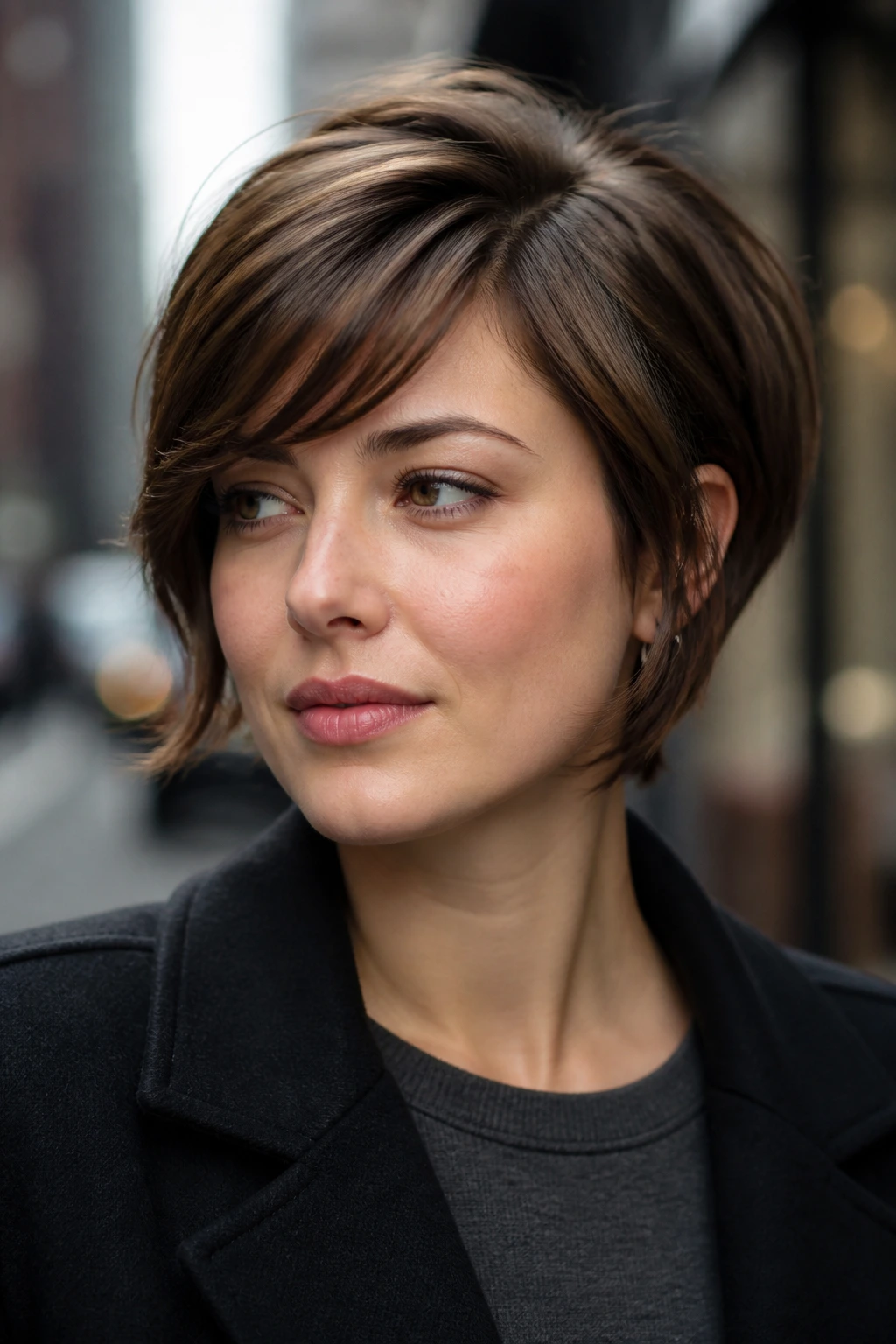
A deep side part with a curved bang is one of the fastest ways to change the proportions of a round face. The arc starts higher on one side, drops across the forehead, and ends with a longer tail near the temple. It creates a strong diagonal, which is exactly why it works.
This style has a little more drama than a basic side sweep. Good. A round face can take it. The angle keeps the eye moving, and the longer side gives the cut a bit of weight so it doesn’t disappear into the rest of the hair. If you have fuller cheeks, this is one of the better options because it draws attention upward first, then down.
The only catch is balance. If the shorter side is too short, the whole thing can look choppy. Ask for a soft arc, not a sharp shelf. You want movement across the forehead, then a smooth fall into the rest of the haircut.
4. Pixie-Soft Swoop

Short hair and round faces can be friends, but the bang needs to carry some of the shape. A pixie-soft swoop does that by keeping the fringe feathered and slightly longer on one side while the rest stays cropped close around the ears and nape.
This one is all about contrast. The short cut opens up the jawline and neck, while the bang brings a little motion back to the front. On a round face, that contrast helps the face read less circular and more lifted. The height on top matters, too. If the crown sits flat, the cut loses the shape it needs.
What to ask for
Tell your stylist you want a short swoop that can still move. Ask them to leave enough length at the front to brush sideways rather than straight down. A lot of pixie cuts get cut too evenly through the fringe, and then the bang just sits there. Not helpful.
This version is best if you like low-maintenance styling and are fine with a trim schedule that stays tight. It grows out fast. That is the price of short hair.
5. Chin-Grazing Sweep with Layers
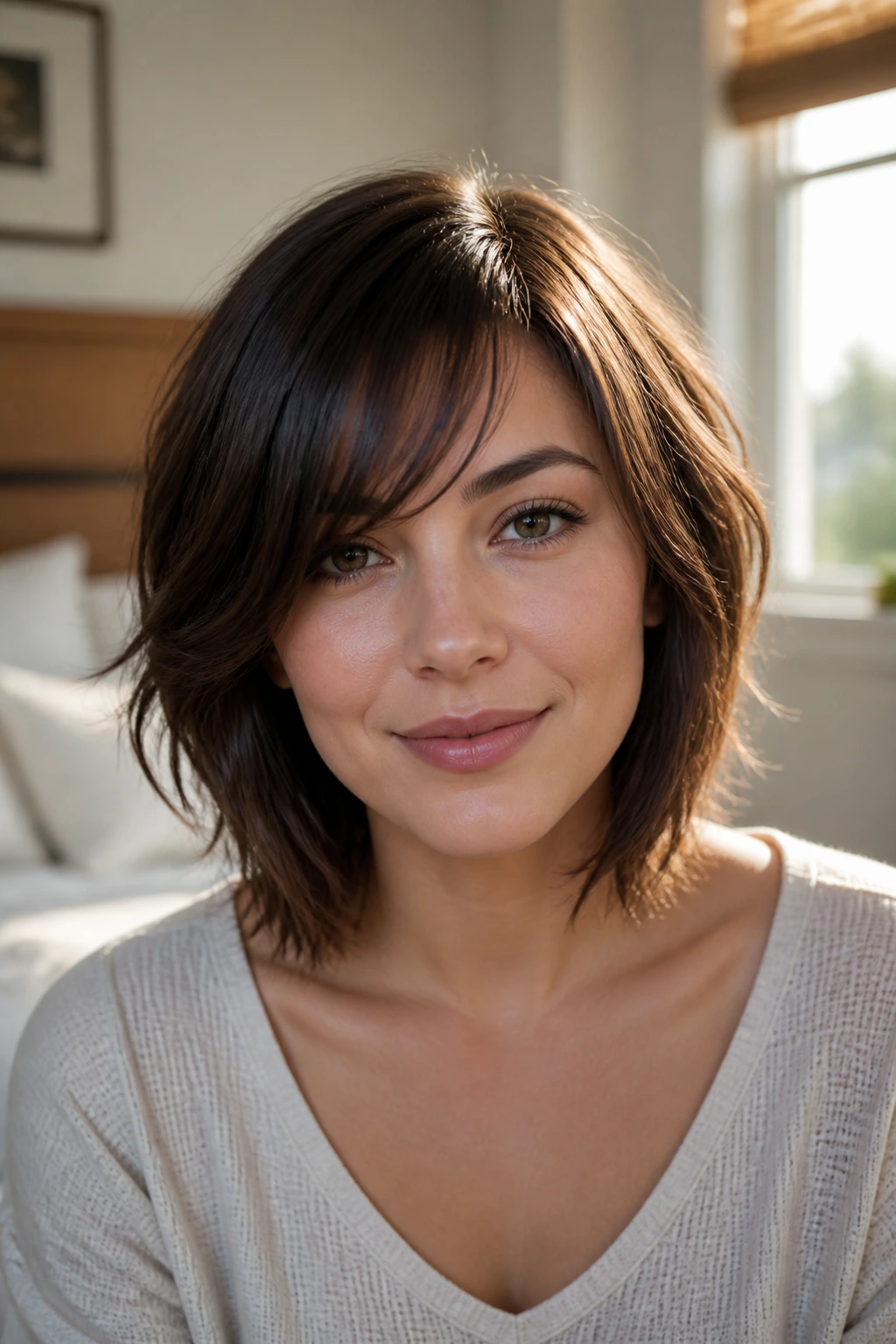
Technically, this is still a bang. It just has longer corners that drift toward the jaw. That extra length is useful on a round face because it creates a line that travels downward instead of stopping at the cheeks.
The center can be short enough to read as bangs, but the side pieces should be long and soft. They blend into face-framing layers and keep the width of the face from looking exaggerated. If you have a fuller cheek area, this style gives you coverage without the heaviness of a straight fringe.
It also grows out well, which I appreciate. A lot of bang styles look good for two weeks and then start acting strange. This one just gets a little more layered. If your hair moves a lot, this is one of the most forgiving versions on the list.
6. Razor-Textured Wisp
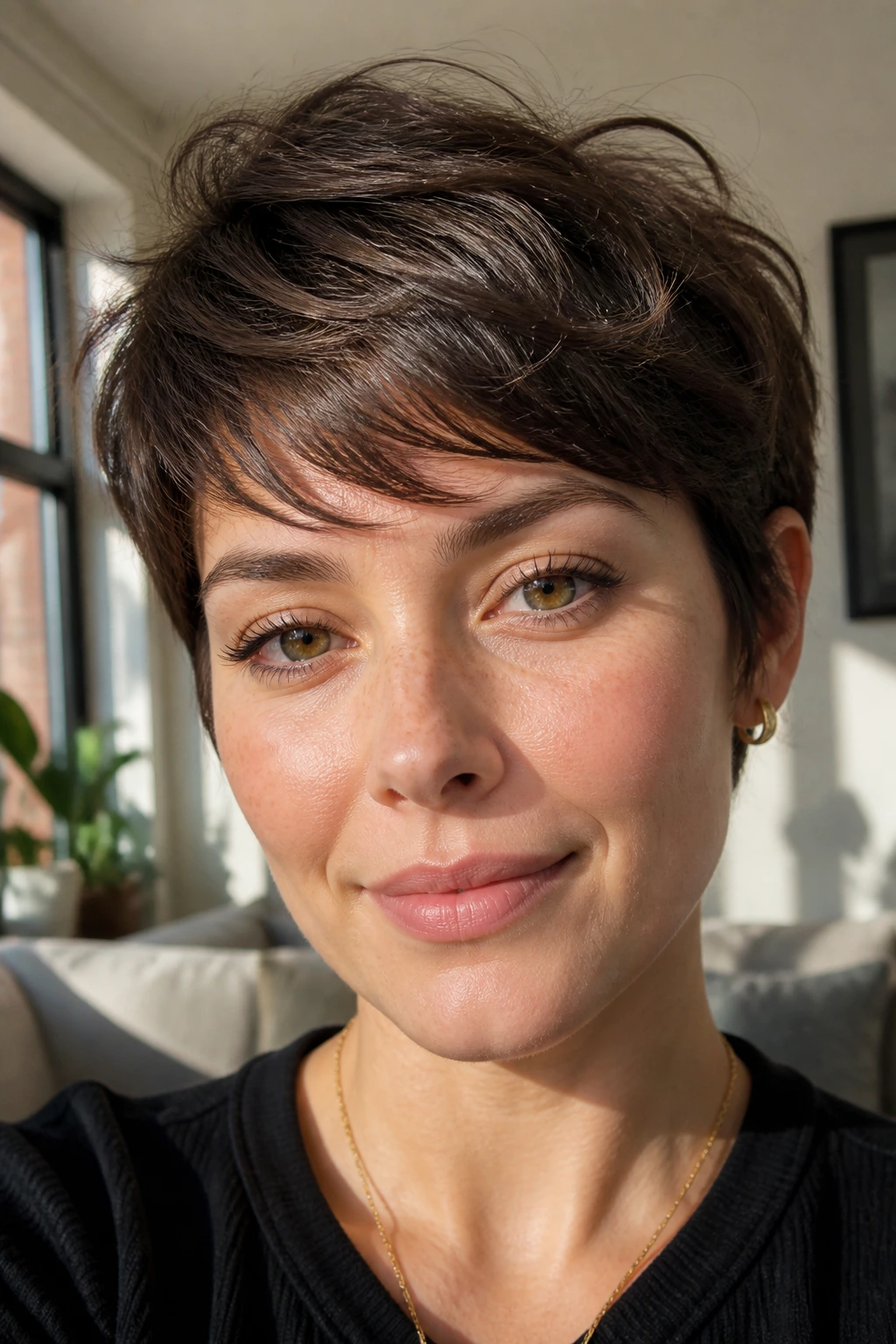
Thick hair can eat a bang alive if the cut is too blunt. Razor-textured wisps solve that by removing weight and leaving the ends airy. The result is a short swoop that bends instead of bulking up.
The texture matters more than the length here. The bang should look light at the forehead and slightly broken at the edge, almost like the hair was brushed forward and then softened with a point cut. On a round face, that broken line keeps the fringe from forming a solid band across the top half of the face.
This style is strong if you like a little edge. It does not have to look messy, but it should not look overworked either. Thick, straight hair gets a lot out of it. So does dense wavy hair that wants to sit too heavy in the front.
7. Deep Side Part Fringe

A deep side part changes the whole mood of the haircut. The bang becomes more of a diagonal panel than a center-front feature, and that shift is useful for round faces because it pulls attention away from the widest part of the cheeks.
Why the part matters
The part is not just a styling choice. It is part of the shape. A deeper side part creates a stronger line from the crown to the opposite brow, which lengthens the face visually. If the front hair naturally wants to fall that way anyway, even better. Work with it.
This style looks especially good with a bit of volume at the roots and smooth ends through the fringe. It can be polished or loose. If you wear your hair straight, it feels clean and sharp. If you wear it with bends, it softens the face without losing the diagonal.
8. Rounded Shag Bang

This is the bang for anyone who hates the idea of a rigid fringe. It sits inside a shag haircut, so the short swoop is broken up by layers that fall around it. Nothing is too even. Nothing is too stiff. That irregularity is the whole point.
Round faces often do better with movement than with symmetry, and the shag delivers that in spades. The bang can be short at the center and longer at the sides, but the surrounding layers keep it from looking like a separate section pasted onto the forehead. It feels lived-in, not staged.
If your hair is wavy, this is an easy win. If it is straight, you will need a bit of styling to keep the front from dropping flat. The shape still works either way, though, because the rest of the haircut supports the bang instead of fighting it.
9. Blowout Bend Bangs
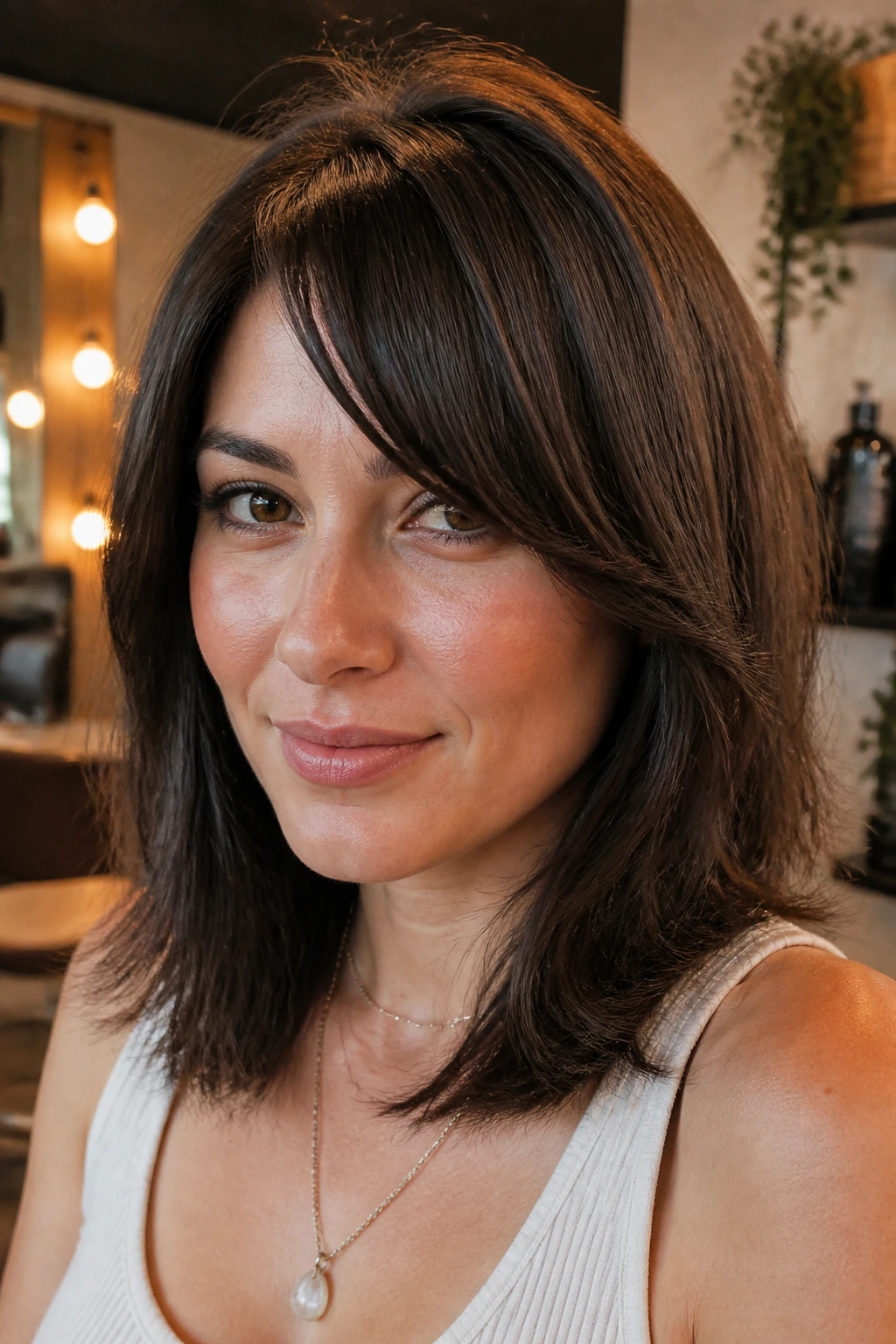
This is the version I’d pick for someone who likes the look of a salon blowout and does not want the front of the hair to look chopped off. The bang curves gently under and away from the face, with enough polish to look finished but enough movement to avoid a rigid line.
The curve matters. A clean bend toward the cheekbone creates a soft diagonal that lengthens a round face. If the ends curl too much toward the cheek, it can widen the look again, so the curve should stay loose and controlled. Think sweep, not curl.
Best if you like a polished finish
A round brush and a blow dryer with a nozzle make this style behave. Start by directing the roots forward, then brush them to the side and let the ends bend. A quick cool shot locks in the shape. That last step is the difference between “styled” and “collapsed by lunchtime.”
10. Flipped-Out Swoop
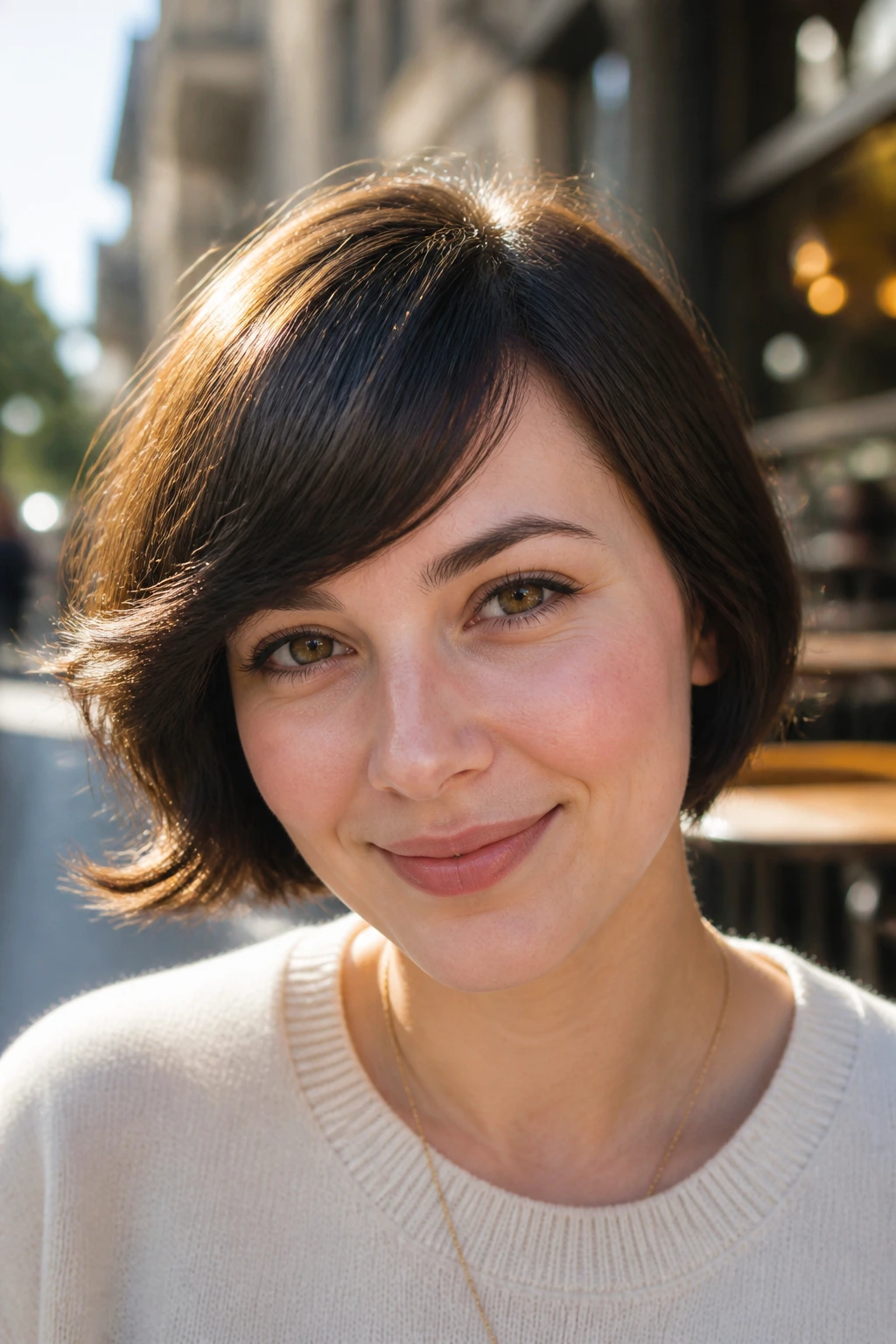
A flipped-out bang sounds a little retro, and honestly, that is part of the charm. The front sweeps across the forehead, then the ends kick away from the cheeks instead of hugging them. For a round face, that outward motion helps keep the center of the face open.
This style works nicely with shorter bobs, lobs, and layered cuts. It gives the front hair a playful finish while still keeping the line angled. The danger is over-flipping. Too much of it and the bang starts looking like it belongs on a cartoon character. Keep the flip subtle.
I like this version on hair that holds a bend well. If your hair is very straight and slippery, you will need a little texture spray or a touch of mousse to keep the ends from dropping. Otherwise the flip disappears, and the whole look loses its shape.
11. Glass-Sleek Sweep
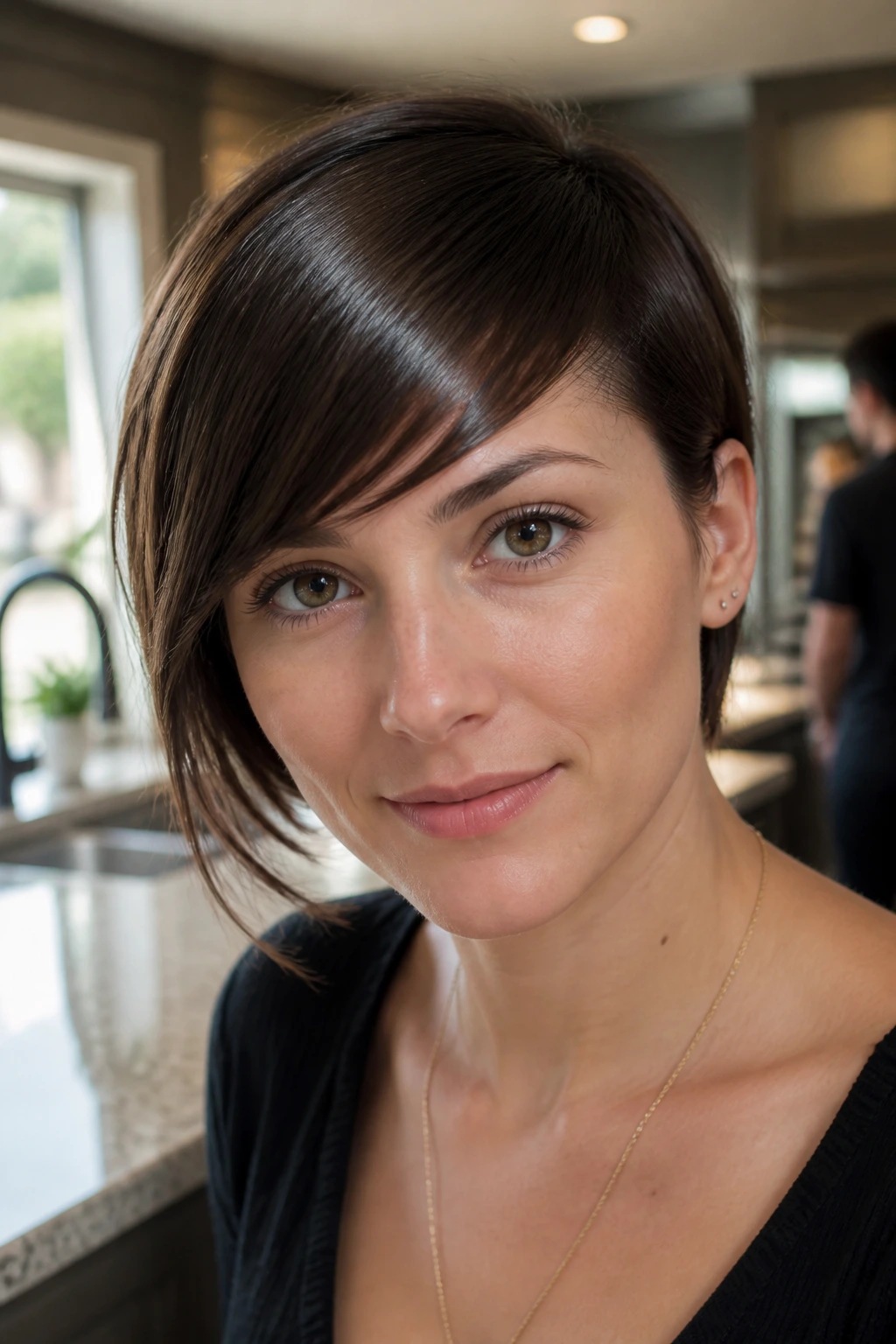
Some people want softness. Some want a sharp, glossy line that moves across the forehead like a ribbon. This is that version. The bang is smooth, controlled, and reflective, with a clean side sweep that shows off the shape of the cut.
A round face can wear a sleek fringe well when the angle is right. The key is to avoid a straight-across line. The sweep must stay visible from root to end, and the outer corner should be long enough to pull the eye down the side of the face. The shine is nice, but the geometry does the real work.
This cut suits straight hair best. If your hair frizzes easily, you can still do it, but you’ll spend more time smoothing the front. A mini flat iron helps, though I’d still start with a brush and dryer first. Heat on heat is overkill if the bang already has the right shape.
12. Airy Bottleneck Fringe

A bottleneck fringe gets narrower in the center and a little wider at the edges, which makes it a smart choice for round faces. The middle leaves room at the forehead, and the longer sides guide the eye down toward the cheekbones.
This shape is light, but not flimsy. That matters. Thin-looking bangs can vanish on a round face if they are too sparse, and heavy bangs can widen the face if they are too thick. The bottleneck shape splits the difference by keeping the center controlled and the sides soft.
It also works well with glasses because it does not sit hard against the frames. The space around the bridge of the nose keeps the front from feeling crowded. If you want a fringe that feels current without being fussy, this is a good one to show your stylist.
13. Piecey Micro-Fringe

This is the boldest option in the bunch. The fringe is short, choppy, and broken into small pieces that sweep just enough to avoid a blocky line. On a round face, that broken texture can be surprisingly flattering because it adds angles where you need them.
The trick with tiny bangs
The bang must not sit too straight. That is the whole danger. If the pieces are cut evenly, the width becomes the story. If they are intentionally uneven and styled with a tiny bit of lift, the face gets a strong vertical read instead.
This is a good fit for people who like a little edge and do not mind a bang that asks for attention. It works best when the rest of the haircut has some height or layering. Otherwise the short front can feel disconnected from the rest of the hair.
14. Soft Curved Bardot Bangs
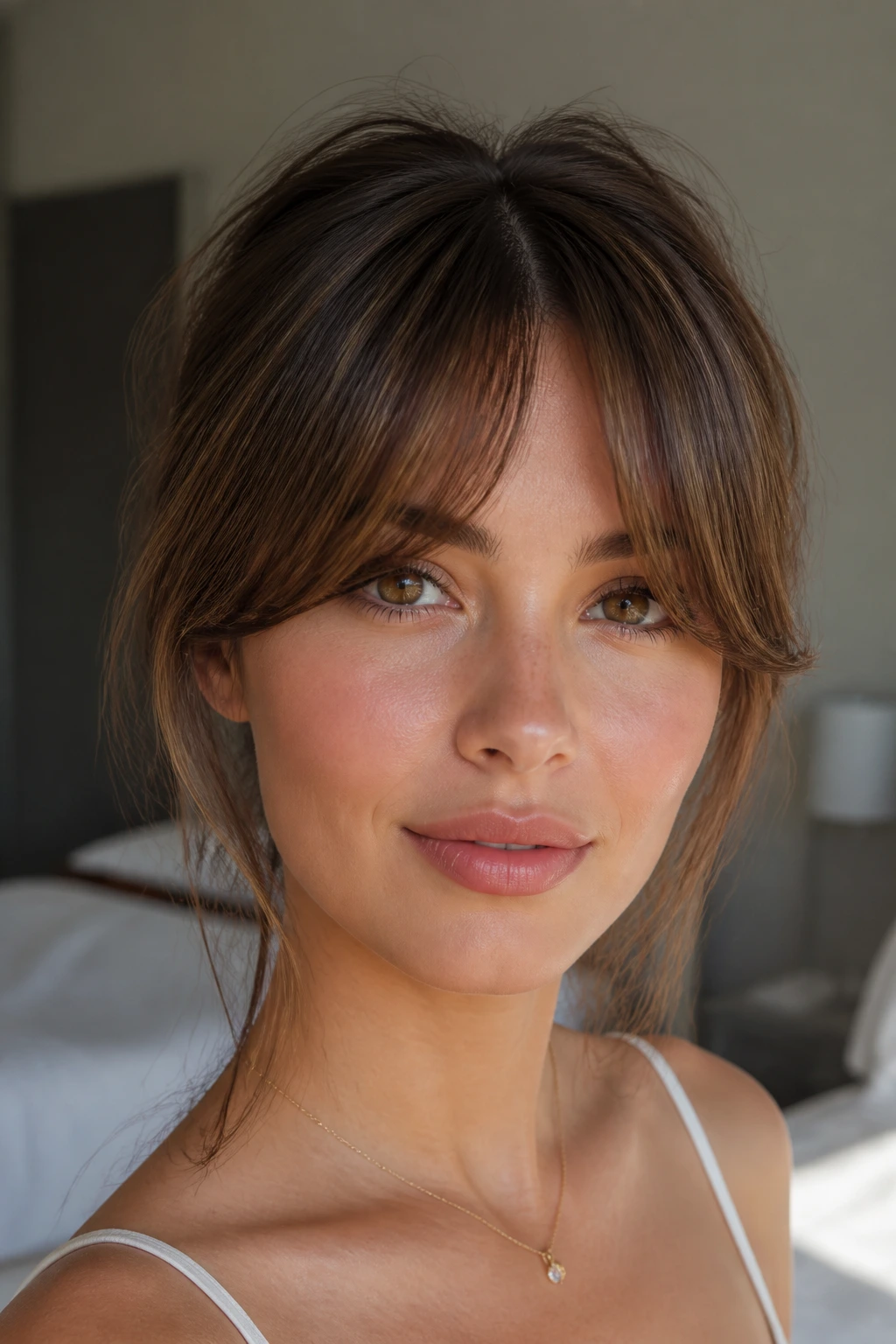
Bardot-inspired bangs usually bring to mind a split, airy fringe with longer sides. The short swoopy version keeps that spirit but trims the length so it sits higher on the forehead and feels lighter around the face.
The middle opening is the secret weapon here. It breaks the flat width of the forehead and lets the hair fall away from the roundest part of the cheeks. The outer corners should be long enough to blend into layers, not stop as a distinct little wing.
This is one of the easiest styles to soften up with fingers instead of brushes. A quick twist while drying is often enough. If you want bangs that can look undone without looking random, this cut is a strong contender.
15. Layered Lob Bangs
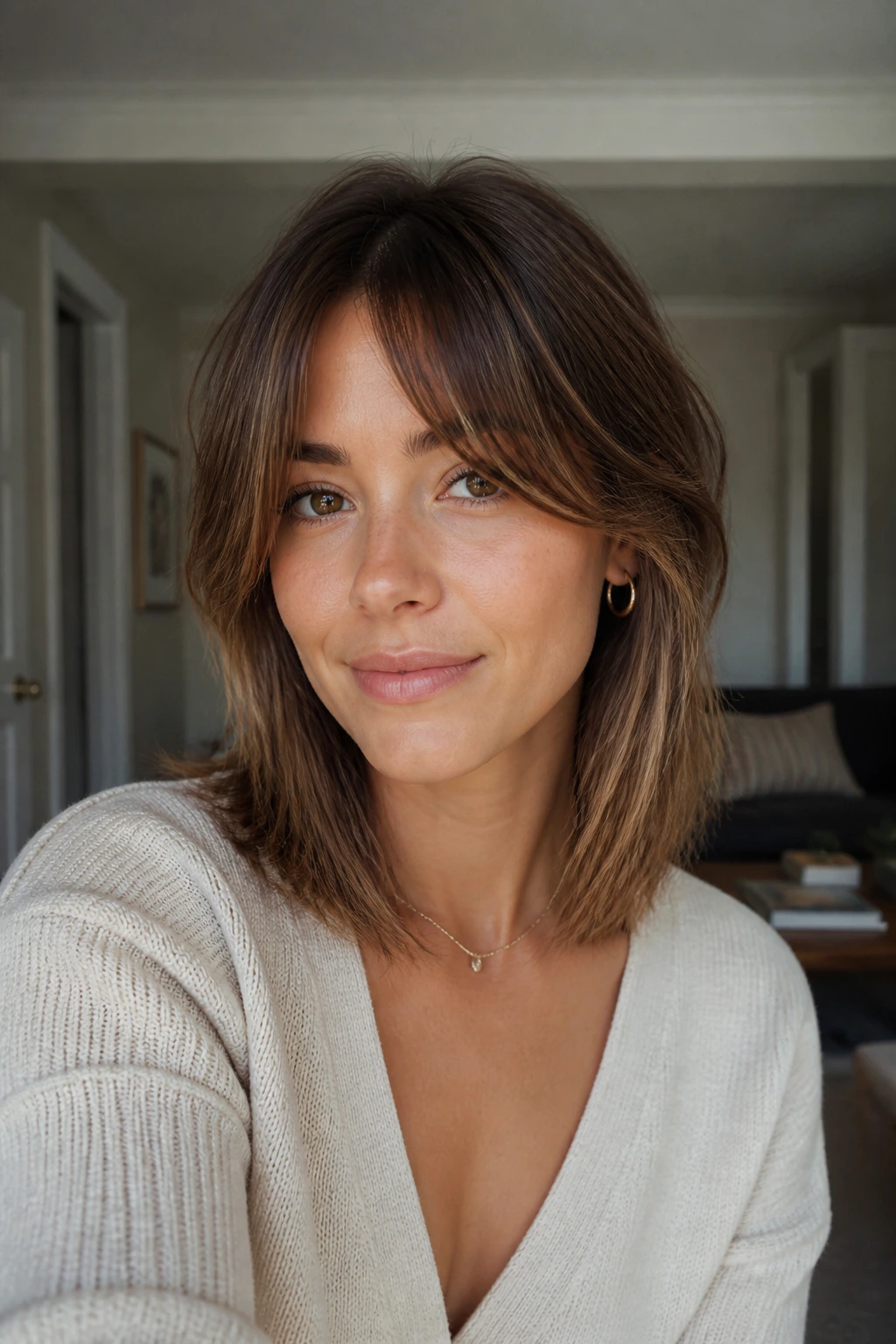
A lob with bangs can get too uniform if the front is cut bluntly. Layered lob bangs avoid that by folding the fringe into the haircut instead of separating it from the rest of the shape.
The value here is in continuity. The front sweep flows into the lob’s face-framing layers, which keeps the overall silhouette longer and cleaner. On a round face, that helps the eye travel downward. The bangs still matter, but they do not become the whole event.
This style is also nice if you like changing your part. A slight shift left or right changes the mood without wrecking the shape. That flexibility is useful if you are not ready to commit to a very precise fringe.
16. Wavy Swoop with Bend

Wavy hair often makes the best short swoopy bangs because the bend is already there. The job is not to force the hair into shape. It is to steer it. A bit of mousse, a diffuse dry, and a side sweep are usually enough.
The texture creates softness around the forehead while the angle keeps the face from looking wider. You do want to leave enough length for the wave to form. If the bang is cut too short, the bend can pop up and shorten the face in the wrong way. A slightly longer front solves that.
This is one of the most forgiving versions for people who do not want a strict styling routine. It looks best with a haircut that already has movement through the lengths. A stiff, one-length cut underneath can make the bang look disconnected.
17. Curly Swoopy Fringe
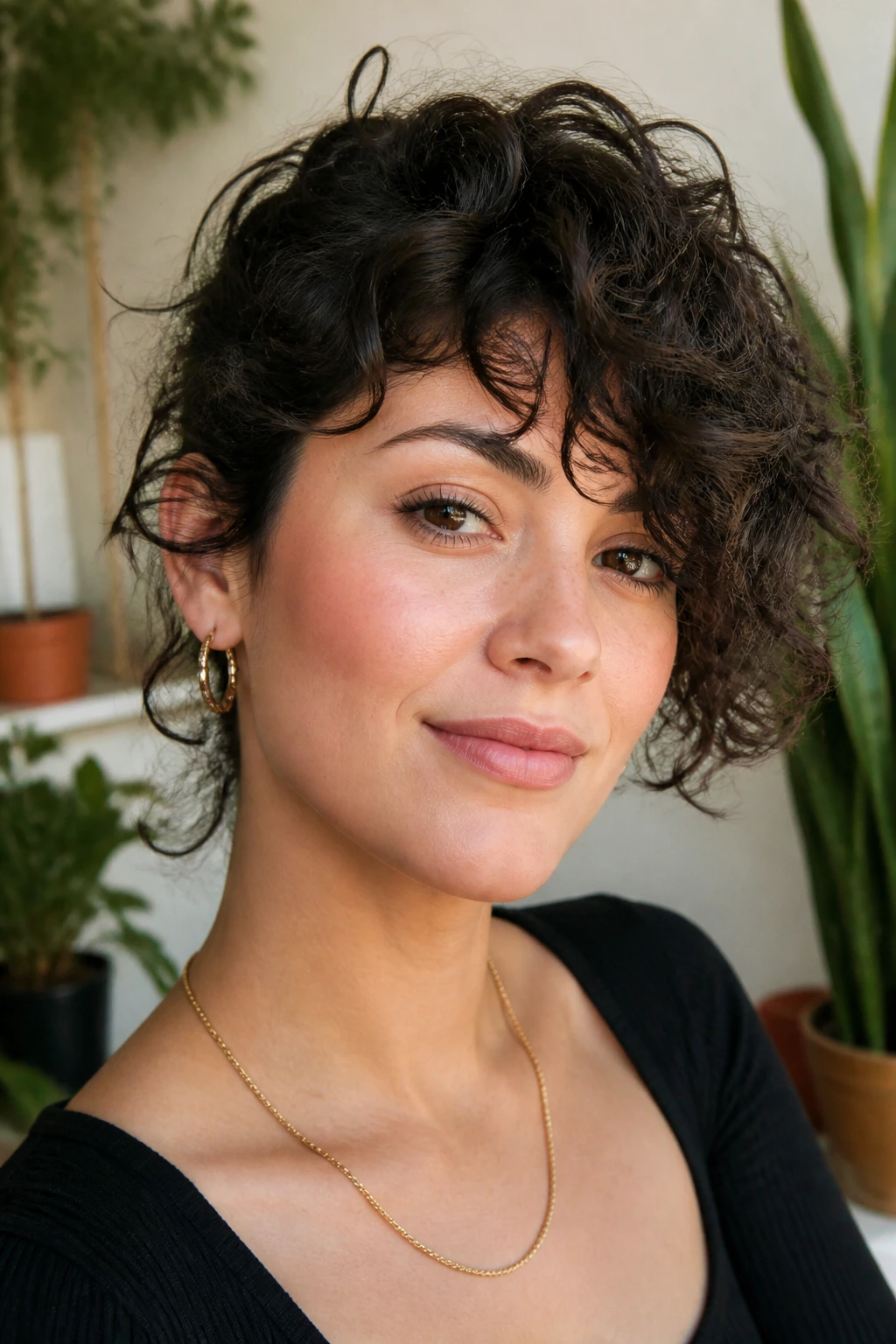
Curly bangs on a round face need room to spring. That means the cut has to be longer than you think and shaped with the curl pattern in mind, not against it. A short swoop with curls can be excellent when the corners are left to fall toward the cheekbones.
The important thing is shape, not exact length. Dry curls shrink, and shrinkage changes the way a bang lands on the forehead. If the stylist cuts the fringe wet and too short, the result can sit too high and make the face feel fuller. Cut it with the curl in mind, and let the curl do its own work.
I like this version because it adds softness without flattening the natural texture. The bang should frame the face, not fight it. If you wear your curls with a side part, the swoop can become one of the easiest parts of your look to maintain.
18. Temple-Length Sweep
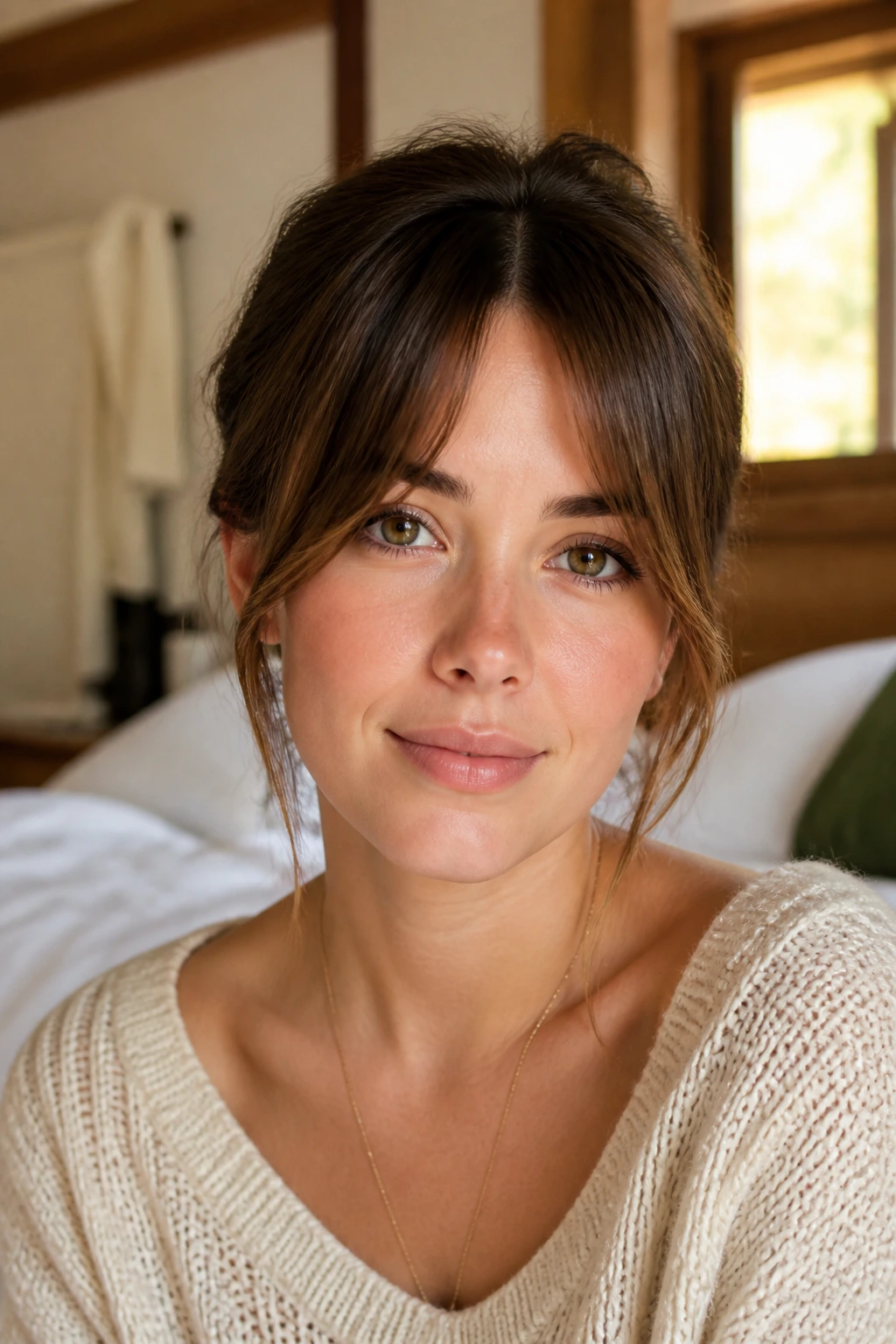
Temple-length bangs start farther back than a classic fringe, which makes them a smart move for round faces. They sweep from the temples inward and then drift down, creating a narrow front shape that keeps the sides of the face from feeling too wide.
This cut is sneaky. From a distance, it reads soft and casual. Up close, you can see how much it does for proportions. Because the shortest piece starts higher on the side rather than dead center, the face gets a more vertical frame.
It works well if you do not want obvious bangs. The shape lives in the front layers, not in a heavy block. That makes it a good entry point for anyone nervous about committing to a fringe.
19. Asymmetrical Bang Arc
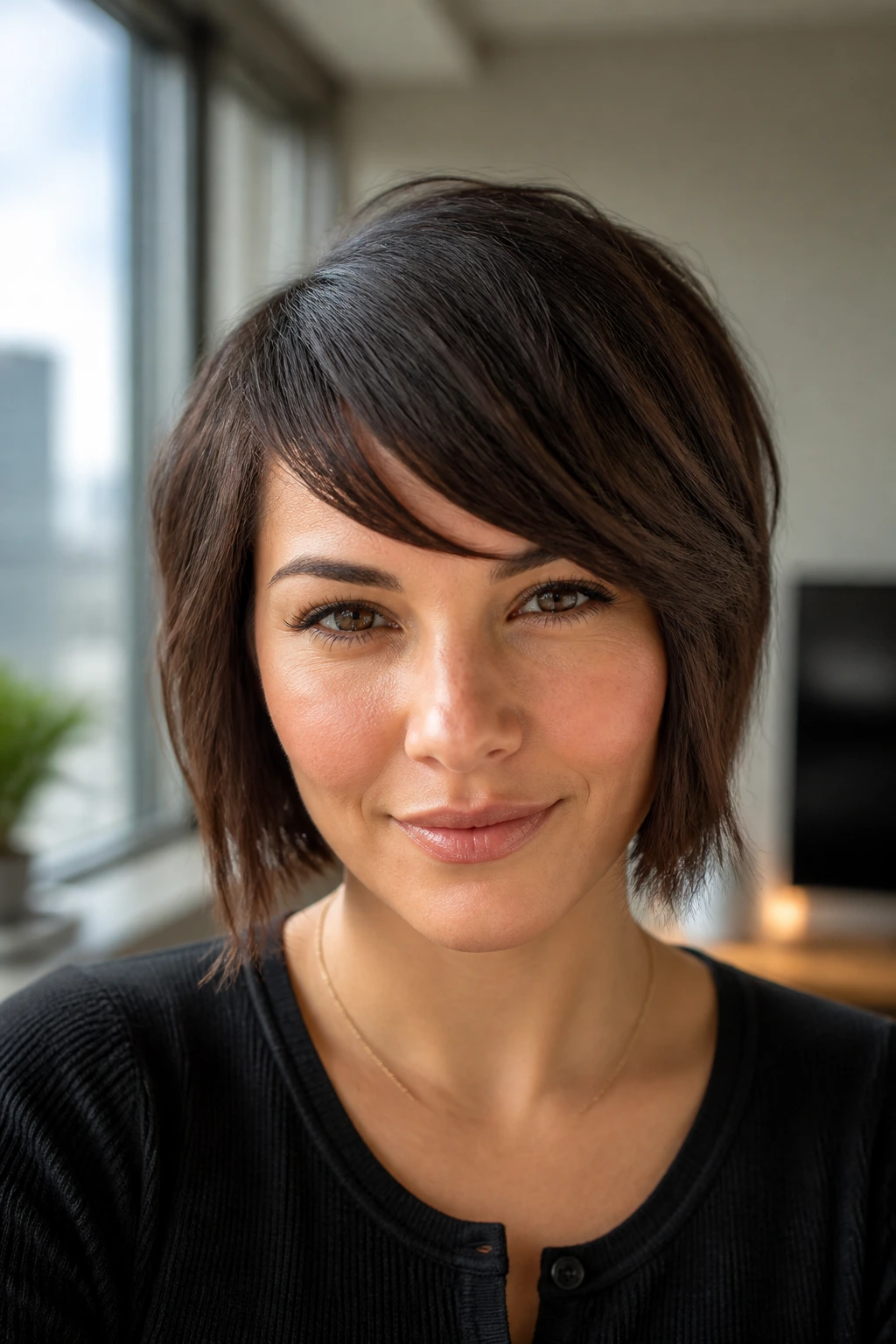
Now we get into the dramatic stuff. An asymmetrical arc uses one side shorter than the other, which creates a strong line across the forehead and keeps the face from reading evenly round. It’s a deliberate look, and it should look deliberate.
The asymmetry gives the haircut energy. One side can skim the brow while the other drops toward the cheekbone. That difference keeps the eye moving and pulls focus away from the widest points of the face. The key is proportion. If the difference is too extreme, it can look accidental. If it’s subtle but clear, the whole thing feels sharp.
A good fit if you like strong shapes
This one pairs well with sleek hair, but it can also work with loose waves. The important part is that the arc stays visible. If the hair is too fluffy around the face, the asymmetry gets lost. Keep the ends controlled enough to show the line.
20. French-Inspired Short Sweep
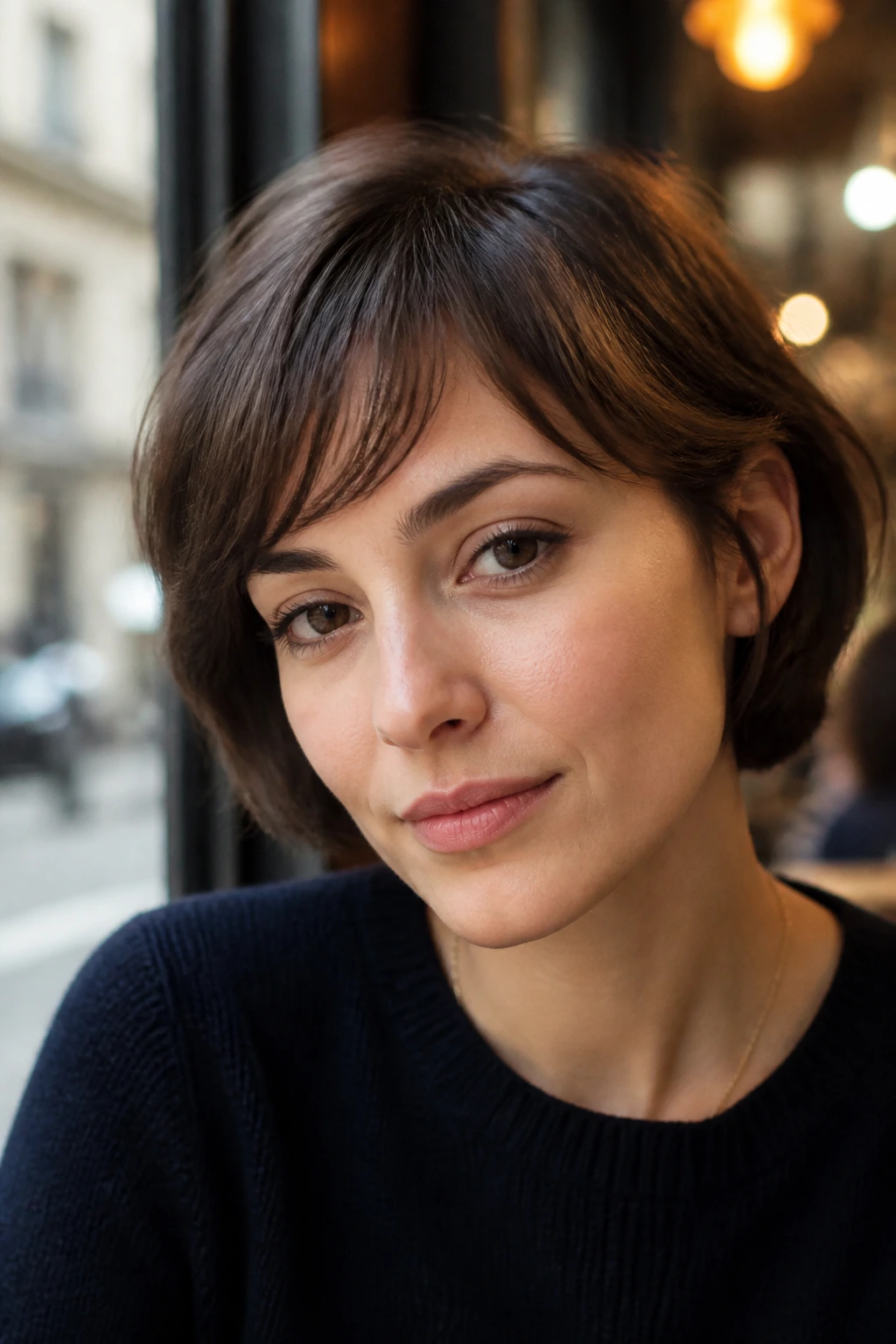
This style has that relaxed, slightly undone feel people chase in salon photos, but the shape underneath still matters. It is short, airy, and angled just enough to skim the forehead without turning into a solid curtain.
The French-inspired version is less about precision and more about ease. Still, ease should not be confused with laziness. The bang needs clean corners, a soft center, and enough internal texture to move. On a round face, that loose front keeps the shape from looking too compact.
If you like hair that seems to fall into place with minimal fuss, this is a good candidate. It looks especially nice with natural texture and a bit of separation through the ends. Just do not let “undone” become “unfinished.”
21. Tucked-Behind-Ear Fringe
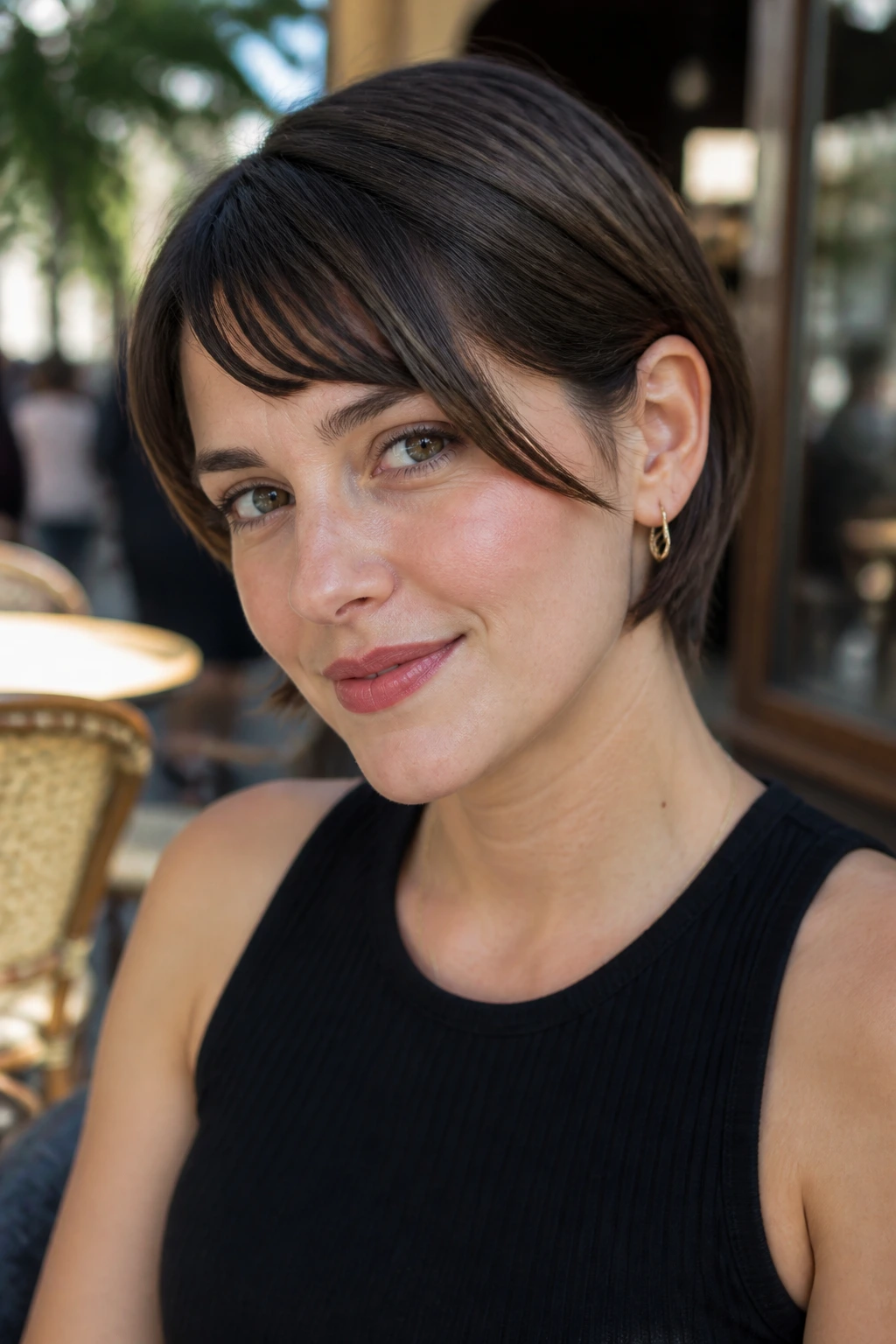
This one is underrated. The bang sweeps across, then gets tucked behind one ear, leaving a diagonal opening at the forehead and a clean line at the cheek. For a round face, that exposed side helps break up the width in a way that feels easy rather than fussy.
It is also practical. Glasses, earrings, face masks, windy weather—this style handles them better than a bang that sits squarely in the face. The trick is to leave enough length for the tuck. If the bang is too short, it keeps springing loose.
I like this one for people who want bangs but do not want to babysit them all day. It can look polished in the morning and casual by lunch. That is not a bad thing.
22. Soft Side Feather Fringe

Feathered ends give you a light, easy sweep that suits round faces well because the fringe never becomes a solid wall. The pieces slide across the forehead and thin out toward the side, which leaves the face open but still framed.
Why feathering helps
Heavy bangs can eat up the forehead and widen the center of the face. Feathering does the opposite. It lets skin, brow, and cheekbone show through the gaps, which creates a lighter read without losing the shape of a bang.
This is a very good option for fine hair, especially if you worry about bangs looking too dense. It also grows out gracefully, which matters if you hate frequent trims. The feathered edge is forgiving in a way blunt cuts are not.
23. Bold Swoop with Long Corners
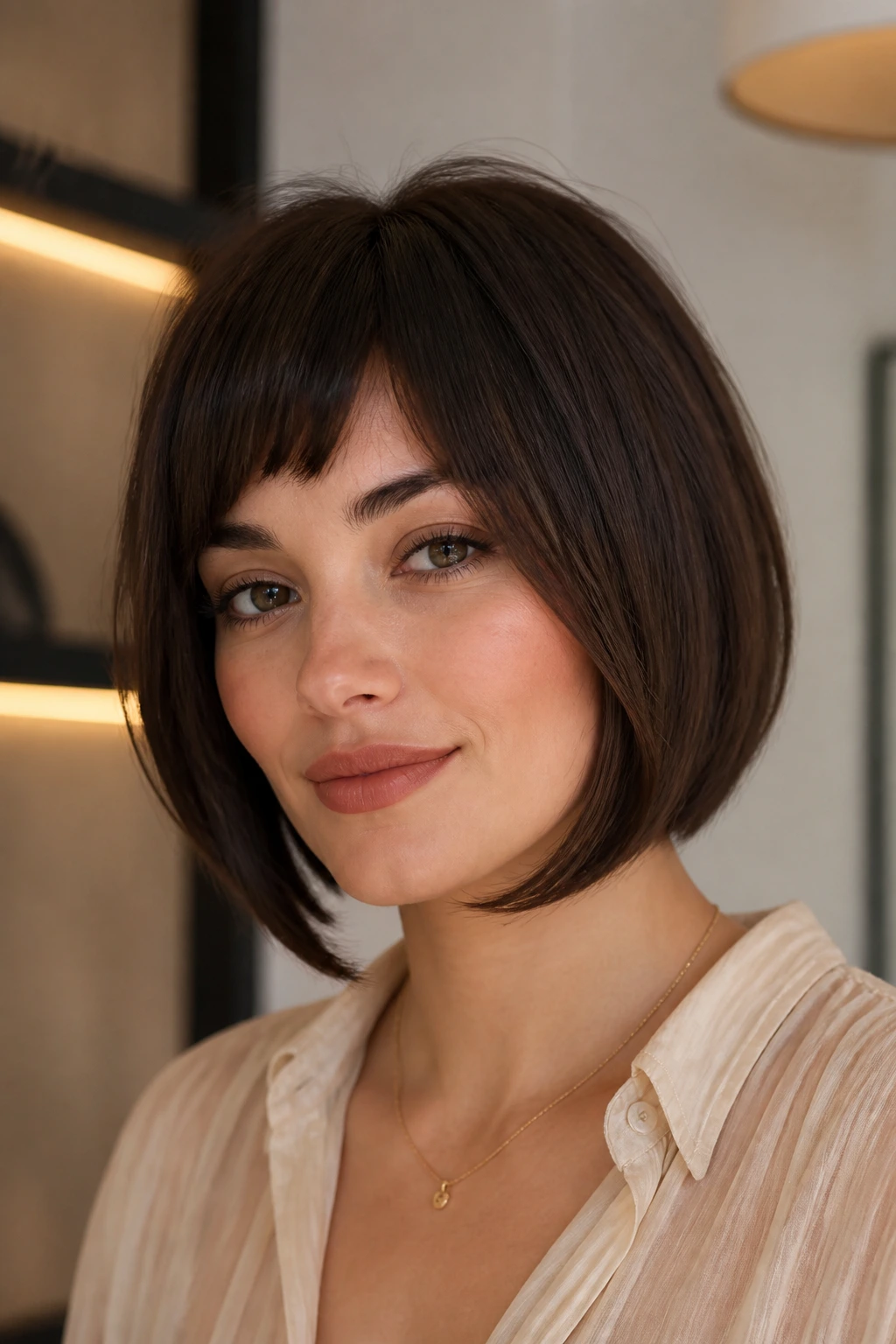
If you want coverage up front but still need the face to look longer, this is the one to show your stylist. The center is short enough to read as a fringe, but the corners stay long and sweep toward the jawline, creating a strong diagonal through the front of the hair.
This cut works especially well on thick hair and on round faces with a fuller cheek area. The longer ends help redirect the eye downward, while the shorter center keeps the forehead from feeling too bare. It is the most “made” version of the bunch, and I mean that in a good way.
It does ask for styling. A quick blow-dry with a round brush and a little tension keeps the corners from puffing out. When it is done right, the shape looks like it was designed for the face rather than dropped onto it.
Why Short Swoopy Bangs Change the Shape of a Round Face
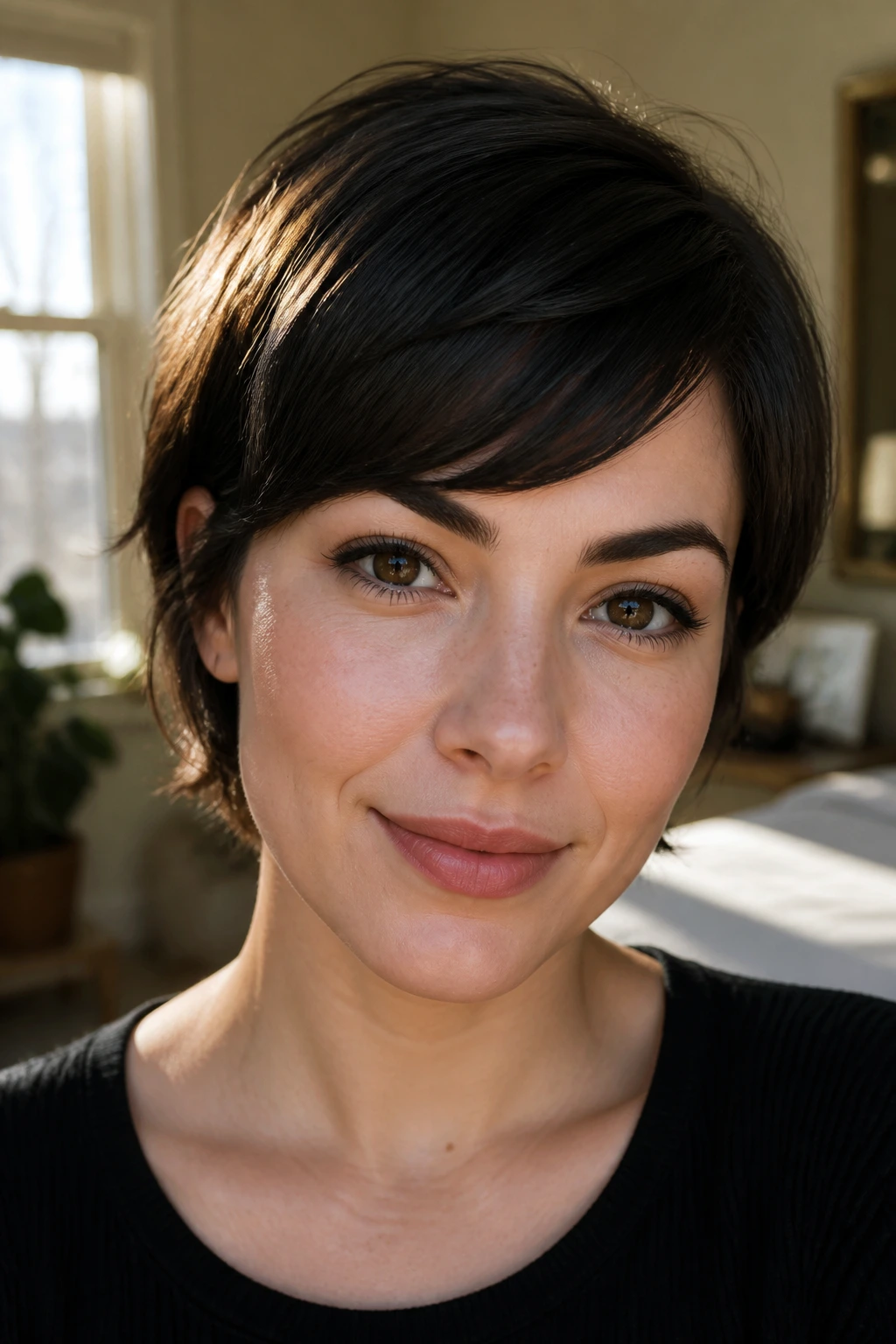
A round face usually has soft curves through the cheeks, a wider center, and not a lot of sharp angle from forehead to chin. That is not a flaw. It just means the haircut has to bring in some direction. Short swoopy bangs do that by creating a diagonal line across the upper face, which breaks the circle effect without turning the haircut severe.
The diagonal line does the heavy lifting

A horizontal line makes the face look wider. A diagonal line takes up less visual space. That is why a swoop works better than a blunt fringe on most round faces. The eye has somewhere to go. It moves from one brow toward the temple or cheekbone instead of stopping dead at the center.
Where the length should hit
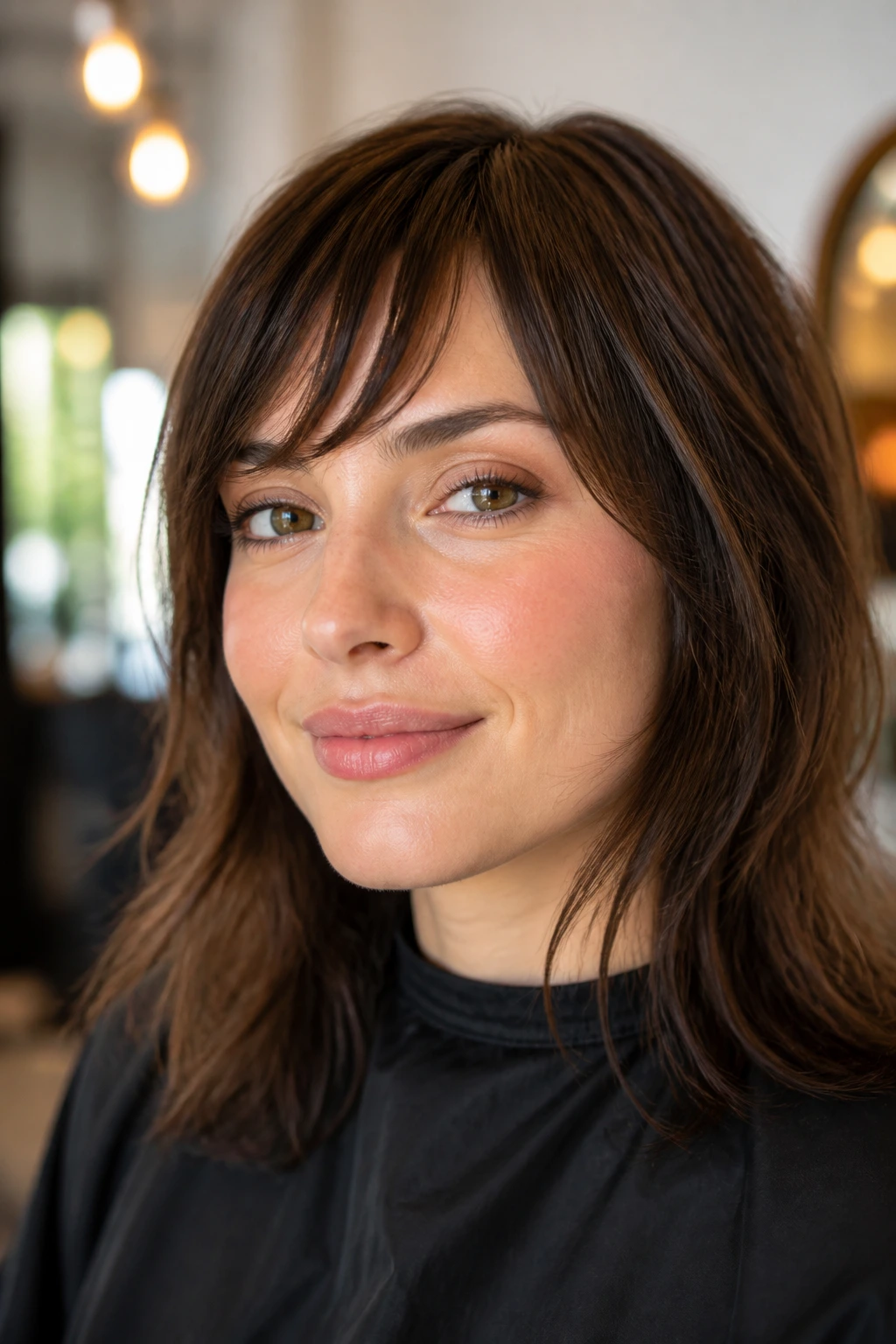
The best place for the outer corner is usually somewhere between the outer brow and the high cheekbone, depending on hair texture and face length. Shorter than that, and the line can feel abrupt. Longer than that, and the bang may blend away so much that the shaping effect disappears.
What to avoid
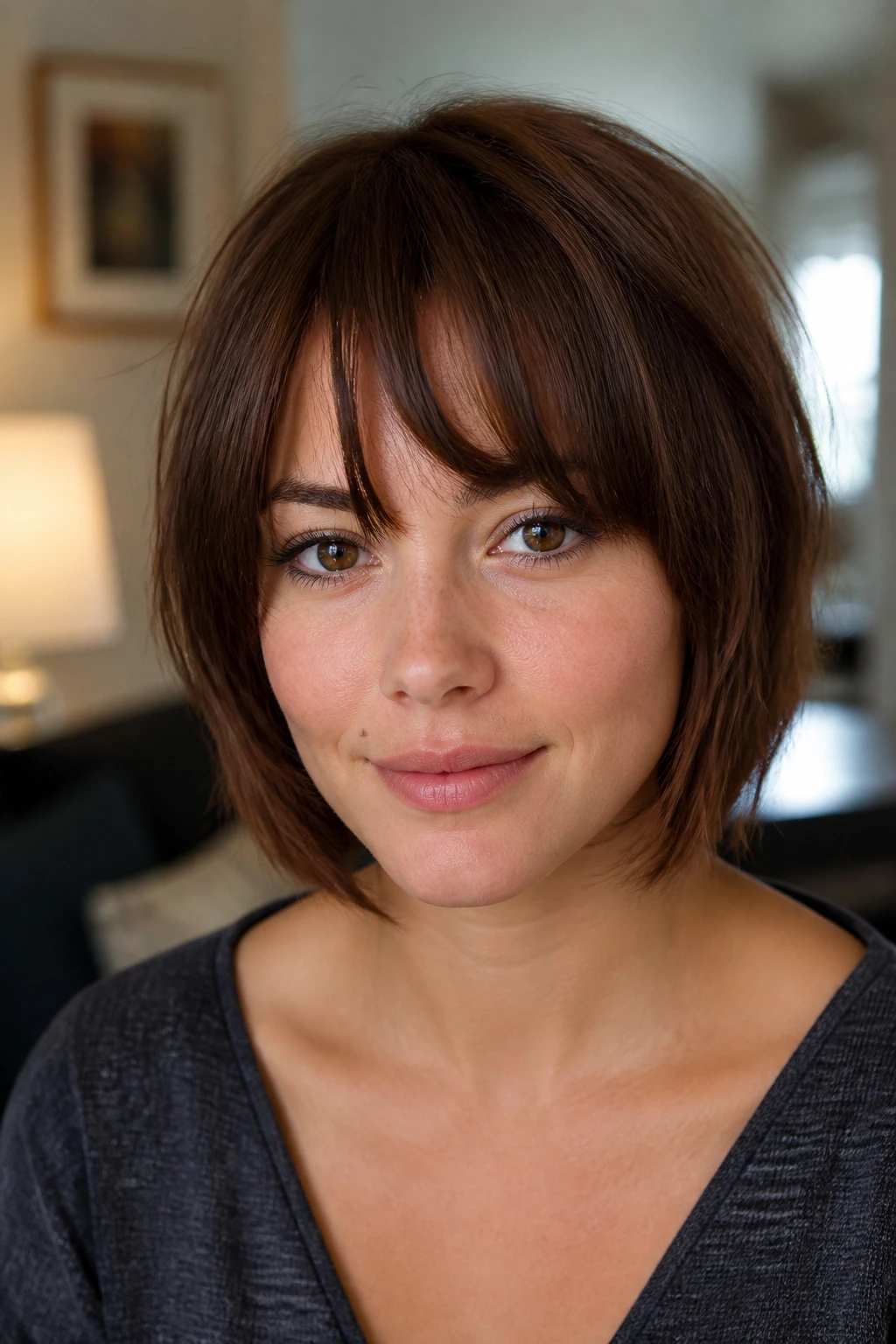
A dense, straight-across center is the usual problem. So is a bang that ends exactly at the widest cheek point. That creates a shelf effect. If your face is round, the front hair should move, taper, and overlap the rest of the haircut instead of sitting as a separate block.
How to Ask for the Cut So It Sweeps Instead of Sits Straight
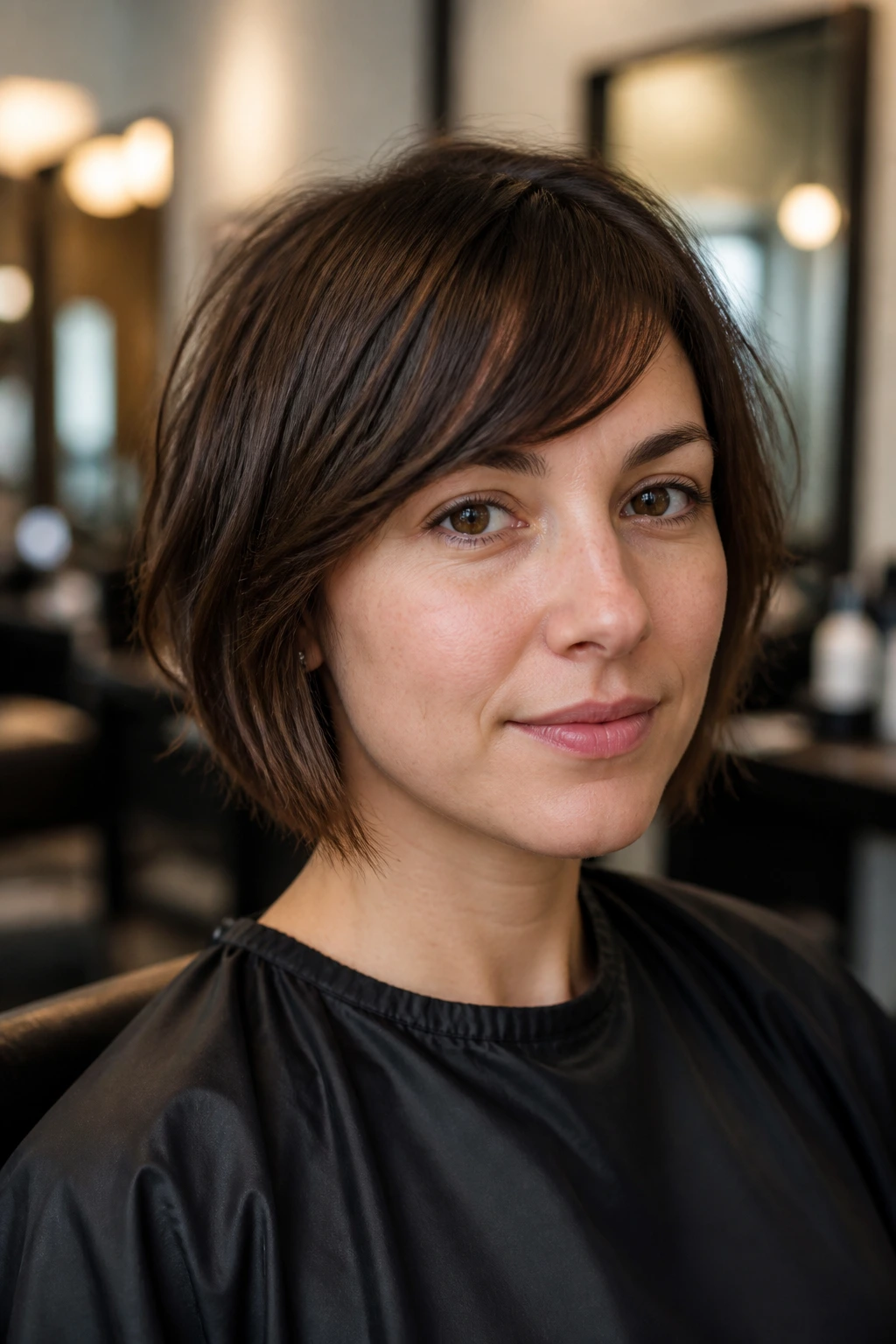
Bring a photo, yes, but also say what you want the hair to do. “I want a short swoopy bang that angles across my forehead and stays longer at the sides” gives your stylist much better information than “I want bangs.” The word swoopy sounds casual, but the shape has to be cut with intention.
A good request sounds something like this: keep the center light, leave the corners long enough to tuck or brush sideways, and avoid a blunt line across the brow. If your hair has a cowlick, say that out loud before the scissors come out. That little swirly patch can change the whole front of the haircut.
Mention these details
- Your natural part, even if it changes a little.
- Whether you wear glasses.
- Whether you blow-dry or air-dry.
- How much forehead coverage you actually want.
- How often you are willing to trim them.
That last one matters more than people admit. A sharp, short bang on a round face can look great, but if you only trim your hair twice a year, it will stop behaving fast.
The Tools That Keep the Sweep in Place
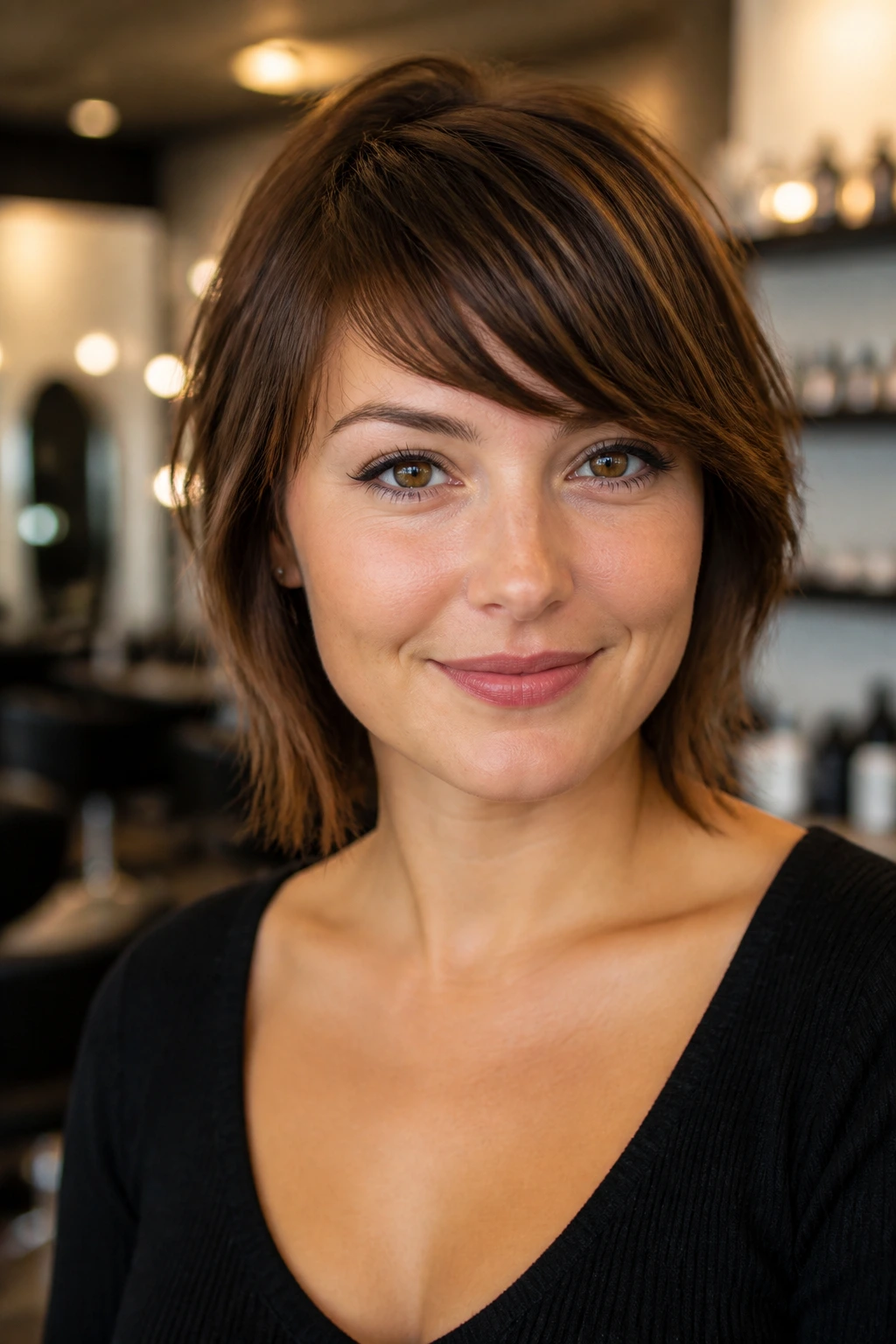
You do not need a drawer full of gear. You need a few things that make the front of the hair obey long enough to set the shape. My strong opinion: a good round brush matters more than a fancy styling cream.
-
Blow dryer with a concentrator nozzle: Directs the airflow so the bang bends where you want it instead of puffing around the forehead.
-
1-inch or 1.25-inch round brush: Small enough to shape short bangs, big enough to keep the curve soft rather than tight.
-
Mini flat iron: Helpful for polishing the ends or nudging a stubborn corner into place.
-
Heat protectant spray: Keeps the front hair from getting crispy, which is a fast way to make bangs look old.
-
Lightweight mousse or root lift spray: Gives the front some memory so the sweep does not collapse by noon.
-
Duckbill clips: Useful for pinning the fringe while it cools in the right direction.
-
Dry shampoo: Not just for grease. A little at the roots can stop bangs from sticking to the forehead.
How to Style Short Swoopy Bangs Without Flattening the Curve
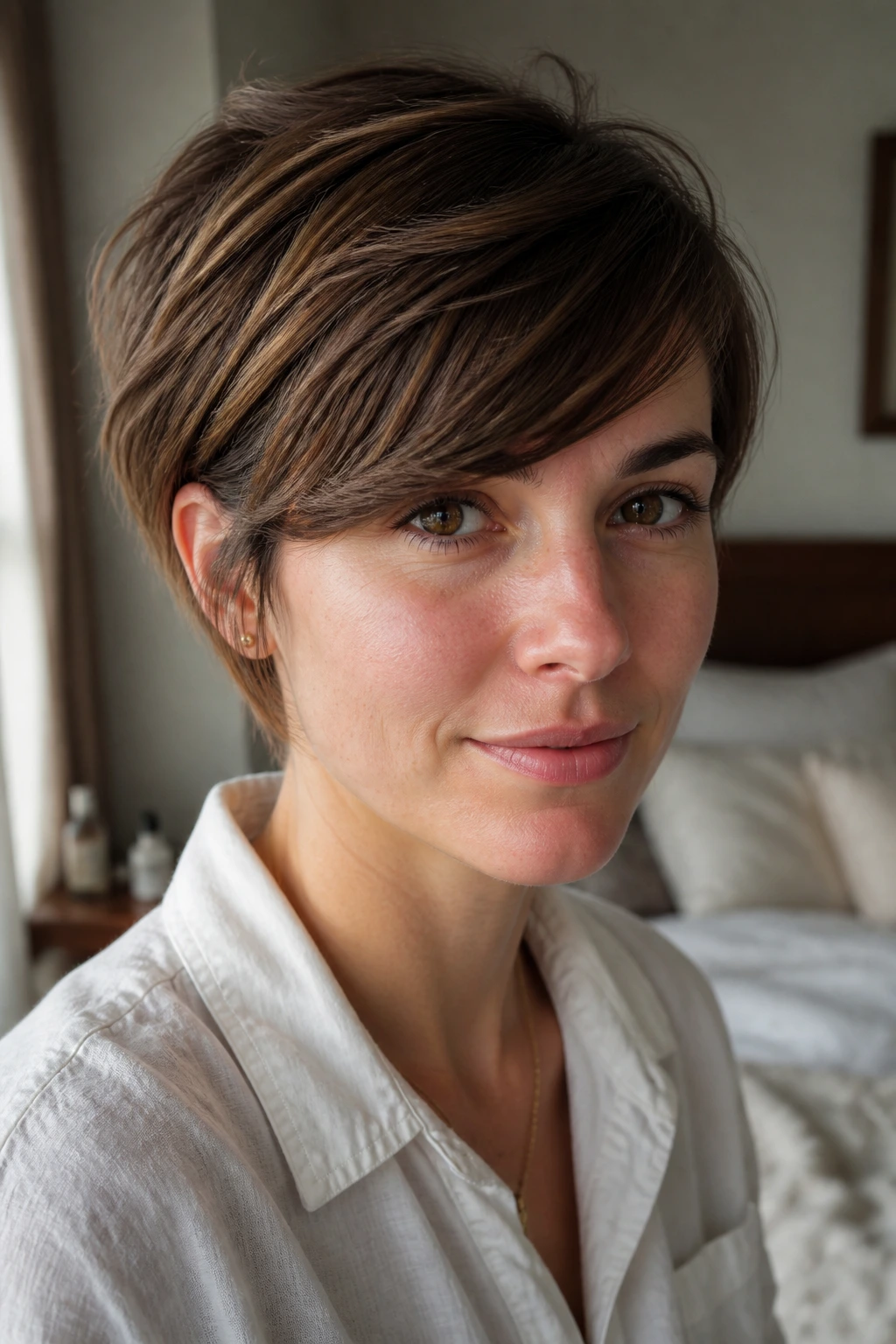
Start with hair that is damp, not dripping. Soaked bangs take too long to shape and tend to dry in weird clumps. A quick mist of heat protectant, then a small amount of mousse or root spray at the roots, gives the fringe a little support without making it stiff.
Blow-dry the roots first
Push the bangs in the opposite direction of where you want them to fall, then sweep them back across with the round brush. That helps lift the roots away from the forehead. If you skip this part, the hair tends to lie flat and separate in the middle.
Set the bend, then cool it
Wrap the ends around the brush just enough to create a soft curve. Hold it for a few seconds, then hit it with cool air. That cool shot is not decorative. It locks in the shape. If you let the bangs drop while still warm, they may collapse into the face.
Finish with your fingers, not too much product
Use fingers to break the line slightly. A tiny bit of texture cream or pomade is fine, but too much turns the front piecey in a greasy way. With bangs, less product usually means better movement.
Practical Fixes for Cowlicks, Humidity, and Busy Mornings
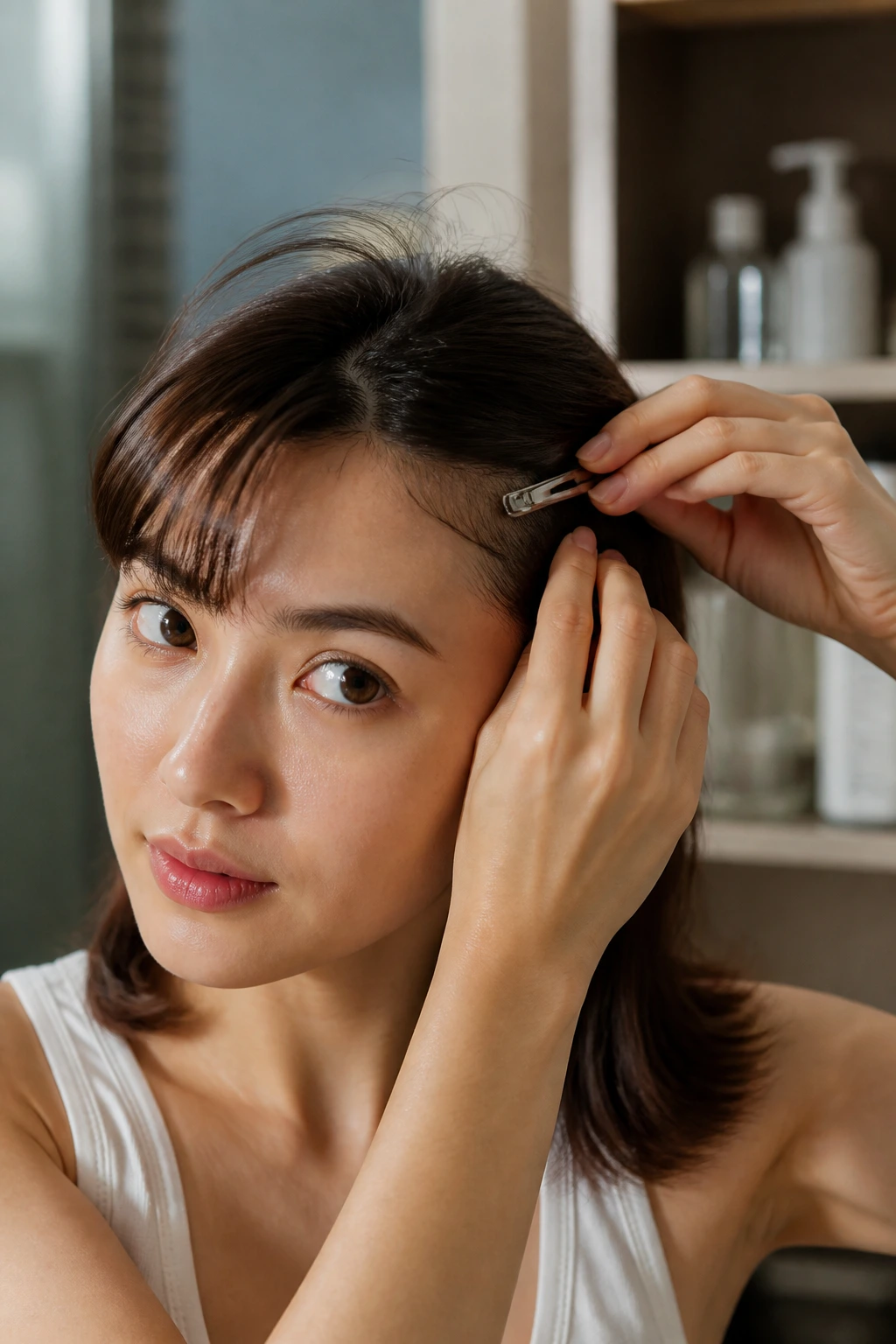
Cowlick control: If your front hair splits in the wrong direction, wet it slightly, clip it to the side you want, and let it cool there for a few minutes before styling. A cowlick that is dry and ignored will win the argument every time.
Humidity fix: Use a touch of anti-frizz spray on the mids and ends, not on the roots. Bangs that get too much product at the root can go flat, then puffy, then flat again. None of that helps the face shape.
Busy morning trick: Reset the fringe with water from a mist bottle and a quick round-brush pass. You do not need to rewash the whole head. That would be a waste of time and, honestly, a little overkill.
Thin hair move: Use a lightweight volumizing spray at the roots and keep the ends softer. Thin bangs can disappear if they are over-layered. A little body at the base is enough.
Heavy hair move: Ask for point cutting or soft texturizing at the ends. That takes away the shelf effect without thinning so much that the bang looks frayed.
Common Mistakes That Make a Round Face Look Wider
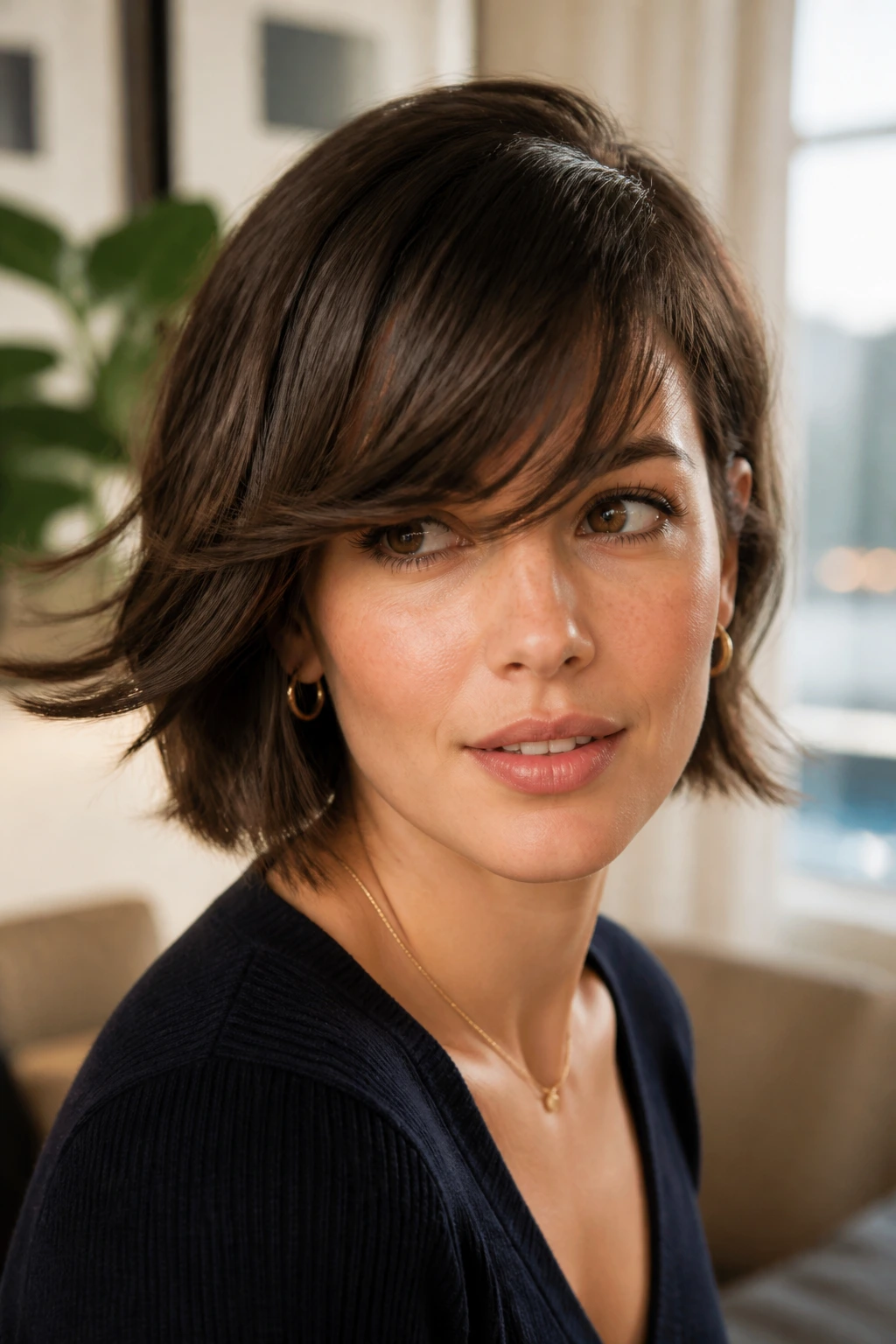
Cutting the center too blunt
A straight, heavy middle piece makes the forehead read wider. The fix is a lighter center with longer corners that sweep away from the face.
Ending the bang at the cheek’s widest point
That is where a lot of people go wrong. If the bang stops exactly where the face is fullest, it underlines the roundness instead of softening it. Let it fall higher or lower, not right on the widest spot.
Overloading the front with product
Too much cream or spray makes the fringe stick to the forehead. Then it separates in heavy chunks. A pea-sized amount is usually enough for short swoopy bangs.
Ignoring the crown
Flat roots make the whole front sit low and wide. A little lift at the crown helps the bang travel in a better line. Even a small bump at the root changes the read of the face.
Over-thinning curly or fine hair
If the ends are stripped too far, the bang can look stringy. That is not the same as airy. Ask for softness, not emptiness.
Variations and Alternatives for More Coverage, Less Maintenance, or More Edge

The Soft Curtain Reset: If you want more forehead coverage, keep the center a touch longer and let the sides split naturally. It still gives the face a vertical break, but it feels less exposed.
The Shag Blend: If your hair already has layers, fold the fringe into the cut so it melts into the sides. This works well if you hate having a “bangs-only” section to style every day.
The Sleek Side Arc: For a cleaner, more polished look, keep the sweep smooth and the corners long. This is the version that looks strongest with straight hair and a side part.
The Curly Lift: For curls, cut the front longer than expected and shape it dry so the bend stays above the brow. The goal is a visible sweep, not a tiny curl springing up too high.
The Edge Piece: If you want attitude, ask for a slightly more asymmetrical front with one side shorter than the other. It keeps the round face from feeling overly soft and gives the haircut some bite.
Keeping the Shape Between Salon Visits
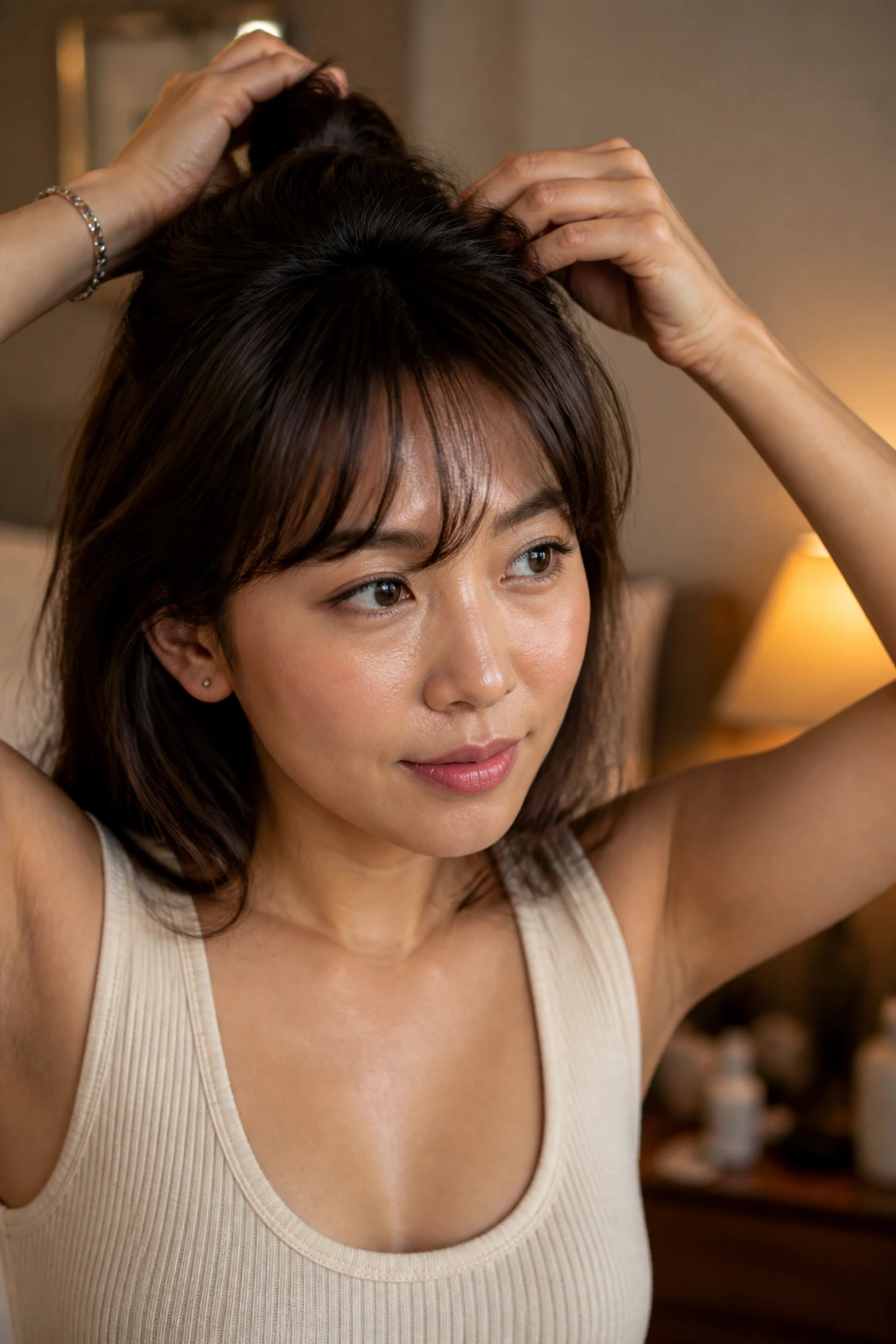
Short swoopy bangs usually need a trim every 3 to 5 weeks if you want the shape to stay crisp. If you wear them softer and do not mind a little extra length, you can stretch that a bit, but once the fringe starts hanging into your eyes or losing the diagonal, the whole point of the cut gets blurry.
Wash the front more often than the rest of your hair if your skin gets oily at the forehead. Bangs pick up oil, makeup, and skincare residue fast. A tiny amount of dry shampoo at the roots can buy you another day, but don’t fog the whole fringe with it. You want lift, not chalk.
At night, clip the fringe gently to the side or pin it with a loose duckbill clip while it cools in the direction you like. That small habit saves time the next morning. And if you work out, plan on a quick reset afterward. Bangs remember sweat. Annoying, but true.
Frequently Asked Questions About Short Swoopy Bangs for Round Faces

Do short swoopy bangs work on every round face?
They work on most round faces, but the exact cut has to match your forehead height, cheek fullness, and hair texture. A softer sweep with longer corners usually flatters more people than a short, heavy center.
Are they better than blunt bangs for round faces?
Usually, yes. Blunt bangs create a horizontal line that can make the face look wider, while a swoop creates movement and direction. If you love blunt bangs, you can still soften the edges, but a pure straight line is harder to wear on a round face.
How short should the bangs be?
Short usually means somewhere around the brow to just above it at the center, with longer corners that drift toward the temple or cheekbone. If they end too high, they can look choppy; if they are too long, they stop reading as bangs.
Can I wear short swoopy bangs with glasses?
Yes, and the shape can work really well with frames. Keep the center light so the bangs do not compete with the bridge of the glasses, and leave enough side length to sweep cleanly past the frame.
What if my hair has a strong cowlick?
Tell your stylist before the cut. A cowlick often needs a deeper part, a little extra length, or a slightly different direction at the front so the bang can be trained instead of fought.
Will they work on curly or wavy hair?
Absolutely, but the cut has to respect shrinkage and texture. Curly bangs should be left longer than straight bangs, and wavy hair often looks best with a loose, bendy sweep rather than a rigid shape.
How do I stop them from getting greasy so fast?
Clean the forehead area when you cleanse your face, keep skincare away from the roots, and use dry shampoo at the base rather than through the ends. Bangs touch skin all day, so they pick up oil faster than the rest of your hair.
How do I grow them out without hating the process?
Keep the corners longer and blend them into face-framing layers as they grow. A side part, small clips, and the occasional blow-dry can hide the awkward stage much better than trying to force a straight-down fringe to behave.
A Fringe That Knows Where to Go
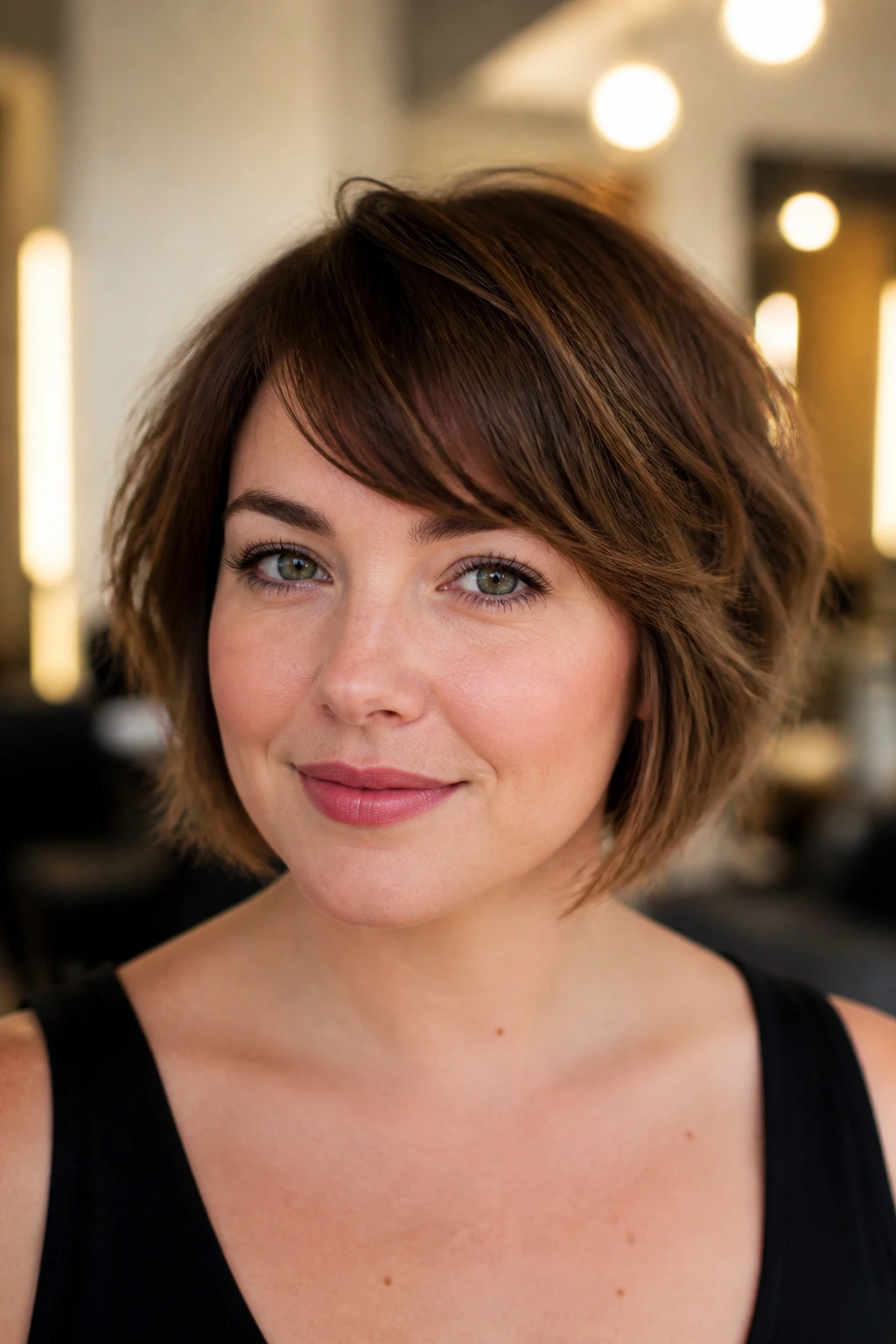
Short swoopy bangs for round faces work because they give the eye a path to follow. That path might be glossy and polished, feathered and airy, shaggy, curly, or almost invisible. The cut can change a lot. The principle stays the same: keep the line moving, keep the corners soft, and keep the center from turning into a wall.
The best version is the one that matches your texture, your styling habit, and the amount of forehead you actually want to show. Bring a photo, sure, but talk about the angle, the length at the sides, and how much daily effort you’re willing to put in. That is where a good fringe becomes a good haircut.
