



Curtain bangs and glasses can look brilliant together—or annoy each other within an hour of the salon chair. The difference is cut placement. If the fringe lands too low, your lenses start fighting for the same real estate. If the center is too heavy, the whole face looks boxed in.
For women who wear glasses, the best curtain bangs do one job that plain straight-across bangs often do not: they open the face instead of covering it. They skim the brow, bend away from the frame, and leave enough air around the eyes that your glasses can actually look intentional instead of like an obstacle you have to work around. That little bit of spacing matters. A soft center split can make chunky acetate frames feel lighter, while a longer sweep can soften strong rectangular rims in a way that feels almost architectural.
I keep coming back to the same rule: the fringe should meet the glasses, not collide with them. That means thinking about frame height, bridge shape, hair density, and whether your bangs need to sit above the lens line or drift along it. Get those details right and curtain bangs become a feature, not a compromise. Get them wrong and you spend half the morning tucking, puffing, and blinking hair out of the way.
Why These Curtain Bangs Work So Well With Glasses

- They leave visual breathing room: A good curtain bang opens at the center, so your glasses don’t get swallowed by a solid block of hair over the bridge.
- They can follow the frame line: The longest pieces can bend just outside the rims, which keeps the fringe from sitting on top of the lenses.
- They soften hard edges: Thick acetate, square frames, and sharp cat-eye shapes all look less severe when the bangs curve around them instead of stopping flat.
- They grow out gracefully: When the cut starts to lengthen, it turns into face-framing layers instead of an awkward line you have to hide.
- They work with more than one texture: Straight, wavy, curly, and coily hair can all wear a version of curtain bangs, as long as the shape matches the hair’s natural bend.
1. Soft Center-Split Curtain Bangs for Round Glasses
Soft center-split bangs are the cleanest answer when your frames are round or oval. The open center keeps the face from looking crowded, and the longer side pieces echo the curve of the lenses instead of competing with them. It’s a small thing, but it changes the whole balance of the haircut.
I like this shape best when the shortest pieces sit just above the brow, not right on top of it. That extra sliver of space lets your eyebrows stay visible, which keeps round frames from making the upper face feel too enclosed. The side lengths can brush the cheekbone, then slip outward toward the jaw.
If your glasses are thin wire frames, this cut gives them a little more presence. If they’re thicker, the softness keeps them from taking over.
2. Brow-Grazing Curtain Bangs for Thin Metal Frames
What happens when your glasses are barely there? You can get away with a little more fringe. Brow-grazing curtain bangs work beautifully with slim metal frames because the hair has room to move without bulldozing the eyewear.
This version is a smart pick if you like the bangs to read as a feature rather than a veil. The center can hover right at the brow line, then taper into longer sides that slide away from the temples. On a fresh blowout, that shape has a neat, crisp look. On day two, it softens in a way that still feels tidy.
I’d keep the layers subtle here. Too much feathering and the bangs start to flick in odd directions around lightweight frames. A light bend with a round brush is enough.
3. Wispy Curtain Bangs for Fine Hair
Fine hair can do curtain bangs, but not the heavy, over-thinned version that disappears after one windy walk. Wispy curtain bangs are better. They give you that split-front shape without stealing too much density from the front of the hairline, which matters when the fringe has to sit cleanly above glasses.
The trick is keeping the line airy, not sparse. A little translucence at the ends lets the bangs float over the frames, while the center still has enough body to show up in photos and in daylight. Fine hair usually behaves best when the shortest bits are cut a touch longer than you think—around brow level or just above—because it loses lift as it dries.
This is one of those cuts that looks best with a quick root lift. A small round brush, a hit of heat at the root, and maybe a whisper of texture spray are enough. Skip the heavy cream. It flattens fast.
4. Long Sweeping Curtain Bangs for Oversized Acetate Frames
Oversized acetate frames need hair that can share the stage. Long sweeping curtain bangs do exactly that. Instead of stopping above the glasses like a tidy little trim, they arc out and down, which keeps the face from feeling chopped in half by big, bold rims.
This shape shines on medium to thick hair, especially if you like a blowout with movement. The center opening can be a little deeper, and the longest pieces can graze the top of the cheekbone. That length gives your frames space to exist while still softening the forehead.
The look is polished, but not stiff. That matters with statement glasses, because a rigid fringe and a rigid frame together can look harsh. A long sweep breaks that up. It’s the haircut equivalent of taking one piece off before you leave the house.
5. Bottleneck Curtain Bangs for Square Faces
Bottleneck bangs narrow at the center and widen as they move outward, which is why they’re so useful with square faces and sharp frames. The tighter middle opens the forehead, then the fuller sides curve around the cheekbones and ease the jawline. The shape has a built-in softness that can save a lot of styling time.
With square frames, I like this cut even more. The bangs counter the straight edges and keep the look from turning boxy. If the frames are dark or heavy, the bottleneck shape introduces a little air where the face needs it most.
A good version of this cut shouldn’t feel blunt anywhere. The center is short enough to lift, but not so short that it sticks out. The outer pieces should be long enough to meet the cheekbone or just below it. That range lets the fringe sit with the glasses instead of chopping across them.
6. Feathered Curtain Bangs for Straight Hair
Straight hair can make curtain bangs look either expensive or flat. Feathering is what separates those two outcomes. A feathered curtain bang uses light texture through the ends so the fringe bends away from the frame instead of hanging like a sheet.
This is a strong match for women who wear narrow or rectangular glasses, because the movement in the fringe softens the strong horizontal lines of the frames. You don’t need a lot of separation. Two or three slight bends are enough to keep the front from looking heavy.
I prefer this shape when the bangs are blow-dried with a small brush and then left alone. If you keep fussing with them, they go limp. A light mist of flexible hairspray at the end is better than any heavy styling cream.
7. Curly Curtain Bangs Shaped on Dry Hair
Curly hair needs its bangs cut where the curls actually live, not where they pretend to sit when wet. That’s why dry shaping matters so much. Curtain bangs for curly hair should follow the curl pattern and open around the glasses rather than trying to lie flat across the forehead.
The best result is usually a soft, face-framing split that lands at different lengths once the curls spring up. That unevenness is fine. It’s part of the charm. What you want to avoid is a center piece that shrinks too high and leaves too much forehead exposed, or a side section that droops into the lens line.
This version pairs especially well with rounded or softly angled frames. The curls add motion around the face, and the glasses give the shape a focal point. When it works, it looks effortless. When it’s cut too wet or too short, it looks like the bangs got surprised.
Best styling cue
Diffuse on low heat, then shape the center with your fingers while it’s still a little damp. Let the curls settle before judging the length. Curly fringe always looks shorter when wet.
8. Side-Drifting Curtain Bangs for Strong Prescription Lenses
Strong prescription lenses can slightly magnify or minimize the eye area, depending on the lens type and frame shape. That’s why side-drifting curtain bangs are useful. They don’t sit straight down the center line of the face. They angle off gently, which breaks up the visual weight around the eyes.
This is a smart choice if you wear glasses every day and want the fringe to stay cooperative with the lenses. The side drift keeps hair from catching on the frame tops, which is one of those annoying little things that makes a haircut feel less wearable than it looked in the mirror. The longer outer sections can be tucked behind the temples when you want a cleaner shape.
I like this style with a soft bend at the ends. Too much curl and the bangs bounce back into the frame. Too little and they fall flat. That middle ground is where the cut starts to earn its keep.
9. Cheekbone Curtain Bangs for Heart-Shaped Faces
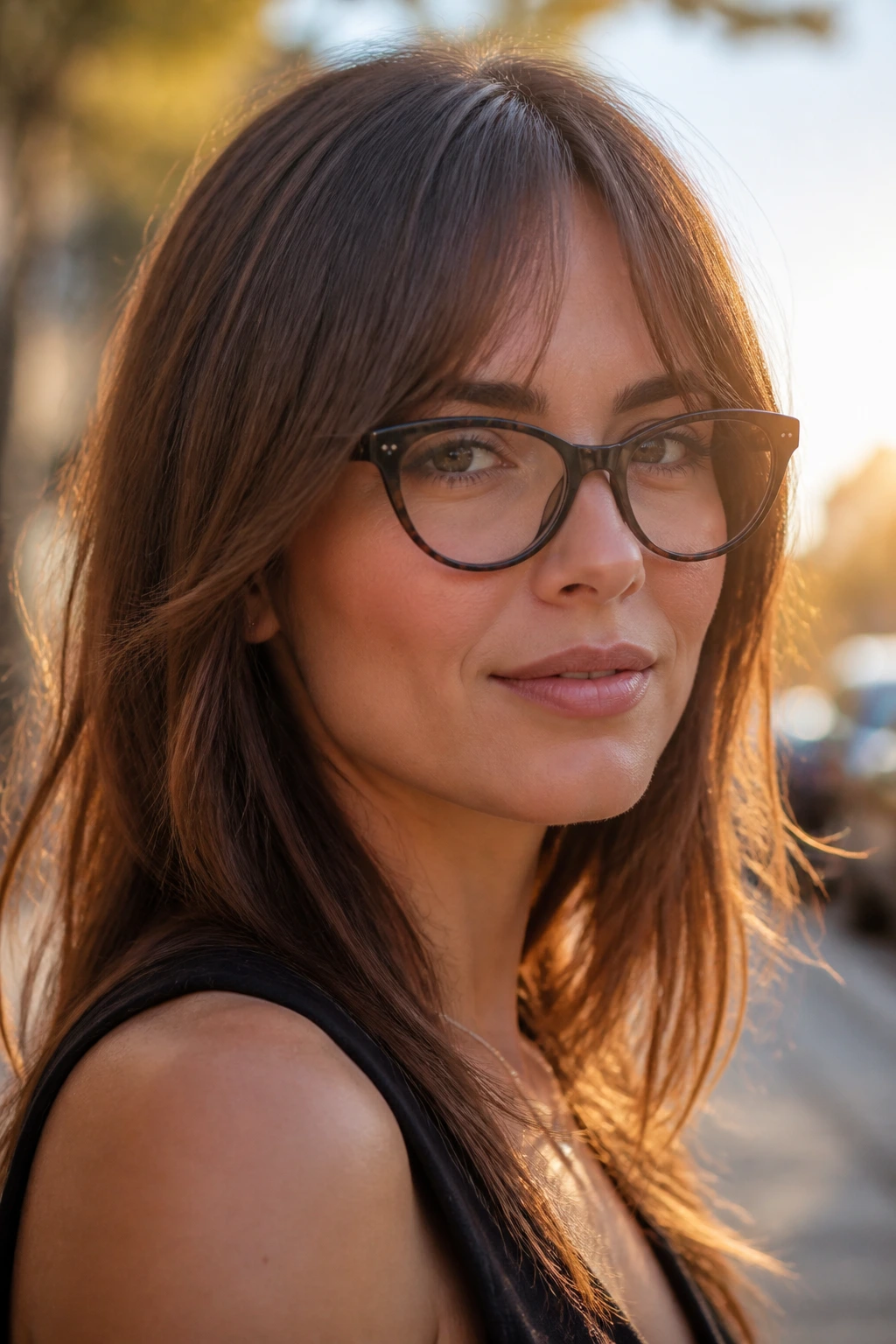
Heart-shaped faces often have more width at the forehead and a narrower chin, so a curtain bang that draws the eye down toward the cheekbones can be a relief. Cheekbone-length bangs do that job neatly. They frame the upper face, guide attention outward, and keep glasses from sitting alone in a big open space.
The side pieces should hit around the high cheekbone, where they can blend into the rest of the layers. That’s the sweet spot. Shorter than that and the shape gets fussy. Longer than that and you lose the lift that makes this cut flattering in the first place.
This one works beautifully with cat-eye frames. The upward angle of the glasses and the outward sweep of the bangs echo each other, so the face looks balanced without trying too hard.
10. Shaggy Curtain Bangs for Thick Hair
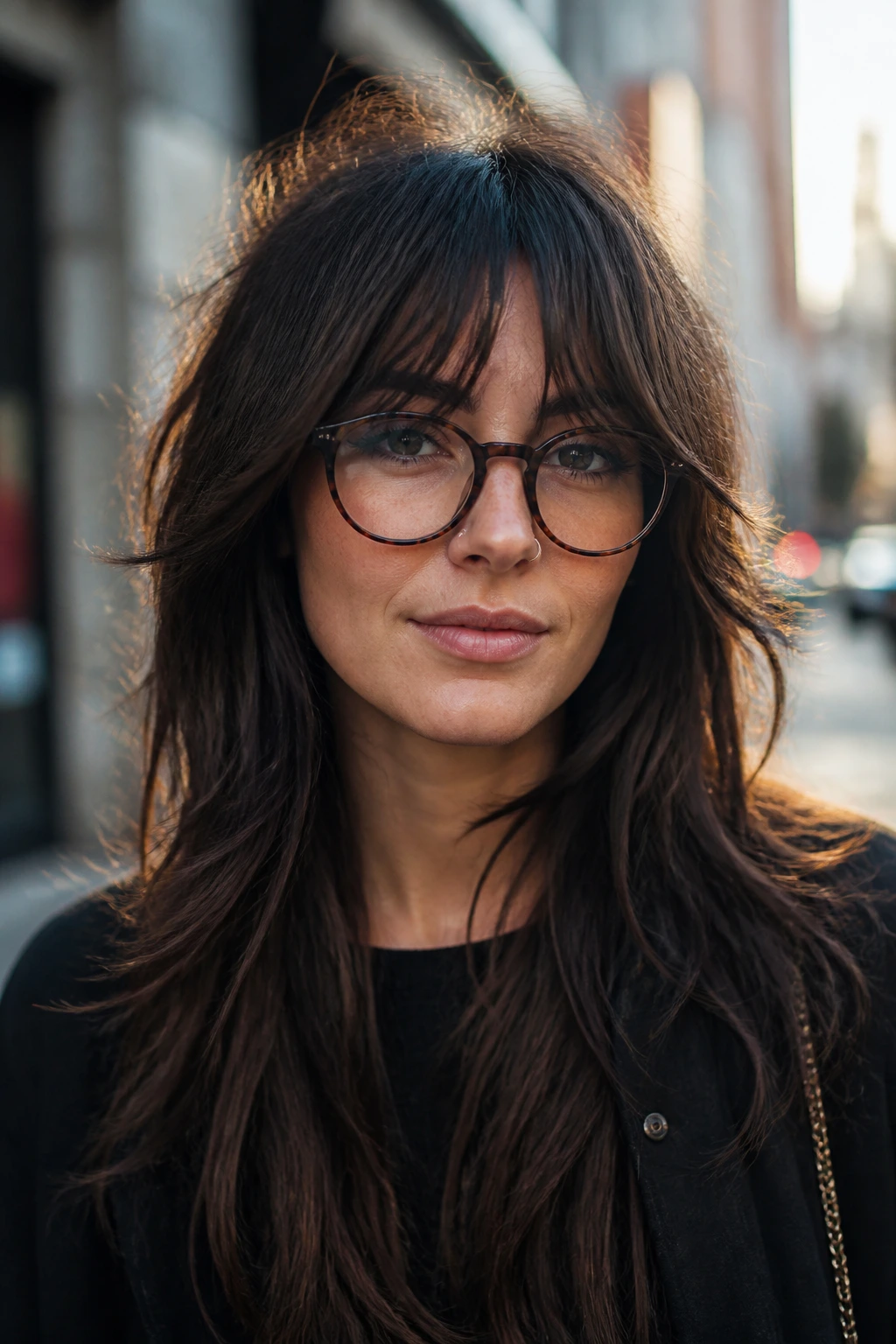
Thick hair can bully a fringe into looking like a helmet if the cut doesn’t remove enough weight. Shaggy curtain bangs solve that problem by breaking the front into pieces that move. You still get fullness, but it’s controlled fullness, not a heavy block.
The shag influence is what keeps this style from sitting too neatly against glasses. The ends are a little rougher, the layers a little more varied, and the whole thing has room to breathe. On thick hair, that matters more than polish. Too much polish and the bangs swell at the frame line.
This is one of my favorites for women who like a lived-in look. It suits glasses that have some shape to them—square, geometric, or chunky rounded rims. Clean wire frames can feel a little too delicate next to this much texture.
11. Grow-Out Curtain Bangs That Blend Into Layers
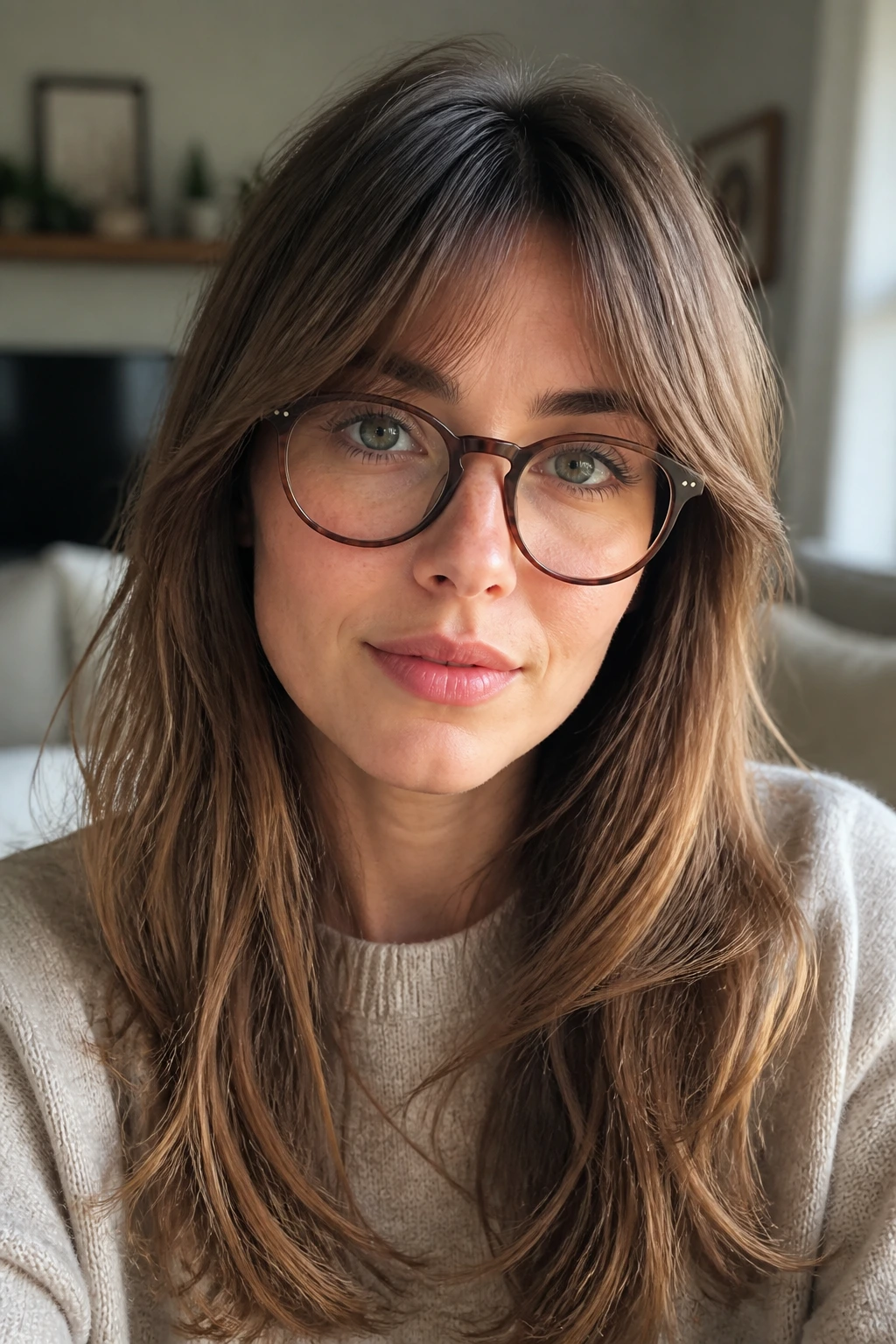
Not every curtain bang needs a dramatic salon moment. Sometimes the best version is the grow-out phase you actually keep. Grow-out curtain bangs are the ones that slide into the rest of the haircut without leaving a hard line, and glasses love that softness.
The front starts shorter at the center, then drifts into longer face-framing pieces that can eventually become part of a layered cut. This is the style I recommend to anyone who likes change but hates maintenance. You can push them aside, part them wider, or let them settle naturally around the temples.
There’s a practical bonus here, too. Because the fringe is already blended, it keeps looking decent even when you skip a styling day. That’s rare with bangs. And for glasses wearers, “still looks decent” is a bigger compliment than “looks dramatic for six minutes.”
12. Curved Bob Curtain Bangs for Glasses

A bob with curtain bangs can turn sharp fast if the fringe is cut too bluntly. Curved bob bangs avoid that. They follow the shape of the bob, opening gently in the middle and curving down beside the glasses so the whole haircut feels connected.
This pairing works especially well if the bob sits at jaw level or just below the chin. The bangs draw the eye upward, the bob gives the face structure, and the glasses sit in the middle like a deliberate accessory instead of an afterthought. The result is neat without being stiff.
I’d keep the fringe a little longer here, especially if the bob is very clean or geometric. The extra length gives you more room to balance the frame top. Otherwise, the bangs can feel like they’re chopping too high across the face.
13. Sleek Blowout Curtain Bangs for Workwear

Sleek blowout curtain bangs are for days when you want your hair to look like you planned it, even if the truth is that you had eight minutes and a round brush. The finish is smooth, bent at the ends, and polished enough to sit neatly under glasses without puffing out around the temples.
This style likes medium-density hair and frames with some structure. Thin frames can disappear under the shine, but a moderate pair of glasses gives the haircut something to sit beside. The key is root lift—not volume everywhere, just enough at the center to keep the bangs from pinning themselves to the forehead.
A small round brush and a blow dryer nozzle do most of the work. Set the bend away from the face, then let the hair cool in that position. That cooling step matters more than people think. Skip it, and the fringe flops back before lunch.
14. Piecey Curtain Bangs for Petite Features

Petite faces can get lost under too much front hair, especially with oversized glasses. Piecey curtain bangs solve that by keeping the fringe light and separated. You still get framing, but you don’t lose the eyes, brows, or the bridge of the nose.
The trick is to avoid over-blending. A few narrow pieces around the center and cheekbones are enough to create shape. Too much density, and the bangs start wearing the face instead of framing it. With petite features, that balance is everything.
I like this cut with smaller or mid-size frames, though it can also work with bold glasses if the rest of the hair stays soft and controlled. If you’re wearing a statement frame, piecey bangs keep the look from tipping into visual overload.
A quick styling note
Use a light texture spray on the mid-lengths, not the roots. You want separation, not stiff spikes. Fingers do a better job here than a brush.
15. Long Layered Curtain Bangs for Waist-Length Hair
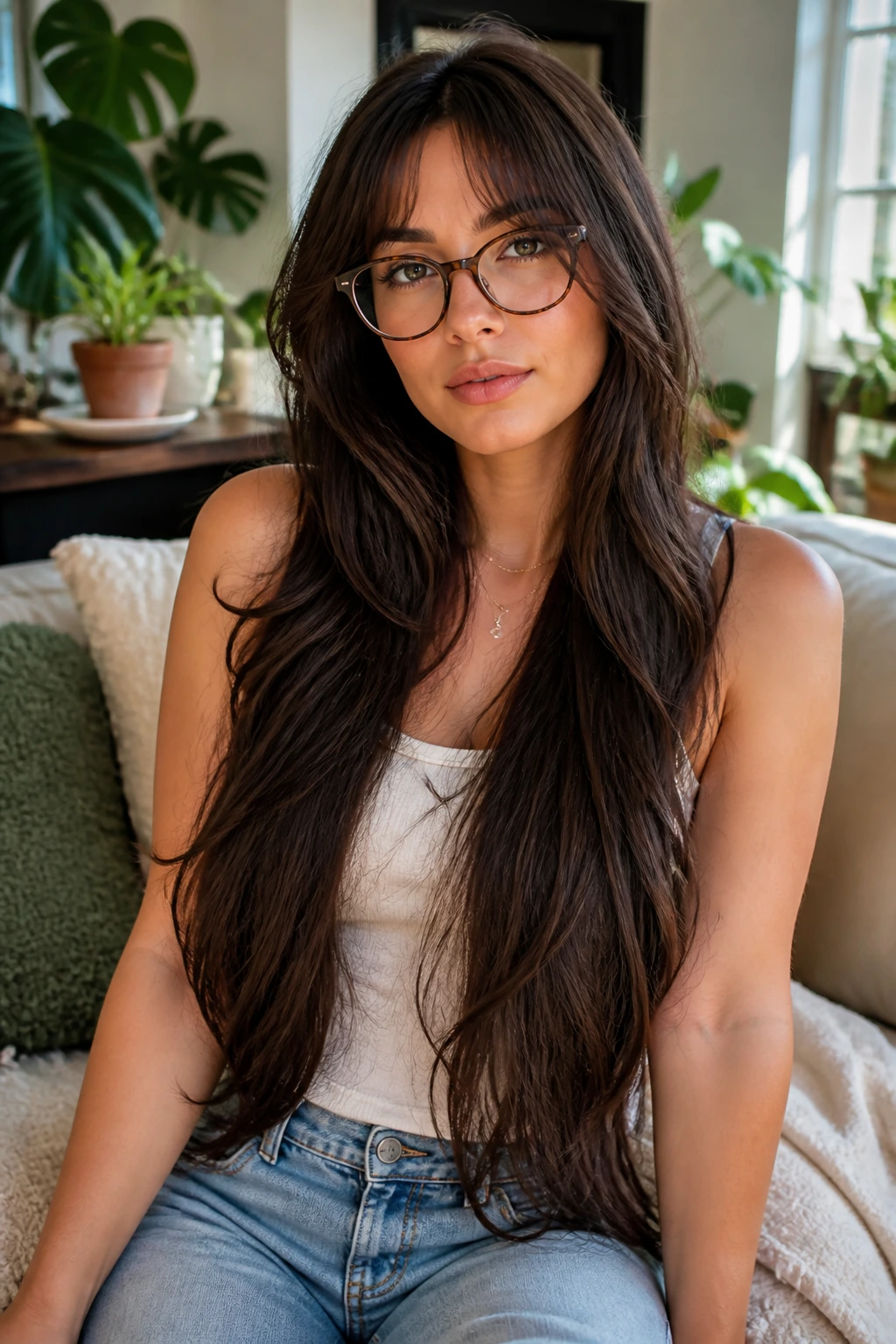
Long hair can swallow a fringe if the bang is too short or too neat. Long layered curtain bangs keep the front connected to the rest of the length, which is useful when glasses already add a strong frame to the face. The layers trail into the hair like part of the same sentence.
This look works especially well when you want movement around the face without losing the visual impact of long hair. The curtain bang can start at the brow or slightly below, then taper into longer pieces that skim the cheek and jaw. That downward flow keeps the eyes visible and helps the glasses feel balanced.
It’s also a forgiving style. If the hair grows a little, the cut still holds. That’s not true of every bang shape, and anyone who’s had to live through a too-short fringe knows exactly how much that matters.
16. Retro ’70s Curtain Bangs for Round or Aviator Frames

Retro-inspired curtain bangs have a little more sweep, a little more bounce, and a lot more attitude than the softer everyday versions. They fit beautifully with round or aviator frames because both the hair and the glasses lean into curve and motion.
The shape is usually looser around the center and fuller through the sides, which creates that easy, throwback feel. I like it with a soft flip at the ends, especially on medium-length hair. It doesn’t need to look costume-y. The best version just hints at the era.
If your frames are gold wire or lightly tinted, this is a flattering match. The bangs keep the face open while the shape gives the glasses something a little more expressive to sit against. It’s one of those combinations that can make a simple haircut feel intentional without being fussy.
17. Soft Micro Curtain Bangs for Small Foreheads

Can curtain bangs work on a small forehead? Yes, if the center is kept soft and the overall length is handled carefully. Soft micro curtain bangs are shorter than the classic version, but they still split and frame instead of falling straight across.
This is a good option when you want the fringe to show up with glasses without swallowing the upper face. The center piece stays light and airy, and the sides are long enough to guide the eye downward. Done well, the cut gives the forehead shape without crowding it.
The caution here is obvious. Too short, and the bangs bounce in a weird way above the frame line. Too dense, and the whole thing starts to feel clipped. The best version is airy, a little imperfect, and cut with the glasses in mind from the start.
18. Oval-Face Curtain Bangs With a Slight Bend

Oval faces can wear almost any bang shape, which is both a blessing and a trap. A slight bend in the curtain bangs keeps the look from becoming too flat or too predictable. It also helps the hair clear the top edge of the glasses without turning stiff.
This version is more subtle than some of the stronger shapes in the list. The center opens modestly, the sides bend just enough to show movement, and the overall effect is polished but not severe. If your frames are strong—thick black acetate, deep rectangular rims, or a cat-eye with a sharp lift—this gentler fringe keeps the face from getting overloaded.
I like this on hair that already has a natural bit of wave. The bend doesn’t need to be forced. Sometimes the best curtain bang is the one that behaves after a quick dry and then settles into place on its own.
19. Low-Maintenance Air-Dry Curtain Bangs

Some bangs demand a round brush, a blow dryer, and patience you may not have before coffee. Air-dry curtain bangs are for everyone else. The cut is made to fall into a soft split with minimal help, which is useful if you wear glasses and don’t want extra heat styling touching the front of the hair every day.
This shape works best when the hair has a bit of bend naturally. The center can be left a touch longer, the sides a little more tapered, and the overall effect should land somewhere between casual and neat. It’s not as sculpted as a blowout fringe. That’s the point.
Air-dry cuts can look especially good with lightweight frames, because the whole look stays relaxed. If your glasses are bold, you may want a bit more root lift so the bangs don’t disappear into the frame line. But if your style leans easy and unforced, this is a strong one.
20. Statement Curtain Bangs With Bold Frames

Bold frames need a fringe that knows how to share attention. Statement curtain bangs do that by staying sculpted enough to hold shape, but soft enough to keep the face from getting crowded. It’s a careful line, and I prefer it over trying to match strong frames with blunt bangs, which often looks too rigid.
The best version starts with a noticeable center split and then opens outward with enough length to skim the upper cheeks. That length gives the frames room to exist while still connecting the hair to the face. If the glasses are dark, geometric, or oversized, this kind of fringe can stop the whole look from turning severe.
This is the pair I’d choose when you want your glasses to look like part of the styling, not a separate category. Hair and frames should seem like they were decided in the same appointment. That’s the goal, anyway.
What Makes Curtain Bangs and Glasses Work Together

The short answer is space. Curtain bangs work with glasses when they leave the right amount of it around the eyes, the brow, and the bridge of the nose. Too much hair near the frame top and the face starts to feel compressed. Too little shape and the fringe looks like a half-finished idea.
The best cuts respect the frame height. Thick frames usually need more openness at the center and slightly longer sides, so the fringe doesn’t sit on the rims. Smaller frames can handle a touch more density, but even then, the bangs should bend away from the lenses rather than land straight on them. That bend is doing more work than people realize.
I also think texture matters more than most salon conversations admit. Straight hair needs a soft bevel or it hangs too flat. Wavy hair can hold the split with less effort. Curly hair needs shaping that works with shrinkage, not against it. If your stylist ignores that, the bangs may look fine for ten minutes and annoying for the rest of the day.
Tools That Make Styling Easier

- Small round brush, 1 to 1.5 inches: Best for creating the bend at the center and the outward sweep at the sides.
- Blow dryer with a nozzle attachment: Helps aim the air where you want lift, not where you don’t.
- Heat protectant spray: Keeps the front pieces from drying out if you style the bangs often.
- Lightweight texturizing spray: Adds separation without making the fringe crunchy.
- Dry shampoo: Useful on bang-heavy days, especially if your frames touch the hairline and speed up oil buildup.
- Duckbill clips or sectioning clips: Makes it easier to pin back the rest of the hair while styling the fringe.
- Fine-tooth tail comb: Handy for drawing a clean center part and separating the front sections.
- Velcro rollers: Optional, but they can give curtain bangs a better bend with less heat than a brush alone.
How to Choose the Right Curtain Bangs for Your Frames
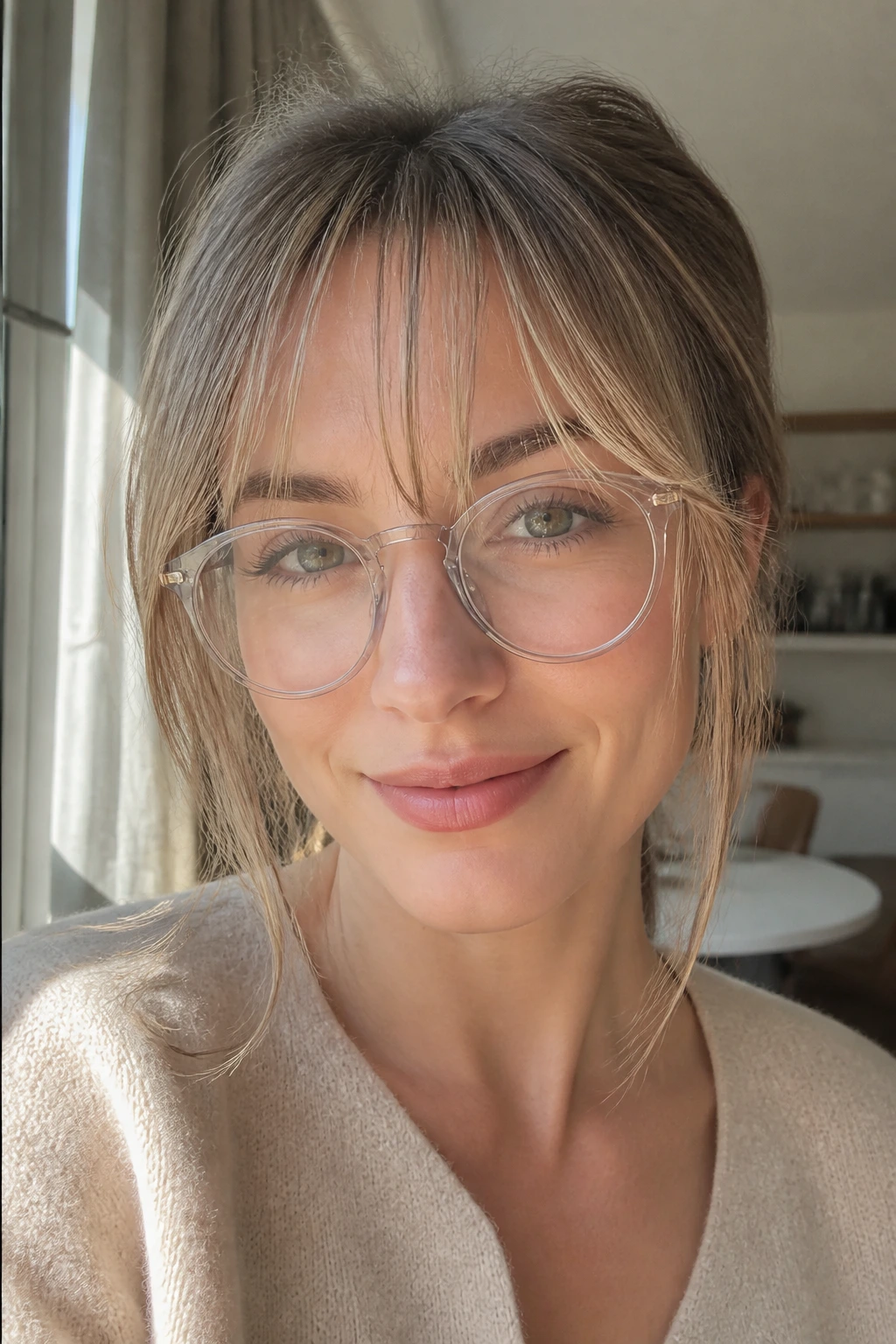
Look at the shape of your glasses before you think about the cut. Thick acetate frames need more air around them. Slim metal frames can handle a bit more hair near the brow. Cat-eye glasses often look best with a fringe that angles outward, while round frames usually want softness and length.
Hair density matters too, and it matters more than trend language would have you believe. Fine hair can’t carry the same heavy center piece that thick hair can. Thick hair needs weight removed or the bangs will puff into the frame line. If your stylist doesn’t talk about density, ask them to. That conversation saves a lot of regret.
Bring your glasses to the appointment if you can. Not because the cut should be shaped around the frame forever, but because the mirror test is easier when the glasses are on your face. You want to see where the fringe lands when the frames sit naturally, not after you’ve started guessing.
How to Style Curtain Bangs With Glasses

Frame Match: If the frames are bold, keep the shortest bang pieces slightly lighter and a touch longer so the hair doesn’t press against the top rim. For thin frames, a little more density can look balanced.
Styling Finish: A soft bend looks better than a stiff curl. Use a round brush or fingers, then let the bangs cool in place so the shape holds. If the hair is too polished, it can look disconnected from the rest of the style.
Everyday Wear: On busy days, tuck the side pieces a bit wider and leave the center airy. That keeps the fringe from dropping onto the lenses when you’re moving around, bending, or taking the glasses on and off.
Little Details: Tidy brows help more than people expect. When the brow line is visible, the curtain bang and the glasses feel like one composition instead of two objects sitting on the same face.
Smart Styling Tips That Make a Big Difference
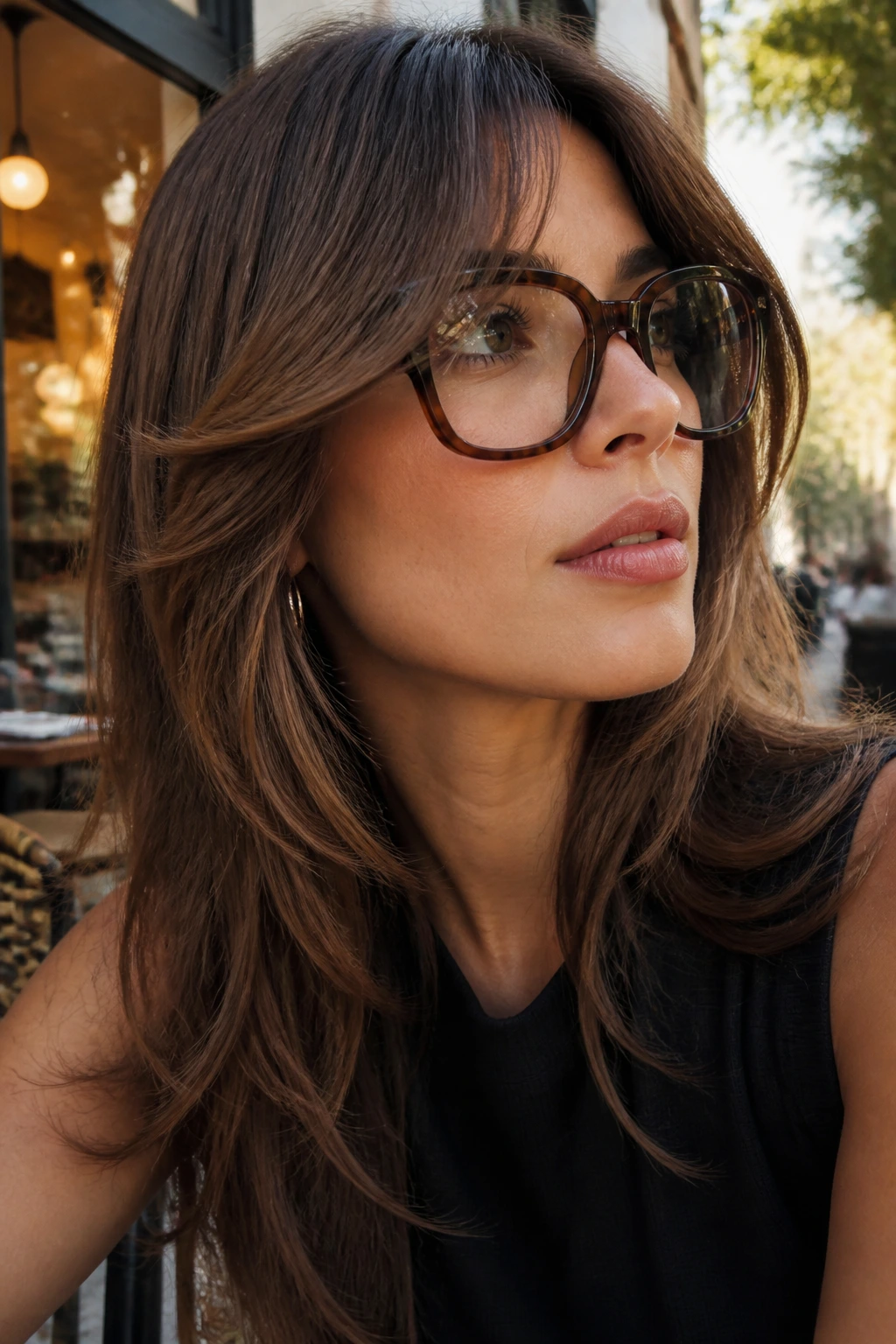
Texture Control: If the bangs puff up, hit only the roots with a short blast of heat and keep the ends soft. That gives lift without turning the fringe into a halo.
Customization: Ask for the center to sit a bit shorter than the sides if your frames are thick. If your glasses are small, a gentler slope often looks better.
Framing Fix: If the bangs keep touching the lenses, don’t reach for more product first. Re-dry them away from the face and reset the part. Most of the time, the issue is shape, not hold.
Make-It-Yours: Straight hair can take a sharper bend. Wavy hair usually wants a looser split. Curly hair needs the longest pieces to account for shrinkage so the bangs don’t spring too high.
What Goes Wrong With Curtain Bangs and Glasses

A common mistake is cutting the fringe too short at the center. The symptom is immediate: the bangs float above the frame line and leave you with a gap that feels accidental. The fix is simple, though not instant—grow them out a bit or have the next trim keep the shortest point closer to brow level.
Another problem is over-thinning. If the front gets sliced too aggressively, fine hair can vanish against bold glasses, and thick hair can frizz into the rims. Ask for controlled removal of bulk, not a total shred. There’s a difference.
Heavy styling cream is another trap. It weighs down the front pieces, so they stick to the forehead and separate into the frame line. A light spray or a tiny bit of mousse at the roots is usually enough. Bangs don’t need much to misbehave.
Gentle Variations Worth Trying

The Soft Flip: Add a little more bend at the ends for a retro feel. This suits round and aviator frames, especially when the rest of the hair is medium length or longer.
The Airy Split: Keep the center open and the side pieces feather-light. That variation works well with fine hair and slim metal frames because it avoids visual heaviness.
The Curly Frame: Let the bangs follow the curl pattern and stop trying to force symmetry. This version looks best when the glasses are simple and the texture gets to be the main event.
The Bold Balance: Pair fuller curtain bangs with strong glasses, but keep the center slightly shorter so the frame top stays visible. It’s a controlled, confident look. Not fussy.
The Grow-Out Layer: Let the bangs blend into face-framing pieces around the cheek and jaw. If you’re tired of regular trims, this is the version that makes the least trouble.
Keeping Curtain Bangs Neat Between Washes

Bangs are the first part of the haircut to look tired. Glasses make that more obvious because the frame sits right where sweat, skin oil, and movement meet. If you wear your glasses all day, plan on refreshing the fringe more often than the rest of the hair.
A quick mist of water or a damp fingertip reset can save a bang line that has collapsed overnight. Follow that with a small round brush or your fingers and a few seconds of blow-dryer heat at the roots. Five minutes is usually enough. You do not need a full restyle unless the hair has gone flat all the way through.
At night, pinning the bangs slightly away from the forehead can help, but I still think the simplest move is a silk or satin pillowcase. It won’t do the styling for you, yet it reduces the rough, bent edges that make curtain bangs look wonky in the morning. If you’re a side sleeper, that’s a small win worth having.
Frequently Asked Questions
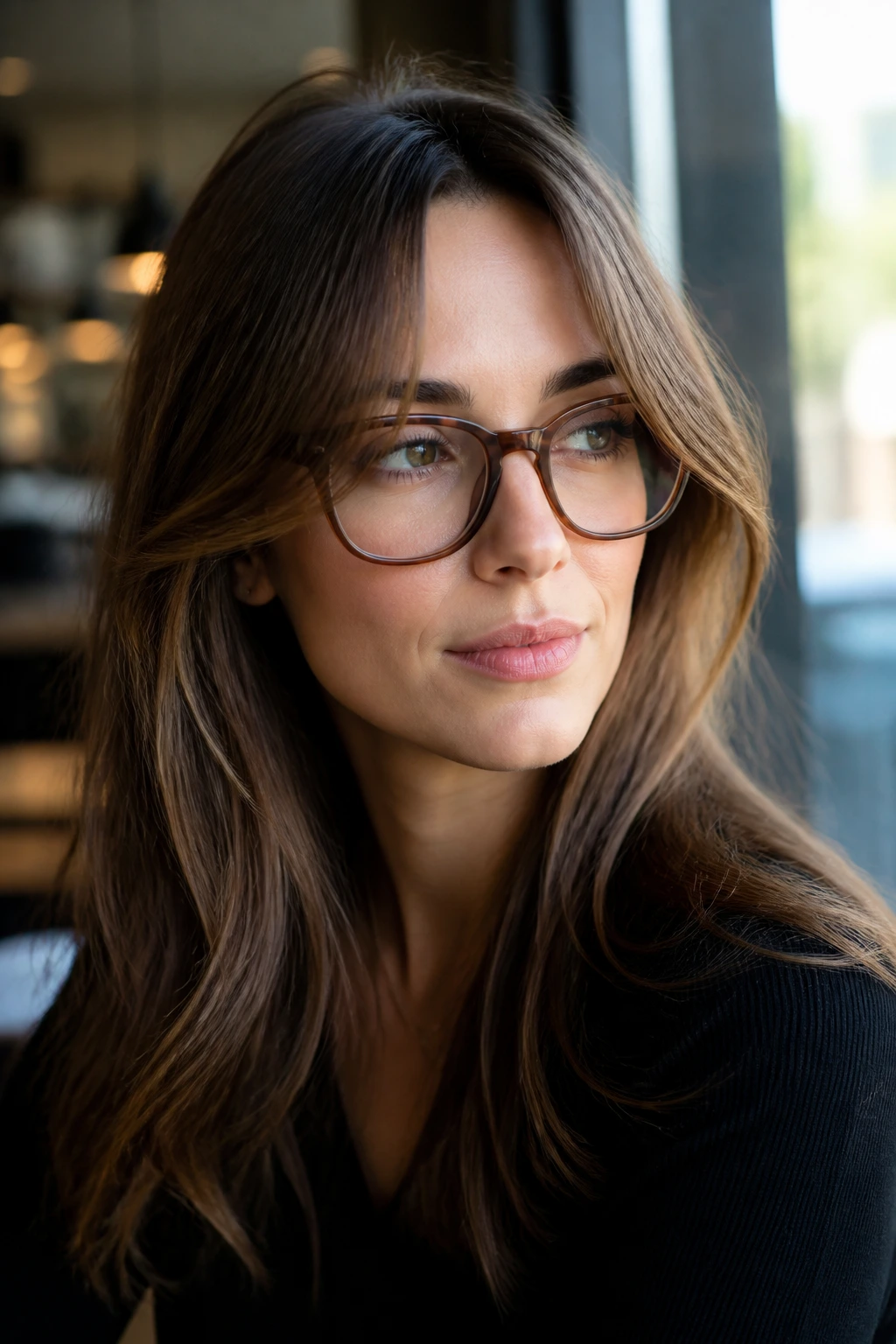
Do curtain bangs work with every kind of glasses frame?
Almost every kind, but some pairings are easier than others. Soft, open curtain bangs are friendliest with thick acetate, while a lighter, more delicate fringe tends to suit wire frames and smaller rims.
Should curtain bangs sit above or below my glasses?
Usually, the shortest point should hover near the brow line and stay clear of the top rim. You want movement around the glasses, not hair that drapes straight across them.
Can I wear curtain bangs if I have a very small forehead?
Yes, but the center should stay soft and not too short. A slightly longer, airy version will keep the forehead from feeling crowded and still let the glasses stand out.
What if my bangs keep falling into my lenses?
That usually means the shape is too heavy or the root lift is gone. Dry the fringe forward and away from the face again, then let it cool before putting the glasses back on.
Do curtain bangs work with curly hair and glasses?
They do, though the cut has to follow the curl pattern and shrinkage. If the bangs are shaped on wet hair alone, they can spring up too high once dry.
How often do curtain bangs need trimming?
Most versions need a trim every 6 to 8 weeks if you want them to keep their shape. Grow-out styles can stretch longer, especially if they’re already blending into layers.
Are curtain bangs high maintenance with glasses?
They can be, but only if the cut is too heavy or too short. A well-shaped fringe that works with your frame height is much easier to live with than blunt bangs that fight your lenses every morning.
The Fringe and Frames Sweet Spot

Curtain bangs and glasses don’t have to be a compromise. When the cut is matched to the frame shape, the fringe adds softness instead of clutter, and the glasses start looking like part of the hairstyle rather than something you wear in spite of it.
The best version is the one that leaves room around the eyes and lets the bangs bend where they need to bend. That may mean a softer split, a longer sweep, or a lighter center than you first expected. Fine. Hair grows. Bad balance takes longer to fix.
If you’re sitting in a chair with your frames on and wondering whether the fringe should be shorter, longer, or lighter, trust the version that keeps the brows visible and the lens line clean. That small gap is where the whole look starts to work.
