



Some pixie cuts make the face look harder than it is. Others do the opposite: they soften a strong jaw, stretch a round cheek line, or give a broad forehead a cleaner frame without hiding it. The difference is rarely the shortness itself. It’s where the weight lands.
The phrase pixie cuts that flatter every face shape sounds ambitious until you stop treating a pixie like one haircut and start treating it like a set of proportions. A side-swept fringe behaves one way on a heart-shaped face and another on a square one. A little crown lift can make a round face feel longer; a soft, broken edge at the temples can keep a narrow face from looking pinched. That is why the best pixie is less about bravery and more about geometry.
Short hair gets blamed for things it did not cause. A blunt fringe gets called harsh when the real issue is the wrong fringe length. A pixie gets called “too boyish” when the nape was cut too tight and the top was left too flat. The good versions are never random. They’re tuned. And the first cut below is the one I reach for when someone wants short hair without losing softness.
Why These Pixie Cuts Are More Flexible Than They Look
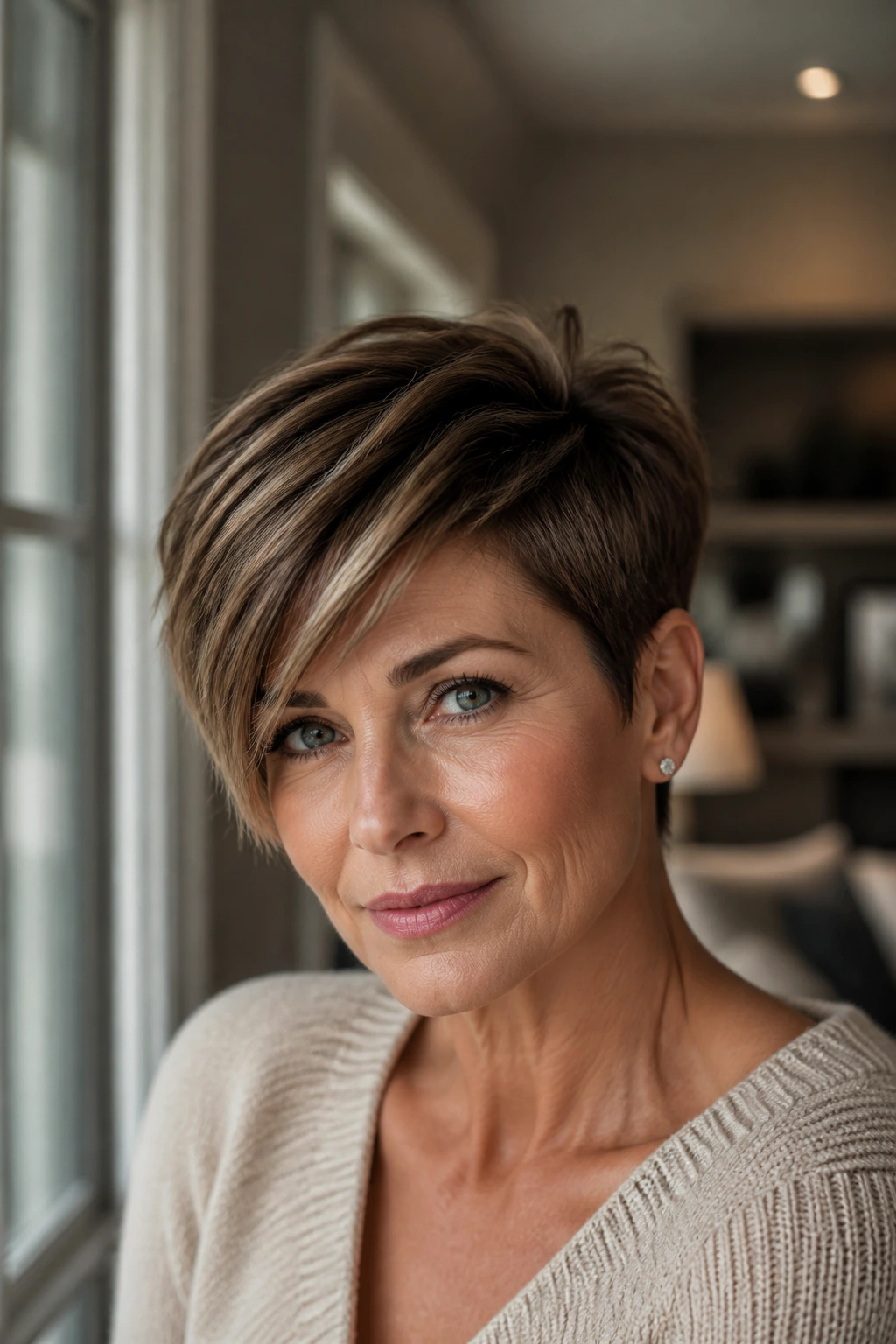
- The fringe changes everything: A fringe that sweeps diagonally can soften a square jaw or a broad forehead in a way a straight-across line never will.
- Crown height shifts proportion: A little lift at the top pulls the eye upward, which helps round and full faces look longer without adding length elsewhere.
- Temple width matters more than most people think: Keeping the sides close or airy can stop the cut from flaring out at the widest part of the face.
- Texture can blur hard edges: Broken ends and piecey layers make sharp bone structure look intentional instead of severe.
- The nape anchors the shape: A clean neckline keeps the cut crisp, so the top can stay soft without the whole style turning fuzzy.
- Length is only half the story: Two pixies with the same inch count can look wildly different depending on where the weight sits.
1. Side-Swept Pixie with a Long Fringe
This is the pixie I recommend when someone wants short hair but still wants a curtain of softness near the face. The long fringe gives you a diagonal line, and diagonal lines are magic on round, square, and heart-shaped faces because they move the eye instead of stopping it dead.
The cut works because the fringe does the visual heavy lifting. You can keep the sides neat and the nape tapered close, then let the front skim one eyebrow or fall to the top of the cheekbone. That single change keeps the haircut from reading boxy.
Who It Flatters Most
- Round faces: The side sweep adds length and breaks up the widest part of the cheeks.
- Square faces: The slanted fringe softens the jaw instead of echoing it.
- Heart faces: The longer front balances a wider forehead and a narrower chin.
- Oval faces: You can wear it almost any way and still keep the proportions clean.
My favorite trick: Ask for the fringe to be long enough to tuck back, not so short that you’re stuck with one part forever. That tiny bit of length gives you options on days when you want more forehead or less.
2. Tapered Pixie with Height at the Crown
A little height at the crown does more for balance than most people expect. On a round face, it stretches the silhouette. On a square face, it keeps the haircut from sitting too flat and boxy. On a long face, though, you have to be careful — too much crown and you start stacking length on length.
This version stays close at the ears and nape, then builds softly at the top instead of turning into a tiny helmet. I like it with a bit of mousse at the roots and a quick blow-dry with a small brush. Nothing dramatic. Just enough lift so the top stands up a touch before settling.
The clean taper is what keeps the style sharp. Without it, the crown volume can feel top-heavy. With it, the cut looks deliberate and tidy, even if you only spent three minutes on it.
3. Choppy Textured Pixie
What if the answer to a strong jawline isn’t more softness, but more movement? That’s where a choppy pixie comes in. The broken ends keep the eye moving, which stops the haircut from drawing one hard outline around the whole face.
This cut is especially good on diamond and square faces because it loosens all those sharp angles around the cheekbones and jaw. It also plays nicely with fine hair, because the rough texture makes the strands look denser than they are. The danger is over-thinning. Too much texture and the cut starts to look wispy in a bad way.
How to Wear It
Use a pea-sized amount of matte paste, rub it between your palms, then pinch out only the top layer of the hair. Don’t rake it through all the way to the roots unless you want that spiky, overworked look. A choppy pixie should look lived in, not shredded.
4. Curly Pixie with Soft Volume
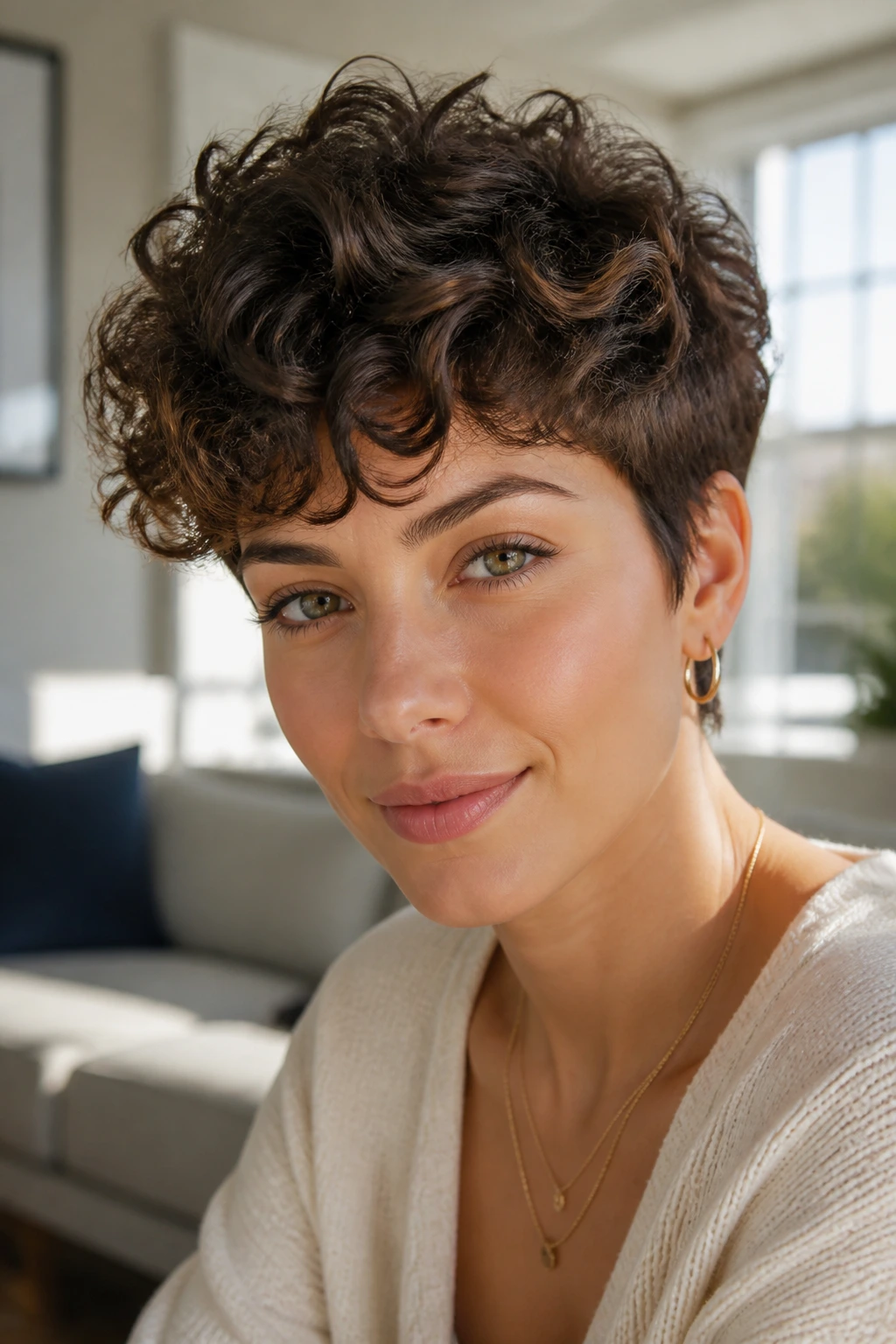
Curly hair and pixie cuts are a good match when the shape is controlled instead of flattened. The curl pattern already brings texture, so the cut just needs to make sure that texture shows up in the right place. That usually means keeping the volume a little higher on top and softer around the sides.
For round faces, I like curly volume that sits above the widest part of the cheeks. For long faces, a bit more fringe or front curl can shorten the look of the forehead. The cut gets messy fast if the curls are pushed outward at the temples, so ask for shape that curves in toward the head, not away from it.
The best curly pixies have a softness that feels almost accidental. It isn’t accidental at all. It’s built with enough length to let the curls spring, but not so much that the whole style puffs into a halo you can’t control.
5. Asymmetrical Pixie with a Deep Side Part
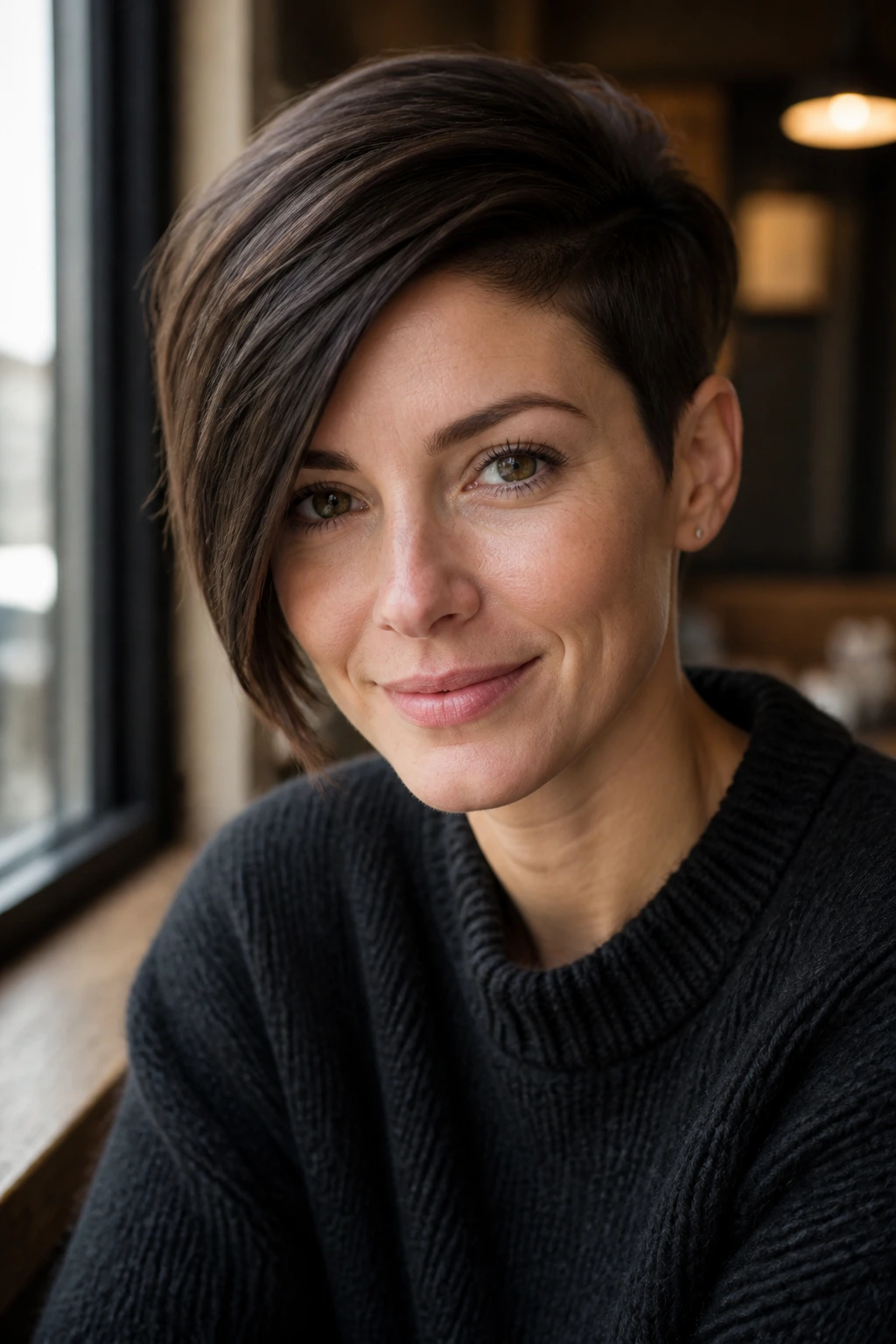
An asymmetrical pixie is one of those cuts that sounds dramatic and looks expensive when it’s done well. The deep side part creates a strong diagonal, and that line is a sneaky little shapeshifter. It can slim a round face, lengthen a square one, and take the edge off a broad forehead.
The longer side should graze the cheekbone or jawline, not hang so low that it drags the whole haircut down. The shorter side keeps the shape clean and gives the longer side somewhere to “travel” visually. If both sides are left too heavy, the asymmetry loses its point.
This is the cut I’d choose for someone who likes a little tension in their look. Not harshness. Tension. There’s a difference. One side says polish, the other says movement, and the face gets framed somewhere in the middle.
6. Undercut Pixie with a Long Top
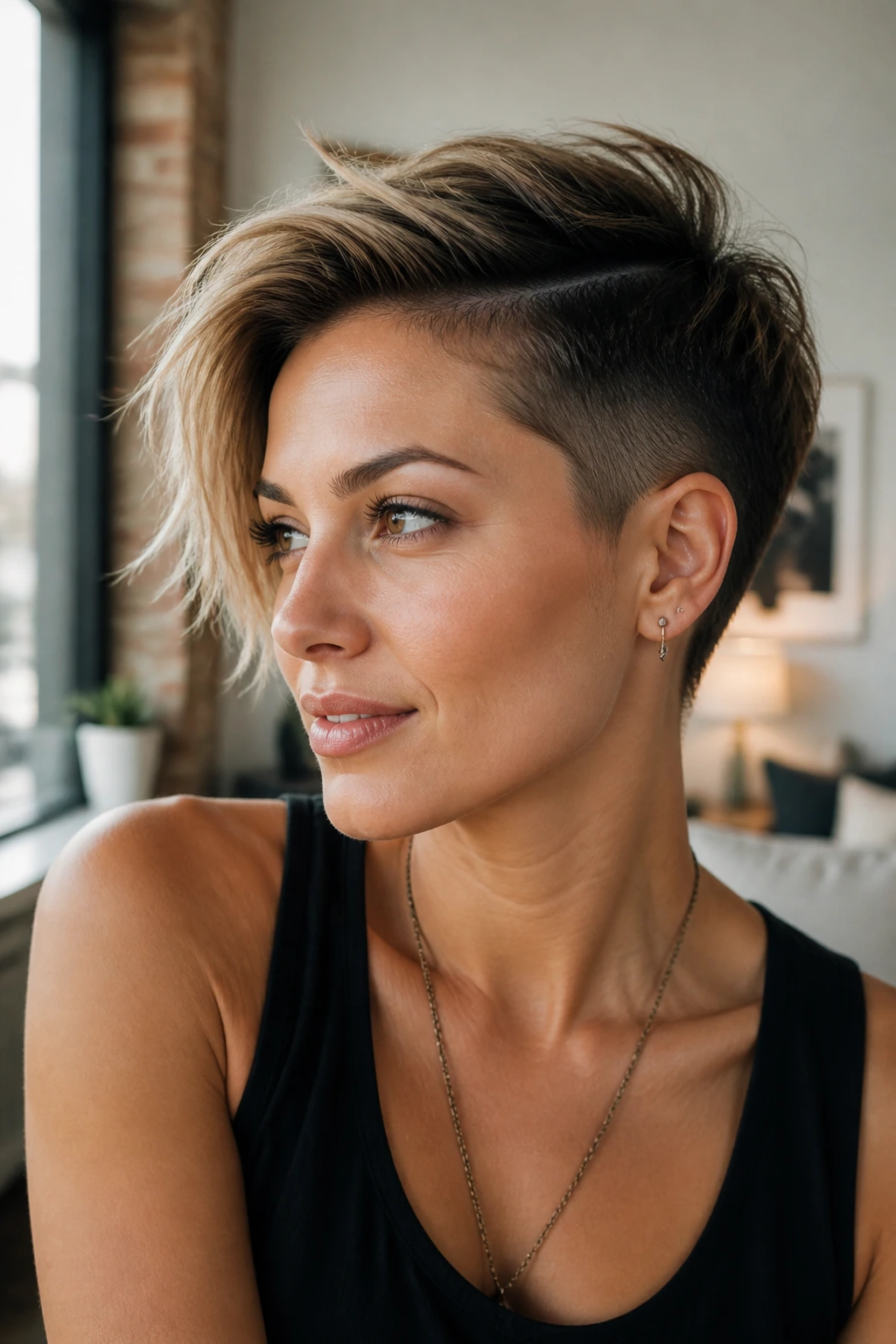
If your hair is thick, this one deserves a serious look. The undercut removes bulk from the sides and back, while the longer top gives you the part, sweep, or lift you need to shape the face. It’s especially useful on round, square, and oval faces because you can control exactly where the emphasis lands.
The beauty of the undercut is that it cleans up the silhouette. Thick hair can balloon at the temples and nape, and that’s where a lot of pixies go wrong. The undercut fixes that before it starts. What’s left on top behaves like a styled crop instead of a mushroom.
I would be cautious with this on very long faces unless the top is kept soft and not pushed too high. The style has bite. That’s the appeal. But bite can turn into severity if you build too much height and remove too much side softness.
7. Feathered Pixie with Wispy Ends
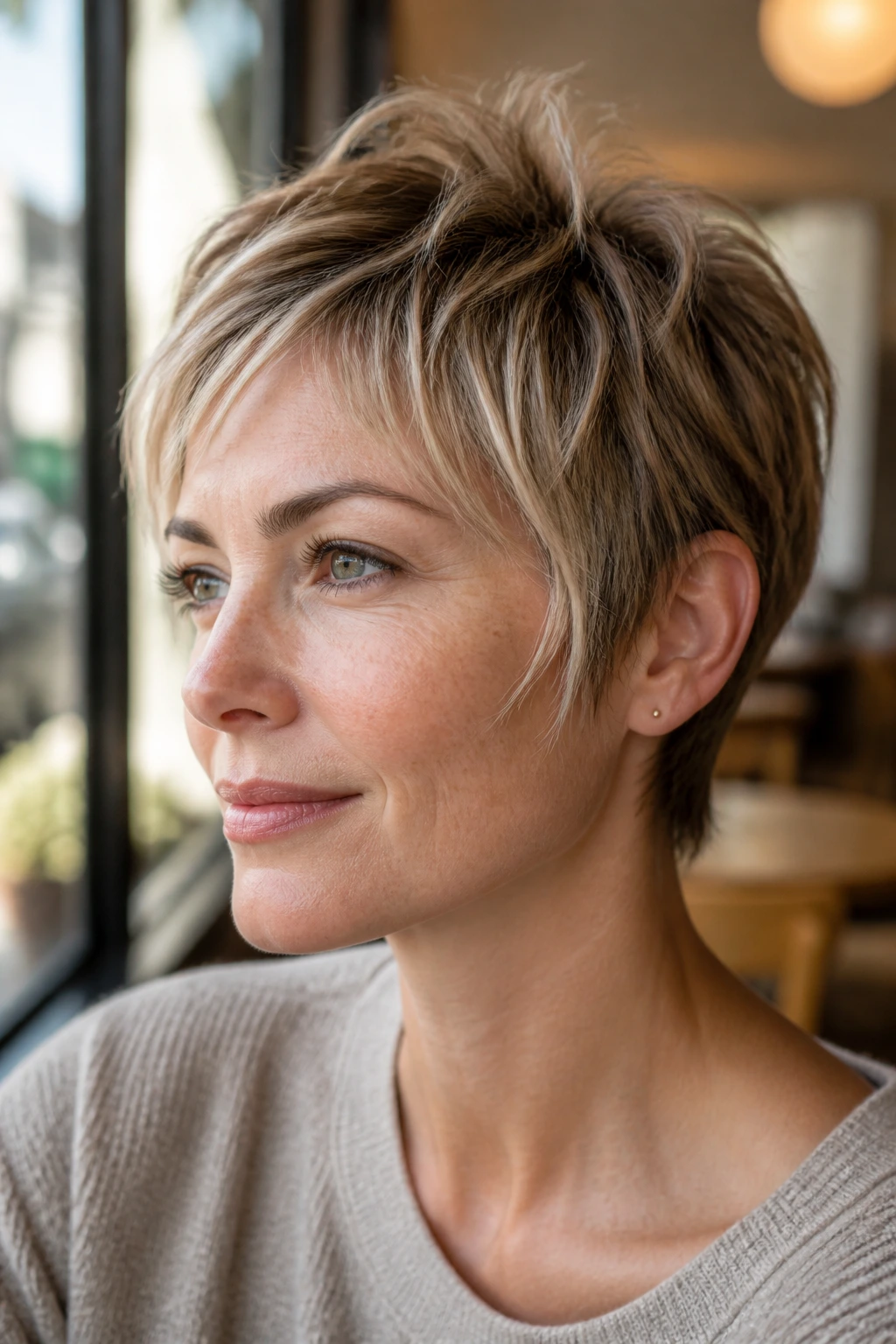
Feathering gives a pixie that light, moving edge that keeps it from feeling blunt. It’s one of the best ways to soften angular features without covering them up. On square faces, feathered ends around the temples and sideburn area can ease the jawline. On long faces, a little wispy fullness near the cheekbones helps break up the vertical line.
Where the Softness Should Sit
The softness should live on the perimeter, not all over the head. That’s the part people get wrong. If every strand is over-texturized, the cut loses shape and starts looking thin instead of airy.
I like feathered pixies on fine-to-medium hair because the ends move easily and don’t need much product. A touch of lightweight cream is enough. Heavy wax usually kills the effect and makes the feathers stick in clumps, which defeats the whole point.
8. Pixie Bob Hybrid
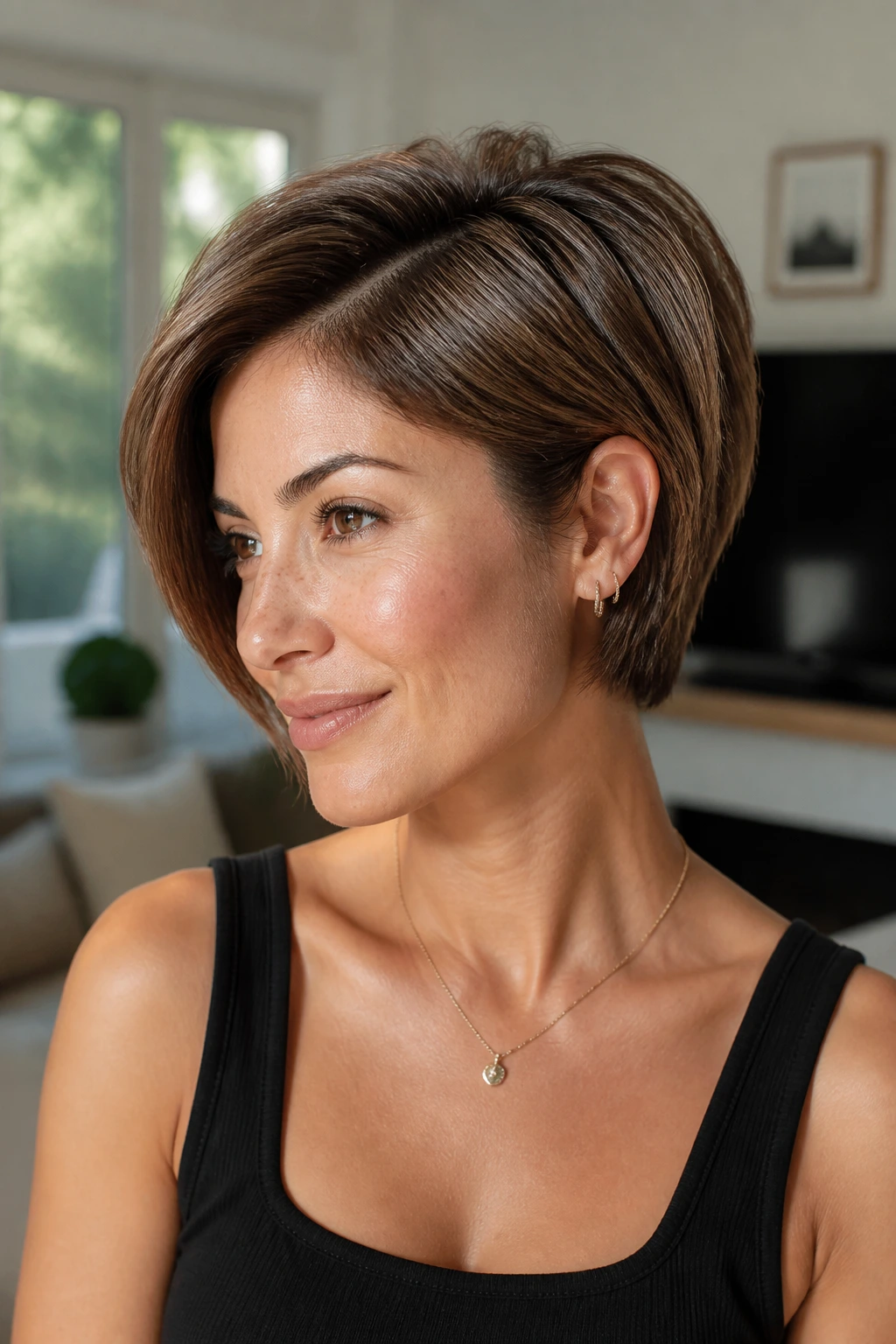
This is the bridge cut for people who want to go short but not that short. A pixie bob keeps more length in the front and around the cheeks, while the back stays cropped and tidy. That extra front length can be a lifesaver on pear-shaped, heart-shaped, and square faces because it lets the haircut balance the lower face without eating the jawline.
I’m fond of this one for first-timers. It grows out with less drama, and it doesn’t require the same level of daily shaping that a very short crop does. The front pieces can tuck behind the ear one day and fall forward the next. That flexibility matters.
The only caution is bulk. If the front is left too heavy, the cut loses the airy part that makes it a pixie-bob instead of a tiny bob. Ask for soft internal layering so the movement stays light.
9. Micro Fringe Pixie
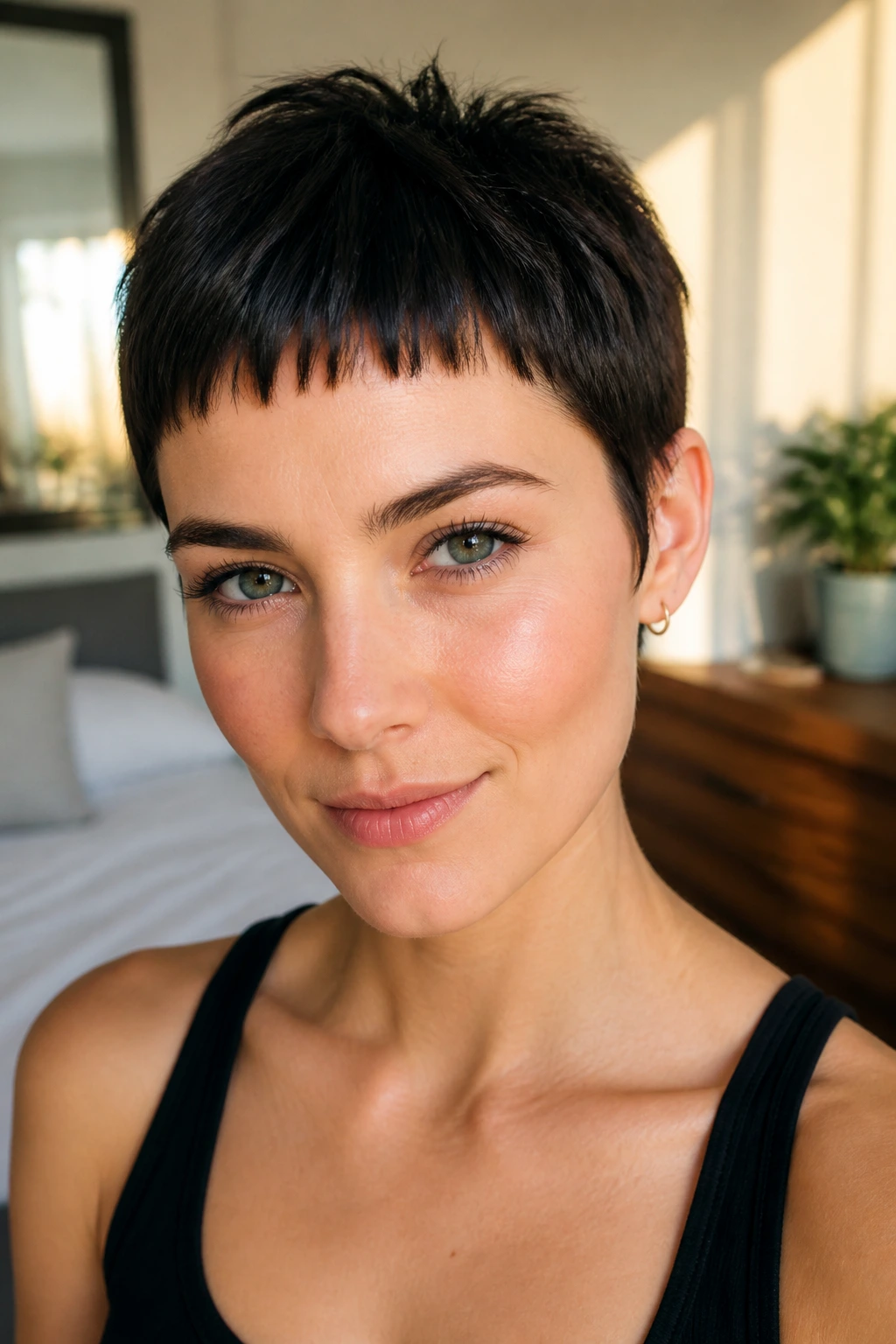
A micro fringe is a bold little line, and it does not forgive sloppy balance. Done well, though, it can make the eyes look larger and give the whole face a more graphic frame. It works beautifully on oval, heart, and diamond faces, especially when the rest of the cut stays soft and close.
The short fringe brings attention to the brows and upper face. That’s the whole game. If your forehead is something you like showing off, this cut makes sense. If you’d rather blur that area, you’ll probably prefer a longer fringe or side sweep instead.
I would not rush into a blunt micro fringe on a very round face unless the sides are kept airy and the crown has some lift. Otherwise, the cut can feel too horizontal. Small detail. Big effect.
10. Slicked-Back Pixie
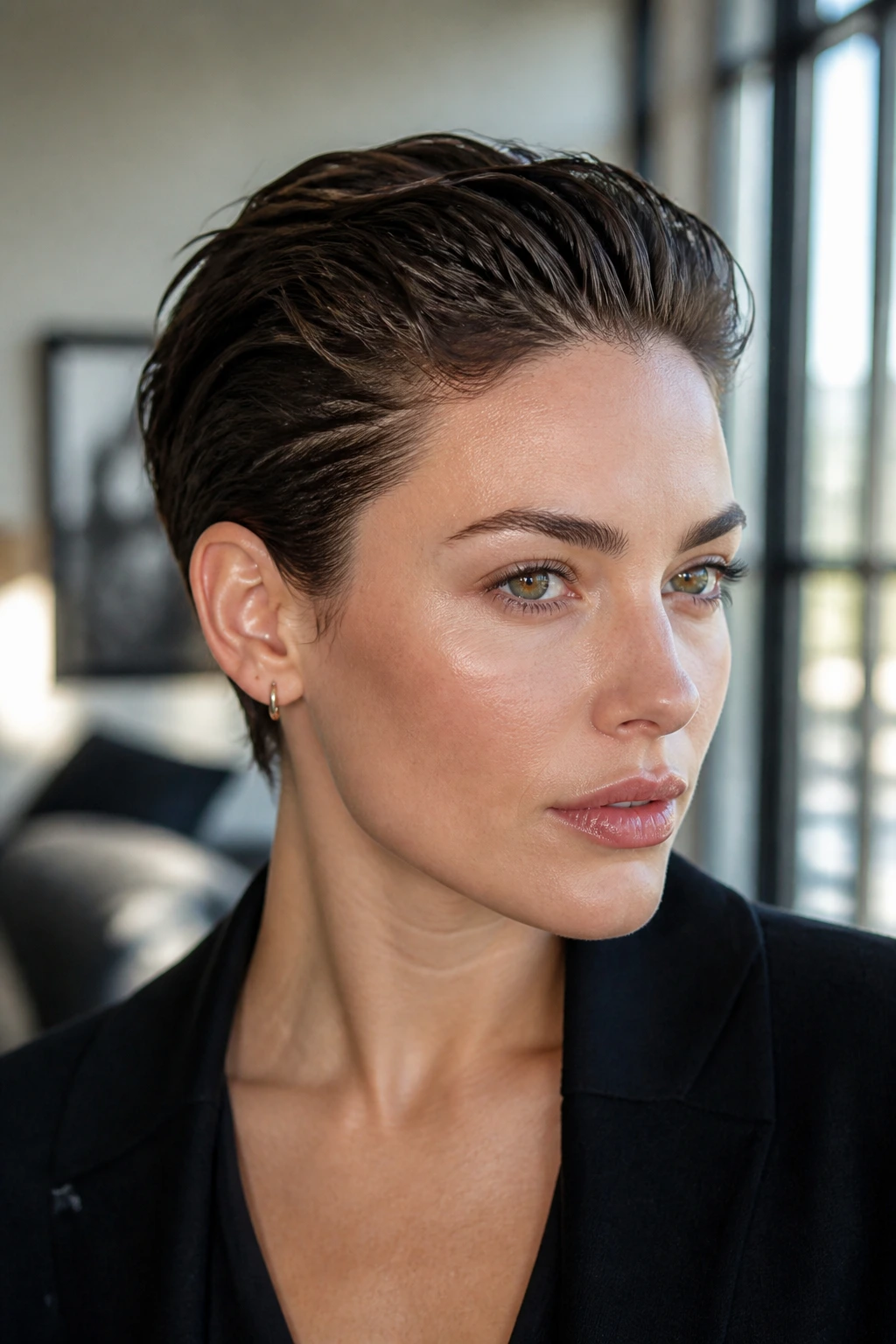
A slicked-back pixie is one of the cleanest ways to show off bone structure. When the hair is brushed away from the face, the cheekbones, jaw, and eyes do the talking. That makes this style especially good for oval, square, and diamond faces with definition you actually want to see.
The trick is not soaking the hair in product and hoping for the best. Use a lightweight gel or cream, comb it back while the hair is still damp, and leave a little lift at the roots if your face is round. On a round face, flat sides plus a little crown height can keep the look from collapsing inward.
Cowlicks can be annoying here. So can very fine hair that refuses to hold direction. But if your hair already likes to move back, this is an easy, elegant way to wear a pixie without a lot of fuss.
11. Boyish Tapered Crop
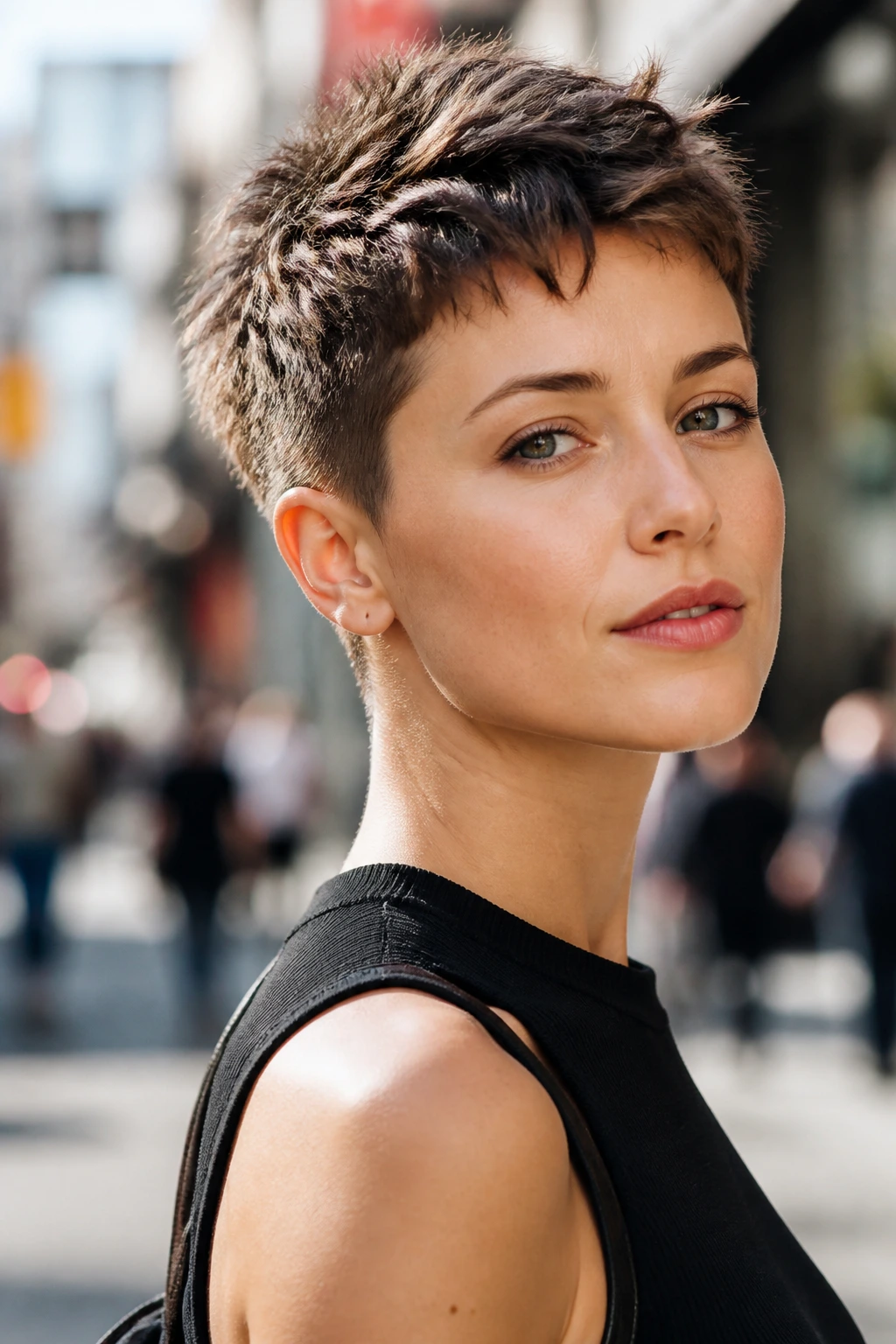
This cut is close, neat, and honest. No extra fluff. The sides taper cleanly into the nape, the top stays short, and the shape reads as sharp rather than sweet. That makes it especially good on petite faces, strong jaws, and people who want the cut to do very little talking.
A boyish crop can flatter round faces when the top is kept slightly longer than the sides, because that bit of contrast helps lengthen the profile. On long faces, I’d add a soft fringe or a little forward texture so the forehead doesn’t dominate. On square faces, the tight taper keeps the outline tidy without adding bulk.
It’s not the most forgiving cut if you hate regular trims. The grow-out shows fast. But if you like a crisp neckline and a low-maintenance morning, it’s hard to beat.
12. Rounded Pixie with Soft Curve
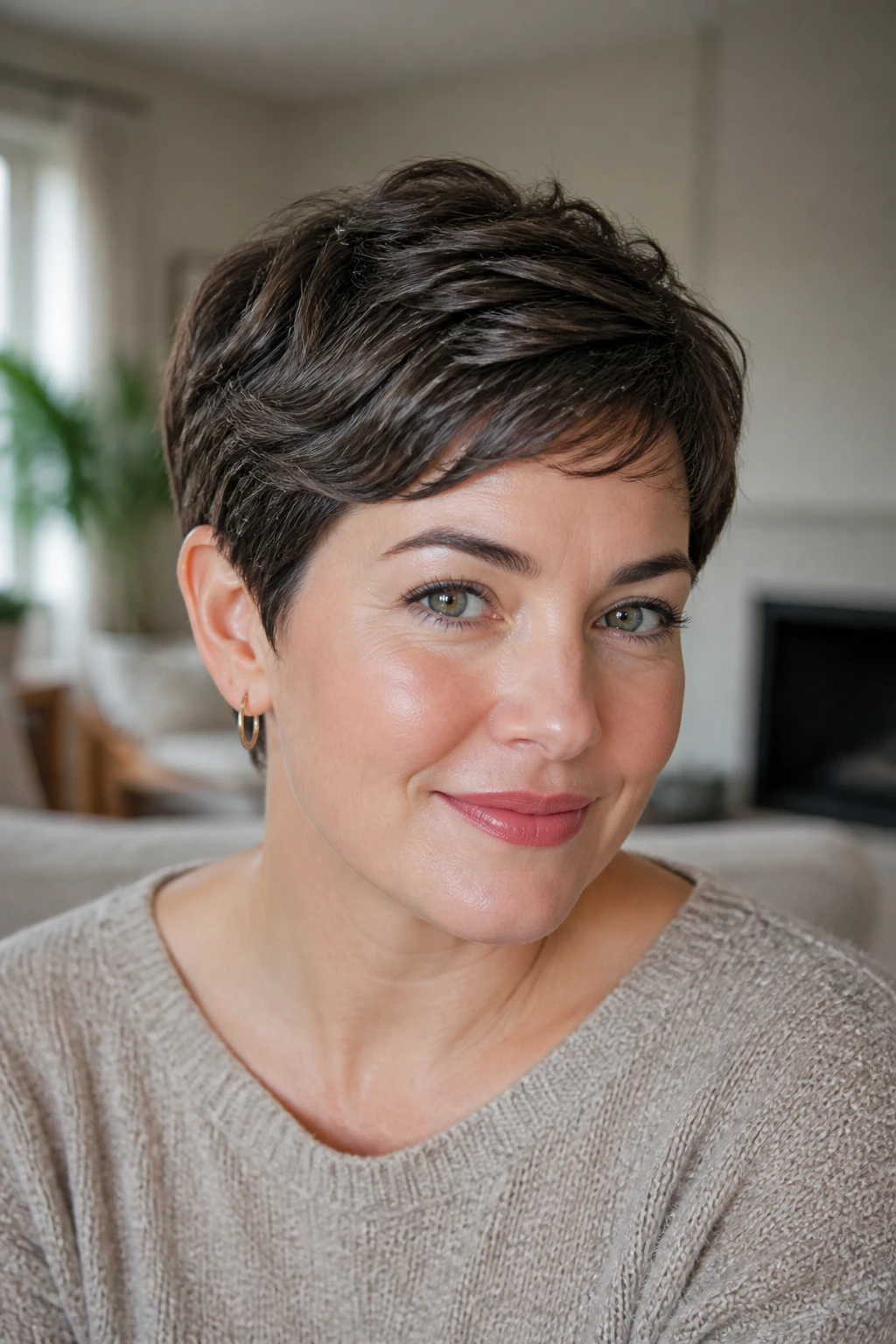
A rounded pixie feels gentler than a squared-off crop because the silhouette curves around the head instead of sitting in hard corners. That curve is useful on angular faces. A square jaw looks softer. A long face looks a little more balanced. Even a narrow chin gets some visual support from the fuller shape around the sides.
The key is that the roundness should come from the cut, not from puff. There’s a difference. Puff sits out from the head and usually means too much bulk at the sides. Roundness follows the head shape and keeps the line smooth.
This is the pixie I like when someone wants short hair that still looks polished in a quiet way. Not severe. Not edgy for the sake of it. Just a clean shape with enough softness to work in daylight, office light, and all the unflattering bathroom mirrors in between.
13. Tousled Piecey Pixie
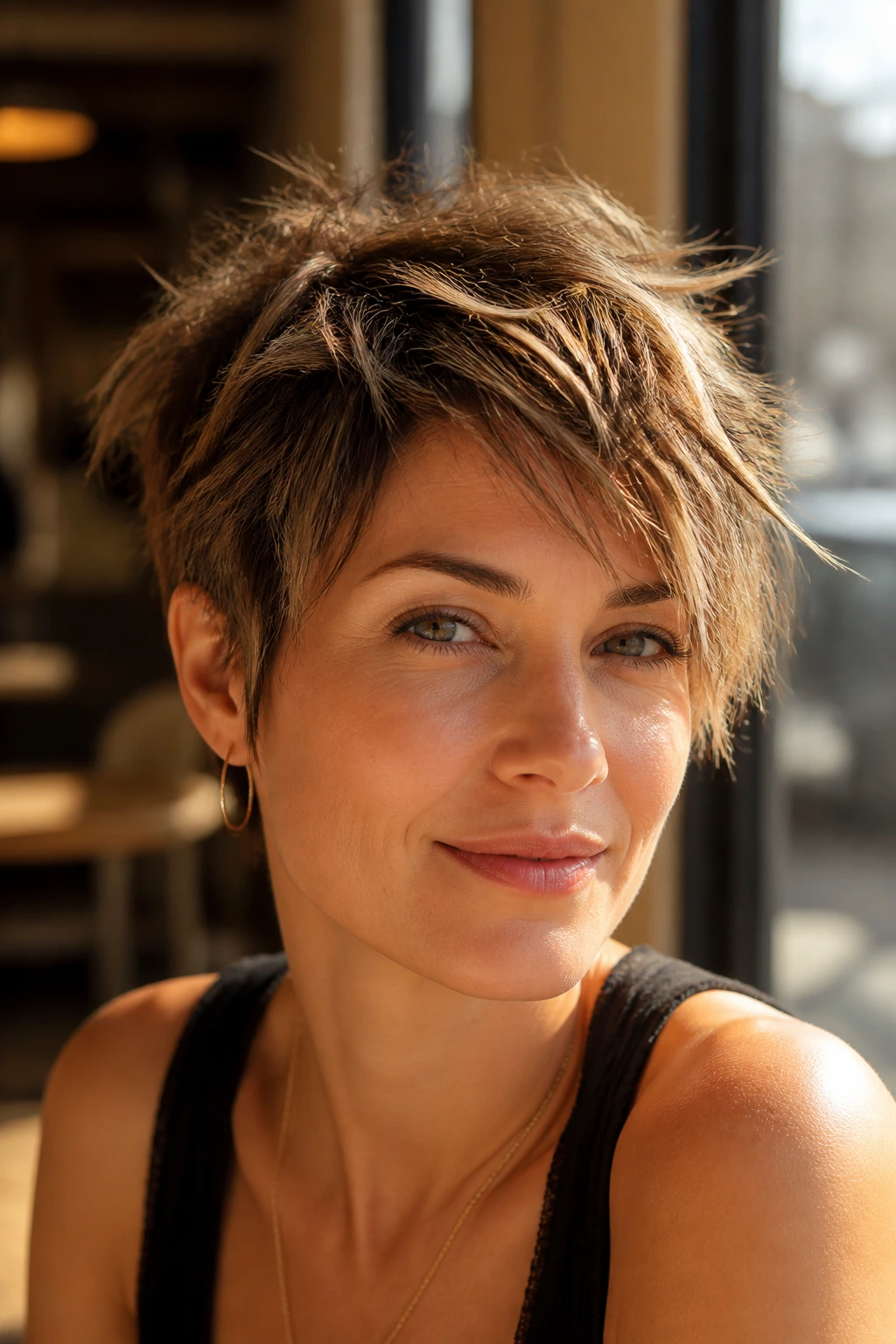
The best tousled pixies never look like you forgot to brush your hair. They look intentionally broken up, with a few separated pieces at the front and top that keep the eye moving. That makes this cut useful on almost every face shape, because you can place the mess where you need it most.
Round faces usually benefit from some lift at the crown and a little softness at the cheeks. Heart-shaped faces do well with piecey front length that narrows a wide forehead. Square faces tend to look better when the edges aren’t too blunt. The tousled texture takes care of all that if it’s cut with restraint.
Use a sea-salt spray or light texture cream, then twist a few sections with your fingers. Don’t overdo it. The style should look airy, not crunchy. There’s a fine line there, and it’s worth respecting.
14. Curly Bang Pixie
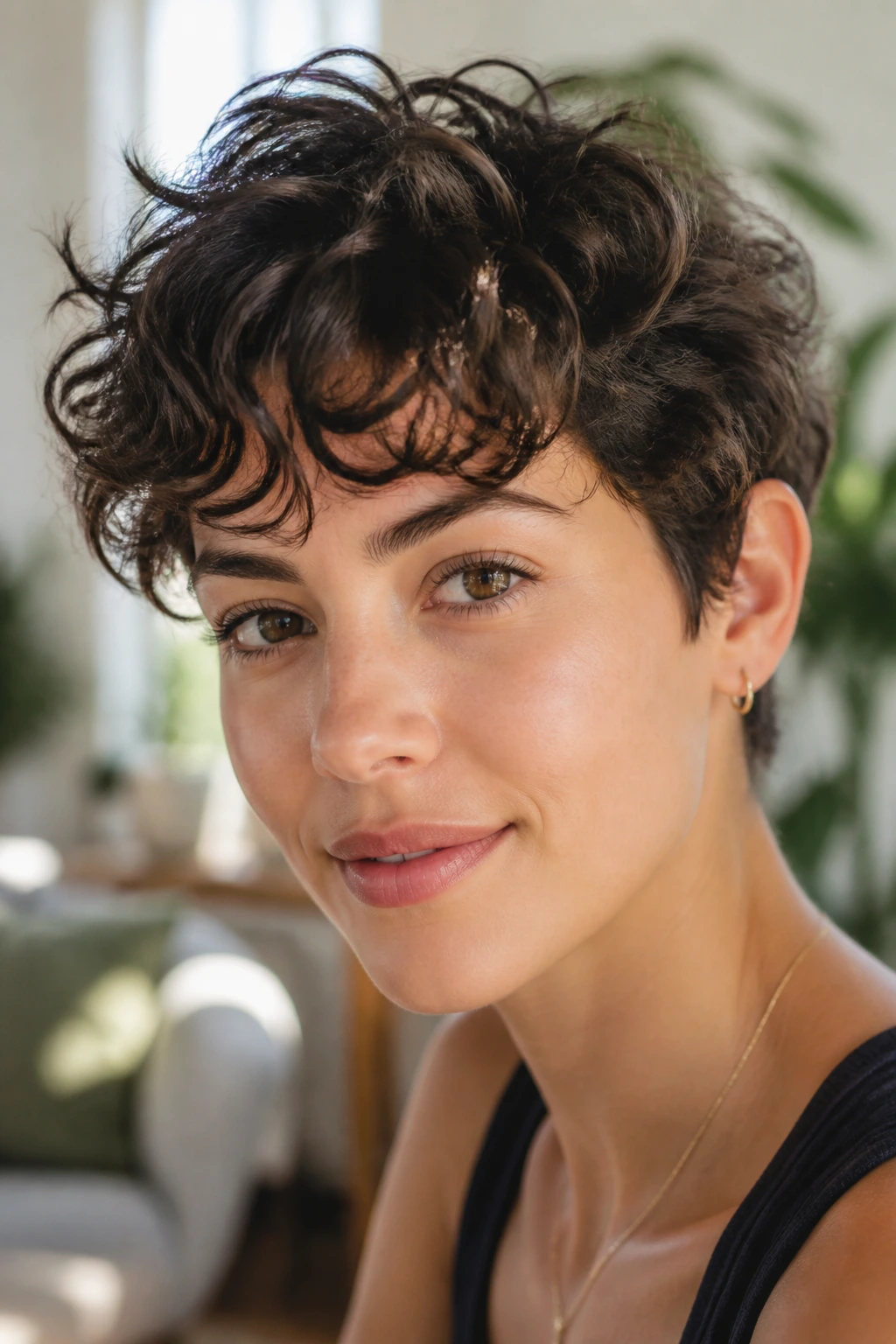
If you have curls and you’ve been told a fringe is “too much,” I’d question that advice. A curly bang pixie can soften the forehead, open the eyes, and keep the whole look playful without feeling childish. It works especially well for heart, diamond, and long faces because the curl at the front changes the balance immediately.
The fringe should be long enough for the curls to spring, then sit somewhere between the brow and upper lashes when dry. That sounds precise because it needs to be. Curly hair shrinks, and a bang cut too short can become a little springy surprise you didn’t ask for.
For round faces, keep the bang airy and let the sides stay close. That prevents the style from widening at the cheek line. For coarser curls, ask for curl-by-curl shaping instead of one blunt cut across the front. The difference is huge.
15. Pompadour Pixie
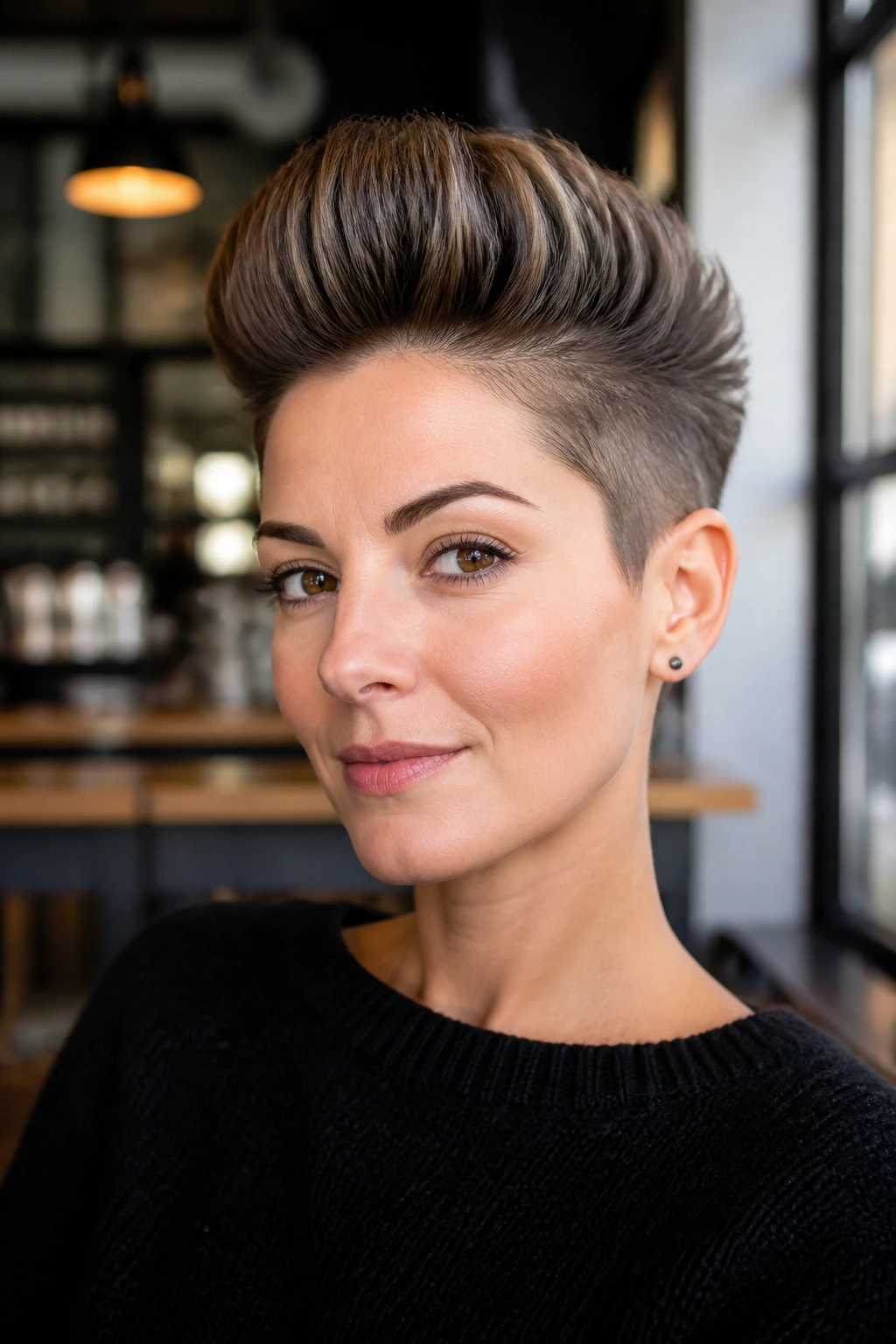
Want height without making the whole cut look tall? The pompadour pixie does that trick better than almost any other short style. It lifts at the front, not everywhere, so the eye goes upward before it goes out. That’s why it’s so useful on round and square faces.
The shape works best when the front has some structure and the sides stay tighter. Too much height on a long face can stretch the proportions even more, so keep the pompadour modest if your face is already narrow or elongated. The style should feel lifted, not inflated.
I like this cut with a matte styling paste at the roots and a comb only where you need one. A shiny, shellacked version can look costume-y fast. Softer finish, cleaner line. Much better.
16. Face-Framing Pixie with Longer Sides
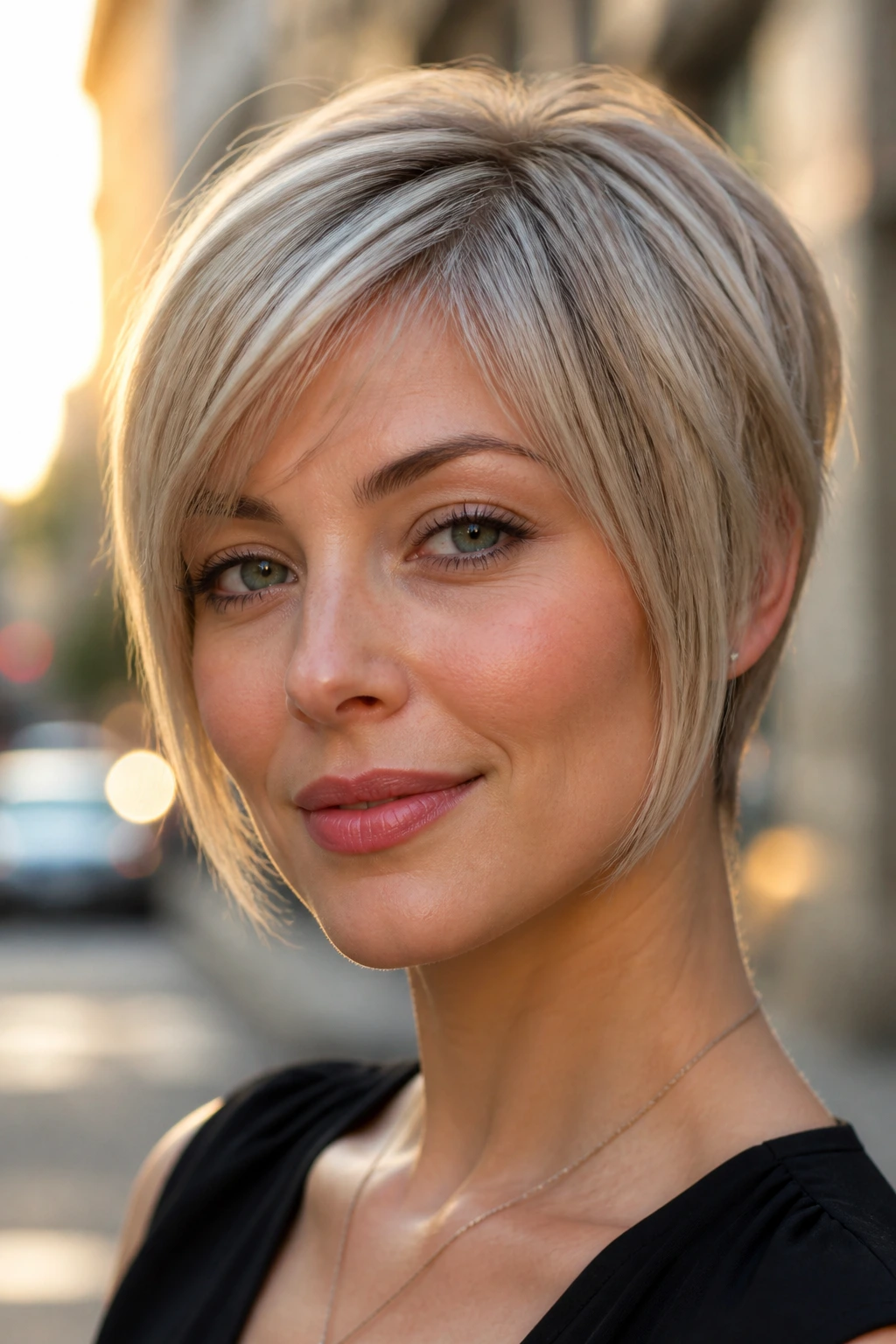
This is the pixie for people who want short hair but still want a little veil around the cheekbones. The longer sides can skim the jaw, soften a strong chin, or narrow a broad forehead depending on where you keep the length. That makes it one of the most forgiving shapes for pear, round, and square faces.
The front pieces should be cut so they move, not hang. If the sides are too heavy, the cut starts to widen the face instead of framing it. If they’re too short, you lose the whole point. Somewhere between ear and cheekbone is usually the sweet spot.
I like this cut because it grows out in a useful way. The extra length around the face buys you time between salon visits, which is a small mercy when you’re living in short-hair territory.
17. Soft Bowl Pixie
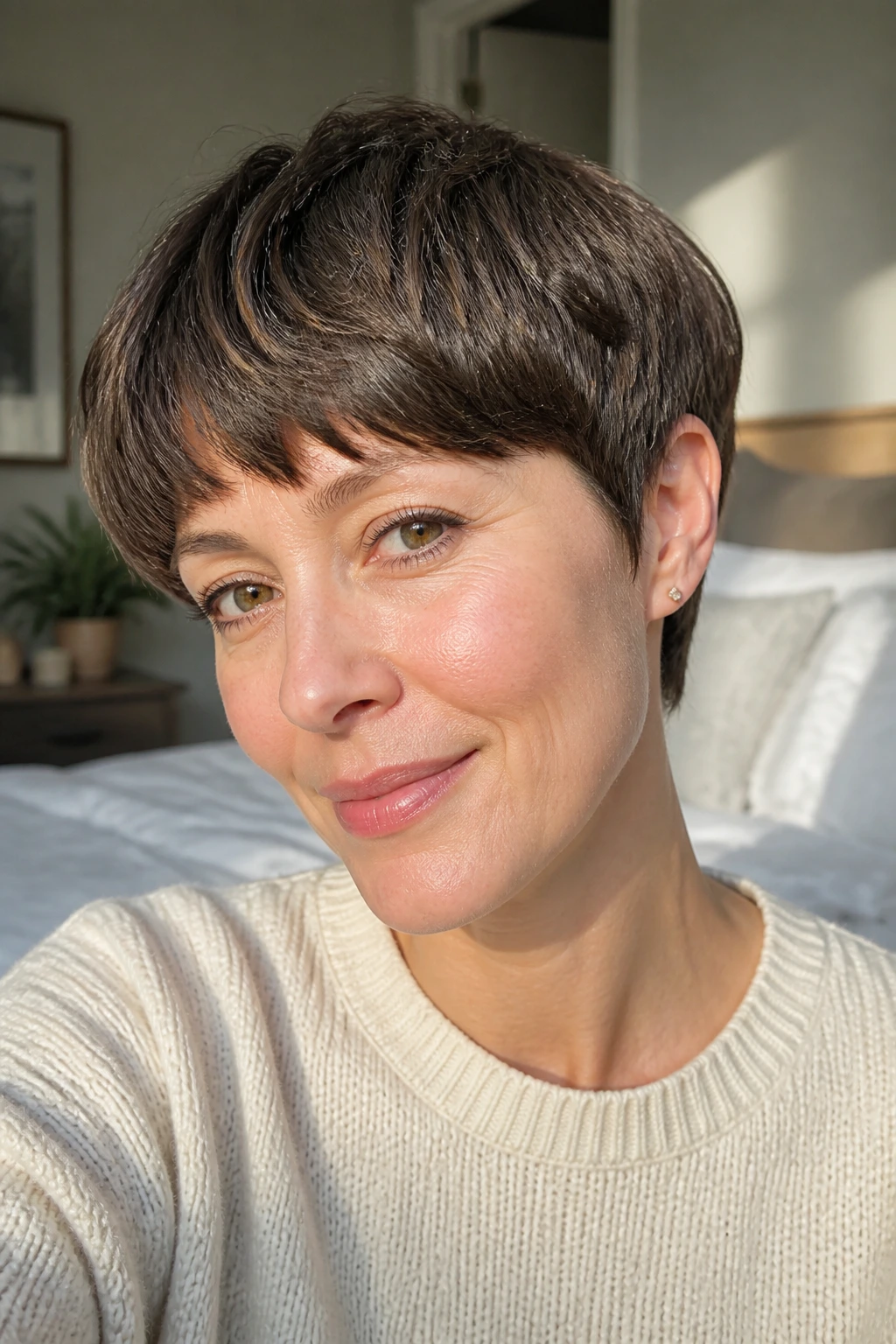
A soft bowl pixie sounds odd until you see the right version of it. This is not the hard, severe bowl cut from old school photos. It’s a rounded, textured crop with a curved outline and enough softness at the ends to keep it from looking rigid.
It suits oval and long faces especially well because the rounded line balances vertical length. It can also work on narrow chins, since the width stays controlled around the cheek area. On very round faces, I’d be more careful — you don’t want the silhouette to add width at the widest point unless there’s some break in the line.
What saves this cut is texture. Tiny broken ends, a gentle side part, and a little movement around the temple area keep it modern. Without that, it tips into costume territory fast.
18. Bixie with a Sweeping Front
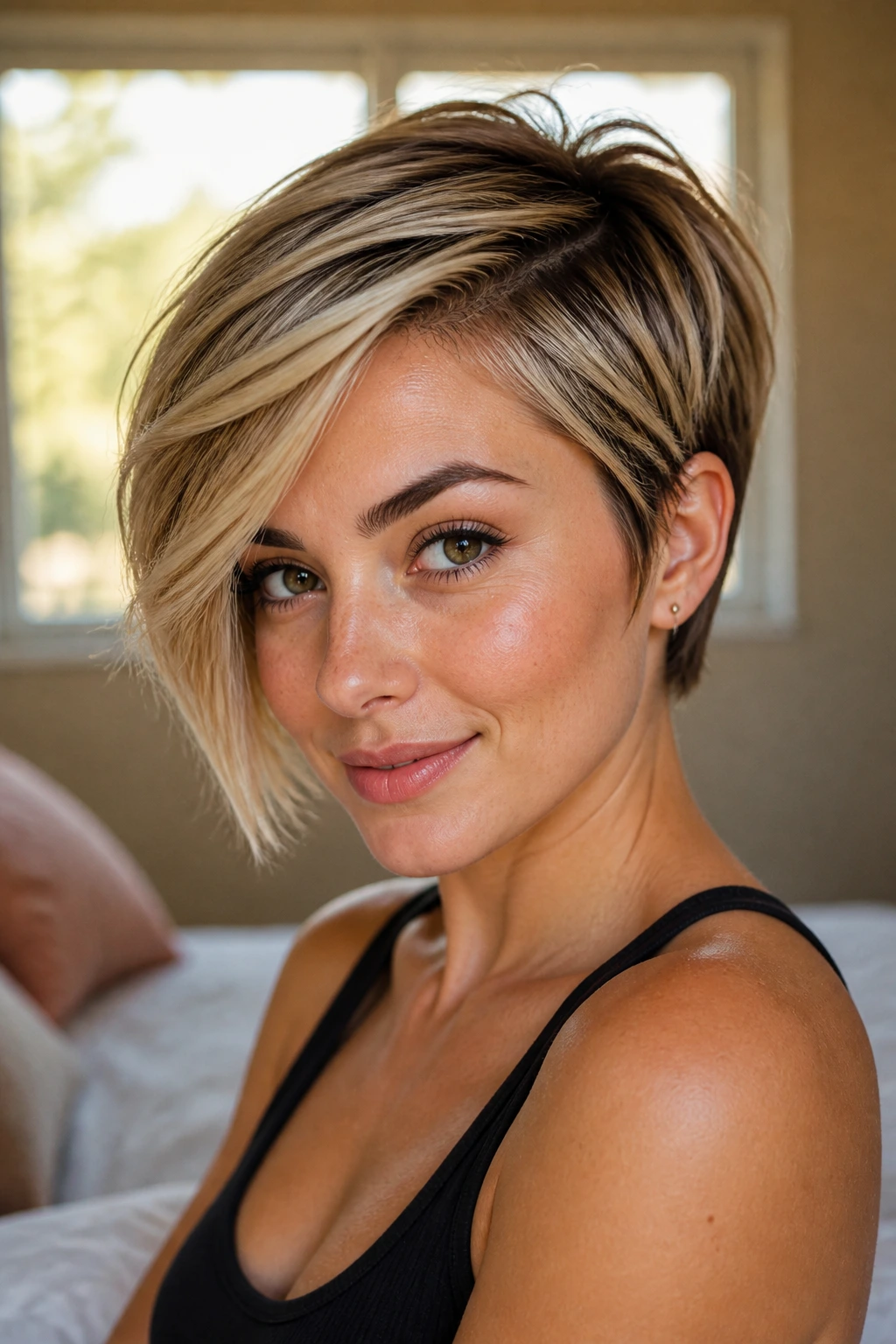
The bixie is the practical middle ground between a bob and a pixie, and frankly, that’s why so many people end up liking it. It gives you enough length around the face to soften features, but enough shortness at the back to keep the neck open and the shape light. It’s one of the easiest options for a nervous first chop.
A sweeping front helps square faces, heart faces, and even round faces by creating a little diagonal line near the cheekbone. The back can be short and tidy while the front brushes the jaw or chin. That balance is the whole appeal.
If you want a pixie but you’re worried about the grow-out stage, start here. It buys you room. And room matters when you’re getting used to seeing your face with less hair in it.
19. Shaggy Pixie with Crown Layers
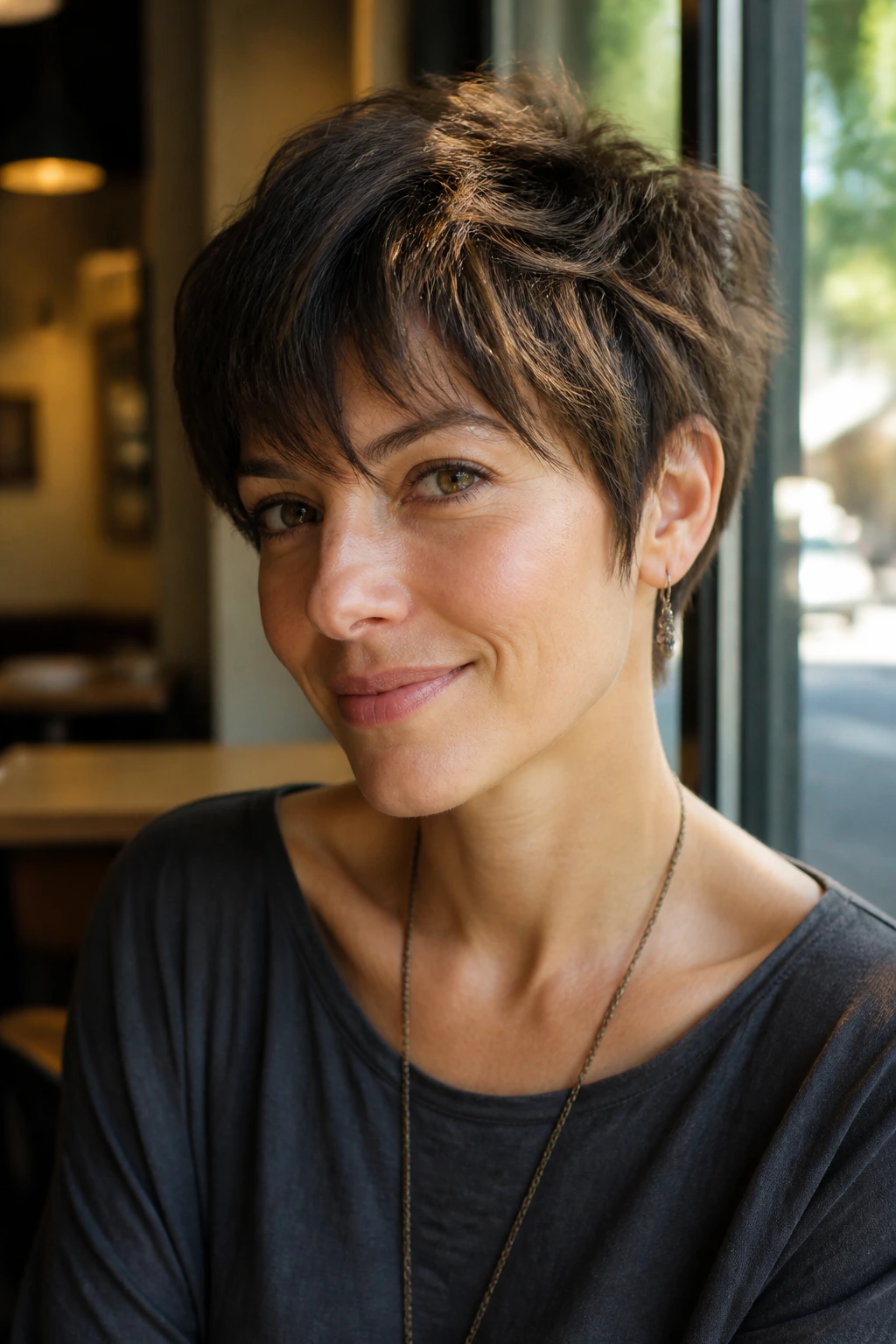
What if you like your short hair a little messy, a little uneven, and a lot less polished than a classic crop? Then a shaggy pixie with crown layers might be your lane. The extra layering at the top gives movement, while the loosened ends stop the silhouette from looking fixed in place.
This works especially well on wavy hair and on faces that need a bit of vertical lift, like round and heart shapes. The layers should build up through the crown and then fall away softly at the sides. If the crown gets too puffy, the cut can start to swallow a long face, so there is a limit.
A diffuser helps here. So does not over-brushing it. The magic is in the separation, not in making every strand behave.
20. Airy Razor-Cut Pixie
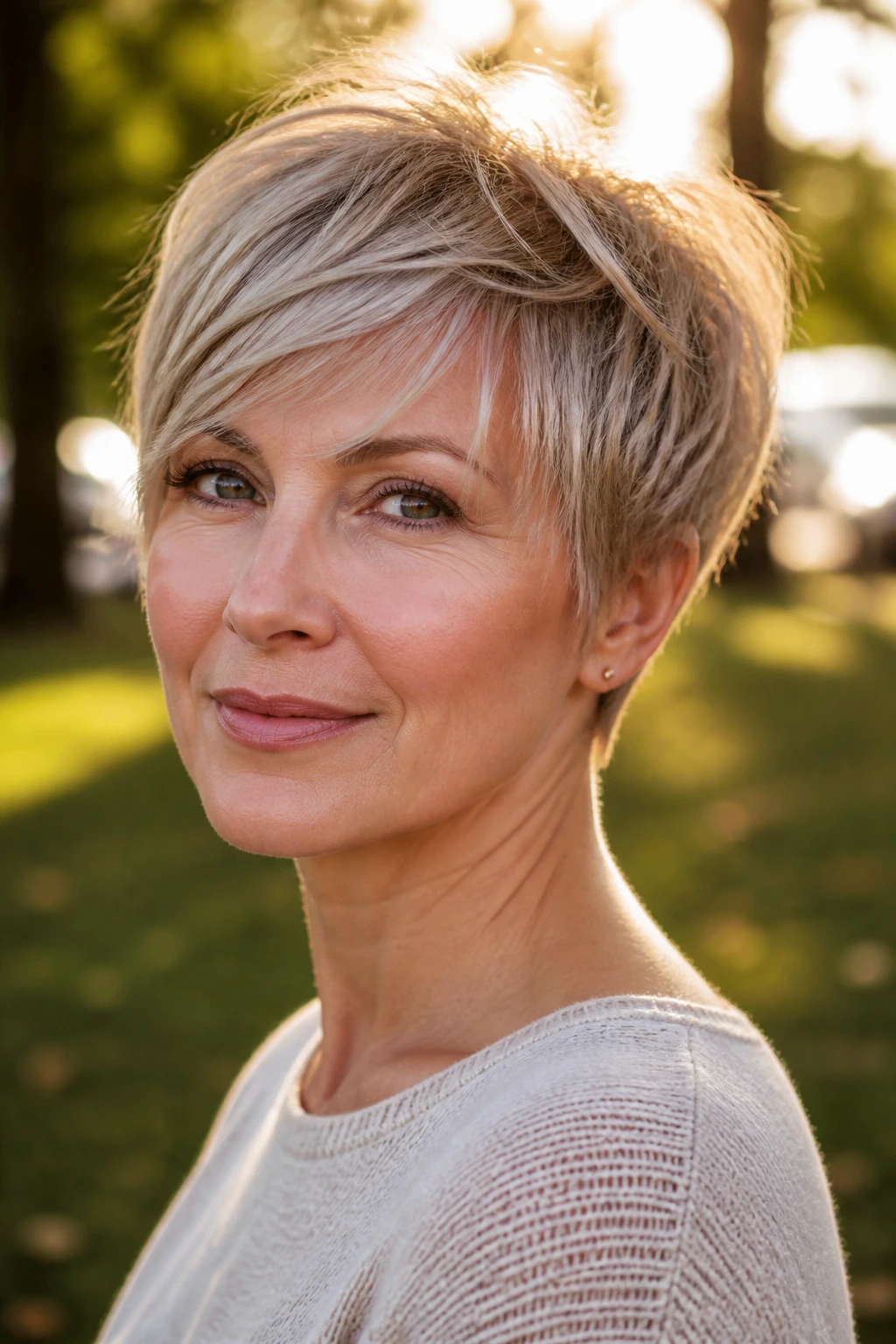
A razor-cut pixie has a lighter edge than a scissor-cut one, and that matters when you want movement around the face instead of a blunt little cap. The razor softens the perimeter, which helps thick hair shed weight and helps square or round faces avoid a blocky outline.
This is one of my favorite options for coarse hair that tends to balloon at the sides. The razor takes bulk off in a way that looks softer than thinning shears can. But it is not the best choice for fragile, damaged, or very dry hair, because the wrong razor technique can leave the ends frayed.
I’d ask for soft, controlled ends rather than aggressive texturizing. The difference between airy and shredded is small on the chair and huge in the mirror.
Why Pixie Cuts Work When the Shape Is Specific
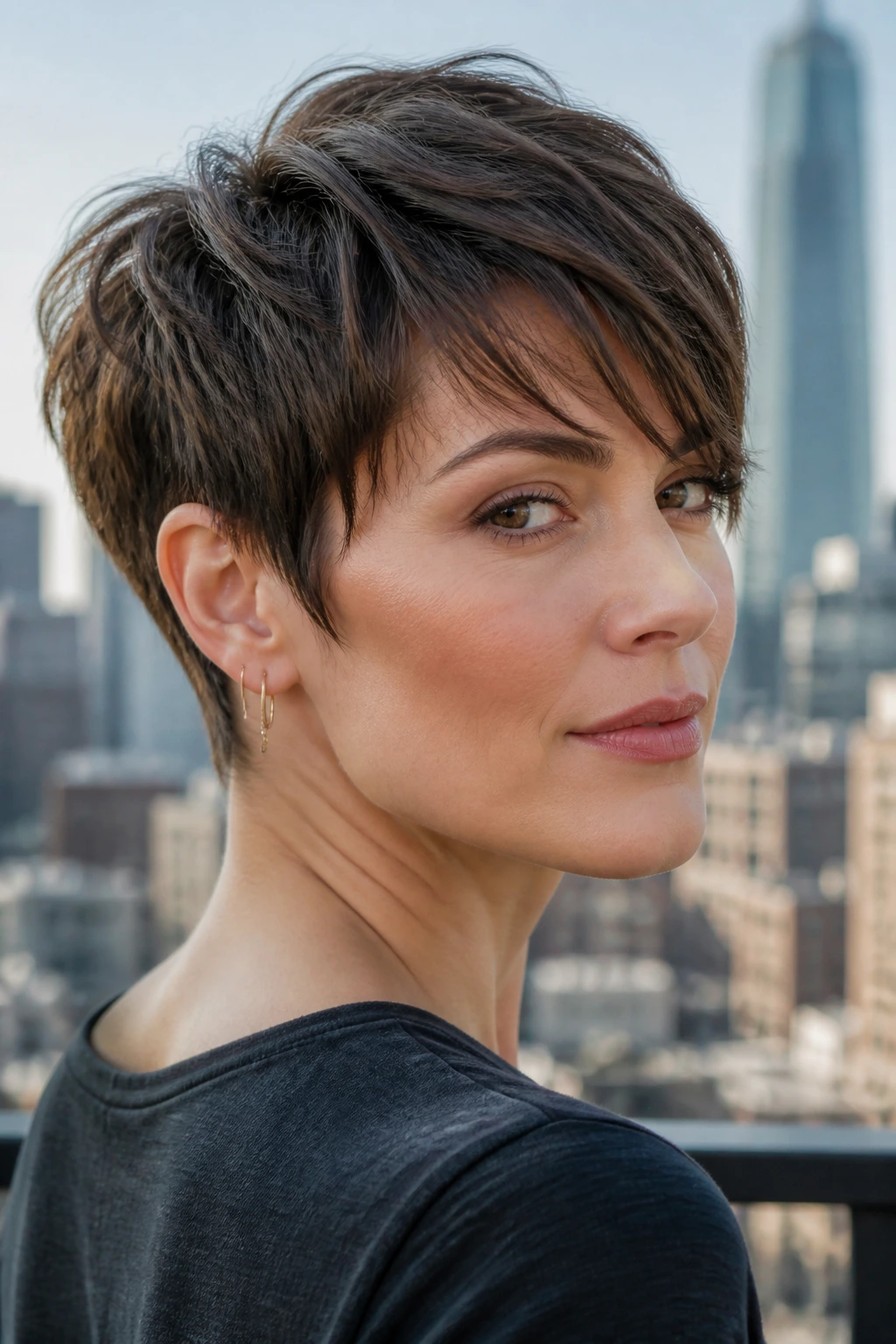
A pixie cut flatters a face when it changes the proportions on purpose. That sounds simple, but it’s the whole game. A round face usually benefits from height or a diagonal line. A square face usually looks better with broken edges and a little softness around the jaw. A long face often needs a fringe or some side width so the length doesn’t read even longer.
Hair density changes the story too. Thick hair can turn a pixie into a little triangle if the nape and temples aren’t cleaned up. Fine hair can go limp if the top is too heavy or the layers are cut too aggressively. Curly hair needs room to spring, while straight hair usually needs shape cut into it so it doesn’t lie flat and hard.
That’s why I don’t love the advice that says one pixie suits “everyone.” It’s too vague to be useful. The better question is: which part of the face do you want the cut to soften, and which part do you want it to show off? Once you know that, the shortlist gets much smarter.
What to Tell the Stylist Before the First Snip
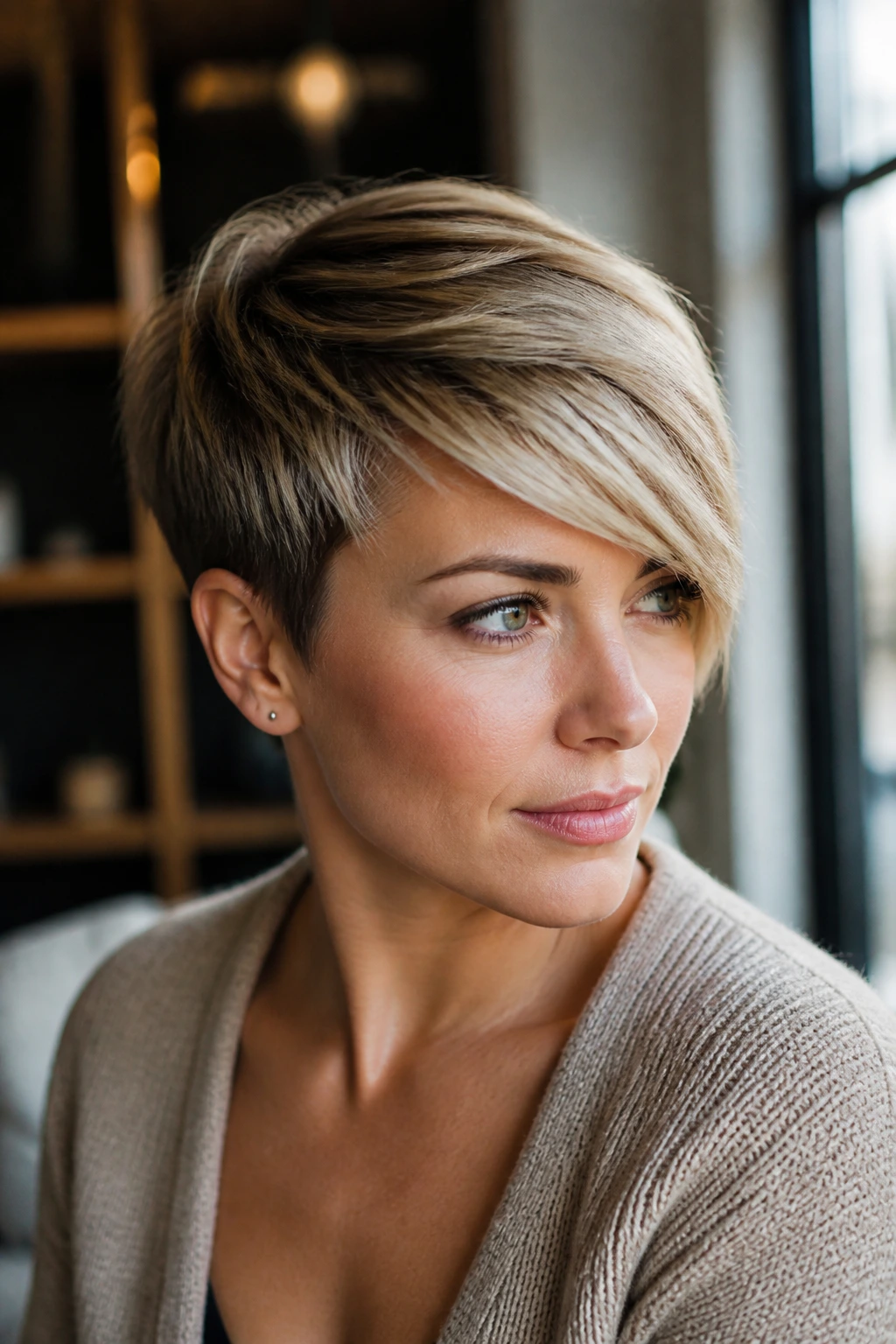
Bring photos, yes. But bring the right photos. One front view is not enough. Ask for a front, side, and back reference so your stylist can see whether you want height, softness, or edge in each area. A cut that looks tiny from the front can balloon in profile if the nape isn’t handled well.
Say how much time you’re willing to spend styling in the morning. That matters more than the face-shape label on the inspiration photo. A styled pixie with a blow-dried fringe and brushed crown is a different animal from a wash-and-go crop with a little paste scrunched through the top.
Tell them about your cowlicks, too. Especially at the front hairline and crown. A pixie can live or die on a cowlick, and the fix is usually a small adjustment in direction or length, not some heroic styling routine. If your hair sticks up at the nape, the cut needs to account for that from the start.
How to Style a Pixie Cut So It Flatters Your Features
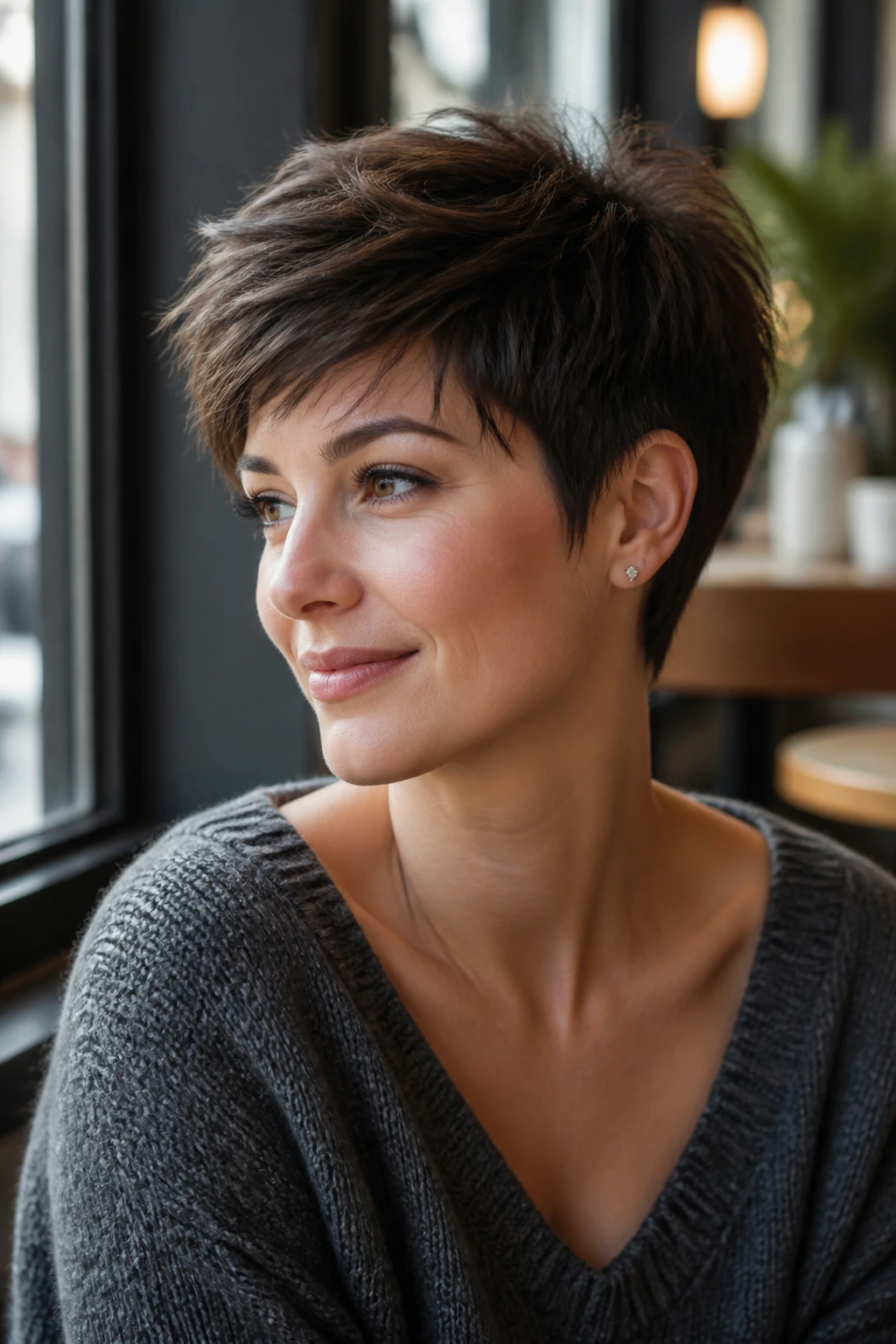
- Round faces: Keep a little lift at the crown and avoid too much width at the temples. A side-swept fringe usually works better than a blunt one.
- Square faces: Soften the jaw with texture near the front and edges that aren’t cut dead straight. A broken fringe helps more than a rigid line.
- Heart faces: Keep some fullness around the lower half of the face so the forehead doesn’t dominate. Longer front pieces or a sweeping fringe usually do the job.
- Long faces: Don’t build too much height. Keep the top moderate and let the fringe sit a bit fuller so the face doesn’t look stretched.
- Diamond faces: Add softness at the temples and cheekbones. A little width in the right place helps the eyes and jawline feel balanced.
- Pear faces: Bring the visual interest upward with crown texture or a side part so the jaw doesn’t carry all the weight.
If your face sits between shapes, pick the feature you want to change most. That’s the honest shortcut. Hair can soften a forehead, widen a narrow chin, or slim a full cheek line, but it cannot do all three at once without compromise.
Pixie Cut Mistakes That Throw Off the Balance
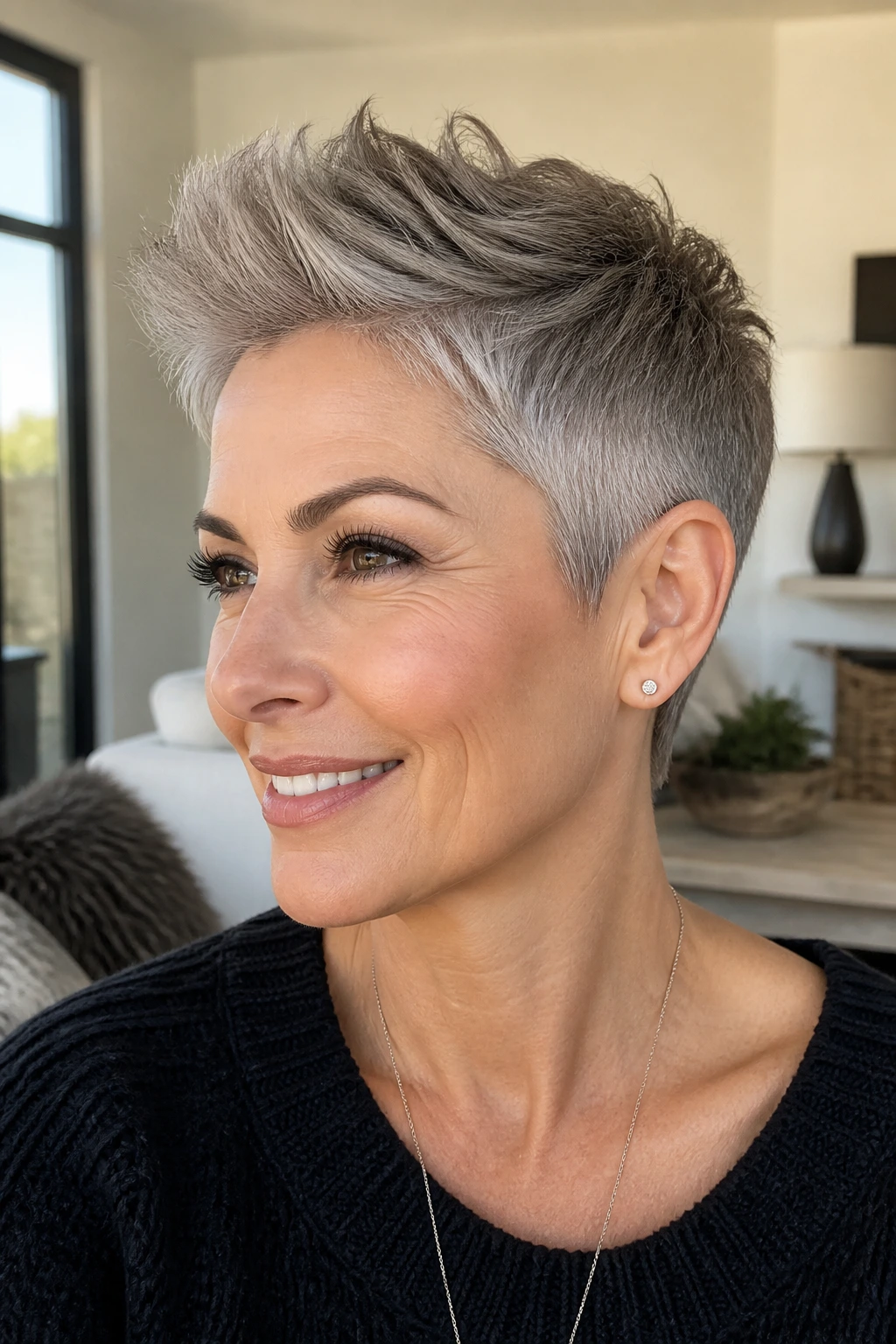
The biggest mistake is choosing the cut from the front only. Pixies look innocent in selfies and completely different in profile. If the sides flare at cheek level, the face gets wider. If the crown is too tall, the face gets longer. If the fringe is too blunt, the cut can harden the whole look.
Another common one: too much thinning. When people hear “texture,” they sometimes ask for the hair to be thinned out aggressively. That usually leaves the ends see-through and the shape choppy in the wrong way. Better to ask for controlled point-cutting or light internal texture, not a random loss of bulk.
Blunt bangs are another trouble spot. They can look chic, but they also make the face work harder. If the rest of the pixie is short, a heavy fringe can make the haircut feel boxed in. Soften the line, or keep the fringe long enough to sweep.
And please, don’t ignore the nape. A fuzzy neckline makes even a good pixie look unfinished. It needs a clean outline, even if the top is soft and loose.
Variations Worth Trying When You Want a Different Mood
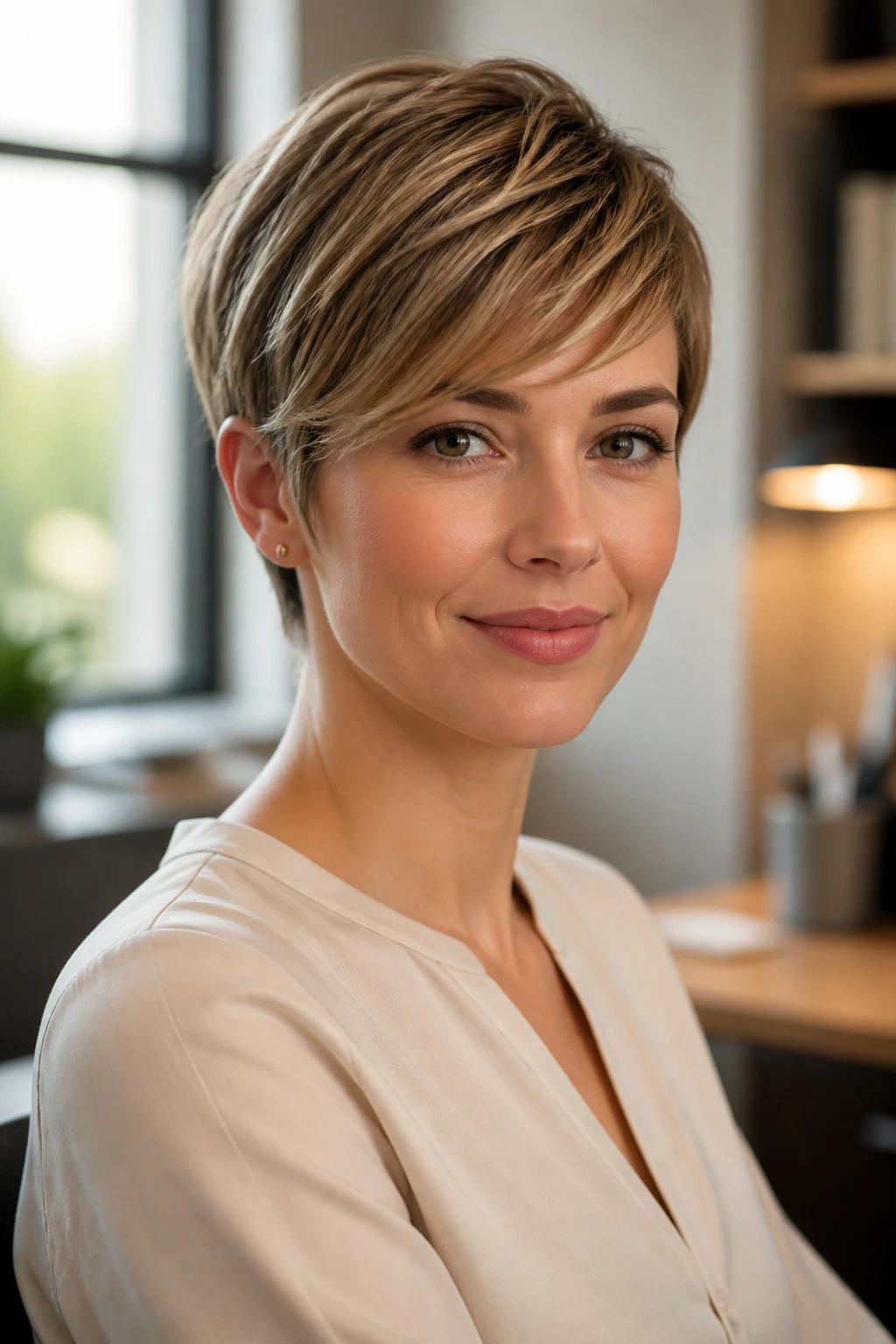
- The Soft-Office Pixie: Keep the fringe side-swept, the nape tidy, and the top low-key. This is the one that reads polished under bad fluorescent lighting.
- The Edgy Razor Pixie: Ask for more separation and a lighter perimeter. Best if you want the cut to look sharper and a little more modern.
- The Curly Halo Pixie: Let curls sit higher and softer through the crown, with the sides shaped close enough to keep the outline neat.
- The Grow-Out Pixie: Keep extra length through the front and sideburn area so the shape stays useful for longer between trims.
- The Statement Pixie: Go for a micro fringe, a deep side part, or a pompadour front if you want the cut to be the thing people notice first.
Each version is the same basic haircut wearing a different mood. That’s the fun part. Short hair can be calm, sharp, romantic, or a little rebellious without changing the whole structure.
Tools, Products, and Photo References
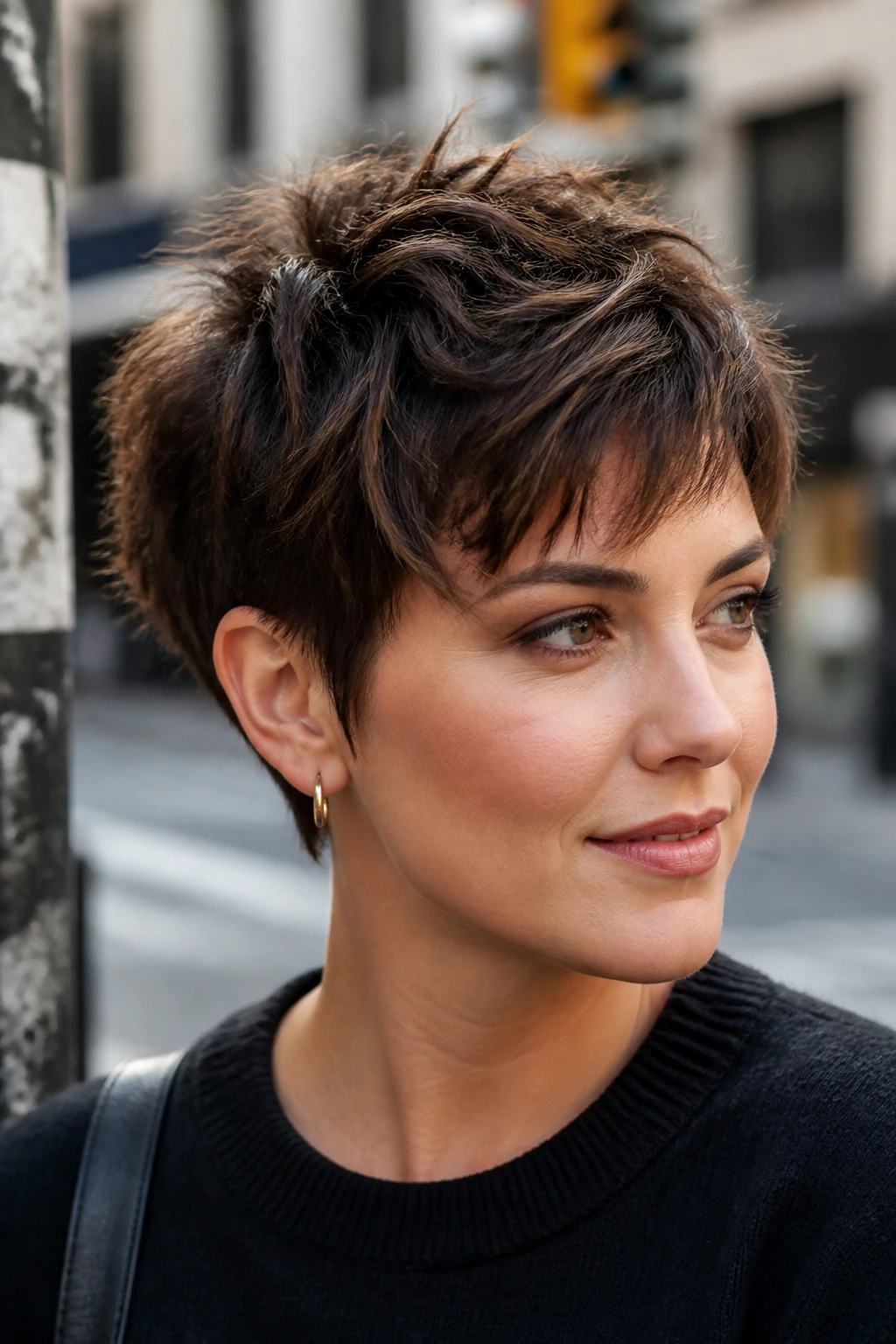
- Fine-tooth comb: Best for setting a side part or smoothing the front without flattening the crown.
- Small round brush: Helps build soft lift at the roots on tapered and crown-heavy pixies.
- Blow dryer with a nozzle: Keeps the airflow pointed where you want it instead of blasting every direction at once.
- Matte paste or styling cream: Good for piecey texture without shine overload.
- Lightweight mousse: Useful for fine hair that needs a little root support.
- Curl cream or gel: Best if your pixie has curls or waves and you want the pattern to stay defined.
- Dry shampoo: Handy on day two or three when the roots start to collapse.
- Flat iron with narrow plates: Optional, but useful for directing fringe or smoothing one side of an asymmetrical cut.
- Reference photos from the front, side, and back: Not a product, but probably the most valuable thing you can bring to the chair.
Keeping the Shape Sharp Between Salon Visits
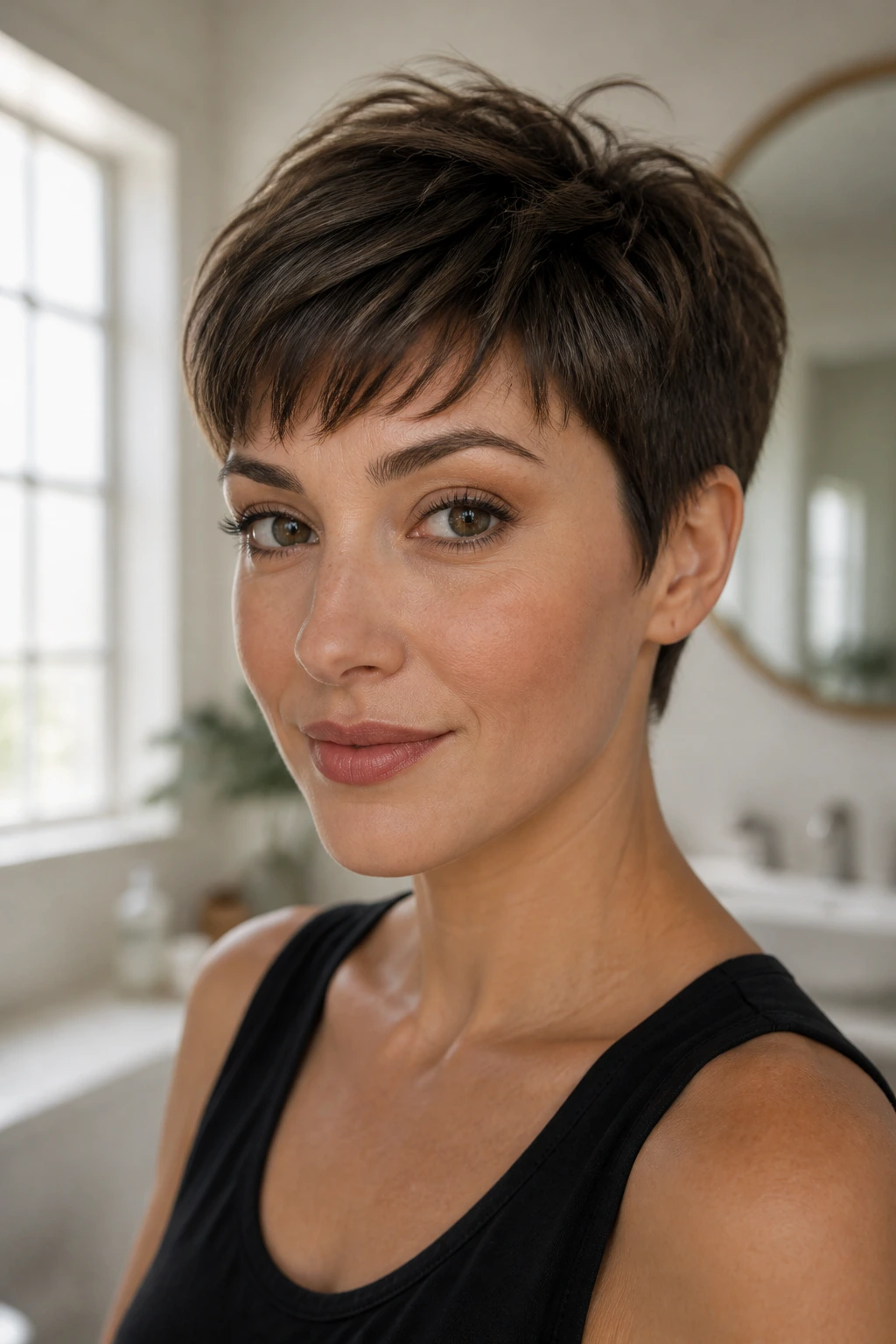
Pixie cuts need a little maintenance, but not as much as people fear. Most short crops look best with a shape-up every 4 to 6 weeks, especially if the nape is tight or the fringe sits short on the forehead. If your version has more length through the front or a pixie-bob shape, you can usually stretch that to 6 to 8 weeks.
Between visits, the fringe is the first place to pay attention. It tells on you. When it starts sitting in your eyelashes or flipping in a weird direction, a quick damp reset with a comb and blow dryer usually helps. If you use too much product at the roots, though, the crown collapses and the cut loses that lifted shape that makes it flattering in the first place.
Wash frequency depends on your hair, but a pixie often gets oily faster because there’s less length to absorb it. Many people land somewhere around every 2 to 4 days. Dry shampoo can buy a little time, especially at the crown and around the part, but it should support the style, not replace washing entirely.
A satin pillowcase helps more than people expect. So does not going to bed with wet hair unless you want a mashed-up shape in the morning. If you’re growing the cut out, ask for small cleanup trims around the ears and nape instead of letting everything go wild. That way the shape stays intentional while the length moves forward.
Questions People Ask Before Going Short
Will a pixie cut work on a round face?
Yes, if the shape adds some length or diagonal movement. A side-swept fringe, crown lift, or asymmetry usually flatters a round face better than a blunt, boxy crop.
Can a pixie make a face look older?
It can, if the cut is too severe or the fringe is too harsh. Soft edges, movement, and a little fringe length usually keep the style feeling fresh rather than stiff.
What if I have thick hair?
Ask for bulk removal in the right places, not all over thinning. Thick hair often looks best in pixies with an undercut, feathered ends, or a strong taper at the nape.
What if I have fine hair?
Keep the layers controlled and avoid over-texturizing. Fine hair usually needs shape and a bit of lift, not a cut that’s thinned to the point of looking see-through.
How do I grow out a pixie without looking messy?
Keep the neckline trimmed and let the top and front move first. A pixie-bob or bixie shape makes the grow-out stage less awkward because it gives the cut somewhere to go.
Should I cut my own bangs if the fringe grows too fast?
Only if you’re comfortable being conservative. With a pixie, a quarter-inch matters more than people think, so tiny snips are safer than taking off more than you meant to.
Is a pixie cut hard to style every day?
Not if the cut matches your hair type and face shape. The wrong pixie is a morning battle. The right one usually takes a bit of blow-drying, a little paste, and a minute or two of finger work.
Can curly hair wear any of these pixies?
Most of them, yes, but the shape has to respect shrinkage and curl pattern. Curly pixies need room at the top and a careful outline around the sides so the shape doesn’t balloon.
The Cut That Fits Your Face
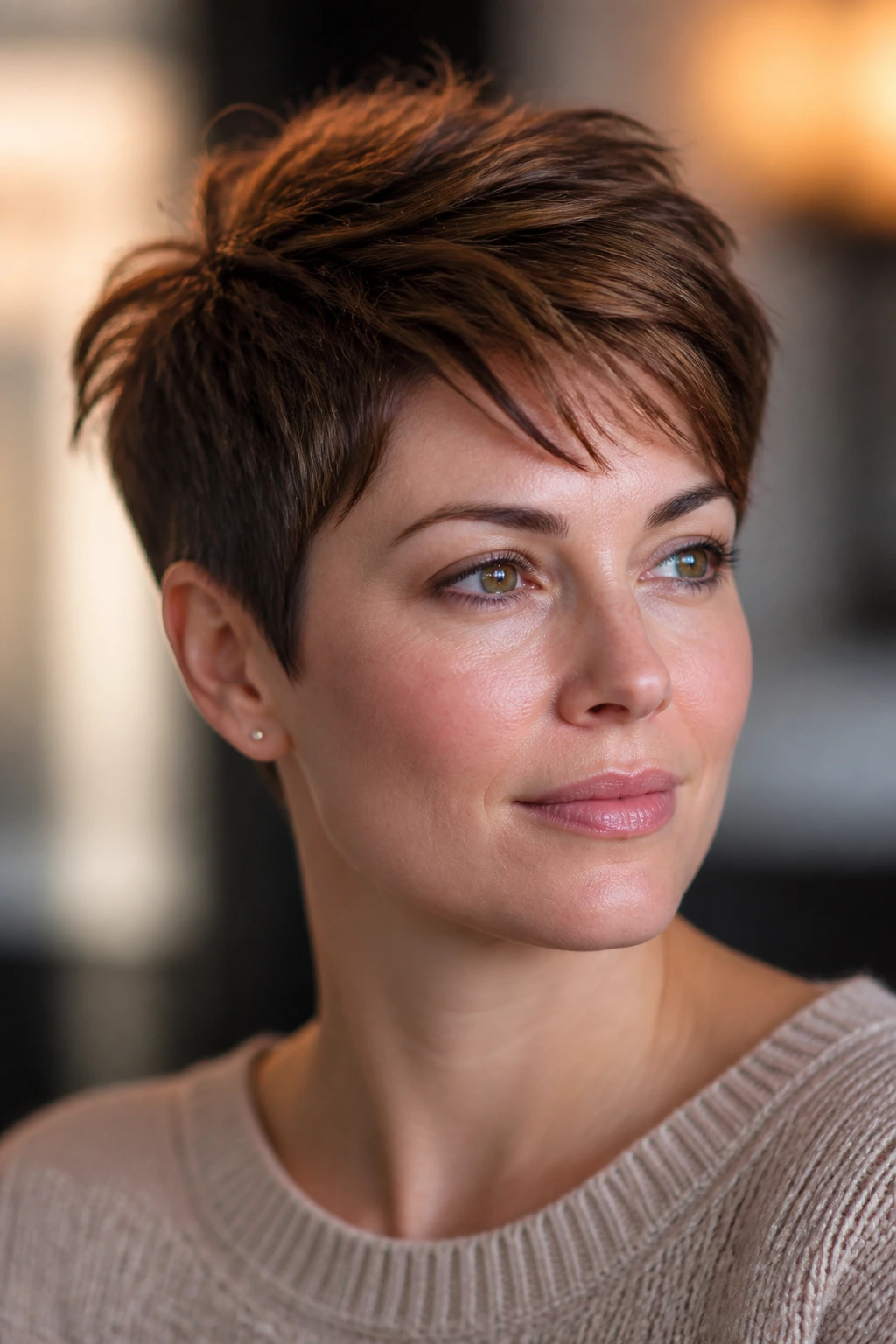
The best pixie cuts do not fight the face. They edit it with a lighter hand. A good fringe can soften a forehead; the right crown height can stretch a round profile; a clean nape can keep the whole thing from drifting into fuzz.
That’s the part I keep coming back to. Short hair is not a gamble when it’s shaped with intention. It’s a shortcut to showing the features you already have, minus the extra noise.
Pick the version that changes the one thing you want changed most, and the rest tends to fall into place.
