



Straight hair is brutally honest. It shows every scissor line, every cowlick, every extra millimeter at the nape. That is exactly why straight pixie cuts can look so sharp: when the edges are clean, the whole haircut snaps into focus.
Give straight hair a loose, over-layered pixie and it can sag fast. Give it a blunt fringe, a tight nape, or a diagonal front piece, and suddenly the face looks more deliberate. The cut stops floating around and starts sitting where it should.
Some versions lean polished. Some are a little rebellious. The good ones all share the same backbone: a clear perimeter, smart weight removal, and enough length in the right places so the style doesn’t collapse by lunchtime.
Why These Straight Pixie Cuts Stand Out
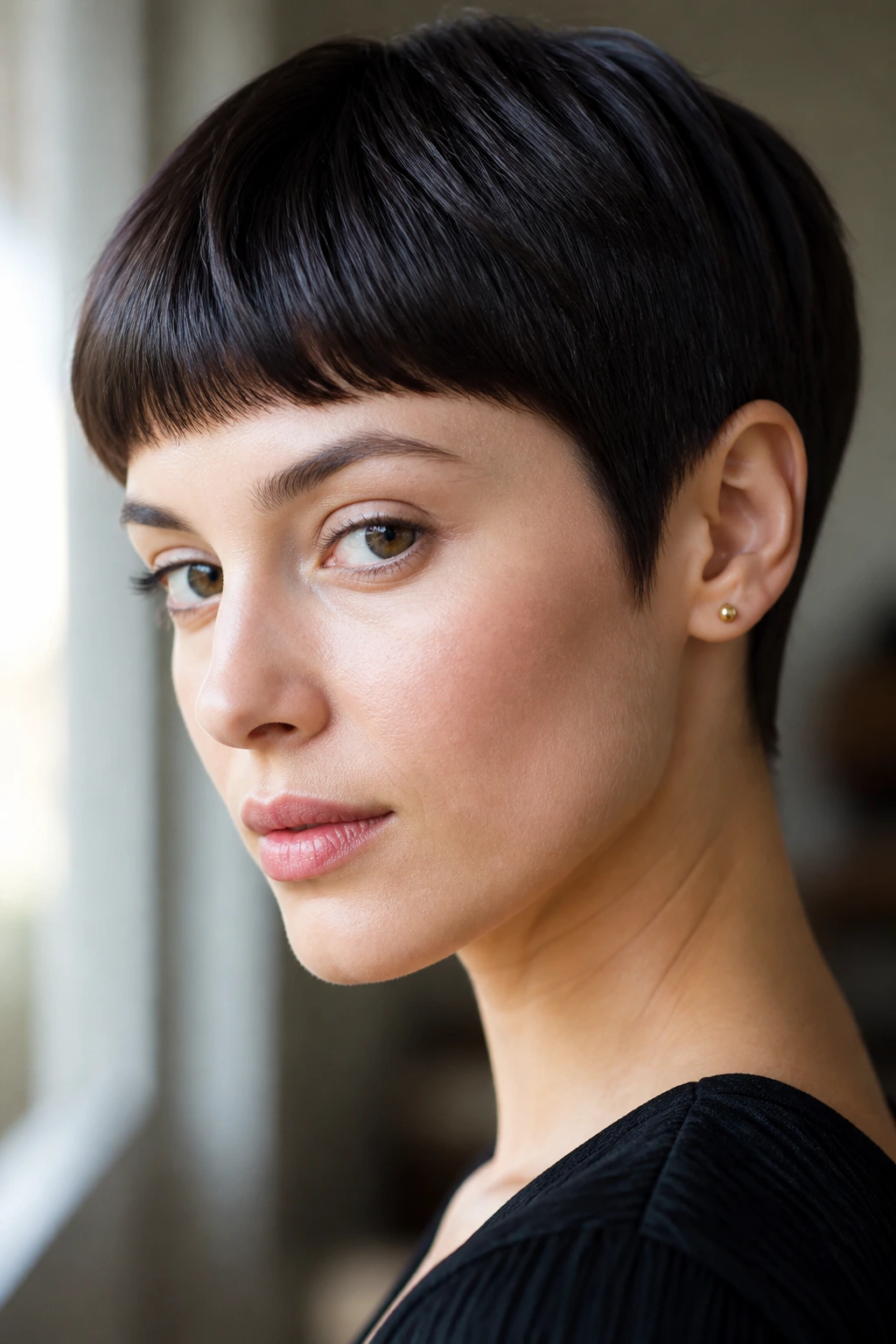
-
Crisp perimeter: Straight hair lets a blunt edge show up cleanly at the neckline and around the ears, so the haircut reads sharper than the same shape on wavy hair.
-
Less styling guesswork: A pixie with straight strands does not need a lot of coaxing; a blow-dry, a dab of paste, and one clean part can be enough.
-
Better control over face shape: A half-inch change in fringe length or crown height can shift the whole balance of the cut, which makes these styles easy to tailor.
-
Grow-out is easier to manage: The right straight pixie keeps its shape for weeks, not days, because the line stays visible as the hair gets a little longer.
-
More shine, less fluff: Straight strands reflect light along the surface, so a smooth pixie can look polished without looking stiff.
-
Short hair, big personality: There’s no hiding behind this cut. That’s the point. The line, the angle, the neckline — everything matters.
1. Blunt Micro Pixie With a Clean Neckline
A blunt micro pixie is the haircut version of a sharp white shirt collar. Nothing floats. Nothing blurs. The hair stays close to the head, with just enough length on top to keep it from looking shaved down to the bone.
This version works best when the nape is cut tight and the sideburns are kept neat rather than wispy. I like it when the fringe stops a touch above the eyebrows, because a tiny gap keeps the forehead from feeling boxed in. Ask for a perimeter that is cut with a straight line, not aggressively thinned out.
The beauty of this cut is how little it needs. A pea-sized dab of matte paste at the crown can add a bit of lift, but the shape does the real work. On straight hair, that blunt edge at the back looks clean from every angle.
2. Side-Swept Pixie With Long Crown Layers
Want a little softness without losing the edge? This is the one that walks that line without wobbling. The crown stays longer, the fringe sweeps across the forehead, and the sides are trimmed close enough to keep the silhouette neat.
Why It Feels Less Severe
The long crown layers create movement without turning the haircut floppy. That matters on straight hair, because too much layering can make the ends flick around in awkward places.
A side-swept pixie is especially handy if your forehead feels a little broad or if you like wearing glasses. The fringe can skim the frames instead of fighting them, which is a small thing that changes everything.
Keep the layers controlled. A good version usually leaves around 2 to 3 inches on top and takes the sides shorter so the eye goes upward.
3. Asymmetrical Pixie With One Sharp Side
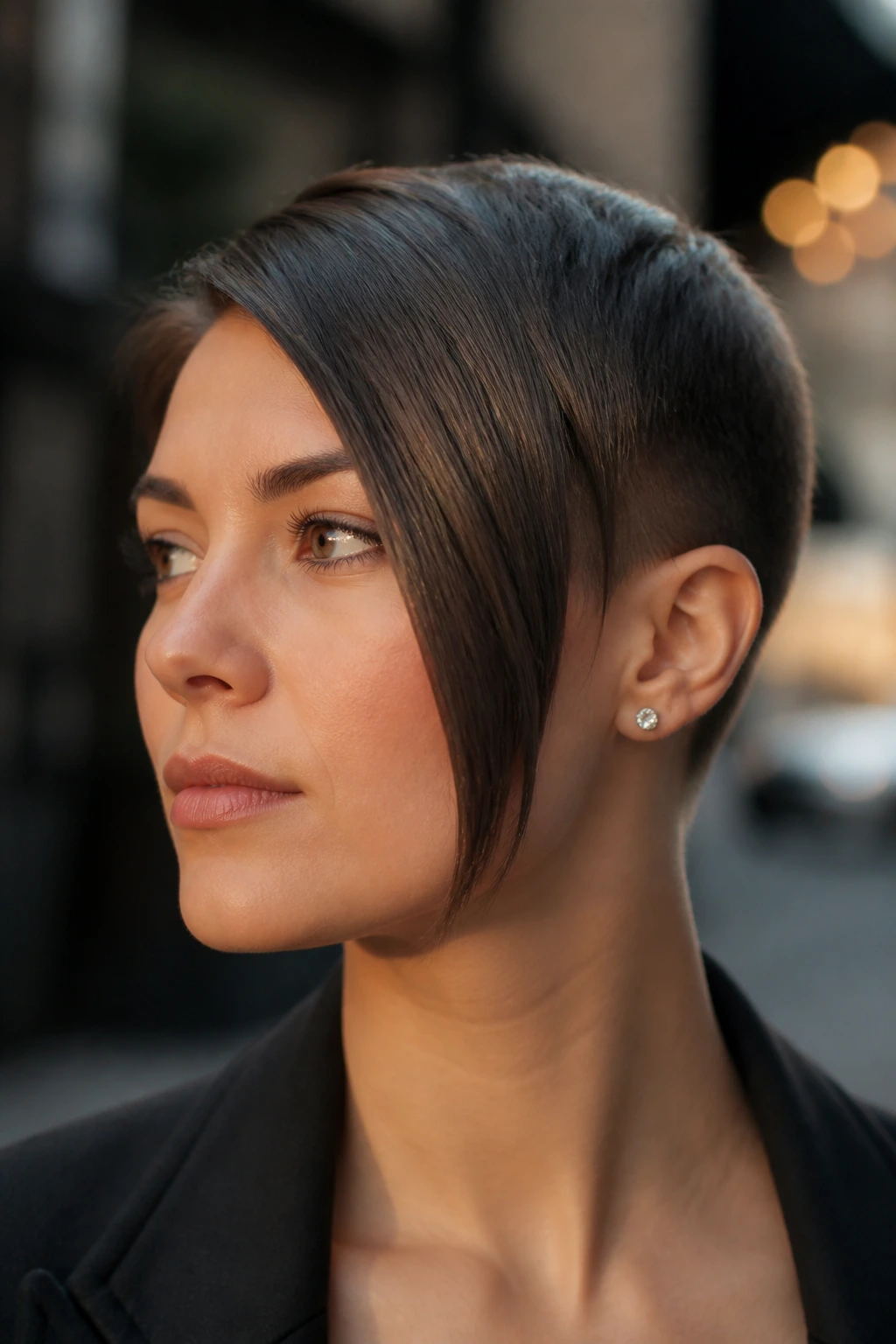
This is the cut for anyone who likes a little tension in a haircut. One side stays cropped; the other side gets a longer panel that drops toward the cheekbone or jaw. The result is crisp, not chaotic, when the lines are deliberate.
The trick is making the difference look planned. A gap of about 1 to 1½ inches between the two sides is enough to read as asymmetry without turning into costume hair. Straight strands are useful here because they hold the angle without puffing up and softening the shape.
I prefer this style when the longer side is tucked behind the ear on one side and left loose on the other. That tiny contrast gives the cut movement and keeps the face from looking too square.
4. Tapered Pixie With a Slim Nape
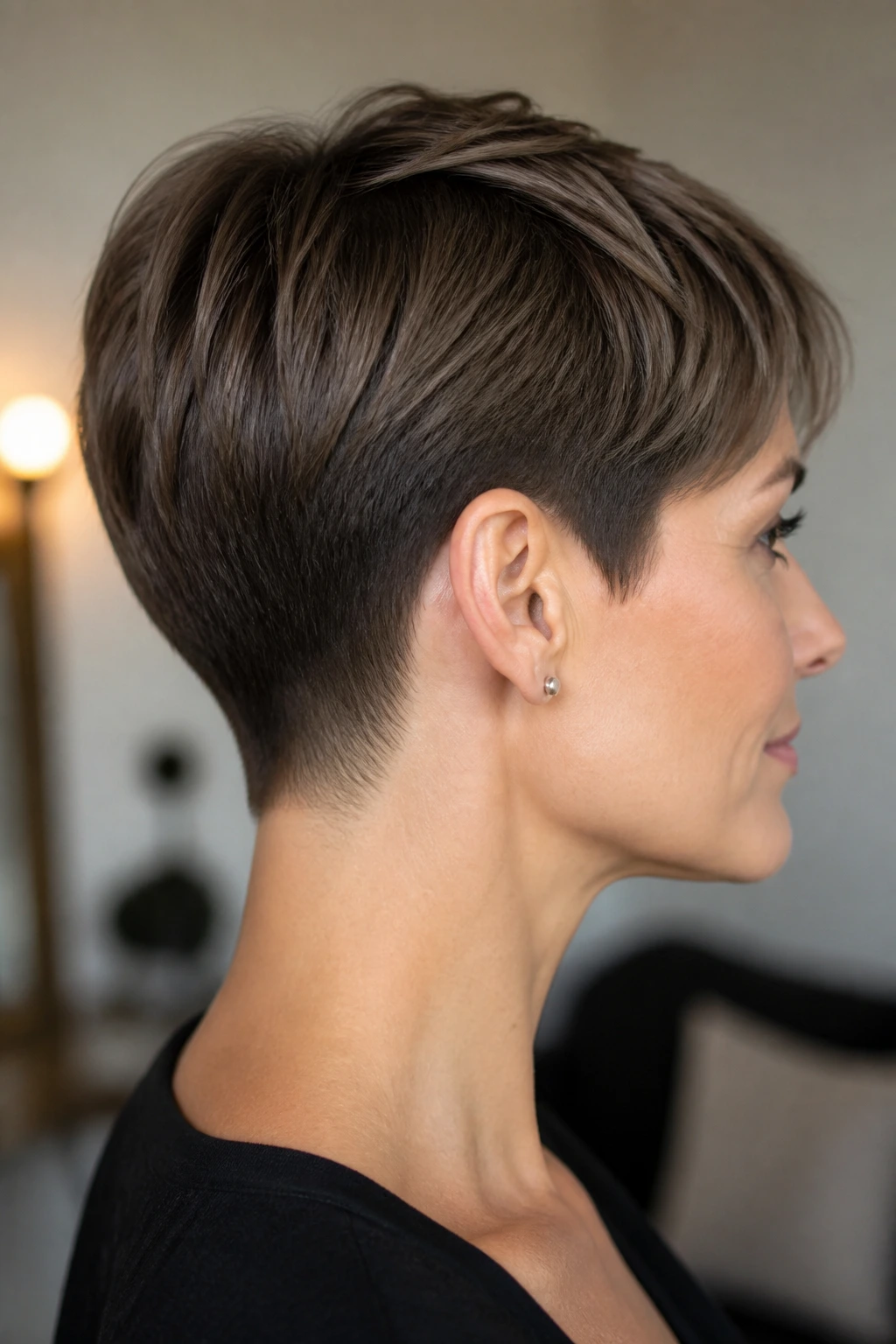
If you like a neckline that looks edited, this is the one. The taper at the back should move smoothly from short to shorter, so the nape hugs the neck instead of leaving a blunt shelf.
A tapered pixie is one of the cleanest straight pixie cuts for a sharp look because it removes bulk where straight hair often hangs too flat. The top can stay soft and touchable, but the back needs discipline. No fuzzy finish. No over-thinned ends that stick out like a broom.
Ask your stylist to blend the nape into the back of the head with a subtle graduation. If the cut sits too square at the back, it loses that tailored feel. If the taper is done well, the haircut looks neat even when it is growing out.
5. Pixie Bob Hybrid With Straight Ends
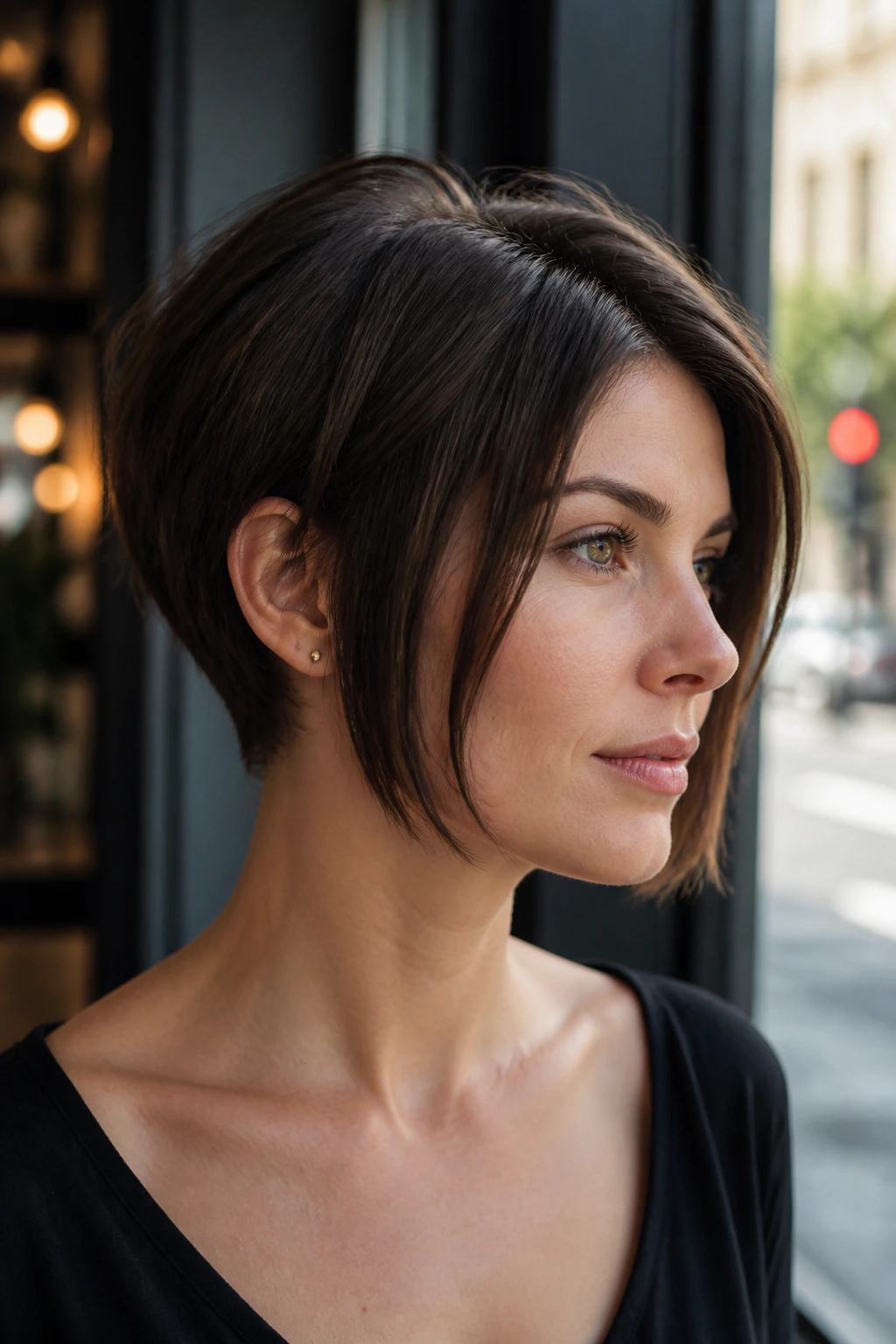
This is the bridge for people who want to go short but not all the way into classic pixie territory. The back is still cropped, but the front edges sit longer, often around the jaw or just under it, which gives the whole shape a harder, more graphic line.
The smartest thing about a pixie bob hybrid is that it keeps the lower perimeter visible. Straight hair makes those edges shine. A blunt finish at the front can sharpen the jawline in a way that softer pixies never quite do.
Use this cut if you want a haircut that can be tucked, flipped, or left in place with almost no drama. It grows out gracefully too, which matters if you are nervous about a big change. Short hair should not feel like a trap.
6. Bowl-Inspired Pixie With Soft Edges
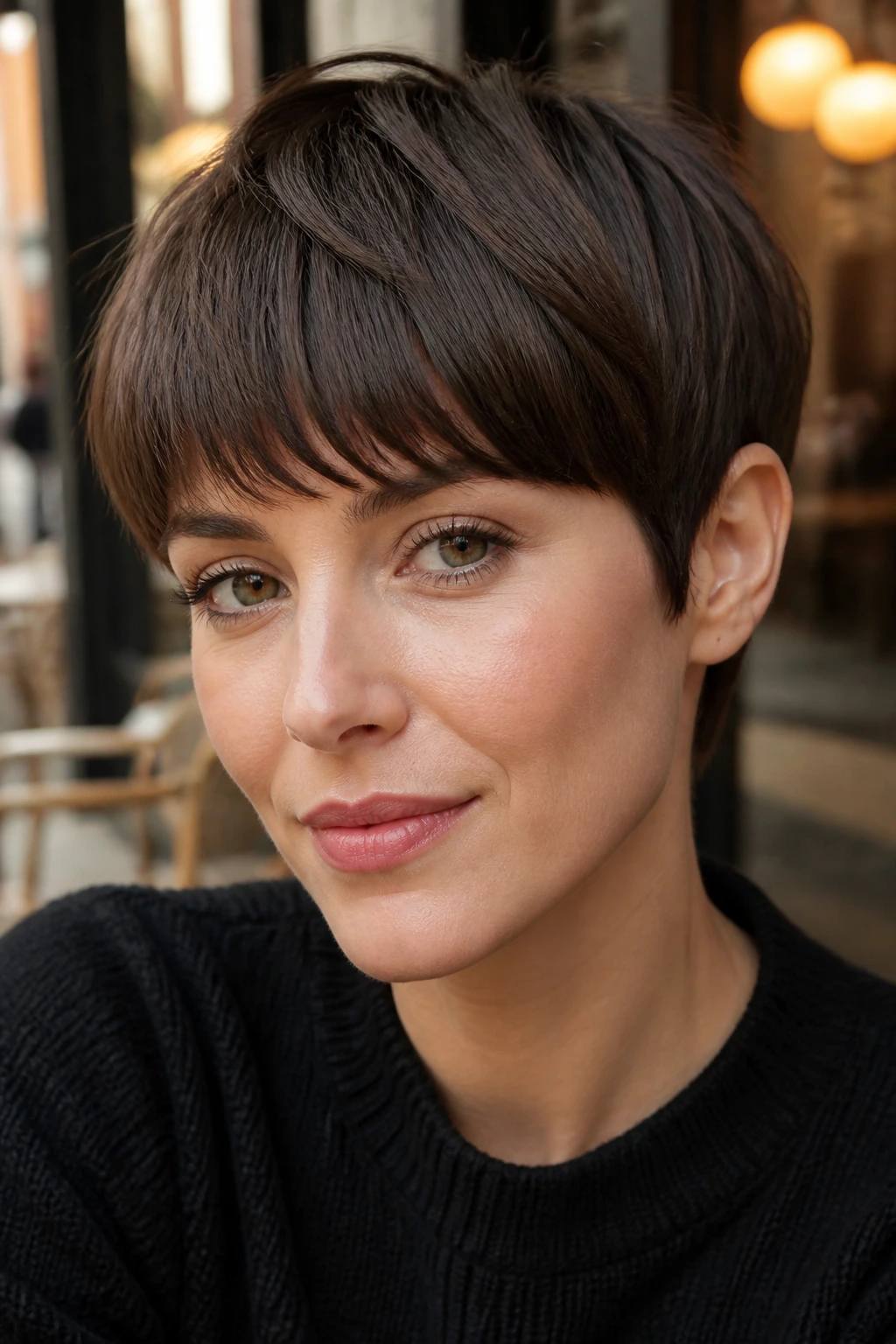
Bowl-inspired sounds risky, and honestly, that’s because people remember the wrong version from childhood. The modern version is cleaner around the ears, slightly rounded through the crown, and softened at the fringe so it frames the face instead of enclosing it.
The reason this works on straight hair is simple: straight strands can hold a rounded shape without frizzing out the edges. Keep the line above the cheekbones and don’t let the fringe drop too heavy into the eyes, or the cut will start to look like a helmet.
I like this shape when the sides are kept close but not shaved. A soft edge around the temples keeps the style from feeling severe, and the roundness at the top gives straight hair a bit more life.
7. Undercut Pixie With a Crisp Top Layer
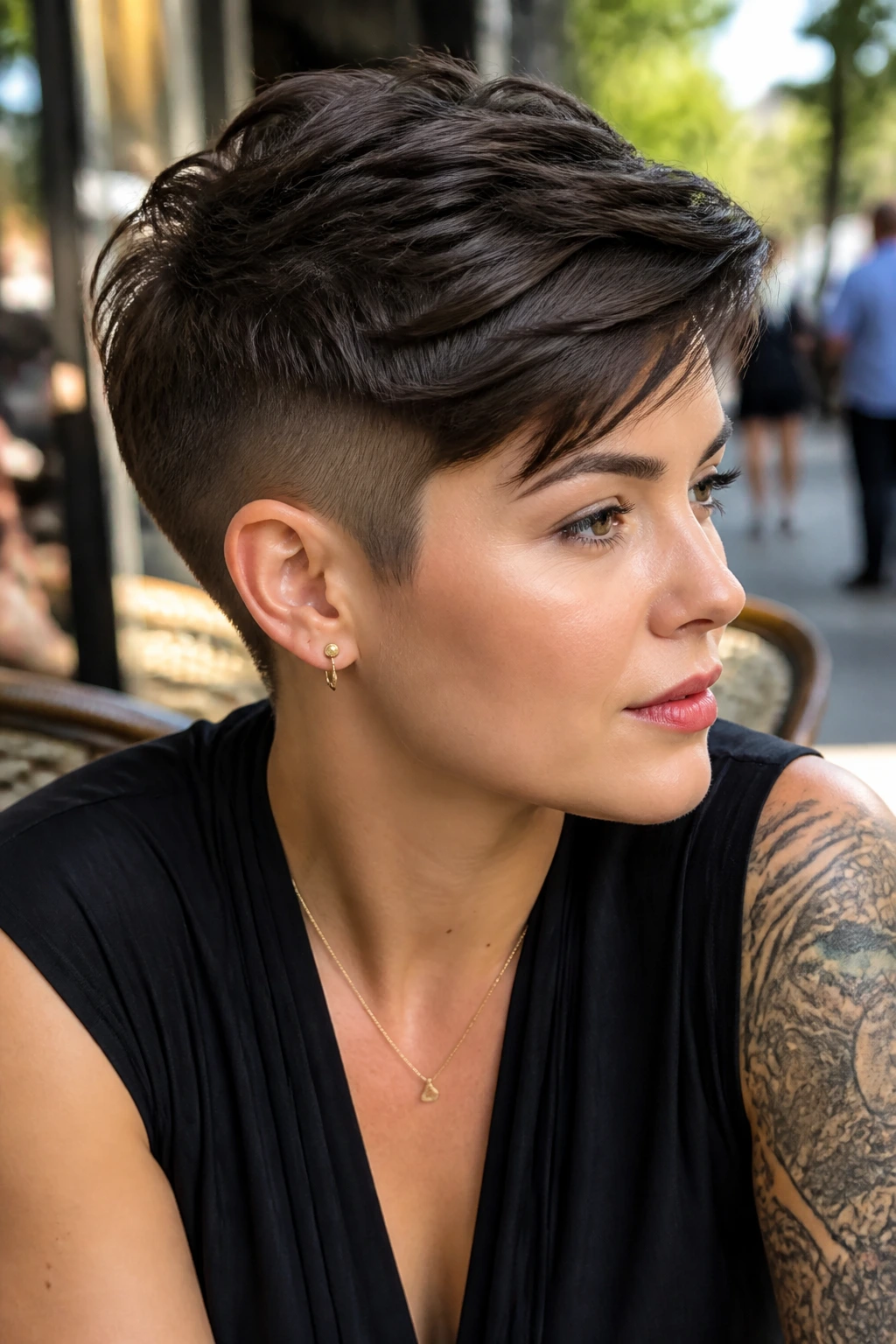
Here’s the version for people who want clean lines and a little bite. The sides and back are cut short enough that the top layer becomes the main event, which makes the head shape look more sculpted.
This cut can go quietly polished or a little rebellious depending on how you style it. Brush the top smooth for a refined finish, or push it up and forward for more edge. Either way, the undercut keeps the bulk down, which is useful if your straight hair tends to puff out around the ears.
The mistake most people make is taking the top too short. Leave enough length to create contrast — around 2 inches is usually the sweet spot. Without that, the undercut loses its point and just looks clipped.
8. Slicked-Back Pixie With Minimal Fringe
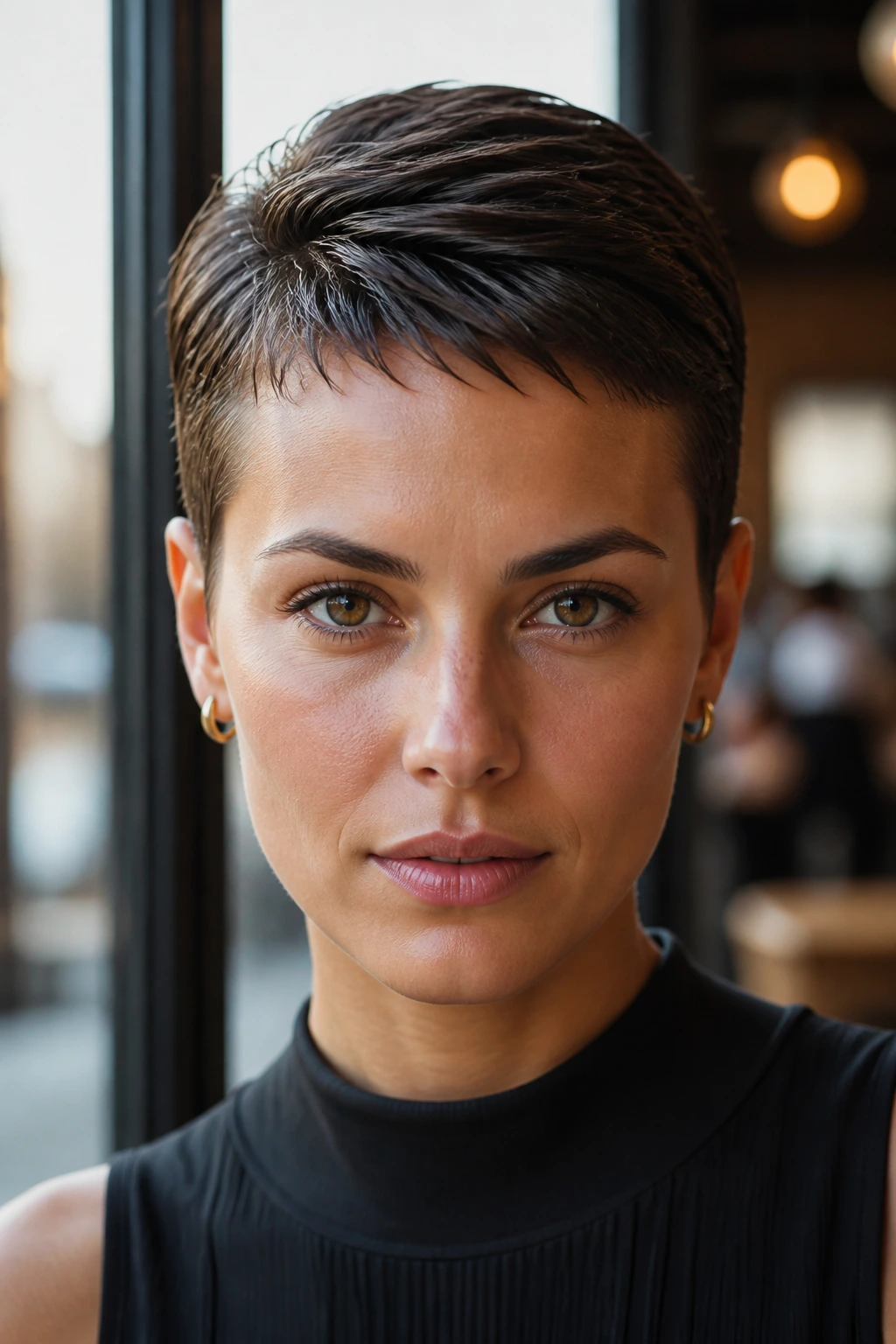
A slicked-back pixie can look expensive in the best sense of the word: clean, deliberate, and a little bit fearless. The fringe stays short, the top gets brushed back with a light gel or cream, and the sides stay close so the whole head reads as one shape.
This version is a favorite when you want to show off bone structure or earrings. Straight hair helps because it lays flat without fighting the product, which makes the finish smoother and faster to build.
Best Way to Wear It
Use a dime-sized amount of gel on damp hair, not dripping wet hair. Comb it back with a fine-tooth comb, then break the helmet effect by using your fingers to lift the crown just a little.
If the roots stick up at the front, a quick blast of low heat while pressing them down with your palm will usually settle them. That tiny detail matters more than people think.
9. Angular Fringe Pixie Cut
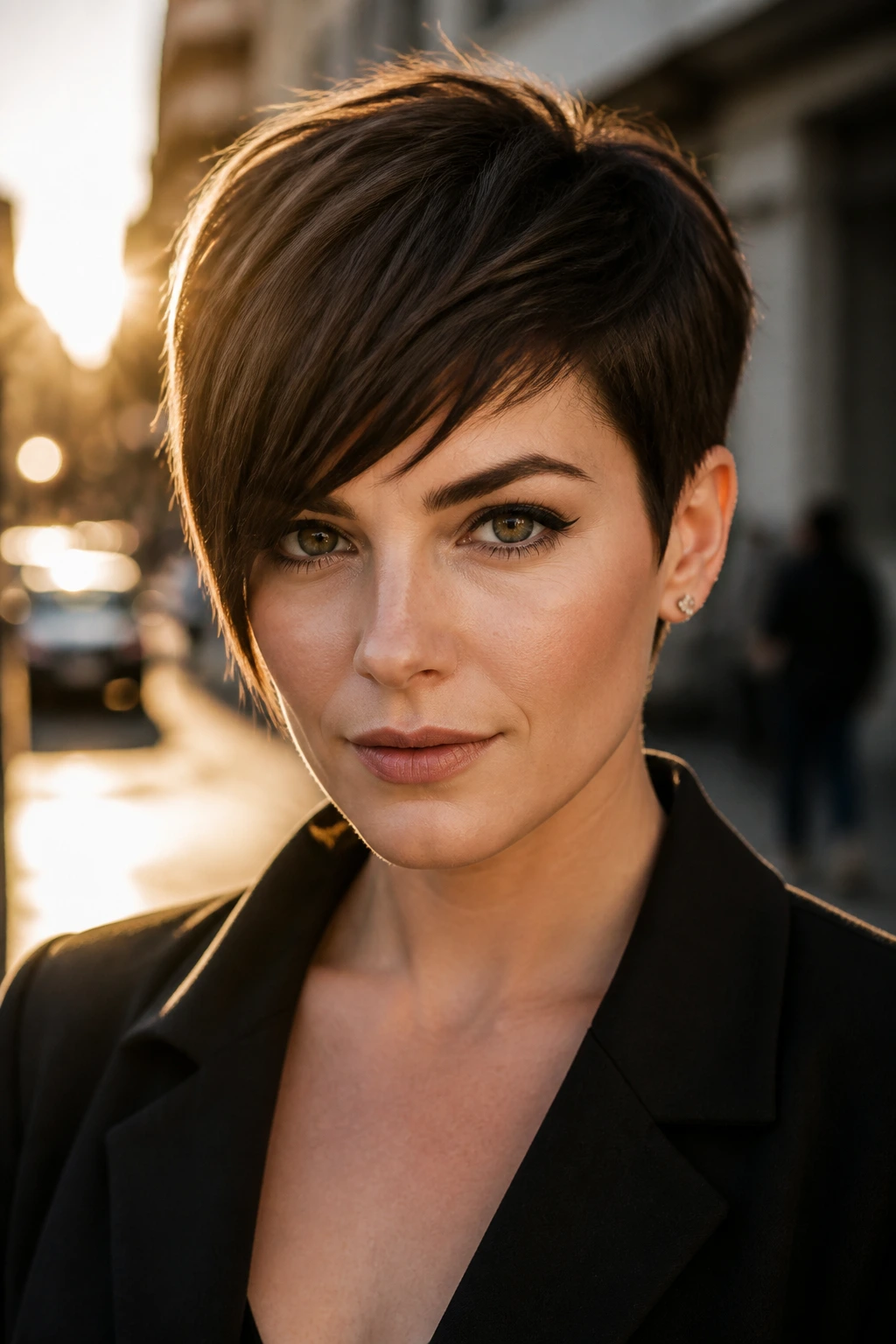
A diagonal fringe changes the whole mood. Instead of sitting bluntly across the forehead, the bangs cut across at an angle, which pulls the eye sideways and makes the face look longer.
That angle gives straight pixie cuts a sharp look without making them feel hard. It’s a good move if your forehead is shorter or if you want to soften a strong brow line without giving up structure.
Keep the fringe long enough to sweep, not droop. If it falls into the eyes all day, it stops being an angle and turns into maintenance. The sweet spot is usually just below the eyebrow on the longer side and shorter near the part.
10. Ear-Hugging Classic Pixie
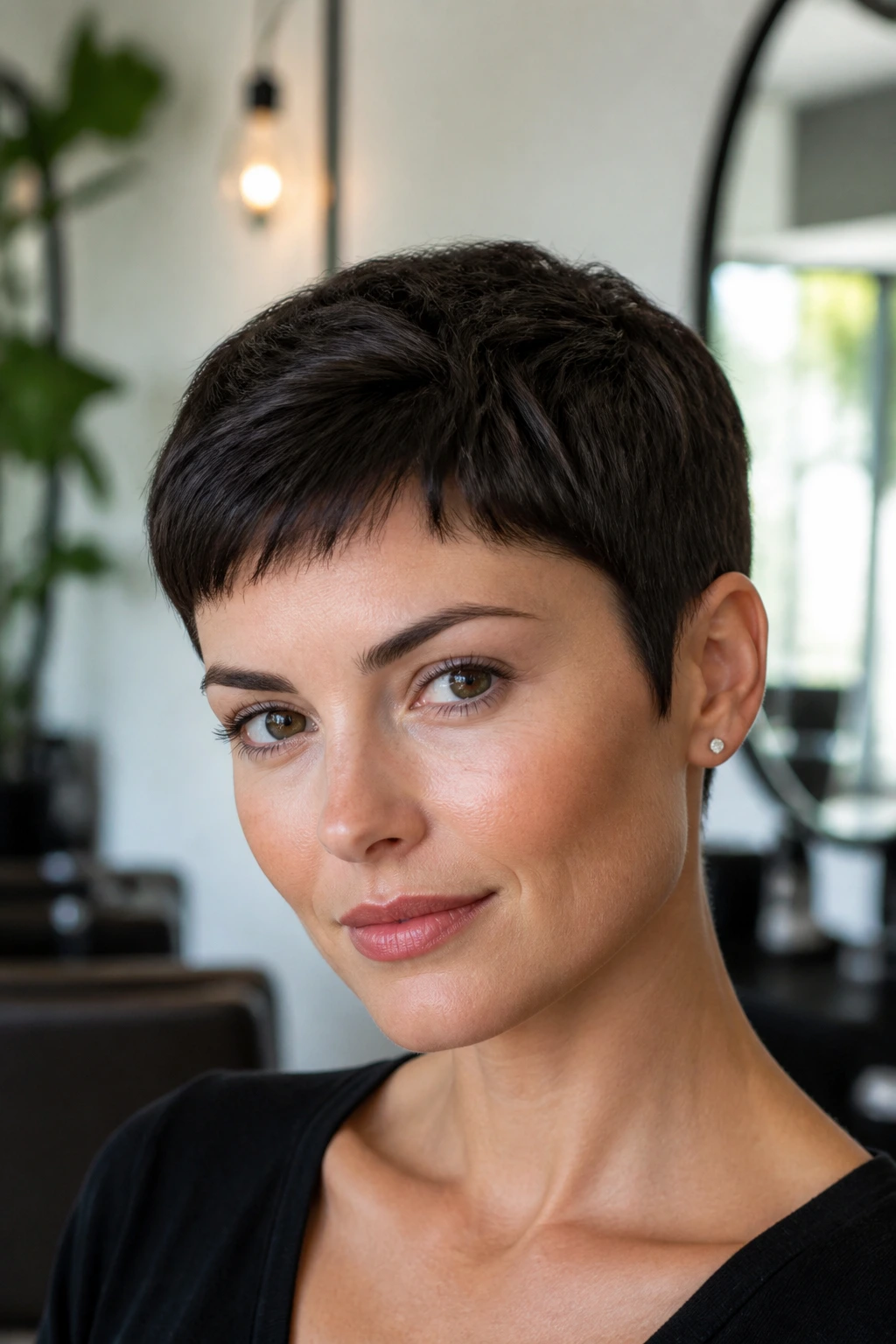
This is the old-school shape that still works because it knows what it is. The ears sit partly exposed, the nape is neat, and the top stays cropped close enough to look tidy without looking flat.
What makes this one sharp is the restraint. There’s no heavy fringe to manage, no shaggy layers at the back, no big styling ritual. The outline is the point.
What Keeps It from Looking Fussy
A clean sideburn line. A small amount of lift at the crown. A soft bevel at the top so the haircut follows the head rather than fighting it.
That little bevel matters. Straight hair can look severe fast, and a slightly curved top line keeps the whole cut from feeling like it was clipped in a hurry.
11. Feather-Light Straight Pixie With Airy Ends
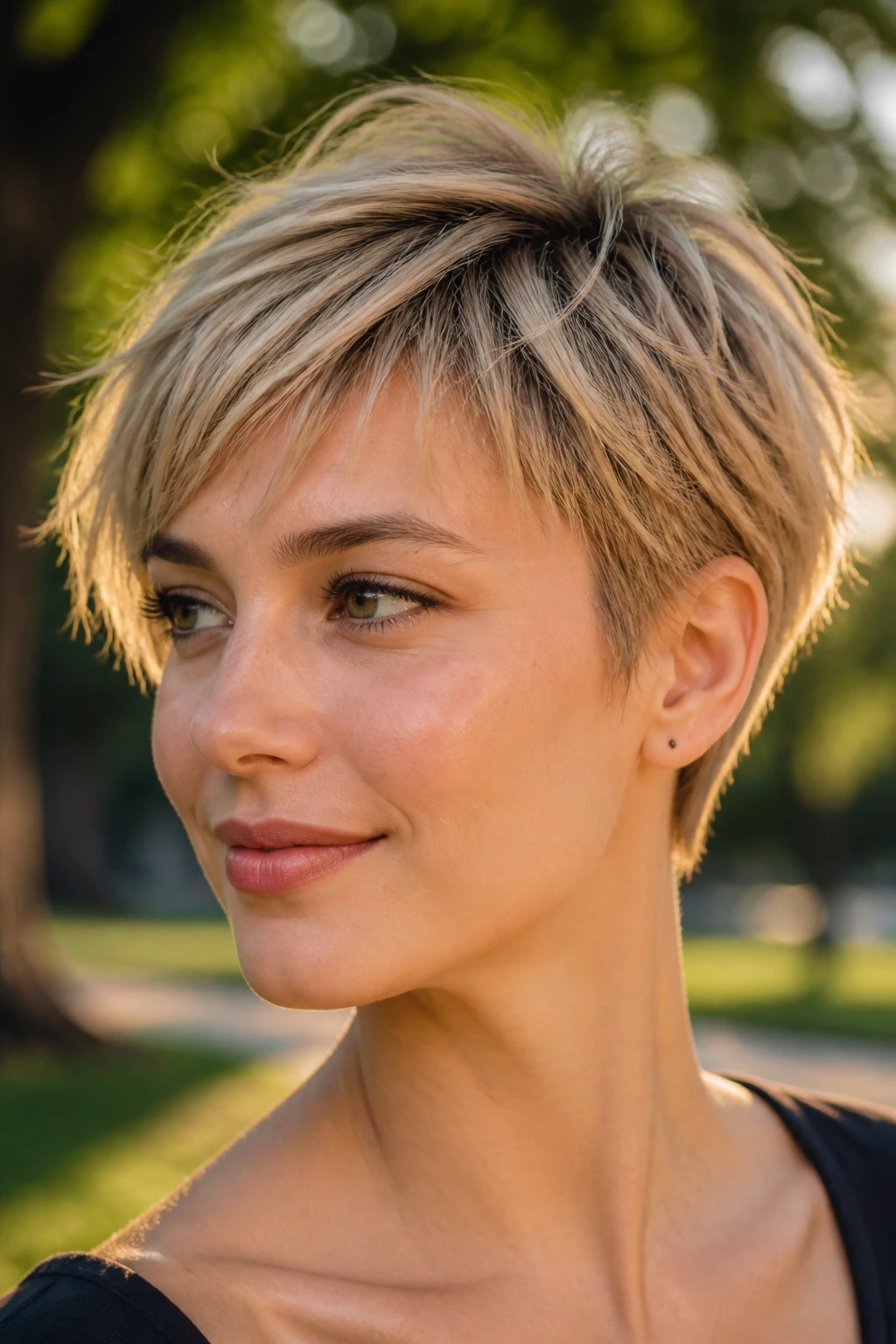
Some straight pixie cuts need edge; this one needs lightness. The hair is cut so the ends move instead of stacking up, which is a smart choice if your hair is fine and tends to lie against the scalp.
The trick here is not to overtexturize. People think “airy” means thinning the ends to death, and that’s how you get a wispy mess. Ask for soft point-cutting, not aggressive razor work, especially near the fringe.
This cut looks best when the crown has a touch of lift and the sides stay close. A very small round brush can help you curve the top away from the scalp. Two minutes of styling, maybe less. That’s the appeal.
12. Choppy Pixie With Piecey Definition
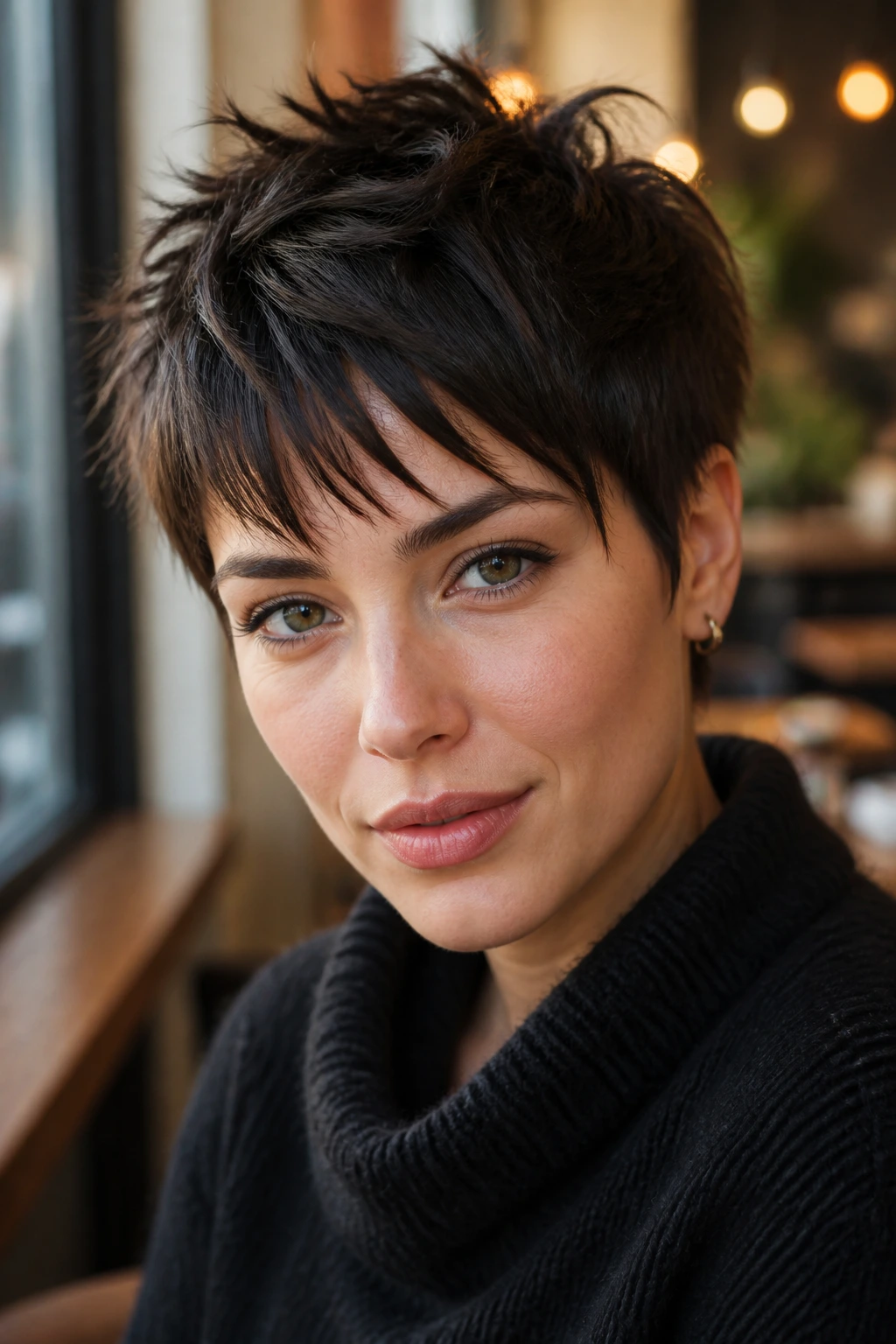
A choppy pixie is for someone who wants the sharp look to come from separation rather than a perfect line. The ends are broken up just enough to create little pieces around the forehead and crown, which gives straight hair more dimension.
The danger is going too far. On straight hair, every choppy snip shows. If the stylist removes too much weight, the cut can start looking frayed instead of purposeful.
Ask for point-cutting through the top and keep the perimeter cleaner than the interior. That way the haircut still has a boundary. I like this style best with a matte paste worked only through the top layers — the kind of product that separates without turning the hair greasy.
13. Deep Side Part Pixie
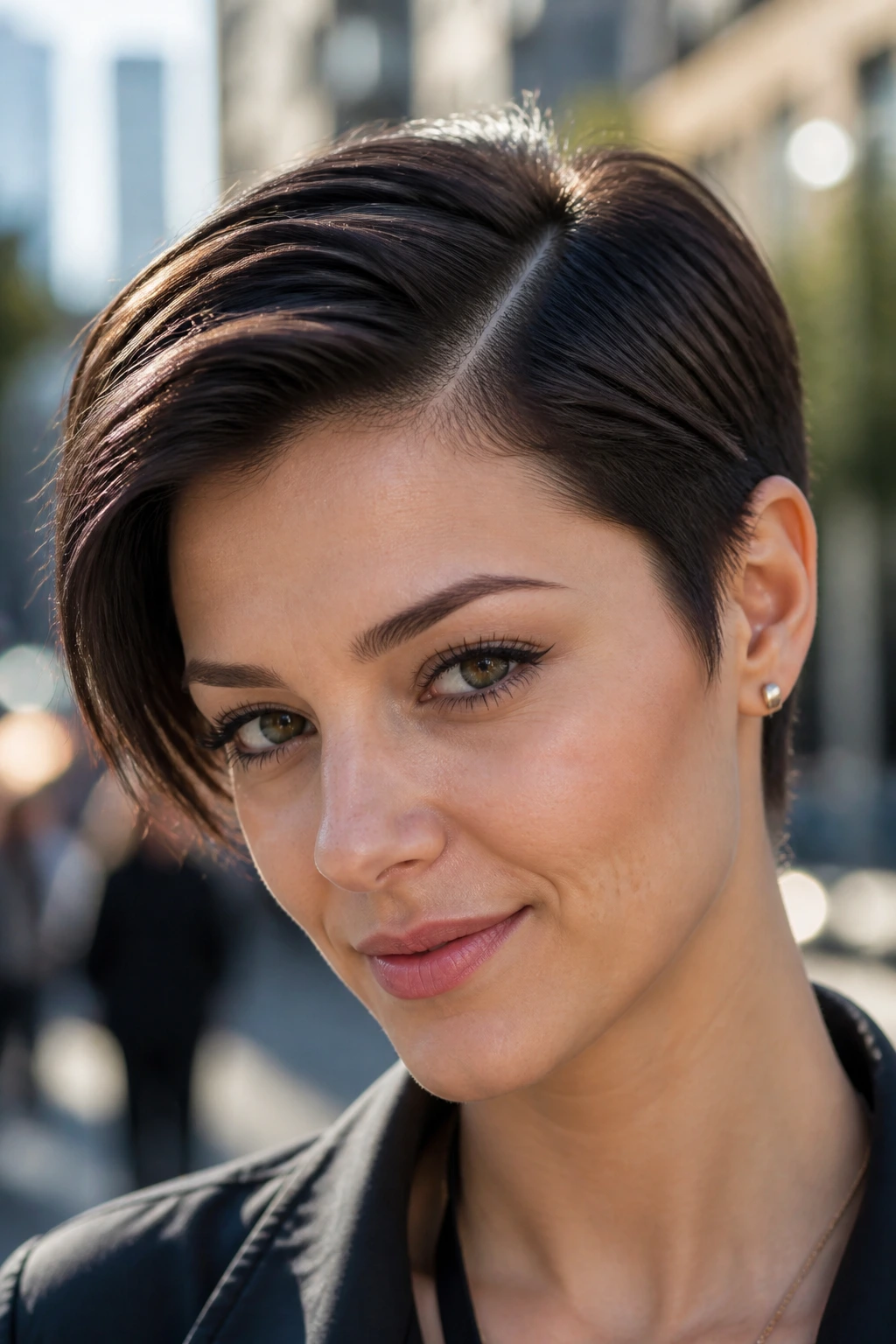
A deep side part does more than move hair around. It shifts the whole architecture of the haircut. One side gets a little lift, the other side lies flatter, and suddenly the face has more angle.
This is one of the easiest ways to make straight pixie cuts feel sharper without taking any more length off. You can keep the actual cut fairly simple and let the part do the heavy lifting.
The best version has enough length at the front to sweep across the forehead, but not so much that it drops into the eyes. If your part keeps sliding back, your crown probably needs a little less weight, not more product.
14. Disconnected Pixie With Short Sides
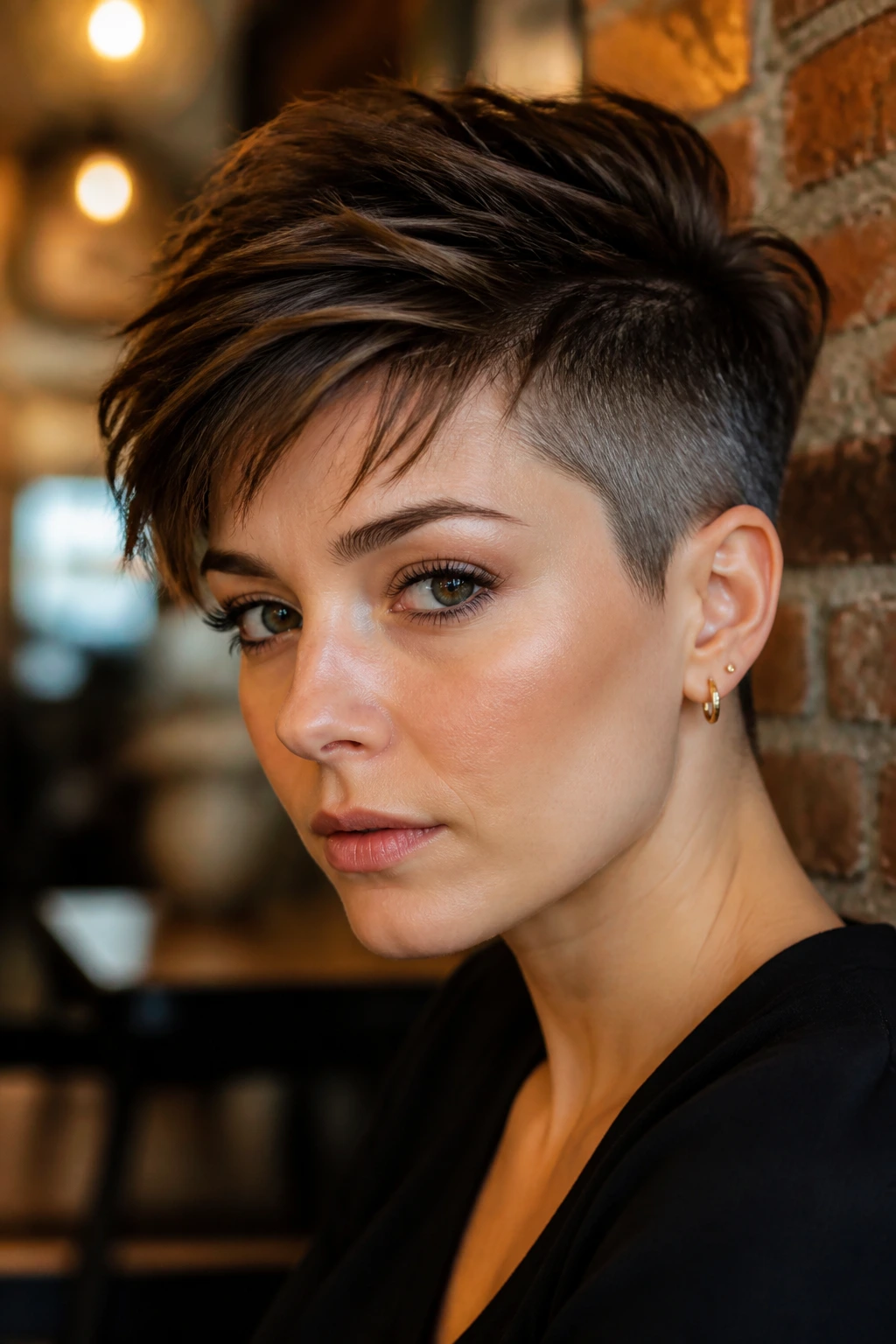
Disconnected cuts are not subtle. That’s why they work. The sides stay very short, almost tucked tight, while the top remains visibly longer, so the contrast between the two zones reads instantly.
On straight hair, that contrast looks crisp because the difference in length shows up without fluff or curl softening the transition. It’s a strong shape, and strong shapes tend to age better on short hair than people expect.
Wear this one if you like a haircut that looks intentional even when you haven’t spent long on it. A little paste on the top and a quick finger-sweep through the crown is often enough.
15. French-Inspired Crop Pixie
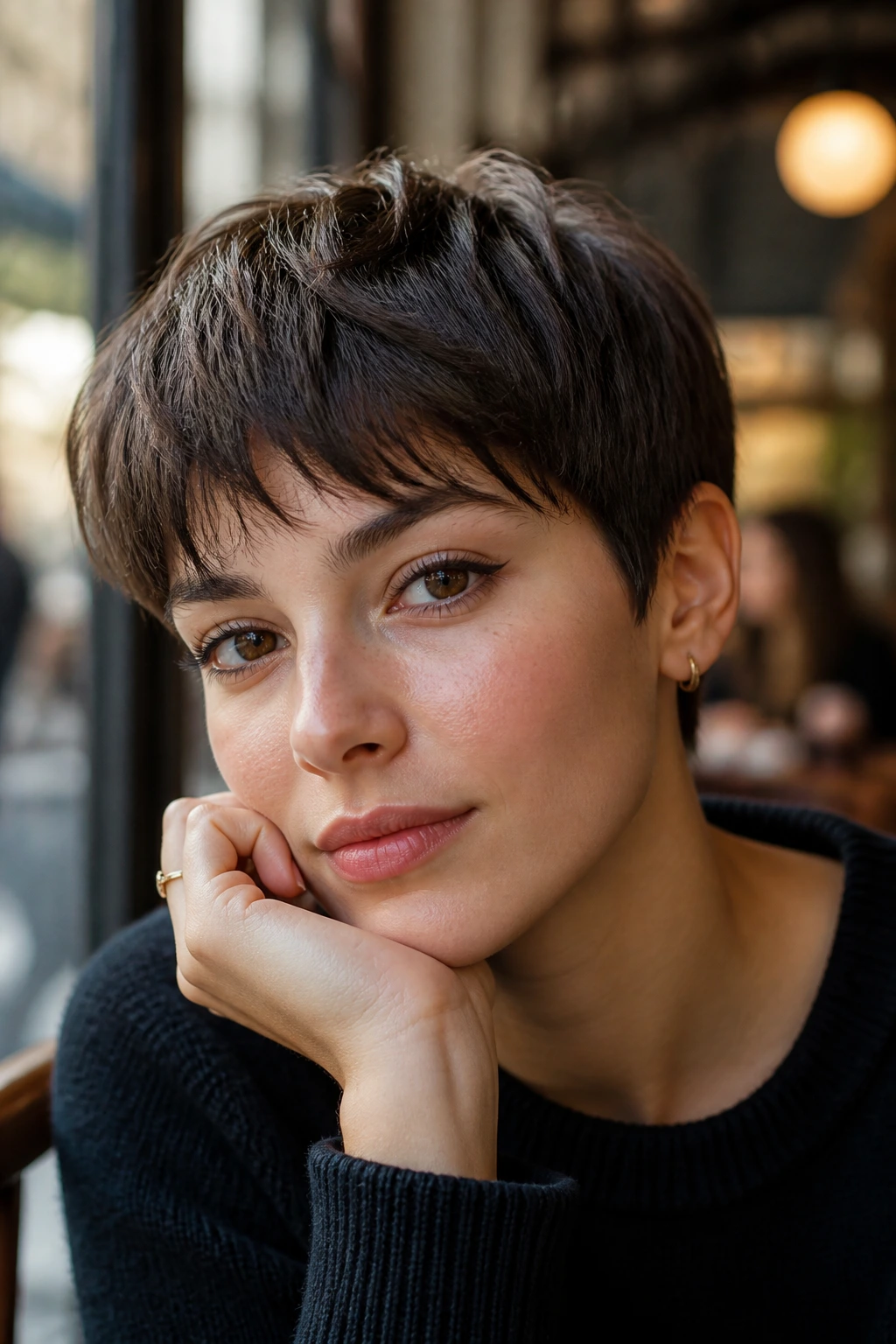
This version borrows the easy looseness of a French crop but trims it into pixie territory. The fringe sits a little longer, the crown keeps a bit of air, and the sides stay tidy instead of severe.
It’s a good choice if you want a straight pixie cut that feels chic rather than hard. The line is still clean, but there’s a softness around the forehead that keeps it wearable for everyday life.
The best part is how little effort it takes to make this cut look good. A side part, a bit of cream, and a quick pass with the hands are often enough. Don’t overstyle it. That’s where it loses its charm.
16. Micro Fringe Pixie
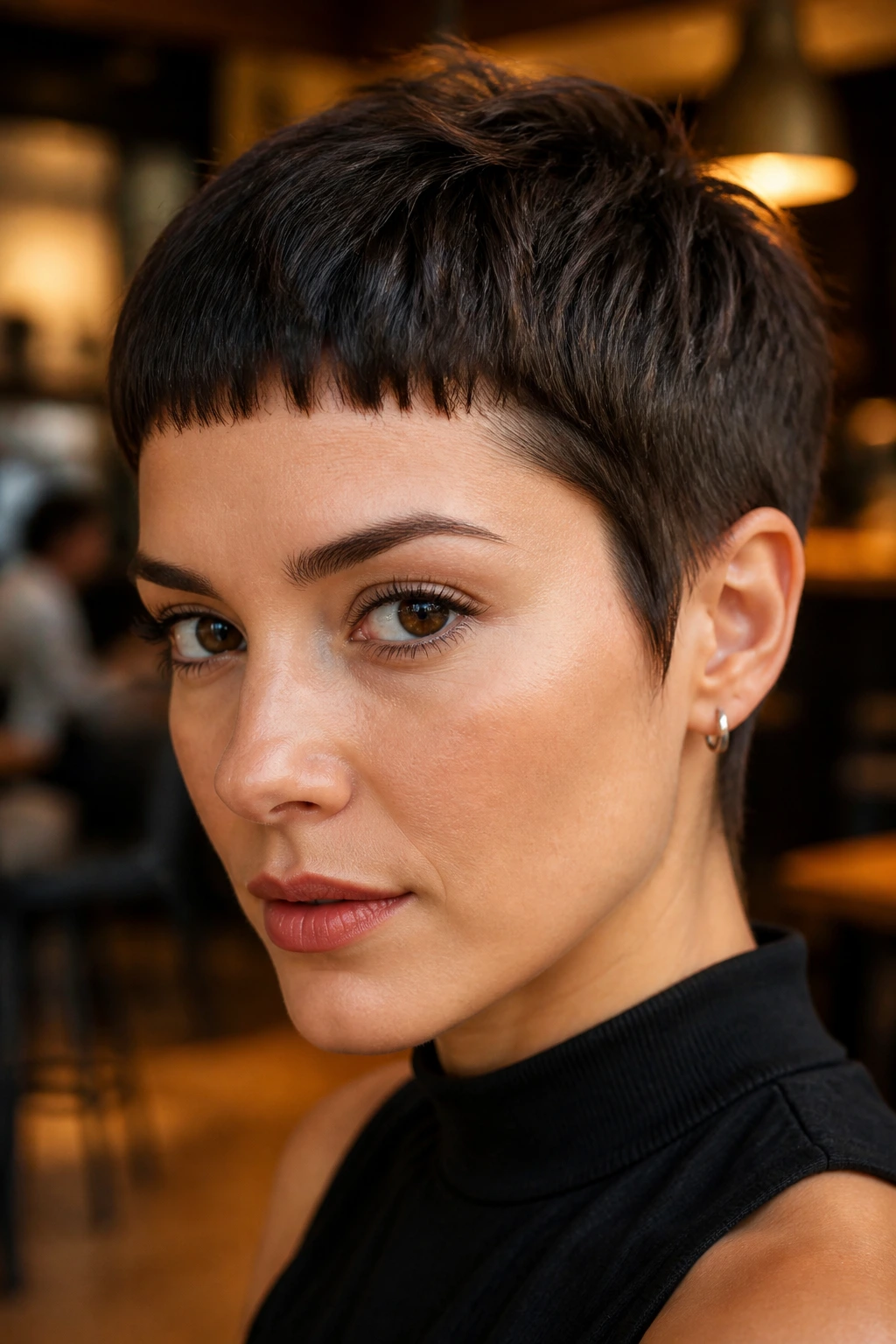
A micro fringe changes the whole conversation. The bangs sit high and short, sometimes barely touching the forehead, which gives the haircut a graphic edge that straight hair can carry well.
This look is not for hiding anything. It puts the face front and center, and it works best when the neckline is just as tidy as the fringe. If the back is fuzzy, the whole cut starts to feel unfinished.
I like micro fringe pixies with a slightly longer crown so the haircut doesn’t look too pinned down. The contrast between the tiny bang and the fuller top creates that sharp, editorial feel people usually want when they ask for something “different.”
17. Pixie With Long Temple Pieces
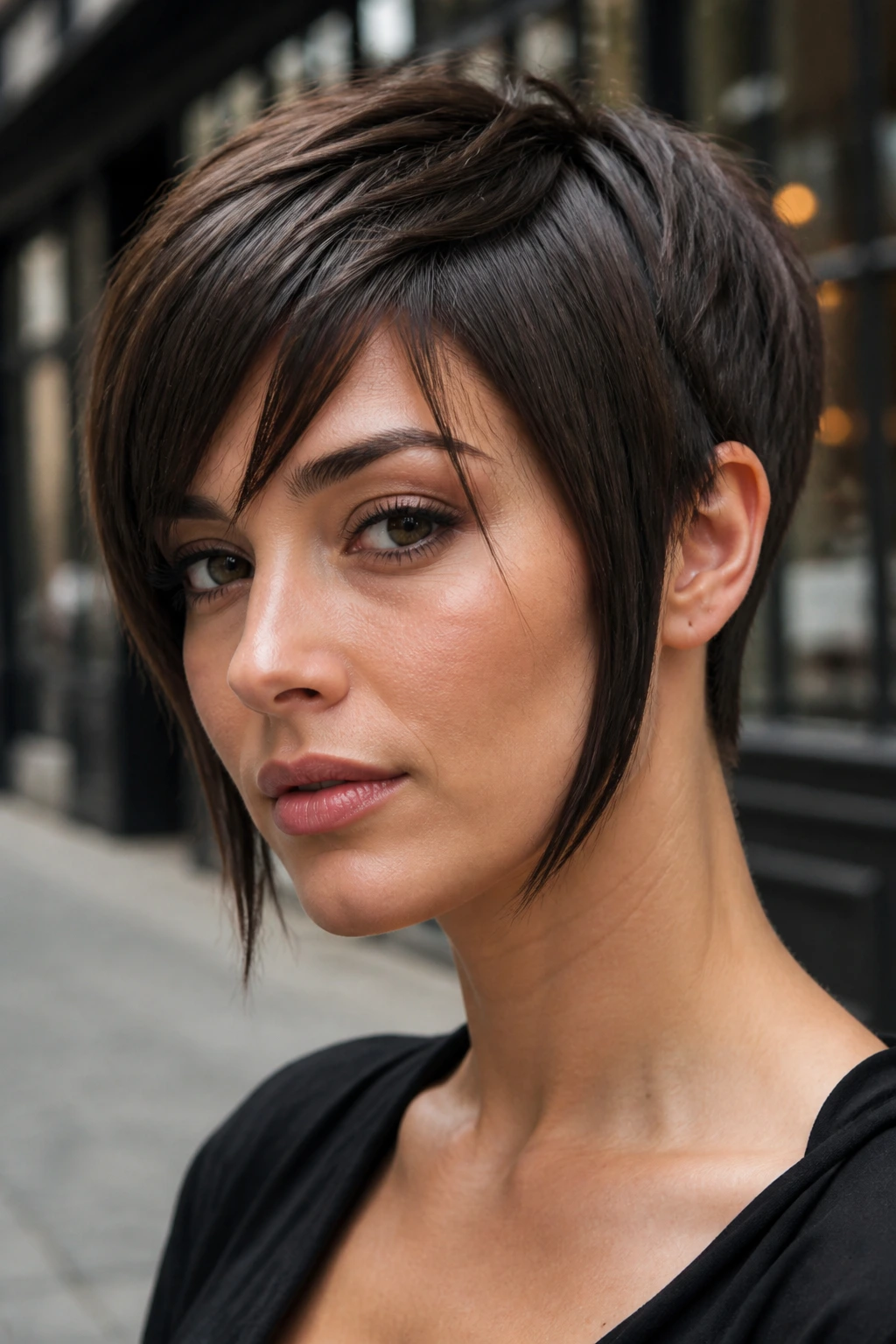
Temple pieces are underrated. They soften the area in front of the ears and create a line that points toward the jaw, which can make a pixie feel less abrupt.
This is a smart compromise if you want a short cut but don’t want every side trimmed close to the skin. Straight hair helps because those temple pieces stay neat instead of curling out in random directions.
Keep the rest of the cut tidy so the longer pieces look like a design choice, not a leftover. I prefer this shape when the temple lengths hit somewhere between cheekbone and jaw, depending on face shape.
18. Textured Crown Pixie With Sleek Sides
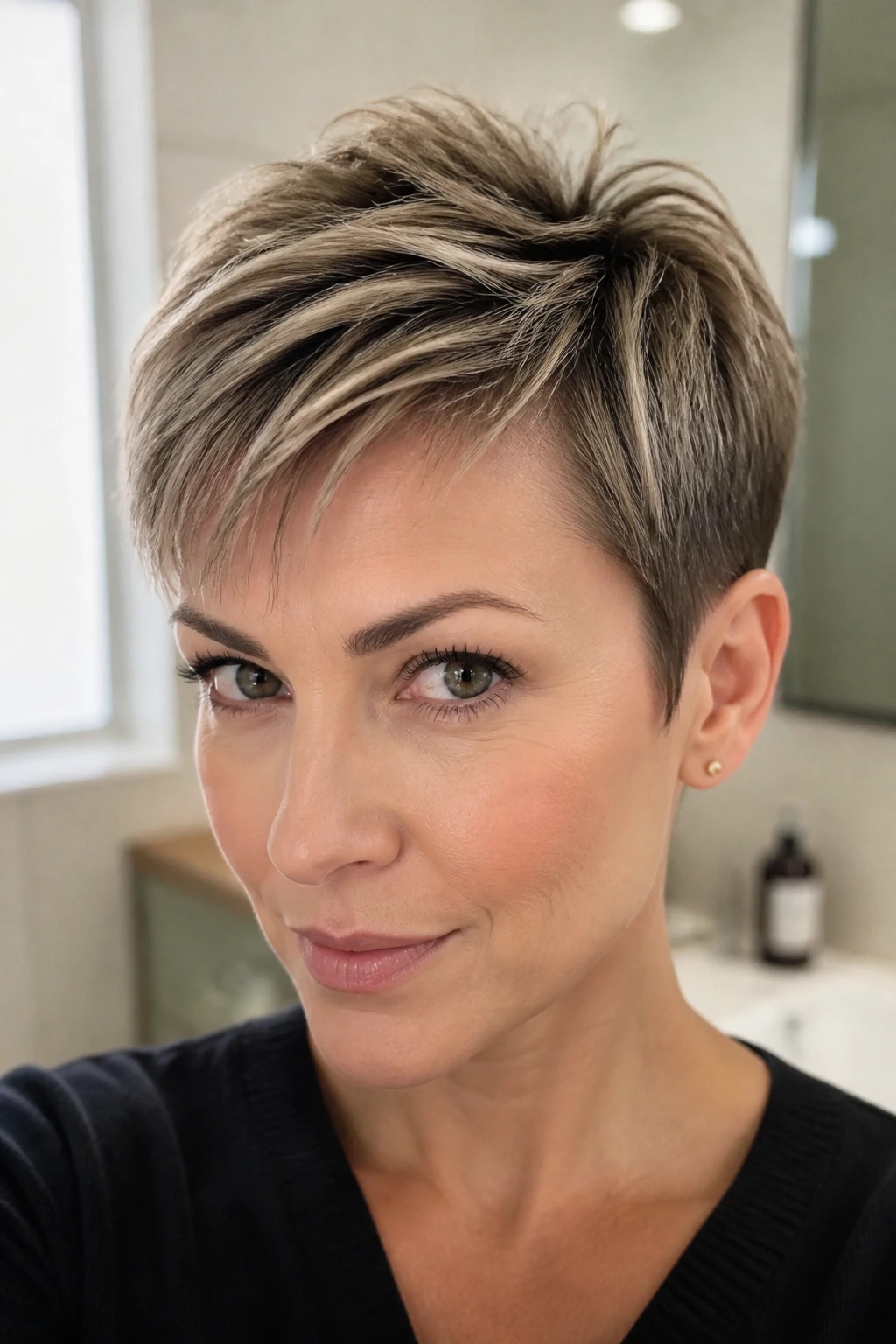
A textured crown gives the haircut lift where straight hair often falls flat. The sides stay smooth and close, so the eye goes upward, which is a good trick if you want a longer-looking profile.
This cut needs a light hand. The crown should be lifted, not shredded. A bit of point-cut texture at the top adds movement, but too much will make the shape lose its clean finish.
Blow-dry the crown forward first, then back, then side to side. That weird little sequence creates root lift without relying on a heavy product layer. If the sides are sleek and the crown has a bit of height, the haircut looks sharper from every angle.
19. Jaw-Skimming Pixie Bob
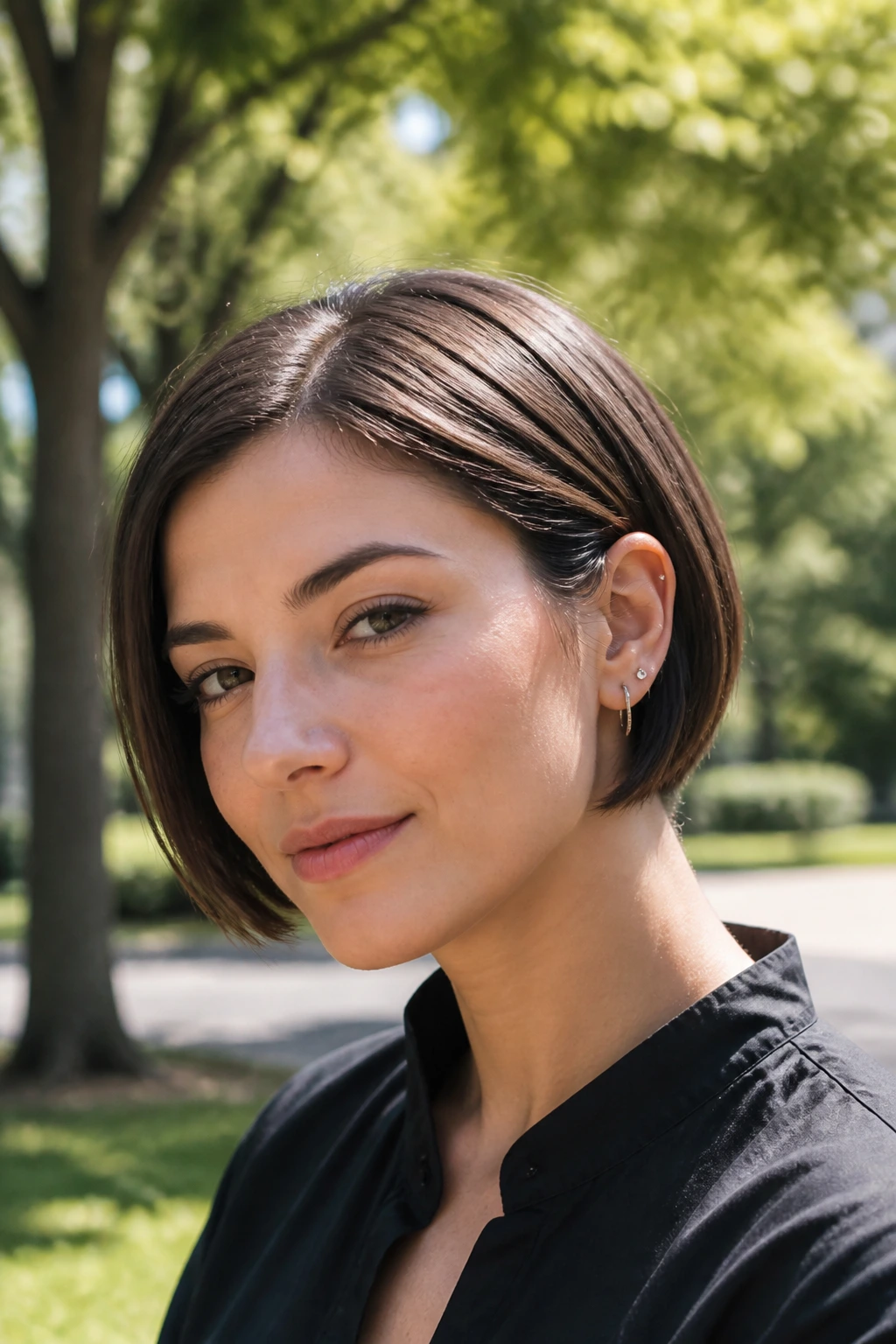
This is the softest entry on the list, but sharp doesn’t have to mean ultra-short. A jaw-skimming pixie bob gives you a clear line at the front and enough length to tuck behind the ears or swing around the jaw.
The best part of this shape is how it frames the lower face. Straight ends create a neat edge, and because the hair isn’t too short, the style can survive a missed trim or two without falling apart.
Choose this if you’re easing into a shorter cut or growing out a very short pixie. It keeps the look tidy while buying you more styling options than a classic cropped pixie can offer.
20. The Clean-Line Grow-Out Pixie
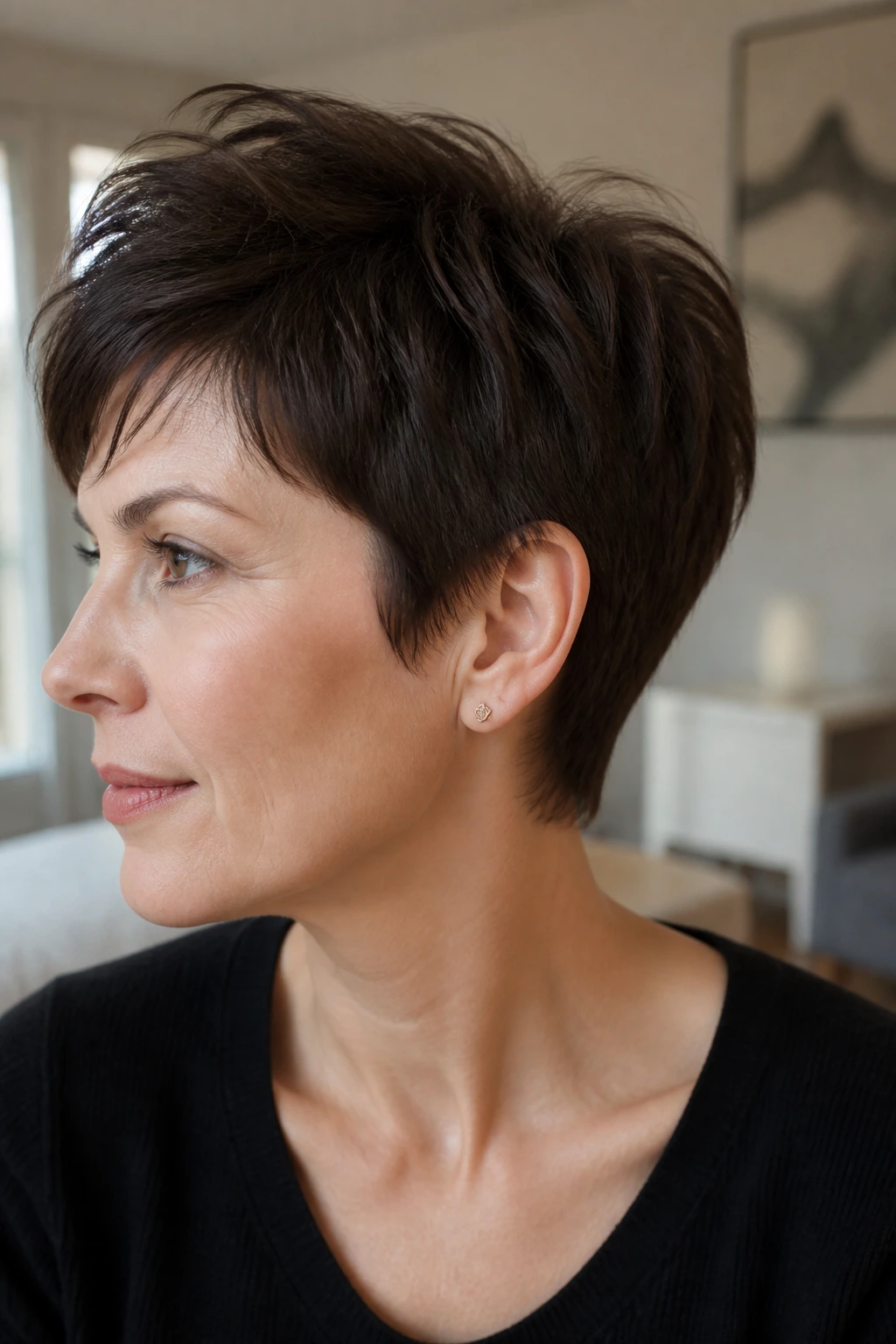
This is less about a one-day hairstyle and more about survival. The cut is designed so it keeps its shape as it grows, with a tidy neckline, a little extra length at the crown, and side pieces that still fall in a neat direction.
That matters more than people admit. A sharp pixie is easy to love on day one. The real test is week five, when the shape has to keep looking intentional while it’s stretching out.
Ask for a perimeter that can grow into a short bob instead of a chopped-off blur. That means keeping some weight at the front and enough length around the temples to transition smoothly. It’s the most practical cut here, and probably the one you’ll appreciate most when life gets busy.
What Makes Straight Pixie Cuts Look So Sharp on Straight Hair
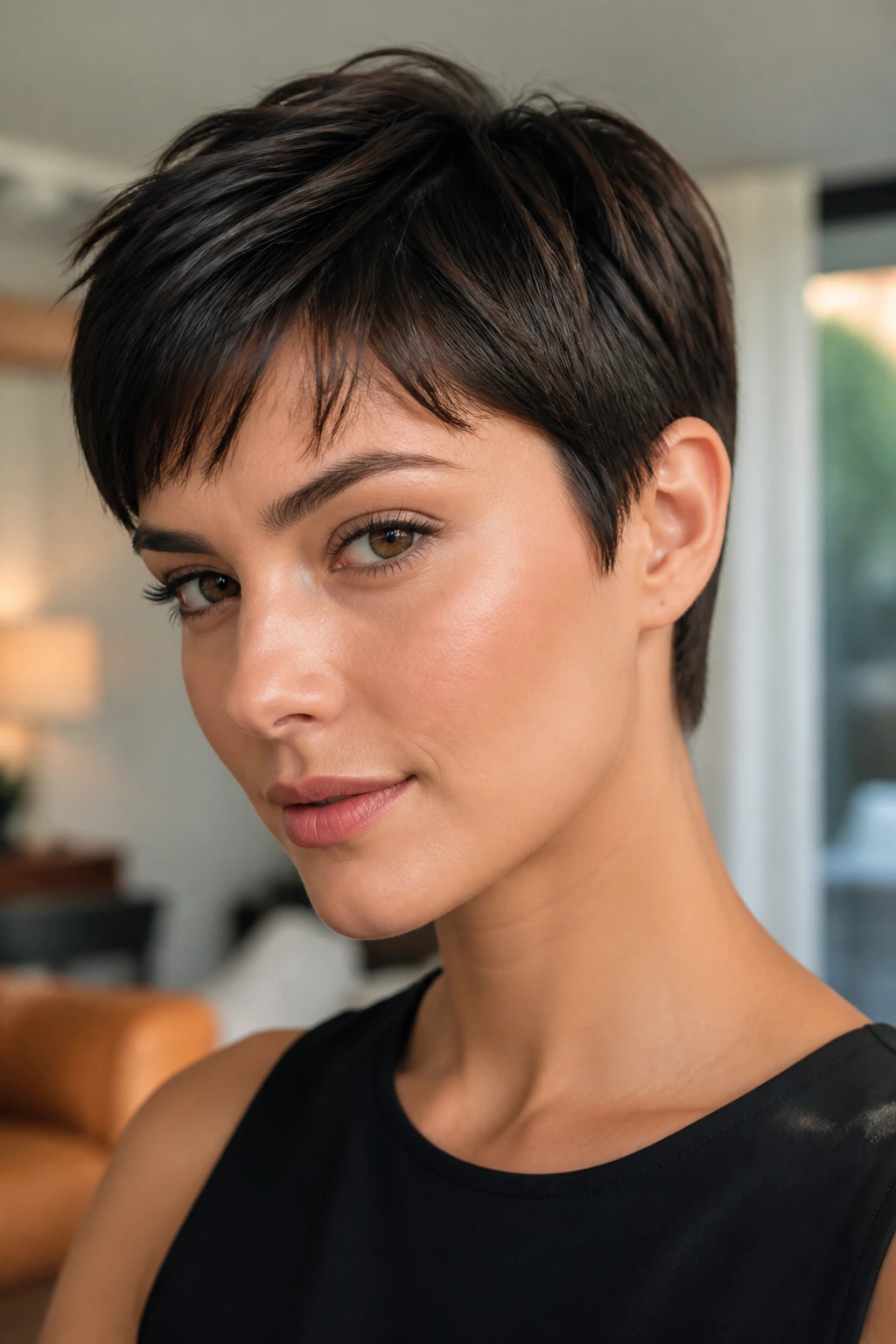
Straight hair gives you a gift and a headache at the same time. The gift is that every line shows up clearly. The headache is that every line shows up clearly. There is no soft wave pattern to blur a shaky neckline or hide a slightly uneven fringe, which is why a good straight pixie looks so crisp and a bad one looks unfinished from across the room.
The shape matters more than the texture here. A clean nape, a tidy temple line, and a crown that keeps a little height can change the whole mood of the haircut. If the top is too flat, the head can look wider. If the sides are too soft, the cut starts reading as grown-out instead of deliberate.
Shine plays a part too. Straight strands reflect light along the surface, so a well-cut pixie can look almost polished enough to feel tailored. That shine can turn against you if the hair is greasy or limp, though, which is why these cuts often need a tiny bit of product and not a lot of it.
The line between sleek and puffy is thin. Keep it clean.
How to Ask Your Stylist for the Pixie You Actually Want
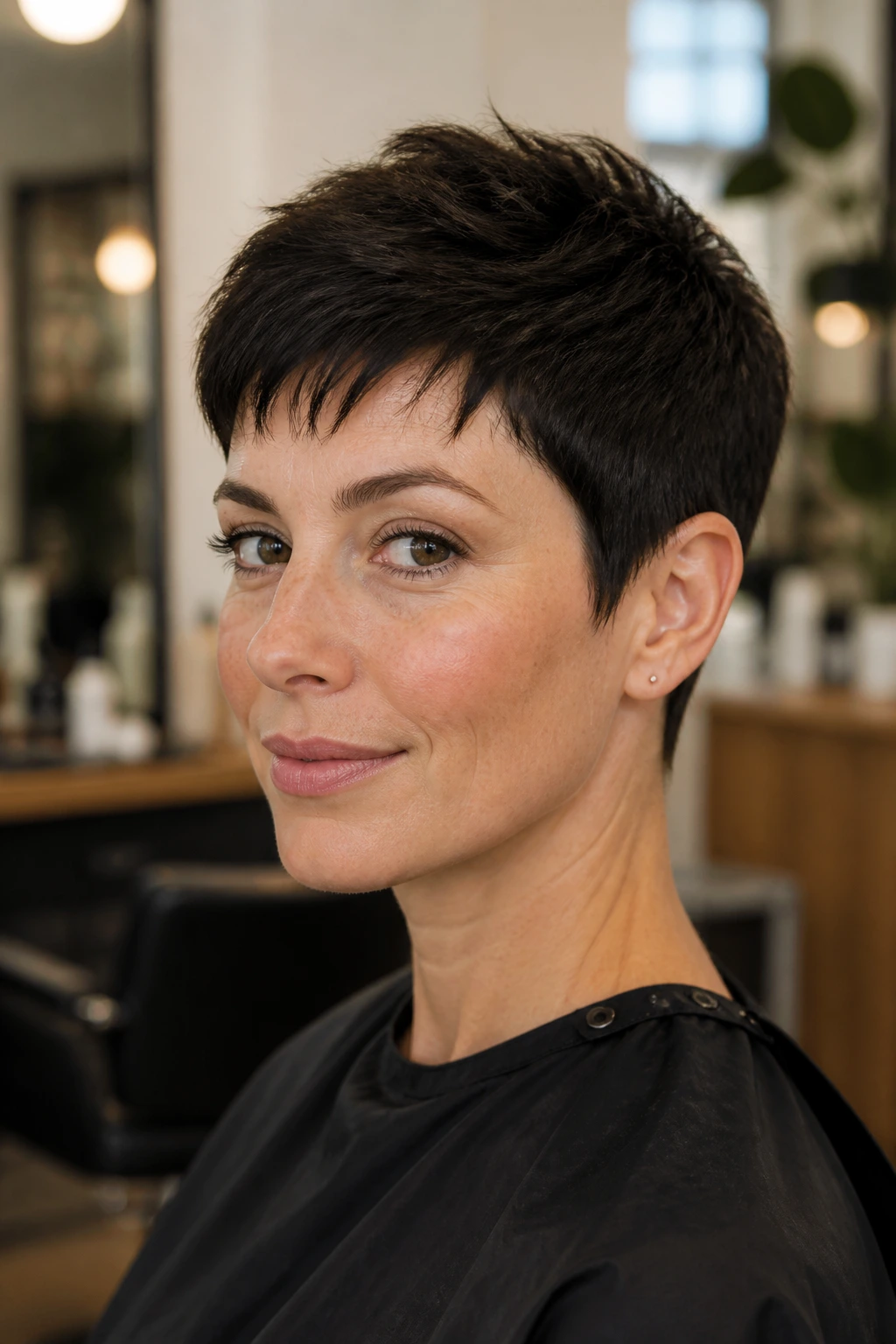
Bring photos, yes, but don’t rely on them alone. A picture of a pixie on someone with a different hairline or head shape can lead you into a haircut that looks fine on paper and weird in the chair. The better move is to name the exact pieces that matter: nape length, crown height, fringe shape, and how much ear you want showing.
Say whether you want the cut to feel polished, edgy, or soft. Those words are vague on their own, so anchor them to something visible. “I want a crisp neckline,” “I want the top to stay around two inches,” or “I want the bangs to sweep, not sit heavy” gives the stylist something usable.
Cowlicks should be mentioned early. So should a strong part line, a high forehead, a low hairline, or any spot where your hair tends to kick out. Straight hair often has one section that behaves and one section that does not, and a good cut works with that instead of fighting it.
Essential Tools and Products for Styling a Straight Pixie
-
Blow dryer with a nozzle attachment: Directs airflow along the hair shaft and helps smooth the top without blasting the whole cut apart.
-
Small round brush or vent brush: Useful for lifting the crown and giving a little bend to the fringe.
-
Fine-tooth tail comb: Makes parts cleaner and helps you place hair exactly where you want it.
-
Light paste or styling cream: Best for separation at the top and a soft matte finish that doesn’t look sticky.
-
Flexible-hold hairspray: Holds the shape without turning the cut into a helmet.
-
Heat protectant spray: Worth using if you blow-dry or flat-iron the front pieces often.
-
Dry shampoo: Good for the second day, especially if your roots get flat fast.
-
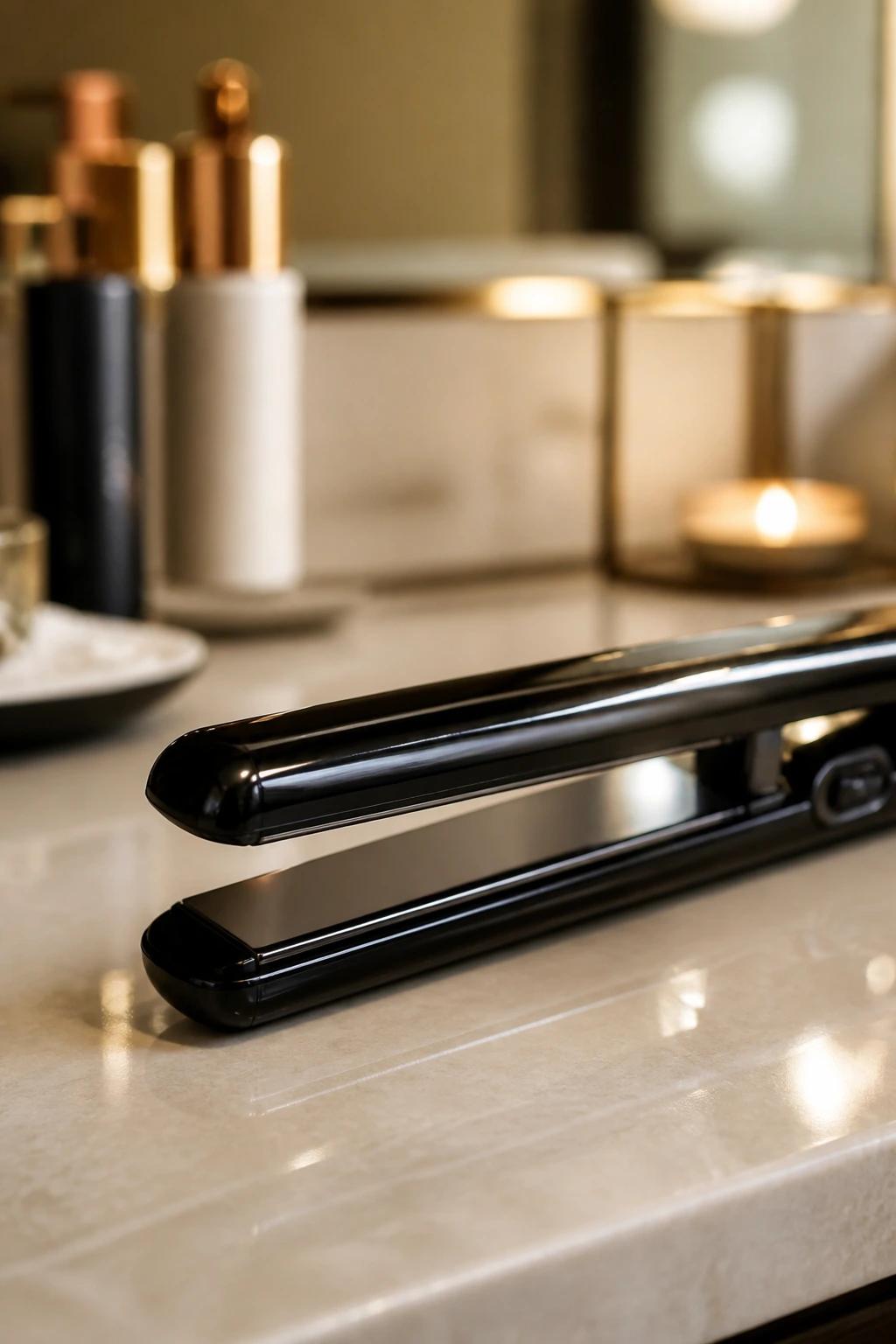
1-inch flat iron: Optional, but handy if the ends flip in a way you do not want.
How to Choose the Right Straight Pixie Cut for Your Face Shape and Hairline
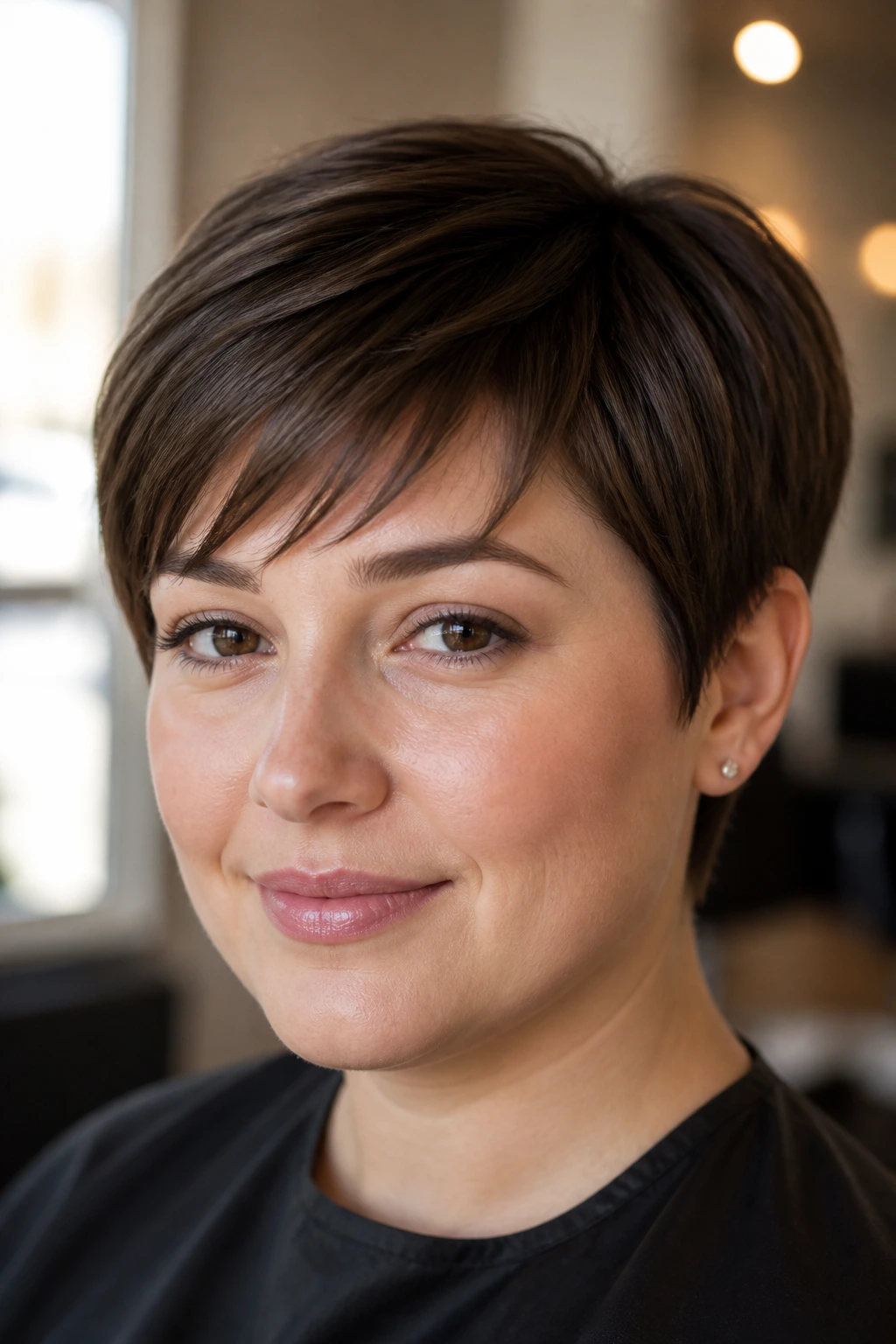
Round faces usually benefit from a little height at the crown and some diagonal movement in the fringe. That does not mean piling hair straight up like a cartoon. It means keeping the top a touch longer so the eye travels vertically instead of sideways.
Square faces often look good with softened temple pieces or a side-swept front section. A blunt edge can work too, but it needs balance elsewhere so the jaw does not feel overly boxed in. Heart-shaped faces usually like a bit more fullness near the jaw or sides, which keeps the forehead from dominating the cut.
Oval faces get the most range, which is unfair but true. Micro fringes, asymmetry, bowl-inspired shapes, and jaw-skimming pixie bobs can all work if the proportions stay clean.
Hairline matters more than face shape in some cases. A high forehead may need a longer fringe. A low forehead may look better with a tiny gap or a short side-sweep. Cowlicks at the temple can push a short bang in a direction you did not choose, so it helps to let the haircut follow the grain instead of trying to bulldoze it.
Practical Styling Tips for Clean Edges and Movement
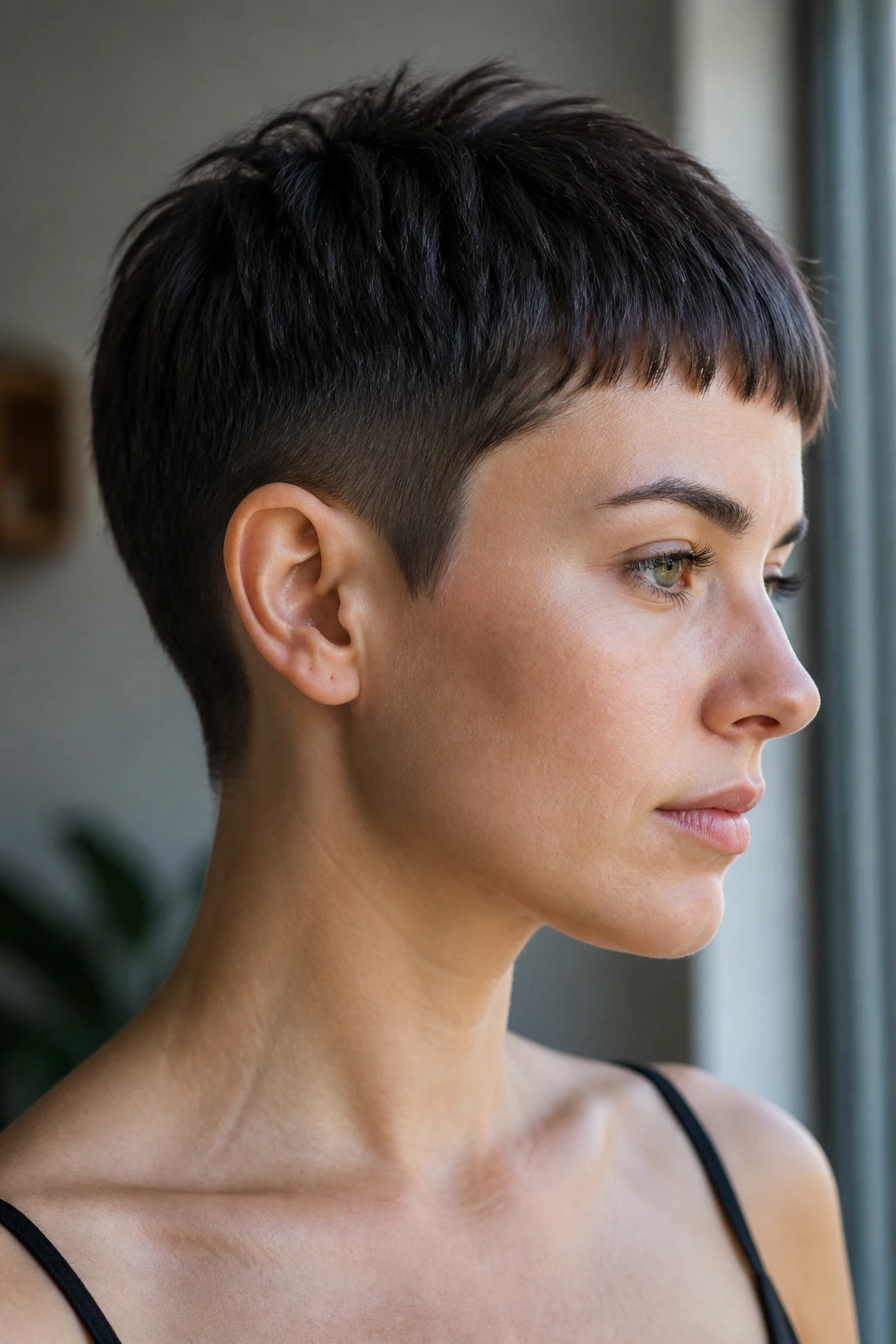
Root Lift: Dry the crown first, lifting the roots with your fingers or a vent brush while the nozzle points downward from above. Ten to fifteen seconds of directed heat at the root is often enough to stop the top from lying dead flat.
Fringe Control: If the front keeps separating, lightly mist the fringe with water, comb it into place, and hit it with the cool shot on your dryer. That tiny reset usually works better than adding more product.
Product Amount: Start small. A pea-sized bit of paste is enough for most short straight styles, and a dime-sized amount is already a lot if your hair is fine. Too much product makes the cut collapse into clumps.
Finish: Run a touch of serum only across the very ends if the haircut looks dry. Keep it away from the roots or the scalp will start showing oil before lunch.
Common Mistakes That Make a Pixie Look Missed Instead of Sharp
-
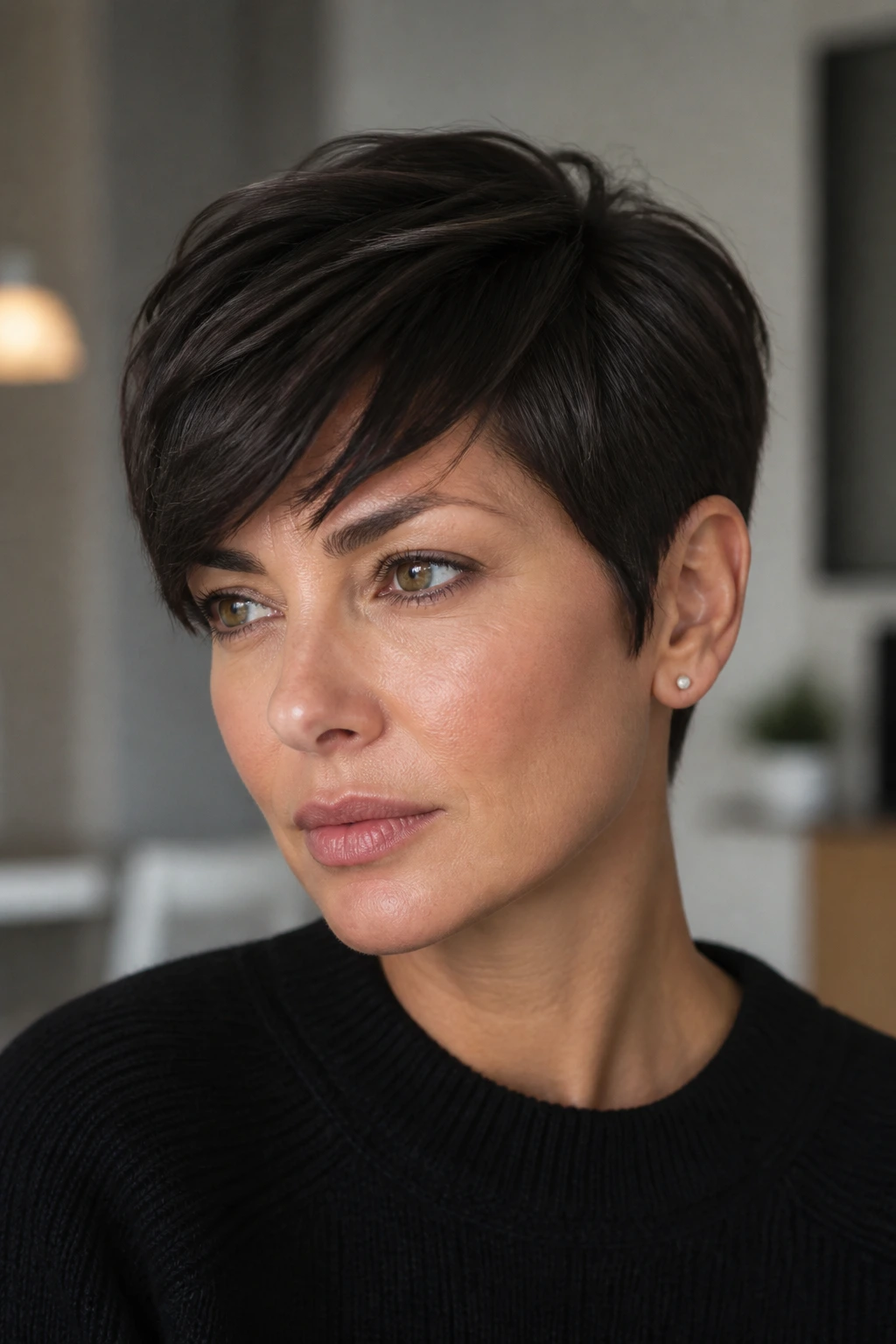
Leaving the nape too fuzzy: If the neckline blends into a soft blur, the haircut loses its edge fast. Ask for a clean taper or a deliberate line and keep neck cleanups on a regular schedule.
-
Cutting the crown too short: Straight hair shows scalp fast when the top is too tight. Leave enough length for a bit of lift, especially if your hair grows flat on top.
-
Using too much wax or paste: Heavy product turns a sleek pixie into sticky clumps. Start with a tiny amount, warm it in your palms, and add more only if the hair still won’t stay put.
-
Ignoring cowlicks and growth patterns: A fringe that fights a strong swirl will split apart all day. Tell the stylist where your hair pushes naturally before the first snip.
-
Over-thinning the ends: Straight hair does not need to be shredded to move. Excess texturizing leaves the perimeter looking frayed instead of sharp.
Named Variations and Alternative Directions to Try
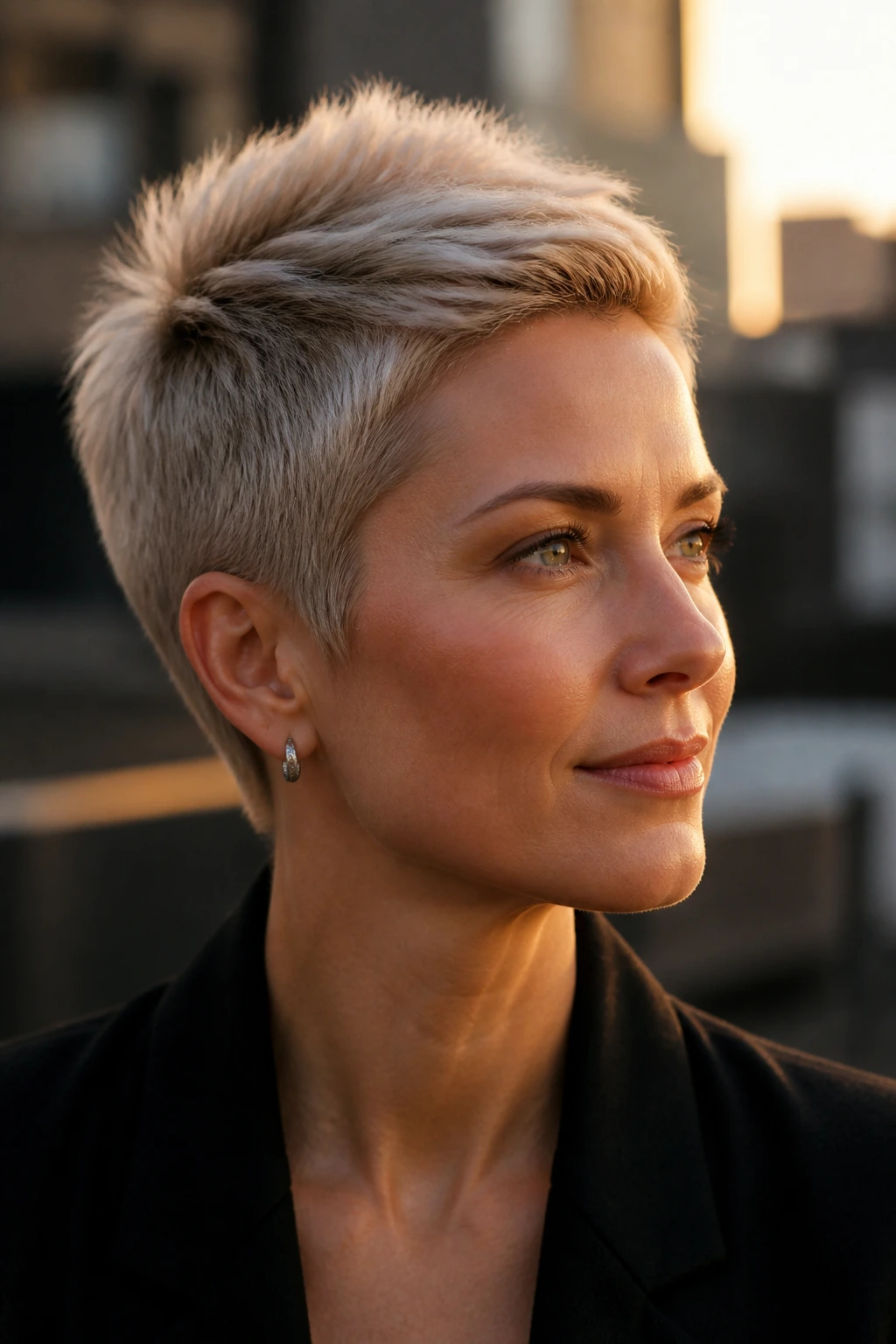
Soft Office Crop: Keep the nape tidy, leave the fringe slightly longer, and skip aggressive texture. It reads polished, works with minimal styling, and looks good with glasses or small hoops.
Rebel Undercut Pixie: Shave or clip the sides tighter and keep the top piece longer so it can be pushed over or worn forward. This version feels bolder, and it photographs well from the side because the contrast is so clear.
Paris Crop: Think short, neat, and a little airy at the fringe. The lines stay clean, but the front is soft enough to look easy rather than severe.
Grow-Out Bridge Pixie: Leave the front and temple pieces longer so the cut can drift into a short bob later. If you are nervous about commitment, this is the one that gives you an exit ramp.
Sculpted Crown Pixie: Build height at the crown and keep the sides close for a more elongated silhouette. It suits straight hair because the lift stays visible instead of disappearing into waves or frizz.
How to Keep a Straight Pixie in Shape Between Salon Visits
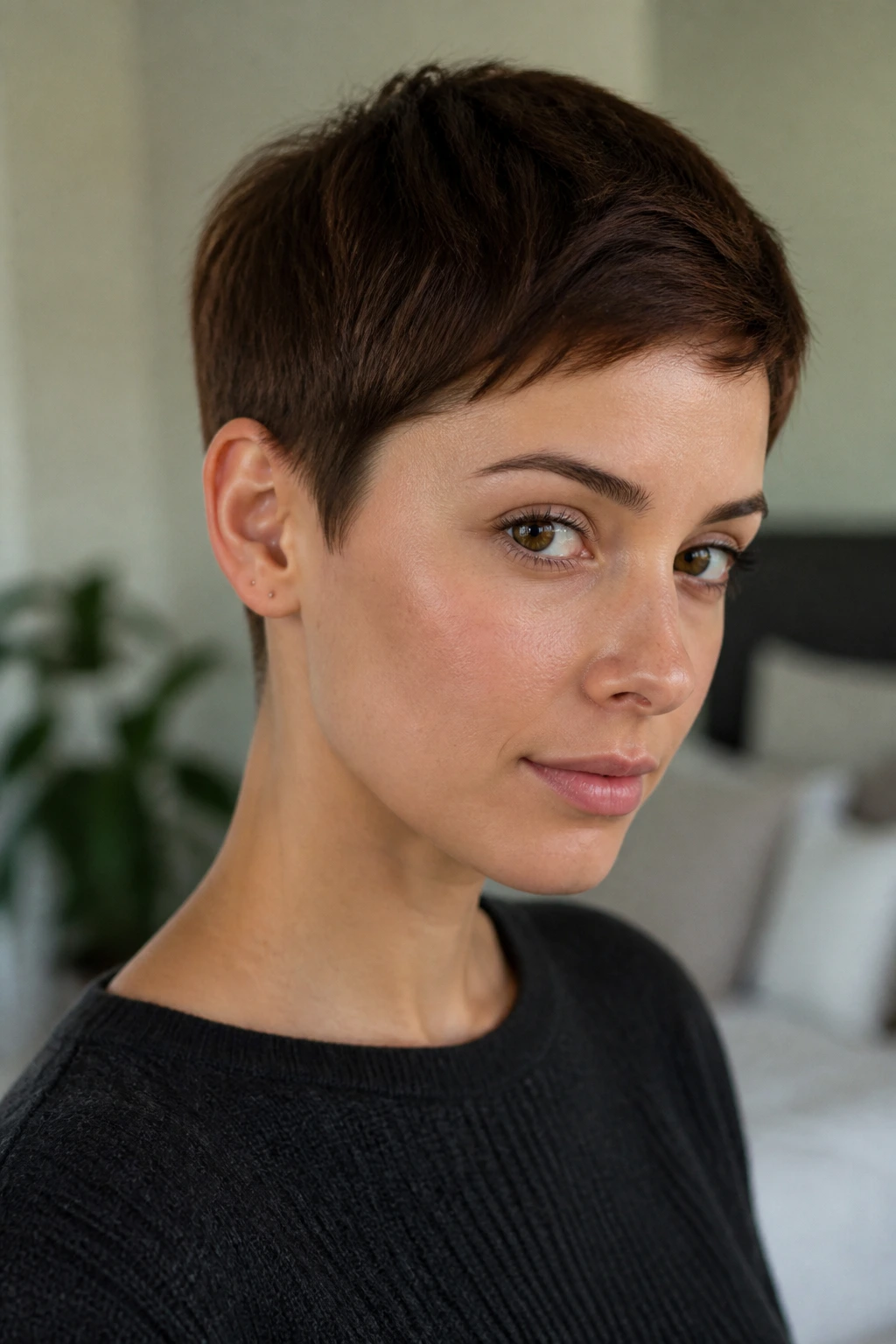
A short pixie needs more maintenance than people expect, mostly because straight hair reveals growth quickly. For a very cropped version, trim the neckline and sideburns every 3 to 4 weeks if you want it to stay crisp. Longer pixie bobs can usually stretch to 5 or 6 weeks before the shape starts slipping.
Wash frequency depends on your scalp, not your calendar. If your roots get oily fast, washing every other day may be the practical answer. If your hair is fine and dry, 2 or 3 washes a week may be enough, with dry shampoo used sparingly at the crown on in-between days.
Sleep on a smooth pillowcase if you can. A satin or silk case helps the top stay laid down instead of sticking up in odd directions by morning. If the fringe kinks, mist it with a little water, smooth it with your palm, and let it dry before you leave the house.
A straight pixie also benefits from tiny, boring maintenance tasks that matter a lot. Wipe product off the ears. Clean up the hairline with a stylist between full cuts if the nape grows fast. And if the top starts splitting at the crown, don’t pile on more paste — the cut may just need a light trim.
Frequently Asked Questions
Will a straight pixie cut make fine hair look thinner?
Not if the cut is shaped well. Fine straight hair usually looks better in a pixie when the crown keeps a bit of length and the perimeter stays clean, because too much thinning can leave the ends see-through. A good blunt or softly tapered line often makes the hair look fuller than a heavily textured version.
How short can I go and still keep a sharp look?
Pretty short, but the line needs to stay deliberate. If the top is cropped too close to the scalp, the haircut can lose shape and start reading as clipped rather than styled. Leaving even 1½ to 2 inches on top gives you room to create a clean silhouette.
What if my hair sticks out at the crown?
That usually means the crown is too short for your growth pattern or the product is too heavy. Try drying the roots in the opposite direction first, then set them where you want them with a cool shot; if that still fails, the cut may need more length through the crown.
Can I wear a straight pixie with glasses?
Absolutely, and it can look better than longer hair if the fringe and temples are cut with the frames in mind. A side-swept fringe or a longer temple piece keeps the haircut from crowding the glasses. Tiny micro fringes can work too, but they need a very clean neckline to balance them.
How often will I need a trim?
Most straight pixie cuts need attention every 4 to 6 weeks. Ultra-short versions drift out of shape faster because the neckline and sideburns show growth quickly, while a pixie bob or longer crop can last a little longer before looking messy.
Can I style one without heat?
Yes, if the cut is already shaped well. A little water, a pea-sized amount of cream or paste, and finger styling can be enough on many days. Heat just helps if your crown has a stubborn cowlick or the fringe wants to split.
What should I ask for if I want something sharp but not severe?
Ask for a clean neckline, a controlled crown, and a soft or side-swept fringe. That combination keeps the haircut neat without making it feel harsh. The word “soft” should refer to the front pieces, not the edges at the back.
How do I grow out a pixie without looking awkward?
Keep the shape trimmed into a short bob path instead of letting everything grow wild at once. That means cleaning up the nape and sideburns while letting the crown and front get a little longer. It buys you time and keeps the grow-out looking planned.
A Sharp Pixie That Still Feels Like You
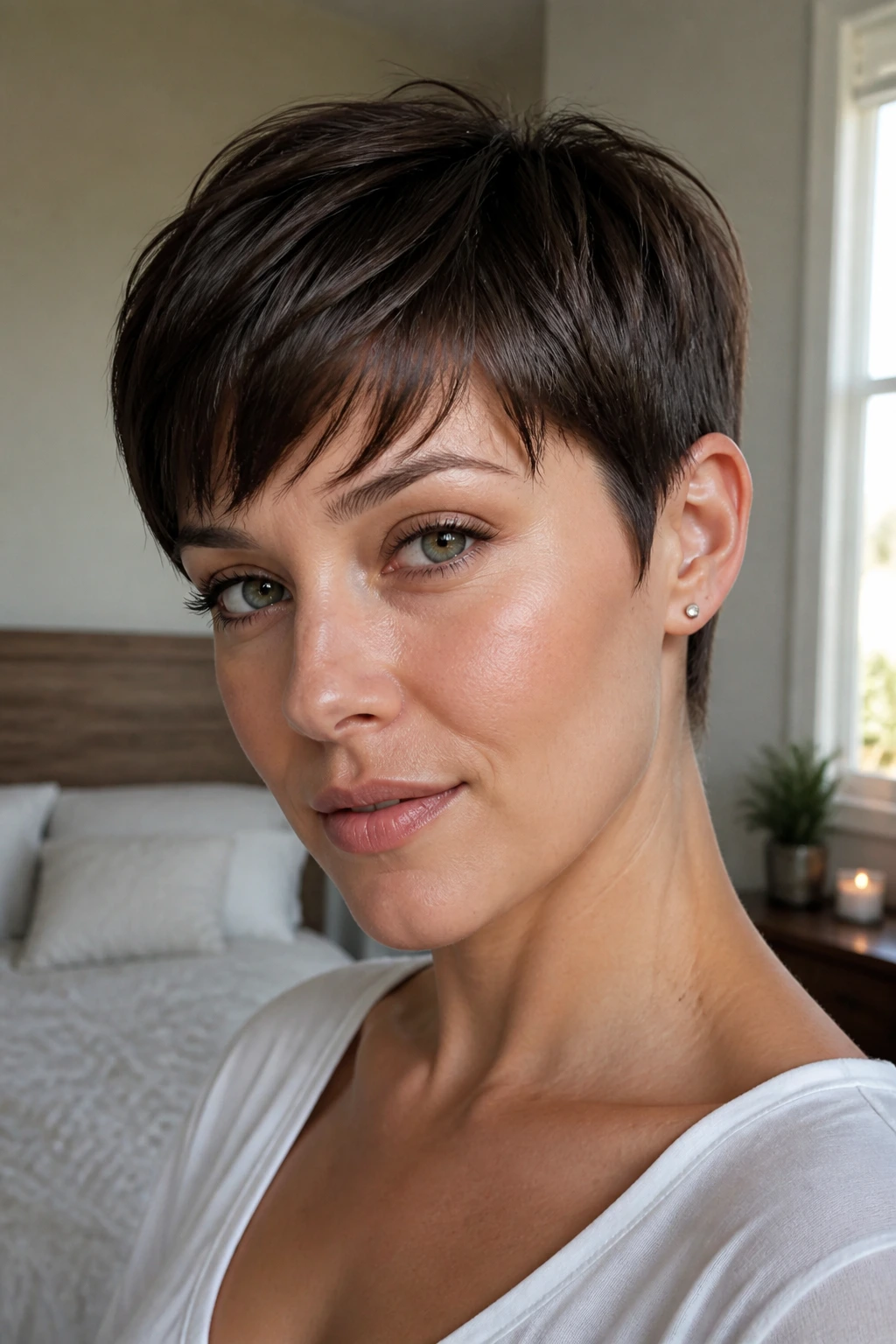
A straight pixie cut works best when it knows exactly what it’s doing. Clean neckline. Clear fringe. Enough length in the right places to keep the shape alive. That combination makes the haircut look sharp without turning it into something stiff or precious.
The real trick is choosing the version that fits your hairline, your styling patience, and how often you’re willing to sit in a salon chair. Some of these cuts are bold in a small, precise way. Some are almost quiet. All of them depend on line, not luck.
Bring one good photo, one honest conversation about your cowlicks, and a willingness to keep the edges neat. That is where the good pixies live.
