



Soft-polished hair is a narrow lane. Too much smoothing, and the style goes flat and lifeless. Too much texture, and it starts looking accidental, like you ran a comb through your hair and gave up halfway through.
That balance matters especially for Indian hairstyles for a soft polished look, because so much Indian hair has weight, shine, and density that refuses to sit still unless the shape is built on purpose. A clean center part, a low bun, a wrapped ponytail, a braid with a few loose pieces around the face—those small moves do more than a cloud of hairspray ever will.
I like this kind of finish because it feels dressed without feeling stiff. The crown stays neat, the ends keep some movement, and you can turn your head without hearing your style crackle under product. That alone puts these looks in a better category than the overly sprayed, helmet-ish hairstyles that still show up at parties and office events.
And there’s a practical side, too. These styles hold up in humidity better than loose curls, sit comfortably under dupattas and hair accessories, and don’t need a salon blowout to look intentional. The trick is knowing where to smooth, where to loosen, and where to let the hair breathe.
Why These Styles Feel Soft Instead of Stiff
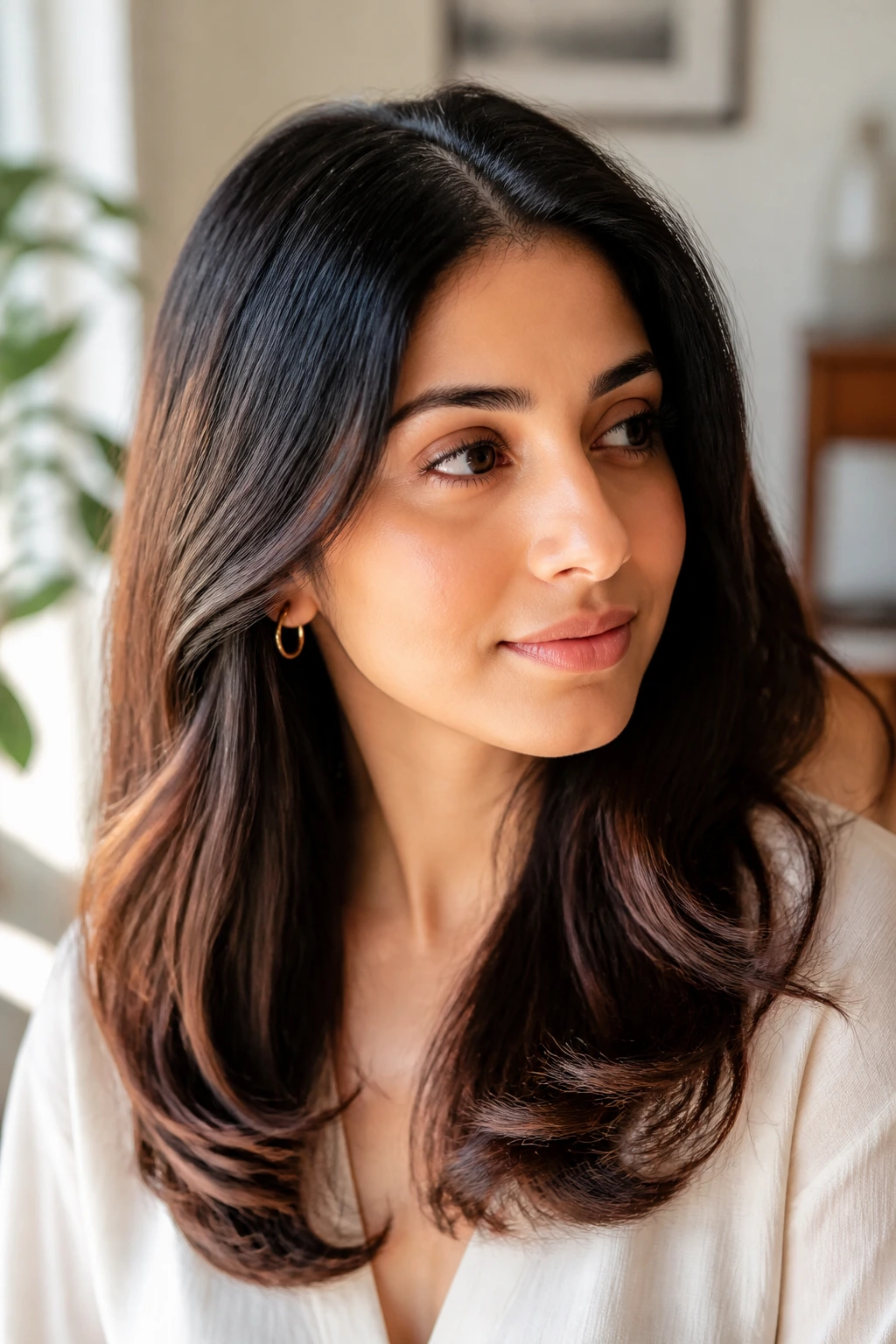
Soft polish comes from shape, not shellacking. A hairstyle looks finished when the part is clean, the crown sits close to the head, and the ends keep a little movement. That’s the whole game. You do not need layers of hard spray to get there.
- Balanced structure: Low placements, side parts, and braids create a clear outline without pulling the face tight.
- Natural texture: A little bend in the lengths keeps the style from looking like it was pressed into a rigid mold.
- Indian hair-friendly hold: Dense hair can support buns, twists, and braids without collapsing after an hour.
- Accessory ready: These bases make room for pins, gajra, jhumka-friendly volume, or a small maang tikka without chaos.
- Everyday wearability: You can wear these to work, lunch, a family function, or a dinner plan that starts casual and ends less casual.
The biggest mistake people make with a “polished” brief is overdoing the finish at the front. They smooth the crown until it goes shiny in a bad way, then leave the ends frayed or frizzing. Better to soften the outer edges and keep the architecture underneath. That’s the part that lasts.
1. Center-Part Low Bun with Face-Framing Pieces
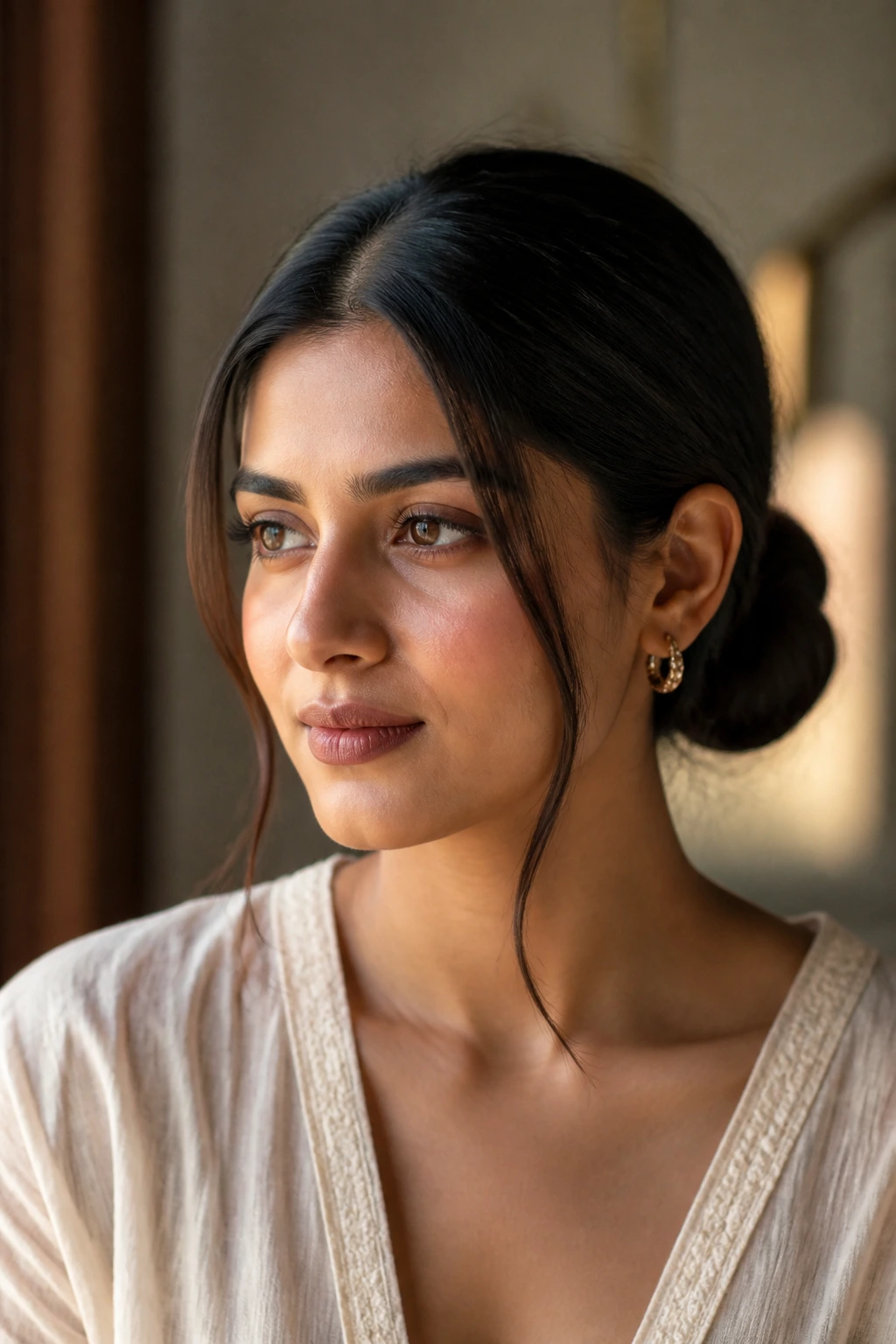
A center-part low bun is the quiet overachiever of soft polished hair. It looks calm from the front, neat from the side, and expensive in the best possible way when the bun sits right at the nape instead of floating up near the crown. Leave two thin face-framing pieces in front, and the whole style stops feeling severe.
Why it works
The middle part gives the style symmetry, which reads polished fast. The low bun keeps the silhouette grounded, and the loose tendrils break up the line so it does not feel too strict for everyday wear. On medium to thick hair, this shape also holds without constant fixing, which is the real test.
If your hair has layers, smooth them back with a small amount of serum first, then gather the lengths low and twist them into a flat bun. A few hidden U-pins beat one giant elastic that drags the whole thing down.
Best for: straight, wavy, or lightly curled hair.
Best mood: office, family lunch, simple festive dressing.
Small detail that matters: keep the bun compact. A bun that spreads wide at the nape can look messy in a hurry.
2. Soft Side Braid with Loose Tendrils
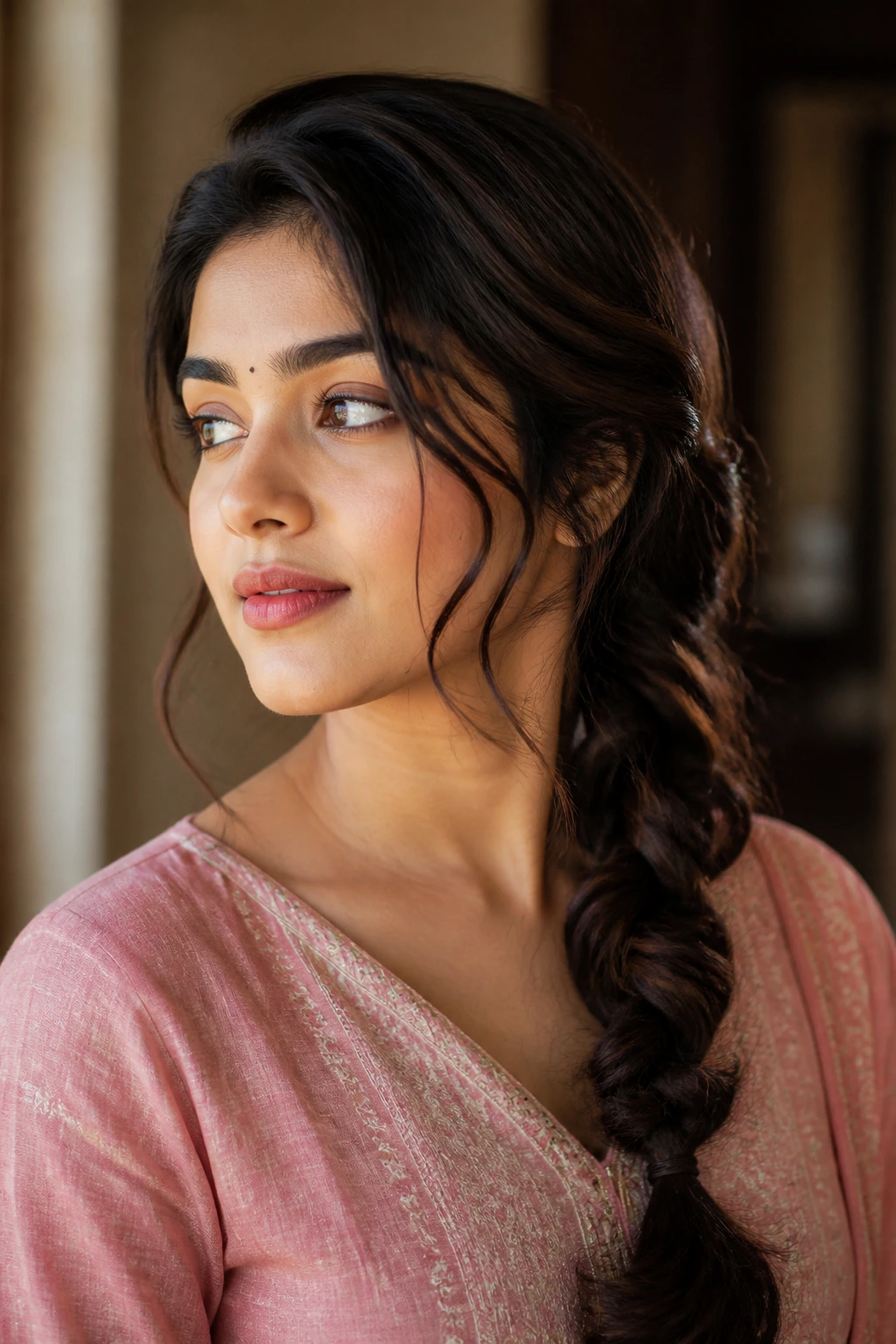
A side braid sounds ordinary until you loosen it in the right places. Then it turns into one of the easiest Indian hairstyles for a soft polished look, especially if your hair has texture and you want the style to feel romantic rather than rigid. The braid sits over one shoulder, the front pieces stay soft, and the whole thing moves when you walk.
When this braid looks its best
Start with a side part, not a harsh one. A deep side part gives the braid a little sweep, which feels gentler on the face than a strict middle line. After braiding, tug the outer edges of each section just enough to widen the braid. Not too much. If you can see every loop from across the room, you’ve gone too far.
A small mist of texturizing spray before braiding helps the hair grip. That matters on freshly washed hair, which can be slippery and too clean to hold shape.
- Works well on thick hair that needs control.
- Easier to manage than an open hairstyle in humidity.
- Looks polished with a kurta and just as good with a simple shirt.
- A ribbon or tiny pin at the braid end can make it feel dressed up.
One thin tendril near the temple is plenty. You do not need to leave out half your hair to get softness.
3. Glossy Low Ponytail with Wrapped Base
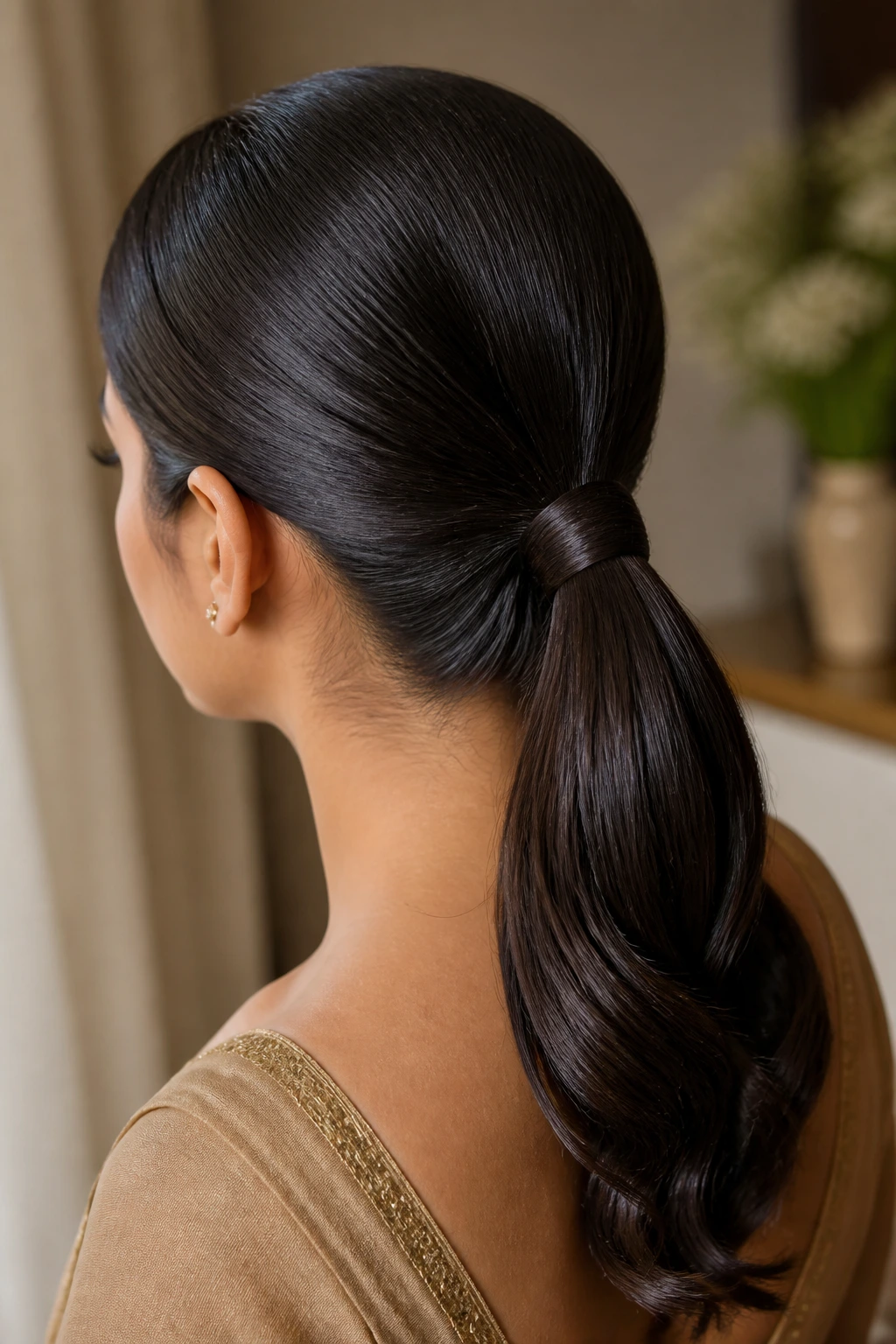
This is the style I reach for when the brief says “clean, but not severe.” A low ponytail at the nape, a wrapped strand around the elastic, and ends that stay sleek and slightly curved—that combination never looks accidental. It’s fast, but it doesn’t look rushed.
The wrapped base is doing a lot of the visual work here. It hides the elastic, which is the little detail that makes a ponytail look thought through. Keep the crown flat with a comb, but do not scrape it so tight that your scalp looks shiny and pulled. That harshness kills the softness.
If your ends are dry, curl only the last 2 to 3 inches under with a straightener or round brush. That tiny bend softens the whole style. Straight ends can look blunt in a way that works for some outfits, but not for this brief.
Use this when: you want a hairstyle that goes with earrings, a blazer, or a silk kurta.
Avoid this if: your hair is very layered and the shorter pieces keep poking out. In that case, pin the layers underneath before you tie the ponytail.
A little shine serum on the tail gives the style that smooth, polished finish without making it greasy.
4. Half-Up Twist with Soft Waves
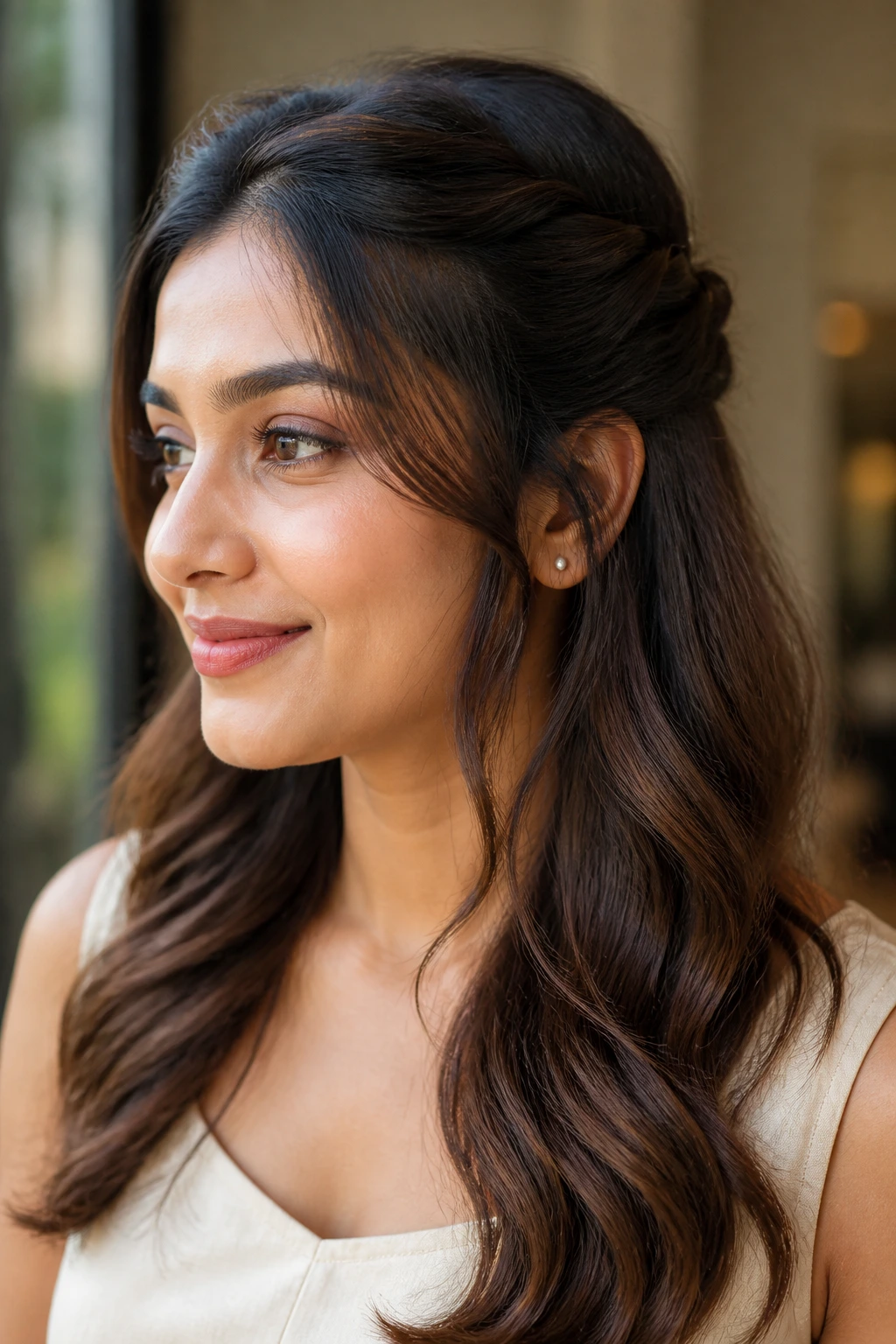
The half-up twist is one of those styles that looks like effort and behaves like a shortcut. Pinning back just the top section gives you structure through the crown, while the loose waves below keep the whole look light. It’s a good answer for days when you do not want your hair fully tied back, but you still want shape.
Think of it as the compromise style that doesn’t feel like a compromise. The top twist keeps the front pieces controlled around the face, which matters if you’re dealing with baby hairs or a blunt fringe growing out. The waves underneath do the softening. That contrast is the whole point.
What makes it work on layered hair
Layers can look messy if they’re all left loose, but half-up styling gives them a job. The top section gets pinned into a small twist or mini knot, then the lower lengths show off the bend. If your hair is naturally wavy, leave it alone. If it’s straight, a quick pass with a 1-inch iron or two loose braids overnight is enough.
This style is especially good when you want movement near the shoulders. It sits well with earrings and doesn’t flatten the face.
5. Sleek Middle-Part Claw Clip Twist
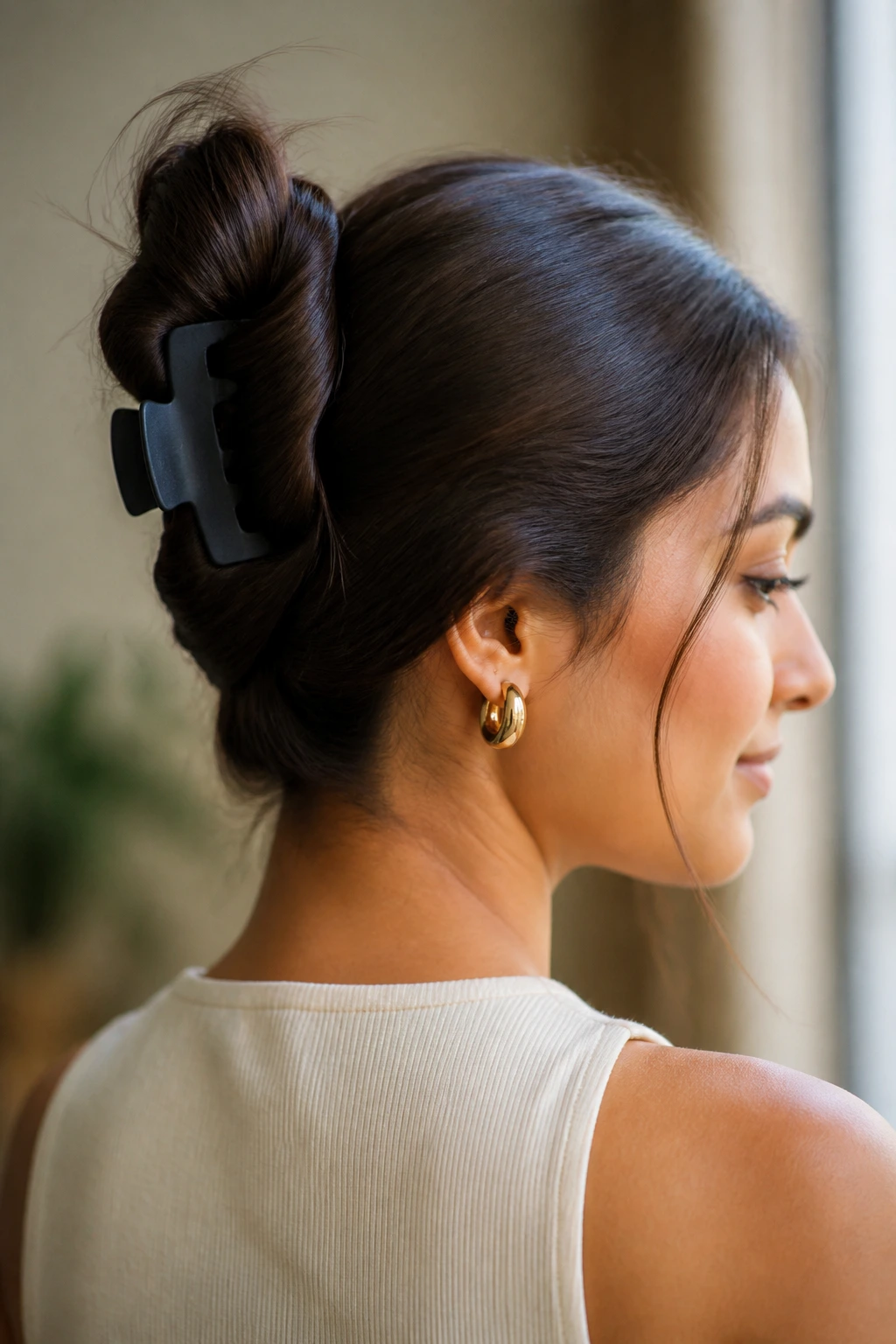
A claw clip can look polished. I’ll die on that hill. The trick is not the clip itself; it’s the setup. Smooth the crown first, twist the lengths low, and choose a clip that actually grips the hair instead of just sitting on top of it like a plastic decoration.
Why it reads modern, not messy
A middle part gives the clip a cleaner line than a random side sweep. Then the twist pulls the hair upward just enough to show the neck and keep the style airy. If your clip is oversized and curved, it can hold thicker hair better than a flat one, which matters more than people think.
Keep the front section flat before clipping. If the roots puff up, the whole style turns casual in a bad way.
- Best for medium to long hair.
- Good on second-day hair with a little dry shampoo.
- Works when you need to move fast.
- Looks better with matte or neutral clips than glittery ones.
A single loose piece near the ear can soften the shape, but only one. Two or three starts to look like you changed your mind halfway through getting ready.
6. Side-Swept Bun with Jhumka-Friendly Volume
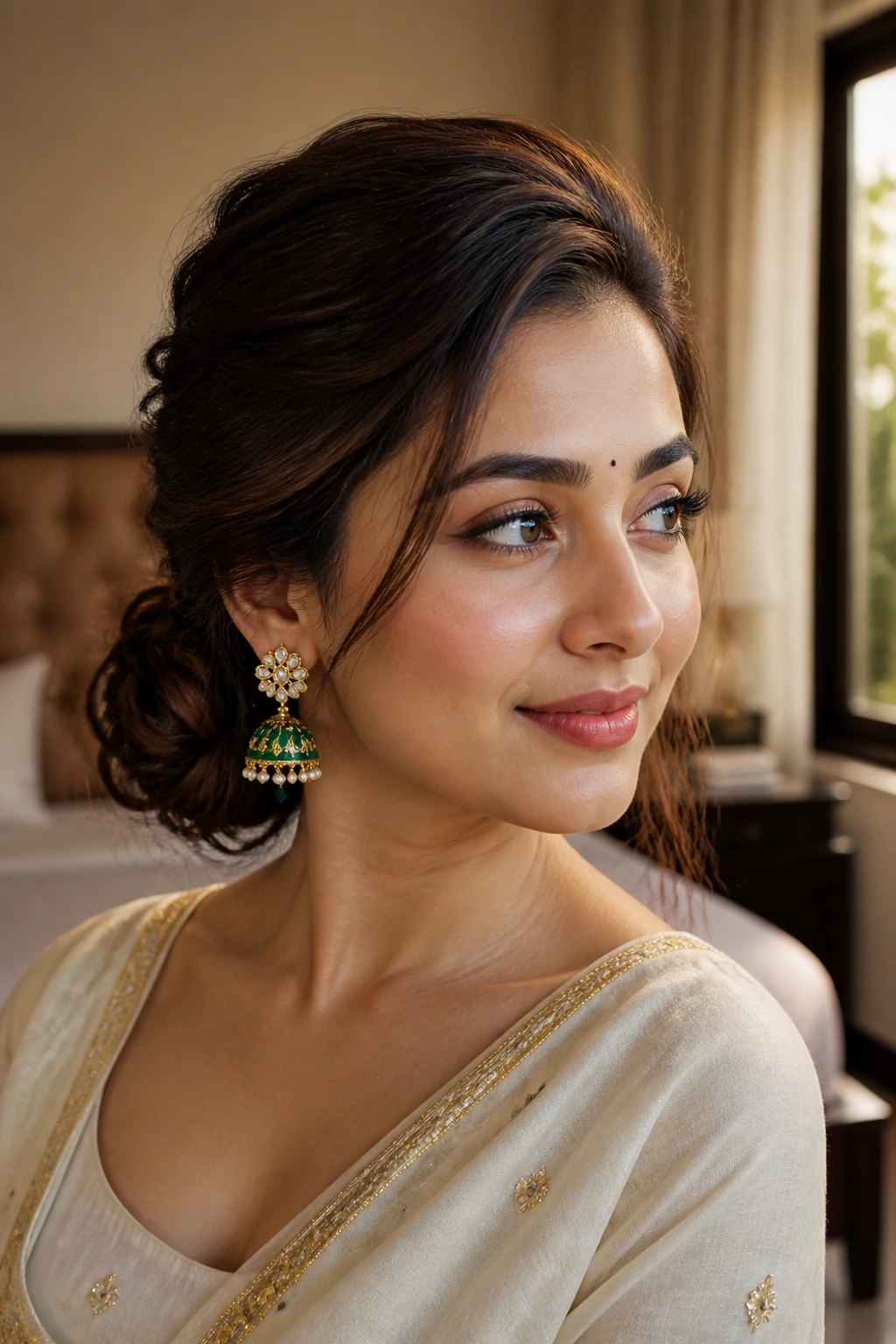
This is the bun I like when earrings need room to do their job. A side part, a gentle lift at the crown, and a bun shifted slightly to one side of the nape give the face a softer frame and leave space around the jaw. It’s elegant without feeling locked down.
The volume at the front is important. Not teased-to-the-sky volume. Just enough lift that the hair does not flatten the face. Brush the top section back smoothly, then ease a few millimeters of height into the roots before pinning. That little puff changes the whole mood.
This style pairs especially well with jhumkas, because the side sweep gives the earrings visibility. If the hair is too centered and too flat, the earrings get swallowed by the silhouette.
Use a bun net or hidden pins if your hair is very thick. Otherwise the bun can sag by the afternoon, and once it sags, the side balance disappears.
A dab of serum only on the crown and ends is enough. Too much product near the roots will make the lift collapse.
7. Braided Crown with Open Ends
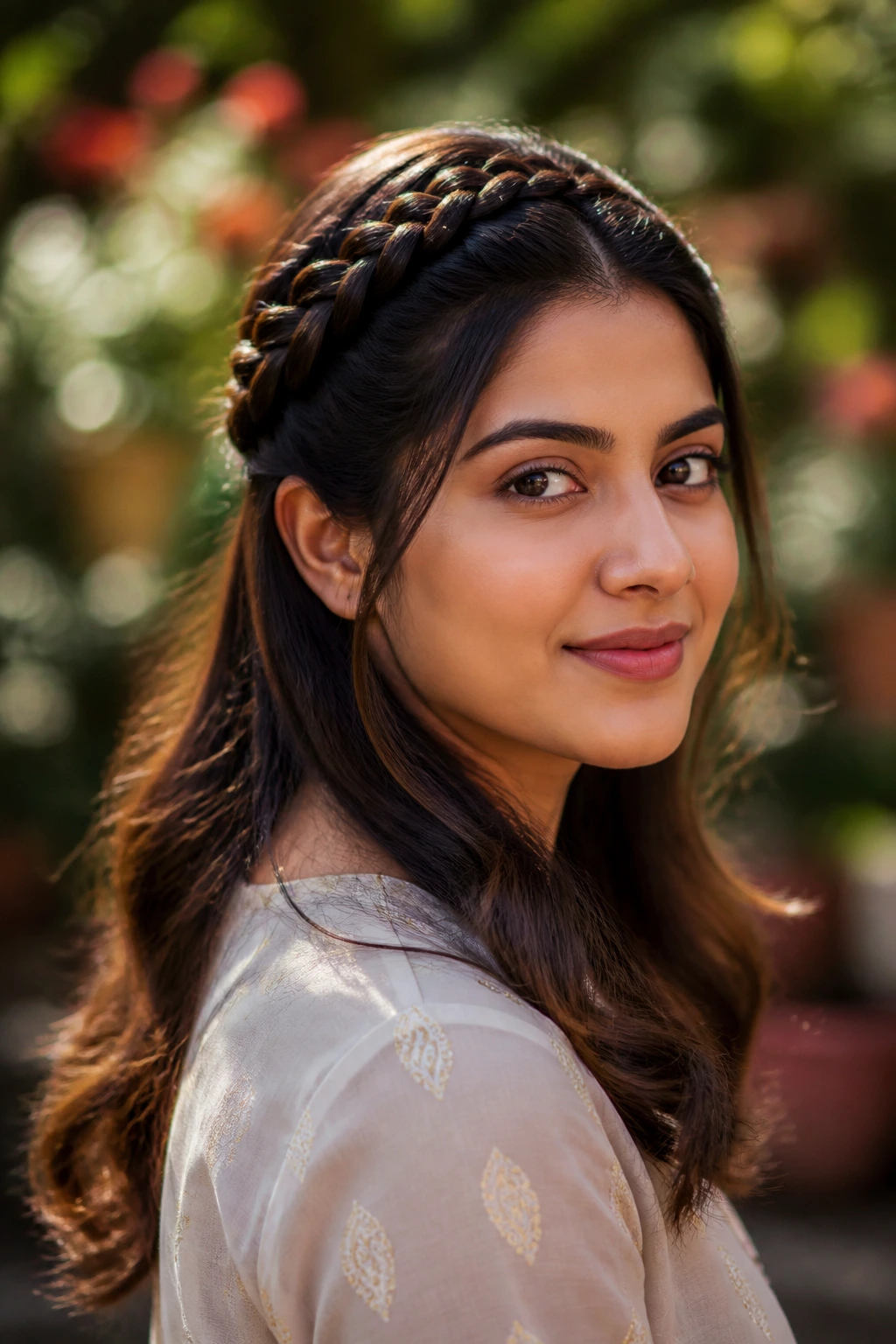
A braided crown is a neat way to put structure around the face without tying everything up. You braid along the hairline or temple area, pin it back toward the crown, and leave the rest of the length open. That gives you a little ornamentation without losing softness.
Why this one works so well
The braid creates a frame, almost like a built-in accessory. Because the lower lengths stay open, the style avoids the tight, formal feeling that some pinned-back looks can have. Soft waves or even straight lengths work underneath, as long as the top braid is secure and clean.
This is a good choice when your hair is growing out and the front layers keep falling into your eyes. The braid controls them without forcing the whole head into an updo.
- Great for medium to long hair.
- Good with side or middle parts.
- Works for events that need something prettier than a ponytail.
- Holds small flowers or a delicate pin without fuss.
If your hair is thick, braid only the top strip and keep it narrow. A wide crown braid can overwhelm the face and make the style feel heavier than it needs to be.
8. Loose Fishtail Braid over One Shoulder
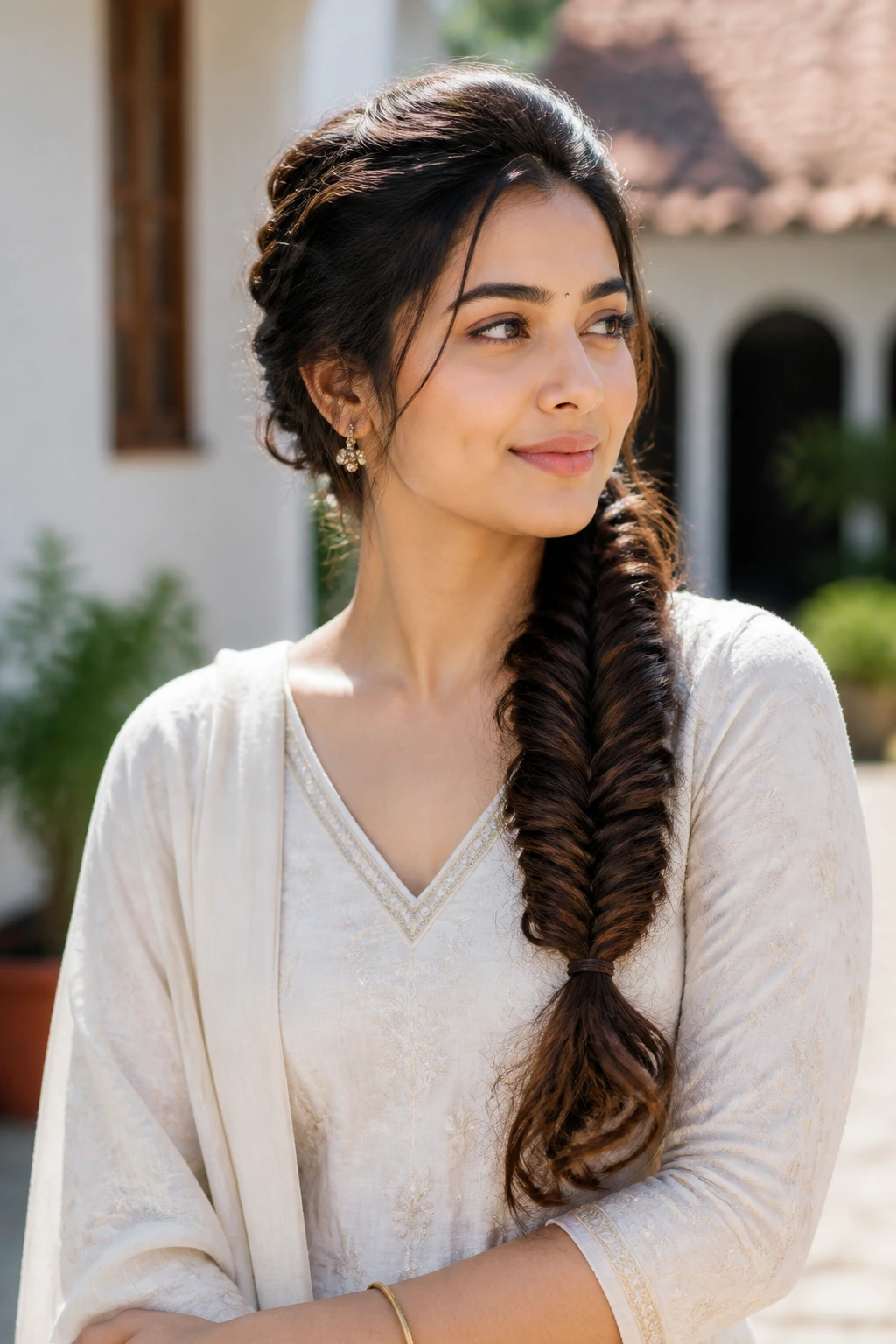
A fishtail braid has a different feel from a classic three-strand braid. It looks finer, more textured, and a little more deliberate, which is exactly why it belongs here. Widen it after braiding, bring it over one shoulder, and you get a look that feels soft but still sharply defined.
The braid itself does the visual heavy lifting. The small sections create a woven effect that looks detailed even when the rest of the style stays minimal. If your hair is very silky, a bit of mousse or dry texture spray before braiding helps the pieces stay put. If it’s already grippy, you can skip that.
I prefer fishtails on hair that has a little length, because the braid can actually show off the pattern. On shorter hair, it gets compressed and loses the point.
Quick note
Do not pull the braid apart after every stitch. Start with a tight braid, then gently pancake the outer edges only once you’re done. That keeps the structure intact.
A side-swept finish plus a clean elastic at the end gives this braid a grown-up edge that works with both plain tops and dressed-up kurtas.
9. Low Knot with a Deep Side Part
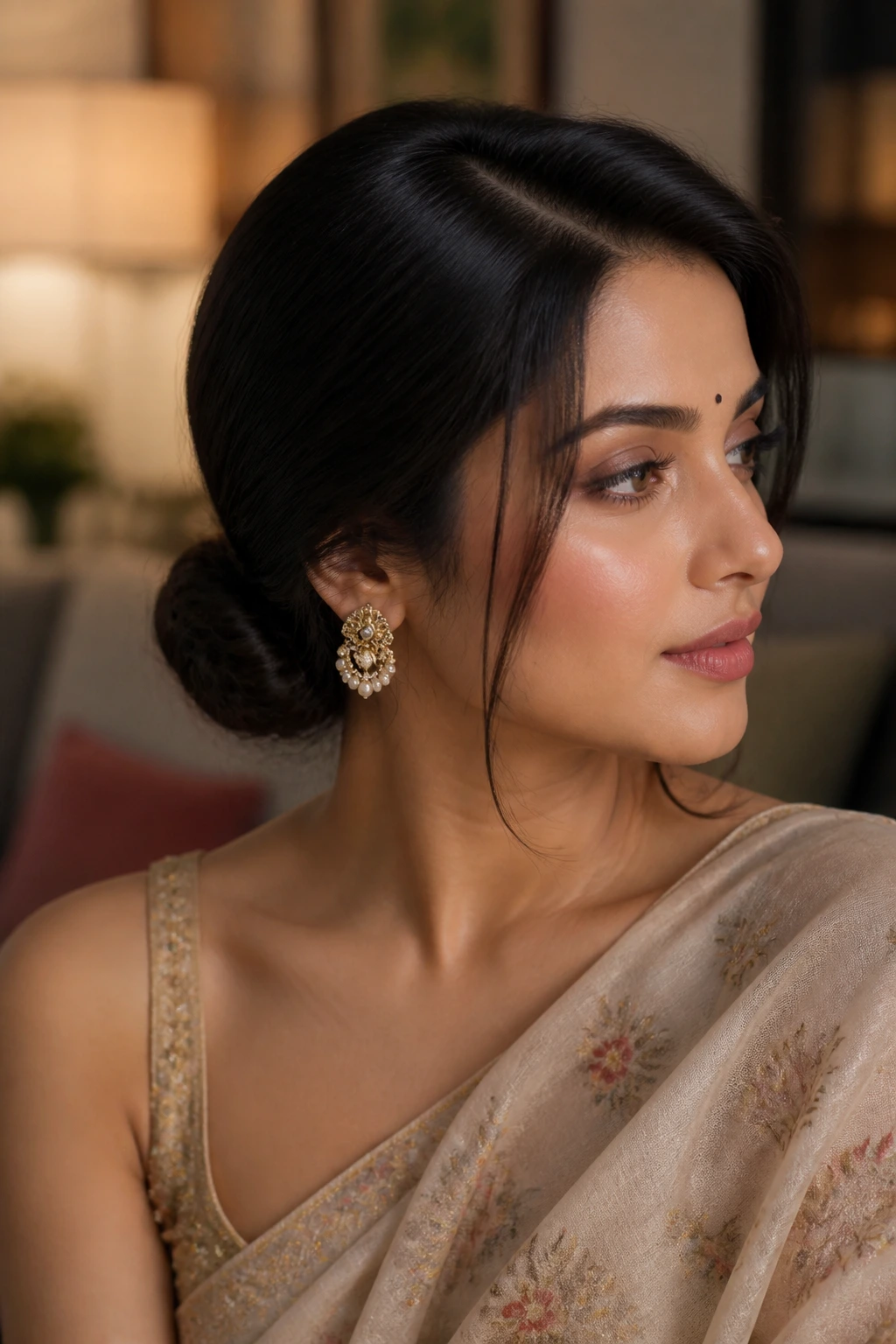
A low knot sounds plain until you pair it with a deep side part and a smooth crown. Then it becomes one of those styles that looks deliberate from every angle. I like it because it keeps the face open without turning into a tight slick-back.
The deep side part is the whole personality here. It breaks the symmetry and gives the knot a little lift on one side, which softens the profile. Keep the knot compact and slightly off-center at the nape. If it sits too high, the style loses its calm shape.
This one is especially good for days when you want to look dressed without feeling overdone. There’s no extra braid, no loose wave pattern to manage, just a clean line and a soft finish.
Best with: structured outfits, statement earrings, or a high-neck blouse.
Best on: hair that’s medium density and easy to smooth.
A fine-tooth comb and a little styling cream are enough here. Resist the urge to keep touching the part once you’ve set it; that’s how the clean line starts fraying.
10. Bubble Ponytail with Satin Finish
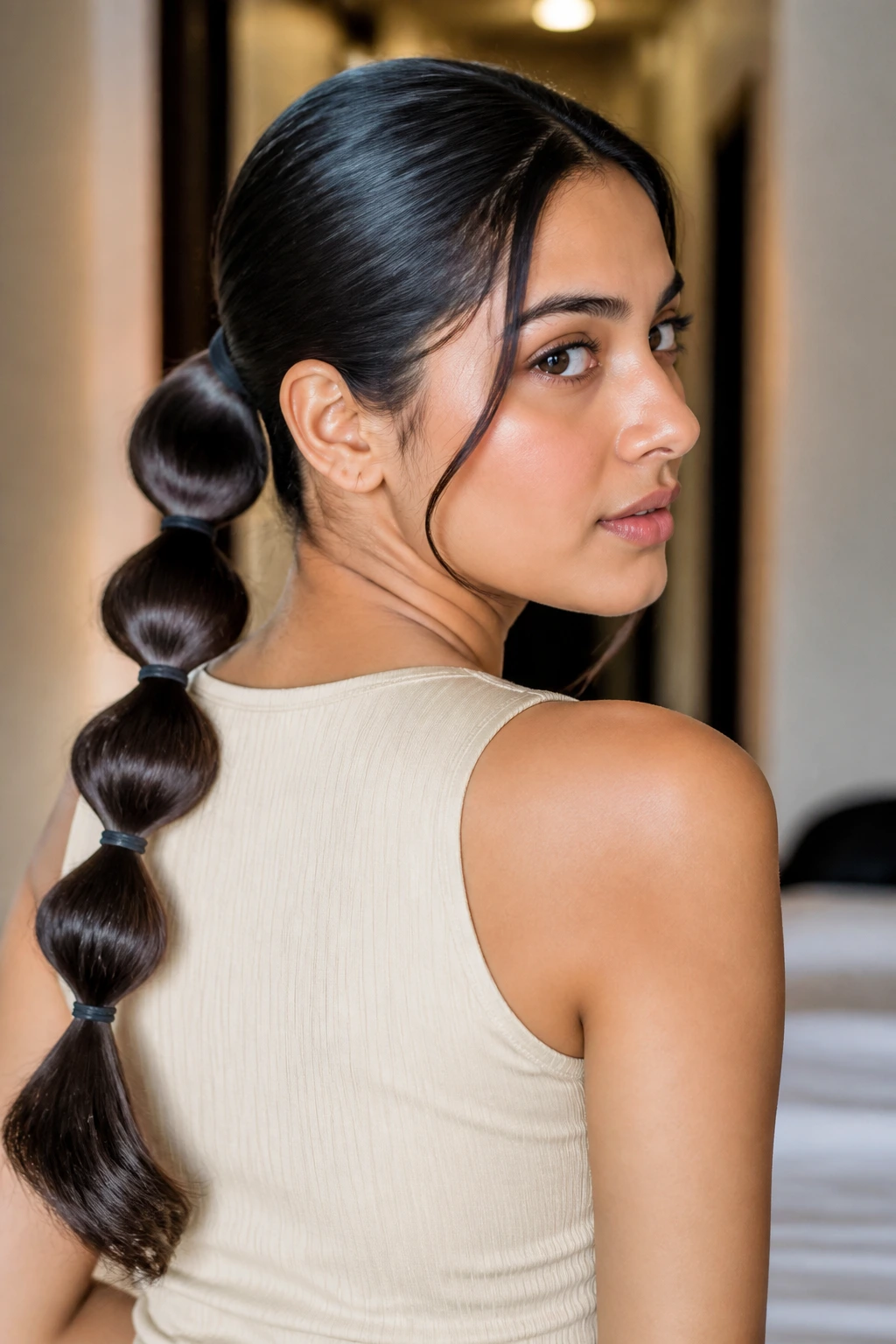
The bubble ponytail has more personality than a plain ponytail, but it can still look polished if you keep the bubbles even and the crown smooth. The satin finish matters. Without it, the style can drift into playful territory; with it, the shape stays neat and controlled.
Start with a low or mid ponytail. Add small elastics every few inches, then gently tug each section outward to form the bubbles. Keep the gaps consistent. Uneven spacing makes the style look improvised, which is a choice, but not the one this article is chasing.
This is one of the few styles here that can handle thicker hair without turning bulky. The sections are held in place, and the bubbles distribute the volume instead of trapping it in one heavy knot.
- Good for long hair.
- Nice when you want more shape than a regular ponytail.
- Works with straightened lengths or softly curled ends.
- Easy to dress up with a ribbon or metal cuff.
If your hair is fine, tease the ponytail lightly before sectioning it. That keeps the bubbles from collapsing after twenty minutes.
11. Twisted Half-Up Bun with Loose Length
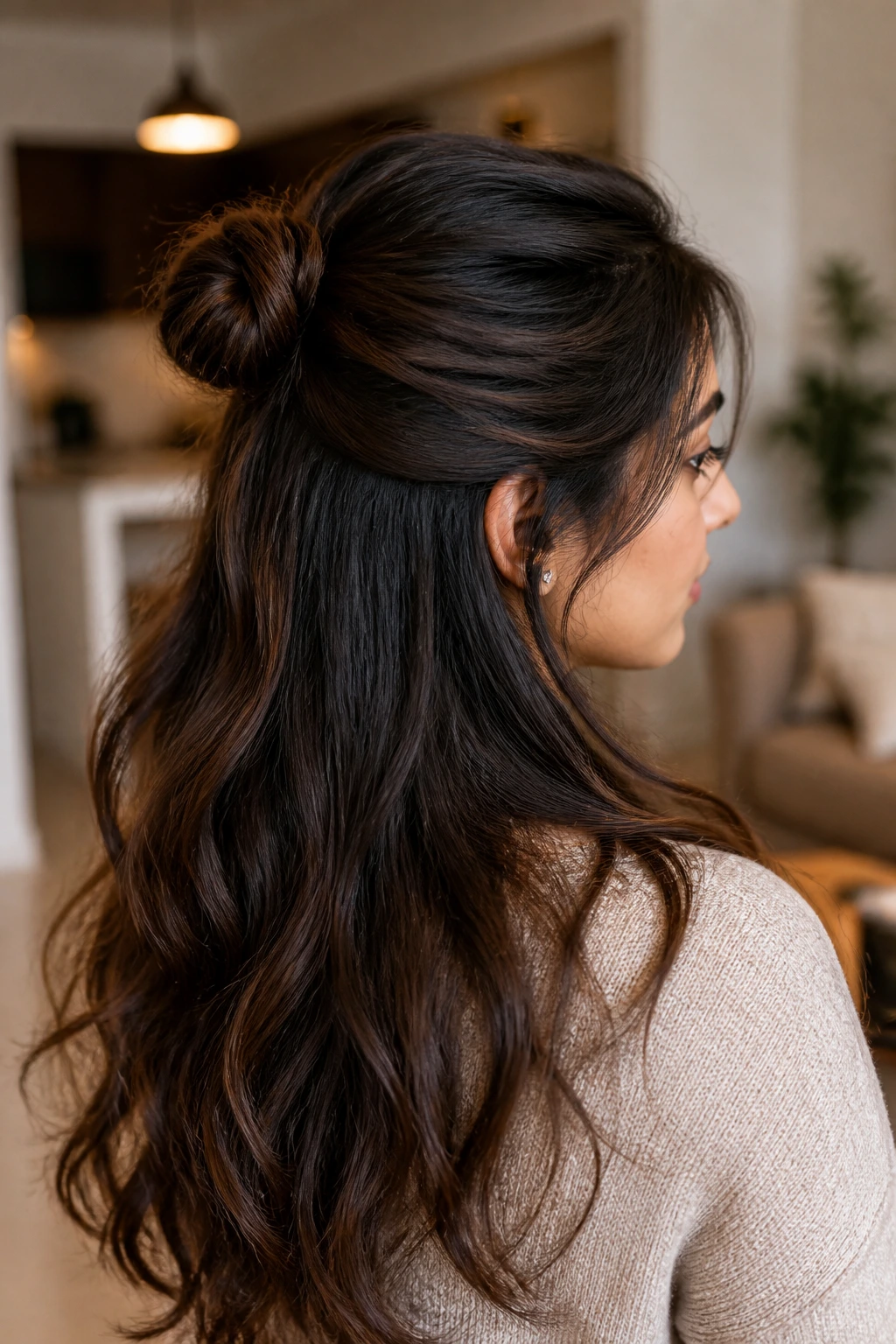
Tiny bun, big payoff. That’s the whole feel of this style. The top half gets twisted into a small knot or bun at the back, while the rest of the hair stays down and soft, which makes the finish look balanced instead of overworked.
This works well when your hair has layers or when you do not want full control over the lengths. The twist at the top gives the hair a point of focus, and the loose lower section keeps the look easy. It’s also a good fix for hair that’s slightly flat at the roots but still nice through the ends.
Best for quick mornings
If you only have ten minutes, this is one of the few polished styles you can actually pull off without panic. Twist the top section, pin it, and leave the lower lengths alone or give them a few bends with a curling iron. Done.
A light mist of flexible hold spray on the twist helps it stay in place without making the bun crusty. That’s the sweet spot.
12. Soft Blowout with Tucked Back Front Sections
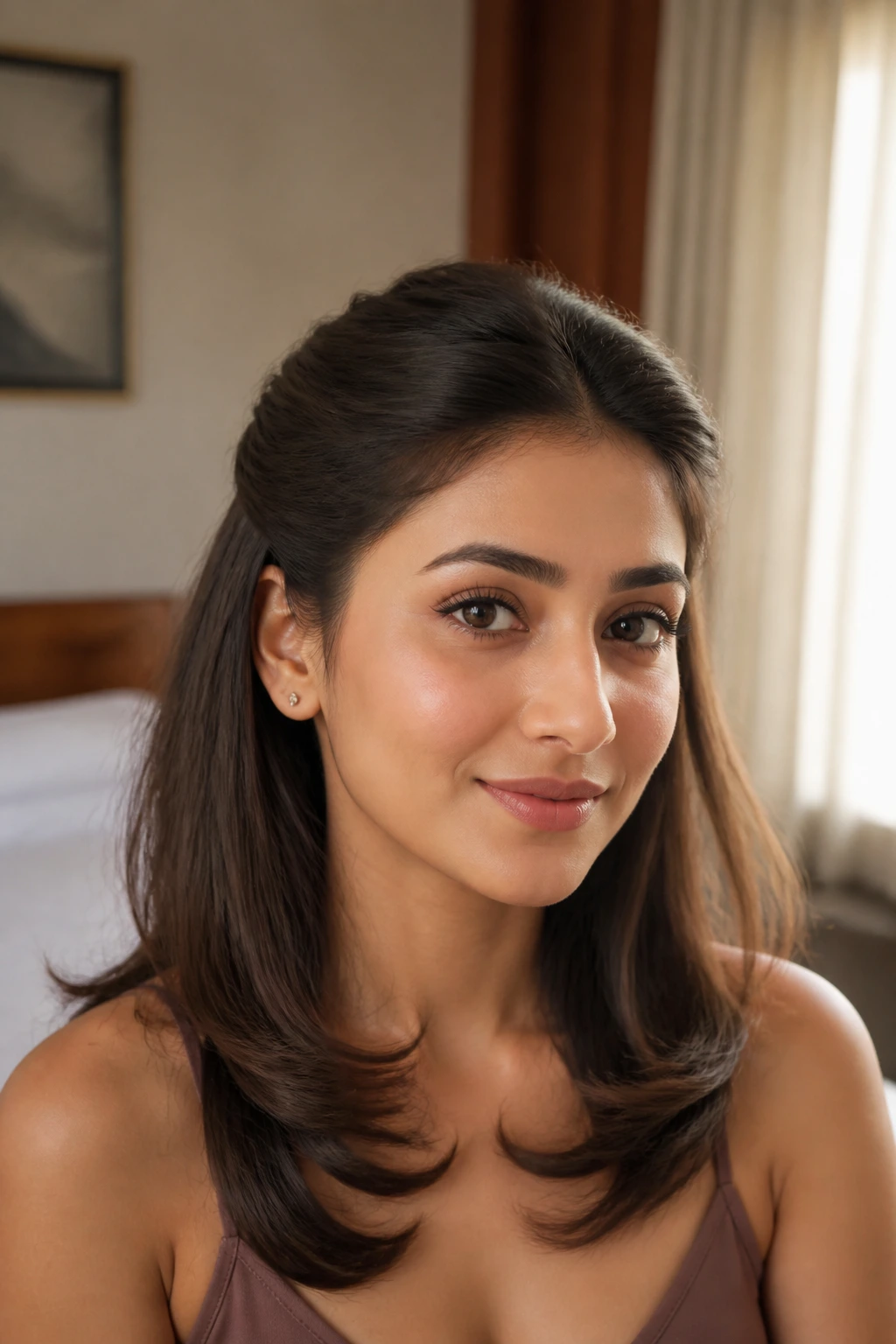
Open hair can absolutely count as polished if the front is handled properly. A soft blowout with tucked-back front sections gives you movement through the lengths and a clean line near the face, which is often all the structure you need. It’s one of my favorite options when hair should look styled but still touchable.
The trick is in the front pieces. Blow them away from the face, then tuck each side back behind the ears or secure them with a hidden pin. That opens the features and keeps the style from falling forward. The rest of the hair should have soft bend, not tight curl. Think shape, not bounce.
This look is especially kind to medium-length hair. It keeps the ends from disappearing under layers of product and lets the volume sit where it belongs—through the mid-lengths and ends.
A round brush, a dryer, and heat protectant are enough. If your roots go flat easily, lift them at the crown with the brush and cool the section before moving on. That one step buys you a better finish than any fancy spray.
13. Neat French Braid into a Low Ponytail
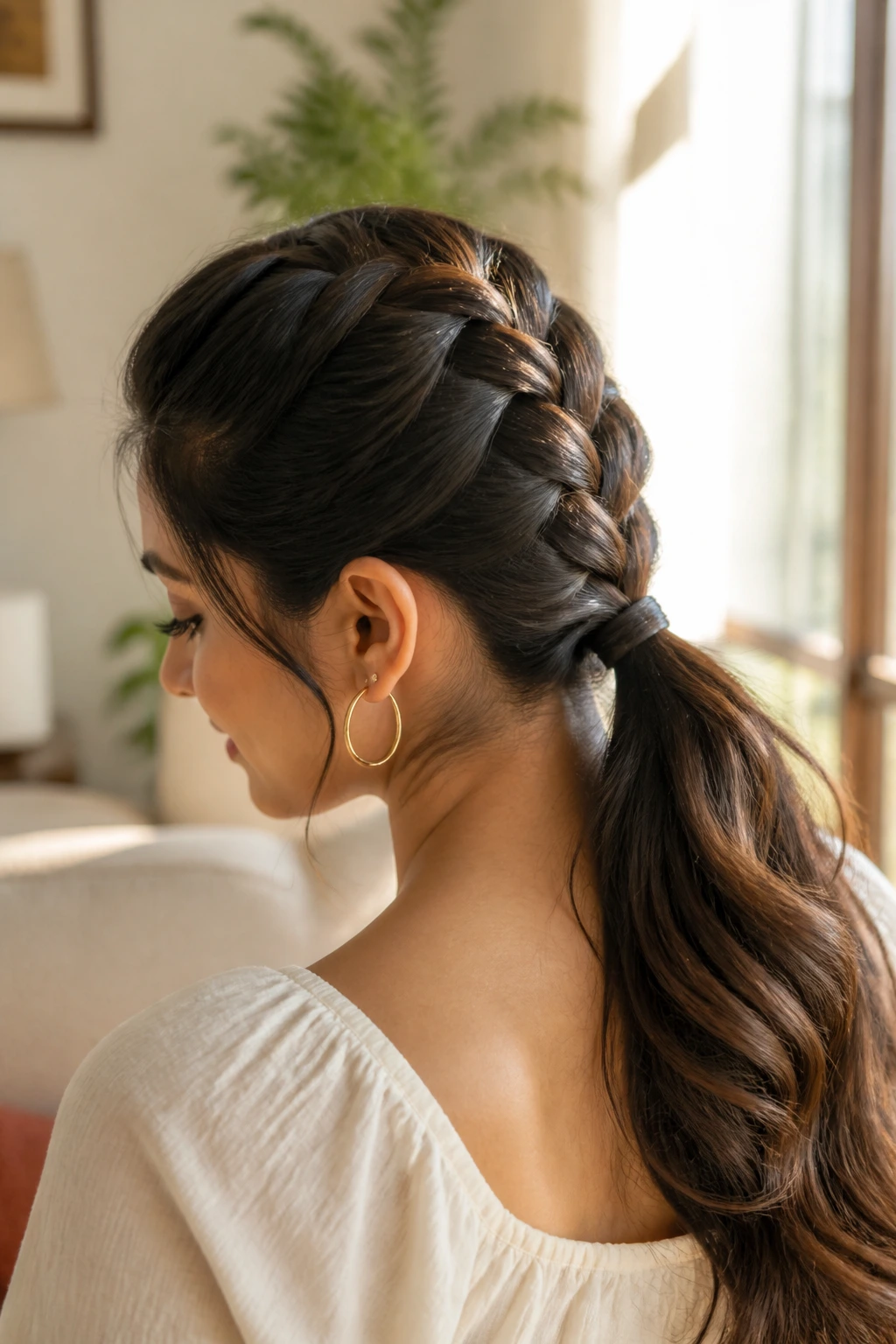
This style gives you the best of both worlds: the control of a braid and the softness of a ponytail. Braid the hair down the top and crown, then stop near the nape and tie the rest into a low ponytail. That transition point is what makes it look finished.
A French braid keeps the roots anchored, which matters if your hair tends to puff or separate at the top. Once the braid reaches the lower head, the ponytail loosens the look so it doesn’t become too severe. The braid is tidy; the ponytail is relaxed. That contrast works.
How to keep it pretty, not stiff
Keep the braid snug near the scalp, but do not tighten it so much that it lifts the roots or pulls the hairline. A little ease around the edges is enough. After tying the ponytail, wrap a small section around the elastic for a cleaner finish.
This is one of the better styles for long workdays or functions where you need your hair out of your face. It also plays well under a dupatta because the braid gives the top structure and the ponytail keeps the back low.
14. Messy Chignon with a Smooth Crown
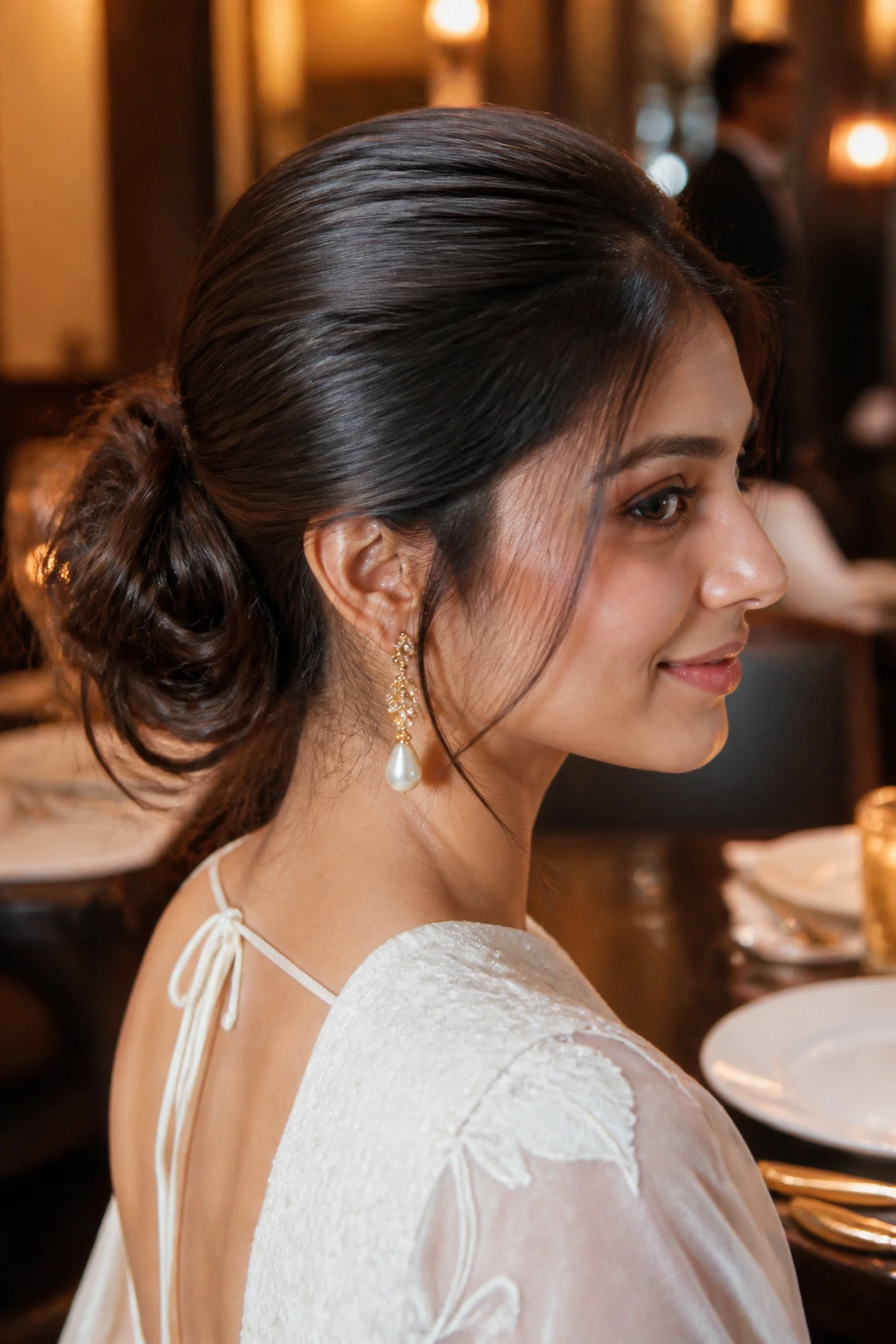
Messy does not mean careless. A soft chignon with a smooth crown is proof. The top stays controlled, the bun itself stays a little airy, and the whole hairstyle looks intentionally relaxed rather than half-finished.
I’m picky about this one. The crown has to be smooth first, or the mess at the back starts to look like frizz instead of texture. Once the top is clean, you can loosen the bun a touch, let a few ends peek out, and stop before it gets frayed. The word “messy” should apply to the shape, not to the prep.
This style works especially well with hair that already has some natural body. Fine hair can wear it too, but it needs a little padding or texture spray so the bun doesn’t sink flat against the head.
- Best with medium to long hair.
- Good for dinners, ceremonies, or a dressed-up office look.
- Pair with small pins or a simple comb.
- Keep the nape tucked so the bun sits calm.
A few wisps around the ears can soften the face. Too many and the chignon loses its polish.
15. Open Hair with Soft S-Waves and a Small Maang Tikka
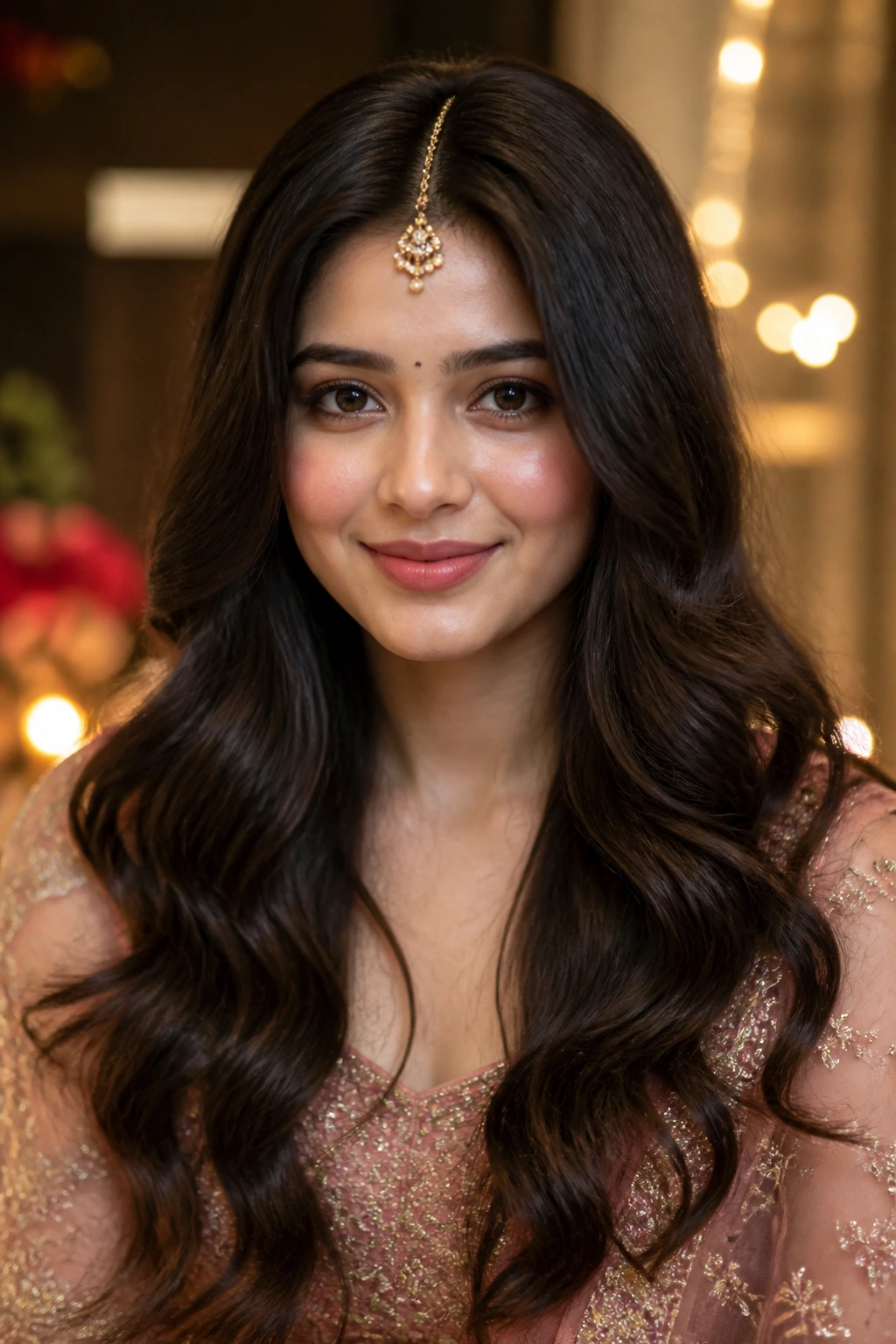
Soft waves plus a small maang tikka can look graceful without feeling heavy. The key is scale. A delicate tikka works with loose S-waves because neither element tries to outshout the other. The result feels festive, but not overloaded.
The waves should be broad, not tight. A wide barrel or a flat iron bend creates that loose S-shape that moves naturally through the length. If the hair is too curled, the tikka starts fighting the texture and the whole top half can look busy. Keep the part clean—middle or gentle side—and let the accessory sit where the part opens.
This is a good style when you want open hair but still need one focal point. It works beautifully with earrings, though the earrings should stay slimmer if the tikka is already ornate.
My take
Pick one hero. Either the waves lead or the tikka leads. When both fight for attention, the style gets noisy fast.
A smoothing cream at the top and a very light shine spray at the ends usually gives enough polish without flattening the movement.
16. Rope Braid Ponytail
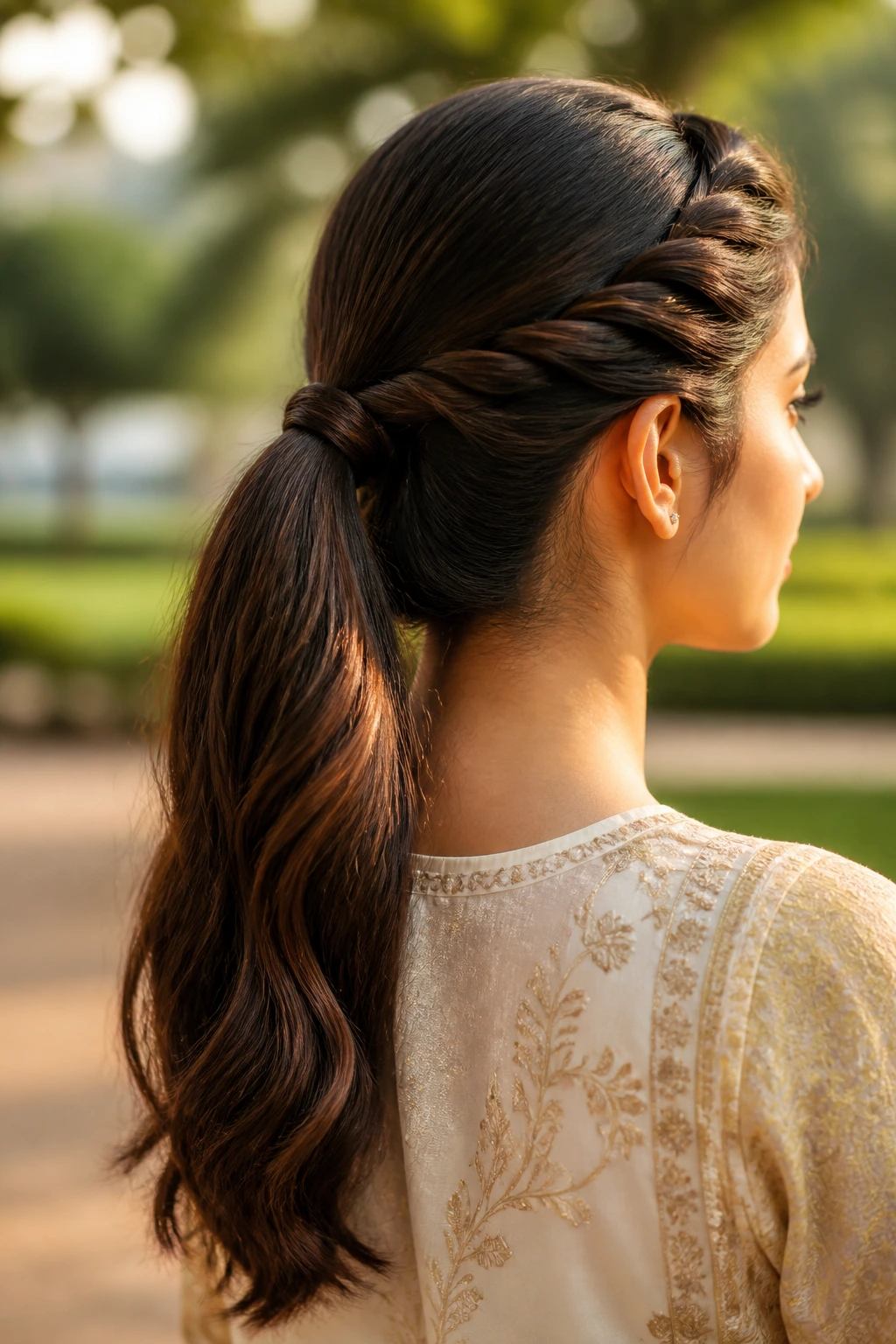
The rope braid ponytail is the easier cousin of the fishtail, and that’s not a slight. It gives you a clean, twisted texture without requiring tiny sectioning or a lot of patience. For everyday hair, that matters.
Split the ponytail into two sections, twist each one in the same direction, then wrap them around each other in the opposite direction. Secure the end, then tug the rope braid open just a little. The shape stays sleek but gains enough texture to feel intentional.
This is a smart style for straight hair because the twist shows up clearly. On wavy hair, it can look even softer, almost like a dressy version of a simple braid.
Good news for thick hair: the rope braid controls bulk better than a loose ponytail does.
Good news for fine hair: the twist adds visual thickness without needing a lot of teasing.
A satin ribbon or a narrow wrapped base can make the ponytail feel more finished. Skip bulky scrunchies unless you want the style to lean casual.
17. Low Braided Bun
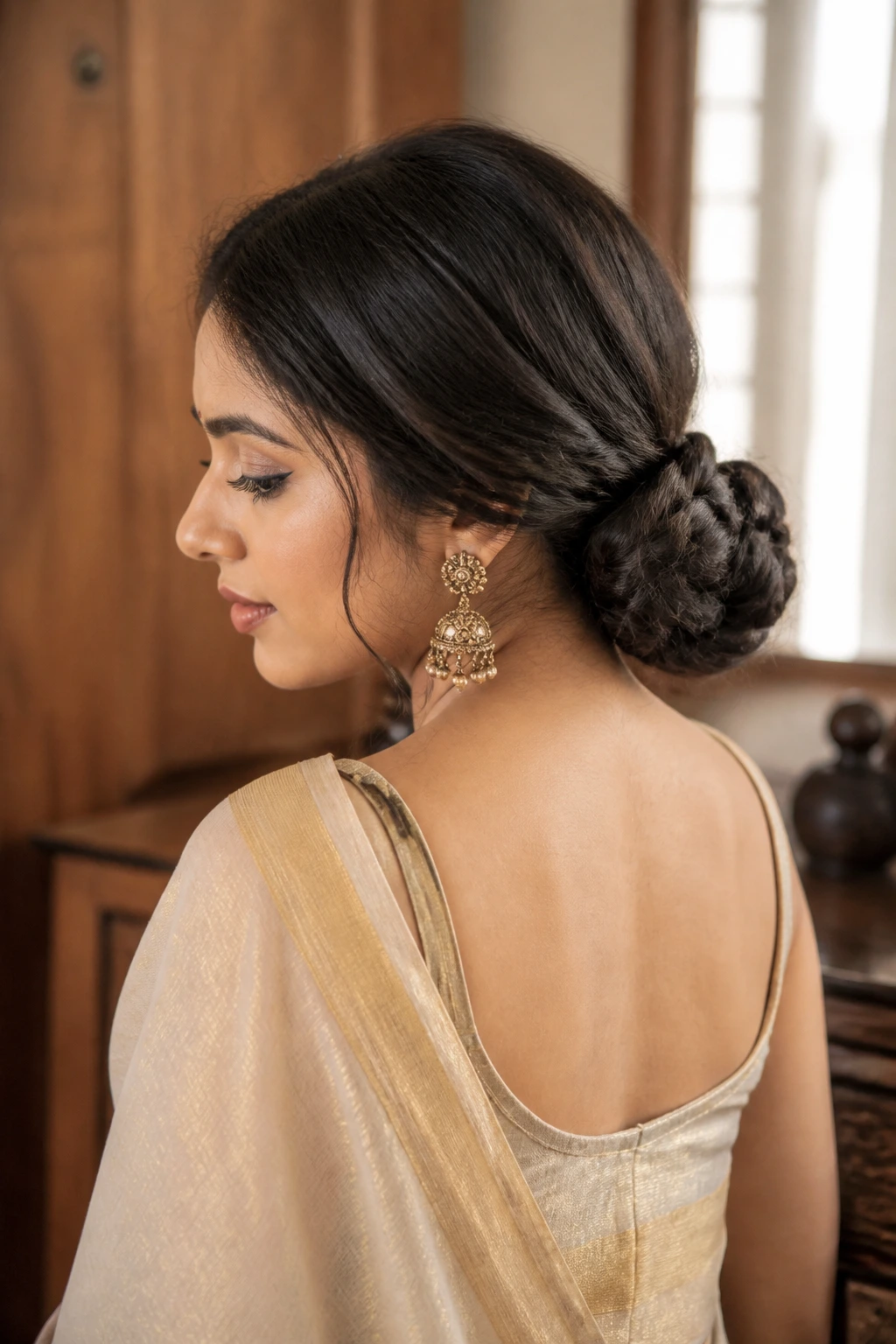
This is one of the strongest styles in the bunch. Braid the length first, then coil it into a bun at the nape. The braid gives the bun grip, which means the style can hold through a long day without sliding apart.
The beauty of a low braided bun is how much control it gives you. Thick hair settles down. Layered hair stays contained. Even hair that usually refuses to stay in place can behave once it’s braided and pinned flat. The polish comes from the clean path of the braid across the back.
I like this style for humid days, long travel, or any situation where you do not want to keep checking your hair in the mirror. It is not flashy. It does not need to be.
- Works on long and dense hair.
- Holds earrings and neckline details nicely.
- Good for sarees, kurtas, or simple dresses.
- Best with hidden pins rather than a big visible clip.
If the braid is too loose before you make the bun, the whole shape gets bulky. Tighten the braid first, then shape the bun.
18. Side Parted Hair with One-Side Pin Back
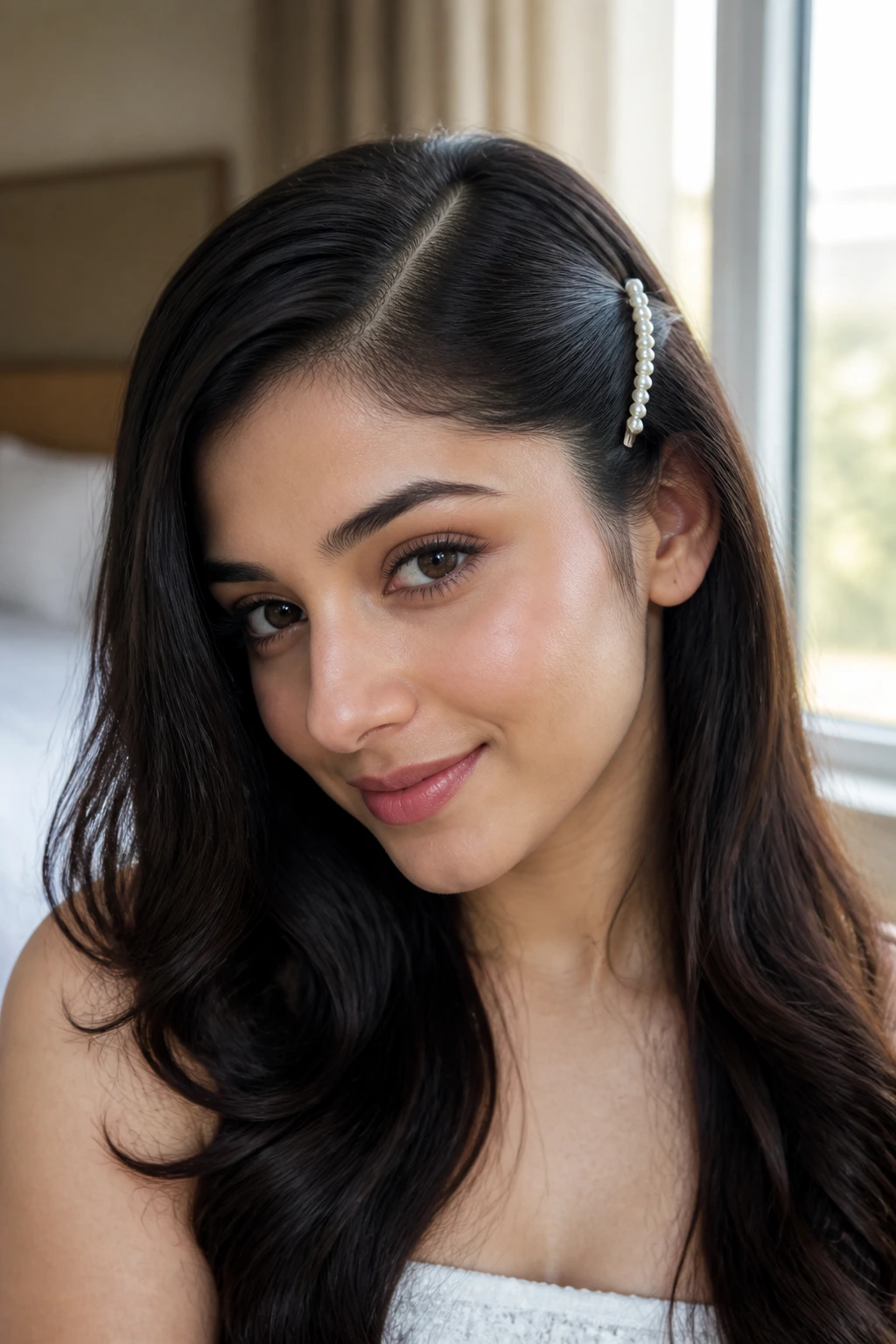
Sometimes the soft polished look is just one good decision and one pin. A side part, a clean tuck on one side, and the rest of the hair left down can look unexpectedly put together. It’s minimal, but not plain.
This style is brilliant for shorter hair, shoulder-length cuts, or anyone who doesn’t want a full updo. The pin keeps hair off one side of the face, which creates asymmetry and gives the style shape. A pearl pin, a slim metal clip, or even two crossed bobby pins can work if they sit flat.
You need the hair to have some bend through the lengths, or the open side can fall limp. A quick wave through the mid-lengths usually solves that.
Why I like it
It doesn’t pretend to be more than it is. That’s why it works.
A single tucked side also keeps the hair away from lipstick, collars, and earrings. Small detail. Big payoff.
19. Half Braid, Half Open Waves
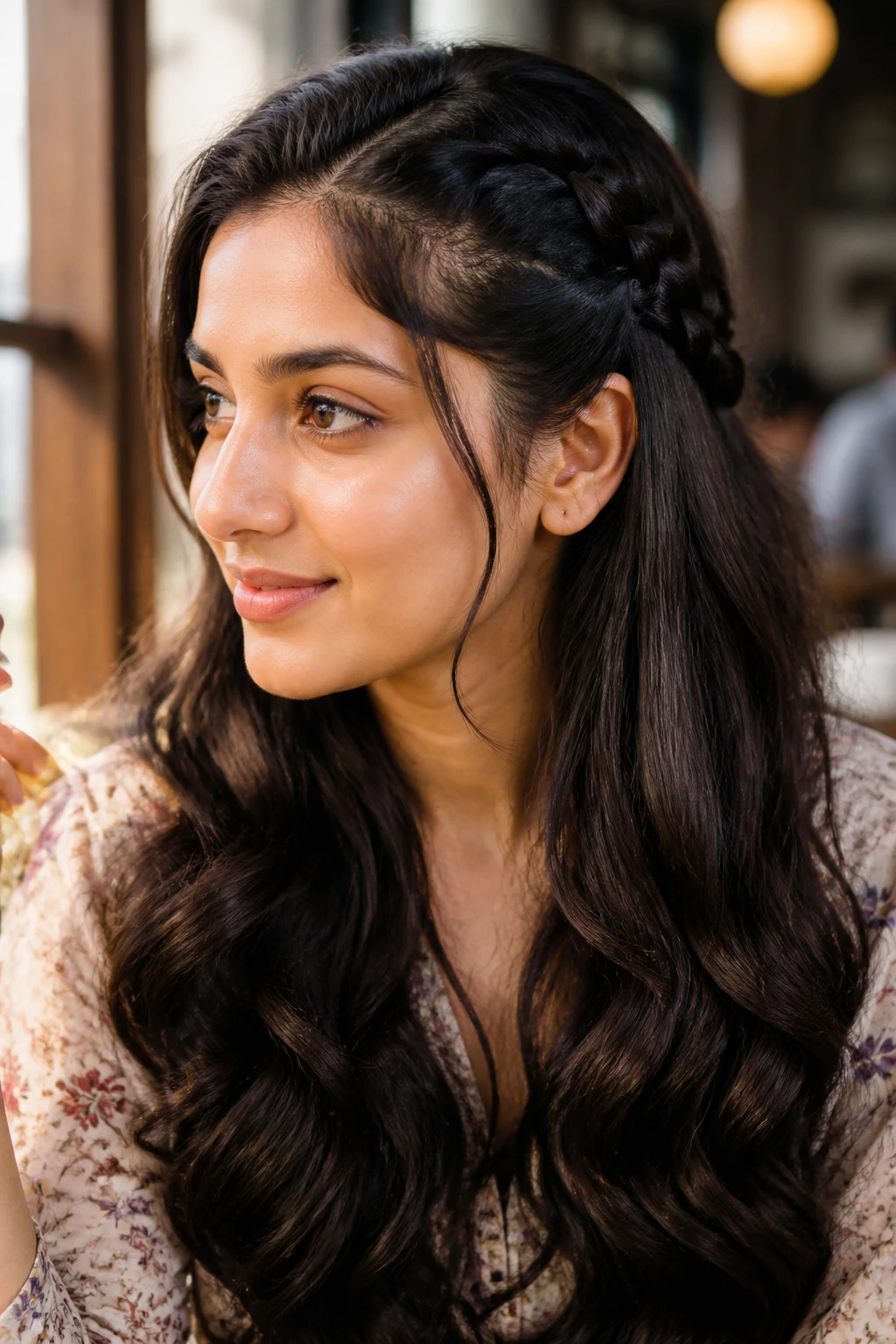
This is the kind of style you wear when you want structure at the top and softness everywhere else. Braid only the upper section or one side, then let the remaining hair fall in loose waves. It creates a nice visual line without making the style feel too done.
The braid acts like a frame. The waves underneath keep it easy. That balance is what makes the style work for everyday plans where you might start at work and end at dinner without changing your hair. It also gives layered hair some order at the front, which is useful when shorter pieces refuse to cooperate.
If you want more polish, keep the braid narrow and smooth. If you want more softness, widen the braid a touch and let the waves stay loose.
- Great for medium to long hair.
- Works on naturally wavy textures with almost no heat.
- Easy to pair with hairpins or tiny flowers.
- Good for soft festive dressing without a full updo.
A little oil on the braid only—not on the waves—keeps the top sleek and the lower half light.
20. Sleek Braided Crown Ponytail
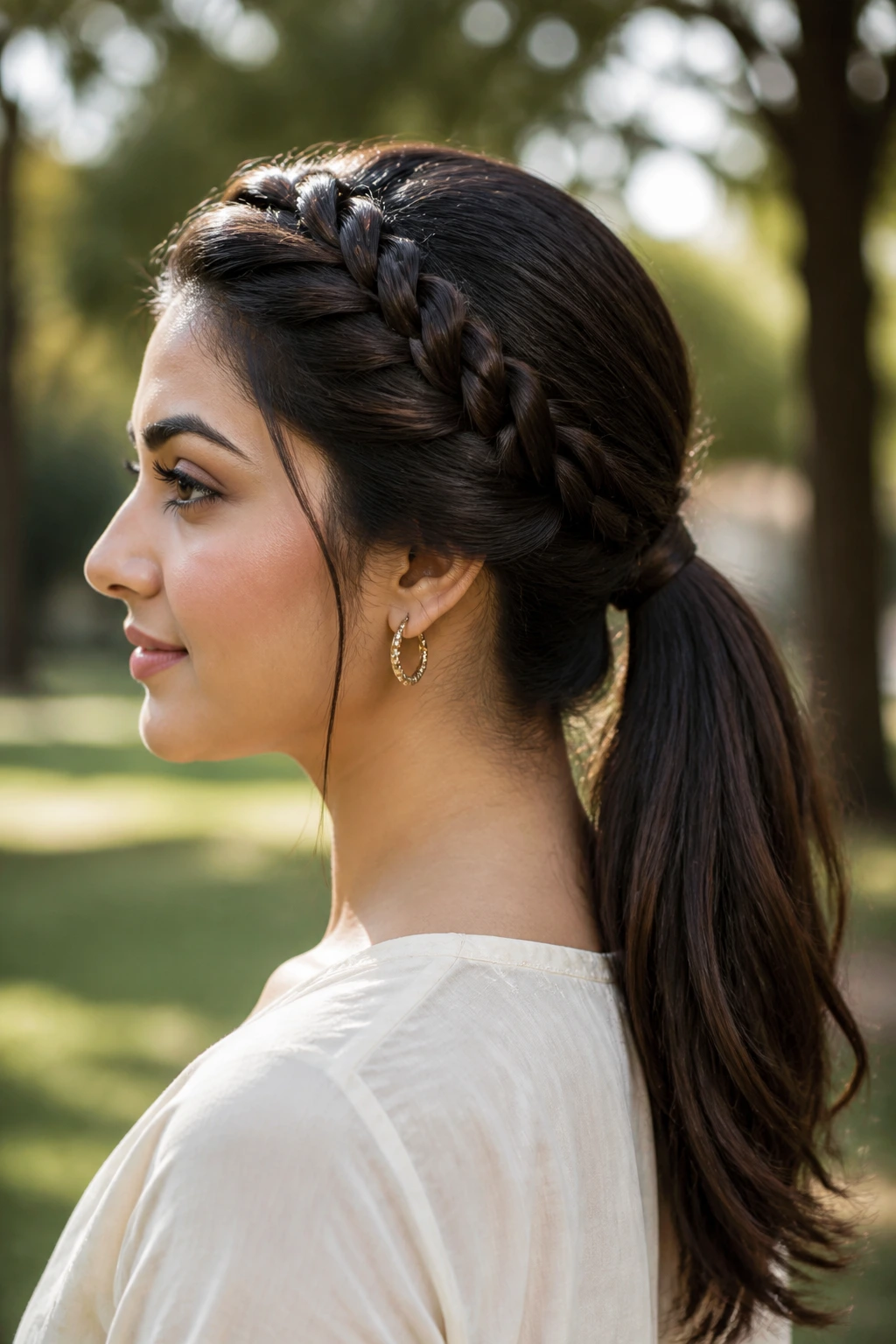
The sleek braided crown ponytail has a strong line, but it still feels soft if you keep the crown smooth and the tail lightly textured. The braid creates a path across the top of the head, then the ponytail falls low and controlled. It’s polished in a very clean, almost architectural way.
This style is a good answer when you want something more interesting than a plain ponytail but not as formal as a full braid or bun. The braid adds detail near the part, which is where people notice hair first. The ponytail then keeps the look wearable and easy to move in.
What makes it stand out
The braid has to be clean. If it’s loose and fraying at the scalp, the style loses its sharpness. But if it’s too tight, the face looks pulled. That middle zone is the sweet spot.
I like this one for longer hair, especially when you want the back to stay neat under dupatta fabric or a high neckline. It has enough polish for a special lunch and enough ease for an ordinary day.
Why the Soft Polished Finish Flatters Indian Hair So Well
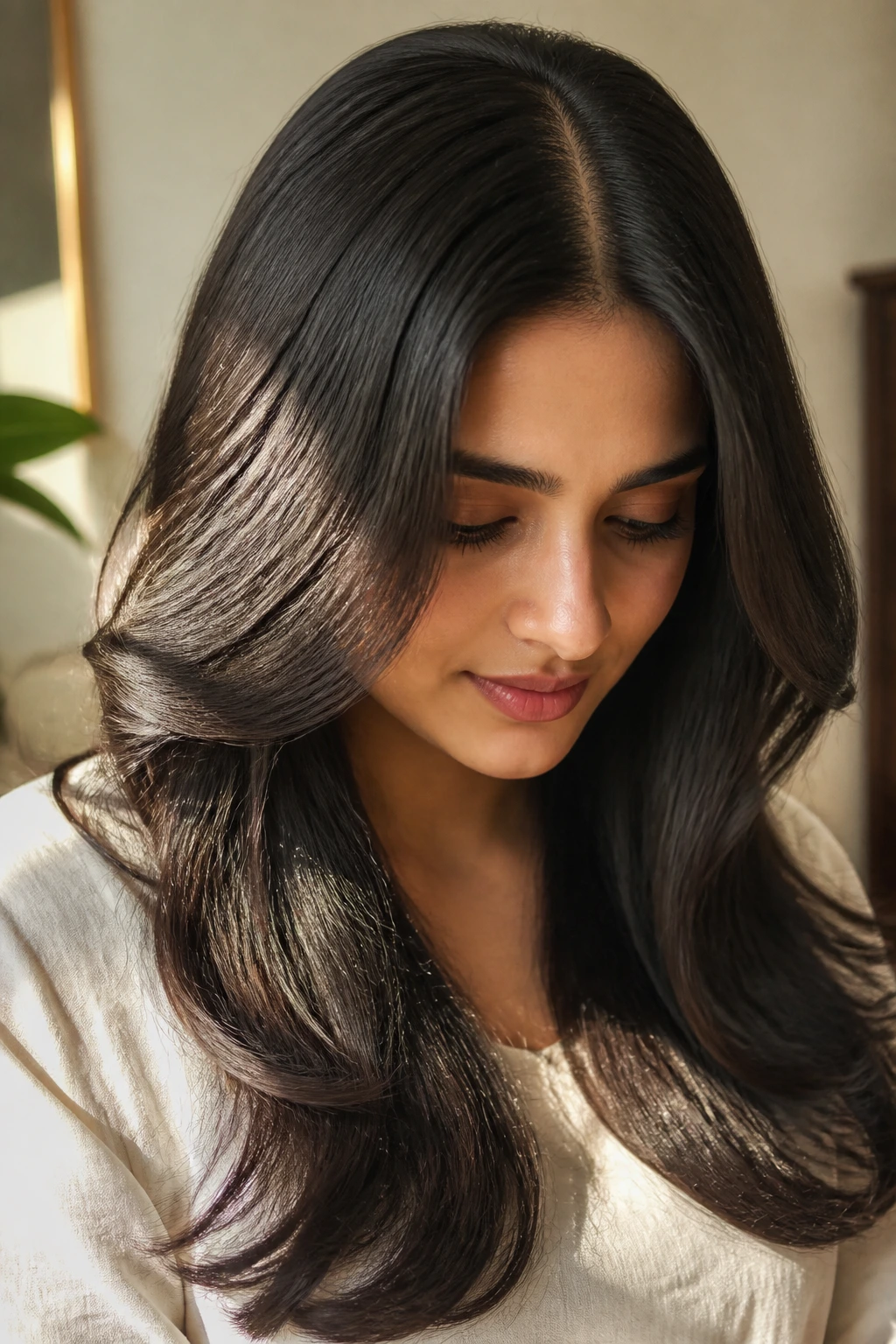
A soft polished look does something useful for Indian hair texture: it respects the hair’s natural density instead of fighting it. Thick, wavy, straight, and mixed textures all have enough body to support braids, buns, and low ponytails, but they usually look best when the top is controlled and the ends are left a little alive. That’s the formula.
The line of the style matters as much as the style itself. A low placement sits better on the head than a high one when you want calmness. A middle part reads sharper than a zigzag part. A side sweep can soften strong cheekbones. None of this is magic. It’s shape language.
A soft finish also makes sense with earrings, dupattas, and necklines. Hair that is too big around the crown competes with everything else on the outfit. Hair that is too stiff looks older than it should. The polished styles here sit in the middle, which is where they belong.
And there’s a practical bonus that deserves more attention. These shapes are easier to refresh than full curls or blowouts, which means you can bring them back to life with a comb, one pin, and a fingerful of serum instead of rebuilding your whole head from scratch.
Essential Equipment for These Hairstyles
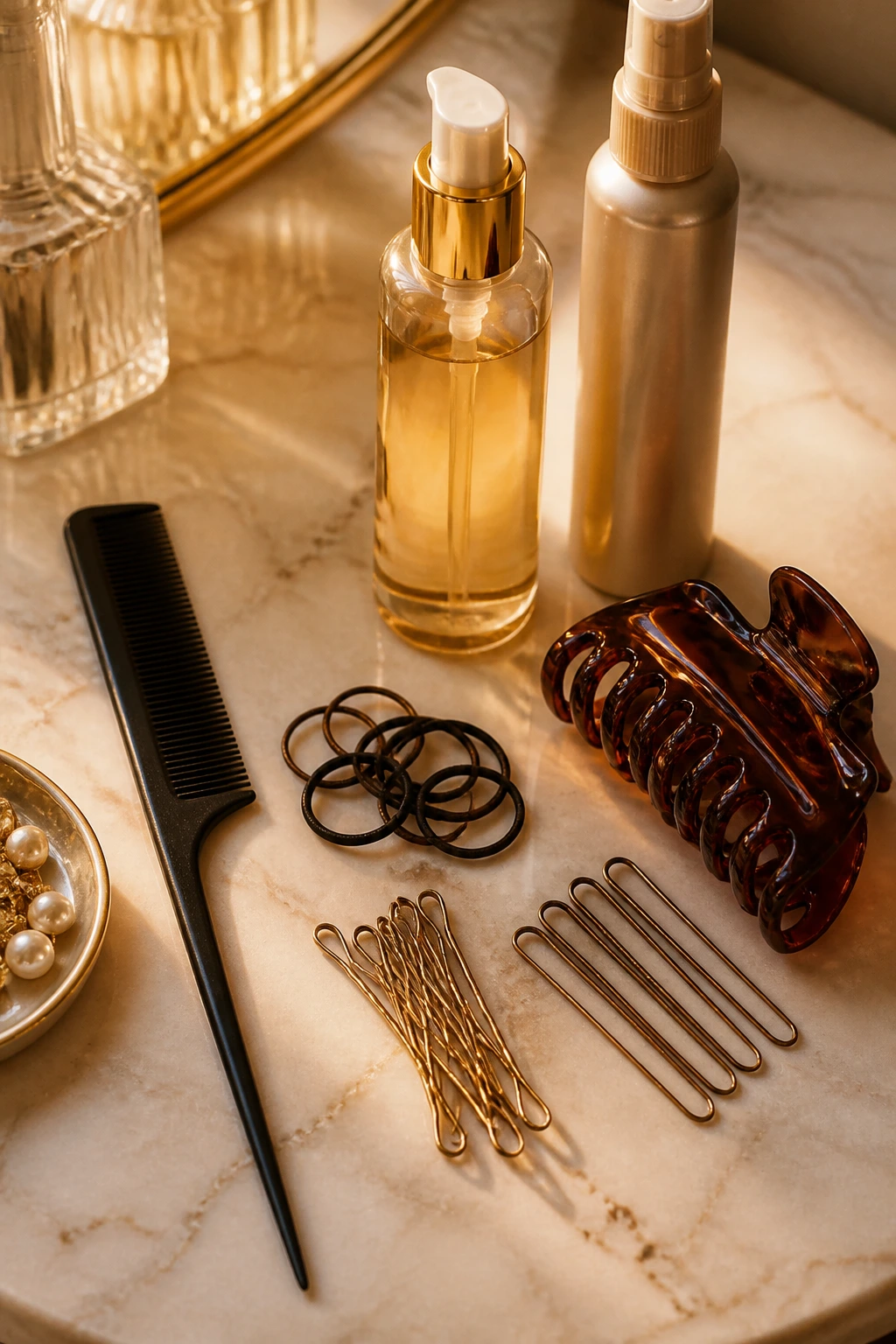
- Fine-tooth tail comb — For clean parts and smoothing the crown without smearing product everywhere.
- Wide-tooth comb — Useful for detangling waves or curls before you build the style.
- Small snag-free elastics — These hold ponytails and braids without adding a big bump.
- Bobby pins and U-pins — The real backbone of buns, twists, and tucked sides.
- Strong claw clip — Handy for quick polished twists and half-up styles.
- Heat protectant spray — Non-negotiable if you’re using a straightener, curling iron, or blow dryer.
- Lightweight serum or finishing cream — Keeps flyaways down without turning the hair greasy.
- Texturizing spray or dry shampoo — Gives grip to slippery hair and helps styles last.
- Round brush — Best for soft volume and bent ends on blowouts.
- 1-inch curling iron or straightener — Enough to create soft waves or a light bend at the ends.
- Soft bristle brush or toothbrush — Useful for taming the hairline without flattening the whole style.
- Silk or satin scarf — Good for preserving the style if you need it to last overnight.
Smart Product and Tool Tips
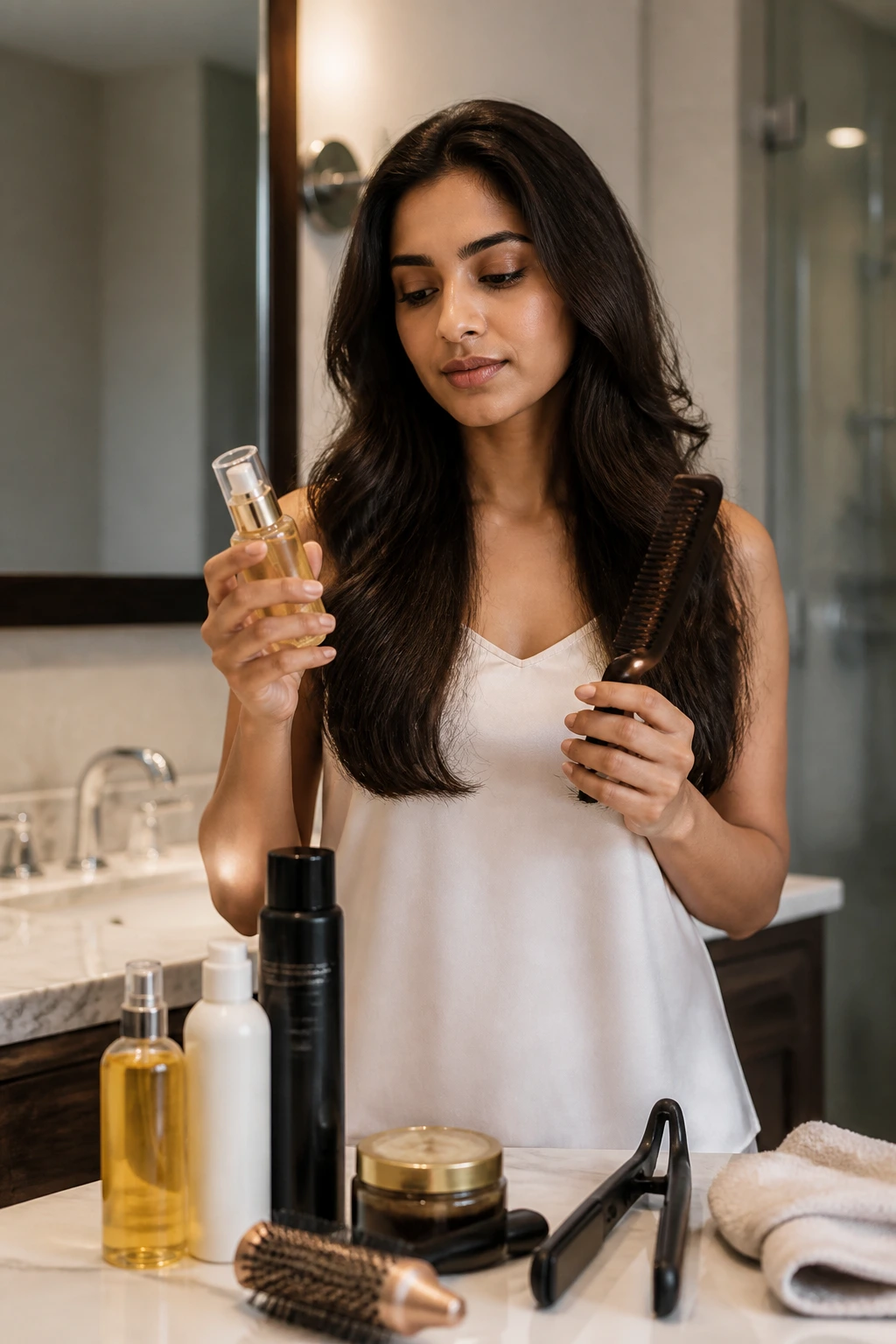
Choosing the right products matters more than people like to admit. A style can be beautiful in the mirror and still fall apart by lunch if the pins are slippery or the serum is too heavy. For soft polished looks, I want products that smooth without sealing the hair into place like plastic wrap.
For hold: pick a flexible hairspray or a light-to-medium hold spray. The stiff, crunchy kind can ruin the whole point. You want movement at the ends and control at the crown.
For shine: use a pea-sized amount of serum on the lengths, not the roots. If your hair is fine, even that may be too much. Start smaller than you think, because you can always add a touch more.
For grip: dry shampoo and texturizing spray help on freshly washed hair or very silky hair. They give the braid or bun something to hold onto. If the roots are too slippery, the style will keep sliding no matter how many pins you use.
For tools: choose pins that match your hair color and bend slightly when you press them in. Cheap pins that pop open are a waste of time. A good tail comb also matters more than a big fancy brush when you need a clean part.
I also like having two elastics out on the counter instead of one. Sounds silly. It saves time when one snaps.
How to Wear These Hairstyles in Real Life
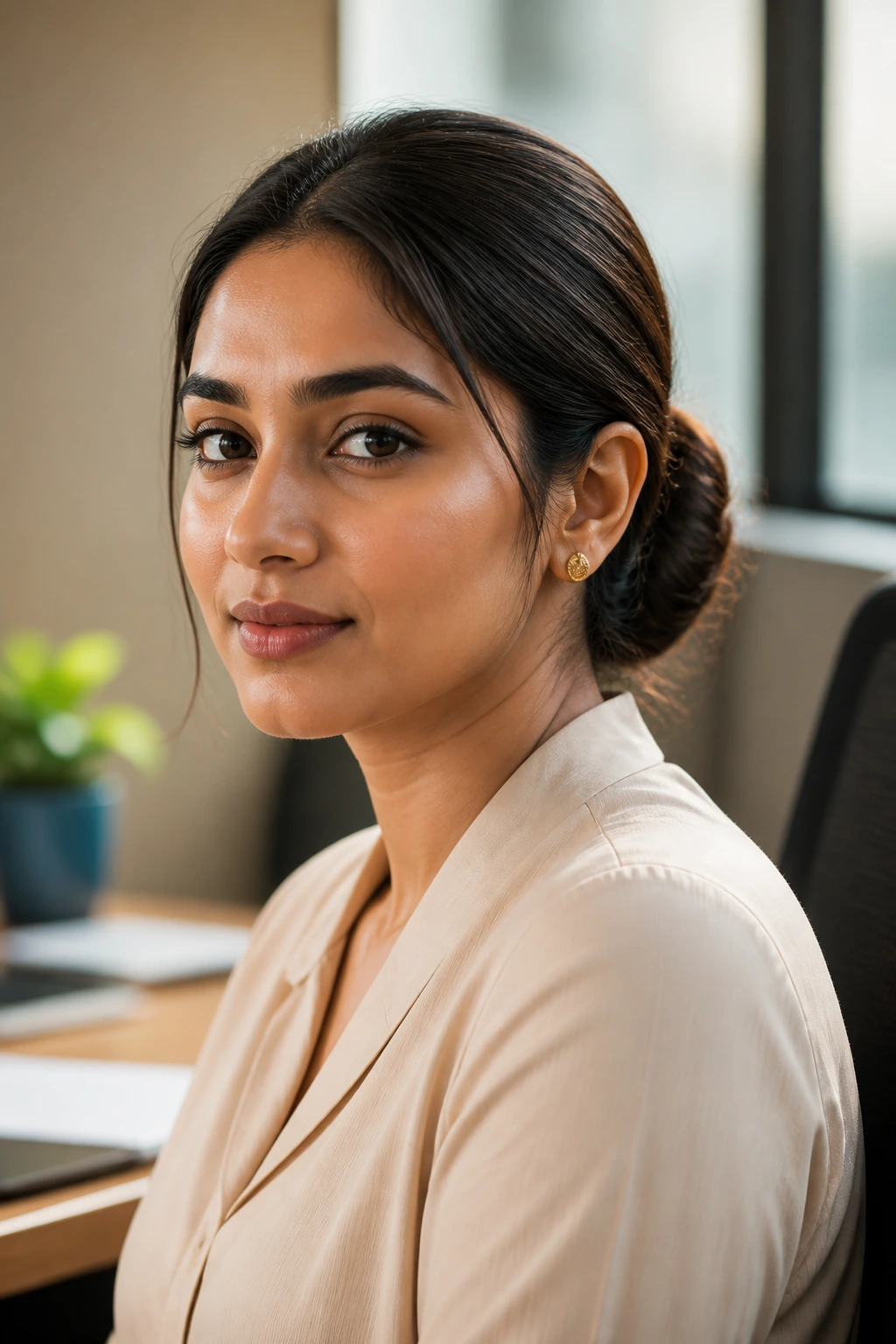
Workday: Keep the crown smooth, the part clean, and the finish understated. Low buns, wrapped ponytails, side-pinned hair, and claw clip twists all fit well with office clothes because they stay neat without demanding attention.
Family functions and festive dressing: Bring in braids, side buns, maang tikka, or a little gajra if the outfit calls for it. The hair should support the clothing, not compete with it. If the blouse is detailed, keep the hairstyle calmer. If the outfit is plain, let the braid or accessory do more work.
Heat, humidity, and travel: Choose low placements, braided bases, and styles that keep the top anchored. A low braided bun or a French braid into a ponytail is much easier to live with than loose curls on a sticky day. That’s not glamorous advice, but it is honest.
Shorter hair or layers: Go for half-up twists, side pins, tucked fronts, and soft wave styles that don’t require a long tail to look complete. You do not need a waist-length braid to look polished. You need a clean shape and one good point of control.
Additional Tips and Finishers
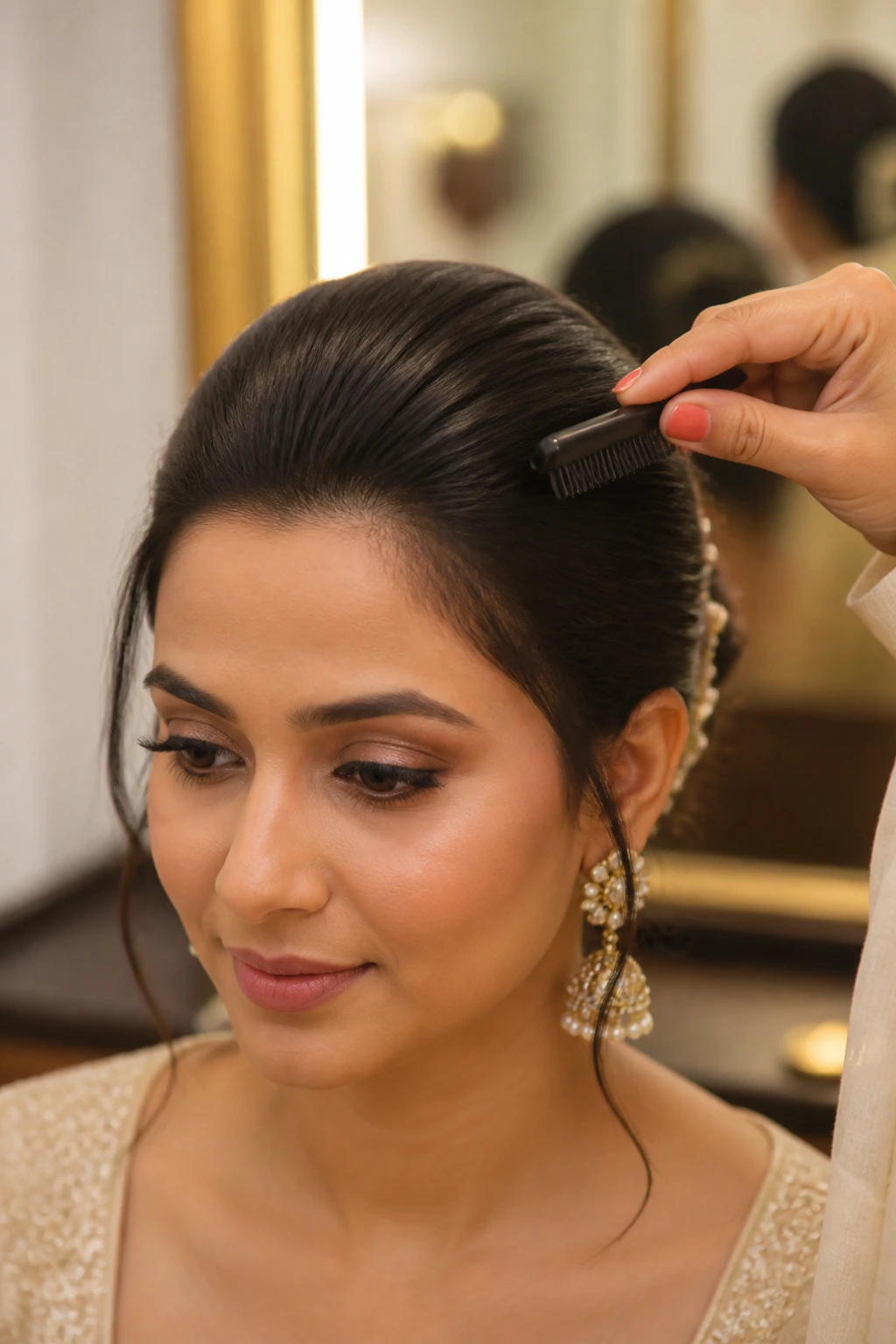
Frizz Control: Smooth the crown with a tiny bit of serum or styling cream, then use a soft brush to settle the flyaways at the hairline. If you use hairspray, spray it onto the brush or a toothbrush first and then lightly press the baby hairs into place. That gives you control without the wet, crunchy look.
Volume at the Crown: If your hair falls flat at the roots, lift the top section with a round brush or tease the underlayer very lightly before pinning. Do not go wild here. A little root support is enough for a soft polished look.
Accessory Choices: Pearls, slim metal clips, clean U-pins, and small floral accents fit this style family better than oversized decorative pieces. The hairstyle should still be the first thing people notice. The accessory should support it.
Make-It-Yours: If you like a softer face frame, leave two thin pieces out. If you prefer a cleaner look, pin everything back and rely on the part or braid line for shape. If your hair is naturally curly, keep the curl pattern visible in the ends instead of ironing it flat.
Keeping the Style Fresh Through the Day
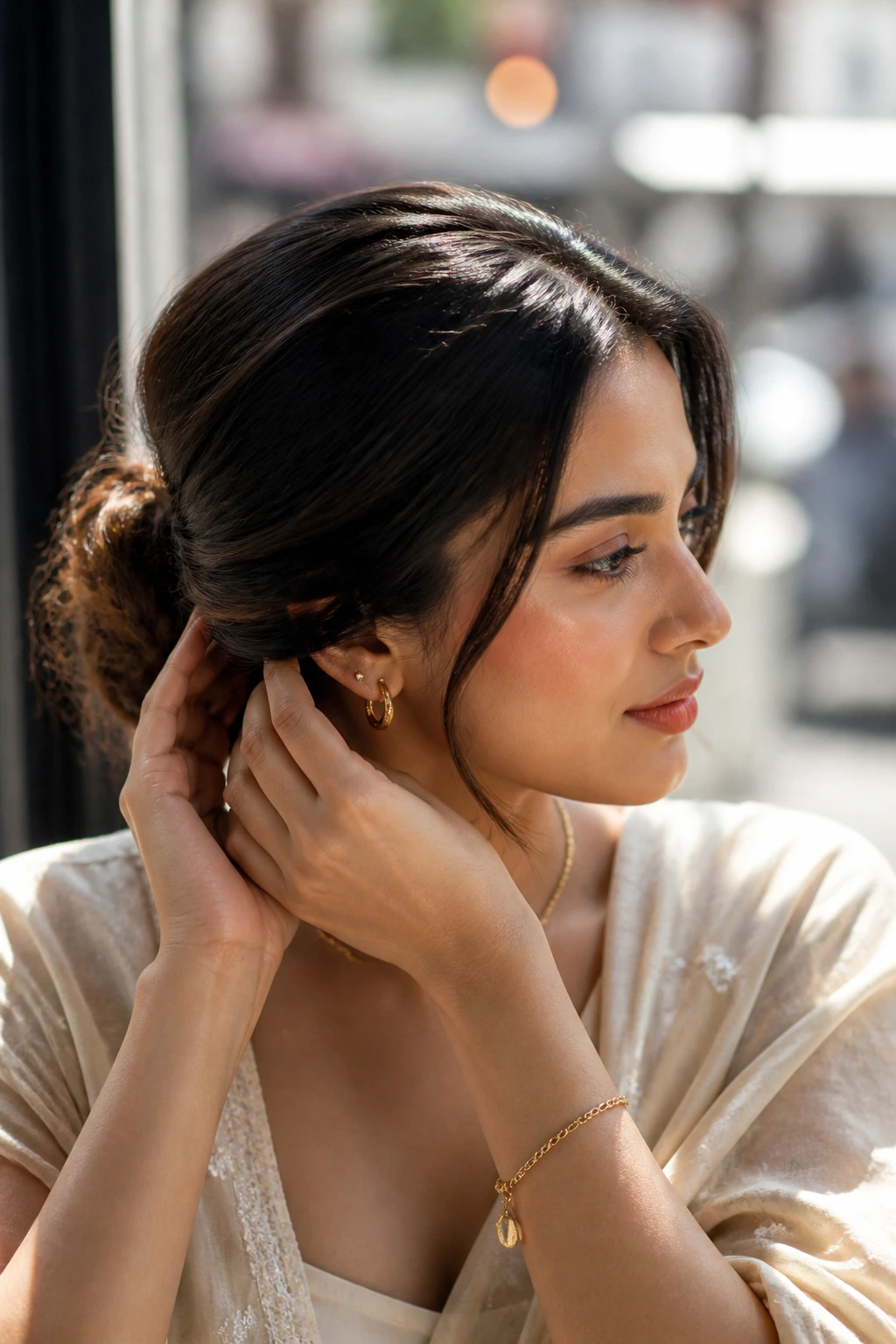
A polished hairstyle lives or dies by how it handles hour three. That’s where the details matter. Start with hair that is fully dry before you pin or braid it. Damp roots can look fine at first and then puff out as they dry, which is a quick way to ruin the shape.
Carry a tiny rescue kit if you know the day will be long: two bobby pins, one small elastic, and a travel-size anti-frizz spray or serum. That is enough to fix most problems without rebuilding the style from scratch. If a bun loosens, add one pin through the knot and one pin crossing it. If a braid starts to widen too much, pinch it back into shape near the top instead of redoing the whole thing.
For overnight wear, a silk scarf or satin pillowcase helps preserve smoothness. Remove decorative pins before bed. If you sleep in a low bun or braid, keep it loose enough that it won’t leave a hard dent. Morning refresh is easier when the style has not been crushed flat.
Freshly washed hair is the hardest to control. Second-day hair often works better because it has a little grip. If your hair is too clean, dry shampoo at the roots can make the whole style behave.
Variations and Adaptations to Try
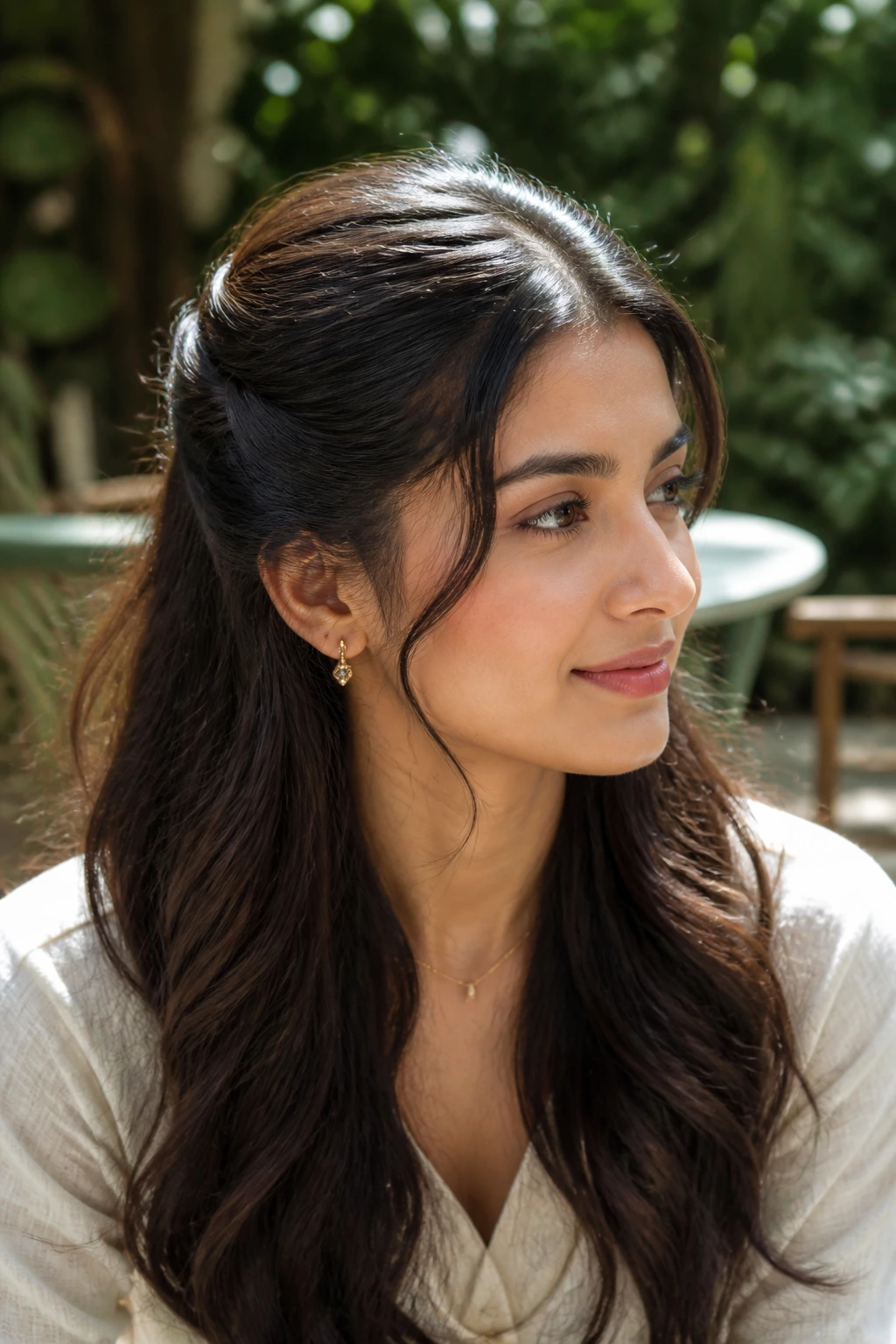
No-Heat Soft Polish: Skip the iron entirely and build the style on natural texture. Use a braid, a low bun, or a claw clip twist, then smooth the crown with a light cream. This is the version I’d pick for busy mornings or if your hair gets dry fast from heat.
Curly-Hair Friendly Finish: Leave the curl pattern visible in the lengths and only control the crown, part, or front pieces. A half-up twist, side pin, or low bun with loose tendrils works especially well here. The hair looks intentional because the texture is part of the design, not something you’re trying to erase.
Short-Hair Adaptation: Use side pins, tucked fronts, mini twists, and half-up sections instead of full buns or long braids. A shoulder-length cut can look very polished when the front line is neat and the ends are softly bent. You do not need length to get shape.
Festive Gajra Version: Take a low bun, braided bun, or side bun and add a slim gajra around the base. Keep the rest of the look smooth so the flowers stay the focal point. This keeps the style refined instead of overloaded.
Humidity-Smart Version: Choose a low braided bun, French braid into ponytail, or rope braid ponytail. These styles trap the hair in a controlled pattern and survive moisture better than open waves. A little anti-frizz cream at the crown helps too.
Common Mistakes to Avoid
Over-smoothing the crown: Hair that is scraped too tightly can look shiny in the wrong way and pull the face flat. The fix is simple: smooth the top, then stop before you erase all movement. Soft polish needs a little air around the roots.
Using too much serum: If the hair looks oily at the part or the braid slips apart, you’ve used too much. Start with a pea-sized amount and keep it on the lengths. The roots need control, not grease.
Placing buns too high: A bun sitting high on the head can make the whole style feel harsher and less relaxed. Low placements are kinder to the face and easier to keep polished. If the bun needs lifting for balance, lift it a little—not all the way up.
Ignoring flyaways at the hairline: A frizzy top with an otherwise neat bun can make the whole style look unfinished. Use a soft brush or toothbrush with a touch of spray to settle the front. Do not soak the hair.
Over-accessorizing: If the hairstyle already has a braid, a tikka, and large earrings, adding another heavy ornament can crowd the look. Pick one or two focal points. The hair should support the outfit, not fight it.
Working with tangled hair: A polished style starts with detangled hair. Knots at the nape and behind the ears always show through the finished look. Spend the extra minute combing through the lengths first. It pays off.
Frequently Asked Questions
Which Indian hairstyle looks soft but still polished for everyday wear?
A low bun, a wrapped ponytail, or a side-pinned style usually gives the cleanest result with the least fuss. They keep the crown smooth and the ends controlled, which is where the polished look comes from.
What works best for thick Indian hair that gets bulky fast?
Braids and low buns tend to behave better than open styles because they control volume instead of fighting it. A French braid into a ponytail or a low braided bun gives shape without letting the hair spread out at the sides.
Can these styles work on curly or wavy hair?
Yes, and they often look better when the natural texture is left visible in the ends. Keep the crown smoother than the lengths, and use a half-up twist, side braid, or low bun if you want the texture to stay soft.
How do I keep flyaways down without making hair crunchy?
Use a tiny amount of serum or spray on a brush, then smooth only the outer layer of hair. That gives you control at the hairline without turning the whole style stiff.
Do I need heat tools for these hairstyles?
No. Many of them work on natural texture, especially braids, buns, and claw clip styles. Heat only helps when you want a soft wave, a bent end, or a cleaner front section.
What if my hair is too short for a full bun or braid?
Go for side pins, half-up twists, tucked fronts, or a soft wave with one side secured back. Short hair can still look polished if the part is clean and the shape is deliberate.
How do I make a style last through humidity or a long event?
Start with dry hair, use a little texturizing spray or dry shampoo for grip, and anchor the style with enough pins. Low placements and braided bases hold up better than loose curls or high ponytails.
Can I wear a maang tikka or gajra without making the hairstyle look heavy?
Yes, but keep the hairstyle calm underneath. A clean bun, a soft wave, or a simple braid gives the accessory room to stand out. If the hair is already ornate, the accessory should stay small.
A Softer Finish That Still Feels Put Together
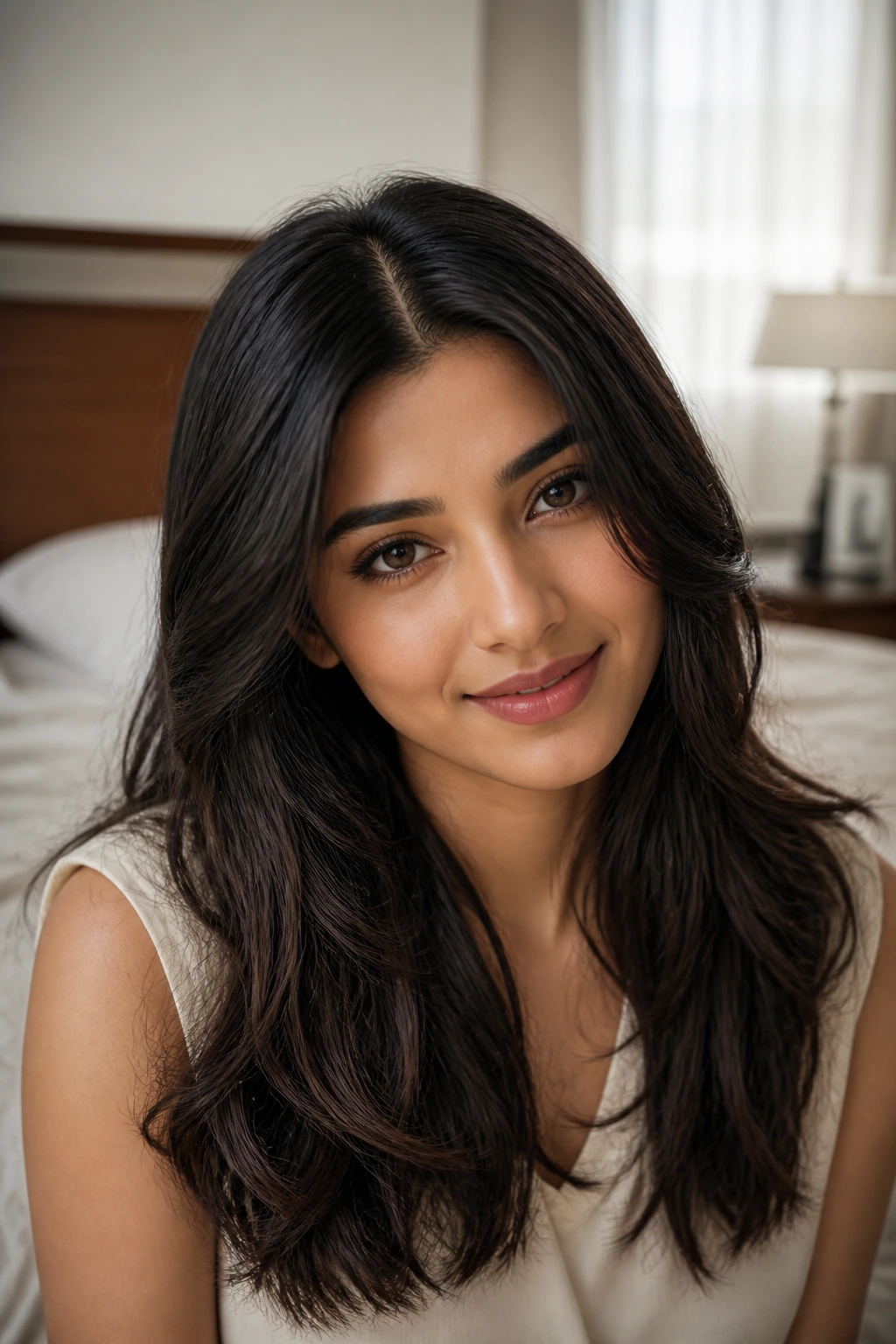
Soft polished hair works because it respects the hair you already have. It doesn’t demand a fake shine or an armor-like finish. It just asks for shape, a clean part, and one or two decisions made on purpose.
That’s why these Indian hairstyles for a soft polished look travel so well across ordinary days and dressed-up ones. A low bun can go from office to dinner. A braid can calm thick hair in humidity. A half-up twist can save a flat crown and still feel light.
Pick the style that matches your hair’s mood, not the one that fights it. That usually gives you the nicest result, and the one that lasts past the mirror.
