



A blunt bob can look polished for exactly ten minutes. Then it starts to sit like a cap, especially if your hair is fine at the ends or thick through the middle. Short layered haircuts fix that by breaking up the weight line, so the cut moves when you turn your head instead of hanging in one block.
That movement matters more than people think. Layers change how light hits the hair, how highlights and balayage show through the shape, and how much effort it takes to get lift at the crown. A clean, short cut with smart layering can make air-drying look deliberate instead of accidental, which is a nicer trick than any amount of product.
I’ve always liked short layered hair when it’s cut with intent, not just thinned out until it behaves. The best versions have a clear shape at the perimeter, soft internal movement, and enough texture to keep the style from collapsing by lunch. That’s the sweet spot. Too much layering and you get frizz with no structure; too little and the whole thing sits there like a helmet.
Why These Cuts Earn Their Keep
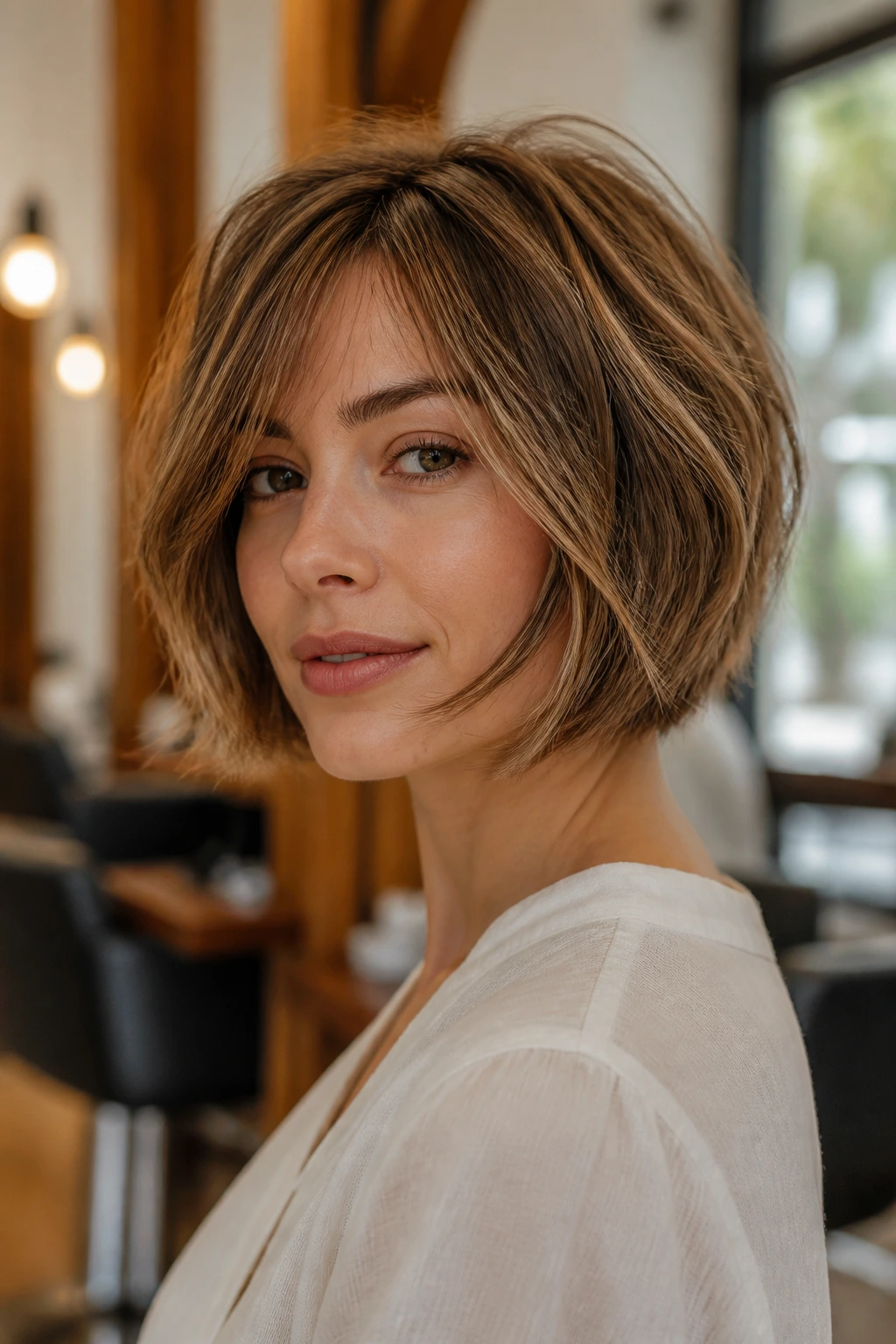
-
Movement Without the Wig Effect: The right short layers keep the ends from locking together into one heavy shelf, so the hair bends and swings instead of sitting stiffly at the jaw.
-
Better Use of Color: Highlights and balayage read cleaner on layered shapes because the hair turns, folds, and reveals different ribbons of tone instead of hiding everything in one flat block.
-
Less Bulk Where It Counts: Thick hair behaves better when weight is removed inside the shape, especially around the nape and lower sides, where puffiness usually starts.
-
More Lift for Fine Hair: A few well-placed internal layers can make fine hair look fuller at the crown without making the perimeter see-through.
-
Easier Styling on Busy Mornings: Most of these cuts respond well to rough-drying, a small round brush, or even a quick pass with a flat brush and a bit of mousse.
-
Short Grow-Outs Are Less Annoying: When the layers are placed correctly, the cut keeps its shape as it grows instead of turning into a shapeless middle stage almost overnight.
1. Soft Layered Bob
A soft layered bob lives in that nice middle ground where the cut still looks clean, but the ends don’t feel blunt or rigid. The shortest layers usually sit around the cheekbone or just below it, which is enough to create bend without making the top too choppy. On straight hair, it moves with a little flip. On wavy hair, it gets that loose, brushed-out look that always feels a bit expensive in person.
Why it works
The perimeter gives you the bob shape, while the internal layers stop it from becoming a block. That matters if your hair is medium-density or fine, because the eye reads the change in length as lift. If you wear balayage, this cut shows the lighter pieces around the face and through the middle better than a one-length bob does.
Best for: people who want softness without obvious shag layers.
Styling note: a 1-inch round brush and a quick bend at the ends are enough. Don’t overwork it.
2. Stacked Bob With a Tapered Nape
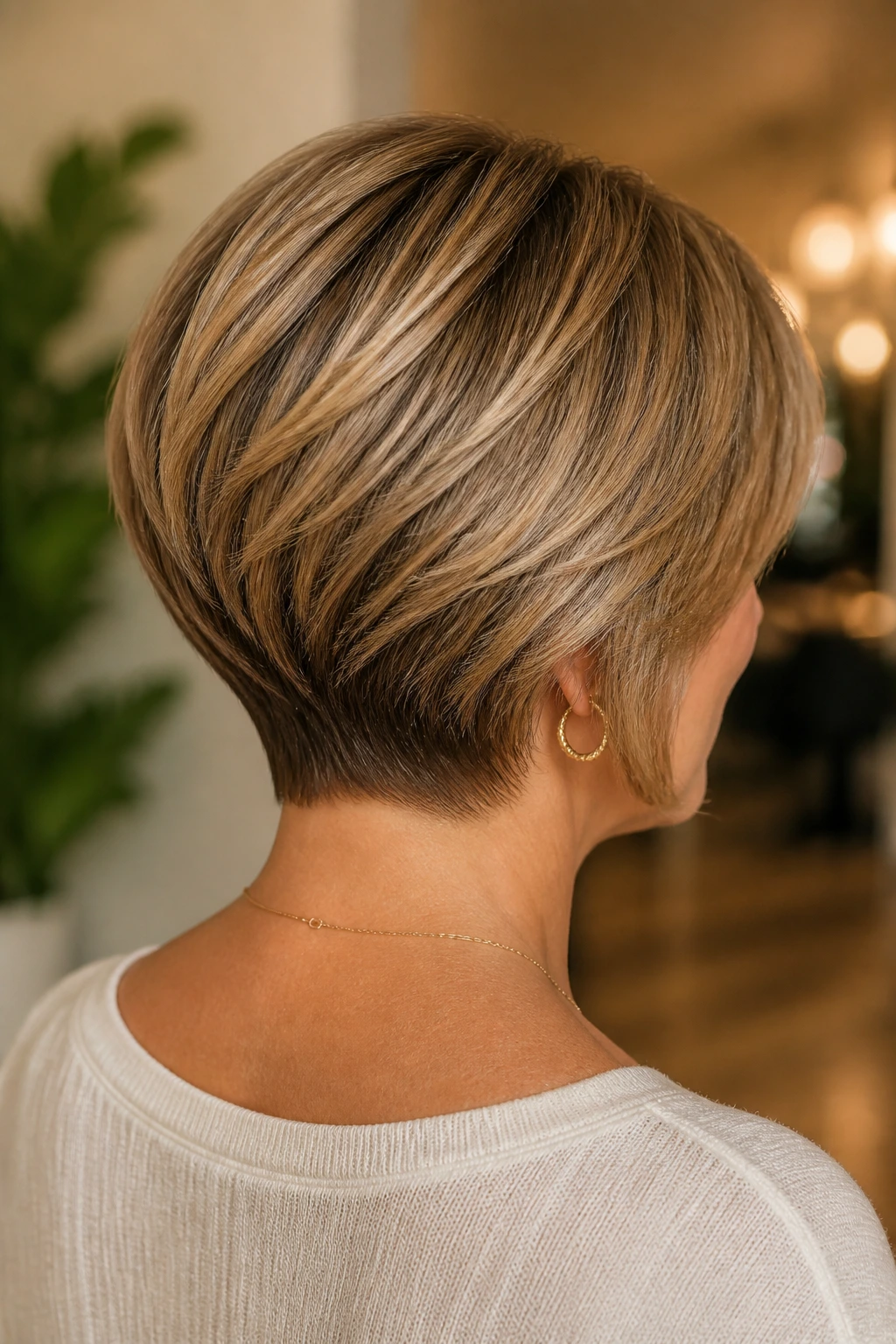
This one is all about the back of the head. The nape is trimmed shorter, the layers build upward, and the crown gets a little push without looking puffed out. When it’s done well, the back curves in a clean arc instead of making a square block under your hairline.
The shape is especially useful if your hair is dense or stubbornly straight. A stacked bob takes some of that weight off the lower half, which means the hair sits closer to the head and doesn’t swing outward at the jaw. That’s the difference between “fresh haircut” and “I asked for volume and got a mushroom.”
If you like seeing dimension in color, this cut is a gift to highlights. The stacked layers let the lighter pieces catch the eye at the crown and through the upper back, where the shape is most visible. It’s not subtle in the best way.
3. Choppy Jaw-Length Crop
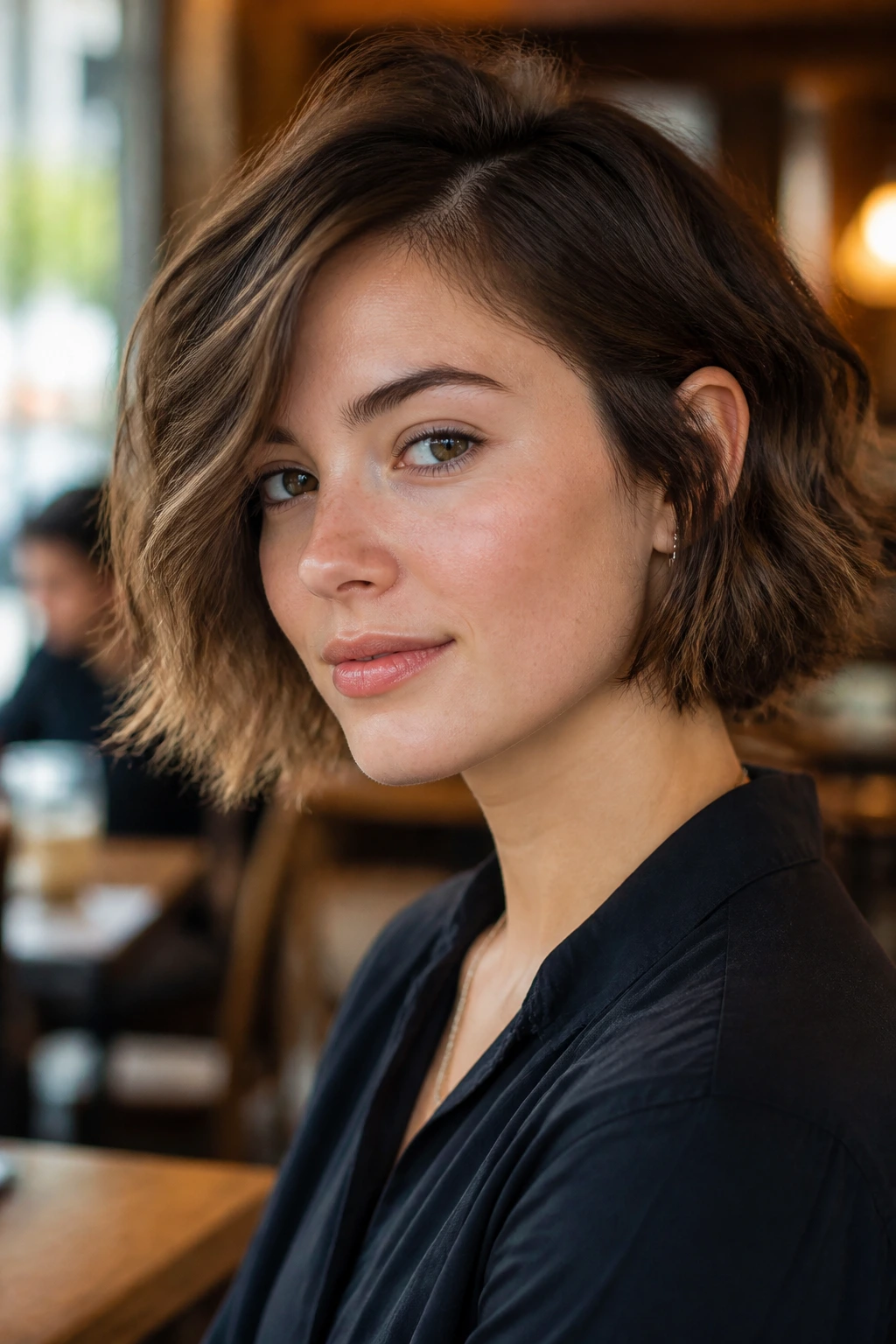
Why does a jaw-length crop feel so different once the ends are broken up? Because the line stops shouting. A blunt jaw-length cut can look severe, especially if your face already has strong angles. Choppy layers soften that edge and keep the hair from hanging straight down like a curtain.
The trick is keeping enough structure around the jaw so the cut still reads as intentional. If the texture is too shredded, the whole thing can tip into “I gave up halfway through styling.” But with short, uneven layers and a side part, it has a cool, casual shape that looks better the second day than the first.
This is one of my favorite cuts for someone who wants short hair without the precision of a classic bob. It has edge, but not in a loud way. And if your hair has natural wave, the chopped ends help the bend show instead of fighting it.
4. Curtain-Bang Bob
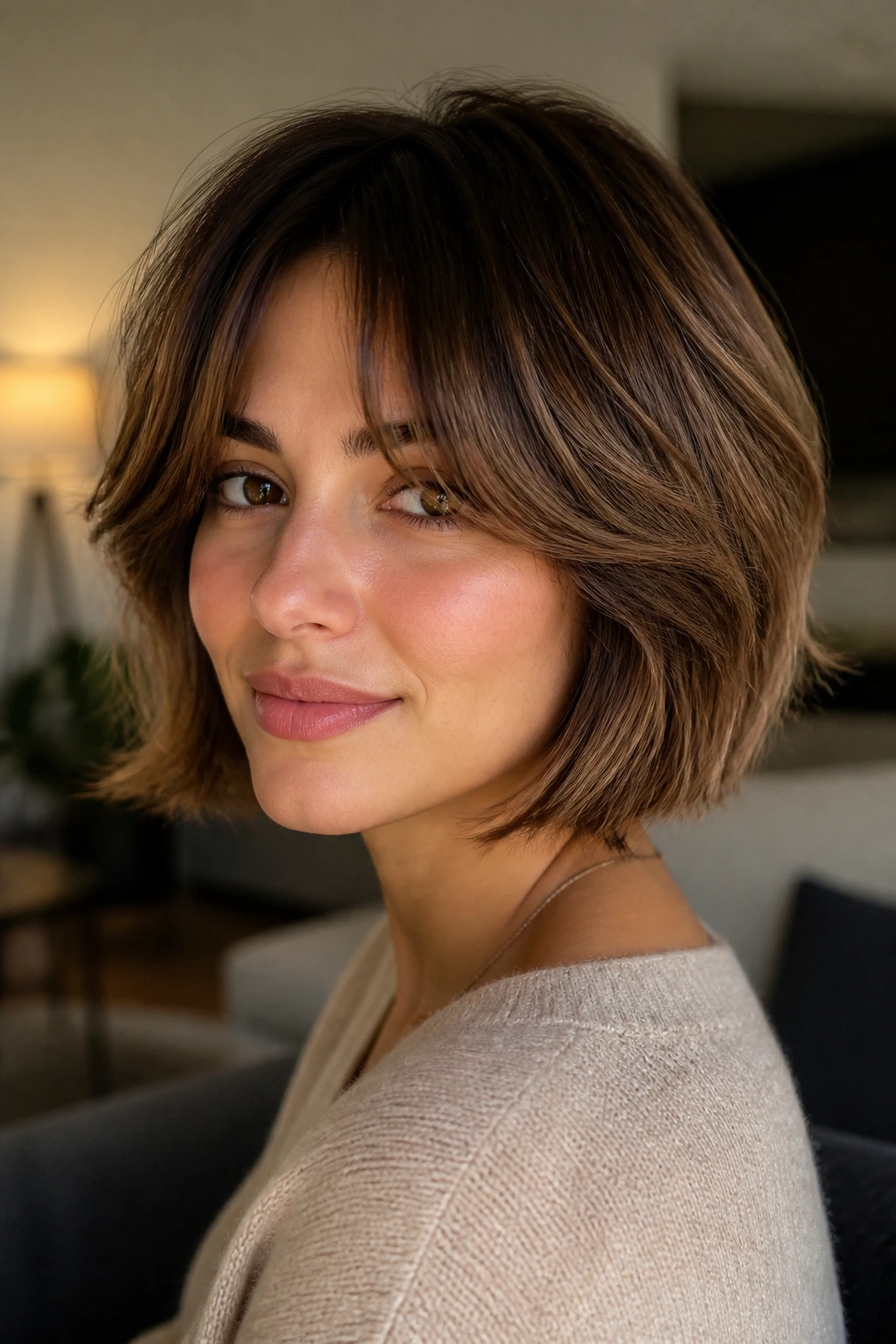
Curtain bangs change the whole mood of a short layered haircut. They open at the center, skim the cheekbones, and give the front of the cut a little sweep that feels softer than a straight fringe. On a bob, that front movement matters more than the length at the back.
This shape is especially good if you want a change without committing to a heavy bang. The curtain pieces can blend into face-framing layers, which gives you options on days when you want the hair tucked back or pushed to one side. Balayage also looks nice here because the lighter pieces sit right where the eye lands first.
There’s one catch. Curtain bangs need a bit of direction when they’re first dried. If you just let them air-dry flat against the forehead, they can separate in odd places. A round brush or even a twist-dry with your fingers fixes most of that.
5. French Bob With an Airy Fringe
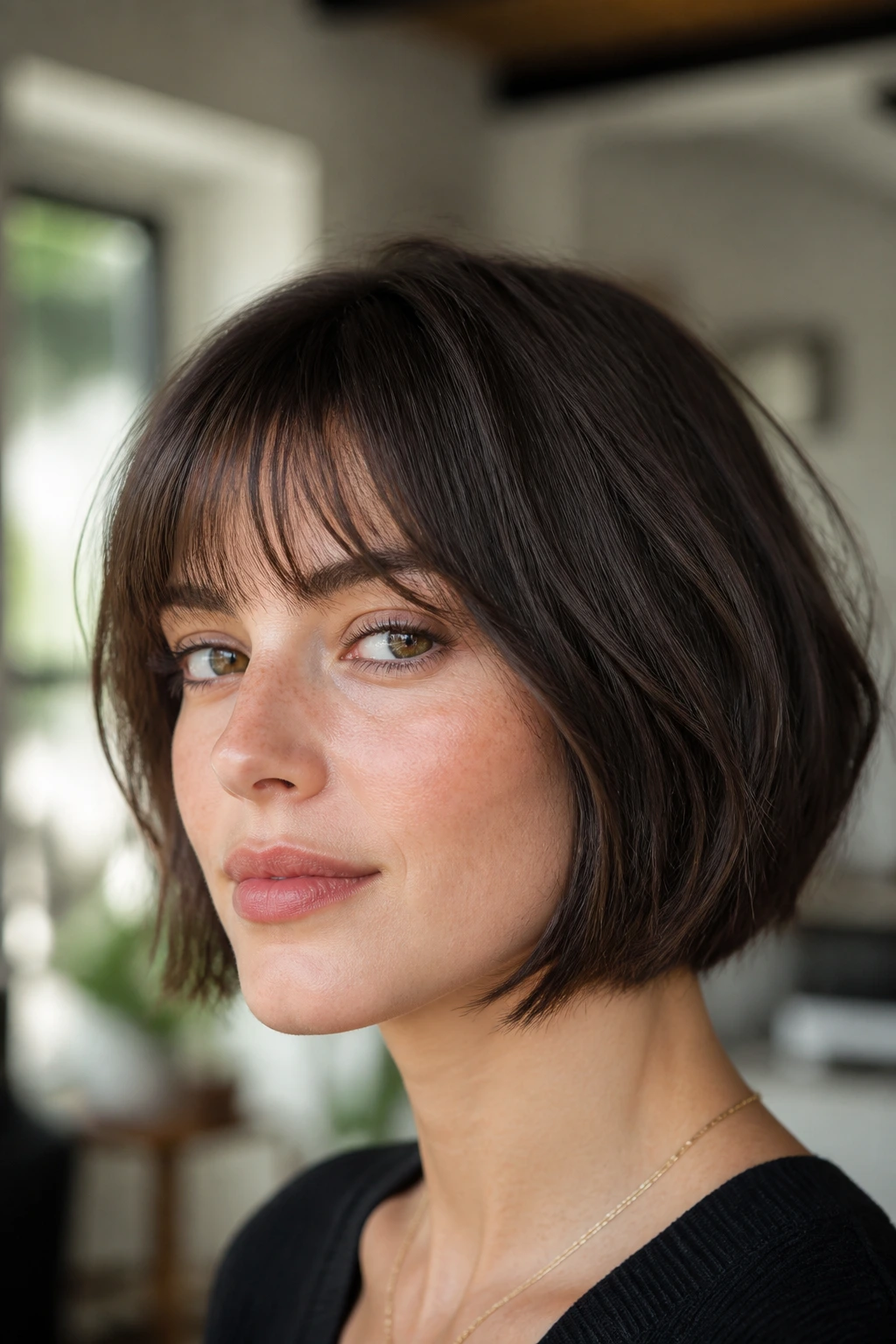
A French bob usually hits somewhere around the cheekbone or just under the jaw, and the fringe is what gives it personality. The fringe doesn’t have to be heavy. In fact, I prefer it airy, almost whisper-light, because that keeps the whole cut from feeling boxed in.
The shape works best when the layers are subtle and the ends are clean. You want the cut to feel chic, not overworked. On fine hair, a French bob can look fuller than people expect because the shorter perimeter makes the hair seem denser. On thicker hair, the internal layering keeps it from blowing outward like a triangle.
This is one of those cuts that can look sharp with lipstick and a blazer, then relaxed with a T-shirt and no styling effort at all. Not many styles pull that off without looking like they’re trying too hard.
6. Feathered Pixie
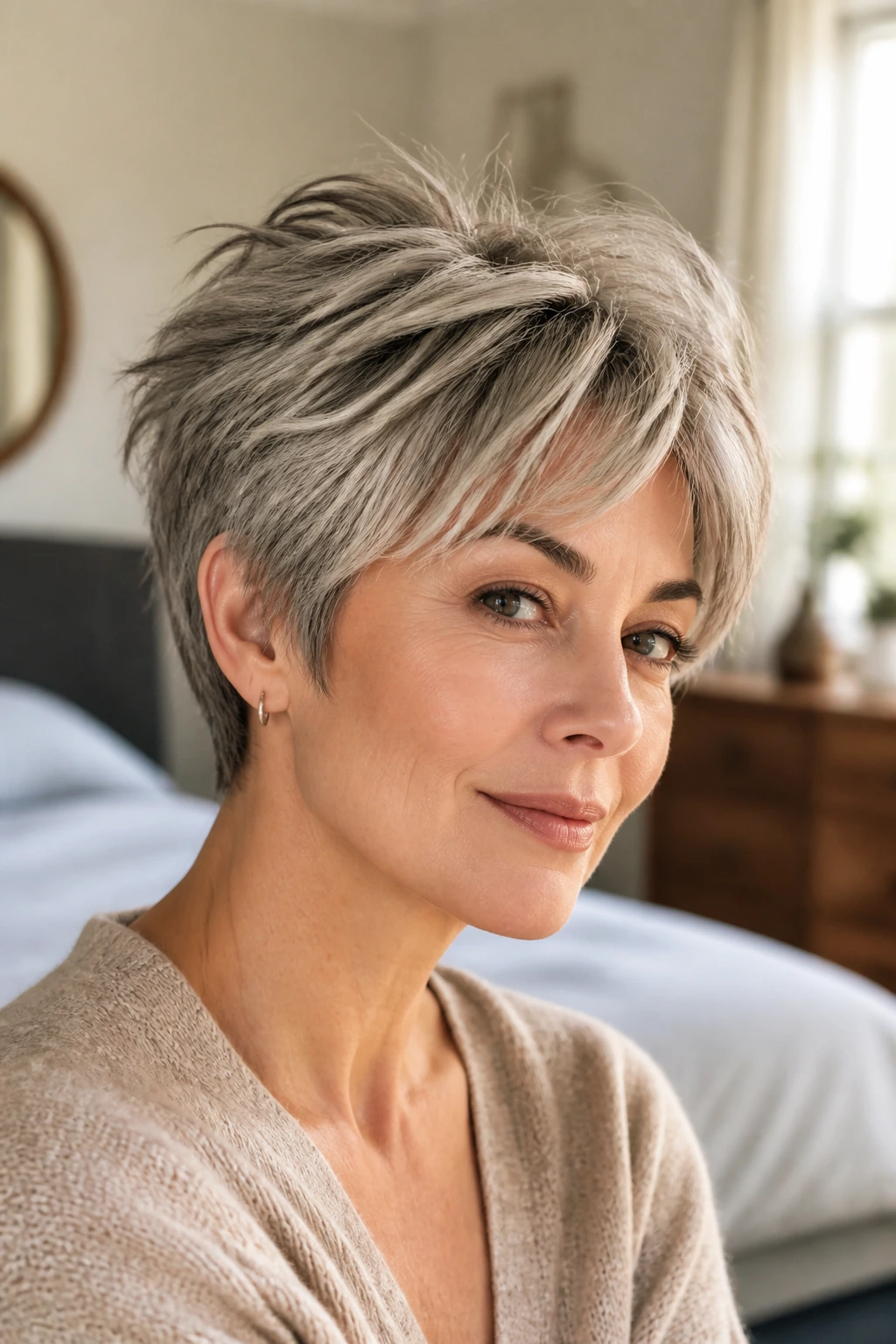
A feathered pixie isn’t the same thing as a cropped, close-to-the-head pixie. The difference is in the top. Feathered pieces keep length through the crown and soften the edges around the ears and temples, so the cut feels lighter and less severe.
What makes it different
The feathering lets the hair move instead of sitting in one stiff direction. That matters if your hair is fine and tends to lie flat, because the lifted pieces create the impression of fullness at the top. It also works for hair with a little bend, since the strands can separate into visible texture instead of collapsing into one sheet.
- Best for fine hair: the shorter sides help the crown look fuller.
- Best for strong cheekbones: the soft top and side pieces draw attention upward.
- Styling note: a pea-sized amount of lightweight cream is enough; too much product will shut the whole cut down.
7. The Bixie Cut
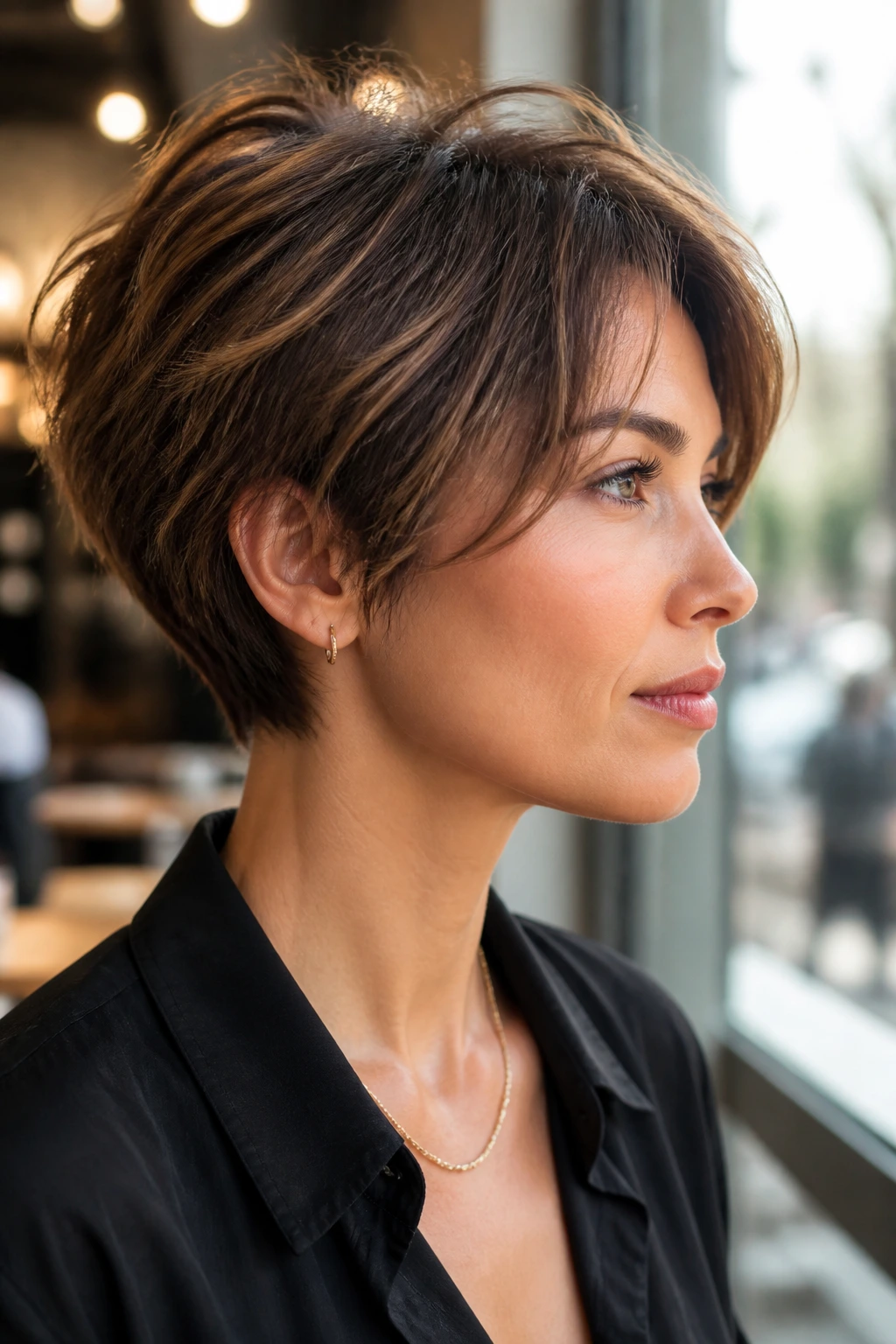
A bixie sits between a bob and a pixie, and that middle ground is the whole point. The nape is shorter than a bob, the top has more length than a pixie, and the shape usually has soft layers around the crown that keep it from looking too cropped.
This is a smart choice if you want short hair but don’t want the commitment of a very short cut. It grows out well, which sounds boring until you’ve lived through an awkward grow-out. The longer top pieces can be swept, tucked, or pushed forward, and that flexibility makes the bixie feel less precious than a polished bob.
I like this cut on hair that has a bit of natural texture. It doesn’t need perfect symmetry. In fact, a slightly undone finish makes it look better.
8. Shaggy Crop
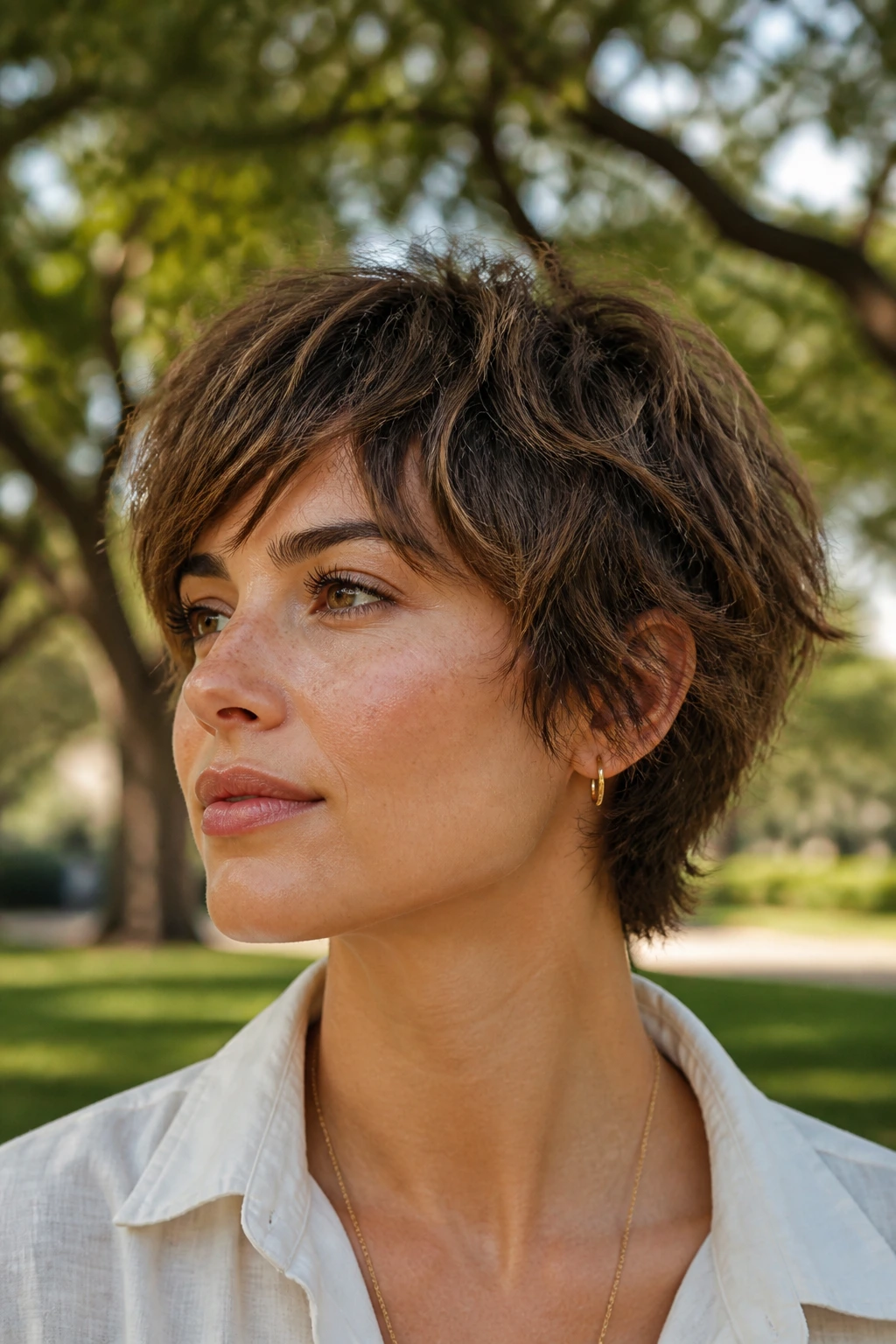
A shaggy crop has that easy, broken-up texture people chase with dry shampoo and texturizing spray, except the shape is baked into the cut. The crown tends to be shorter, the ends are softer, and the layers create a little air between the strands.
That gap is the point. It keeps the cut from settling into a flat cap shape, which is a common problem with short hair that’s all one length. A shaggy crop also makes balayage and highlights look more dimensional because the layers catch different sections of color as the hair moves.
On wavy hair, this cut can look almost effortless. On straight hair, it needs a bit of product to keep the pieces separated. Either way, it’s one of the easiest short layered shapes to wear when you don’t want to spend twenty minutes fighting a round brush.
9. Rounded Pageboy
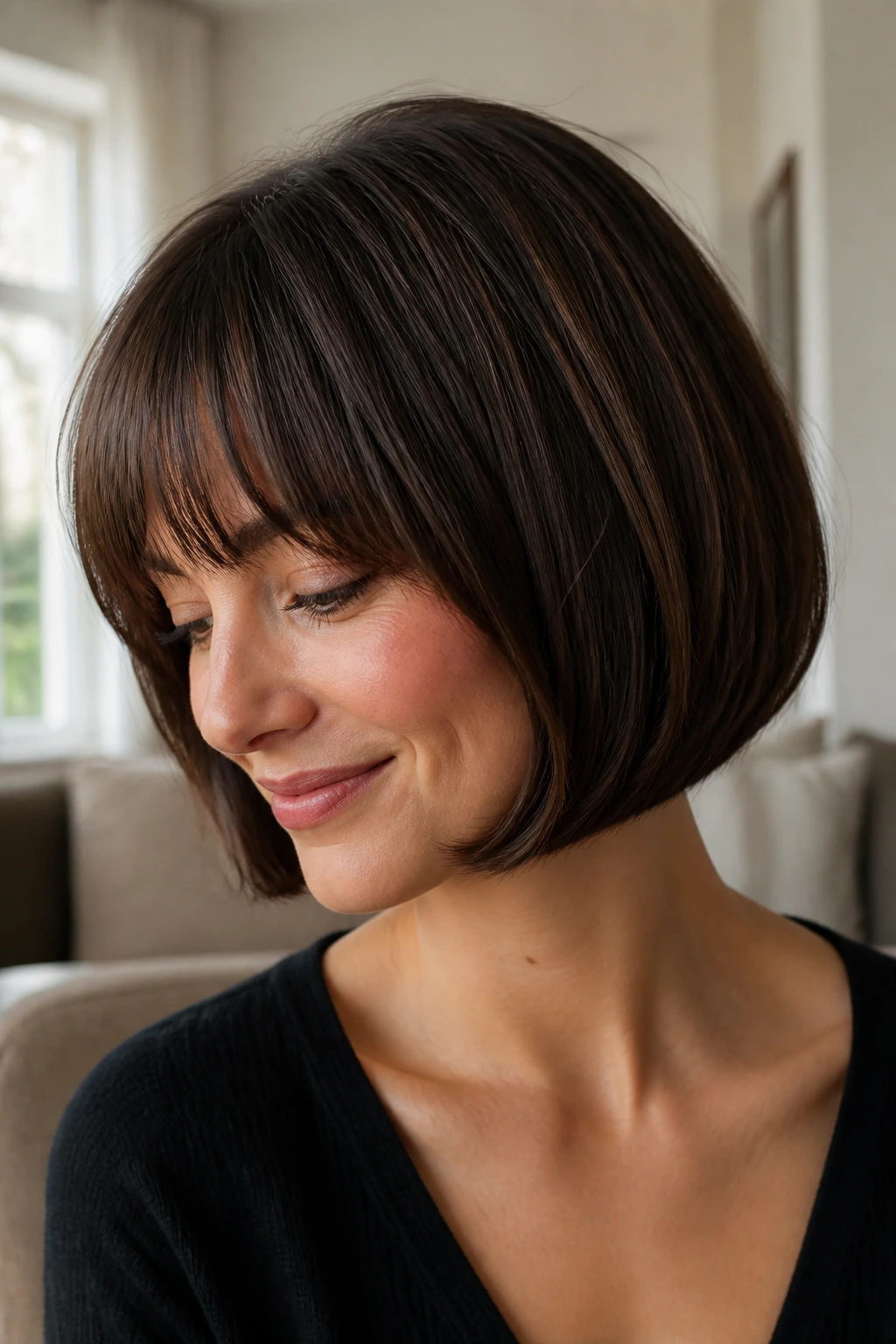
The pageboy used to be a very specific, very shiny haircut. The modern version is softer. The shape curves under at the ends, but the layers keep it from feeling stiff or costume-like. That little update matters.
What makes this cut interesting is the contour. It hugs the head, then bends under at the bottom, which gives the profile a neat line without looking severe. If your hair is straight and medium-thick, the shape can be gorgeous because it stays controlled while still showing movement in the interior layers.
It is not the best choice if you want wild texture. It’s better for someone who likes a smoother finish but still wants the hair to feel alive. And if you wear glasses, this cut can sit around the frames in a very flattering way, especially when the fringe is kept light.
10. Tucked-Under Bob
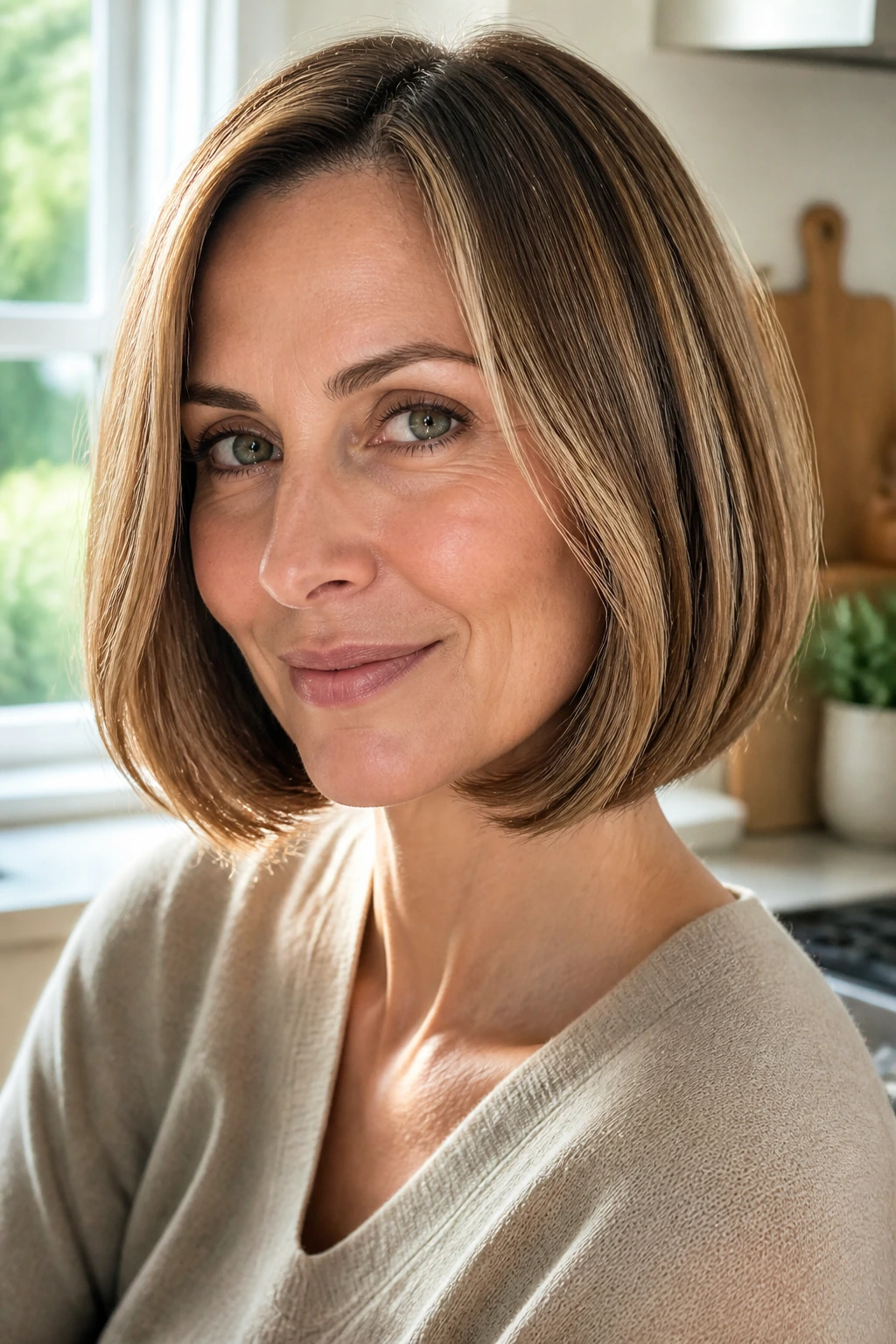
A tucked-under bob has a gentle inward bend at the ends, almost like the hair decides to settle itself into place. The layers are there to stop the shape from turning bulky through the middle, which is the thing that usually ruins this style.
The look is especially useful for finer straight hair that tends to swing outward on the sides. A soft tucked-under line gives the cut a more polished outline, but the layers prevent it from becoming too rigid. Think of it as a bob that knows how to behave without looking pinned down.
This cut also works beautifully with subtle highlights around the face and crown. The bend at the ends makes the lighter pieces visible from the front, which gives the whole haircut more life. It’s neat, but not flat. That matters.
11. Asymmetrical Layered Bob
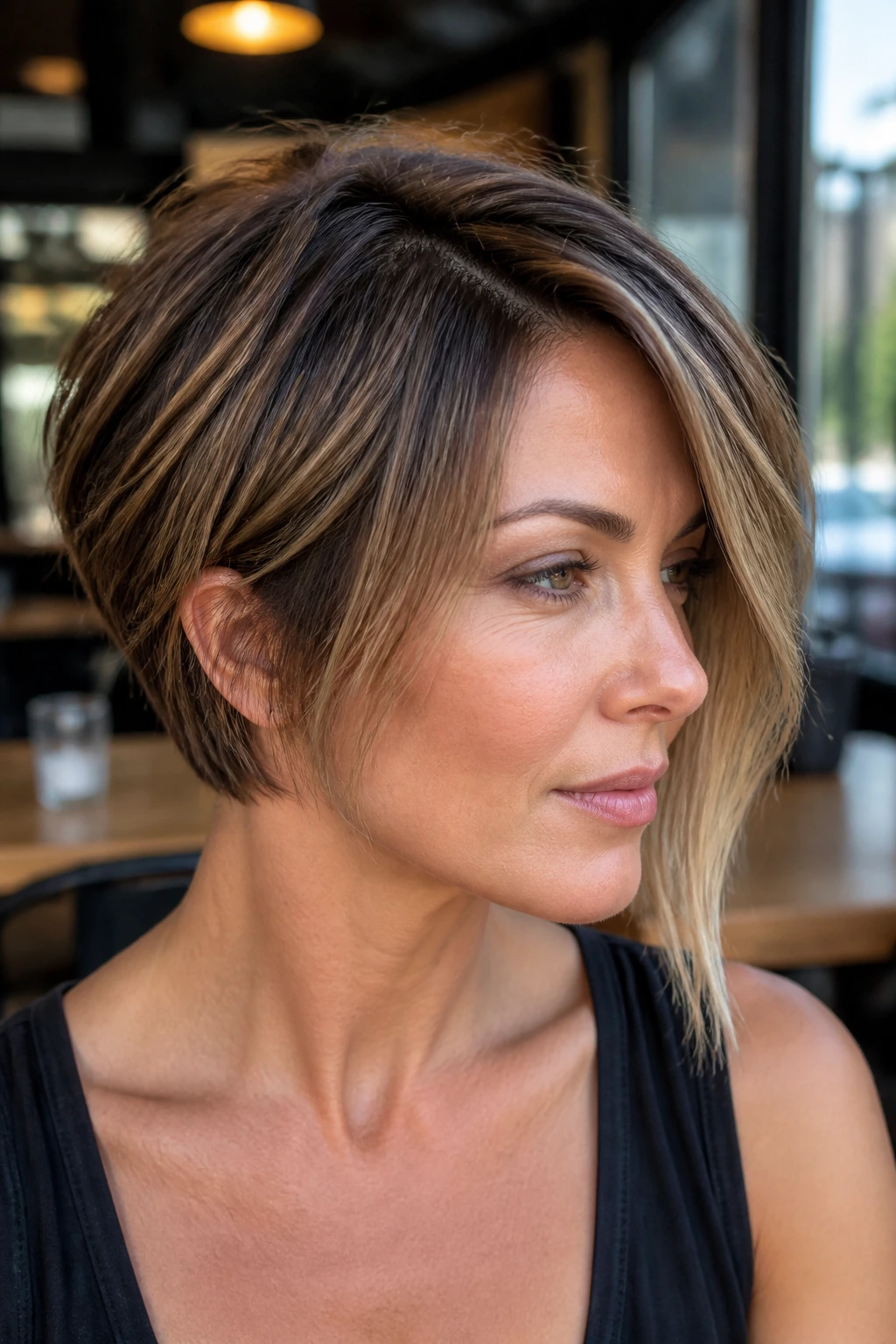
One side longer than the other sounds dramatic on paper, but it can be quietly elegant when the difference is modest. The asymmetry gives the eye something to follow, and the layered texture stops the cut from feeling severe. It is movement with a little attitude.
I like this shape when someone wants a short haircut that doesn’t read as plain. The longer side can skim the jawline or collarbone, while the shorter side opens up the neck. That contrast creates motion even when the hair is still.
If your hair color has dimension, this cut shows it off fast. The longer side often reveals more of the balayage placement, while the shorter side keeps the silhouette clean. It’s a good choice if you want a haircut that looks designed rather than merely trimmed.
12. Side-Swept Layered Crop
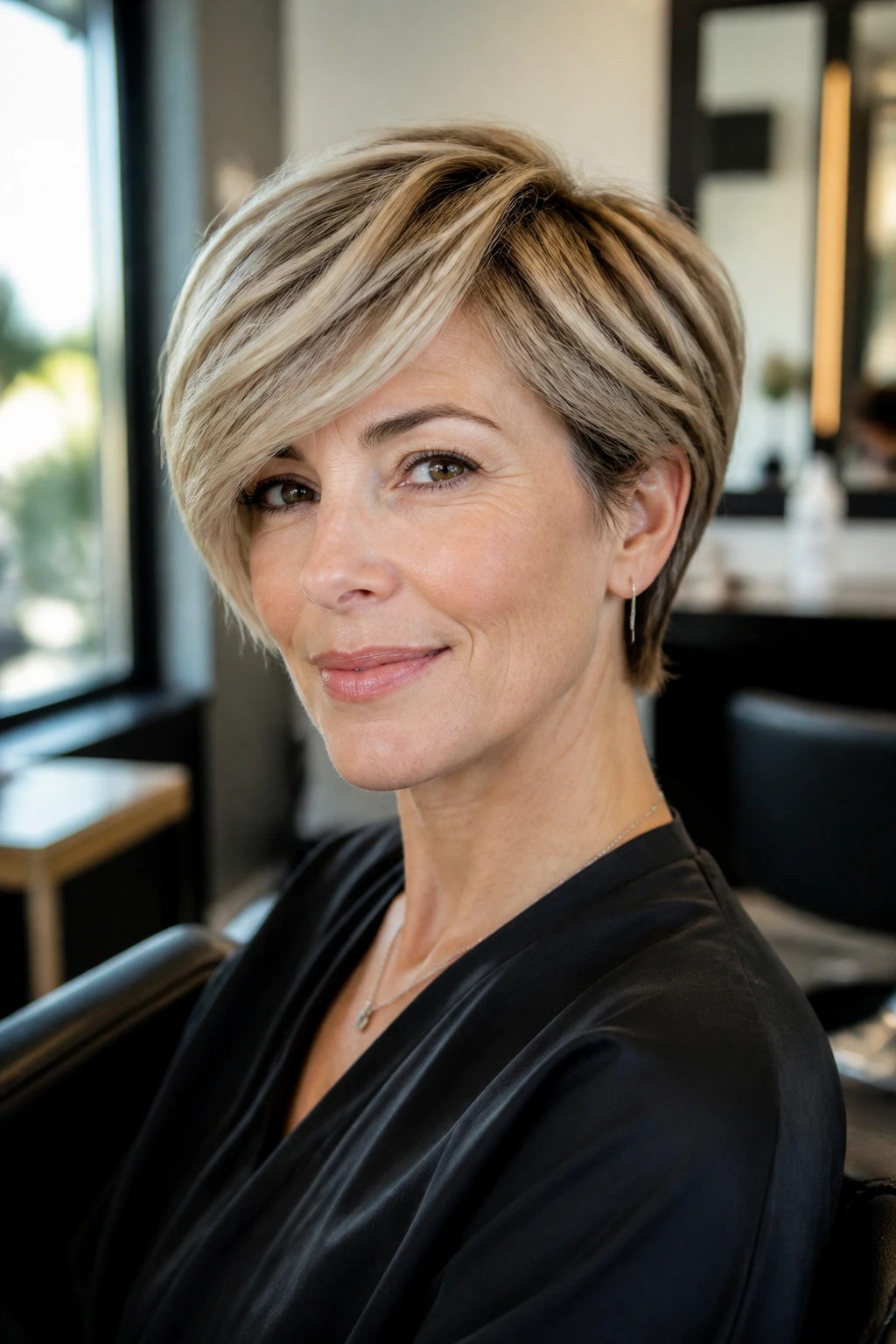
Why does a side-swept crop make so much difference? Because it changes the line of the face before it even changes the hair. A deep side sweep adds softness to the forehead and pulls the weight of the style in one direction, which gives short layers a little drama without making them fussy.
The crop itself can stay close around the ears and nape, but the top needs enough length to travel across the forehead. That sweep is what keeps the style from looking cropped in an abrupt way. On hair with fine texture, the side part gives instant lift. On thicker hair, it helps control bulk where the hair usually pushes outward.
This is a good cut if you wear earrings or glasses. The side sweep frames those details instead of competing with them.
13. Curly Layered Bob
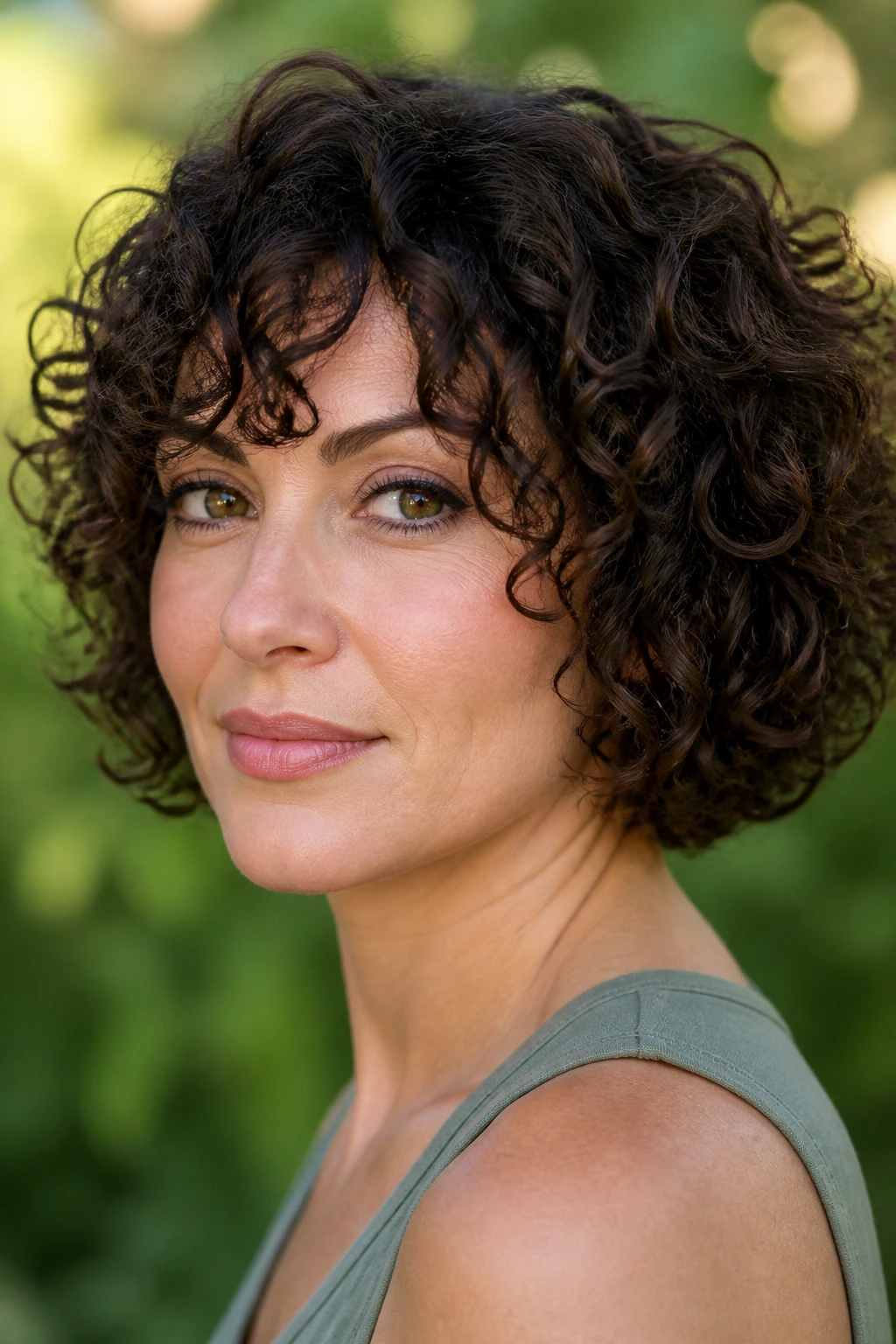
Curly hair needs layers, but it needs the right layers. A curly layered bob lets the curls stack in a controlled way instead of building into one heavy triangle at the sides. The goal isn’t to thin the hair to death. It’s to give each curl room to bounce.
The best version usually follows the curl pattern rather than fighting it. That often means cutting with the hair in its natural state or using a dry-shaping approach. If the layers are placed correctly, the curls sit on top of each other with some air between them, which gives body without a bulky outline.
- Best for loose curls and strong waves: they show the shape most clearly.
- Better with curl cream than heavy gel: you want definition, not crunch.
- Tip: ask for face-framing pieces that match your dominant curl pattern, not a random shorter layer near the chin.
14. Wavy Mullet-Lite
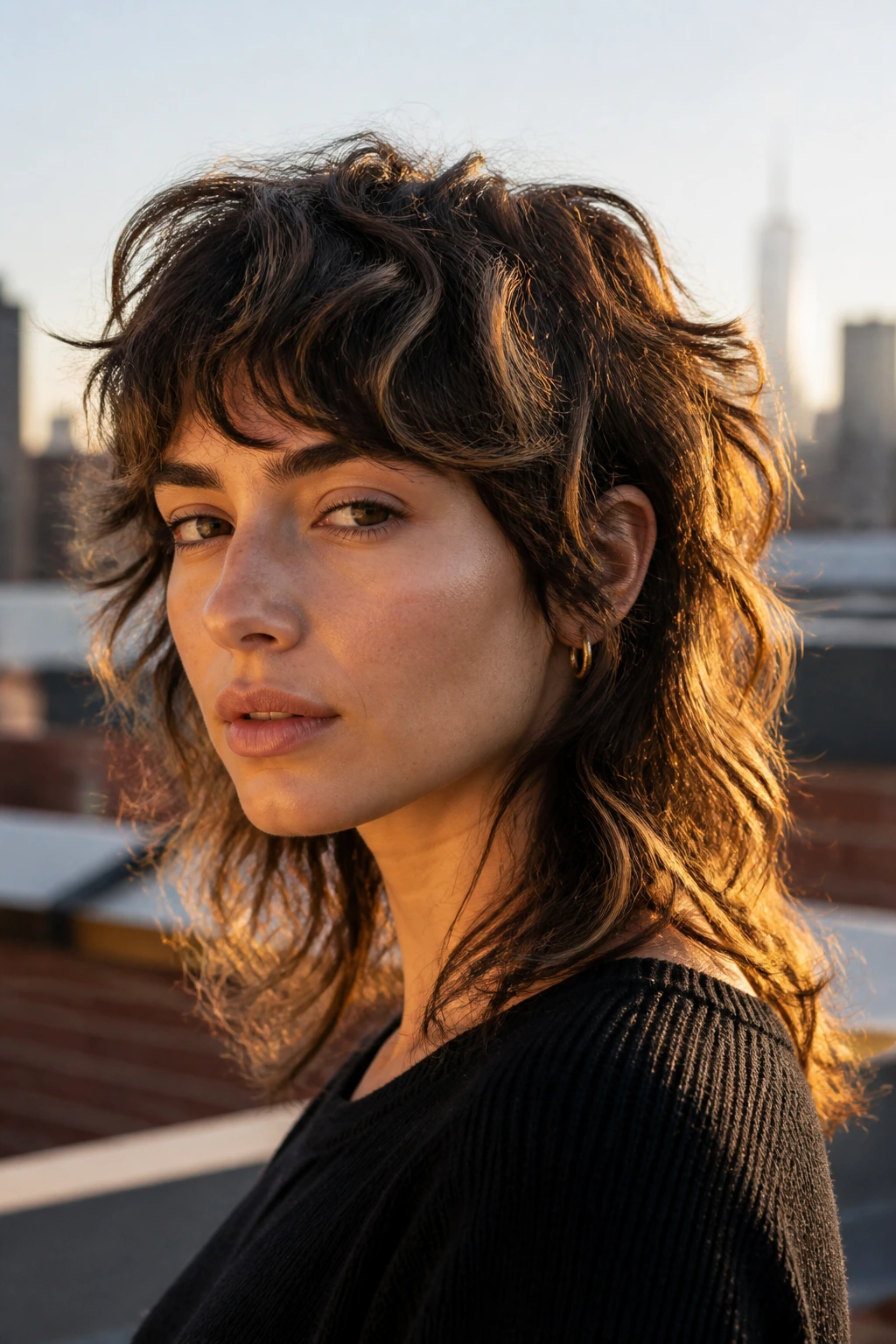
A full mullet can be a lot. A wavy mullet-lite is calmer. The front and top stay shorter, the back keeps a little extra length, and the layers are blended enough that the shape feels modern instead of costume-y.
This cut shines when your hair already bends on its own. Waves give the whole shape movement, and the different lengths make the texture look intentional. It also works nicely with balayage because the varying lengths let the lighter pieces fall in different places, which makes the color look more scattered and dimensional.
I wouldn’t choose this if you want a polite haircut. I’d choose it if you want something with edge that still feels wearable on a normal Tuesday. That’s a narrower lane, but it’s a useful one.
15. Razor-Cut Bob
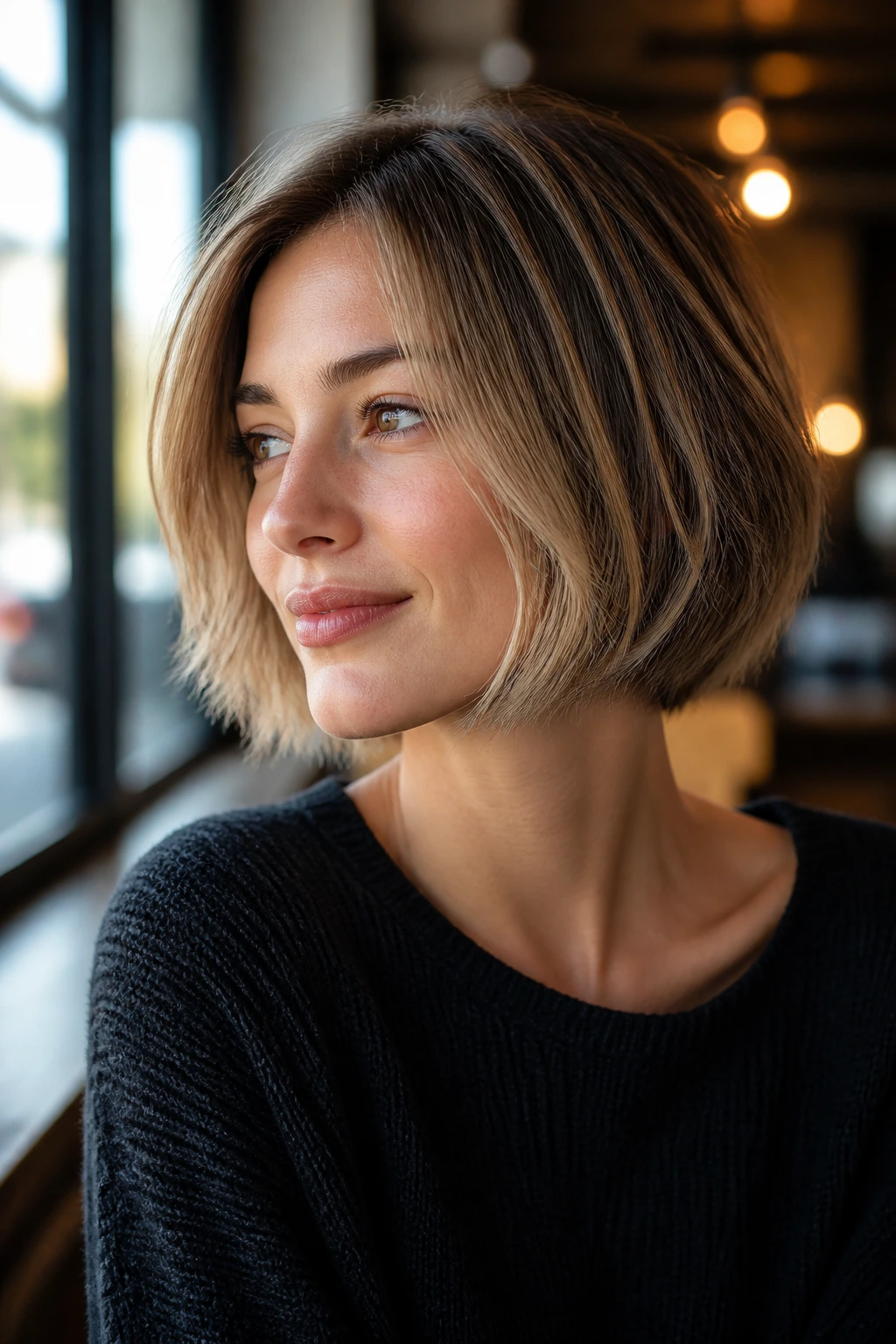
A razor-cut bob has softer, feathered ends than a classic scissor-cut bob. That matters if your hair is straight or fine, because the razor can take the edge off the perimeter and make the cut look lighter. The finish is piecey, almost airy, when it’s done well.
The caution: a razor is not a shortcut for every texture. On very coarse or curly hair, too much razoring can leave the ends looking frayed instead of soft. But on the right head of hair, the result is a bob that moves with a little swing and doesn’t sit like a hard line.
I like this cut when someone wants texture without a shag. It’s less layered than a full shaggy crop, but more alive than a blunt bob. That middle ground is hard to get right, which is why the tool and the hand behind it matter so much.
16. Graduated Bob
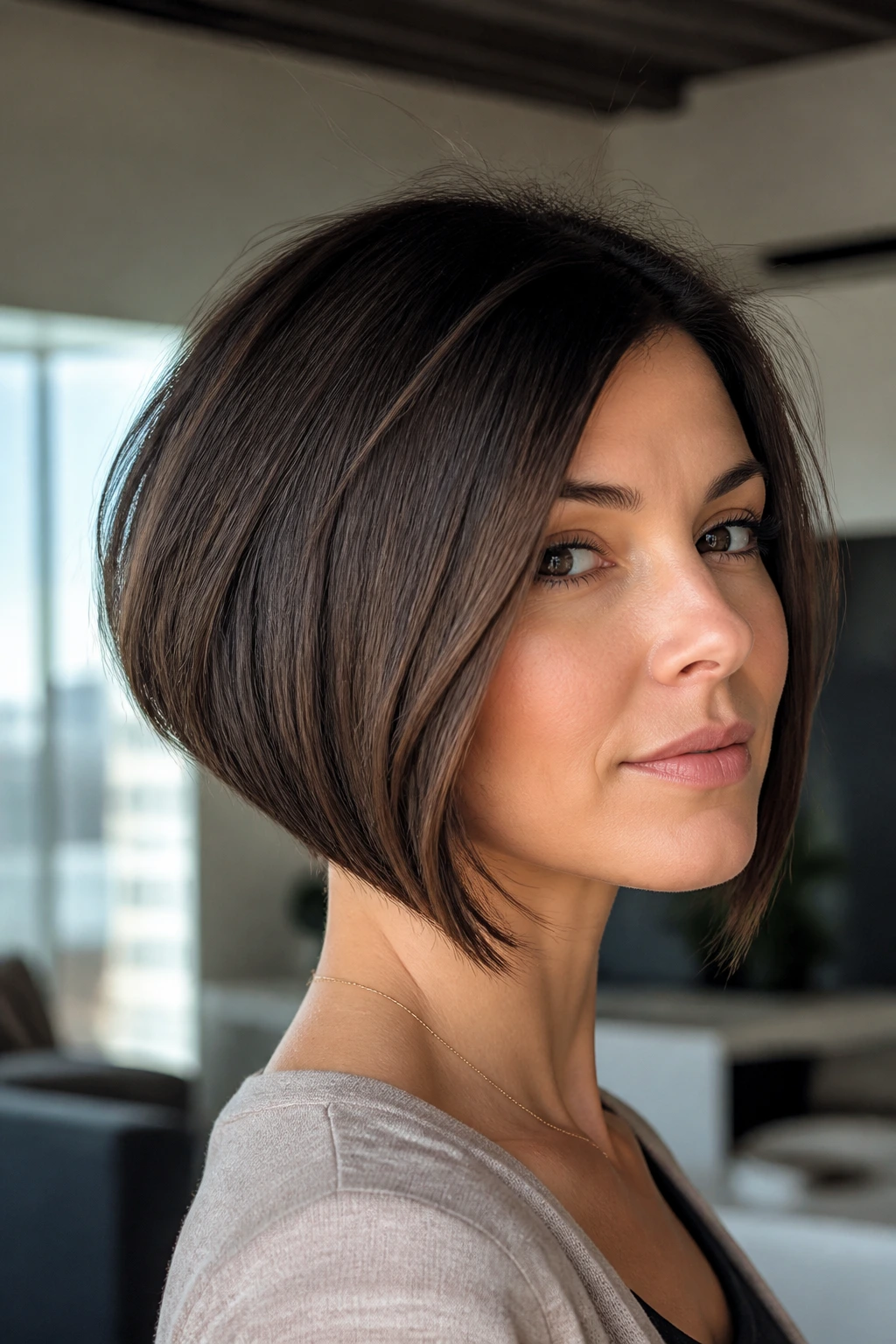
A graduated bob builds weight in the back and eases forward toward the front. The shape is clean, but the graduation keeps the back from feeling heavy. It’s the kind of cut that looks precise from the side and still has enough movement to avoid stiffness.
Why the shape matters
The graduation gives the hair a built-in curve, which helps the cut sit close to the head at the back while lengthening toward the jaw. That makes it useful for dense hair that wants to puff outward. It also gives fine hair a fuller-looking outline at the nape, especially when the ends are styled with a soft bend.
If you like a sharper silhouette than a shag but less bluntness than a one-length bob, this is a strong middle path. It’s neat. Not boring. There’s a difference.
17. Two-Tier Bob
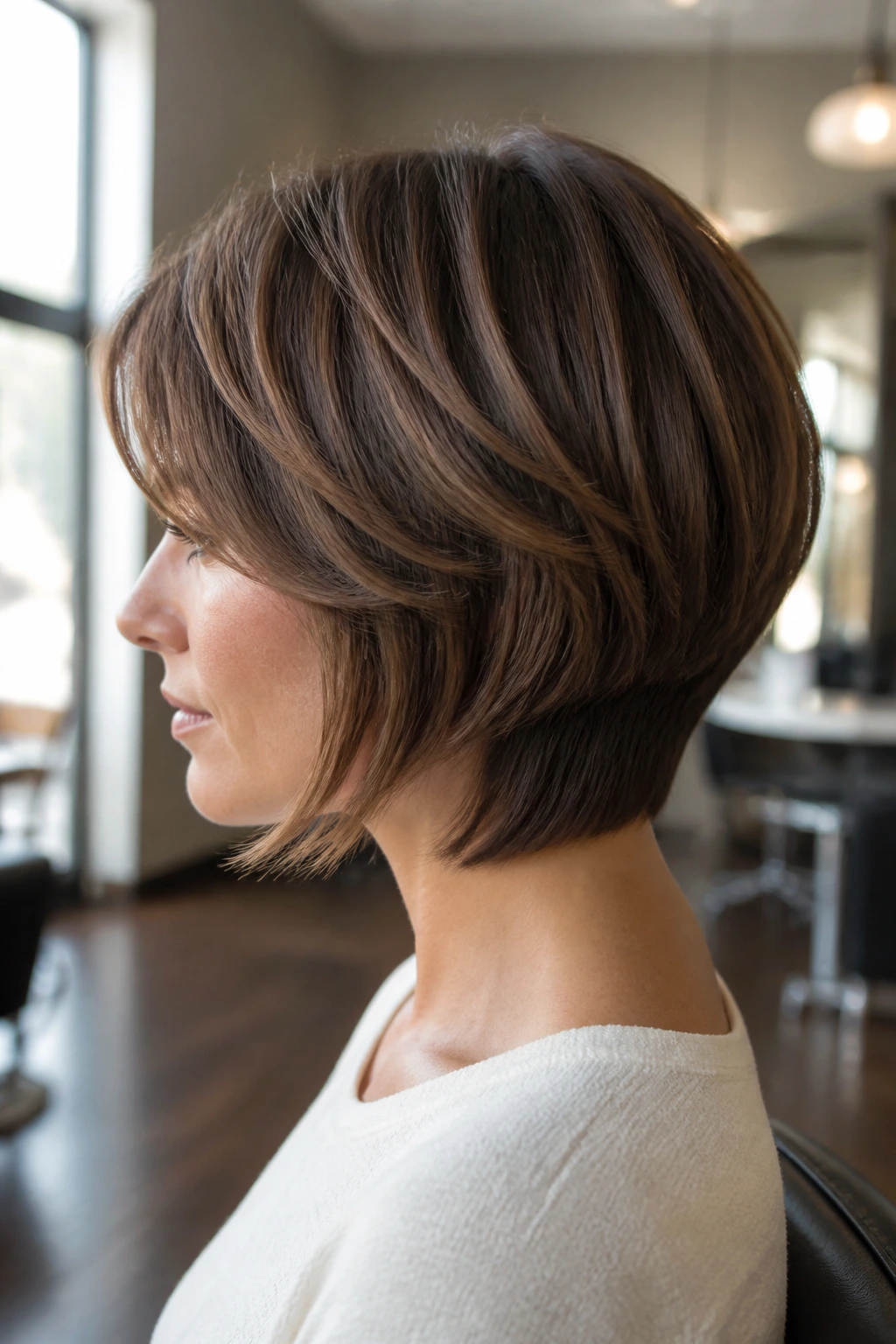
A two-tier bob is exactly what it sounds like: two visible lengths working together. The top layer sits a bit shorter and the lower layer hangs beneath it, which creates a break in the outline without making the cut messy.
That break is where the movement comes from. Hair that’s split into two levels doesn’t move as one solid piece, so the style has a little swing even when it’s not freshly styled. It can be subtle or obvious depending on how dramatic the difference in length is.
This cut does best on medium to thick hair, where the layers can show without disappearing. On very fine hair, the effect can vanish unless the texture is handled carefully. When it works, though, the shape has a nice tension to it — structured, but not stiff.
18. Soft Undercut Pixie
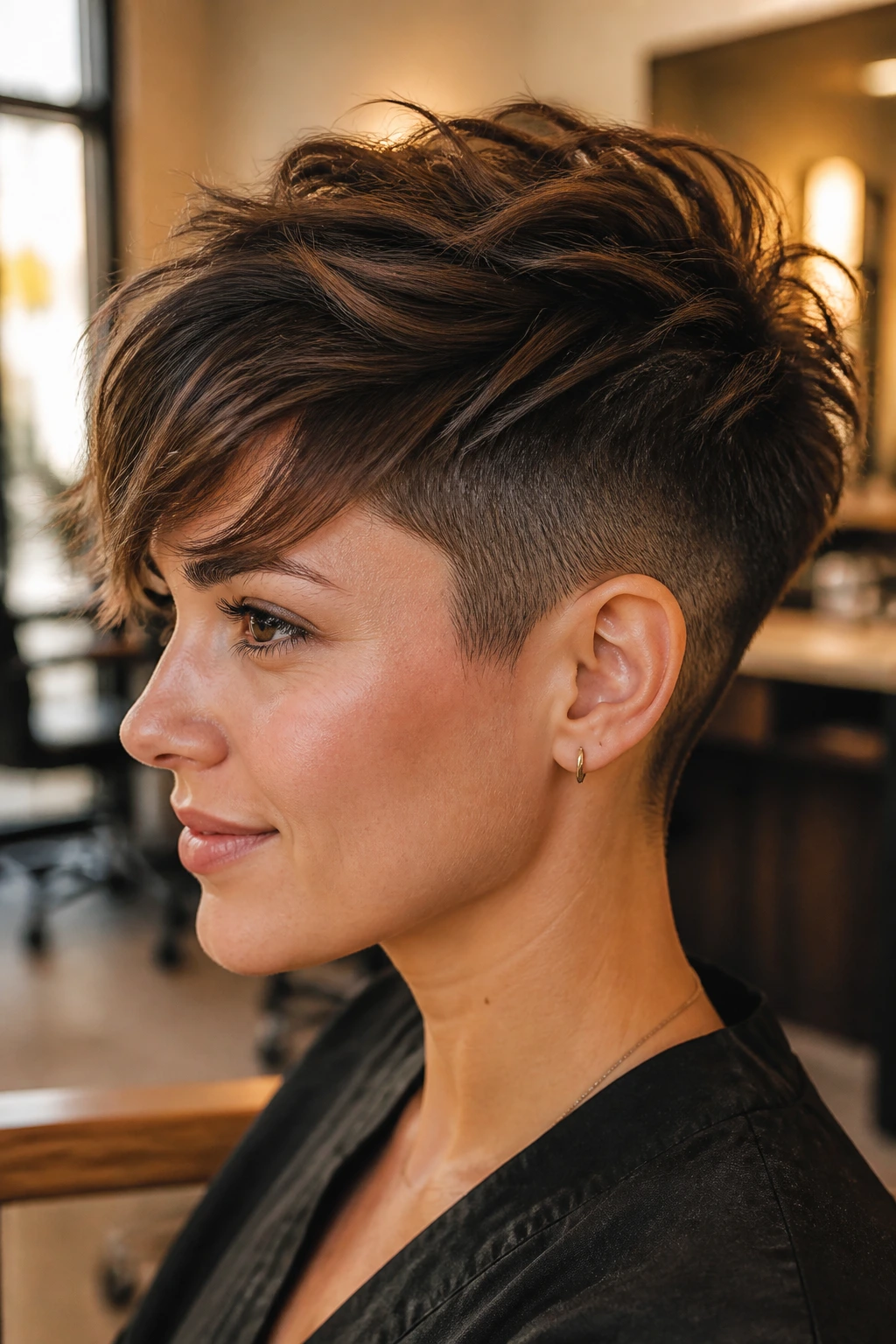
A soft undercut pixie removes bulk from underneath while keeping the top layers long enough to style. That hidden removal is the whole reason the cut feels lighter. You get shape and movement on top, but the sides and nape don’t balloon out.
This is one of the smartest short layered haircuts for thick, coarse, or very dense hair. Less hair under the surface means less drying time and less chance of the top sitting on a heavy base. The cut looks clean from the outside, which is the nice trick here. People may not see the undercut immediately, but they’ll notice that the hair lies closer to the head.
It does need regular shaping. If you let it go too long, the shorter underlayer can lose its clean edge and the top starts to sit oddly. Keep that in mind before you fall in love with the idea and forget the upkeep.
19. Layered Bowl Cut
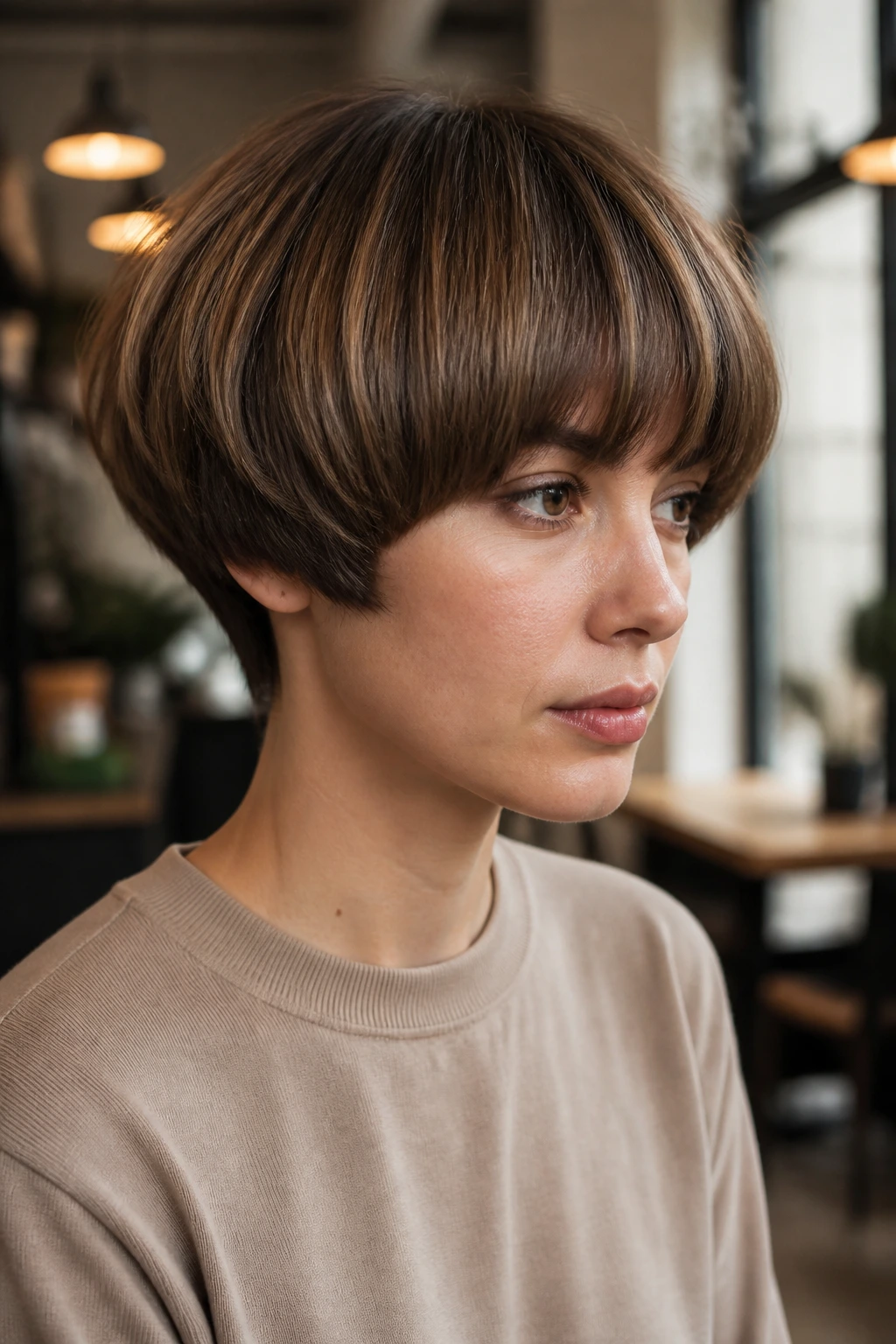
A layered bowl cut sounds far more rigid than it needs to be. The modern version keeps the rounded outline but softens it with internal layers so the shape doesn’t feel like a blunt helmet. That shift changes everything.
The soft layering gives the cut a little air around the head, which is why it works better now than the hard, old-school versions many people remember. It looks especially good on straight hair with a bit of natural swing, since the curve of the shape shows clearly. Add subtle highlights and the rounded layers start to read as texture instead of one block of color.
This is a cut for someone who likes shape. Not chaos. Shape. It has a clear silhouette, and that’s the appeal.
20. Face-Framing Bob
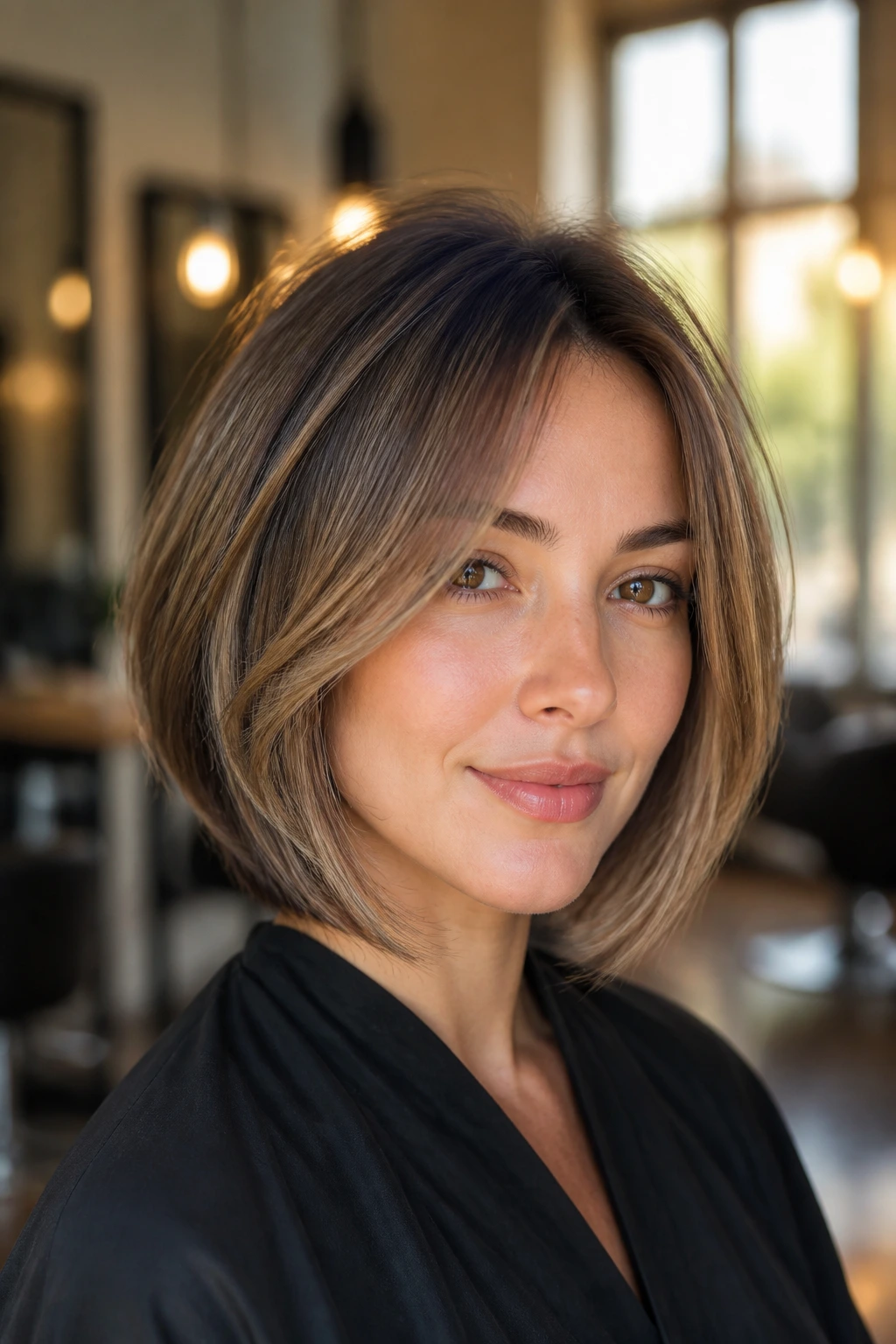
What if you want movement near the face but don’t want to change the back very much? That’s where a face-framing bob earns its place. The perimeter can stay clean, while the front layers angle toward the cheekbones, chin, or collarbone depending on the length.
That front movement is flattering because it softens the line around the jaw without taking away the bob’s structure. It’s also one of the easiest ways to make balayage show up. The lighter pieces around the face get more motion, so they catch the eye with less effort.
This cut is a quiet workhorse. It gives shape without making the whole head look heavily layered. If you want something polished that still feels like it has a pulse, this is a very safe bet.
21. Piecey Crop
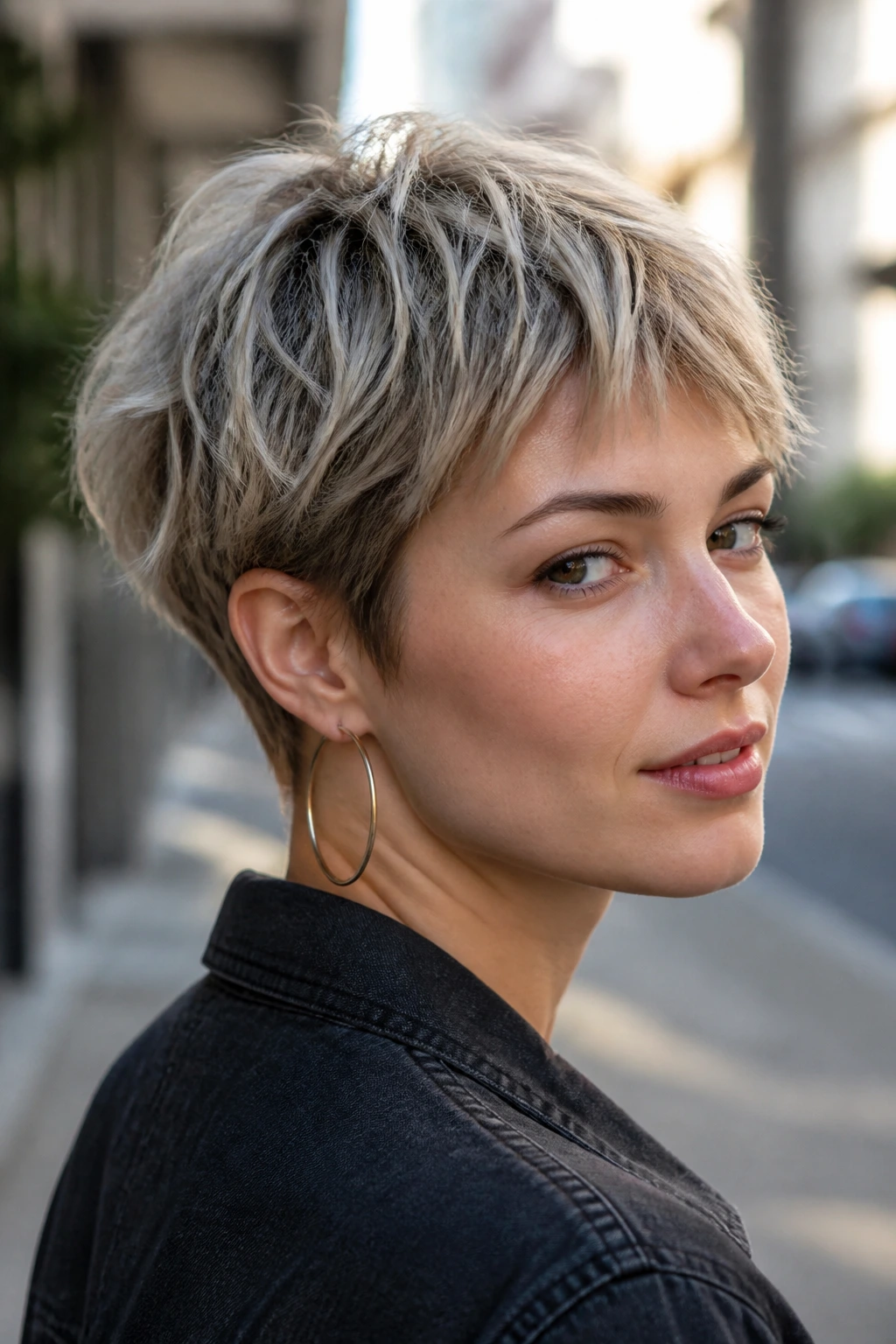
A piecey crop is built for separation. The layers are shorter, the texture is deliberately broken up, and the style usually has enough room at the crown to avoid that flat, close-cut look. It is not a hair that wants to sit still.
Best when you want movement first
This cut works because the pieces are visible. You can see the direction in the hair, especially if you work in a bit of paste or wax at the ends. The shape is great for flatter hair types that need a little lift and also for anyone who likes a slightly undone finish.
- Keep the product light: a small amount goes farther than you think.
- Use your fingers, not a brush: that keeps the pieces from merging.
- Best on day two: the texture often looks better after the natural oils settle in a bit.
22. Short Layered Cut With a Long Fringe
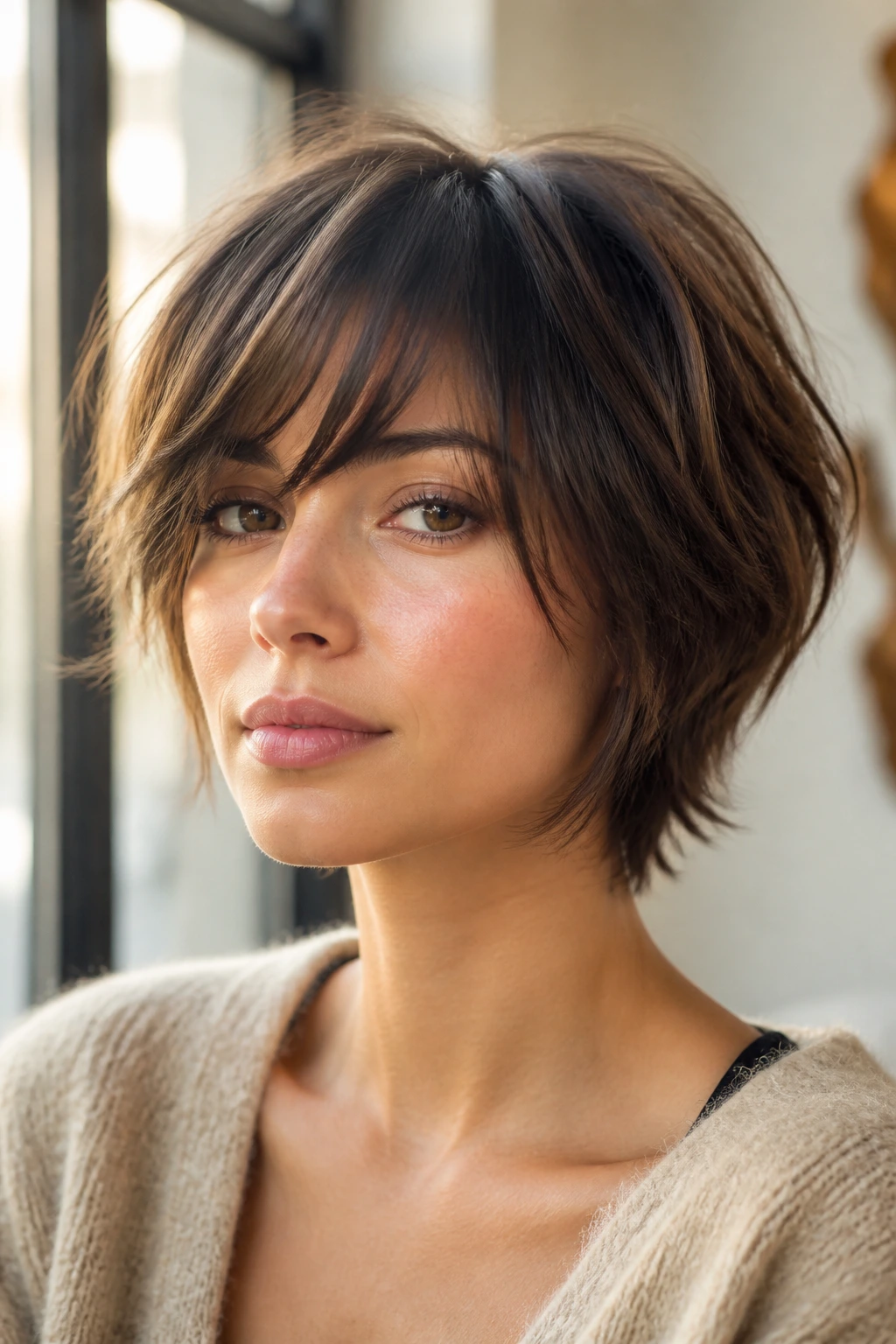
A long fringe can change a short layered cut faster than almost anything else. It draws the eye downward and across the face, which softens the rest of the shape. When the fringe is long enough to graze the eyebrows or cheekbones, it gives you styling options without forcing you into a heavy bang.
The rest of the haircut can stay relatively simple. That’s the appeal. You get movement from the fringe, then quiet support from shorter layers around the sides and back. It’s a good option if you want to keep the neckline clean but still have a bit of drama in front.
This cut works especially well if you like to wear your hair tucked behind one ear. The fringe still falls forward enough to balance the short sides, which makes the whole shape feel considered.
23. Voluminous Swoop Bob
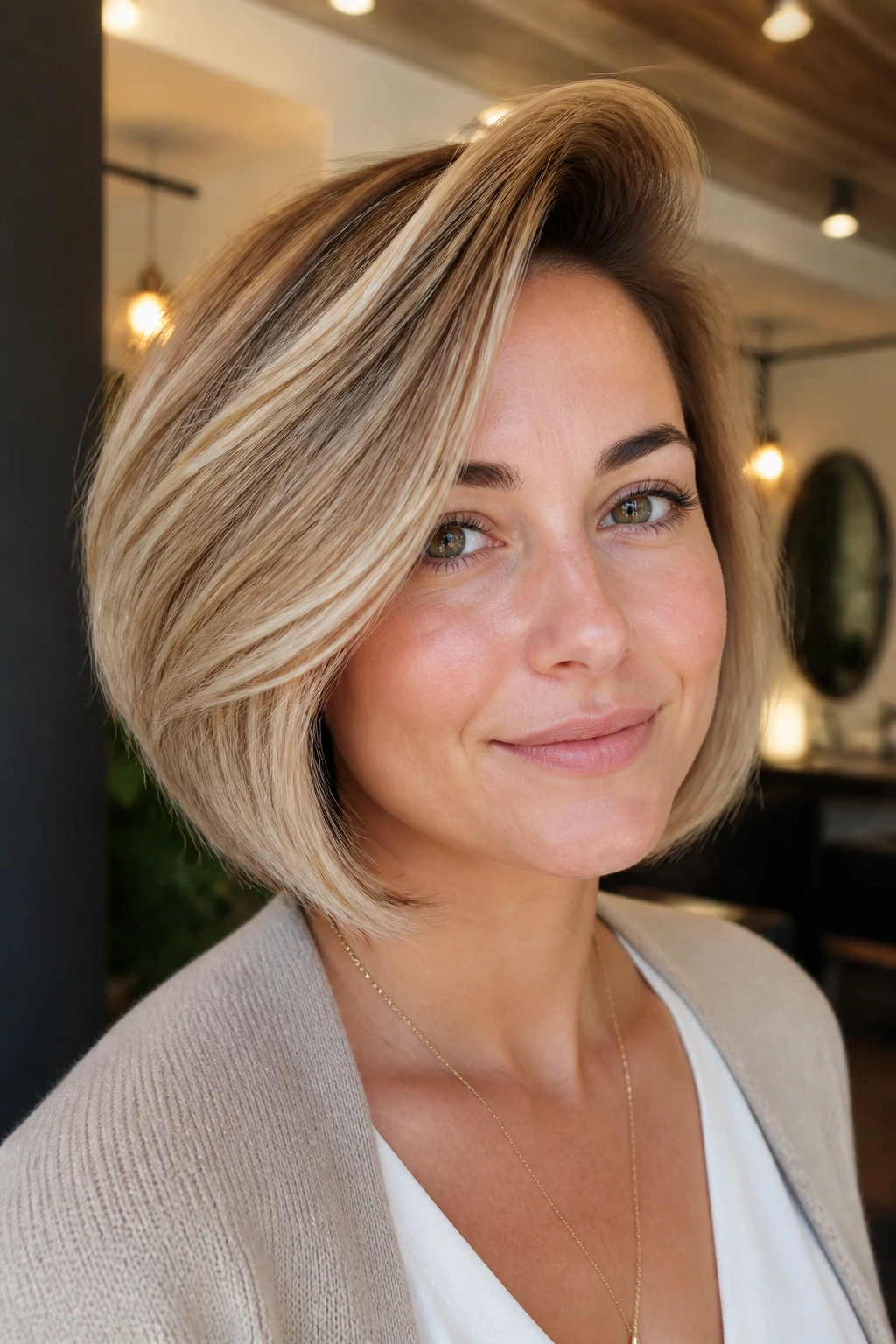
A voluminous swoop bob is built around a side-swept bend that lifts the front and glides into the rest of the cut. It’s softer than a sharply angled bob and more lifted than a plain chin-length shape. That swoop is where the body comes from.
The best versions use a little graduation in the back and longer layers through the top, which lets the hair curve instead of hanging straight. If your hair is fine, the swoop gives the illusion of fullness at the root. If your hair is thick, the shape keeps the front from feeling heavy.
This is a good cut for someone who likes visible styling. A quick blow-dry with a round brush or a large brush and nozzle can make the whole thing feel polished in under ten minutes. No need to make it fussy.
24. Airy Razor Shag
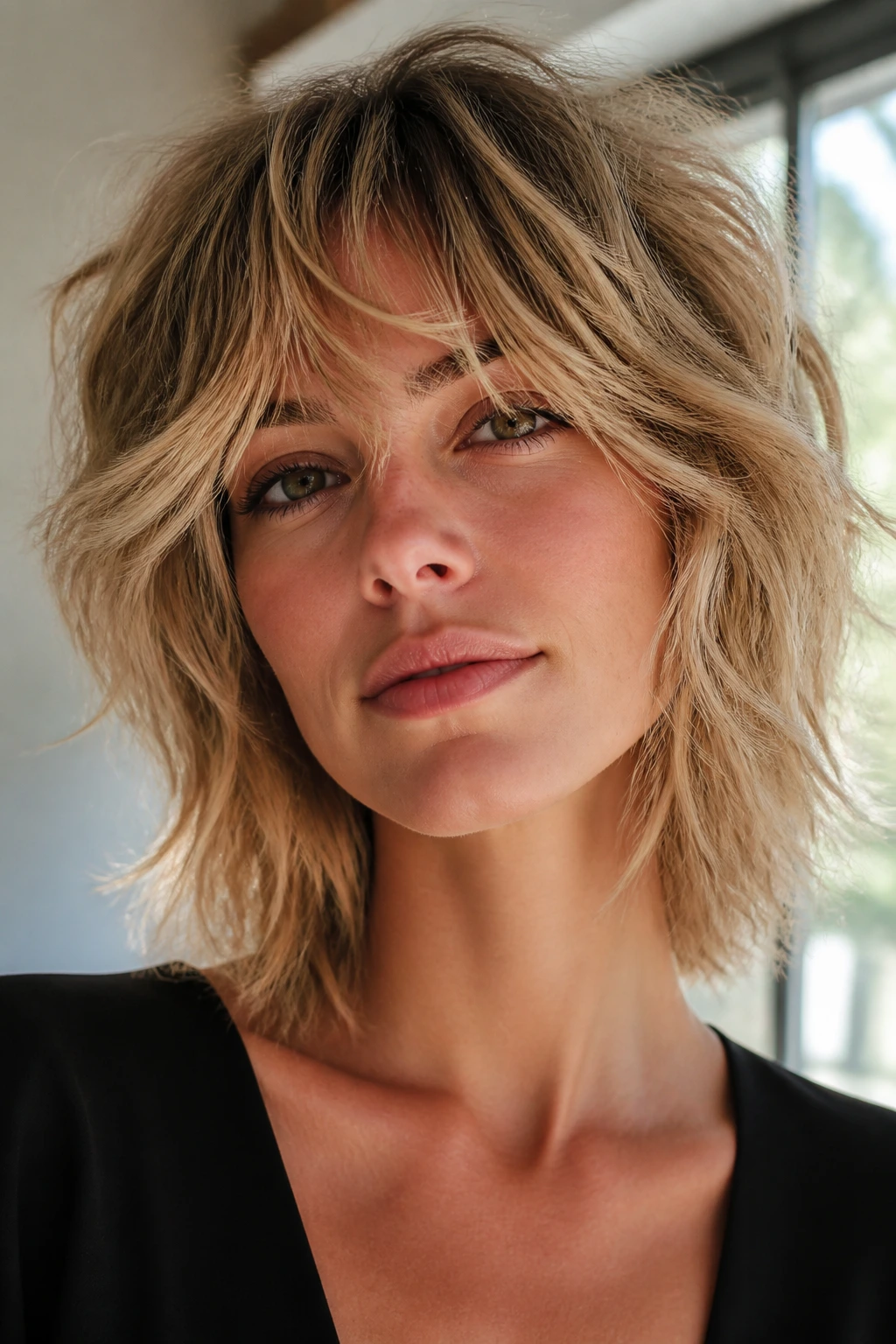
Does a shag have to look messy? Not at all. An airy razor shag keeps the choppy structure of a shag but softens the ends so the hair feels lighter and less overbuilt. The razor work gives the layers a little edge without creating hard steps.
This is one of the best options if you want movement to show through color. Balayage, especially, looks good here because the varying lengths reveal the light and dark pieces as the hair shifts. The shape also suits wavy hair that wants a bit of room around the face and crown.
I’d call this the cut for someone who likes a lived-in finish but doesn’t want a heavy mullet or a perfectly polished bob. It sits in that useful middle zone. There’s enough structure to feel intentional, enough looseness to feel easy.
25. Classic Short Layered Cut With a Side Part
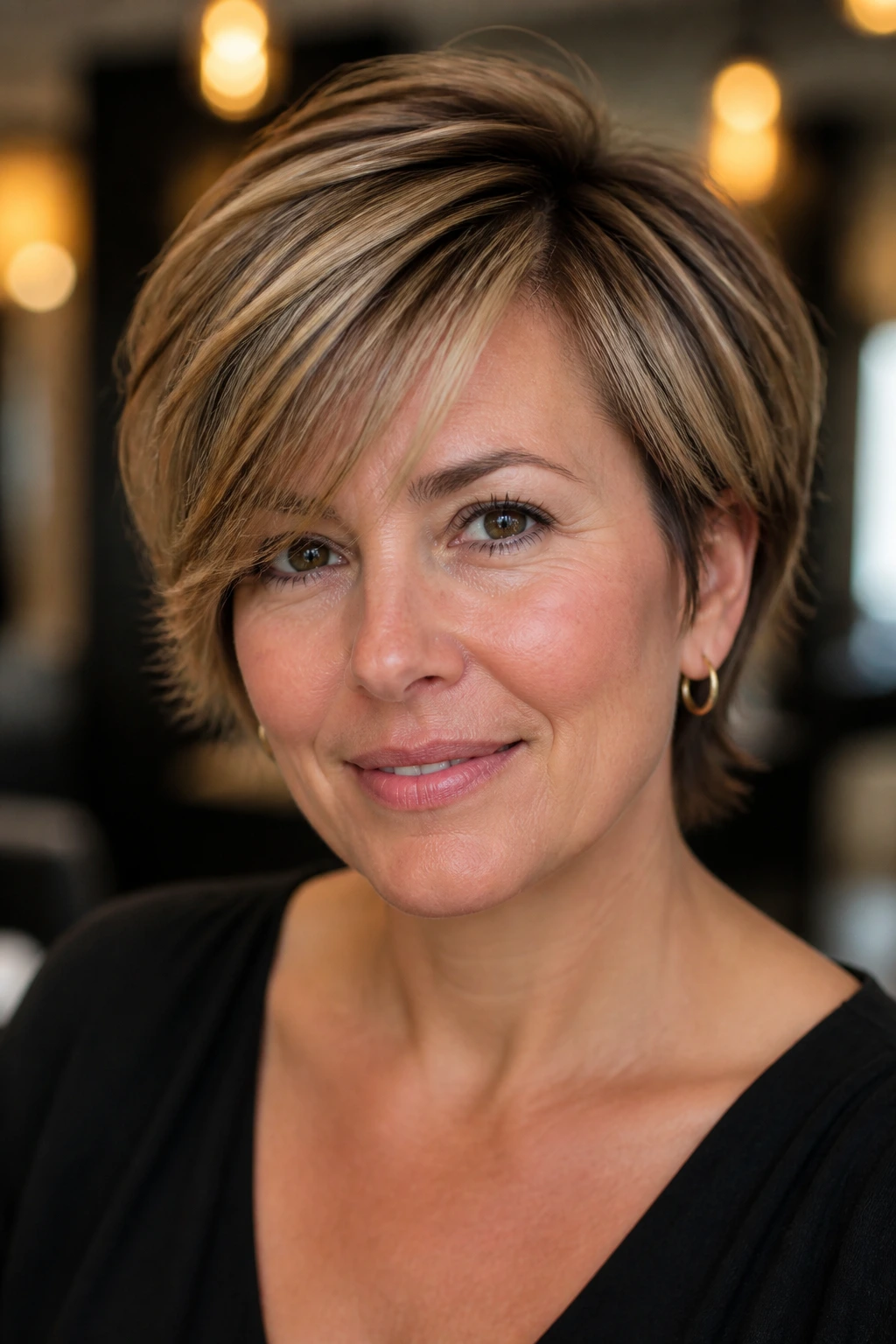
A classic short layered cut with a side part is the kind of haircut that keeps showing up because it works. The side part gives the shape a lift at the root, the layers stop the ends from looking heavy, and the overall cut stays simple enough to style without a full production.
It’s the least flashy style in this list, and that’s part of its charm. You can wear it smooth, tuck one side back, add a little wave, or let it dry naturally with a bit of mousse. The shape adapts instead of fighting you, which is not something every short haircut can claim.
This is the one I’d recommend to someone who wants movement, body, and a clean grow-out. Nothing dramatic. Nothing difficult. Just a cut that keeps its shape while still looking alive.
Why Short Layers Make Balayage and Highlights Read Better
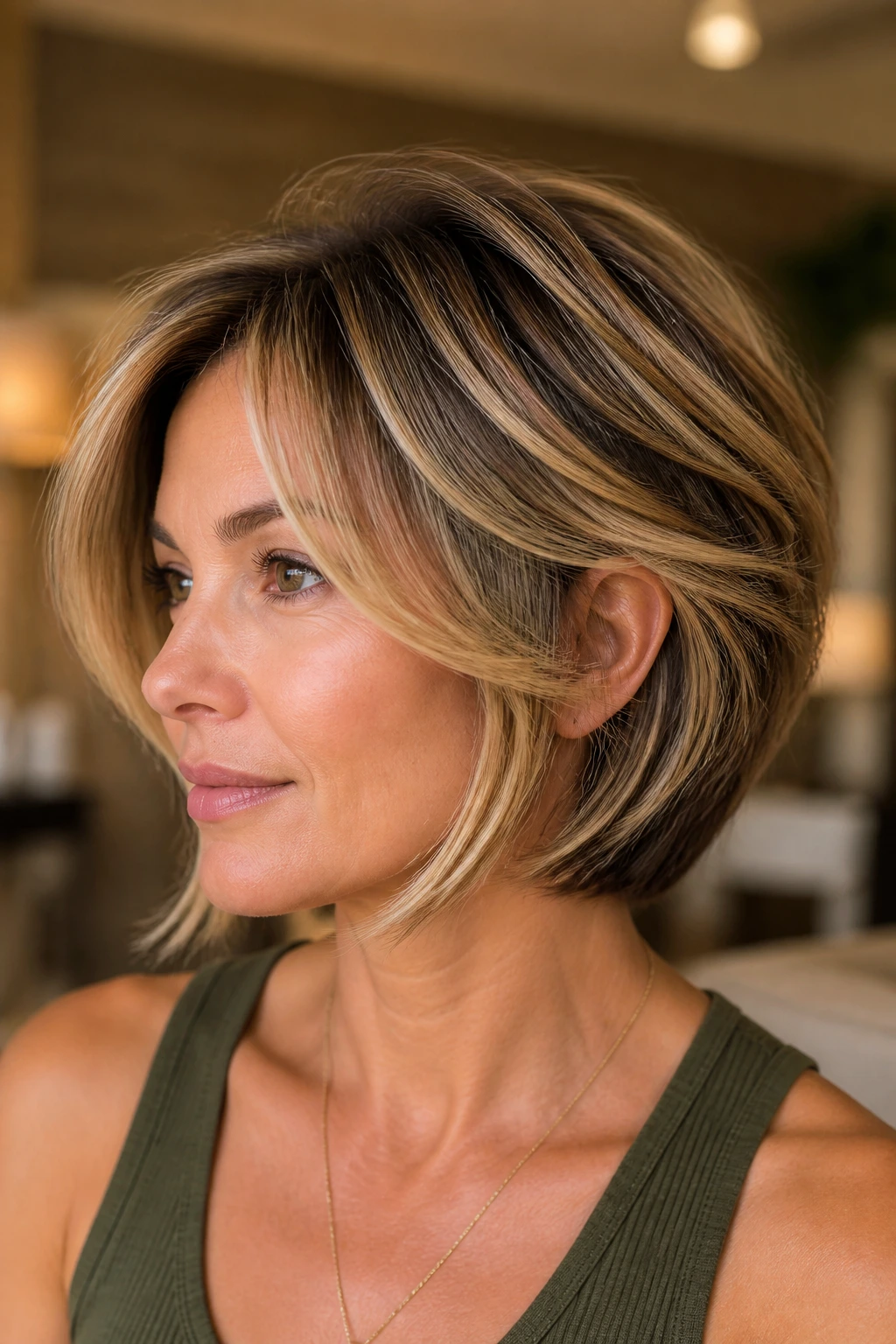
Color needs space to move. On a one-length cut, highlights can look painted on top of the shape instead of living inside it. Short layered hair changes that because the hair falls at different lengths, which lets the lighter pieces flash, tuck, and overlap as the head turns.
That is especially helpful with balayage, where the color is supposed to look hand-painted and natural. When layers are placed well, the lighter pieces don’t disappear into one flat curtain. They show near the face, around the crown, and at the ends, which gives the hair a little depth even when the styling is simple.
There’s a practical side too. If your color has lighter ends or a brighter money piece, layers keep those sections visible instead of hiding them under a heavy perimeter. It’s one reason short layered cuts often feel more expensive than their styling time would suggest.
Essential Tools for Short Layered Haircuts
-
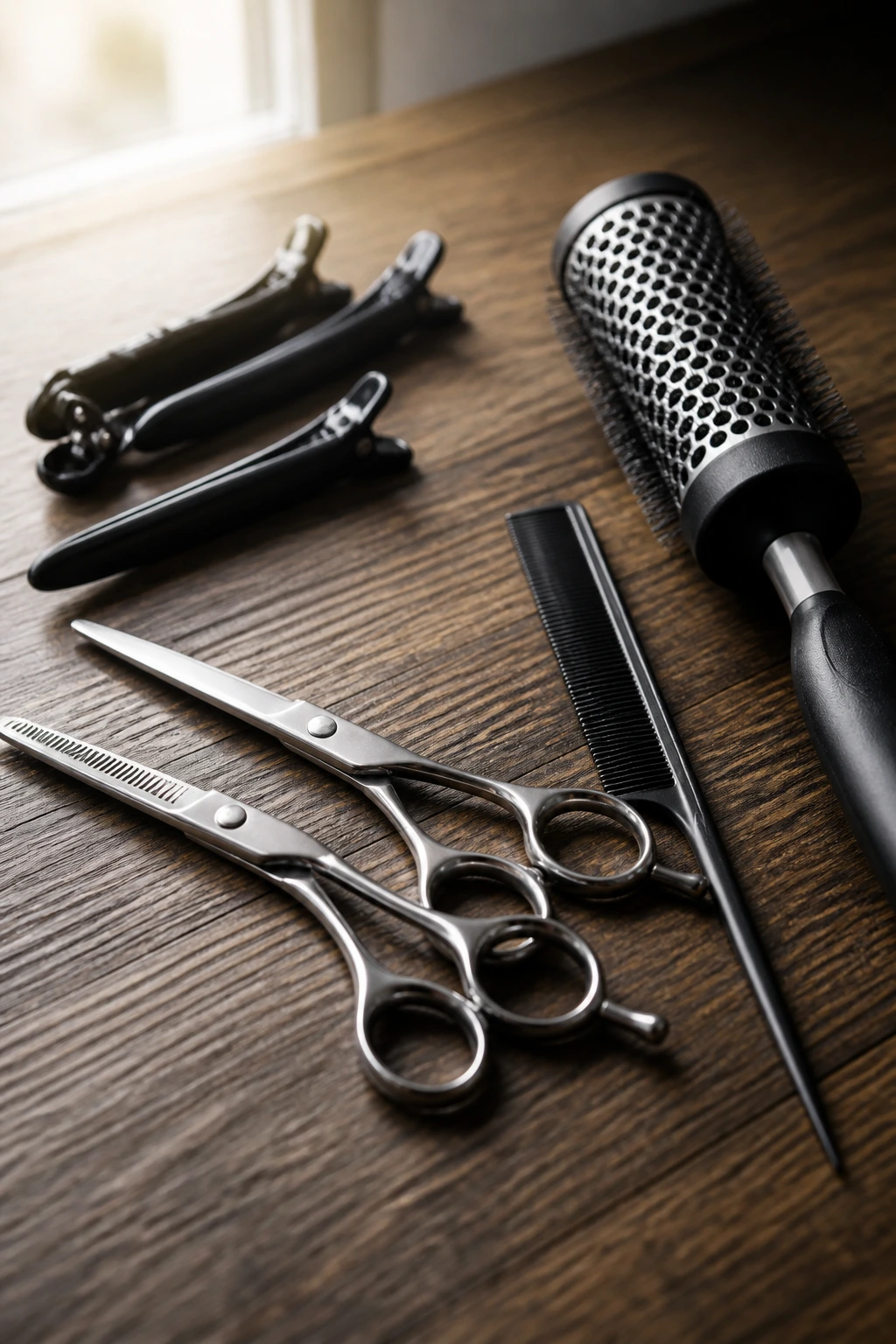
Sharp hair-cutting shears: Dull scissors chew the ends and leave short layers looking frayed.
-
Tail comb: Handy for clean partings and for mapping where the layers sit.
-
Sectioning clips: These keep the crown and sides separated when you’re blow-drying or trimming.
-
Blow dryer with a concentrator nozzle: Directs the air so the layers bend instead of puffing out.
-
1-inch round brush: The best size for giving short bobs and crops a bit of curve at the ends.
-
Vent brush or paddle brush: Good for rough-drying fine hair and building root lift fast.
-
Diffuser: Worth having if your hair is wavy or curly and you want the layer pattern to hold.
-
Lightweight mousse: Gives body at the roots without making the cut stiff.
-
Texturizing spray or dry shampoo: Useful for piecey crops, shags, and second-day styling.
-
Fine mist water bottle: A small reset tool when a section dries the wrong way and needs a second pass.
How to Ask for the Right Layer Pattern at the Salon
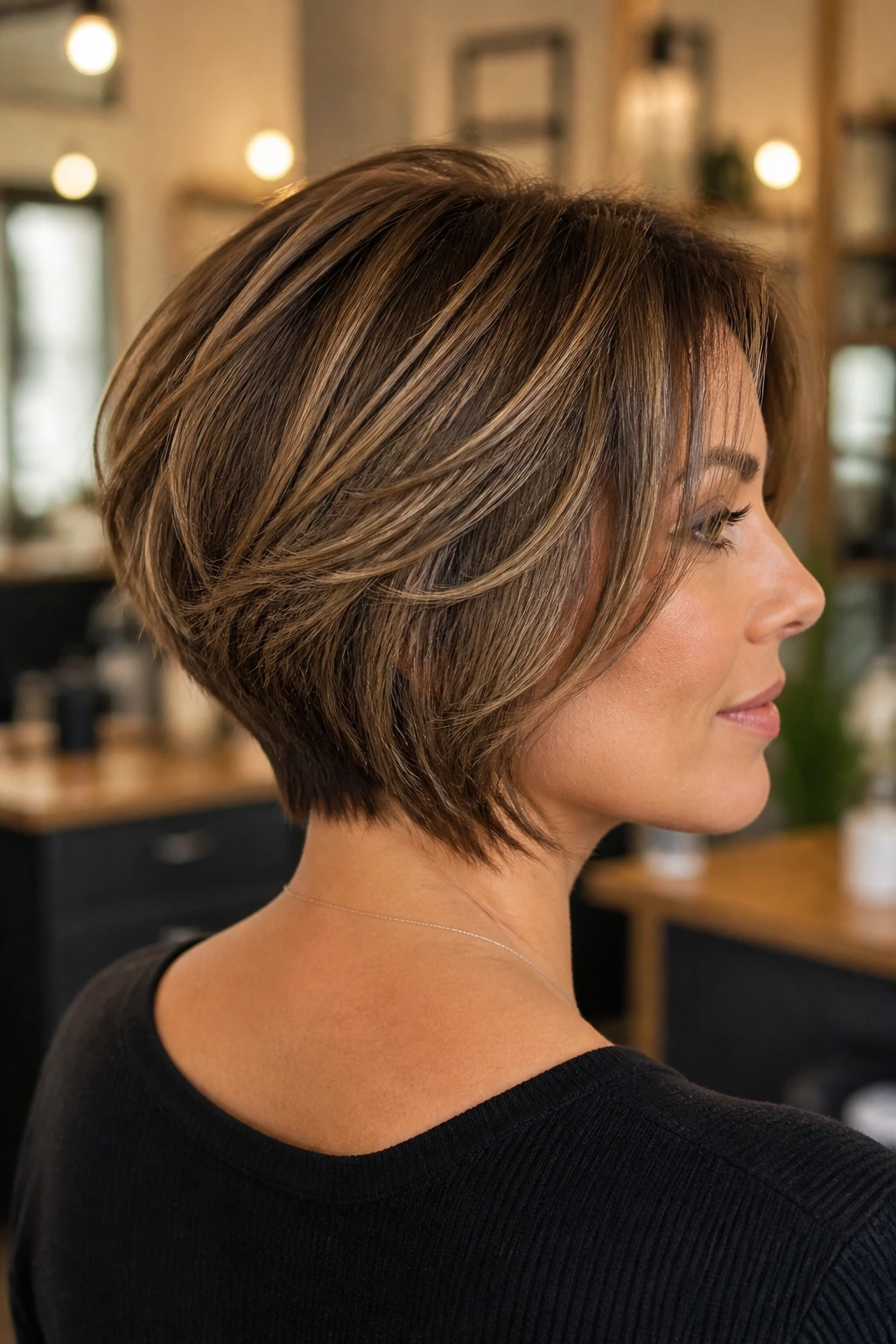
Bring photos, yes, but bring the right ones. Show the front, side, and back if you can. One angle is never enough with short hair, because the back and nape can change the whole silhouette. A bob with soft movement on one model can become a stacked shape on another, depending on how the layers are cut.
Say the length first. Tell the stylist where you want the perimeter: chin, jaw, cheekbone, or just below the ears. That gives the cut a boundary. Without it, “short layers” can mean anything from a soft bob to a very cropped shag.
Describe your styling habit. Air-dry, diffuser, round brush, flat iron, air-dry plus one product — all of that matters. A haircut built for smooth blow-drying will not behave the same way if you leave it to dry on its own.
Mention density, not just texture. Thick hair, fine hair, and coarse hair each need different weight removal. A stylist can place layers very differently depending on whether the goal is lift, control, or both.
Be honest about your tolerance for upkeep. A bixie or soft pixie is not a set-it-and-forget-it haircut. A longer layered bob can go a bit longer between trims. Say which side of that line you live on.
Small Styling Tweaks That Bring Out Body and Swing
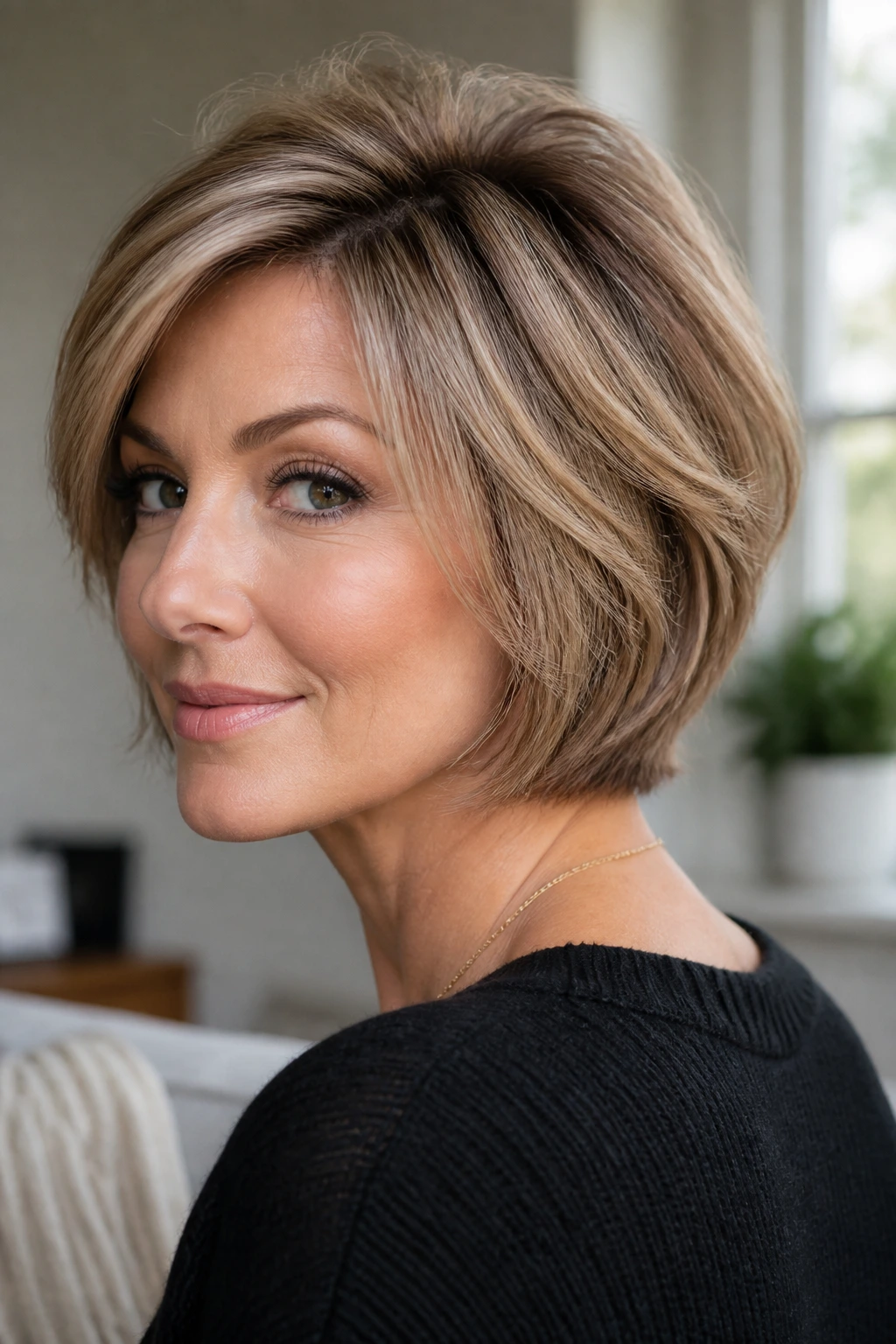
Root Lift: Mousse at the crown does more for short layered hair than a mountain of oil ever will. Work it into damp roots, then blow-dry the top first so the body sets before the rest of the hair goes limp.
End Bend: A round brush or a quick pass with a flat brush and a tucked-under wrist can stop the ends from flaring outward. That tiny bend makes the haircut look intentional instead of forgotten.
Piece Separation: A little texturizing spray or a dab of paste on the mid-lengths breaks up heavier layers. Use it on the pieces, not the scalp, or the cut will lose lift fast.
Color Placement: If you wear highlights or balayage, keep the brightest pieces around the face and through the top layers. Those are the sections that move most, so the color reads better there than buried underneath.
Night Care: Sleep on a silk pillowcase or loosely tuck the hair into a soft clip. It keeps the layers from getting crushed into one strange bend overnight.
Keeping the Cut in Shape Between Trims
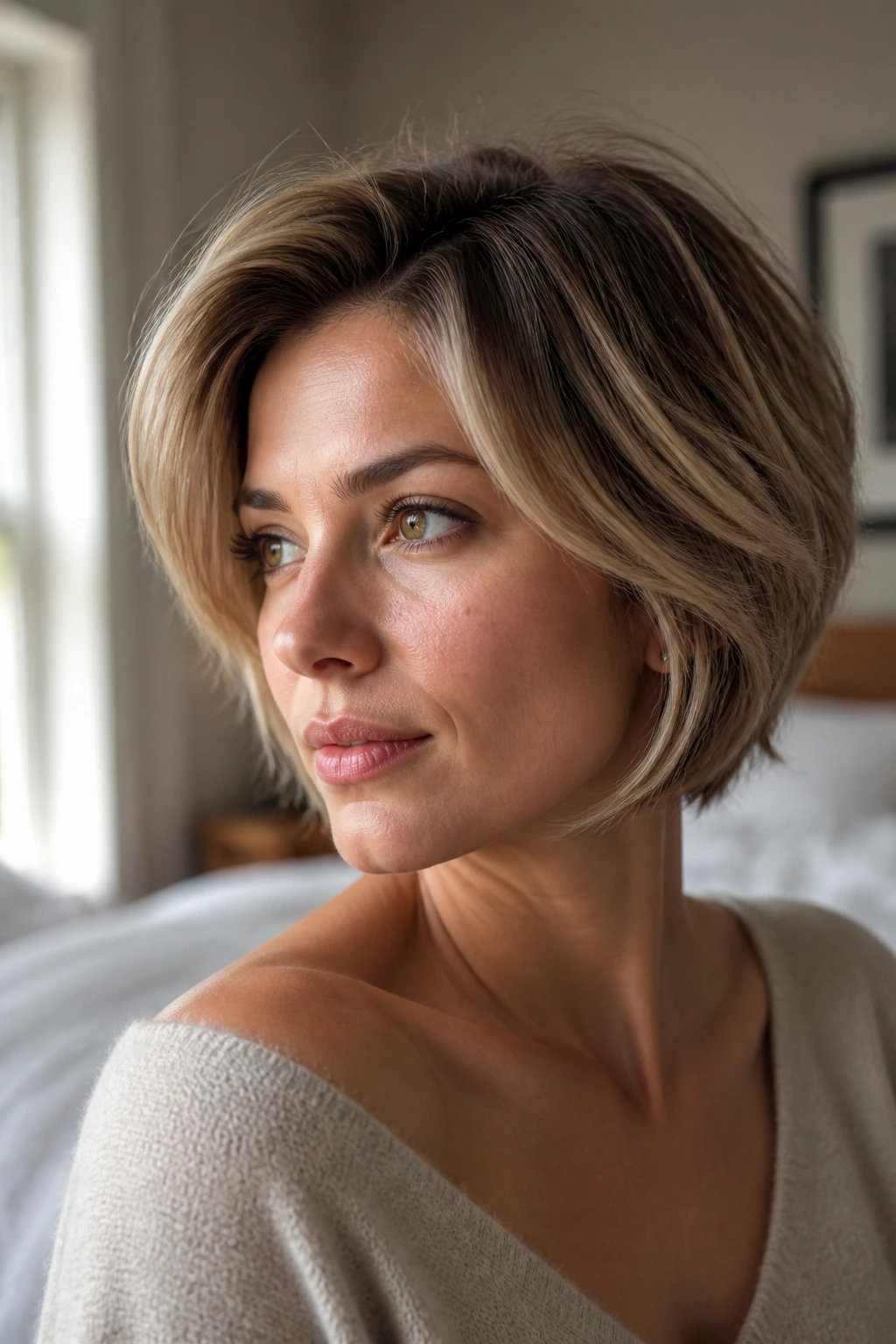
Short layered hair grows out with attitude. A little growth can soften the shape in a nice way, but too much and the balance starts to slide. For most layered bobs, a trim every 6 to 8 weeks keeps the perimeter clean. Pixies, bixies, and undercut shapes usually need attention closer to 4 to 6 weeks because the neckline and sides show wear fast.
If you’re stretching a trim, dry shampoo can buy you a little time, especially around the crown. A quick pass with a round brush at the ends helps too. Don’t try to force an old layer pattern back into place with too much heat; that usually makes the hair bend in odd spots and dry out the ends.
Color maintenance matters as well. If the cut has balayage or highlights, the layers may make regrowth show a little sooner around the part line and face. A gloss or toner service can keep the dimension from looking muddy, especially on shorter cuts where every strand is visible.
Common Mistakes That Flatten Short Layers
-
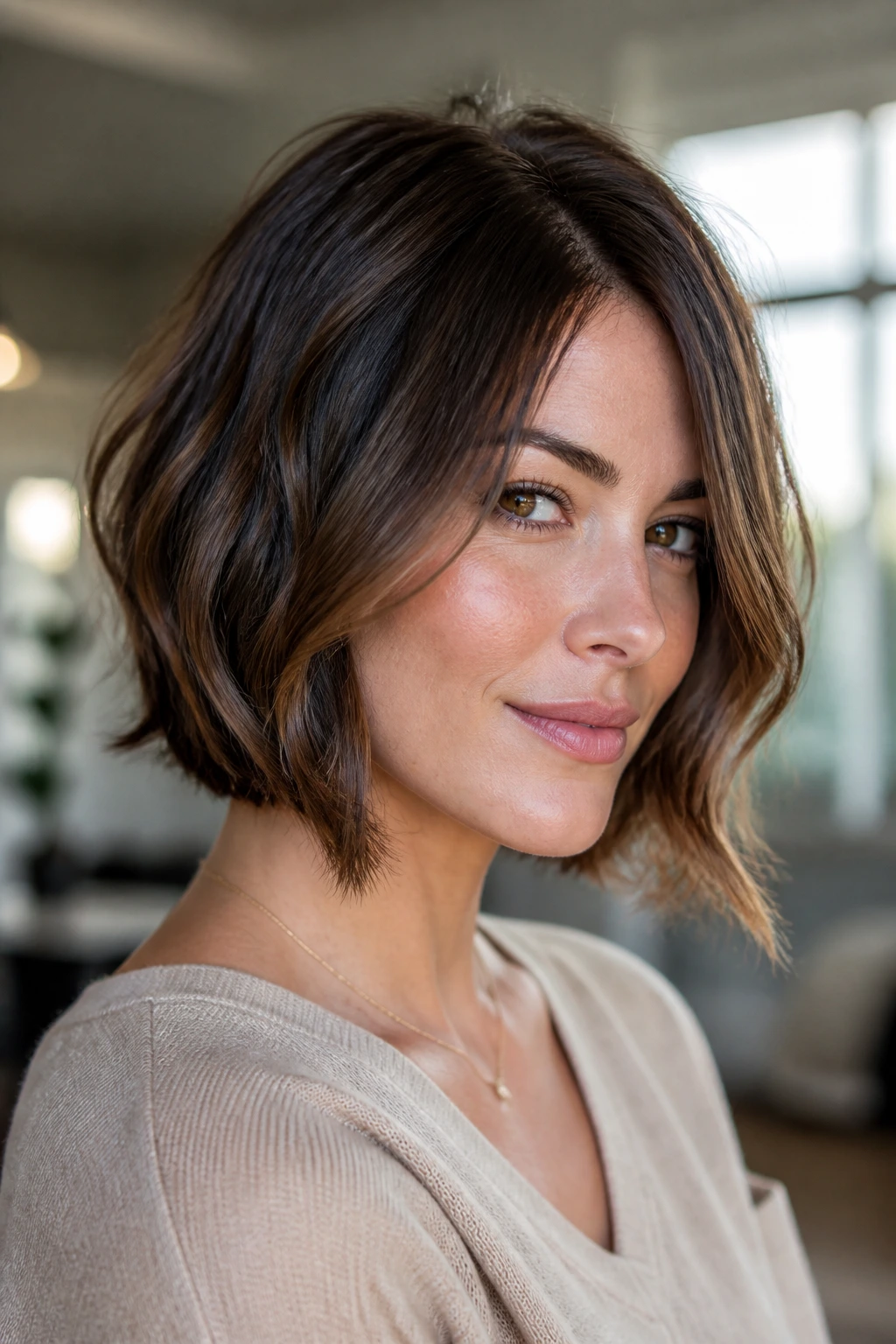
Starting the layers too high: If the shortest pieces are cut too far up the head, the top can look wispy while the bottom looks heavy. The fix is a lower starting point and softer internal removal.
-
Thinning thick hair in the wrong places: Over-thinning around the perimeter creates frizz and a see-through outline. Bulk should come out inside the shape, not by hacking away at the visible edge.
-
Ignoring the natural bend: Straight hair, wavy hair, and curly hair all spring differently. If the cut fights the hair’s habit, the layers kick out or collapse. The fix is to cut with the texture in mind, not against it.
-
Using too much product: Short layered hair needs a little support, not a coating. Heavy cream or oil can kill the lift and make the ends cling together.
-
Skipping the root finish: A pretty perimeter doesn’t matter if the crown lies flat. A few minutes of lift at the root changes the whole haircut.
Variations for Straight, Wavy, Curly, and Coily Hair
The Straight-Hair Swing Cut: Keep the layers soft and the perimeter clean. Straight hair shows every blunt edge, so the goal is movement without choppiness. A little bevel at the ends does more than a lot of razoring.
The Wavy Air-Dry Crop: Ask for layers that follow the wave pattern and keep the front a touch longer. This lets the hair dry with shape instead of fighting into a pyramid. A little mousse and a scrunch are often enough.
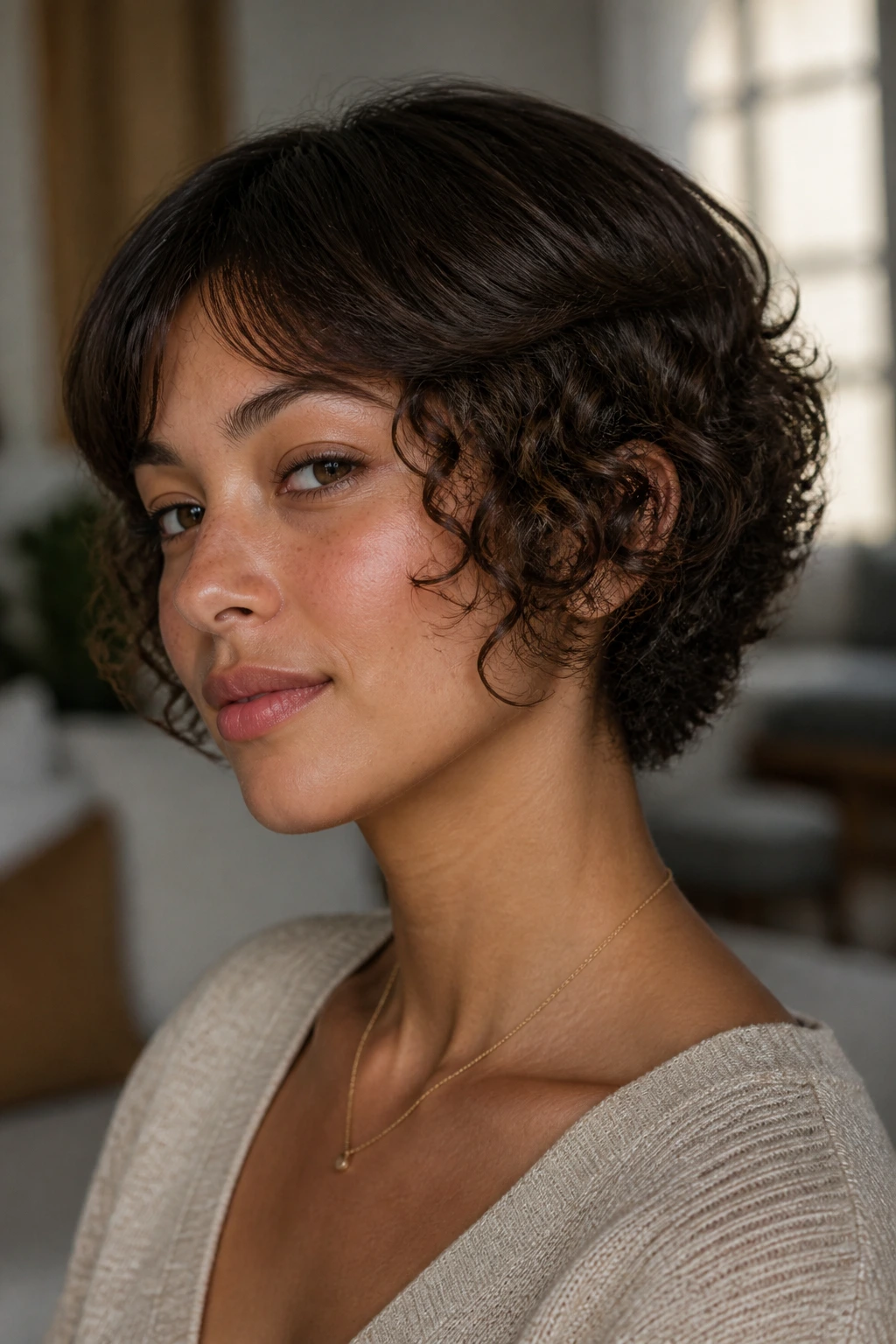
The Curly Halo Bob: Place layers to support curl clumps rather than break them apart. A dry cut or curl-by-curl shaping can help the curls stack with lift at the crown and softness at the sides.
The Coily Rounded Shape: Coily hair usually benefits from carefully placed layers that preserve fullness while removing bulk where the shape puffs out too much. The silhouette should stay round or softly tapered, not sliced thin around the edges.
The Low-Styling Version: If you want the least morning work, keep the layers concentrated near the face and crown, then leave the back more controlled. That gives movement where people see it most and keeps the rest of the cut easier to manage.
Frequently Asked Questions About Short Layered Haircuts
Will short layered haircuts work on fine hair?
Yes, if the layers are placed with restraint. Fine hair usually needs lift at the crown and a perimeter that stays strong enough to look full, so too many short layers can backfire. A soft bob, face-framing cut, or swoop shape usually works better than a heavily shredded style.
Do layers make thick hair look thinner?
They can, but that’s not the same as making it thin. Good layering removes bulk from the right places so the hair sits closer to the head and moves better. The bad version is over-thinning the ends, which makes thick hair frizz instead of soften.
How often should short layered hair be trimmed?
Most short layered cuts need a trim every 6 to 8 weeks. Pixies, bixies, and undercut shapes often need a tighter schedule, closer to 4 to 6 weeks, because the outline changes fast. If the nape starts flipping out or the crown loses lift, it’s probably time.
Can I air-dry short layered hair?
You can, and some cuts are better for it than others. Shags, bixies, curly bobs, and wavy crops tend to air-dry well if the layers are cut to match the texture. More structured shapes, like stacked bobs or tucked-under cuts, usually look cleaner with a little blow-dry help.
What should I ask for if I want movement but not a shag?
Ask for a bob with soft internal layers, or a layered perimeter with face-framing pieces. That keeps the shape cleaner than a shag while still giving the hair room to move. Mention that you want the ends to look soft, not shredded.
Are short layered cuts hard to grow out?
Some are, some aren’t. A French bob or soft layered bob usually grows out more gracefully than a sharply cropped pixie or undercut. If grow-out matters to you, ask for longer top lengths and less dramatic graduation around the neckline.
Will these cuts show highlights and balayage better?
Often, yes. Layers break the color into visible ribbons, especially around the face and crown. On a flat one-length cut, dimension can disappear into the outline; on a layered short cut, the light and dark pieces move around and stay visible.
Is a razor cut safe for every hair type?
No. Razor cutting can give fine or straight hair lovely softness, but it can fray coarse or very curly hair if it’s used too aggressively. If your hair already feels fuzzy at the ends, scissors and careful point cutting are usually the safer route.
The Shape That Keeps Moving
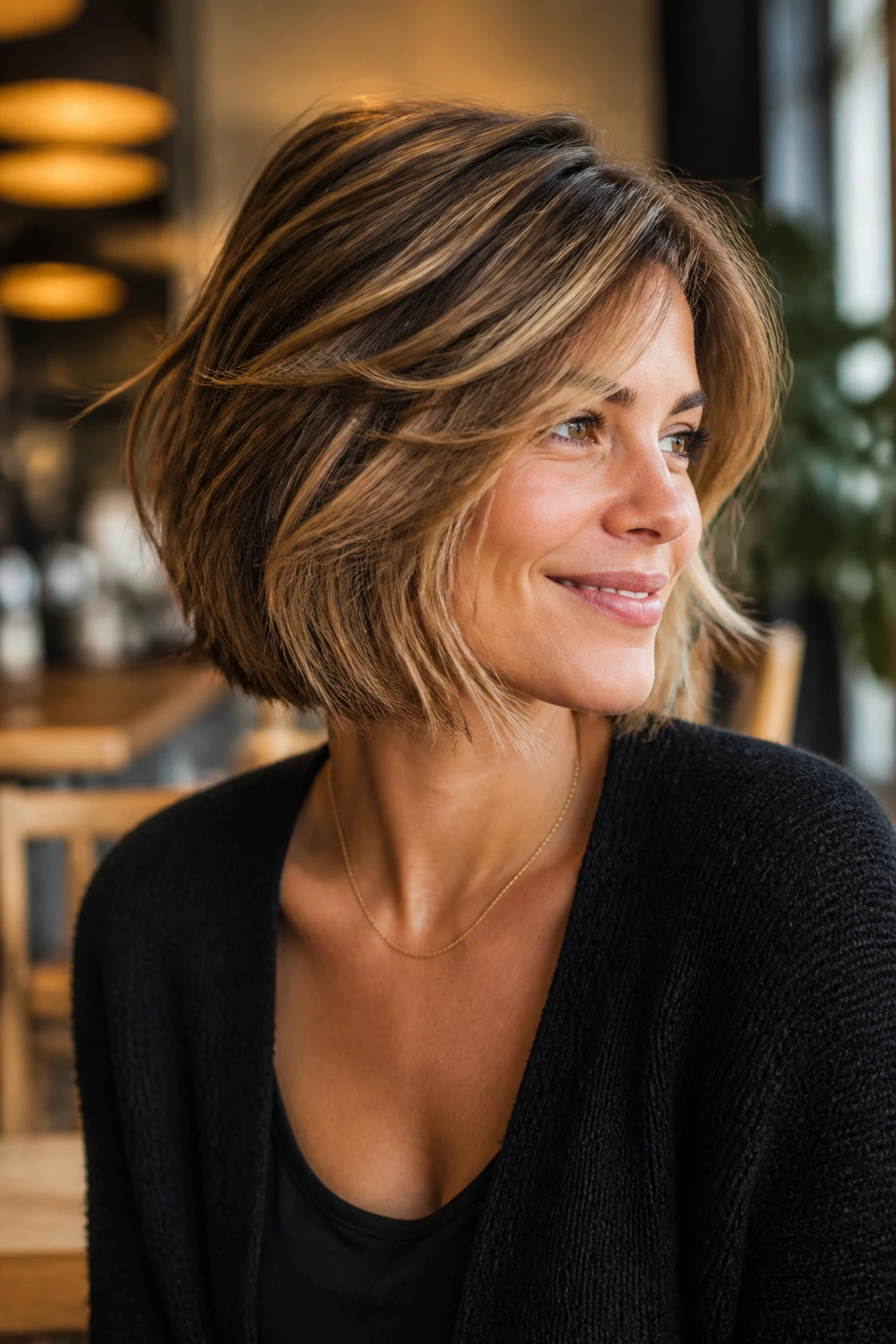
Short layered haircuts stay useful because they do a few jobs at once: they lighten the outline, build body where the hair tends to fall flat, and let color show in more than one place. That’s a better trade than a blunt cut with no movement, especially if you want the hair to look styled even on the days you barely touch it.
The smartest version is the one that matches your texture, your density, and your tolerance for upkeep. Pick the shape that gives your hair a little swing, then keep the layers honest with regular trims and a light hand on product. That’s the whole game, really.
