



A good French bob haircut does not ask for much, and that is exactly why it looks expensive. A clean line at the chin, a little bend at the ends, and enough movement around the face to keep it from feeling stiff — that’s the whole trick. The best versions look like they were cut by someone who understands where hair wants to sit, not by someone trying to force it into submission.
French bob haircuts also have a useful kind of range. They can be blunt, airy, curly, wavy, polished, grown-out, or slightly messy without losing the point of the shape. Some versions skim the jaw and make the cheekbones look sharper. Others sit a touch longer and let the neck breathe. A few are bold enough to read as fashion-forward on sight. None of them need a heavy styling routine to make sense.
What I like most about the cut is this: it gives you a shape even on a lazy day. That matters. A lot. If your hair has been behaving like a bargain-bin garden hose, a French bob can pull it back into a line without making you live at the round-brush station.
Why These French Bob Haircuts Keep Showing Up in Good Salons
-
The line does the work: A French bob keeps its shape because the cut lands in a narrow zone around the chin, jaw, or mouth, so even simple styling looks deliberate.
-
It flatters movement, not perfection: The ends can curve under, flip out a little, or sit piecey and soft; that flexibility keeps the style from looking helmet-like.
-
It can be scaled up or down: You can make it chic and sharp with a clean fringe, or softer and airier with texture and a little length in front.
-
It grows out with manners: A bob that is cut well at the start usually still looks decent several weeks later, which saves you from panic trims.
-
It works with real hair: Cowlicks, waves, density, and frizz all matter here, and the best French bob haircuts account for them instead of pretending hair is a flat sheet.
-
It looks finished fast: A quick blow-dry, a rough dry with texture spray, or a small bend from a flat iron is often enough to make the cut hold its shape.
1. The Classic Chin-Skimming French Bob
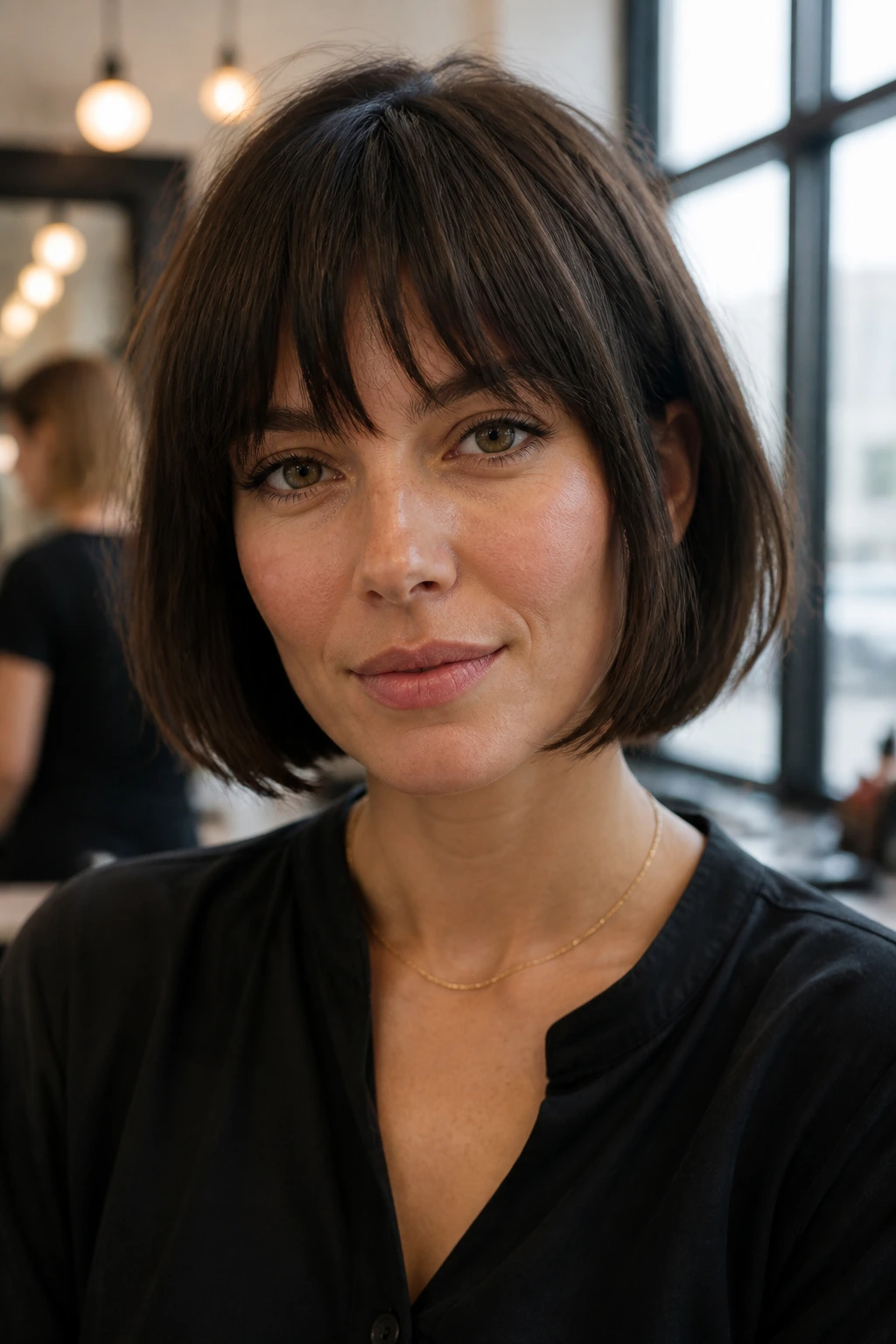
This is the version people picture first, and for good reason. The length lands right around the chin, the perimeter stays clean, and the whole cut has that neat, slightly effortless swing that makes French bob haircuts feel so sharp. It sits close enough to the face to show off bone structure, but not so short that it starts feeling severe.
Best for a balanced, low-drama outline
A classic chin-skimming bob works especially well when you want the haircut itself to do most of the styling. Keep the ends blunt but not brutal, with a soft inward bend at the bottom. If the line is cut too high, it starts to feel like a helmet. Too long, and you lose the little snap that makes the shape work.
A center part gives it a cleaner finish. A slightly off-center part makes it feel less formal.
- Length cue: chin level or just below.
- Finish: a mild curve under, not a hard bevel.
- Styling note: a round brush or a quick pass with a flat iron at the ends is enough.
If you want one cut that explains the French bob idea without extra fuss, this is the one. It’s the reference point.
2. The Micro French Bob
Shorter. Braver. A little more cheeky. The micro French bob lands above the chin, often near the mouth or just below the ears, and it has a clear point of view the moment it’s cut. It exposes the neck, shows the jawline, and makes earrings do more work than they usually get credit for.
A micro version needs confidence from the cut, not from a pile of product. If the line is too wispy, it can look accidental. If it is too heavy, it can box in the face. The sweet spot is a crisp, compact shape with enough softness at the ends to keep it from looking like a helmet from an old movie.
This one loves straight or slightly wavy hair. Very thick hair can take it too, but only if the stylist removes bulk carefully inside the shape. If your hair puffs out at the sides, ask for controlled graduation rather than aggressive thinning. That distinction matters.
3. The Curved-Under French Bob
Some bobs sit. This one folds inward. The curved-under French bob uses a subtle bevel so the ends tuck toward the neck, which creates a smooth, neat finish without making the haircut rigid. It’s one of my favorite versions for hair that wants to flare out at the ends and ignore your wishes.
The curve is the point. Not curl, not wave — a gentle inward roll that makes the bob feel polished while still staying soft around the face. If the stylist overbuilds the bevel, the shape gets too retro. If they underdo it, the bob loses that satisfying little sweep at the bottom.
This style works nicely with medium to thick hair because the weight helps the curve hold. On fine hair, the curve has to be lighter, or the ends can collapse. A round brush helps, but so does a quick twist with a blow-dryer nozzle and a cool shot to set the shape.
4. The Brow-Grazing Fringe French Bob
Bangs change the whole conversation. A brow-grazing fringe French bob pulls attention upward, which can be useful if you want your eyes to do more work than your jawline. The fringe should skim the brows or hover just above them, with enough texture to keep it from looking like a solid curtain.
I like this version most when the bob itself stays simple. Clean length. Clean edge. The drama lives in the fringe. If both the bob and the bangs try to be the loudest thing in the room, the haircut can start to feel fussy. Keep the bob modest and let the fringe bring the attitude.
This is a good move for longer faces, high foreheads, or anyone who likes a little softness around the eyes. Dry the fringe first. Seriously. Bangs never behave if you wait until the rest of the head is done.
Small styling note
Use a tiny round brush or just your fingers and a blast of warm air. The goal is movement, not symmetry so perfect it feels drawn on.
5. The Wavy, Air-Dried French Bob

If your hair has a natural bend, this version may be the one that actually makes sense. The wavy, air-dried French bob is cut to live with movement, not fight it. The line can land at the chin or a touch below, but the shape should leave room for the wave to expand without turning into a triangle.
This cut usually looks best with a little internal texture and a perimeter that is still clear. You want the softness of waves, not a shapeless halo. Salt spray can help if your wave pattern is loose. If your wave is tighter, a small amount of cream at the ends keeps it from drying into frizz.
Air-drying asks for patience, but not a lot of effort. Scrunch lightly, leave it alone, and resist the urge to poke at it while it sets. That’s when the cut starts looking frayed instead of relaxed.
6. The Curly French Bob
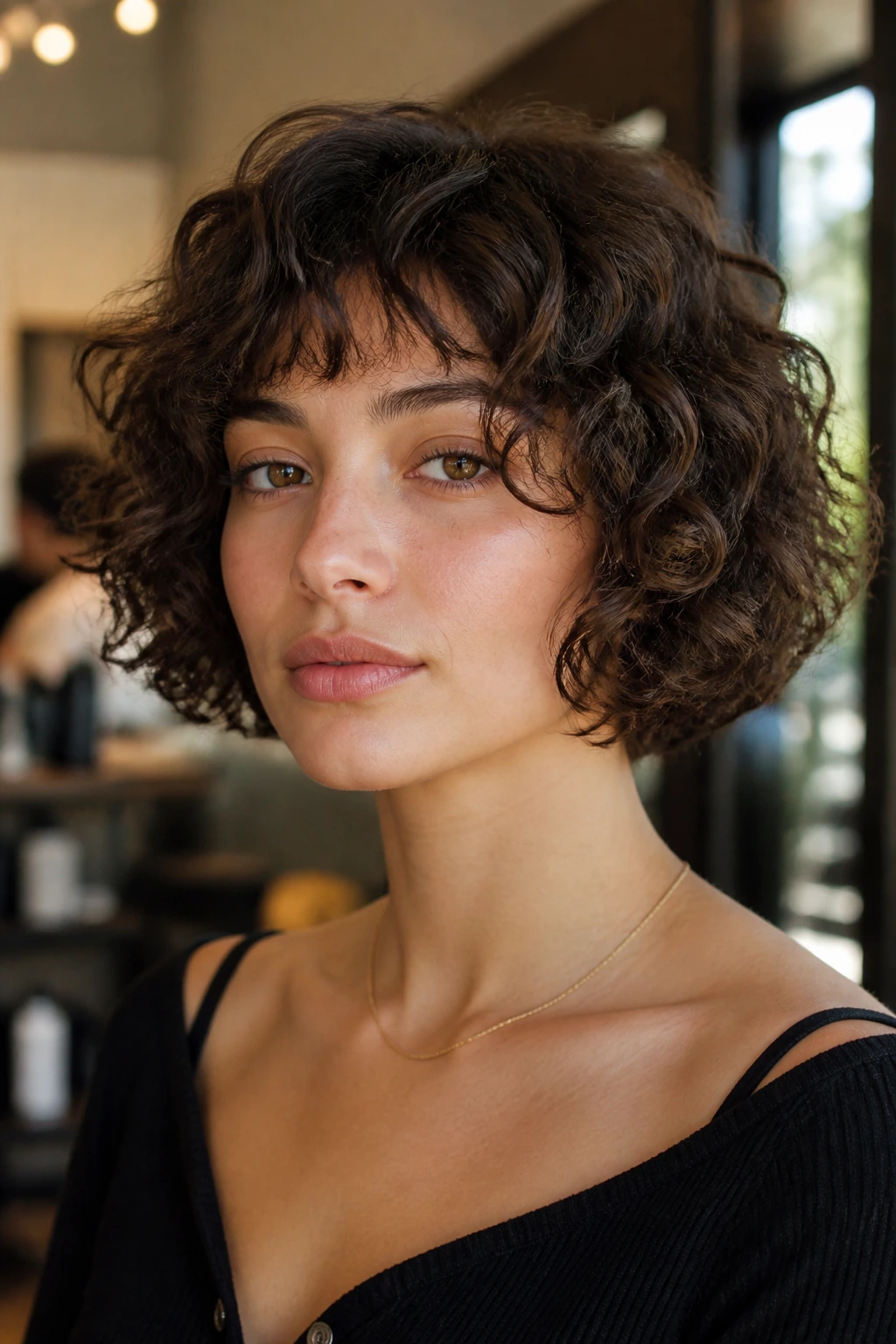
Curly French bob haircuts deserve their own lane because curls change the geometry of everything. A curl that looks chin-length when wet can spring up several inches once it dries, so the cut has to leave room for that bounce. The best curly French bob is shaped around the curl pattern, not against it.
Dry cutting is often the cleaner choice here. It lets the stylist see where the curls actually land and where they bunch. If a curly bob is cut too blunt in the wrong spots, the shape can balloon at the sides. A touch of internal layering can help, but the bottom line should still stay visible.
The nicest version has a strong silhouette and soft edges. You want the bob to read as a bob even when the curls are doing their own thing. A diffuser helps, but I’d rather see healthy curl pattern and a good shape than six products pretending to rescue a bad cut.
7. The Soft-Layer French Bob

A soft-layer French bob keeps the perimeter visible while shaving off some of the weight inside the haircut. It is useful when the hair feels too dense for a blunt line or too square around the jaw. The layers should be quiet. No obvious steps. No choppy bits that stick out like they’re trying to escape.
This version gives the bob a little more swing. It also takes some pressure off the shape if your hair is thick or naturally bulky at the bottom. Ask for internal shaping, not a heavily layered finish that breaks the line apart. That difference is small on paper and huge in the mirror.
I like this option for people who want movement without giving up the clean look that makes a French bob recognizable. It is the compromise cut that doesn’t feel like a compromise.
8. The Blunt French Bob
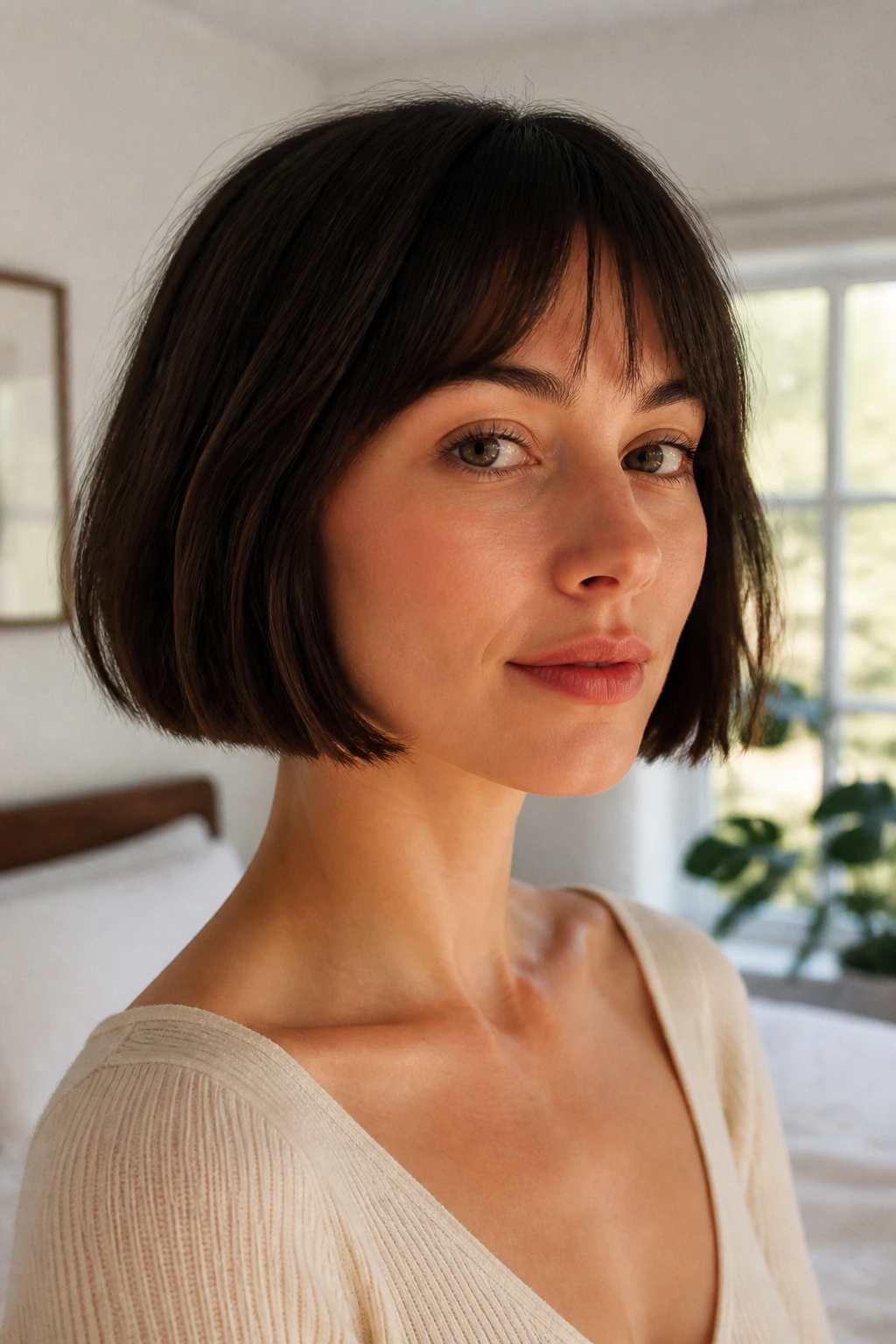
Blunt sounds harsh until you see what it does to the hair. A blunt French bob creates a solid edge that makes fine hair look fuller and gives the whole cut more presence. The perimeter is the star here, so the ends need to be precise, even if the styling stays relaxed.
This is one of the most assertive French bob haircuts. It reads clean from across the room. It also needs maintenance, because a blunt line loses its snap fast when it starts growing out unevenly. If your hair flips at the bottom, ask for a tiny bit of bevel, not a heavy inward curve. The goal is weight, not stiffness.
Blunt cuts can look especially good with a center part and a simple outfit. Nothing else needs to compete. The bob already has the strong line.
9. The Long French Bob

The long French bob — often called a lob with better manners — sits between the jaw and the collarbone. It keeps the French feel through texture, parting, and shape, but gives you more room if you are nervous about going short. This is the cut I point people toward when they want the silhouette without the shock.
Longer French bob haircuts are more forgiving on busy mornings. They tuck behind the ear, pull into a small half-up, and still look intentional when the ends get a little piecey. That extra length also helps if your hair is thick or coarse, because the weight can settle a bit more naturally.
It is not the shortest version on this list, and that is exactly why it works. Sometimes the smartest bob is the one that leaves you a little length to play with.
10. The Shaggy French Bob

A shaggy French bob loosens the whole formula. The line is still there, but the inside has more choppy movement, which gives the cut a lived-in edge. This is the version for someone who wants the French shape but does not want the haircut to feel too precious.
The trick is restraint. Too much shagging and you lose the bob. Too little and you just have a regular blunt cut with a few uneven pieces. The best shaggy versions keep a clear perimeter and let the top and sides move more freely.
This cut is friendly to texture sprays, finger-drying, and the kind of air-dried finish that looks better after a little time has passed. It tends to wear in beautifully. Not perfectly. Better than that.
11. The Side-Part French Bob
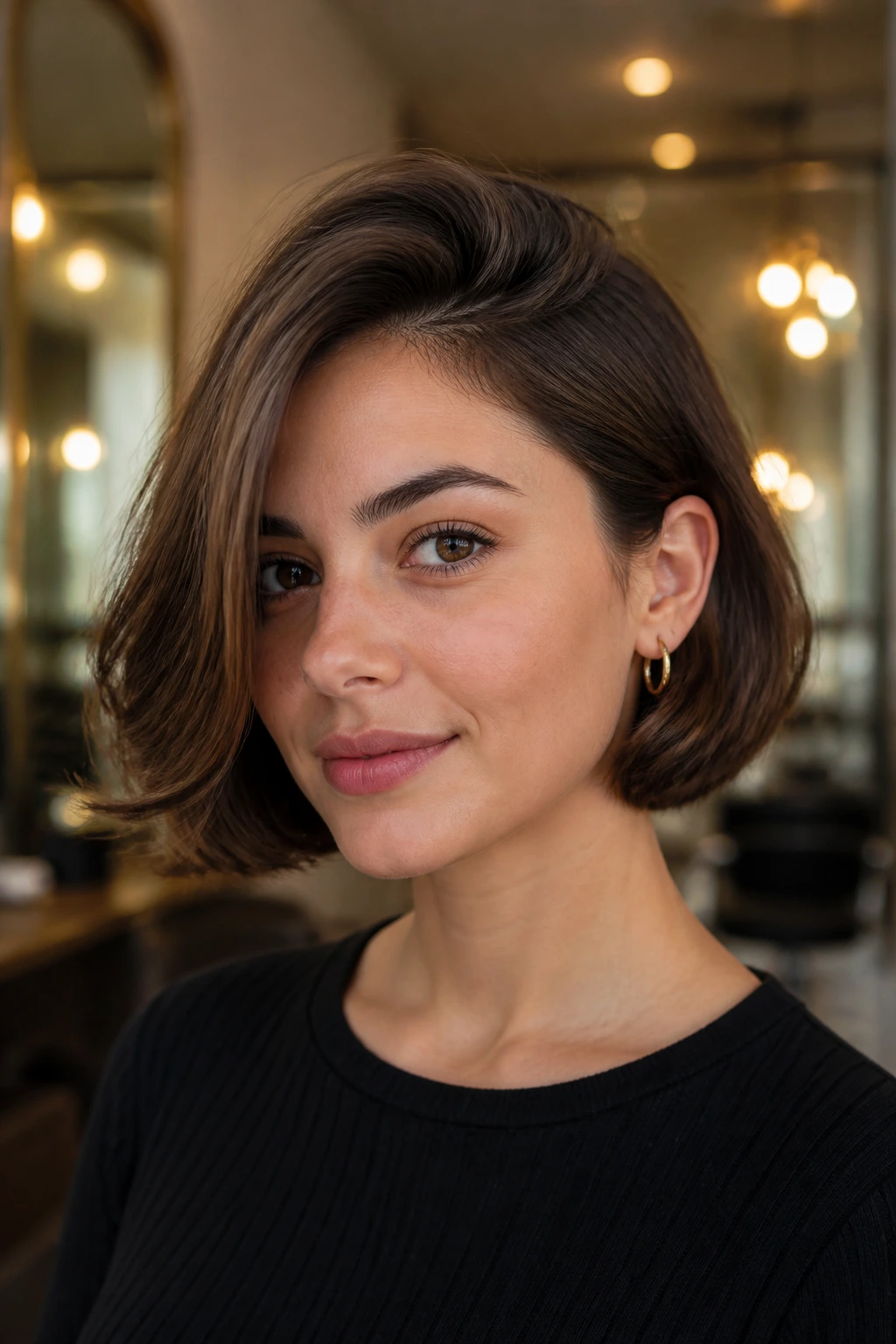
A deep side part can change the whole emotional register of a bob. It lifts one side, softens the other, and gives the cut a bit of asymmetry that keeps it from feeling too neat. If a center part makes your hair collapse, this is the first fix I’d reach for.
The side-part French bob is especially useful for flatter hair at the crown. The part creates volume without asking the entire head to be teased and sprayed into submission. It also sends one side of the bob across the cheekbone, which can be a nice move if you want the haircut to feel a little more sculpted.
What I like here is the ease. You’re not inventing a new haircut every morning. You’re shifting the balance a few inches, and the whole shape wakes up.
12. The Center-Part French Bob
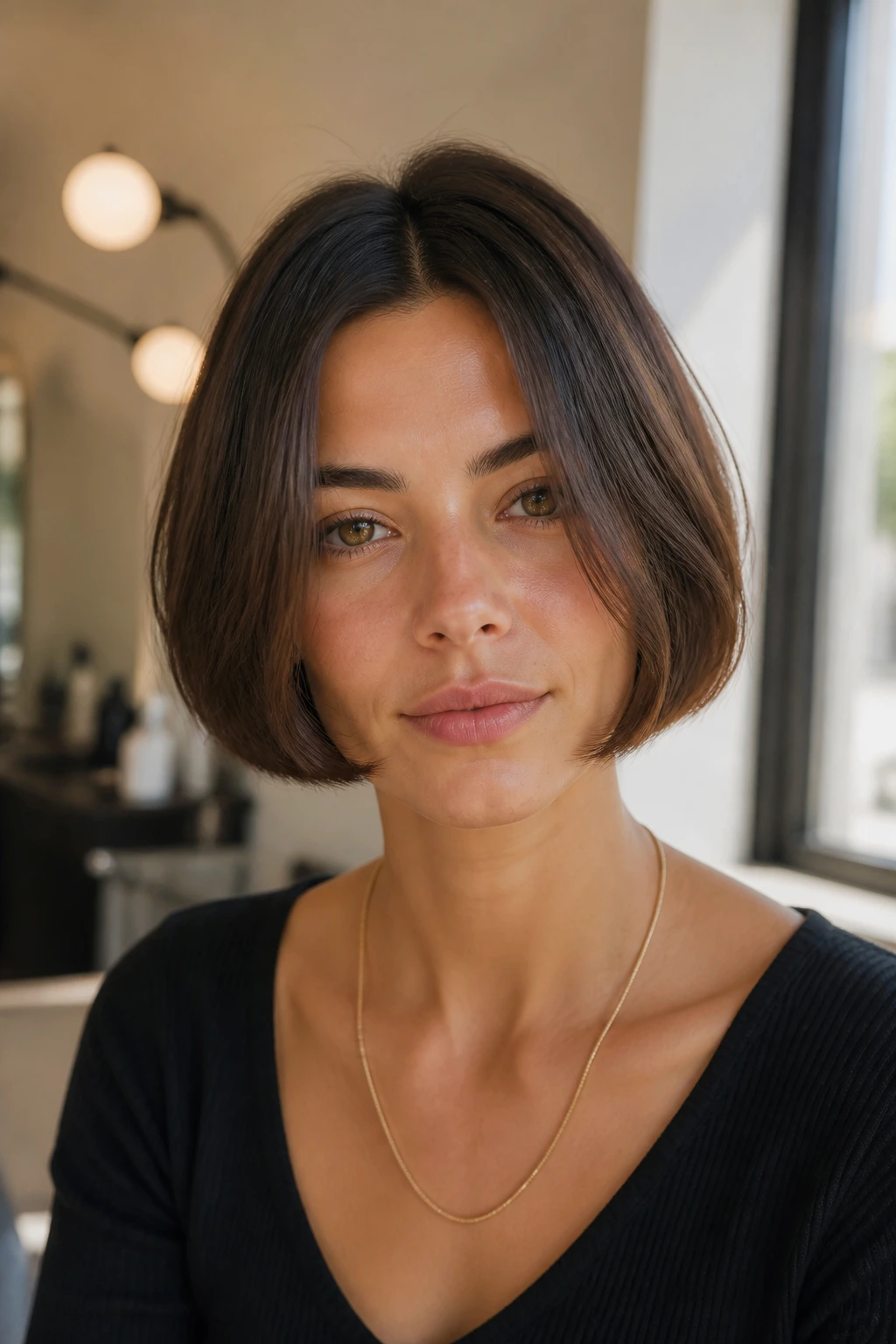
The center-part French bob has a cleaner, more graphic feel. It gives the haircut symmetry and lets the ends frame both sides of the face evenly. On straight hair, this can look especially crisp. On wavy hair, it can read softer and more relaxed.
This version is not for everyone, and that is part of its appeal. It exposes the cut more honestly. If one side is longer than the other, the center part will show it immediately. If the line is tidy, though, the payoff is strong. There is a quiet confidence to a bob that sits evenly and doesn’t need side-swept camouflage.
It works well with chin-length or slightly longer bobs, especially if the fringe is minimal or absent. Add a faint bend at the ends, and it stops looking severe.
13. The Curtain-Bang French Bob

Curtain bangs change the front of the haircut without trapping the whole style in bang territory. The fringe splits in the middle, sweeps away from the face, and blends into the bob with just enough softness to keep it easy to live with. I reach for this version when someone wants face framing but hates blunt bangs once they get sweaty or greasy.
The curtain-bang French bob is forgiving around the forehead and temples. It gives movement around the eyes while letting the bob keep its own shape below. The front pieces should not be too long, or they start behaving like grown-out layers instead of bangs. Aim for a cheekbone-skimming length with a gentle curve.
This one tends to look best when the bangs and the bob are styled together, not as separate projects. A quick blow-dry with a small round brush on the fringe and a soft bend at the ends below is enough.
14. The Air-Dried French Bob

Some haircuts demand a brush. This one doesn’t. The air-dried French bob is designed for hair that already has body or wave and looks better once you leave it alone. The length often sits a little longer than a super-short bob so the natural texture has enough weight to settle.
The best air-dried version isn’t sloppy. It’s controlled enough to keep the shape, but loose enough to let the hair do the drying for you. A small amount of mousse at the roots and cream through the ends can stop the cut from puffing up in odd places. After that, hands off.
This is one of the few styles that gets better the less you poke at it. That’s rare. And useful.
15. The Sleek Tucked French Bob
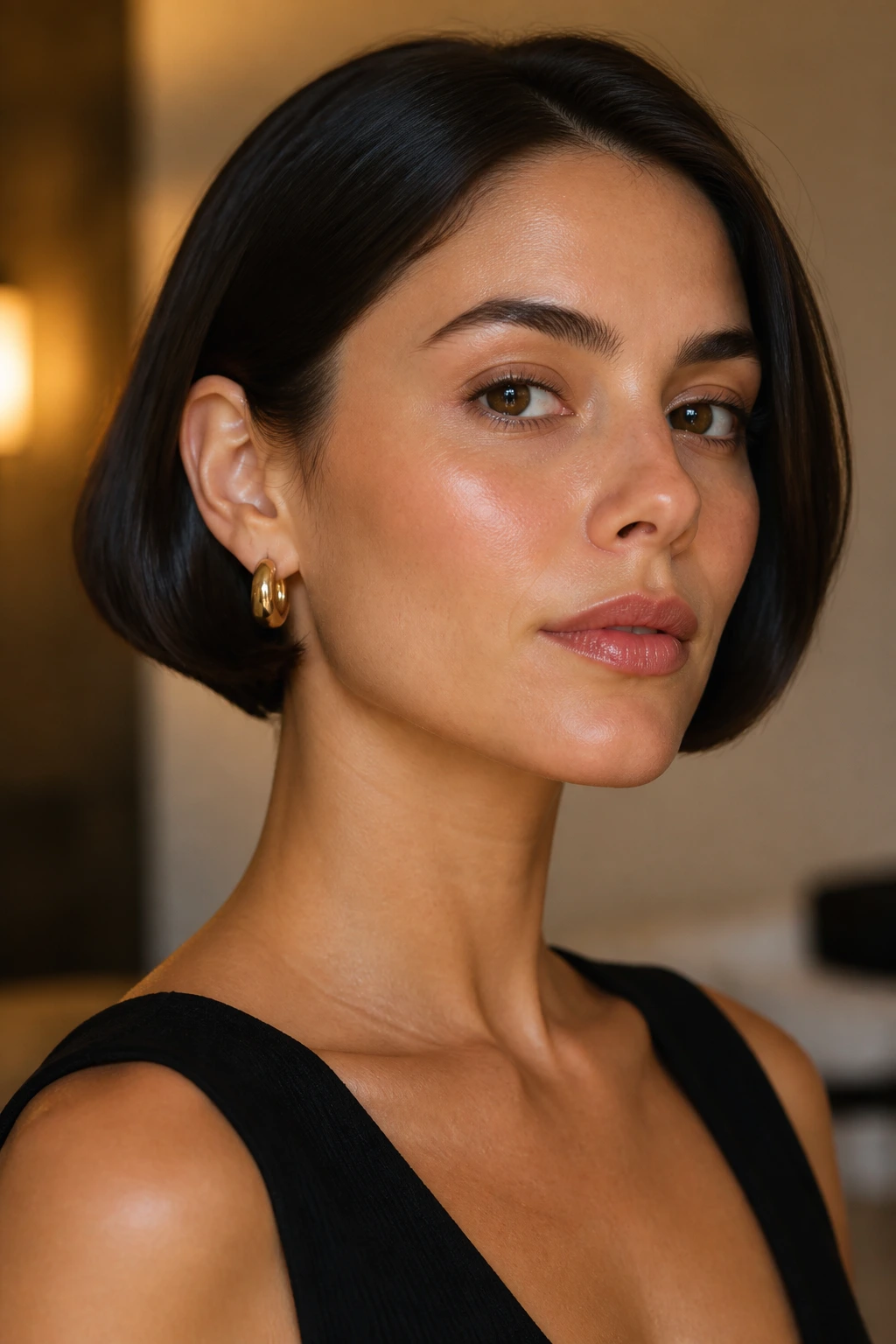
A sleek tucked French bob lands with a cleaner, more polished mood, but it still keeps the compact shape that makes the cut work. The hair is smoothed down, the ends are neat, and the sides are often tucked behind the ears so the jawline can come through. It feels slightly more controlled than the looser versions, and I like that contrast.
This style suits straight or softly wavy hair best. The key is shine without heaviness. Too much serum and the bob goes limp; too little and the tucked sides can frizz out by noon. A small amount of smoothing cream, then a light mist of heat protectant before a flat iron, usually does the job.
It’s the version I’d wear when I want the cut to look intentional with almost no visual clutter. Hair behind the ears. Clean line. Done.
16. The Piecey Tousled French Bob

Piecey and tousled are not the same thing, and I think the best French bob uses both. Piecey means the strands stay separated enough to show definition. Tousled means the whole shape looks touched, not shellacked. Put those together and you get a bob with movement that still has a spine.
This version usually relies on a little texturizing spray or a dab of styling paste at the ends. Not much. If you overdo it, the hair starts to look sticky and tired. The goal is separation, not grit for grit’s sake.
It works especially well for second-day hair. A quick mist, a scrunch, maybe one bend with your fingers around the front pieces, and the haircut comes back to life fast.
17. The Inverted French Bob
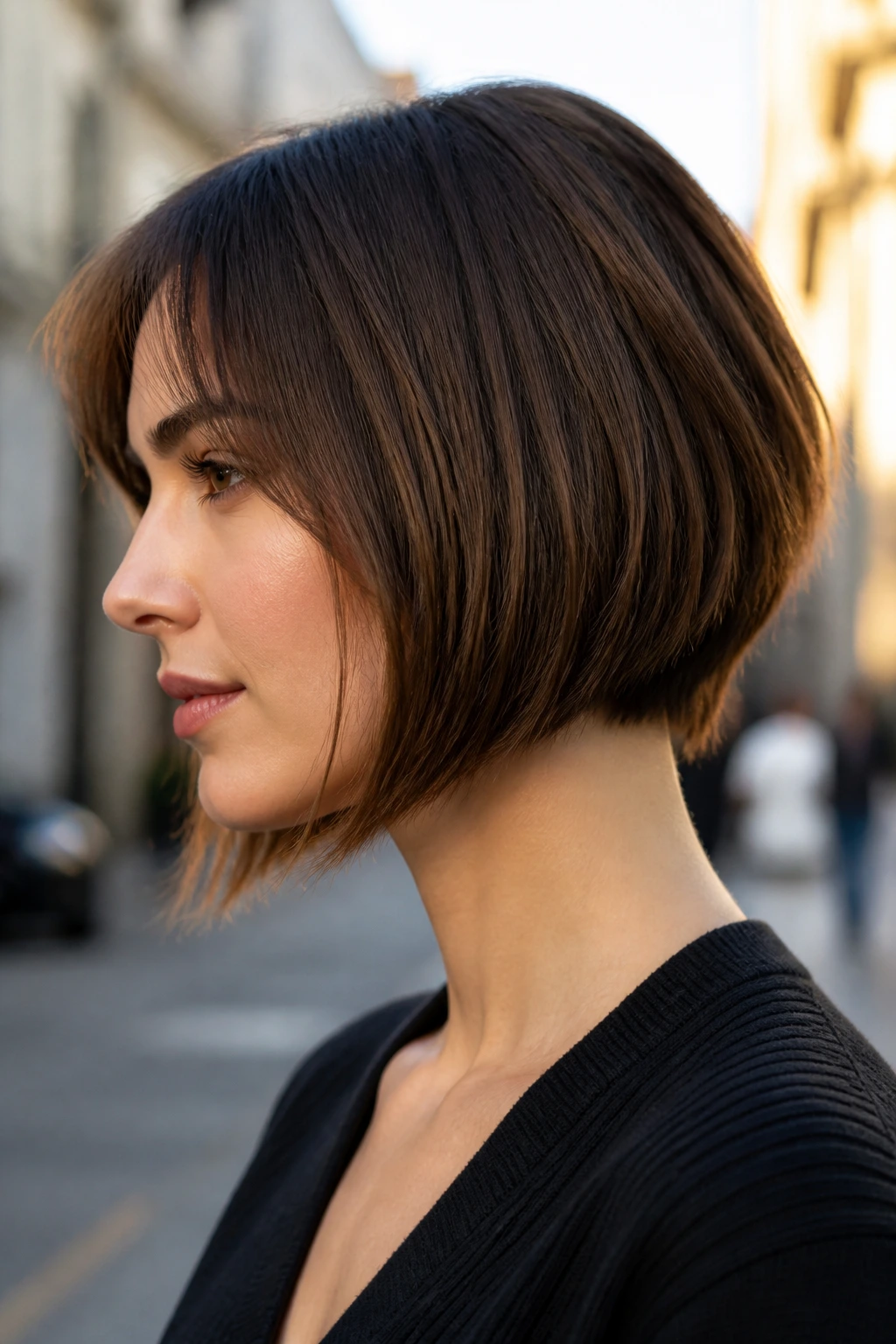
The inverted French bob gets shorter in the back and slightly longer toward the front, which creates a quiet angle that can sharpen the profile. It’s a neat way to keep the neck feeling open while still giving the front pieces enough length to frame the face. If the bob feels too boxy on you, this angle is worth considering.
The back should not be stacked so heavily that it screams classic wedge. That’s a different animal. Here, the graduation is softer, and the front still needs to look like a French bob, not a science project. The shape should move from back to front with a gentle slope.
I like this version on people who want definition around the jaw but don’t want the front pieces hitting the face too hard. It has a little architecture without becoming fussy.
18. The Face-Framing French Bob
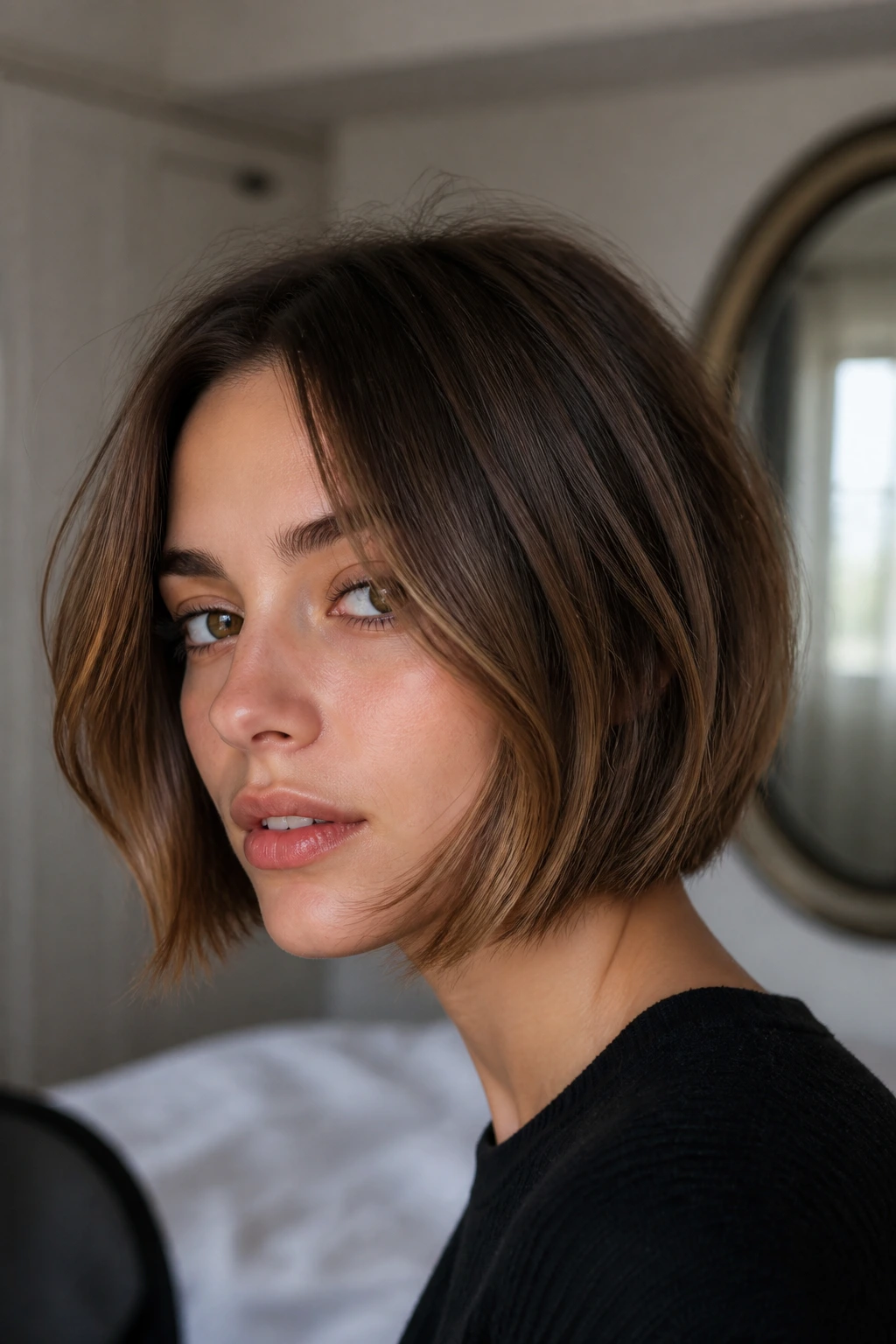
A face-framing French bob builds a bit more length into the front corners, which softens the cheeks and gives the cut a more open shape. It’s one of the easiest ways to adapt the French bob if you want the feel of short hair without a hard wall at the jaw. The front pieces can graze the mouth, lip, or lower cheek depending on how dramatic you want the frame.
This cut helps when the face needs a little vertical stretch or when the jawline is the part you want to soften. It also handles tucked-behind-the-ear styling well because the longer front pieces can fall forward again when you release them. That small bit of movement makes the haircut feel less fixed.
The mistake here is making the front too long and the back too short. Then you lose the bob and end up in half-lob territory. Keep the silhouette compact.
19. The Fine-Hair French Bob
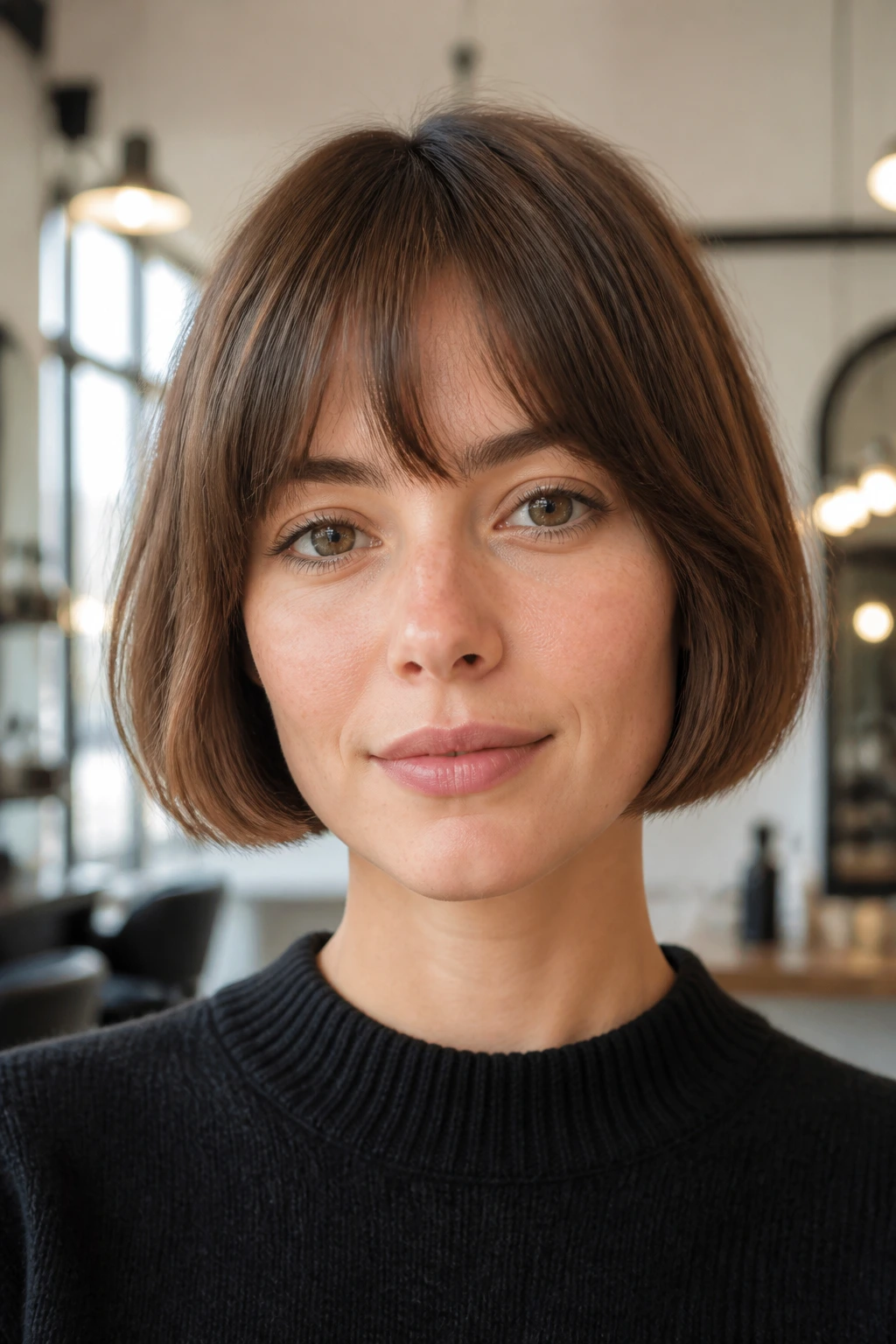
Fine hair needs shape more than it needs decoration. A French bob can do that job well if the line is kept clean and the layers stay minimal. The best version for fine hair usually has a blunt or softly beveled edge, because that makes the ends look denser.
This is not the place for aggressive thinning. Fine hair tends to lose body fast once too much internal texture gets cut away. Ask for weight at the perimeter, a little lift at the roots, and the kind of finish that holds its line even when the hair is clean and fresh.
A dry shampoo at the roots can help on day two, but the cut has to carry the main load. Fine hair loves a good bob because the shape can make the strands look fuller than they are. That’s the whole appeal.
20. The Thick-Hair French Bob
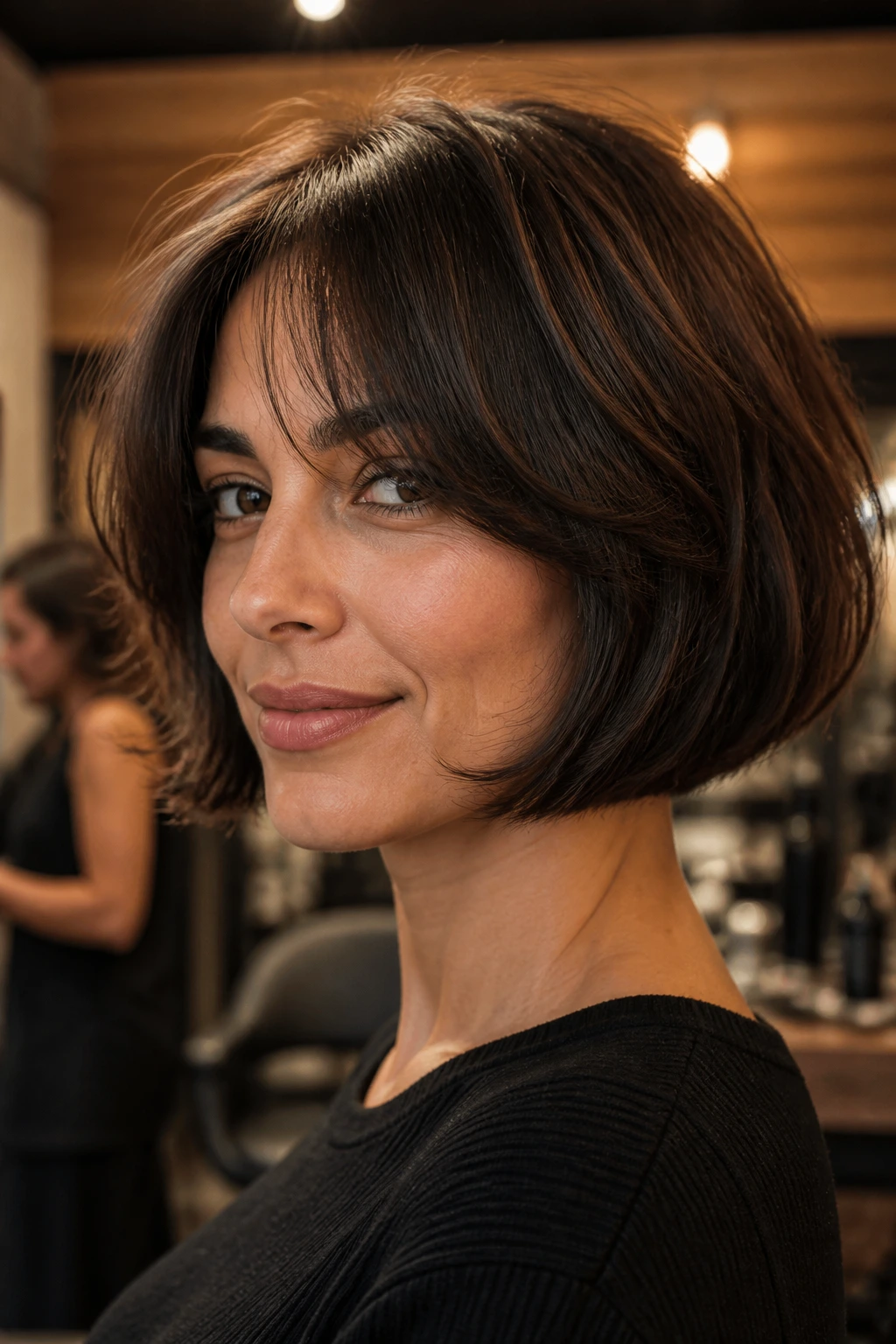
Thick hair can wear a French bob beautifully, but it needs a different hand. The challenge is bulk. Not length. Bulk. If the cut is too blunt and too full, the sides can swell outward and steal the clean line. The fix is internal shaping, careful weight removal, and a perimeter that still feels deliberate.
A thick-hair French bob often benefits from hidden layers or selective debulking inside the shape. The goal is to keep the outside looking compact while letting the inside breathe. It’s a balancing act, and a good stylist knows the difference between thinning hair and relieving weight.
This is one of those cuts that punishes over-editing. Too much slicing, and the ends fray. Too little, and the hair turns boxy. You want control, not a feathered mess.
21. The Micro-Fringe French Bob

The micro fringe changes the attitude instantly. Tiny bangs, a short bob, and a clear line around the face create a style that feels graphic and a bit mischievous. It’s not soft in the usual sense, but it has charm when it’s cut with a steady hand.
A micro fringe French bob works best when the fringe is trimmed carefully above the brows without becoming too harsh. The bob itself can stay simple, even classic. That way the fringe gets to be the main event without the haircut tipping into costume territory.
This version loves straight or lightly wavy hair and a little confidence from the person wearing it. It is not the shy option. It does, however, photograph in a way that can make a plain T-shirt and a good lip color look far more considered than they really are.
22. The Grown-Out French Bob

A grown-out French bob is the version that proves the cut has staying power. It sits a little longer, often brushing the neck or grazing the top of the shoulders, but the shape still reads as a bob because the front pieces and the perimeter keep their logic. This is the cut’s softer phase, not its failure state.
I like this version because it takes the pressure off constant trims. If the shorter bob starts to feel too high-maintenance, the grown-out shape gives you breathing room without forcing a full restart. A small bend at the ends, a loose part, and a bit of texture are enough to keep it from looking like you forgot about your hair.
The best part? It can transition from a sharper French bob without looking awkward in between. That matters more than people think.
Why the French Bob Works on So Many Hair Types
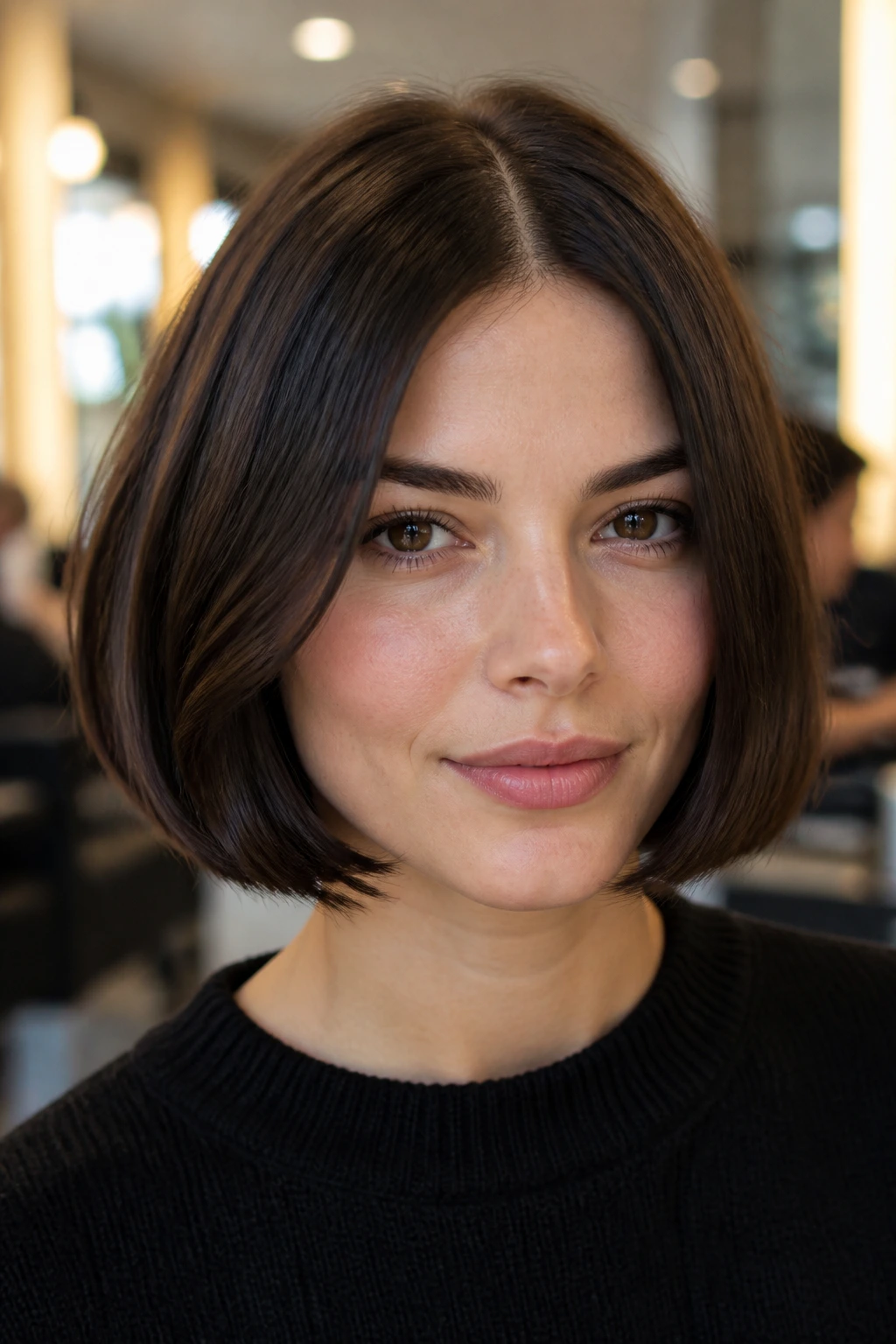
The French bob works because it respects weight. That sounds dry, but it’s the whole story. Hair falls the way it falls, and a good bob places the line where the hair already wants to rest — chin, jaw, mouth, or just below — instead of dragging it into a shape it hates.
French bob haircuts also leave room for personality. A single cut can look sleek on one head, airy on another, and curled-out on a third, because the basics stay simple: a compact length, a visible perimeter, and enough texture to keep the ends alive. That is why stylists like this shape when they want something adaptable, not fussy.
The other reason it keeps working is the grow-out. A short cut usually reveals every bad decision after four weeks. A French bob is more forgiving. If the haircut is balanced, the transition into a longer bob or a soft lob can look intentional instead of awkward. That makes the style easier to commit to than people expect.
Tools That Make the Cut Easier to Live With
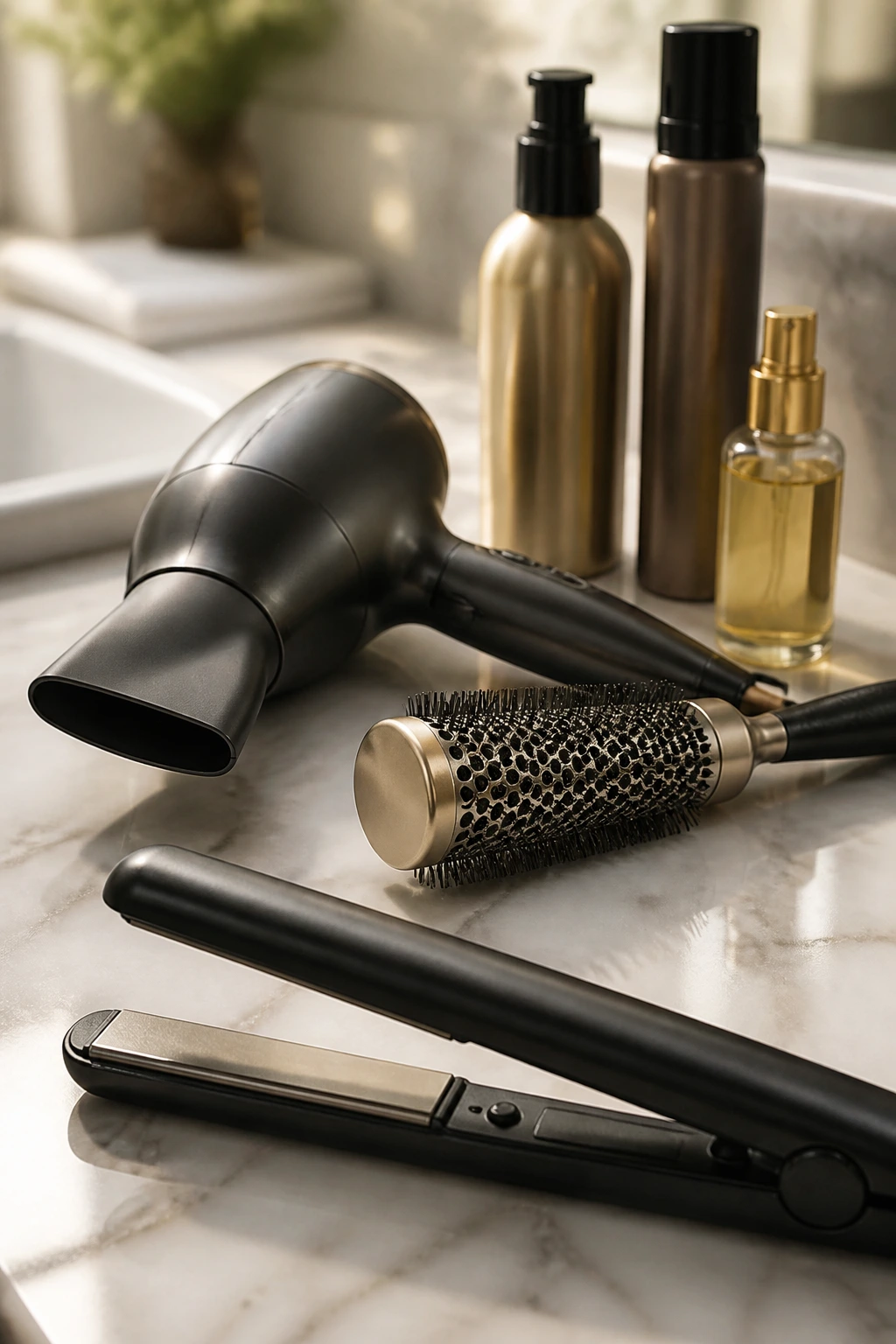
- Blow dryer with a nozzle: The nozzle directs airflow where you need it, which helps the ends sit in one direction instead of puffing outward.
- 1 to 1.25-inch round brush: Small enough to shape chin-length hair without pulling too much volume out of the roots.
- Flat iron with narrow plates: Useful for a quick bend at the ends or a soft wave through the front pieces.
- Heat protectant spray: You need it if you’re using hot tools more than once a week.
- Light mousse: Best for adding root lift to fine or flat hair before blow-drying.
- Texturizing spray: Gives air-dried and piecey bobs a little grit and separation.
- Lightweight hair oil or serum: A few drops can smooth the ends without turning the bob limp.
- Wide-tooth comb: Handy for curls and waves when you want shape without breaking them apart.
- Duckbill clips or sectioning clips: Small, boring, and worth having. They make blow-drying bangs and front pieces much easier.
- Diffuser attachment: A real help if your French bob sits on curls or strong waves.
How to Ask for the Right Length at the Salon
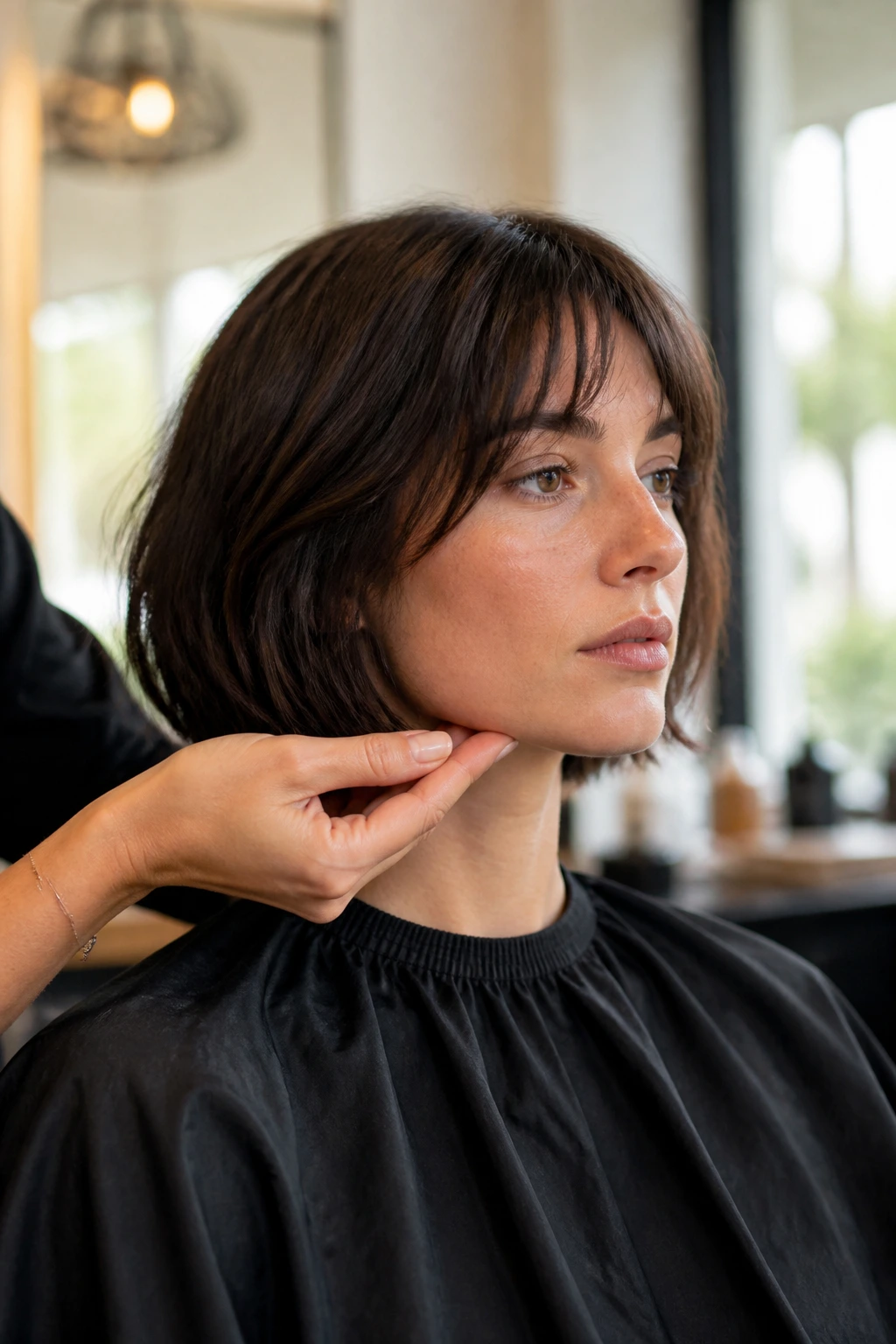
The cleanest way to get a French bob haircut you’ll actually like is to talk about where it should land before you talk about “the vibe.” Say the spot. Chin. Jaw. Mouth. Lip. Those reference points matter more than vague words, because different stylists will hear “short bob” in completely different ways.
Bring photos, but bring ones that show the side view too. That’s the part most people forget. A front image can hide a lot: how much the front angles forward, whether the back is stacked, whether the fringe sits soft or heavy. If your hair is wavy or curly, bring a photo of the finished texture, not just the haircut while it’s blown straight. Those are two different promises.
If you want bangs, say how much forehead you want covered and how much daily effort you’re willing to give them. A full blunt fringe and a piecey eyebrow-grazer are not the same thing at all. Neither are a blunt bob and one with hidden layers. Be specific about how much weight you want at the ends, whether you tuck your hair behind your ears, and whether you plan to air-dry half the time. That conversation saves everyone trouble.
How to Style These French Bobs Without Fussy Rituals
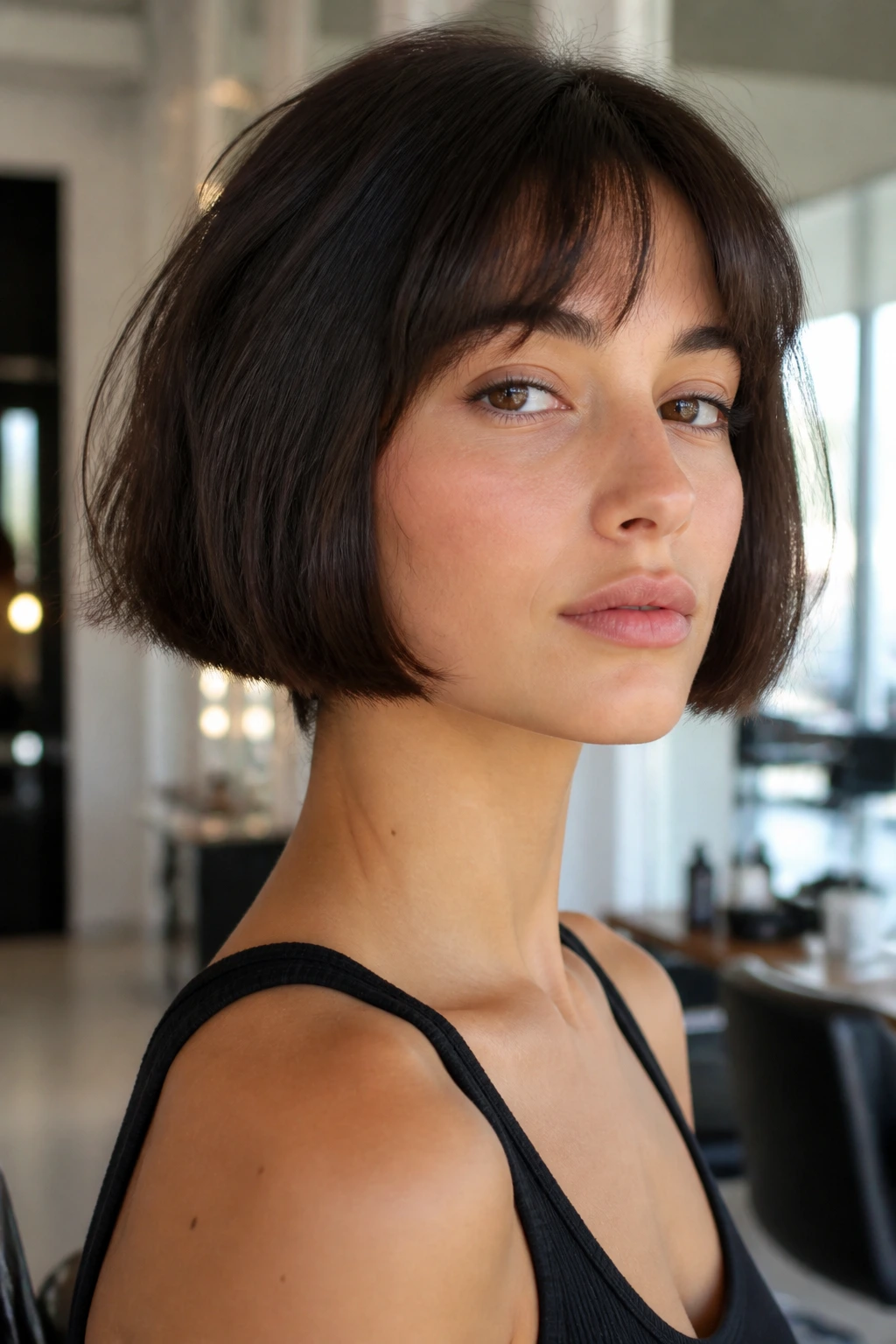
Air-Dried: Work a small amount of mousse through damp roots, then scrunch the ends with a dab of cream. Leave the hair alone until it’s dry. If you keep touching it, the wave pattern breaks apart and the shape loses its edge.
Soft Blowout: Use a round brush on the front sections first, then bend the ends under just a little. You do not need a perfect salon blowout here. The cut looks better with a hint of movement than with stiff, over-polished volume.
Sleek Finish: Blow-dry with a nozzle, smooth the outer layer with a paddle brush, and finish the ends with one light pass of a flat iron. A pea-sized amount of serum on the last inch of hair keeps it shiny without flattening the line.
Day-Two Revival: Mist the bob lightly with water or texture spray, then reshape the front pieces with your fingers. A French bob often looks better on its second day because the strands separate a bit and the shape stops feeling too fresh.
Accessorie Match: A slim headband, a small barrette, or a tucked-behind-the-ear side can change the mood fast. Keep the accessory light. Heavy pieces can drag the crown down and ruin the shape.
Extra Styling Ideas and Small Upgrades
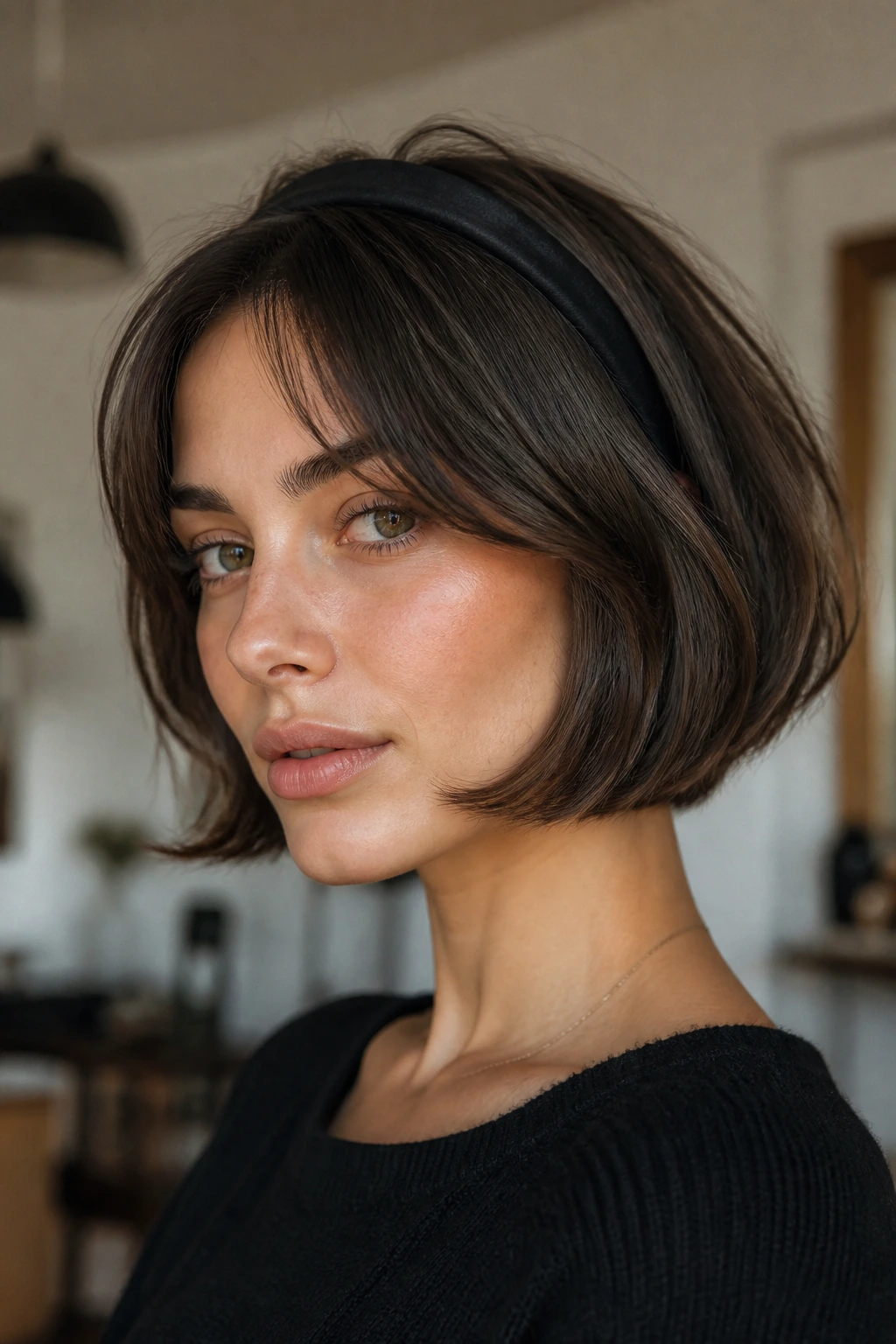
Shape Boost: A root-lifting spray at the crown gives a French bob more lift without turning it into an old-school bouffant. Spray only at the scalp, not through the lengths, or the hair can get crunchy fast.
Texture Control: If the ends puff out, rub a tiny amount of pomade or styling cream between your fingers and tap it onto the last half-inch of hair. The goal is to tame the perimeter, not coat the whole bob in product.
Color Effect: Soft highlights around the face can make the bob look more layered than it is, especially on straight hair. A single tone can look gorgeous too, but a little dimension helps the line move.
Make-It-Yours: If you like a clean look, keep the fringe blunt and the ends neat. If you want something looser, ask for a softer edge and a little more texture near the face. The same cut can go in either direction with a few millimeters of difference.
Common Mistakes That Flatten the Shape
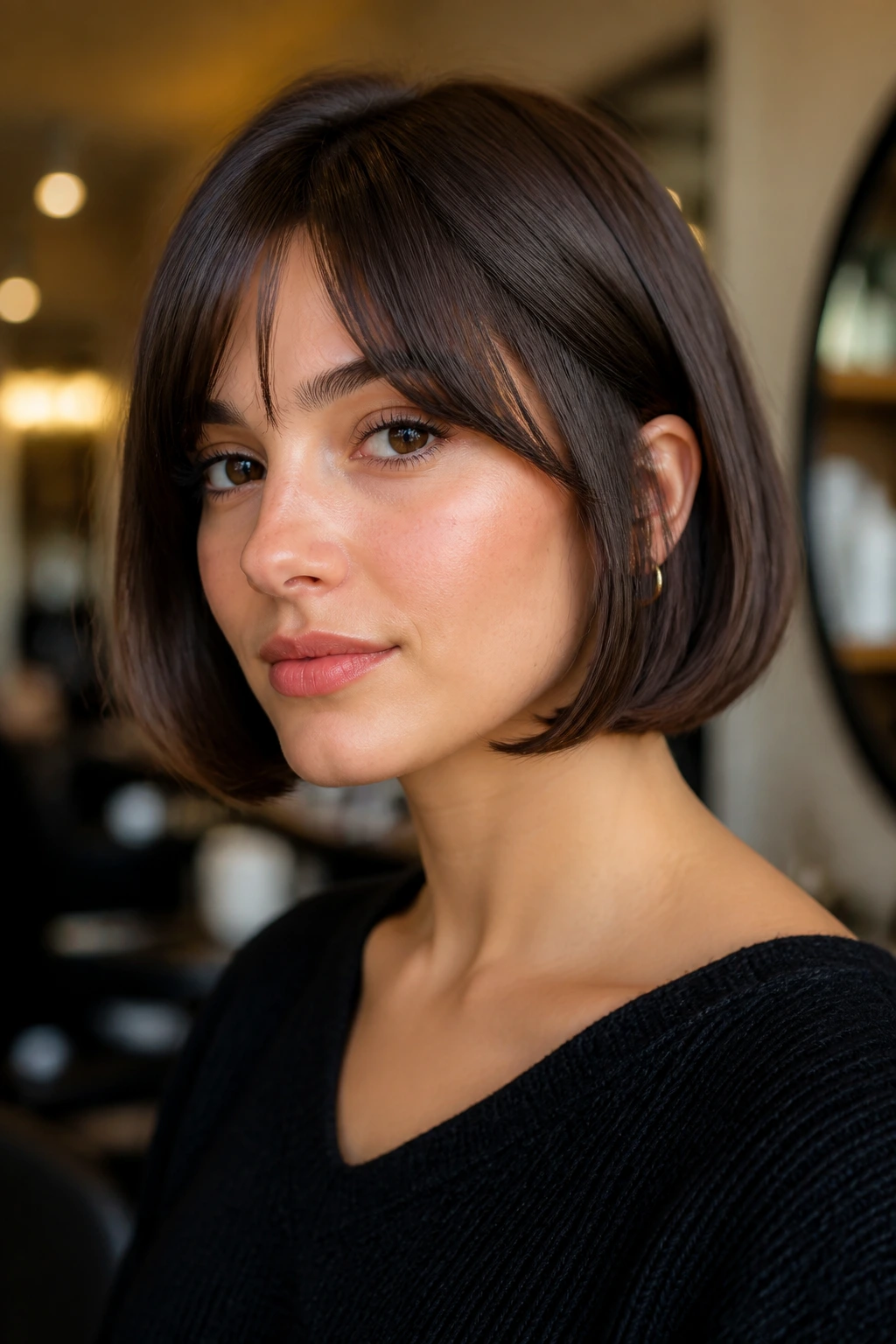
The first mistake is asking for the bob too short without thinking about your natural hair behavior. A cut that sits beautifully at the chin in the chair may spring up to the cheekbones once it dries, especially on curls or strong waves. The fix is simple: tell the stylist how your hair moves when it is dry, not just wet.
Another one is over-thinning thick hair. You get a fluffy halo, not a French bob. The symptom is a ragged outline that looks airy in the wrong way. Ask for internal weight removal only where the hair feels bulky, and keep the perimeter strong.
Heavy products cause their own problems. A bob loaded with rich cream can go flat by lunch, especially if the hair is fine. Use the smallest amount you can get away with, then add more only to the ends if they need it.
Bangs get people too. A fringe cut too blunt for a cowlick will split apart every morning and drive you nuts. If your forehead hair refuses to sit still, ask for a softer fringe with a little give near the part line.
Variations and Adaptations to Try

The Low-Maintenance Grow-Out: Keep the length a touch longer than chin level and let the front pieces brush the neck. It still feels French, but the trim window stretches a little farther, which helps if you hate constant salon visits.
The Softly Polished Version: Pair a blunt bob with a side part and a gentle inward bend. It looks neat without reading stiff, which is a useful middle ground if you wear the cut to work and out to dinner without changing much.
The Texture-First Version: Ask for more movement inside the cut and style with sea salt spray or a tiny bit of matte paste. This works best when you want the bob to feel casual and lived-in rather than precise.
The Fringe-Forward Version: Keep the bob simple and let the bangs do the talking. Curtain bangs, a micro fringe, or a brow-grazing fringe each change the mood fast without changing the length.
The Curl-Friendly Version: Leave more length than you think you need and shape the cut dry. That gives curls room to shrink while keeping the bob line visible after the hair settles.
The Fine-Hair Version: Keep the line blunt, skip heavy layers, and use root lift sparingly. The style looks fuller when the ends stay dense and the crown stays light.
Keeping the Shape Between Cuts
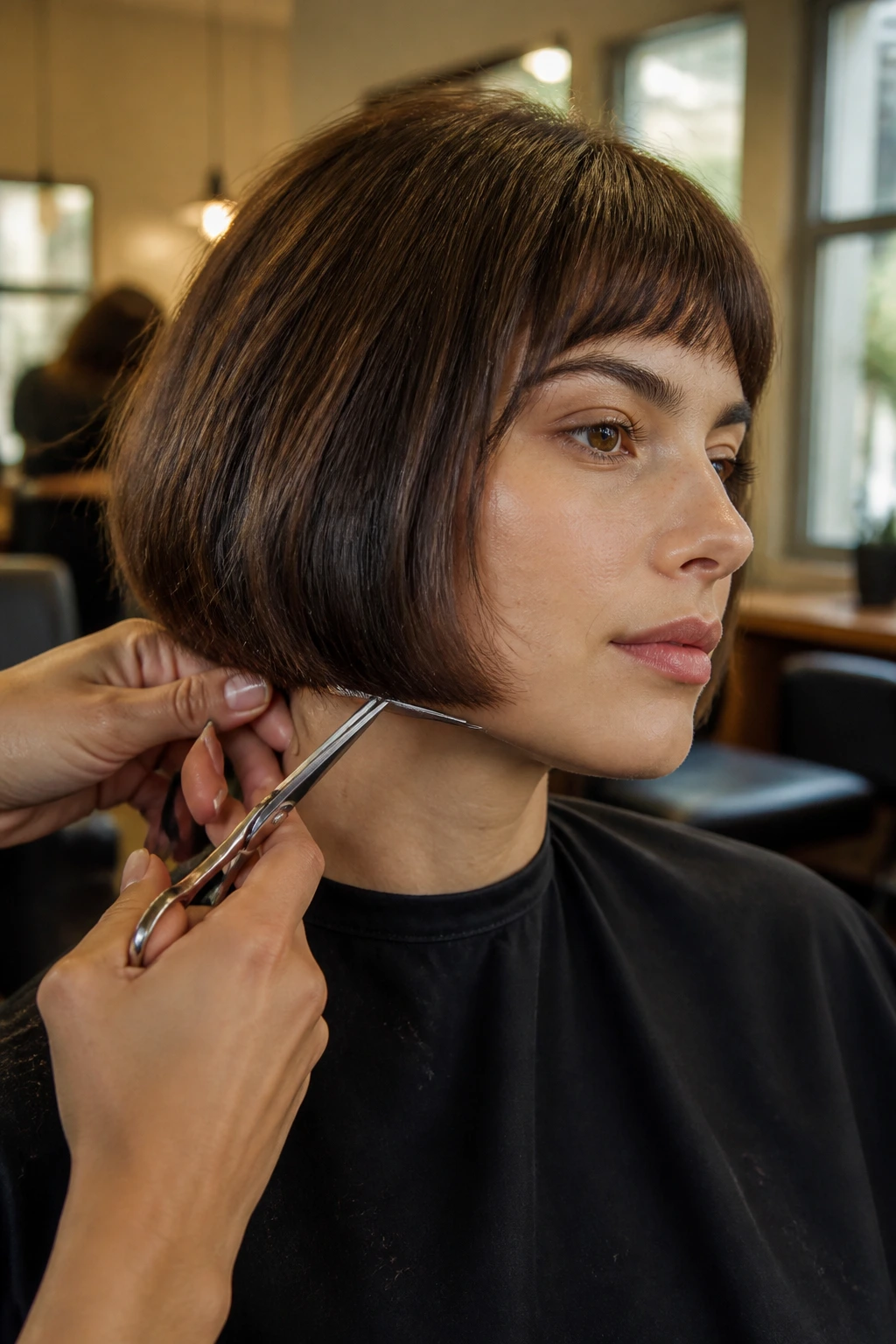
French bob haircuts need upkeep, but not the kind that takes over your life. Shorter, sharper versions usually want a trim every 5 to 7 weeks if you want the line to stay crisp. Longer or more textured versions can stretch closer to 8 or 10 weeks before they start losing their shape.
The fringe usually needs attention sooner than the rest. Bangs grow fast enough to ruin your day if you ignore them. A small trim around the eyes every 2 to 4 weeks keeps the front from hanging in your lashes or splitting at the part.
At home, the biggest favor you can do for the cut is to stop frying it into submission. Use heat only where you need shape — usually the ends and the front pieces — and let the rest of the bob live a little. If the hair starts flipping out at the bottom, that is often a sign that the perimeter has grown past its sweet spot.
If you want to grow the cut into a lob, ask for gradual lengthening instead of waiting for one dramatic overhaul. That makes the in-between stage less annoying. A good French bob should be able to grow without turning into a question mark.
Questions People Ask Before They Cut It
Does a French bob work on curly hair?
Yes, and it can look excellent if the cut respects shrinkage. The trick is to cut with the curl pattern in mind, often dry, so the final shape doesn’t come up too short or too wide.
Will a French bob make my face look wider?
It can, if the length lands at the widest part of your cheeks and there is no front movement. A slightly longer front, a soft fringe, or a side part usually fixes that fast.
How short is too short?
If your hair flips out wildly, has a strong cowlick at the crown, or you’re new to short hair, chin level is a safer place than a micro bob. The shorter you go, the less room you have for growth and the more often you’ll need trims.
Can I air-dry a French bob every day?
If your hair has some wave or curl, yes. If it’s pin-straight and flat, you may need a bit of root lift or a quick bend at the ends so the shape doesn’t collapse.
What should I ask for if I want bangs too?
Say whether you want the fringe to hit the brows, the lashes, or split at the center. Those details matter more than the word “bangs,” which covers everything from a baby fringe to a heavy curtain.
Will this cut work if my hair is very thick?
It can, but the stylist needs to manage bulk inside the haircut instead of carving the ends to pieces. Thick hair needs structure, not shredding.
How do I grow out a French bob without hating it?
Let the front pieces get a little longer than the back, keep the ends tidy, and avoid skipping trims for so long that the shape disappears. The grow-out looks better when it’s guided, not abandoned.
The Last Snip
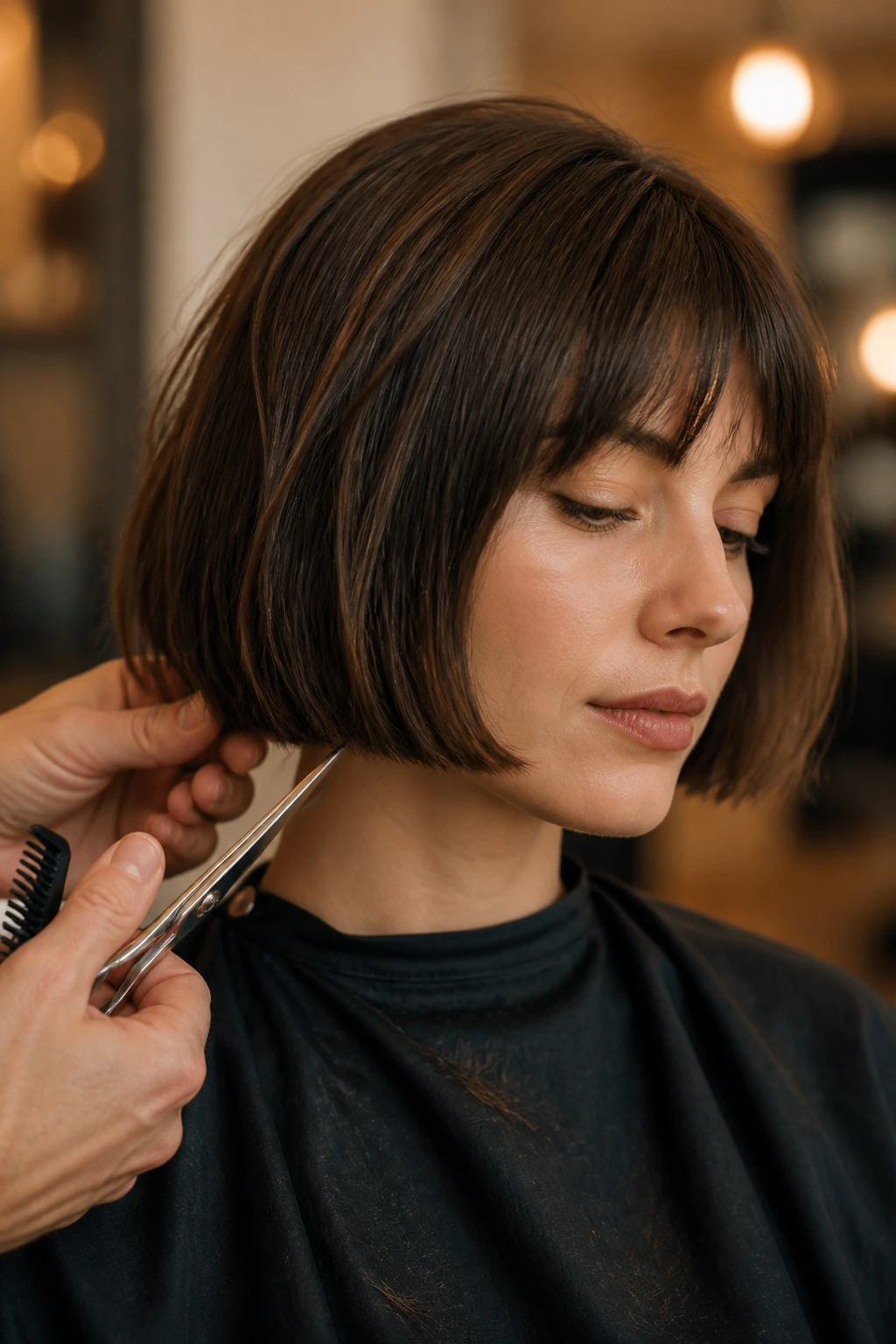
A French bob works because it gives hair a job to do without making that job look complicated. The shape can be sharp, soft, curly, blunt, tucked, or grown-out, but the core idea stays the same: clean length, honest movement, and just enough attitude to keep it interesting.
That’s why French bob haircuts keep earning loyalists. They are not trying to solve every hair problem at once. They solve one important one very well — they make the head look deliberate. And once you have that, the rest gets easier than people expect.
