



A lob with side bangs does something a blunt shoulder-length cut often misses: it moves. The line still sits neat at the collarbone, but the fringe cuts across the face on a diagonal, which keeps the haircut from feeling boxy or overly tidy. That one slant changes everything. The eye follows it, the cheekbones get a little lift, and even air-dried hair looks like somebody meant to do it that way.
I like this shape because it has a forgiving grow-out. A side bang doesn’t need the same exact trim schedule as a blunt micro fringe, and a lob can fall an inch longer without looking sloppy. That matters if your hair grows fast, if you hate constant salon visits, or if you want a cut that still works when you skip a blowout.
The catch is that side bangs are not one-size-fits-all. A thin sweep at the temple, a heavy diagonal fringe, and a long piecey bang all behave differently once they meet a long bob. The difference shows up at the cheekbone, the jaw, and that awkward bend where hair hits the collarbone and tries to flip out. Get the balance right, though, and the cut does a lot of the styling work for you.
Why These Lob Haircuts With Side Bangs Stand Out
-
They break up a blunt line: A side bang cuts diagonally across the face, which keeps a lob from looking like a hard rectangle around the jaw.
-
They grow out with less drama: Side bangs can blend into face-framing layers as they get longer, so the cut still looks intentional between trims.
-
They soften strong features fast: If your jawline feels sharp or your forehead feels broad, the angle of a side fringe gives the eye somewhere else to go.
-
They work with heat or no heat: A lob with side bangs can be blown smooth, bent under, or left a little undone and still look finished.
-
They can add fullness where hair is flat: The side-swept motion creates lift at the root and makes the front of the haircut feel less heavy.
-
They don’t demand a massive style routine: A round brush, a blow-dryer, and a little texture spray are usually enough to make the shape behave.
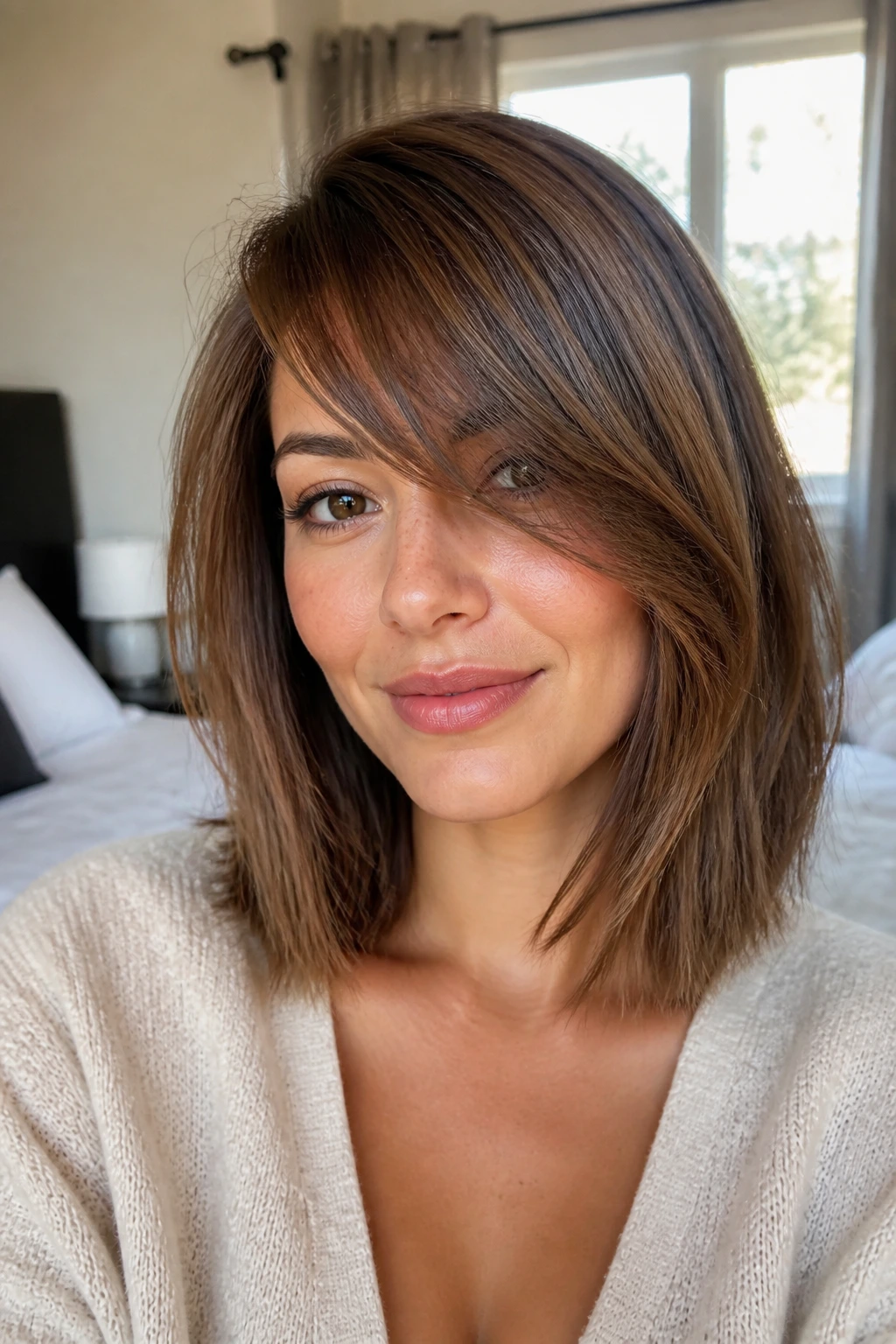
1. Classic Collarbone Lob With Sweeping Side Bangs
This is the safe bet, but “safe” does not mean boring. The collarbone length gives the haircut enough swing to move when you turn your head, and the side bangs fall into a soft diagonal that starts near the temple and lands around the cheekbone. It’s the version I’d hand to someone who wants a lob haircut with side bangs without committing to anything too choppy or too trendy.
Why this shape behaves so well
The clean perimeter keeps the lob looking polished, while the fringe adds just enough softness to stop it from feeling severe. On straight hair, it looks especially neat with a slight bend at the ends. On wavy hair, it picks up movement fast and looks better on day two than it does fresh from the salon.
Best for: first-time side bangs, medium-density hair, and anyone who wants the cut to work both tucked behind the ear and worn loose.
Styling note: blow-dry the bang across the forehead first, then guide it sideways with a round brush so it doesn’t split into two awkward pieces.
A tiny drop of styling cream on the fringe is enough. Too much, and the bang goes flat at the root. Too little, and it puffs up in humid air.
2. Blunt Lob With a Deep Side Part
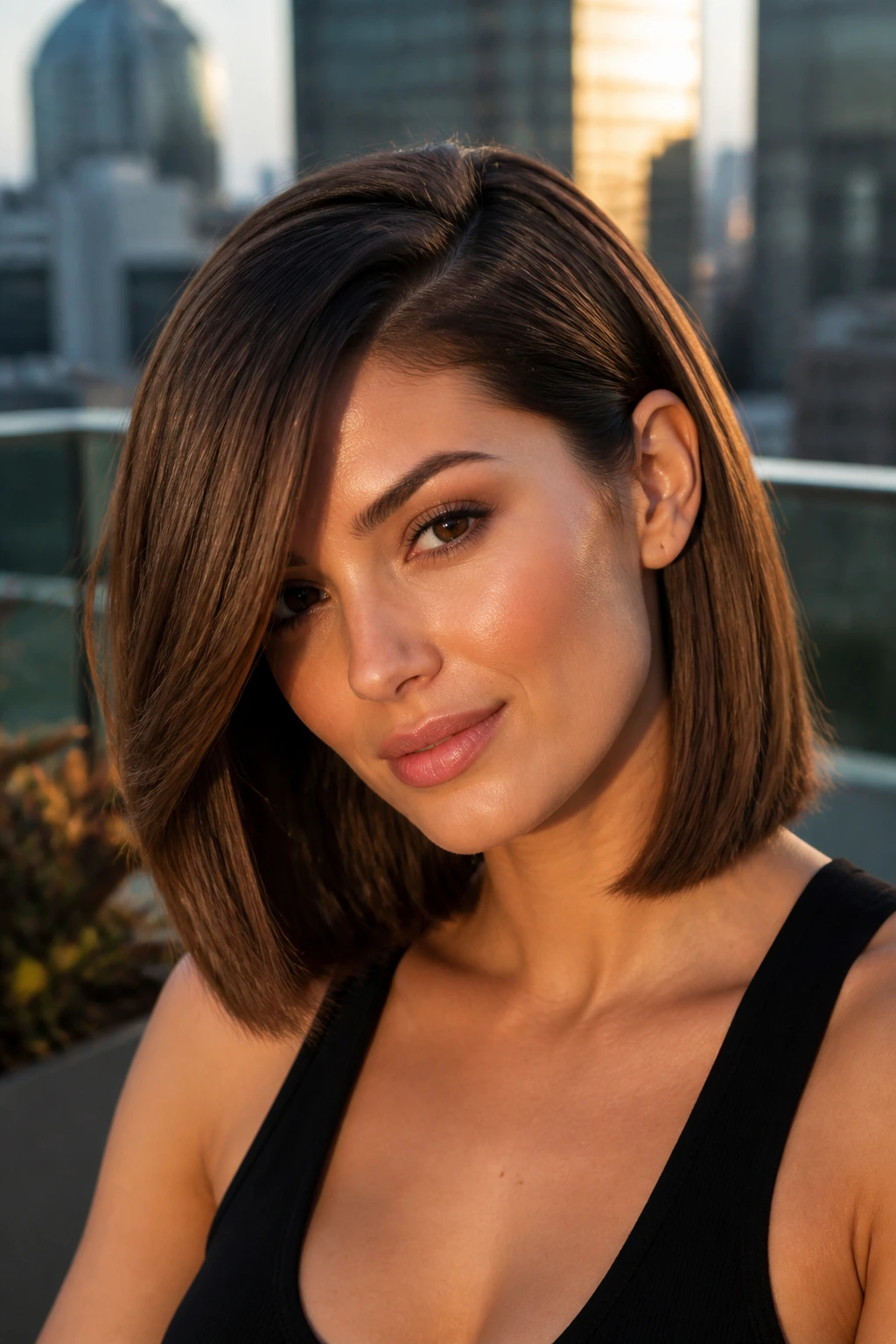
A blunt lob with a deep side part has attitude. The hemline stays straight and solid, which gives the haircut weight, and the side bangs come from a heavy part that pushes the front section across the forehead in one clean sweep. The result feels sharp, but not harsh.
Why it works
The blunt edge makes fine to medium hair look thicker at the bottom. The deep side part creates instant lift at the crown, which is one of those small details that changes the whole silhouette. If your hair tends to lie flat against the head, this cut gives it a little height without layers everywhere.
The side bang should be long enough to tuck behind the cheekbone when you want it off your face. That matters. If the fringe is cut too short, the whole look loses its clean line and starts flopping around near the eyes.
Styling cue: use a flat brush and direct the fringe across, then let the ends cool in the sideways direction. If you skip that cool-down, the bang will bounce back straight.
This one looks especially good when the ends are sharp and the shine is obvious. Not greasy. Just smooth, almost glassy.
3. Textured Wavy Lob With Feathered Side Fringe
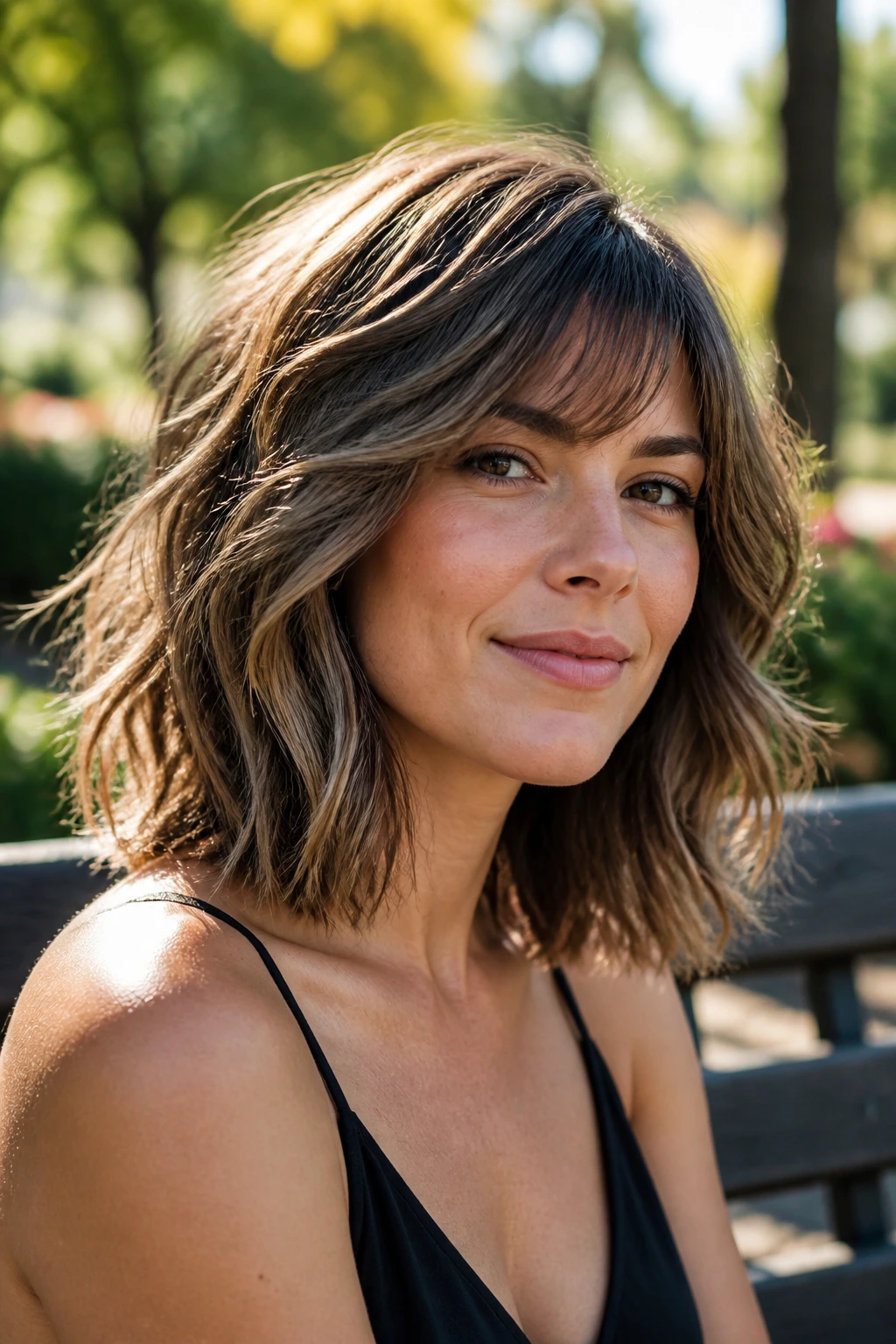
What makes a textured wavy lob with feathered side bangs feel easy is the lack of perfection. The edges are a touch irregular, the waves bend in different directions, and the fringe looks like it was cut to move instead of sit still. It has that lived-in bend people often try to fake with a curling iron.
The feathered bang matters here. A thick, blunt side fringe would fight the soft wave pattern. Feathering the ends lets the front pieces split and overlap a little, so the cut keeps air around the face instead of sitting like a curtain.
How to wear it
- Spray a light heat protectant and rough-dry the roots.
- Wrap random sections around a 1-inch iron, leaving the ends out on a few pieces.
- Shake the waves loose with your fingers, not a brush.
- Finish with texture spray at the mid-lengths only.
This is the lob I think works best on hair that resists looking over-styled. It looks better with a little frizz than with too much polish.
4. A-Line Lob With Smooth Side Bangs
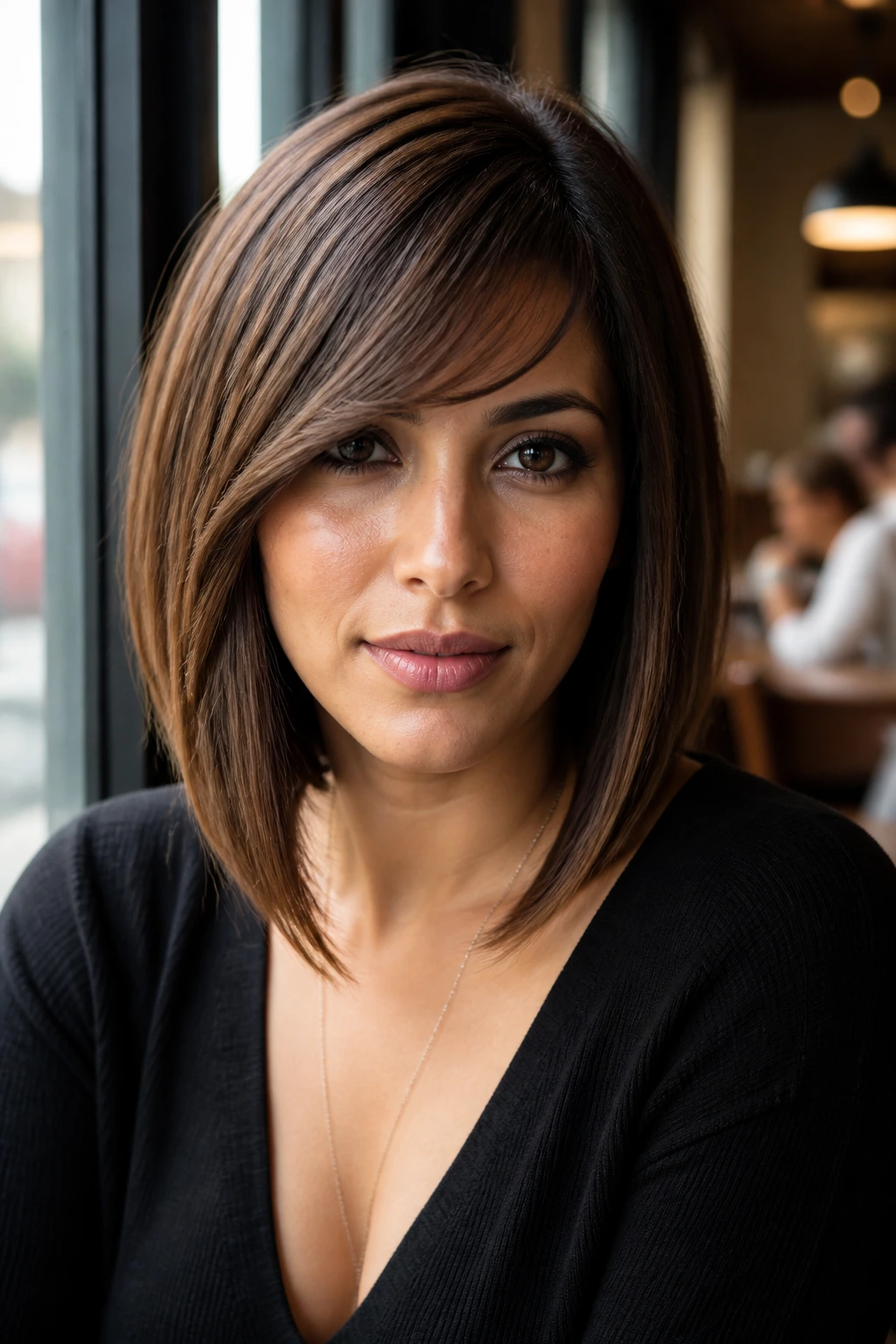
The A-line lob has a built-in angle: shorter in the back, longer in the front, with the front pieces grazing the jaw or collarbone. Add smooth side bangs, and the haircut suddenly feels longer and sleeker than it is. The diagonal lines pull the eye downward, which gives the whole shape a clean, lengthening effect.
This is one of the better choices if you like structure. The cut keeps its geometry even when you don’t curl it. The bangs should curve from a side part into the front lengths, almost like they belong to the cut instead of being attached later.
What to ask for
Ask for the front to stay long enough to graze the collarbone once dry. Wet hair lies. A good stylist will account for shrinkage and leave some room.
The fringe should be long enough to tuck into the front lengths on the heavier side and light enough to sweep away from the eye on the other side. That balance keeps the haircut from turning triangular.
A flat iron pass through the front pieces gives this one a little extra edge, especially if your hair has a natural bend that flips outward.
5. Choppy Layered Lob With Piecey Side Bangs
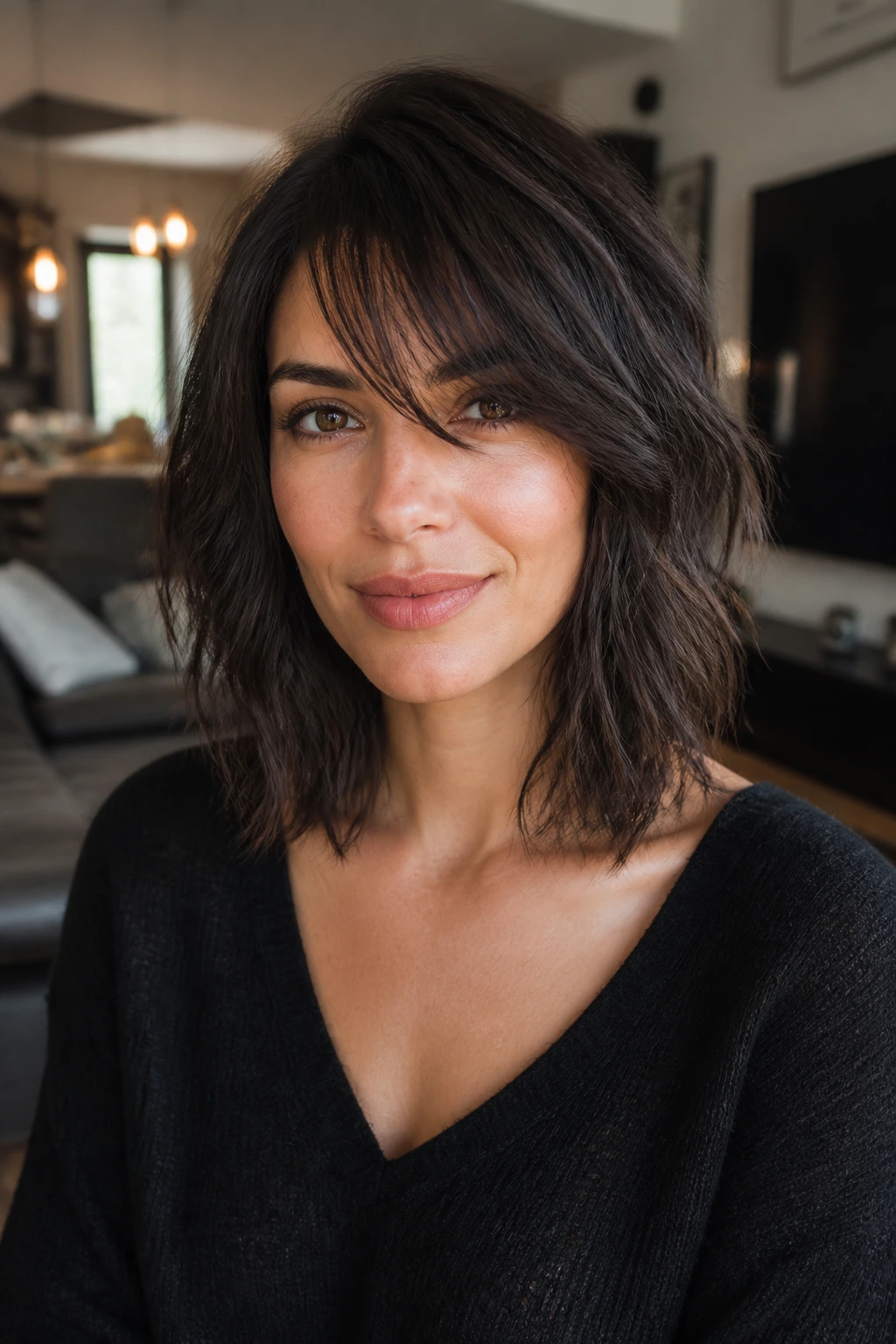
If you want the cut to look a little less polished and a little more lived-in, this is the one. The layers are broken up, the ends are jagged in a controlled way, and the side bangs are cut into separate pieces rather than one smooth arc. It’s casual, but not lazy. There’s a difference.
The texture is the point
A choppy layered lob is what happens when you want movement without losing the length. The layers keep the bottom from feeling heavy, and the piecey bang stops the front from looking too uniform. On thicker hair, that matters a lot. On fine hair, you have to be careful not to overdo the layers or the ends start looking thin.
Best styling move
Work a pea-sized amount of paste through the ends and pinch the fringe into two or three separated pieces. That tiny bit of separation keeps the side bangs from disappearing into the rest of the haircut.
This cut looks best when it’s not too neat. If every section is perfectly smoothed, it loses the point. Let a strand fall forward. Let another bend a little crooked. That roughness is the whole charm.
6. Inverted Lob With Cheekbone-Grazing Fringe
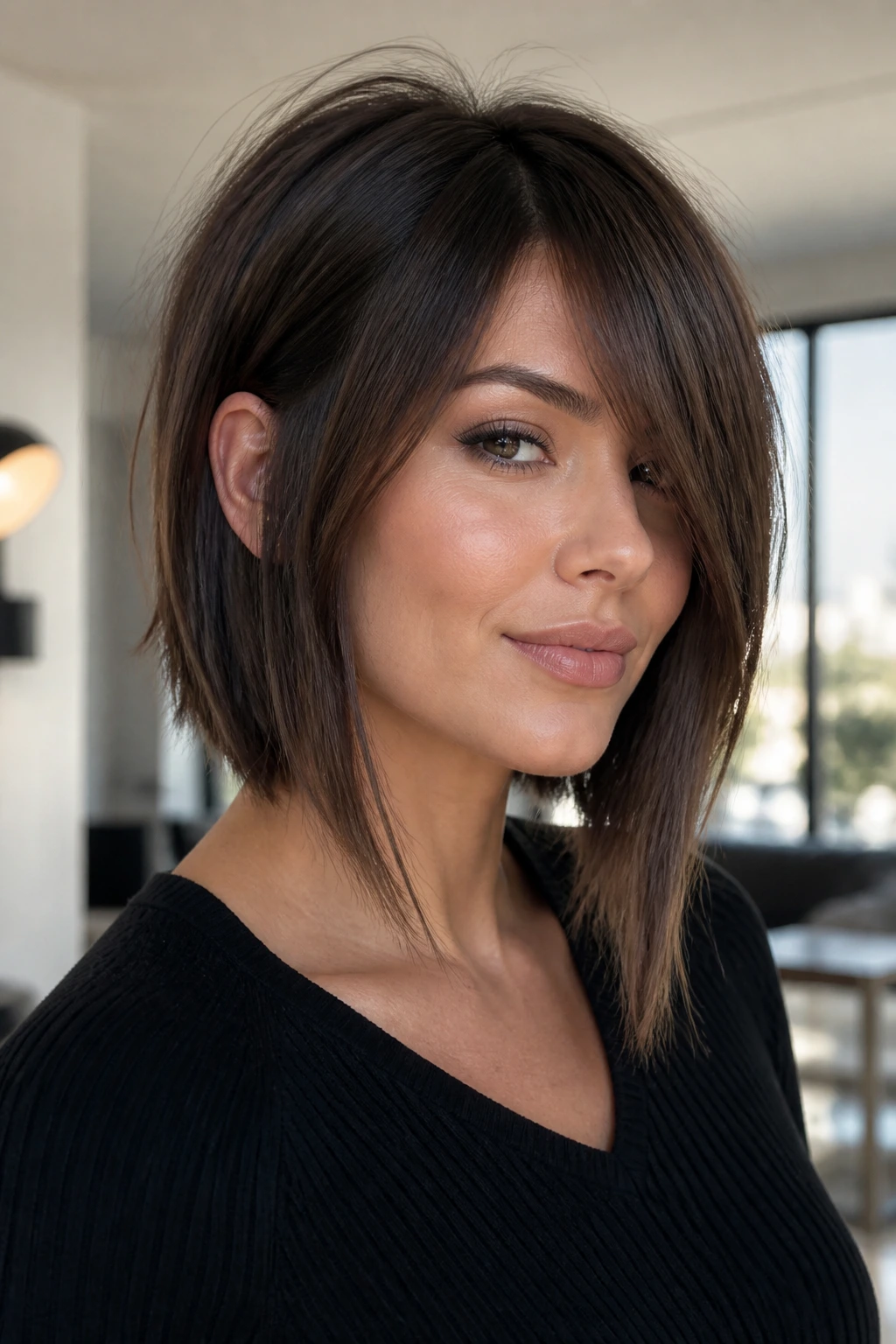
The inverted lob gives you a sharper shape than a classic shoulder-length cut. The back sits a little shorter, the front falls longer, and the side bangs skim the cheekbone instead of stopping high on the forehead. The result is angular, but there’s enough softness in the fringe to keep it from feeling severe.
This cut does a nice job lifting the face upward. The front length draws attention to the jaw and collarbone, while the side bang traces the cheek in a way that looks almost architectural. If you like haircuts that feel deliberate, this one has that built-in precision.
A round brush is your friend here. Blow the bang up at the root, then curve it down and across. If you flatten it too much, the whole front loses that lifted shape.
7. Curly Lob With Stretchy Side Bangs
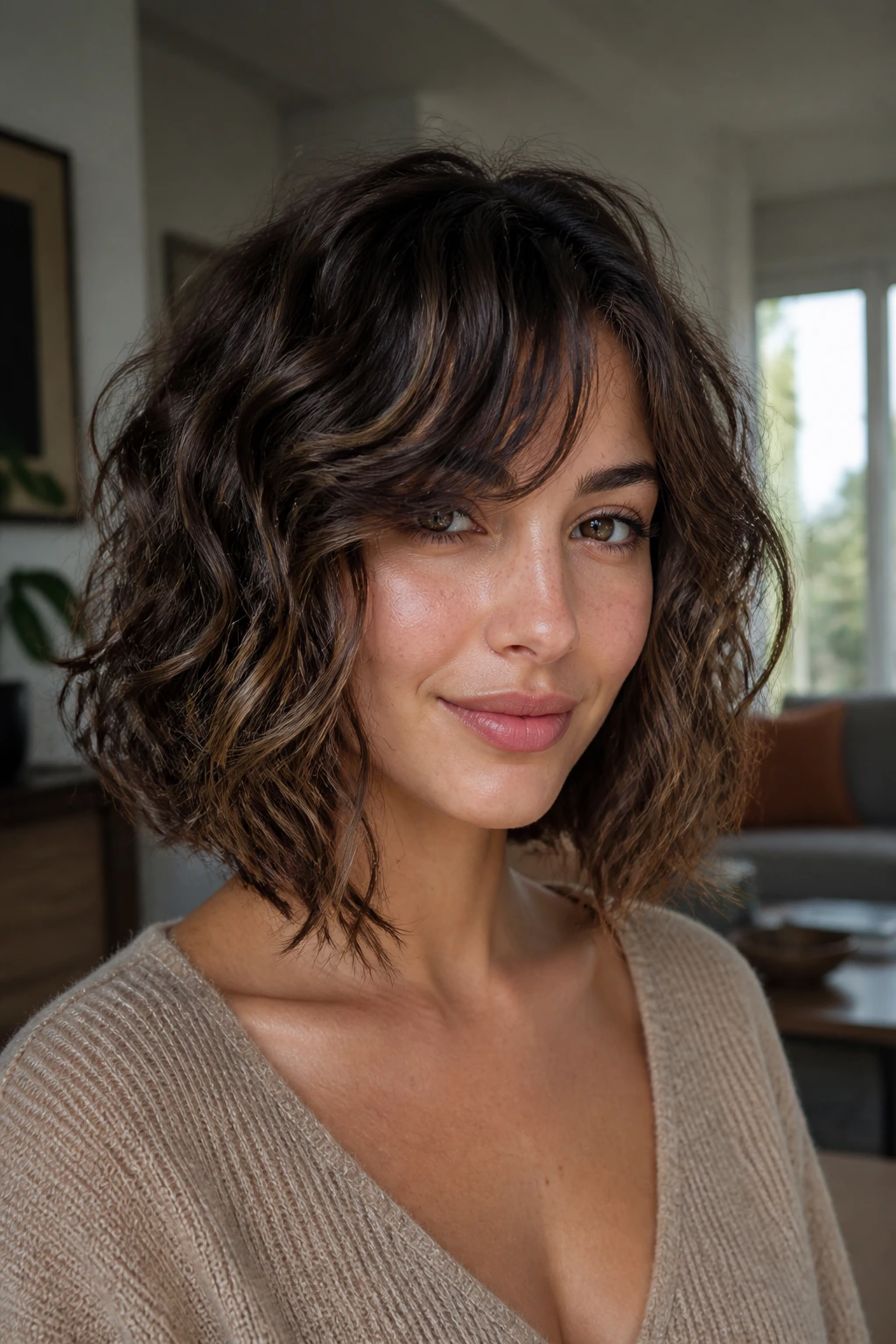
Curly hair and side bangs can be a headache if the fringe is cut too short. A curly lob handles it better when the bangs are left long enough to stretch and curl back into place. That means the side bang should look slightly too long when the hair is wet. That is the point.
The best curly lob with side bangs respects shrinkage. The front pieces should frame the face without springing into the eyes, and the overall shape should keep the curls stacked loosely around the chin and shoulders instead of puffing into a triangle.
What makes it work
- The fringe stays long, usually at or below the cheekbone when wet.
- The cut is shaped curl by curl, not with one blunt snip.
- The front layers need room to move without breaking the curl pattern.
- Diffusing on low heat keeps the front from collapsing into frizz.
If you’ve got curls, ask for the side bang to blend into the front layers. A disconnected fringe tends to fight the rest of the cut.
8. Shaggy Lob With Broken-Up Side Fringe
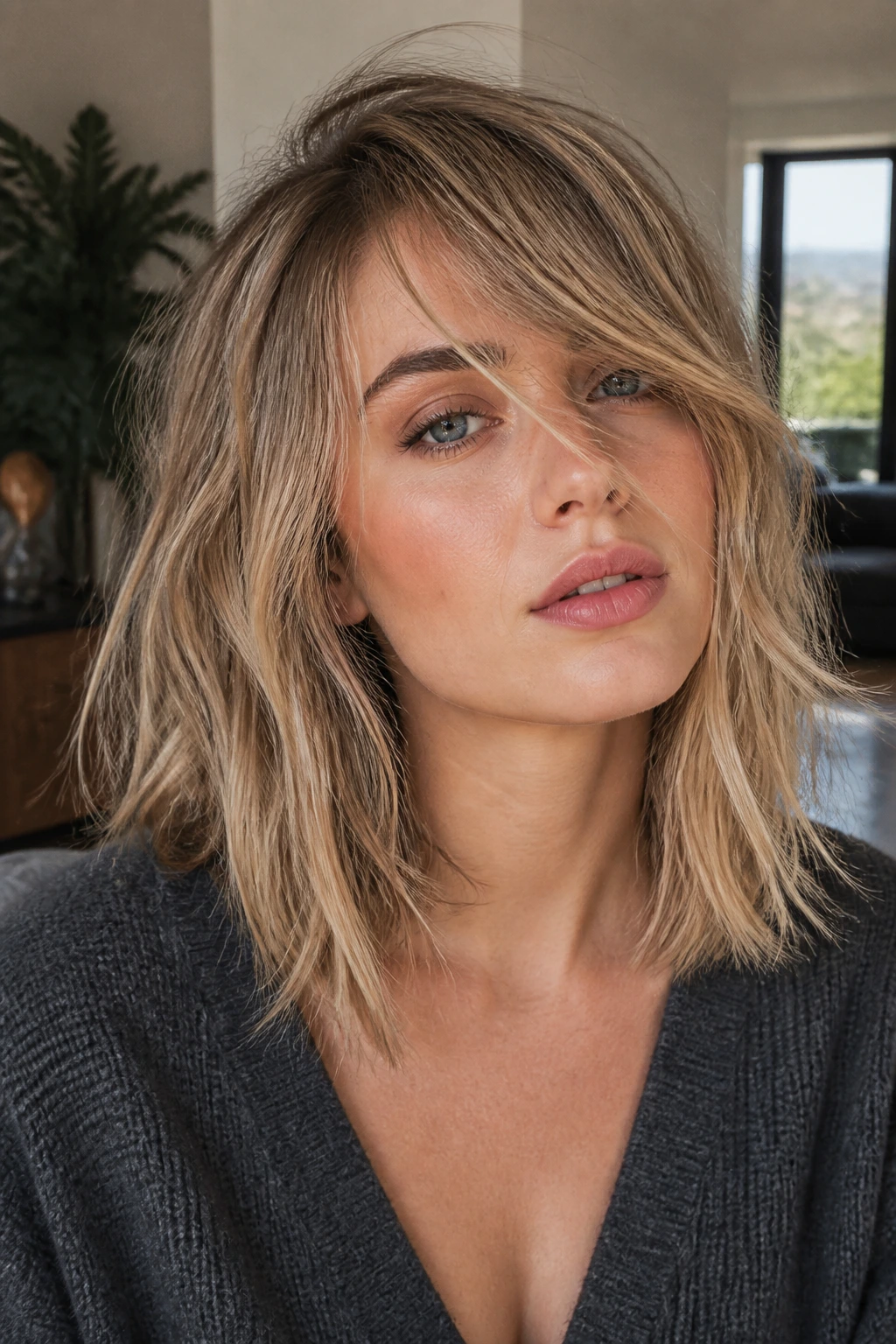
This is the messy one. Not sloppy. Messy in a good way. The shaggy lob brings shorter interior layers and a fringe that falls in uneven pieces across the forehead, which gives the haircut a little grit. It’s the cut for people who want hair that looks like it has a pulse.
The broken-up side fringe softens the usual shag shape. Without it, the haircut can look too heavy around the face. With it, the front opens up and the whole thing feels lighter, especially if your hair is thick or naturally puffed out at the ends.
A little dry shampoo near the roots helps this one keep its shape. That gritty texture gives the bangs a bit of grip so they don’t collapse by noon.
9. Sleek Glass Lob With Curved Side Bangs
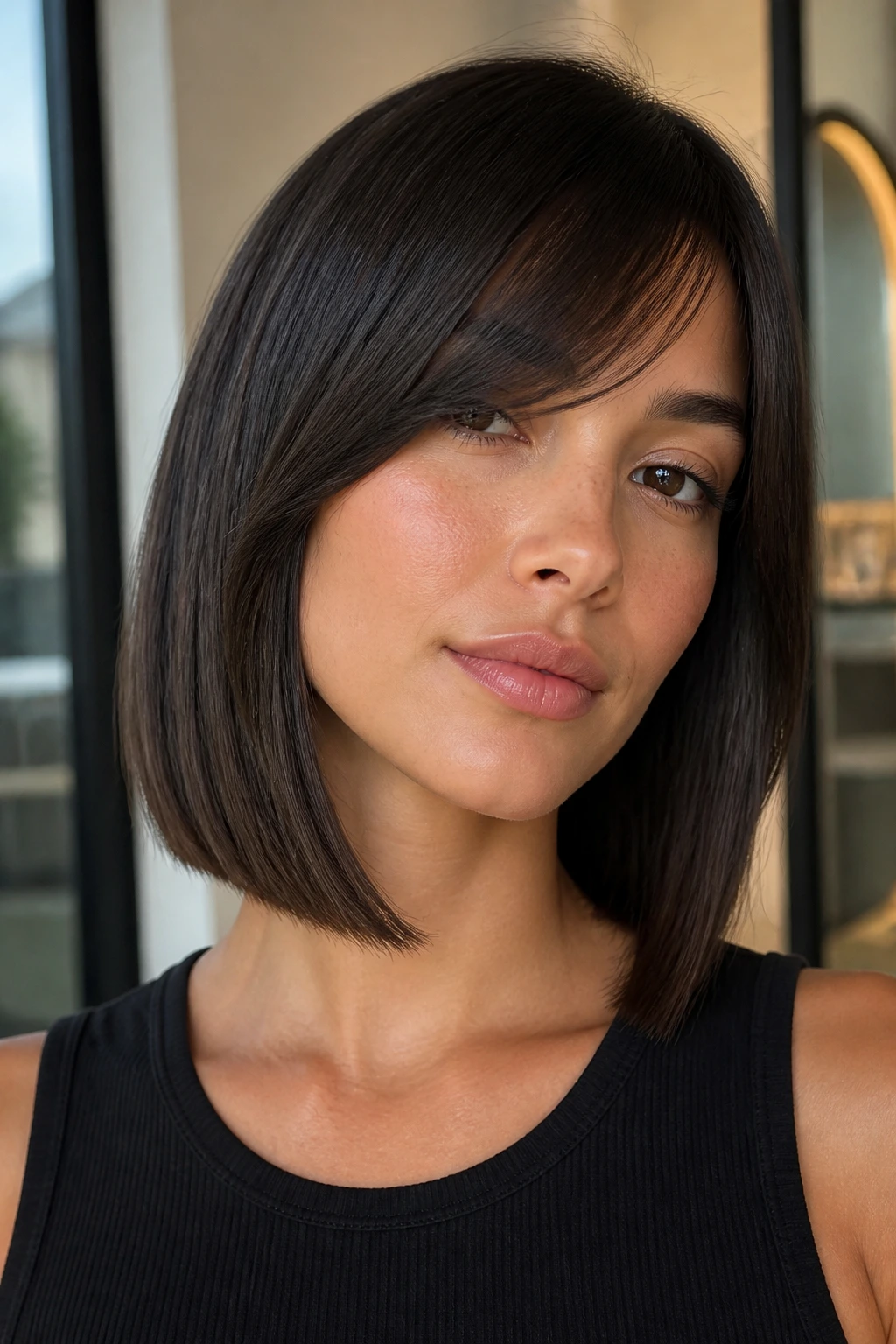
A glassy lob sounds high-maintenance, and it can be, but the look is worth it when you want the hair to move like one clean sheet. The side bangs are curved, not chopped, and they lie into the rest of the cut with very little visible layering. Think polished, reflective, and precise.
This version works especially well on straight or slightly wavy hair that can be smoothed without much battle. The key is the bend in the fringe. It should arc across the forehead and tuck into the longer front pieces, not sit like a separate strip.
Styling detail
Use a heat protectant, then pass a flat iron through the lengths in slow, even strokes. Don’t crank the ends inward too hard. A tiny C-bend is enough. If the whole cut turns under aggressively, it stops looking modern and starts looking dated.
A center-ish side part, not an extreme one, keeps the fringe from overwhelming the forehead.
10. French-Inspired Lob With Soft Side Sweep
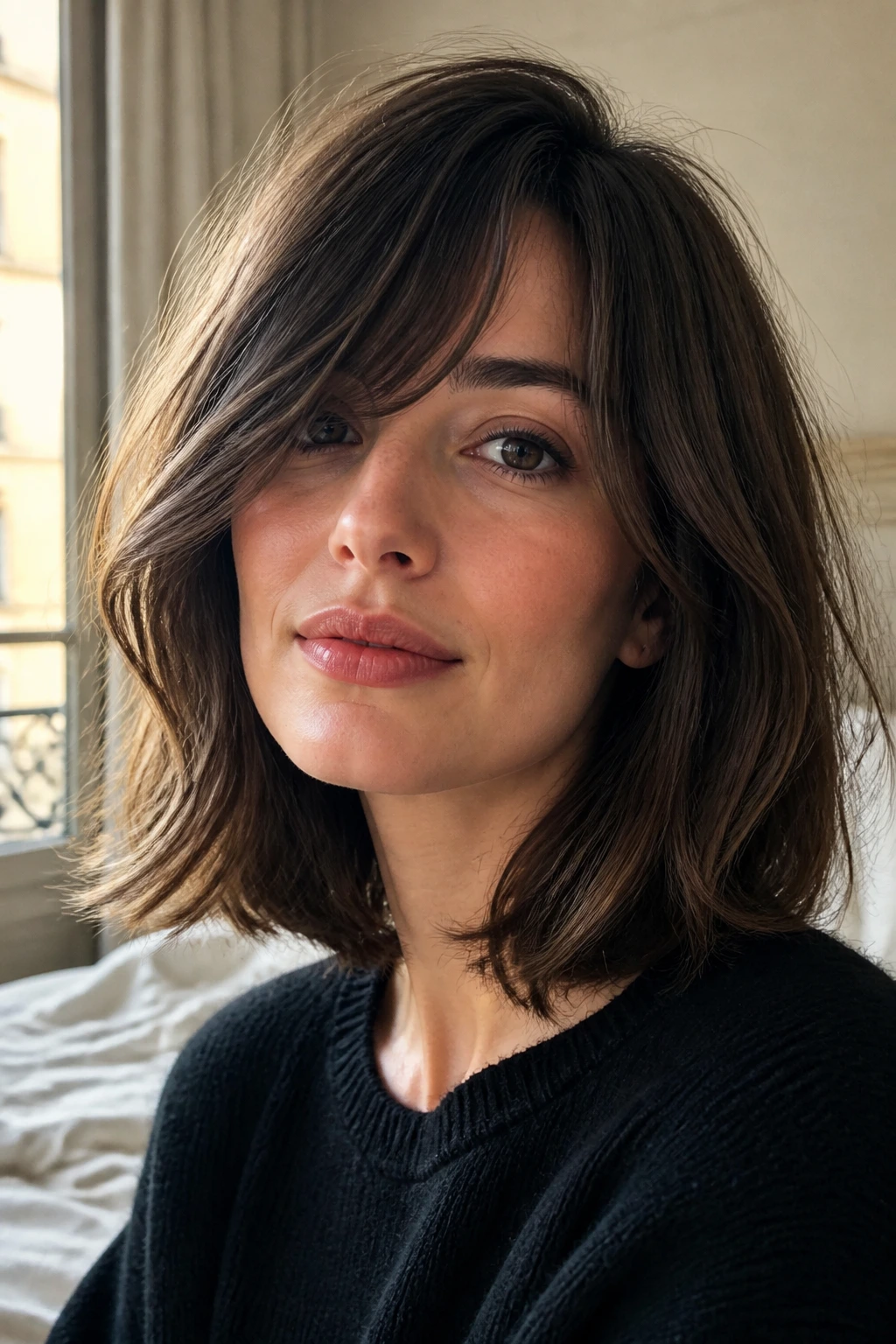
The French-inspired lob is relaxed in a very particular way. The ends sit around the jaw or collarbone, the line is soft rather than blunt, and the side bangs look like they were brushed over with two fingers and left alone. It has that unfussy feeling that’s harder to fake than people think.
What I like here is the lack of obvious effort. The fringe blends into face-framing pieces, so the haircut never feels chopped into parts. It works especially well when the hair has a little natural wave or a bend from sleeping on it.
Best if you want
- a cut that can air-dry
- a fringe that does not demand daily round-brush work
- a shape that looks better loose than pinned back
- a lob that feels soft around the face instead of strict
A small amount of styling cream and a quick scrunch is often enough. That’s the charm. The haircut does not need to announce itself.
11. Razored Lob With Airy Bangs
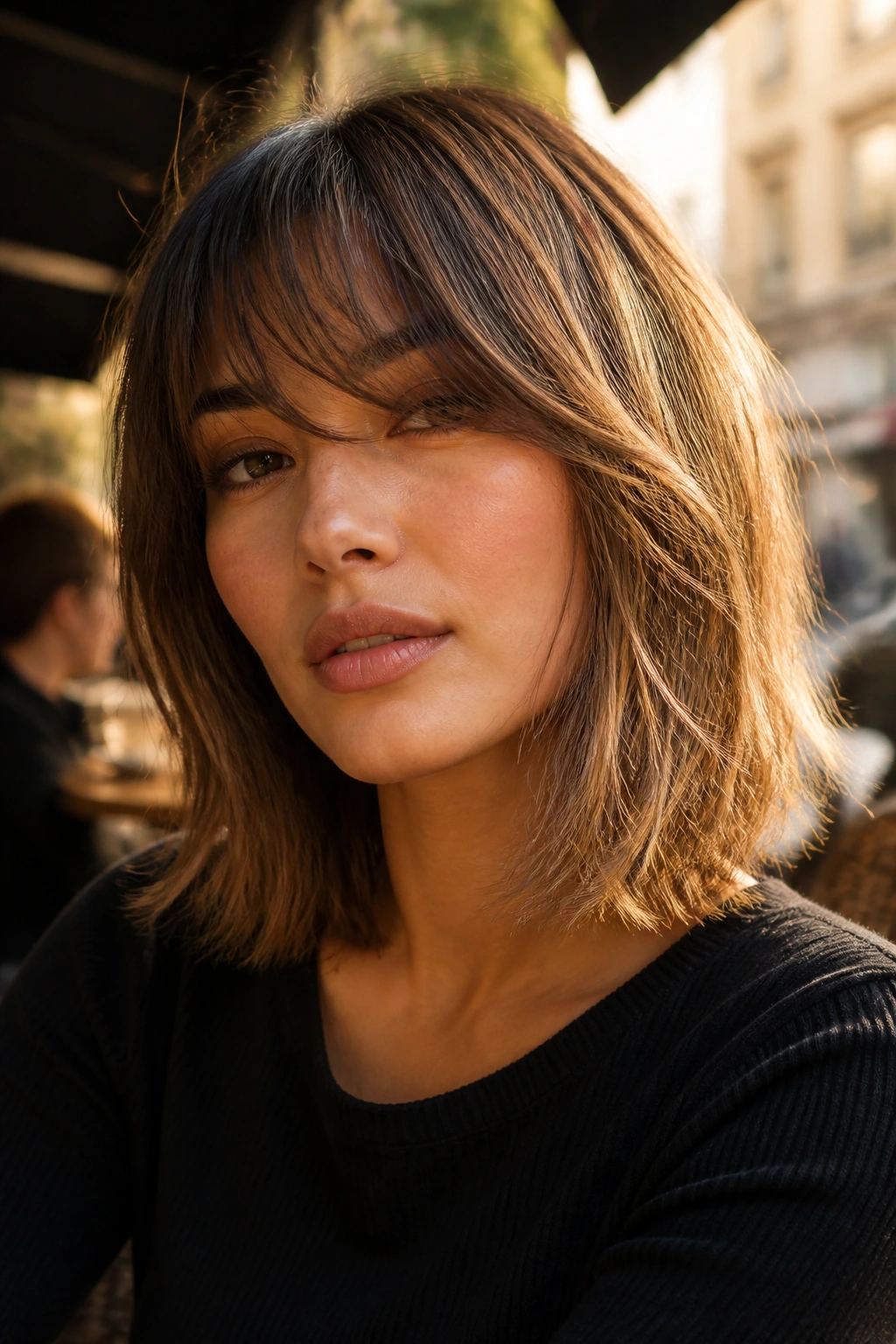
A razored lob has lightness built into the ends. The blade work removes some weight, which keeps the shape from sitting like a solid block, and the airy side bangs follow the same idea. Everything feels a little more open, a little less dense.
This cut can be gorgeous on thick hair because it removes bulk without making the perimeter look choppy. The fringe should float across the forehead, not land with a hard edge. If the side bang ends up too wispy, though, it can look stringy instead of airy. That’s where a careful hand matters.
The haircut works best when the ends are separated just enough to show movement. A little texture spray at the mid-lengths makes the airy pieces stand apart in a soft way. Too much product, and the feathered effect disappears.
12. Shoulder-Skimming Lob With Long Blended Bangs
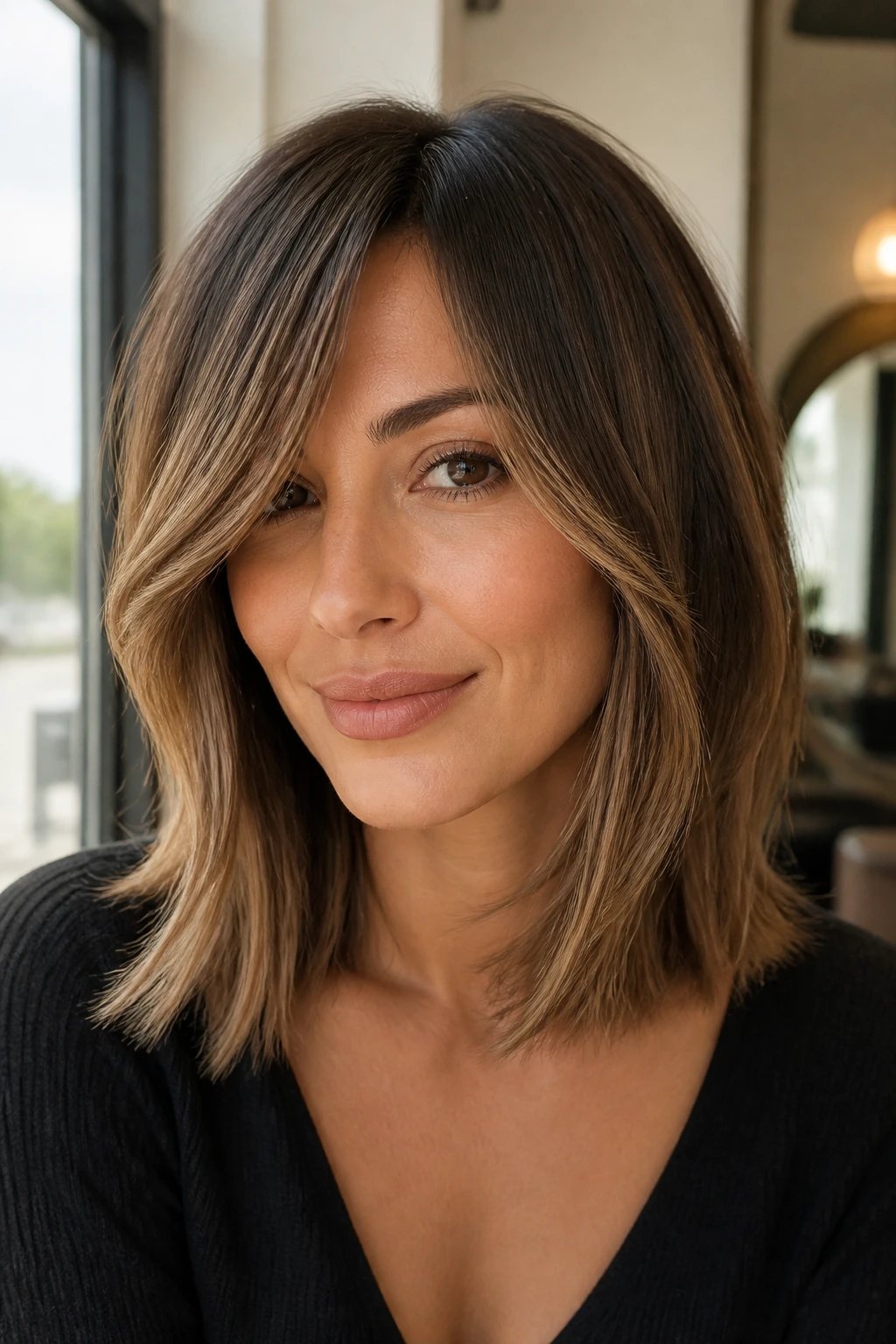
This version feels almost like a grown-out lob, but in a good way. The length touches the shoulders, so you get more swing, and the side bangs are long enough to merge into the front layers instead of hanging out on their own. It’s an excellent choice if you want side bangs but worry about the blunt “bang line” effect.
The blend is the whole story here. The fringe should not read as one separate chunk of hair. It should melt into the front pieces by the time it reaches the cheek and jaw.
Why people choose it
The long bang makes the cut easy to tuck behind the ear. It also gives you more room to part the fringe differently on days when you want a cleaner face line. If you’re easing into bangs for the first time, this is probably the least intimidating version.
A soft blow-dry with a medium round brush keeps the shape controlled without making it stiff.
13. Heavy-Bottom Lob With a Thin Side Fringe
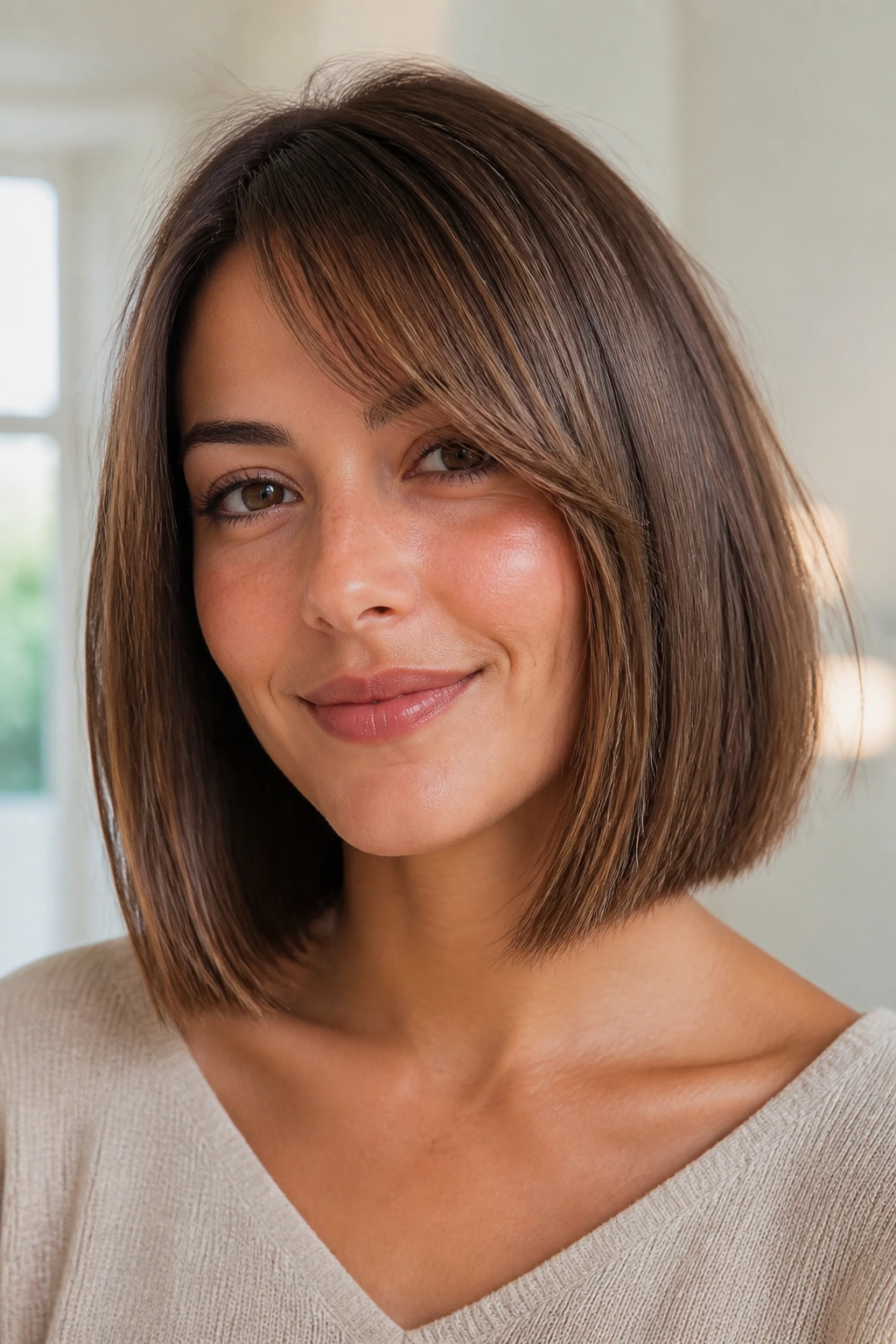
This cut keeps the ends full and solid, which gives the lob a grounded shape. The side fringe stays thin and narrow, almost like a narrow ribbon at the temple, so the front gets softness without losing the heft at the hemline.
That combination matters if your hair is fine and you want the perimeter to look thicker. Too many layers would make the ends see-through. A thin side bang gives you movement near the face without stealing density from the bottom.
The trick is restraint. A tiny fringe section can do more than a broad, heavy bang if the rest of the cut is clean. It’s also easier to manage on windy days. Less bang means less battle.
14. Tousled Beach Lob With Loose Side Bangs
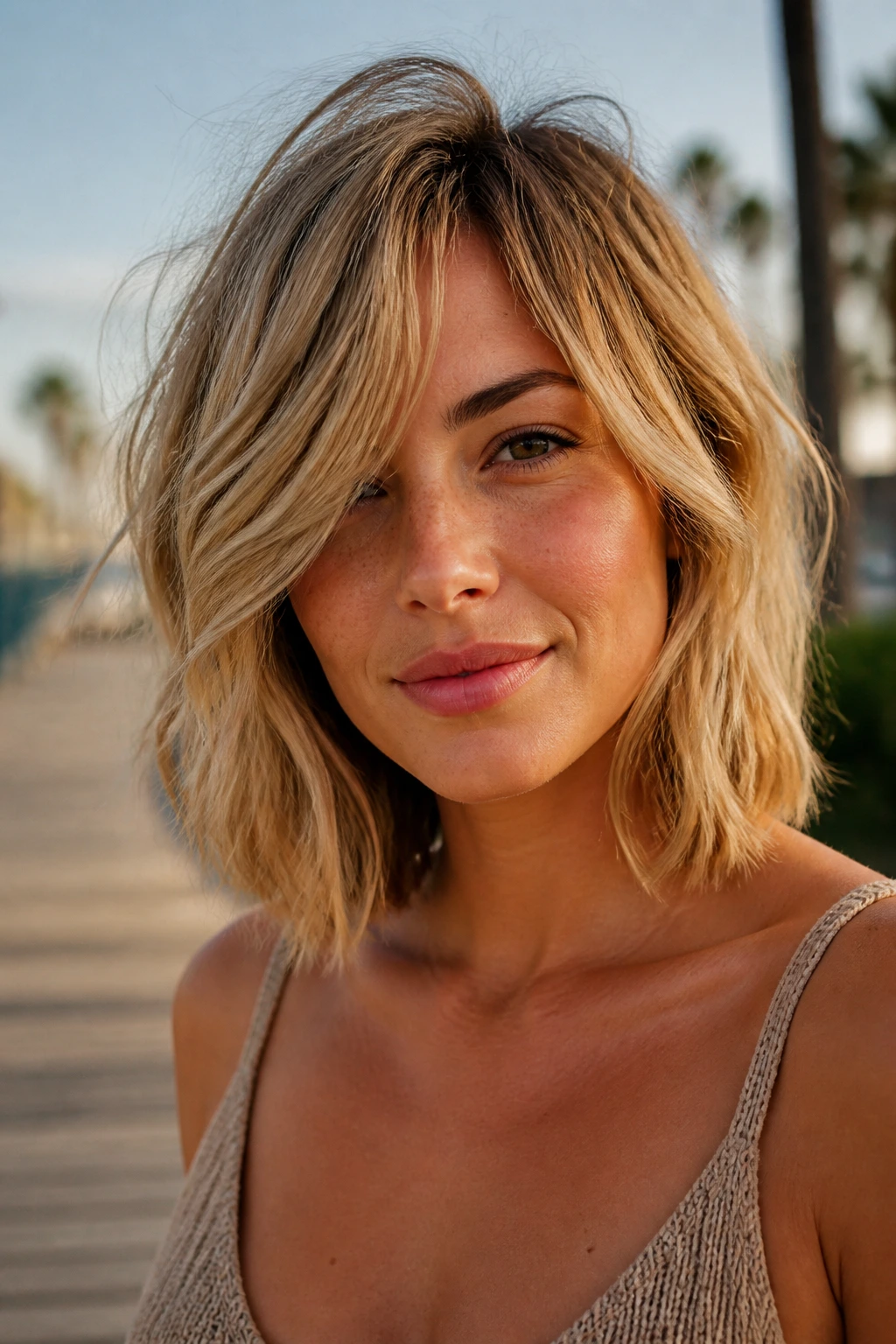
A tousled lob is not about looking perfectly styled. It’s about looking like the air did half the work for you. The side bangs are loose and slightly disconnected, and the rest of the cut has soft bends that feel sun-warmed even when the weather has nothing to do with it.
This shape suits hair that already has a little wave. You can build it with a curling wand, but don’t over-style the ends. Leave a few straight pieces mixed in. That contrast keeps the haircut from turning into one solid curl pattern.
Quick texture map
- root lift at the crown
- soft bend through the mid-lengths
- loose, side-swept fringe
- ends that are not identical on both sides
A salt spray works, but don’t soak the hair. A light mist and a scrunch is usually enough. If the hair feels crunchy, you went too far.
15. Fine-Hair Lob With Lightweight Side Bangs

Fine hair needs a careful lob. Too many layers and the ends fray. Too much bang and the front lies flat against the forehead. A lightweight side bang solves both problems when it’s cut with a little softness but not so much that the front disappears.
This cut keeps the perimeter blunt enough to make the hair look fuller. The side bangs are long and narrow, which gives the face some shape without taking away density from the main body of the cut. That is the sweet spot.
A root-lifting mousse at the crown helps this one keep lift. Put it in before blow-drying, not after. Once the hair is dry, the fringe should have enough movement to sweep sideways without sticking to the skin.
If your hair is thin at the temples, ask for a long side bang rather than a short one. Short bangs need more body than fine hair usually wants to give.
16. Thick-Hair Lob With Deep Side Layers
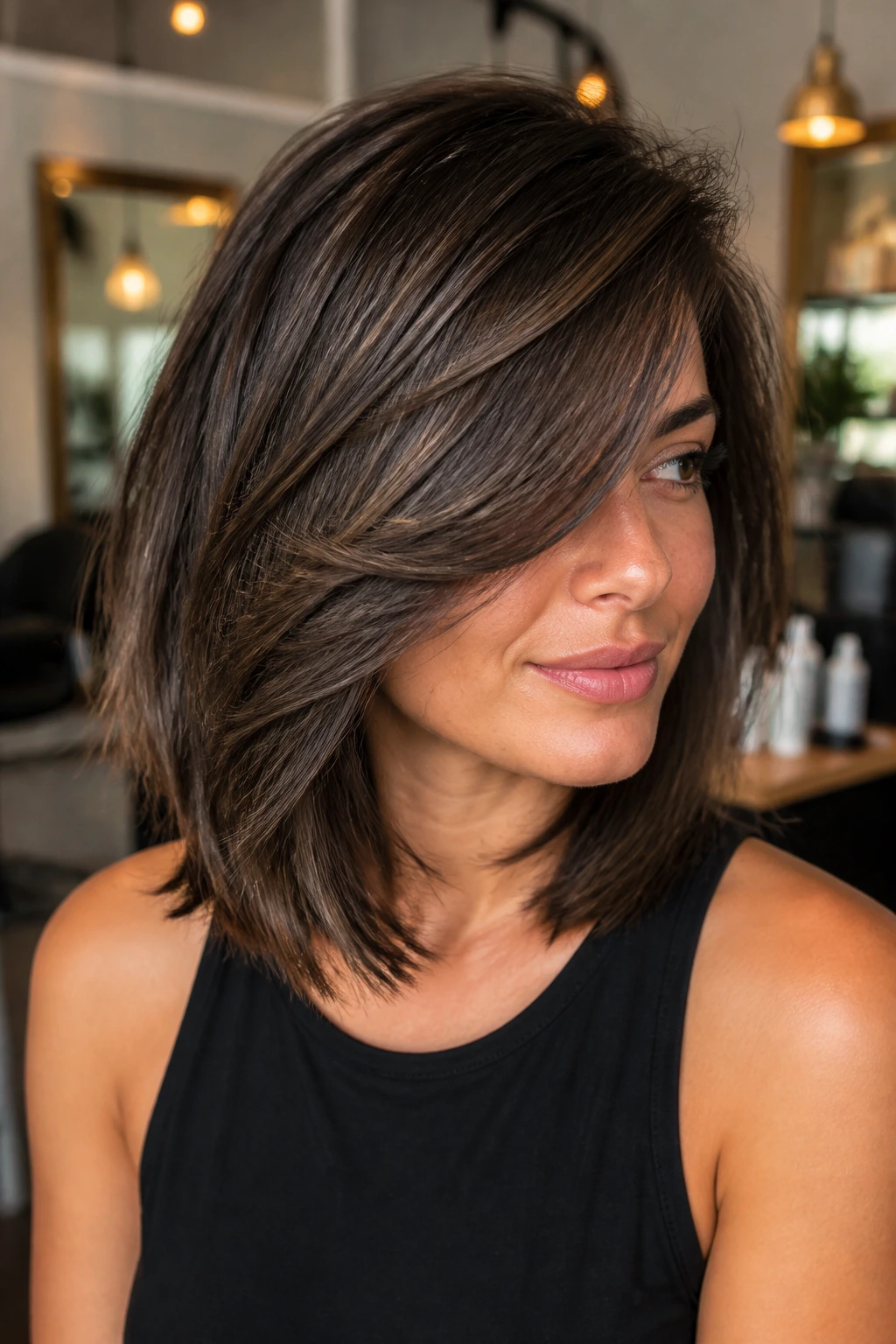
Thick hair can carry a lot of shape, but it can also balloon if the cut is too blunt and too heavy all around. Deep side layers help remove some of that weight near the front, and a sweeping bang keeps the haircut from feeling like one giant curtain.
This is one of the few times I’d say internal layering matters more than the visible shape. The outside line can stay fairly clean, but the inside needs to be opened up so the hair doesn’t swing into a triangle by lunch.
Good signs in the salon chair
You want movement when the stylist lifts the side sections. If the hair all falls together in a solid sheet, there’s not enough reduction. If it looks shredded, there’s too much.
The fringe should blend into the shortest front layers, not sit on top of them. Thick hair can handle a stronger bang, but it still needs a soft edge.
17. Round-Face Lob With Angled Side Bangs
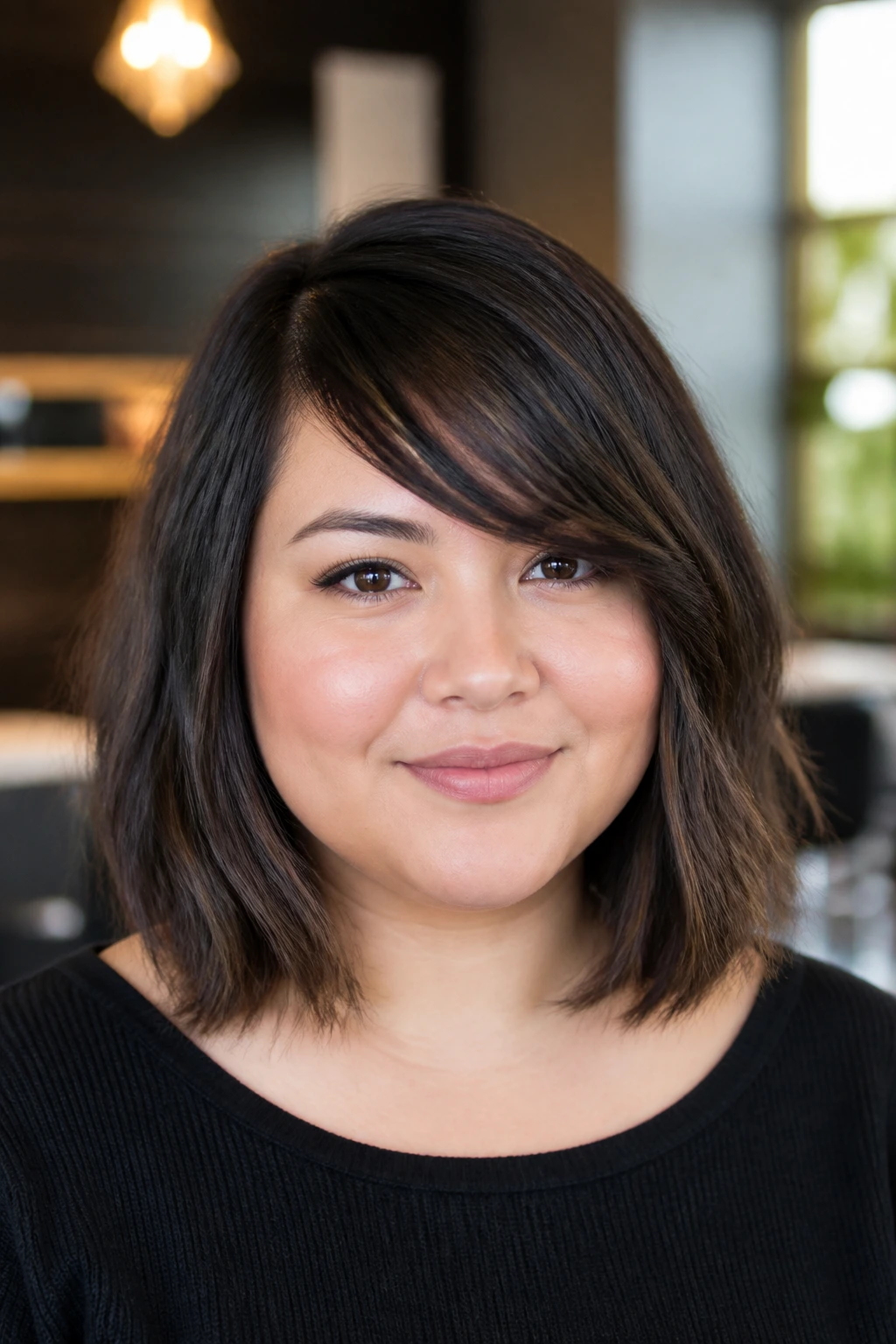
A round-face lob works best when the front pieces create vertical lines, not horizontal ones. That’s where angled side bangs earn their keep. They draw the eye from the temple down toward the jaw, which makes the face look a little longer and the haircut feel more intentional.
The length should stay below the chin, usually closer to the collarbone. Anything shorter can widen the face visually. The side bang helps with that, but only if it starts high enough and falls on a clean diagonal.
How to style the angle
Use a side part that isn’t too extreme. Then blow-dry the bang forward first and sweep it sideways at the end so it lands in a soft wedge rather than a flat stripe.
That small angle matters more than people expect. It changes the whole balance of the cut.
18. Square-Jaw Lob With Draped Side Fringe
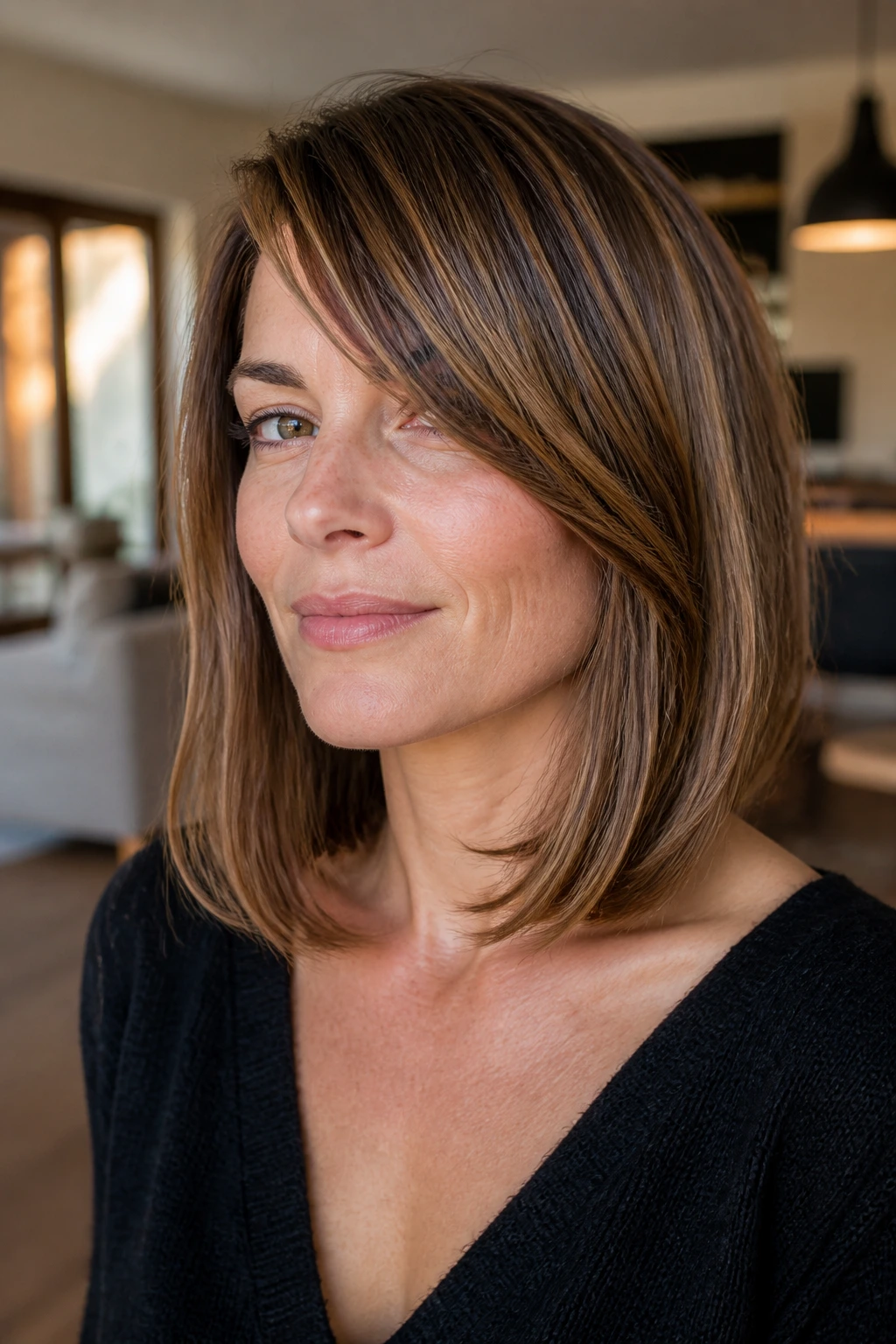
A square jaw needs softness near the corners of the face, and a draped side fringe does that without hiding the jaw completely. The side bang should curve gently across the forehead and fall near the cheek, not cut off sharply at the temple. That curve makes the line feel less rigid.
The lob itself can be blunt or slightly layered, depending on how much movement you want. I prefer a soft bend at the ends so the whole haircut has a rounder feel. When the fringe drapes instead of slices across the forehead, the cut stops fighting the bone structure and starts working with it.
A little bend in the front lengths helps too. If the edges are too straight, the shape can look boxy.
19. Off-Center Part Lob With Long Blended Fringe
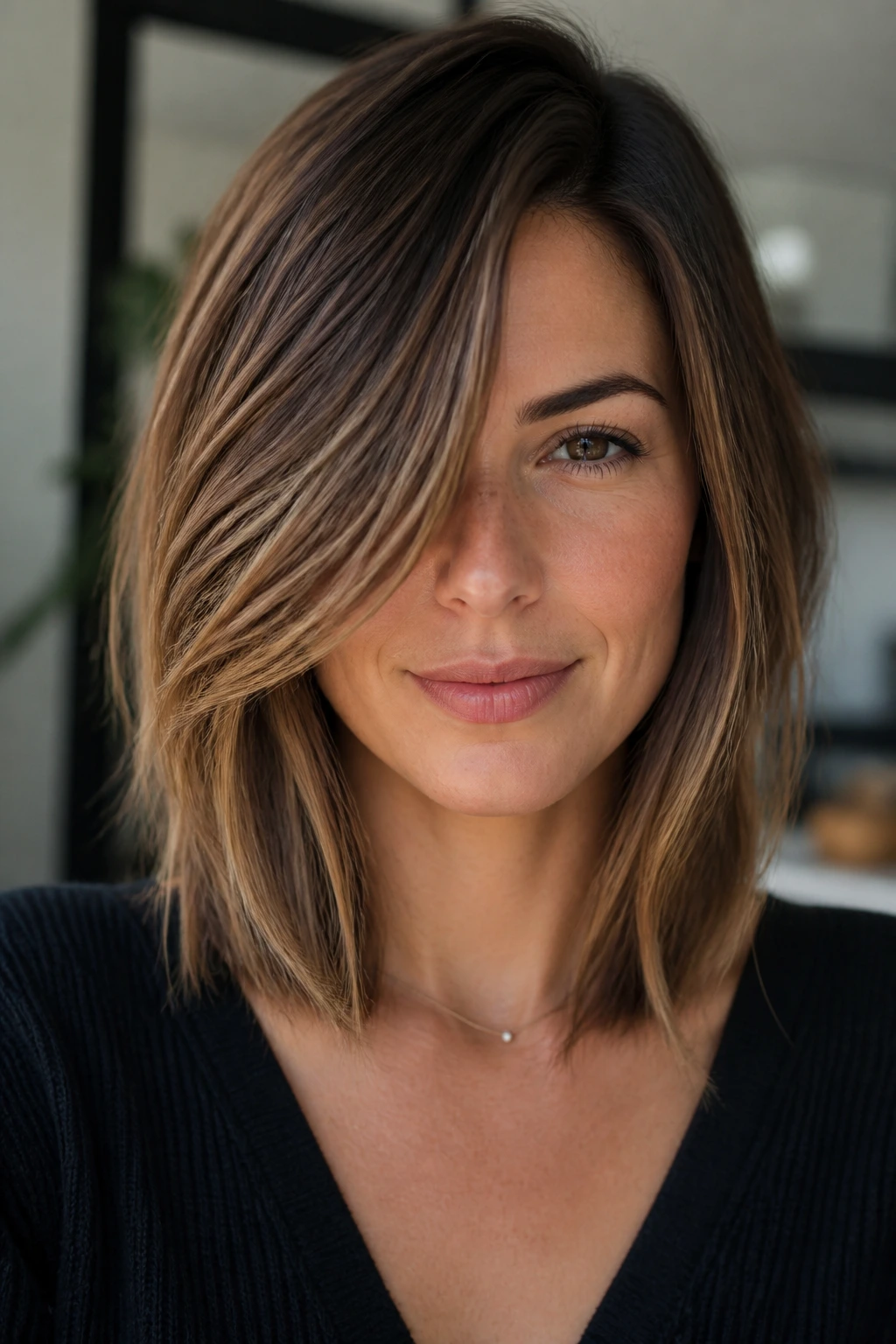
This is the haircut for someone who wants subtlety. The part sits just off center, which keeps the look from becoming too symmetrical, and the side bangs blend into the front lengths so well that the fringe barely looks separate. It feels calm. Almost understated to a fault, in the best possible way.
The off-center part gives a quiet lift at the roots without screaming “deep side part.” That makes it easier to wear every day. The bangs should be long enough to tuck, twist, or pin back if you wake up on the wrong side of the mirror.
Where it shines
This version is good when you want flexibility. You can smooth it neat for work, rough it up with texture spray, or let it dry with a little bend and call it done. The haircut doesn’t force one personality on your hair.
20. Air-Dry Lob With Natural Side Bang Movement
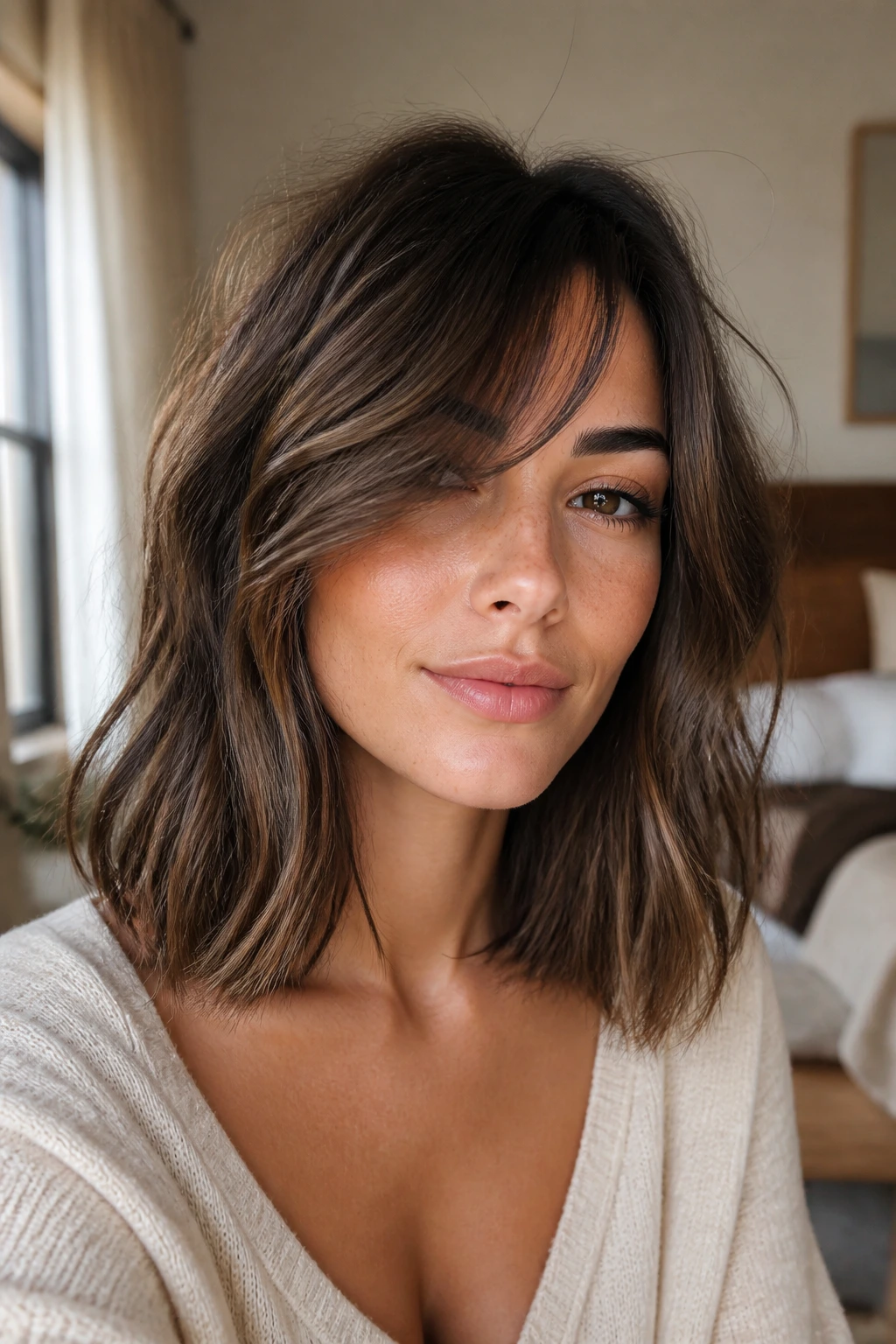
Some cuts beg for a blowout. This one does not. An air-dry lob with side bangs is shaped to let the hair do what it already wants to do, only with enough structure that it doesn’t collapse into random puffs. The side bang follows the hair’s natural bend, which makes it look softer and less forced.
This is the kind of cut that pays attention to texture instead of fighting it. If your hair waves, bends, or curls at the front, the fringe can be cut long and directional so it falls the way your hair already prefers. That’s a much better strategy than trying to train every strand into obedience.
A small amount of leave-in cream, scrunched through damp hair, is usually enough. Then leave it alone. Seriously. Touching it while it dries is how the shape gets messy in the wrong way.
What Makes Side Bangs Work So Well With a Lob
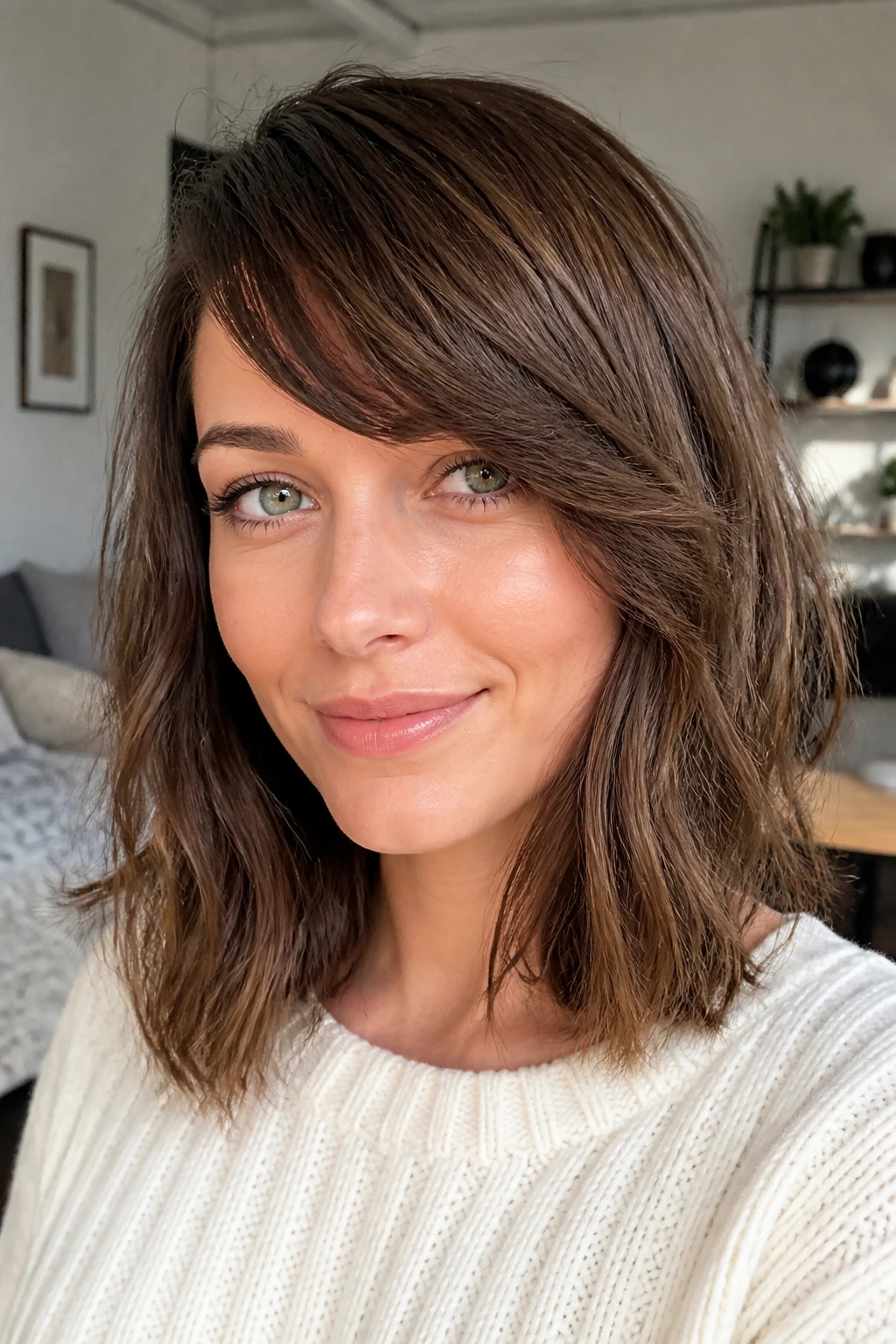
A lob already has a clean, believable shape. Side bangs are what keep that shape from becoming too blunt around the face. They create a diagonal line, and diagonal lines are flattering because they move the eye. That sounds simple, but it’s doing a lot of work.
The angle also gives the haircut flexibility. You can sweep the fringe fully across, let it fall with an off-center part, or tuck it away when you want the face open. That matters more than people expect. A fringe that only works one way gets annoying fast.
Length matters here. A side bang that ends around the cheekbone or just below it tends to behave better than a shorter piece that stops high on the forehead. Short side bangs can kick out, split, or cling to the skin. Longer ones have somewhere to go.
Getting the Length, Part, and Fringe Weight Right
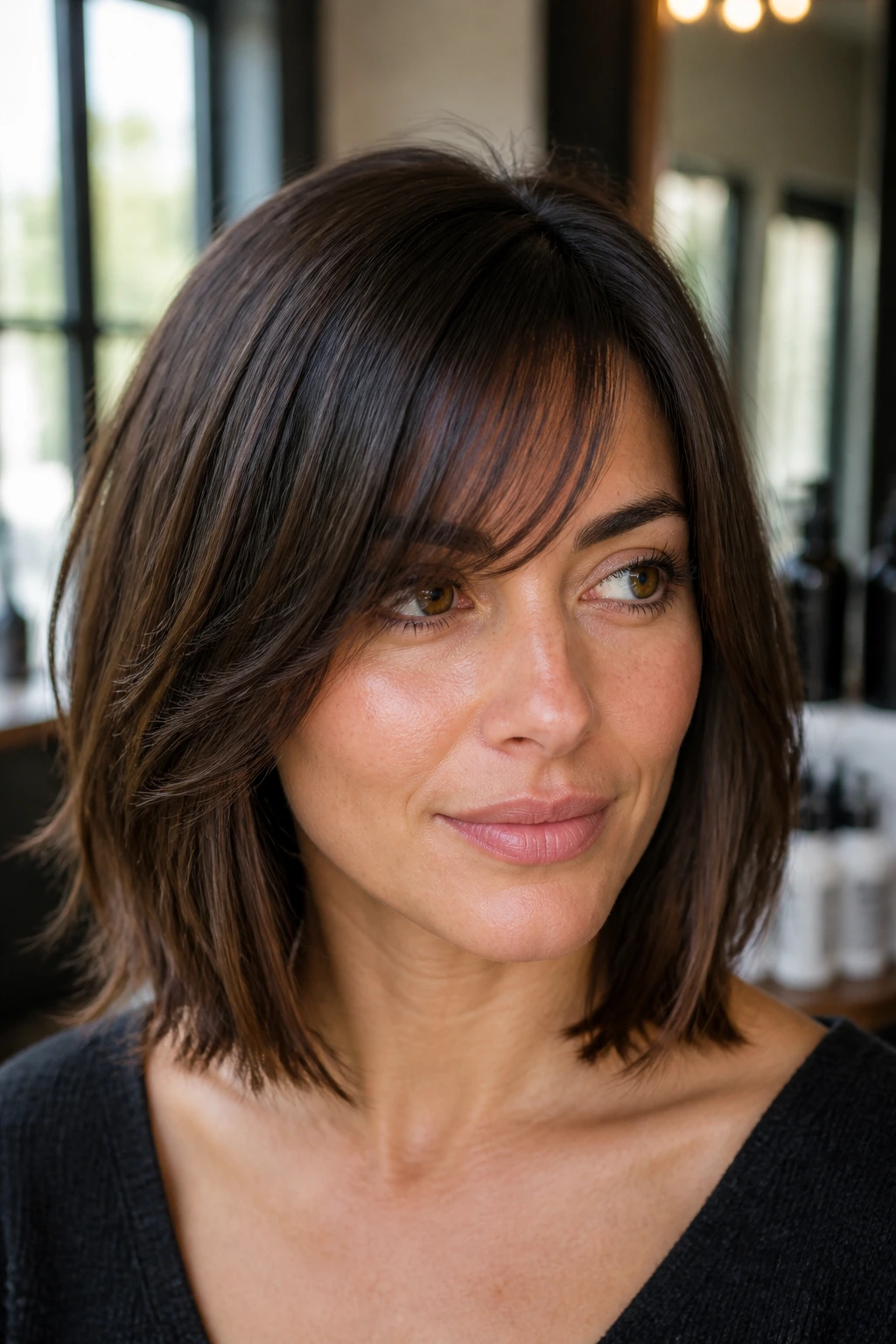
Length: Ask for the lob to land somewhere between the base of the neck and the collarbone if you want movement without constant flipping. Shorter than that and the hair can feel boxy; longer than that and you drift out of lob territory.
Part: A true deep side part is not required. Sometimes a slight off-center part gives the same softness with less daily maintenance. If your hair has a stubborn cowlick, that small shift is easier to live with.
Fringe weight: Thick hair can hold a heavier side bang. Fine hair usually looks better with a lighter, longer fringe that blends into the front layers instead of sitting on its own.
Texture: Straight hair can take a sharper line. Wavy and curly hair usually need more softness and more length in the front so the bang doesn’t spring too high.
One thing I’d tell any stylist consultation: show the parting direction you wear most often. A side bang cut for the wrong part can look great on the salon chair and awkward at home.
Styling Tools That Keep These Cuts Looking Intentional
-
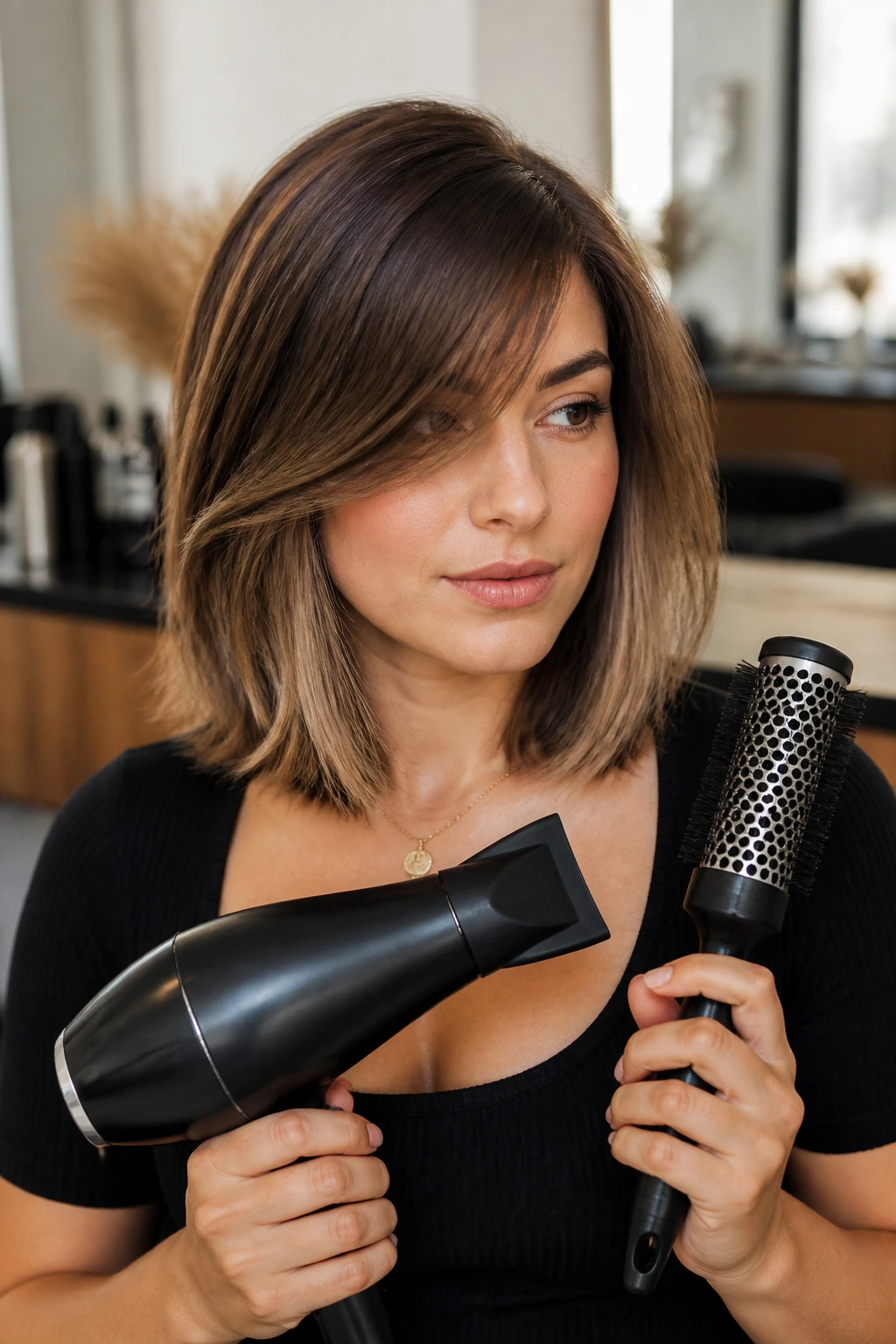
A blow-dryer with a nozzle: The nozzle directs airflow so the fringe doesn’t blow every which way. That matters more than fancy settings.
-
A 1-inch to 1.25-inch round brush: This is the workhorse for side bangs. Smaller brushes give more bend; larger ones keep the fringe softer.
-
A fine-tooth tail comb: Use it to place the part cleanly and separate the bang section before drying.
-
Heat protectant spray: Side bangs sit close to the face, which makes them the first place people over-style. Protect them.
-
Texturizing spray or dry shampoo: Good for keeping a lob from looking flat at the crown or too slick at the ends.
-
Duckbill clips: Handy for setting the front pieces while they cool. Cheap, useful, and worth having.
-
A small flat iron: Best for smoothing a stubborn side fringe or giving the ends a soft bend.
-
Microfiber towel or cotton T-shirt: Regular terrycloth roughs up the cuticle and can add frizz before you even start styling.
How to Choose the Right Lob With Side Bangs for Your Face and Hair
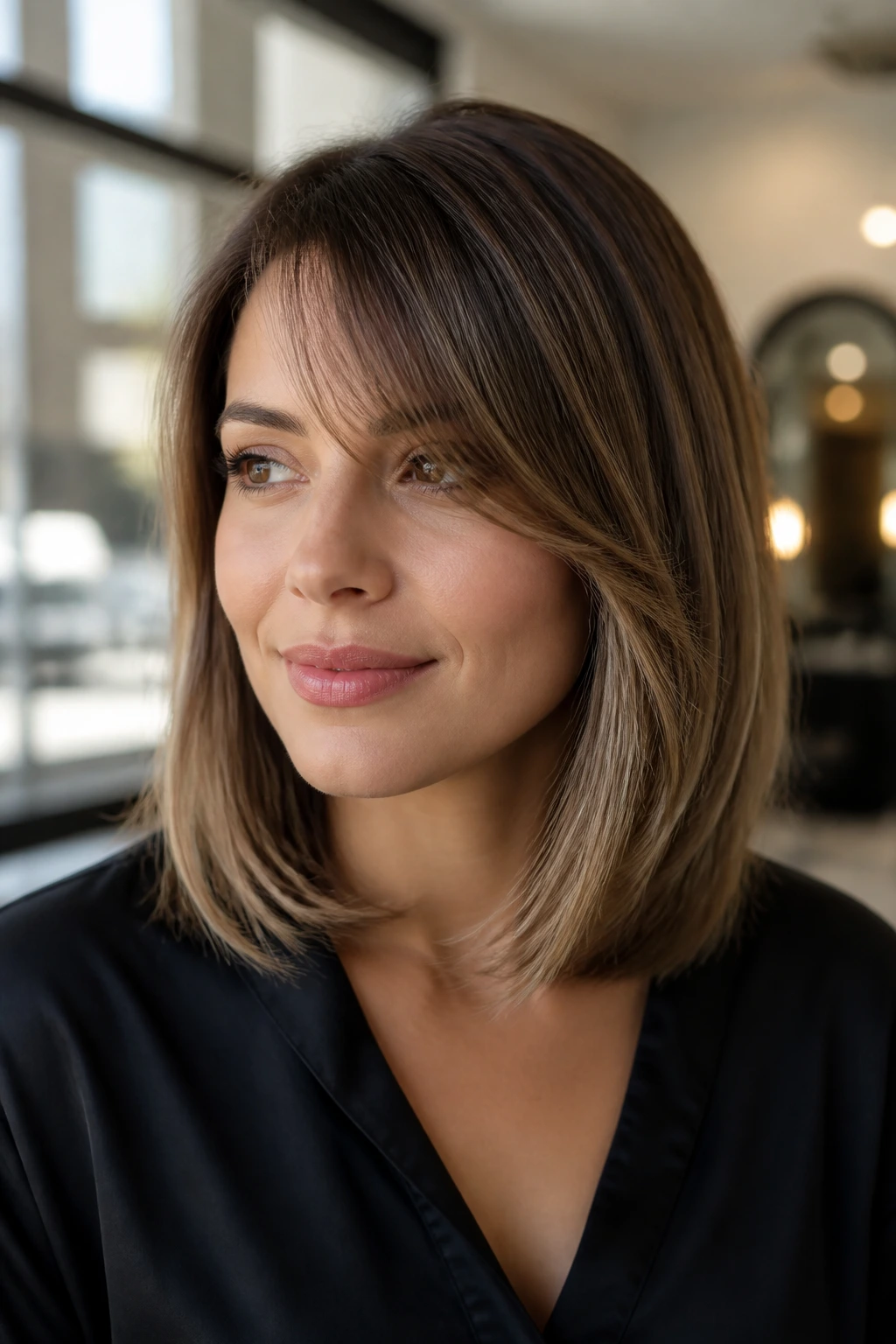
The best lob with side bangs starts with your hair’s habits, not a photo saved on your phone. Straight hair can carry a clean, blunt edge and a polished fringe. Wavy hair likes more softness at the ends. Curly hair usually needs the bang left longer than feels comfortable at first, because shrinkage is real and it is rude.
Face shape matters, but not in a rigid way. Round faces usually benefit from longer, angled fringe and a lob that sits below the chin. Square jaws often look softer with a draped side bang and a little bend around the front. Oval faces can wear almost any version, which is unfair but useful. Heart-shaped faces tend to look balanced with a bang that sweeps from the temple and blends into the front lengths.
Density matters just as much. Fine hair looks fuller when the perimeter stays strong and the fringe is light. Thick hair needs weight removal in the right spots so the front doesn’t balloon. If your hair is somewhere in the middle, you get more flexibility, which is nice but not magical.
The cleanest salon request sounds like this: “I want a lob that hits the collarbone, with side bangs that blend into the front and still tuck away.” That gives a stylist enough information to shape the cut without guessing.
Common Mistakes That Make the Cut Fight You
-
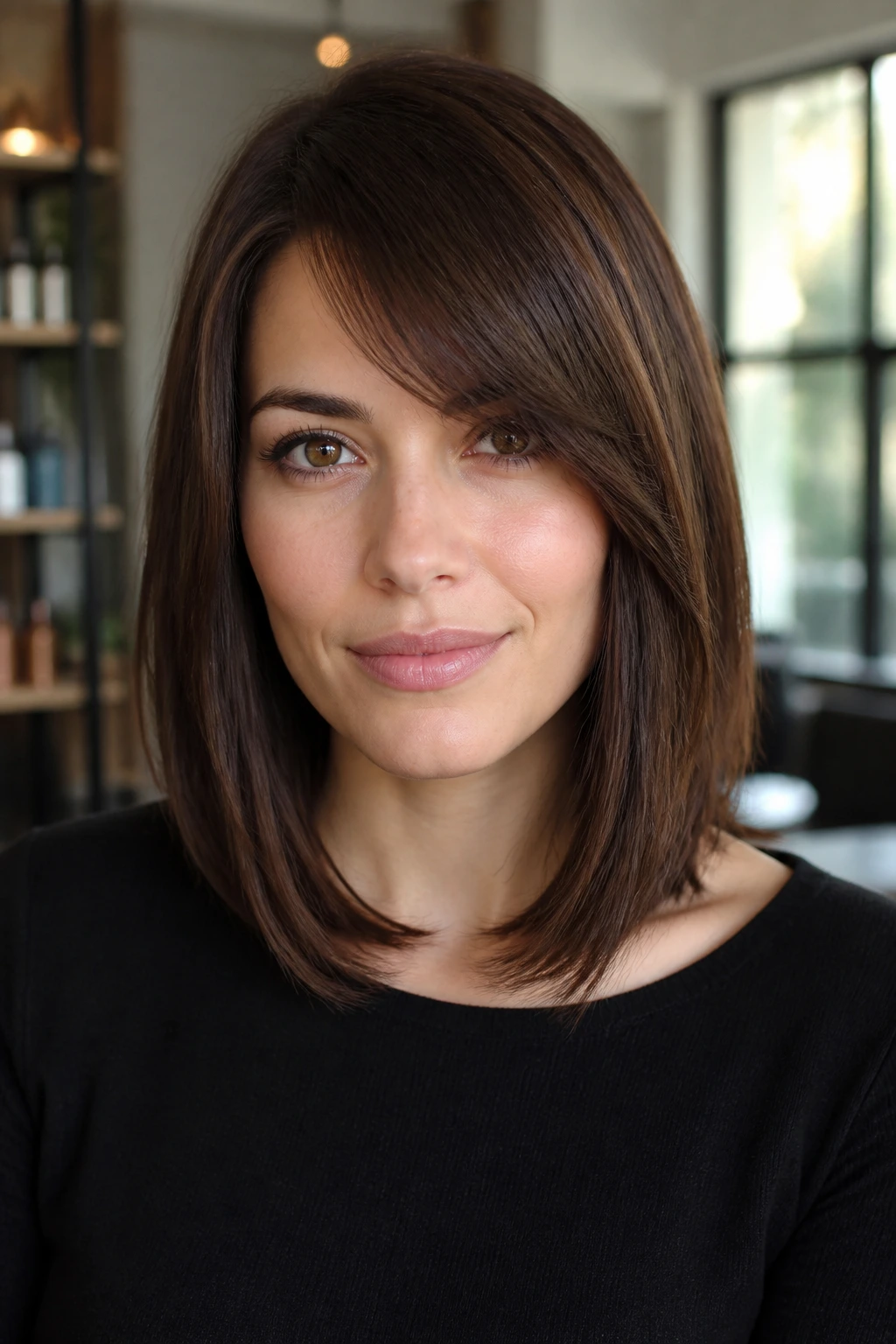
Cutting the fringe too short: Side bangs that stop high on the forehead tend to flip, separate, or grow awkwardly within a couple of weeks. Keep them longer than you think you need.
-
Ignoring the part you actually wear: A fringe cut for a deep side part will sit differently than one cut for an off-center part. If you part your hair on the left every day, say that before the scissors come out.
-
Over-layering fine hair: Thin hair can lose its shape fast when too much internal weight is removed. The ends start looking scraggly instead of airy.
-
Leaving thick hair too heavy at the front: If the front sections are too full, the bang disappears into the sides and the cut feels boxy around the face.
-
Blow-drying the fringe straight down: That’s how side bangs split in the middle. Dry them across and slightly up first, then guide them sideways.
-
Using too much product near the roots: Creams and oils belong mostly on the mid-lengths and ends. Heavy roots flatten the crown and make the front collapse.
Variations and Alternatives to Try
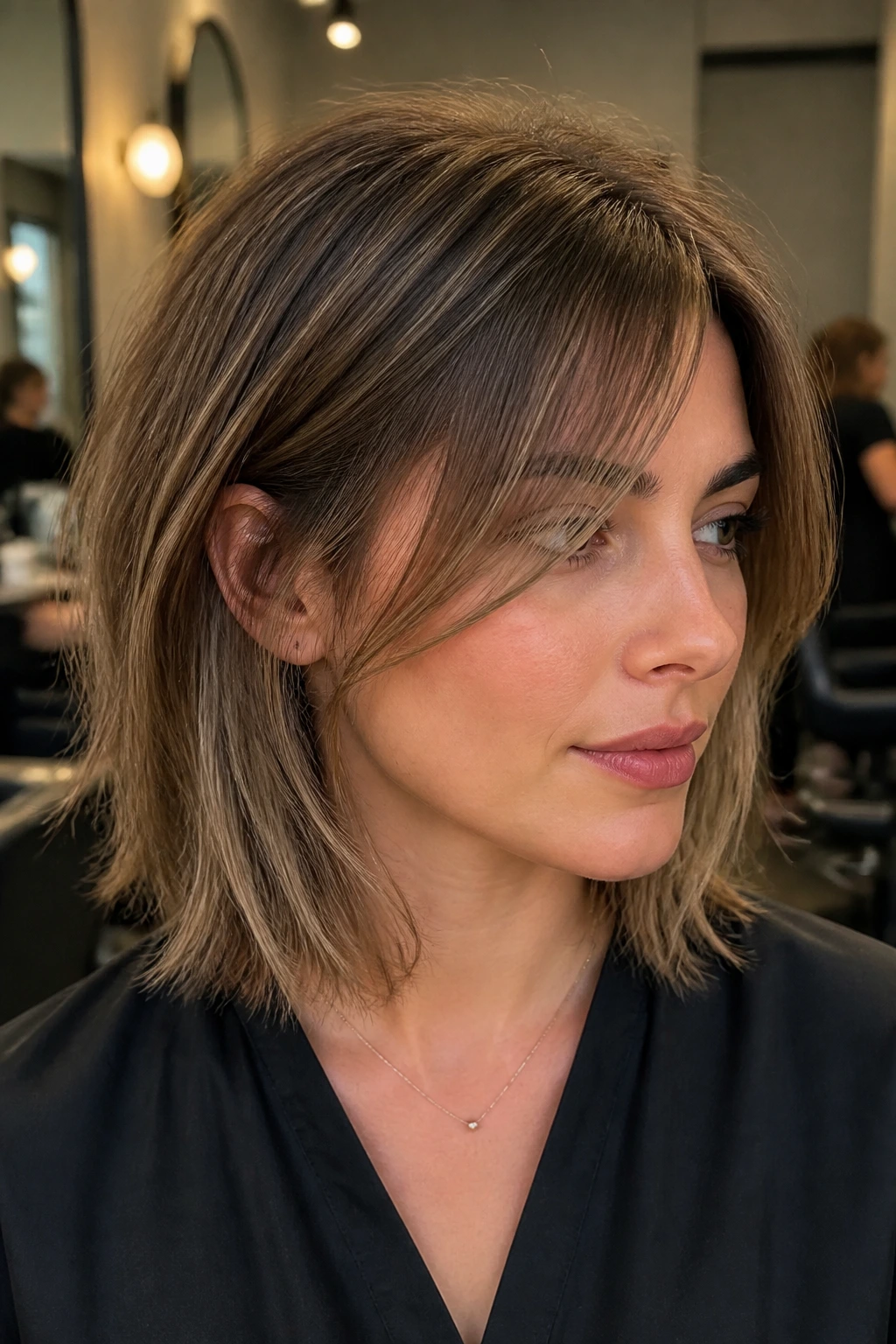
The Soft Grow-Out Lob: Keep the fringe long enough to tuck behind the ear, and let the front layers blend into the rest of the cut. This is the version to choose if you want the shape to stretch out gracefully.
The Polished Office Lob: Stick with smoother ends, a clean side part, and a controlled side bang that sits neatly across the forehead. It looks sharp without needing a full blowout every single morning.
The Tousled Weekend Lob: Add choppy layers, a loose fringe, and some rough texture through the ends. This one feels more casual and works well if your hair likes a little grit.
The Curl-Friendly Lob: Leave the side bang longer and shape it to the curl pattern instead of forcing it straight. That keeps the front from springing up into an awkward shape.
The Thick-Hair Tamed Lob: Build in weight removal near the front and keep the perimeter solid. The side bang should be wide enough to frame the face, but not so heavy that it creates extra bulk.
Keeping the Shape Between Trims
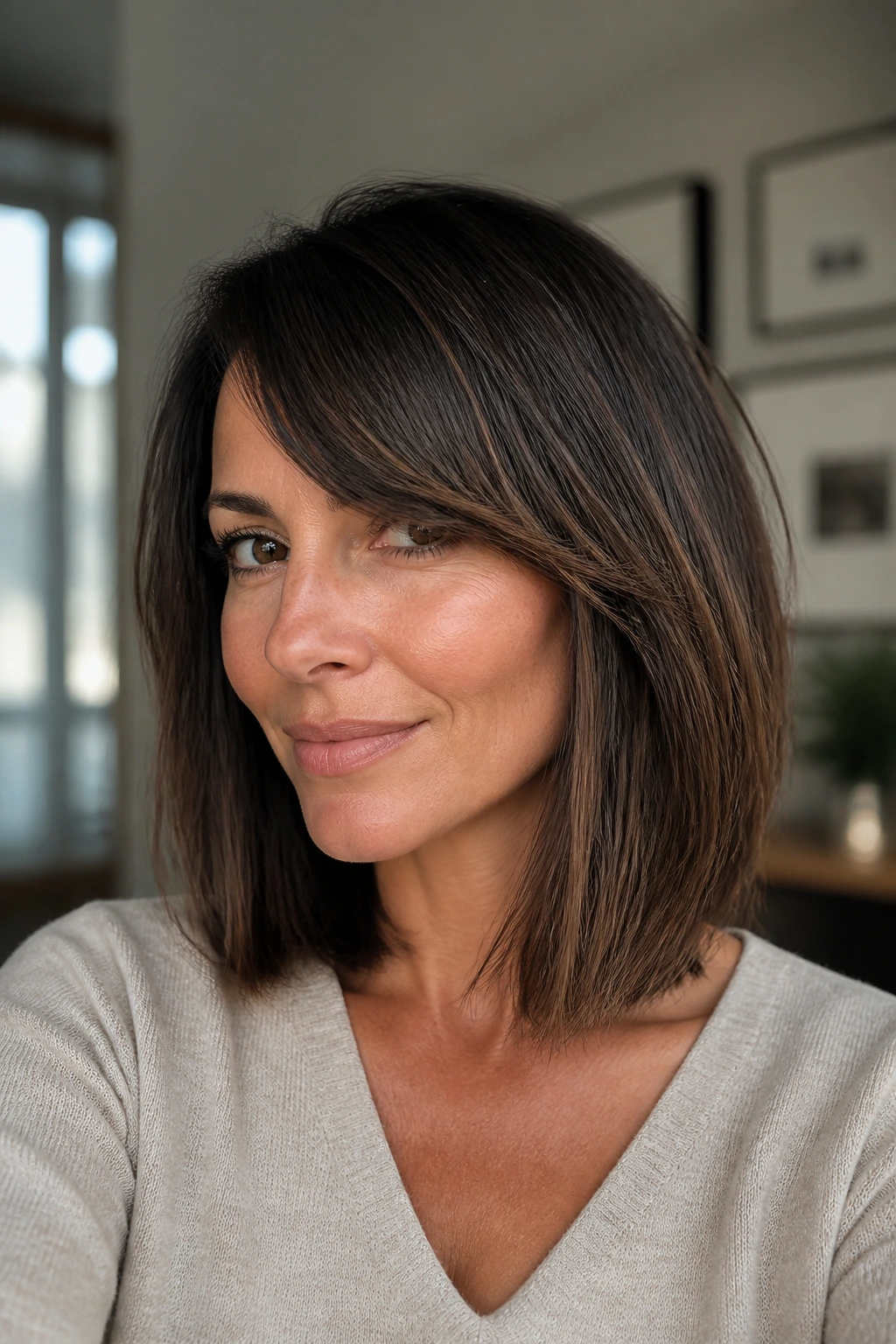
The fringe will ask for attention before the rest of the lob does. That’s normal. Side bangs tend to grow into the eyes first, and once they start sitting on the lashes, the whole haircut feels less crisp. A fringe trim every 3 to 5 weeks usually keeps the front useful. The full lob shape can often go longer, especially if it was cut with some blend at the face.
Sleep can flatten the front in ugly ways. A loose clip at the bang section or a soft bend pinned away from the face can stop the fringe from sticking out at odd angles overnight. A satin pillowcase helps too, not because it’s trendy, but because it creates less friction.
If your hair flips at the ends, a quick pass with a round brush or flat iron around the collarbone is usually enough to reset the shape. Don’t rebuild the whole style unless you have to. The good thing about a lob is that it usually needs one or two targeted fixes, not a full rescue mission.
Questions People Ask Before Cutting Side Bangs Into a Lob
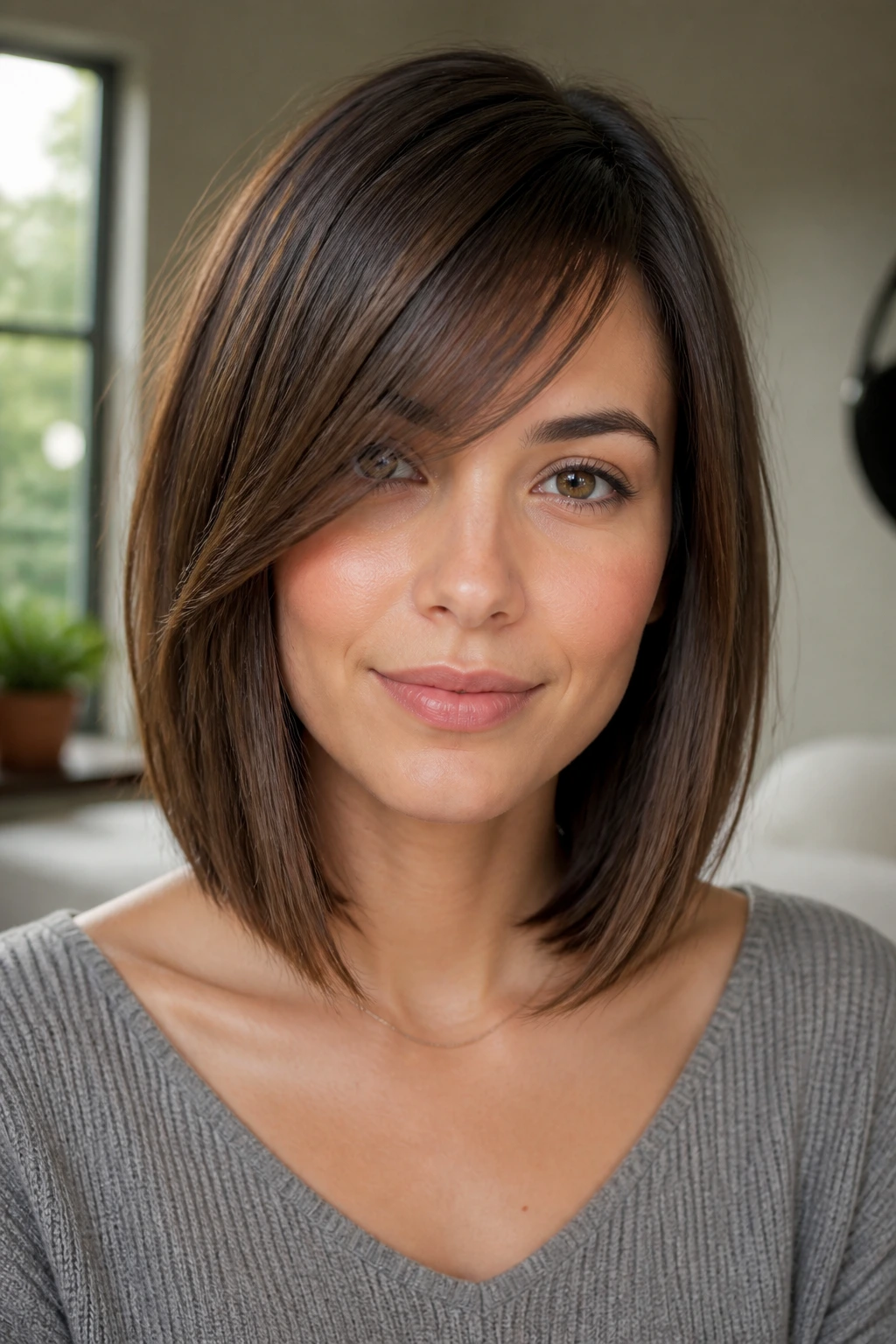
Will side bangs work if my hair is fine?
Yes, but the fringe should stay light and a little longer than you might expect. Fine hair usually looks best when the lob keeps a blunt or softly blunt perimeter so the ends still read as full.
Do side bangs need a deep side part every day?
No. A slight off-center part often gives enough movement and is easier to maintain. Deep parts look dramatic, but they also show every cowlick and flat spot.
How often do side bangs need trimming?
Most side bangs need a touch-up more often than the lob itself, usually every 3 to 5 weeks if you want the shape to stay clean. If you like a longer, softer fringe, you can stretch that farther.
Can a lob with side bangs air-dry well?
Absolutely, especially if the cut is shaped for your texture. Wavy and curly hair often look better when the fringe is left long and allowed to settle naturally.
What if my side bangs split in the middle?
That usually means they were dried too flat or cut too short for your hairline. Try drying the fringe across the forehead first, then sweeping it sideways while it cools.
Is this cut good for thick hair?
Yes, as long as the front isn’t left too bulky. Thick hair does well with a lob that removes weight in the right places and keeps the fringe soft enough to move.
How do I grow out side bangs without that awkward stage?
Let them blend into face-framing layers, pin them back on days when they misbehave, and keep the side lengths long enough to tuck. A grow-out that stays connected to the rest of the cut is much easier to live with.
Should a lob with side bangs hit the chin or the collarbone?
If you want softness around the face, collarbone length usually works better. Chin-length can look sharp, but it also makes the fringe and the jaw compete for attention.
The Shape That Keeps Working
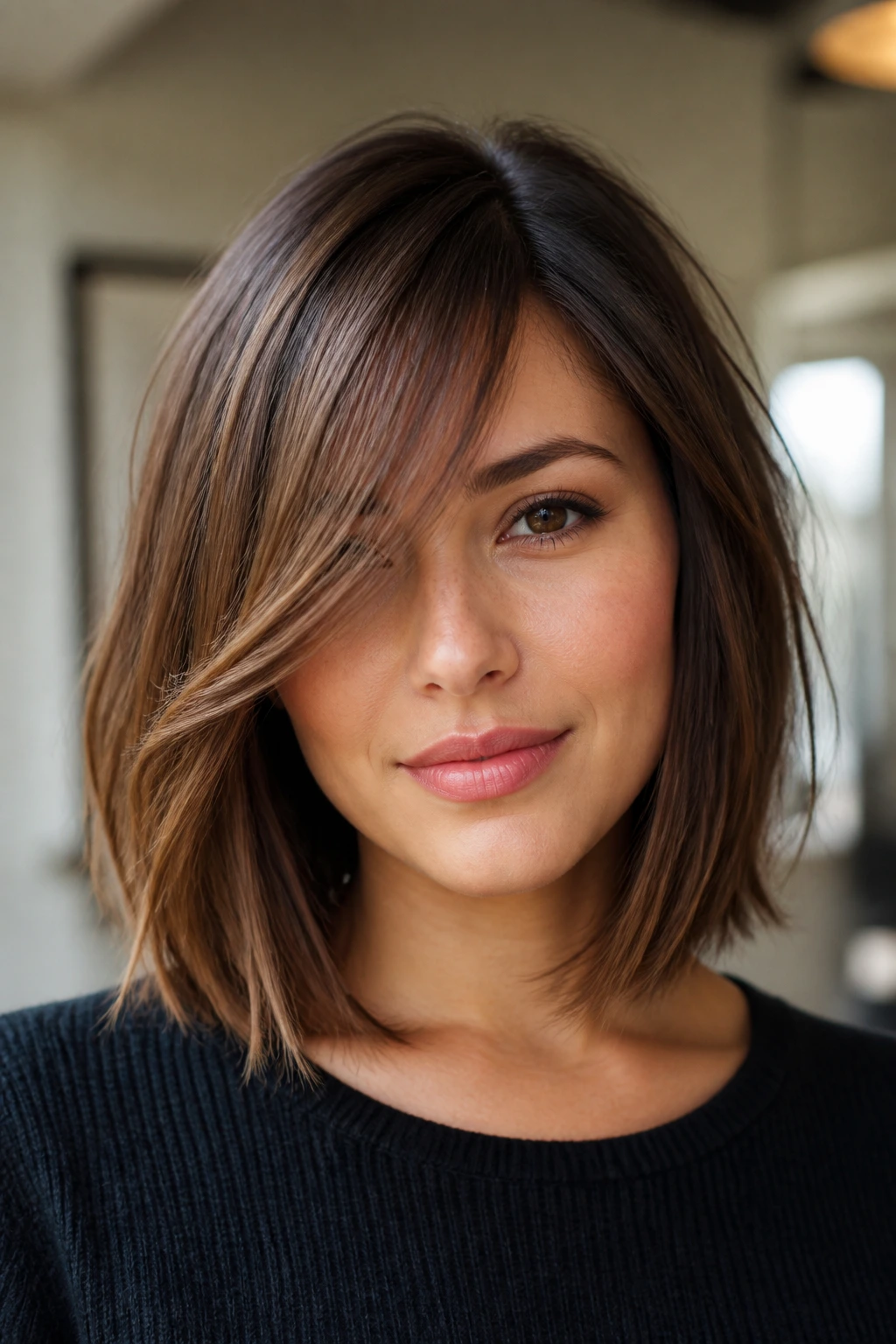
The reason lob haircuts with side bangs stay useful is simple: they solve more than one problem at once. They give the haircut movement, soften the face line, and leave enough length to pin back, tuck, wave, or smooth depending on the day. That is a rare mix. Most cuts commit to one mood and then argue with you when you want something else.
The trick is picking the version that matches your hair’s actual behavior, not the version that looks best in a perfect salon photo. Get the length right. Keep the fringe long enough to bend. Respect the part you wear. Do those three things, and the cut stops being a project.
It starts being a reliable shape. And that’s the good stuff.
