



Long choppy haircuts have a reputation problem. Done badly, they look like somebody got impatient halfway through. Done well, they give long hair the exact thing blunt lengths often miss: swing through the mids, a softer edge around the face, and that lived-in soft texture that looks like it settled on its own.
The trick is placement. Choppy does not mean shredded. The best versions keep enough weight in the perimeter that the hair still hangs with purpose, then carve movement where the hair naturally bends — around the cheekbones, collarbone, jawline, and the underlayers that do the real lifting. That’s why some layered cuts feel airy and expensive while others just feel thin. Same length. Very different haircut.
I keep coming back to these cuts because they solve an annoying problem. Long hair can go flat and heavy. Too many short layers, and it turns fuzzy by noon. The sweet spot is a shape that looks touched, not hacked — a cut with a little edge, but not a rude one. That’s where the best long choppy haircuts live.
Why These Cuts Keep Their Shape
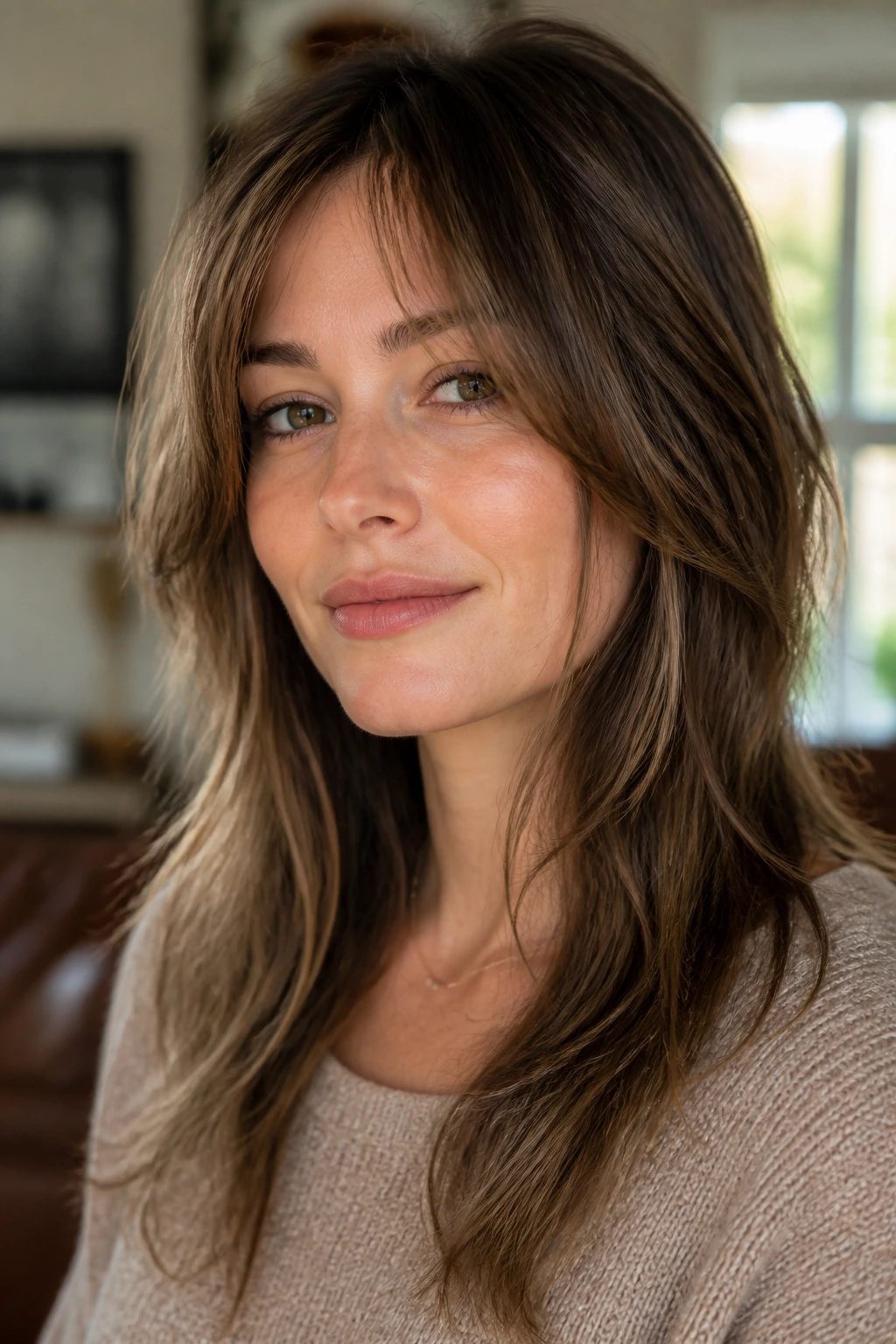
-
They keep the length where it matters: The perimeter stays long enough to tuck behind an ear, tie into a low knot, or wear over one shoulder without the ends disappearing into wisps.
-
They build movement instead of fluff: The layers remove weight in targeted spots, so the mids bend and swing instead of ballooning out at the sides.
-
They work on more than one hair type: Fine hair can use subtle internal layers, thick hair can lose bulk, and wavy hair can lean into its natural bend without fighting the cut.
-
They grow out without drama: Because the shortest pieces are usually kept below the crown and the face frame is stretched out, the haircut still looks deliberate after several weeks.
-
They’re easy to style in a lazy way: A rough-dry, a brushed-out bend, or a quick diffuser pass can bring the shape back without a full salon blowout.
1. Butterfly Layers That Flip at the Cheekbone
The butterfly cut earns its keep by doing two jobs at once. The front gets the visual lift, while the back keeps that long, full curtain of hair people love when they don’t want to lose length. The shortest front pieces usually land around the chin or cheekbone, then melt into longer layers that flick outward instead of hanging like a solid sheet.
Why it stays soft
The shape works because the eye reads the movement up front first. That lets the hair look lighter without forcing the whole head into a shag. If the shortest layer starts too high, the cut loses that floating effect and starts looking chopped up in a hurry.
A butterfly shape also gives you room to style without a battle. Round brush the front away from the face, let the back keep its weight, and brush the finished bend out with your fingers. That brushed-out texture is the whole point.
- Best for: Medium to thick hair that needs a little front-facing lift.
- Ask for: Long layers that start at the chin or cheekbone, not near the brow.
- Style with: A 1.25- to 1.5-inch curling iron or a round brush, then soften the ends with your fingers.
Tip: Ask your stylist to keep the shortest piece low enough that it still looks good tucked behind your ear. That tiny detail saves the cut when you wear it up.
2. Collarbone Shag With Soft Fringe

Want shag energy without the full rock-show commitment? This is the version I reach for first. The cut keeps the length well past the shoulders, but the fringe and top layers are soft enough that the whole thing feels worn-in, not theatrical. On wavy hair, the ends do half the styling for you.
The beauty of this cut is its lack of fuss. The fringe doesn’t need to be blunt or heavy; it can split in the middle, sweep to either side, or sit in that slightly messy zone that looks better after a few hours of life. The layers should be broken up, not shredded. There’s a difference, and you can see it from across a room.
This cut works best when the stylist leaves a bit of weight at the perimeter. That’s what keeps the shape from puffing out into a halo. Too much removal, and the shag starts looking thirsty. Too little, and it just looks like long hair with a few cuts in it.
3. Invisible Layers for Straight Hair
Does pin-straight hair need choppy layers to look textured? Yes — but the answer is usually hidden, not loud. Invisible layers sit underneath the top surface, so the outer sheet of hair still reads smooth while the mids get enough movement to avoid that heavy, flat fall straight hair can get.
That’s why this cut matters. Straight hair shows every line. Every shelf. Every blunt step. So the goal is not to carve obvious chunks into the outside. It’s to take weight out from the interior, then keep the top layer long and clean enough to lie the way you want.
What to ask for
- Keep the top surface long and smooth.
- Remove weight underneath the visible perimeter.
- Point-cut the ends instead of slicing hard into them.
- Keep face-framing pieces long enough to tuck back.
This is the quietest cut in the group, and I mean that as a compliment. If you want texture that shows when the hair moves but not when it sits still, this is the one.
4. Razor-Finished Feather Layers
A razor finish gives long hair that soft, cloudlike edge when the hair can take it. The ends don’t look blunt and boxy; they look light enough to bend around a shoulder without fighting the shape of your head. On medium-density hair with some natural wave, it can be lovely. On already-fragile, bleached ends, it can be a mess.
That’s the catch. Razor cutting is a tool, not a personality. If your hair is dry or splitting at the ends, too much razor work can make the texture look frayed in a hurry. But if your hair is healthy and you want airy movement through the bottom half, this cut gives that broken-up finish you can’t fake with product.
The best razor-finished cuts still keep a clear outline. The ends should flutter, not disappear. I like this look when someone wants the haircut to feel soft from the first swipe of a brush, not just after a styling session.
- Best for: Medium to thick hair with some bend.
- Not ideal for: Brittle ends or hair that tangles easily.
- Finish with: A light cream on the mids, not a heavy oil on the whole head.
5. Curtain Bang Cascade
Curtain bangs can be the front door to a long choppy haircut, and they’re a lot more forgiving than blunt fringe. Instead of building a wall across the forehead, they open in the middle and sweep into the layers, which gives the whole haircut a loose, face-softening curve.
The real trick is length. Too short, and the bangs act like a separate haircut. Too long, and you lose the shape completely. The sweet spot usually sits somewhere between the eyebrow and cheekbone, depending on your forehead length and how much face framing you want. If you wear glasses, I’d push the shortest point a bit longer.
This style is especially useful when the rest of the hair is long and the layers are meant to do the talking. The bangs add movement near the eyes, then the rest of the cut carries that motion down through the lengths. It feels balanced. Not overly polished. Not fussy.
6. U-Shaped Cut With Broken-Up Ends
A U-shape is one of those old-school outlines that keeps coming back because it works. The back hangs in a soft curve instead of a sharp line, which gives long hair a fuller look from behind. Add broken-up ends, and the whole thing turns gentler without losing body.
This is a smart choice if you like the idea of long choppy haircuts but hate the look of too many short layers. The U-shape holds the weight in the right places, especially for thick or dense hair, and the subtle choppiness stops the perimeter from feeling heavy or rigid. It’s structured. Just not stiff.
I also like this cut for people who wear braids, half-up styles, or low ponytails. The curve in the back gives those styles a softer finish, and the face frame can still move freely when the hair is down.
7. Waterfall Layers for Dense Hair
What do you do when your hair is so dense it takes forever to dry and sits like a blanket at the bottom? You stop trying to force movement into the outside and take weight out from the inside. That’s what waterfall layers do.
The layers cascade under the surface, so the top still looks full while the lower sections fall more easily. Done right, the haircut dries faster, bends more naturally, and stops collecting all its weight at the ends. That’s a big deal for people whose hair tends to expand as it dries.
The parts that matter
- Weight removal should happen through the mids, not as a random thinning job at the ends.
- The outline should stay long enough to keep the hair from looking airy in the wrong way.
- The front pieces should blend into the body of the cut, not sit on top of it like a separate frame.
This is one of those cuts that looks calm from the outside but does a lot of work under the hood. That’s usually the sign of a good haircut.
8. Soft Wolf Cut With a Long Tail
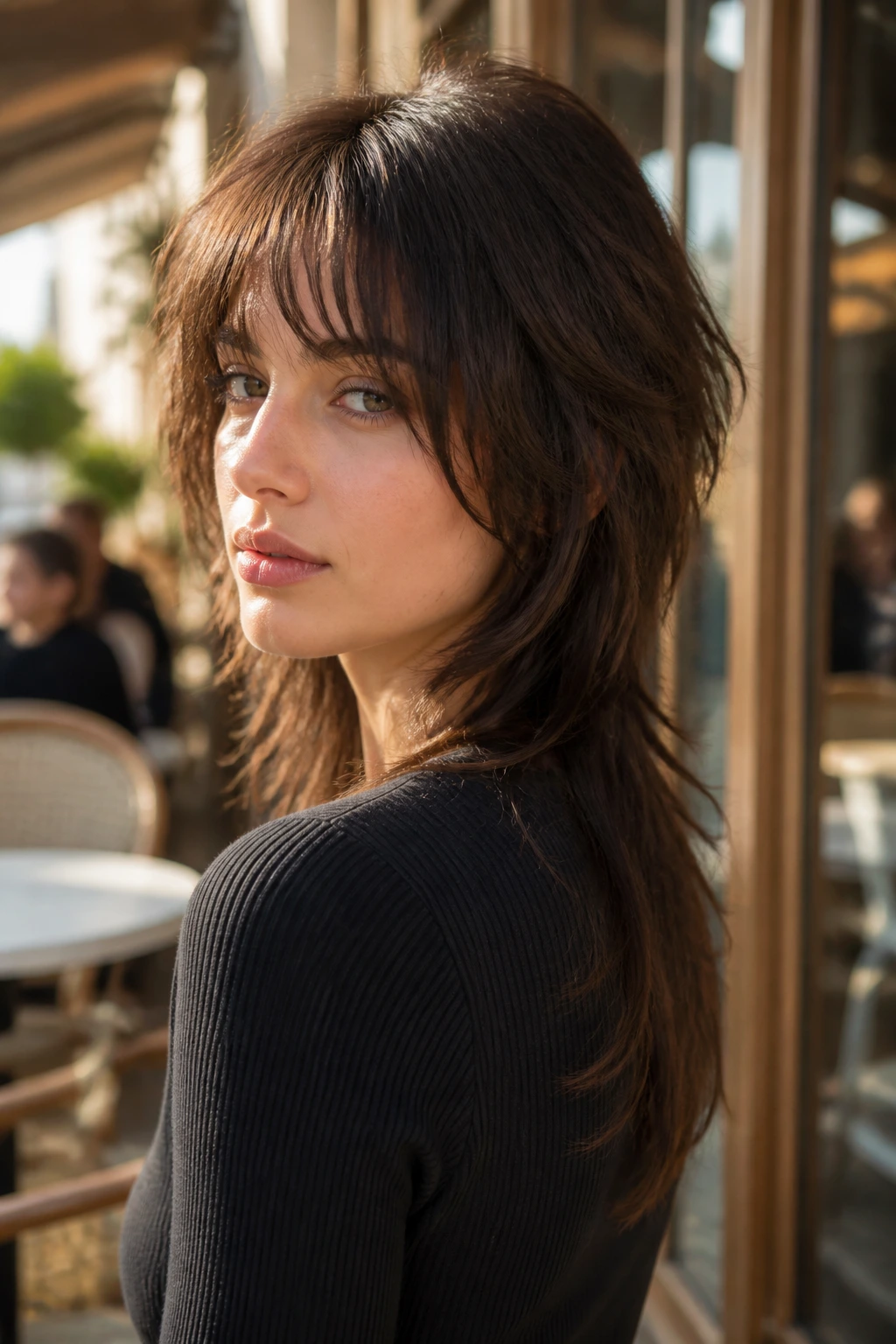
A wolf cut does not have to shout. When the crown is kept a little longer and the edges are softened, you get the energy of the trend without the full spiky outline. The result is more lived-in than rebellious, which is probably why people keep asking for a toned-down version.
The long tail matters. If the back gets too short, the shape turns into a mullet very fast. Keep enough length through the bottom and the cut reads as a loose, piecey silhouette with movement around the face and crown. It’s best when there’s a little separation, not a lot of volume for volume’s sake.
This one suits hair that wants texture but not precision. Wavy hair usually wears it easily. Straight hair can wear it too, but it needs a little help from a flat iron bend or a large curling wand.
9. Soft Mullet-Inspired Layers
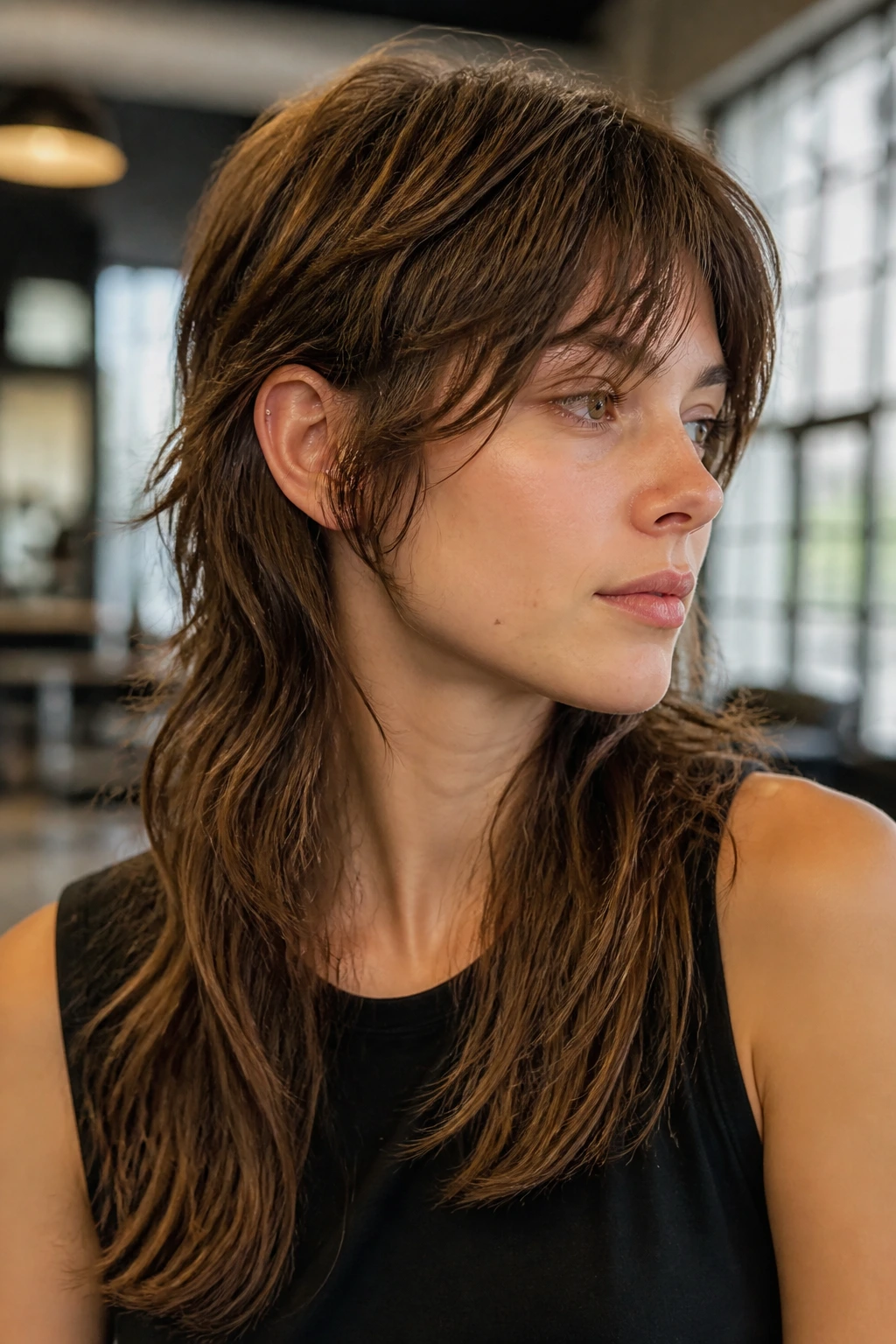
This is the cut for someone who likes a little edge near the ears and crown but does not want the disconnect to announce itself from across the street. The short pieces around the top are kept controlled, the sides feather down gradually, and the back stays long enough to keep the whole thing anchored.
It’s a fun shape when done with restraint. The soft mullet version feels more tailored than punk, more relaxed than a shag, and a bit cooler than a standard long layer cut. I like it most on wavy or slightly curly hair because the texture keeps the shape from looking too staged.
If you like to tuck your hair behind your ears, this cut has a nice habit of falling back into place with a bit of attitude. If you want something subtle, skip it. If you want the haircut to show some personality before the styling does, it’s a strong pick.
10. Farrah Layers With a Modern Bend
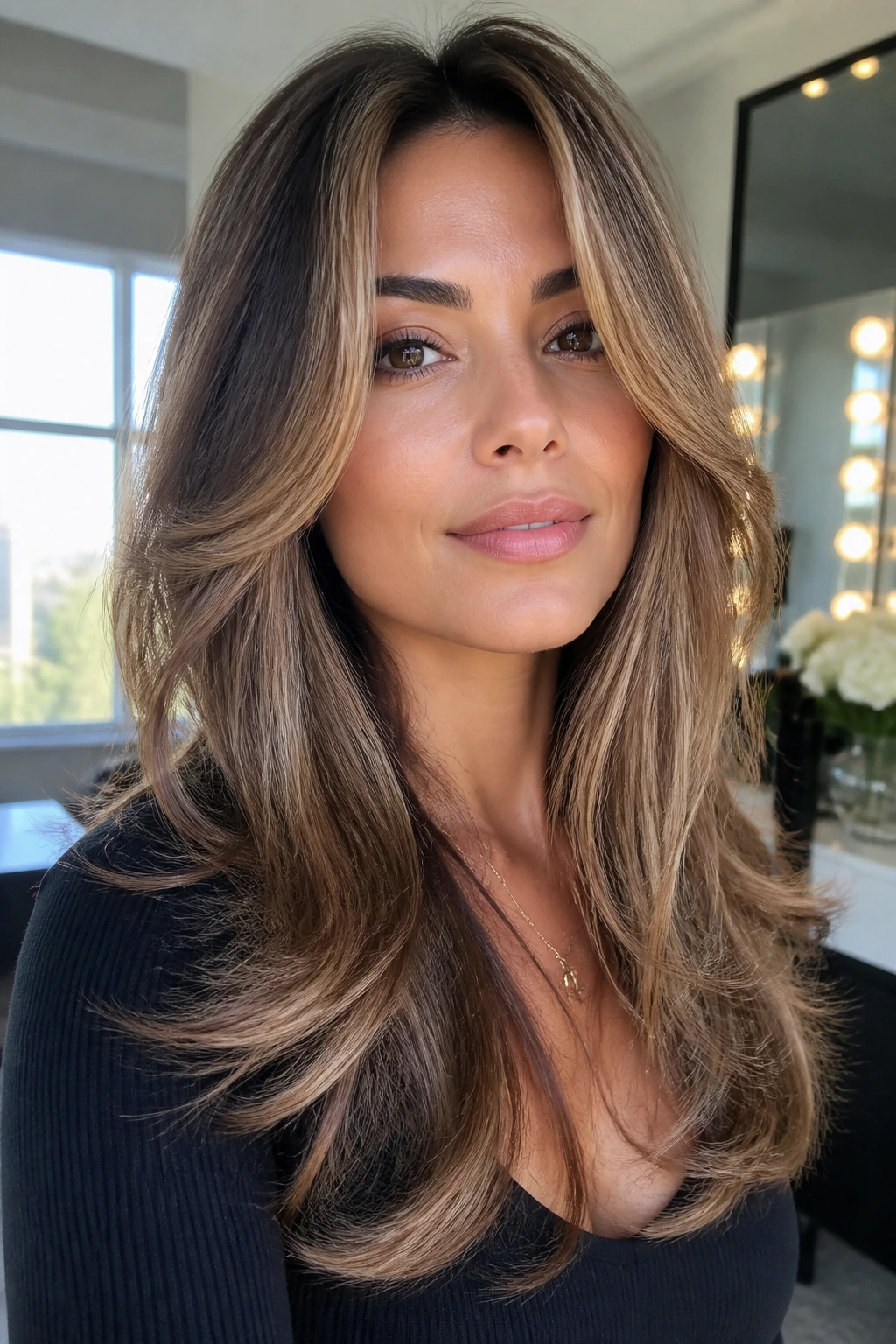
There’s a reason that big, brushed-out layers keep coming back: they make long hair move in a clean arc instead of hanging straight down the sides of the face. The Farrah-inspired cut uses long face-framing layers and a lifted shape through the mids, so the hair flips away from the cheeks with almost no effort.
The modern version is softer. Less lacquer. Less obvious curl. More bend and brush-through texture. Think of it as the difference between a full blowout and a hair pattern that keeps a little of its own life. The best result is glossy, but not stiff.
If your hair is medium to thick, this shape can feel luxurious without looking overdone. If your hair is fine, you’ll need mousse or root lift so the front layers don’t collapse before lunch. The haircut itself is only half the story.
11. Deep Side-Part Sweep Layers
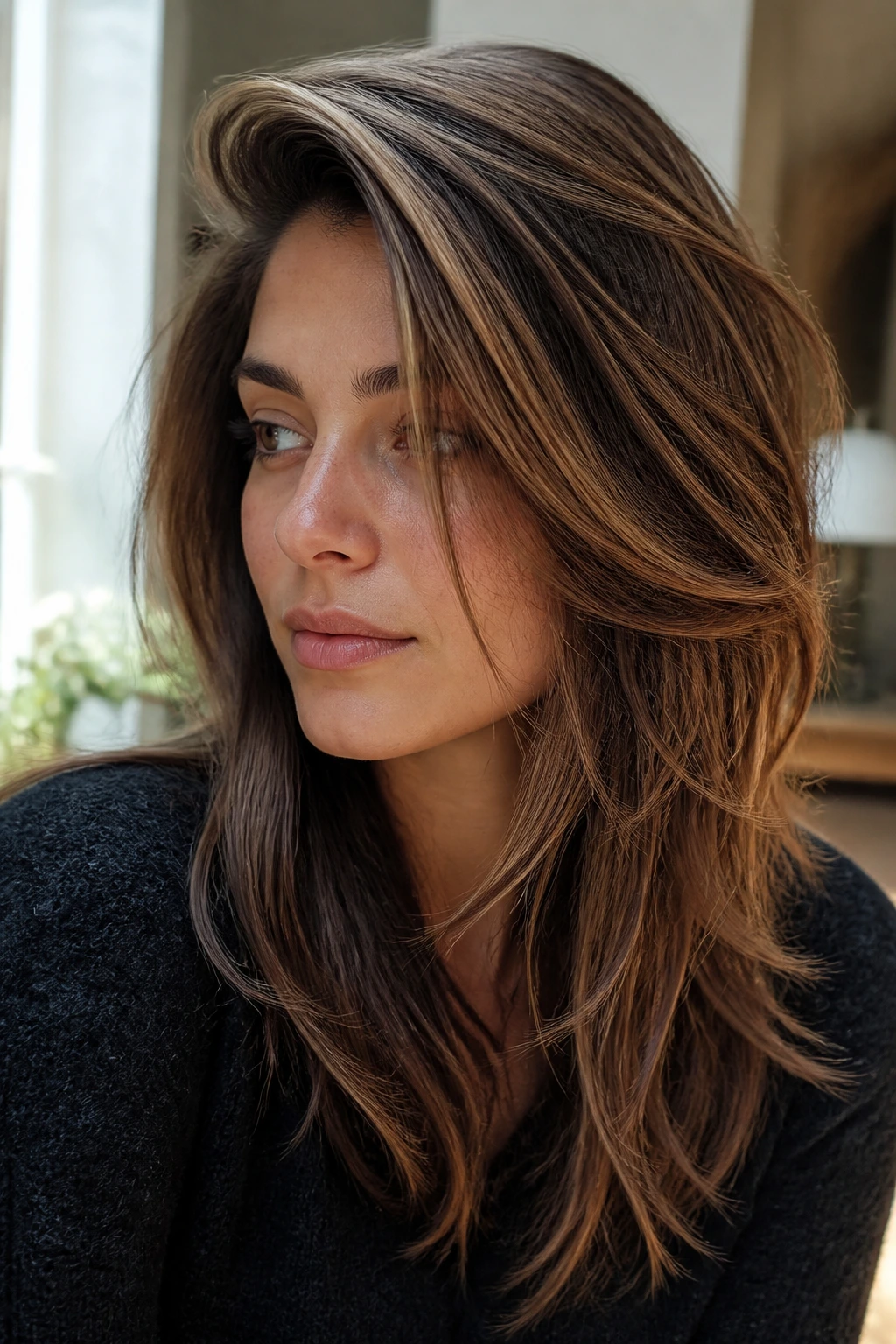
A center part is not the only way to show off long choppy haircuts. A deep side part can change the whole mood of the cut in a single move. One side gets lifted and fuller, the other side gets a soft sweep that falls across the cheekbone and into the rest of the hair.
This is a smart shape if your hair falls flat at the crown or if your face benefits from a little asymmetry. The side part gives the front layers room to breathe, which makes the cut feel more relaxed. It also helps if you like volume without having to curl every section.
I especially like this on long hair that has subtle layering and a clean edge. The part gives the cut some architecture. Without it, the layers can get lost. With it, the whole thing has a point of view.
12. Piecey V-Cut for Long Length
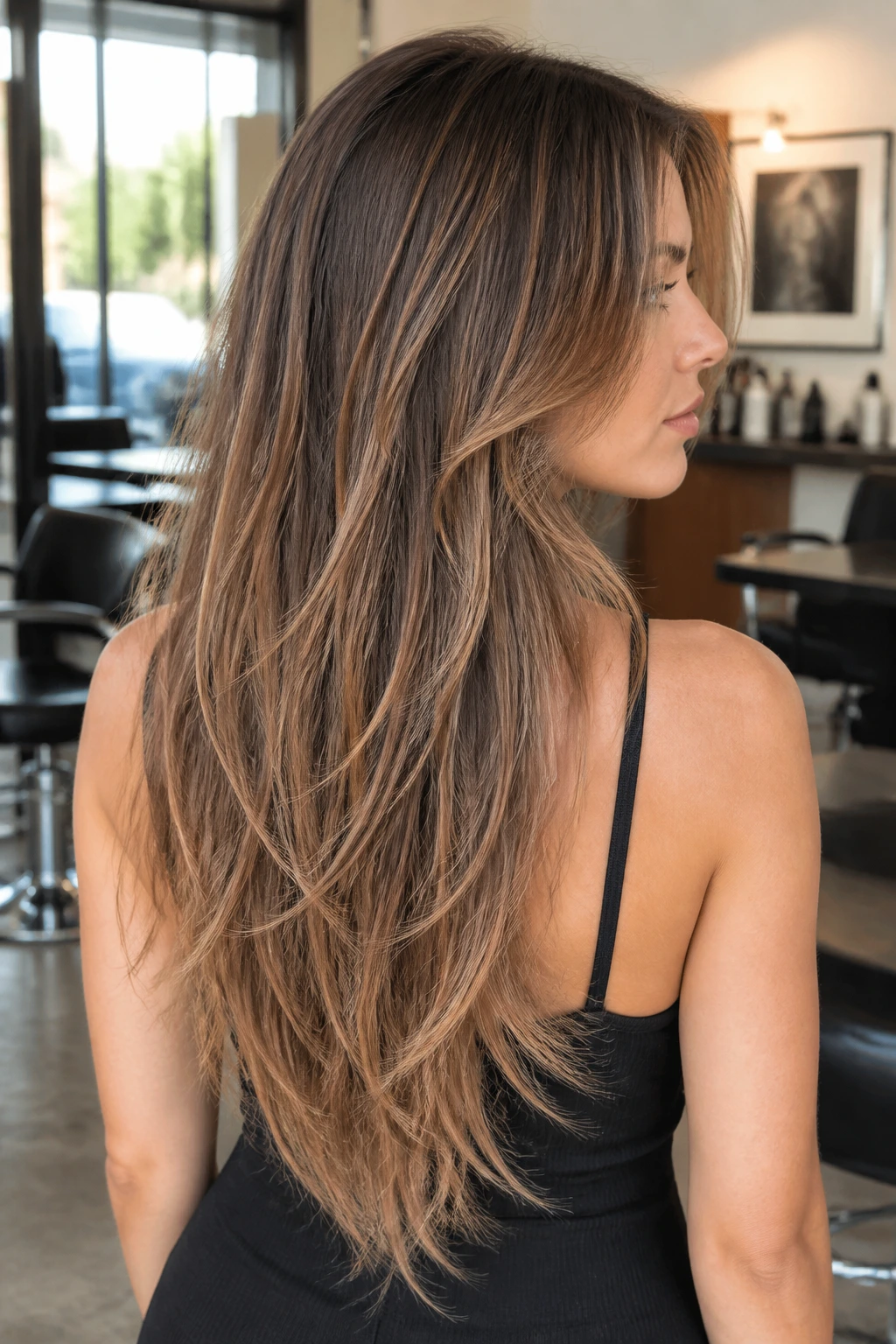
A V-cut can look soft if the point is kept long and the sides are rounded into it. The shape narrows gently at the back, which gives long hair a visual direction instead of a straight blocky fall. Add piecey ends, and the outline feels more fluid than sharp.
This works beautifully when you want the back to show some movement even in a low ponytail or braid. The point gives length visual interest, while the broken-up ends keep it from looking too formal. If you like hair that looks good from behind, this one has a clear advantage.
The danger is overdoing the point. Too sharp, and the haircut starts looking like a triangle with a grudge. Keep the corners soft, and the whole thing stays wearable.
13. Soft Octopus Cut on Long Hair
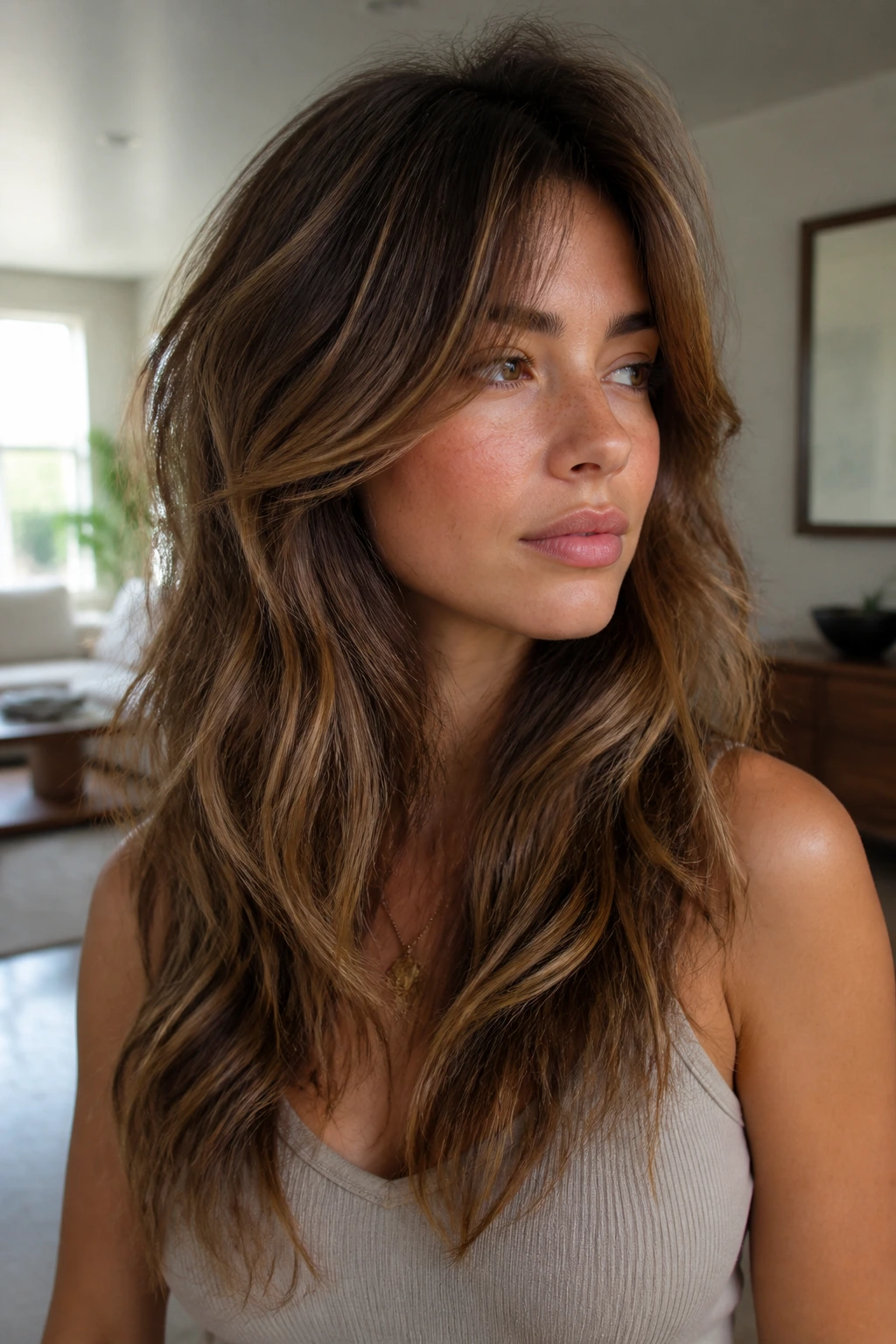
Why does this shape work so well on wavy hair? Because it borrows the lift of a shag and the tail of a long layer cut, then keeps both pieces soft enough to move together. The crown gets a little more air. The bottom keeps its length. The result looks like the hair settled into place on its own.
The octopus cut can go wrong when the top is pushed too short. Then it starts puffing around the head like a mushroom. So the safer version keeps the shortest layers long enough to brush into the rest of the shape, especially if your hair is thick or frizz-prone.
How to keep it from puffing
- Ask for a softer crown, not a chopped one.
- Keep the face frame long enough to merge into the lengths.
- Use a diffuser or a low-heat bend instead of blasting the hair dry.
This is one of those cuts that looks a little cooler when it’s not overdone. The more you chase perfection, the less natural it feels.
14. Debulked Thick-Hair Layers
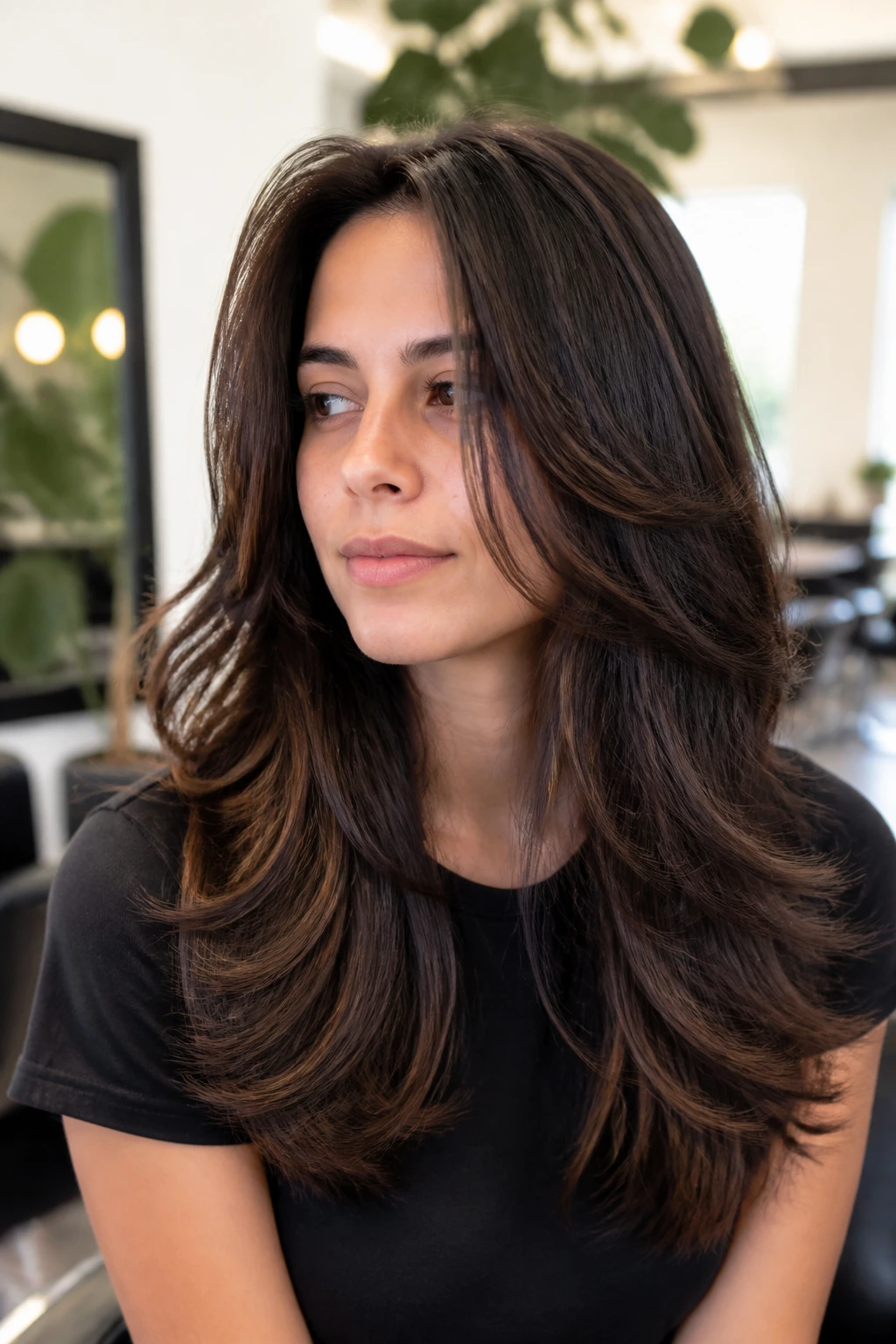
Heavy hair has a way of expanding in all the wrong places. It sits too dense at the bottom, then puffs around the sides when it dries. A debulked layer cut fixes that by taking out weight from the interior in a controlled way, not by hacking into the ends and hoping for the best.
The goal is a lighter shape that still has a clean outline. That means the stylist should think in terms of weight distribution, not just cutting shorter pieces everywhere. If the ends are over-thinned, the haircut can lose its body and become frizzy. If the interior stays too full, it acts like a curtain.
I like this cut on thick hair that wants to move more without losing the feeling of abundance. You should still have hair. Just less of the part that makes it sit there like a helmet.
15. Ponytail-Friendly Long Layers
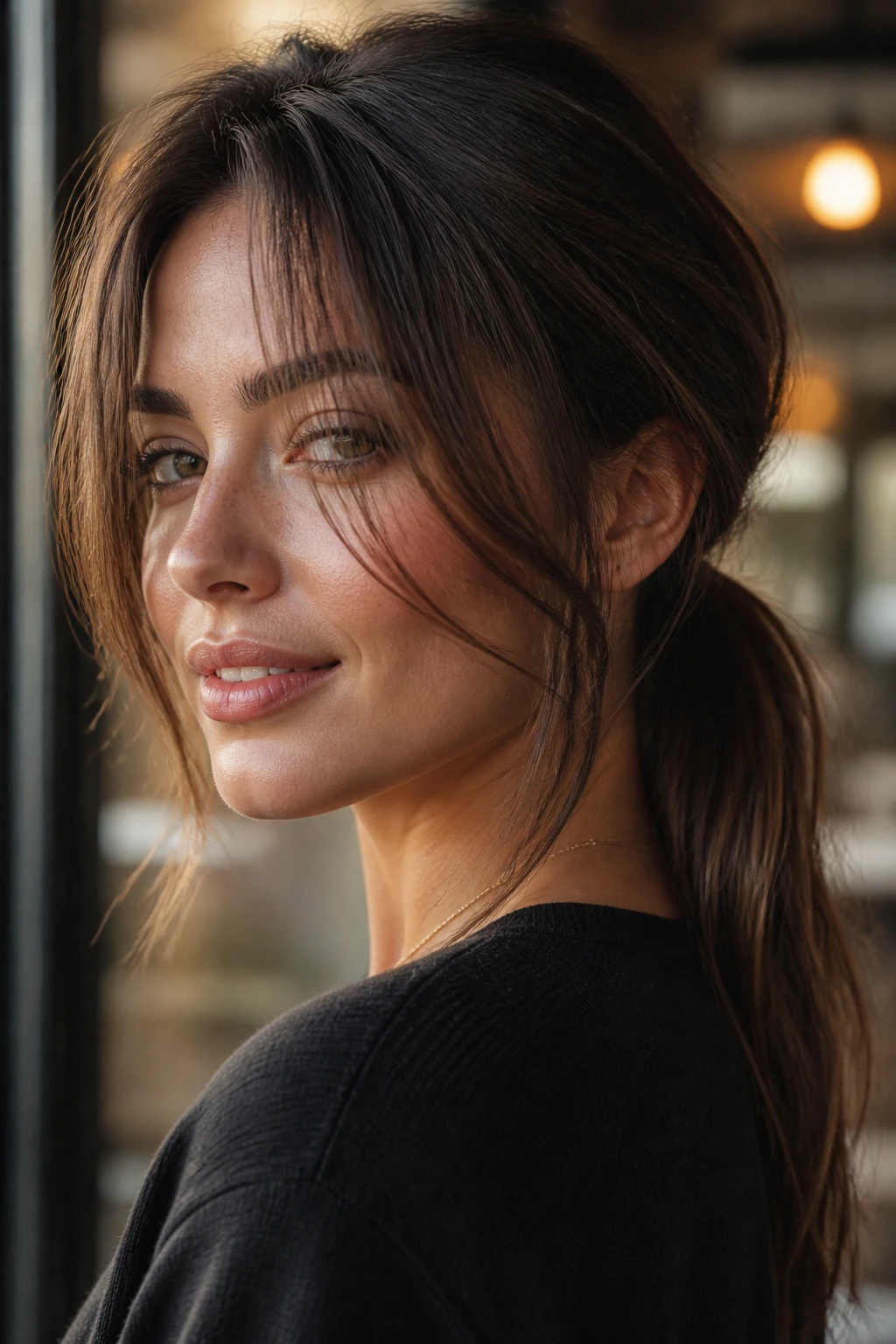
This is the practical option that nobody talks about enough. If you wear your hair up often, some layered cuts fall apart the second they hit a clip. A ponytail-friendly version keeps the face frame long enough to tuck back cleanly and keeps the shorter pieces low enough that they don’t stick out in sad little spikes.
That makes it a good fit for people who want softness when the hair is down and cooperation when the hair is tied up. You still get movement around the face, but you don’t lose the ability to throw it into a low bun without a battle.
The cut is especially useful for people who commute, work out, or just live in claw clips. Hair that behaves in both directions is underrated.
16. Mini Face Frame With a Blunt Perimeter
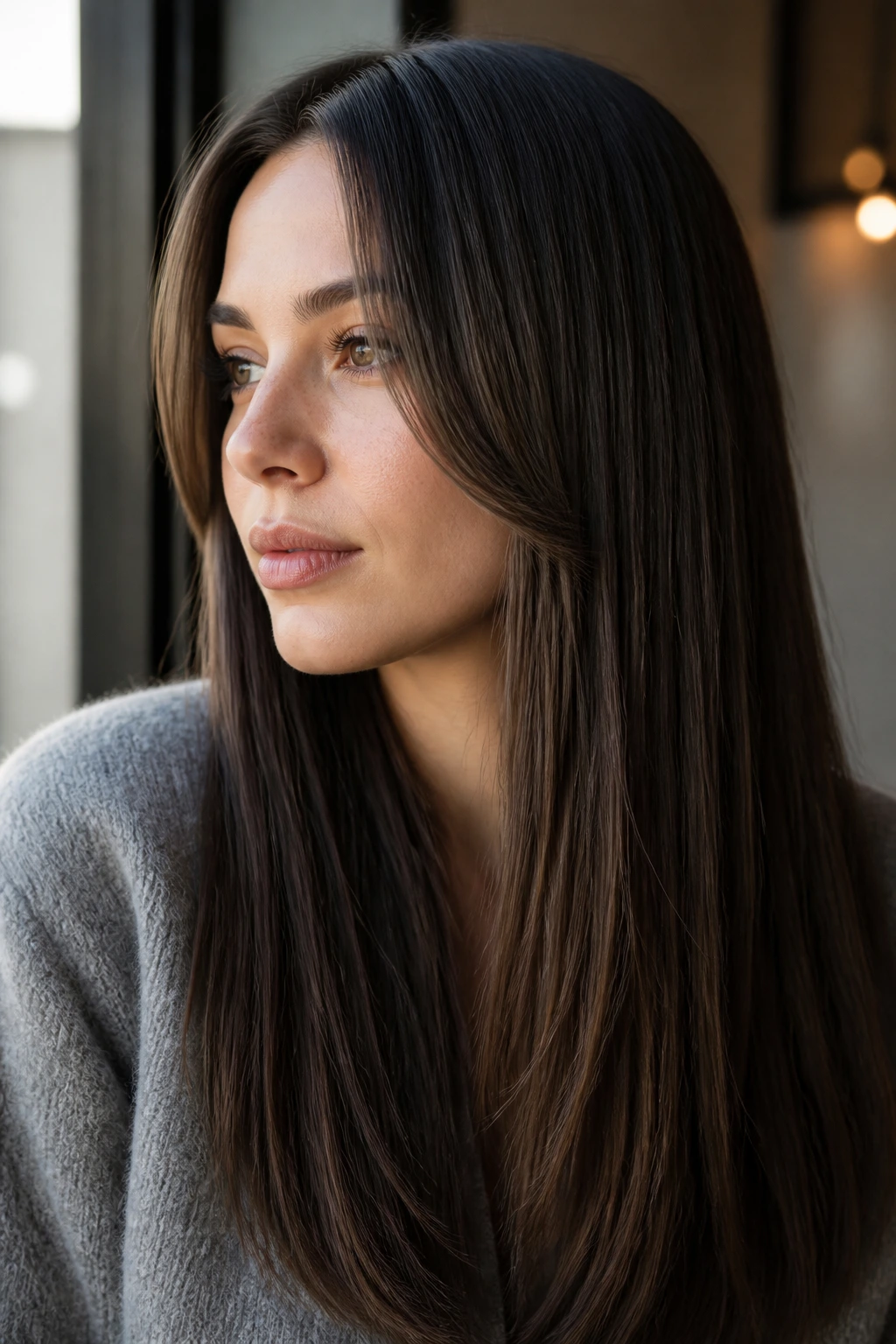
Sometimes the quietest haircut is the one that changes the least. A mini face frame gives you a whisper of softness around the front without touching the clean line of the rest of the hair. The perimeter stays blunt and honest, which is a nice option if you want movement but not a lot of visible layering.
This works well on fine hair, straight hair, and anyone who likes a more polished finish. A tiny face frame around the cheekbone can keep the hair from feeling severe while the blunt edge holds the density. The result is neat, not stiff.
It’s also a good bridge haircut. If you’re nervous about choppy layers, this is the version that eases you in without forcing a full shag moment. Small change. Useful change.
17. S-Curve Layers for Wavy Hair
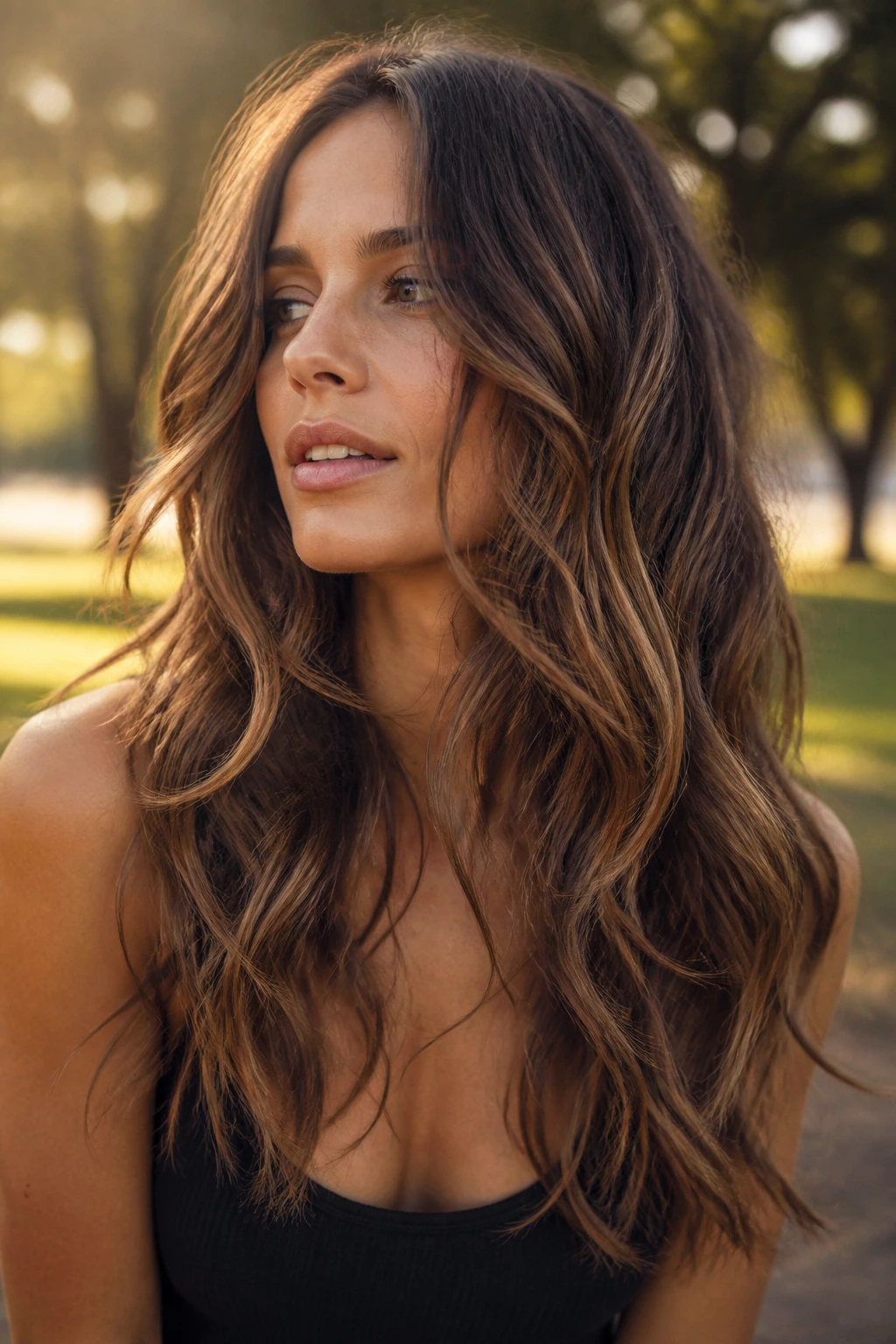
What if your hair already bends on its own? Then the haircut should follow that bend instead of fighting it. S-curve layers are built to sit with natural waves, letting the hair fall in loose ribbon-like sections instead of forcing each strand into the same pattern.
This is one of the best options for wavy hair because it keeps the cut alive on its own. The layers should be long enough that the waves can stack and separate naturally. If the layers are too short, you get puff. If they’re too long with no shape, the waves collapse into a heavy mass.
I like this cut best when paired with a little air-dry cream and a diffuser. Not too much product. Just enough to keep the wave pattern readable and the ends soft.
18. Rounded V With Soft Corners
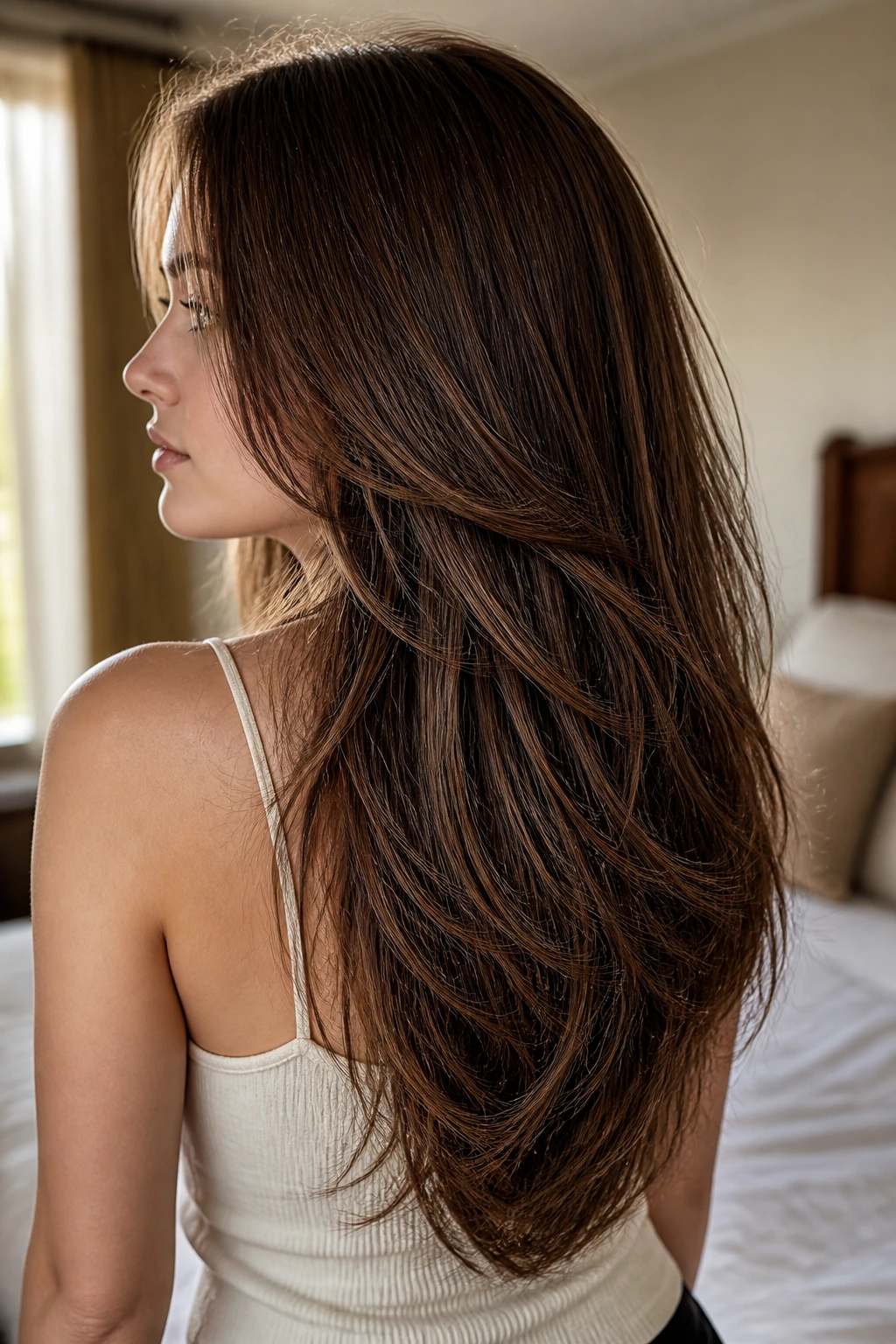
A sharp V can look dramatic, but a rounded V keeps the back length and softens the outline at the same time. The sides fall into the point without a hard angle, which is kinder to long hair that tangles easily or needs to move around clothing and jackets.
This shape is especially useful if you like braids, half-up styles, or hair that hangs in long sheets but still needs a bit of direction. The soft corners help the haircut feel less severe from the side view. That matters more than people think.
It’s a good in-between shape. You get the taper of a V, but you don’t get the bluntness that sometimes comes with very geometric long cuts.
19. Sweeping Cheekbone Fringe Layers
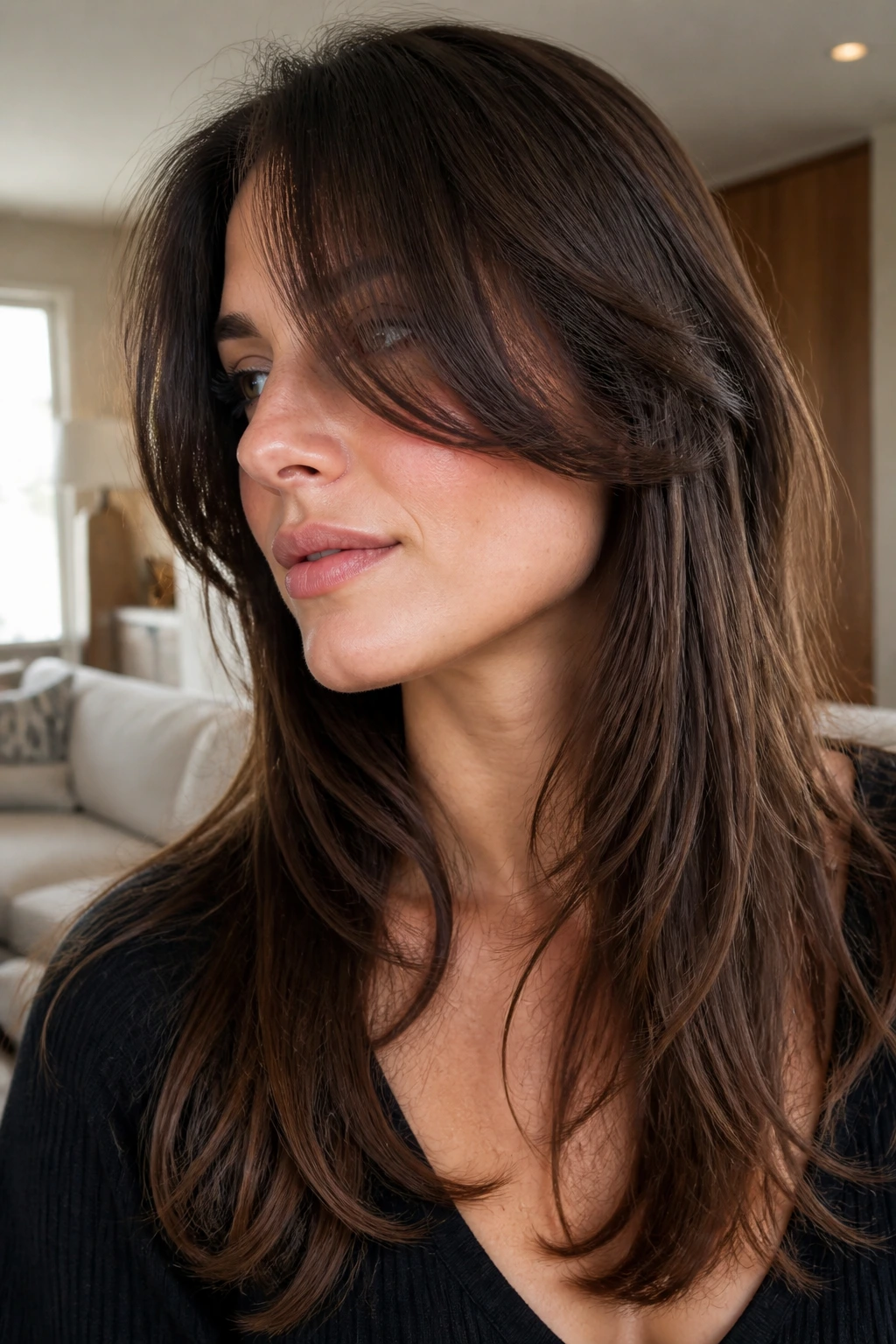
This cut starts with the face. A sweeping fringe arcs across the cheekbone and melts into the longer layers so the front of the haircut has movement even before you touch the ends. It’s not a full bang. It’s more like a long, stylish interruption.
That interruption matters if you want the haircut to soften a strong jawline, narrow face, or a long forehead. The fringe draws the eye sideways, then the layers take over and pull the shape downward. It’s flattering without looking fussy, which is a rare combination.
The best version stays long enough to tuck behind the ear on a bad hair day. That way it doesn’t become one of those fringe cuts you have to manage every ten minutes.
20. Sleek Choppy Layers With a Clean Edge
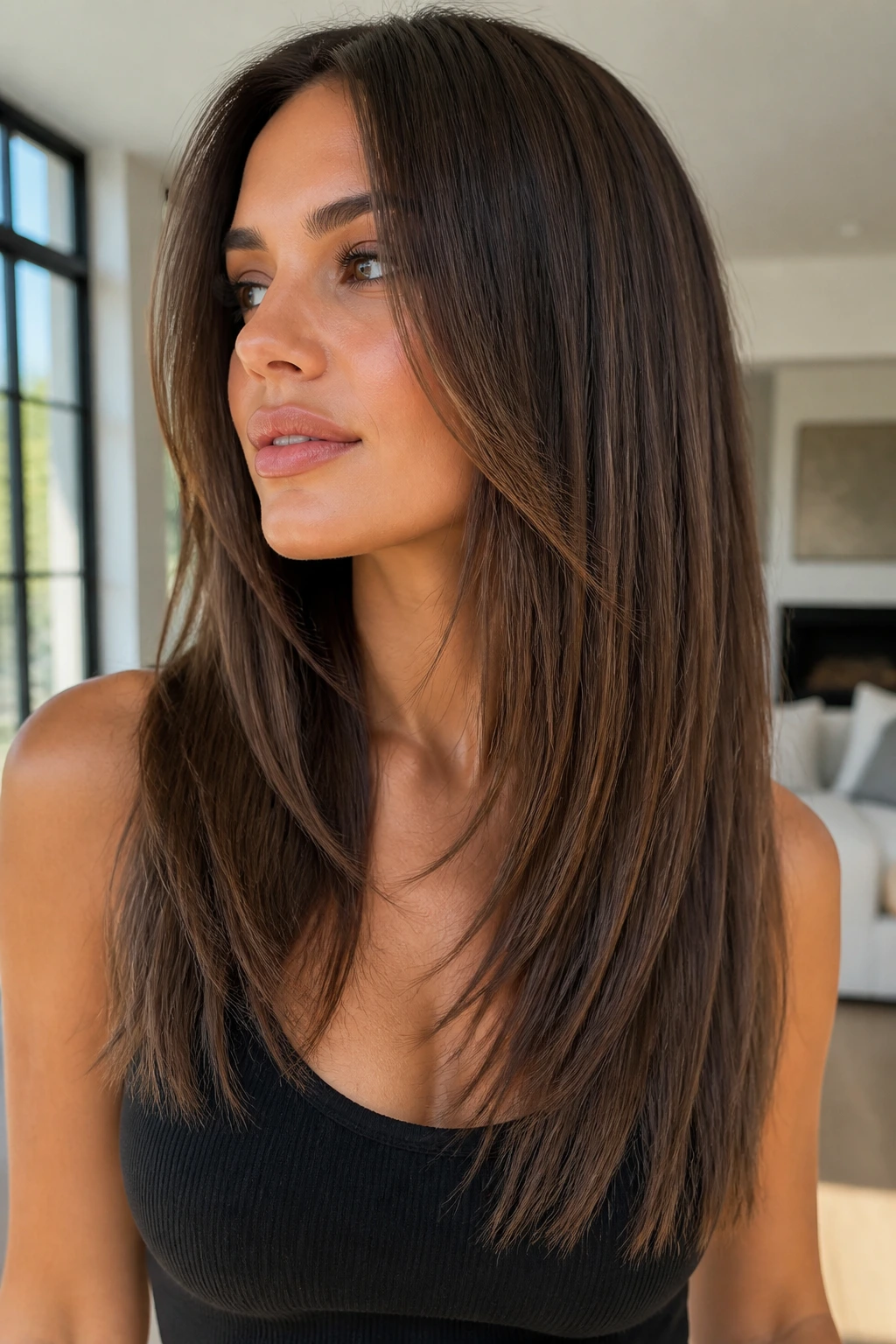
Choppy does not have to mean messy. A sleek version keeps the ends point-cut and lightly broken up, but the overall shape stays smooth and controlled. It’s the cut I’d suggest for someone who wants movement without looking like they’ve spent the whole morning scrunching.
This version works especially well on straight or slightly wavy hair. The long layers give the hair motion, while the clean perimeter keeps it looking expensive and deliberate. A light blow-dry with a nozzle or a quick pass of a flat iron bend is usually enough.
If you want softness but dislike that undone shag finish, this is the one to watch. It has texture, but it doesn’t chatter at you.
Why Long Choppy Haircuts Feel Soft Instead of Harsh
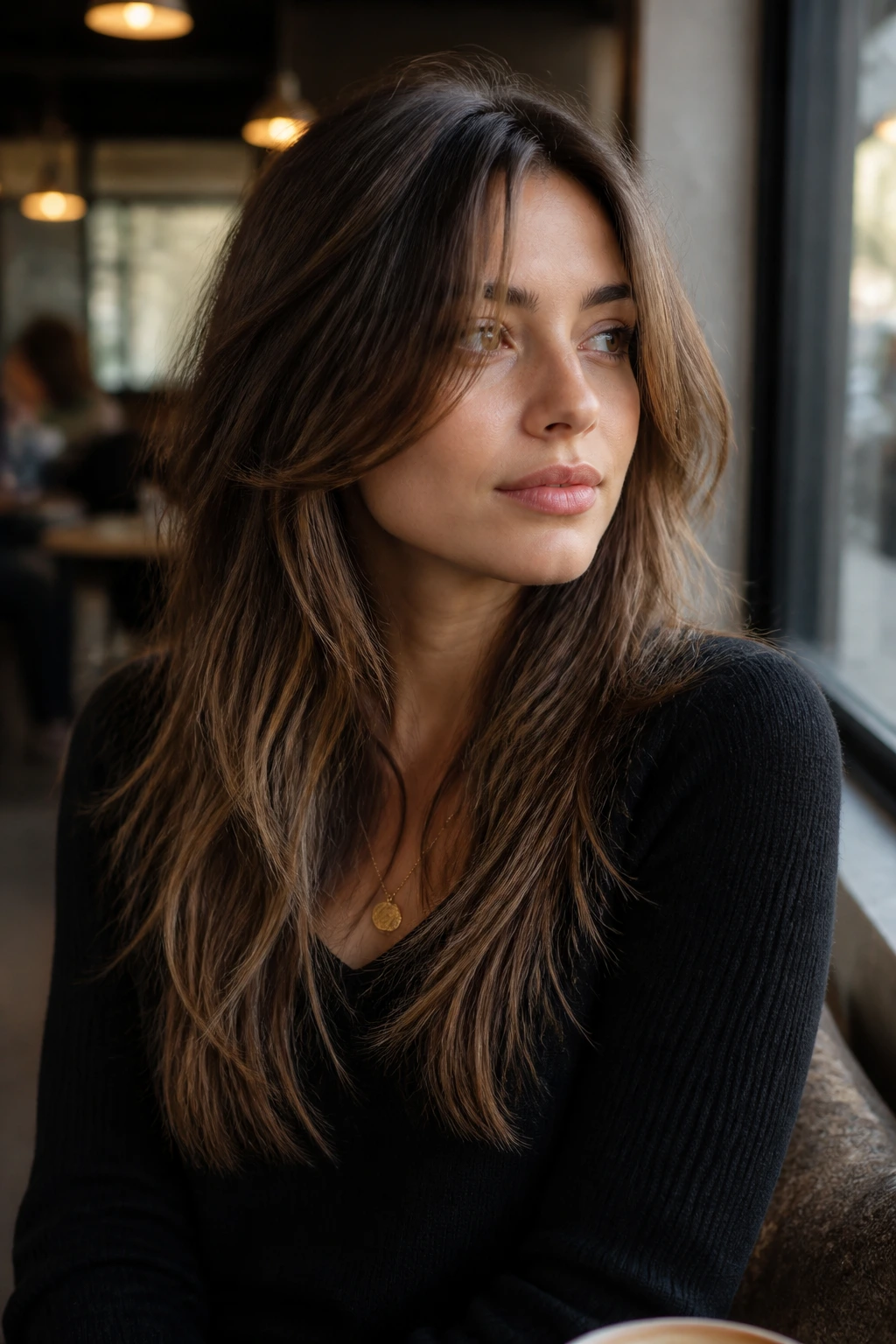
The difference between soft texture and chopped-up chaos usually comes down to three things: where the weight sits, how much of the perimeter stays intact, and whether the ends are point-cut or hacked bluntly. If the stylist removes too much near the crown, the hair lifts in a way that feels dated fast. If they keep too much weight at the bottom, the layers disappear.
Perimeter matters more than most people think. A long, clean outline gives the haircut a place to rest. Without it, the layers have nothing to sit against, and the whole shape starts looking thin or frayed.
Internal weight is the second piece. That’s where the cut gets its movement. Done properly, it takes bulk out of the mids so the hair bends instead of hanging in one heavy sheet. Done poorly, it creates little shelves that catch the light in a bad way. You can spot those shelves from a mile away.
The finish is the third piece, and it’s where at-home styling either helps or ruins the cut. A brushed-out wave, a soft bend from a round brush, or a neat air-dry can make the haircut read as lived-in. Too much texture spray, too much scrunching, or too many identical curls make it look overworked. That is the line.
What to Tell Your Stylist Before the First Snip
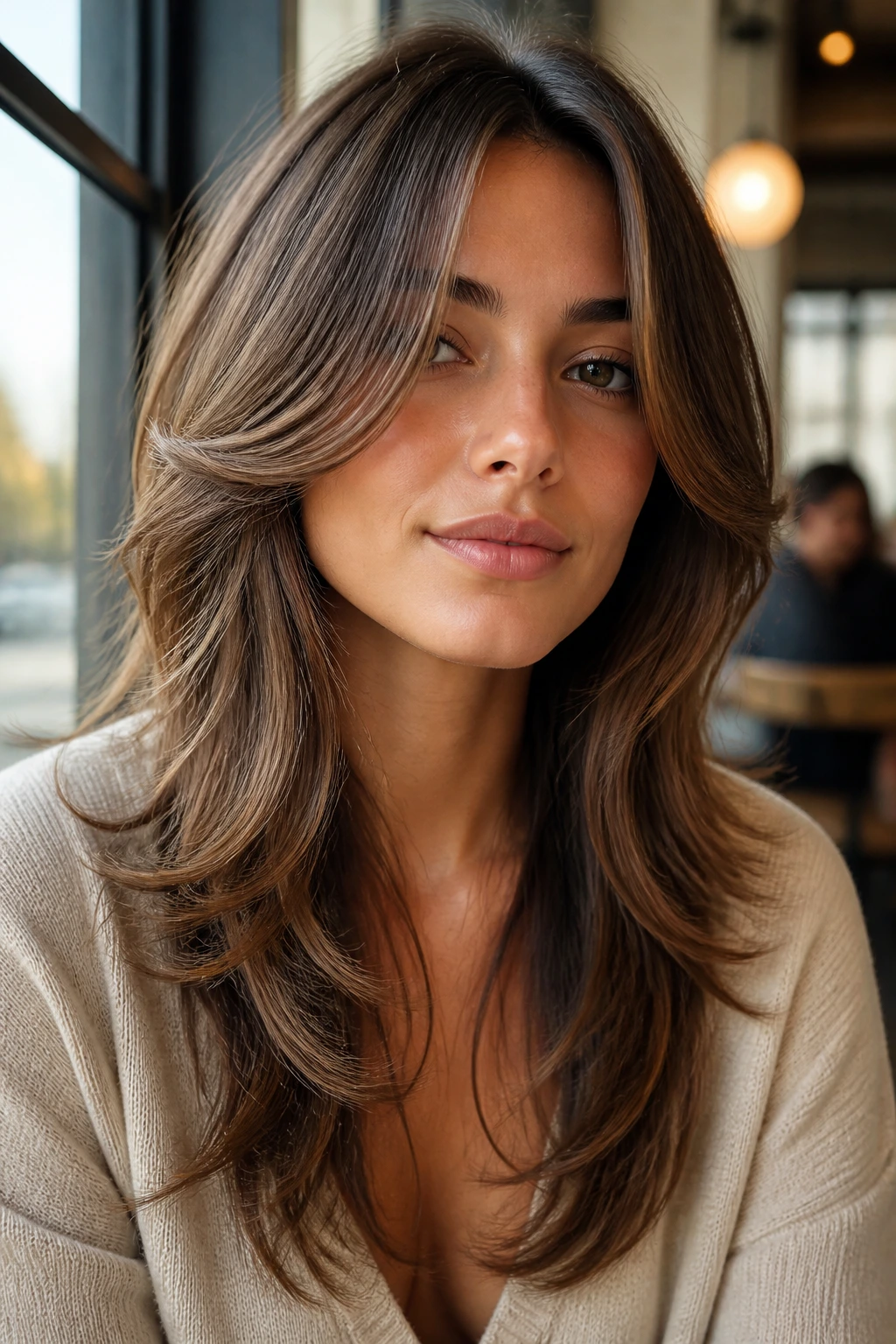
The cleanest salon conversations are the boring ones. Bring photos, yes, but also tell the stylist how you wear your hair on a regular Tuesday morning. Air-dried? Blown smooth? Half-up a lot? Piled into a clip? Those details matter more than the caption on the photo.
Use plain language. Say, “I want to keep the length past my shoulders, but I want more movement through the mids.” Say, “Please keep the ends full.” Say, “I do not want a lot of short layers at the crown.” That last one matters if you want softness instead of that puffy, over-layered look.
The words that actually help
- Point-cut the ends: Means the stylist will soften the line instead of carving a blunt edge.
- Internal layers: Means movement comes from the inside, not from a chopped outer shape.
- Face frame starting at the cheekbone or chin: Gives you control over how much softness sits around the face.
- Keep the perimeter full: Tells the stylist not to thin the bottom into wisps.
- Low-maintenance grow-out: Lets them know you don’t want a cut that falls apart in three weeks.
If you wear a part a certain way, say it. If your cowlick kicks sideways, say that too. A good haircut should work with your actual head, not the one in the photo.
The Tools That Keep the Texture From Going Puffy
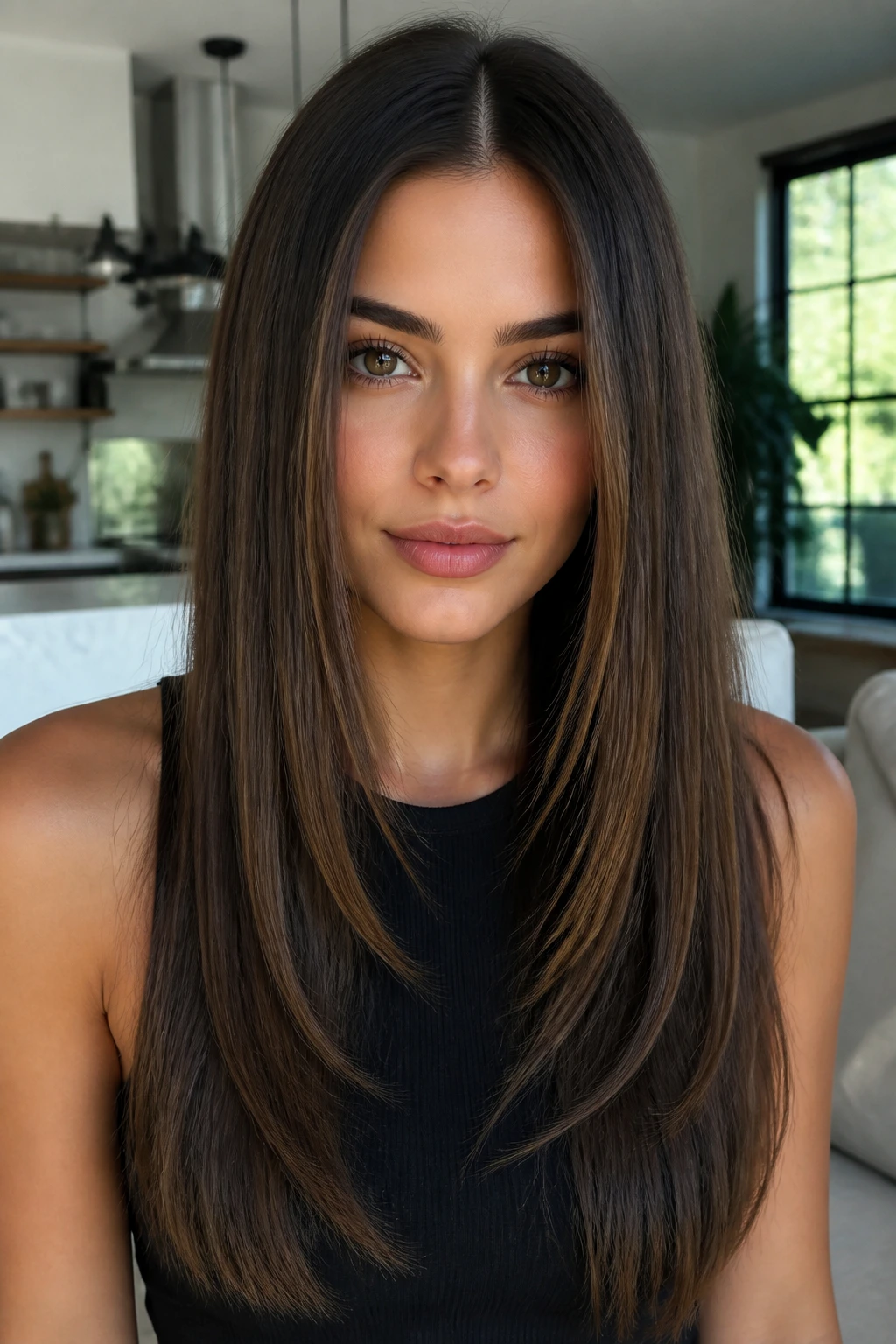
You do not need a drawer full of products. You need the right few things, used with some restraint. Long choppy haircuts tend to look best when the mids are soft and the ends stay clean, so every tool should help with that balance.
- Heat protectant spray: Keeps blow-dryers, flat irons, and curling irons from roughing up the cuticle.
- Mousse or root lift spray: Good for fine hair that needs a little lift at the crown without weight at the ends.
- Light styling cream: Helps smooth frizz on wavy or thick hair without flattening the layers.
- 1.25-inch curling iron or wand: Useful for creating a loose bend in the face frame and mids.
- Round brush: Best for the front pieces if you want the haircut to flip softly away from the face.
- Wide-tooth comb: Better than a brush for working through damp hair without wrecking the wave pattern.
- Microfiber towel or cotton T-shirt: Cuts down on the rough fluff that shows up when hair is rubbed dry.
- Texture spray: Adds separation, but use it lightly. Too much and the ends start looking dusty.
- Dry shampoo: Helps the style hold on day two, especially around the roots and fringe.
My bias is simple: if your hair frizzes fast, start with cream and control. If your hair goes flat fast, start with mousse and a root lift. The haircut stays the same. The support system changes.
How to Style the Cut Without Crushing the Movement
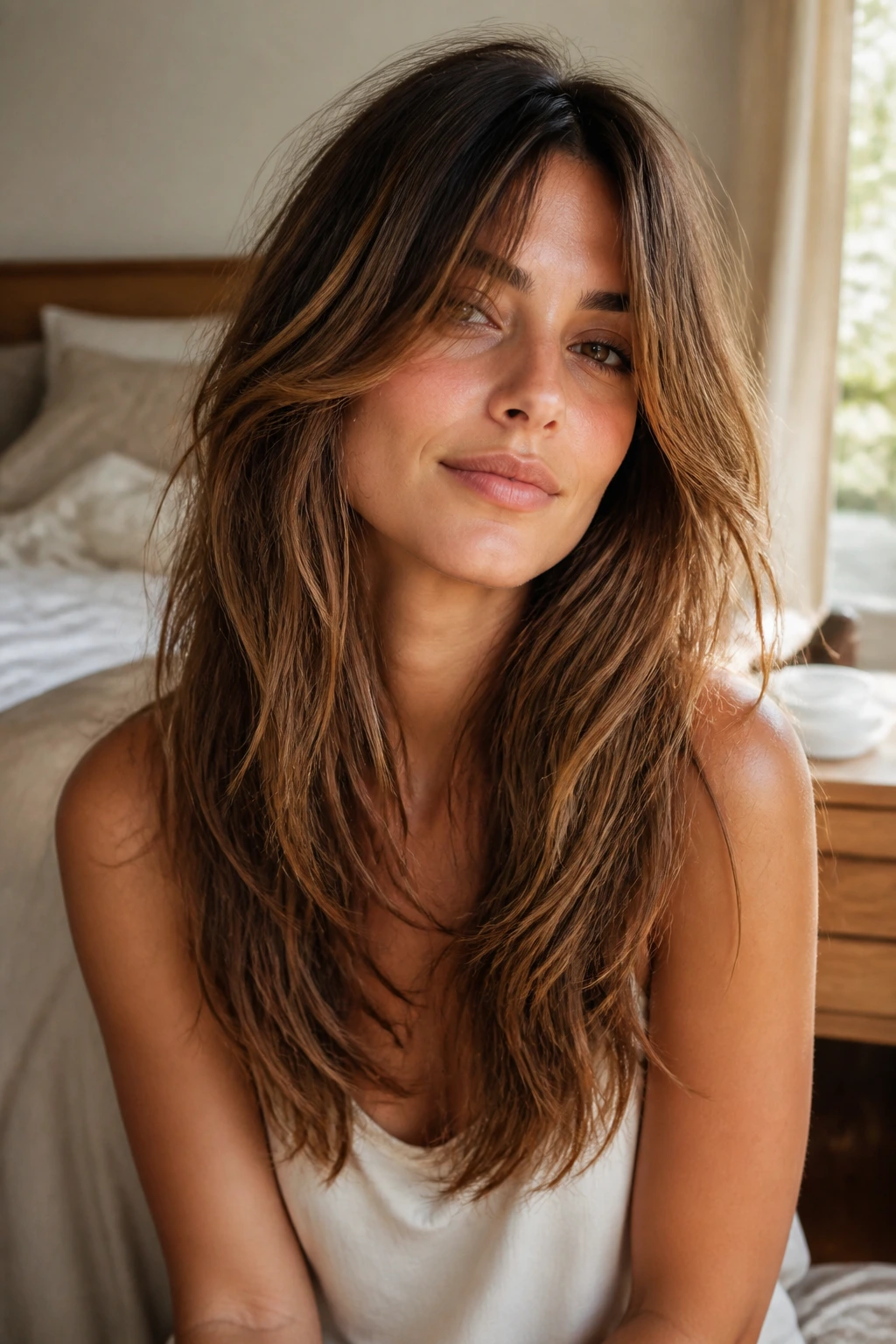
Why do some long choppy cuts look airy on day one and then collapse into nothing by lunch? Usually because the styling is too uniform. Every piece gets the same bend, the same product, the same direction. Hair doesn’t move like that in real life.
Air-dry with a little shape
Start with a light cream or mousse on damp hair. Scrunch just enough to encourage the wave pattern, then leave the ends alone. If your hair is straighter, twist the front sections once or twice while they dry so they don’t sit flat against the cheeks.
Blow-dry without making it stiff
Rough-dry the roots first. Get about 80 percent of the moisture out before you touch the brush. Then shape the face frame with a round brush or a large iron, leaving the last inch or two a little softer than the rest. That tiny gap keeps the ends from looking curled under in a dated way.
Refresh on day two
A little water in the hands, a touch of cream, and a quick re-bend on the pieces that stick out is often enough. Do not soak the whole head again. That just resets the frizz. Focus on the front layers and the top surface, then leave the rest alone.
Rule of thumb: texture should look touched, not sprayed into place.
Maintenance, Trims, and Grow-Out
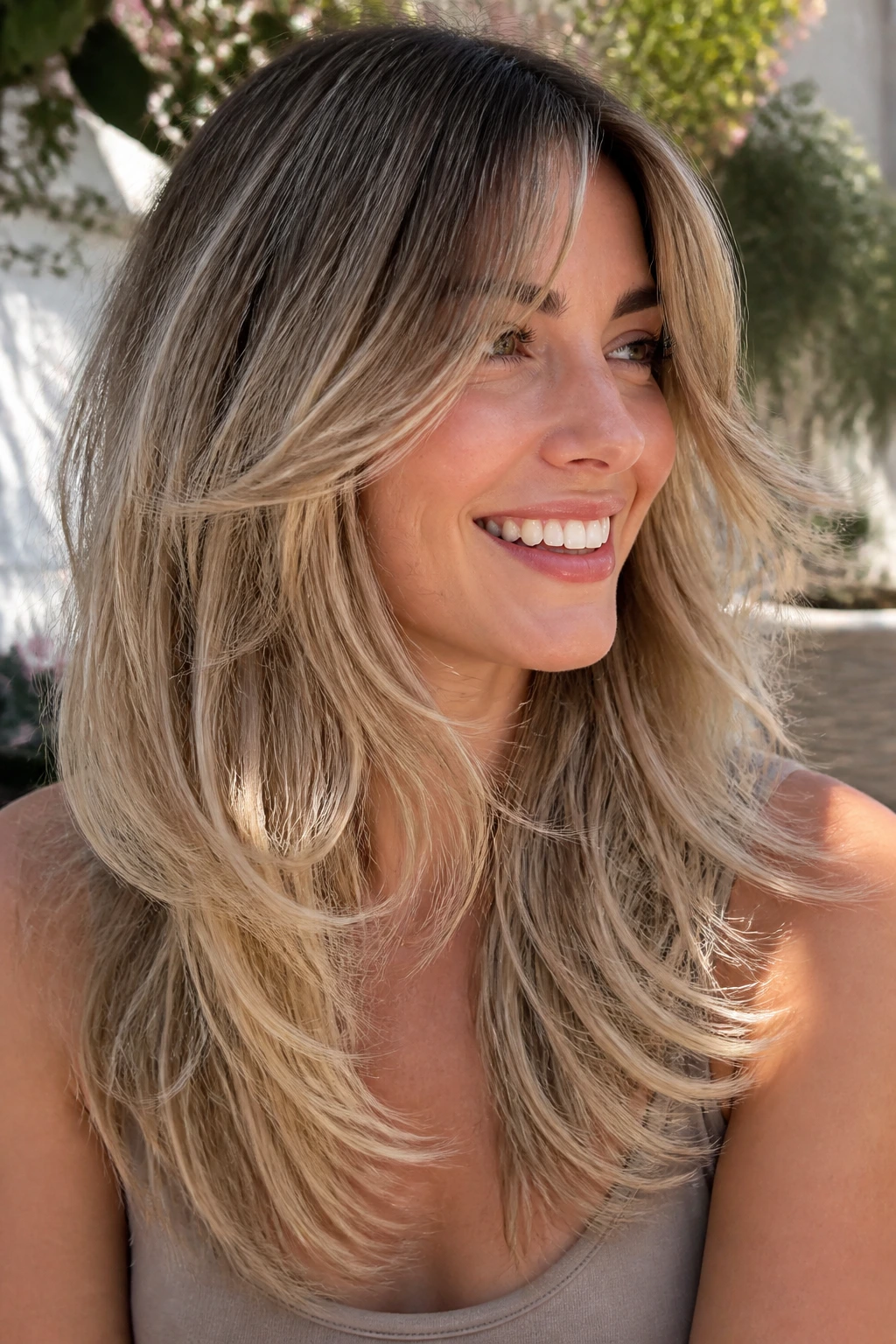
Long choppy haircuts grow out better than people expect, but only if you keep the shape honest. The face frame is usually what gives the cut its personality, so that’s the first place to pay attention once the layers start settling in.
If the shortest pieces sit around the cheekbone or chin, plan on trimming them every 8 to 10 weeks if you want the shape to stay crisp. If the cut is longer and softer, 10 to 12 weeks is usually enough. Thick hair with a lot of internal removal may need a tidy-up a bit sooner because the outline can start to expand.
At home, a lightweight conditioner on the mids and ends keeps the layers from catching on each other. If you use texture spray, clarifying every 2 to 4 weeks helps stop the ends from getting dusty or sticky. And if the hair starts feeling see-through at the bottom, that’s a signal the cut needs a dusting, not more product.
A good grow-out should still look like a haircut, not a memory of one.
Extra Ways to Personalize the Shape
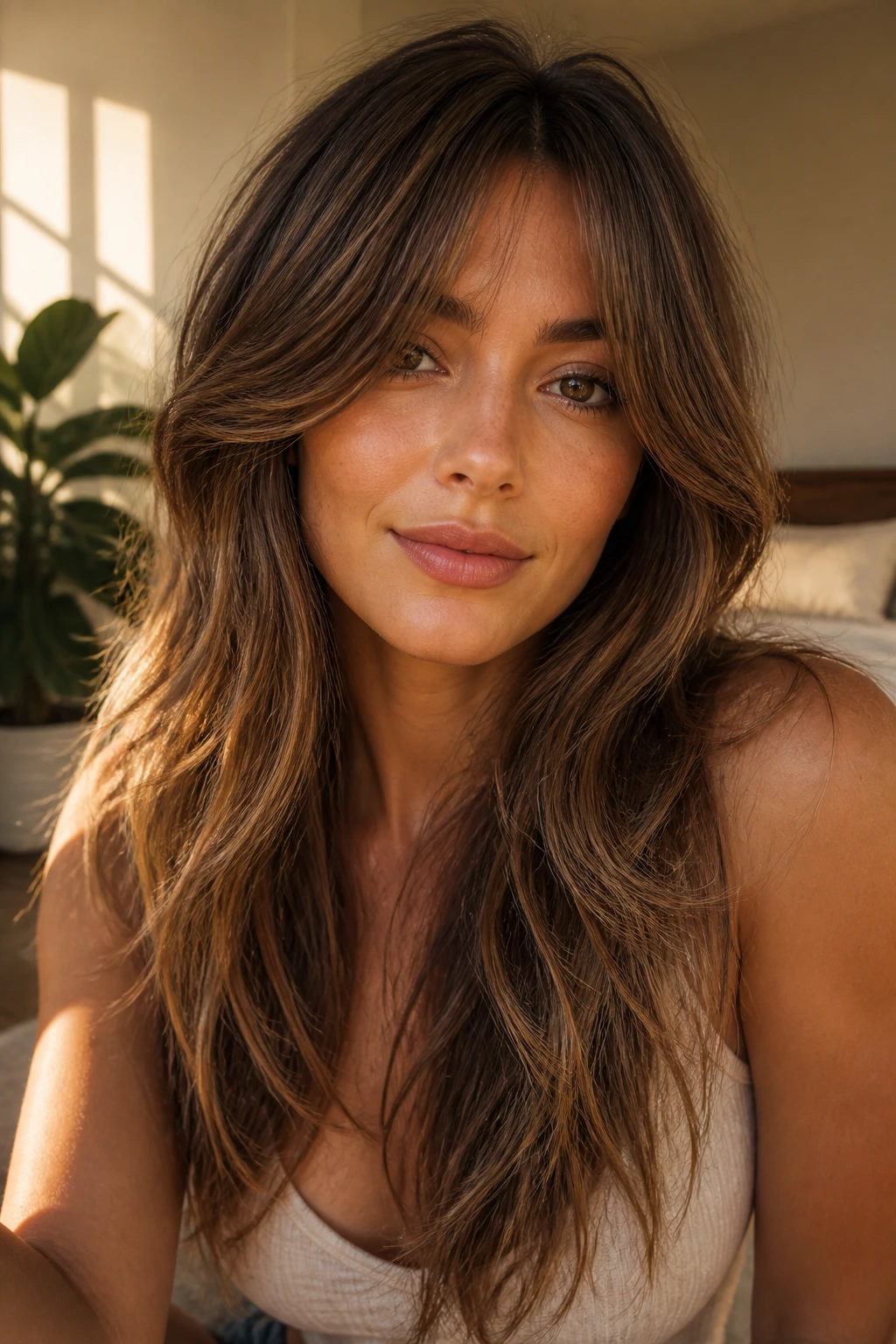
Fine-Hair Lift Map: Keep the perimeter blunt and let the layers stay long, with just enough face framing to keep the hair from lying flat against the cheeks. A light mousse at the roots gives the cut more staying power than heavy cream ever will.
Thick-Hair Weight Shift: Ask for internal debulking through the mids and a fuller outline at the bottom. That combo takes pressure off the hair without making the ends look feathered to death.
Curly-Wave Friendly Version: Have the cut shaped in a way that respects the pattern, not against it. Dry-cutting or cutting with some natural texture in place helps avoid surprise shrinkage and keeps the layers from jumping up too high.
Polished Office Version: Keep the face frame subtle, the perimeter clean, and the choppiness gentle. This is the version that still looks good in a low ponytail and doesn’t scream for texture spray.
Air-Dry Weekend Version: Ask for longer layers and more softness through the mids so the hair can fall into its own wave without much help. It’s the easiest version to live with if you don’t want to style every day.
Mistakes That Make Choppy Layers Look Ragged
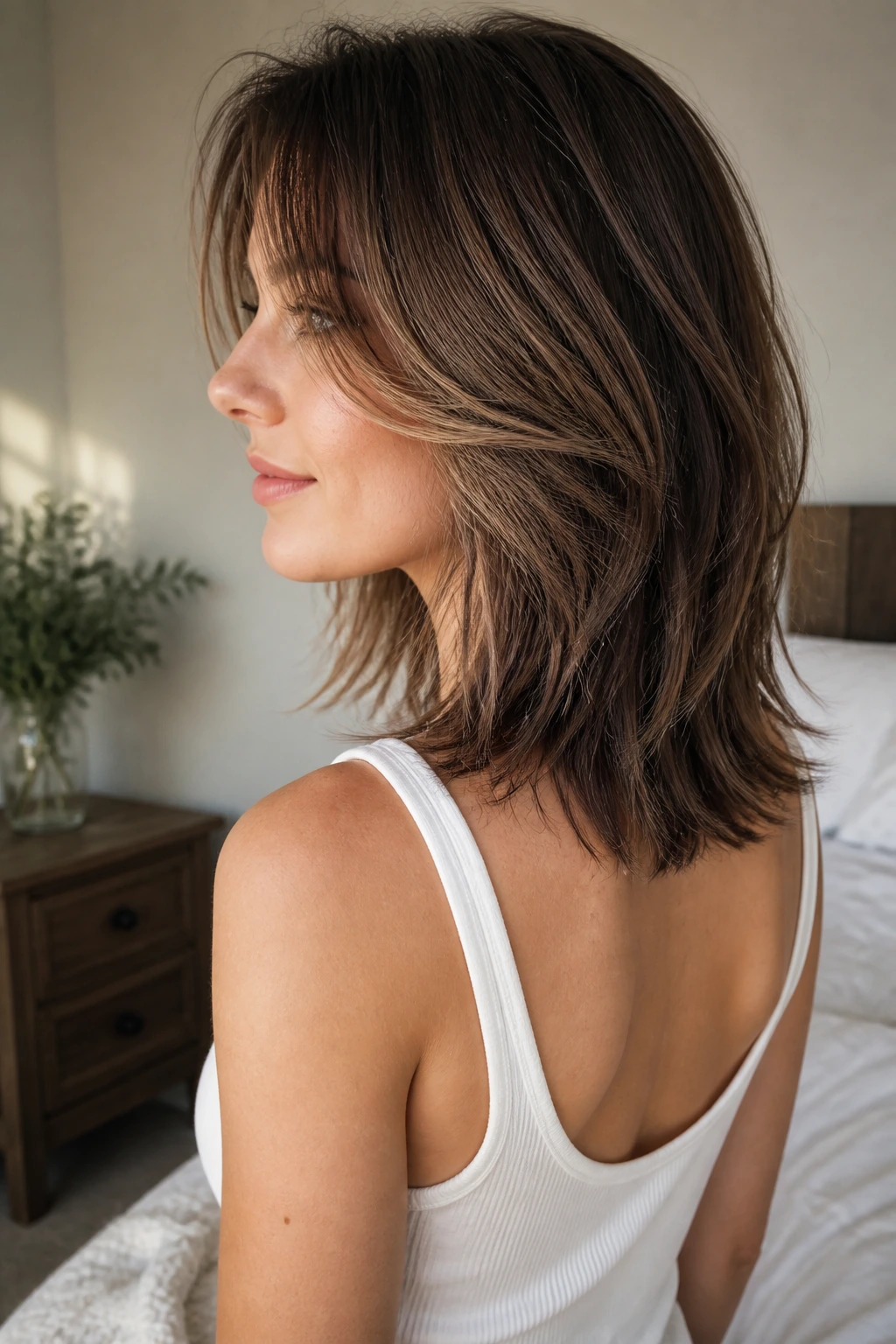
-
Starting the shortest layers too high: The haircut turns puffy near the crown and loses its long, soft shape. Keep the shortest pieces lower unless you specifically want shag energy.
-
Using thinning shears like a magic wand: On fine or damaged hair, too much thinning makes the ends look see-through and frayed. Point cutting and controlled internal removal are safer.
-
Ignoring your natural part or cowlick: If your hair always falls a certain way and the cut fights it, the front pieces will split or swing into your eyes. Tell the stylist how the hair behaves when you do nothing to it.
-
Overloading texture products: Texture spray can help, but too much makes the hair feel gritty and sticky. Use a light hand and spray from a distance.
-
Skipping trims for too long: Long layers grow, and they grow unevenly. Once the face frame gets past its sweet spot, the cut can look stringy instead of soft.
Questions People Usually Ask Before They Cut the Length
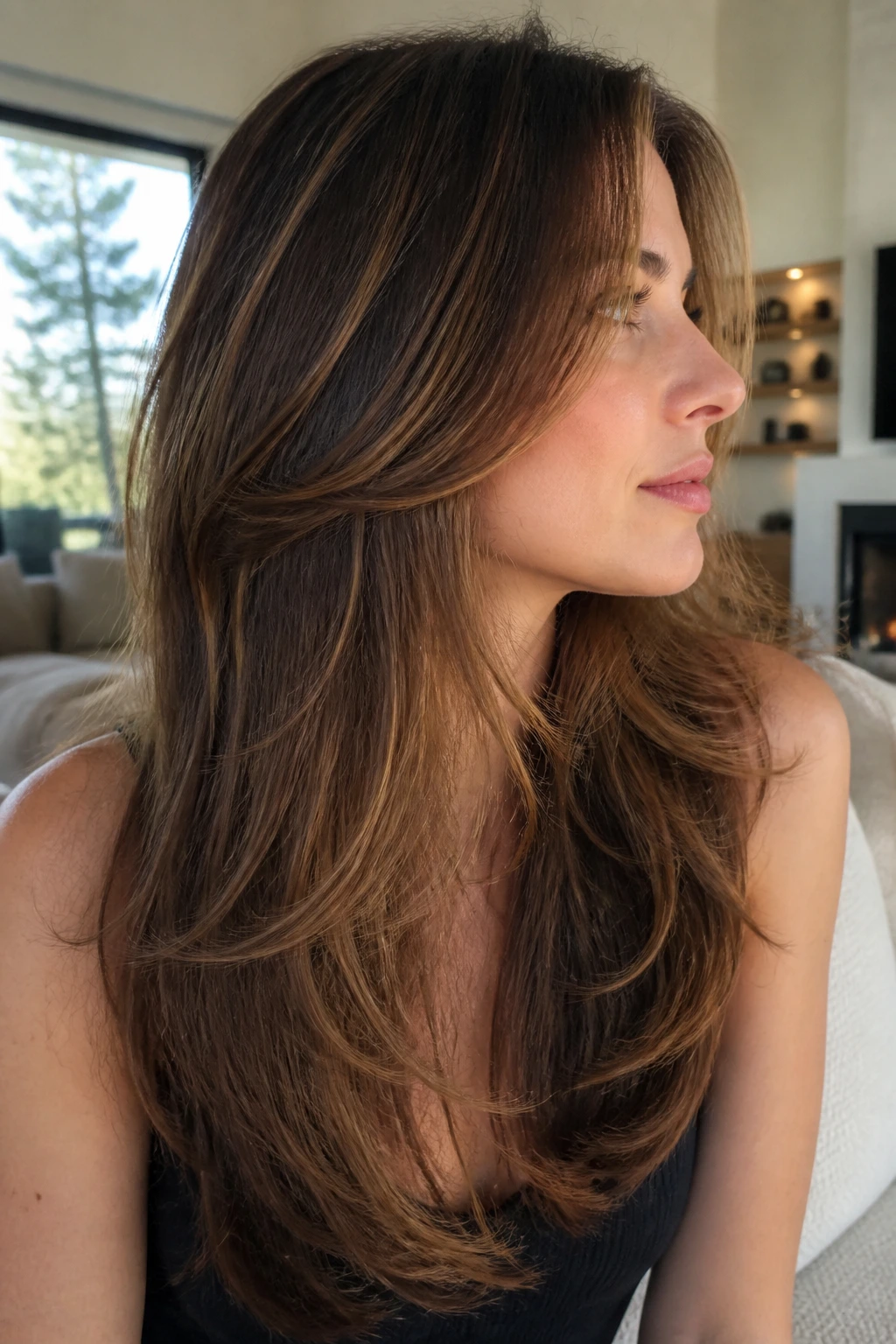
Will long choppy haircuts work on fine hair?
Yes, but the best version keeps the layers long and the perimeter full. Fine hair usually does better with invisible layers or a subtle face frame than with a heavy shag, because too much removal makes the ends look sparse.
Will choppy layers make thick hair look poofy?
They can, if the layers are cut too high or too aggressively. Thick hair usually needs internal weight removal and a controlled outline, not a bunch of short pieces around the crown.
Can I keep my length and still get texture?
Absolutely. That’s the whole point of many of these cuts. Ask for movement through the mids and front pieces, then keep the bottom line long enough to preserve the length you care about.
How often should I trim it?
Most long choppy cuts stay in shape with trims every 8 to 12 weeks. If you have curtain bangs or a short face frame, you may want a tidier visit sooner.
Are curtain bangs a good match for long choppy haircuts?
Usually, yes. They blend into the layers well and soften the face without the hard line of blunt bangs. Just keep them long enough to live with when they split or grow out.
Can I air-dry this haircut?
If the cut is shaped well, yes. Wavy hair often loves an air-dry cream, while straighter hair may need a little root lift or a bend from a brush to keep the shape from collapsing.
Is a razor cut a bad idea for damaged hair?
It can be. Razor work can make fragile ends look frayed faster, so if your hair is dry, split, or heavily lightened, point cutting is usually safer.
What if the cut feels too shaggy after the first wash?
That usually means the layers were cut a bit too high or too short for your hair density. A styling pass with less product and a lower heat setting can help, but if the shape still feels off after a week, a small adjustment at the salon is better than trying to hide it with more spray.
The Shape That Grows Out Gracefully
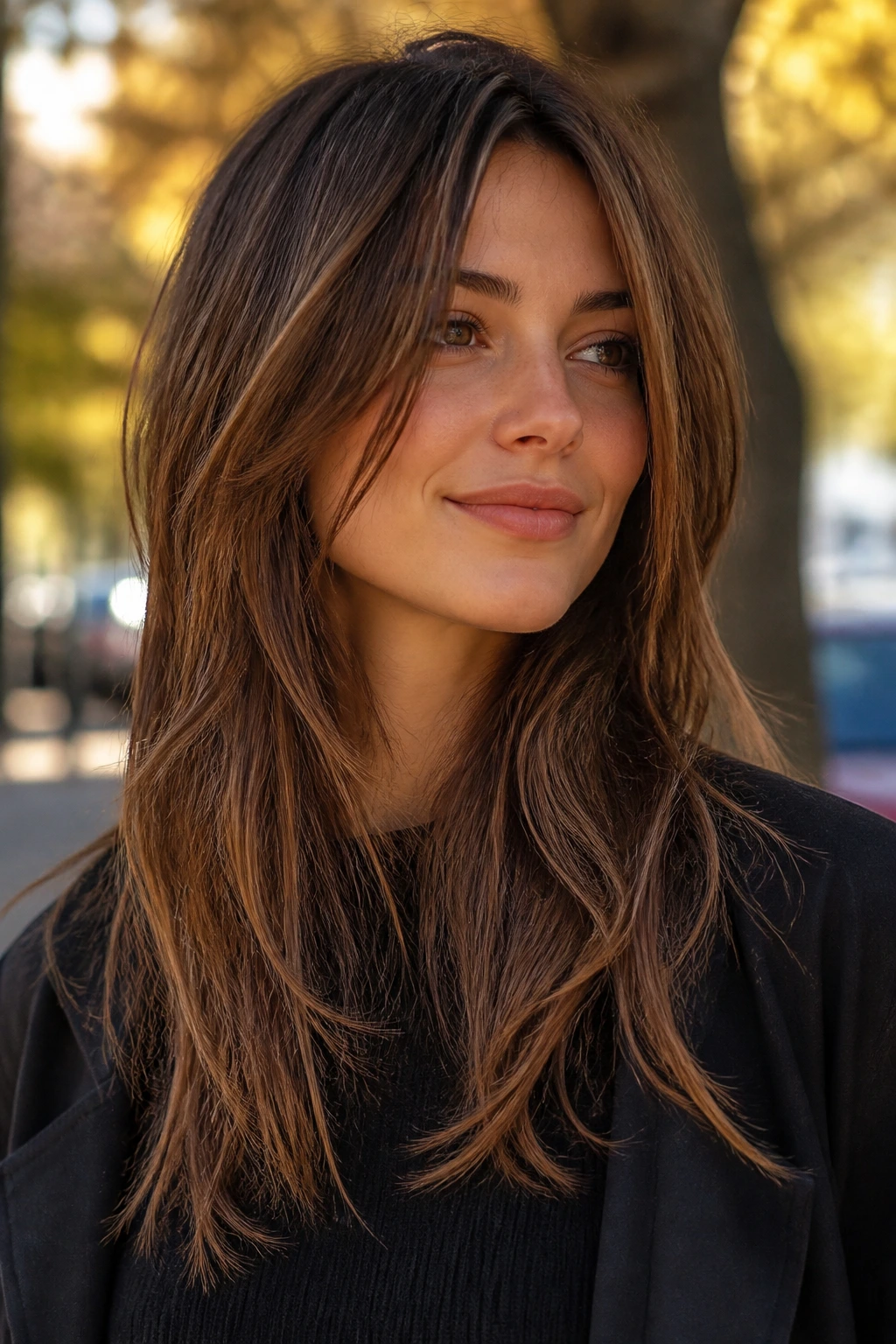
The nicest long choppy haircuts are the ones that stay useful after the salon blowout fades. They keep their length. They move. They don’t panic when you tuck them behind your ears or throw them into a clip.
That’s why the best versions feel soft rather than chopped. The layers are placed with restraint, the outline stays honest, and the texture has somewhere to land. Once you get that balance right, the haircut stops feeling like a styling project and starts acting like part of your face.
Pick the version that matches how your hair actually behaves, not the one that looks wildest in a photo. That little bit of restraint is what keeps the cut looking good two months later, not just on the day you leave the chair.
