



Flat hair at the crown can make even a fresh cut look tired by noon. Heavily layered short cuts fix that by taking weight out of the inside of the shape, not by hacking the ends into little ragged wisps. That distinction matters more than people think.
A good short layered cut has a pulse to it. The top can lift. The sides can move. The nape can stay tidy instead of puffing out into a triangle, which is what happens when the cut removes bulk in the wrong places or leaves too much weight at the perimeter. The best versions look airy when you shake them out, then still hold their shape after a full day of running around, desk sitting, or humidity doing what humidity always does.
I like these cuts because they do a few jobs at once. They build volume where hair collapses, they make thick hair behave without turning it into a helmet, and they give fine hair some grit so it doesn’t lie there like a napkin. The trick is picking the right layered short haircut for your density, texture, and cowlick pattern — not the one that looked cute on somebody with a totally different head shape and hairline.
Why These Short Layers Earn Their Keep
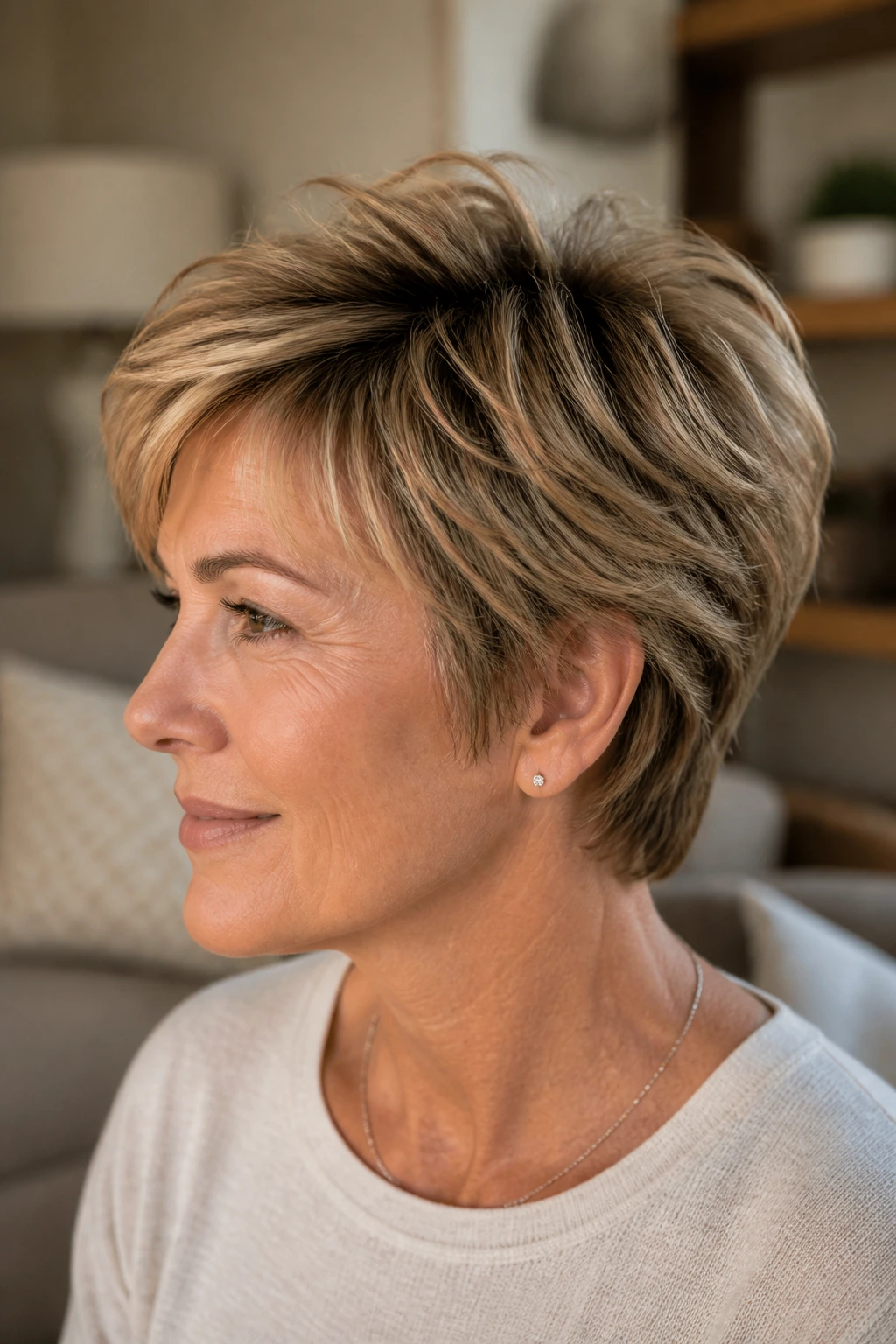
- Crown lift: Shorter layers at the top push hair away from the scalp, which keeps the root area from sinking flat by lunchtime.
- Weight control: Removing bulk inside the cut stops thick hair from flaring out at the sides and bottom edge.
- Faster styling: A layered crop or bob usually dries quicker because less hair is fighting against itself.
- Better movement: Point-cut or razor-finished ends bend instead of sitting in one stiff line.
- Cleaner grow-out: Soft layering gives you more room to stretch trims by a few weeks without the shape turning boxy.
- Texture help: Waves, bends, and curl patterns show up more clearly when the cut has room to breathe.
What Layering Is Doing Under the Surface
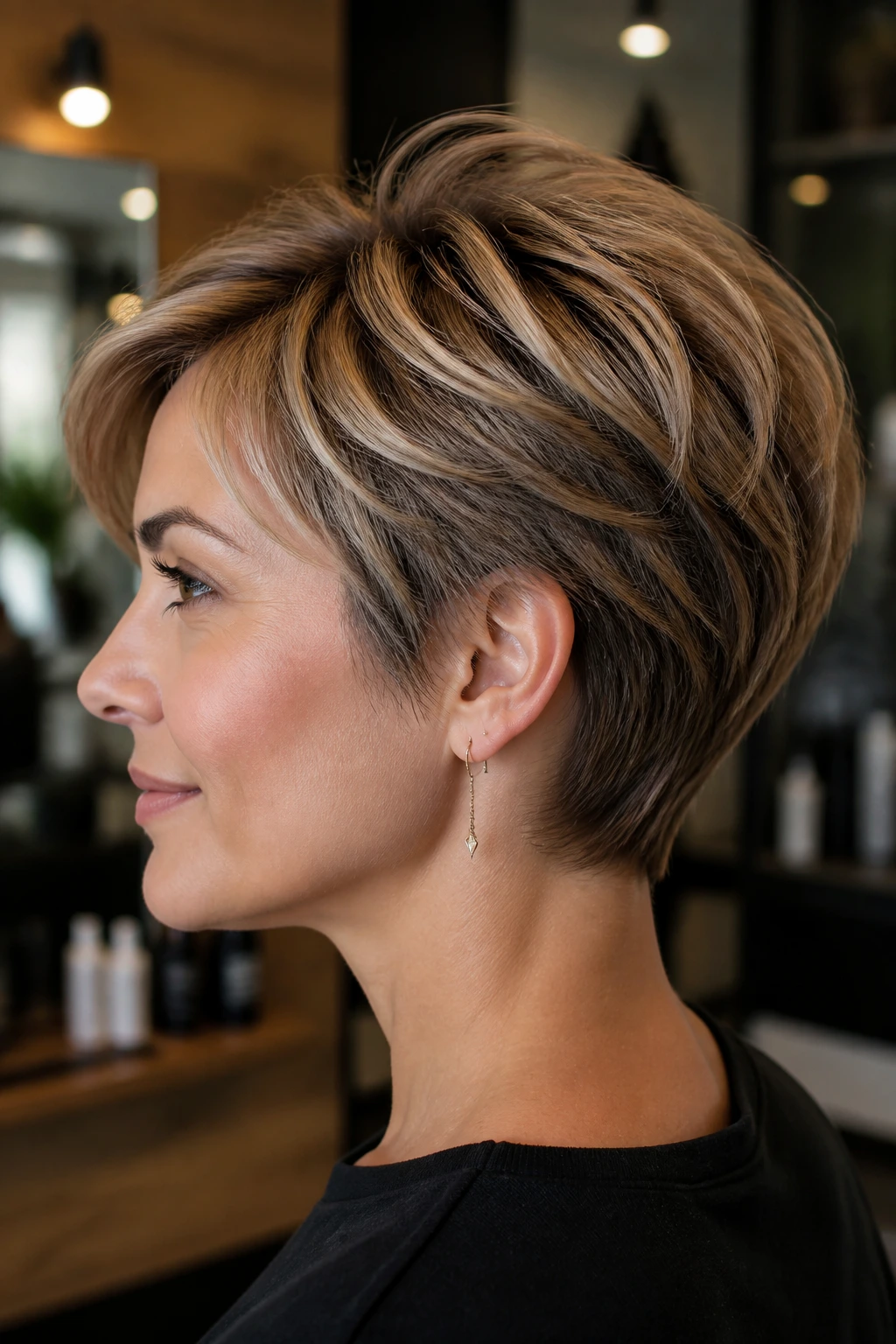
Short hair with layers is not just “short hair with some extra texture.” That’s the lazy version, and it usually ends in a puffier crown or a choppy outline that looks accidental. Real layering is about where the weight comes out. In a pixie or bob, that weight sits mostly at the crown, the occipital area, and the perimeter around the jaw or nape. Move it in the right places and the haircut stands up a little. Move it in the wrong places and it collapses or mushrooms.
The difference between internal layers and a randomly thinned-out cut is huge. Internal layers live inside the shape, so the outside line stays cleaner. That gives you lift without making the ends see-through. On thicker hair, a stylist may also use graduation through the back — shorter lengths stacked under longer ones — so the haircut sits up instead of hanging like one heavy sheet. On finer hair, the better move is often a softer version: point-cutting, sliding, or slicing just enough to create bend while keeping the outline solid.
Face shape matters too, but not in a rigid, magazine-editor way. A layered short cut can widen the cheek area, sharpen the jaw, or pull attention upward toward the eyes depending on where the shortest pieces land. That’s why the best layered short cuts feel tailored. They’re not one shape. They’re a small set of decisions, made in the right order.
1. Feathered Pixie with Crown Lift
A feathered pixie is the haircut I think of when someone says they want height without a lot of fuss. The top stays short, but the crown is layered just enough to stand up away from the scalp, and the sides are trimmed close so the whole shape doesn’t spread outward. It has that lightly ruffled, almost air-dried look, even when it’s been blown into place.
This cut works especially well if your hair is fine or medium and tends to lie flat at the roots. Ask for soft point-cutting through the top and a little extra length at the front so the fringe can be brushed forward or swept to the side. A pea-size amount of mousse at the roots and a quick blast with a dryer usually does the job.
If you have a stubborn crown cowlick, this is one of the better cuts to make peace with it. The shorter layers can work with the swirl instead of fighting it.
2. Choppy Micro Bob with Piecey Ends
This one sits right around the jaw and carries a little attitude in the ends. The outline is short and neat, but the interior is broken up with choppy layers so the bob doesn’t hang like a single block. You get movement every time you turn your head, which is the whole point.
The micro bob adds volume because the shorter length removes some of the dragging effect that happens around the shoulders and collarbone. Hair bounces more at the jaw. That’s useful if your ends get stringy fast. Ask your stylist for a blunt perimeter with light slicing inside the shape, not heavy thinning at the bottom. Too much thinning at the ends makes a bob look wispy in a bad way.
This cut looks best with a flat iron bend, a small round brush, or even a rough dry and a dab of paste. It’s a good choice if you wear glasses, too, because the line sits cleanly above the frame without disappearing into it.
3. Curtain-Bang Shag Bob
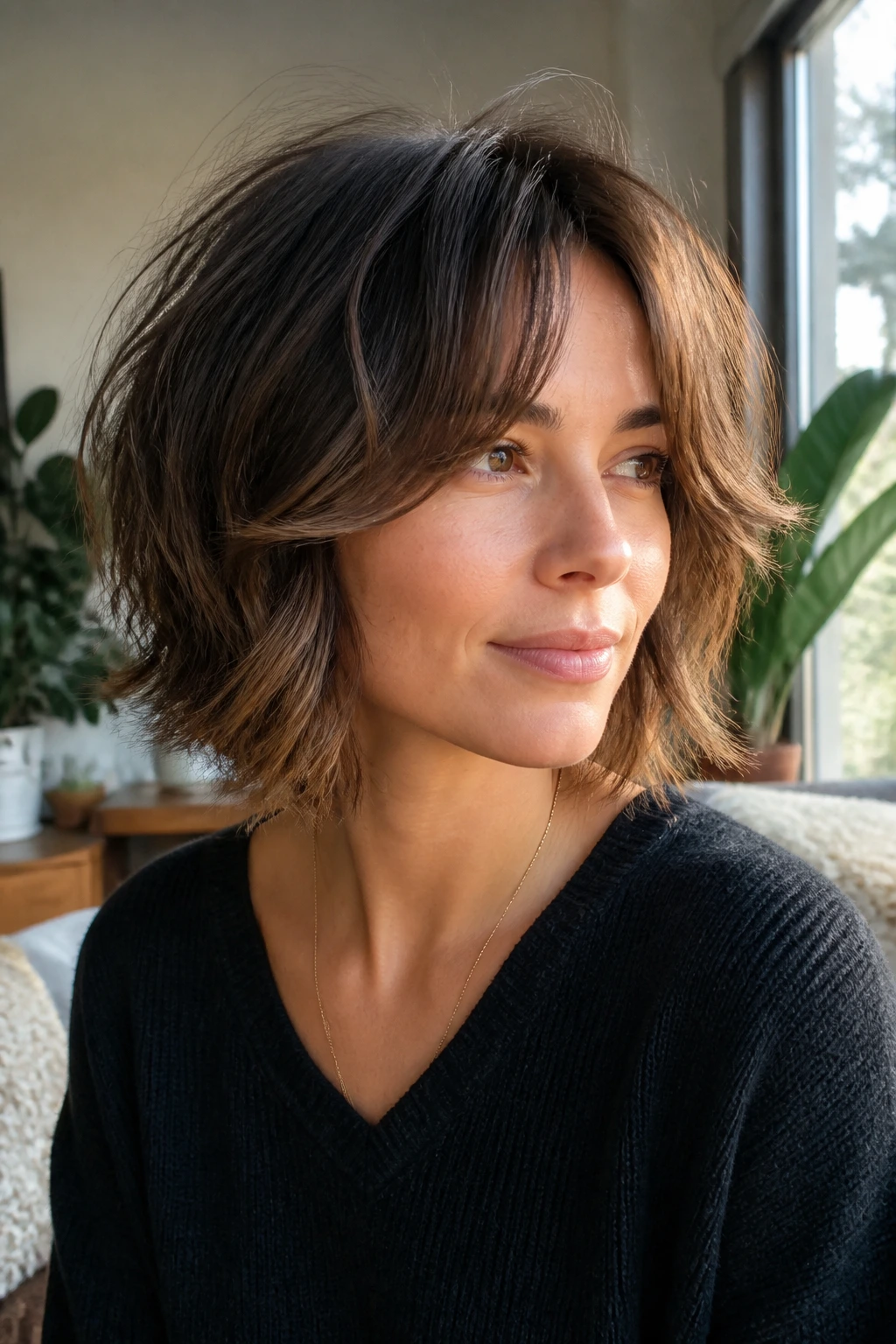
A curtain-bang shag bob gives you a little softness around the face and a lot of movement through the body of the cut. The fringe splits in the middle or just off-center, then falls into layered sides that skim the cheekbones and jaw. It’s relaxed, but not lazy.
What gives it volume is the layering around the crown and the front corners. Instead of all the fullness sitting at the bottom edge, the shape rises through the top and breaks apart near the face. That keeps the bob from feeling heavy. If your hair has a wave in it, this cut almost styles itself; if it’s straighter, a 1-inch brush and a quick bend at the ends bring it to life.
Tell the stylist you want face-framing layers that start higher than the chin and bangs that can split open rather than hang like a curtain over your eyes. That little detail matters. Too-short curtain bangs can spring up and look odd. Too-long ones can drag the whole haircut down.
4. Bixie with a Tapered Nape
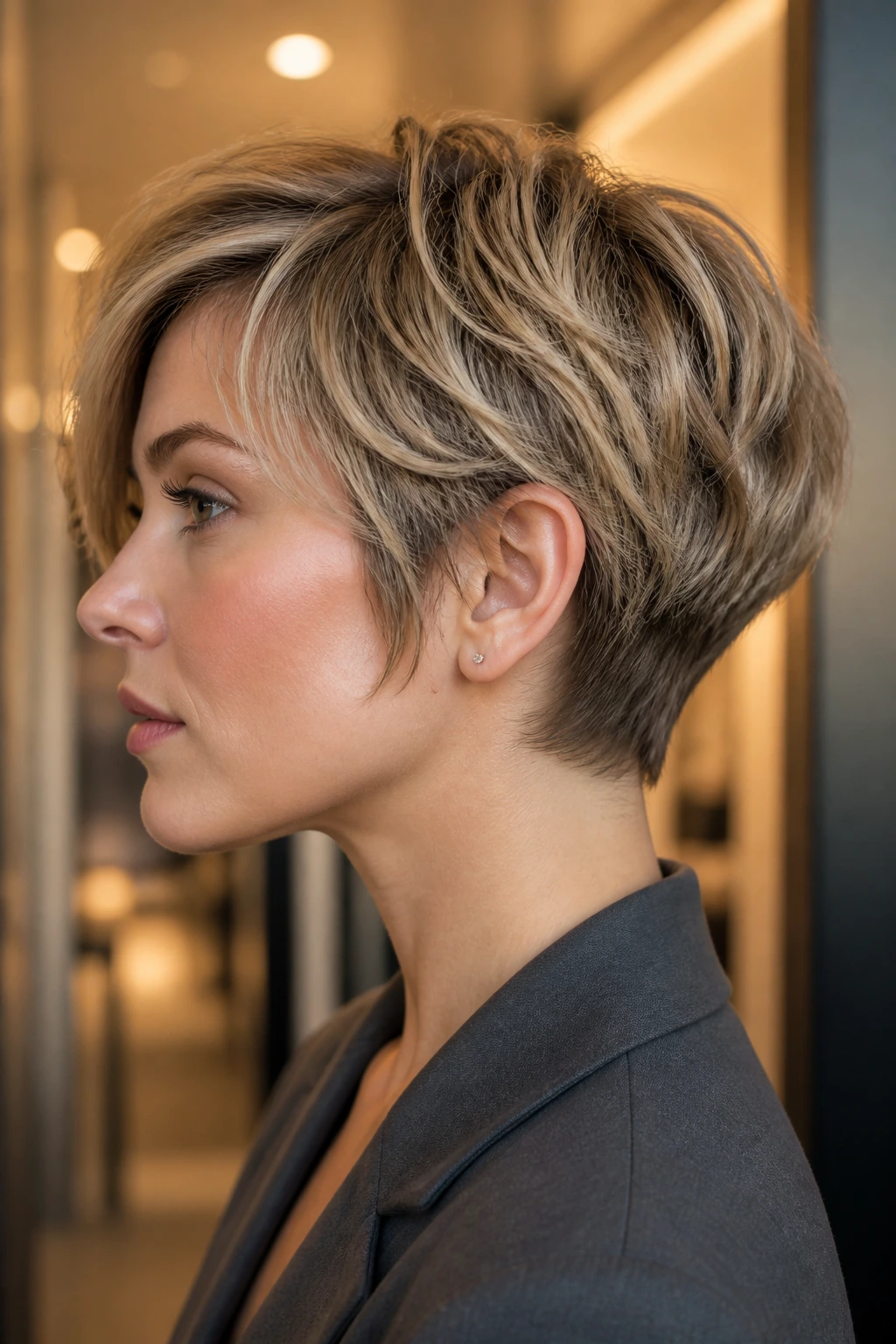
A bixie is the sweet spot between a bob and a pixie, and the tapered nape is what keeps it from feeling bulky. The top stays long enough to brush, flip, or tousle, while the back narrows cleanly into the neckline. It’s a small haircut with more shape than people expect.
I like this one for anyone who wants short hair without going all the way into a true pixie. The volume sits mostly through the crown and upper sides, which gives the cut lift while the neckline stays tidy. That makes a difference on thick hair, especially if the nape tends to puff. Ask for soft layers through the top and a close taper at the neckline so the cut lies flat where it should.
Styling is easy: a little volumizing spray at the roots, rough-dry the top, then pinch the ends into place with a matte cream. It’s one of the better short cuts for a person who wants something polished but not stiff.
5. Stacked Bob with Hidden Graduation
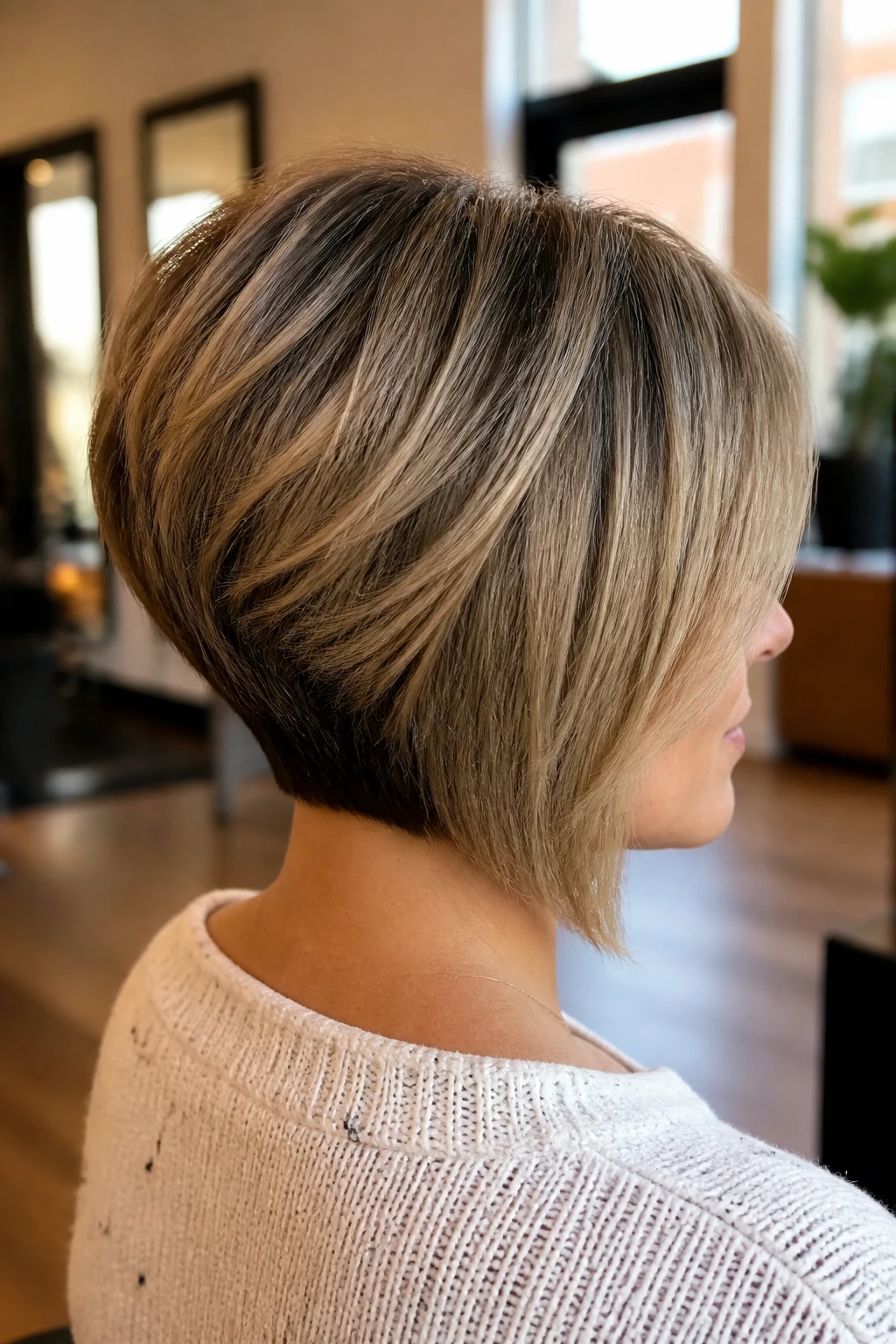
The stacked bob is a classic for a reason. Shorter layers sit underneath the back of the head, so the top length falls over them and creates a gentle, rounded lift. From the outside, it looks smooth. Inside, the cut is doing the heavy lifting.
This is one of the strongest options for thick hair that keeps collapsing at the crown but also flaring at the sides. The graduation controls the bulk without making the cut look chopped. Ask for a stacked back with a clean, slightly longer front, and make sure the stylist does not over-texturize the perimeter. A stacked bob should feel structured, not shredded.
A round brush and a blow dryer with a nozzle matter here. The goal is to tuck the back under while encouraging the crown to rise. If you prefer a sleeker finish, this cut can go that way too, but the shape still reads as fuller than a blunt bob.
6. Razor-Cut Crop with Side Fringe
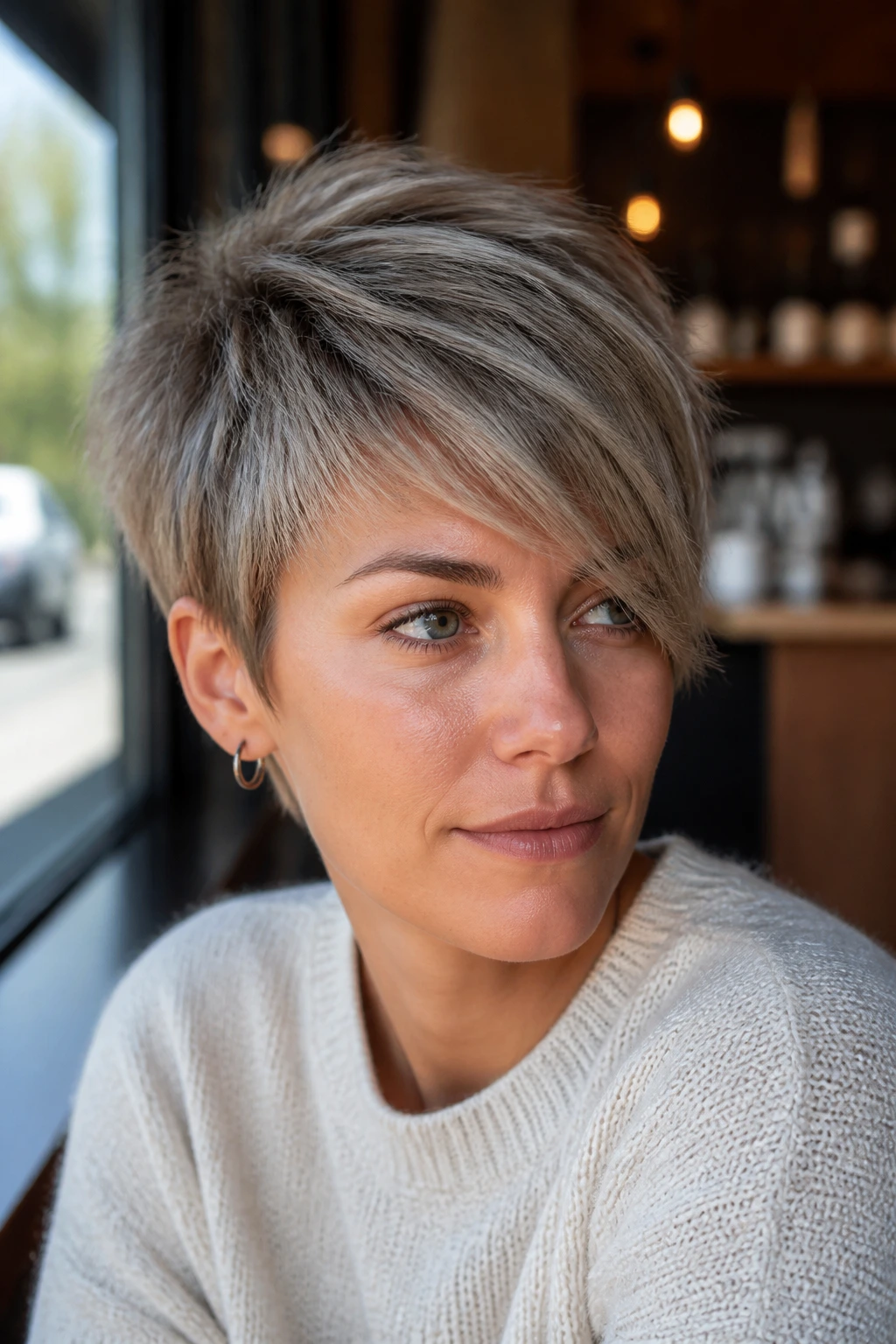
A razor-cut crop has a different energy from scissor-cut layers. The ends look sliced, not chopped, which gives the haircut a lighter edge and a bit of swing. Add a side fringe and the whole thing gets a diagonal line that keeps hair from sitting flat across the forehead.
This cut does well on straight to slightly wavy hair, especially if the strands are coarse and need to be softened. The razor removes bulk in a controlled way, but it’s not the best choice for very frizzy or highly porous hair unless the stylist knows how to handle the texture. Ask for soft, narrow slices through the top and a fringe that falls across one brow, not a heavy sweep that blocks the face.
I like this one because it looks like you meant it. No helmet. No helmet shape. Just edge and movement. A little styling cream at the fringe and a dry texture spray through the crown are usually enough.
7. Short Wolf Cut
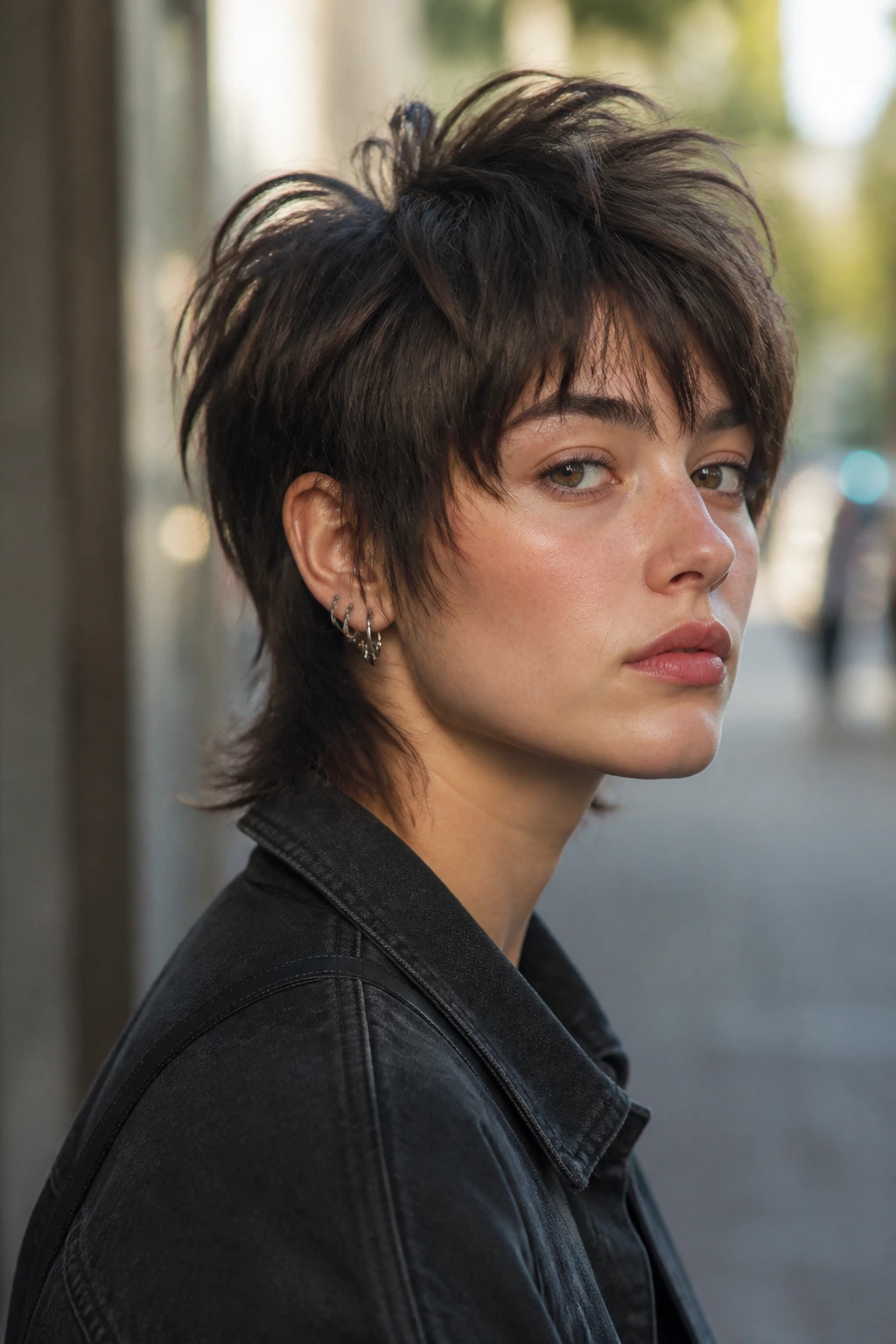
The short wolf cut is for someone who likes mess with structure underneath it. It has the choppy crown of a shag, the longer tail of a mullet, and enough unevenness to keep it from feeling precious. The volume lives at the top, which is why it reads so boldly on short hair.
What makes it work is the contrast. The crown is layered high, the sides are broken up, and the nape hangs a little longer. That split in the shape creates lift because the eye reads the top as fuller. It’s especially good on hair with natural bend or wave. Straight hair can wear it too, but it usually needs a little paste or salt spray to keep the layers from collapsing into one flat plane.
Tell the stylist you want shorter top layers with a softer, trailing back rather than a random mullet. The best wolf cuts still have a plan. They just don’t look fussy.
8. Curly Layered Crop
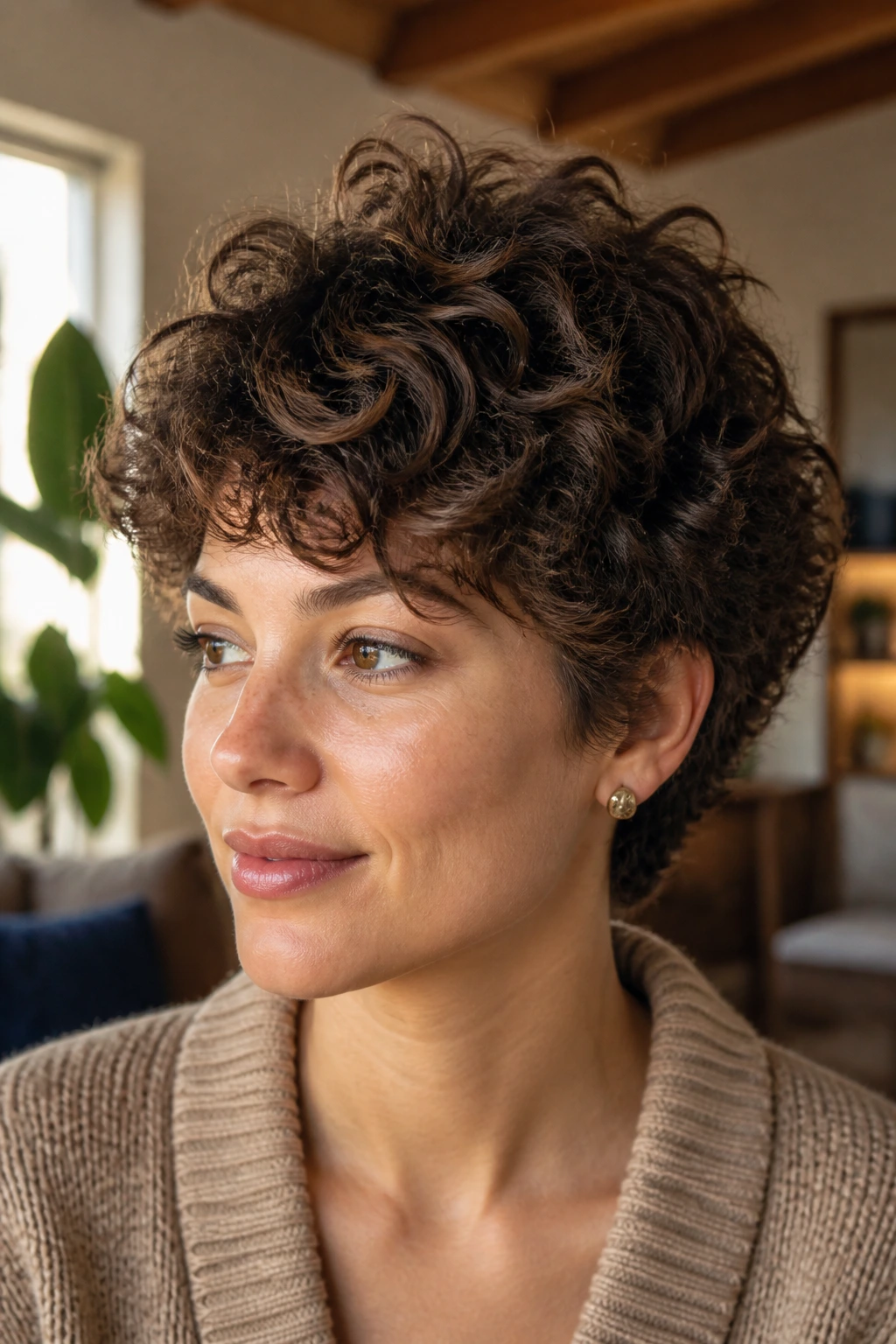
Curly hair and heavy layering can be a mess if the cut is done dry and without restraint. Done well, though, a layered crop on curls is one of the easiest ways to get height at the crown and keep the sides from turning into a triangle. The curl pattern does half the work for you.
This cut should be shaped around the curl, not against it. Ask for the hair to be cut in its natural state if possible, with longer layers on top and tapered sides so the curls stack upward instead of out. On tighter curls, too much slicing can create frizz and little gaps in the shape, so the better move is usually careful shaping rather than aggressive thinning.
A diffuser on low heat helps the crown keep its lift, and a light cream or foam will give the curls enough memory without weighing them down. This is one of those styles that looks better when the hair has a little life in it. Too much polish flattens it.
9. Asymmetrical Layered Bob
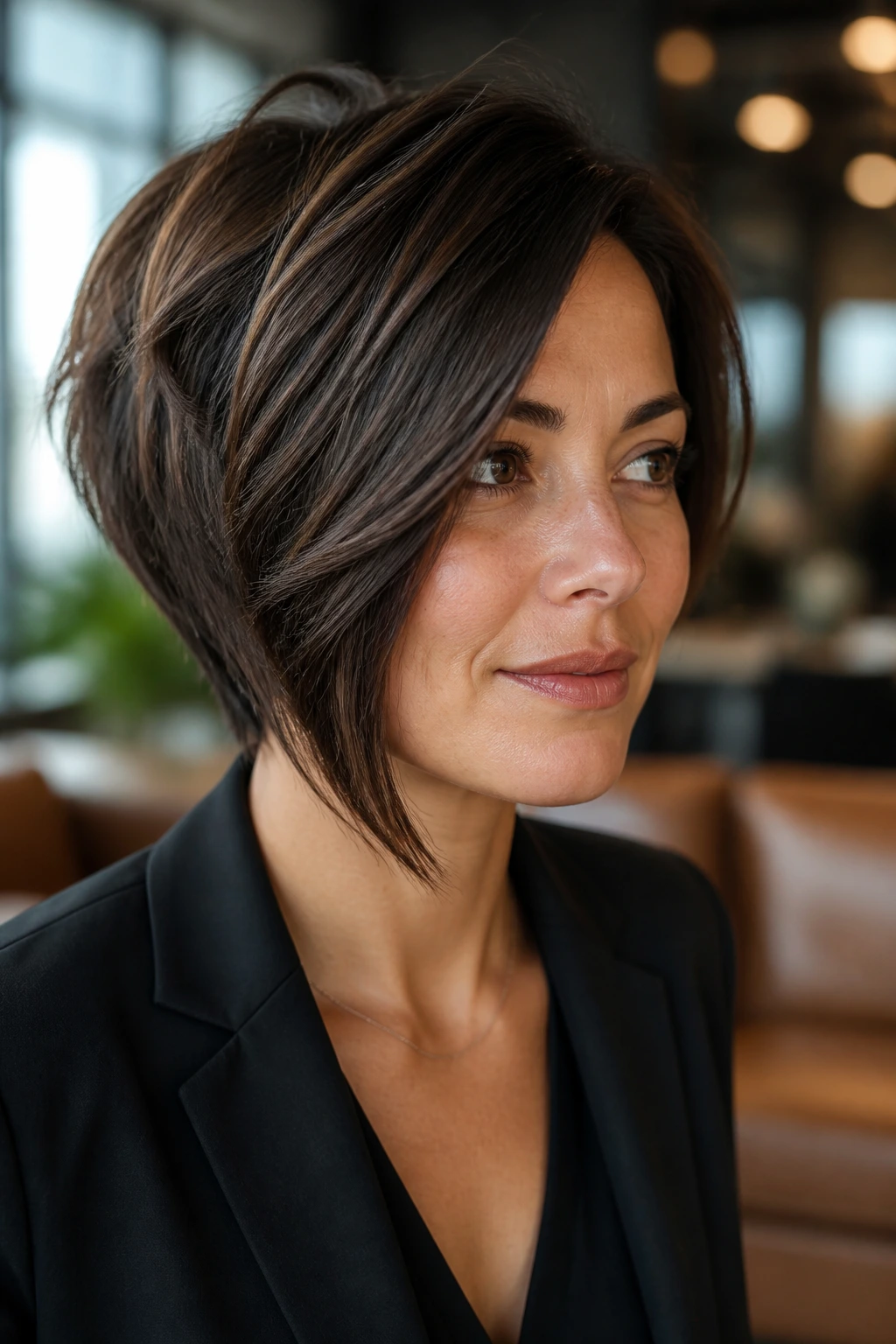
An asymmetrical bob gives the haircut a built-in point of interest, and the layers make sure it still has movement. One side stays longer, the other side shorter, and the result is a diagonal line that keeps the shape from sitting too evenly on the head. Even a small length difference changes the whole mood.
This cut is useful when one side of the hair naturally falls flatter than the other. The asymmetry creates a visual lift, especially if the part is pushed deep to the heavier side. Ask for soft internal layers, not chunky steps, so the bob keeps its clean outline while the interior moves.
I’d wear this cut when I wanted volume but didn’t want it to look too “done.” It has enough structure for a blazer and enough edge for a T-shirt. That balance is rare, and the layers are the reason it doesn’t look like a geometry exercise.
10. French Bob with Airy Ends
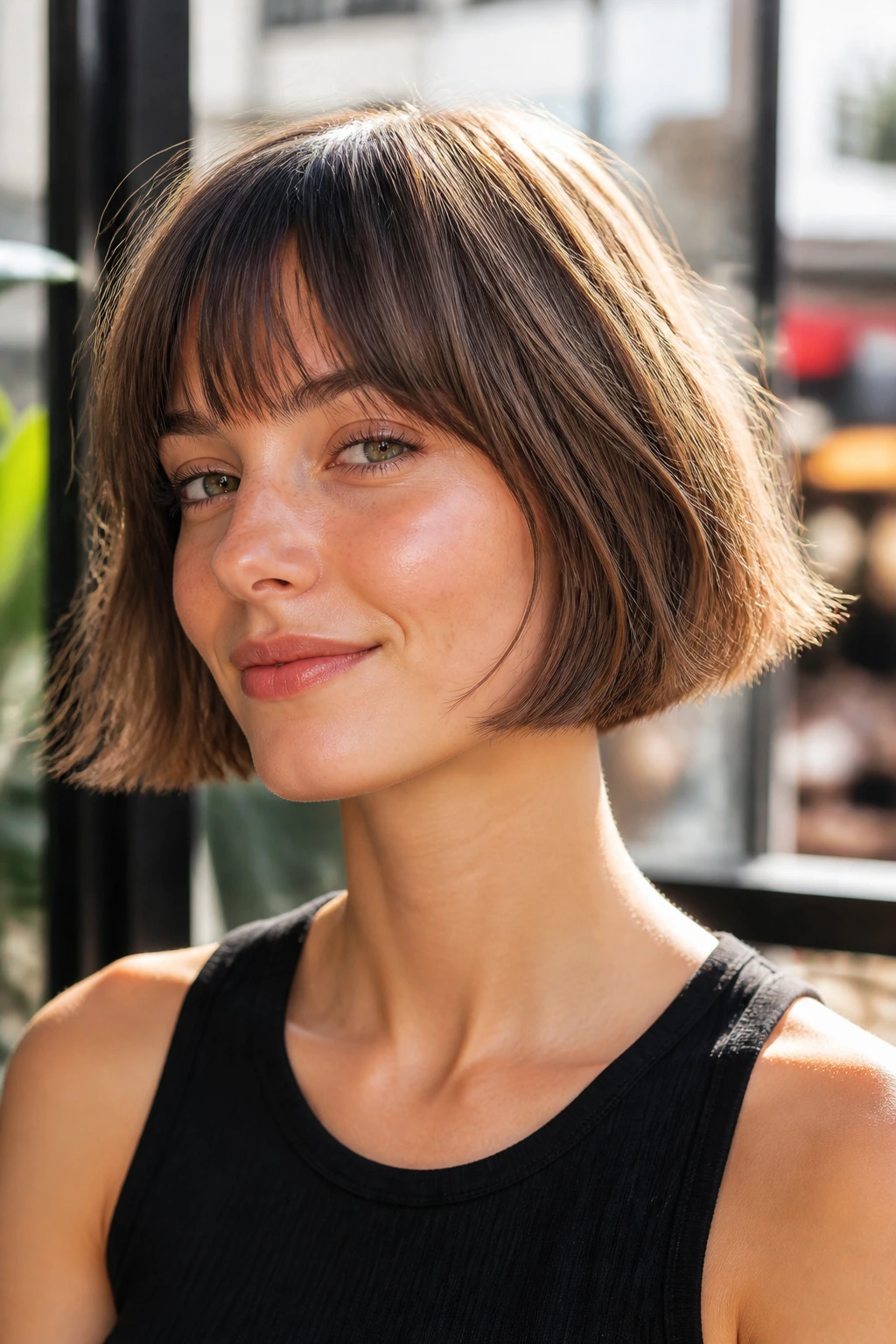
A French bob usually hits around the cheek or jaw, with a little fringe and a shape that looks casual even when it’s carefully cut. The layered version keeps the top from puffing out and gives the ends a lighter, more swingy finish. It’s the difference between chic and stiff.
The trick is to keep the line short enough to show the jaw, but not so blunt that it sits like a shelf. Ask for air-cut or point-cut ends and a fringe that can sit eyebrow length or just above. If your hair is fine, this style gives the illusion of density because the outline stays compact while the interior has room to move.
This is one of my favorite options for straight hair that needs a little lift without a blowout every morning. A rough dry, a bend at the ends, and a touch of texture cream is usually enough. The hair should look soft, not shellacked.
11. Textured Crop with Long Crown Layers
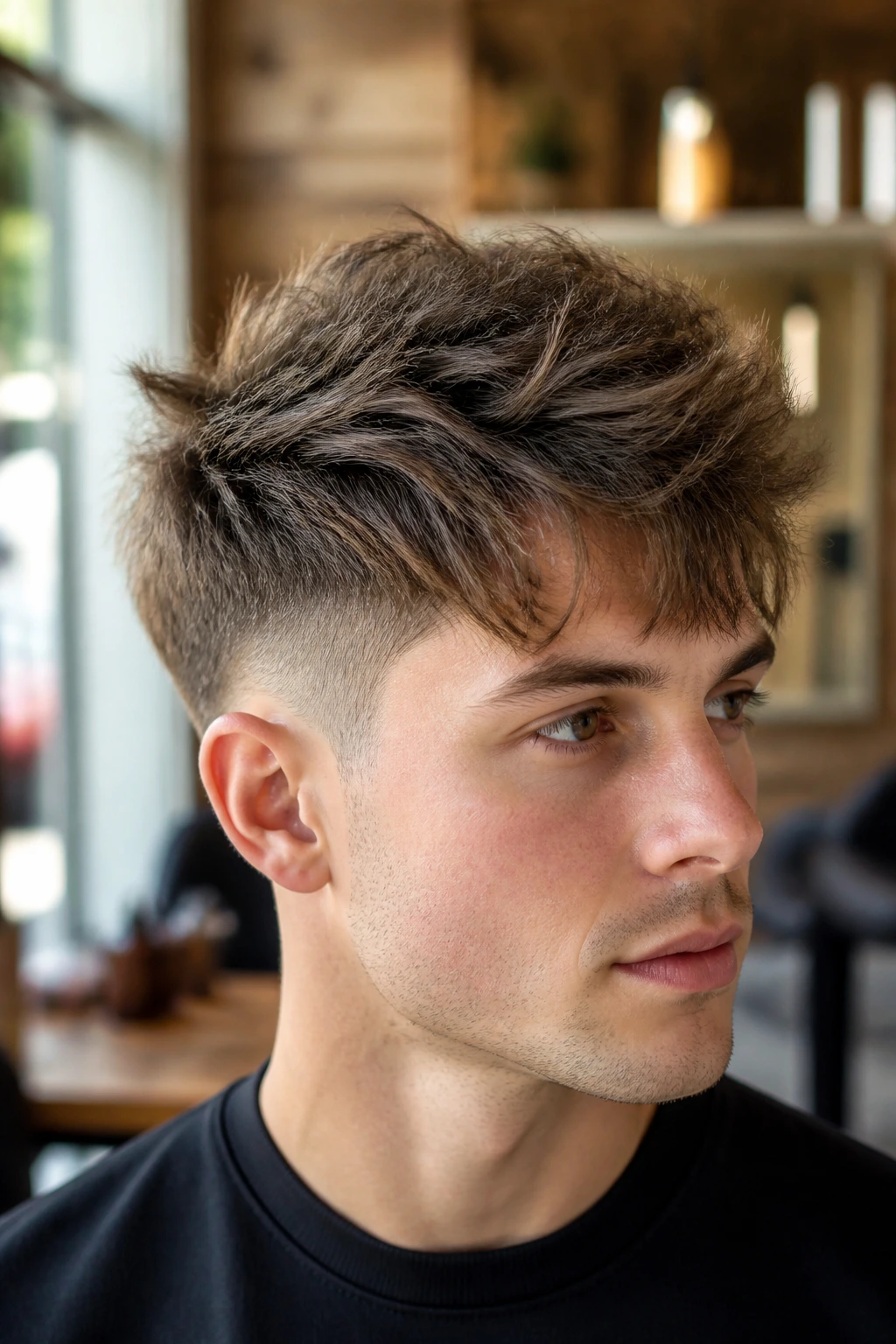
When a short cut needs height, long crown layers are often the move. This crop keeps the sides short and the top noticeably longer, so the hair can be pushed, lifted, or swept in different directions without losing shape. It’s a clean, modern silhouette with enough texture to keep it from looking severe.
This cut does especially well on thick hair because the longer crown layers can carry the volume while the sides stay tucked in. Tell the stylist you want weight removed from the inside of the top, not from the ends alone. That keeps the shape from splitting apart. A little matte paste at the crown and a quick finger rake is all it needs on most days.
It’s also one of the easiest cuts to grow out into a bob, which makes it useful if you’re not ready to commit to a true pixie. The grow-out still has a shape. That’s not always true with very short crops.
12. Short Shag with Wispy Bangs
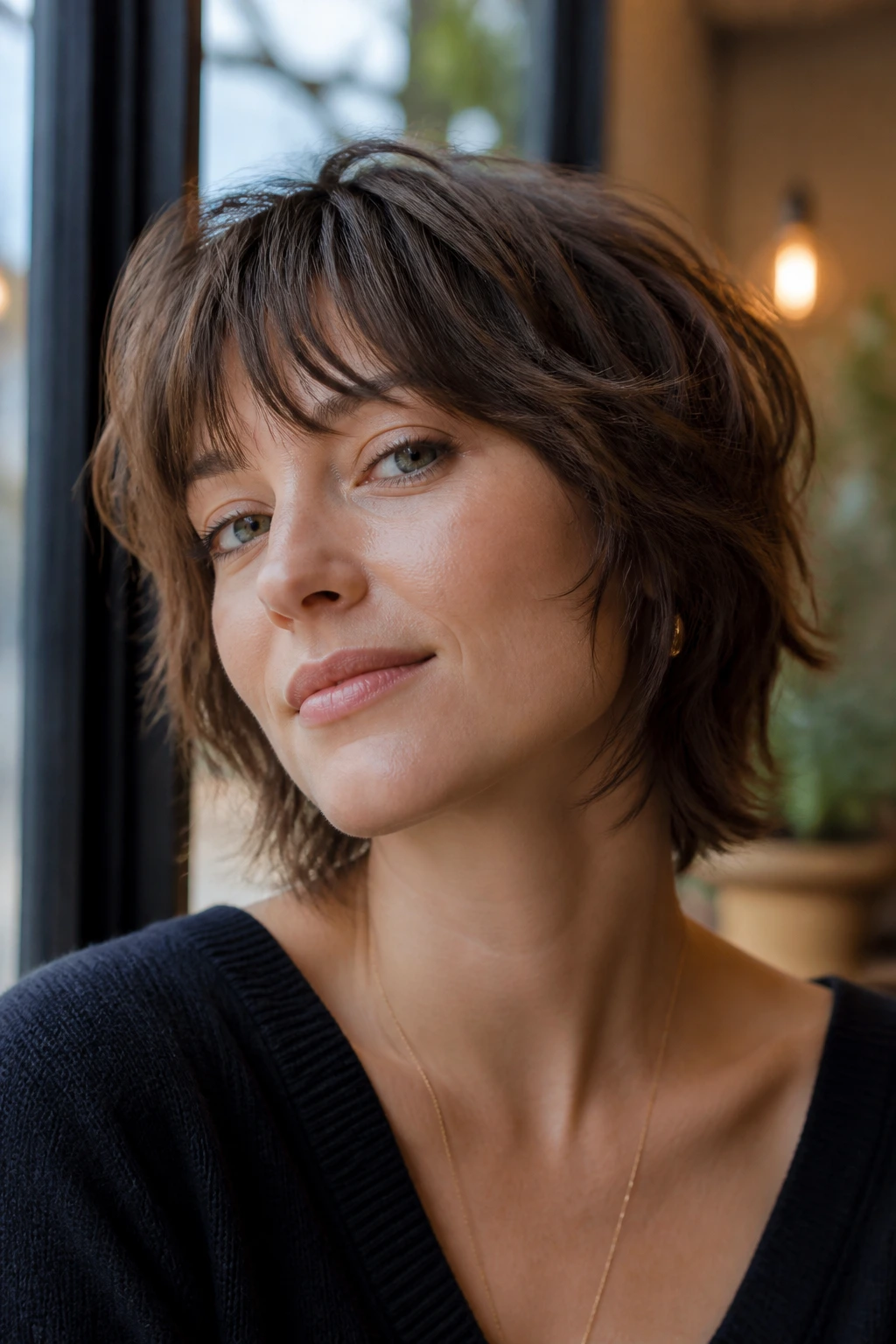
A short shag is basically a volume cut in disguise. The layers are scattered through the crown, the sides, and the fringe area so the whole haircut looks lightly shaken out even when you’ve done almost nothing to it. Wispy bangs soften the front and keep the top from feeling too heavy.
This version works because the bangs break up the forehead line and the layers around the face keep the silhouette from becoming boxy. Ask for piecey, separated fringe rather than a thick curtain that sits all in one sheet. On hair with some wave, the shag can almost dry itself into place. On straighter hair, a little mousse and scrunching at the roots helps.
I’d choose this if I wanted the cut to look a little lived-in on purpose. It’s not neat in the traditional sense. That’s the charm.
13. Rounded Bob with Flipped Pieces
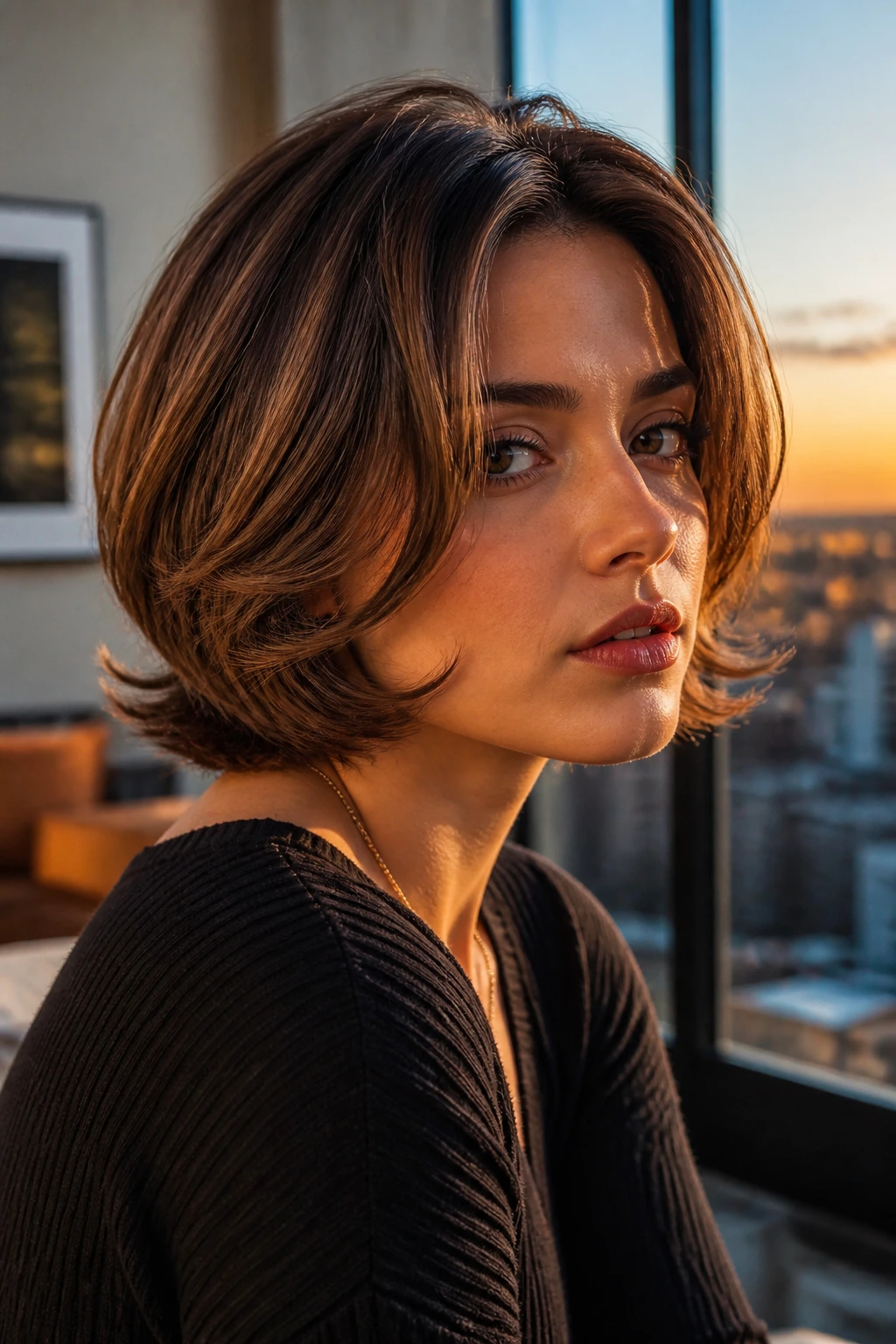
A rounded bob gives the illusion of fullness by curving the ends inward or outward, depending on how you style it. With layers through the interior, the shape lifts at the crown instead of dropping straight down. A few flipped pieces at the perimeter keep it from feeling too polished.
This is a smart cut if your hair naturally bends at the ends. The layers can work with that bend, not against it. Ask for soft graduation at the back and internal layers near the temple so the bob curves around the head instead of sitting flat. If you wear it with a side part, the lifted side can give a nice bit of height right where people notice it first.
It looks clean but not stiff, which is a difficult line to walk. A small round brush or a quick pass with a flat iron can set the flip in place without making the bob look overstyled.
14. Undercut Pixie with Long Top
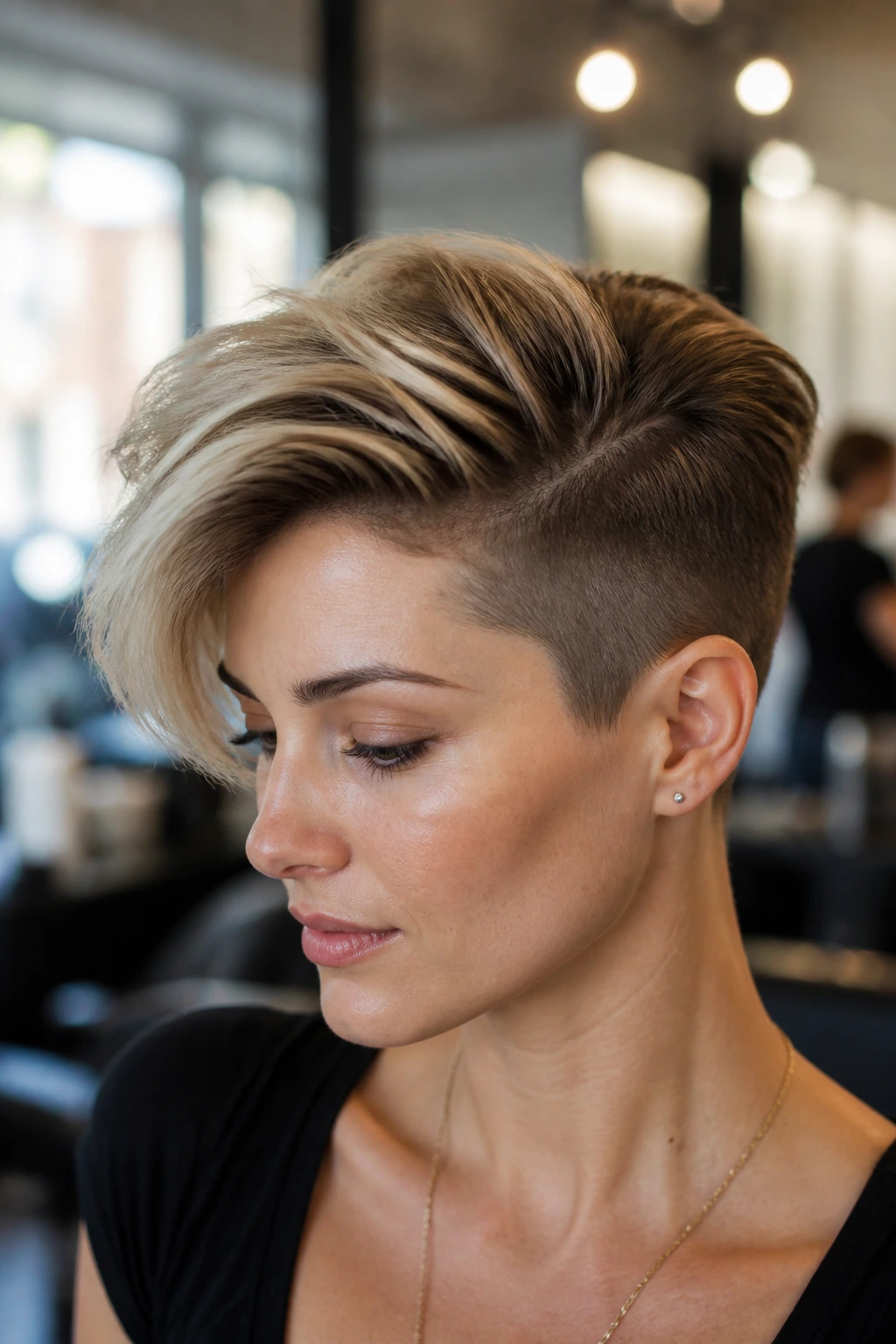
An undercut pixie is the bluntest answer to flat hair, and I mean that in a good way. The sides and nape are clipped very short or shaved close, which removes bulk instantly. The long top then becomes the whole show, and the shape reads as lifted even before you touch a product.
This cut is excellent for thick hair that grows out wide around the ears and neck. The undercut keeps the shape neat, while the top layers can be swept up, forward, or to one side. Ask for enough length on top to style with fingers, because a top that’s too short loses its drama fast.
It’s not the most forgiving grow-out, so this is a choice for someone who likes structure and doesn’t mind salon upkeep. But when it works, it really works. The silhouette is sharp.
15. Layered Bowl Cut
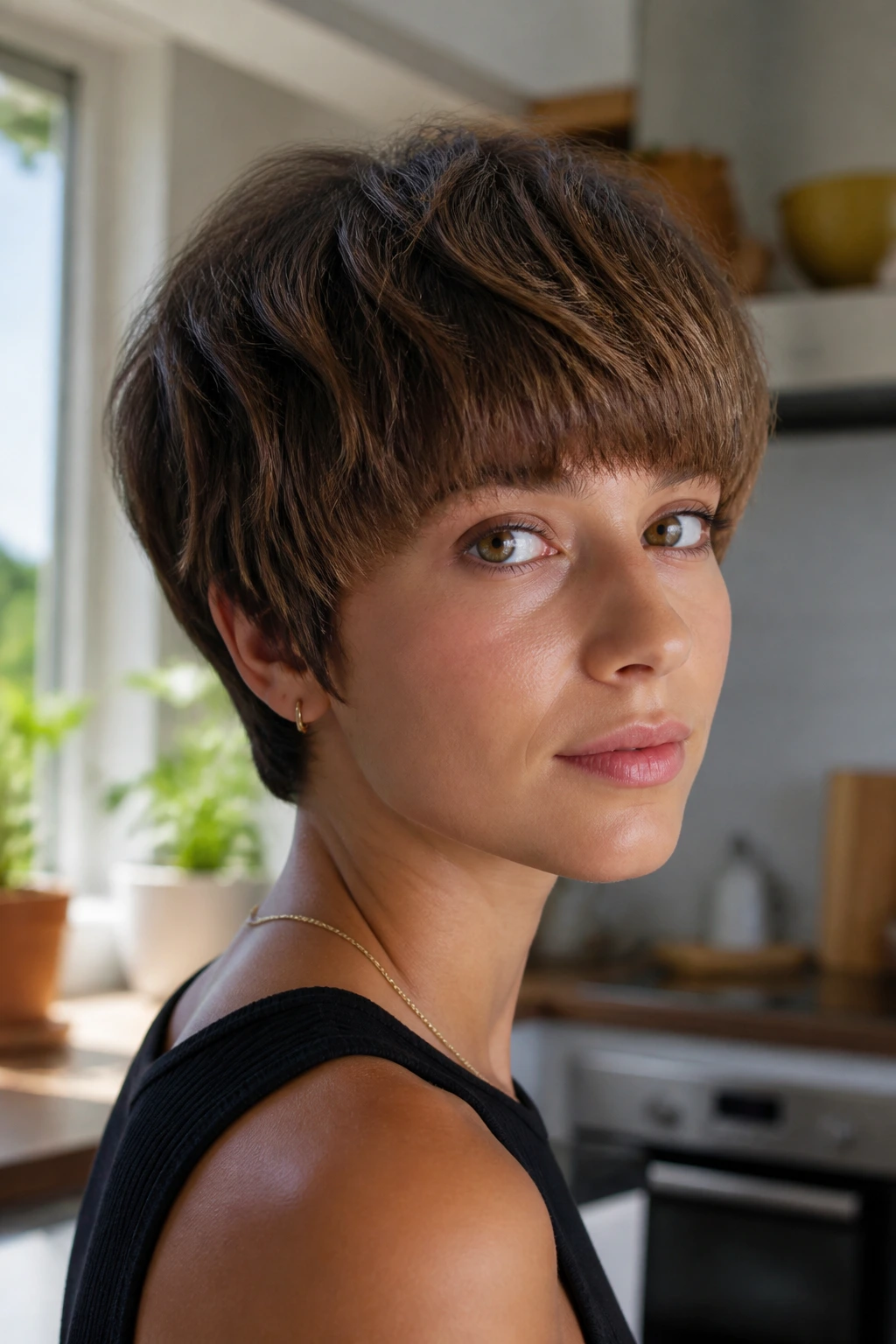
A modern layered bowl cut is nothing like the old-school version people picture from bad childhood photos. The top is rounded, the fringe is softened, and the interior layers remove the mushroom effect that made the old shape feel heavy. The result is sculptural, not cartoonish.
What gives it volume is the curve of the top. Hair is pushed upward and inward, so the crown looks fuller while the sides stay controlled. Ask your stylist for soft internal layers and a rounded perimeter that isn’t cut blunt all the way around. That keeps the shape from turning too dense.
This cut looks especially good on straight or slightly wavy hair with a bit of natural body. It’s a bold choice, sure, but it’s also a practical one if you want lift and a short neckline without endless styling.
16. Tapered Afro Crop
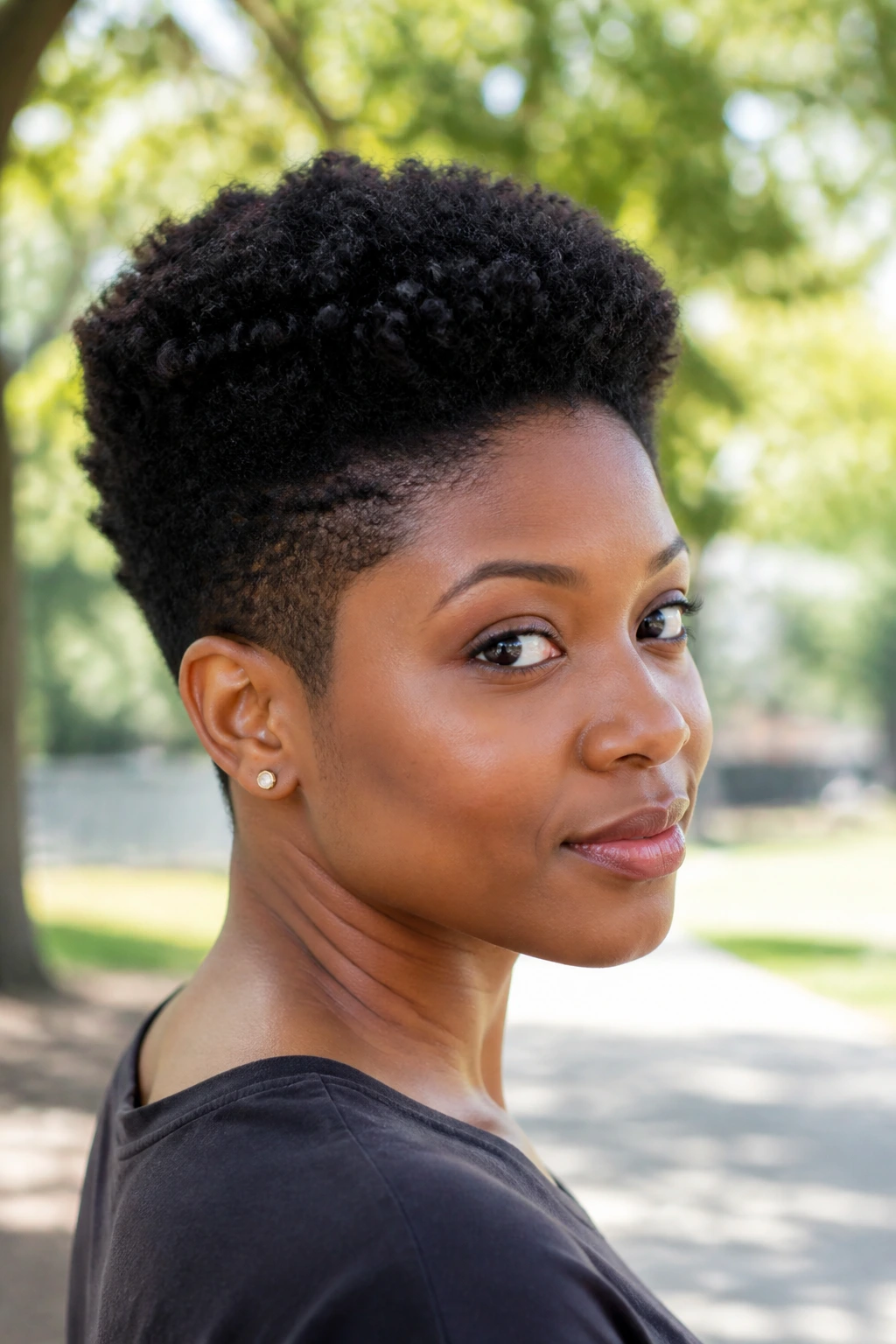
For coily and tightly curled hair, a tapered afro crop can be one of the best volumizing short cuts because the shape itself creates lift. The sides and back are tapered down, while the top is left fuller and shaped to follow the natural roundness of the hair. Volume comes from the silhouette, not from forcing the hair into something it doesn’t want to be.
The key here is moisture and shape. Ask for a clean taper around the edges and enough length on top to let the curls or coils stack upward. Too much thinning can leave holes in the shape, so the cut should respect density instead of fighting it. A pick at the roots, a leave-in conditioner, and a little defining cream are usually enough.
This cut can look crisp or soft depending on how you finish it. Either way, the profile stays lifted, which is the whole job.
17. Wavy Chin-Length Cut with Piecey Ends
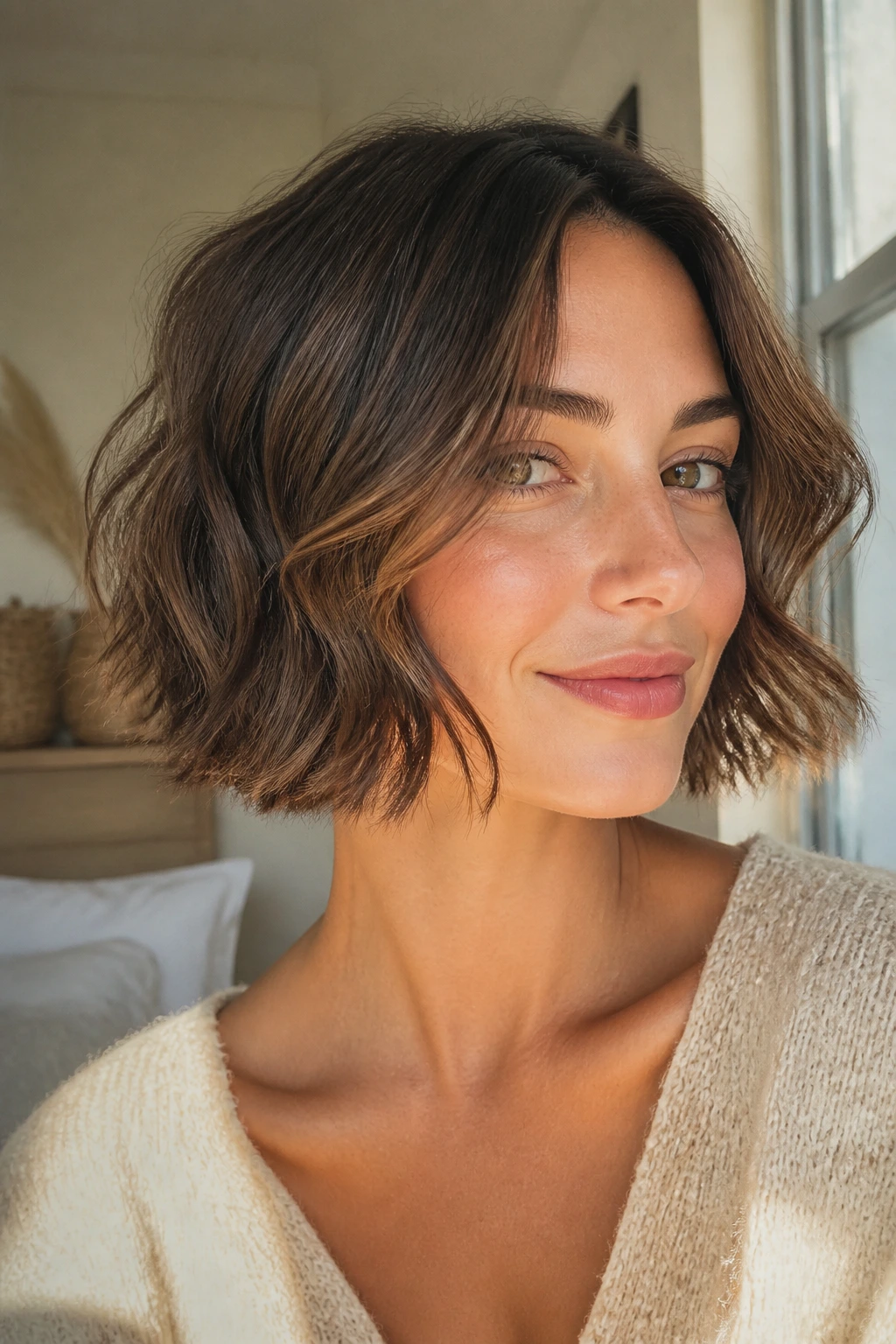
A chin-length cut with layers at the ends is a good compromise if you want short hair but don’t want to lose the ability to tuck it behind your ears. The length hits around the chin, which gives a little bounce, and the piecey ends keep the outline from looking too boxy.
This style adds volume because the wave pattern has enough room to show itself without the extra weight that longer hair carries. Tell the stylist you want light layering through the bottom half and a little extra softness around the face. That keeps the cut from turning into one solid shape at the jaw. A sea-salt spray or a lightweight wave cream helps the movement stay visible.
I like this one for people who wear their hair down most of the time and still want it to feel easy. It’s short, but not too short. That matters.
18. Sliced Pixie Bob
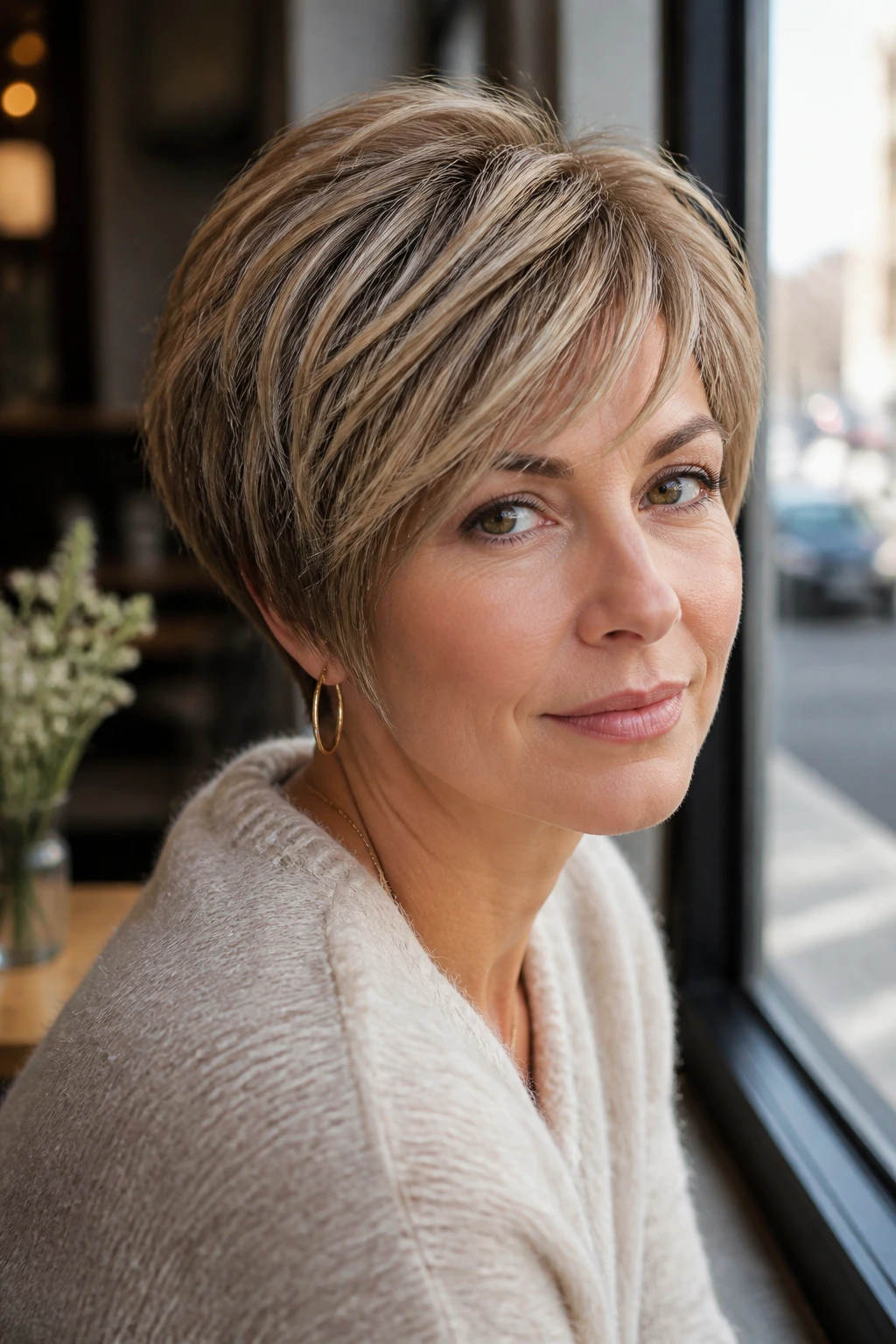
A sliced pixie bob lives between a pixie and a bob, which sounds vague until you see how useful that in-between space can be. The back is short enough to keep the neck open, the sides have more length than a pixie, and the top is layered to give movement without puffing up. It’s a good cut when you want shape but not severity.
The sliced layers create softness around the perimeter and keep the crown from sitting flat. Ask for light slicing through the top and sides, with enough weight left at the bottom edge to keep the silhouette grounded. If the stylist thins the ends too much, the cut can get scraggly fast, so restraint matters.
A little smoothing cream and a side part can take this style from casual to neat in seconds. It’s one of those cuts that looks like you thought about it, even on lazy mornings.
19. Side-Parted Layered Crop
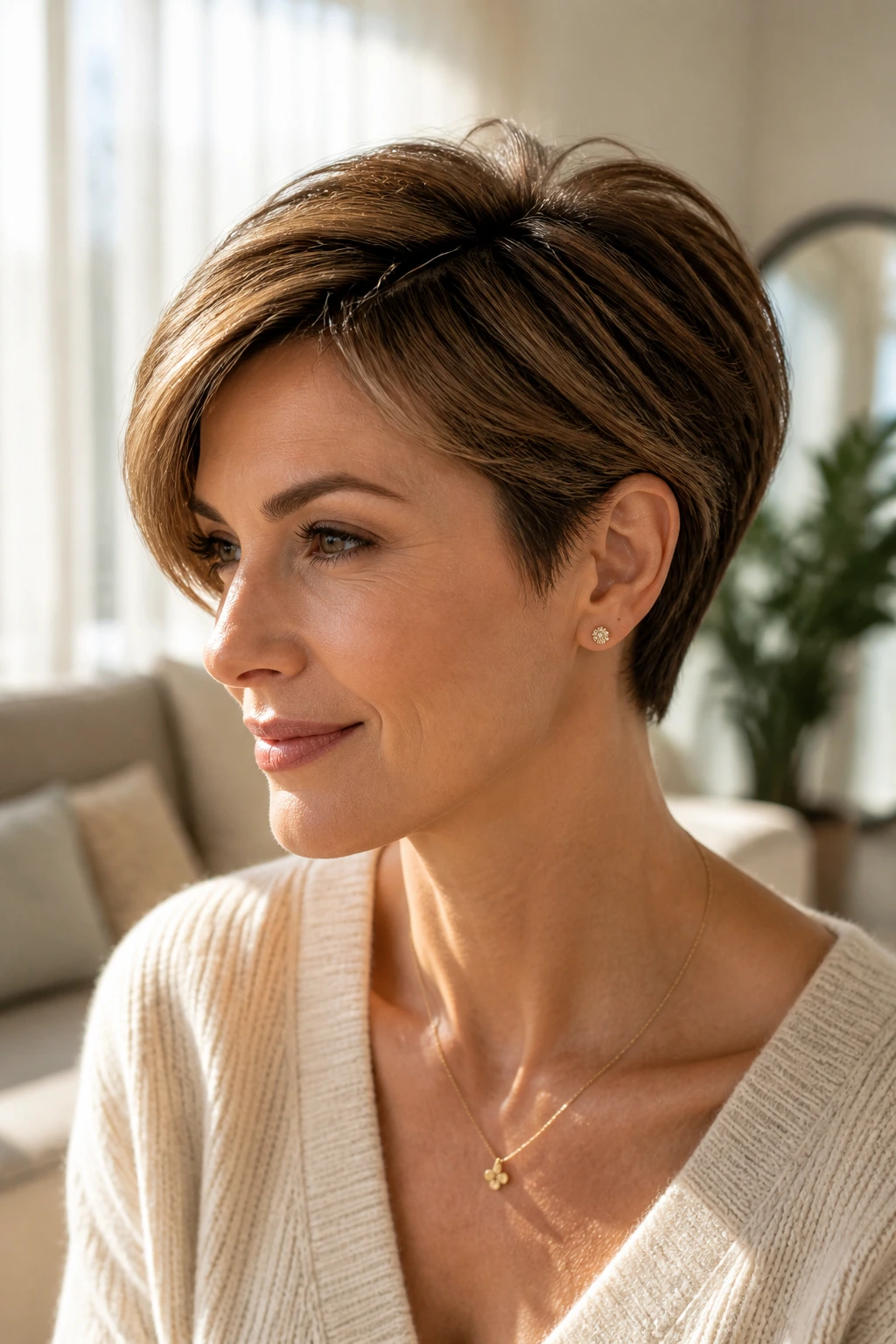
A deep side part does more for volume than most people expect. Move the part over, and the hair at the root lifts instantly on the heavier side. Add layers through the crown and temple, and the crop gets even more height without needing much product.
This is a smart option for anyone whose hair seems to obey one side of the head more than the other. The part can counterbalance a flat crown or a cowlick near the front. Ask for layers that follow the direction of the side part, not layers that fight against it. That gives the cut a cleaner fall.
I like this style because it’s quick. A root spray, a rough dry, and one tuck behind the ear is enough to change the whole profile. Simple. Useful.
20. Modern Mullet Short Cut
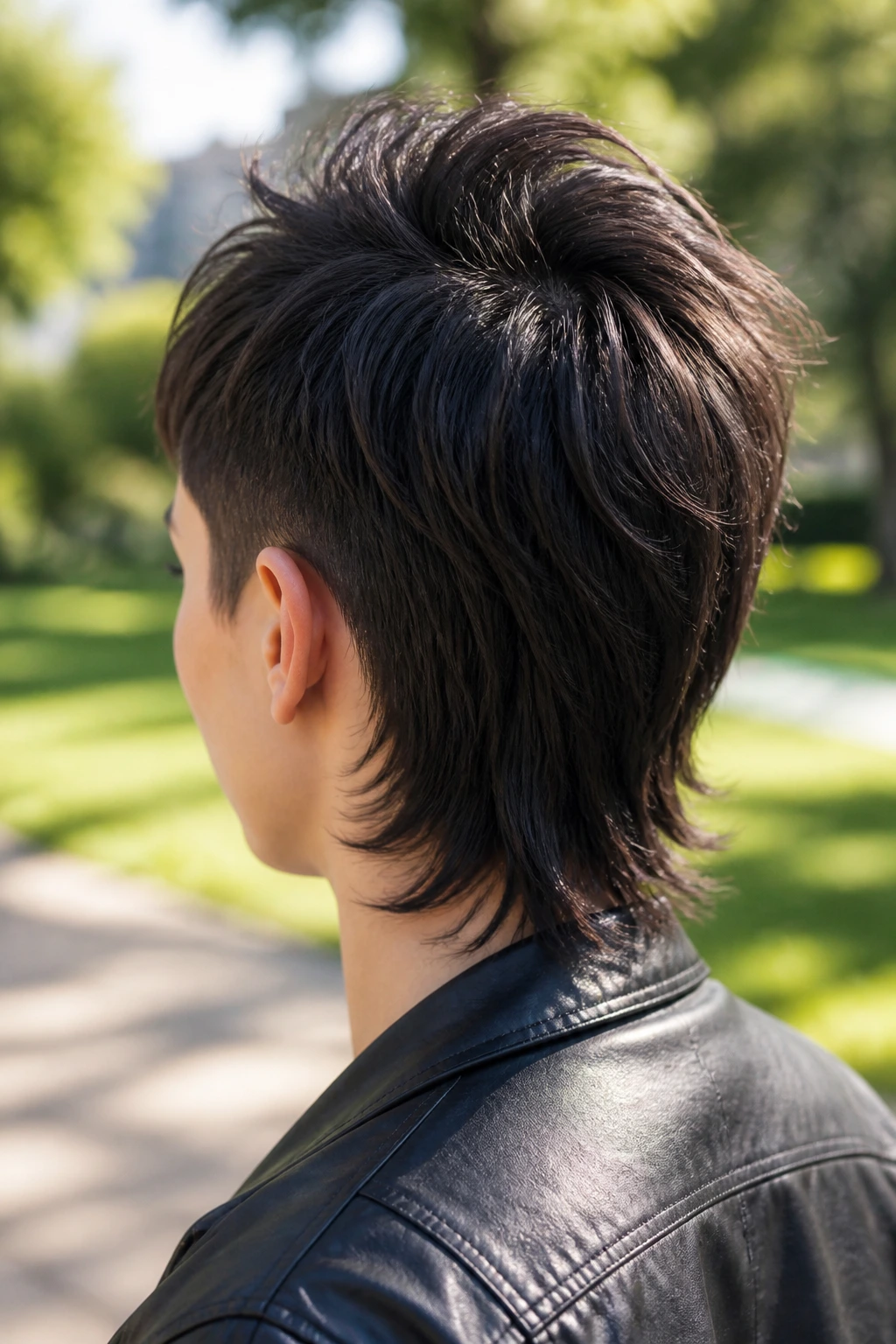
A modern mullet is not the joke version most people remember. The short front and sides keep the face open, while the back stays a little longer to create shape and movement. Heavy layering through the crown keeps the top from collapsing, which is why this cut can look surprisingly lively on short hair.
The look depends on clean transitions. Ask for soft blending from the crown into the nape, not a hard jump in length. That way the haircut has edge without looking choppy by accident. It works best on hair that has some texture, because straight hair can make the shape read harsher than intended.
If you like a little rebellion in your haircut, this one has it. If you want something quiet and tidy, skip it. No shame there.
21. Feathered Crop with Neckline Taper
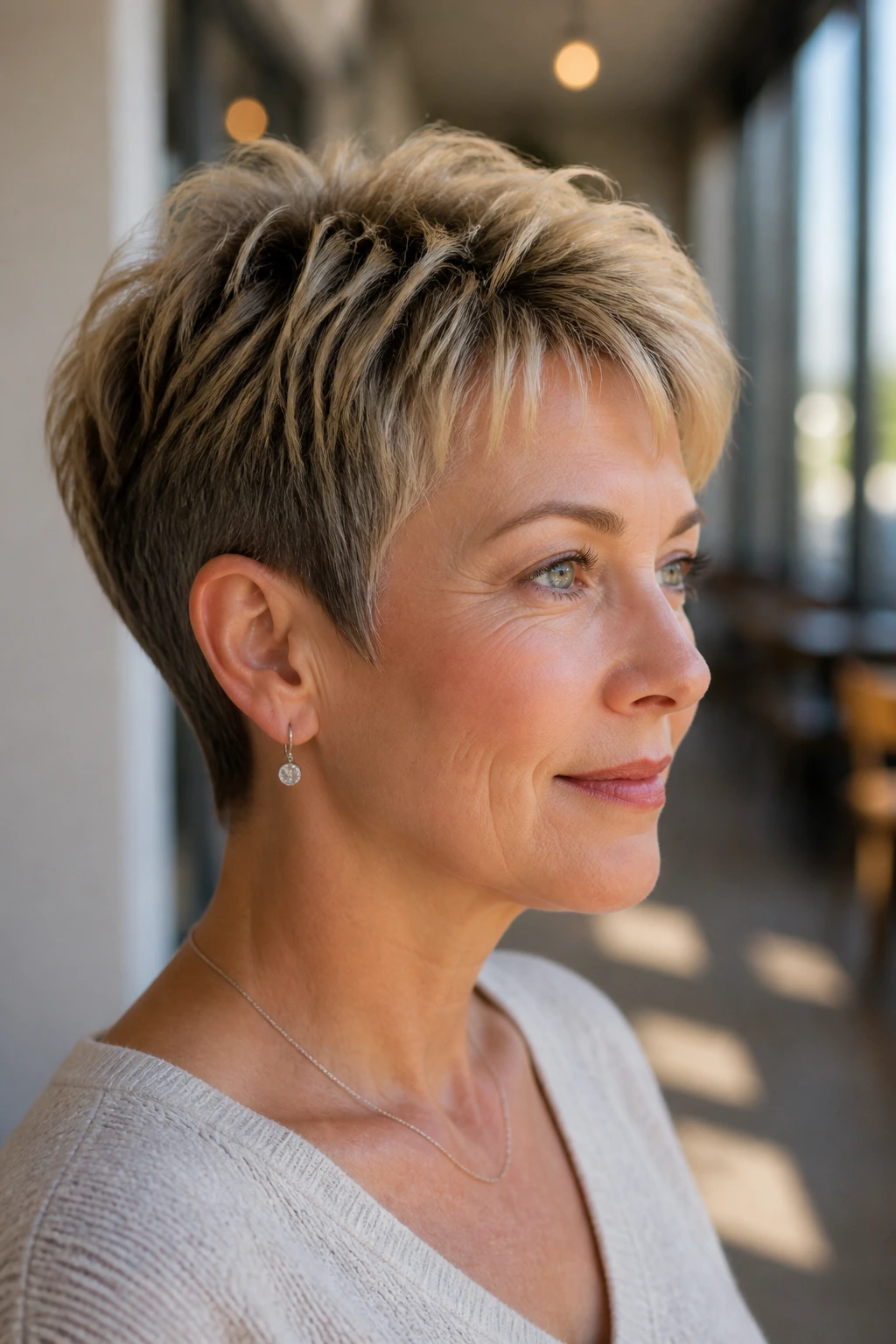
A feathered crop is soft at the edges and narrow at the neck, which is why it reads polished without turning stiff. The feathers around the top and sides break up the weight of the cut, while the neckline taper keeps the profile neat. It’s a tidy haircut with more lift than it looks like it should have.
This style is a good fit for people who want volume but still need their hair to behave in professional settings. Ask for feathering around the crown and temple area, plus a clean taper at the nape. The cut should move when you shake your head, not fan out in all directions.
A light styling cream or a blow-dry lotion works well here. Too much wax can make the feathers stick together, and then you lose the airy part that makes the style worth wearing.
22. Curly Pixie with Lived-In Layers
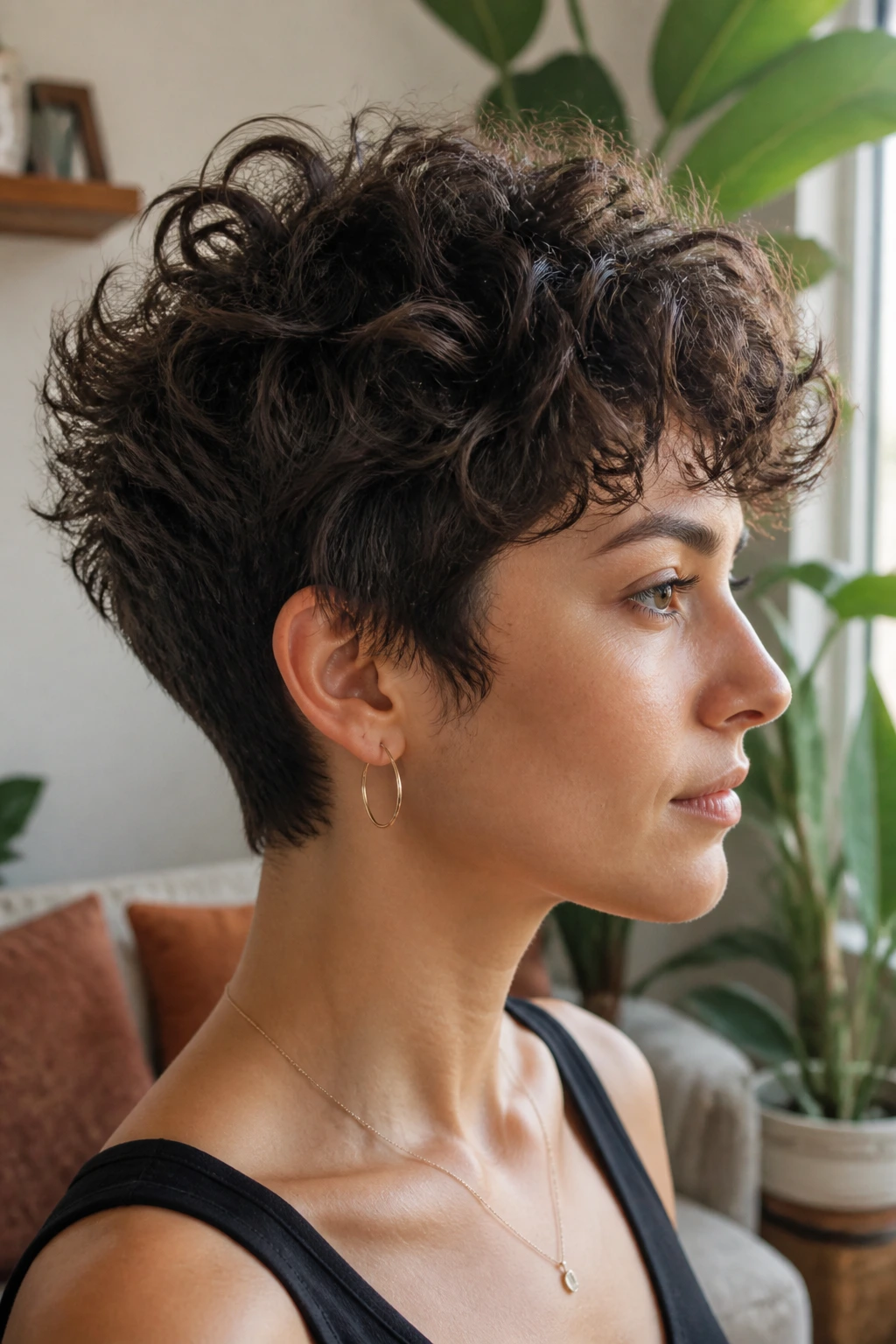
Curly pixies can go wrong fast if the layers are too short or too aggressive. Done well, though, the curls stack into a compact, lifted shape that makes the whole head look fuller. The top keeps enough length to show curl pattern, while the sides stay cropped so the volume sits where you want it.
The best version is cut to the curl’s actual shrinkage, not the stretched length. Ask for longer top layers and a soft taper around the sides so the curls don’t spring into a pyramid. A curl cream and a diffuser can help, but don’t overwork the hair. Too much touching makes the cut fuzz out.
This is the kind of short cut that gets better when you learn its rhythm. Once you do, mornings get easier.
23. Stacked Curly Bob
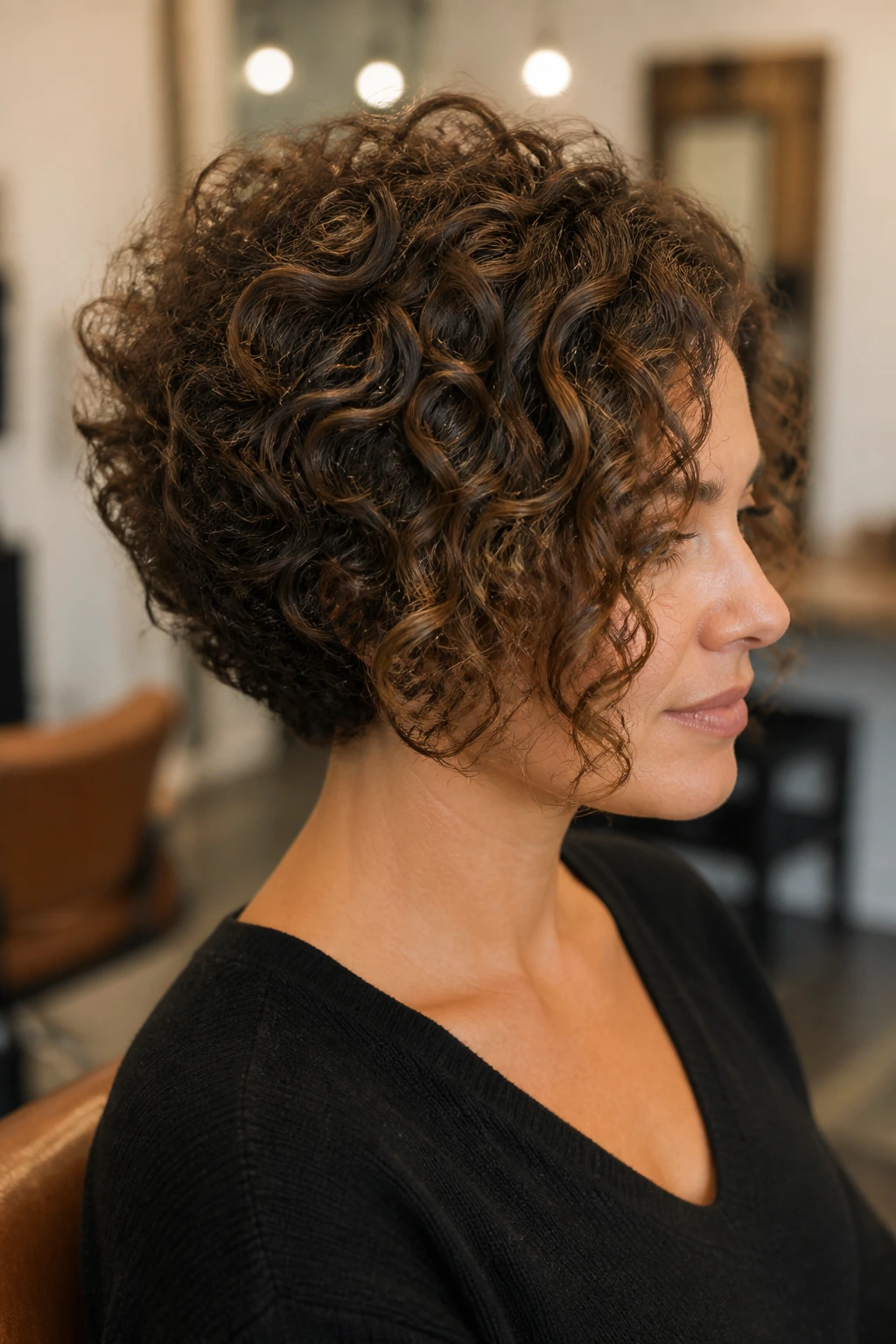
A stacked curly bob is a smarter cut than many people give it credit for. The stacked back gives the curls a place to rise, and the longer front keeps the shape from puffing into a round cloud. That balance matters with denser curls because the cut needs structure as much as softness.
Ask your stylist for graduation in the back and curl-by-curl shaping around the sides. Those two moves keep the outline neat while the curl pattern does the rest. If the haircut is too blunt, the curls can sit heavy. If it’s over-thinned, you get frizz and gaps. Neither is a win.
I like this cut when someone wants real volume, not fake volume from teasing or a pile of mousse. The shape is doing the work. That’s the part I trust.
24. Tucked Nape Bob with Crown Volume
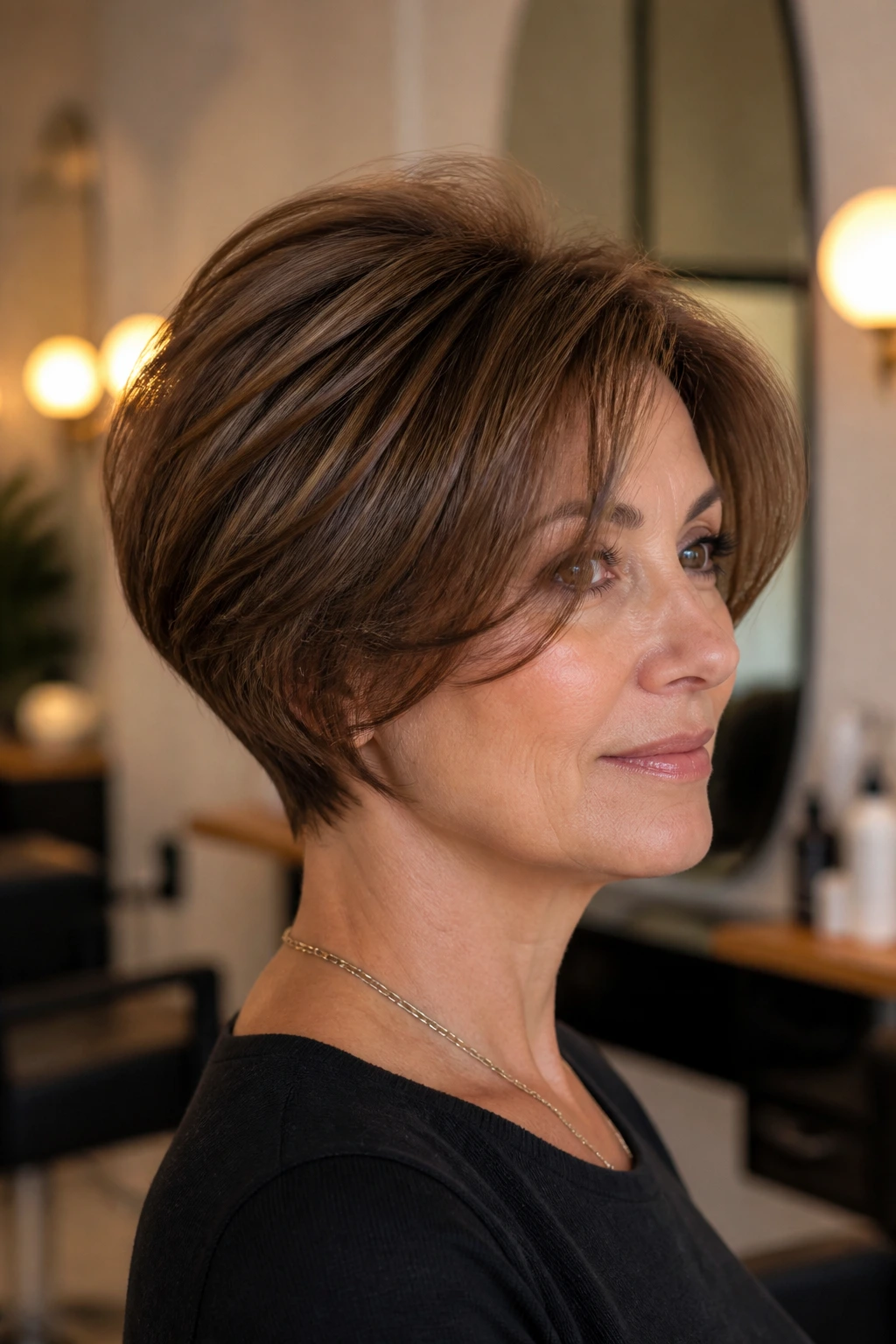
This bob is all about contrast. The nape is tucked close, almost neat enough to disappear into the neckline, while the crown stays lifted and rounded. That difference in length creates an upward visual line, which is why the cut feels fuller even though the outline is controlled.
It’s a good choice if you want a bob that doesn’t spread wide at the bottom. Ask for a narrow neckline, crown layers that keep the top buoyant, and enough length around the face to avoid boxiness. The crown is the part that matters most here, so don’t let the cut get too flat up top in the name of neatness.
This style responds well to root-lifting spray and a blow-dry that directs the hair up and back before it settles. One small round brush, a few clips at the crown, and a little patience go a long way.
25. Grown-Out Shag Pixie
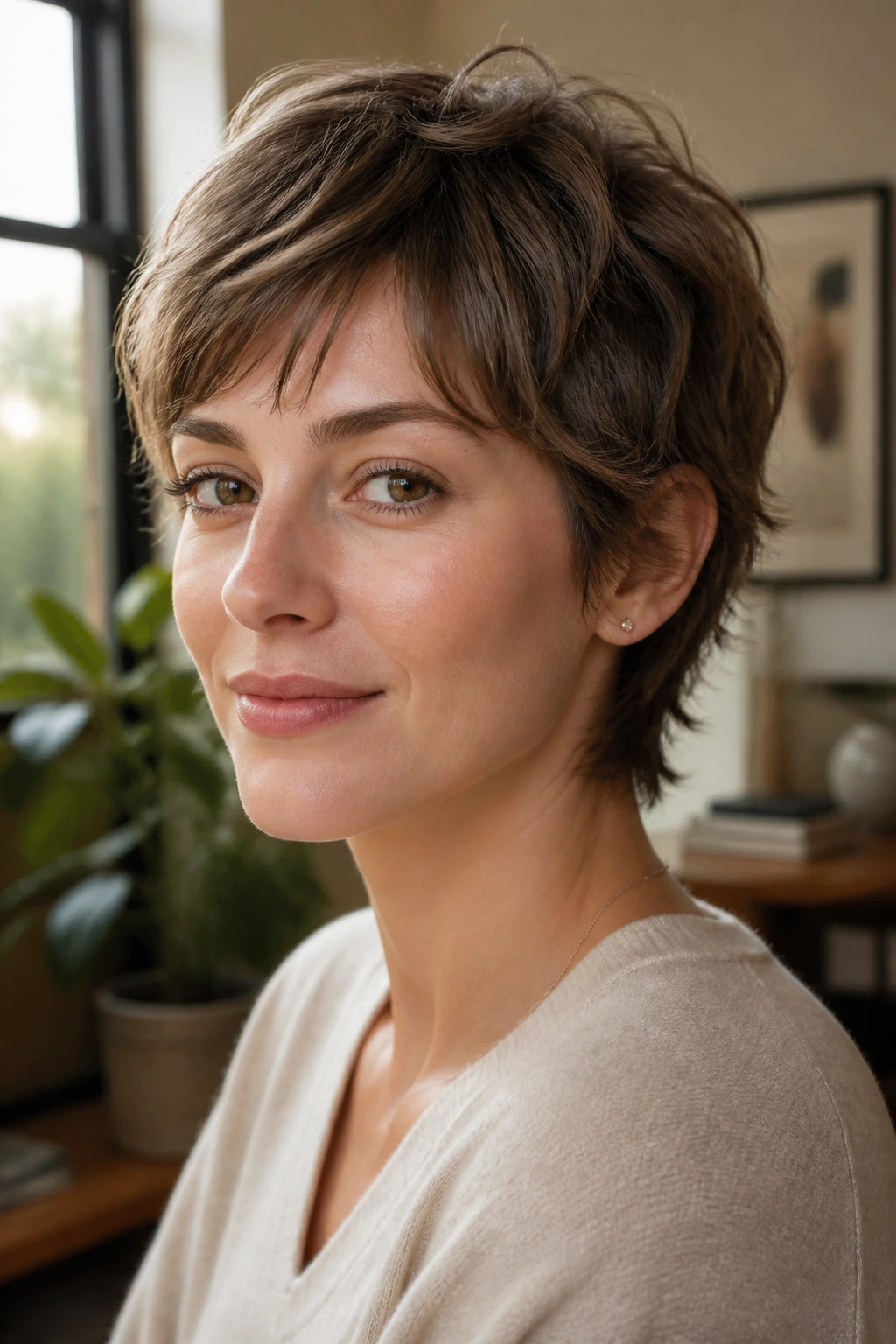
A grown-out shag pixie is the cut for anyone who wants short layers without a hard maintenance clock hanging over the sink. It keeps the shortness around the ears and neckline, but the top and front pieces have enough length to fall into a softer, more relaxed shape. The result feels less severe than a classic pixie.
That extra length gives the cut movement and makes it easier to style on days when you do not want to fight your hair. Ask for shaggy internal layers through the top and a gentle taper at the sides so the haircut can grow for a few weeks without losing its outline. The shape should still read as intentional even when it’s not freshly trimmed.
It’s one of my favorite “I need volume but not a fussy haircut” options. The grow-out is kinder than most.
26. Airy Razor Bob for Fine Hair
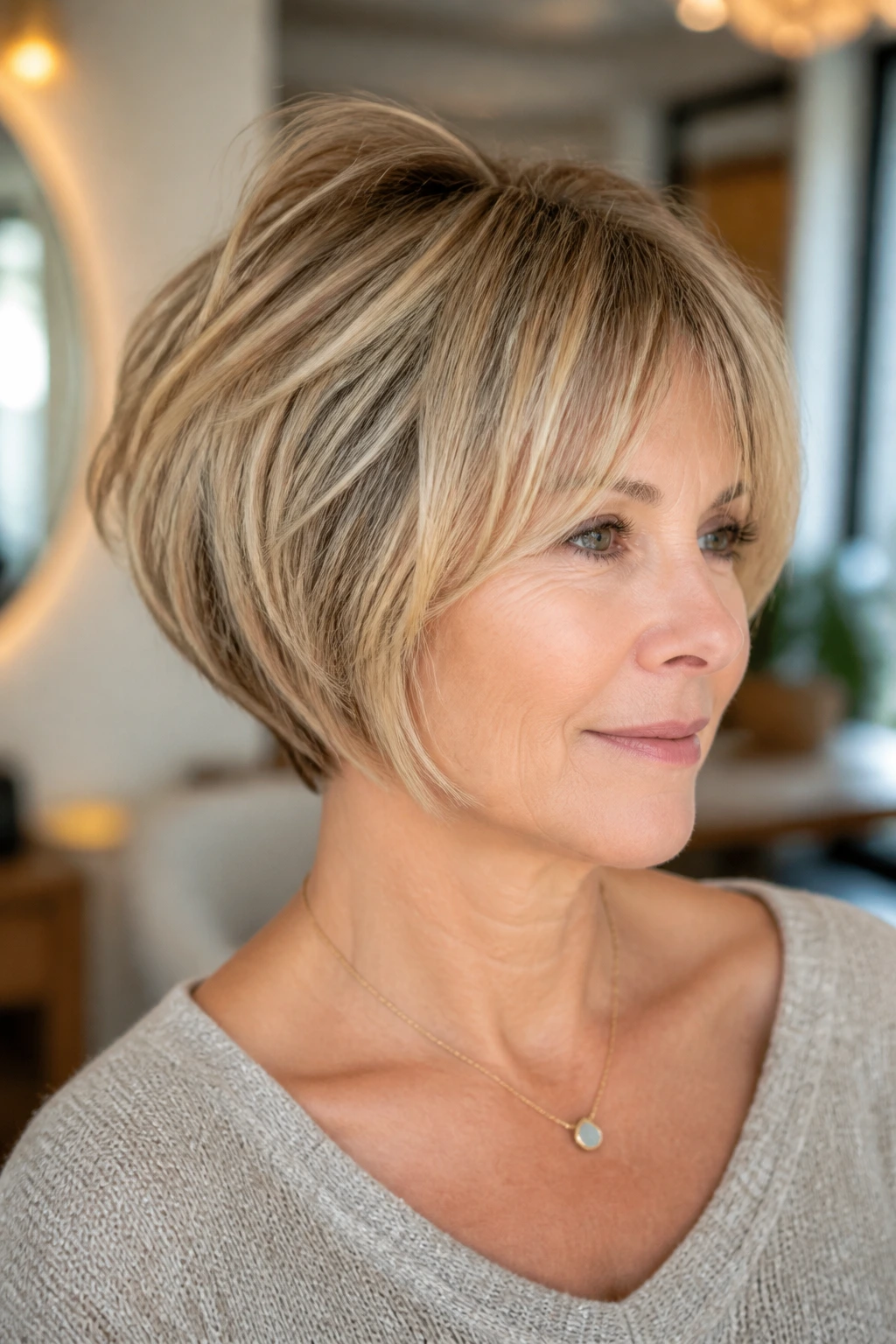
Fine hair can look thin when it’s over-layered, so the razor bob has to be handled carefully. The goal is not to shred the ends. The goal is to lighten the interior just enough that the bob moves, bends, and picks up a little lift at the crown. Done well, the haircut looks airy without looking sparse.
Ask for soft razor work through the ends and very restrained layering near the top. That keeps the perimeter full enough to support the shape. A lightweight mousse and a round brush are useful here, but a big part of the result comes from the cut itself. If the stylist goes too hard with the thinning shears, the bob loses density and starts to fray at the edges.
This is the fine-hair version I trust most, because it respects the amount of hair actually on the head. That sounds obvious. It isn’t always practiced that way.
27. Sculpted Layered Crop with Face-Framing Bend
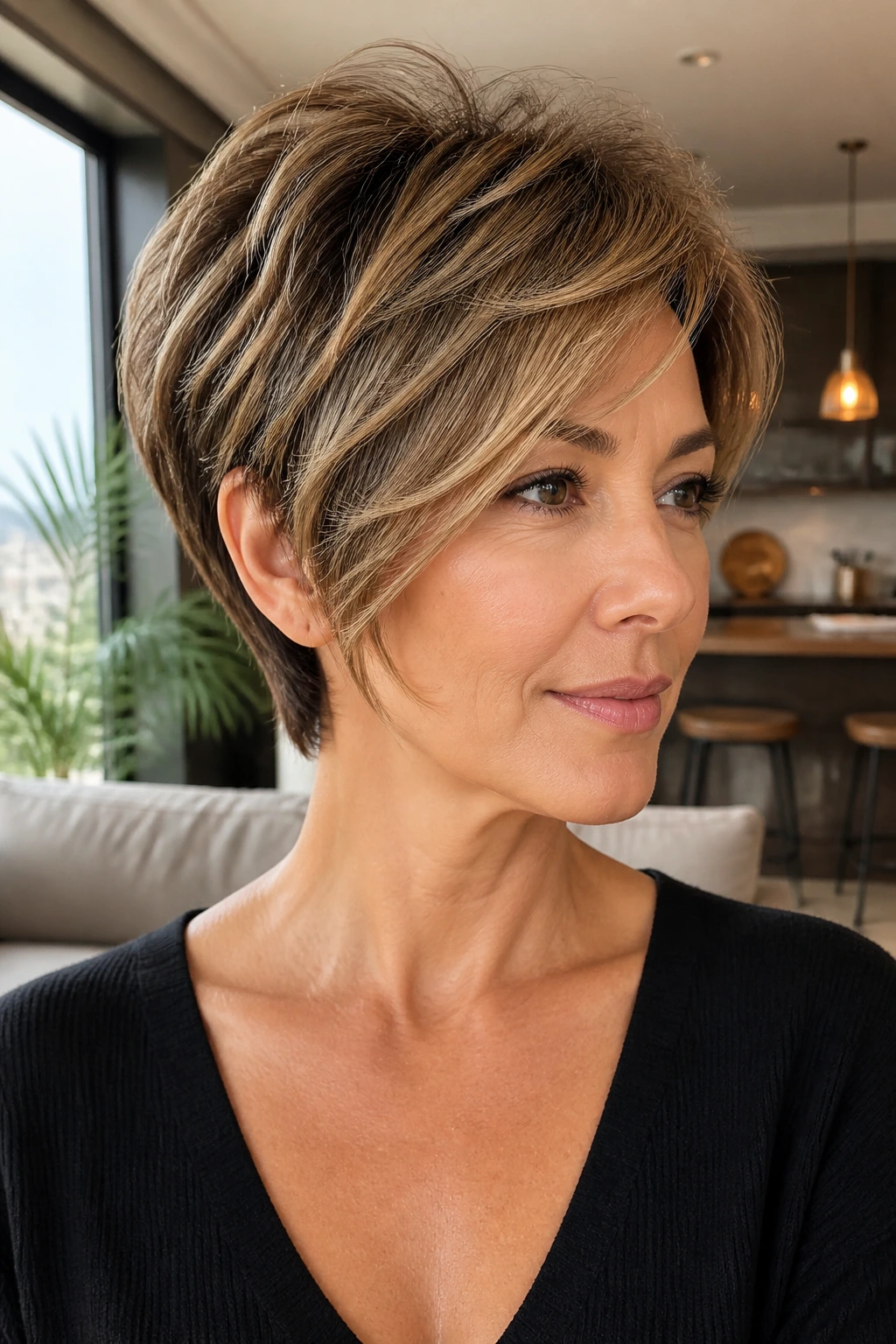
A sculpted crop with face-framing bend has a little more polish than some of the messier cuts in this list. The layers around the face curve inward or outward just enough to lift the eyes and cheekbones, while the top stays short and controlled. It’s a flattering shape if you like some structure with your volume.
The bend around the face is doing a lot of work. Ask for short crown layers, softer temple pieces, and a perimeter that stays compact so the haircut doesn’t spread too far out. This is a good cut for people who wear earrings, glasses, or bold lipstick because it keeps the face open.
A flat iron can create a subtle curve, but a round brush works too. The trick is not to overdo the movement. You want a bend, not a twist.
28. Soft Graduated Crop with Micro Fringe
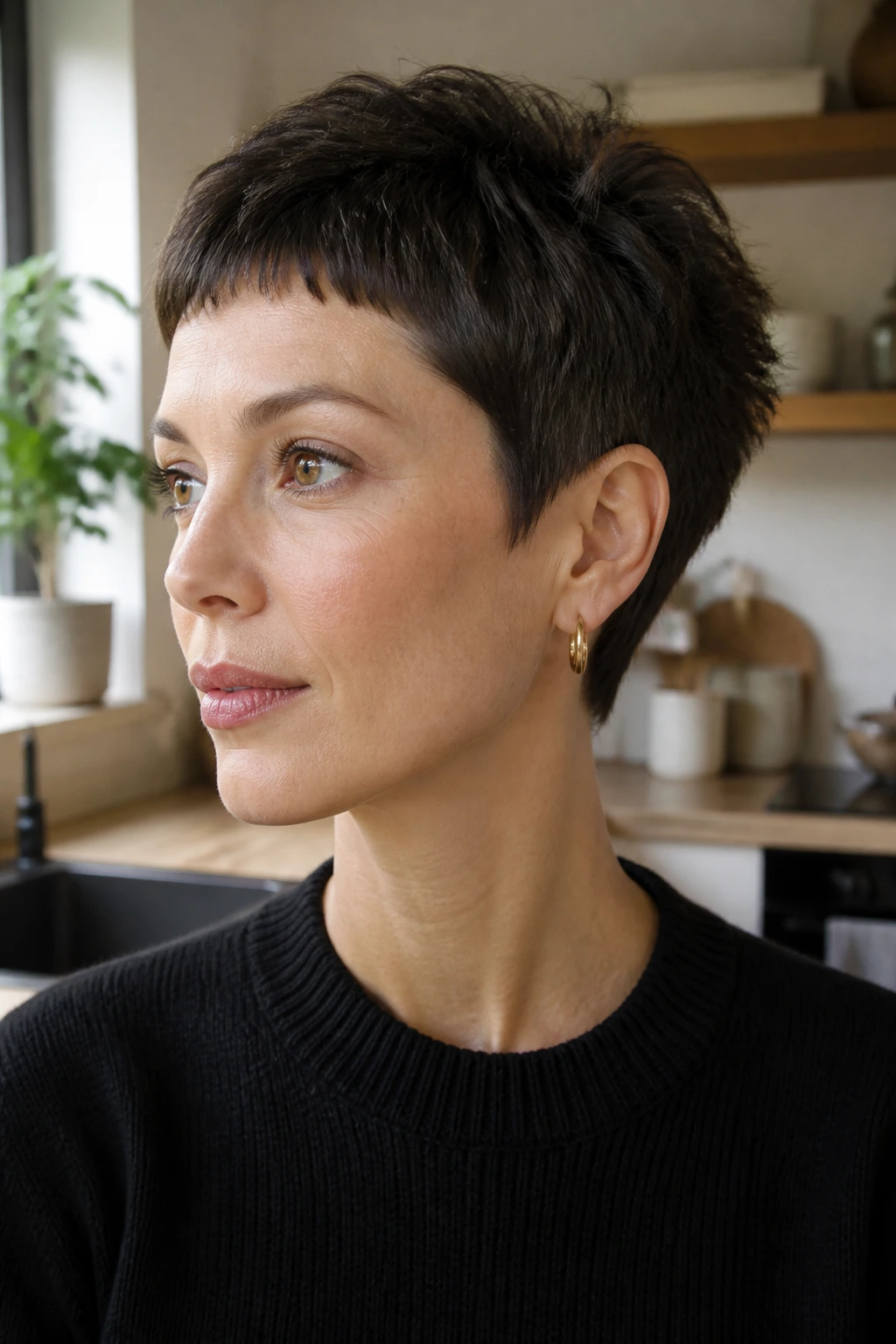
A soft graduated crop with a micro fringe is short, sharp, and a little playful. The back is graduated so the cut rises gently through the head, and the fringe sits very short across the forehead. That little fringe changes the whole balance of the haircut, pulling attention upward and making the crown feel fuller.
This cut isn’t for everyone. It asks for confidence and a stylist who knows how to control short fringe so it doesn’t look like an afterthought. Ask for micro bangs that are softened at the edge and graduation that keeps the back from bulking up. The volume comes from the shape, not from extra product.
I like it when the goal is to make short hair feel graphic without making it severe. It has personality. It also grows out in a way that can be nudged into a side sweep if you decide the fringe is too bold later.
How These Layers Change the Shape of Short Hair
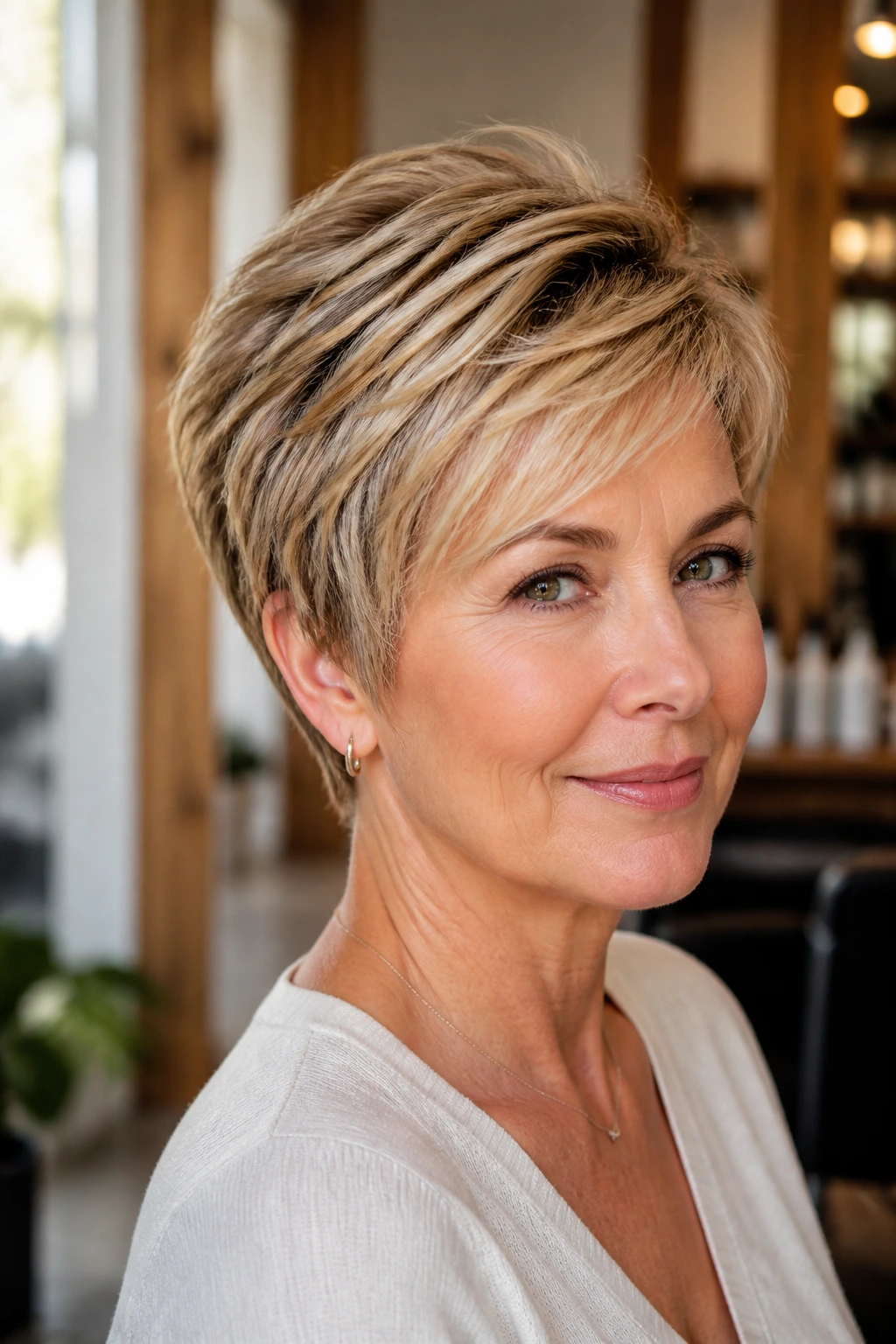
The biggest reason heavily layered short cuts add volume is simple: they move weight away from the places where hair usually collapses. At the crown, that means the roots can lift instead of sitting glued to the scalp. Around the sides, it keeps the hair from kicking out into a triangle. At the nape, it stops the neckline from puffing and creating that round little shelf no one asked for.
The best version of this is controlled. Internal layers give lift without exposing too much scalp or making the ends look broken. Graduation in a bob or crop gives structure, especially in thick hair. Point-cutting softens the edge so the cut bends instead of sitting like a brick. Those are small differences on paper. On your head, they change everything.
One more thing hairdressers often know but do not always say plainly: the same layering pattern will not work the same way on fine, thick, curly, and straight hair. Fine hair wants restraint. Thick hair wants weight removal in the interior. Curly hair wants room to spring. Straight hair usually needs some texture work so the layers do not just lie back down. That is why the best short layered cuts are customized, not copied.
How to Ask for the Right Amount of Layering
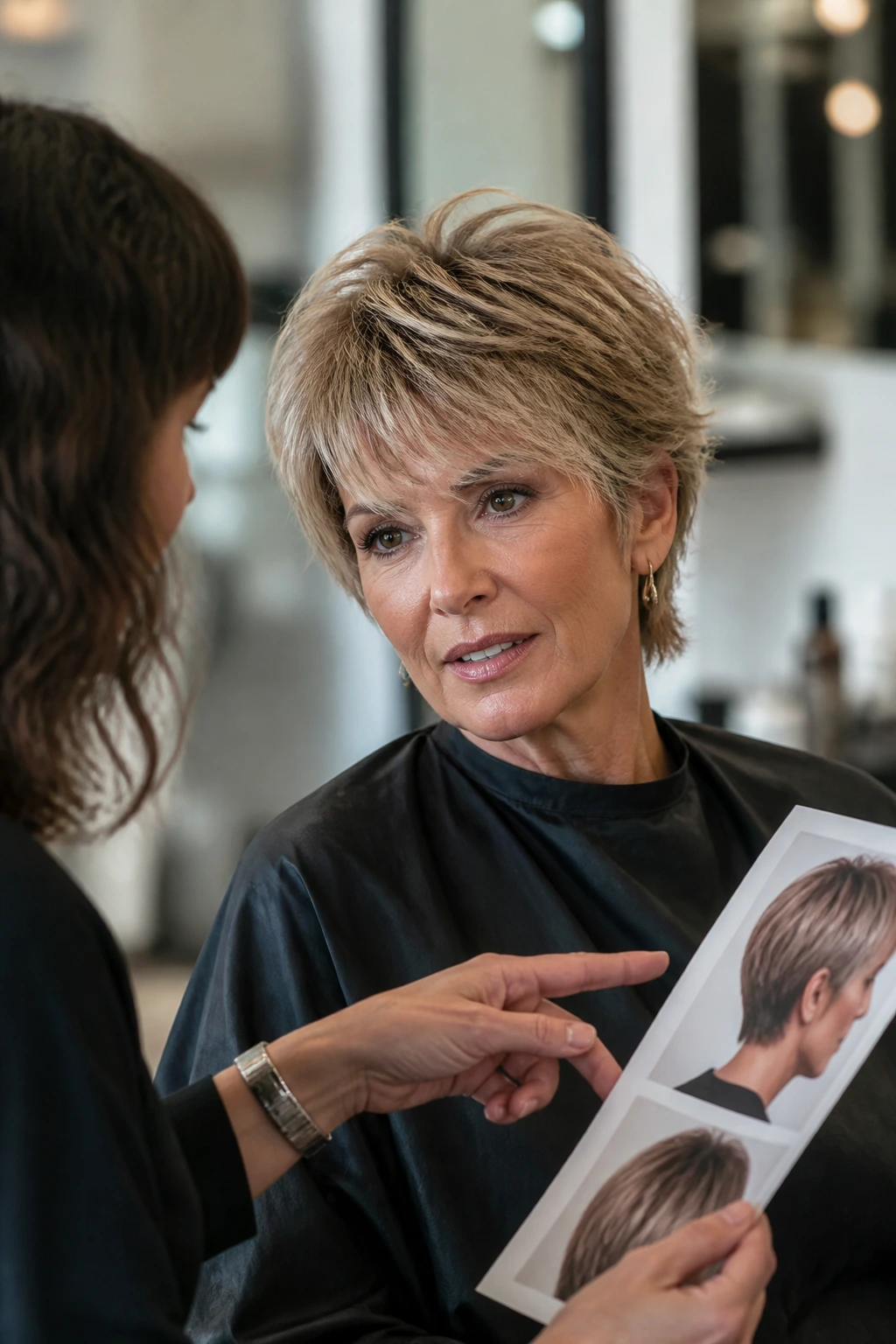
Bring photos, but bring the right kind. One picture should show the shape you like from the front. Another should show the back or side, because that’s where a lot of misunderstandings happen. If you only show a front-facing photo, you may get the fringe right and the crown wrong. That’s a very common salon problem.
Use plain words. Say whether you want the cut to feel fuller at the crown, lighter at the ends, shorter around the neck, or softer around the face. Those phrases tell the stylist where to move weight. If you have a cowlick, point it out. If one side of your hair falls flatter, mention that too. Haircuts live on actual heads, not mood boards.
I’d also tell the stylist how much styling you’re willing to do on a normal morning. Ten minutes and a round brush is different from finger-drying and leaving the house. That answer changes where the layers should start, how short the fringe should be, and whether the cut needs more structure or more softness.
Tools and Products That Keep Short Layers Alive
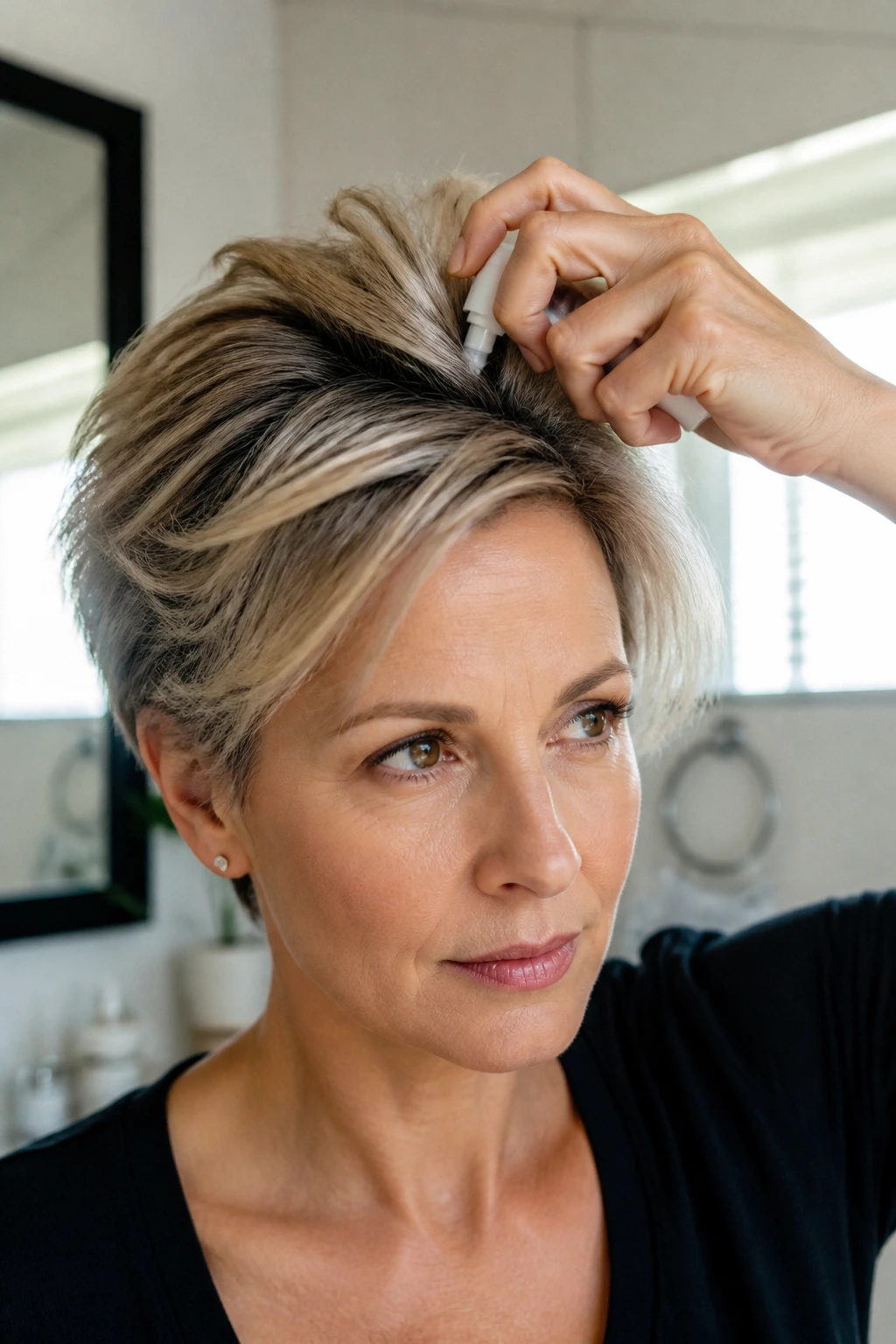
- Blow dryer with a concentrator nozzle: Directs air at the roots so the crown lifts instead of frizzing everywhere.
- Small round brush, 1 to 1.5 inches: Good for bending the ends of bobs, bixies, and shags without making them puffy.
- Vent brush: Handy for rough-drying layered crops fast when you want movement more than polish.
- Diffuser: The safest way to dry curls and waves without flattening the layers.
- Volumizing mousse: Adds support at the root area, especially on fine hair that falls flat after washing.
- Texturizing spray: Gives piecey separation through the crown and ends without the sticky feel of heavy spray.
- Lightweight pomade or styling cream: Helps define the layers on pixies and crops without making them greasy.
- Heat protectant: Non-negotiable if you use a flat iron or blow dryer on repeat.
- Duckbill clips: Useful for pinning the crown while it cools after a blow-dry, which helps the lift hold.
- Wide-tooth comb: Better than a brush for curls and waves when you want to keep the shape intact.
Styling Moves That Keep the Layers Visible
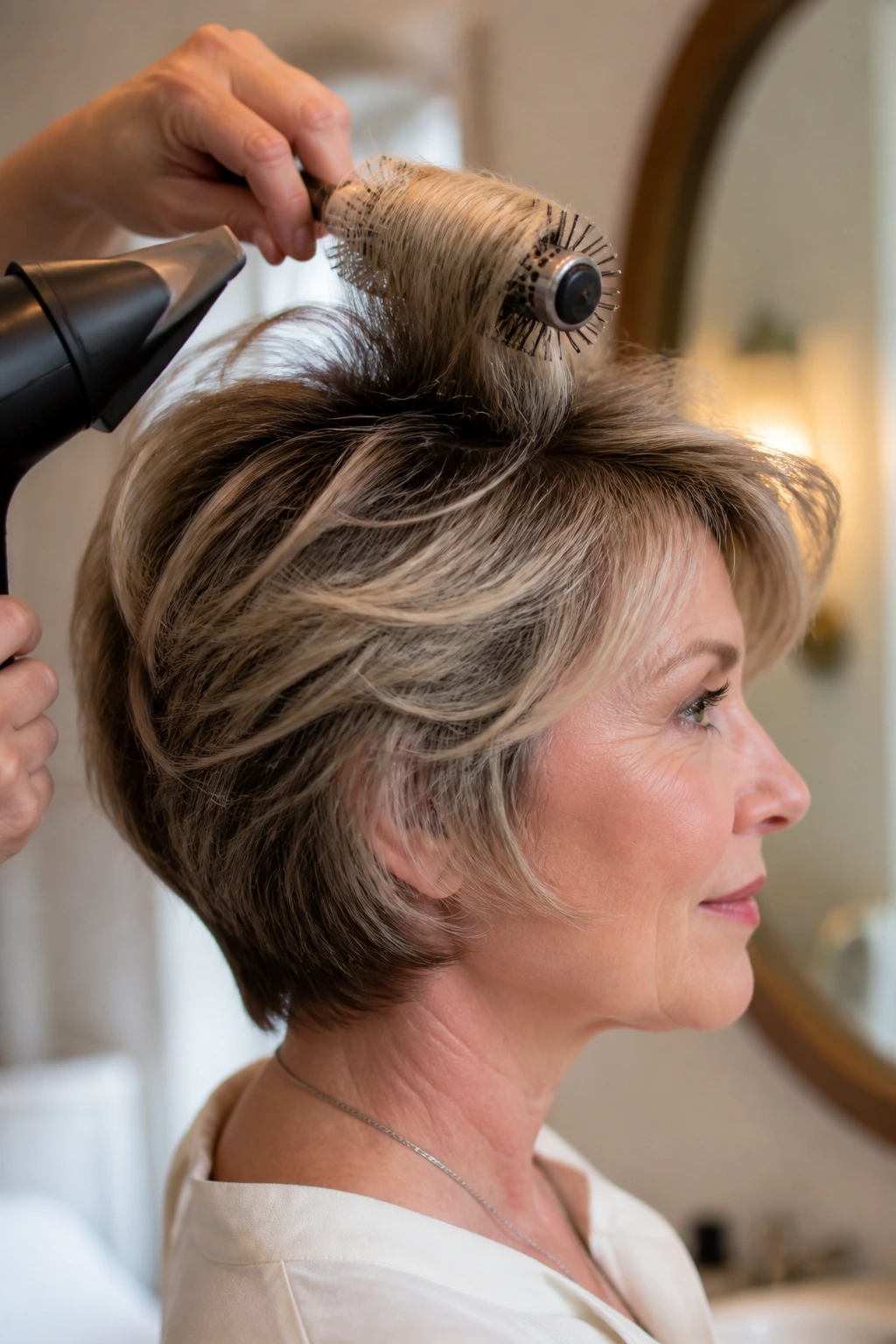
Root Lift: Start with a light mousse or root spray at the crown, not all over the head. The point is to support the roots where they usually collapse, and product overload at the ends will weigh the haircut down.
Direction Matters: Blow-dry the top in the opposite direction of your part for the first minute or two, then switch back. That little reset gives the roots a better chance to stand up once they cool.
Texture Without Crunch: Use a texturizing spray on mid-lengths and ends, then shake the hair out with your fingers. If the hair feels sticky, you’ve used too much. Back off and brush it through.
Day Two Fix: Dry shampoo at the roots can revive a layered crop fast, but don’t dust it over the whole head. Focus on the crown and part line, then massage it in with your fingertips.
Heat, But Not Too Much: A small round brush or flat iron bend can sharpen the shape, yet too much heat makes the ends look fried and thin. One pass is usually enough.
Common Mistakes That Flatten Short Layers
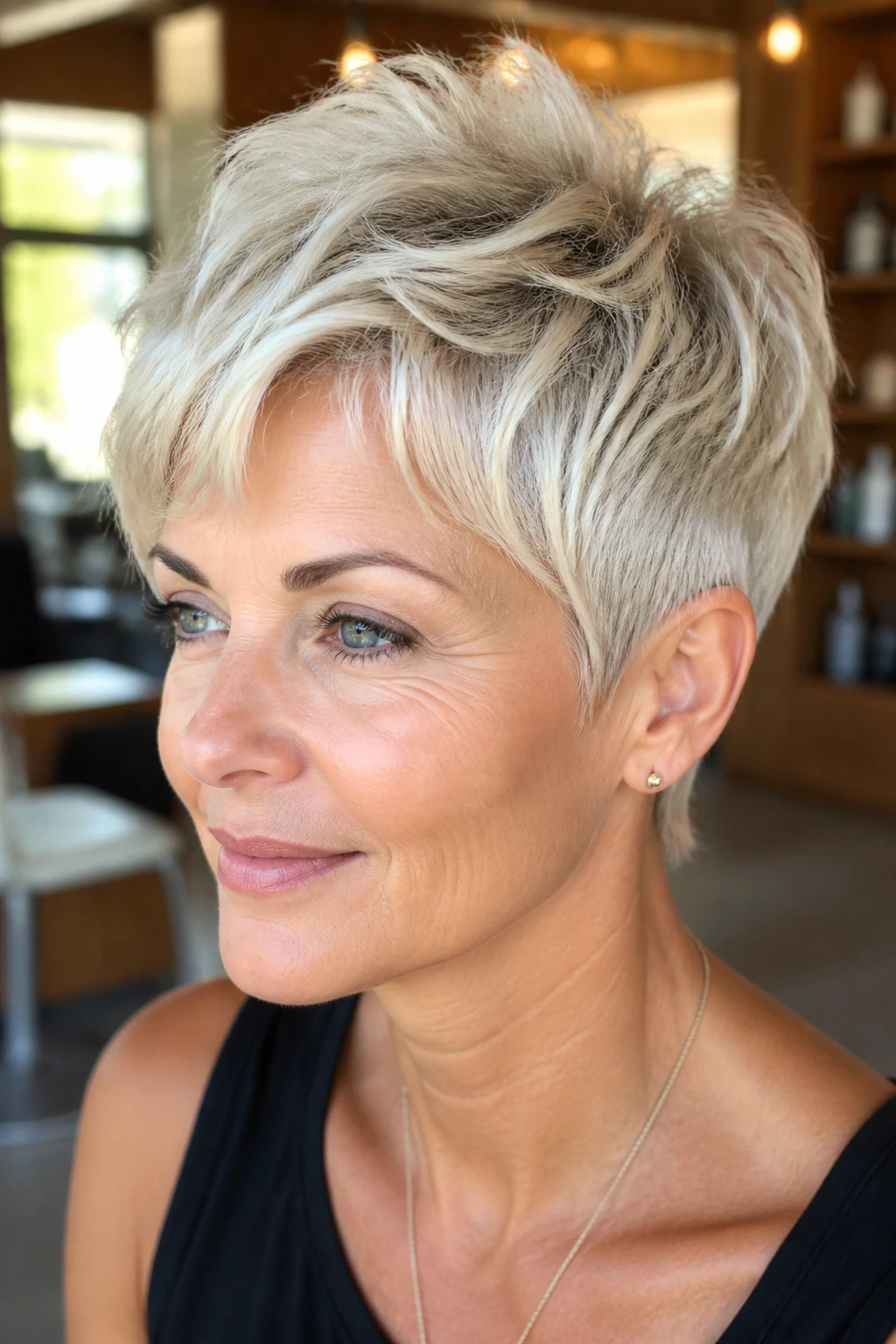
- Over-thinning fine hair: If the stylist removes too much weight from fine strands, the haircut starts to look sparse instead of lifted. Ask for soft layering, not aggressive texturizing.
- Ignoring the crown cowlick: A strong cowlick can make the top kick forward or split open. The fix is to cut and style around it, not against it.
- Making the fringe too heavy: Dense bangs can drag a short layered cut straight down. Lighter fringe, or fringe that can split, keeps the top open.
- Using heavy oils at the roots: Oils and thick creams belong mostly on the ends. Put them near the scalp and the whole haircut collapses.
- Blow-drying straight down: If the air moves straight from root to tip with no lift, the layers get flattened before they have a chance to do their job.
- Skipping trims too long: Short layers lose shape faster than long cuts. Once the crown grows out, the whole silhouette changes.
Variations and Alternatives for Different Hair Types
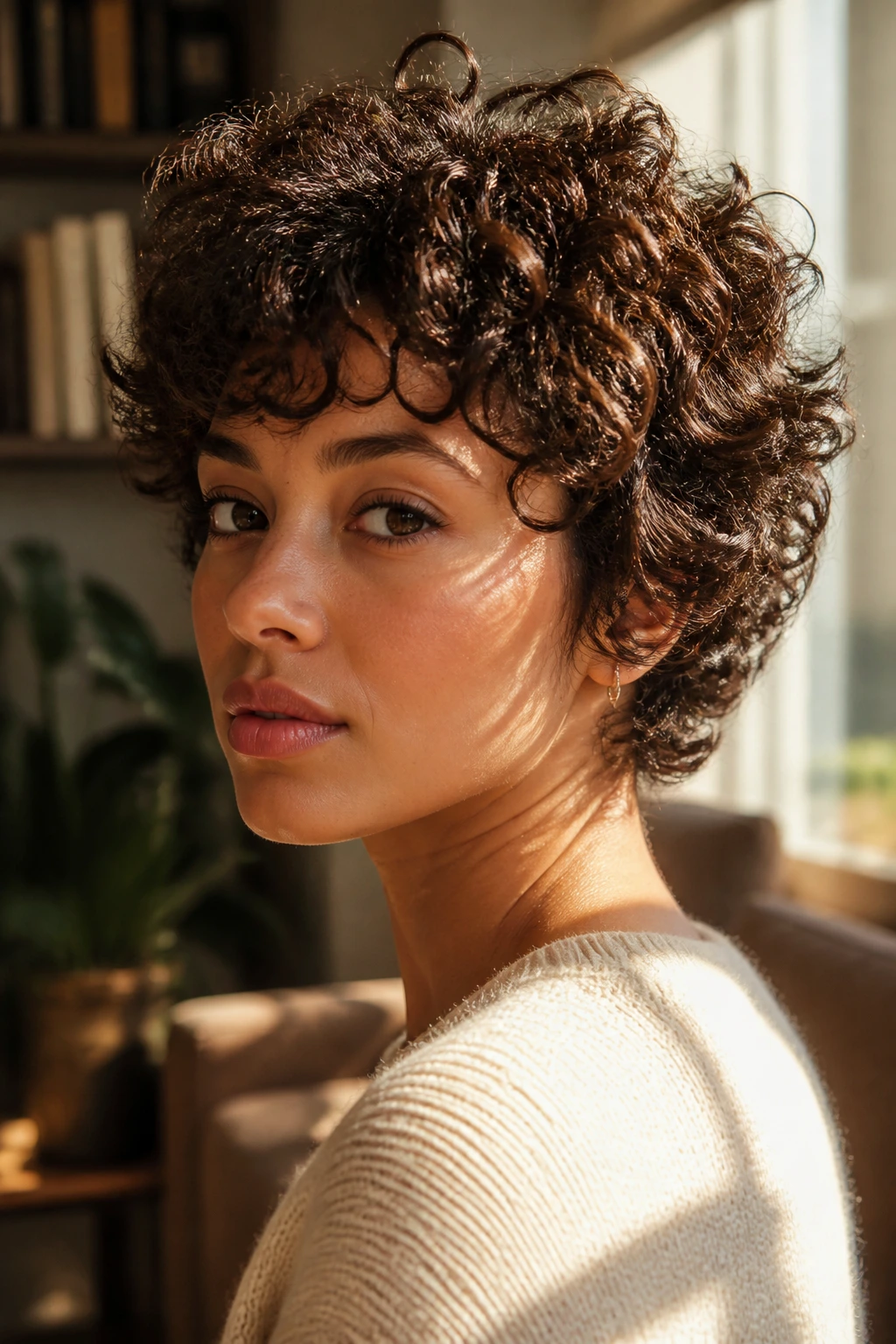
Fine-Hair Feathering: Keep the layers soft, the perimeter solid, and the top short enough to lift. This version gives movement without making the ends see-through.
Thick-Hair Debulked Shape: Use interior weight removal, stacking, and a tighter neckline. Thick hair needs control more than it needs extra texture.
Curly-Cut Respect: Cut the hair in its natural curl pattern and keep the layers long enough to preserve the spring. Too much slicing can leave holes.
Straight-Hair Texture Bias: Add point-cut ends, a side part, or a razor finish so the haircut has some bend. Straight hair often needs the most help showing the layers.
Grow-Out Friendly Version: Choose a bixie, shag bob, or layered crop with soft edges. These shapes stretch a few extra weeks without turning sloppy.
Keeping the Shape Sharp Between Trims
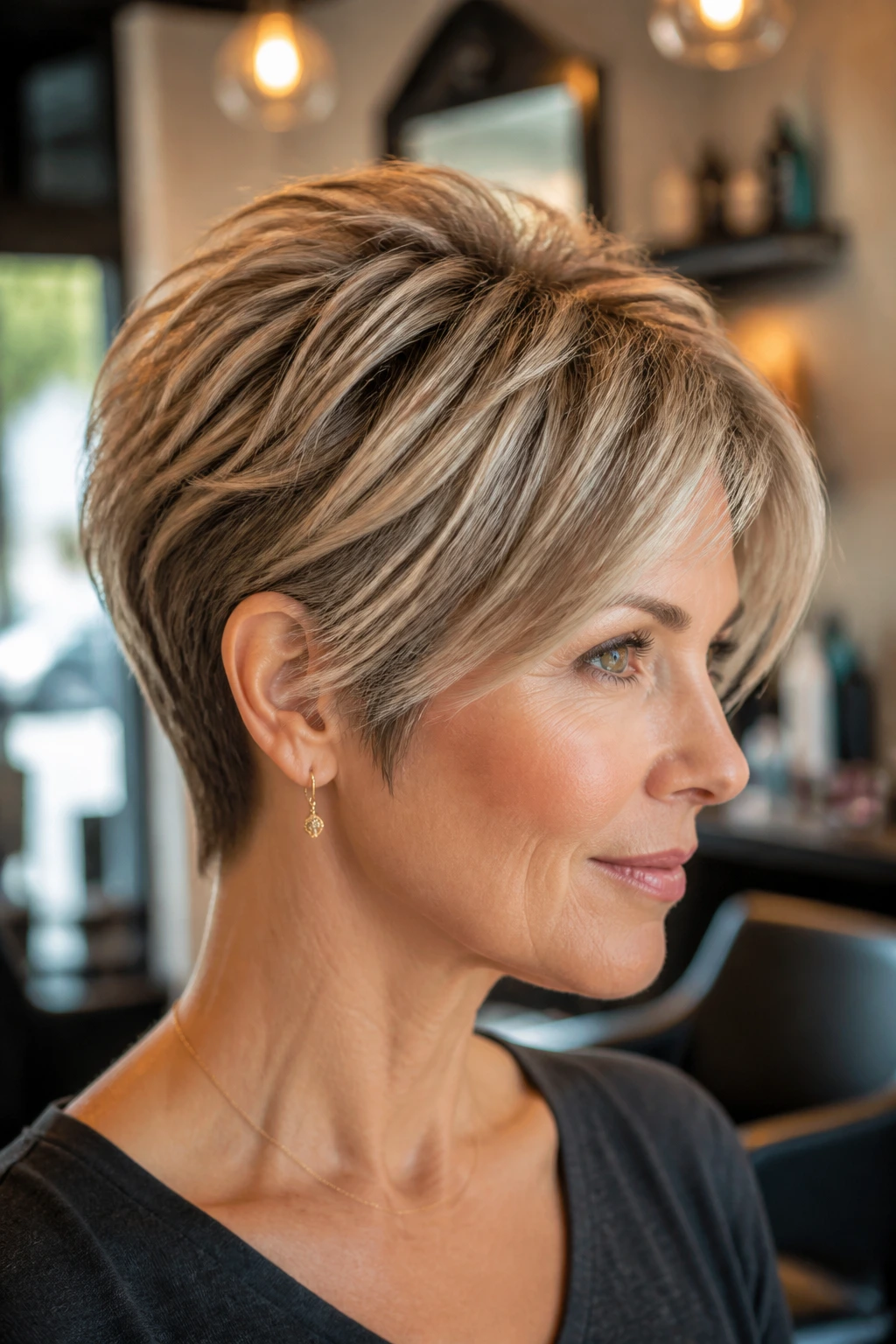
Short layered cuts do not stay flattering forever. That’s the tradeoff. A pixie may need a cleanup every 4 to 6 weeks, while a layered bob or bixie can often stretch to 6 to 8 weeks before the shape starts to sag. Bangs usually need attention sooner. If you wear fringe, plan on a trim or tiny touch-up somewhere around the 2-to-4-week mark.
The good news is that day-to-day care is simple. Use enough conditioner to keep the ends smooth, but keep it off the root area if your hair gets limp fast. A silk or satin pillowcase helps curls and short layers keep their shape overnight. Dry shampoo is useful, though it should not be treated like a replacement for washing; it buys you a day, maybe two, not a week-long miracle.
Pay attention to the outline. If the crown stops lifting, if the neckline starts bulking up, or if the fringe hangs in your eyes, the cut is due. Short layered hair tells on itself pretty quickly.
Frequently Asked Questions
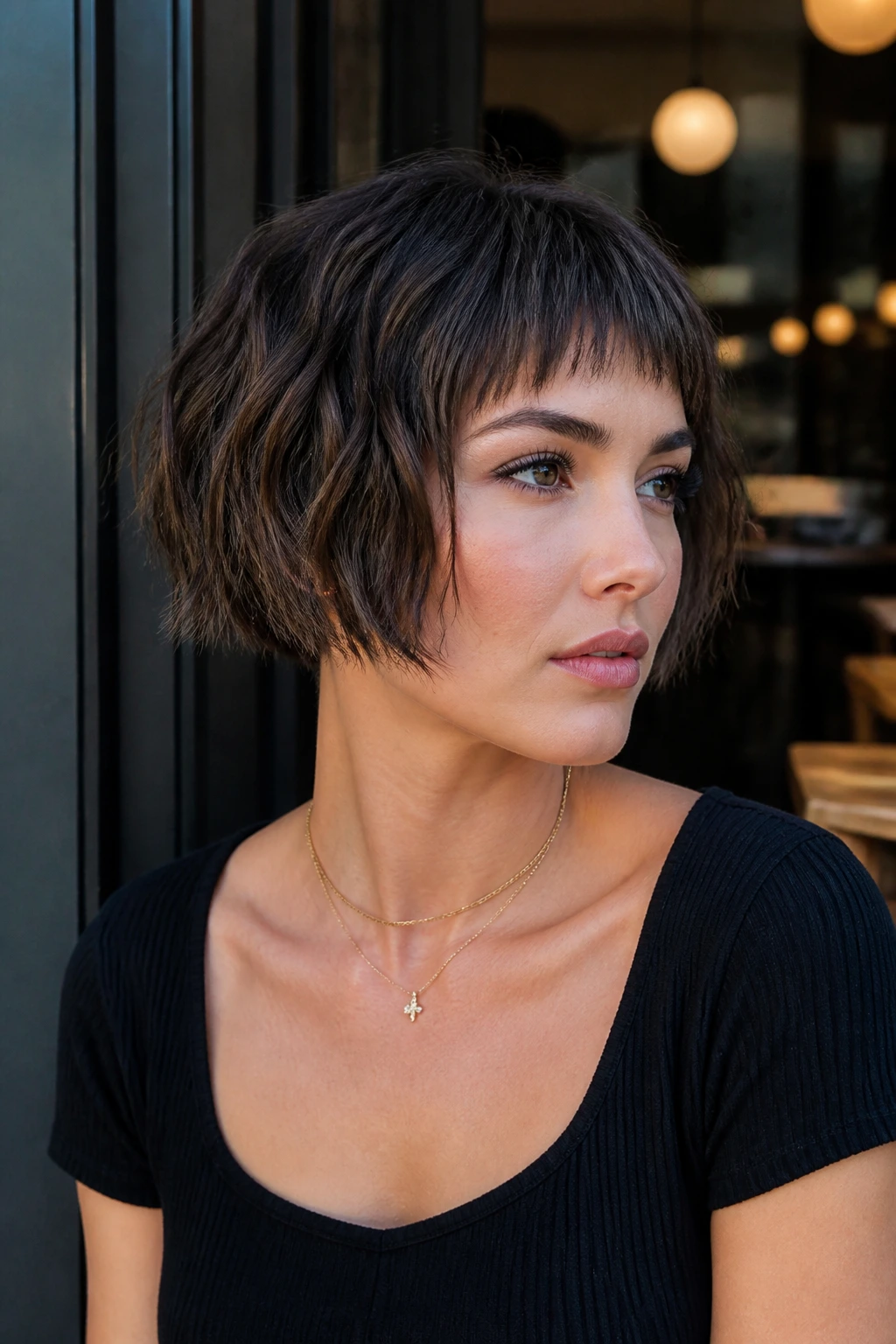
Do heavily layered short cuts work on fine hair?
Yes, but the layering has to be controlled. Fine hair usually looks better with soft internal layers, a solid perimeter, and enough length left at the ends to keep the shape from going wispy.
Will layers make thick hair look less bulky?
They should, if the stylist removes weight from the right places. Thick hair often needs interior debulking and graduation, not just random thinning near the bottom.
Can curly hair wear heavily layered short cuts without frizzing out?
Absolutely. The key is shaping around the curl pattern and keeping the layers long enough to support the curl. Dry cutting or curl-by-curl cutting often gives the cleanest result.
What should I tell my stylist if I want volume at the crown?
Use plain language: say you want lift at the top, less weight at the sides, and a shape that does not collapse flat after blow-drying. Photos help, but the words matter too.
How often do short layered cuts need trimming?
Pixies and crops usually need trims every 4 to 6 weeks. Bobs and bixies can often go a little longer, around 6 to 8 weeks, depending on how fast your hair grows and how neat you want the outline.
Are layered short cuts hard to style every morning?
Not usually, but they do like some direction. A quick root lift, a little texture product, and a rough blow-dry are often enough. The more precise the cut, the less wrestling you usually need to do.
What if my hair grows out in weird directions?
Cowlicks and growth patterns are normal, and they should guide the haircut instead of being ignored. A good stylist will cut around them, especially at the crown and temple.
Can I wear these cuts if I do not want a lot of heat styling?
Yes. Ask for a shape that works with your natural texture. Some of the best layered crops and shags look better air-dried, especially on wavy or curly hair.
Which short layered cut grows out the cleanest?
Bixies, shag bobs, and softly graduated crops usually age better than very sharp pixies or undercuts. They keep their shape a little longer as the layers settle.
The Shape That Keeps Hair Moving
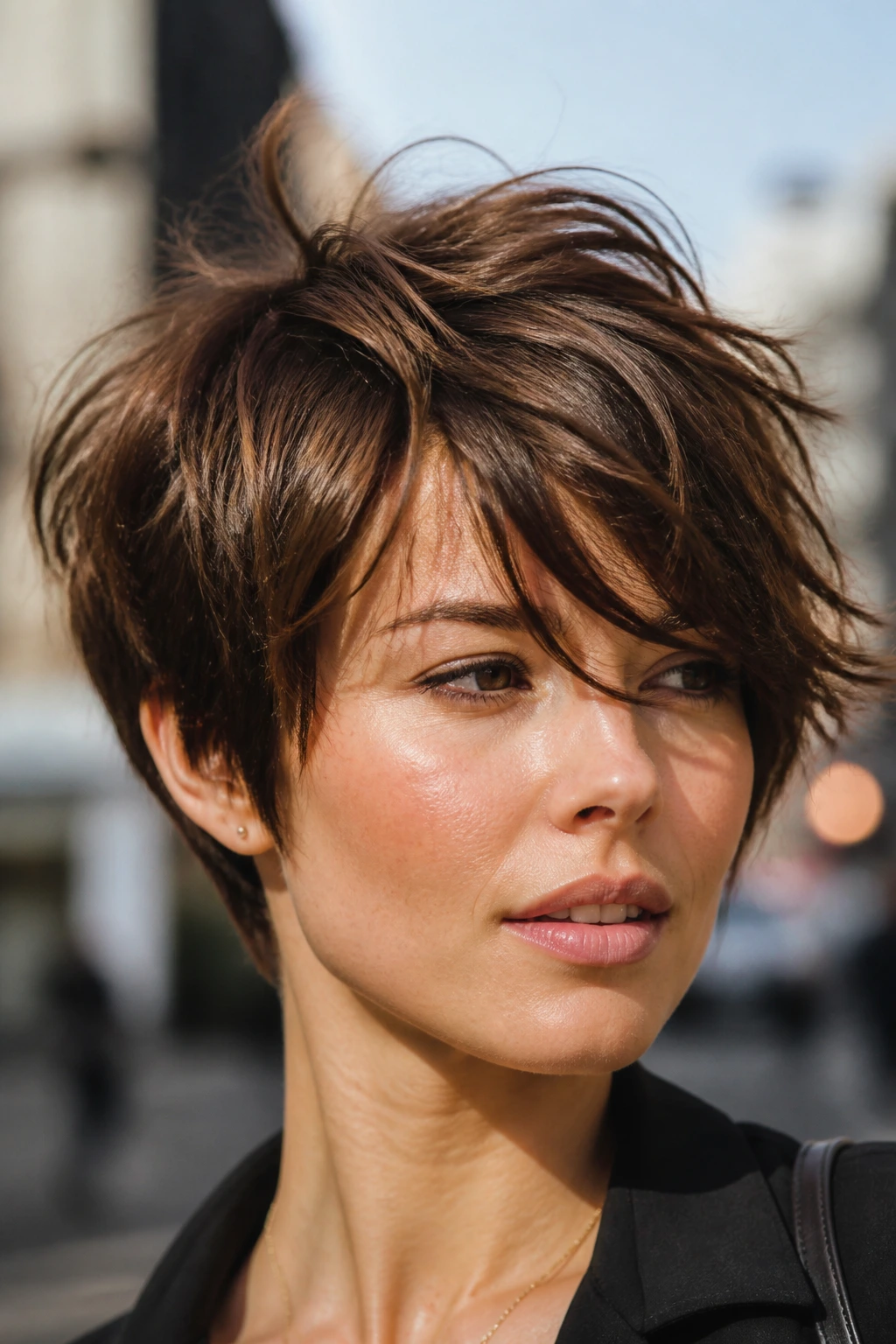
The nicest thing about heavily layered short cuts is that they solve more than one problem at once. They can lift a flat crown, tame thick hair, and make a short haircut feel alive instead of helmet-like. That’s a useful trick, and a rare one.
Pick the version that matches your texture first, then your face shape, then your patience for styling. That order matters more than chasing a trendy shape that fights your hair every morning. The right cut should give you movement when you want it, and a little structure when you do not.
