



Wavy pixie cuts work best when they look like they were shaped by movement, not forced into obedience. That’s the whole charm. A good pixie on wavy hair lets the bend stay visible at the fringe, keeps a little lift at the crown, and softens the outline so the cut doesn’t read as boxy or overdone. When the texture is right, the hair does half the styling for you.
The mistake people make is thinking a pixie has to be crisp to look intentional. On wavy hair, crisp can turn into hard edges and a strange little helmet effect. Soft texture is what keeps the crop modern: a feathered temple, a loose bend over the forehead, a nape that tapers instead of stopping in a blunt line. Those details matter more than people think, especially if your wave pattern starts somewhere between a soft bend and a full curl.
Wavy pixie cuts are also more flexible than they get credit for. They can read polished, airy, edgy, romantic, or slightly messy depending on where the weight sits and how much length you leave in the top. Some versions flatter fine hair by building movement where there isn’t much density. Others tame thick hair by removing bulk in the right places, not everywhere. The good ones feel wearable on a Tuesday and still look sharp enough for a dinner out.
Why These Wavy Pixie Cuts Feel Softer on Real Hair
Soft Texture: The cut lines stay broken up, so the wave has room to bend instead of snapping against a blunt edge.
Less Daily Work: Most of these shapes can be air-dried or rough-dried, then finished with a pea-sized amount of product.
Better Grow-Out: The nape, sideburns, and fringe all lengthen in a way that still looks deliberate instead of abruptly awkward.
More Face Framing: A little extra length near the temple or cheekbone changes the whole mood of a short cut.
Works With Texture, Not Against It: These styles let the wave sit where it wants to sit, which saves you from fighting flat roots and frizzy ends all morning.
1. Feathered Crop With Side-Swept Waves
A feathered crop is where wavy pixie cuts start feeling airy instead of severe. Keep the top long enough to bend over the forehead, then let the sides hug the head with soft, broken ends. The whole point is to avoid one solid shelf of hair; you want little slices of movement, especially around the temple.
Why it reads so soft
The side-swept front gives the cut a diagonal line, and diagonal lines are kinder to most faces than a blunt horizontal fringe. A stylist can get that effect with point-cutting at the ends and a light taper through the nape. If your wave is loose, this shape keeps it from collapsing. If your wave is stronger, the feathering stops it from puffing out in one heavy clump.
- Leave the top around 2 to 3 inches so the wave can actually bend.
- Ask for soft layers through the crown, not choppy chunks.
- Style the fringe with fingers, not a brush, if you want the bend to stay visible.
- A light mousse at the roots gives the top a little lift without making it stiff.
Best for: fine-to-medium hair, oval faces, and anyone who wants movement without a lot of product.
2. Micro Pixie With Airy S-Curve Fringe
Short does not have to mean harsh. A micro pixie with a tiny S-curve fringe can look almost delicate when the cut is shaped with enough softness around the hairline. The fringe should skim the forehead, not sit flat like a cap.
The trick is to keep the top close-cropped but not shaved to the skin. That tiny bit of length lets the wave push forward, then relax back into place. On very fine hair, this cut can look fuller than a longer style because the ends aren’t dragging the shape down.
If your hair grows in bends rather than curls, this one is a quiet winner. It dries fast. It doesn’t need much product. And when it’s cut well, the edges around the ears and nape stay soft enough that the style feels light, not severe.
Styling note: warm a rice-grain amount of paste between your fingertips and tap it only where the fringe needs separation.
3. Tapered Pixie With Tousled Crown
What if the crown is the whole show? That’s the appeal here. The sides and nape are kept neat and tight, while the top has enough length to lift and split into loose pieces. It’s the sort of pixie that looks casually styled even when you’ve only spent five minutes on it.
A tapered pixie works especially well if your hair goes flat at the roots. The shorter sides clear out bulk, and the longer crown creates a little air pocket at the top of the head. That gives the wave room to break into shape instead of lying down like wet rope.
What makes it behave
You want movement, not puff.
A small amount of mousse at the roots, then a quick blow-dry with your fingers lifting the top, is usually enough. If you prefer air-drying, twist the crown once or twice while it’s damp and clip it up for 10 minutes. The top dries with a bend instead of a dent.
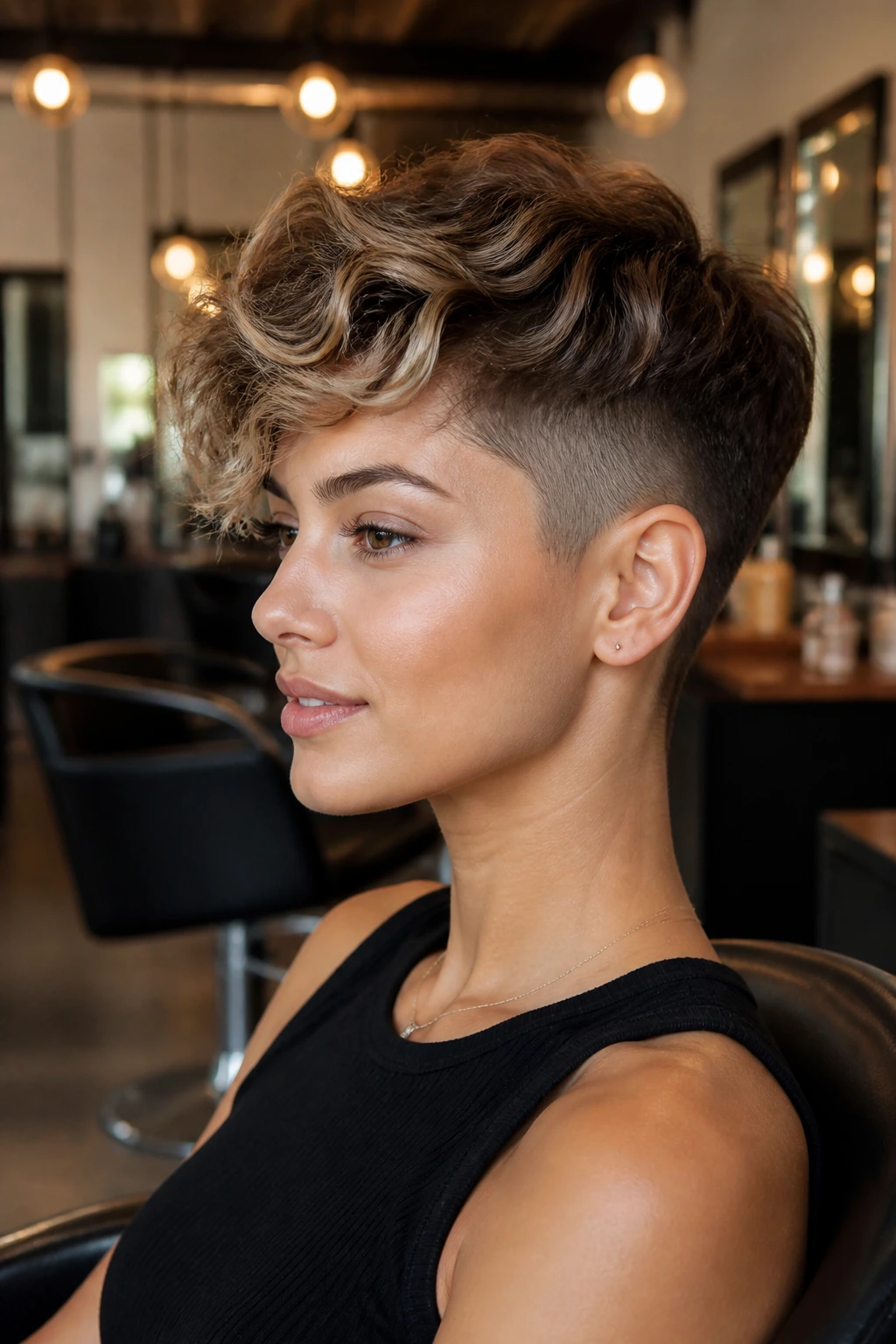
4. Curly-Wavy Pixie With Soft Undercut
You can shave the sides and still keep the look gentle. That’s the part people miss. A soft undercut becomes a lot more wearable when the top is left long enough to fall in loose bends over the shorter sections, almost like a veil.
This version works best when the contrast is controlled. Keep the undercut clean, but don’t push the top too far into sharp spikes or dry separations. Let the wave do the softening. When the top brushes the temple and the fringe falls a little forward, the whole cut loses that rigid edge undercuts sometimes get.
It’s a strong shape for thick hair, especially if the bulk around the ears tends to flare outward. The short sides remove weight where you don’t want it, and the top keeps enough texture to stop the look from getting too hard.
Good for: thick wave patterns, strong jawlines, and anyone who wants a short cut that still moves.
5. French Pixie With Piecey Bangs
A French pixie has that lightly undone, almost careless front section that makes the whole cut feel expensive without trying to look fancy. The bangs are piecey, not blunt. The sides are close, but not skin-tight. And the texture should look touched, not shellacked.
This is one of my favorite shapes for soft waves because it doesn’t demand perfect symmetry. If one piece flips a little more than the other, the cut still works. The bangs can fall across the forehead, split down the middle, or tuck to one side, and each version keeps the softness intact.
A dab of styling cream on damp hair is usually enough. Once the hair is dry, pinch out a few pieces near the front with clean fingers. No need to carve every strand apart. That’s how the style starts looking fussy.
6. Choppy Pixie With Long Temple Fringe
Unlike a blunt crop, this cut keeps the temple length on purpose. That extra bit of hair near the face gives the wave somewhere to land, which matters a lot if your hair bends more at the sides than at the top.
The choppiness lives in the interior, not the outline. A stylist can remove bulk through the back and crown while leaving the fringe slightly longer, so the cut doesn’t puff up like a triangle. It’s a smart choice for people who want short hair but still want to hide or soften the upper cheek area.
The best part is how it changes with parting. A deep side part makes it dramatic. A softer off-center part makes it casual. Tuck one side behind the ear and leave the other loose, and the shape suddenly feels more alive.
- Leave the temple fringe long enough to skim the cheekbone.
- Keep the ends textured, not razor-thin.
- Use a matte paste only at the ends if the front starts separating too much.
- This cut grows out well, which is not nothing.
7. Ear-Grazing Pixie With Rounded Waves
If you like the idea of a short cut but hate anything that looks too sharp around the ears, this is the one to watch. The outline curves around the head, and the wave sits in a rounded shape rather than a spiky one. The result is softer from every angle.
The rounded perimeter is the whole trick. The hair at the sides should skim the tops of the ears or sit just above them, while the top has enough length to create a gentle arc. That keeps the silhouette compact without making it severe. It’s a good option when you want the cut to feel tidy from the front and smooth from the back.
This shape is flattering on heart-shaped and oval faces, though it can work on round faces too if the top has enough height. A little lift at the crown keeps the outline from getting too circular.
Styling note: push the side hair down with your palms while drying, then lift only the crown. That keeps the curve soft instead of mushroom-like.
8. Undercut Pixie With Sculpted Sides
This is the strongest-looking cut in the bunch, but it still reads soft if the top stays bendy. The sides are sculpted close to the head, the nape is cleaned up neatly, and the top is left long enough to drop into loose, visible waves.
The balance matters. If the top is too short, the undercut can look blunt and hard. If the top is too long, the contrast starts to feel disconnected. The sweet spot is usually somewhere between finger length and a little beyond, depending on your density. That length lets the wave collapse in a controlled way over the shorter sides.
For styling, keep the sides almost product-free. Work a light cream through the top, then use your fingers to split the wave into three or four larger pieces. Too much separation turns this into a stiff, edgy look. One or two visible bends is enough.
9. Shaggy Pixie With Wispy Layers
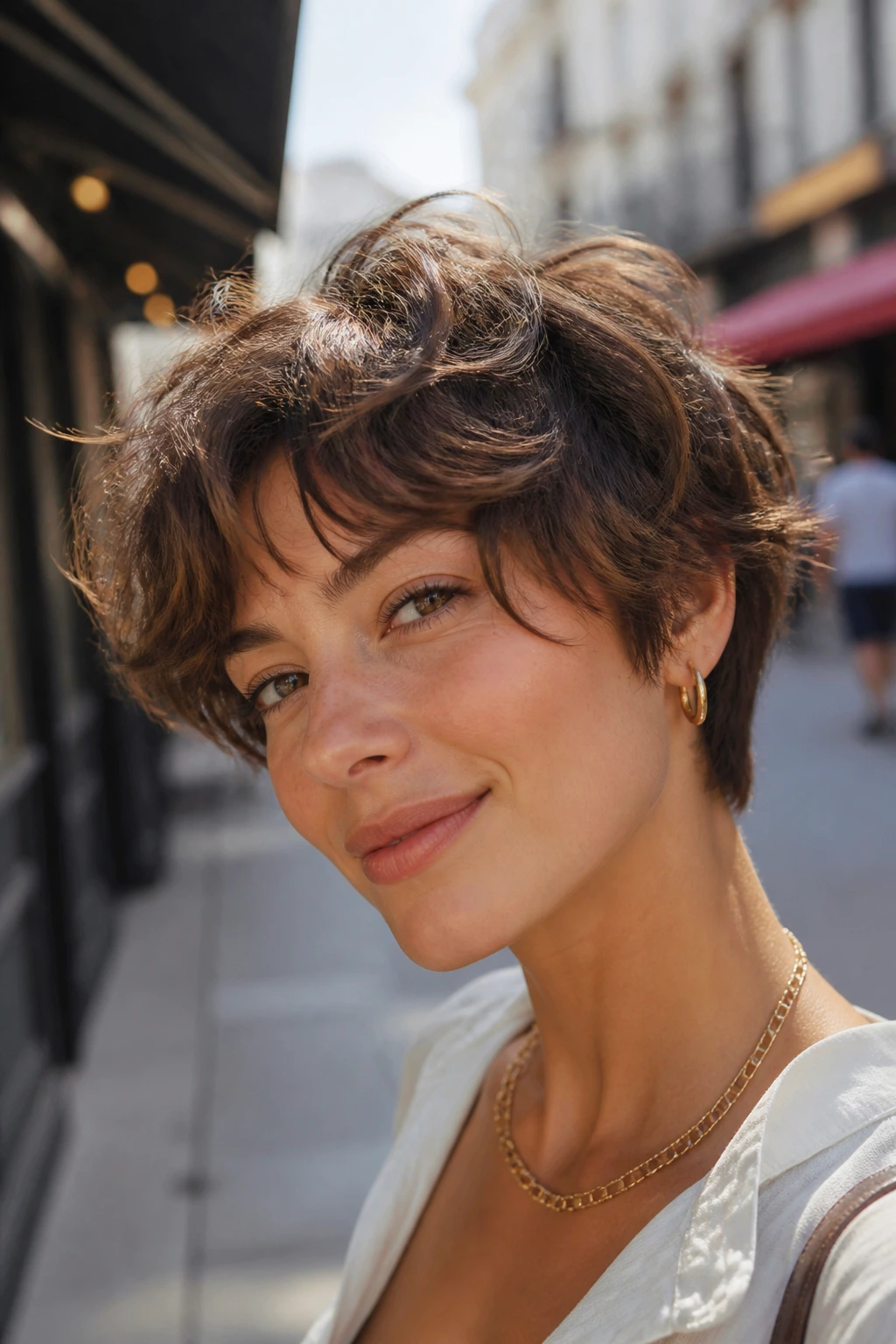
I always think of this one as the pixie that forgot to behave, and that’s exactly why it works. The layers are light, wispy, and a little irregular, which gives the cut motion even when the hair is only partly waved.
This is a strong choice for thick wavy hair because the shape removes bulk without making the silhouette too tidy. The wispy ends stop the cut from sitting in one heavy block. Around the crown, a few shorter pieces can keep the top from falling flat. Around the fringe, the wisps make the front feel breezy instead of blunt.
What to ask for
Ask for soft internal layers and point-cut ends.
Do not ask for heavy thinning all over. That’s how you get frizz with no shape. The goal is movement, not fuzz. If your hair already has a lot of texture, this cut can look best on day two, when the wave settles and the edges separate a little.
10. Sleek Nape Pixie With Bends at the Ends
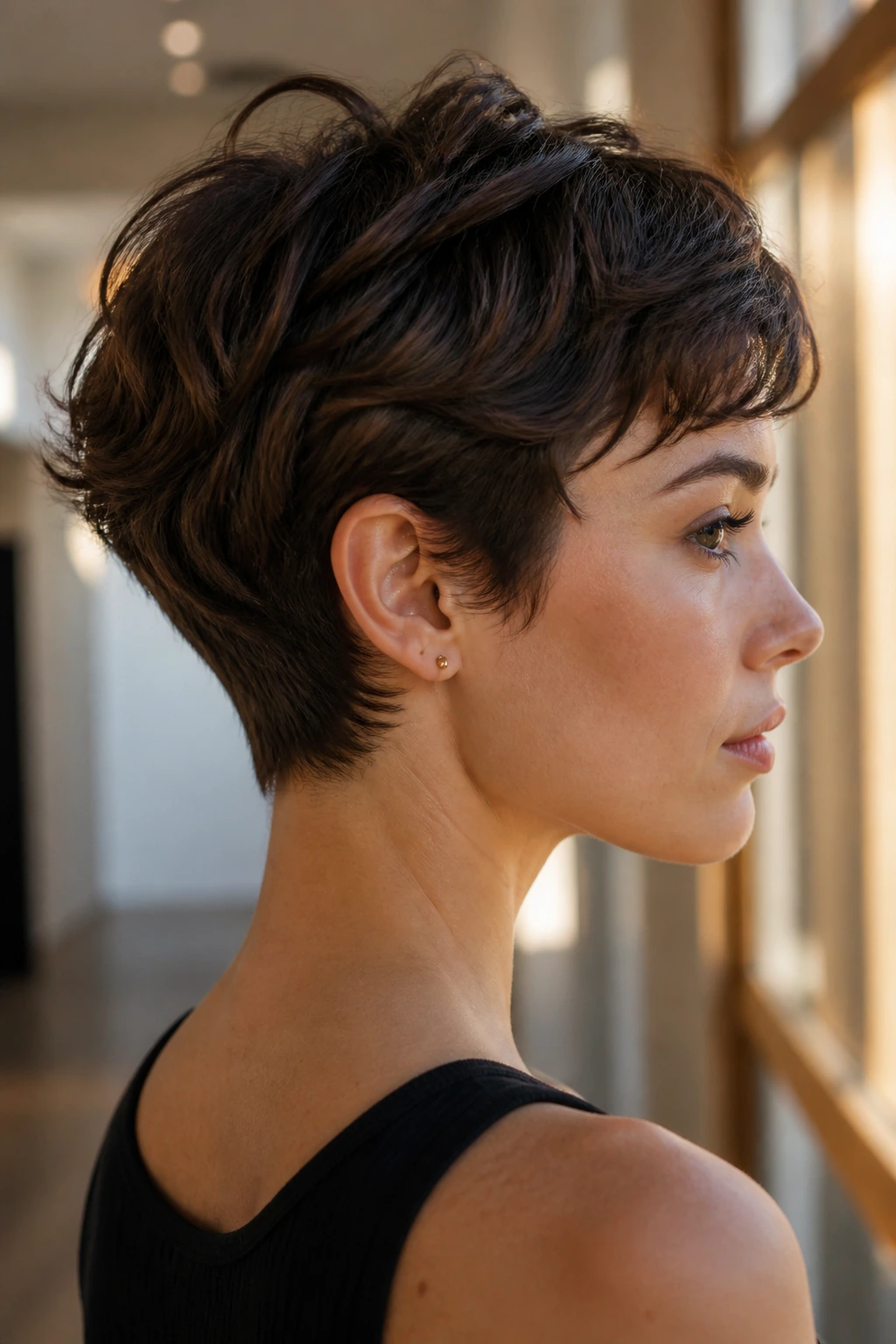
A neat nape can make a pixie feel much cleaner, and it gives the soft wave on top something to contrast against. This cut keeps the back close and tidy, then lets the ends around the crown and fringe curve outward just enough to show texture.
There’s a nice tension here. The back is controlled. The top is relaxed. That contrast keeps the shape from looking mushy, which can happen with very soft hair if every part of the cut is left equally long and equally textured. A clean neckline makes the whole thing feel deliberate.
This is also a good cut if you wear collars, jackets, or scarves often. The nape stays out of the way and doesn’t get crushed as easily. Ask your stylist to keep the edge tapered, not squared off. Squares show faster as the hair grows.
11. Asymmetrical Pixie With Deep Side Part
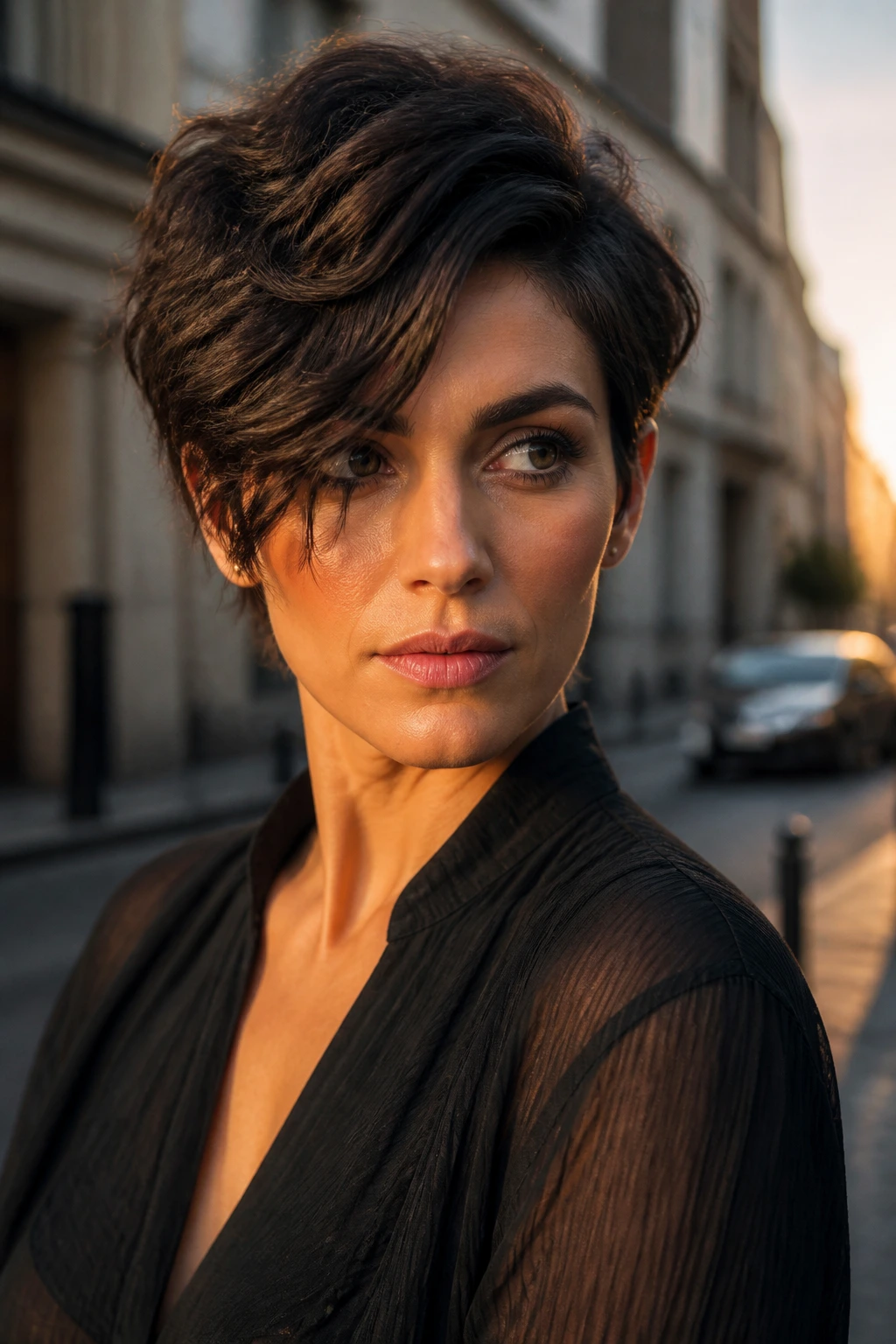
A deep side part does a lot of work on wavy hair. It makes the wave travel across the forehead instead of straight down, and that diagonal movement gives the whole style more shape. Add a little asymmetry, where one side is longer and the other is tighter, and the cut starts feeling intentional fast.
This is especially useful if one side of your head has a stubborn cowlick or if your hairline is a little uneven. Let the longer side carry the softness, and keep the shorter side neat so the silhouette doesn’t get noisy. The asymmetry should feel subtle, not theatrical.
The nice thing about this cut is that it changes with the way you dry it. Blow-dry the longer side forward for drama. Sweep it back for polish. Pin the shorter side behind the ear for a cleaner profile. One haircut. Three moods.
12. Soft Mullet Pixie With Wavy Neck Length
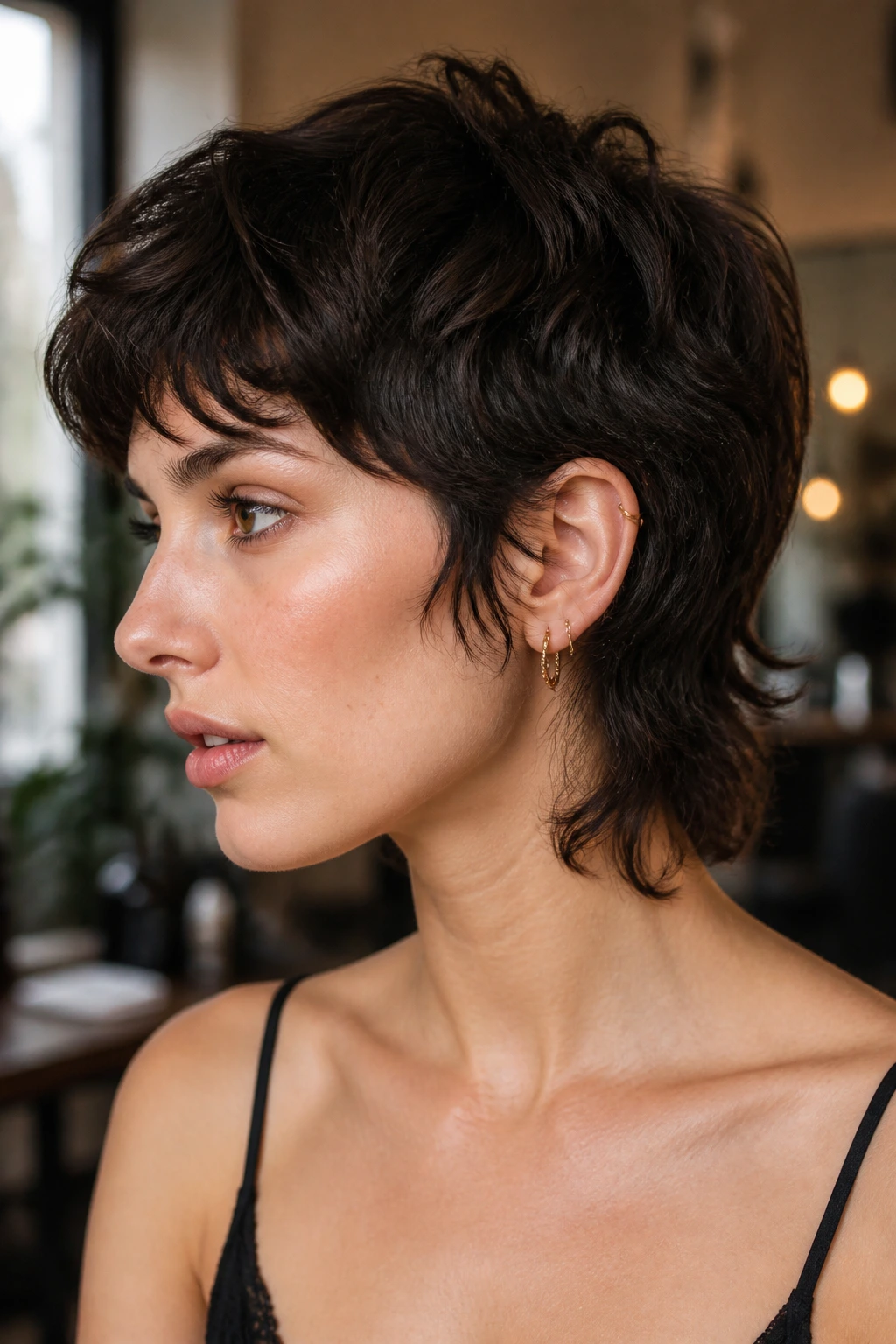
A little length at the neck is not a mistake here. It’s the point. This version keeps the front and crown in pixie territory, then allows the back to stay slightly longer so the wave can trail softly toward the nape.
It’s a smart move if you hate the abrupt grow-out stage. The longer back gives the haircut a built-in transition, and the wave creates a gentle curve instead of a blocky edge. On thick or coarse hair, that extra length can keep the shape from puffing out. On finer hair, it adds a hint of movement that a shorter back might lose.
The cut should not look mullet-heavy. The line from crown to neck needs to stay smooth, with no hard shelf. Think soft progression, not a sharp disconnect.
- Ask for light layering through the back.
- Keep the sides close enough to preserve the pixie feel.
- Let the top bend forward a little, especially around the temples.
- Use a diffuser only if the wave needs help finding its shape.
13. Brushed-Forward Pixie With Cloudy Fringe
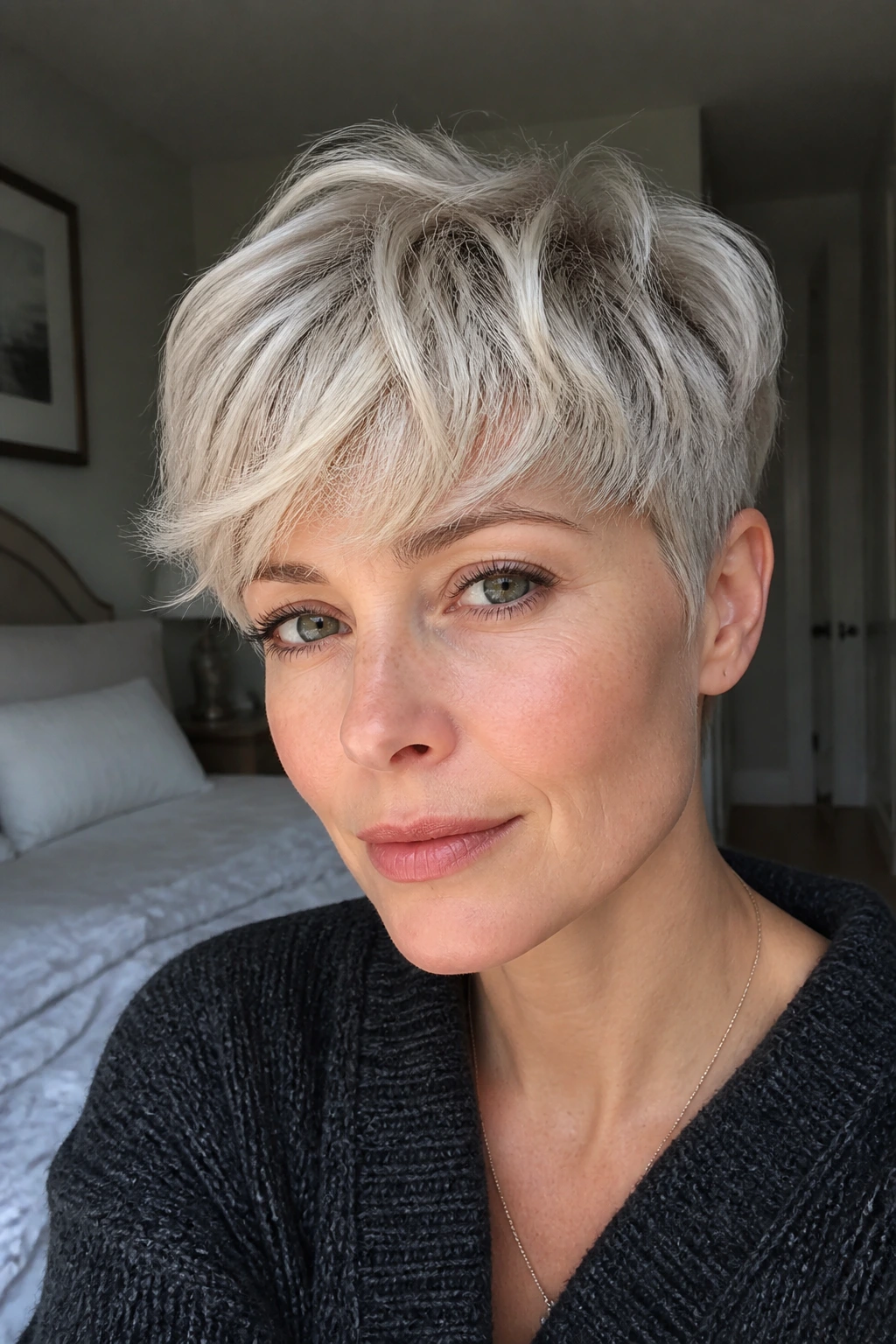
There’s something about a brushed-forward fringe that makes short hair feel calmer. The front falls toward the face in a cloudy, diffuse way, not in hard strips. That softness is the entire appeal here.
This cut is a good match for finer wave patterns and for people who don’t want to expose the whole forehead. The fringe should be light enough to move when you breathe, which sounds dramatic until you see it in the mirror and realize how much it changes the mood of the cut. A little length at the front can pull the eye down and soften the top of the face.
Use a light mousse at the roots, then dry the front with your fingers pushing it forward. When it’s almost dry, break the fringe apart with a tiny bit of cream. The goal is a soft cloud, not a separated curtain.
14. Long-Top Pixie With Wavy Quiff
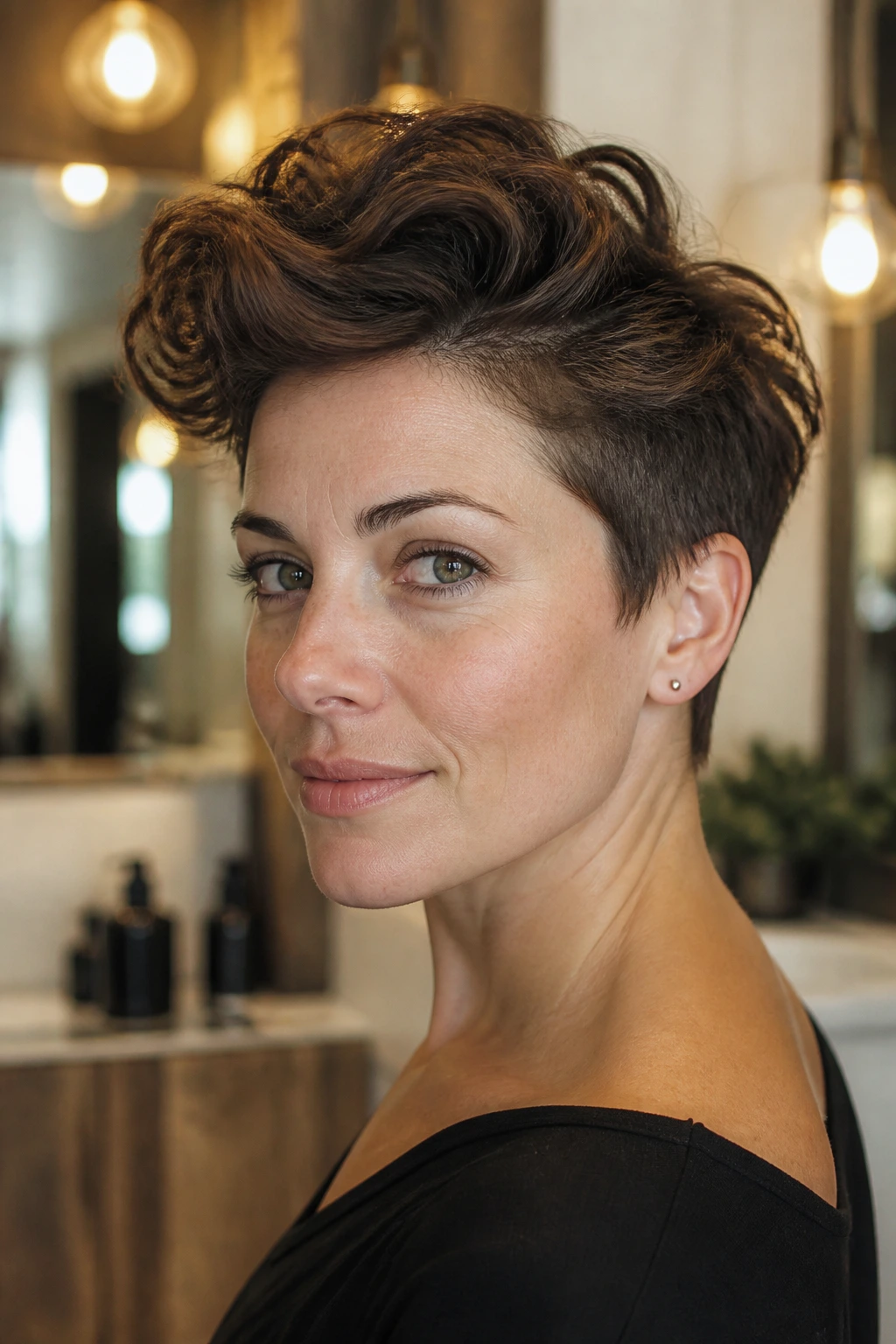
This is the pixie for people who want a bit of lift without turning the front into a full pompadour. The top is left long enough to sweep up and back, then the wave keeps it from looking stiff or overly sculpted.
The quiff works because the base is still soft. A little height at the front can balance a stronger jawline or add length to a rounder face, but the wave stops it from feeling severe. Keep the sides trimmed close enough that the volume stays on top, where it belongs.
For styling, dry the front section first with a round brush or your fingers, then bend it backward while it’s warm. Don’t over-polish the final shape. A few loose pieces falling forward make the whole thing read less like a retro tribute and more like a lived-in crop.
15. Sculpted Pixie With Tucked-Behind-Ear Waves
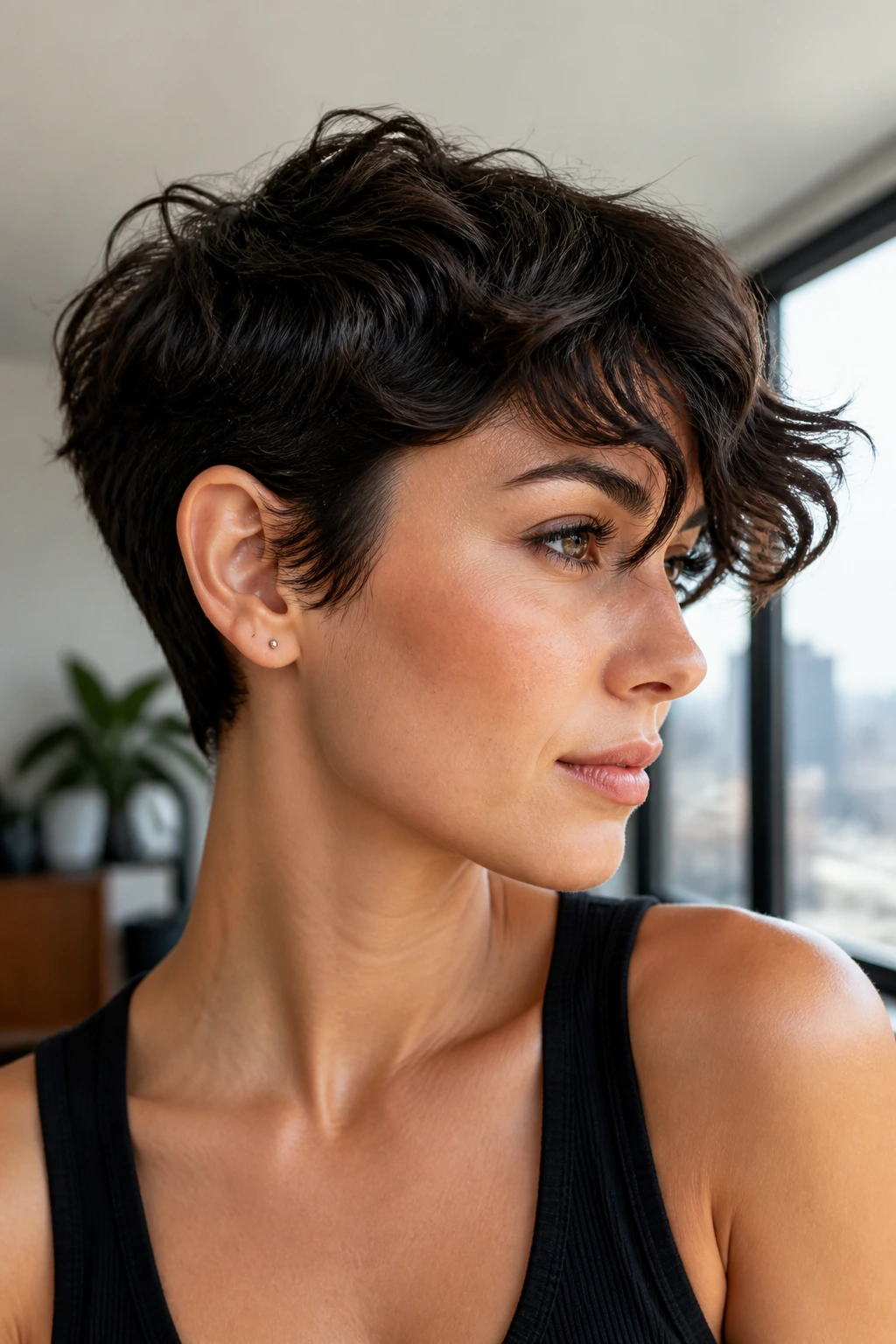
The tucked-behind-ear trick is small, but it changes everything. One side opens the face. The other side stays loose and wavey. That asymmetry gives this cut a quiet sharpness while still keeping the overall texture soft.
A sculpted pixie like this needs clear lines at the ears and nape, but the top should stay a little irregular. That’s what keeps it from looking too formal. If you’re wearing earrings, this cut shows them off in a way longer hair never quite does. If you’re not, the open ear creates a cleaner profile and makes the wave at the front feel more deliberate.
One sentence, and it matters: do not flatten the tucked side with too much product. Let it rest naturally behind the ear and leave a bit of bend near the temple. That’s where the softness lives.
16. Rounded Pixie With Halo Texture
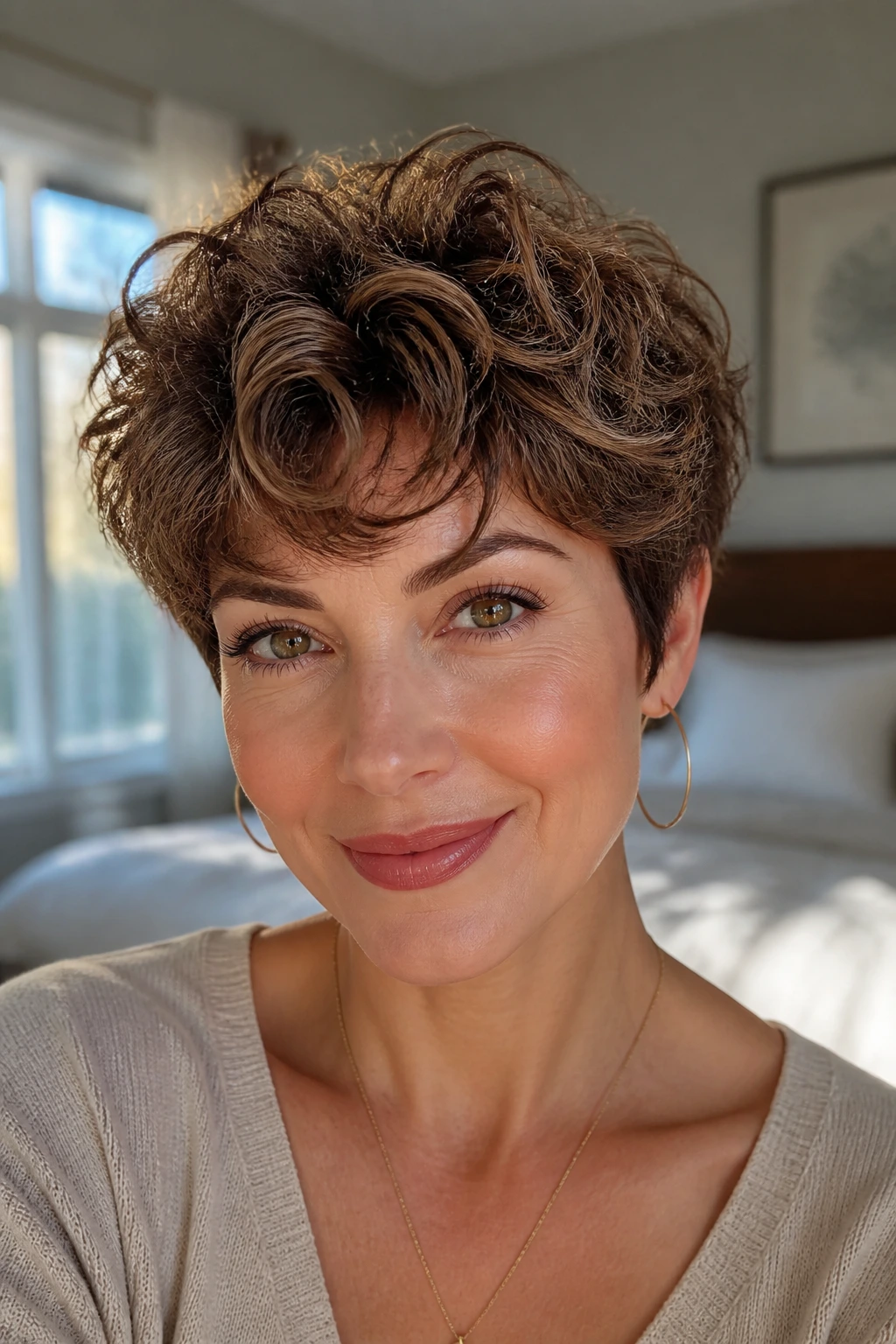
A rounded pixie wraps the hair around the head in a soft curve, which makes the wave feel almost halo-like. The shape is fuller than a micro pixie but cleaner than a shag. It’s one of the most flattering options if you want softness without lots of visible layers.
The key is keeping the distribution even. Volume should sit around the crown and sides in a controlled way, not all in the fringe or all in the back. That balance gives the head a smoother outline and makes the texture look purposeful. A stylist who point-cuts the ends rather than blunt-cutting them can keep the surface from looking too flat.
This shape works especially well if your hair naturally bends away from the head in a soft arc. It lets the wave trace the skull instead of fighting it. Nice and simple. That’s the point.
17. Grown-Out Pixie Bob Hybrid With Soft Ends
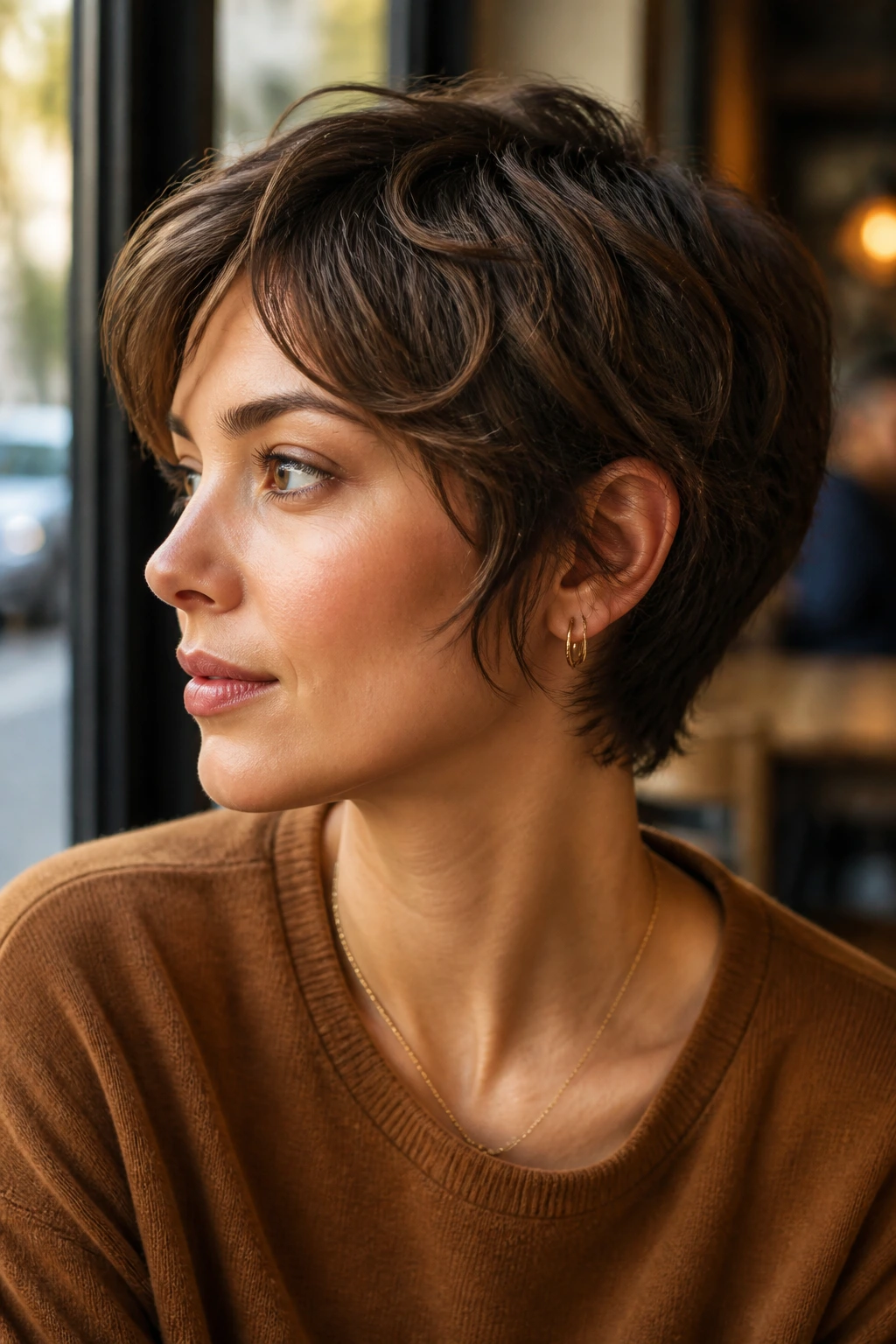
This is the cut for the in-between stage that nobody talks about enough. The front and crown are still short enough to count as a pixie, but the sides and nape have enough length to start reading like a mini bob. If you’re growing out a short cut, this hybrid keeps the shape from turning awkward too fast.
The soft ends matter here. A blunt edge would make the whole thing feel heavy. A little feathering through the perimeter lets the wave loosen as it grows, which keeps the haircut from swelling out in the wrong places. The shape can tuck behind the ears, swing forward at the cheekbones, or curl under just slightly at the nape.
This one is more forgiving than people expect. You can trim the back while leaving the front longer, or do the opposite for a more face-framing effect. It’s a very practical choice if you like short hair but want an escape route.
18. Tapered Pixie With Loose Crown Swirl
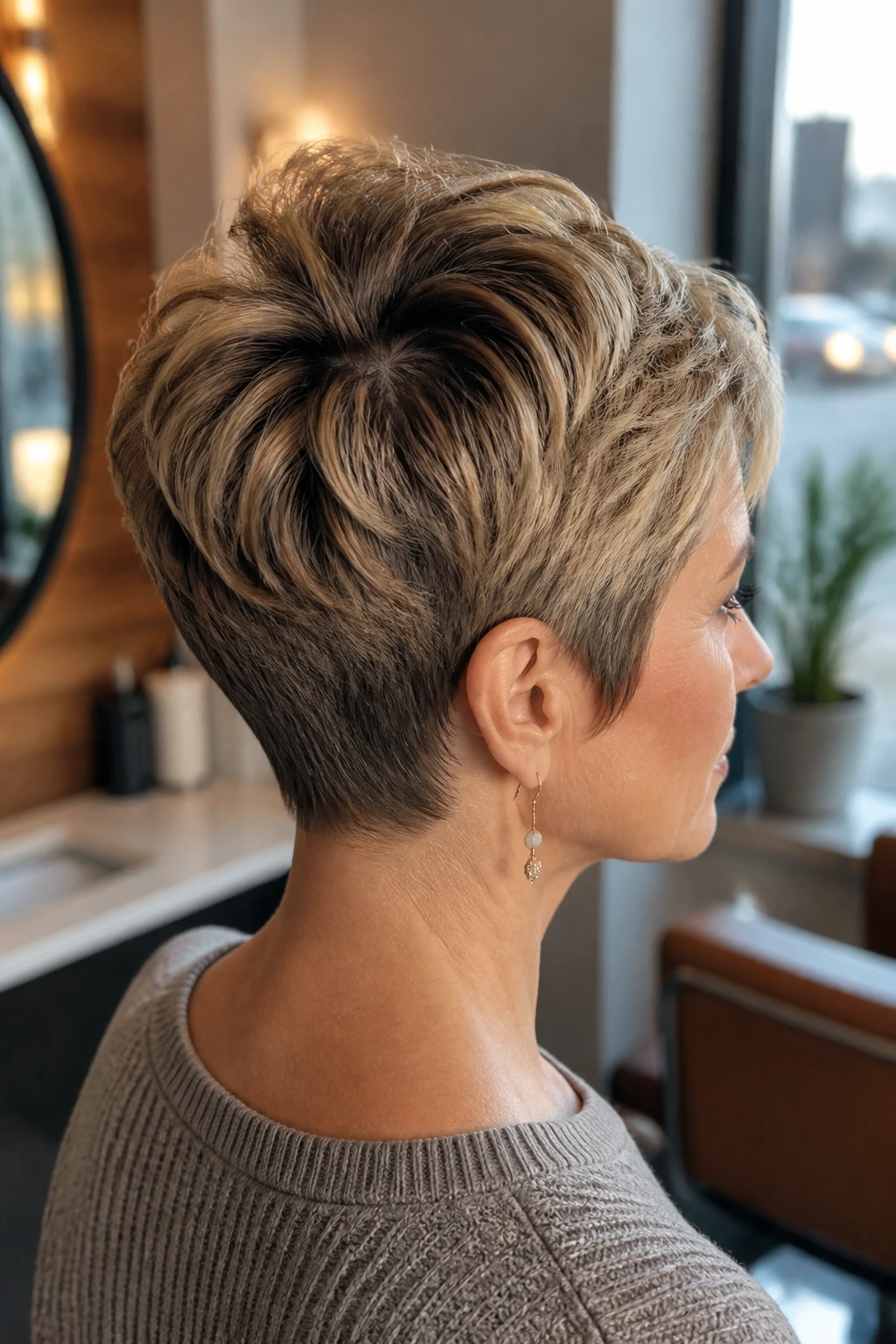
Why fight a cowlick if it already gives you movement? A tapered pixie built around a loose crown swirl works with the natural growth pattern instead of trying to flatten it down into something polite.
The taper keeps the sides and neckline neat, which stops the cut from ballooning. Meanwhile, the crown swirl creates a visible lift right where short hair can otherwise go limp. If your wave naturally pushes in one direction at the top, tell your stylist. Cutting against the growth pattern is how you end up with a crown that stands up in protest every morning.
How to style it
Dry the crown first.
Use your fingers to guide the swirl in its own direction, then stop touching it when it begins to set. The less you poke it, the better it behaves. A tiny amount of matte cream at the roots can control flyaways without killing the lift.
19. Layered Pixie With Curtain Bangs

Curtain bangs on a pixie sound dramatic, but when the length is right, they soften the face instead of hiding it. The middle part gives the fringe room to fall in two loose pieces, and the wave makes those pieces bend away from the cheeks in a gentle way.
The layering underneath keeps the shape from getting heavy. You want the fringe to look light enough to move when you turn your head. If the bangs are too thick, they stop being soft and start becoming a curtain, which is a different thing entirely. Fine or medium hair usually does well here, though thick hair can carry it if the bangs are thinned carefully.
I like this cut on people who want a pixie but still like the feeling of hair near the face. It gives you some of the framing that longer bangs would provide, without dragging the cut into bob territory.
20. Low-Maintenance Pixie With Natural Wave Pattern
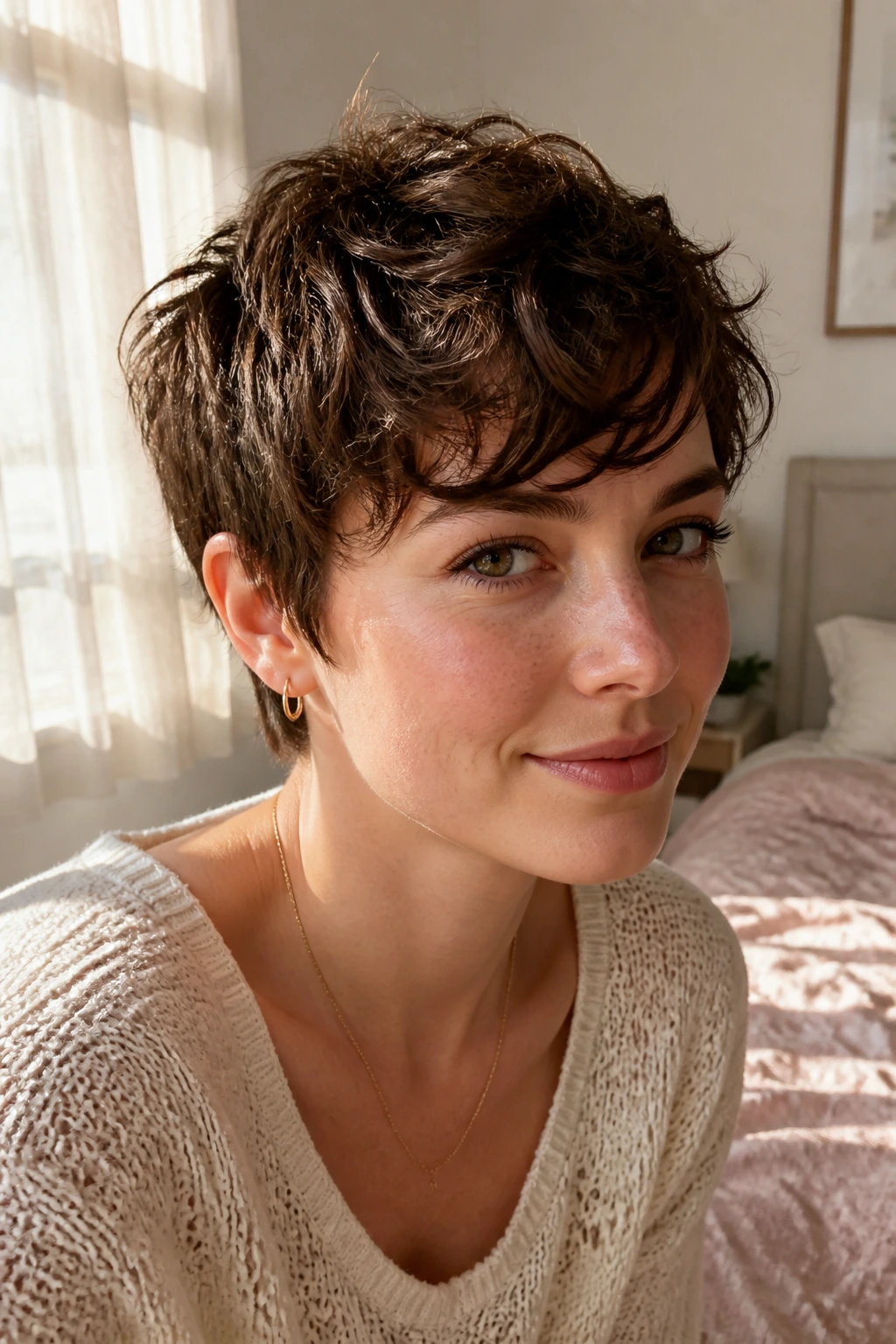
This is the least fussy version, and sometimes that’s the smartest one. The shape follows the wave pattern instead of forcing a strong silhouette, so the cut looks best when it’s left a little loose and a little imperfect. No hard styling. No overthinking. Just enough product to keep the bend visible.
The perimeter should stay soft, the top should keep some lift, and the fringe should fall where it wants with a little help from your fingers. That’s how you keep the cut from feeling overworked. If your hair bends easily on its own, this version is often the best use of that texture.
It also ages well as it grows. The edges loosen, the wave gets a little softer, and the overall shape moves toward a short crop rather than something that looks like it needs rescuing. That’s a good outcome. A very good one.
Why a Soft Pixie Shape Feels Better Than a Hard One
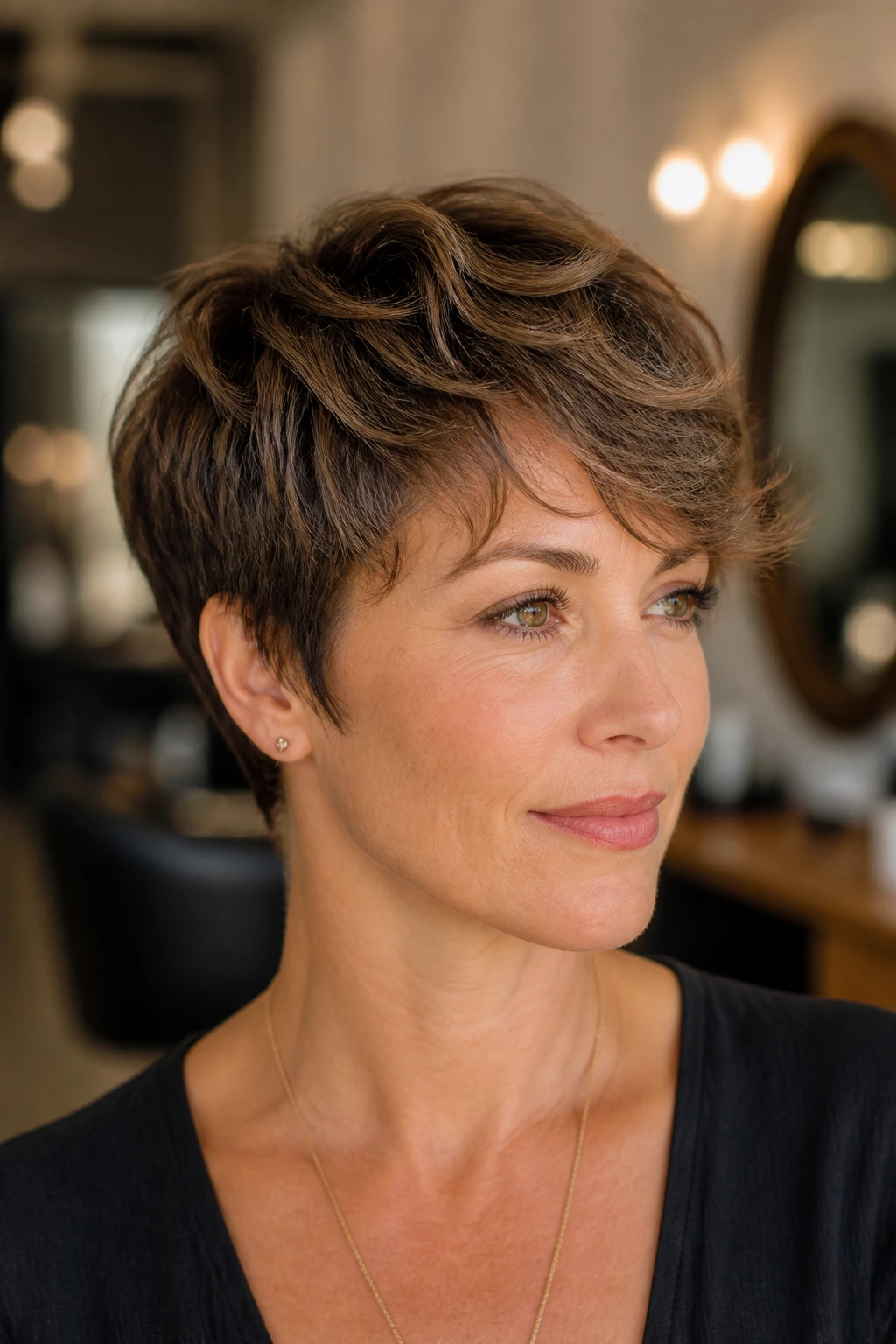
A wavy pixie works when the silhouette gives the texture somewhere to go. If the outline is too blunt, the wave has nowhere to fold, and you end up with sides that puff or a fringe that looks pasted on. Soft shapes solve that problem by breaking the line in a few places: the fringe, the temple, the nape, and sometimes the crown.
That softness comes from cutting technique as much as length. Point-cutting leaves the edge less solid. Light internal layering removes bulk without stripping the whole head thin. A slightly longer top gives the wave enough room to bend, while a tapered back keeps the crop from sitting like a block. None of this is fancy. It’s just the difference between a haircut that moves and one that sits there.
The other thing people overlook is balance. A pixie does not have to be equally short everywhere. In fact, that often makes it look harsher. A little extra length at one temple, a touch more at the front, or a softer nape can change the entire read of the style. The wave then becomes part of the design instead of a problem to hide.
Tools and Products That Keep Wavy Pixie Cuts Soft
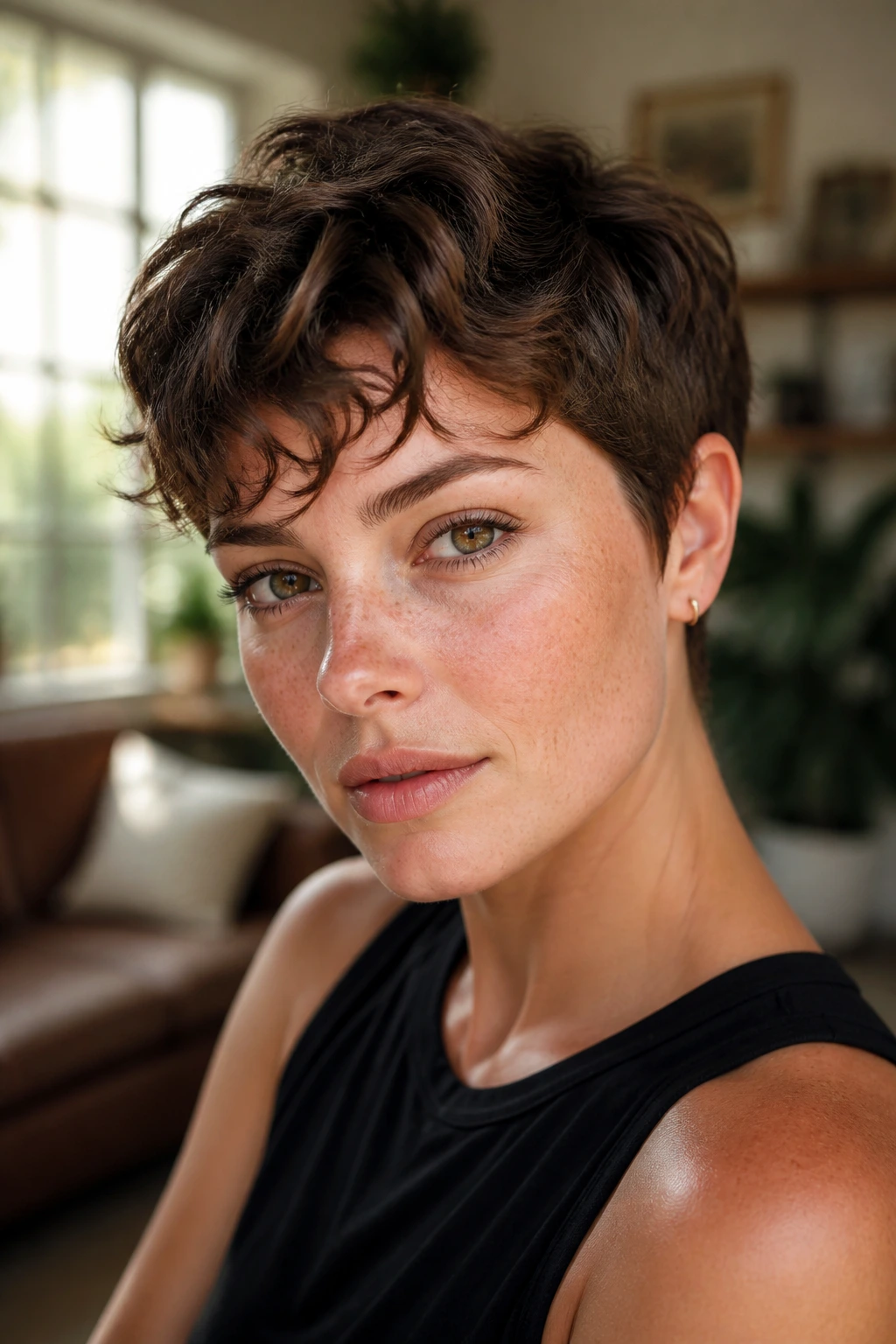
- Point-cutting shears: These are for the stylist, not your bathroom drawer, and they’re the main reason a pixie can look feathered instead of blunt.
- Small round brush: Useful if you want a little lift at the fringe or crown without flattening the wave.
- Diffuser attachment: Helps the wave keep its bend when you dry with heat, especially on thicker hair.
- Light mousse: A golf-ball-sized amount on damp roots gives shape without turning the cut crunchy.
- Styling cream: Best for soft separation through the fringe and ends; use a pea-sized amount first.
- Matte paste or light wax: Good for pinching out pieces, but only in tiny amounts or the style will get sticky fast.
- Wide-tooth comb: Handy for distributing product without pulling the wave out.
- Hair clips: Useful for setting the fringe or crown while the hair cools.
- Satin pillowcase: Not glamorous, but it keeps the top from getting flattened overnight.
How to Choose the Right Wavy Pixie for Your Hair Type
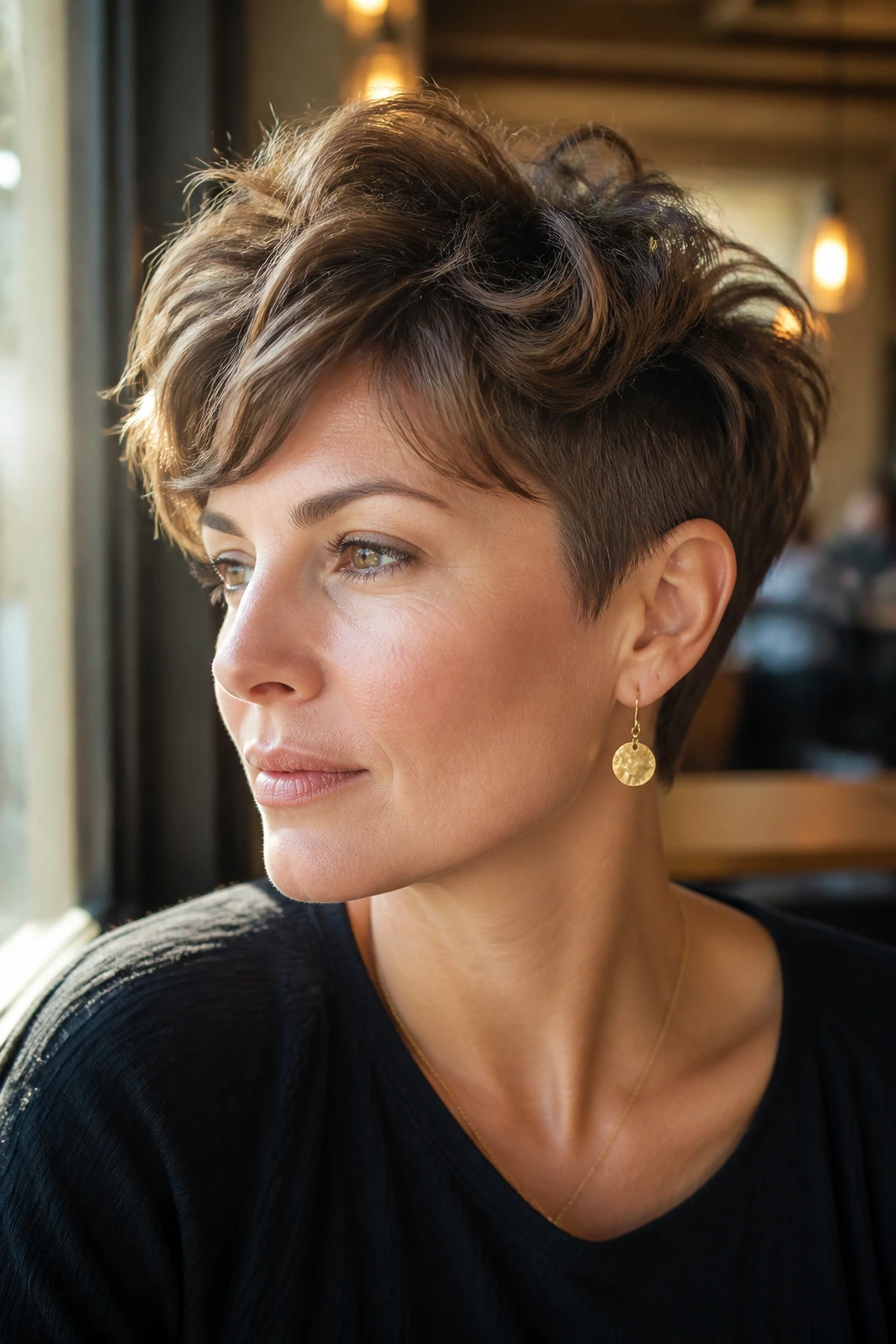
The best wavy pixie cuts are the ones that respect what your hair already does. If your wave starts near the root, you can usually go shorter on the sides because the texture itself will keep the shape alive. If your hair only bends from mid-length down, leave more length in the top and fringe so the movement has room to show up.
Fine hair likes lift and broken edges. Thick hair likes strategic weight removal and a cleaner nape. That sounds obvious, but I still see people ask for a “soft pixie” and then forget that soft does not mean equally long everywhere. Fine hair can go flat if the layers are too heavy. Thick hair can puff if the bulk is left in the wrong places. Different problem, different fix.
Face shape matters too, though not in the rigid, rule-book way people sometimes make it sound. A stronger jaw can take a short fringe and a tighter side. A rounder face often likes a bit more height on top or a diagonal sweep at the front. A long face usually benefits from fringe that falls forward rather than straight up. None of that means you’re boxed in. It just helps you choose where the wave should sit.
Bring photos, yes, but bring better photos than people usually do. Show the front, the side, and the back. The nape is where a pixie can go from soft to awkward in one bad decision.
Styling Wavy Pixie Cuts Without Crushing the Texture
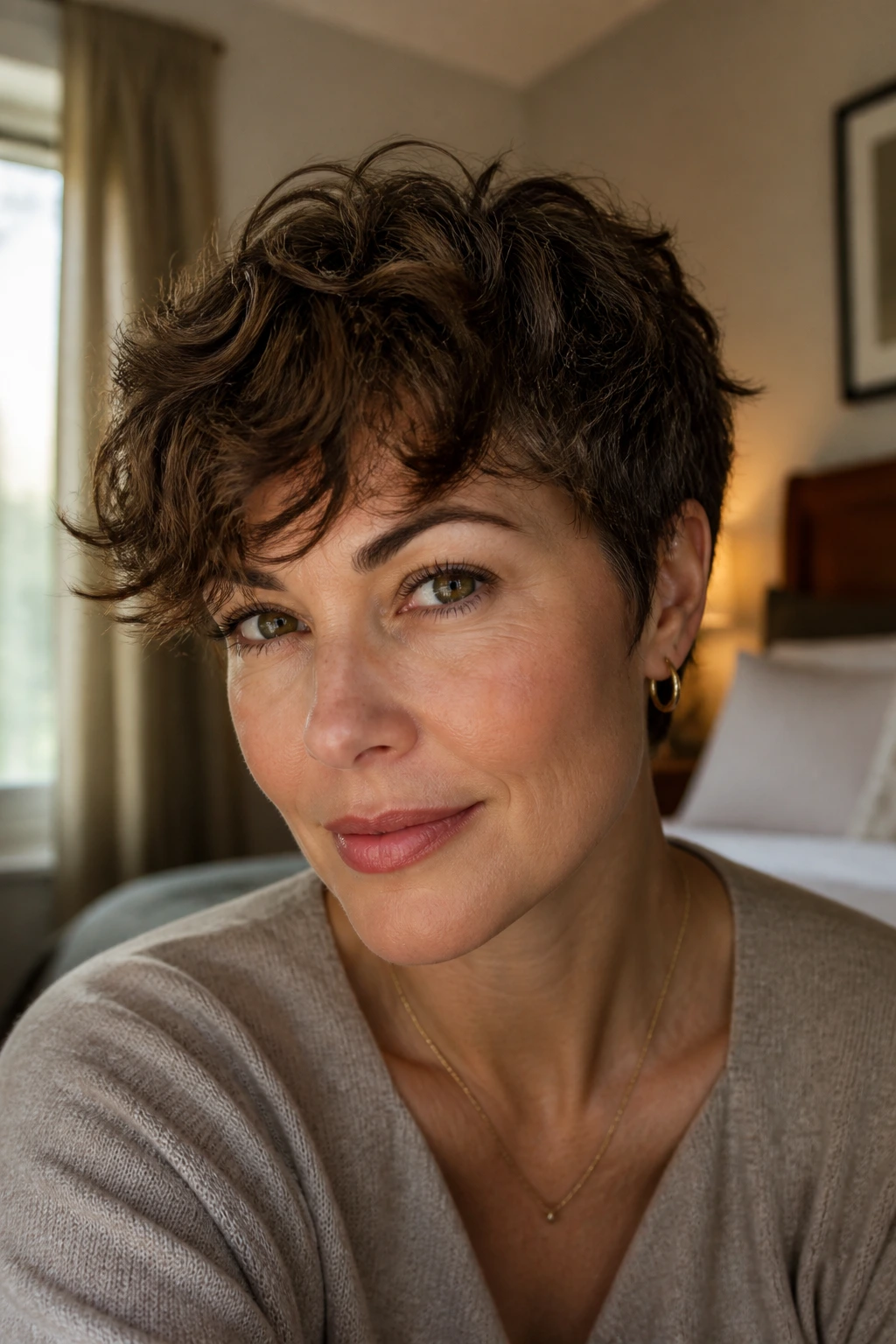
Air-Dry Base: Start with damp hair, not soaking wet hair. Work in a small amount of leave-in or light cream, then scrunch the fringe and crown with your hands so the wave keeps its bend as it dries.
Diffused Shape: If you use heat, keep the dryer on low and hold the diffuser below the hair, not blasting it from above. Dry the roots first for lift, then let the ends finish on their own so they don’t go fuzzy.
Finger-Finish: Once the hair is dry, use your fingertips to pinch apart only the thicker pieces. Do not rake through everything. That’s how a soft pixie starts looking overworked.
Parting Trick: Shift the part a half-inch off center if the style feels too flat. Small changes in parting make a short cut look freshly styled even when you haven’t changed the shape at all.
Second-Day Refresh: Mist the top lightly with water, rub a pea-sized amount of cream between your palms, and scrunch the wave back into place. If the nape is the only part that’s fallen flat, leave it alone. Often, the top is the only thing that needs help.
Additional Tips and Texture Boosters
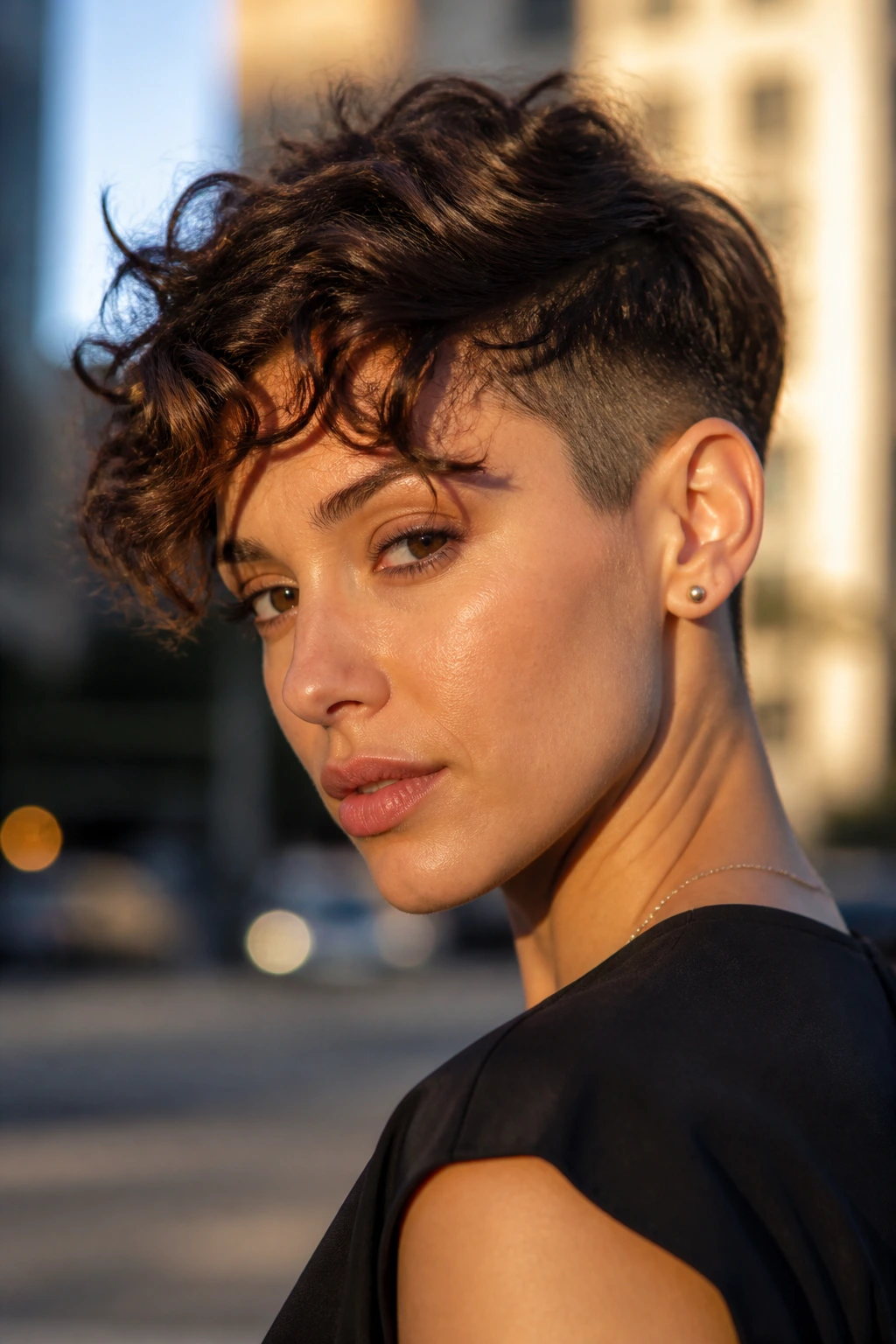
Crown Lift: Flip the top in the opposite direction for 10 to 15 seconds while blow-drying, then set it back. That tiny bit of resistance helps wavy pixie cuts avoid a flat crown.
Edge Softening: Warm a touch of paste between your fingers and tap it only on the ends at the fringe and temples. Softness disappears fastest when product gets smeared too high up the hair shaft.
Color Contrast: A few lighter pieces around the wave pattern can make bends easier to see. You do not need chunky highlights; even subtle contrast can make the texture read better.
Humidity Plan: Use a light anti-frizz spray on the surface, not the roots. Too much product at the scalp weighs the cut down and makes the crown collapse.
Make-It-Yours: Tuck one side, clip the fringe back, or leave a few face-framing pieces longer. A pixie becomes much more personal when one part of it breaks the symmetry.
How to Keep a Wavy Pixie in Shape Between Cuts
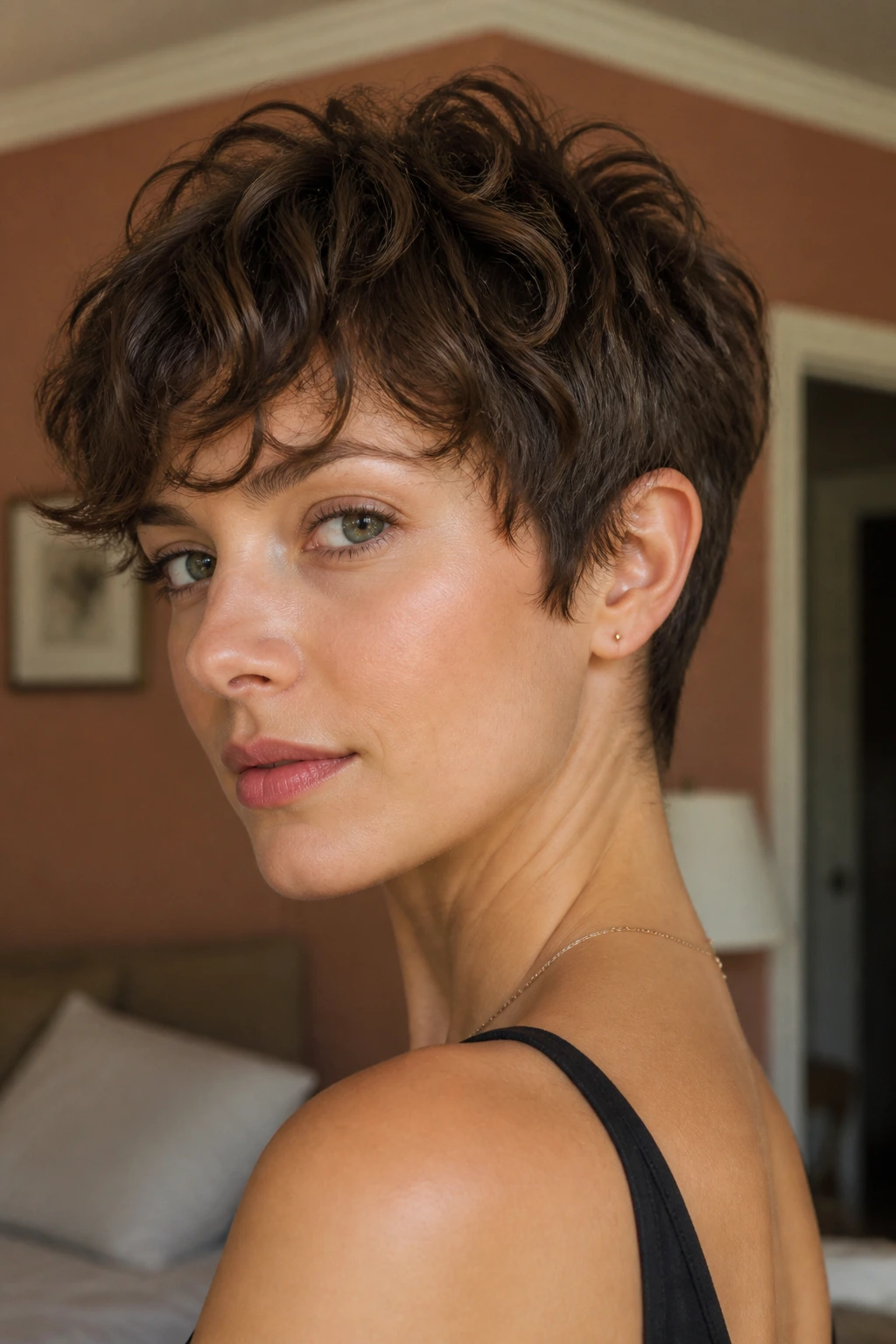
Short hair grows fast in the places people notice first: the nape, the temples, and the fringe. For a crisp-soft hybrid like these styles, a trim every 4 to 6 weeks keeps the outline from swelling up. If you’re growing it out, you can stretch that to 6 to 8 weeks, but only if you’re okay with the shape getting looser around the ears.
The neckline matters more than most people think. A tiny cleanup at the back can make the whole haircut look freshly done, even if the top has been left alone. Some stylists will do a quick bang or nape trim between full appointments. Worth asking. It saves you from the “almost there” stage that can drag on for weeks.
Night care helps too. A satin pillowcase keeps the top from getting flattened and stops the fringe from catching on cotton. If your hair is especially bendy or prone to frizz, sleep with the front section clipped up loosely or tucked in a silk wrap. Not tight. Tight just leaves dents.
If you’re growing a pixie into something longer, don’t ignore the shape as it changes. Keep the perimeter blended. Let the front stay a little longer than the back. That way the cut passes through the awkward middle stages with some dignity intact.
Variations and Adaptations to Try
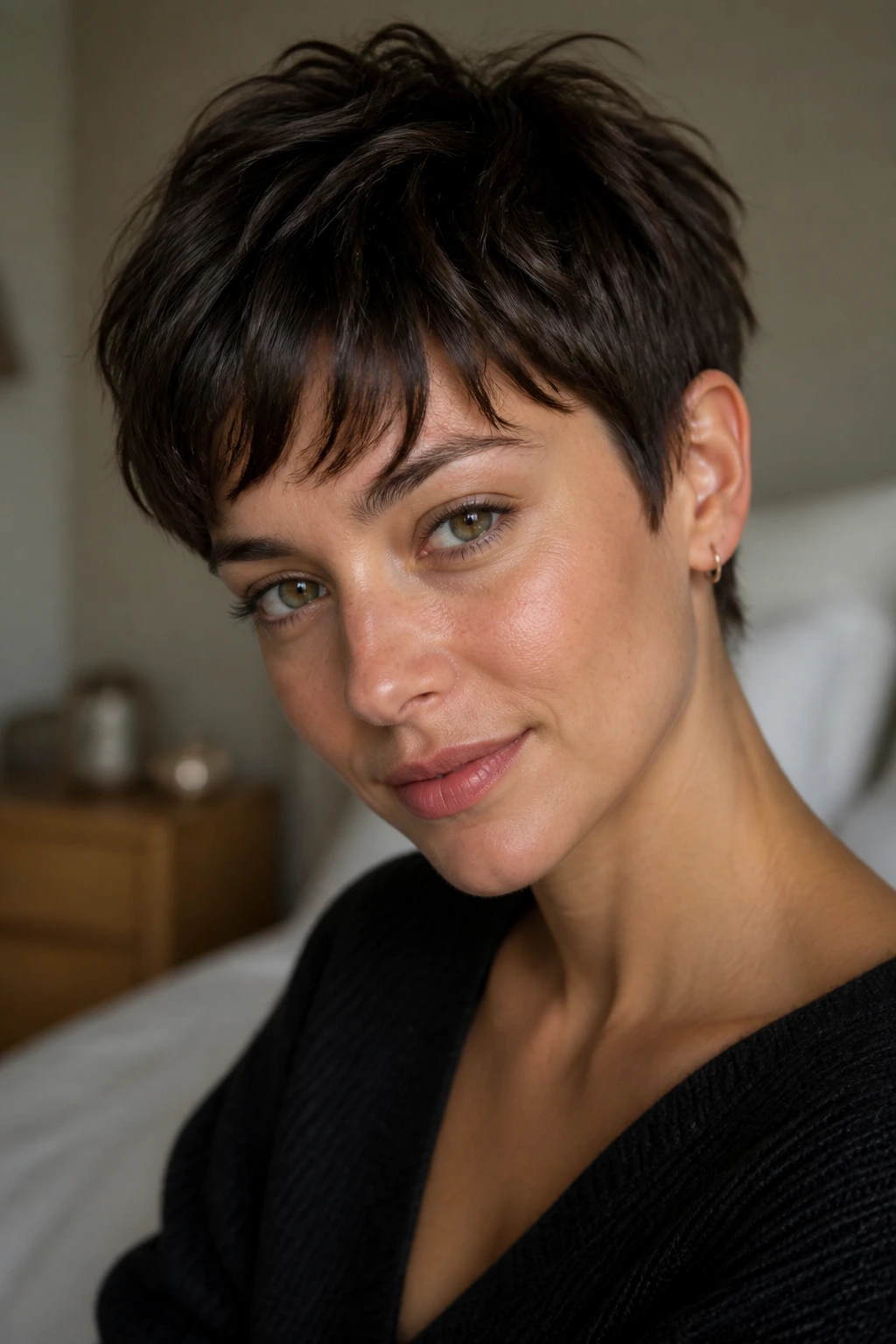
Fine-Hair Cloud Crop: Keep the layers light and the fringe airy so the hair doesn’t separate into see-through strands. A mousse at the roots and a tiny bit of paste on the ends usually gives enough body without making the cut feel stiff.
Thick-Hair Tapered Crop: Ask for extra removal through the bulk around the crown and behind the ears. Thick wavy hair needs shape carved into it, not just shortened, or it can spread wider than you want.
Heat-Free Air-Dry Pixie: This version leans on leave-in cream and finger shaping only. It’s the right call if your hair bends naturally and you want the cut to dry into its own texture without much intervention.
Polished Workday Pixie: Keep the sides tidy, the fringe controlled, and the crown lightly lifted. This is the version to choose if you want a short cut that looks neat with a blazer and a little less casual on purpose.
Grow-Out Pixie Bob: Leave the front and sides a touch longer so the cut can slide toward bob territory without a bad shelf at the nape. This adaptation is practical, not flashy, and that’s why it works.
Common Mistakes to Avoid With Wavy Pixie Cuts
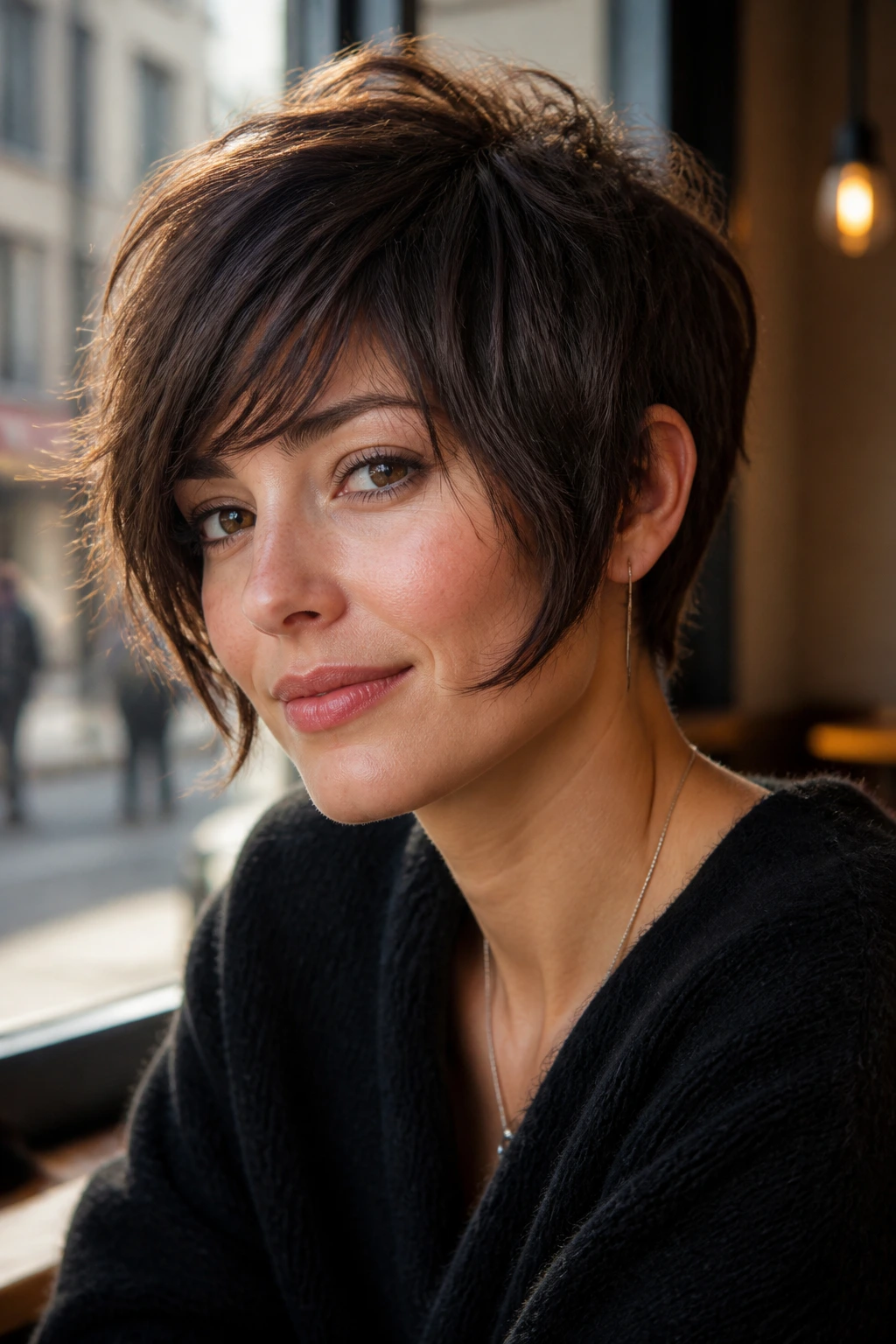
- Cutting the crown too short: The symptom is flat, stuck hair that refuses to lift. The fix is simple: leave enough length on top for the wave to bend and bounce instead of sticking straight up.
- Using too much product: If the hair feels sticky or looks wet all day, the texture is being smothered. Use less than you think you need, starting with a pea-sized amount.
- Blowing the wave straight: This creates frizz and takes away the whole point of the cut. If you use heat, dry with a diffuser or your fingers in a scrunching motion.
- Thinning the hair everywhere: Over-thinning makes the surface fuzzy and weak at the ends. Ask for point-cutting and targeted weight removal instead.
- Ignoring the nape and sideburns: Short cuts lose their shape fast when the edges grow out. A quick cleanup every few weeks keeps the silhouette soft instead of sloppy.
Questions People Ask Before Getting a Wavy Pixie
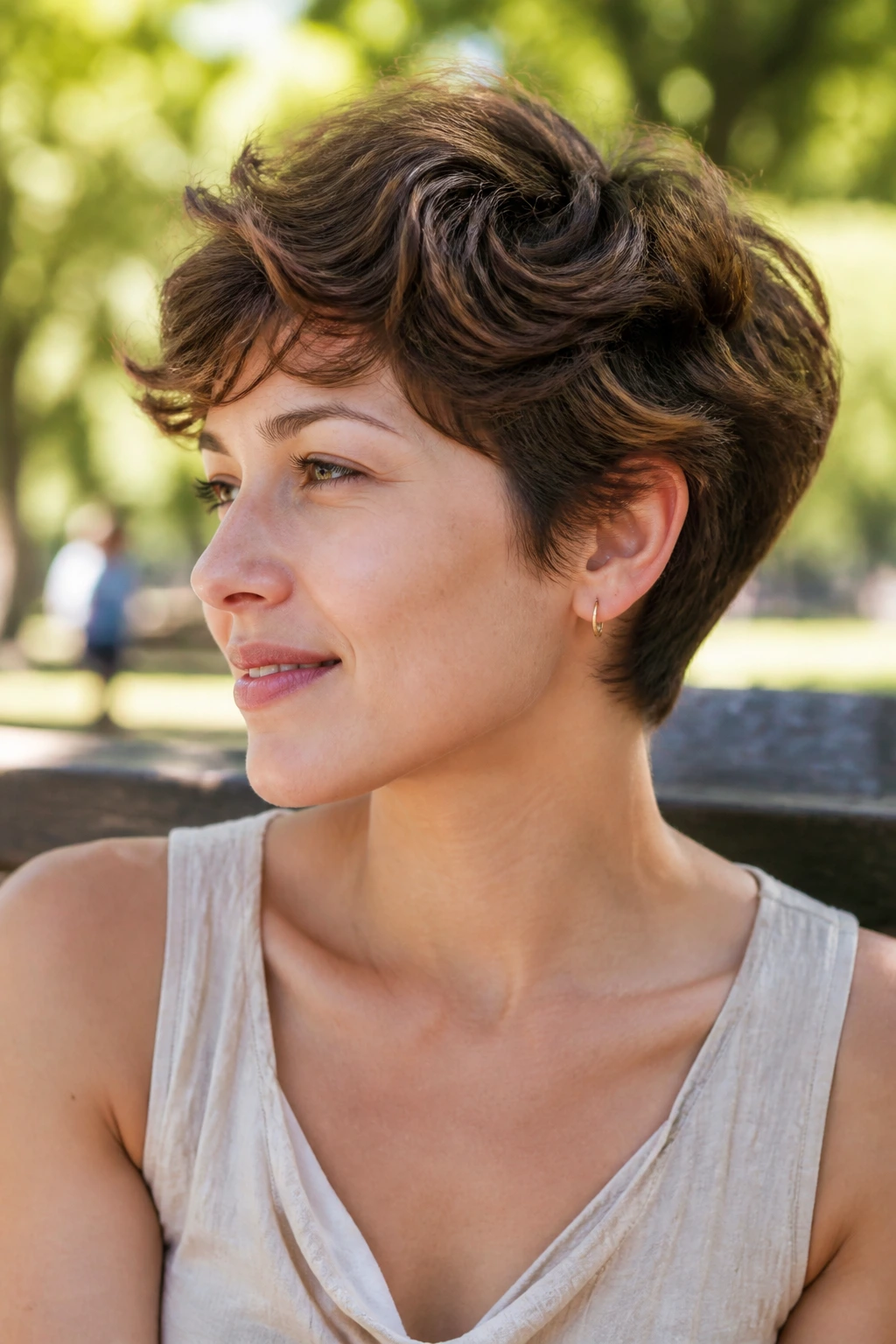
Will a wavy pixie still look soft if my wave pattern is loose?
Yes, and loose waves often look best in shorter cuts because the bend has more visual impact. Keep a little extra length in the fringe and crown so the wave has something to show.
Can fine hair pull off a pixie without going flat?
It can, if the cut is built with lift at the top and not too much weight in the sides. A soft mousse and a light root-drying routine usually help more than heavy styling cream.
What if my hair is thick and puffs out when it gets short?
Then the interior needs weight removal and the outline needs tapering. Thick wavy hair can look lovely in a pixie, but it needs carving, not just clipping shorter.
Do I need heat styling every morning?
No. Most of these cuts are meant to work with air-drying or a quick rough-dry. Heat is useful for lift and direction, not for building the style from scratch every day.
How often should I trim a wavy pixie?
Every 4 to 6 weeks if you want the shape to stay precise. If you like a softer, slightly grown-out look, you can push it a little longer, but the nape and fringe will need attention.
Can I wear bangs with a wavy pixie?
Absolutely. In fact, fringe is one of the easiest ways to soften the haircut. Keep it piecey or side-swept rather than heavy and blunt if you want movement.
What should I tell my stylist if I want softness, not sharp edges?
Ask for point-cut ends, a tapered nape, and texture that follows your wave pattern. Bring photos that show the side and back, not just the front.
How do I grow one out without it turning into a mess?
Keep the outline blended and let the front stay a little longer than the back. That keeps the shape moving toward a short crop or bob instead of forming a weird shelf.
Soft Shape, Better Texture
The best wavy pixie cuts don’t fight the hair. They give it a frame and then step back. That’s why the softest versions feel so good to wear: the wave gets to stay visible, the outline stays light, and the cut doesn’t need a full styling routine to behave.
If you’re choosing one, start with the part of your hair that already does the most interesting work. Maybe it’s the fringe, maybe it’s the crown, maybe it’s the bend behind one ear that keeps flipping the right way. Build around that. A good pixie on wavy hair is less about forcing shape and more about noticing where the shape already lives.
Bring that idea to the salon, and bring photos that show the side and back as well as the front. That’s usually where the soft texture either gets lost or gets made right.
