



A good medium layered haircut can change the whole mood of a face. On older women, the right layers don’t shout; they lift the cheekbones, soften the jaw, and keep enough length to tuck behind an ear, clip back on one side, or swing cleanly at the collarbone.
That balance is harder to get than people think. Move the first layer too high and fine hair can look sparse at the ends. Leave it too low and thick hair can sit like a helmet. The sweet spot lives somewhere around the cheekbone, chin, or collarbone, depending on how much movement the hair needs and how much styling you’re willing to do.
Medium layered haircuts for older women work because they deal with real hair, not idealized hair. Hair gets finer, grayer, coarser, curlier, flatter, or just more stubborn over time. A well-placed layer can make all of that easier to live with, not harder. That’s the point. Not perfection. Usability.
Why These Medium Layers Earn Their Place
-
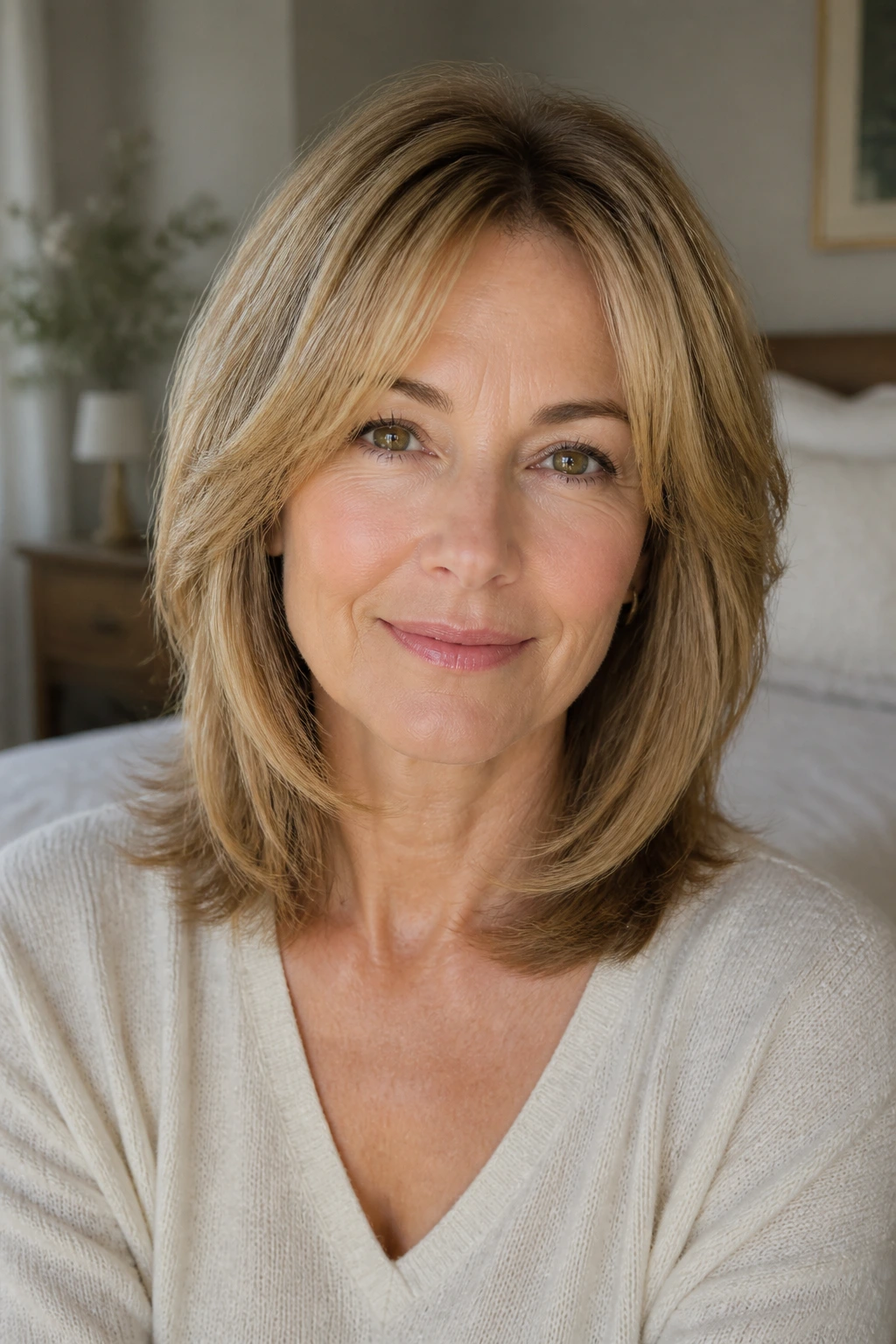
They soften the face without taking away length: A shoulder-skimming cut with face-framing pieces keeps the neckline open and the profile lighter, which matters more than most people expect.
-
They give fine hair a little lift without making it see-through: Long layers around the crown and cheekbones create movement where flat hair tends to collapse.
-
They remove bulk where thick hair gets heavy: A good layered shape can keep thick hair from ballooning out at the sides or dragging down the neck.
-
They grow out cleanly: Medium layers usually blur into the next trim better than short cuts with sharp edges, so you’re not stuck with a weird in-between shape.
-
They work with gray and silver texture: Grayer hair often feels drier and a bit more wiry; layers help the cut move instead of hanging in one block.
-
They play well with daily life: Glasses, earrings, clips, headbands, low ponytails—medium length has room for all of it without losing shape.
1. Collarbone Layers That Frame the Face
This is the haircut I keep coming back to when someone wants a change without a scene. The length hits near the collarbone, which means the ends still have enough weight to look full, while the front pieces sweep softly around the cheekbones and jaw. It’s tidy, but not severe.
Why It Flatters So Hard
The collarbone is a useful landing zone because it sits just long enough to keep the neck visible and just short enough to feel fresh. Layers that start around the chin or mouth give the face a little lift, and that matters when the hair has gotten finer at the temples or flatter at the crown.
Best for: straight, wavy, or slightly curly hair that needs shape without a lot of styling fuss.
Styling note: a 1.5-inch round brush and a quick bend at the ends are enough. You do not need a salon-level blowout every day.
What to ask for: “Keep the perimeter around collarbone length, then add soft face-framing layers that start near the chin.” That one sentence saves a lot of confusion.
2. Feathered Layers with Side-Swept Bangs
Feathered layers look gentle for a reason: the movement is all in the edges. The ends taper softly, and the side-swept bang glides across the forehead instead of sitting like a block. On older women, that little sweep can be gold. It softens forehead lines, but it also keeps the haircut from feeling too busy.
The charm here is motion. Not volume for its own sake. Motion.
When the layers are feathered properly, the hair flips lightly away from the face instead of hanging straight down. That works especially well if your hair feels a little heavy near the cheeks or if you like a cut that still looks polished after a quick brush-through. A side part deepens the effect and gives the top a touch more lift.
If your hair is very fine, keep the feathering long and avoid having too many short pieces around the crown. Too much slicing can make the ends look thin. What you want is air, not scraps.
3. Shoulder-Length Shag With Soft Texture
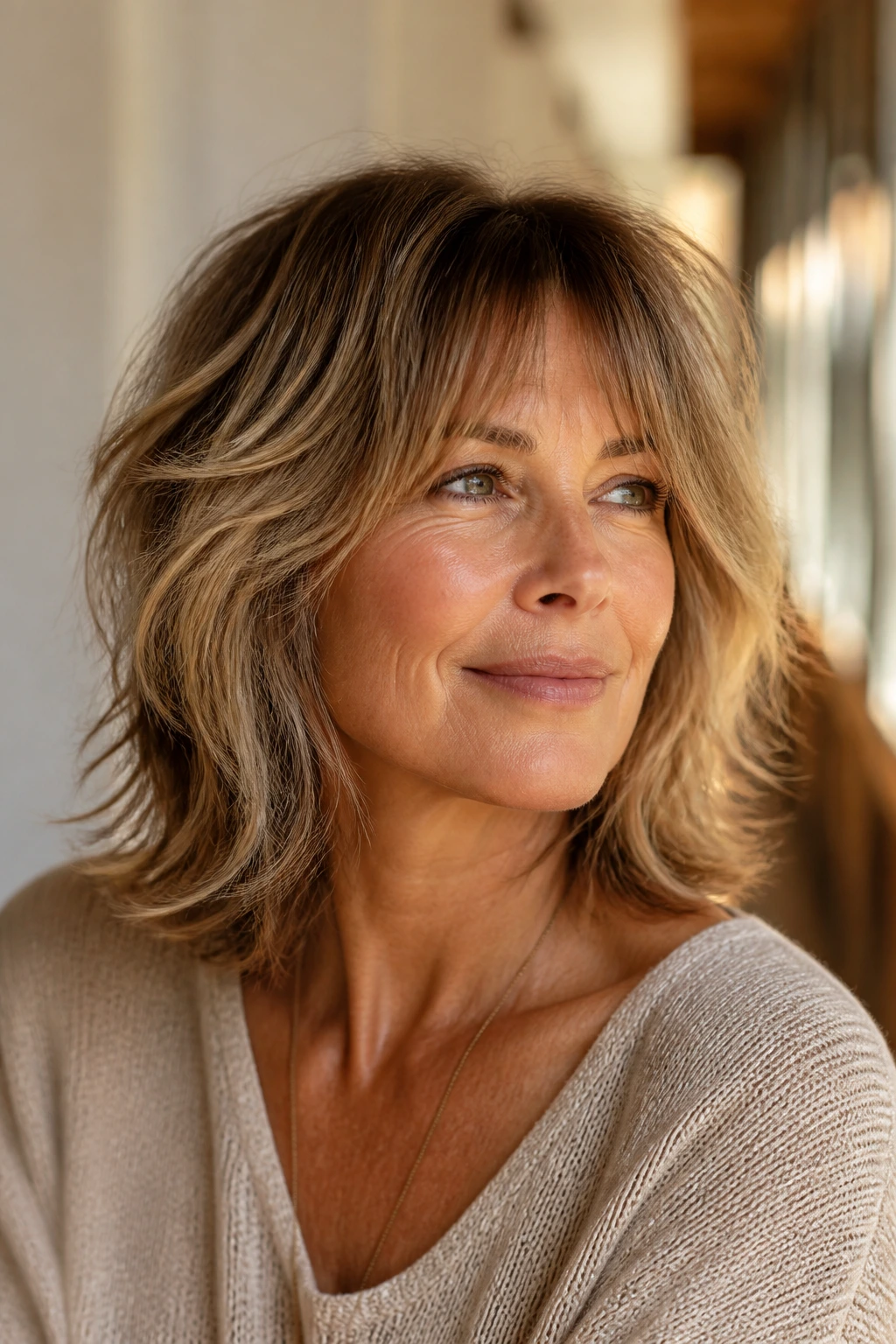
A shag can sound like a lot. It doesn’t have to be. A shoulder-length shag on mature hair is usually more relaxed than the rock-and-roll version people picture. Think soft separation around the crown, a few piecey layers through the sides, and ends that move instead of sit in one heavy line.
Why does this cut work so well on wavy hair? Because wavy hair already wants to bend. If you fight it with a blunt shape, it puffs in strange places. A softer shag lets the wave settle where it wants to go.
What Makes It Different
- The top is lightly lifted, not chopped to bits.
- The ends stay around the shoulders, so the cut still feels wearable.
- The texture looks best with a little mousse and a diffuser, not a flat iron.
If you like a cut that has a little personality, this is one of the better options. It doesn’t need precision to look intentional. That’s a blessing on busy mornings.
4. Invisible Layers for a Smooth Lob
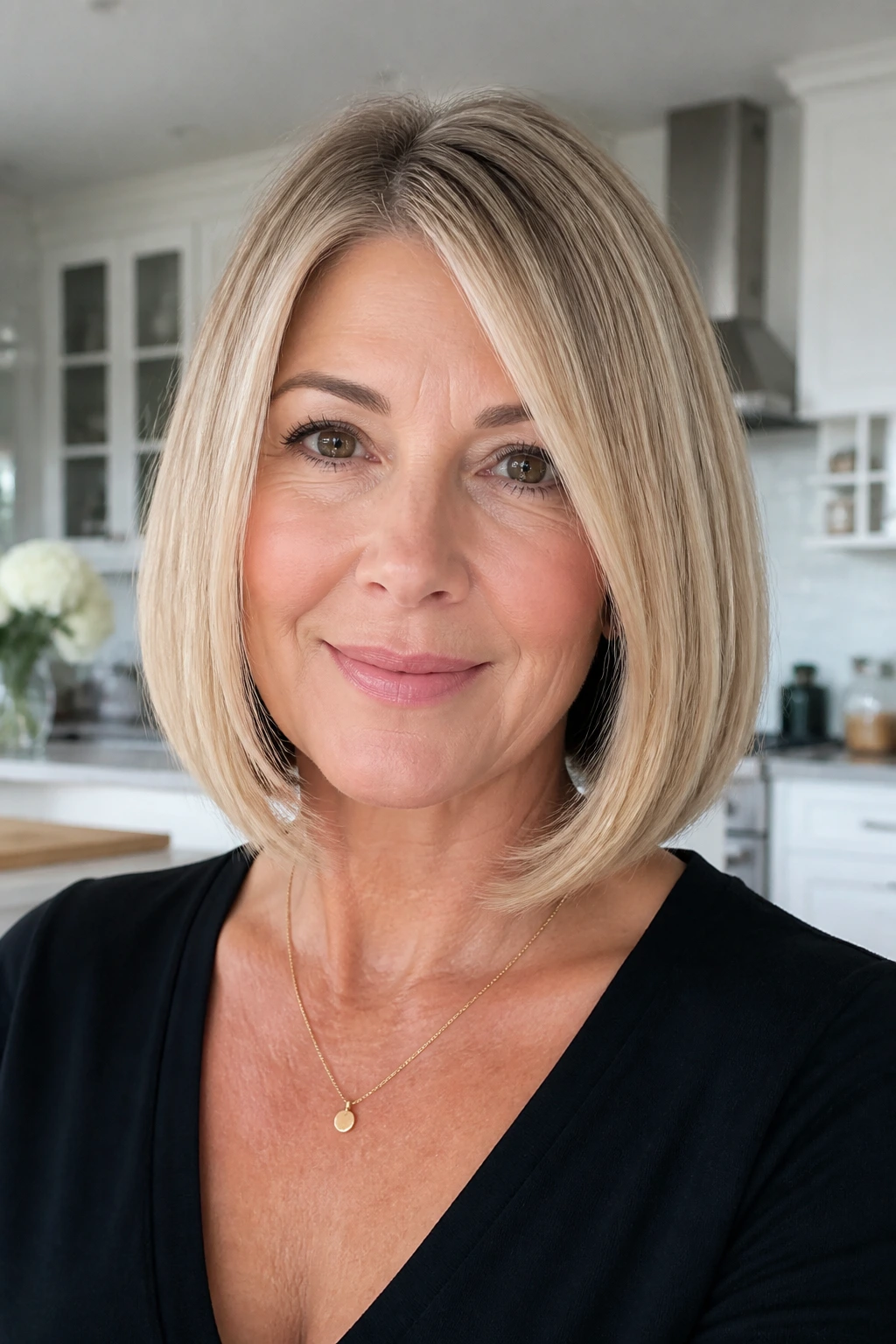
Invisible layers are the quiet ones. You don’t see them as separate chunks. You feel them in the way the hair falls. The perimeter still looks clean and solid, but the inside has been lightly shaped so the lob doesn’t collapse into a rectangle.
That matters for women who want polish more than texture. A smooth lob can look expensive in the plainest, least fussy way—especially if the ends are blunt enough to feel full and the internal layers are subtle enough to keep movement. It’s a smart move for hair that’s medium-fine and needs body without choppiness.
Here’s the catch: invisible layers only stay invisible if the stylist respects the density. Too much thinning and the whole thing loses the point. Ask for movement, not reduction. Those are not the same thing.
If you air-dry, this cut can still work, but it usually looks best with a quick bend from a round brush or a soft flat-iron turn under the ends.
5. Chin-Starting Layers for Fine Hair
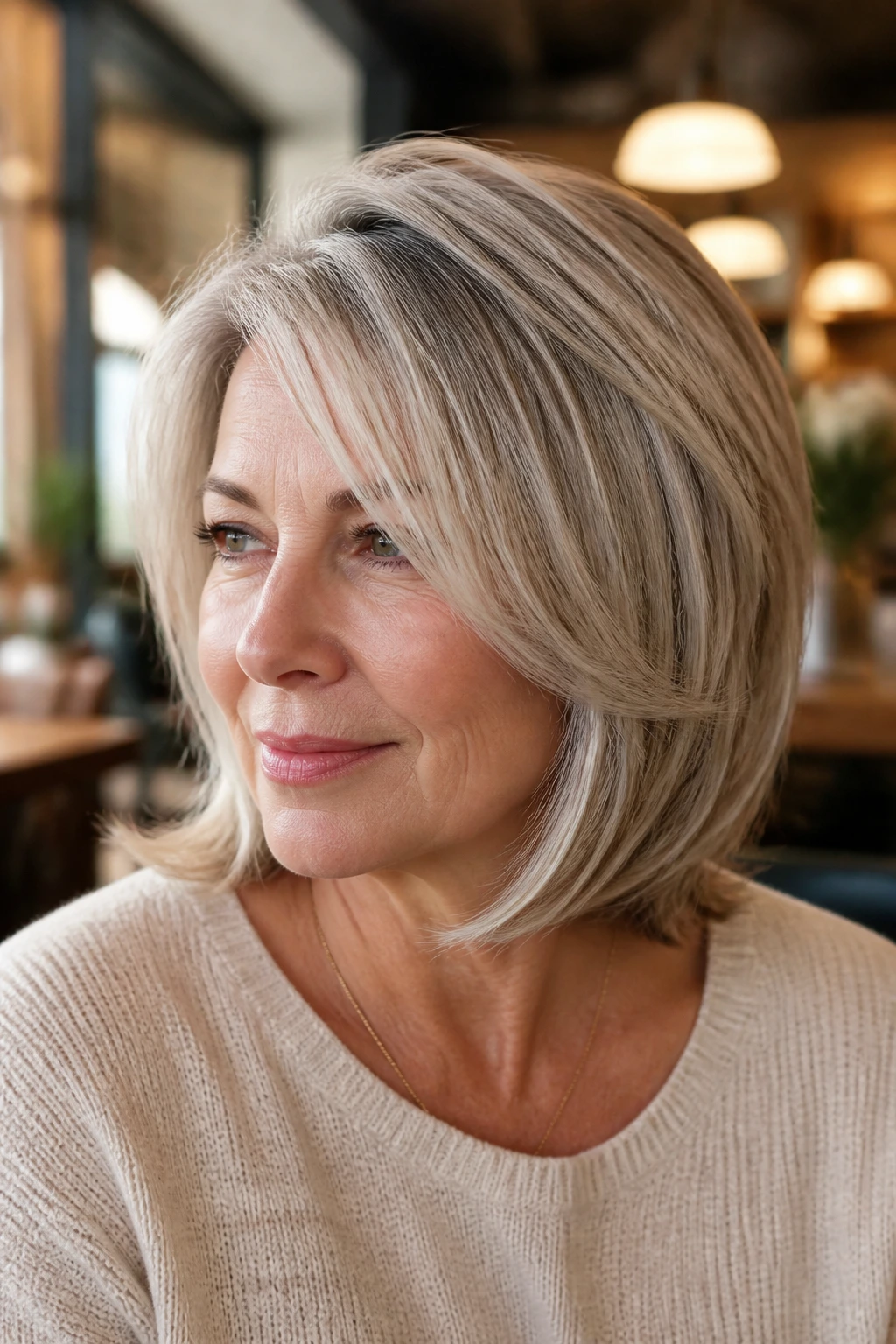
Fine hair likes a careful hand. If the layers begin too high, the lower half of the cut can look stringy by noon. Starting the first real layer around the chin gives fine hair some lift where the face needs it most and leaves enough weight at the bottom to keep the style looking like hair, not wisps.
This shape is especially kind to women whose hair has gotten flatter over time. The chin area brings the eye back up toward the face, which creates the sense of fullness even when the actual density is modest. Add a side part and a little root-lifting mousse, and you get a haircut that behaves like it has more hair than it does.
Skip razor-thin ends here. Fine hair usually looks better with clean, blunt-ish tips and gentle layering through the top. The ends need to hold their own.
6. The Blunt Lob With Hidden Movement
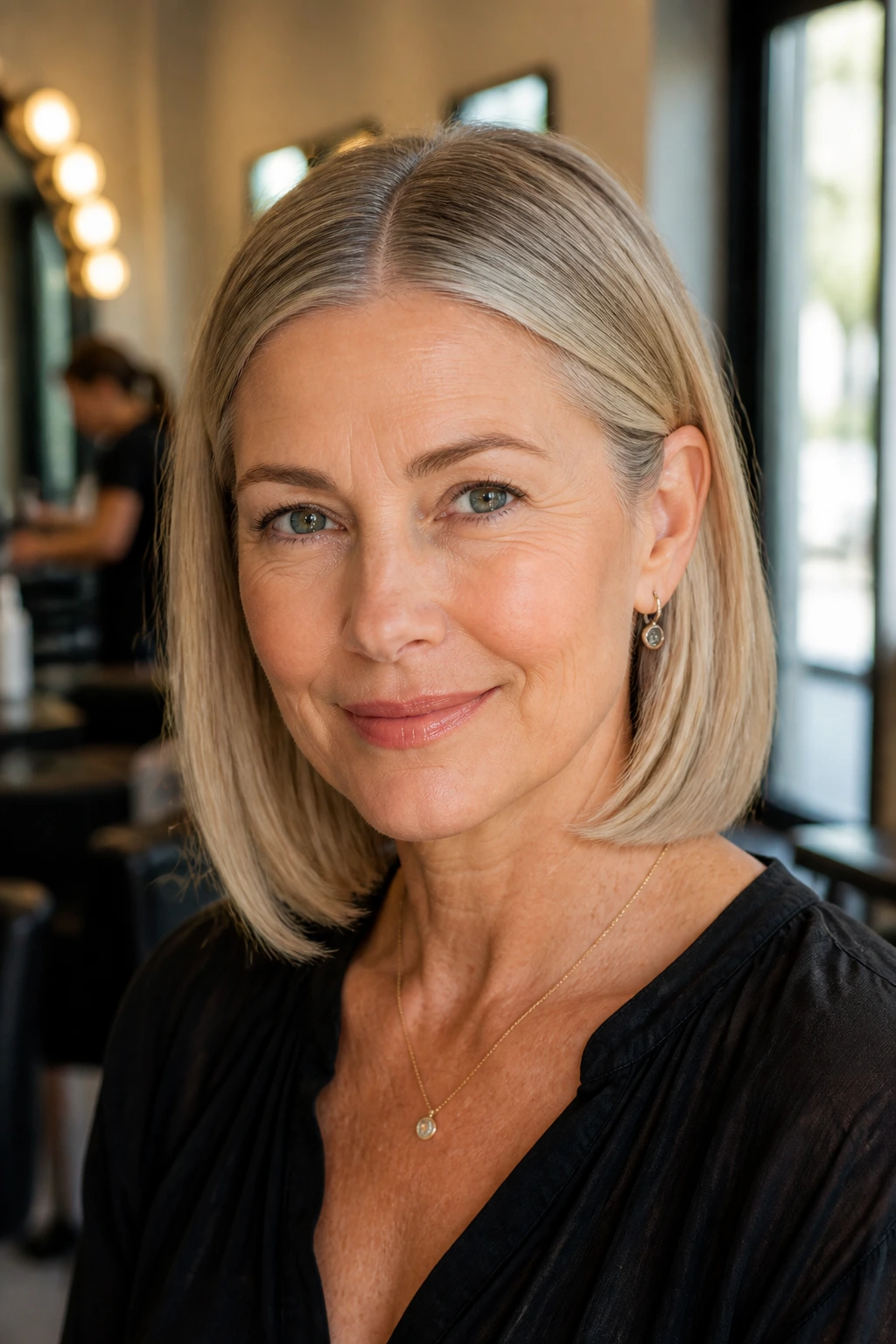
A blunt lob is the haircut for anyone who loves structure but hates stiffness. The perimeter stays clean and solid, which gives the hair a denser look, while the inside is lightly shaped so the style doesn’t feel heavy. On older women, that combination is often better than more dramatic layering, especially if the hair has become finer around the temples.
This cut does one thing really well: it makes the hair look intentional without asking for much from you. A center part makes it feel modern. A side part softens it. Either way, the blunt edge keeps the lower half from fraying out.
Best If You Want
- a haircut that looks full from the front
- a shape that tucks behind the ears without collapsing
- easy grow-out between trims
- a base that works with or without heat styling
If you’ve been burned by over-layered cuts before, this is a safe but not boring option. Safe can be smart. Smart looks good.
7. Curly Layers That Keep Shape and Bounce
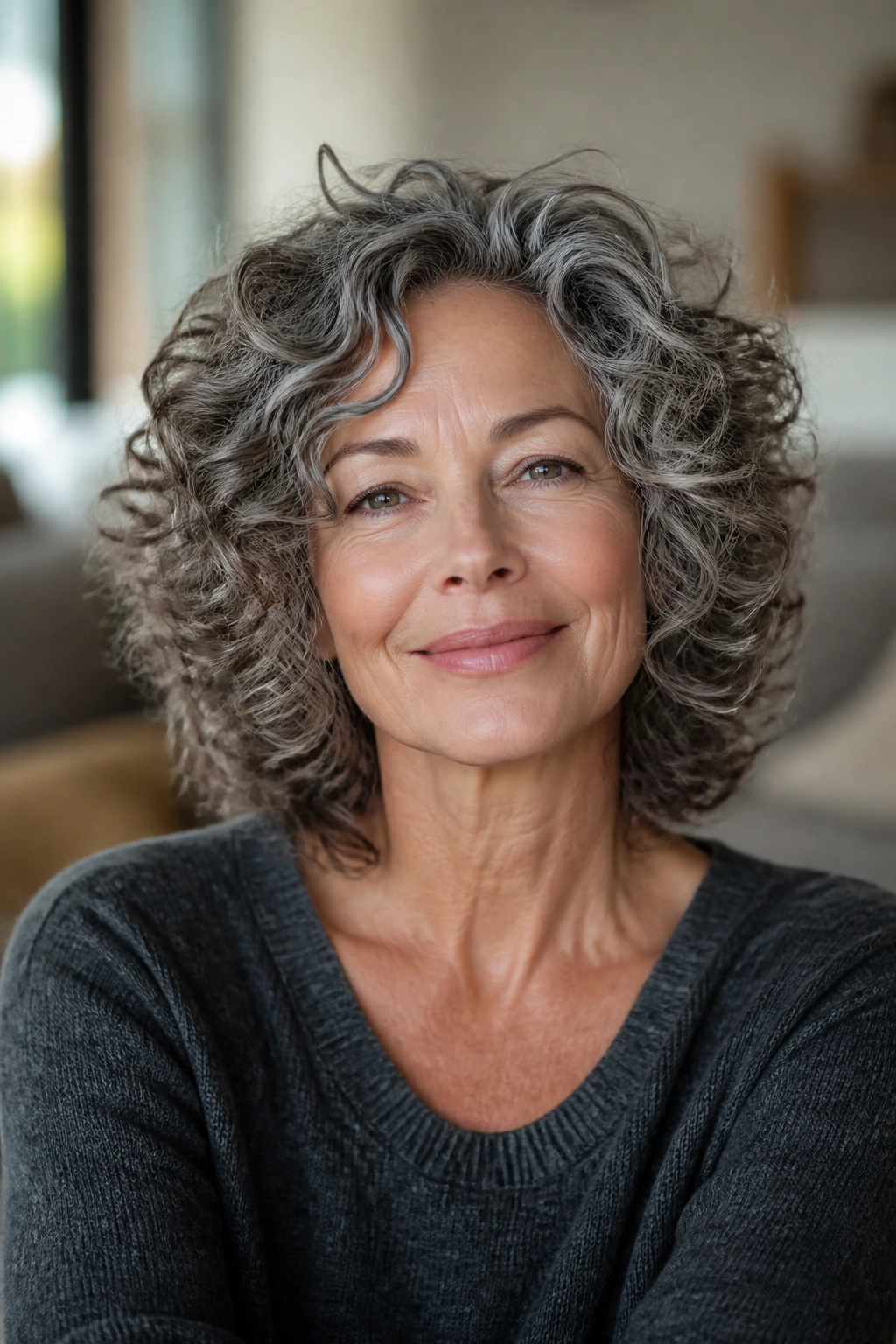
Curly hair needs layers for a different reason than straight hair. Without them, the curl stack can turn into a bell shape—wide at the bottom, heavy at the sides, and oddly flat at the crown. Good medium layers let the curls stack in a way that looks rounded and lively instead of bulky.
The secret is not chopping the curls at random. The cut has to respect the curl pattern. A stylist who understands curly hair will look at how the hair springs when dry, not just when wet. That matters. A lot. Wet curls lie.
Keep the front pieces a little longer if you want the face to stay open. Short layers around the top can be useful for lift, but too much stacking at the crown can make the shape jumpy. A curl cream, a leave-in conditioner, and a diffuser on low heat usually do more for this cut than any brush ever will.
8. U-Shaped Layers for Thick Hair
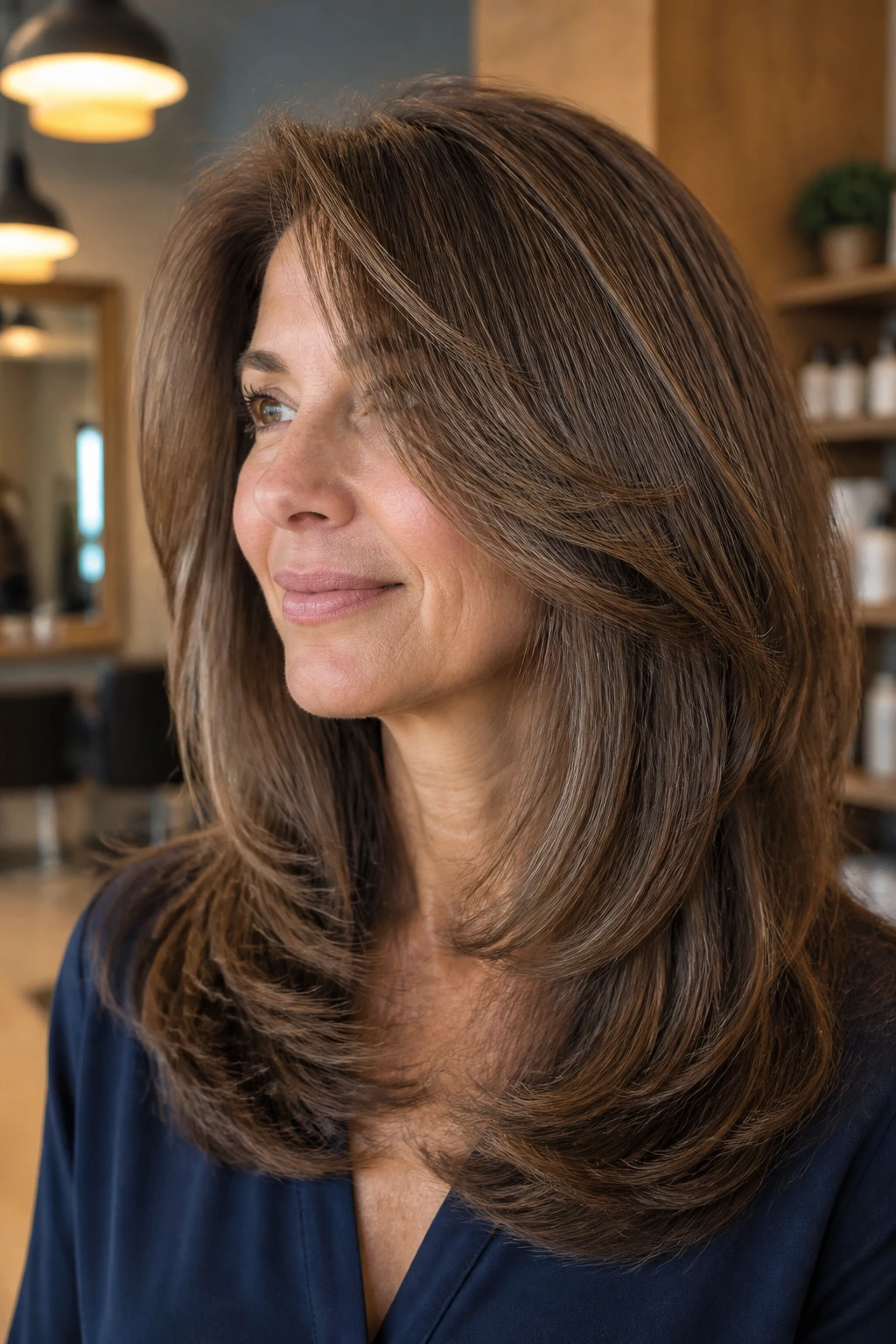
Thick hair can be a gift and a headache in the same afternoon. A U-shaped cut eases that tension. The back keeps a soft curve, the front stays a bit longer, and the layers are placed to remove bulk without wrecking the overall line. It’s the sort of shape that still looks neat when it’s clipped up or tucked into a low twist.
The reason I like this shape on mature hair is simple: it keeps the mass from sitting like one heavy wall. Thick hair can drag down the face if the cut is too square. The U shape lets the sides fall more gently while preserving enough length for braids, clips, and low buns.
Ask your stylist not to over-thin the interior. That can leave the ends fuzzy and the surface puffier than before. You want weight control, not shredding.
9. Curtain Bangs With a Medium Layered Cut
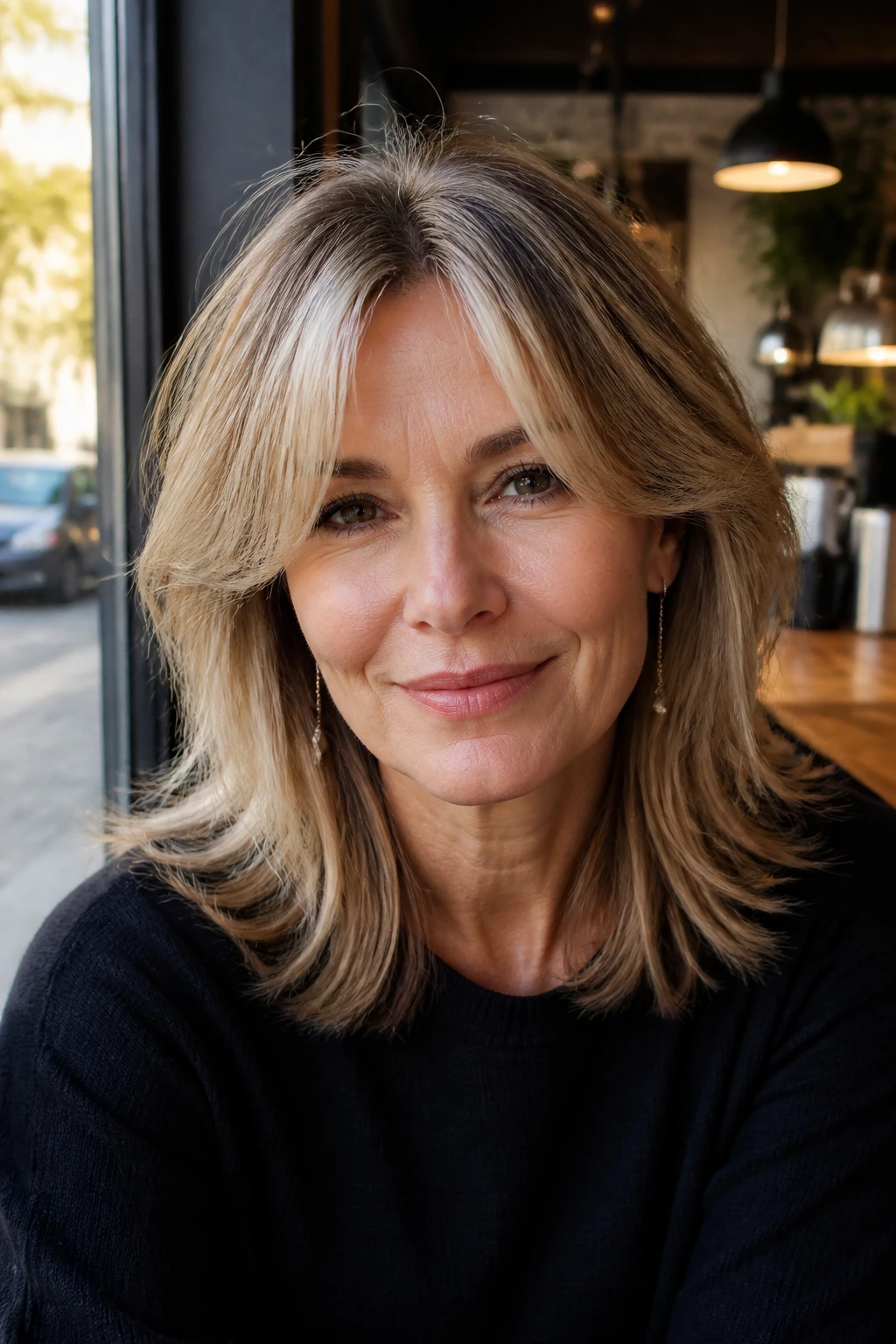
Curtain bangs are not a trend in the flimsy sense. They’re a shape. And on medium layered hair, that shape can soften a forehead, frame the eyes, and connect the front of the haircut to the rest of the layers instead of making the bang area feel separate.
The best curtain bangs on older women usually start a little longer than people expect. Cheekbone to lip level tends to work better than a short, choppy fringe. That length lets the bangs part in the middle and sweep outward instead of sitting flat. It also buys you some room if your hair tends to shrink up when dry.
Use a round brush or a hot roller for a minute or two if you want the bend to stay. You don’t need a stiff curl. You want a soft arc that opens the face.
10. A Blowout Cut Built for Round Brush Styling
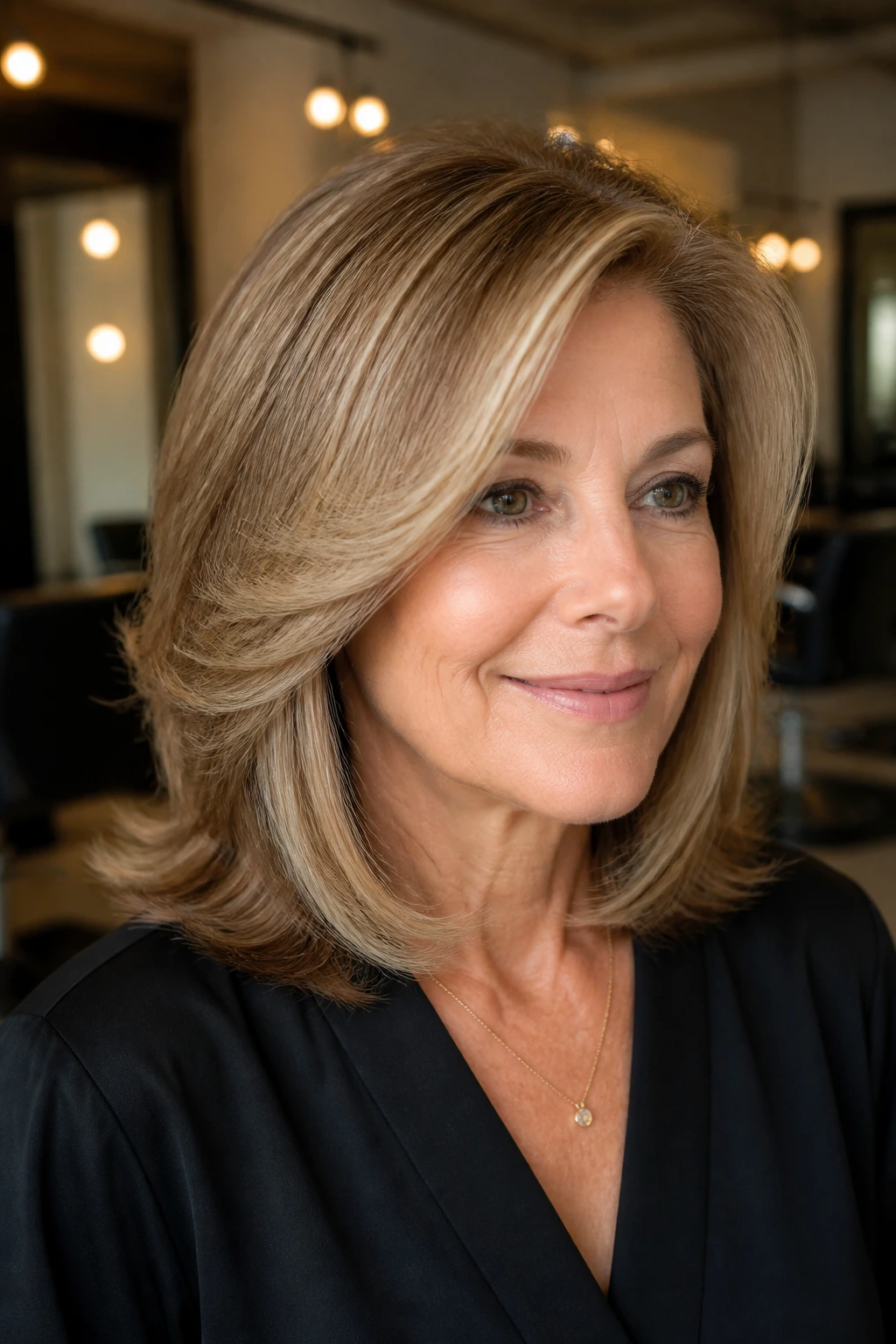
Some cuts are designed to air-dry. This one is designed to swing. A blowout cut has layers placed so the hair naturally wraps around a round brush and flips away from the face with a bit of polish. If you like the feeling of a fresh salon blow-dry, this is the medium length to ask for.
What makes it work is controlled layering. The shape usually keeps a fuller perimeter, with shorter layers through the crown and the front that help the hair bend rather than stick straight down. On older women, that can mean more lift at the sides and less of that heavy curtain effect around the cheeks.
Use a heat protectant, a medium round brush, and a concentrator nozzle. Rough-drying first, then smoothing in sections, gets better results than attacking damp hair from the start. The cut does the heavy lifting; the brush just finishes the job.
11. Choppy Layers for Naturally Straight Hair
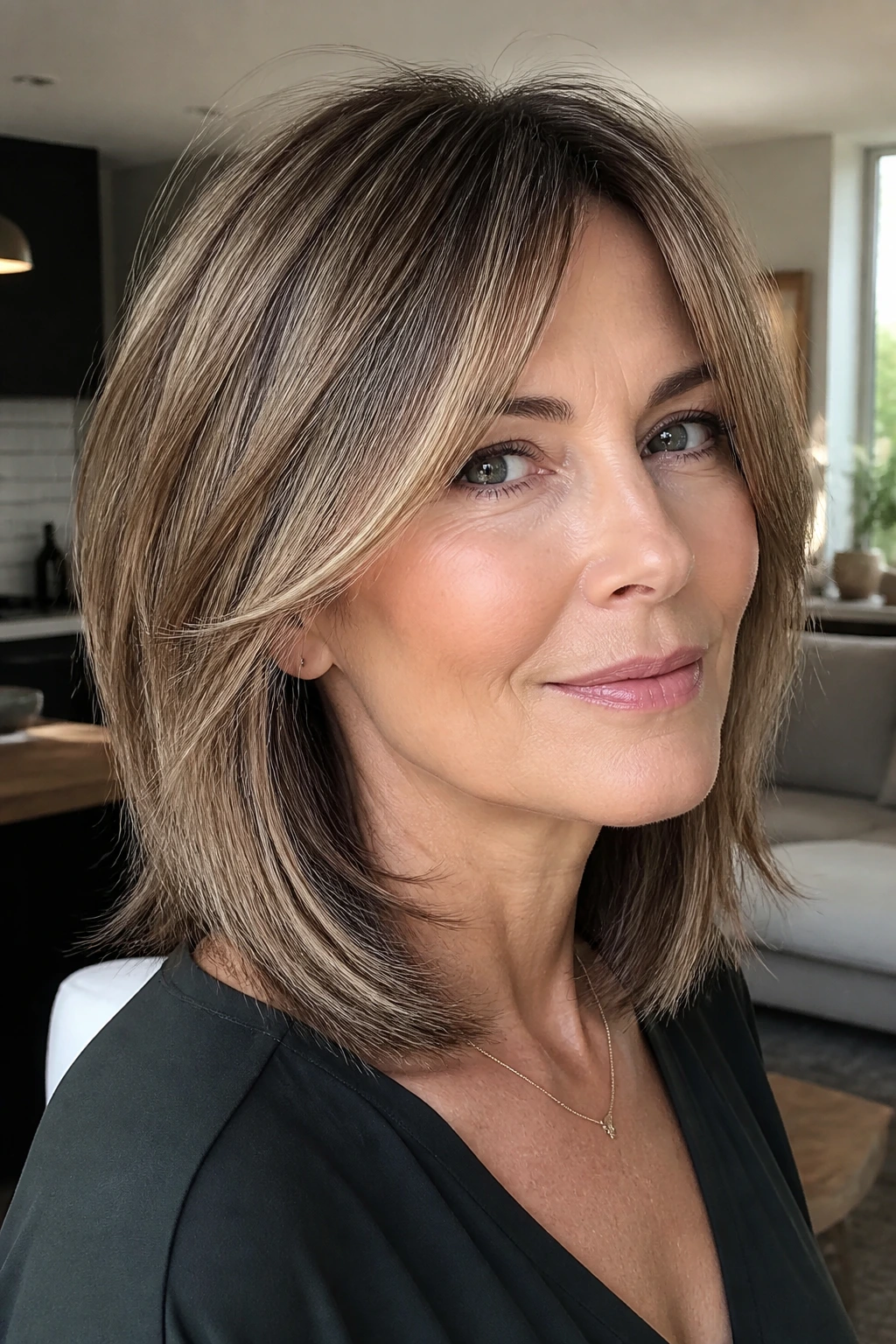
Straight hair can go flat fast, and it can also show every mistake. Choppy layers help, but only if they’re cut with enough restraint to avoid a hacked-up look. Medium straight hair needs pieces that break up the line, not a stack of short layers that poke out in odd directions.
This is the cut for someone who wants movement to show in the way the hair moves when walking, not in a lot of curled styling. The ends have a little edge. The top has some lift. The whole thing feels lighter when you turn your head.
A flat iron can sharpen the ends, but I’d keep the finish slightly undone. Too much polish and the texture disappears. A bit of dry texture spray at the roots gives straight hair the lift it usually needs.
12. A Deep Side-Part Cut That Lifts the Crown
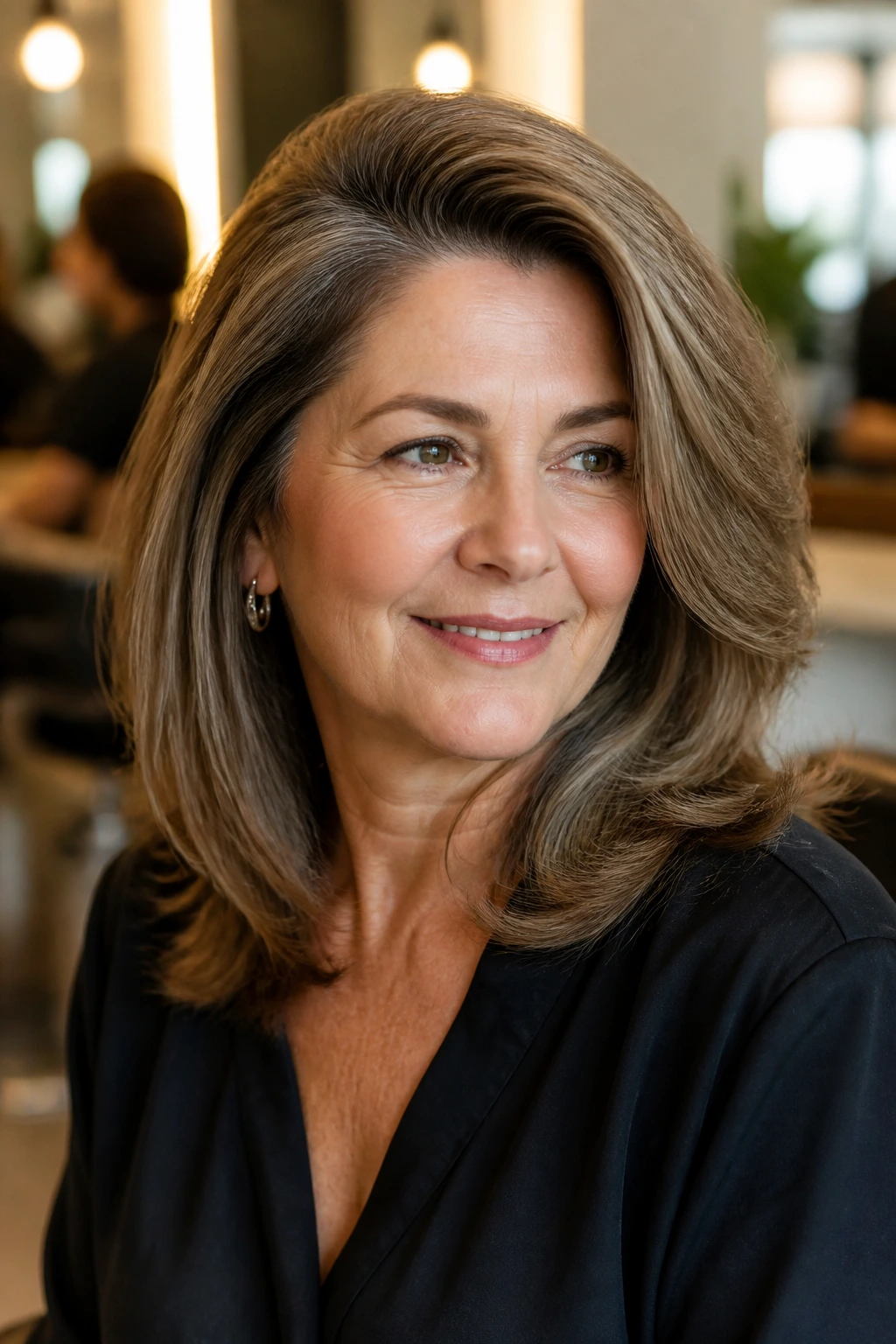
Sometimes the most useful change isn’t the cut at all. It’s the part. A deep side part can pull a medium layered haircut into a shape that gives the crown some height and shifts volume away from the center of the face. That can be especially flattering when hair has thinned a little at the top.
The part line changes where the hair falls, which changes the whole silhouette. One side gets more weight and the other side opens the face. Add long layers that start around the cheekbone and you get a cut that feels softer without becoming floppy.
If your hair insists on splitting where it wants, train the part after washing while the hair is damp. A little root spray helps. So does directing the blow-dryer at the roots for 20 to 30 seconds before the hair dries fully.
13. A Soft Wolf-Inspired Midi
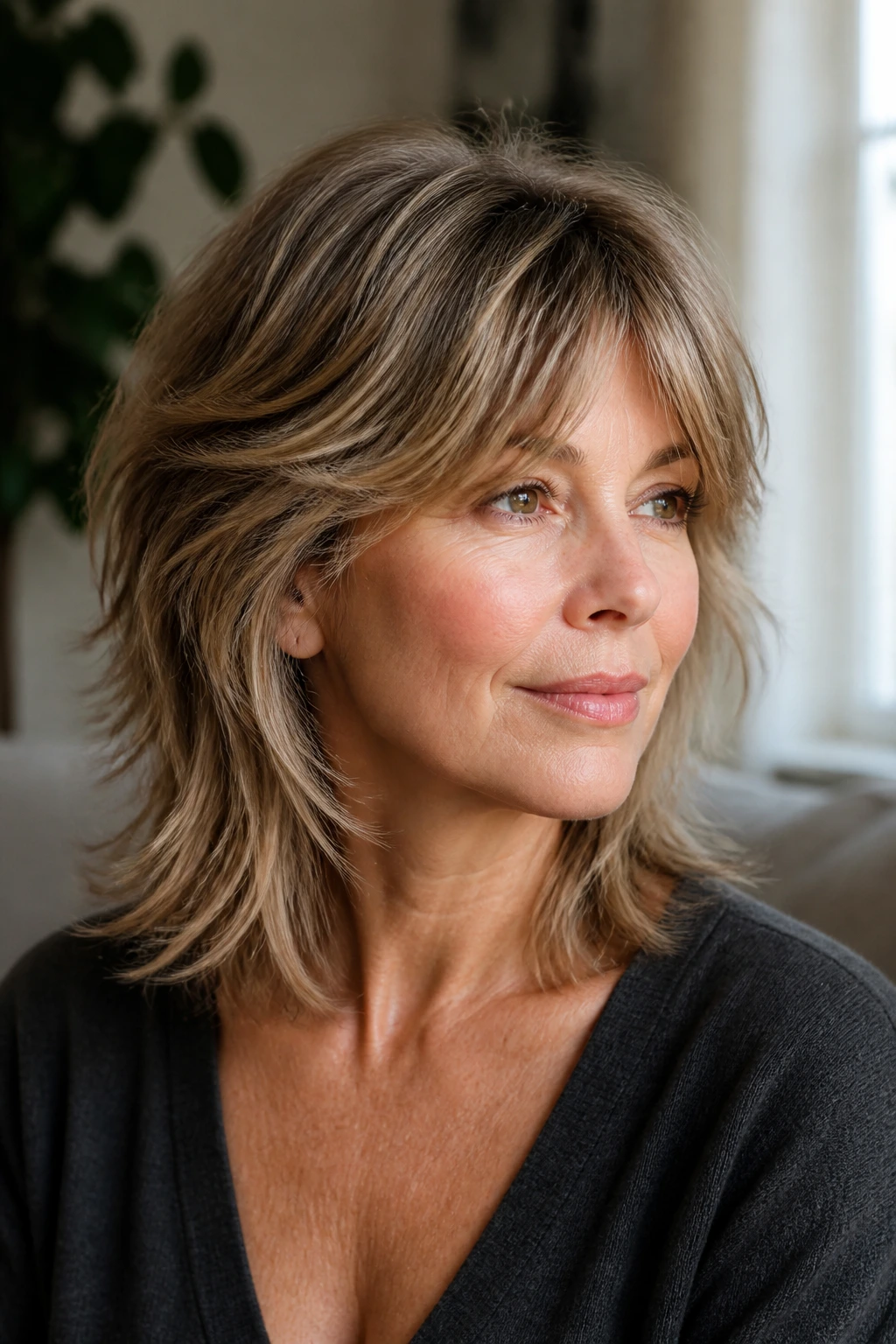
A wolf-inspired midi can sound edgy, but the softened version is surprisingly wearable on mature hair. The idea is the same: lift at the crown, movement through the sides, and tapered ends that don’t drag. The difference is that the medium-length version keeps the roughness under control.
This cut likes texture. A little bend. A little lift. It’s especially useful if your hair has gotten a touch more rebellious over time and refuses to lie flat in one obedient sheet. The crown layers add height, while the perimeter stays long enough to keep the shape from feeling too punk or too short.
Here’s where it shines: when you want a haircut that looks modern without tipping into high-maintenance. Scrunch a bit of mousse into damp hair, rough-dry, then touch the front pieces with a round brush. Done.
14. Tapered Layers That Remove Heavy Bulk
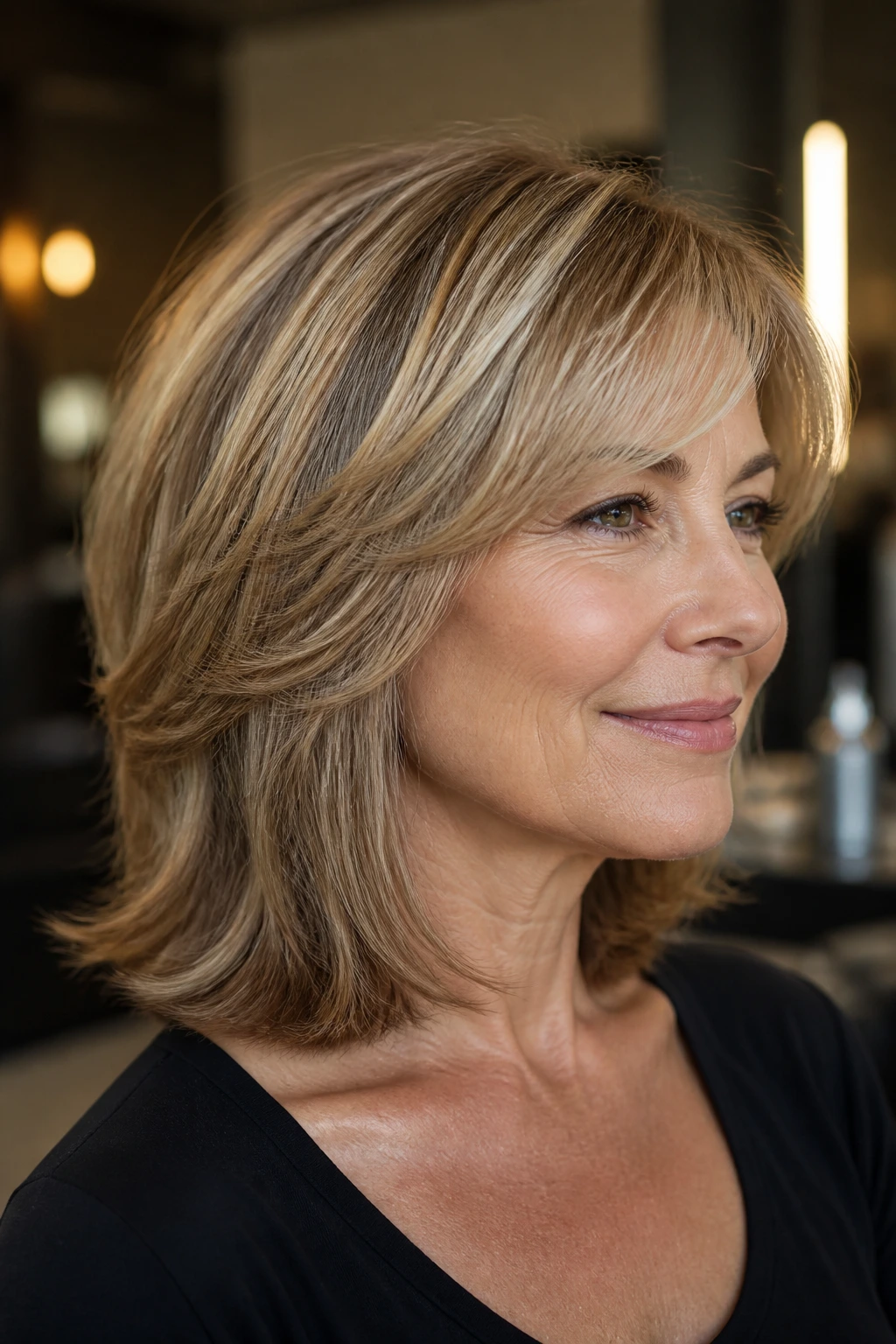
Thick, heavy hair often needs a cut that behaves like a good tailor. Tapered layers remove bulk where the hair stacks up—through the mid-lengths, around the back of the head, and near the sides—while keeping the outline clean. That’s what makes the haircut feel lighter without looking thin.
The difference between tapered layers and aggressive thinning is huge. Tapering keeps the ends intact enough to swing and hold shape. Over-thinning makes the hair fuzzy and exposes every dry tip. If your hair tends to puff around the ears or collect weight at the nape, this shape can be a relief.
This is one of those cuts that pays off in the mirror and in the neck. Less bulk means less heat trapped at the nape, less triangle shape, and fewer battles with clips and ponytails.
15. Razor-Soft Ends for a Light, Swingy Finish
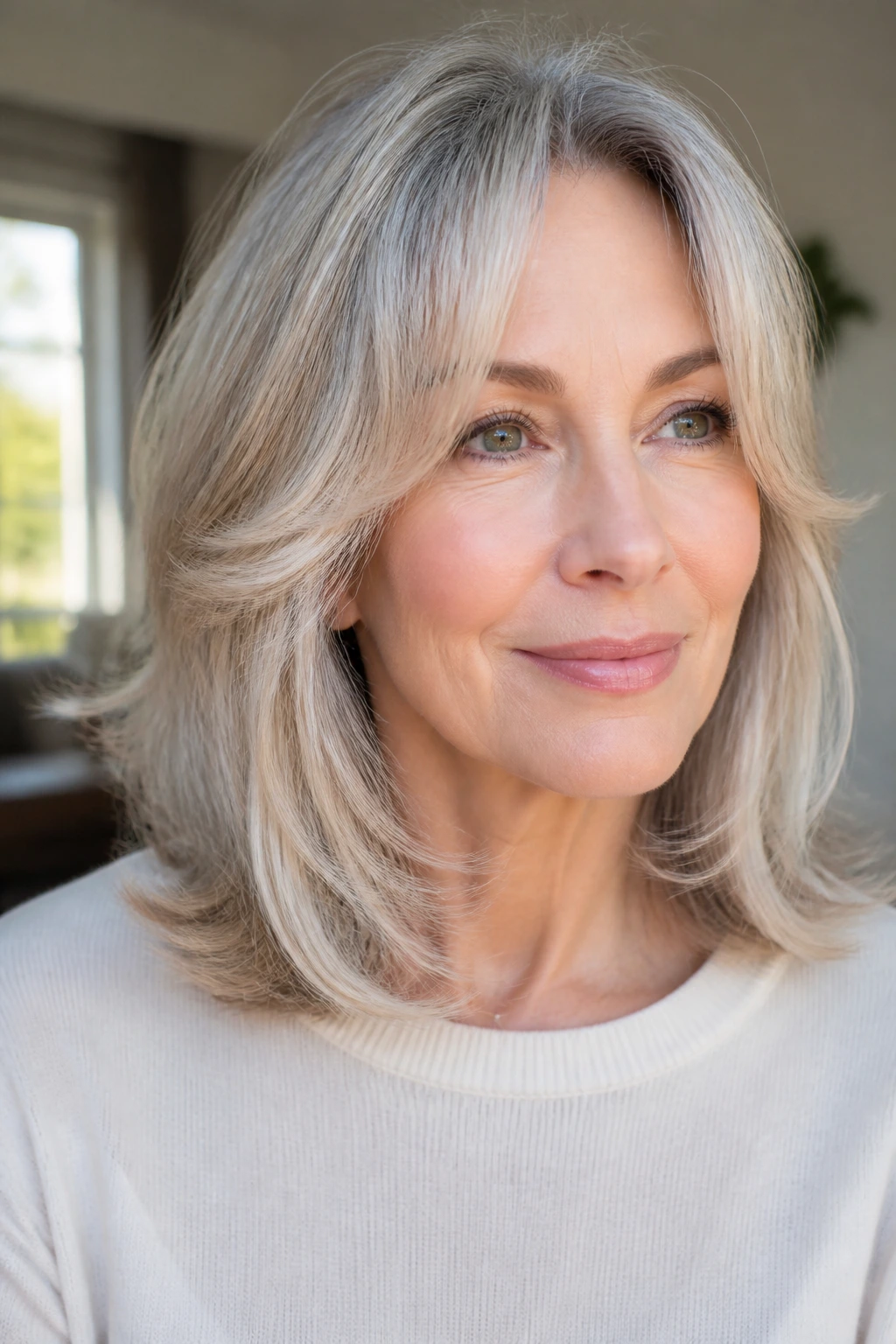
Razor cutting has a reputation for drama, but in the right hands it can make medium hair move like silk. The blade softens the ends and adds a little air between the strands, which works especially well on straight-to-wavy hair that feels blunt or stiff when cut with scissors alone.
I prefer this look on hair that has some density but doesn’t want to look heavy. The soft ends keep the cut from feeling blocky, and the layers can be blended enough to make the whole shape feel fluid. It’s not the right move for every head of hair. Very fine hair or frizz-prone curls may hate it.
A stylist who uses the razor too high can wreck the shape. Ask for softening at the ends, not a shredded perimeter. Small difference. Big result.
16. Wispy Fringe With Shoulder-Grazing Layers
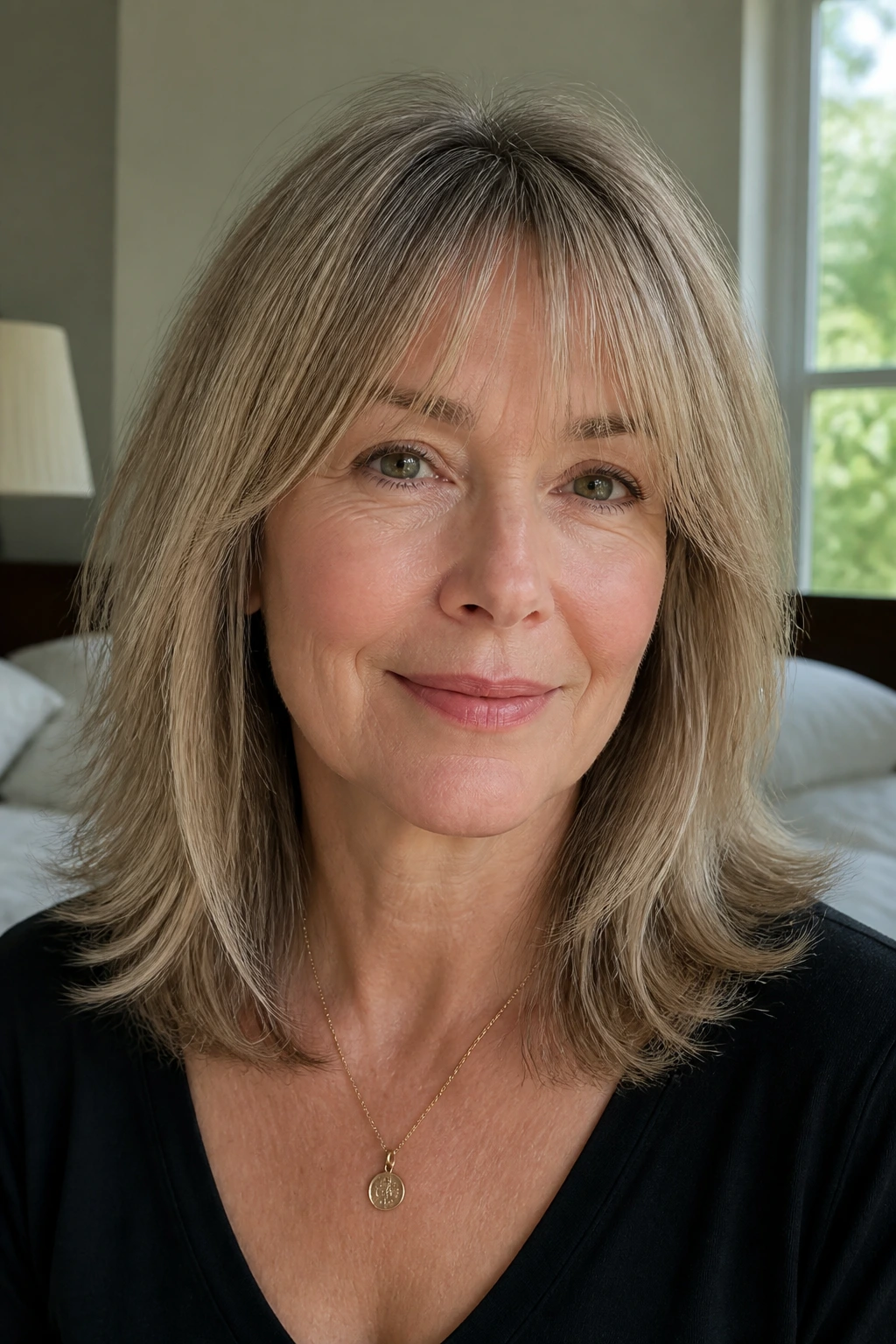
A wispy fringe can be a lovely compromise if you want forehead coverage without the commitment of a full bang. Paired with shoulder-grazing layers, it gives the face a little frame while keeping the haircut light around the eyes and temples.
This version works because the fringe doesn’t dominate the cut. It sits lightly, breaks up a broad forehead, and blends into the side layers so the front of the hair feels connected. On older women, that matters. A fringe that’s too heavy can feel like a curtain. A wispy one feels more like a finish.
Keep the fringe textured, not chopped blunt across. And if your hair is cowlick-prone at the front, tell your stylist. A fringe with the wrong growth pattern can turn into a morning fight.
17. Rounded Layers That Build Volume at the Crown
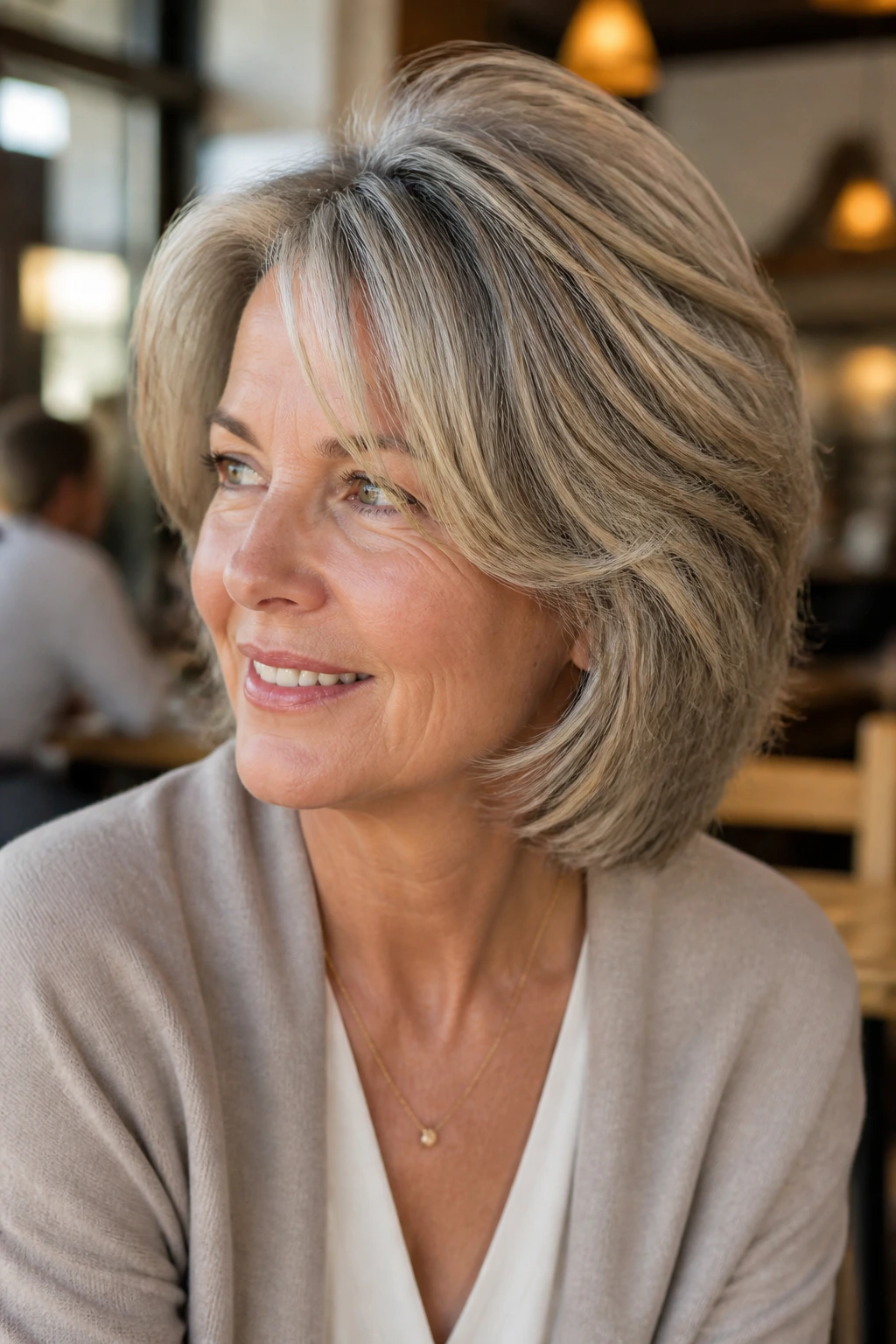
Rounded layers are a small cheat code for hair that’s losing lift on top. The shape builds volume at the crown and gently curves the sides so the haircut doesn’t go flat in the wrong places. It’s especially useful for fine or medium hair that needs some architectural help.
What makes the rounded shape appealing is its softness. Nothing sharp. Nothing boxy. The silhouette tends to follow the contour of the head a little more closely, which makes the whole cut look balanced from the side and back, not just the front.
A mousse at the roots and a medium round brush can bring the shape to life, but the cut should already be doing most of the work. If you need to pile on products just to see the shape, the layers were probably cut too low or too close to the ends.
18. An Air-Dry Friendly Layered Cut
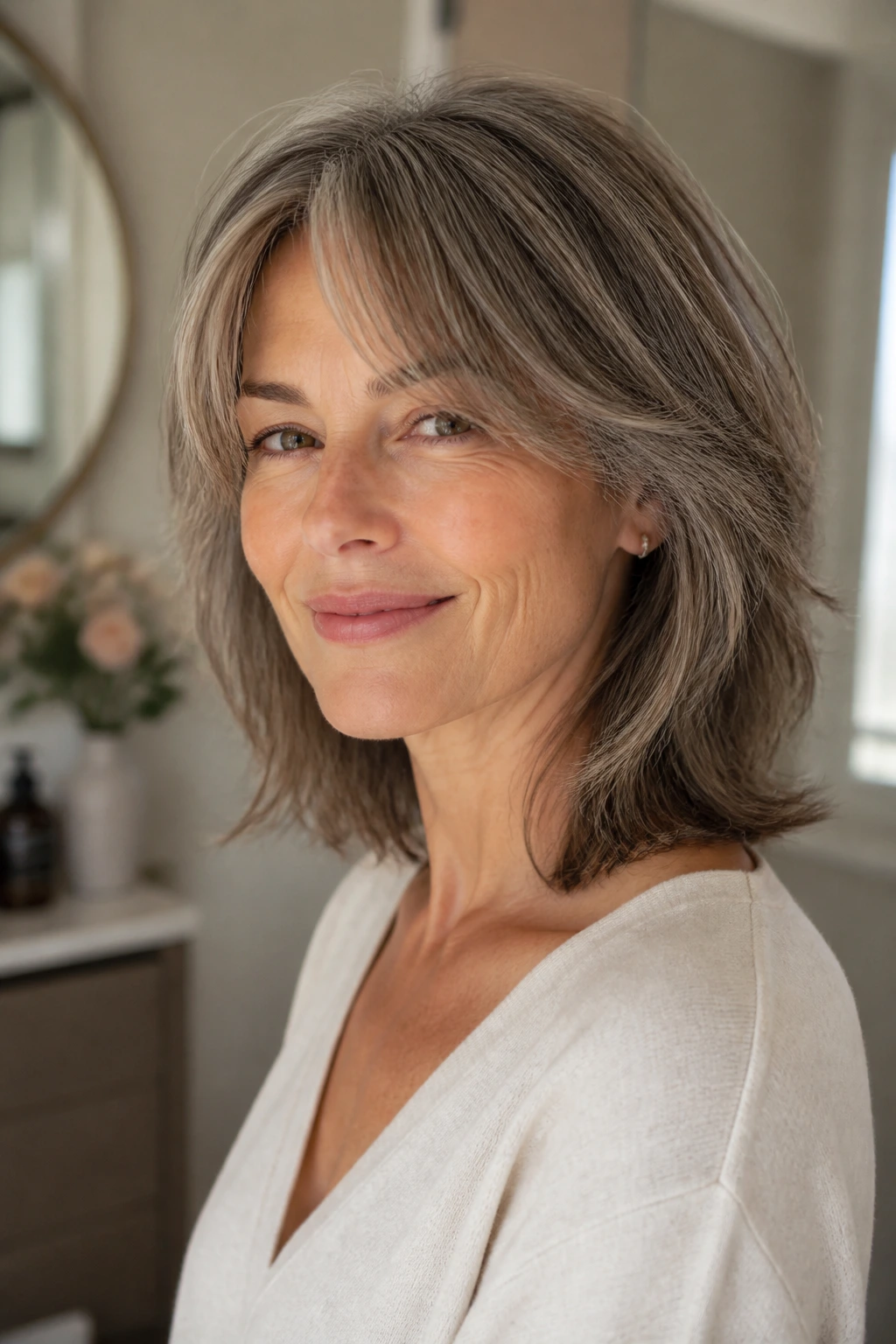
Not every medium layered haircut wants a blow dryer. Some are built to dry well on their own, which is a huge advantage if your hair is wavy, a little porous, or simply not interested in daily heat styling. The trick is in the layer placement: long enough to keep weight, short enough to encourage movement.
This type of cut usually has a soft front frame, a modest amount of crown lift, and ends that don’t hang in one dead line. A leave-in conditioner and a light mousse can help the hair settle without turning crunchy. Scrunch, don’t rough up the hair with a towel. That part matters.
Air-dry cuts can look casual, but they should not look accidental. If the hair dries into a shape that only works after you twist it, the cut is wrong. You want a version that dries into a recognizable style on its own.
19. Layers That Make Silver Hair Shine
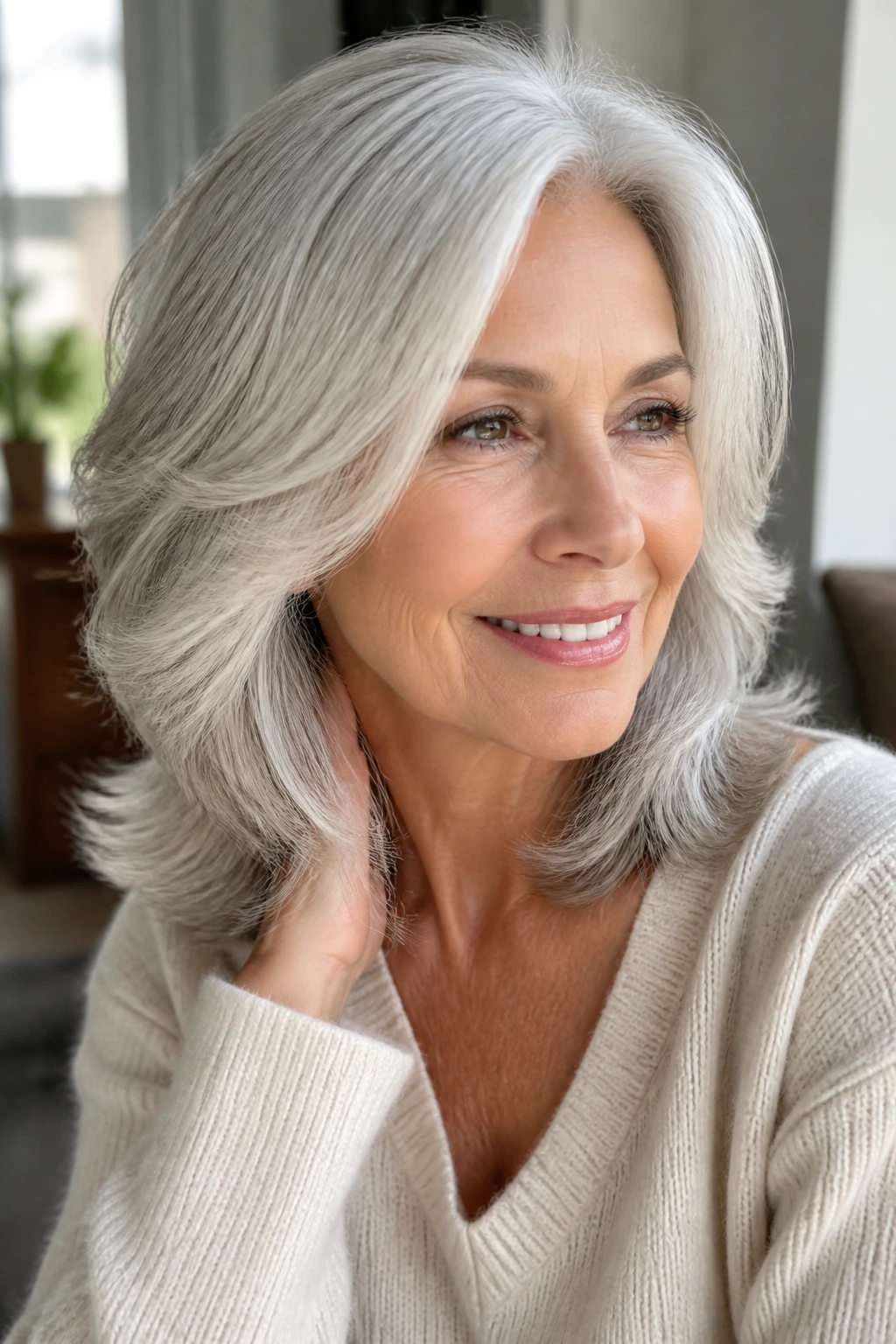
Silver and gray hair often looks best when the cut gives the light somewhere to land. Medium layers do that beautifully when they’re not over-chopped. The hair catches movement, and the silver strands stop looking like one flat sheet.
There’s another reason this shape works: grayer hair can be drier and coarser, and too many short layers make that dryness obvious. Longer, smoother layers keep the texture from fraying while still adding some lift around the face and crown. A glossing serum or a light cream can help, but the cut has to carry its own weight.
If your silver hair feels puffy after washing, ask for layers that start lower and blend softly. The goal is shine and swing, not a halo of static.
20. Glasses-Friendly Medium Layers
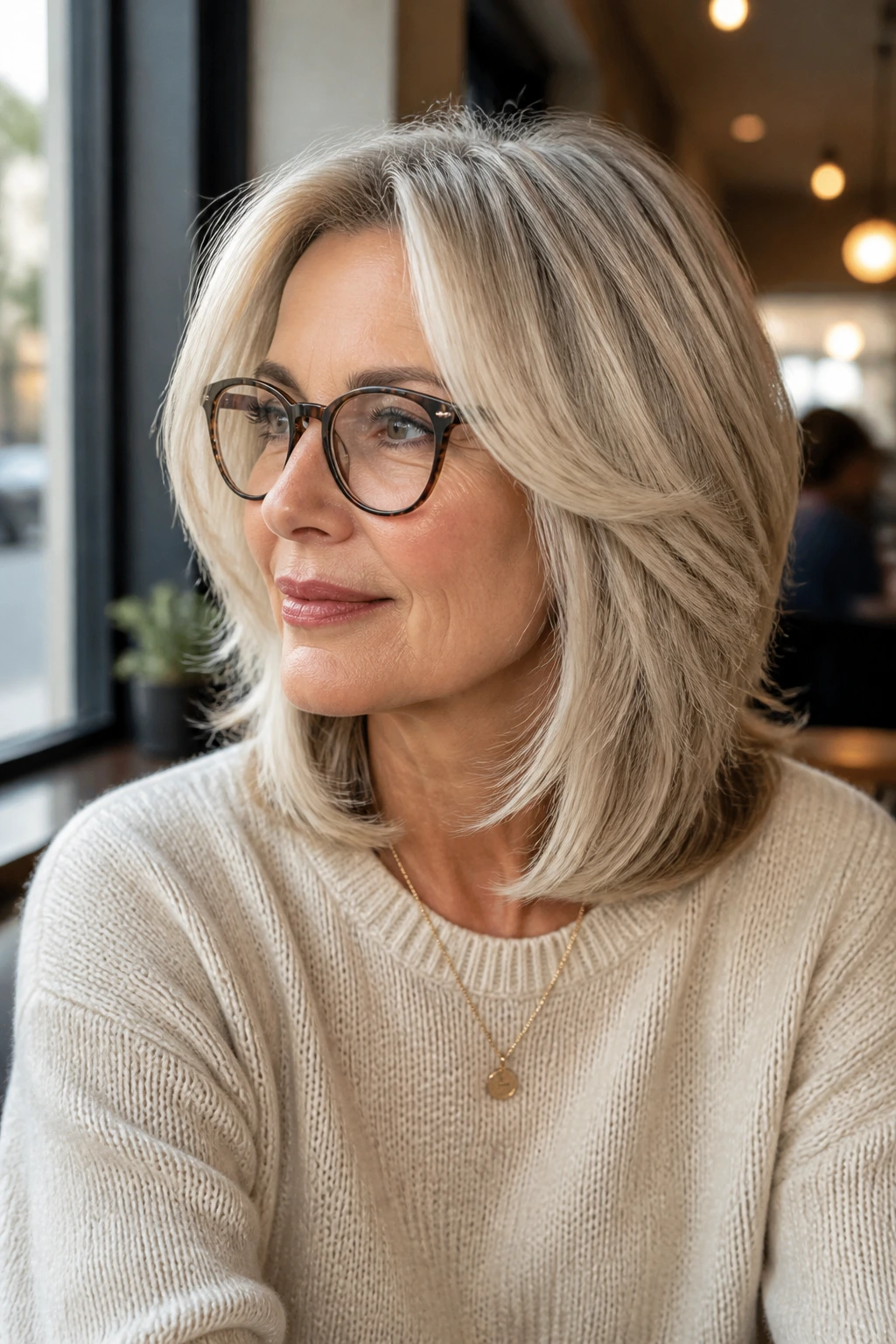
Glasses change a haircut. They sit right in the middle of the face, which means the hair around the temples and cheekbones needs to cooperate rather than crowd the frames. A glasses-friendly layered cut usually keeps the front pieces a touch longer and lets the sides move away from the lenses instead of falling into them.
This matters more than people realize. Hair that lands exactly on the frame edge tends to flip, catch, or look cramped. Hair that falls either above the frame or just below it feels calmer. That’s why I like medium layers that skim the jaw or collarbone when glasses are part of the daily picture.
If you wear bold frames, keep the layers softer and the fringe lighter. If your frames are thin, you can go a little heavier on the face frame. Tiny adjustment. Big difference.
21. The Angled Lob That Lengthens the Neck
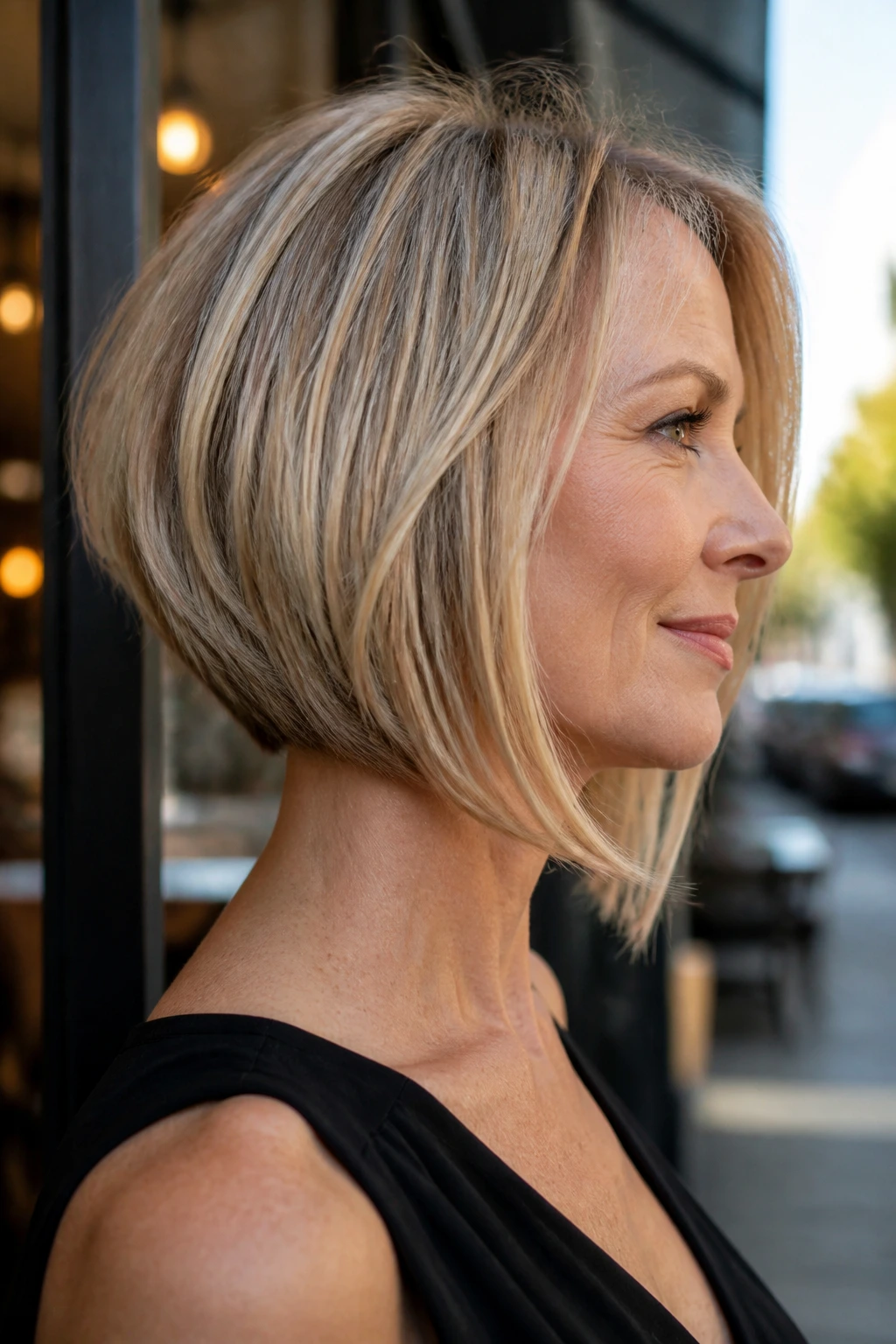
An angled lob is one of the easiest ways to make a medium haircut look sharper without making it severe. The front stays slightly longer than the back, which creates a clean line that lengthens the neck and gives the jaw a bit of definition. It’s sleek, but it doesn’t have to feel stiff.
I like this one for women who want polish with just enough movement to avoid a blocky shape. The angle keeps the cut from sitting heavy under the chin, and the layers soften the transition from back to front. It works well with a side part, a center part, or a tucked-behind-the-ear finish.
If your hair is thick, ask for the angle with internal weight removal. If your hair is fine, keep the angle gentle and the layers longer so the ends still look full. The cut can do both jobs. You just have to steer it the right way.
How Medium Layers Keep the Whole Look Light

The best thing about medium layered haircuts for older women is that they don’t try to solve everything by being short. Short hair can be lovely, but it can also feel like a sharp change. Medium length gives you a middle ground where the cut can soften the face, keep some neck visible, and still hold a ponytail, clip, or loose wave when you need it to.
That middle ground matters for texture, too. Hair often changes after menopause or simply with time—less oil at the roots, more roughness at the ends, a little more bend in one place and a little less in another. Medium layers let the stylist work with those changes instead of pretending they’re not there. That’s why these cuts often look more modern than one-length styles and less demanding than shorter crops.
If you’re choosing between softness and structure, pick a cut that gives you both. A good layered medium shape should feel easy on a Tuesday and still look deliberate on a Saturday. If it only looks nice after a full styling session, the cut is doing too much of the job.
The Tools That Make These Cuts Behave
-
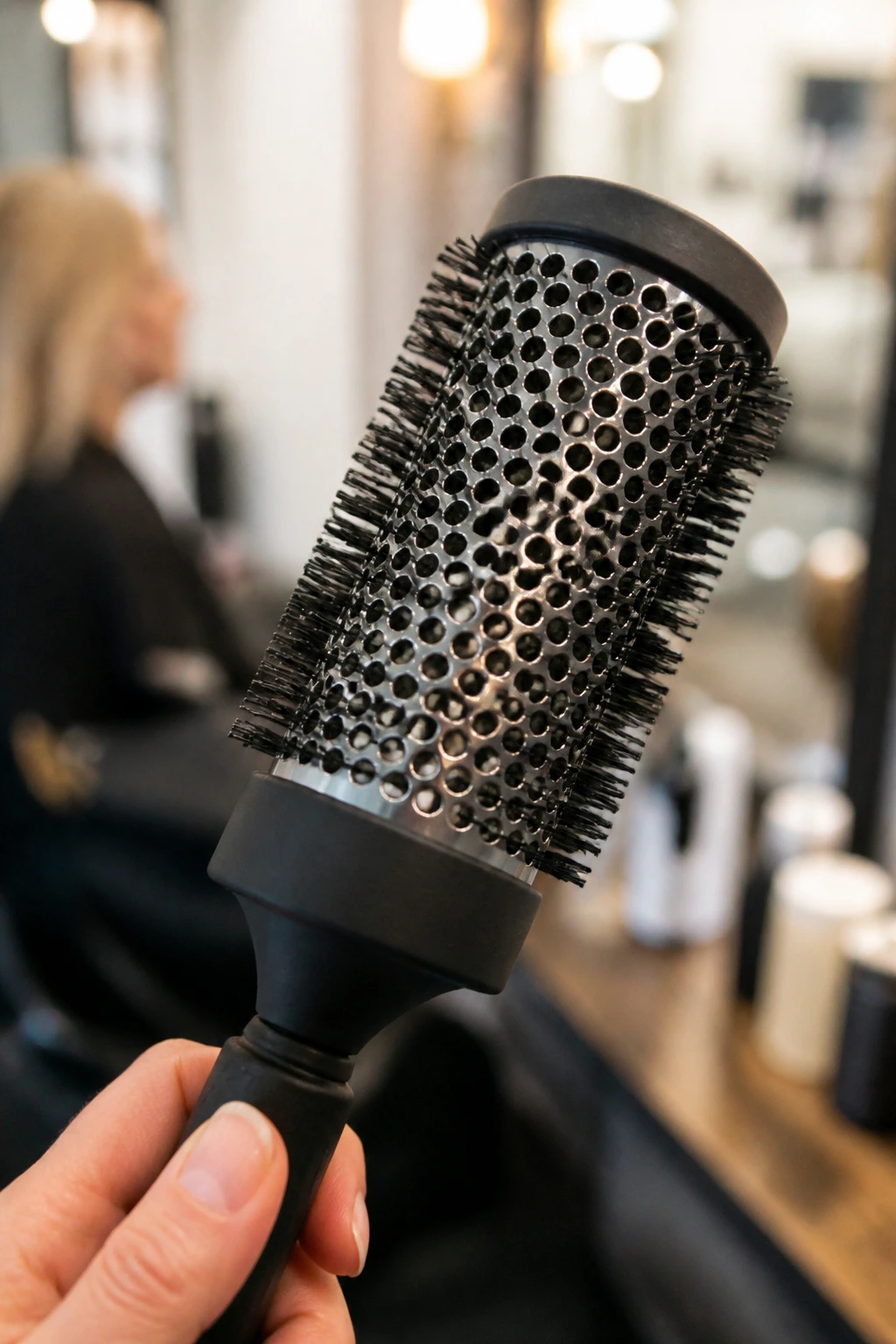
1.5-inch round brush: The sweet spot for bending the ends under or away from the face without making the hair puffy.
-
Blow dryer with a concentrator nozzle: The nozzle helps aim air at the roots and keeps the cut smoother while you work in sections.
-
Light mousse: Useful for fine hair, crown lift, and air-dry shapes that need a little support without stiffness.
-
Heat protectant spray or cream: Necessary if you use a curling iron, flat iron, or hot brush more than once a week.
-
Texturizing spray: Good for shaggy or choppy layers that need separation at the ends.
-
Dry shampoo: Handy on day two when the roots go limp but the ends still look fine.
-
Wide-tooth comb: Better than a fine comb for curly or wavy cuts that need to keep their pattern intact.
-
Section clips: Not glamorous. Very useful. They make round-brush styling less chaotic.
-
Smoothing cream or light hair oil: Best for gray, coarse, or frizz-prone hair that needs the ends to stay calm.
How to Ask Your Stylist for the Right Version
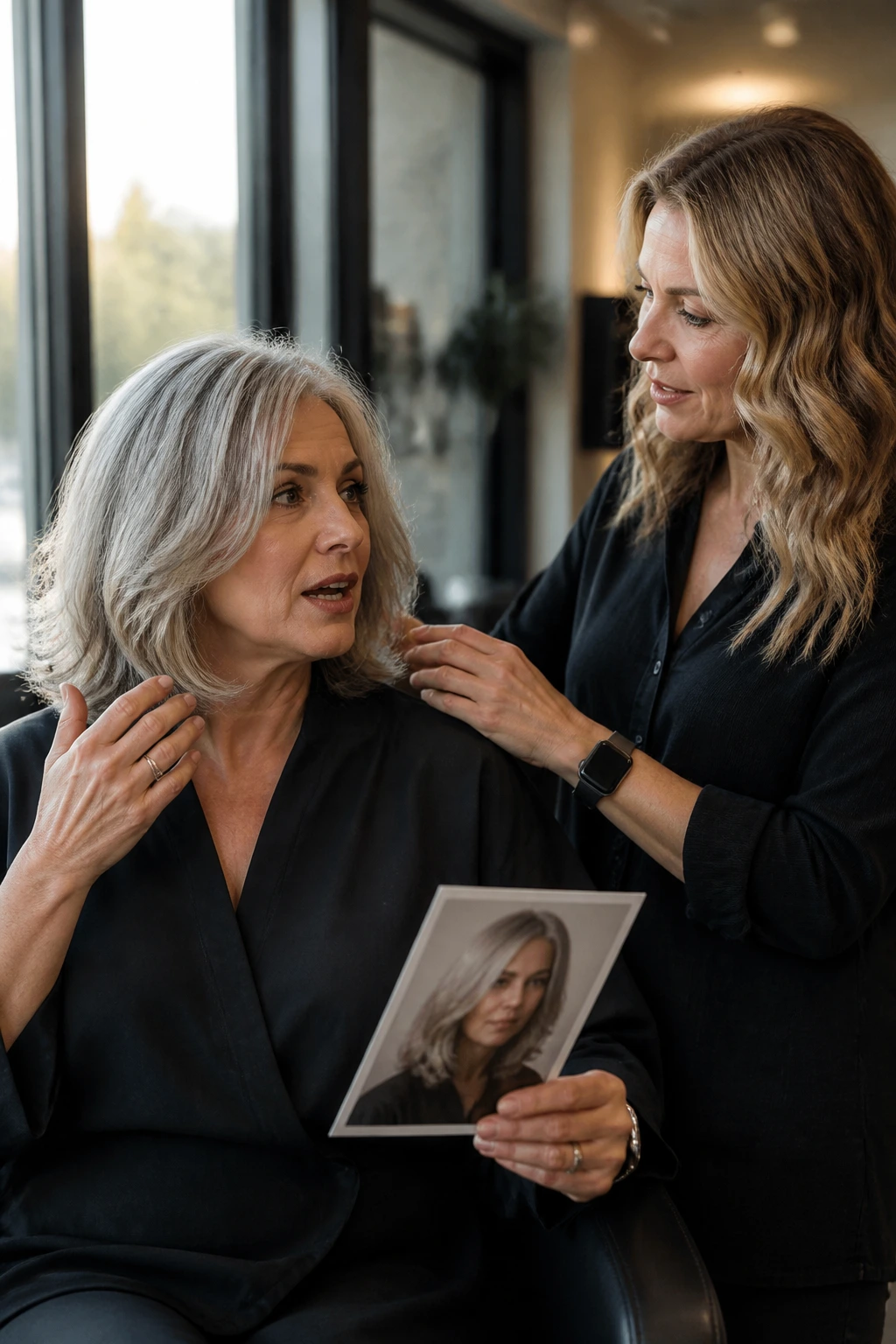
Bring photos, but bring the right kind. One picture of the front is not enough. Show the side view, too, because layers live in the side profile. A cut can look beautiful straight on and turn bulky once you turn your head. That’s where a lot of disappointing haircuts start.
Say how you actually wear your hair. If you air-dry most days, say so. If you blow-dry with a round brush twice a week and otherwise clip it up, say that too. A stylist can cut for your real life, but only if your real life is on the table.
Be specific about the starting point of the layers. “I want movement, but I don’t want the ends to look thin” is a useful sentence. So is “Please keep the shortest layer below my cheekbone.” If you wear glasses, mention the frame size. If your hair has a cowlick at the crown or a strong part line, mention that before the cape goes on.
And if you’re nervous, say that plainly. Good stylists would rather adjust the layering than cut their way through a misunderstanding.
Styling Moves That Keep Layers Intentional
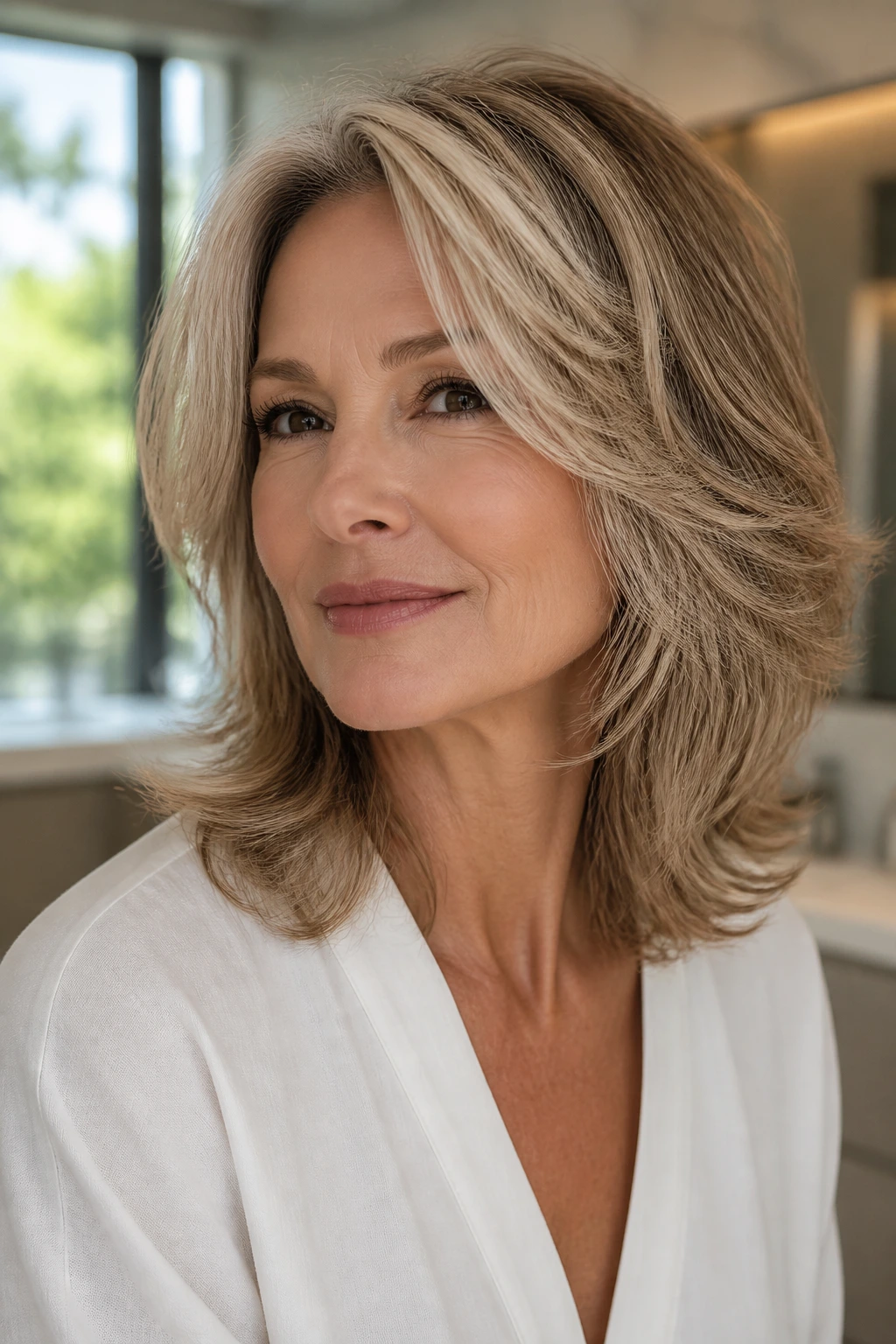
For a Smooth Blow-Dry
Work with medium sections, not huge ones. A big section drags the brush and makes the roots collapse before the ends are dry. Aim the dryer down the hair shaft, then finish each section with a cool shot for a few seconds so the bend holds. That one habit does more for shine than a shelf full of serums.
For an Air-Dried Shape
Scrunch in mousse from the ears down, then lift the roots with your fingers and let the hair fall where it wants. Don’t keep touching it once it starts drying. That’s how waves go fuzzy and layers lose their line. A tiny bit of cream on the ends can tame roughness without killing movement.
For Heat-Styled Layers
Use a 1-inch or 1.25-inch curling iron if you want more bend, not ringlets. Wrap the hair away from the face, hold for about 8 to 10 seconds, and leave the ends out for a softer finish. Then finger-comb the waves apart. Too much brushing turns the cut into a cloud.
Common Mistakes That Flatten the Whole Look
-
Layers that start too high: The haircut can go wispy near the ends and lose the fullness that medium length is supposed to give. Keep the shortest pieces lower unless the hair is very thick.
-
Over-thinning fine hair: If the ends look stringy or translucent, the cut was taken too far inside the shape. Ask for longer layers and less texturizing.
-
Ignoring the natural part or cowlick: Hair that fights the cut every morning needs the layer placement adjusted around its growth pattern. Don’t try to force a center part on a head that wants a side part.
-
Cutting bangs too short the first time: Fringe that sits too high can feel harsh, especially if the forehead lines are part of what you wanted to soften. Start longer. You can always trim more.
-
Using too much product: Heavy cream on fine hair, or too much spray on wavy hair, makes layers stick together and lose movement. Start with less than you think.
-
Letting the cut go too long between trims: Medium layers can get blunt or shaggy in the wrong way if you wait until the shape collapses entirely. The edges matter.
Variations Worth Trying
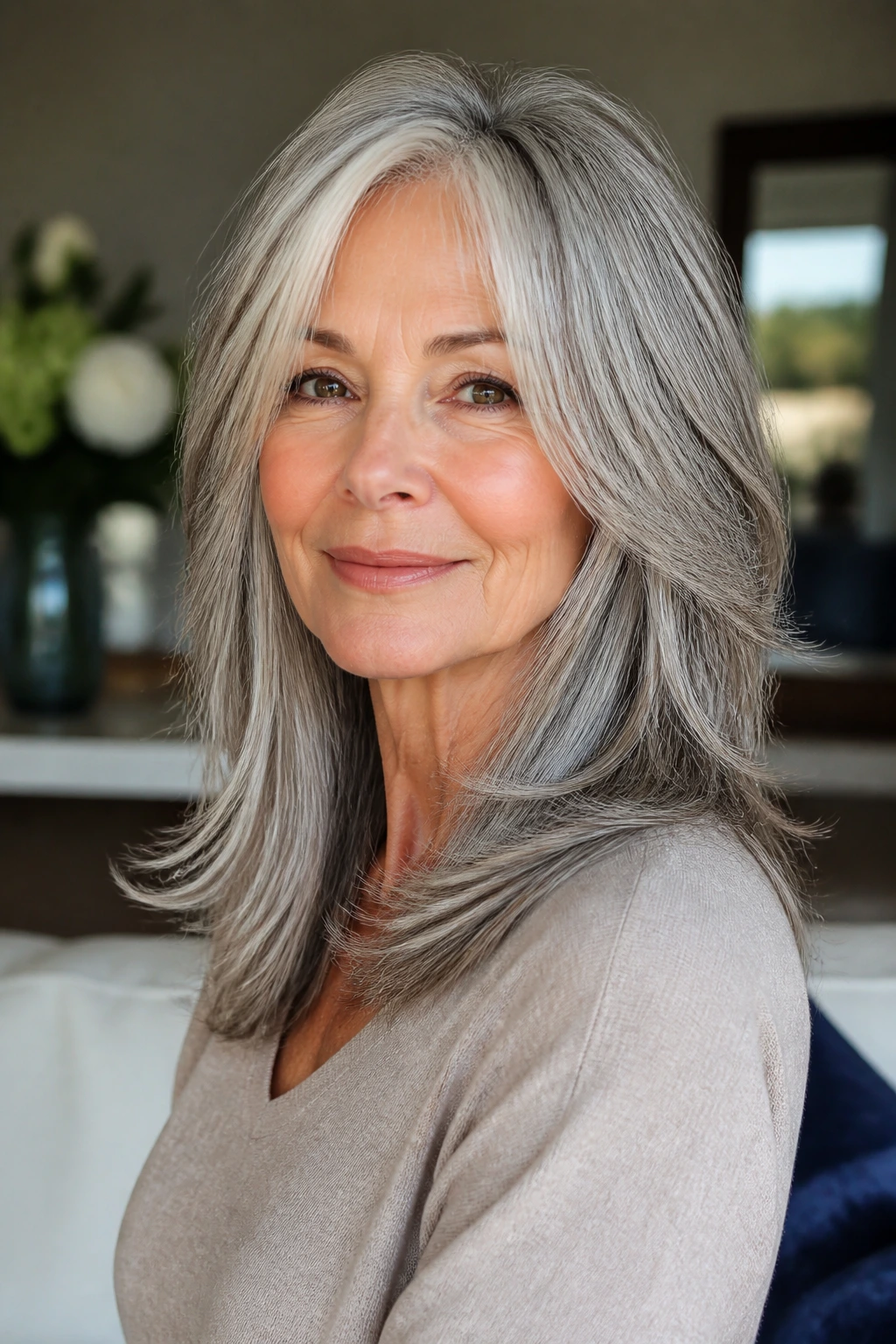
The Fine-Hair Lift-Up: Keep the perimeter at collarbone length and start the layers low, around the chin. This keeps the ends full while giving the crown a little breathing room.
The Thick-Hair Relief Cut: Ask for internal weight removal and a soft U-shape. It takes bulk out of the sides and back without turning the haircut into a puffball.
The Silver Shine Shape: Use longer, smooth layers with a gentle face frame and minimal texturizing. Gray hair often looks better when it moves in clean sections instead of fraying at the tips.
The Glasses-First Version: Make the front pieces fall either above the frame or just below it, not directly on the temples. That keeps the face from feeling crowded.
The Low-Heat Routine: Choose a layered cut that air-dries well with mousse and a bit of hand-shaping. If you don’t want a brush in your life every morning, this is the smarter route.
Keeping the Cut in Shape Between Trims
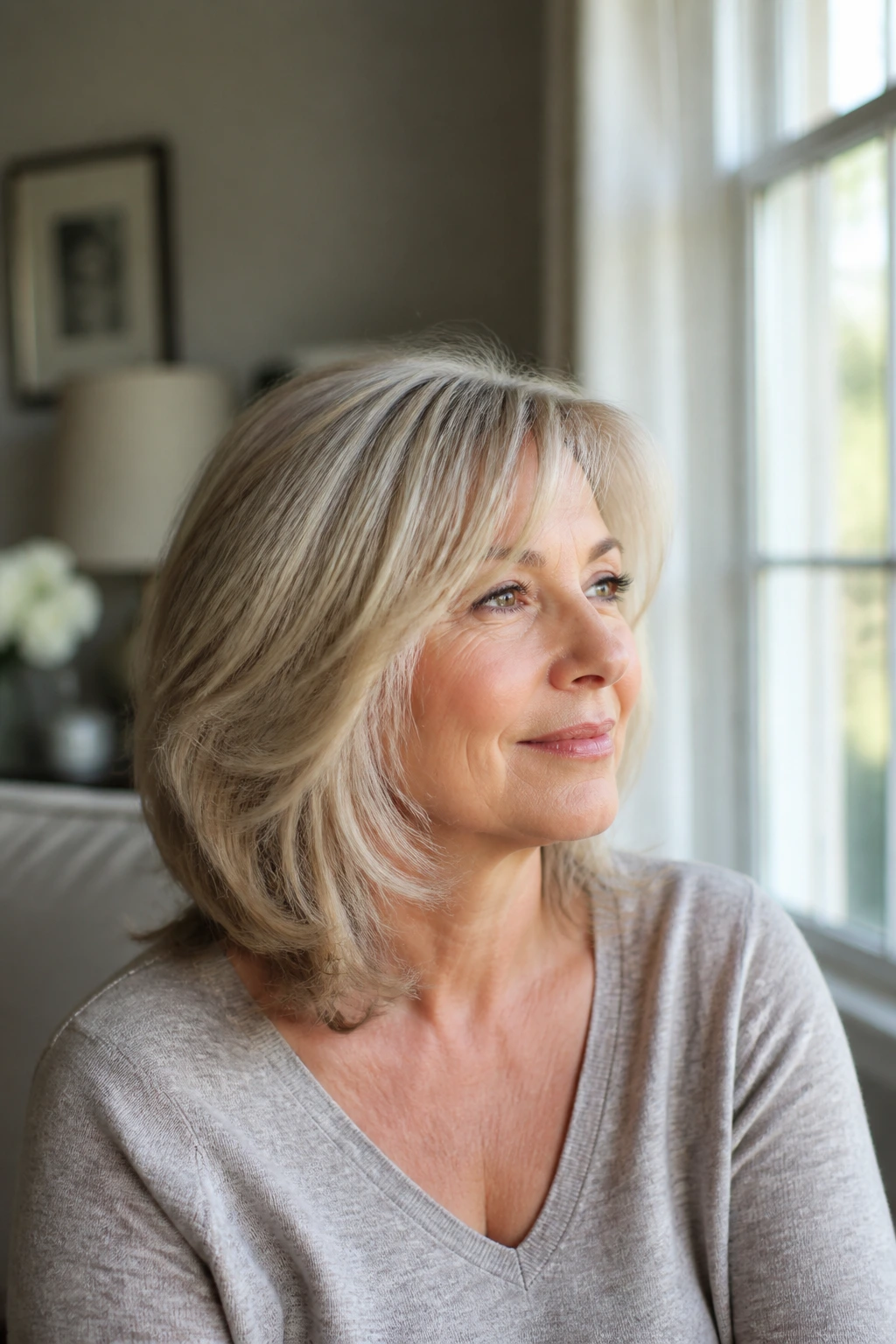
Medium layers stay friendly when you don’t let them drift too far. Most versions hold their shape best with trims every 8 to 10 weeks. If you have curtain bangs, a fringe trim around 4 to 6 weeks can keep them from dropping into your eyes or splitting awkwardly.
Dry ends need attention before they look desperate. A small trim is better than waiting until the whole bottom line feels frayed. If your hair is gray or coarse, a weekly mask can help the ends stay smoother, and a light leave-in cream can keep the surface from getting rough between wash days.
If you heat-style often, use a protectant every time. Not because it’s trendy. Because medium layers show damage quickly when the ends start to fry. A little prevention goes a long way there. Sleep, too, can mess with shape; a loose bun or a silk pillowcase helps keep the front pieces from bending into strange angles overnight.
Frequently Asked Questions
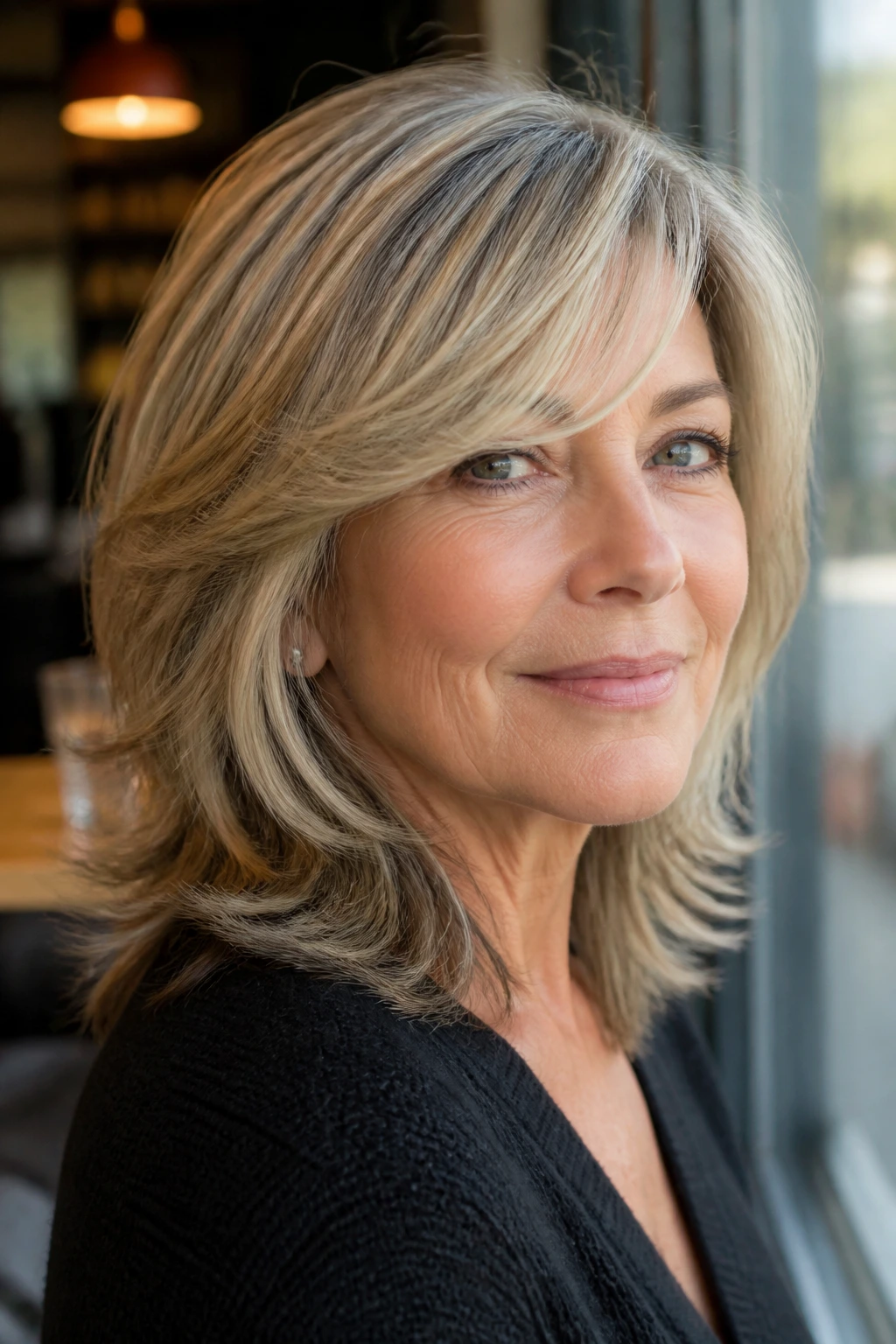
Do medium layers make thin hair look thinner?
They can, if the layers start too high or the ends are over-thinned. The fix is to keep the perimeter solid and ask for longer, softer layers that create movement without exposing the scalp through the ends.
What medium length is most flattering on older women?
Collarbone to just below the shoulders is the sweet spot for a lot of faces. That range keeps the neckline open, gives hair enough weight to look full, and still leaves room for ponytails and clips.
Are curtain bangs a bad idea if I have forehead lines?
No. In fact, they’re one of the better choices if you want softness without a heavy fringe. Keep them longer and feathered so they blend into the layers instead of stopping in a hard line.
Can curly hair handle medium layers?
Yes, but the cut has to respect the curl pattern. Curly hair usually looks better with layers that are shaped on dry or mostly dry hair, so the stylist can see how the curls actually sit.
How do I stop layered hair from flipping out at the ends?
Use a round brush or a large curling iron to bend the ends in the direction you want, then cool them down before you touch them. If the layers still flip, they may be too short or cut at the wrong angle for your growth pattern.
Should I ask for face-framing layers or all-over layers?
If you want the safest change, start with face-framing layers and a light internal shape. All-over layers can be lovely, but they have more potential to take too much weight out of fine hair.
Will layers help thick gray hair look less puffy?
Yes, if the layering removes bulk in the right places and the ends stay smooth. Thick gray hair often needs control around the sides and nape more than it needs dramatic texture everywhere.
What if I hate the haircut after it’s cut?
Ask for a small adjustment before you leave. Often the problem is one short layer, one heavy side, or a fringe that needs a tiny reshaping. Small corrections are much easier than trying to live with a shape that feels off.
The Shape That Stays Useful
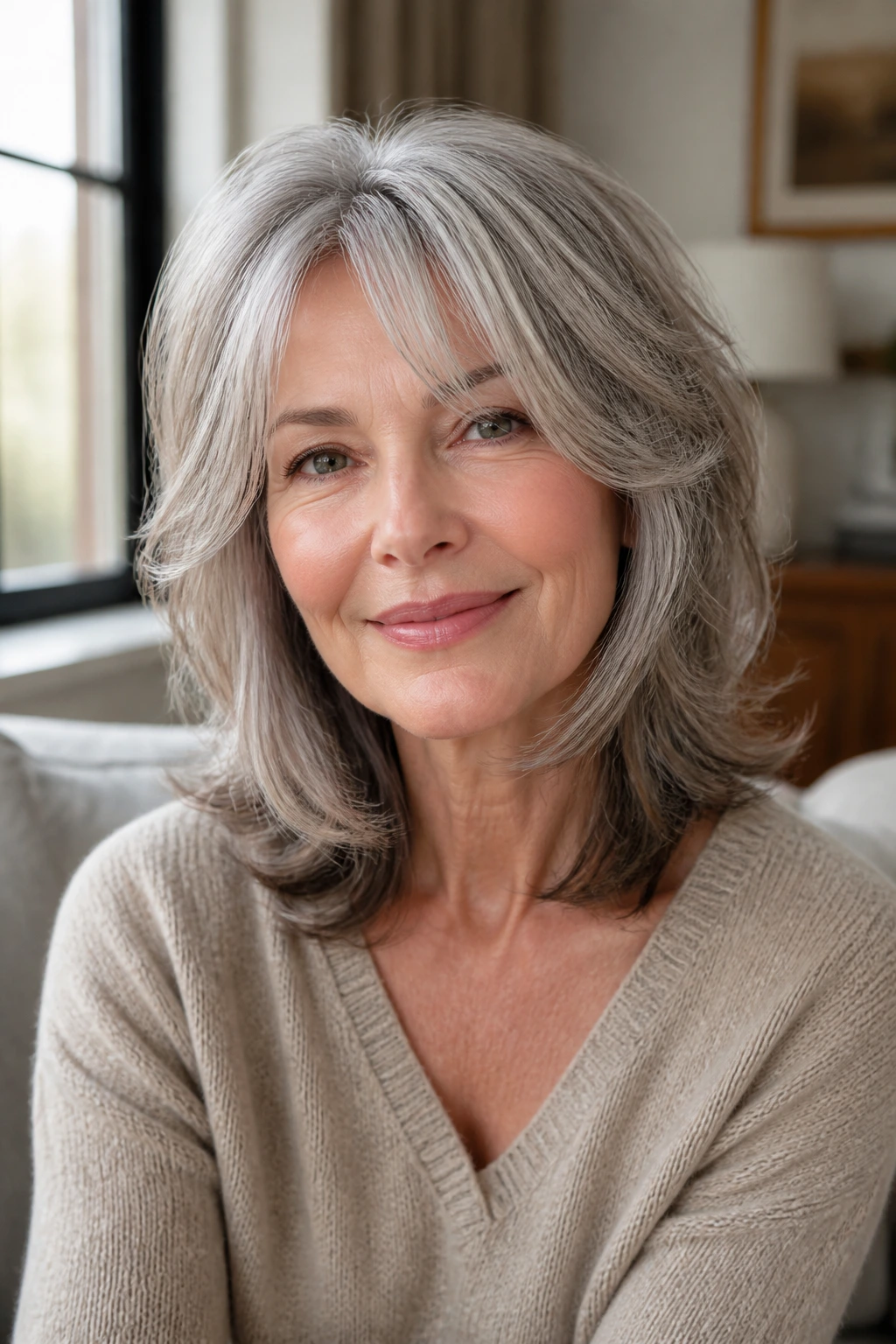
Medium layers stay popular for a reason that has nothing to do with hype and everything to do with physics. Hair needs a shape that matches its weight, its texture, and the amount of effort you actually want to spend on it. When those three line up, the haircut stops fighting you.
That’s what makes these cuts worth the chair time. They can soften a face, keep the neck open, handle gray texture, and still look decent when you’ve had exactly ten minutes to deal with your hair. That’s a rare combination.
Pick the version that fits your texture and your routine, not the one that looks hardest to maintain in a salon photo. The best medium layered haircut is the one that still makes sense on the third day after washing.
