



Short hair can go blunt fast. One heavy corner at the cheek, one straight line at the jaw, and the whole cut starts to feel like it was cut with a ruler instead of scissors. Face-framing layers fix that by softening the front first, where the eye lands immediately.
I like this kind of cut because it does a very specific job. It keeps short hair from looking boxed in, but it doesn’t blow the whole shape apart the way over-thinning can. That matters more on short hair than on long hair, because every half-inch around the face reads louder when there isn’t much length to hide behind.
The other thing people forget: the front pieces do more work than the back. A few inches placed at the cheekbone, lip, or jaw can change how wide your face feels, where the haircut sits with glasses, and whether the style bends softly or snaps hard. That tiny placement choice is the difference between “cute” and “why does this feel off?”
Why These Face-Framing Layers Are Worth Your Attention
-
They break up the boxy edge: A blunt bob can look sharp in a good way, then a little too square by week three. Soft front layers keep the shape from locking into a hard line.
-
They make short hair feel movable: Even a small bend around the temples or jaw gives the cut some swing. That movement is what stops short hair from looking frozen.
-
They work with messy mornings: If you only have time for a quick blow-dry or a bend with a flat iron, these cuts still read as finished because the front already has a shape.
-
They can sharpen or soften the face on purpose: Longer pieces near the jaw make a face look narrower; shorter, cheekbone-length pieces bring more focus upward.
-
They grow out better than a one-length chop: When the front is layered with intent, the cut usually slides into a longer bob instead of turning into a triangle.
-
They’re easier to personalize than people think: A few inches at the fringe, a side part, or a little razoring around the temple can change the whole mood.
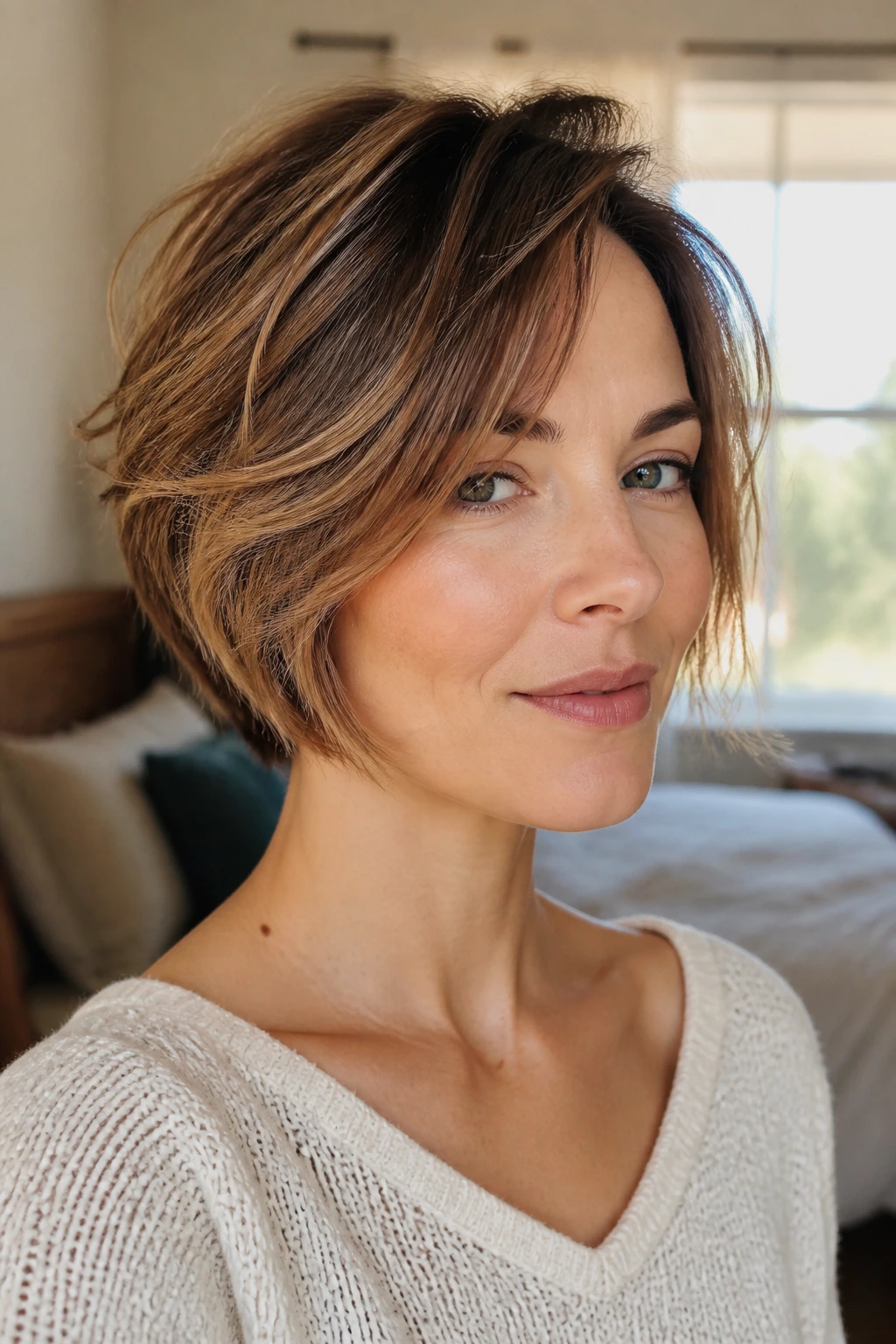
1. Cheekbone Curtain Bob

Soft curtain pieces are the easiest way to keep a short bob from feeling stiff. The front opens away from the face instead of hanging in one straight wall, and that small move makes the whole cut breathe. When the shortest piece lands near the cheekbone, the eye goes straight to the eyes and mouth rather than the widest part of the jaw.
Why it works
The shape is doing two jobs at once: the bob keeps the outline clean, while the front layers break up the heaviness around the face. Ask for the front to start around the cheekbone and drift longer as it reaches the jaw. That diagonal line is the point.
- Best for: round, heart, and oval faces.
- Styling note: a 1.25-inch round brush gives the front a soft bend.
- Salon wording: ask for “curtain pieces that open from the cheekbone, not bangs.”
My favorite detail: the cut still looks good when tucked behind one ear. That little asymmetry keeps it from feeling precious.
2. Feathered Pixie With Side Sweep
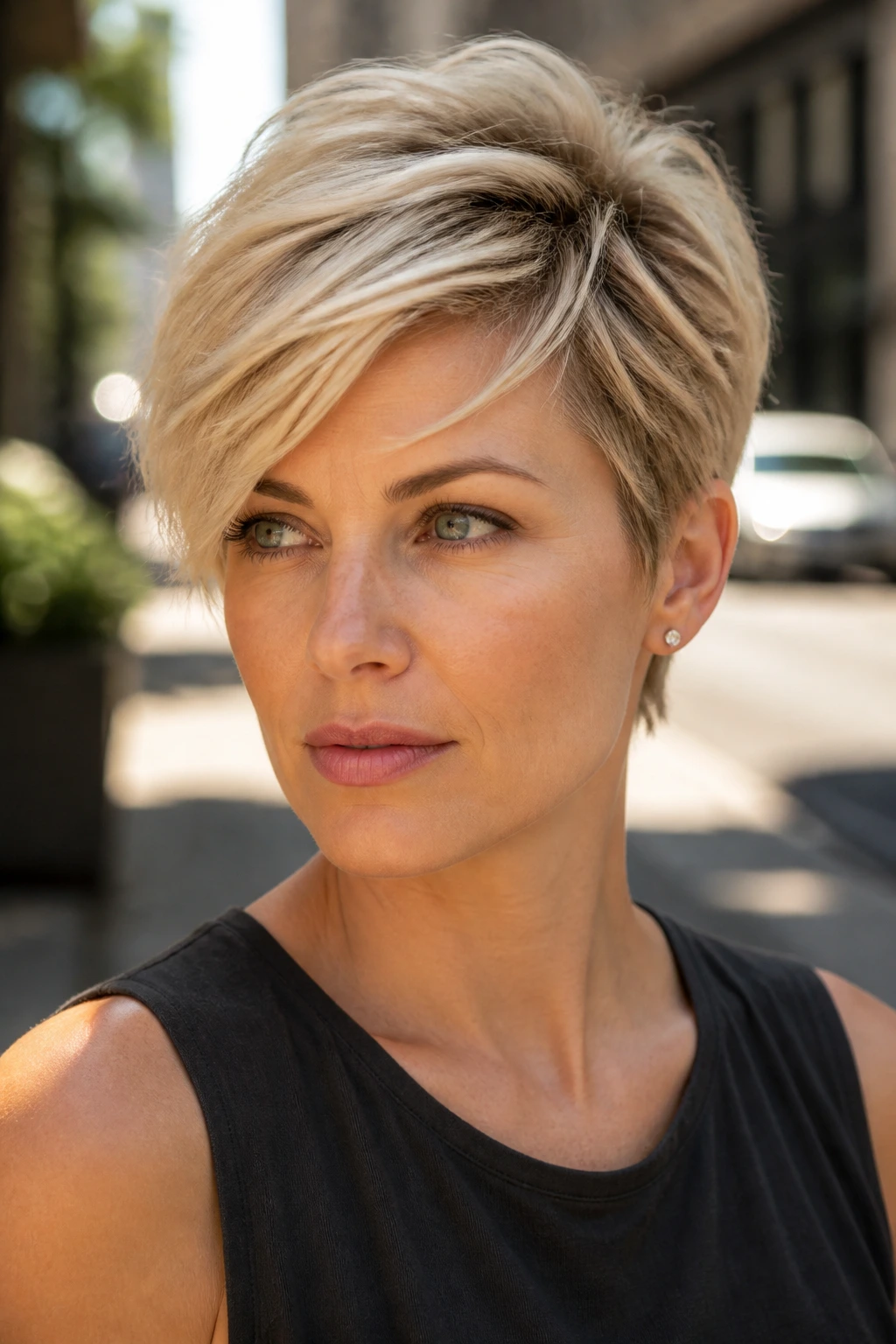
This one has a little attitude, but not the crunchy kind. The top stays longer, the sides are feathered, and the front is brushed to one side so the layers fall in soft strands instead of a hard fringe. It’s the cut I’d choose if you want short hair that moves when you turn your head.
What makes it work
Feathering removes bulk without making the silhouette fluffy. That matters on a pixie, where too much thinning can leave the top looking wispy and thin. Keep the longest front piece around the eyebrow or just below it, then taper the temple area shorter so the sweep has somewhere to land.
- Use when: your hair is fine and wants lift, not weight.
- Best styling product: a pea-sized mousse at the root, then a light paste on the ends.
- Avoid: heavy cream near the fringe. It kills the shape fast.
The side sweep gives you a little forehead coverage without turning the cut into bangs. That’s the sweet spot.
3. Jawline Bob With Long Front Pieces
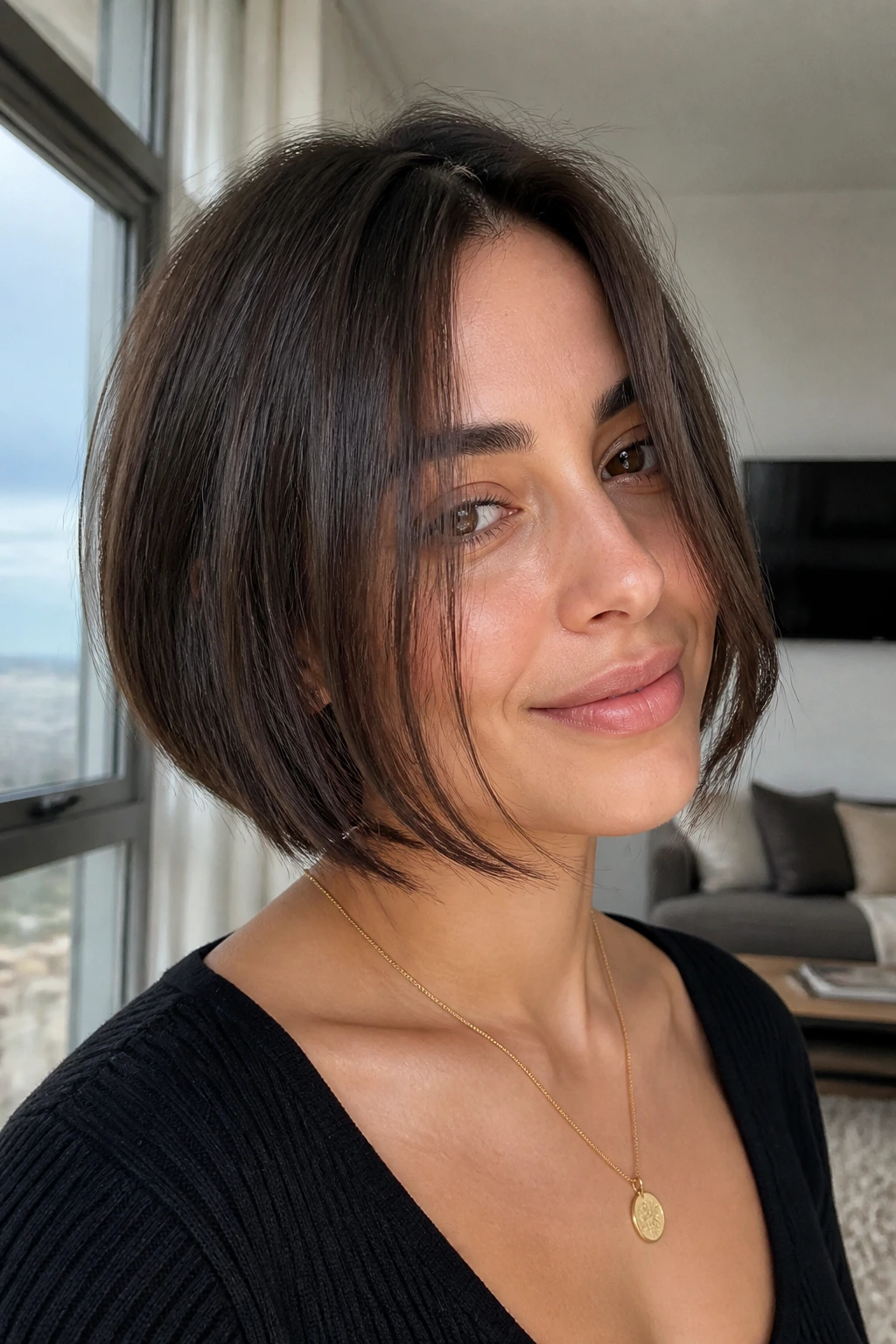
Why do some bobs look chic and others look harsh? Usually it’s the corner at the jaw. A jawline bob with longer front pieces softens that point on purpose, so the haircut still feels clean but never severe.
The bluntness stays in the back and perimeter. The front slides down a little longer, often grazing the mouth or chin, which makes the face look narrower through the front view. It’s a good choice if you like a polished finish and don’t want a lot of interior texture.
How to wear it
Part it slightly off-center, then bend the front ends under with a flat brush or a one-pass 1-inch iron. If your hair is straight, this cut can look almost graphic. If it has a little wave, the front pieces soften in a better way.
Best for: square faces, strong jawlines, and anyone who wears glasses that sit low on the nose.
4. Bixie With Tapered Temples
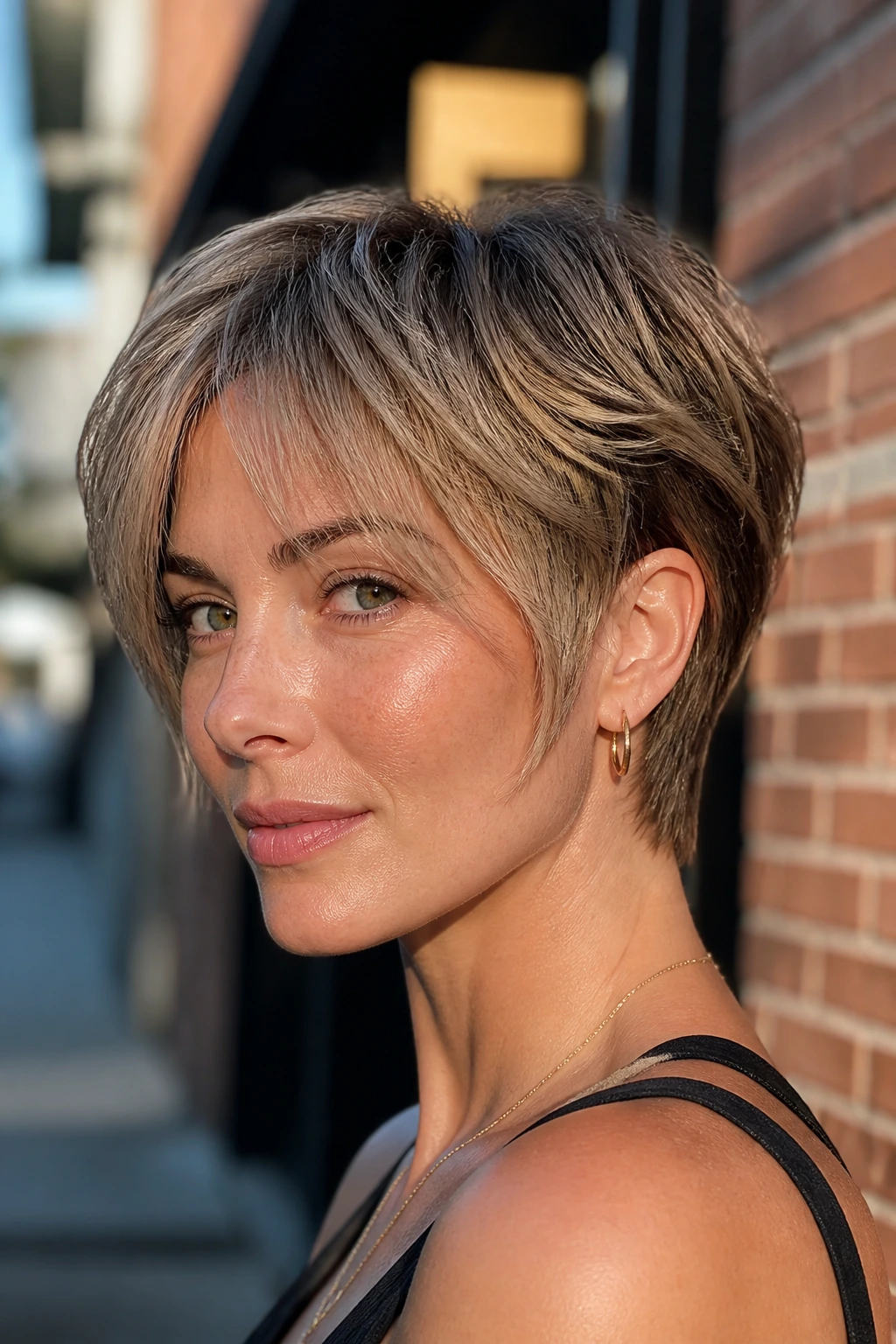
A bixie is that in-between cut that borrows the ease of a pixie and the outline of a bob. The face-framing trick here is at the temples. Keep those pieces a touch longer, then taper the sides tightly enough that the front doesn’t puff out at the cheeks.
I’ve always liked this cut on hair that gets bulky around the ears. It trims away the triangle effect without stealing the softness around the face. The front should feel a little piecey, not solid.
Why it lands well
The length difference between the temple and the nape gives the cut shape from the side, which is where short hair either looks expensive or awkward. Ask for the front to hit around the cheekbone and the temple area to be point-cut rather than chopped bluntly.
- Good for: thick hair, medium hair, and stubborn side sections.
- Style with: a vent brush and a touch of texturizing spray.
- Skip: heavy layering at the crown if your hair is already flat on top.
The whole point is balance. Short, but not severe. Soft, but not fluffy.
5. French Bob With Invisible Interior Layers
A French bob gets its charm from restraint. The outside line stays tidy, usually around the cheekbone or just under the jaw, while the interior carries tiny layers that you hardly notice until the hair moves. Those hidden layers keep the front from sitting like one solid sheet.
This is the cut for someone who wants short hair that looks neat even when it isn’t perfectly styled. The face-framing happens in the bend of the front pieces, not in obvious choppy pieces. It’s subtle. That’s why it ages well.
Ask your stylist for interior removal, not a lot of surface layering. If they carve into the top too much, the bob loses that heavy, expensive-looking edge.
6. Choppy Shag Bob
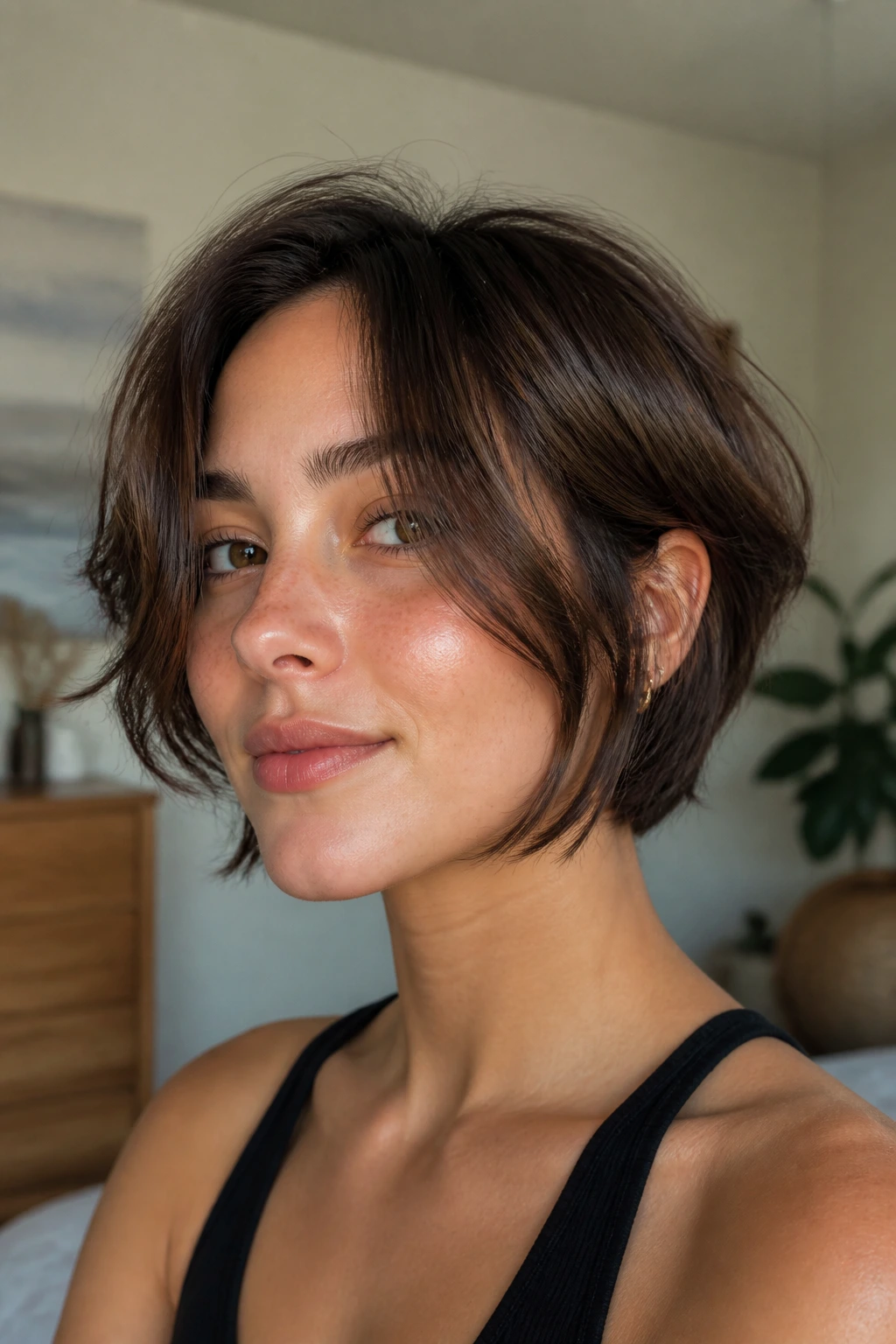
This one has teeth, in a good way. The choppy shag bob uses uneven front layers and a more broken-up outline, so the face-framing pieces feel lived-in instead of polished. It’s the cut I’d recommend if you like a little mess and don’t want your hair to look freshly flattened every morning.
What separates it from a regular bob
The front pieces are cut to fall in different lengths, often from lip to jaw, so they don’t all hit the same spot. That staggered line keeps the face from looking boxed in. If your hair has wave, even a loose one, this cut gets better with air drying.
- Best for: wave-prone hair and medium density.
- Styling move: scrunch in mousse and let the front dry with a slight bend.
- Watch out for: over-thinning. Too much and the ends go stringy.
It’s a little rougher than a French bob, a little looser than a classic shag. That middle ground is why it works.
7. Flip-Under Crop
A flip-under crop is all about the ends. The front layers are cut so they naturally turn inward around the jaw, which gives short hair a tidy, flattering finish without making it look stiff. I love this one when the hair is just long enough to brush the cheek but not long enough to behave on its own.
The shape is especially useful if your hair tends to kick out at the ends. Instead of fighting the bend, the cut builds around it. Ask for the front to be slightly longer than the back corners, then finish with a round brush or a hot brush to seal the turn-under.
Best for: straight hair, soft waves, and anyone who likes a neat silhouette.
8. Curly Crop With Face Ribbons
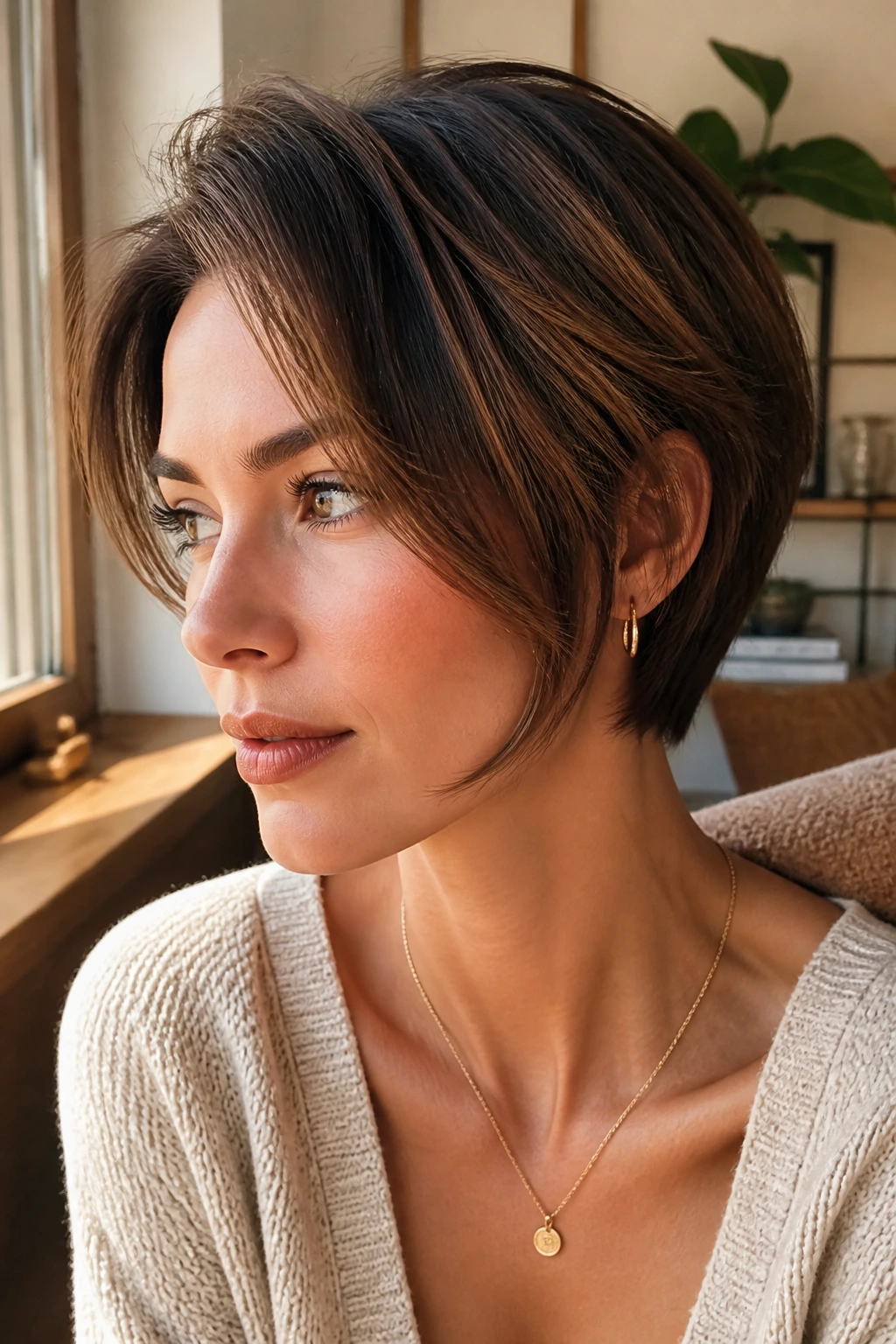
Curly short hair needs a different kind of framing. You don’t want stiff little bits shoved around the face. You want ribbon-like curls that land near the cheekbone or mouth and move with the rest of the pattern.
This cut works best when it’s shaped dry or almost dry, because curls lie about their length when they’re wet. The face-framing pieces should follow the curl family, not fight it. That means leaving enough length for shrinkage and trimming curl by curl where the front naturally opens.
How to style it
Use a light curl cream, then define just the front pieces with your fingers so they don’t disappear into the rest of the cut. A diffuser helps, but low heat matters more than speed. High heat frizzes out the whole point.
Best for: curly and coily textures that want shape near the face.
9. Rounded Cropped Bob
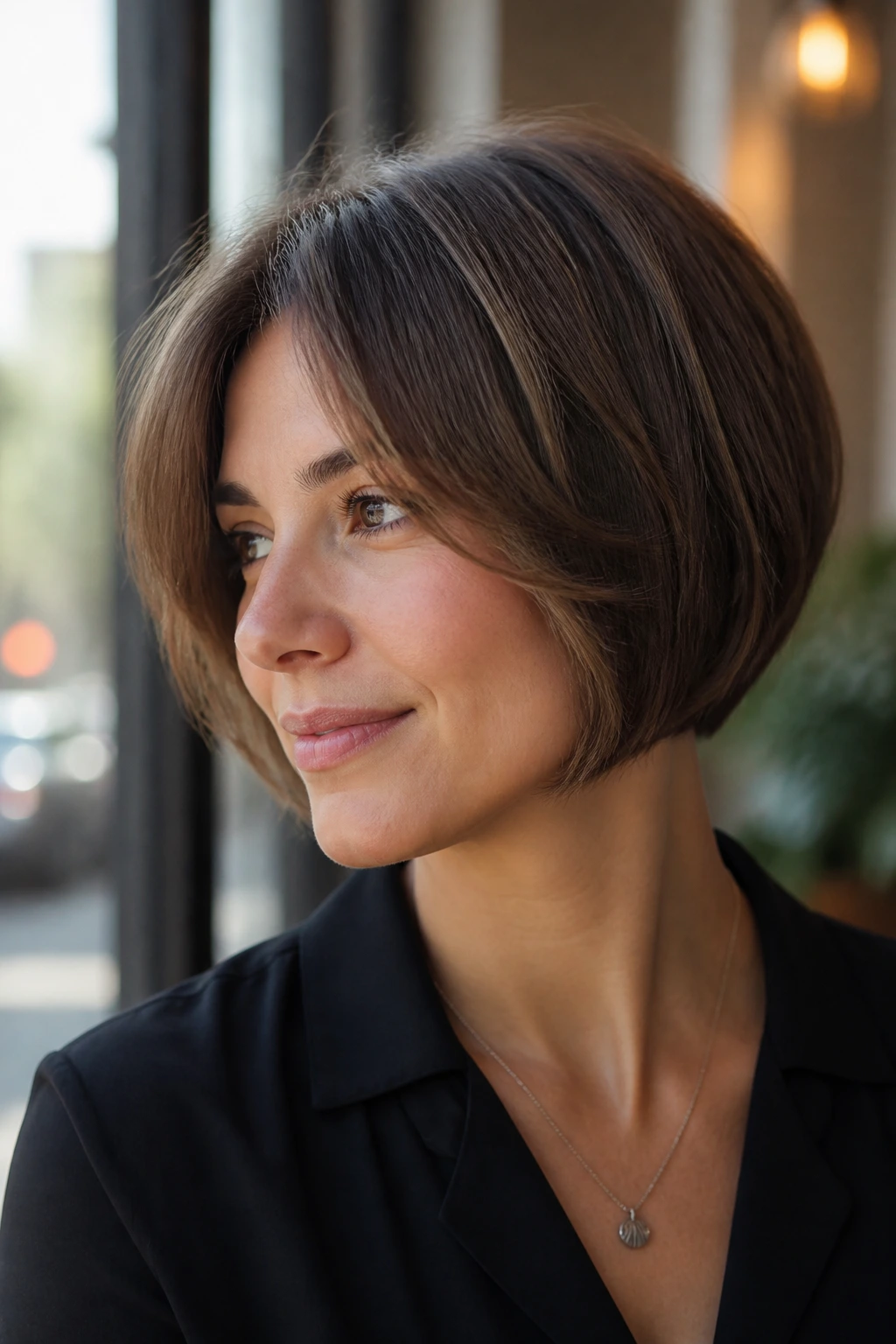
A rounded cropped bob gives short hair a soft halo effect. The perimeter curves gently around the head, and the front layers follow that curve instead of cutting straight across. That roundness can be flattering in a very practical way: it keeps the hair from sticking out at the sides.
This cut works when you want neatness without that helmet feeling. Ask for the front to be slightly longer at the corners, then gently layered so the cut moves inward toward the chin. The result is polished, but not hard.
Why I like it
It flatters earrings, necklines, and glasses. It also behaves better on second-day hair than a pin-straight one-length bob, because the shape is already built into the cut.
10. Asymmetrical Short Bob
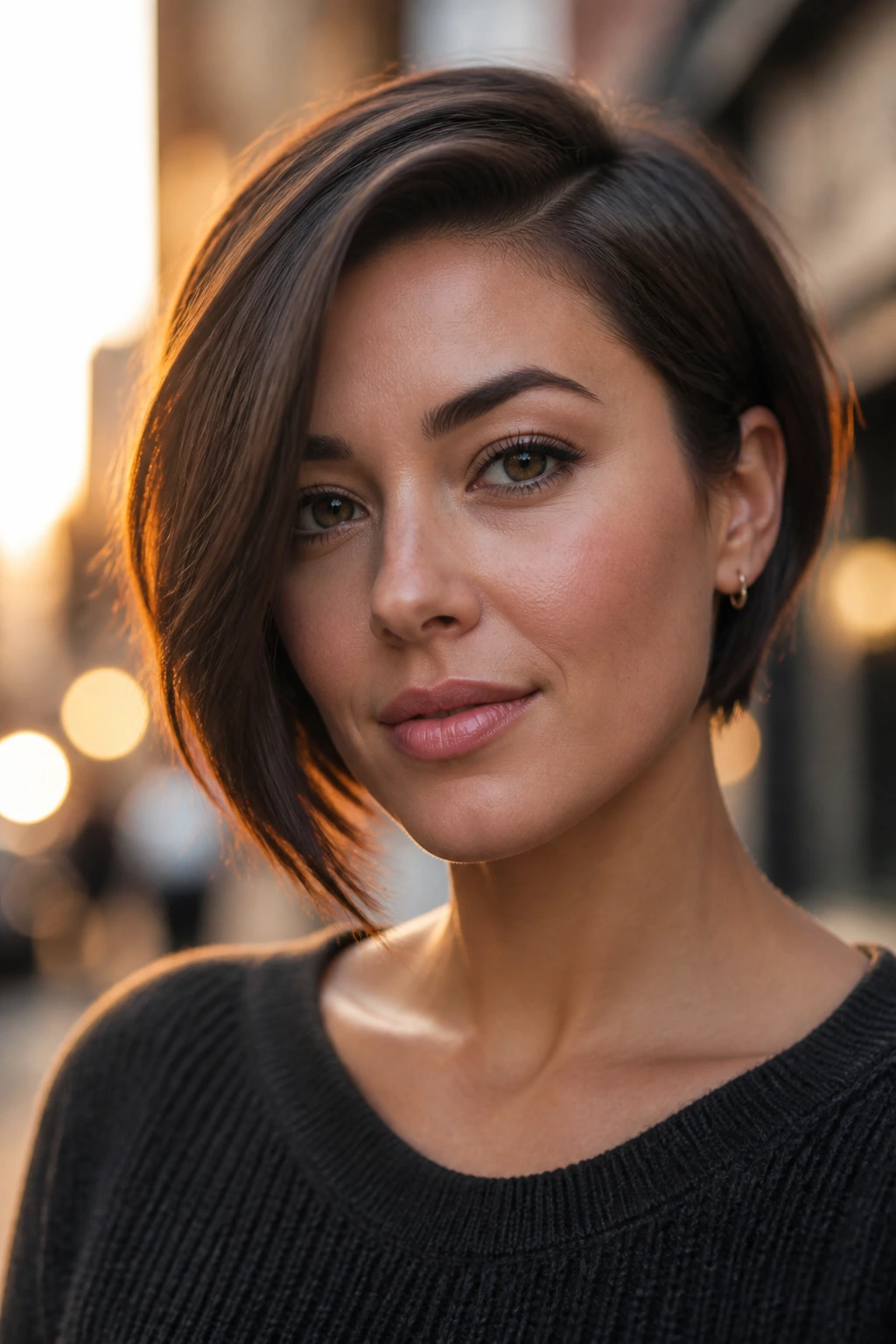
An asymmetrical bob gives you instant shape. One side sits a little longer or the front slants diagonally across the face, which creates a built-in frame without needing a lot of extra layering. It’s sharper than a soft curtain bob, but still wearable on ordinary days.
This cut has a nice side effect: it distracts from a wider cheek or a strong jaw by changing the visual line. The eye follows the diagonal. That’s the whole trick.
If you’re going to ask for this, be specific. “A little asymmetry” can turn into a lopsided haircut if nobody talks about the actual difference. Say how much longer you want one side to be — even a half-inch matters on short hair.
11. Airy Pixie Bob for Fine Hair
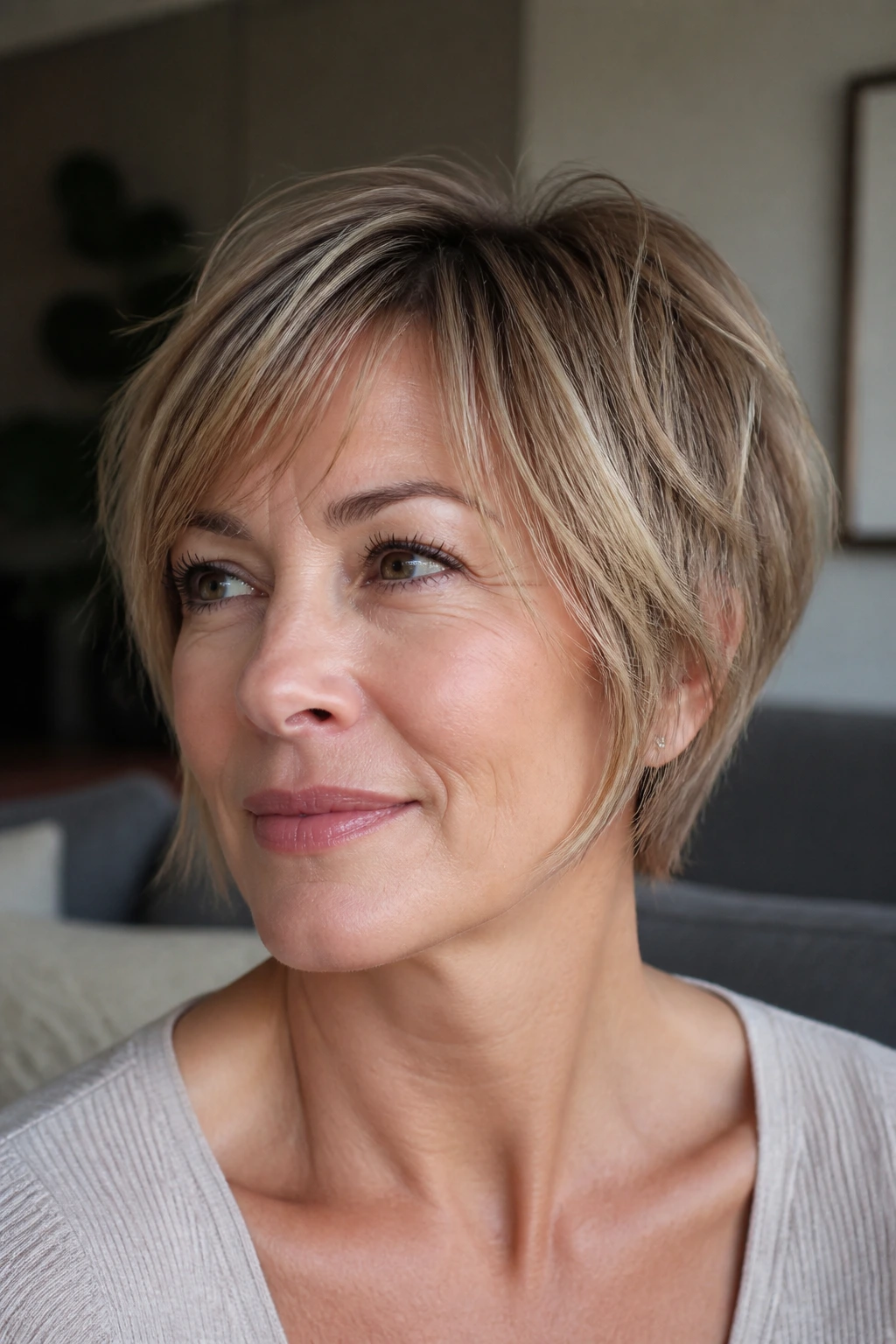
Fine hair needs a careful hand. Too much layering and it disappears. Too little and it falls flat. An airy pixie bob threads the needle by keeping the perimeter light, the top soft, and the face-framing pieces just long enough to show up.
The cut should look lifted, not shredded. Ask for soft internal shaping rather than a lot of visible slicing. The front pieces can start near the brow or cheekbone, but the ends should stay blunt enough to hold some weight.
How to keep it from collapsing
Use a root-lifting mousse on damp hair, then dry with the nozzle pointed down the shaft. That keeps the cut crisp instead of puffy. Dry shampoo at the crown on day two helps more than piling on oil ever will.
Best for: fine, straight hair that loses its shape by lunchtime.
12. Razored Bob for Thick Hair
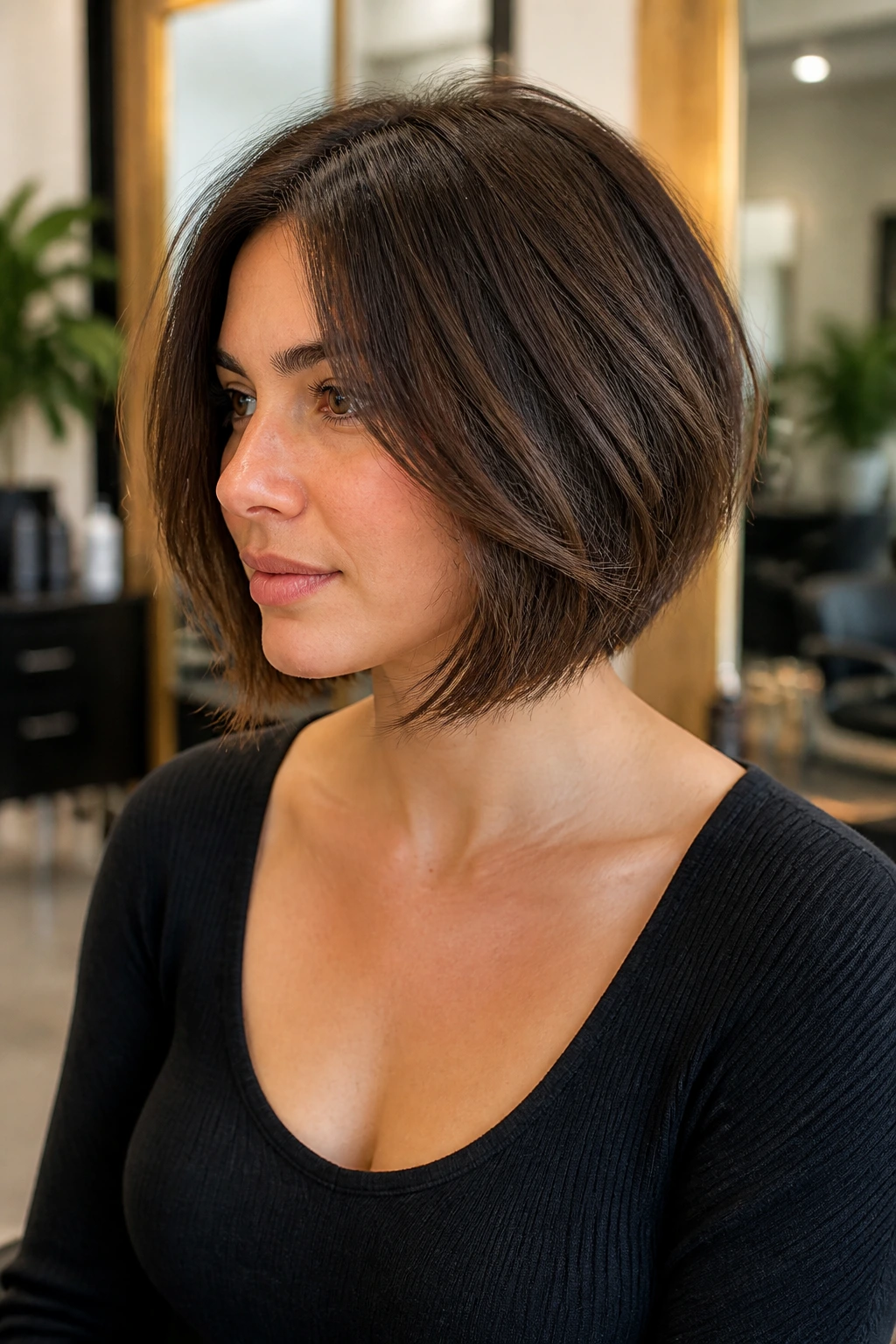
Thick hair can eat a blunt bob alive. A razored bob trims that bulk down and gives the front a softer fall, especially around the jaw and cheek. The key is control. Razor work should live where the hair needs air, not all over the head.
This style is not for every texture. If your hair is fragile or frayed on the ends, too much razoring will make it look shredded. But on healthy, thick hair, the technique can lighten the front so the cut doesn’t stick out like a shelf.
Ask for the front to stay longer than the crown, with the weight removed underneath. That way you keep the density where it belongs and lose the helmet effect where you don’t want it.
13. Wolf-Cut Lite for Short Hair
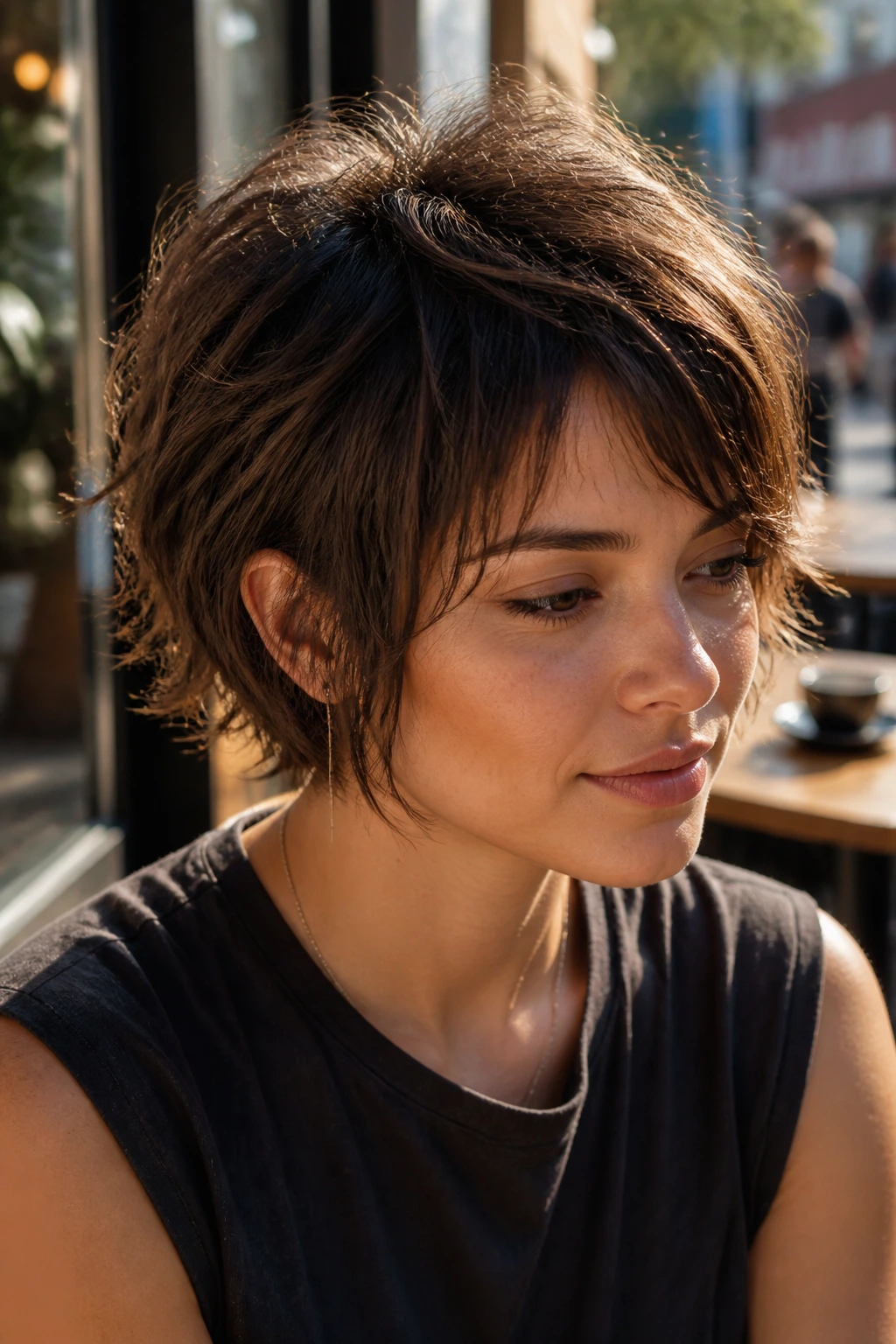
A full wolf cut can get wild fast. The short-hair version keeps the spirit — crown lift, broken-up layers, face-framing front pieces — but reins in the length so it doesn’t look like costume hair. The front usually skims the cheekbone or mouth, then gets longer as it drops toward the neck.
I like this cut on people who want shape without perfection. It looks best when the top has a little lift and the front pieces fall in uneven, soft sections. Not precise. Better than precise.
Quick shape notes
- Ask for: crown layers that stay short enough to create height.
- Avoid: razor-thin ends if your hair is already dry.
- Style with: salt spray or a light paste, then rough-dry with your fingers.
The result feels modern without trying too hard.
14. Side-Part Layered Pixie
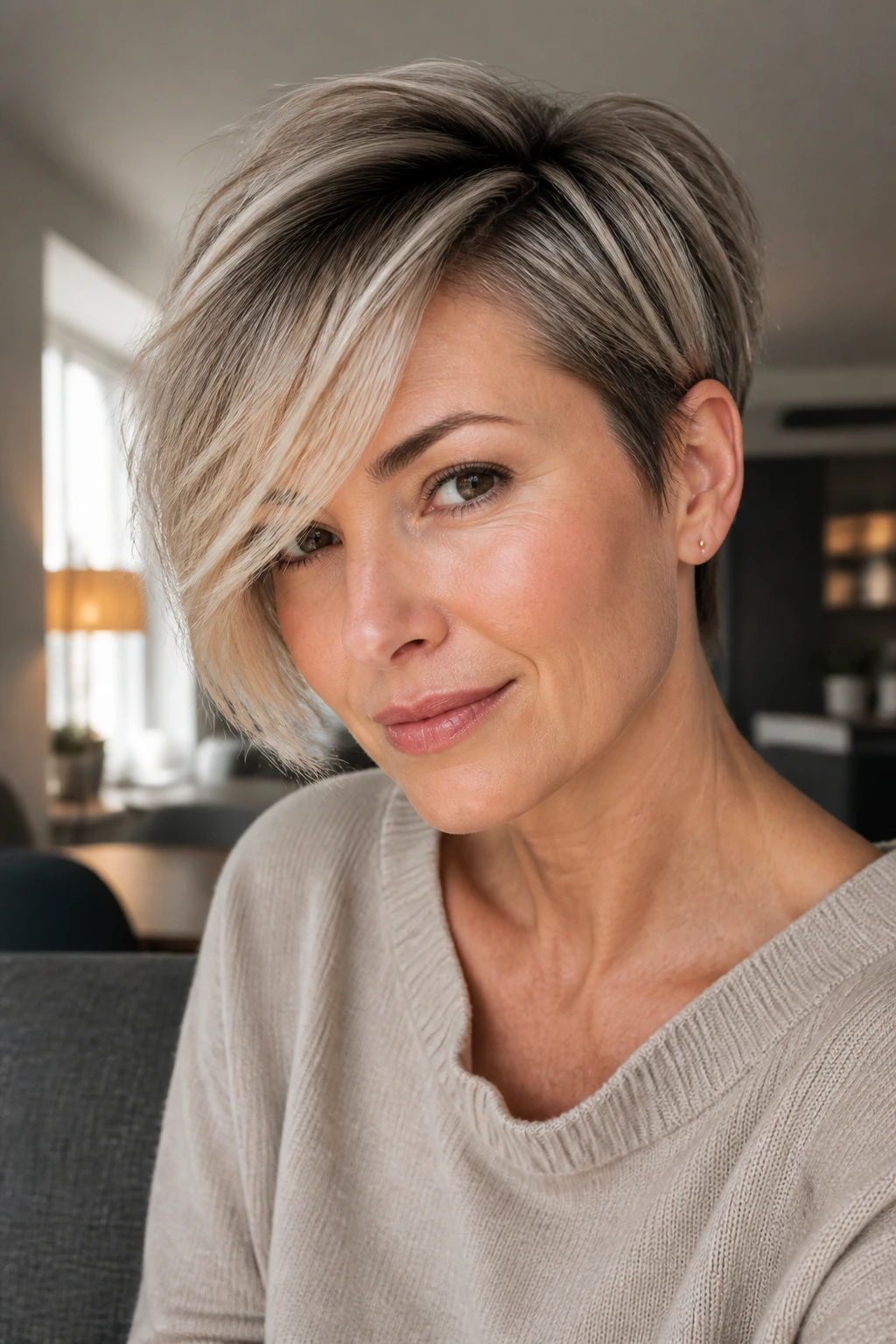
A deep side part changes everything. It gives a layered pixie a long front sweep that lands across the forehead and softens the face without needing heavy bangs. The shorter side keeps the cut neat, while the longer side carries the framing.
This is one of my favorite options for people who want short hair but don’t want to expose the whole forehead. It also plays well with glasses because the sweep can sit above the frame instead of crashing into it.
Tell your stylist where you part your hair on a normal day. If they cut the fringe from the wrong side, the whole shape will fight you every morning. That tiny habit matters more than most salon photos admit.
15. Ear-Length Tucked Crop
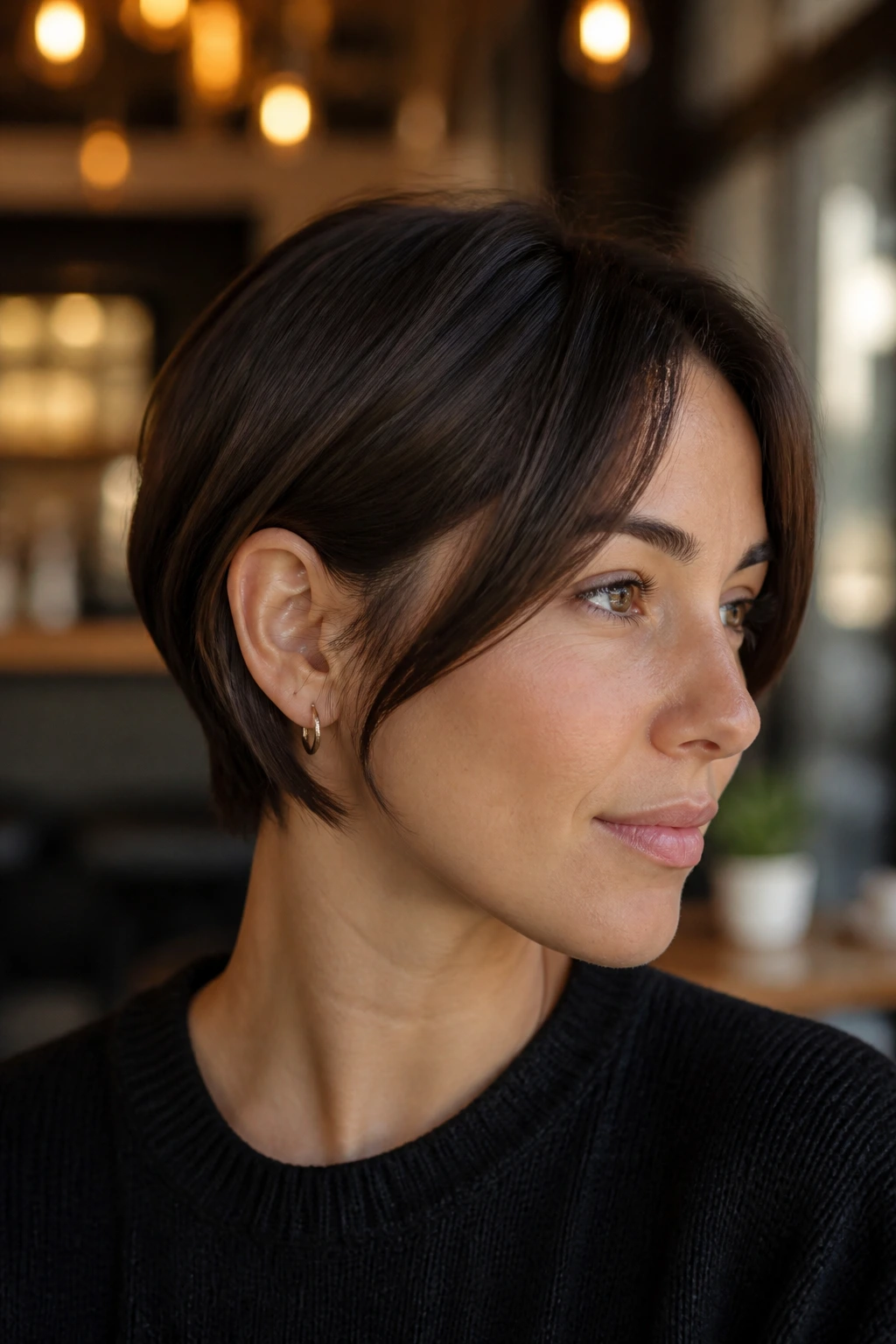
An ear-length crop has a lot more personality than people expect. When the front layers are left long enough to tuck and the sides are softly tapered, the face-framing pieces create a neat edge around the eyes and cheekbones.
This cut is especially nice if you like to wear earrings or pull the hair behind one ear. The front should land in a way that it still looks deliberate when tucked, not like you gave up and pinned it back. That means the front corners need enough length to drape, not stick.
Why it works
The ear gives the cut a built-in resting point. That’s useful. The hair can sit there and still look styled, which is more than I can say for a lot of short cuts.
16. Graduated Bob With Soft Front Sweep
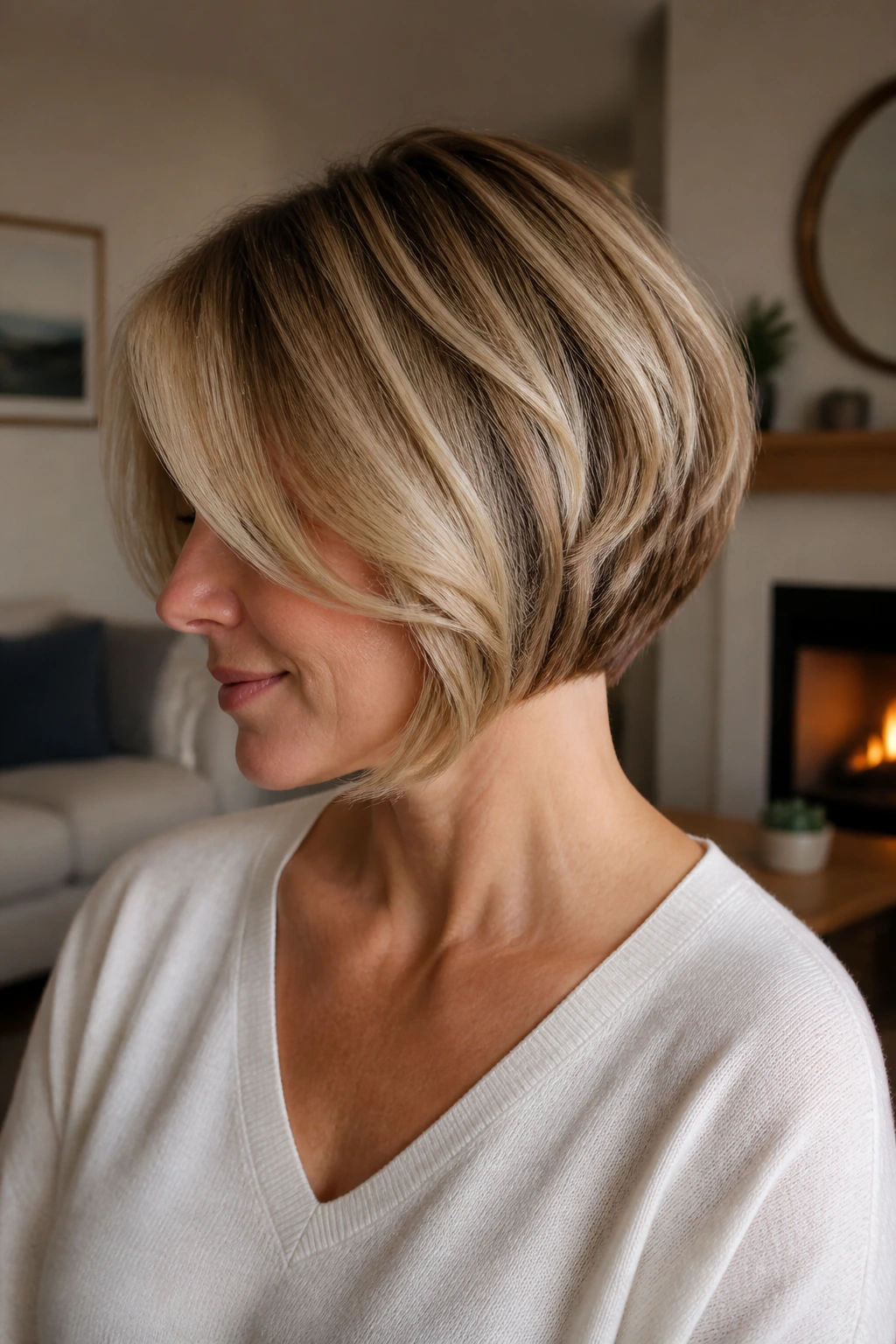
A graduated bob stacks weight in the back and lets the front sweep forward with more softness. It’s a strong shape from the side, but the face-framing pieces keep the front from feeling blocky. That combination is why this cut works so well on hair that needs structure.
The back gives you lift at the nape. The front gives you movement. If you’ve got a short neck or you like volume where the head meets the neck, this one earns its place.
Ask for the front to stay longer than the stacked back, with no severe shelf at the corners. The sweep should feel like a curve, not a corner.
17. Brushed-Forward Micro-Layered Pixie
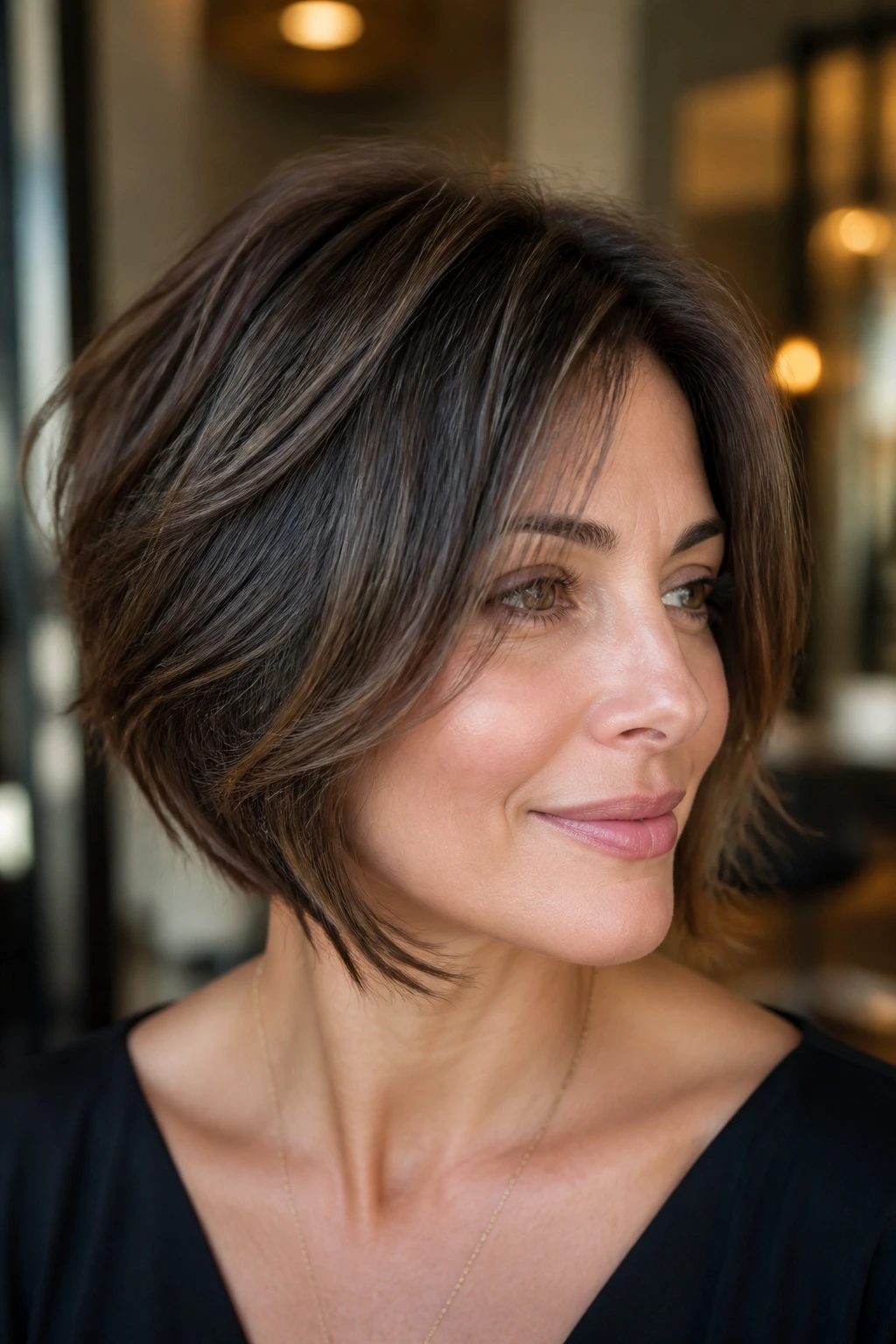
This cut has a quiet kind of edge. The hair is brushed slightly forward, the layers are tiny, and the face-framing happens in the fringe and temple area rather than in big obvious sections. It’s a good fit for people who want short hair to look intentional even when it’s a little messy.
Micro-layers are safer than chunky layers here. They keep the hair from sticking up in odd places while still giving the front enough movement to soften the face. The shortest pieces usually sit around the brow or upper cheek, depending on how much forehead you want to show.
You don’t need much product. A touch of styling cream and a side-to-side blow-dry is often enough.
18. Short Wavy Bob With Front Lift
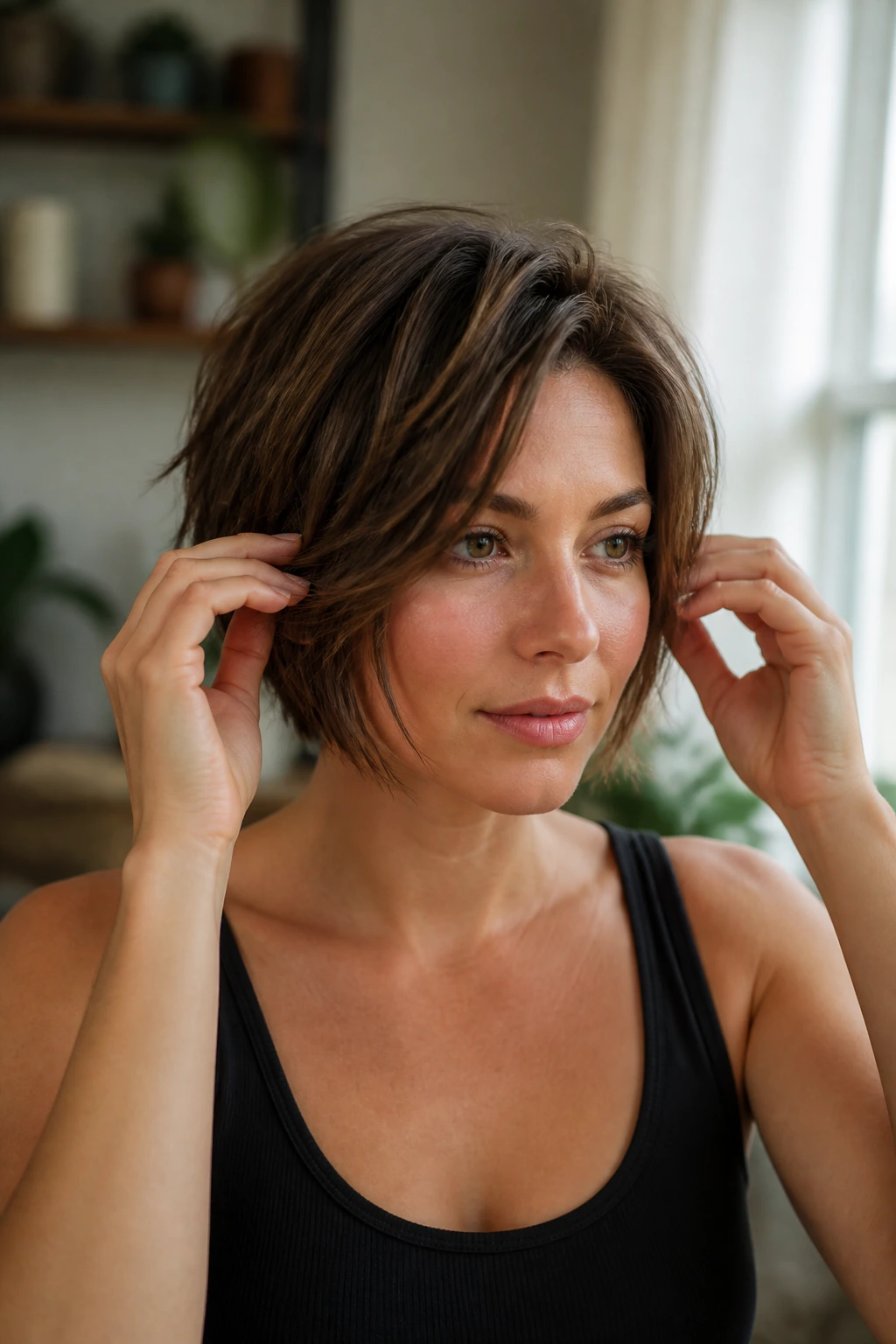
Wavy short hair can collapse right at the temples if the front is cut too bluntly. This bob solves that by lifting the front pieces just enough to create bend and space. The cut should follow the wave pattern rather than flattening it into submission.
I like this shape when the natural wave starts at the cheek and flips outward at the ends. A little front lift keeps that movement from looking accidental. Ask for the front to be point-cut so the waves can break around the face instead of forming one heavy line.
Styling cue
Scrunch in leave-in conditioner on damp hair, then twirl the front pieces with your fingers as they dry. Don’t overbrush. That’s how you lose the good bend.
19. Undercut Pixie With Curtain Fringe
An undercut pixie removes bulk underneath so the top and fringe can sit softly. The curtain fringe stays longer around the front, opening the face, while the hidden undercut keeps the sides neat. It’s a strong haircut disguised as an easy one.
This is especially useful if your hair grows out at the sides faster than anywhere else. The undercut keeps the bulk from swelling around the ears, which lets the front pieces fall cleanly. If you’ve ever had a pixie puff into a triangle, this is the fix.
Be honest about how often you’re willing to trim. The undercut can stay neat for a while, but it will show when it grows.
20. Textured Bowl Bob
A bowl bob sounds severe until you break up the edges. Add texture around the face, soften the temple area, and keep the perimeter from forming one hard circle, and the whole thing shifts from retro-revival to wearable short hair.
The trick is restraint. Too much texture and it loses the bowl shape completely. Too little and it looks like a helmet. The front pieces should skim the brows or cheekbones, depending on your face shape, and then soften as they move toward the ears.
This cut suits straight hair best, though a slight wave can make it feel less exact. It’s a neat choice when you want something a little fashion-forward without drifting into cosplay.
21. Swoopy Layered Crop
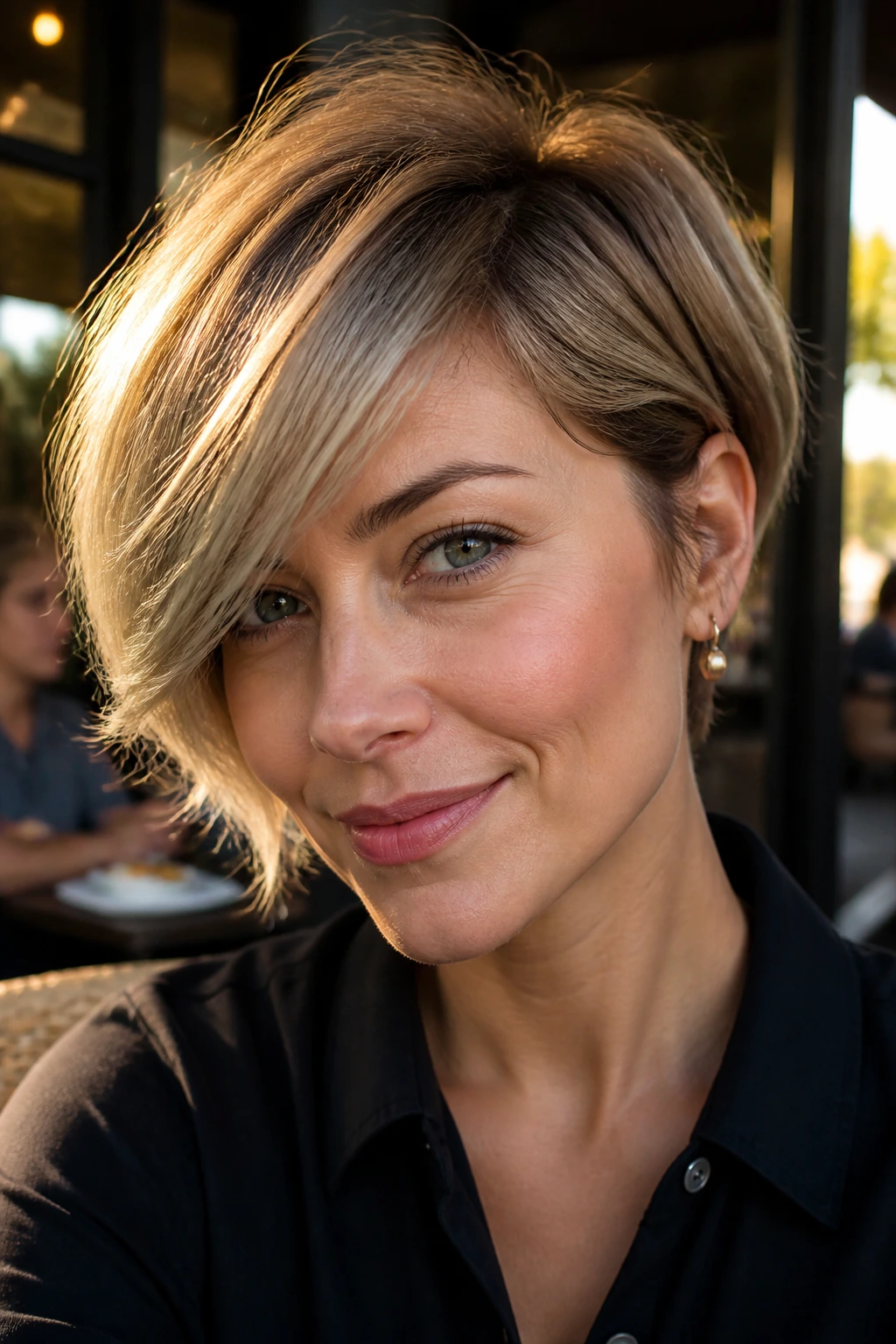
If you like movement at the front, this is the cut. The layers are directed into a diagonal sweep, so the hair falls away from one side of the face and across the other in a soft arc. It’s flattering because it creates motion where the eye wants it most.
This style helps lengthen a round face and soften a stronger forehead. It also looks good with a deep side part or a loose tuck behind one ear. The front should never sit flat like a visor.
The finishing move
Blow-dry the roots in the opposite direction of your part first, then flip them back. That gives the sweep lift without making the cut frizzy or stiff.
22. Messy Wet-Look Pixie
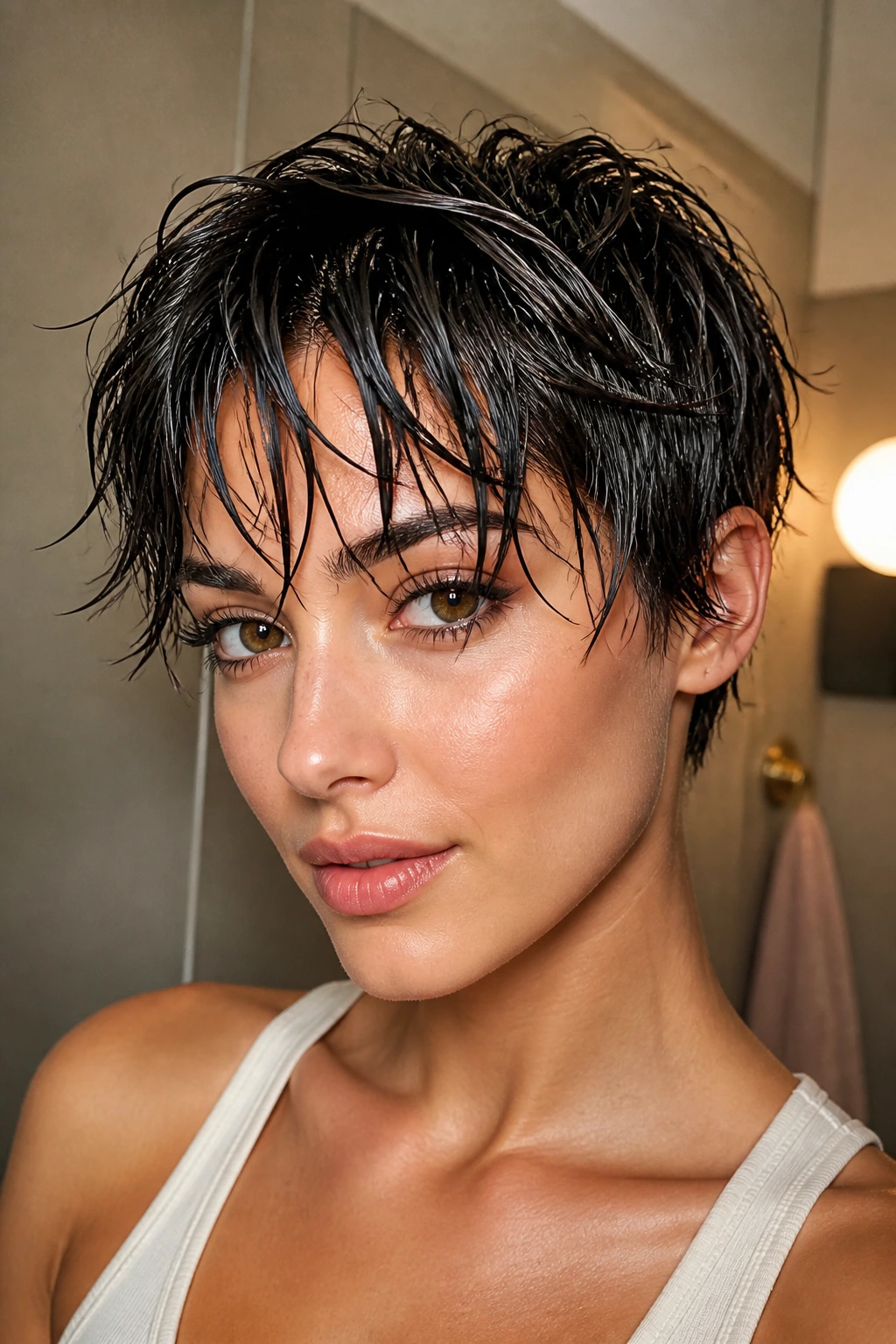
Some short cuts want polish. This one wants sheen. A messy wet-look pixie uses a gel-cream mix or a light sculpting gel to separate the front pieces so they sit in sleek, slightly clumped sections around the forehead and temples.
It’s a strong look, so the face-framing layers have to be precise. The front should be long enough to bend, short enough to stay visible, and not so long that it droops. I’d keep the fringe area piecey and the sides tight.
This is one of those cuts that looks far more intentional when the product is controlled. Use less than you think. If it goes crunchy, the shape loses its line.
23. Grown-Out Layer-Friendly Short Cut
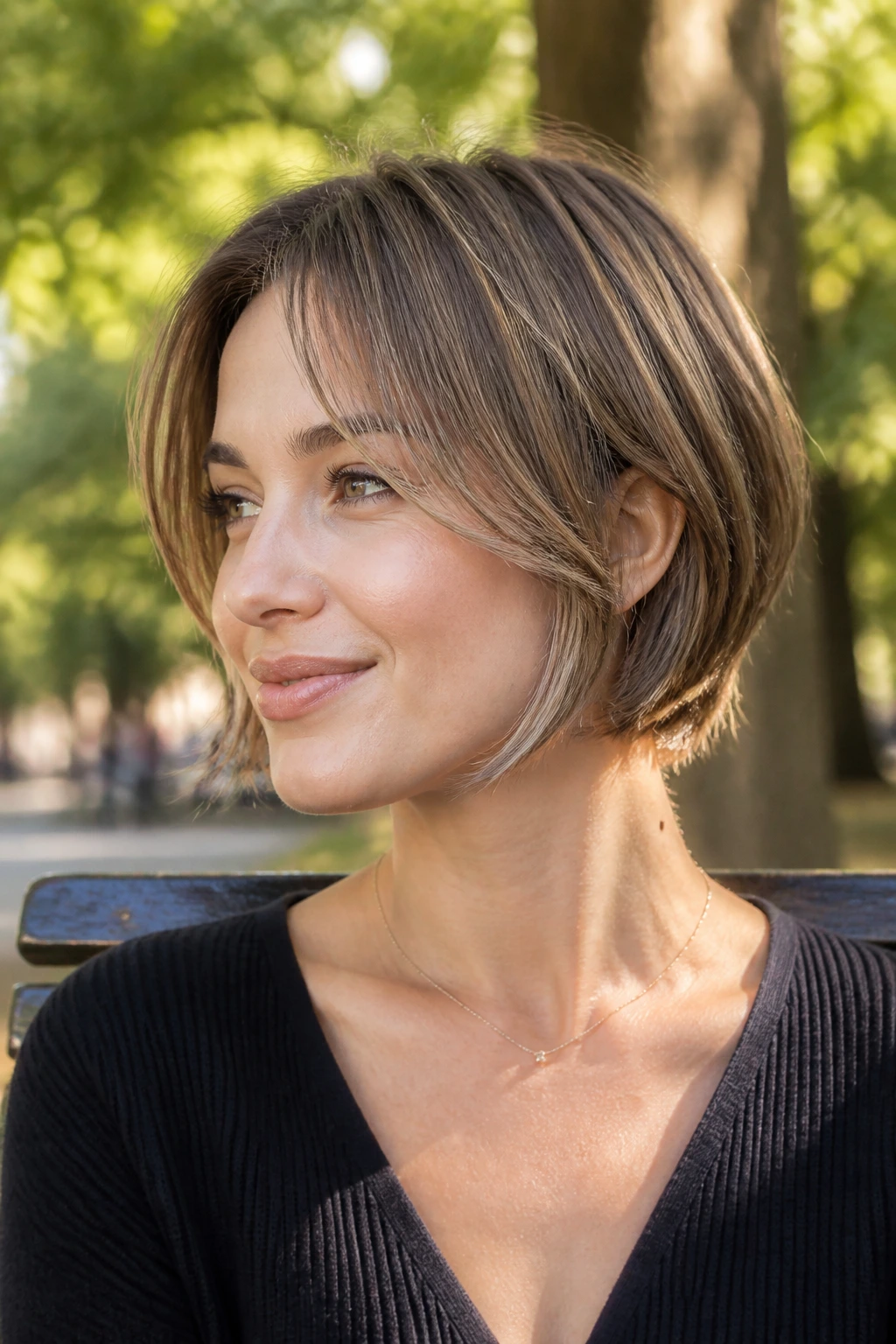
This is the cut for people who want short hair that won’t punish them later. The front is soft, the layers are placed so they can stretch into a bob, and the nape stays neat enough that the shape doesn’t fall apart between trims. It’s practical in the best way.
The face-framing pieces should start just below the cheekbone and be long enough to grow into a jaw-skimming bob instead of a weird in-between stage. That small choice saves you from the awkward grow-out that makes so many short cuts feel like a commitment trap.
If you’re not sure how short you want to go, this is the safe place to begin. Not boring. Just forgiving.
What Face-Framing Layers Actually Change on Short Hair
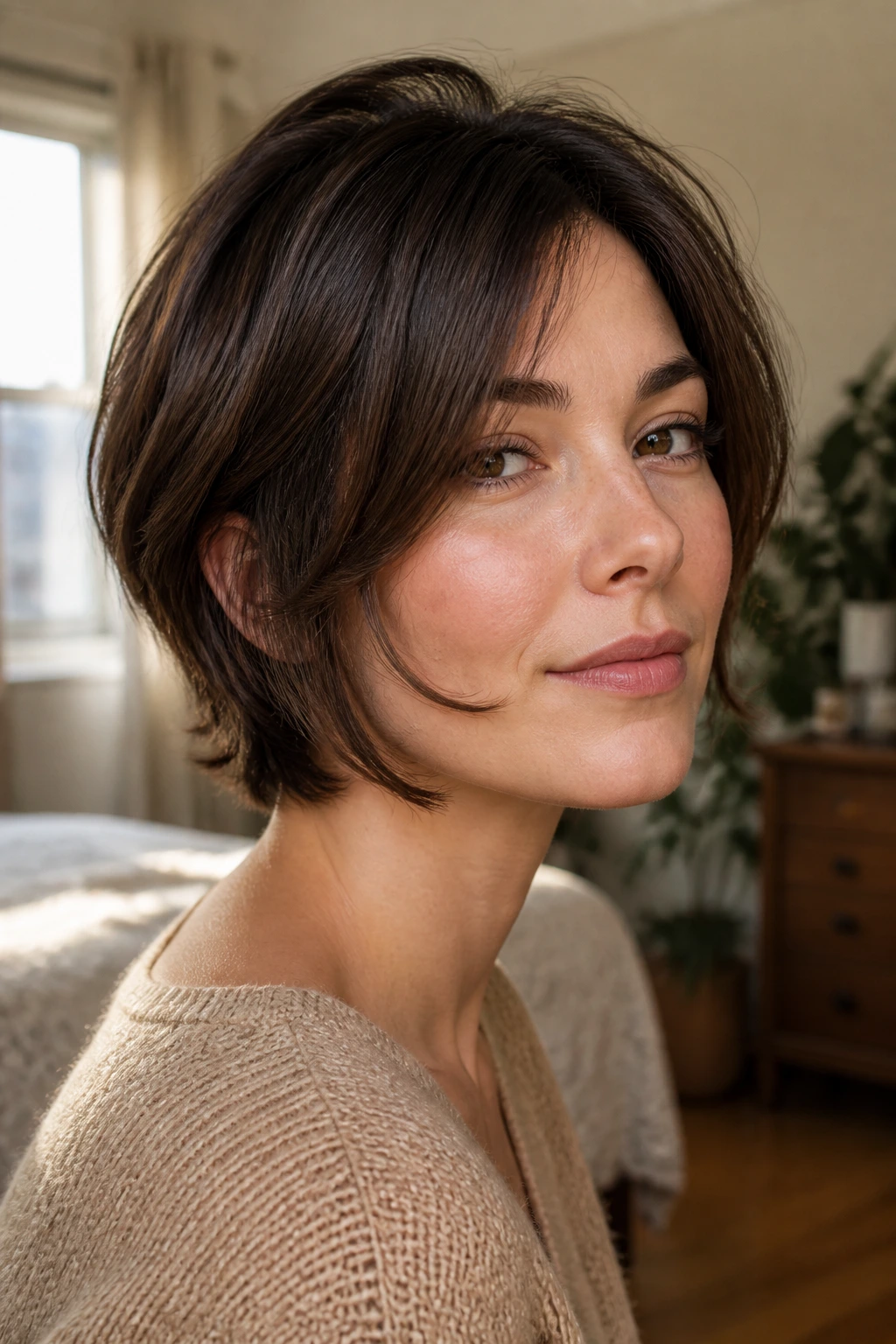
Short hair doesn’t give you much room to hide a bad shape, which is exactly why front layers matter so much. A blunt edge sits there. A curved front moves. That’s the whole fight in one sentence.
The front pieces also control how the cut reads from across the room. If they land at the cheekbone, the eye goes up. If they land at the jaw, the line gets slimmer. If they’re cut too short around the temples, the face can look wider than it is because the cut stops drawing the eye downward.
There’s another small but real detail: short hair grows fast in the places people notice first. Around the face, even a quarter-inch can shift the style from sharp to odd. A well-placed layer buys you more wear time, which is why I’ll take thoughtful front shaping over extra thinning almost every time.
How to Ask for the Right Front Length at the Salon
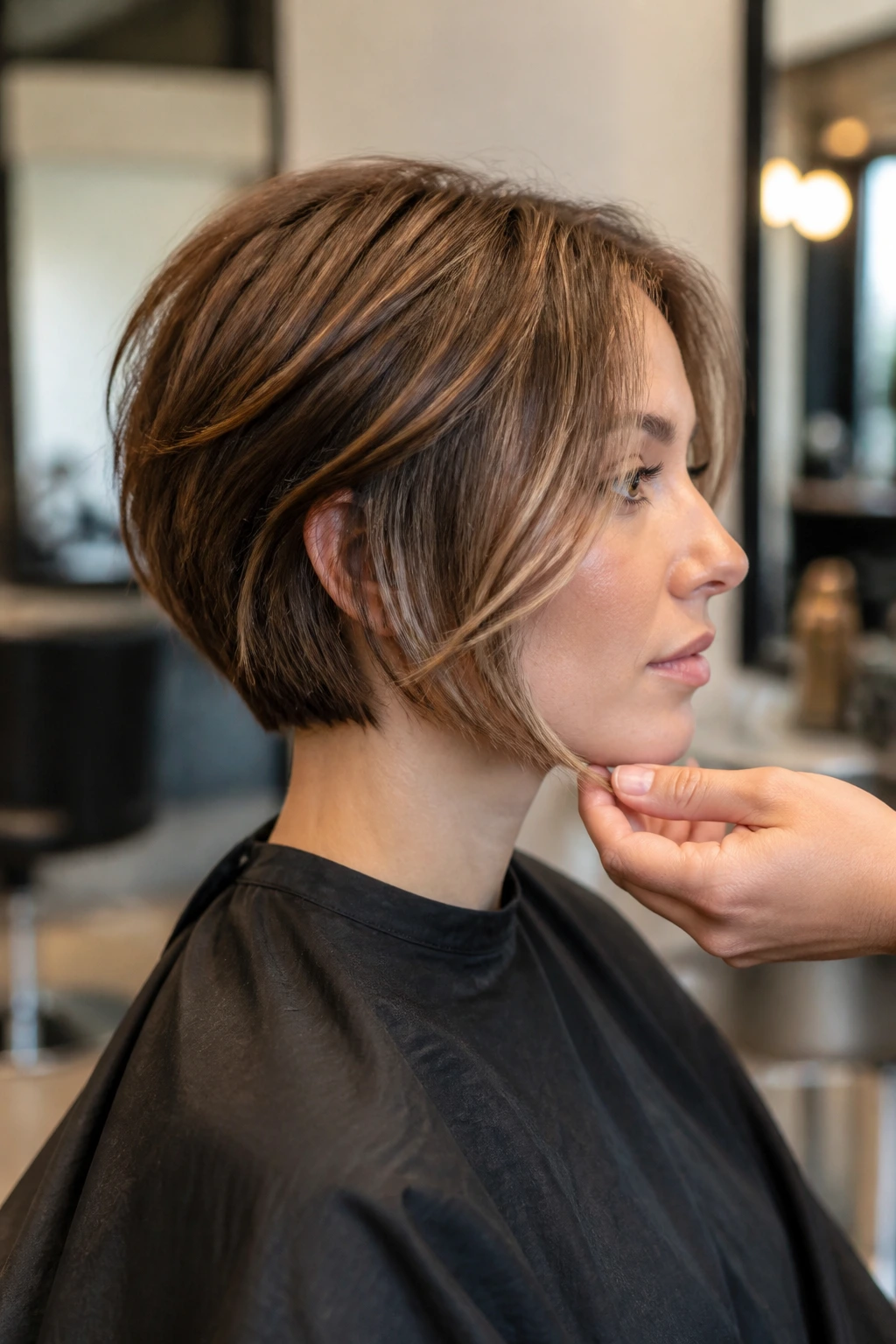
Bring photos, but bring useful ones. One picture of the front shape, one of the side profile, and one that shows the length at the cheek or jaw will help more than a dozen saved screenshots of different people with different hair. The face frame is about where the shortest piece lands, not about copying a whole head of hair.
Say landmarks out loud. “Cheekbone,” “lip,” “jaw,” and “ear” are words a stylist can actually work with. “I want it soft” is fine as a feeling, but it isn’t a measurement. On short hair, measurements matter more than mood boards.
Tell them how you wear your hair on a normal Tuesday. Air-dried? Round-brushed? Flipped with a flat iron? If you never blow-dry, do not ask for a cut that only looks right after 20 minutes of styling. That’s how people end up annoyed for six weeks.
If your hair is wavy or curly, ask for a dry finish or at least a dry check on the front pieces. Wet hair lies. A lot.
Brushes, Dryers, and Products That Earn Their Place
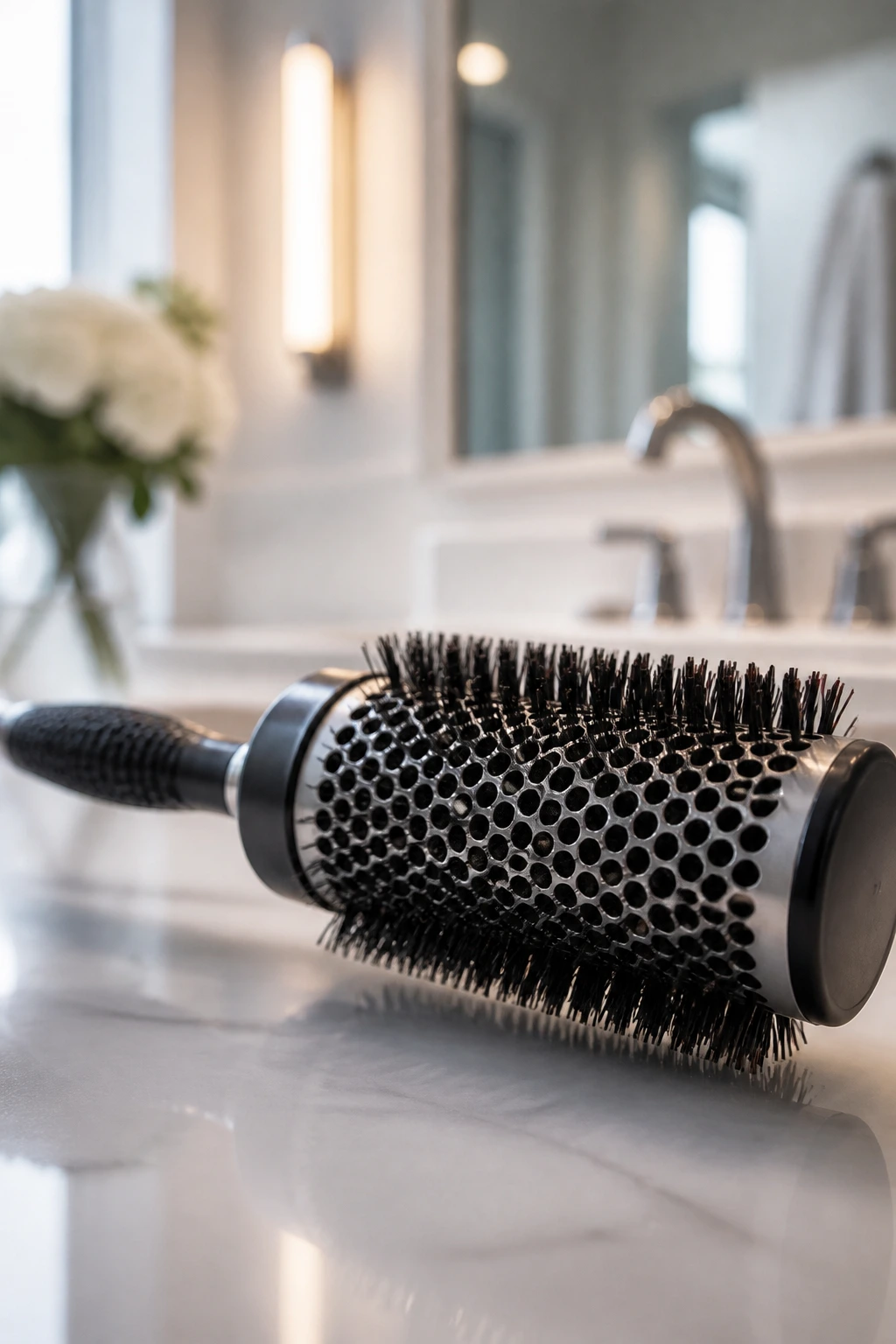
You do not need a bathroom shelf full of gadgets. You need a few things that make short layers behave without turning them greasy or stiff.
- A small round brush, 1 to 1.5 inches: Best for bending the front under or away from the face.
- A blow dryer with a nozzle: The nozzle matters. It keeps the air focused so the layers don’t puff everywhere.
- A flat iron with narrow plates: Useful for a quick curve at the front or a soft flick at the ends.
- A vent brush or paddle brush: Good for faster drying when the cut is already shaped well.
- A diffuser: Worth it for curly or wavy short cuts that need volume without frizz.
- Heat protectant spray: Non-negotiable if you use hot tools on the face-framing pieces.
- Light mousse or root foam: Gives short hair a little memory without the sticky feel.
- Texture spray: Best on the ends, not the roots.
- A tiny bit of pomade or paste: Use it at the temple or fringe, not through the whole head.
Skip heavy oils unless your hair is very dry. They flatten short hair fast, and then you’re chasing volume that should have been there in the first place.
How to Pick Layer Length by Face Shape
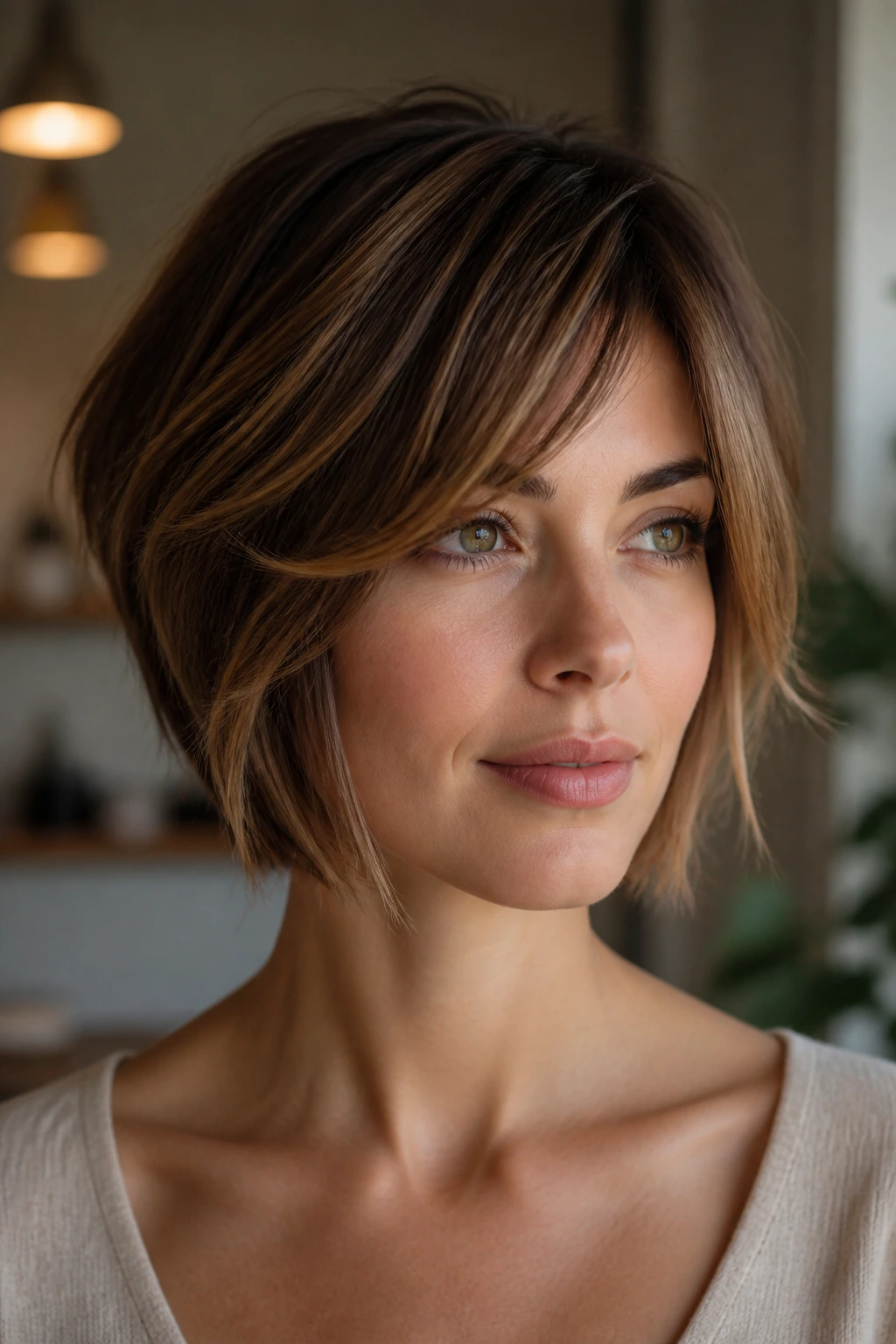
Round faces usually do well with front pieces that start just below the cheekbone and slide down toward the jaw. That creates a vertical line where you need one. If the shortest piece hits the fullest part of the cheek, the width can read louder than you want.
Square faces often look best with diagonal front layers that soften the jaw rather than sit on it. A piece that ends at the lip or just below the chin breaks the hard corner nicely. You want movement, not a blunt stop.
Heart-shaped faces usually benefit from a bit more length around the sides so the forehead doesn’t feel too exposed. Think cheekbone to jaw, not forehead-to-eyebrow bangs unless you really want that look.
Oval faces can wear the widest range, which sounds boring until you realize it means you can play with texture, asymmetry, or fringe without fighting your proportions. The bigger question is usually density, not shape.
Glasses change the math a little. If your frames hit at the cheekbone, keep the shortest layer above or below that line, not right on it.
How to Style Short Face-Framing Layers on Different Textures
Straight hair: Start with a root-lifting mousse on damp hair, then blow-dry with a nozzle and a small round brush. The goal is a slight bend at the front, not a full salon blowout every day. One pass of a flat iron on the front pieces can tighten the curve if they flip the wrong way.
Wavy hair: Let some texture stay alive. Scrunch in a light cream, then rough-dry until the hair is about 80 percent dry before deciding where the front should fall. If you smooth every wave out, you lose the whole point of the cut.
Curly hair: Use a leave-in and a curl cream, then shape the face-framing pieces with your fingers before the diffuser goes near them. Dry curls shrink. A lot. Keep the front longer than you think you need.
Coily hair: Focus on shape and moisture. The front pieces should be cut with shrinkage in mind, and the style often looks best with a defined side part or a softly tapered silhouette. If the front is too short, it can disappear into the shape and stop framing anything.
Ways to Make the Shape Feel More Like You
Texture boost: Add a pinch of dry texture spray to the mids and ends, then scrunch once with your hands. That keeps the front pieces from lying too flat against the cheeks.
Polished finish: Use a small round brush just on the front and leave the back a little looser. That contrast makes short hair look intentional without over-styling the whole head.
Softening trick: Keep the shortest layer just a touch below the cheekbone if you want the face to look narrower. That one move changes the mood more than most people expect.
Low-maintenance move: Ask for a cut that can air-dry with a decent shape, even if you occasionally refine the front with a hot tool. If the haircut only works after a long blow-dry, it isn’t low-maintenance.
Make-it-yours adjustment: Add a side part for more drama, a center part for symmetry, or a loose fringe if you want the forehead softened. Tiny shifts matter here. Tiny shifts are the point.
Common Mistakes That Make Short Layers Look Wrong
The most common problem is cutting the front too short. If the shortest piece sits above the cheekbone on a face that needs softness, the haircut can start to puff outward instead of framing anything. The fix is simple: keep the shortest piece long enough to connect with the rest of the face, then taper from there.
Over-thinning is the other big one. It sounds like a good idea until the layers go stringy and separate in thin, sad strands. On short hair, you usually want controlled removal of bulk, not a lot of see-through ends.
Ignoring the way your hair dries is another mistake. Cowlicks at the temple, a side part that splits hard, or a front section that flips under no matter what should change the cut. They are not annoyances to ignore. They are instructions.
A fourth issue: drowning the front in heavy product. Short layers need hold or movement, not both in equal measure. If the hair starts to clump at the roots, switch to lighter formulas and use less of them.
Variations and Adaptations to Try
The Fine-Hair Soft Frame: Keep the layers longer, lighter, and closer to the perimeter. This version works when you want movement without exposing too much scalp or losing density through the sides.
The Thick-Hair De-Bulked Frame: Use interior weight removal and a slightly deeper front sweep. That takes pressure off the cheeks and stops the haircut from mushrooming out by noon.
The Curly Dry-Cut Version: Shape the front while the hair is dry or nearly dry so the curl pattern tells the truth. This one is better when shrinkage is strong and the face needs definition, not guesswork.
The Glasses-Friendly Version: Leave a little more room at the temples and keep the front pieces from landing directly on the frame of the glasses. The haircut should sit with the glasses, not compete with them.
The Grow-Out Version: Start the shortest front piece below the cheekbone and keep the nape clean. That gives you a path into a bob later without the awkward stuck-in-between stage.
Keeping the Cut in Shape Between Salon Visits
Short face-framing layers usually need more upkeep than long hair, but the schedule is not as brutal as people fear. Pixies and bixies often need a cleanup every 4 to 6 weeks if you want the shape to stay crisp. Bobs can usually go 6 to 8 weeks. If you’re wearing a shaggy or wolf-cut version, 8 to 10 weeks is often enough before the front starts losing its purpose.
Between trims, dry shampoo at the roots and a quick bend through the front with a small iron can reset the cut in under five minutes. Don’t chase perfection every morning. That’s how you burn time on a style that should be working for you.
If you trim the fringe or temple area at home, go slow. One snip too high around the face changes the whole silhouette. I’d rather live with a slightly grown-out front than rescue a self-cut corner that went weird.
Frequently Asked Questions About Face-Framing Layers on Short Hair
Will face-framing layers make my short hair look thinner?
They can, if the layers are cut too high or thinned too much. The better version keeps some weight in the perimeter and uses the front pieces to soften the face, not expose the scalp.
How short is too short for face-framing layers?
If the shortest piece sits above the cheekbone on a face that needs softness, it can start to look more like a bang than a frame. On many short cuts, cheekbone to jaw is the sweet zone.
Do these cuts work on fine hair?
Yes, but the layering has to be careful. Fine hair usually needs softer interior shaping and a cleaner edge so the style still has enough weight to sit well.
What if my hair flips out at the ends?
Then the cut should probably work with that bend instead of against it. A flip-under crop or a front sweep built for a round brush often solves the problem better than trying to flatten everything down.
Can I wear these cuts with glasses?
Absolutely, but the front length matters. Keep the shortest pieces from landing right where the frame sits, or the hair and glasses will keep bumping into each other.
Are face-framing layers good for curly hair?
They can be excellent, as long as they’re cut with shrinkage in mind. Dry or nearly dry shaping is often the safer move, because wet curls never tell the full story.
How often do I need trims?
Pixie-length cuts usually need a refresh every 4 to 6 weeks. Short bobs and bixies can stretch to about 6 to 8 weeks, depending on how tidy you want the front to stay.
What if the front ends look choppy after the first wash?
That usually means the layering was too aggressive or the product is too heavy. A light blow-dry and a tiny amount of texture spray can help, but if the cut itself was over-thinned, a trim is the real fix.
The Shape That Does the Work
The best short face-framing layers do not shout. They quietly fix the shape. They make the front softer, the jaw less blunt, and the whole cut easier to live with when you’re not standing under salon lights.
That’s why I keep coming back to them. A good front layer can make a short haircut look more expensive, more relaxed, and more like it was cut for an actual person with an actual morning routine.
If your last short cut felt a little too boxy, start with the front pieces. That’s where the whole haircut starts to speak.
