



Wavy hair and a pixie cut can make each other look smarter. The bend in the hair brings movement that straight hair has to fake, and the short length keeps the whole shape from turning into a fuzzy helmet. Pixie cuts for wavy hair work best when they leave enough room for the wave to do its thing, then clean up the sides and nape so the outline stays crisp.
The mistake I see most often is simple: someone asks for “short” and gets a cut that ignores how wavy hair actually dries. A pixie that looks fine when it leaves the chair can kick out at the temples, swell above the ears, or collapse flat at the crown once the wave pattern wakes up. That is not a bad haircut. It’s a mismatch.
The good news is that the right pixie can make waves look purposeful instead of messy. Shorter sides, textured tops, soft fringes, and a clean neckline all change how the bend falls. The cut starts doing part of the styling work for you, which is the whole point.
Why This Collection Feels Different on Wavy Hair
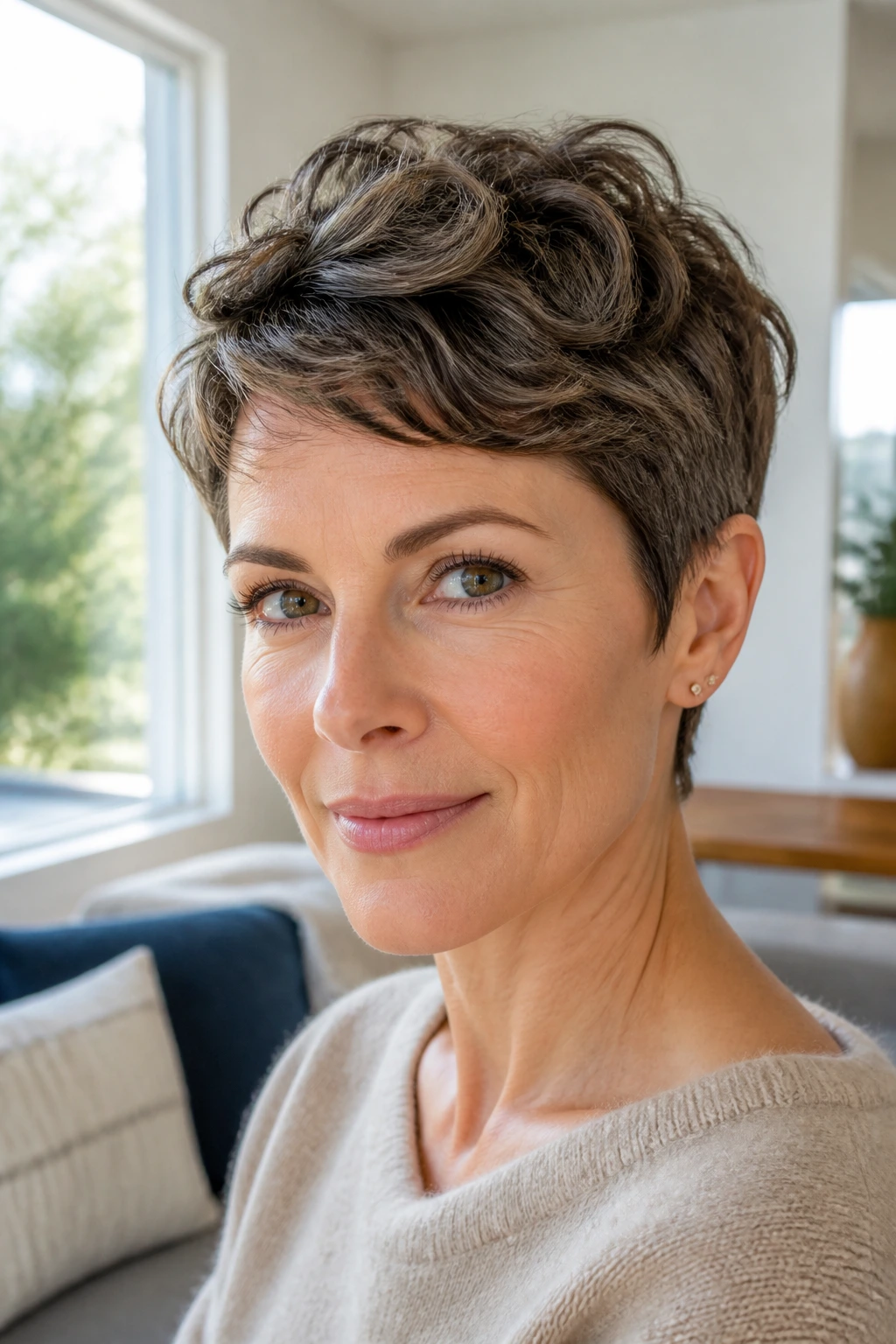
- The shape is doing real work: Waves need room to curve, and the cuts below keep the top long enough to move while trimming the sides so they do not puff outward.
- Grow-out matters here: A wavy pixie should still look decent at six weeks, not just on day one, so several of these styles hold their line as they soften.
- Texture changes the whole mood: The same cut can read sleek, rough, or soft depending on whether you use mousse, paste, or a little cream.
- Face shape gets a say: Side parts, fringe length, and nape taper all change how the eye moves across the face, which matters a lot more on short hair.
- Fine and thick waves need different cuts: Some styles keep weight at the perimeter for finer hair; others remove bulk so thick waves do not balloon.
- You can go low-maintenance or polished: The collection below includes air-dry crops, sculpted looks, and everything between.
1. The Soft Tapered Pixie
A soft tapered pixie keeps the sides neat and lets the crown stay a touch longer, which is exactly what wavy hair likes when it wants to bend instead of stick up. The outline feels clean, but not severe. That balance matters more than people think.
Why It Works on Waves
Ask for a tapered nape, softly cut sideburns, and a crown with light layering rather than a blunt top. The wave pattern gets enough length to show movement, while the taper keeps the silhouette from spreading at the ears.
- Best for medium-density waves
- Holds shape well after air-drying
- Grows out cleanly over 5 to 7 weeks
- Looks good with a side part or a soft center part
Tip: Dry the crown first, then pinch the ends with a pea-sized amount of cream.
2. The Choppy French Pixie
This is the cut I reach for when someone wants short hair that still looks a little lived-in. The choppy French pixie uses broken-up ends and a light fringe, so the wave falls into pieces instead of one solid block.
Wavy hair does not need to be over-styled here. A little matte paste at the ends is enough. The charm is in the uneven texture, the kind that looks deliberate because the layers are sliced rather than blunt.
It suits loose to medium waves especially well. If your hair tends to puff when it gets too much product, keep the front airy and let the fringe sit a little longer than you think. Short in the chair often reads shorter once dry.
3. The Long-Top Pixie
Why do some wavy pixies look easy and others look like they were cut with a lawn trimmer? Length on top. The long-top pixie leaves about 2 to 3 inches where the wave wants to live, then trims the sides tighter so the shape does not balloon.
That extra top length gives you room to scrunch, part, or sweep the hair back. It is the safer choice if your waves are stronger or if you have one section that always kicks out harder than the rest.
How to Wear It
Use a diffuser on low heat or air-dry with a little mousse at the roots. If you like movement, push the top forward with your fingers while it is damp, then break it apart once dry.
4. The Deep Side-Part Pixie
A deep side-part pixie is a small styling decision that changes the whole haircut. The heavy part adds instant direction, which helps wavy hair settle instead of exploding in every direction at once.
I like this one for people with a stubborn cowlick or a wave that grows differently on each side. The longer front section can skim the cheekbone, while the shorter side stays tucked and clean.
A fine-tooth comb is not the hero here. Your fingers are. Set the part while the hair is damp, then let the wave dry where it wants to fall. That gives the style its shape without fighting the bend.
5. The Micro Pixie Crop
The micro pixie crop is for someone who wants almost nothing on the sides and just enough length on top to show the wave pattern. It can look sharp, spare, and very modern — but it is not forgiving if you hate seeing your hair texture on full display.
This cut works best on waves that are loose and reasonably even. If your texture is coarser, ask for a little softness at the hairline so it doesn’t feel boxy.
A dab of paste or light wax is enough. Too much product will drag the short pieces down and make them separate in odd places. Keep the finish touchable, not sticky.
6. The Curly Fringe Pixie
Can a fringe work on wavy hair without turning into a weird shelf? Yes, if you keep it longer and let the bend do the framing. The curly fringe pixie gives the front section enough length to curve across the forehead instead of lying flat against it.
This cut softens strong brows and can take a lot of attention off a long forehead. It also keeps the rest of the cut short, so the overall shape still feels pixie-like, not bob-like.
How to Style It
Blow-dry the fringe with a small brush only if you want control. Otherwise, twist the front with damp fingers and let it dry with a little cream. The trick is to keep the ends separated so the fringe doesn’t form one thick curtain.
7. The Undercut Pixie
A wavy undercut pixie solves one specific problem very well: too much bulk. Thick waves can swell fast on the sides, and an undercut clears that weight so the top can move freely.
The contrast can be strong, which is part of the appeal. The top stays full and textured, while the sides are clipped tight enough that the wave has nowhere to puff. If you like a sharper outline, this is a good one.
Not everyone wants the maintenance. The clippered sections grow out fastest at the temples and nape, so this cut needs regular touch-ups if you want the clean contrast to stay visible.
8. The Feathered Nape Pixie
A feathered nape pixie keeps the back soft, wispy, and slightly broken up, which helps wavy hair avoid that hard shelf at the neckline. It’s one of the gentler pixie shapes, and that matters if you want short hair that still feels touchable.
The feathery finish also makes the grow-out less abrupt. Instead of a blunt wall at the neck, you get a soft transition that can drift into a longer crop without looking neglected.
Use a small round brush only if you want lift at the back. Otherwise, let the nape air-dry and separate it with your fingers. That light touch keeps the edges from looking too tidy.
9. The Bixie Hybrid
The bixie sits between a bob and a pixie, and wavy hair often makes the transition look better than straight hair does. The extra length around the sides and cheekbones lets the wave make a soft curve instead of a sharp turn.
This is the one for someone nervous about going too short. You still get the cropped feeling, but with enough hair to tuck, sweep, or let collapse naturally around the face.
If you wear glasses, pay attention to the side length. Too short around the temples can make frames look heavy. A few extra pieces there usually fix that.
10. The Asymmetrical Pixie
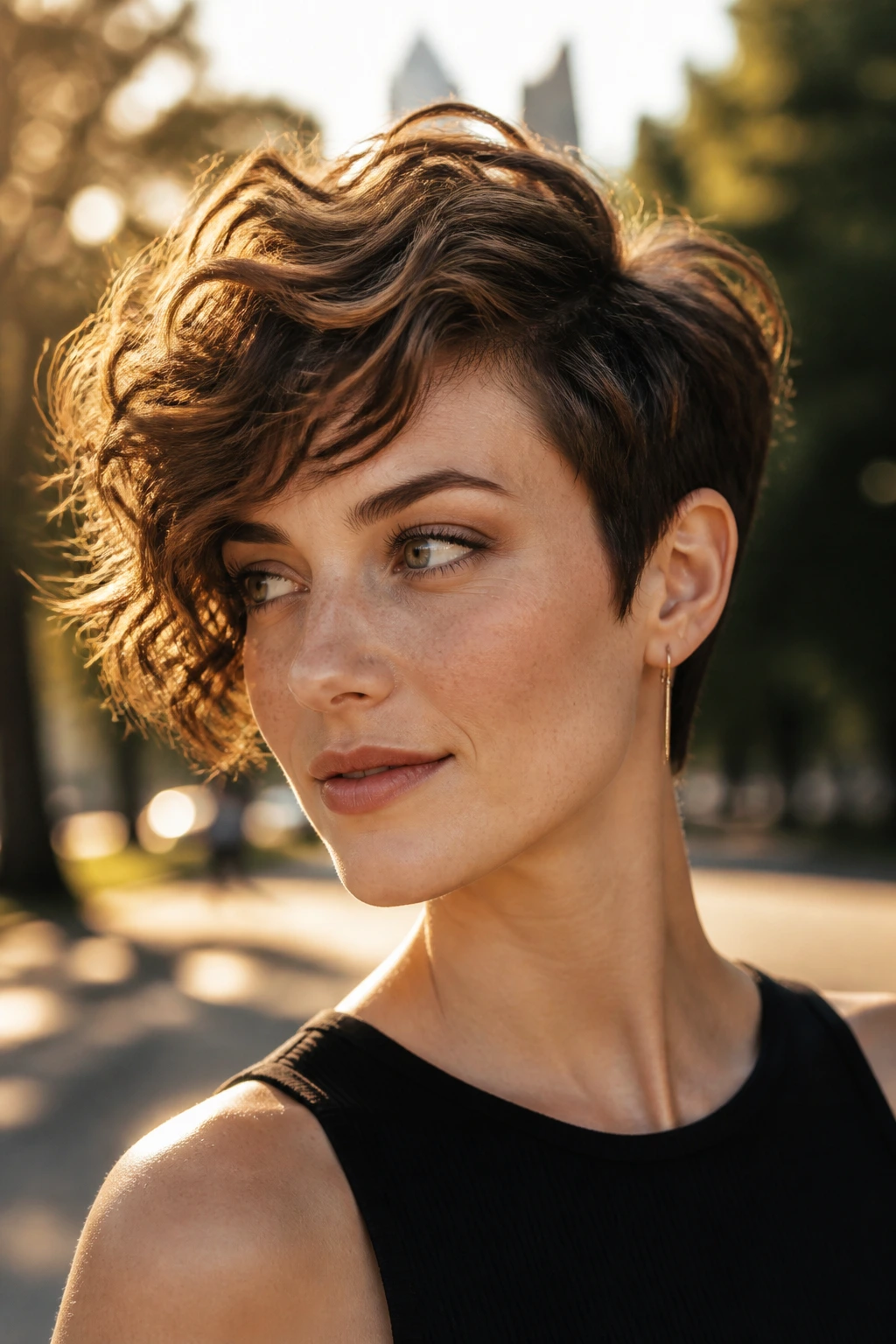
A little asymmetry goes a long way on wavy hair. One side stays longer, the other gets tighter, and the difference keeps the cut from looking static.
I like this shape when a wave pattern is uneven from side to side. Instead of trying to hide that difference, the asymmetry uses it. The longer side can graze the cheekbone, while the shorter side opens the face.
It’s a smart pick if you want movement without a lot of styling. The uneven lengths create their own shape, even when the hair dries naturally and does half the work for you.
11. The Piecey Baby-Bang Crop

Baby bangs can be rough on straight hair, but wavy texture gives them more life. The piecey baby-bang crop keeps the fringe short and broken up so it doesn’t form one hard line across the forehead.
This cut has attitude, but the wave softens it. If your forehead is shorter or you like a sharper profile, it can be a fun choice. If you want a softer look, ask for the shortest pieces to stay slightly jagged rather than blunt.
What Makes It Different
The charm comes from restraint. A tiny fringe with textured ends looks playful; a heavy, square fringe looks like a mistake. Keep the perimeter light and the top a little messy.
12. The Wet-Look Pixie
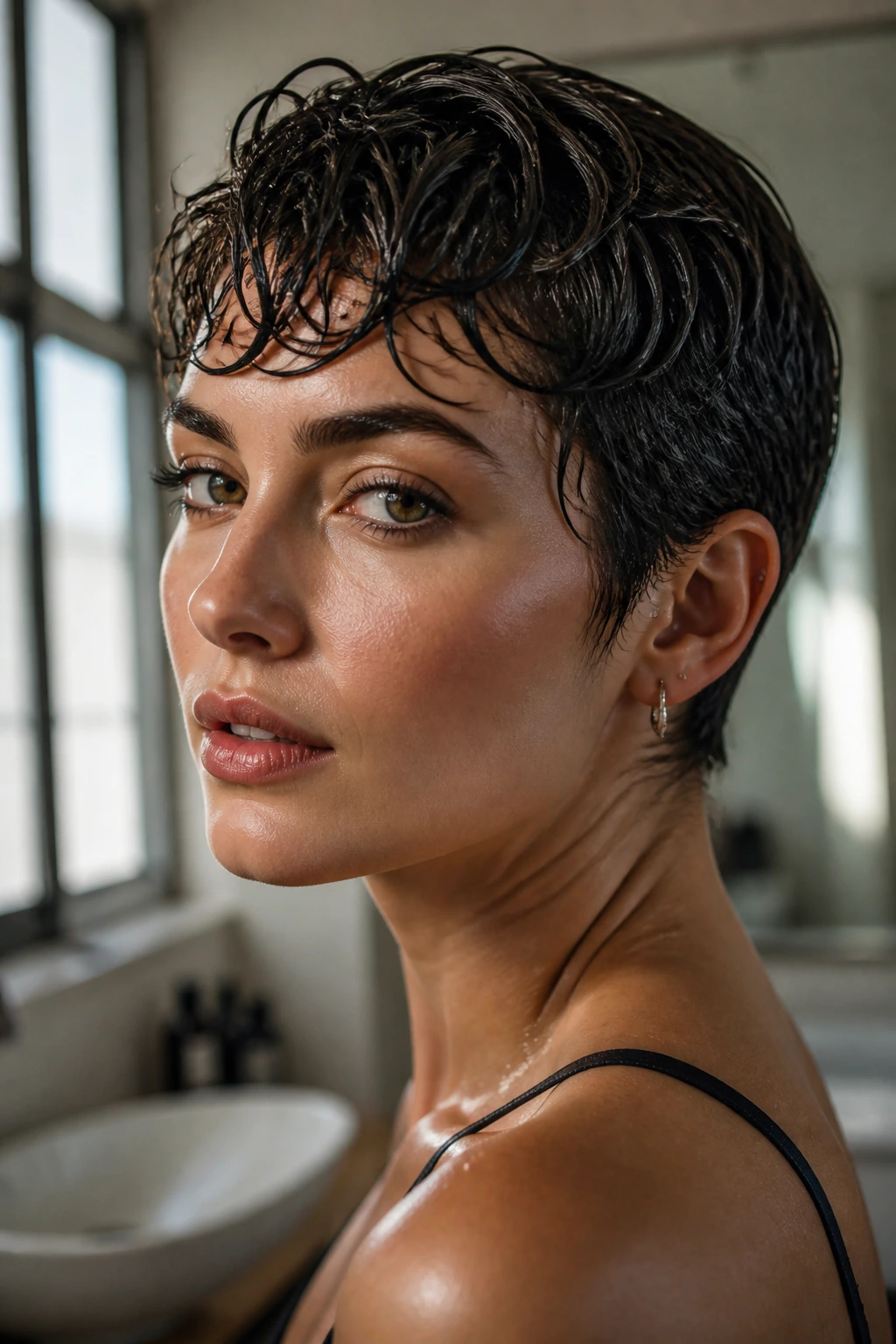
The wet-look pixie is for the days when you want the hair to stay exactly where you put it. Gel or strong cream gives the waves a sculpted finish, and the short length keeps the shine from feeling overdone.
This is not a lazy cut. It asks for intention. But on wavy hair, the texture under the product still peeks through, so the style never looks flat in the way straight hair sometimes can.
Use it when you want a sharper evening look or when your natural wave tends to frizz at the ends. The product should be on the surface, not piled into the roots.
13. The Rounded Crop
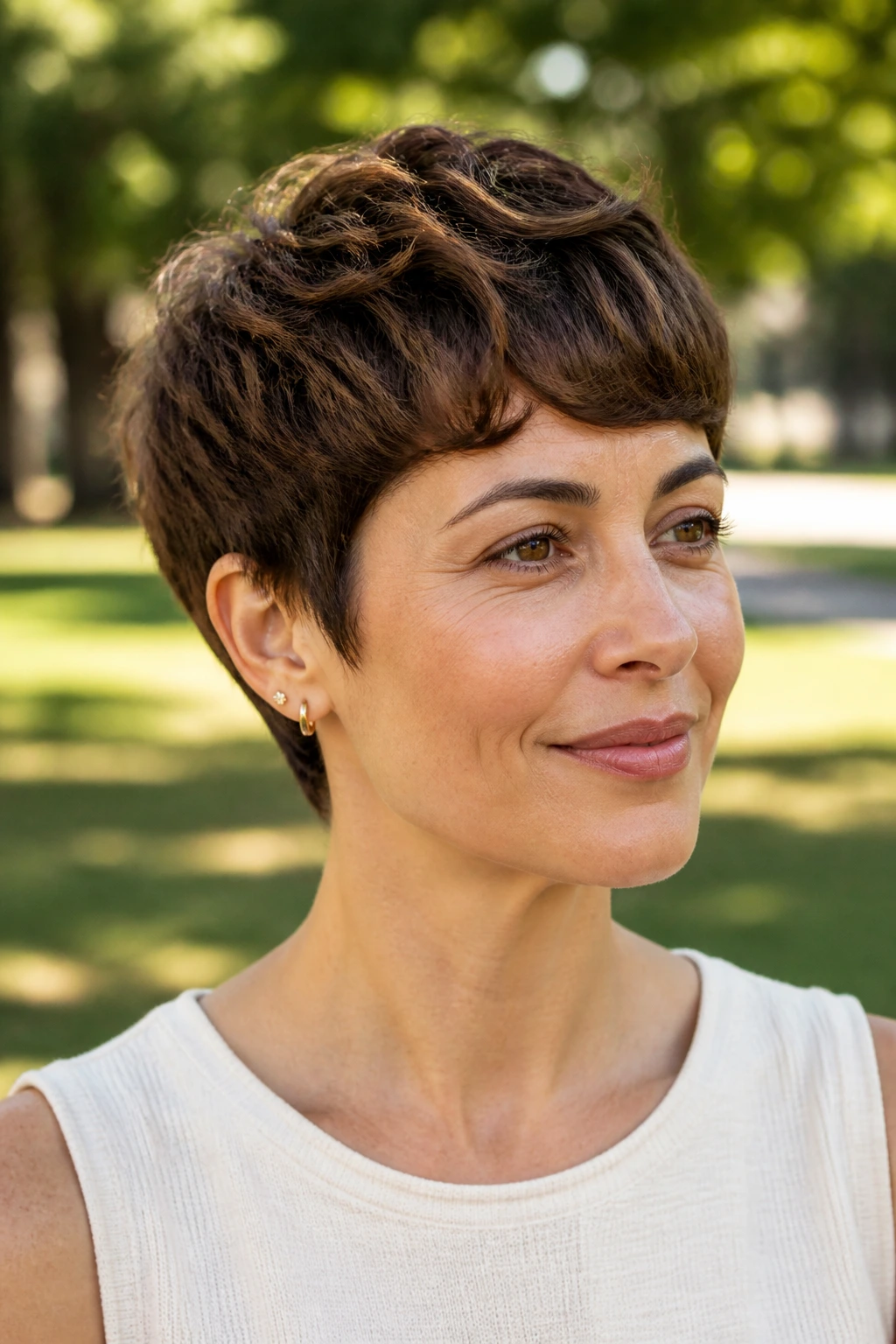
The rounded crop curves around the head instead of jutting out at the corners. That soft outline can be very flattering on wavy hair, especially when the wave is loose and wants to create a halo of movement.
The key is keeping the crown blended into the sides. If the top gets too tall, the shape stops being rounded and starts looking like a mushroom. No one wants that.
Ask for soft point-cutting around the perimeter. It breaks up the line just enough that the crop feels airy rather than heavy.
14. The Shaggy Crown Pixie
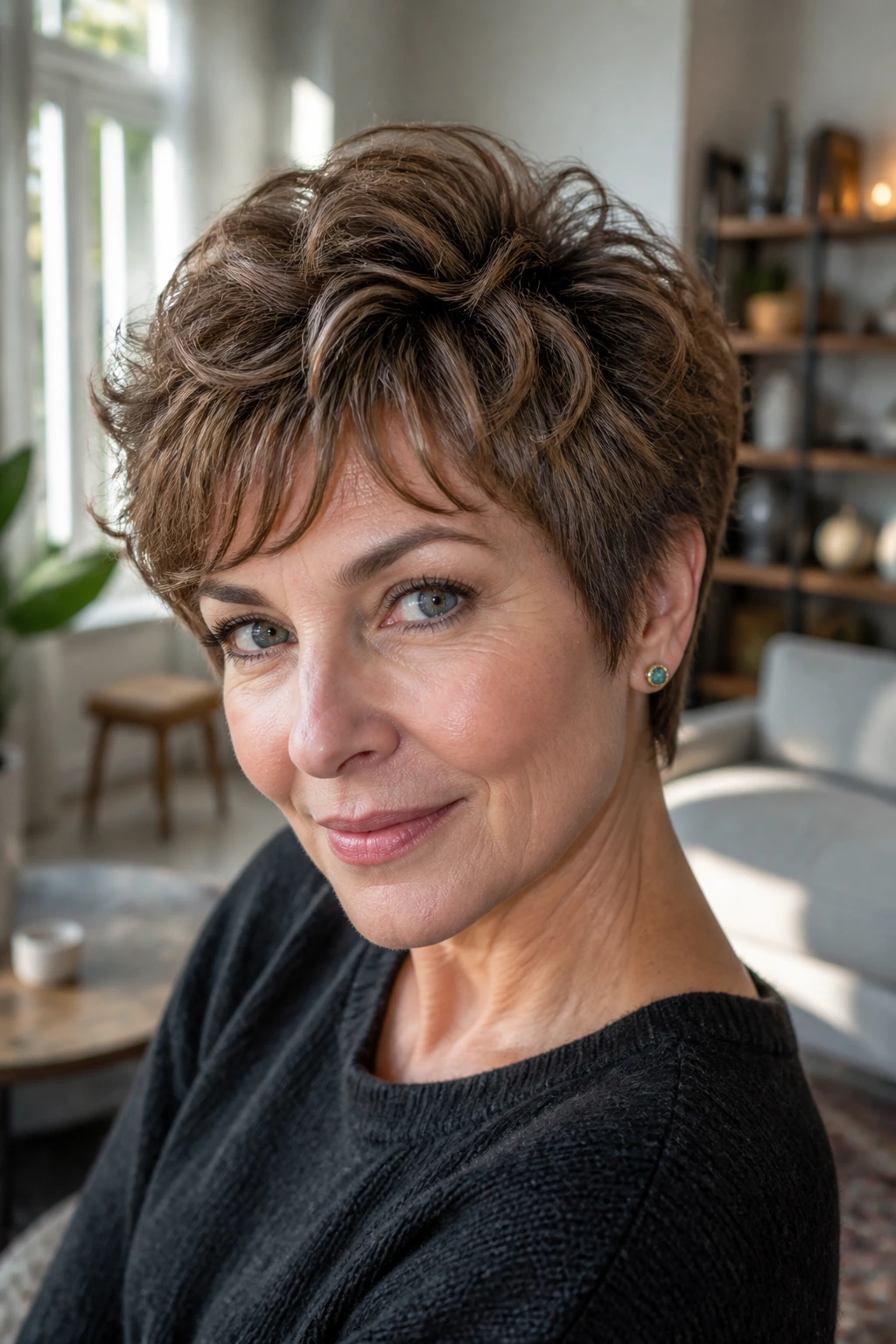
The shaggy crown pixie is basically a volume cut with short hair. The crown layers are lifted and broken up, so the top has more texture and the rest of the shape stays close.
This works especially well when your waves are fine and need some height. A little root mousse and a rough-dry with your fingers can build enough lift to keep the style from sitting too near the scalp.
It also has a good grow-out. The crown keeps a messy, appealing shape for longer than a blunt pixie, which is useful when you cannot get to the salon on time.
15. The Stacked Nape Pixie
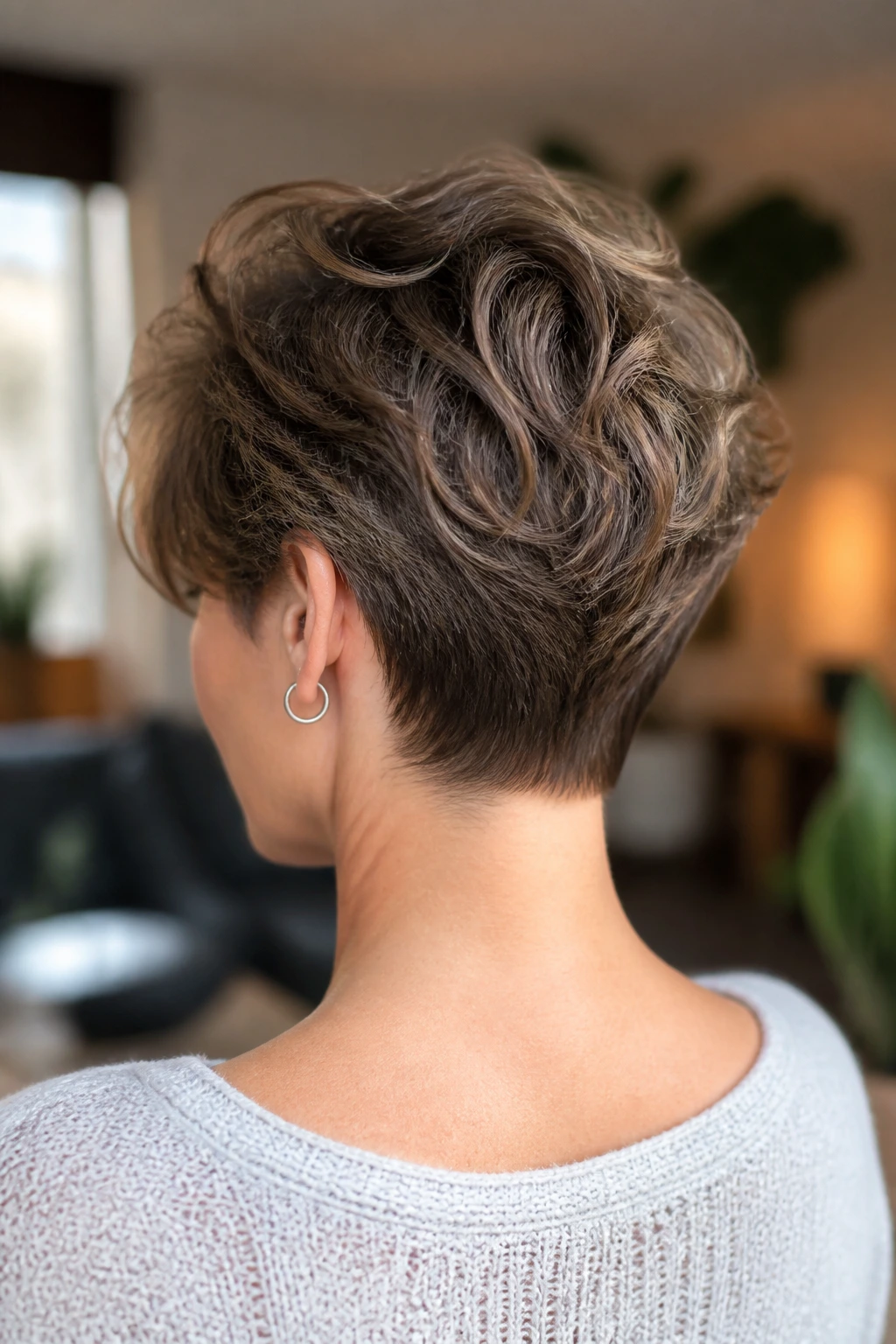
A stacked nape pixie adds a little graduation in the back, so the nape is shorter and the upper back has more lift. Wavy hair benefits from that stacked structure because it prevents the back from looking flat and wide.
The shape is neat without being rigid. When the wave moves, it creates soft layers rather than a blunt step. That matters if you want a bit of polish but do not want the cut to feel old-fashioned.
Use this cut if the back of your head tends to lose volume first. The stacked layers hold the outline better than a single-length crop.
16. The Swept-Back Quiff Pixie
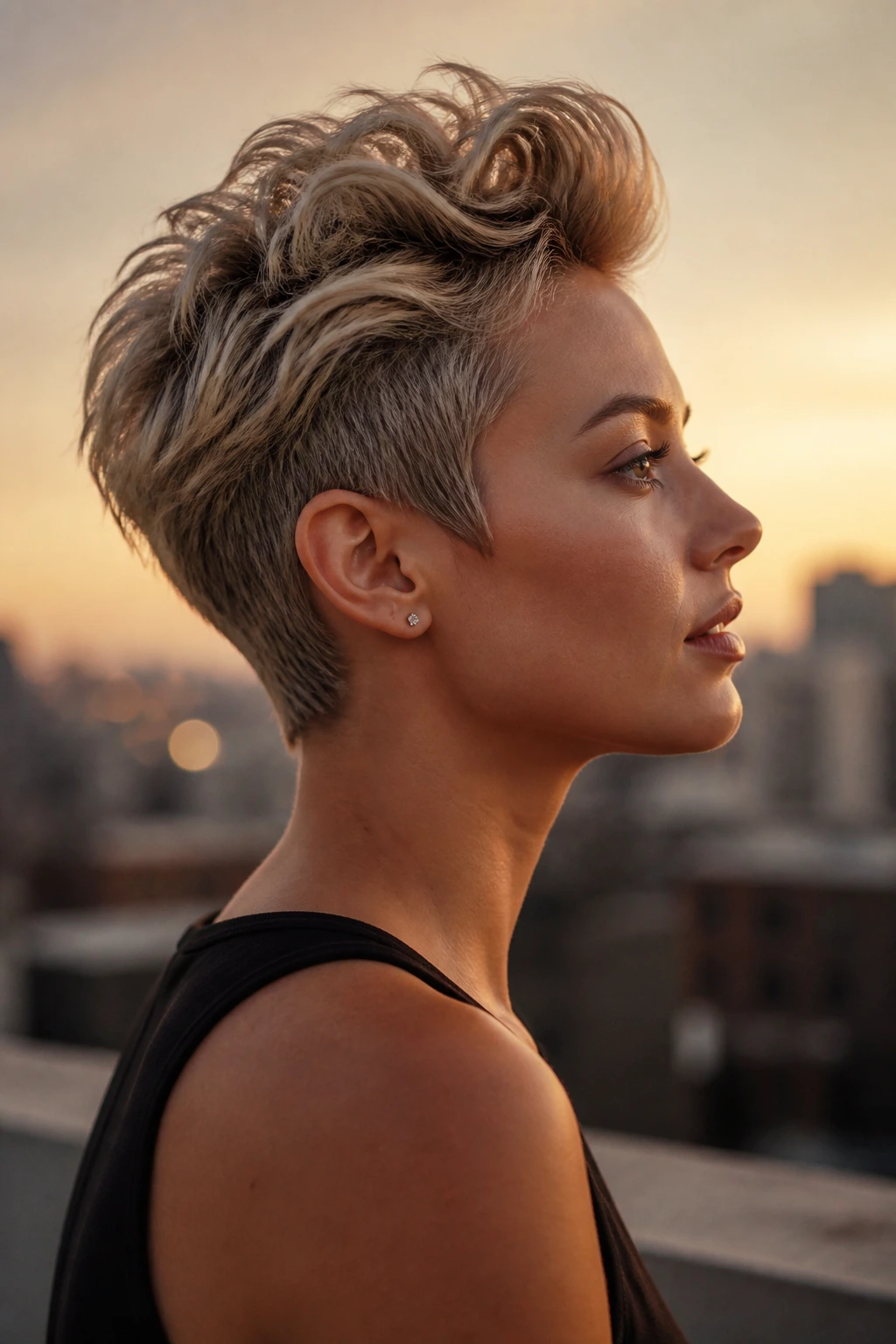
Some pixies want to be brushed forward. This one wants to go up and back. The swept-back quiff pixie uses the wave pattern to build height at the front, which gives the whole style a cleaner profile.
It’s a good match for stronger waves and thicker hair because the top can hold shape without needing a lot of product. A touch of mousse at the roots and a blow-dry directed backward is usually enough.
If you like a little drama in the silhouette, this is the move. It looks confident from the side, and the wave at the front keeps it from reading too stiff.
17. The Soft Mullet Pixie
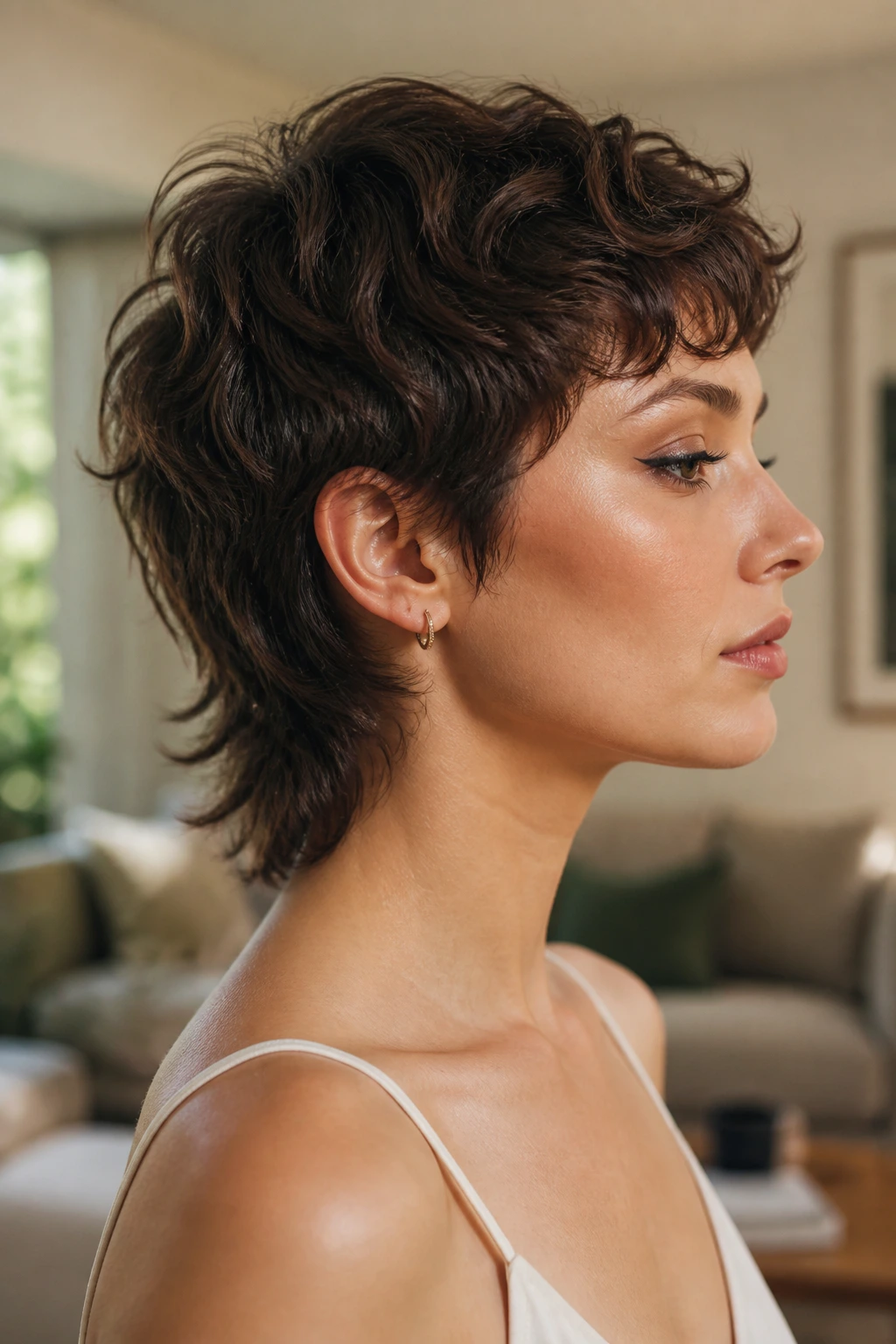
The soft mullet pixie keeps the front and sides short but allows a little extra length at the back. That back weight can be useful on wavy hair because it gives the cut some swing instead of a hard stop at the neckline.
This is not a loud mullet. The transition should stay soft, almost accidental looking. The wave helps with that because it breaks the line and makes the back fall in loose pieces.
Best for people who want edge without going full punk. It is especially good if you like a shape that looks better a little messy than too neat.
18. The Sliced-Layer Pixie
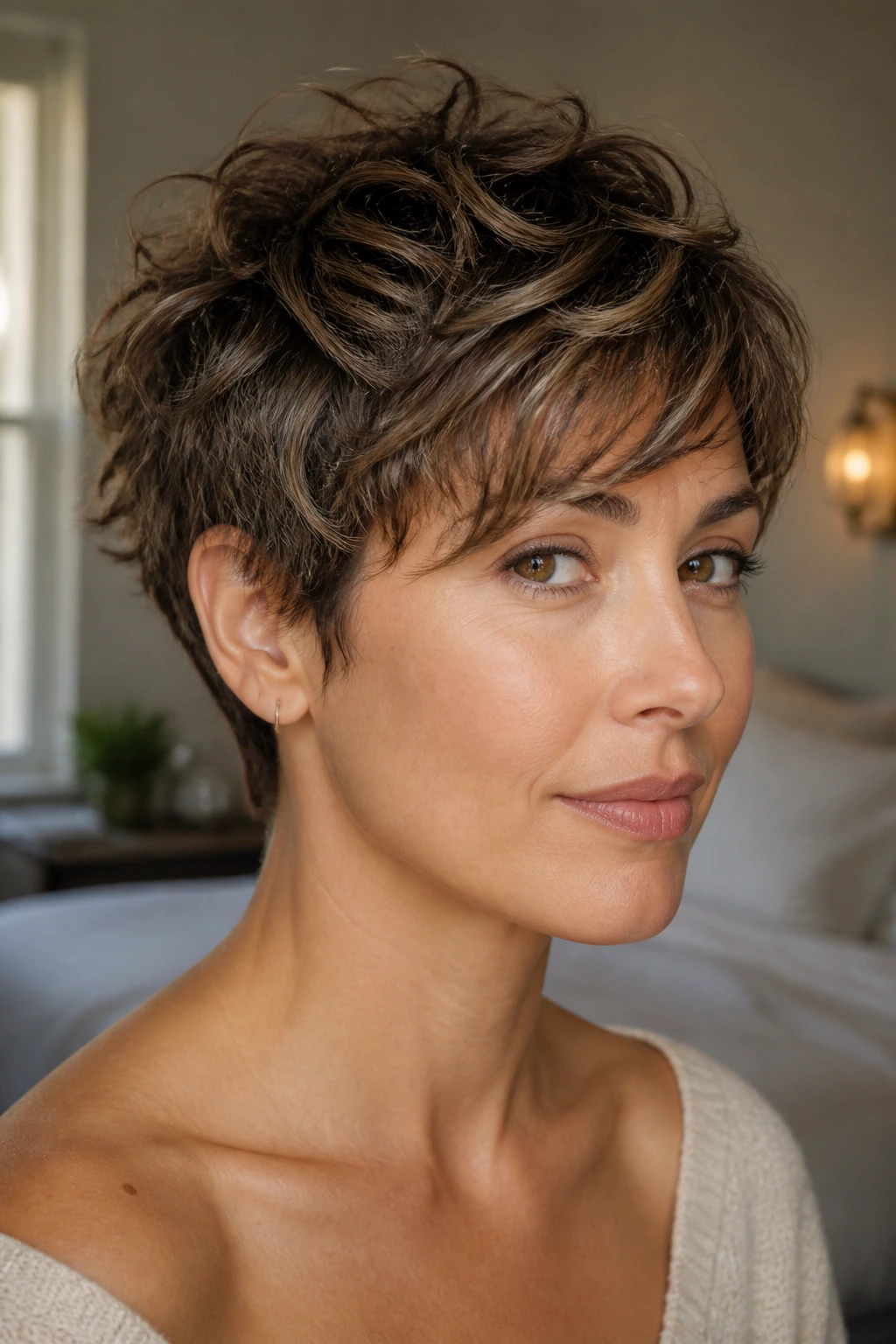
A sliced-layer pixie uses thin, separated layers that let each wave stand on its own. The result feels lighter and more airy, especially if your hair gets bulky fast.
This is one of the best cuts for people who hate the “pyramid” effect. The slices remove weight where the wave swells and leave enough movement so the style never collapses into one solid shape.
The downside? It can frizz if you overhandle it. Use a light cream or spray, then stop touching it. The cut does the work once it’s set.
19. The Ear-Hugging Pixie
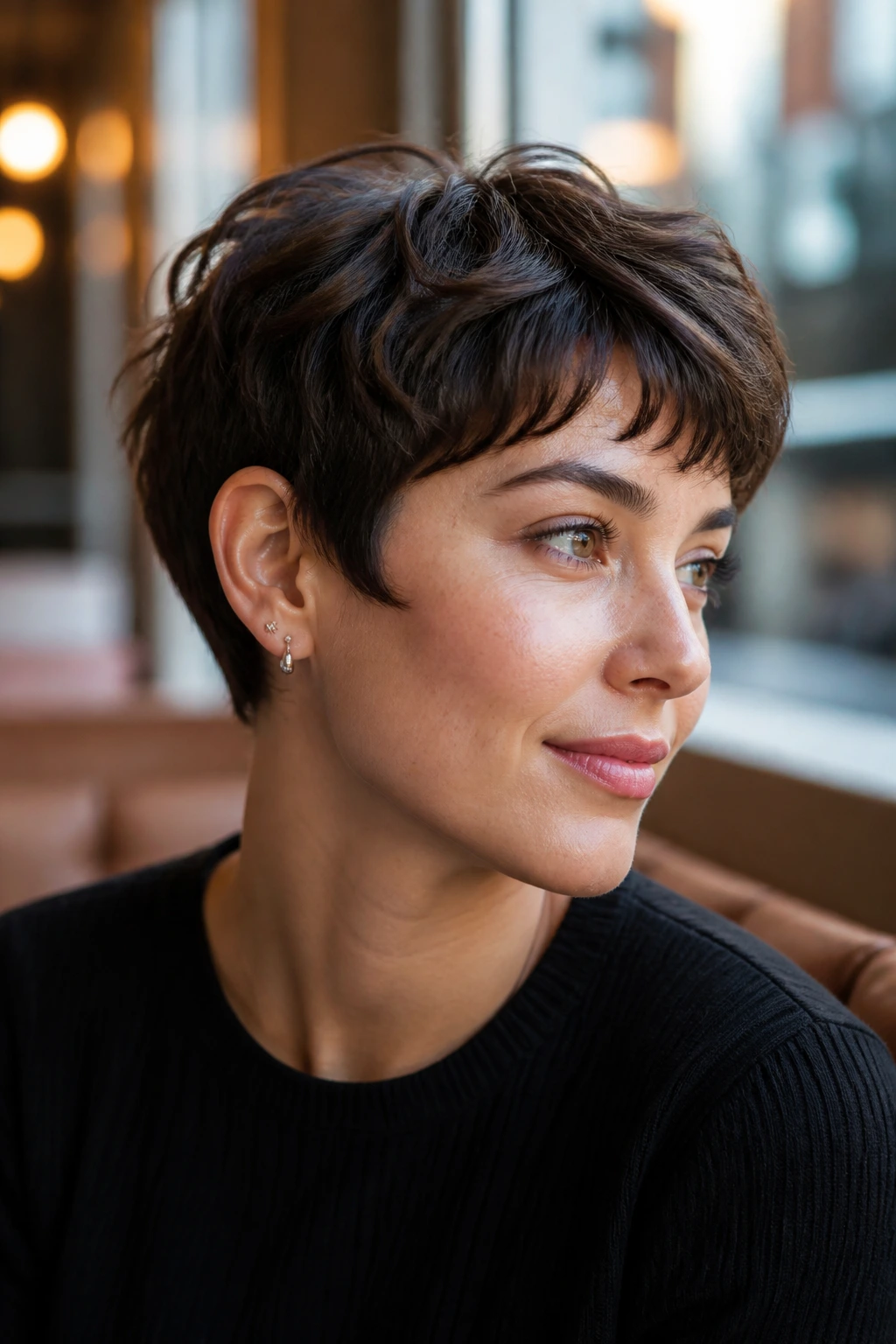
The ear-hugging pixie keeps the sides long enough to skim the ears instead of standing off them. On wavy hair, that tiny length difference changes everything. The hair follows the shape of the head instead of floating away from it.
This version feels softer than a super-short crop. It also works well with glasses because the sides don’t fight the frames. If you like short hair but do not want your ears completely exposed, this is a good middle ground.
A little side-swept fringe helps the whole cut feel connected. Without it, the shape can read too chopped up.
20. The Tapered Temple Pixie
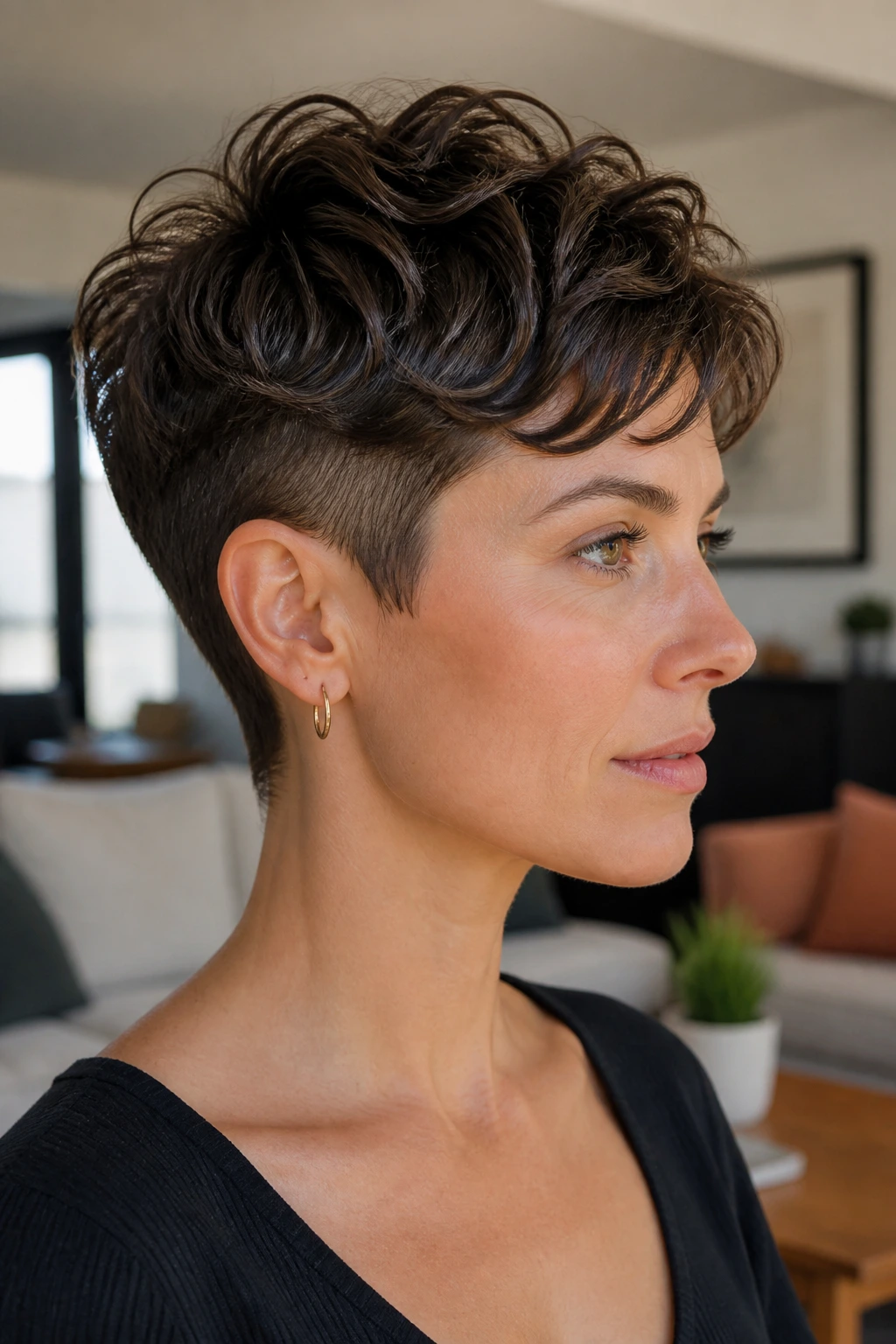
Temples are where a lot of wavy hair gets puffy first. The tapered temple pixie solves that by keeping the sides slim near the face and leaving the fullness higher up on the head.
That gives the profile a cleaner line. It also makes the cheekbones look sharper, which is handy if your hair tends to widen at the edges when it dries.
This cut is one of my favorites for thick, wavy hair that needs discipline. Keep the temple area tidy, and the rest of the cut can stay relaxed.
21. The Grown-Out Pixie
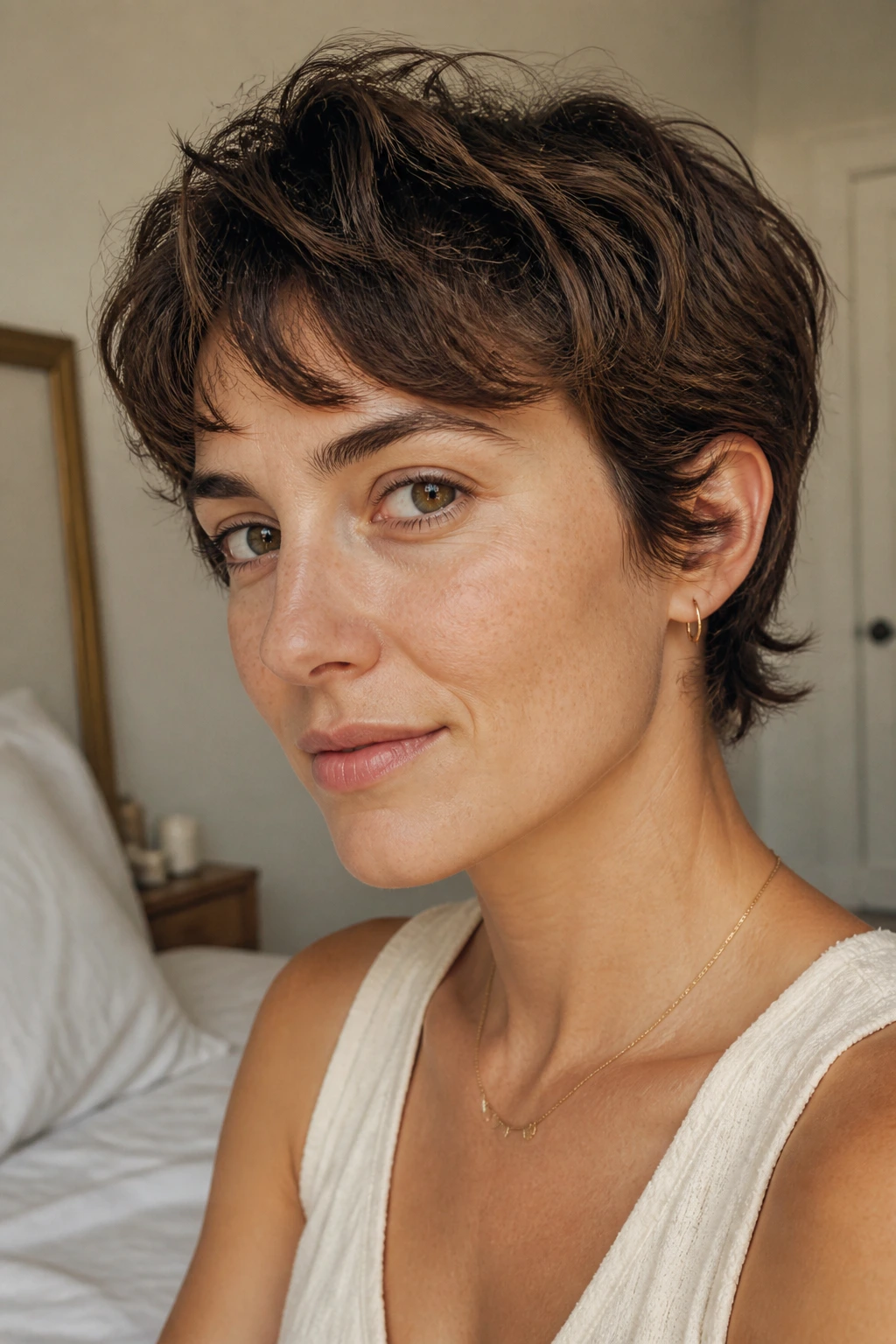
A grown-out pixie is not an afterthought. It is a cut designed to still look intentional six to eight weeks later, which is a huge advantage if your schedule is busy or your hair grows fast.
The trick is leaving enough length around the front and nape so the shape softens gracefully. Wavy hair helps here because the bend fills in the spaces as the cut gets longer.
If you hate frequent salon visits, ask for this shape from the start. It will save you from that awkward in-between stage where the hair sits too short to style and too long to forget.
22. The Glossy Side-Sweep Pixie
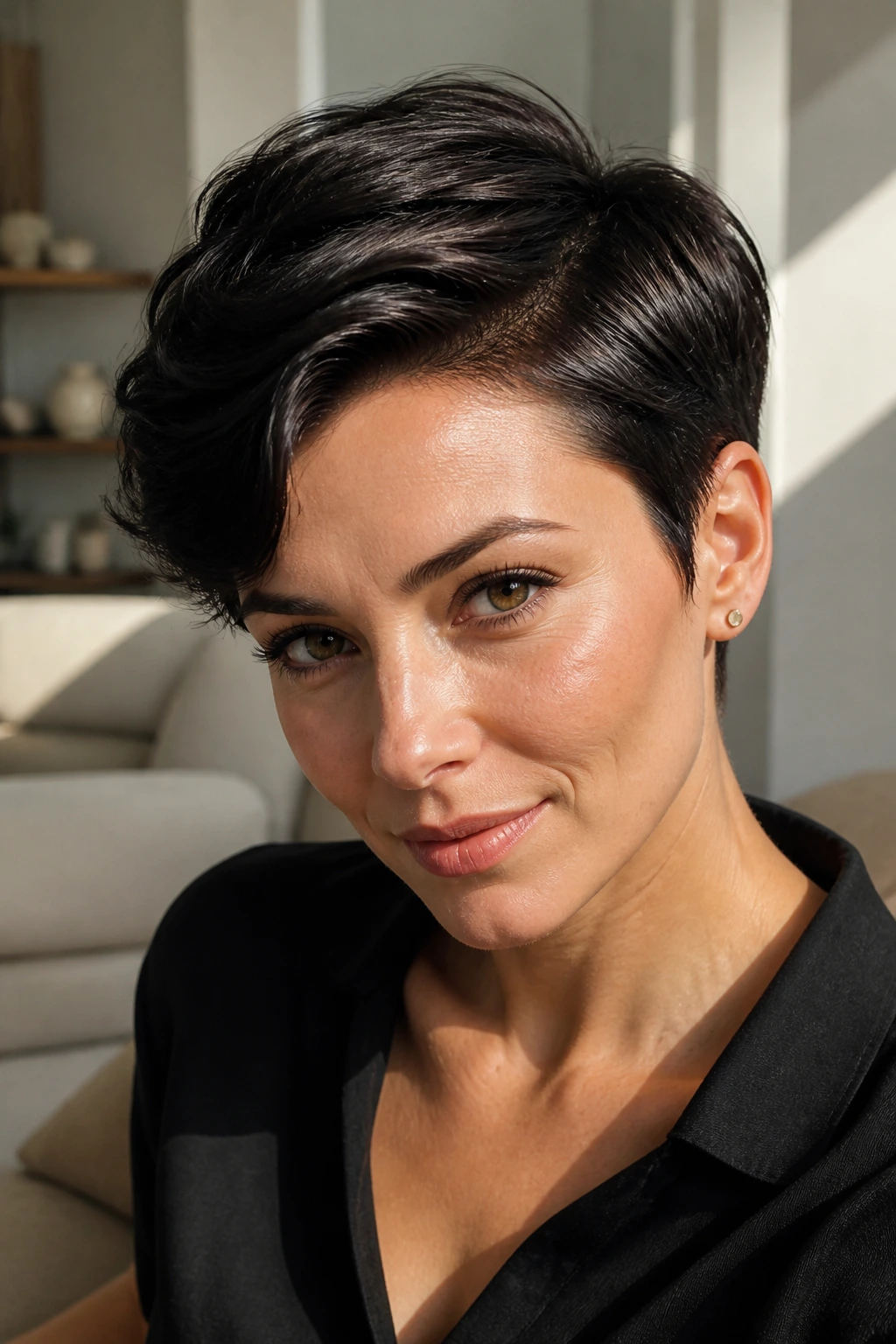
This one leans polished. The top is swept hard to one side and smoothed with cream or a light gel, while the rest of the cut stays tight enough to keep the outline clean.
It works when you want the wave pattern to behave, not bounce around. The side sweep gives the front direction, and the shine makes the texture look deliberate rather than fuzzy.
Use a blow-dryer with a nozzle if you want the sweep to stay in place. A quick pass with the dryer in the same direction makes a big difference.
23. The Curtain-Fringe Pixie
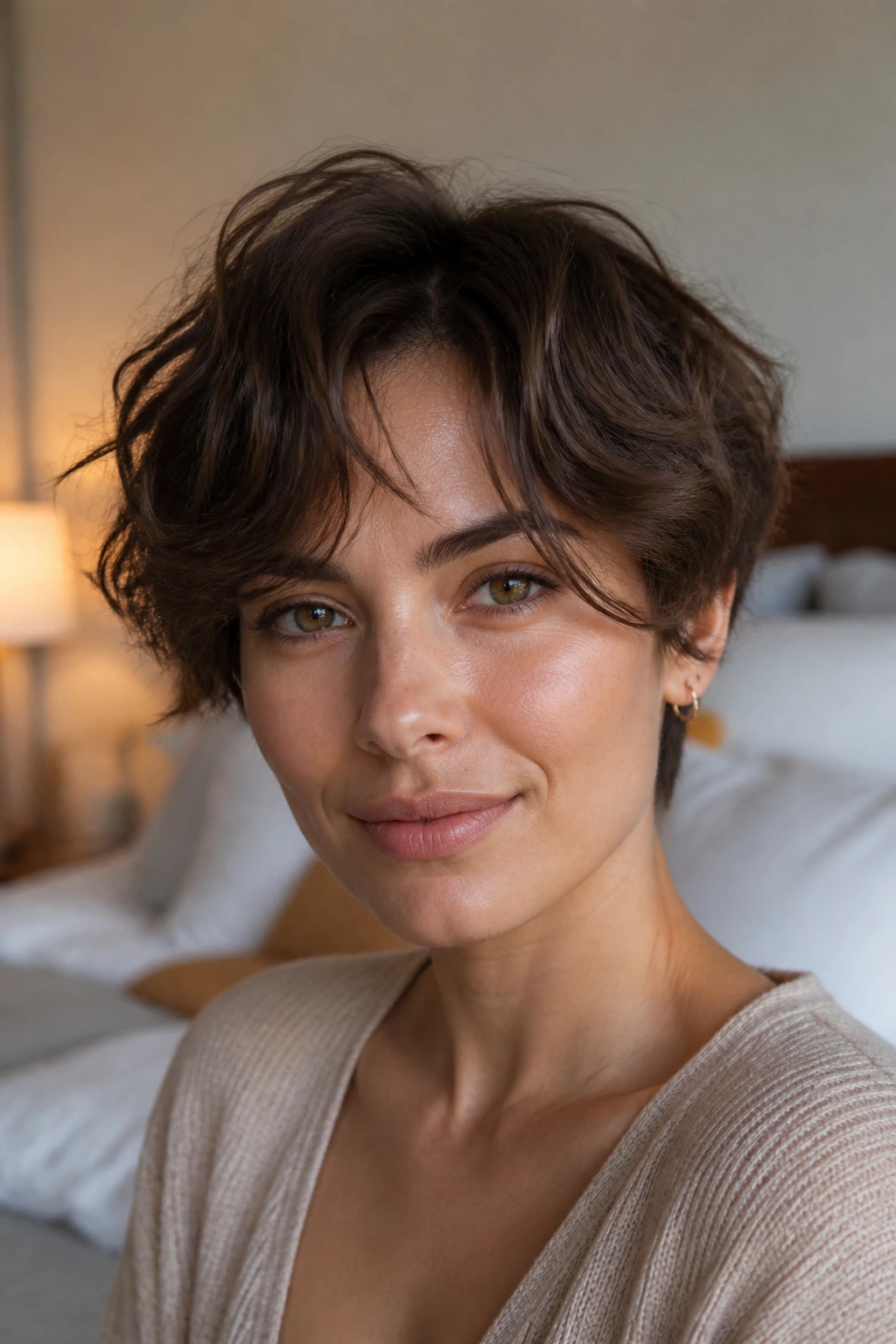
A curtain fringe on a pixie sounds odd until you see it on wavy hair. Then it makes perfect sense. The fringe splits slightly in the center or off-center and falls in two soft pieces, which suits the natural bend of the hair.
This cut is nice if you want face-framing without committing to heavy bangs. The front pieces can be tucked, flipped, or left loose depending on how much wave they catch.
The most important part is length. If the fringe is too short, it separates in a choppy way. If it’s a little longer, the waves fall with more grace.
24. The High-Crown Pixie
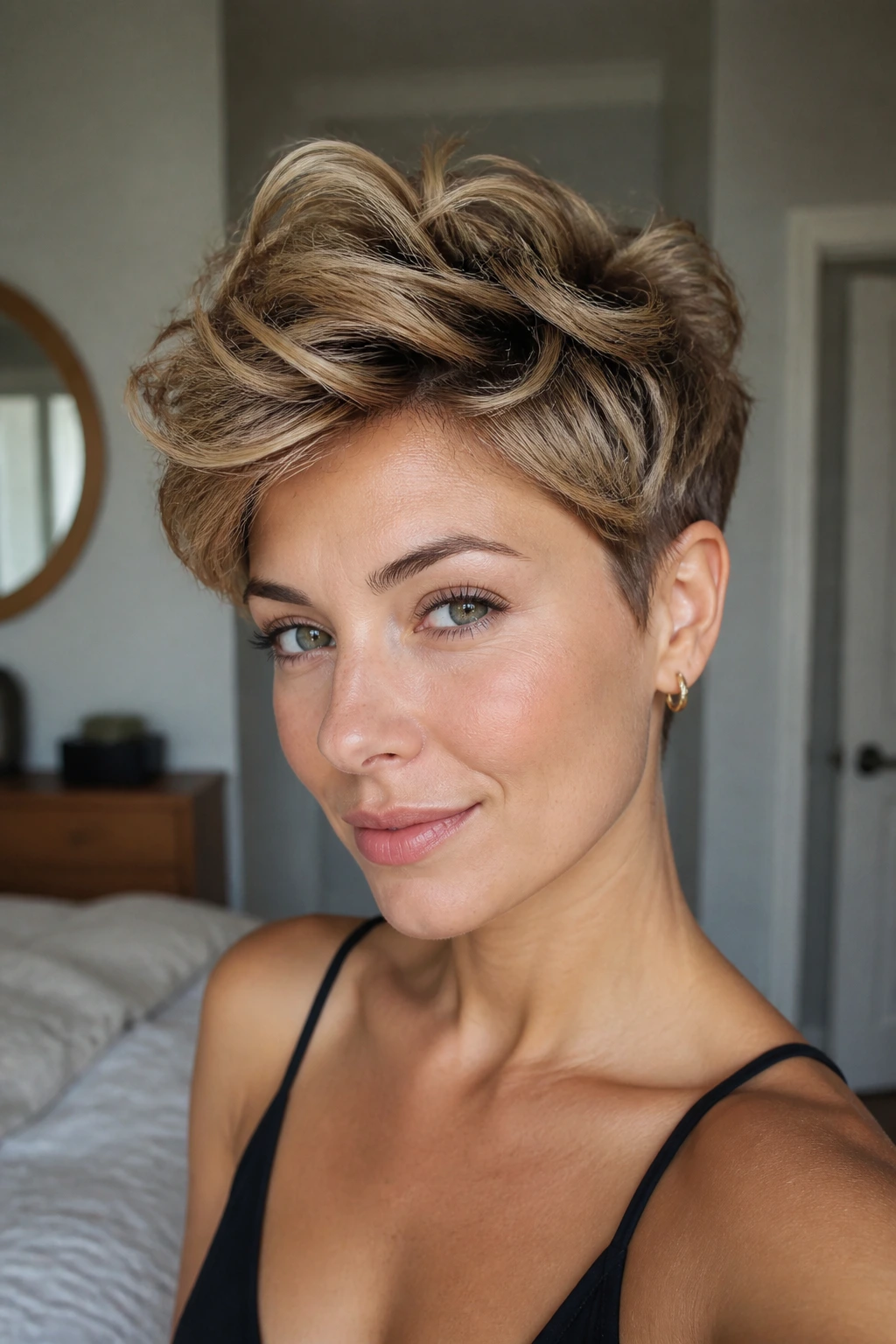
The high-crown pixie puts the emphasis on lift at the top of the head. That can balance rounder faces and keep wavy hair from getting too wide at the sides.
The crown should be layered enough to rise, but not so thinned out that it frays. Think height with structure, not fluff with no direction.
A root-lifting foam or mousse helps here more than a heavy paste would. You want the top to stand a little away from the scalp and then soften as it dries.
25. The Close Crop with Long Top
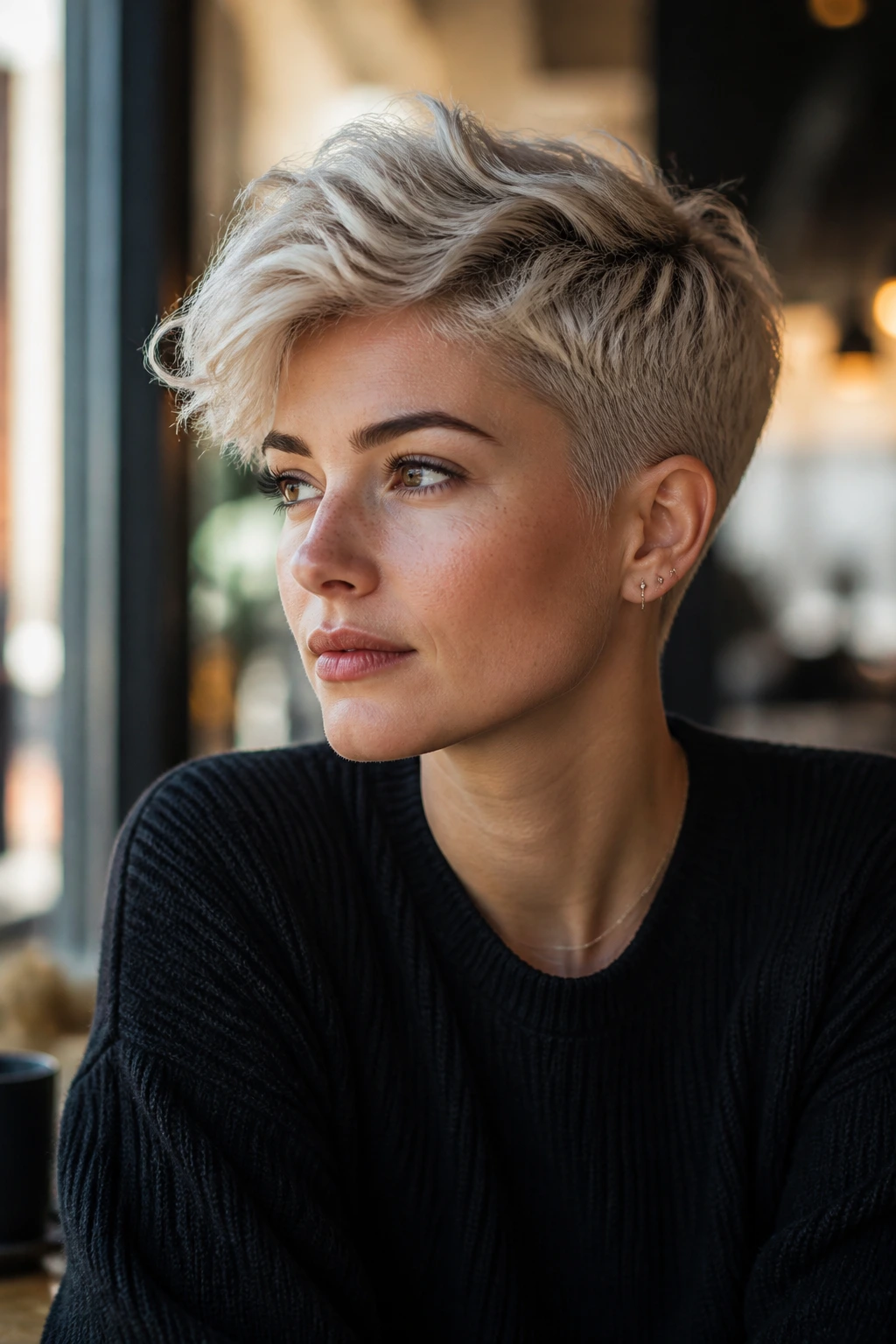
This cut uses contrast on purpose. The sides are clipped or cut very close, while the top stays much longer, which lets the wave create a stronger shape up top.
It is bold, but wavy hair makes the contrast look less harsh than straight hair does. The top catches movement, and the short sides keep the whole cut from getting bulky.
If you want a style that looks sharp from every angle, this is a solid choice. It asks for confidence, and not much else.
26. The Disconnected Pixie
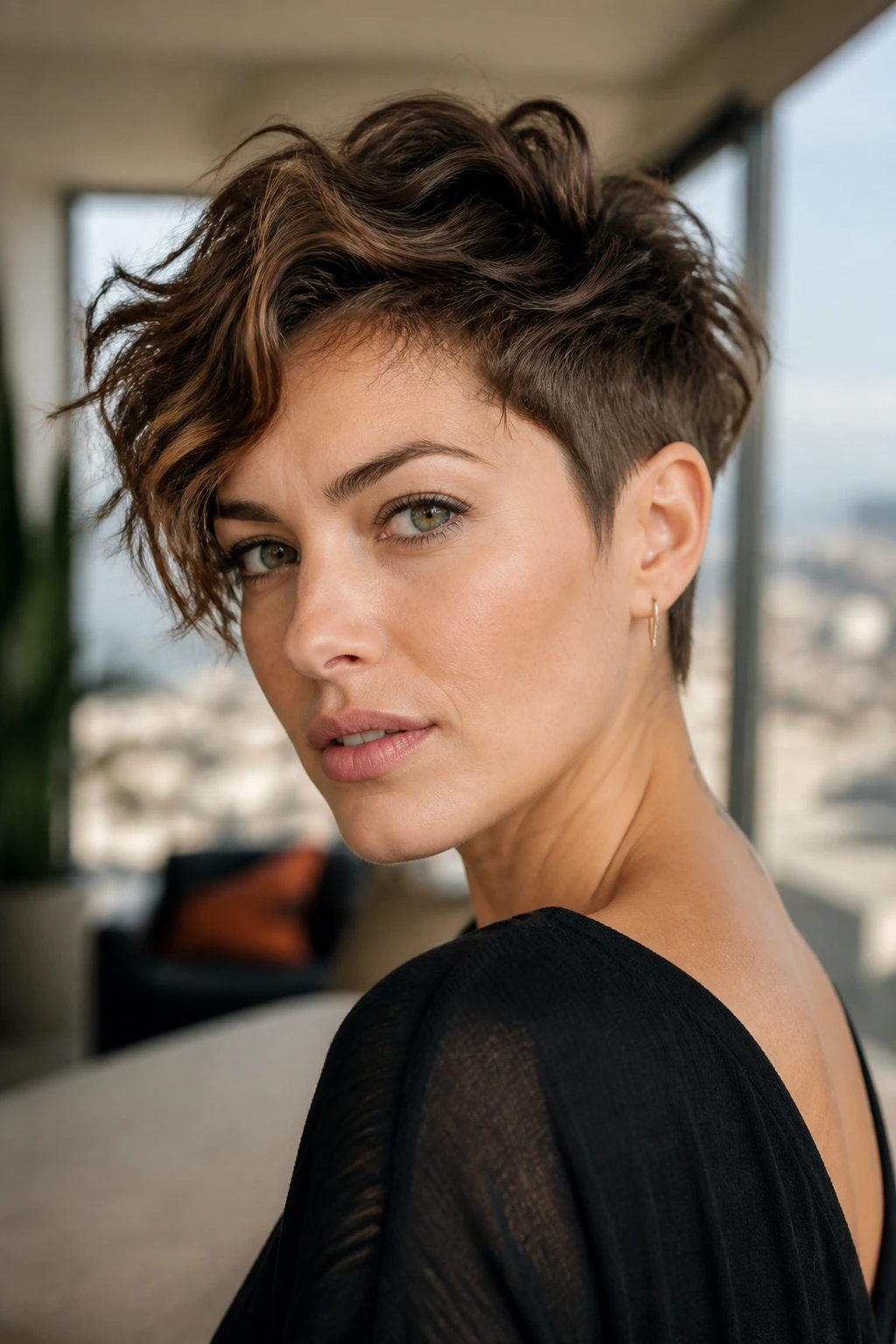
The disconnected pixie leaves a visible jump between the long top and the shorter sides. Some people love that abruptness; some do not. On wavy hair, it can look especially good because the wave softens the transition just enough.
This style works best if you want a fashion-forward cut that still has movement. The longer sections can fall over the shorter ones and hide the harsh edge when you want a softer look.
If your hair is very fine, make sure the top is not left too heavy. The disconnect should feel intentional, not accidental.
27. The Halo Pixie
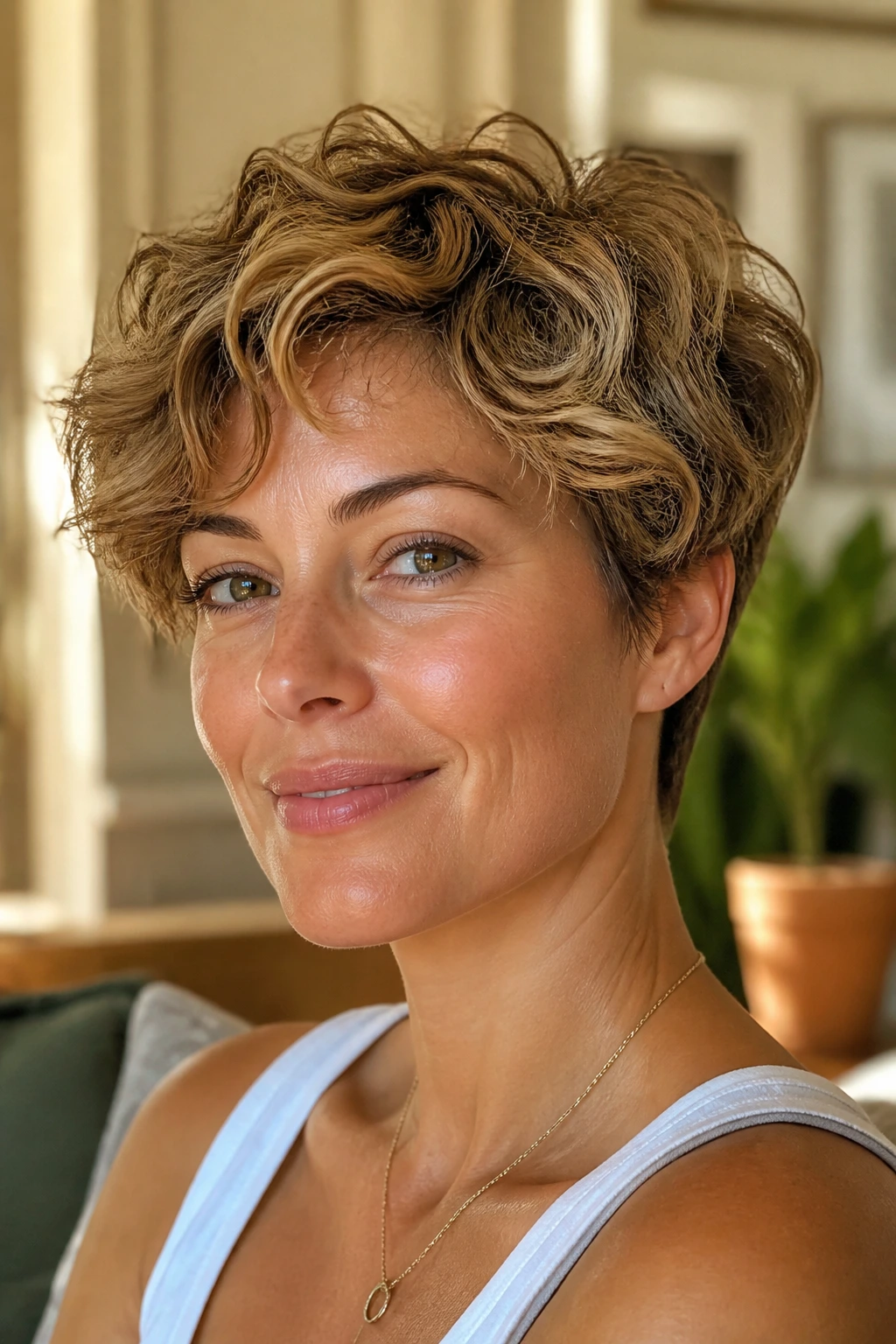
The halo pixie makes the hair curve around the head in a rounded, airy shape. It works beautifully with loose waves because the texture fills the silhouette without making it heavy.
This is one of the more romantic-looking options in the group. The wave pattern sits around the crown and sides like a soft frame, which can feel gentler than a sharper crop.
A little dry texture spray helps separate the ends. Too much product turns the halo into a helmet, and that is not the effect.
28. The Boyish Textured Crop
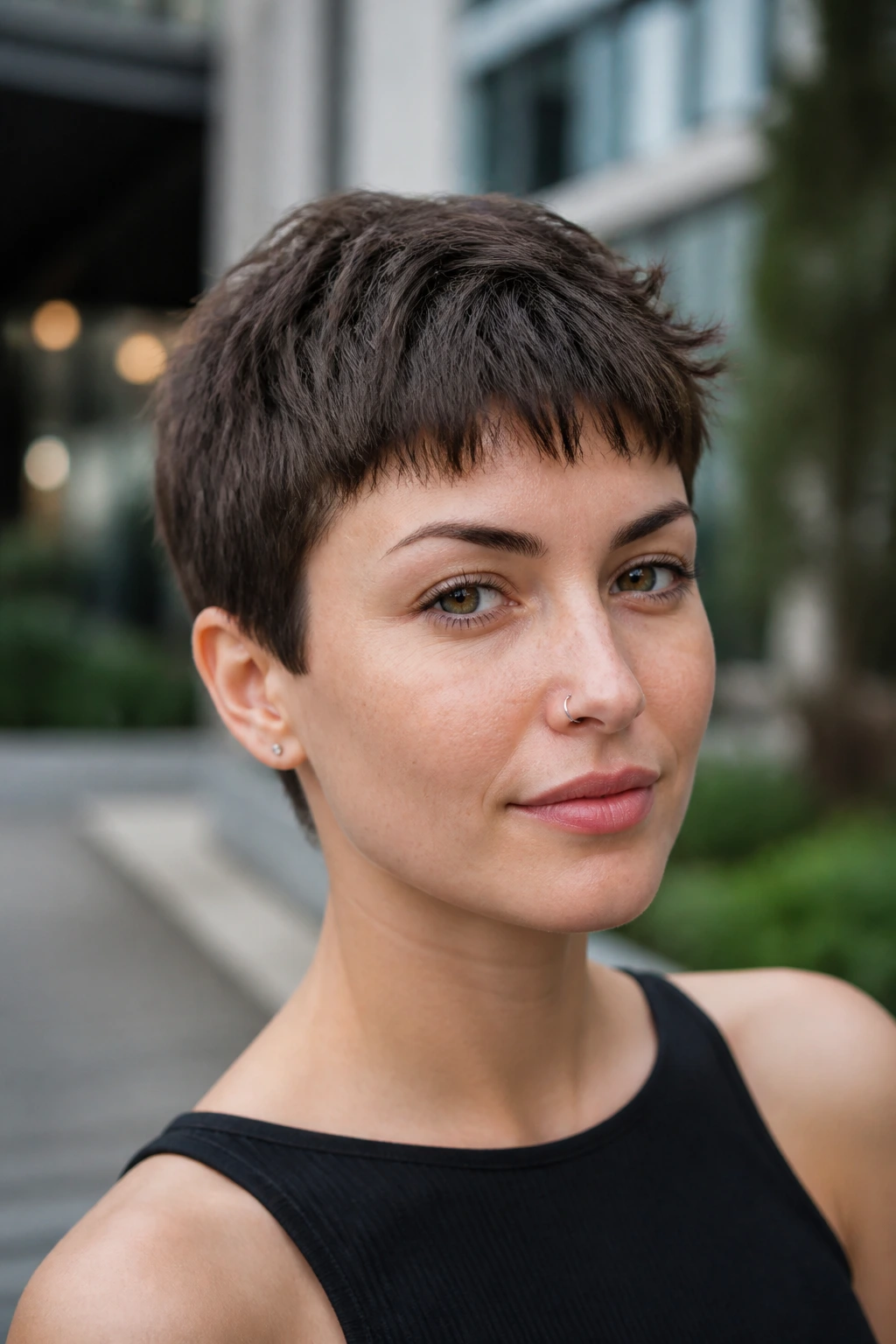
The boyish textured crop is short, a little rough, and not precious at all. That blunt honesty is part of the appeal. Wavy hair gives it movement, so the cut looks casual instead of flat.
It’s a strong option if you want something low-maintenance and easy to wash. The top should be left choppy enough to break up the wave pattern, not smoothed into a tidy little cap.
This cut tends to look best with minimal styling. A touch of paste at the front, and you are done.
29. The Soft Bowl Pixie
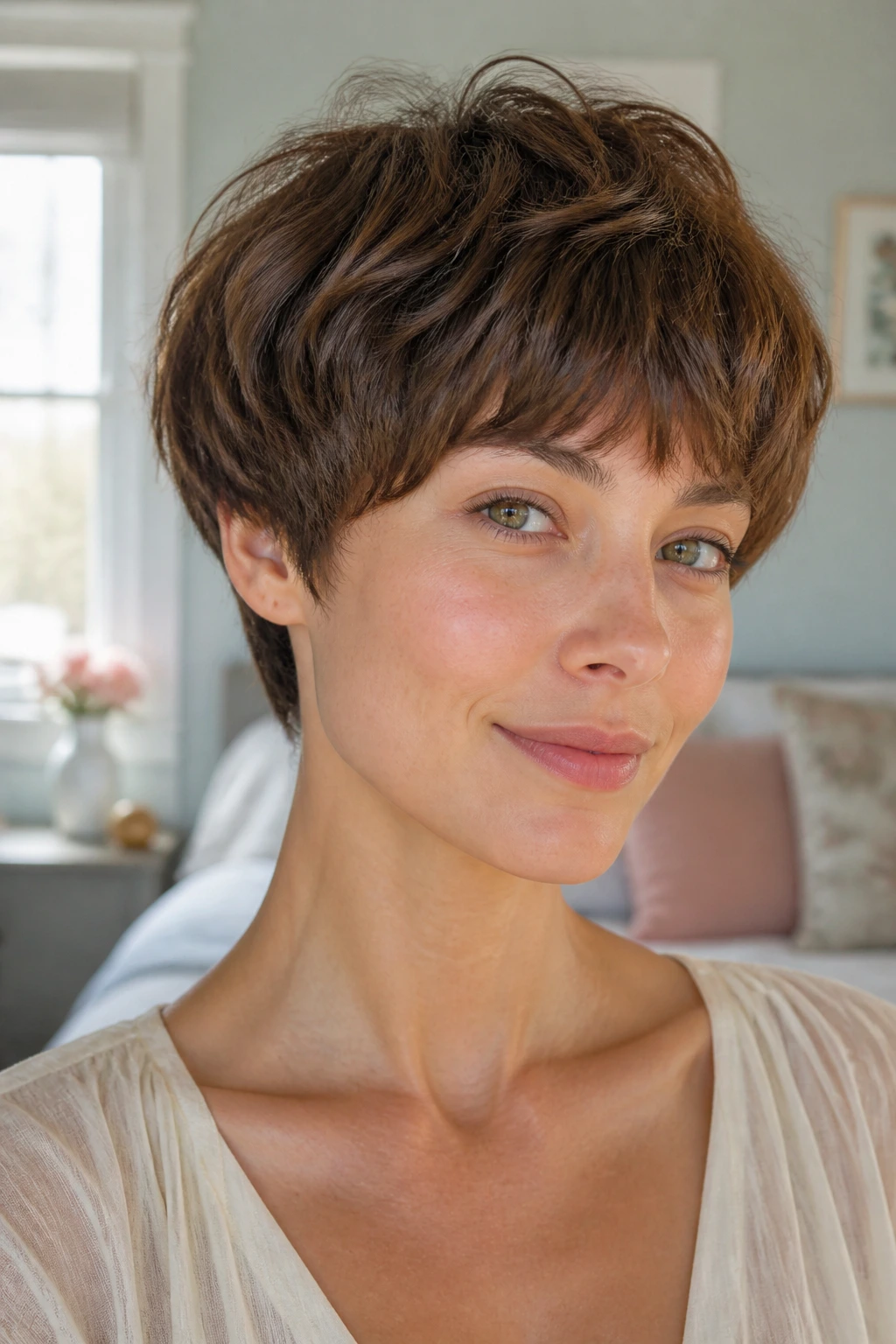
A soft bowl pixie borrows the rounded shape of a bowl cut but keeps it airy and modern. The fringe and sides connect in a curved line, while the wave pattern keeps the whole thing from looking too strict.
This one is underrated on wavy hair. The wave softens what could otherwise be a rigid outline, and the shape can look sleek or playful depending on how it’s dried.
Ask for feathered ends and a little lightness near the temples. That keeps the cut from feeling heavy around the face.
30. The Airy Micro Shag
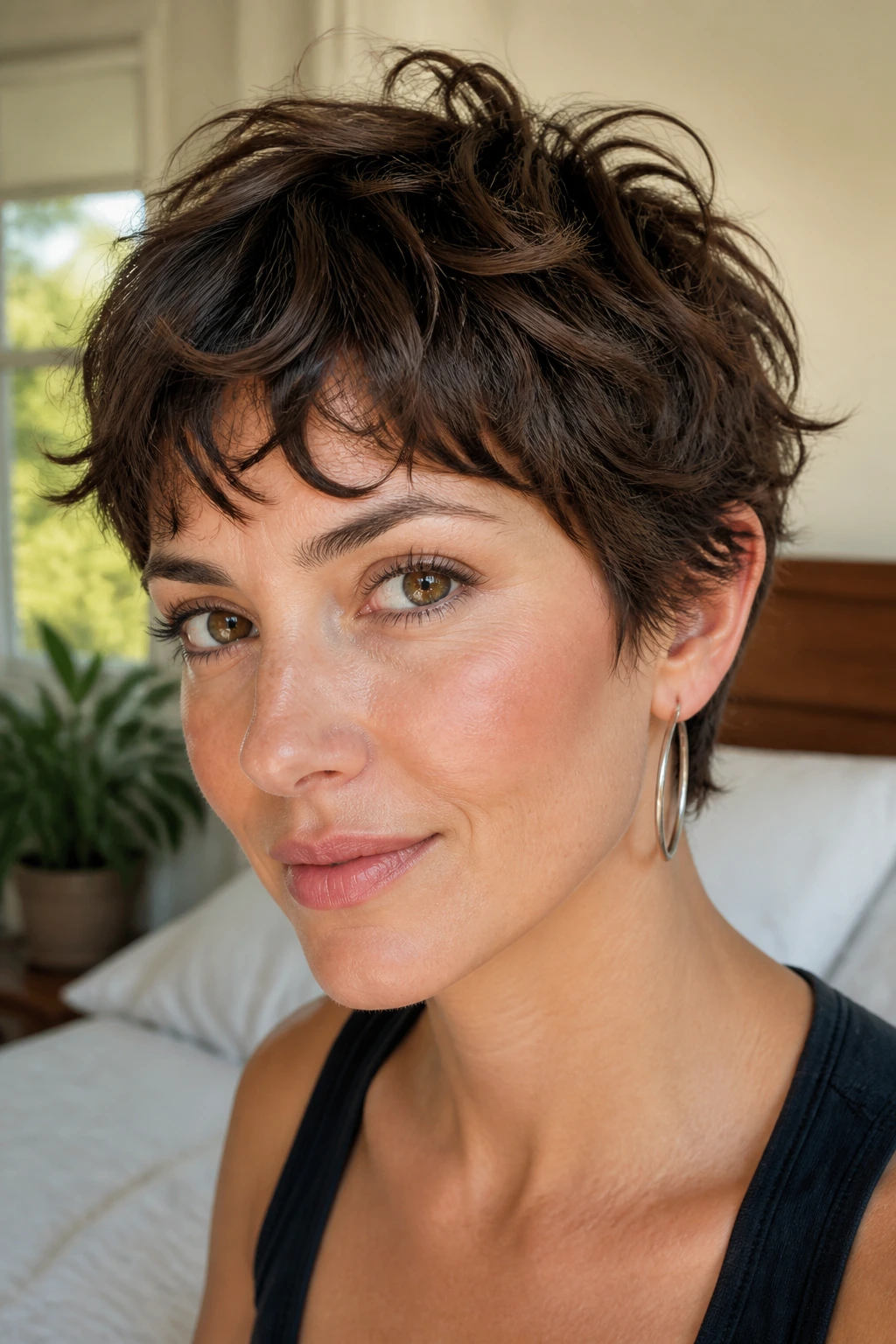
A micro shag at pixie length is for people who want a little wildness in the cut. The layers are short, broken up, and intentionally uneven, which gives wavy hair room to move.
This is a cut with personality. It does not want to be flat. If you air-dry it with a touch of cream and then scrunch the crown once, the whole shape wakes up fast.
It suits loose to medium waves best. Very dense waves may need extra thinning in the right places so the texture does not pile up.
31. The Wispy Sideburn Pixie
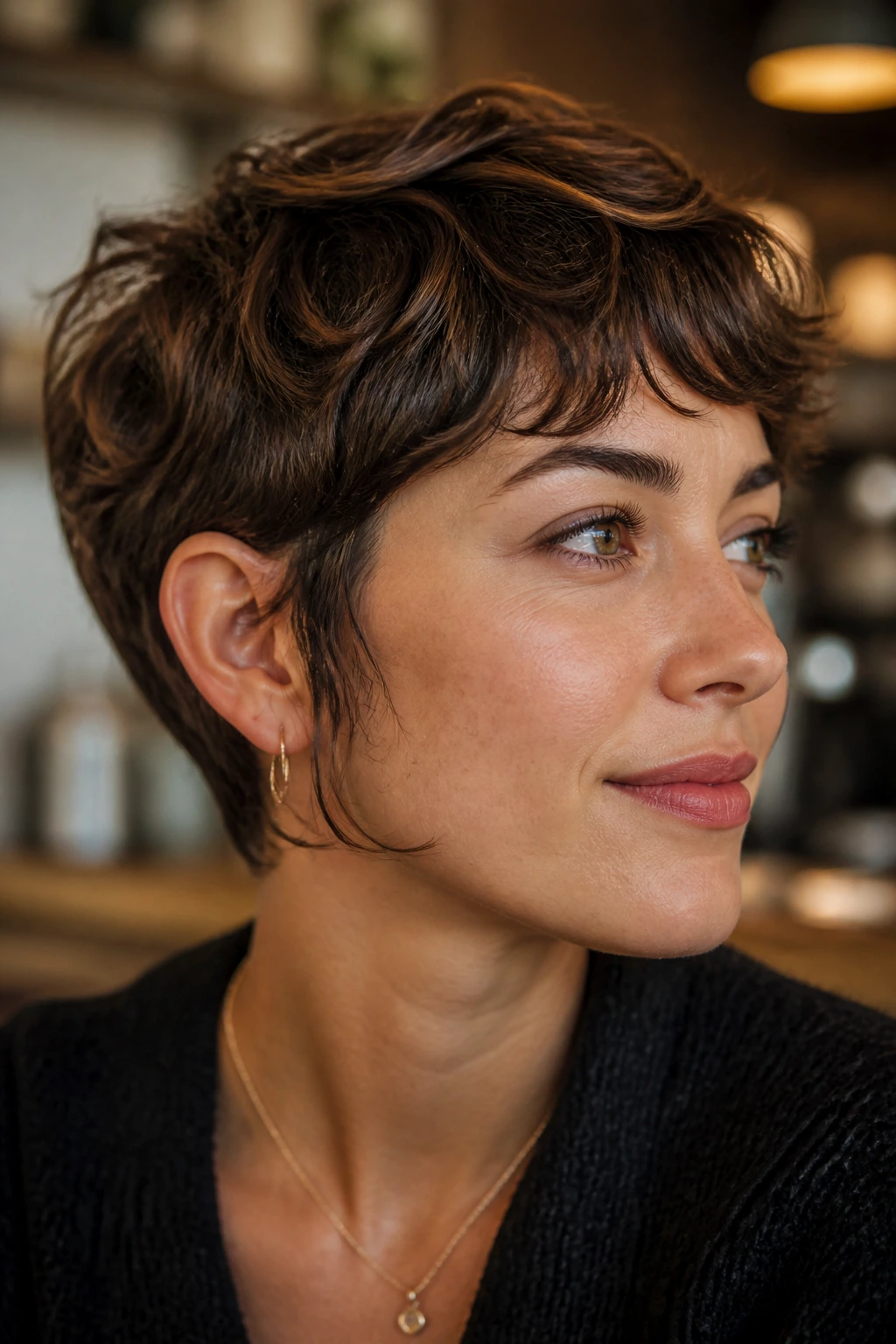
Sideburns are not a small detail on a pixie. They change the whole face frame. The wispy sideburn pixie leaves those pieces a little longer and softer, which helps wavy hair feel less abrupt around the jaw.
This style is a nice choice if you wear glasses or want to soften a strong jawline. The wisps add movement near the face, where a short cut can sometimes feel too bare.
Keep the sideburns light, not chunky. A soft edge reads intentional; a thick one reads like you forgot to finish the haircut.
32. The Angular Fringe Pixie
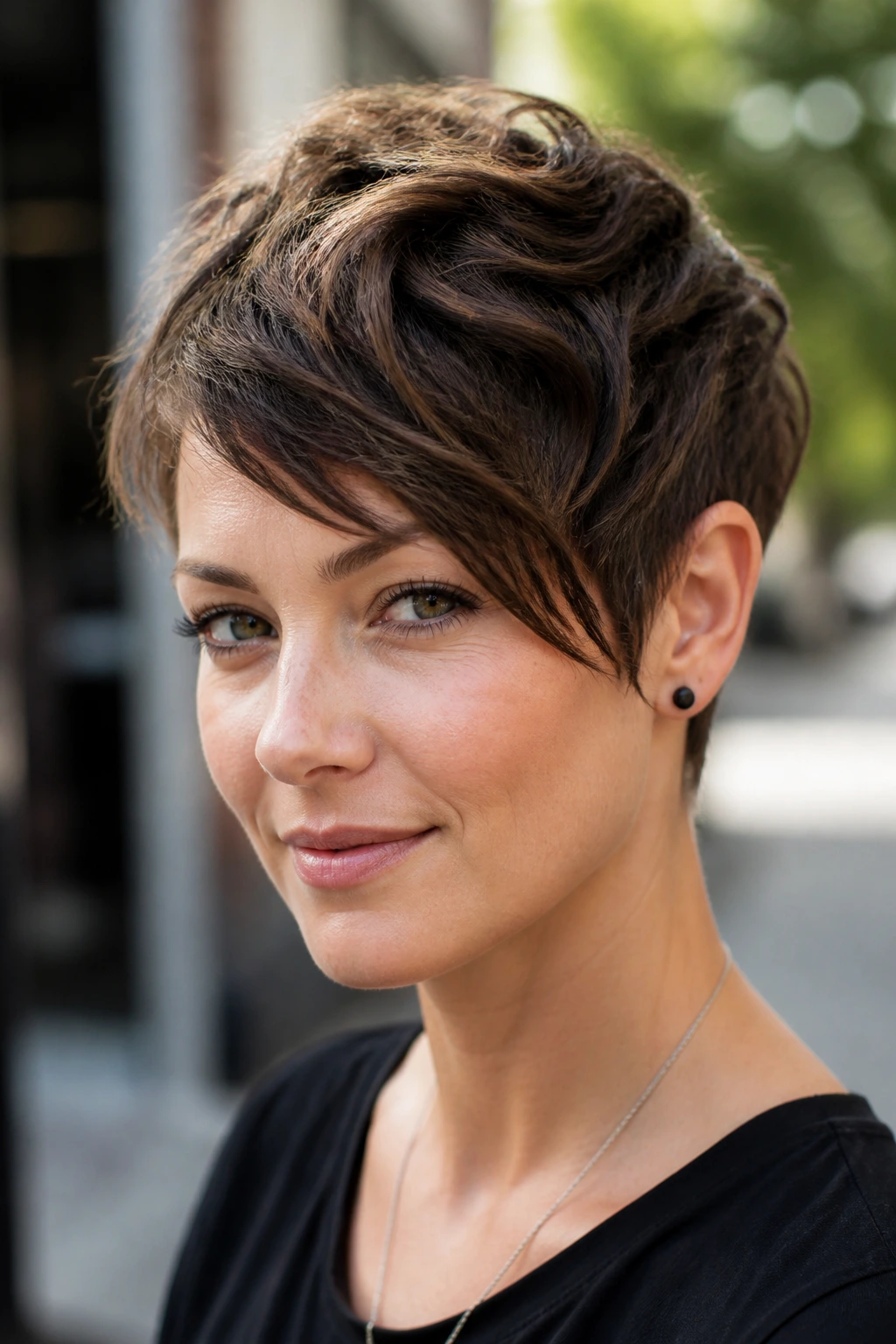
The angular fringe pixie closes the list with a clean diagonal line across the front. The angle gives the haircut direction, and the wave pattern keeps it from looking too severe.
It is a strong option if you like short hair that still frames the face. One side can sit a bit longer, the front can sweep across the forehead, and the rest of the cut stays cropped enough to feel fresh.
I like this one for anyone who wants a sharp edge without a hard, flat fringe. The wave breaks the line in a way that feels alive.
Why Wavy Texture Makes a Pixie Feel Less Severe
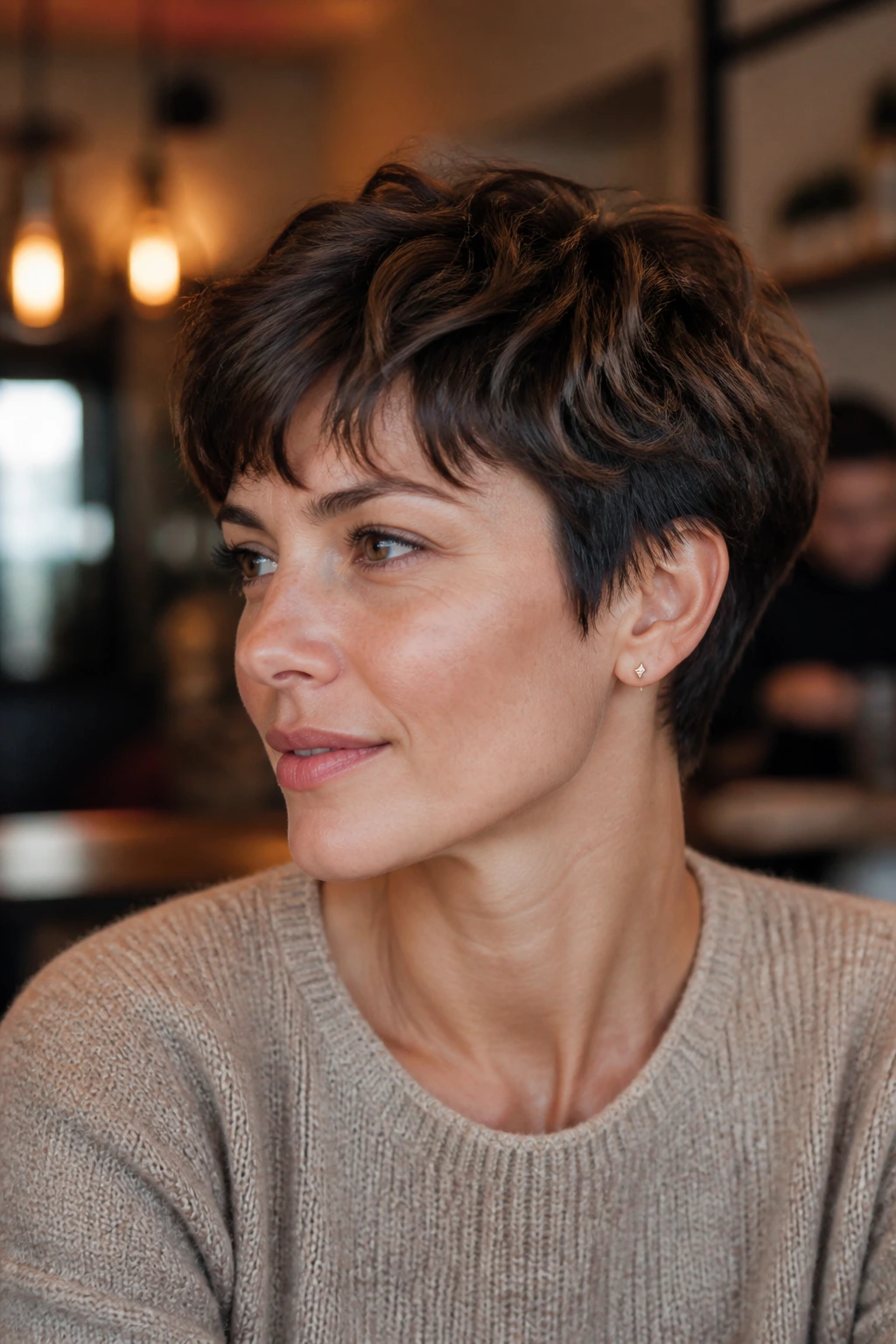
Wavy hair does a favor that straight hair cannot fake: it softens short cuts without taking away the shape. A pixie on straight hair can look exact, which is fine if you want precision. On wavy hair, the same cut gains movement the moment it dries.
That movement matters because short hair leaves less room for error. If the sides are too wide or the crown is too flat, the whole style can feel off in one glance. Wavy texture fills in the space between pieces, so a good haircut looks full without looking bulky.
The catch is that waves also shrink. If a stylist cuts the hair wet and too close to the scalp, the bend can spring upward and expose more forehead, more ear, or more neck than you wanted. Dry cutting, point cutting, and a little extra length at the perimeter usually solve that.
How to Choose the Right Length for Your Wave Pattern
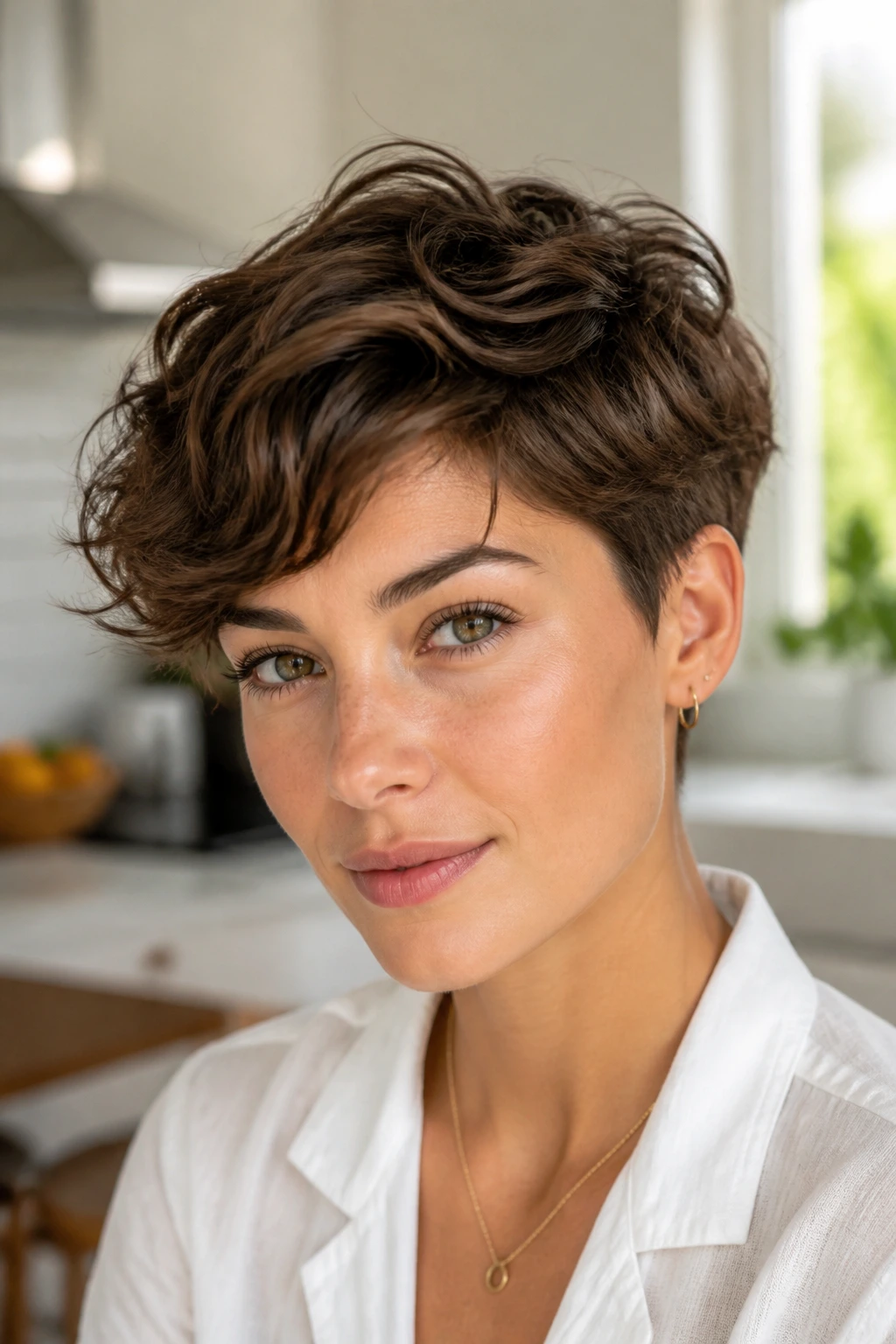
Loose waves and strong waves do not live in the same cut. A looser pattern can usually handle a shorter crown and a sharper taper, while stronger waves need more room through the top so they do not kick out like springs.
Fine Waves
Fine waves often need weight left in the right spots. If too much bulk is removed, the style can look wispy in the wrong way. Leave the top a touch heavier and ask for soft texture instead of aggressive thinning.
Thick Waves
Thick waves usually need interior weight removed with point cutting or light layering. The goal is not to shred the shape. It’s to keep the sides from puffing and the back from getting boxy.
Face Shape Notes
A longer fringe helps balance a high forehead. A side sweep can soften a strong jaw. A tighter nape can sharpen rounder features. None of that is magic. It is just placement, and placement matters a lot on a short cut.
What to Tell Your Stylist Before the First Snip
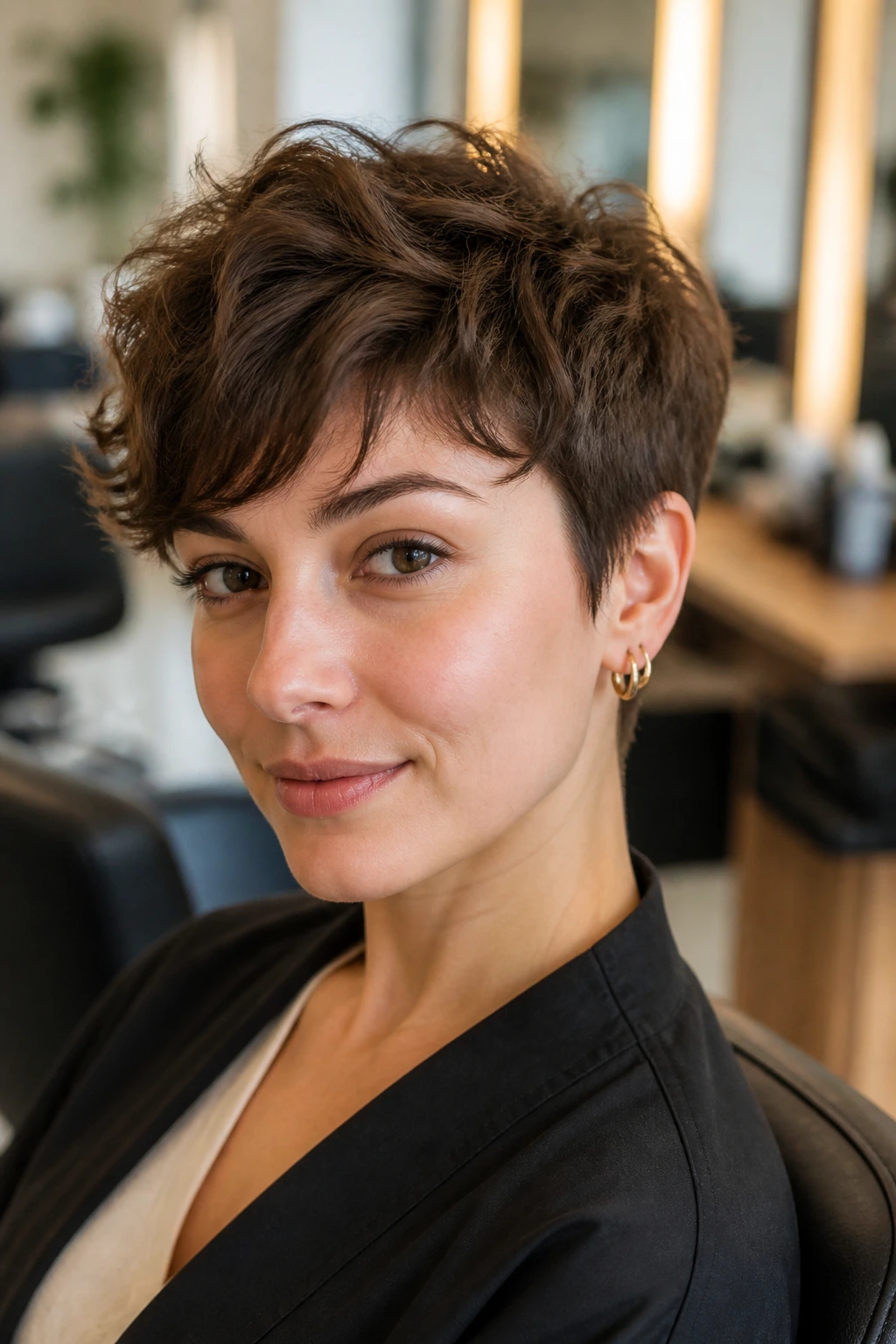
Say that you want the cut to work with your waves, not against them. That sounds simple, but it opens the door to the right questions: how short the nape should go, whether the fringe needs to be point-cut, and how much length should stay at the temples.
Bring a photo if you can, but be honest about what you like in it. A lot of pixie photos are styled with product and a blow-dryer, not air-dried from the sink. If the style you want needs lift at the crown, say that out loud.
Tell the stylist whether you want a cut that grows out softly or one that stays crisp. Those are not the same thing. One needs softer layers and longer side pieces. The other needs cleaner tapering and more frequent trims.
Essential Tools and Products for Pixie Cuts for Wavy Hair
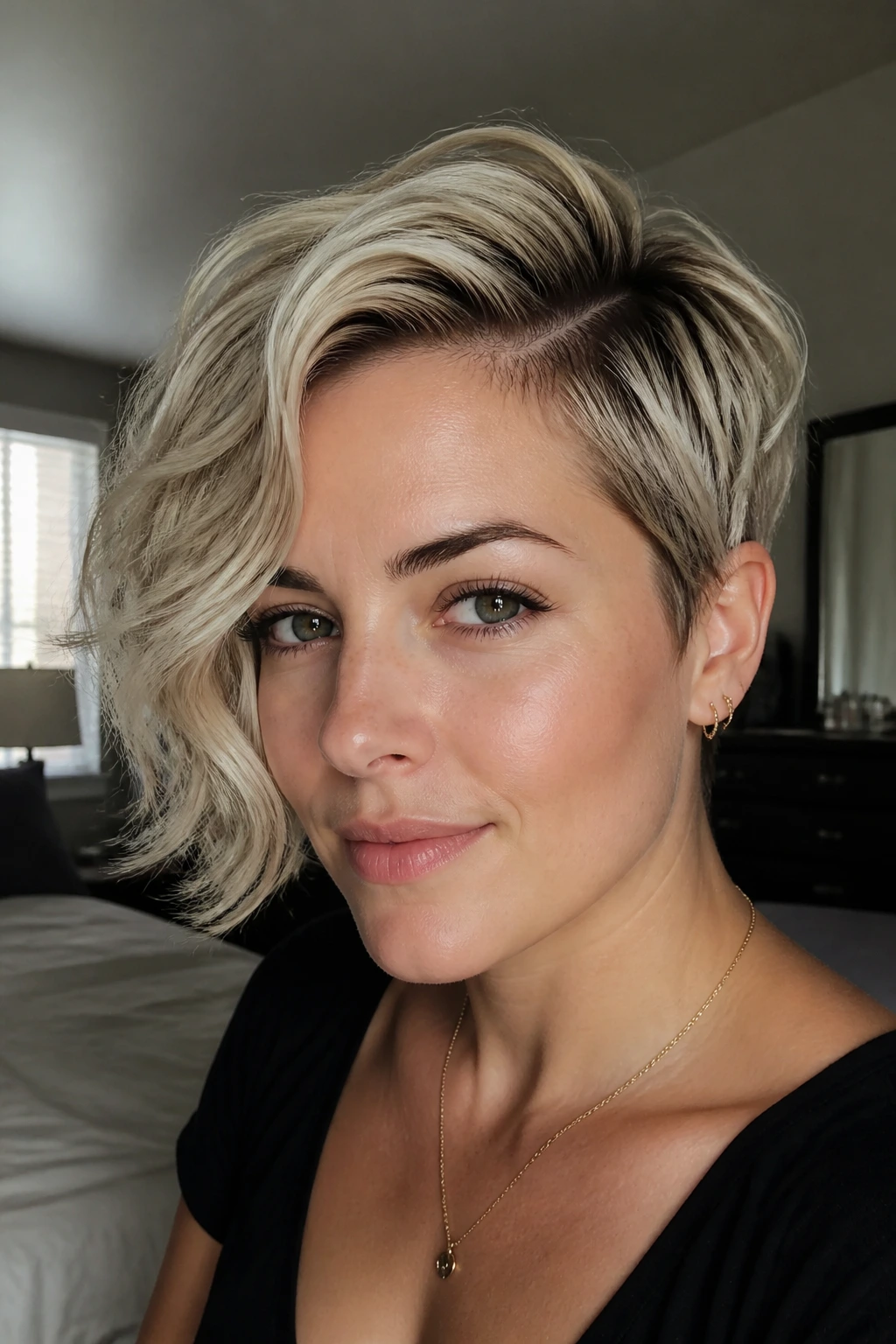
- Blow dryer with a nozzle: Keeps the airflow pointed where you want it, which matters when the crown needs lift.
- Small diffuser: Useful if your waves frizz when air-dried and you want a softer bend without smashing the shape.
- Mousse or root foam: Gives the top a little memory without making the hair greasy.
- Matte paste or light wax: Best for piecey ends, short fringes, and that slightly rough finish.
- Light cream or curl balm: Good when the wave needs control but not stiffness.
- Fine mist spray bottle: Lets you re-wet just the fringe or crown instead of starting over.
- Round brush, small size: Handy for sweeping the fringe or smoothing the side part.
- Satin pillowcase: Helps keep the top from getting crushed overnight.
How to Style Pixie Cuts for Wavy Hair Without Flattening the Bend
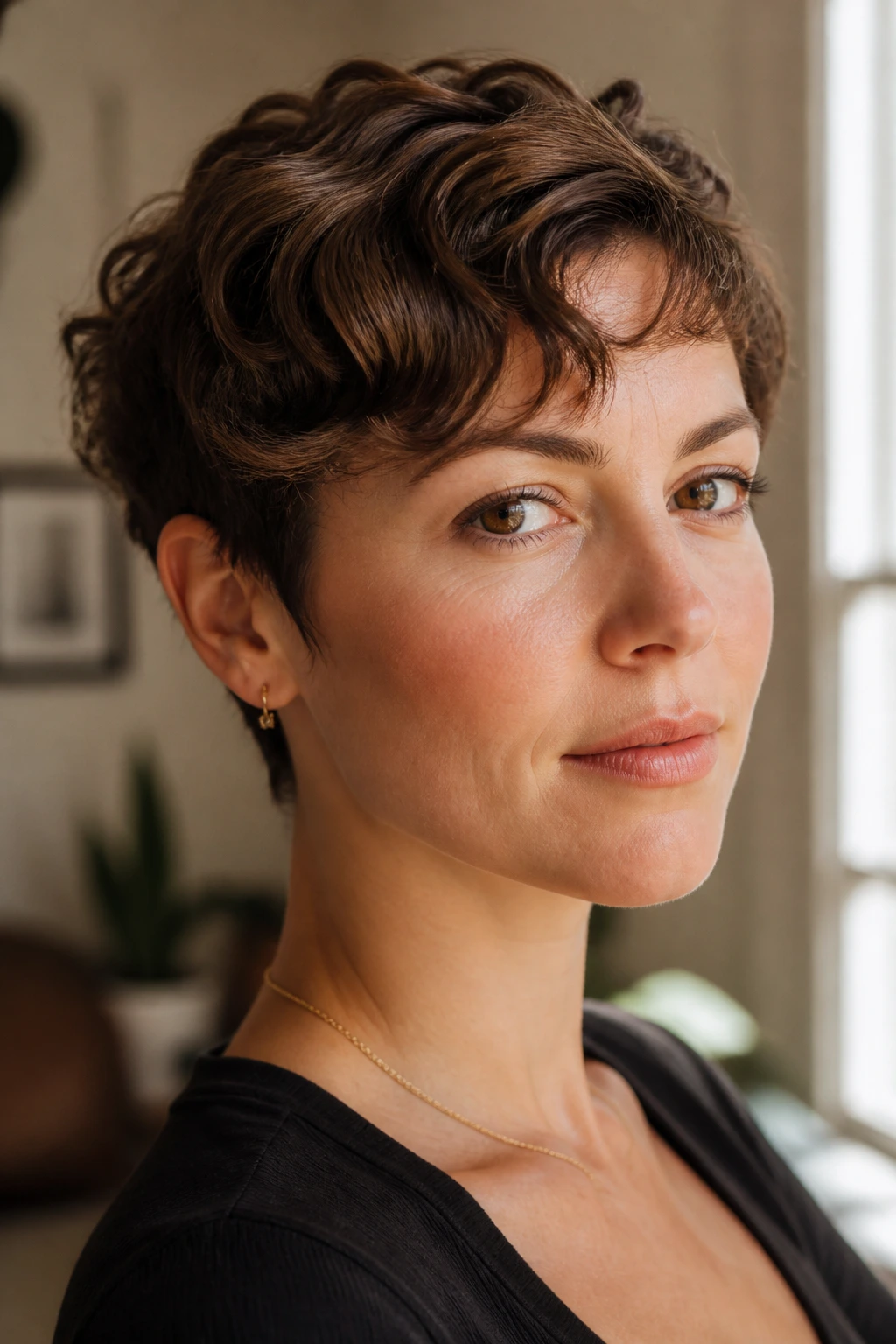
Air-drying can work, but it works best when the cut already has shape. After washing, squeeze out water with a microfiber towel or a T-shirt, then put product in while the hair is still damp. The roots need less product than the ends. That part gets people into trouble.
If you want more lift, blow-dry the crown first with your fingers or a small brush, aiming the nozzle upward at the roots for a few seconds at a time. Stop when the roots are about 80 percent dry. The hair will finish settling on its own, and that keeps it from going limp.
For pieceier styles, rub a tiny bit of paste between your palms and pinch the ends rather than coating the whole head. The goal is separation, not slickness. Too much product on wavy hair turns texture into pastey clumps very fast.
Extra Styling Moves That Change the Mood
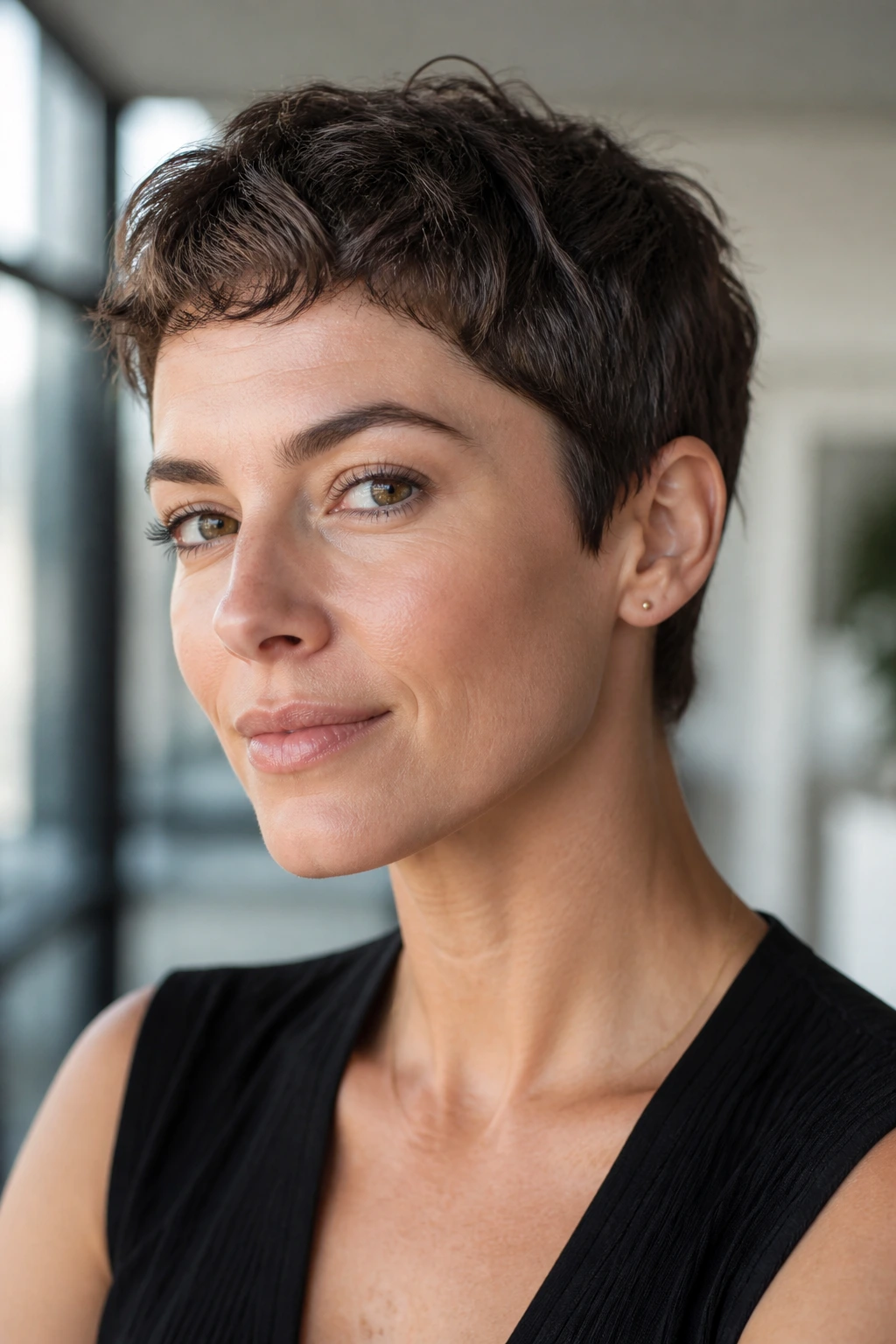
Flavor Shift: A drop of shine serum on the very ends gives a pixie a polished finish, but only if you keep it away from the roots. One drop, not a squeeze.
Customization: A side part creates a softer look, while a forward brush at the fringe reads sharper. The cut can change moods without changing shape.
Serving Suggestions: If you wear earrings, shorter cuts with open sides make hoops and studs show up better. If you wear glasses, keep a little softness at the temples so the frames do not fight the hair.
Make-It-Yours: Fine hair usually needs mousse first, thick hair usually needs paste or cream, and dry hair usually needs a lighter touch than either of those.
Common Mistakes That Make Wavy Pixies Puff or Collapse
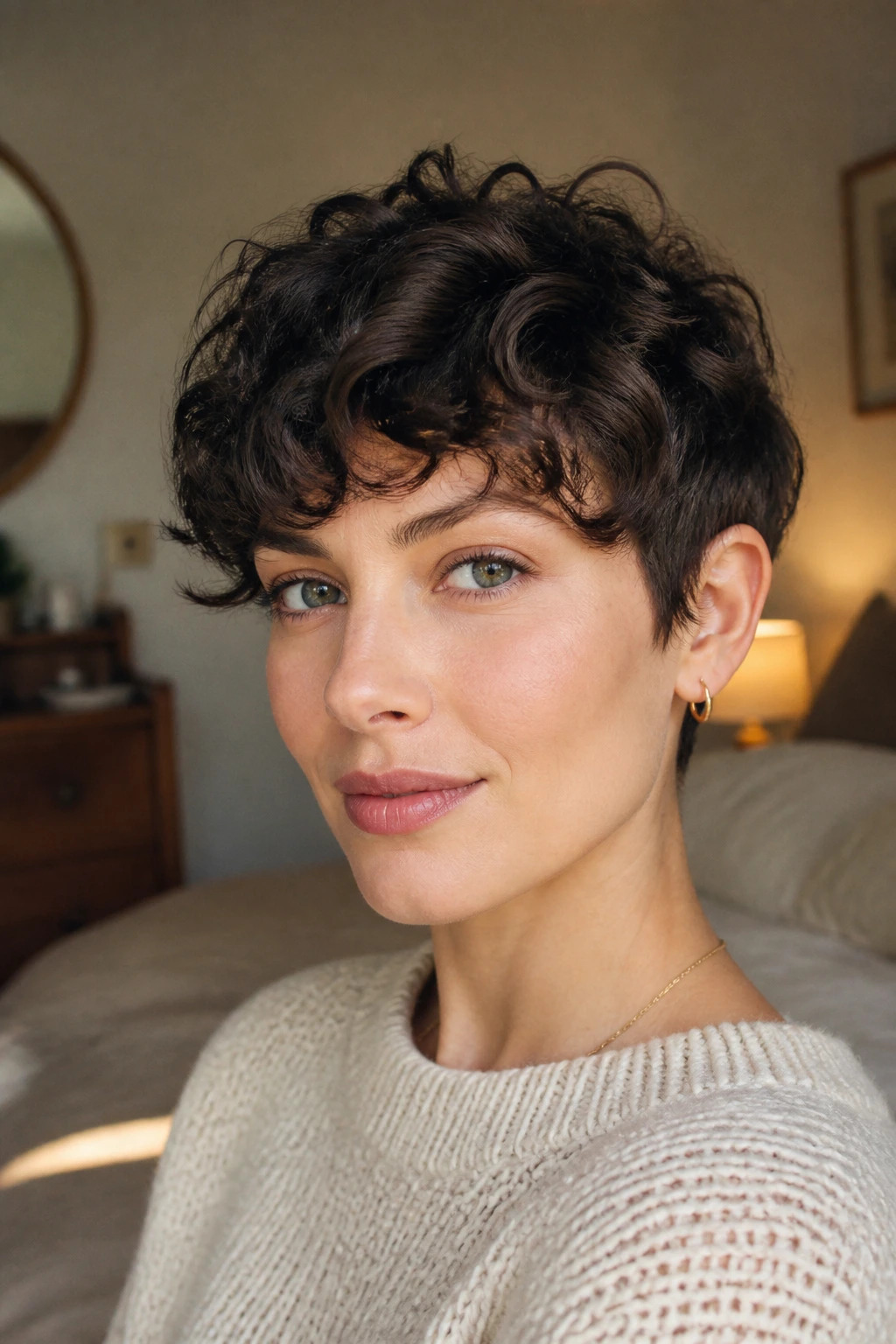
The first mistake is cutting too short at the sides while the crown stays barely textured. That gives you a puffed-out triangle. The fix is either more taper at the sides or more length and layering at the top — usually both.
The second mistake is using too much product. Wavy hair can go from defined to sticky in a blink. Start small, work the product in from mid-lengths to ends, then add a little more only if the shape needs it.
The third mistake is skipping regular trims. A pixie is honest hair. Once the nape and temples grow out, the outline shifts fast. If you let it go too long, the cut loses the reason it was short in the first place.
The fourth mistake is trying to flatten every wave with a brush. That usually creates frizz later. Fingers, a diffuser, or a small brush used only where needed keeps the texture intact.
Variations and Adaptations to Try
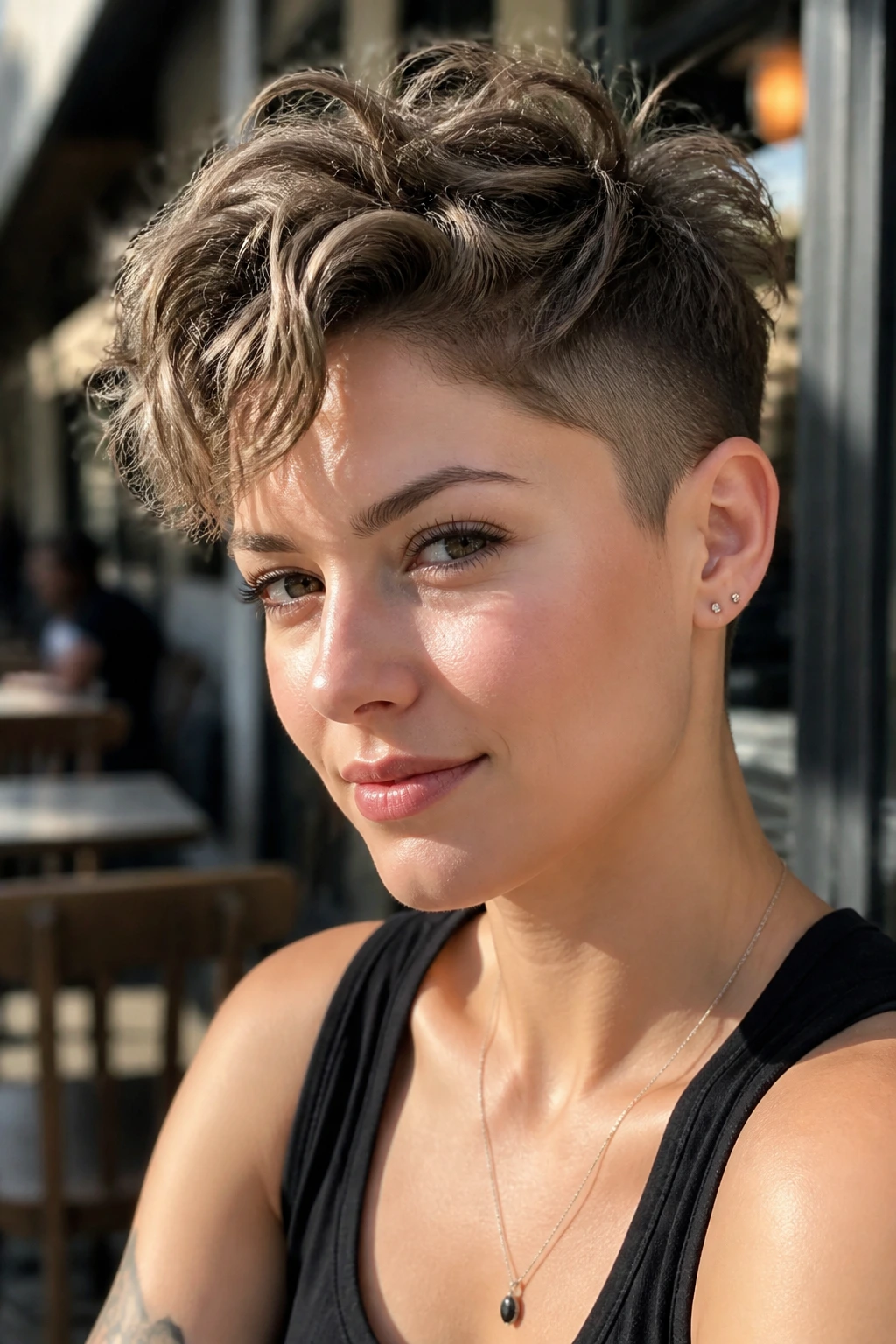
The Air-Dry Crop: Best if your wave pattern is loose and even. Ask for soft layers and a little extra length at the fringe so the hair can settle without heat.
The Sleek Side Sweep: Good for formal days or anyone who likes a more polished finish. Add a light cream, blow-dry the fringe to one side, and tuck the opposite side close.
The Thick-Hair Tamer: Built for dense waves that puff up quickly. It needs internal weight removal and a tighter nape so the back does not widen.
The Fine-Hair Lift: Suited to hair that falls flat unless it gets help. Keep the layers light, use mousse at the roots, and avoid over-thinning the ends.
The Grow-Out Friendly Shape: If you hate awkward in-between stages, keep the fringe longer and the nape softly tapered. The haircut will soften instead of turning shaggy in a bad way.
How to Keep the Shape Between Salon Visits
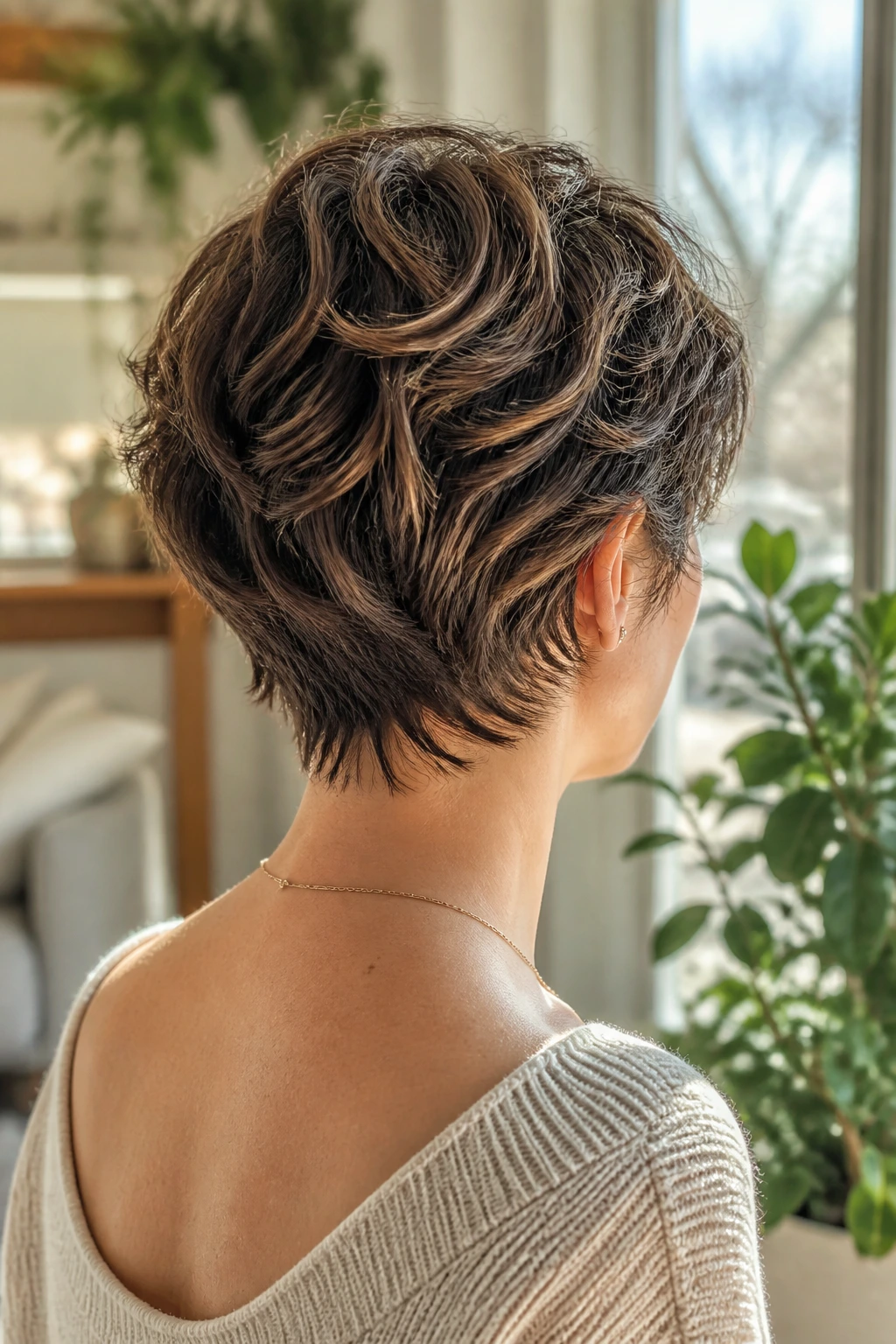
A pixie on wavy hair usually needs a tidy-up every 4 to 6 weeks if you want the outline to stay clean. The nape and temples go first. Those are the places that show growth fastest, and they are the places that make the cut look untidy when they lose shape.
Wash frequency depends on your scalp, but most wavy pixies do best when they are not overwashed. Two to four washes a week is a decent range for many people, though fine hair may need more and drier hair may need less. Between washes, a mist bottle and a fingertip of cream can bring the bend back.
Sleep matters more than people think. A satin pillowcase keeps the crown from getting mashed into a weird angle. If you wake up with one side bent flat, a few drops of water and a quick finger twist usually fix it.
Frequently Asked Questions
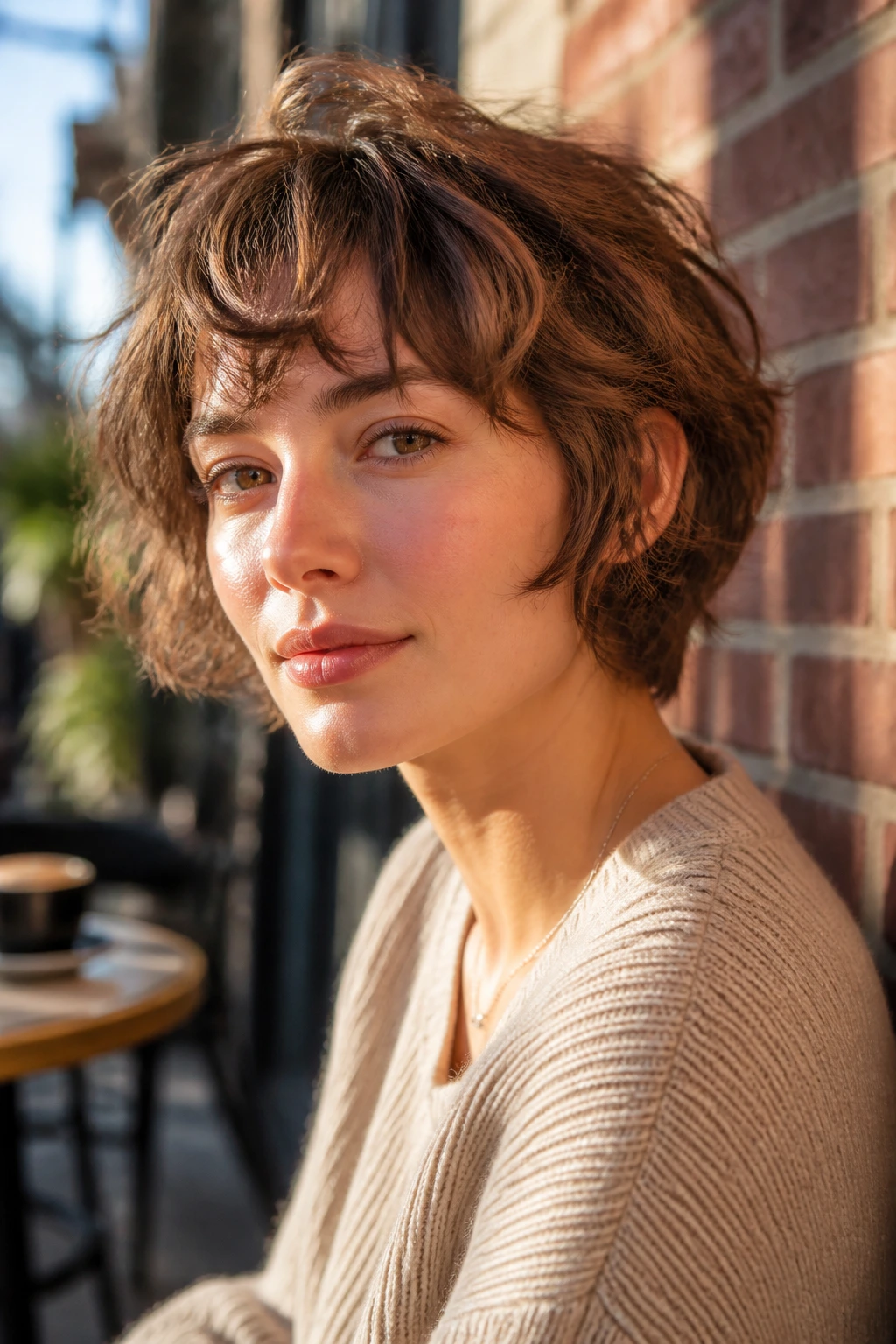
Can very short pixie cuts work on wavy hair?
Yes, but the shorter you go, the more your natural bend shows. If your waves are strong or uneven, ask for a little more length at the crown and temples so the cut does not spring up too much.
Should wavy hair be cut wet or dry for a pixie?
A dry finish is often better, or at least a wet cut that gets final shaping when dry. Wavy hair changes shape a lot as it dries, so dry detailing helps prevent a cut that ends up shorter than expected.
How do I stop the sides from puffing out?
Usually you need more taper at the sides or less bulk at the temples. A small amount of paste can help, but product cannot fix a silhouette that was cut too wide.
What if my wave pattern is uneven?
Pick a style with a side part, asymmetry, or a longer fringe. Those shapes hide imbalance better than a centered, perfectly round crop.
Can I air-dry a pixie cut?
You can, and many wavy pixies look best that way. The trick is to apply product while the hair is damp and then leave it alone instead of touching it every two minutes.
How often will I need trims?
Most pixies want some kind of trim every 4 to 6 weeks. If you prefer a softer, grown-out look, you can stretch that a little, but the nape and sideburns will tell on you first.
Is a pixie a bad idea if my hair is thick?
Not at all. Thick wavy hair can look excellent in a pixie if the stylist removes bulk in the right places. If they don’t, the shape can spread out fast, which is why the cut matters so much.
Can I wear a pixie with glasses?
Yes, and the cut can make glasses look sharper. Keep a bit of softness around the temples and sideburns so the frames do not compete with a hard edge.
The Cut That Lets the Wave Breathe
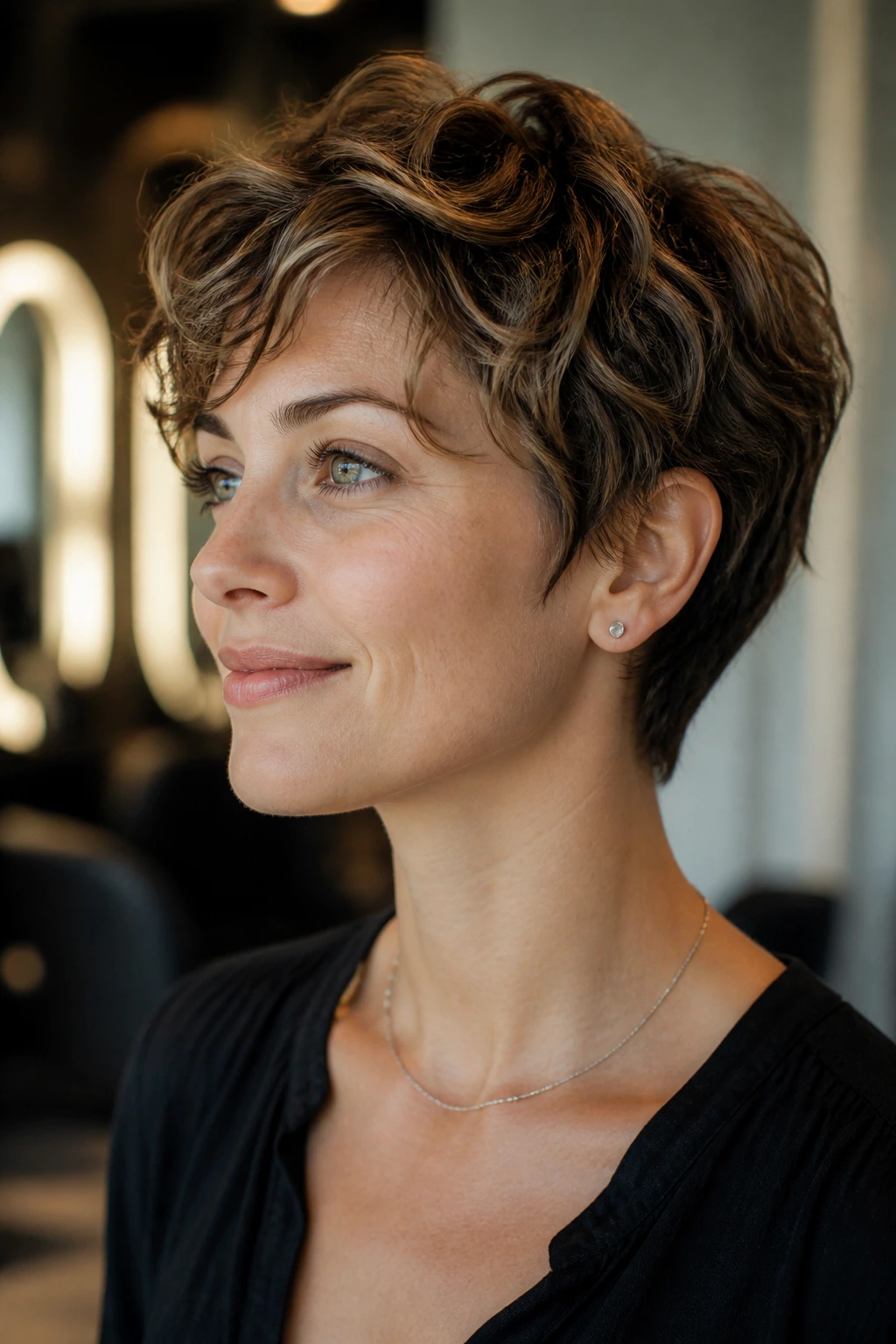
The best pixie for wavy hair usually isn’t the shortest one in the room. It is the one that leaves enough length for the wave to bend, enough taper to keep the outline clean, and enough texture to look alive when it dries.
That’s the real trick here. Not control. Not chaos either. Just a cut that understands where your hair wants to move and gives it a lane to move in.
If you bring that idea to the salon, the result gets much better fast. Pick the silhouette that matches your texture, and the wave will do the rest.
