



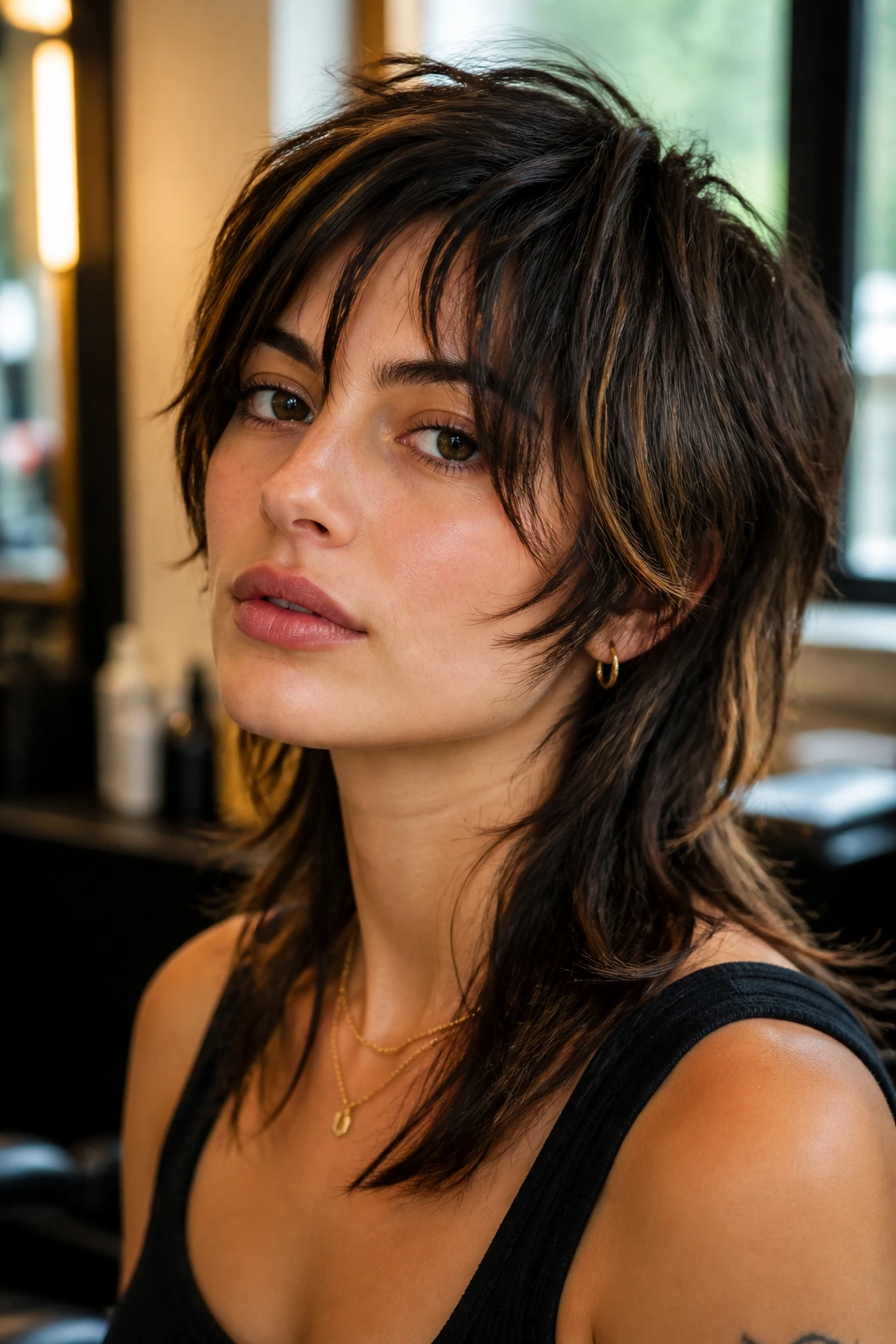
The best mullet haircuts for women don’t look like a dare anymore. They look edited, almost architectural: shorter around the face, fuller at the crown, and longer through the nape so the silhouette has some swing when you turn your head.
That shape matters because hair does not sit still. Fine strands can collapse unless the crown is lifted. Thick hair can puff at the sides unless the bulk is pushed where it belongs. Curly hair needs room to spring, not a blunt perimeter trying to trap it.
A good mullet solves those problems with layers, not with noise. The trick is in the balance—soft enough to wear to dinner, sharp enough to keep its edge in daylight. And once you see how many versions of it exist, from feathered and feminine to punky and nearly sculptural, the list starts to make sense.
Why These Mullet Haircuts for Women Keep Working
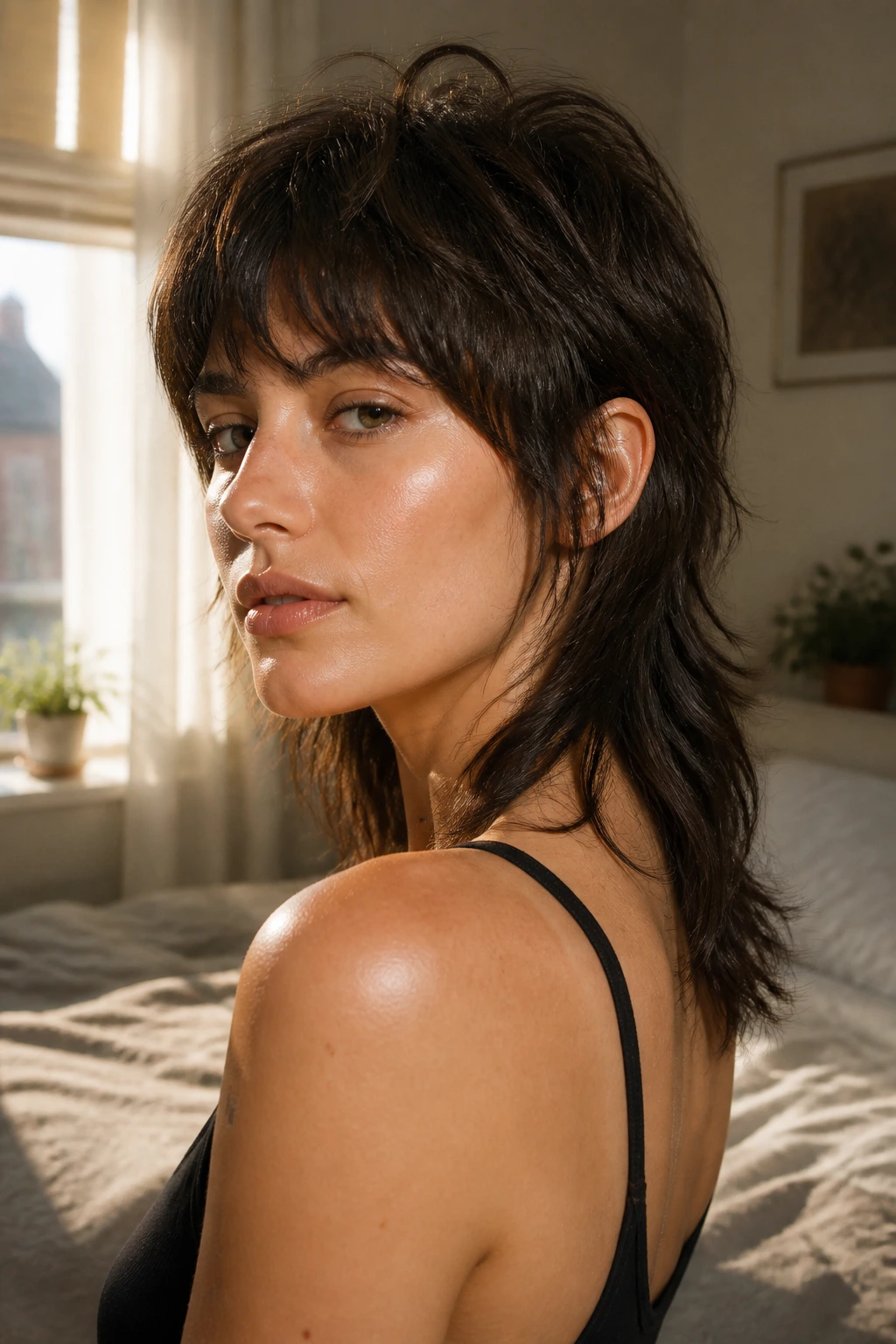
-
Crown lift: Shorter layers at the top stop heavy hair from lying flat against the scalp, which gives the cut its shape instead of a limp triangle.
-
Soft edges: Face-framing pieces around the cheekbone make the cut read as styled, not chopped, and they matter even more if your jawline is sharp.
-
Grow-out room: A mullet can move 2-3 months without turning into a mistake because the back length buys you time while the front softens.
-
Texture friendly: Waves, curls, and coils all change how the outline falls, which is why the same cut can look airy on one head and dramatic on another.
-
Easy to personalize: You can push it shaggy, sleek, curly, or razor-sharp with the same basic silhouette and a different finish.
1. Soft Feathered Mullet
A soft feathered mullet is the one I point to when someone wants shape without a hard edge. The front pieces kiss the cheekbones, the crown has lift, and the back stays long enough to move when you walk. It feels less like a statement haircut and more like hair that happens to know exactly where it wants to fall.
Why it works
Feathering removes weight in small, controlled slices, so the ends don’t sit in one blunt shelf. That matters if your hair tends to flip outward or puff at the sides. The cut also gives you room to blow-dry with a round brush or just rough-dry with a little mousse and let the texture do the rest.
A soft mullet is a smart choice for medium-density hair that needs shape but not a lot of drama. It also plays well with curtain bangs, especially if you want the front to blend instead of shout. Tell your stylist to keep the transition between crown and nape smooth, not disconnected.
What to ask for
- Shorter crown layers for lift
- Feathered cheekbone pieces
- A gentle taper through the nape
- No hard line between top and back
Pro tip: If your hair is fine, keep the perimeter a little stronger than you think you need. Too much thinning can make the back look stringy by day two.
2. Curly Halo Mullet
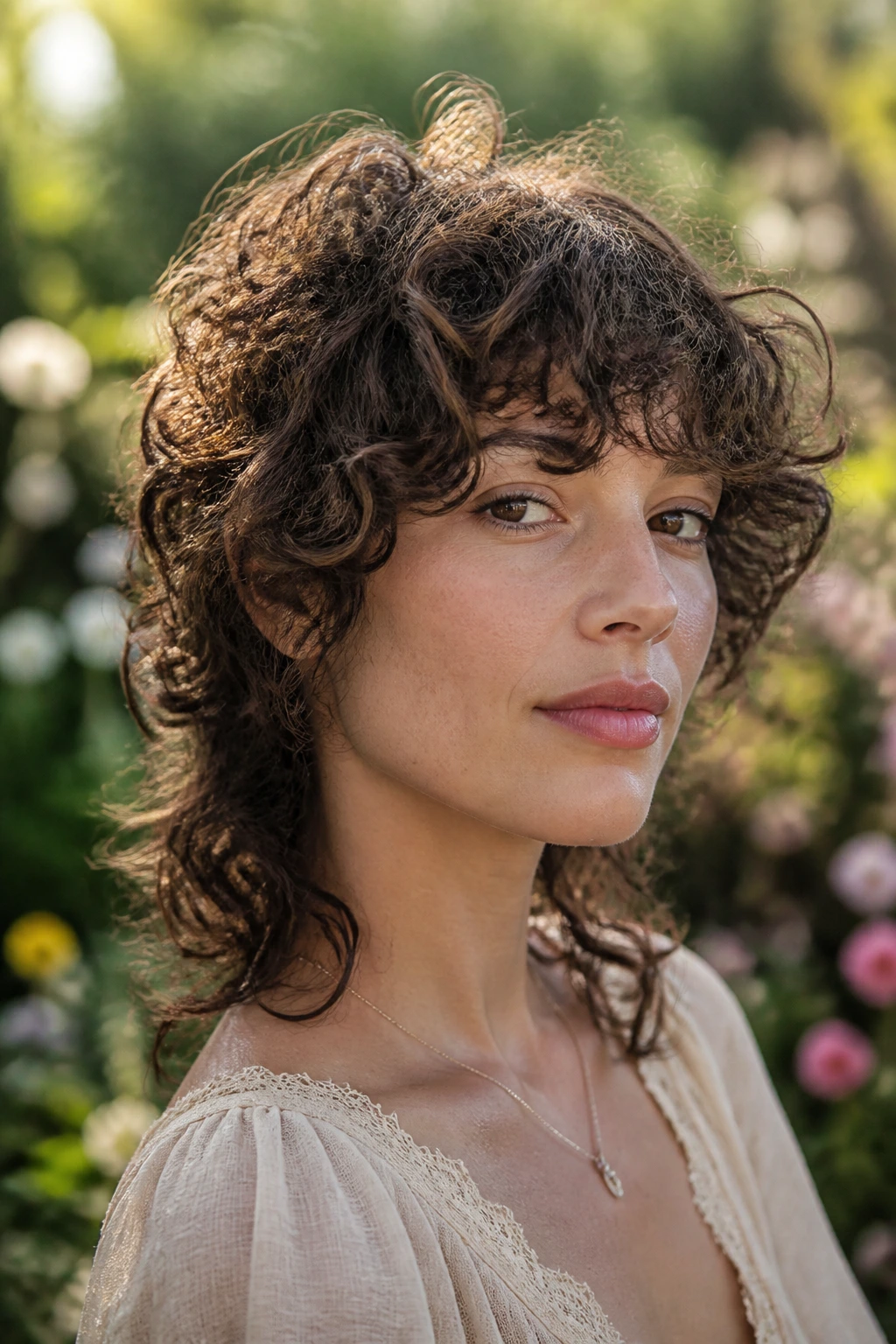
Curly hair gives a mullet something straight hair has to fake. The shape rises at the crown, bends around the face, and keeps enough length in back to show off the curl pattern instead of chopping it off at the shoulders.
The trick is balance. If the top is cut too short, curls can balloon. If the back is too heavy, the whole thing slumps into a triangle. A good curly mullet sits somewhere between those two mistakes, with rounded layers that let the curls stack without crowding each other.
I like this cut best when the stylist works on dry or mostly dry curls, because shrinkage changes everything. A curl that looks chin-length when wet may land three inches higher after it dries. That’s not a small detail. It’s the whole haircut.
3. Wolf-Cut Mullet
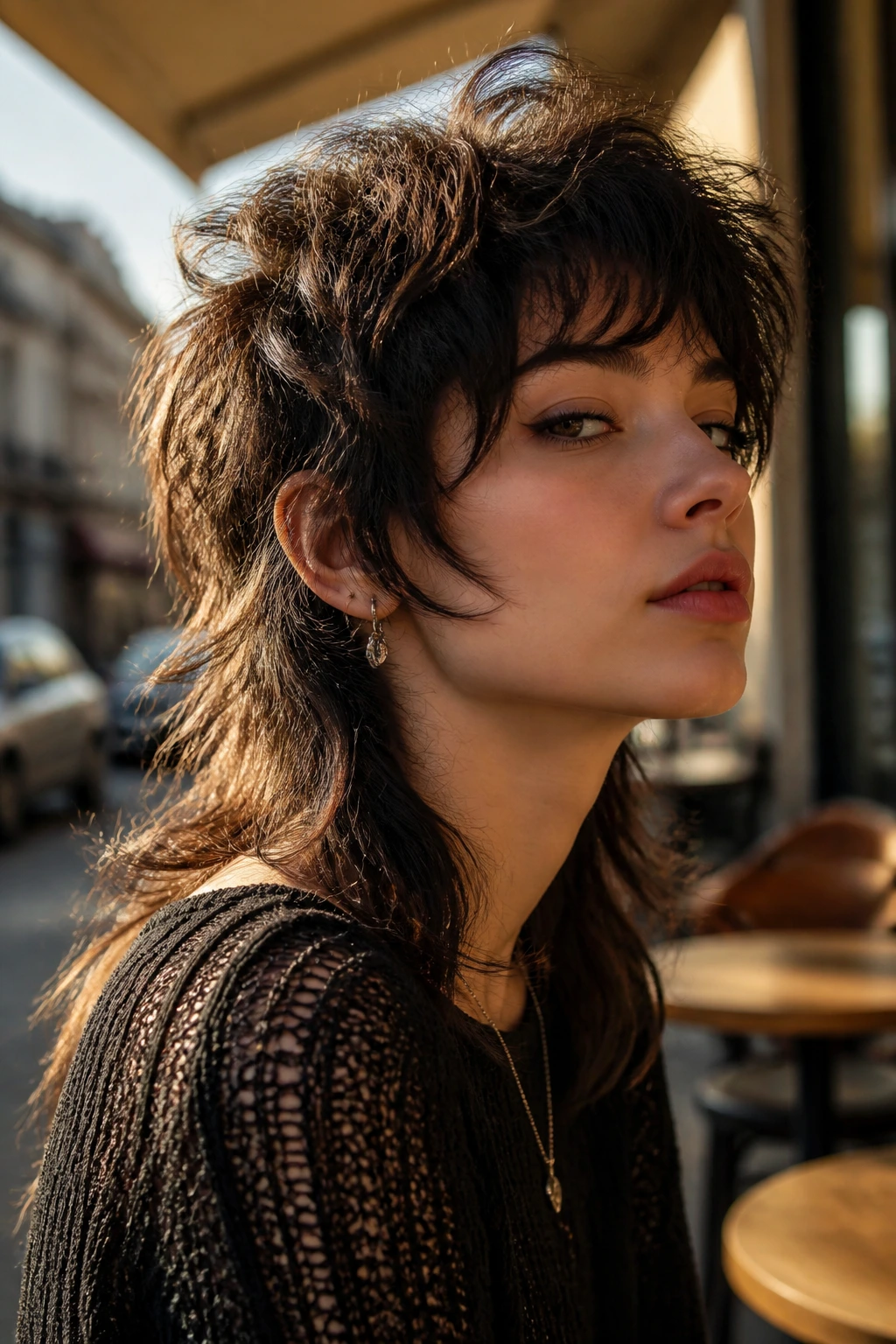
Why does the wolf cut and mullet combo work so well on thick hair? Because it steals the best parts of both: the volume of a shag and the attitude of a mullet, without leaving a heavy curtain around the jaw. The texture sits up at the crown, then breaks apart through the lengths so the haircut feels lively even when you air-dry it.
How to wear it
Ask for choppy layers through the top, a little more length in back, and face-framing pieces that start around the cheekbone or lip. That keeps the front from looking flat. A bit of mousse at the roots and texture spray on the ends is enough for most days.
- Best on wavy or dense hair
- Great if you want a messy finish
- Needs trim-up every 6-8 weeks if you want the shape to stay crisp
Quick note: If your hair is very fine, keep the layers lighter. Too much razoring can make the wolf cut lose its body fast.
4. Micro-Fringe Mullet

A micro-fringe mullet is not for somebody who wants to blend in. The tiny bang changes the whole read of the cut. Suddenly the eyes get framed first, then the rest of the hair fans out behind them, which makes the silhouette feel sharp even when the layers themselves are soft.
This version works because the short fringe creates a visual break. It draws attention upward, which is useful if you have a strong jawline or a long face that needs a little shortening at the top. It also looks best with some texture in the body, not sleek glass-hair. That contrast keeps the fringe from feeling severe.
If you like a little oddness in your haircut, this is a good place to start. It has attitude in a very small package.
5. Razor-Sliced Mullet
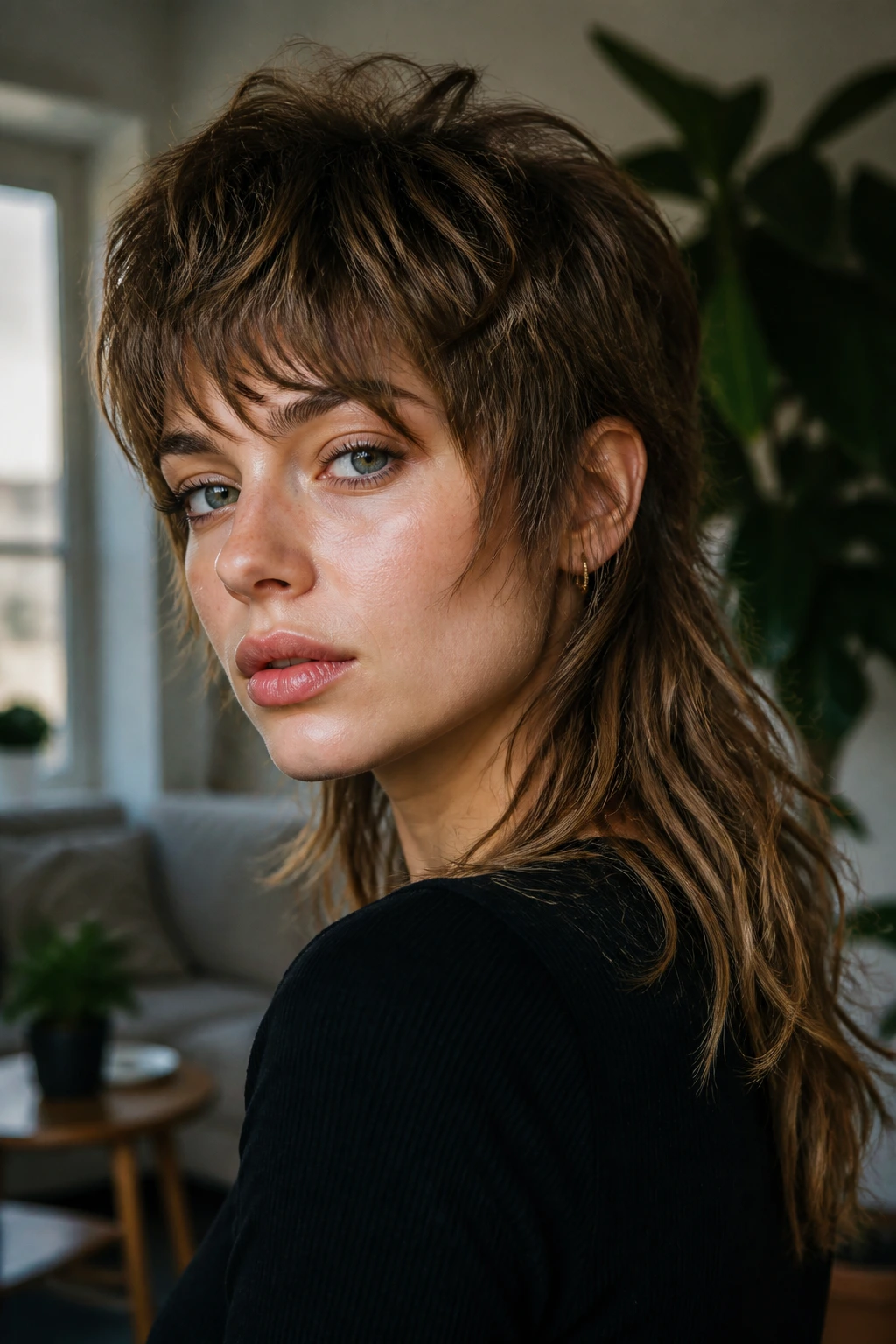
Unlike a blunt bob, a razor-sliced mullet doesn’t stop anywhere in a heavy line. The ends break apart. The layers move. The whole cut feels lighter around the cheeks, which is a gift if your hair is dense and seems to double in width by noon.
Razor cutting is especially useful when you want a slightly shredded finish. It softens thick ends and helps the mullet sit closer to the head instead of kicking outward. That said, it is not the safest move for fragile or highly porous hair. Over-razored curls can fray fast.
Best for
- Thick straight hair
- Wavy hair that gets bulky at the sides
- Anyone who wants a slightly edgy finish without going full punk
Styling note: A pea-size amount of matte cream through the ends is usually enough. Too much product turns this into a stringy mess very fast.
6. Pixie Mullet
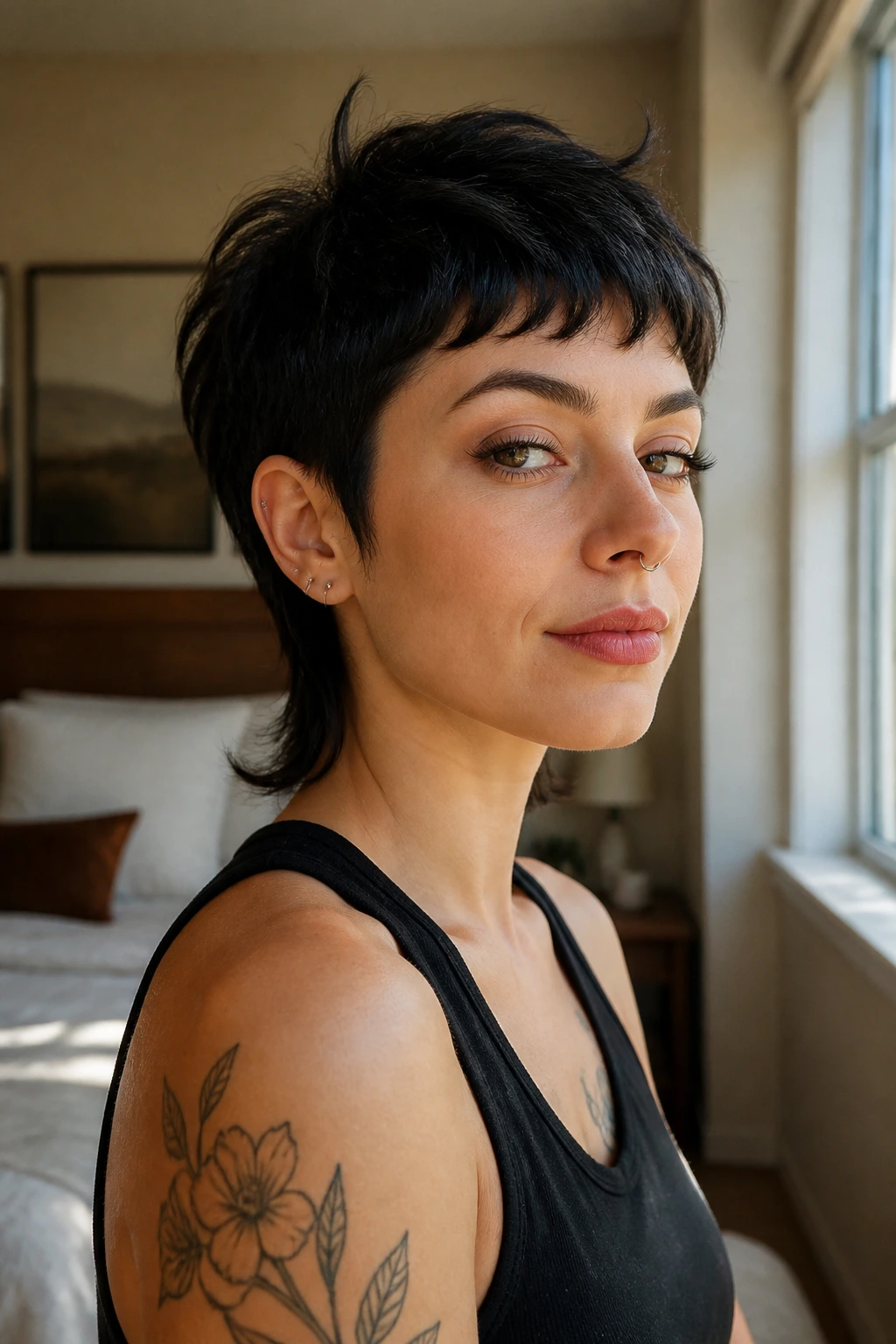
A pixie mullet is the cut for women who want short hair but are not ready to lose the tail. The top stays cropped and airy, the sides stay tight, and the back keeps enough length to keep the silhouette from reading like a standard pixie. That little strip of length in back changes the whole personality of the cut.
It’s a smart answer for fine hair because it lets the crown rise without dragging everything else down. It also suits anyone who likes getting ready in five minutes. A little paste at the front, a quick finger-tousle at the back, and you’re done.
This is the one I’d choose if you want shape first and styling second. It doesn’t need a lot of fuss.
7. Long Layered Mullet

A long mullet works when you want the idea of the cut, but you do not want to give up your length. The front still opens around the face, the crown still gets some lift, and the back keeps enough inches to pull into a low ponytail without losing the shape completely.
That makes it a useful cut for people growing out a bob or for anyone with long hair that falls flat at the sides. The layers keep the silhouette from turning into one heavy curtain. If your hair is straight, the difference shows up most around the shoulders and nape. If it’s wavy, the movement starts higher up and stays there.
The danger here is over-layering. Keep some weight in the lengths or the cut can start looking thin at the ends.
8. Shaggy Air-Dry Mullet

Can a mullet look casual and still feel intentional? Absolutely. The shaggy air-dry version proves it. The crown is chopped with enough internal layers to create lift, the bangs are soft or broken up, and the back keeps a lived-in swing that looks better the less you overwork it.
Why it’s easy to live with
This cut loves mousse, a wide-tooth comb, and a few minutes of scrunching. That’s it. You don’t need a perfect blowout. A touch of leave-in cream on damp hair keeps the ends from puffing, and diffusing for 3 to 5 minutes at the roots can add enough lift to keep the shape from collapsing.
How to style it: Flip your head forward, scrunch in product, let it dry about 80 percent before touching it again, and then use your fingers to break up the front pieces. A brush can flatten the whole thing if you’re not careful.
9. Wet-Look Editorial Mullet
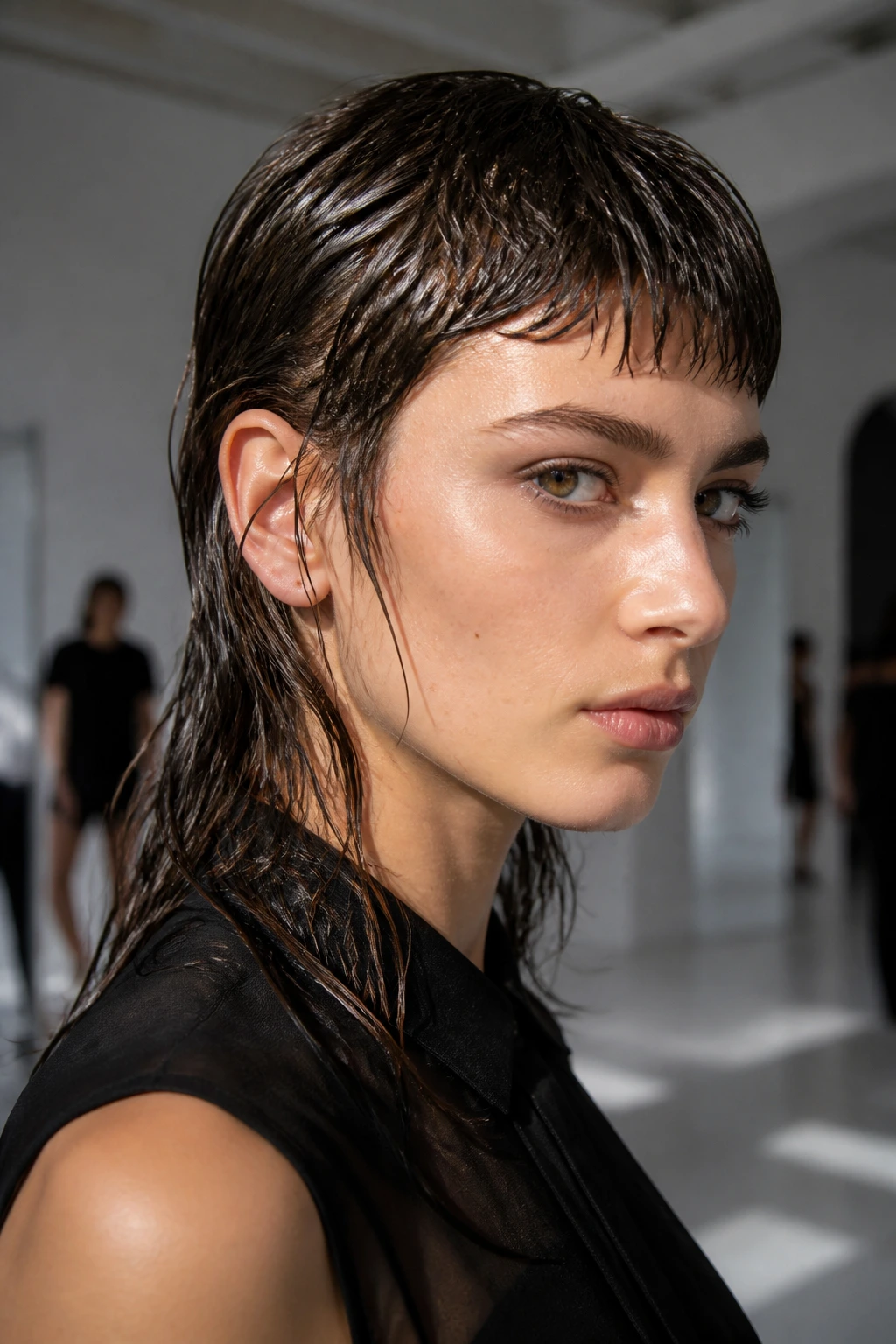
A wet-look mullet is the most fashion-forward version on this list, and it works because the shine makes the layers look carved instead of chaotic. The crown stays sleek, the sides hug the head, and the nape falls in a controlled tail that looks deliberate under bright light.
This one is best for events, photos, or nights when you want your hair to feel like part of the outfit. It favors short-to-medium lengths because the shape can get heavy if the back is too long. Use gel on damp hair, comb it through evenly, and add a touch of shine spray once it sets.
I’d avoid this finish if your hair gets oily fast. On day-two roots, the wet look can slide from polished to greasy in a hurry.
10. Bixie Mullet
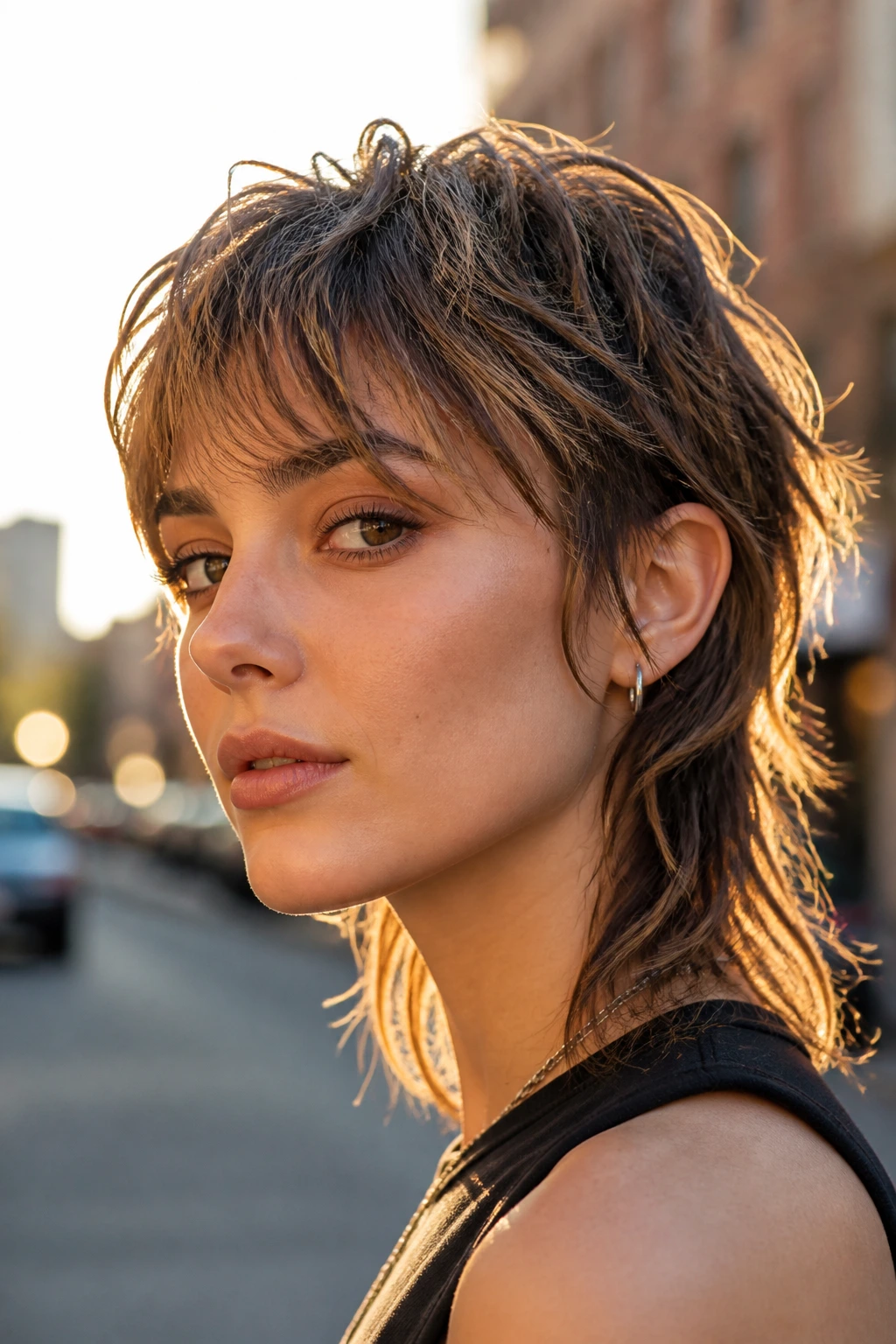
If a bob feels too polite and a pixie feels too short, the bixie mullet lands right in the middle. It keeps the ear line light, leaves some cheekbone-framing layers, and lets the back stay a little longer so the shape doesn’t stop dead at the jaw.
The appeal here is proportion. You get movement around the face without losing the ease of a short haircut. It also works well on hair that needs a little lift but not a lot of length. Ask for soft texture at the crown and a neckline that tapers instead of blunting off.
For women who want a first step into mullet territory, this is one of the safest entry points. It still has edge. It just doesn’t bark.
11. Curtain Bang Mullet

Curtain bangs change the math. They soften the forehead, split the front of the cut, and give the mullet a gentler entry point before the lengths swing back. If the fringe is cut around the bridge of the nose or just above the cheekbone, the whole haircut feels balanced rather than severe.
This version works especially well on longer faces and on anyone who wants to keep some softness near the eyes. The middle part is a big part of the look, but it’s not mandatory. A slight off-center part can make the layers sit more naturally if your cowlick fights a true middle split.
Keep the bangs a little longer than your first instinct says. Curtain bangs shrink more than people expect once they dry.
12. Undercut Mullet
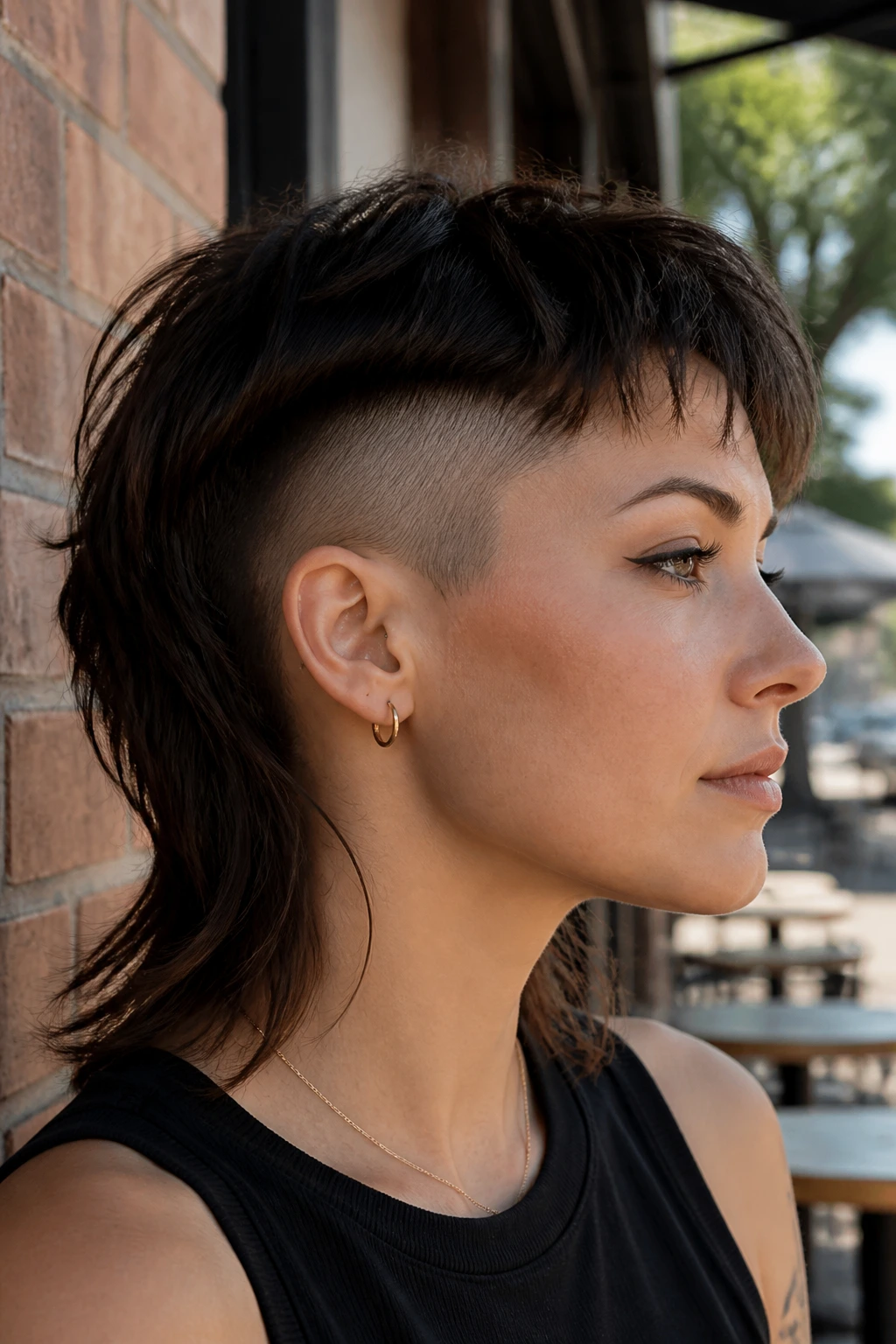
An undercut mullet is a cleaner, sharper answer for thick hair. Taking weight out at the sides or nape removes that blocky feeling that can make a mullet puff in the wrong places. The top and back still carry the shape, but the hidden cut underneath changes the way the whole head sits.
This is the version I’d pick if you want summer-friendly hair without giving up length. It also helps if your hair grows out fast and tends to sit bulky around the ears. The tradeoff is obvious: you lose some softness. So if you want a romantic finish, this probably isn’t your cut.
Ask for the undercut to stay hidden unless you want it to show when you tuck the hair back. That small choice changes the vibe a lot.
13. Permed Mullet
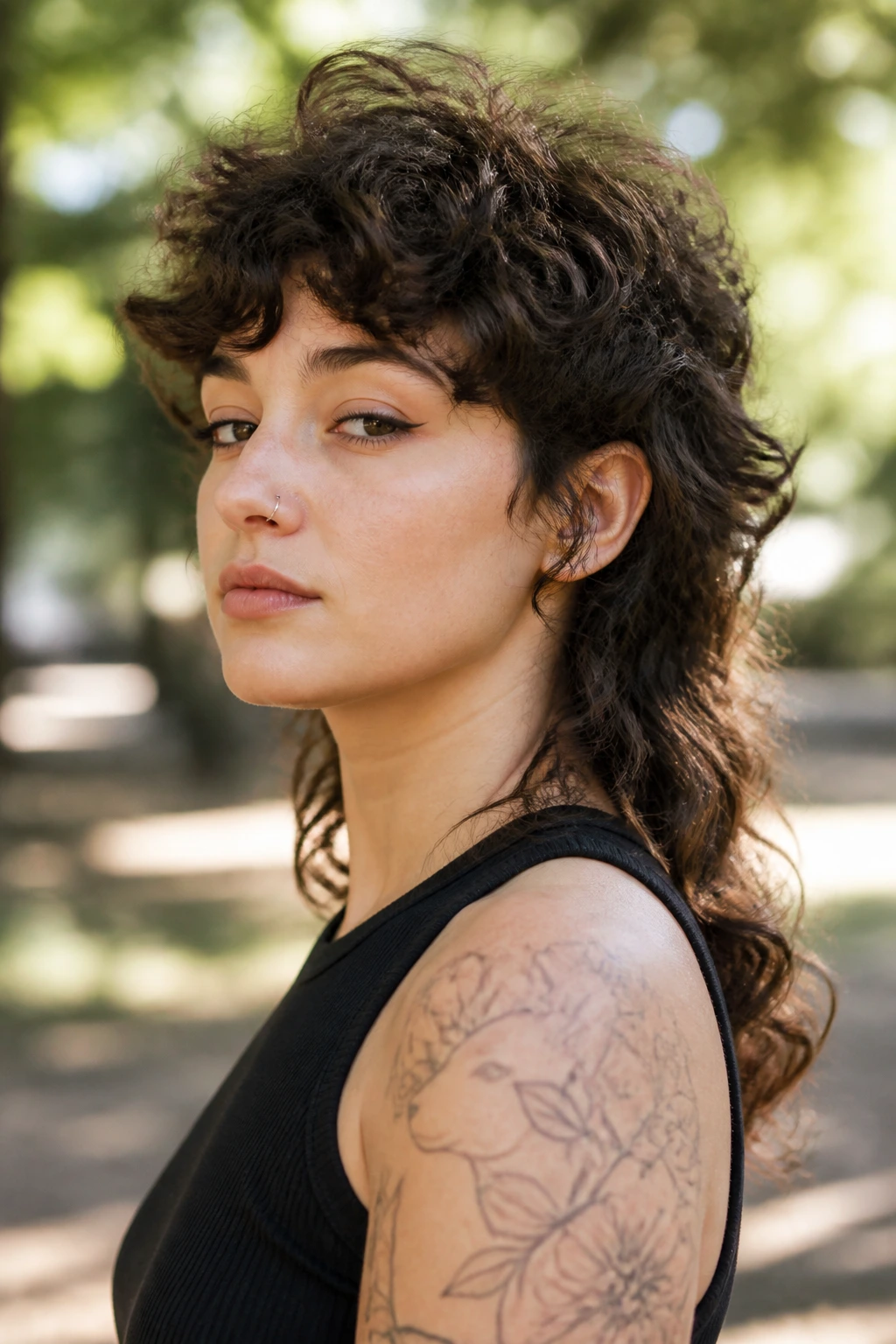
A permed mullet can look either dated or fantastic, and the difference is all in the shape. Modern versions use softer rods, looser bends, and enough layering to keep the curls from stacking into a helmet. The result is volume at the crown, air around the sides, and a tail that moves instead of sitting stiff.
This is one of the smartest options for hair that refuses to hold texture. The perm creates the body; the haircut gives it direction. If you go this route, the stylist needs to think about the finish from the start, because a bad perm pattern can make the back too fluffy and the top too narrow.
You do not want a triangle. Keep repeating that until the chair feels boring.
14. Sunset Balayage Mullet
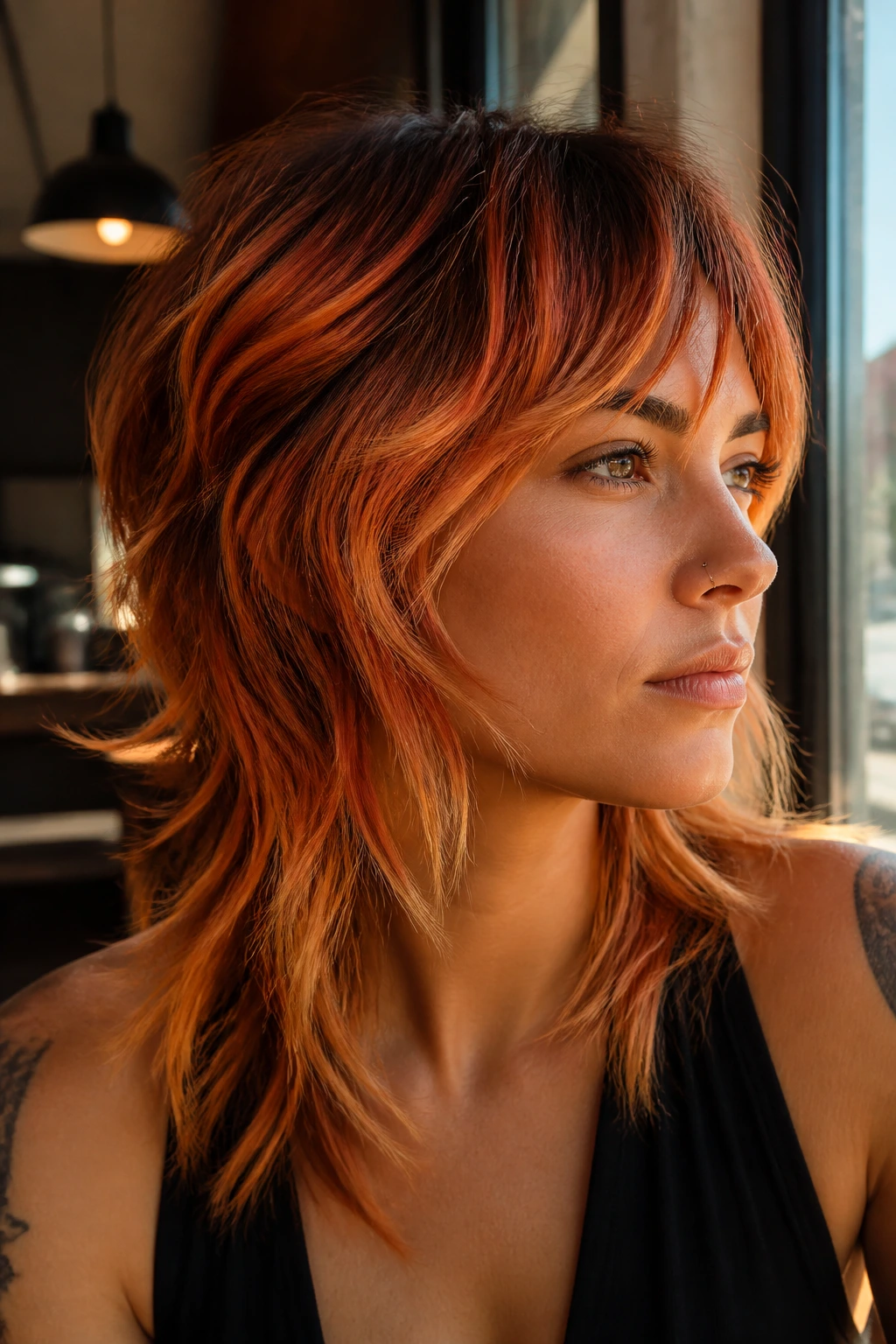
Color changes the whole shape of a mullet. A sunset balayage—think copper, gold, apricot, and a deeper root—pulls the eye through the layers so the haircut reads as dimensional instead of flat. The lighter pieces around the face catch movement, while the darker crown gives the top some depth.
This is a strong option for women with layered cuts that need visual separation. It works especially well if the layers are already soft, because the color exaggerates the movement without turning the haircut harsh. The one catch is maintenance. Brightened pieces around the face need toning or glossing to stay clean, and that matters more on a haircut with so many moving parts.
If you like your color to do some of the styling for you, this is a smart pair.
15. Copper Penny Mullet
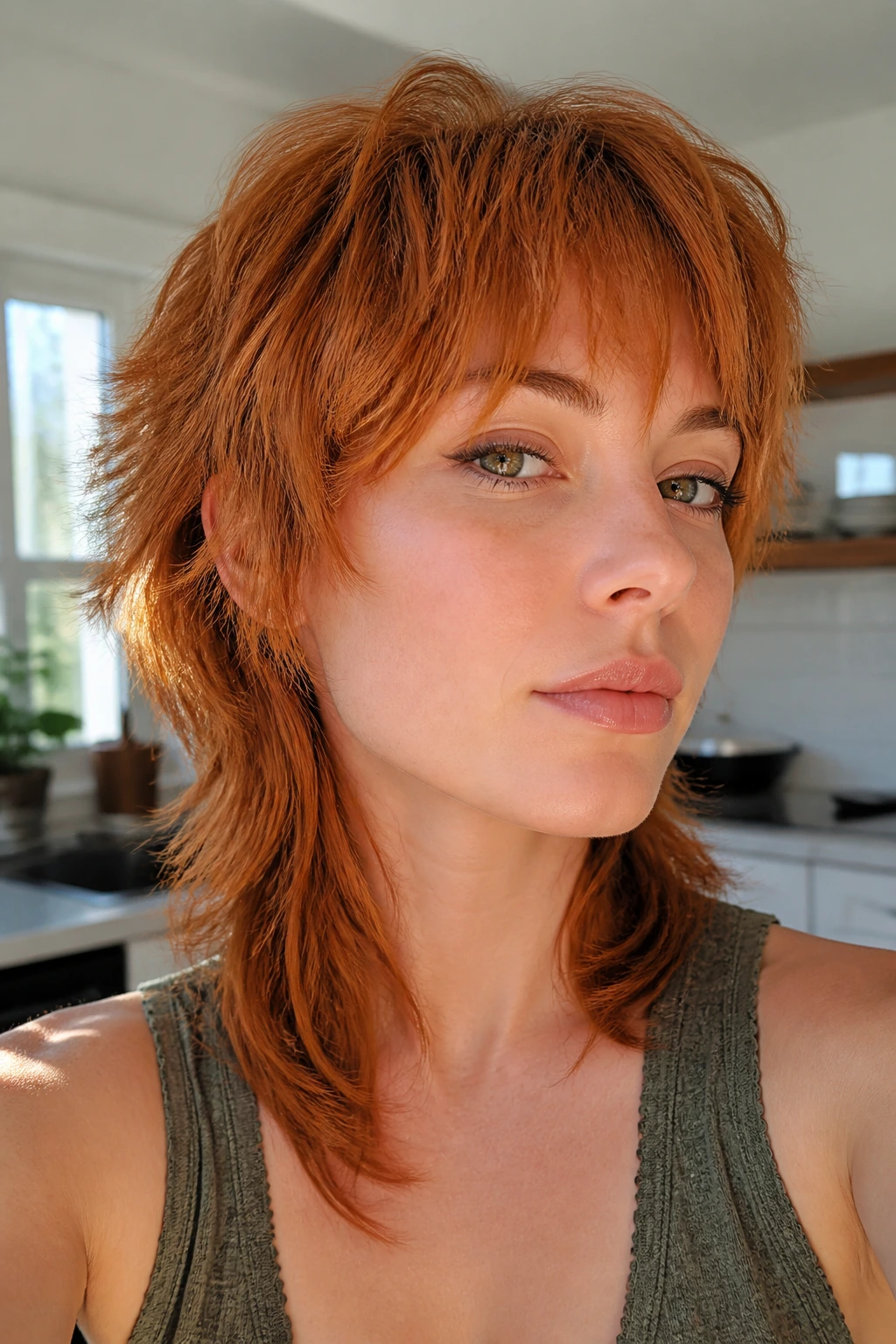
Why does copper suit a mullet so well? Because warm tones catch the broken texture on the ends and make every layer look more deliberate. The color adds glow around the face, and the back length keeps the whole cut from feeling too precious.
Copper shades work best when the haircut has some feathering or slicing, not one heavy block of hair. The color reflects differently off short and long layers, which gives the cut depth even when you wear it straight. That means the shape can look expensive with very little styling, provided the tone stays fresh.
I’d call this the best option for anyone who wants the haircut to feel softer and more feminine without losing any edge.
16. Asymmetrical Mullet
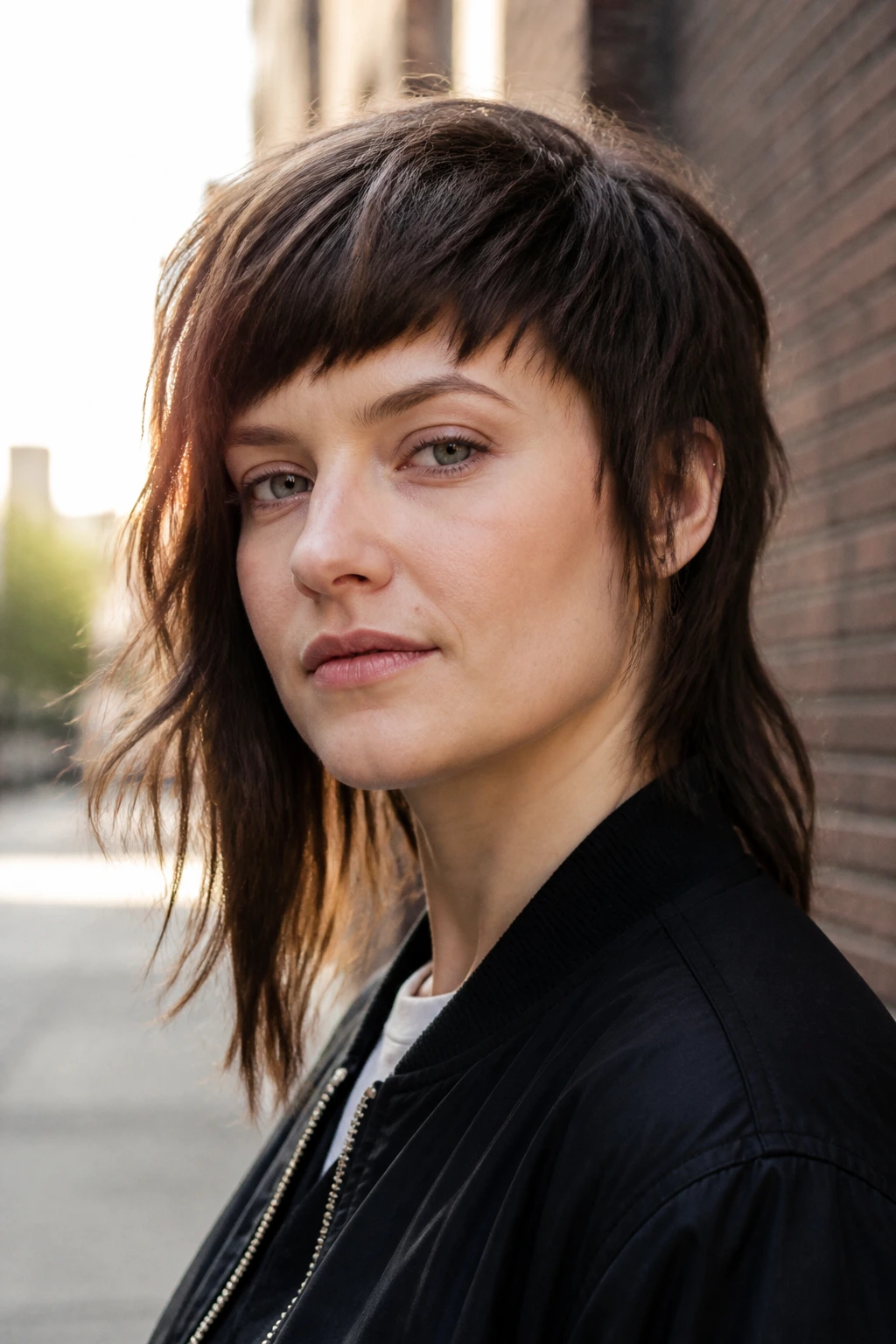
An asymmetrical mullet puts one side slightly longer or more forward than the other, and that tiny imbalance makes the whole cut feel more intentional. It catches the eye in the same way a lopsided necklace or an uneven hem does. You notice the line, then you notice the movement.
This version is best on straight or lightly wavy hair, where the shape stays visible. Heavy curls can hide the asymmetry unless the stylist builds it in with real precision. Tell them exactly how much imbalance you want—half an inch, an inch, maybe more—because vague instructions on this kind of cut usually lead to regret.
The asymmetry should feel edited, not accidental. There’s a difference.
17. Chin-Length Mullet

A chin-length mullet is the one to choose when you want the front to stay close to the face and the back to keep a touch more length. It works especially well for anyone growing out a bob and hating the in-between stage. The shape gives the hair somewhere to go while it gets longer.
Because the front lands at the chin, the jawline gets a clean frame. That can sharpen a round face or give a softer square face a little movement. The back should stay light enough to avoid the dreaded mushroom effect. A few interior layers keep the outline from turning into one heavy block.
If you want a mullet that feels friendly rather than rebellious, this is one of the easiest shapes to wear.
18. Bowl-to-Mullet Hybrid
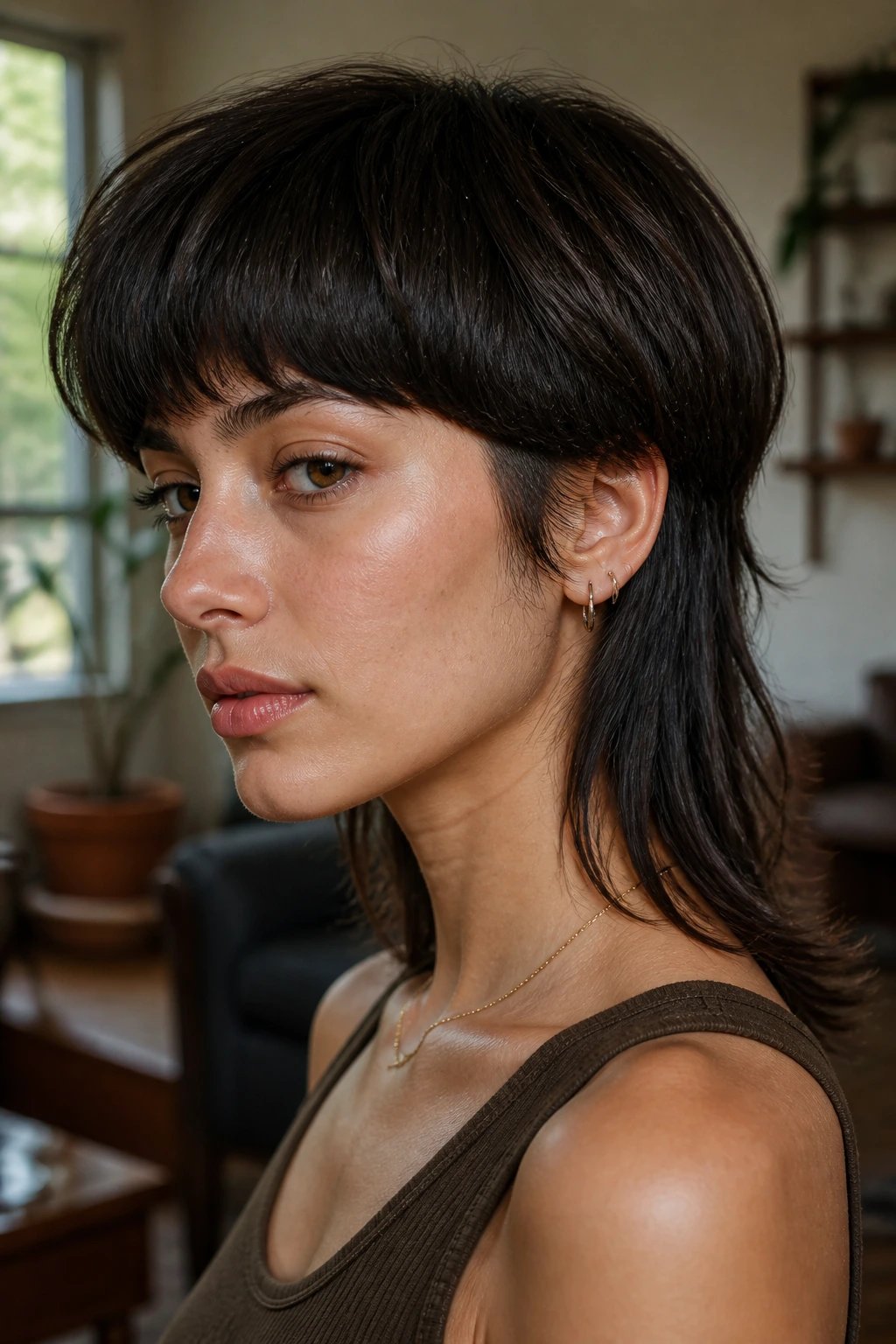
A bowl-to-mullet hybrid sounds weird until you see it on the right head. The top stays rounded and a little heavier through the crown, then the back drops into a longer tail so the whole shape gets contrast. It has a mod feel, but it doesn’t stop at the bowl-cut stage.
This cut is strongest on straight hair, especially if you like a graphic line around the head. The danger is obvious: if the top is too full, the silhouette can turn mushroom-shaped. The fix is careful thinning at the interior and a back that tapers instead of hanging all at once.
I like this cut on women who want a sharper fashion look and are not afraid of a little geometry.
19. Blunt Fringe Mullet

Blunt bangs and a mullet can look brilliant together if the rest of the cut stays soft. The fringe gives the haircut a hard anchor, then the sides and back move away from it. That contrast is what keeps the style from looking too sweet or too severe.
This shape flatters longer faces and anyone whose forehead feels a little too exposed in softer cuts. It also works nicely if you like your bangs to do the heavy lifting while the rest of your hair stays easy. Keep the back lightly layered and the nape tapered so the fringe doesn’t end up fighting a heavy silhouette.
The mistake here is making everything blunt. Once the bangs, sides, and back all have the same weight, the cut loses its rhythm.
20. Silver Fox Mullet

Natural gray, silver dye, or cool white blond all show off the layering in a mullet better than flat dark color does. The lighter tones catch every bend and flip, which makes the cut look brighter around the face and cleaner through the ends. That matters if you want a shape that feels crisp without being over-styled.
This version is especially good on women who are already embracing silver strands and want a haircut that feels current without pretending to be something else. The best silver mullets keep the crown lifted and the ends soft. If the hair is too blunt, silver can look helmet-like fast.
A little gloss or violet shampoo keeps the tone sharp. Too much, though, and the hair can turn dull and icy in a bad way.
21. Coil-Defined Mullet
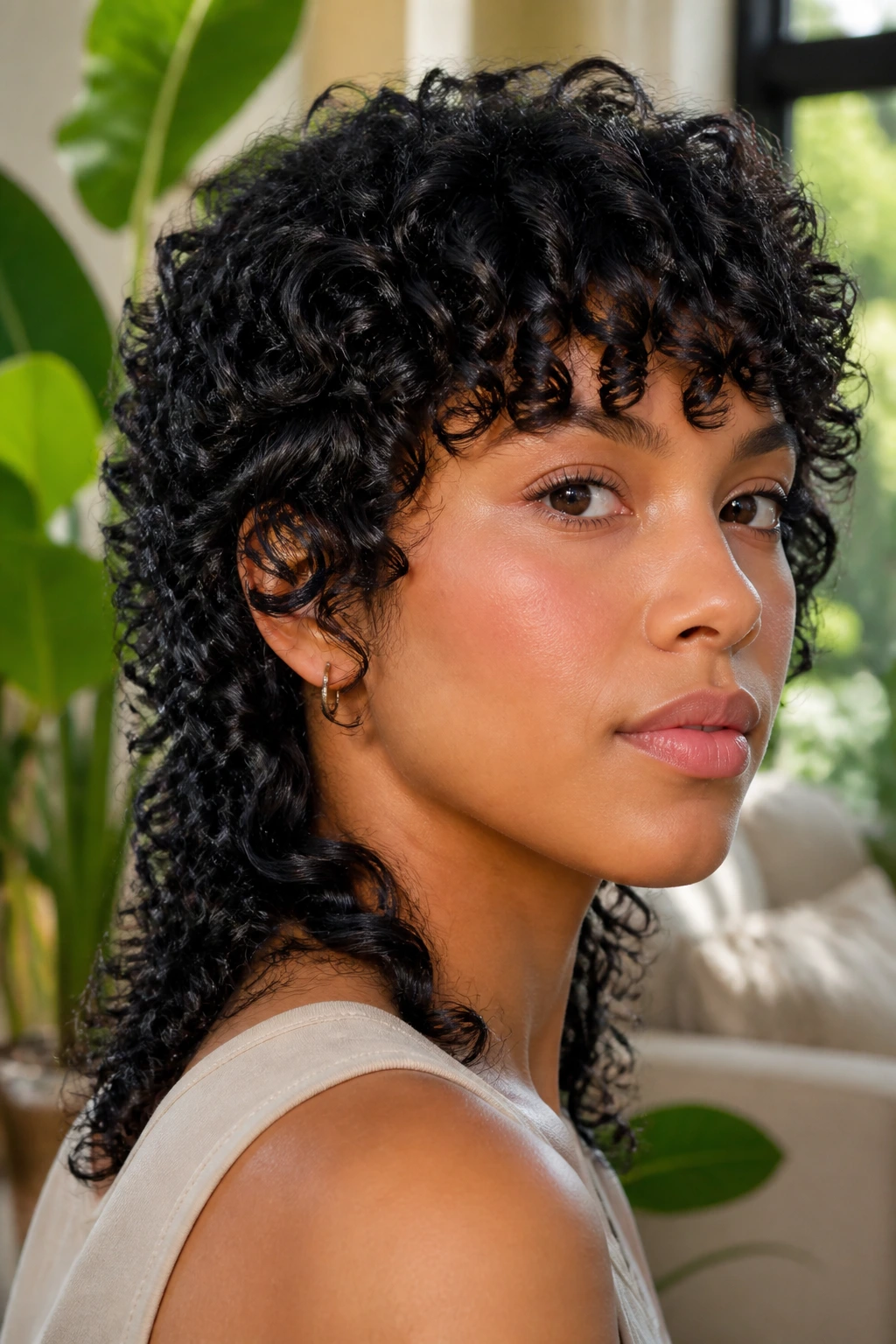
What happens when coils meet a mullet? The silhouette gets gorgeous, but only if the cut respects shrinkage. The top needs enough room to spring, the sides need shape without bulk, and the back has to be long enough to show off the curl pattern once it dries.
This is one of the few cuts I think should be shaped with the hair in its natural state, or as close to it as possible. Coily hair behaves differently wet and dry, and a wet cut can leave you with a shape that disappears once it settles. A good stylist will think in terms of curl clumps, not just inches.
Use curl cream for slip, then finish with a stronger hold gel if you want the outline to last past day one. Soft hold is rarely enough here.
22. Beach Wave Mullet
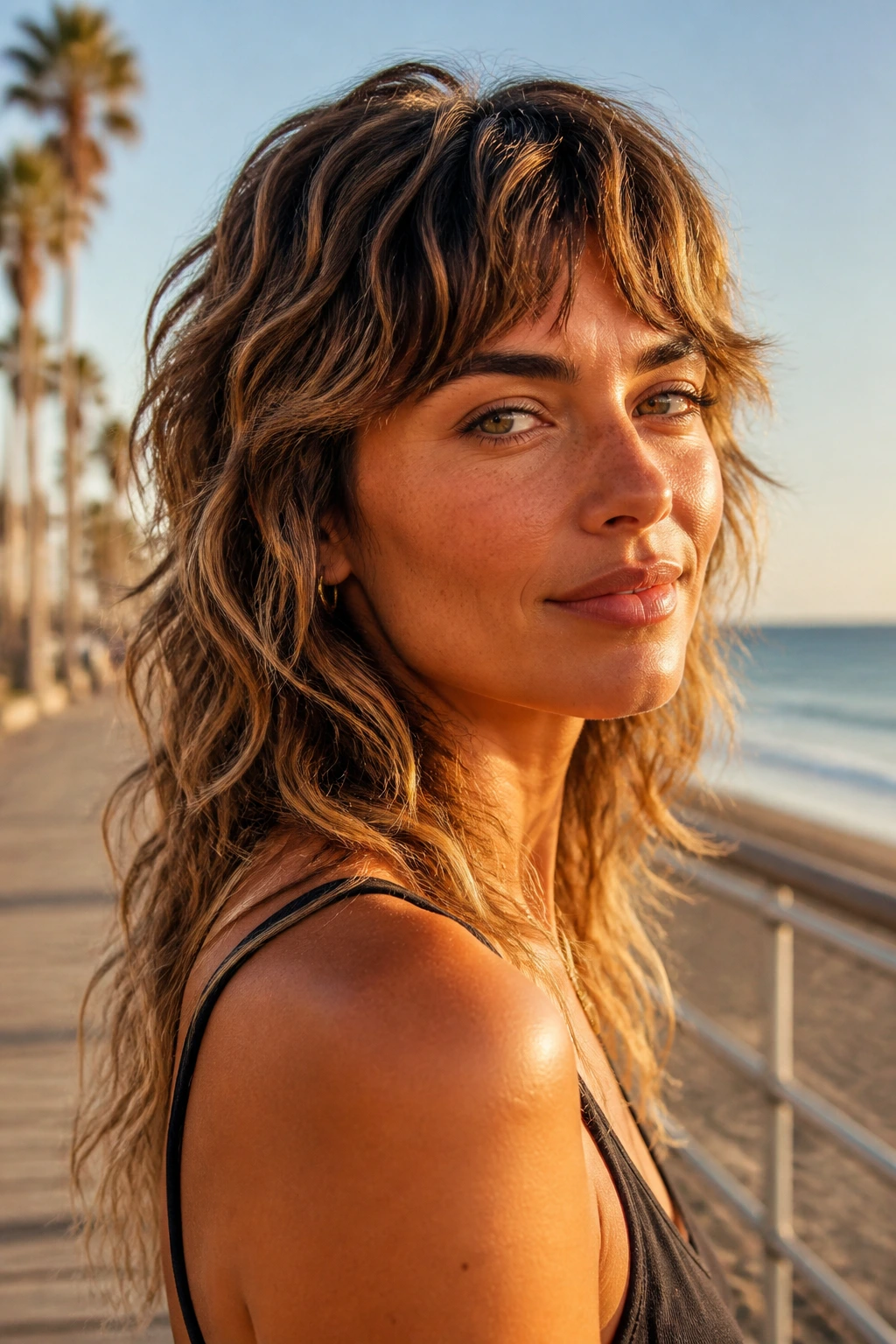
A beach wave mullet lives in that sweet spot between relaxed and styled. The layers are long enough to bend, short enough to move, and the overall shape stays loose around the face. It looks easy, but only if the haircut has enough internal structure to keep the waves from collapsing into a shapeless wave.
This version works well on hair that already wants to bend, whether that’s from natural texture or a quick wrap around a flat iron. A sea-salt spray can help, but don’t drown the hair in it. A light mist is plenty. Too much salt leaves the ends dry and rough, which is a bad trade on a cut that depends on soft movement.
It’s the mullet for people who like looking like they didn’t try, while still having tried a little.
23. Rock-Edge Mullet
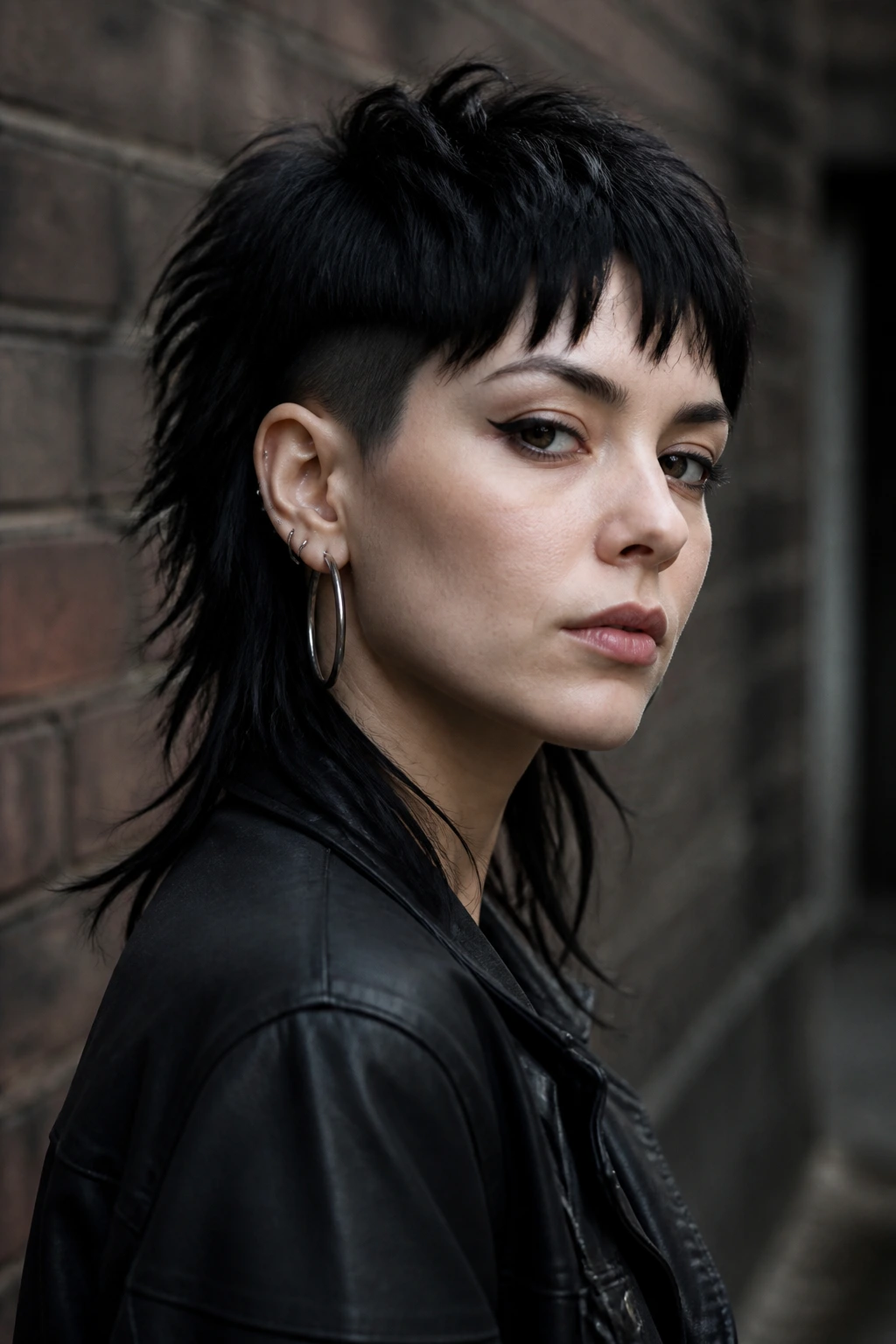
A rock-edge mullet leans harder into contrast. The fringe is choppier, the layers are more obvious, and the neckline can be sharper or even undercut. It feels louder than the soft versions, but not sloppy if the shape is clean. That’s the line to hold.
This cut is strongest when the styling stays matte or slightly rough. Glossy finish products can make it look too polished, which kills the point. A bit of paste through the ends and a quick bend with a flat iron is usually enough. If you have thick hair, ask for weight removal at the right places, not everywhere. Random thinning makes this cut collapse.
I’d call this the version for people who want their hair to look like it has an opinion.
24. Romantic Soft Mullet
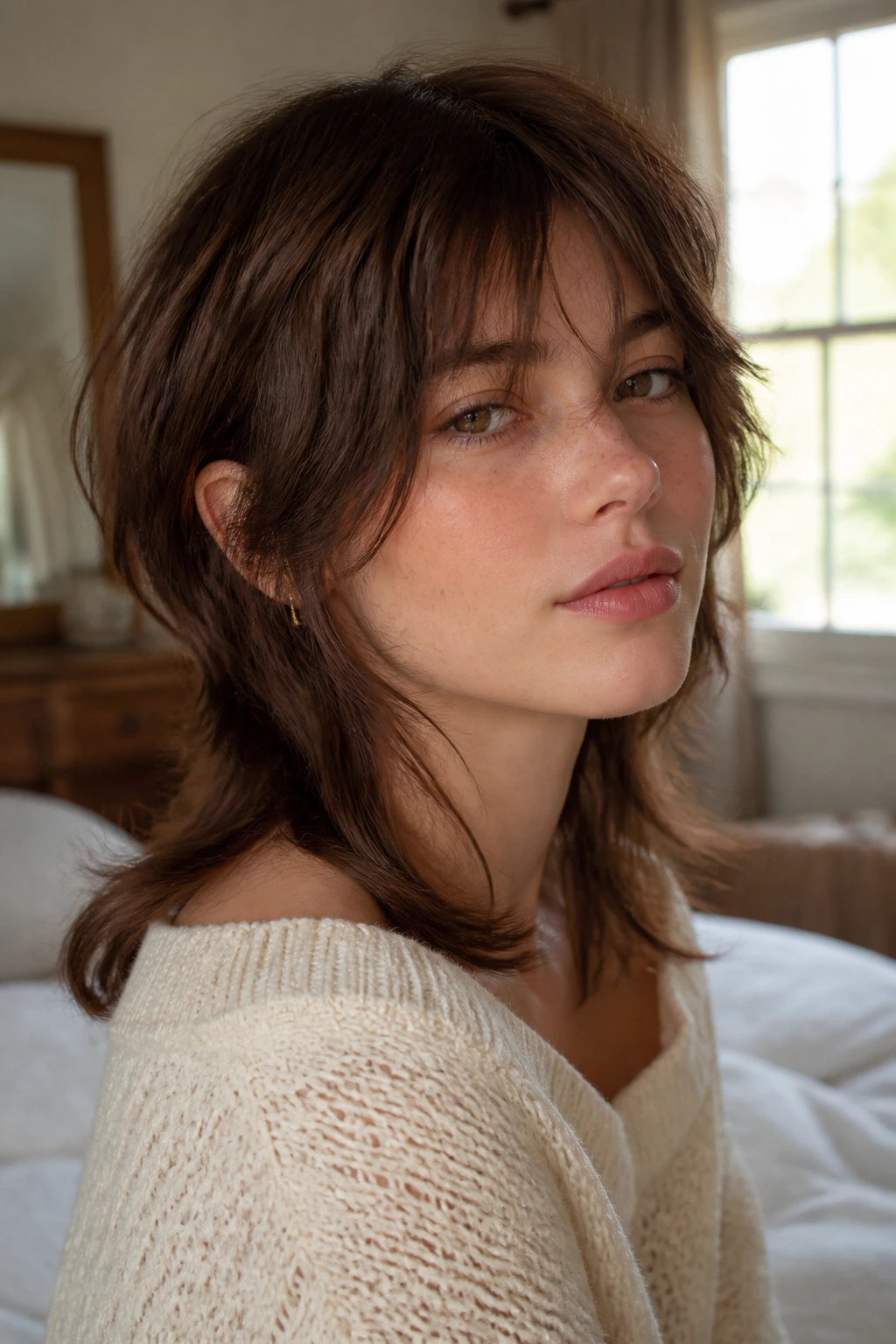
A romantic soft mullet keeps the outline but loses the hard attitude. Think wispy layers, a gentle fringe, and a back that moves in loose pieces instead of one obvious tail. It reads feminine in a way that some mullets don’t, which makes it useful for women who like the shape but not the punk reference.
This cut works well with blowouts, soft bends, and a little shine cream on the mids and ends. It’s especially nice on medium-length hair because the layers can be seen without the silhouette getting too chopped up. The front should frame the eyes and cheekbones, not hang there like curtain fabric.
If you want the haircut to feel pretty first and edgy second, this is the lane.
25. Minimalist Mullet

A minimalist mullet is the quietest version of the bunch. The difference between front and back is there, but only just. The crown gets a touch of lift, the nape keeps a little more length, and the whole haircut stays clean enough for someone who likes simple lines.
This is the cut for straight hair that needs movement without a lot of obvious layers. It also works in offices where a more dramatic mullet might get read as costume-y. Ask for a subtle disconnect, not a big one. The barber or stylist should leave enough weight to keep the shape from disappearing after the first wash.
The best part? It grows out into a shag or a long layered cut without making a scene.
26. Punk Mullet
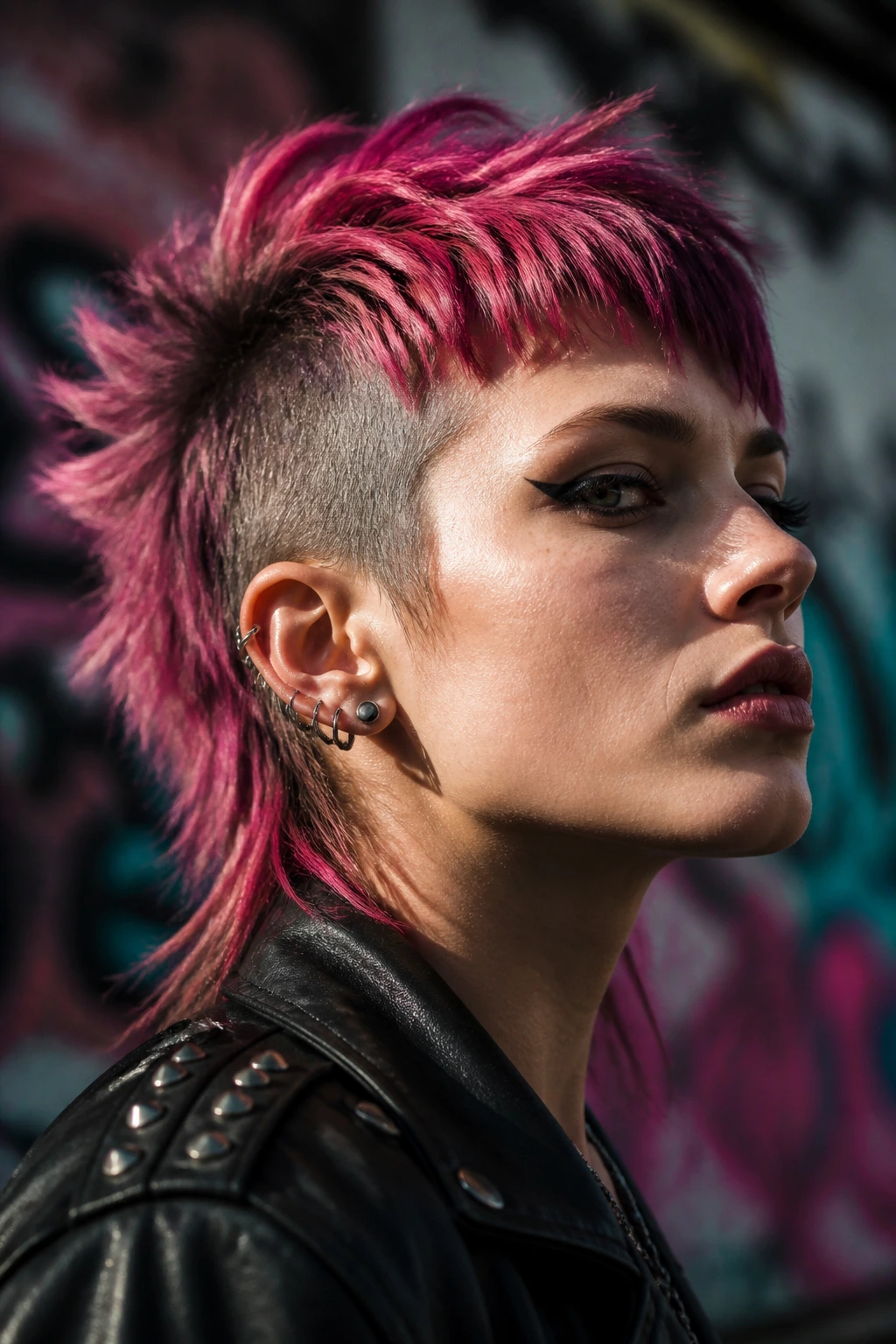
A punk mullet goes harder on texture, contrast, and visible shape. The sides can be tighter, the fringe can be jagged, and the back can either stay blunt or break into sharp layers. Bright color, darker roots, or a shaved detail can push it even further if that’s your thing.
This cut asks for commitment. It needs maintenance, and it looks best when the styling is on purpose rather than accidental. If you choose this route, don’t half-step on product. Use enough to define the layers, but not so much that the texture turns greasy. Matte paste, strong mousse, or a little gel at the roots can all work.
The point is attitude. Not mess.
27. Grow-Out Mullet
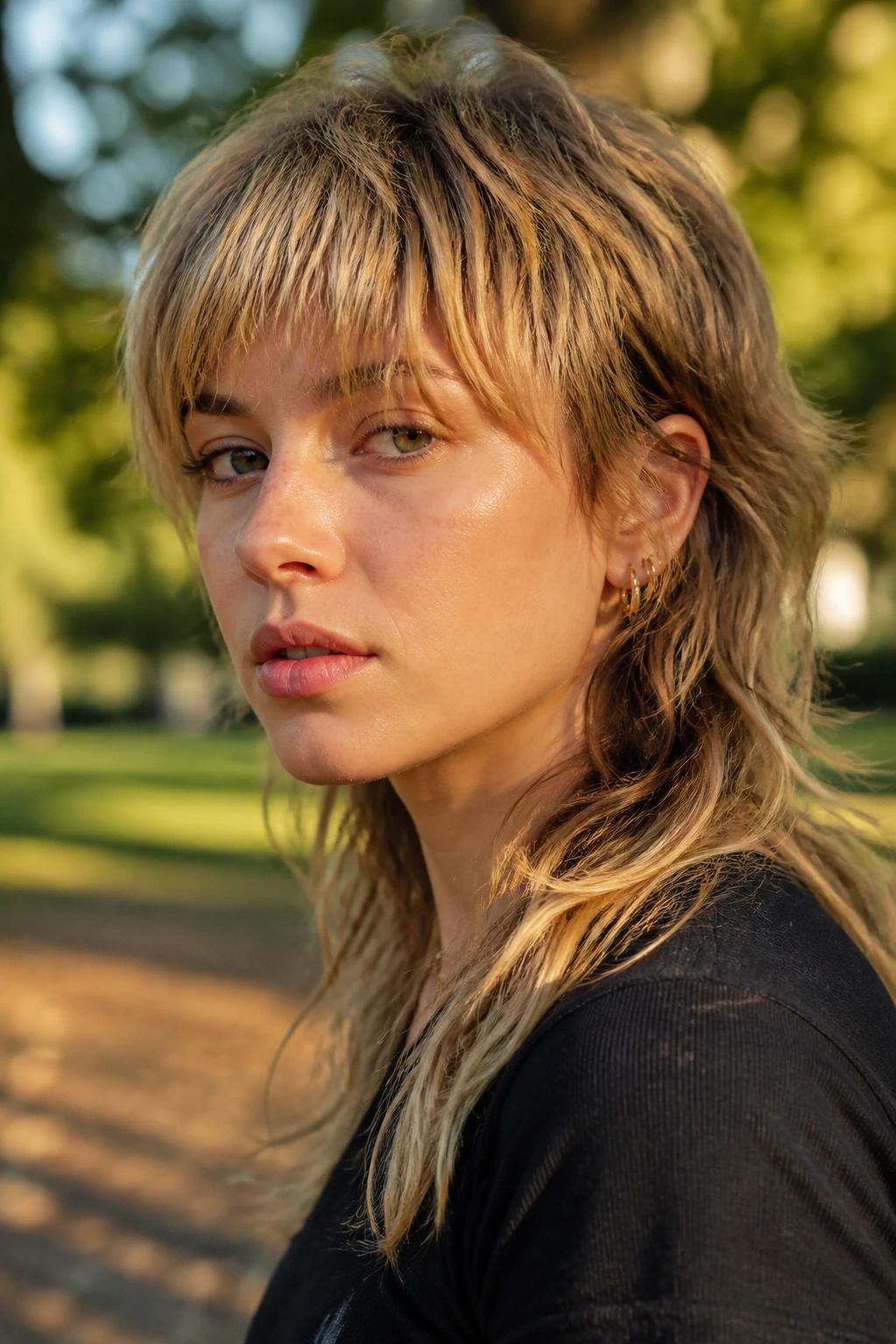
A grow-out mullet is what happens when you let the cut evolve instead of fighting it. The front softens, the back keeps its length, and the whole thing starts to read as a shaggy, lived-in shape rather than one strict haircut. That makes it a clever choice for people who do not want to visit the salon every month.
If you’re nervous about commitment, start here. Keep the nape longer, leave the fringe flexible, and avoid over-thinning the ends. That way, when the haircut grows, it still has a framework. Some mullets collapse during grow-out because the top was cut too short at the beginning. A better one grows into itself.
The nicest part is this: a good grow-out mullet often looks even better six weeks later than it did on day one.
Why the Modern Version Feels Softer Than the Old Joke Haircut
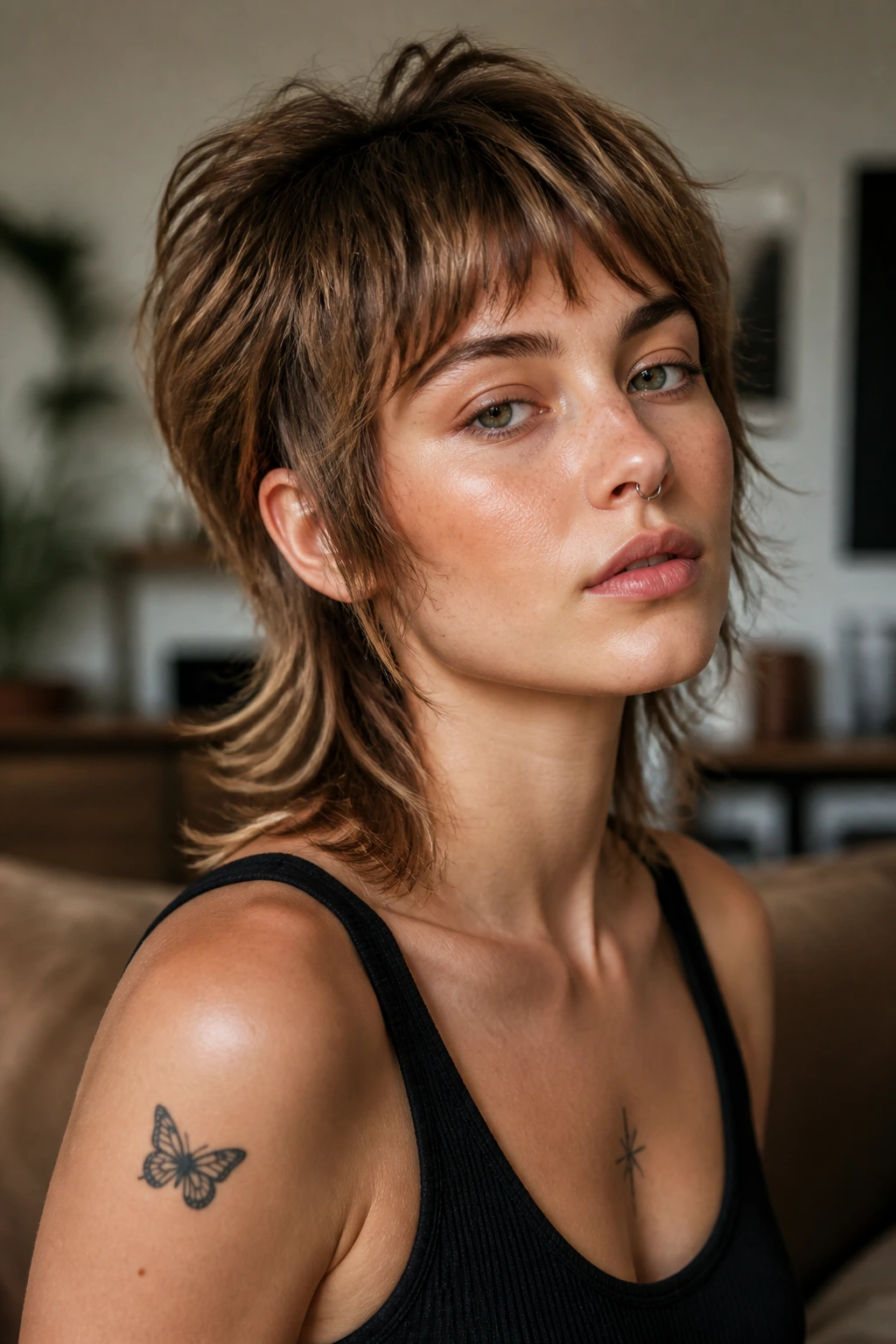
The old joke version of the mullet was all contrast and not much control. The modern one is built more like a layered haircut with a point of view. That’s a real difference. The crown is shaped on purpose, the transition from front to back is cleaner, and the edge lives in the texture instead of a blunt, disconnected wall.
That’s why the cut works across so many hair types. On fine hair, it creates lift without asking for a ton of length. On thick hair, it removes bulk where the head tends to puff. On curly hair, it gives the curl room to sit without fighting the shape. A stylist who understands weight lines can make the same haircut feel soft, sharp, or almost romantic depending on where the layers fall.
And yes, the nape matters more than people think. A few extra inches there can keep the whole head from looking square. A slightly tapered neckline can make a haircut look finished even when the rest is messy. Small thing. Big payoff.
How to Ask for the Cut Without Playing Guessing Games
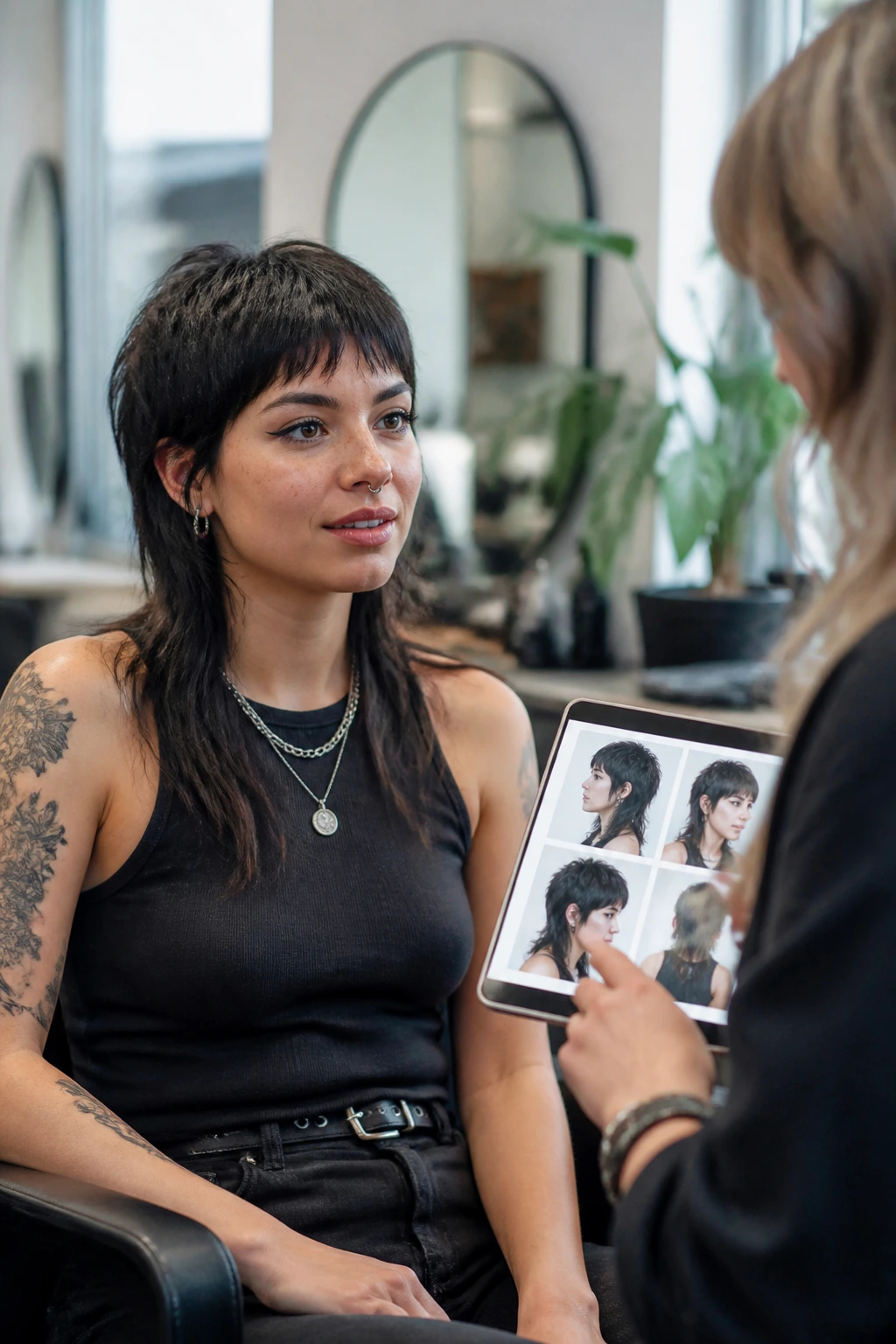
Bring photos. Three of them is better than one. Front, side, and back if you can find them. Haircuts like this are about proportion, and a single front-facing shot leaves too much room for guesswork.
Tell the stylist how you wear your hair on a boring Tuesday. That matters more than whether you’ll curl it for dinner. If you air-dry, say so. If you love a round-brush blowout, say that too. The wrong styling assumption can change the whole result.
A few phrases help:
- Soft or disconnected: Decide how much separation you want between the top and the back.
- Nape length: Be specific about how long you want the back to fall.
- Fringe pressure: Say whether you want bangs, curtain pieces, or no fringe at all.
- Texture work: Ask for point cutting, razor work, or blunt ends based on how your hair behaves.
If your hair is curly, ask for a dry cut or at least a dry refinement pass. If it’s very straight and thick, ask where they plan to remove bulk. Vague is the enemy here. Haircuts like this live and die on details.
Tools and Products That Keep the Shape Alive
-
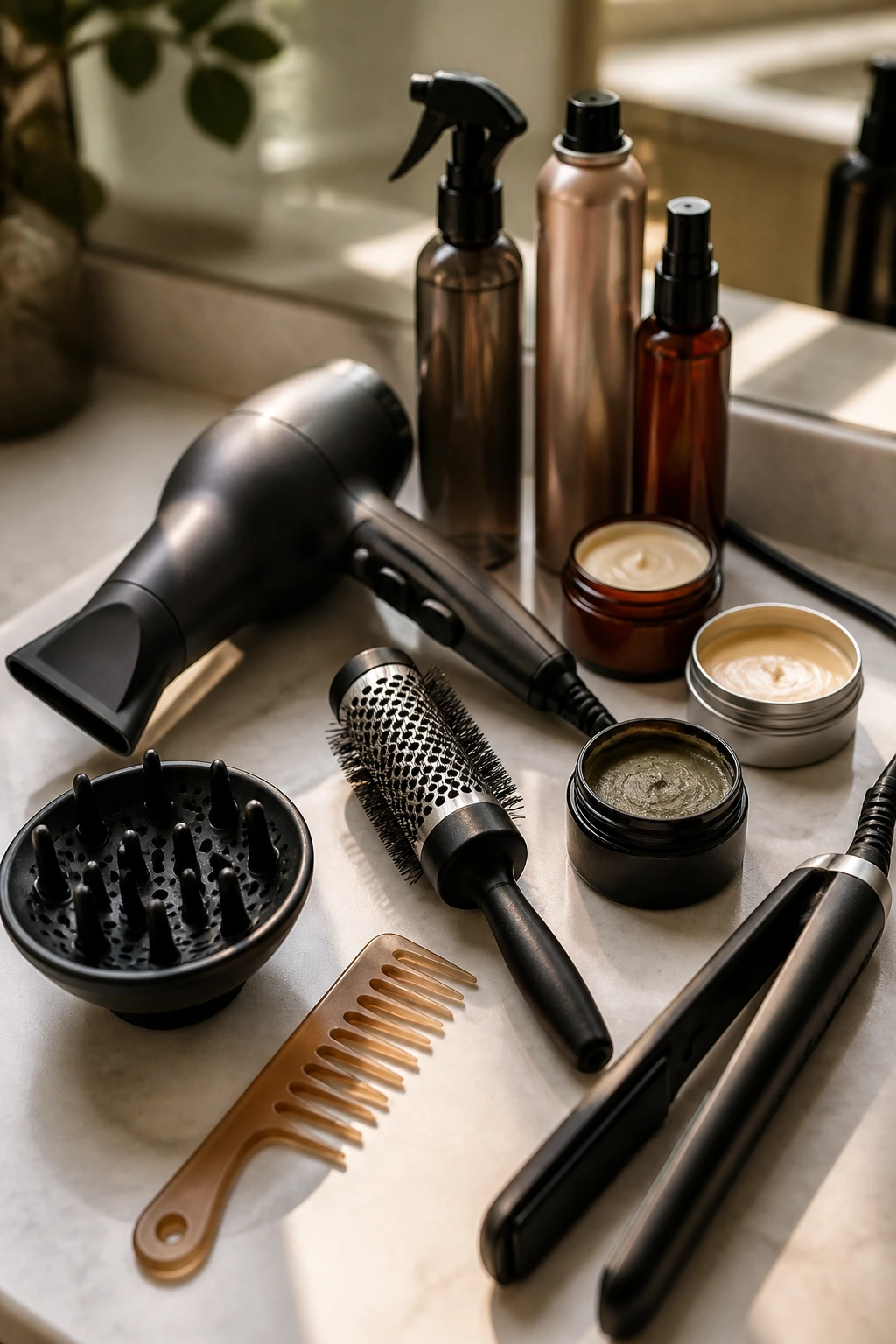
Blow dryer with a nozzle: Direct airflow matters when you want lift at the crown and less puff at the sides.
-
Diffuser attachment: Essential for waves and curls that need shape without frizzing out.
-
Round brush, medium barrel: Useful for flipping the front pieces under or away from the face.
-
Wide-tooth comb: Better than a brush for curls, damp detangling, and keeping the layers separated.
-
Texturizing spray: Helps choppy ends stay visible instead of falling flat.
-
Light mousse: Good for root lift and airy volume without a heavy finish.
-
Curl cream or gel: Needed for curly and coily versions that need definition and hold.
-
Matte paste or soft wax: Best for piecing out the ends and controlling short fringe.
-
Heat protectant: Non-negotiable if you use a flat iron or round brush often.
-
Small flat iron: Handy for bending the face-framing pieces or smoothing only the front.
How to Choose the Shape by Face and Texture
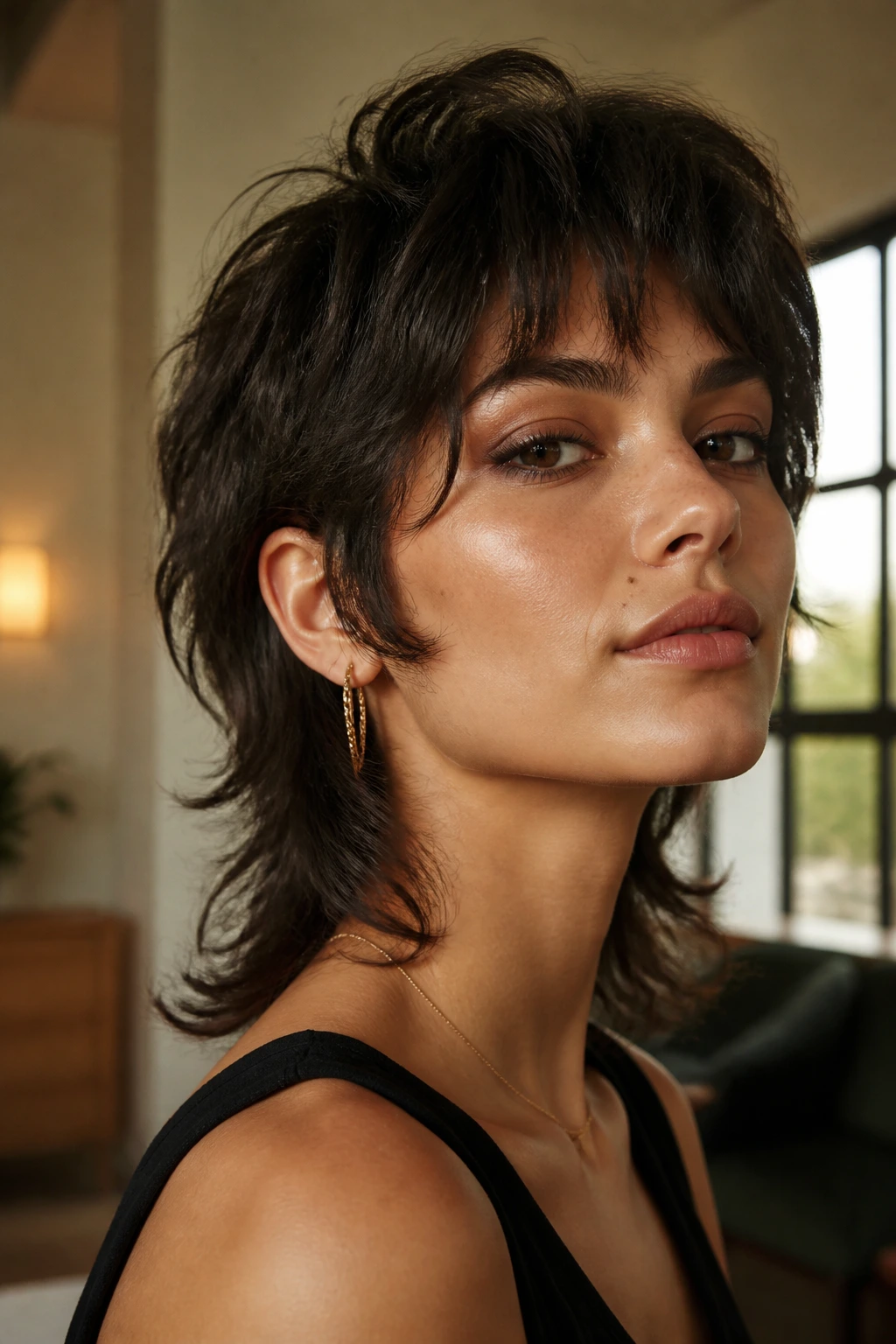
Round or full faces: Keep some length around the cheeks and avoid too much width at the sides. A longer fringe or curtain bang can stretch the face visually, while a soft nape keeps the silhouette from feeling boxy.
Long faces: Look for more fringe and slightly more width near the cheekbones. Micro bangs, blunt bangs, or even a fuller curtain fringe can shorten the visual line without making the haircut heavy.
Square jaws: Softer layers work best here. Feathering around the jawline and broken-up ends stop the haircut from fighting a strong bone structure.
Fine hair: Leave enough weight in the back and ask for lift through the crown rather than endless thinning. Fine hair can lose shape fast if the layers are too aggressive.
Curly and coily hair: Shape the cut around shrinkage, not wet length. That means dry cutting, curl-by-curl refinement, or at least a very careful dry check before the final snip.
Styling Moves That Keep the Layers Looking Intentional
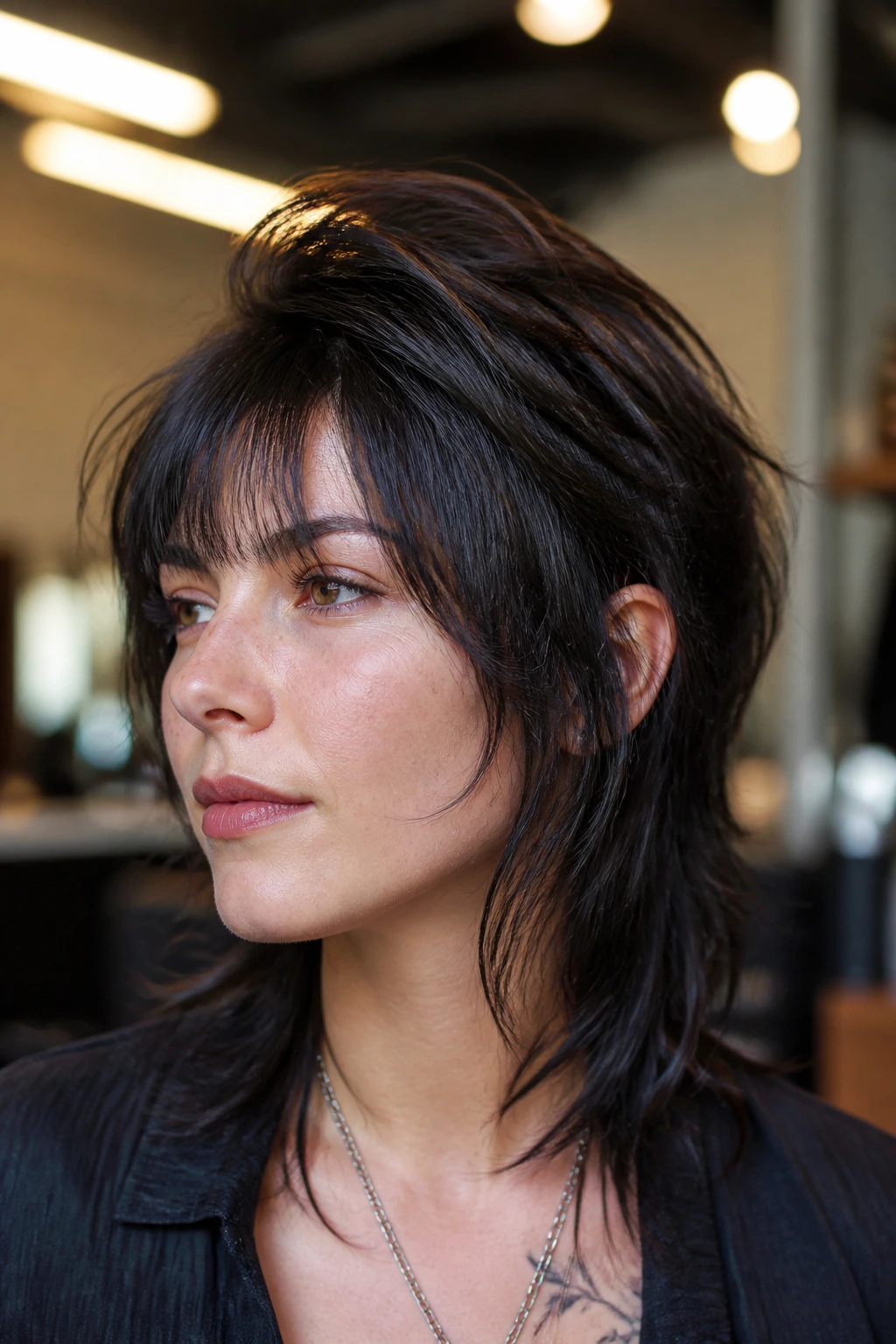
Start at the roots. Always. A mullet without root lift can go flat in the exact places where the shape should look strongest, especially around the crown and upper sides. A little mousse or root spray at the base is usually more useful than drowning the ends in product.
Dry the top with direction, not chaos. If you want softness, blow it forward and then away from the face at the finish. If you want a sharper look, use the nozzle and guide the front pieces into their own lane. The back can air-dry or be diffused, depending on texture.
Hands beat brushes on most days. A brush can smooth the shape out of the cut if you keep chasing perfection. Fingers separate the layers without flattening them, and that matters when the haircut relies on movement.
One more thing. Don’t over-oil the roots. A drop or two on the mids and ends is fine. Slick roots make the whole thing slump.
Common Mistakes That Flatten a Mullet

-
Cutting the top too short: The crown can end up puffy and the back too thin. Leave enough top length to connect the shapes.
-
Thinning the sides randomly: You get flyaways in the wrong places and lose the clean frame around the face. Bulk should be removed with a plan, not a guess.
-
Using heavy conditioner at the roots: The shape drops faster, especially on fine hair. Keep rich conditioner from the ear line down.
-
Ignoring the nape: If the back is left blunt and heavy, the haircut turns square. A soft taper usually looks better.
-
Styling every day the same way: A wet-look mullet and a brushed-out blowout do not need the same product load. Match the finish to the shape.
-
Waiting too long for a trim: Once the fringe and nape lose their edges, the haircut starts looking like grown-out layers instead of a chosen shape.
Variations and Alternatives to Try

Office-Soft Mullet: Keep the fringe longer, the disconnect subtle, and the neckline neat. It reads polished enough for a work setting but still has movement when you let it air-dry.
Curly-First Mullet: Build the cut around curl clumps and shrinkage, then let the curls decide the silhouette. This version needs less product than people think, but it does need regular shape checks.
Color-Pop Mullet: Add one bold tone—copper, cherry, platinum streaks, or a dark root with bright ends. Color can do half the styling work by making every layer visible.
Blowout Mullet: Smooth the front, lift the crown, and keep the ends rounded with a brush. This is the version for people who like a bit of glam and don’t want the haircut to read too rough.
Short-Back Shag: If you love the movement but not the obvious tail, shorten the nape and keep the whole cut closer to a shag. It’s a good bridge for anyone testing mullet territory for the first time.
How to Keep the Shape Between Salon Visits

A mullet grows best when the first cut respected your texture. After that, maintenance is mostly about keeping the outline clear. Plan on a trim every 6 to 8 weeks if you want the edge to stay sharp. If you prefer something softer and more lived-in, 8 to 12 weeks works, but the front and crown will start to lose their shape first.
Dry shampoo helps, but not the kind that leaves a chalky film around the crown. Use a light spray at the roots on day two or three, then work it in with your fingertips. If the bangs get oily first, wash just the fringe in the sink and let the rest wait another day. That tiny habit saves a lot of over-washing.
For curls, refresh with water, a little leave-in, and a scrunch rather than piling on more gel every morning. For straight styles, a flat iron touch-up on the front pieces can reset the shape in under five minutes. The back usually needs less attention than people think.
If you’re growing the cut out, ask for the front to stay intentional while the back softens. That way you’re growing into a shag or lob, not out of a bad haircut.
Questions People Ask Before Going Shorter in Front
Will a mullet work on fine hair?
Yes, if the stylist keeps enough weight through the back and doesn’t over-thin the ends. Fine hair often looks better with a softer, feathered version than with a sharply razored one.
Can curly hair wear a mullet without turning into a triangle?
Yes, but the cut has to respect curl pattern and shrinkage. Dry shaping or curl-by-curl refinement makes a huge difference.
How short should the front be?
Short enough to frame the face, not so short that the cut loses its connection to the back. For many women, the sweet spot is around the cheekbone, lip, or chin, depending on face shape.
Is it hard to style every day?
Not if you choose the right version. A shaggy or soft mullet can be air-dried with mousse and a little scrunching; a razor-sharp or editorial version needs more hands-on work.
What if I hate the back once it’s cut?
The fastest fix is usually to soften the nape and clean up the transition, not to cut everything off. A good stylist can move it toward a shag or lob without starting over.
Does it work with bangs?
Very much so. Curtain bangs, blunt fringe, and micro bangs all change the haircut in different ways, so the bang shape should be chosen with the rest of the cut, not after.
How often should I trim it?
Most shapes need a cleanup every 6 to 8 weeks. If you wear a softer version and don’t mind some grow-out, you can stretch that longer.
The Shape That Keeps Its Edge
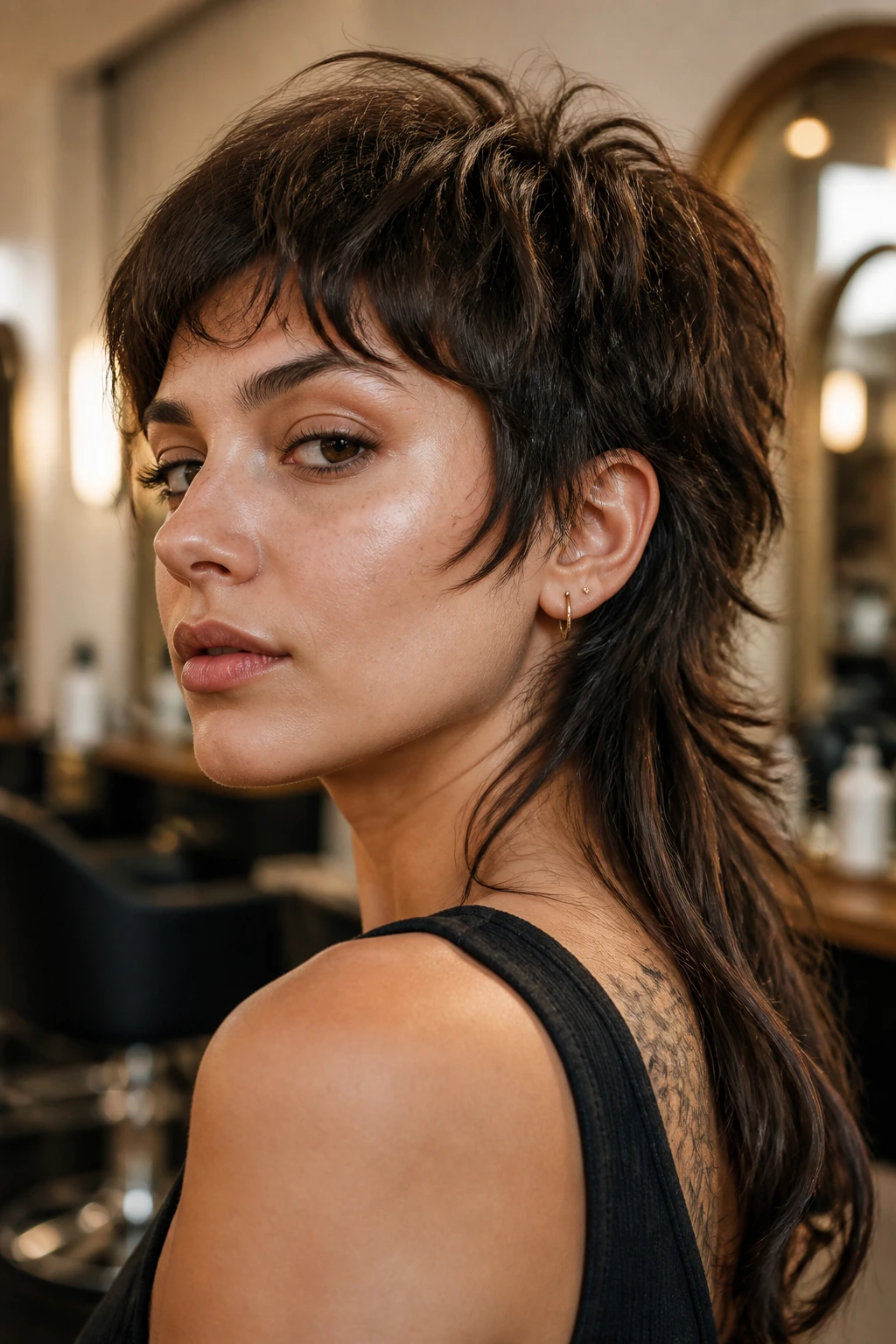
The smartest mullet haircuts for women do one thing well: they give hair a shape that moves. That sounds simple until you try a cut that sits flat, puffs out, or grows weird after two weeks. The right version avoids all three. It respects the hair’s texture, keeps the crown alive, and lets the back do its quiet work.
Pick the version that fits your routine, not the one that looks wildest in a mirror. Soft and feathered, curly and rounded, sharp and editorial—there’s room for all of it. Once the layers land where they should, the haircut stops feeling like a trend and starts feeling like a shape you can actually live in.
That’s the version worth taking to the chair.
