



A buzz cut on a woman is not a surrender to low-maintenance hair. It’s a shape choice, and shape is the whole point when the clippers come out. A difference of one guard size can change how the jaw looks, how the ears sit in the frame, and how much the scalp becomes part of the style.
These buzz cut styles for women run from nearly bare and pared-back to dyed, tapered, lined-up, and design-heavy. Some look strict. Some look soft. A few feel almost delicate, which surprises people who still think a buzz cut has one mood and one mood only.
The cut has range because the details matter so much. Guard length, fade placement, hairline shape, and color all change the final read. Get one of those wrong and the style can feel accidental. Get them right and a few millimeters of hair can look deliberate, polished, and a little dangerous in the best way.
Why These 38 Cuts Hit Harder Than People Expect
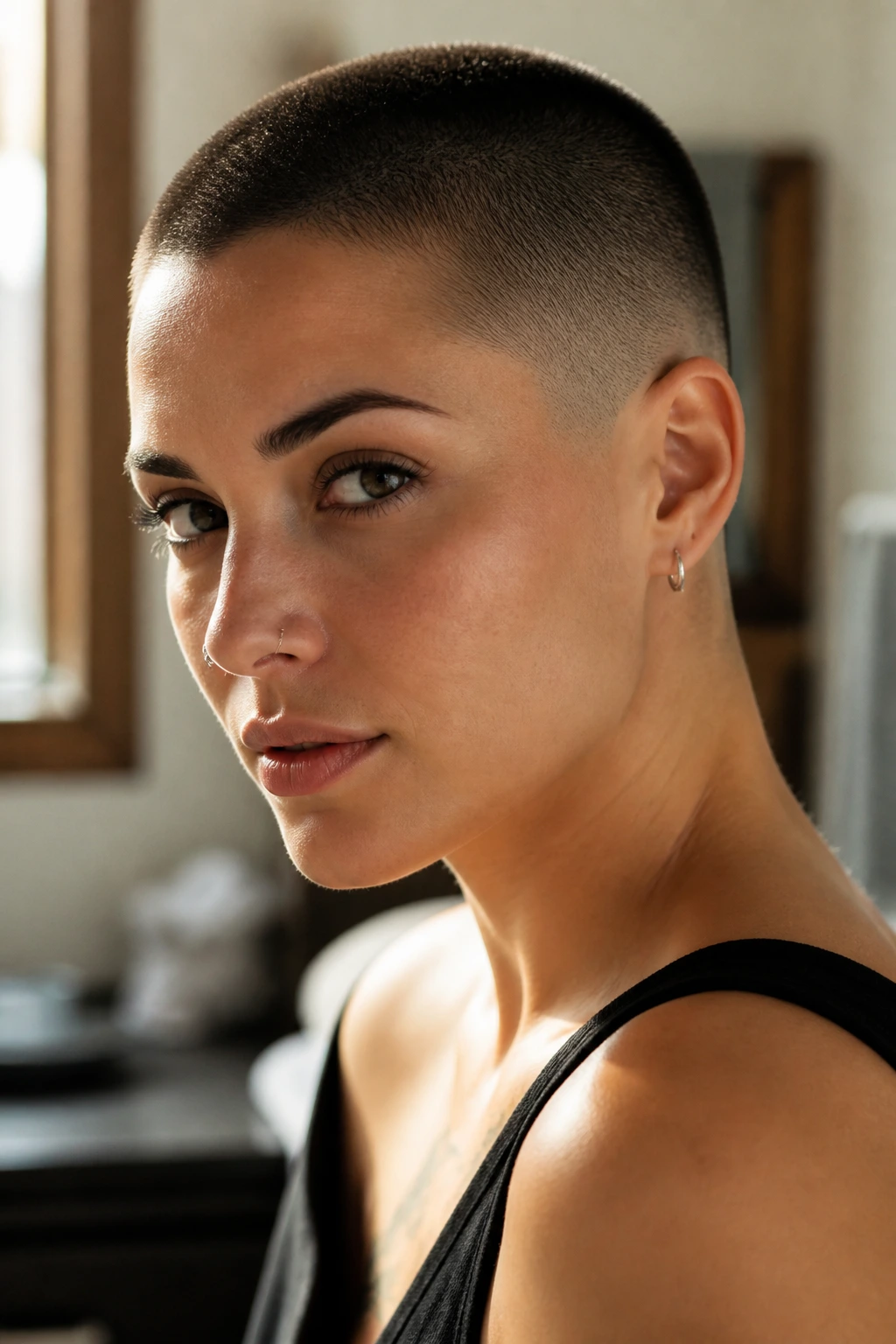
- Low maintenance, high shape: A buzz cut can go from blunt to sculpted with a single taper at the nape or a cleaner temple fade.
- Guard length changes everything: A #0, #1, and #2 do not read like minor tweaks; they change how much scalp shows and how soft the head shape looks.
- Color becomes the statement: Platinum, copper, silver, and jet black all look more intense on close-cropped hair because there’s less length to absorb the effect.
- Texture finally gets to speak: Coils, curls, and waves don’t disappear at short length; they show up as pattern, density, and movement.
- Accessories matter more: Earrings, brows, glasses, and necklines stop being background details and become part of the haircut’s silhouette.
- Growth-out can be planned: The right buzz cut still looks good at week four, week six, and week eight if the outline was chosen with regrowth in mind.
How Guard Numbers Turn the Same Cut Into Different Moods
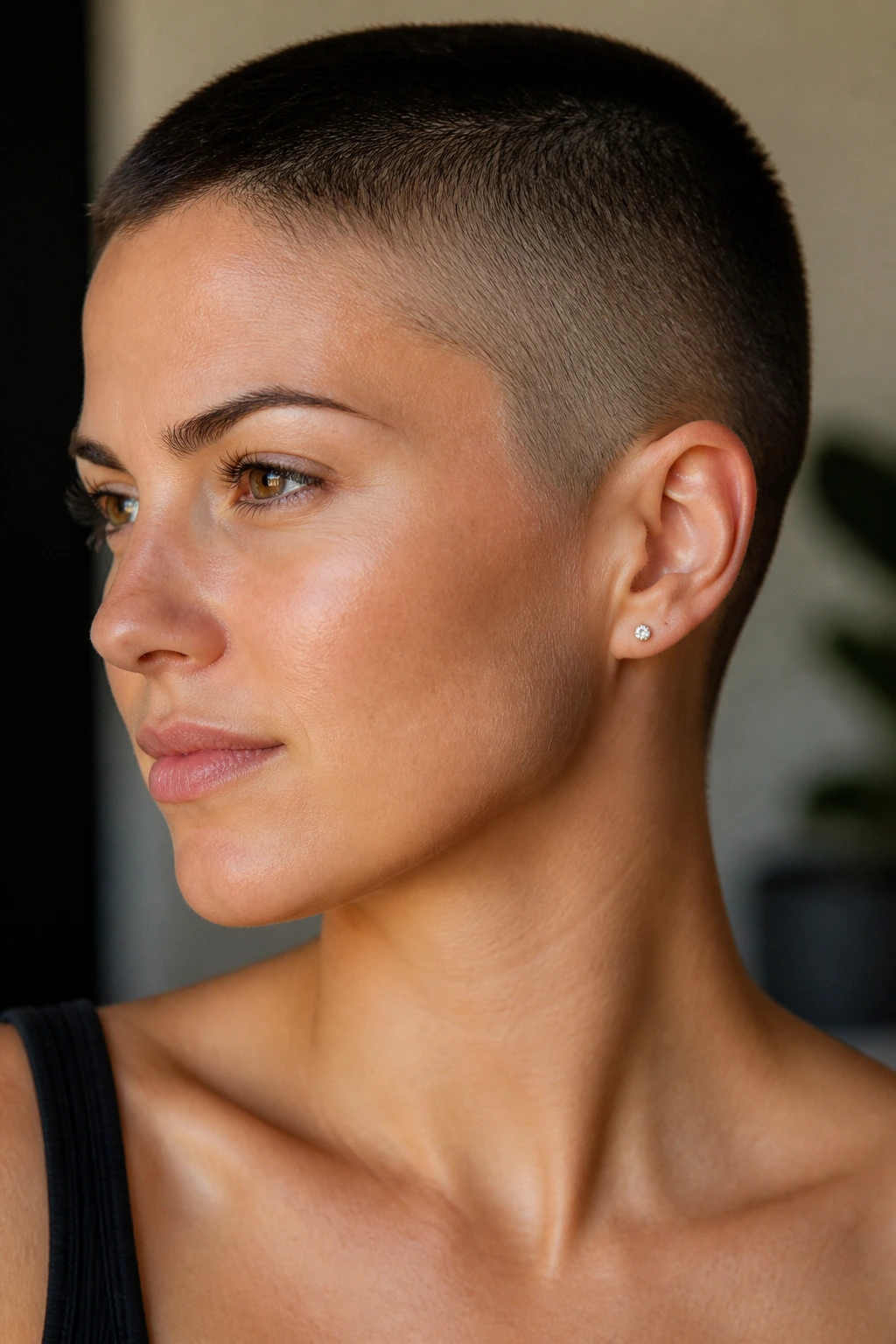
A clipper guard sounds like a tiny technical detail. It isn’t. A #0 or #0.5 leaves the scalp almost bare, a #1 gives you a soft velvety dusting, and a #2 starts to look like actual hair again instead of shadow. By the time you hit a #3 or #4, you’re in a different emotional register entirely—less severe, more forgiving around bumps, and usually kinder if your crown has a stubborn swirl.
Brand numbers can vary a touch, so I always tell people to treat the guards as a starting point, not holy law. If you’re nervous, test the nape or one side first. That one move saves a lot of regret.
The shape of the cut matters just as much as the number. A close buzz with a taper can look softer than a longer all-over buzz with a hard line at the hairline. Funny, but true. The eye reads edges first.
1. Bare-Scalp Induction Buzz
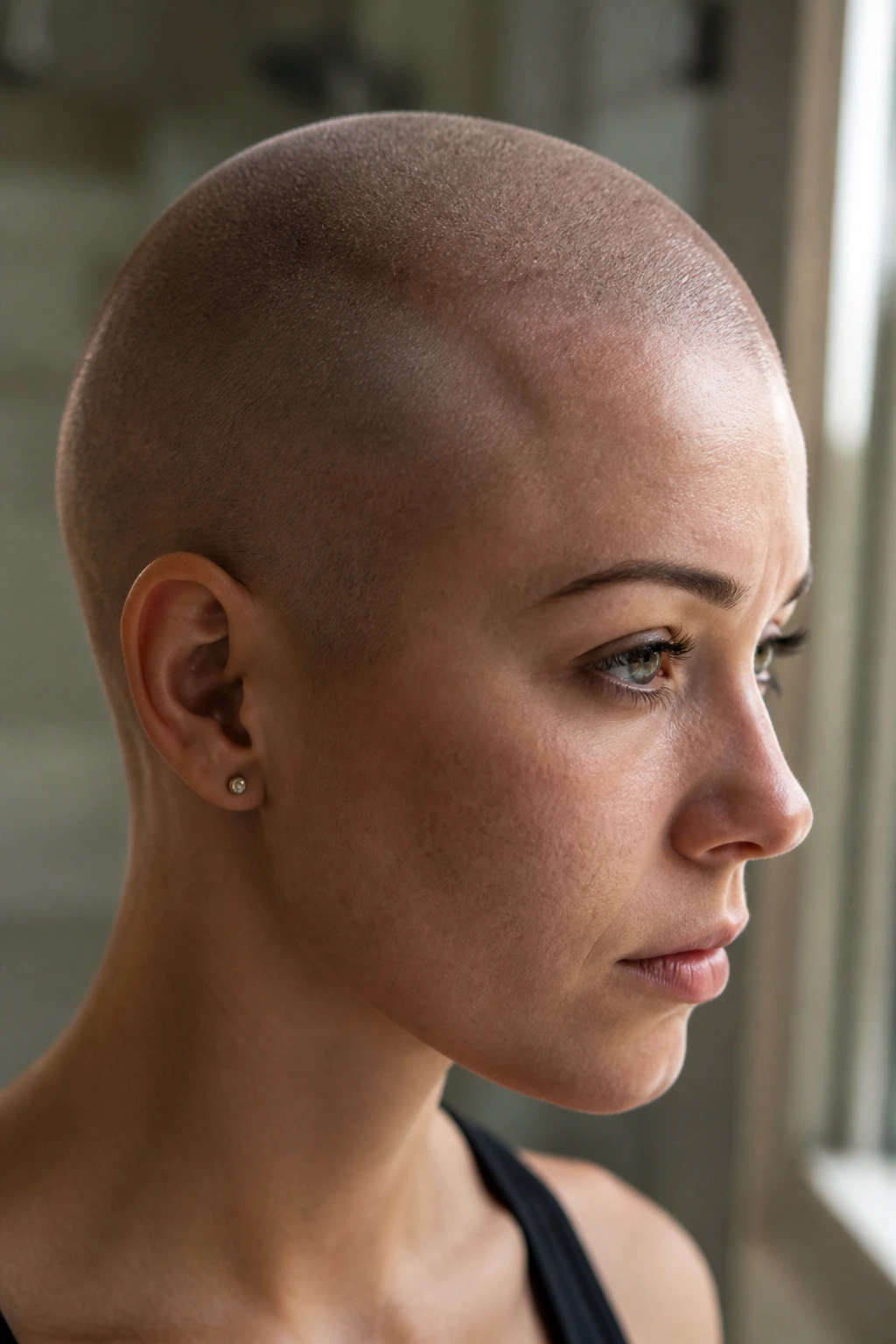
This is the shortest version in the room, the one that leaves almost nothing between scalp and air. A #0 or #0.5 makes freckles, crown swirls, and the tiny map of your head part of the look, which is exactly why it can feel so clean and so bold at the same time.
Ask for a uniform clip all over with a light touch around the hairline if you want the finish to feel intentional instead of raw. If your scalp has scars or a very pronounced cowlick, you’ll see them here. That’s not a flaw. It’s the tradeoff.
2. Soft #1 Velvet Buzz
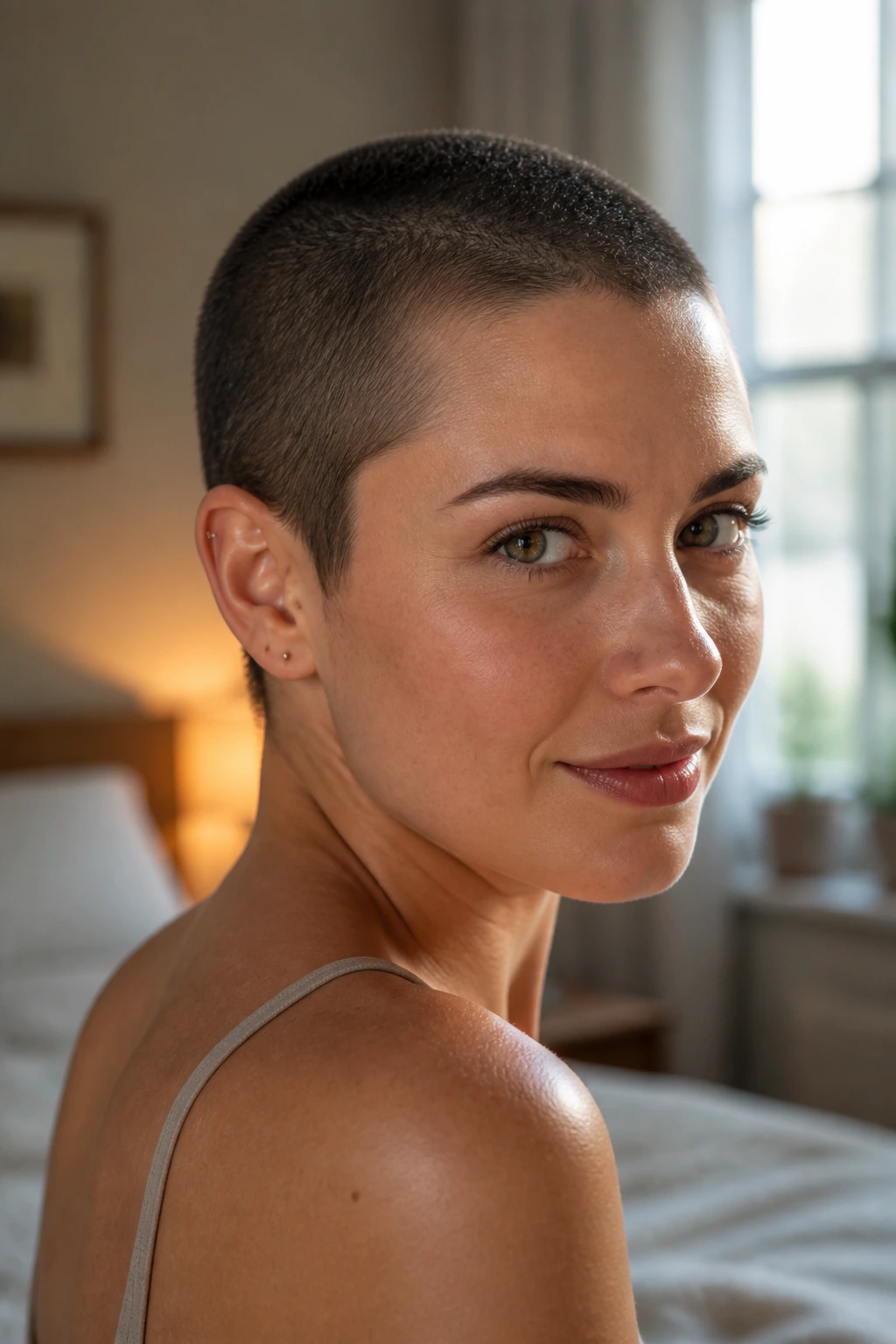
A #1 buzz has a little more give. You still get the close-cropped feel, but there’s enough hair left to catch light like a soft nap on suede rather than bare skin.
This version is especially good if you want the cut to feel less exposed on the first week. It sits in that useful middle zone where the shape is obvious, but you’re not staring at every ridge in the mirror. Ask for the same length all over and keep the neckline tidy, not sharp.
3. Classic #2 Uniform Buzz
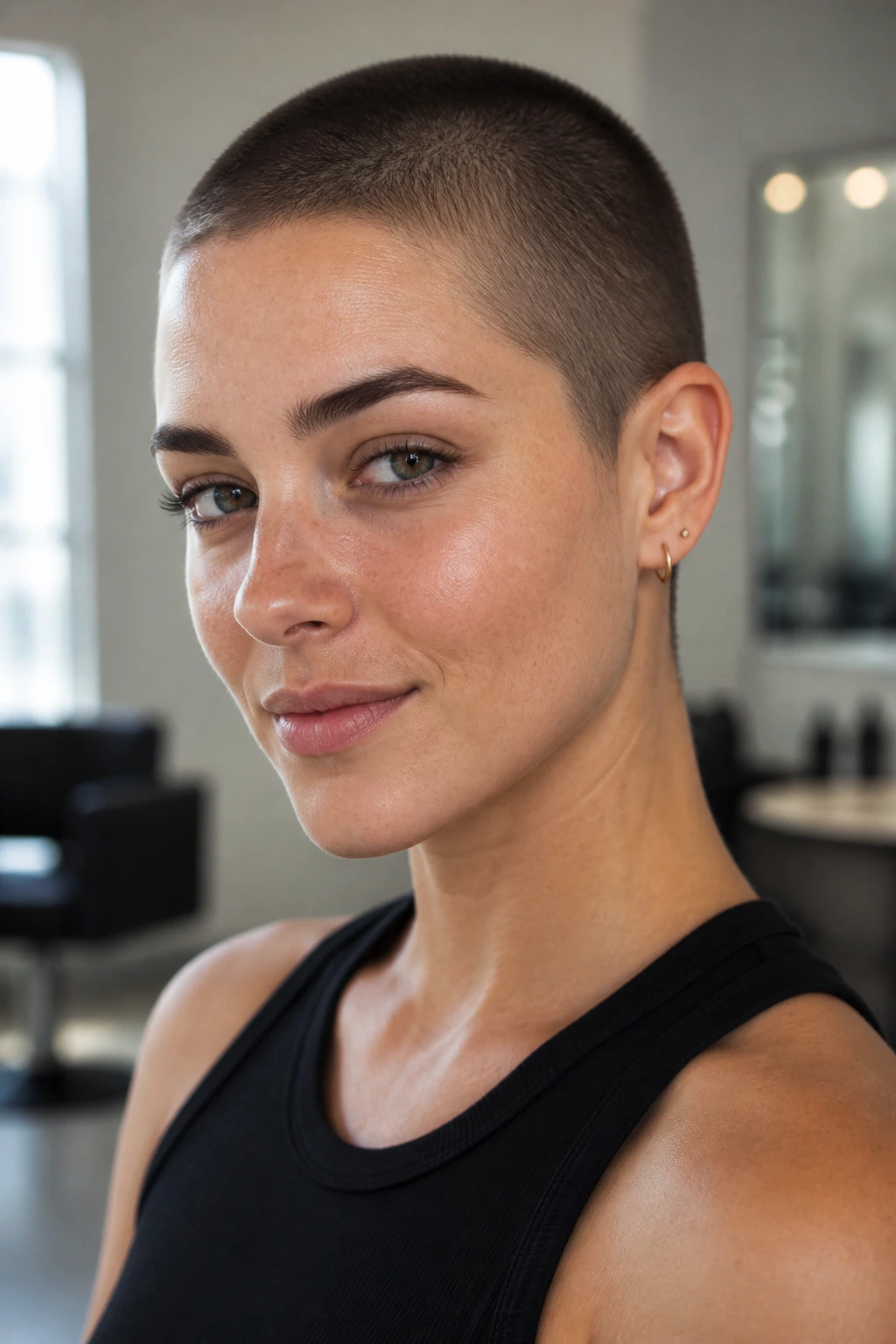
If the #1 is velvet, the #2 is the first buzz that looks like a haircut instead of a full shave. It gives enough length for a little texture and a little shadow, which can be a relief if you want your scalp to stay part of the picture without taking over.
I like this one on people who want a strong cut but still want the option to wear it with a bare face, a red lip, or a thicker brow. It’s forgiving, but not bland. That matters. The wrong buzz can disappear; this one usually doesn’t.
4. Tapered Nape Buzz
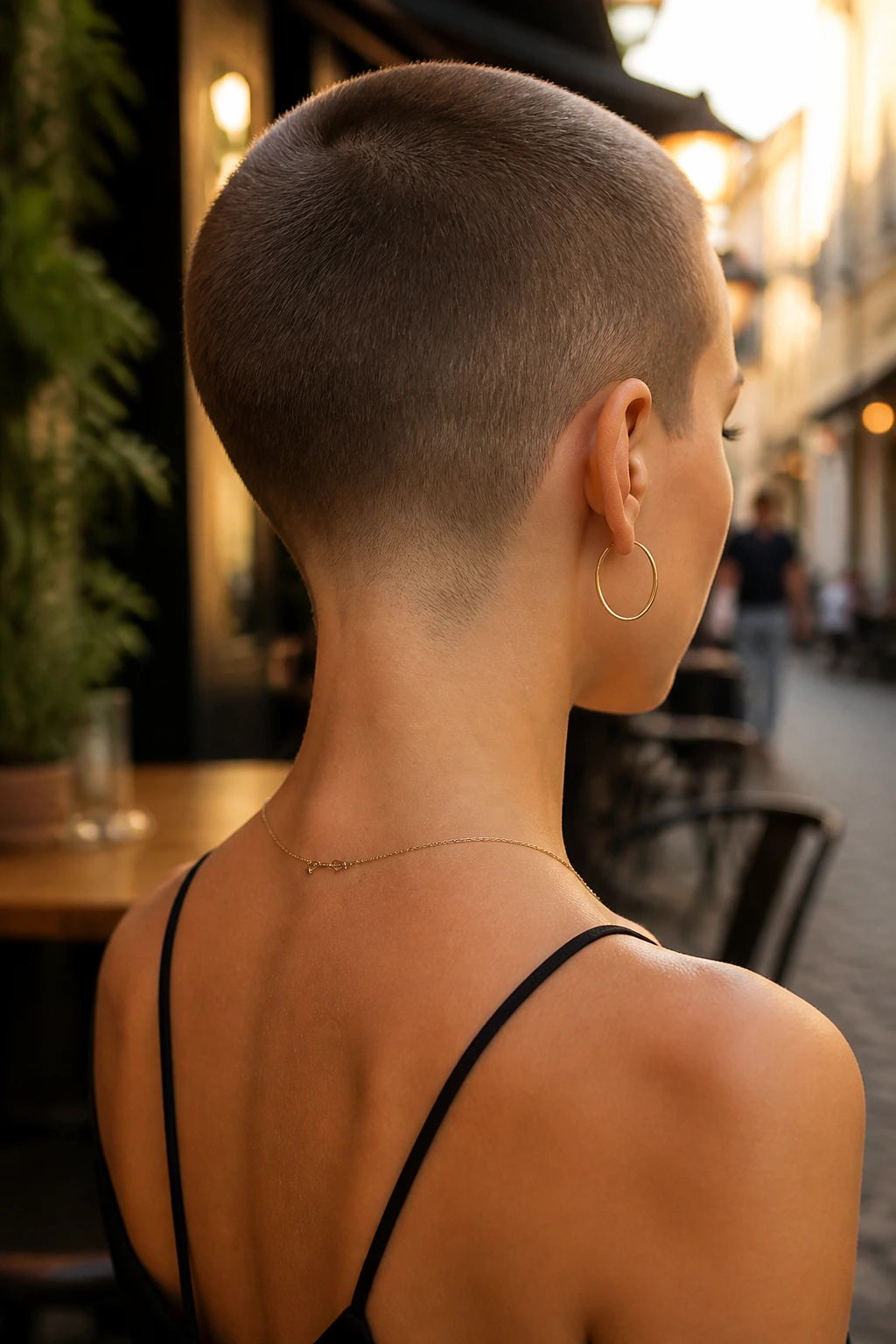
A tapered nape buzz keeps the overall length short but softens the neckline so the back of the head doesn’t stop abruptly at the shirt collar. It’s a small change, and small changes are what make short hair look expensive.
This works well if your neck is part of the feature set you want to show off. It also helps when the hair grows back, because the edge starts neat instead of blunt. Ask the barber to taper the nape and sideburns while keeping the top even.
5. Skin-Fade Buzz Cut
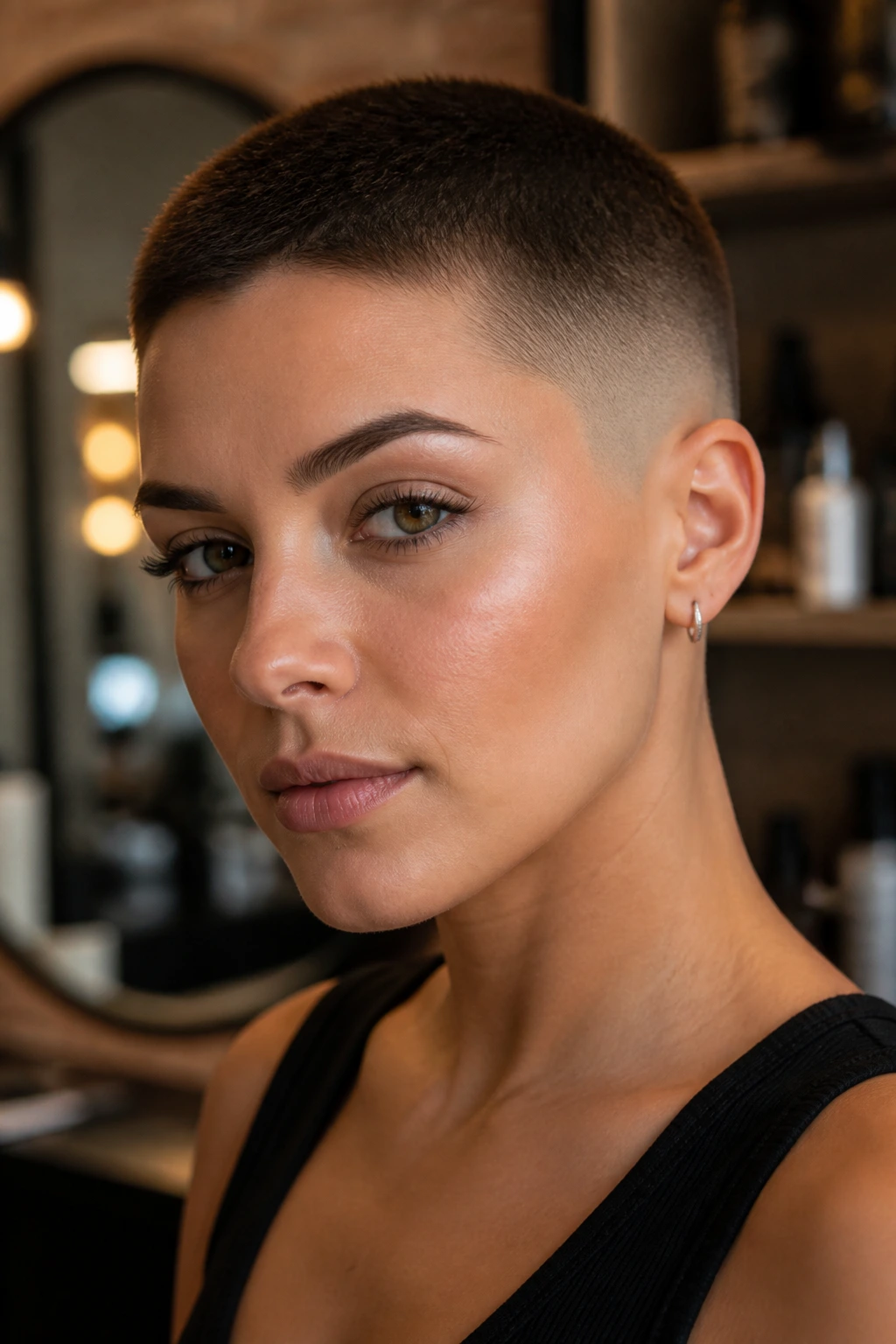
A skin fade makes the sides disappear into the scalp while the top keeps just enough length to stay visible. The effect is crisp, almost architectural, and it needs a steady hand because any wobble in the fade line shows fast.
This is the cut I reach for when someone wants the shortest possible feeling without going all the way to a single-length shave. It gives the head shape a cleaner outline and makes earrings, brows, and cheekbones do a lot of work. If you have a strong jaw, this one loves it.
6. High-and-Tight Buzz
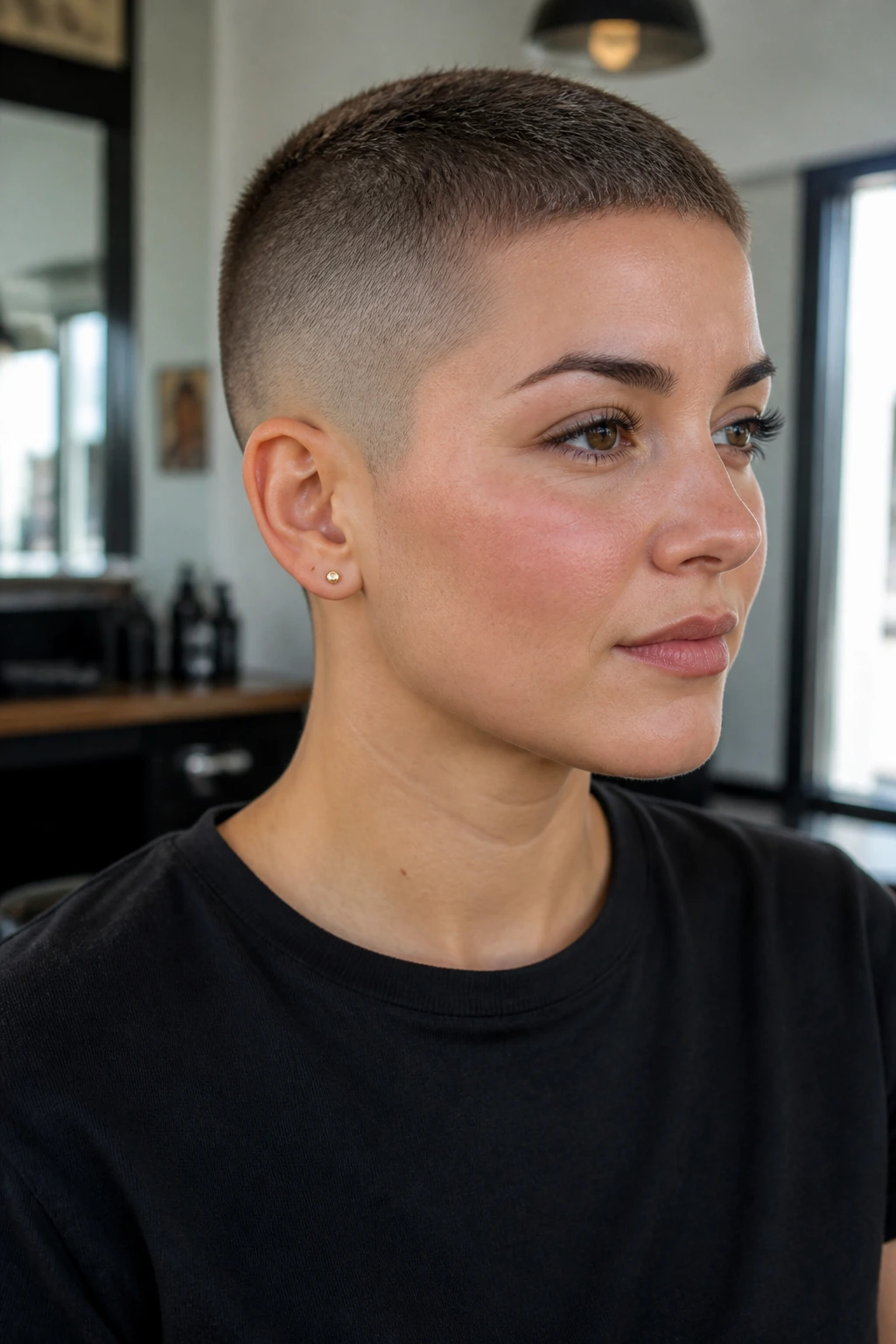
The high-and-tight keeps the top short and the sides tighter, with a clear break between the two. It has a neat, military edge, but on women it often reads more modern than severe when the top is left a shade longer than the sides.
It’s one of those cuts that looks better with a little confidence than with a lot of styling. You don’t need product. You do need a barber who can keep the transition clean, because the difference between polished and patchy is a few uneven millimeters.
7. Burst Fade Buzz
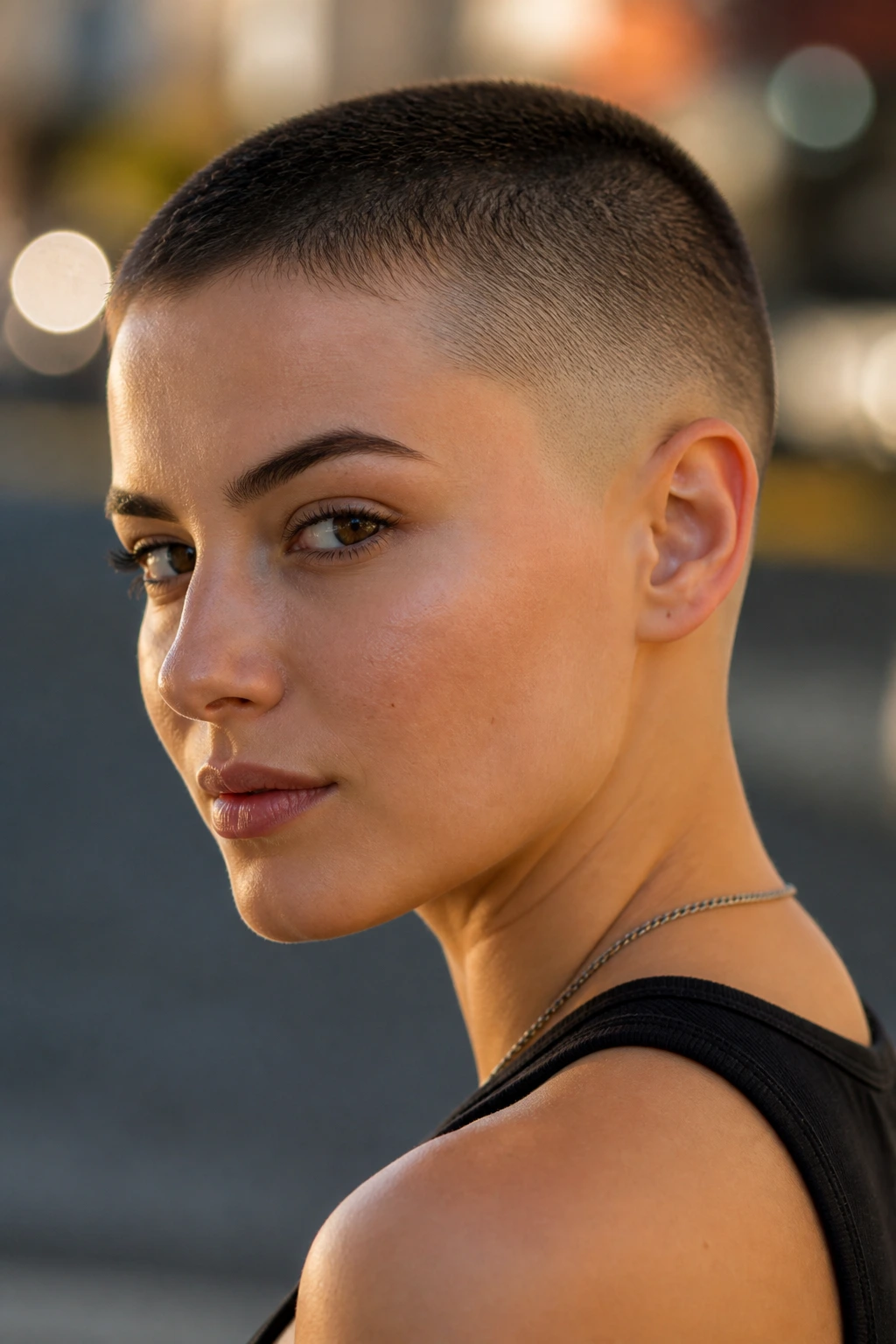
A burst fade curves around the ear instead of running straight down the side of the head. That rounded fade line changes the whole mood, especially if you like hoops, ear cuffs, or anything that puts metal near the face.
The shape also flatters people who want a little softness at the sides without losing the bite of a buzz. It feels less boxy than a straight fade. Ask for the fade to flare around the ear and keep the top tight so the curve has room to show.
8. Drop Fade Buzz
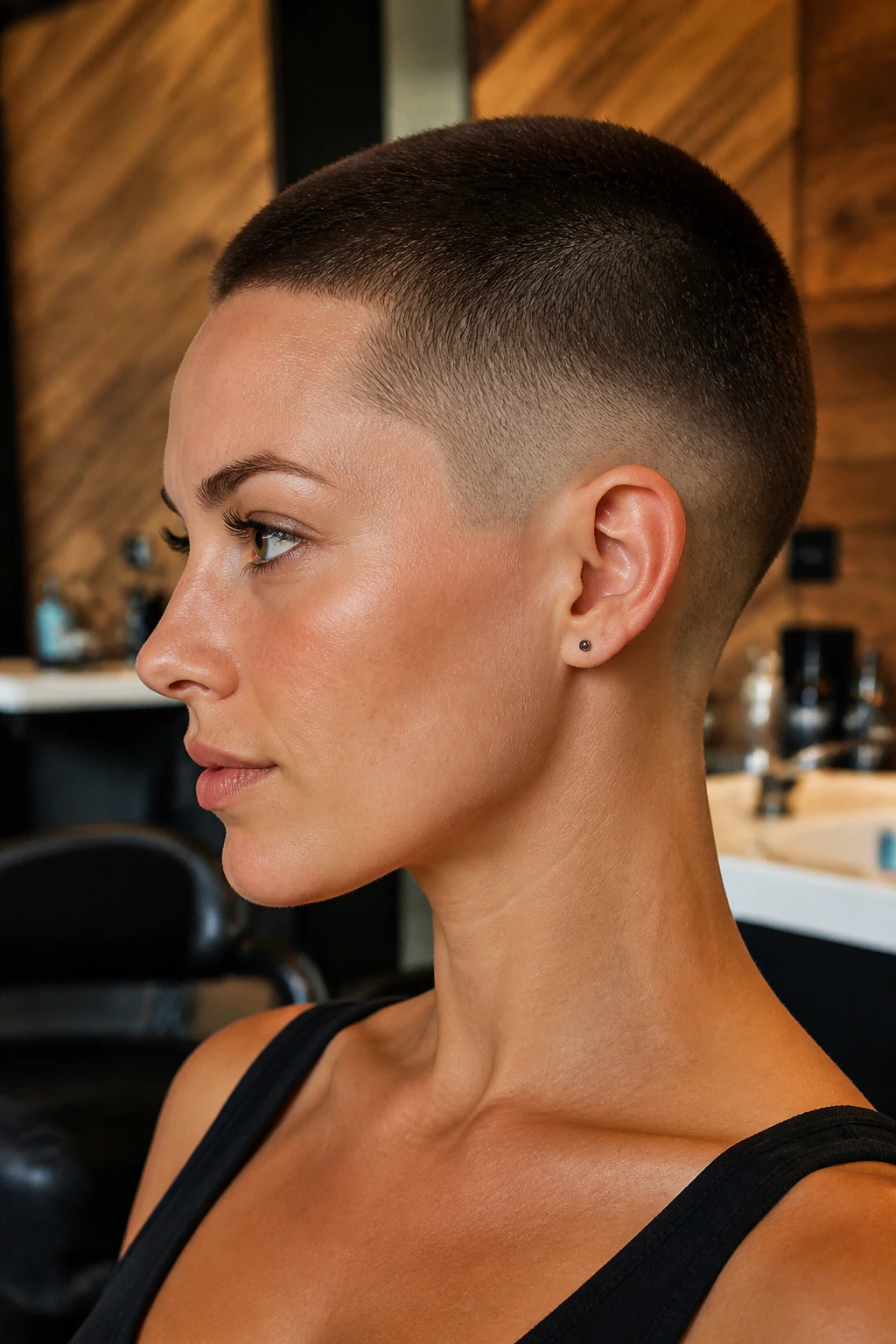
A drop fade dips lower behind the ear and around the back of the head, which gives the cut a longer line from front to back. That little dip changes the silhouette in a way most people don’t notice until they compare photos.
It’s a smart pick if you want your neckline to look longer or if you dislike the stiff shelf some fades create. The drop helps the buzz follow the head’s natural curve. Clean, yes. Flat, no.
9. Line-Up Buzz Cut
A line-up buzz cut is all about the edges: squared hairline, sharper temples, and a finish that looks drawn in with a ruler. On close-cropped hair, the line does a lot of the expressive work, so the haircut can feel bolder without adding length.
This is the one I suggest when someone wants a crisp frame for their face. It works especially well if your brow line is strong or your forehead shape is part of what you want to show. Keep the line-up maintained, though. A fresh edge is half the point.
10. Platinum Crop Buzz
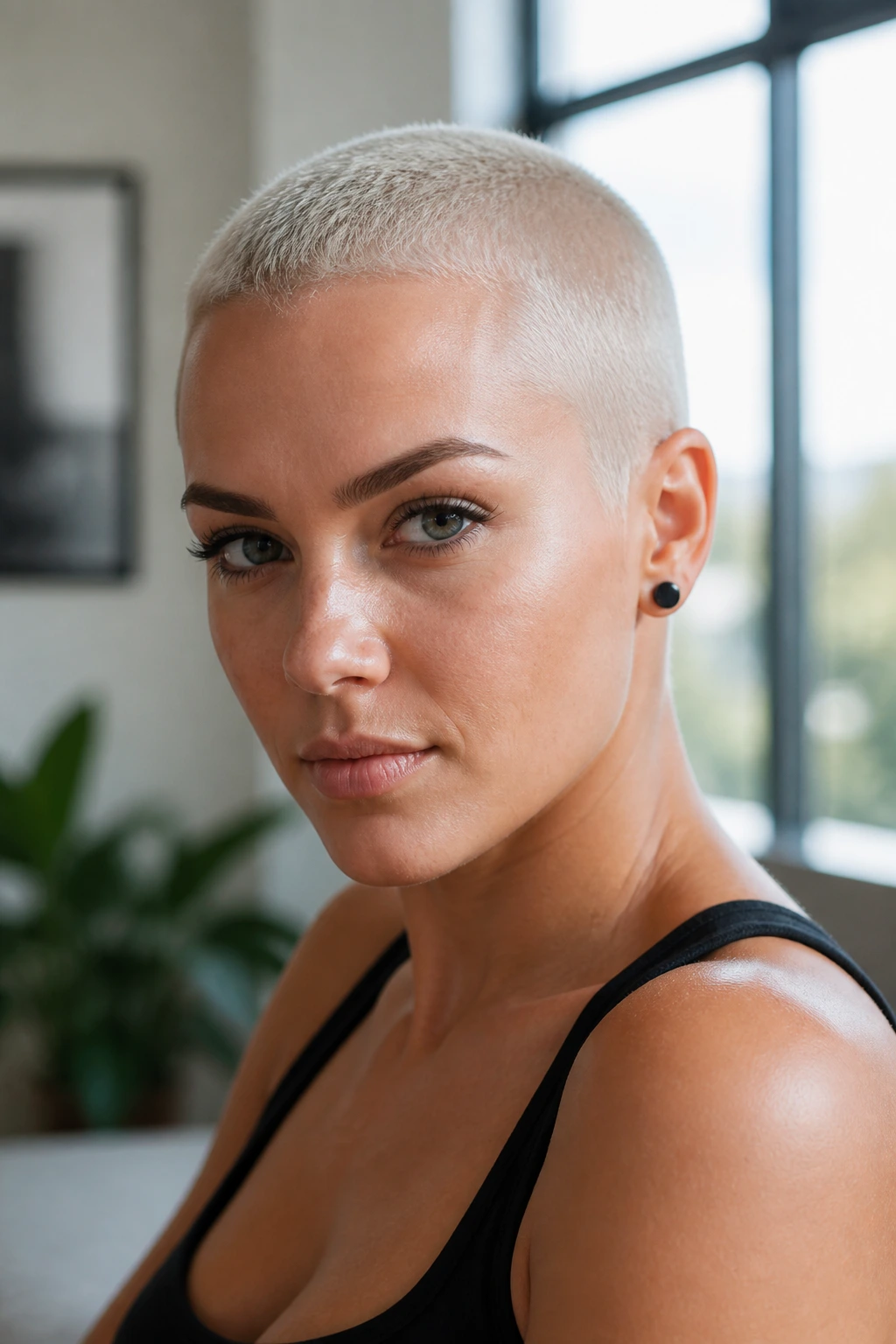
Platinum on a buzz cut is not subtle, and that’s the charm. The short length makes the bleach look brighter, cleaner, and more graphic than it would on long hair, where the tone gets lost in layers.
Why the Bleach Matters
On a close crop, a pale blonde can go almost white if the lift is even and the toner is handled well. The scalp shows through a little more, which is why the color feels almost metallic in daylight. If you’re doing this at home, stop when the hair reaches a pale yellow base and tone carefully; rushed bleach on short hair shows mistakes quickly.
11. Shadow-Root Blonde Buzz

A shadow-root blonde buzz keeps a darker base near the scalp and lightens the rest. It’s practical, and I mean that in the best way. The grow-out looks deliberate instead of messy, which matters when the haircut is this short.
This version suits people who want blonde without signing up for constant color appointments. The darker root gives the eye a place to rest and makes the cut look less “bleached on purpose” and more “finished on purpose.” That distinction is real.
12. Pastel Pink Buzz

Pastel pink on a buzz cut has a soft candy-shop feel, but only if the base is lifted enough first. On darker hair, the color won’t come out light and airy unless the blonde underneath is pale and even.
The short length keeps the pastel from feeling too sweet or too long-lived. It fades fast, which can be a feature if you like changing color often. Just know this one rewards healthy hair and a patient toner hand. Rushed pink turns muddy fast.
13. Copper Glow Buzz
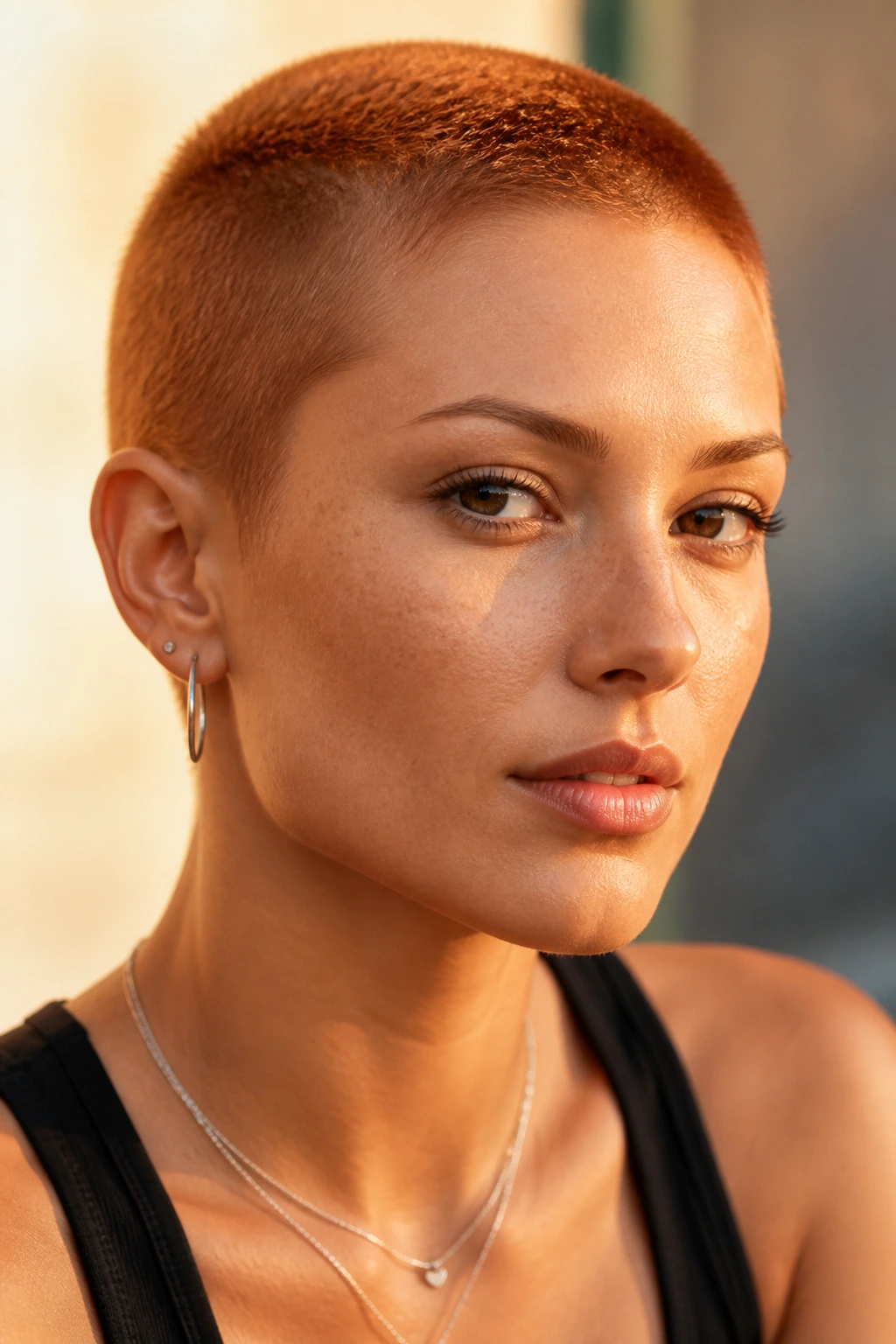
Copper is one of my favorite short-hair colors because it catches warmth without needing a lot of length to show up. On a buzz cut, the tone looks almost lit from inside, especially under sun or warm indoor light.
It flatters a lot of skin tones because it sits between red and gold instead of leaning too far in one direction. If you want color that feels rich rather than neon, this is the lane. Keep the shade fresh with gloss or toner before it drifts too orange.
14. Silver Fox Buzz
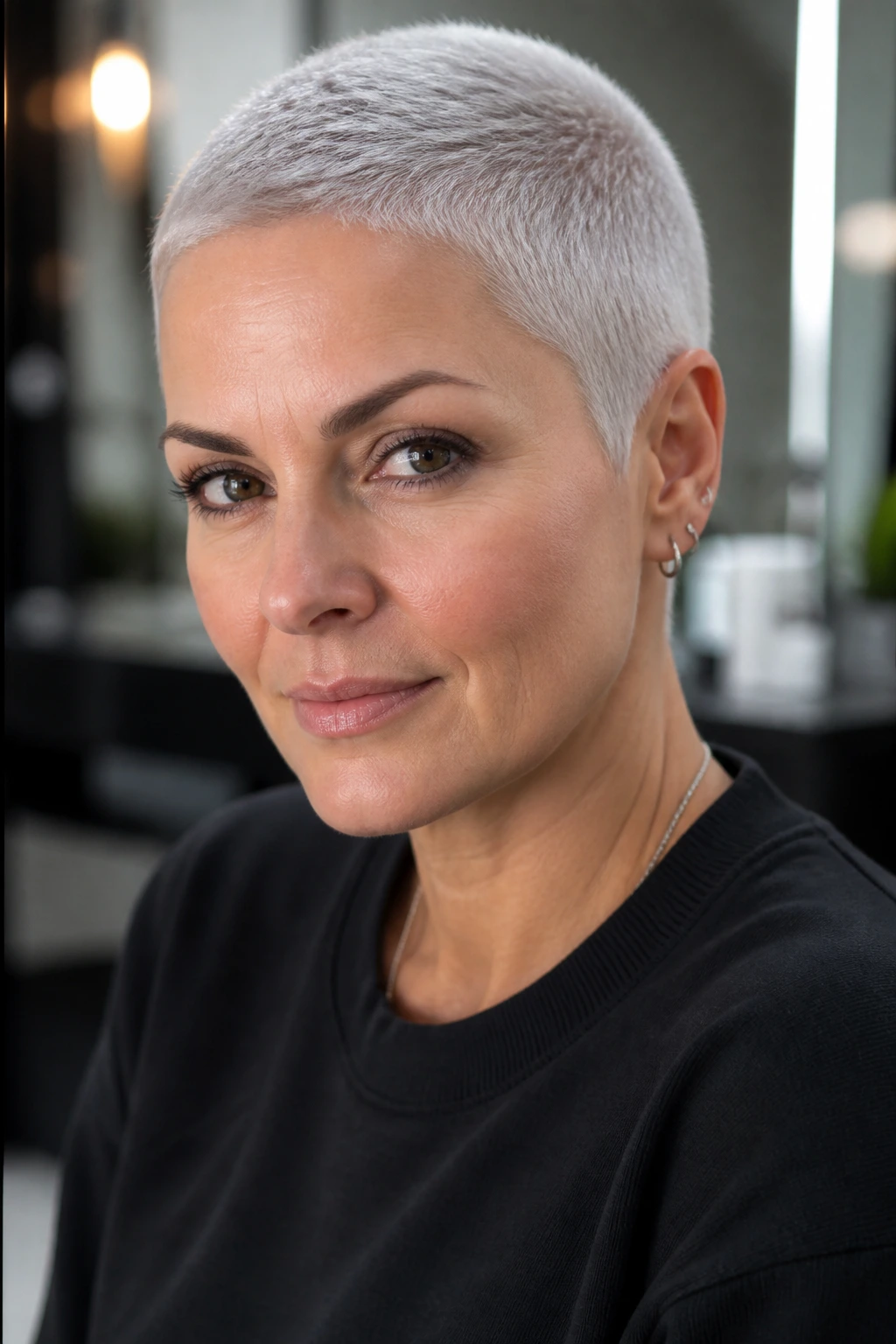
A silver buzz cut has a colder, cleaner read than platinum, and it plays beautifully with naturally gray hair or a toner-rich blonde. The close crop lets the metallic tone sit right on the surface without hiding under layers.
It’s a strong choice if you want the cut to look sleek rather than playful. The shape should stay simple so the color can do the work. If the tone turns yellow, the whole effect changes, so purple shampoo or a toner refresh matters here more than on darker styles.
15. Salt-and-Pepper Buzz

Salt-and-pepper hair can look especially good at buzz length because the mixed tones stop reading as “graying” and start reading as pattern. The short crop turns every silver strand into part of the texture.
This is one of the easiest styles to wear if you want honesty over polish. A clean edge and a bit of scalp care are enough. I’d keep the shape simple and let the natural color stay visible; trying to cover it often makes the result look harder than it needs to.
16. Jet-Black Shine Buzz
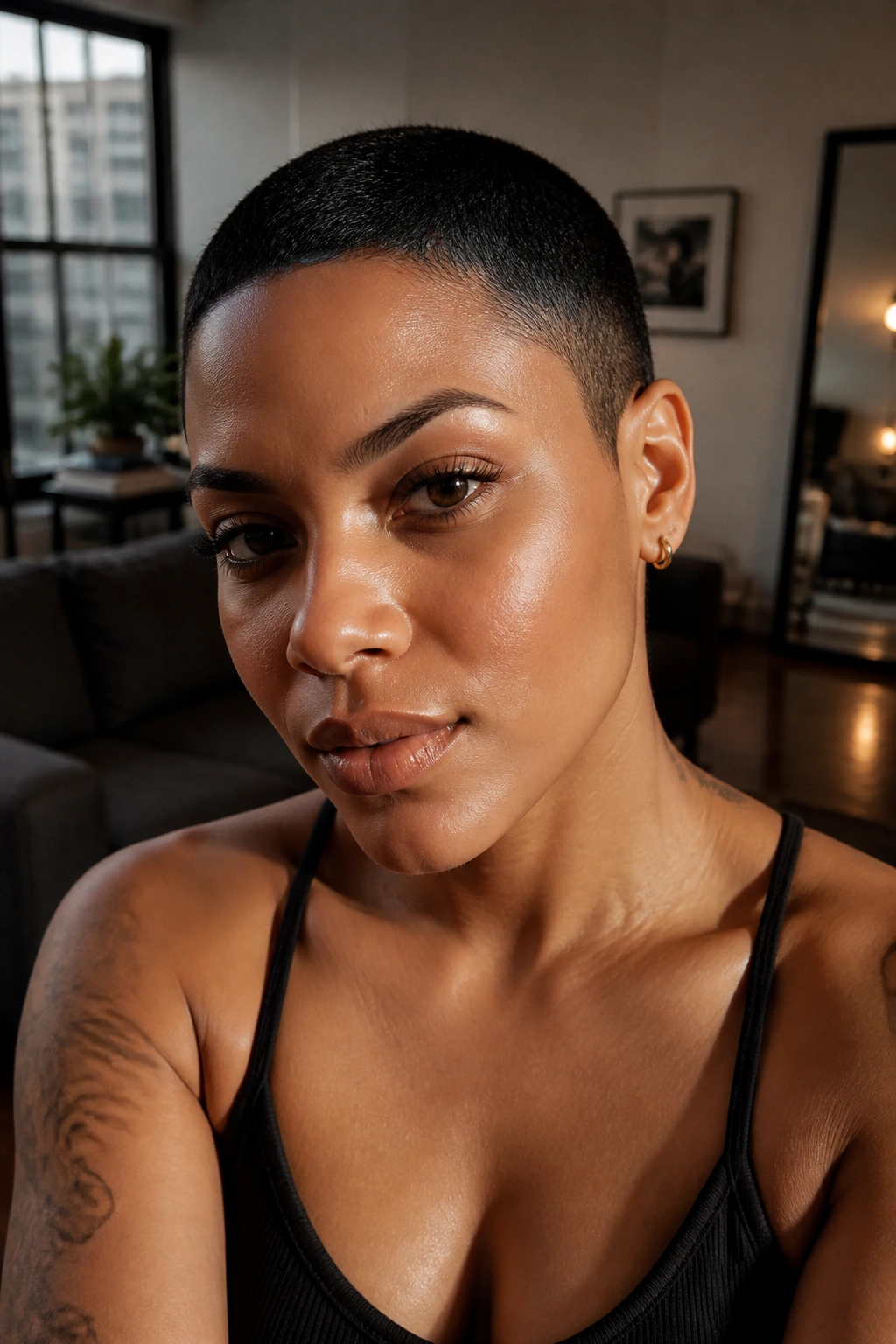
Jet-black hair on a buzz cut is dramatic in a very direct way. The dark color compresses the shape, makes the head look more sculpted, and gives even a simple all-over clip a kind of inked finish.
What Makes It Work
A little shine product goes a long way here. You want gloss, not grease. The black should look rich and even, especially around the crown where light can expose patchiness if the length is uneven. If your hairline is soft, this cut can still look strong because the color creates the outline.
17. Curly Texture Buzz
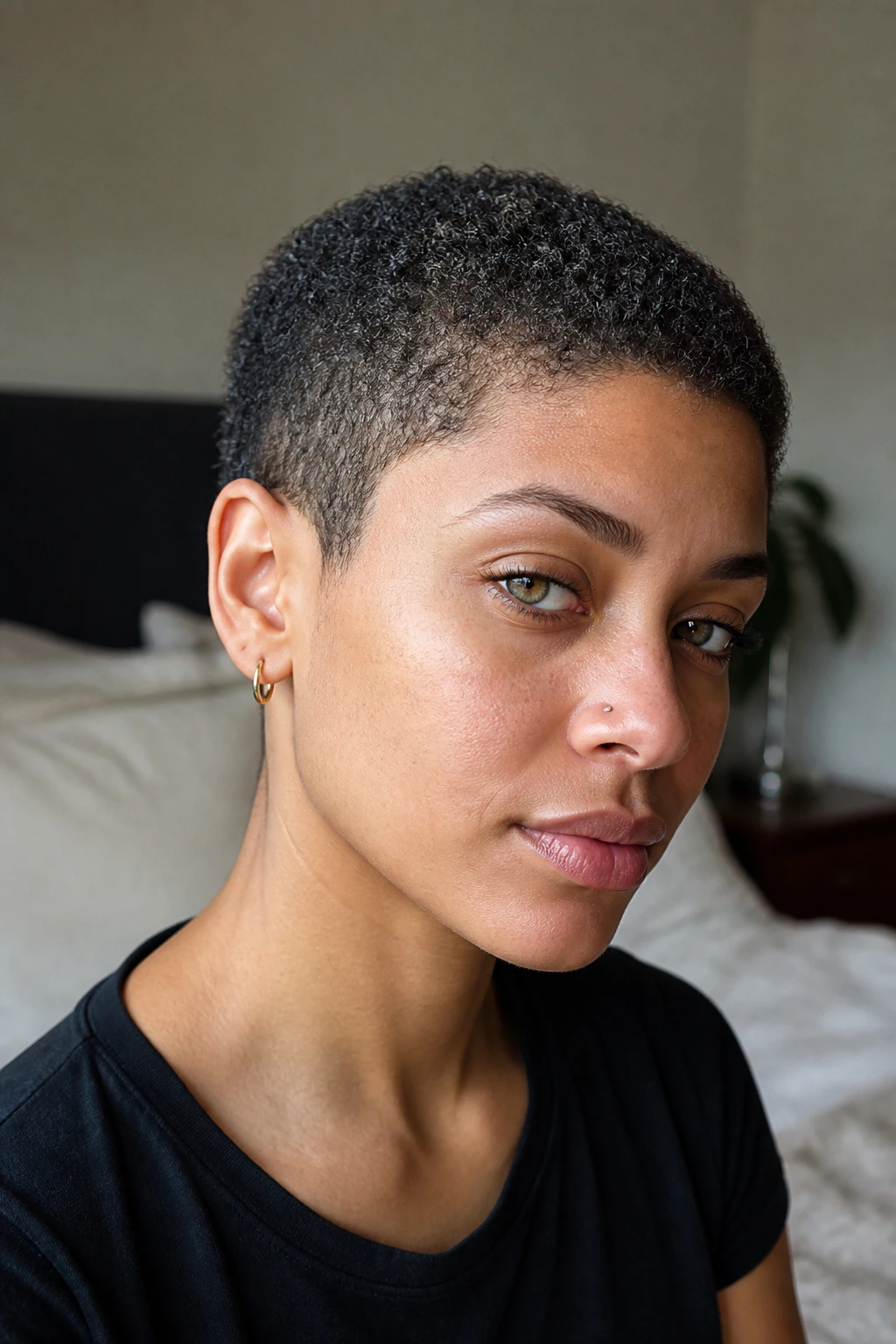
Curly hair buzzed short does not lose personality. It turns into a tight field of texture, and the pattern can look almost like fabric when the cut is even and the curls are dense.
This style works best when you leave enough length for the curl to show—often a #2 or #3, not the closest shave. Otherwise, the pattern can disappear and you’re left with a patchy shadow. If your curls spring in different directions, ask for a shape-up that respects the crown swirl instead of fighting it.
18. Coily Shape-Up Buzz
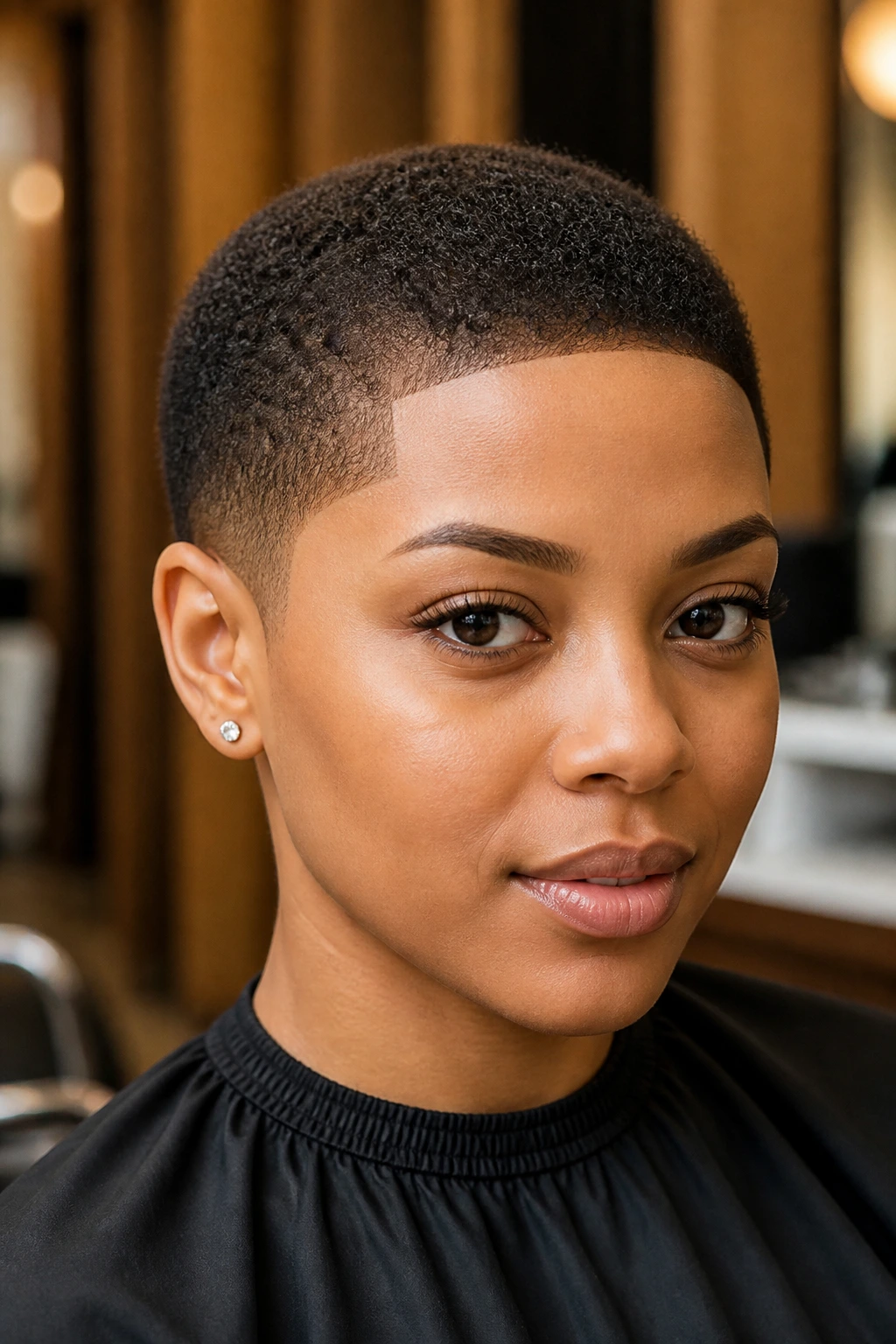
Coily hair at buzz length has its own kind of architecture. The silhouette can look rounded, dense, and beautifully clean when the edges are shaped without scraping the cut too close.
I like this version when the goal is to show texture, not erase it. A shape-up at the hairline and temples keeps the style sharp, while a slightly fuller top makes the coils visible. If you go too short, the texture can flatten out. That’s the catch.
19. Wavy Close Crop
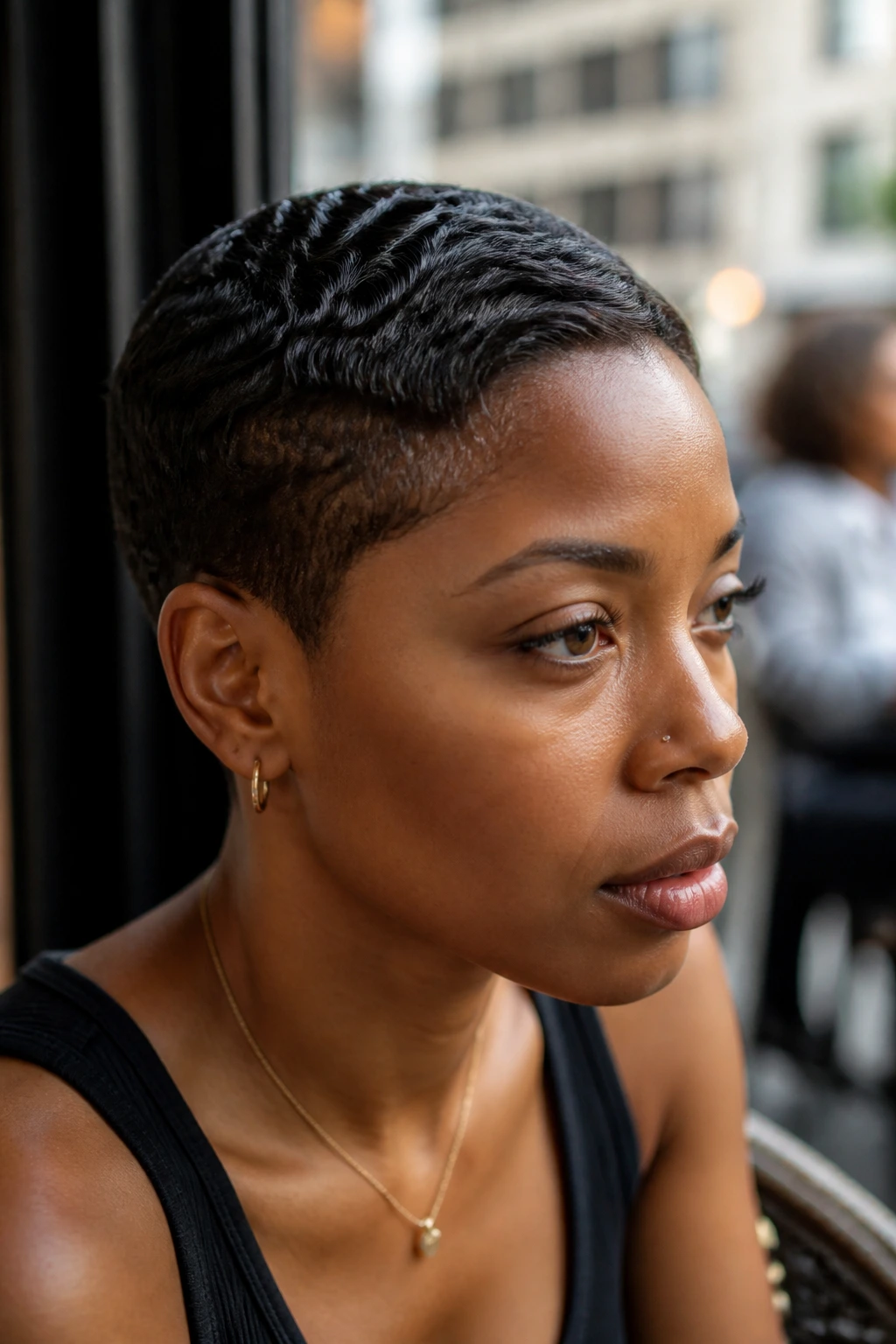
Waves need a little length to show, so this cut usually looks best with some softness left on top. Too short and the movement disappears; just right and the waves show up like faint pencil marks across the scalp.
This is a good choice for women who want a short cut that still hints at motion. It feels less strict than a uniform clip and more relaxed around the edges. A light matte cream can help define the wave pattern without making it look wet or stiff.
20. Razor-Art Buzz
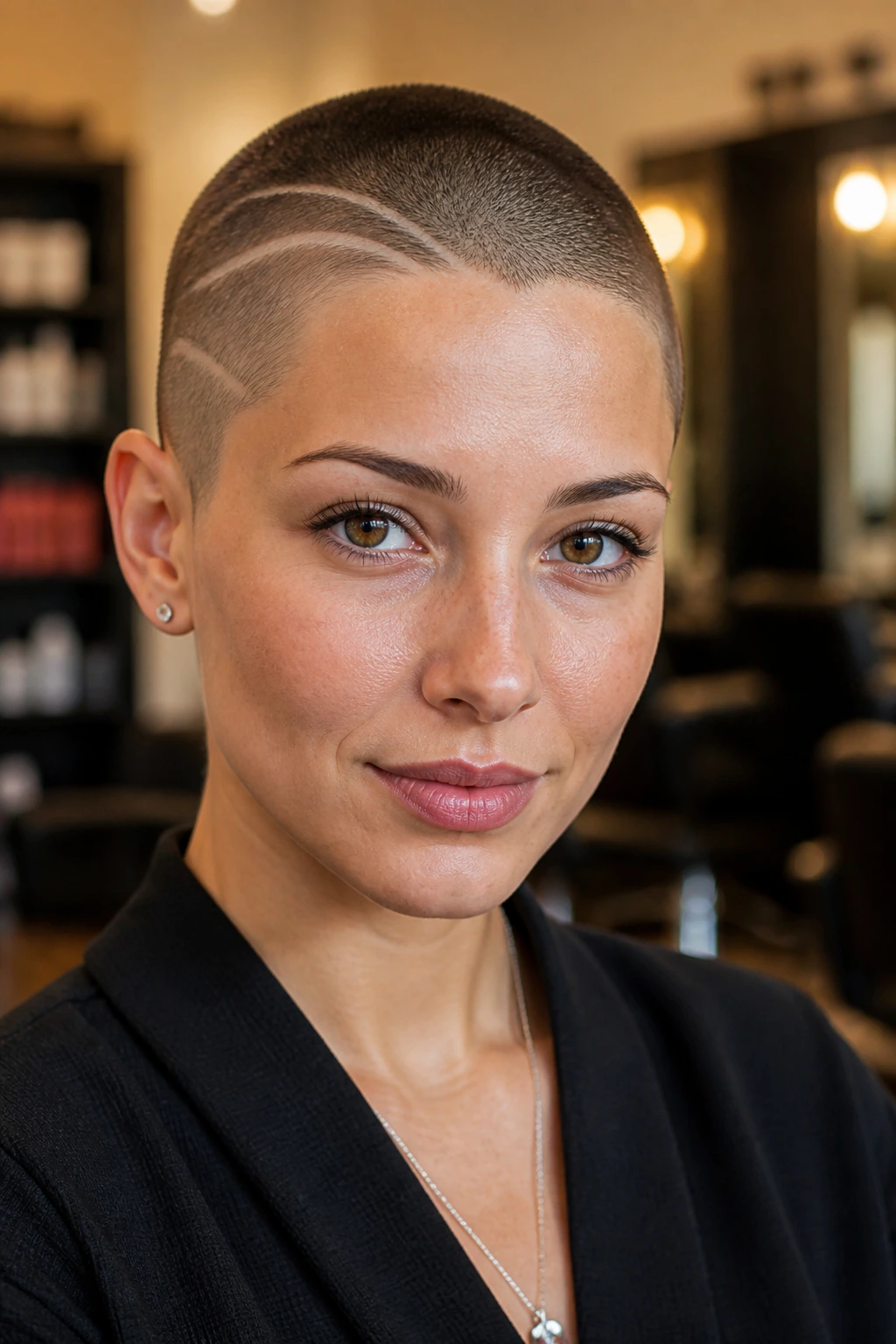
Razor art turns the scalp into part of the design. Thin lines, angles, and shaved motifs can sit under or through the buzz, and the contrast is strongest when the base cut is short and even.
The trick is restraint. One clean design usually looks stronger than a cluttered field of lines. Ask your barber where the design will sit once the hair grows in a week or two, because some patterns vanish fast and others stay visible longer than you’d think.
21. Lightning Bolt Buzz
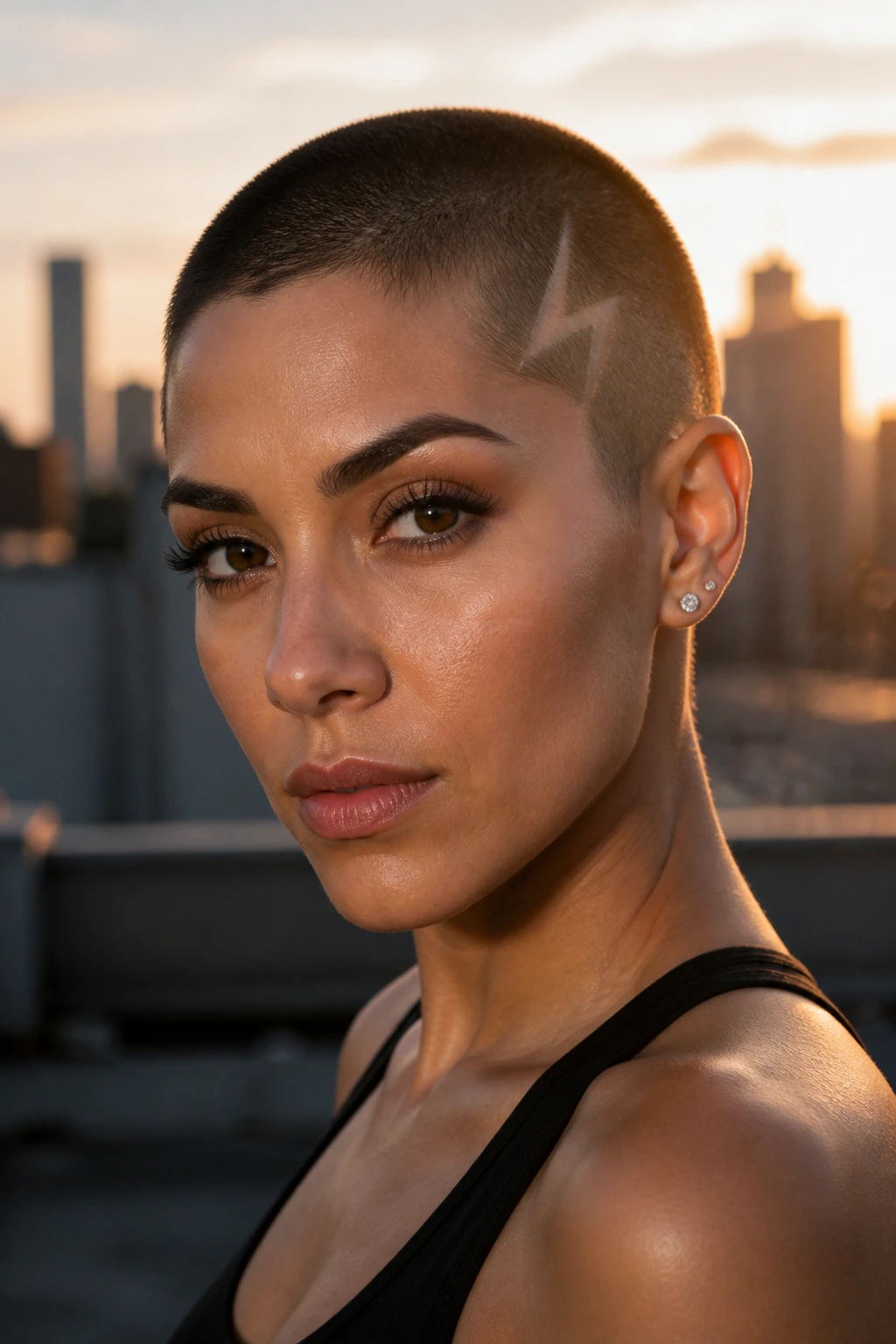
A lightning bolt shaved into a buzz cut is sharp, graphic, and a little mischievous. It works because the design is simple enough to read at a glance but bold enough to matter.
This is a good match if you want the haircut to feel playful without losing edge. Keep the rest of the cut plain so the bolt can carry the mood. If the bolt sits too low or too wide, it can start to look like decoration instead of design. Placement matters.
22. Heart Part Buzz
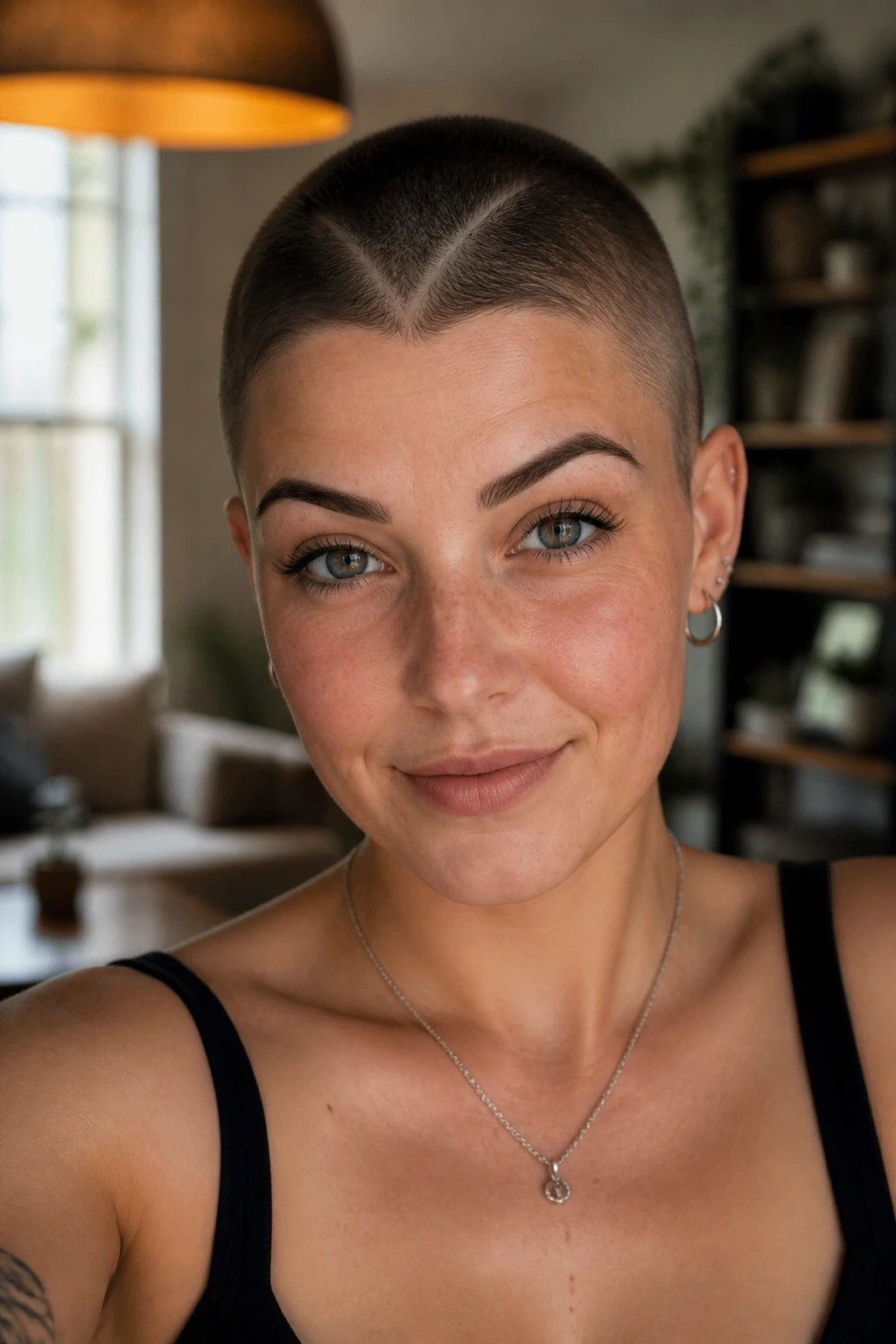
A heart part on a buzz cut sounds soft, and it is, but it also works because the shape is so unexpected on such a short cut. A curved part or heart-shaped design can turn a severe buzz into something gentler without adding length.
It’s a smart option if you like symbolic or personal details. Just know that the part needs to be crisp to read well. Fuzzy lines make the shape vanish fast. Ask the barber to keep the surrounding length even so the heart doesn’t get lost in the rest of the cut.
23. Micro Fringe Buzz
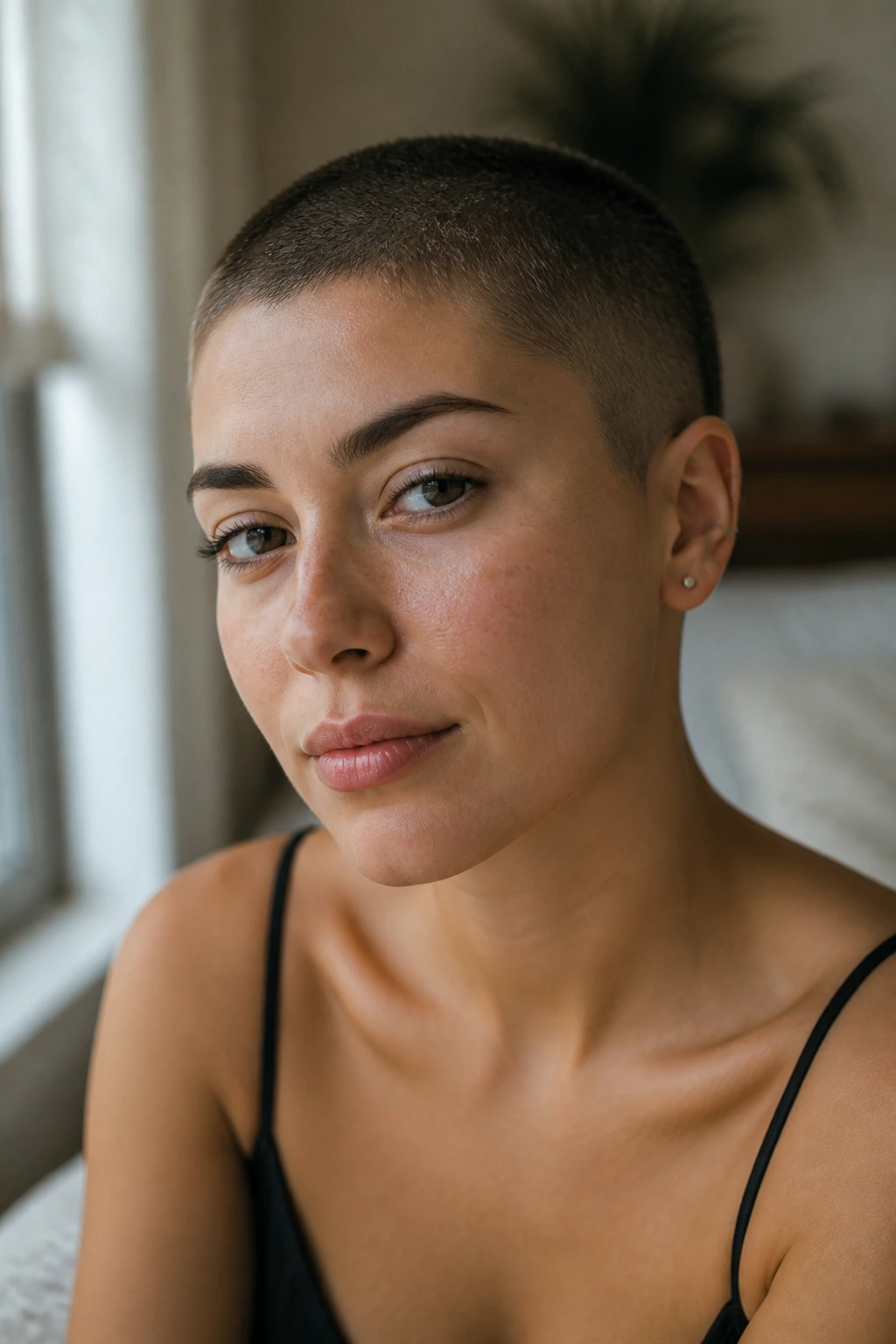
A micro fringe buzz leaves a whisper of length at the front, just enough to soften the forehead without turning into a pixie. It’s subtle, and that’s why it works.
This style is a favorite for people who want a buzz cut but don’t want the front of the face fully exposed. The tiny fringe can balance a strong brow or a high forehead. Keep it trimmed straight or lightly rounded, depending on whether you want the mood to feel graphic or softer.
24. Mini Mohawk Buzz
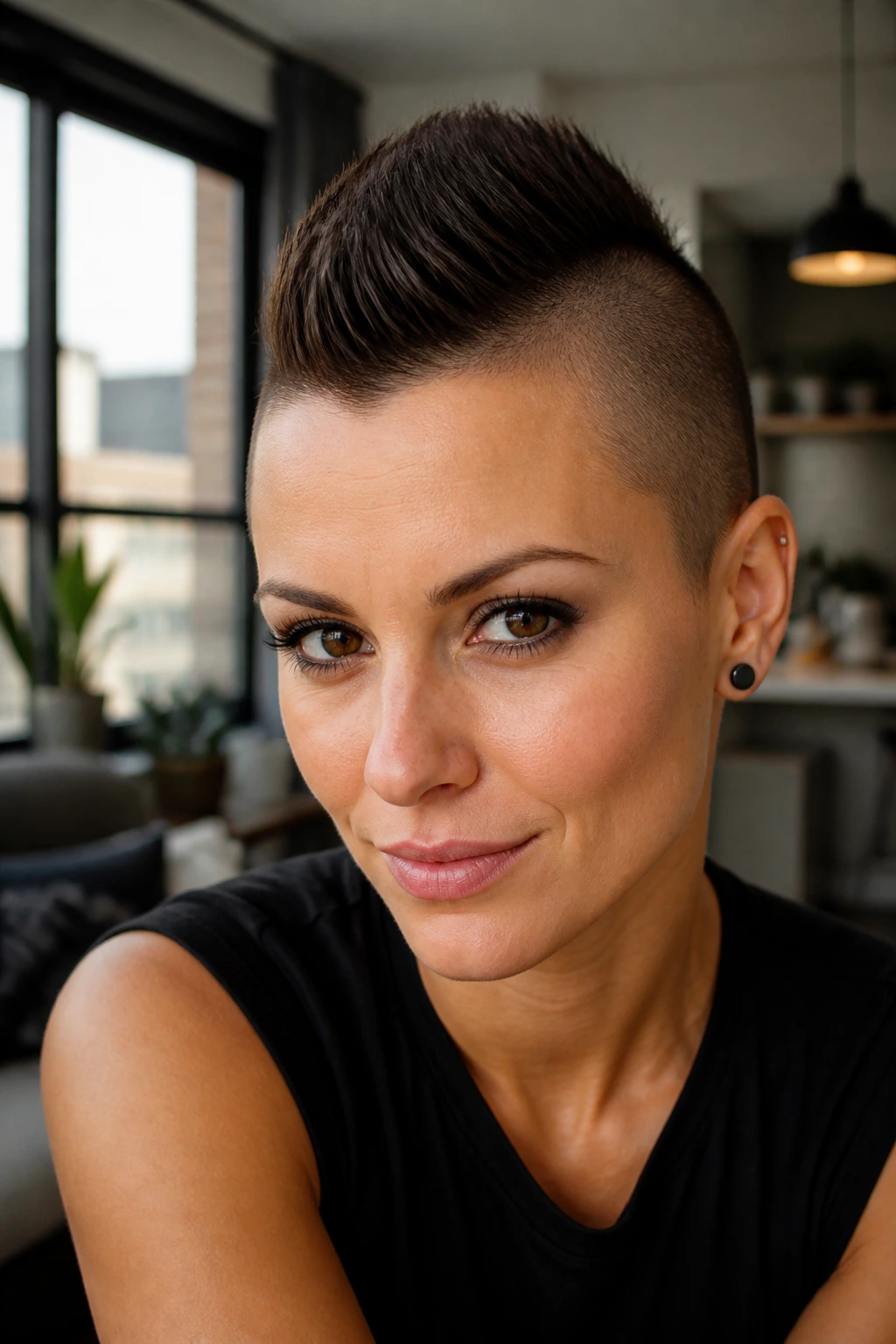
A mini mohawk buzz keeps a strip of extra length down the center of the head while the sides stay shorter. It’s not a full mohawk. It’s tighter, neater, and easier to wear on an ordinary day.
This cut likes strong cheekbones and a bit of attitude, but it doesn’t need a costume to work. If the center strip is too wide, the style stops reading as a buzz variation and starts looking like a different haircut. Keep the sides tight and let the middle stay the star.
25. Soft Faux Hawk Buzz
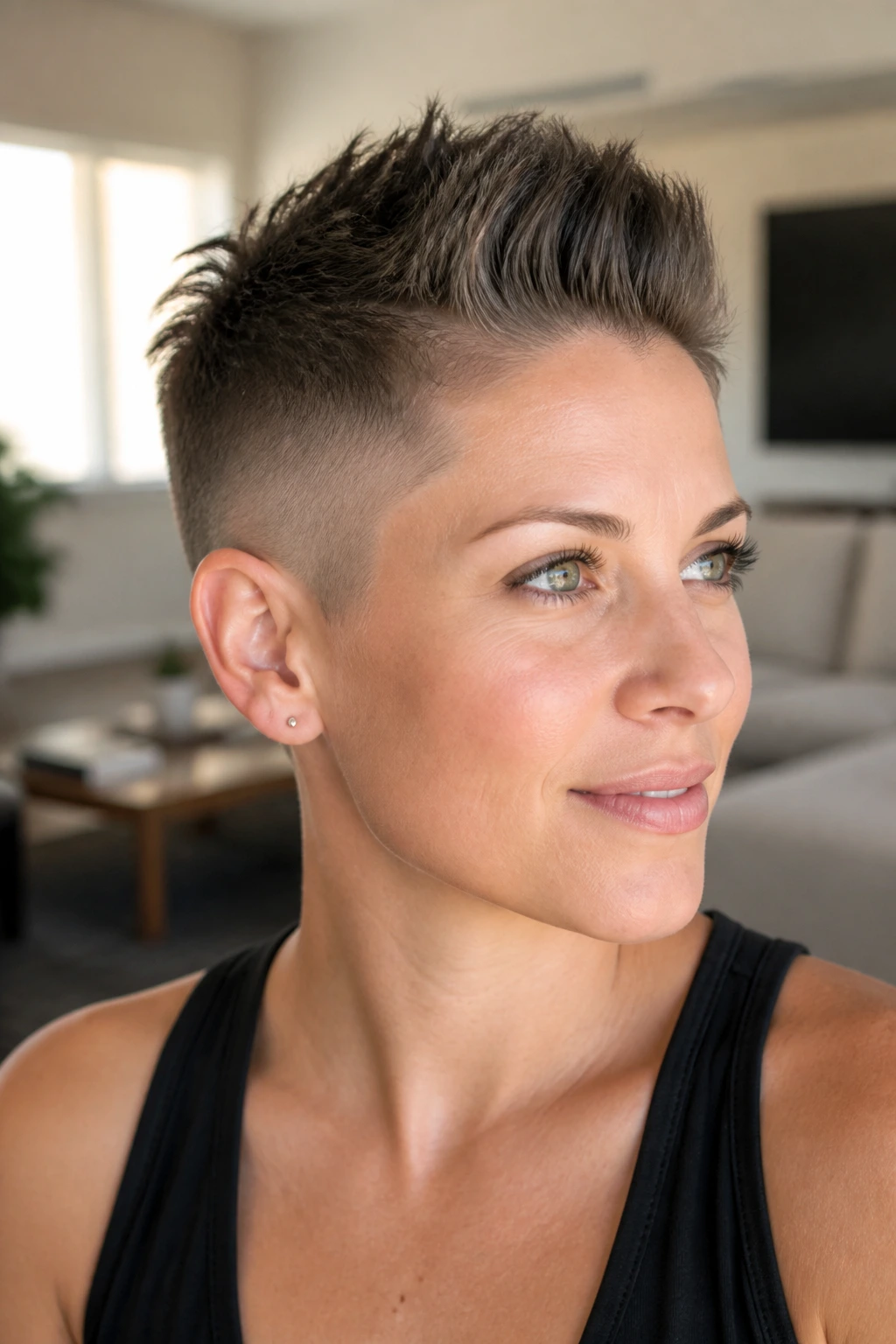
A soft faux hawk gives you the center lift without the hard edge of a real mohawk. The top stays a touch longer, the sides are faded or tapered, and the shape reads athletic without becoming severe.
This one flatters people who want height through the middle of the head. It can lengthen the face a little and add movement when the top is brushed forward or slightly up. Use a light paste if you want it to stand up; leave it bare if you want the silhouette to stay relaxed.
26. Disconnected Undercut Buzz
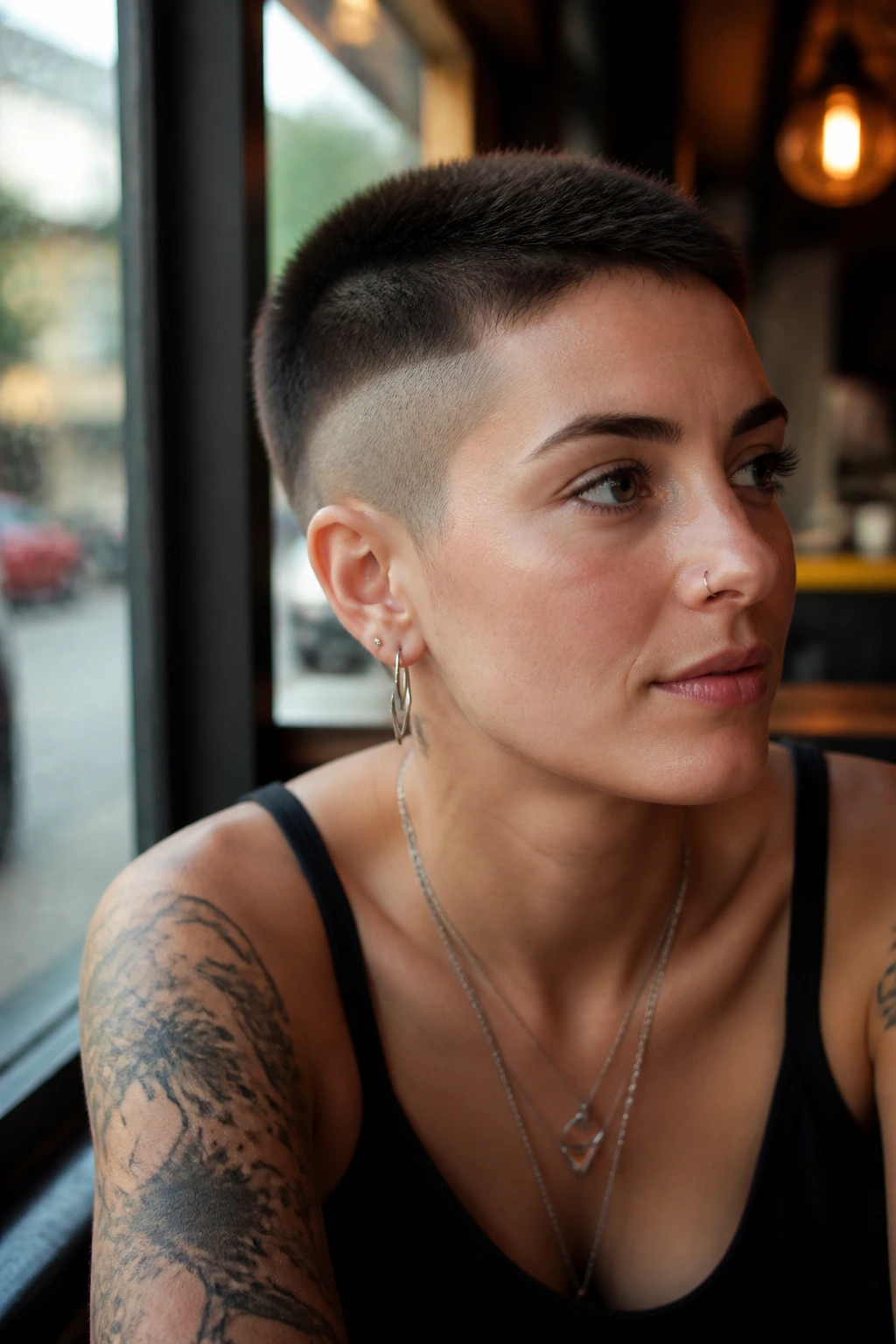
A disconnected undercut buzz keeps a clear jump between the top length and the sides. No soft blending. No trying to hide the break. That hard contrast is the whole point.
This style works well when you want the top to feel like a separate panel. It’s a strong shape for thick hair and a smart one for anyone who likes a sharp outline. The downside is upkeep: the contrast grows out fast, and once it softens, the style loses some of its punch.
27. Rounded Halo Buzz
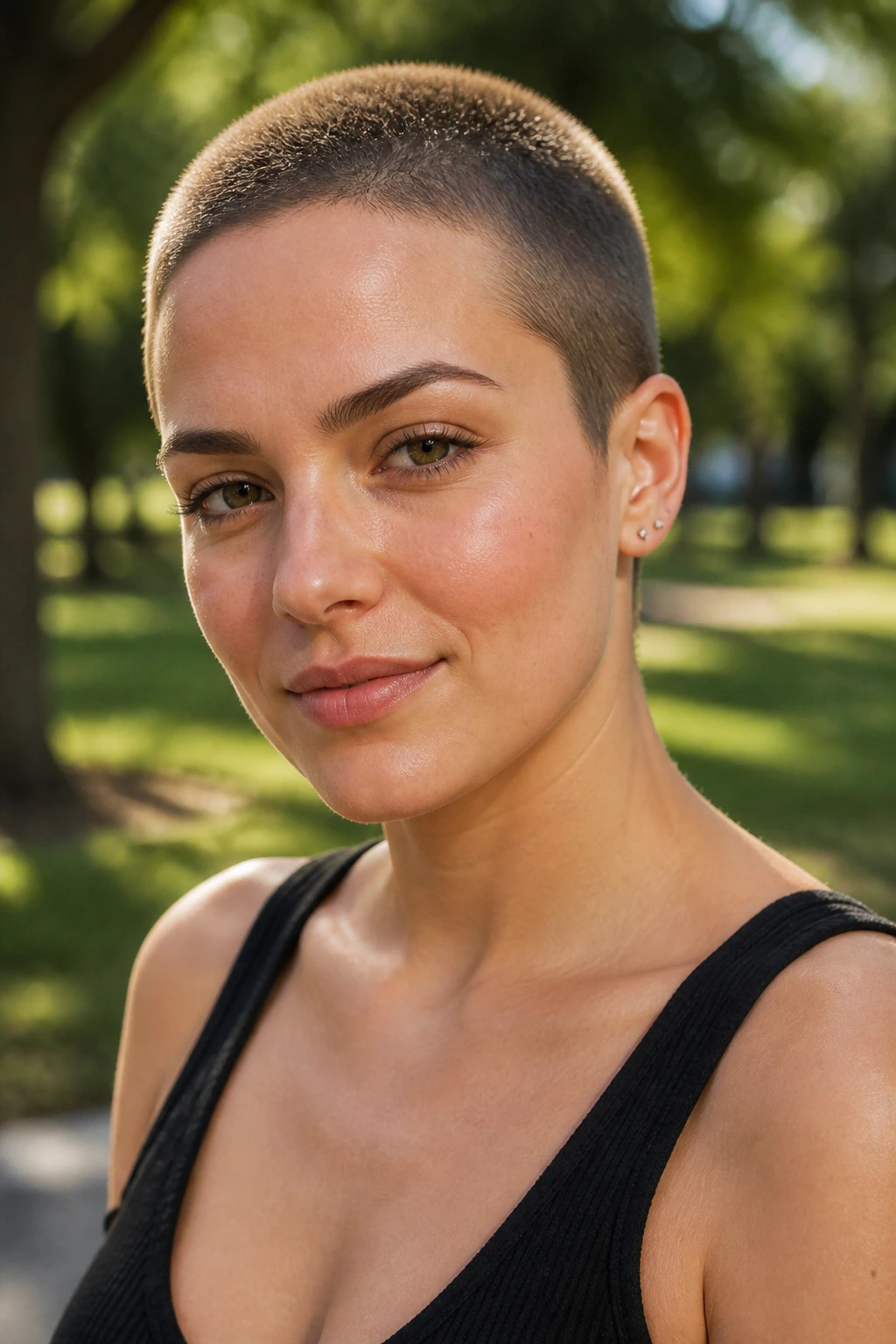
A rounded halo buzz follows the curve of the head instead of forcing a square outline. It can look surprisingly soft, even when the hair is cut short enough to expose the scalp in places.
I like this cut on women who want balance more than drama. It doesn’t shout. It sits. The rounded perimeter helps the head read as a clean oval rather than a block, which is useful if your hair tends to puff or kick out at the corners.
28. Angular Hairline Buzz
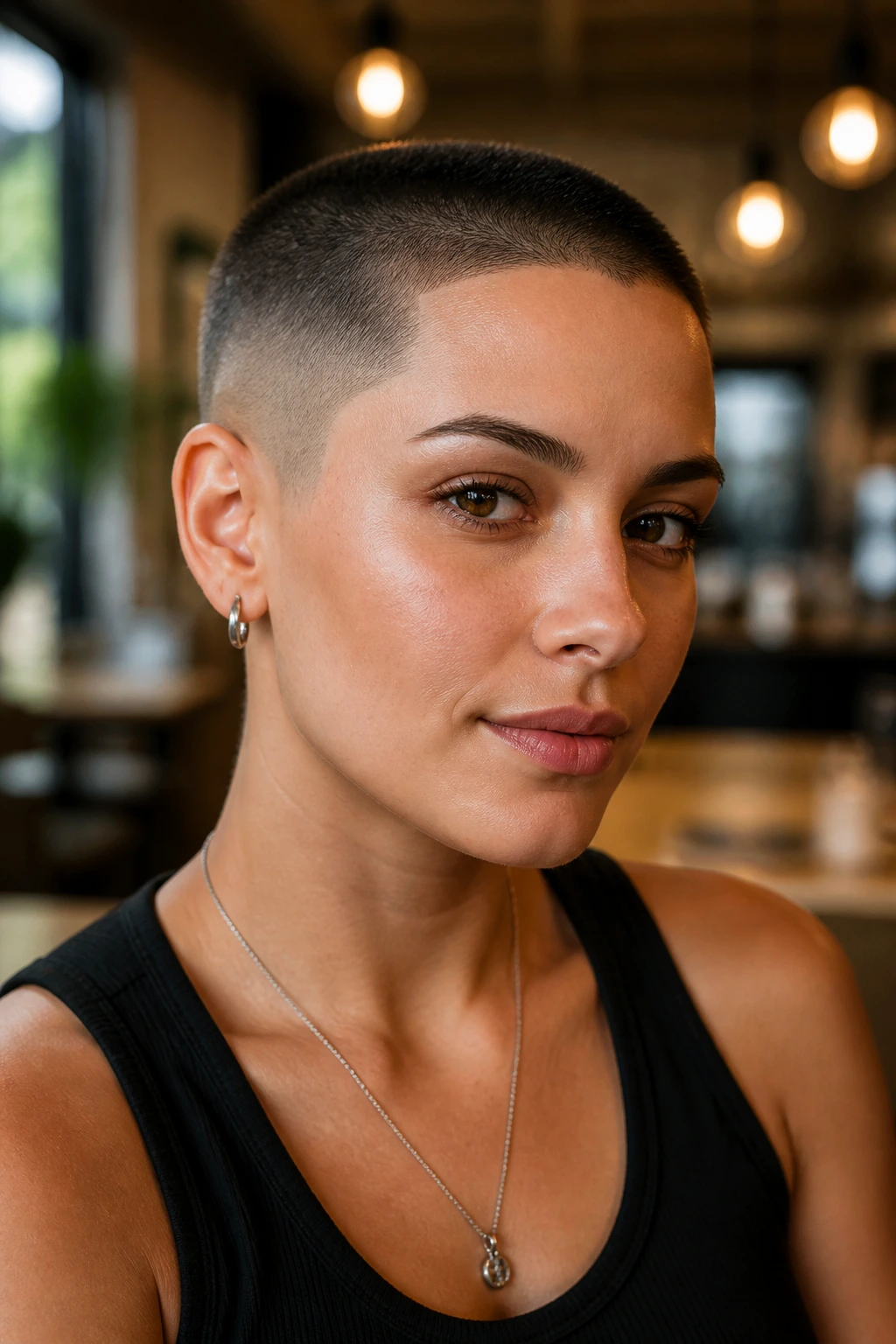
An angular hairline buzz uses diagonal or pointed temple corners to make the front look sharper. It’s a cousin to the line-up, but the shape is less square and more geometric.
This cut does a lot of quiet work on rounder face shapes because the angles pull the eye upward. Keep the angles clean and the rest of the cut simple. If the front line is too busy, the style starts competing with itself. That’s a fast way to lose the clean buzz effect.
29. Temple-Taper Buzz
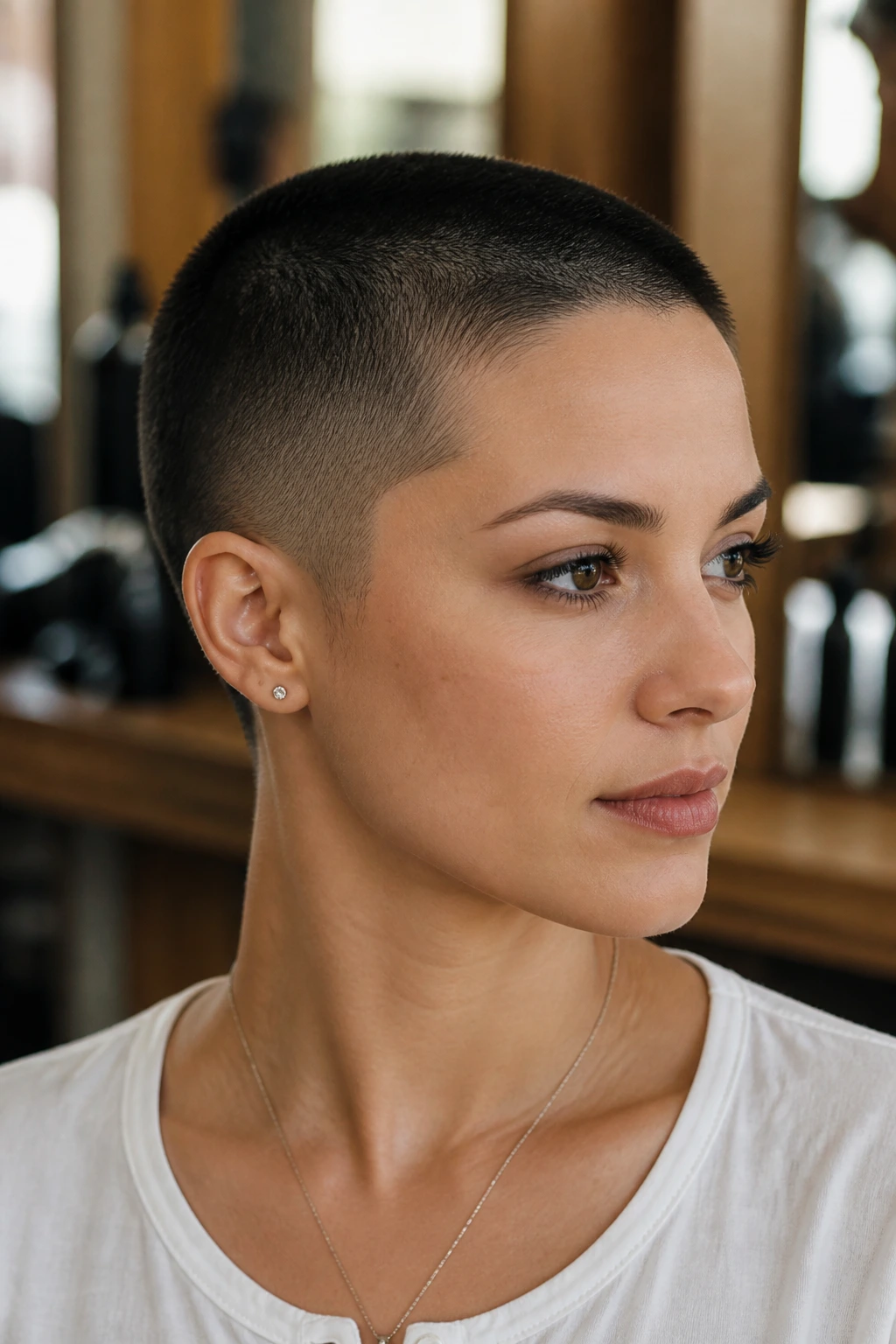
A temple taper softens only the sides of the forehead and leaves the rest of the buzz even. That narrow bit of blending can make the whole cut feel more wearable, especially if you want a little softness near the face.
It’s a good middle ground when a full fade feels too stark. The temple taper keeps the edges neat without boxing the head in. I’d choose this if you like structure but don’t want the haircut to look carved.
30. Nape-Focused Buzz
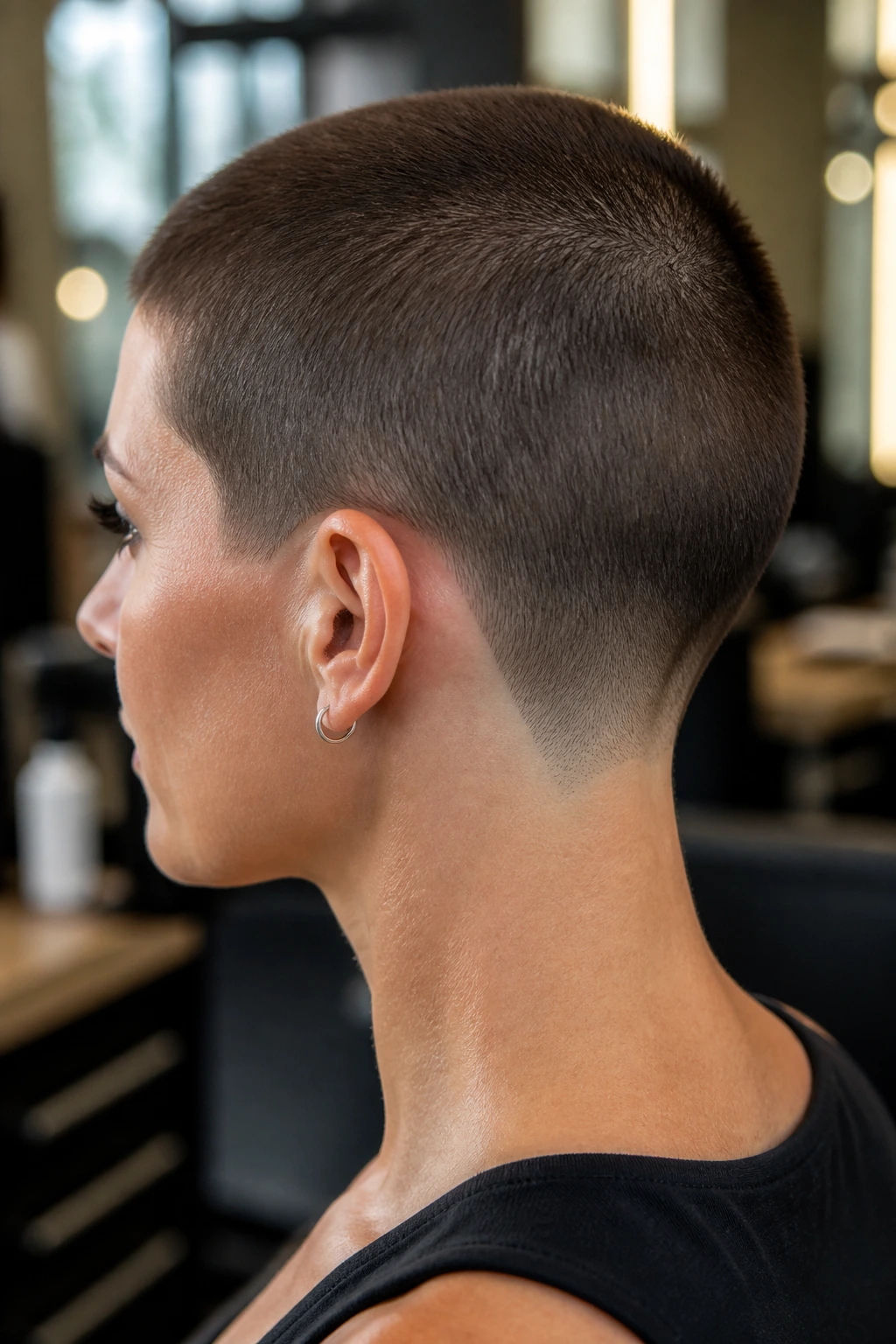
A nape-focused buzz puts a little extra attention on the back of the head and neckline. The nape is cleaned, shaped, and sometimes tapered more carefully than the rest, which changes the view you get in profile.
This style is sneaky. From the front, it may look like a basic buzz. From the side or back, it looks edited. That makes it a good pick if you often wear your hair tucked behind your ears or tied up with clips, because the neckline stays part of the style instead of turning shaggy.
31. Two-Tone Split Buzz
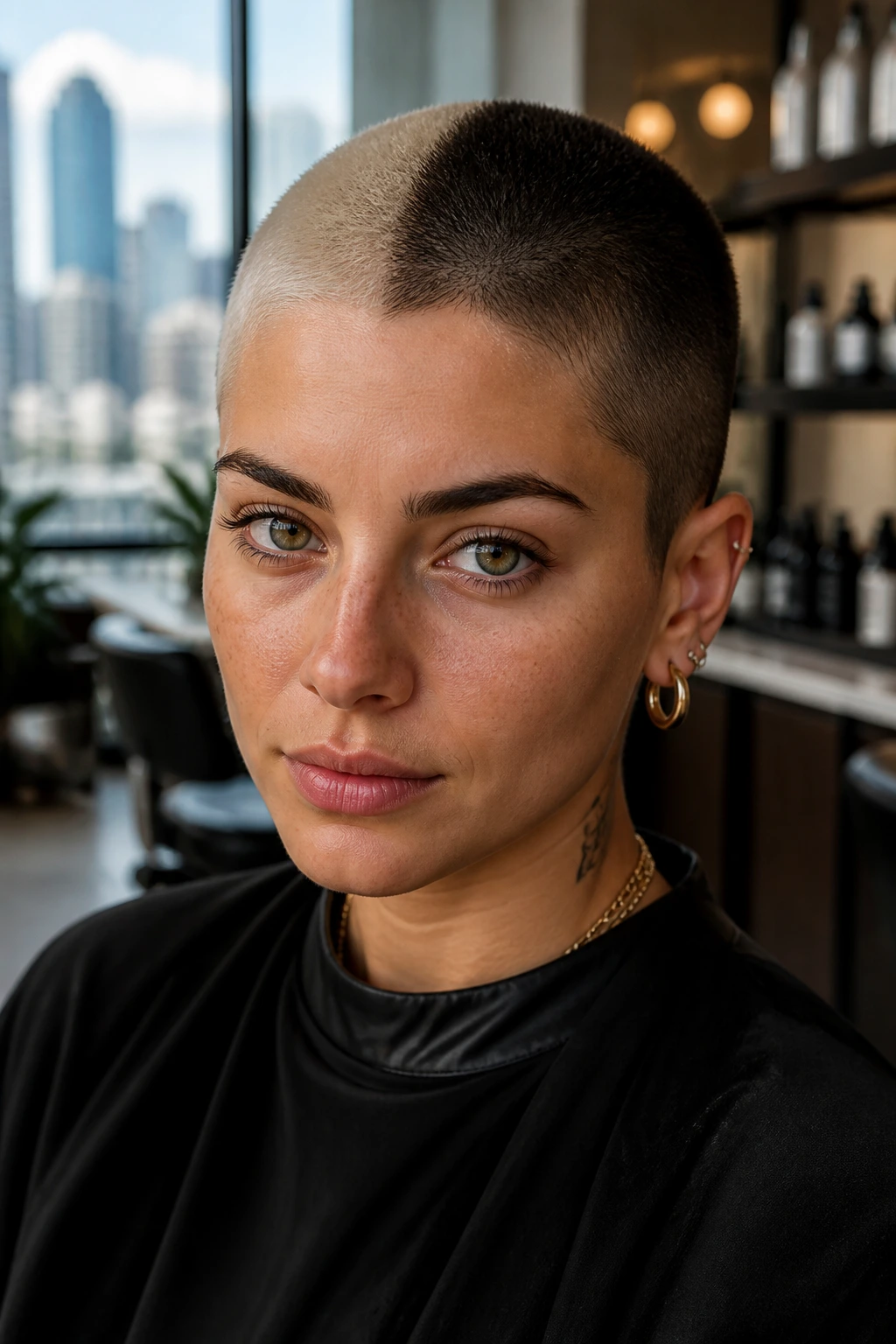
A two-tone split buzz is exactly what it sounds like: one section light, the other dark, or one side in a different color block altogether. It’s graphic, and it works because the short length lets the split read instantly.
You want the division to be clean and intentional. Soft fade-ins can muddy the effect. This is the one to pick if you like color that behaves like design rather than decoration. The haircut becomes the canvas, which is really the point here.
32. Ombre Buzz Cut
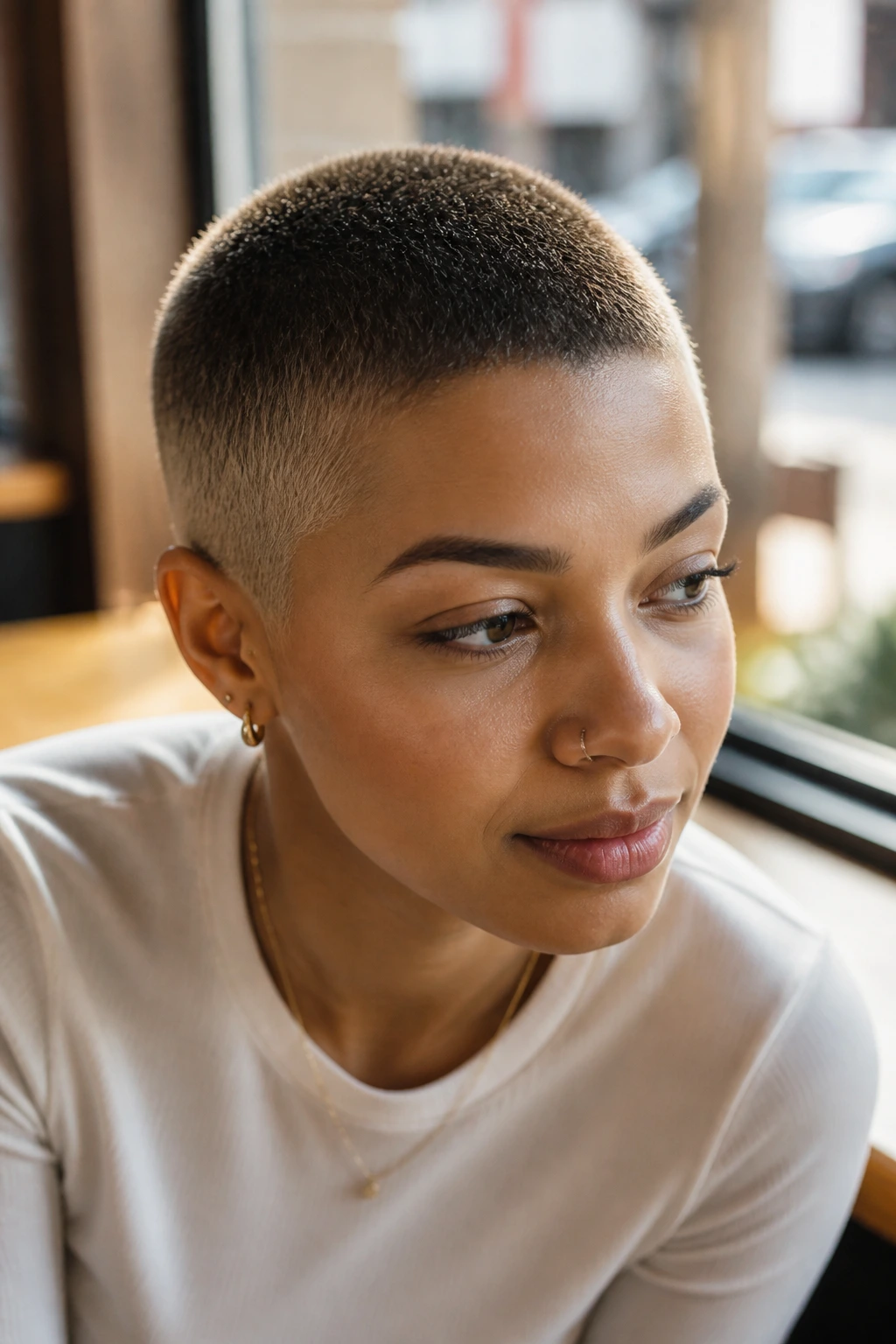
An ombre buzz cut fades from darker roots into lighter ends, but on very short hair the shift has to be subtle or the gradient looks blotchy. The best versions keep the transition smooth enough to feel like a shadow, not a stripe.
This is a clever way to get movement into a short style without shaving in texture. It also makes grow-out less harsh, because the darker root is part of the plan. If the lightest ends are too brassy, the whole effect goes muddy. Tone matters.
33. Matte Piecey Buzz
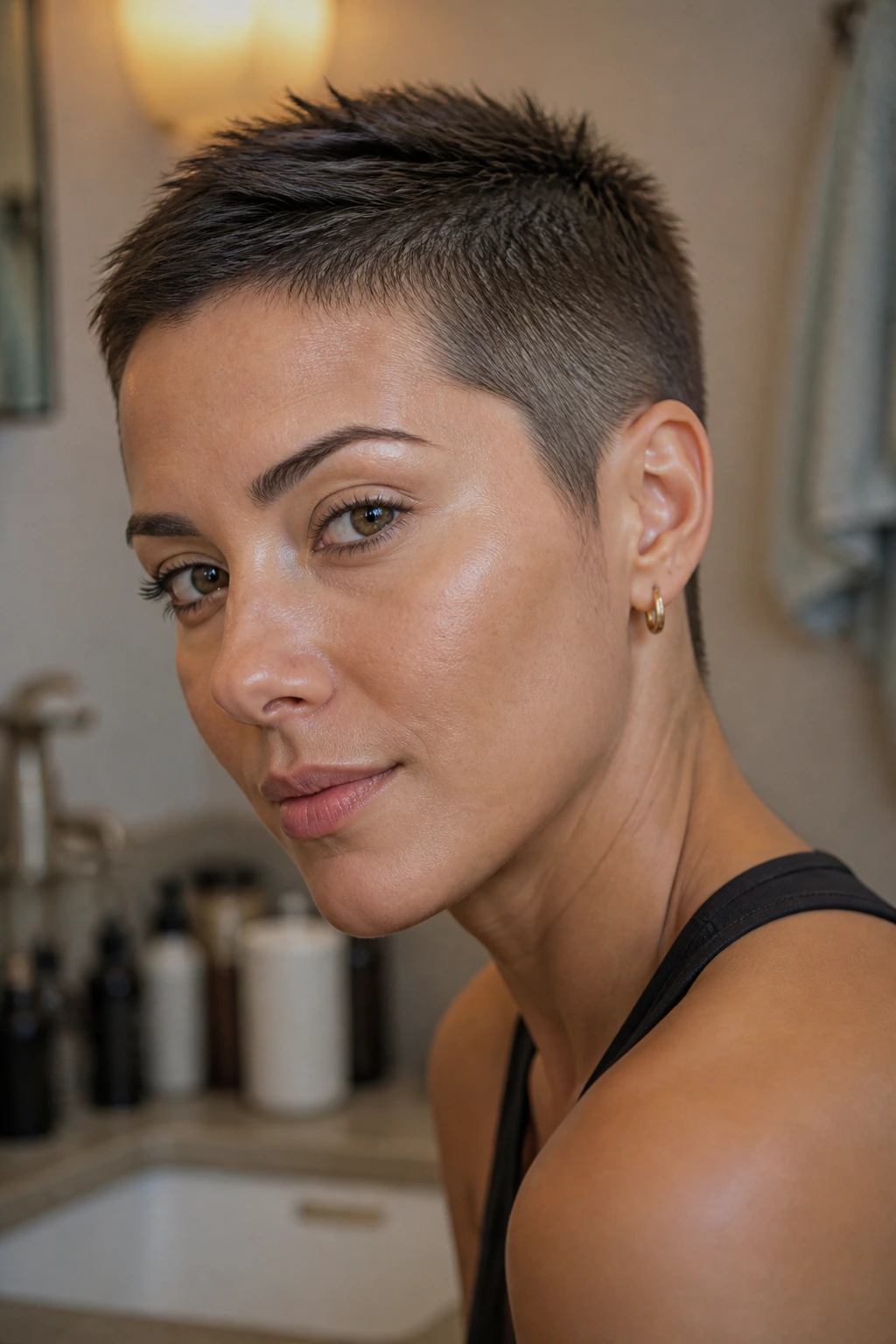
A matte piecey buzz uses a touch of product to break up the surface so the cut feels slightly textured instead of flat. You’re not trying to spike it. You’re just giving the top a little separation.
This works best on hair that has enough length to catch the paste or cream—usually a #2 or longer. A tiny amount is enough. Too much and the buzz starts looking damp or sticky, which is not the goal. The finish should feel touchable, not crunchy.
34. Wet-Look Buzz
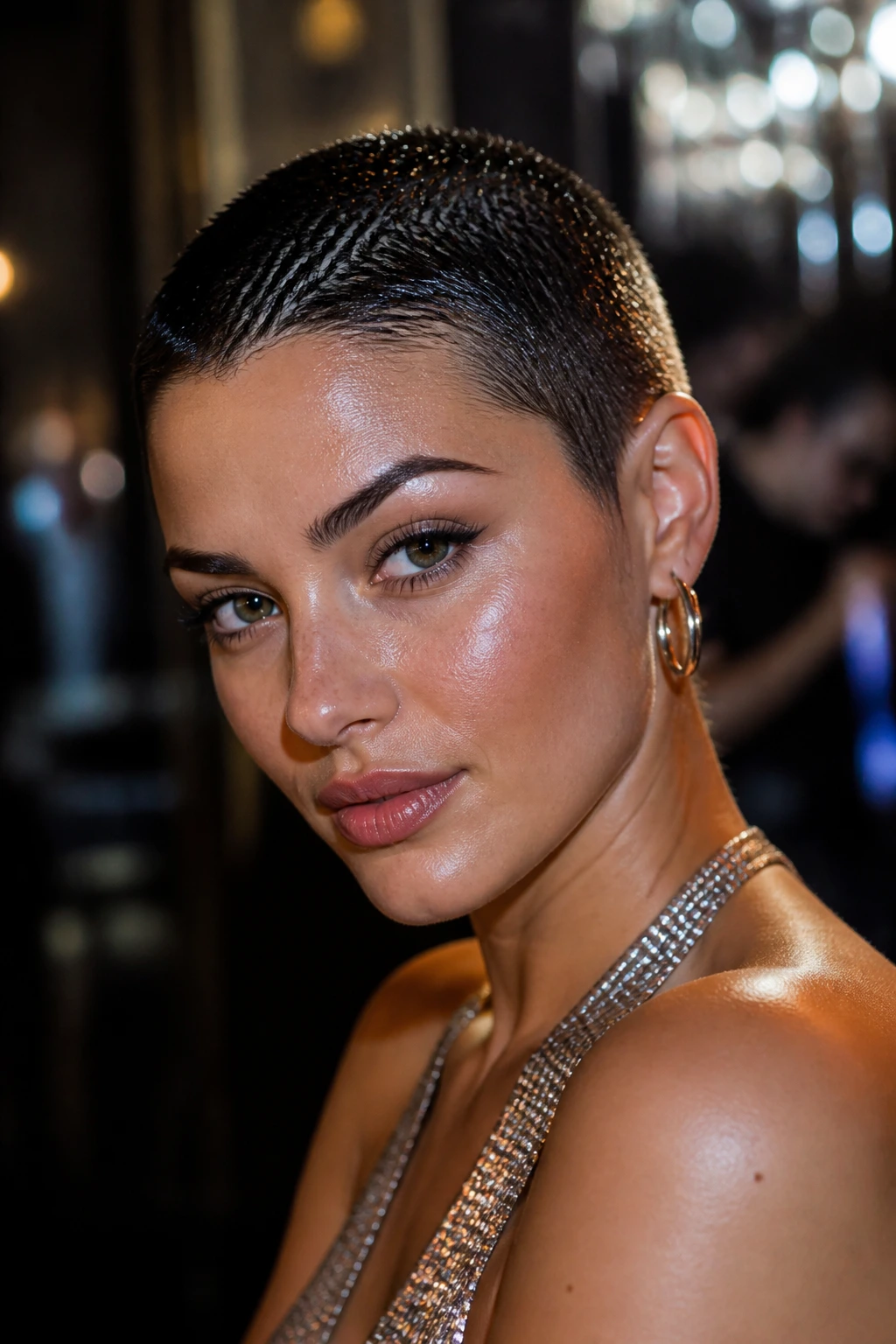
A wet-look buzz goes glossy on purpose. Pomade or gel gives the cut a slick surface that makes short hair look darker, richer, and more dramatic under light.
I like this on nights out, photos, or any time the haircut needs to feel more styled than natural. The trick is using just enough product to create sheen without clumping the hair into little spikes. If the scalp shows a lot, the shine can emphasize it, so this style likes even coverage.
35. Grown-Out Buzz
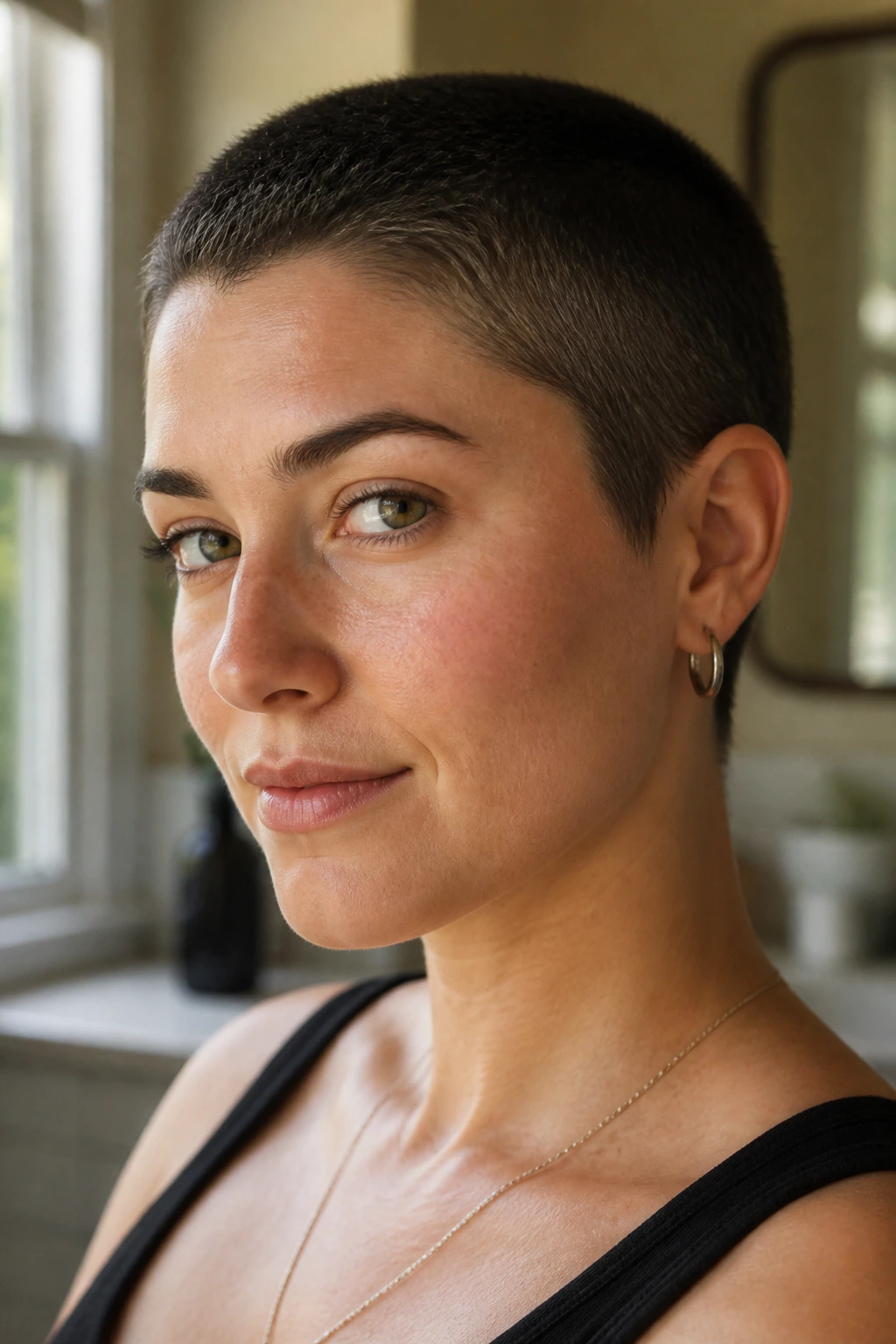
A grown-out buzz is designed to look good after the first few weeks, not just on day one. The edges are soft enough, the top is long enough, and the neckline is shaped so the regrowth feels part of the style.
This is the best option if you know you won’t touch the clippers every ten days. It’s a quiet, practical cut. Nothing fancy. But when the grow-out is planned well, it saves the awkward in-between stage that ruins so many short cuts.
36. Starting-Over Buzz
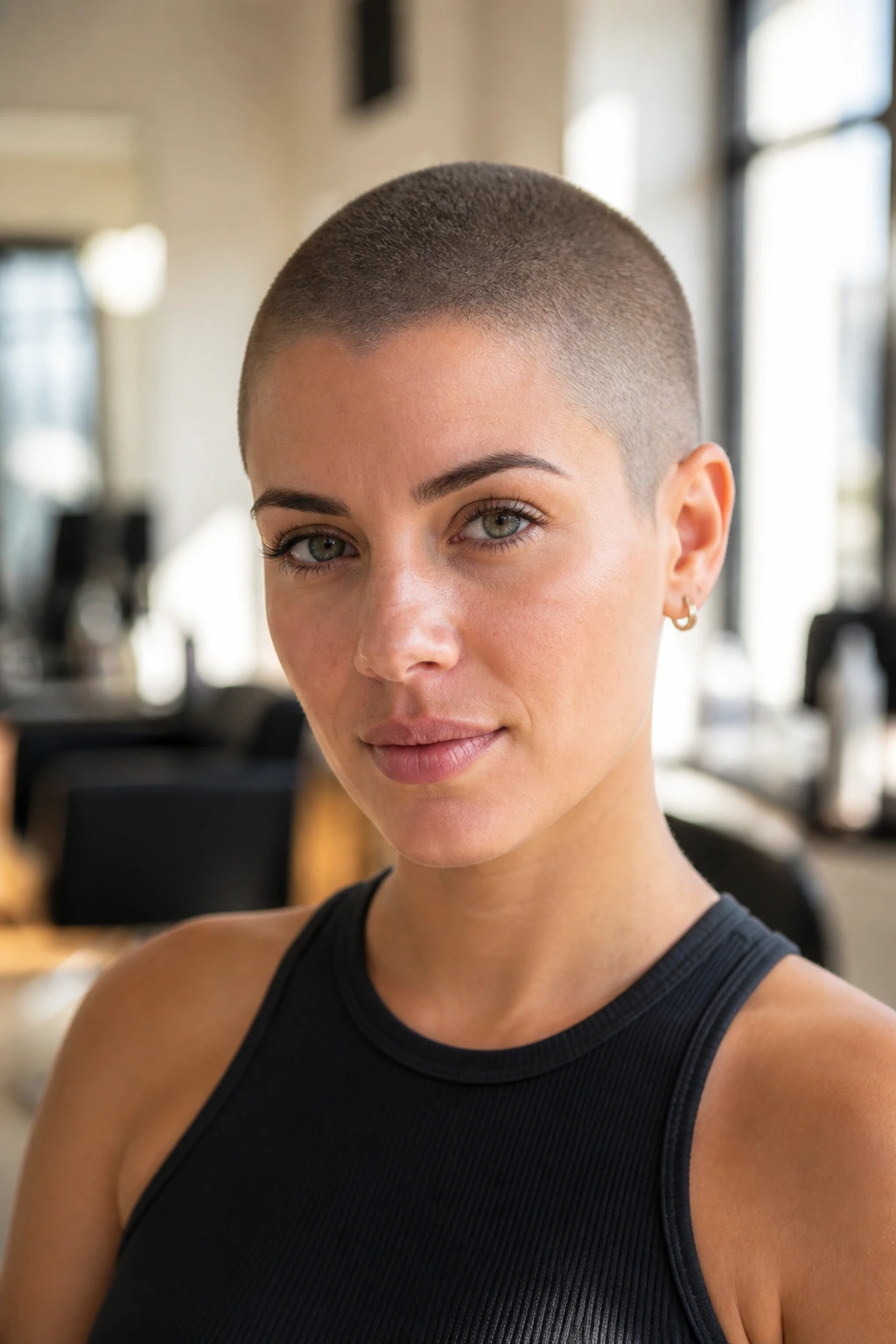
A starting-over buzz is less about trend and more about resetting the hair after damage, heavy color, or years of fighting the same shape. It can be an emotional cut, but the haircut itself should still look intentional—short, even, and clean at the edges.
This is the one I’d suggest if the ends are fried or if you’re tired of hiding under length. The scalp gets air. The hair gets a fresh baseline. Pair it with good scalp care and a little patience, because the point is not just cutting hair off; it’s giving the next shape a better start.
37. Curved Sideburn Buzz
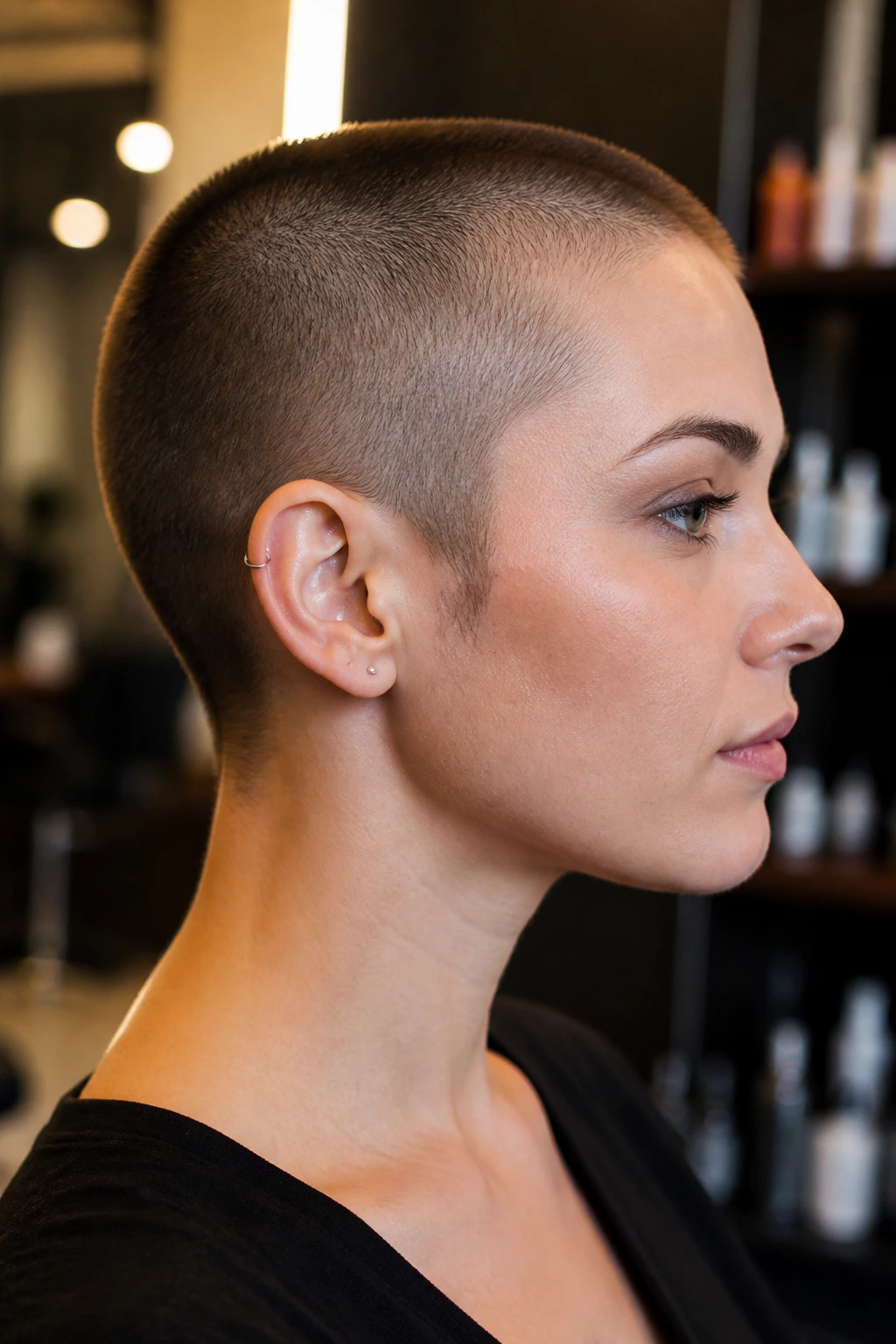
Curved sideburns soften a buzz cut in a way that’s easy to miss until you see it in the mirror. Instead of a hard stop at the temple, the line arcs gently down and makes the front of the haircut feel less severe.
It’s a small detail that works beautifully if your face is very angular or if you like the haircut to keep a bit of femininity without drifting into sweetness. That curve also plays well with earrings because it creates a natural place for the eye to land.
38. Longer-Crown Buzz
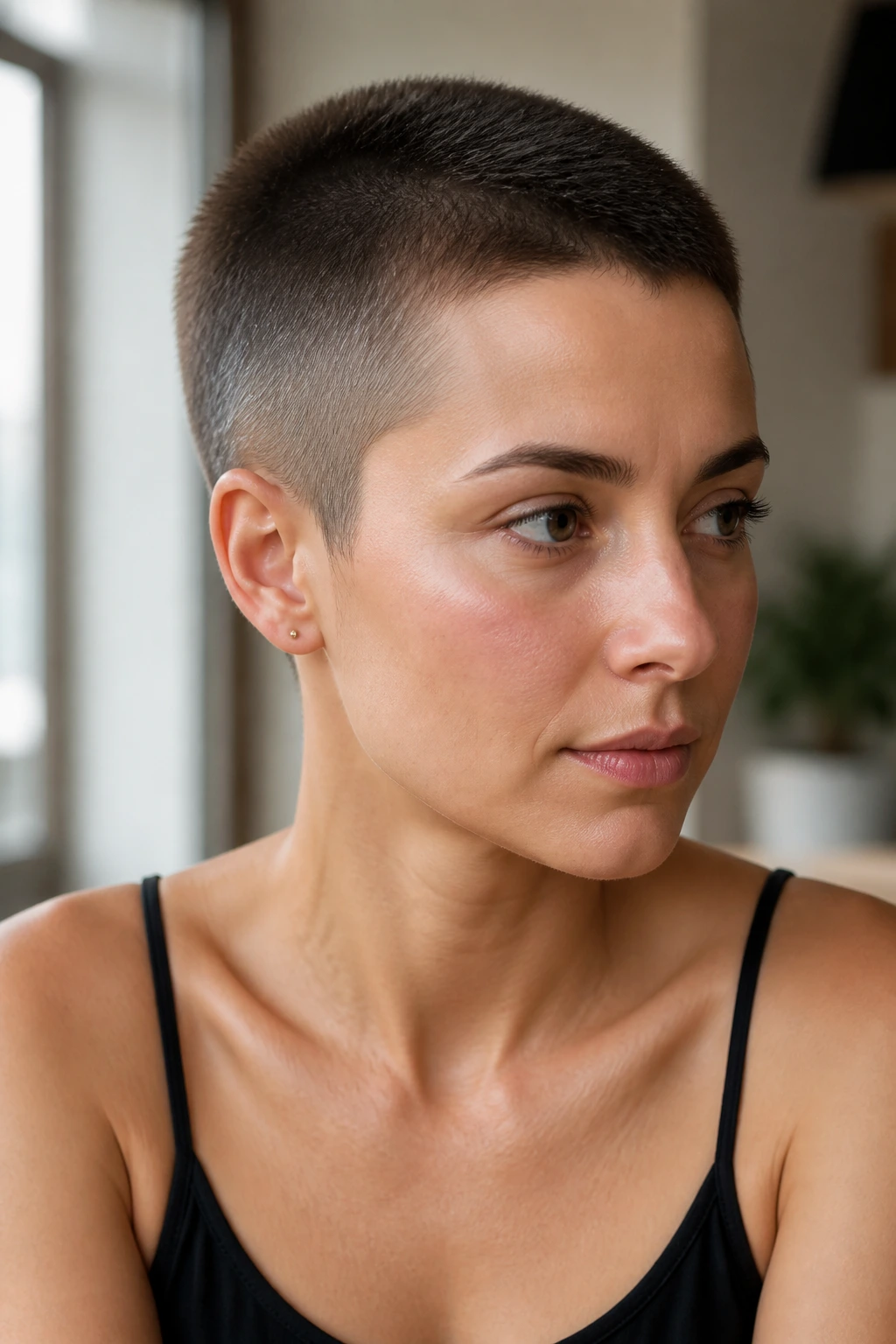
A longer-crown buzz leaves a touch more length at the crown than at the sides or back, which can help if your head shape is flat there or if your hair swirls into a strong crown cowlick. The little bit of extra length keeps the top from looking scraped too close.
This is one of the smartest choices for people who want a buzz cut but still care about shape from above. It can flatter the head in photos and soften the effect of strong cowlicks. If you want a buzz that grows out gracefully, this one gives you a better starting line.
What to Tell Your Barber Before the Clippers Start
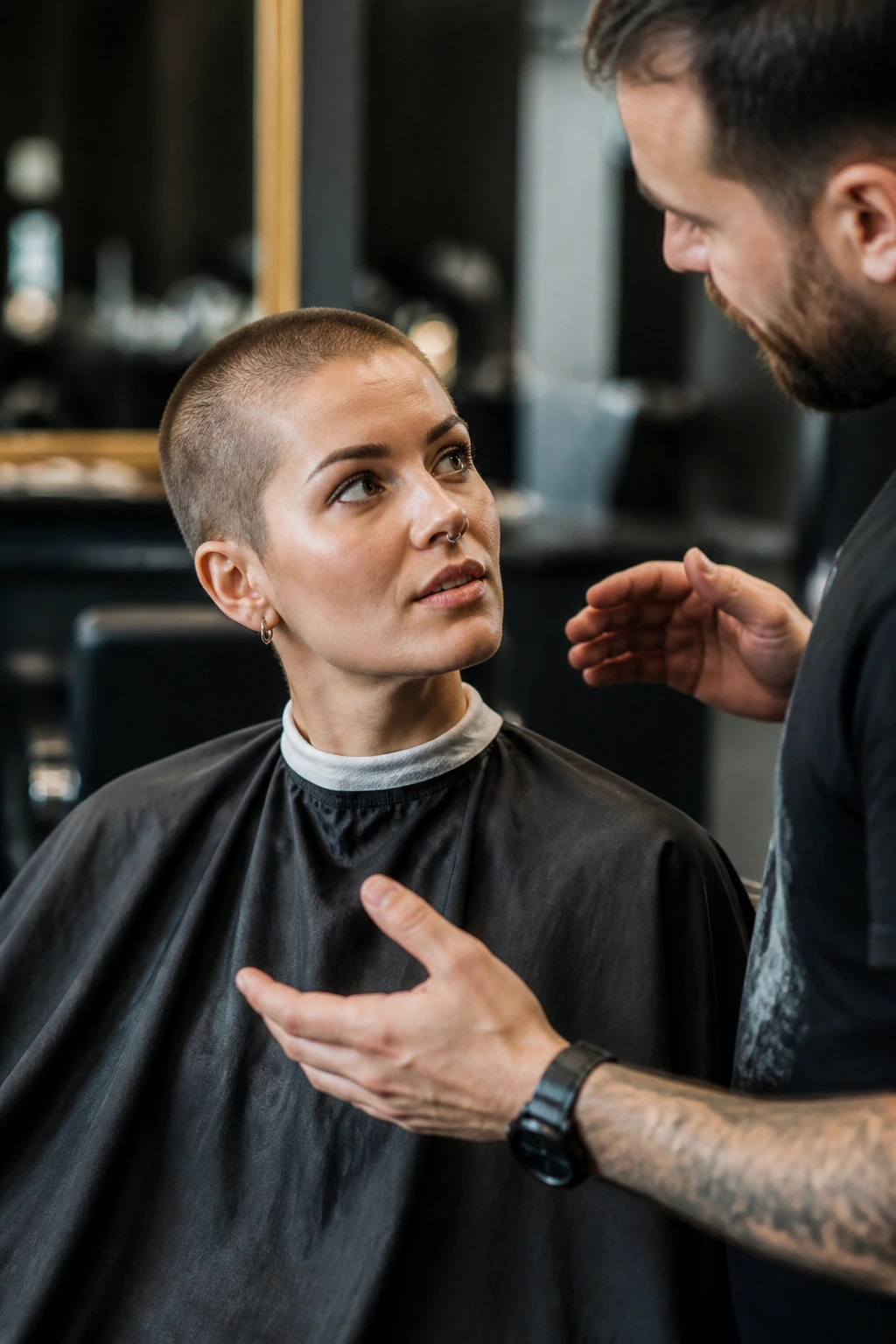
The fastest way to ruin a buzz cut is to assume “short all over” tells the whole story. It doesn’t. The difference between a buzz that flatters and one that feels accidental lives in the little decisions: how low the fade goes, whether the nape is tapered, how much length stays at the crown, and what happens around the ears.
Bring a reference photo, but bring your own head too. Point out cowlicks, scars, scalp bumps, or areas where your hair grows oddly fast. If you have a strong crown swirl, say so. A good barber will adjust the length in that zone instead of pretending the swirl doesn’t exist.
Guard number, in plain language
Ask for the guard number out loud. A #1, #2, or #3 on the sides can feel radically different once the clippers touch the head, and you want a number you can actually repeat later. If the barber says they’ll “feel it out,” push for a real answer.
Hairline and edge work
Decide whether you want squared edges, softened corners, or a natural hairline with only minor clean-up. Those choices change the personality of the cut more than people expect. A buzz with sharp edges feels deliberate; a buzz left slightly softer often feels easier to wear every day.
Color and scalp condition
If you’re planning bleach, color, or a skin fade, talk about scalp sensitivity before the first pass. Close cuts and lightened hair expose more skin, so irritation shows fast. A little planning here saves a lot of itching later.
Essential Tools for Keeping a Buzz Cut Crisp
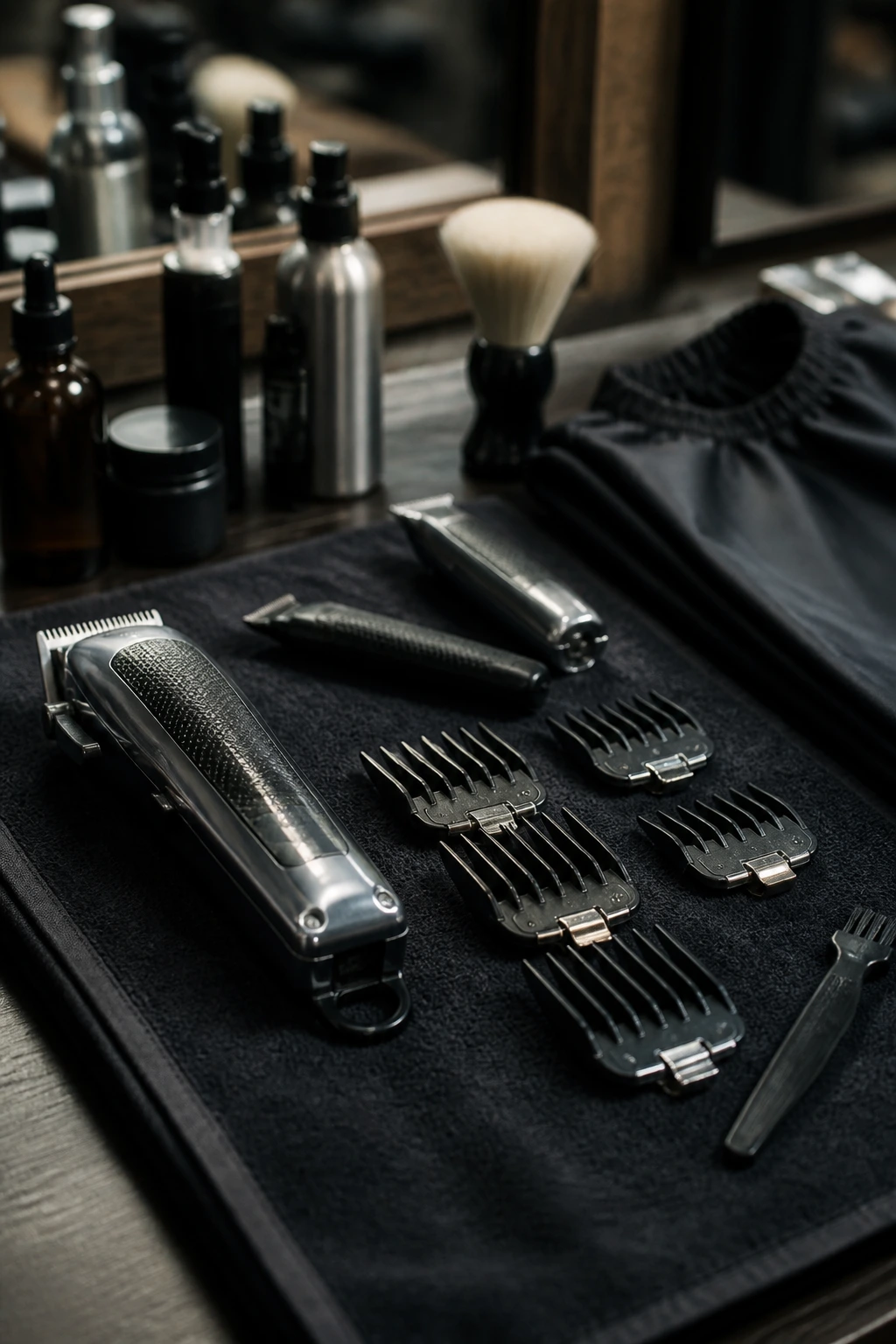
- Quality clippers with multiple guards: This is the main tool, and a set with reliable #0 through #4 guards gives you real control over the shape.
- Detail trimmer: Use this for line-ups, temple cleanup, and tiny adjustments around the ears and neckline.
- Handheld mirror: You need one to check the back of the head without guessing.
- Cape or old towel: Short hair gets everywhere; protect your shirt and bathroom floor.
- Soft neck brush: Great for sweeping loose hair off the scalp after clipping.
- Lightweight scalp oil or lotion: Use a small amount if the skin gets dry or tight, especially after a close cut.
- Broad-spectrum scalp sunscreen: Essential for skin-fade or induction-length buzzes when the scalp is exposed.
- Clipper spray or brush cleaner: Keeps the blades from dragging and helps the cut stay even.
How to Choose the Right Buzz Cut for Your Face, Hair, and Routine
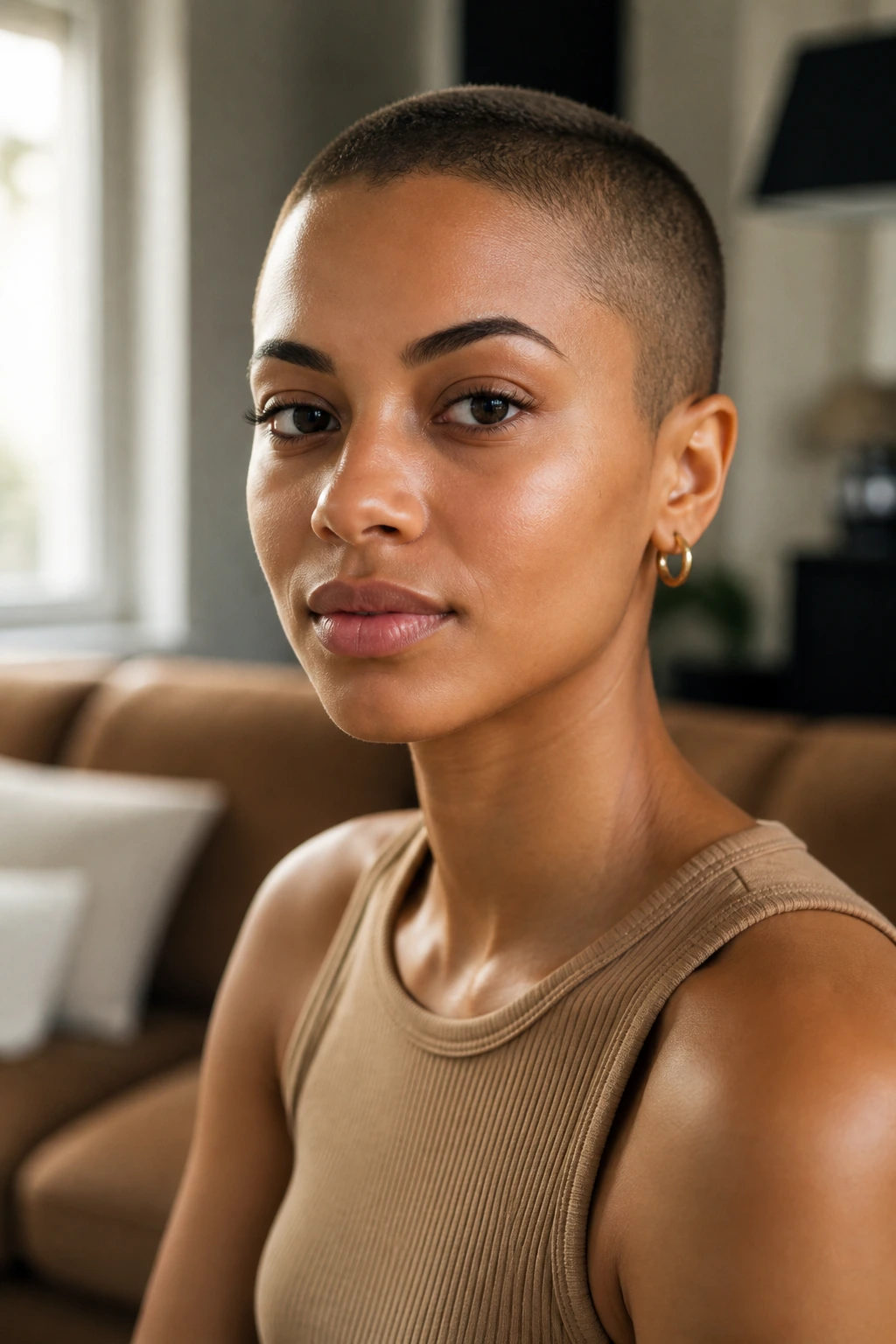
A buzz cut is not one-size-fits-all, and I’m glad it isn’t. The face shape, hair texture, and maintenance tolerance all matter more once the length disappears. A round face often likes a little height or angular edge. A long face usually benefits from some softness at the sides or a fringe line that doesn’t lift too high.
If your hair is fine, a #2 or #3 can keep the cut from looking too sparse. If it’s thick or coily, a closer buzz can make the shape feel cleaner without puffing out. Cowlicks deserve respect, not denial. They will show up.
The routine piece is just as real. A skin fade needs more touch-ups than a uniform #2. A platinum buzz needs toner. A grown-out buzz buys you time. Choose the haircut you’ll actually maintain, not the one that looks coolest on day one and falls apart by day ten.
How to Wear a Buzz Cut So It Reads Intentional
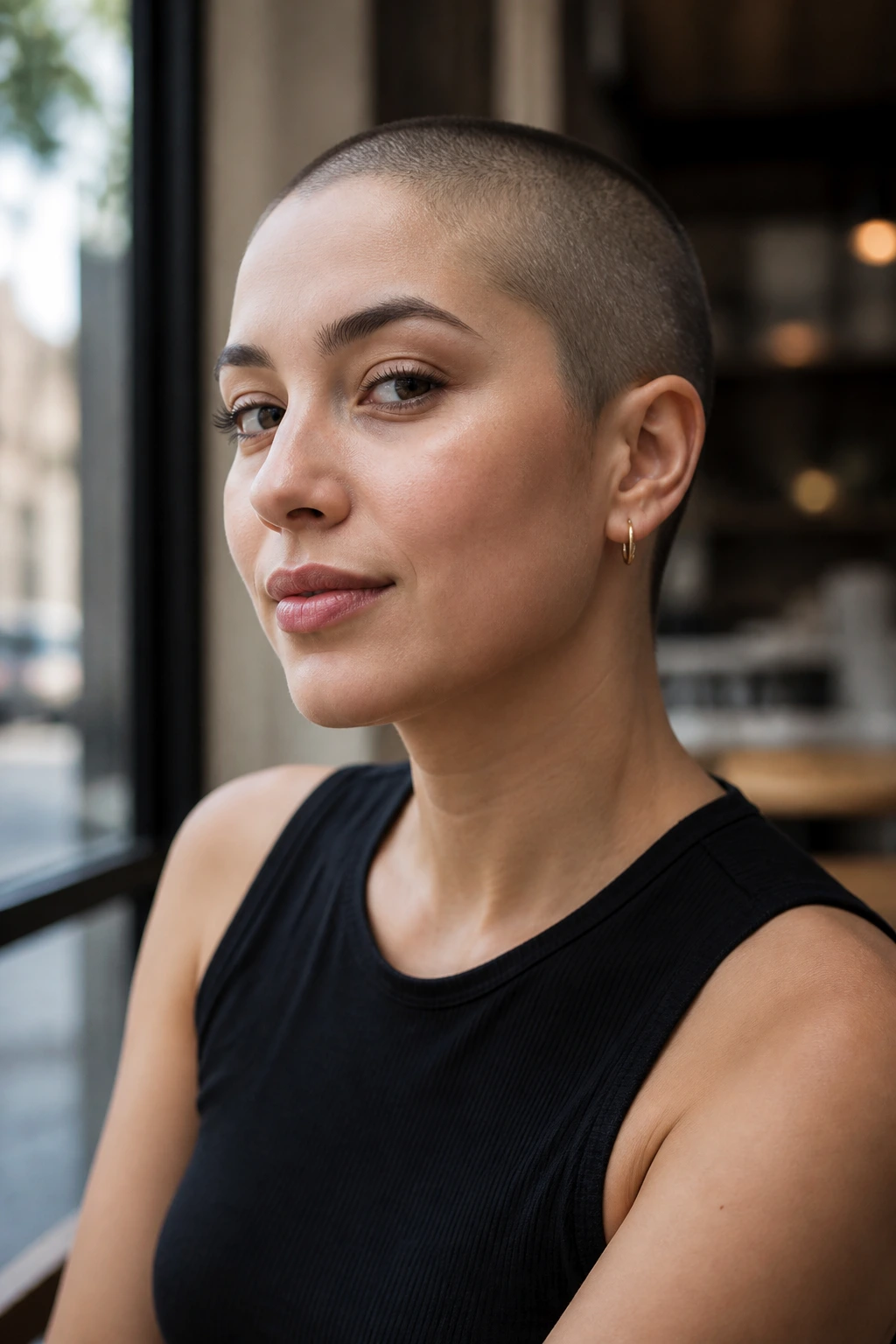
Brows: Strong brows pull a lot of weight with a buzz cut. If you like a cleaner face frame, keep them groomed; if you like a softer look, leave them a little fuller and let the hair stay spare.
Accessories: Earrings become a major player. Hoops, studs, and cuffs all read differently against close-cropped hair, and a buzz cut with the right earrings can feel finished in a way long hair sometimes hides.
Clothes: Necklines matter more than people think. Scoop necks, open collars, and crew necks all frame the cut differently, so pay attention to the line under your jaw and at the nape.
Skin and makeup: You do not need makeup to wear a buzz cut well. Still, a bit of tinted moisturizer, a bright lip, or even clean skin with a little brow gel can change the tone of the whole look.
Color, Texture, and Line Work That Change the Whole Cut
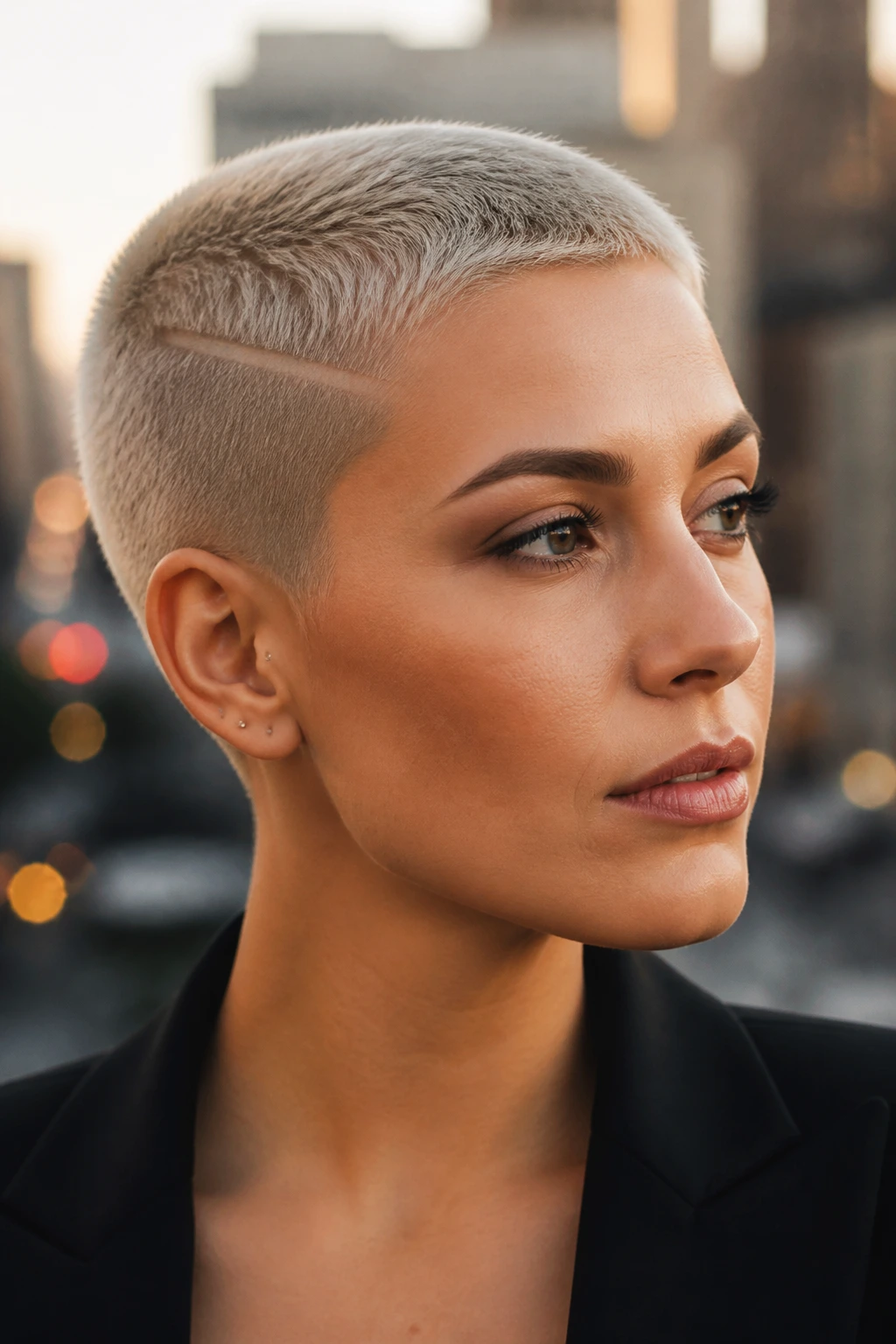
Short hair gives you fewer places to hide mistakes, but it also gives you faster payoffs. A close crop takes bleach, gloss, and tonal changes with a kind of blunt honesty that long hair doesn’t. If the color is brassy, you’ll know. If the toner is cool, you’ll know that too.
Line work changes the haircut even faster. A side design, a temple angle, or a clean line-up can move a buzz from minimal to graphic in one appointment. That’s why I tell people to choose one strong idea and not stack six. Platinum plus razor art plus a bold split dye can get crowded fast.
Texture finishes the job. Matte paste softens the top, wet gel makes the cut look darker and sharper, and no product at all can be the right call if the natural texture already gives you movement. Match the finish to the mood, not the other way around.
Maintenance, Regrowth, and Scalp Care
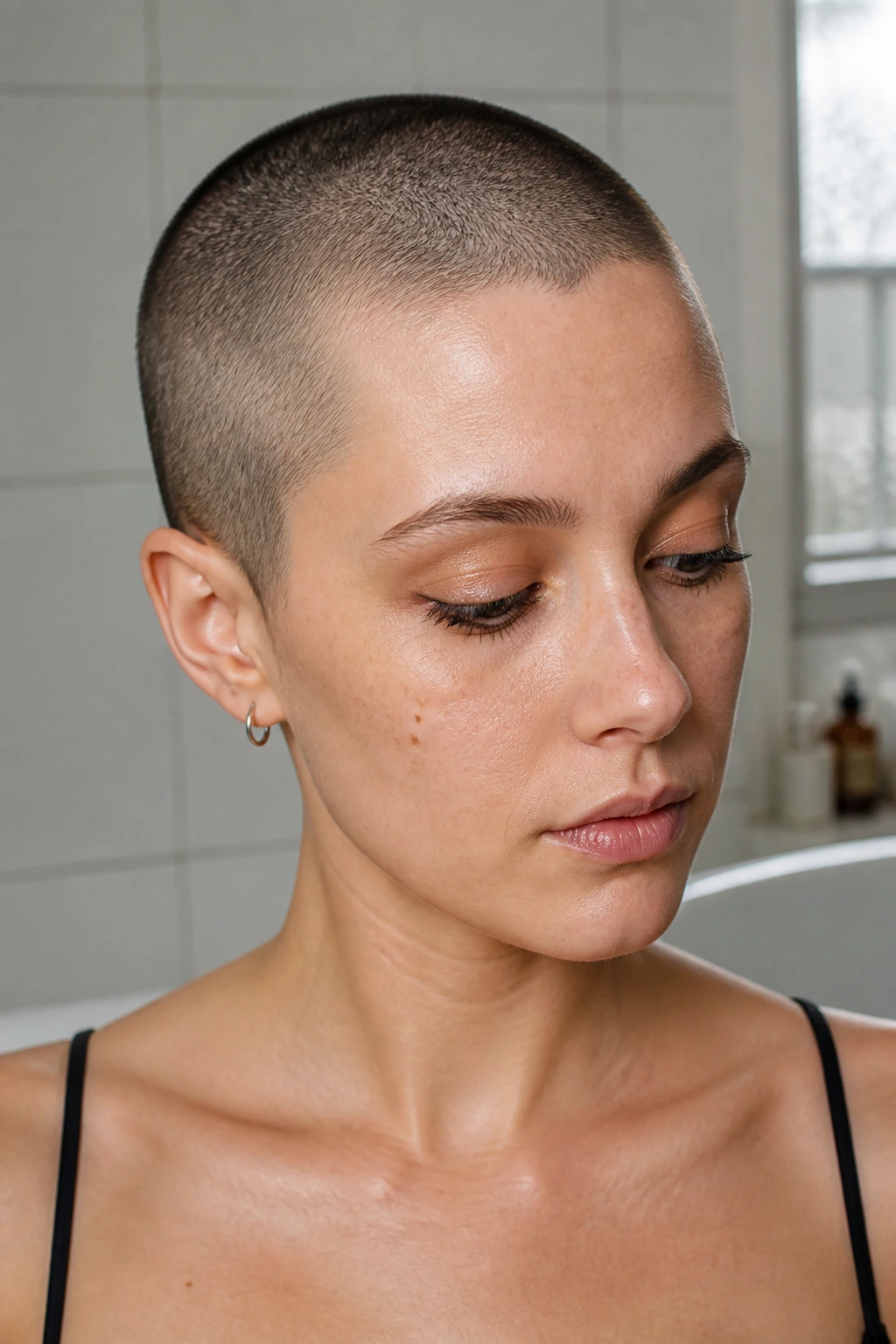
The shorter the cut, the faster the maintenance clock starts ticking. A skin fade or line-up usually needs cleanup every 10 to 14 days if you want it to stay crisp. A #1 or #2 uniform buzz can often stretch to 3 or 4 weeks before it starts looking shaggy. Color changes the math too: platinum and pastel shades often need a toner refresh or root touch-up every 4 to 6 weeks if you want them clean.
Scalp care matters more than people expect. Wash with a gentle shampoo when the scalp feels oily or product-heavy, and don’t scrub it raw just because there’s less hair there. If your scalp gets dry, a pea-sized amount of lightweight lotion or oil can calm the tight feeling without making the hair look greasy.
Sun protection is non-negotiable on very short cuts. A bare scalp burns fast. Use a broad-spectrum SPF on exposed areas, especially around the crown and part lines if you’re playing with designs.
Common Mistakes People Make With Buzz Cuts
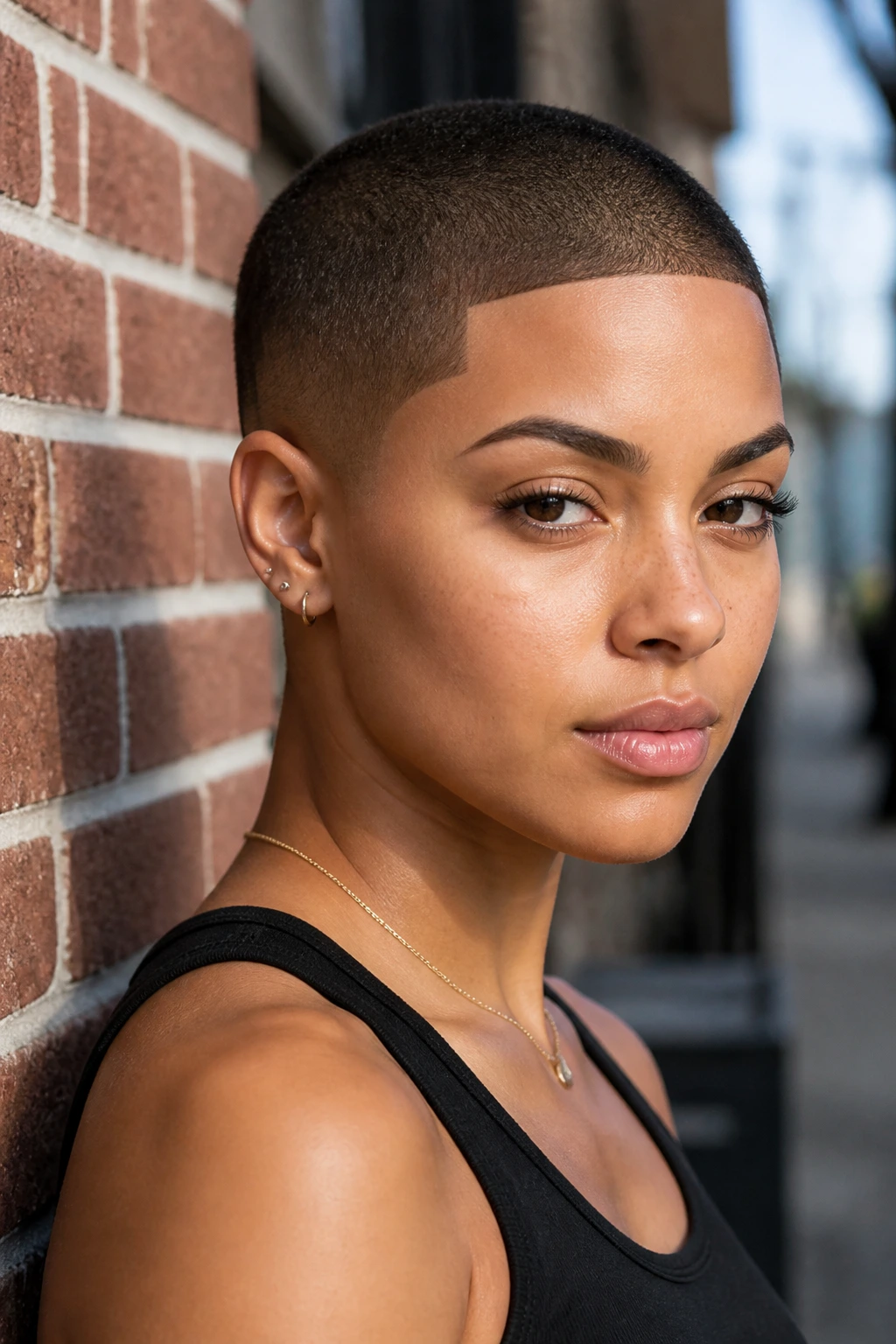
- Picking the shortest photo, not the right length: A shaved look on someone else may not fit your head shape or scalp texture. Start one guard longer if you’re unsure.
- Ignoring the crown swirl: Cowlicks can make a buzz stick up or lie oddly flat. Ask the barber to work with the swirl, not across it.
- Letting the fade grow too long: A clean fade looks deliberate; a half-grown fade just looks unfinished. Book the cleanup before the outline gets fuzzy.
- Skipping scalp care: Dry, itchy skin makes a short cut feel worse than it should. Use sunscreen outdoors and a light moisturizer when needed.
- Overloading on product: A buzz cut only needs a small amount of cream, paste, or gel. Too much turns short hair into sticky clumps.
- Bleaching without checking the scalp first: Short hair exposes skin more than long hair does, so irritation and patchiness show up quickly. Do a strand test and talk through the process first.
Buzz Cut Questions People Ask Before the First Clipper Pass

What guard number is best for a first buzz cut?
A #2 is the safest starting point for most people because it leaves enough hair to soften the scalp and gives you room to go shorter later. If you know you want it tighter, a #1 can still be a good first cut, but it will show the head shape more clearly.
Will a buzz cut make my face look wider?
Sometimes, yes—but the right fade, taper, or crown length can balance that out. A buzz cut can also sharpen cheekbones and jawlines because it removes the visual weight around the face.
Can curly or coily hair be buzzed evenly?
Absolutely, but the barber needs to respect the texture and the growth pattern. Very short curls can look patchy if taken too close, so a slightly longer guard often shows the pattern better.
How often do I need to trim it?
Uniform buzzes usually need a cleanup every 3 to 4 weeks, while skin fades and sharp line-ups need attention more often. Once the shape blurs, the haircut loses the point.
Is bleach safe on a buzz cut?
It can be, but the scalp is exposed more directly, so sensitivity matters. A patch test and a slow lift are worth the time, especially if the hair is dark and needs several rounds.
How do I grow out a buzz cut without hating it?
Choose a cut with a softer perimeter, a little crown length, or a tapered nape so the grow-out still has shape. The awkward stage is usually shorter when the haircut was designed with regrowth in mind.
What if I have scars or bumps on my scalp?
A longer buzz—think #2 or #3—usually softens those details better than a near shave. Point them out before the cut starts so the barber can keep the area flattering instead of exposing it by accident.
Can a buzz cut work if my hair is thinning?
Often, yes. A buzz can make thinning look intentional because it removes the contrast between dense and sparse areas. The key is choosing the right length so the scalp visibility feels even instead of patchy.
The Cut That Still Feels Like You
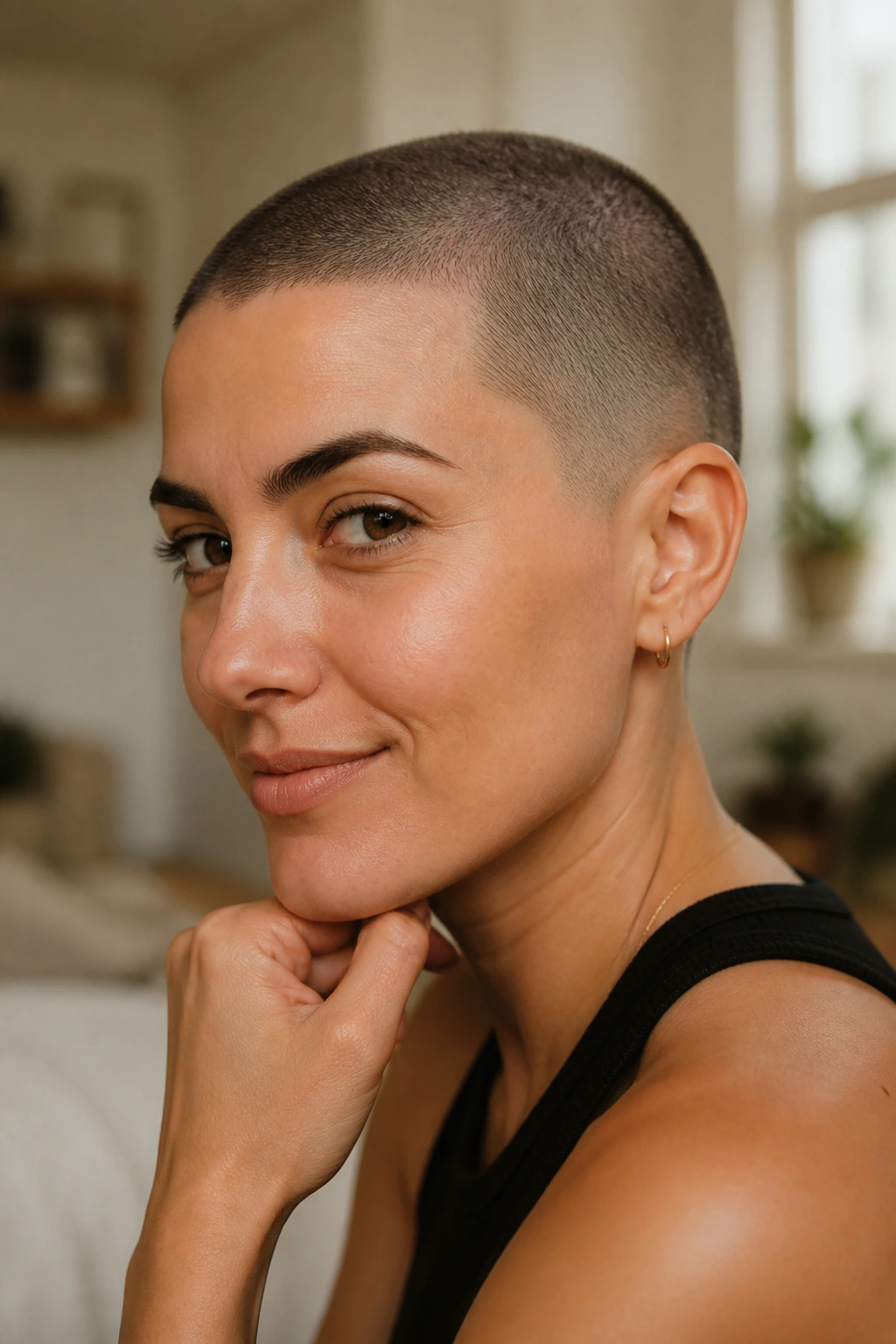
A buzz cut can be blunt, but it doesn’t have to be harsh. The right guard length, fade, color, or edge treatment can make the same haircut feel polished, soft, edgy, or quietly expensive. That’s the part people miss when they think close-cropped hair means one single look.
If you’re choosing between styles, start with the detail you care about most. Shape, color, or ease. Pick one to lead. The rest can follow, and usually should.
A good buzz cut grows out in stages, not mistakes. That’s the fun of it.
