



A blunt curly cut can look innocent in the salon mirror and turn into a box by lunch. Or worse, a triangle. That’s why choppy layered haircuts for curly hair have such a loyal following: they change where the weight sits, so the curl can spring instead of just stacking.
The best versions do not try to force curls into a straight-hair shape with “nice” tidy lines. They let the hair live a little. Shorter pieces at the crown, longer pieces underneath, and ends that have been point-cut instead of chopped flat can make a huge difference once the hair dries and contracts.
And that’s the part people miss. Curly hair is not one shape when it’s wet and another shape when it’s dry; it’s almost two different haircuts. Good layers respect that. Bad layers ignore it, then act surprised when the silhouette puffs out in the wrong places. The styles below lean into that reality instead of fighting it.
Why Choppy Layers Keep Curly Hair from Going Boxy
-
They move the bulk upward or inward: A few well-placed layers can keep heavy curls from hanging like a square curtain, especially around the jawline and shoulders.
-
They play nicer with shrinkage: Curls tighten as they dry, so a cut that looks slightly long when wet often lands in the right place once it settles.
-
They give the crown some lift: If your top goes flat while your ends explode, choppy layers redistribute weight and make the top look less sleepy.
-
They help curls clump more cleanly: Separate lengths create more room for defined curl families instead of one thick mass that dries into a fuzzy block.
-
They work at more than one length: A pixie, a lob, and waist-length coils all benefit from choppy layers, but the placement changes. That’s the trick.
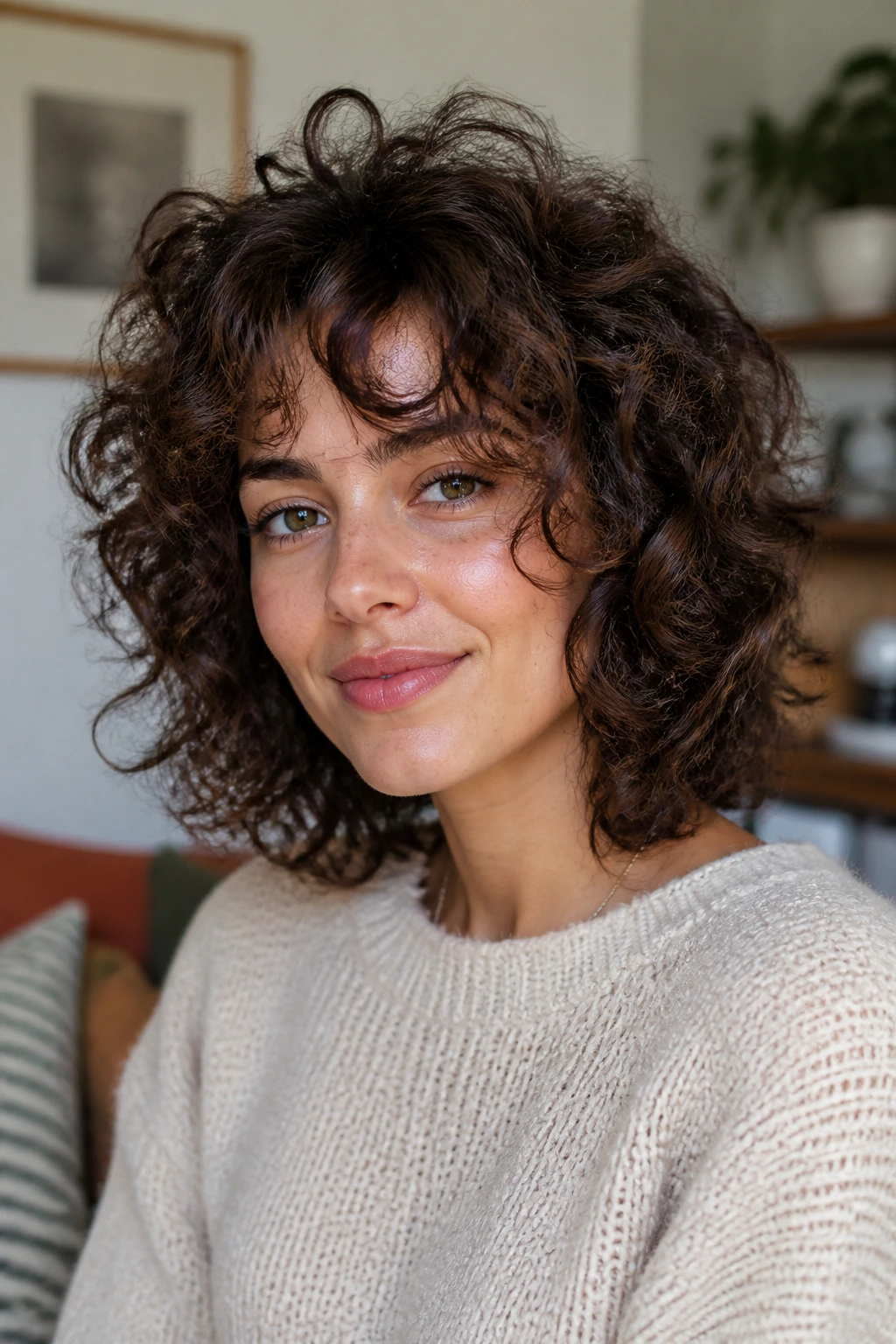
1. Shoulder-Length Curly Shag with Choppy Crown Layers
The curly shag is the one I recommend to people who want movement without losing their whole head of hair to the scissors. It sits around the shoulders, the crown is lighter, and the ends break up instead of forming one heavy line. On curly hair, that means the haircut looks casual on purpose, not like a bad grow-out.
Why It Works on Curls
The crown gets just enough removal to stop that helmet shape, while the lower lengths stay long enough to keep the overall silhouette grounded. It’s a smart middle path for medium-density curls that puff at the sides and flatten on top.
If you like a little fringe, this cut takes bangs well. If you don’t, the same shape still works with a deep side part or a face-framing piece that starts at the cheekbone.
Best for: shoulder-length hair that needs bounce more than bluntness.
Styling note: a light mousse at the roots and a gel on the ends keeps the choppy pieces from frizzing into a blur.
2. Curly Wolf Cut with a Tapered Neck
The wolf cut looks like it was designed by someone who got bored of tidy hair. Good. That is its charm. On curls, the shorter top and longer nape create a jagged, lived-in shape that reads as bold instead of chaotic when the layers are cut with intention.
The key is contrast. You want the top to sit high enough that the crown feels airy, while the bottom keeps a bit of length so the whole cut does not balloon out like a mushroom. If your curls are dense, this cut can take off an impressive amount of visual bulk.
It does want styling. Not a lot, but enough. A diffuser on low heat and a bit of root lift help the top pieces stand away from the scalp instead of collapsing into the rest of the curl mass.
3. Rounded Curly Lob with Choppy Ends
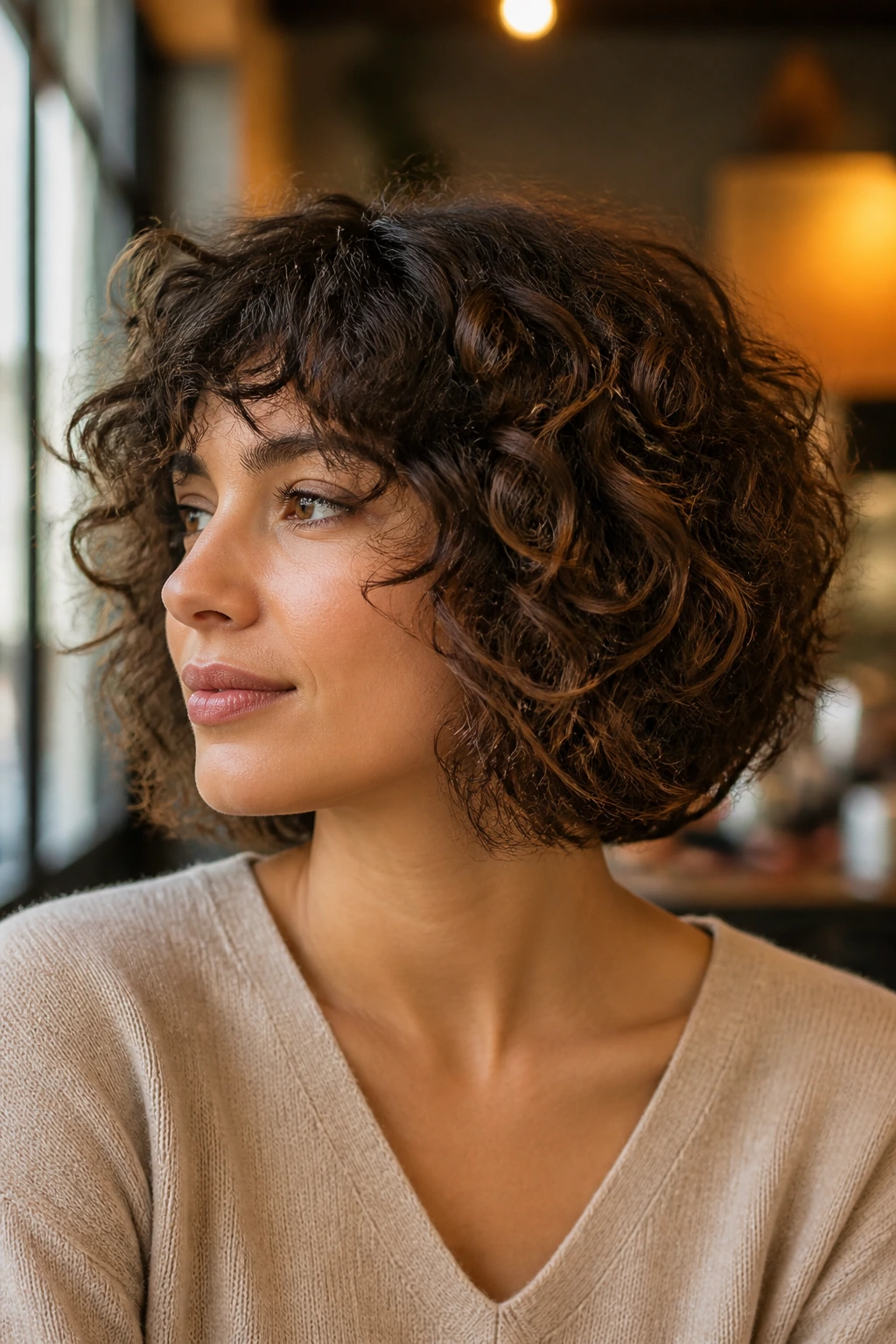
Want something that behaves at the office and still looks good when you toss your hair over one shoulder? The rounded curly lob lives in that lane. It hits somewhere between the chin and collarbone, then uses choppy ends to keep the line soft and mobile.
This is the cut I like for people who are nervous about layers because it is not loud about them. The shape stays rounded, which keeps the curls from flaring too wide, but the ends are textured enough that the whole thing doesn’t feel stiff.
What to Ask For
Ask for a lob that follows your curl pattern dry, with point-cut ends and subtle internal layering. That keeps the silhouette neat while still giving each curl room to show itself.
A rounded lob is also forgiving on day two. A little water, a touch of leave-in, and a quick scrunch can wake the layers back up without needing a full wash.
4. Face-Framing Butterfly Layers
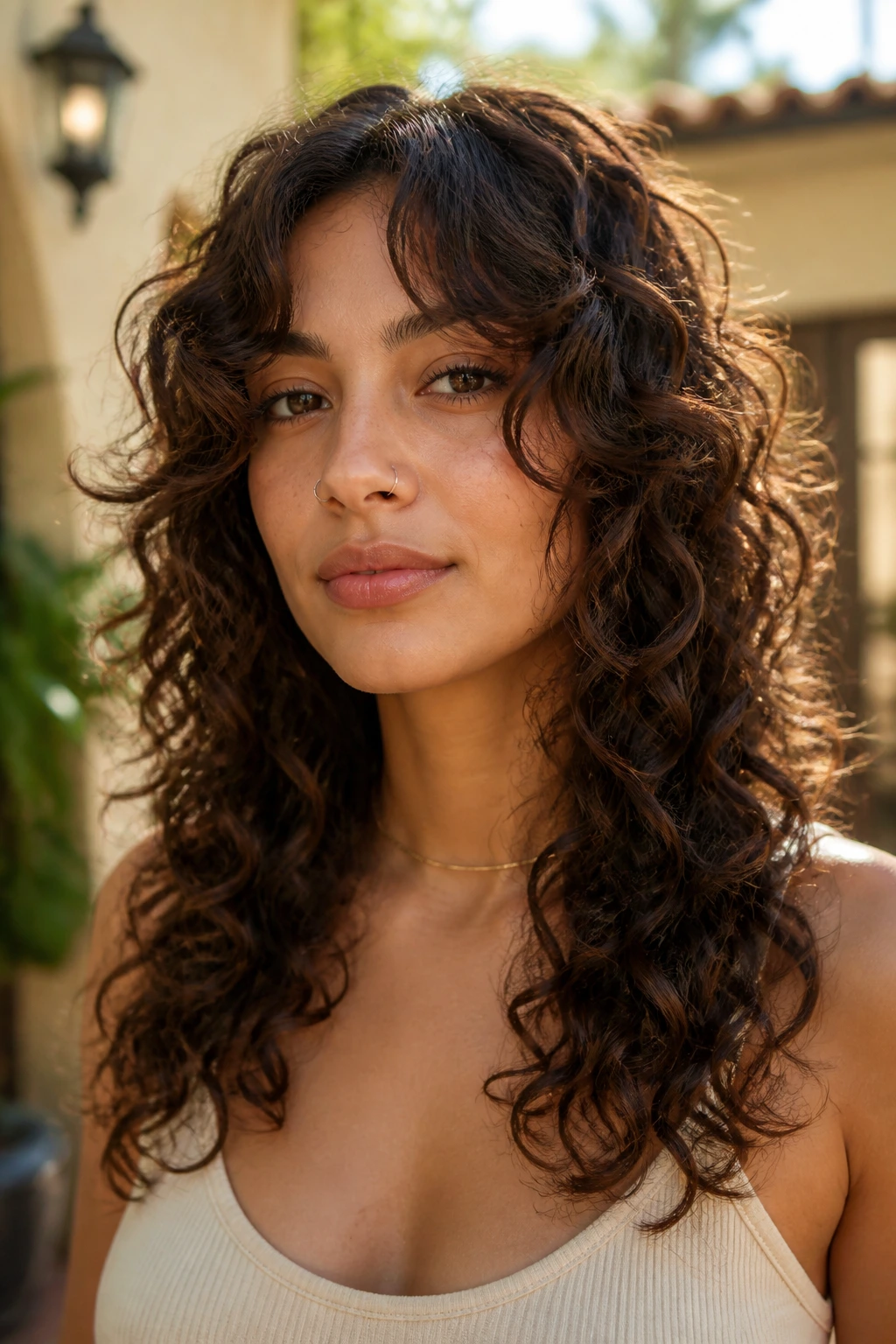
Butterfly layers are for people who want the front to feel lighter without giving up the length in the back. On curly hair, they create that winged effect around the face, with shorter front pieces that bounce up and longer back pieces that hold the weight.
The result is flattering in a very practical way. Your curls stop hanging straight down around your cheeks, and the front gains shape even when the rest of the hair is pulled back. It’s a useful cut if you wear your hair in half-up styles a lot, because the front pieces still do something interesting.
I prefer this shape on medium to long curls with a decent amount of density. Thin curls can wear it too, but the layers need to stay softer so the ends do not look sparse.
5. Tapered Pixie with Choppy Crown Layers
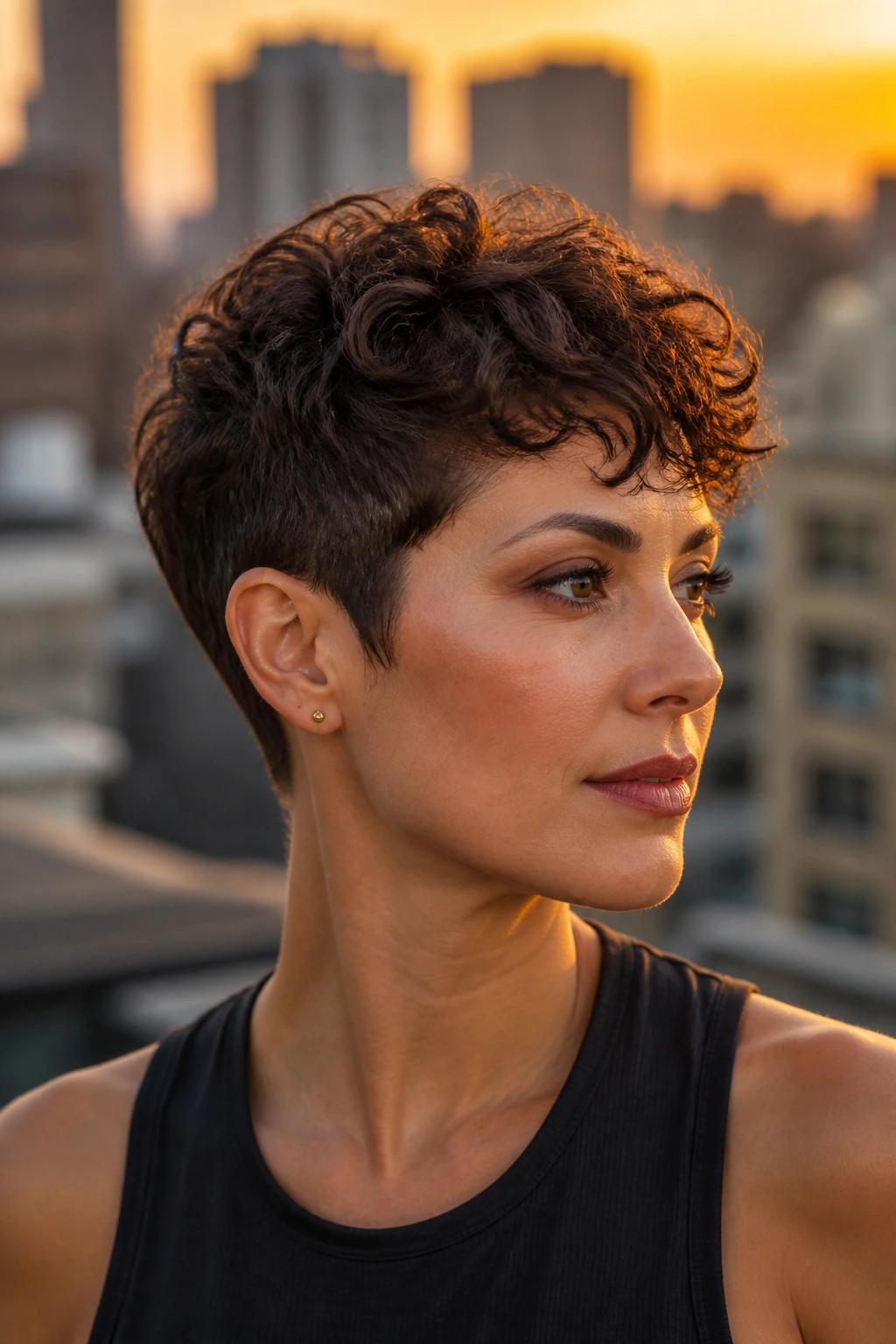
Short curly hair is merciless about bad layering, which is why a tapered pixie has to be cut with a steady hand. The choppy crown keeps the top alive, while the tapered sides and nape stop the shape from spreading outward like a puffball.
This cut is not shy. It works best when you’re willing to show your curl pattern instead of hiding it under length. Tight coils, springy ringlets, and compact waves all look good here as long as the top has enough room to move.
Watch the crown length. Too short and the top spikes. Too long and the whole cut loses its shape. A good pixie should look like it belongs to the curl pattern, not like the curl pattern is trying to escape it.
6. Collarbone Cut with Internal Layers
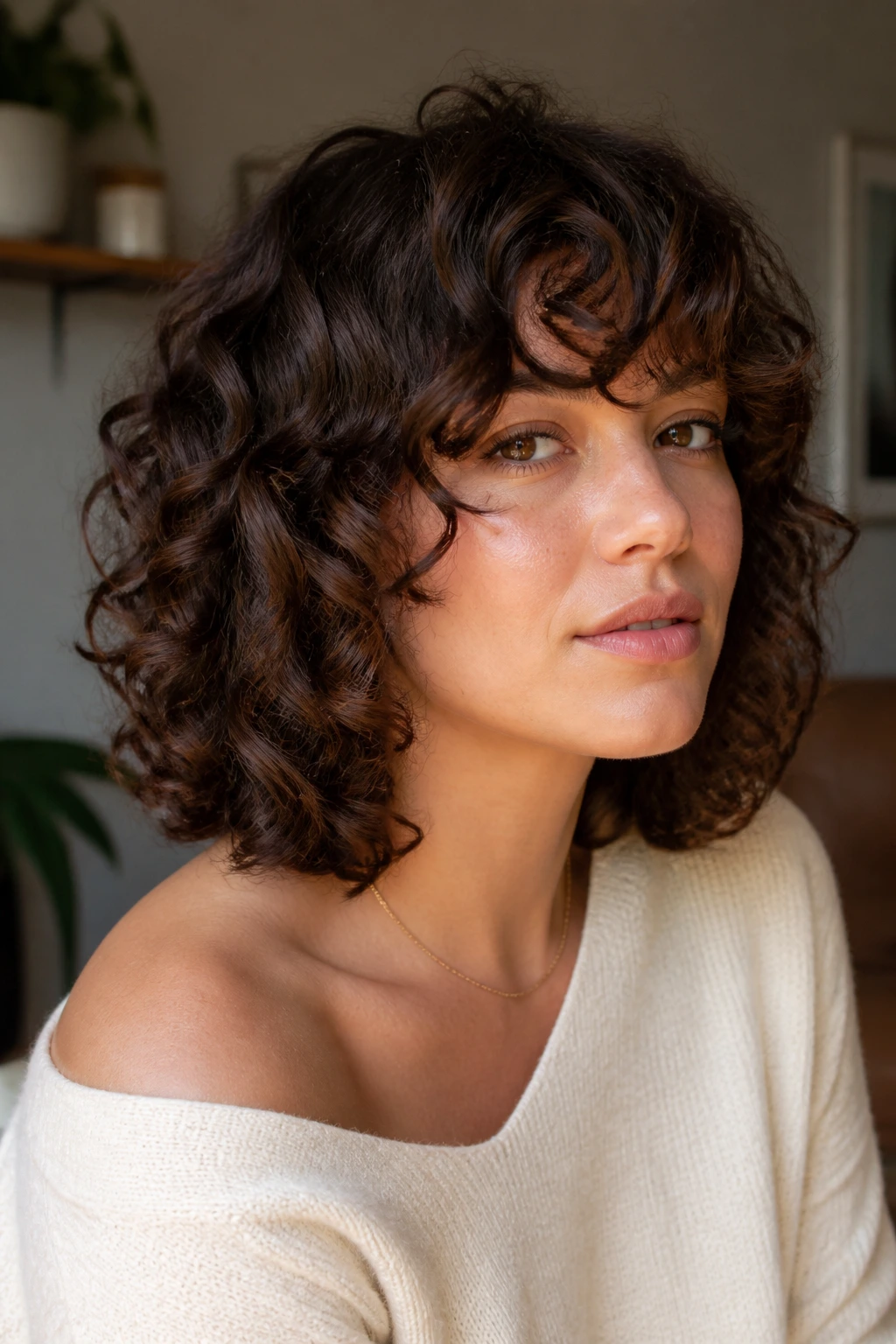
The collarbone cut is a quiet workhorse. From the outside, it looks polished and almost simple. Underneath, the internal layers remove enough weight to stop the ends from dragging and the top from lying flat.
That hidden structure is a gift for curly hair. You get movement without obvious chop marks, which is useful if you need a haircut that looks clean on a video call but still comes alive once the curls dry fully. It’s also one of the best choices for people who hate a visibly shaggy finish.
Unlike a blunt collarbone cut, this version does not make the bottom edge act like a shelf. The curl falls in softer steps, which keeps the silhouette from feeling heavy or blocky.
7. Long Curly Layers with Razor-Lifted Ends
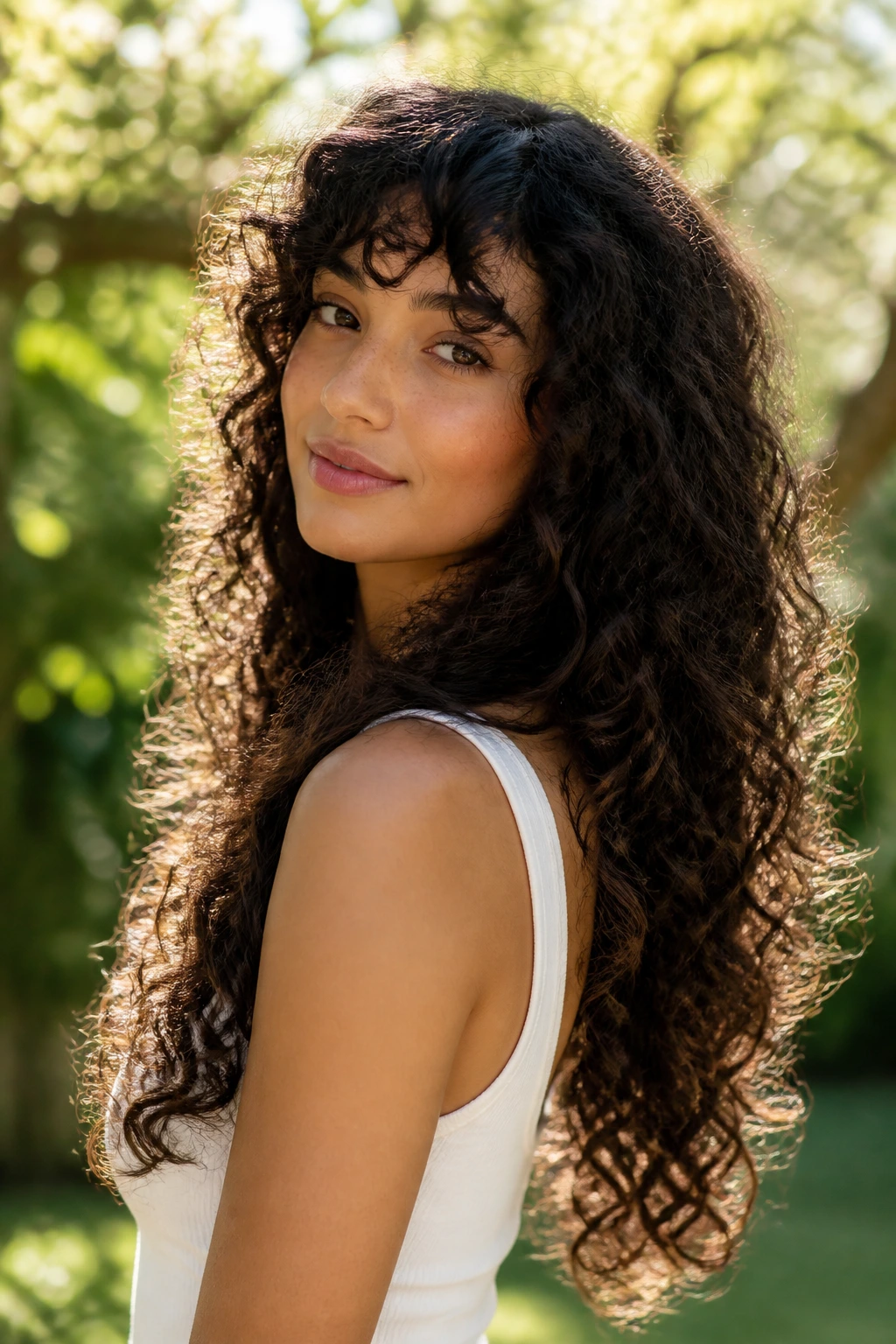
Long curls can get strange around the mid-back stage. The hair looks full, but the ends drag. Razor-lifted ends fix that by breaking up the perimeter so the longest pieces do not sit there like wet rope.
This works especially well for looser ringlets and medium-density curls that need shape more than they need raw bulk removal. The movement shows up in the lower half of the cut, so the hair swings instead of hanging straight down.
Where the Razor Helps
A light razor touch at the ends can soften a thick perimeter and make the layers blend without looking choppy in a harsh way. The catch is control. On coarse or very frizz-prone curls, too much razor work can rough up the cuticle and leave the ends fuzzy.
Ask for soft point cutting or a guarded razor approach, not aggressive texturizing. That keeps the length elegant and the layers readable.
8. Midi Cut with a Curly Fringe
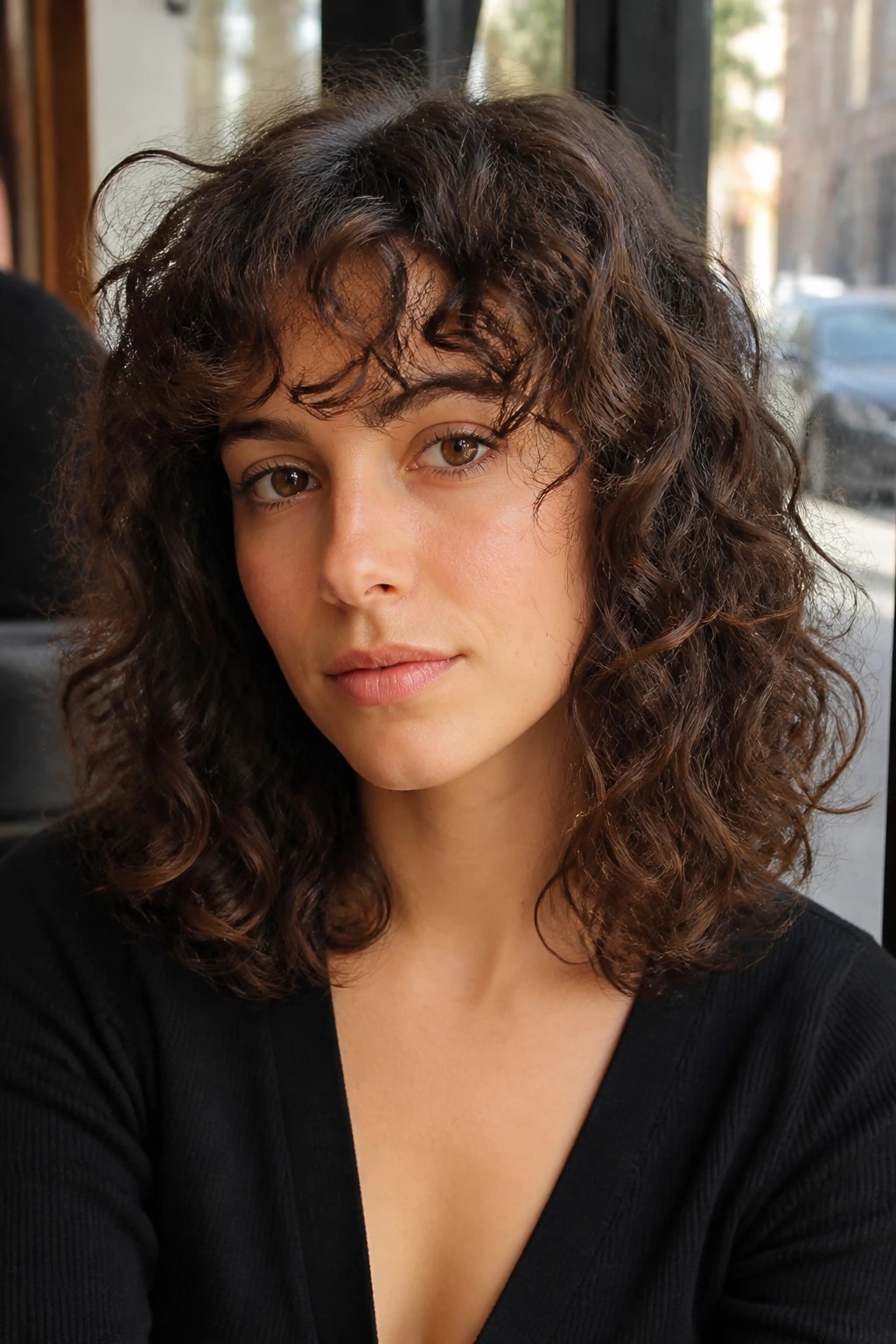
A curly fringe changes the whole attitude of a midi cut. Suddenly the focus moves up toward the eyes, and the rest of the layers can fall in a softer frame around the jaw and neck.
The important part is the shrinkage math. Curly bangs always sit longer when they’re wet than when they’re dry, and that gap can be dramatic. If your curl pattern is springy, a fringe that lands at the bridge of the nose wet may end up at the brows or higher once it dries.
I like this cut when you want personality without committing to a full short shape. It is playful, but not flimsy. The choppy layers keep the fringe from looking like a separate helmet sitting on top of the head.
9. Short Curly Crop with Piecey Layers
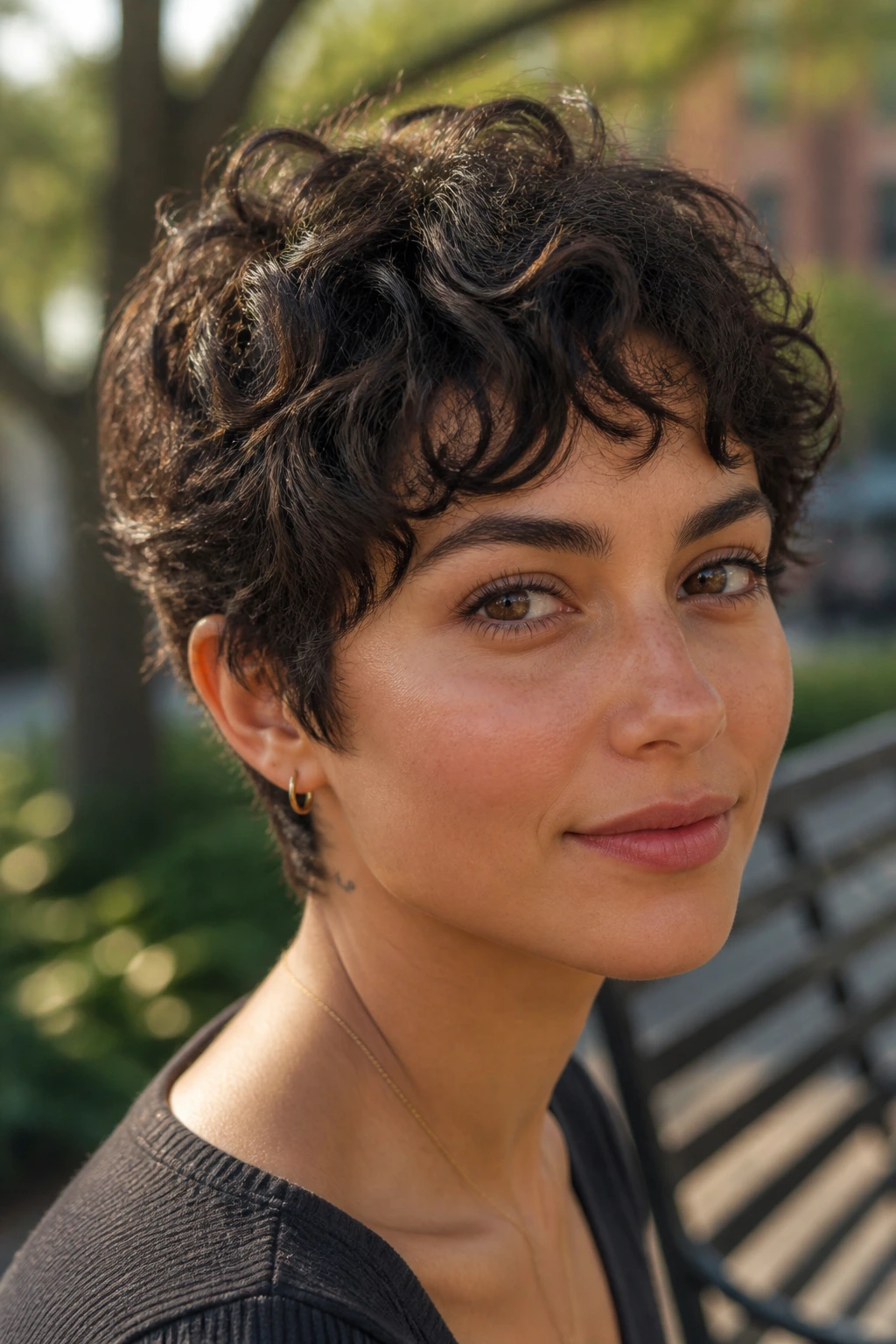
A crop with piecey layers gives curls room to stand apart instead of collapsing into one round mass. It’s shorter than a bob, looser than a pixie, and much better for people who want to spend less time fighting the back of the head in the mirror.
The piecey finish matters. You want the layers to create small, distinct curl families rather than one fluffy cloud. That usually means careful point cutting and a styling routine that encourages separation without turning the hair crunchy.
Best for: active mornings, humid weather, and curls that lose shape fast when they sit too long.
If your hair tends to get wide at the temples, ask for slightly shorter sides and a little extra length at the top. That keeps the crop from reading like a triangle from the front.
10. Curl-by-Curl Deva-Style Shape
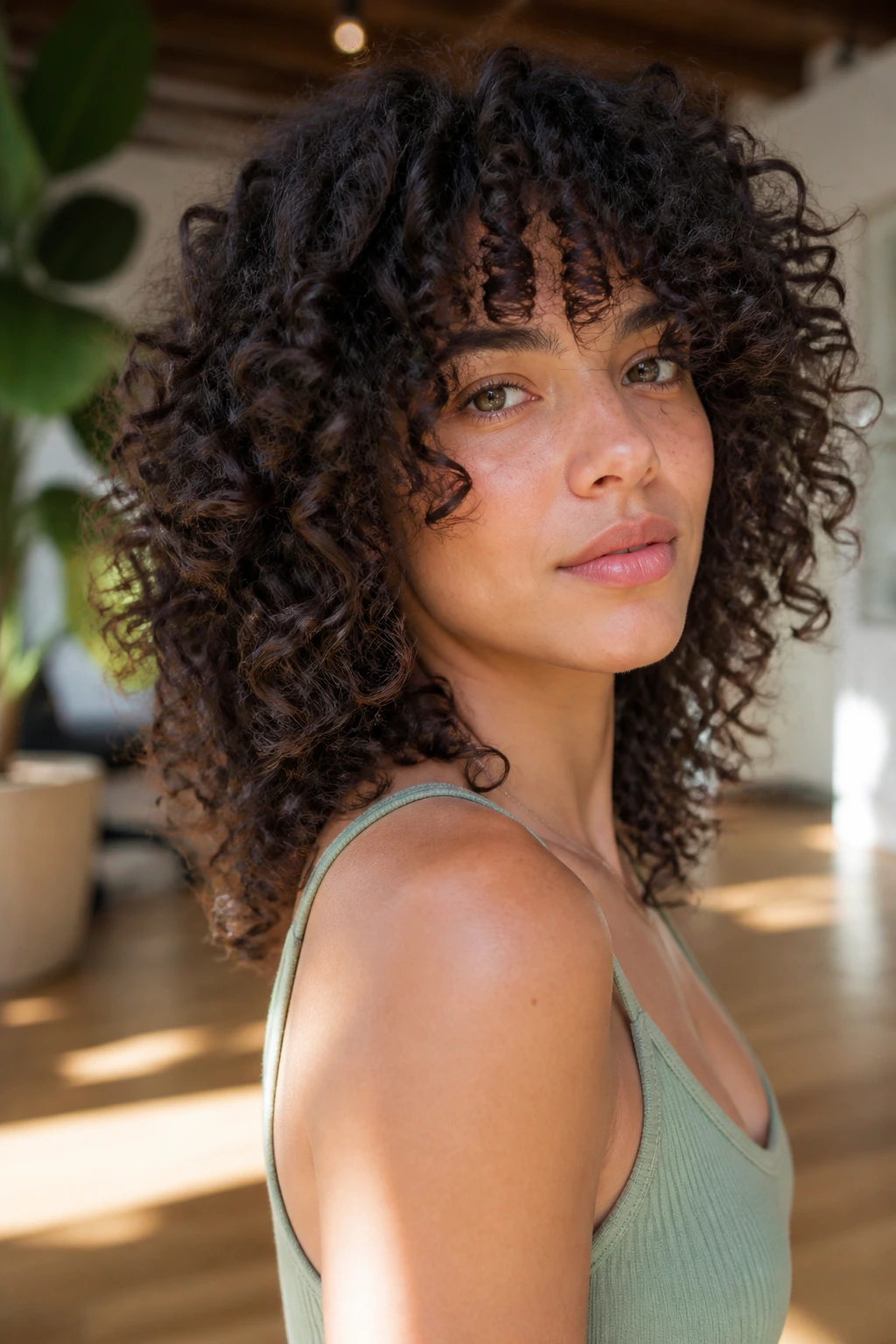
A curl-by-curl shape is less of a “style” and more of a method, but it belongs on this list because it can produce some of the best choppy layered results. The stylist cuts each curl in its natural pattern, usually dry, so the final shape follows the hair as it actually lives.
That matters. A lot. Curly hair often lies to you when it’s wet, and a curl-by-curl approach lets the stylist see where each section wants to spring. The end result is less about symmetry and more about balance.
This is the cut for people who have spent years saying, “My hair has a mind of its own.” Good. Let it. The mind just needs a better map.
11. Waterfall Layers for Long Ringlets
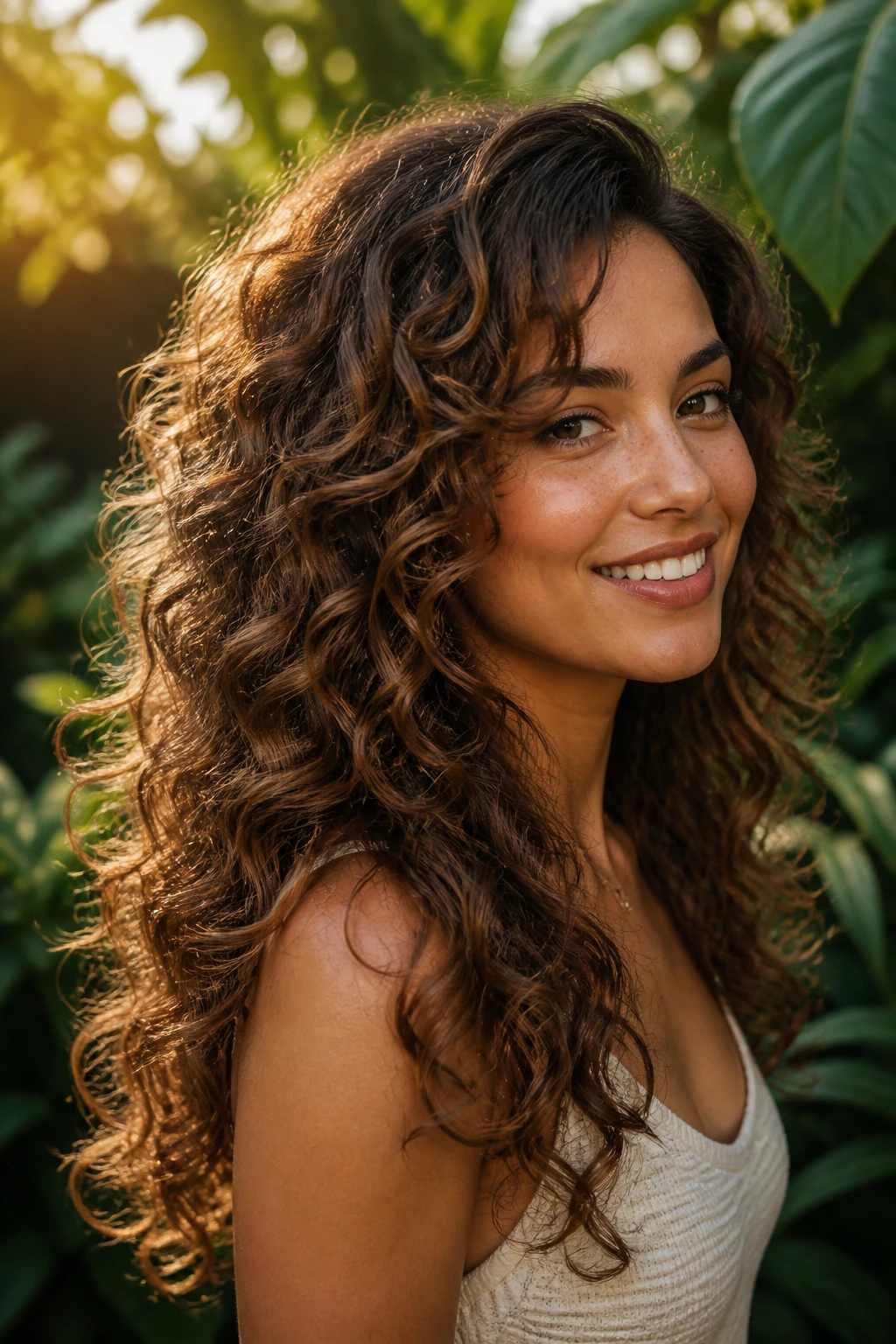
Waterfall layers are the kind of cut that makes long ringlets look deliberate instead of heavy. The lengths cascade in steps, with each section dropping a little lower than the one above it, so the hair moves like a series of soft curves rather than one long sheet.
That shape works beautifully when your curls already have a nice ring shape and you want to keep as much length as possible. It’s a useful answer to the “my hair looks flat from the top but too heavy at the bottom” problem.
The trick is keeping the transitions soft. If the stylist overcuts the upper sections, the result can look sliced up. Done well, though, it feels like the ends have air underneath them.
12. Micro-Shag with Bouncy Layers
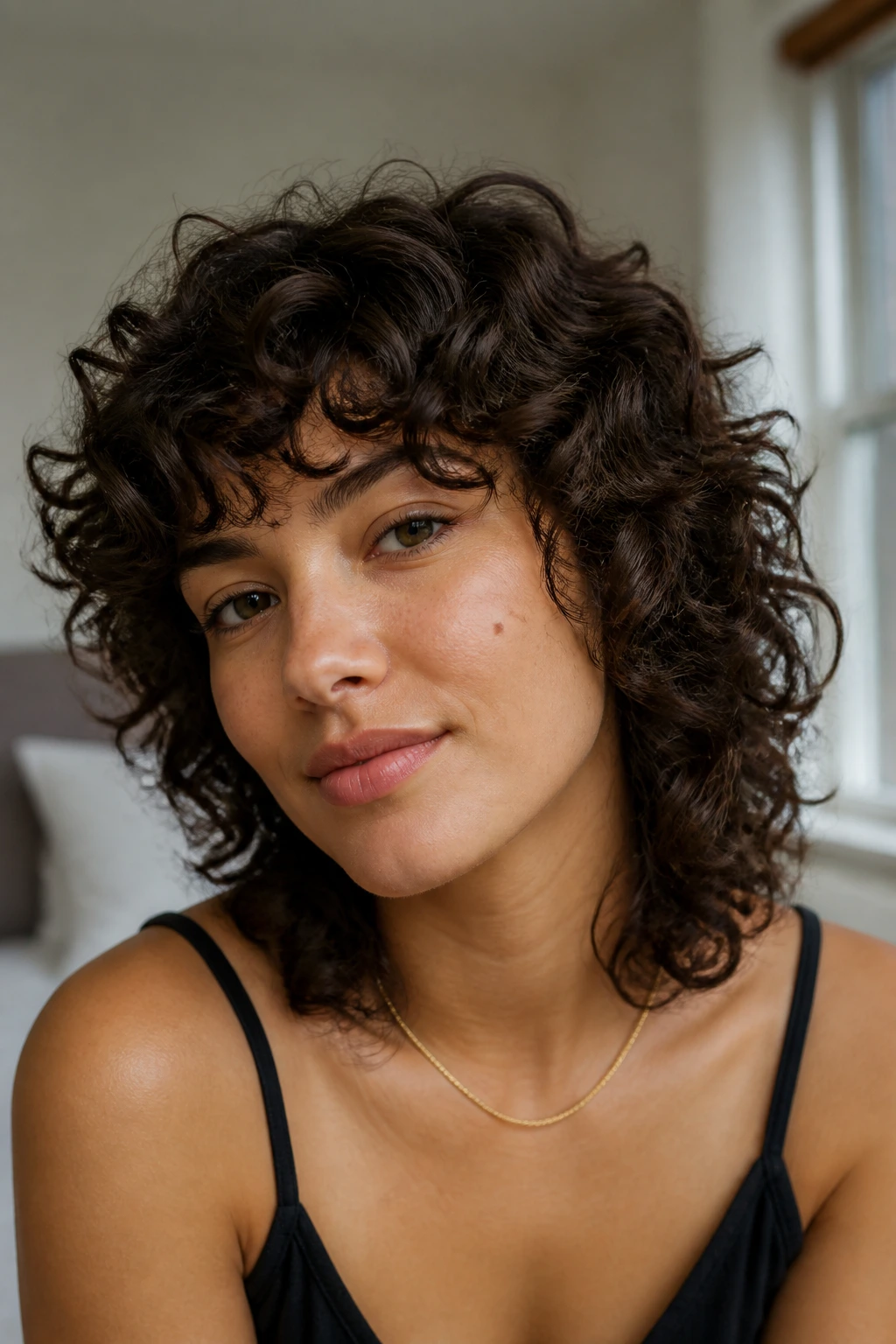
Think of this as the quieter cousin of the wolf cut. The micro-shag keeps the crown a little shorter, but the contrast is softer, so it doesn’t scream “fashion haircut” from across the room. On curly hair, that softer shag usually means easier styling and fewer awkward grow-out stages.
I like it for people who want shape but not drama. The layers are visible, yet they don’t carve the head into obvious blocks. If your curls are medium density and you wear them natural most days, this cut tends to settle into itself with less fuss.
A dab of mousse at the roots and a cream through the mid-lengths is usually enough. Don’t drown it. Micro-shags look best when the curl clumps stay distinct.
13. Asymmetrical Curly Cut
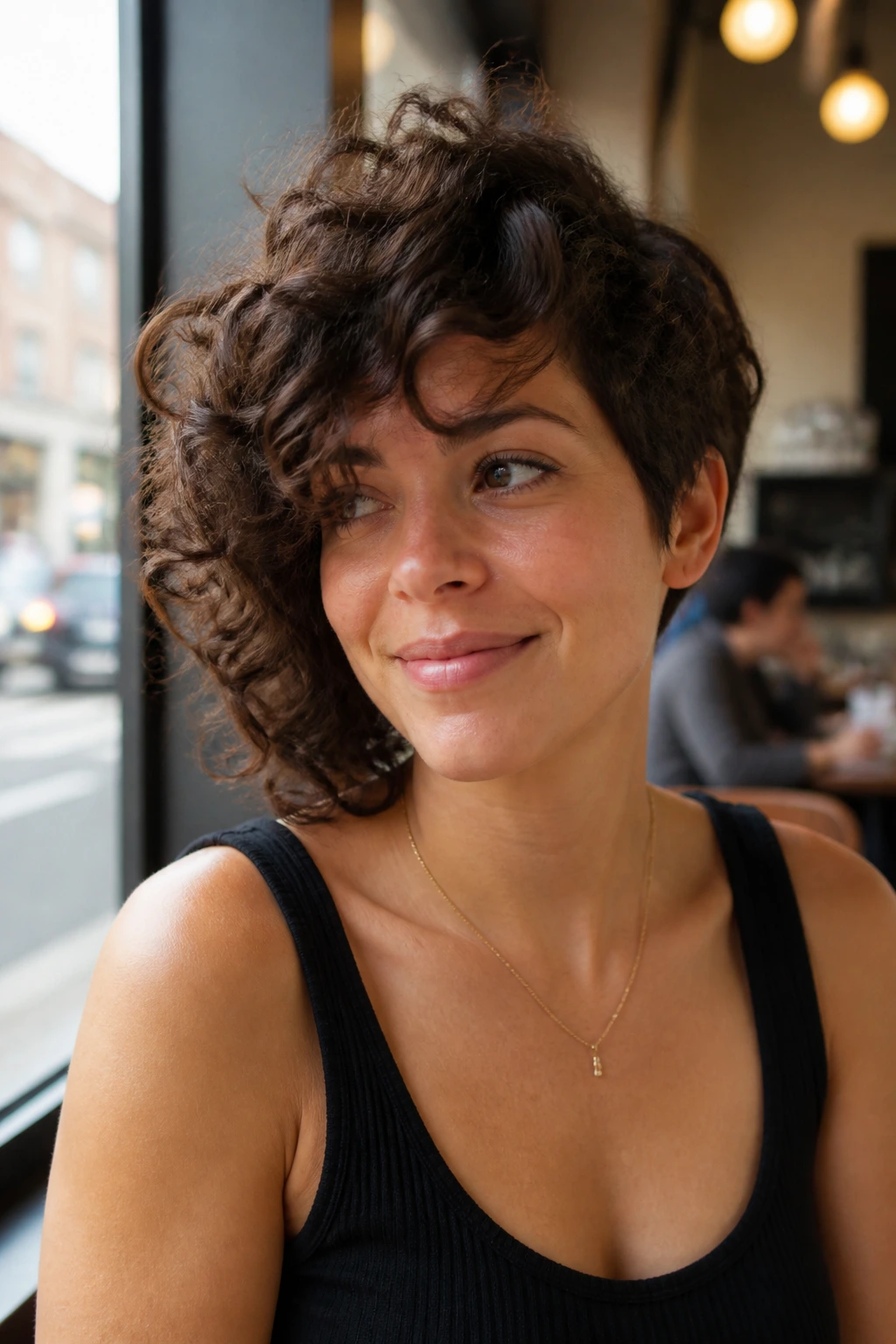
One side longer than the other sounds bold because it is bold. But on curly hair, asymmetry can be more wearable than people expect, especially when the difference is subtle rather than extreme. It gives the curls a line to follow and stops the cut from feeling too predictable.
This is the cut for someone who wants motion with a little edge. The shorter side can open up the face, while the longer side keeps weight and length where you want it. It’s a very useful way to deal with a swirl pattern, too, because the uneven geometry can work with the hair instead of against it.
The best asymmetrical cuts still have softness at the ends. Hard lines on curls usually look harsher than they do on straight hair. A little choppiness makes the imbalance feel intentional.
14. Side-Swept Bangs with Layered Length
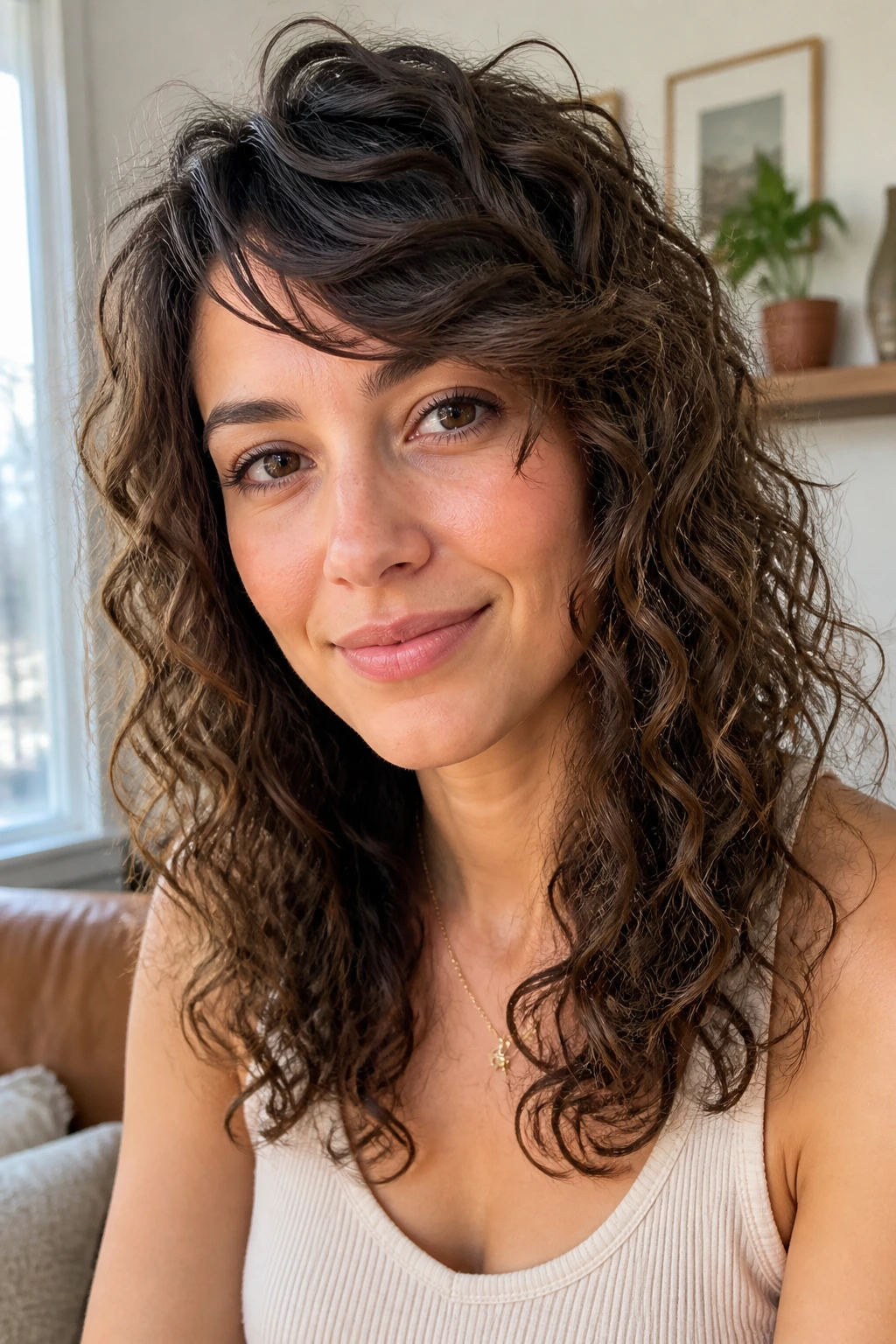
If you want face framing without committing to a full curly fringe, side-swept bangs are the safer bet. They bring the focus diagonally across the face, which softens strong foreheads, round cheeks, and that awkward “all volume at the sides” moment some curl patterns create.
The layered length behind them keeps the cut from feeling dated. Side-swept bangs can look a little old-school if the rest of the hair is too uniform, but choppy layers fix that by giving the whole cut some lift and movement.
How It Behaves
Side-swept bangs usually need a fast refresh on day two, especially if your curls shrink a lot. A little water, a tiny bit of cream, and a quick clip while they dry can keep the sweep from collapsing into the rest of the hair.
I prefer this option for people who want softness near the eyes but do not want to think about bang maintenance every morning. It’s lower drama than a straight fringe, which is saying something.
15. Curly Mullet with Clean Layers
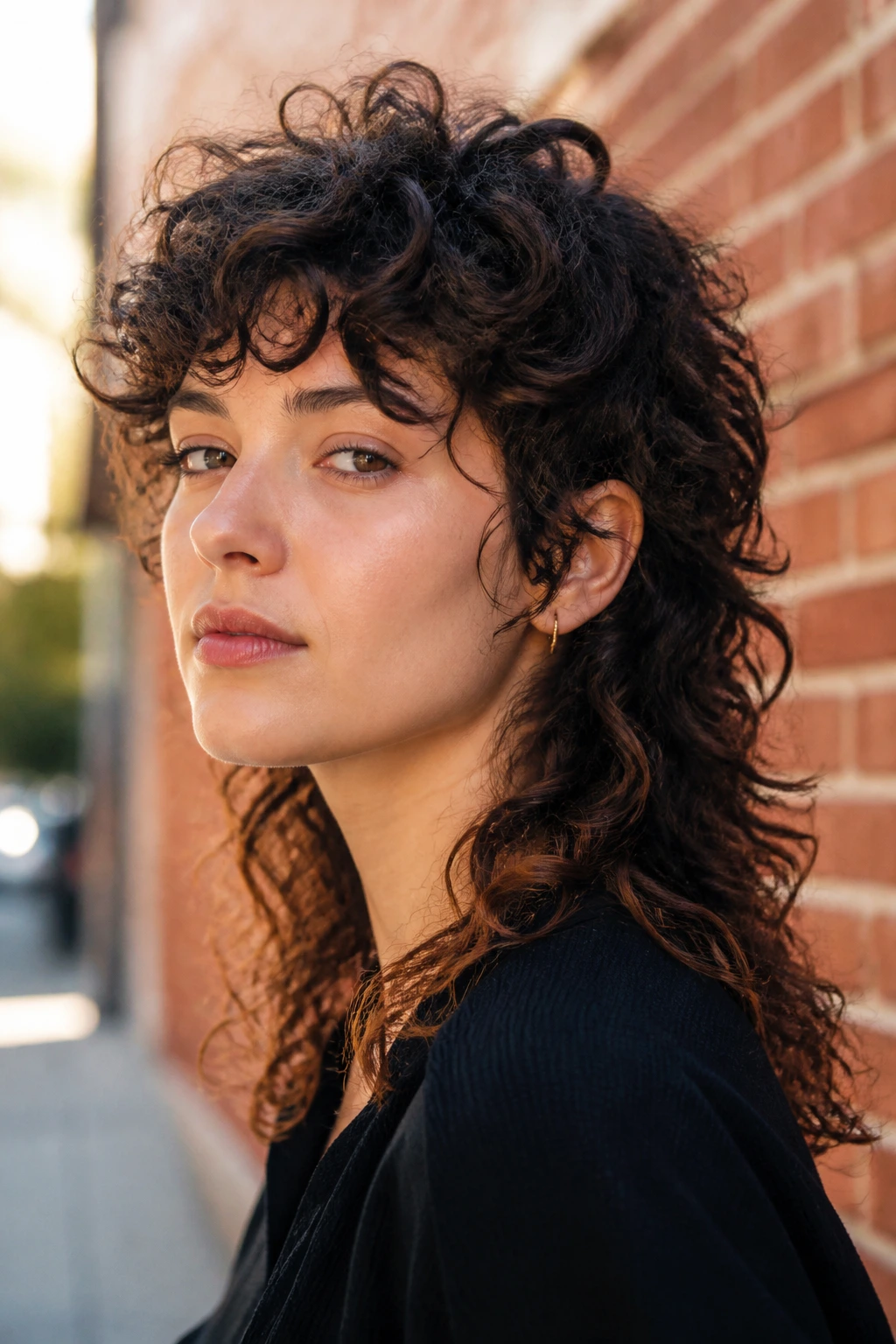
The curly mullet works because it understands proportion. Shorter on top, more length in the back, and choppy layers through the middle to keep the whole shape from turning costume-like. On the right head of curls, it’s fun, sharp, and weirdly practical.
Dense curls make this cut sing. The shorter top adds lift where it’s needed, while the back keeps enough length to move and swing. If the stylist overdoes the disconnect, though, the cut can look choppy in the wrong way, so the blend matters.
I like this cut when someone wants something obviously styled. It has edge, but it still lets the curls do the talking.
16. Chin-Length Curly Bob with a Stacked Back
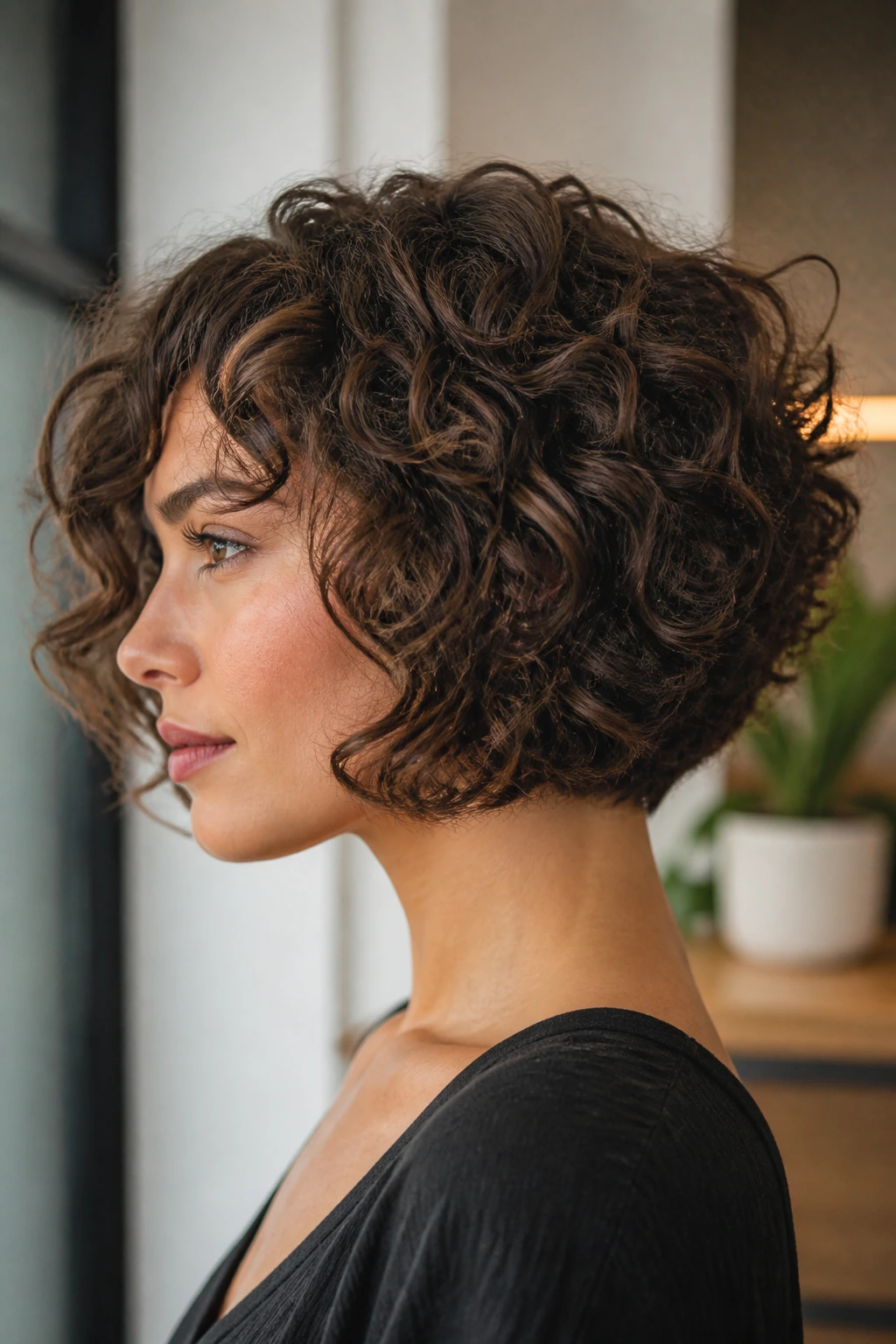
A chin-length curly bob can be gorgeous or disastrous, and the difference usually lives in the back shape. A stacked back gives the crown a little rise, which stops the front from dropping too low and flattening around the jaw.
That rise is what keeps the bob from acting like a helmet. The layers at the back create lift, while the front stays slightly longer so the face gets framing instead of a blunt bowl shape.
Good for: curls that like to spring outward but need structure to do it neatly.
If your hair is very thick, ask for internal reduction rather than heavy surface layering. Otherwise the bob can get too airy and lose that satisfying roundness.
17. S-Shaped Layered Cut
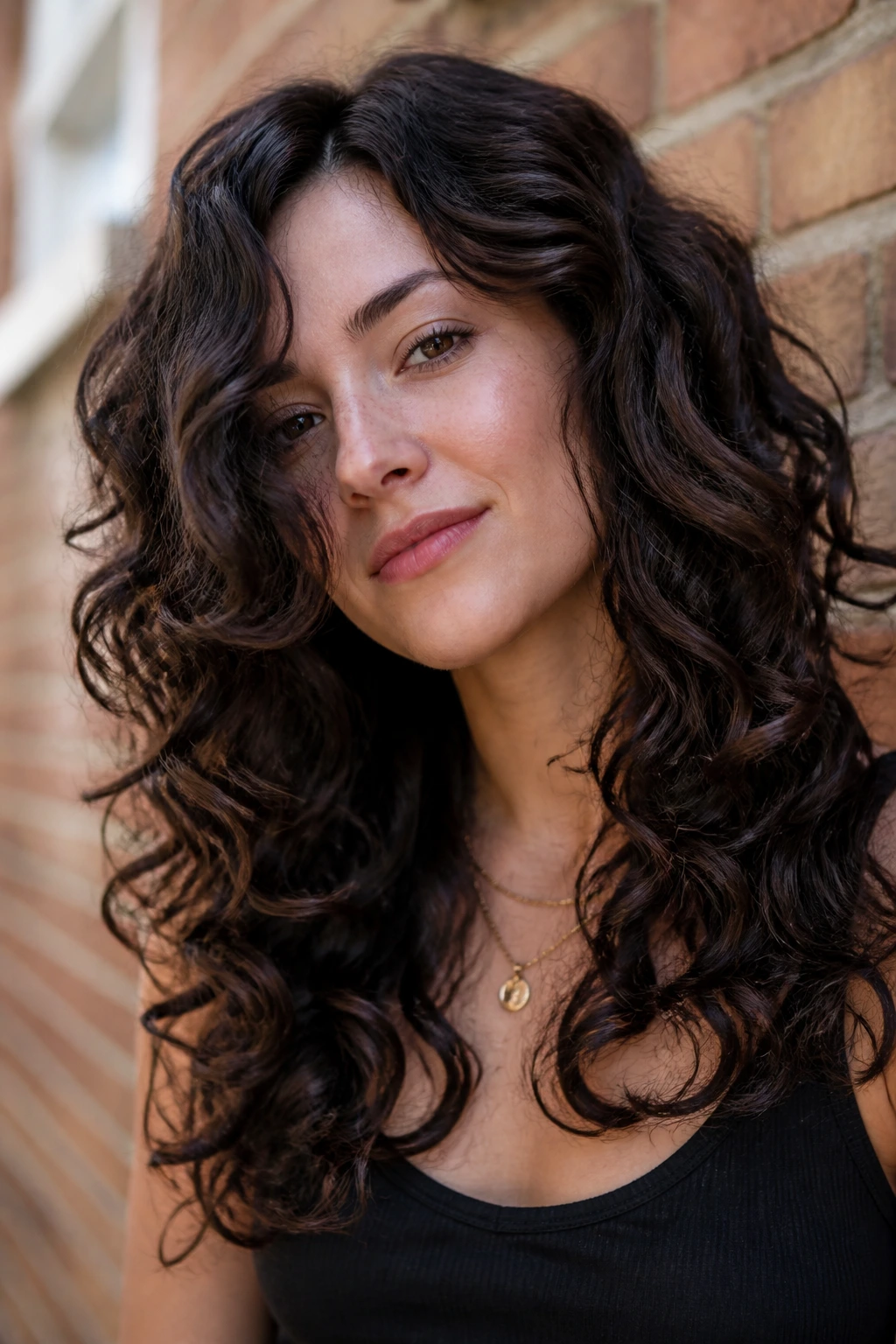
The S-shaped cut is all about flow. Instead of obvious chunks, the layers guide the curl into long curves that look soft and continuous, especially on looser curl patterns and strong waves.
This is one of my favorites for people who want movement without a shaggy finish. The shape feels organic, almost like the hair grew that way and just happened to cooperate. It can also be a smart bridge style if you’re growing out a blunt cut and want the transition to look deliberate.
A side part helps the S-curve show up. So does brushing nothing once the hair is dry. Touch it too much and the curve falls apart.
18. Heavy Top Layers for Dense Coils
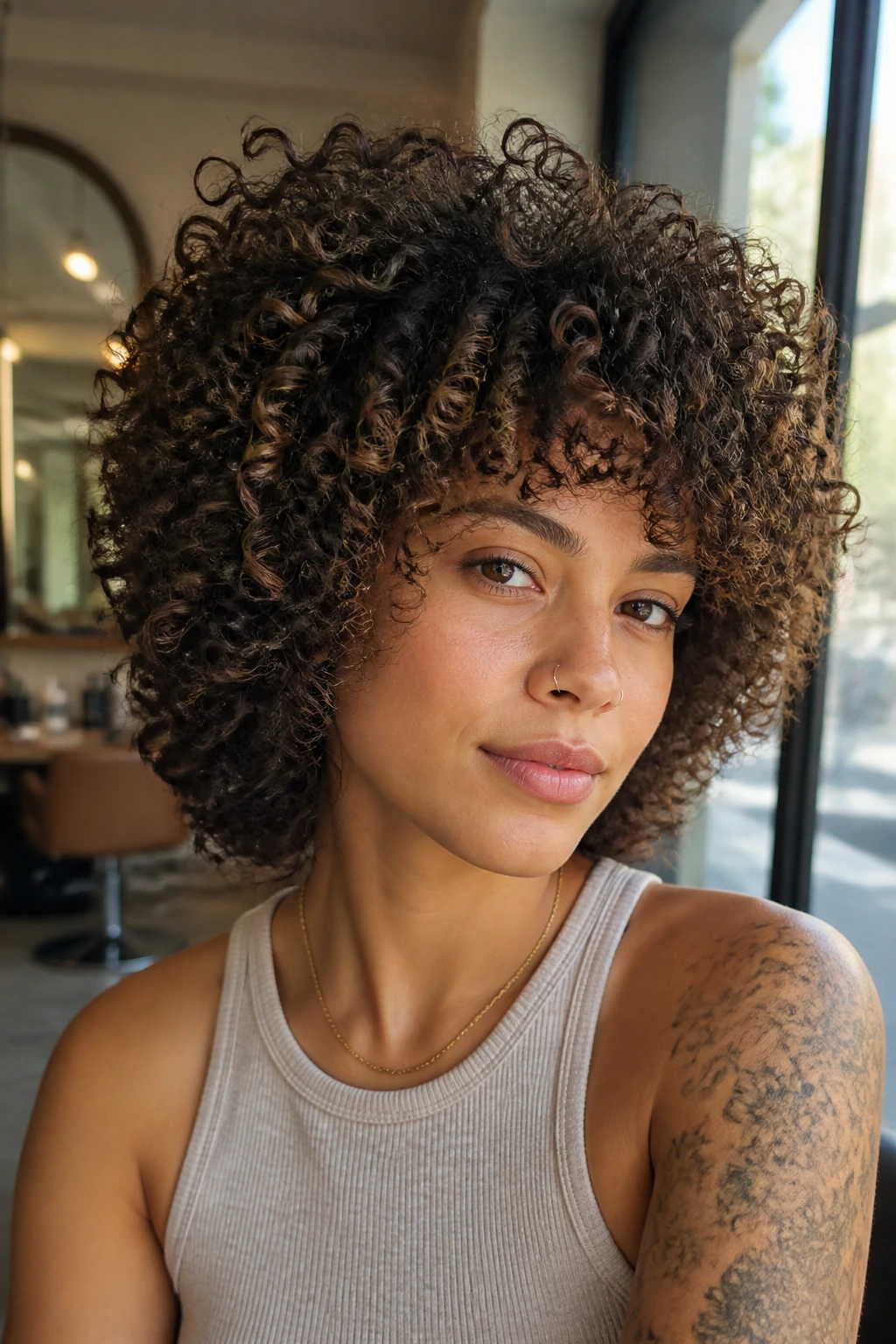
If your curls are dense enough to cast a shadow, you know the struggle: the top can feel heavy, the sides can swell, and the whole shape can sit far too wide. Heavy top layers solve that by removing bulk where the hair stacks at the crown.
This is not a cut for timid hands. The point is to make the top breathe while keeping the lower lengths strong enough to hold the shape. Done well, the head looks rounder and lighter at the same time, which is harder to pull off than people think.
Where the Weight Goes
Most of the weight stays in the outer lengths, while the interior gets just enough removal to let the coils spring apart. The cut needs a stylist who understands density, not just curl pattern.
If you’ve been told your hair is “too thick” and then watched someone over-thin it into frizz, this is the corrective version. Less damage. Better shape.
19. Invisible Layers for Fine Curls
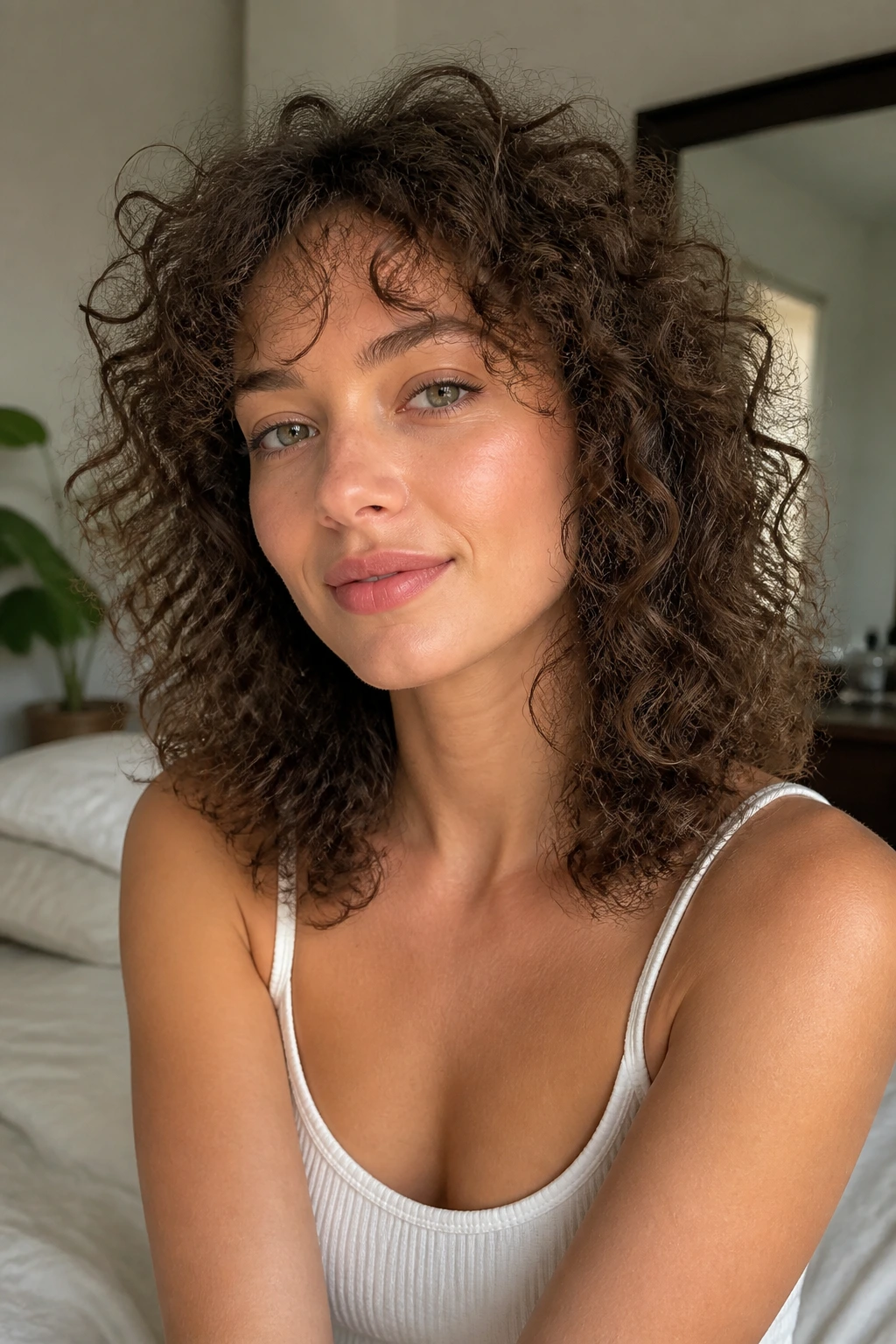
Fine curly hair does not need to be over-layered. In fact, it often looks better when the layers are there, but quiet. Invisible layers are exactly that: subtle interior shape that lifts the curls without stripping away the fullness that fine hair desperately needs.
The goal is to keep the perimeter looking rich while letting the top and mid-lengths stop clumping into one limp sheet. A little lift goes a long way. Too much removal, and the cut gets wispy fast.
This cut is best when you want your curls to look fuller, not lighter. That distinction matters. Light hair sounds nice until the ends start to vanish.
20. Curly Octopus Cut
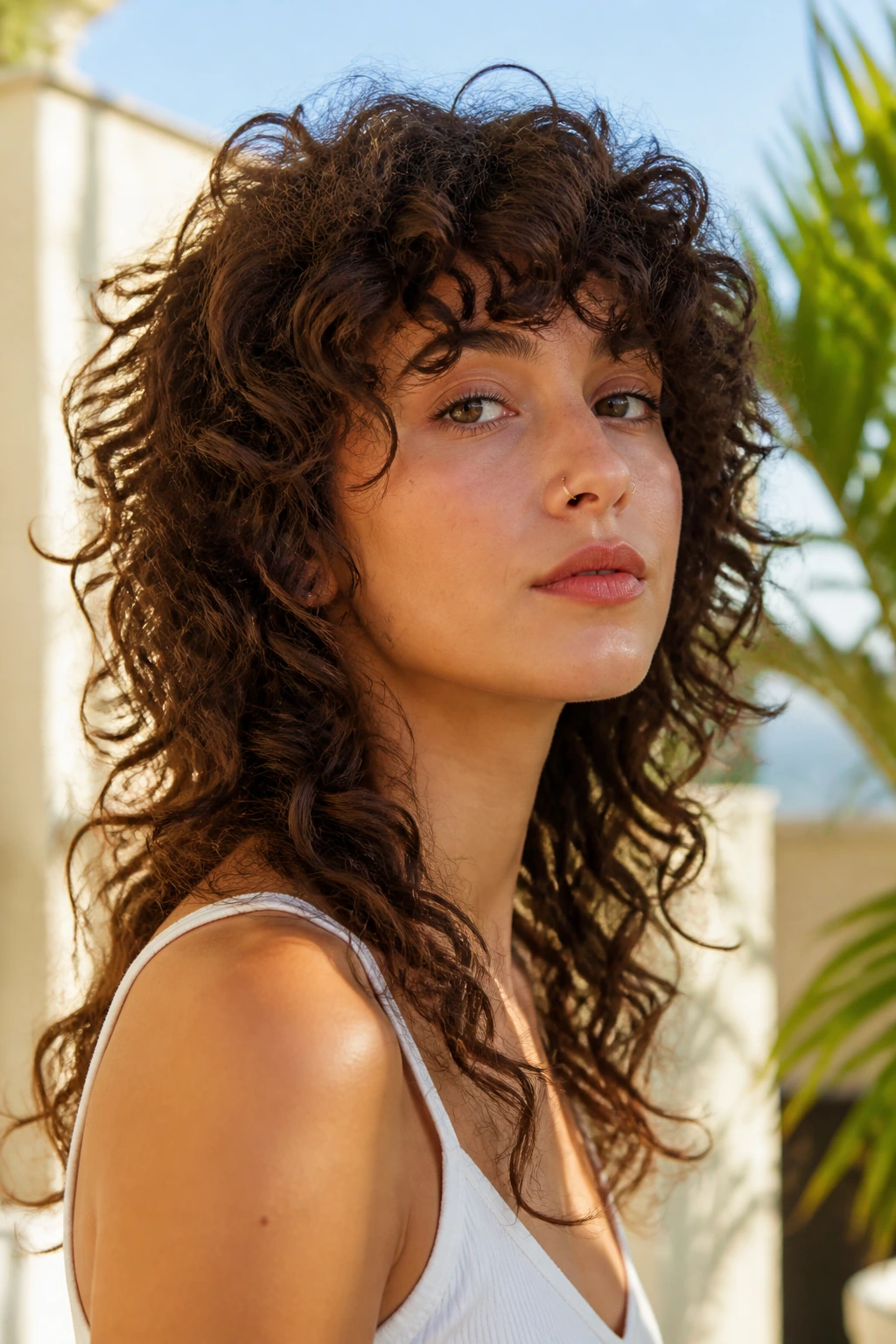
The octopus cut has that long-tentacle shape that sounds odd until you see it on curls. The top is lighter and more compact, while the lower lengths drop out in long, separated pieces. On curly hair, it creates a shape that feels playful and a little wild in a good way.
It works especially well for medium to long hair that needs movement around the shoulders and neck. The top layers keep the root area from going flat, and the longer pieces keep the silhouette from puffing into a round cloud.
A good octopus cut should not look sliced up. It should look like the curls were given different landing zones. That’s the difference between a cool shape and a hair disaster.
21. Layered Cut with Curtain Bangs
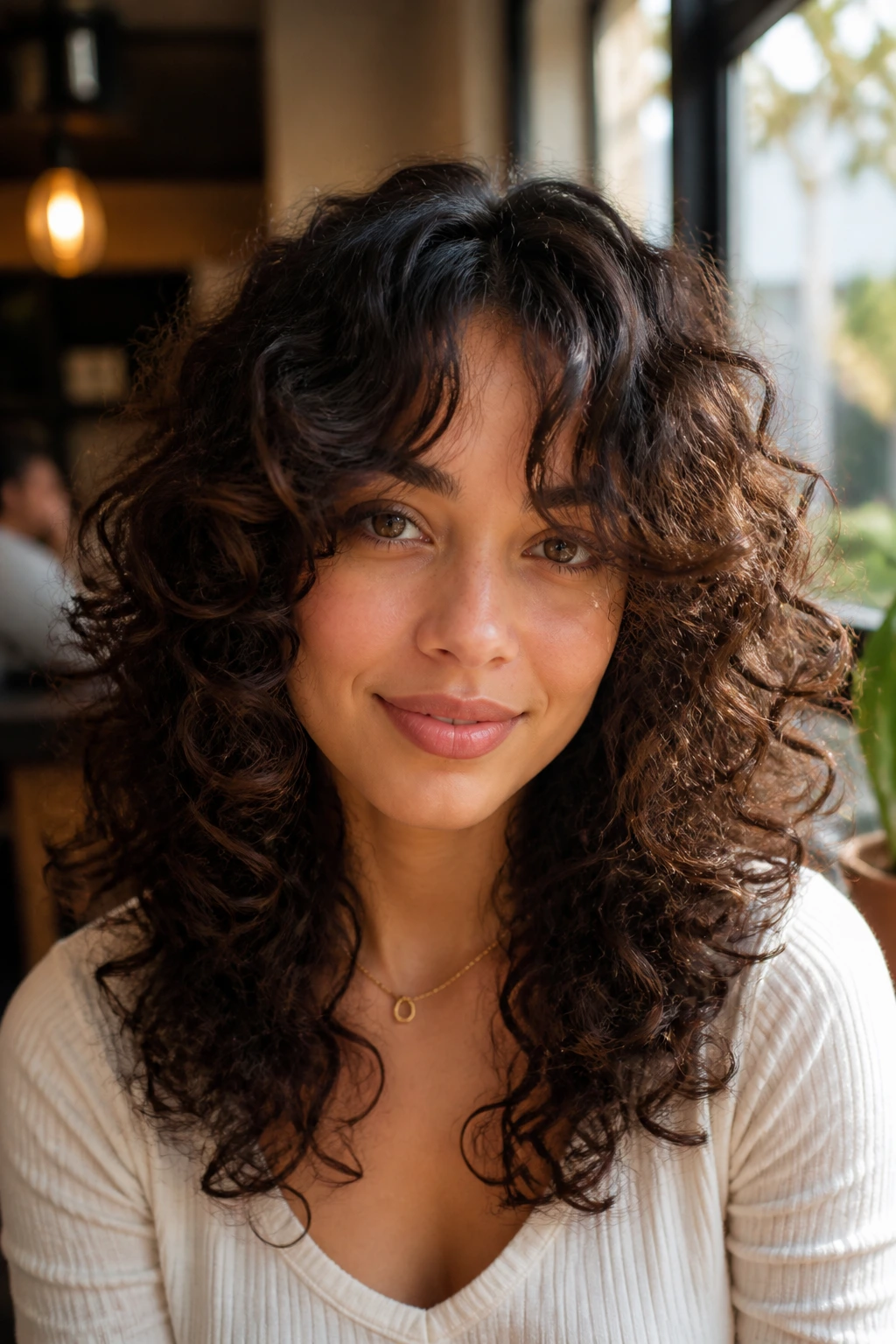
Curtain bangs are a nice compromise when you want face framing but don’t want to maintain a full fringe every two weeks. On curly hair, they part gently at the center and fall into the sides, which makes the front of the haircut feel soft instead of severe.
The layered lengths behind the bangs do most of the heavy lifting. They keep the haircut from becoming all front and no body. That balance is why this cut looks so easy when it is done well.
What I like most here is the grow-out. Curtain bangs usually blend back into the haircut more gracefully than blunt bangs. If you are a little commitment-shy, that matters.
22. Soft Undercut with Choppy Top Layers
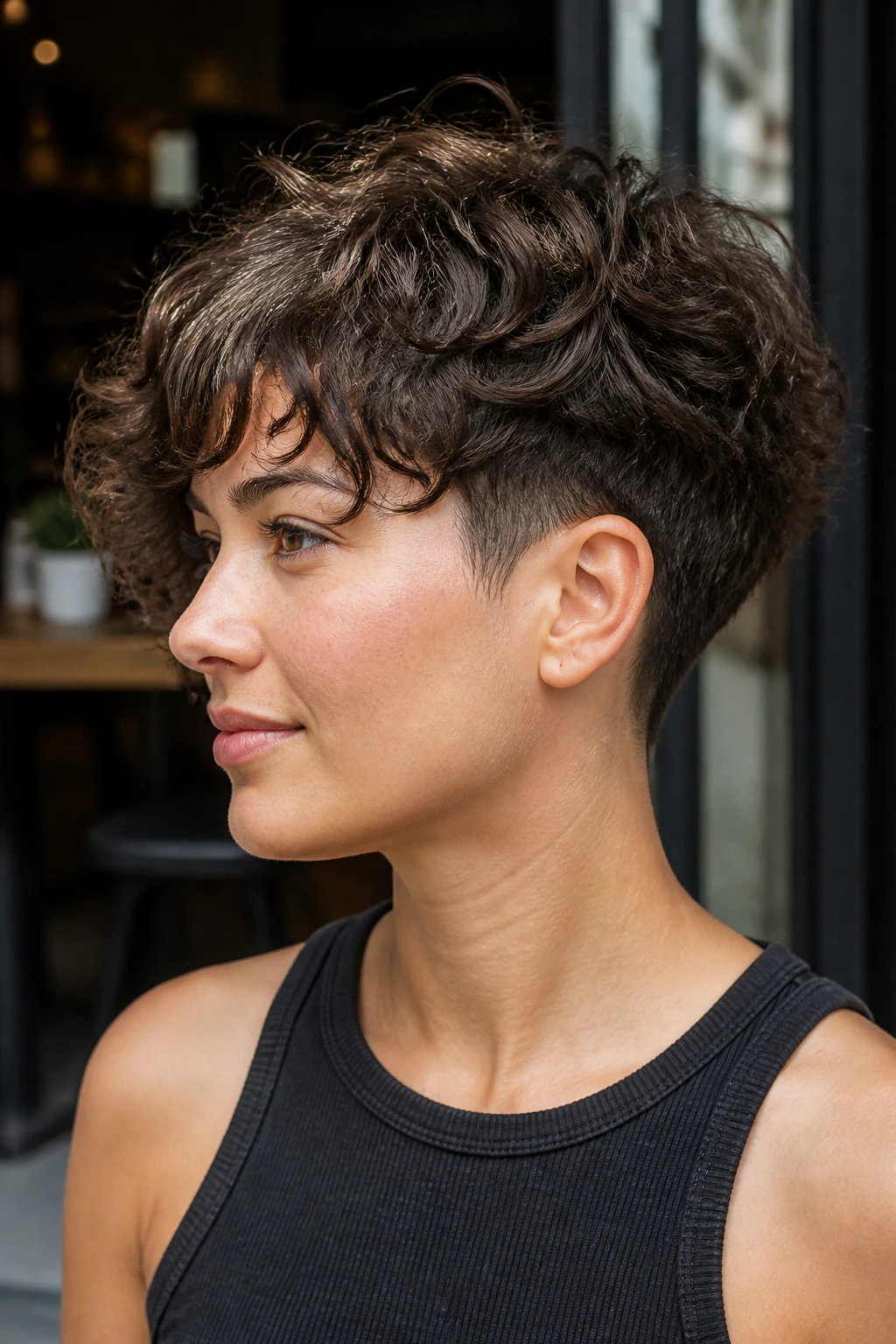
A soft undercut is one of those solutions nobody sees until you turn your head. Hidden underneath the upper layers, it removes bulk from the nape or lower sides, which is a gift if your curls are dense and prone to expanding in the wrong places.
The top still gets the choppy shape, so the haircut reads full and textured from above. But the undercut keeps the underlayers from stuffing the silhouette. That’s especially useful in humid climates, where thick curls can balloon around the neck and ears.
It is not as dramatic as an obvious undercut. That’s the point. You get the relief without looking like you joined a band.
23. Halo Layer Cut
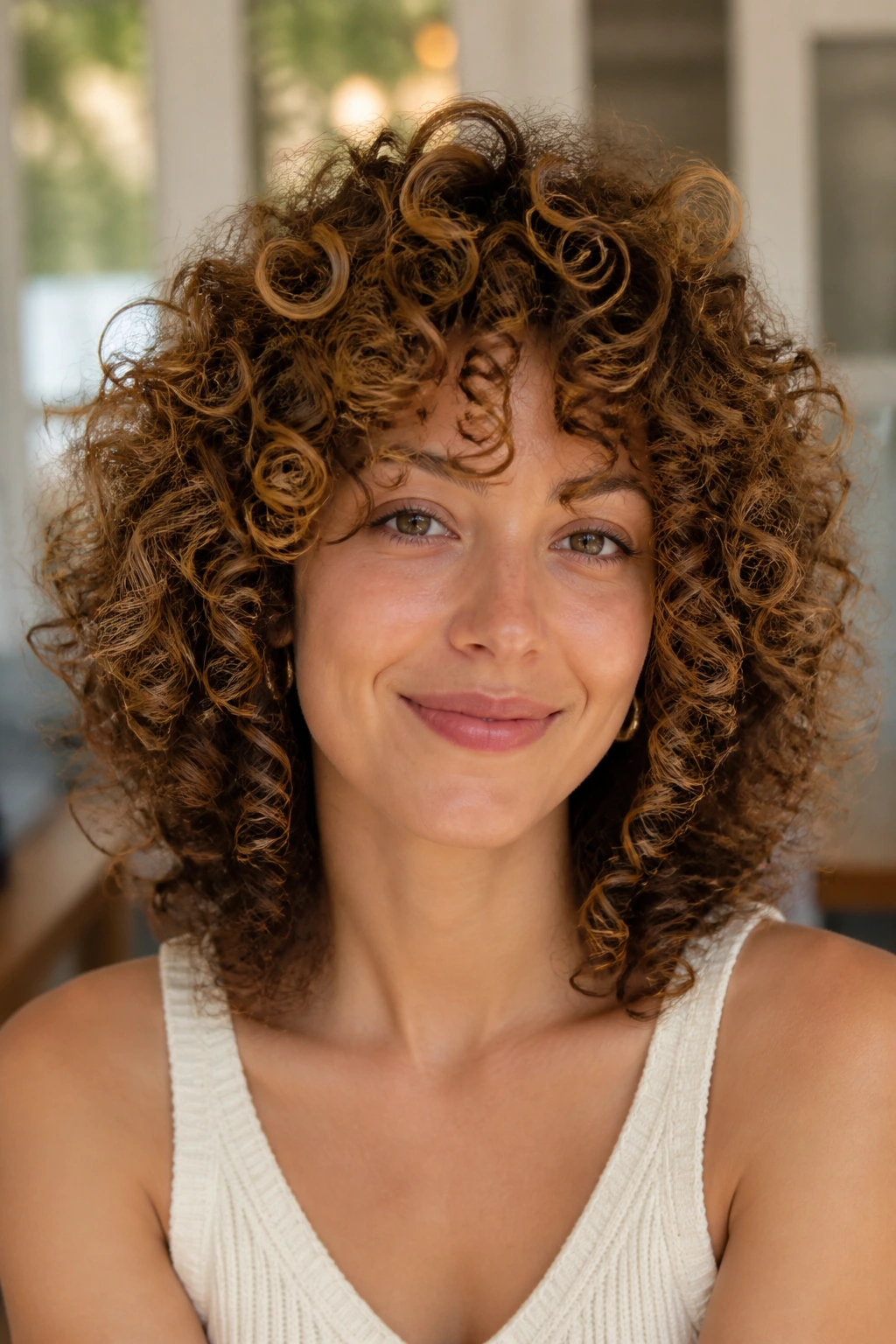
A halo layer cut focuses attention around the upper perimeter, creating a ring of movement that sits around the head like, well, a halo. The layers are usually lighter near the crown and outer top sections, which gives curls a lifted outline without making the ends look sparse.
This shape is lovely on curls that like to expand upward more than outward. It gives the top some height and keeps the bottom from dragging the whole haircut down. If you want volume you can actually see from the front and side, this one does the job.
It also photographs well in the most boring sense of the word: the silhouette is easy to read. That matters more than people admit. Some haircuts only look good from one angle. This one has a clearer profile.
24. Shoulder-Grazing Cut for Transitioning Curls
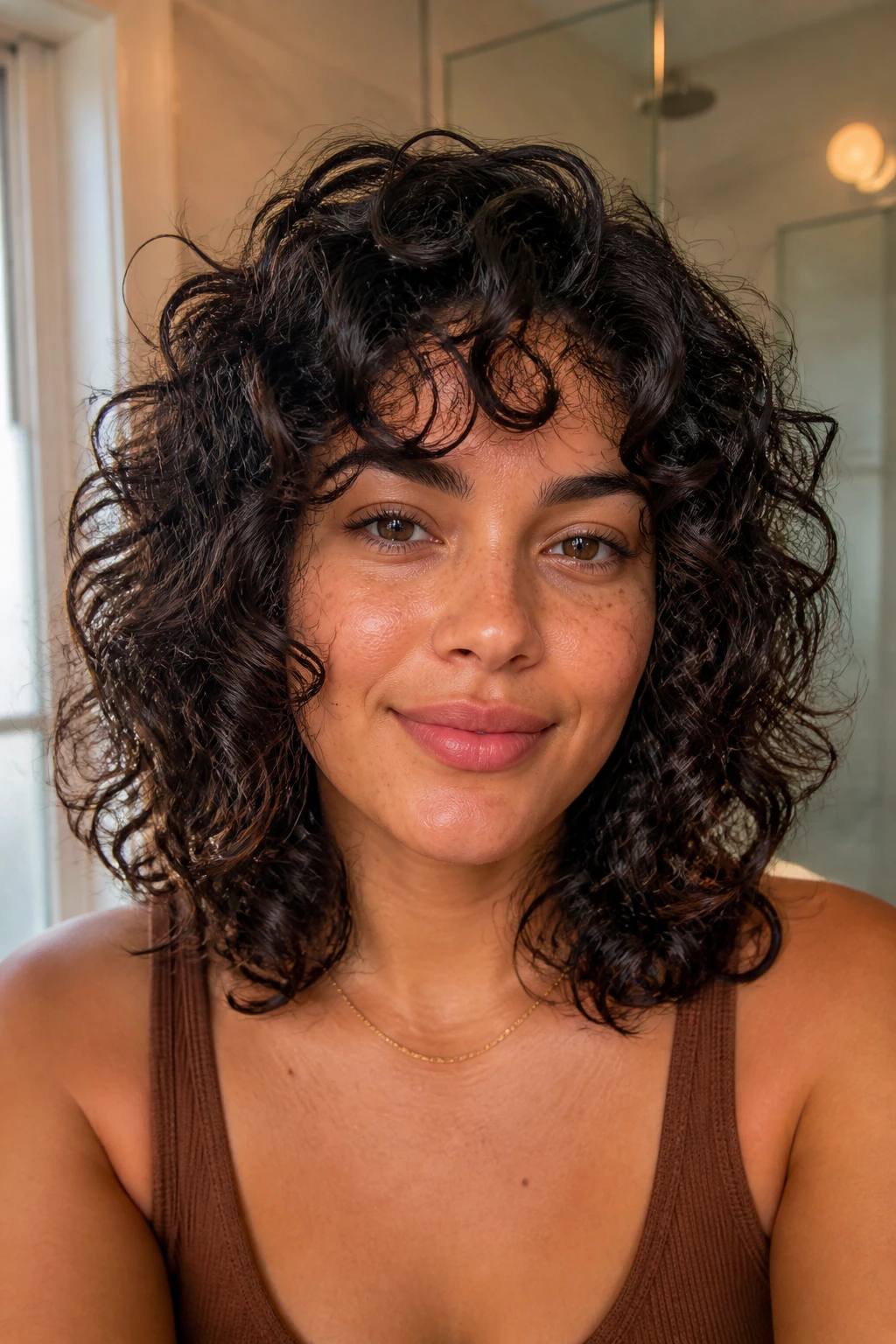
Growing out heat damage, chemical straightening, or a long period of flat-ironing can leave curls with two personalities in the same head. A shoulder-grazing choppy cut helps bridge that gap by giving the healthier curls room to shape up while trimming away the most stubborn, uneven ends.
The shoulder length keeps enough weight to prevent the transition from feeling too thin. The choppy layers stop the line from looking blunt while the curl pattern reclaims itself. It is a practical cut, not a vanity cut, and I mean that as praise.
If you are in that awkward in-between stage, ask for the haircut to be shaped around the strongest curls first. The rest will usually follow. Hair grows. Structure helps.
25. Long Bohemian Layers with Choppy Ends
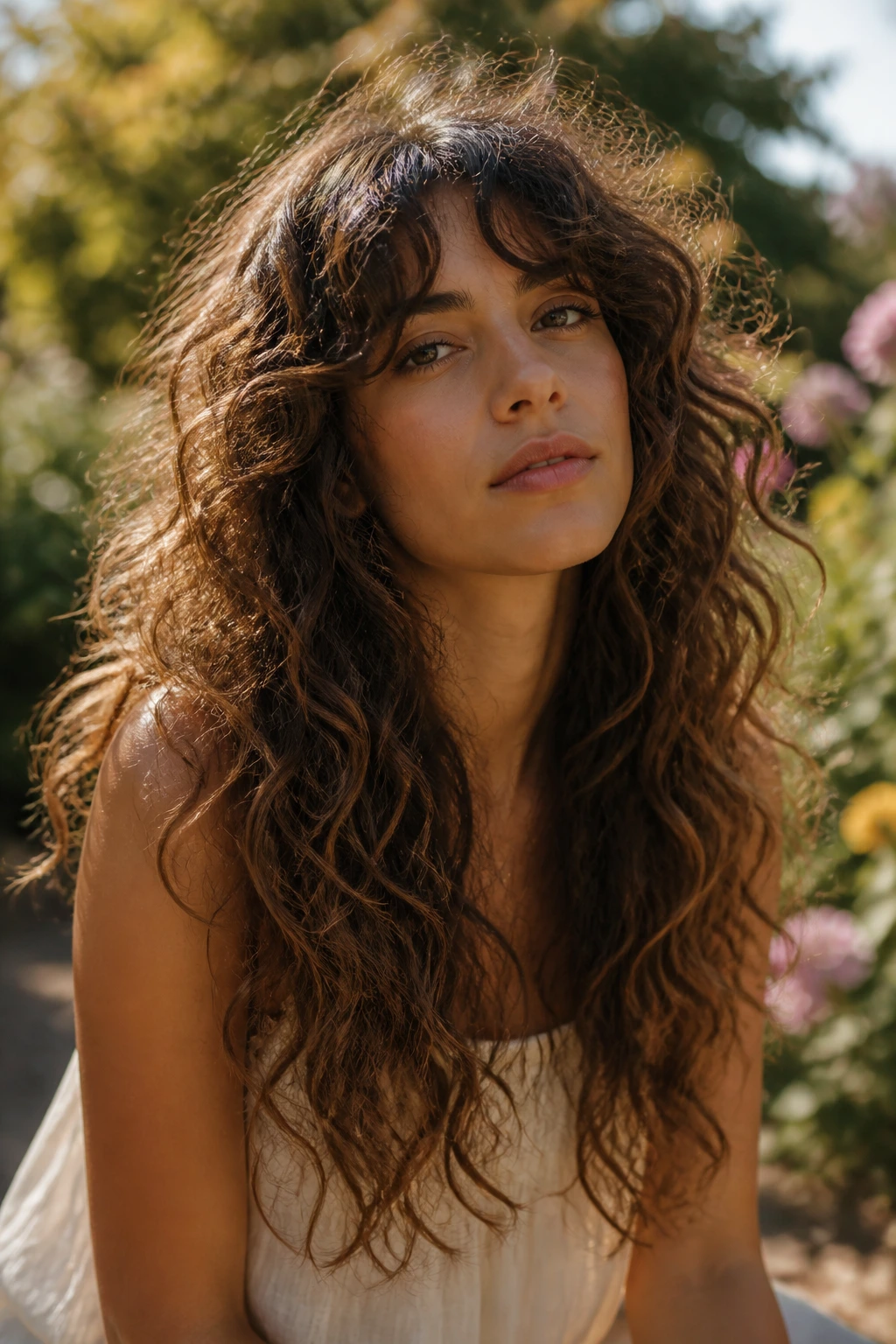
This is the one for people who love long hair and refuse to give it up just to get shape. Bohemian layers keep the length flowing, but the choppy ends keep the bottom from looking like one long rope. On curly hair, that makes the whole style feel lighter without sacrificing the length you worked so hard to keep.
The vibe is loose, soft, and a little undone. Not messy. Undone. There is a difference, and curls know it immediately. The layers should move when you turn your head, but they should still look like they belong together.
If your hair is thick, this cut can be a lifesaver. If it is fine, the layers need to stay long and sparse so the ends don’t disappear. Either way, the shape should still feel like length with air in it.
How to Ask for Choppy Layers Without Getting a Triangle
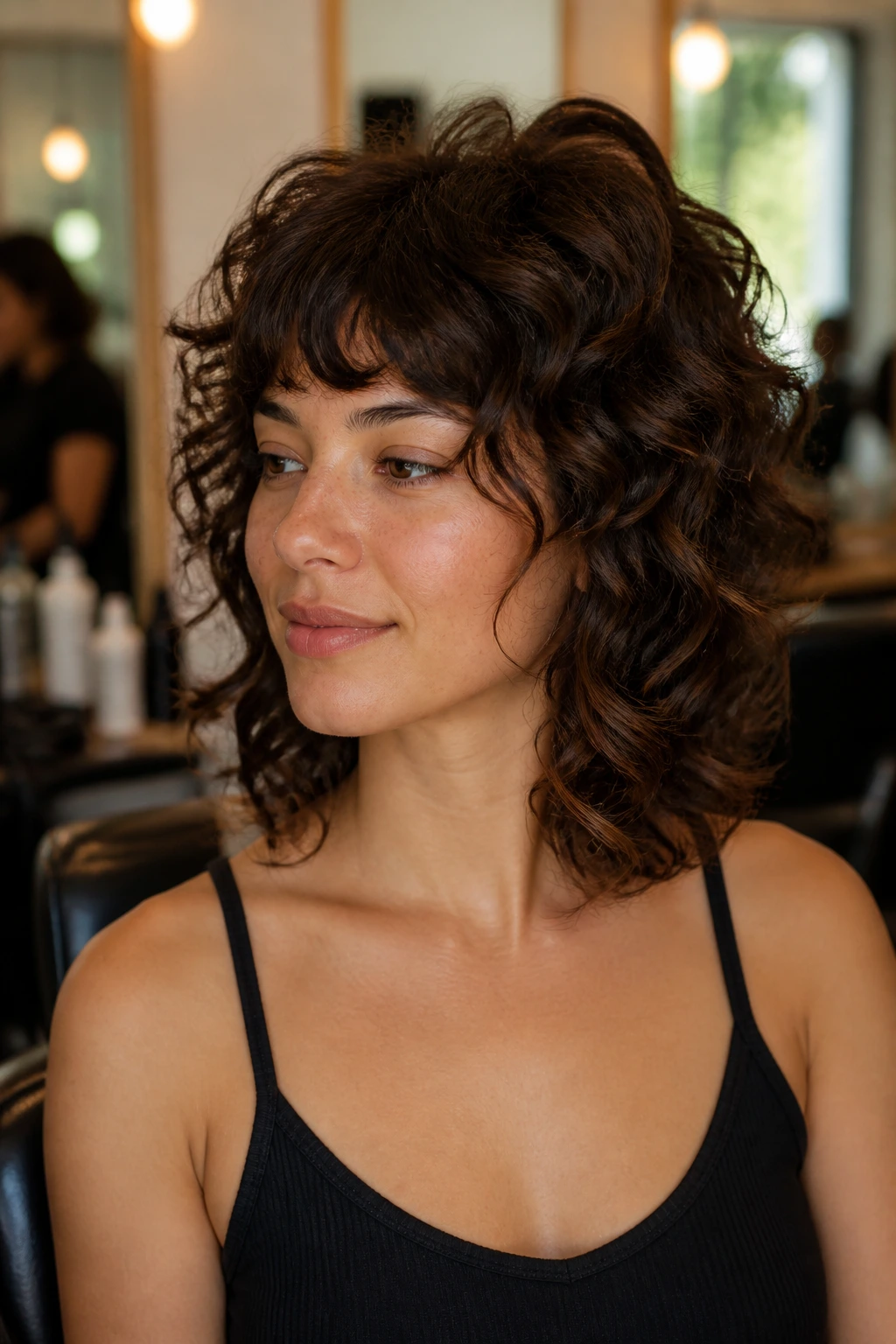
Bring photos, yes, but bring the right photos. A picture of someone with loose 2c waves will not help much if your hair is dense 3c curls that shrink three inches. Match density, length, and curl behavior as closely as you can, or the reference just turns into wishful thinking.
Say where you want the volume to live. That sentence does a lot of heavy lifting. If you want lift at the crown, tell the stylist. If you want the width to stay lower and softer around the jaw, say that instead. Good layered cuts are about weight placement, not just “more layers.”
Ask how the cut will be checked: wet, dry, or both. For curls, a dry check is often the moment that saves the shape. Wet cutting can work, but only if the stylist knows how much your hair springs up once it leaves the chair.
And be blunt about what you do not want. If you hate thinning shears, say it. If you do not want a pyramid, say that too. A good stylist will listen without taking offense.
Styling Moves That Make the Layers Show Up
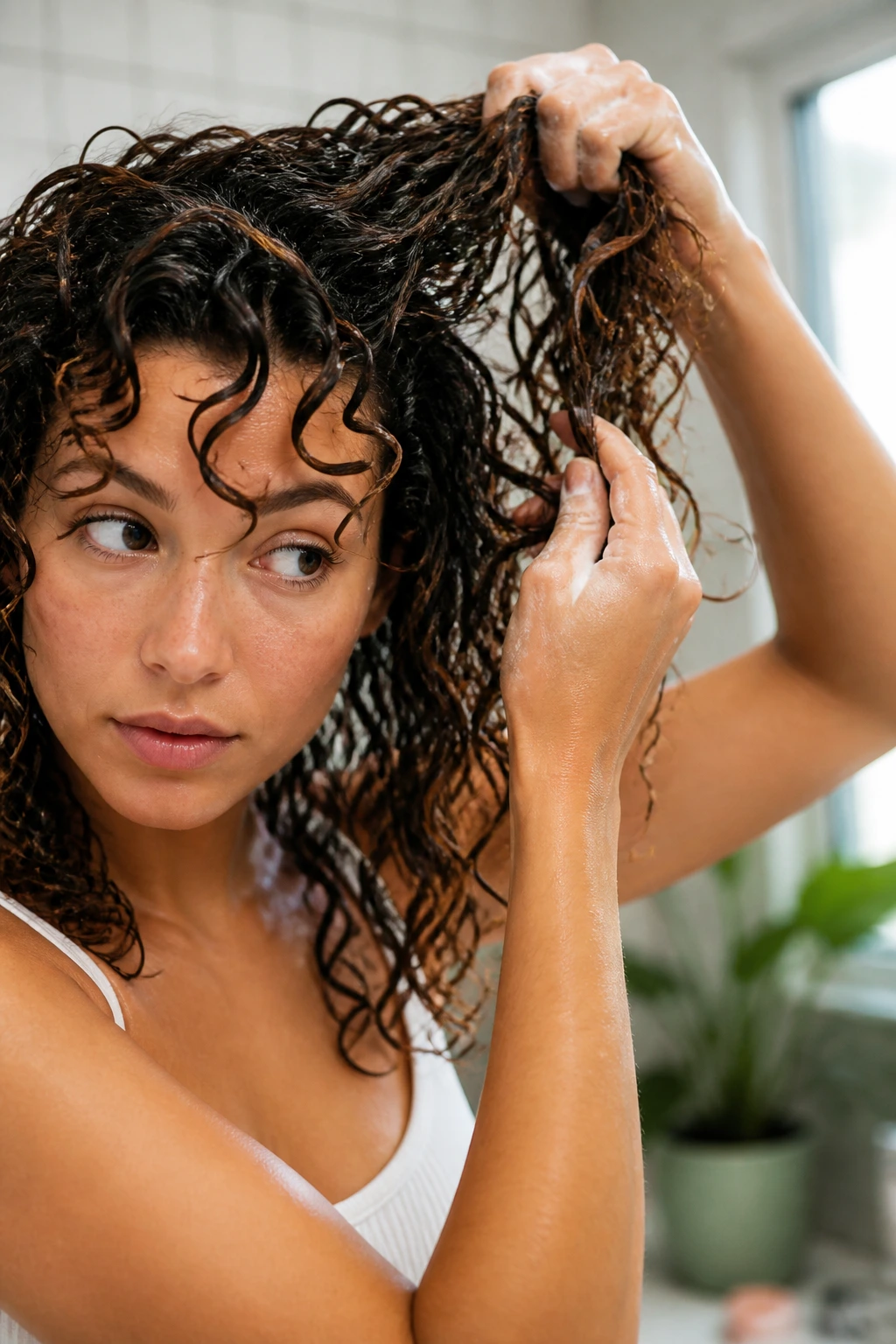
The cut does half the job. Styling finishes it.
Soak, don’t mist: Apply leave-in, cream, or gel to very wet hair so the curls clump before they start drying. Half-dry styling often splits the layers into fuzzy little pieces that refuse to hang together.
Work in sections: Two or four sections are enough for most heads. Scrunch each one upward, then stop touching it. Too much finger-combing after product goes in will pull the choppy pieces apart.
Diffuse with patience: Low heat, low speed, and a head flip only if your root pattern can handle it. I usually diffuse until the hair is about 80 percent dry, then let the last bit air-dry so the shape settles without getting battered.
Break the cast at the end: If you use gel, wait until the hair is fully dry before scrunching out the stiffness. That one move can turn stiff, shellacked curls into soft, defined layers without losing the outline.
Tools, Brushes, and Products Worth Having
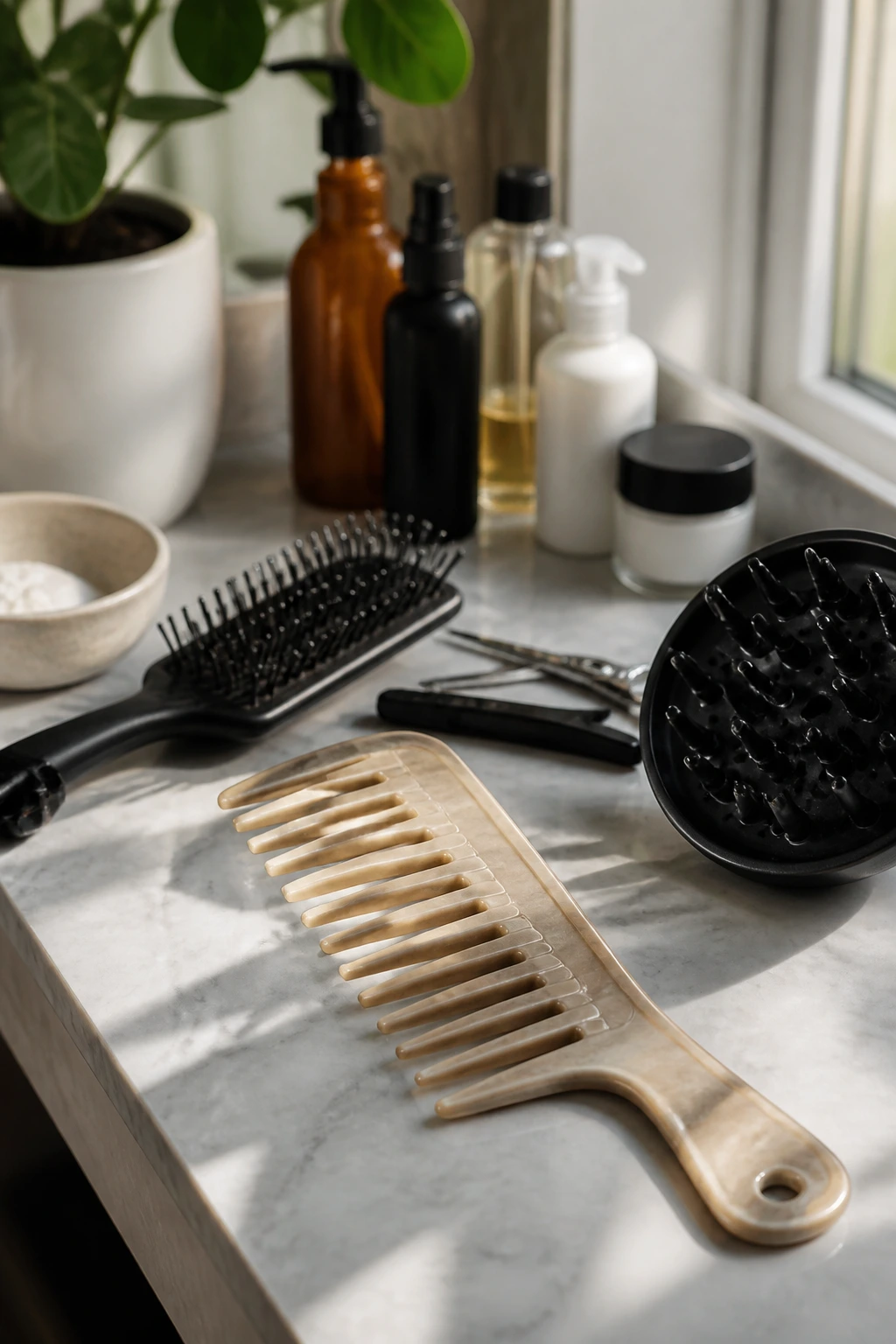
-
Wide-tooth comb: Best for detangling in the shower without tearing apart curl clumps.
-
Microfiber towel or soft T-shirt: Cuts down on friction and helps the layers dry without a rough halo of frizz.
-
Diffuser attachment: Useful if you want volume at the roots and a cleaner shape in the layers.
-
Duckbill clips or root clips: Handy for lifting the crown while the curls dry, especially on shaggy or wolf-cut shapes.
-
Spray bottle: A simple mist bottle is enough for day-two refreshes and bang reshaping.
-
Light mousse: Gives choppy layers lift without the heaviness of a thick cream.
-
Gel with flexible hold: Good when you want the layers to stay separated instead of puffing out.
-
Curl cream or leave-in: Helps coarse or thirsty curls keep their shape, but use a light hand on fine hair.
Common Mistakes That Flatten Choppy Curly Layers
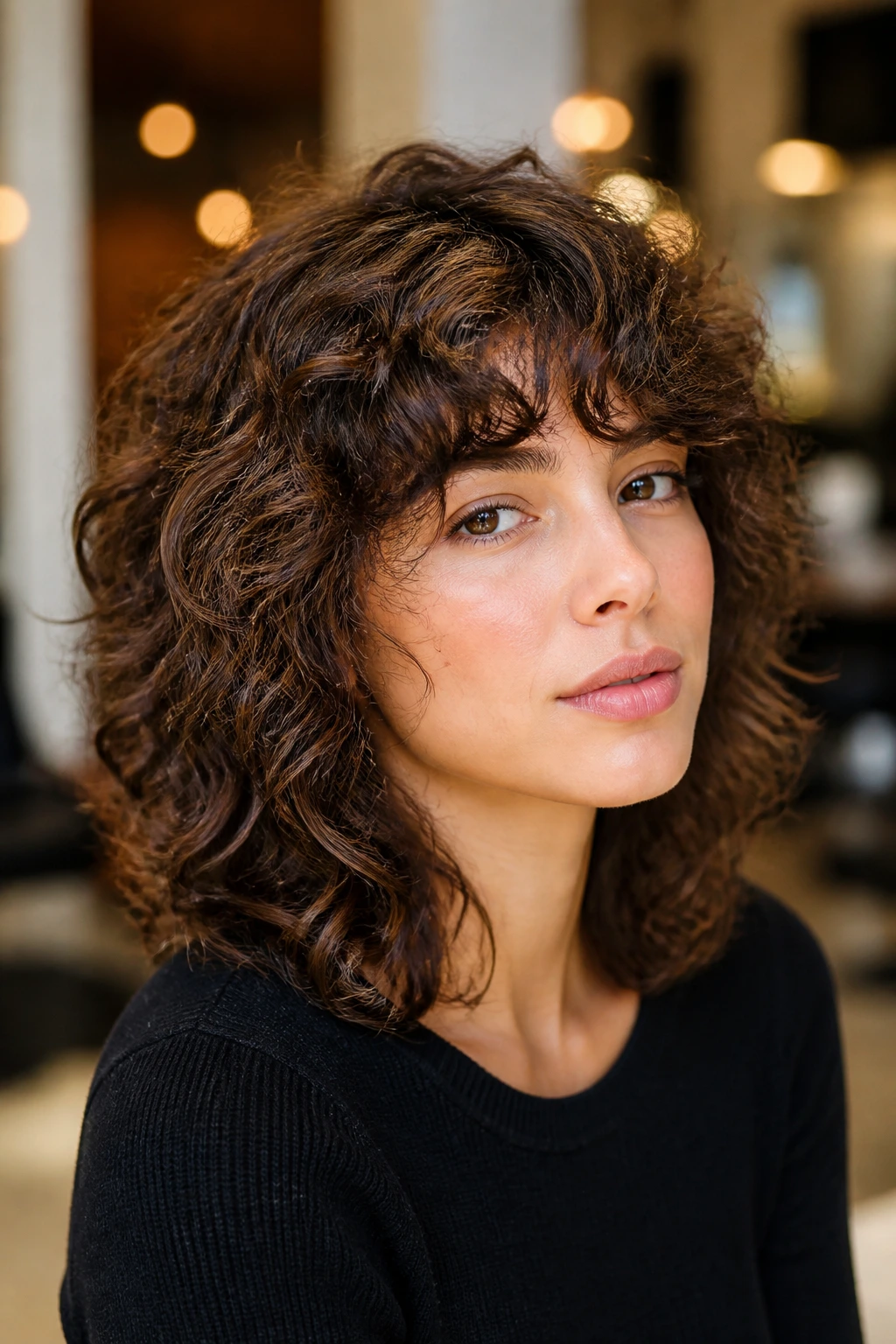
The biggest mistake is treating curls like straight hair with texture. That is how you end up with a cut that looks fine when wet and strange when dry. Curls need room for shrinkage, and the layers have to be checked against the real curl pattern, not the stretched one.
Another problem is over-thinning. A few aggressive passes with the wrong shears can turn healthy curls into frizzed-out ends that never quite clump again. If a stylist wants to remove weight, point cutting and thoughtful internal shaping are usually safer than indiscriminate thinning.
Cutting bangs too short is a classic curly trap. They look charming in the chair, then pop up to the ceiling after they dry. Leave more length than you think you need, especially if your curls spring hard.
Styling with too little water is another one. If the hair is only damp, the product sits on top instead of helping the curls form. That’s when the layers separate in a messy, unhelpful way.
And then there’s neglect. Curly layers grow out fast in the wrong places. If you let the crown and face frame go too long, the shape collapses back into that broad, blocky outline.
Best Variations for Loose Waves, Dense Coils, and Everything Between
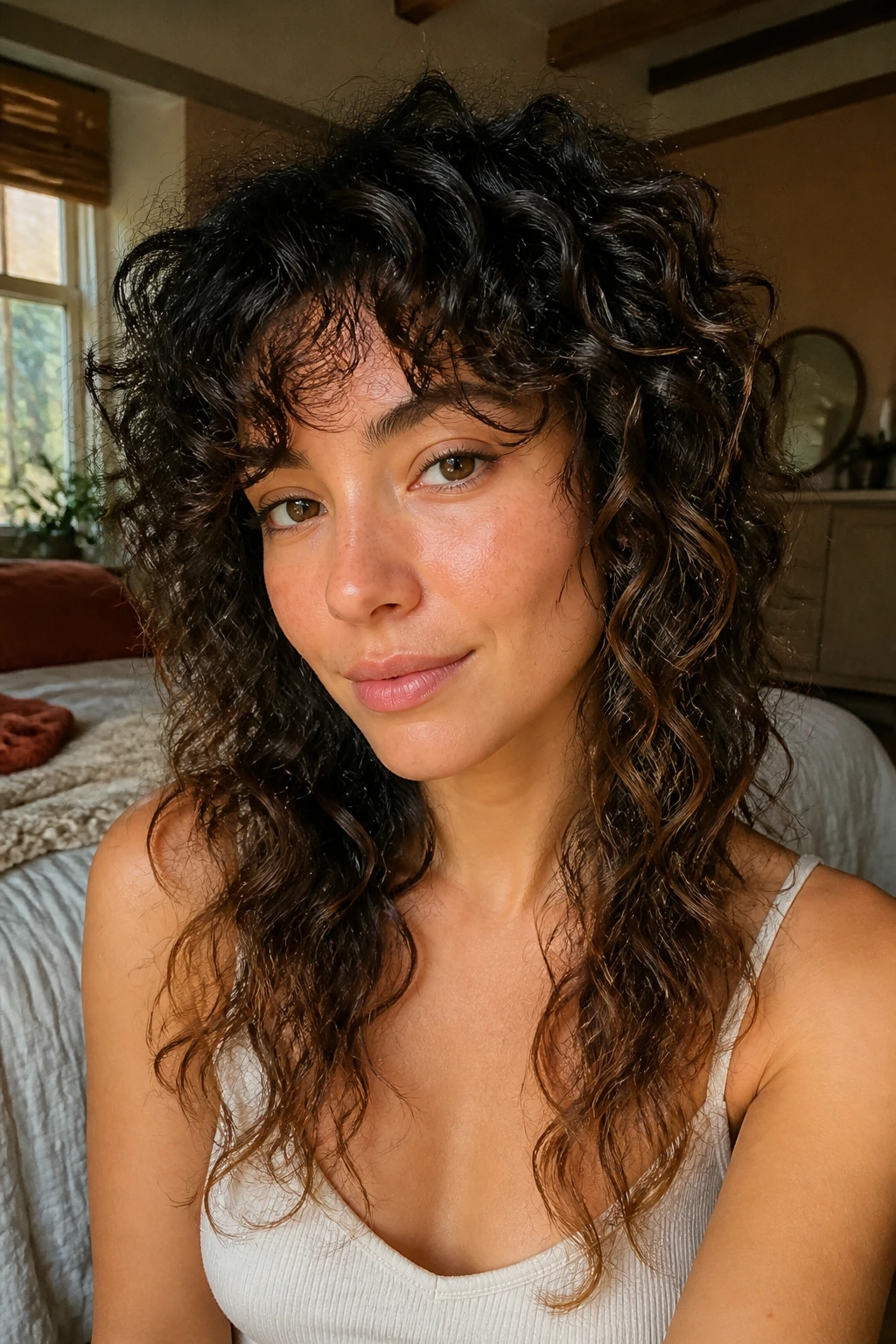
Loose-Wave Version: Keep the layers long and the choppiness soft. Waves can get stringy if the haircut is too aggressive, so the goal is movement without turning the ends wispy.
Dense-Coil Version: Remove weight from the interior and crown first. Dense coils need breathing room more than they need extreme shortening, or the shape widens instead of lifting.
Fine-Curl Version: Choose subtle layers and a fuller perimeter. Fine curls can lose their body fast, so the cut should create lift without draining the ends.
Fringe-Forward Version: Go all in on bangs, but keep the layers around them soft. This works when the eyes and cheekbones are the feature you want the haircut to frame.
Length-Keeping Version: Ask for long face-framing pieces and shallow internal layering. You keep the length, lose some bulk, and avoid the awkward shelf that long curls sometimes create.
Edgier Version: Add a wolf-cut or asymmetrical twist. That’s the right move when you want the haircut to look deliberate from every angle, not just from the front.
How to Keep the Cut Looking Good Between Trims
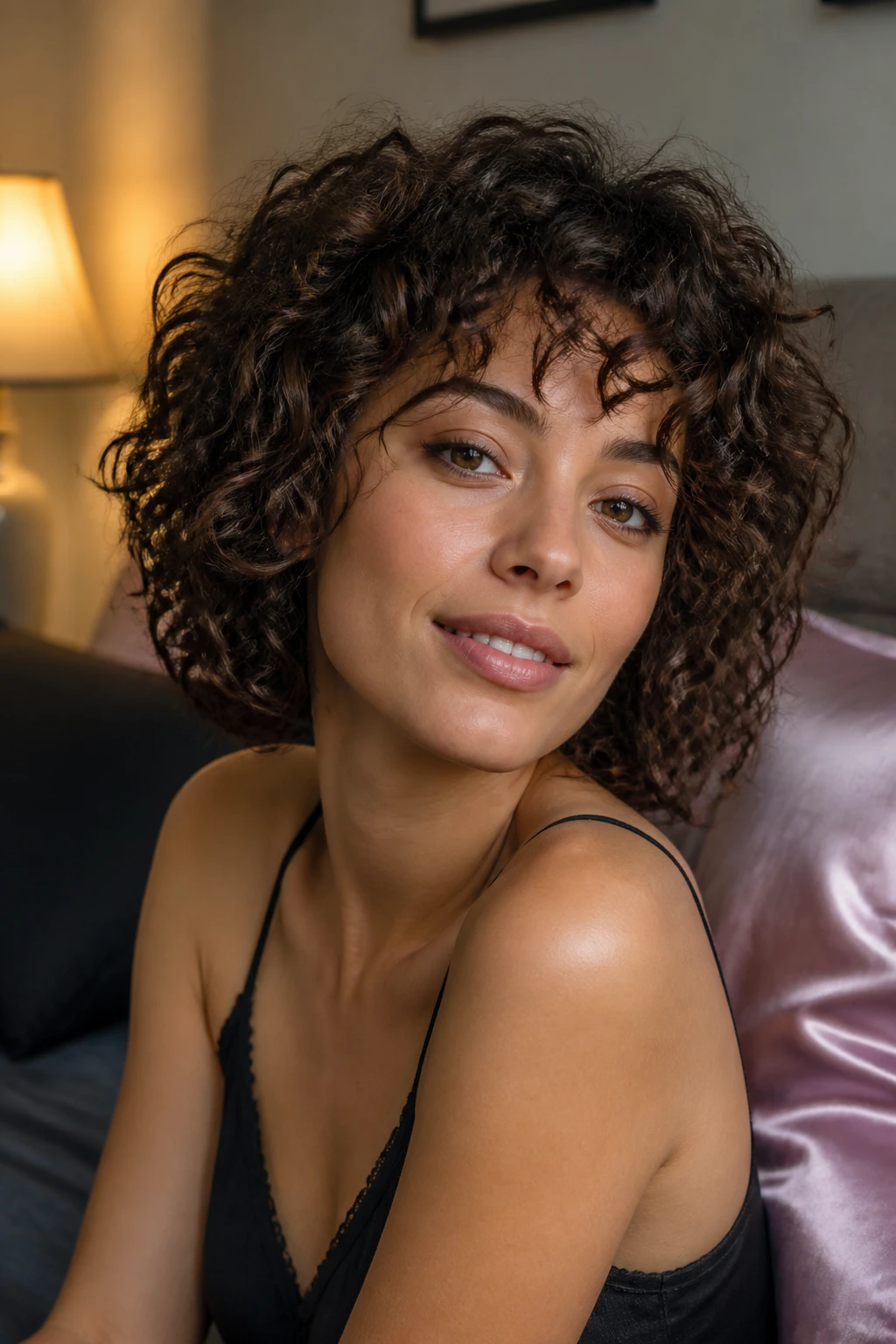
Curly layers usually hold their shape longer than blunt cuts, but they do not maintain themselves. A trim every 8 to 12 weeks is a good rhythm for most people, though dense hair that grows fast may need a clean-up sooner around the neckline and bangs.
At night, protect the shape. A loose pineapple at the top of the head, a satin bonnet, or a satin pillowcase keeps the choppy pieces from getting crushed flat. If the haircut has curtain bangs or face-framing layers, clip those sections lightly before sleep so they do not bend into strange angles.
Day two and day three usually need less product than day one. A little water, a pea-sized amount of leave-in, and a quick scrunch often revive the shape faster than a full restyle. If the roots have collapsed, clip them up for 15 to 20 minutes while the hair dries.
When the haircut starts losing its silhouette, do not wait for a catastrophe. A small trim at the crown or around the face can bring the shape back without taking off much length. That is the whole point of layers: they should grow out with some grace, not all at once.
Frequently Asked Questions
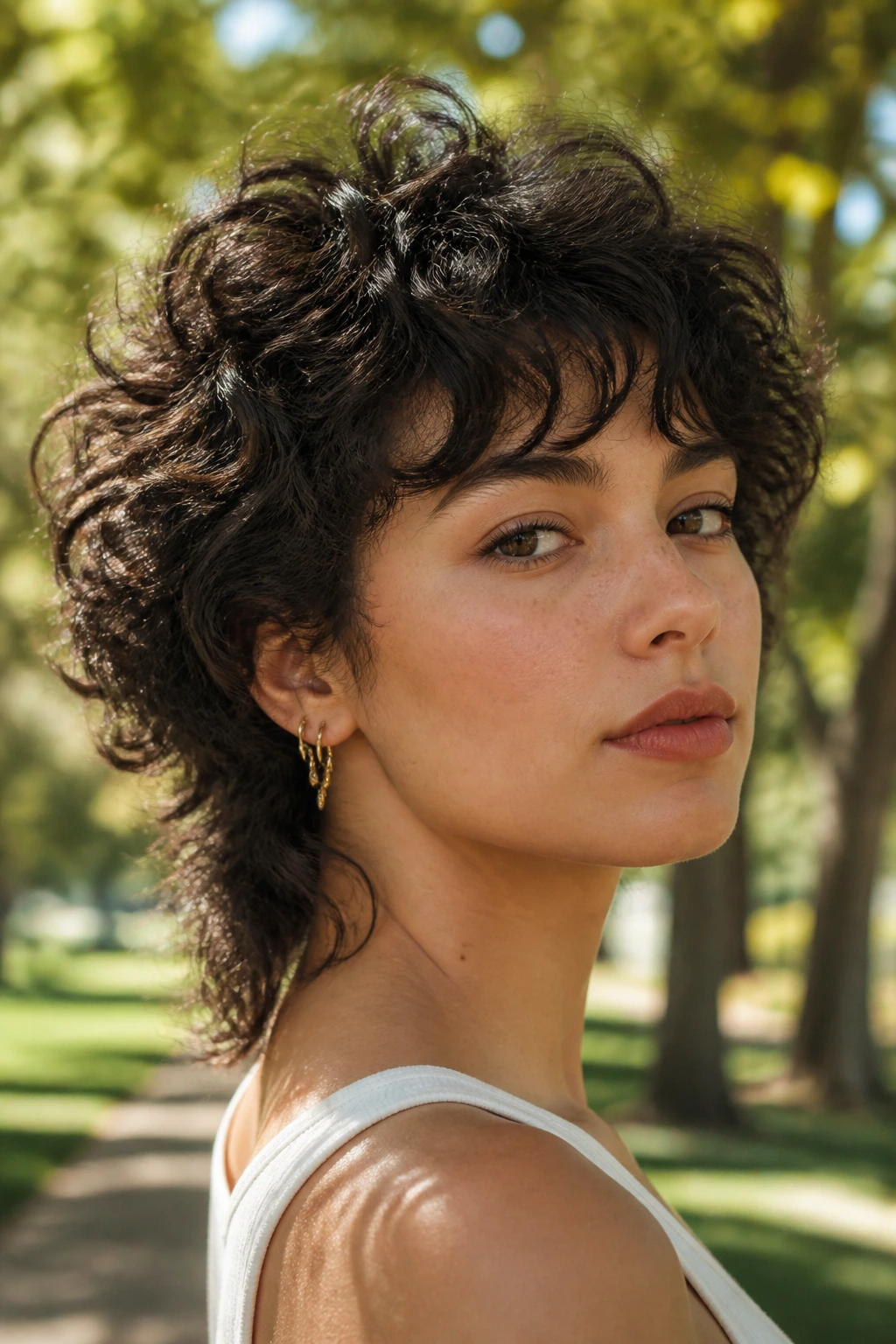
Do choppy layers make curly hair frizzy?
Not by themselves. Frizz usually comes from rough cutting, over-thinning, or styling with too little hold while the hair is half dry. A good choppy cut should separate the curls, not shred the cuticle.
Should curly layers be cut wet or dry?
Dry cutting usually gives the clearest picture of how the hair will sit once it shrinks. Wet cutting can still work, especially for looser waves, but the stylist needs to know your shrinkage pattern well enough to leave room for it.
Can fine curly hair wear choppy layers without losing fullness?
Yes, but the layers need to stay subtle. Fine curls usually do better with invisible layering or long face-framing pieces, not dramatic removal at the crown.
How short can the layers go on thick curls?
Short enough to remove bulk, not so short that the shape puffs outward. On thick curls, the best short layers usually sit in the crown and upper sides while the bottom remains long enough to keep control.
What if my haircut turns into a triangle?
That usually means the weight sits too low and the top was not lifted enough. A stylist can often fix it with targeted internal layers, crown shaping, or a little more face framing.
Are choppy layers hard to style every day?
Not if the shape matches your curl pattern. The right cut usually gets easier on day two because the layers create natural clumps; the wrong one demands a lot of rescue work.
Can I ask for these cuts at a regular salon?
Yes, but bring photos and be specific about curl behavior. If the stylist seems more comfortable with straight hair, ask whether they cut curls dry or in their natural pattern before you book.
How often do curly layers need a trim?
Most people need a shape refresh every 8 to 12 weeks. Bangs and face-framing pieces may need a small cleanup sooner, especially if they shrink a lot.
The Shape Curly Hair Keeps Coming Back To
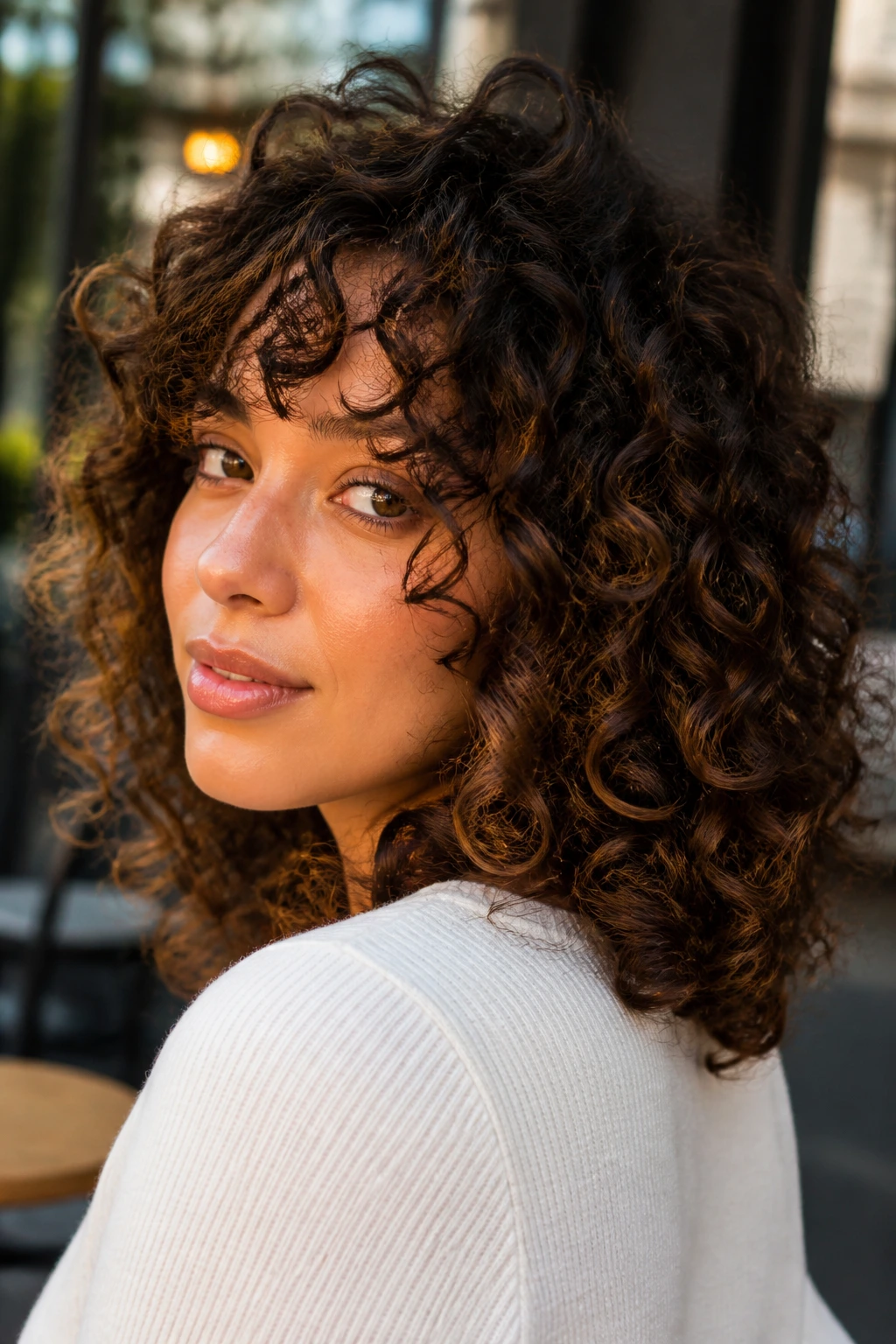
Curly hair does not usually need more control. It needs better geometry. That is why choppy layers work so well when they’re cut with shrinkage, density, and curl pattern in mind. They move the weight where the hair wants it, and once that happens, the whole head looks easier to wear.
The nice part is that there is no single correct version. A shag can look right on one person, a bob on another, and a long bohemian shape on someone else entirely. The common thread is the same: the layers should make the curls land better, not fight for attention.
Bring a few photos, say where you want the volume to sit, and insist on a shape that makes sense when the hair is dry. That’s where the good cuts live.
