



A good shoulder-grazing chop has a useful trick that blunt cuts don’t always manage: it keeps moving after the blow-dry has fallen apart a little. When the length sits somewhere between the jaw and the collarbone, a few well-placed layers can take weight off the ends without turning the whole cut into a thin, wispy mess. That balance is why medium length choppy haircuts look relaxed on day one and still make sense on day three.
The wrong kind of texture is easy to spot. Too much thinning and the ends go see-through. Too much layering and the whole shape starts to kick out in odd places, especially around the cheekbone and nape. The good versions below keep the perimeter believable while breaking up the surface enough to get that soft, lived-in finish people ask for at the chair.
That part matters. The cut should look like it belongs to your hair, not like your hair was made to obey the cut.
Why These Cuts Work on Medium Hair
The length sits in a useful middle zone: It’s long enough to tuck behind an ear or tie back, but short enough that a little movement reads clearly instead of disappearing into the rest of the hair.
The shape can be softened without losing the line: Point cutting, slicing, and gentle internal layers keep the ends from looking blunt and heavy, while the outer edge still gives the haircut structure.
It behaves well on second-day hair: A medium cut with the right kind of choppy texture usually wakes up better than a one-length lob, because the pieces separate a bit instead of collapsing into a single sheet.
It gives fine hair lift and thick hair relief: Fine hair gets a little air between the strands; thick hair gets weight removed where it tends to balloon out. Different reasons. Same payoff.
It works straight, wavy, or blown out: That’s the real reason this collection gets asked for so often. The haircut does not need one perfect styling method to make sense.
1. Collarbone Shag with Airy Ends
The collarbone shag is the cut I reach for when someone wants movement but does not want to look like they tried to be “edgy.” The length lands right around the collarbone, and the layers start low enough to keep the shape soft. The ends should feel broken up, not shredded.
Why it works: The collarbone gives you a visible outline, and the shag layers bring the motion inside the shape. That matters on medium hair, where heavy ends can drag everything down by mid-afternoon. A little point cutting at the bottom keeps the finish feathered without turning the cut into a mess.
Styling note: Ask for the shortest face-framing piece to start around the cheekbone or just below it. If the front starts too high, you lose the softness and slide into mullet territory fast. A 1-inch wand and a quick brush-out is usually enough.
2. Parisian-Looking Lob with Broken Waves
This one is for the person who likes polish but hates hair that looks freshly curled into submission. The perimeter stays calm, usually at collarbone length, while the interior gets just enough breakup to keep it from reading flat. The wave pattern should look bent, not “done.”
A broken wave is a very different animal from a perfect curl. You want the bend to change direction, with one piece flicking toward the cheek and the next falling straighter. That irregularity is what gives the cut its lived-in feel.
Best for: Medium hair that sits straight at the roots but bends at the ends, because the cut lets the texture show without making the whole shape puffy. A soft cream through the mid-lengths and a mist of texture spray at the ends usually beats a heavy serum here.
3. Butterfly Layers with a Soft Center Part
Butterfly layers bring one of the smartest tricks in haircutting: they let you keep length while still making the top half feel lighter. On medium hair, that means the shorter layer lives around the cheekbone or chin, while the longer layer keeps the length around the shoulders.
The result can look dramatic in the chair and surprisingly easy in real life. When the hair is blown forward and then flipped back, the face frame falls in a soft curtain instead of a hard shelf. That’s the part people notice first.
If you wear a center part, this shape looks especially clean. If your hair naturally wants to part a little off-center, leave it alone. Fighting the part tends to flatten the crown and steals the lift these layers are supposed to give you.
4. Soft Wolf Cut at Medium Length
A wolf cut sounds aggressive until you soften the edges. Then it becomes one of the easiest ways to make medium hair feel alive again. The crown gets more lift, the nape stays longer, and the whole thing has a slightly undone shape that never feels too stiff.
What makes it different: The soft wolf cut keeps the wildness under control. You still get shorter pieces near the top and around the face, but the transition is smoother, so it doesn’t look like two haircuts fighting each other.
Who it suits: Wavy hair, thick hair, and anyone whose roots collapse by lunch. If you like air-drying, this one has a nice natural bend. If you blow-dry it smooth, the cut still holds shape, which is half the battle.
5. Face-Framing Layers with Curtain Bangs
This is the haircut equivalent of opening the blinds and letting the light move around the room. Curtain bangs split softly at the center, then the layers fall away from the face in a way that makes the cheekbones look more defined without a hard line. On medium length hair, that combination is especially forgiving.
A lot of people ask for “face-framing layers” and end up with pieces that are too short or too disconnected. Keep the front layers long enough to tuck behind the jawline. The softness comes from the bend and the blending, not from chopping the front up high.
Styling cue: Use a round brush only at the front, not everywhere. Just give the curtain bang a little bend away from the face, then let the rest of the hair stay loose. That contrast keeps the shape from feeling overworked.
6. Choppy Lob with a Calm Perimeter
If blunt lobs feel too strict, this is the compromise I like. The outside line stays steady and easy to read, but the last inch or so of the ends gets point-cut so the hair doesn’t sit like a solid block. The result is movement without visible layers screaming for attention.
That calm perimeter is the whole point. Too many choppy cuts lose their shape because the texture is spread everywhere. Here, the shape lives on the outside, and the softness lives inside it.
It’s a smart choice for people who wear their hair straight a lot. A few subtle bends with a flat iron or a quick pass with a large curling wand will be enough to make the ends look piecey instead of flat.
7. Razor-Cut Midi with Feathered Ends
A razor cut can be a blessing or a disaster, depending on the hair. On medium-length straight to wavy hair, though, it creates a feathered edge that looks lighter than a scissor cut. The ends don’t fall in one heavy line; they taper and move.
The important thing is restraint. The razor should remove weight, not erase it. If the stylist overdoes it, the hair can frizz and lose its shape around the bottom.
A good match if: your hair is dense, your ends feel bulky, and your usual ponytail has the thickness of a rope. A small amount of lightweight cream and a heat protectant are enough for styling. Skip heavy oils unless your ends are truly dry.
8. Shoulder-Grazing Mullet Lite
There’s a soft version of the mullet that has a lot more wearability than people expect. The front and crown carry a little more lift, the back stays longer, and the transitions are blurred so the shape feels modern instead of costume-y. On medium hair, that difference matters.
You can think of it as texture with a spine. The haircut is not trying to be symmetrical. It’s trying to move when you turn your head, which is why it looks better with a little natural wave or a rough dry.
Use a texture spray at the roots and a bit of hand scrunching. The goal is not a perfect finish. The goal is shape that looks like it happened with real hair on a real day.
9. Cascading Layers with a Side Sweep
A side sweep changes the whole mood of a medium cut. Instead of splitting the face down the middle, the hair falls diagonally, and the layers cascade from one side into the other. That diagonal line can soften the jaw and bring a little lift to flatter faces that want more angle.
Why it stands out: It gives movement without needing obvious bangs. The side part pulls the hair over the crown, and that can help if your top layer always goes limp.
Quick notes:
- Ask for the shortest face-framing piece to graze the cheekbone.
- Keep the longest pieces near the collarbone.
- Use a medium round brush only at the root to encourage lift.
- Brush the front across, then flip it back with your fingers.
10. Invisible Layers for Fine Hair
Fine hair is where a lot of choppy cuts go wrong. Too much visible layering and the ends look sparse in one week. Invisible layers fix that by building movement underneath the surface while keeping the outside line fuller.
The haircut looks almost blunt when it’s hanging still. Then it shifts a little when you move, which is exactly what fine hair needs. You keep the illusion of thickness without the helmet effect.
This is one of the few cuts where less really does more. A mist of root spray and a small round brush at the crown can give you enough lift without forcing the hair into a shape it can’t hold.
11. Piecey Lob with Micro-Internal Layers

The micro-internal layer is a quiet little trick. You’re not carving big steps into the haircut. You’re taking tiny sections inside the shape so the hair separates softly, especially at the ends and mid-lengths.
That makes this lob feel airy instead of heavy. It also helps when your hair waves just enough to do something interesting, but not enough to form a clean pattern on its own.
What to ask for: “Keep the outline mostly one length, then add small internal layers for piecey movement.” That one sentence prevents a stylist from going too far. It’s a calm cut with just enough break in it to keep the eye moving.
12. Disconnected Front with a Soft Back
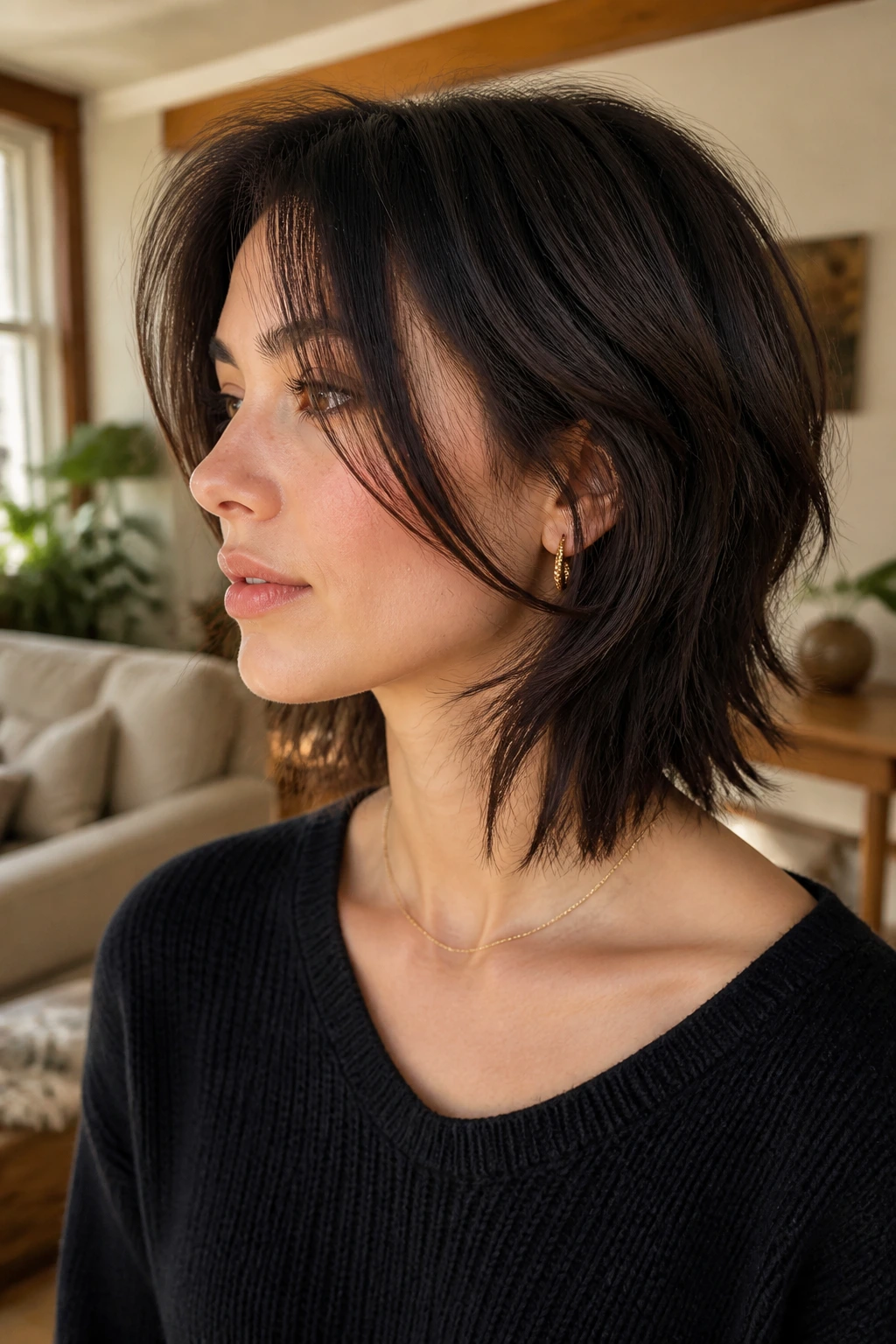
This is a sharper shape, but it doesn’t have to look severe. The front pieces are cut with a little more separation around the cheekbone and jaw, while the back stays softer and more blended. That contrast is what gives the cut its edge.
If you’ve got a face-framing section growing out from bangs, this shape is useful. It turns that awkward in-between zone into something intentional instead of making you wait it out in silence.
The trick is not to over-texturize the back. Leave enough weight there so the haircut still feels grounded. A disconnected front looks better when the rest of the hair gives it a place to land.
13. Bottleneck Bangs with Mid-Length Texture

Bottleneck bangs are a smart middle ground between curtain bangs and a full fringe. They sit narrower at the center, then open out near the temples, which means they soften the forehead without closing off the face. On medium length hair, they create a clean shift from fringe to layers.
The haircut feels especially good if you like a lived-in finish but want something a little more deliberate at the front. The bangs give you shape right where people look first, and the mid-length texture keeps the rest of the hair from feeling flat.
Styling note: Blow-dry the center of the bangs first, then bend the sides away from the face with a small round brush. Don’t overbrush them. They should separate a little and fall with a soft bend, not a stiff curve.
14. Softened Octopus Cut

An octopus cut can look heavy if it’s too dramatic, but the softened version keeps the same basic idea: lift at the crown, taper through the ends, and a rounded silhouette that sits away from the neck a bit. Medium length hair takes to this shape well because there’s enough length to show the taper.
The softened version matters. Nobody wants the haircut to look like it was copied off a runway photo and then sent into the real world unedited. Keep the pieces around the face longer and let the ends stay airy, not spiky.
This cut can be brushed smooth or left a little wild. Either way, the roundness near the top keeps the style from collapsing into a flat sheet.
15. Side-Swept Layers for Straight Hair
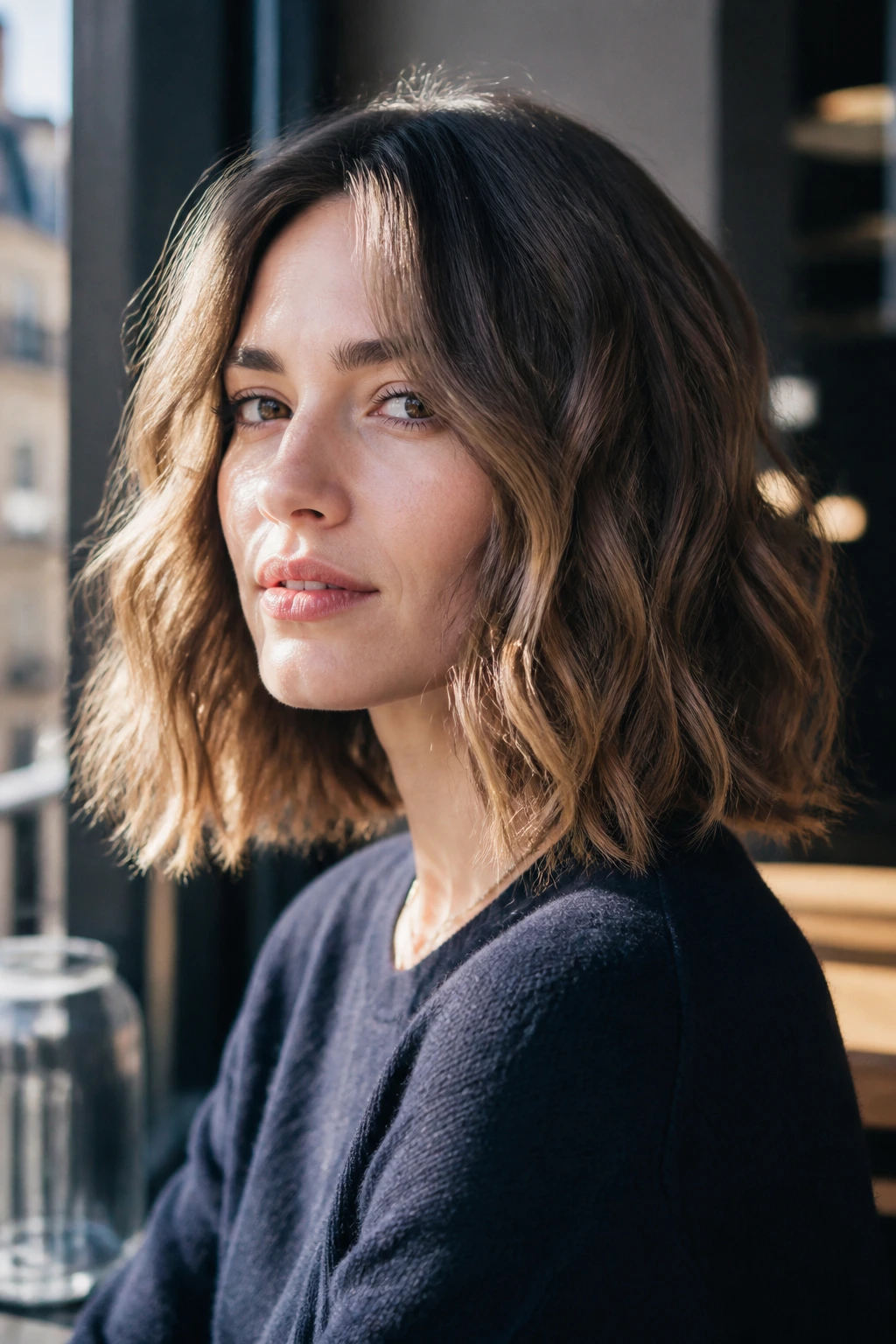
Straight hair often behaves like it has a grudge. It falls exactly where it wants and shows every bad line in a cut. Side-swept layers help because they give the hair a direction to move instead of asking it to create texture from nowhere.
The layers should start lower than you think, usually around the chin or lower, so the hair still has enough weight to hang well. A side part keeps the front from looking boxy and gives the ends a subtle diagonal flick.
Best for straight hair that goes limp: Keep the ends point-cut, then bend just the front pieces with a flat iron. That tiny bend at the cheek and collarbone does more than a full head of curls ever will here.
16. Air-Dried Midi with Round Layers

Some cuts look good only when heat-styled. This is not one of them. Round layers let medium hair dry into a soft, curved shape that still has enough separation to feel modern. If your hair has a little wave, this cut can almost do the work on its own.
You want the layers to follow the head shape, not fight it. The top should lift gently, the mid-lengths should drop softly, and the ends should curve in a way that doesn’t feel harsh. It’s a very forgiving shape for people who don’t want to wrestle a brush every morning.
A little leave-in conditioner and a light mousse are usually enough. Too much product will drag the texture down and kill the whole point.
17. Blunt Perimeter with Shattered Ends

A strong perimeter with broken-up ends can look polished in a way a full shag never will. The line gives the haircut a clean frame, and the shattered edges keep it from feeling stiff. That combination is especially nice on medium hair that needs some structure.
Think of it as a tailored jacket with slightly frayed cuffs. The shape is there. The polish is there. But the finish still has enough looseness to feel current and wearable.
This cut is a good fit if you like to straighten your hair and still want movement. The broken ends catch light in a more uneven way, which makes the hair appear fuller without making it puff out.
18. Jaw-Length Face Frame on a Midi

A jaw-length face frame does a lot of work without asking for a dramatic overall cut. The shortest pieces skim the jaw or upper neck, then the rest of the hair stays longer and softer. That gives the face a contour that feels obvious in motion but subtle when the hair is still.
It’s especially useful if you like to tuck your hair behind one ear. The face frame drops back out with a clean line instead of sticking out like an afterthought. Little thing. Big difference.
If you want the shape to feel softer, ask for the ends to be point-cut rather than bluntly sliced. The front should frame the face, not carve it up.
19. Curly Shag with Deconstructed Layers

Curly hair needs its own logic. A curly shag works because the layers support the curl pattern instead of forcing every curl to sit at the same level. The deconstructed version keeps the shape airy and prevents that triangle that thick curls can turn into.
This cut should usually be assessed dry or at least mostly dry. Curly hair shrinks, and spring factor changes the whole shape. If you cut it wet and guess, you’ll be surprised later, and not in a good way.
The best curly shags keep enough length in the bottom to let the curls stack. Too many short layers make the crown poof up and leave the ends hungry.
20. Long Layers with Wispy Fringe

Sometimes the answer is not more chop. Sometimes it’s longer layers and a light fringe that soften the whole head without changing the overall feel too much. This is a nice path if you’re nervous about visible texture but still want movement.
The wispy fringe brings attention to the eyes, while the long layers keep the ends from sitting as one heavy block. On medium hair, that can be enough to create a lived-in finish all by itself.
It’s a quieter haircut, and I like that. You can wear it smooth, bend the front pieces with a wand, or let it dry on its own and still keep the shape.
21. Thick-Hair Choppy Cut with Built-In Lightness
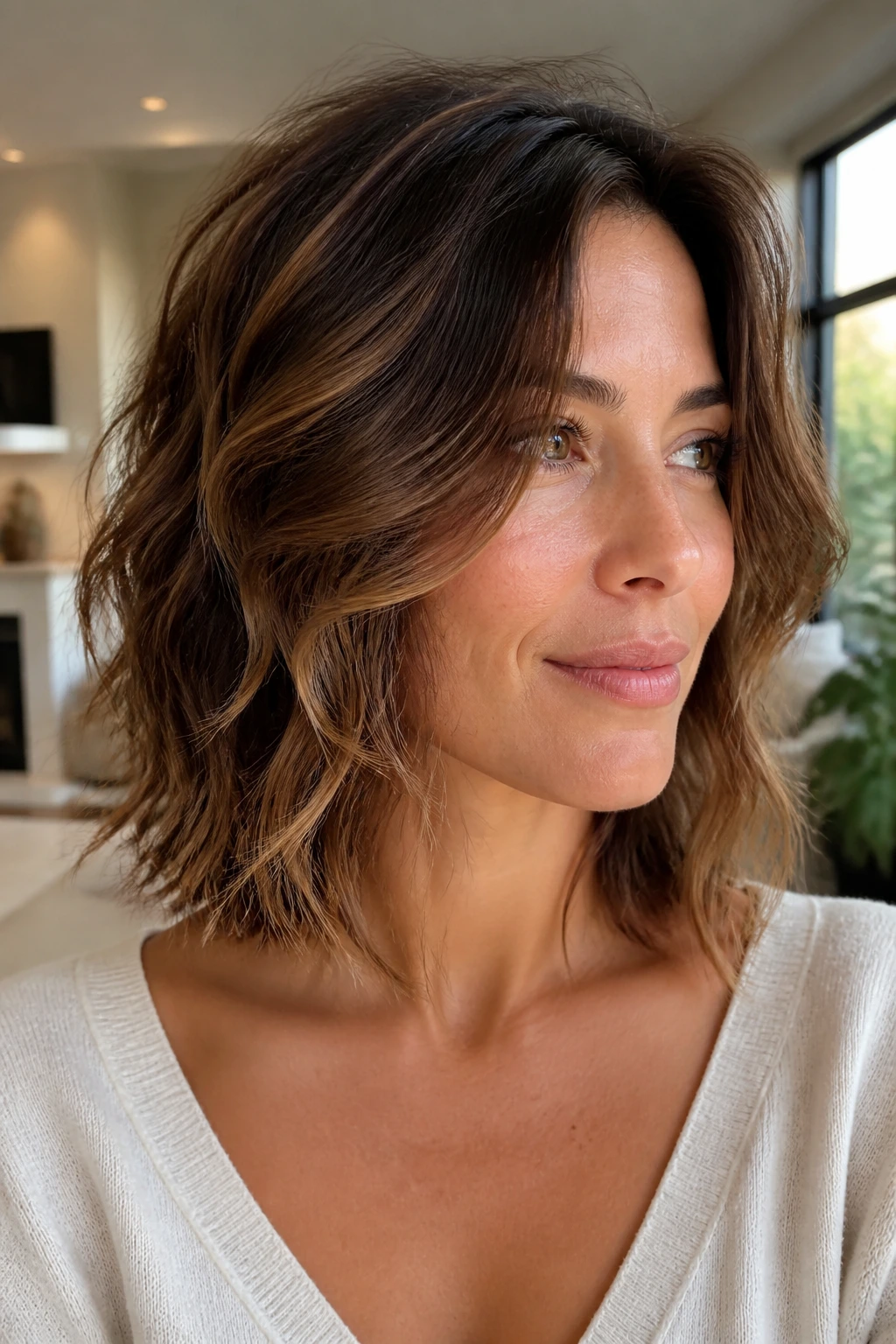
Thick hair can turn generous in the wrong places. This cut takes weight out from inside the shape so the bottom doesn’t balloon outward. The choppiness is there, but it’s controlled, which is the whole game with dense hair.
What to ask for: Keep the perimeter strong, then remove weight under the surface and around the crown. Ask for point cutting at the ends, not aggressive thinning shears through the bottom. That difference matters more than most people realize.
A good version of this cut feels lighter on your neck by the end of the day. That’s how you know it worked.
22. Fine-Hair Choppy Cut with Crown Lift
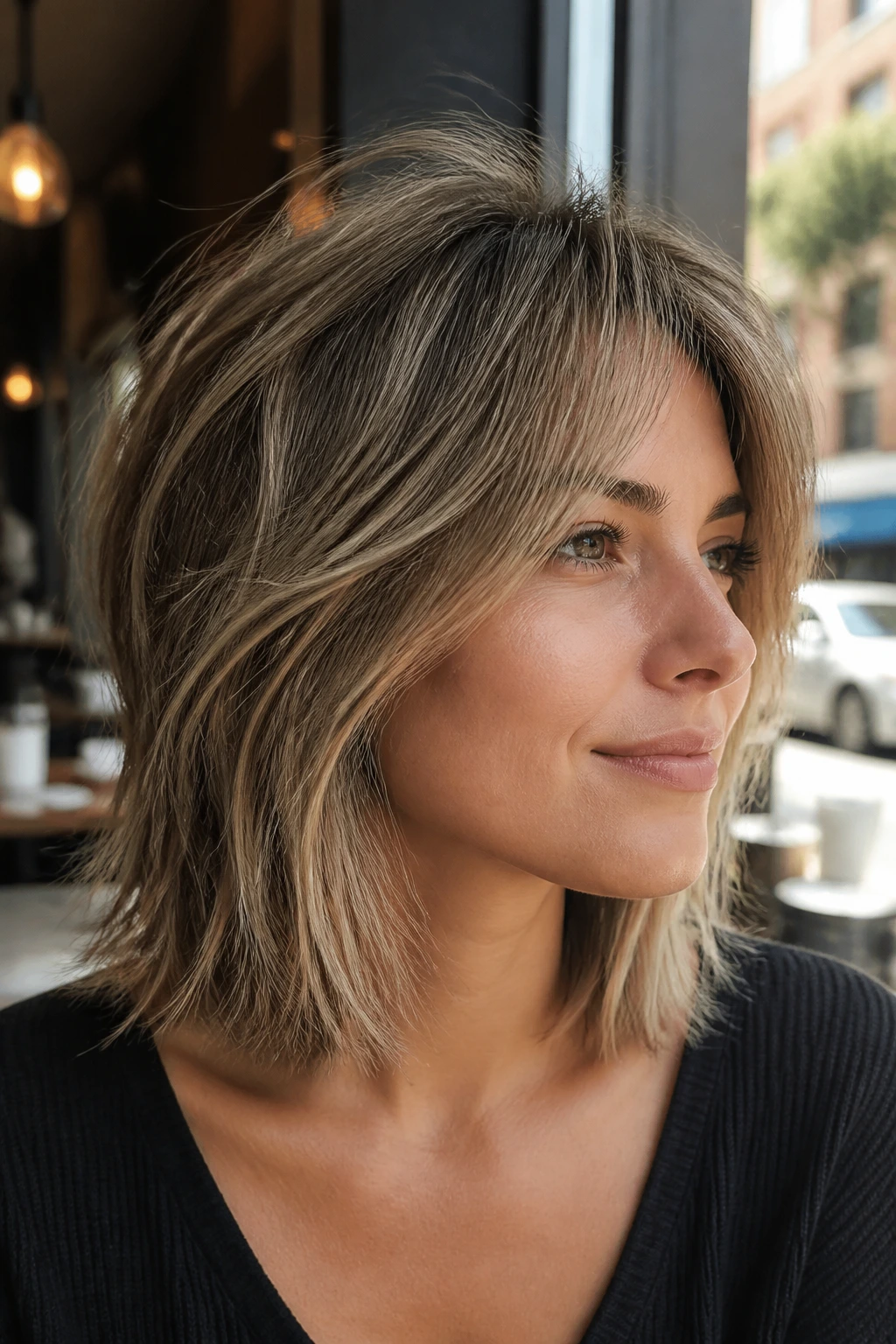
Fine hair needs lift where people actually see it: the crown, the front, and the pieces around the cheekbone. This cut keeps the ends from getting too sparse and puts the movement higher up, where it can support the illusion of fullness.
The worst thing you can do to fine hair is over-layer the bottom. It starts to look transparent fast. A better move is a soft crown lift, a little texture near the front, and a perimeter that still looks present.
If your hair falls flat at the roots, a root spray and a round brush at the crown are worth the effort. Small lift. Better shape. No mystery.
What Makes the Texture Read Soft Instead of Ragged

A soft choppy cut is not just “less layered.” It’s a haircut where the outline stays calm and the texture lives inside the shape. That’s the part people miss when they ask for lived-in hair and end up with something that looks like it was attacked by a thinning shear.
The perimeter should still make sense when the hair is tucked behind the ear or pulled into a loose clip. If the outer line breaks apart too much, the whole cut starts to feel accidental. Keep the bottom edge readable, then let the movement happen higher up and around the face.
Point cutting is usually kinder than heavy razoring for this finish. It breaks up the ends without turning them fuzzy. On wavy hair, that difference is huge. On straight hair, it can be the difference between “soft texture” and “why do my ends look dry.”
Essential Tools for Styling the Shape
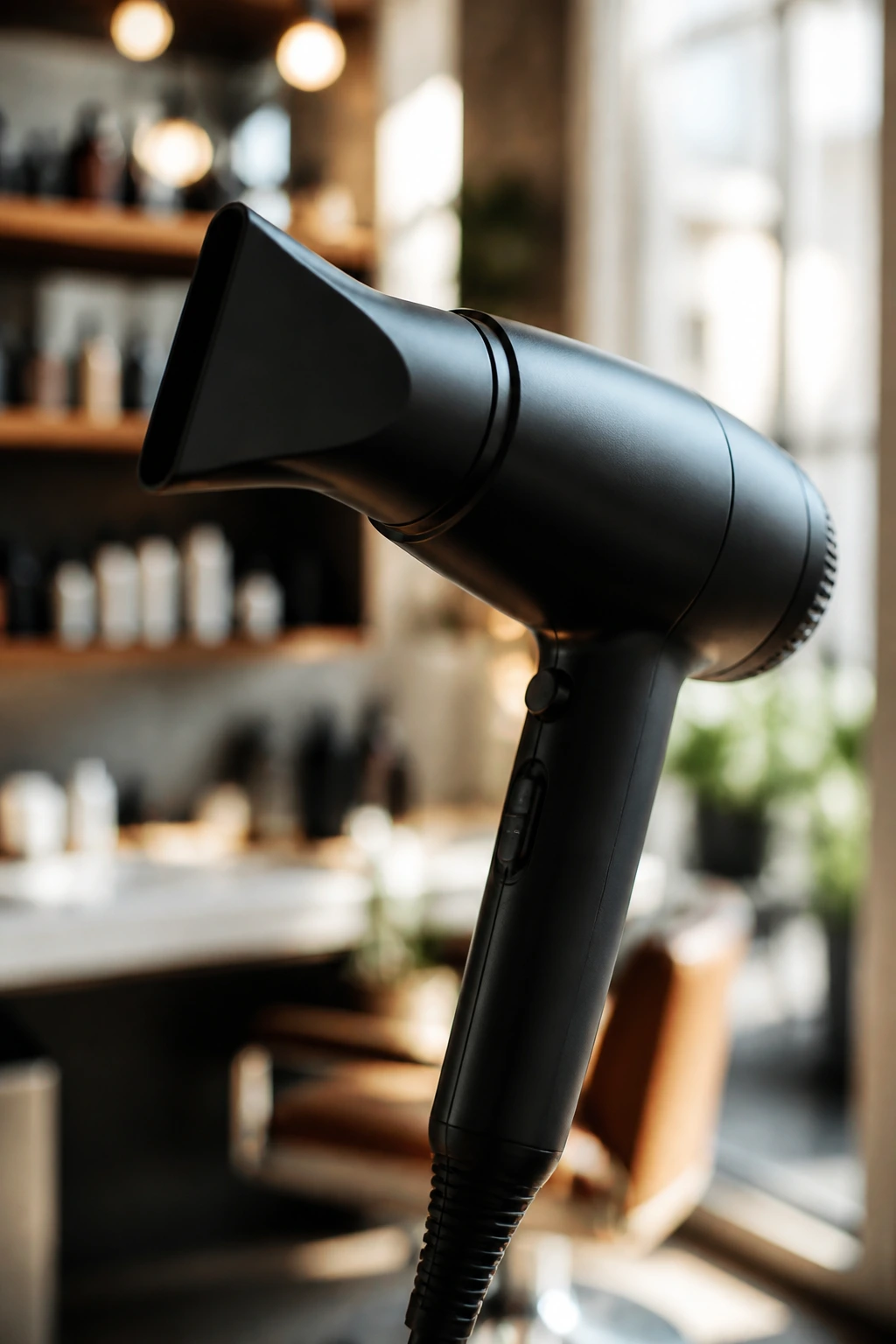
- Blow dryer with a concentrator nozzle: Directs airflow so the front pieces and crown can be shaped without frying the whole head.
- 1-inch curling wand or iron: Gives just enough bend for broken waves and face-framing movement.
- 1.25-inch round brush: Good for lifting the roots and softening curtain bangs without making them stiff.
- Heat protectant spray: Keeps the ends from looking fried, especially on razor-cut or point-cut hair.
- Light mousse: Helpful for fine or wavy hair that needs a little hold at the crown.
- Texture spray: Gives soft separation to the mid-lengths without the crunchy feel of too much hairspray.
- Leave-in conditioner: Useful on thick, curly, or dry hair when the cut needs slip more than hold.
- Wide-tooth comb: Better than a small brush for keeping wave patterns intact after washing.
- Sectioning clips: Make it easier to style just the front without overworking the rest.
- Diffuser: Optional, but worth having if your hair is wavy or curly and you want to preserve the bend.
How to Brief Your Stylist for a Soft Choppy Cut
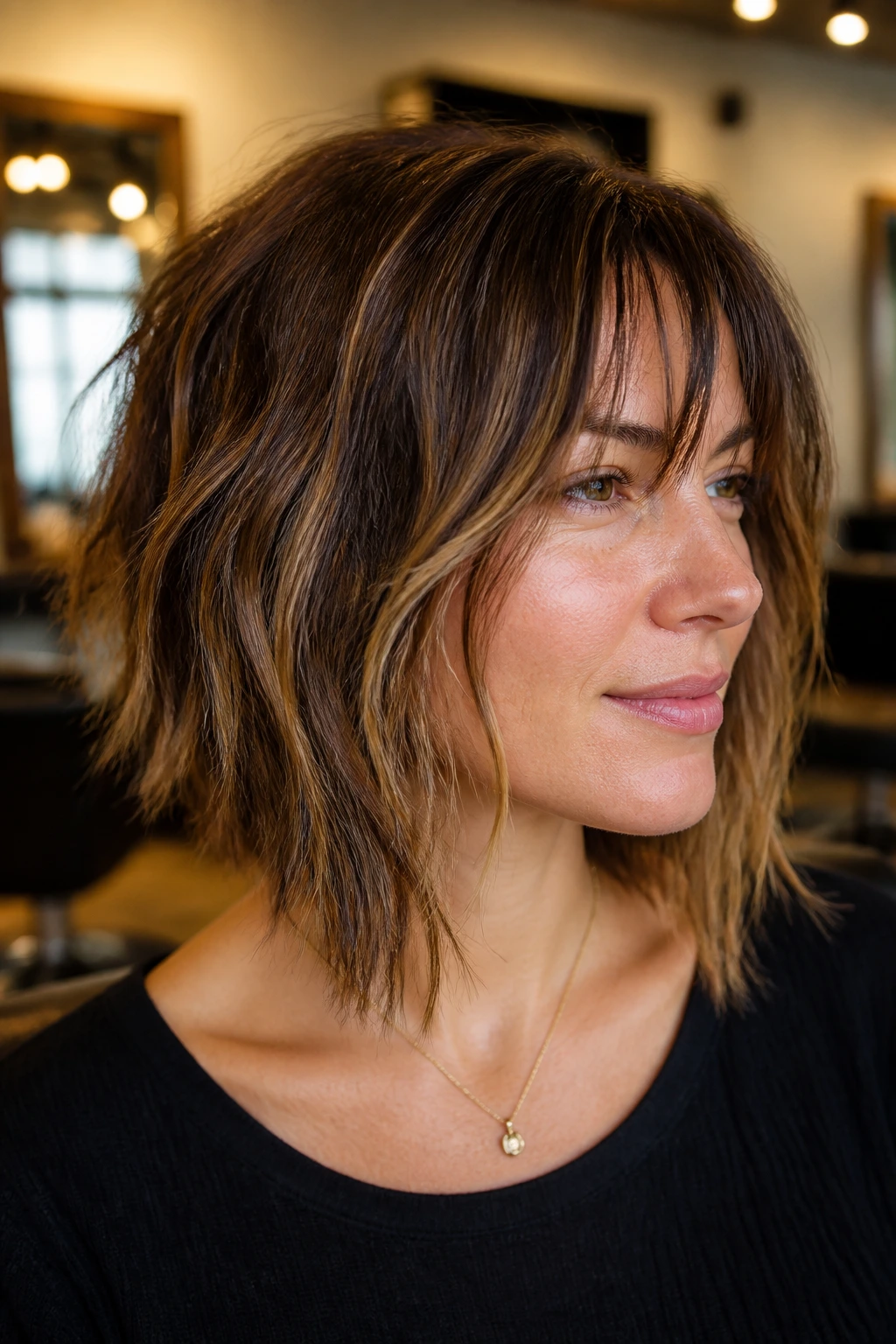
The cleanest haircut consults are the boring ones. Not boring to hear, but boring in the best way: clear, plain, and specific. Say where you want the length to sit, where the shortest face-framing piece should land, and whether you want the texture visible or hidden inside the shape.
Bring two photos if you can. One should show the length you want, and the other should show the texture you want. Those are not always the same haircut, and that’s fine. A stylist can translate better when they’re not guessing which part of the picture matters most to you.
Use phrases like “keep the perimeter soft but not thin” and “I want movement in the ends, not short layers all over.” If you have curls or a strong wave, ask whether the cut should be done dry. If your hair is fine, say you want lift at the crown without losing density at the bottom. Those small details save a lot of regret later.
Daily Styling Moves That Keep the Texture Soft

A medium choppy cut should not demand a full production every morning. It needs a little direction, not a battle.
For air-dry days: squeeze out water with a microfiber towel or T-shirt, work in a light leave-in and a pea-sized amount of mousse, then scrunch the front pieces once or twice. Stop touching it while it dries. The fewer times you mess with it, the softer the finish stays.
For blow-dry days: rough-dry the roots until they’re about 80 percent dry, then use a round brush just around the face and crown. You do not need to round-brush every inch. That’s how the texture turns stiff and overdone.
For second-day hair: mist the mid-lengths with water, re-bend a few front pieces with a wand, and put texture spray only where the shape has collapsed. A dry shampoo at the roots can help, but if you pile it on, the hair gets dusty and loses the softness you were trying to keep.
Common Mistakes That Turn Soft Texture Ragged

-
Starting the layers too high: The shape can jump up into an accidental mullet or feel too airy around the crown. Fix it by keeping the shortest pieces below the cheekbone unless you truly want a shaggy edge.
-
Over-thinning the ends: The hair starts to look stringy and dry, especially on medium hair that already has some wave. Ask for point cutting or soft slicing instead of heavy thinning shears through the bottom.
-
Ignoring your natural bend: A cut that looks good on straight hair can sit badly on curls, and a cut built for curls can look bulky on straight hair. The fix is matching the cut method to the texture, not forcing the same shape on everyone.
-
Using too much oil or serum: The texture disappears and the haircut turns slick at the ends. Keep heavier products away from the roots and use only a tiny amount on the bottom third.
-
Cutting bangs without planning the grow-out: Curtain or bottleneck bangs can be lovely, but only if you know how they’ll sit after three weeks. If you’re unsure, keep the fringe longer first. It’s easier to shorten later.
Ways to Customize the Shape
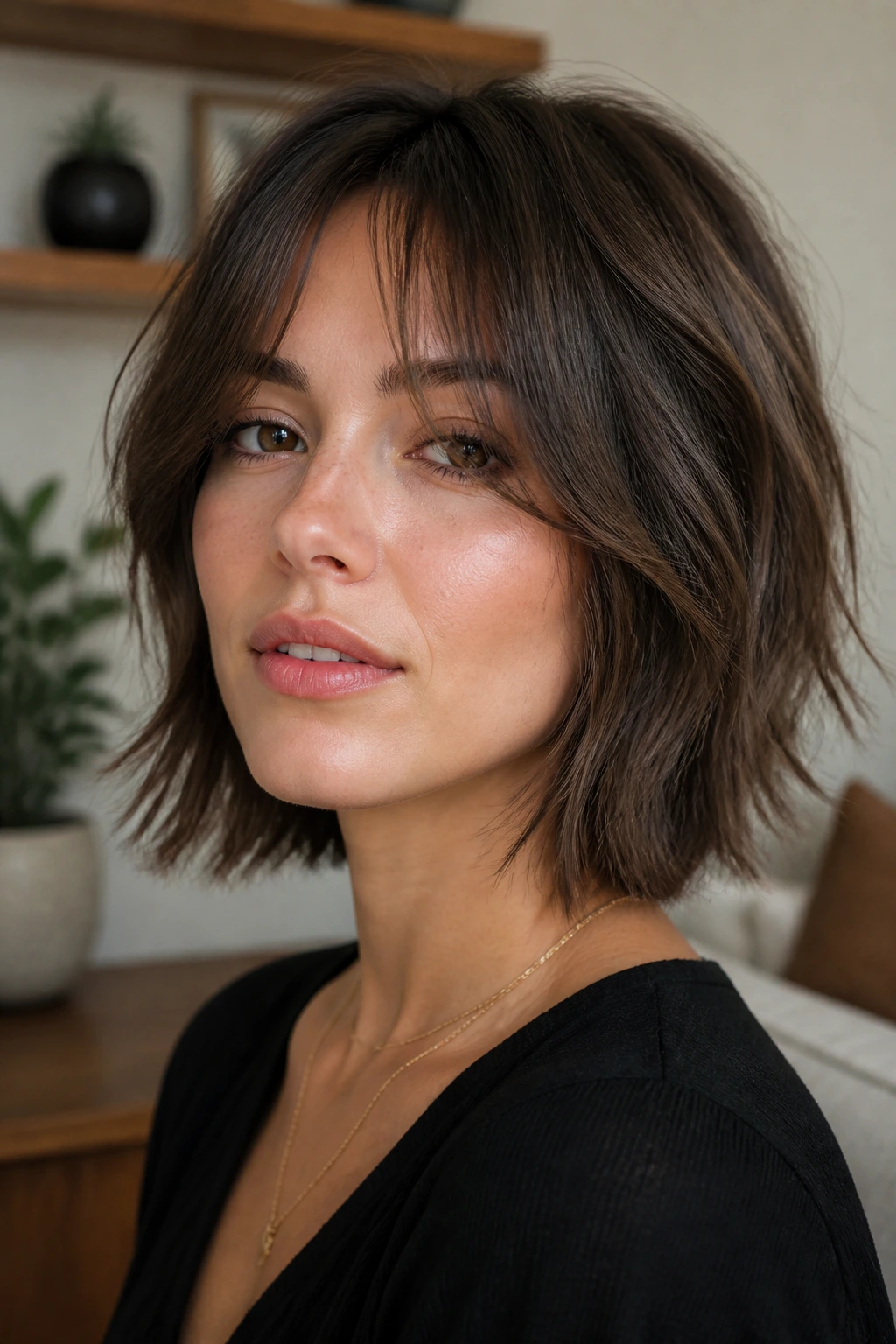
The Softer Office Version: Keep the perimeter cleaner, ask for subtle internal layers, and leave the face frame long. This version still moves, but it won’t read too shaggy in a polished setting.
The Air-Dry Version: Ask for layers that follow your natural wave pattern and avoid heavy razoring at the ends. This is the one for people who want the cut to behave after a towel dry and a squeeze of cream.
The Strong-Frame Version: Add curtain bangs or a jaw-length face frame for more structure around the face. It’s useful if you want your haircut to do some contouring without leaning into a heavy fringe.
The Thicker-Hair Version: Keep the outline strong and remove weight only from the inside. That gives the hair room to move without puffing out at the edges.
The Fine-Hair Version: Keep layers longer, focus texture near the crown, and avoid chopping up the ends too much. The point is to create lift, not to make the tail of the haircut disappear.
Maintenance, Trims, and Grow-Out
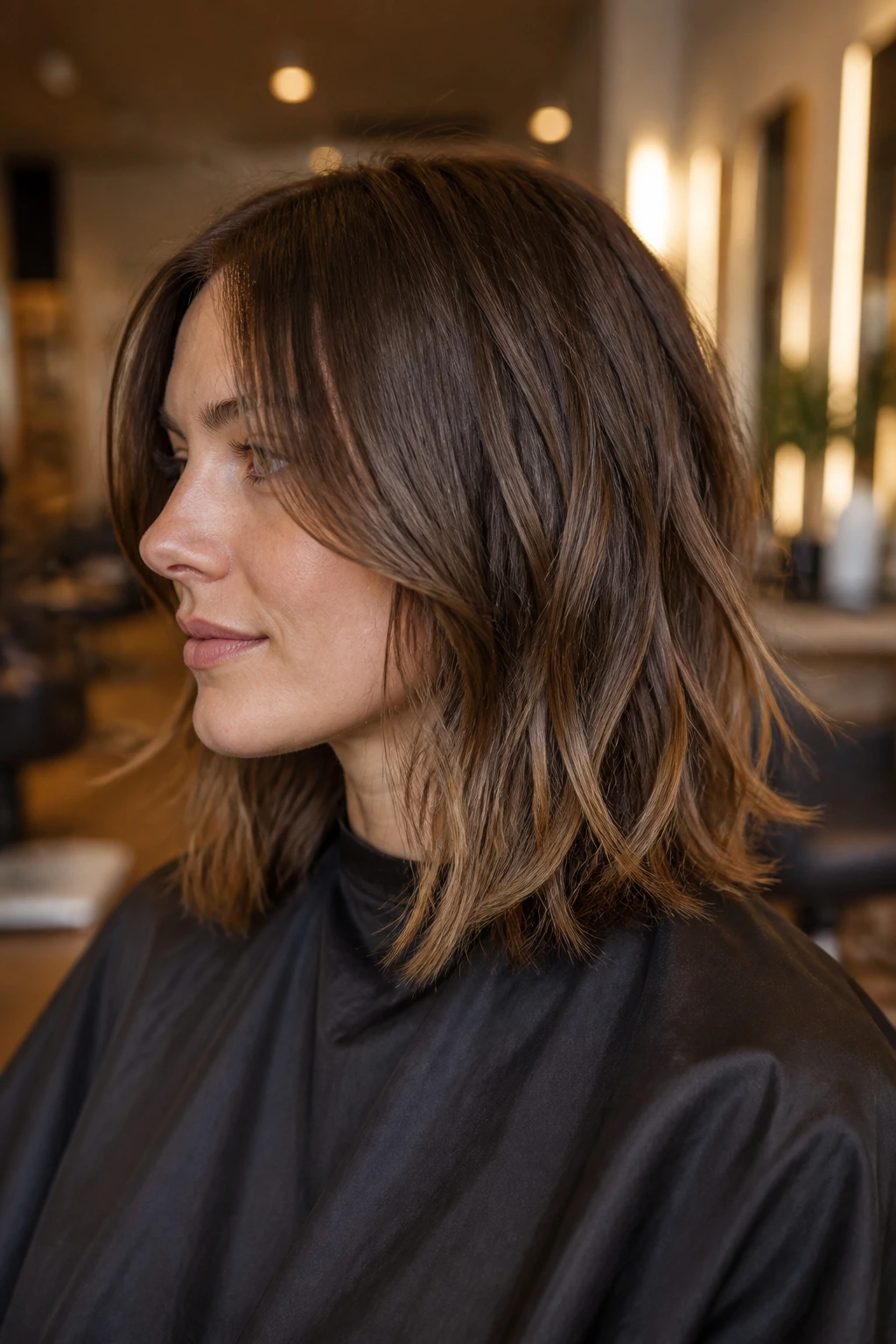
A medium choppy cut usually keeps its shape for about 8 to 10 weeks before the ends start feeling fuzzy or the layers lose their balance. If you wear bangs, plan on a fringe trim every 3 to 5 weeks. That tiny maintenance habit makes more difference than a lot of expensive products.
The grow-out is where these cuts either shine or fall apart. If the initial shape was too short in the front, it can turn awkward fast. If the layers were placed with some restraint, the haircut tends to slide into the next stage gracefully and still look intentional while it lengthens.
On the salon chair, ask for a dusting rather than a full reshaping if you just need the ends cleaned up. That keeps the texture intact. If you go in every time asking for “just a little more texture,” you may end up taking away the exact weight that makes the cut look soft.
Frequently Asked Questions

Will a choppy medium cut work on fine hair?
Yes, if the layers stay longer and the texture is concentrated near the crown and face. Fine hair looks best when the bottom edge still feels full. Too many short layers will make the ends go see-through.
Is this the same thing as a shag?
Not exactly. A shag usually leans harder into visible layers and a more disconnected shape, while a medium choppy cut can stay calmer and more blended. You can borrow shag elements without committing to the full look.
Can I wear this straight, or does it need waves?
You can wear it straight. In fact, some versions look cleaner straight and softer with just a bend at the ends. The haircut should still make sense if you flat-iron it smooth.
How do I ask for this at the salon?
Talk about where you want the length to fall, how much texture you want at the ends, and whether you want the layers visible or hidden inside the shape. Bring photos that show both the length and the finish, because those are not always the same reference.
What if my hair is thick and puffs out?
Keep the perimeter stronger and ask the stylist to remove weight from the inside rather than thinning the whole bottom. That gives the haircut movement without making the ends frizz out around your shoulders.
Can curly hair handle choppy layers?
Yes, but the cut should respect the curl pattern. Dry cutting or curl-by-curl shaping usually gives a better result than guessing on wet hair. Curly hair shrinks, and that shrinkage changes the whole outline.
What product keeps the texture soft instead of crunchy?
A light mousse at the roots and a texture spray at the mid-lengths usually do more good than heavy hairspray. If the hair is dry, add a small amount of leave-in conditioner only to the ends.
How often should I trim it?
Most medium choppy cuts benefit from a trim every 8 to 10 weeks. Bangs, if you have them, may need attention sooner. Letting the layers go too long can make the soft texture lose its shape and start looking fuzzy.
The Cut That Keeps Moving

A good medium choppy haircut has a useful kind of honesty. It doesn’t try to stay perfect through wind, sleep, or a long day in a car seat. It just keeps its shape well enough to look deliberate, and that’s a better trick than a cut that only behaves under salon lights.
The sweet spot is the one that fits your hair’s actual habits. Fine hair needs lift without holes. Thick hair needs relief without frizz. Wavy hair needs a shape that can loosen up without collapsing. Pick the version that matches the way your hair already wants to move, and the haircut will keep paying you back long after the first blow-dry.
