



A shoulder-length cut can look flat in one salon chair and alive in another, and the difference usually comes down to where the layers start. Shoulder length choppy haircuts sit right in that middle ground where the ends still hit the collarbone, but the shape has enough breakup to move when you turn your head. That movement is the whole point. Without it, shoulder length can tip into “fine, but nothing happened.” With it, the cut looks loosened up, touched by air, and a little less precious.
I keep coming back to this length because it forgives real hair. A cowlick at the crown. A bit of frizz at the temples. One side that always dries faster than the other. If the structure is smart, those quirks read as texture instead of mistakes. That’s why lived-in soft texture works so well here: the haircut does some of the work, and you don’t have to wrestle it into obedience every morning.
The sweet spot is pretty narrow, though. Too blunt and the ends look heavy. Too shredded and the whole thing starts to fray at the edges. The best versions have a clean perimeter, then strategic choppiness inside the shape so the hair can bend, swing, and settle without looking thin. That balance shows up in the best shoulder-length choppy haircuts, and it’s the difference between “I got layers” and “this actually flatters my hair.”
Why This Collection Feels So Wearable

-
Softness First: The cuts here keep enough length at the neckline to feel feminine and easy to tuck behind the ears, while the layers stop the ends from hanging like a curtain.
-
Grow-Out Grace: Shoulder-length shapes usually blur out more politely than shorter chops, so an eight-week trim schedule does not have to turn into a hair emergency.
-
Works With Real Movement: Wavy bends, loose curls, and even a tiny bit of frizz help these styles. They do not rely on pin-straight perfection to make sense.
-
Less Bulk, Less Puff: Choppy layers break up dense hair without stealing all the weight from the bottom, which is the mistake that makes some cuts look stringy.
-
Easy to Style Two Ways: The same cut can look air-dried and relaxed on one day, then brushed into a soft bend with a round brush the next. That flexibility matters more than glossy before-and-after photos.
-
Face Shape Friendly: A good shoulder-length chop can narrow a wide jaw, soften a long face, or open up the cheekbones without hard lines around the face.
1. Collarbone Shag With Feathered Ends
This is the one I recommend most often when someone wants movement but not chaos. The collarbone shag keeps the weight skimming the shoulders, then feathers the ends so the hair doesn’t sit there like a solid block. It has that easy, a little undone texture that looks better after a few hours of wear.
Why It Works
The shag shape gives you lift through the crown and softness through the perimeter, which is a useful combination at this length. The feathering should start low enough that the ends stay touchable, not wispy. If the shortest face frame lands around the cheekbone and the rest is left just grazing the collarbone, you get motion without losing the outline.
Ask for point cutting, not a harsh razor chop, if your hair is fine or fragile. The feathered finish should look broken-up, not shredded.
Best for:
- Wavy hair that needs direction
- Medium-density hair that looks heavy in blunt cuts
- Anyone who likes air-dried texture with a little bend at the ends
A dab of mousse at the roots and a light texture spray through the mids is usually enough. No fancy styling required.
2. Blunt Lob With Invisible Layers
People hear “choppy” and picture obvious, chunky layers. This cut goes the other way. The perimeter stays blunt enough to keep the hair looking full, while hidden internal layers remove just enough weight so the surface moves instead of sitting like a helmet.
That contrast is the trick. From the front, it reads polished. When the hair swings, you see the softness underneath. It’s a smart choice for fine hair that needs density at the ends, or for anyone who wants texture without giving up that clean line around the shoulders.
If you have a lot of hair, this version only works if the stylist removes bulk from the inside rather than hacking up the surface. Otherwise it turns into a box with holes in it. Not cute.
A center part keeps it modern. An off-center part gives it a little more lift at the crown. Either way, this is the cut I’d pick if you want the haircut to look expensive in that quiet, low-maintenance sense—not because it is flashy, but because the shape is tidy and the movement is hidden until you notice it.
3. Curtain Bang Lob With Soft Swoop
Want the face to look softer without sacrificing length? Curtain bangs do a lot of heavy lifting here. They split open at the center, sweep into the cheekbones, and blend into shoulder-length layers so the whole cut feels stitched together instead of chopped in pieces.
What Makes It Soft
The bangs should be long enough to graze the tops of the cheekbones when they’re fresh cut, then settle lower as they grow. That length matters. Too short, and the front looks severe. Too long, and you lose the lift that makes the style work.
The rest of the lob stays around the shoulders with subtle choppiness through the mids. The result is movement near the face and a calmer line through the back. It suits center parts, but an off-center part can make it even easier to wear on busy mornings.
- Best on straight-to-wavy textures
- Good for broad foreheads or sharp jawlines
- Needs a quick round-brush pass at the fringe, even if the rest air-dries
The fringe is the only part that tends to ask for attention. Everything else can be loose.
4. Wavy Wolf-Lite Cut
A full wolf cut at shoulder length can get loud fast. The softer version is easier to live with. Think of it as a wolf-lite shape: enough crown layers to create lift, enough length in the back to keep the ends from feeling jagged, and enough softness at the face that it does not look like a costume.
The reason this cut works is the imbalance. The top has more energy, the bottom has more calm. That contrast creates that lived-in edge people want, but in a way that still grows out nicely. On naturally wavy hair, it can look almost effortless. On straight hair, it needs a little bend from a diffuser or a small iron.
I would not ask for this if your hair is already very fine and flat unless the stylist knows how to keep the top layers airy without exposing too much scalp. That’s the line you have to watch.
What I like most is the neckline. When the layers taper gently at the nape, the whole cut feels relaxed instead of aggressive. That makes a big difference once the hair starts brushing your jacket collar and getting lived-in in the best way.
5. Piecey Midi Cut With Long Internal Layers
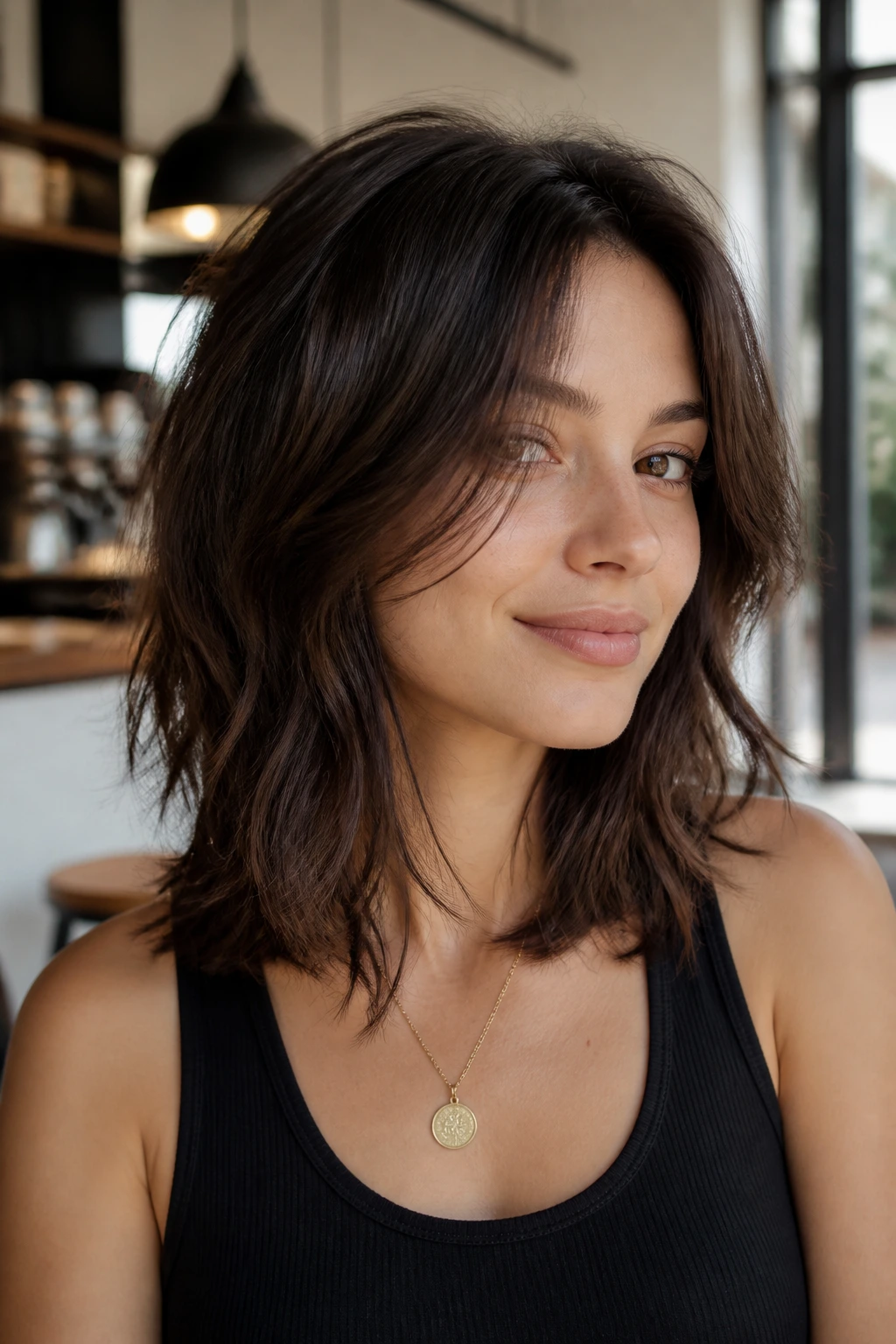
This is the quiet workhorse of shoulder-length choppy haircuts. It looks simple at first glance, but the inside of the cut does a lot of heavy lifting. Long internal layers create separation through the mids, so thick or medium-thick hair can move without losing its shape.
The perimeter stays long enough to keep the style grounded. That keeps the cut from turning fluffy at the ends, which is the usual failure point with layered shoulder-length hair. You want little bits of movement, not a halo of broken strands.
Why it’s a smart choice
Because the layers are longer, the grow-out is forgiving. The cut doesn’t collapse when it starts to lose its crisp edge. It just softens.
If you have dense hair, this is usually better than a shag because the overall outline stays cleaner. If you have finer hair, keep the internal layers light and let the ends hold the weight. Otherwise the cut can start to feel sparse.
A texturizing spray at the mids and a little bend with a 1-inch iron is enough to show the shape. No need to curl every piece. That usually looks too constructed.
6. Razor-Soft Choppy Lob
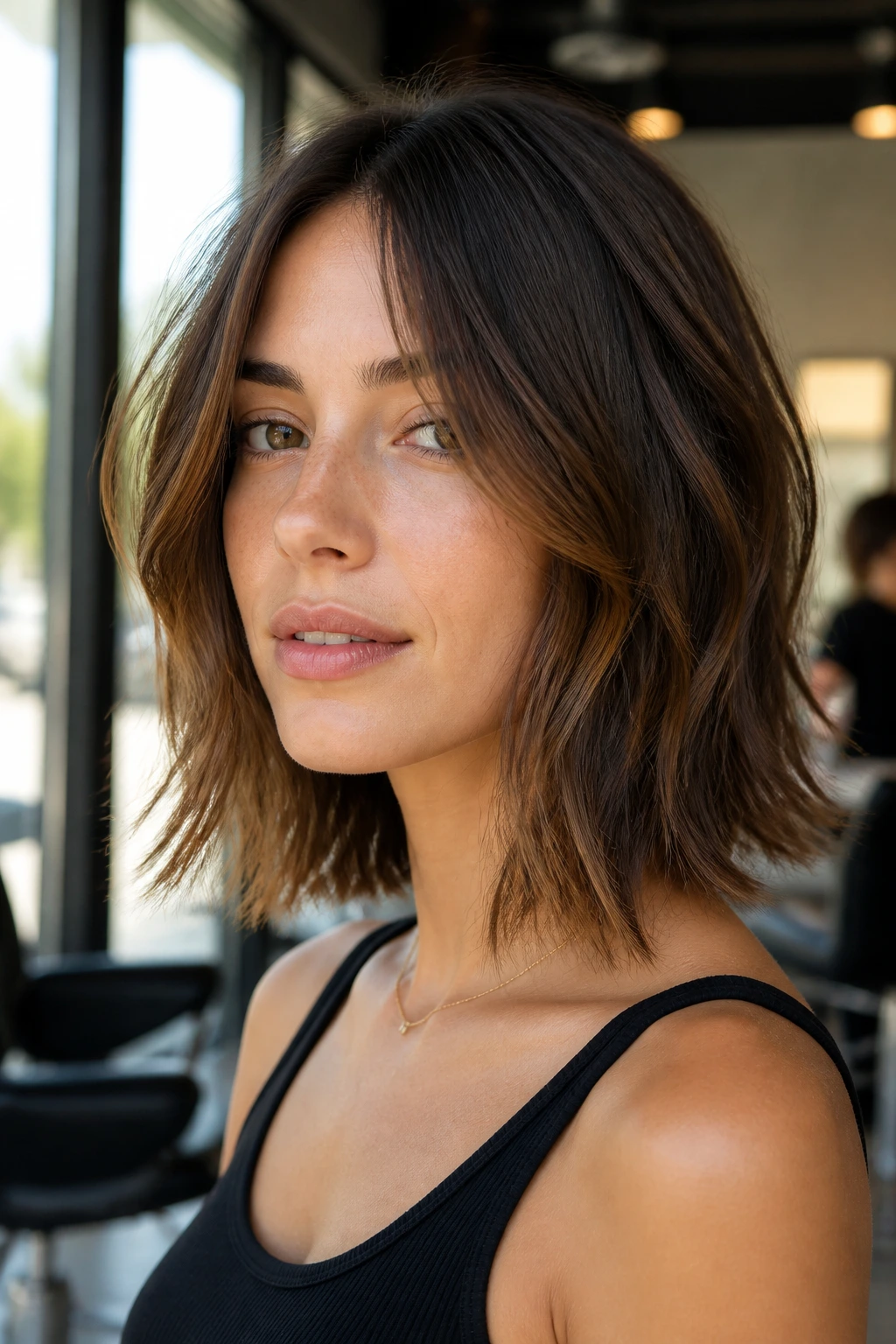
A good razor cut should feel airy, not frayed. That distinction matters. When the razor is used well, the ends take on a soft, broken line that looks almost brushed by wind. When it’s used badly, the hair starts to split and puff.
This version of the lob is best for straight or slightly wavy hair that can handle a little edge. It gives the perimeter a lighter finish, which is useful if your hair tends to sit like a shelf at shoulder length. The razor can shave off that heaviness without making the shape look stacked.
Avoid this if your hair is already dry, bleached, or prone to rough ends. A razor on weak hair is a bad idea. The result can look dull fast.
The styling trick is to keep the roots smooth and let the ends do the talking. A heat protectant, a medium round brush, and one bend through the bottom third usually bring the shape to life. The ends should flick just enough to show the texture, not so much that they read as broken.
7. Butterfly-Lite Shoulder Cut

The butterfly cut got popular because it creates movement around the face without forcing the whole head of hair into short layers. The shoulder-length version trims that idea down into something easier to wear. You get face-framing pieces that start high enough to show off the cheekbones, but the back remains long enough to keep the style calm.
I like this shape on hair that wants volume but not drama. It’s especially good when the crown tends to go flat and the ends need a little swing. The shorter layers live near the front and upper sides, so the silhouette opens up when you turn sideways. From the front, it feels soft. From the back, it still reads as a real haircut, not a chopped-up experiment.
Best use case
- Medium-density hair
- Round or heart-shaped faces
- People who like a blowout but not a perfect one
If you air-dry, the front pieces can twist and settle in a flattering way. If you blow-dry, clip the crown up while the rest dries for a bit of extra lift. Small effort. Big payoff.
8. Choppy French Bob Grazing the Shoulders

The French bob mood at shoulder length is more relaxed than the short version and a little less precious, which is a good thing. The line sits just at or below the shoulders, the fringe stays soft, and the whole cut has that slightly casual shape that looks better when it’s not trying too hard.
What makes this one different from a plain lob is the attitude in the ends. They are not blunt and not shaggy. They’re gently broken up, tucked in at the neckline, and usually paired with an airy fringe or a loose face frame. The result feels a bit Parisian without turning into costume hair.
It’s a smart option if you like to tuck hair behind one ear, wear lipstick, and keep the rest of your styling short. The cut does not need much. A round brush or a flat brush plus a bend at the bottom is enough.
This is one of the better choices for straight to slightly wavy hair. Very curly hair can wear it too, but the silhouette needs to be planned around shrinkage or the shoulder length disappears.
9. Modern Rachel With Lived-In Face Frame
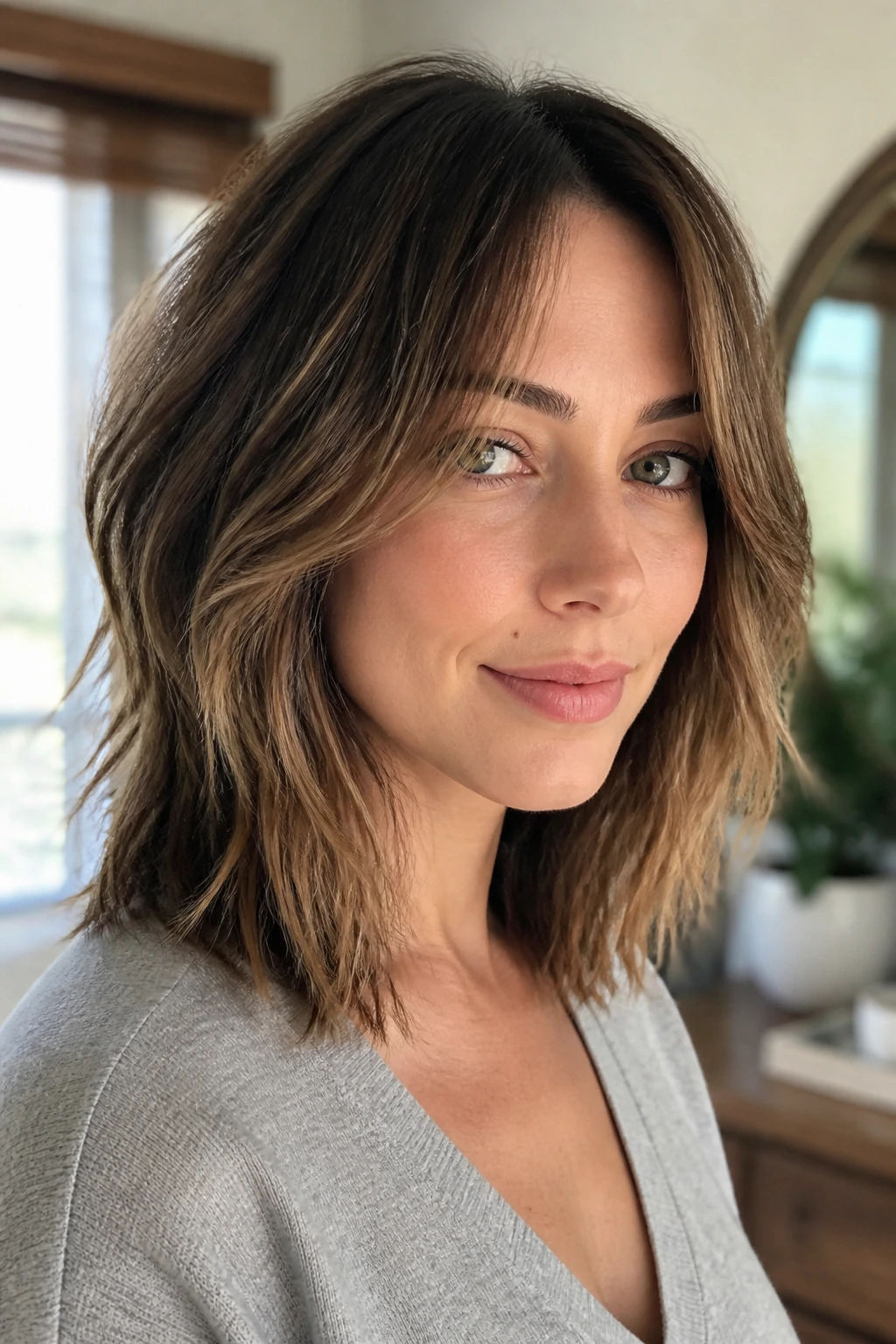
The Rachel-inspired cut has a terrible reputation when it’s overstyled. All that feathering can turn stiff if the layers are too short or the blowout is too polished. The modern version fixes that by keeping the face frame lower and the texture more relaxed.
Think of it as a softer, shoulder-length revision. The top layers still create lift, but they do not stand away from the head. The sides curve into the jawline, then release into piecey ends around the collarbone. Done right, it feels nostalgic without looking dated.
The key is restraint
Do not let the stylist cut every layer aggressively around the face. You want movement, not a cage of short pieces. The best version looks especially good when the hair is blown with a round brush, then separated with fingers and a touch of serum on the ends.
This cut works best if your hair has a medium density and a little natural bend. It can look too round on super straight hair unless you add a bit of texture. But when it lands right, it gives the hair lift, shape, and enough softness to avoid the old-school feathered blowout problem.
10. Side-Part Flip Cut With Bouncy Ends
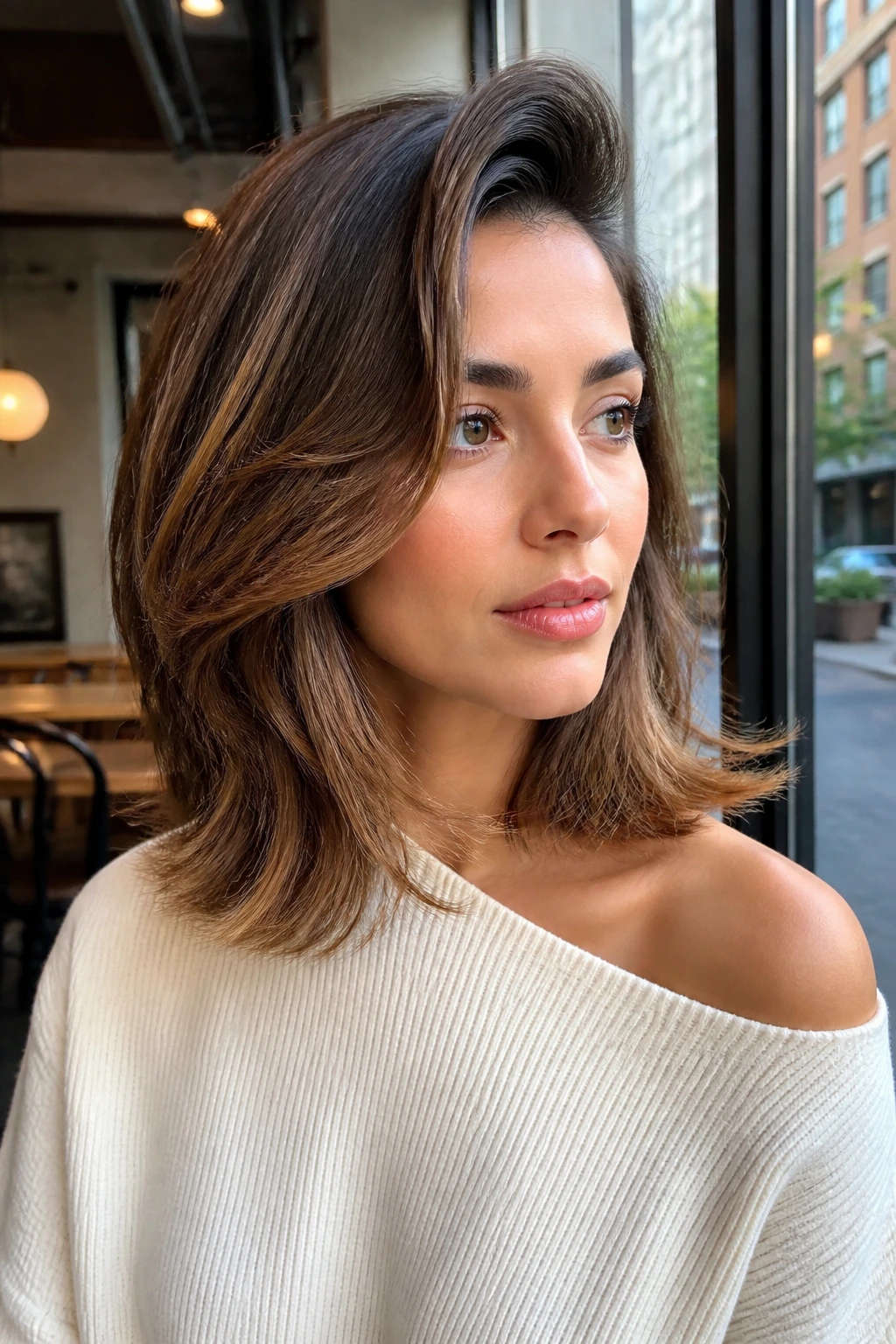
Some cuts need the center part to make sense. This isn’t one of them. The side-part flip cut uses a deep or moderate side part to build volume at the crown, then lets the front layers kick away from the face with a soft bend. It has energy without being loud.
I like this on hair that falls flat at the roots. The side part breaks the top line, and the flipped ends create a little motion that stops the shoulders from swallowing the haircut. If your face looks best with a bit of lift near the temple, this is a useful shape.
The layers around the front should be long enough to flip rather than curl. That matters. You want a bend, not a ringlet. A 1.25-inch round brush or a large Velcro roller at the crown can help keep the shape from collapsing after an hour.
This is also a nice choice if you wear glasses. The soft side-sweep clears the frames and keeps the cut from crowding the face. Small detail. Huge difference in daily wear.
11. Rounded Mullet-Inspired Shoulder Cut

A mullet-inspired cut at shoulder length sounds more rebellious than it usually looks. The rounded version keeps the neckline soft and the back full enough that the silhouette does not feel harsh. You get shorter movement near the crown and temples, then a gentle drop through the length.
The result is subtle, not spiky. That’s the version I prefer. The extreme version can look staged at this length, especially if the hair is fine or straight. Rounded edges keep it wearable, which is the real goal here.
This cut suits people who want edge without sacrificing softness. It also works well when hair has a little wave and refuses to sit completely flat. The layers give the wave somewhere to live.
A center part makes it feel modern. A side part pushes it a little more rock-and-roll. Either way, the cut needs enough weight left in the bottom half so the ends don’t float away. If the perimeter gets too thin, the whole thing loses its shape fast.
12. Curly Shoulder Chop With Halo Layers
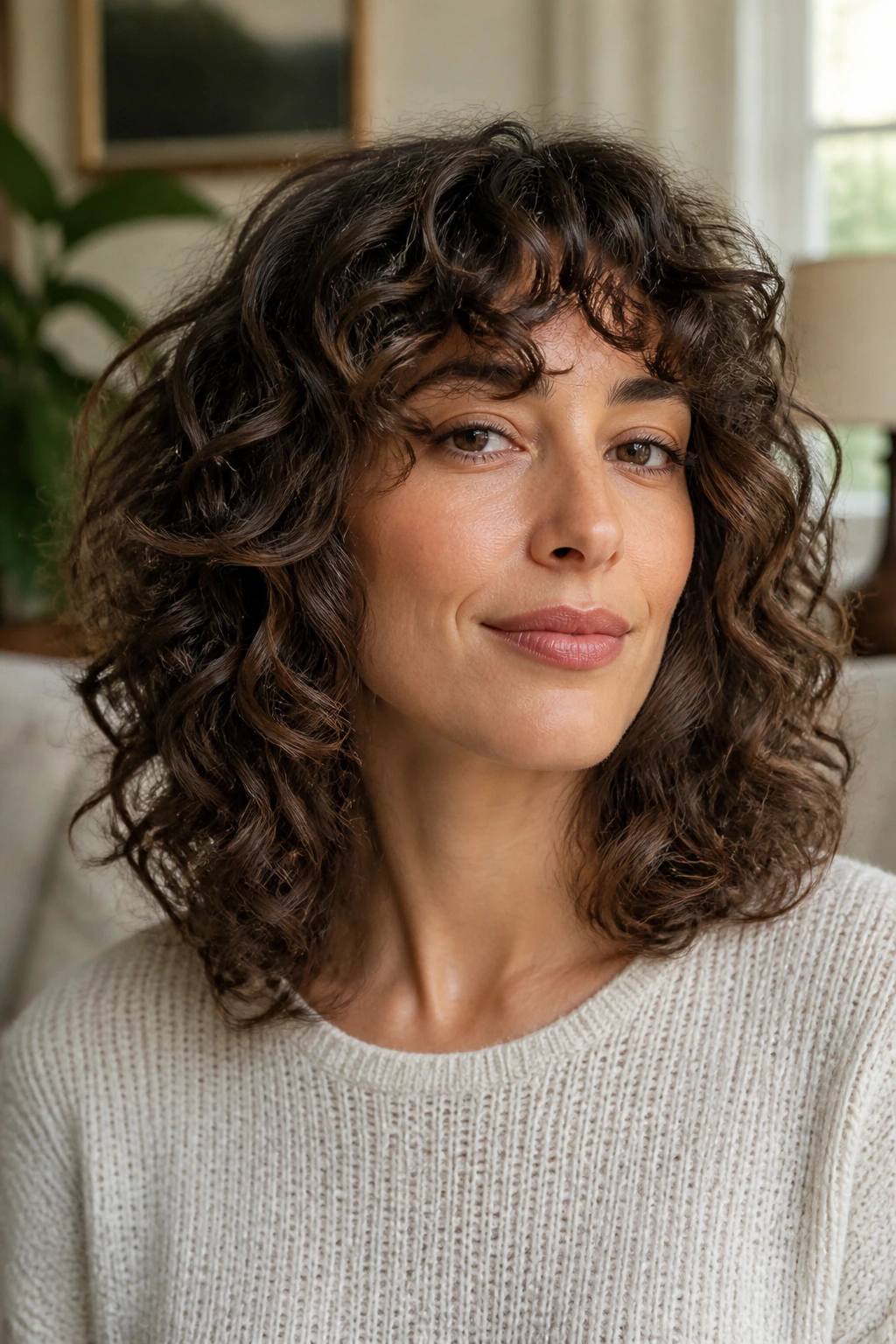
Curly hair at shoulder length can become triangular when the layers are wrong. Halo layers fix that by removing bulk around the upper sides and letting the curls fall in a rounder shape. The goal is shape, not excess volume at the sides.
This is one of the few cuts where I would strongly favor a dry cut or, at minimum, a stylist who knows how your curls shrink when they dry. Wet-cut curls can surprise people in the mirror. Dry cutting makes the final shape easier to read.
What to ask for
- Keep the perimeter heavy enough to hold the curl pattern
- Add soft layers around the crown and upper sides
- Leave the shortest pieces long enough to blend when dry
It looks best with a diffuser and a curl cream that doesn’t leave the hair sticky. If your curls are fine, keep the product light. If they’re dense, use a bit more hold and less oil. The difference shows up around the shoulders, where too much cream can turn soft curls into a puffy triangle.
13. Straight-Hair Shattered Lob
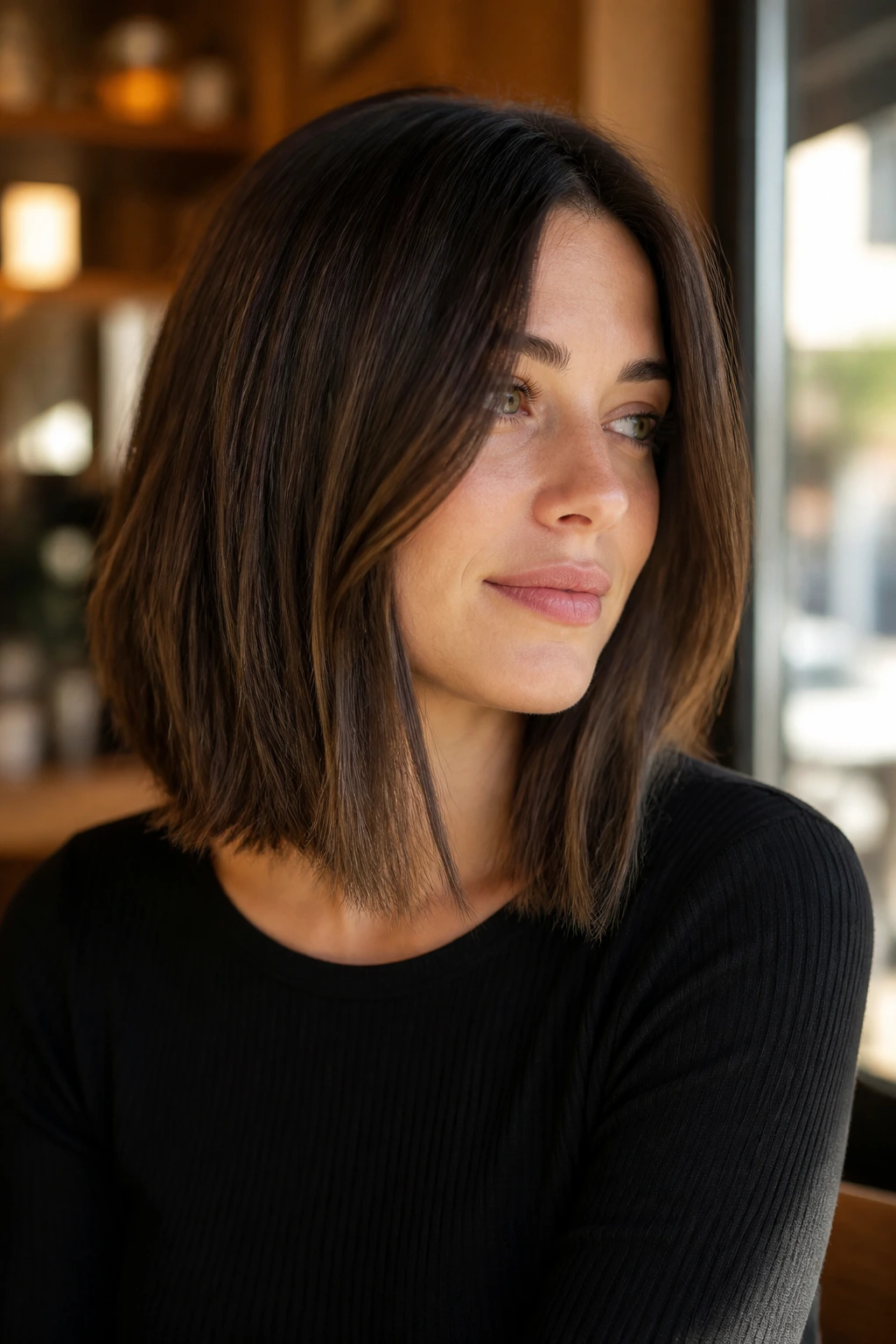
Straight hair often needs more texture than people think. A shattered lob fixes that by breaking up the line through the ends and mid-lengths so the hair reflects light in pieces instead of one flat sheet. The shape is still clean, but the texture is interrupted in a good way.
I like this version because it avoids the heavy, board-straight look that can make shoulder-length hair feel stuck. The hair still falls smoothly, but the ends have a little irregularity. That irregularity is what makes the cut feel alive.
If your hair is very straight, ask for point cutting at the ends and subtle internal separation rather than a full razor finish. Overdoing it can make the perimeter weak. The best shattered lob keeps density at the edge and only disrupts the surface enough to show movement.
A flat iron can help, but only if you turn the ends once or twice away from the face. Dead-straight all the way down can make the choppiness invisible. Tiny bend. That’s the whole game.
14. Beachy S-Layer Cut
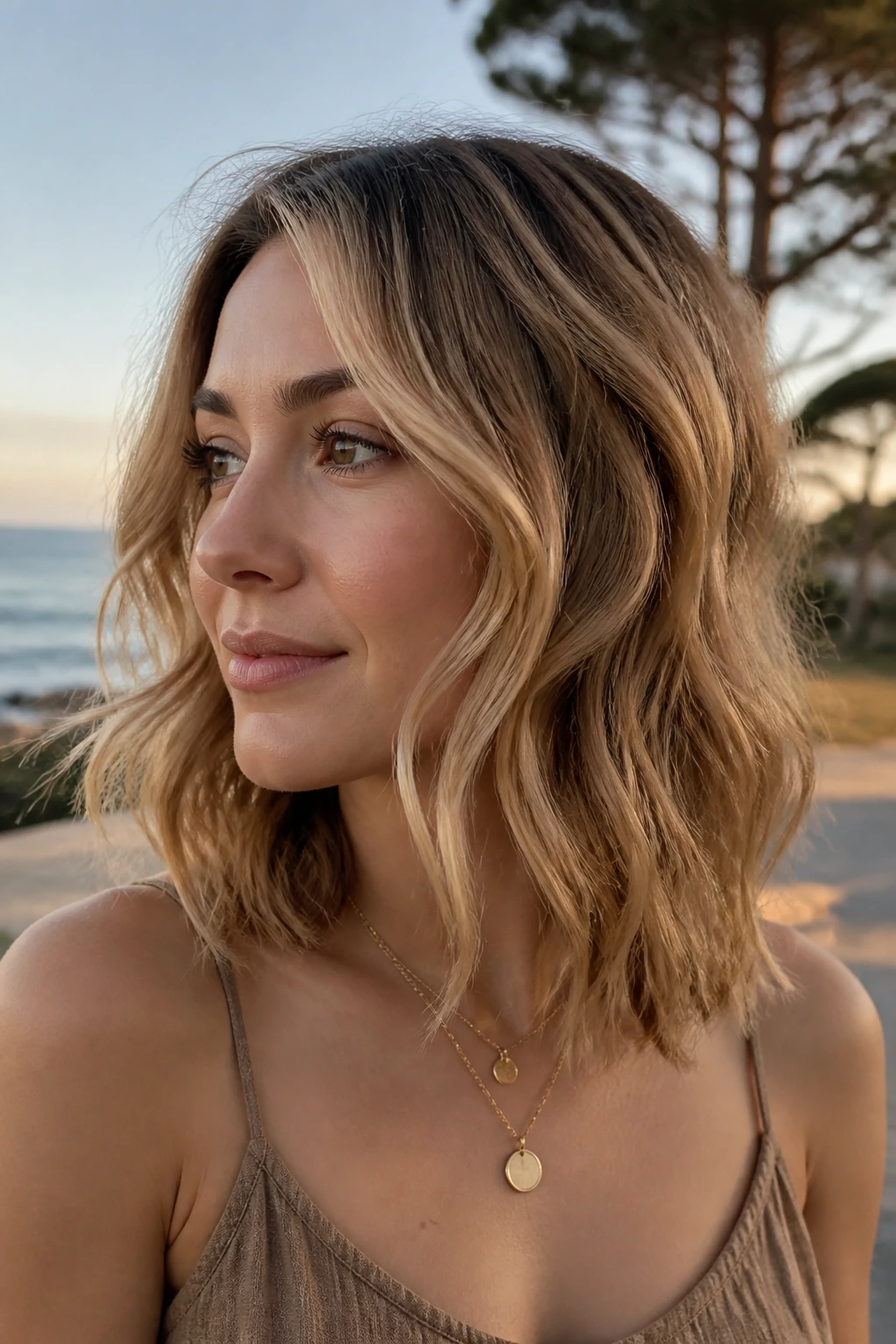
This cut is built for hair that naturally bends into waves but doesn’t always hold a curl. The layers encourage an S-shape through the mids, which gives the hair that soft, loose motion people usually try to fake with too much texturizing spray.
The shoulder length keeps the wave from getting swallowed by the weight of the hair. That matters more than most people think. Long hair can drag wave patterns flat. At this length, the bend sits up better and the ends still move.
The shape works best when the stylist leaves the layers long and slightly curved rather than chopped high into the crown. Too much layering here and the wave loses its rhythm. What you want is a soft cascade, not a stair-step.
A salt spray can help, but I’d use it lightly. Too much makes the ends crunchy. A small amount of mousse scrunched into damp hair usually does a better job of keeping the wave soft and touchable.
15. Thick-Hair De-Bulked Lob With Hidden Weight Removal
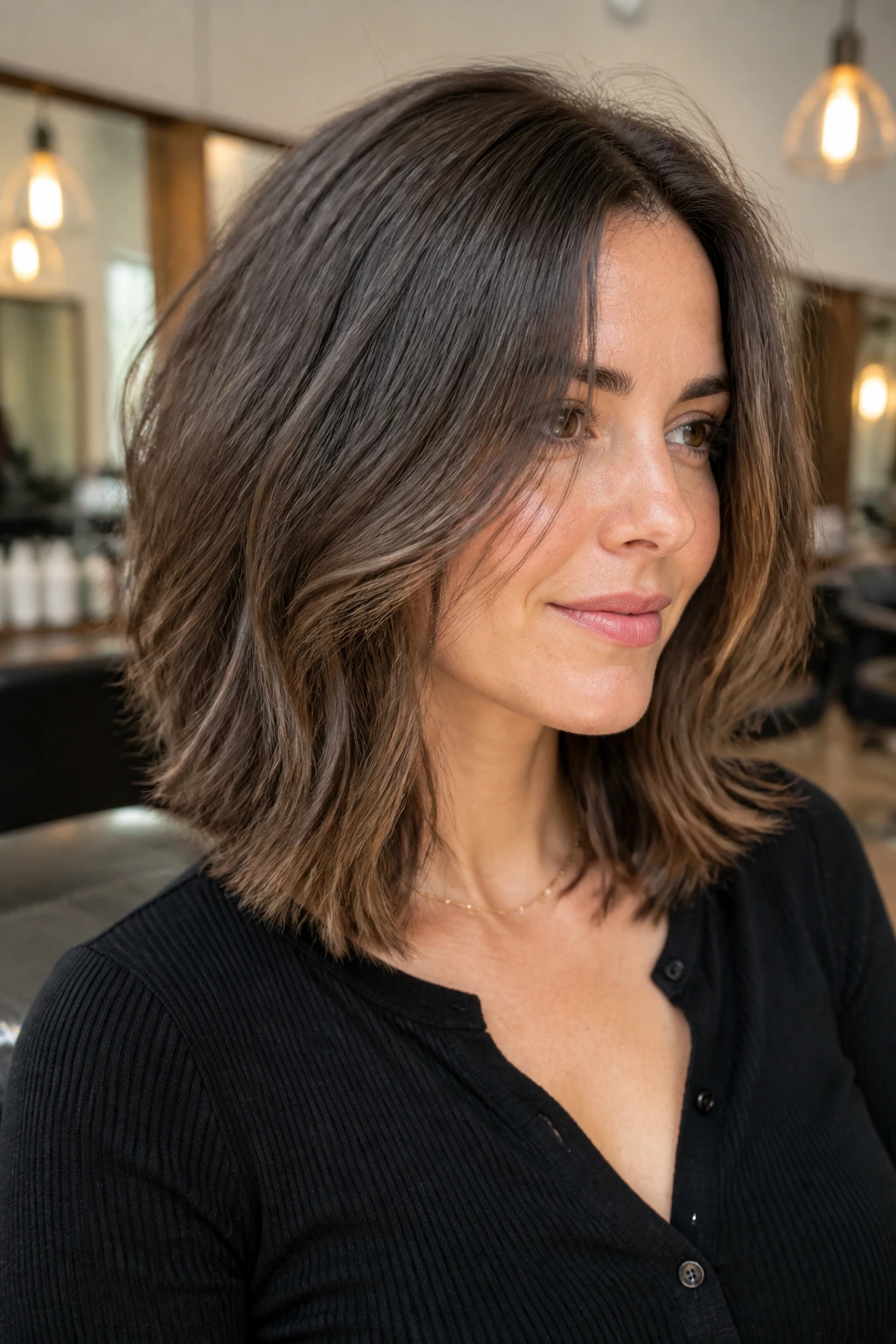
Thick hair needs honesty. If the stylist pretends it’s fine hair and slices in a bunch of airy layers, the ends will look stringy and the shape will go odd by midday. A better thick-hair lob removes bulk from the inside while leaving enough weight at the perimeter to keep the cut grounded.
This version is not about making thick hair smaller. It’s about giving it room to move. The best cuts here use internal weight removal around the mids, plus a soft face frame that doesn’t kick the hair out too far. The outer line should still read as full.
Ask for controlled thinning, not aggressive texturizing. There’s a difference. Aggressive texturizing can leave the hair expanding outward in humidity, which defeats the entire point.
This is the cut I’d choose if your hair feels hot around the neck and takes forever to dry. It still needs maintenance, but it behaves better. And when thick hair behaves, the whole day feels easier. That is not a small thing.
16. Fine-Hair Airy Chop With Minimal Taper
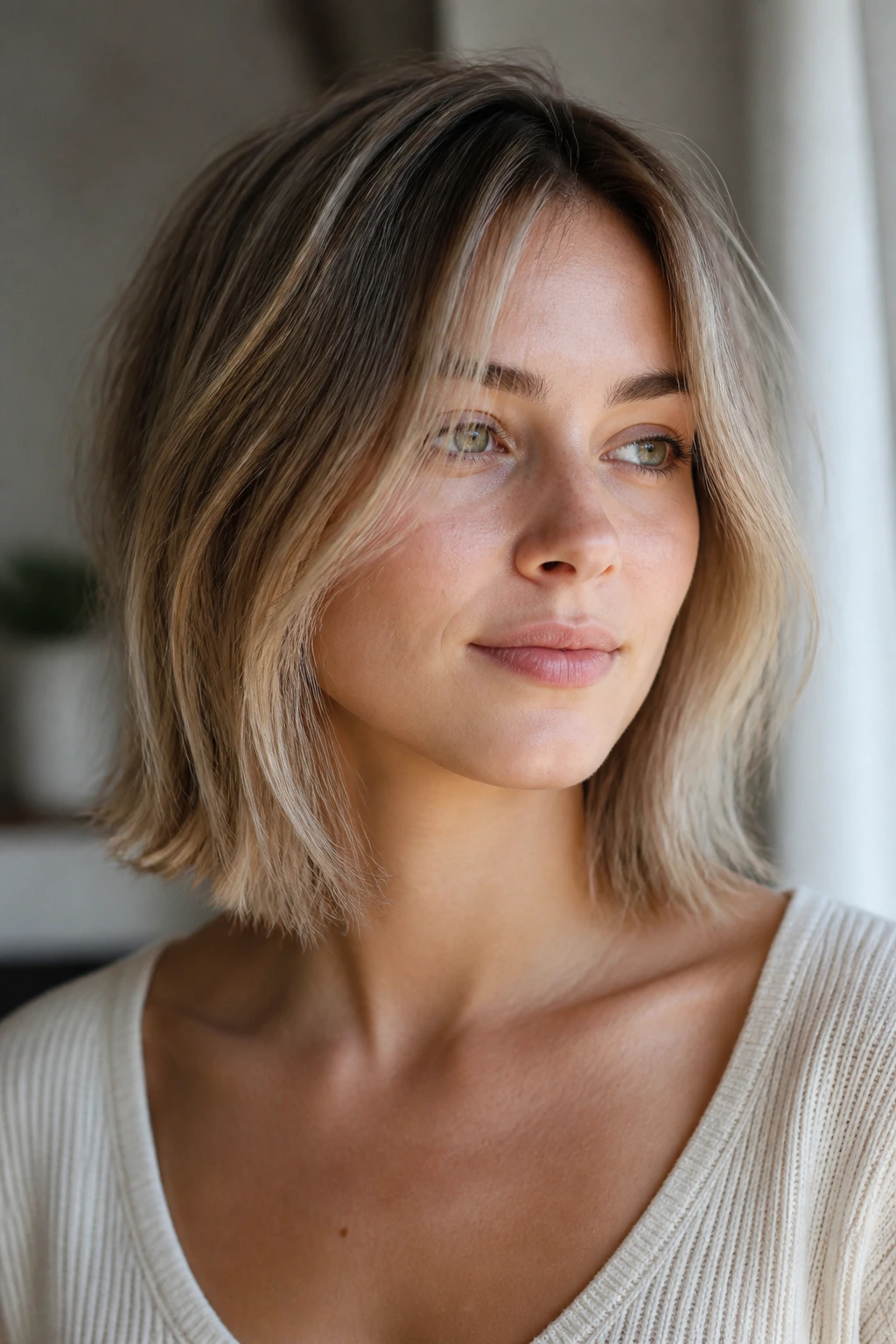
Fine hair does not need a lot of layers. It needs smart layers. The airy chop keeps enough length at the ends to preserve density, then adds only a touch of taper around the face and perhaps a little movement near the crown. Too much chopping here and the hair looks see-through.
The strongest version of this cut is usually the least dramatic one. That sounds boring, but it isn’t. A cleaner perimeter makes the hair look thicker, and a small amount of internal movement stops it from falling flat. The result is soft rather than thin.
Good signs to ask for
- Ends that stay full when the hair is dry
- Light point cutting, not aggressive razoring
- Face-framing pieces that start low enough to blend
A root-lifting mousse, dried in with a round brush or a quick bend from your hands, helps more than a heavy cream. Fine hair tends to collapse under product. Keep it light. Keep it airy. The haircut should do most of the work.
17. Grown-Out Pixie-to-Lob Transition
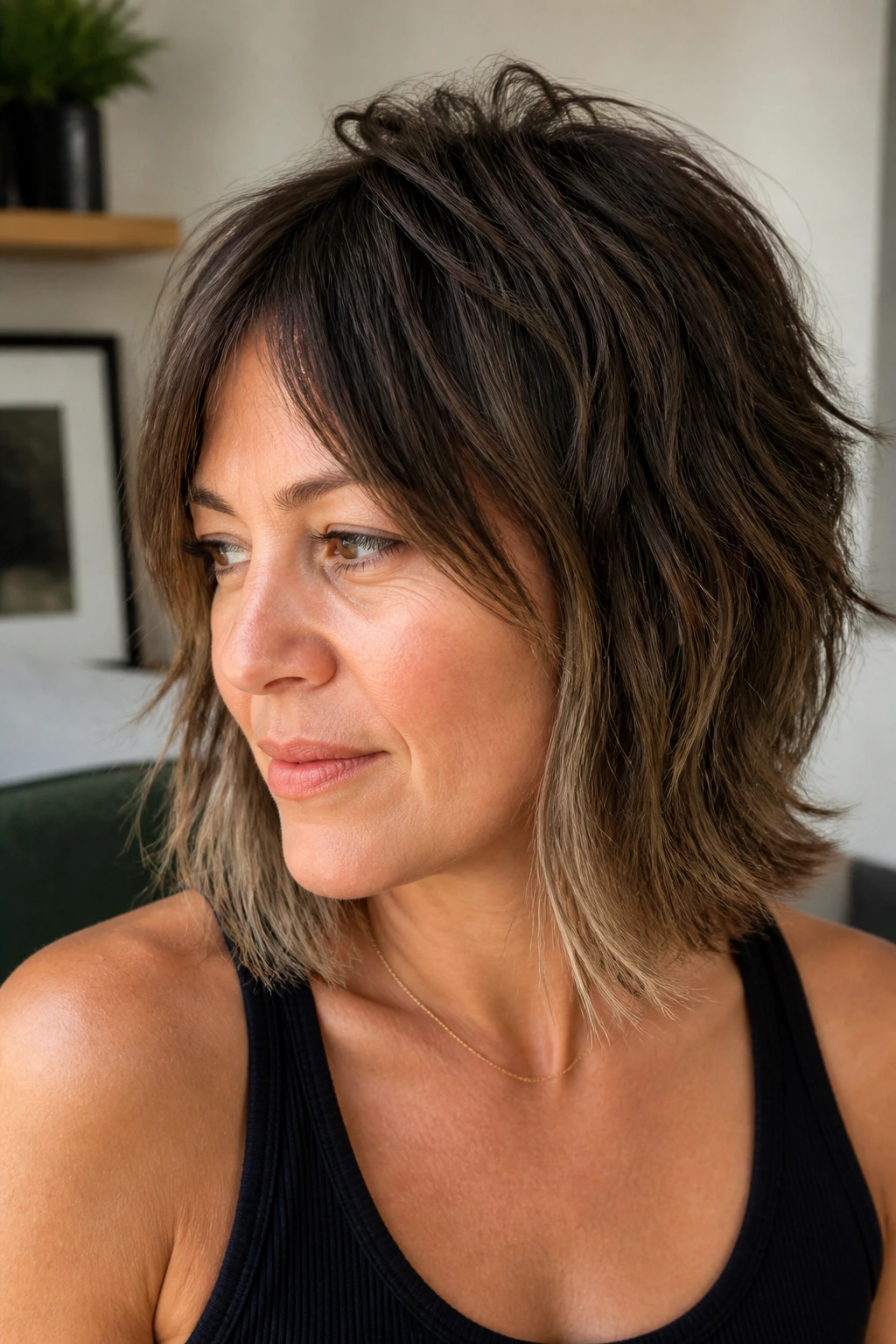
This is a lifesaver for anyone growing out shorter hair and trying to avoid that awkward, helmet-ish middle stage. A shoulder-length choppy transition cut gives the back enough structure to keep the shape tidy while the front and sides catch up.
The beauty of this cut is that it looks intentional while you’re waiting for more length. Shorter layers around the crown and temples stop the hair from flaring out awkwardly, and the longer collarbone pieces make the whole thing feel like a real style instead of an in-between phase.
You may need trims more often around the neck and ears than through the front. That’s normal. The nape grows the fastest in how it changes shape, not in actual speed, if that makes sense. Once the back gets too puffy, the whole silhouette suffers.
A little styling cream and a rough blow-dry are enough to make this work. If you’re growing out a pixie, this is the cut that gets you there without the usual awkward pause in the middle.
18. Sleek Choppy Lob With Beveled Ends
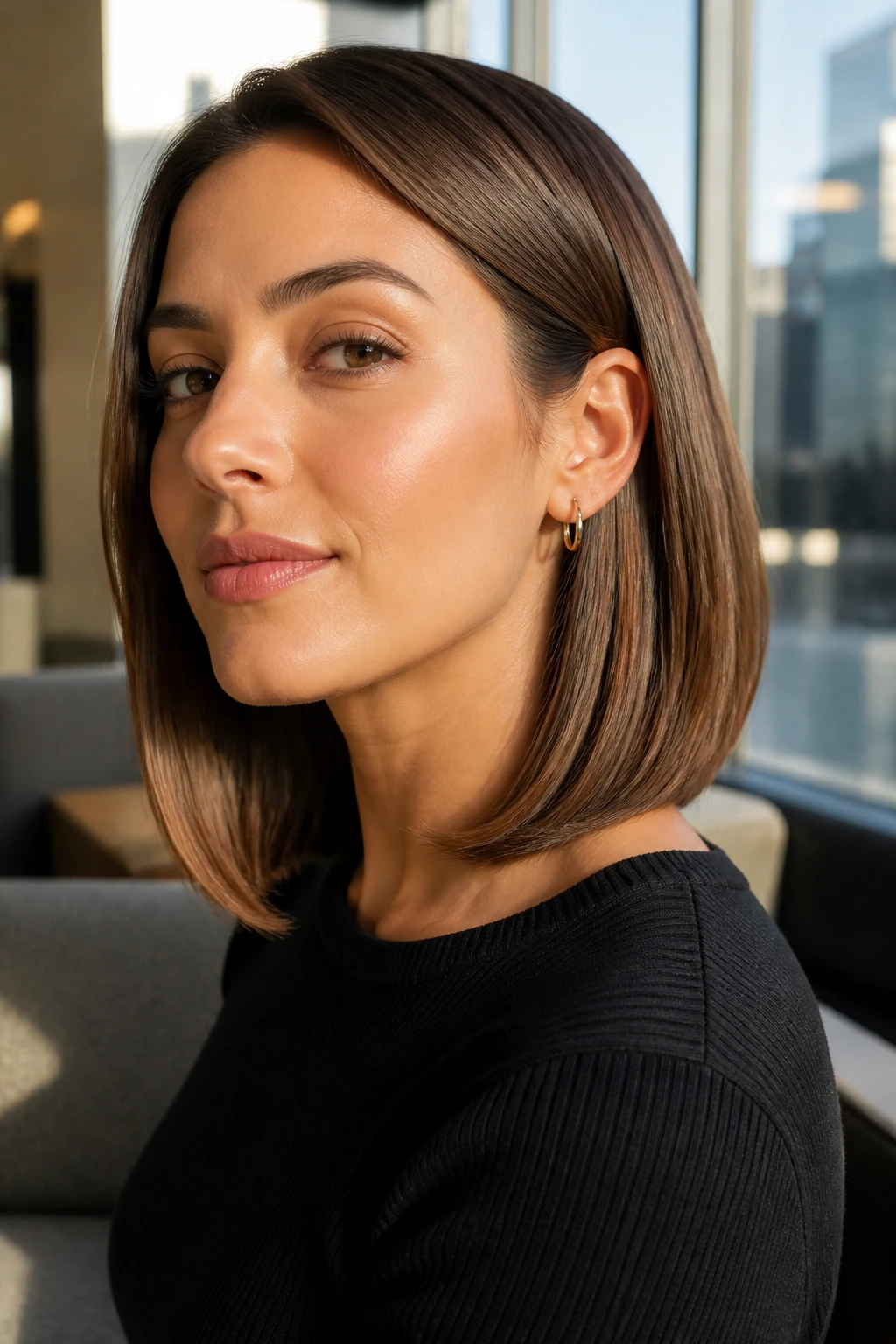
Not every choppy haircut has to look tousled. This version keeps the surface smooth and the ends slightly beveled so the hair bends under or away in a clean way. The choppiness lives inside the cut, not on top of it.
That makes it useful for people who want texture but still need to look put together. Office hair. Dinner hair. Hair that can be tucked behind the ear and still behave. The beveled ends keep the outline from feeling harsh, and a mild internal chop gives the whole shape some life.
A round brush or hot brush brings this one to life fast. The key is to keep the crown smooth and let only the ends curve. If you over-flip the bottom, it loses the quiet polish that makes the cut work.
This is one of my favorites for straight hair that wants more personality without obvious layers. It reads neat from across the room, then softens up when you move.
19. Face-Framing Chop With Bottleneck Bangs
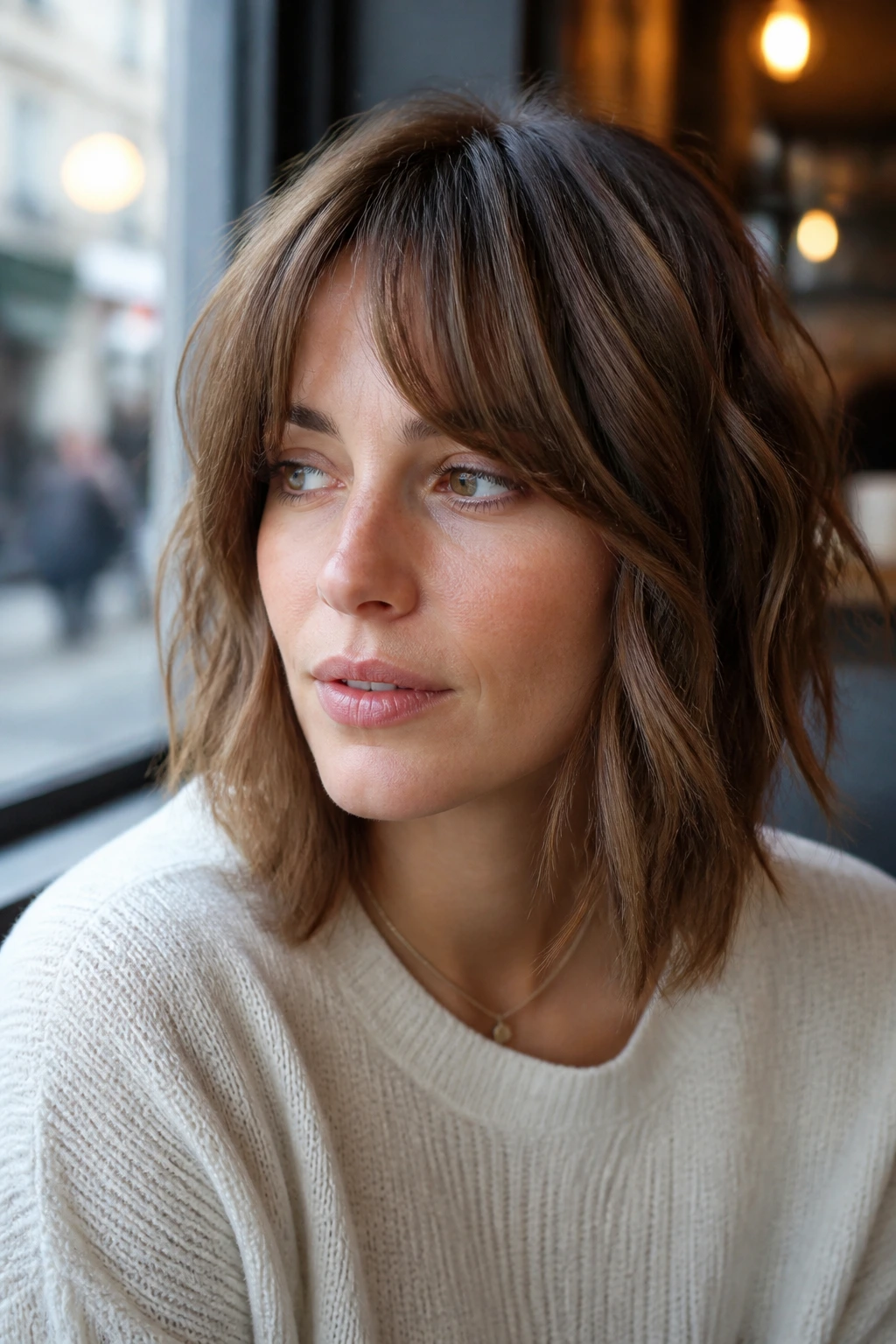
Bottleneck bangs are a small change that can alter the whole cut. They start narrow at the center, then widen gently around the brow and cheekbone area, which makes them blend beautifully into shoulder-length layers. The effect is softer than blunt fringe and less heavy than curtain bangs can be on some faces.
This cut works especially well if you want the face opened up without losing density around the edges. The rest of the hair stays choppy and soft, but the front line becomes more deliberate. That can make a long face look shorter or a strong forehead feel less exposed.
The detail that matters
The bangs should not sit too thick at the center. That creates a block. They should taper into the side layers with enough length to sweep or split depending on how you dry them.
This is a good option if you like a little styling ritual. The fringe usually needs a quick round-brush pass or a small brush and a nozzle-dryer. Five minutes. Maybe less. But those five minutes change the entire shape.
20. Soft Textured Razor Cut With Tucked-In Ends

This cut is for people who want hair that can disappear into a jacket collar without looking crushed. The softly textured razor cut leaves the ends light enough to tuck, but not so thin that the shape collapses. It’s neat when you need it, relaxed when you don’t.
What I like here is the balance between edge and softness. The razor softens the line, but the shoulders still hold the shape. You get movement that sits close to the head instead of flaring outward, which makes the haircut easier to wear in humid weather or on days when you don’t want extra volume.
If your hair is dense, ask for the texturizing to stay concentrated in the mid-lengths. If your hair is fine, keep the ends fuller and let the texture live mostly around the face. That keeps the cut from looking broken apart.
Tuck one side behind the ear and the whole cut changes mood. Small shift. Big effect. That’s what makes this shape so useful.
Why Shoulder-Length Choppy Haircuts Behave Better Than You’d Expect
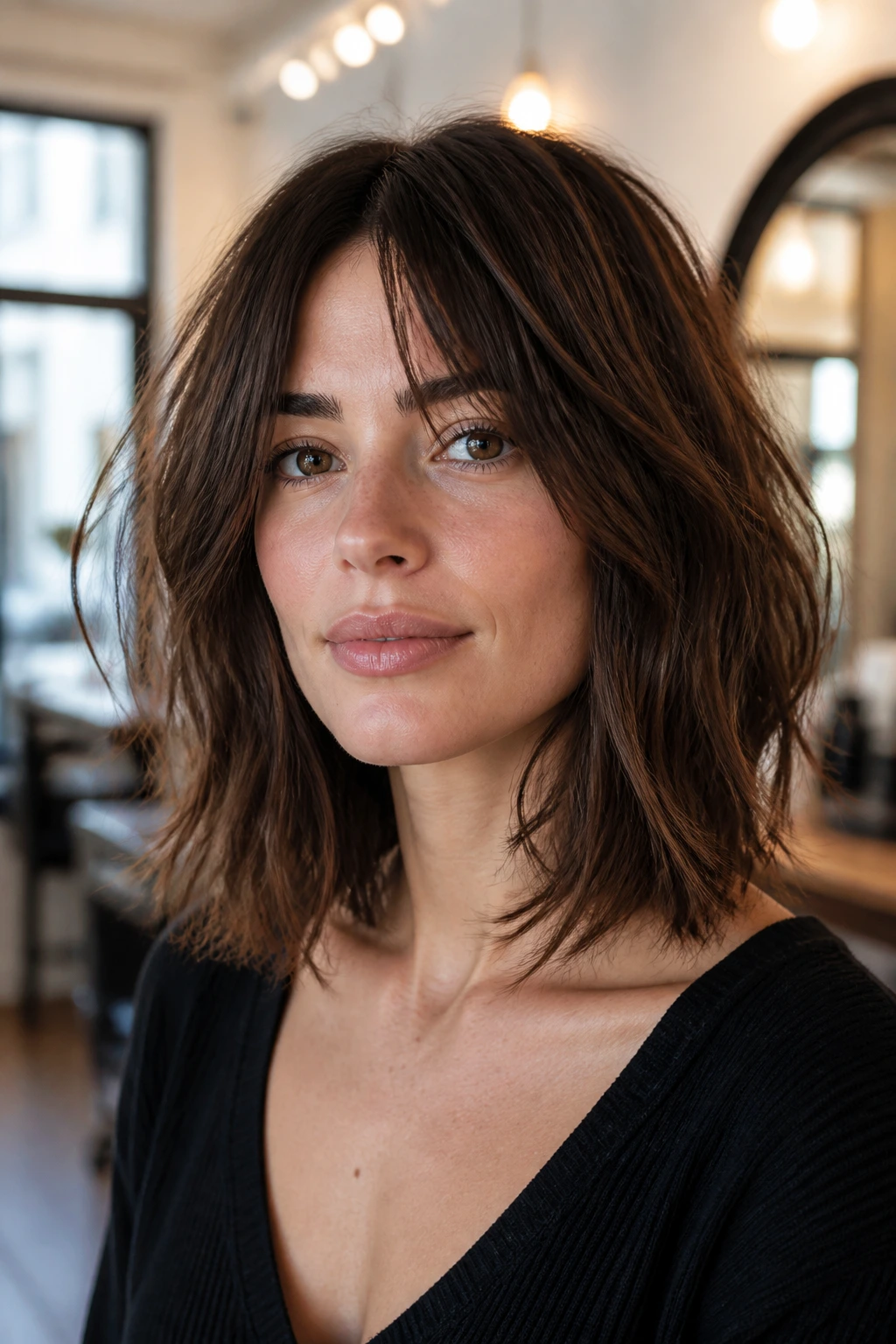
Shoulder length is a weirdly useful place to cut hair. It is long enough to tuck, twist, clip, and sweep back, but short enough that the layers still show up when you move. That is the main reason shoulder-length choppy haircuts feel softer than shorter chops and less heavy than long layers. The length gives the choppiness somewhere to settle.
There’s also a practical reason this range works. Hair at the shoulders tends to hit a friction point with clothing, so the ends get touched, bent, and shifted all day. A soft, choppy shape handles that better than a razor-straight line. Instead of looking ruined by movement, it looks better for it. That’s the lived-in part people usually want but don’t know how to ask for.
The best versions keep a clean outer line and put the movement inside. That lets the haircut do two things at once: frame the face and give the hair room to breathe. A cut with too many short layers can feel busy around the ears, while a blunt shoulder cut can swing into heaviness. The choppy version sits in the middle and behaves.
I also like this length because it is honest about texture. If your hair bends, waves, frizzes, or flips, the cut can use that. If your hair is straight, the style can fake movement with a bend and still look tidy. It is one of those rare lengths that does not force one exact finish, and that flexibility is the whole point.
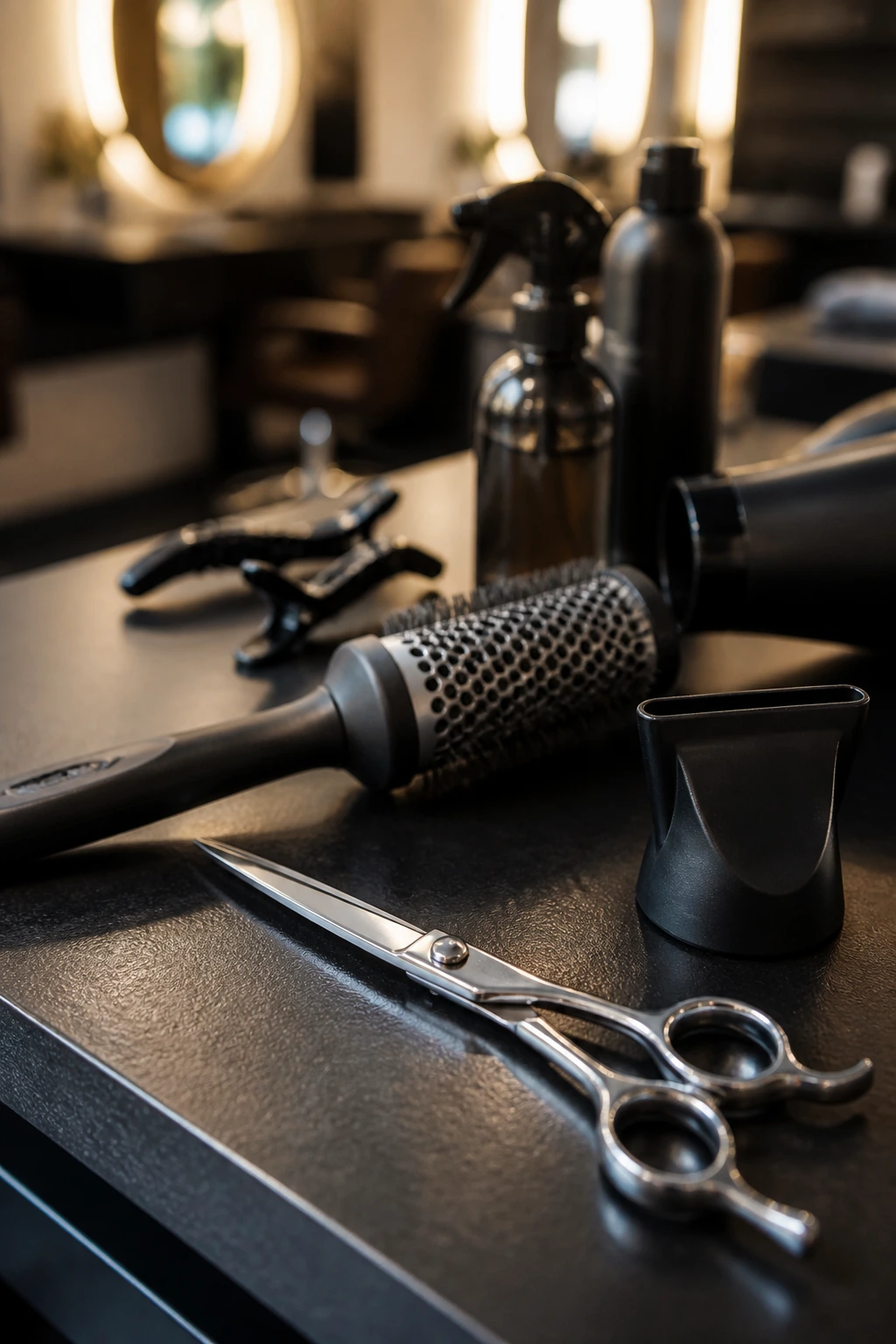
Essential Tools for These Styles
-
Sharp haircutting shears: If you trim bangs or dust the ends at home, use real shears, not kitchen scissors. Kitchen blades chew the hair.
-
Round brush, 1 to 1.25 inches: Small enough to bend face-framing layers, big enough not to make the ends look curled.
-
Blow dryer with a concentrator nozzle: The nozzle helps control the direction of the hair so the choppy pieces do not puff in random directions.
-
Heat protectant spray: A light spray before blow-drying or using a flat iron keeps soft texture from turning fried at the ends.
-
Sectioning clips: Worth it if your hair is thick or if you style in layers. They save time and stop the top from getting tangled while you work.
-
Wide-tooth comb or detangling brush: Better than ripping through damp hair with a dense paddle brush, especially if your hair is wavy or curly.
-
Texture spray or dry shampoo: Use this at the mids and ends for separation, not as a helmet over the whole head.
-
Mousse or root lift spray: Useful for fine hair that needs some body at the crown before you add bend.
-
Diffuser attachment: Not optional if you have curls or a lot of wave. It keeps the shape soft and reduces the air-blast frizz.
How to Choose the Right Version for Your Hair Density and Texture
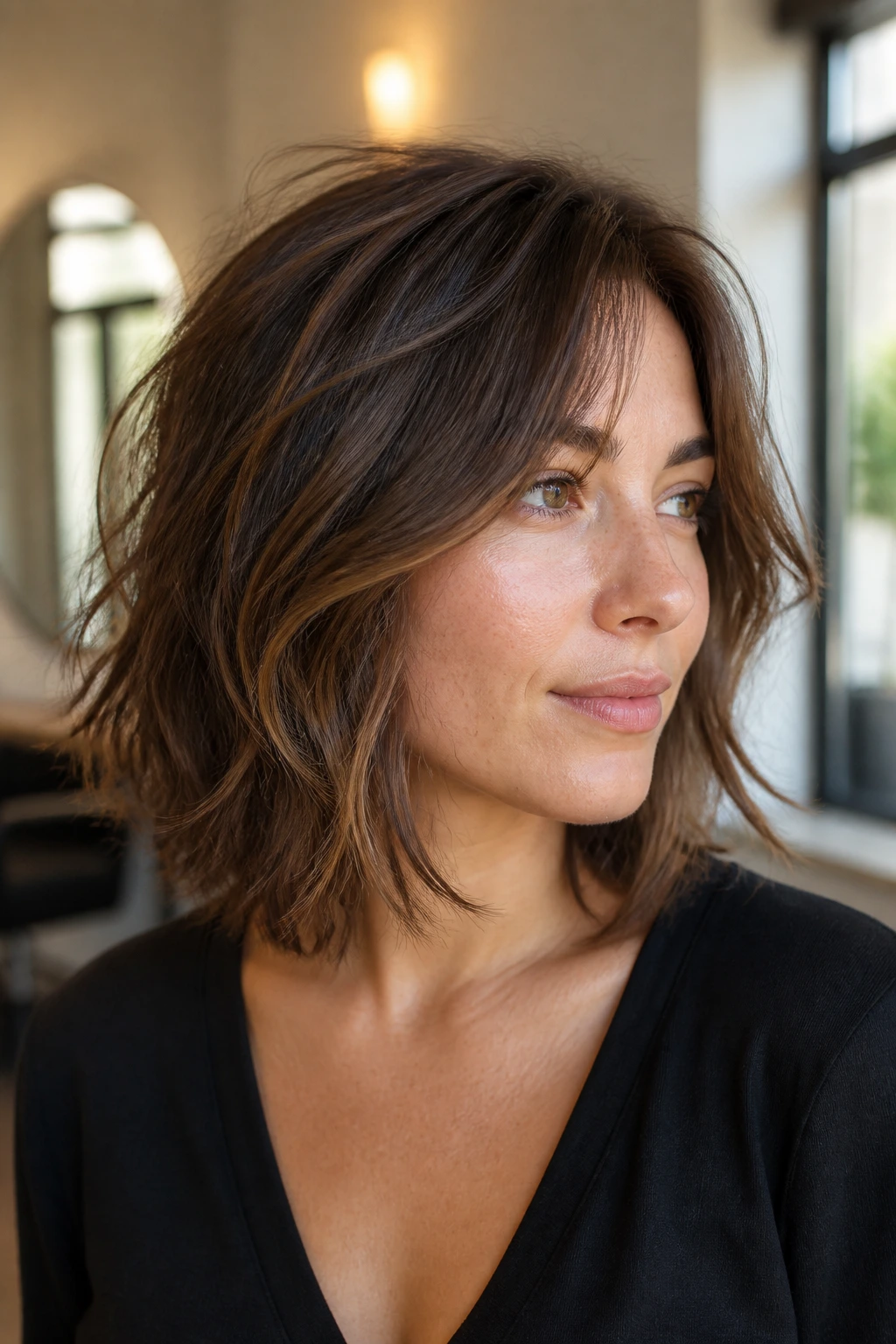
The same shoulder-length chop can look like three different haircuts depending on density. That is why a good reference photo matters less than a good match. Bring photos of hair that looks like yours, not just hair you wish you had. Straight fine hair does not behave like dense wave, and a cut that looks soft on one texture can look stripped on another.
Fine hair usually wants a cleaner edge with minimal internal layering. Too much cut-in movement and the ends look sparse. Dense hair can take more shaping, but it needs weight removed in the inside, not just slashed through the surface. Wavy hair gets the easiest win here because the choppiness can ride the natural bend.
Curly hair is its own category. It needs room for shrinkage, and the layers should be planned around the curl pattern rather than the wet length. If you have a strong cowlick or a crown that splits, say so. That little piece of information changes the whole cut.
Also watch your styling habit. If you never use a blow dryer, do not ask for a shape that only makes sense with a brushed-out finish. If you love a quick bend with a flat iron, say that. The best haircut is the one that still looks like you on a normal Tuesday morning.
How to Style Them So the Texture Stays Soft

Air-Dry: Work a light mousse or curl cream through damp hair, then scrunch or twist the front pieces with your fingers. Leave it alone while it dries. Touching it too much is how soft texture turns into fuzzy texture.
Blow-Dry: Rough-dry to about 70 percent first, then use a round brush on the crown, face frame, and ends only. You do not need to smooth every strand. That is how the cut loses its lived-in finish.
Hot Tools: Use a 1-inch or 1.25-inch iron and wrap only the mids and ends, leaving the last inch straighter if you want that softer, undone bend. Alternate directions around the face. Uniform curls can make shoulder-length layers look too styled.
Parting: A center part sharpens the look and lets curtain bangs or face layers fall evenly. A side part creates lift and makes the crown feel fuller. Change the part once in a while if the hair starts collapsing in the same place.
Finishing Touch: A small spray of texture spray or a pea-sized bit of serum on the ends is enough. Heavy oil on this length often makes the choppy pieces cling together and lose their shape.
Smart Product Moves That Change the Finish
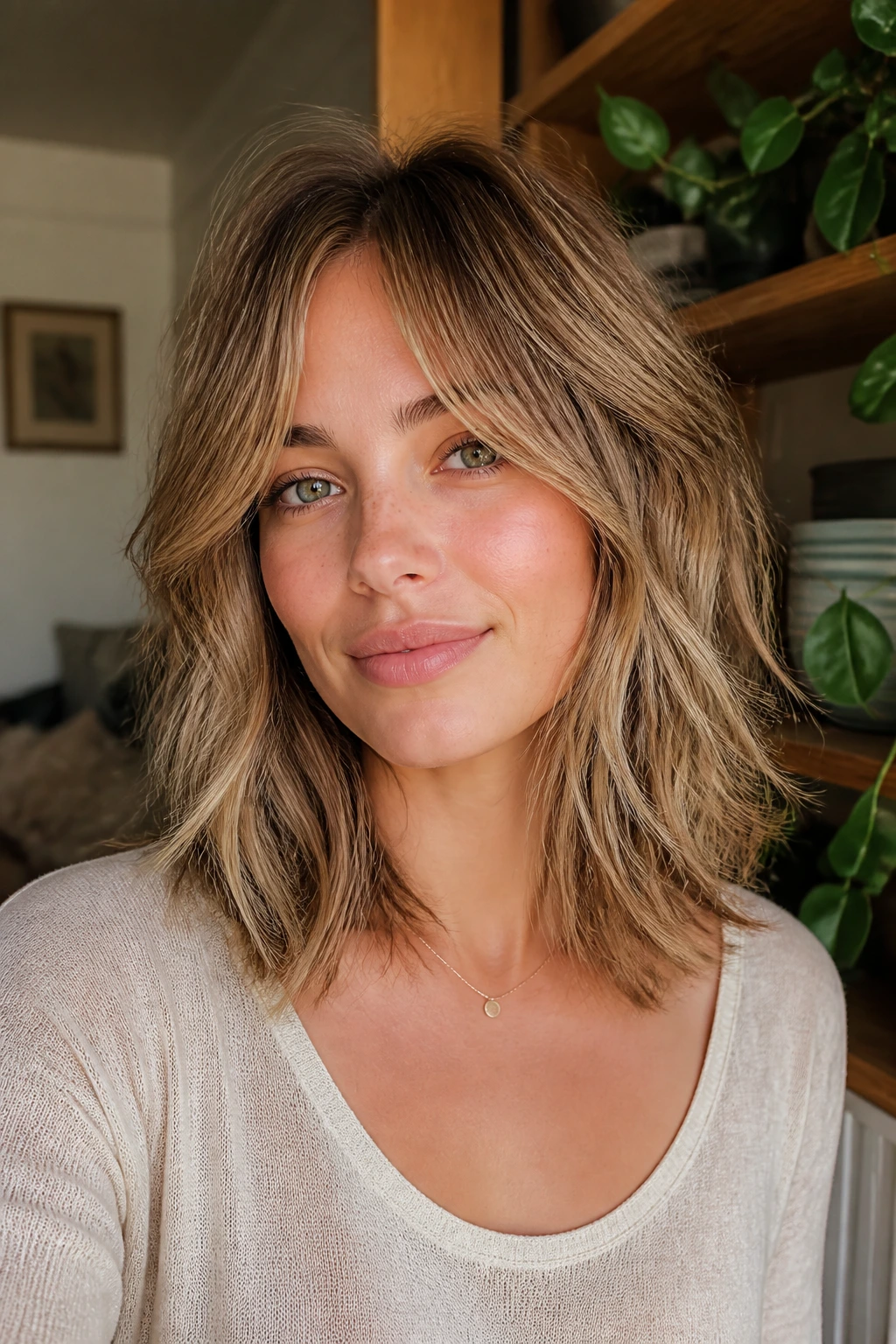
A soft chop can go limp fast if the product weight is wrong. That is the annoying part nobody likes to mention. A rich cream that looks good in your hand can flatten the crown by lunchtime. On shoulder-length cuts, less product usually wins, and the placement matters more than the brand.
Texture Boost: If the hair is too clean and too soft, mist a dry texture spray under the top layers and pinch the ends with your fingers. The hair should separate into pieces, not stick together in crunchy ropes.
Customization: Want it sleeker? Use a lightweight smoothing cream only on the mids and keep it away from the roots. Want it rougher? Skip cream entirely and use mousse at the root plus a small amount of texture spray at the ends.
Face Framing: A tiny bit of styling balm can keep curtain bangs or bottleneck bangs from splitting too hard. Use a rice-grain amount. Really. Too much turns the fringe greasy fast.
Make-It-Yours: For curly or wavy hair, choose products that define the curl without freezing it. For straight hair, choose products that lift the root and give the ends a bit of grip. The goal is not “more product.” The goal is “better placement.”
Common Mistakes That Make the Cut Look Rough Instead of Soft
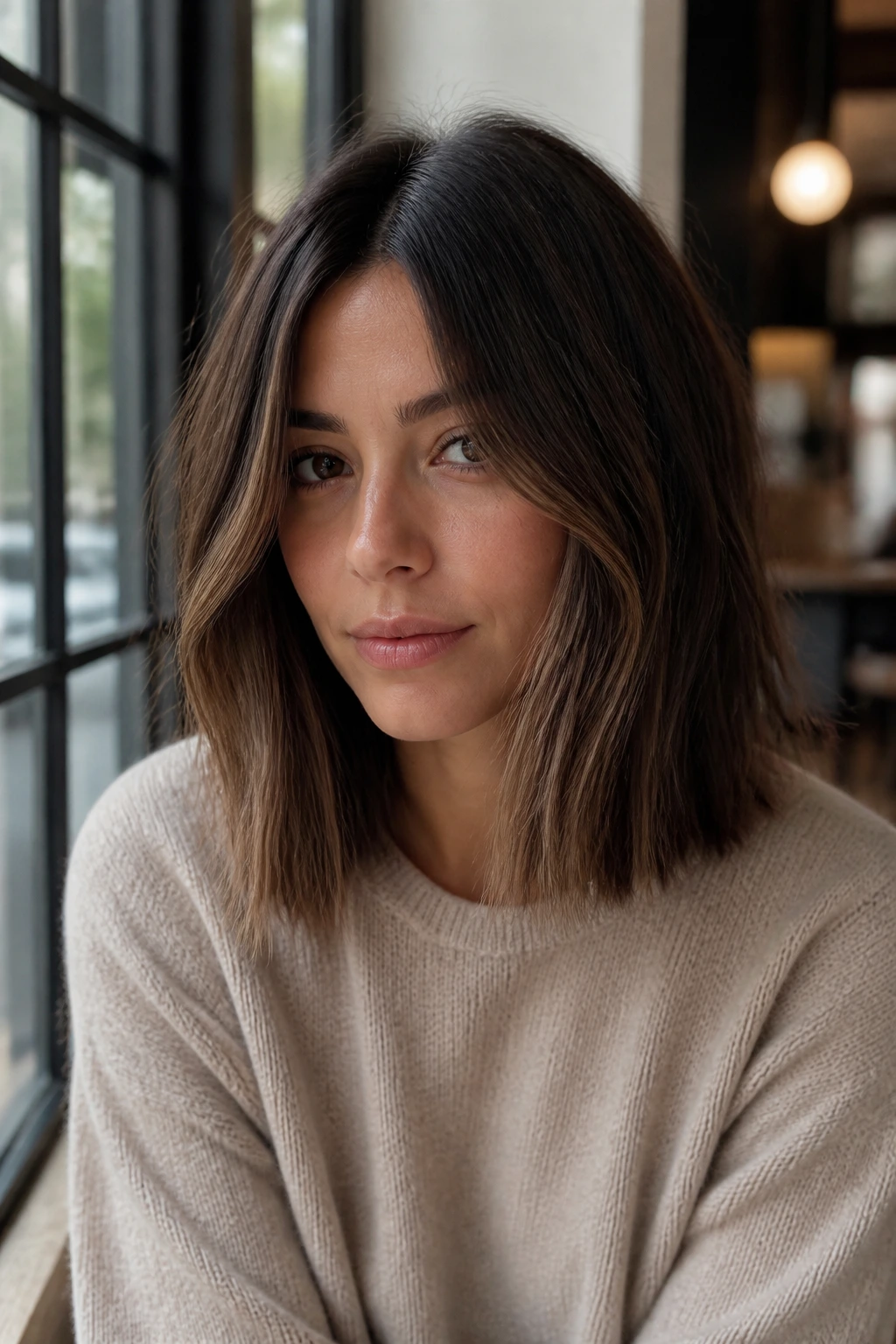
The easiest way to ruin a shoulder-length choppy cut is to ask for too much choppiness. If every layer is short and every end is broken up, the haircut starts to look thin and restless. The fix is a cleaner perimeter with movement inside the shape. That gives the eye something solid to hold onto.
Another common problem: the shortest layer lands too high on the head. The moment that happens, the haircut stops reading as shoulder length and starts reading as a mid-grow-out experiment. Keep the front layers long enough to blend through the cheekbone or jawline unless you want a much more dramatic look.
Over-thinning is a sneaky one. Fine hair in particular can look airy for the first day and stringy by the third. Thick hair can puff out if too much weight is removed from the wrong place. The answer is controlled internal shaping, not random thinning shears.
Product overload is just as bad. Heavy creams, oils, or too much smoothing serum make the choppy pieces cling together. You lose separation. You lose softness. Use less than you think, then add only if the hair asks for it.
Finally, a lot of people ignore their part and crown pattern. If your cowlick pushes hair forward, a center part might fight it all day. If your crown is flat, a side part or root lift at the base can change the shape completely. The haircut is only half the job.
Variations and Alternatives to Try

The Air-Dried Weekend Version: Ask for long internal layers, a soft perimeter, and a face frame that blends without requiring a brush. This one is ideal if you style with mousse and let the hair find its own shape.
The Office-Polished Version: Keep the choppiness inside the cut and finish the ends with a mild bevel. It looks tidy enough for formal settings but still moves when you turn your head.
The Curly-First Version: Cut the hair with your curl pattern in mind and keep the layers rounded around the sides. This prevents the triangle effect and keeps the softness around the face.
The Thick-Hair De-Bulked Version: Remove weight from the interior, leave the perimeter full, and avoid over-shattering the ends. It cuts down on puff without making the hair feel sparse.
The Fine-Hair Density-Preserving Version: Keep the ends blunt-ish and add only minimal face framing. This version protects thickness while still giving the haircut some motion.
The Fringe-Forward Version: Add curtain bangs or bottleneck bangs to the basic shoulder-length chop. It changes the entire mood of the haircut without changing the length much at all.
Keeping the Shape Between Trims

Shoulder-length choppy haircuts usually stay neat for about 8 to 12 weeks, depending on how much face-framing you have and how fast your hair grows. If you have bangs, expect to clean those up every 3 to 5 weeks or they will start sitting in your eyes and changing the whole shape. The fringe is always the first piece to wander.
At home, the main job is not overworking the cut. Rough-dry the roots if they flatten, mist the mids with water before restyling, and avoid piling heavy oils on the ends. That keeps the softness without smearing the texture into a greasy sheet. If the cut starts to lose movement, a small trim around the face frame often helps more than taking off an inch everywhere.
For curly and wavy hair, refreshing the shape is partly about memory. Rewet the front, finger-twist the sections that flatten fastest, and let the diffuser handle the rest. For straight hair, a quick bend with a hot tool on day two or three is often enough. The cut should be able to survive a non-fancy day. If it cannot, the shaping probably needs a lighter hand next time.
Frequently Asked Questions

Will shoulder-length choppy haircuts work on fine hair?
Yes, but the cut needs to protect density. Keep the perimeter fairly solid and use only light internal layers so the ends still look full. Fine hair usually looks better with a soft chop than a heavily sliced one.
Are these cuts good for thick hair?
Very, as long as the weight is removed from the inside rather than shredded off the surface. Thick hair can hold shape beautifully at this length, but it needs control near the mids so it does not expand outward.
Can curly hair wear a choppy shoulder-length cut without looking triangular?
Absolutely. The key is to shape the layers around the curl pattern and keep the sides rounded. A dry cut or a stylist who understands shrinkage makes a huge difference here.
What should I tell my stylist to avoid?
Say you want movement, not a thin or broken-up outline. That helps prevent over-thinning and too many short layers near the face. Bring one or two photos that show the density you want, not just the vibe.
Can I wear this cut straight, or does it need waves?
You can wear it straight. Straight styling gives the cut a cleaner read, especially if the layers are subtle and the ends are beveled. A slight bend at the bottom keeps it from looking flat.
How often should I trim it?
Most versions do well with a trim every 8 to 12 weeks. If you have bangs or strong face-framing layers, check in sooner because those pieces change the whole shape when they grow out.
Is a razor cut better than scissors for this style?
Not always. A razor can give airy ends on healthy straight hair, but it can also rough up fragile hair or make fine ends look sparse. Scissors with point cutting are often the safer choice.
What if my hair frizzes when I try to add texture?
Cut back on product and change the styling method before blaming the haircut. Soft texture usually comes from shape plus light hold, not from piling on sprays. A diffuser, a lighter mousse, or less touching during drying often fixes the problem.
Soft Texture That Stays Easy
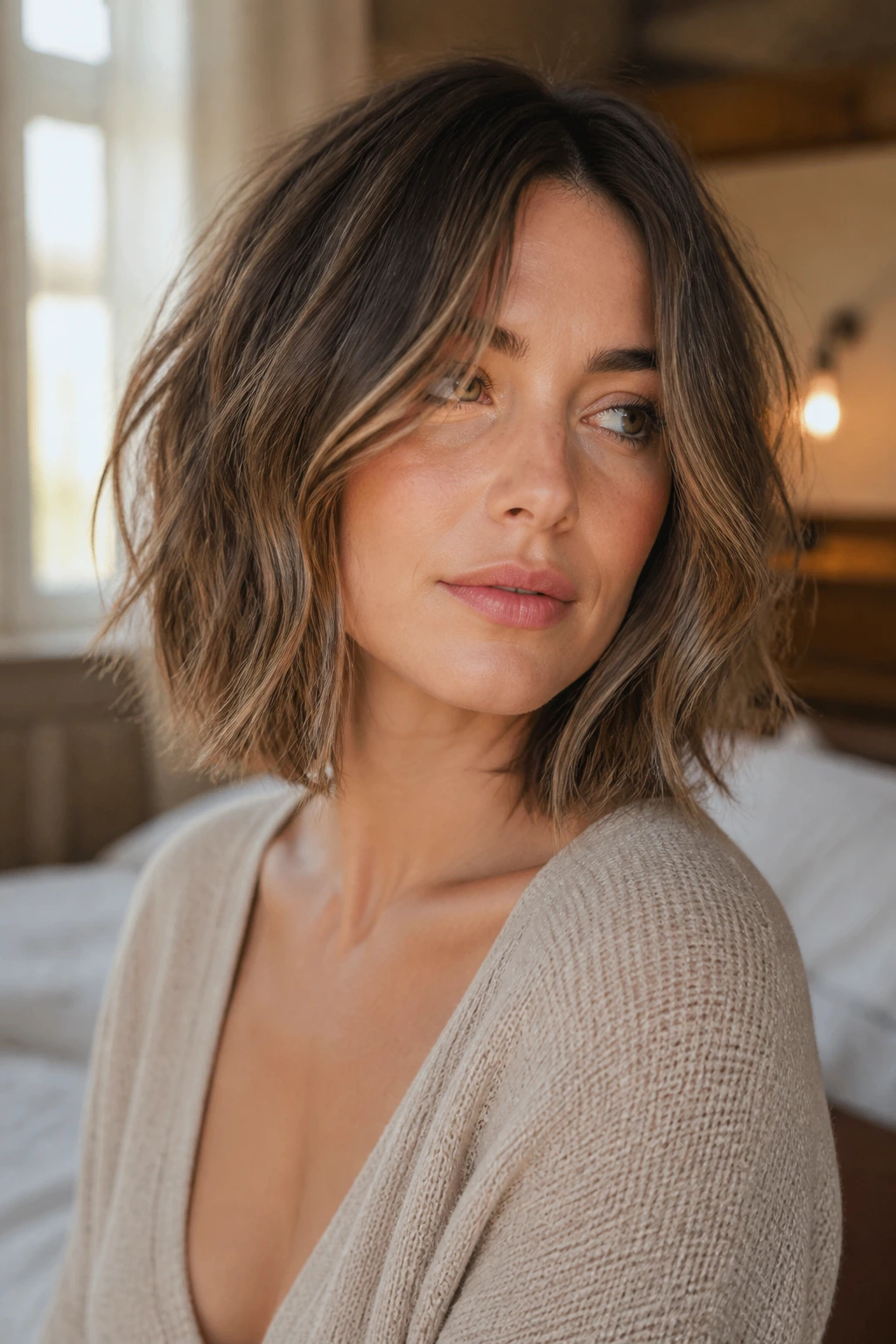
The nicest thing about shoulder-length choppy haircuts is that they do not ask you to choose between softness and shape. You can have a cut that bends, tucks, flips, and grows out without turning into a mess in week two. That is not a small ask, and it is why this length keeps showing up in salons with good reason.
If you take one thing from all of this, make it the outline. Keep the perimeter clean enough to hold the eye, then let the movement happen inside the shape. That is where lived-in hair starts to look intentional instead of accidental. And once you find the version that works with your density and texture, the rest gets easier fast.
