



Fine hair after 50 has one stubborn habit: it goes flat at the crown, then starts looking wispy at the ends if the cut is too eager with the scissors. That is exactly why layered cuts for fine hair over 50 need a different hand than the ones you see on thick, glossy hair with endless body. The right layers do not chop the shape to bits. They create lift where the head wants it, keep the perimeter from going stringy, and let the whole cut move when you turn your head.
There’s a big difference between adding movement and removing too much hair. I see that mistake all the time in salons and in bad haircut photos: the layers are so heavy-handed that the ends look frayed, the crown still lies flat, and the whole thing needs more styling than the person will ever want to do. A smarter cut keeps enough weight at the bottom to make the hair look denser, then sneaks in lift through the top, cheekbones, or back of the head where it actually helps.
And yes, length still matters. So does shape. So does where the part falls, how the bangs land, and whether the stylist leaves the ends blunt enough to hold a line. With fine hair, those details are the whole game. The cuts below are the ones that earn their keep in real life — not just in photos — and the best ones are the styles that still look decent when you air-dry on a busy morning and never touch a round brush.
Why These Cuts Earn Their Place
-
Crown lift without helmet hair: The best layered shapes put movement near the crown or top sides, where fine hair usually collapses first, so the head looks taller instead of wider.
-
Denser-looking ends: A blunt or softly graduated perimeter keeps the tips from looking see-through, which matters more than people think once the hair gets shoulder length or longer.
-
Easy grow-out: These cuts tend to soften as they grow instead of turning into a strange triangle or a stringy curtain, which makes them easier to live with between trims.
-
Face-framing that doesn’t swallow the face: A little movement around the cheekbone or jaw can soften features without leaving the whole cut feathery and thin.
-
Better styling payoff: Fine hair usually responds fast to a root lift spray, a round brush, or even a quick hot-air pass, so these shapes give you visible return for modest effort.
-
Works with silver, gray, and highlighted hair: Lighter strands often show texture and movement more clearly, which means these cuts can look sharp without needing much product at all.
1. The Collarbone Lob with Long, Floating Layers
This is the cut I recommend to people who want movement but do not want to lose the safety net of length. The collarbone gives the hair something to rest on, and the long layers around the face keep the shape from drooping into a single heavy sheet. On fine hair, that balance matters.
Why it works
The collarbone lob keeps enough weight at the bottom to make hair look fuller, while the long layers remove bulk only where the cut starts to feel flat. That means the ends still look dense. The style also plays nicely with a side part, which gives the roots a small but visible lift.
How to wear it
A quick bend with a 1.5-inch round brush or a large hot brush is enough to show the shape. I like this cut on people who tuck one side behind the ear, because it lets the front layers fall in a way that feels casual instead of overdone.
Best for: Anyone who wants a medium-length cut that can still be tied back.
Watch for: If the layers start above the chin, the whole thing can turn wispy fast.
2. The Chin-Length Bob with Soft Graduation
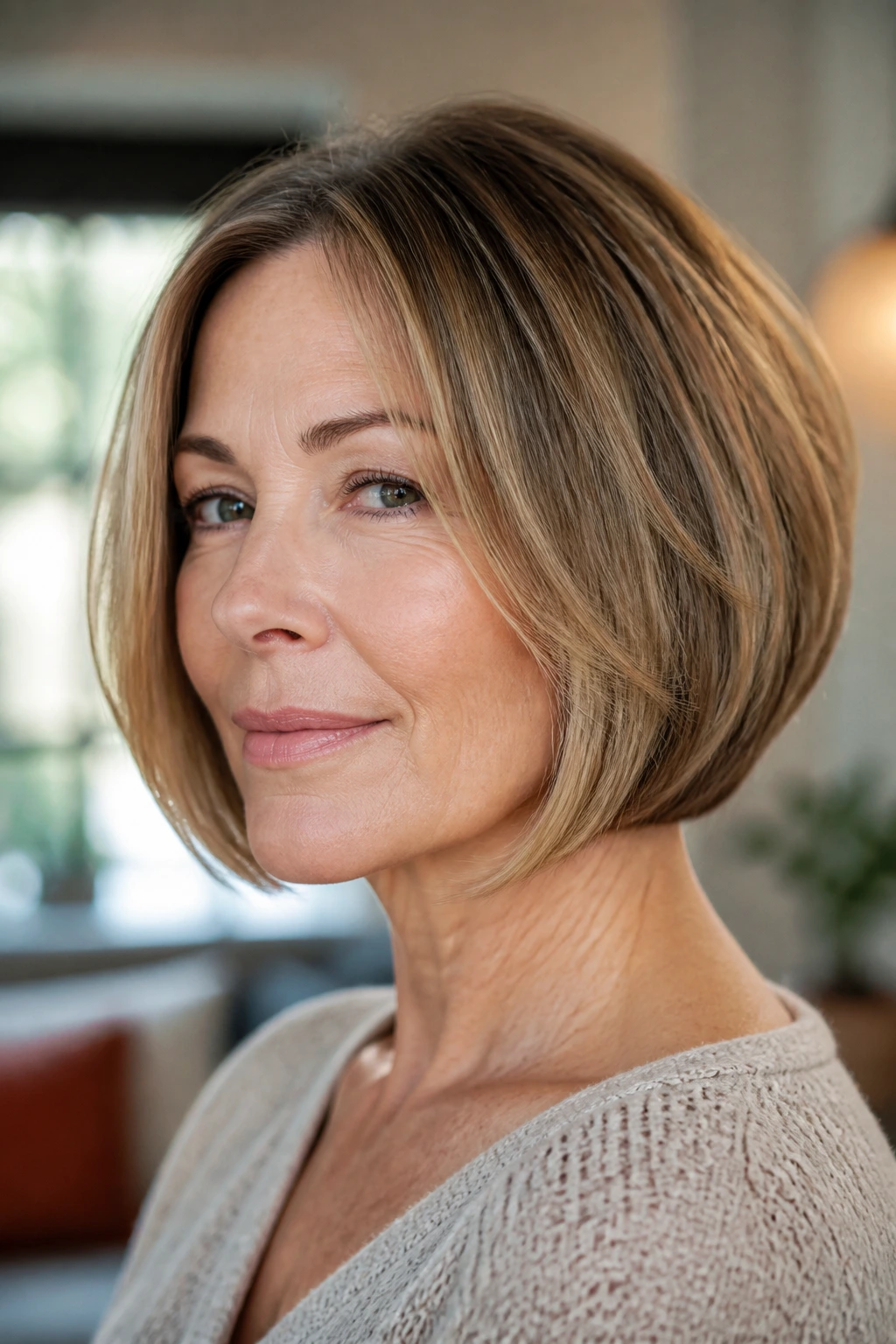
A chin-length bob is one of the smartest haircuts for fine hair because the jawline becomes the anchor. The line sits where people can see it, which gives the hair presence even when the strands are delicate. Add soft graduation through the back, and the style stops feeling blunt in a stiff way.
What makes it different
This is not a stacked helmet bob. The graduation should be subtle, almost hidden, so the back gets a little lift while the front stays smooth. That shape makes the hair look as if it has more density than it actually does.
How it looks in real life
It moves best when the hair is blown under just at the ends, then broken up with fingers. If you wear glasses, this cut sits cleanly above the frames and doesn’t fight them for space.
A little polish goes a long way here. Too much texture spray will make it look dry.
3. The Feathered Pixie with a Tapered Nape
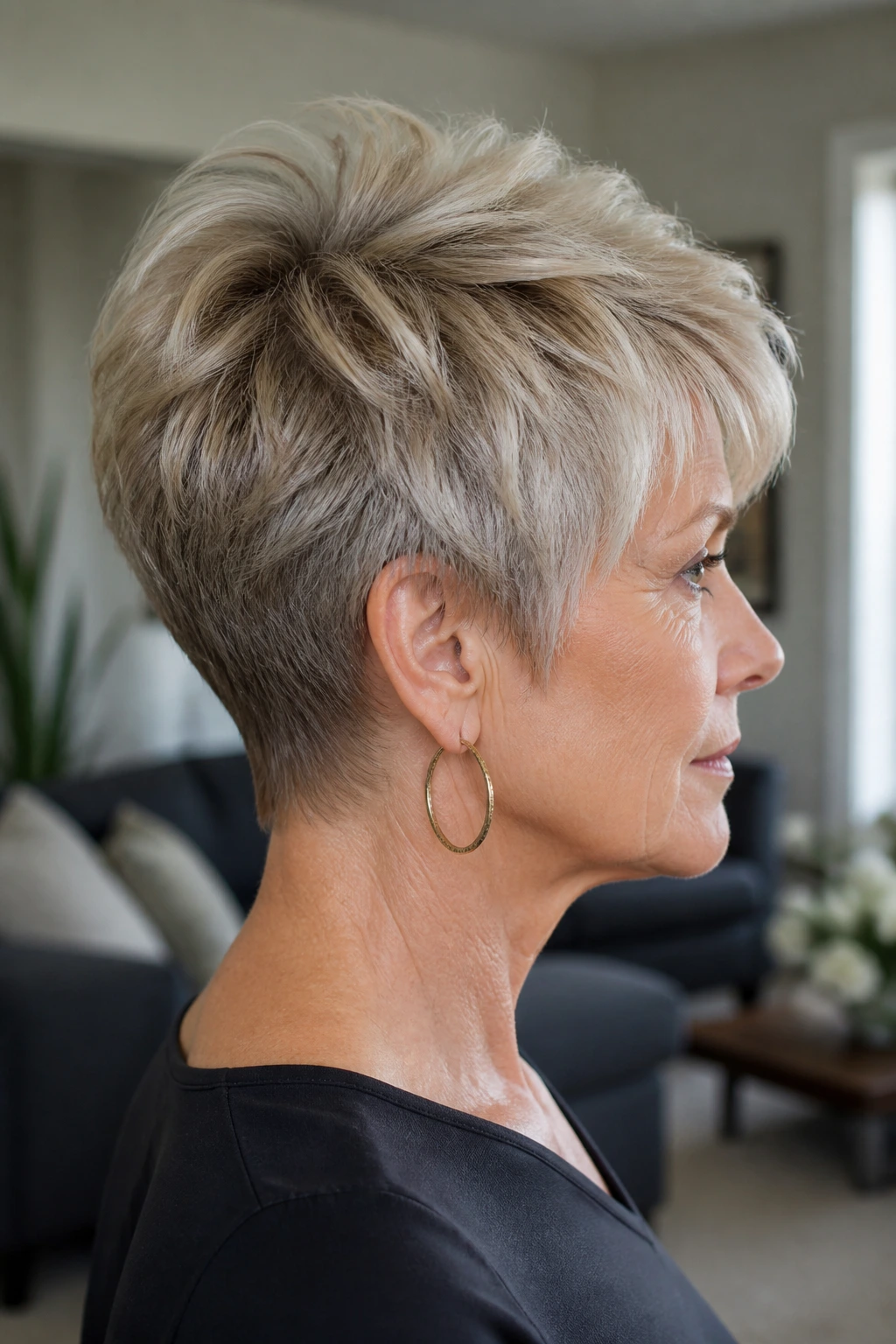
Short hair can be the best friend of fine strands, and the feathered pixie proves it. The tapered nape keeps the back neat, while the feathering on top gives just enough lift to stop the cut from lying flat against the head.
Why it lifts so well
Short layers in a pixie remove dead weight from the top, which is where fine hair often collapses first. The trick is to keep the feathering soft and directional, not shredded. You want the pieces to move, not separate into little frayed lines.
What to ask for
Tell your stylist you want the sides close enough to stay tidy but not so short that they expose every scalp line. The top should be left long enough to brush forward or to the side. That gives you options on days when the hair will not cooperate.
Pro tip: A pea-sized amount of lightweight paste at the crown is plenty. More than that and the piecey texture gets sticky fast.
4. The Soft Shag with Curtain Bangs
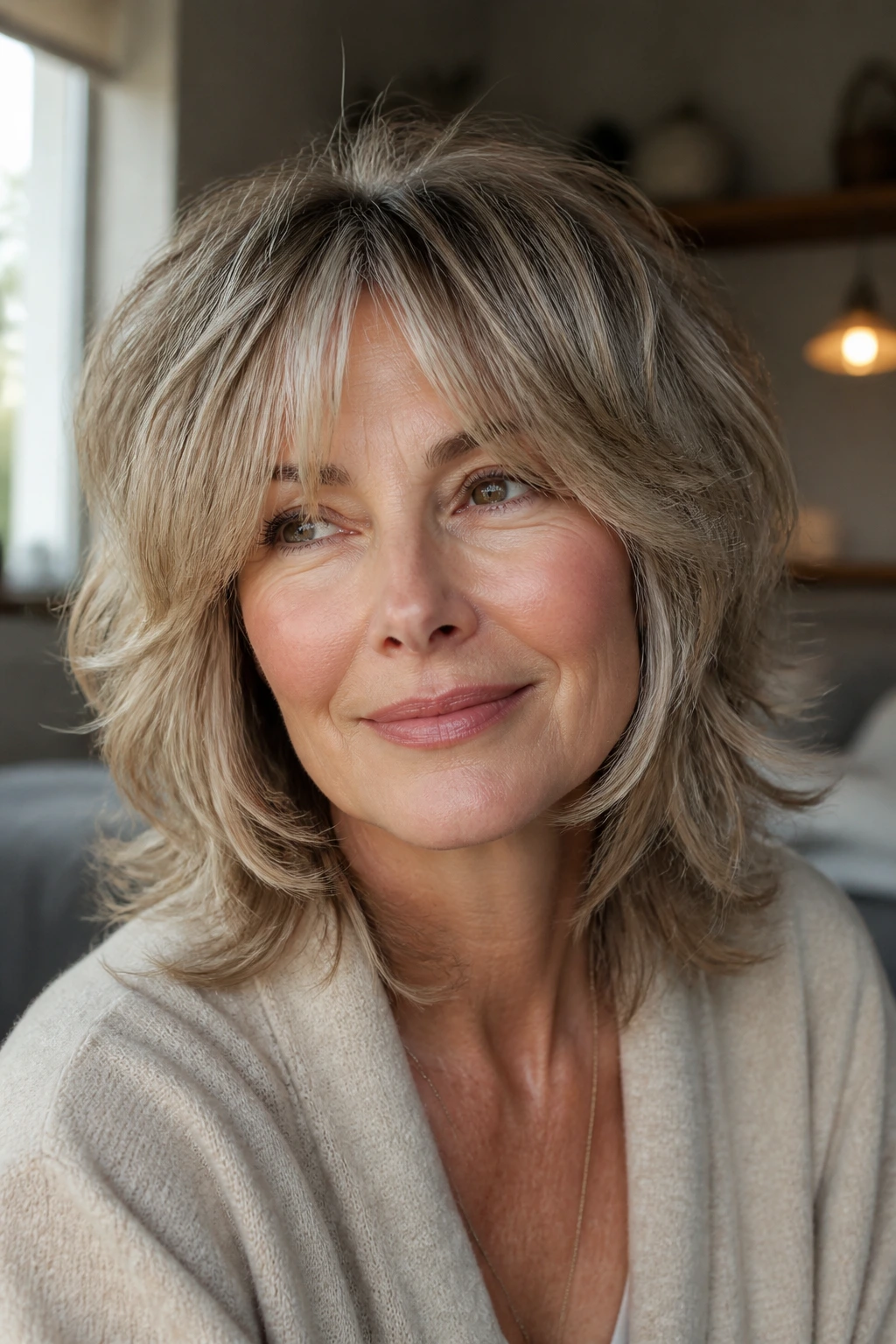
If you want a cut with energy, this one has it. A soft shag gives fine hair a little grit and motion, while curtain bangs open the face and keep the front from going flat in one heavy strip.
Why it works
The shag shape uses layers to create movement at different levels, which is a smart move for hair that needs lift without losing all its body. Curtain bangs also help because they break up the forehead area and give the eye somewhere to land.
The catch
This cut needs restraint. Too many short layers and it turns fluffy in a bad way, especially if the hair is straight and smooth. Ask for a soft shag, not a shredded one.
A round brush at the bang area and a diffuser at the back can make this shape look fuller without much effort. It’s one of the few layered styles that looks deliberately undone instead of merely messy.
5. The Stacked Bob with Lifted Back
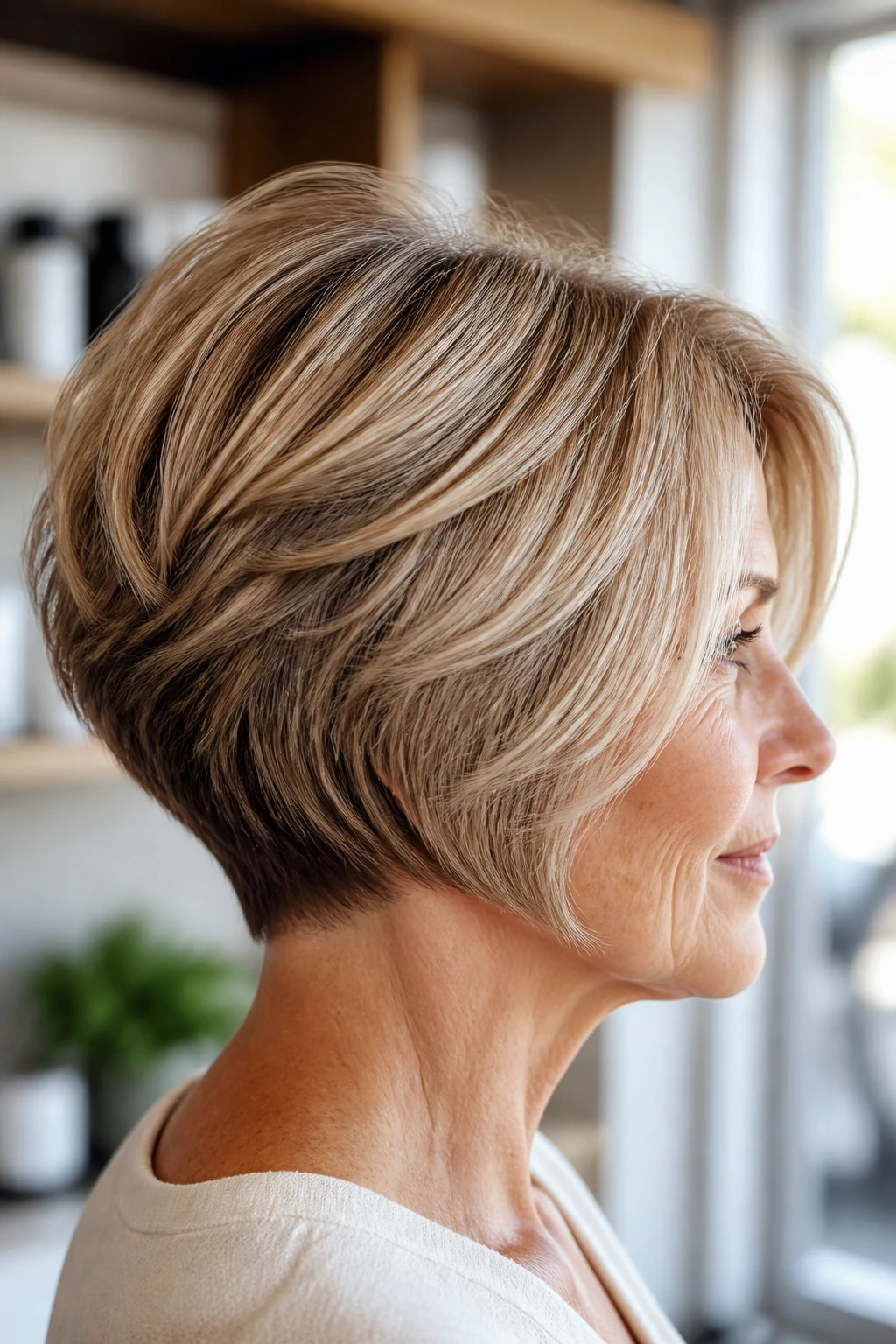
A stacked bob is one of those cuts that seems obvious until you see how well it solves the crown problem. Fine hair often lies flat at the back of the head, and a stacked shape pushes that area up without needing teasing or a mountain of spray.
Why it’s worth considering
The shorter layers in the back create a gentle shelf of volume. The front stays a touch longer, which keeps the silhouette from looking too severe. Done right, it gives the profile a clean, lifted line.
Who should choose it
If your hair falls limp by lunchtime, this cut earns its place. If you like neat hair that still has shape after a quick blow-dry, even better.
I’m picky about stacked bobs. They need a soft hand. If the graduation is too sharp, you get a dated shape that sits like a wedge. If it’s too soft, you lose the lift. Somewhere in the middle is the sweet spot.
6. The Bixie with Piecey Crown Texture
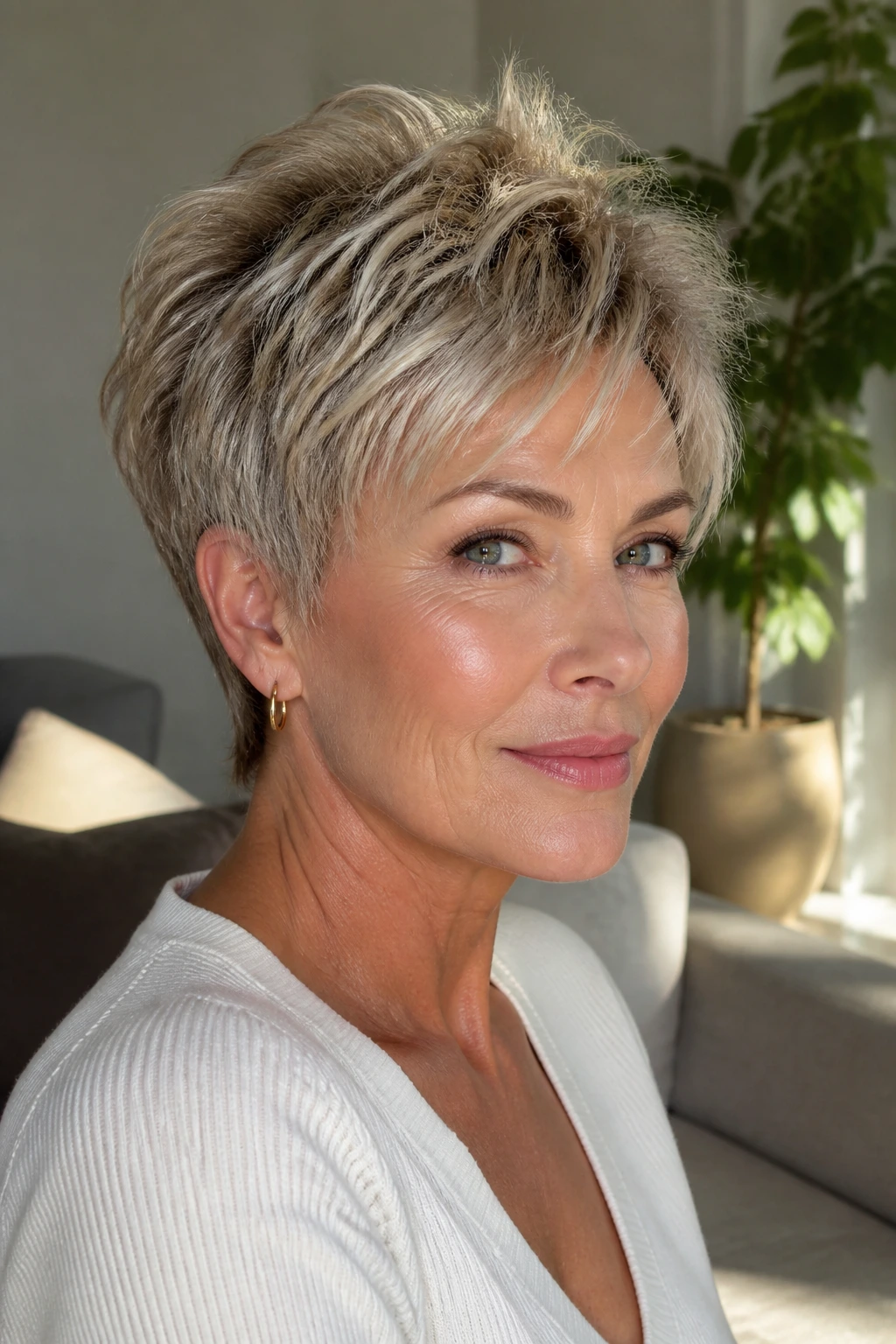
The bixie sits between a bob and a pixie, and that middle ground is exactly why it works on fine hair. It keeps a little more length around the ears and nape than a true pixie, but the top stays short enough to create movement without much product.
Why this shape helps
The crown can be cut with just enough texture to make the hair look lively, while the perimeter still gives the eye a clean line. That combination keeps the style from looking sparse.
Best case use
This is a strong choice if you want short hair that doesn’t feel severe. It also works well with straight hair that refuses to hold big volume. The bixie does not demand a perfect blowout.
How to style it: Dry the crown in the opposite direction first, then part it where you want it. That one move gives the roots a little memory and stops the top from collapsing.
7. The U-Shaped Mid-Length Cut with Barely-There Layers

Here’s the thing: not every fine-haired head needs a lot of layers. Sometimes the smartest move is a U-shaped cut that keeps length in the center back and gently rounds the sides. That little curve makes the hair feel fuller from behind.
Why it’s effective
The U shape keeps the perimeter from looking blocky while preserving weight in the longest sections. Barely-there layers around the face keep the front from dragging the whole style down. The result is movement without thinness.
When it shines
This cut is ideal if you like to wear your hair down more than up. It’s also good for people who want low-drama styling. A soft bend through the mid-lengths is enough.
No, it is not the most exciting haircut on the rack. It may be one of the most useful.
8. The French Bob with Airy Ends
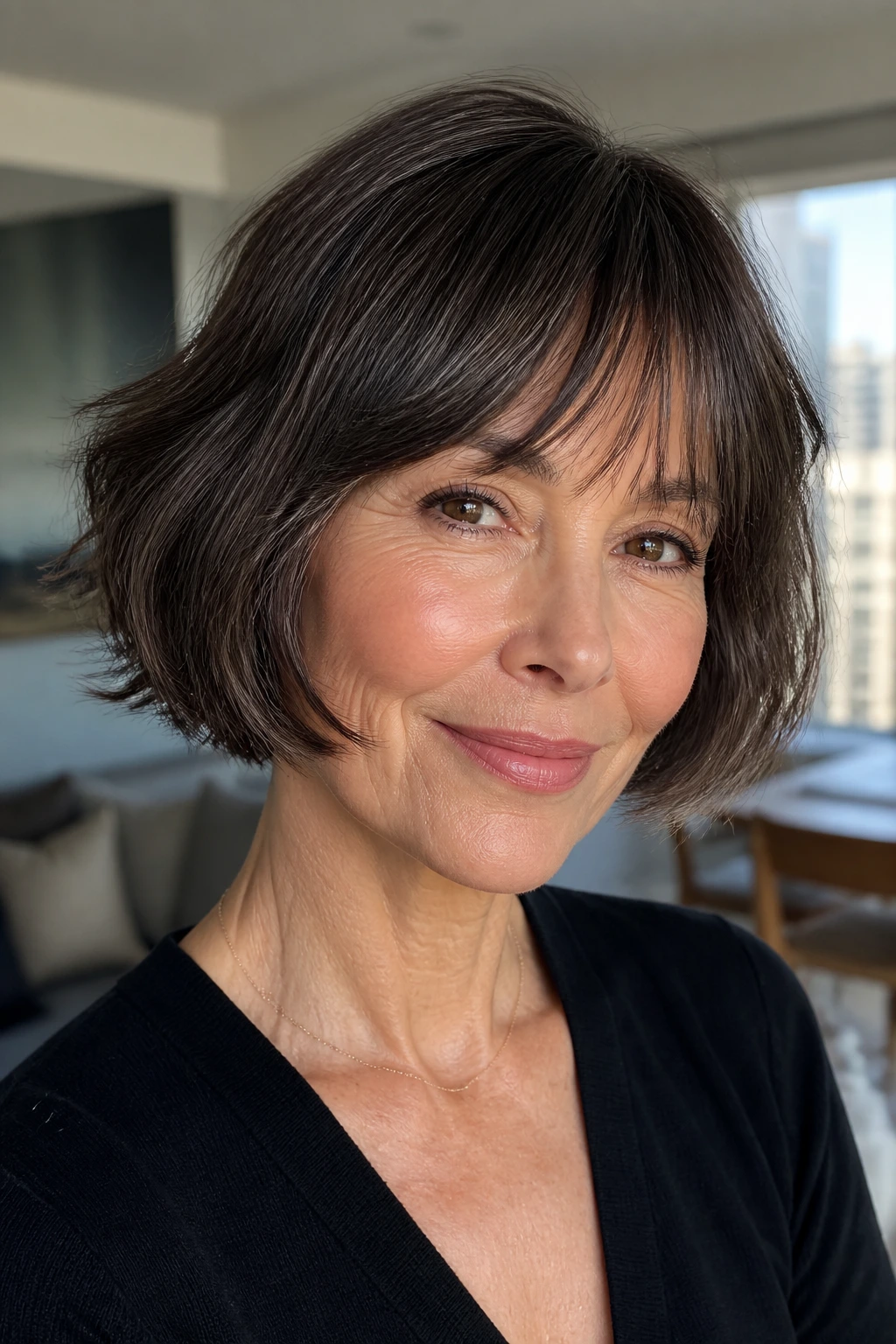
A French bob can look intimidating in photos, but on fine hair it can be a gift. The trick is to keep the length around the lip or chin and let the ends sit airy rather than bluntly boxy.
Why it works on fine strands
The short length gives the hair density in the frame of the face, which can make fine hair look more deliberate and less tucked in. Airy ends stop the cut from feeling too hard against the jaw.
How to make it yours
Add a slight bend with a flat iron or a small round brush, then leave the texture a little imperfect. That is where the charm sits. This cut wants movement, not a polished shell.
It also pairs well with a soft fringe if your forehead feels long in proportion to your face. If you wear it with a center part, keep the ends light. If you wear it with a side part, the volume gets a little extra help.
9. The Wedge Cut with Modern Softness
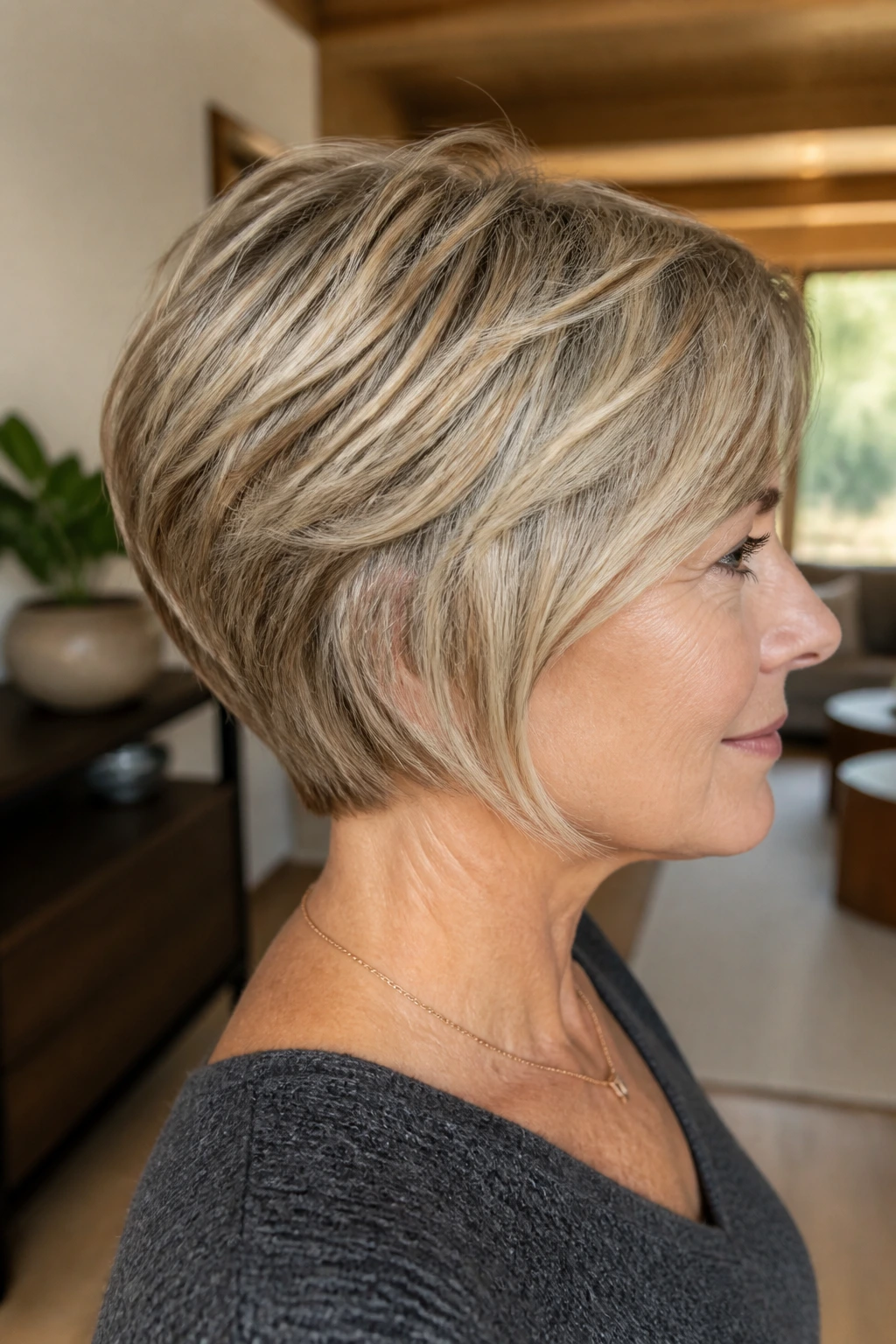
The wedge cut had a loud reputation for a while, and honestly, that worked against it. A modern version uses the same lifted back and angled shape, but softens the edges so the cut feels current and easier on fine hair.
What makes it useful
The angled back adds height where the head needs it. The front stays slightly longer, which keeps the face from looking boxed in. On fine hair, that angled shape can create a fuller-looking silhouette in a way that plain one-length cuts rarely do.
The style note
This cut is best when the top isn’t over-thinned. You want a clean shape with body, not a floppy top and a puffed-out back. A round brush or a thermal brush gives it a smooth finish fast.
A lot of people dismiss wedge cuts because they remember the wrong version. Fair. The soft version is the one worth trying.
10. The Side-Swept Crop with Crown Height
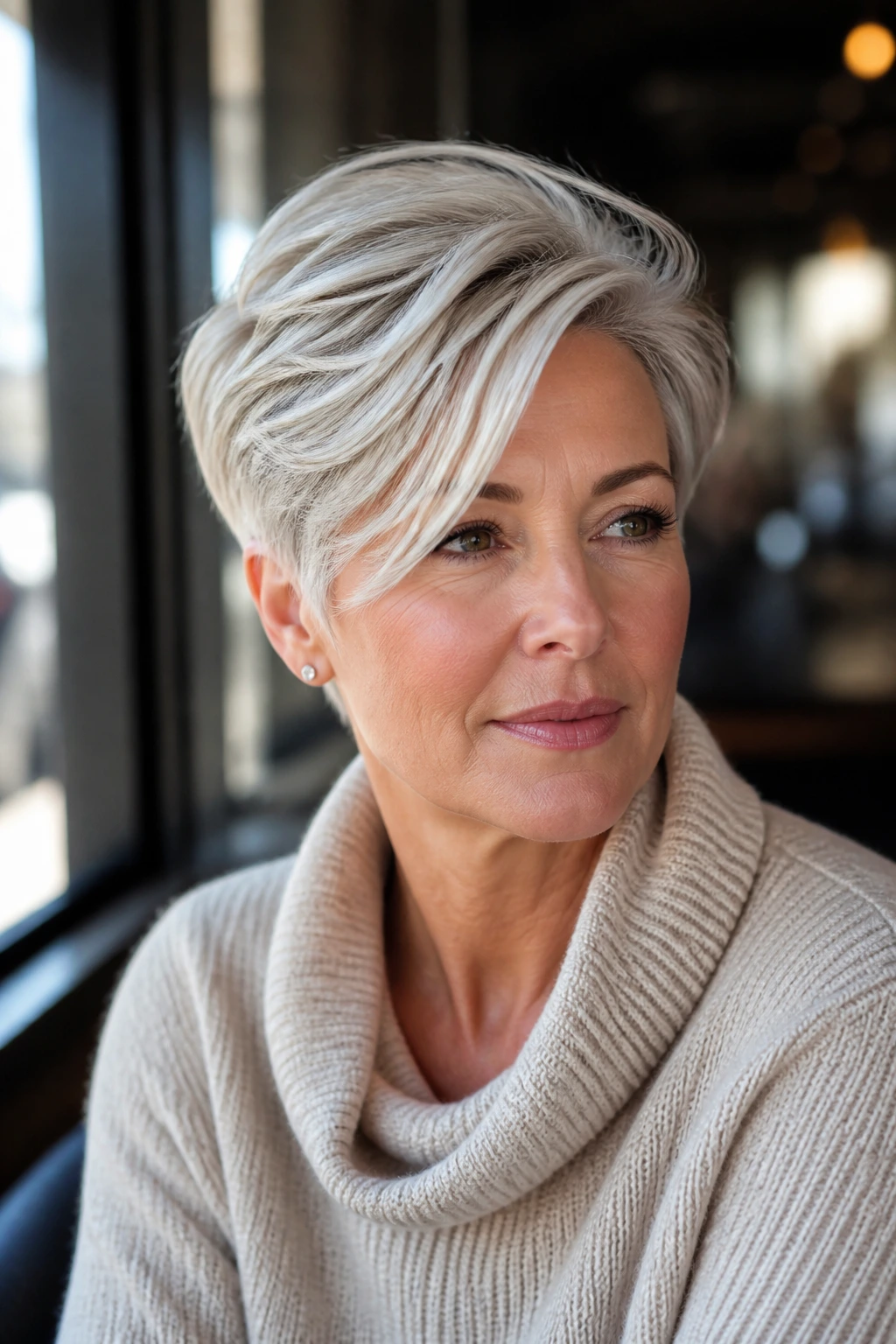
A side-swept crop gives you all the short-hair convenience with a little more softness than a standard pixie. The side part is doing some of the heavy lifting here. It pushes hair in one direction and gives the crown a visible bump of height.
Why it stands out
Fine hair often looks best when the part is not sitting dead center. A deep side sweep creates asymmetry, and asymmetry creates the illusion of more body. It’s a small trick with a big payoff.
Styling notes
Blow-dry the roots in the opposite direction first, then settle the hair into the sweep you want. That little over-direction helps the crown stay up instead of sinking by noon.
If you’re tired of fighting a flat top every morning, this is one of the more forgiving short cuts. It has shape even before the styling tools show up.
11. The Butterfly Cut with Lightweight Face Layers
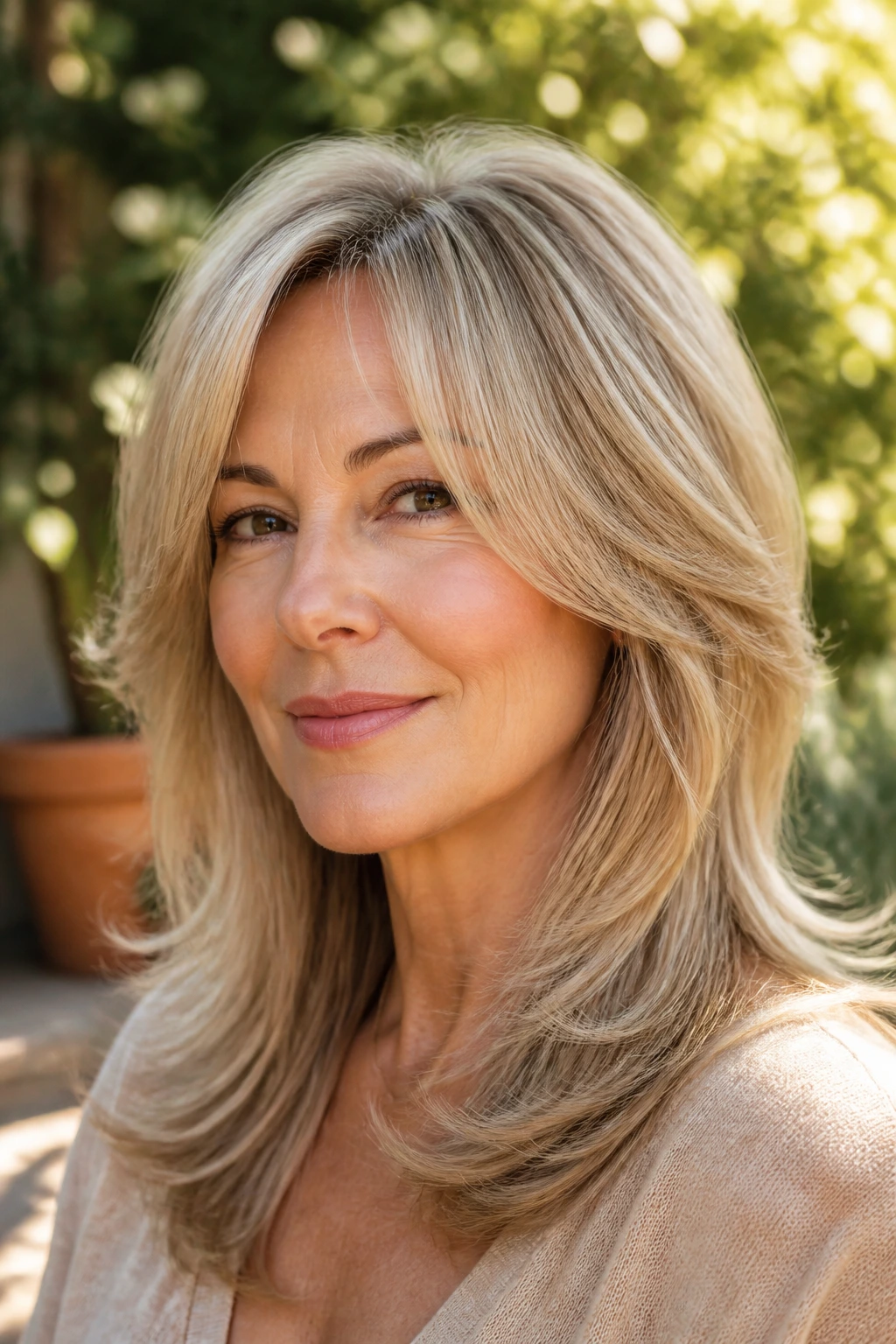
The butterfly cut gets a lot of attention on longer hair, and for good reason. It can create the feel of a shorter layered cut around the face while keeping the length and density in the back. On fine hair, that dual effect is the whole point.
Why it can work
The shortest face layers create lift near the cheeks and cheekbones, which helps break up a long curtain of hair. The longer bottom layers keep the overall mass of the hair intact, so the ends do not vanish.
What to watch
This cut needs a stylist who knows how to preserve the base. If the shorter layers are too aggressive, the front becomes airy in a way that looks thin. If they’re too timid, the butterfly effect disappears.
I like this cut for people who still want a blowout feel, even if they only dry the front and let the back air-dry. It gives shape without forcing you into a daily production.
12. The Graduated Lob with Hidden Layers
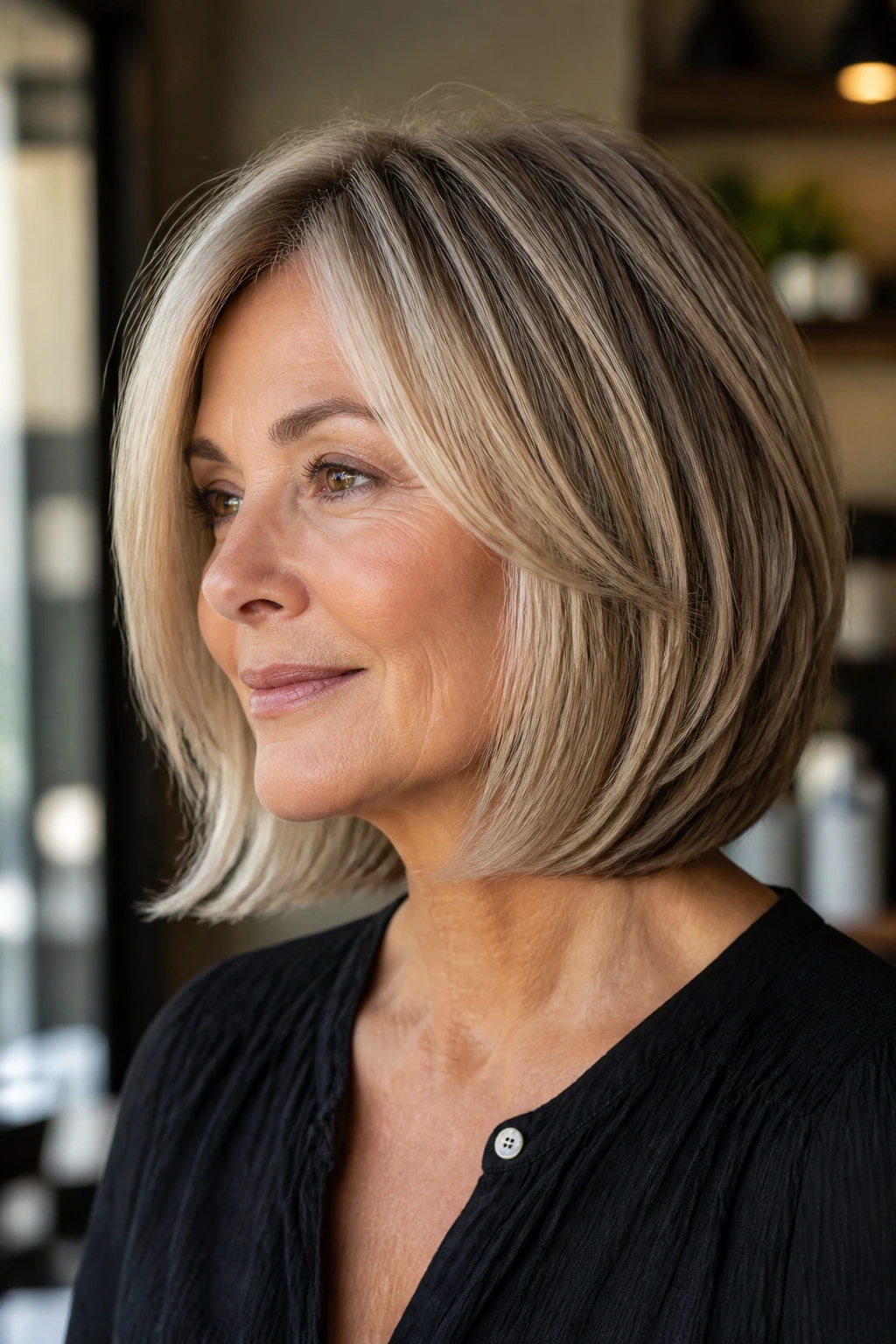
A graduated lob is one of my favorite no-nonsense answers for fine hair. The outer line stays clean, while hidden layers underneath create lift and remove weight in places the eye doesn’t need to see.
Why it reads fuller
The hidden layers support the outer shape instead of breaking it apart. That matters a lot on fine hair. You get movement and body, but the perimeter still looks solid when the hair swings.
Best for
This cut suits people who like a polished look that can survive a workday, a grocery run, and a dinner out without changing tools. A side part helps, but it is not mandatory.
The best versions of this cut have a slight bend at the ends, not a dramatic flip. Think quiet volume, not theater.
13. The Razored Bob with Wispy Ends
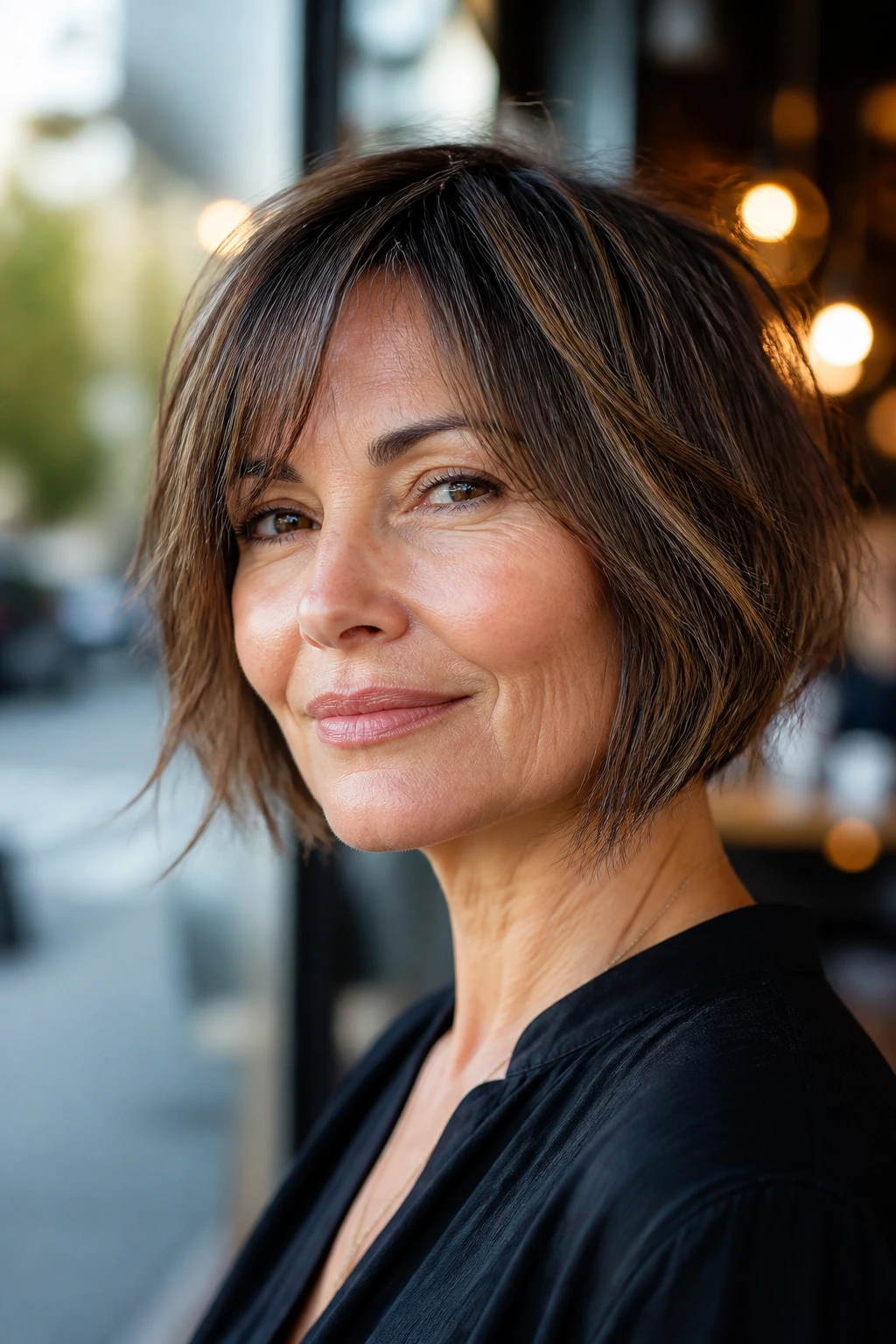
A razored bob can be gorgeous on fine hair, but only when the razor is used with restraint. You want a whisper of texture through the ends, not a sliced-up perimeter that looks tired after one shampoo.
Why it works when it works
The razor softens the line enough to keep a bob from looking heavy. That can be useful if your hair is naturally straight and tends to sit like a sheet. Wispy ends can make the shape feel lighter and more modern.
The risk
Too much razor work, and the hair starts to fray. Fine hair already has a narrow margin. If the ends become too thin, they stop reflecting enough light and the cut can look sparse.
This style is best for someone who likes a bit of edge and doesn’t mind a small amount of texture cream. Keep the product light. The haircut should do most of the talking.
14. The Shoulder-Length Cut with Bottleneck Bangs

Bottleneck bangs are a clever compromise when you want fringe but not a heavy curtain across the whole forehead. They start narrow near the center and widen softly toward the sides, which gives fine hair a bit of framing without taking over the face.
Why that matters
Shoulder-length hair can droop if the front is too heavy. Bottleneck bangs help by creating movement near the eyes and cheekbones while leaving the rest of the length intact. The shape feels softer than blunt bangs and less fussy than a full fringe.
How to wear it
This cut usually looks best with a gentle bend through the mids and ends. If the bangs are blow-dried off the face, the whole style opens up. If they are left flat, the cut loses some of its shape.
A good bottleneck fringe can make fine hair look deliberate. That’s the word I keep coming back to: deliberate.
15. The Layered Pageboy with a Soft Curve
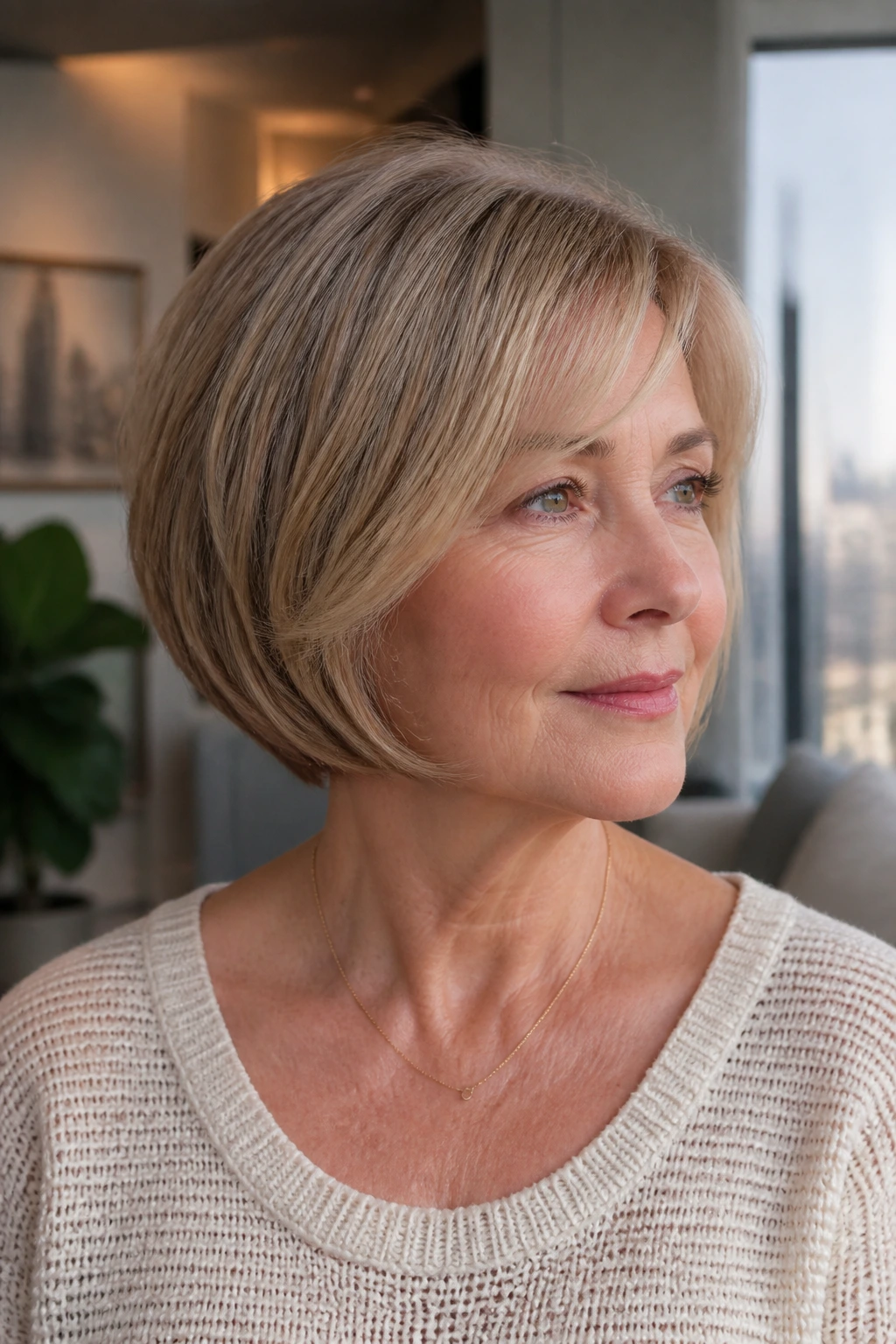
The pageboy gets overlooked because people remember the stiff version. A softer take keeps the curved line around the jaw and adds light layering so the shape does not feel boxed in or dated.
Why it works on fine hair
The curve gives a sense of density around the face. Fine hair benefits from that visual weight, especially if the ends are blunt enough to hold the line. A little layering inside the shape keeps it from turning into a solid helmet.
Good match for
If your hair likes to tuck under naturally, this cut will feel easy. It’s also a strong pick if you want neatness with a touch of softness rather than beachy texture.
I’d trust this shape on someone who wants polish without endless styling. It has manners. That matters.
16. The Textured Crop with a Longer Top
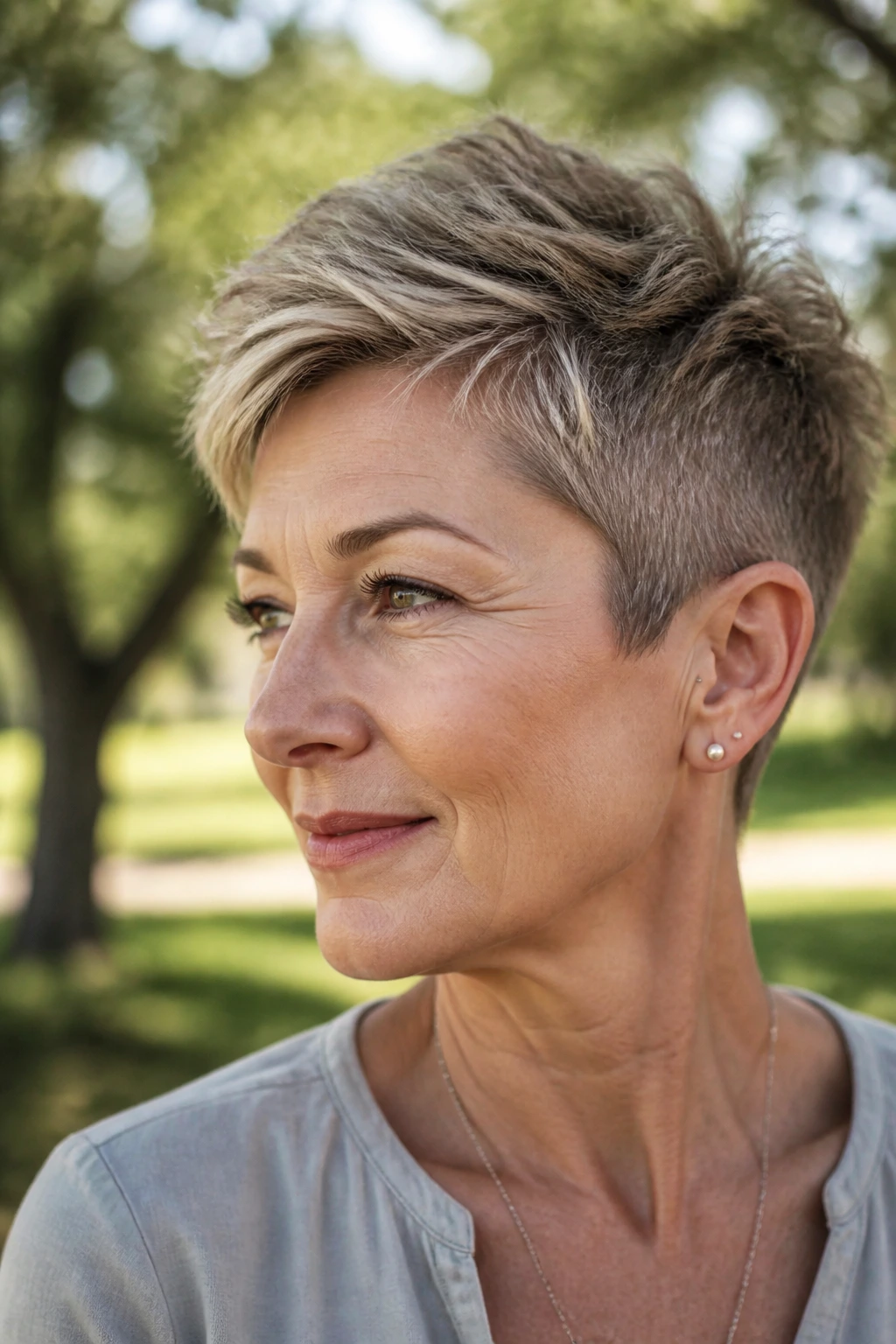
Short hair does not have to mean flat hair. A textured crop with a longer top lets the crown keep enough length to create movement, while the sides stay close and tidy.
Why it helps fine hair
The top is where the illusion happens. A little extra length there means you can sweep, lift, or piece it out depending on the day. The cropped sides keep the overall shape from feeling heavy.
Who it suits
This is a good cut for active people, people who dislike a lot of drying time, and people whose hair loses volume the minute they look at a humid room. It also wears nicely with earrings because the face and neck stay open.
A touch of root spray and a quick finger-dry are enough. No complicated choreography.
17. The Long Pixie with Swept Fringe
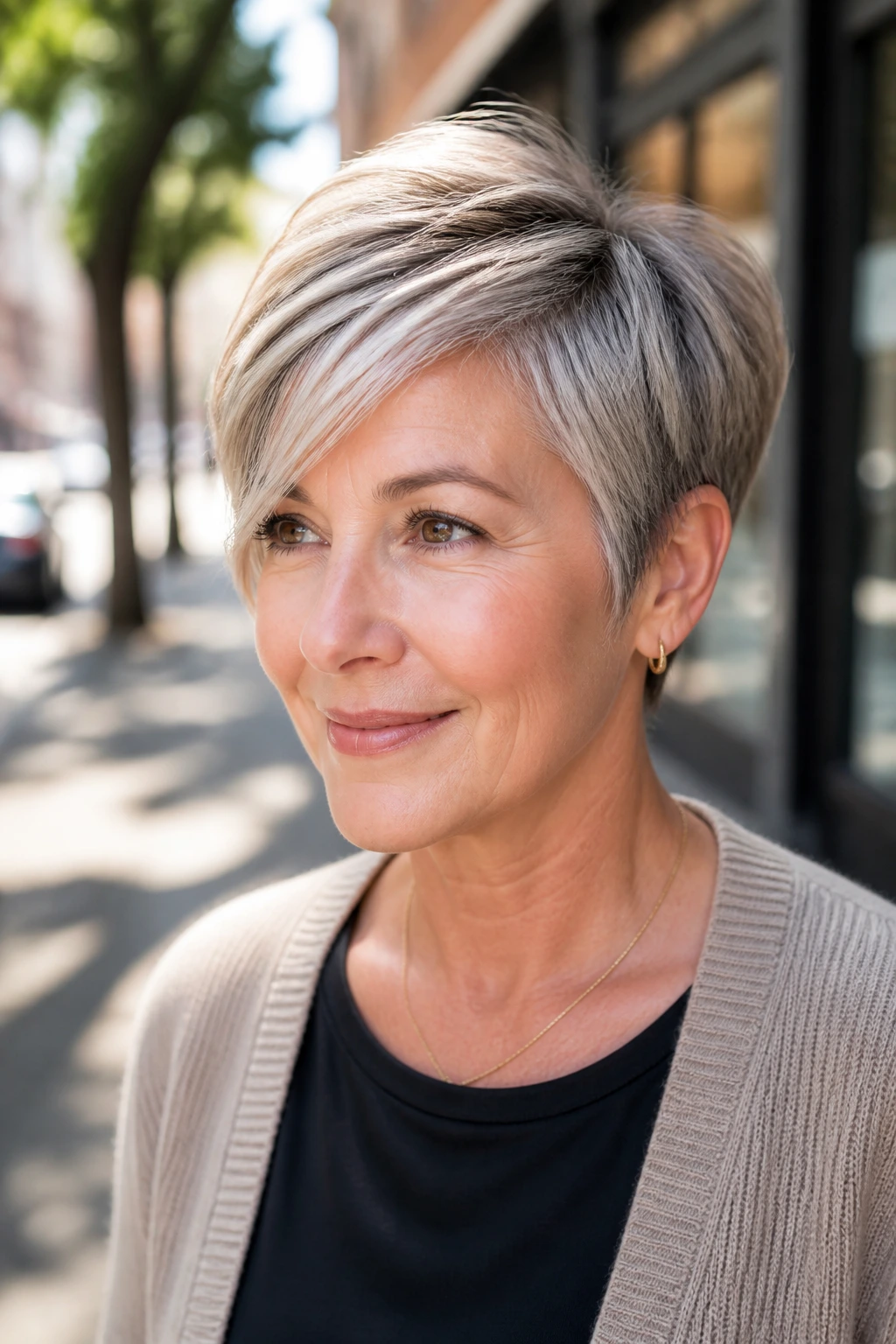
The long pixie is one of the best short cuts for anyone nervous about going too short. It keeps enough length through the top and front to soften the face, while the sides and back stay neat enough to make the hair feel lighter.
Why it works
The swept fringe disguises a flat hairline and gives the top a soft diagonal line, which is kinder to fine hair than a hard, straight edge. The longer top can be styled forward, up, or to the side.
Small detail, big result
Ask for texture on the top, but not so much that the pieces separate into little spikes. You want a soft sweep. That is the difference between chic and fussy.
A long pixie also grows out gracefully. That’s one of the reasons it gets a permanent place in my mental lineup of useful cuts.
18. The Curved Bob with Tucked Ends
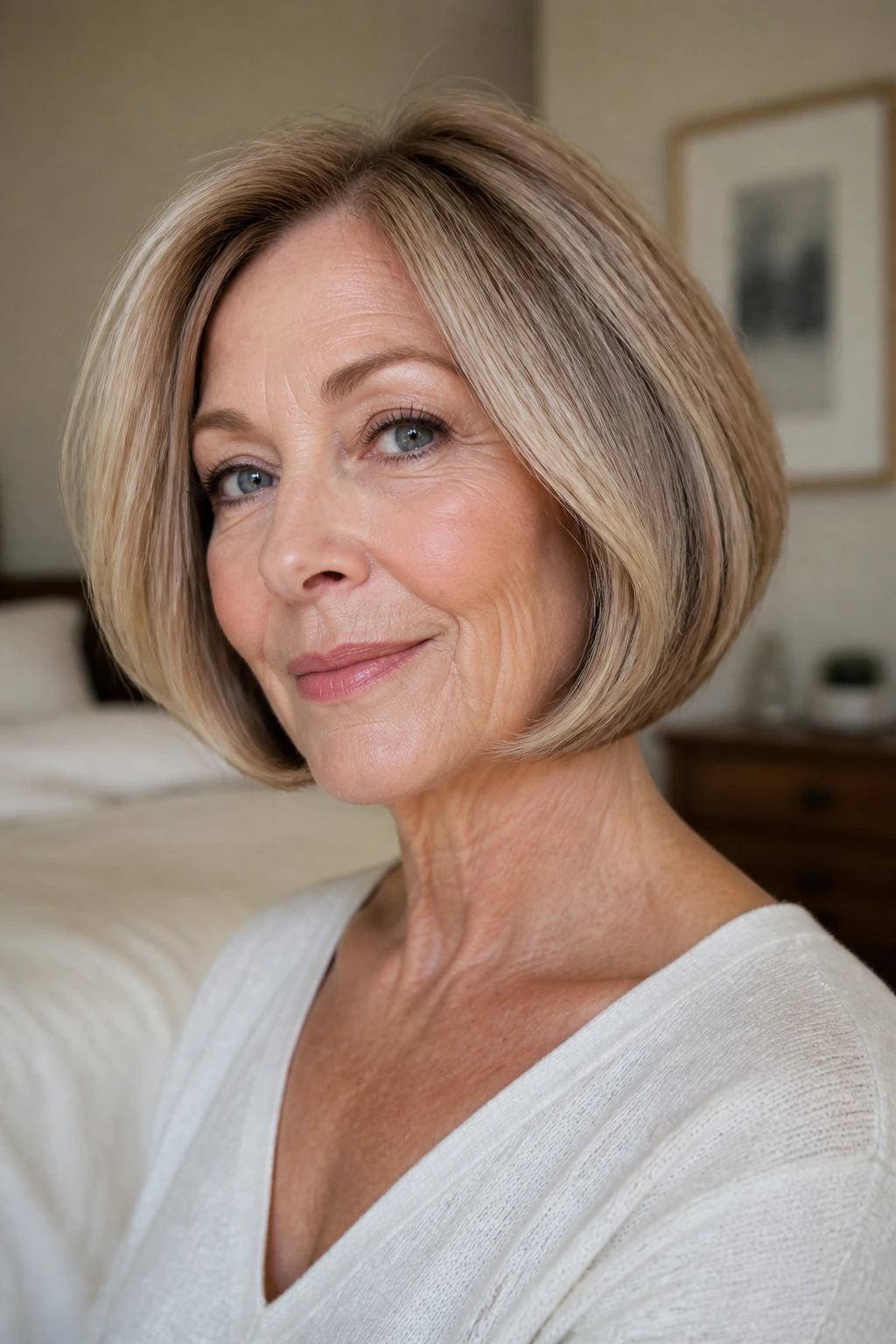
A curved bob tucks inward at the ends and gives the hair a contained, finished shape. Fine hair often benefits from that kind of structure because it keeps the perimeter from spreading out and looking thin.
Why it reads fuller
The curve creates a sense of body around the jaw and neck. It’s subtle, but on fine hair, subtle often works better than obvious layers. The cut feels neat, smooth, and controlled.
Style note
This one loves a round brush. Dry the ends under just a little, then let them cool in place. If you rush the cool-down, the bend falls out faster than you’d think.
If you wear glasses or want a cut that sits well under coat collars, this is one to keep in mind.
19. The Soft Wolf Cut with Controlled Layers

The wolf cut can be too much for fine hair if the layering goes wild. A soft version keeps the shag energy but reins in the damage, leaving enough length in the bottom layers to preserve thickness.
Why it can be a win
The top layers give lift and a slightly undone feel, while the longer bottom layers hold the shape together. That contrast can make fine hair look like it has more texture than it actually does.
The warning label
Do not let this turn into a razored mess. The whole point is controlled movement. If the ends get shredded, the cut loses its body and starts looking tired.
This is a bolder pick, sure. But it’s a useful one for people who like a bit of edge and don’t want their hair to sit politely all day.
20. The Deep Side-Part Lob
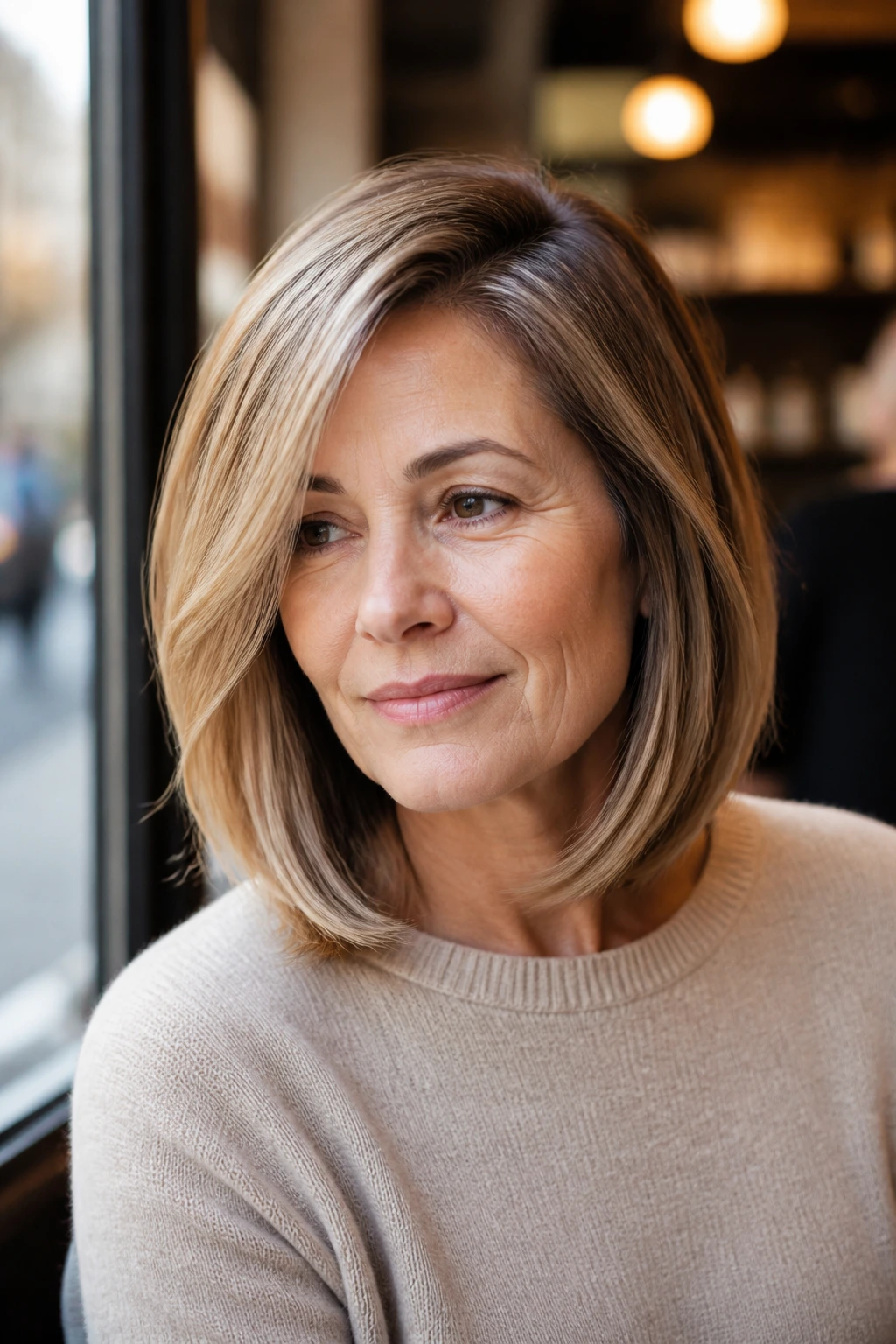
Sometimes the haircut itself is only half the answer. A deep side-part lob uses a smart parting line to create volume right away, which is a blessing for fine hair that refuses to hold lift at the crown.
Why it works so well
Fine hair usually looks best when it has asymmetry. A deep part changes the fall of the hair and makes one side carry more height. The lob length keeps the ends full enough to balance the lift.
Why I like it
It is easy. That matters. You can wear it smooth, slightly waved, or with a bit of bend at the ends, and the cut still looks intentional.
If you are short on styling patience, this one gives a lot back for very little work.
21. The Choppy Bob with Micro Layers
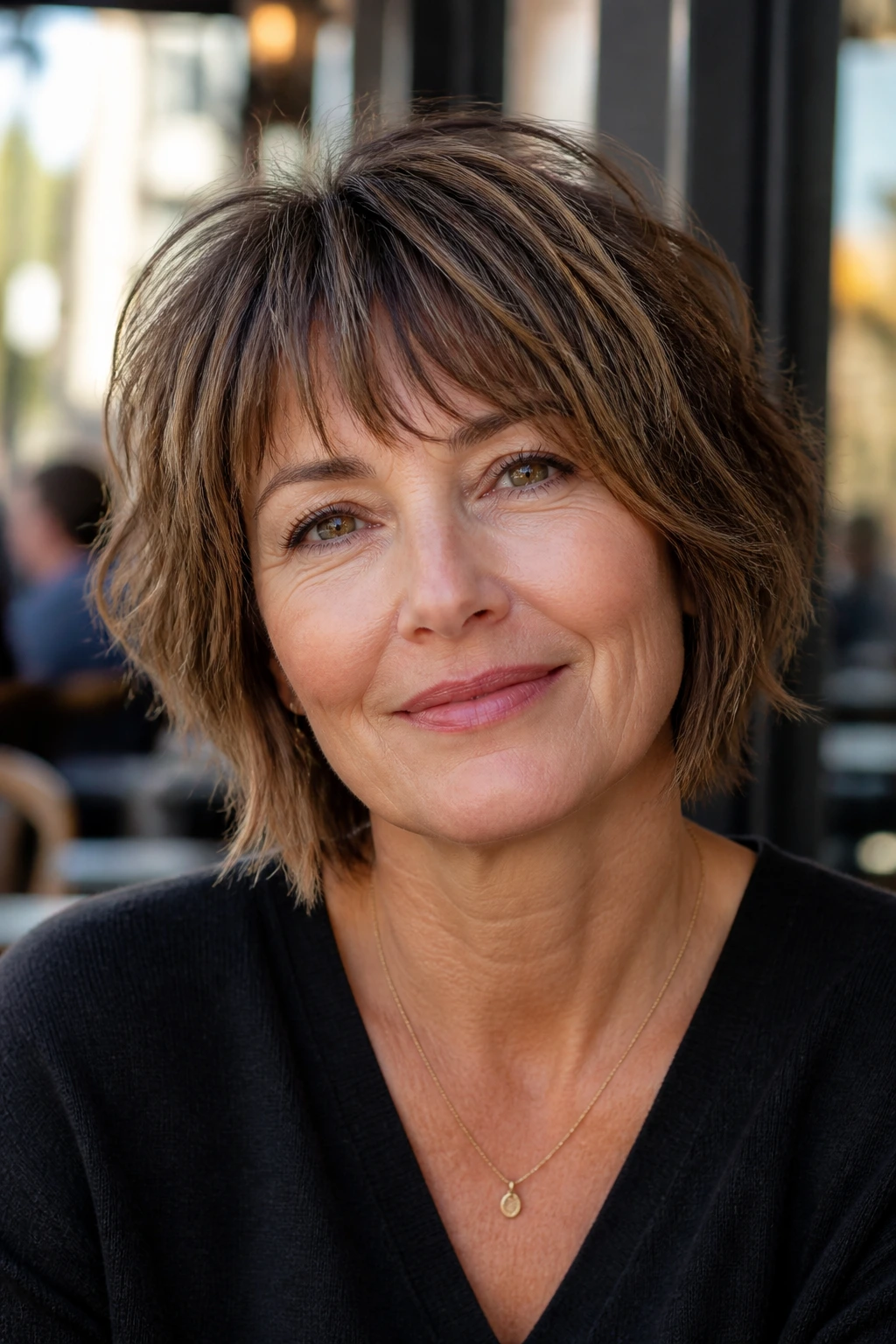
Choppy can be a dangerous word on fine hair, but micro layers change the game. Instead of removing huge chunks of weight, the stylist creates tiny shifts in length that make the bob move without hollowing it out.
Why it deserves a spot
The micro layers add texture while keeping the cut dense-looking. That’s useful if your hair is straight and flat but you still want some personality in the shape.
Where it fits
This style works best for people who like a bit of separation in the ends and don’t mind a more casual finish. A touch of texturizing spray or mousse at the mid-lengths usually does the trick.
Be careful with this one if your hair is already fragile. A small amount of texture is enough. More is not better here.
22. The Airy Midi Cut with Face-Framing Pieces
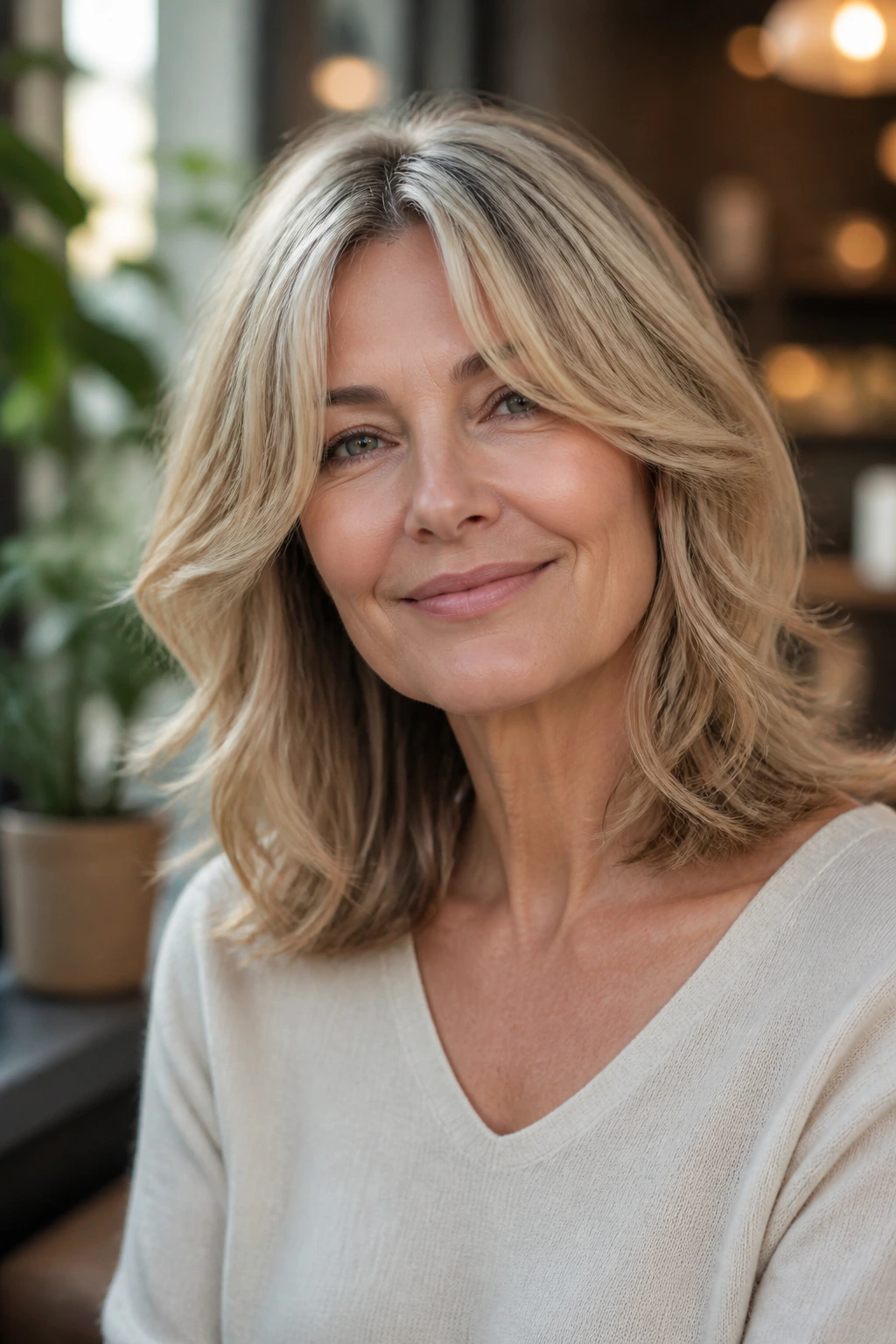
The midi cut sits in that comfortable zone between short and long, and “airy” is the key word. The face-framing pieces lighten the front without stealing too much from the overall density.
Why it works
Fine hair often looks good when the front opens up a little. That keeps the face visible and the hair from hanging in one flat panel. The longer midi length preserves enough weight to keep the ends looking healthy.
How to style it
Loose bends through the lower half of the hair are enough. You do not need a perfect blowout. In fact, a slightly imperfect finish often looks better because it keeps the cut from appearing too formal.
This one is a nice fit for people who want a versatile medium length that can go up in a clip or down around the shoulders without falling apart.
23. The Tapered Crop with Sideburn Definition
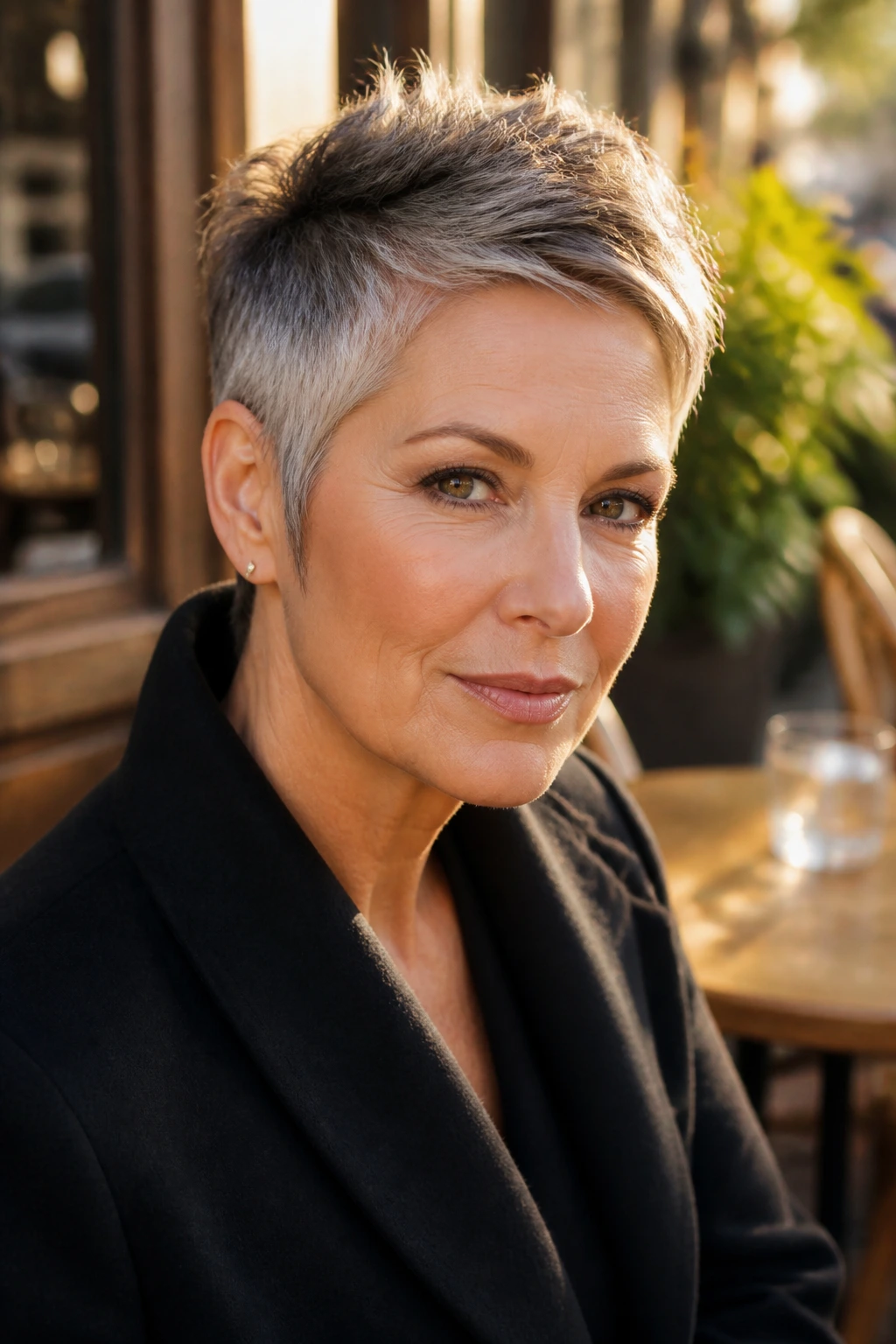
A tapered crop can be a little sharper than some of the softer styles here, but that’s the appeal. The sides and back are kept close, while the top has just enough length for movement. Defined sideburns soften the transition around the face.
Why it flatters fine hair
Shorter sides reduce bulk, which lets the top look fuller by comparison. Fine hair often benefits from contrast. A tighter outline makes the crown and fringe area feel more substantial.
Style note
This cut looks best when the top is lifted at the root and then separated lightly with fingers. If you comb it too much, the shape loses the casual texture that makes it interesting.
It’s a clean, easy cut with a little attitude. Not everyone wants that. Some do.
24. The Layered Blowout Cut with Rounded Ends
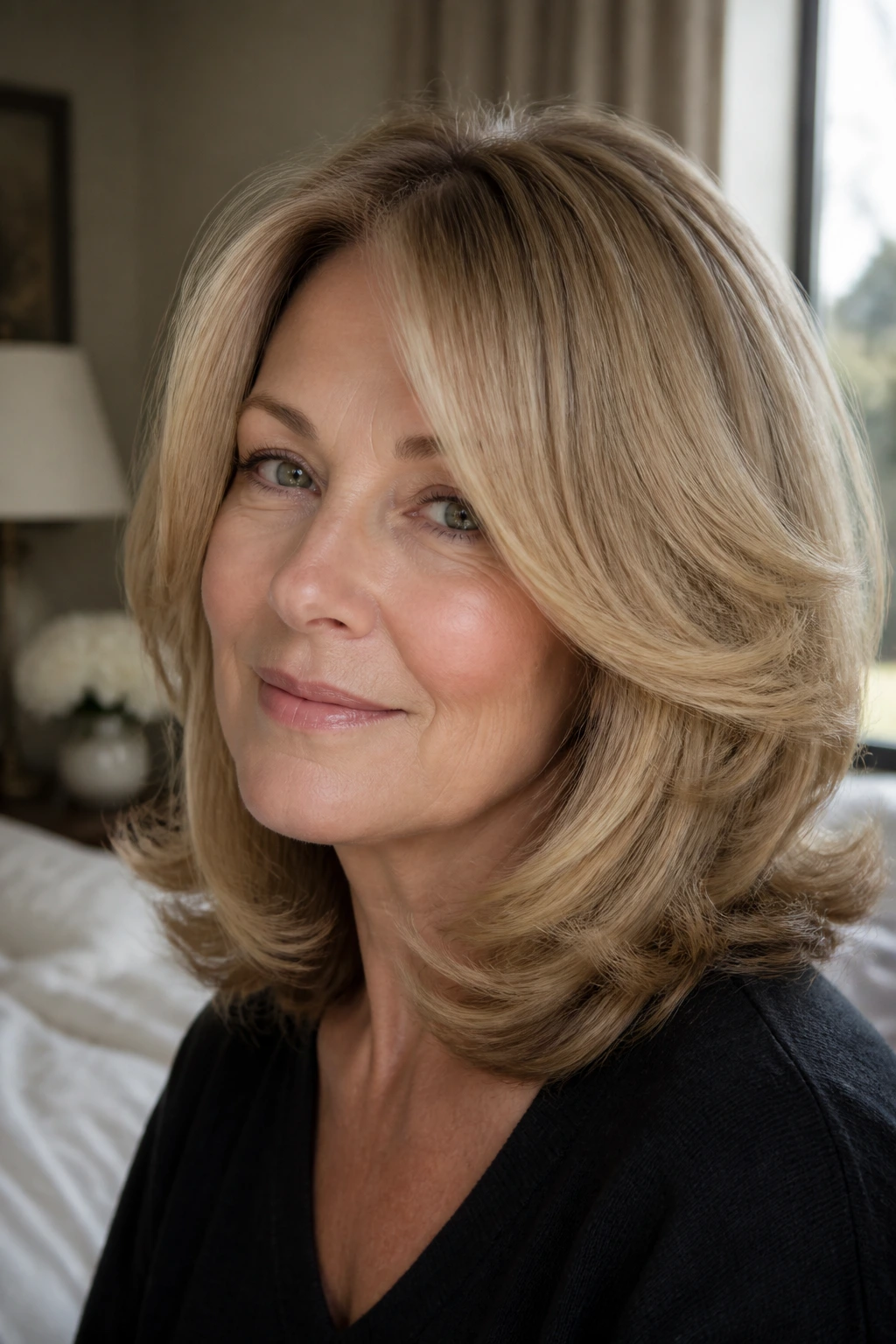
This is the cut for people who love the feeling of a blow-dried finish. The layers are placed so the hair rounds under and away from the face, which creates body without making the cut feel too puffy.
Why it works
Rounded ends make fine hair look intentional and soft at the same time. The layers help the brush move through the hair, while the outline stays smooth enough to look full.
Who should pick it
If you regularly use a dryer and brush, this is one of the more satisfying shapes to wear. It responds well to a quick root lift and a little bend through the mids.
The key is not to overload it with product. A light mousse or root spray is enough. Heavy creams will flatten the whole thing.
25. The Piecey Shoulder Cut with Light Internal Layers
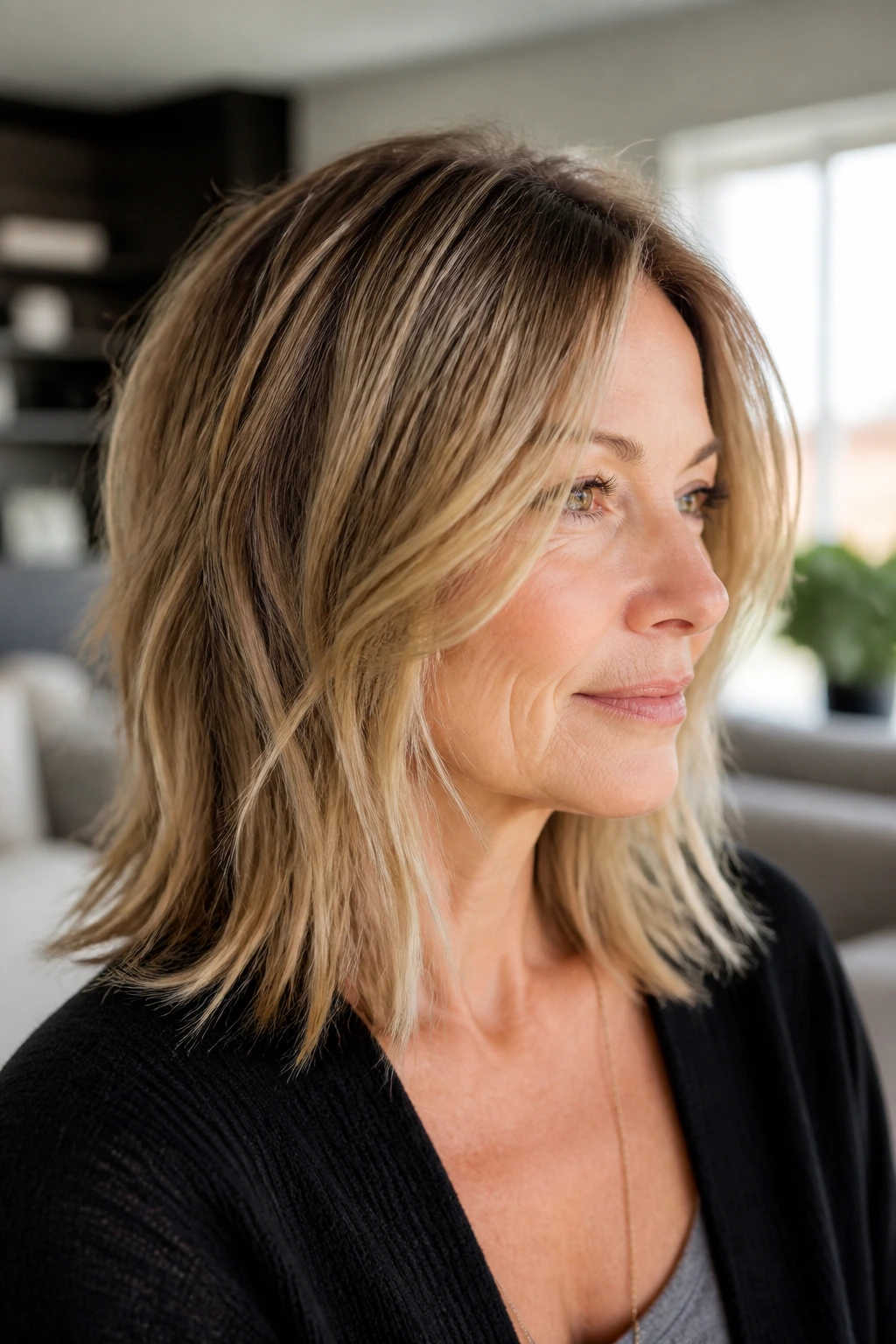
A shoulder cut can go dull fast if it is all one length, but light internal layers fix that without stripping away the perimeter. The result is piecey movement through the middle of the hair and a stronger-looking edge.
Why it’s smart
The shoulder length gives the hair enough weight to appear fuller, and the internal layers stop it from sitting like a block. That balance is useful if you like movement but hate the look of thin ends.
Easy styling route
A flat iron wave or a large curling iron bend through random sections gives this cut life fast. Then rake the hair apart with fingers instead of a brush. You want it separated, not fluffy.
If your hair has a little natural wave, this cut can be even better. The layers catch that wave and give it shape.
26. The Short Shag with Crown Volume
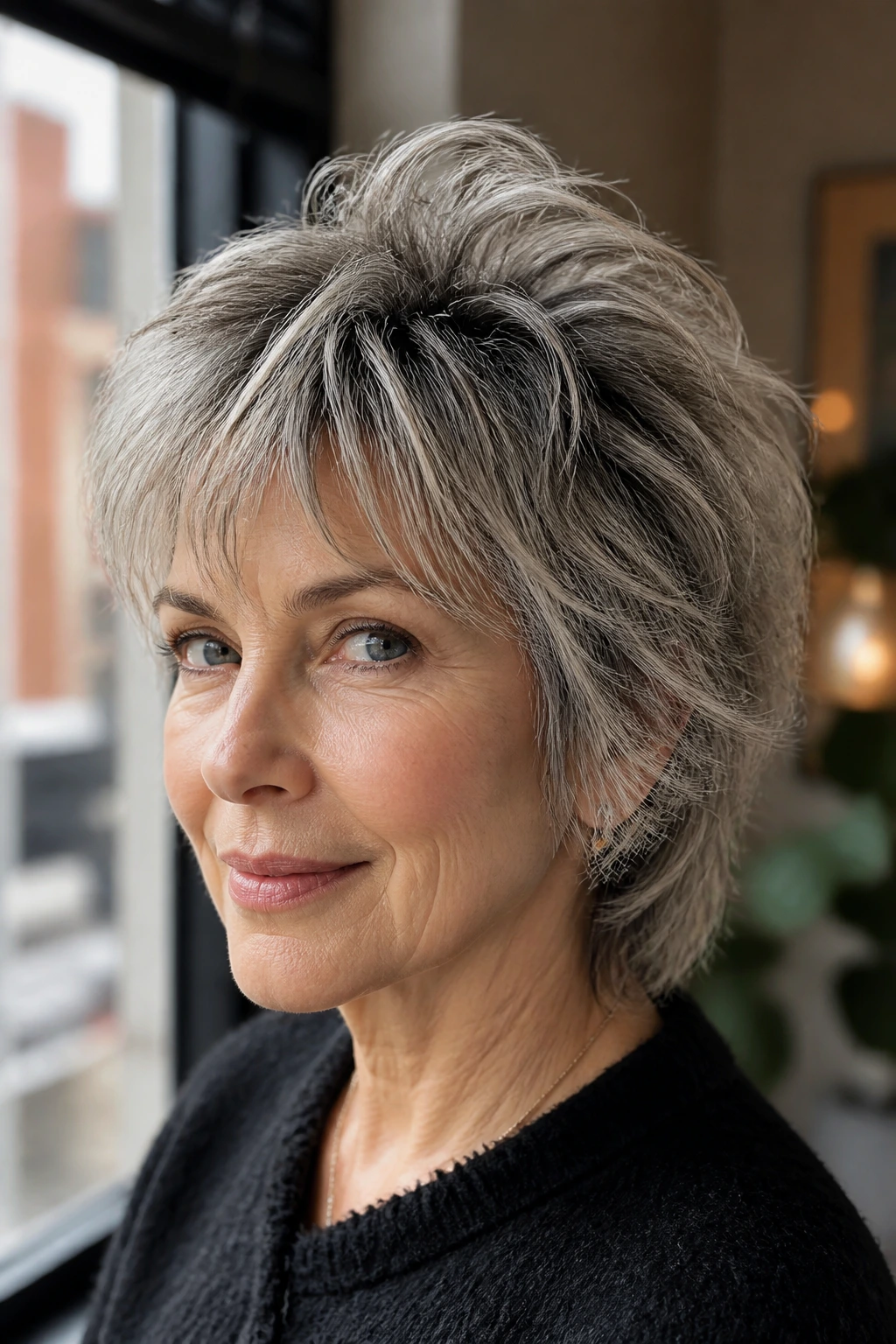
A short shag can be brilliant on fine hair if the crown is managed well. The top gets enough length to lift, while the lower layers keep the sides from spreading out too wide.
Why it works
Volume at the crown is the whole point here. Fine hair often goes limp at the top first, so a shag shape that concentrates movement there can make the whole head look fuller.
What to avoid
Do not let the fringe and crown get over-thinned at the same time. That is how you end up with a cut that feels airy in a bad way. A little texture is enough.
This is one of those styles that looks better when it’s not too polished. A bit of mess works in its favor.
27. The Softly Graduated Cut with Wispy Finish
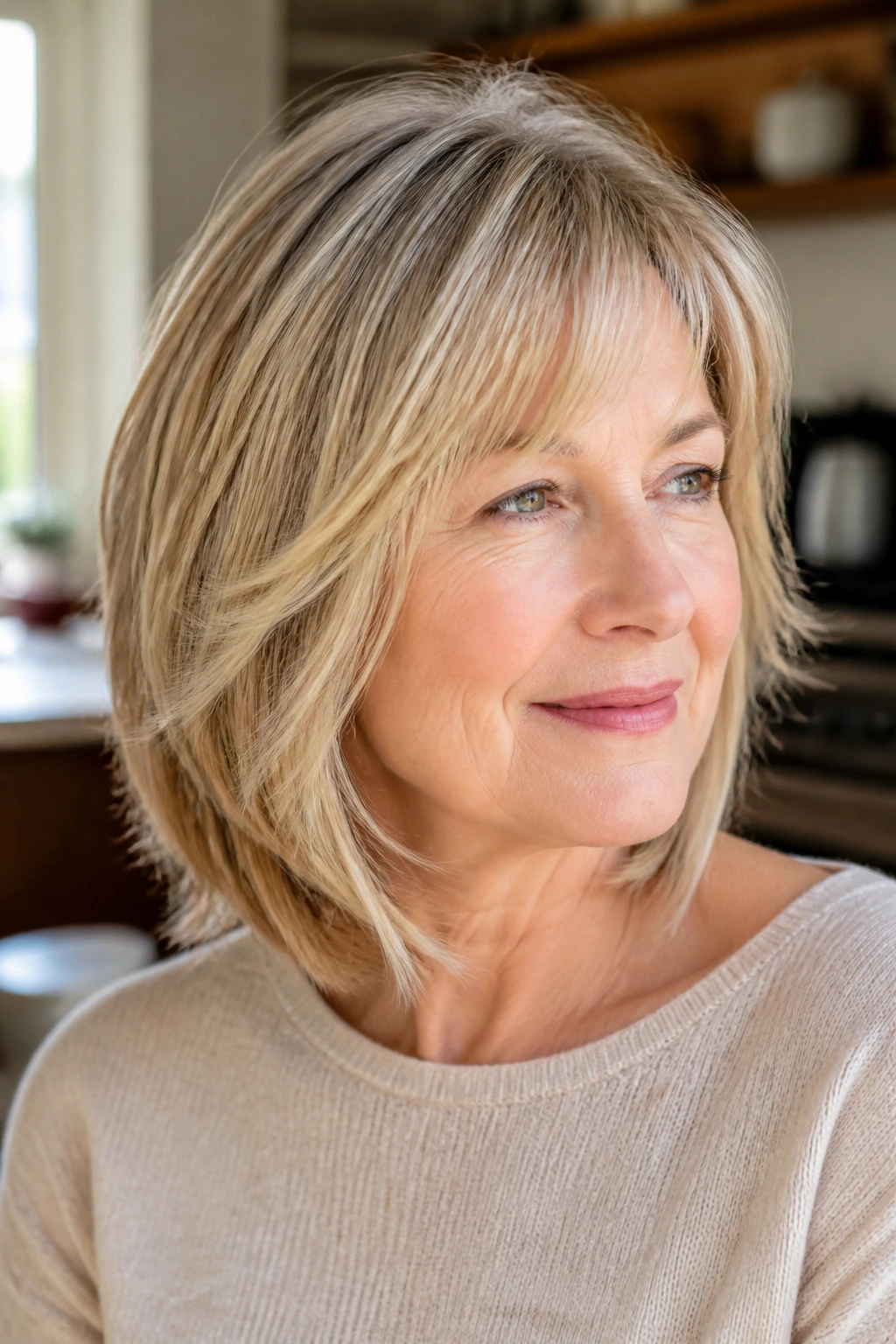
This is the quiet achiever of the group. A softly graduated cut with a wispy finish keeps the shape clean, the weight line soft, and the overall look light enough to move but solid enough to feel full.
Why it earns the last spot
It’s flexible. The graduation helps the back and sides sit nicely, while the wispy finish keeps the ends from looking harsh. For fine hair, that combination can be a sweet spot.
Who it’s for
If you want a haircut that won’t argue with your natural texture, this is a strong option. It can be worn smooth, a little bent, or air-dried with a tiny bit of product and still look put together.
Some cuts shout. This one speaks in a normal voice, which is often the smarter move.
What Makes Layering Work on Fine Hair After 50
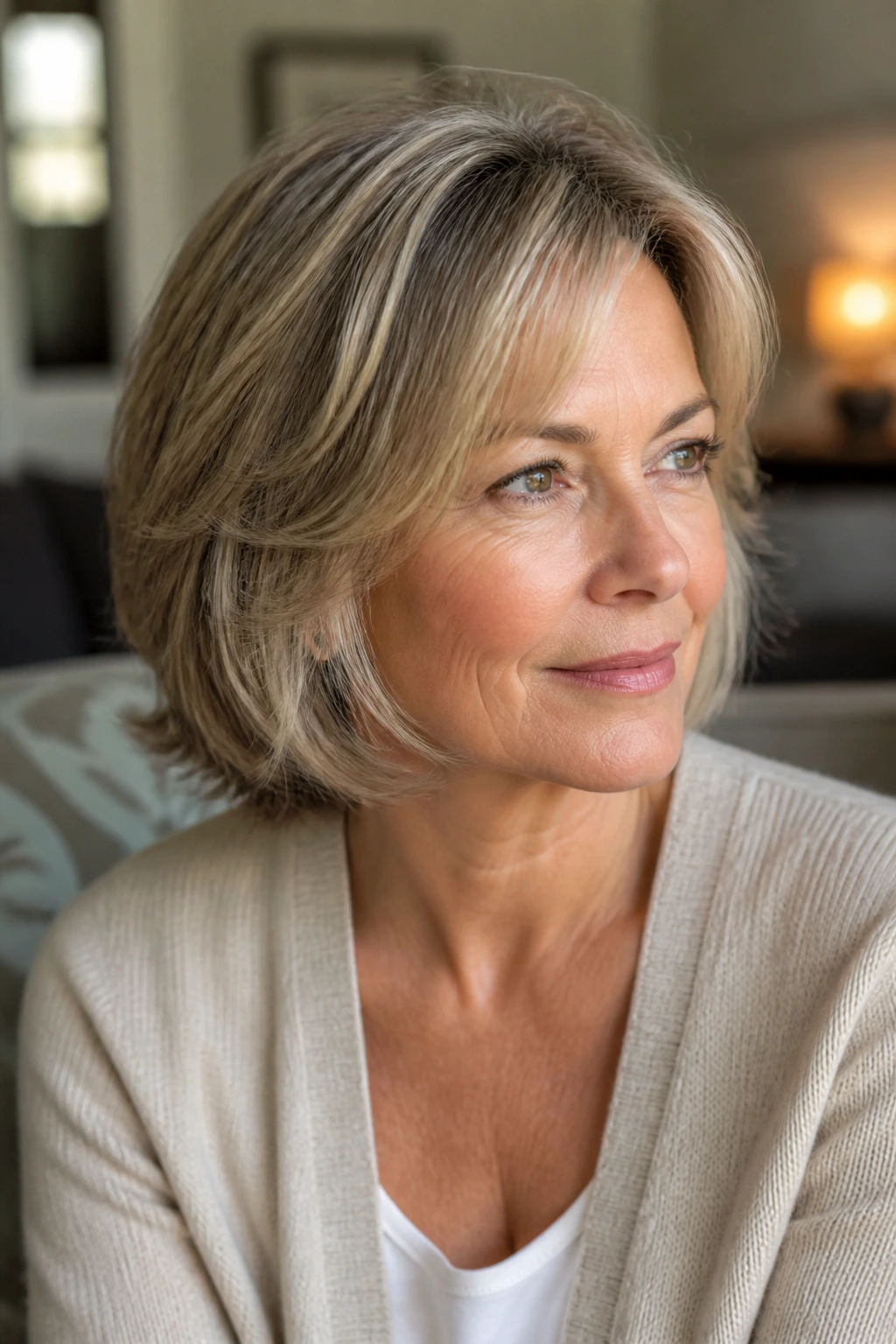
Fine hair changes the rules a little. The strands can be soft, narrow, and quick to flatten, which means layering has to be used like a tool, not a decoration. Too many short layers can make the hair look thin. Too little layering can leave it limp and lifeless. The useful cuts sit between those two mistakes.
The biggest mistake I see is treating every head of hair the same. Fine hair usually needs weight left at the ends so it doesn’t go stringy, but it also needs strategic removal of bulk around the crown, top sides, or face. That is why a blunt bob can look denser than a heavily layered shoulder cut, and why a cut that looks “simple” in a photo can be harder to wear if the proportions are off.
Age changes the hair in other ways too. Some people get coarser strands, some get finer ones, and many get both depending on where they look. The crown, temples, and front hairline are often the first places to show change. So the smartest layered cuts for fine hair over 50 do not chase maximum movement everywhere. They target the spots that need help and leave the rest alone.
A good stylist will talk about perimeter, elevation, and density distribution. You do not need to speak in salon jargon, but those ideas matter. If the bottom line is too shattered, the whole haircut can look tired. If the perimeter is too blunt and the top is too heavy, the hair can sit like a lid. The best shapes have a little air in them and a little spine.
The Best Tools, Brushes, and Products for These Cuts
-
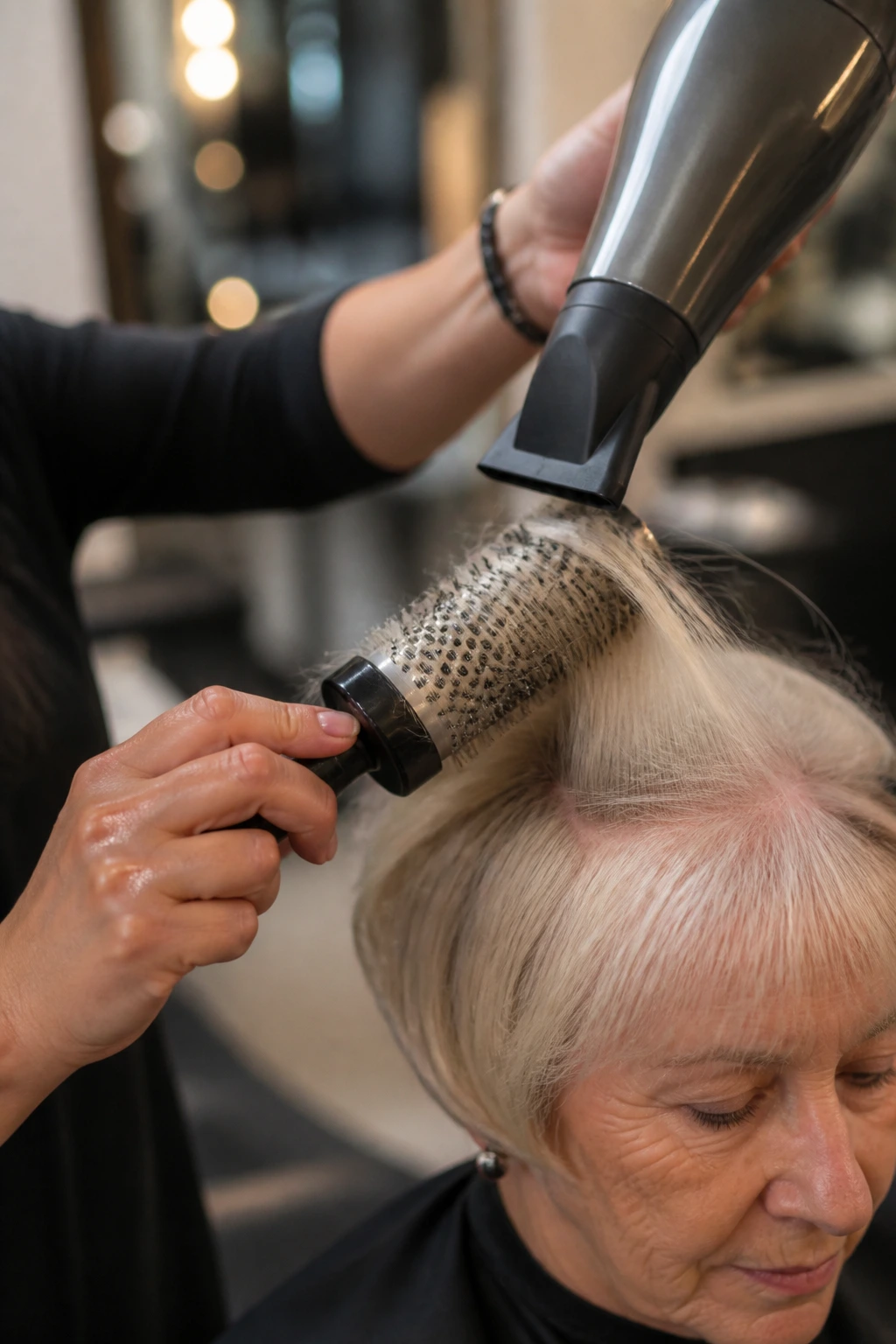
1. A 1.25- to 1.5-inch round brush: This size is small enough to lift roots on bobs, lobs, and pixies without creating giant curls that collapse by lunch.
-
2. A vent brush: It speeds up drying on short to medium hair and helps create root lift without overworking fine strands.
-
3. A blow dryer with a concentrator nozzle: The nozzle matters. It directs air where you want it and keeps the cut from puffing up in random places.
-
4. Root-lift mousse or spray: Use it at the crown and along the part line on damp hair; that’s where fine hair usually needs the most support.
-
5. Lightweight texturizing spray: The good kind leaves a little separation. The bad kind leaves a sticky film. Read the feel of it before you commit.
-
6. Dry shampoo: Best used at the roots, not all over. It helps freshen the shape and gives a little grip for the second day.
-
7. Small sectioning clips: These make a real difference when you want to dry the crown and front in separate pieces.
-
8. A wide-tooth comb: Useful for conditioner distribution and for keeping wet hair from stretching too hard.
-
9. A small finishing cream or paste: Tiny amount. If you can see it on the hair, you probably used too much.
How to Talk to Your Stylist About Fine Hair Layers
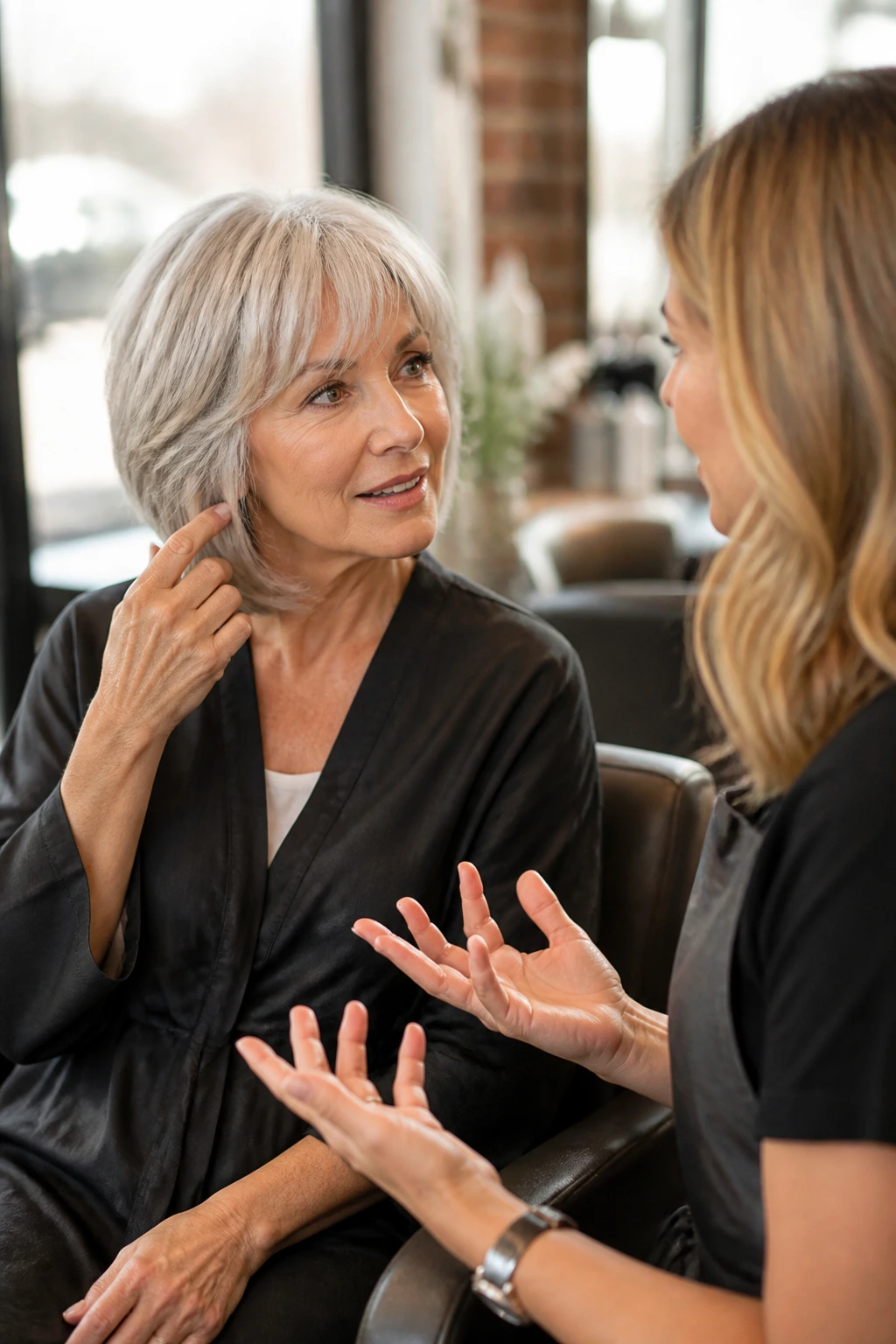
Bring photos, but bring the right photos. One picture from the front is not enough. Fine hair changes shape a lot from the side and back, and that’s where the truth lives. A cut can look lovely head-on and feel unfinished everywhere else.
Say what you want the hair to do. Words like “I want the ends to look dense”, “I need lift at the crown”, and “Please do not thin out the perimeter too much” are useful. If you wear your hair behind your ears, mention that. If you part it on the same side every day, say that too. Those small habits change where layers should land.
You should also mention your styling routine with brutal honesty. If you air-dry 80% of the time, the cut needs to work without a blowout. If you own a round brush but never use it, the stylist should not design a haircut that depends on perfect brush skills. And if you have a cowlick, a low hairline, or a crown that breaks apart no matter what, that belongs in the consultation. Hidden facts become very visible once the scissors come out.
Styling Moves That Make Layers Show Up
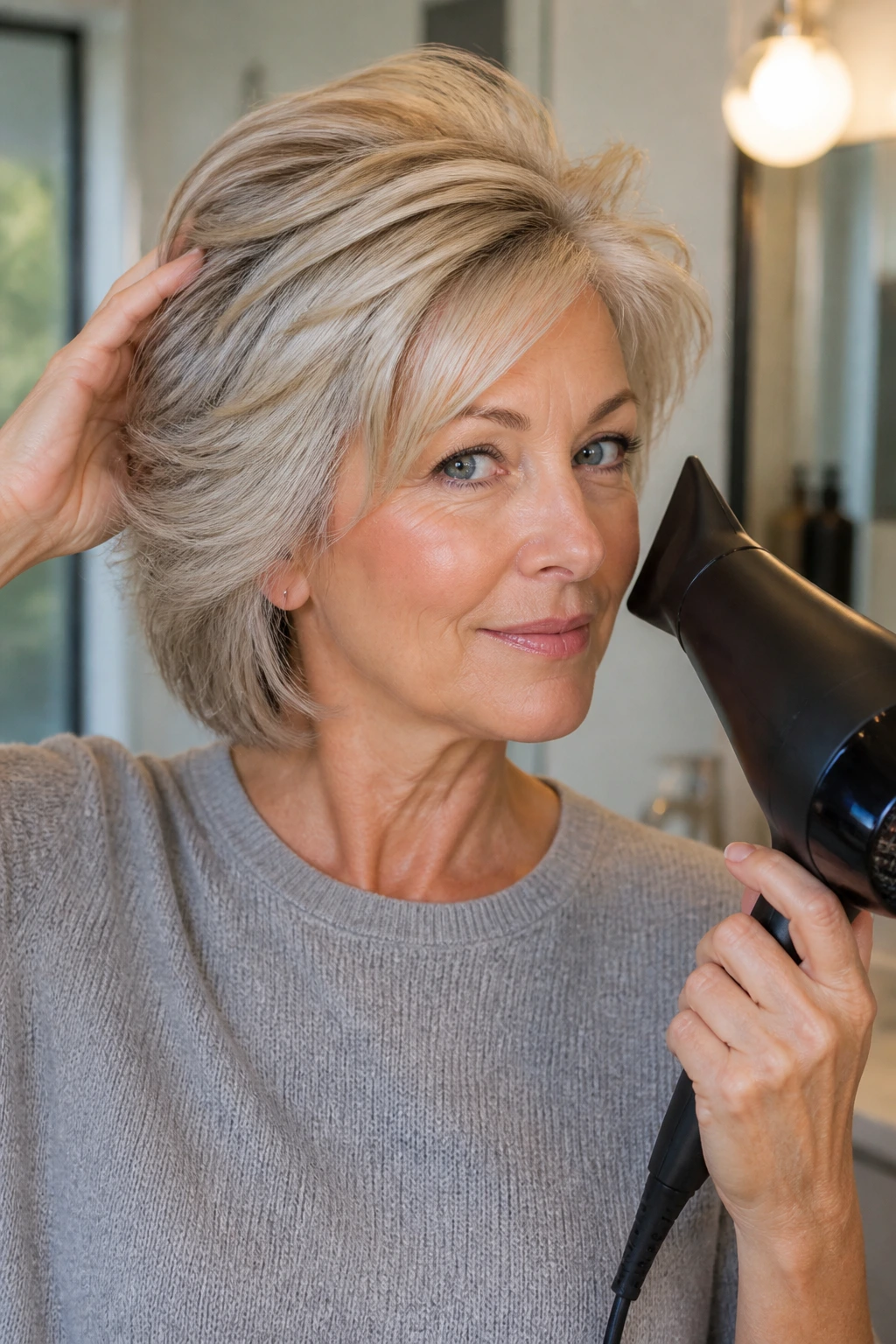
Root first: Dry the roots before the ends. Fine hair collapses at the scalp faster than people expect, and if the roots are still damp when you start smoothing the lengths, the style goes soft before it’s finished.
Part with intent: A side part gives many fine-haired heads more lift than a center part. That is not a moral judgment. It is just how the hair falls.
Use less product than you think: A dime-size amount can go a long way. Heavy creams and oils sink fine strands into the scalp and kill the lift you just paid for in a haircut.
Cool it down: If you use heat, let the shape cool in place before you touch it. Hair sets as it cools, and rushing that part is a common reason the style falls apart.
Work the ends last: Keep the perimeter smooth, then use fingers or a wide brush to break up the top. That order helps the cut keep its outline.
A quick refresh on day two can be as simple as misting the roots, flipping the part, and giving the front a few seconds with the dryer. Small things. Big difference.
Common Mistakes That Flatten Fine Hair
-
Over-layering the ends: The symptom is stringy tips and a see-through outline. The fix is to leave more weight at the bottom and move the layering higher, where it helps lift instead of stealing density.
-
Using thinning shears on already-fine hair: The hair may look softer for a day, then it starts to separate and fray. Ask for blunt cutting or very light texturizing instead.
-
Keeping the same dead-center part forever: If the crown is flat, a center part can make the top look narrower. Switch sides or try a soft off-center part and see how much lift you get back.
-
Loading on heavy conditioner near the scalp: The hair feels silky for five minutes and then collapses. Conditioner belongs through the mids and ends, not the roots.
-
Going too long without a trim: Fine ends start to look ragged faster than dense ones. A trim every 6 to 8 weeks for short cuts, or 8 to 10 weeks for lobs and mid-length cuts, keeps the shape honest.
-
Choosing a cut that needs perfect styling every day: If you never want to blow-dry, do not pick a style that only looks good under a brush. That is how people end up resenting their own haircut.
Variations and Adaptations to Try
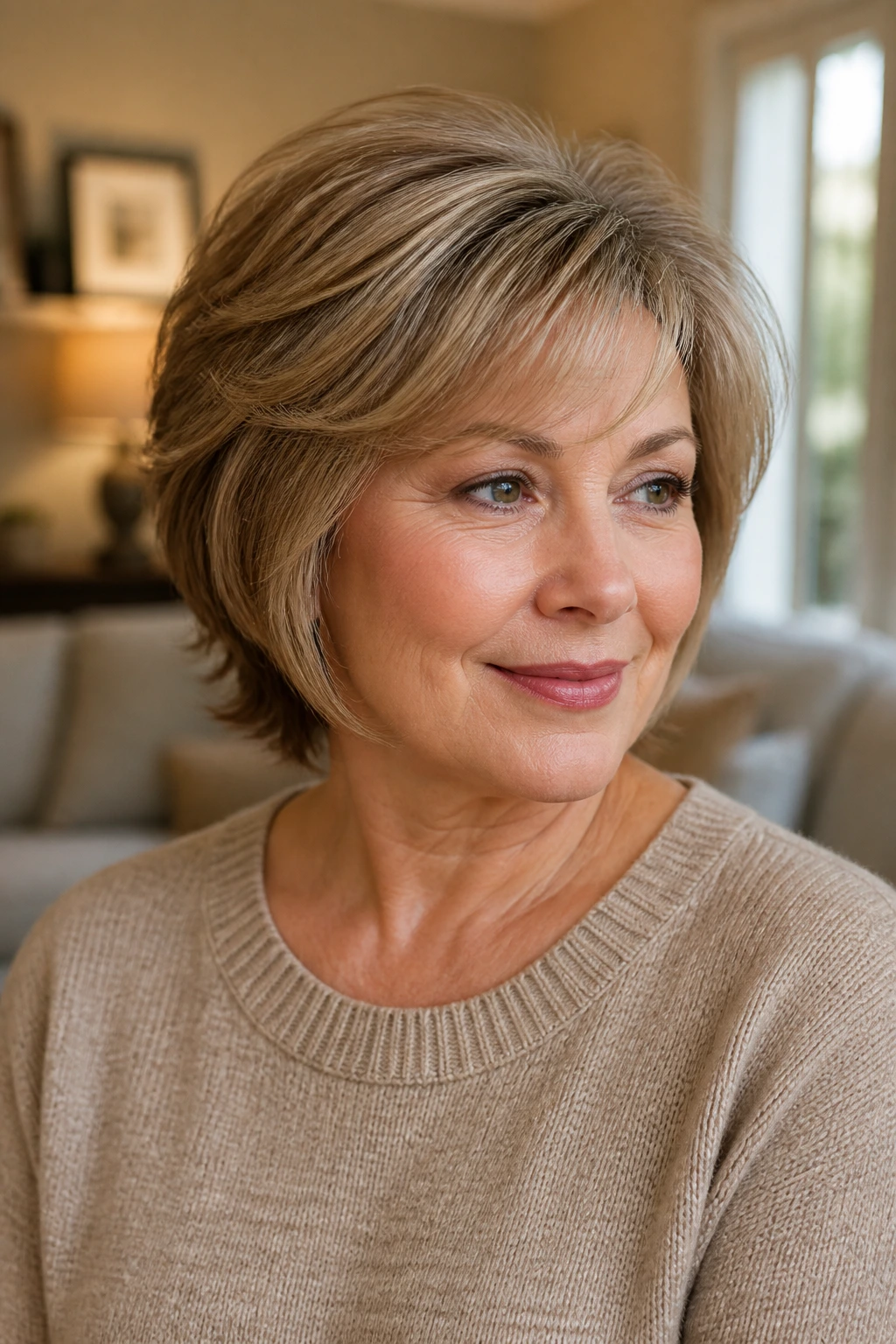
Soft Silver Frame: If your hair is gray or silver, keep the layers a touch softer and ask for shine-friendly finish work. Silver strands show texture well, so the cut can be lighter around the face without looking sparse.
Wavy Texture Version: On naturally wavy hair, keep the layers long enough that the wave clumps instead of frizzing apart. A diffuser and a little leave-in cream through the ends can turn a simple layered cut into something much more interesting.
Glasses-Friendly Shape: If you wear glasses daily, ask for side pieces that stop just above or just below the frame line. Hair that hits the middle of the lens or rests awkwardly on the arm of the glasses tends to annoy people fast.
Low-Maintenance Air-Dry Cut: For anyone who hates heat styling, ask for more internal shape and fewer short front layers. The cut should dry into something recognizable on its own, not wait for a brush to wake it up.
Round-Face Softener: Keep height at the crown and avoid too much fullness at the widest part of the cheeks. A longer front piece or side-swept fringe helps pull the eye downward.
Fine-and-Fragile Hair Version: Use fewer layers, not more. The goal is to preserve density while still getting a little lift in the top and front. This version often looks best when the ends are blunt and the texture is kept light.
Keeping the Cut Looking Fresh Between Appointments

Fine hair shows wear fast, so maintenance matters more than people expect. A short cut that has lost its shape can start looking fuzzy in a week or two, while a lob can go from airy to flat if the ends get too soft. Regular trims are not vanity. They are part of the haircut.
Sleep can flatten the crown and bend the ends in odd ways, especially on layered cuts. A satin or silk pillowcase helps, and a loose topknot or clip at the crown can keep the front from getting crushed. If you wake up with a dent, dampen just the affected area and reshape it with your fingers or a dryer. Do not soak the whole head unless you want to start over from scratch.
Dry shampoo has a place here, but it works best when you use it before the roots get oily, not after the hair has gone limp. A light mist at the part and crown can buy you another day of shape. Heavy buildup, though, will make fine hair look dusty and dull, so wash it out regularly.
If you color your hair, keep in mind that fine strands can get dry quicker near the ends. A small amount of leave-in conditioner on the lower half of the hair helps, but the roots should stay light. That balance is what keeps the layers visible instead of weighed down.
Frequently Asked Questions
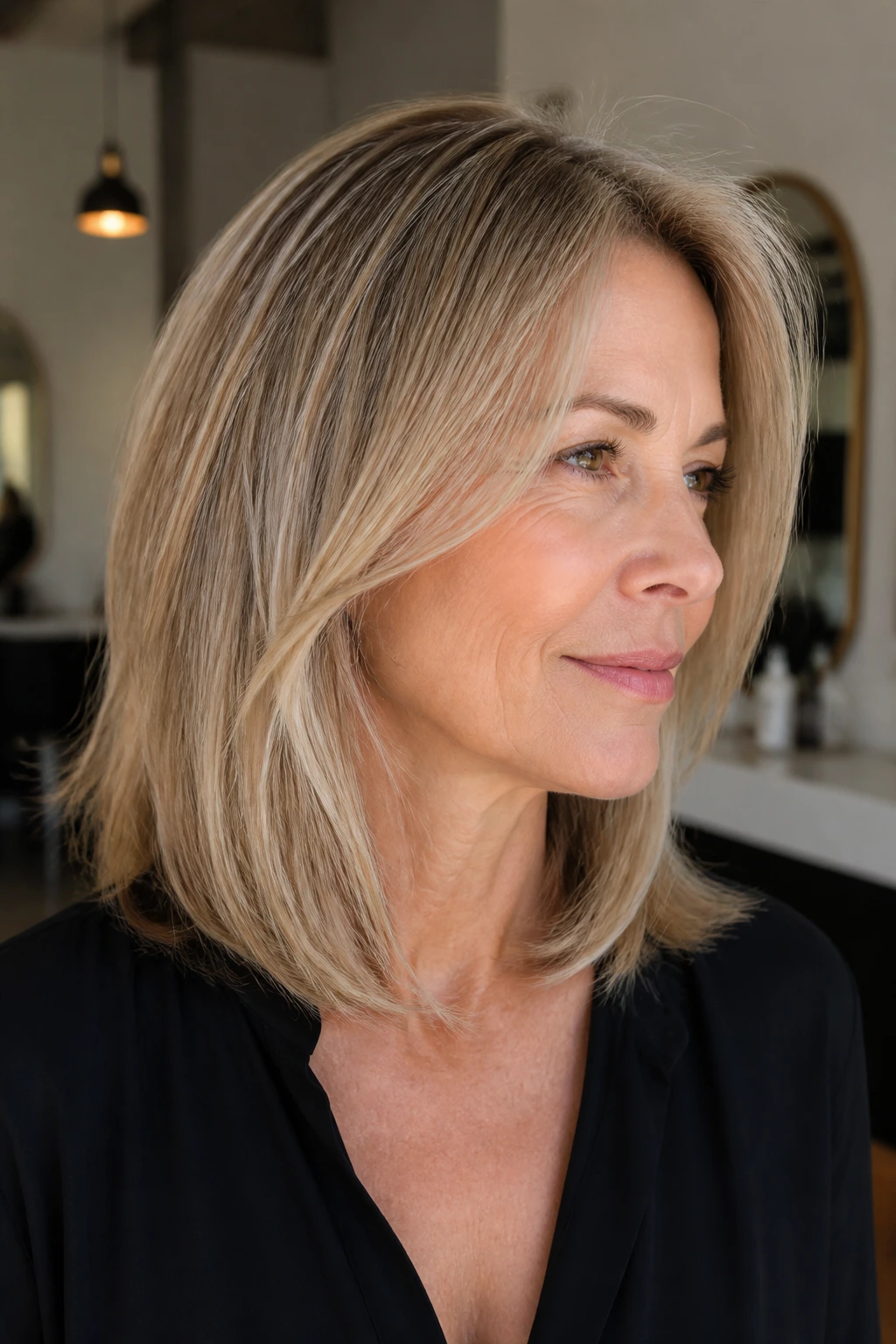
Which layered cut makes fine hair look the fullest?
A chin-length bob, a collarbone lob, or a softly stacked bob usually gives the biggest visual lift because the ends keep enough weight to look dense. If your crown is the flattest part, a cut with subtle graduation in the back often helps more than long layers.
Are layers bad for fine hair over 50?
Not at all. Bad layering is the problem. If the cut removes too much from the ends, fine hair looks thin; if the layers are placed to support shape and movement, the hair can look fuller and easier to style.
Should fine hair go shorter with age?
Not automatically, but many people find that shorter or mid-length cuts are easier to keep full-looking. If your ends are fragile or your styling time is limited, a bob, lob, pixie, or bixie can be a smarter fit than long hair with heavy layers.
Do bangs help fine hair look thicker?
They can, especially soft curtain bangs, bottleneck bangs, or a side-swept fringe. The wrong bangs can separate too much and expose the forehead in patches, so the shape and density need to match your hairline.
Can I wear a shag if my hair is fine?
Yes, if the shag is soft and controlled. A heavily shredded shag can look stringy, while a softer version with longer bottom layers and a light fringe can create movement without eating up density.
How often should I trim a layered cut for fine hair?
Short cuts usually need shape-ups every 4 to 6 weeks. Lobs, mid-length cuts, and longer layered styles often do well with trims every 6 to 10 weeks, depending on how fast your ends lose their outline.
What if my hair is fine and wavy?
That’s a useful combination when the cut is planned for it. Long layers, soft shag shapes, and airy lobs tend to work well because they let the wave show without turning into a puff. Heavy texturizing usually makes wavy fine hair frizzier, not fuller.
Should I avoid razors and thinning shears?
Usually, yes, or at least use them sparingly. Fine hair can lose density fast when it’s overtexturized. A clean scissor cut with gentle shaping often keeps the ends looking stronger.
What is the easiest cut to style at home?
A collarbone lob, a curved bob, or a softly graduated cut is usually easier than a highly layered shag or a precision pixie. The fewer moving parts you have to control, the less likely the style is to fall apart on a rushed morning.
The Cuts That Keep Their Shape
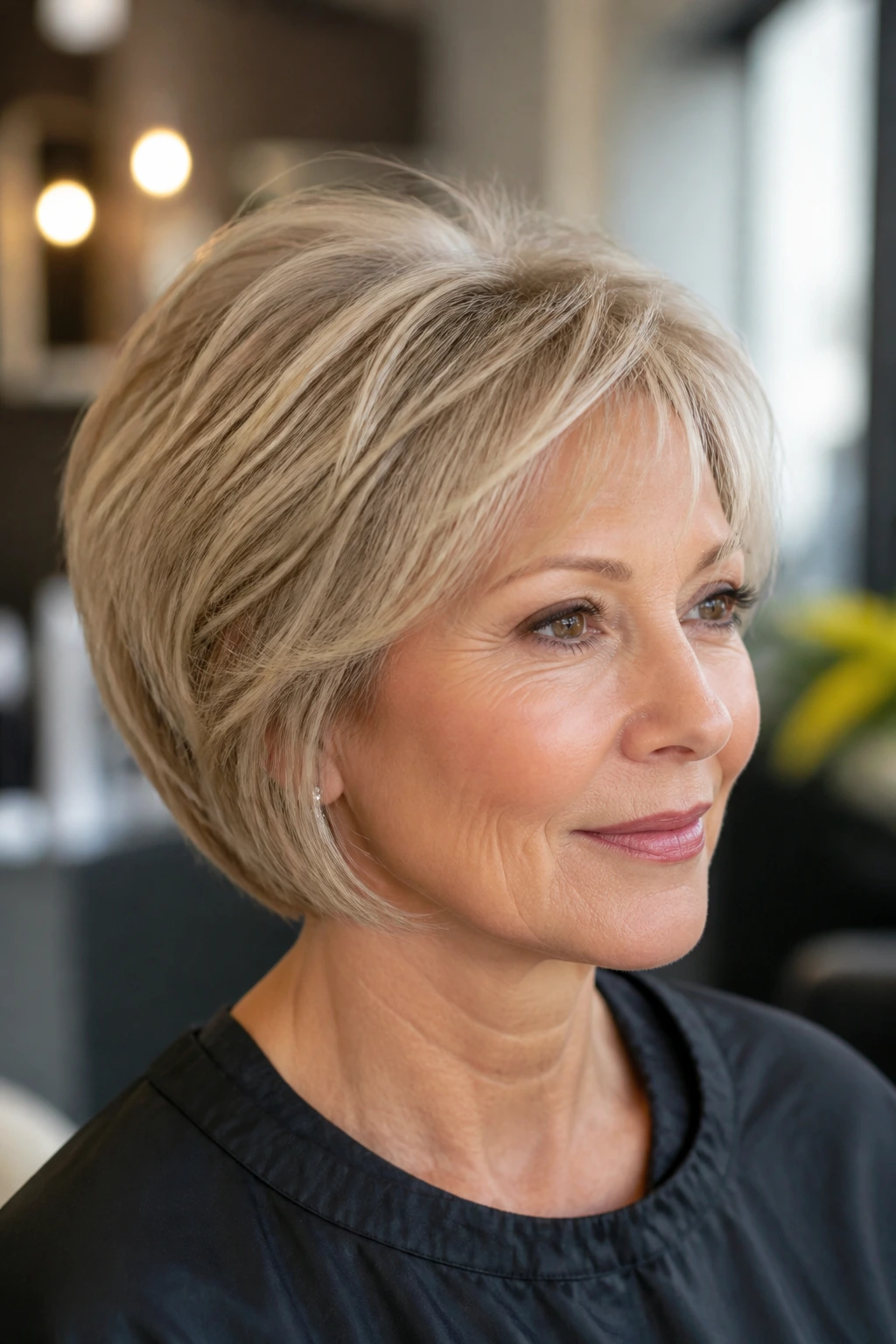
The best layered cuts for fine hair over 50 do one simple thing well: they make the hair look like it has more presence than it really does, without making you fight your own head every morning. That means the cut has to respect the perimeter, lift the crown, and leave enough density where the eye wants to see it.
A good haircut should make your styling routine smaller, not bigger. If you leave the salon and your hair already has a shape when you run your fingers through it, you’re in the right territory.
Pick the cut that matches your habits, not the one that needs a fantasy version of your morning. Then keep the shape trimmed, the products light, and the layers where they can do some work.
