



Softness can be blunt. That’s the paradox behind choppy haircuts for lived-in soft texture: the outline looks easy, but the best versions are built with a careful hand so the hair moves instead of puffing, fraying, or collapsing into one sad, flat shape by noon.
A bad choppy cut looks like it was attacked with a razor and left to fend for itself. A good one has broken edges, sure, but the ends still fall with purpose. You see it in the way a curtain fringe bends away from the eyes, or the way a lob flicks under at the collarbone instead of hanging there like a wet towel. That’s the difference between texture and damage. One reads intentional. The other reads rushed.
The cuts below live in that sweet spot. Some are short and cheeky, some are long and barely-there, and some rely on face-framing pieces so the shape feels soft even when the ends are visibly uneven. If you’ve been trying to find a cut that works with air-drying, second-day hair, and a little bend instead of a full blowout, this is where the useful options start.
Why These Choppy Haircuts Look Soft Instead of Ragged
- Weight stays where it matters: The best versions remove bulk inside the shape, not from the outline, so the haircut still hangs in a clean line.
- The ends are broken, not shredded: Point-cutting and subtle razor work create movement without leaving the perimeter wispy enough to frizz apart.
- They grow out without drama: A soft choppy cut can look better at six weeks than it did on day one if the layers were placed well.
- They suit more than one texture: Wavy, straight, fine, and thick hair can all wear this idea, but the placement of the layers has to change.
- They buy you styling freedom: You can scrunch, bend, air-dry, or rough-blow-dry these cuts without needing a perfect finish.
1. Soft Wolf Cut with Curtain Fringe
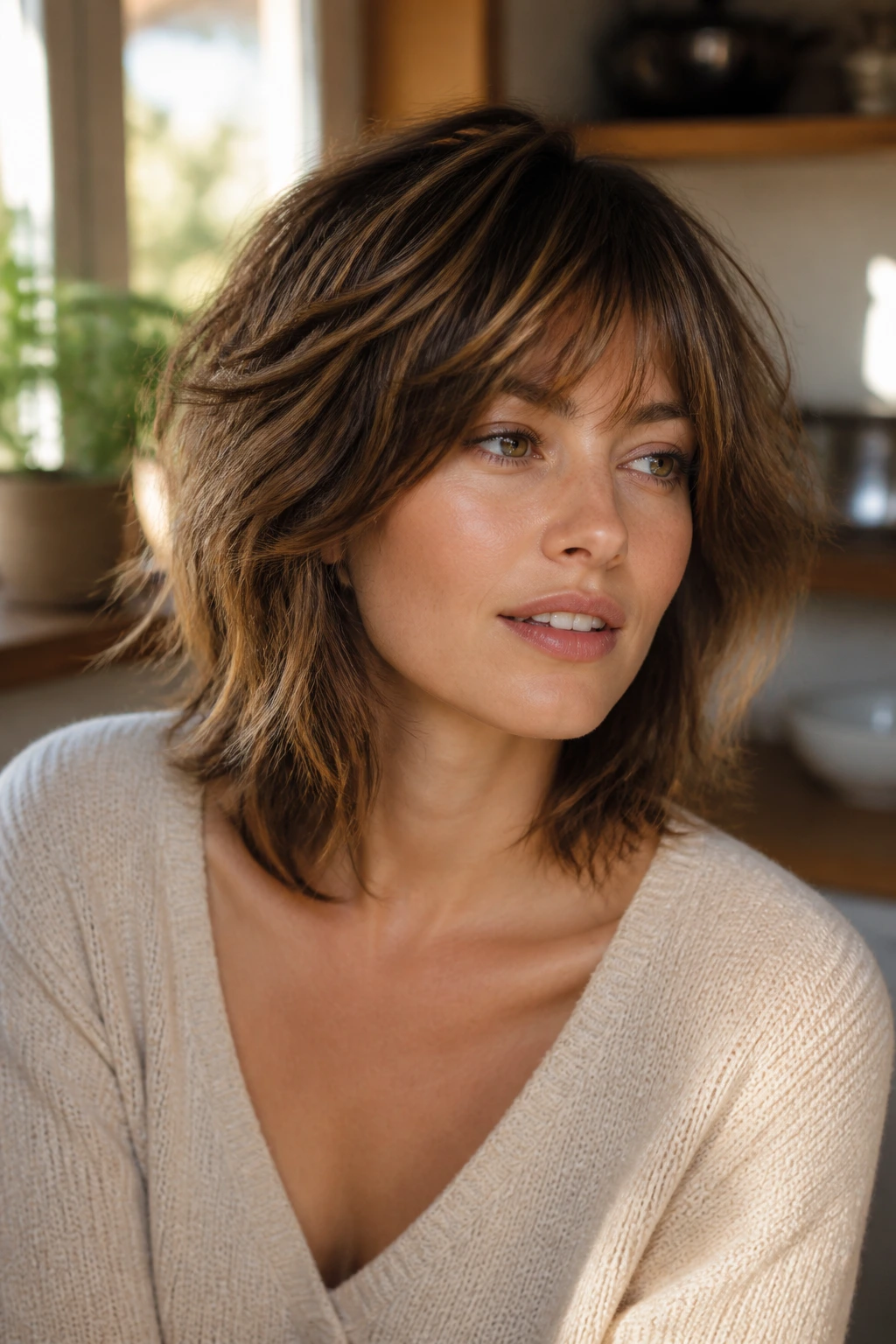
This is the wolf cut for people who like movement but do not want to look like they borrowed a stage wig. The crown has lift, the ends have a bit of kick, and the curtain fringe opens the face without swallowing the forehead. It’s a cut that looks best when the hair has a little natural bend, but it still works on straighter textures if you rough-dry the roots and leave the ends slightly imperfect.
Ask for soft internal layering rather than a full-on choppy collapse through the back. That keeps the shape from turning puffy. A good version of this cut should graze the cheekbones in front and skim the neck in back, with enough length left in the perimeter to keep it from getting too feral.
Best for:
- Hair that sits between straight and wavy
- Anyone who wants volume at the crown without a teased finish
- People who like a fringe but hate blunt bangs
2. Collarbone Shag with Broken Ends
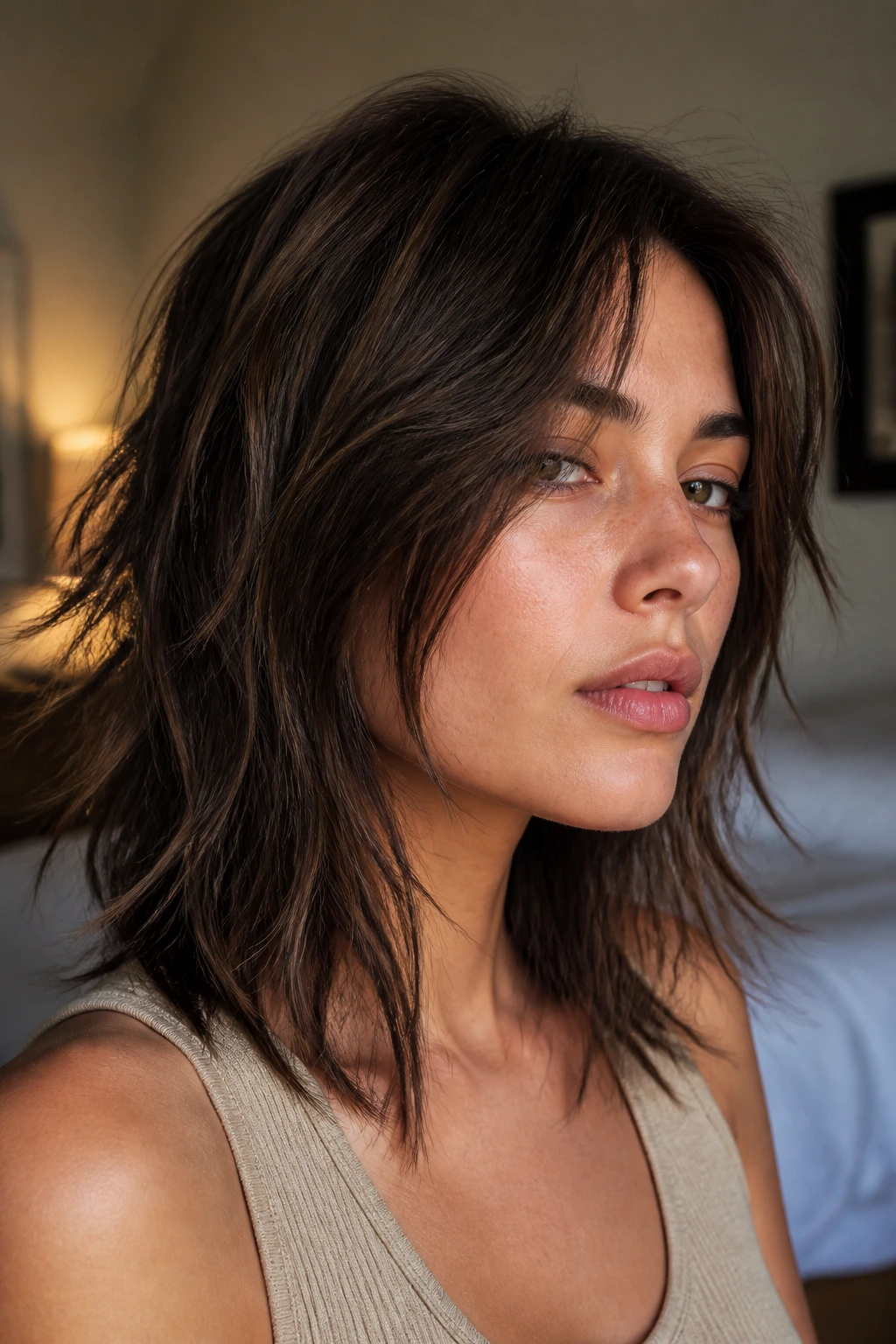
Want movement without losing the ability to tie your hair back? This is the one. A collarbone shag gives you enough length to tuck, twist, or clip up, but the broken ends keep the silhouette from feeling heavy. The face frame usually starts around the lips or chin, which is where the cut starts to look lived-in instead of over-layered.
The sweet spot here is restraint. Too many short layers and the whole shape starts to bounce away from the head. Keep the layers long and staggered, and let the ends do the interesting part. It’s one of those cuts that gets better with dry shampoo and a little grit spray.
3. Chin-Length Crop with Choppy Interior Layers
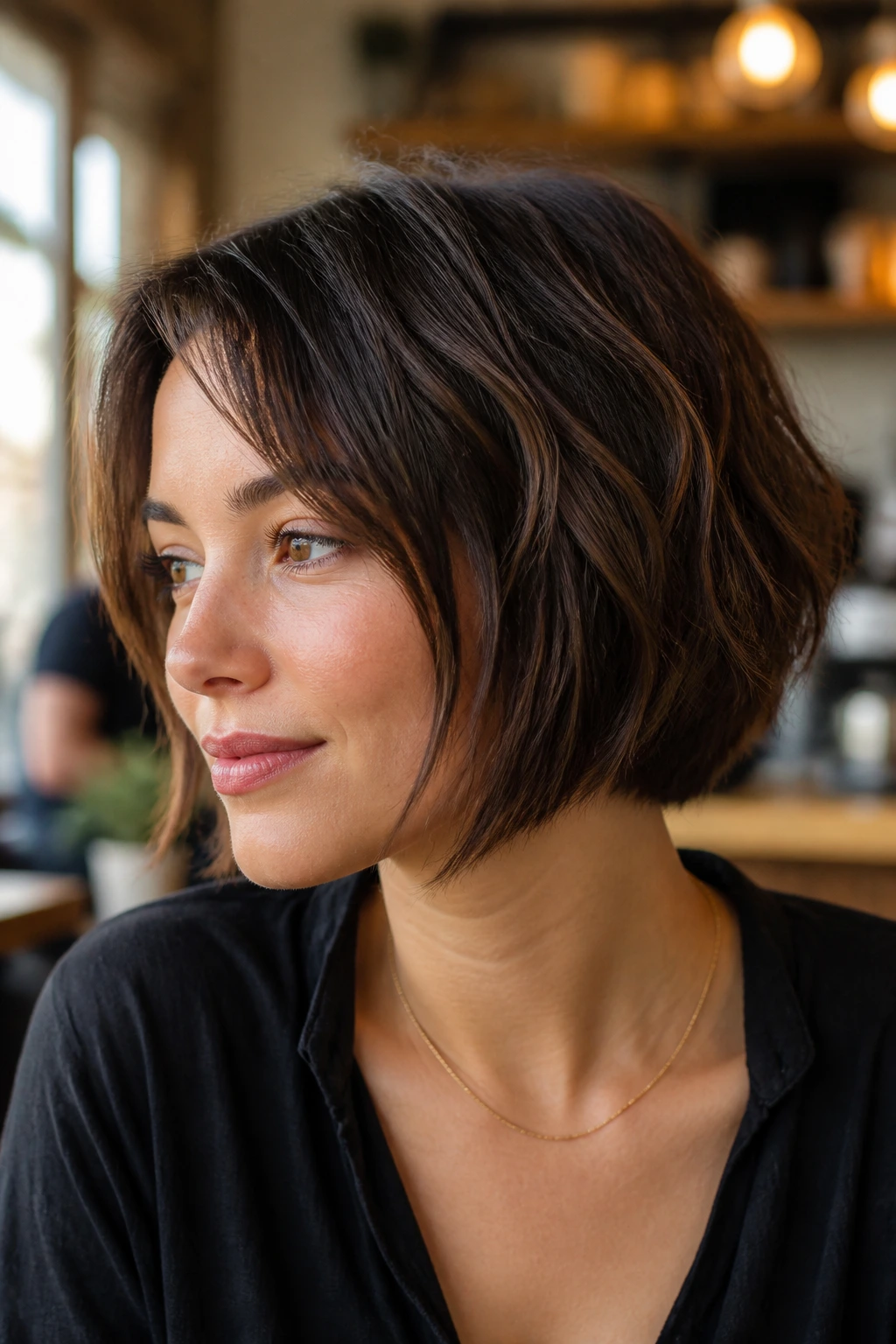
Short hair can be soft. It just can’t be lazy. A chin-length crop with internal choppy layers gives you a crisp outline and some hidden movement underneath, so the top doesn’t sit like a helmet. The trick is keeping the perimeter clean while carving a little separation inside.
If your hair is fine, this cut can make it look denser. If your hair is thick, it can keep the shape from ballooning at the sides. I like this version best when the ends are point-cut by hand, not over-thinned with shears. That keeps the line from fraying.
4. Long Layers with Point-Cut Ends
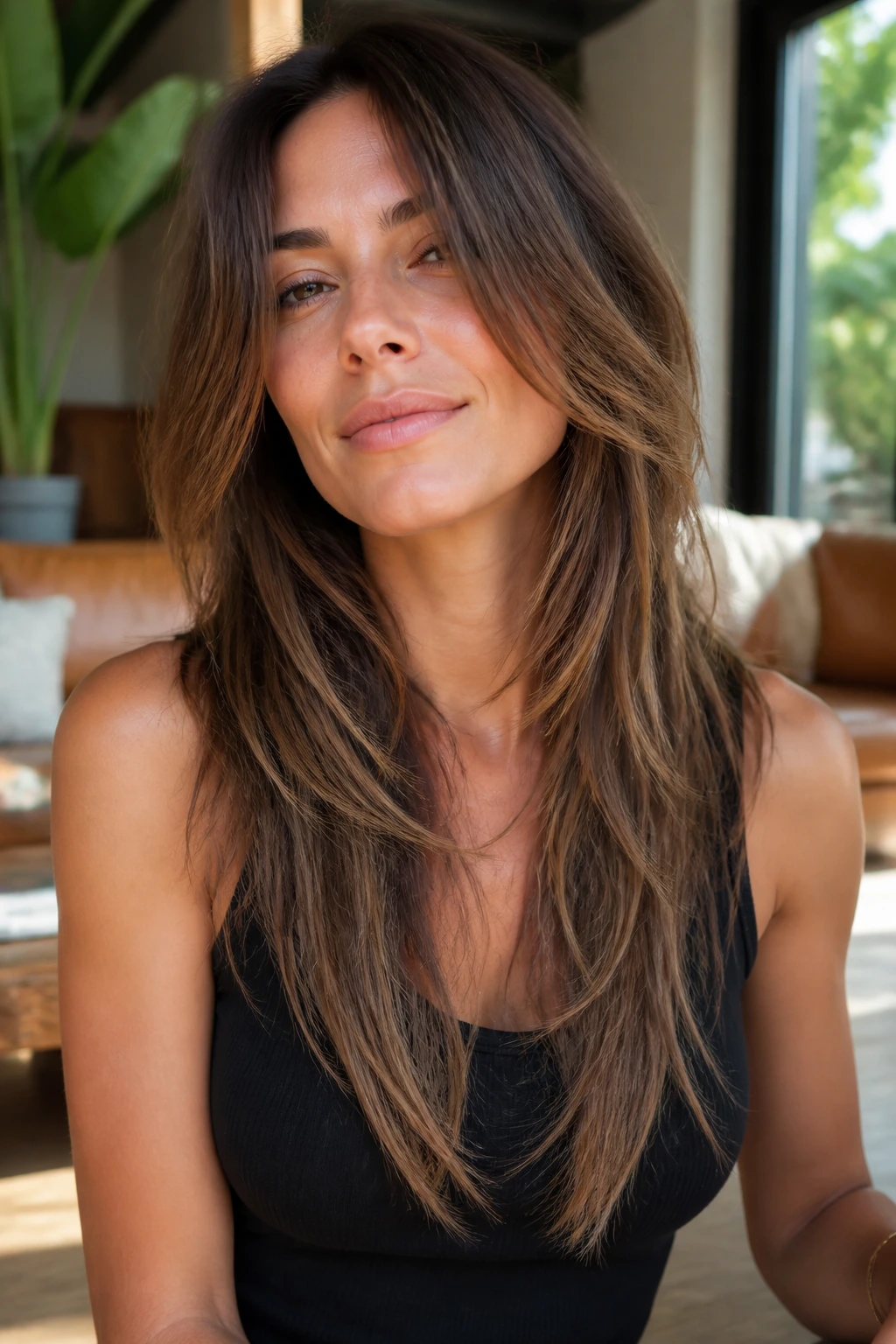
Long hair gets boring fast when the ends all land in one blunt sheet. Long layers with point-cut ends fix that without forcing you into a dramatic chop. The hair still feels long and swishy, but the last few inches move instead of hanging like curtain fabric.
What makes it work
The shortest layers should live well below the chin, usually around the collarbone or lower, so the cut keeps its length. Then the stylist softens the ends with point cutting to create a little irregularity. It’s a good choice if you like wearing your hair down and don’t want the shape to look too styled.
5. Midi Shag with Airy Crown Volume
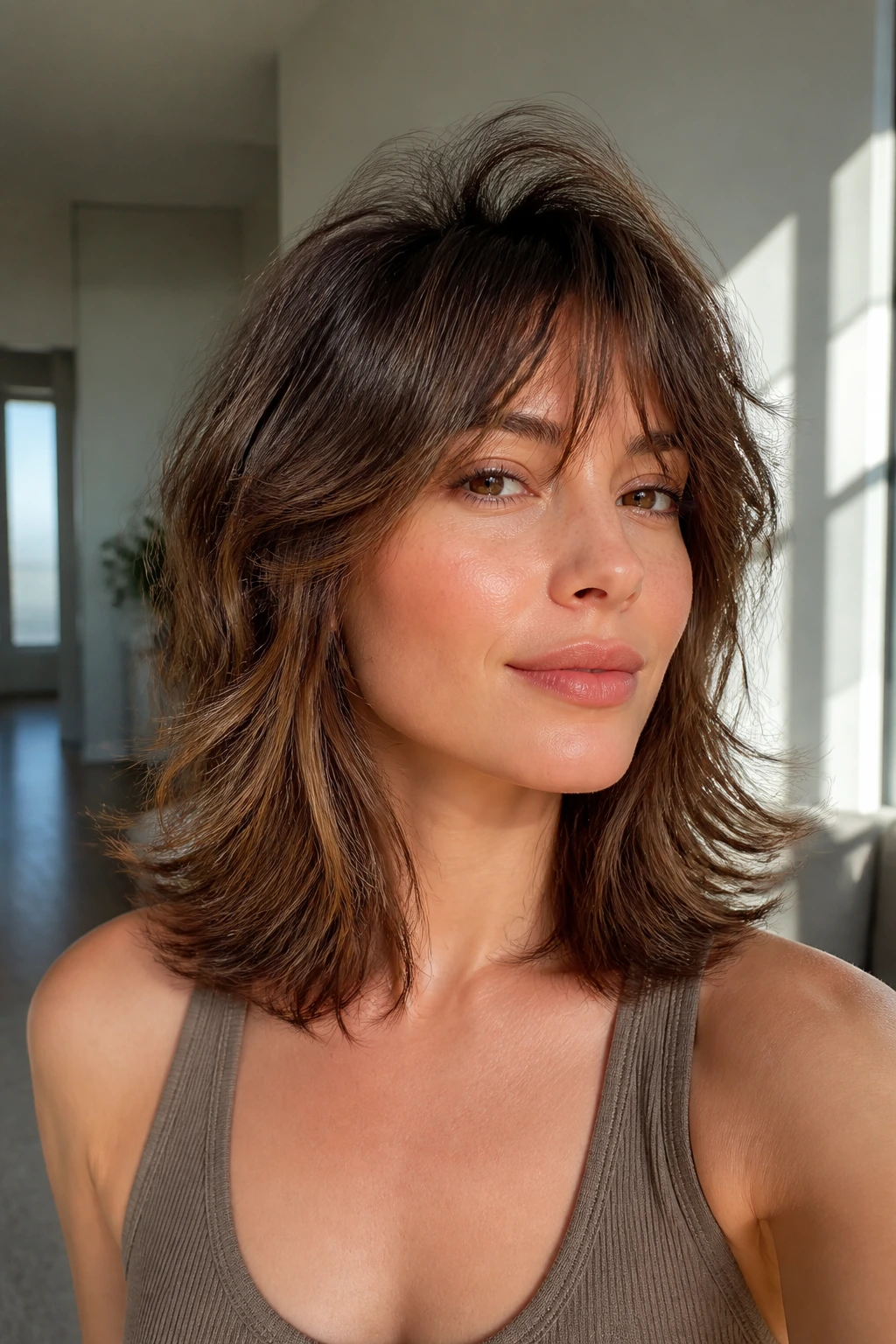
This one has a real “I woke up like this” energy, but in a controlled way. The midi shag sits between the shoulders and the collarbone, and the crown is cut just short enough to create lift without turning into a mushroom. It’s the cut I’d hand to someone who wants movement at the top and softness around the cheeks.
A little mousse at the roots and a quick diffuse can bring the whole thing to life. But even when it air-dries, the broken layers keep it from looking flat. If your hair goes limp at the top by lunch, this shape gives it somewhere to go.
6. Curly Choppy Lob
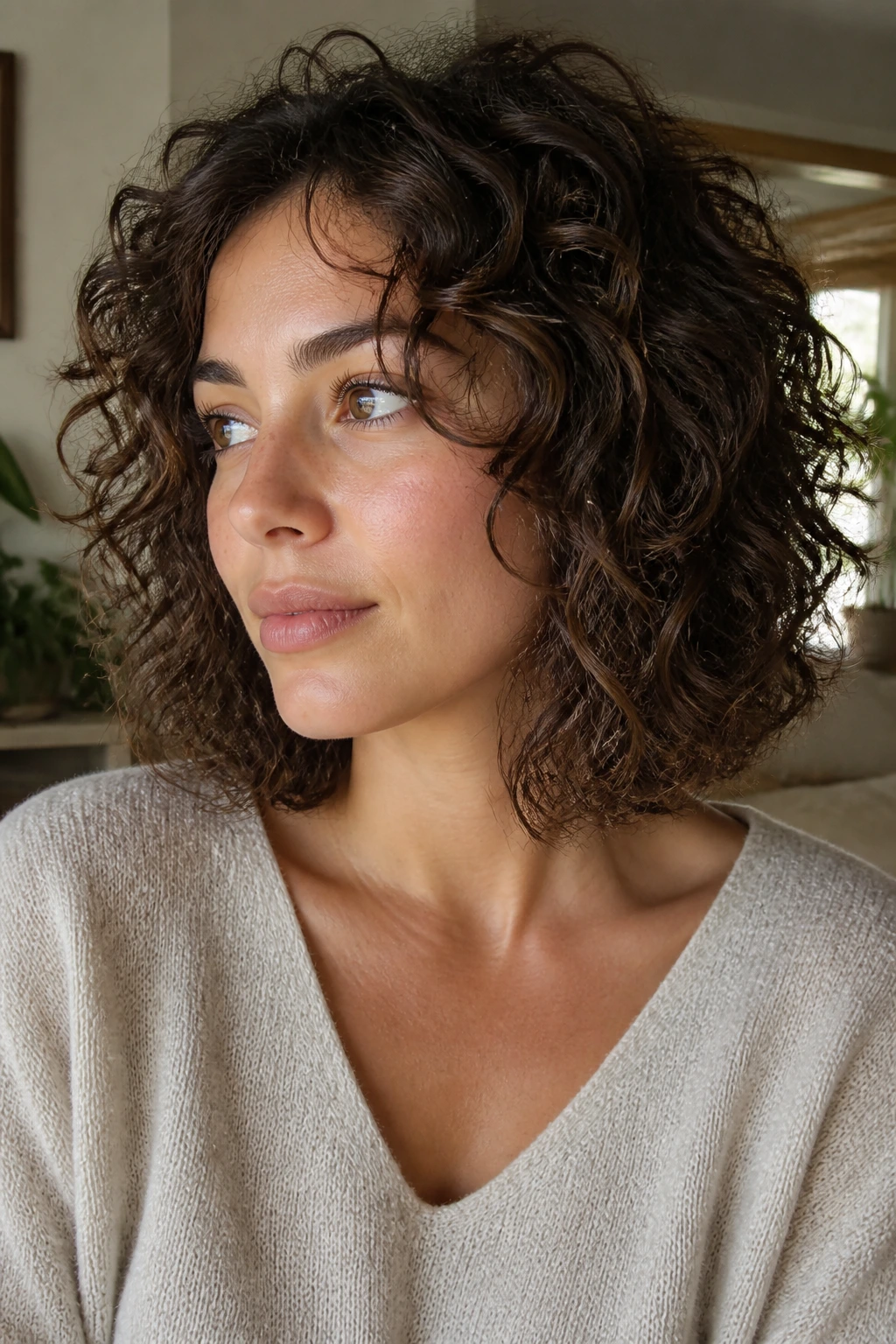
Curls need room, not punishment. A curly choppy lob works because the layers are placed to help curls stack and separate, not to chop them into a frizzy cloud. The length usually lands somewhere between the jaw and the shoulders, which is enough room for curl pattern without dragging it down.
Dry cutting matters here. Curly hair shrinks, and a wet cut can hide the real shape until it’s too late. Ask for a lob that respects your natural bend, with soft internal layering and a perimeter that stays slightly full. You want bounce. Not fuzz.
7. Bixie with Textured Top
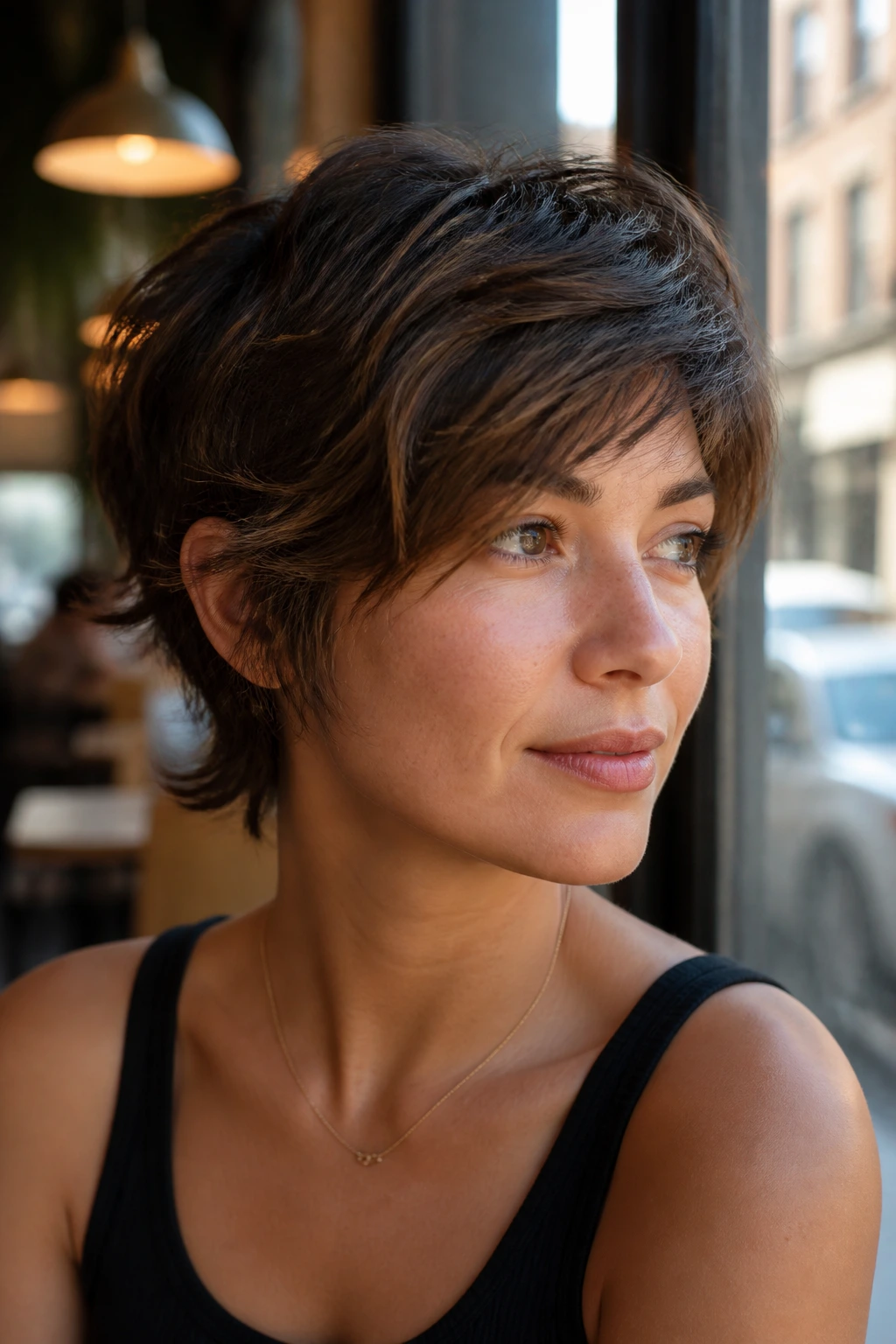
Short, piecey, and a little cheeky. The bixie sits between a bob and a pixie, which means you get the easy feel of short hair without the severe neck exposure of a close crop. The textured top gives it that lived-in softness, especially if the fringe is kept a touch longer and swept to the side.
This cut is especially good if you want lightness around the ears and nape. The top should be cut to move, not stand at attention. If the stylist goes too short in the crown, you lose the softness and the whole thing turns spiky.
8. Butterfly Cut with Feathered Face Frame
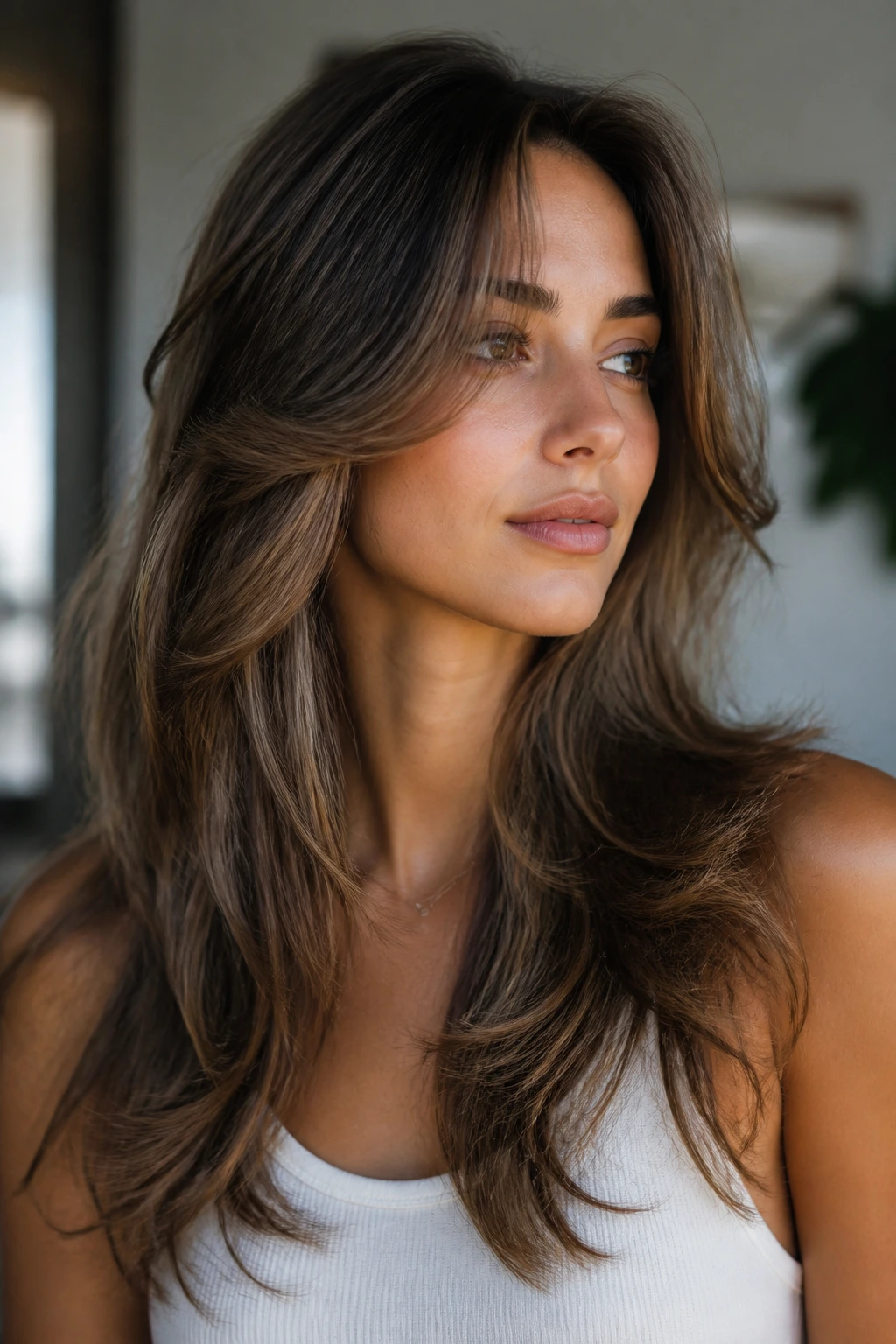
The butterfly cut works because it gives the illusion of two haircuts at once: long layers in the back, shorter face-framing pieces in front. The front pieces do the heavy lifting. They swing around the cheeks and collarbones, which makes the hair look airy even when the bulk stays in the back.
It’s a smart choice if you like keeping length but want a visible shape change. The face frame should start high enough to matter, usually around the cheekbone or lip, and then soften down into longer layers. Too blunt in front, and it loses the whole point. Too short, and it starts flirting with a 90s blowout that may not be what you wanted.
9. Rounded Shag with Micro-Layers
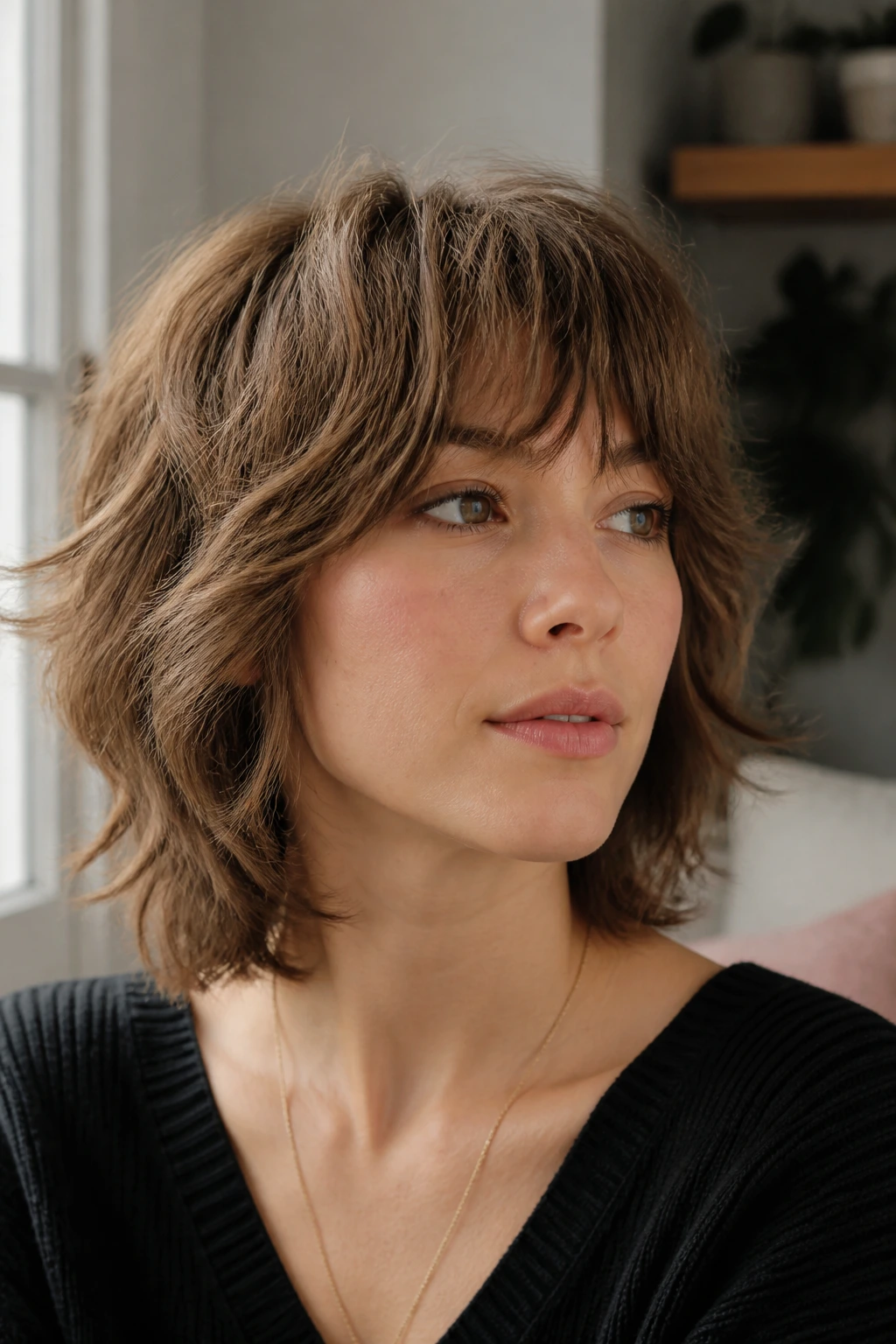
A rounded shag is for people who want softness all the way around the head, not just at the ends. The layers are tiny and closely stacked, which creates a halo of movement. It looks especially good on medium-density hair that needs shape without extra bulk.
Why I like this one
It keeps the silhouette curved rather than triangular. That matters. Micro-layers can turn chaotic if they’re cut too aggressively, so the goal is a gentle roundness through the crown and sides, not a chopped-up mess. When it works, the hair feels plush and touchable.
10. French Bob with Soft Edge
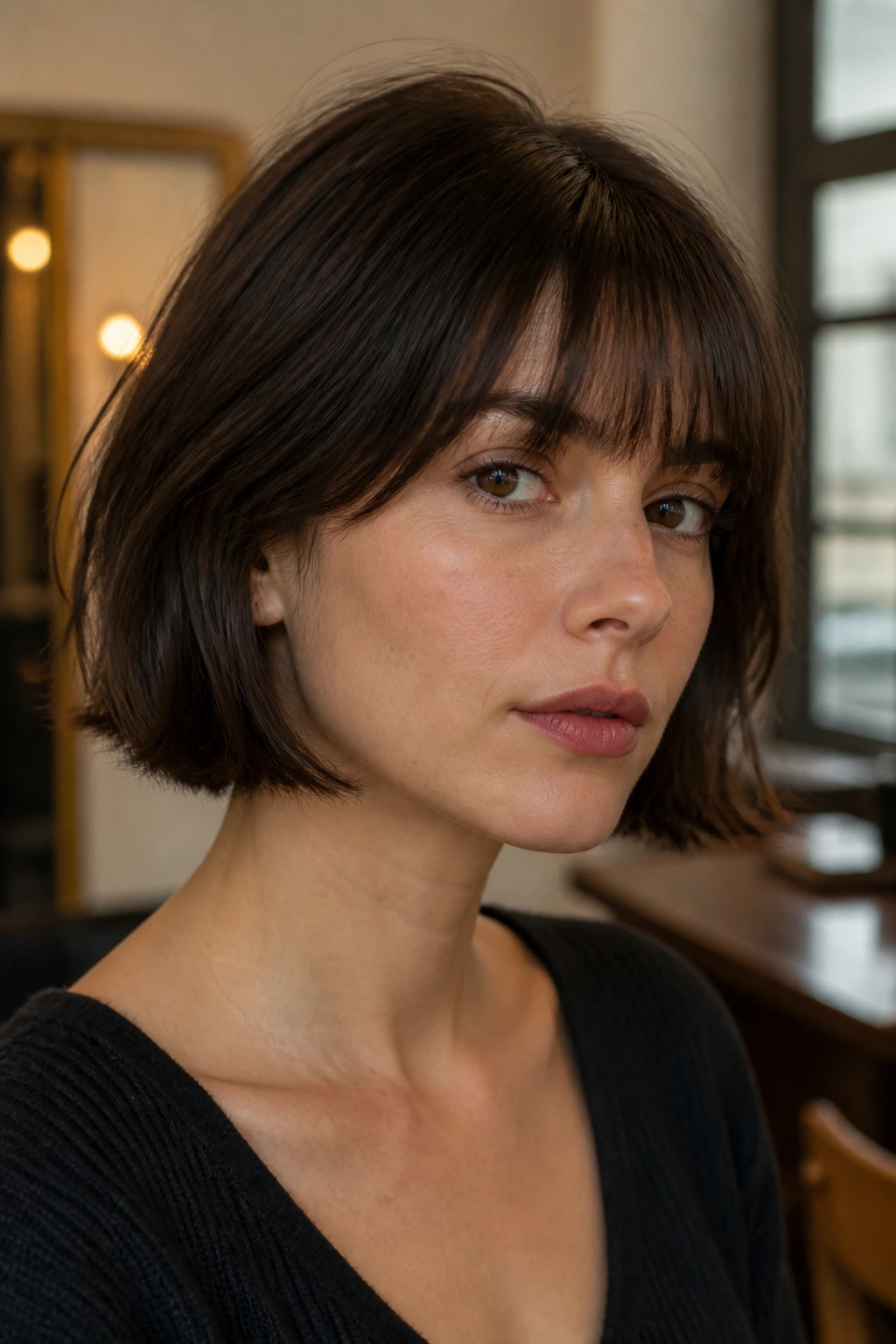
The French bob gets a prettier, less severe cousin when the edge is softened. You still have that jaw-skimming line, but the ends are point-cut and the interior is lightly broken up so the shape doesn’t sit like a little box. A tiny bend at the ends makes all the difference here.
This cut loves a side part or a deep off-center part. It also looks good when the fringe is left a touch longer and brushed forward just enough to skim the eyebrows. Keep the styling loose. If you over-polish it, the charm disappears.
11. Layered Pixie with Piecey Fringe
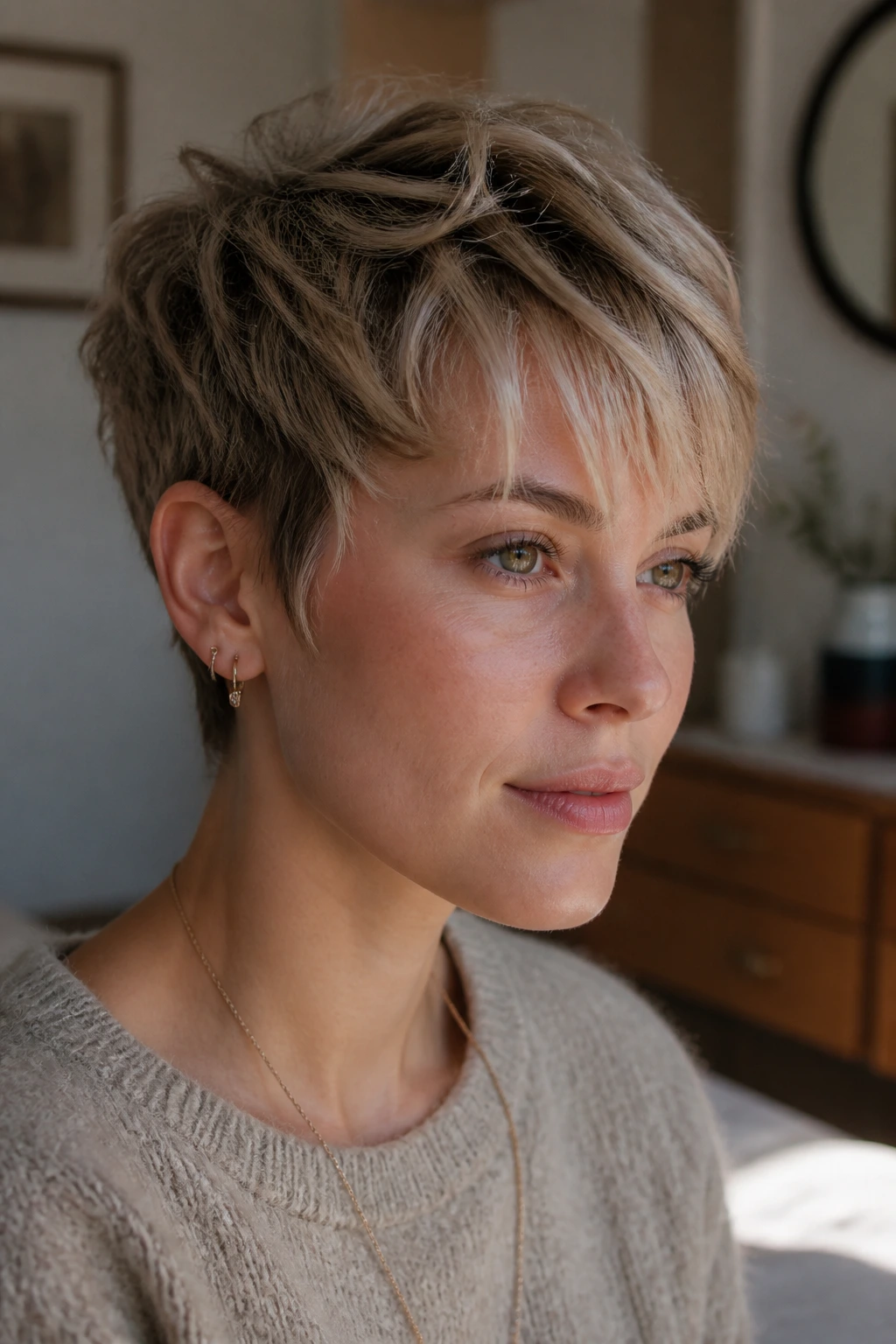
Short hair shouldn’t all read one note. A layered pixie with piecey fringe gives the top enough separation that it doesn’t flatten into the head, and the fringe keeps the cut from looking too cropped or too hard. The result is soft, but it still has shape.
Use a matte paste or a tiny bit of cream on the fingertips to pinch out the ends. Not much. The best version of this cut looks like it was touched once and left alone. If the hair is thick, the nape usually needs a little extra removal; if it’s fine, keep the layers longer so the crown doesn’t look see-through.
12. Shoulder-Length Cut with Invisible Layers

Invisible layers are the answer when you want movement but hate seeing obvious steps. The shape still lands at the shoulders, but the layering is tucked into the interior so the cut falls softly instead of announcing every line. It’s subtle in a way that actually takes skill.
This cut is useful for people who need versatility. You can wear it straight, wavy, tucked, clipped, or half-up, and it won’t fight back. If you’re nervous about going too choppy, this is one of the safest ways to get texture without losing the clean outline.
13. Wavy Lob with Razor-Touched Perimeter
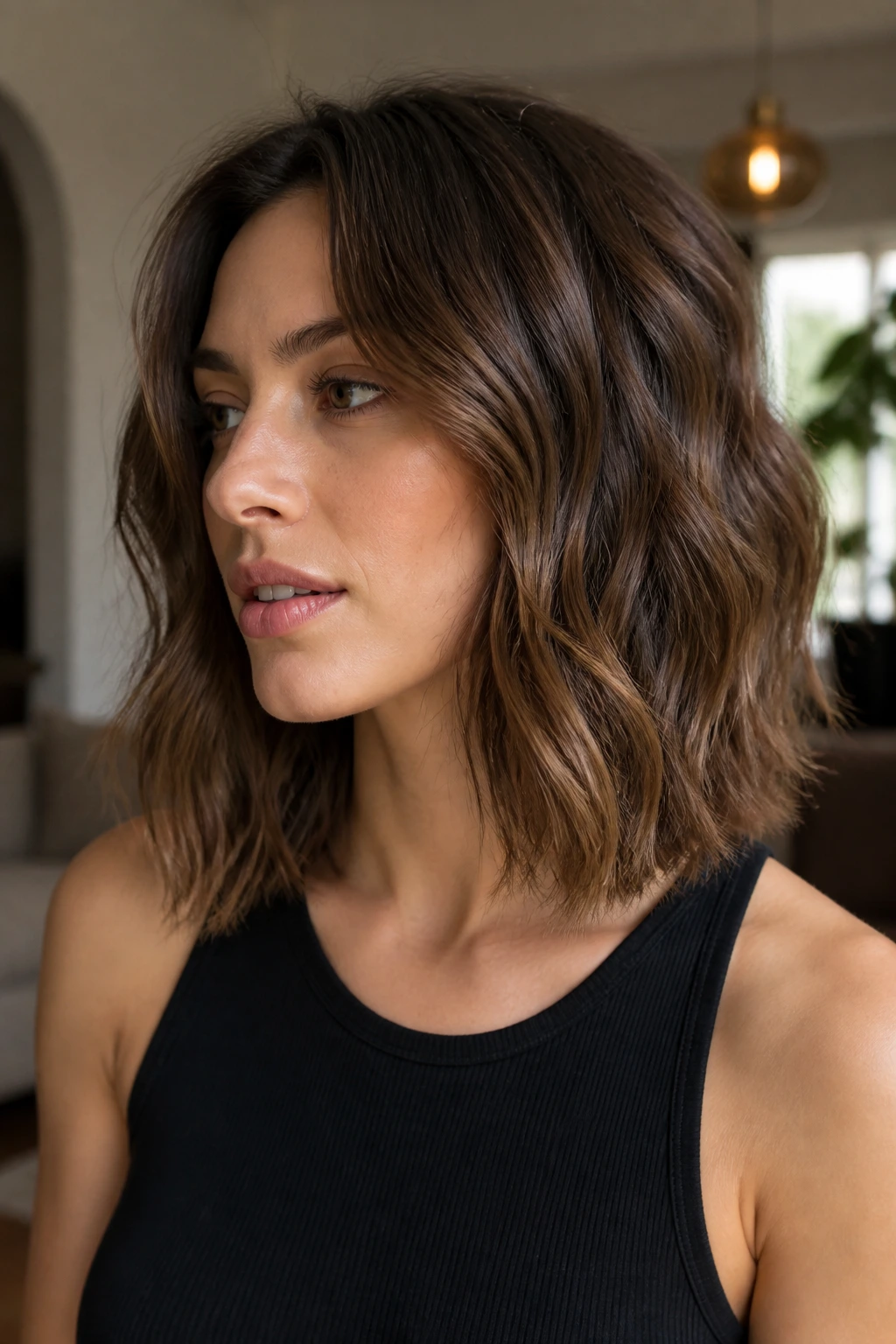
A wavy lob can go limp if the ends are too blunt. A razor-touched perimeter fixes that by giving the outer line a little air and separation, so the waves land in soft pieces instead of one heavy curtain. The length usually sits around the collarbone or just above it.
The razor should be used lightly, not carved through the whole head. That’s where people go wrong. The perimeter gets the softness, while the interior stays controlled. If your hair is already frizzy, ask for a less aggressive finish. Too much razor work can make the ends look hungry.
14. Midback Layers with Soft Grit
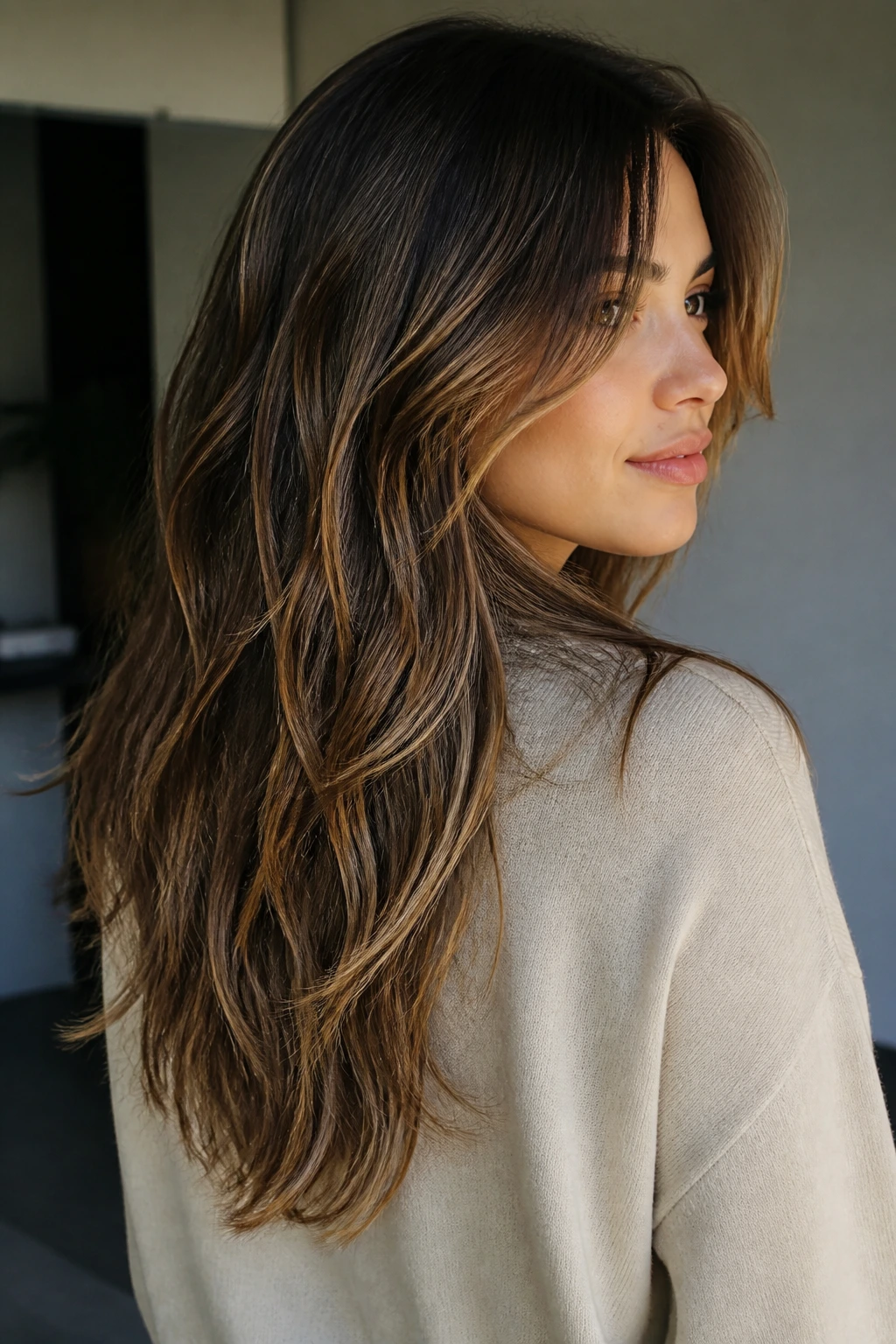
Long hair can get heavy in a hurry. Midback layers with soft grit take out enough weight to help the shape move, but they leave the length intact so you still get that sweeping, expensive-feeling fall. The grit comes from texture at the ends, not a visible chop through the middle.
This is one of those cuts that looks especially good with a little lived-in wave. Think loose bend, not beach cliché. A 1.25-inch iron or a big round brush can help, but you don’t need to curl every strand. The point is a loose, broken line through the bottom third of the hair.
15. Jaw-Length Box Bob with Choppy Ends
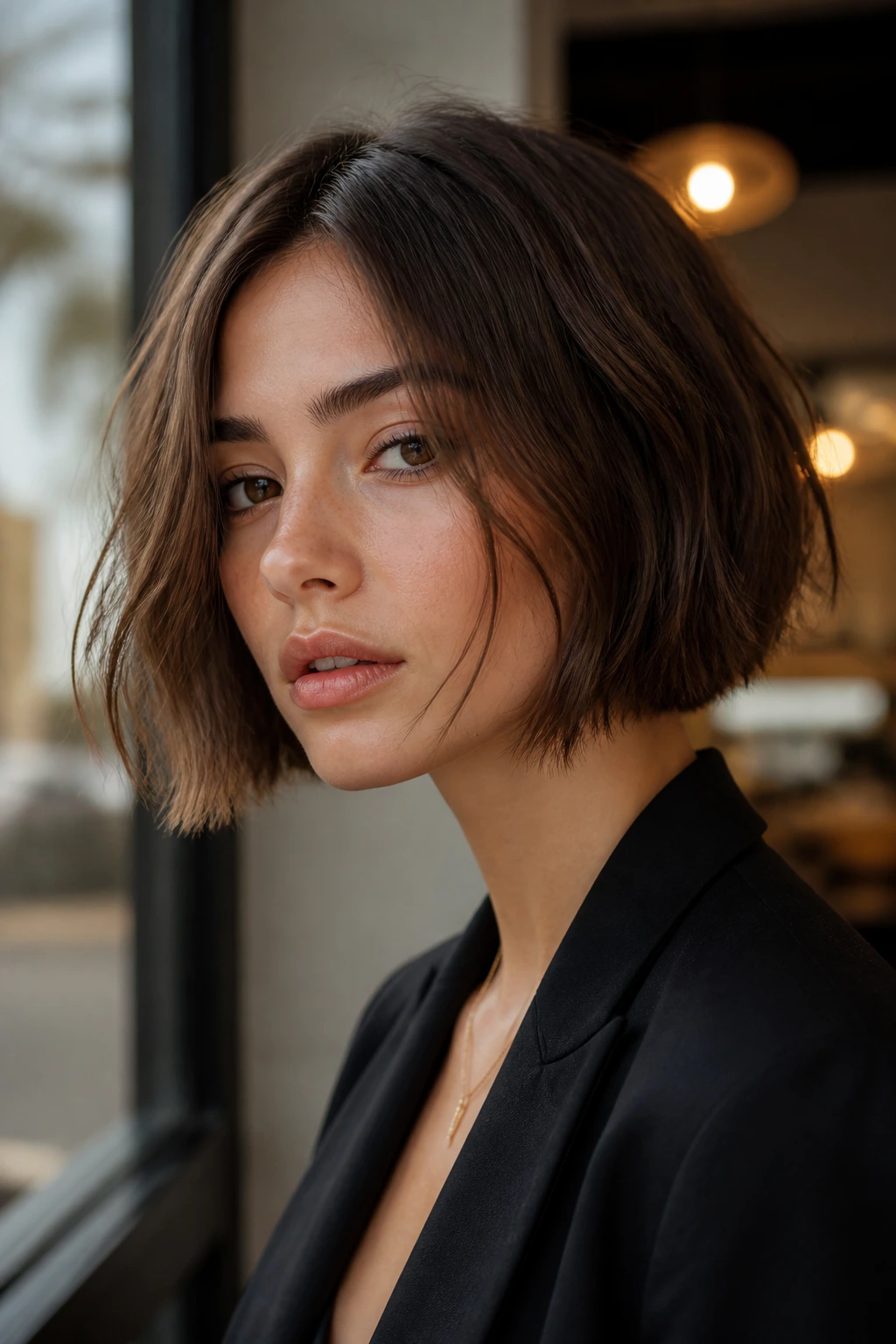
A box bob sounds rigid, but the choppy ends soften it fast. The jaw-length perimeter gives the haircut a strong shape, while the ends are broken enough that it doesn’t sit too square on the face. It’s sharp, but not severe.
This works best when the bob is kept slightly longer in front than in back, even by half an inch. That tiny angle keeps it from feeling blocky. The choppiness should live in the last inch or two, where it can move. Too much layering higher up and the bob loses the clean line that makes it interesting.
16. Mullet-Inspired Soft Cut

A soft mullet is not the same thing as a hard retro mullet. This version keeps the crown and face frame airy, lets the back live a little longer, and avoids the theatrical disconnect that can make the style feel costume-y. It’s fashion-forward, yes, but it can still be wearable.
The key is blending. The shorter pieces around the front should feather into the sides, not stop dead. That keeps the transition smooth and helps the cut feel lived-in instead of deliberate to the point of being precious. It’s a good match for straight-to-wavy hair that wants edge without spikiness.
17. Heavy Fringe with Tapered Sides
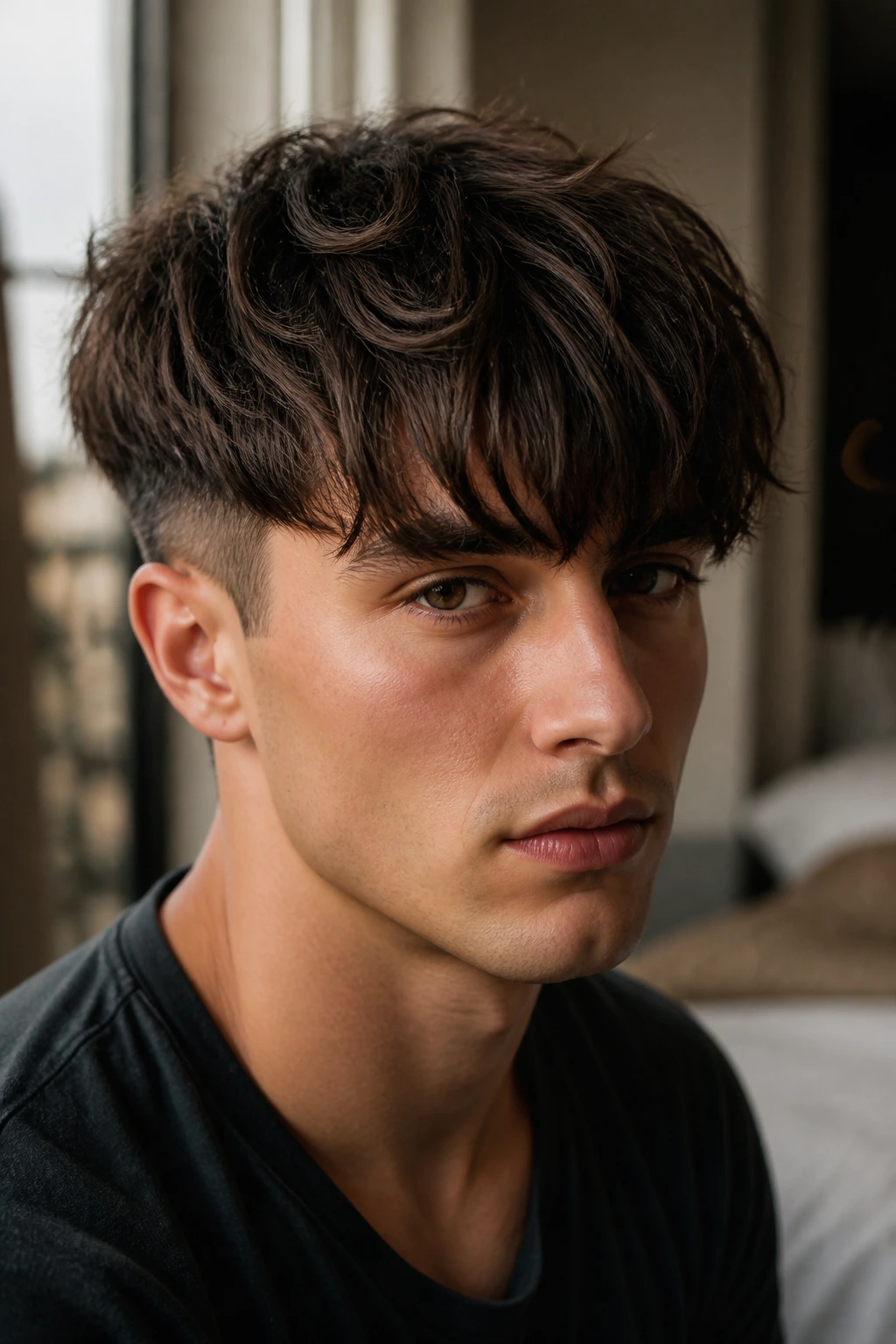
A heavy fringe can overwhelm a face fast, which is why the tapered sides matter so much. The fringe gives you a strong focal point, and the softer, shorter layers at the sides lighten the overall look so it doesn’t land like a curtain. If done right, it feels Parisian rather than severe.
This is not the fringe for someone who wants zero styling. It needs a round brush, or at least a little finger drying, so it falls with a bend instead of sticking flat to the forehead. Keep the sides soft and the fringe longer than you think; bangs always look shorter after they dry.
18. Fine-Hair Choppy Lob
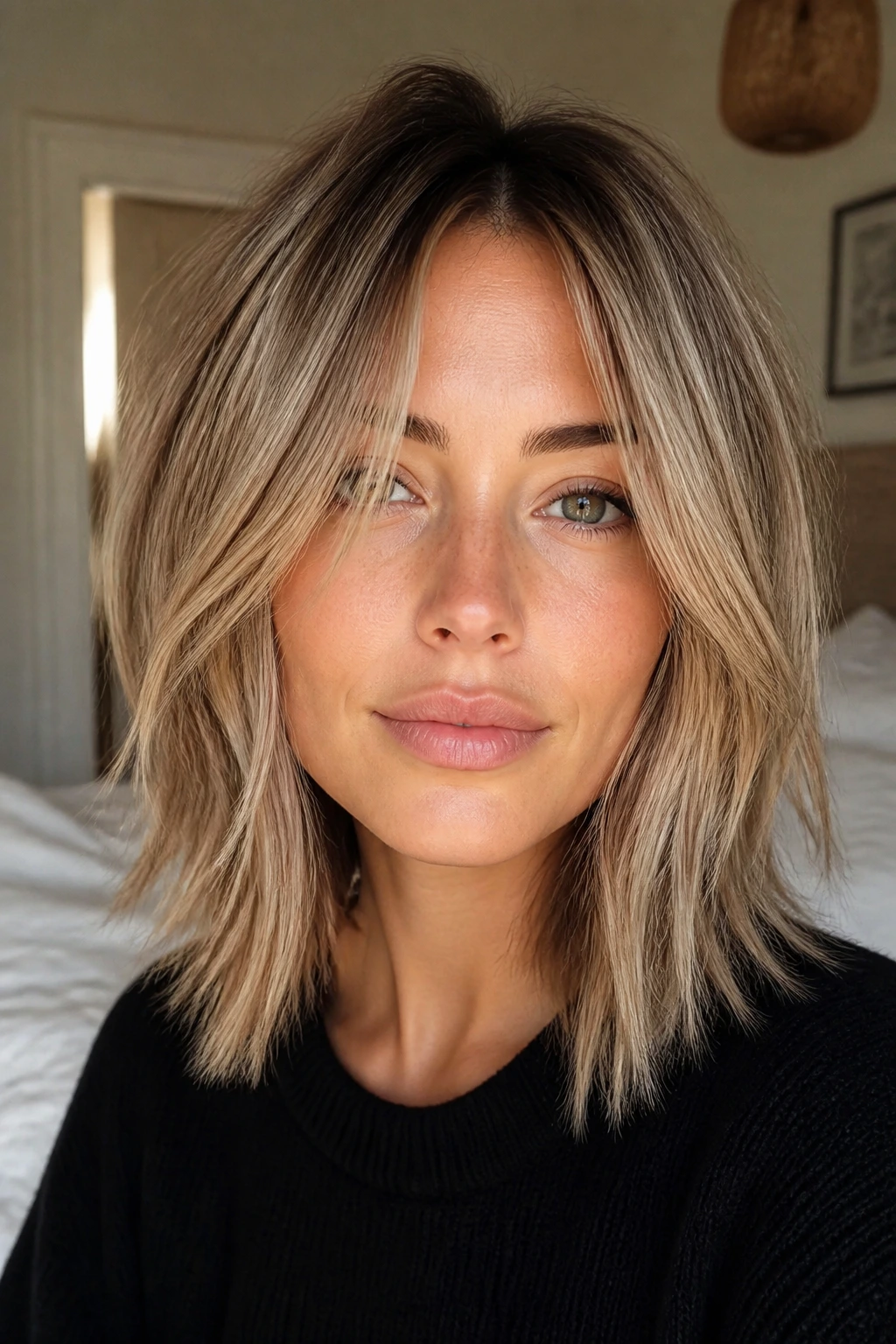
Fine hair can handle choppiness if the layers are placed high enough to lift the body but not so high that the ends become see-through. A fine-hair choppy lob usually works best when the length sits between the chin and the shoulders and the texture is concentrated around the face and bottom edge.
You want fullness, not feathers. That means avoiding heavy thinning and asking for internal movement instead. A little root spray and a round brush at the crown can help, but the haircut should do most of the work. If the shape needs constant repair, the cut was too aggressive.
19. Thick-Hair Broken Layer Cut
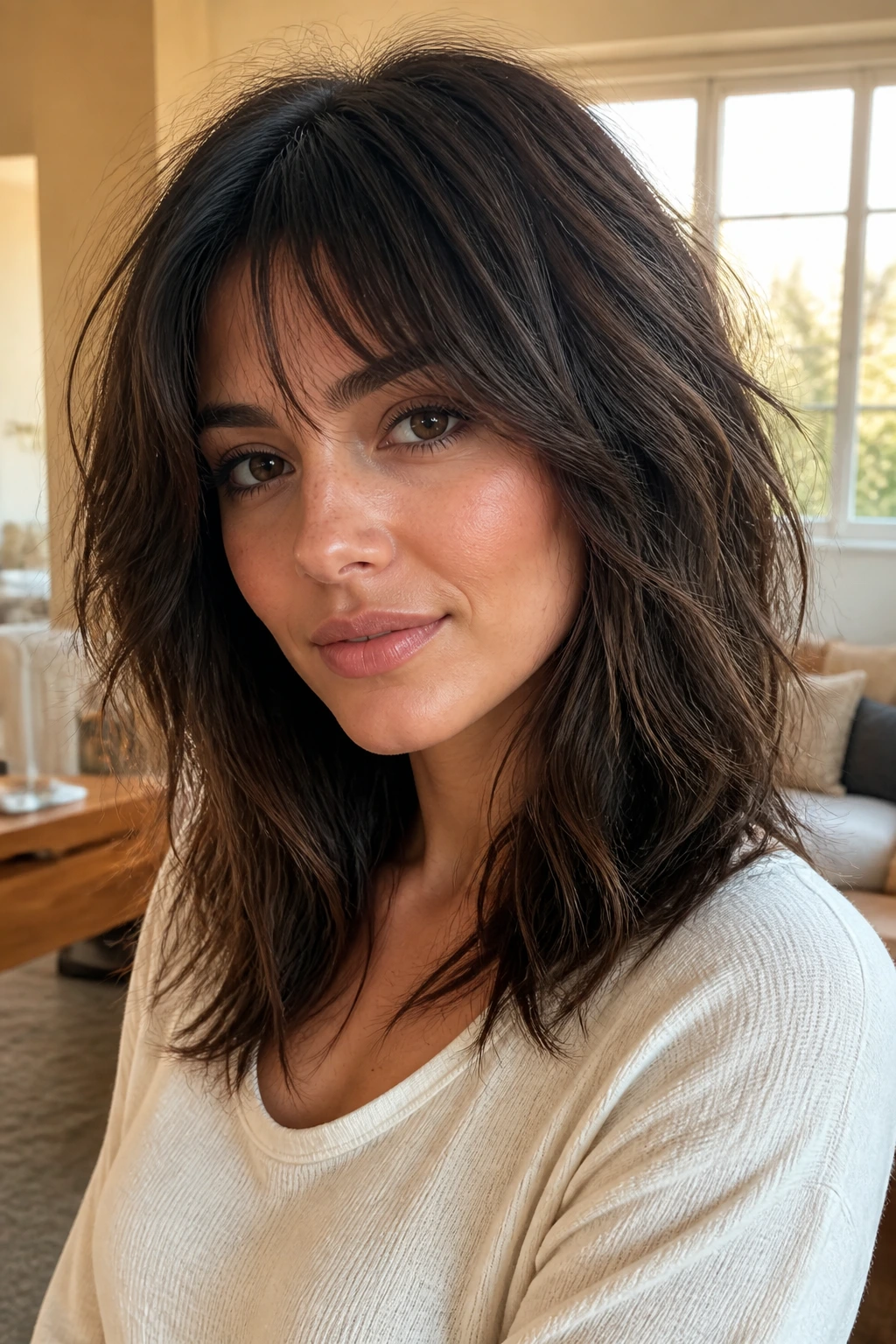
Thick hair needs relief somewhere. A broken layer cut removes bulk in stages so the hair can move without forming a helmet or a triangle. The ends still read full, which is the nice part, but the interior has enough space that the shape doesn’t sit too dense.
This is where a stylist’s hand matters. Thick hair can take chunkier layering than fine hair, but it still needs the perimeter to stay coherent. The best version of this cut looks expensive when it air-dries and doesn’t explode into width. If it does, the layers were cut too high or too short.
20. Air-Dried Natural Texture Cut

Short sentence first: this one is for the people who hate blow-drying. The air-dried natural texture cut is built around your actual bend pattern, so the layers follow the way your hair dries on its own instead of fighting it. It often includes soft face-framing pieces and an end texture that looks better a little imperfect.
That means the cut should be shaped while the stylist can still see the hair’s natural behavior. On wavy or curly hair, a dry cut is often the smarter choice. On straighter hair, the layers should be long enough that the hair doesn’t kink into odd spikes when it dries. No heroics. Just a good map for the hair you already have.
21. Deep Side-Part Shag
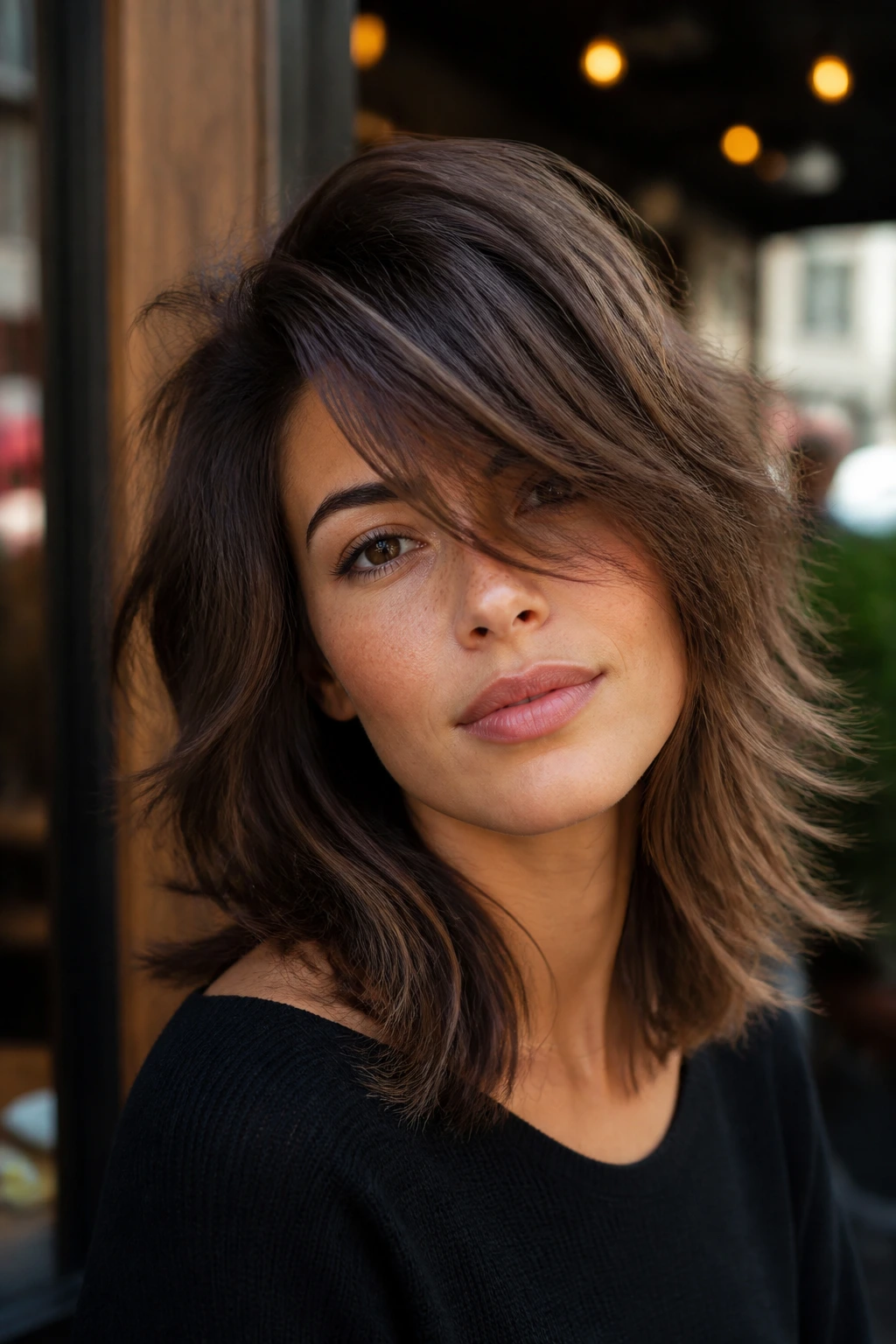
A deep side-part shag changes the whole face shape in about ten seconds. The side part gives height on one side, then the shaggy layers fall across the other, which creates movement without needing a dramatic cut length. It’s especially good if your hair tends to lie flat at the roots.
The front should be long enough to sweep, not flop. That matters. A deep side part can also be a quiet fix for grown-out bangs, because the longer fringe pieces blend into the side volume instead of looking like an afterthought.
22. Soft Disconnected Bob
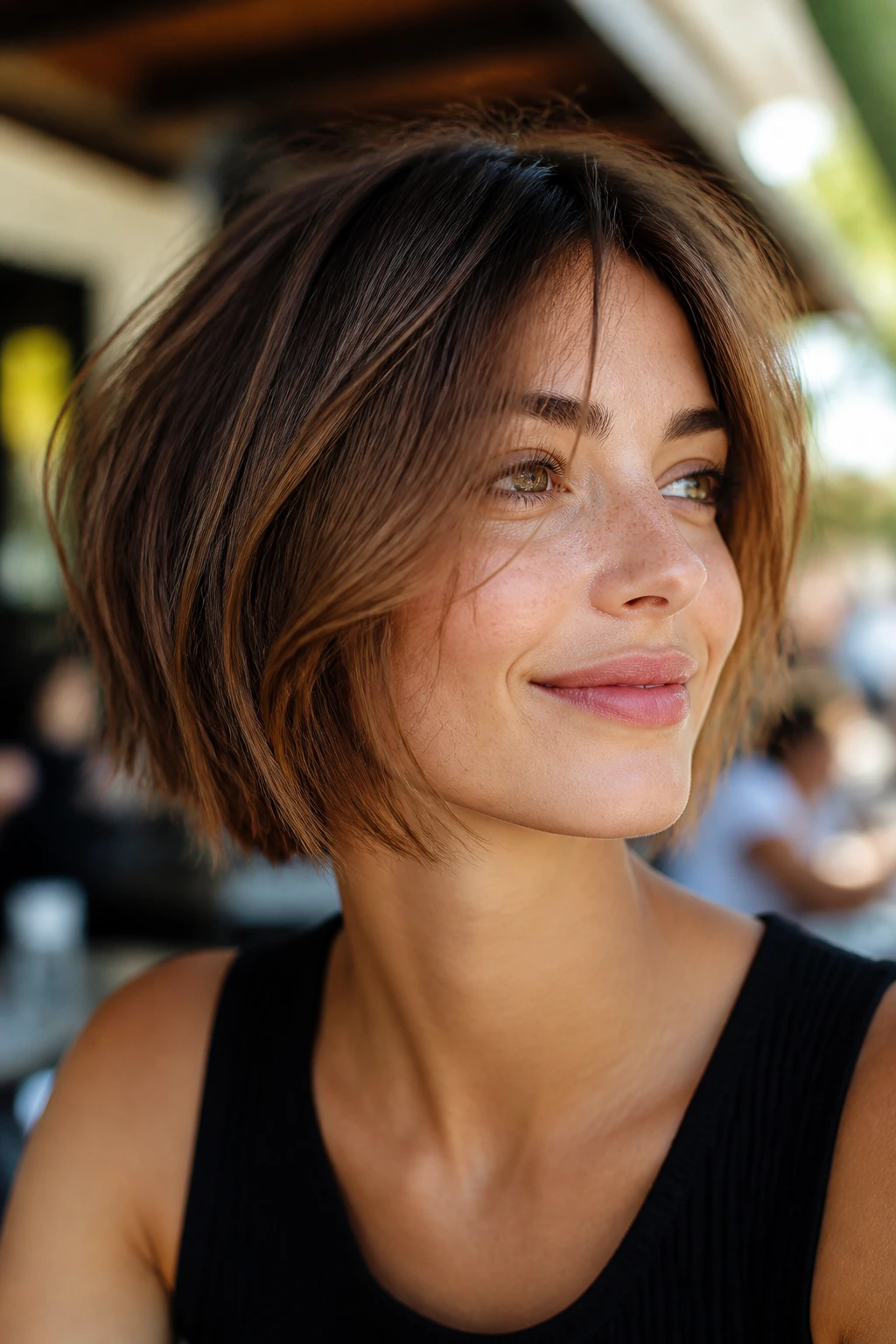
Disconnected sounds harsh, but the soft version is more interesting than severe. The top layers are allowed to sit a touch shorter than the bottom, which creates separation and movement, but the transition is blurred so the cut still feels wearable. It’s a bob with a little attitude.
This cut shines on straight and slightly wavy hair. It gives a subtle lift at the crown and keeps the neckline clean. If you like tidy lines but don’t want a static shape, this one sits in a useful middle ground.
23. Face-Framing Long Cut with Sliced Layers
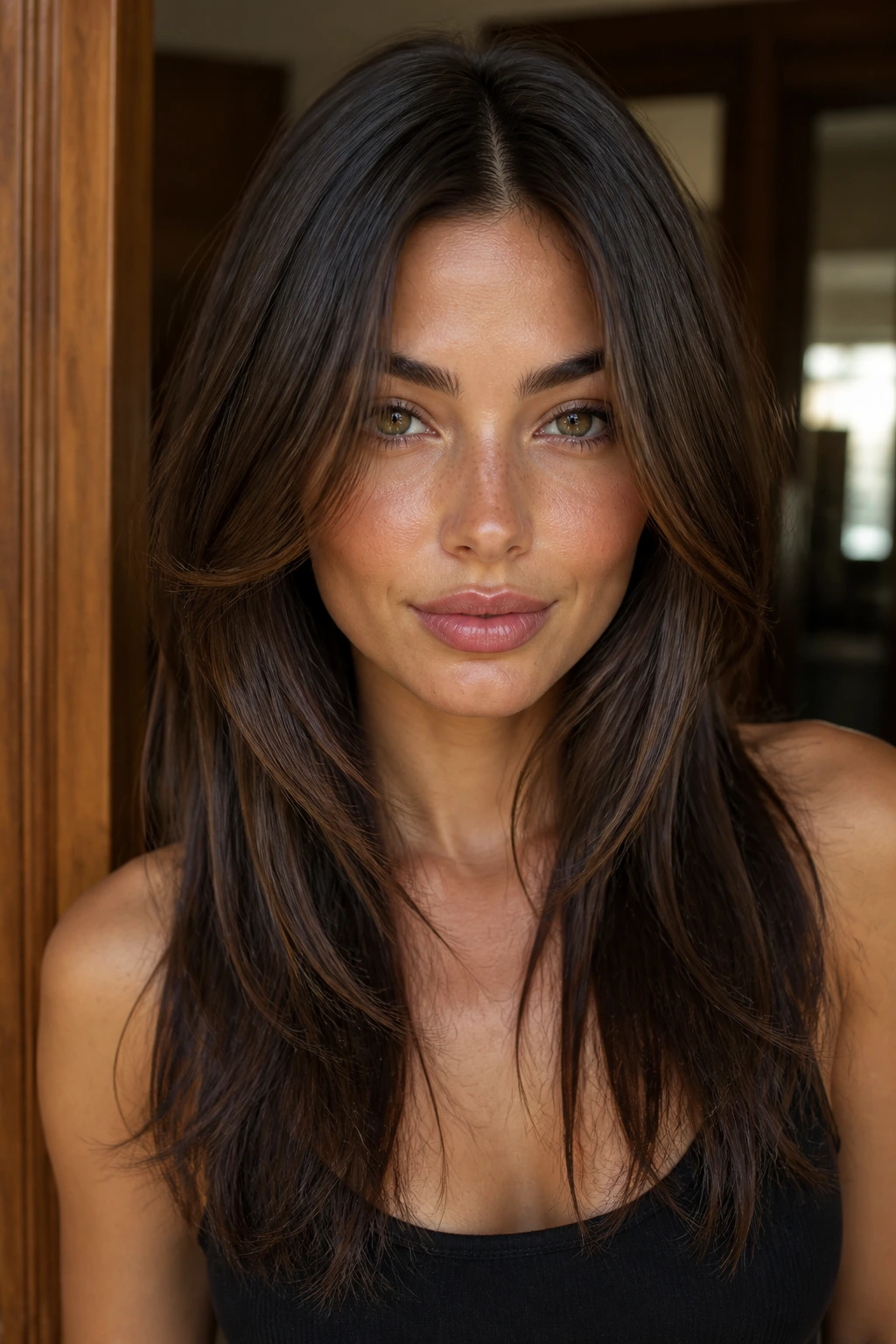
Long hair gets a lot more personality when the front is shaped properly. Sliced layers around the face create movement right where people look first, and the rest of the length can stay relatively calm. That balance is why this cut works.
The front pieces should start near the cheekbones or lips, depending on face shape and hair density. Slicing helps the hair fall in thin, bendy sections rather than one broad sheet. If the ends need a little softness, keep that to the last few inches. The rest should stay intact.
24. Shoulder-Grazing Curve Cut with Choppy Ends
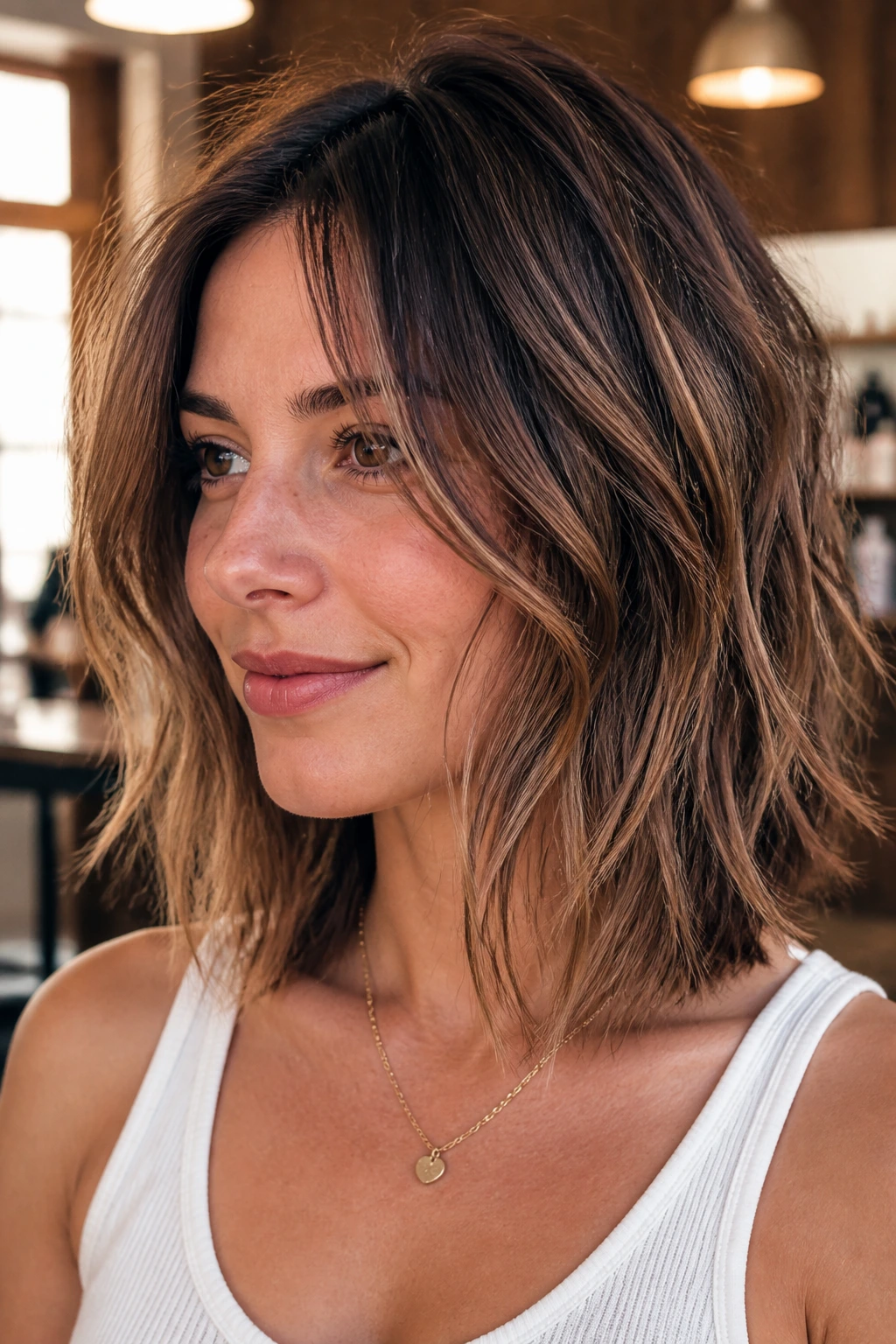
This cut follows the neckline instead of fighting it. The hair curves around the shoulders, which gives a natural bend, and the choppy ends stop it from sitting too rigidly. It’s one of the easiest cuts to wear when you want movement without obvious layers.
A little inward bend at the bottom makes this shape come alive. That can come from a blowout brush, a large curling iron, or even just clipping the ends under while the hair cools. The point is a soft arc, not a curled finish.
25. Effortless Grow-Out Cut with Soft Edge

Some cuts are designed to be neat on day one and awkward by week six. This isn’t one of them. An effortless grow-out cut keeps the layers long, the fringe optional, and the perimeter soft enough that the shape remains decent as it settles. It’s the haircut I’d choose if I knew I would forget a trim appointment.
That softness comes from restraint. No tiny chopped pieces around the crown. No aggressive razoring through the ends. Just enough shape to keep the hair from looking blunt, with enough length left in the layers that the whole thing can stretch out gracefully.
What Gives Choppy Haircuts Their Soft, Lived-In Finish
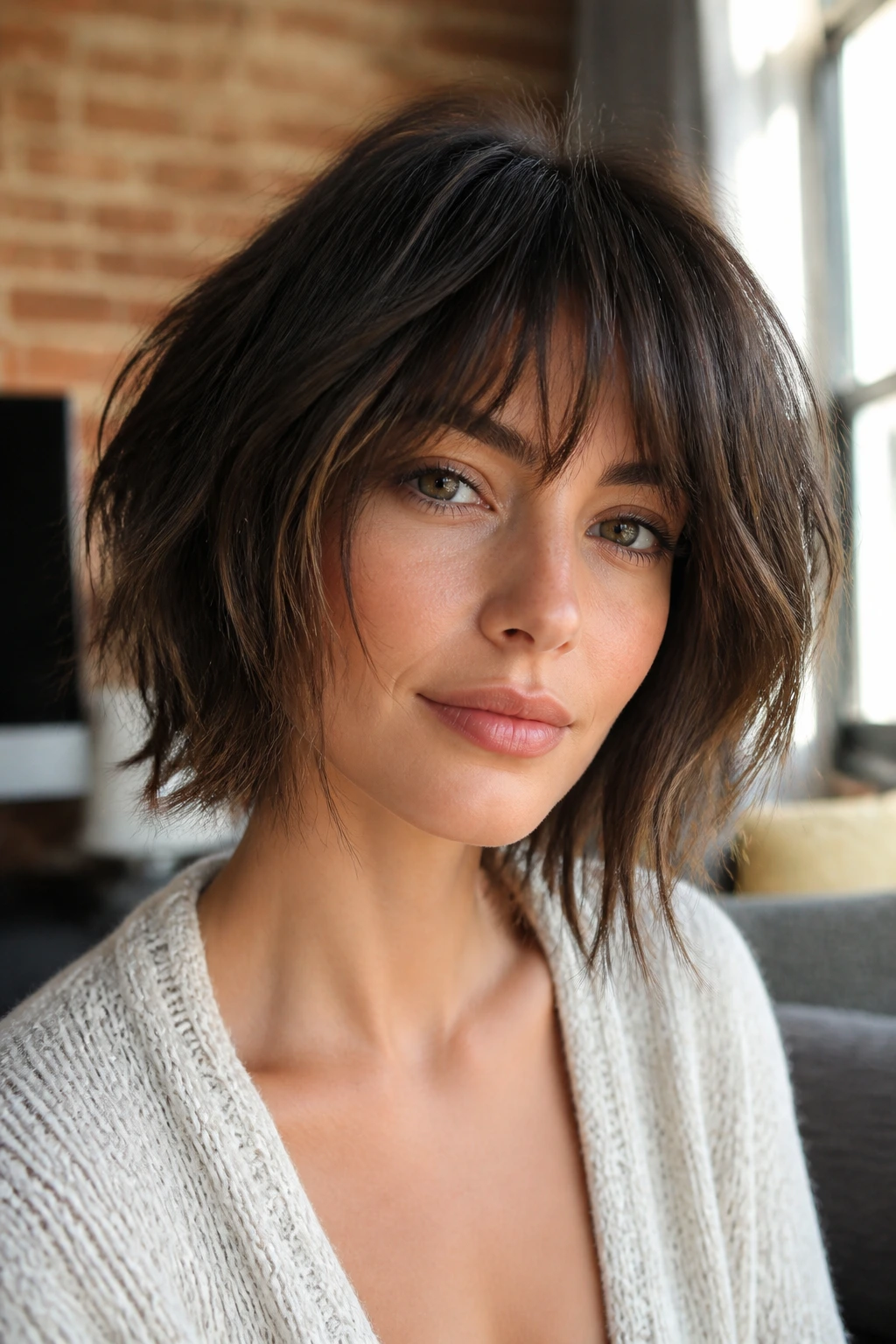
Placement matters more than aggression. That’s the first rule, and the one most bad haircuts ignore. The softness comes from where the layers sit, not from hacking away at the ends until they look translucent. A good choppy cut has a clear outline and a broken interior, which is why it feels easy even when it was carefully built.
Ask a stylist to point-cut, slice lightly, or carve only where the hair actually needs relief. On straight hair, that often means keeping the perimeter clean and working the movement into the face frame. On curly or wavy hair, the strategy shifts. You want the haircut to respect the curl pattern, not fight it into submission.
The softest versions of these cuts also leave room for the hair to misbehave a little. Sounds odd. It matters, though. If every strand is cut to the same little exact length, the style starts looking over-scripted. Leave a little length variance, and the shape moves the way real hair moves.
The Tools That Make This Texture Easier to Live With
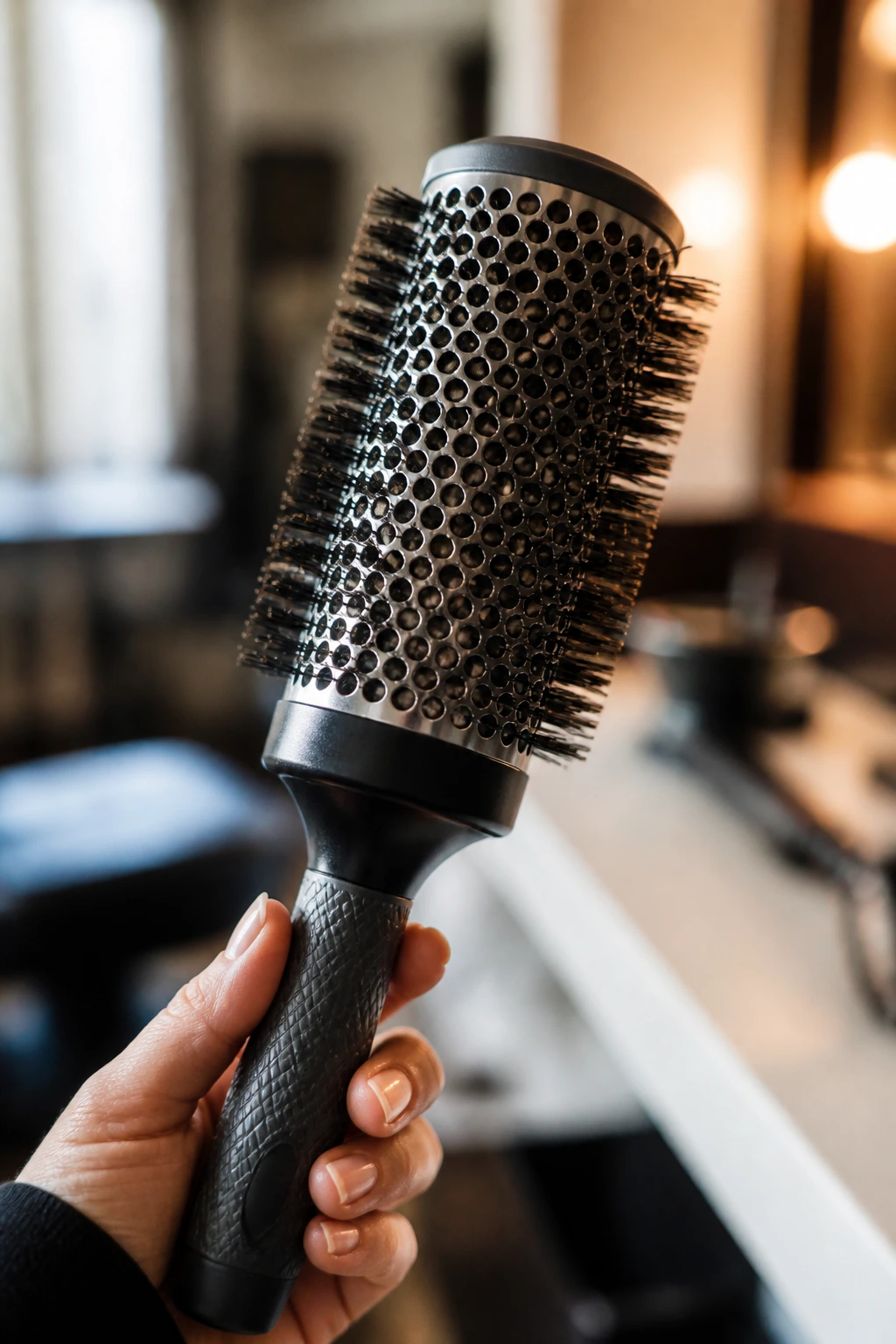
- 1-inch to 1.5-inch round brush: Good for bending the face frame and giving the ends a little curve.
- Blow dryer with a narrow nozzle: Helps aim the air at the roots so the crown doesn’t go flat.
- Diffuser attachment: Useful for waves and curls that need shape without being blasted apart.
- Wide-tooth comb: Better than a brush for detangling wet textured hair without breaking the pattern.
- Lightweight mousse: Gives lift at the roots and a little memory through the mid-lengths.
- Texturizing spray: Adds separation to choppy ends when the cut needs grit, not gloss.
- Dry shampoo: Useful on second-day roots and for keeping soft layers from collapsing.
- Microfiber towel or T-shirt: Cuts down on friction, which matters if the ends frizz fast.
- Small clips: Handy for pinning curtain bangs or face-framing pieces while they cool.
What to Ask Your Stylist for a Choppy Cut That Still Feels Polished

Bring photos, yes, but bring useful ones. Show one front view, one side view, and, if you can find it, one back view. A single Instagram photo taken at a flattering angle does not tell a stylist how much length you actually want to keep, and length is where a lot of these cuts go sideways.
Say what you want the hair to do. “I want movement around the face, but I still want the back to feel full” is a better brief than “make it choppy.” The second sentence can mean anything from a soft shag to a hacked-up bob. If your hair is fine, ask to avoid over-thinning. If it’s thick, ask where bulk should come out so the shape doesn’t puff.
Dry-cutting can matter a lot on wavy and curly hair. So can asking for point-cutting at the ends instead of blunt slicing through the whole perimeter. That one choice changes the finish more than most people realize. It’s the difference between soft separation and frayed ends that need daily damage control.
How to Style These Cuts So They Look Intentional
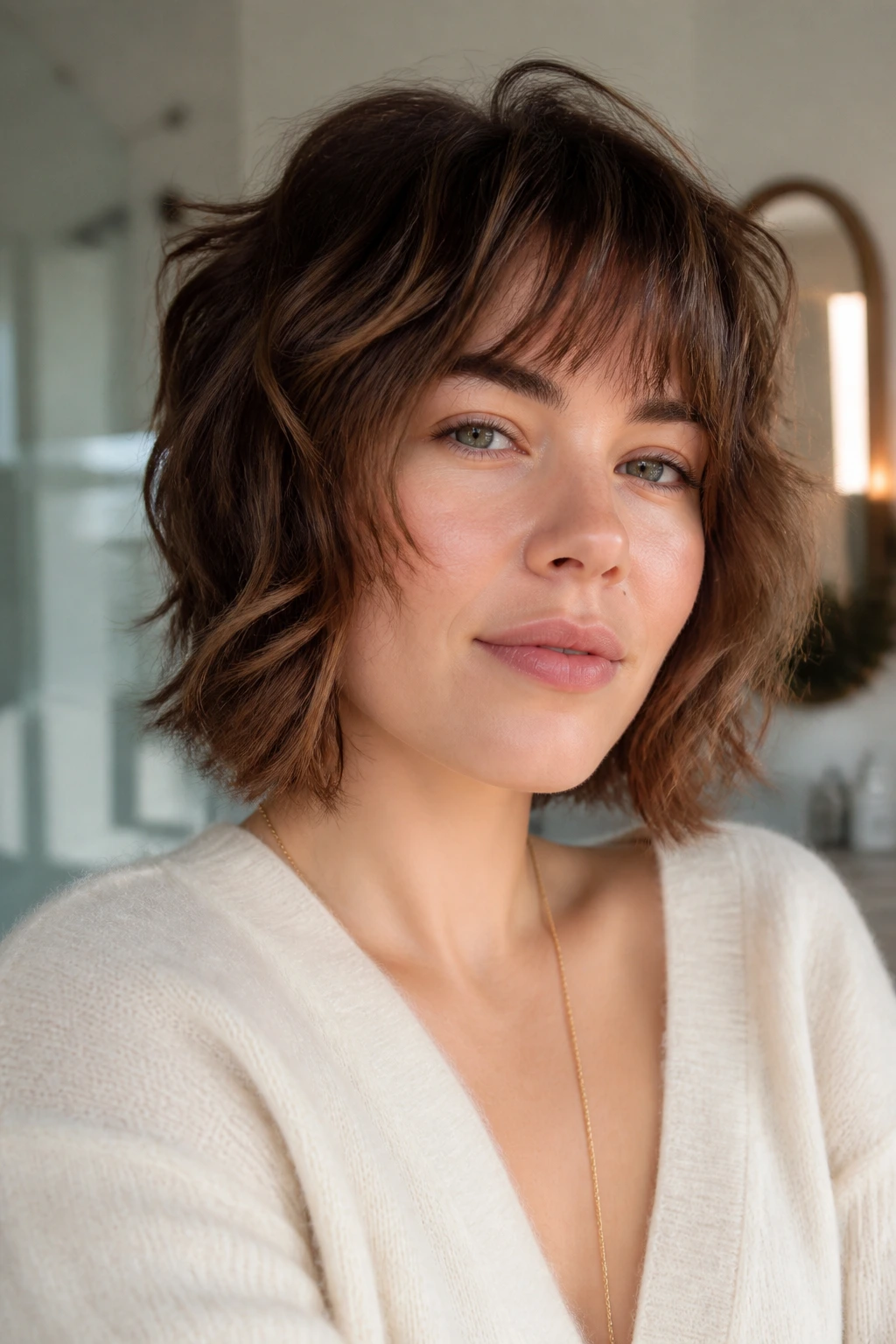
Styling: Start with a light mousse at the roots and a small amount of cream through the mids if your hair tends to go fuzzy. Rough-dry about 70 percent of the way, then use your fingers or a brush only where the hair needs direction. A soft bend in the front pieces usually does more for the cut than curling the whole head.
Accompaniments: Curtain bangs, side parts, tucked-behind-the-ear styling, and one loose wave through the face frame all flatter this kind of cut. You do not need to style every section. In fact, trying to make every layer behave the same is the fastest way to kill the lived-in effect.
Length notes: Short cuts look best with a little lift at the crown and a touch of separation at the ends. Medium cuts usually want movement around the collarbone. Long cuts need the lower third to stay soft and bendy, or the whole thing reads heavy.
Finish: Pick one finish and commit to it. Matte and piecey reads very different from glossy and polished, and mixing the two usually looks accidental. A little separation at the ends is the point; a greasy shell is not.
Small Tweaks That Change the Whole Feel of the Cut
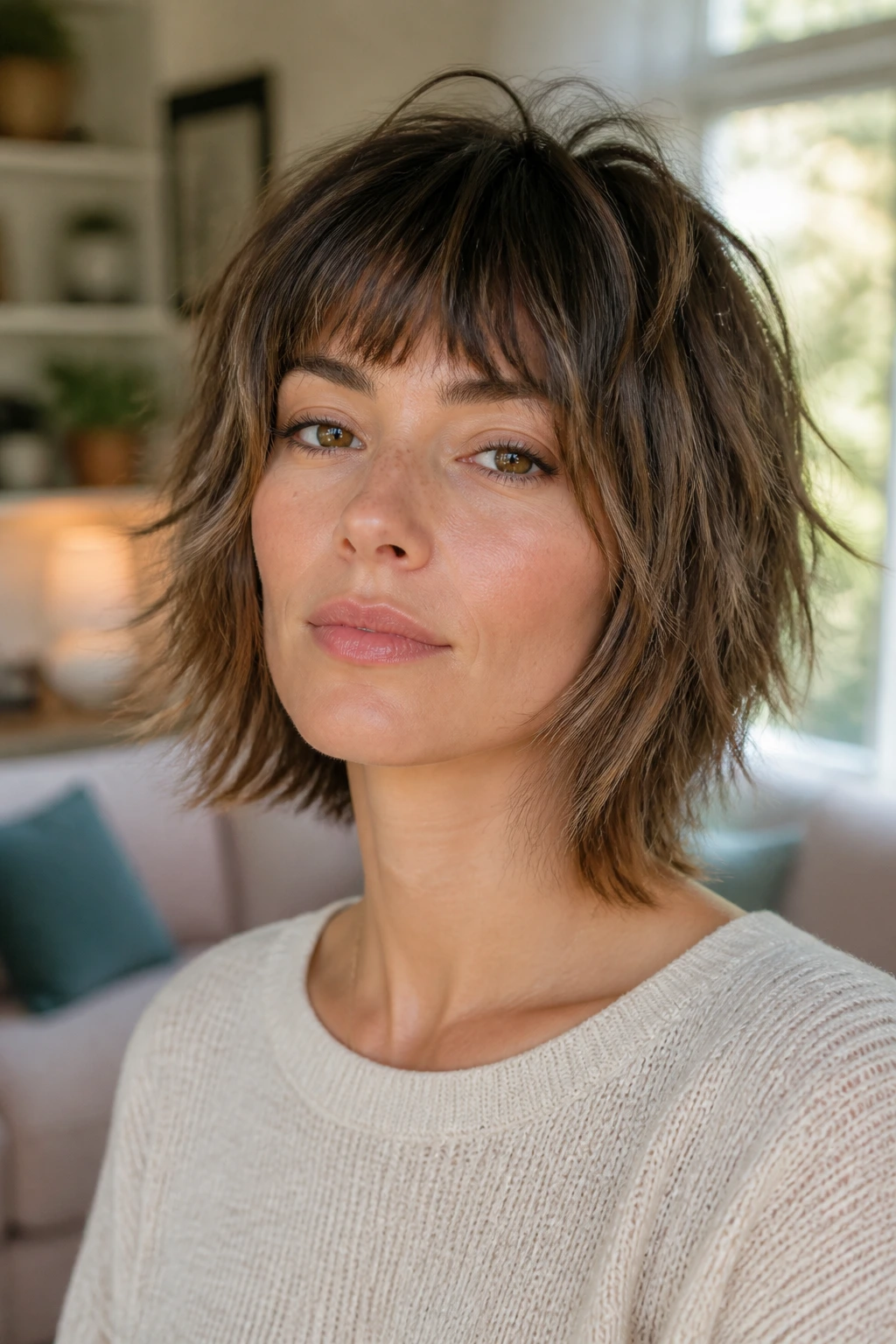
Texture Boost: A pea-sized amount of paste rubbed between the palms and tapped into the ends can make the choppiness show up without making the hair stiff. Use it on dry hair only, and stop before the ends look sticky.
Fringe Control: Curtain bangs, bottleneck bangs, and a long side fringe all soften the face more gently than a blunt, dense bang. If your forehead is short or your hairline is strong, keep the fringe longer and lighter so it can split naturally.
Volume Move: Clip the roots while the hair cools after blow-drying. Old-school, yes. It works. That little lift at the crown makes the haircut look more expensive than a round brush alone usually can.
Make-It-Yours: Fine hair usually looks best with longer layers and less texturizing. Thick hair often needs more internal removal and a cleaner perimeter. Curly hair likes dry-cut shaping. Straight hair usually needs a little more help from the face frame so the movement doesn’t disappear.
Keeping the Shape Soft Between Salon Visits
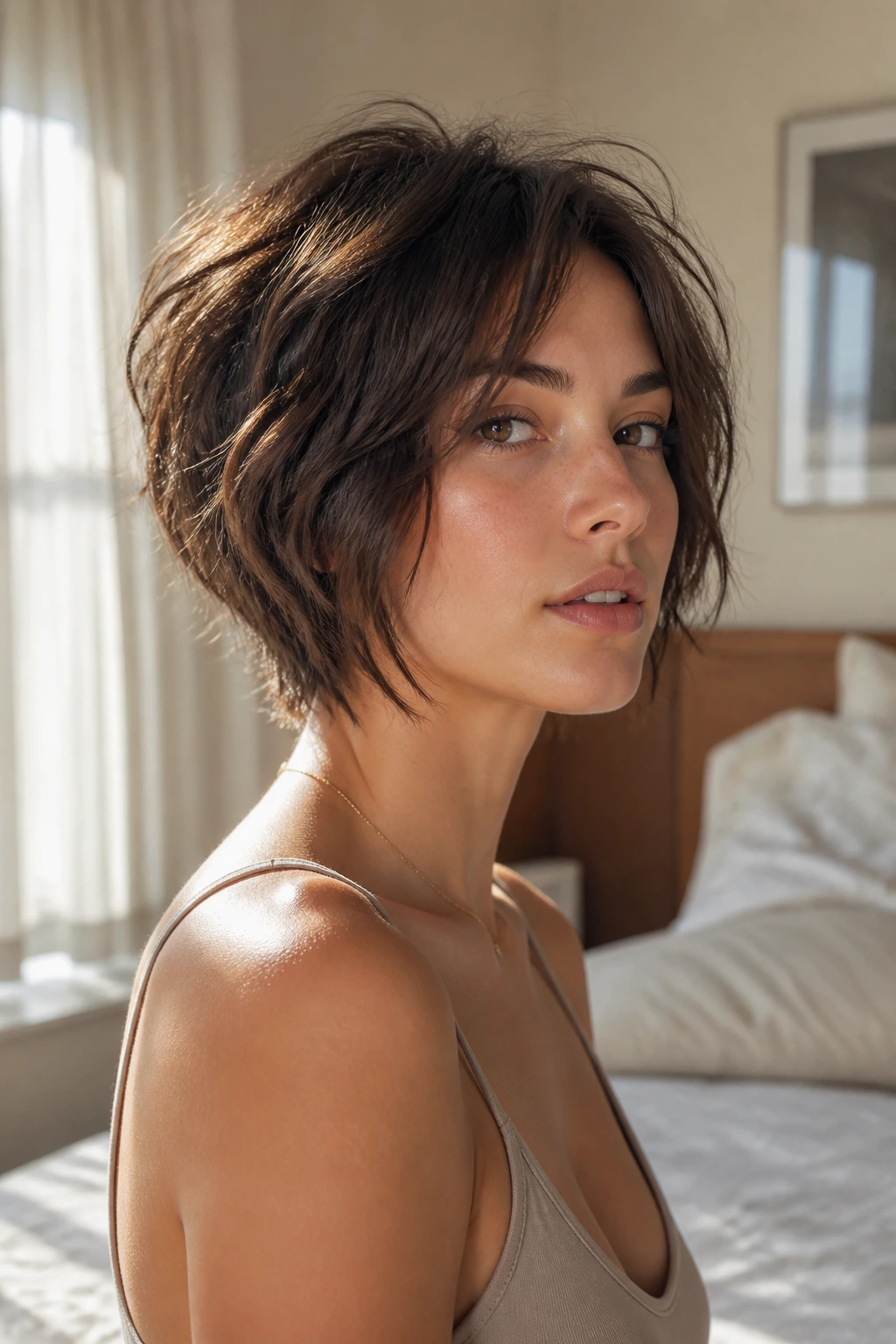
Choppy cuts age differently depending on how short the shortest layers are. A pixie or bixie may need a shape-up every 4 to 6 weeks if you want the lines to stay clean. A lob, shag, or shoulder-length cut can often stretch to 8 to 12 weeks before it starts losing intention.
Second-day hair is part of the charm here. A light mist of water, a touch of mousse, and a blast from the dryer can wake the cut up without starting from scratch. Dry shampoo at the roots helps, but don’t bury the hair under too much powder or the ends will feel coarse.
Sleep matters too. A silk or satin pillowcase reduces frizz at the ends, especially on softer layered cuts where the perimeter is already textured. If you wear fringe, clip it away from your face before bed if your forehead gets oily. That tiny habit can save you ten minutes in the morning.
Variations and Adaptations to Try
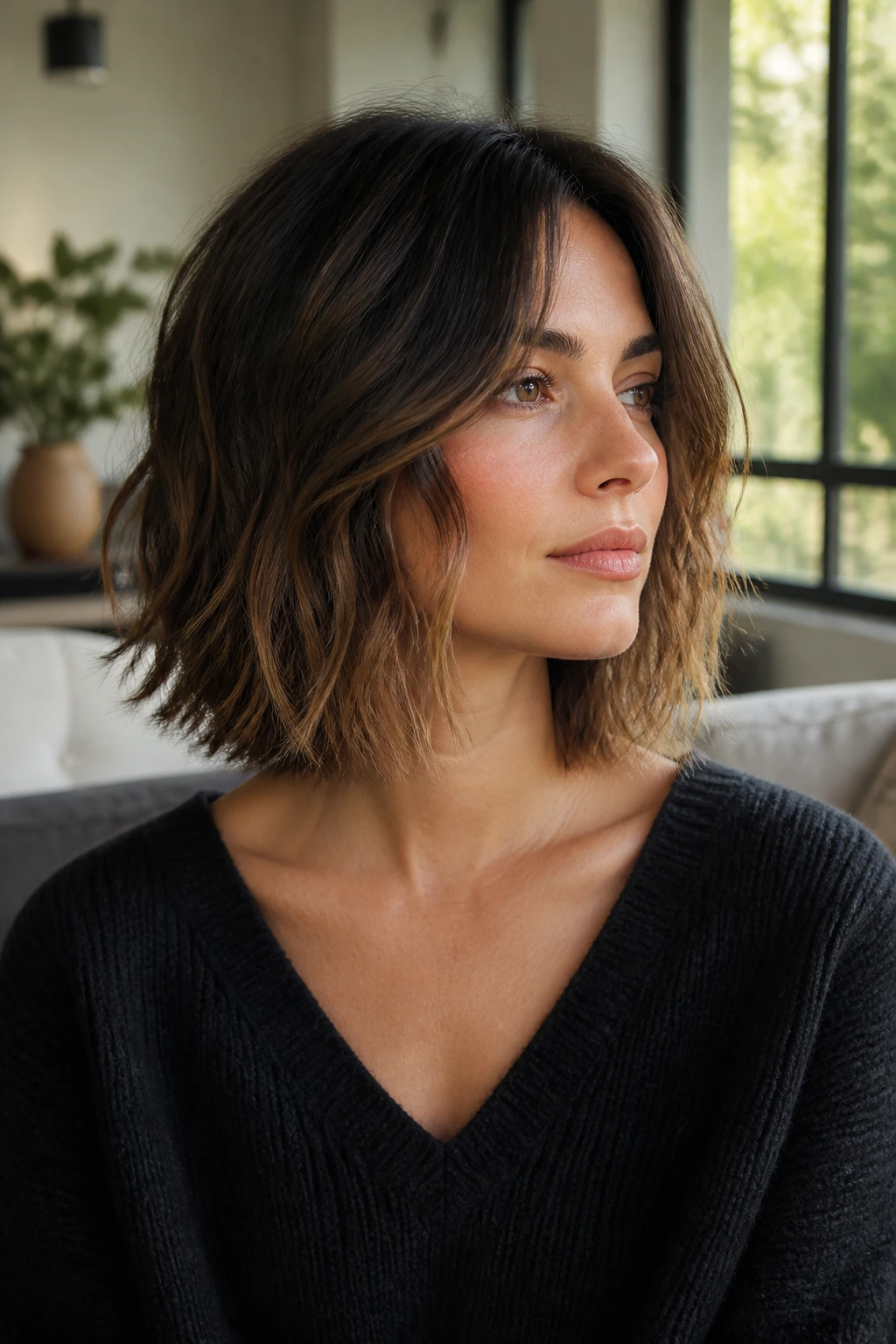
The Air-Dry Version: Keep the layers longer and the ends softer if you want a cut that can dry on its own without turning stringy. This version is strongest on wavy hair and shoulder-length cuts.
The Fine-Hair Lift Edit: Ask for a choppy lob or shag with minimal texturizing and a little extra length in the front. Fine hair needs movement, not holes.
The Thick-Hair Weight Release Edit: Have bulk removed from the interior with controlled layering so the shape can fall instead of puffing out. This works especially well on shoulder-length and long cuts.
The Curly Halo Edit: Shape the cut dry and leave the fringe longer so the curls can shrink into a soft frame instead of a short, jumpy one. The goal is roundness, not a stack of disconnected pieces.
The Fringe Swap: If you want softness but not a full fringe, use curtain bangs or a bottleneck bang instead of blunt bangs. They blend better with choppy layers and grow out with less fuss.
The Mistakes That Make Choppy Cuts Look Rough
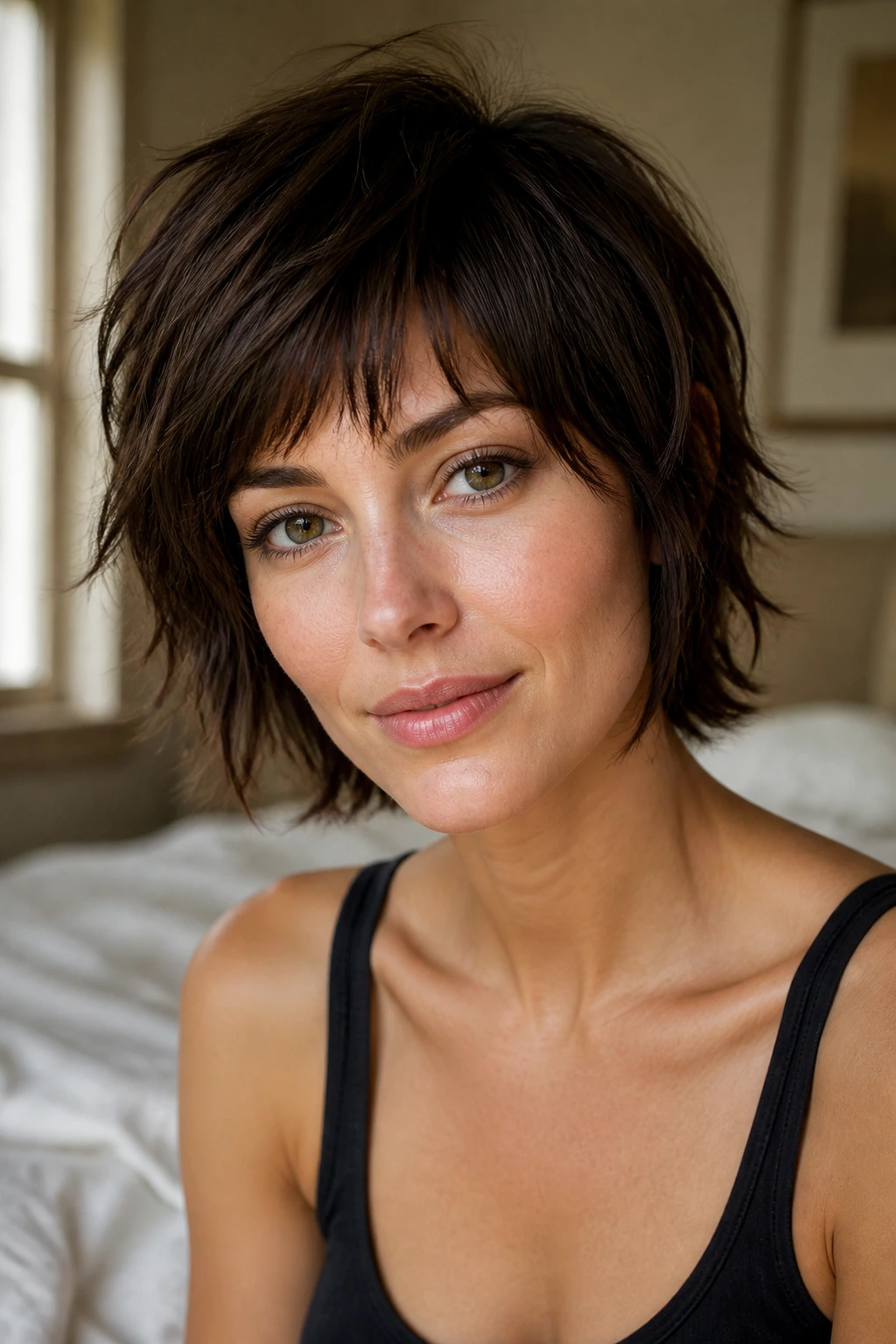
Too many short layers near the crown: The hair puffs up and loses its line. The fix is simple: keep the shortest pieces longer and concentrate texture in the face frame or ends.
Overusing the razor: This is where ends start looking thin, dry, and a little shredded. A lighter hand with point-cutting gives movement without that frayed finish.
Ignoring density and curl pattern: A cut that looks airy on one person can become triangular on someone else. Bring inspo photos, but ask how the same shape should be adapted to your hair, not copied line for line.
Going too heavy on styling products: Creamy, oily products can flatten the broken edges and erase the texture you paid for. Use just enough to control frizz, then stop.
Skipping trims for too long: Choppy cuts lose their shape faster when the fringe and face frame grow out unevenly. If the front starts falling into your eyes or the ends start looking thin, it’s time.
Questions People Ask Before They Commit to Choppy Layers
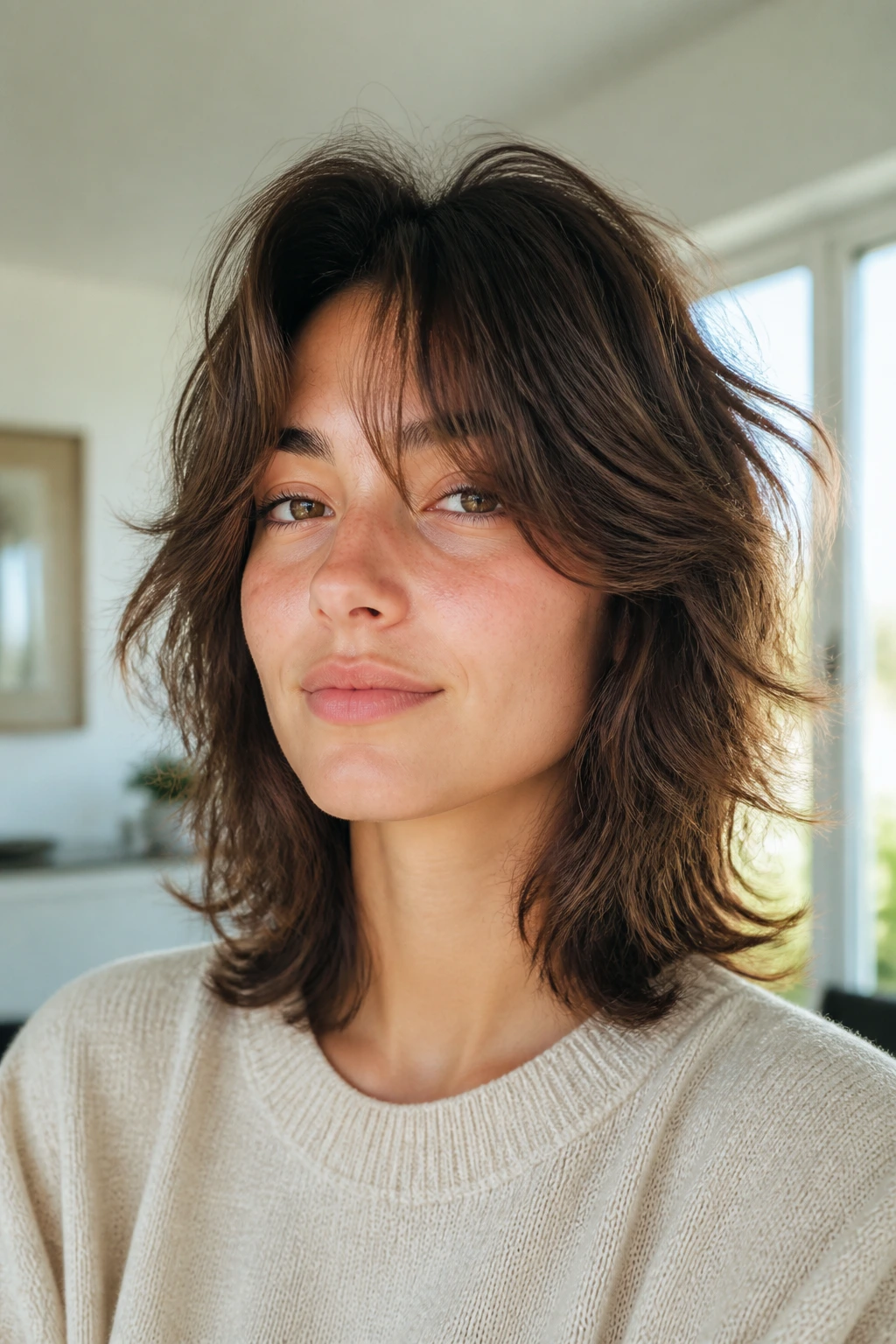
What exactly makes a haircut “choppy”?
It usually means the ends are cut with visible separation instead of one blunt, even line. That separation can come from point-cutting, slicing, or carefully placed layers, and the best versions still keep a real shape underneath.
Do choppy haircuts work on fine hair?
Yes, but they need a lighter touch. Fine hair usually looks best with longer layers and minimal thinning so the ends don’t turn wispy or transparent.
Can curly hair wear a soft choppy cut?
Absolutely. The trick is to shape it with the curl pattern, often while dry, so the layers land where the curls actually sit instead of where they were when wet.
How do I ask for lived-in texture without getting a messy cut?
Use plain language: say you want movement, softness around the face, and a perimeter that still feels full. Mention that you do not want over-thinned ends or anything that looks shredded.
Will a choppy haircut require hot tools every day?
Not if the cut is built well. Many of these shapes air-dry nicely with a little mousse or cream, though a quick bend around the face often makes the finish look more polished.
What if my hair frizzes when it’s layered?
Then the cut probably needs softer layering and less aggressive texturizing. Frizz often gets worse when the ends are too thin or the hair is cut too high through the interior.
How often should I trim this kind of cut?
Short versions may need a trim every 4 to 6 weeks, while longer layered cuts can stretch to 8 to 12 weeks. The fringe usually tells you first when it’s time.
Soft Texture, No Static Shape
The best choppy haircut does not scream for attention. It moves when you turn your head, falls easily into place, and still looks like hair rather than a pile of trendy pieces. That balance is harder to get than people think, which is why the most wearable versions usually feel a little understated in person and a lot better than they sound on paper.
If you want lived-in softness, ask for shape first and texture second. That order matters. Get that part right, and the haircut does the nice work for you while you’re busy doing everything else.
