



Blonde hair looks for Asian women can be gorgeous when the shade is chosen with some restraint and a little nerve. Not the reckless kind. The useful kind. On a dark base, blonde doesn’t land all at once; it passes through red, copper, gold, and sometimes a stubborn orange stage before it settles into beige, ash, champagne, or platinum. That is why the same blonde swatch can look soft and creamy on one head, then loud and brassy on another.
The best blonde on Asian hair usually isn’t the one that screams the loudest from a bottle chart. It’s the one that respects your starting level, your undertone, and how much time you actually want to spend toning, masking, and watching your roots. A level 9 icy bob makes sense for someone who likes a sharp, polished finish and can live in purple shampoo. A honey balayage with a shadow root makes more sense if you want movement and less salon pressure. Both can look fantastic. They just solve different problems.
What I like about blonde on Asian hair is the range. It can be glossy and expensive-looking, almost beige against straight lengths. It can be smoky and editorial. It can be warm enough to bring out gold in the skin, or cool enough to cut through redness. The trick is not to chase one perfect blonde. It’s to find the version that sits naturally on your face and still looks intentional two, six, and ten weeks later.
Why This Collection Works Better Than a One-Size-Fits-All Blonde List
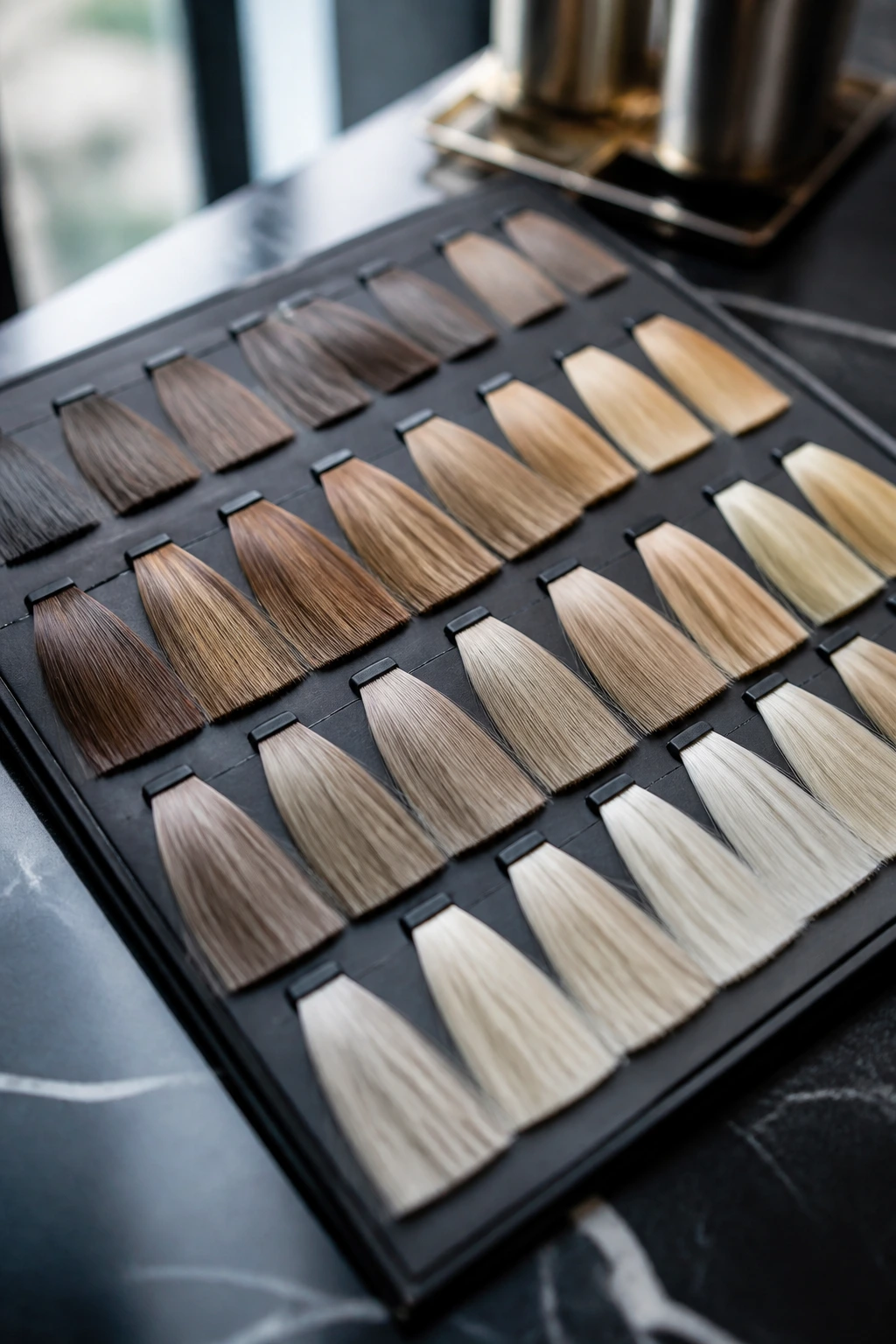
- Built for dark starting bases: These looks assume you may be lifting from black or deep brown hair, so the shades lean practical, not fantasy-level unrealistic.
- Soft and bold options are both here: You’ll find quiet beige balayage, but also platinum money pieces and icy layers for anyone who wants more contrast.
- Salon language is built in: A good color appointment goes faster when you can name the tone, placement, and maintenance level without waving your hands around helplessly.
- Low-maintenance blondes are included: Rooted, blended, and face-framing looks show up here for people who do not want a full head of bleach every six weeks.
- Different cuts get their due: A bob, lob, pixie, long waves, and straight layers all wear blonde differently. That matters more than most people think.
- Tone and texture are treated as part of the look: Blonde is not only about color. The shine level, root shadow, and styling finish change everything.
1. Soft Ash Blonde Bob
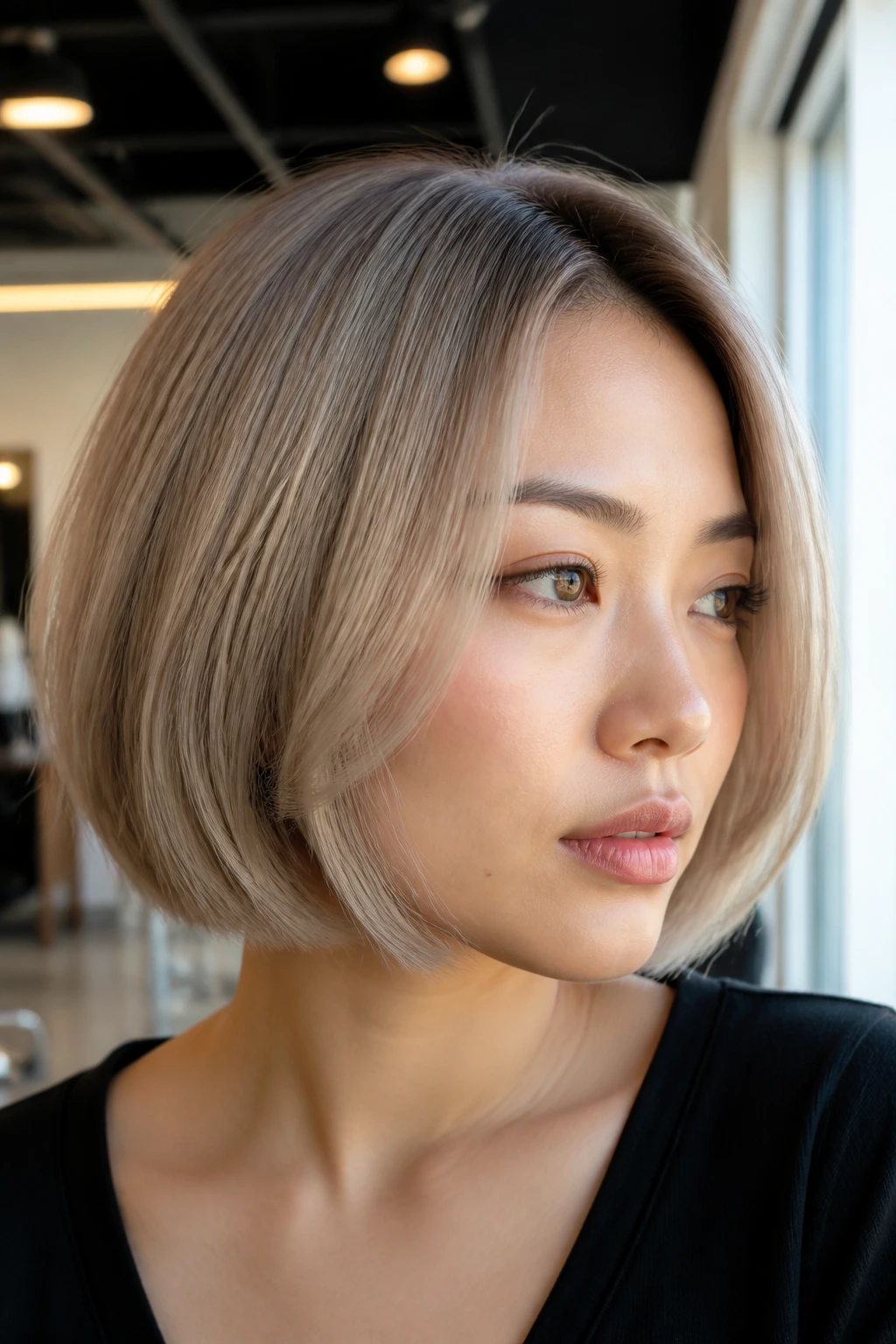
This is the blonde for anyone who wants clean lines and a cool finish without looking frosty all the way to the scalp. On a bob, ash blonde feels crisp, almost tailored, and the short shape keeps the color from reading flat. The ends need to be lifted evenly, though, because a bob shows every patch of warmth the minute you tuck one side behind your ear.
Ask for a level 8 to 9 ash-beige blonde with a soft root melt if your natural base is dark. That shadow at the root keeps the grow-out from looking harsh, which matters a lot when the cut sits right at the jaw. Straight styling makes the tone look sleek; a bend at the ends gives it a little more movement.
If your skin leans neutral or cool, this shade can look especially clean around the face. It also works well if you like makeup with sharper brows and a cooler lip, because the hair won’t fight those tones. Keep the bob blunt or slightly undercut at the nape. Too much layering makes the ash tone lose that sharp, polished edge.
2. Honey Beige Balayage
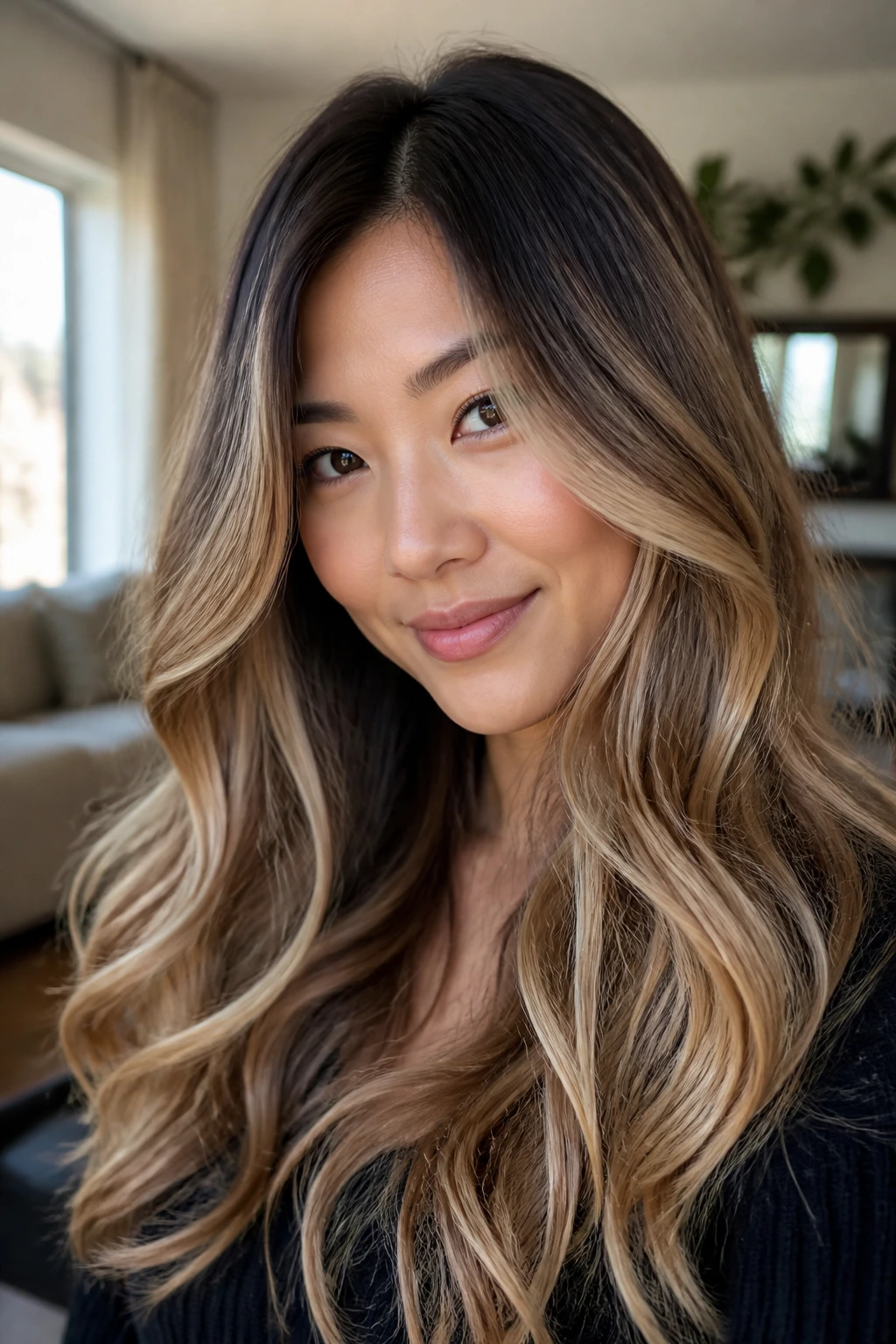
Honey beige balayage is the shade I reach for when someone wants blonde, but not the kind that announces itself from across the room. The mix of gold and beige softens dark hair without stripping away all the depth, and balayage placement lets the face stay bright while the lower lengths keep some shadow. It is forgiving. That matters.
The warm-gold notes can flatter golden or olive undertones beautifully, especially when the blonde is painted in wider ribbons instead of tiny highlights. On long hair, the color catches movement better if you wear loose waves or a smooth blowout with a round brush. Straight, pin-straight styling can make honey tones look heavier than they are.
This is one of the better blonde hair looks for Asian women who want a softer grow-out. The darker root keeps the whole thing grounded, and the beige in the mid-lengths stops it from veering orange. If you ask your colorist for “beige blonde balayage with honey ends,” you’ll usually land closer to this effect than if you simply say blonde and hope for the best.
3. Platinum Money Piece
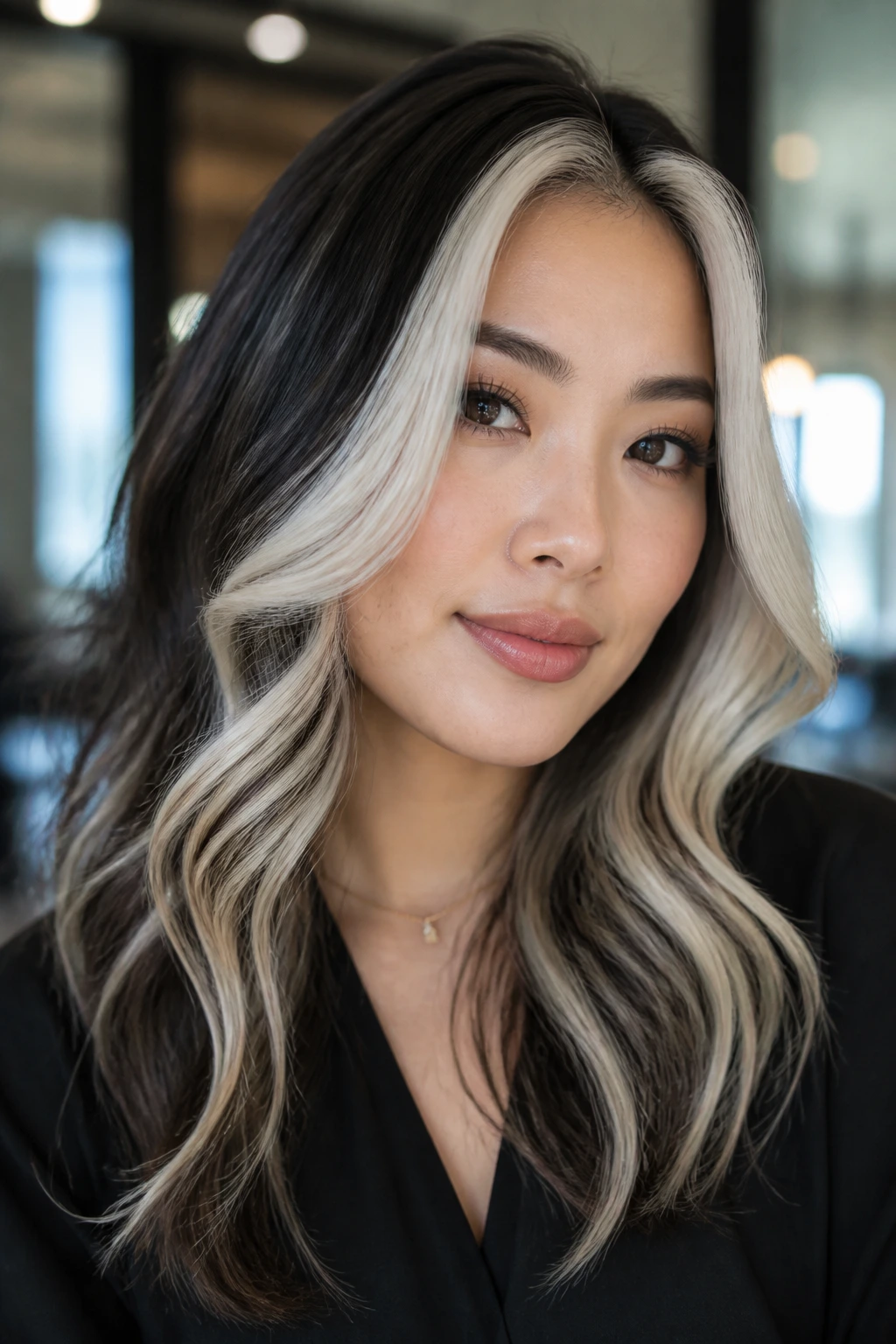
A platinum money piece is pure contrast, and that’s the whole point. The front sections are lightened to a near-white blonde while the rest of the hair stays deeper, so the face gets framed with a bright stripe that looks deliberate instead of accidental. On dark Asian hair, this works especially well when you want impact without committing every inch of hair to the bleach bowl.
The trick is placement. The brightest pieces should sit just inside the hairline and graze the cheekbones, not disappear into the crown. If the money piece is too thick, it can look like a strip of paper. Too thin, and the effect gets lost under waves or bangs. A soft bend with a flat iron or curling wand helps the contrast show.
Maintenance is not gentle here. Platinum front pieces need toning more often than beige balayage, and they can dry out fast if you overheat them. Still, this is one of those looks that changes the whole face with very little actual hair color. It’s sharp, expensive-looking, and a little bit ruthless in the best way.
4. Mushroom Blonde Lob
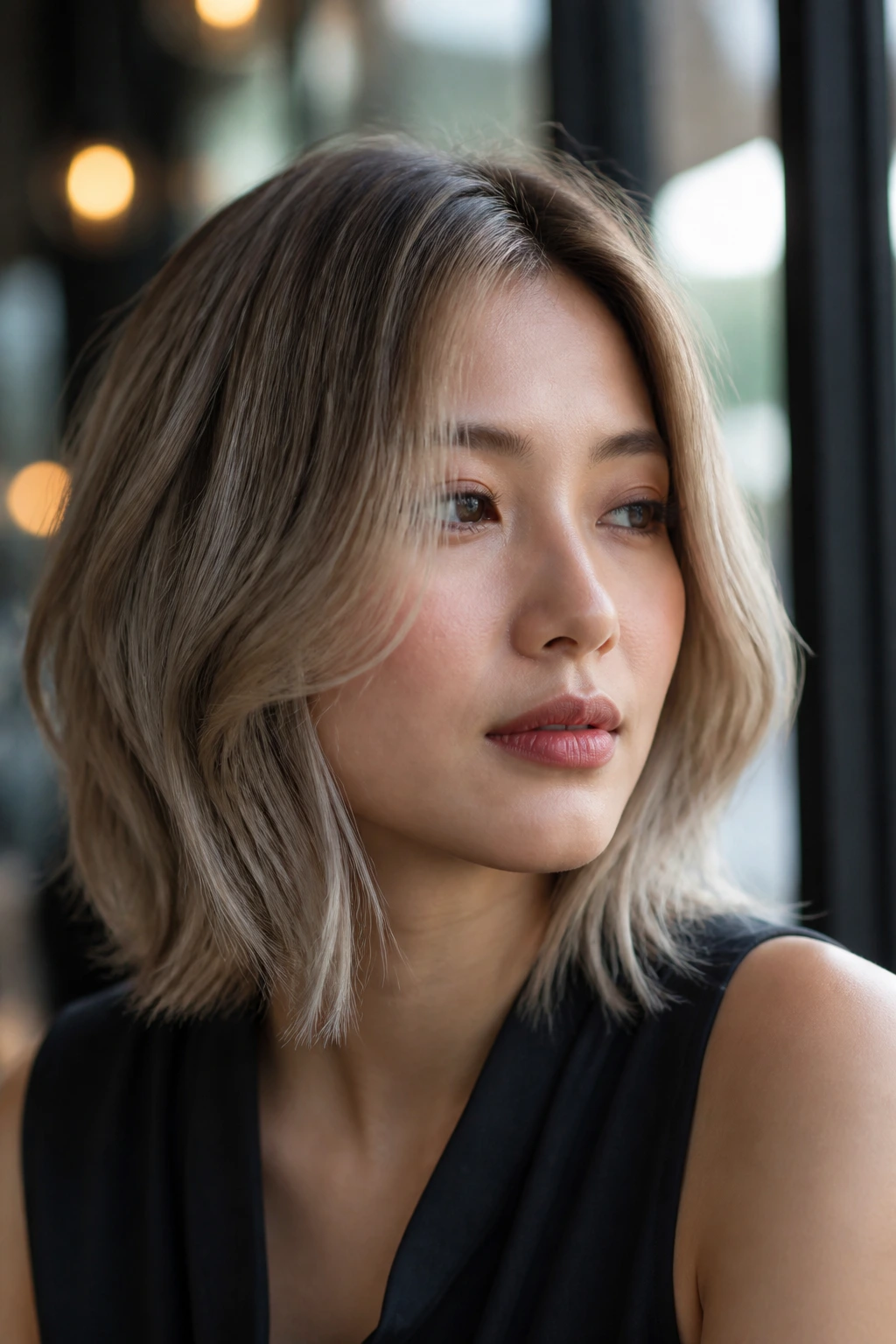
Mushroom blonde lives in that cool, smoky zone between brunette and blonde, which is exactly why it looks so good on a lob. The tone is taupe, beige, and ash all at once, and on darker hair it keeps the brunette depth while softening the ends with pale restraint. It never tries too hard.
A lob gives mushroom blonde room to breathe. The color looks richest when the cut brushes the collarbone and the layers are kept long enough to show the tonal shift. If the hair is cut too choppy, the smoky blend can get broken up and start looking muddy rather than dimensional. Ask for a cool beige gloss over a softly lightened base.
This shade flatters people who like muted makeup, clean tailoring, and hair that looks expensive even when it’s tucked into a sweater. It is also a useful blonde if you work in a more conservative setting and still want visible color. Not loud. Just interesting. That’s the charm.
5. Champagne Blonde Waves
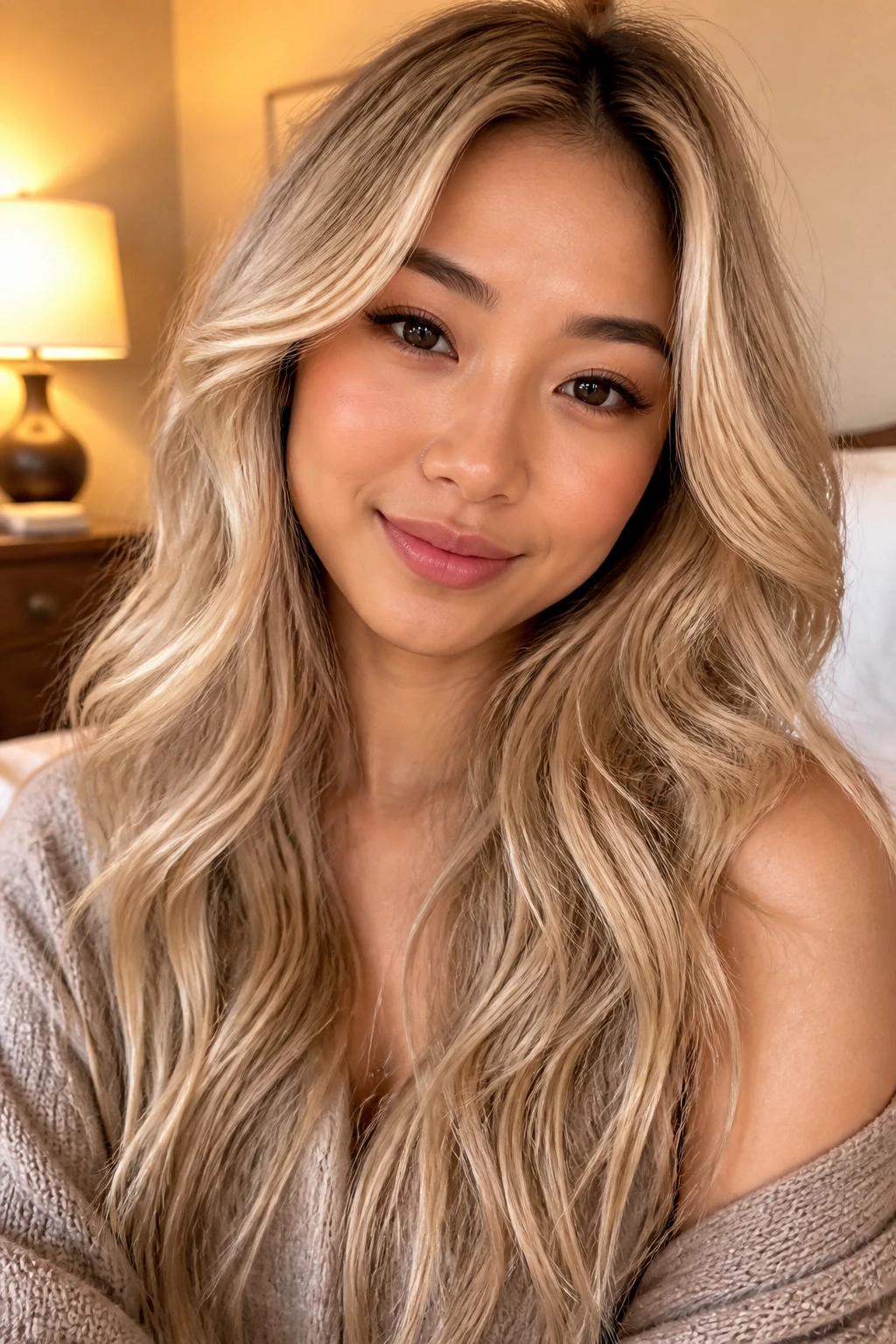
Champagne blonde has a pale gold glow with a creamy edge, and waves are what make it sing. On Asian hair, the shade often sits right on top of a darker root or a slightly deeper lowlight, which keeps the blonde from looking washed out. The tone can feel festive without being sugary.
Loose waves are the best shape for this look because they break the blonde into ribbons. A flat finish can make champagne blonde look almost too even, especially if your hair is very dense. A 1.25-inch iron or a large round brush gives the color movement and lets the lighter pieces catch in different places as you turn your head.
I like this shade on medium skin tones, especially if you want brightness without icy contrast. It also photographs nicely under warm indoor light, which is a real advantage if your hair tends to lose color definition in dim rooms. Ask for beige-gold toner, not a yellow one. That difference is subtle on paper and obvious on the head.
6. Caramel Bronde Curls
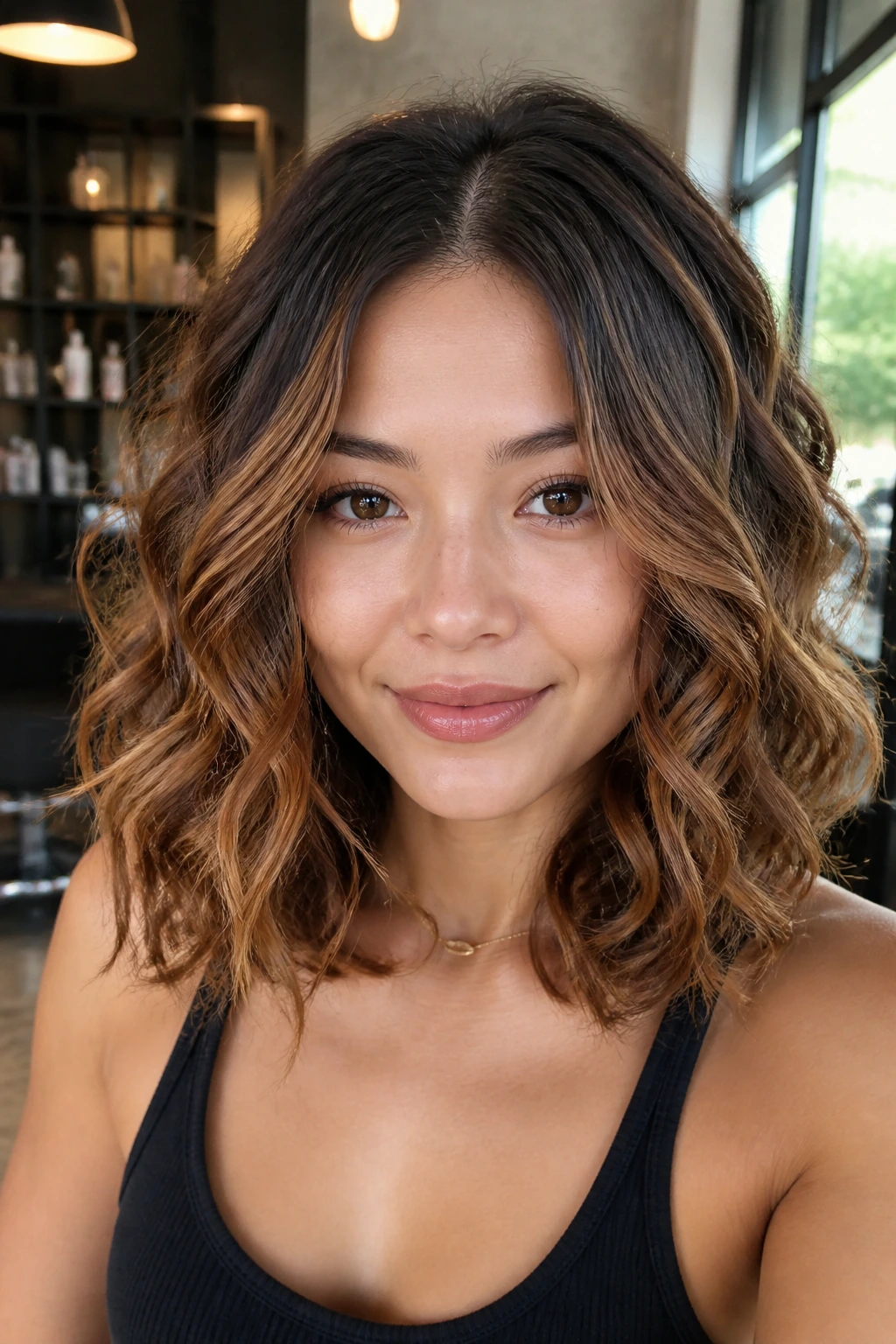
Caramel bronde is the least fussy blonde in the group, and that’s why so many people keep coming back to it. The brown base stays visible, while caramel ribbons add lift through the mids and ends. On curls, the color looks deeper than it does on straight hair, because the bends keep the shadow and light moving together.
This look is strong if you want a soft transition into blonde rather than a dramatic leap. It works especially well on medium-to-long curly or wavy hair where the tone can shift from chestnut near the root to warm beige at the ends. A center part gives it a polished feel. Side parts push it more glam.
If you want a low-maintenance blonde that grows out without shouting for attention, this is a good place to start. The caramel tones also play nicely with warm skin and brown eyes. And no, it does not have to be orange. A good caramel bronde has depth first, sweetness second.
7. Icy Silver-Blonde Layers
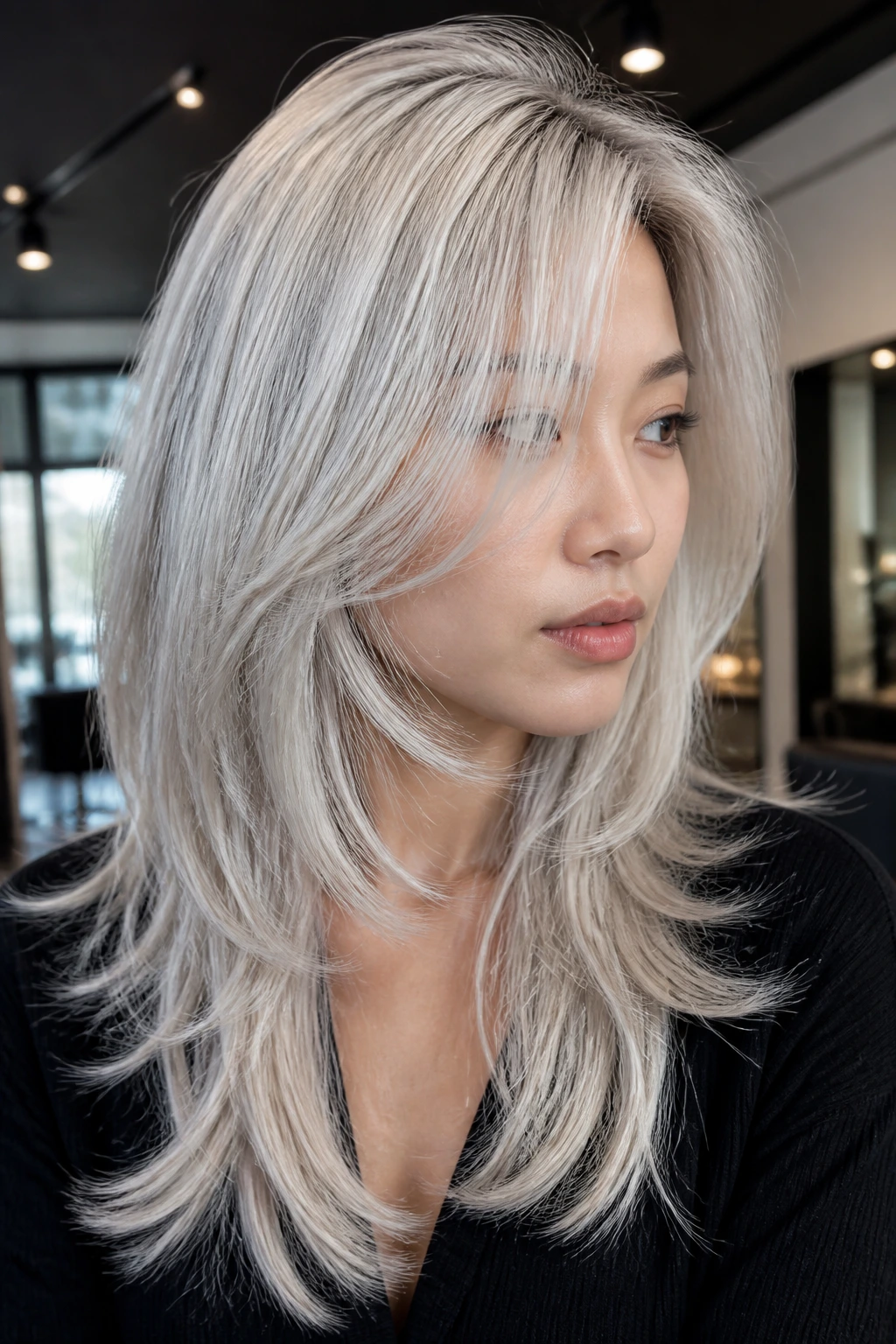
Icy silver-blonde is not shy. It is the kind of color that needs patience, a strong toner, and hair that can tolerate a serious lift. On layered hair, though, the payoff is worth it because the cool metallic tone gets broken up by movement instead of sitting in one flat sheet. The layers keep it airy.
This is best if you like a high-contrast, almost editorial finish. On dark Asian hair, it usually takes careful lifting to reach a pale enough base for the silver tone to hold. If the hair lifts only to a yellow-gold stage, the final result can go beige instead of icy. That may still look lovely, but it is a different mood entirely.
The styling matters more than people expect. Smooth, polished blow-drying makes silver-blonde look futuristic; messy waves make it look softer and less severe. Either way, this is one of the more maintenance-heavy shades in the lineup. It rewards discipline. It does not reward neglect.
8. Butter Blonde Curls
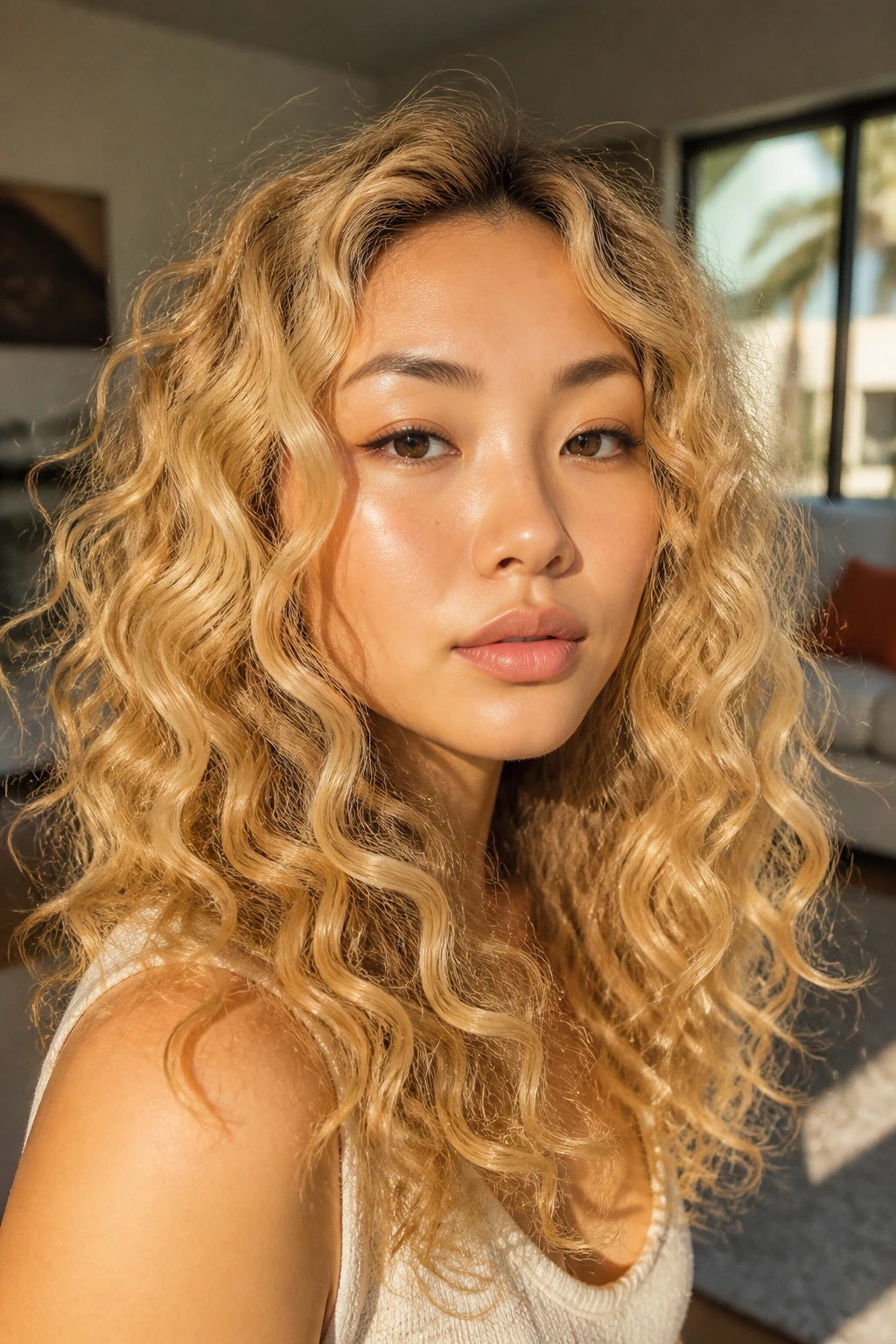
Butter blonde is warm in the nicest way. Not brassy. Not orange. Think creamy yellow-gold with a soft, rounded finish that looks especially good on curls because the texture keeps the color from feeling heavy. The result is bright, but not sharp.
Curls help butter blonde in a practical way: the tonal variation between curl clumps creates depth that straight hair would have to fake with lowlights. If your hair is naturally curly or bent, this shade can look lively even with a fairly simple color pattern. Ask for a soft lift and a golden-beige gloss instead of a pale toner that strips the warmth out.
This is a strong choice for warmer undertones, but it can also work on neutral skin when the brows and makeup are kept soft. The look feels plush, almost cushiony, which is a rare thing to say about hair color, but accurate. It’s blonde with a little comfort in it. I keep coming back to that.
9. Rooted Vanilla Blonde
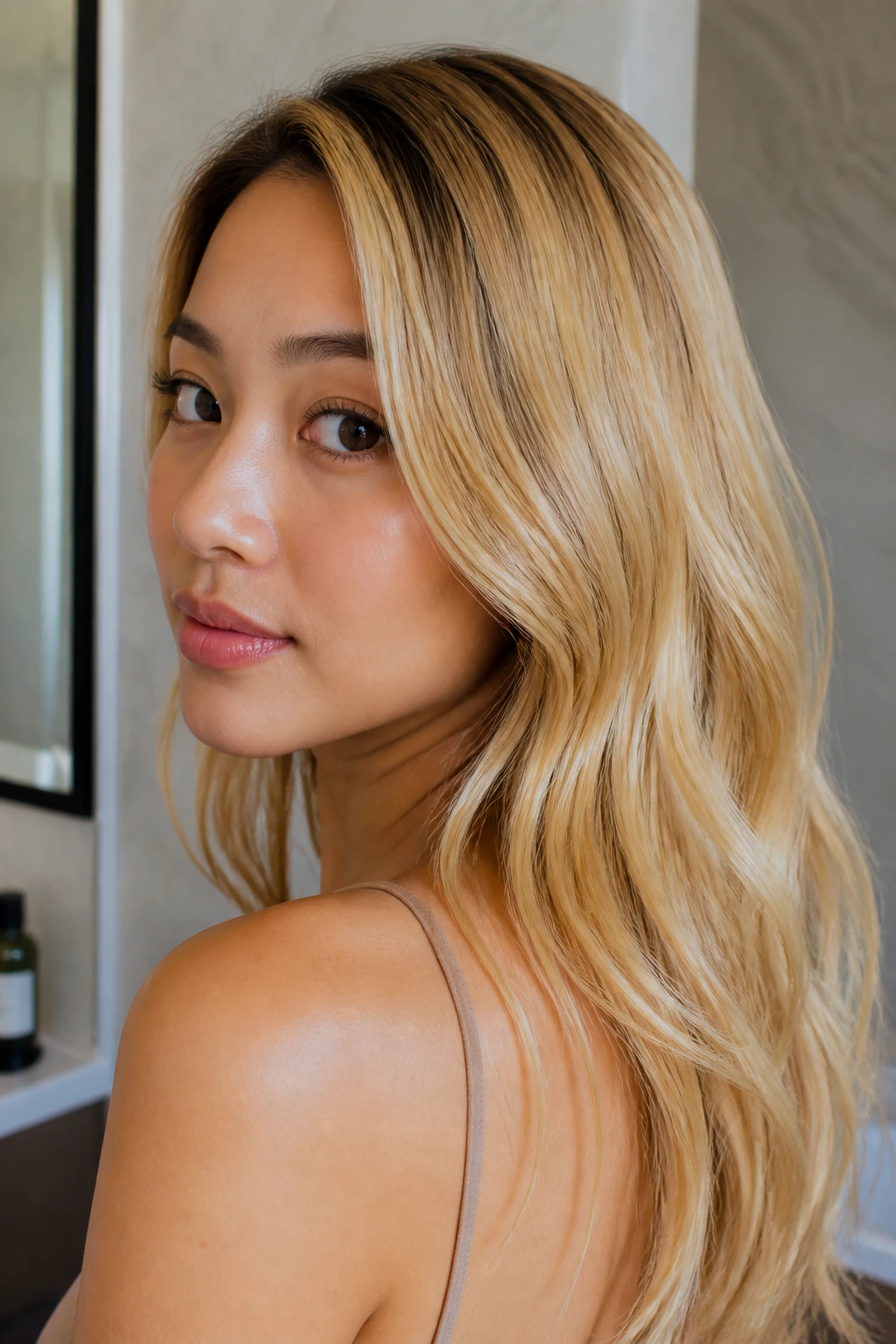
Vanilla blonde is one of those shades that looks simple until you try to get it right. The best version has a creamy, pale finish with a rooted shadow that stops the color from looking blocky. On dark hair, that root melt matters a lot because it lets the lighter mid-lengths and ends feel intentional instead of overprocessed.
This look works especially well on long, smooth hair where the vanilla tone can stretch from top to bottom without interruption. If your hair is layered, keep the pieces long and blended so the root stays soft. Too much choppiness can make the light areas break into patches, and vanilla blonde needs cohesion.
Ask your colorist for a neutral-to-cool blonde with a soft shadow root if you want this effect. The root should not be black against pale lengths. It should fade. That fade is the whole point. When done well, vanilla blonde reads polished from a distance and creamy up close, which is about as useful as blonde gets.
10. Sandy Beige Curtain Fringe
Curtain fringe changes the whole mood of blonde hair, especially when the shade is sandy beige rather than bright gold. The fringe sits near the face, so it catches light fast, and the softer beige tone keeps it from overpowering the rest of the cut. On Asian hair, this is a smart way to test blonde near the face before going lighter everywhere.
The best version has a small root shadow and a feathered blend through the front pieces. That way, the fringe does not look like a disconnected panel. If the ends are slightly lighter than the top, the hair moves better when you tuck it behind the ears or let it fall open around the cheeks.
This is one of the easiest blondes to live with if you like bangs or face-framing layers. It gives brightness where people notice it most, but the overall effect stays soft. And soft is underrated. Especially when your hair is naturally dark and you want the blonde to feel like part of the cut, not a costume glued on top of it.
11. Golden Honey Pixie
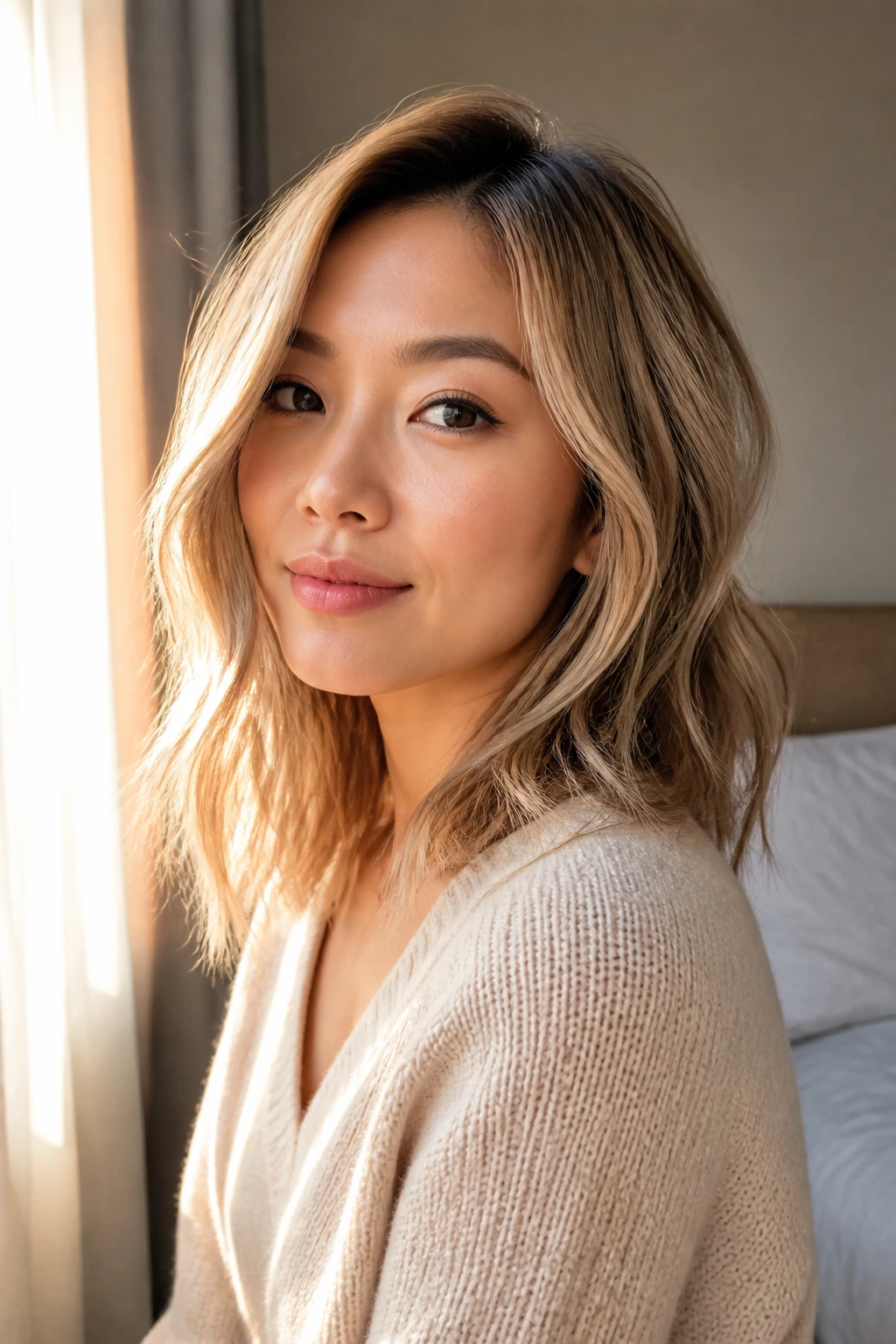
A pixie in golden honey blonde has a different energy from the same shade on long hair. The short length puts all the attention on shape, so the color needs to be warm, clean, and slightly dimensional or it can look flat very fast. Honey blonde brings just enough glow to keep the crop from feeling severe.
Texture is everything here. Ask for piecey layers on top and a little separation around the crown so the blonde can break up the shape. A dab of matte paste or light wax will make the light pieces stand out, especially near the fringe. Slicked down, it loses the point. You want movement.
This look suits people who want something sharp but not icy. It also works well if your natural hair is thick, because the cut can reduce bulk while the honey tone adds softness. Short blonde hair can go very polished very fast. Golden honey keeps it from looking like a helmet. Small thing. Big difference.
12. Smoky Beige Balayage
Smoky beige balayage sits in one of my favorite blonde families because it refuses to be either too warm or too cold. The tone is muted, almost dusty, and that makes it easy to wear on dark Asian hair without fighting your natural depth. It’s blonde for people who like low drama and good hair.
Balayage placement is the reason it works. The lighter pieces are painted where sunlight would naturally hit — around the face, over the surface, and through the ends — instead of sitting in hard stripes. That means the grow-out is gentler, and the hair looks thicker because the darker base is still doing some visual work.
This shade is a strong option if you want to ease into blonde without losing your brunette identity. It looks especially good in soft waves or a low bun where the dimension can peek through. Smoke in the tone. Beige in the finish. That combination saves a lot of blondes from looking noisy.
13. Beige Blonde Straight Layers
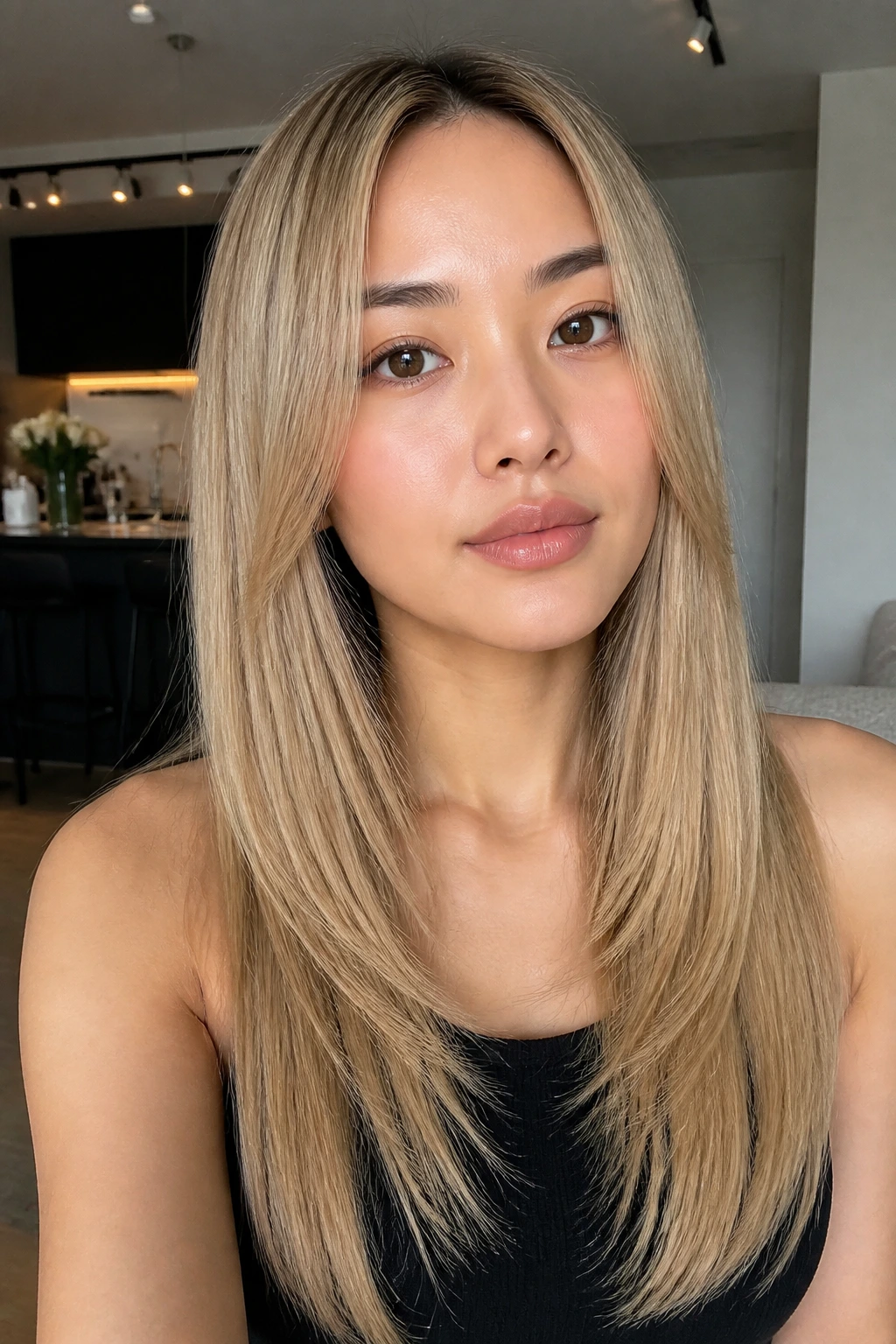
Straight layers and beige blonde are an excellent pair because the cut creates clean lines while the color supplies softness. Beige blonde sits between ash and gold, which means it won’t scream yellow under indoor lighting and won’t go chalky under daylight. That balance matters a lot on dark hair.
This look is all about the light-catching panels through the lengths. Long layers keep the beige tones from looking like one flat sheet, and a center part gives the style a calm, symmetrical feel. If the layers are too short, the blonde can look chopped up. Beige prefers elegance. I know that sounds fussy, but it’s true.
If you heat-style your hair often, this is easier to maintain than a very icy blonde because the toner has a little more room before it starts to shift. A good heat protectant and a smooth blow-dry will make the color look richer. Straight blonde can be plain if it’s done lazily. Done well, it looks precise.
14. Smoky Bronde Long Layers
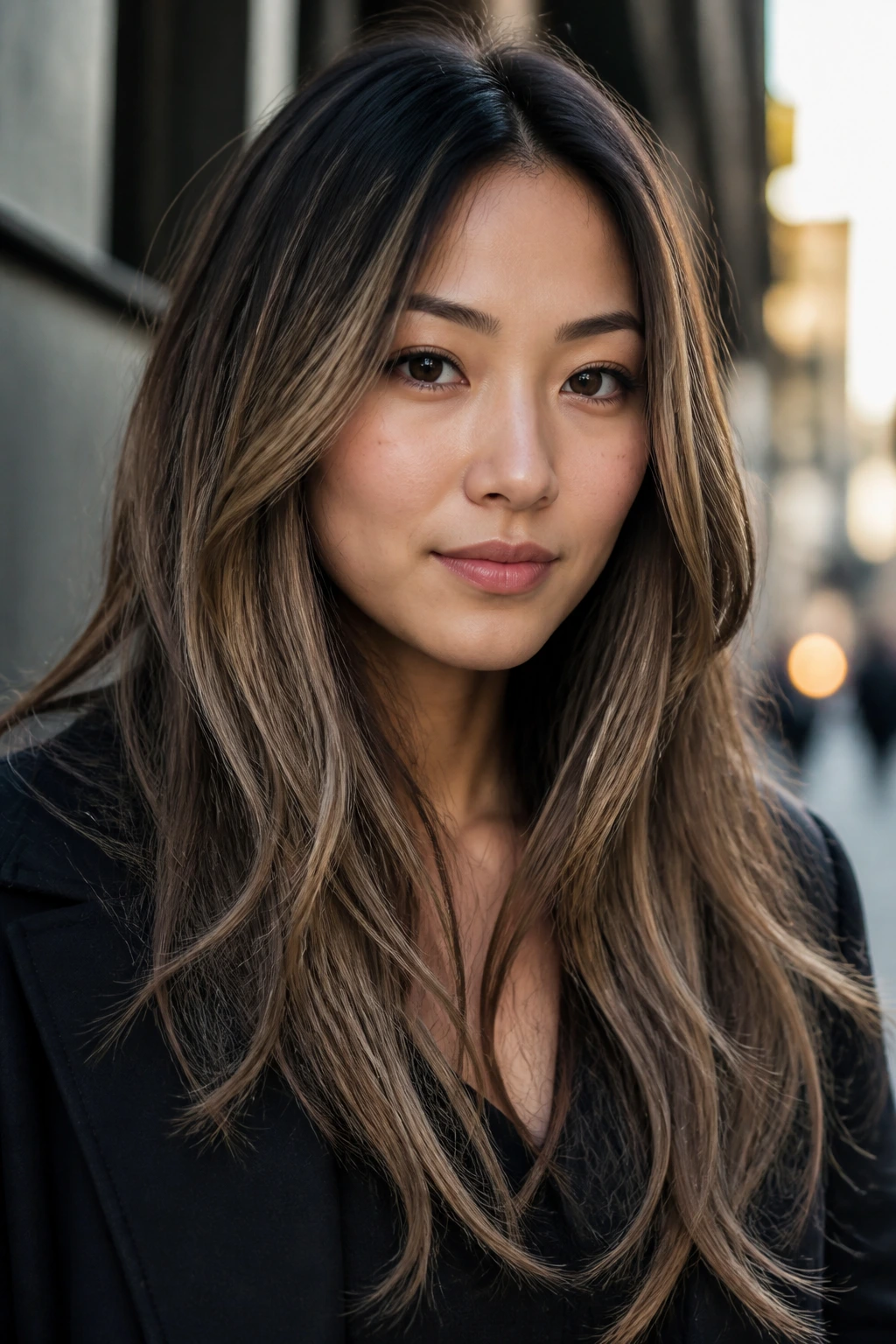
Bronde is what happens when you refuse to choose sides, and there’s nothing wrong with that. Smoky bronde keeps the hair mostly brunette, then threads in blonde in a way that feels expensive rather than obvious. Long layers help the darker and lighter tones fall through each other instead of sitting in obvious bands.
This is one of the most forgiving blonde-adjacent looks for Asian women who want dimension but not full lightening. It can be done with balayage, fine foils, or a mix of both. The smoky finish keeps the blonde from turning too bright, which is helpful if your skin looks better next to neutral or cool tones.
Wear it with loose bends or big brushed-out waves. That style separates the layers and makes the bronde look deeper. If you like your hair to look fuller at the ends, this is a smart choice, because the contrast between brunette and blonde creates that visual thickness. Easy? Not quite. Smart? Absolutely.
15. Pearl Blonde Wavy Lob
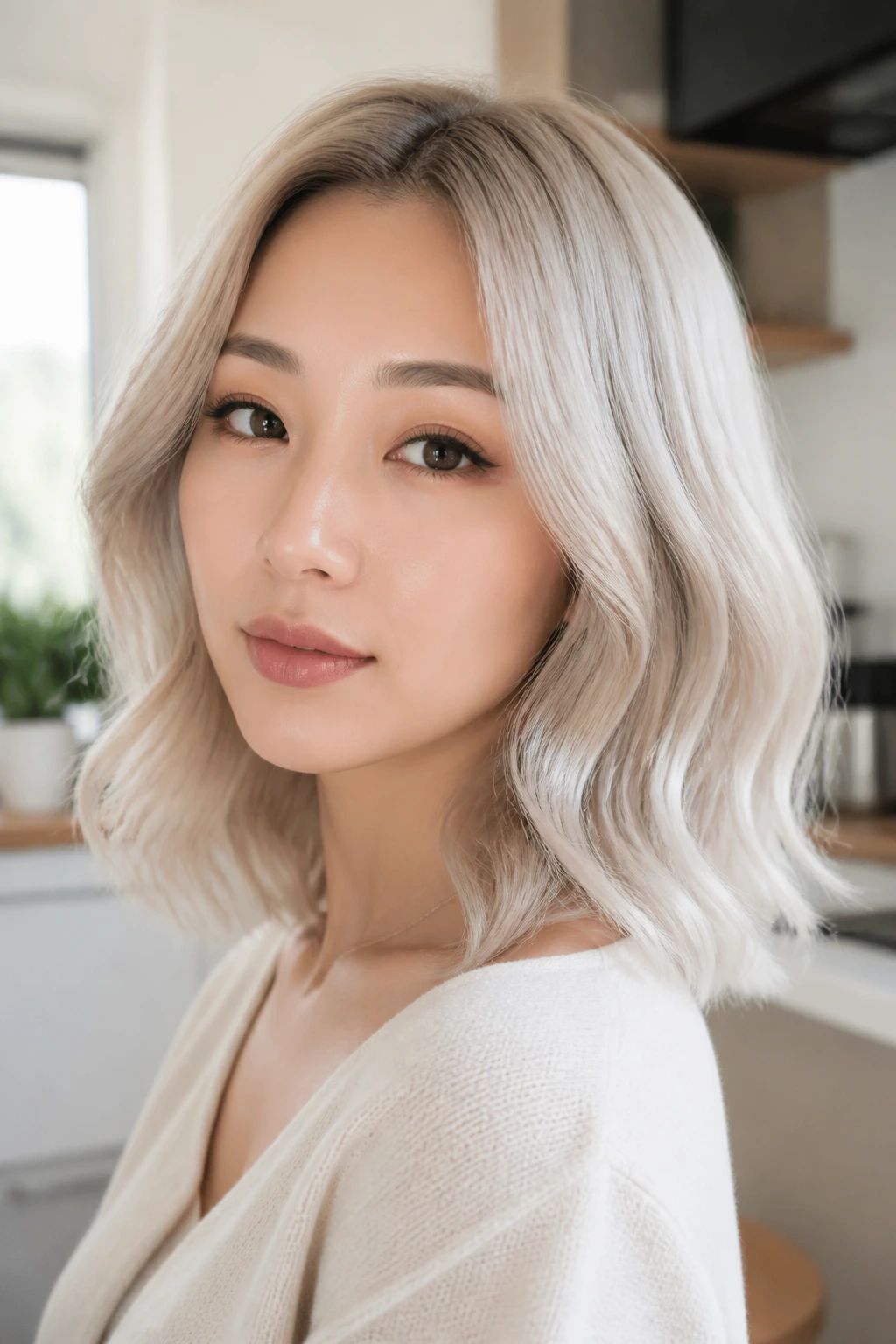
Pearl blonde has a soft sheen that sits between cool beige and pale silver, and on a wavy lob it feels clean without becoming severe. The medium length is part of the appeal. It gives the color enough surface area to show tonal shifts, but not so much that you need waist-length maintenance to keep it fresh.
The best pearl blonde is glossy. Flat color kills it. Waves, even gentle ones, let the pearl tone move between lighter and darker angles, which makes the whole cut feel alive. Ask for a neutral-cool toner with a touch of softness, not a hard white finish. White can be beautiful, but pearl is kinder on the face.
This is a nice option if you like cool makeup tones, silver jewelry, and neat lines in your clothing. The hair will read polished without getting icy enough to feel severe. If you’ve ever wanted blonde that looks like the shell of a pearl rather than the inside of a banana peel, this is the lane.
16. Sunlit Face-Framing Balayage
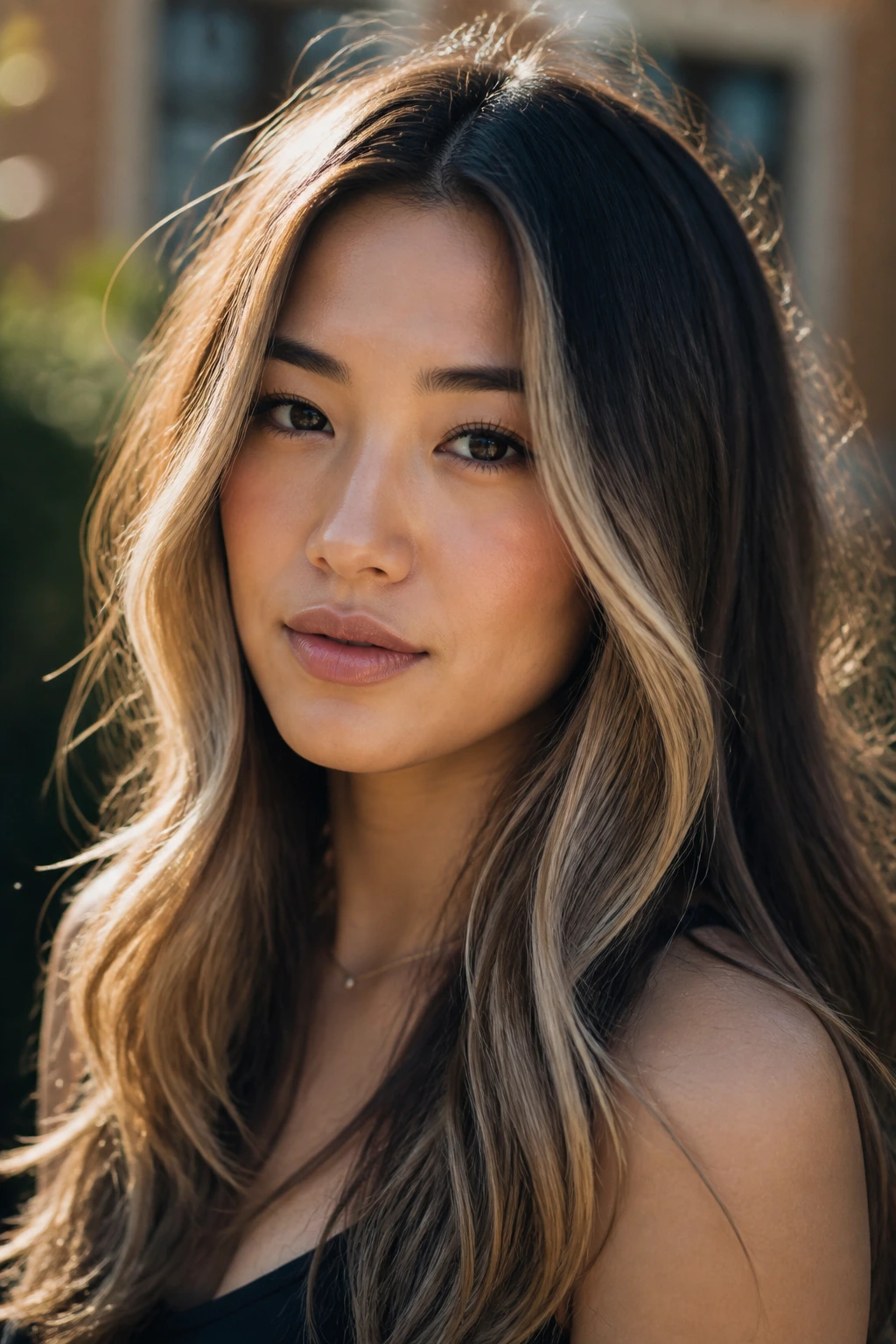
A face-framing balayage is the easiest way to get brightness without committing the whole head to lift. The light pieces start near the cheekbones and jaw, then blend back into darker lengths. On Asian hair, that setup is useful because it keeps the root area grounded while the front gets the lift people notice first.
“Sunlit” is the right word here because the goal is to mimic natural light, not create a stripe. A few well-placed pieces can do more than a full set of tiny highlights if the colorist knows where your part falls. That part matters. A lot.
This look suits ponytail wearers, bun people, and anyone who likes their hair down only part of the week. Even pulled back, the front pieces keep showing up. Even with little styling, the effect is there. That’s the appeal. It gives blonde without making the rest of your life revolve around toner appointments.
17. Cream Soda Blonde
Cream soda blonde is warm, creamy, and a little playful, which is not a bad combination if you want blonde that feels softer than champagne and brighter than honey. The tone usually sits in the pale beige-gold family, and it looks best when the hair has enough gloss to keep the color looking smooth rather than dry.
The shade suits medium to long hair, especially if you like a blowout finish. The color has a rounded, plush look that gets flattened if the hair is overly textured or frizzy. A smoothing cream and a large brush can make the tone feel more expensive, which is not nothing.
Ask for a creamy beige blonde with subtle gold warmth. Not yellow. Not ash. The middle ground is the whole point. Cream soda blonde can be a bridge shade for people who want to go lighter but are not ready for anything stark. It’s friendly blonde. Slightly flirtier than it sounds, too.
18. Toasted Almond Highlights
Toasted almond highlights are a quieter blonde choice, and I mean that in a good way. The light pieces stay within the brown-to-light-brown range, so the overall hair reads dimensional and sun-softened instead of fully blonde. On dark Asian hair, that’s useful if you want brightness without losing your natural depth.
The highlights should be fine enough to blend, but not so thin that they disappear. A few ribbons around the top layers and through the ends can mimic natural lightening from sun exposure. If the color is too uniform, the “toasted almond” effect turns dull. The little contrast is what sells it.
This is an easy look to wear with everyday makeup and casual clothes because it never feels too dressed up. It also grows out with less anxiety than a pale blonde. If you’re blonde-curious but not ready to stare at every root millimeter in the mirror, start here. Honest advice. It saves a lot of regret.
19. Soft Ombré Blonde
Soft ombré blonde is the smoothest color transition in the bunch. The roots stay dark, the mids lighten gradually, and the ends carry most of the blonde. On long Asian hair, that gradient can look beautiful because it respects the natural depth at the scalp and still gives you a bright finish where the hair moves.
The success of ombré depends on blur. You do not want a hard line, not even a cool one. A good ombré fades so gradually that you almost miss where brunette becomes blonde until you see the ends. That kind of softness also helps if your hair grows quickly or if you wash often.
This shade is especially useful if you wear long waves or layered curls, because the color flow shows up best in motion. Straight hair can make the gradient look more obvious, which may or may not be what you want. If you like hair that starts dark and ends light without making a big speech about it, this is the one.
20. Peachy Champagne Blonde
Peachy champagne blonde sits in a warmer, more playful lane than standard champagne. The peach note softens the gold and gives the hair a slight rosy warmth, which can look lovely on medium skin and on faces that get a little washed out by icy tones. It is not pink hair. It’s subtler than that.
This shade usually works best on pre-lightened hair that’s been toned carefully, because the peach tint can disappear if the base is too dark or too yellow. A gloss keeps the color fresh, and soft waves help the peachy warmth catch in different spots. Too much heat can mute the tint fast.
I like this look when someone wants something flattering and a little unexpected. It’s still blonde. Nobody will mistake it for anything else. But it has enough warmth to feel personal, which is often what people are really after when they say they want a change.
21. Beige Money-Piece Lob
A beige money-piece lob is one of the easiest ways to make blonde feel modern without going full light all over. The lob gives structure, the money piece brightens the face, and the beige tone keeps the contrast from feeling too severe. It is a tidy little trio.
This works especially well when the front pieces are a touch brighter than the rest of the head, but still not platinum. That difference gives shape to the face. If the money piece is too bright and the rest of the lob is too dark, the look can feel disconnected. Beige acts like the bridge.
The lob length helps the blonde sit close to the collarbone, which is flattering in both straight and wavy styling. Tuck one side behind the ear and the front pieces do all the work. That is the kind of lazy detail I like in a hair color. No one should have to fight their own style.
22. Ultra-Light Platinum Layers
Ultra-light platinum is the boldest version here, and it demands a lot from the hair and the person wearing it. The layers matter because they stop the shade from looking like one solid sheet of white. With movement, platinum can look airy. Without it, the color can turn heavy and unforgiving.
This is not the shade to choose if you want a low-maintenance schedule. Root touch-ups, toning, and deep conditioning all become part of the deal. But if you want a dramatic blonde that reads sharp and very deliberate, platinum does exactly that. It erases warmth. That’s the appeal.
The best styling is clean and smooth. Blowouts, polished waves, and tucked-behind-the-ear looks all suit it. Frizzy platinum can look dry fast, so the finish matters as much as the lift. If you’re going all the way pale, do it with a plan, not a whim.
23. Ash Beige Lob with Shadow Root
Ash beige with a shadow root is one of the most wearable blonde combinations for darker hair because it gives you brightness without a hard grow-out line. The root stays deeper, the mids soften into beige, and the ends lean ash so the whole thing looks blended from day one. On a lob, the effect feels tidy and controlled.
This is a good choice if your hair has a tendency to pull warm when lightened. The ash tone reins that in, while the beige keeps the color from looking gray. That balance is delicate. Too much ash, and the hair can look flat. Too much beige, and brass starts creeping back in.
Wear it with soft bends or a smooth blowout. Either one helps the root melt show off instead of disappearing. This is one of those shades that looks expensive because it looks planned. The haircut and the color are doing the work together.
24. Rose Gold Blonde
Rose gold blonde gives blonde a blush-toned twist, and on Asian hair it can be a very flattering way to add warmth without defaulting to yellow. The pink-gold blend is subtle enough to pass as a fashion blonde rather than a bright fantasy color, especially when the base is neutral and the finish is glossy.
The shade is best on pre-lightened hair that can hold a soft pastel tone. If the base is too dark, the rose note won’t show. If the base is too porous, it can fade quickly. That means the condition of the hair matters a lot here. No shortcuts.
I like rose gold on mid-length waves or a smooth lob because both shapes show the tonal shift. It also plays well with soft makeup and gold jewelry. If you want blonde that feels romantic but not sugary, this is the lane. It has some attitude. Just enough.
25. Honeyed Blowout Blonde
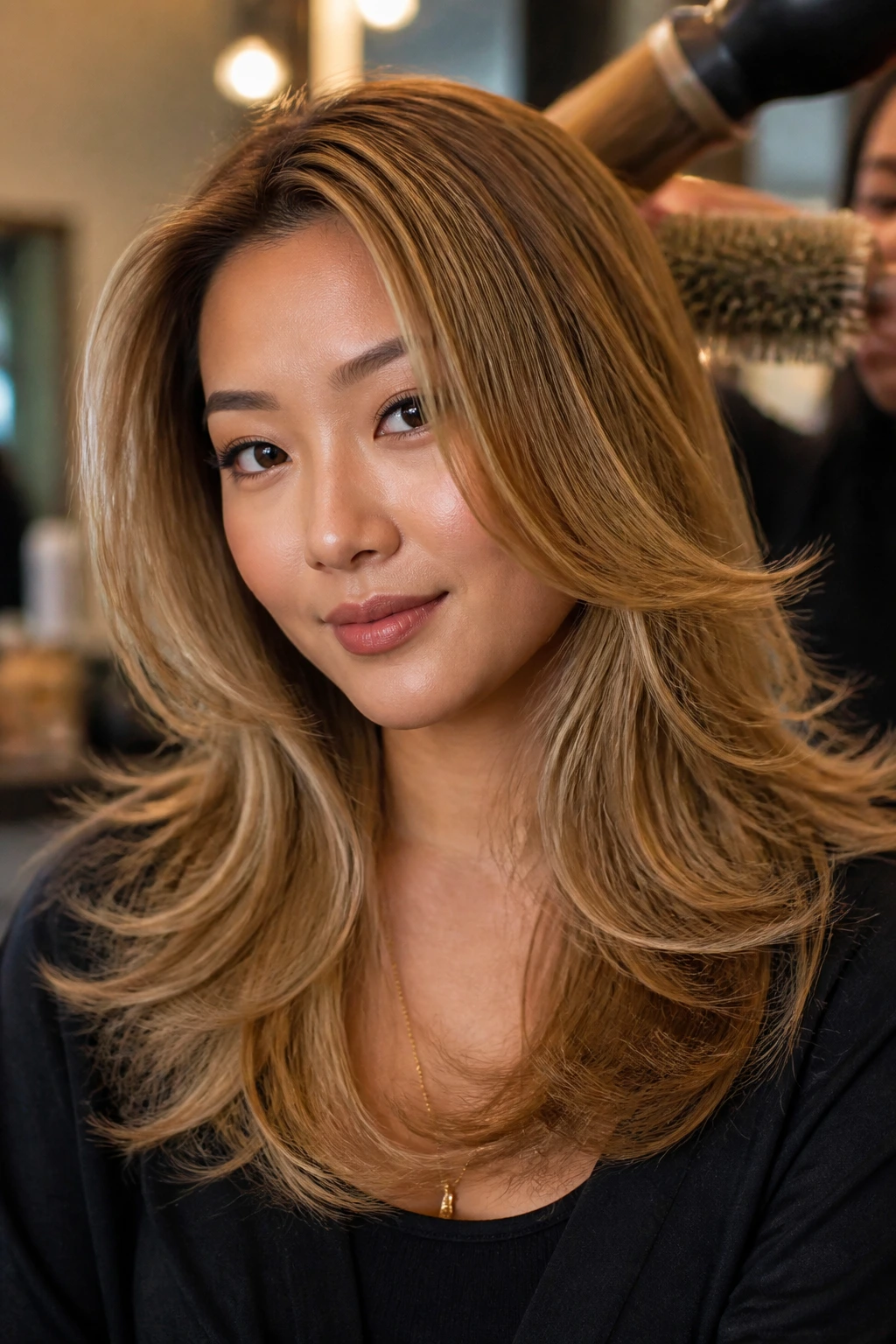
Honeyed blowout blonde is less about the raw color and more about the finish. The shade itself sits in that rich honey-gold zone, but the volume from a round brush or rollers is what makes it feel full and polished. On Asian hair, which often holds shine well, this can look lush without much fuss.
The color needs depth at the root and lightness through the mids, or the blowout won’t have enough contrast to show off. Ask for warm blonde ribbons, not a solid all-over gold. The movement comes from the light catching different panels, especially around the face and outer layers.
This is a strong choice if you like hair that looks styled even when it’s not overworked. A good blowout can carry it for days. The trick is not to crush the roots with too much product. Keep them lifted, keep the ends soft, and let the honey tone do its thing.
26. Dimensional Ribbon Blonde
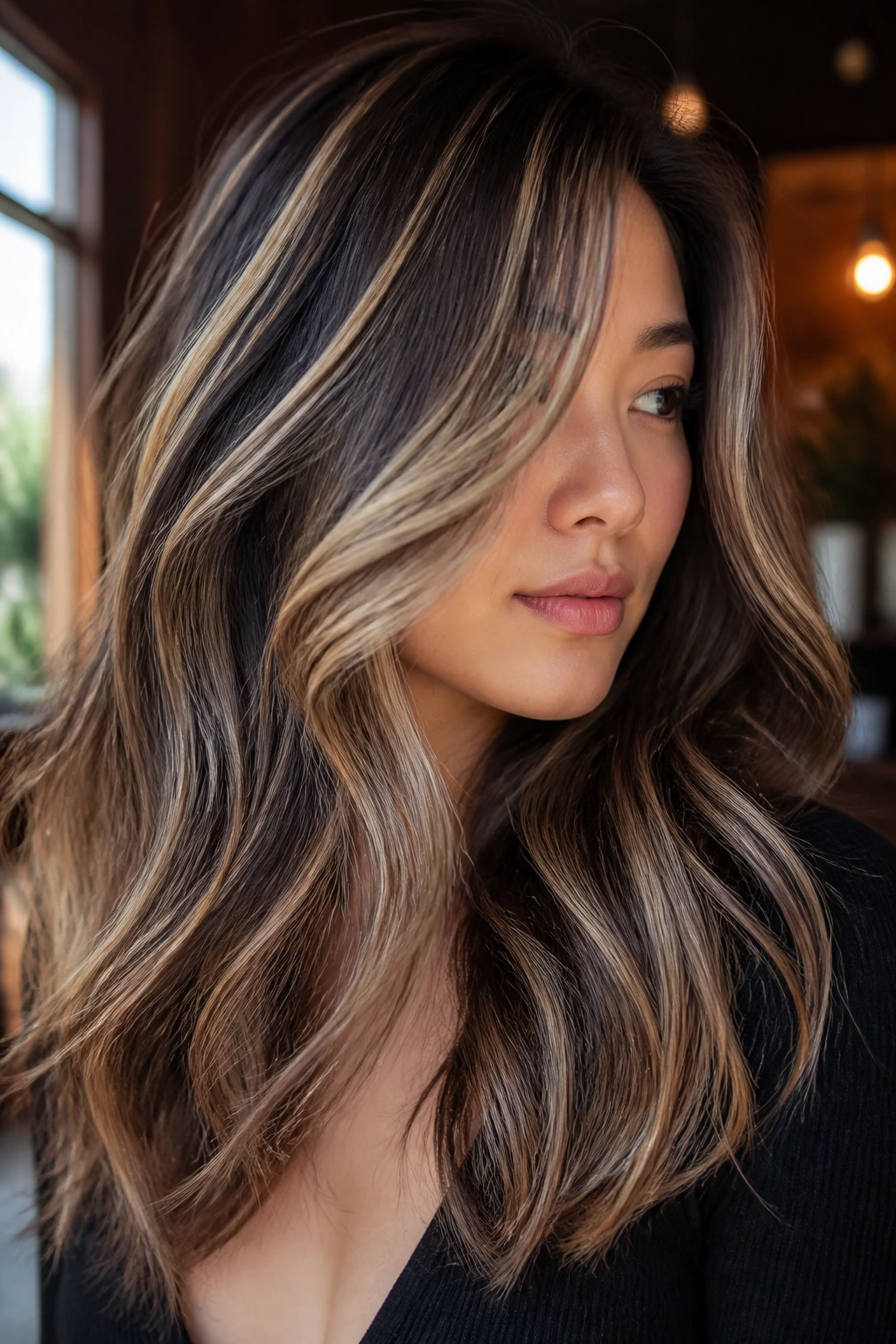
Ribbon blonde is exactly what it sounds like: strands of blonde woven through darker hair in visible, flowing pieces. The dimension is the point. On Asian hair, this can be a smart way to keep natural depth while still getting a strong blonde effect that shows up in movement and light.
This style works across straight, wavy, and curled textures, but it really shines when the hair has a little bend. The ribbons need space to separate visually. If the highlights are too thick, the look can feel striped. Too thin, and the effect vanishes. There’s a sweet spot, and it lives in the middle.
I think this is one of the best options if you want blonde that looks intentional from every angle. A good ribbon placement can frame the face, break up dense dark hair, and give the illusion of more texture. It’s the kind of color that looks casual only because it was done carefully.
27. Golden Pearl Beachy Blonde
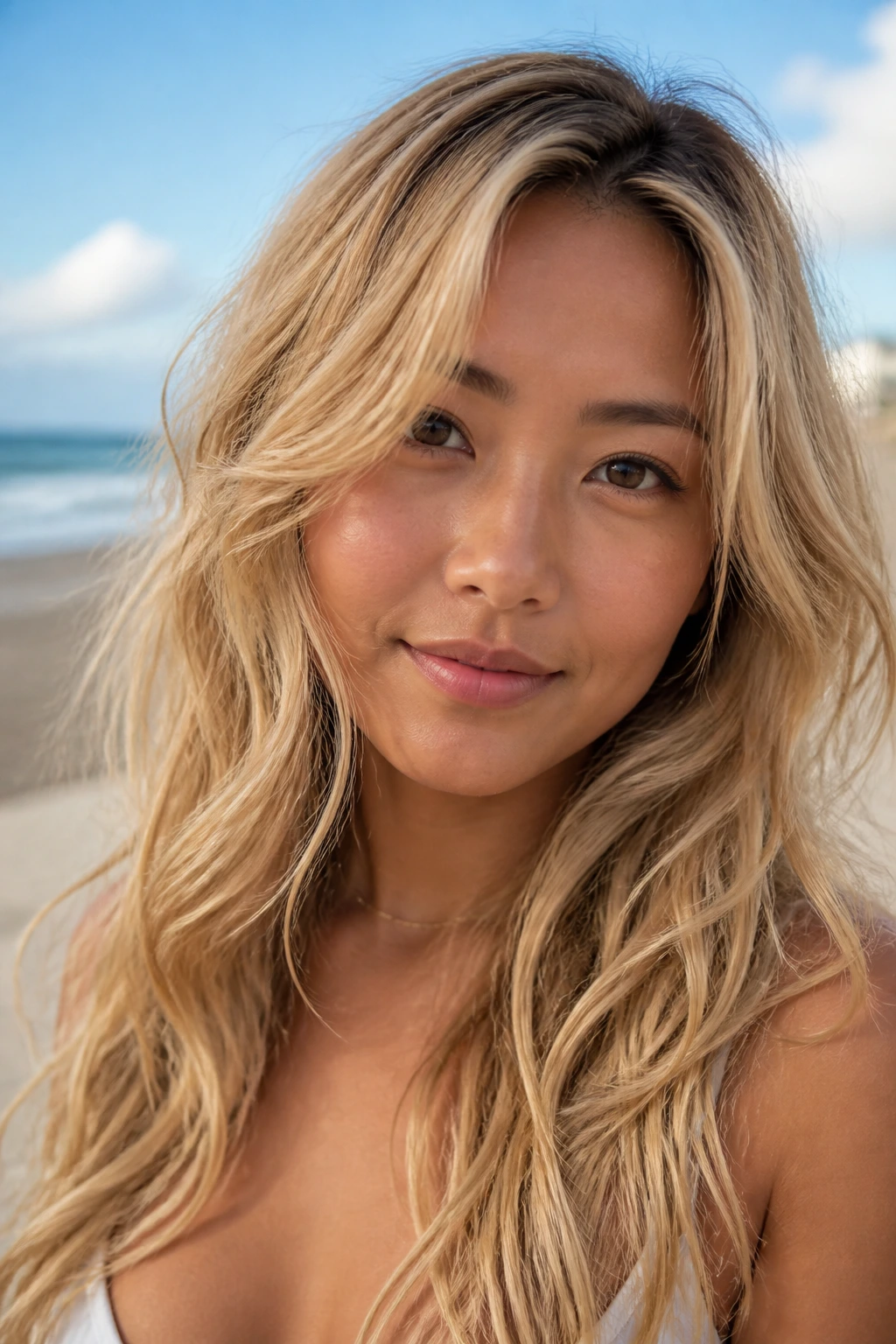
Golden pearl beachy blonde brings together warmth, gloss, and a loose, lived-in texture. It sits between champagne, beige, and soft gold, which makes it flexible on different skin tones and different cuts. On Asian women, that flexibility matters because the same shade can look sunlit on one person and creamy on another, depending on the tone underneath.
Beachy styling keeps the color from reading too perfect. A few uneven bends, a center part, and a little separation at the ends make the blonde feel relaxed rather than formal. If you smooth it too much, the golden pearl effect can disappear into a plain beige finish. Texture gives it personality.
This is a good finish if you want something bright, flattering, and easy to wear with casual clothes. It doesn’t demand a strict mood. It just needs shine. That is a nice place for blonde to live.
How to Choose the Right Blonde for Dark Asian Hair Without Guessing
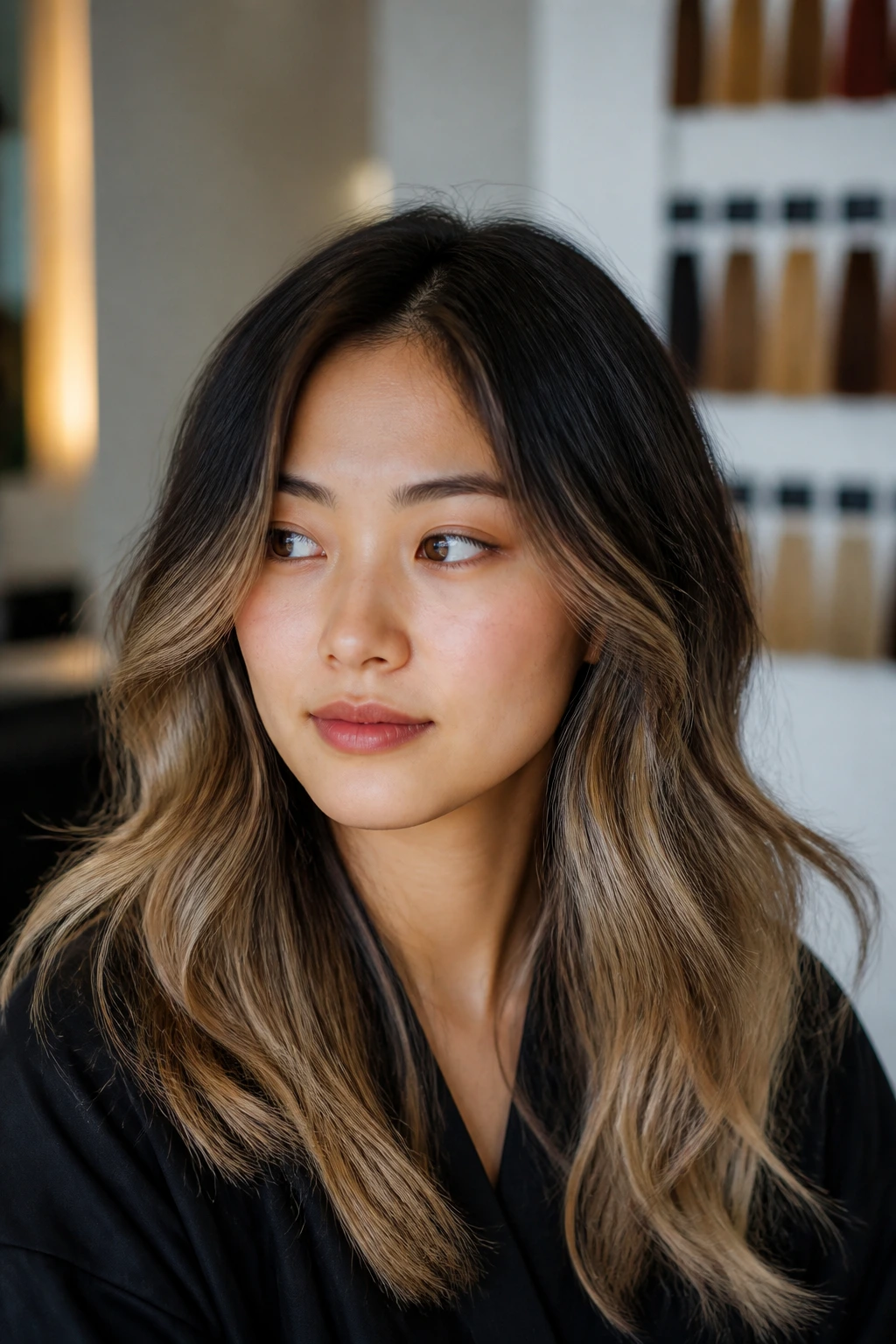
The smartest place to start is not the color chart. It’s your base level. If your hair is deep brown or black, the path to blonde usually runs through orange and gold before it reaches beige, ash, or platinum. That’s not a flaw. It’s chemistry. Knowing that keeps you from asking for a tone your hair cannot hold yet.
Undertone comes next. Warm skin often likes honey, cream soda, peachy champagne, and golden beige. Cool or neutral skin can wear ash blonde, mushroom blonde, pearl blonde, and silver-blonde without the hair stealing the whole face. If you are between undertones, rooted blondes and balayage are your safest bets because they soften the shift.
Hair health is the third filter, and honestly, the one people skip when they shouldn’t. Fine hair can go blonde, but it usually needs less aggressive lightening and more careful toning. Dense, coarse hair can tolerate more lift, though it still needs bond builders and trims. If your ends are already rough, don’t ask your stylist to push them to pale blonde in one sitting. That’s how the hair ends up looking tired even when the tone is right.
Essential Tools and Products That Keep Blonde Hair Clean and Bright
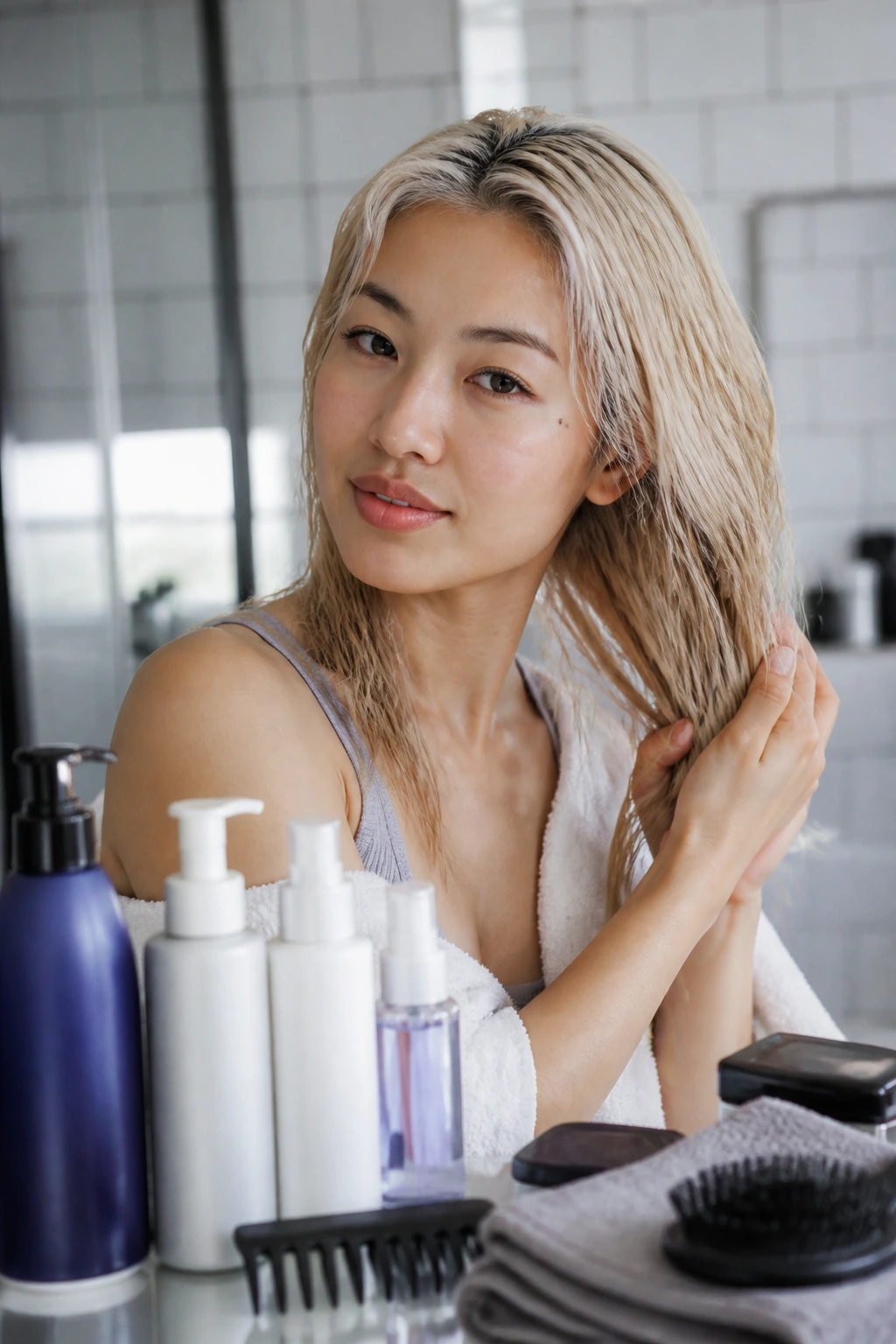
- Purple shampoo: Use it on ash, pearl, and platinum tones when the blonde starts to pull yellow; one wash every 1-2 weeks is often enough.
- Blue shampoo: Better for orange brass on deeper blondes and brunettes-with-blonde ribbons.
- Bond-building treatment: Helps hair feel less straw-like after lifting, especially on dark bases that needed more processing.
- Color-safe conditioner: Pick one with enough slip to detangle without stripping toner.
- Heat protectant spray: Blonde hair burns fast under hot tools, and that damage shows at the ends first.
- Wide-tooth comb: Useful for wet hair after masking; it prevents the snagging that roughens already-lightened strands.
- Microfiber towel or soft T-shirt: Cuts down on frizz and rough drying.
- Gloss or clear glaze: Good for refreshing shine between salon visits, especially on beige and champagne blondes.
- Soft bristle brush: Helps a blowout stay smooth without tearing at fragile lifted hair.
- Root concealer spray or powder: Handy if you want one extra week before an appointment, especially with high-contrast platinum or ash looks.
How to Read the Room: Salon Notes That Matter More Than a Photo
A photo is useful. A sentence is better. If you can bring both, even better. The photo shows the mood; the sentence tells the stylist what level of contrast, root depth, and maintenance you want. Say things like “beige balayage with a soft root melt” or “platinum money piece with darker lengths” instead of only saying blonde. That saves everyone time.
Strand tests matter more on dark hair than people like to admit. A stylist can guess, sure, but a small test strip tells you how your hair lifts, how fast it warms, and whether the mid-lengths are ready for more lightening. If your hair has old box dye or henna, speak up before the foil goes on. Silence is how color disasters happen.
One more thing. Show your stylist how you wear your hair. If it lives in a center part, say so. If you always wear a bun, say that too. Blonde placement changes a lot depending on how you part and style it. That tiny detail can be the difference between a face-framing look that actually frames your face and one that disappears into the back of your head.
Practical Tips That Make Blonde Look Intentional, Not Random
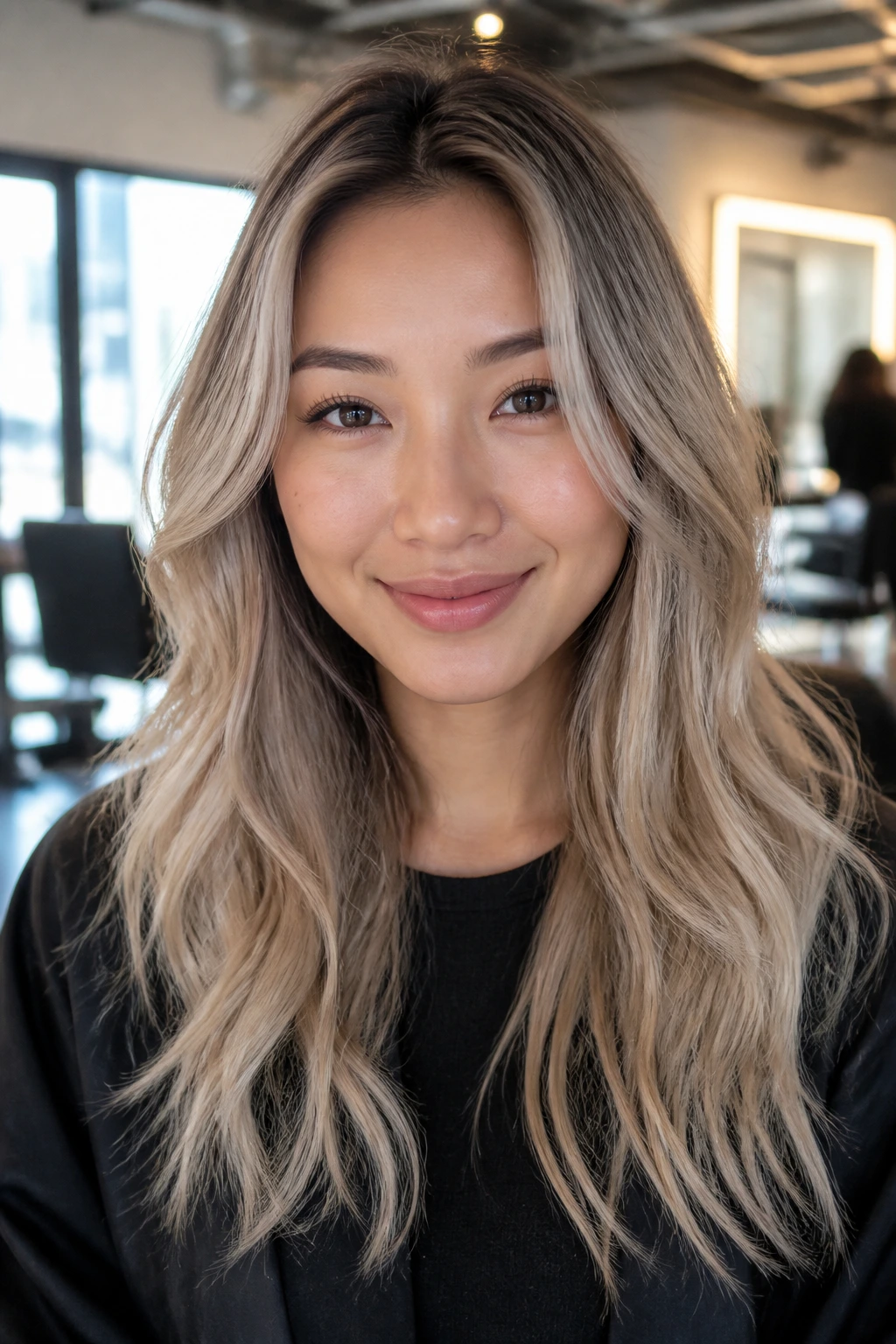
Tone Control: If you want ash or pearl, do not overdo purple shampoo. Too much can leave the hair dull and slightly violet at the ends. Use it sparingly, then follow with a plain moisturizing conditioner.
Shadow Root Strategy: A soft root is one of the best tricks for dark hair. It keeps the grow-out gentle and makes the blonde look more natural against your base, especially if your natural color is strong and glossy.
Placement Matters More Than Volume: A few well-placed ribbons around the face and surface often look better than a full head of over-lifted hair. That is especially true on thick Asian hair, where dense sections can hide a lot of detail.
Heat Setting: Keep hot tools lower than you think. Lightened hair does not need aggressive 450°F styling. Around 300-350°F is usually enough for waves or smoothing, and it spares the ends from cooking.
Glossing Schedule: Beige, champagne, and honey blondes stay prettier when you refresh them with a gloss every 4-8 weeks. The shine does half the work. Without it, blonde can start to look dry even if the tone is technically fine.
Common Mistakes That Make Blonde Hair Look Brassy or Flat
The biggest mistake is trying to jump straight to pale blonde from very dark hair in one impatient session. The hair may lift unevenly, the toner may not hold, and the result often looks blotchy rather than bright. If your stylist recommends more than one appointment, that is not a sales tactic. It is usually how you protect the hair and the final color.
Another trap is choosing a toner by name alone. “Ash” sounds cool, but one ash formula can look smoky and another can go muddy depending on the lift underneath. Ask about the level as well as the tone. Level tells you how light the hair is; tone tells you what mood it will carry.
Skipping maintenance is the quiet killer. Platinum and icy blondes especially need toning, hydration, and regular trims. If the ends fray, the whole blonde reads tired. And once the ends look fried, no amount of gloss can make the hair feel fresh again.
Last one: using purple shampoo like it’s a cure-all. It isn’t. Purple shampoo neutralizes yellow, but it does not fix orange, and it does not replace salon toning. Use it as a maintenance tool, not as a rescue plan.
Variations and Adaptations to Try
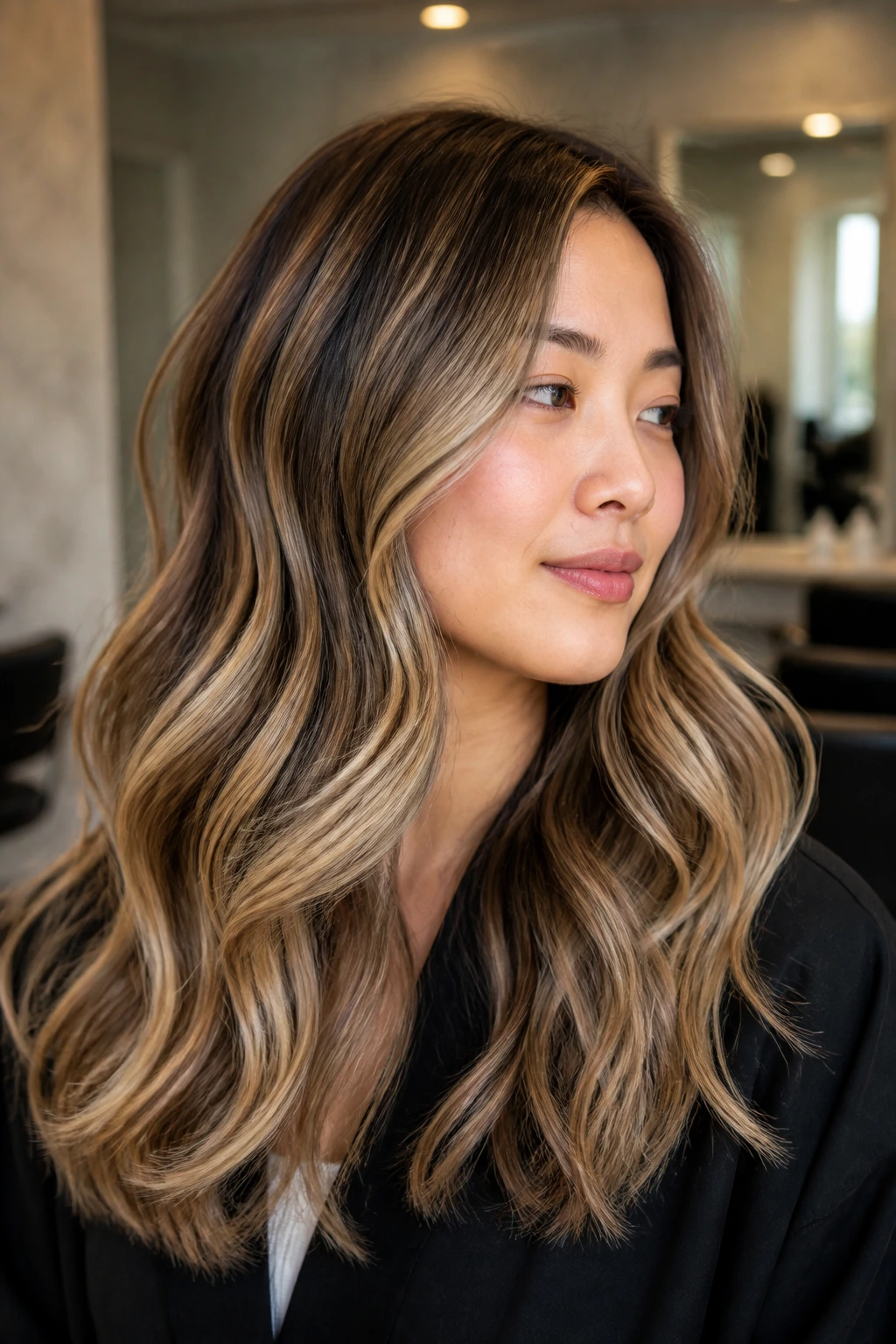
Low-Maintenance Shadow Blonde: Keep the root darker and ask for beige or honey ribbons through the mids and ends. This is the easiest route if you want a blonde look that grows out cleanly and doesn’t demand frequent root touch-ups.
Cool Girl Ash Upgrade: If your current blonde has gone warm, push it cooler with an ash-beige gloss and slightly more face-framing brightness. This works well on bobs, lobs, and blunt cuts where the cooler tone can feel modern instead of flat.
Warm Glow Refresh: Add caramel or honey lowlights to a faded blonde base if the hair looks too pale or washed out. This brings back depth and makes the color look healthier without taking you back to brunette.
Soft Fashion Blonde: Add a pink-beige or peachy champagne gloss over pre-lightened hair for a gentle fashion finish. The effect is subtle enough for everyday wear but still feels different from standard beige blonde.
Curly Ribbon Blonde: If your hair is wavy or curly, replace all-over lightening with ribbon highlights and a softened root. The curl pattern will do half the styling work, and the blonde will look more dimensional because the curls break up the color.
Make Blonde Hair Last Longer Between Salon Visits
The first 72 hours after coloring matter more than people think. Try not to shampoo immediately after a fresh toner or gloss unless your stylist tells you otherwise. Once you do wash, use lukewarm water. Hot water makes toner fade faster, and that fade shows up as brass on the lighter pieces.
For ash, pearl, and platinum looks, use purple shampoo about every 1-2 weeks, not every wash. Beige and honey blondes usually need less pigment correction and more moisture, so a nourishing mask once a week can do more good than extra toning. If your hair feels rough at the ends, switch from protein-heavy products to a softening conditioner for a while.
Root touch-ups usually land somewhere around 6-10 weeks depending on how light the blonde is and how much contrast you want to keep. High-contrast money pieces and platinum front sections may need attention sooner. Balayage and rooted blondes can stretch longer. That’s one reason people love them. They buy you time without making the hair look neglected.
Frequently Asked Questions About Blonde Hair Looks for Asian Women
Will blonde hair damage Asian hair more than other hair types?
Not automatically, but dark hair often needs more lift to reach blonde, and more lift means more chance for dryness or breakage. The real issue is the starting color and the process, not ethnicity alone. A strand test and a realistic lifting plan matter far more than labels.
What blonde shade is easiest to maintain?
Rooted balayage, bronde, and beige money-piece looks tend to be the easiest because they keep some darkness at the scalp. That softer contrast means the grow-out line is less obvious, and toner doesn’t have to stay perfect every week.
Can I go blonde without bleach?
On very dark hair, not really if you want a true blonde result. You might get warm caramel or light brown highlights with high-lift color, but actual blonde usually needs lightening. If your goal is a subtle change, bronde or toasted almond highlights can get you close without full blonding.
Why does my blonde keep turning orange?
That usually means the hair was lifted enough to expose orange pigment but not enough for the toner to neutralize it fully. Blue shampoo can help in a pinch, but the deeper fix is a better lift or a toner matched to the exact underlying level.
Which blonde looks best with straight hair?
Ash blonde bobs, beige blonde layers, pearl lobes, and ribbon highlights all work well on straight textures because the clean lines show off the color placement. Straight hair can look flat if the highlights are too uniform, so dimension helps.
How often should I tone blonde hair?
Most blondes need a gloss or toner refresh every 4-8 weeks, but platinum and icy shades can need it sooner. If the hair starts looking dull, yellow, or muddy around the mids, that’s usually your sign.
What if my hair is fragile and I still want blonde?
Start with face-framing pieces, a shadow root, or balayage rather than a full-head lightening service. You can always add more brightness later. It is much harder to fix overprocessed ends once they start snapping.
Is warm blonde or cool blonde better for Asian skin tones?
Neither is universally better. Warm blondes like honey, cream soda, and golden pearl flatter golden or olive undertones; cool blondes like ash, mushroom, and pearl often suit neutral or pinker undertones. The best result is the one that makes your skin look even and awake, not dull or orange.
What to Remember When Choosing Your Blonde
The prettiest blonde is not always the palest one. It is the one that fits the starting hair, the haircut, and the amount of upkeep you can live with without resenting your own mirror. That’s the part people skip when they chase a screenshot.
If your hair is dark and dense, beige balayage, honey bronde, mushroom blonde, and rooted champagne shades often give the best balance of brightness and sanity. If you want drama, platinum money pieces and icy layers can be excellent — just make sure the maintenance matches the mood. Color that looks good for three days and stressful for six weeks is not a win.
There’s room for softness here. There’s room for edge, too. Pick the blonde that looks like it belongs on your head, not the one that simply looked good under someone else’s bathroom lighting.
