



Fine hair can look silky and expensive in the right cut. In the wrong one, it goes limp at the crown, strings out at the ends, and starts acting like it has somewhere else to be. That’s why short haircuts with wispy bangs for fine hair are worth a closer look: they keep the shape light, but not flimsy.
The sweet spot is movement. Not fluff. Not a giant wall of fringe. Wispy bangs work because they leave little gaps between strands, so the forehead area feels soft without swallowing the face. A good short cut gives the ends enough structure to look deliberate, while the fringe breaks up the front line just enough to keep everything from collapsing into one flat shape.
The mistake I see most often is overdoing the thinning. Fine hair does not need to be shredded into air. It needs a line that still exists once the hair is dry, a little lift at the root, and a fringe that bends instead of hanging like a curtain with all the drama removed. That balance changes a haircut completely, and the 23 shapes below are built around it.
Why This Collection Is Worth Your Time
- It gives fine hair a stronger outline: Every cut here keeps a shape at the perimeter, which is what makes thin strands look fuller instead of see-through.
- The bangs stay soft, not heavy: Wispy fringe breaks up the forehead area without creating that dense, helmet-like bang line.
- Most of these cuts are easy to restyle: A quick blow-dry, a little root lift, and you’re back in business before the rest of your coffee cools.
- They grow out better than blunt fringe: Several of these shapes slide naturally into side-swept or curtain-like fringes as they lengthen.
- They work with different textures: Straight, wavy, and lightly curly fine hair all get a version here that doesn’t fight the grain.
- They make accessories easier: Glasses, earrings, and headbands tend to sit better when the fringe is light and broken up instead of thick and boxy.
1. Jaw-Grazing French Bob With Feathered Wisps
A jaw-length French bob does a very specific thing for fine hair: it stops the ends before they start looking stringy. The line sits high enough to create the sense of density, but not so short that it turns into a helmet. Add feathered wispy bangs, and the whole cut feels airy instead of severe.
This version is especially good if your hair naturally falls flat around the temples. The fringe should be point-cut, not chopped blunt, so the front moves in little soft pieces rather than one straight sheet. I like this one with a subtle side bend at the root — it keeps the look from feeling too precious.
Why it flatters fine hair
The short perimeter gives the illusion of thicker ends, and the broken fringe keeps the eye moving. If your hair is straight, this cut lands cleanly with very little effort. If it’s slightly wavy, even better.
A tiny round brush and a cool shot from the dryer are enough. No need to chase perfection here. The charm is in the looseness.
2. Side-Swept Pixie With Airy Crown
This is the cut I recommend when someone says, “My hair goes flat by lunch.” A side-swept pixie builds height at the crown and keeps the fringe soft enough that it never looks overstyled. It’s quick, sharp, and a little bit cheeky.
The crown should have enough length to lift with a dab of mousse, while the sides stay close enough to the head to keep the shape clean. The wispy bang section should angle across the forehead, not sit in a heavy line. That side movement does most of the work.
Best for
- Fine hair that loses volume in humid weather
- Straight or lightly wavy textures
- Anyone who likes to show off earrings and cheekbones
A pea-sized amount of paste on dry hair is enough. Push the fringe to one side with your fingers and leave a few ends out of place on purpose.
3. Chin-Length Blunt Bob With See-Through Bangs
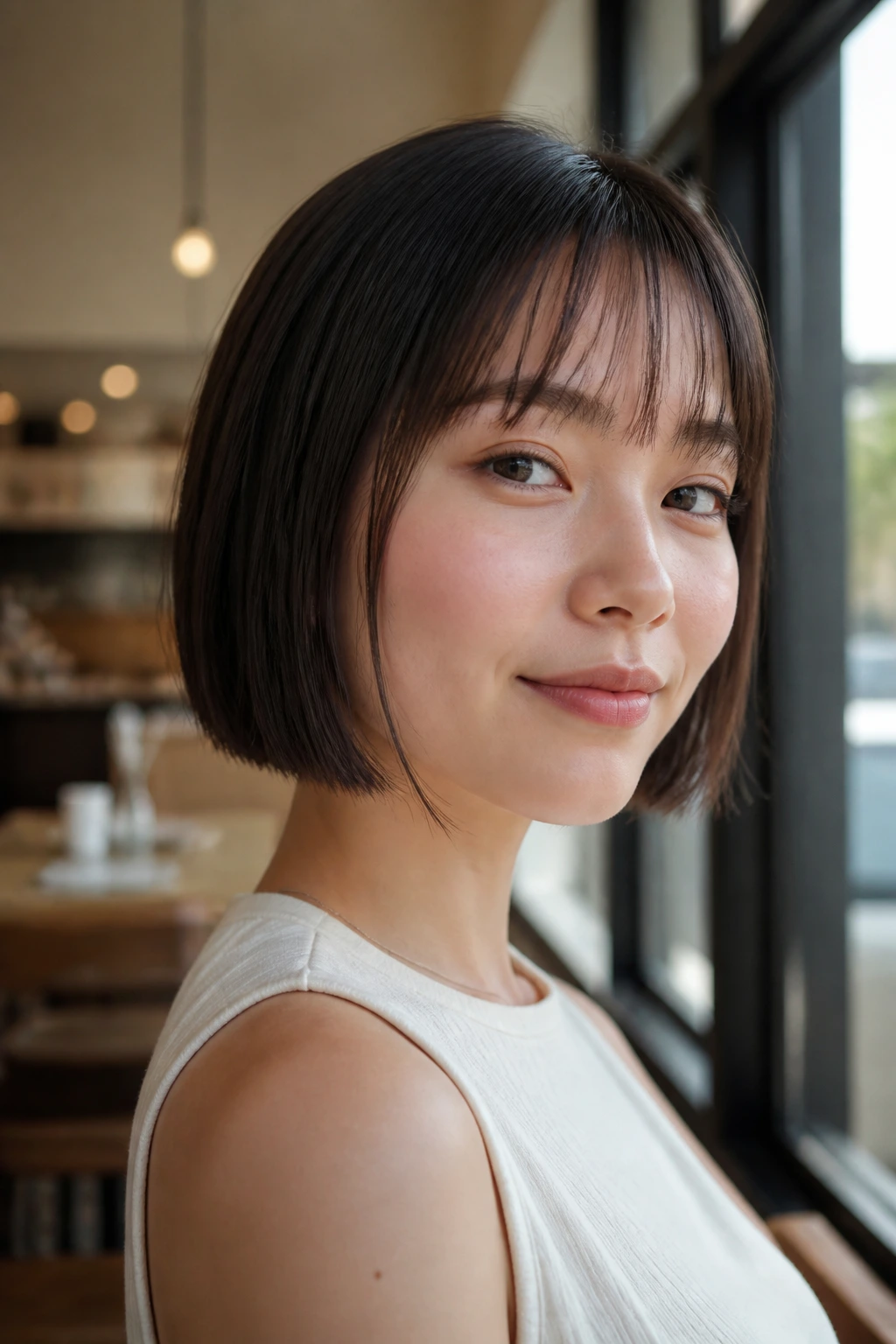
Can a blunt bob work on fine hair? Yes — if you keep the fringe light. A chin-length cut gives you a crisp edge that makes the hair feel denser at the bottom, and the see-through bangs stop the front from becoming too solid.
What I like here is the contrast. The bob itself is clean and tidy, almost architectural, while the bangs are broken and soft. That mix keeps the style from looking stiff. If your hairline is a little sparse, this is one of the best ways to soften that area without hiding it.
A light mist of root-lift spray at the crown helps the bob stay off the head. Blow-dry the bangs forward first, then sweep them slightly apart with your fingers once they’re warm. Don’t drown this cut in cream. It doesn’t need it.
4. Soft Shag Crop With Brow-Skimming Fringe
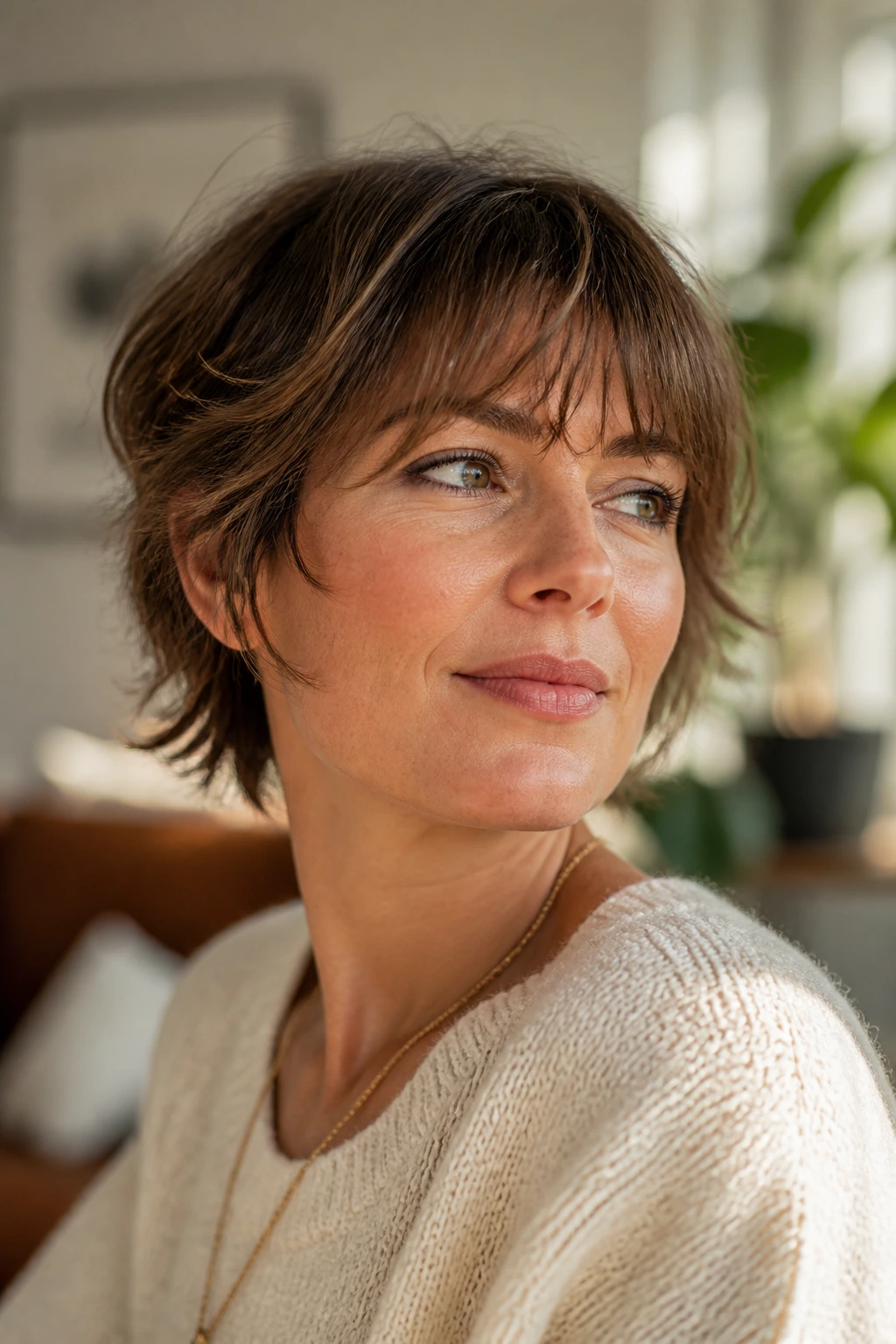
If you like hair that moves when you turn your head, this is the one. A soft shag crop keeps the layers short enough to give lift, but not so chopped that fine hair loses all shape. The bangs sit just at or above the brows and break up into airy pieces.
The key is restraint. Too much shagging on fine hair turns into fuzz. The better version has a controlled outline with soft internal layers, so the crown still reads as a cut rather than a cloud. The fringe should touch the forehead in a few places and separate in others.
This shape loves a light mousse scrunched into damp roots. Air-dry halfway, then finish with the dryer only at the fringe and crown. You do not need every strand perfectly in place. A little roughness is the point.
5. Tapered Crop With Broken, Piecey Bangs
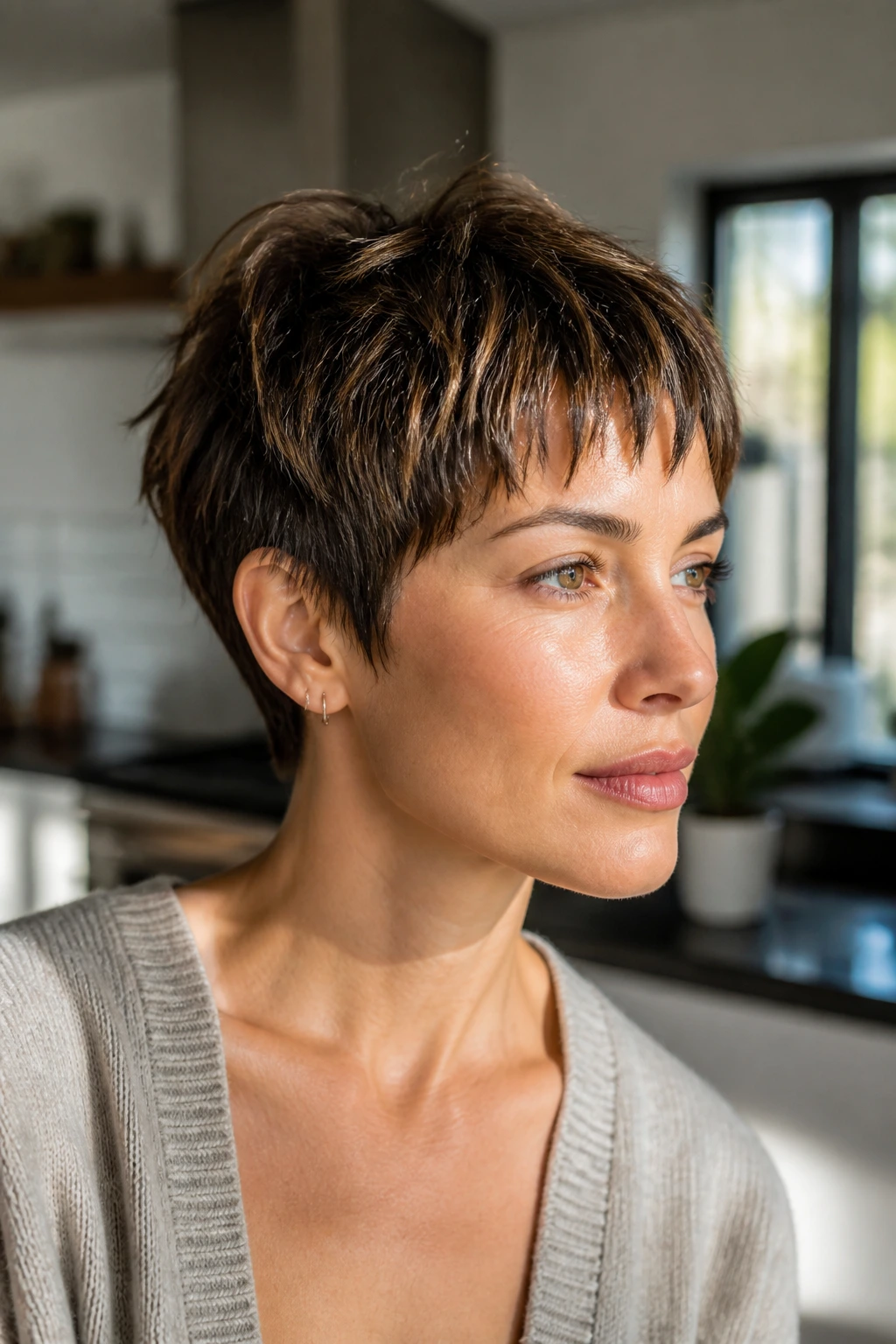
A tapered crop gives you a neat nape and a little lift through the top, which is gold for fine hair. The broken bang line keeps the forehead open enough that the cut stays modern, not heavy. It’s one of those styles that looks intentional even on a messy morning.
I like this especially on people who wear glasses. The fringe doesn’t fight the frames. It slips around them. The taper at the back also keeps the silhouette from puffing out in the wrong place, which can happen with short cuts if the ends are overtextured.
Ask for the bangs to be point-cut into uneven sections, not thinned with a razor to the ends of their life. That distinction matters. The former gives movement. The latter gives you strings.
6. Collarbone Bob With Light Curtain Bangs

Not every “short” cut has to sit at the jaw. A collarbone bob keeps enough length to tuck behind the ears, but the ends still feel light on fine hair. Add light curtain bangs, and the front opens up in a way that flatters the face without swallowing it.
This version is kinder if you’re growing out a previous fringe. The center part of the bangs can be kept a touch shorter, while the sides blend into the front layers. It’s a good bridge cut. Nothing about it feels abrupt.
For styling, lift the roots at the part with a round brush or a velcro roller for five minutes while you do makeup or pick out earrings. That small bit of lift changes the whole mood of the cut. It keeps the face frame from collapsing toward the cheeks.
7. Bixie Cut With Razor-Soft Fringe
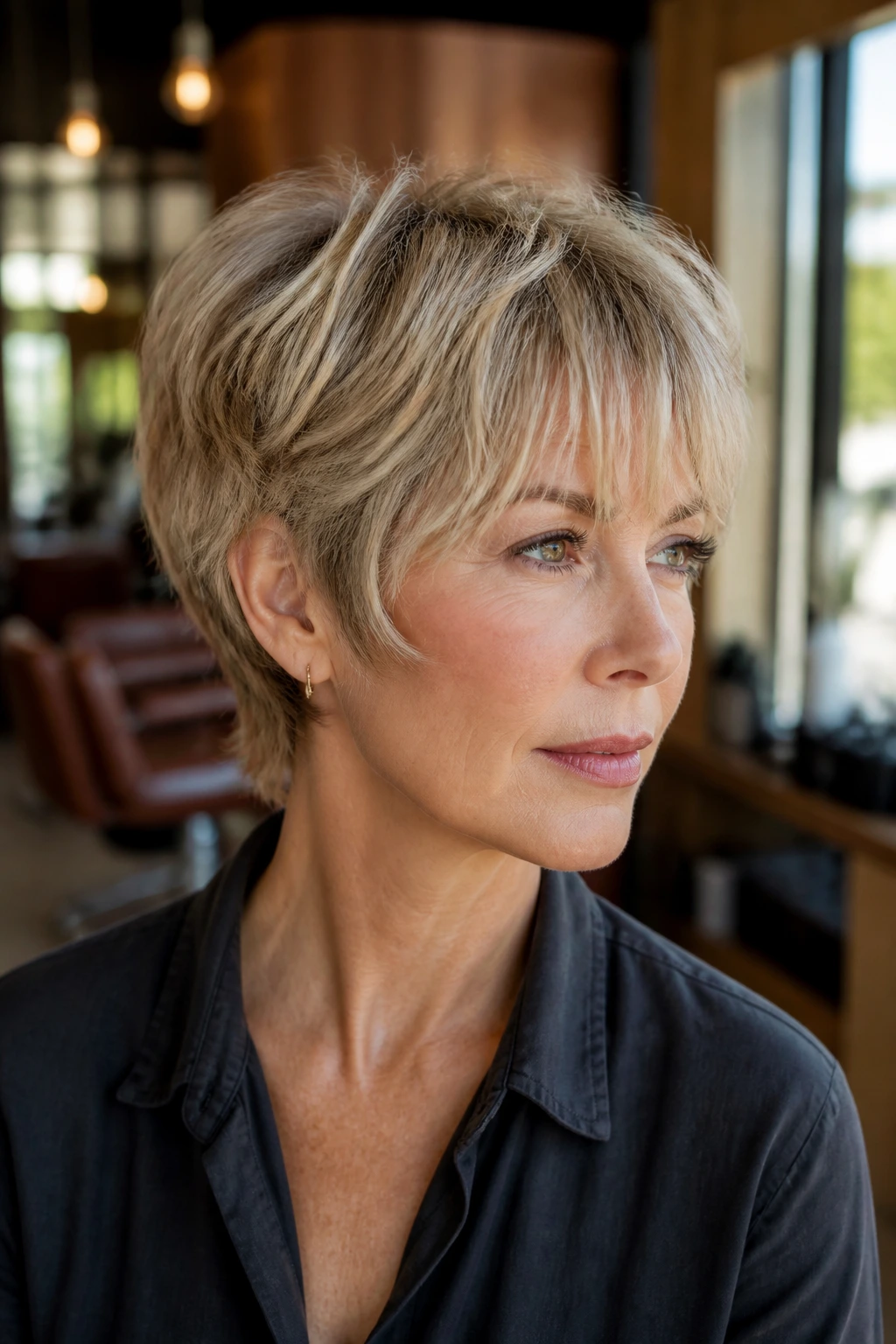
A bixie sits between a bob and a pixie, which is exactly why it suits fine hair. You get the lightness of a short cut without losing the little bit of swing that makes hair feel like hair. The fringe should be razor-soft, not blunt, so the shape stays touchable.
This one reads best when the top layers have a little separation. Not spiky. Just separated enough that the head doesn’t look overpacked with product. If you’ve got a flatter crown, the bixie is a smart move because the short length removes weight while keeping enough top length to create lift.
I’d pair this with a matte texturizing product, not a shiny pomade. Shine makes fine hair look thinner than it is. A dry finish gives the illusion of grit and density.
8. Rounded Pageboy Bob With Thin Fringe
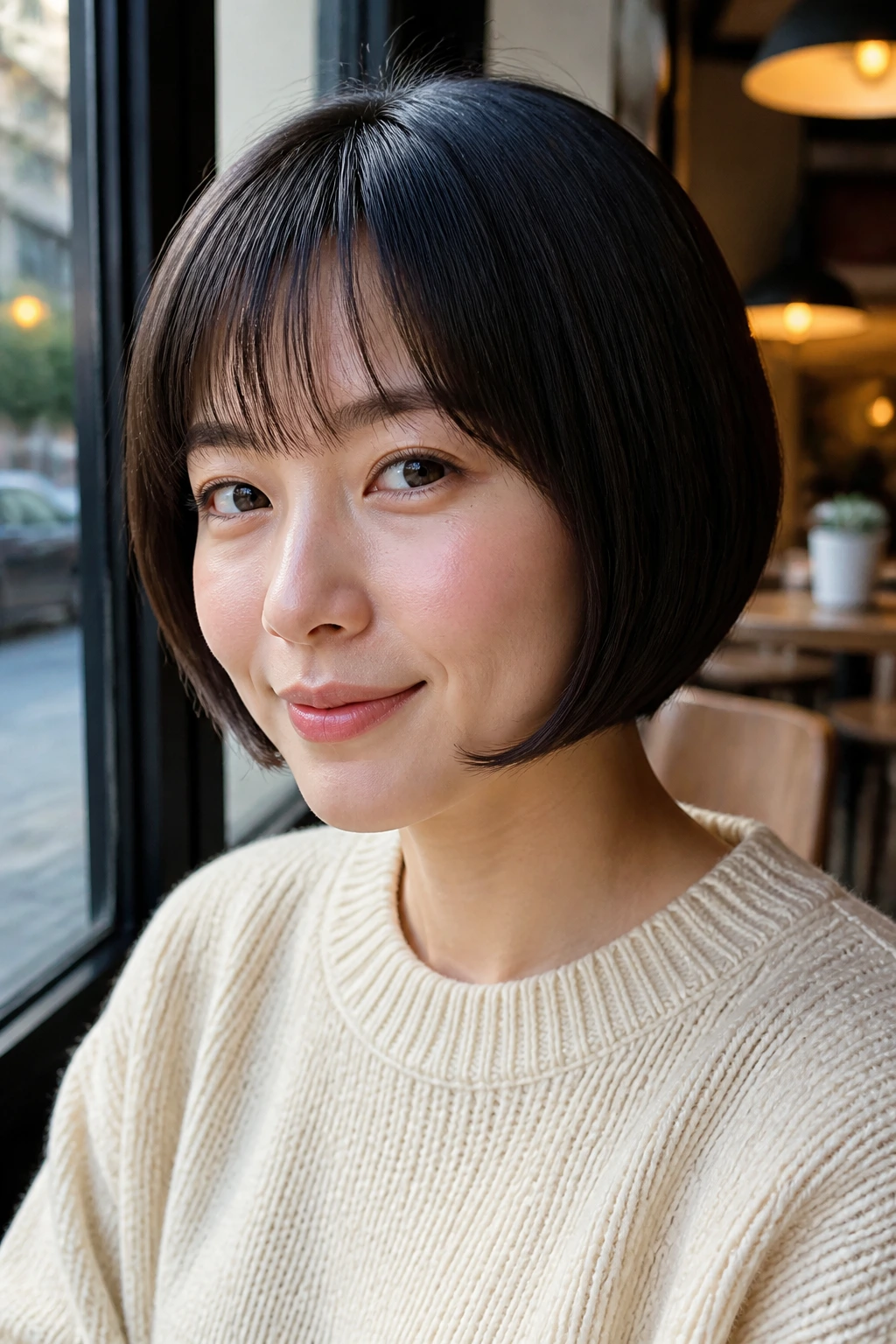
The rounded pageboy gets overlooked, which is a shame, because it gives fine hair a fuller outline than a lot of trendier cuts. The curve through the bottom makes the hair feel tucked and deliberate, while the thin fringe keeps the front from reading too solid.
This style is especially useful if your hairline is uneven at the temples. The rounded shape helps camouflage that with softness. Keep the fringe narrow and light, and don’t let it spread too wide across the forehead. Wide bangs on fine hair are where the trouble starts.
Quick shape notes
- Keep the underside neat and smooth
- Ask for the curve to hug the jaw, not flare out
- Leave the fringe soft enough to separate with fingers
That tiny bit of control matters. Without it, the pageboy can slide into mushroom territory fast.
9. Asymmetrical Bob With Floating Bangs

An asymmetrical bob gives fine hair a job to do. One side lands a bit longer, the other sits slightly higher, and suddenly the whole cut feels considered instead of simply “short.” The floating bangs finish the look by keeping the forehead line broken and light.
This shape is good when you want edge without a lot of daily styling. The asymmetry itself brings interest, so the bangs don’t need to work hard. They just need to hover and move. If your hair falls flat on one side, the uneven length can actually help because the eye focuses on the silhouette instead of the limp spot.
Keep the longer side close to the jaw and not past the collarbone. Once it gets too long, the contrast fades. The whole point is that crisp little imbalance.
10. Layered Lob With Feathered Fringe
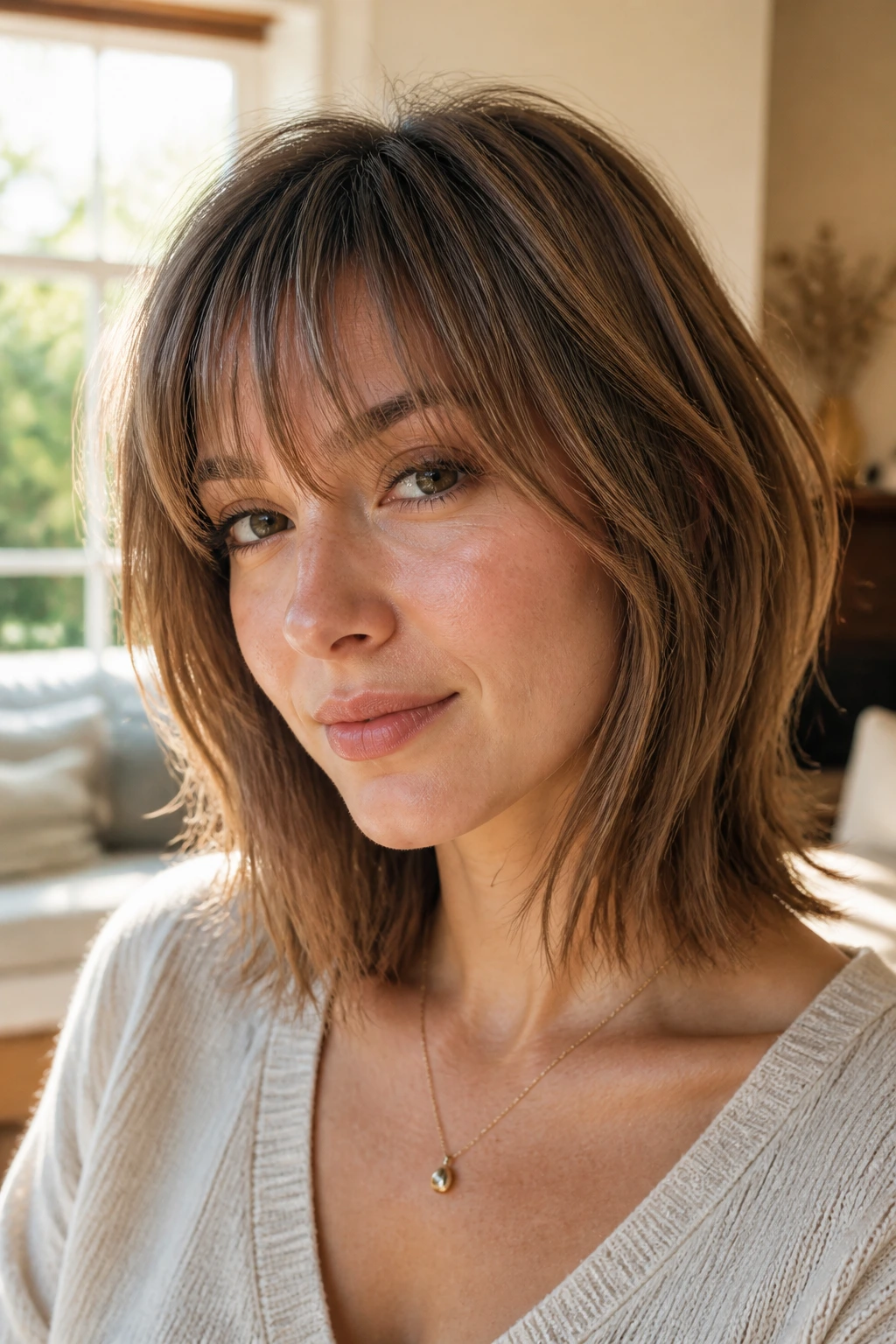
A layered lob is the safer choice for anyone who likes short hair but still wants enough length to tuck, twist, or clip back. On fine hair, a lob can go flat if it’s cut too heavy. Feathered bangs prevent that by taking some visual weight out of the front.
What makes this version work is the balance between movement and line. The layers should be soft, not choppy all over. Then the fringe should be feathered just enough to sit lightly at the brow without covering it. That keeps the cut from feeling overbuilt.
If you air-dry, twist the bangs once while they’re damp and let them fall. It gives them a bend that looks natural. Over-smoothing the fringe can make the rest of the lob look even thinner by comparison.
11. Choppy Crop With Long Side Bangs

Long side bangs are the friendliest fringe for anyone nervous about going full bang. They move off the forehead, they’re easy to tuck, and they don’t need the same daily commitment as a straight fringe. On a choppy crop, they help the top half of the haircut feel lived-in instead of stiff.
The chop should happen in the body of the cut, not at the ends to the point of fuzz. Fine hair looks better when it has a few defined pieces than when every strand is over-blended. That’s a line worth keeping in your head when you talk to your stylist.
This is a solid glasses-friendly cut, too. The bangs can skim the top of the frames without landing smack in the lenses. That tiny detail saves a lot of fiddling.
12. Wavy Bob With Split Fringe

A wavy bob with a split fringe is one of those cuts that makes fine hair look like it has a little more life than it actually does. The wave creates bend, the fringe parts softly in the center, and the face frame ends up feeling relaxed instead of formal.
The split fringe is the useful part. It stops the forehead area from getting blocky, which can happen when fine hair is cut into a heavy bang. Instead, the front opens just enough to show skin and keep the cut breathable. That matters more than people think.
Use a salt-free texturizing spray if your hair is dry. Too much salt can make fine strands feel rough and smaller. A light mist is enough to define the wave without making the ends brittle.
13. Sleek Ear-Tucked Bob With Broken Bangs
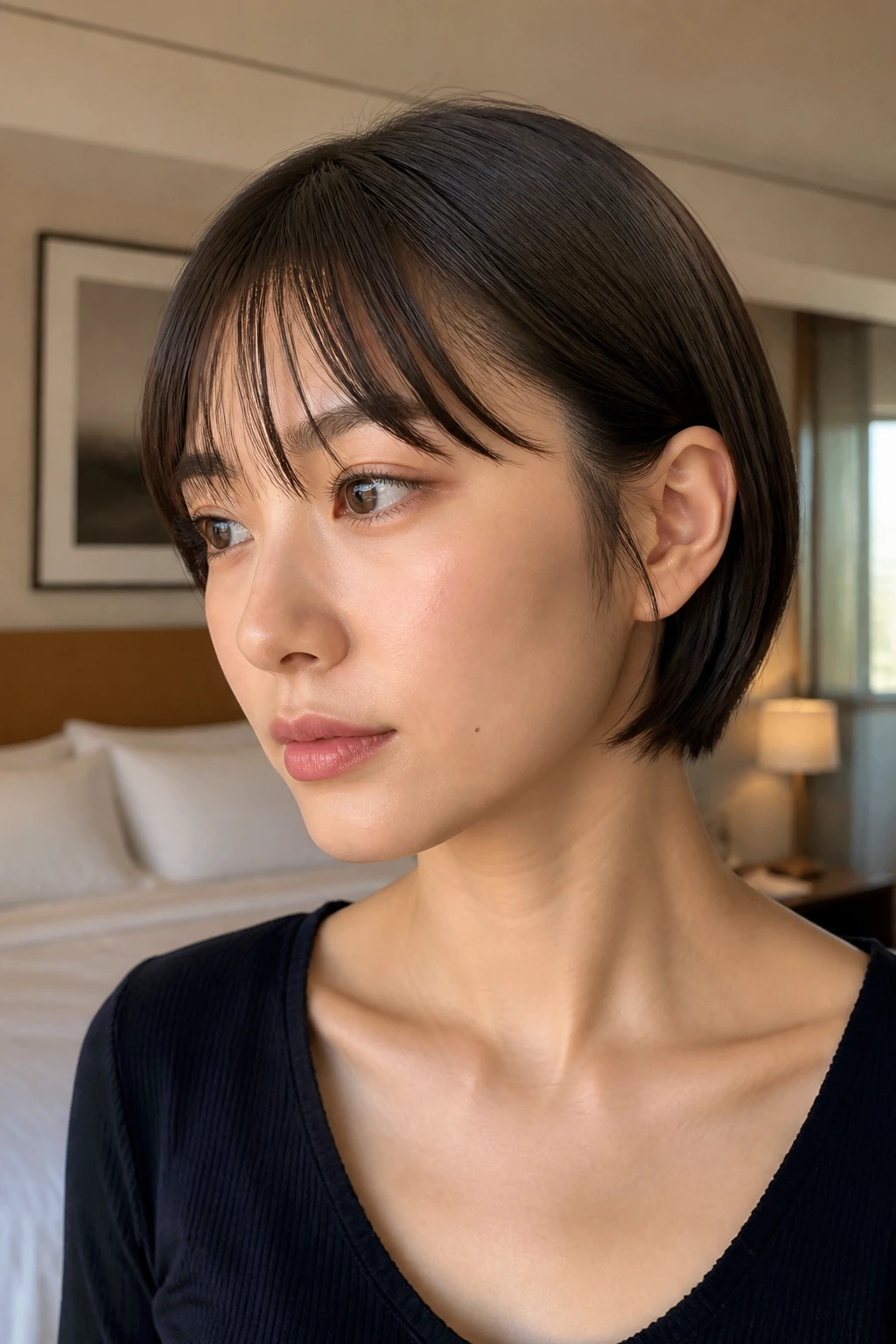
This is the cut for people who like things neat. A sleek bob tucked behind the ears creates a clean line around the face, and the broken bangs keep it from feeling severe. Fine hair often looks thicker when the shape is crisp, especially around the jaw.
The trick here is to avoid making the fringe too dense. Broken bangs should sit in a few light sections, almost like they were separated by hand after styling. That little irregularity is what keeps the haircut modern. Without it, the sleekness can turn flat fast.
Wear this with a side part if your crown needs extra lift. The side part gives the illusion of more hair at the root. It’s a small change, but on fine hair, small changes are the whole game.
14. Mushroom Bob With Airy Fringe
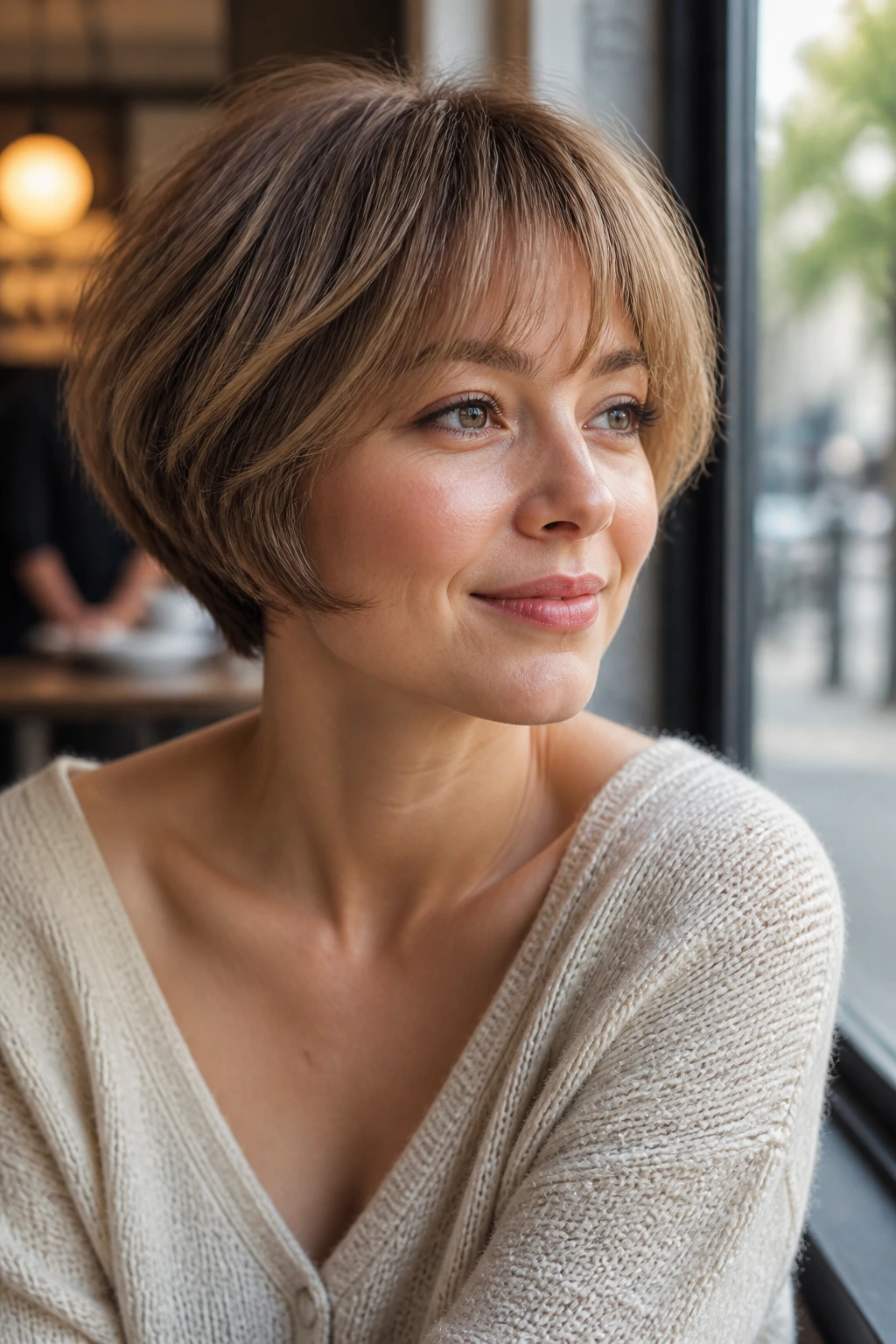
A mushroom bob can go very wrong on fine hair if it’s cut too round and too heavy. Done right, though, it gives a soft dome of shape with enough internal removal that the ends don’t look bulky. The airy fringe is what saves it from drifting into old-school bowl cut territory.
This cut suits people who want something fashion-forward but still wearable. The outline is rounded, the nape stays tidy, and the fringe breaks up the forehead in little wisps instead of one slab. I’d only ask for this if your stylist knows how to control weight without stripping out too much density.
What to ask for
- A rounded silhouette with light internal layers
- A fringe that’s point-cut and see-through
- Soft edges around the temples so the cut doesn’t look boxed in
That combination keeps the cut soft and modern. Heavy mushroom shapes on fine hair are a bad idea. Soft ones are a different story.
15. Curly Pixie With Short Wispy Bangs

Curly fine hair needs a different kind of care, and a curly pixie with short wispy bangs can be lovely when the length is handled with restraint. The bangs should be left a touch longer than you think, because curls bounce up once they dry. Cut them too short, and they can sit high on the forehead.
The pixie shape keeps the sides and nape tight enough that the curls on top don’t spread out and lose shape. That helps fine hair read as intentional, not puffy. The wispy fringe should land in soft curl groups, not tiny separated strands all over the place.
Dry-cutting helps here. Curly fine hair lies and springs in ways wet hair won’t show. If your stylist cuts this one dry or mostly dry, the fringe usually sits better from day one.
16. Graduated Bob With Lightly Shattered Fringe
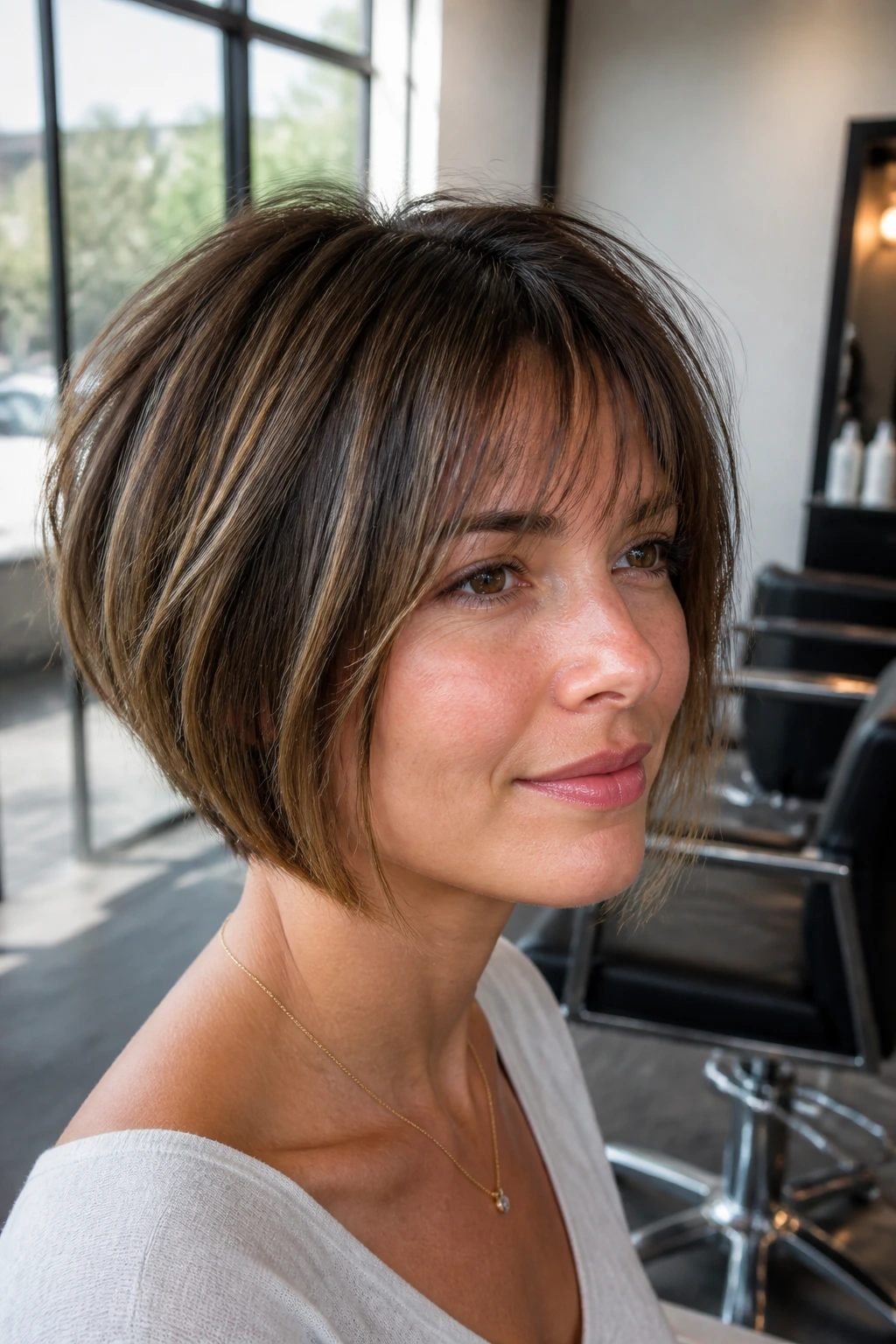
A graduated bob gives you fullness in the back and a cleaner drop toward the front. On fine hair, that graduation can make the whole head look sturdier. The fringe should be lightly shattered so it echoes the softer front line without getting too sparse.
This is one of my favorite shapes for hair that collapses at the crown. The stacked back pushes a little lift upward, and the front stays lighter and longer, which keeps the cut from feeling boxy. You get structure without weight. That’s a useful trade.
If your hair is very straight, a quick pass with a round brush at the back and a soft bend at the fringe is enough. No need to overstyle the front. The shape does the work.
17. Mini Wolf Cut With Grown-Out Wisps
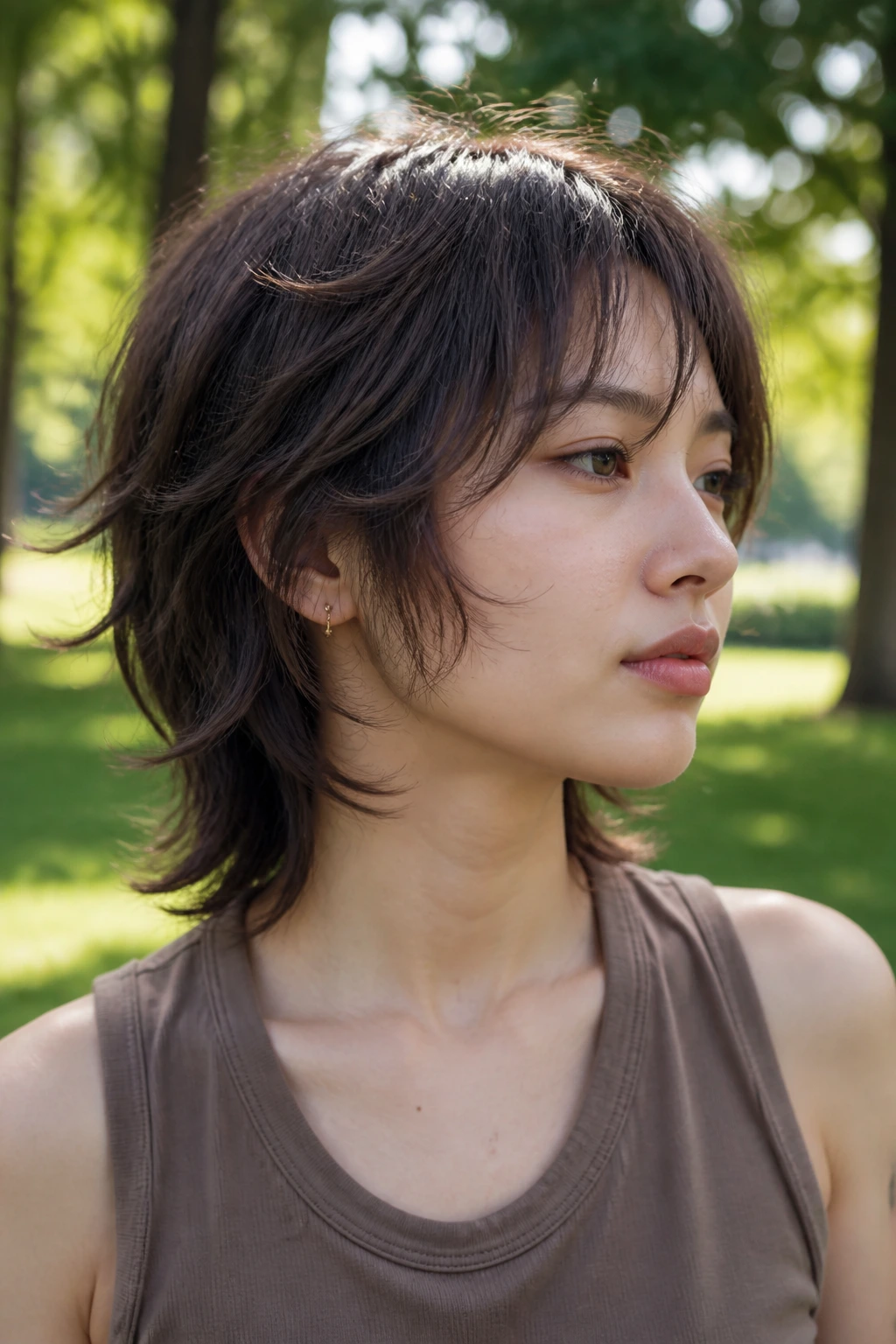
A full wolf cut can be too much for fine hair, but a mini version is different. The layers are softer, the volume is less extreme, and the wispy bangs keep the front loose. It gives movement without turning the head into a pile of short pieces.
This is the cut for someone who wants texture more than polish. The crown gets a bit of lift, the ends stay airy, and the bangs sit like they’ve been lived in for a while. That slightly grown-out feeling is part of the charm.
A diffuser can help if your hair has any wave at all. If it’s straight, rough-dry the roots first and leave the fringe for last. The front should look a little undone, not intentionally messy in that fake way people pretend to love.
18. Rounded Pixie Bob With Face-Hugging Bangs
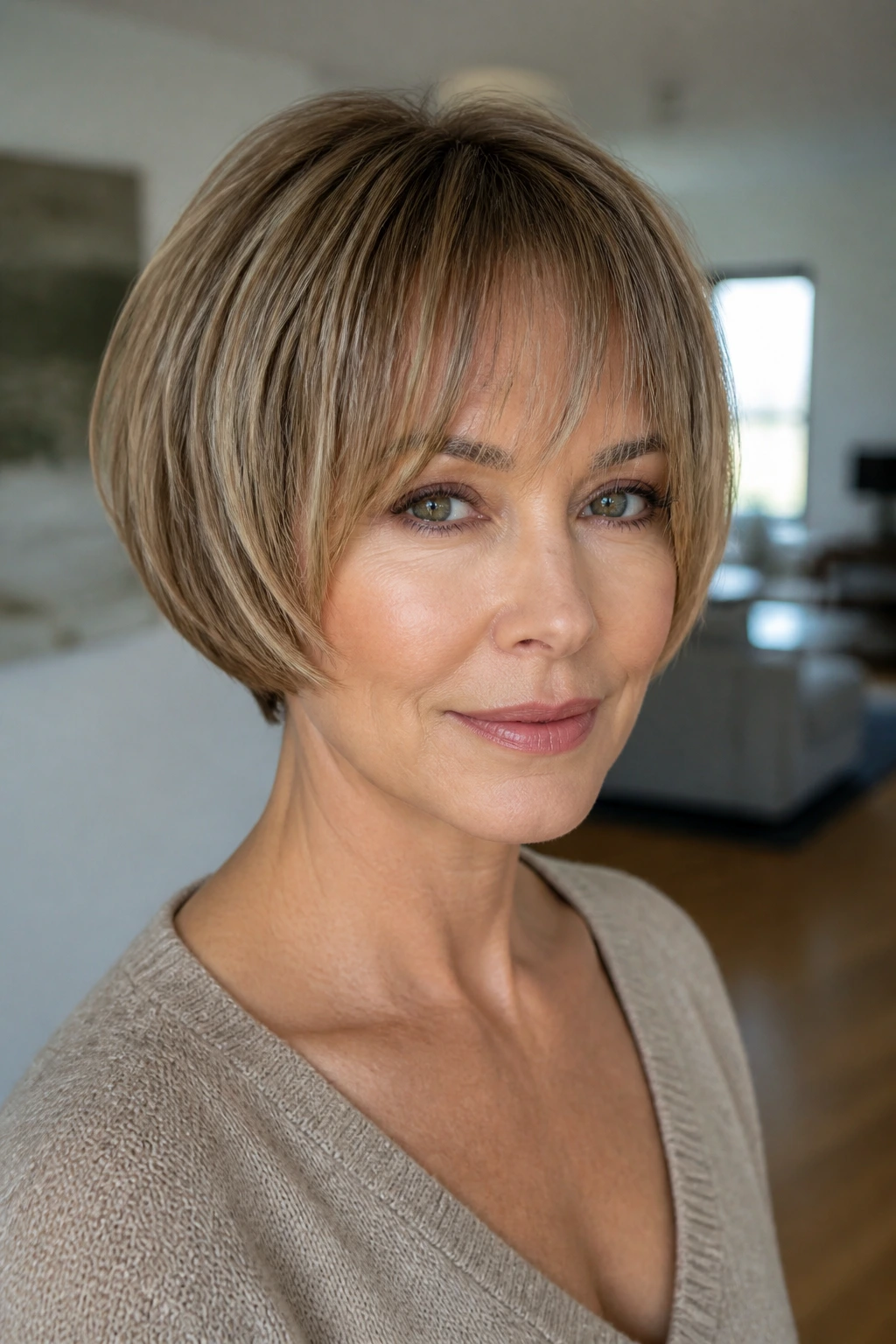
A pixie bob with a rounded outline gives fine hair a sweet spot between softness and structure. The bangs hug the face without covering it, which is exactly what you want when your strands are delicate and need a bit of support.
The rounded shape can make the cheek area look fuller, especially if the cut lands around the top of the jaw. Keep the fringe feather-light so it follows the contour of the face instead of sitting flat across the forehead. That makes the haircut feel tailored.
This one is especially nice for people who want a short cut that still feels feminine without being fussy. It’s neat, easy to tuck, and the fringe never gets in the way of your eyes.
19. French Crop Bob With Blended Bang Edge
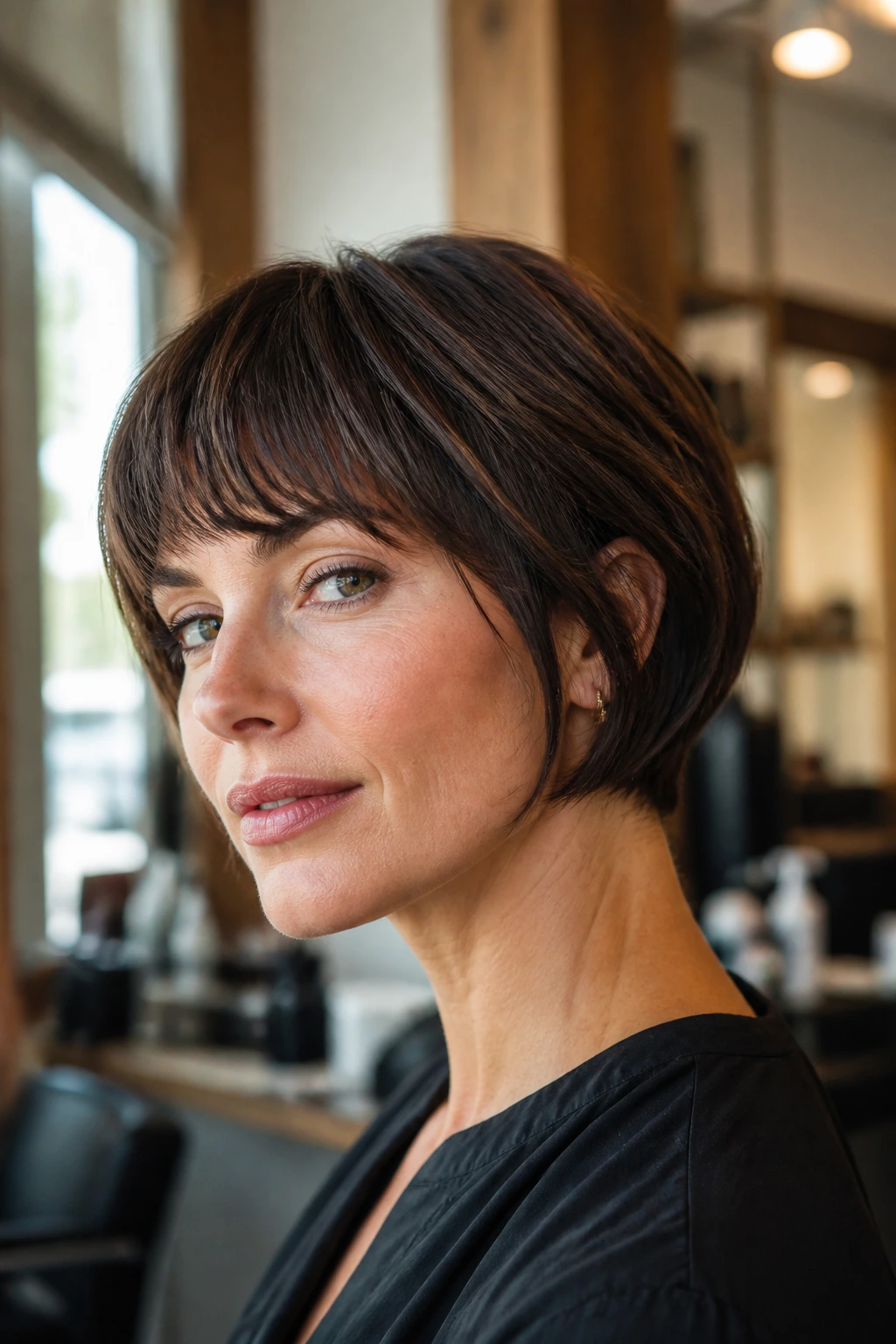
A French crop bob takes the crispness of a crop and softens it with a bob’s shape. The fringe edge is blended, not blunt, so the forehead area looks blurred in a good way. Fine hair benefits from that softened edge because it avoids the see-through-but-not-quite effect.
The cut should sit close to the face, with the back and sides kept tidy. What makes it interesting is the fringe line. It’s short enough to feel graphic, but light enough that you can still see skin between the pieces. That balance matters more than the label.
Use a small amount of wax on the ends, not the roots. Roots need lift. Ends need separation. Mixing those up is how good short cuts turn sticky.
20. Side-Parted Classic Bob With Feathered Fringe

A side-parted classic bob never really goes out of service, especially for fine hair. The part itself creates lift, which is handy, and the feathered fringe keeps the face frame soft. This is the sort of haircut that looks neat even when you’ve done very little to it.
The part should sit where your hair naturally wants to fall, or just off it. Fight the grain too hard and the whole top goes flat. Letting the fringe feather out a little toward the heavier side gives the cut a quieter shape, and quiet shape is often what fine hair needs.
If you want something office-friendly, this is a safe bet. It’s polished without becoming stiff. And it never asks for more product than the hair can carry.
21. Undercut Pixie With Floating Bangs
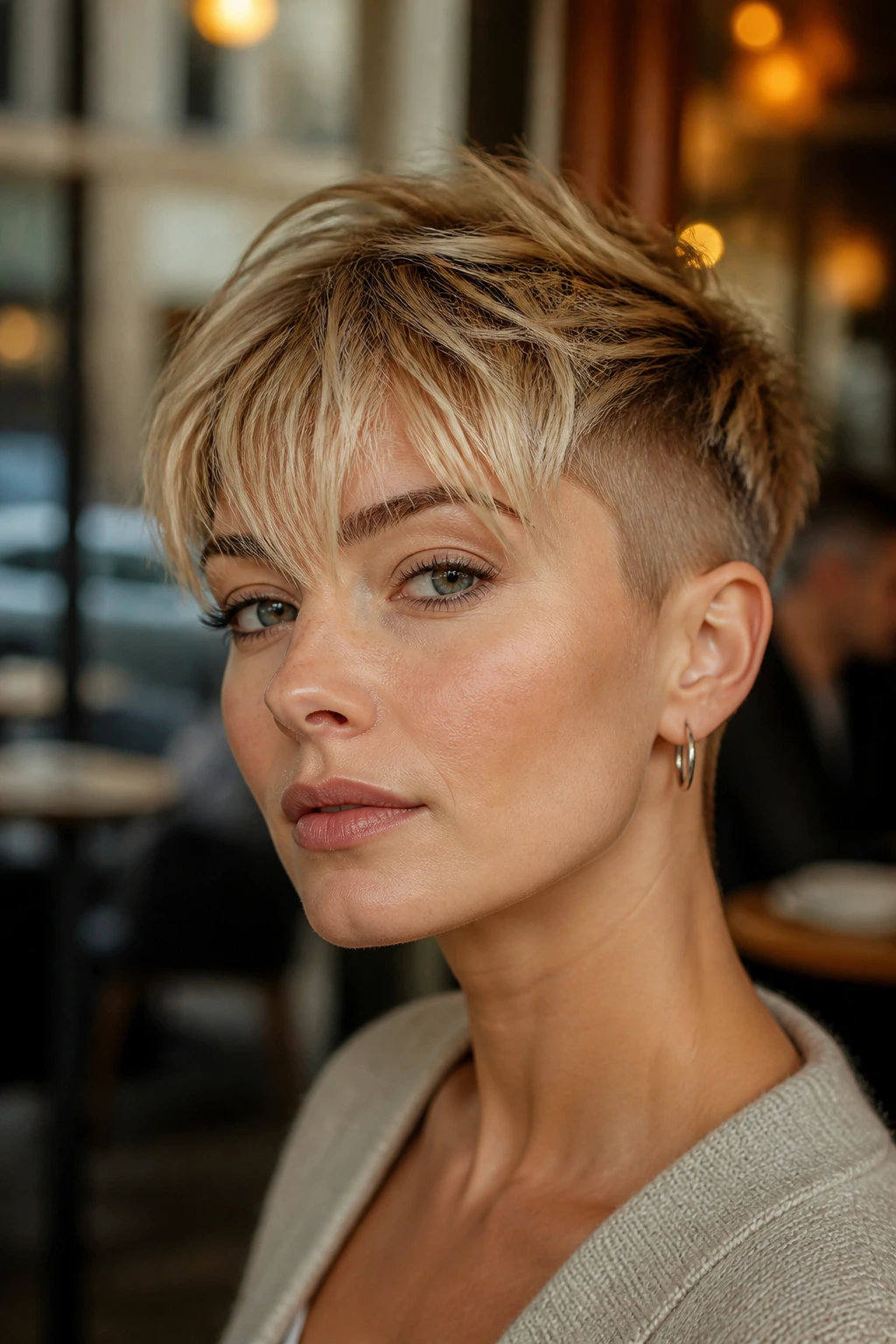
An undercut pixie is not subtle, and that’s the point. Removing bulk at the nape and sides lets the top sit higher, which can be a gift for very fine hair. The floating bangs keep the forehead soft so the cut doesn’t feel too sharp.
This one works best if you like hair that has a little attitude. The undercut gives the silhouette structure, and the fringe floats in front instead of landing in a heavy line. That contrast is what makes it interesting. It’s also a smart answer for hair that grows wide at the sides but flat on top.
You do have to keep it trimmed. Let the undercut grow out too much and the shape starts to puff in the wrong places. The maintenance is part of the deal.
22. Curved Bob With Soft, Broken Ends
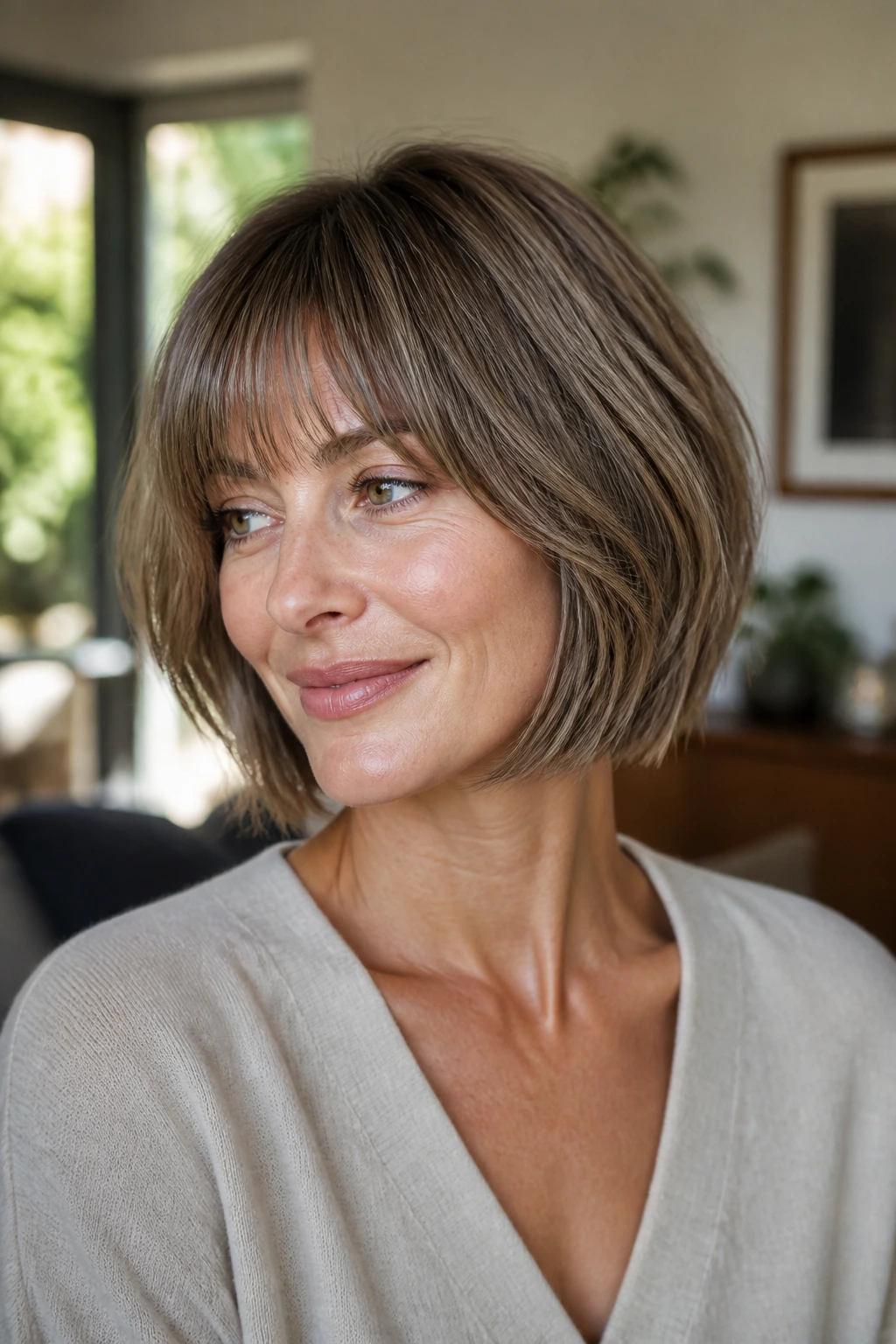
A curved bob follows the jaw and gently turns under at the ends, which helps fine hair look fuller at the edge. The soft, broken ends keep it from feeling too tidy. That broken finish is the part that gives the haircut its movement.
This cut is a quiet achiever. It isn’t flashy, but it frames the face well and doesn’t need much morning work. If your bangs are wispy and slightly uneven by design, they match the ends nicely instead of competing with them.
This is a good option if you like a bob that doesn’t look severe from the side. The curve gives it shape. The broken texture keeps it human.
23. Tucked-Under Bob With Near-Invisible Bangs
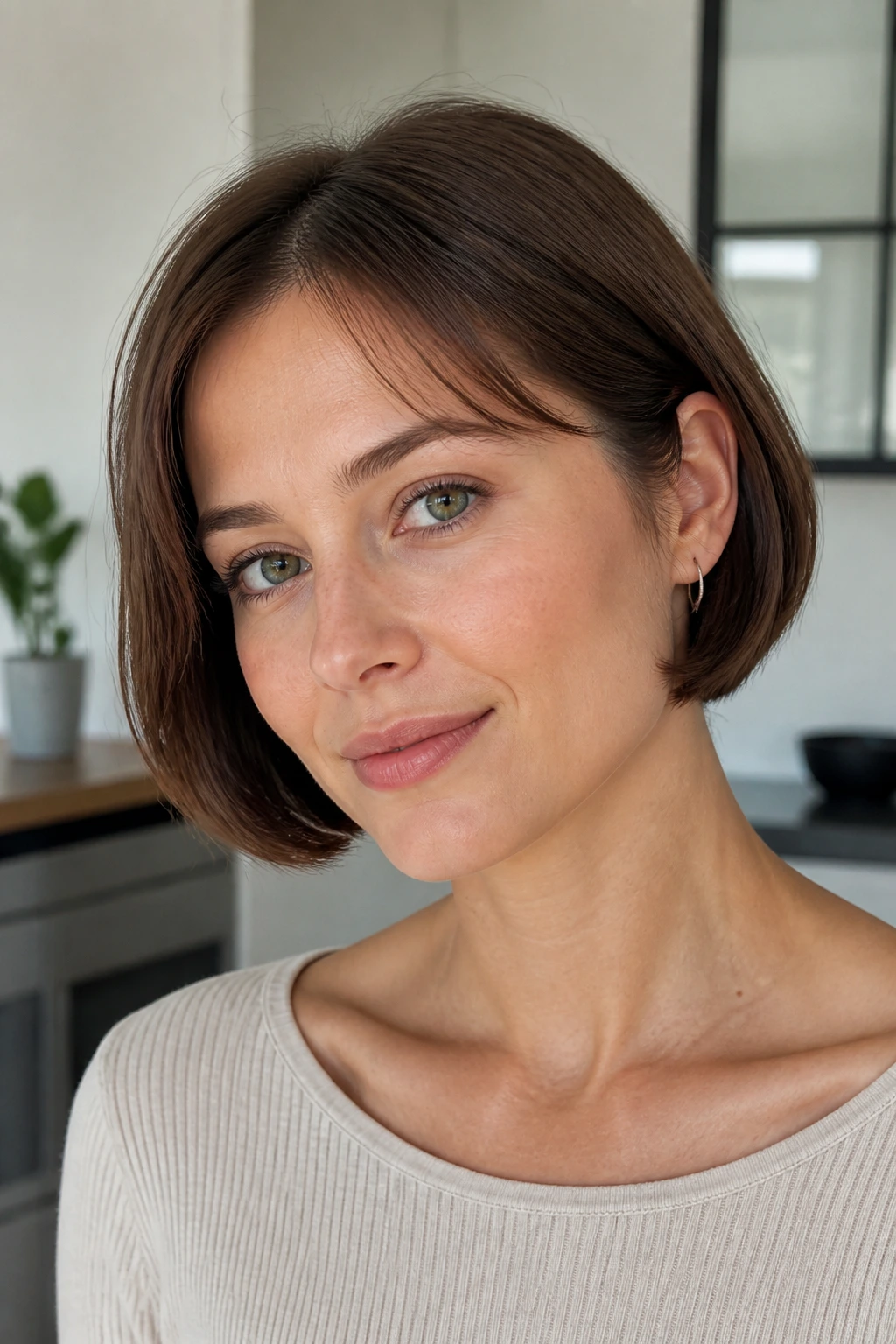
A tucked-under bob with near-invisible bangs is for the person who wants softness more than statement fringe. The ends bend under just enough to create a neat line, and the bangs are so light they almost vanish into the front layers. Almost. That near-invisible quality is the whole trick.
Fine hair often does better when the fringe is more suggestion than feature. This cut proves it. The front stays open, the forehead gets a little cover, and the shape remains light from every angle. It’s also one of the easiest cuts to live with because nothing fights your natural growth pattern.
If you want the least dramatic option in the group, this is it. And that can be a good thing.
Why Wispy Bangs Change the Whole Shape of Fine Hair
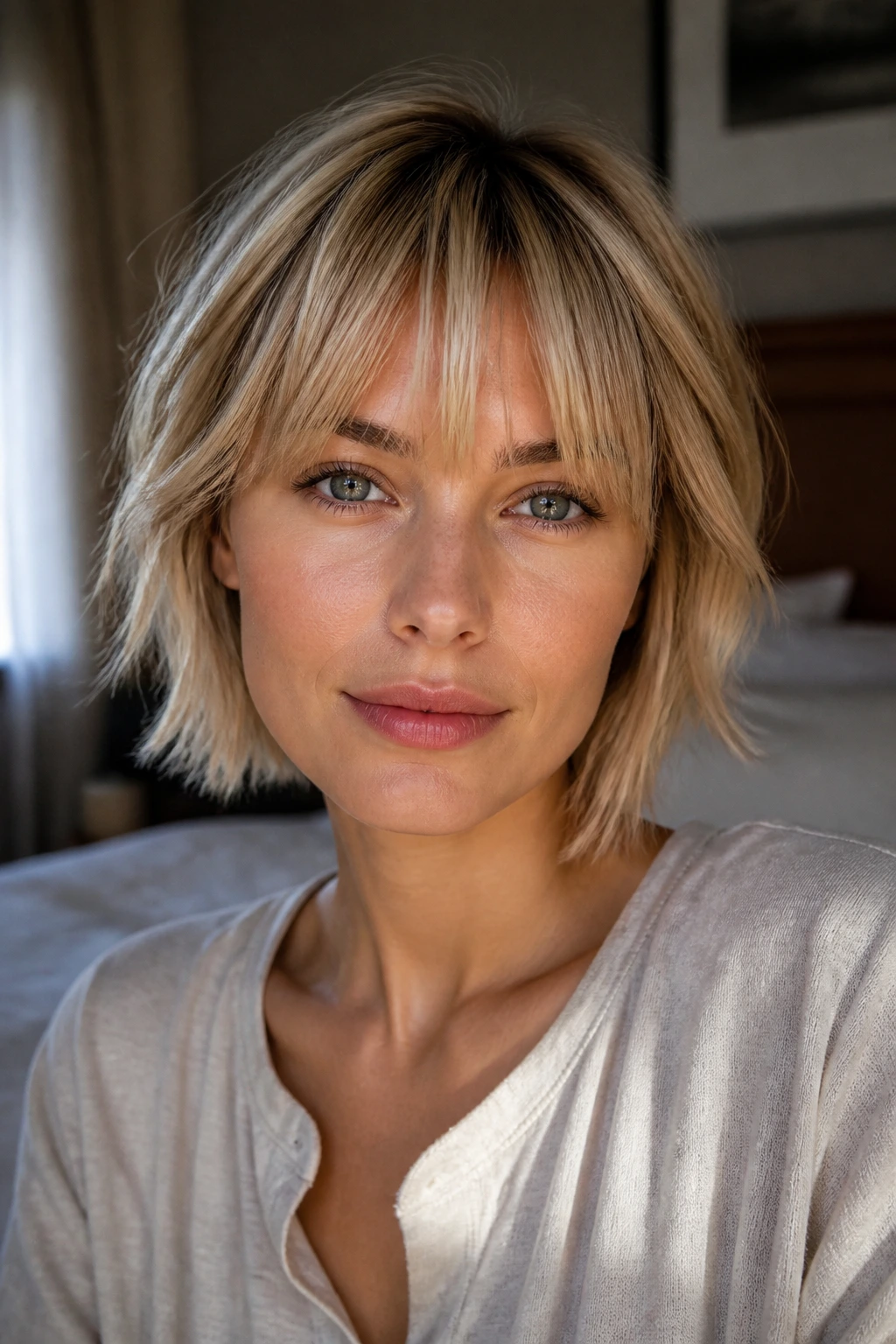
Wispy bangs do more than soften the forehead. They change where the eye goes. On fine hair, that matters because the hair can disappear visually if every section is cut to the same blunt weight. A light fringe gives the front of the haircut a place to land without building a heavy wall.
The best wispy bangs are not accidentally sparse. They’re planned. A stylist will usually point-cut the fringe or slice it lightly so there’s movement without a choppy finish. That lets the bangs bend instead of laying flat in one sheet, and the result is much kinder to fine strands.
There’s another advantage people miss: wispy bangs hide growth better than dense ones. A blunt bang looks grown-out the second it moves past its ideal line. A feathered fringe can stretch a few weeks longer because the softness is part of the design. That saves you from the awkward “I need a trim yesterday” stage.
What makes them work
- They reduce the visual weight at the forehead
- They keep the haircut from looking blocky
- They soften cowlicks instead of fighting them head-on
- They blend into face-framing layers as they grow
That’s why I keep coming back to them. They’re small, but they do a lot.
The Tools and Products That Keep the Fringe Light
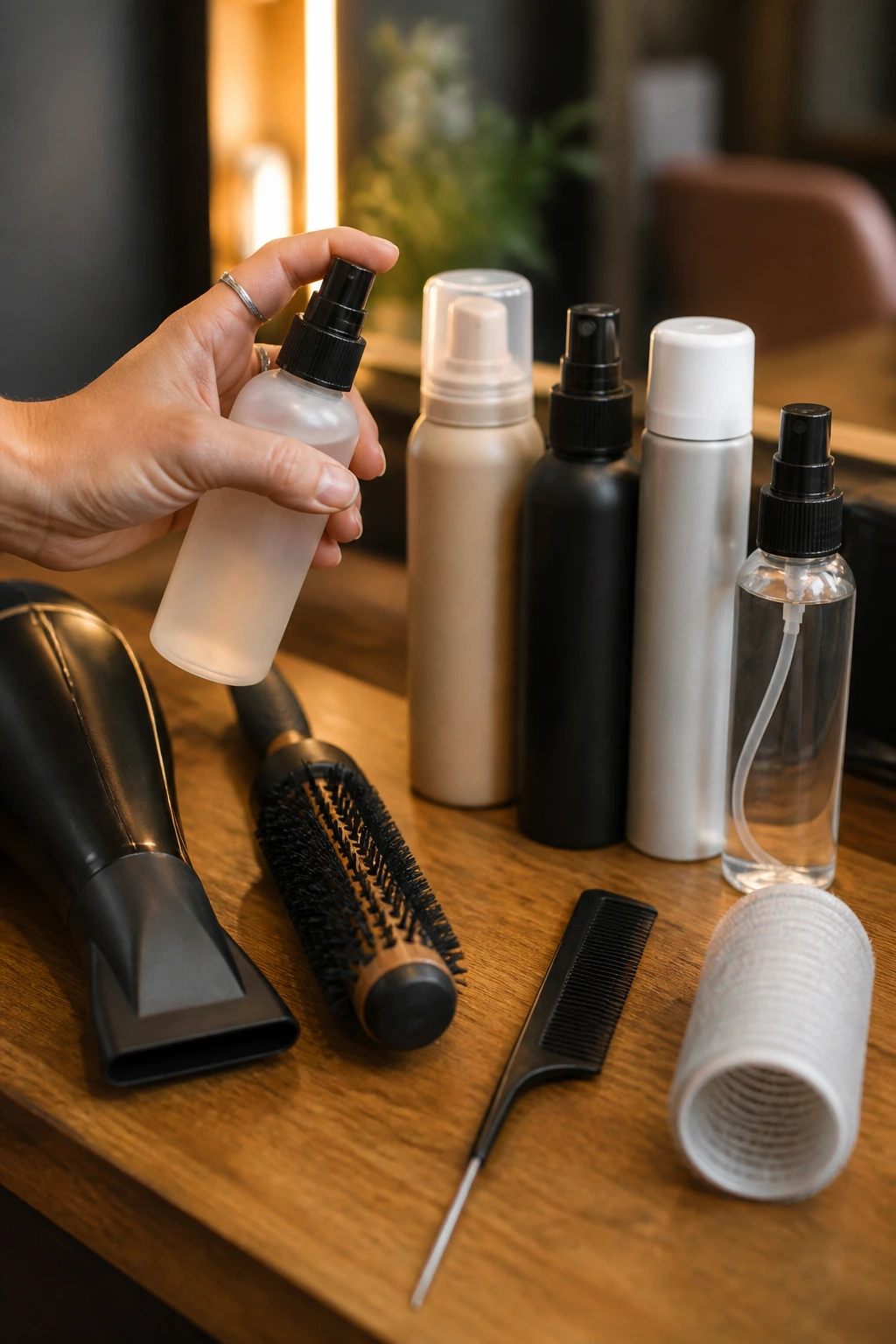
The product shelf for fine hair should stay small. Heavy cream, thick oil, and sticky paste can make wispy bangs separate into sad little strings. Better to keep the kit lean and use things that add lift or texture without coating the hair.
- Blow dryer with a narrow nozzle — Directs airflow at the roots so the fringe can be shaped instead of blasted loose.
- Small round brush, 1 to 1.25 inches — Gives a little bend to the bangs without creating a curl that’s too polished.
- Lightweight mousse — Adds memory at the root when applied to damp hair before drying.
- Root-lift spray — Good at the crown and along the part line; keep it off the ends.
- Dry shampoo — Helps the fringe and roots keep some grit between washes.
- Texturizing spray — Useful on the ends of pixies, bobs, and bixies when hair slips flat.
- Tail comb — Makes sectioning the fringe easier, especially if your hairline has a cowlick.
- Velcro roller or two — Handy for the crown or front while you finish makeup or dressing.
A flat iron can help, too, but only if it’s used gently. One slow pass is enough. Five fast passes will just make fine hair look skinnier.
How to Ask Your Stylist for the Right Weight and Length
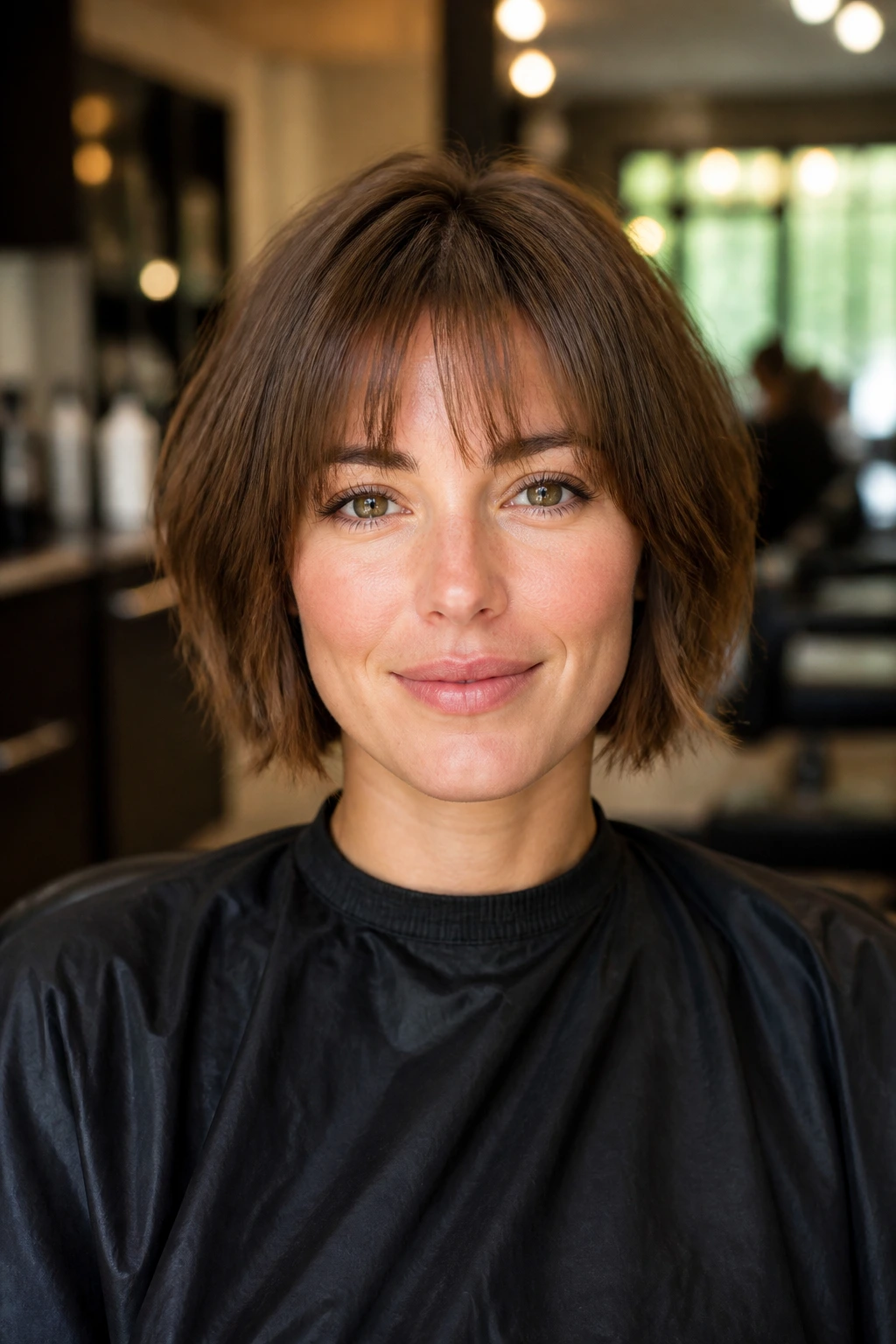
Bring photos, but bring good ones. Front, side, and a back view if you can find it. One picture of a cut you like is not enough when fine hair is involved, because a fringe can look airy from the front and heavy from the side. You want the whole shape.
Ask your stylist to keep the bangs soft, not sparse. That phrase matters. Sparse bangs expose scalp too quickly on fine hair, while soft bangs still have enough density to look intentional. If you have a cowlick, say so early. Don’t leave that detail out and hope for the best.
A useful script
Tell them how you style your hair on an average day. If you air-dry, say that. If you use a round brush, say that. If you only blow-dry the fringe and leave the rest alone, say that too. The cut should be designed around your actual routine, not some imaginary version of you with 25 free minutes and endless patience.
One more thing: ask whether the fringe should be cut a touch longer than the final look, especially if your hair is fine and straight. Fine hair often shrinks a little once it dries and loses weight, and starting slightly longer saves a lot of regret.
Styling Moves That Keep the Fringe Light
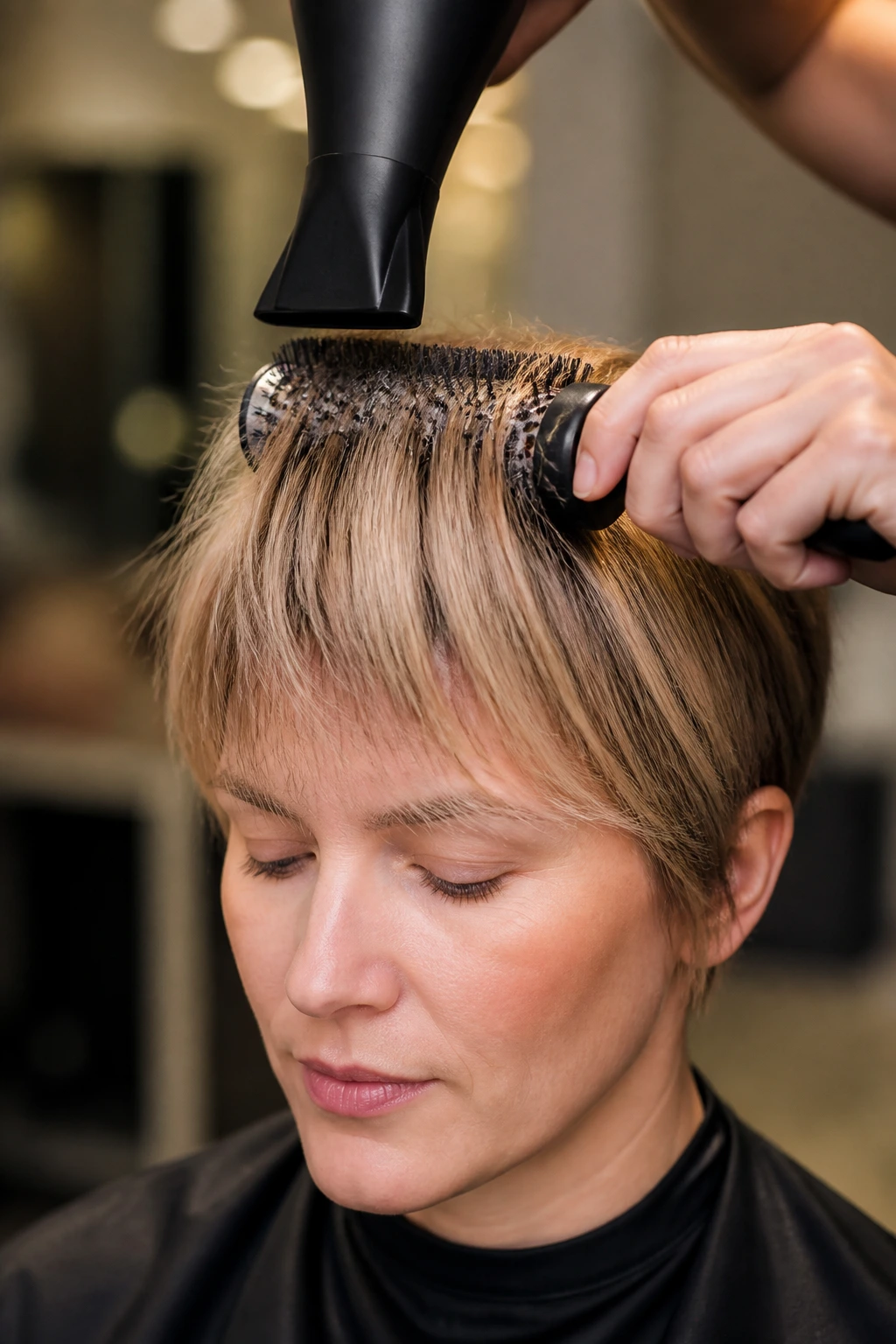
The fastest way to ruin wispy bangs is to overwork them. Fine hair does not respond well to constant rewetting, repeated brushing, or a lot of heavy finishing cream. You want shape, not a slicked-down front.
For straight fine hair
Blow-dry the fringe first while it’s still damp. Aim the dryer from above, then sweep the hair side to side with a brush so the root doesn’t set in one flat direction. Finish with a cool shot. That one step helps the fringe stay lifted instead of collapsing the second you move outside.
For wavy fine hair
Dry the bangs forward and then split them lightly with your fingers while they’re still warm. If the wave wants to bend too hard, use a flat iron only on the ends, not the root. You’re shaping the line, not erasing the texture.
For curly fine hair
Leave the fringe longer than you think you need. Curl spring is sneaky. Dry the hair in small sections and avoid stretching it straight with too much tension, or the fringe will bounce up unevenly later.
A little dry shampoo at the roots on day two is often better than a full wash. Fresh water can make fine hair lie down again, which is the opposite of what you want.
Common Mistakes That Make Wispy Bangs Look Sparse
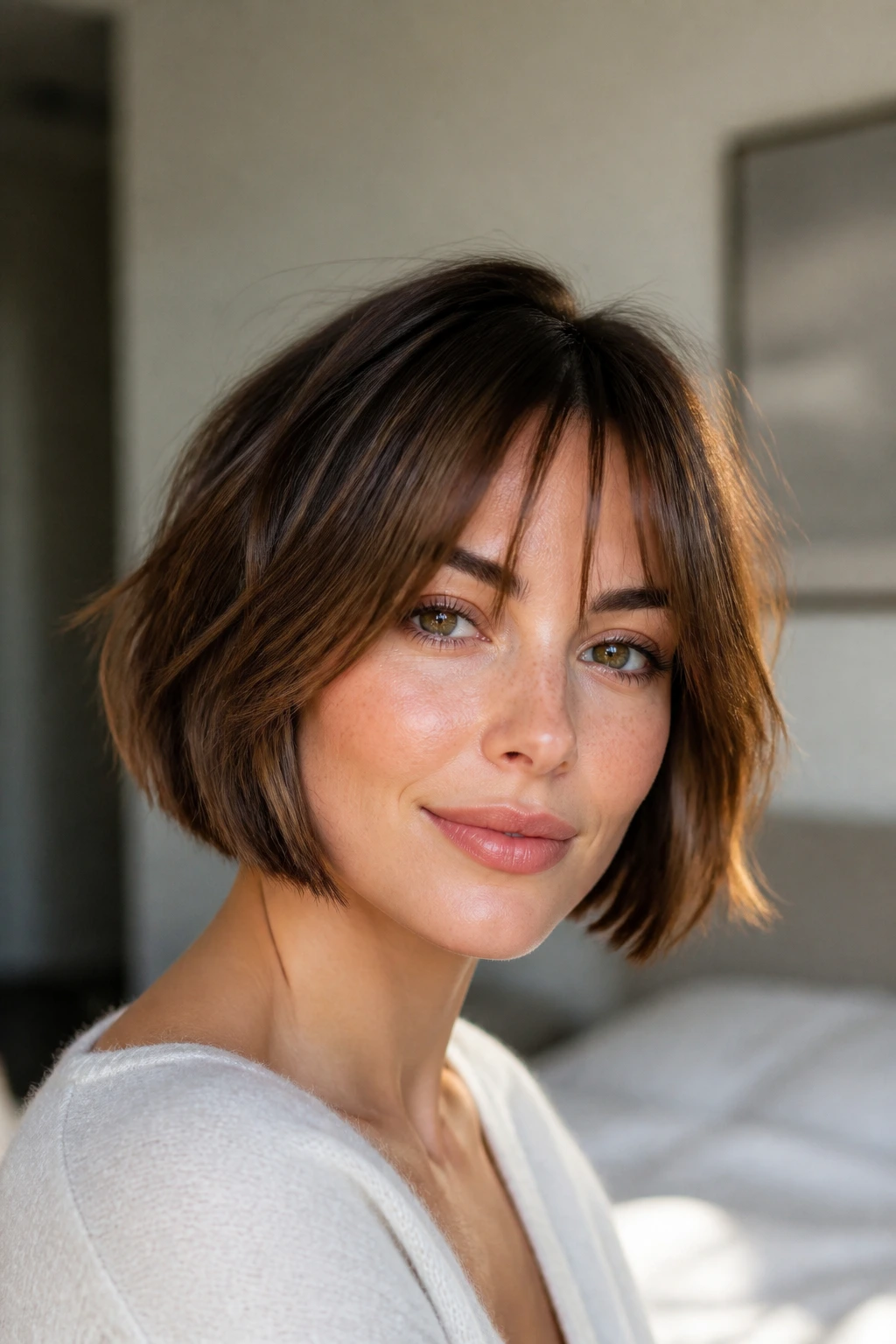
The most common mistake is over-thinning. If the bangs are sliced too aggressively, they start to show scalp when the wind hits or when the hair shifts even a little. The fix is simple: keep some density in the center and let the softness come from the edges, not from removing too much hair.
Another one is using heavy styling cream near the forehead. Fine hair drinks that stuff in and then lies down like it’s been told bad news. Use lighter products, and keep them off the roots. A tiny bit at the ends is fine. A glob at the fringe is not.
Cutting bangs too short is another trap. Fine hair often springs higher than expected when dry, especially around a cowlick. Ask for the fringe to be a touch longer than your final target, then trim gradually.
Finally, don’t over-layer the front. Too many short face-framing pieces around wispy bangs can leave the temple area looking thin. That’s the exact opposite of what you want. Keep some structure near the face so the fringe has something to sit against.
Variations and Tweaks for Different Face Shapes
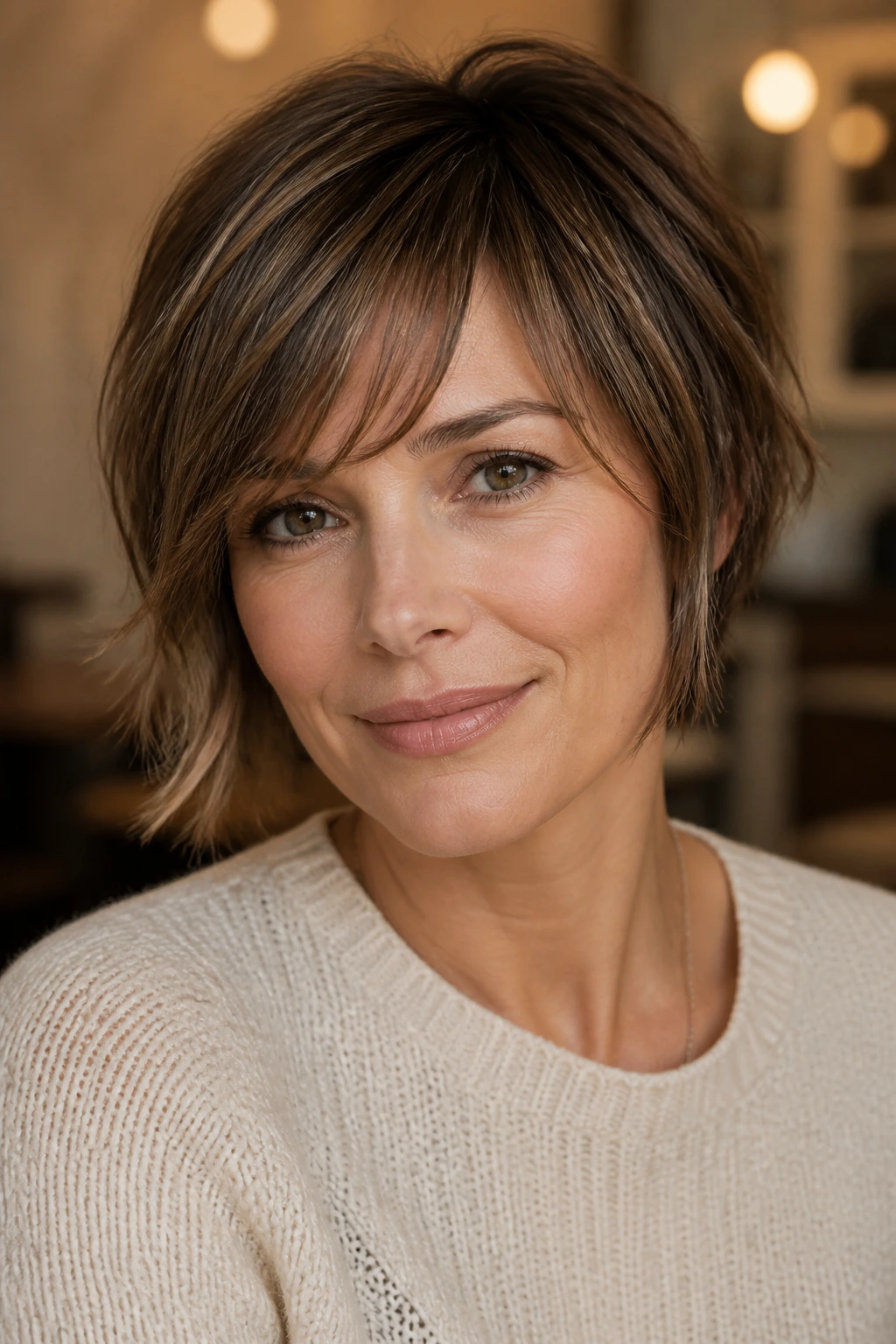
Soft Side Sweep: If you’re nervous about any fringe at all, angle the bangs to one side and keep the shortest piece just under the brow. This works well on round faces because it adds a diagonal line without closing off the forehead.
Micro-Fringe Lite: Short bangs can work on fine hair, but they need to be broken and feathered, not blunt. Keep them airy and a little uneven so they don’t feel severe. Best for people who like a sharper, more editorial look.
Curtain-Bang Drift: Ask for the bangs to part naturally in the center and blend into cheekbone-length pieces. This is the easiest route if you want to grow out a fringe later.
Soft Pixie Bias: If your face is long, a short pixie with wispy bangs can bring visual balance without adding bulk at the sides. The fringe should stay slightly wider than a classic baby bang, which helps frame the eyes.
Grown-Out Fringe: This is the low-maintenance version for people who hate monthly trimming. Leave the front long enough to tuck behind the ears, then feather the edges so it still reads as fringe.
Maintenance, Trims, and Grow-Out Without the Awkward Phase
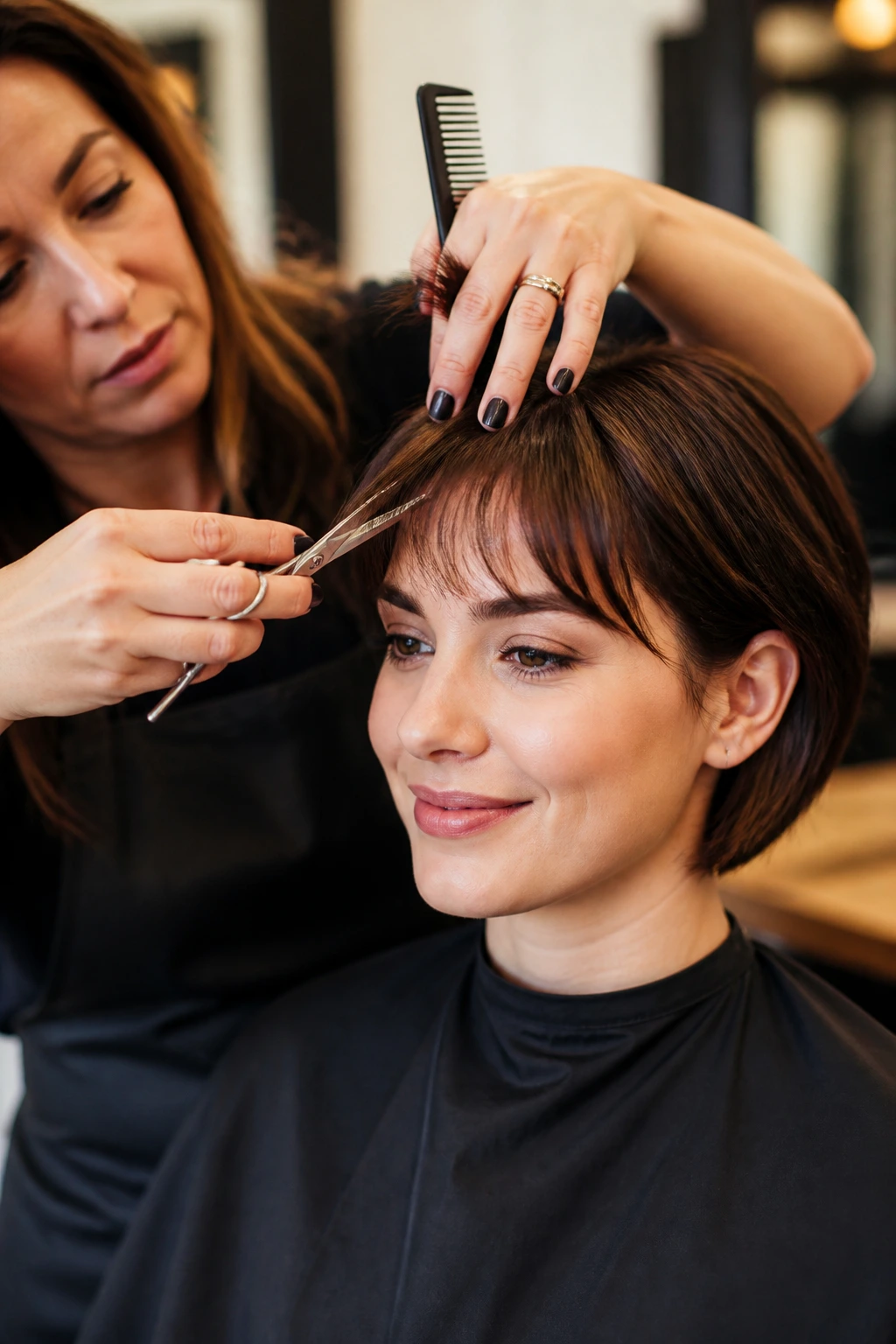
Wispy bangs on fine hair need regular trimming, but not constant fussing. Most fringes benefit from a quick trim every 3 to 5 weeks, while the rest of the cut can usually go 6 to 8 weeks between shape-ups, depending on how fast your hair grows and how sharp you want the outline to stay.
The grow-out phase is easier when the bangs were cut with softness from the start. A light fringe can be swept aside, split in the center, or folded into face-framing layers without creating that sudden shelf people dread. That’s one reason I prefer feathered edges over blunt bangs on fine hair.
At home, don’t keep hacking at the fringe with kitchen scissors. I know the temptation. It usually ends with one side shorter than the other and a tiny disaster that takes three salon visits to repair. If you must trim, use hair shears and take almost nothing off — a few millimeters, not a dramatic correction.
Sleep matters, too. A soft headband or loose pin can keep the fringe from getting crushed flat overnight. If the bangs wake up bent, a light mist of water and a quick blow-dry from the roots usually resets them in under two minutes.
Frequently Asked Questions About Short Haircuts With Wispy Bangs
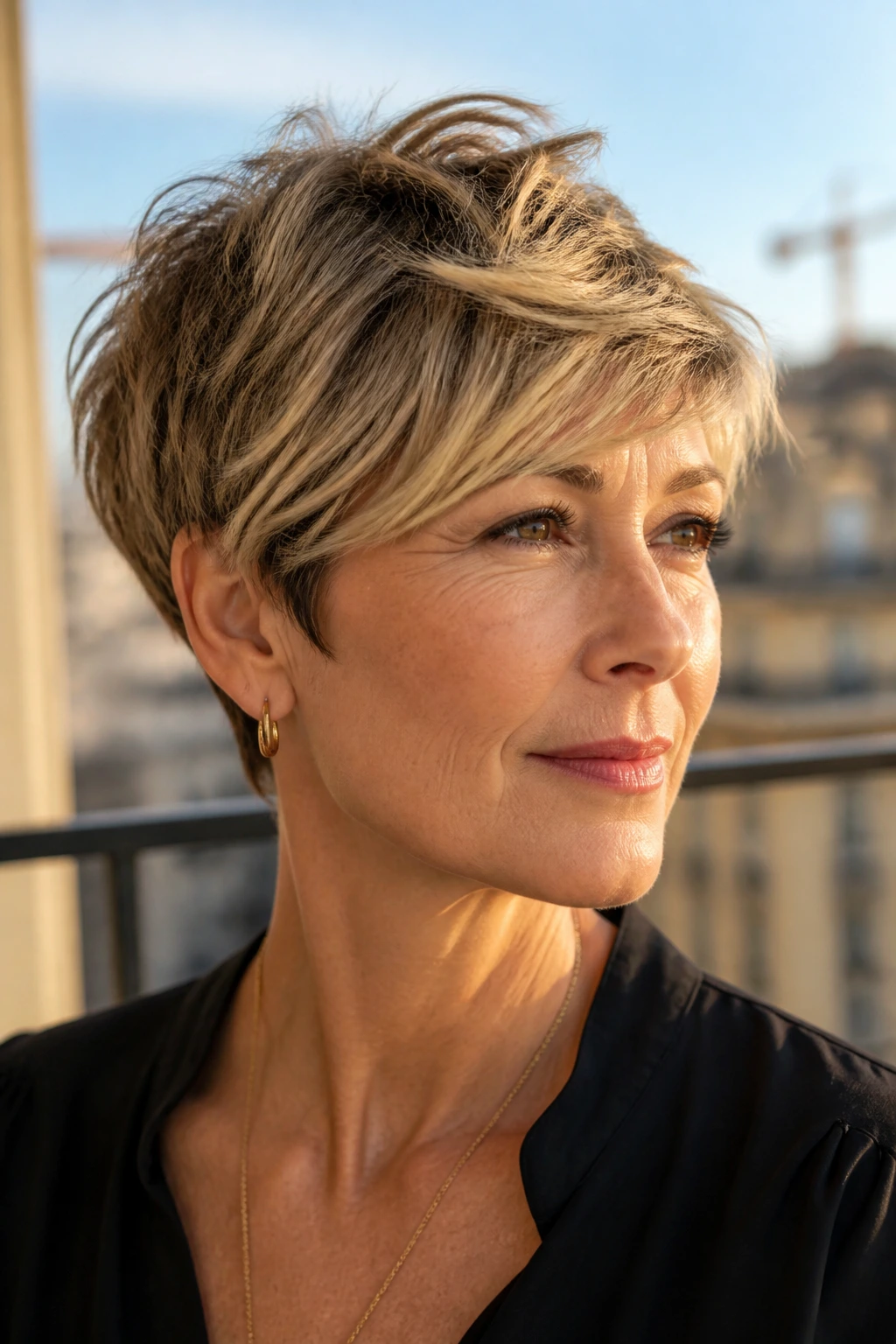
Are wispy bangs a good choice for very fine hair?
Yes, if they’re cut with enough softness but not stripped too thin. Fine hair needs a fringe that still has visible density in the middle, or it can look patchy the second it separates.
Do wispy bangs make a big forehead look smaller?
They can soften the forehead without covering it completely, which is often the sweet spot. If you want more coverage, ask for a wider fringe; if you want less, keep the bangs narrower and center-weighted.
Which is easier to live with: curtain bangs or side bangs?
Side bangs usually ask for less daily shaping. Curtain bangs look looser, but they tend to need a little blow-drying to sit properly on fine hair.
How often do short wispy bangs need trims?
Usually every 3 to 5 weeks. If the fringe is very light, you may stretch it a little longer, but once the ends start poking into your eyes, the cut loses its shape fast.
Can I wear glasses with wispy bangs?
Absolutely. In fact, many wispy fringe styles sit better with glasses than blunt bangs do. The key is to keep the fringe above or just at the frame line, not buried inside it.
What if my bangs split down the middle?
That often means there’s a cowlick or the fringe is too heavy at the sides. Try drying the roots in the opposite direction for a few seconds, then set them forward with a cool blast.
Is a pixie too short for fine hair?
Not if the top is left with enough length to create lift. Fine hair often looks fuller in a pixie than in a longer, heavier cut because the weight is gone.
Can I air-dry this kind of haircut?
Yes, but the fringe usually looks better with at least a little directed drying. Even 60 to 90 seconds at the front can change the whole shape.
What should I avoid if my hair is very limp?
Heavy oils, dense creams, and over-layered fronts. Those three can make fine hair separate, droop, and lose the little lift that keeps a short cut looking intentional.
A Cut That Stays Light
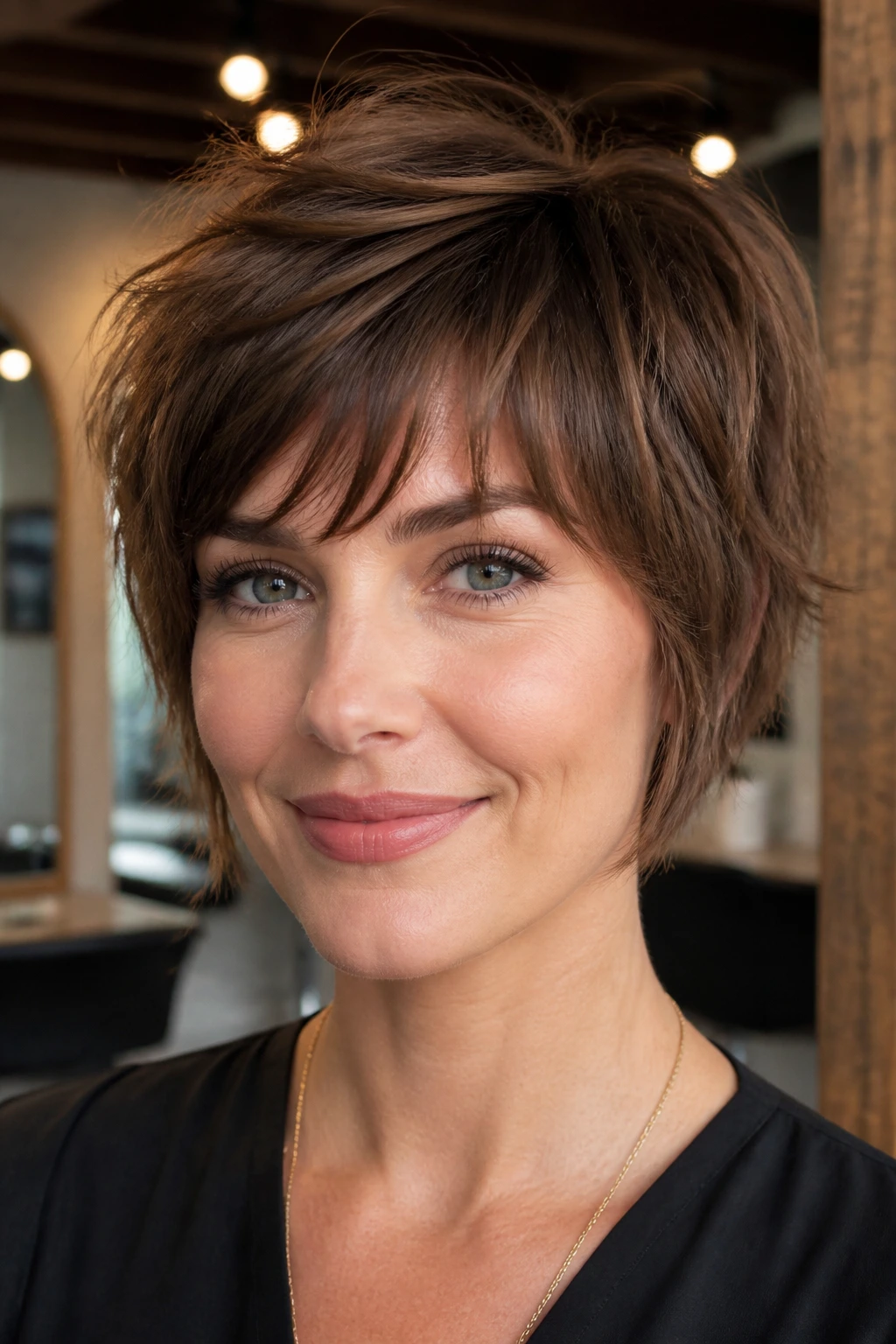
The best short cuts for fine hair do not try to fake thickness with bulk. They use line, lift, and just enough softness at the forehead to keep the style alive. Wispy bangs are the little trick that makes that possible. Not a gimmick. A tool.
If you pick one of these shapes, the part that matters most is not the trend label. It’s the balance. Keep the perimeter honest, keep the fringe airy, and keep the product light enough that your hair can still move. That’s the difference between a cut that sits there and a cut that actually looks like hair.
A good short haircut should make mornings easier, not louder. Pick the version that matches your texture, your routine, and how much forehead you’re willing to show, then let the shape do its job.
