



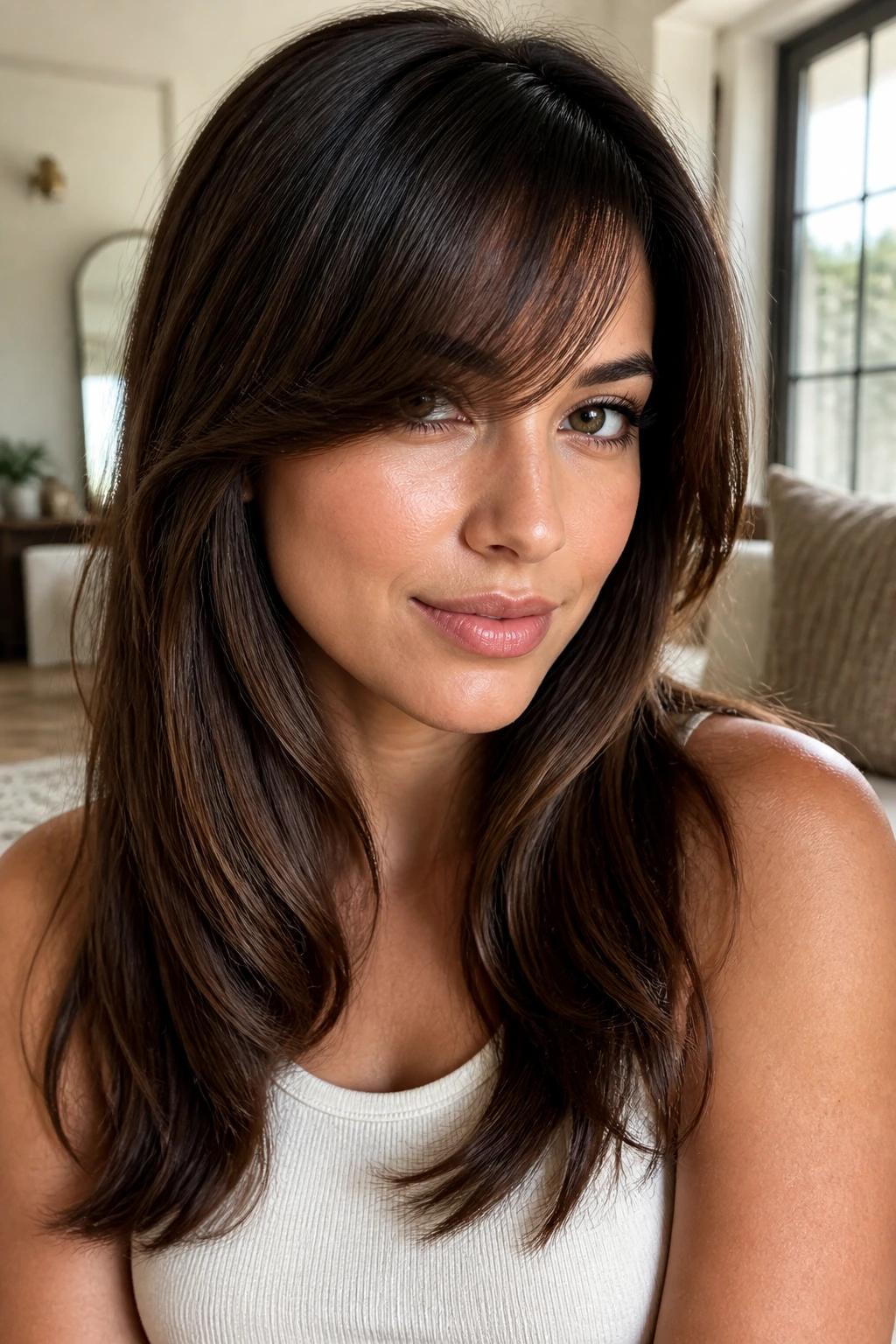
The right swoop bangs can change the whole mood of a haircut in about ten seconds. They bend the eye, skim the cheekbone, and take the edge off a forehead or jawline without turning the front of your hair into a heavy curtain. That’s the part people often miss: a swoop isn’t about covering everything. It’s about drawing one clean diagonal line that feels softer than a blunt edge and more alive than a flat side part.
I like a swoop when the shortest point lands near the outer brow and the longest piece slips toward the cheekbone or upper lip. Any shorter and it starts feeling clipped. Any longer and it stops reading as fringe and becomes a loose front layer, which is a different look altogether. The sweet spot is movement with intention, not hair that just happens to fall across your face.
That’s why this kind of fringe keeps showing up in salons and on real people with real mornings. It works with straight hair that wants to lie flat, wavy hair that bends on its own, curls that need room to spring, and thick hair that needs a smarter weight line. The trick is choosing the right version for your face shape, your texture, and how much patience you’ve got for round brushes and trims.
Why These Swoop Bangs Earn Their Keep
-
They soften the front of the face without closing it off: the diagonal line keeps the center open, which matters if you want definition around the eyes but not a heavy wall of hair.
-
They grow out with fewer ugly stages: the longest ends can slide into face-framing layers instead of hanging there like a shelf three weeks later.
-
They can be styled three different ways: a round brush gives lift, a flat iron gives a cleaner bend, and a quick clip or roller helps if you air-dry.
-
They work with glasses, earrings, and hats: the longer outer corner can clear frames, while the shorter inner point still keeps the haircut moving.
-
They can be tuned for fine, thick, curly, or straight hair: the same swoop shape looks feather-light on one person and plush on another, which is half the charm.
-
They make a haircut feel finished: even the simplest lob or long layer cut looks more deliberate when the front section has a clear diagonal line.
1. Feather-Light Side Sweep
Feather-light side sweep bangs are the ones I reach for when a forehead needs softening but not hiding. The cut is narrow, the texture stays airy, and the fringe starts just off-center so it falls in a clean diagonal instead of spilling across the whole front.
Ask for the shortest point to skim the outer brow and the longest piece to land around the top of the cheekbone. That tiny shift makes the shape feel lighter than traditional side bangs. On fine hair, it helps to keep the ends point-cut rather than blunt, because a hard line will look thin fast.
A quick blow-dry from the opposite side keeps the sweep from collapsing. One pass with a round brush is usually enough. No drama. No helmet hair.
2. Long Curtain Drift
What if you want the softness of bangs without committing to a strong fringe line? Long curtain drift is the answer. It splits near the center, then slips outward so the shortest pieces live closer to the nose bridge and the longest pieces brush the cheekbone.
The reason this version flatters a soft face frame is simple: it creates two moving lines instead of one heavy block. That gives the eyes room to breathe, and it keeps the front from feeling boxed in. I like this shape on longer faces and anyone who wants the front to blend into layers with almost no visible break.
If your hair is wavy, leave the ends slightly longer than you think you need. Wavy hair bounces up after drying, and a curtain drift that looks perfect wet can land two inches shorter by lunchtime.
3. Brow-Grazing Arc
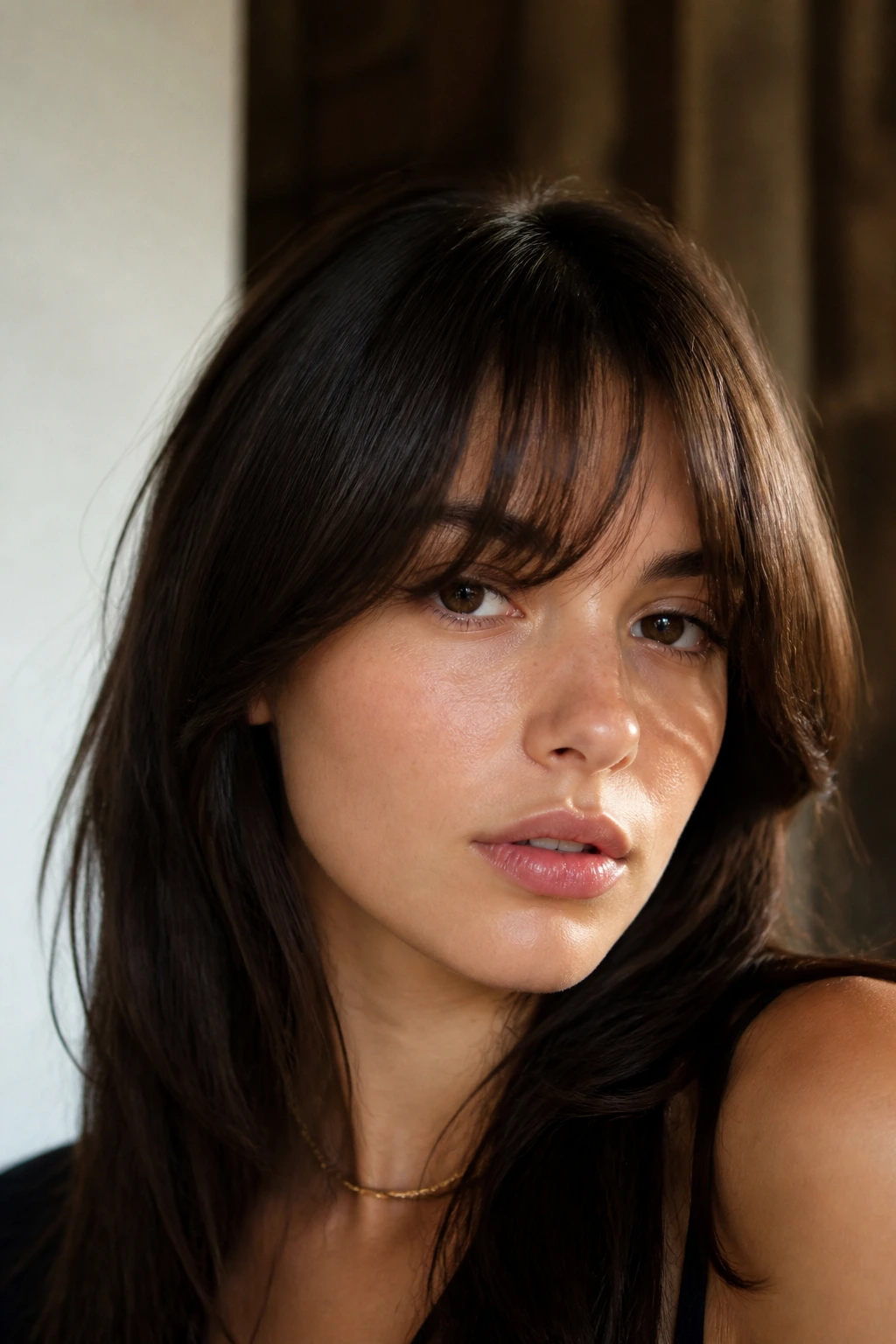
Brow-grazing swoop bangs are sneaky. They look easy, but the curve does the real work. The center sits just below or right at the brow tail, then the sides arc downward so the whole fringe feels softer than a straight-across cut.
This version is especially good when you want the eyes to stay open. The line doesn’t sit on the lashes, and it doesn’t build too much weight across the forehead. Instead, it gives a little shadow and a little bend. That combination reads clean, not severe.
Best for straight or softly wavy hair
- Keep the center narrow so it doesn’t become a solid block.
- Blow-dry forward first, then sweep the front across with a brush.
- Use a light mist of flexible hairspray, not a stiff lacquer.
If the fringe is cut well, it should move when you blink. That sounds fussy. It isn’t. It’s the difference between a fringe that feels alive and one that sits there like a strip of tape.
4. Jawline Sweep With a Soft Bend
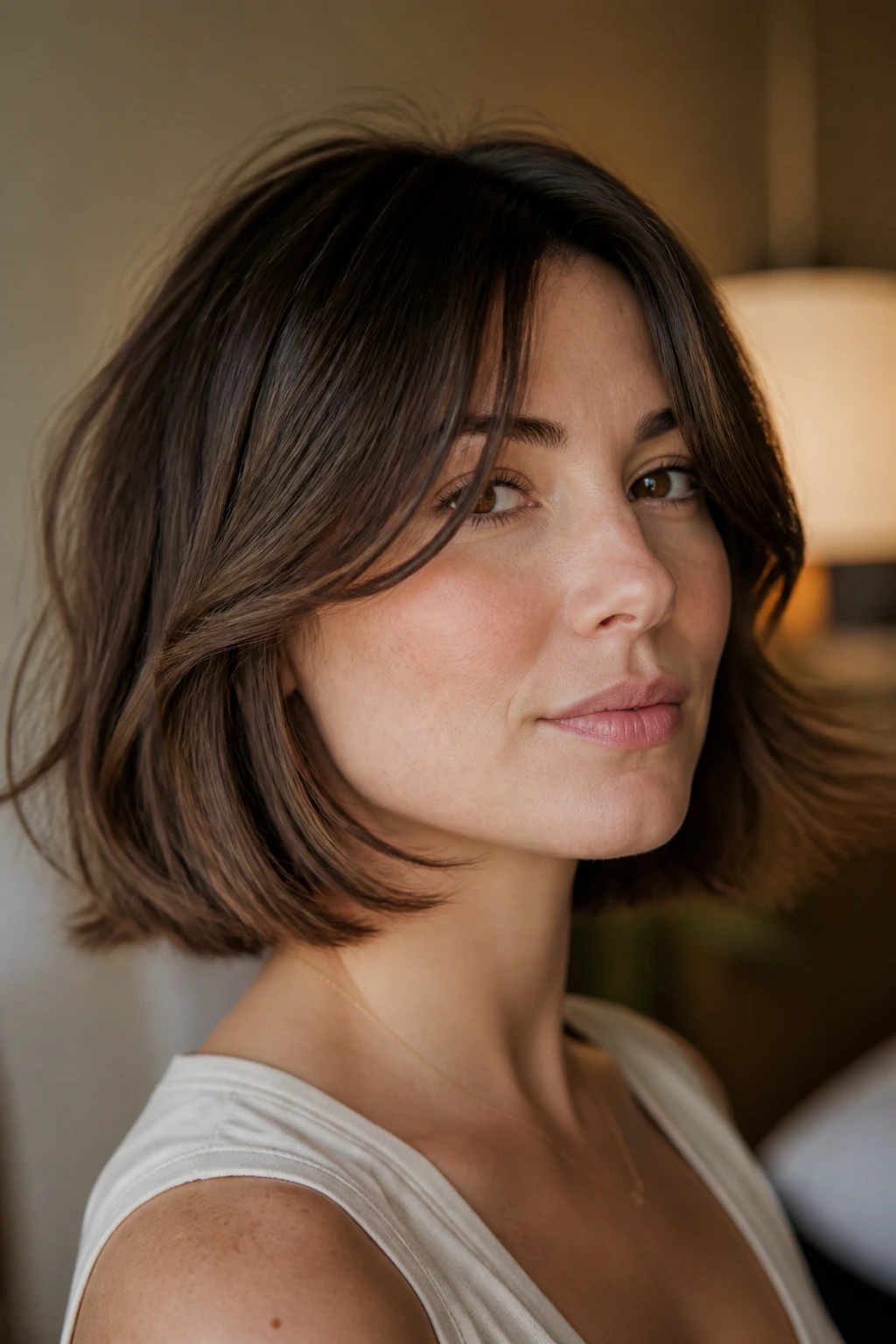
A jawline sweep is the quiet fixer for square faces and sharper cheekbones. The front section starts higher near the temple, then bends down toward the jaw instead of stopping at the cheek. That longer route blurs corners in a way a short bang never will.
I prefer this shape when the haircut underneath is blunt or structured. The front needs to counterbalance the stronger line below it. If the cut is too short, it can make the jaw look more angular. If it’s long enough to graze the jawline, the whole face reads smoother.
The styling move is easy: round brush the fringe under just once, then let the ends drop into a soft curve. Don’t overwork it. The bend should look like it happened naturally, not like you spent fifteen minutes negotiating with a tool.
5. Deep Side-Part Lift
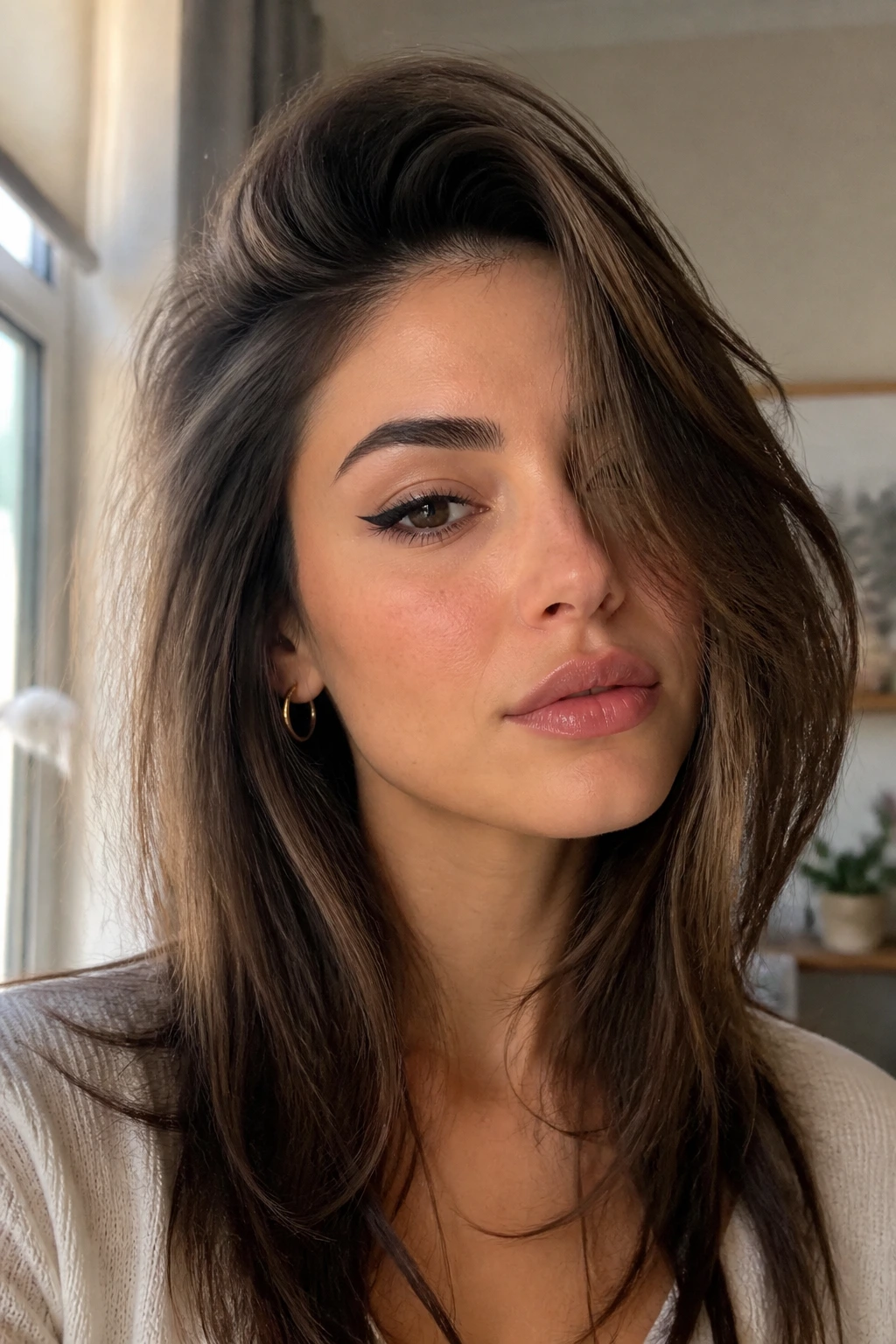
If your face reads rounder, a deep side-part lift adds the vertical line the eye needs. The part sits farther off center, usually two inches or so from the natural middle, and the swoop starts with a bit more height at the root before it falls toward one side.
That crown lift matters. It pulls the shape upward before it travels across the forehead, which keeps the front from widening the face. I like this version when someone wants softness around the cheeks but still wants a little structure near the top.
The biggest mistake here is spreading the fringe too wide. Keep the front section narrower than a full curtain bang, and let the diagonal do the heavy lifting. A deep side part can look dramatic, but it should never look like it’s trying too hard. That’s the line.
6. Piecey Swoop With Airy Gaps
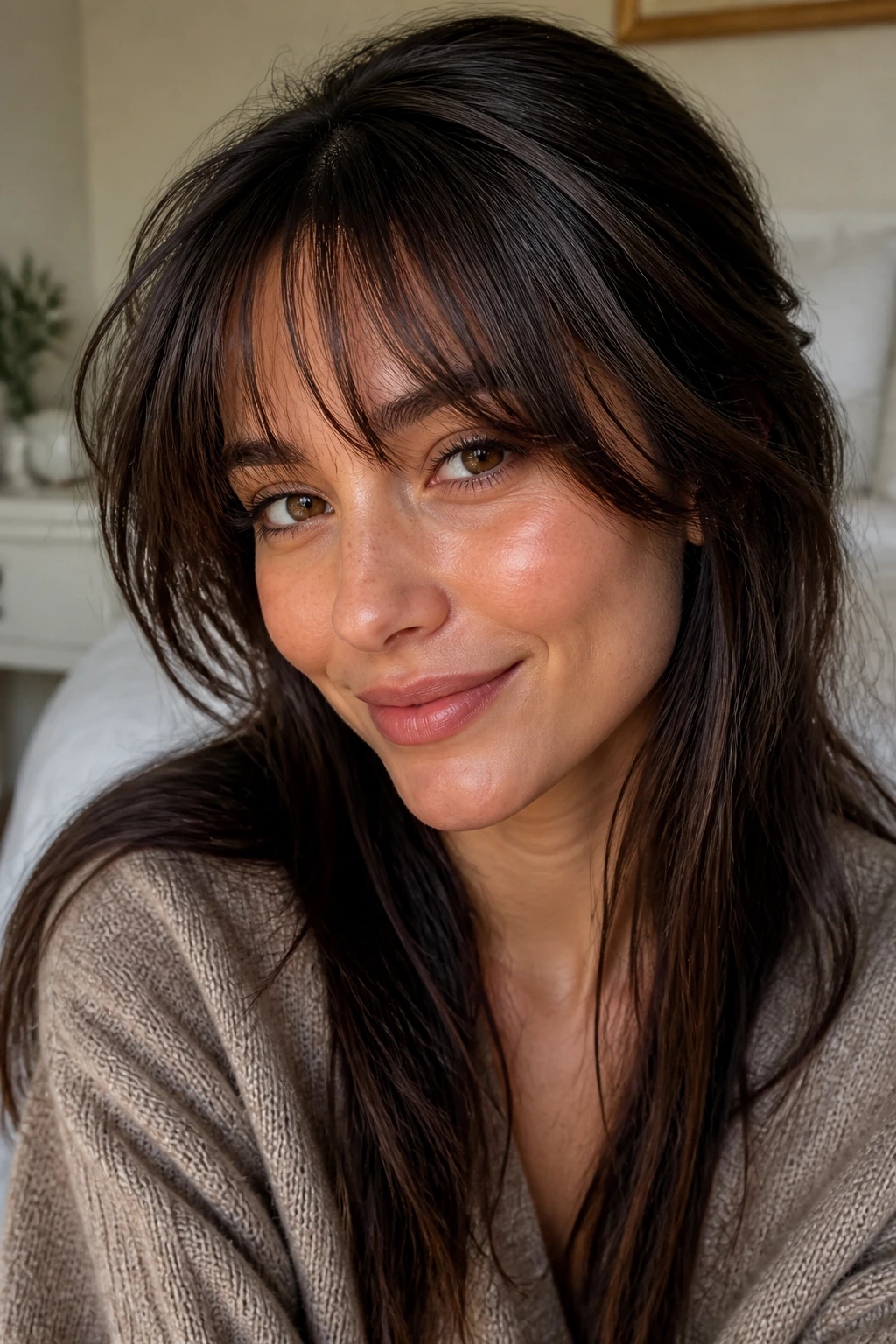
Piecey swoop bangs are for the days when a solid fringe feels too tidy. The cut is lightly textured, the front is separated into soft ribbons, and the gaps between pieces make the whole look feel lighter.
This version is especially good on thicker hair. A heavy block can swallow the face fast. Piecey separation keeps the shape from taking over, and it lets the forehead show through in small, flattering breaks. I’d rather see a few clean strands than one over-thinned mess.
What to ask for
- Point-cut ends instead of blunt snips.
- Light internal texture, not aggressive thinning.
- A length that can still sweep across the eye without collapsing.
Use a pea-sized bit of styling cream, then rake it through with your fingers. A comb can make the front too neat. Fingers keep the shape a little undone, which is the whole point here.
7. Curly Swoop Fringe
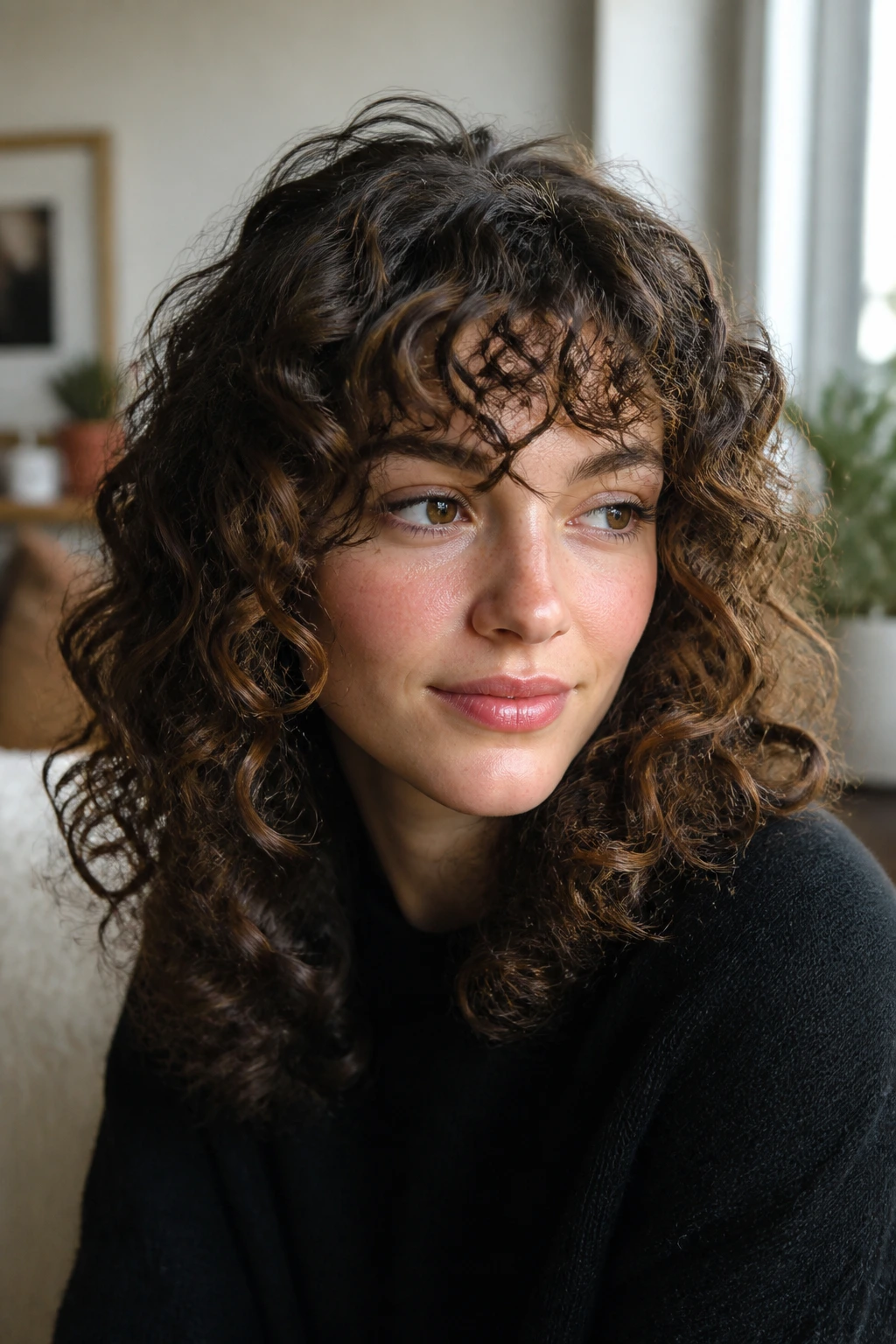
Curly swoop bangs do not need to behave like straight hair. That’s the mistake most people make. If the hair wants to curl, let it curl, then shape the front so the shortest pieces still drift across the forehead instead of falling straight down.
I like this cut a little longer than you think you need. Curls shrink. A lot. The longest point should usually sit somewhere between the cheekbone and lip when dry, while the inner pieces can sit a touch higher. Cut it wet with caution, then check the shape dry before taking off more.
Use a curl cream or light gel, finger-coil the front away from the face, and diffuse on low heat. A curly swoop looks best when the front keeps some spring. If you stretch it too much, you lose the softness that makes the shape work in the first place.
8. Wavy Flip-Under Swoop
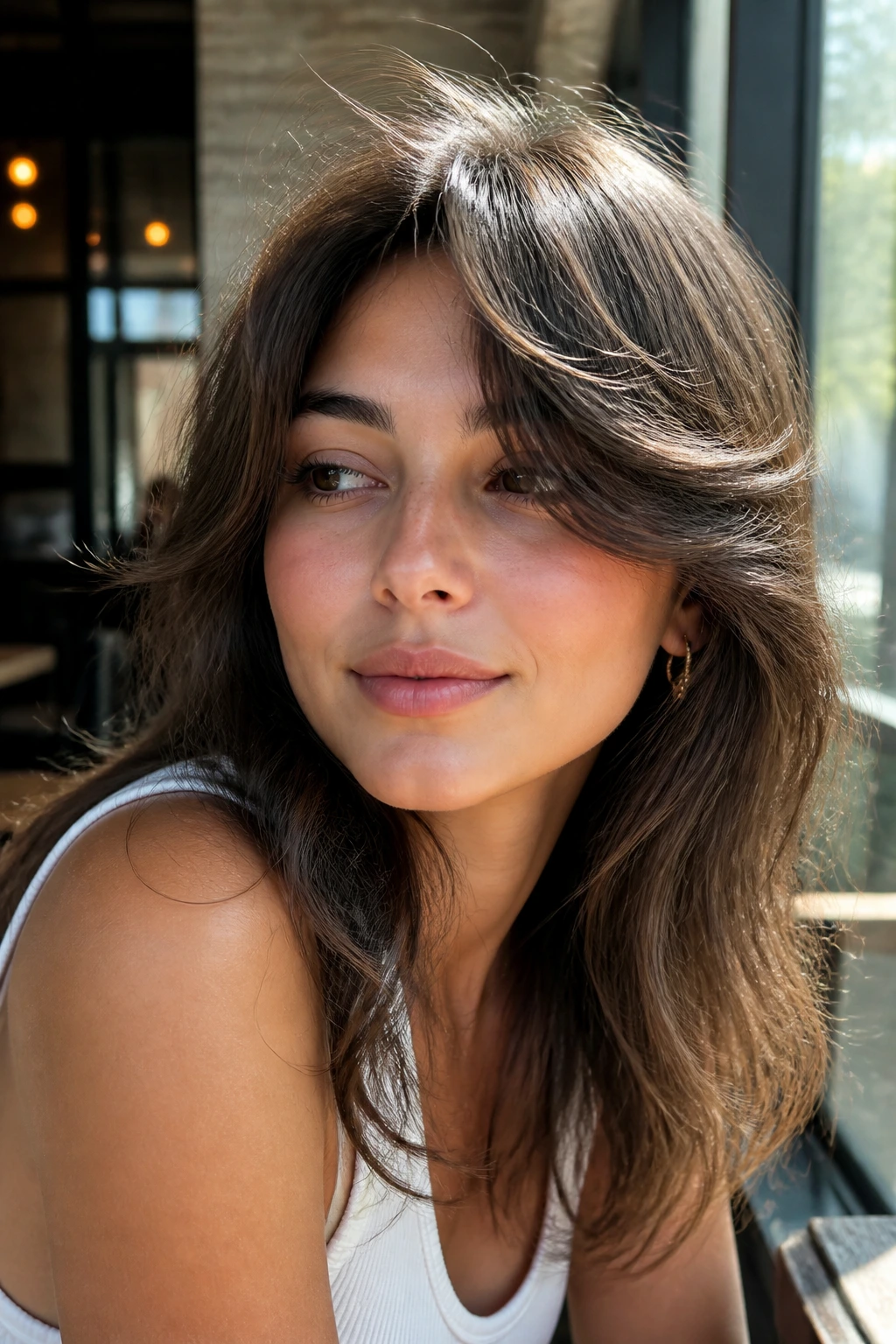
Wavy fringe loves a bend more than a hard line. This version starts with a side sweep, then flips under just enough at the ends to make the front feel finished. It’s the kind of shape that looks a little different every time you wear it, which I count as a win.
The key is the bend. Not curl. Not flat iron crease. Just enough curve to steer the hair across the forehead and into the front layers. Use a 1-inch iron or a small round brush, then rake the section apart with your fingers while it cools.
If your waves are loose, keep the front slightly longer so the swoop doesn’t spring up into a stubby little fringe. If your waves are tighter, let the front stay soft and irregular. Wavy hair rarely looks better when it’s forced into neatness.
9. Dense-Hair Swoop With Weight Removed
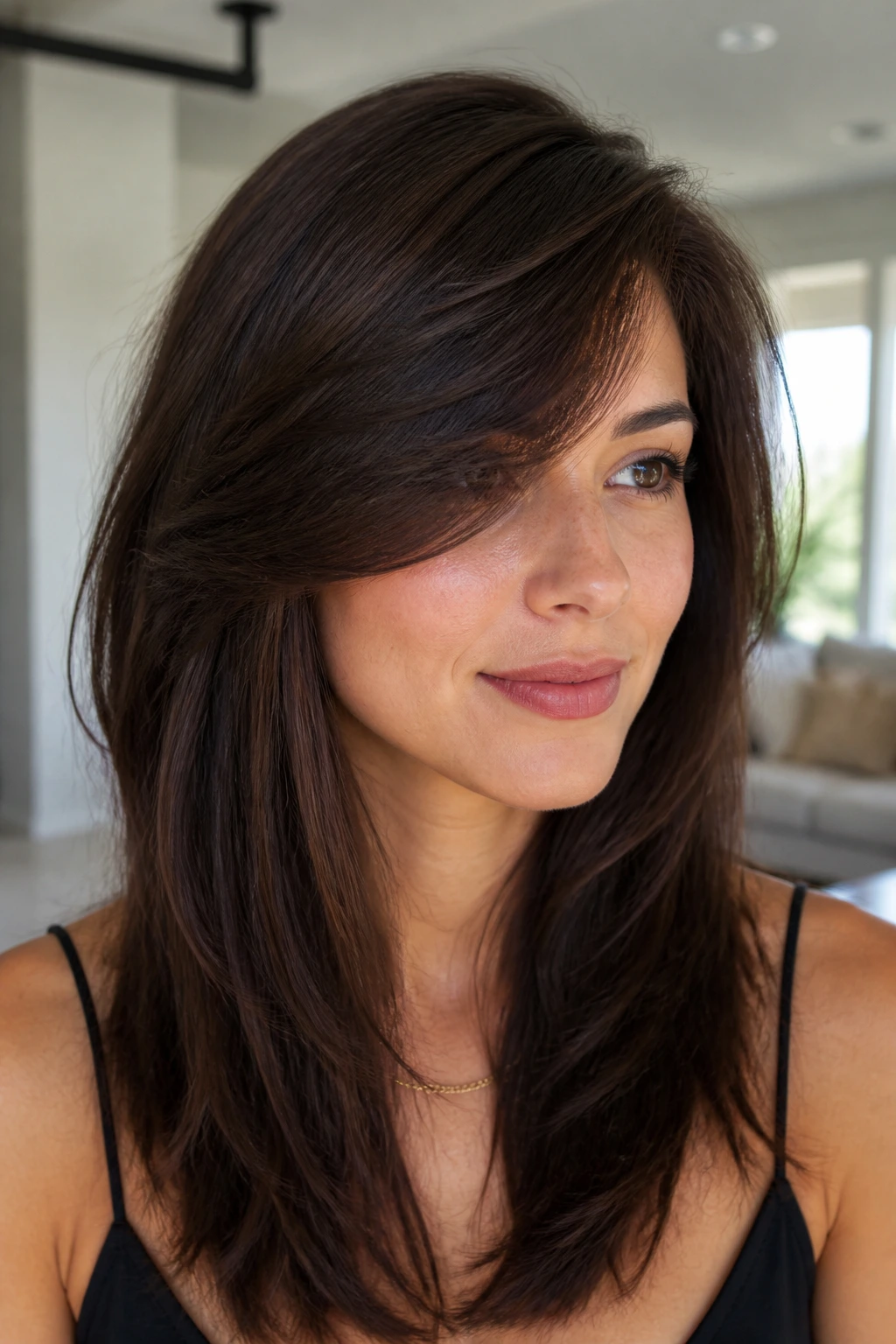
Dense hair needs weight removed under the surface, not hacked away from the top. That’s the difference between a polished swoop and a puffed-up triangle. The shape should move, but it should still have enough substance to fall in a smooth diagonal.
I’m blunt about this one: too much thinning at the surface makes the fringe frizzier, not lighter. Ask for internal weight removal and a clean perimeter. The longest point can sit near the lip or cheekbone, which helps the front stay controlled.
The style is at its best after a quick blowout with a nozzle. Direct the air from roots to ends, then sweep the front across while it cools. Dense hair often remembers heat for a while, so give it a minute to set before you touch it again. That pause matters.
10. Fine-Hair Swoop With Root Lift
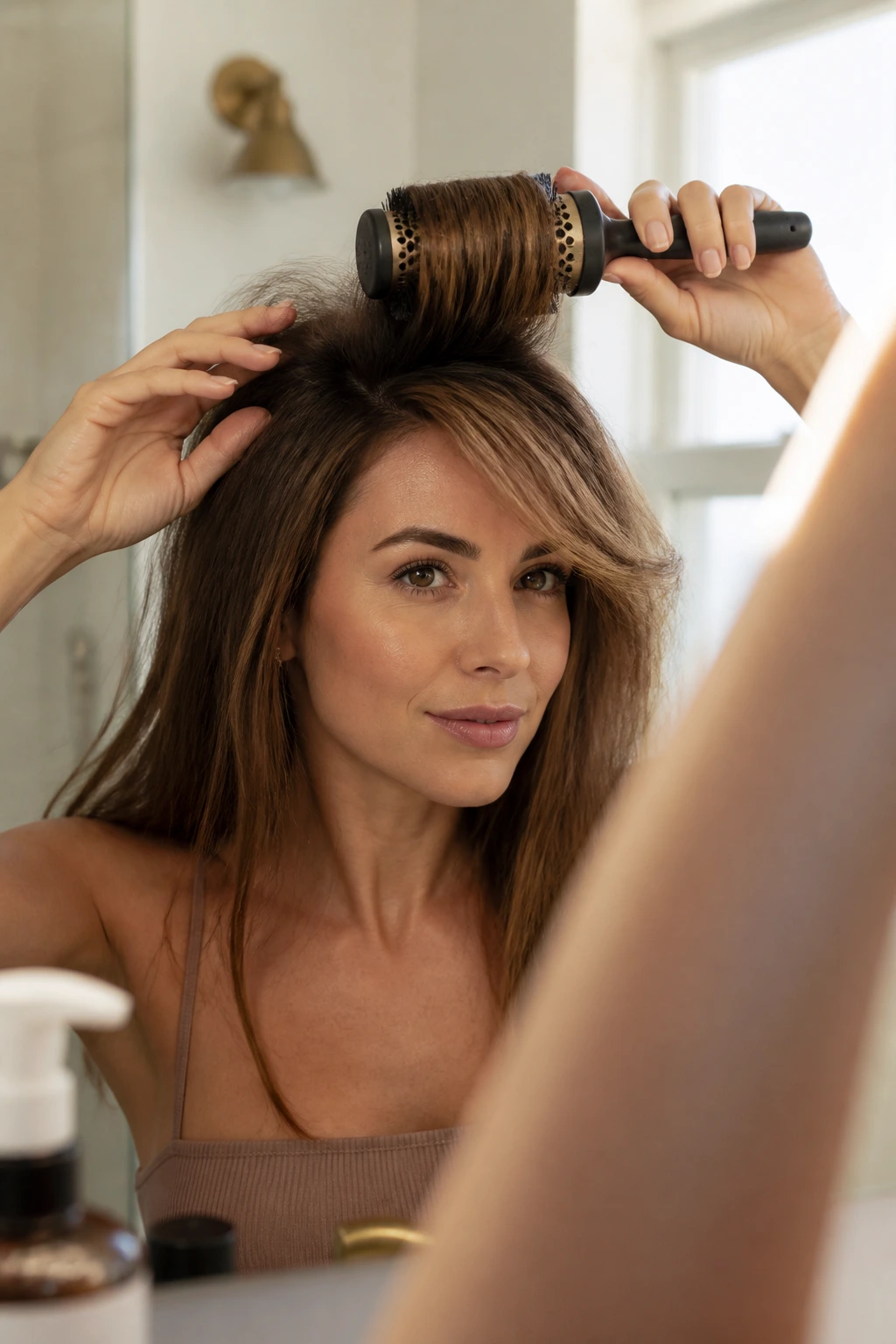
Fine hair benefits from a compact swoop with root lift. The front should look full enough to register as a shape, not wisps that vanish by noon. That means a slightly shorter length, a narrower section, and a root direction that pushes volume upward before the fringe falls.
A little mousse at the roots goes a long way. So does a small round brush, one with a barrel around 1 inch to 1.25 inches. Dry the fringe from side to side first, then finish in the direction you want it to sit. That back-and-forth motion gives the hair more body than blowing it straight down.
I’d avoid over-layering fine swoops. The more you carve into them, the thinner they look. Keep the ends soft, but let the body stay there.
11. Collarbone-Frame Swoop
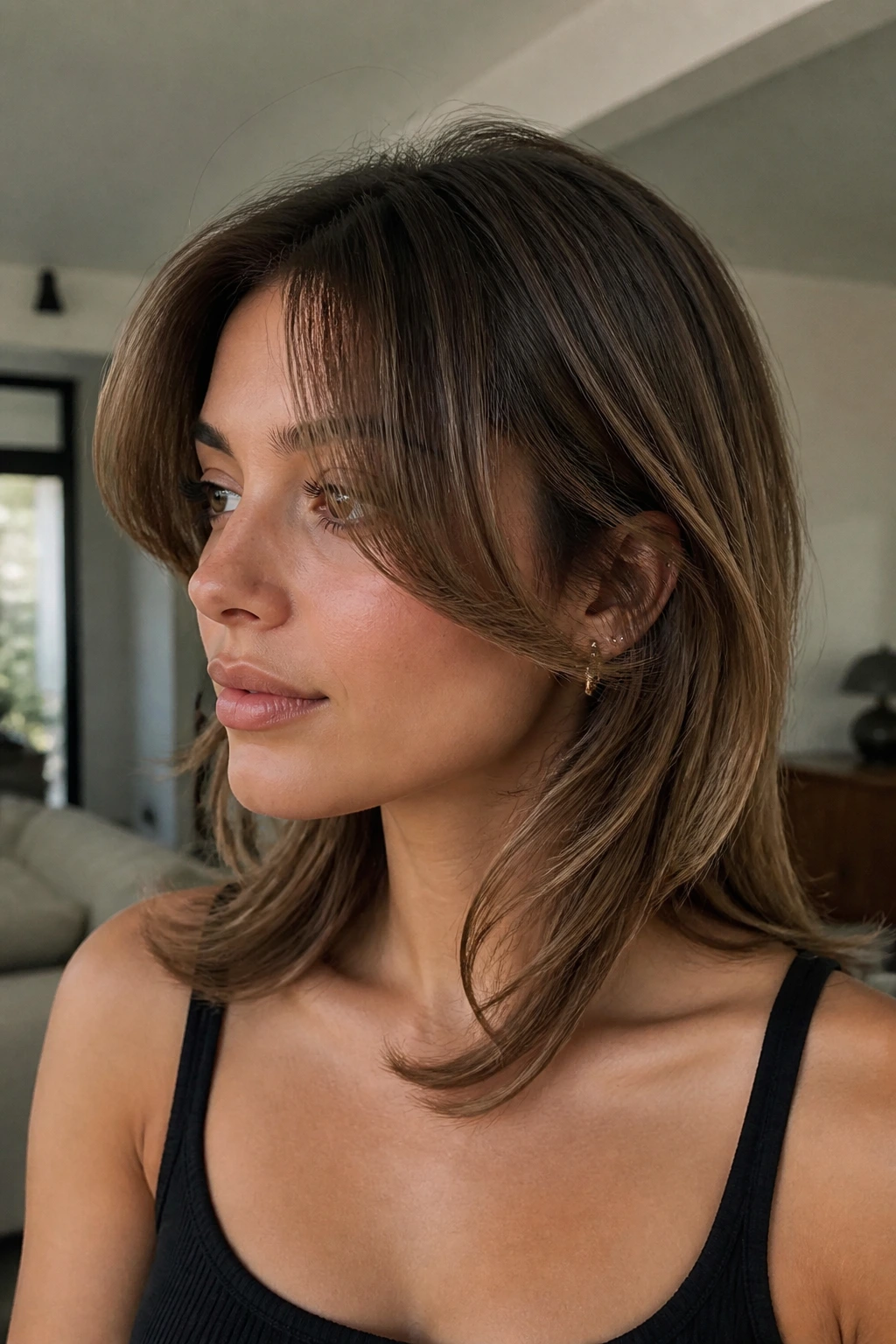
A collarbone-length cut and a swoop bang make each other look more deliberate. The front piece can slide into the first layer at the cheek, then continue toward the collarbone so the whole front section feels connected instead of chopped off.
This is one of my favorite shapes for softening the face because the diagonal line travels farther. It doesn’t stop at the brow. It keeps going, which is what makes the style feel fluid around the eyes and cheeks.
If you wear your hair down most of the time, this version is easy to live with. If you wear it up often, the front pieces still fall nicely when the rest is clipped back. That flexibility is the selling point, and it earns its keep fast.
12. Pixie-Plus Side Sweep
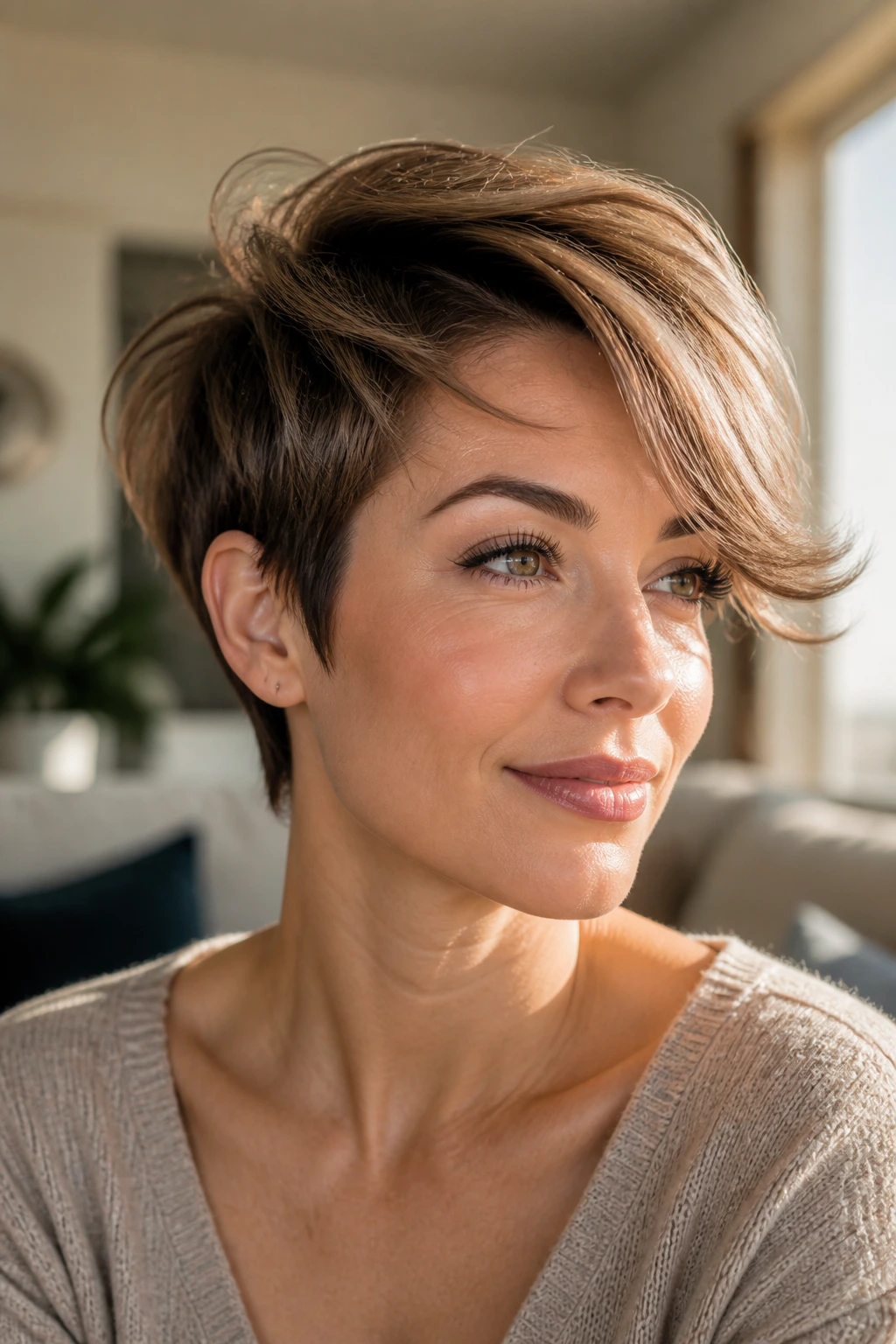
Pixie-plus swoops are for people who want softness without losing edge. The cut keeps the sides shorter and the front longer, so one temple gets a clean, sweeping line that feels feminine without becoming fussy.
This style works because it gives the eye a point to follow. A short cut can sometimes read harsh around the forehead. A side sweep fixes that by softening one corner and leaving the rest crisp. I like it especially when the top has a little texture and the front is given just enough length to fall across the brow.
Use a dab of styling cream or light paste, then direct the front in the direction you want it to sit. A pixie with a swoop should never feel stiff. It should look like it wants to move if you walk through a little wind.
13. Shaggy Swoop With Choppy Ends
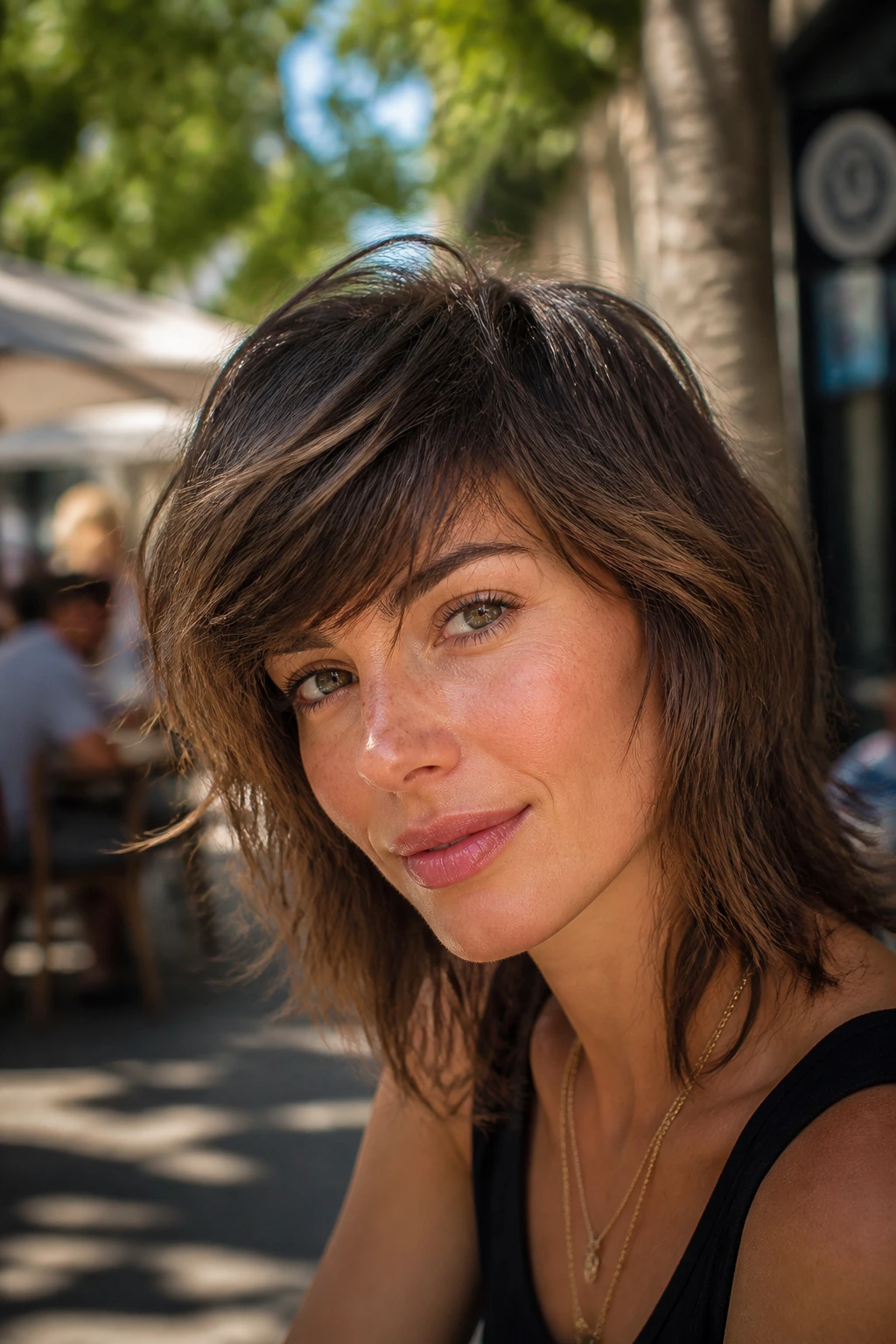
Shaggy swoops are messy in the good way. The front isn’t supposed to look polished from every angle. It should look broken up, lived-in, and easy to toss back into place with your fingers.
The choppiness helps soften the face because it takes the weight out of the line. Instead of one big sweep, you get a few uneven pieces that slip across the forehead and temple. That makes the whole cut feel less severe, especially on medium to thick hair.
Why it works
The shag already creates movement in the layers. The swoop just gives the front a direction. Together, they keep the haircut from collapsing into one flat shape at the temples.
A dry texturizing spray does more here than a heavy cream ever will. Spray lightly, scrunch the front once, and leave it alone. Shag hair hates over-styling.
14. Blowout Swoop With Big Curve
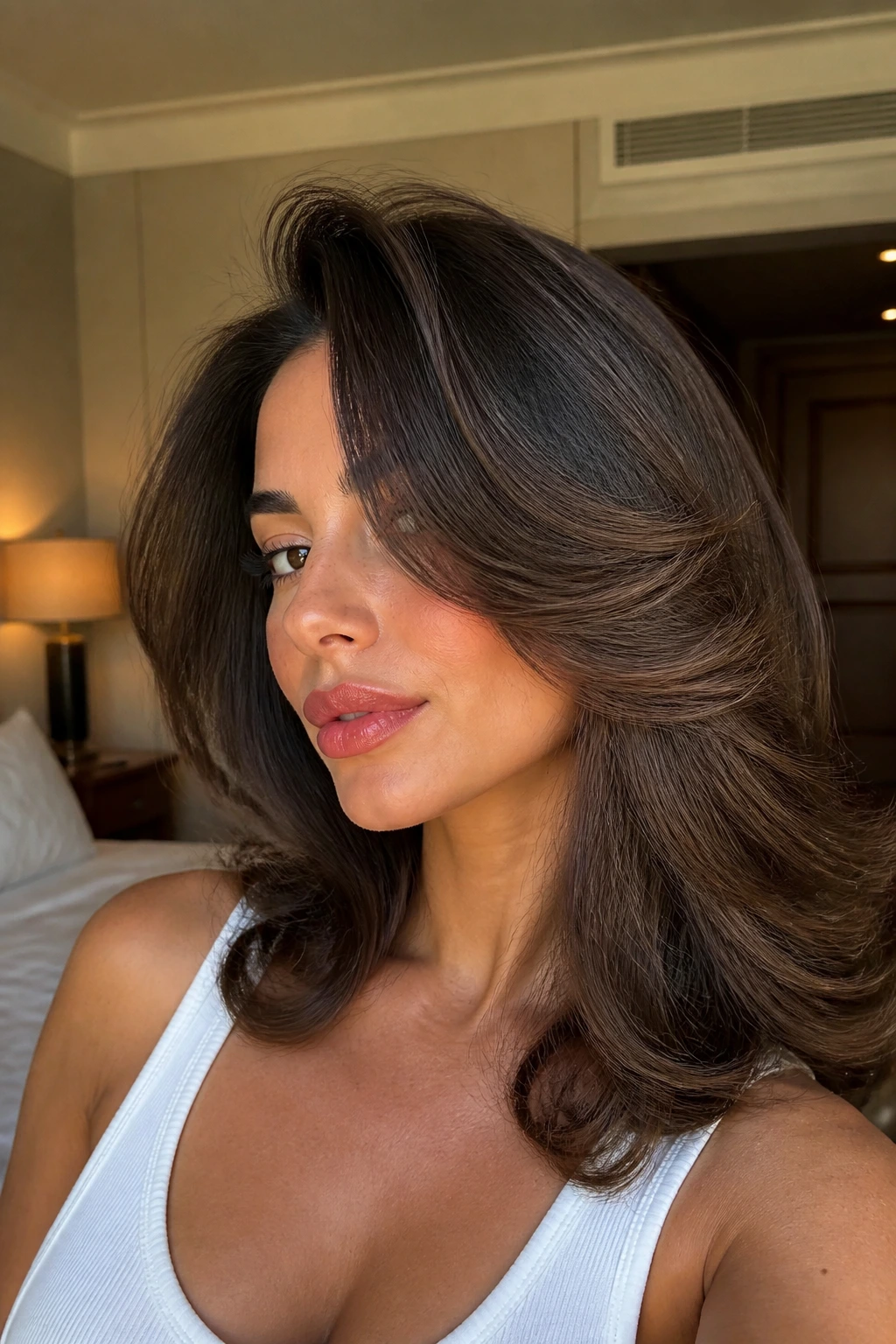
A blowout swoop is the polished one. It has lift at the root, curve through the ends, and a glossy finish that looks intentional from across the room. If the other versions are about ease, this one is about shape.
The best blowout swoop starts with heat protection and a round brush. Roll the front away from the face, pull the brush upward for the first inch, then bend it down at the ends. That creates the soft arc that sits so nicely around the brow and cheekbone.
I like this style for events, photos, or any day when the haircut needs to look extra finished. A little shine spray on the mid-lengths helps, but keep it off the roots or the swoop can go greasy fast. One or two small passes are enough.
15. Grow-Out Swoop That Blends Fast
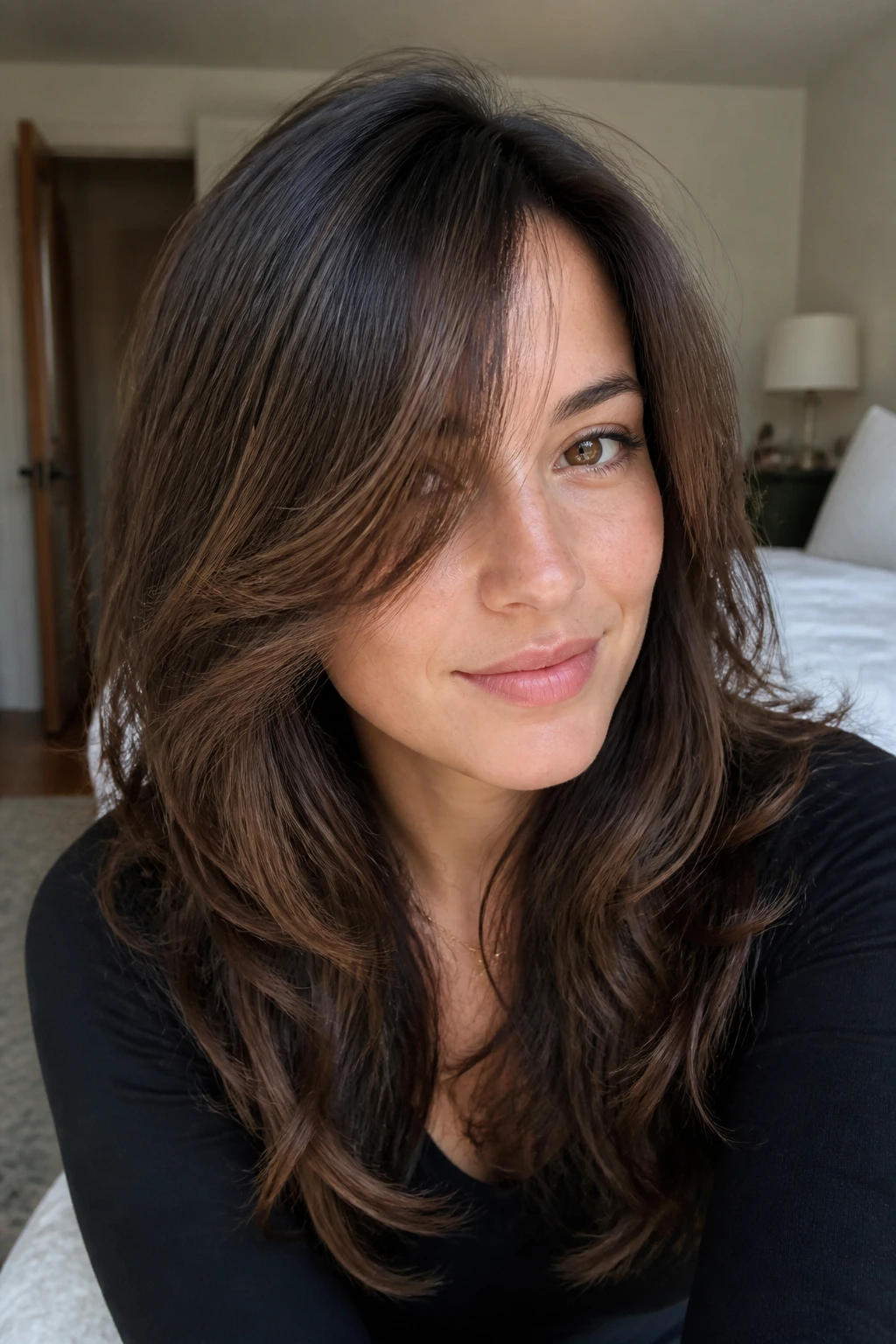
The low-maintenance grow-out swoop is my favorite if you hate constant trims. It starts a bit longer than a classic bang, then blends into layers before the cut has a chance to look awkward. That means even when it grows, it still looks like a choice.
The sweet spot is a front that can reach from the outer brow to the cheekbone without losing its diagonal. That gives you enough length to tuck it, sweep it, or let it split naturally. You are not locked into one styling path.
If you know you won’t get to a salon every four weeks, choose this version. It forgives a missed trim far better than a shorter fringe, and it stays soft around the face instead of turning blunt and stale.
16. French Side Sweep

French side sweep bangs look unstudied, but there’s a clean shape under them. The part is shallow, the front falls in one soft sweep, and one side often tucks behind the ear while the other keeps moving across the face.
That asymmetry is what makes it flattering. It avoids the heaviness of a full curtain and keeps the forehead from feeling crowded. The front should feel loose, not lazy. There’s a difference.
I like this version on hair that has a little natural bend already. Air-dry it halfway, then use your fingers or a small brush to guide the front into the direction you want. A tiny bit of cream at the ends keeps it from fraying.
17. Blunt Bob Plus Soft Swoop
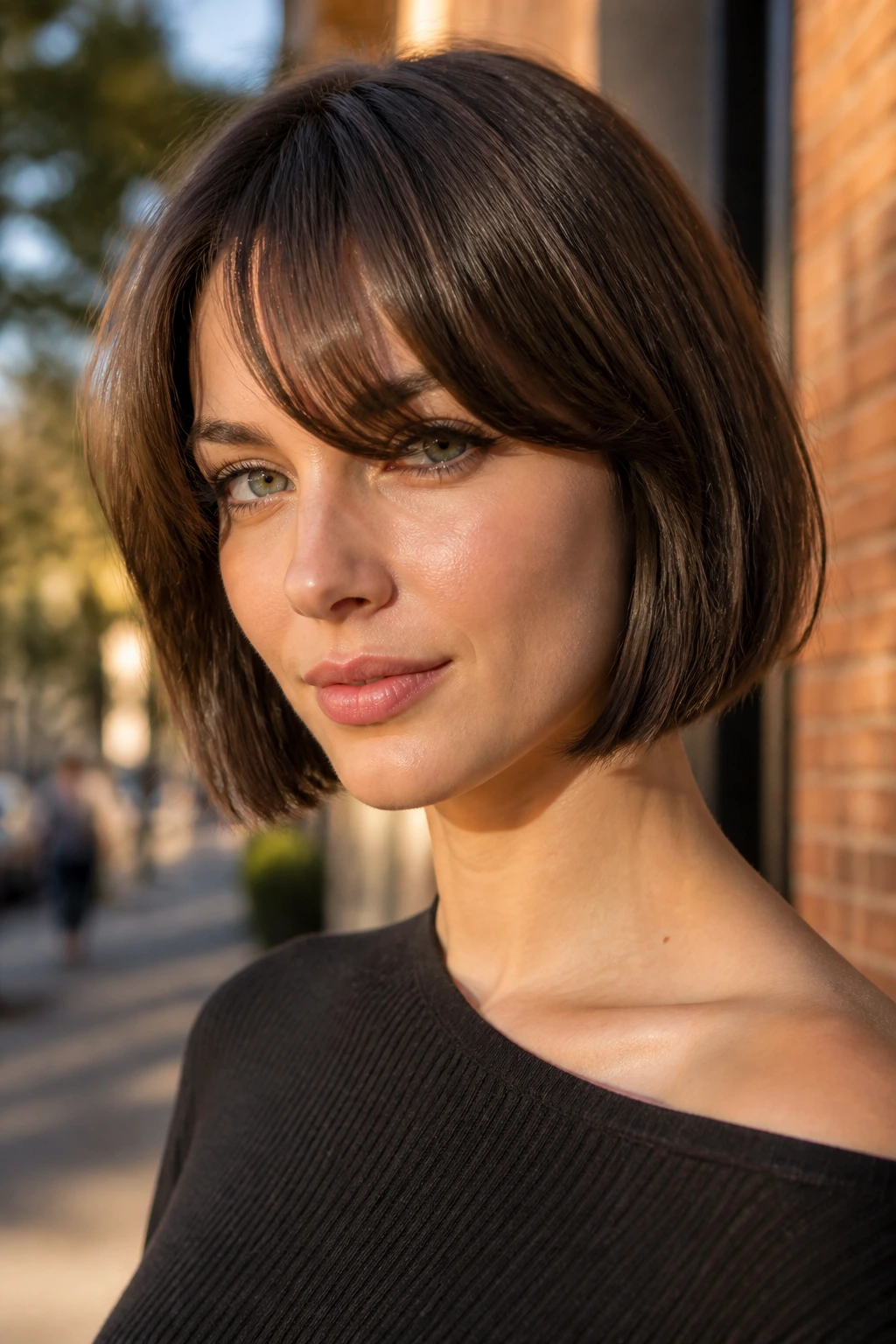
A blunt bob gets softer with a swoop bang, and the contrast is the point. The bob gives the haircut a straight, clean base. The swoop breaks that line just enough so the whole look feels less severe around the face.
This pairing works because the front shape and the cut shape are doing different jobs. The bob creates structure. The fringe creates movement. Together, they make the face look framed rather than boxed in.
Keep the swoop a little longer on the outer edge so it can blend into the bob’s edge without a visible cliff. If the front is too short, the contrast looks accidental. If it’s too long, you lose the neatness that makes a blunt bob so satisfying.
18. Wispy Micro-Swoop
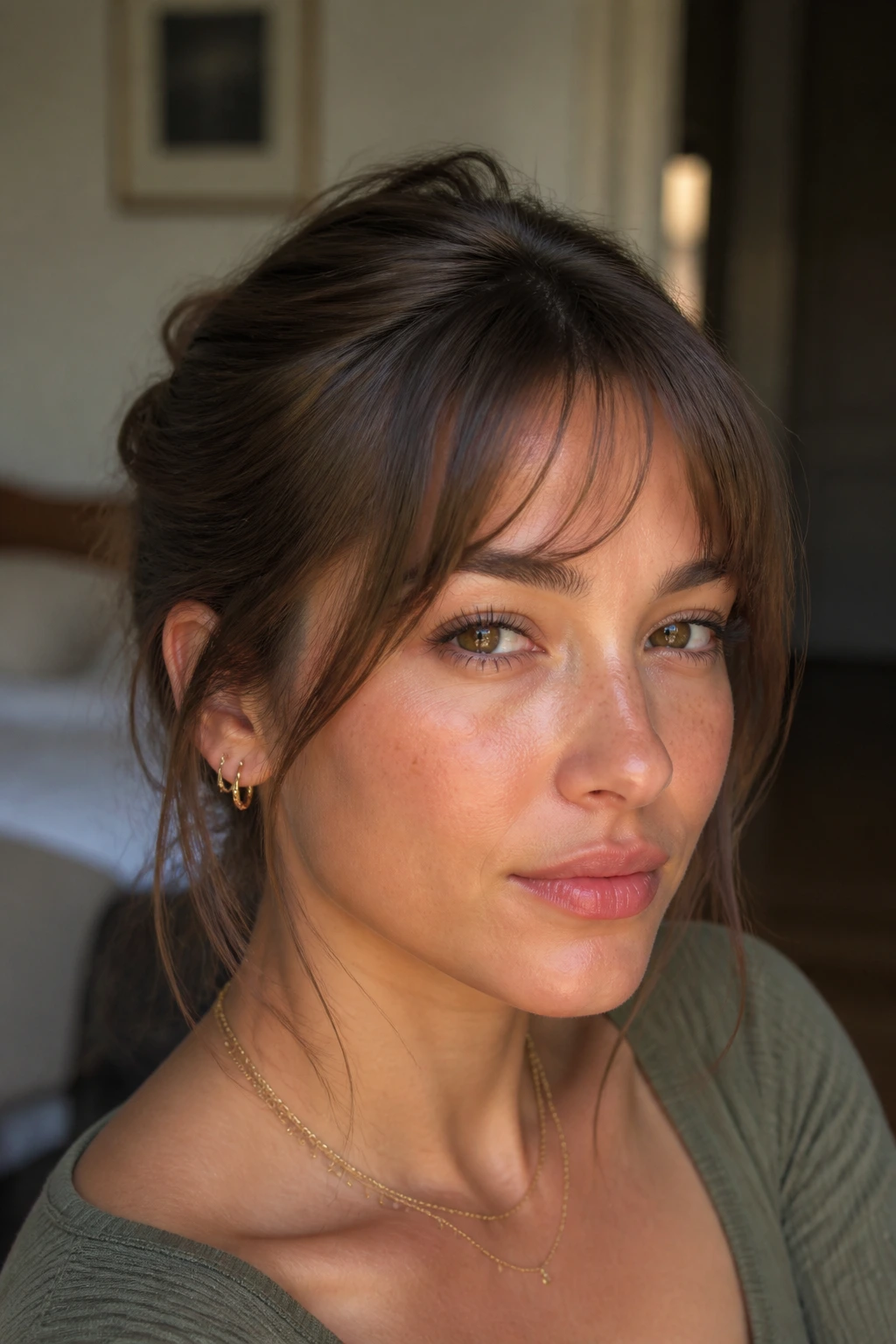
Wispy micro-swoops barely announce themselves. They’re narrow, soft, and short enough to show forehead while still making the front of the haircut feel finished. This is the version for someone who wants a whisper, not a statement.
The shape usually covers only a small section at the center and angles outward just a little. It’s useful if you want to soften a high forehead or break up a very open hairline without giving up much skin. I’d rather call this a face-softener than a full fringe.
It works best when the ends are feathered and the section stays light. Too much density turns a micro-swoop into a sad little chunk. Keep it airy, keep it small, and let it do its tiny job well.
19. Glasses-Friendly Swoop
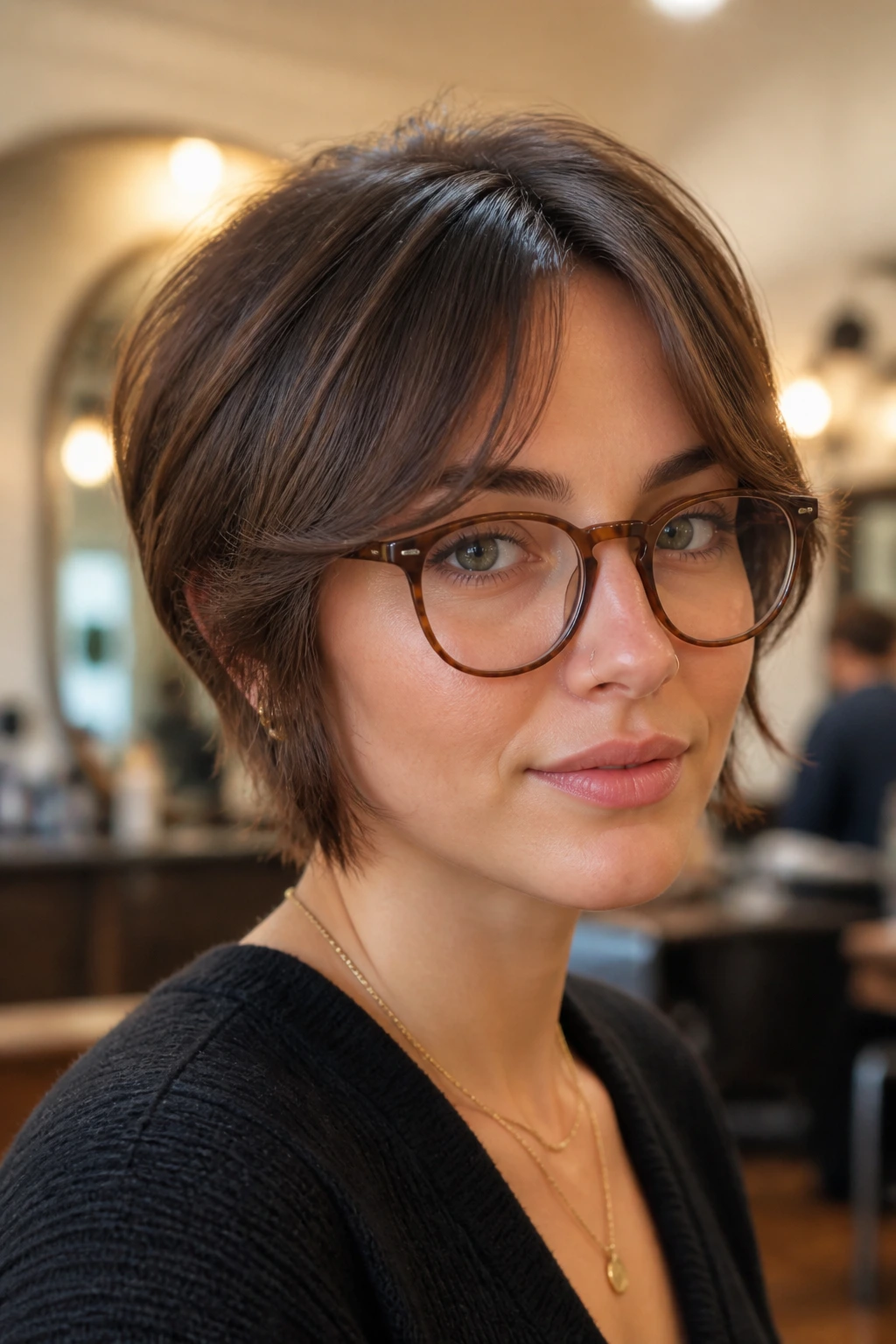
Glasses change the game. A swoop that looks perfect without frames can sit awkwardly once lenses and temples are in the mix, so this version keeps the center a touch shorter and the outer edge longer to clear the glasses line.
The goal is to avoid a bang that gets crushed by the top of the frame. If the hair sits too low, it splits oddly or flips outward in a way that looks unplanned. The solution is a front that lifts slightly at the root and stays just above the frame on the inside corner.
I’d bring your everyday glasses to the salon if you can. Not for fashion. For geometry. The cut should account for where the frame actually sits on your face, not where it sits in theory.
20. Tucked-Behind Swoop With Movement
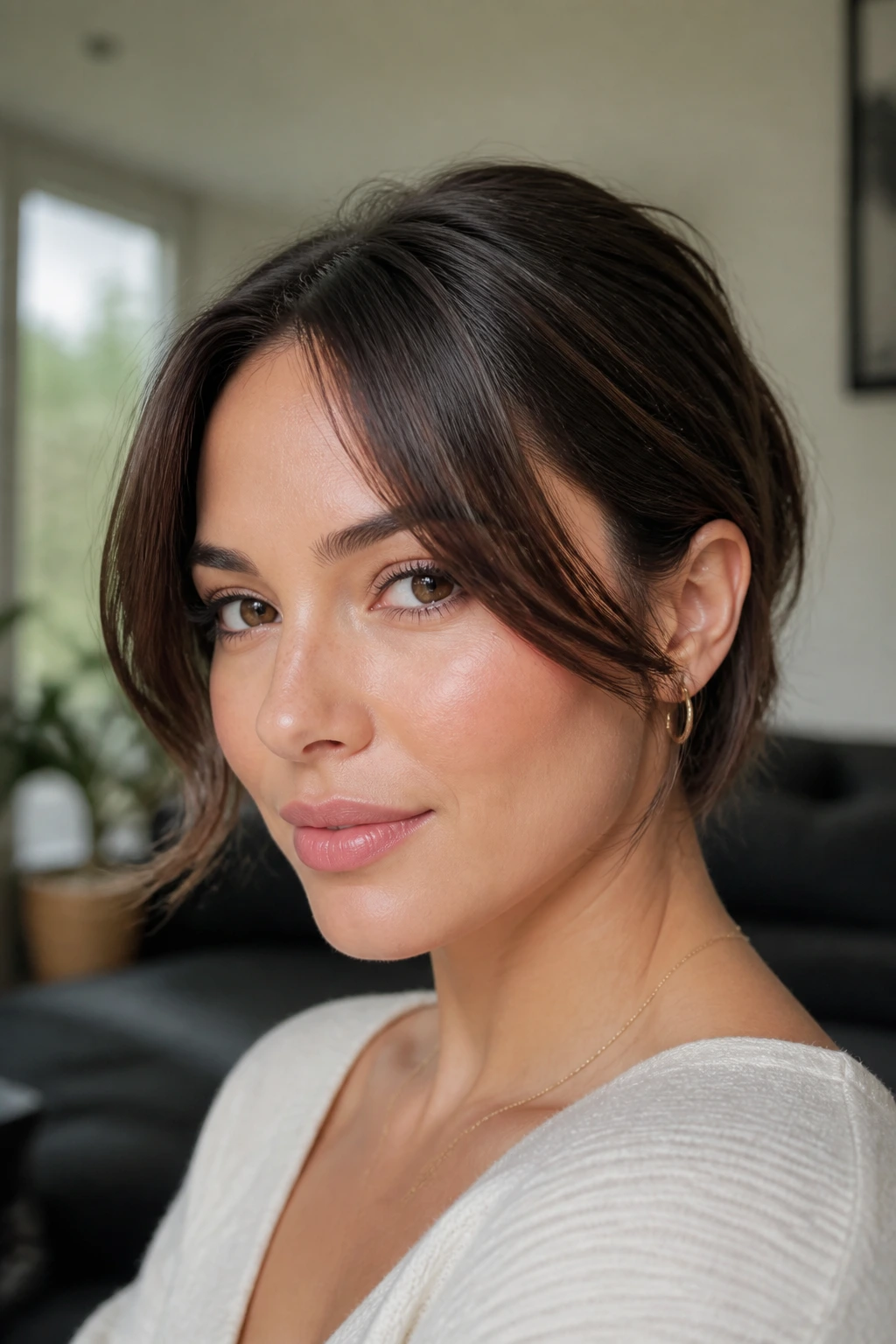
A tucked-behind swoop is for days when you want movement but need the hair out of the way. The front falls forward when it’s down, then slides neatly behind the ear when you tuck it, which gives you two wear options from one cut.
This version works best when the longest point is left long enough to brush the cheekbone or jaw. If it’s too short, the tuck looks forced. If it’s too long, it stops acting like a swoop and turns into a face layer. That middle ground is where the style lives.
I like this shape on people who switch between loose hair and half-up styles a lot. It behaves well with clips, pins, and low ponytails, and it keeps the front of the haircut from feeling static. That flexibility is what makes it useful.
The Geometry Behind a Softer Fringe
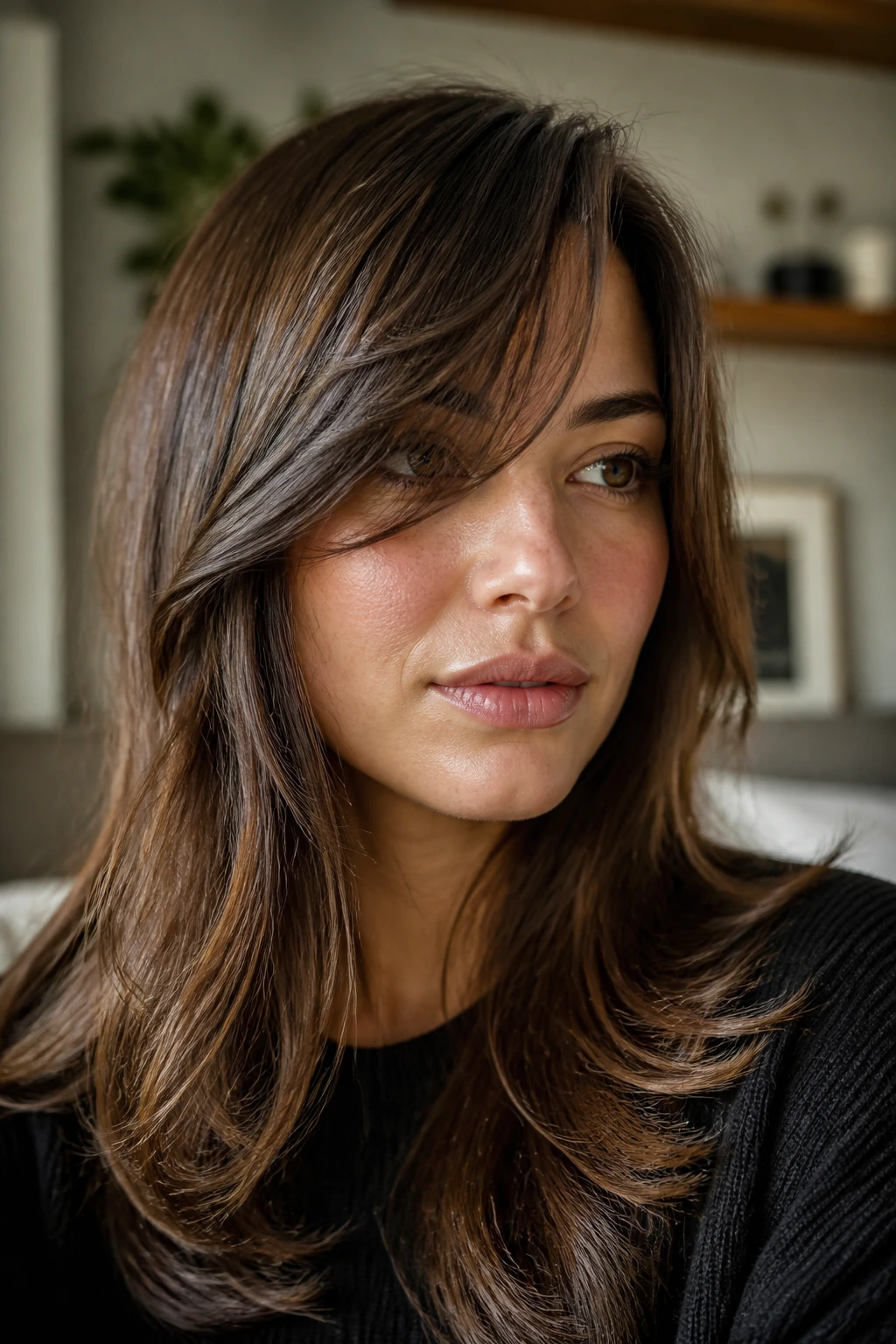
A swoop works because it changes the line your eye follows. A blunt bang stops the gaze cold. A diagonal line keeps it moving, which is why these bangs can make a face look softer without disappearing into the hair.
The part is half the story. A slight off-center part creates a long front section that falls with more natural swing, while a deep side part adds more height and drama at the root. That’s not just a style choice. It changes how much of the forehead is visible and where the eye lands first.
The diagonal line matters
A line that runs from temple toward cheekbone tends to soften the upper face and sharpen the lower edge a little, which is handy if you want balance without harshness. The line can be feathered, piecey, plush, or glossy. The direction is what matters.
Texture changes the mood
Straight hair gives you cleaner curves. Wavy hair creates a looser bend. Curly hair turns the same idea into a softer, fuller frame. The cut can be nearly identical on paper, but the finish is different every single time, and that’s why I always look at texture before I look at trend.
The longest point sets the tone
If the longest point lands at the cheekbone, the fringe feels lifted. If it lands near the lip, the shape feels more romantic and heavier. If it stops at the jaw, the frame gets stronger. That one decision changes everything.
The Tools That Make Swoop Bangs Behave
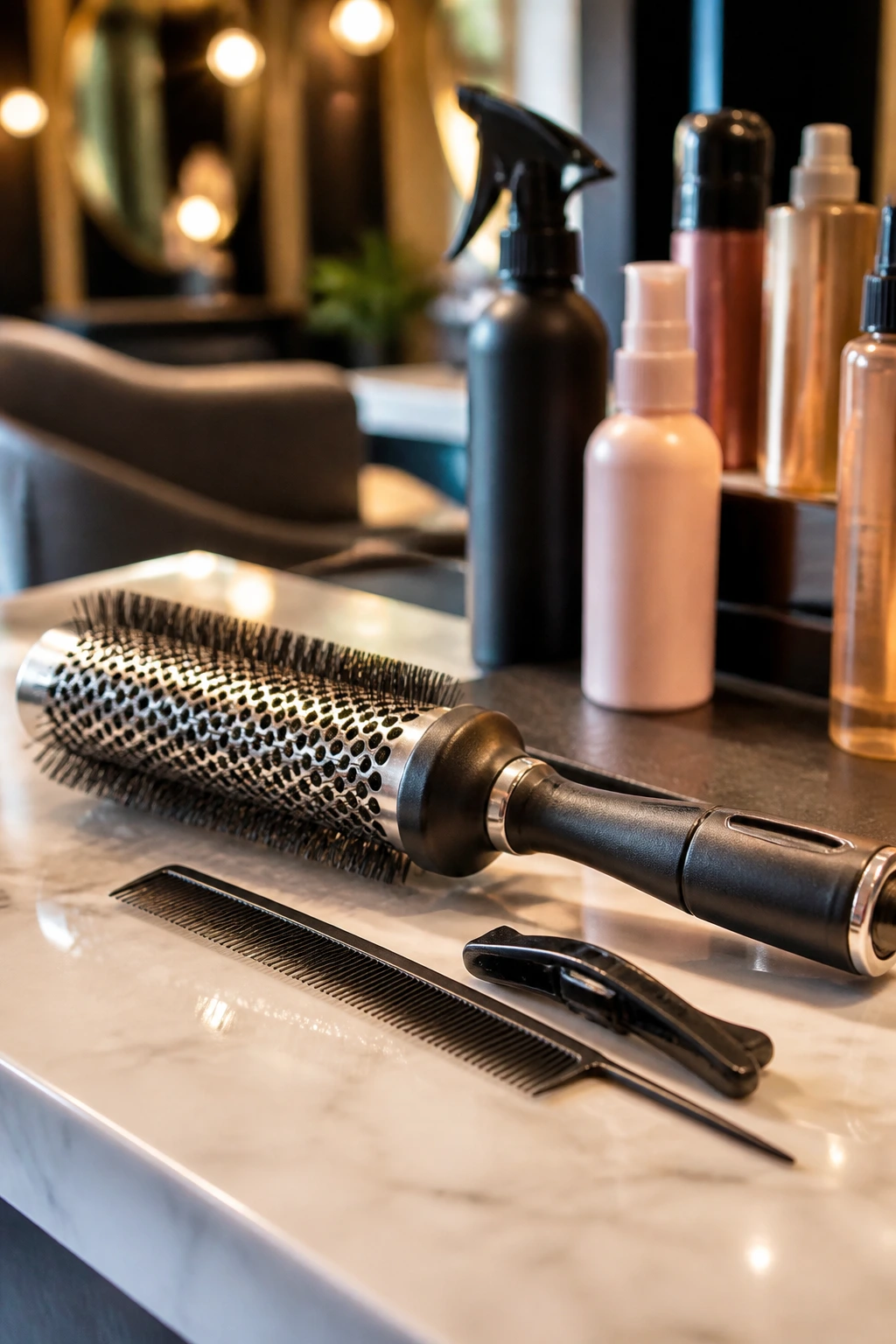
- 1-inch to 1.25-inch round brush: small enough to shape the front without making the bend too wide.
- Blow dryer with a nozzle: directs airflow so the fringe dries in the direction you want instead of puffing around.
- Fine-tooth tail comb: parts the front cleanly and helps you control the section width.
- Duckbill or sectioning clips: hold the rest of the hair back while you dry the fringe first.
- Heat protectant spray: keeps the front from drying out, especially if you style it daily.
- Velcro rollers or a small clip: useful for setting the shape while you do makeup or get dressed.
- Light mousse or root spray: gives fine hair enough body to hold the sweep.
- Flexible-hold hairspray: keeps the bend in place without turning it stiff.
- Mini flat iron: optional, but useful for touching up a stubborn edge or cowlick.
- Dry shampoo: helps day-two bangs keep volume instead of going stringy at the roots.
How to Ask for the Right Length at the Salon
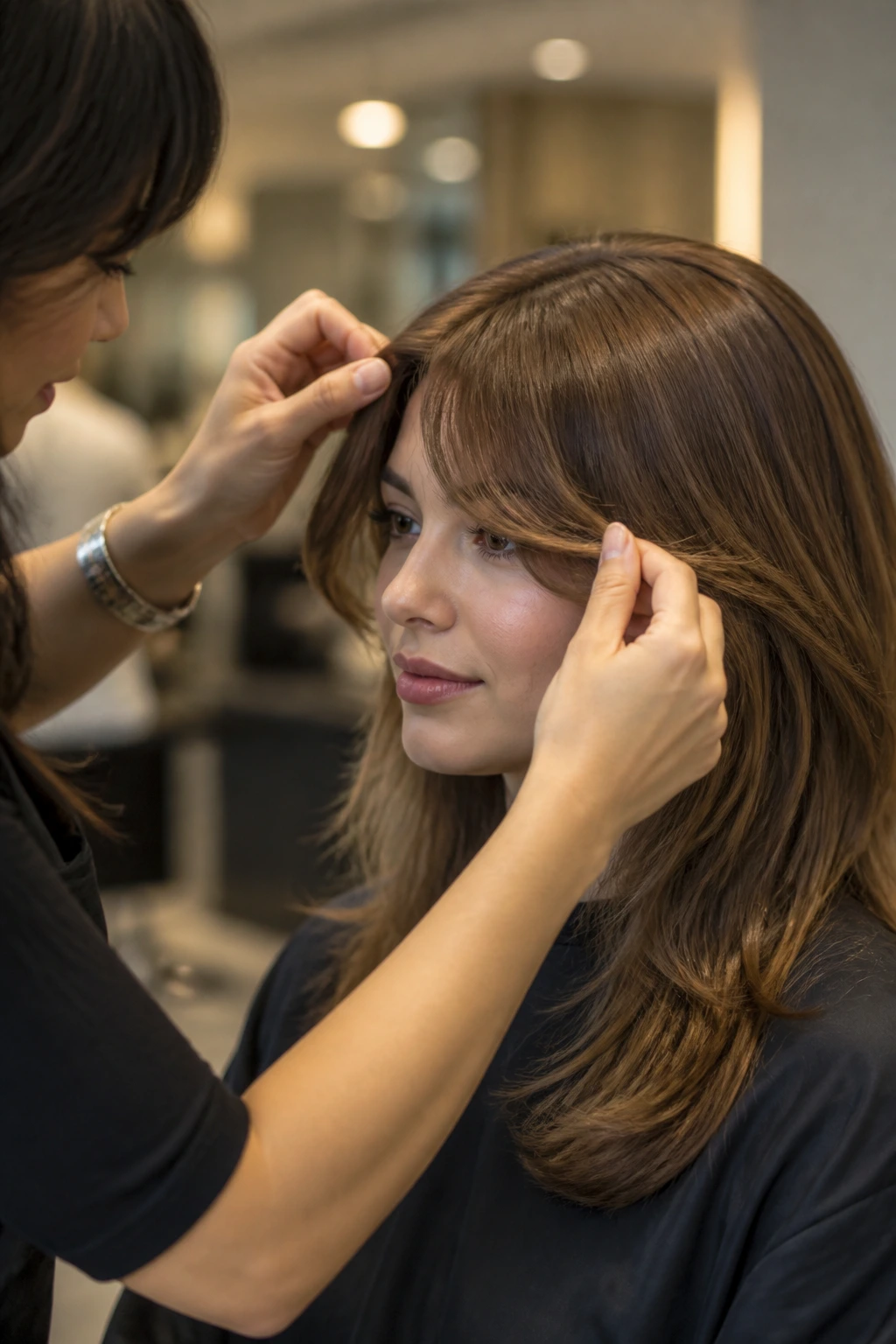
Say the length out loud. Don’t rely on “soft” or “swoopy” alone. Those words mean different things to different stylists, and they can land you in very different places around the face.
I’d ask for the shortest point to sit near the outer brow, with the longest point somewhere between the cheekbone and upper lip depending on texture. If your hair is curly or wavy, say you want it cut longer to allow for shrinkage. If your hair is very fine, say you don’t want the front over-thinned. Those details matter more than mood words.
A good consultation also covers how you wear your hair on normal days. Deep side part? Middle part? Glasses? Air-dry only? Those are not side notes. They decide the cut.
- Bring one or two photos, not ten: too many references push the conversation all over the place.
- Point to the exact landing spot: brow, cheekbone, jaw, or lip.
- Ask for dry checking if your texture changes a lot when it dries: especially with curls and bends.
- Mention your cowlicks: if the front has a split or swirl, the stylist needs to account for it before the first snip.
How to Style Swoop Bangs on Busy Mornings
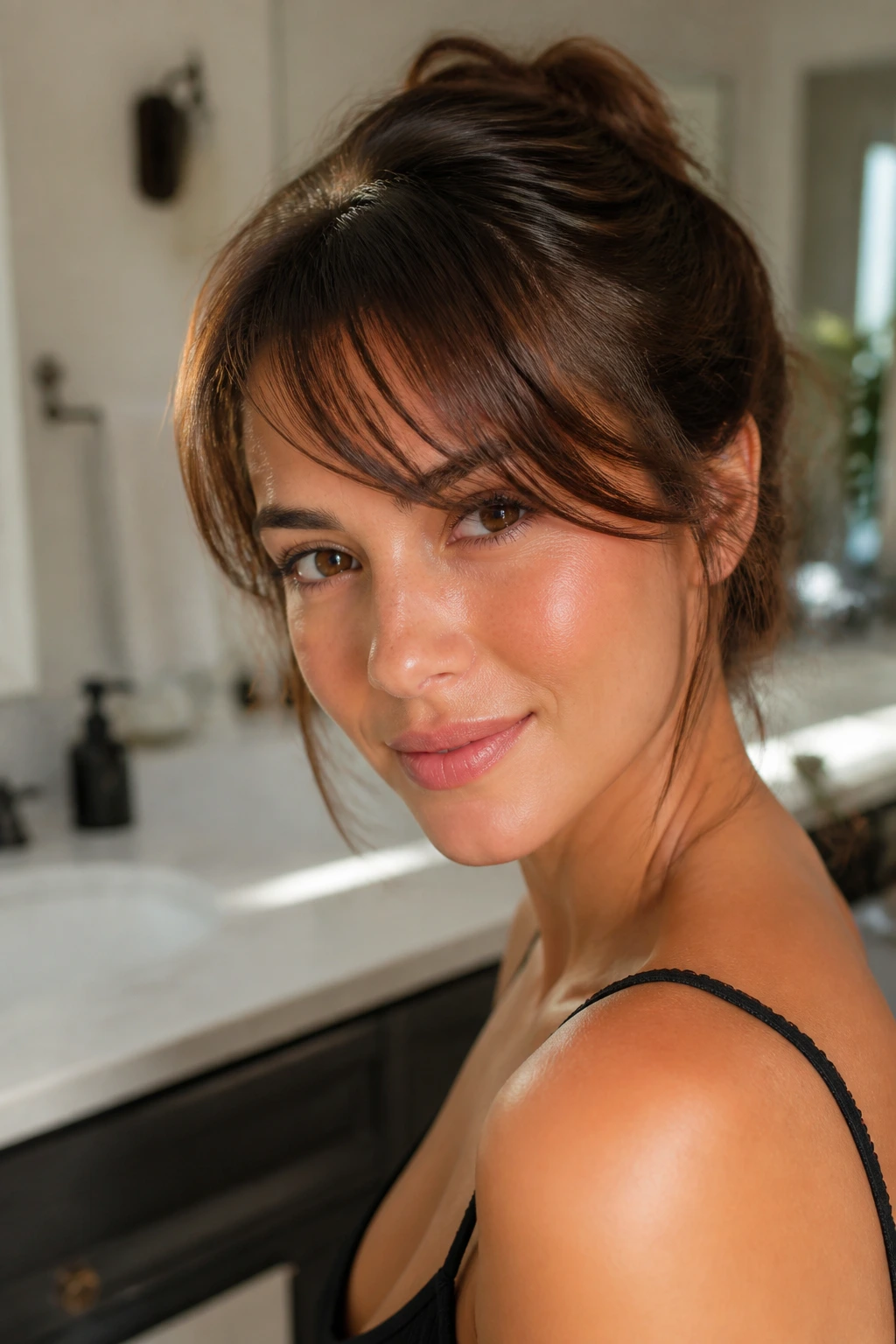
The fastest routine is also the most reliable. Start with the fringe slightly damp, not dripping. A little water from the sink is enough. Too much and you’ll be drying the same section forever.
-
Mist the front with heat protectant or light mousse. Keep it to the roots and mid-lengths. A wet, heavy front takes longer to shape and falls flat faster.
-
Blow-dry the fringe from the opposite side first. Push it over with a small round brush or your fingers and direct the nozzle from root to tip. That initial opposite direction builds the lift.
-
Sweep it back into the final direction while it’s still warm. This is where the shape happens. If you wait until it’s cold, the bend gets stubborn.
-
Tap the roots with a cool shot or clip in a roller for 5 to 10 minutes. The set matters. I know that sounds fussy, but it keeps the front from separating before lunch.
-
Finish with a tiny amount of cream or spray on the ends only. Avoid the roots unless you want the swoop to collapse into a greasy strand by 2 p.m.
If the front is already dry, use a mist bottle, a mini flat iron, and one or two bends away from the face. Don’t chase every piece. Swoop bangs look better when they move a little.
How to Wear the Rest of the Hair Around Them
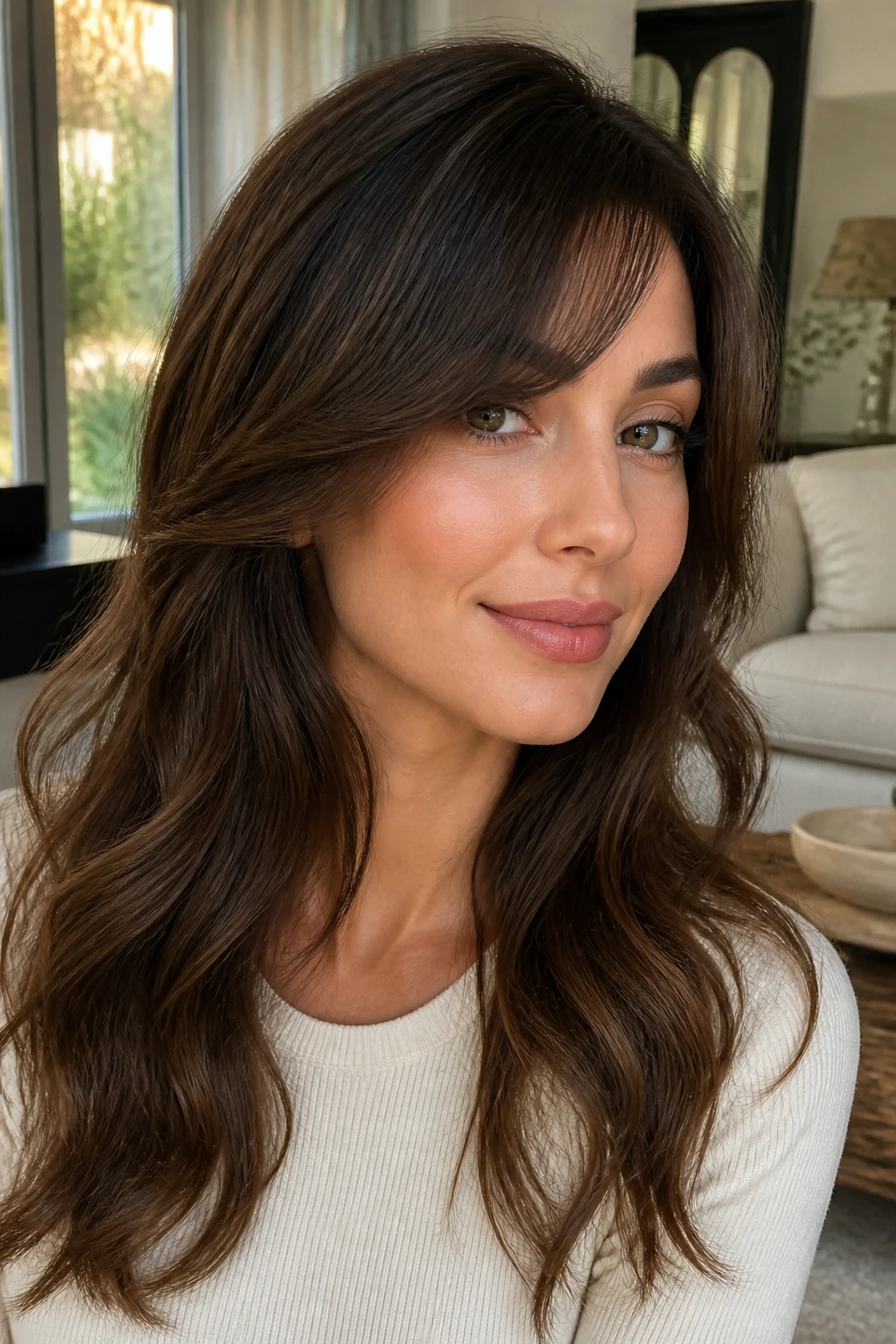
Presentation: Let the fringe sit slightly lifted at the root, then connect it to the rest of the hair with a soft diagonal. Loose waves give the most forgiving frame, but a blunt bob, a low bun, or a sleek ponytail can all work if the front stays curved and not clamped flat.
Accompaniments: Long layers, a collarbone lob, a shag, or a neat bob all pair well with a swoop. I’d be cautious with super-flat one-length cuts unless you want the front to do almost all the work. A little movement in the lengths keeps the bang from feeling isolated.
Balance: If the front is wide, keep the rest of the face-framing layers narrower. If the front is narrow, let the side pieces start sooner near the cheek. That balance keeps the haircut from looking top-heavy or sparse.
Accessory Pairing: Glasses should clear the front edge. Earrings can take a little drama if the bang is understated. Headbands work best when the swoop sits to one side rather than straight down the middle, and clips look cleaner when they pin just the heavier side back.
Common Mistakes That Flatten the Swoop
-
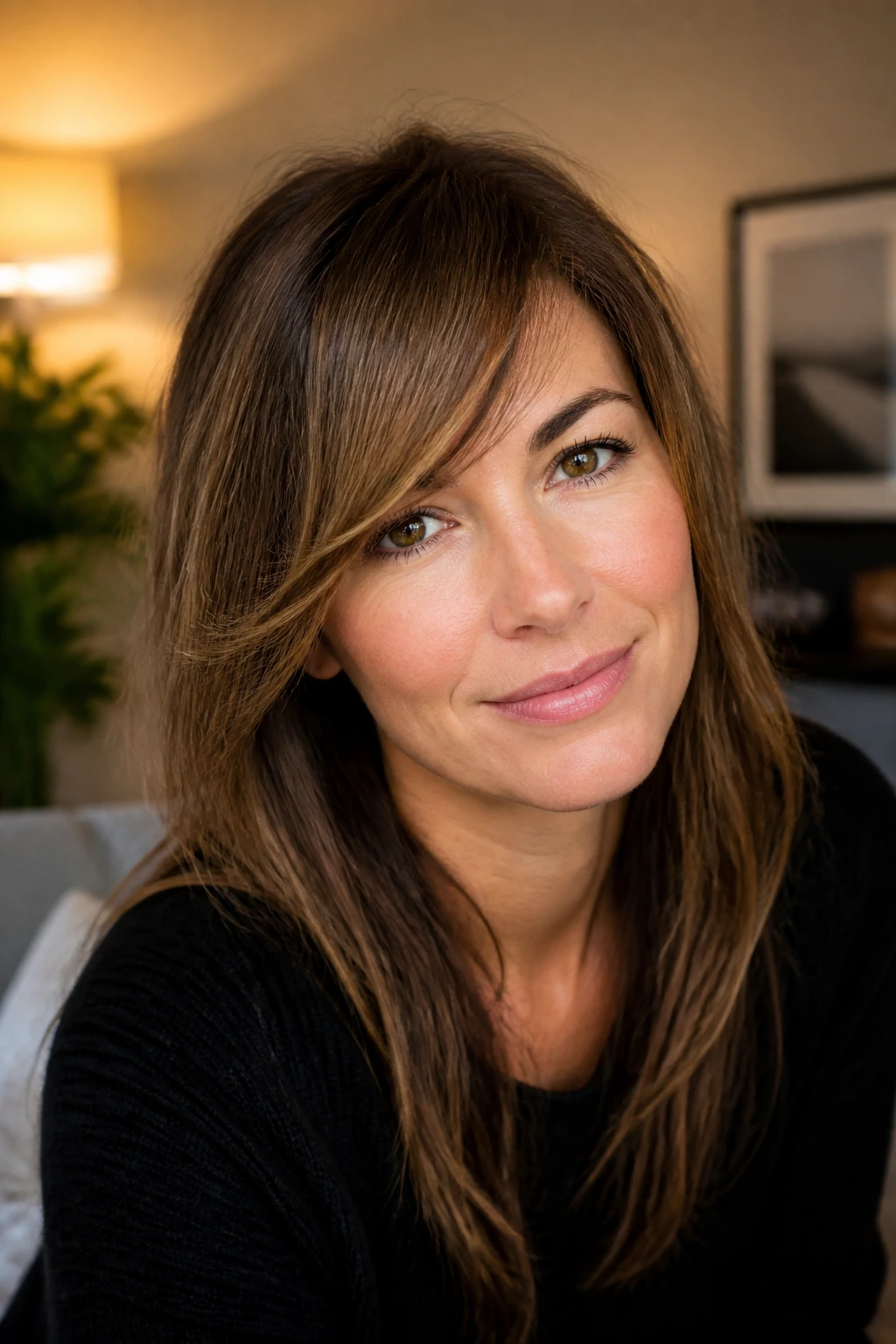
Cutting it too short in the center: the bang pops up and loses softness. Fix it by leaving the shortest point just below the brow line, especially if your hair springs up when dry.
-
Blow-drying straight down: this makes the front collapse against the forehead and split in odd places. Fix it by drying from side to side first, then sweeping into the final direction.
-
Over-thinning the front: the ends start looking frayed and see-through. Fix it by asking for point-cutting and light internal shaping instead of aggressive thinning shears.
-
Using heavy oil at the roots: the fringe goes limp before lunch. Fix it by keeping rich products off the front section and saving them for the ends.
-
Ignoring the cowlick: a stubborn temple or center cowlick will break the shape every time. Fix it by telling your stylist ahead of time and styling with the growth pattern instead of against it.
-
Letting the line grow without a plan: the swoop starts dropping into your eyes in a way that feels sloppy, not soft. Fix it with small trims or by intentionally growing it into layers before it gets awkward.
Variations and Alternatives to Try
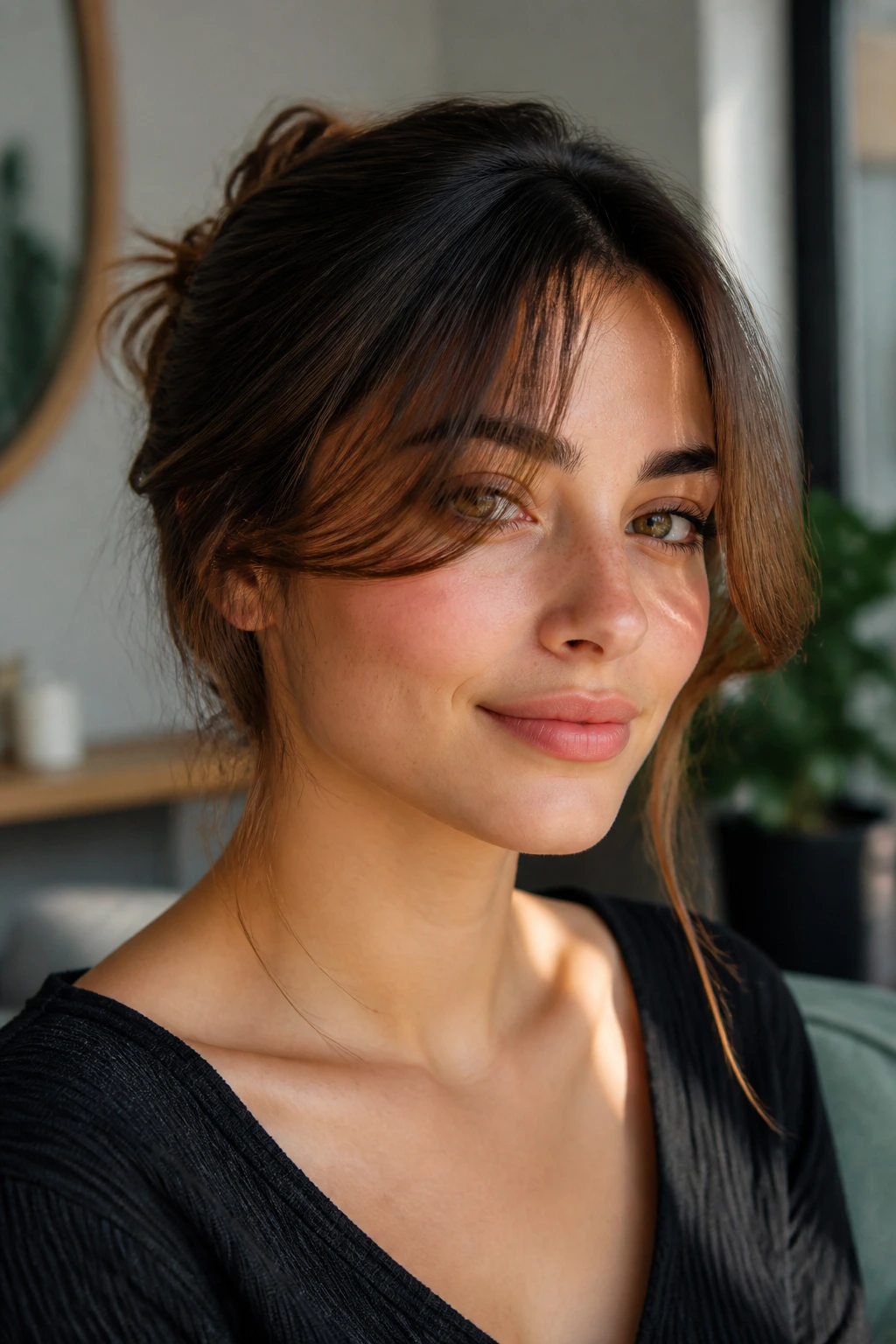
Curtain-Soft Drift: This version keeps the center part a little more open and lets the ends fall farther toward the cheeks. It’s the easiest path if you want swoop bangs that blend into longer layers and don’t need constant correction.
Sharper Side Flip: Go for this when you want more shape at the root and a cleaner line across the forehead. It works well on straight hair and on cuts that need a little more attitude near the front.
Curly Halo Sweep: Let the curl pattern set the direction, then shape the front so it arcs across the face rather than dropping straight down. This is the one I’d pick for anyone whose curls hate being forced into a flat fringe.
Blunt Bob Softener: Pair a clean bob with a narrower, softer swoop. The straight base keeps the haircut tidy, and the front bend keeps it from feeling severe around the eyes and temples.
Barely-There Micro Swoop: If you want the lightest possible version, this is it. The fringe is narrow, the lengths are small, and the whole thing is more about breaking up the hairline than creating a full statement.
Keeping the Shape Between Washes
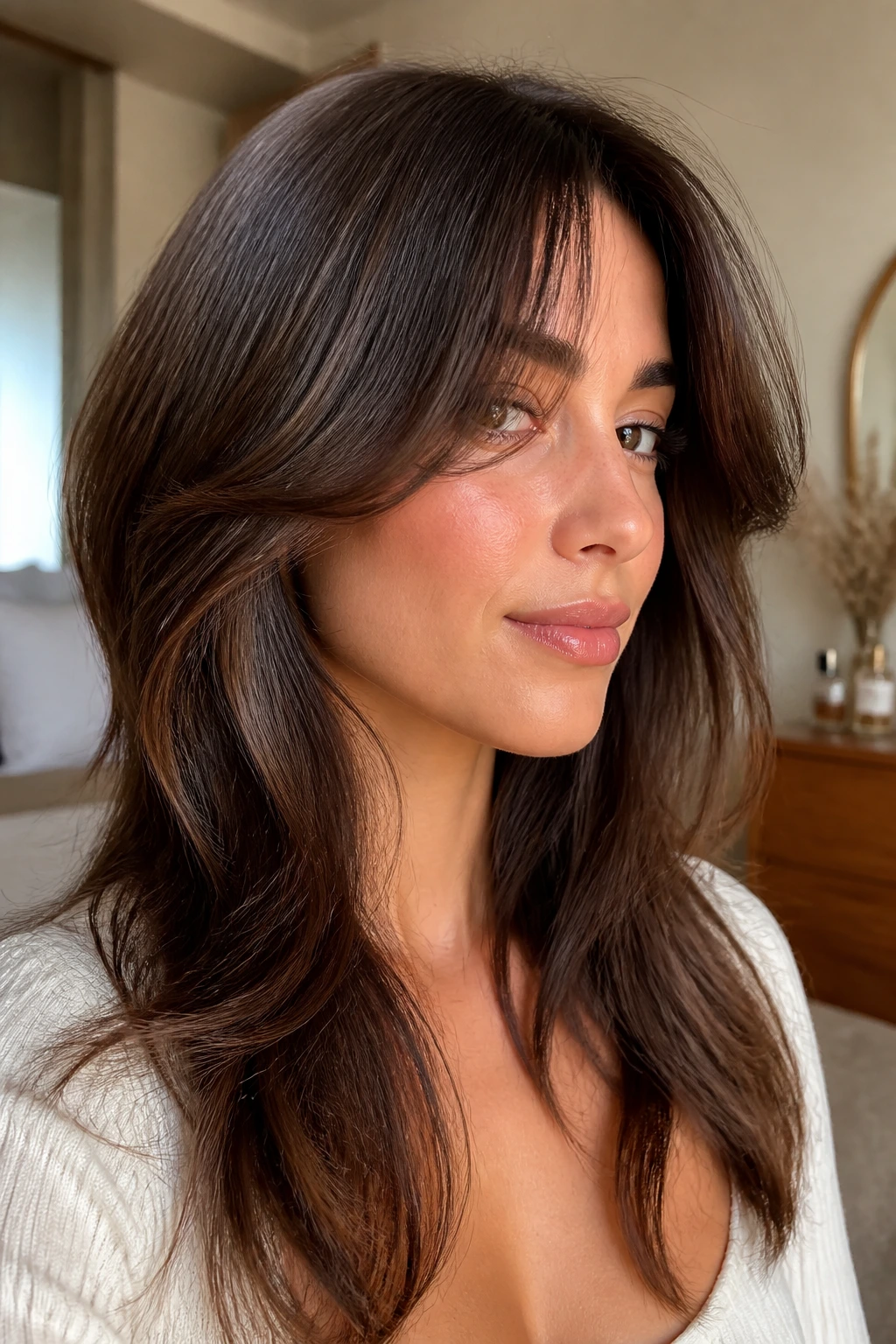
Swoop bangs usually need a little day-to-day maintenance, but not nearly as much as people fear. The front section is small, which makes it easy to refresh. That also means it is easy to ruin with too much product.
For day one, set the shape with heat and a cool shot. For day two, use a dab of dry shampoo at the roots from about 8 inches away, then re-sweep the front with your fingers. If the bend is gone, a quick mist of water and a small roller for 5 to 10 minutes can bring it back fast.
By day three, the fringe may need a proper reset. A light wash of just the front section, or a damp re-style at the sink, usually works better than trying to rescue it with more spray. And if you have a shorter swoop, plan on a trim every 4 to 6 weeks. Longer, blended versions can usually stretch to 6 to 8 weeks before they start feeling shaggy.
A satin pillowcase helps more than people expect. So does clipping the front gently away from the forehead before bed if your hair flops flat overnight. Little things. Big difference.
Frequently Asked Questions
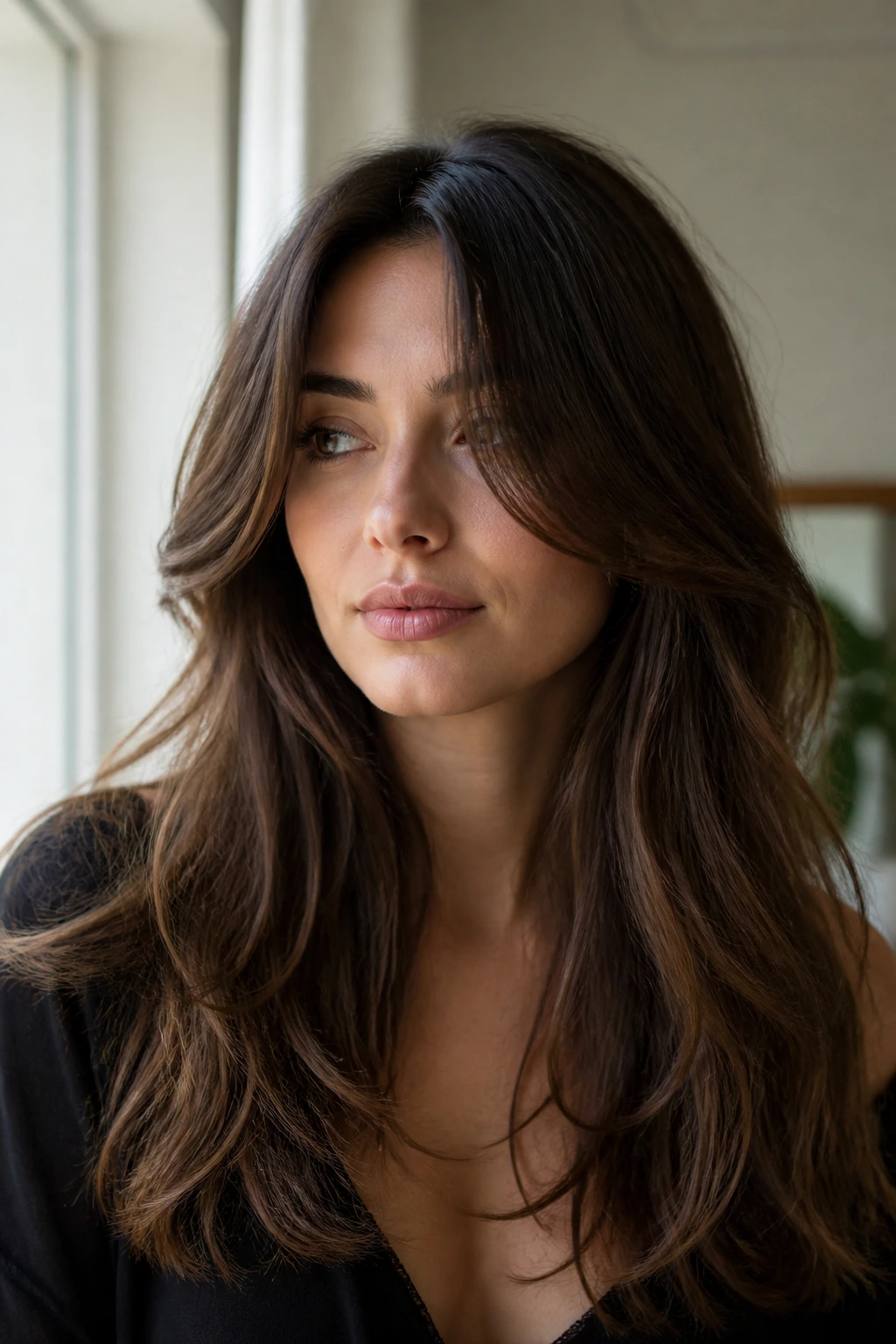
Do swoop bangs work on a round face?
Yes, if the part is off-center and the front keeps some height at the root. A round face usually looks better with a narrow sweep than with a wide curtain that spreads across the forehead.
How often do swoop bangs need trims?
Shorter versions usually need a touch-up every 4 to 6 weeks. Longer swoops that blend into layers can go 6 to 8 weeks, sometimes a bit longer if you like a grown-out look.
Can I style them without a round brush?
You can. A small flat iron or even a blow-dry with your fingers and a clip can work. The trick is directing the hair from the opposite side first so the root gets a bend instead of lying flat.
What if my bangs keep splitting at the cowlick?
Cut them with the cowlick in mind, not against it. Sometimes a deeper side part or a slightly longer front section fixes the split better than trying to force a straight drop.
Are swoop bangs high-maintenance?
They can be, but not in a dramatic way. The front section is small, so styling takes less time than a full fringe, though some versions need daily heat and a quick refresh in the morning.
Will they work with curly hair?
Yes, and they can look beautiful when the shape follows the curl pattern. The big rule is length: curly swoops usually need to be cut longer and checked dry so shrinkage doesn’t leave them too short.
Can swoop bangs grow into layers easily?
That’s one of their best traits. Because the longest pieces already angle into the sides, they usually grow out into face-framing layers with less awkwardness than a blunt bang.
What should I tell my stylist if I wear glasses?
Bring the glasses if you can and point to where the frame sits on your face. The front should clear the top edge without collapsing into it, or the style will keep getting trapped under the lenses.
A Fringe That Softens Without Hiding
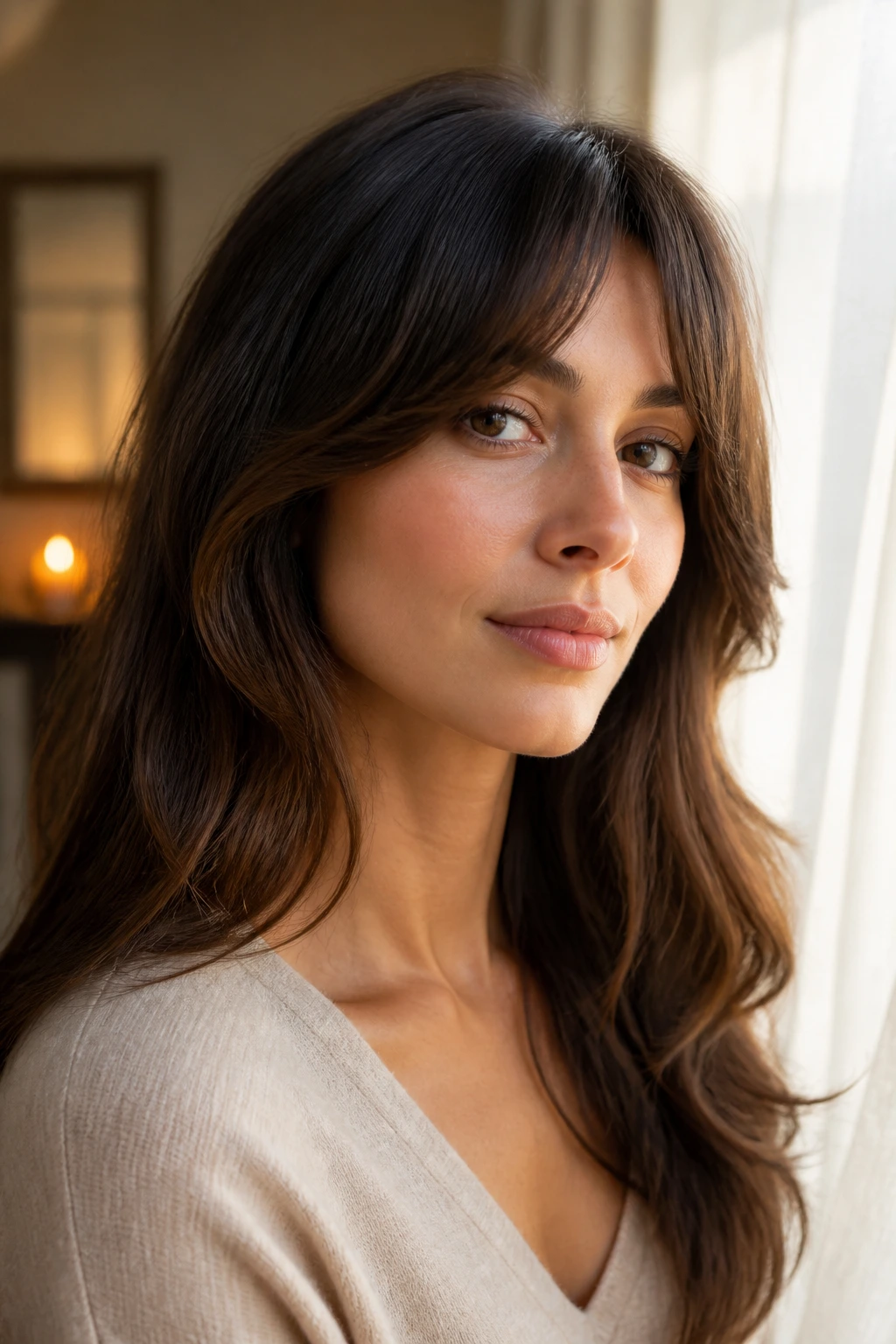
A good swoop bang does something rare: it changes the shape of the face without taking over the whole haircut. It can soften a strong forehead, break up a wider cheek line, or pull a blunt bob into something with more motion, and it does all of that with one diagonal sweep.
I keep coming back to the same point because it matters. The best versions are not the most dramatic ones. They’re the ones with the right length, the right part, and enough texture to move when you turn your head.
Pick the version that matches your hair’s natural bend, then style it as a shape rather than a patch of fringe. That’s where the cut starts paying you back.
