



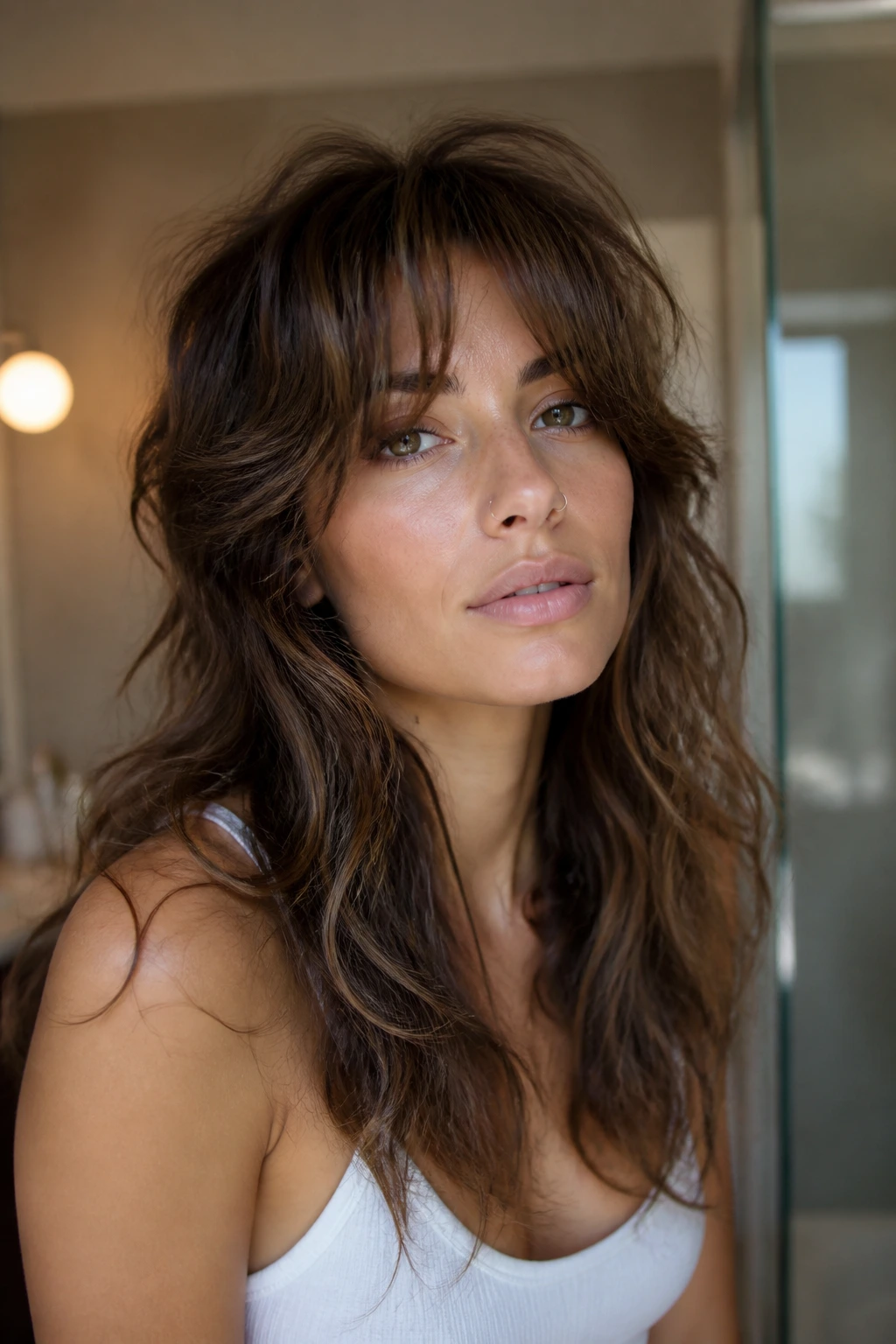
Long shaggy wolf cuts for wavy hair have a rare talent: they make waves look deliberate without sanding off the rough edge that gives them character. A blunt cut asks wavy hair to behave. A wolf cut does something smarter. It gives the wave a path to follow, then leaves enough length and texture at the ends so the whole shape still feels loose, fast, and a little bit unruly.
That’s why the good versions look alive. The crown gets lift. The face frame falls in soft, broken pieces. The hemline keeps moving, even when the rest of the hair is tucked behind one ear or shoved into a clip. And if you’ve ever had wavy hair balloon out at the sides while the ends hang too straight, you already know why this shape matters. It fixes the triangle problem without turning the haircut into a neat little helmet.
The best part is how many directions this cut can go. It can be romantic, punky, polished, beachy, sharp, soft, heavy, wispy, or nearly invisible from the back until the layers start shifting around. That range is the whole reason this haircut keeps showing up in salons: the bones are the same, but the attitude changes with the layer placement, the fringe, and the way the ends are carved.
Why These Long Shaggy Wolf Cuts Work So Well on Wavy Hair
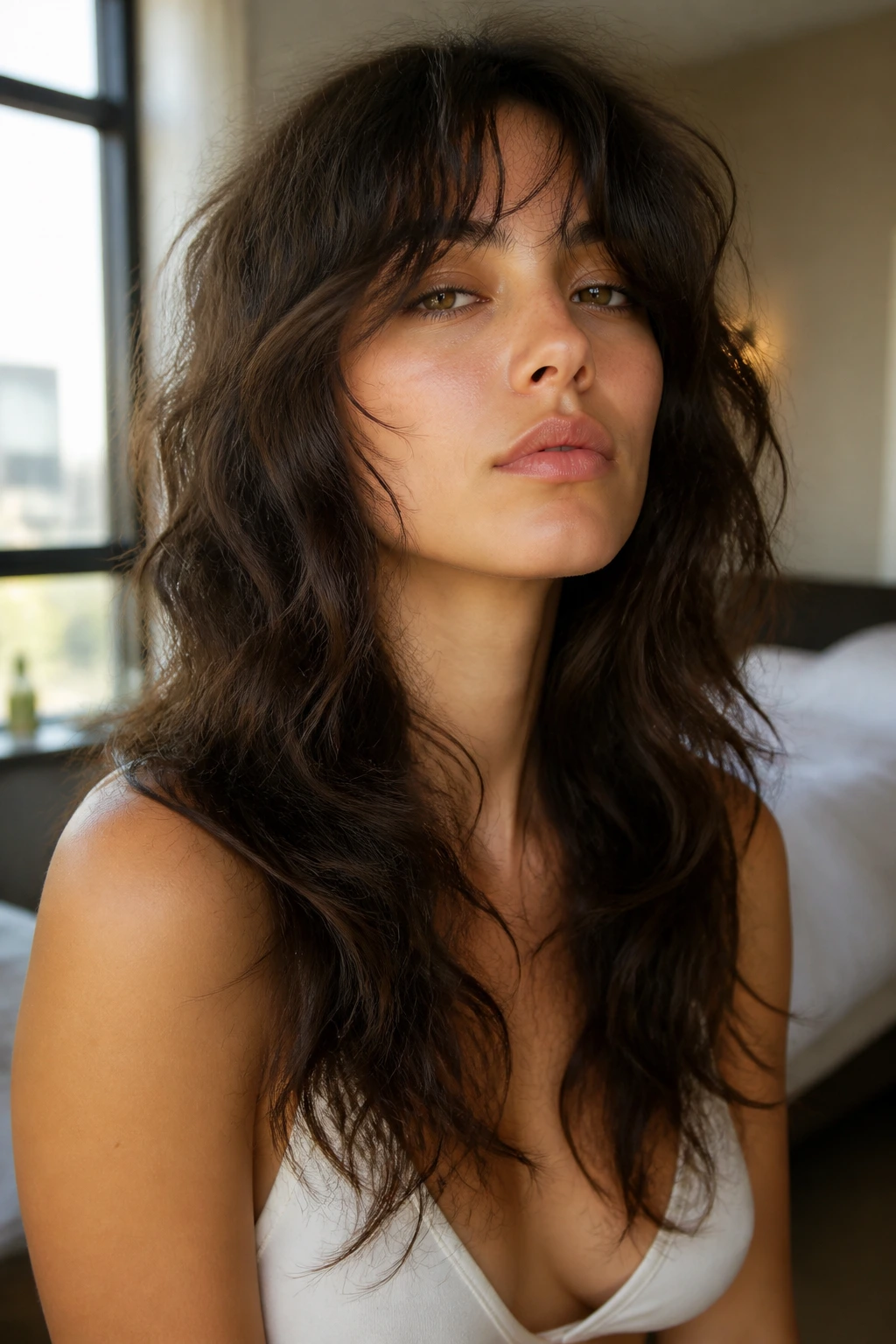
-
The wave does half the styling for you: Wavy hair already bends and breaks up the line, so the cut doesn’t need to create movement from scratch; it just needs to stop fighting it.
-
The crown gets lift without a teasing comb: Shorter layers at the top remove dead weight, which helps the roots stand up instead of lying flat and dragging the whole shape down.
-
The length stays useful: These versions keep enough hair at the shoulders, collarbone, or lower so you can still clip it up, braid it, or wear it sleek on the rare day you want a cleaner finish.
-
The perimeter can be tailored to your density: Thick waves need bulk removed in the middle. Fine waves need weight left at the ends so the haircut doesn’t go wispy and empty.
-
They grow out with less drama than a precision bob: A little messiness is built in, so the cut often looks better a few weeks after the salon chair than it did on day one.
-
The face frame can do real work: A good fringe or cheekbone layer can change how wide, narrow, soft, or sharp the whole haircut reads, which is why this style is so easy to customize.
1. Collarbone Cloud Wolf
This is the version I’d hand to someone who wants the wolf cut idea without looking like they borrowed a punk poster from a basement wall. The length sits around the collarbone, the crown gets a gentle lift, and the ends are broken up just enough to keep the wave from collapsing into one heavy sheet. On wavy hair, that collarbone length matters because it still moves when you turn your head, but it doesn’t vanish into frizz the way a shorter cut can.
Ask for the shortest layers to land somewhere between the cheekbone and the jaw, then let the rest taper softly toward the ends. The shape should feel airy, not chopped to bits. If your waves puff at the sides, this is the safest place to start.
2. Curtain-Bang Drift Wolf
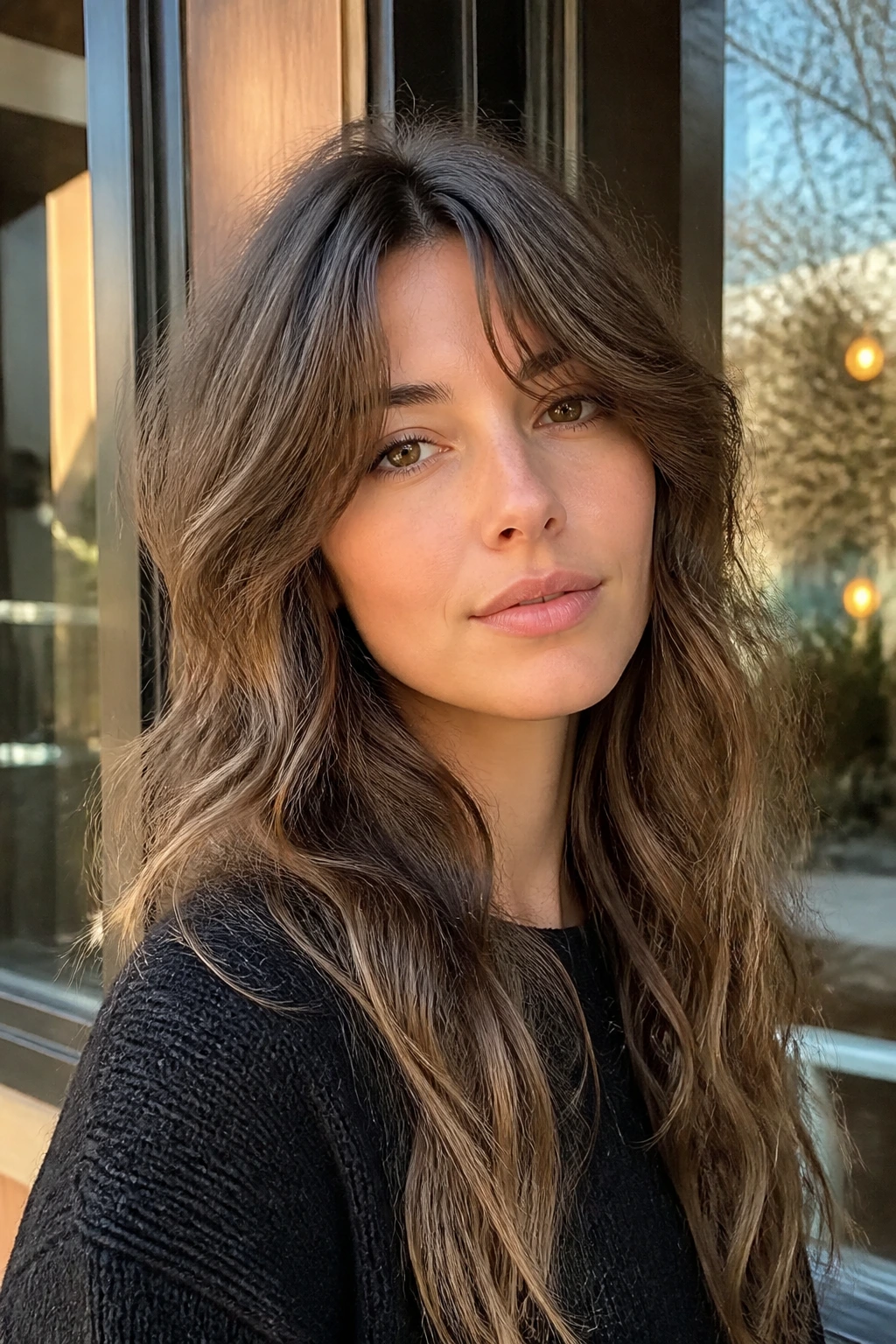
Curtain bangs and a long shaggy wolf cut are a natural pair because both rely on movement instead of hard lines. The fringe opens from the center, skims the cheekbones, and blends into the longer front layers so the haircut feels like one continuous sweep. On wavy hair, curtain bangs soften fast; that’s part of the charm. They don’t sit still, and they shouldn’t.
I like this version for people who want the face frame to do more than just sit there looking decorative. It changes the whole mood of the cut the second you tuck one side behind your ear. Keep the bangs long enough to hit the lashes or just below the brow at the salon, because wavy hair springs up more than people expect once it dries.
3. Bottleneck Fringe Wolf

A bottleneck fringe narrows near the center of the forehead and opens out toward the cheekbones, which makes it one of the smartest fringe choices for long shaggy wolf cuts for wavy hair. It looks softer than a blunt bang, but it still gives the haircut a real focal point. The longer sides also help frame the face without pinning all the attention to the forehead.
This shape is especially nice if you like a little drama without committing to a full heavy fringe. It also plays well with glasses, because the narrow center keeps things from feeling crowded. The key is to cut it longer than you think you need. Wavy fringe shrinks in a way that can be charming on one day and annoying on the next.
4. Cheekbone-Frame Cascade
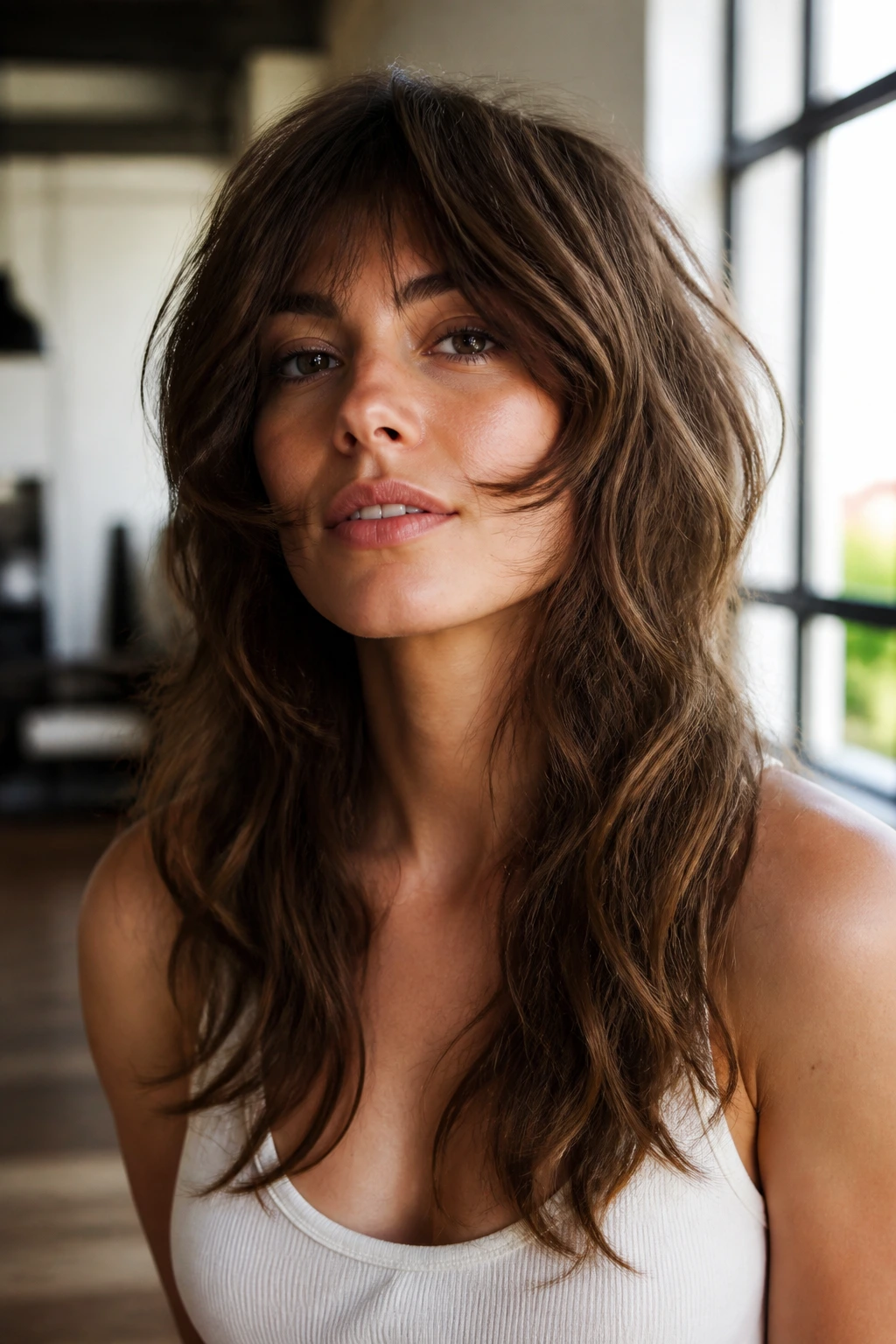
This version is all about where the first face-framing layer lands. If the shortest pieces hit the cheekbones, the whole haircut suddenly pulls the eye upward, which is useful if your waves tend to droop around the jaw. The rest of the layers can stay long and shaggy, but that cheekbone break gives the style its shape.
It’s one of the best choices if you want your hair to move around your face instead of hanging straight beside it. The wave catches on those shorter pieces and creates a soft swing every time you turn your head. Tell your stylist you want the frame to float, not sit like a curtain.
5. Razor-Feathered Hem Wolf
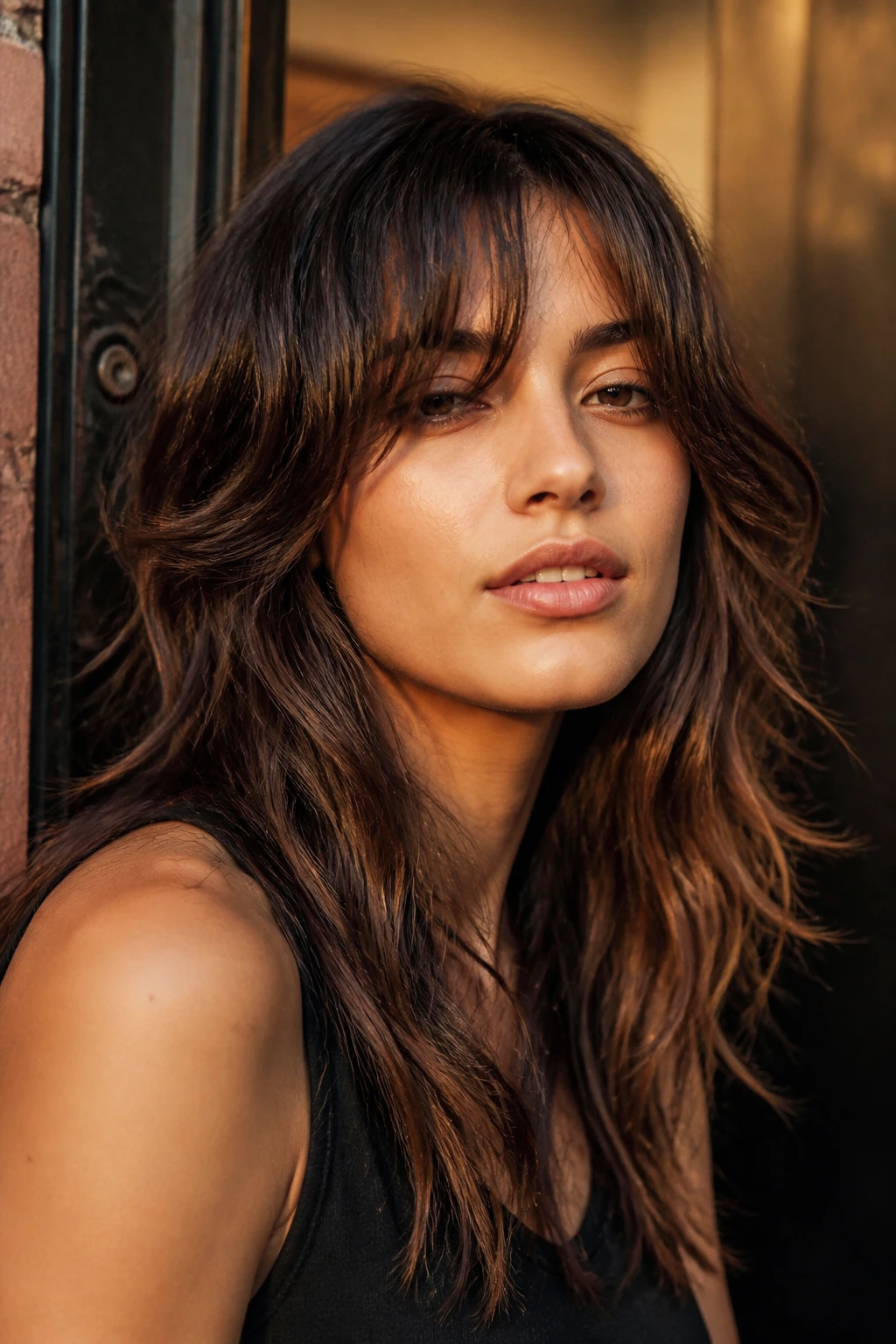
This is the cut for people whose wavy hair feels heavy at the ends and sticky through the mid-lengths. Razor-feathering can take a blunt, blunt-looking perimeter and make it move in finer pieces, especially when the wave pattern is strong enough to hold separation. The trick is restraint. Too much razor work on fine hair can leave the ends looking tired.
On dense hair, though, it’s a clean fix. The outline stays long, but the bottom stops behaving like a shelf. I’d choose this version if you like a slightly worn-in finish and you don’t mind a little edge around the hemline. The hair looks less “done,” and that’s the point.
6. Ribcage-Length Shag Wolf
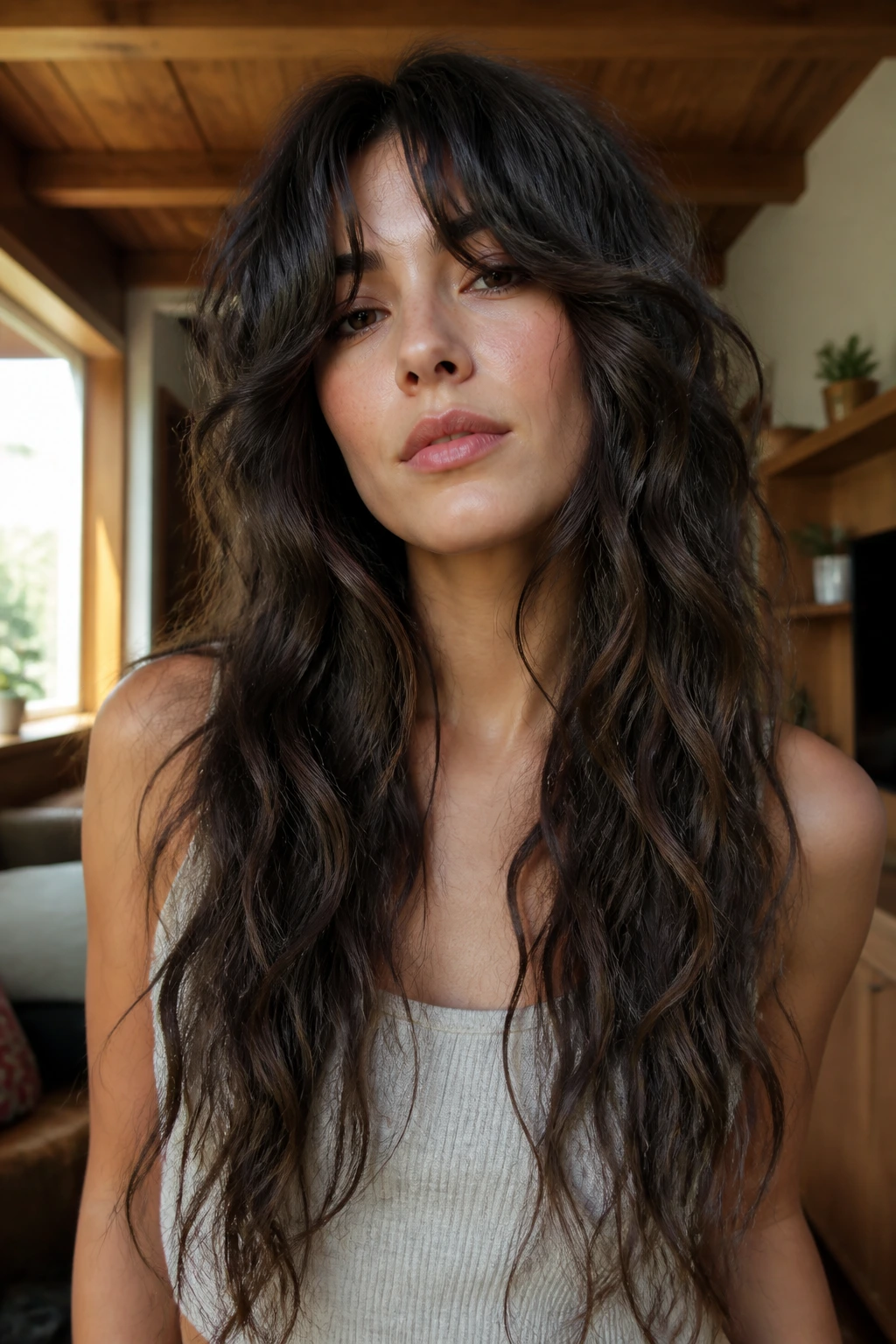
When you want the shaggy wolf shape to feel dramatic, go long. Ribcage length gives the layers room to fall in bands, and the wave pattern has enough length to show off instead of bouncing into a compact puff. This is the version for someone who likes to keep hair off the shoulders sometimes, but still wants a visible shape when it’s down.
It’s also merciful for people who hate constant trims. The haircut can grow a little without losing its identity. Longer wolf cuts work best when the bottom still has some weight. Otherwise the wave can eat the shape alive and leave you with frizz and no perimeter.
7. Deep Side-Part Sweep Wolf
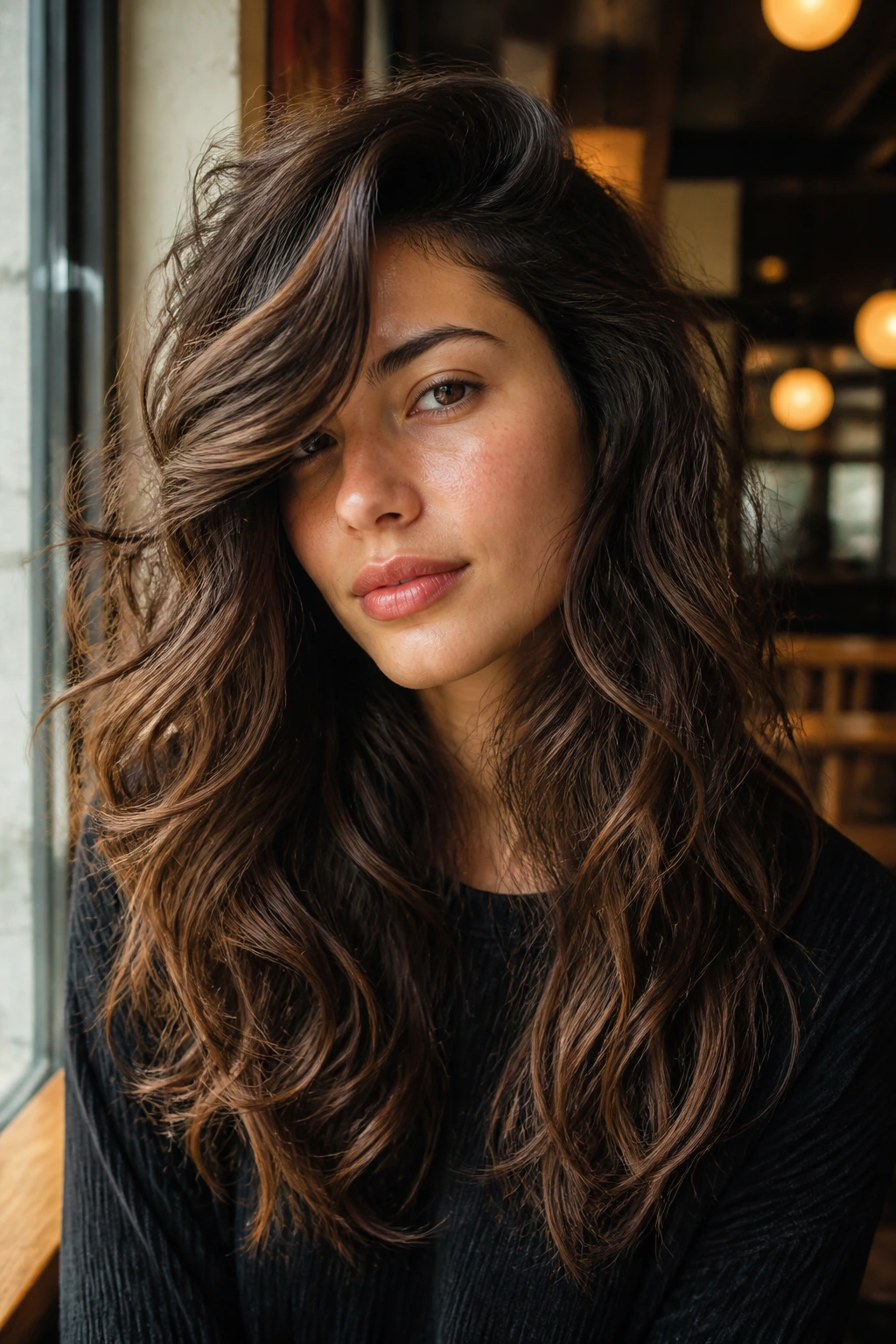
A deep side part changes everything. It gives the crown a lift, exaggerates the layers on one side, and lets the waves fall with a little asymmetry that feels richer than a dead-center part. If your hair usually falls flat at the roots, this is one of the easiest ways to wake the whole cut up without changing a single scissor line.
This version also does a nice job when your wave pattern is stronger on one side than the other. The side part balances the imbalance instead of pretending it isn’t there. Best for: flat crowns, oval faces, and anyone who wants the haircut to look different on day one without changing the whole shape.
8. Center-Part Airy Wolf
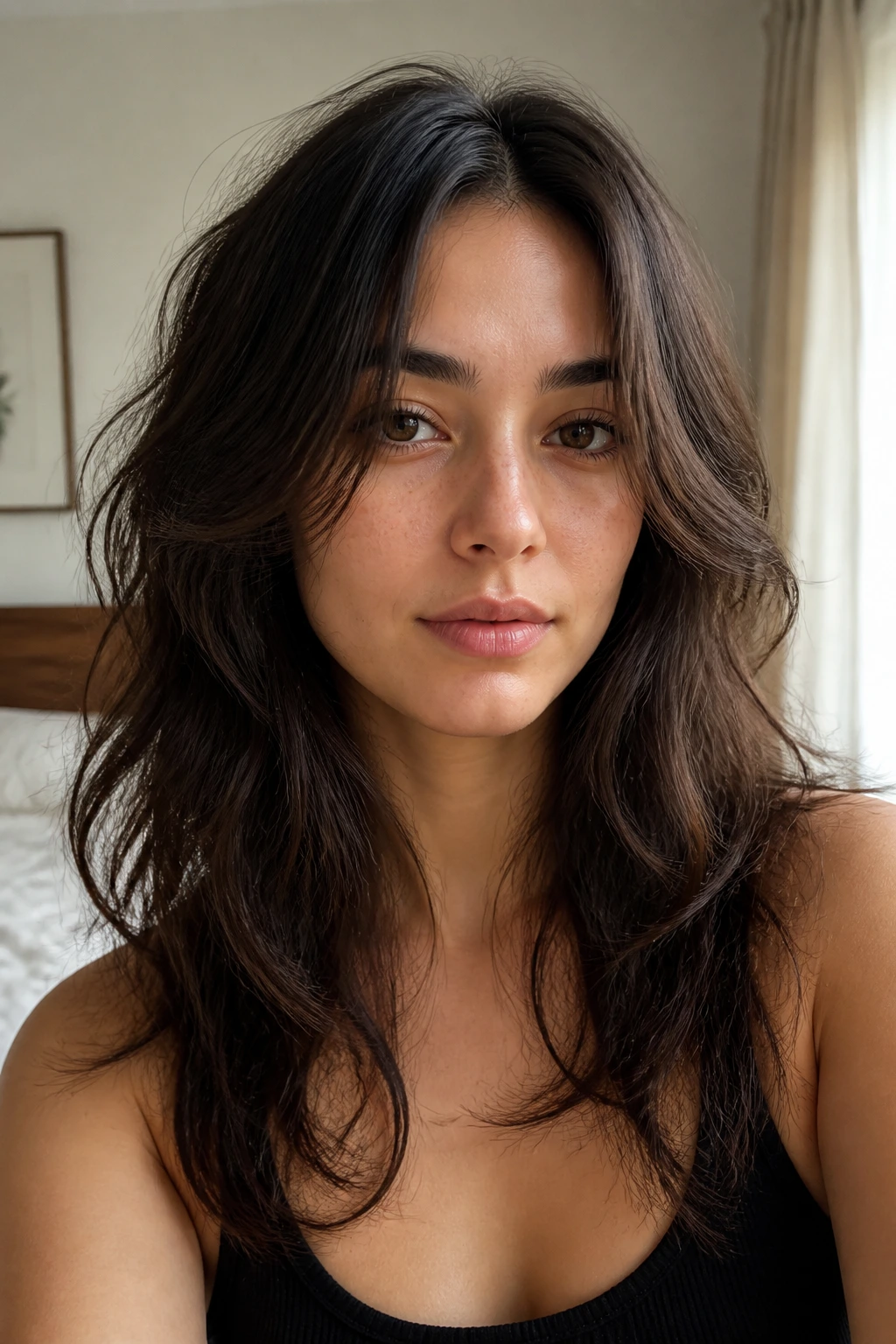
A center part can make a long shaggy wolf cut feel cleaner and more modern, especially on wavy hair that already forms even bends. The important part is not to over-layer the front. Leave enough length around the face so the middle can open without making the haircut look sparse.
This is the version I’d point to if you like the shape of the cut but want it to read a little calmer. The symmetry gives the waves a frame, and the layers do the texture work underneath. It’s not fussy. It just needs a decent blow-dry at the root or a good air-dry routine if your waves cooperate.
9. Crown-Lift Wolf
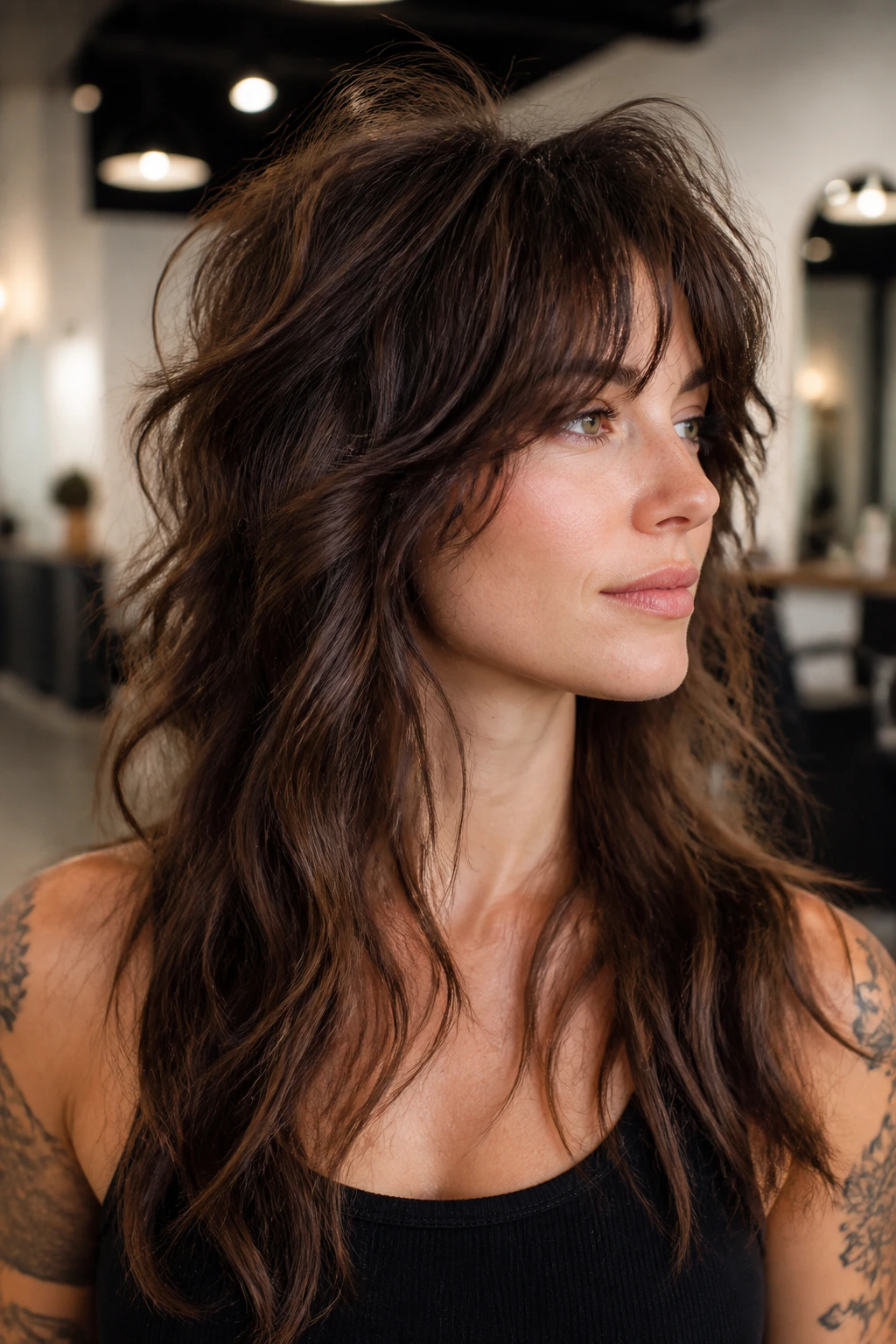
Some wolf cuts lean on the ends. This one leans on the top. Shorter internal layers around the crown create lift where wavy hair usually collapses, and the long length beneath keeps the silhouette from turning into a puffball. The result feels light at the top and grounded at the bottom, which is a useful balance if your hair is thick or heavy.
I like this shape on round or longer faces because the extra lift changes the proportions. Ask for the crown layers to be blended, not cut into obvious shelves. You want volume, not a helmet.
10. Halo Face-Frame Wolf
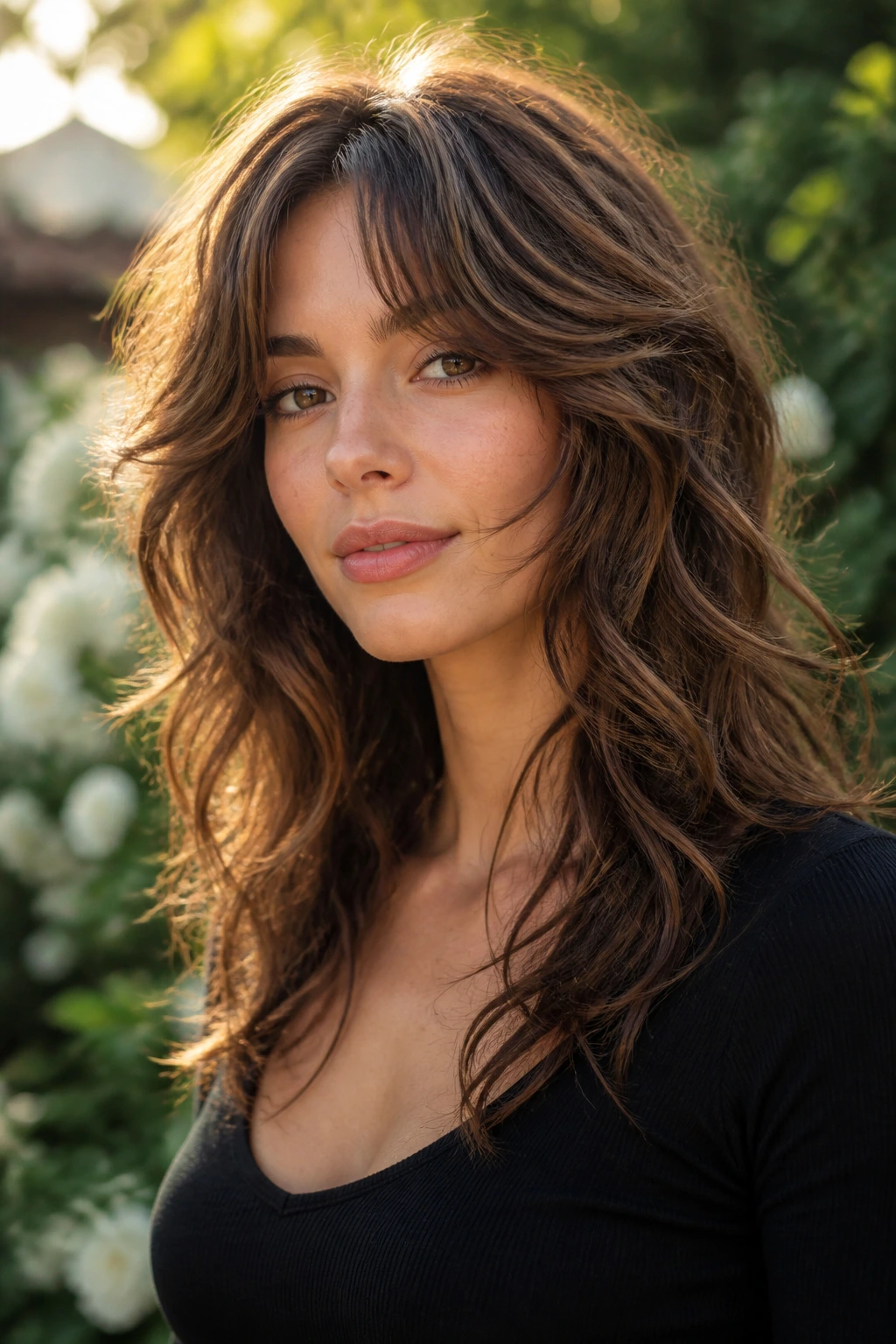
The halo version wraps soft layers around the face and then lets them drift into the longer pieces at the back. It’s flattering because it keeps the haircut moving in every direction instead of concentrating all the action right at the fringe. On wavy hair, those front layers will bend naturally, which makes the shape look fuller without needing a ton of styling.
This is one of those cuts that looks casual but took some thought. If you wear your hair down most of the time, it gives you the feeling of having “done something” without looking overstyled. The face frame should land below the cheekbones for most people, or it can creep too high and start feeling busy.
11. Piecey Beach Wolf
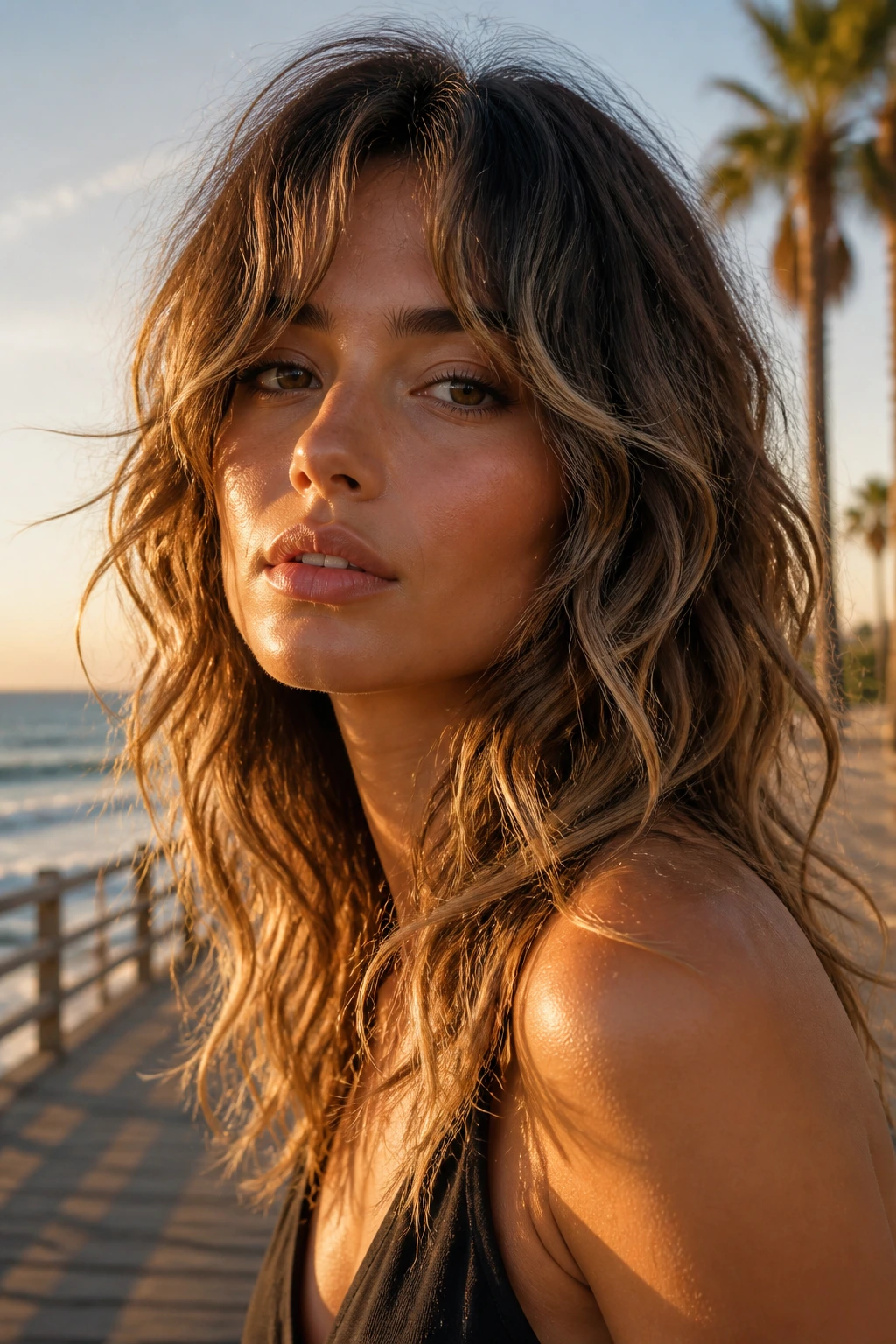
This is the scruffiest member of the family, in the best possible way. The ends are separated, the layers are visible, and the whole cut wants a little mousse or texturizing spray to keep the pieces from merging into one soft blur. Wavy hair loves this because the natural bend keeps the separation alive.
I’d choose this if you like hair that looks touched by salt air even when you’ve spent exactly zero hours near the ocean. The style works especially well on medium to thick waves that can hold definition without falling flat. Don’t overdo the product. A sticky finish kills the movement fast.
12. Invisible Layer Wolf
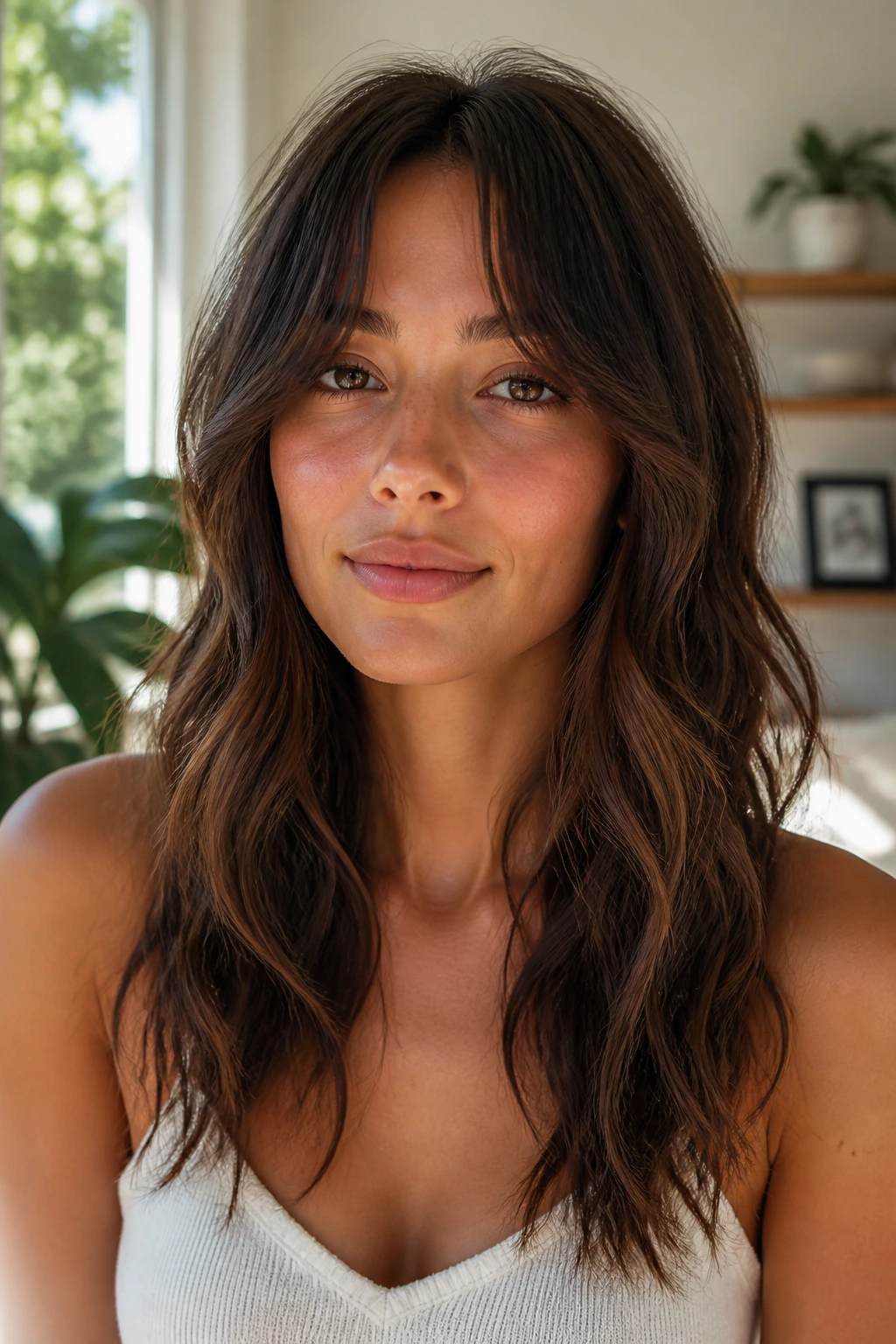
Not every long shaggy wolf cut has to look choppy from across the room. Invisible layers are tucked inside the shape, so the outer line stays long and calm while the interior does the heavy lifting. This is a smart move if you work somewhere conservative or you just don’t want a haircut that shouts before you do.
On wavy hair, hidden layers are a nice compromise. They remove bulk, help the wave move, and keep the perimeter looking intentional. You’ll notice the effect when you toss your hair over your shoulder more than when you stare at it straight on. That’s the whole idea.
13. Long Mullet-Lean Wolf
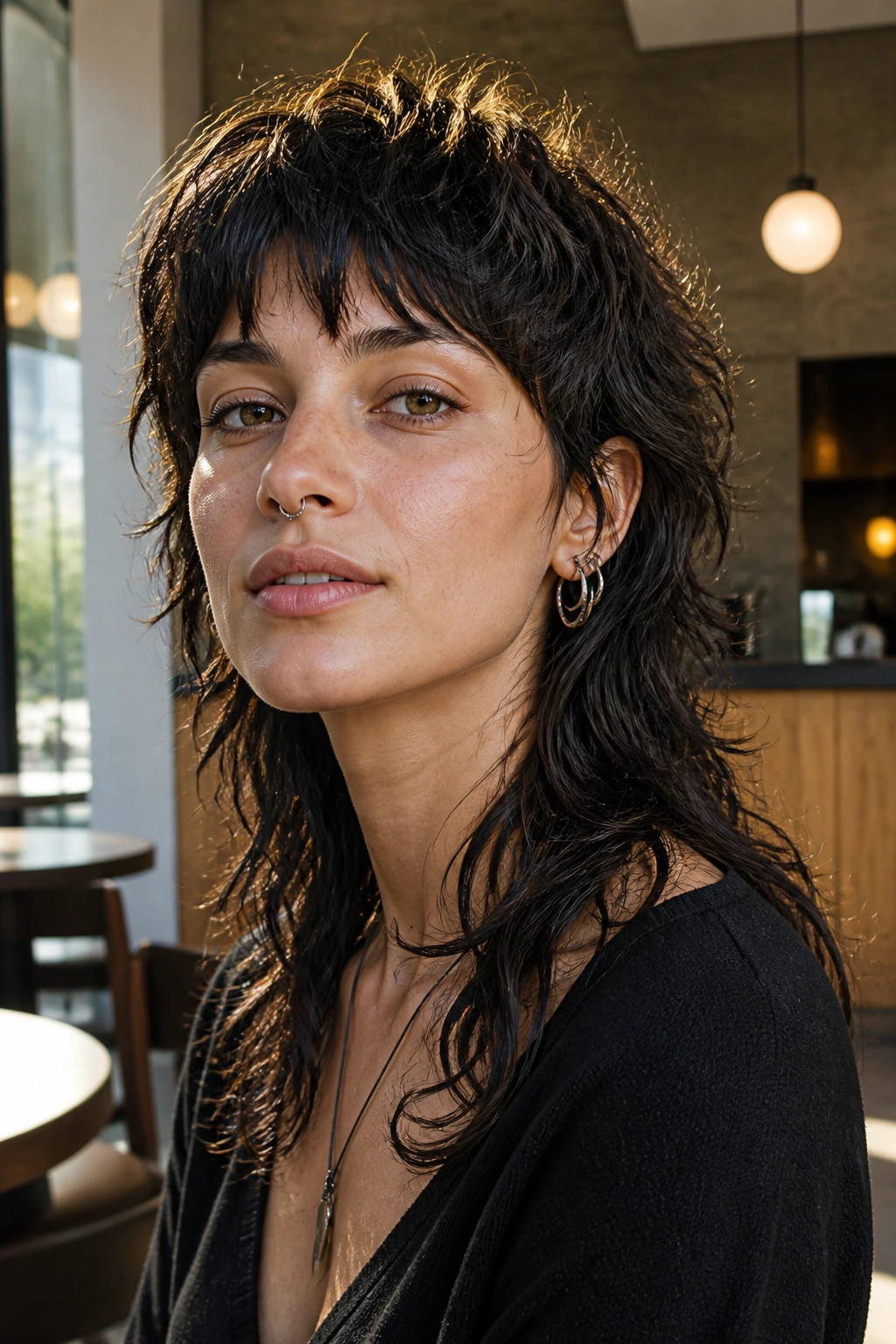
This is the bold one. The crown gets a little shorter, the front gets edge, and the back keeps its length so the haircut leans into that mullet-ish wolf energy without going costume-y. On wavy hair, the contrast reads even better because the bends make the shape feel less rigid.
If you like a cut with attitude, this is where you go. It’s sharper around the top and softer in the tail, which gives the style a push-pull effect I’ve always liked. Ask for visible separation around the crown and cheekbones, then let the back stay long enough to swing.
14. Soft Romantic Wolf
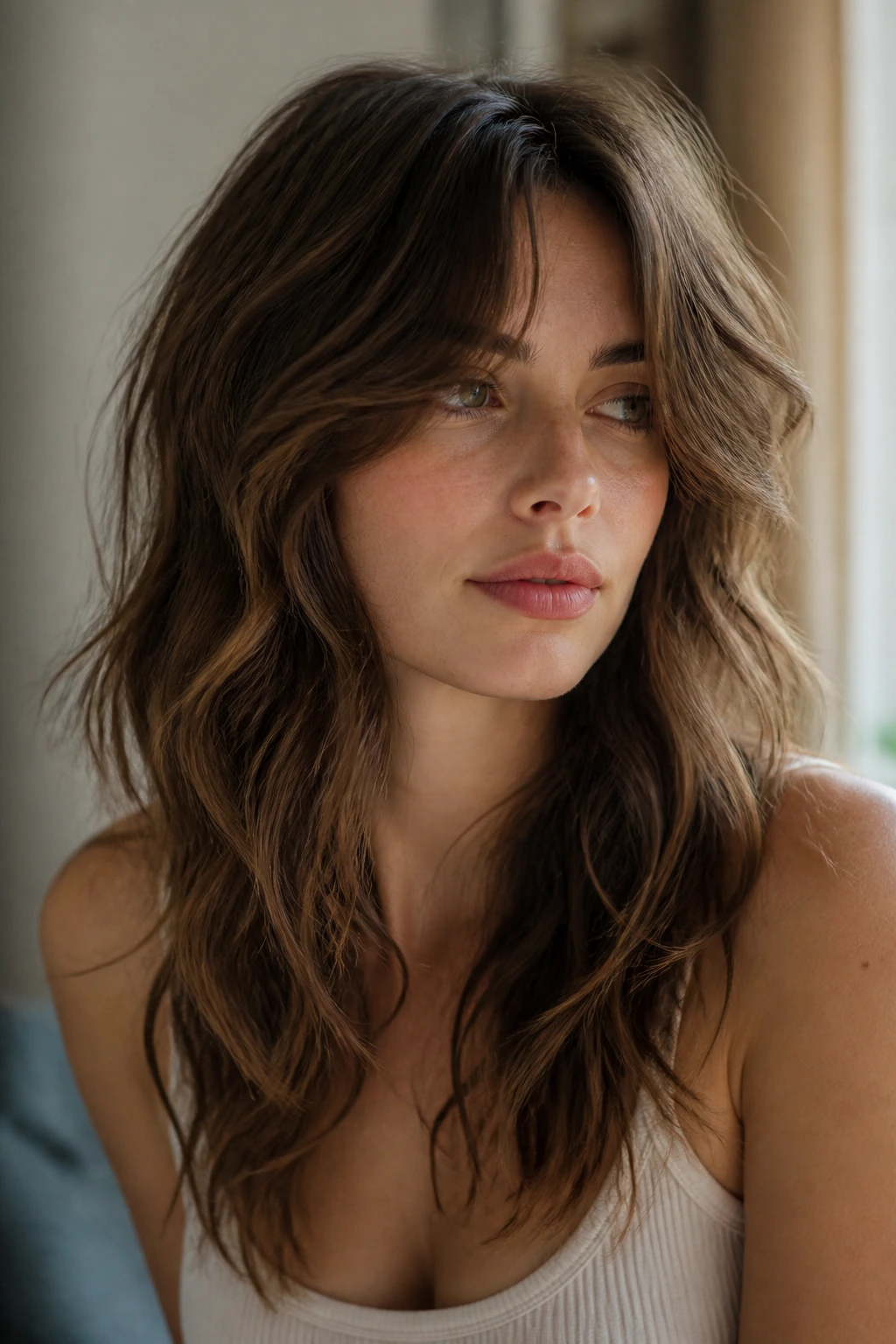
Not every shaggy wolf cut needs bite. A softer version keeps the layers blended, the edges feathered, and the face frame gentle enough to move without looking severed. Wavy hair is excellent at this because the natural bend does the softening for you.
This is a strong choice if you want something feminine without making the haircut sweet or precious. It still has structure. It just skips the jagged ends and the harder texture. The best sign of this cut is that it looks good with a silk scarf, a sweatshirt, or a blazer. It doesn’t only belong to one style.
15. Thick-Hair Debulk Wolf
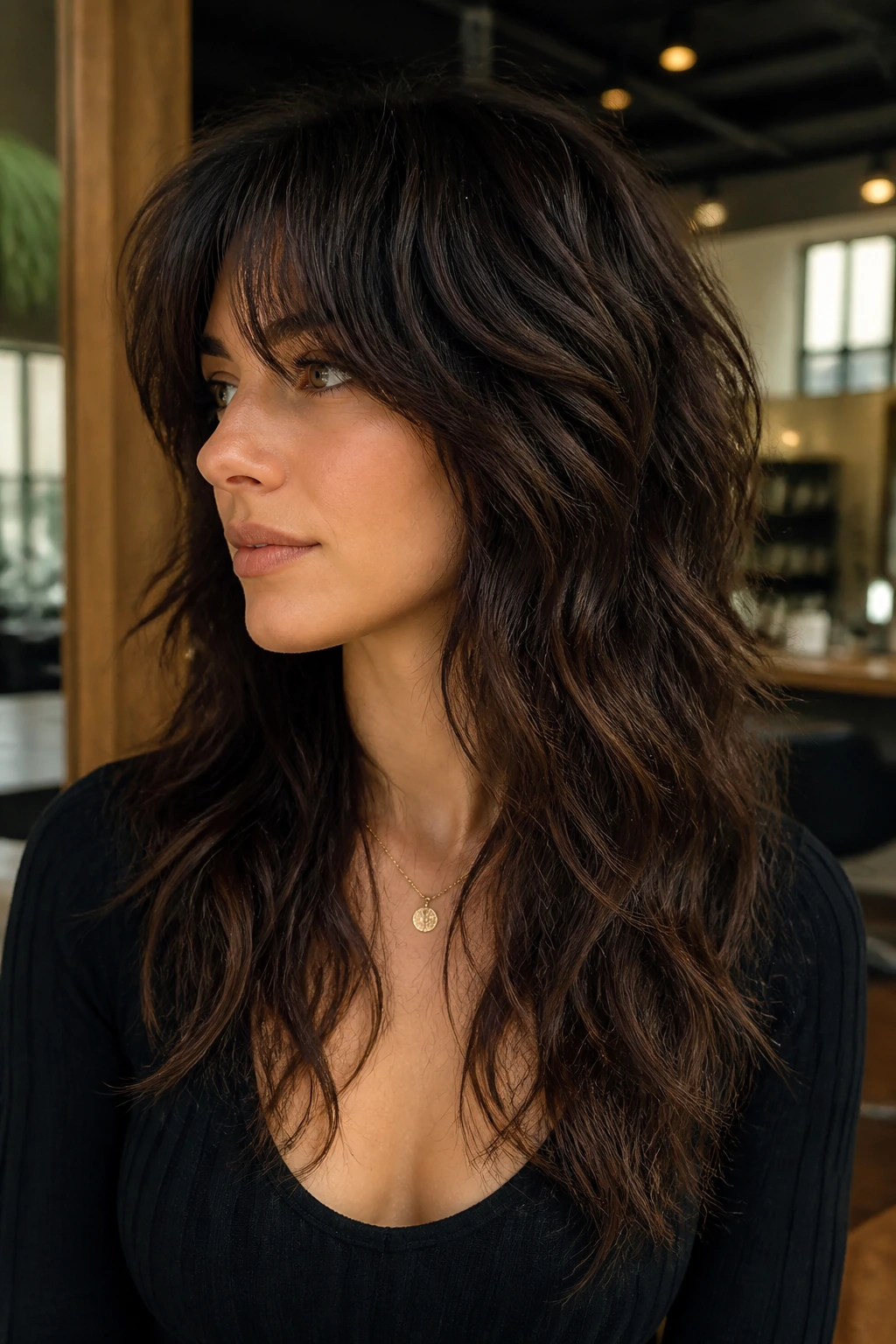
Thick wavy hair can turn into a mushroom if the wrong weight is left in the wrong places. A debulked wolf cut removes weight from the mid-lengths and crown, then keeps enough length at the bottom so the shape doesn’t disappear. The haircut should feel lighter when you run your fingers through it, not thinned to death.
This is where a stylist who knows how to use layering scissors carefully earns their keep. You want release, not holes. If your hair has a lot of body, this version can make air-drying feel more predictable because the wave has space to separate instead of stacking on itself.
16. Fine-Wave Lift Wolf
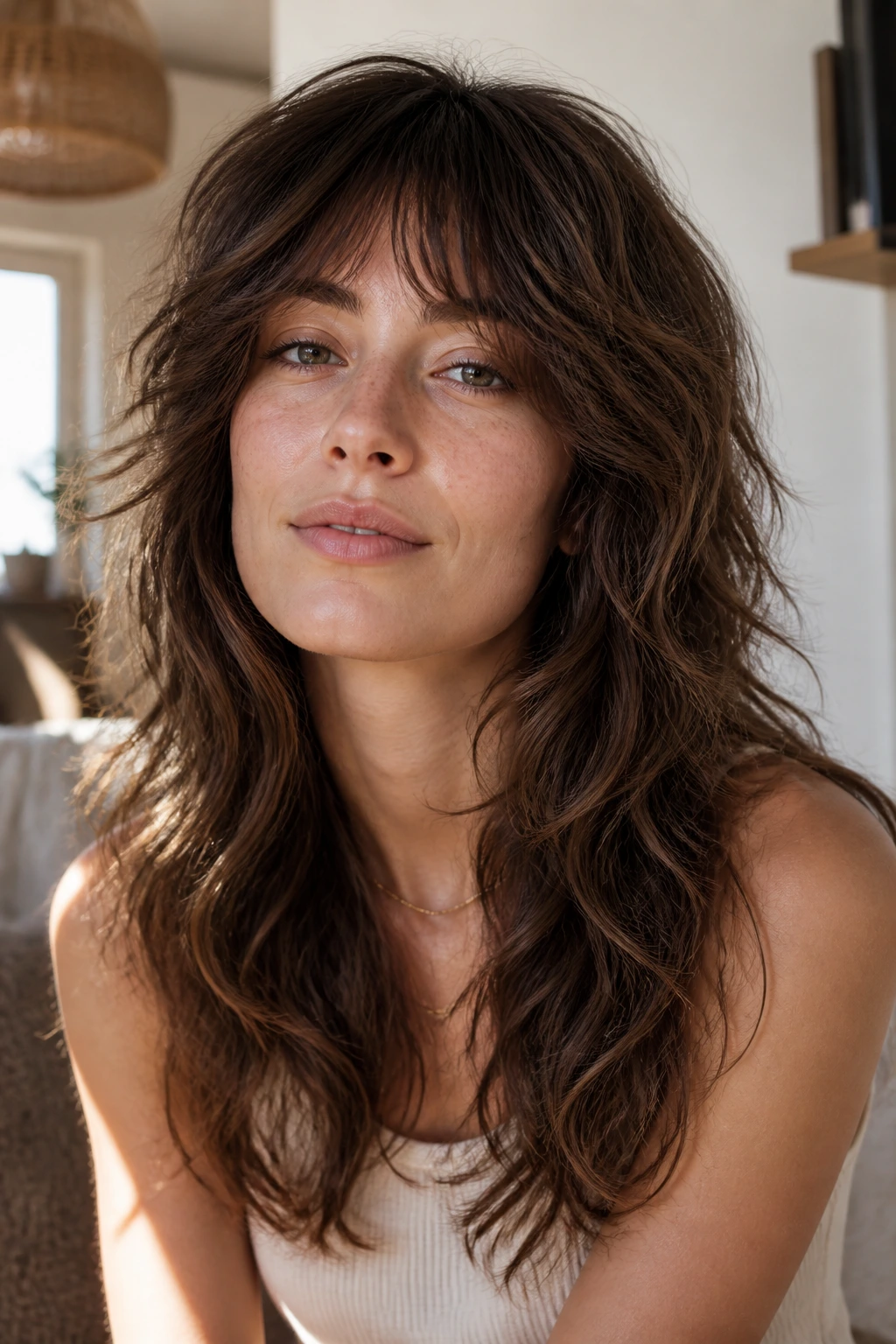
Fine wavy hair needs a gentler hand. Too many short layers and the ends start to look see-through. This version keeps the layers long enough to preserve density, while still adding a bit of lift around the crown and cheekbones so the haircut doesn’t collapse into one limp curtain.
I like this shape when the goal is body, not drama. A little mousse at the roots and a soft diffuser pass can help the layers stand up, but the cut itself has to do some of the work. Ask your stylist to keep the perimeter full. That one detail matters more than people think.
17. Glossy Blowout Wolf
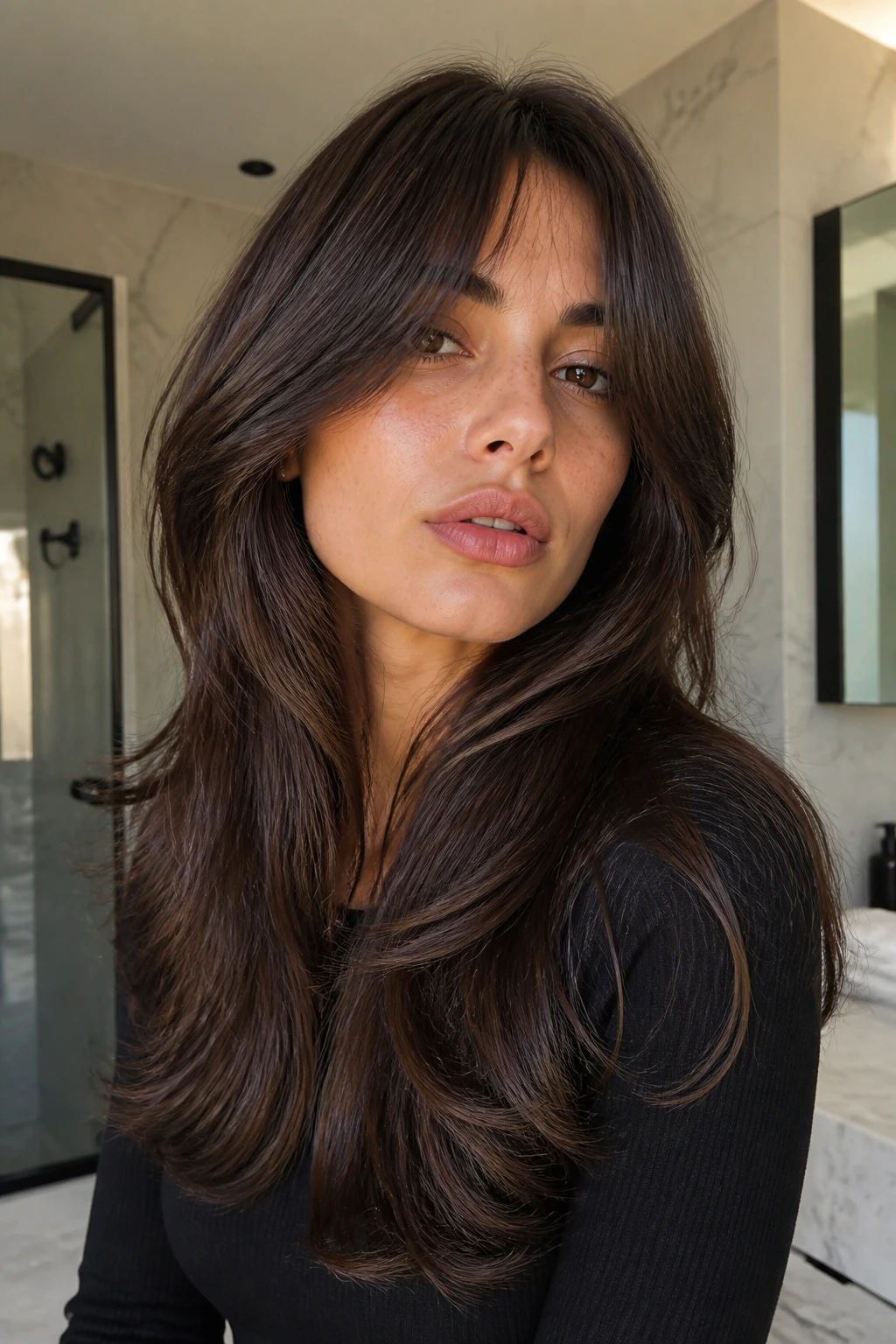
Same haircut, different finish, and suddenly the mood changes. A glossy blowout wolf cut keeps the shaggy layering, but the styling is smoother through the roots and softer through the ends. Wavy hair can do this well with a round brush or a tension blow-dry, then a bend or two added back in at the bottom.
This version is for people who like texture but don’t want the hair to look deliberately messy. The shine matters here. So does the direction of the layers. If the cut is too aggressive, the blowout finish can expose every uneven bit. Ask for movement without too many choppy steps.
18. Air-Dry-Friendly Wolf

Some wolf cuts rely on a blow-dryer to make sense. This one doesn’t. The layers are placed so the hair settles into a workable shape even when you scrunch it, walk away, and let it dry on its own. That makes a huge difference if your mornings are crowded or if heat styling annoys your scalp.
The trick is keeping the cut balanced. Too much top layering and the crown sticks up; too little and the whole thing goes flat. This version should feel easy on day two, which is when wavy hair tends to either shine or go weird. If it still looks decent after a sleep and a shake, the cut was built right.
19. Shattered Perimeter Wolf
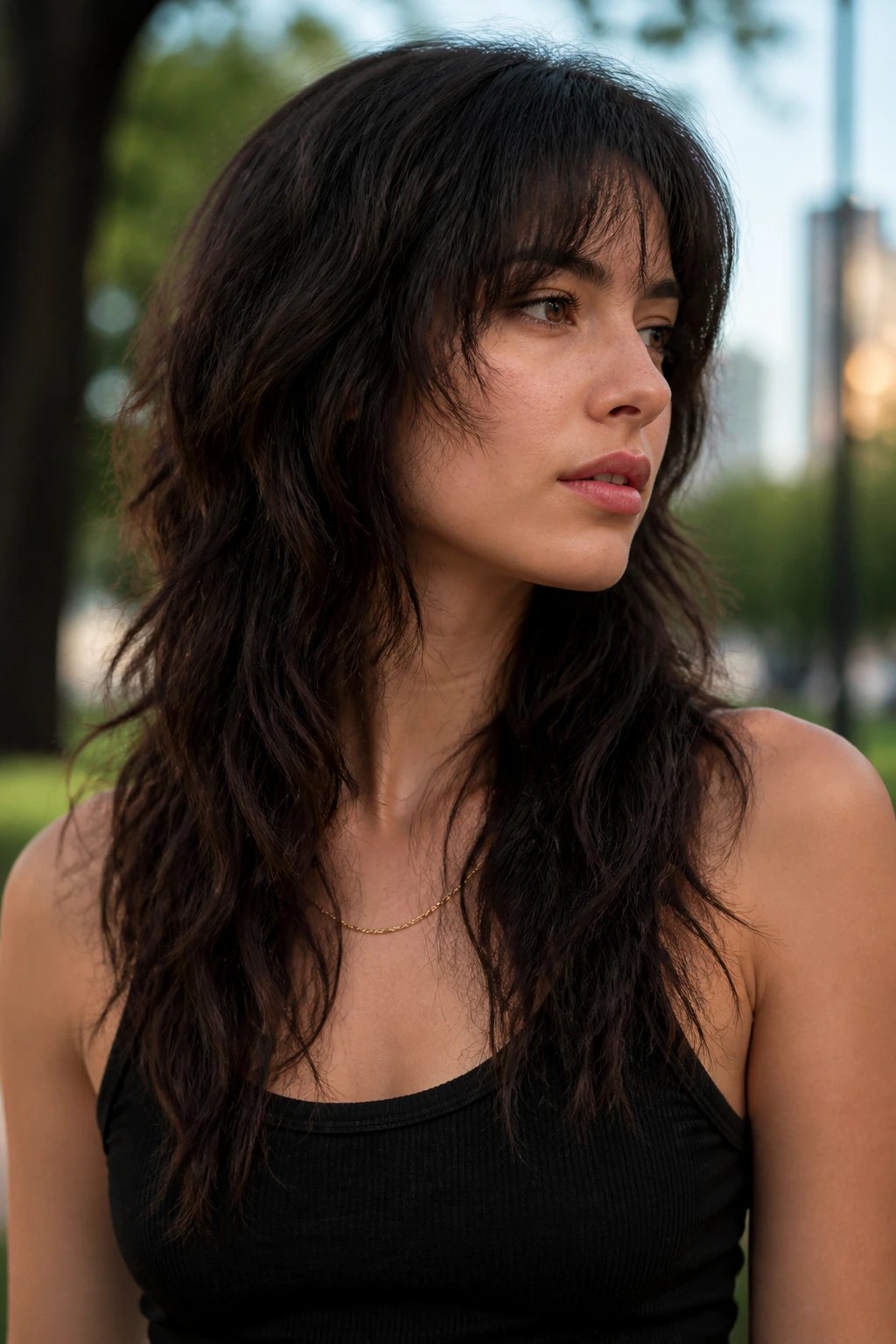
A shattered perimeter means the bottom line isn’t smooth and straight. Instead, it breaks into soft, uneven bits that keep the ends from looking blunt or heavy. On wavy hair, that broken edge can make the whole haircut feel lighter without sacrificing length.
This cut works especially well if you dislike the look of a clean, tidy hem. It has more movement, more air, and a little rawness around the shoulders. The danger is over-chipping the ends. You want broken, not stringy. The line should still hold together when you pull it forward.
20. Soft U-Shape Wolf
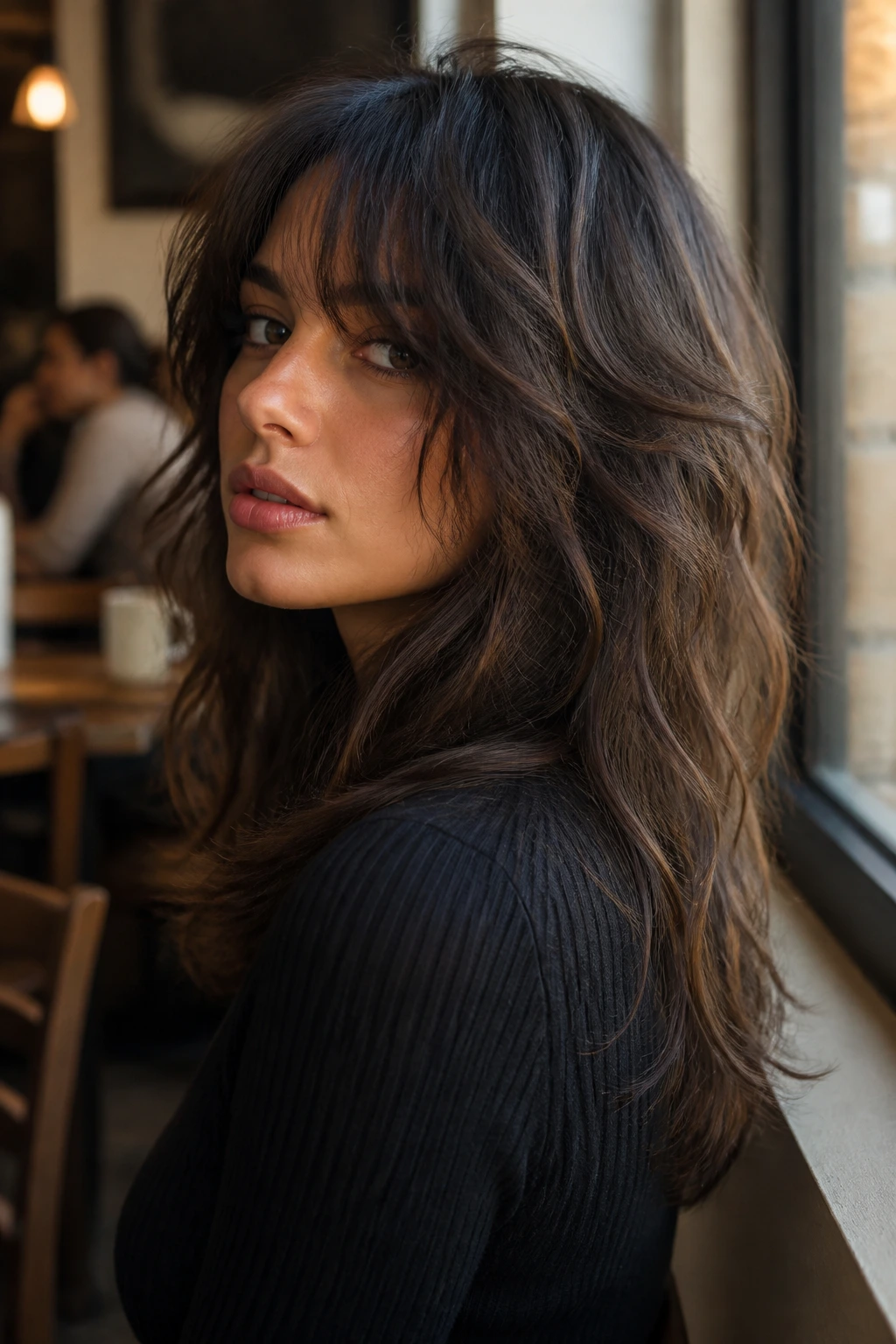
If you like polish with your texture, a soft U-shaped hem is worth a look. The bottom curves gently toward the center back, which gives the long layers a more finished outline than a completely jagged edge would. The upper layers can still be shaggy and loose; the shape just lands with a smoother frame.
This is a good choice for people who wear their hair mostly down and want the back to look tidy without becoming stiff. The U keeps the length feeling expensive in the old-school sense — full, heavy, and intentional — while the layers stop it from getting boxy.
21. Heavy Fringe Wolf
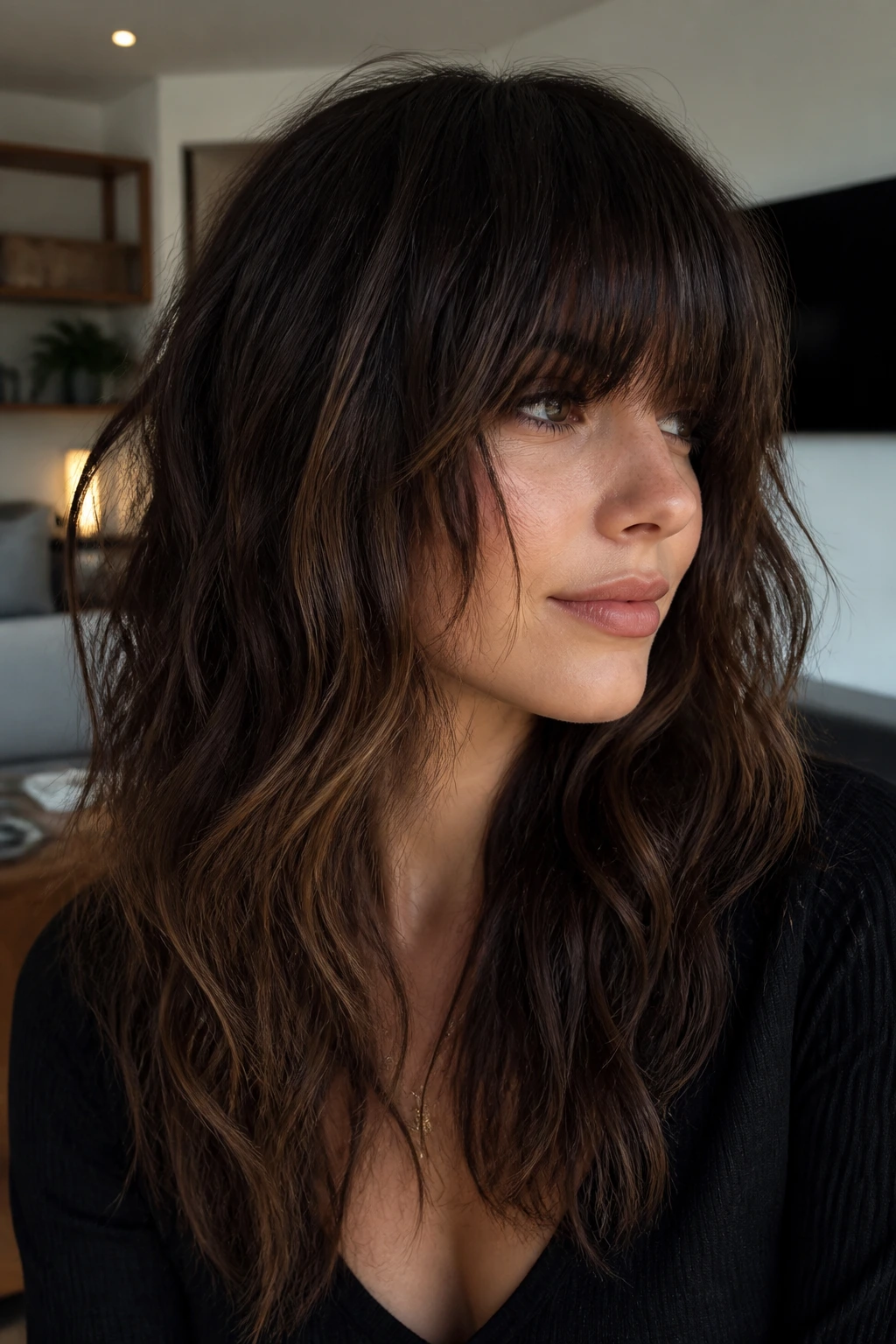
A heavier fringe changes the balance of the whole cut. It pulls attention upward, makes the face frame feel stronger, and can hide a high forehead or a longer face if that’s the effect you want. On wavy hair, a heavier fringe has some movement, but it still reads fuller than a wispy one.
I’d pair this with long layers and a soft perimeter so the bangs don’t make the haircut feel top-heavy. The fringe should hit lower than you think, because waves lift more at the brow than straight hair does. If you like a little mystery in the front, this is the one.
22. Wispy Fringe Wolf
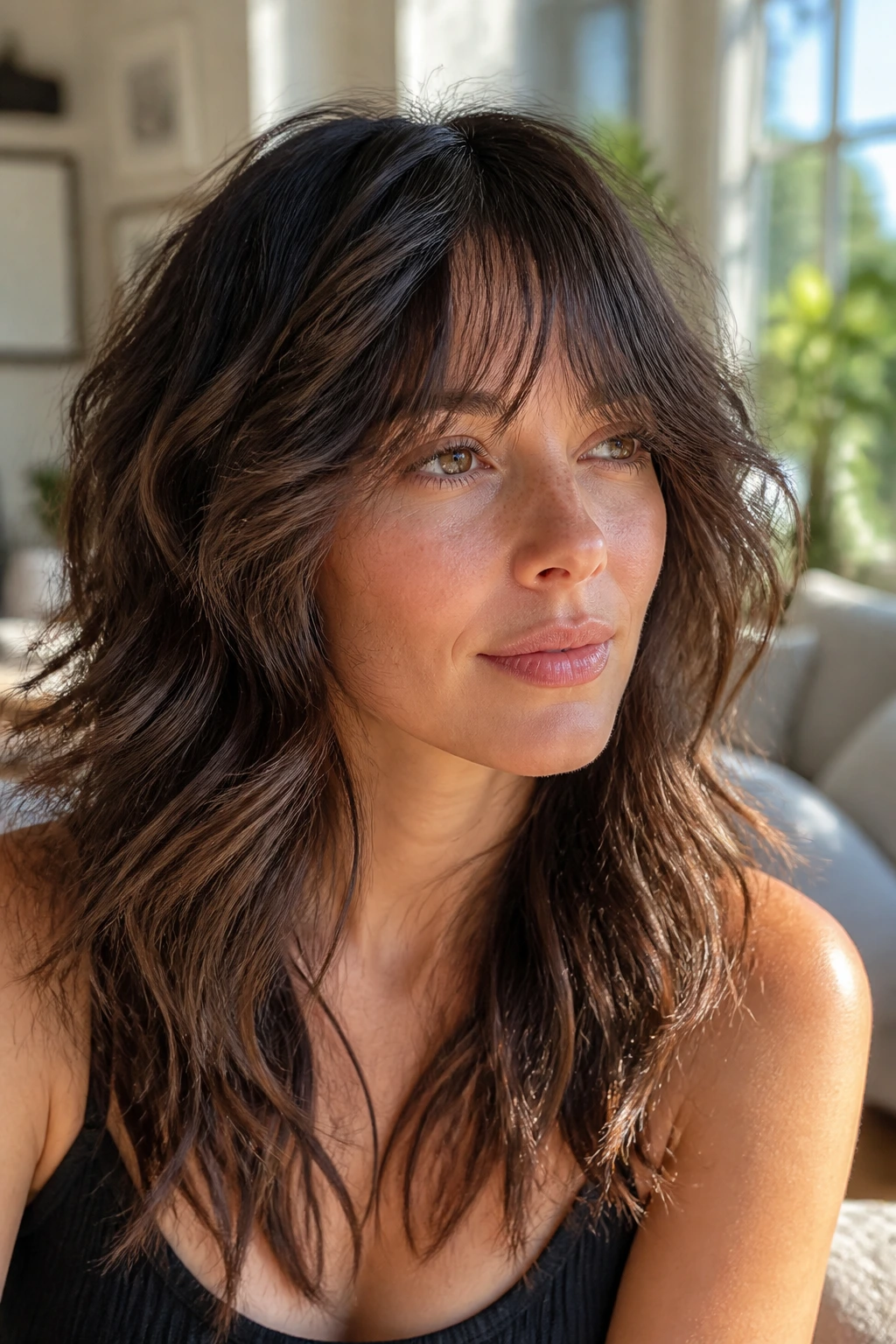
The opposite approach works too. A wispy fringe keeps the forehead lighter and lets the rest of the haircut carry the drama. It’s better for fine or medium waves that can’t hold a dense bang without separating into odd clumps.
This version has a softer, more lived-in feel. It’s also easier to grow out, which is not a small thing. If bangs make you nervous, start here. Wispy fringe blends into shaggy layers fast, so you won’t feel trapped if you decide you want the front longer later.
23. Copper-Glow Wolf
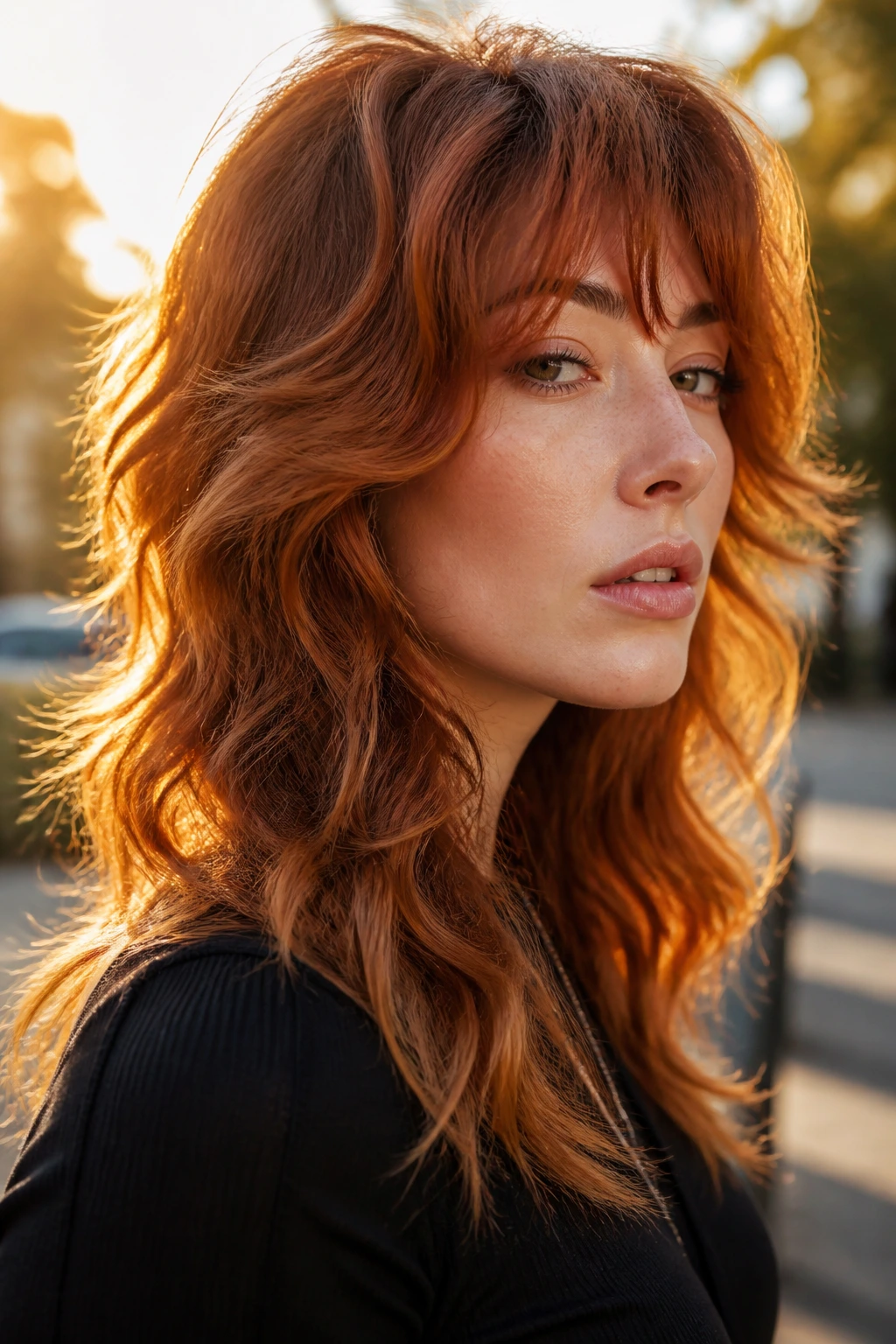
Color changes the read of a haircut faster than most people expect. Copper tones make the layers pop because the light catches the bends and the feathered edges with a little more warmth. On a shaggy wolf cut, that glow makes the texture look richer, especially if the hair has loose S-waves.
This version is a good match for people who want the haircut to feel vibrant without adding extra length or more layers. The shape stays the same. The color just turns the movement up a notch. If your skin likes warm tones, this is a very friendly pairing.
24. Sun-Kissed Wolf
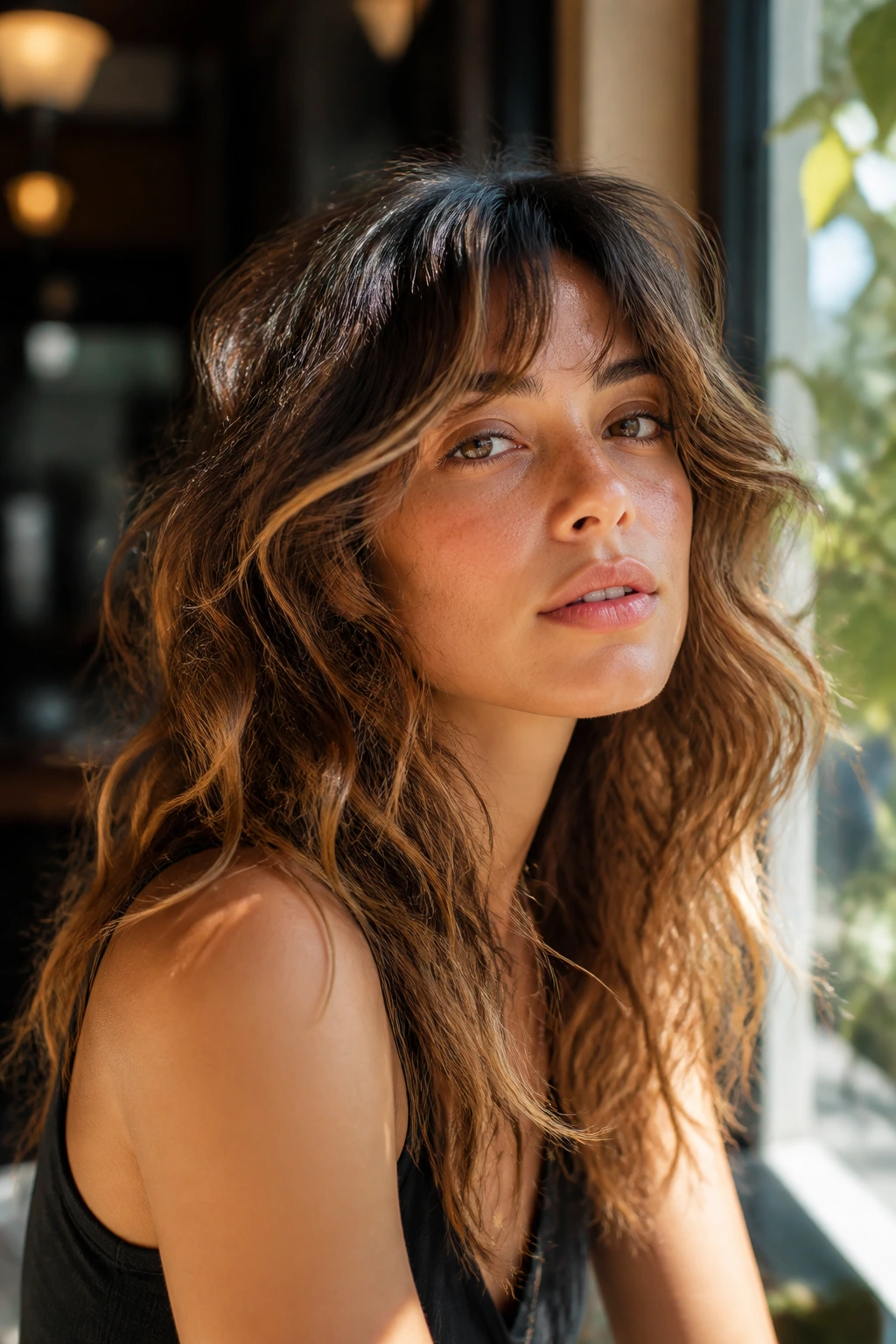
Subtle highlights can make long shaggy wolf cuts for wavy hair look more expensive without making them louder. The light pieces land where the wave bends, which means the haircut appears even more textured when it moves. Face-framing ribbons and a few brighter ends do most of the visual work.
I like this version because it doesn’t depend on perfect styling. Even a loose air-dry shows the dimension. Ask for highlights placed around the face frame, the crown, and the longer outer layers. The result should look like the haircut is catching light in different places, not like stripes were painted on top.
25. Ash Brunette Wolf
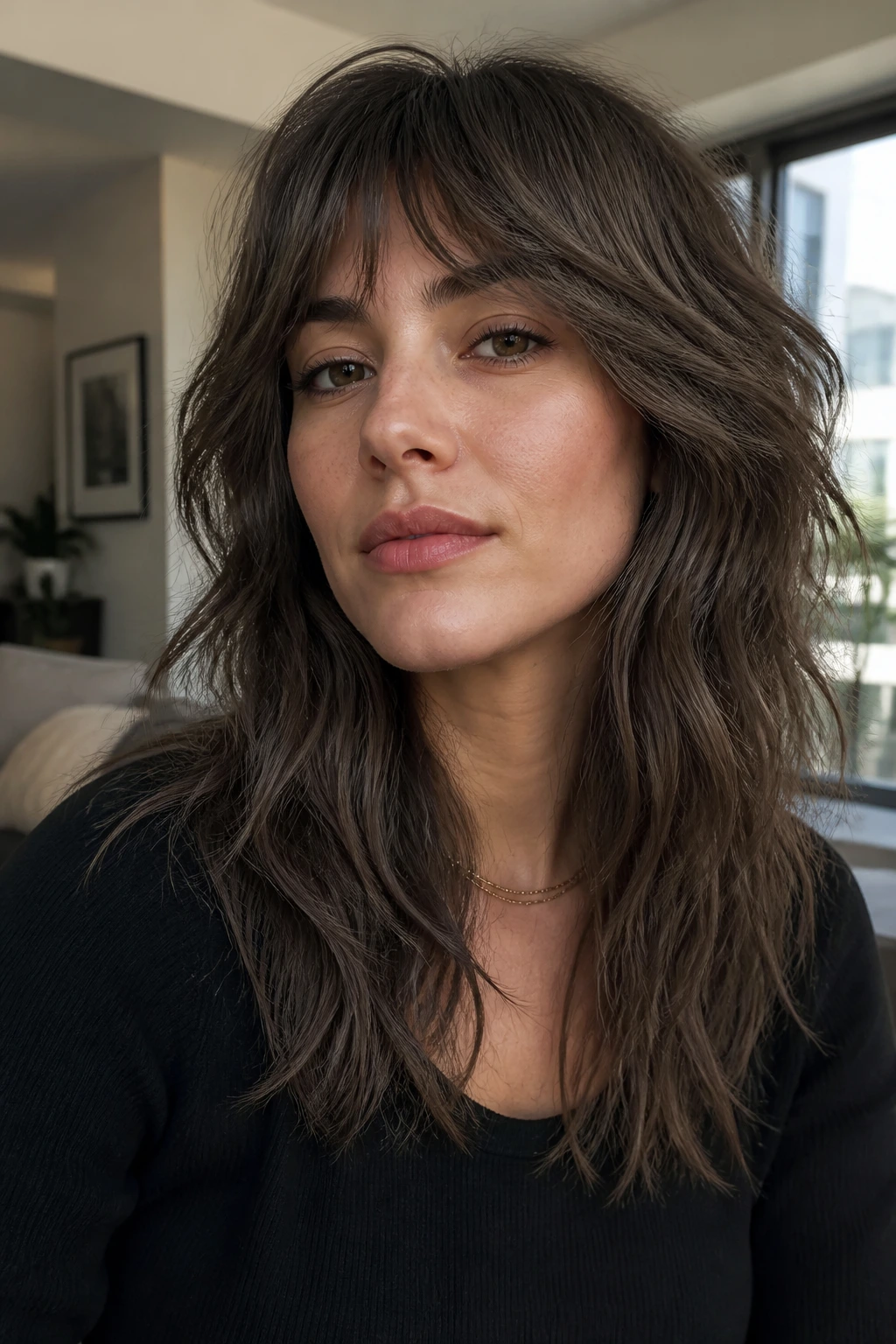
Cool brunette shades make shaggy layers feel sharper. Ash tones flatten some of the warmth that can make textured hair look fuzzy, so the ends read cleaner and the shape feels more defined. On wavy hair, that matters because the cut already brings plenty of movement.
This is a quieter, more tailored version of the wolf cut. It suits people who want dimension without obvious contrast. If you’ve got naturally dark hair and want the layers to show up without a dramatic color job, ash brunette can do the trick with a gloss or a gentle tonal refresh.
26. Dimensional Blonde Wolf

Blonde and shaggy layers get along because the lighter pieces make the cuts inside the haircut easier to see. A dimensional blonde wolf cut usually depends on a root shadow or lowlights so the hair doesn’t turn into a flat pale sheet. The layers need contrast to show up, and that contrast keeps the style from feeling washed out.
This is one of the easiest ways to make a long shaggy wolf cut look more textured in photos and in person. Keep the roots a little deeper and the face frame lighter, and the haircut suddenly looks like it has more depth than the scissors alone created.
27. Salt-and-Pepper Wolf
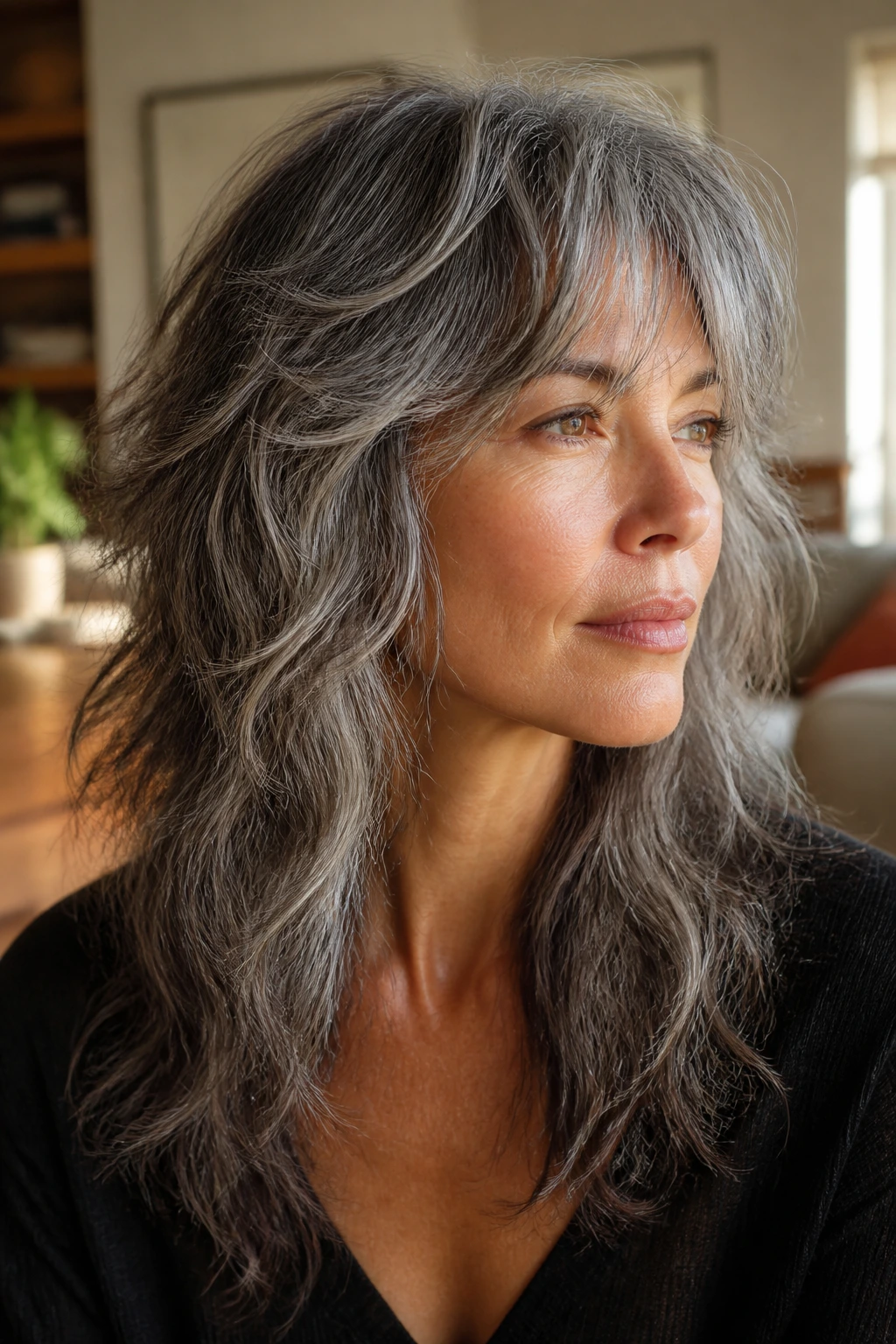
Natural silver, gray, and dark strands mixed together can make this haircut look especially good because the layers reveal the variation in color. The texture reads more clearly when the tones aren’t all the same. A wolf cut on salt-and-pepper hair often looks sharper than people expect, especially when the wave has enough bend to separate the layers.
This version feels confident without being polished to a shine. That’s the point. If your hair is partly gray and you’ve been wondering whether texture would help or hurt it, this cut is one of the better bets. It gives the color movement instead of hiding it.
28. Rounded Silhouette Wolf
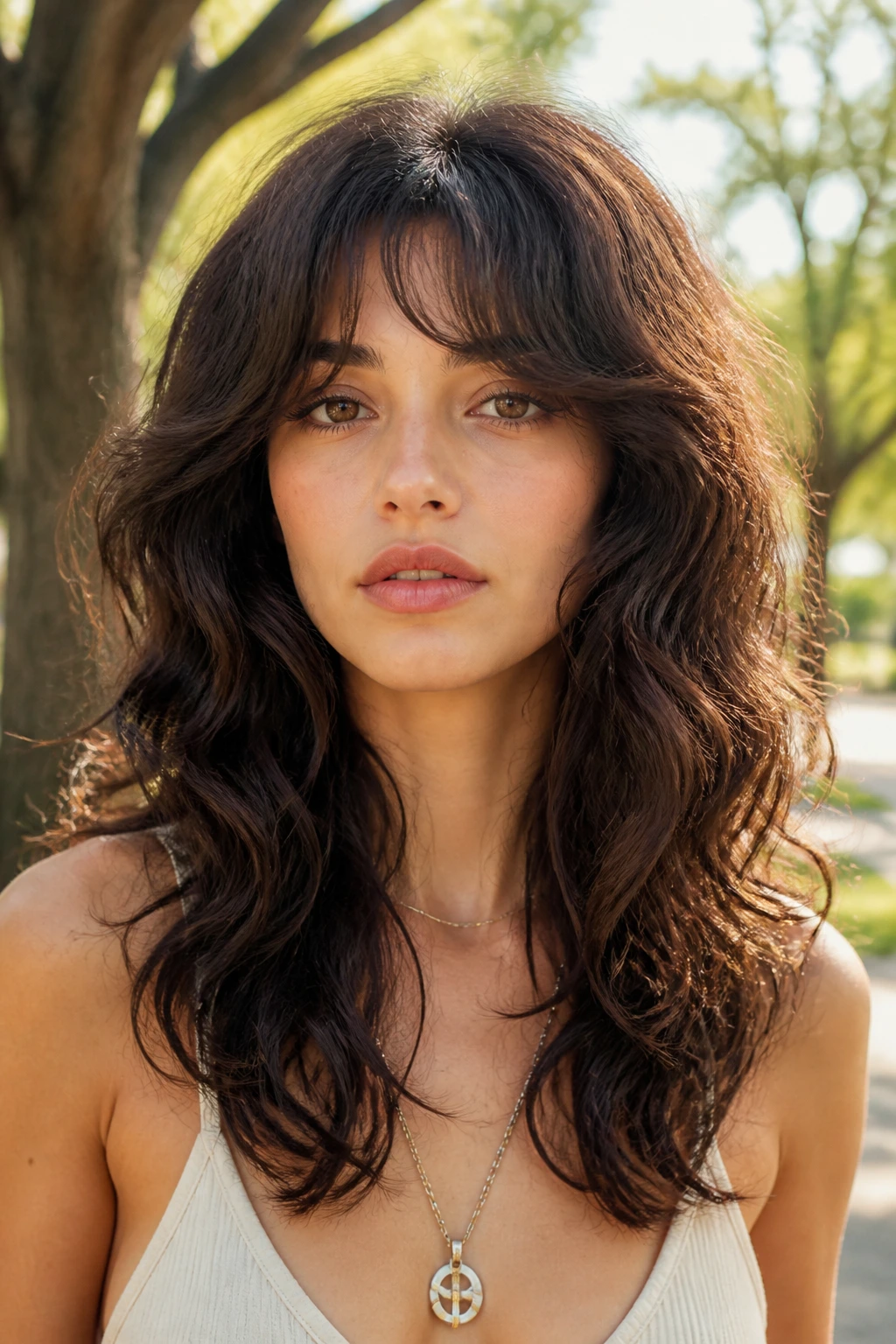
Not every wolf cut has to lean jagged or mullet-heavy. A rounded silhouette keeps the outline softer at the sides and back, so the haircut feels fuller and more wearable while still carrying shaggy internal layers. It’s a smart choice for wavy hair that tends to spread outward rather than fall downward.
This shape flatters people who want the haircut to sit closer to the head without going flat. The roundness also works well if you like to tuck your hair behind your ears, because the overall line still reads balanced. I’d call this the stealth wolf cut.
29. Choppy Edge Wolf

Here’s the messier, sharper cousin. The layers are more visible, the ends are more broken, and the whole cut has a faster, rougher edge. On wavy hair, this can look fantastic because the wave keeps the texture from feeling too hard or spiky.
I like this version when someone wants the haircut to have some attitude but doesn’t want full punk energy. It’s still wearable. It just has more teeth. Best with: medium to thick waves, a little styling paste, and the willingness to skip the brush on nonwash days.
30. Polished Wolf
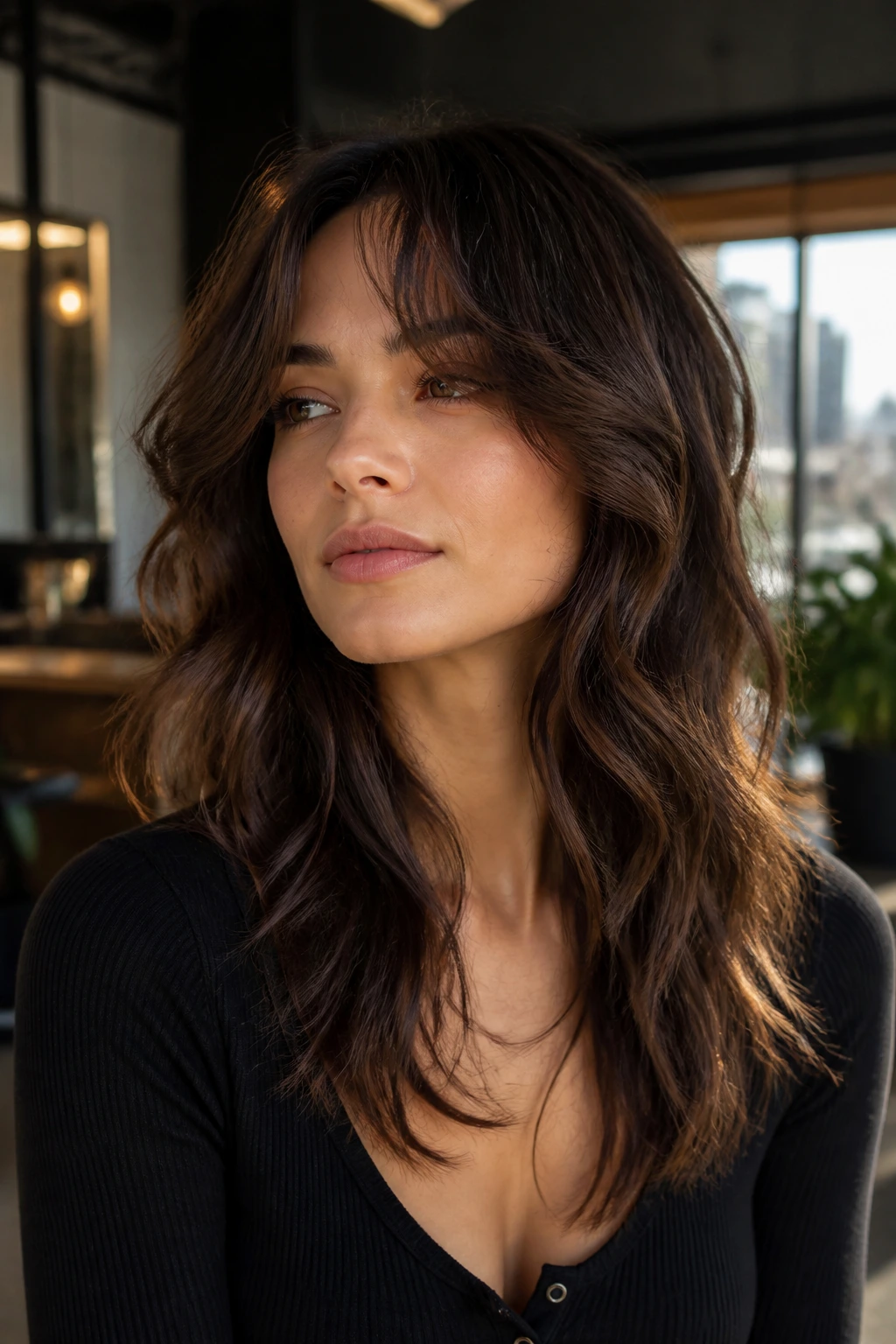
Sometimes the best version of a shaggy wolf cut is the one that doesn’t look shaggy at all until you move. A polished wolf cut keeps the layers, but the finish is smooth, glossy, and controlled. The waves show up as bends, not frizz, and the ends are soft enough to swing instead of fray.
This is the haircut for someone who wants texture in a suit-and-sneakers kind of way. It’s relaxed, but not sloppy. If you have a round brush, a blow-dryer, and ten extra minutes, this cut can look sharper than the messier versions while keeping the same basic structure.
31. Grown-Out Bob Wolf

This is one of my favorite transition shapes because it makes growing out a bob feel intentional instead of awkward. The top layers are still short enough to create lift, but the lengths around the shoulders keep the haircut from feeling chopped. Wavy hair is especially good at this because it softens the line between bob and wolf cut fast.
If you’re stuck between lengths, this is the bridge. It also works when you’ve outgrown a blunt bob but are not ready to go fully layered in the back. The key is letting the front pieces stay long enough to frame the face while the crown gets just enough release.
32. Micro-Bang Contrast Wolf

Micro bangs are not subtle. That’s why they work here. The tiny fringe creates a sharp contrast against the long, shaggy body of the cut, and wavy hair keeps the whole thing from looking too severe. You get drama in the front and movement everywhere else.
This version is definitely not for someone who wants to disappear into the background. But if you like a haircut with a point of view, it’s memorable. Keep the micro bangs clean and regular, because a grown-out version can tip from cool to awkward faster than longer fringe does.
33. Long Side-Fringe Wolf
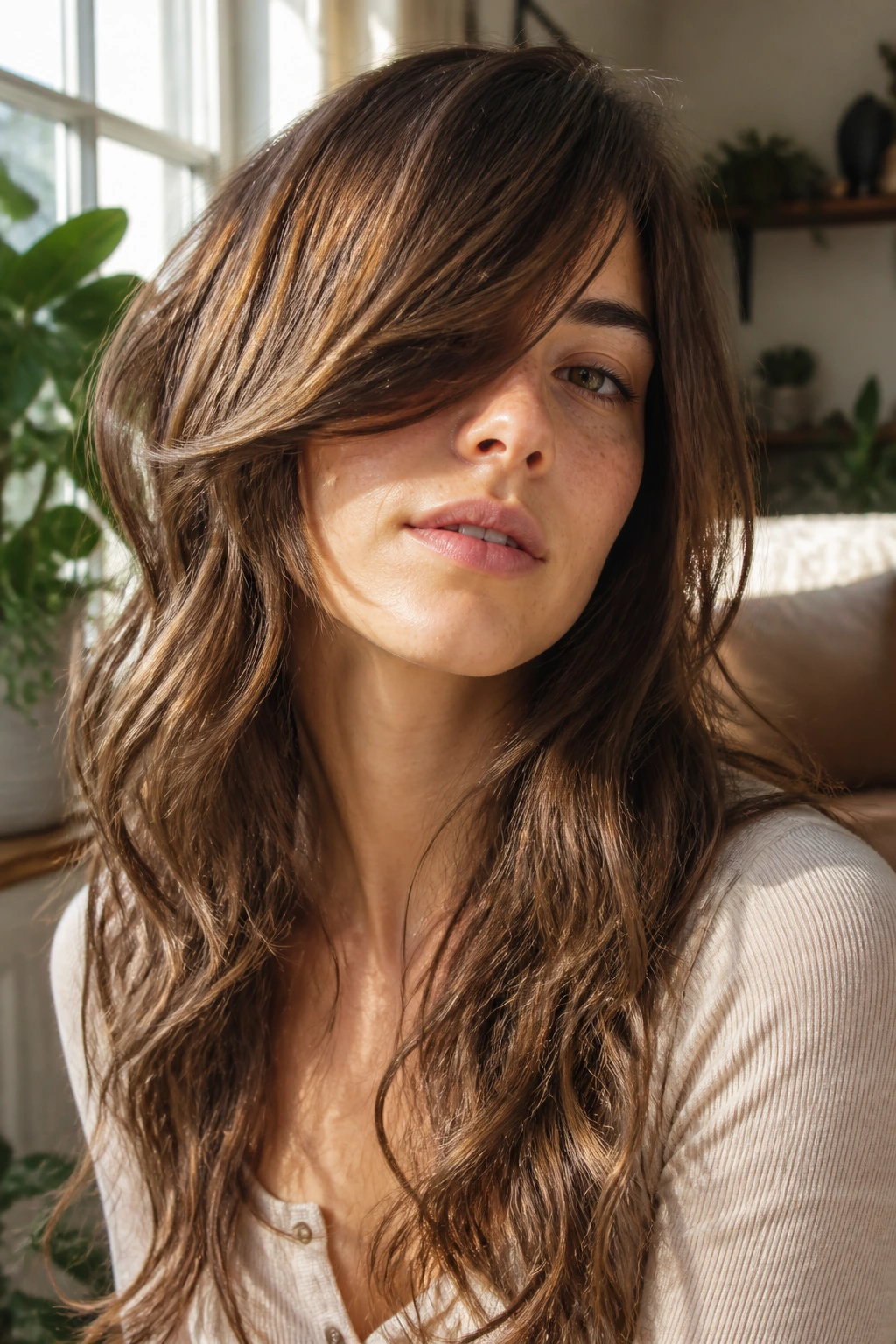
A long side fringe gives the haircut a softer diagonal line, which can be useful if you don’t like anything falling straight down the center of your face. It can skim the brow, sweep across one cheek, and blend into the longer front layers so the cut feels continuous rather than split into sections.
This is also a nice option if your waves naturally fall heavier on one side. Instead of fighting that, the fringe can work with it. I’d choose this if you want the face frame to feel more relaxed and less symmetrical. There’s a little drama in it, but not the kind that demands attention every minute.
34. Soft 2A Wave Wolf
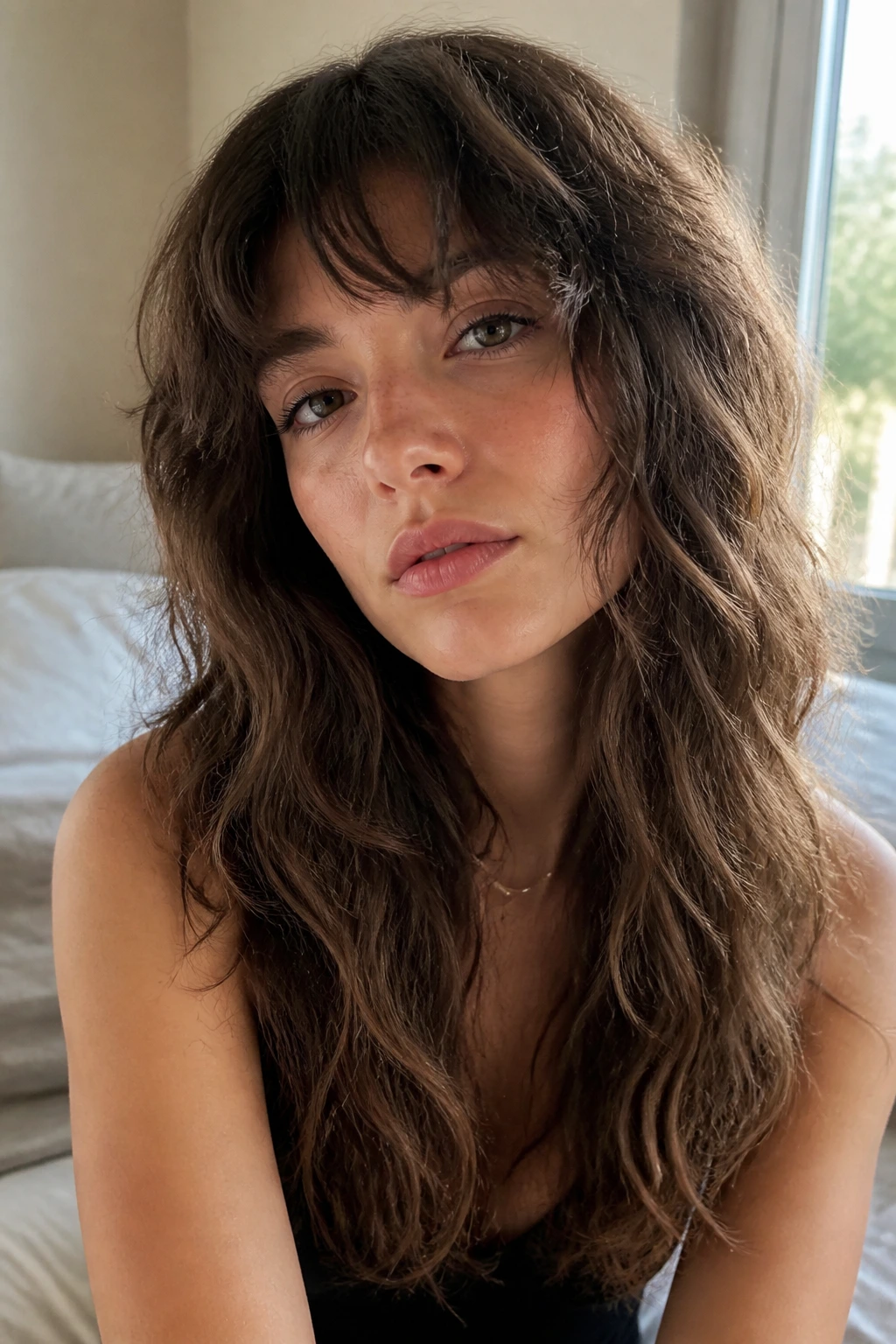
Loose 2A waves can disappear under a haircut that’s too sliced up. That’s why this version keeps the layers gentle and the perimeter full. You still get movement at the crown and around the face, but the ends hold enough weight to show the wave instead of letting it evaporate.
This cut needs restraint from the stylist and a light touch from you. Mousse helps. So does not over-brushing it out. If your waves are soft and easy to flatten, this shape gives them a better shot at staying visible without making the haircut look thin.
35. Defined 2C Wave Wolf
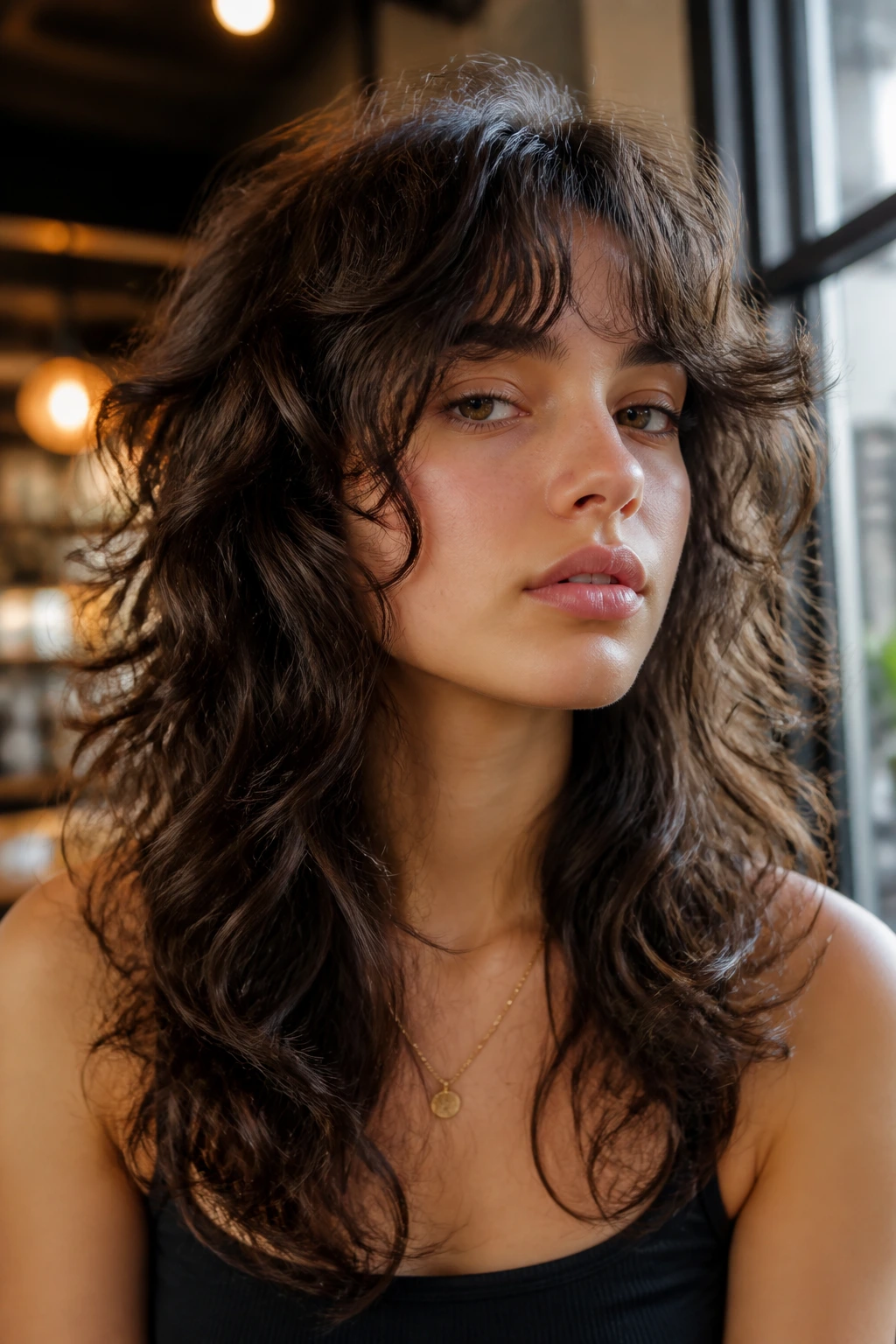
Strong 2C waves have more spring, more volume, and more chance of turning triangular if the layers are wrong. This version releases bulk through the interior while keeping the top and front long enough to control the shape. The result is less mushroom, more movement.
I like this cut when the hair has a mind of its own. It doesn’t need much coaxing to bend, but it does need direction. If your wave pattern is strong enough that your hair looks shorter once it dries, tell the stylist to account for shrinkage at the crown and around the face frame.
36. Internal-Carve Wolf
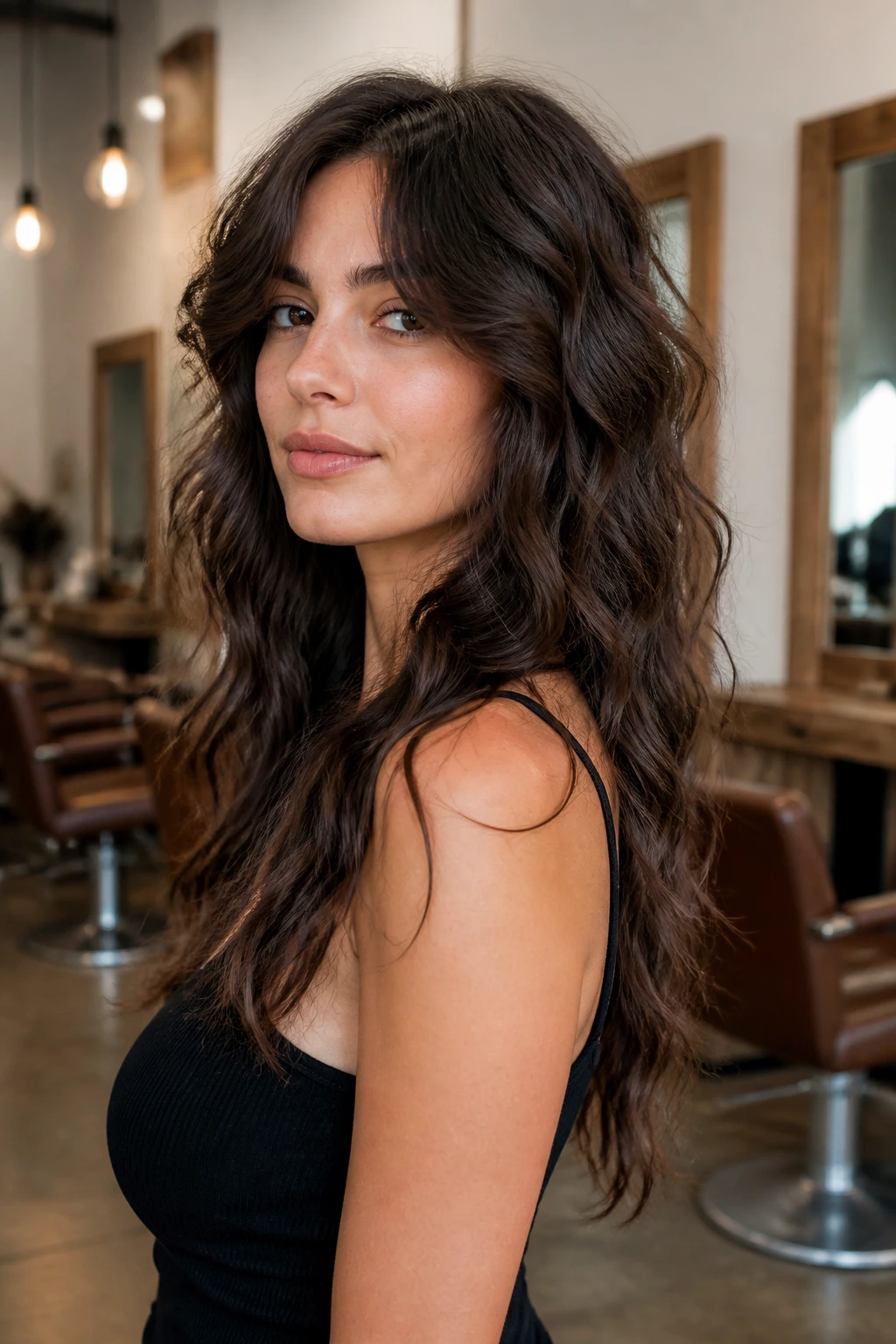
Internal carving sounds technical, and honestly, it is. But the effect is easy to understand: the outside line stays longer and cleaner while the inside gets carved out so the hair can move. On wavy hair, that means less bulk, fewer hard shelves, and a shape that doesn’t look over-layered from the back.
This version suits people who want length first and texture second. It’s one of the most useful approaches for thick waves because it takes out weight where you feel it most. You’ll notice the difference when the hair falls more softly around the shoulders instead of sitting there like a stack.
37. Highlight-Mapped Wolf
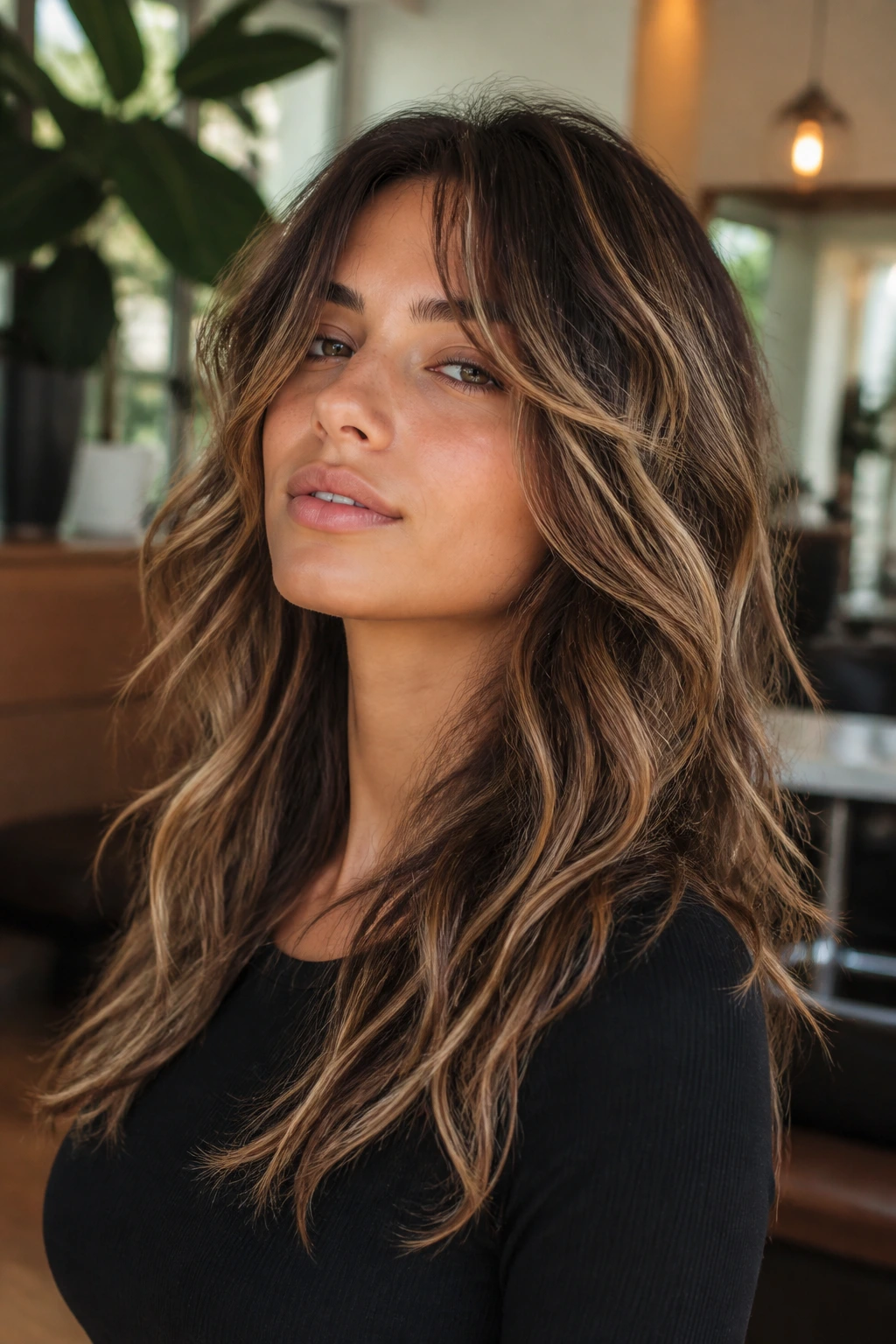
This is about placing color where the haircut bends. Instead of scattering highlights everywhere, the bright pieces follow the wave pattern — around the face, through the crown, and along the longer ends that move the most. The haircut ends up looking more dimensional because the color is working with the layers instead of sitting on top of them.
It’s a smart approach if you like visible texture but don’t want an aggressively choppy cut. The highlights do some of the visual separation for you. A few lighter ribbons at the front, then deeper tones underneath, can make the whole style read fuller and more expensive-looking without changing the shape at all.
38. Low-Maintenance Grow-Out Wolf

The final version is the one that forgives you for not making salon appointments your whole personality. A low-maintenance grow-out wolf keeps the front soft, the layers long, and the perimeter flexible enough to survive a few extra weeks without looking lopsided. Wavy hair helps because it blurs the line between fresh-cut and grown-out.
This is the cut I’d recommend to anyone who wants shape without babysitting it. It should still feel deliberate when the bangs start to settle and the ends lose their crispness. If your life does not revolve around styling tools, this is probably the smartest place to land.
How to Ask for the Shape You Actually Want
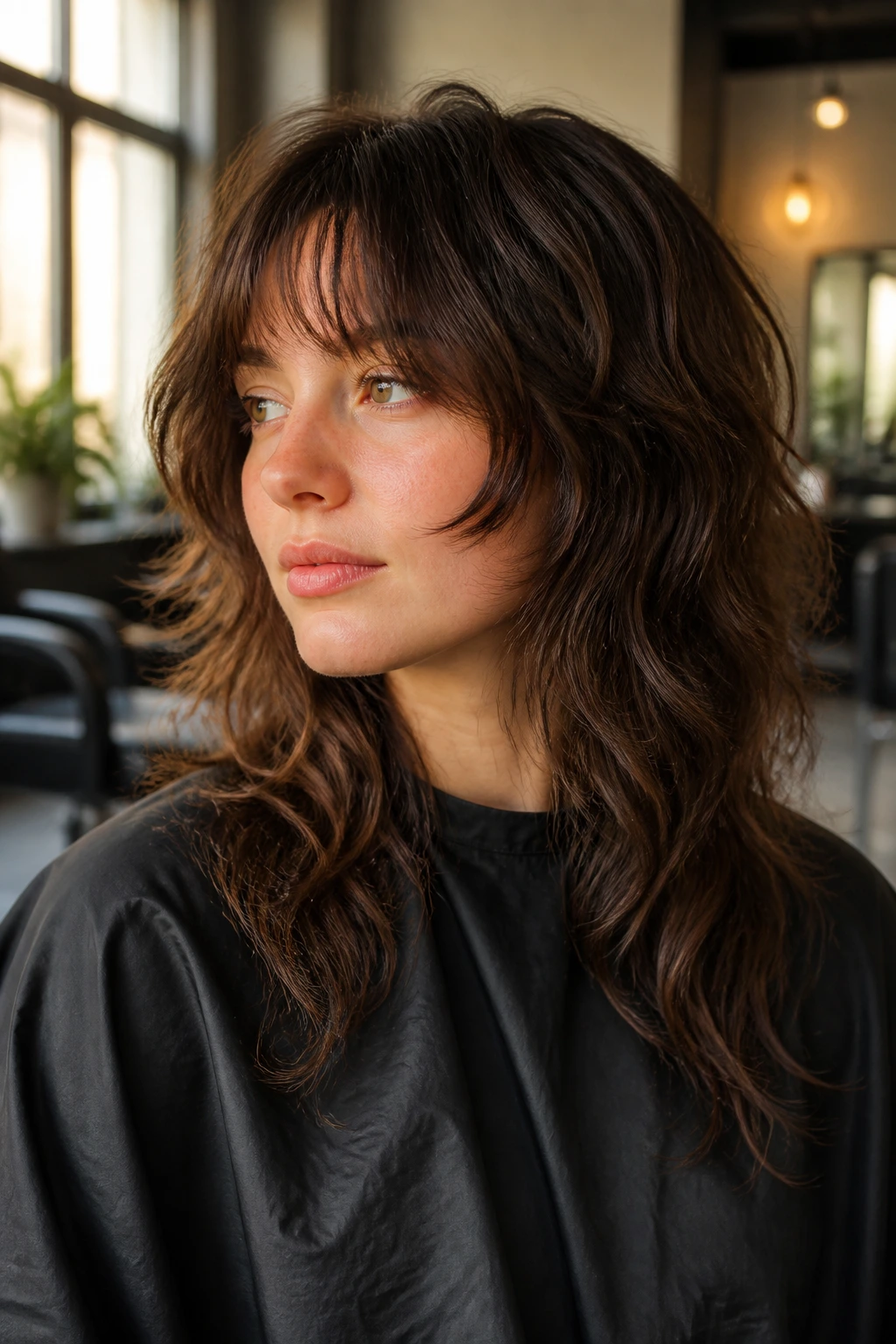
The easiest way to get a good wolf cut is to stop asking for a label and start talking about landmarks. Say where you want the shortest face-framing pieces to land: cheekbone, lip, chin, or collarbone. Say how much weight you want removed from the crown. Say whether you want the ends broken up or kept full. Those details matter more than the haircut name.
Bring two photos if you can, not one. One should show the overall silhouette you like. The other should show the fringe or face frame. That keeps the conversation from drifting into “sort of this, sort of that,” which is how a lot of bad haircuts happen. And if your waves shrink when dry — they usually do — mention that before the scissors come out.
The Styling Moves That Keep the Layers Alive
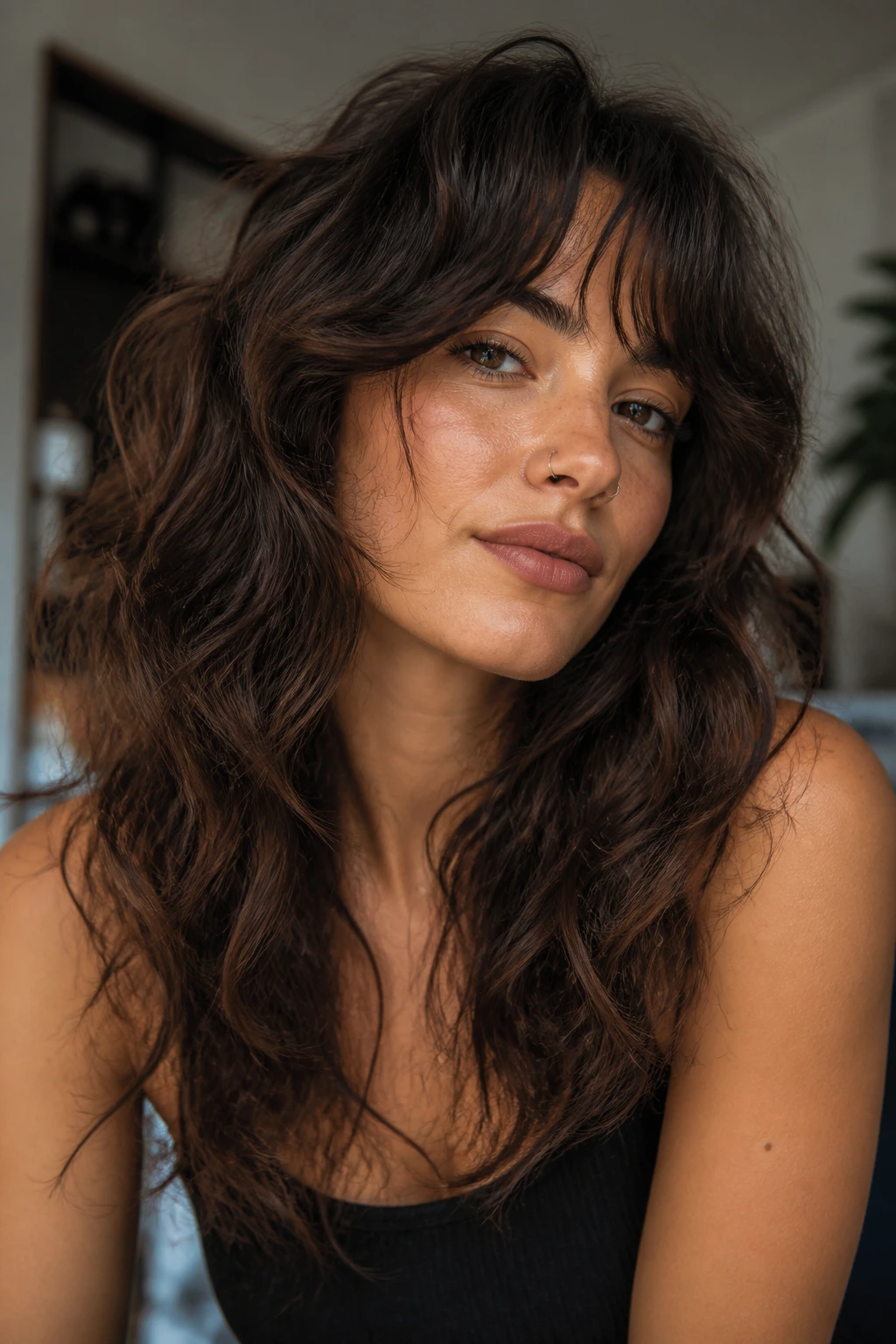
A wavy wolf cut looks best when the roots have lift and the ends have a little separation. That means a light mousse or foam near the crown, a small amount of leave-in on the mid-lengths, and just enough scrunching to wake the bend without turning the hair crunchy. If you diffuse, use low heat and stop when the hair is about 80 percent dry. Let the rest air-dry.
Root lift matters more than people think. If the top lies flat, the whole haircut loses its shape, even when the layers are perfectly cut.
A wide-tooth comb is enough for most days. A brush can be useful for a polished blowout finish, but if you drag one through dry waves every morning, you’ll erase the broken texture that makes the cut work in the first place. And yes, a tiny bit of texture spray at the ends helps — not because it’s trendy, but because long layers need separation to show up.
The Mistakes That Flatten Wavy Wolf Cuts

The biggest mistake is cutting the crown too short. It feels daring in the chair, and then it dries up like a mushroom. Wavy hair springs more than straight hair, so a layer that looks tame wet can jump an inch or two once it’s dry. The fix is simple: leave more length on top than you think you need.
Another common miss is removing too much weight from the ends. That makes the haircut float away in fine wisps and leaves thick hair looking frayed. You want movement, not disappearance. If your ends need help, ask for point-cutting or soft slicing instead of aggressive thinning.
Overloading the roots with oils or heavy conditioners can also kill the shape fast. The hair gets limp, the crown collapses, and the layers stop separating. Keep rich products below the ear line and use lighter formulas near the scalp. One more: don’t cut the fringe too short just because it looks long when wet. Wavy bangs have a habit of tightening up overnight.
Variations and Alternatives to Try

The Softer Office Wolf: Keep the layers long, the fringe subtle, and the hem clean enough to pass as polished in a meeting. It’s a good fit if you want texture without looking like you committed to a full style identity.
The Thicker-Hair Release: Ask for more internal carving through the mid-lengths and a longer perimeter. This takes bulk out without making the ends too thin, which is the right move for dense waves that puff at the shoulders.
The Fine-Wave Lift: Leave the ends full, keep the crown layers gentle, and use a light mousse instead of a heavy cream. Fine waves need shape, not a haircut that shaves off all the density they have.
The Edgier Mullet Lean: Shorter crown, sharper fringe, longer tail. If you want the cut to look a little louder, this is the place to go. It works best when the wave pattern has enough body to soften the contrast.
The Air-Dry Only Version: Ask your stylist to cut with your natural pattern in mind and keep the layers balanced around how your hair falls on its own. This version matters if you rarely heat-style and want the cut to behave after a wash-and-go routine.
Tools and Products That Make the Finish Easier
-
Wide-tooth comb: Best for detangling wet waves without pulling the pattern apart.
-
Mousse or foam: Gives the crown enough support to keep the layers from sinking flat.
-
Leave-in conditioner: Useful on the mid-lengths and ends, especially if the haircut is long enough to dry out.
-
Diffuser: Helps set the wave while keeping the texture soft instead of blasted into frizz.
-
Round brush, 1.5 to 2 inches: Handy if you want a smoother blowout version with bend at the ends.
-
Texture spray: Good for separation on day two when the haircut needs a little lift.
-
Microfiber towel or cotton T-shirt: Reduces rough friction while the waves set.
-
Hair clips: Useful for sectioning when you’re drying the crown or setting the face frame.
Keeping the Shape Fresh Between Salon Visits

Long shaggy wolf cuts usually stay in decent shape longer than precise blunt cuts, but they still need a little attention. Fringe and face-frame pieces often need a trim every 4 to 6 weeks if you want them to keep hitting the right spot. The rest of the cut can usually go 8 to 12 weeks before it starts losing the intended balance.
For styling, think in refreshes, not full restarts. Mist the hair lightly with water, work in a touch of mousse at the roots, and scrunch the mid-lengths to wake the wave back up. If the ends feel dry, use a pea-sized amount of leave-in on the last few inches only. Too much product near the scalp will flatten the shape by lunchtime.
Sleeping on a satin or silk pillowcase helps the layers keep their separation, and a loose pineapple or top twist can save the crown from getting crushed. On the rare day the haircut feels a little fuzzy, a quick blast of cool air at the roots is often enough. You do not need to wash it every time it loses enthusiasm.
Common Questions About Long Shaggy Wolf Cuts for Wavy Hair
Will this haircut work if my waves are loose and soft?
Yes, but the layers need to stay longer and more blended. Loose waves can vanish under a cut that’s too choppy, so ask for shape without over-thinning the ends.
What if my hair is thick and puffs out?
That’s actually a good reason to choose a wolf cut. The right version removes weight from the middle and crown, which helps the silhouette stop ballooning at the sides.
Can I air-dry it and still look put together?
You can, if the layers are cut with your natural pattern in mind. Use a light mousse, scrunch gently, and don’t touch the hair while it’s drying or you’ll get frizz where you wanted separation.
How short should the shortest layers be?
For most wavy hair, somewhere between cheekbone and jaw is safer than going straight to the ears. Shorter than that can work, but the wave has to be predictable and the stylist has to account for shrinkage.
Do bangs ruin the grow-out?
No, but they do require more upkeep. Curtain, bottleneck, and wispy fringe all blend into the rest of the cut more easily than blunt bangs, which is why they’re common in wolf cuts.
Is a wolf cut good for fine hair?
It can be, if the haircut keeps enough density at the perimeter. Fine hair needs lift at the crown and fullness at the ends; too many short layers will make it look sparse.
Can I wear it sleek sometimes?
Absolutely. A long shaggy wolf cut can be blown out smooth, tucked behind the ears, or straightened with a little bend left in the ends. The shape survives because the length stays there.
How do I stop the crown from going flat?
Use mousse near the roots, lift the hair while you dry it, and don’t bury the crown in heavy conditioner. Flat roots are usually a product problem, a drying problem, or both.
The Cut That Moves With You
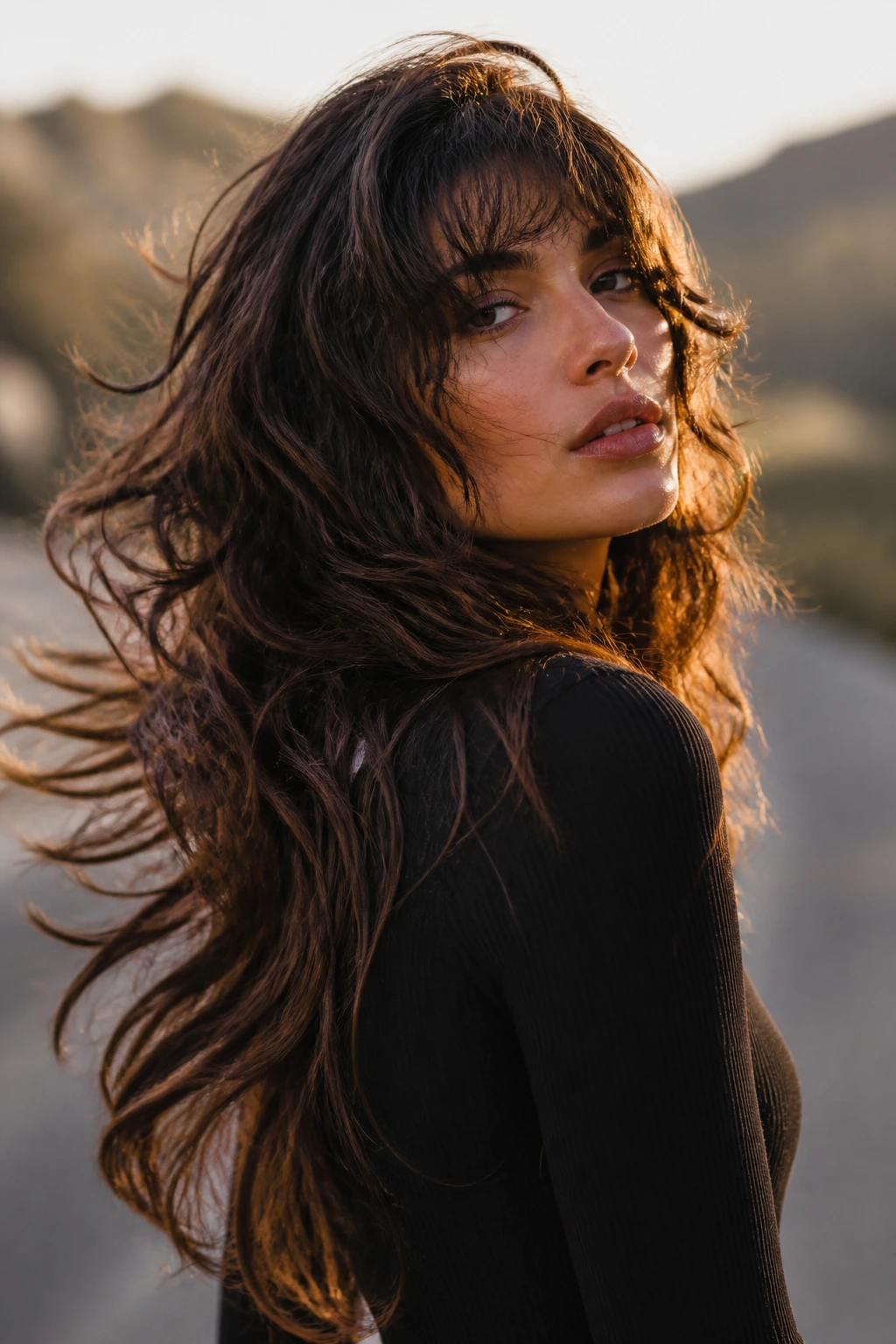
The reason long shaggy wolf cuts for wavy hair keep earning their place is simple: they respect the way wavy hair actually behaves. They don’t force it into one clean line, and they don’t leave it so chopped up that the length disappears. They give you movement, face framing, and enough edge to keep the haircut from feeling sleepy.
If you’re choosing between versions, start with the one that matches how you live, not how you imagine your hair should behave in a perfect mirror. A collarbone wolf, a curtain-bang drift, or a low-maintenance grow-out shape will all do the job differently. The right one is the cut you can wear on a good day, a rushed day, and the awkward morning after a late-night shower.
