



Layered haircuts with highlights do one thing plain, one-length hair almost never does: they make the eye keep moving. A blunt cut can look crisp, sure, but once you add layers and place color where the hair bends, flips, and falls, the whole shape starts to breathe. The result isn’t just “lighter” or “shorter” or “more dimension.” It reads as hair with lift, direction, and a little bit of attitude.
That’s why the best layered cuts with highlights never feel painted on. The color follows the cut. The cut gives the color somewhere to live. If the highlights sit too high on a long, heavy shape, they can look stripey. If the layers are too short without enough depth in the color, the ends start to look frayed. The good versions hit a sweet spot: softer around the face, brighter through the mids, and cleaner at the ends.
I trust a layered haircut more when the color placement looks intentional from three feet away and even better up close. Thin babylights on fine hair. Chunkier ribbons on dense hair. A money piece when the face needs more lift. A shadow root when you want the grow-out to behave. Once you see how the pieces talk to each other, the best options stop being hard to spot.
Why These 25 Cuts Keep Hair from Falling Flat
- Movement: Layers keep the ends from hanging in one heavy line, so highlights show in pieces instead of disappearing into a solid sheet of color.
- Dimension: A few darker lowlights under the top layer make brighter strands look richer, not thin or washed out.
- Face Framing: Bright pieces around the cheekbone and jaw can change the whole read of a cut without needing a dramatic chop.
- Grow-Out: Balayage, shadow roots, and babylights fade in a softer way than chunky foils, which matters if you hate obvious root lines.
- Texture-Friendly: The same layered shape can look polished on straight hair, shaggy on waves, or airy on curls once the color placement is tuned to the texture.
1. Long Cascade Layers with Honey Balayage
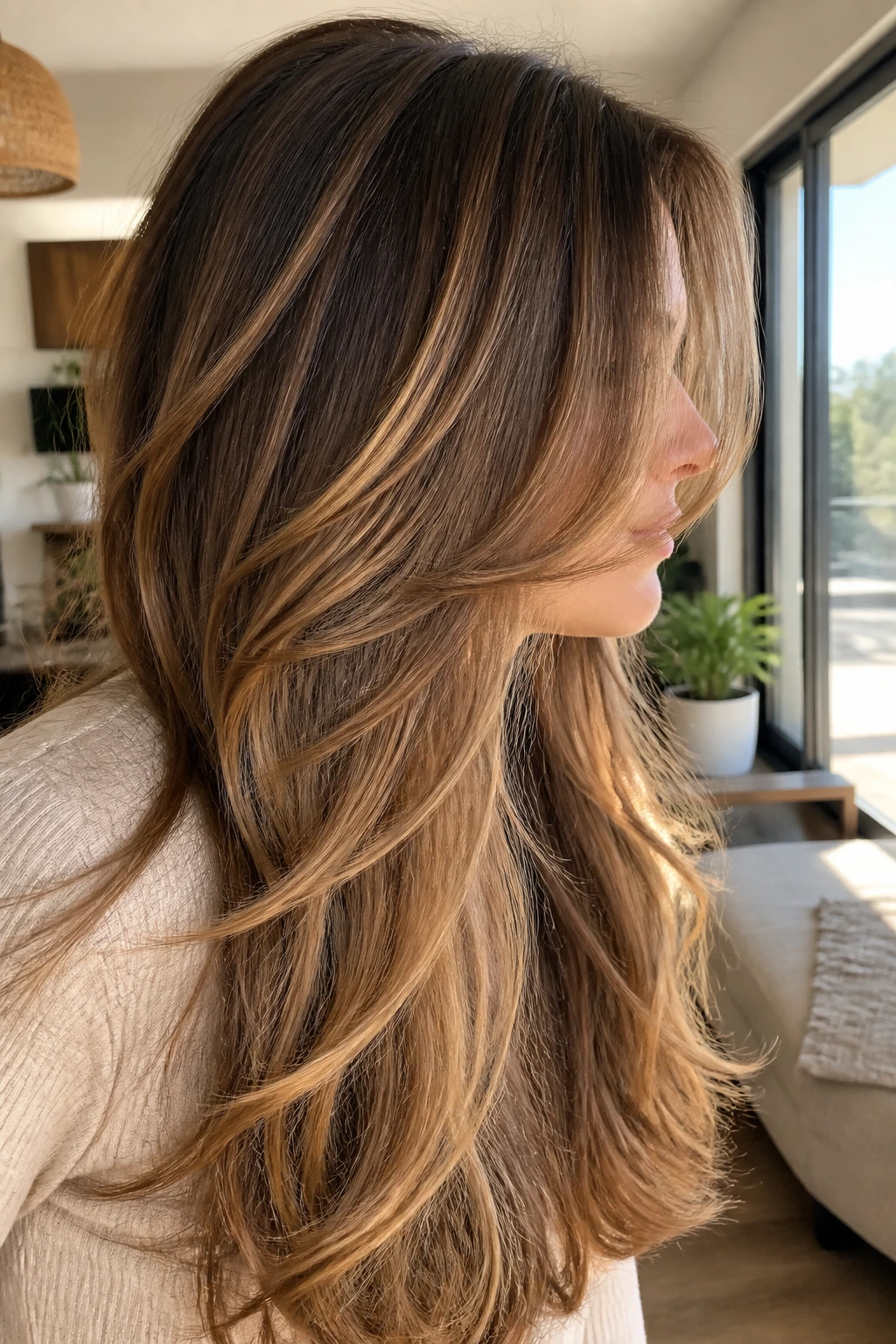
Long hair can go heavy fast. These cascading layers fix that by removing weight through the mids and ends while keeping the length that makes the whole style feel luxurious rather than chopped. Honey balayage threads warmth through the lower half of the hair, so the color catches on every bend instead of sitting in one flat band.
Why It Reads So Soft
The smartest version starts the first visible layer around the collarbone, then lets the pieces fall longer as they move down the back. That shape gives honey tones a place to stretch out, which keeps the finish from looking frosted at the top and dark at the bottom. If your hair is thick, this is one of those cuts that can make a lot of hair look lighter without actually losing much length.
A loose wave or a big round-brush blowout brings out the color best. Straight hair can wear it too, but the highlight placement should stay a little lower, or the contrast gets harsh.
- Best on medium to thick hair
- Works well with a center part or soft off-center part
- Ask for balayage that starts below the roots by at least 2 inches
- Keep the warm tone a shade softer than your base if you want it to age gracefully
Pro tip: If your ends are dry, ask for fewer light pieces at the bottom and more color through the mid-lengths. That keeps the hair looking full instead of wispy.
2. Butterfly Cut with Caramel Face Framing
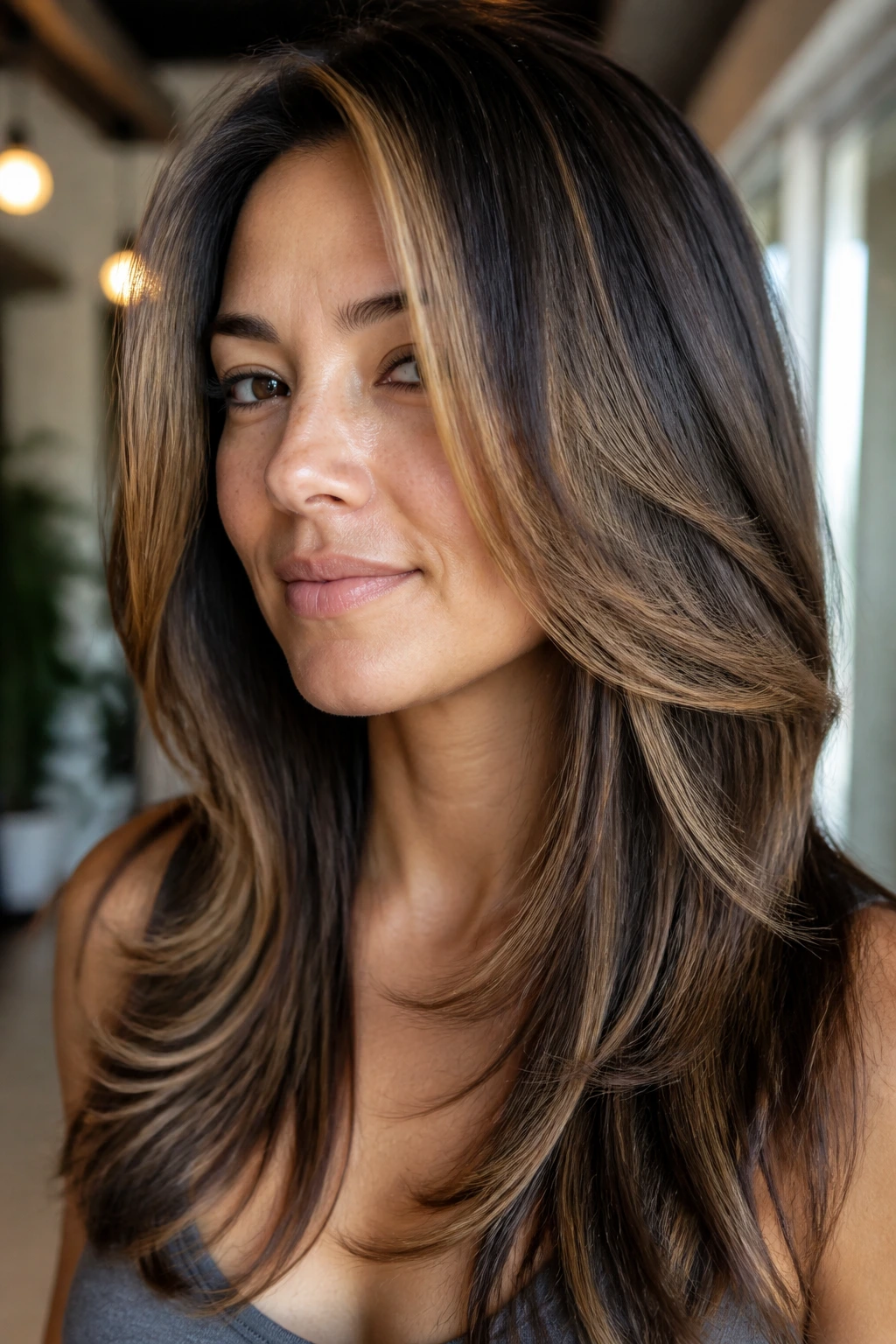
This is the haircut I reach for when someone wants lift without giving up length. The butterfly cut uses shorter front layers that skim the cheekbones and jaw, then leaves the back long enough to pull into a ponytail. Add caramel face-framing highlights, and the whole thing starts to look lighter around the face without turning the rest of the hair bright.
The front pieces do most of the work here. They swing when you move, and the caramel tones make them stand out even when the rest of the hair is tucked behind the shoulders. It’s a good choice if you like the feel of a blowout but don’t want a high-maintenance salon look.
Ask for the shortest face-framing layer to land somewhere between the cheekbone and the top of the lip. Any shorter and the style can start to feel too retro. Any longer and you lose the floaty effect that makes the butterfly cut special.
3. Collarbone Lob with Beige Blonde Ribbons
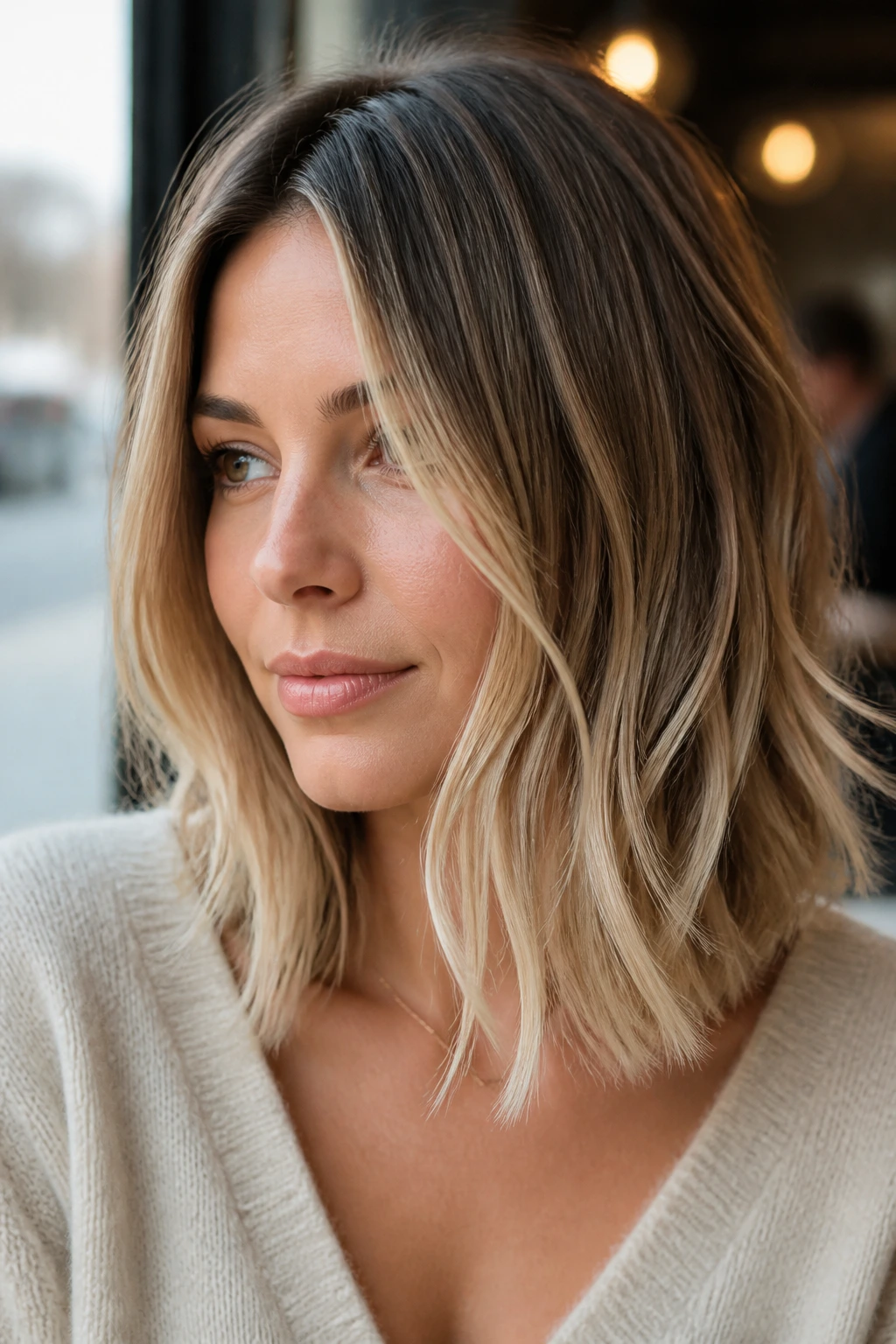
Why does a lob sometimes look too solid? Usually because the cut is good but the color is one flat tone from root to tip. Beige blonde ribbons fix that fast. They break up the middle of the hair, soften the line at the collarbone, and give the lob a little lift without forcing it into “blonde hair” territory.
Best on Low-Drama Hair
This is the cut for someone who likes polish. Not fuss. The length hits right where the neck starts to taper, so the hair can curve inward or flick outward depending on how you blow it dry. Beige blonde is a smart tone here because it doesn’t scream for attention; it just makes the layers visible.
If your hair is naturally straight, ask for the highlights to sit mostly in the top half and around the face. Wavy hair can handle a little more brightness lower down because the texture already breaks up the color.
4. Textured Shag with Copper Highlights
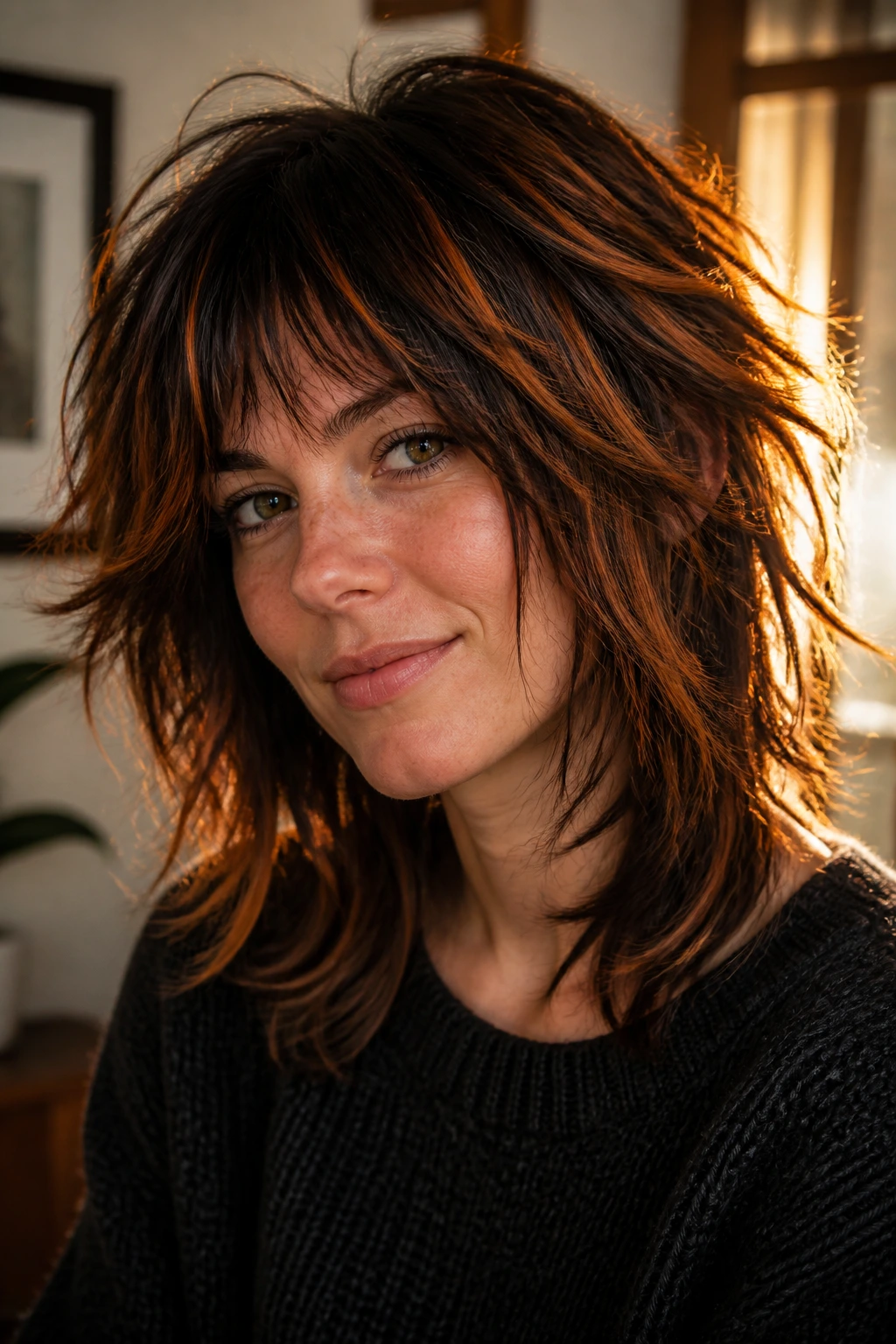
If your hair collapses at the crown by noon, a textured shag changes the whole mood. The shag’s broken layers create lift on top and movement through the ends, while copper highlights keep the style from reading muddy. Copper is the right color here because it has enough warmth to show through the chopped texture, but it’s still lively enough to separate each layer.
A stylist who understands this cut won’t over-polish it. The ends should feel a little jagged. The fringe should sit soft, not blunt. That roughness is the point. A perfectly clean shag loses the whole charm of the haircut, and the copper ends up doing all the work.
What to Ask For
- Point-cut layers instead of hard, blunt cuts
- A fringe that lands around the brows or just below
- Copper ribbons concentrated through the top layers and around the perimeter
- A finish that looks better with a little texture spray than with a flat iron
Pro tip: If your base color is dark brown, keep the copper a little muted. Bright orange on a shag can look costume-y fast. A softer copper-gold reads richer.
5. Curtain Bangs with Soft Brunette Dimension
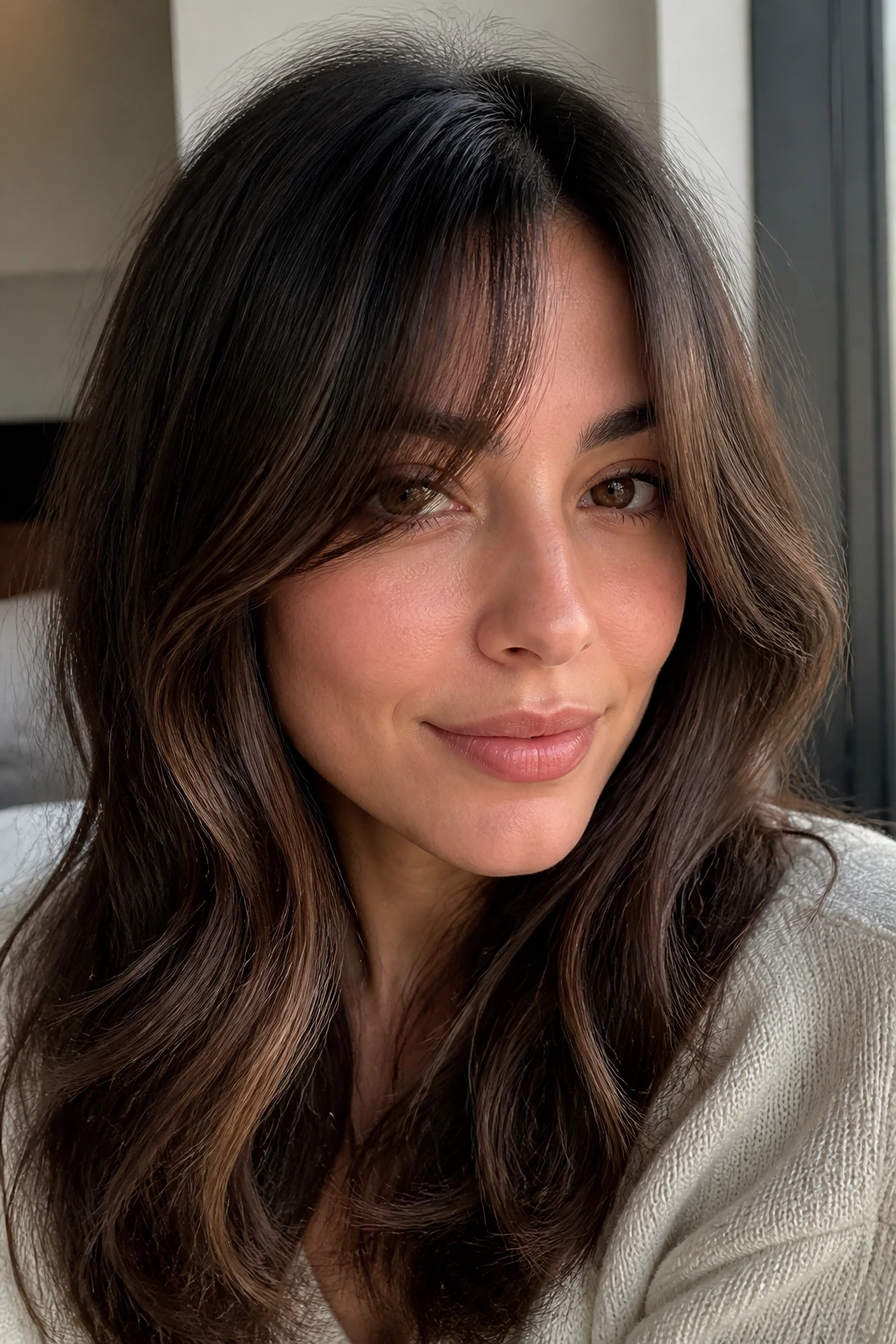
Curtain bangs can be flattering on almost everything, but they look especially good when the color is doing a little quiet work around them. Soft brunette dimension means adding low-contrast caramel, chestnut, or mocha pieces so the bangs don’t disappear into the rest of the hair. The result feels expensive in the least annoying way: there’s movement without obvious streaks.
I like this look on shoulder-length cuts and longer layers because the bangs don’t have to carry the whole haircut. They frame the face, then the rest of the layers pick up the slack. When the dimension is gentle, the grow-out is kinder too. You can push the part a little off-center and still have it look deliberate.
This is also a smart pick if you’re nervous about highlights. You get visible change, but not a dramatic color shift that demands perfect styling every day.
6. Blunt Bob with Peekaboo Highlights
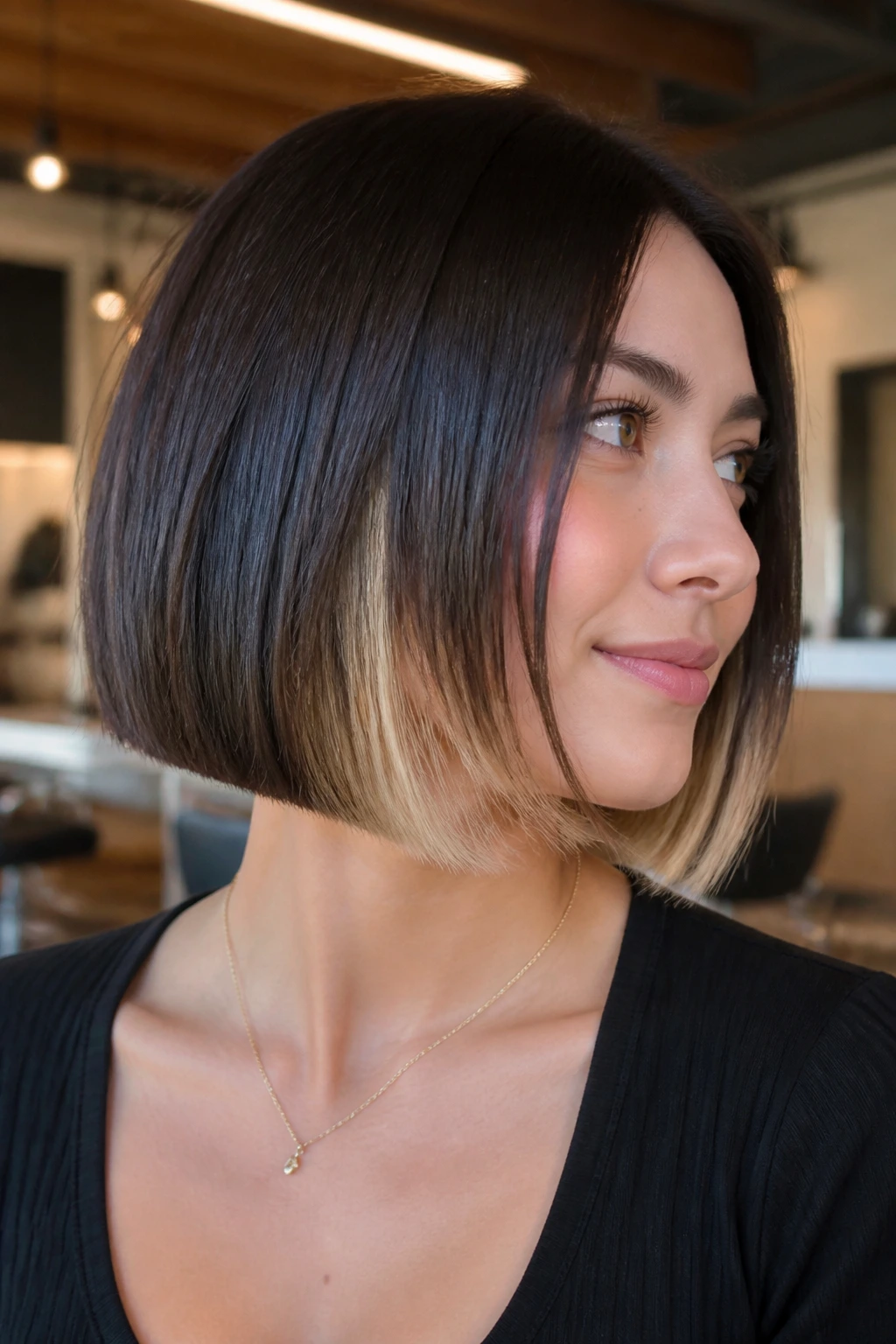
A blunt bob can look sharp and modern, but it can also look a little too tidy if the color is flat. Peekaboo highlights solve that by hiding lighter pieces under the top layer and around the nape, where they show only when the bob swings. The cut stays sleek. The color adds a second read.
That hidden placement matters. If the highlights are too visible at the surface, the blunt line can start to look busy. Tuck them underneath, though, and the bob keeps its edge while still moving when you turn your head. It’s especially good for people who need a polished haircut for work but still want some personality in it.
A jaw-length version feels bolder. A slightly longer bob, grazing the neck, is easier to tuck behind the ears and a touch softer around the face. Either way, the trick is to keep the top section clean.
7. Curly Layers with Sun-Kissed Ribbons
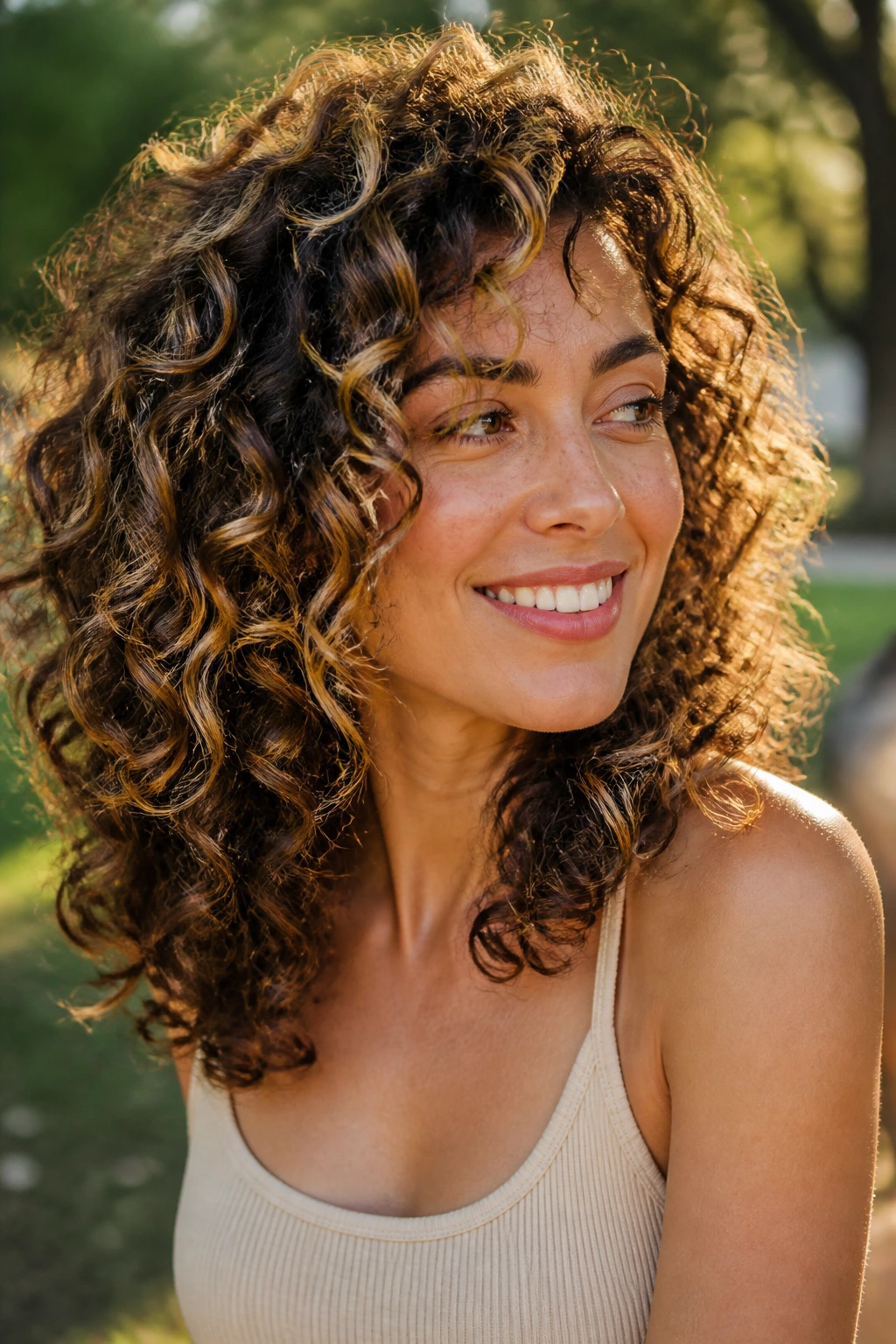
Curly hair needs layers that respect the curl pattern, not fight it. The right layered cut removes bulk where curls stack too hard and keeps enough length so the ringlets still have shape. Sun-kissed ribbons should follow the curl clumps, not slice across them like stripes. That’s the difference between “colored curly hair” and hair that actually looks alive.
The cleanest result usually comes from cutting curls dry, then painting the highlights once the shape is understood in motion. That way the stylist can see where the hair bends forward, where it springs up, and where the outer curls need the brightest pieces. On curly hair, a little misplaced color shows more than it does on straight hair.
If you wear your curls air-dried most of the time, keep the ribbons a bit wider around the face and lighter through the outer ring. Tight curls need enough spacing that the color doesn’t blur together.
8. Wolf Cut with Bold Money Pieces
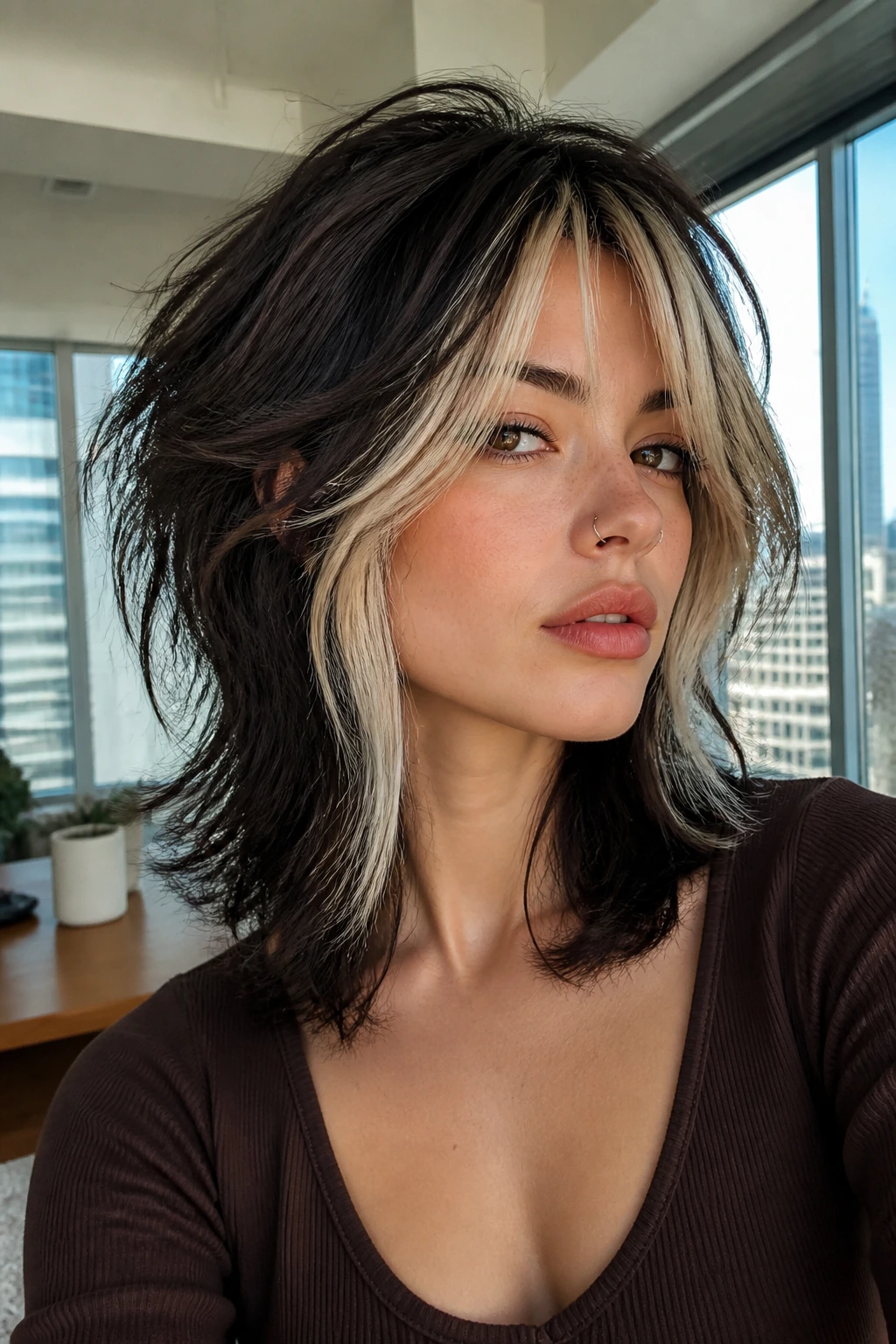
The wolf cut is not shy. Shorter layers at the crown, longer pieces in the back, and a messier outline give it a lot of energy right away. Add bold money pieces at the front and the style gets even more graphic. The brightest parts sit right by the face, which is useful because the rest of the cut can be deliberately messy.
This works best when the money piece is bright enough to contrast with the base but not so light that it looks disconnected from the shaggy body of the cut. On darker hair, that could mean a cool beige blonde or a sharp copper. On lighter hair, the front can be just a couple of levels brighter than the rest.
The wolf cut is happiest when it looks a little undone. If you spend 40 minutes perfecting every bend, you’ve missed the point.
9. U-Shaped Layers with Mushroom Blonde Balayage
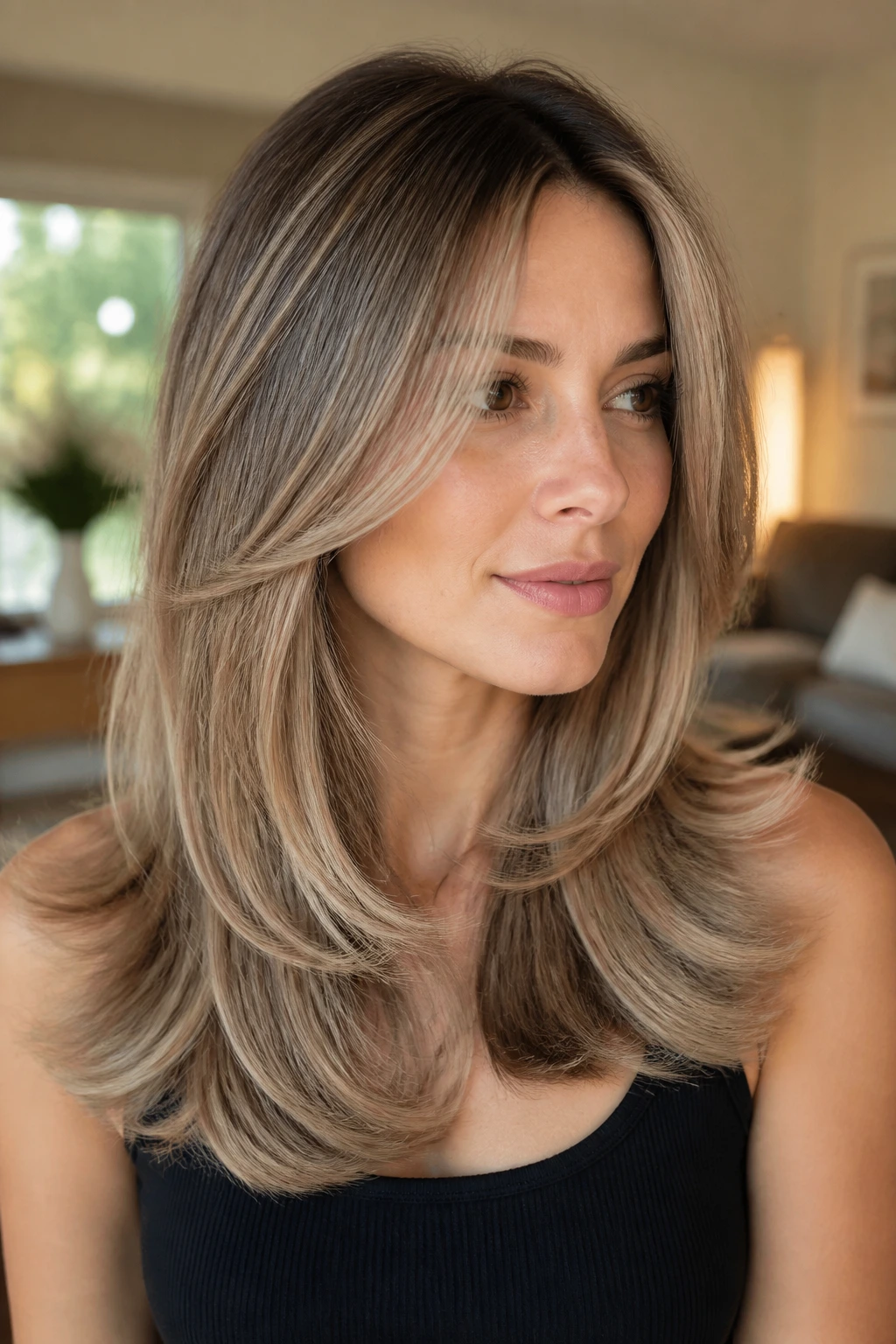
A U-shaped cut keeps the perimeter softer than a V-cut, which matters if you want the hair to feel full across the bottom. Mushroom blonde balayage fits that shape because it sits in that cool-beige zone that doesn’t fight the natural darkness at the roots. The whole look feels calm, blended, and a little more expensive than it sounds.
This is one of my favorite choices for brunettes who want lightness without a hard blonde shift. The cooler tone keeps the color from turning brassy too quickly, and the U shape avoids the thin point that a V-cut can create on finer ends. You get dimension without a dramatic outline.
It’s especially good if you wear your hair down most of the time. The cut and color don’t need constant rearranging to look intentional.
10. Feathered Mid-Length Cut with Ash Brown Highlights
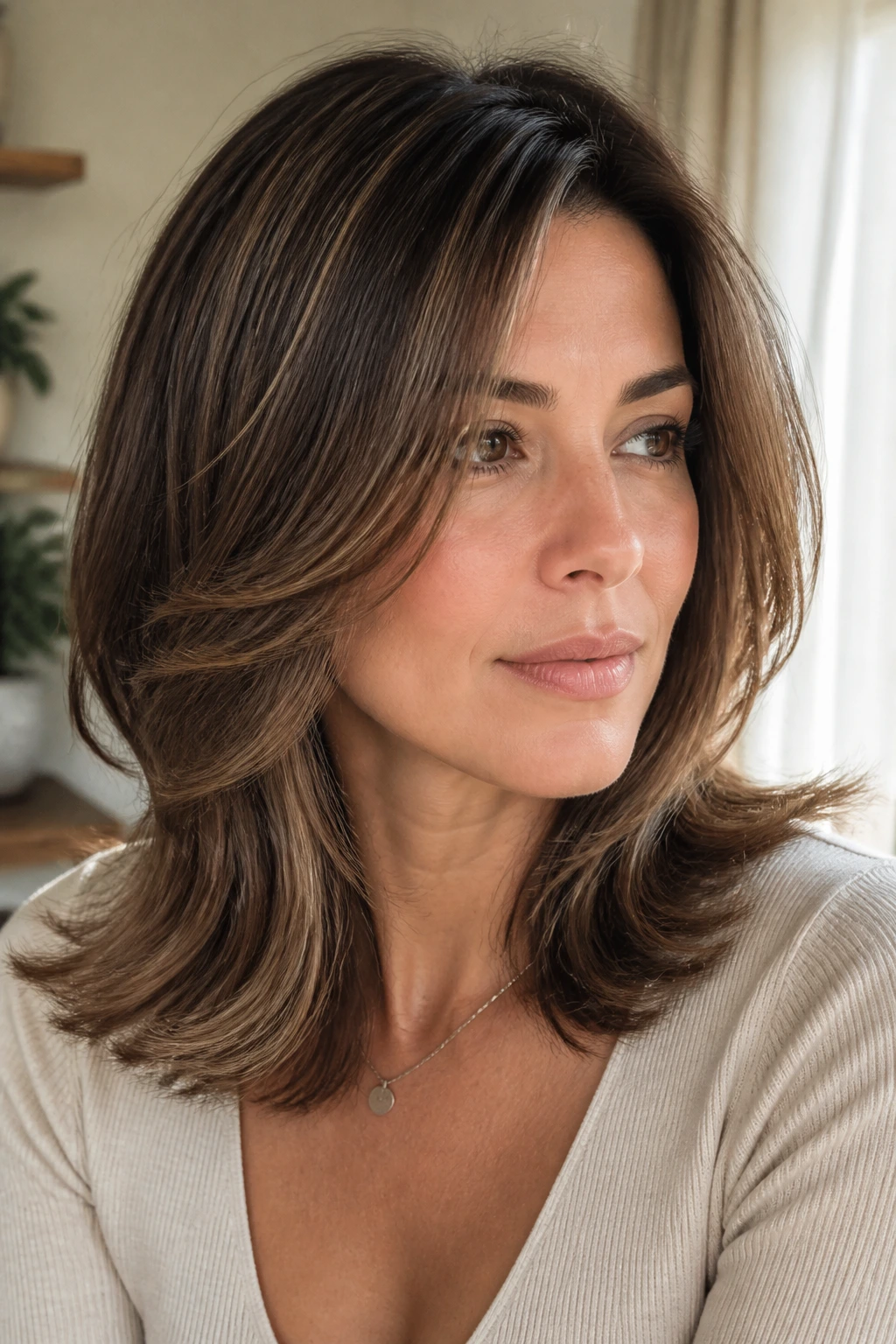
Feathered layers bring a soft, airy edge that works well when the hair sits somewhere between short and long. The ends flick outward a little, and ash brown highlights keep the whole cut from looking heavy at the shoulders. I like this style on fine to medium hair because the feathering creates the illusion of more movement than the density really has.
The key is restraint. Too many dark-to-light contrasts and the feathering starts to look choppy. Ash brown, because it stays close to brunette territory, helps the layers show up without making every section shout for attention. If you want a polished 70s feel without the volume overload, this is a strong pick.
A round brush and a little root lift spray make a huge difference here. Flat-ironed feathering loses most of its charm.
11. Bouncy Blowout Layers with Champagne Highlights
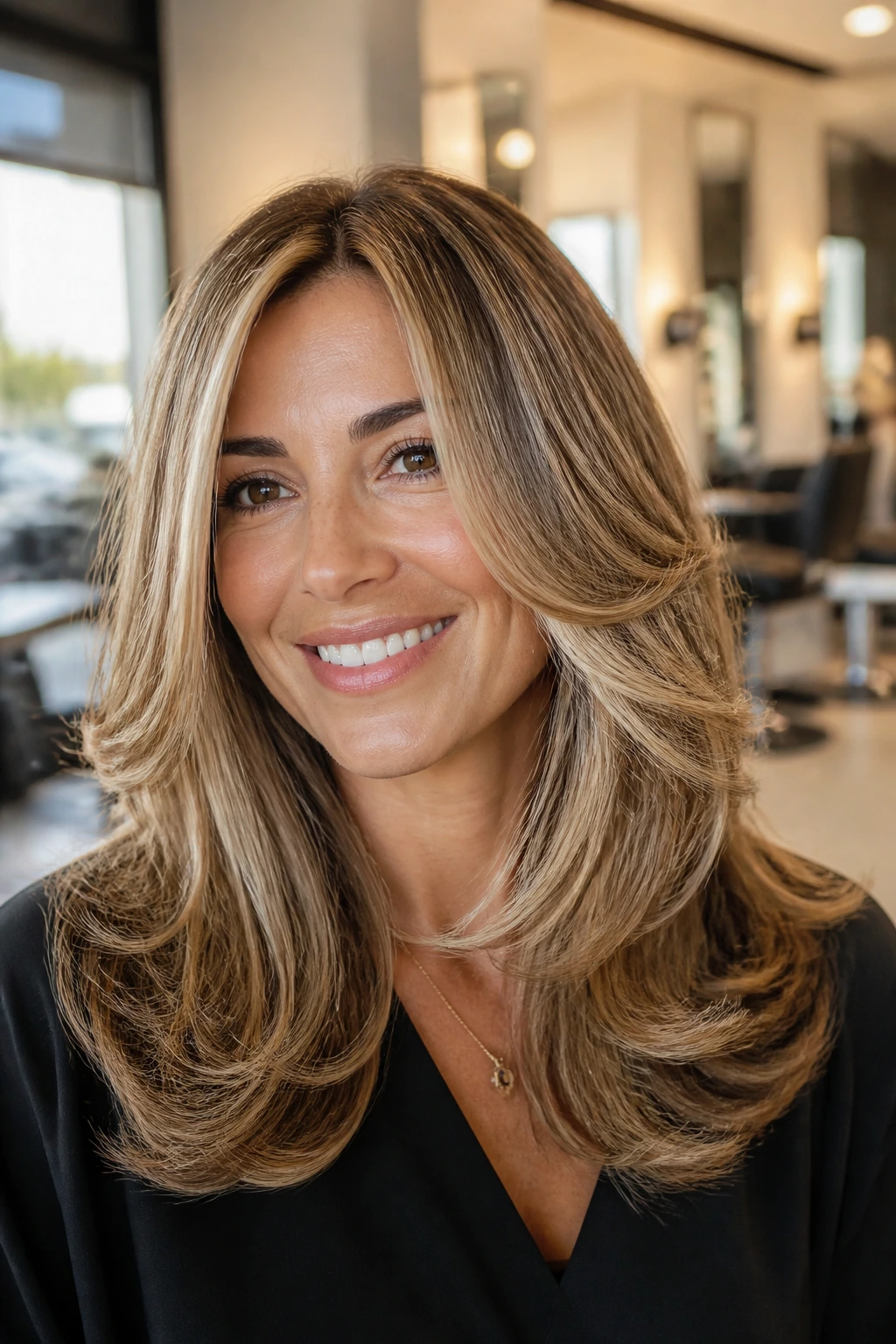
This is the version for people who like hair with swing. The layers are cut so they curve around the face and through the ends, then the champagne highlights brighten the high points that show up when the hair is blown out with volume. The tone sits in that pale-gold zone that looks clean on many base colors, especially light brown and dark blonde.
The blowout matters more than the cut here. A 1.25-inch round brush, a little tension at the roots, and a cool shot at the end will make the layers sit properly instead of collapsing at the collar. The champagne pieces should be placed where the brush naturally bends the hair: around the front, along the top layer, and through the ends that flip outward.
If you like hair that feels dressed up without needing a curling iron, this is a very safe bet.
12. Layered Pixie with Frosted Tips
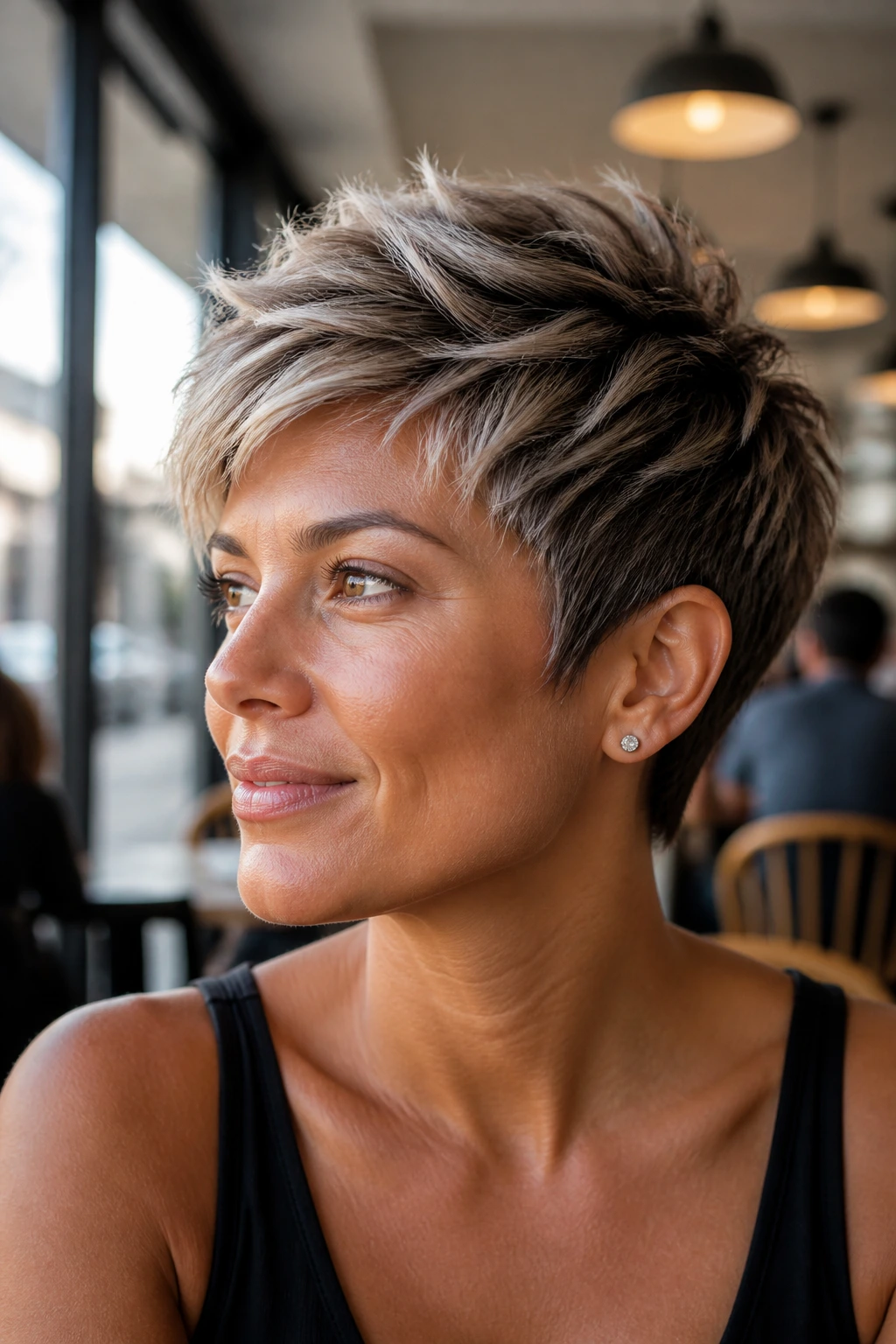
A pixie with layers should have more shape than people expect. The top needs enough length to move, the sides need softness, and the back should stay neat so the haircut doesn’t puff out in the wrong places. Frosted tips add contrast where the shorter top pieces separate, which gives the cut definition from every angle.
This is not a low-maintenance haircut in the way people mean that phrase. It’s quick to style, yes. But the shape needs trims more often than longer cuts, and the color shows grow-out fast because everything is close to the face. When it’s fresh, though, it looks clean and modern, with just enough edge to keep it from feeling cute in a timid way.
If your hair is naturally coarse, ask for the top layers to be textured carefully. Too much thinning can make the frosted ends stick out like little wires.
13. Rounded “Rachel” Layers with Golden Streaks
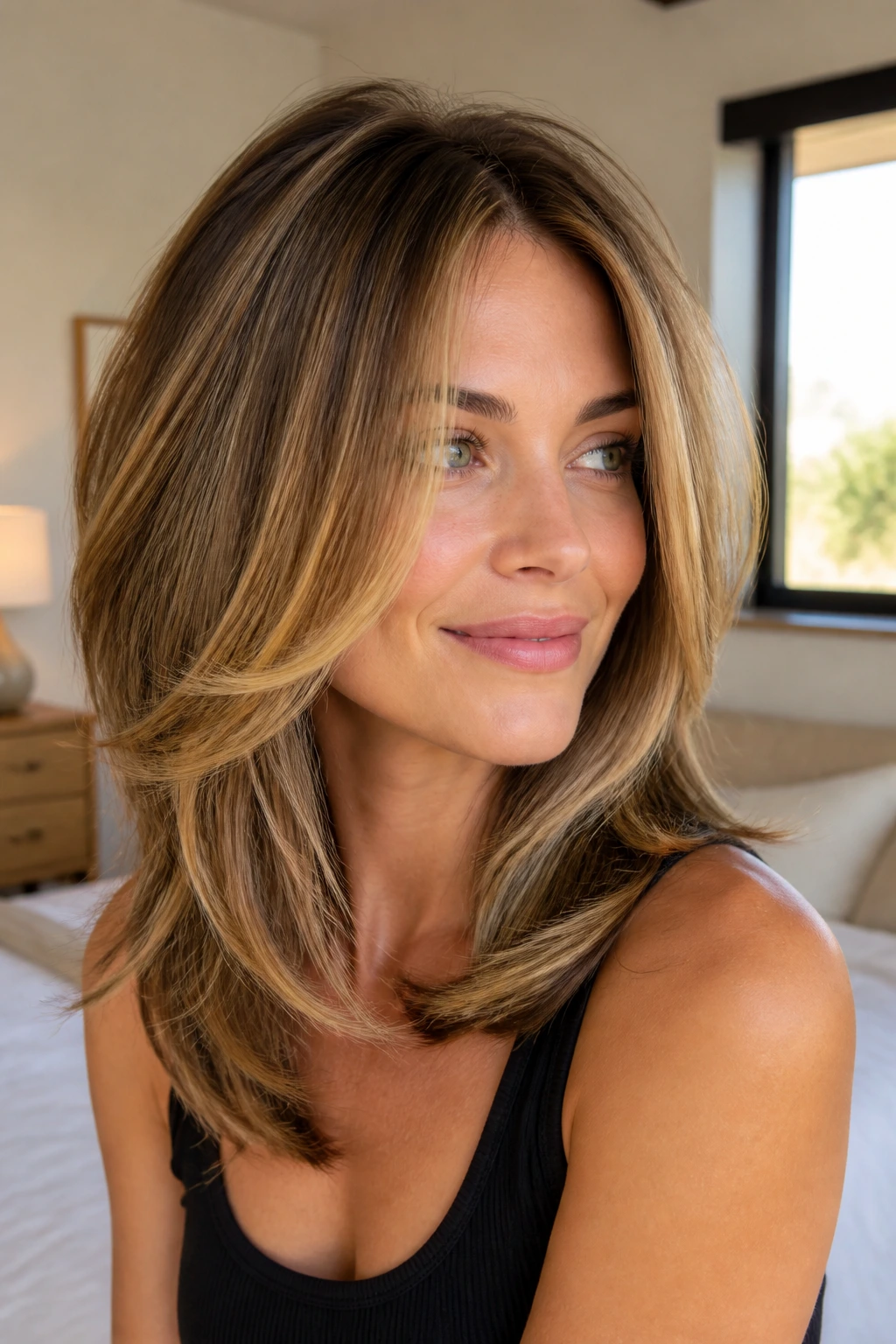
The rounded layered cut has a very specific feel: the hair curves in around the face and then rounds out through the bottom, so the silhouette feels soft instead of angular. Golden streaks fit that shape better than icy blonde ever could. They keep the style warm and bright without making it look like a costume from an old TV clip.
What makes this cut work now is that it’s been softened. The layers should move, not feather into a rigid flip. Golden streaks placed around the outer curve of the hair and the front sections keep the cut from looking dated. I’d keep the width of the highlights moderate, not chunky. That helps the shape stay polished.
This is one of those styles that rewards a proper blowout. Even a decent one will do.
14. V-Cut Long Layers with Cinnamon Lowlights
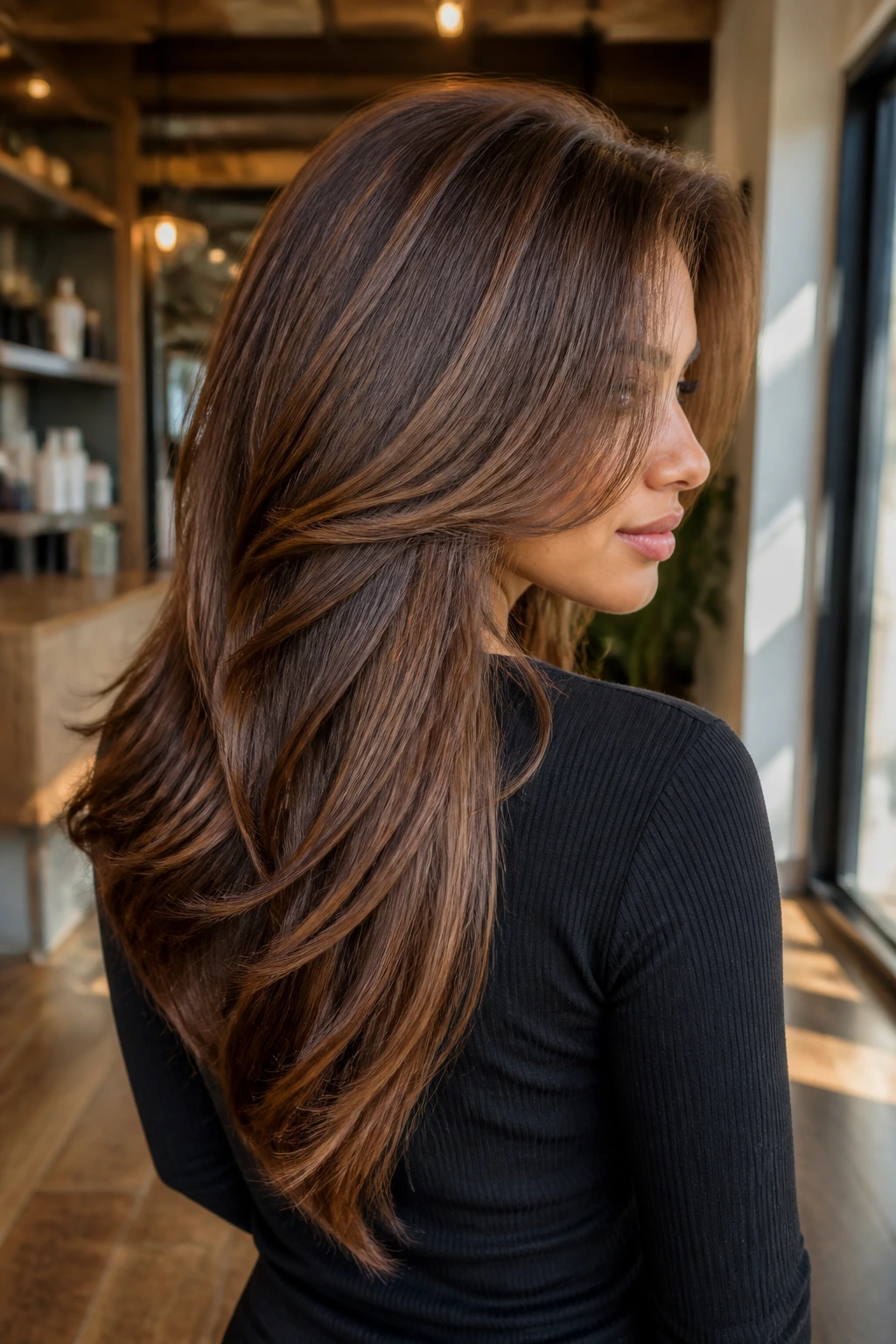
A V-cut gives long hair a pointed shape at the back, which creates drama even before the color comes in. Cinnamon lowlights deepen the interior of the hair and stop the long lengths from looking too pale or too flat. If your hair is naturally brown or dark blonde, the mix of light and warm depth can make the whole cut look thicker.
The best part of this pairing is the contrast between the sharp lower outline and the softer color inside it. The lowlights sit beneath the brighter pieces, so the hair feels dimensional from the first glance and richer once it moves. That matters more on very long hair, where one flat shade can make the ends disappear.
Keep the front pieces longer than you think. If the face layers are too short, the V shape can start to feel severe.
15. Choppy Midi Cut with Espresso-to-Caramel Melt
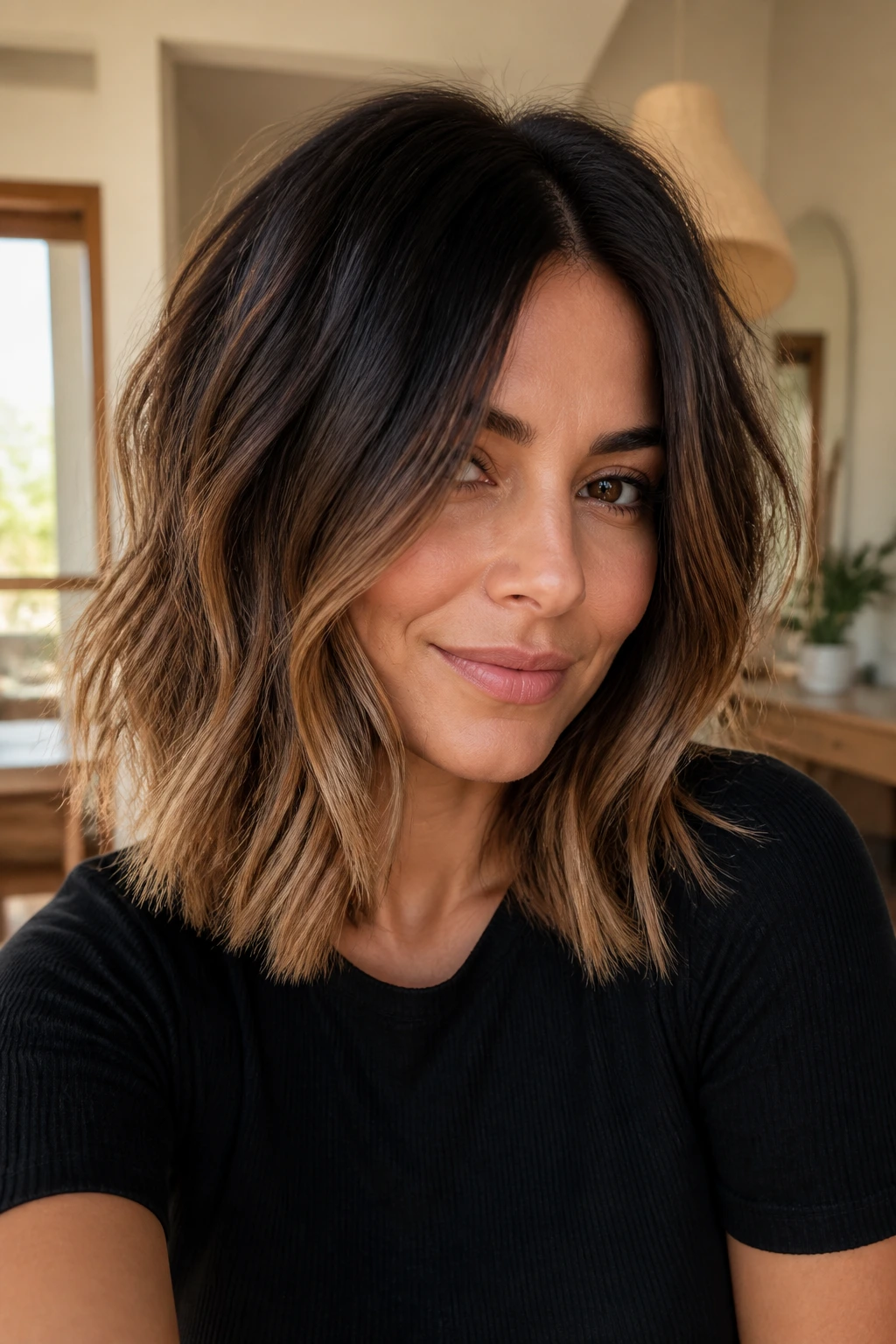
A midi cut sits in that useful middle zone where it can be tucked, waved, straightened, or clipped back without much thought. Add choppy ends and an espresso-to-caramel melt, and the hair gets a little edge without losing softness. The darker root keeps the style grounded. The caramel through the lengths keeps it from feeling heavy.
This is a good option for brunettes who want dimension but don’t want blonde maintenance. The melt should be seamless enough that the grow-out doesn’t scream at you, but not so blended that the layers disappear. A little separation at the ends helps the choppiness show.
If you wear your hair in a natural wave, this style does a lot of the work for you. Straight styling makes the color gradient more obvious, which can be nice too.
16. Straight Layered Cut with Ribbon Highlights
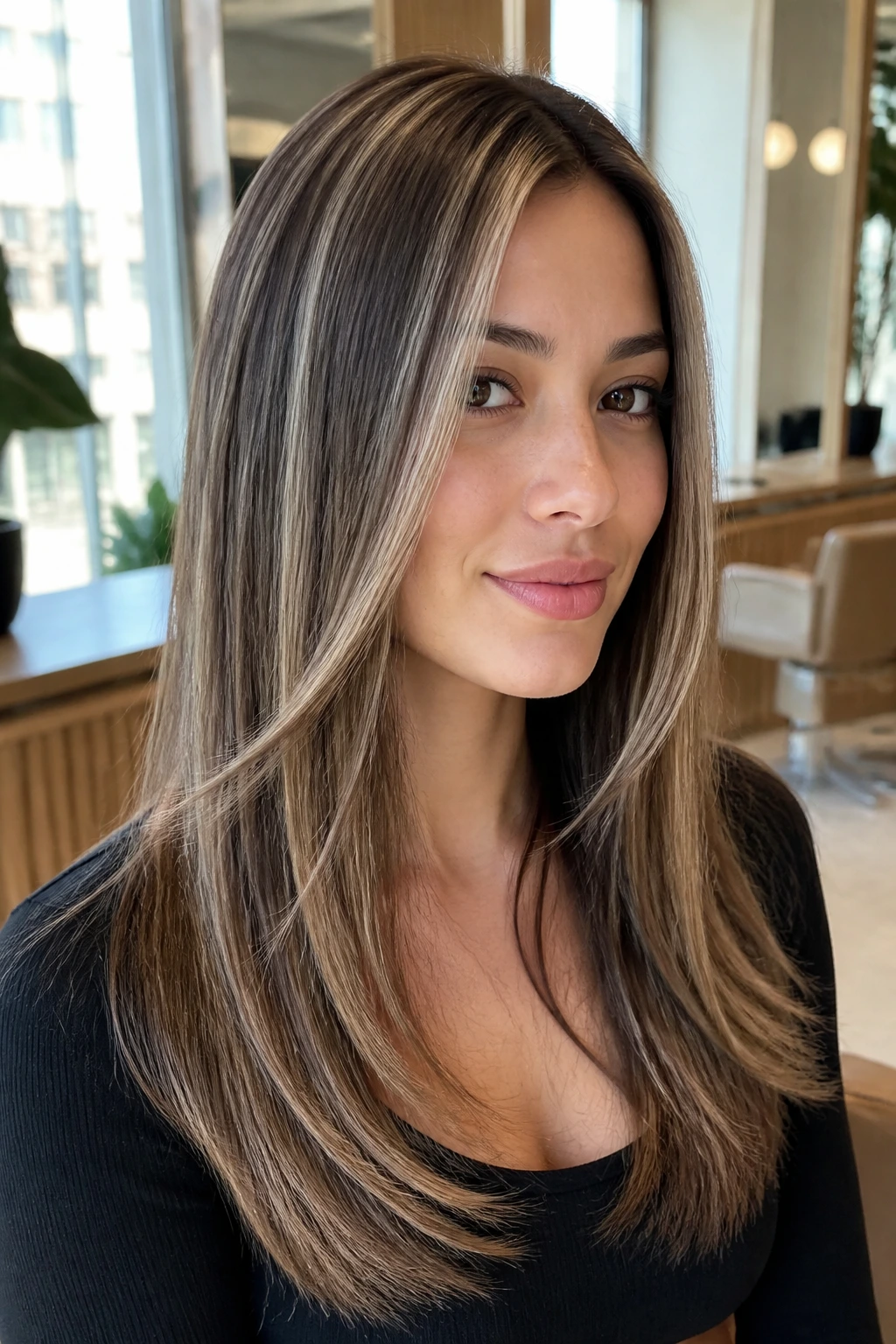
Straight hair can make layered cuts look either sleek or strangely boxy, depending on how the layers are placed. Ribbon highlights help because they run in longer, thinner sections that match the vertical lines of straight hair. The whole cut looks cleaner when the color follows the direction of the length instead of breaking it up into blocks.
This is one of the best choices if your hair is naturally smooth and you don’t want to fight it every morning. The layers should be long enough to move, but not so short that they kick out in odd places. Ribbon highlights around the face and through the top layer keep the style from falling completely flat.
If you have very straight hair, ask for a little more brightness in the crown area. That prevents the roots from looking too dense compared with the ends.
17. Airy Long Layers with Rose Gold Accents
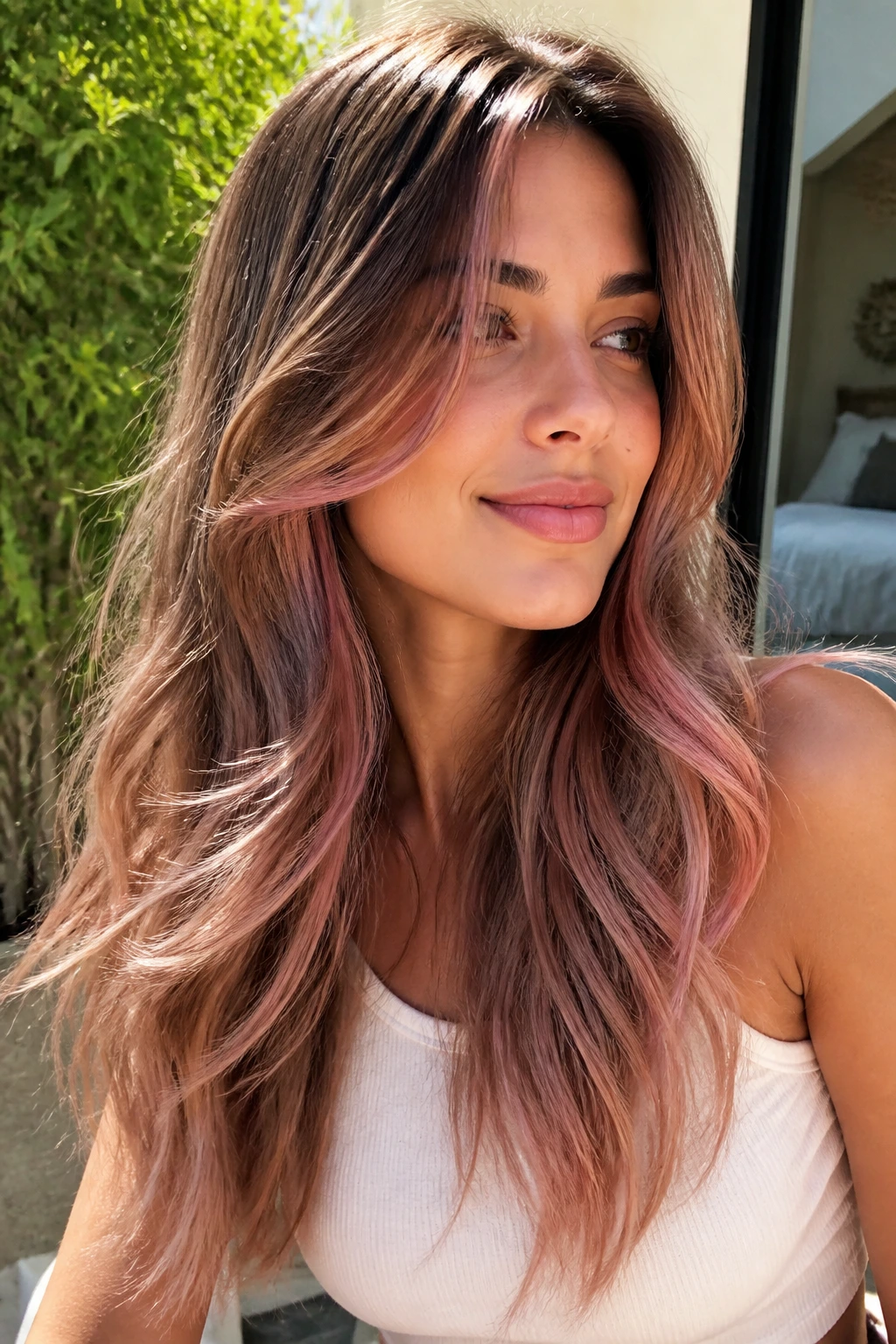
Rose gold accents are a little more playful than standard blonde, but they still work best when the cut is doing the heavy lifting. Airy long layers give the hair room to move, and the rose gold sits like a soft glaze over lighter pieces rather than a loud color block. It’s a nice fit for blonde or light brown hair that needs a little warmth with a twist.
The trick is keeping the rose tone subtle enough that it reads as a tint, not a costume color. A demi-permanent gloss often works better than a permanent pastel if you want the look to fade softly. On very long layers, a few accents around the front and mid-lengths are enough. You do not need the whole head to go pink to get the effect.
This is the kind of style I’d choose for someone who likes a bit of personality but still wants the hair to feel grown-up.
18. Inverted Bob with Platinum Underlayer
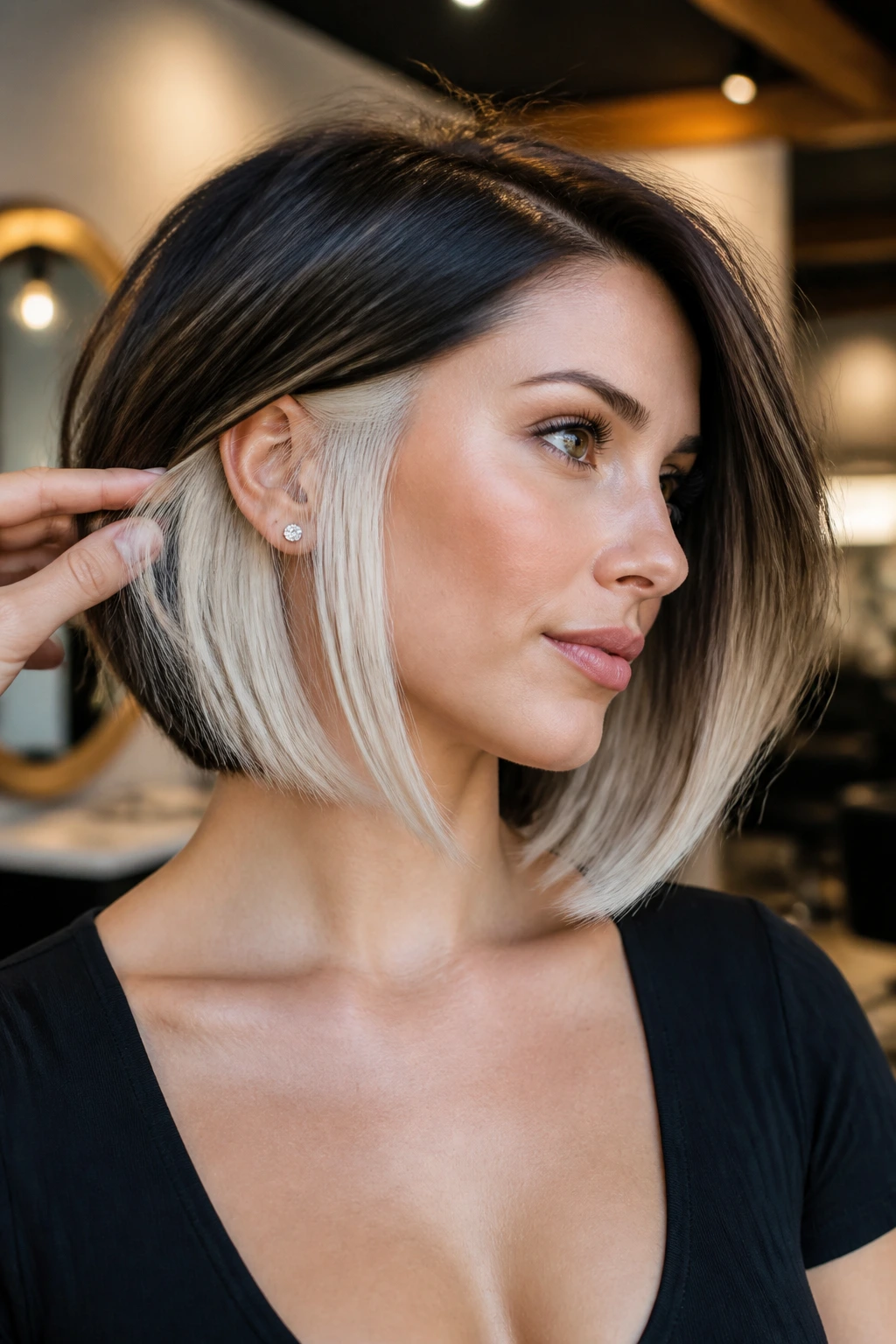
An inverted bob is stacked shorter at the back and longer toward the front, which gives it built-in shape even before the color shows up. A platinum underlayer makes that shape more obvious when the hair flips or tucks behind the ear. The top stays darker or more neutral, and the bright underlayer flashes through in motion.
That hidden contrast keeps the look from becoming too hard-edged. It’s a smart move if you want drama but not a full platinum head, which can take a beating if the hair is already dry. The underlayer can also be less visible on casual days and more obvious when you style the bob with a bend.
This cut works best when the stack at the back is clean and the front pieces stay long enough to skim the jaw. Too short, and it starts to read severe. Too long, and you lose the inversion that gives the cut its shape.
19. Soft Mullet with Auburn Highlights
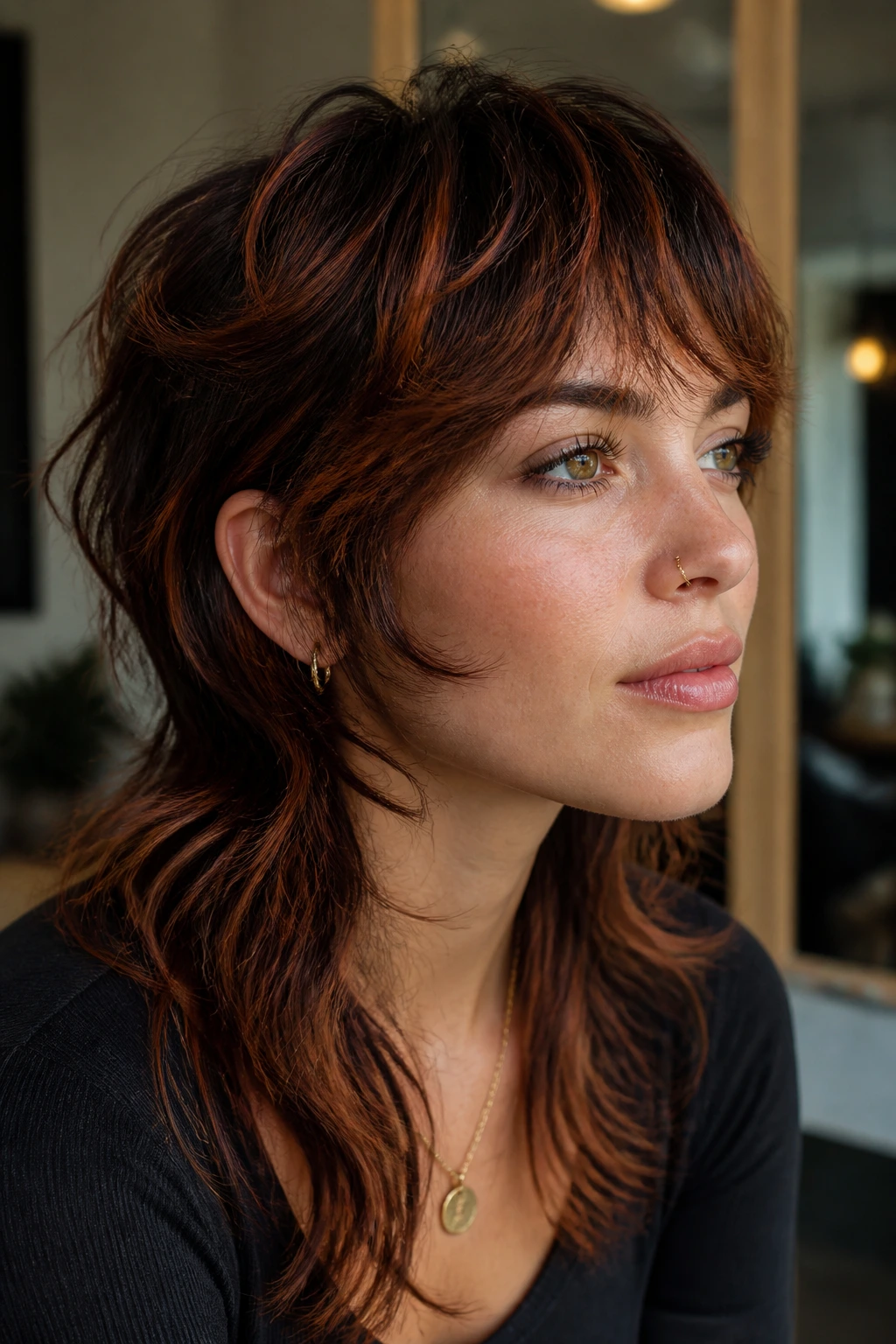
A soft mullet is not the aggressive version people imagine when they hear the word. The top is layered and airy, the sides stay lighter, and the back is left longer for shape. Auburn highlights bring warmth and movement into that uneven silhouette, which keeps the cut from looking too punk or too flat.
I like auburn here because it gives the hair a little heat without taking over the whole head. On darker bases, it shows as a rich red-brown shimmer. On lighter brunettes, it can be a bolder stripe of warmth around the crown and fringe. The difference matters because the mullet shape itself already has attitude; the color shouldn’t turn it into a costume.
If you’re on the fence, ask for the auburn in the top layers first. That’s usually enough.
20. Layered Crop for Fine Hair with Babylights
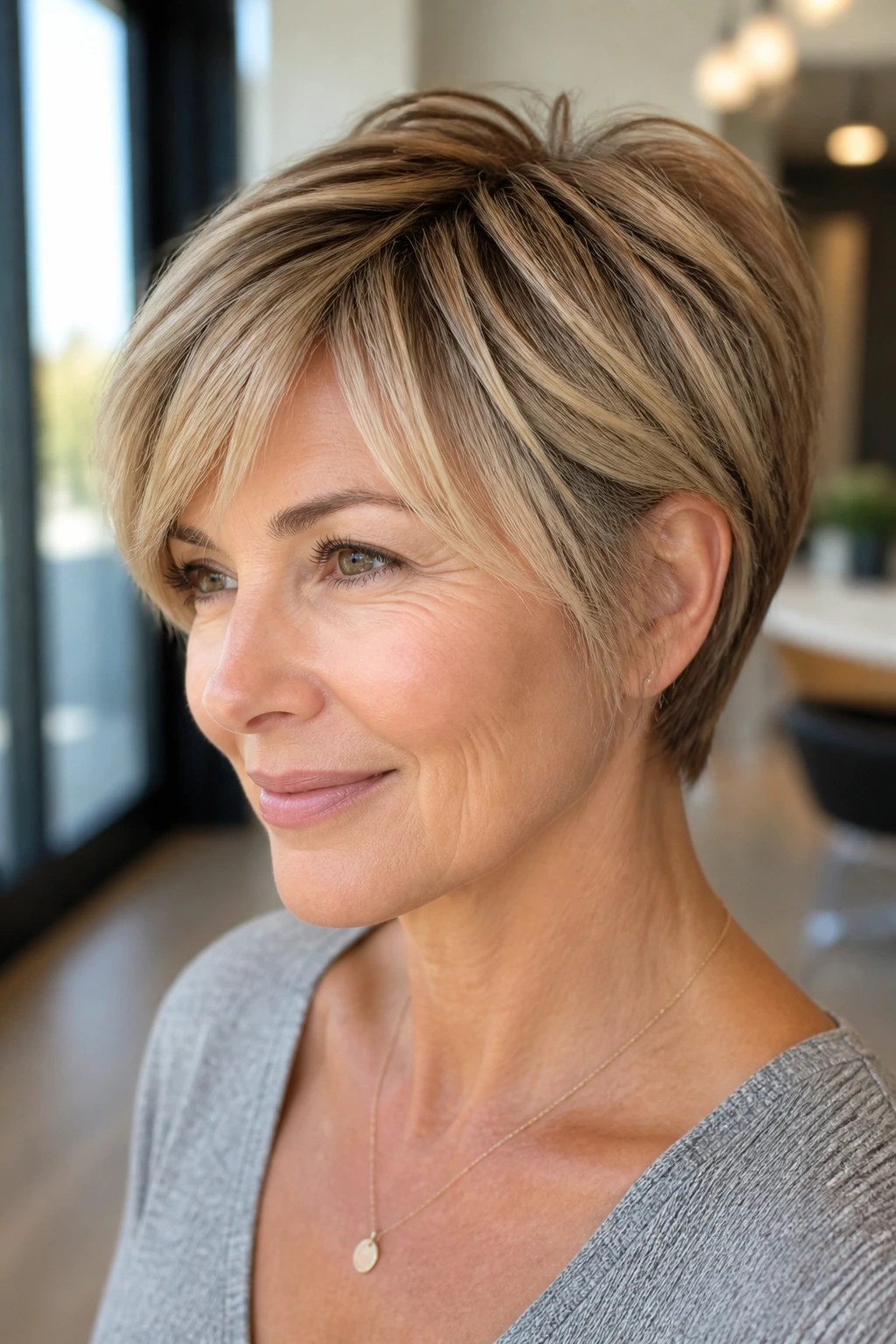
Fine hair needs a careful hand. Too many short layers can make it look see-through at the ends, and too much contrast in the color can make the hair look thinner than it is. A layered crop with babylights gets around both problems by keeping the layers light and the highlights ultra-fine. The result is more texture, not more bulk.
Babylights around the crown, part, and face give fine hair a little brightness where it needs it most. Because the pieces are so thin, they blend into the natural movement instead of sitting on top of it. That’s the whole trick here: create the impression of density without building a heavy shape.
This cut is especially good if you air-dry often and just want something that doesn’t collapse by lunchtime. It behaves.
21. Thick-Hair Debulking Layers with Multi-Dimensional Brunette Highlights
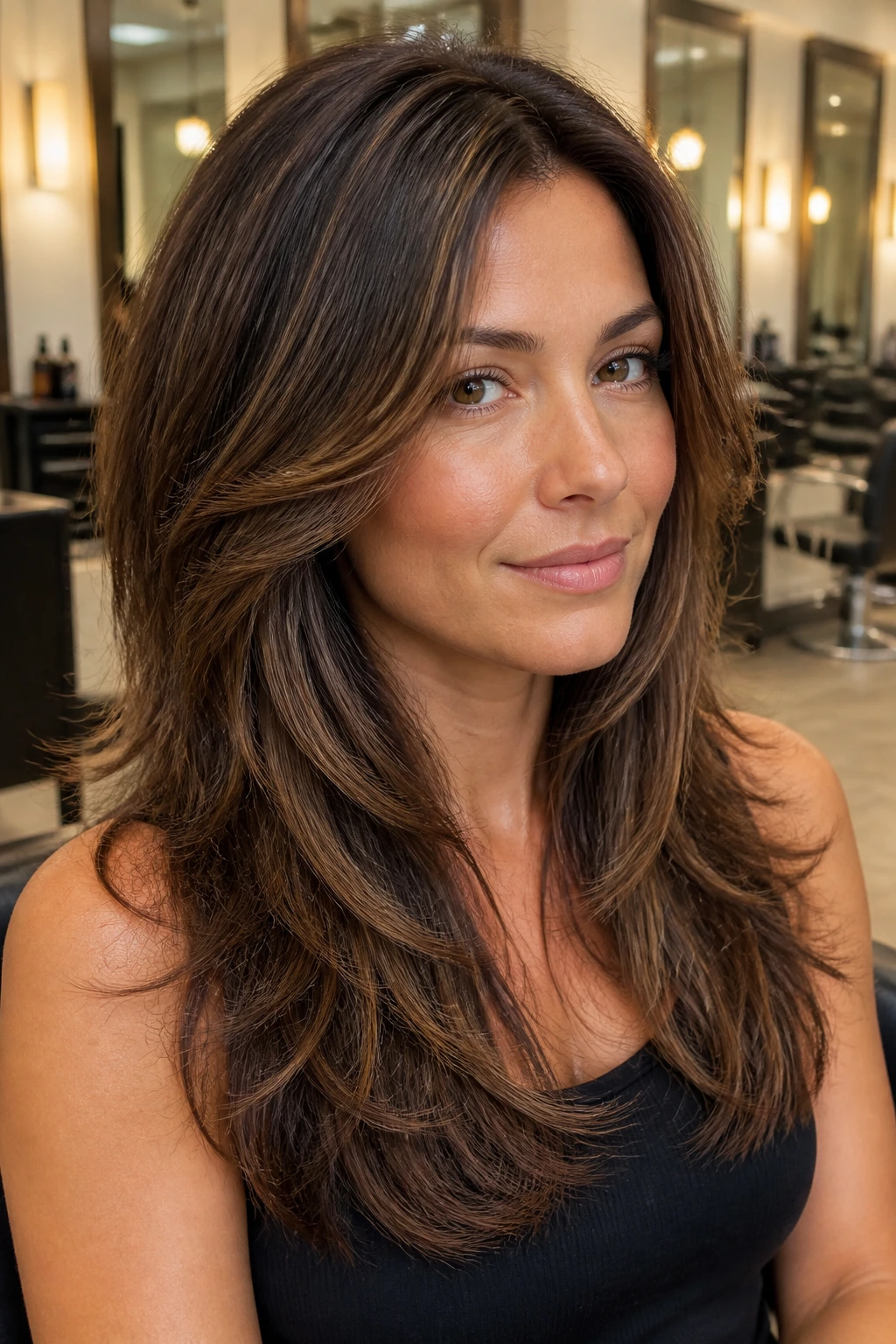
Thick hair has its own set of problems. It can look gorgeous and still feel huge, heavy, or stubborn. Debulking layers remove internal weight so the shape moves better, while multi-dimensional brunette highlights and lowlights stop the whole mass from reading as one dark block. The point is to make the hair feel lighter without making the ends brittle.
The best version keeps the outer line full and healthy. The removal happens inside the haircut, where you don’t see it as much. Color should support that by creating small shifts in tone—coffee, chestnut, mocha, maybe a little warm caramel—rather than high contrast that can make the hair look patchy.
If your hair is very dense, ask your stylist to keep the brightest pieces away from the very ends. Thick hair can turn frizzy-looking fast if the lightener is pushed too far down.
22. Wavy Collarbone Cut with Toasted Almond Balayage
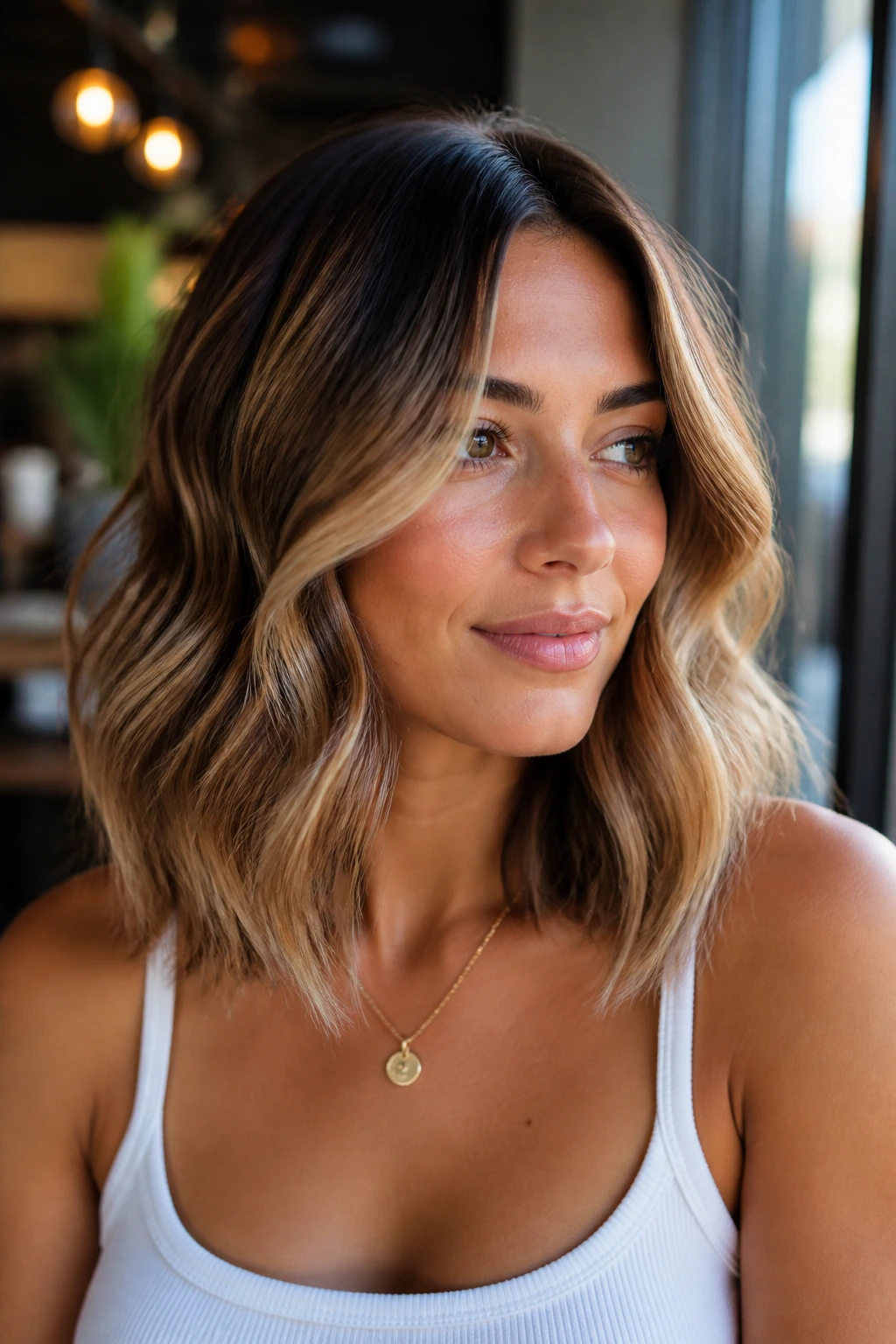
This is the easygoing cousin of the polished lob. The collarbone length keeps the hair off the shoulders enough to move, and the layers are soft enough that waves can settle without looking chopped. Toasted almond balayage gives the color a sun-warmed feel that sits nicely between blonde and brunette.
What I like here is the restraint. The highlights aren’t screaming for attention. They sit where the waves bend and separate, which makes the whole cut look fuller and more relaxed. If you’ve got natural texture, this style is forgiving in a way that a more exact cut often isn’t.
A center part works well, but a gentle side part can push one side forward and show off the color on the front pieces. Either way, the waves do most of the styling for you.
23. Layered Cut with Shadow Roots and Bright Ends
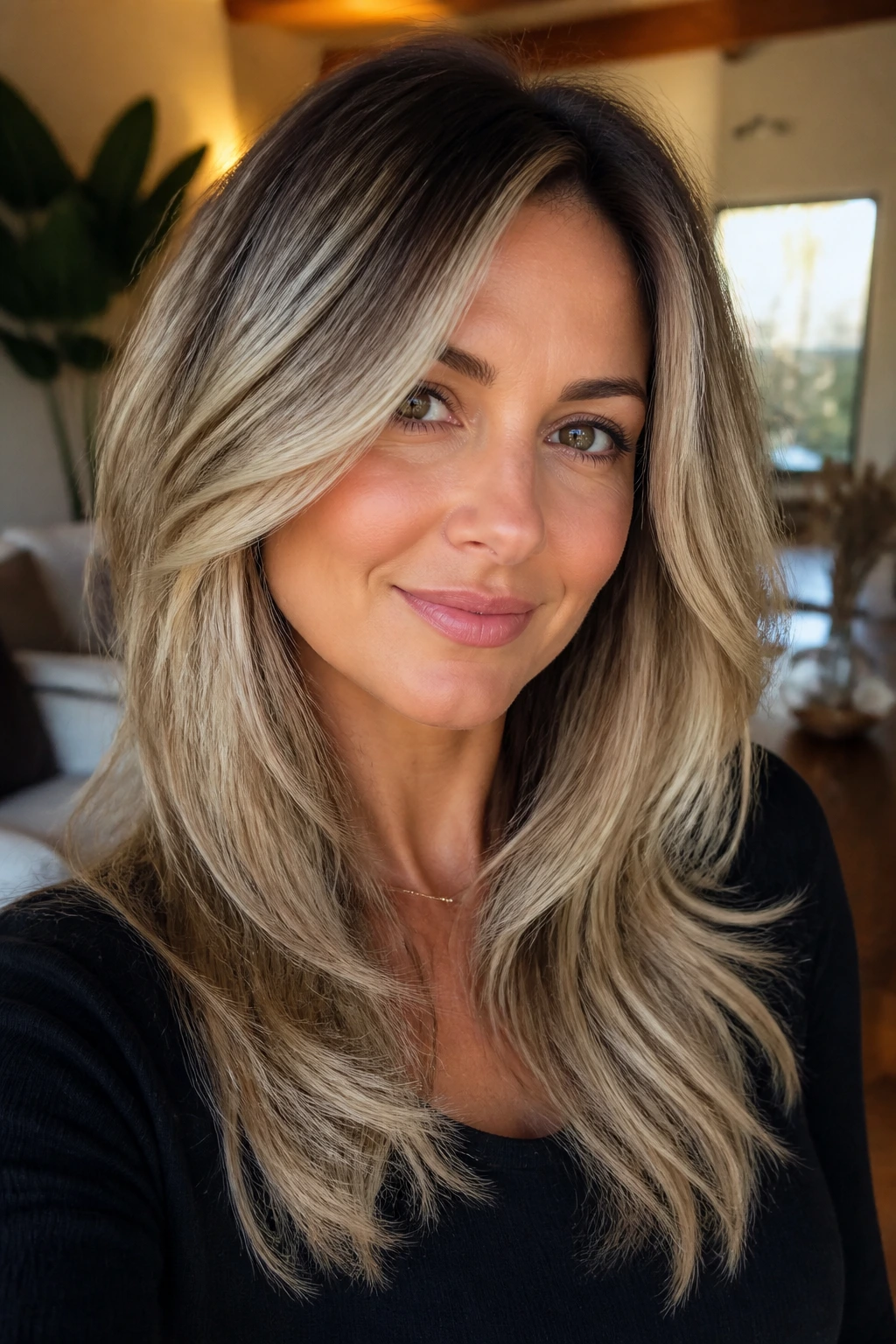
A shadow root is one of the smartest things you can do if you want brightness without an obvious regrowth line. On a layered cut, it keeps the top darker and the ends brighter, which makes the shape look deeper and cleaner. The lighter ends then read like a finish, not an accident.
This is a good choice if you travel a lot, skip salon visits longer than you mean to, or just don’t want your roots to announce themselves. The shadow root should be only a couple of shades deeper than the mid-lengths, not so dark that it looks like a separate color cap. Bright ends can be blonde, beige, caramel, or even copper, depending on the base.
It’s one of the more forgiving combos on this list. The grow-out is part of the look.
24. Swoopy Side-Part Layers with Dimensional Brunette Balayage
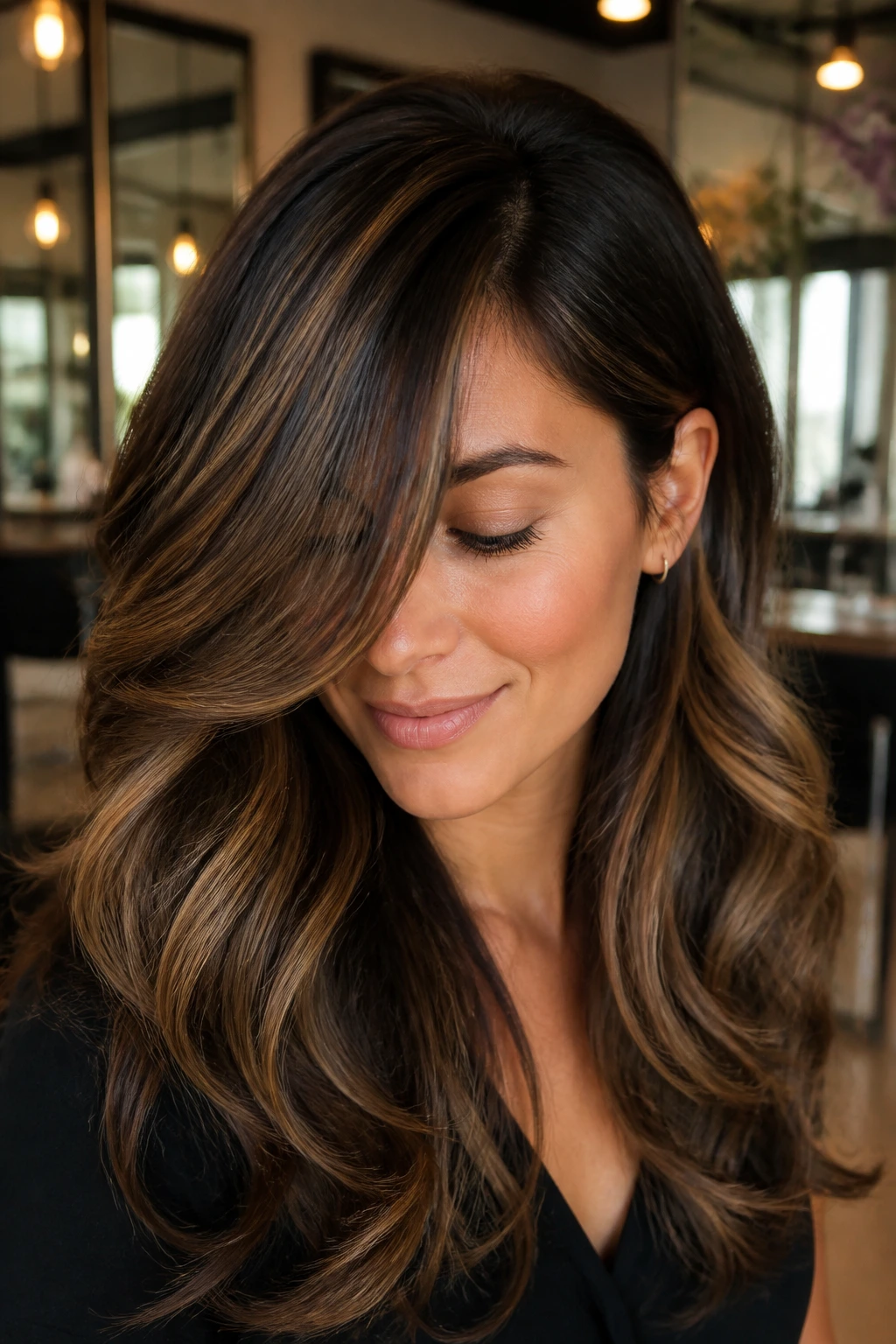
A deep side part changes the whole face shape. It gives the hair a swoop that can feel softer, sharper, or more glamorous depending on how the layers fall. Dimensional brunette balayage keeps the effect from going flat, especially when the color includes both lighter and darker brown ribbons.
This is a quietly strong haircut. It doesn’t need a dramatic color to make an impact, because the side part and the long front layers already do a lot of the visual work. The balayage just reinforces that movement. If you like hair that looks finished without looking fussy, this is a very good lane.
I’d especially recommend it for anyone who wears one side tucked behind the ear. The contrast between the tucked side and the swoop on the other side looks deliberate almost by default.
25. Textured Long Shag with Lived-In Blonde Highlights
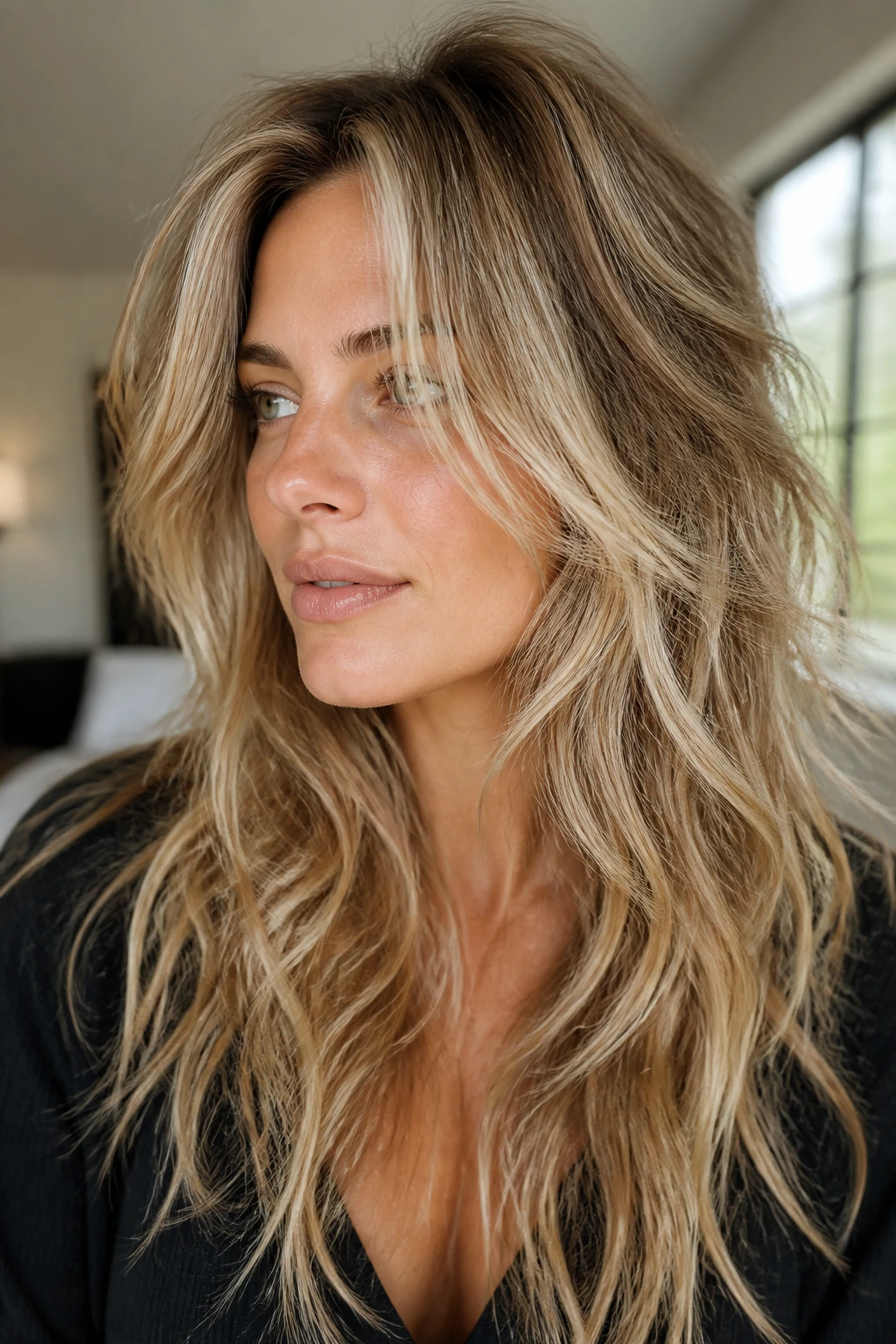
If I had to pick one layered cut with highlights that tolerates imperfect styling, this would be near the top. The long shag gives you texture, the face pieces keep the haircut from dropping straight, and lived-in blonde highlights make the whole thing feel softer the longer you wear it. Nothing about it has to look newly done to look good.
That’s the appeal. The color is blended enough that the root area can grow for a while, and the layers are broken enough that a quick blow-dry or even a rough air-dry still leaves some shape behind. If your hair has a slight wave, this cut can look better on a day when you barely touch it.
Ask for brightness around the face, then a softer spread through the rest of the hair. Too much blonde everywhere and the shag loses the depth that makes it interesting.
Why Layers and Highlights Work Better Together
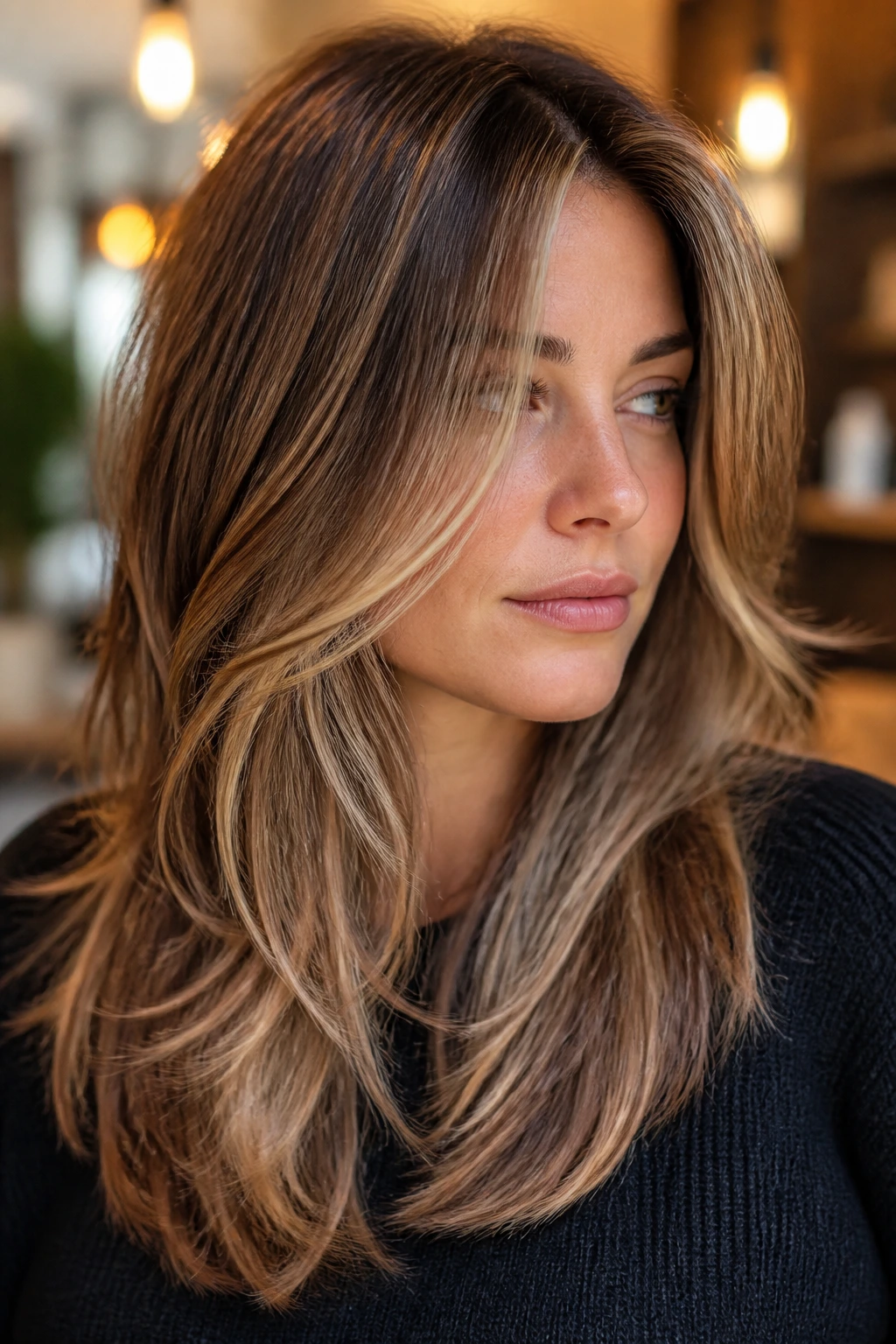
The reason this pairing keeps showing up in salons is simple: layers change how light moves through hair. A one-length cut reflects color in one broad sheet, which can look sleek but also a little one-note. Once the haircut has internal shape, the highlight placement can land on the bends, edges, and front pieces where the eye naturally goes first.
That’s why the same blonde can look flat on a blunt cut and lively on a layered one. The layers give the color texture. The color gives the layers depth. If the brightest pieces sit near the front and the softer tones stay inside the shape, the haircut reads as fuller even when the actual amount of hair hasn’t changed at all.
The part line matters more than people think
A center part exposes the top of the head in a very different way than a side part does. If your highlights are too dense right at the part line, regrowth shows faster. If they’re too low, the top can look dark while the lengths look bleached out. A good placement balances both.
The haircut should lead the color
I’m always suspicious of color that looks copied from a swatch book and dropped onto whatever cut happens to be in the chair. A better result comes when the stylist thinks about where the layers bend, where the hair flicks, and where the face needs brightness. That’s the difference between “highlighted hair” and a layered haircut with highlights that actually looks designed.
Tools That Make Styling and Maintenance Easier
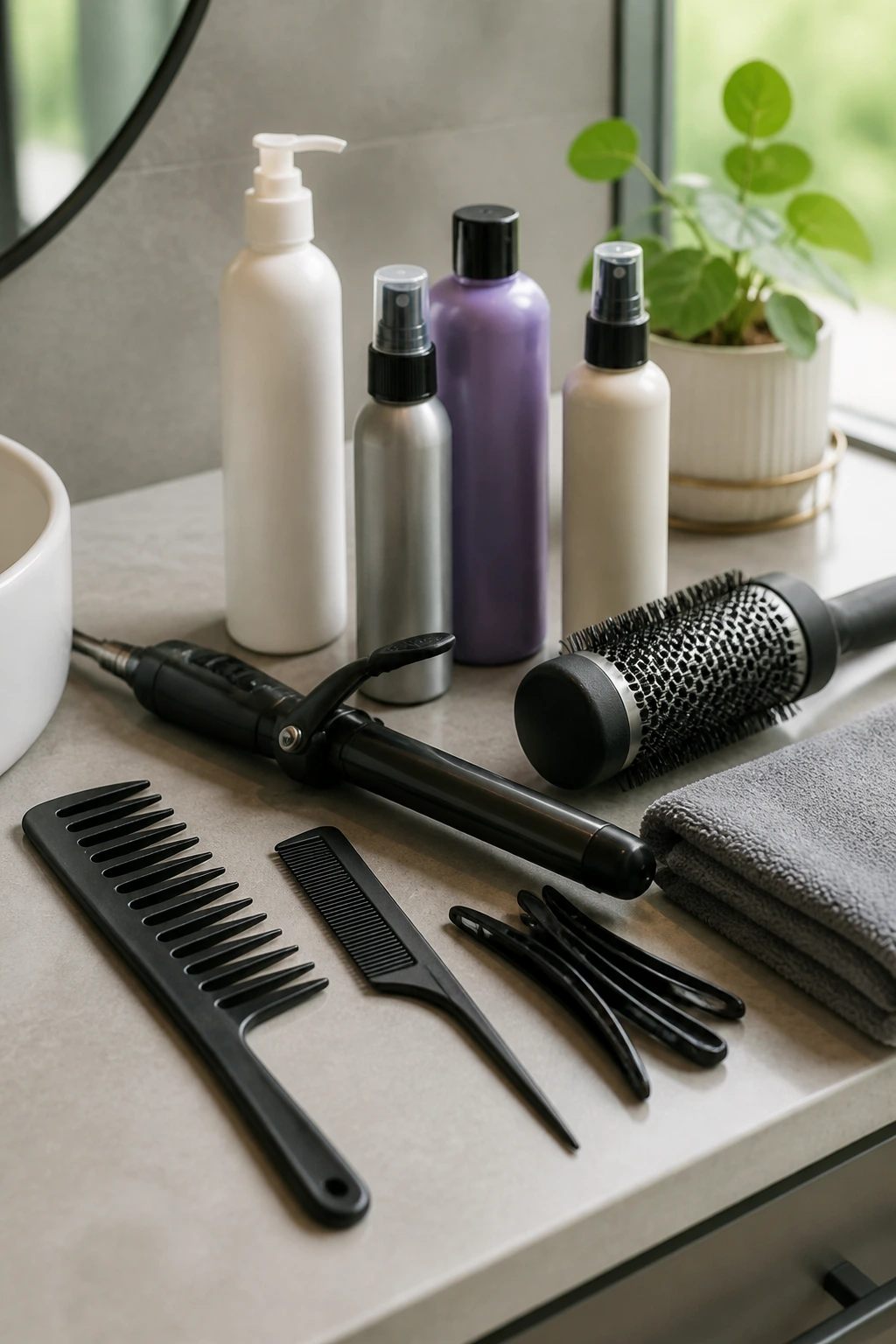
- Wide-tooth comb: Best for detangling wavy and curly layers without pulling the highlight sections apart.
- Tail comb: Useful for clean parts and for separating thin sections when you’re styling around the face.
- Heat protectant spray: A must if you use a blow dryer, flat iron, or curling iron more than once a week.
- 1-inch to 1.25-inch curling iron or wand: The sweet spot for most layered cuts, especially lobs, long layers, and shaggy shapes.
- Large round brush: Helps bend the front layers and build lift at the crown on blowout-style cuts.
- Color-safe shampoo and conditioner: Keeps toner and balayage from fading too fast.
- Purple shampoo or blue shampoo: Purple works for pale blondes; blue helps knock brass out of darker brunettes.
- Texturizing spray: Good for shags, wolf cuts, and layered pixies that need separation.
- Duckbill clips: Handy when you want to style the top layer in sections instead of wrestling everything at once.
- Microfiber towel: Cuts down frizz on curly or wavy layered cuts.
How to Pick the Right Layers and Highlight Placement
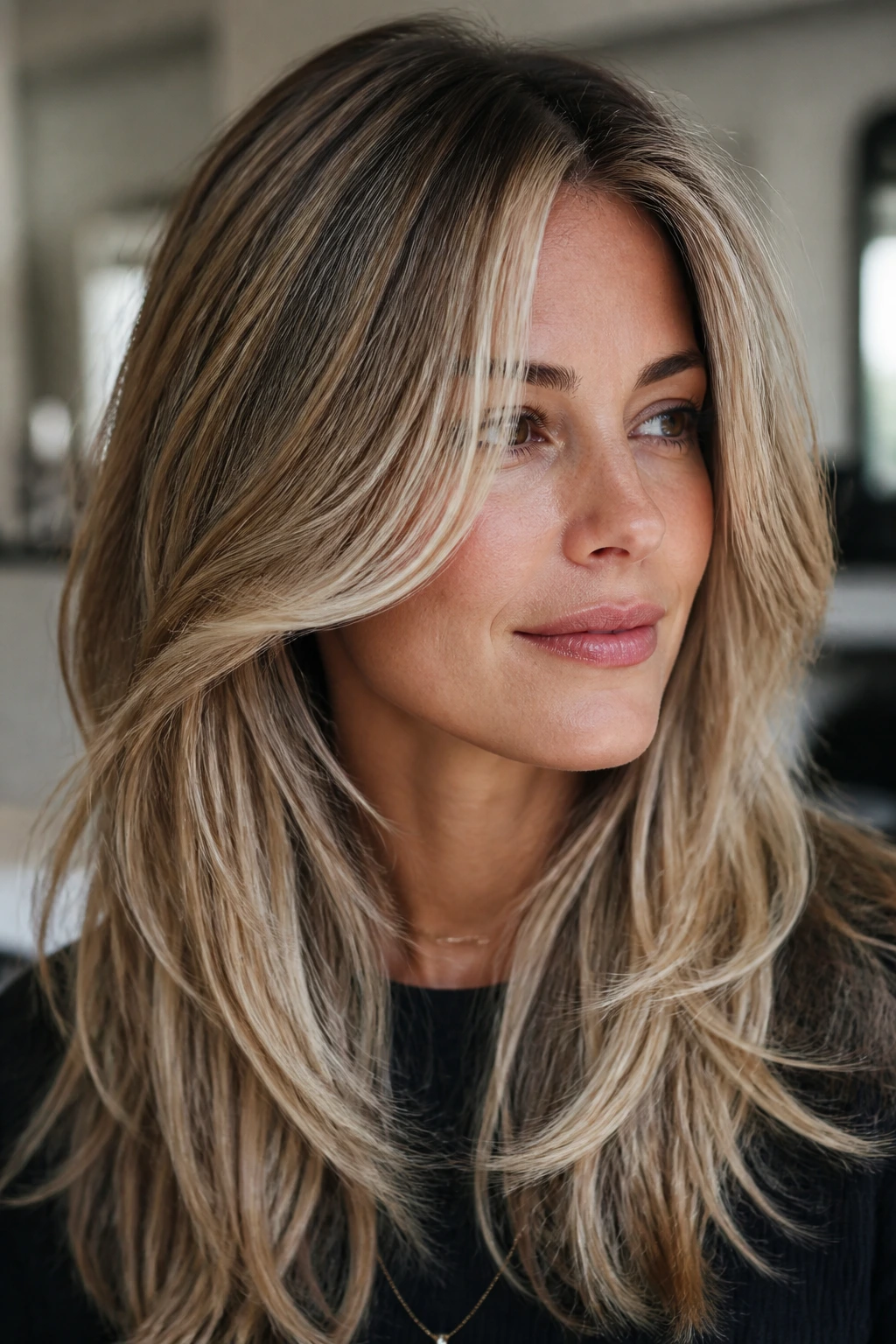
The smartest choice starts with hair density, not the photo you saved from someone else’s feed. Fine hair usually needs longer layers and finer highlights, because too much cutting or too much contrast can make it look thin. Thick hair often needs deeper internal layers and a mix of highlights and lowlights so the shape doesn’t feel bulky or dark at the same time.
Hair That Needs Volume
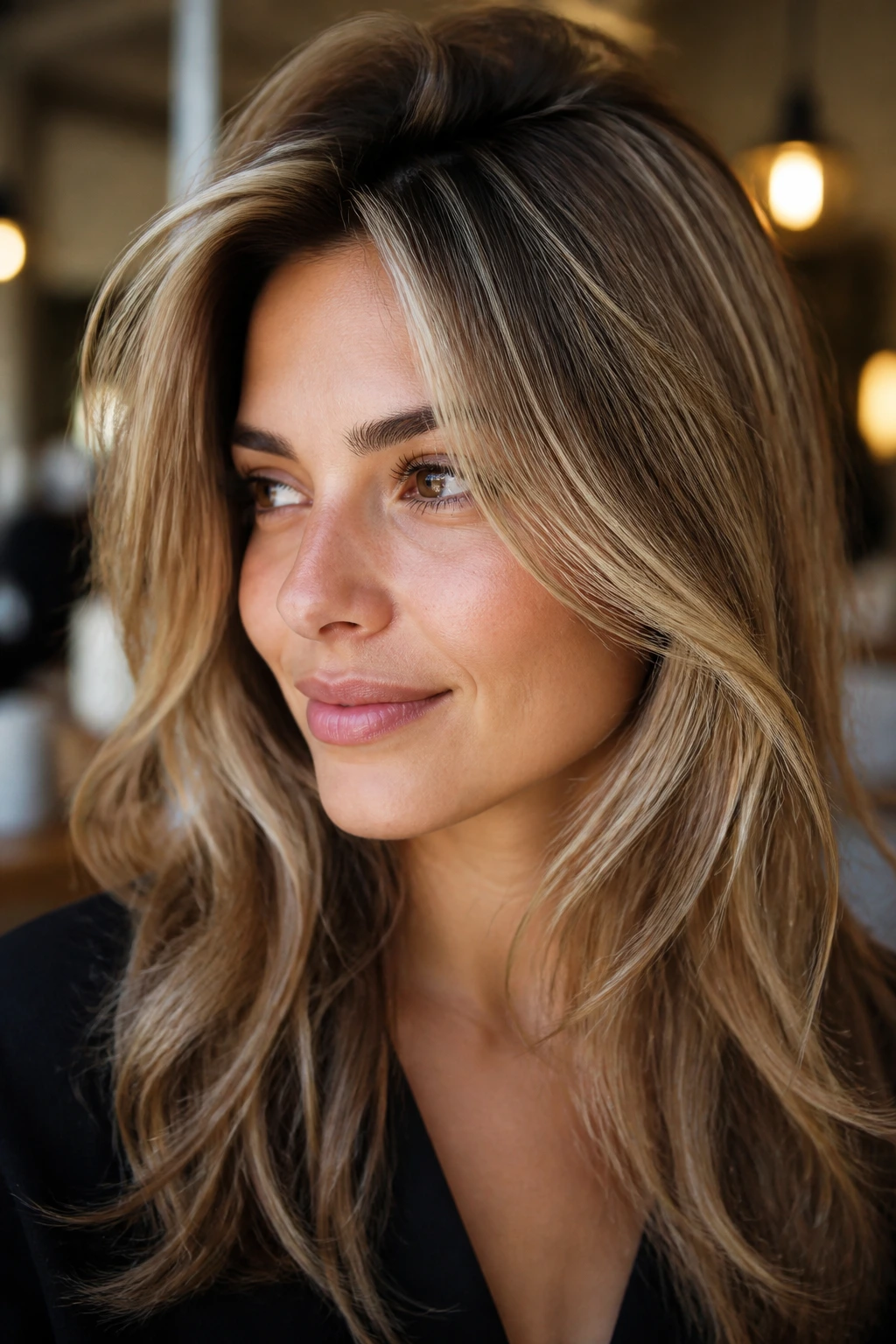
If your hair collapses easily, go for face-framing layers, crown lift, and brighter pieces around the front third of the head. A butterfly cut, feathered lob, or long shag can give you air around the cheeks and jaw without sacrificing too much length.
Hair That Already Has a Lot of Body
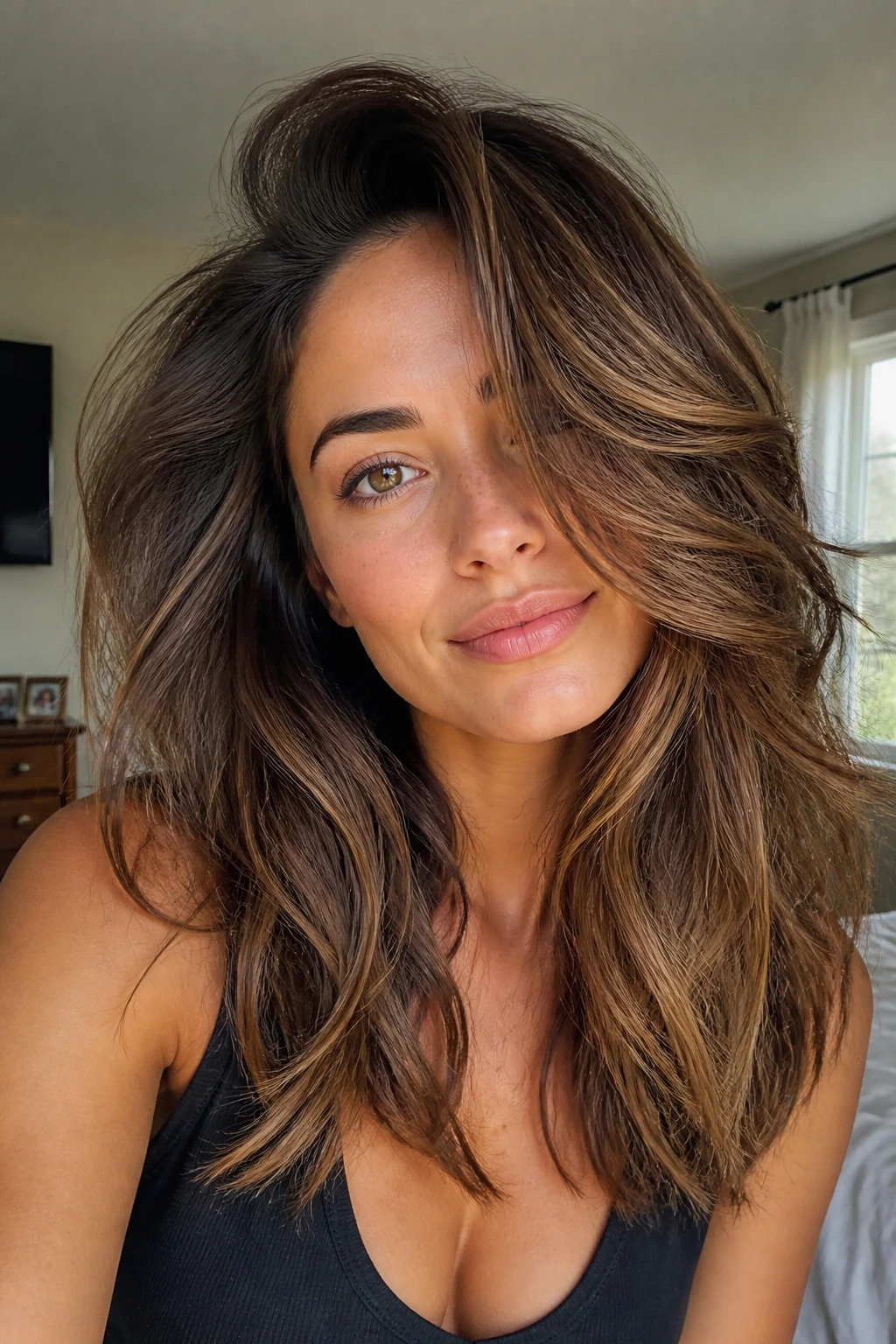
Thick or coarse hair can take stronger layering and more dimensional color. Ask for brightness that skips the very ends and hangs out more through the mids. That keeps the haircut from looking frayed.
Curly and Wavy Hair
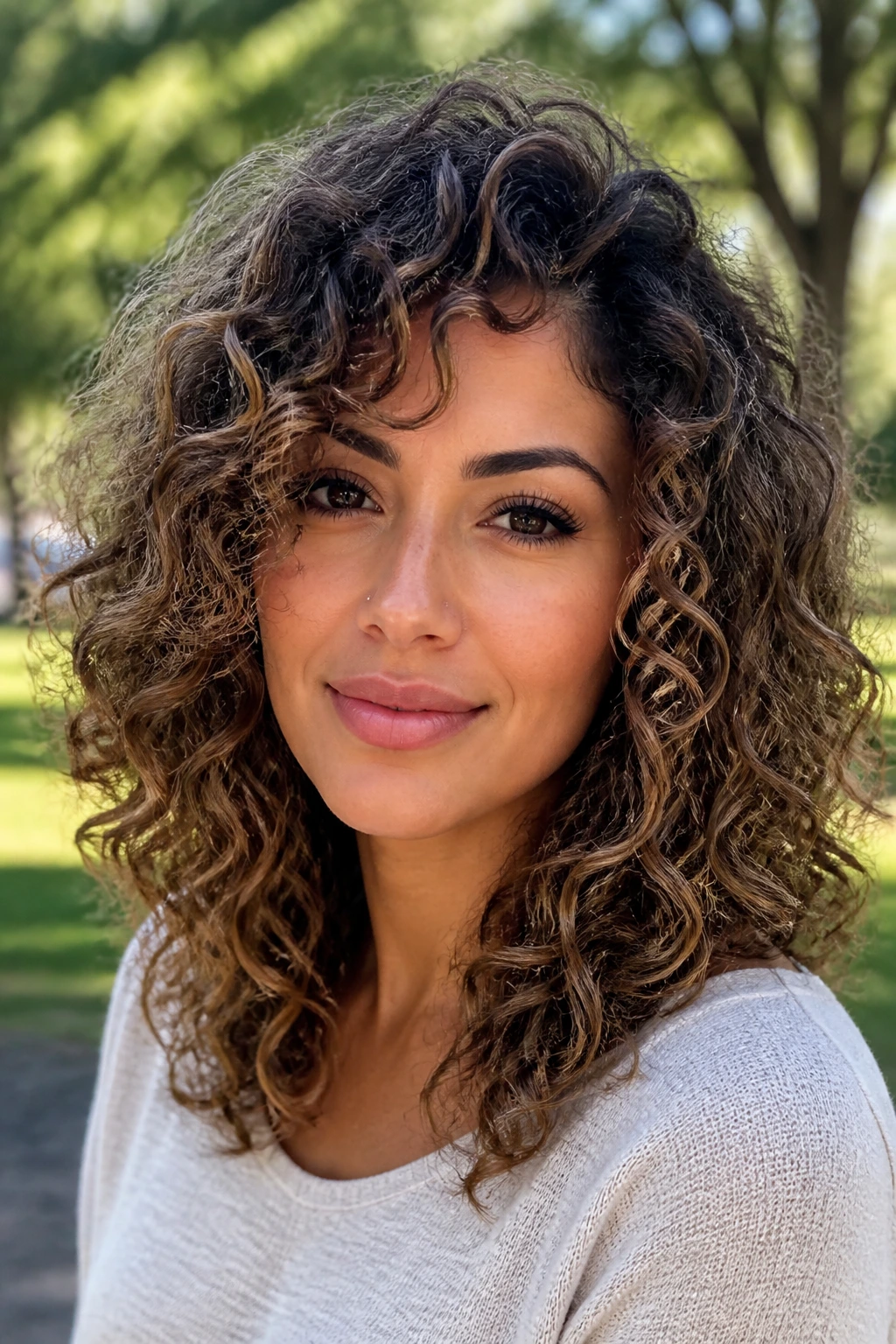
Curly hair should be cut in its natural state whenever possible. The highlights should follow curl groups, not straight lines, or the pattern breaks apart once the hair dries. Waves can take more freedom, but even then, the color looks better when it echoes the movement.
Brunette, Blonde, or Red Base
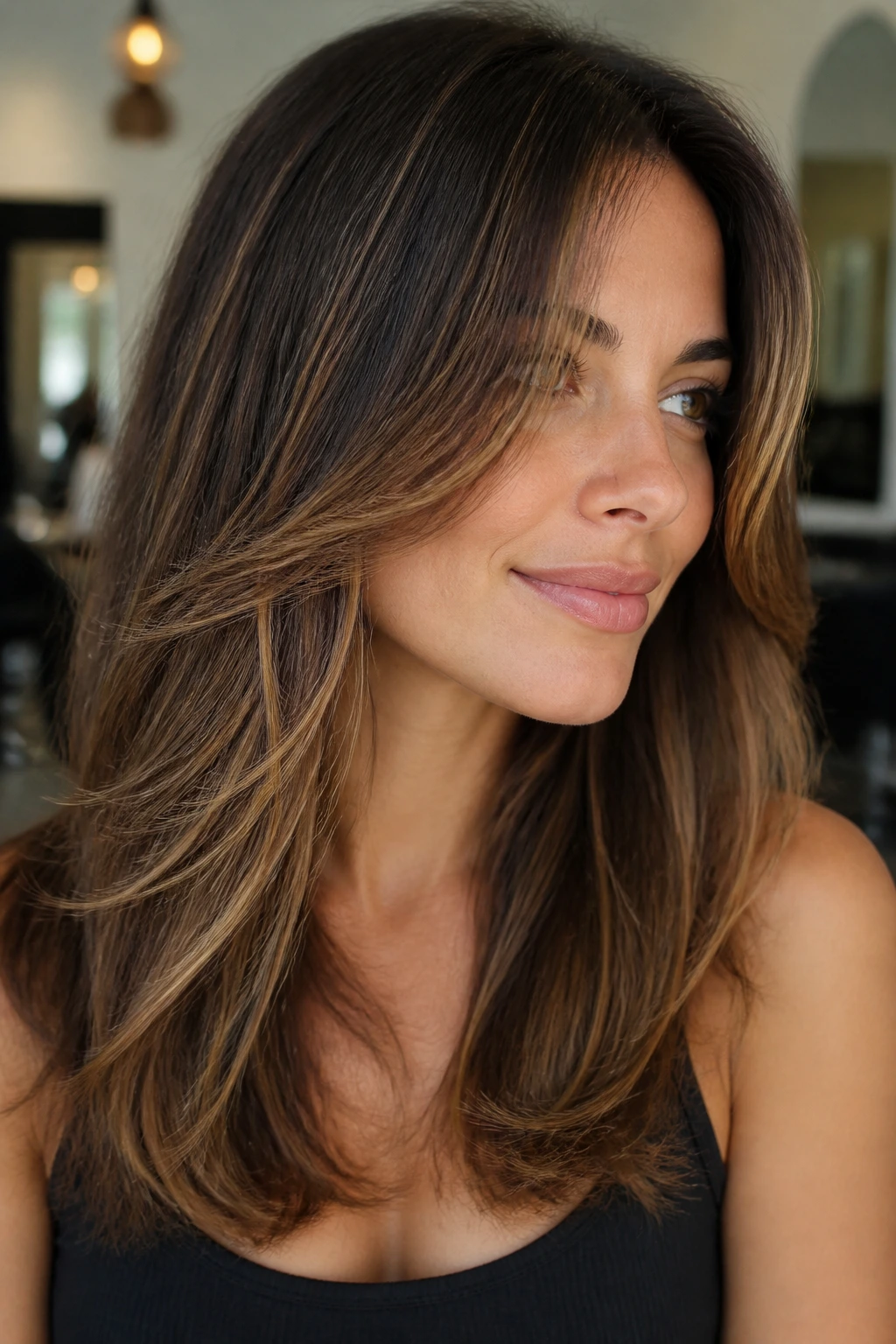
Brunettes do well with caramel, chestnut, mushroom blonde, and espresso-to-caramel melts. Blondes can handle champagne, beige, and a little rose gold if you want warmth. Red bases look best when the added color stays close to copper, cinnamon, or auburn rather than turning pale and washed out.
How to Style the Cut So the Layers Actually Show
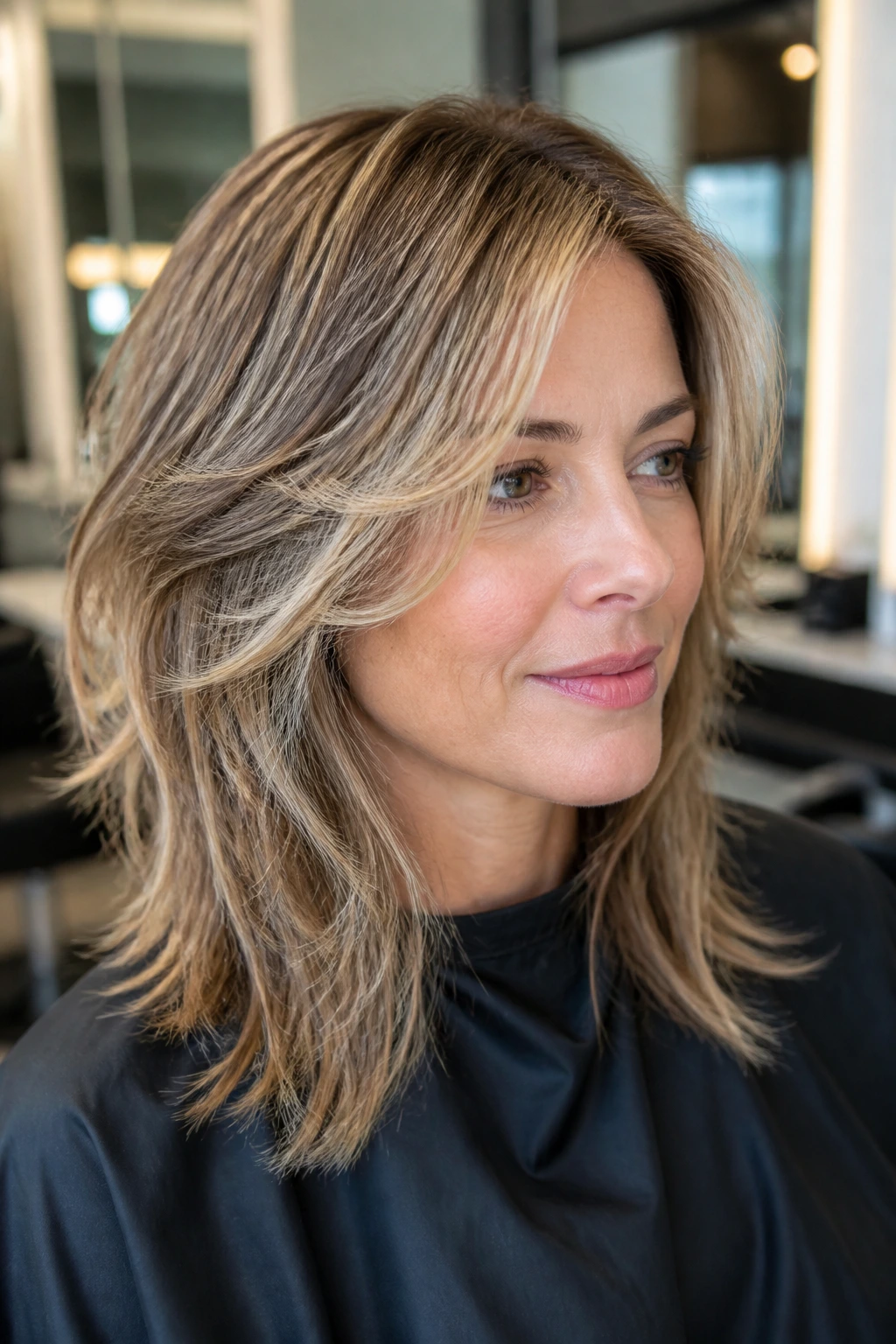
A layered haircut can disappear if you style it in a way that squashes the shape. That’s the annoying part. The good news is you usually do not need fancy tools. You need the right direction.
Blowout styles: Use a round brush and pull the front layers away from the face, then curve the ends under or out depending on the cut. That bend makes the highlight ribbons separate instead of merging together.
Waves and curls: Wrap sections loosely, leave the ends a little undone, and break the waves apart with your fingers only after they cool. If you brush too soon, the color starts looking one-dimensional.
Air-dried texture: Use a light cream or foam through the mids, not a heavy oil near the roots. Heavy products can make the highlight pattern disappear, especially on fine hair.
Straight styling: Keep some lift at the crown and a tiny bit of bend in the front pieces. Bone-straight hair can look sleek, but it also erases the layered effect if every strand points in the same direction.
Keeping the Cut and Color Fresh Between Appointments
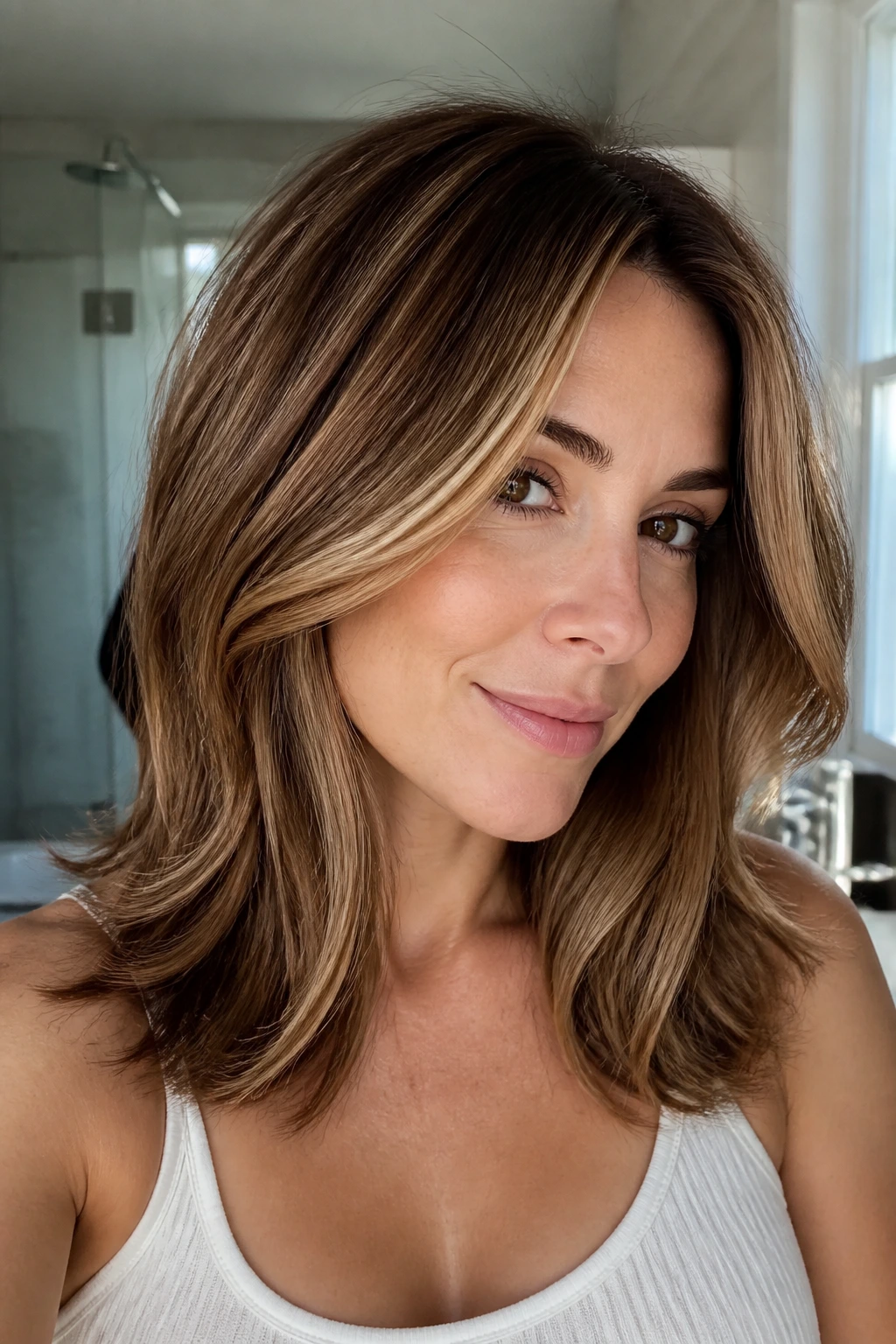
Layered highlighted hair usually looks best when you stay ahead of the shape instead of waiting until it has collapsed. Long layers can go about 8 to 12 weeks before they need a trim, though a shag or pixie may need touch-ups closer to 4 to 8 weeks. The shorter the cut, the faster the line changes.
Color timing depends on the tone. Blonding services often need a gloss or toner refresh every 4 to 6 weeks if you want the shade to stay clean. Brunette balayage can go longer, especially if the root is shadowed and the highlight is soft. A purple shampoo once a week helps pale blonde pieces stay from turning yellow, and blue shampoo can cool down brass on darker brunettes.
Heat is the quiet villain here. If you flat iron or curl every day, use a protectant every single time and keep the temperature lower than you think. Hair doesn’t need to sizzle to hold a bend. A microfiber towel and a color-safe wash schedule do more for the finish than most people expect.
Variations and Adaptations to Try
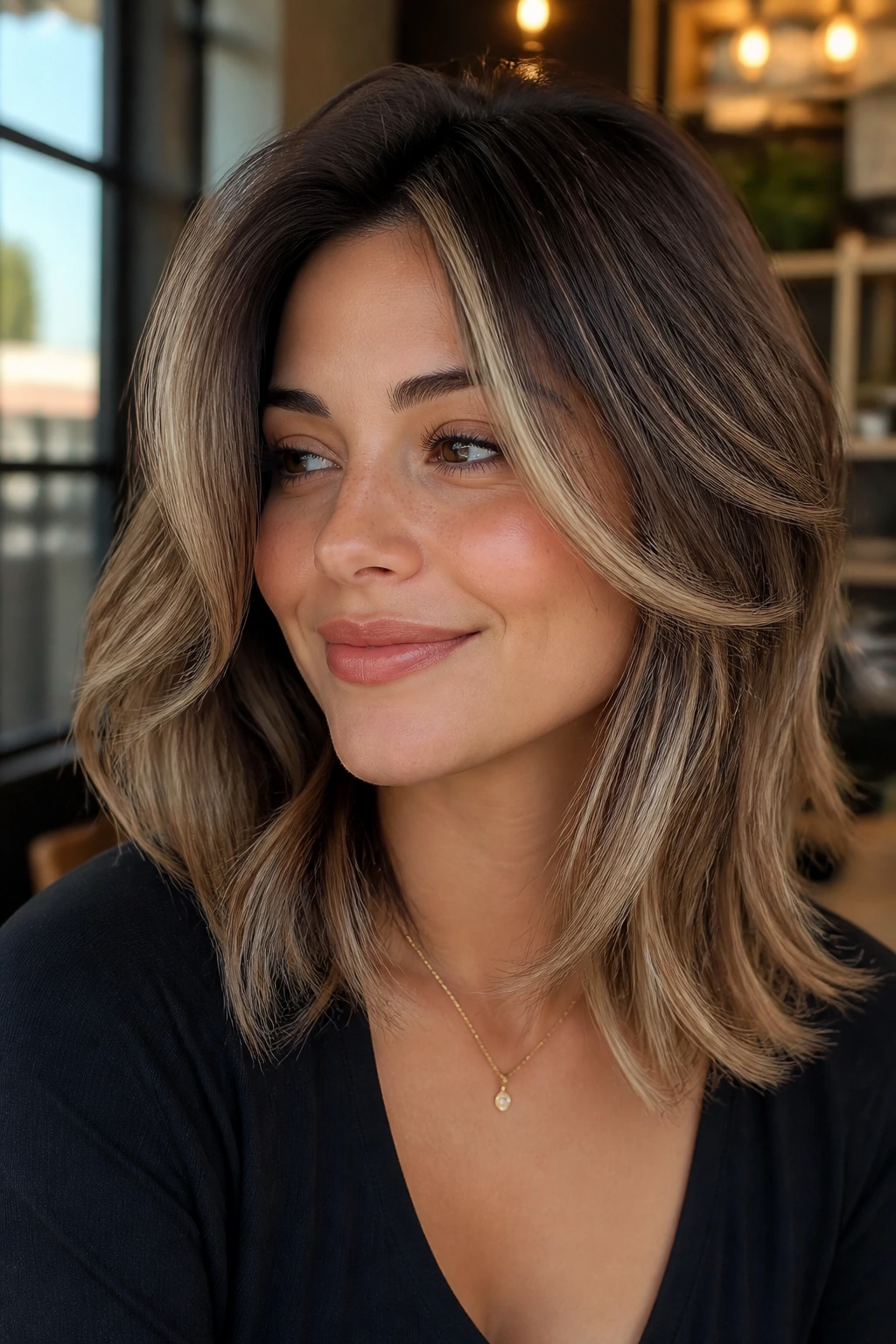
The Soft Grow-Out Version: Keep the layers long and the highlights low-contrast, then add a shadow root so the color can stretch between appointments. This works well if you want dimension without seeing a hard line every four weeks.
The High-Contrast Front Frame: Keep the body of the hair darker and brighten only the face-framing pieces and the top layer around the part. It’s a useful move if you want the haircut to feel fresh without committing to a full head of lightened hair.
The Curly-Friendly Dimension Swap: Replace stripey foil highlights with painted ribbons that follow the curl pattern. The cut stays soft, and the color won’t break apart when the curls spring up.
The Fine-Hair Version: Ask for longer internal layers, babylights, and a shade that sits close to your natural base. You get the look of fullness without the brittle ends that come from overcutting.
The Warm Brunette Upgrade: Use caramel, cinnamon, or chestnut instead of blonde. On dark hair, that warmer palette can look richer and grow out more cleanly than high-lift highlights.
The Bold Fashion Version: Add platinum, rose gold, or copper money pieces to a shag, wolf cut, or pixie. The shape stays layered, but the front gets enough contrast to feel intentional and a little fearless.
Common Mistakes That Flatten the Finish
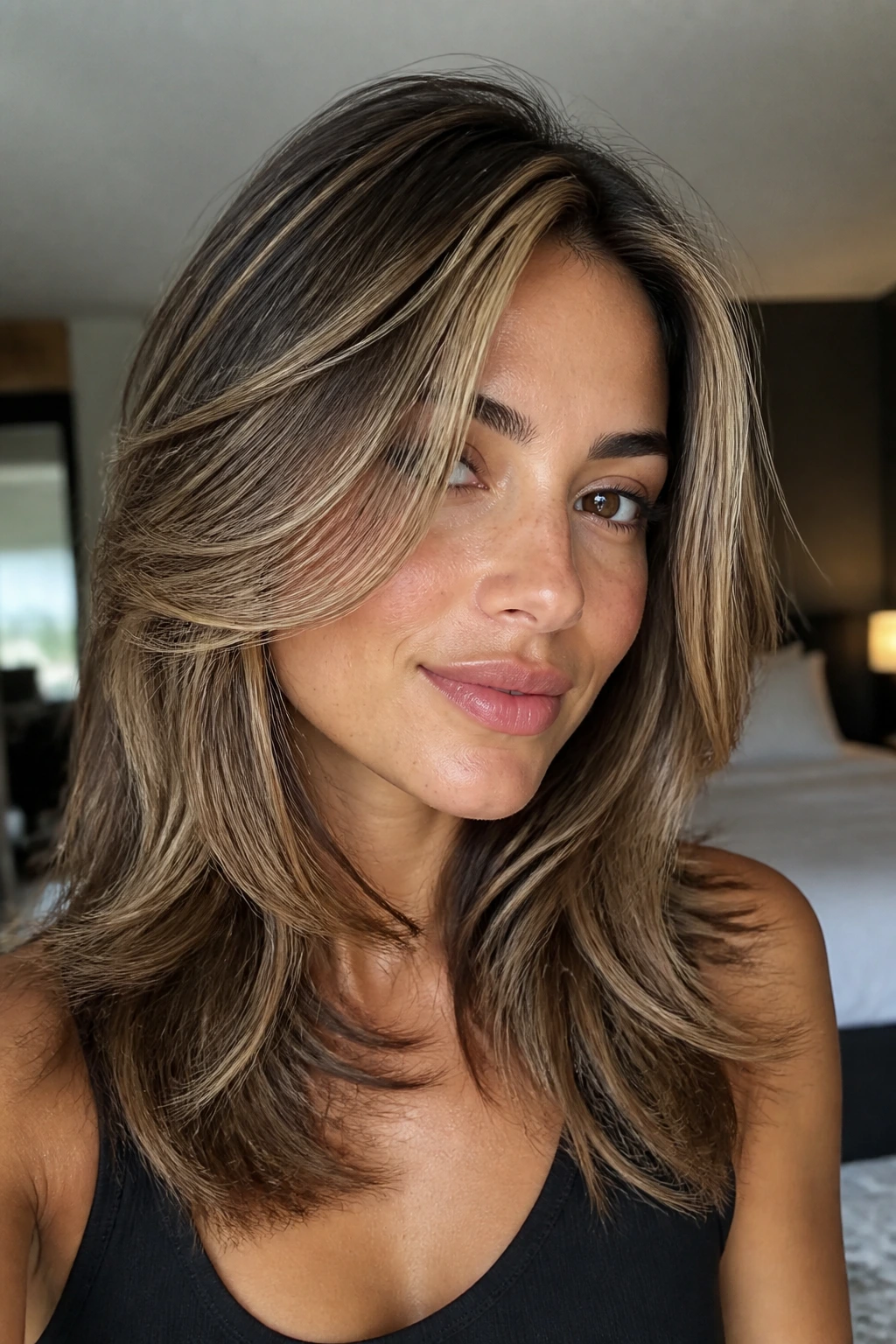
- Putting the brightest color everywhere. If every strand is equally light, the layers disappear. Keep the brightest pieces around the face, the crown, and the top layer, then leave depth underneath.
- Cutting too short into fine hair. Short layers on fine hair can make the ends look see-through fast. Longer, softer layers usually hold their shape better.
- Ignoring the part line. A heavy highlight stripe right at the part can look obvious the second new growth shows. Tuck the brightest pieces slightly off the line and blend them outward.
- Choosing the wrong tone for the base. Cool beige on warm hair can look muddy. Copper on ash brown can turn strange. Match the tone family first, then push contrast if you want it.
- Overusing heat on the same bend. Flat ironed ends can make the color look sharp in the bad way. Alternate between blow-drying, curling, and air-drying so the cut keeps some softness.
- Skipping trims too long. Once the layers lose their clean edges, the highlights stop reflecting the shape and start floating on top of dead ends.
Questions People Ask in the Chair
Which layered haircut with highlights works best for fine hair?
Longer layers with babylights or soft ribbon highlights usually win here. They add movement without carving too much weight out of the ends, which is where fine hair often starts to look sparse.
Do highlights make layered hair look thicker?
They can, if the placement is smart. Mixing a few lighter pieces with deeper lowlights creates the illusion of density because the eye reads more depth across the hair.
Is balayage better than foils for layered cuts?
Balayage is easier to grow out and usually looks softer on long layers, shags, and lobs. Foils are better when you want more lift, more brightness, or a cleaner blonde result.
How do I ask for face-framing pieces without chunky streaks?
Ask for a money piece that blends into thinner ribbons just behind it, instead of a single bright stripe. That keeps the front light without making the color look disconnected from the rest of the haircut.
Can curly hair handle highlights and layers?
Absolutely, but the cut should respect the curl pattern. The best results come when the layers are shaped dry or in their natural state and the highlights follow the curl clumps.
How often should I trim layered highlighted hair?
Most long layers need a trim every 8 to 12 weeks. Shorter cuts, especially pixies and bobs, usually need shape-ups sooner because the outline changes faster.
What if my hair is dark brown and I don’t want a harsh blonde look?
Choose caramel, cinnamon, auburn, or mushroom blonde instead of icy blonde. Those tones give you dimension without making the contrast too sharp.
Does a shadow root help with grow-out?
Yes, and a lot. It softens the line between your natural base and the lighter pieces, which keeps layered hair from looking stripy as the roots come in.
The Layered Looks I’d Keep Returning To
The best layered haircuts with highlights are the ones that make sense from the first step out of the salon and still make sense six weeks later. That usually means the cut has enough shape to move on its own, and the color sits where the shape can actually show it. If those two pieces are fighting each other, the whole look gets tired fast.
I keep coming back to the styles that leave room for the hair to live a little. Long layers with honey balayage. A butterfly cut with caramel around the face. A shag with copper, if you’re feeling less polite. These are not all the same haircut dressed up in different words. They work because the placement is doing the real labor.
Bring a photo if you want, but bring a clear opinion too. Tell the stylist whether you want the brightness at the front, through the mids, or on the ends, because that choice changes everything. Once that part is right, the rest gets a lot easier.
