



A curly shag can be a gift or a mess. The difference usually comes down to where the weight lands. Put the layers in the wrong place, and you get a halo of puff around the cheeks, a flat crown, and ends that look chewed up instead of shaped. Put them in the right place, and the cut does half your styling for you.
Hair changes after 40. Sometimes it gets finer at the temples. Sometimes the gray pieces turn coarser and springier than the rest. Sometimes the curl pattern loosens in one section and tightens in another, which is annoying and also extremely common. That’s why a good shag matters here: it doesn’t fight the texture, it gives it a frame.
The cuts below lean on movement, softness, and a little bit of strategy. Some keep length. Some open up the neck. Some make room for glasses. Some handle dense curls that want to balloon. All of them avoid that old mistake of taking too much bulk off the top and leaving the bottom to do all the work. That shape ages badly, and it grows out even worse.
Why These 24 Shags Work So Well on Curly Hair Over 40
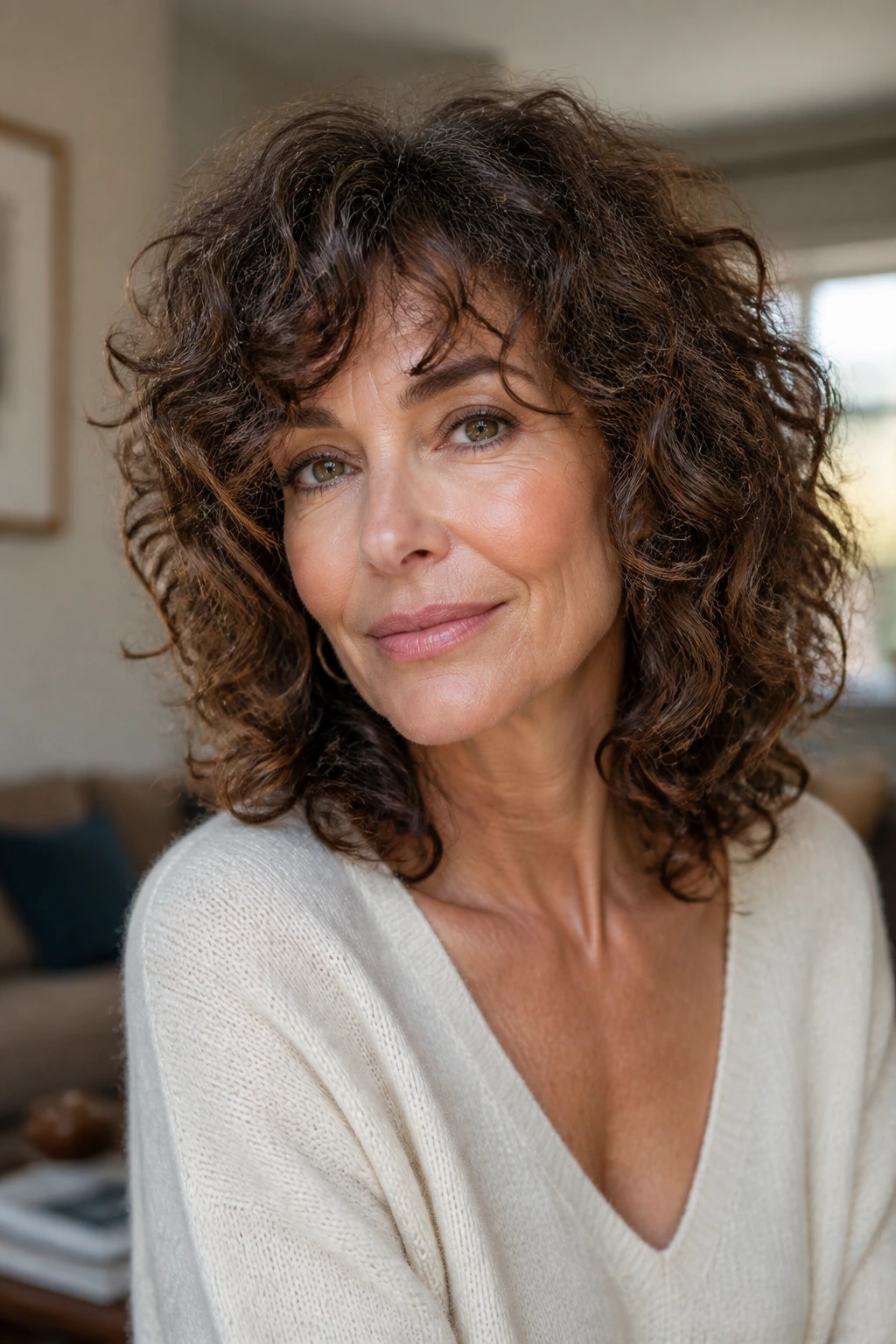
They respect shrinkage instead of arguing with it. A curly shag can sit at the collarbone and dry near the jaw, which is why the cut line matters more than the wet length.
They soften the face without hiding it. Face-framing layers near the cheekbone and mouth open the features, while a little length around the perimeter keeps the cut from feeling severe.
They handle changing density better than one-length cuts. If your crown has thinned a bit or your sides have grown wider, the right shag redistributes volume instead of announcing every change.
They grow out in a polite way. Curly layers blur faster than straight layers, so you don’t get that hard “I need a trim right now” line as quickly.
They work with gray hair, not against it. Silver strands often feel drier and springier; a shag gives them room to move without turning into a triangle.
They can be low-effort, but they are not low-thought. That’s the real appeal. A good curly shag looks relaxed because the cut did the hard part first.
1. Soft Collarbone Shag
A collarbone-length shag is the safest place to start if you want movement without surrendering length. The curls land just below the shoulders, so you still get that swing when you turn your head, but the layers keep the sides from puffing out like a bell.
Why It Works
The collarbone is a sweet spot for a lot of curl patterns. It gives enough length for ringlets to clump, but it’s short enough that the cut doesn’t drag the curls flat at the roots. I like this shape for anyone whose hair has gotten a little finer at the front; it leaves the ends with enough weight to look full.
Ask for long internal layers and a face frame that starts around the cheekbone, not above it. That keeps the cut soft. Too much cutting near the temples makes the face look open in a harsh way. This version stays flattering even when you just scrunch in cream and walk out the door.
2. Chin-Length Halo Shag
Why does chin-length curly hair look so alive in a shag and so boxy in a blunt bob? Because the layers let the curls rise and separate instead of forming one heavy ring around the jaw.
This version is smart if you like a shorter shape but do not want your neck fully exposed. The curls sit like a soft halo around the face, and the chin-length perimeter keeps the cut grounded. It’s a good one for glasses wearers, too. The front pieces can tuck around the frames instead of fighting them.
- Best for medium-to-tight curls that spring up after drying
- Keeps the jawline soft without adding width at the cheek
- Ask your stylist to keep the back slightly rounded, not stacked
- Works well if you air-dry and want the shape to show on day one
3. Shoulder-Skimming Layered Shag
Shoulder length is where a lot of curly cuts go wrong. The hair gets heavy, the layers are timid, and the whole thing hangs there like wet rope. A shag fixes that by keeping the crown light and the bottom controlled.
This cut is the one I’d point to if you want versatility. You can clip the top half back, you can wear it loose, and you can still get enough length for a ponytail on the laziest days. The shoulder skimming line also plays nicely with waves that aren’t fully ringlet-tight anymore. It gives them room to bend.
Styling note
Use a mousse at the roots and a cream only from mid-length to ends. If you put too much product near the scalp, this cut loses the lift that makes it work.
4. Rounded Curly Shag with Fringe

A rounded shag with fringe can take the edge off a strong jawline fast. The shape is full around the crown and cheekbones, then softly tapered at the neck, which keeps the outline from feeling square.
The fringe is the piece that makes this haircut memorable. Curly bangs don’t need to sit perfectly straight across the forehead. In fact, they usually look better when they break into a few soft curls. That little bit of mess gives the cut energy.
Ask for this if you want:
- A softer forehead line
- More width through the upper face
- A shape that hides a high hairline without looking severe
- Bangs that can be swept aside on hot days
This is not the cut for someone who wants zero maintenance. Bangs need a trim more often than the rest, and curls shrink. Still, when it’s cut well, it looks like the hair belongs that way.
5. Silver-Blend Shag

Silver curls behave differently. They puff, they spring, and they can turn wiry in bright light. A silver-blend shag works because it gives those strands a place to sit without turning the whole head into a fluffy cube.
What I like most here is the way the layers let the gray pieces catch light in separate ribbons. The cut looks richer when it’s not smashed into one flat sheet. If your natural color is growing out around the temples or front hairline, a shag makes that blend feel deliberate instead of awkward.
Keep the perimeter a little heavier than you think. Gray hair often feels lighter but behaves rougher, and a bit of weight at the ends stops the shape from lifting too high. That’s the part people miss.
6. Long Boho Shag with Face-Framing Pieces

Long curls need a shape, not a curtain. This shag keeps the length but breaks the wall of hair into softer sections, so the curls move instead of hanging as one heavy block.
The face-framing pieces should start below the cheekbone if your curls are springy. If they’re looser, you can bring them higher. Either way, the front needs to fall in a way that opens the face when you tuck one side behind the ear. That tiny shift matters more than people think.
This is the cut for someone who likes a little drama but does not want to go short. It works especially well with loose spirals and wavy curls that need help forming a stronger outline.
7. Tapered Pixie Shag
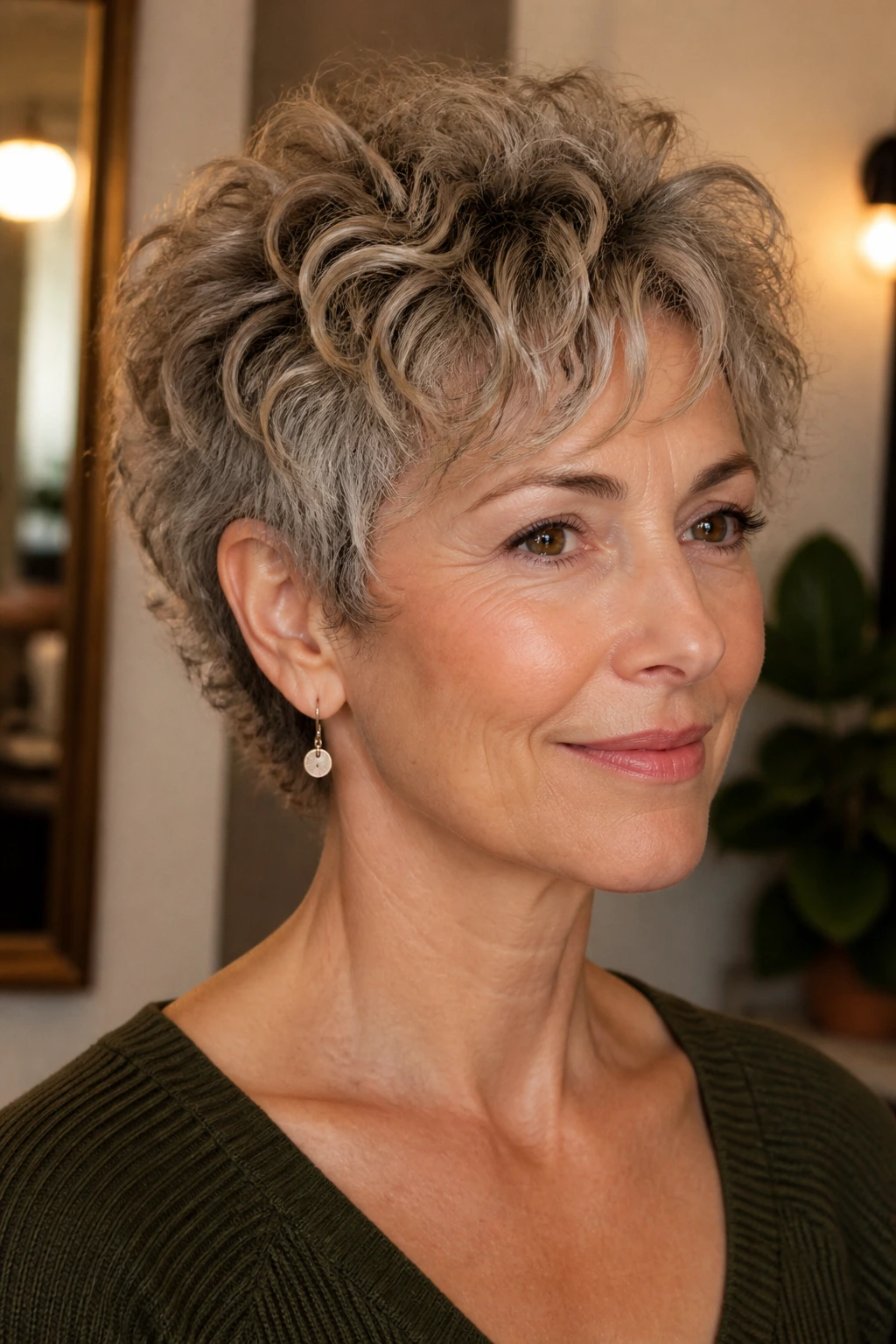
A tapered pixie shag is for the person who wants the neck free and the crown alive. It’s short, but not severe. The layers lift at the top and feather down through the sides, so the cut keeps some softness around the ears.
This one can be a relief if thick hair has started feeling like a second job. Less length means less dry time, less detangling, and less weight pulling the curl out of shape. The trick is to keep enough texture on top that the cut still reads as curly, not clipped too close.
The best versions have a little piecey fringe or a short curl cluster at the forehead. That keeps the cut from feeling too plain. It’s a brave choice, yes. It’s also one of the easiest to live with when it’s cut right.
8. Curtain Bang Curly Shag
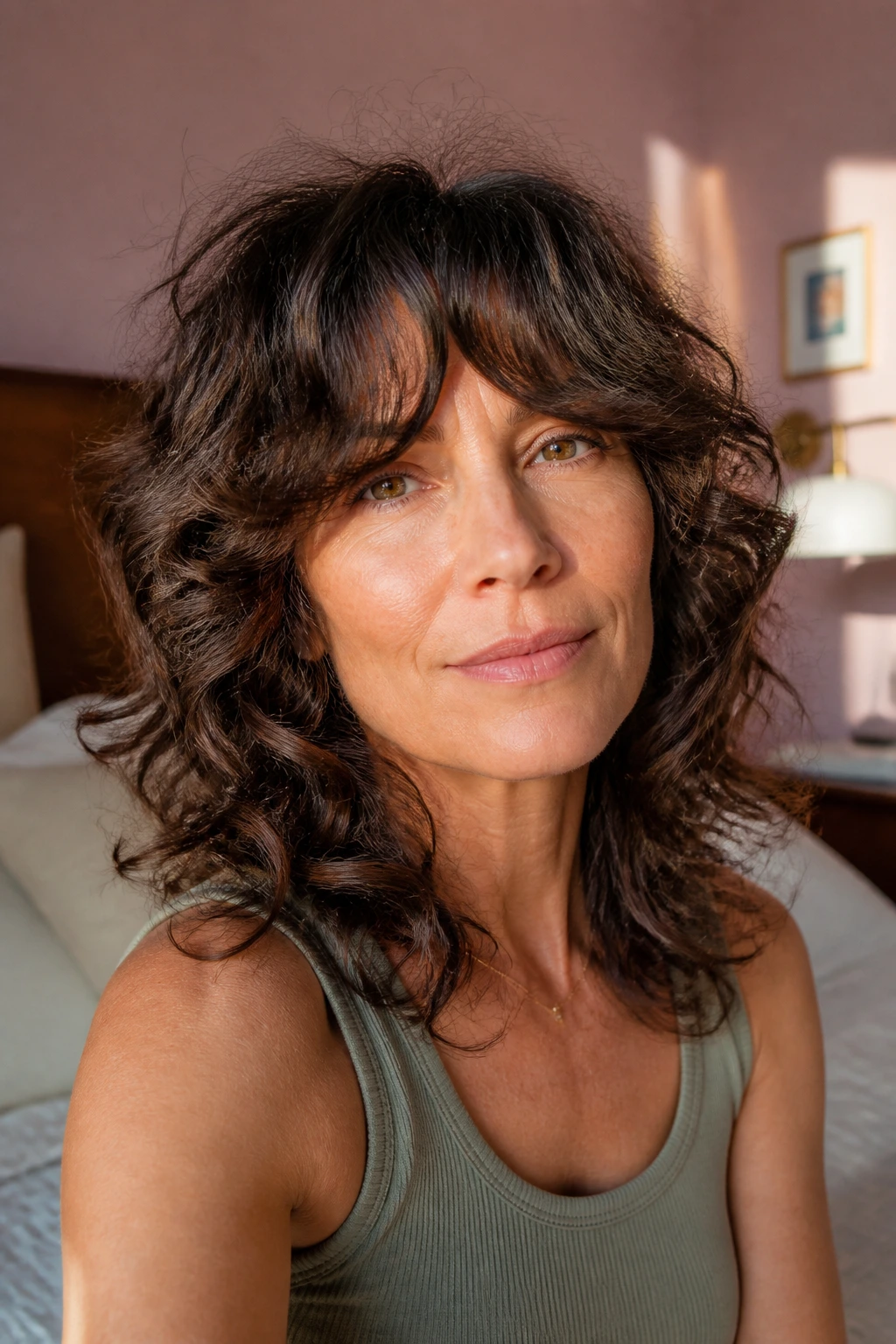
Curtain bangs on curly hair are a little fussy on paper and very forgiving in real life. They split around the face, soften the forehead, and give the shag a built-in frame that doesn’t need much styling.
The nice part is how they grow out. Straight bangs can turn annoying fast. Curly curtain bangs usually just become face-framing layers, which is a much better deal. If your forehead feels prominent or your face is longer than you’d like, this shape helps break up the vertical line.
The part that matters
Have the bangs cut dry or nearly dry. Curl shrinkage can take two inches off the final length, and no one enjoys discovering that after the wash. Keep them long enough to tuck back. That tiny bit of flexibility saves you from constant trimming anxiety.
9. Side-Parted Volume Shag

A side part changes the whole conversation. It lifts one side, lowers the other, and gives the curls a less symmetrical shape that often reads softer on mature faces.
This cut works especially well if the hair has started to flatten at the center part. A side sweep adds instant height where you want it and a little shadow where you don’t. The shag layers help the split fall naturally instead of looking like you wrestled it there.
I like this version for round faces and for people whose hairline has changed a bit over time. It doesn’t try to hide that change. It just redirects attention with a cleaner silhouette.
10. Invisible-Layer Mid Shag
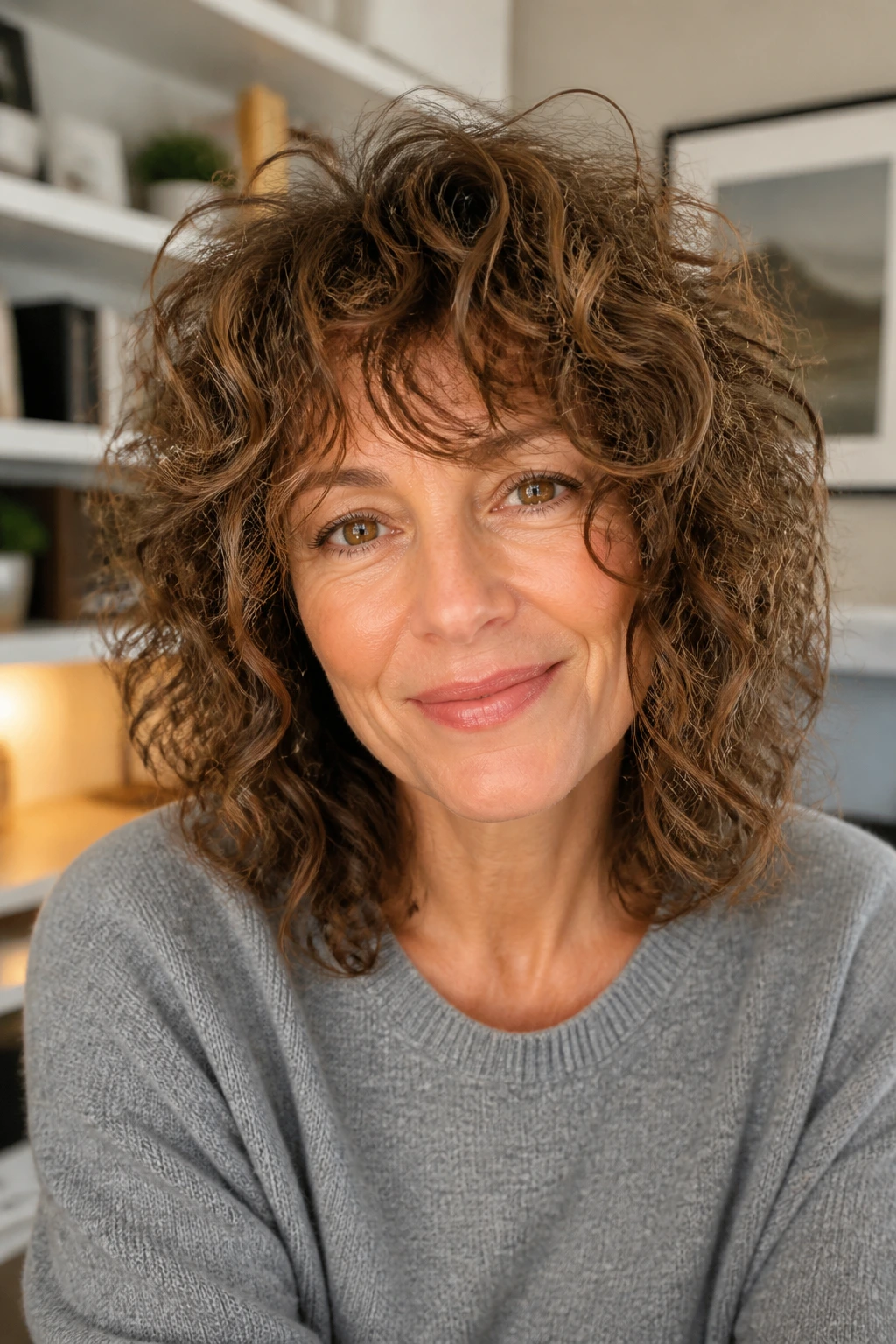
Invisible layers are a lifesaver when you want volume to live inside the shape, not on the surface. The cut looks more uniform than a heavily chopped shag, but the curls still move.
This is a good answer for anyone who has fine-to-medium curls and hates the choppy look that some layered cuts create. The surface stays smoother. The inside gets the lift. That means you can wear it to the office without looking over-styled, then scrunch it up and get more texture later.
- Best when you want polish first and texture second
- Works well with looser curls and strong waves
- Ask for softness through the interior, not random short pieces
- Good choice if you do not want a bang area to dominate the cut
11. Razor-Shaped Ringlet Shag
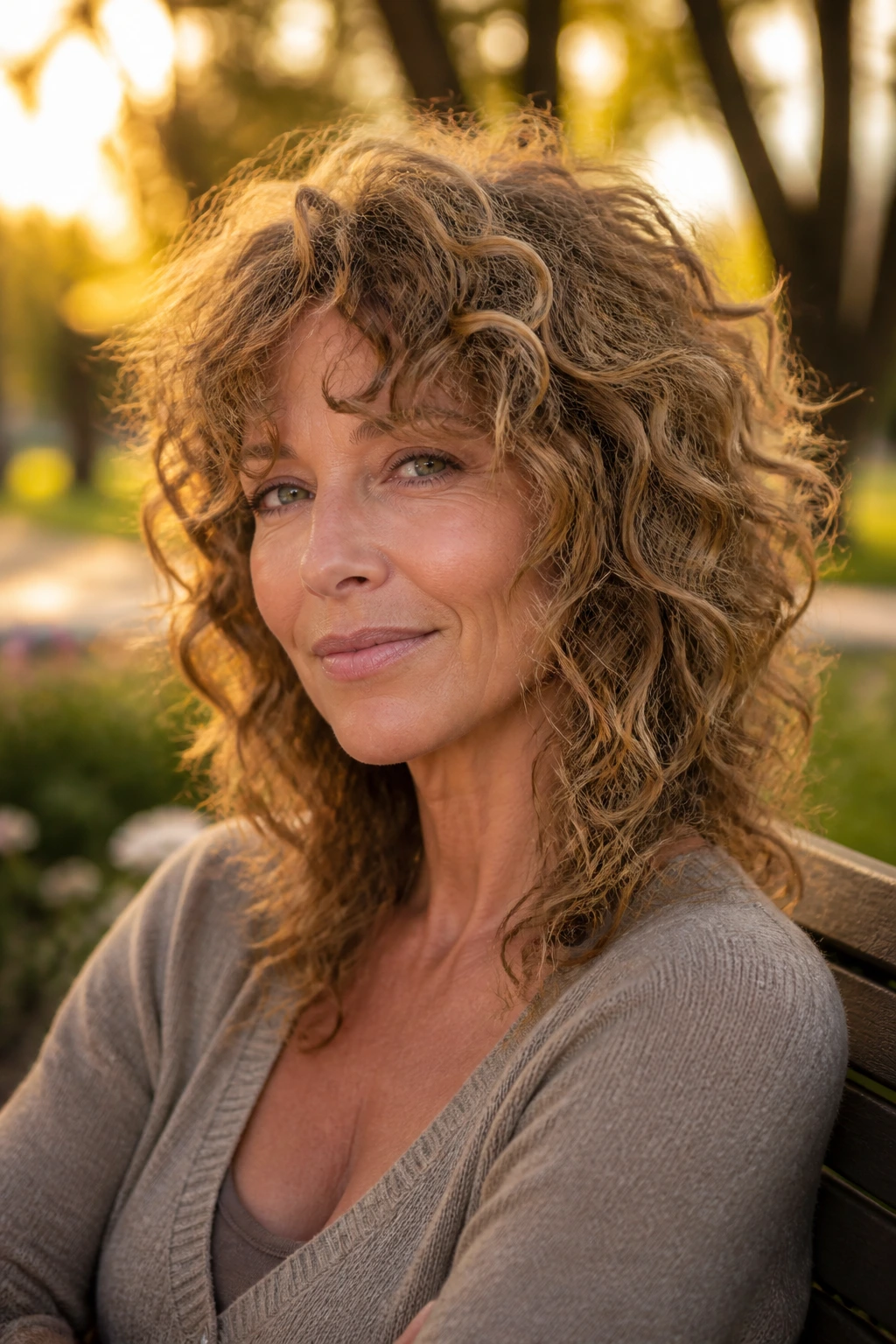
Loose ringlets and a razor-cut shag can be a gorgeous match—if the stylist knows where to stop. Too much razor work on curly hair turns the ends frayed. Done with restraint, it gives the ringlets a light, airy finish.
The effect is less “chunky layer” and more “soft separation.” You get definition without that bulky stacked look near the bottom. It’s a solid choice for medium-density hair that tends to clump too much and then collapse by midday.
What to watch for
The razor should be used on the ends and selected face-framing sections, not hacked through the whole head. You want movement, not fuzz. If your curls are already dry or porous, keep the razor request modest and ask for a clean finish at the perimeter.
12. Salt-and-Pepper Tousled Shag

Salt-and-pepper curls look richer when the cut stops fighting the texture. This shag lets the color do the work by separating the silver and dark pieces into visible ribbons.
The tousled part matters. You want enough layer movement to keep the hair from sitting like a helmet, but not so much that the ends disappear. A good stylist will leave a stronger outline through the bottom and add activity around the crown and sides.
This is one of my favorite shapes for hair that has become a little coarse with time. The texture can actually help the style. It grabs product well, holds shape, and gives the finish a bit of grit that straight, silky hair has to fake with styling.
13. Full Fringe Curly Shag
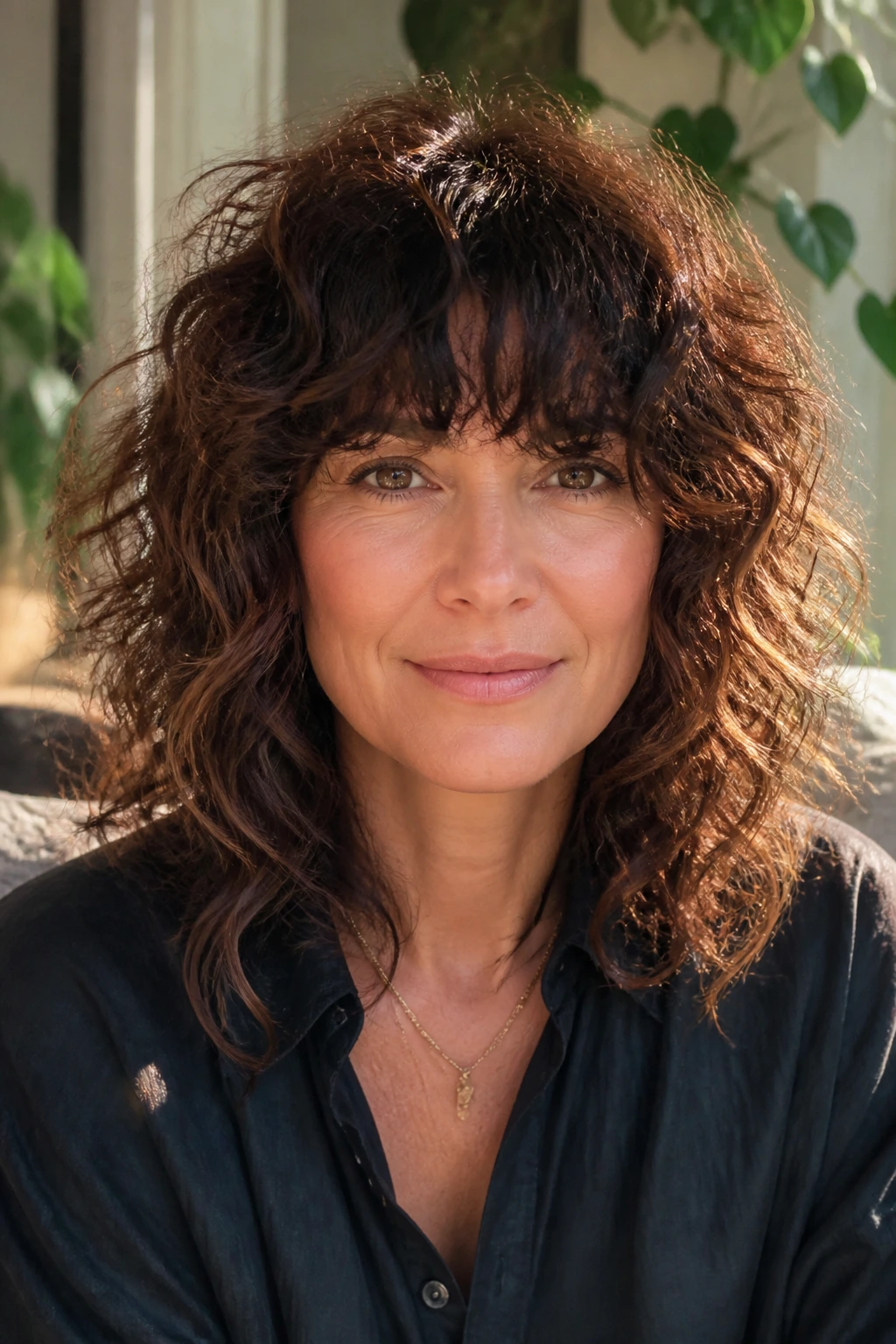
Full fringe on curls sounds bold until you see how it softens the forehead and hides a high hairline. The trick is to keep the fringe long enough to break, not so short that it stands up like a miniature hedge.
The best curly fringe shags have layers that fall into the bangs instead of fighting them. That keeps the front cohesive. I’d choose this cut for someone who likes a face-forward look and doesn’t mind a little daily shaping with fingers and a diffuser.
A fringe like this changes the whole mood of the haircut. It feels a bit more editorial, a little less casual. Good. Hair should have some personality.
14. Curly Shag Bob

A curly shag bob has the cleanest outline in the bunch. It stops around the jaw or just above the shoulders, but the internal layers keep it from looking square or stiff.
This cut is handy if your curls are dense and you want to control width. The bob shape keeps the perimeter neat; the shag layers keep it from sitting as one block. That balance is hard to get with a blunt bob, which often turns too broad on curly hair.
Styling tip
Diffuse only until about 80 percent dry, then let the rest air-dry. If you fully dry the roots while the ends are still wet, the bob can puff at the sides and go flat underneath. That’s the exact opposite of what you want.
15. Long Thick-End Shag
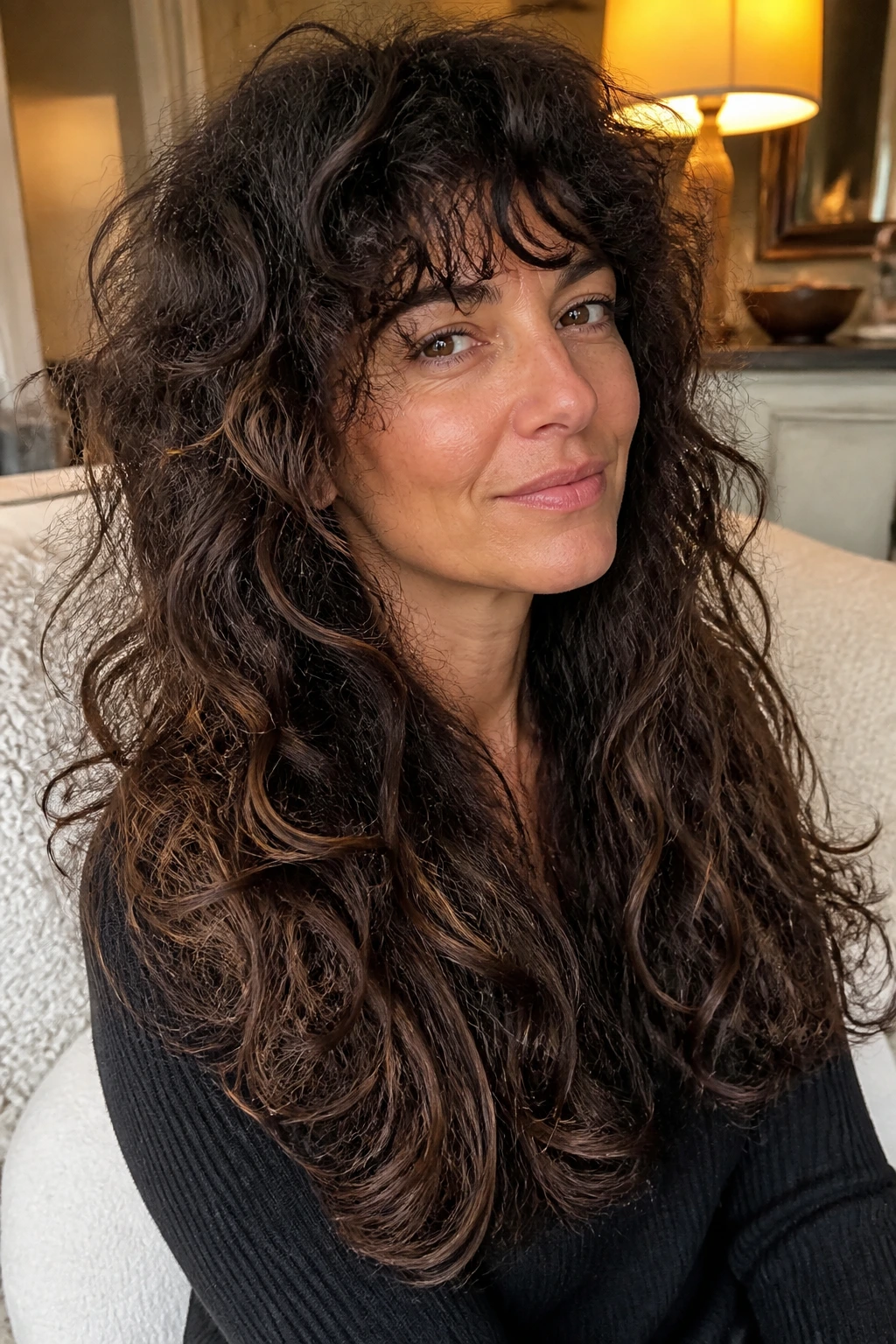
Length can still feel luxurious when the ends stay thick. This shag keeps the bottom line dense while removing bulk higher up, which is the right move for curls that have too much volume in the middle and not enough shape at the ends.
It’s a good fix for people who want hair past the shoulders but hate that heavy, draped look. The layers give the top room to breathe. The ends stay enough that the cut still looks expensive in the practical sense of the word: full, healthy, and not wispy.
You’ll know it’s working if the curls fall in sections instead of one giant sheet. That sectioning is the whole point.
16. Airy Wedge Shag
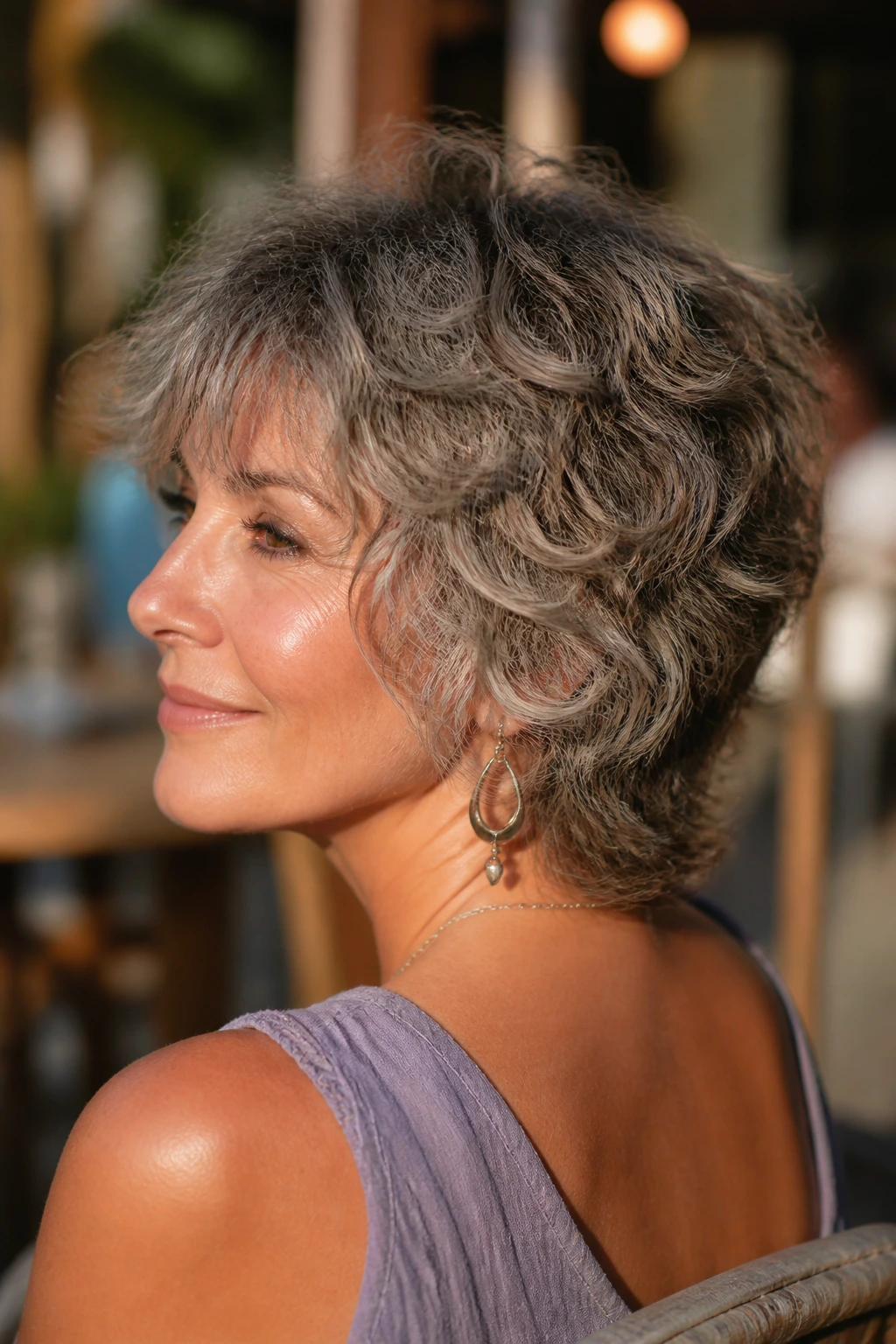
An airy wedge shape solves one problem that keeps coming back: puff at the sides and collapse at the crown. The wedge gives the top more lift and lets the lower shape taper in, which keeps curly hair from spreading sideways.
This is a smarter cut than it sounds. It doesn’t have the old-fashioned wedge helmet feel because the curls soften the geometry. Done well, it looks light, open, and a little lifted at the back of the head, which can be a nice change if your hair tends to lie flat there.
It suits people who want a bit of structure but do not want the haircut to shout. The silhouette is there. It just doesn’t behave like a hard line.
17. Soft Wolf-Inspired Shag
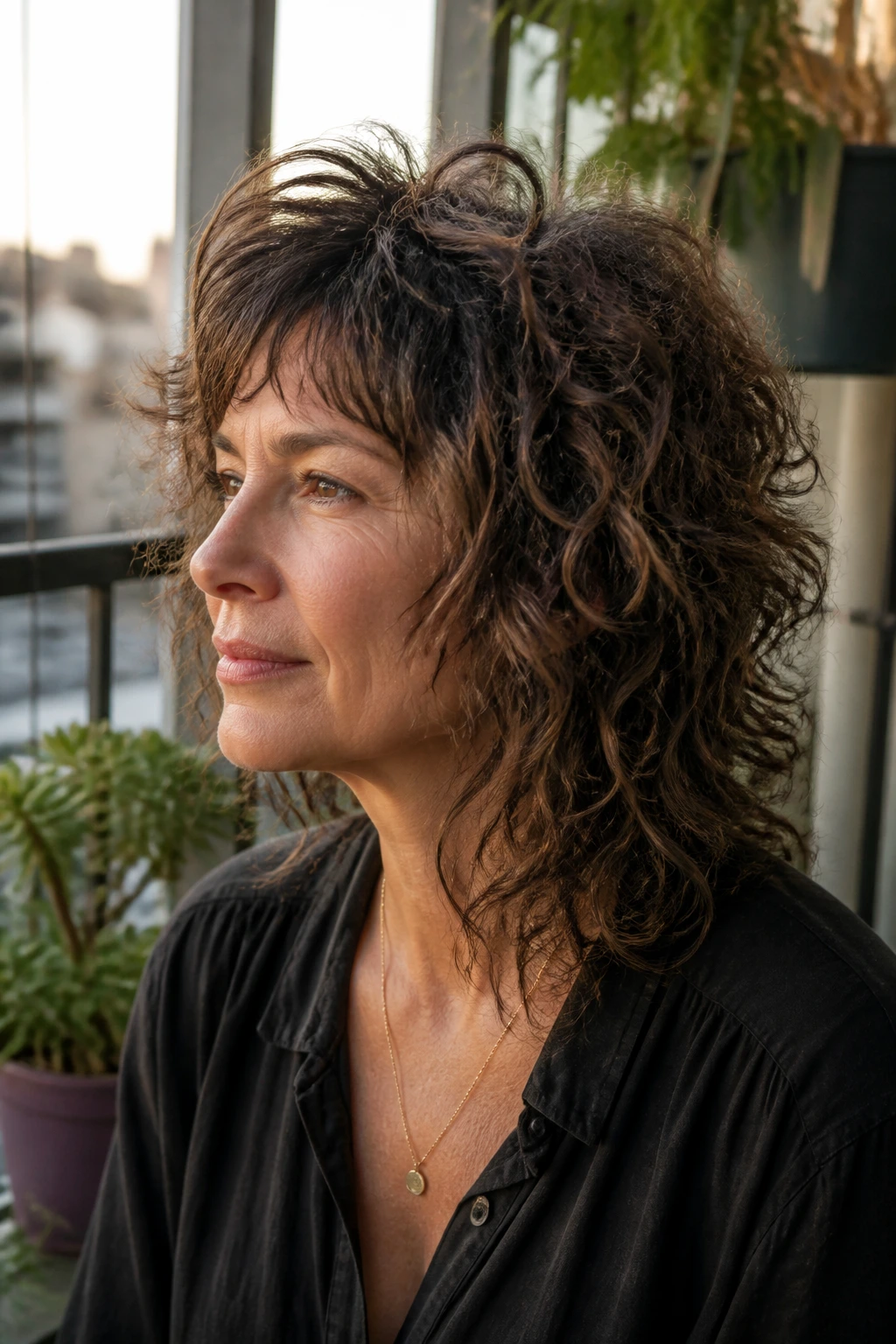
The soft wolf-inspired shag is the cut people ask about when they want edge but not a costume. It borrows the crown lift and piecey layers of a wolf cut, then softens the whole thing so it works on grown-up curls.
I like this version on dense hair and on curl patterns that naturally separate. It gives a little attitude near the crown and temples, then keeps the perimeter loose enough to move. The key is restraint. Too much contrast between top and bottom can look trendy for five minutes and annoying for six months.
If you’re nervous about going too short, ask for a softened wolf shape rather than a full-on choppy version. That tiny wording change matters.
18. Layered Shoulder Bob Shag

A layered shoulder bob does the everyday work. It’s tidy enough for a meeting, soft enough for dinner, and loose enough that your curls still get to look like curls.
This cut works best when the stylist keeps the outside shape near the shoulders and adds movement underneath. That stops the bottom from ballooning out. If you’ve got a lot of hair, this one can make life easier because it removes bulk without making the ends look thin.
The good part
You can tuck it, clip it, pin it, and still have a shape at the end of the day. Some shags collapse into nothing after a few hours. This one keeps its outline.
19. Tousled Lob Shag

The lob shag sits in that sweet spot between easy and styled. It has enough length to feel familiar, but the layers keep it from sinking into a flat mass at the shoulders.
This is a strong choice for medium curls that need a little help bouncing back after washing. The tousled finish makes the haircut look softer than a precision lob, which is useful if your features read sharper than you’d like. One side tucked behind the ear, a few curls left loose on the other side, and the whole thing changes shape.
A lob shag is also one of the friendlier cuts for people who are testing the waters. It gives you movement without asking you to lose too much length.
20. Cropped Nape-Taper Shag
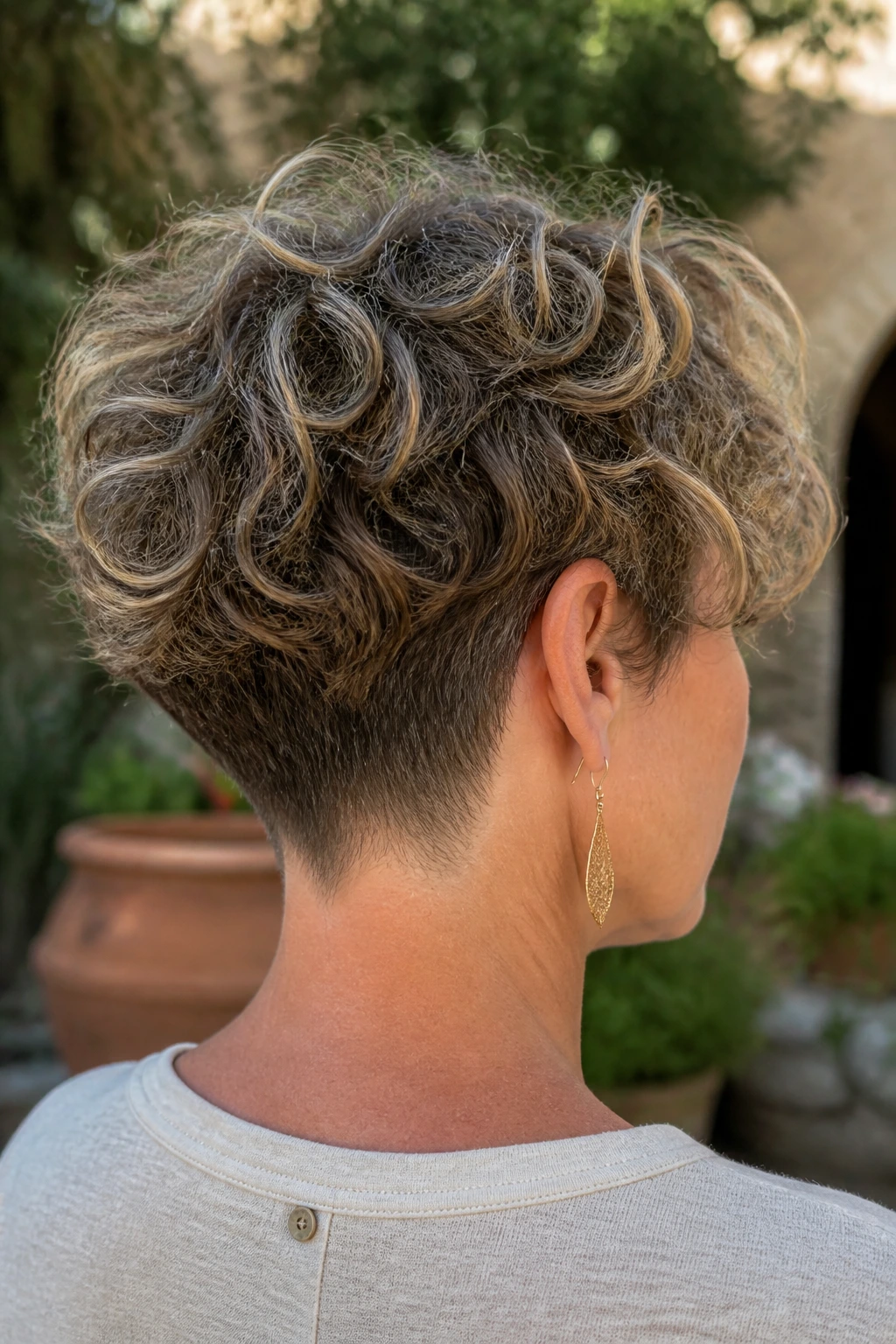
A cropped shag with a nape taper sounds severe; on curls, it can look surprisingly gentle. The taper at the neck keeps the back neat, while the top stays loose and airy.
This version is practical if your curls puff at the nape or if you dislike hair brushing your collar. It’s also a good answer for warmer climates and for anyone who wants shorter dry time without going all the way to a pixie. The top can still be fluffy, soft, and curly. The bottom just behaves.
I’d ask for a taper that doesn’t expose too much scalp at the neck. Too tight and the cut loses its softness. A little shadow there is enough.
21. Crown-Heavy Shag
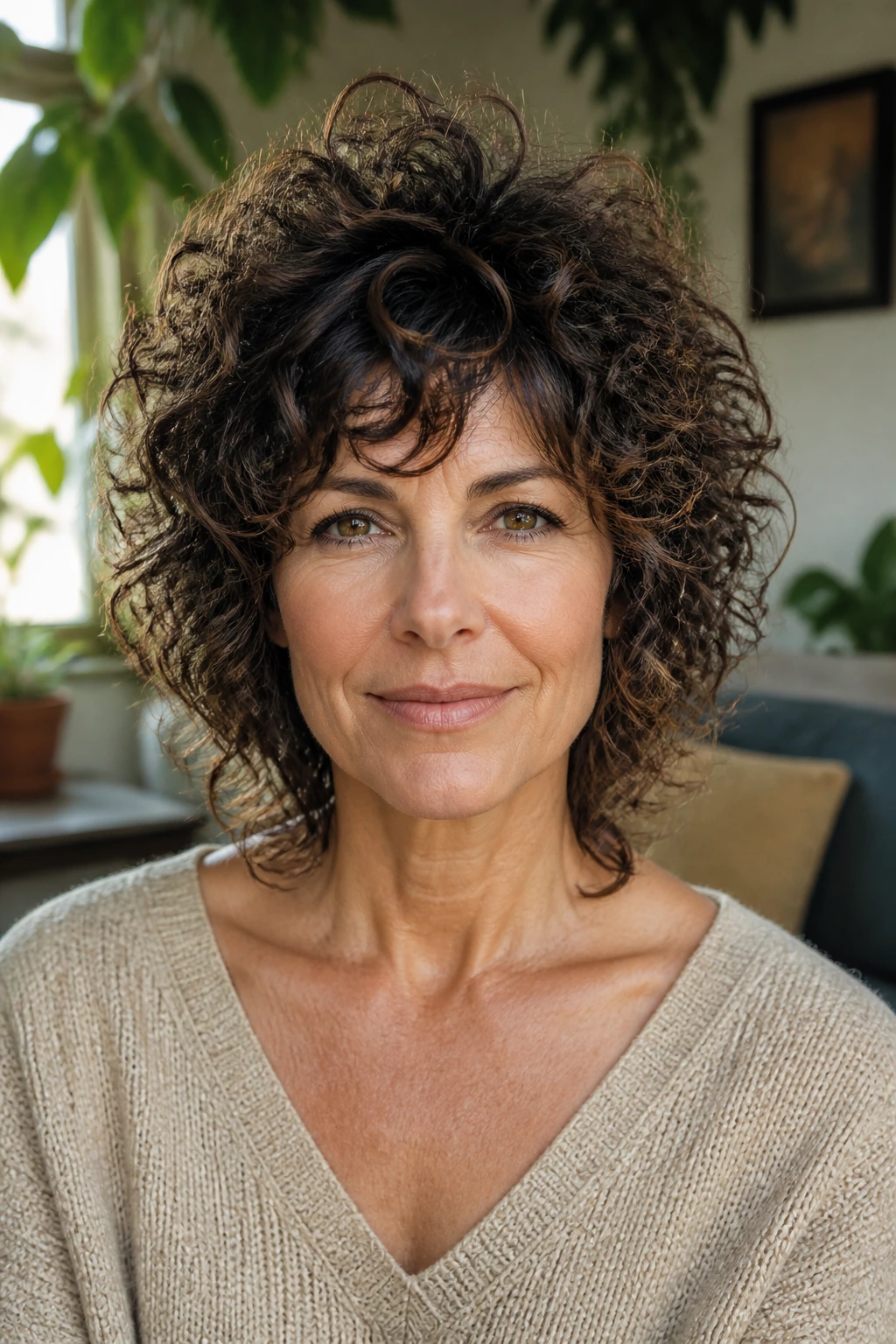
Heavy on top, lighter at the ends—that balance sounds backward until you see it on a curly head. A crown-heavy shag keeps the lift where it matters and lets the lower sections stay controlled.
This cut is especially helpful if your curls flatten at the root but still bulk up from the ears down. The extra shape at the crown makes the whole head look taller, which can be a nice visual fix if the profile feels wide. It also helps with hats, clips, and second-day styling. You’re working with a shape that already knows where it wants to live.
The best version keeps the top lively without turning frizzy. That’s the line.
22. Triangle-Release Shag

A triangle-removal shag is less about fashion and more about geometry. If your curls widen below the ears and collapse on top, this cut shifts the balance back upward.
The fix usually means removing bulk in the lower sides while keeping enough weight at the perimeter to stop the ends from disappearing. That sounds technical because it is. But the result is simple: the hair no longer sits like a pyramid. It falls with more curve and less bulk.
This is one of the best shapes for thick curls that have a mind of their own. It’s also a nice choice if you’ve spent years fighting the triangle and are tired of pretending it’s “just volume.”
23. Soft Curly Mullet Shag

The soft curly mullet works when you want more personality than a standard shag can give you. Shorter at the crown and around the face, a little longer through the back, it creates movement that feels playful rather than precious.
This shape is not for someone who wants to disappear into the crowd. It has presence. The curls make it less literal than a straight-hair mullet, which is part of the charm. On the right face shape, it lifts the cheekbones and gives the neck a nice line.
Keep the transitions soft. That’s what makes it wearable. If the difference between front and back gets too harsh, the cut loses the curly softness that makes it interesting.
24. Wash-and-Go Shag
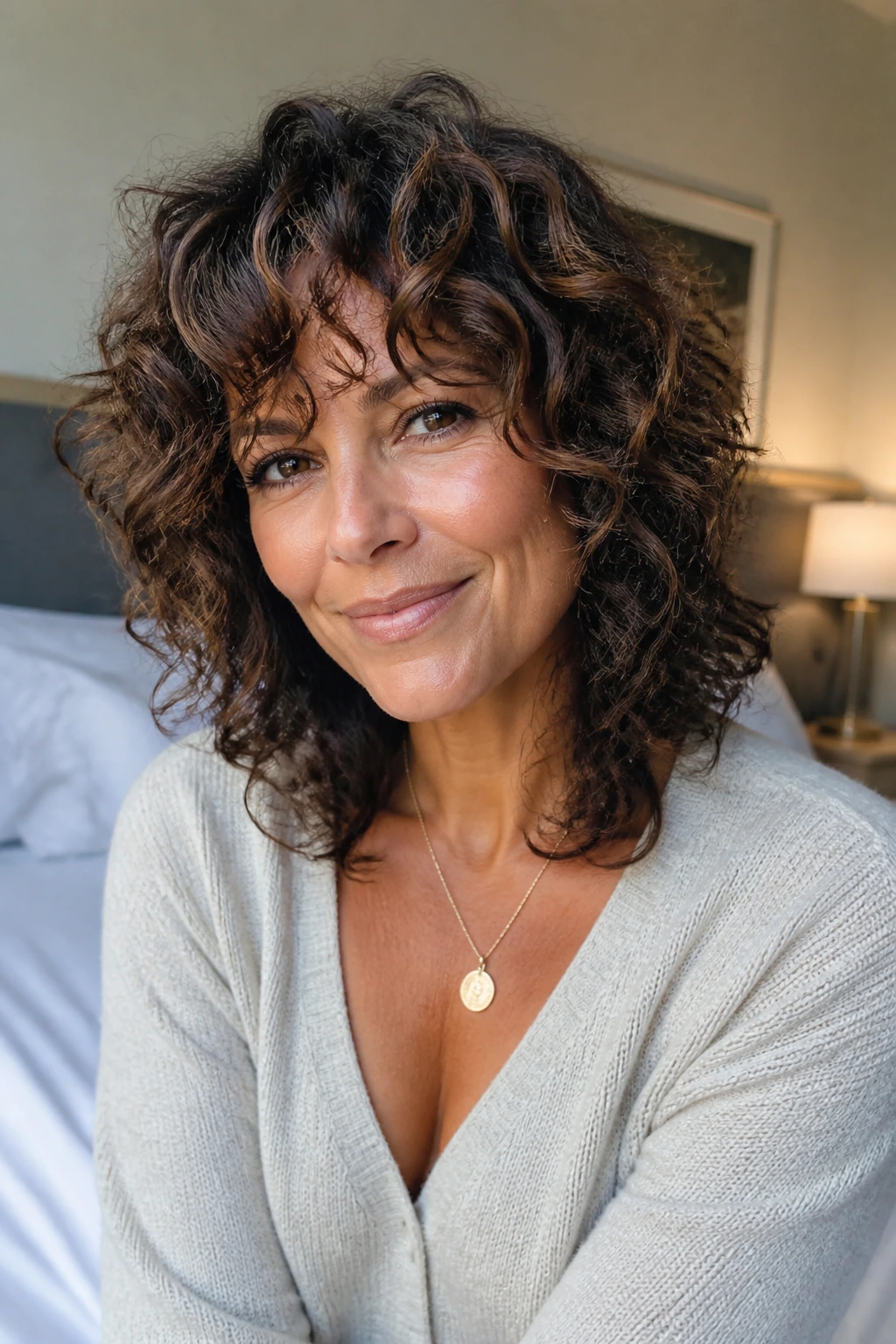
A wash-and-go shag should look decent after a rough sleep, a long commute, and one refill of coffee. That’s the standard I’d use. If the cut only works on fresh wash day, it’s asking too much.
This version keeps the layers simple and the perimeter believable. It should air-dry into shape without a long battle with a brush. The face frame matters, the crown lift matters, and the ends need enough weight to keep from frizzing apart. No drama. No fussy construction.
If you want one shag that can survive real life, this is the one to bring to the stylist. It won’t be the most dramatic option in the room, but it may be the one you wear most.
Why Curly Shag Haircuts Over 40 Keep Working When Hair Changes Texture
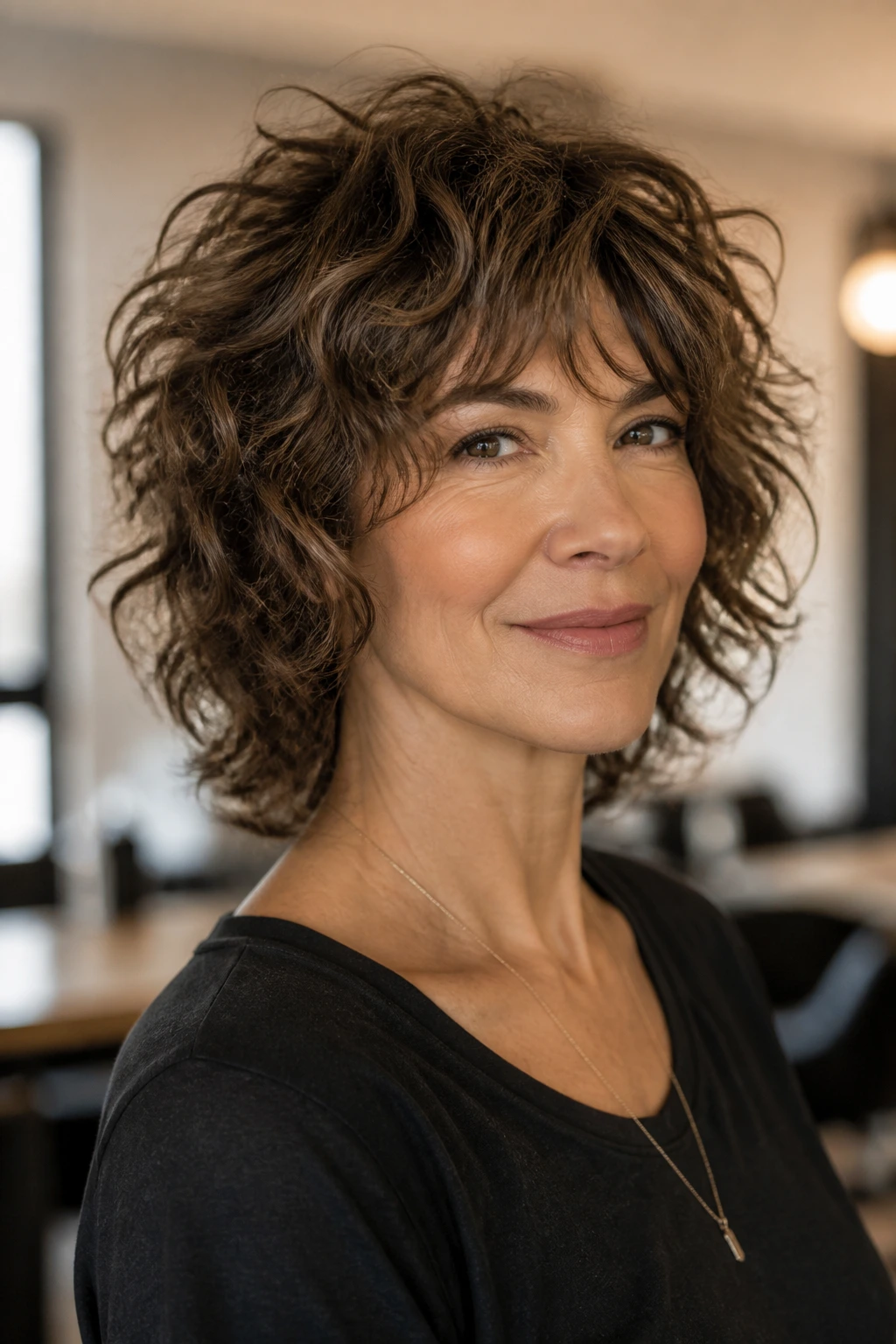
A good shag does not depend on hair behaving perfectly. That is why it earns its keep. Curly hair over 40 often gets a little more selective: some areas lose density, some strands turn coarser, and the curl pattern can change from crown to ends. A shag gives those differences a job instead of pretending they are flaws.
The cut also helps when you want shape without constant heat. A blunt, one-length outline can look neat on the chair and awkward two hours later. Curly layers blur more naturally, so the haircut still makes sense when you’ve slept on it, clipped it back, or let it dry in the car. That softness is the point.
There’s one more thing people miss. A shag is not automatically choppy. A badly cut shag is choppy. A good one has weight, pacing, and a perimeter that knows where to stop. That’s why I keep coming back to dry shaping and careful face-framing. Those choices separate “I need a correction” from “why does this look so easy?”
Essential Tools for Cutting and Styling These Looks
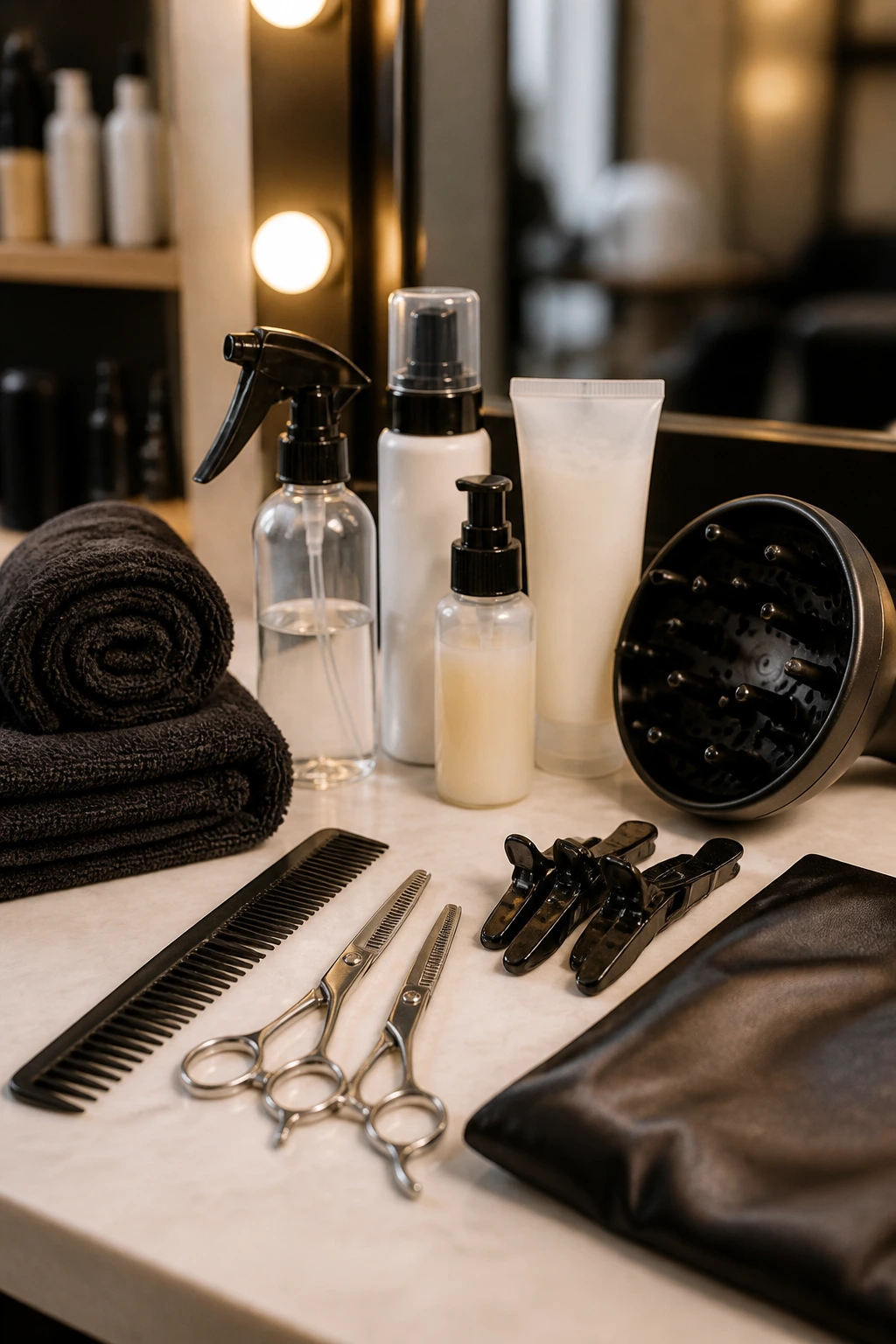
- Sharp haircutting shears — If you trim bangs or dust the ends at home, dull scissors shred curly ends fast.
- Wide-tooth comb — Best for detangling in the shower without ripping curl clumps apart.
- Spray bottle — Handy for reviving one side or re-wetting a section before styling.
- Microfiber towel or cotton T-shirt — Cuts down on friction, which helps keep frizz from starting before the hair is even dry.
- Diffuser attachment — The fastest way to keep a shag’s shape while drying the crown and fringe.
- Sectioning clips — Useful when you want the top lifted while the sides dry separately.
- Lightweight curl cream — Good for soft definition on medium to thick curls.
- Mousse or foam — Better for fine curls that need lift without collapse.
- Gel with flexible hold — Helps the cut keep a clean outline in humidity.
- Satin pillowcase or bonnet — Keeps the layers from roughing up overnight and flattening at the crown.
Smart Salon Notes Before the Scissors Come Out
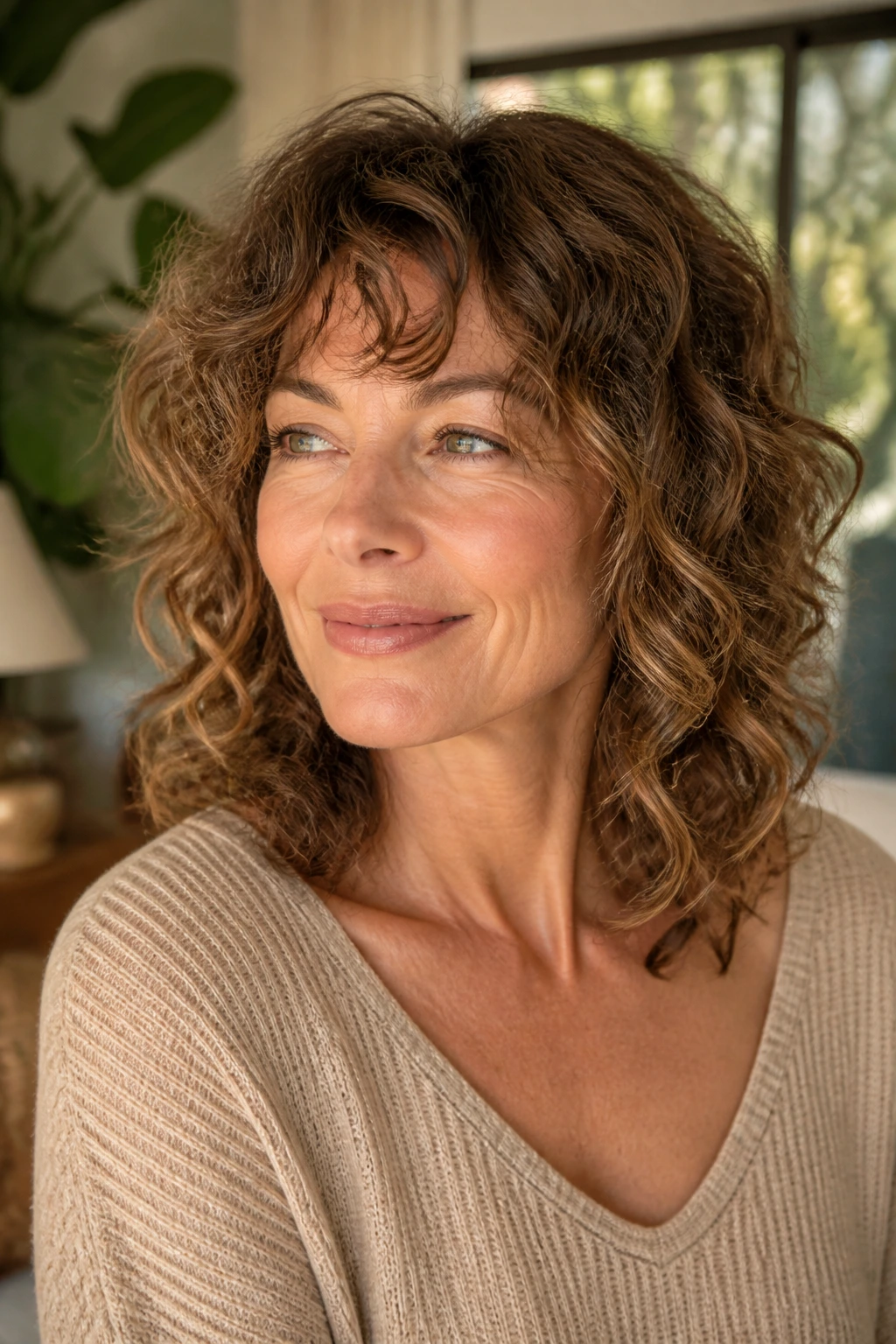
Bring photos, but bring the right kind of photos. A curly shag on a person with tight coils does not translate cleanly to loose waves, and a haircut that looks airy on one texture can look bulky on another. Show images of hair that matches your curl pattern, density, and length, even if the face is different. That gets the conversation closer to reality.
Say how you actually wear your hair. If you air-dry 90 percent of the time, say so. If you diffuse for five minutes and leave the rest alone, say that too. If you wear glasses, mention the temple area. If your hair splits at the crown or poofs at the sides, name those spots. Stylists can work with specifics. Vague requests produce vague cuts.
Ask where the weight will stay. Ask where it will be removed. Ask whether the fringe will be cut dry. That one question saves a lot of disappointment, because curly bangs shrink. If the stylist reaches for thinning shears without explaining why, speak up. They have a place, but they are not a magic fix.
How to Style Curly Shag Haircuts Without Turning Them Puffy
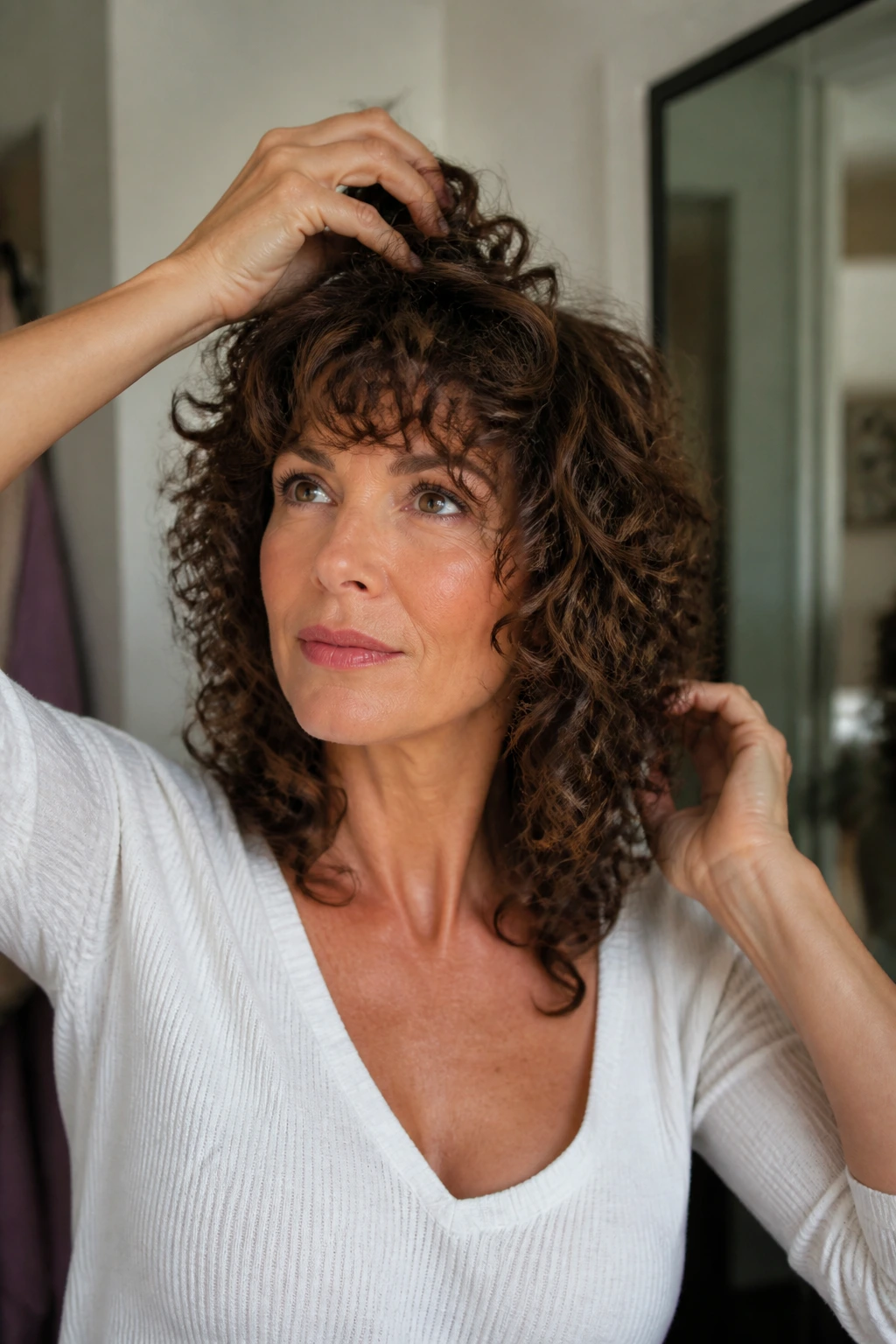
Start at the roots. Use a small amount of mousse or foam at the crown while the hair is still damp, then work a cream through the mid-lengths and ends. That keeps the top from collapsing and the bottom from getting greasy.
Use less water than you think. Soaked curls take forever to dry and tend to stretch under their own weight. Damp is enough. Scrunch, then leave the clumps alone unless a section is misbehaving.
Diffuse in short bursts. Hold the bowl at the roots first, then move to the sides and fringe. Stop before the hair is bone-dry if frizz is a problem; let the last bit air-dry to avoid over-handling.
Refresh with a mist, not a bath. On day two or three, a few sprays of water plus a pea-sized bit of cream or a light foam is usually enough. Rake only the outer layer if you must. The inner clumps should stay intact.
Humidity needs a plan. If your hair goes wide in damp air, finish with a flexible gel cast or a humidity-resistant spray. It’s not glamorous, but neither is triangle hair in August.
Common Mistakes That Flatten or Box Out the Cut

Cutting the layers too high. If the stylist starts the shortest pieces at the crown or upper cheek, the cut can puff out like a mushroom. The fix is a softer transition and more length through the surface.
Taking too much off the ends. Curly hair often looks shorter once dry, and if the perimeter gets too thin, the whole shape loses its anchor. Ask for enough weight at the bottom to keep the outline steady.
Using heavy products on fine curls. Thick creams can make a shag collapse by lunch. Fine curls usually do better with mousse or foam first, then a tiny bit of cream only where needed.
Ignoring shrinkage. A bang that hits the lashes wet may sit far above the eyebrows dry. Same with side pieces. Cut with shrinkage in mind or the shape changes before you’ve even left the house.
Over-layering coarse hair. Coarse curls can hold shape, but they fray when sliced too aggressively. The ends start looking fuzzy and the curl pattern breaks apart. Controlled layering works better than wild texture removal.
Variations and Adaptations to Try

The Glasses-Friendly Sweep
Keep the front pieces long enough to curve around the frames instead of sitting on top of them. This works especially well with side parts and curtain bangs, because the hair can move around the glasses instead of competing with them.
The Fine-Curl Lift
If your curls have gotten finer, ask for longer layers and a lighter crown shape. The goal is lift without too much removal. This version keeps the hair from looking sparse around the temples.
The Dense-Curl De-Bulk
For thick hair, remove weight underneath and leave more strength at the perimeter. That keeps the cut from exploding sideways. It’s the cleanest fix for big, dense curls that need structure.
The Gray-Blend Frame
Let the front pieces stay a touch softer so silver streaks can show without looking striped. This version suits people who want the gray to look intentional and dimensional.
The Low-Styling Shape
Keep the layers moderate, the fringe optional, and the outline simple. This is the practical version for anyone who wants to wash, scrunch, and leave the house without a 20-minute setup.
Keeping the Shape Between Cuts

A shag stays handsome when you keep the layers from drifting into one another. For most curly heads, a shape cleanup every 8 to 12 weeks works well. Fine hair may want a touch-up a little sooner. Denser hair can usually stretch a bit longer if the outline still behaves.
The fringe deserves more attention. If you wear bangs, plan on a small trim every 4 to 6 weeks, or at least a careful dusting at home if you know your hand is steady. The rest of the cut can tolerate a little grow-out. Bangs have no patience.
Sleep matters more than most people admit. A satin pillowcase, loose pineapple, or a soft clip at the crown keeps the layers from crushing overnight. If the next morning starts with a mist and a scrunch, fine. If it starts with a full wash every time, the cut is probably not being preserved well enough.
Product buildup can make any shag sag. Clarify when your curls start feeling coated, usually every few weeks if you use mousse, cream, and gel in rotation. Clean curls show the shape better. Muddy curls hide it.
Questions People Ask Before Going Shaggy

Will a shag make my curly hair look thinner?
Not if it’s cut with enough balance. A good shag removes bulk where the hair feels heavy and keeps weight where the outline needs support, which often makes hair look fuller rather than flatter.
Do I need bangs for a shag to work?
No. Bangs change the mood, but they are not required. You can get the same softness with face-framing layers that start at the cheekbone or chin.
Is a shag good for fine curly hair over 40?
Yes, if the layers are kept long enough. Fine curls need lift, not over-thinning. Too many short pieces can make the hair look sparse at the sides.
What if my curls are dense and wide?
Ask for controlled weight removal under the surface and a perimeter that keeps its shape. That stops the triangle effect without making the ends look stringy.
Should this cut be done wet or dry?
Dry or nearly dry is usually safer for curly hair. That lets the stylist see the shrinkage, the clumps, and the real outline instead of guessing.
How often should I trim it?
Most shag shapes hold well for about 8 to 12 weeks. Bangs or short face-framing pieces usually need attention sooner.
Can I wear this cut with glasses?
Absolutely. Just keep the front pieces planned around the frame width and temple area. A good shag should sit with glasses, not fight them.
What if my crown goes flat after a few days?
Use a root mist, flip the part, and clip the crown while it dries for a few minutes. If that stops working, the cut may need a small reshaping at the top.
A Shape That Keeps Up
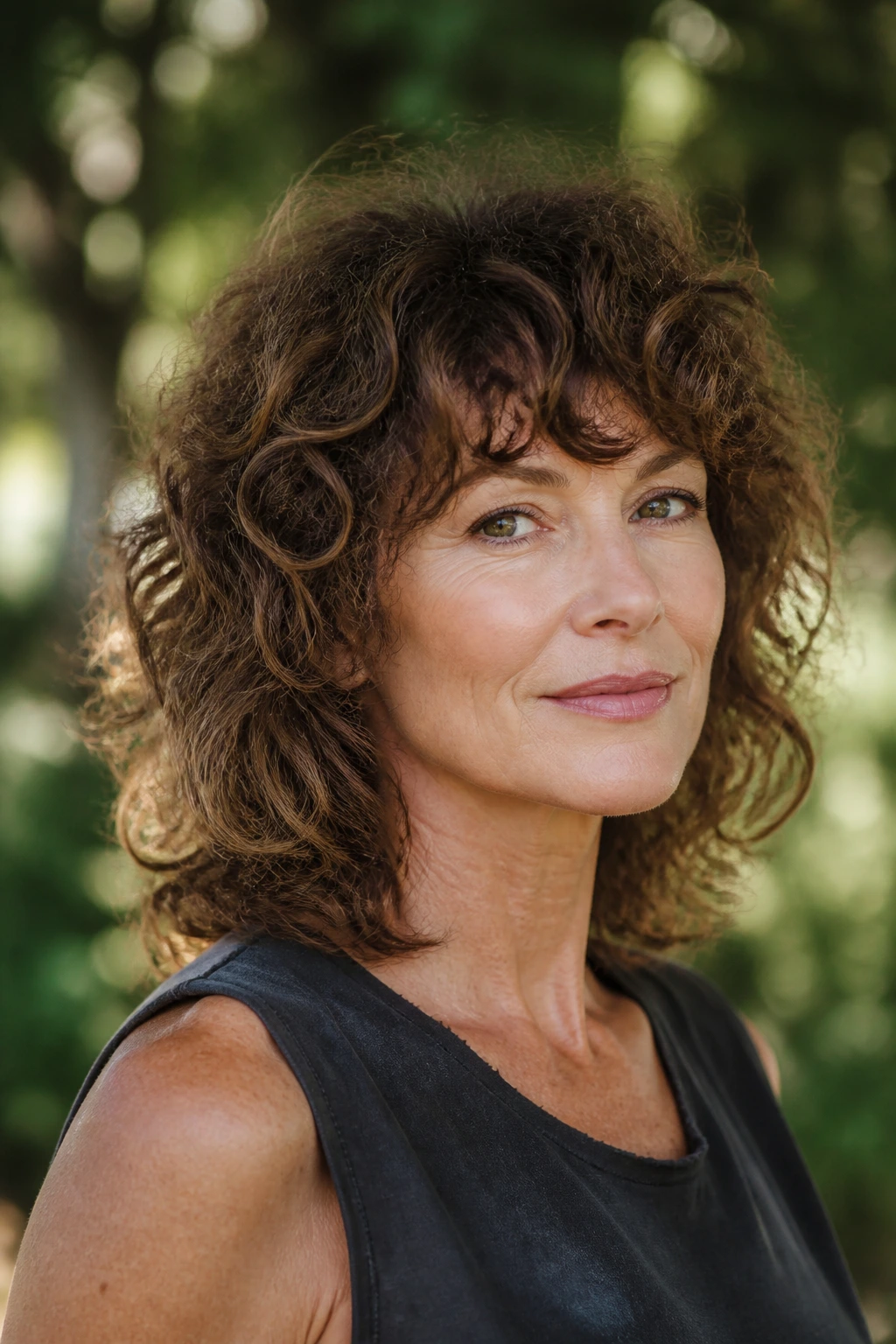
A curly shag does something a blunt cut rarely does: it makes changing hair look deliberate. That matters more than chasing a fake idea of “perfect” curls. The right layers can soften gray, lift a flat crown, and keep curls from expanding into a box by midday.
Pick the version that matches your texture, not the one that looks the boldest in a screenshot. The best shag is the one you can live in without negotiating with it every morning. If you walk out of the salon and the hair already looks like it belongs to your face, your curl pattern, and your routine, you’ve got the right cut.
