



Side part shag haircuts for round faces work because they do one thing blunt cuts refuse to do: they break up the circle. A center part and a heavy, even perimeter can make the widest part of the face feel louder than it is. A side part changes that conversation fast. It pulls the eye diagonally, gives the crown a little lift, and lets the front pieces fall where they can actually help.
The shag part matters too. A good shag is not just “lots of layers.” That’s how people end up with puff around the cheeks and strange little shelves at the jaw. The versions that flatter round faces usually keep the shortest pieces away from the cheekbone’s widest point, then let the length live a little lower — jaw, collarbone, even the top of the chest. That extra drop gives the face room.
Some of the styles below are soft and airy. Some have a bit of bite. Some are built for curls, some for straight hair that likes to sit flat, and some for the person who wants their haircut to look slightly undone even after a long day. The common thread is shape: angled part, face-framing movement, and enough length in the front to keep the cut from reading as wide. That’s the sweet spot, and it’s where the best side-part shags for round faces live.
Why These 23 Cuts Work on Round Faces

-
Diagonal balance: A side part pulls the eye off the widest point of the face, which matters more than people think when the cheeks are full and soft.
-
Layer placement: The best shag layers start below the cheekbone or soften around it; layers that flare right at cheek level can make the face feel wider.
-
Crown lift: A little height at the top adds length without making the haircut stiff. Flat roots do the opposite.
-
Texture control: Shags work with waves, bends, and curls instead of fighting them, so the shape feels lived-in rather than helmet-like.
-
Fringe flexibility: You can use side-swept bangs, curtain pieces pushed to one side, or a long face frame. You do not need a hard, blunt bang line.
-
Grow-out grace: Good shag layers blur as they grow, which means the cut can keep its shape longer between trims than a sharply chopped style.
1. Collarbone Shag with a Deep Side Sweep
This is the shag I reach for when someone wants movement without the “I got my hair aggressively thinned out” effect. The collarbone length is doing a lot of quiet work here. It gives the face a longer line, and the front pieces can drape past the cheek without stopping right on the widest part of the face.
Why It Flatters a Round Face
The deep side sweep is the part that makes the whole cut feel intentional. It starts off-center, creates a diagonal across the forehead, and gives the crown a little extra lift on the heavier side. That combination pulls the eye upward and down, not straight across.
Ask for soft layers that begin around the lips and get a touch piecey through the ends. If the ends are too blunt, the haircut starts to feel boxy. If they’re too shredded, the whole shape can turn wispy in the wrong way.
Best for: medium to thick hair that can hold a bend.
Ask for: a collarbone perimeter, a deep side part, and face-framing layers that fall below the cheekbone.
Style it with: a 1.25-inch round brush or a medium curling iron, then rake the front loose with your fingers.
2. Chin-Skimming Shag with Beveled Ends
A chin-length shag can work on a round face, but only if the ends are beveled instead of chopped blunt. Blunt chin-length hair can sit like a line drawn across the face. Bevel it, and the whole thing suddenly feels lighter and more directional.
The trick is keeping the shortest layers soft and the front pieces just long enough to graze the jaw. That little bit of length keeps the face from feeling boxed in. A side part adds even more help because it shifts the bulk off the center line and lets the front fall in an uneven, flattering way.
This cut likes hair that has a little natural texture or can be coaxed into one. If your hair is pin-straight and fine, a root-lifting spray at the crown keeps it from collapsing into the cheeks.
3. Long Shag with a Side-Swept Curtain Fringe
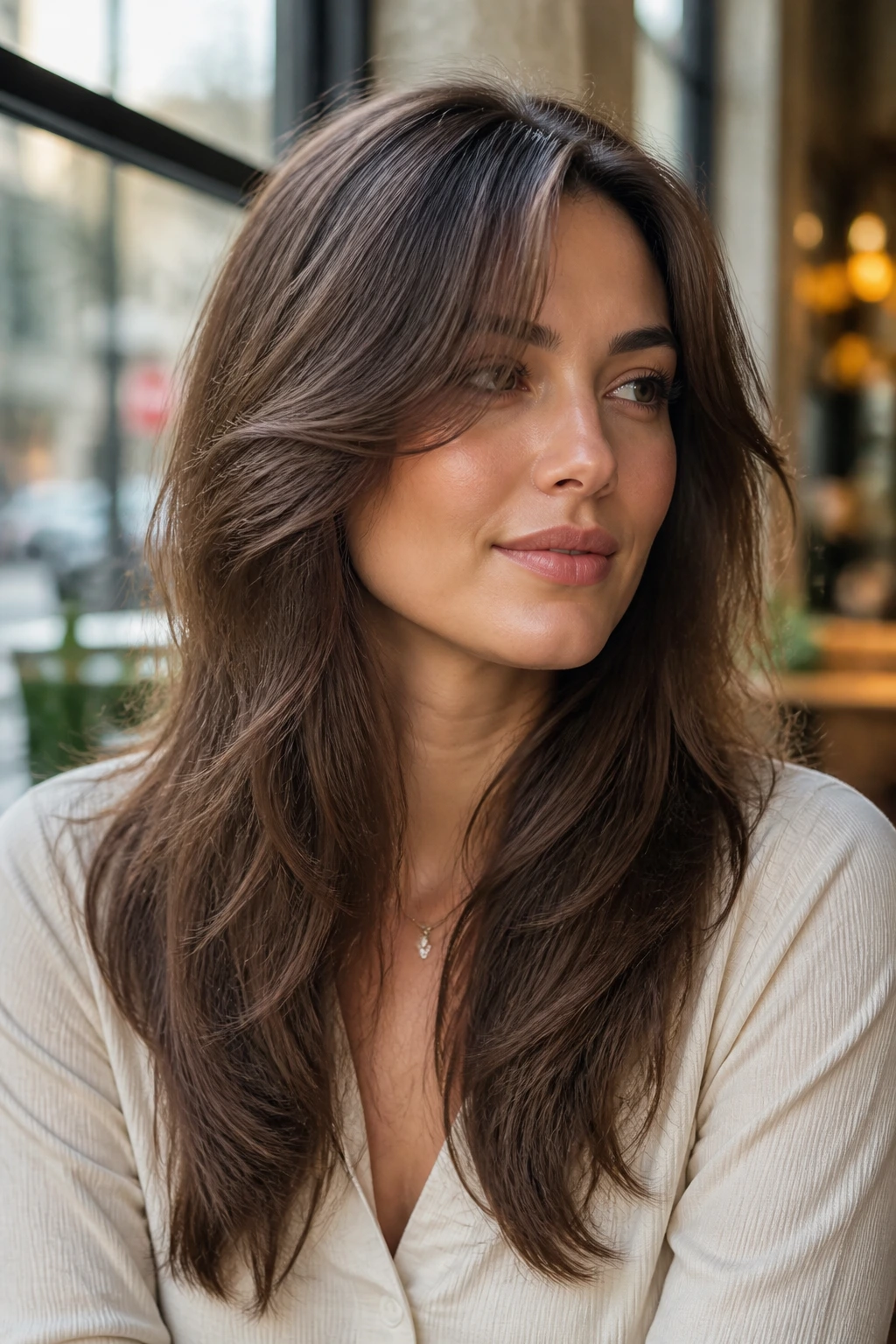
Why does this one work so well? Because it gives you the softness of curtain bangs without locking you into a center part. The fringe splits, then one side rides a little heavier than the other, which is useful on a round face. The eye reads movement before it reads width.
Keep the longest pieces around the chest or just above it. Long shag layers have room to taper, and that taper is what keeps the haircut from puffing out beside the face. If the front pieces are cut too short, the whole style can drift into triangle territory, especially on thick hair.
A side-swept curtain fringe is also a nice compromise if you want bangs but don’t want to babysit them every morning. They grow out with less drama than a full blunt fringe and still give the forehead some coverage.
How to Wear It
Blow-dry the fringe forward first, then direct it slightly away from the face on the fuller side of the part. That tiny shift gives the haircut its shape. Finish with a light texture spray only at the mid-lengths and ends, not at the roots.
4. Wolf Shag with Cheekbone Layers

If you want a little edge, this is the one that leans into it without becoming a full cartoon wolf cut. The crown has more lift, the ends are more broken up, and the front sits in longer pieces that help the face look less circular. The key is restraint. Too much height near the temples and the style starts to fan outward in exactly the wrong place.
Cheekbone layers are the whole game here. They should skim, not sit like shelves. On a round face, that matters because shelves at cheek level add width. A softer, jagged drop past the cheekbone creates a diagonal instead.
This cut is happiest with hair that has some natural bend or can hold a light wave. On straight hair, it needs a bit of styling to keep the texture from looking flat and scattered. On thicker hair, ask the stylist not to over-remove weight through the sides.
5. Shoulder-Grazing Airy Shag

Shoulder-grazing lengths are underrated on round faces. They give the haircut room to move, and they keep the outer edge from landing right at the jaw, which is where a lot of cuts lose the plot. Add an airy shag shape and you get layers that swing instead of sit.
This version is especially nice if you like to tuck hair behind one ear or wear it half-up. The side part keeps one side a little fuller and lets the other side fall forward in a softer sheet. That asymmetry helps more than people expect. A perfectly even shag can be cute, but a little unevenness gives the face more dimension.
I also like this length for second-day hair. The layers don’t need to be pristine. A few bends, a little dry shampoo at the roots, and the shape still reads clean.
6. Curly Shag with a Soft Side Part

Curly hair and side parts get along better than a lot of people realize. A soft side part lets the curls stack diagonally instead of building into an even halo around the face. That diagonal is what narrows a round face visually.
The big mistake with curly shags is cutting too much height into the sides. That makes the curls bloom right at cheek level, which is a fast way to widen the face. Better to keep the shortest layers controlled and let the curls live lower through the perimeter. The side part can be moved while the hair is wet, then left alone until it dries.
What to Ask For
- Layers that respect your curl pattern, not chop through it.
- A perimeter that stays longer under the chin or collarbone.
- A side part that doesn’t start too close to the temple.
- Face-framing pieces that soften, not frizz outward.
Use a diffuser on low heat and stop scrunching before the hair gets fluffy. Curls need room, but they do not need chaos.
7. Fine-Hair Shag with a Blunt Base
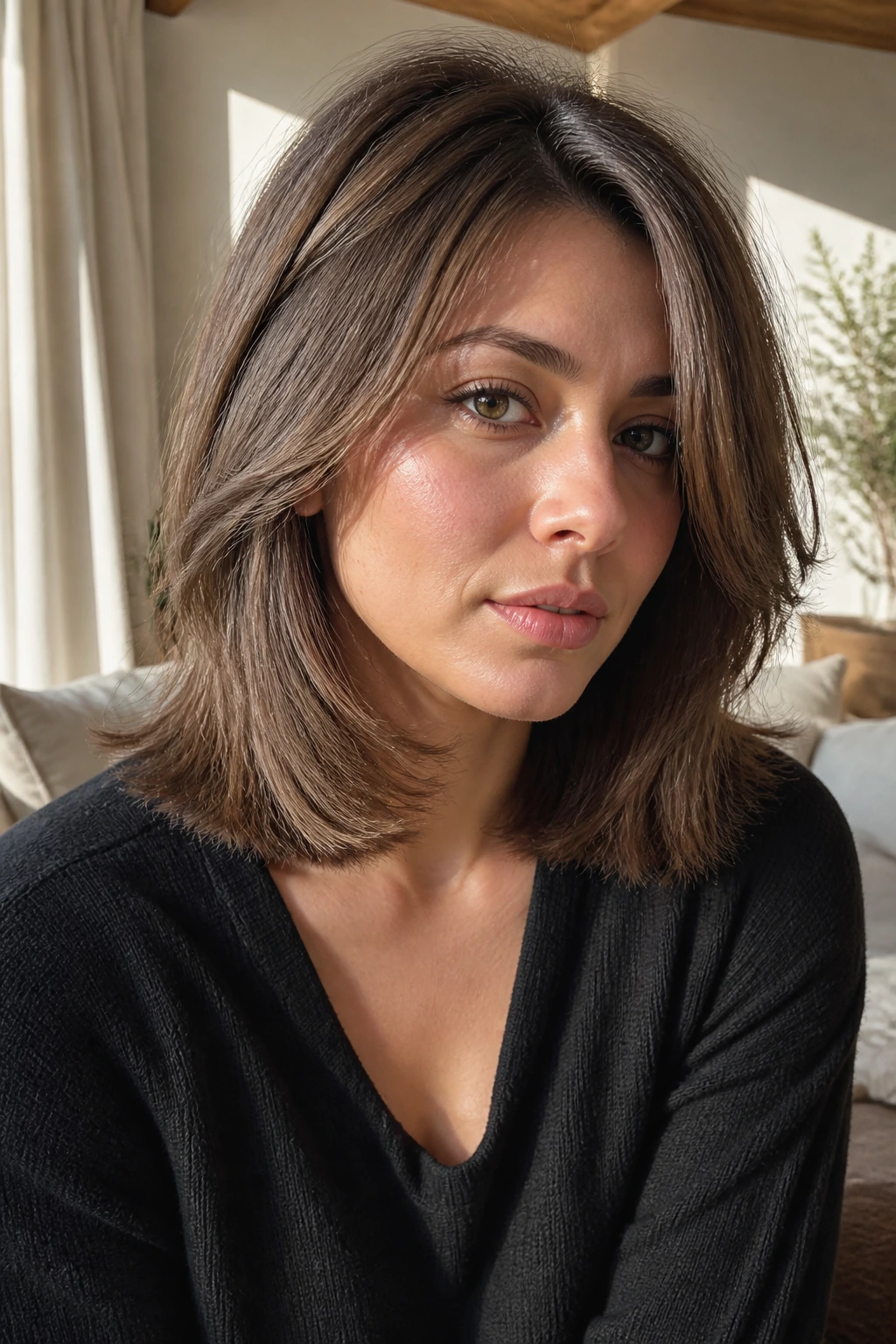
This is one of the most misunderstood shags. Fine hair does not always need more and more layers. Sometimes it needs a stronger base so the ends don’t look see-through. That’s especially true on round faces, where wispy ends floating around the cheeks can make the face seem wider, not slimmer.
A side part gives fine hair a little root lift, which is half the battle. The blunt base keeps the bottom line clean, while the shag layers live mostly on top and through the front. That combination keeps the haircut from collapsing into a flat sheet. It also means you don’t have to over-style it every morning.
A light mousse at the roots and a small round brush are enough most days. Heavy creams tend to weigh this kind of cut down fast.
8. Thick-Hair Shag with Interior Weight Removal
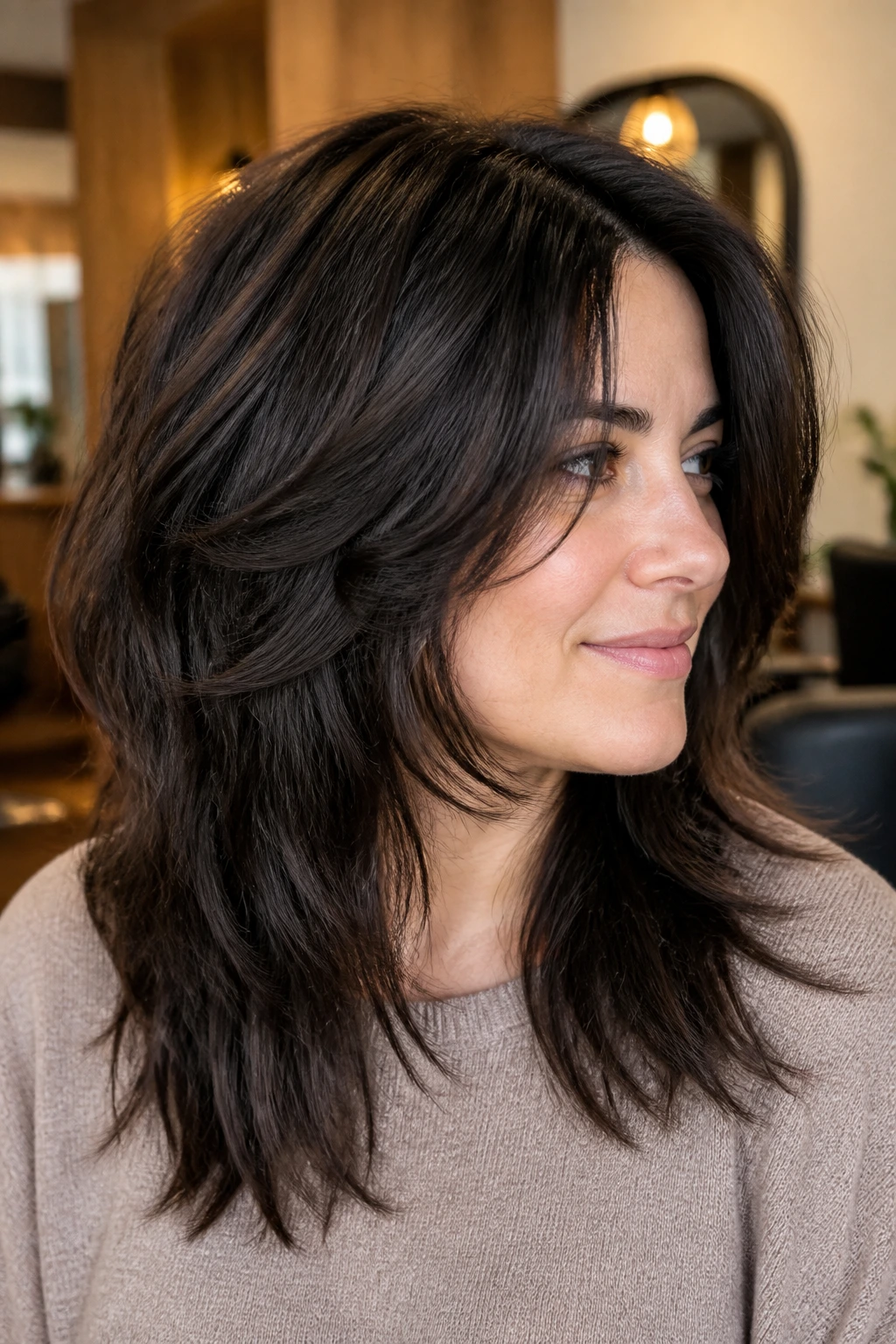
Thick hair needs a different kind of control. Not less shape. Control. If the bulk lives entirely at the sides, the haircut balloons out around the cheeks and jaw. That’s a bad trade on a round face. What you want instead is interior weight removal, so the outside looks full but not bulky.
This is where slide cutting or careful point cutting earns its keep. The stylist should remove some internal density without hacking the outer line to bits. If that line gets too frayed, the ends can stick out in a rough triangle. Better to keep the perimeter steady and soften the interior.
A side part helps because it shifts mass to one side and breaks the symmetry. Thick hair can handle that imbalance better than fine hair can. If you have a lot of density, this cut usually looks better with a bit of polish at the top and softer movement through the ends.
9. Razored Shag with Piecey Side Fringe

A razor cut can be a blessing or a mess. On the right hair, it creates airy separation and those little broken ends that keep the shag from feeling heavy. On the wrong hair, especially very fragile fine hair, it can shred the ends too far. So the fit matters.
The side fringe is what makes this version useful for a round face. It gives the forehead a diagonal line and draws attention upward, not sideways. The piecey finish keeps the forehead soft without creating one heavy band across it. That matters. A heavy fringe can make the face feel shorter and wider.
Use a paste or light cream only on the fringe and front layers. The rest of the cut can stay loose. If you load product everywhere, the texture turns sticky and the shape loses its lift.
10. Lob Shag with Tucked Front Pieces

A long bob shag has a more polished feel than some of the wilder versions here, but it still keeps the movement that flatters a round face. The front pieces are long enough to tuck behind the ear, which is useful when you want to show a little cheekbone without committing to a shorter cut.
The side part gives the lob a clear direction. Without it, a shoulder-grazing cut can sit too evenly and read broad. With it, the front drapes across the face in a line that narrows the middle a bit and keeps the eye moving.
This is one of the easiest shags to wear in a professional setting. It doesn’t need to look messy to work. A soft bend through the mid-lengths and a clean tucked side can make the whole haircut feel composed.
11. Bixie Shag with a Diagonal Fringe

Short hair on a round face is not the enemy. Bad shape is. A bixie shag — that in-between space where a bob and pixie meet — can look sharp and light if the fringe falls diagonally instead of straight across. The diagonal line makes the face feel longer, and the short layers around the crown keep the style from sitting flat.
Best for a Face That Can Handle a Little Edge
This cut works especially well if you want your hair off your neck but still need enough softness around the face. Ask for the sides to stay close without puffing outward. The top should have movement, not helmet volume.
Good note: this cut needs regular clean-up every 6 to 8 weeks if you want the shape to stay crisp.
A dab of styling paste and a quick finger-dry are usually enough. It’s short, yes, but it’s not fussy. That’s part of the appeal.
12. Shag with Bright Money Pieces

Color changes the way a haircut reads, and money pieces can make a side part shag feel sharper around a round face. The lighter front strands create a clear visual line along the sides of the face, which pulls attention inward and upward instead of out toward the cheeks.
Caramel, copper, soft blonde, even a slightly brighter version of your natural shade can work. The point is contrast. The front pieces should stand out enough to mark the angle of the haircut. If the color is too close to the base shade, the effect gets muddy and you lose that framing.
I like this version on medium-length shags because the color has room to move from root to end. On very short cuts, the contrast can feel harsher than necessary. Keep the layers soft if the money pieces are bold. Otherwise the whole thing can get loud fast.
13. Air-Dried Wavy Shag
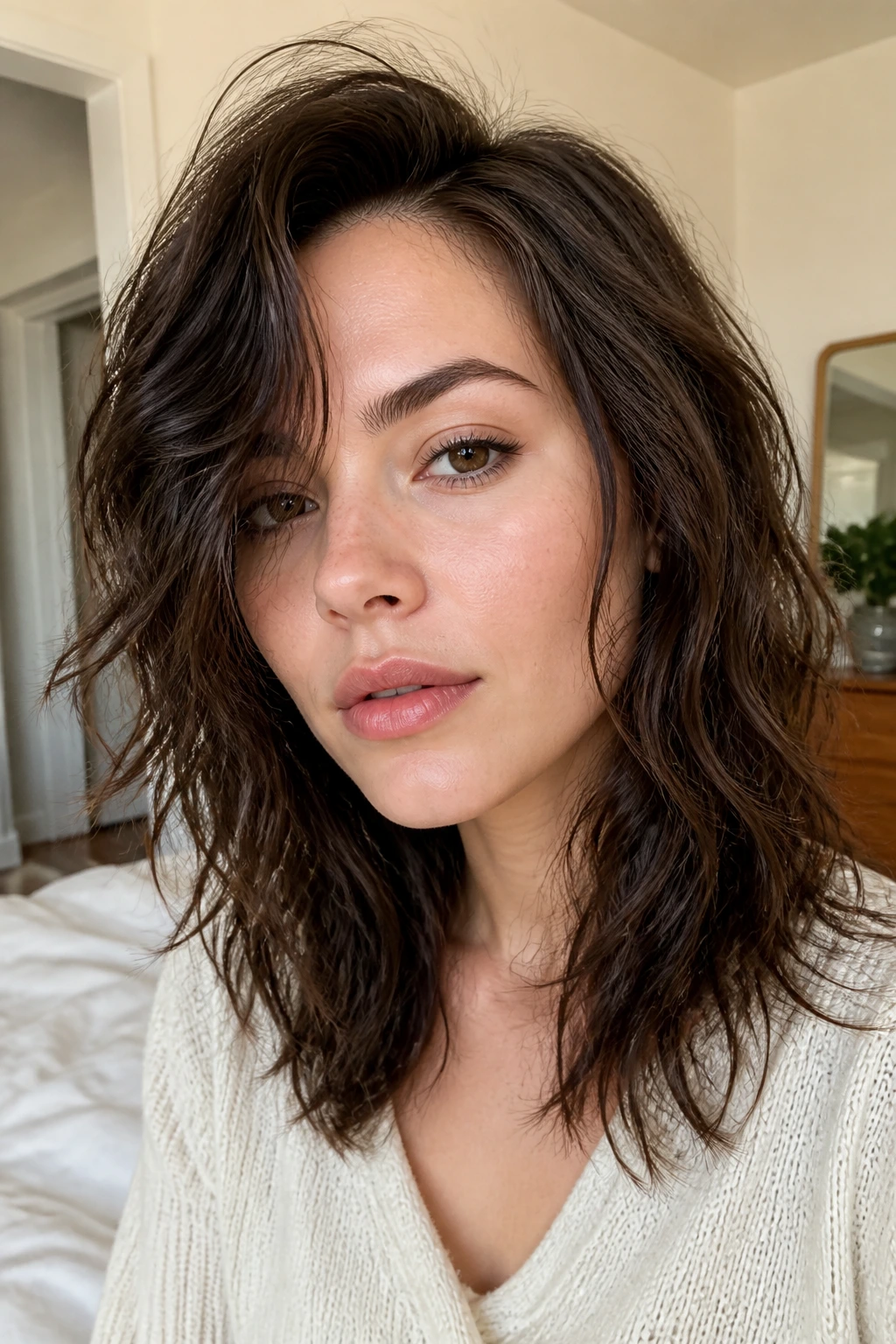
If your hair already bends on its own, stop fighting it. An air-dried wavy shag uses the haircut to support the pattern you already have, and a side part gives the wave direction before it has a chance to dry into a puff. The result is less “done” and more believable.
The key is setting the part while the hair is damp, not after it dries. Once the waves set in the wrong direction, they tend to keep that habit. A little curl cream through the ends and a light mousse at the roots can help the hair keep a soft lift instead of collapsing around the face.
How to Get the Most From It
- Scrunch the sides gently, then leave them alone.
- Clip the crown for a few minutes while drying if the roots go flat.
- Keep the front pieces longer than cheek level.
- Finish with a touch of dry texture spray only where the wave looks limp.
This cut is one of the least annoying options if you prefer low-effort mornings.
14. Blowout Shag with 70s Swing

Some side part shags look best when they’re polished, and this is one of them. A round-brush blowout gives the layers a smooth bend, and the swing through the ends creates movement away from the cheeks. On a round face, that soft outward motion is a lot better than a blunt inward curl that hugs the face too closely.
The crown should stay lifted, not puffy. That’s a fine line, and it’s why this cut works best when the brush is angled up at the roots and then rolled through the mid-lengths. The front pieces can flip slightly away from the face, which adds shape without adding width.
This is the shag for someone who likes hair that feels styled, not accidental. It still has texture. It still moves. But the finish is cleaner, and that can be a relief if you don’t love messy layers.
15. Cropped Shag with a Soft Mullet Edge

Short shags can be risky on round faces, but the cropped version works when the nape is kept light and the front holds enough length to soften the cheeks. That soft mullet edge gives the haircut a little length in back and a little attitude around the crown without turning it harsh.
The side part matters more here than in longer cuts because there’s less hair to create shape. It gives the top direction, which keeps the style from looking evenly puffed around the head. The front pieces should not stop at the cheekbone. That’s too blunt for this length. Let them fall lower, then chip them into movement.
If you want something quick to style and easy to wear with earrings or a visible neck, this is a smart choice. It’s compact, but not severe.
16. Modern Shullet with a Long Side Sweep
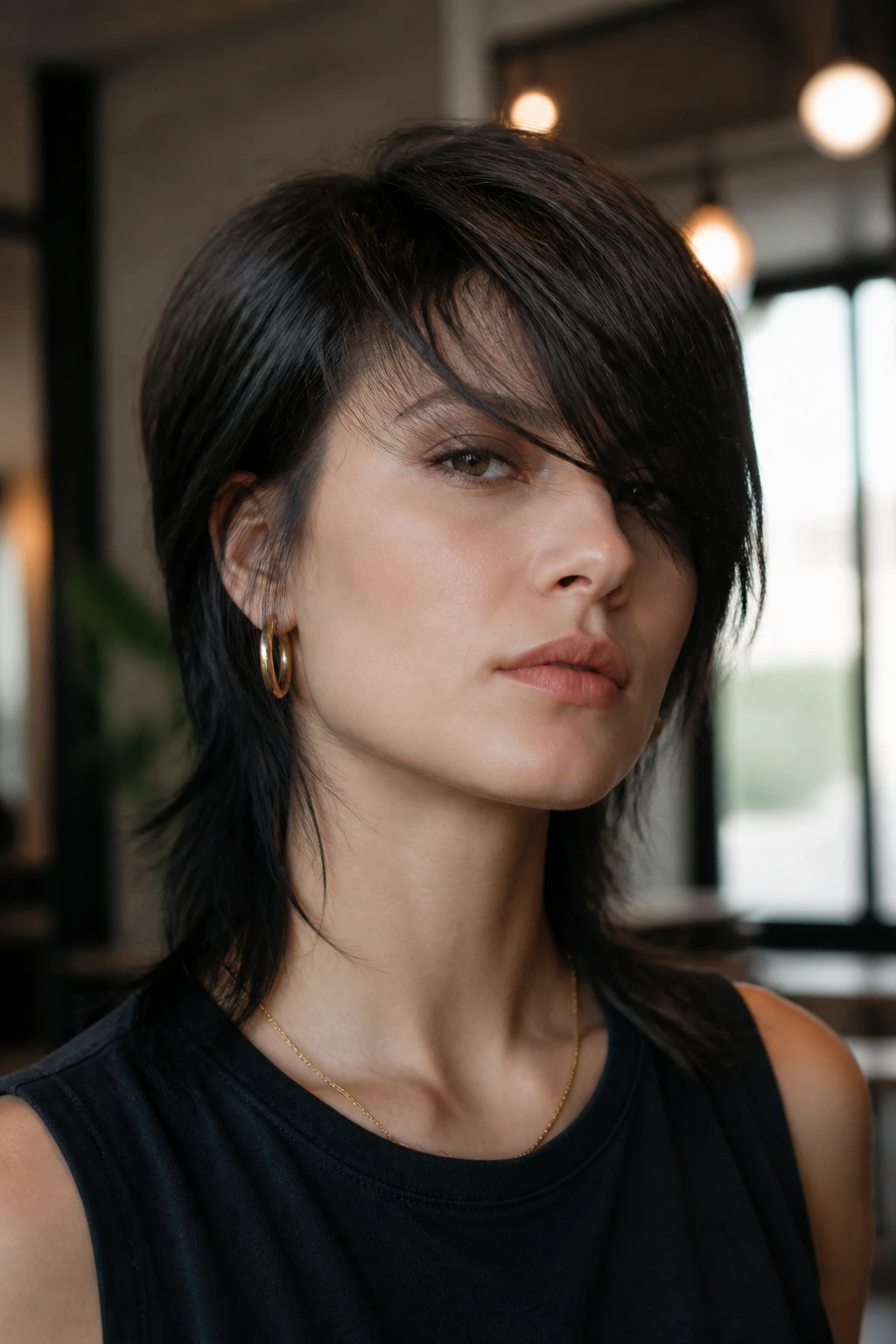
A shullet — shag plus mullet — is not for everyone. That’s fine. But the modern version can be surprisingly flattering on a round face because the extra length in the back creates a vertical line while the long side sweep keeps the front soft. You get contrast, and contrast is useful here.
The trick is keeping the transition gentle. If the back is too short and the sides too wide, the haircut can read blocky. A long side sweep gives the face a diagonal line to follow, and that diagonal takes pressure off the cheeks. It also helps the haircut feel less severe than a classic mullet.
This is best for someone who likes a little edge and doesn’t mind the haircut making a statement. If that’s you, keep the layers broken but not ragged, and let the front pieces land below the jaw.
17. Bottleneck Fringe Shag with a Side Part

Bottleneck fringe was built for this kind of work. It narrows slightly at the center, opens at the sides, and leaves room for a side part to change the whole reading of the face. On a round face, that means the forehead gets some shape without a hard line.
The fringe should be light enough to move. Too heavy, and it sits like a lid. Too sparse, and you lose the framing altogether. The sweet spot is soft separation with a little taper toward the temples. That keeps the eye moving up and out along a diagonal instead of stopping at the widest part of the cheeks.
This cut is a good bridge for someone who wants bangs but doesn’t want to commit to a straight fringe. It’s forgiving, which matters when you’re growing it out.
18. Invisible-Layer Shag with Soft Movement

Not everyone wants choppy ends staring back at them in the mirror. Some people want a shag that moves but still looks calm. Invisible layers solve that. They sit inside the haircut instead of showing off from the outside, so the shape feels softer and less obvious.
On a round face, that’s useful because the haircut can create lift and swing without building too much volume at the sides. The side part directs the line. The hidden layering keeps the silhouette from getting too dense through the bottom. You still get a shag effect. You just don’t get the roughness.
This is the version I’d steer toward if you wear your hair mostly straight or lightly bent and don’t want the cut to shout for attention. It’s subtle, and I mean that in a good way.
19. Flipped-End Shag at the Collarbone
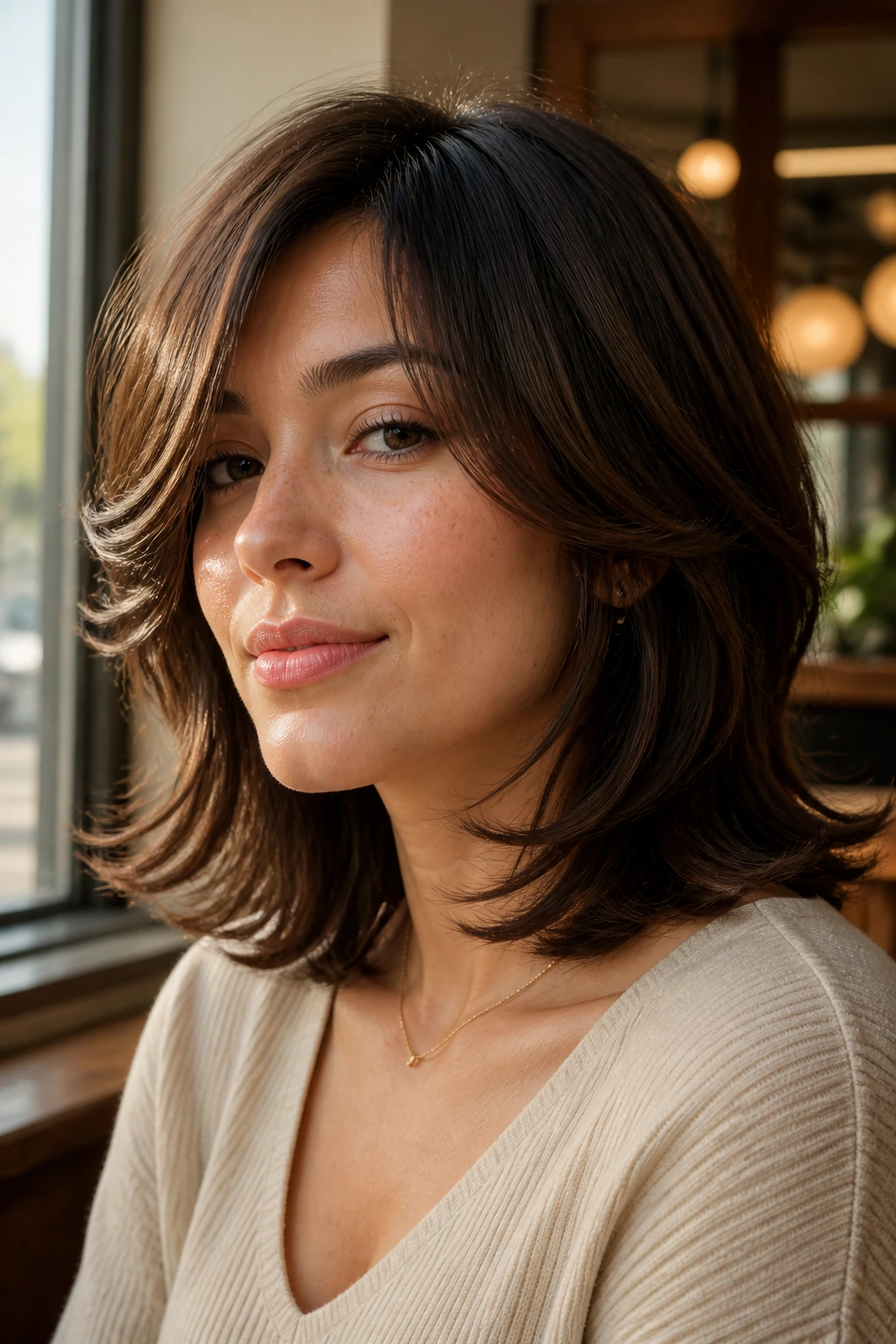
There’s something stubbornly flattering about ends that flip away from the face. They take width out of the side profile and keep the haircut from hugging the jaw too tightly. At collarbone length, that flip becomes especially useful because it creates motion right where the face meets the neck and shoulders.
The side part gives the flip a place to start. Without it, the movement can become too even. With it, one side carries a little more weight and the whole haircut reads longer. Keep the layers soft through the mid-lengths and let the ends do the talking.
A medium-barrel iron or a round brush can create the bend quickly. Don’t over-curve the pieces. A small flip is enough. Too much curl and you’re back in wide, round territory.
20. Straight-Hair Shag with Textured Ends
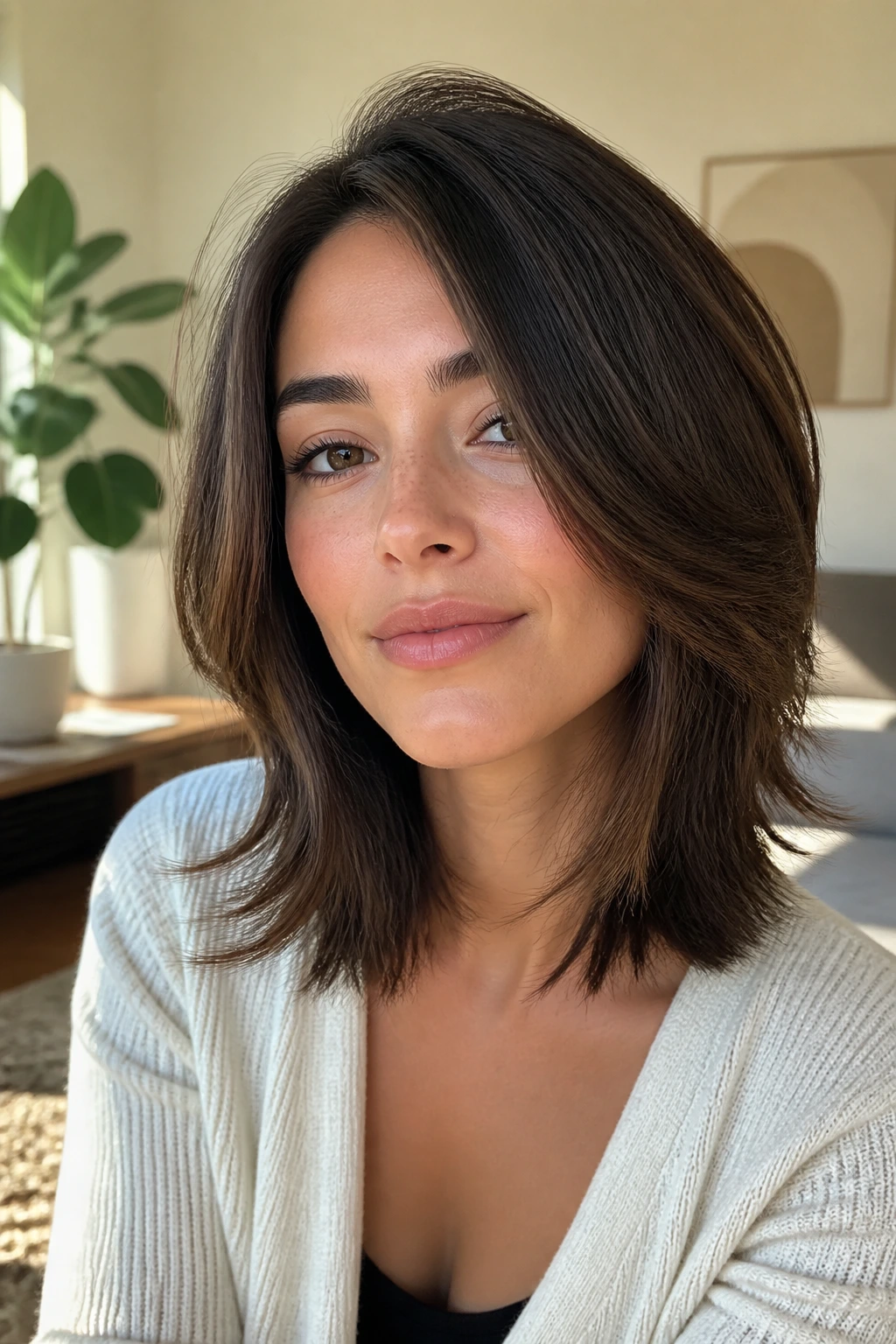
Straight hair can be tricky because it shows every line. A shag on straight hair needs enough texture to avoid the helmet effect, but not so much that the ends look shredded. The side part helps by giving the style a little asymmetry before the hair even moves.
Ask for textured ends, not random thinning. There’s a difference. Textured ends break the perimeter in a controlled way, while random thinning can leave the haircut hanging strange and flat. For a round face, the front pieces should still sit a little lower than the cheeks so the haircut lengthens instead of widening.
This version usually looks better with a root-lift product and a quick bend at the ends. Straight hair rarely does the work on its own. That’s not a flaw. It just means the styling needs to be clean.
21. Romantic Shag with Soft Bends
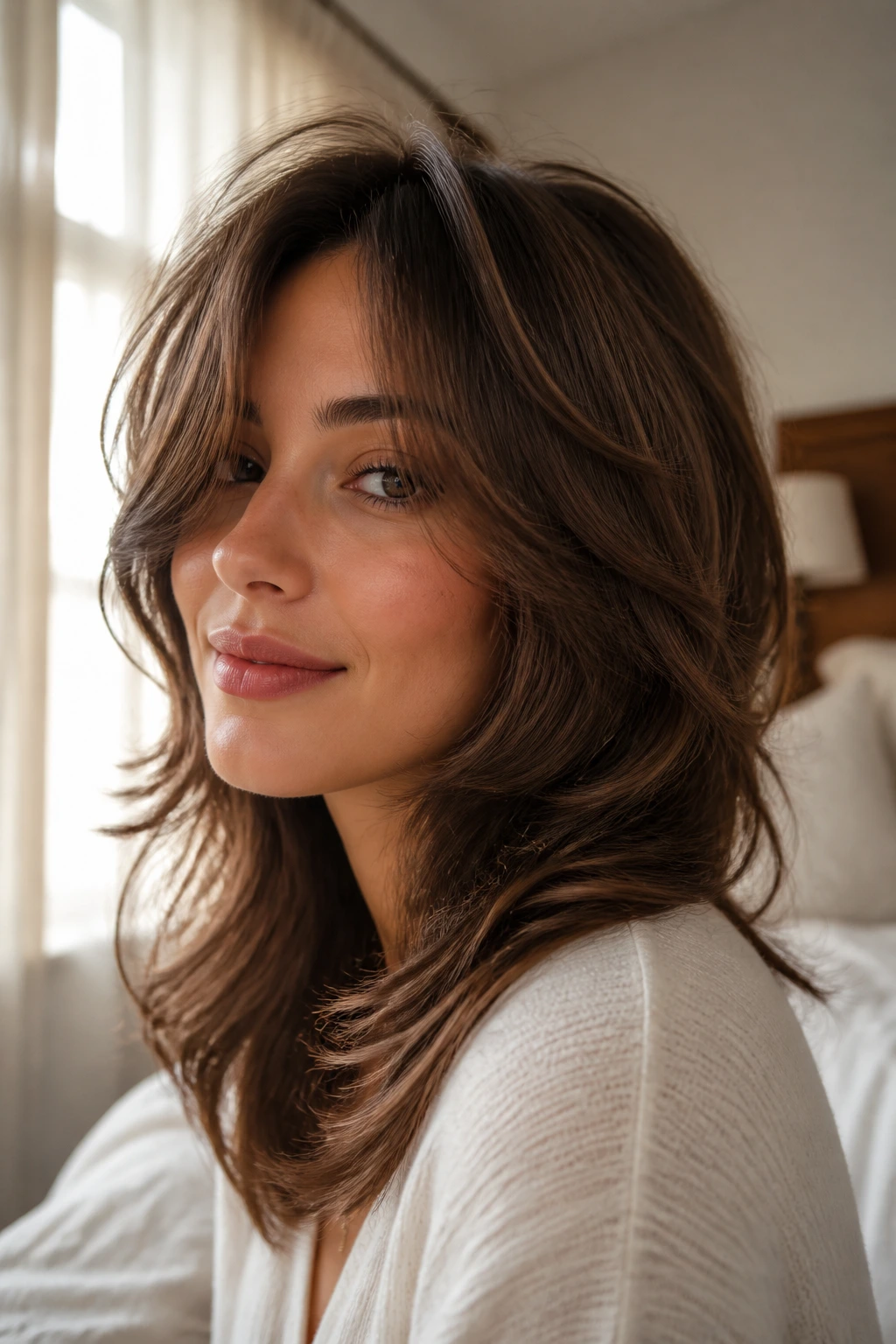
Not every shag has to shout. A softer, more romantic version keeps the layers quiet and the bends loose, which can be lovely on a round face if you want movement without rough edges. The side part gives the cut direction, but the overall feel is gentler.
I like this shape on medium to long hair, especially when the front pieces are long enough to fall past the cheek. The bends should be broad, not tight. Tight curls or sharp flips can widen the face a bit. Broad bends create a longer line and keep the haircut feeling calm.
This is the shag for someone who wants softness around the face but doesn’t want hair that looks flat or overly polished. A little air. A little bend. Enough shape to matter.
22. Asymmetrical Shag with One-Sided Drama

Can a round face wear asymmetry? Absolutely, if the imbalance is controlled. The haircut shouldn’t be lopsided in a sloppy way. It should feel like one side is carrying a little more weight while the other side opens the face. That’s a different thing.
This works best when the heavier side lands below the cheekbone and the lighter side is tucked or feathered back. The diagonal line across the face is doing the slimming work. The side part makes that line stronger, which is why the cut feels sharper than a balanced shag.
Keep the asymmetry in the front, not all through the back. Too much unevenness can make the haircut look like an accident. The best version looks chosen, not improvised.
23. Grown-Out Shag That Keeps Its Shape

The best shag often looks better two weeks after the cut than it does on the chair. That’s especially true with a side part. As the layers soften, the shape can become easier to wear, and the off-center part keeps everything from spreading out evenly around the face.
This is the version for someone who does not want to live at the salon. The layers should be soft enough to grow out without going heavy at the jaw. The front pieces need enough length that they still frame the face even after a month or two. If the cut is too short up front, the grow-out phase gets awkward fast.
Ask for a shag that keeps a clear perimeter and only enough texture to move. That way, when it relaxes, it still looks like a haircut. Not a compromise.
Why a Side Part Shag Softens a Round Face Without Hiding It

A lot of haircut advice for round faces goes wrong because it tries to make the hair disappear. Flat roots, hidden volume, all that over-managed stuff. It’s a mistake. A round face does not need to be erased. It needs lines that move.
The side part is the easiest line to use. It creates a diagonal across the forehead, which changes how the eye reads the upper half of the face. A slight lift at the crown then extends that line upward. The effect is subtle, but it’s real, and it’s why a side part shag haircut tends to feel more flattering than a dead-center shag with identical sides.
Shag layers matter because they interrupt roundness at the edges. The face-framing pieces should not land right at the cheekbone’s widest point unless they’re very soft and broken up. Better to let them skim lower, around the jaw or collarbone, where they can taper the face instead of echoing it. That’s the shape trick. Not hiding. Steering.
How to Choose the Right Length for Your Jawline and Neck
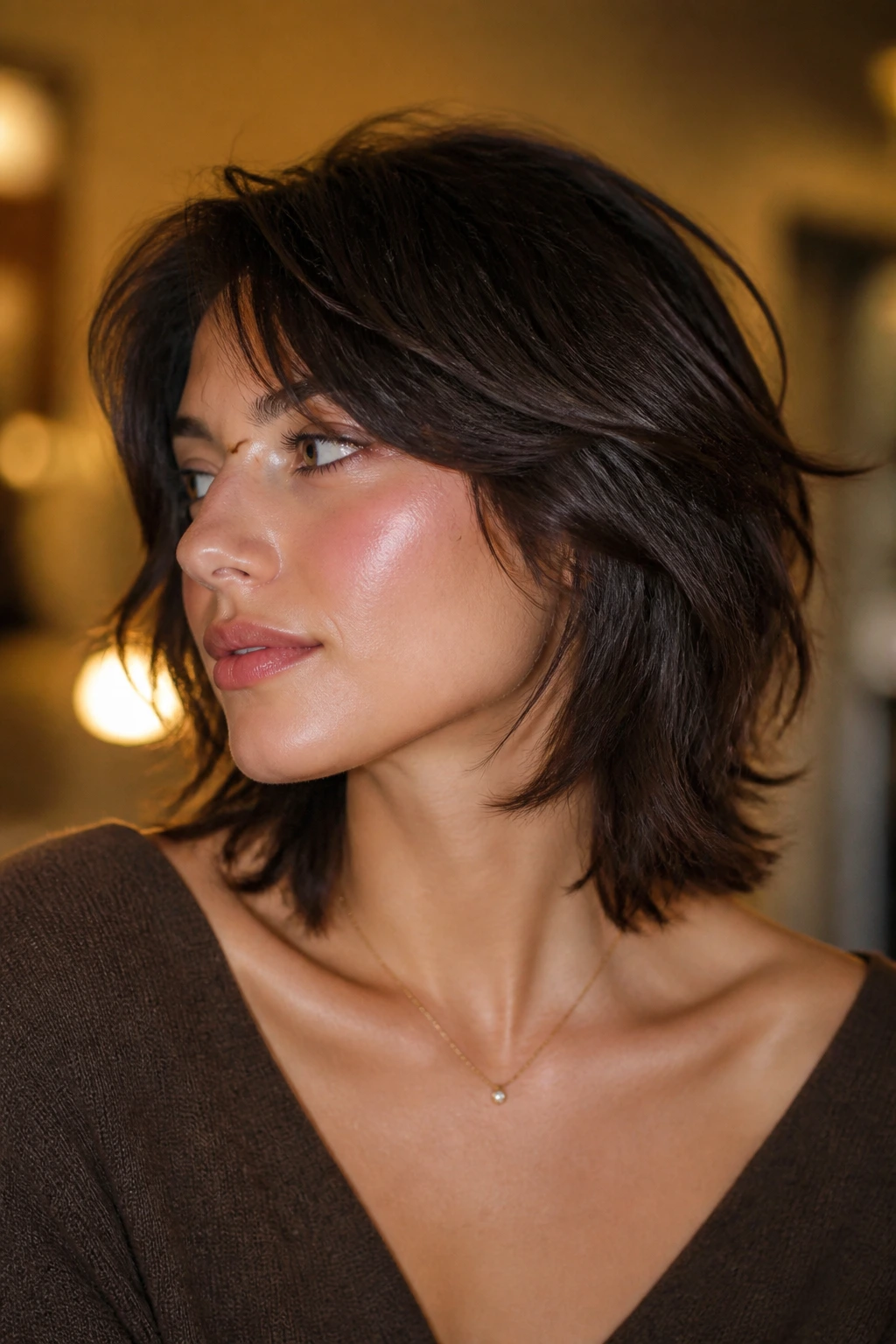
Length changes everything. A short shag can look sharp, but if it ends exactly where your cheeks are fullest, it can make the face feel wider. A longer shag gives more vertical line, which is why collarbone and chest-skimming lengths are such safe bets on round faces.
If your neck is short, avoid a hard stop at the jaw. That cut point can feel crowded. Go a little longer, or keep the front pieces longer than the back so the haircut falls around the face instead of across it. If your neck is long, you can usually wear a shorter shag more easily because there’s more vertical space for the shape to live in.
A Simple Way to Decide
- Chin length: works only if the ends are beveled and the front is soft.
- Collarbone length: easiest to style and usually the most forgiving.
- Shoulder length: good if you want movement without too much face exposure.
- Long length: best when the front layers stay lower and don’t balloon out at the sides.
If you’re unsure, I’d start at the collarbone. It gives you room to adjust later.
Fringe, Bangs, and Face-Framing Pieces That Cooperate with a Round Face
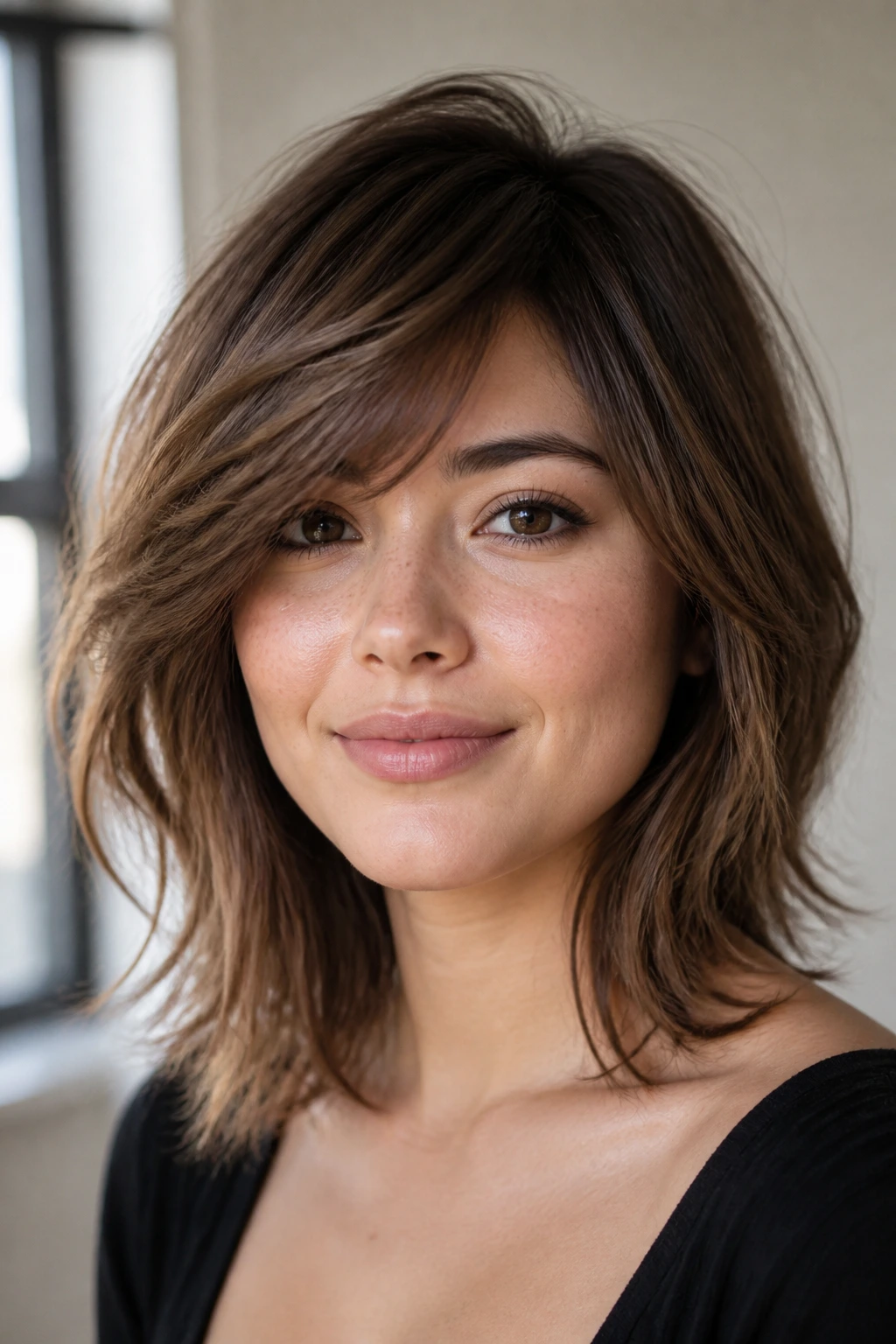
Bangs are where a lot of round-face shags go off the rails. The problem isn’t bangs themselves. It’s the wrong bang line. A heavy blunt fringe sitting straight across the forehead can shorten the face and make the cheeks feel even fuller. That’s not the look.
Side-Swept Fringe
This is the easiest choice. It creates a diagonal, grows out well, and can be tucked back if you change your mind. On a side part shag, it feels natural rather than pasted on.
Curtain Fringe Pushed to One Side
Curtain bangs don’t have to stay center-parted. When they’re pushed over a little, they soften the forehead while still keeping the middle open. It’s a nice middle ground if you want fringe but not a hard line.
Bottleneck Fringe
This fringe narrows near the center and opens out at the sides. That shape works because it gives the forehead some framing while still leaving movement around the temples.
What I’d avoid is a dense, chin-high fringe that stops right where the cheeks start to widen. That’s a lot of visual weight in one place. Soft, broken, and diagonal is the safer road.
Texture Changes the Blueprint More Than People Admit

Straight, wavy, curly, and coily hair do not wear the same shag the same way. A cut that looks light on one texture can look bulky or thin on another. That’s why texture should shape the haircut, not just the styling.
Straight hair usually needs the most help with movement. Without some bend, it can sit too clean and draw the eye sideways. Wavy hair is the easiest place to live because the side part and layers can work with the bend you already have. Curly hair needs enough length to keep shrinkage from making the shape too round. Coily hair often needs a careful balance between shape and stretch, because shrinkage can pull the face-frame up higher than expected.
The side part helps every texture in a different way. On straight hair, it creates lift. On wavy hair, it gives the wave direction. On curls, it breaks the symmetry. On tighter textures, it can help the whole style sit slightly longer on one side, which is exactly what a round face benefits from.
What to Tell Your Stylist Before the Shears Come Out
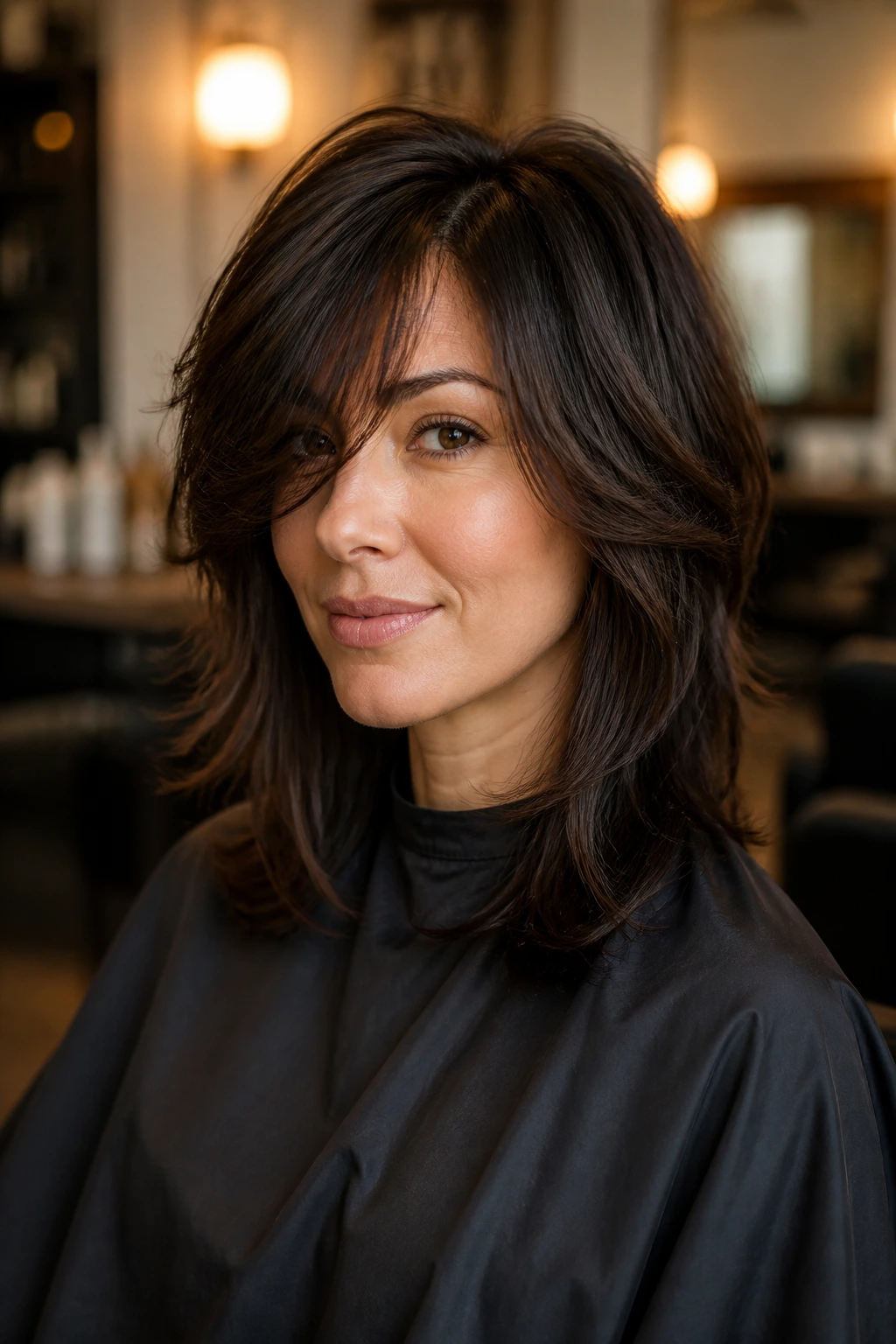
The chair conversation matters more than the mood board. Bring photos, yes, but say what you want in plain language. “I want a side part shag that makes my face look longer” is better than “something edgy.” Stylists can work with length and weight. “Edgy” means a different thing to everyone.
Tell them where your face feels widest and where your hair usually swells or falls flat. If your cheeks are the fullest point, say you want the shortest layers to stay below that line. If your hair puffs at the sides, say you want weight kept off the temples. If your fringe splits badly, mention the cowlick before they cut the front too short.
Useful phrases at the chair
- “Keep the front pieces below my cheekbone.”
- “I want lift at the crown, not width at the sides.”
- “Please leave enough length to tuck one side behind my ear.”
- “Don’t cut the shortest layers right at jaw level.”
That is the kind of language that gets you a better cut. Not vague, not dramatic. Specific.
Tools and Products Worth Keeping on the Shelf
-
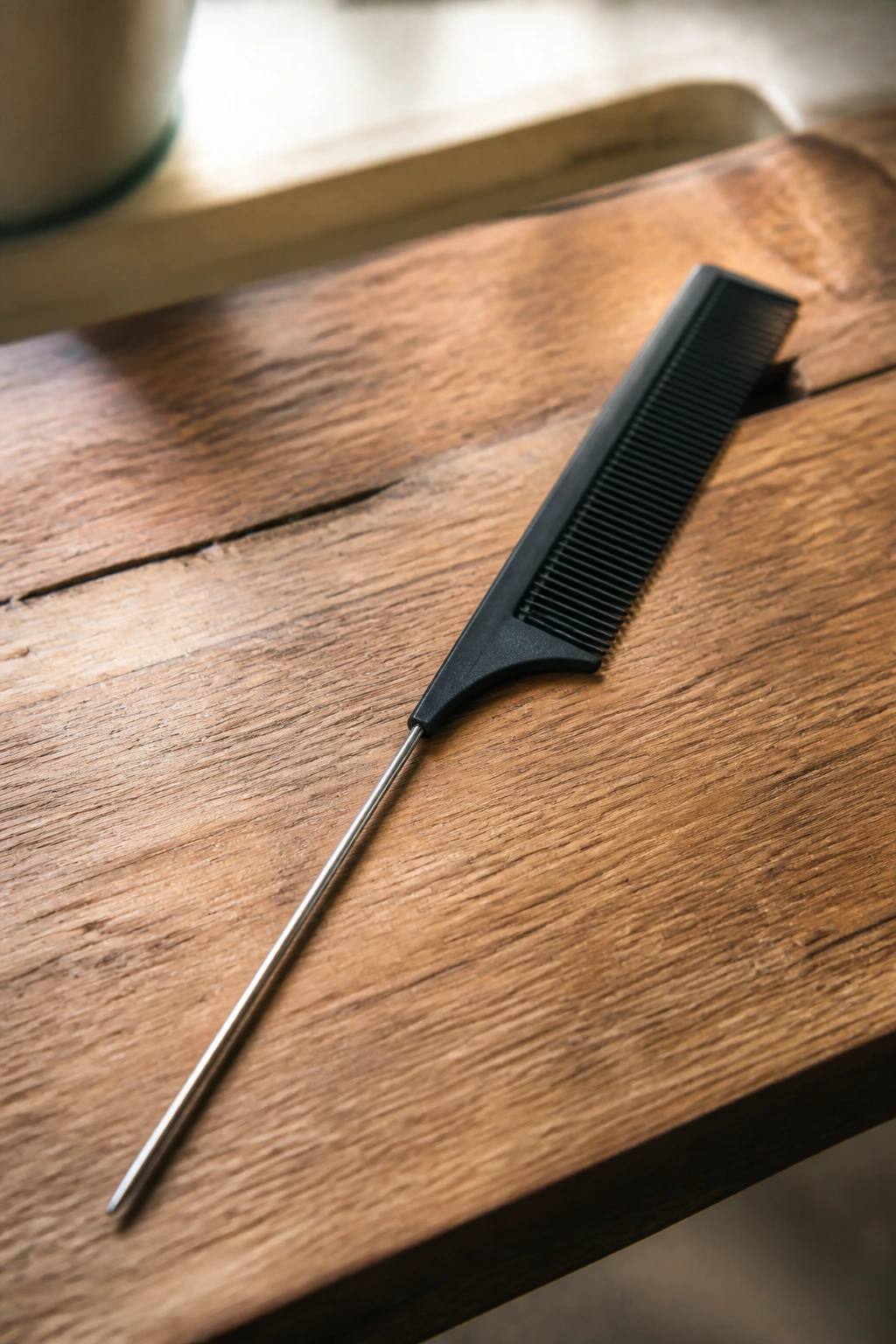
Tail comb: helps you set the side part cleanly, especially when the hair wants to drift back to center.
-
Heat protectant spray: use it before blow-drying or curling; shag layers show damage faster than blunt cuts do.
-
Volumizing mousse: best for fine or straight hair at the roots, where the side part needs a little lift.
-
Round brush, 1 to 1.5 inches: useful for shaping the front pieces and flipping the ends away from the cheeks.
-
Diffuser: the easiest tool for curly or wavy shags when you want the texture to keep its shape.
-
Dry texture spray: gives the shag some separation without turning it sticky.
-
Dry shampoo: helps keep the crown up on day two or three, which matters when the side part starts to collapse.
-
Small clips: handy for pinning the fuller side while you’re drying the other side first.
Styling Moves That Keep the Shape Loose, Not Puffy

Crown lift: Dry the roots opposite the side part first, then flip them back once they’re about 80 percent dry. That little trick gives the top of the hair some height without making it stand up like a fan.
Directional drying: Aim the front pieces away from the cheeks as you dry them. If the hair keeps wrapping inward, it can widen the face fast. A round brush or even a simple tension dry with your fingers can fix that.
Piecey finish: Use a small amount of texture spray or light paste on the ends and front layers only. The goal is separation, not crunch. If the product reaches the roots, the hair can go limp by lunch.
When to stop: This matters more than people like to admit. Once the layers move and the part holds, leave it alone. Over-curling every piece makes the shag look overworked, and a round face does better with airy shape than with overbuilt curls.
Common Mistakes That Make the Cut Widen the Face
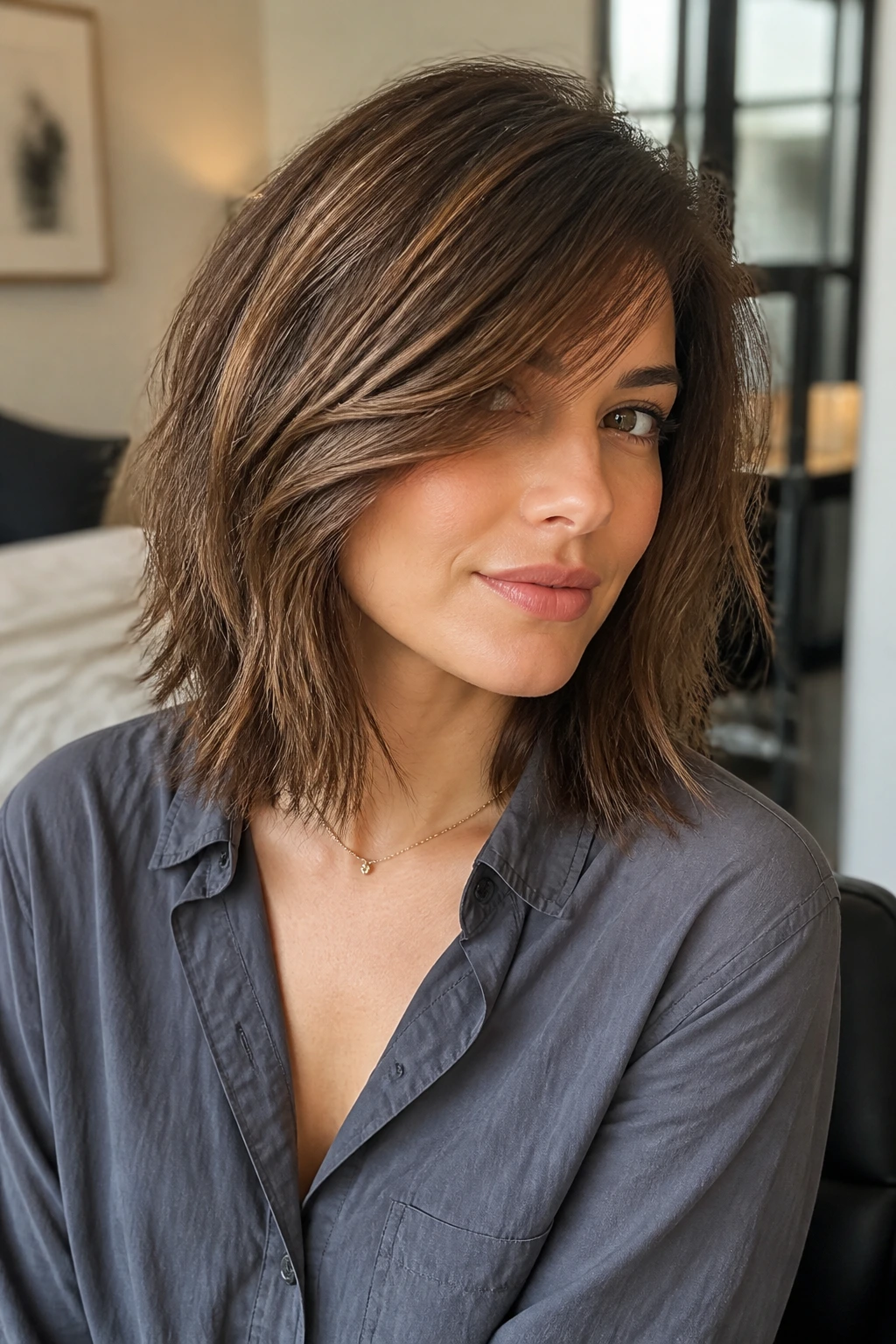
The biggest mistake is cutting the shortest layers right at cheek level. That puts the thickest visual line exactly where the face is broadest, and the haircut starts to echo the face shape instead of changing it.
Another problem is a side part that is too deep. That can sound flattering, but if the heavy side collapses over the face, it just drags the whole style down. A slight side part is often enough. You want the line to shift, not disappear.
Heavy outward volume at the sides is a quiet disaster. It looks airy from the back, but from the front it can add width. Keep the lift at the crown and the movement toward the ends. That separation matters.
Over-thinning fine hair is another common miss. The ends go stringy, the shape gets patchy, and the haircut stops framing anything. If your hair is fine, keep the perimeter cleaner.
Finally, too much product can flatten the face-frame. Thick creams and oils are easy to overdo on shag layers. Use less than you think, then add only if the hair still feels dry.
Variations and Alternatives for Different Hair Moods

Soft Studio Shag: A cleaner, calmer version with controlled layers and a neat side part. It works if you want movement without the rougher edge some shags have. Ask for soft texture at the ends and a face frame that starts below the cheekbone.
Razor-Edged Rebel Shag: This one leans piecey and a little wild. It suits thicker or medium hair that can handle separation. Keep the top lifted and the front pieces longer so the style doesn’t spread sideways.
Curly Cloud Shag: Built for waves and curls that want space. The layers are lighter through the crown and longer around the face, which keeps the silhouette from swelling out at the cheeks.
Low-Maintenance Weekend Shag: A grown-out friendly version with softer lines and fewer obvious chops. Great if you don’t want to trim often. It keeps the side part and the face frame, but the layers blur more easily.
Polished Blowout Shag: For people who like the cut but want a cleaner finish. Use a round brush or large iron to bend the ends away from the face. The shape stays shaggy, but the surface looks smoother.
Keeping the Layers Fresh Between Salon Visits
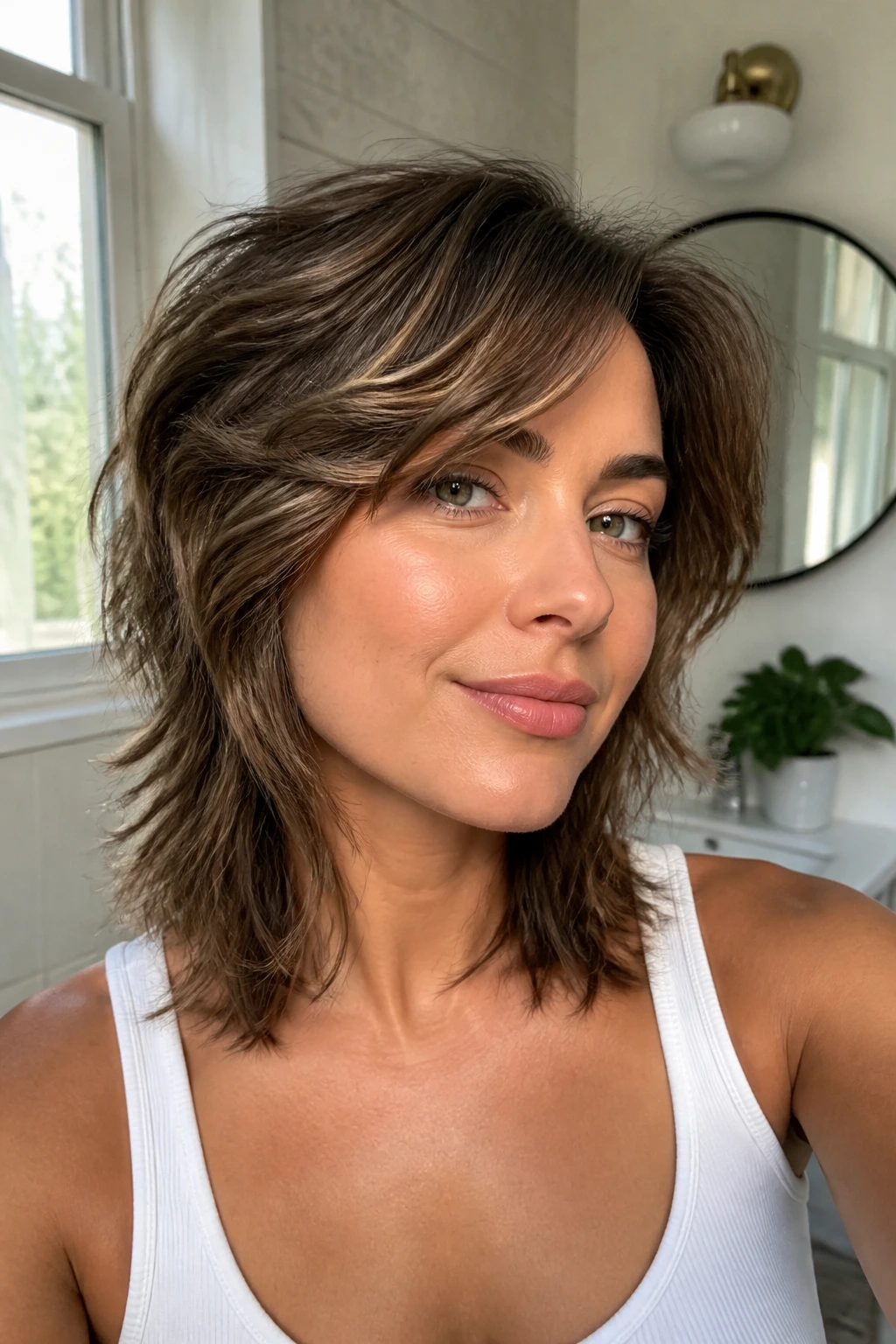
A shag loses its best shape when the front pieces get too short or the ends start splitting into random wisps. For shorter versions, a trim every 6 to 8 weeks keeps the structure from sliding around. For collarbone and longer cuts, 8 to 12 weeks is usually enough.
If you wear a fringe, the fringe will ask for more attention than the rest of the cut. That’s normal. Side-swept and bottleneck bangs often need a small clean-up sooner than the layers behind them. If the front starts dropping into your eyes or curling the wrong way, don’t wait until the whole haircut looks tired.
At home, keep the root area clean enough that the side part can actually show. Heavy oil at the crown kills the shape. Dry shampoo is useful, but use it before the hair turns limp, not after. And if your hair gets frizzy at the ends, refresh those ends with a tiny bit of cream or water rather than loading the whole head.
Frequently Asked Questions About Side Part Shag Haircuts for Round Faces
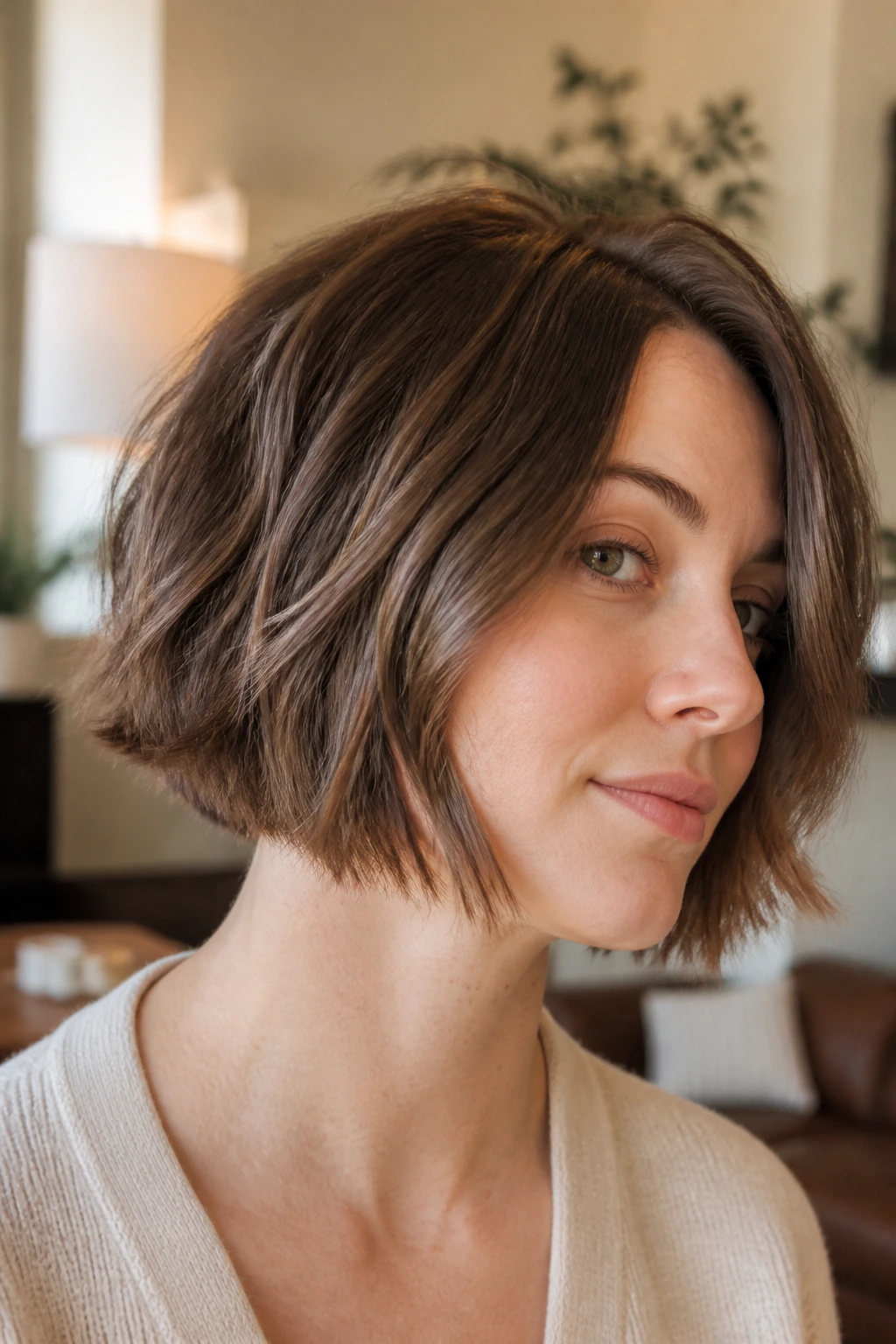
Does a side part shag really make a round face look slimmer?
Yes, usually, because it breaks symmetry and shifts the visual line across the forehead instead of straight down the middle. The effect is subtle, not dramatic, but it changes how the face reads right away.
How deep should the side part be?
Deep enough to create movement, not so deep that the heavy side collapses over your eye. A slight off-center part often works better than a dramatic side sweep, especially if your hair is fine or falls flat.
Can I wear bangs with a round face and a shag haircut?
You can, as long as the fringe is soft, diagonal, or split. Heavy blunt bangs tend to shorten the face, while side-swept or bottleneck fringe gives shape without closing off the forehead.
What if my hair is curly?
Curly hair can wear a side part shag well, but the layers need to respect shrinkage. Keep the shortest pieces out of the widest cheek area and let the part create diagonal movement while the curls dry.
Will this work if my hair is very fine?
Yes, but the cut should keep a stronger base and lighter layers. Too much internal thinning will leave the ends wispy and weak, which can make the face look fuller rather than longer.
How often should I trim it?
Shorter shags usually need a trim every 6 to 8 weeks. Medium and longer shags can stretch to 8 to 12 weeks, especially if the layers are soft and the front pieces still frame the face well.
Can I air-dry a side part shag?
Absolutely, especially if your hair already has some wave. Set the side part while the hair is damp, add a little mousse or curl cream, and leave the roots unclipped until they start to dry with some lift.
What if the haircut looks too wide after styling?
Focus your styling on the crown and the front pieces, not the sides. Dry the roots upward, keep product light at the temples, and pull the front slightly forward and down so the shape narrows instead of flaring out.
The Off-Center Finish
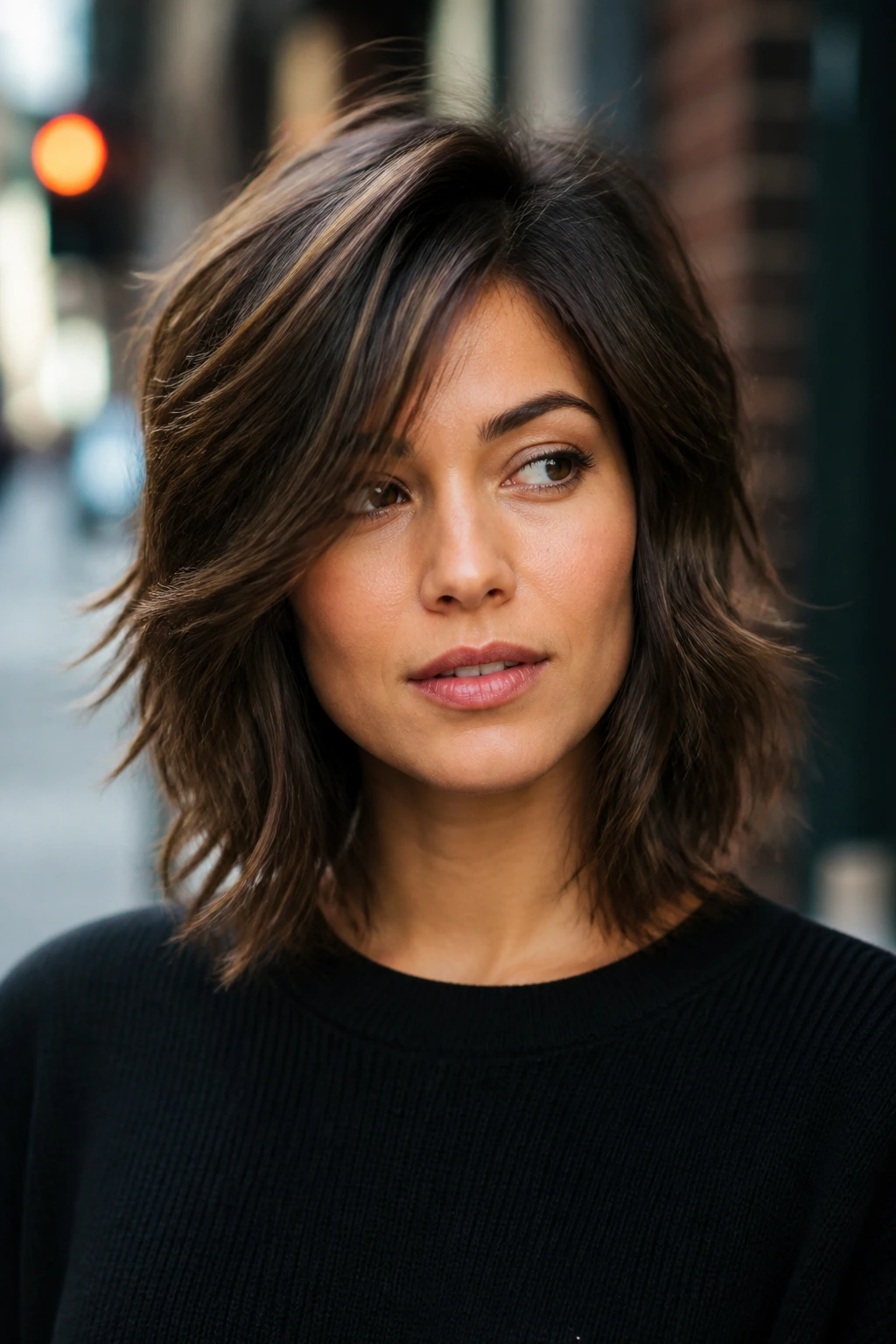
A good side part shag haircut for a round face doesn’t fight the face shape. It changes the line of it. That’s the smarter move. The diagonal part, the lifted crown, and the face-framing layers all work together to keep the eye moving, which is what gives the cut its shape.
What I like most about this family of haircuts is how little it asks for once it’s cut well. You can wear it messy, blow it smooth, air-dry it, or twist it into something more polished, and the structure still holds. That’s rare. Pick the length that fits your hair texture, keep the front pieces long enough to frame instead of widen, and let the side part do its quiet job.
