



Wavy hair and a lob can look expensive in the best sense of the word—or like you grew it out and hoped for the best. The difference usually comes down to three things: where the cut lands, how much weight is left in the perimeter, and whether the waves are allowed to move instead of being pressed into one sleepy shape.
A lob sits in a strange little sweet spot. Long enough to swing. Short enough to keep the line visible. And on wavy hair, that matters more than people think. Go too long and the bend starts to droop under its own weight. Go too blunt in the wrong place and the sides can balloon out while the ends sit there looking boxy and stubborn.
I’ve always liked this length because it gives you room to make a real choice. You can lean into softness, build in some edge, keep it glossy, rough it up, or let the cut do half the work on an air-dry day. The best lob hairstyles for wavy hair don’t fight the pattern. They steer it.
Why These 33 Lobs Feel Different on Wavy Hair
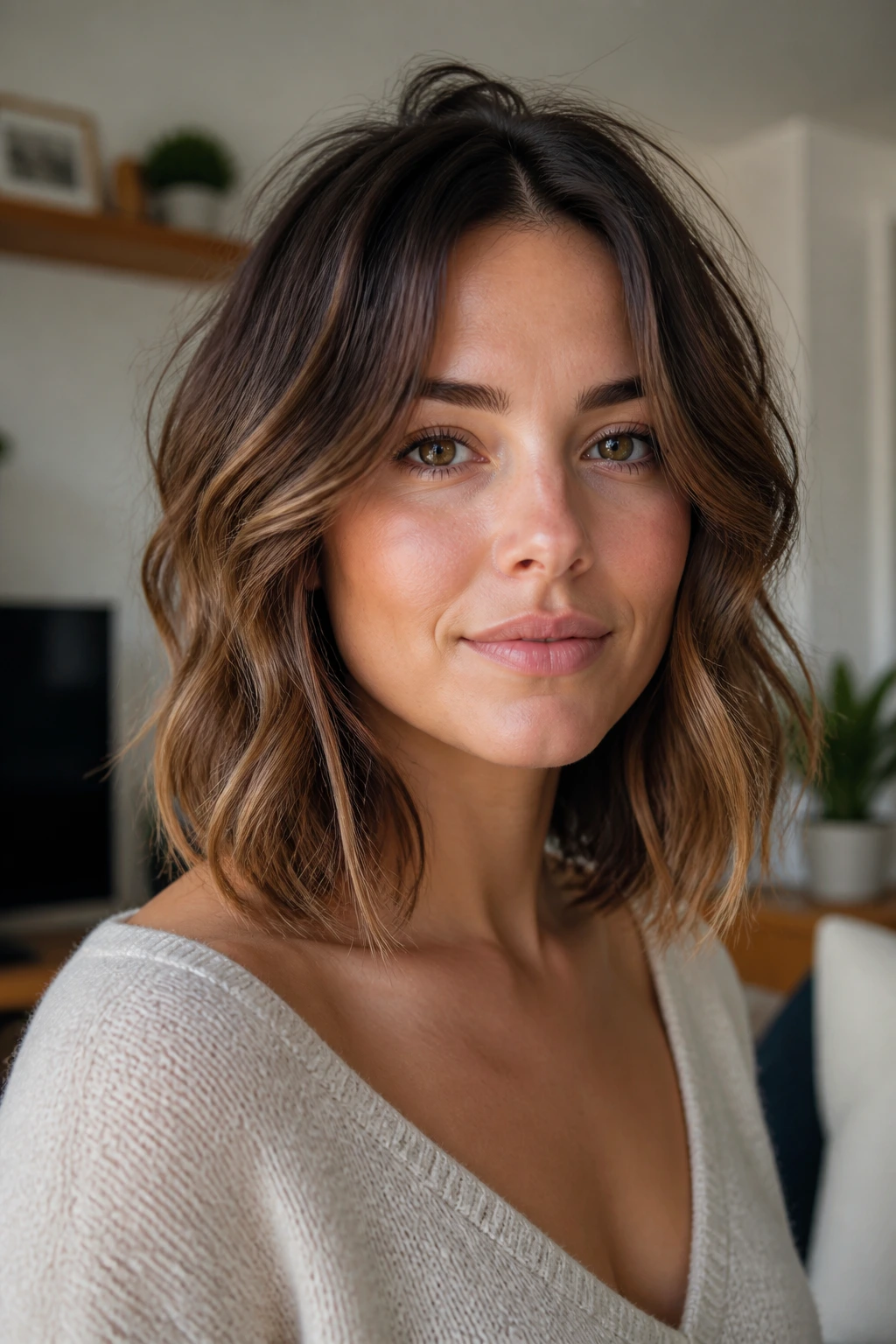
- The movement is built into the shape: These cuts and styles leave enough room for waves to bend at the ends instead of collapsing into a flat sheet.
- They avoid the triangle problem: A good lob removes or redistributes weight so the widest point doesn’t sit right at the sides of the head.
- They work with real routines: Some of these shapes want a diffuser and mousse, while others look better with a fast rough-dry and a little product at the ends.
- They flatter different face shapes on purpose: Center parts, deep side parts, curtain fringe, and cheekbone-length layers each change the way the eye travels through the cut.
- They stay wearable as they grow: The better versions of a lob still make sense when the trim gets pushed a few weeks past its best date.
- They give you options without losing length: You can keep enough hair to tuck, clip, braid, or pin, which is exactly why this length keeps people coming back to it.
1. Air-Dried Center-Part Lob
A clean center part can be the difference between a wavy lob that looks soft and one that looks vaguely unfinished. This version keeps the length skimming the collarbone, with just enough internal softness to let the waves stack instead of puff.
Why It Moves So Cleanly
The center part makes the cut read balanced, and the collarbone landing point keeps the wave pattern from dropping too low. On hair that bends naturally, a little mousse and air-drying give the ends that loose kick people keep trying to fake with a curling iron.
- Use a lightweight mousse through damp roots and mids.
- Scrunch once, then leave the hair alone.
- If one side dries flatter, clip the crown for 10 minutes.
- Finish with a pea-sized drop of serum on the very ends.
Best move: keep your hands out of it until it’s dry. Touching wavy hair while it sets is usually what turns a clean bend into a frizz cloud.
2. Deep Side-Part Wavy Lob
A deep side part is the quickest way to borrow height at the crown without changing the cut itself. It also gives a wavy lob a little drama, which is useful when the hair tends to sit close to the head on one side and puff on the other.
The trick is to shift the part just far enough that the heavier side can sweep across the forehead and fall past the cheekbone. That diagonal line does a lot of work. It makes the style feel longer, sharper, and less symmetrical in a good way.
This one is especially useful if your waves go limp at the roots by lunch. Flip the part while the hair is still damp, lift the crown with a root clip, then set the ends with a soft bend from a 1.25-inch iron if you want more polish. The shape looks best when the front pieces are not too curled. A little bend. Not ringlets.
3. Curtain Bang Lob
Do the bangs sit right at the cheekbones? If they do, a lob suddenly gets a face frame that feels built in rather than pasted on. Curtain bangs and wavy hair get along because the fringe can break apart a little instead of sitting as one heavy wall.
The important part is length. Curtain fringe that’s too short on wavy hair springs up and can sit awkwardly above the brows. Longer, cheekbone-skimming pieces are easier to live with because they blend into the lob when you tuck them back or let them dry naturally.
How to Keep the Fringe from Taking Over
Dry the bangs side to side with a round brush or even a flat brush if you hate heat styling. Then let the rest of the lob air-dry with a bit of mousse and very light scrunching at the ends. The fringe should frame the face, not steal the whole show.
4. Choppy Razor Lob
A razor-cut lob has a different personality from a blunt one. The ends look softer, a little frayed, and less shelf-like, which is exactly why it works so well on thick or resistant waves.
This is the cut I reach for when someone wants movement but hates the feeling of too much bulk. A razor removes weight fast, so the hair bends more easily and doesn’t sit there like a block. The finish is airy, not polished. That’s the point.
The catch? Fine hair can go wispy in a hurry if the razor is used too high up. Keep the perimeter strong enough that the ends still look deliberate. A good razor lob should flick, not feather itself into nothing.
5. Invisible-Layer Lob
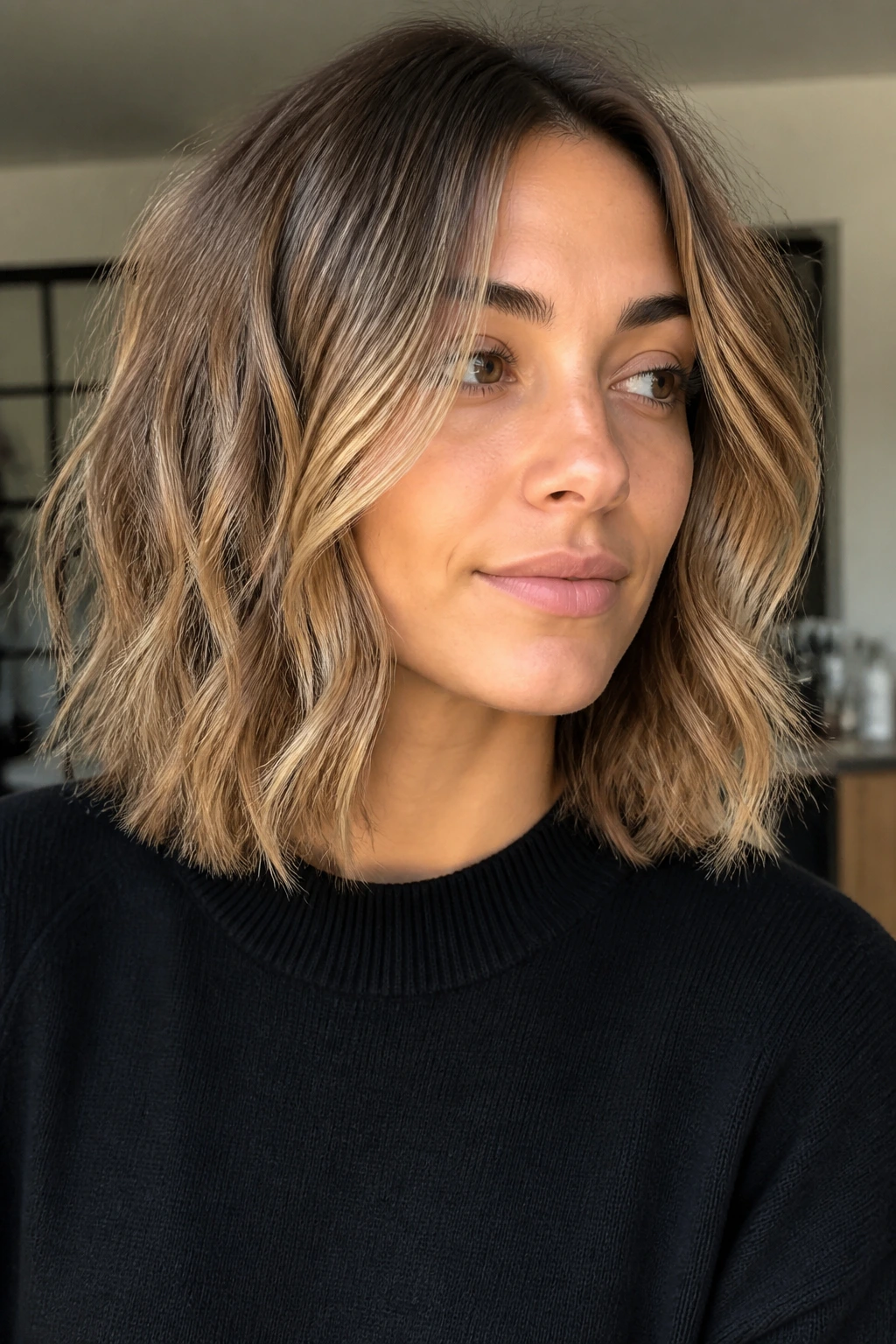
The cleanest lob on wavy hair is sometimes the one with the sneakiest layers. Invisible layers sit inside the shape instead of breaking up the outline, so the surface still reads smooth while the wave underneath gets a little freedom.
That makes this cut a solid choice if you want movement without a clearly shaggy look. The outer line stays controlled, which helps when the hair is medium density and tends to puff if too much is removed from the perimeter.
I like this shape on people who air-dry but still want the haircut to look intentional on day three. It doesn’t scream “layered,” but it solves the heavy-bottom problem. That quiet fix is why the cut keeps showing up in better salons.
6. Beachy Salt-Spray Lob
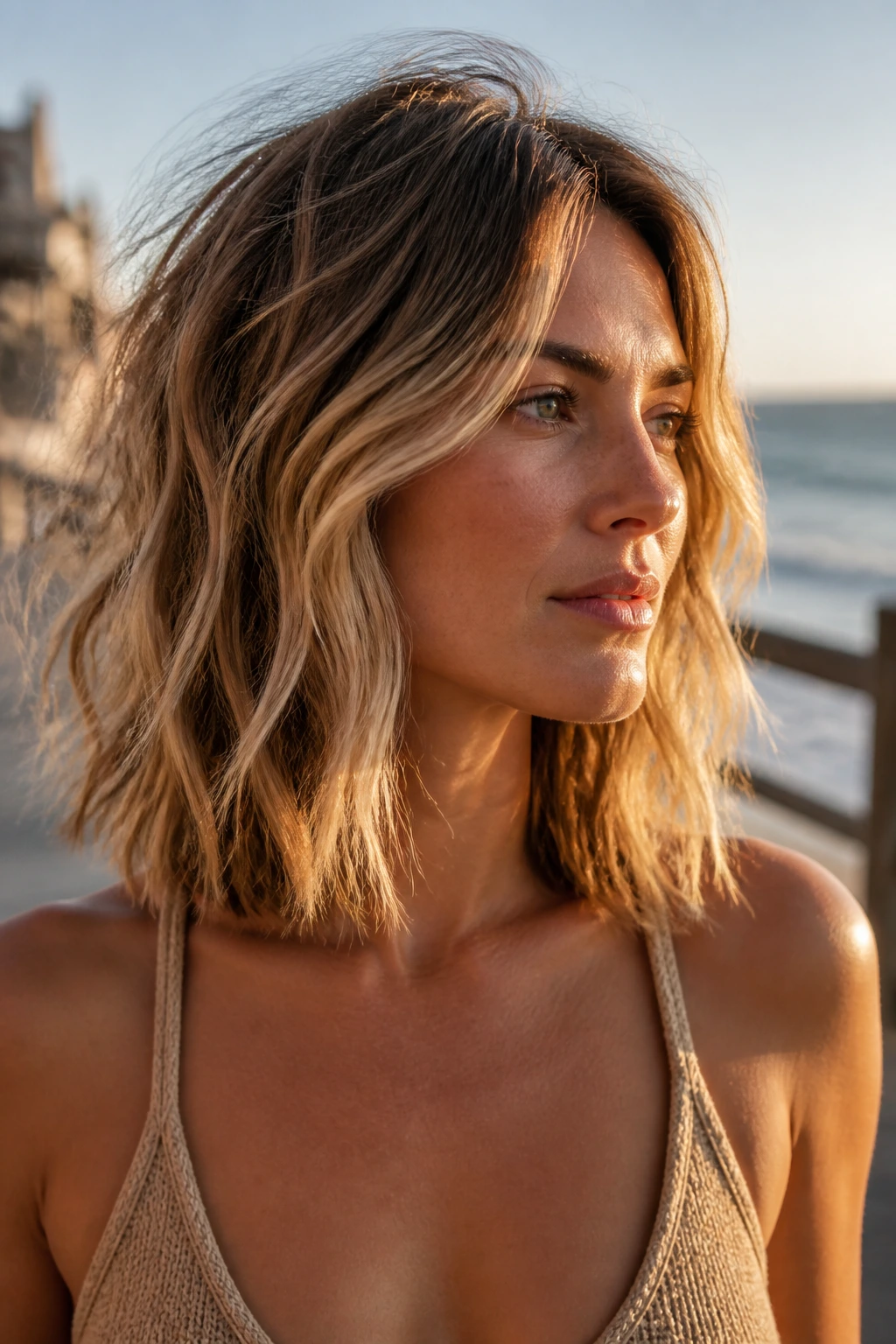
A beachy lob should look touched by air, not lacquered into place. Salt spray helps here because it roughs up the hair just enough to make the wave pattern separate into those loose, broken pieces people associate with an easy summer cut.
The danger is overdoing it. Salt spray can leave the ends feeling dry and crunchy if you load it onto already parched hair. Use it on damp mids and lengths, then add a small amount of leave-in underneath if your hair drinks product fast.
This look lands best when the root stays a little loose and the ends are piecey rather than curled under. Rough-dry the roots first, then scrunch the lengths as the hair gets close to dry. The best beachy lob never looks identical from side to side. That slight irregularity is what keeps it alive.
7. Glossy S-Bend Lob
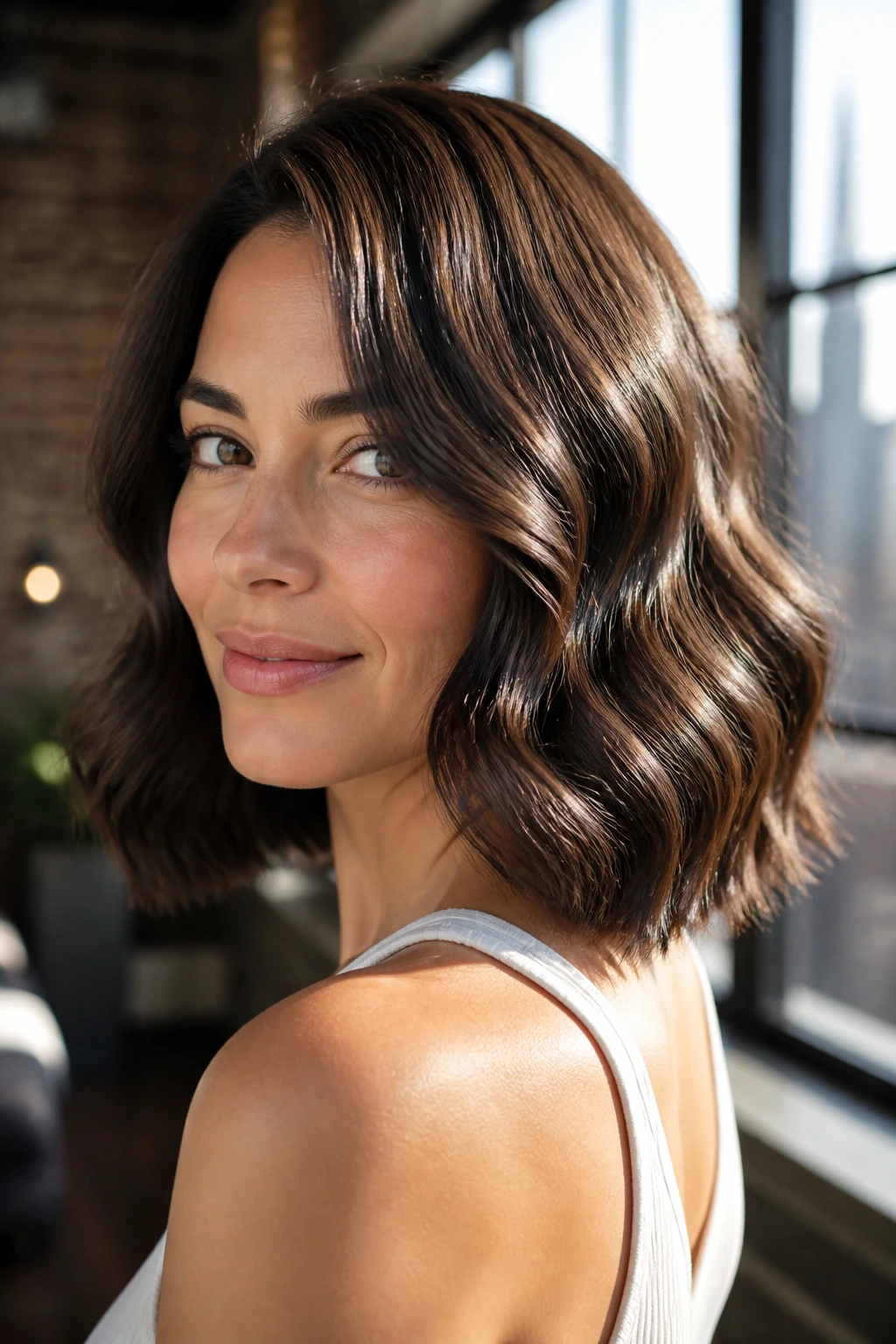
A glossy S-bend lob feels more refined than a beach wave, and I mean that in the practical sense. The bend is smoother, the wave pattern is more deliberate, and the whole thing can move from daywear to dinner without needing much rescue.
This style relies on alternating directions with a flat iron or curling iron so the hair forms those broad S-shaped curves instead of tight curls. Once brushed out lightly, the movement looks fluid. Not stiff. Not overdone. Just shaped.
A shine spray makes a real difference here because the glossy finish keeps the bends from looking dry at the edges. If your wavy hair tends to frizz, this is one of the better polished options. It gives motion without asking the hair to be bigger than it wants to be.
8. Flipped-Out Ends Lob

A flipped-out lob gives the haircut a little lift at the bottom, which is useful if your waves tend to collapse inward and look heavy near the collarbone. The flip opens up the line and keeps the ends from sitting flat against the neck.
This shape has a bit of a retro feel, but it doesn’t need to read costume-y. Use a round brush, roll the ends away from the face, or tap them with a flat iron just at the last inch. The goal is a soft flick, not a hard bend.
On finer wavy hair, the flip can make the cut look fuller. On thicker hair, it removes that blunt, boxy look that sometimes shows up after a fresh trim. Small movement at the edge. Big payoff in the silhouette.
9. Bottleneck Bang Lob
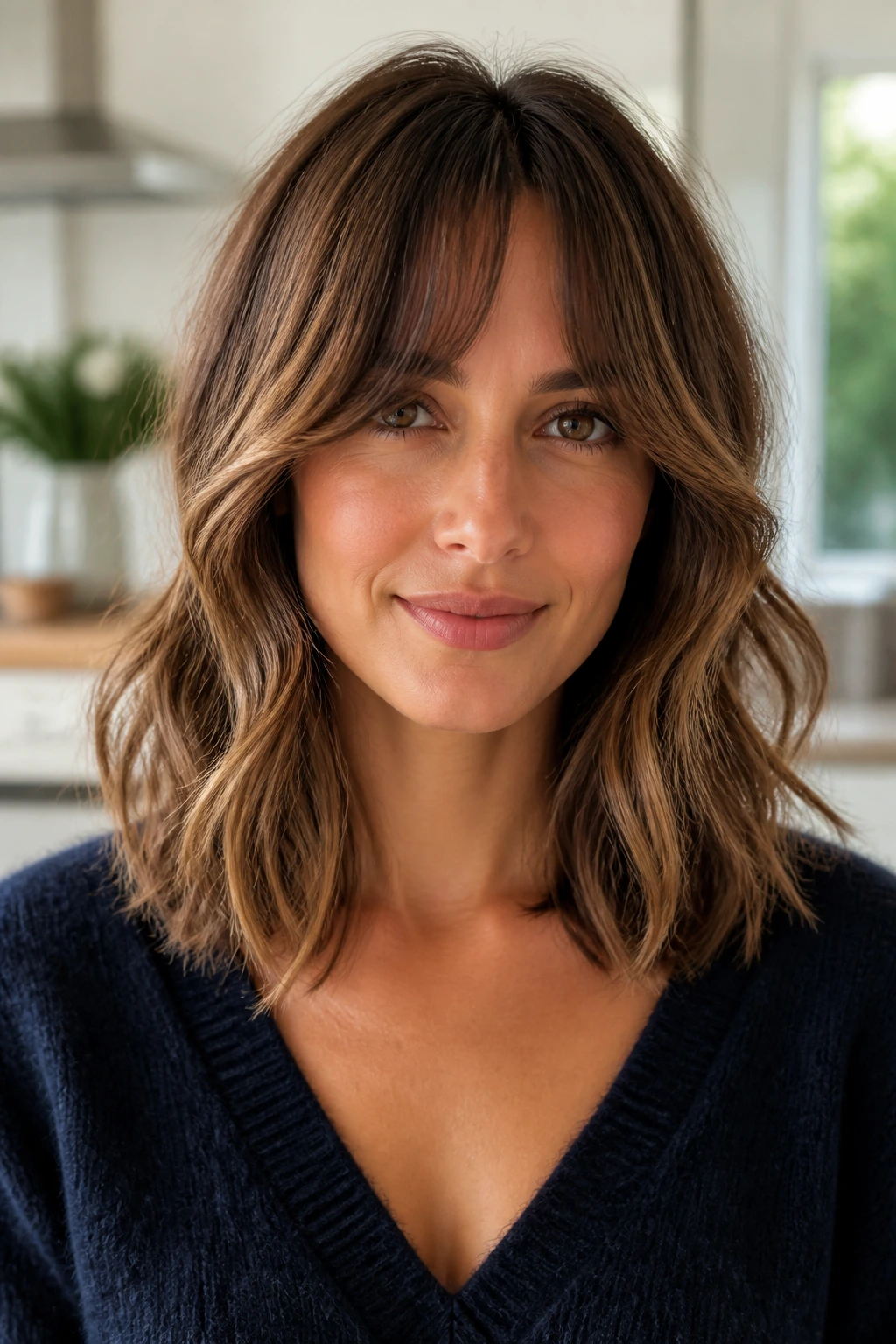
Can bangs make a lob look softer without taking over the face? Yes, if they’re bottleneck bangs. The center opens a little higher, then the fringe grows longer at the sides, which lets it slide into a wavy lob without a harsh line.
I like this shape because it gives the eye somewhere to land before the wave pattern starts. That’s useful on longer faces, larger foreheads, or haircuts that feel too one-note in the front. The fringe breaks up the shape without making the whole cut smaller.
Dry the center pieces with a small round brush and keep the side pieces looser. If the bangs are cut too short, they spring up and fight the rest of the lob. Keep them long enough to graze the brows at least when dry. That extra half-inch matters.
10. Side-Swept Volume Lob
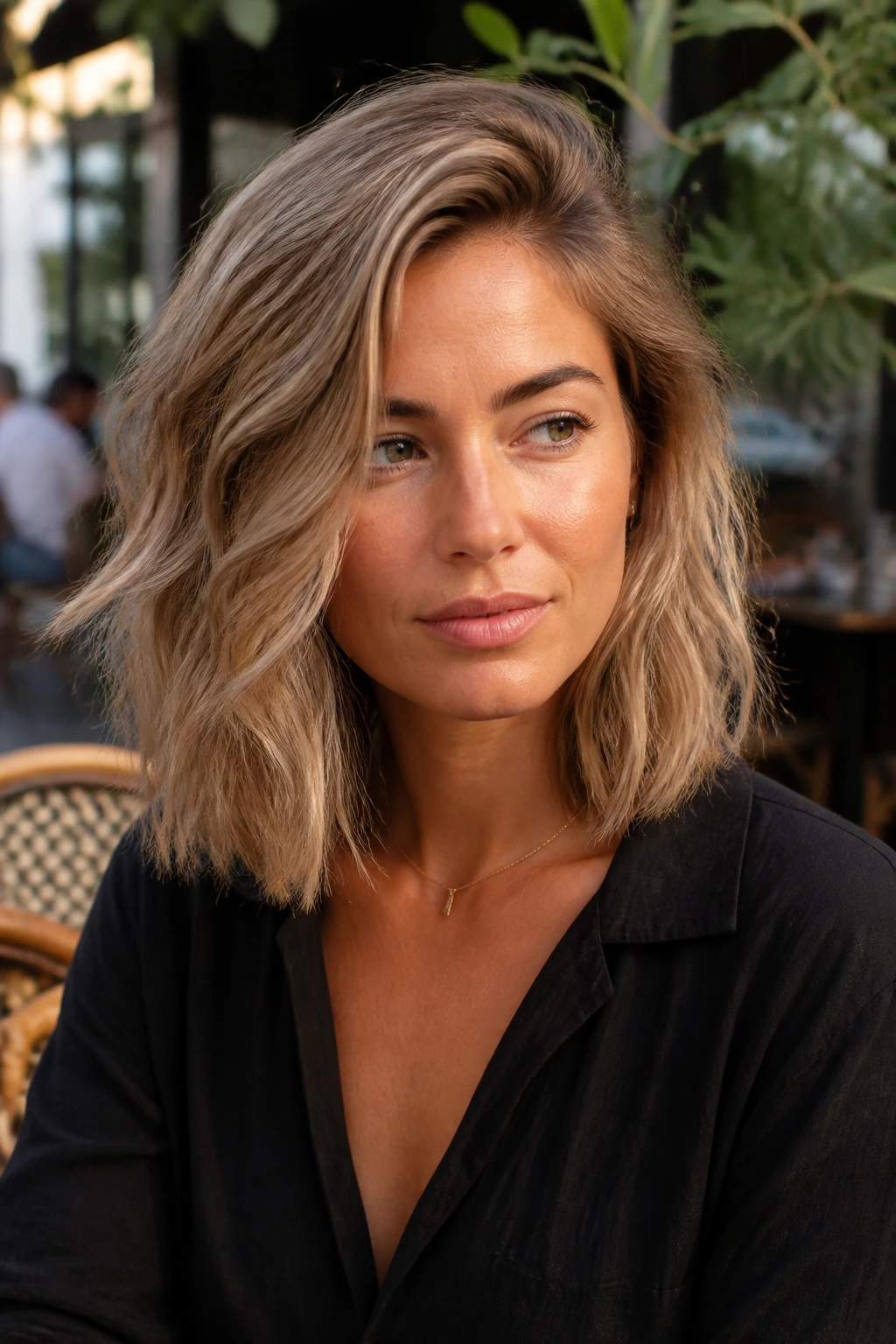
A side-swept lob feels a little old-school in the best way. The volume lives at the top and front, then the length falls away in a soft diagonal that keeps the haircut from looking static.
This works especially well when the crown is flat but the ends have a nice wave. Start by setting the part well off center, then direct the top section with a blow-dryer or round brush so it rises away from the scalp. The front should sweep, not cling.
If your face is round or wide through the cheeks, this shape gives some vertical lift without making the hair taller everywhere. That distinction matters. Big hair is not the same thing as good shape.
11. Piecey End Lob

A piecey lob is for someone who wants the ends to look separated, not blended into one soft mass. It has a little edge, a little grit, and a lot of movement in the last two inches of hair.
The secret is restraint. Too much cream and the pieces collapse. Too much spray and they go brittle. A light texturizer through dry hair works better than loading product into wet waves and hoping for the best later.
This is one of my favorites for second-day hair because the natural bend is already there. You just wake it up. Pinch a few ends between your fingers, twist them slightly, and let the rest sit messy. It looks casual, but not lazy. There’s a difference.
12. Half-Up Lob with Loose Tendrils
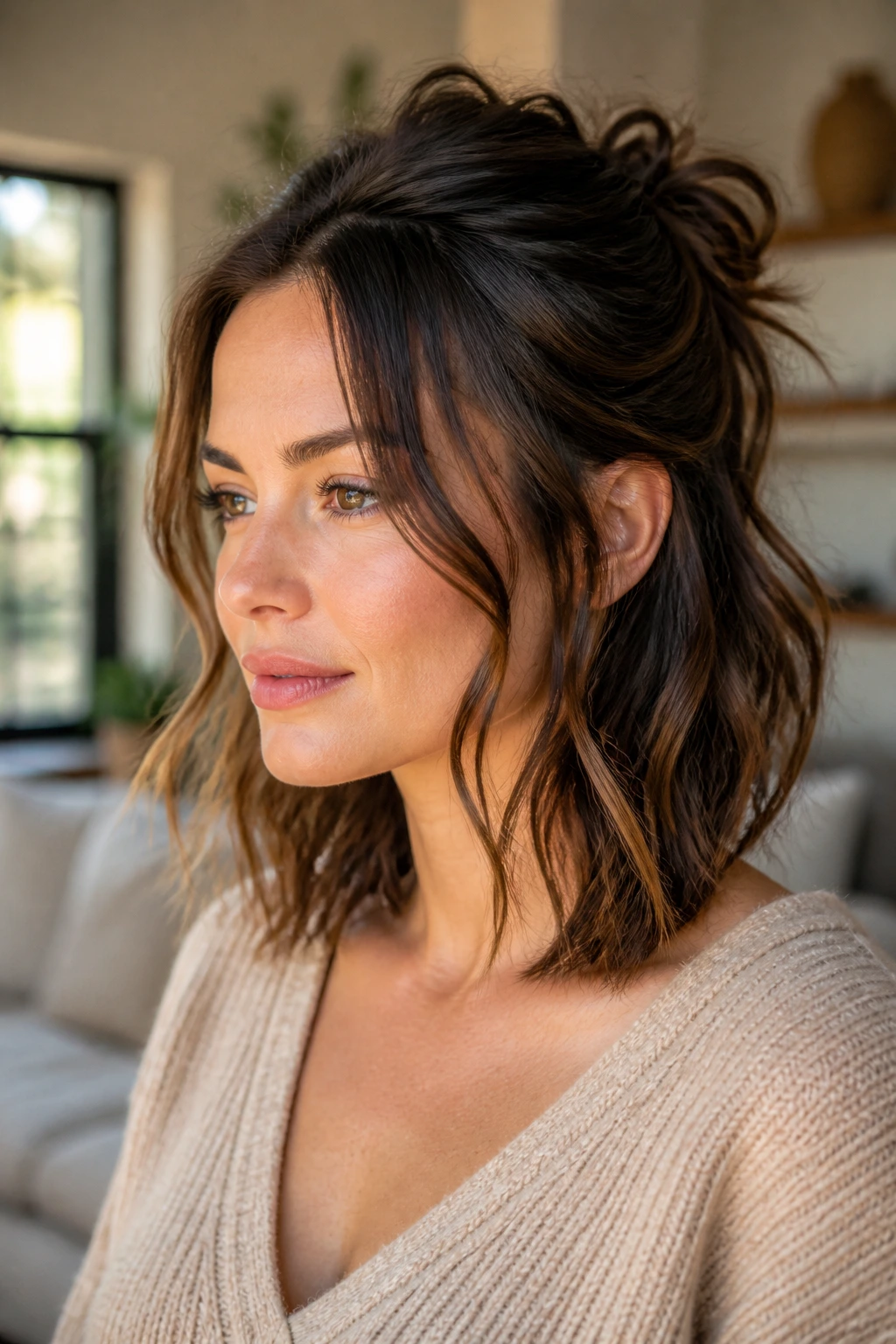
A half-up lob is the easy answer when your waves look good but the front pieces won’t cooperate. Pulling the top section back keeps the movement visible while giving the face a bit of lift and shape.
The loose tendrils are the whole point. Leave a couple of pieces out around the temples and cheekbones so the cut still reads as wavy and relaxed. If you sweep everything back tightly, the lob loses its swing and starts looking plain.
This style works for work, errands, or any day when you want the hair off your neck but don’t want to flatten the length. A small clip, a barrette, or a loose elastic all work. The finished shape should still show the collarbone line and the bend at the ends.
13. Scarf-Tied Lob
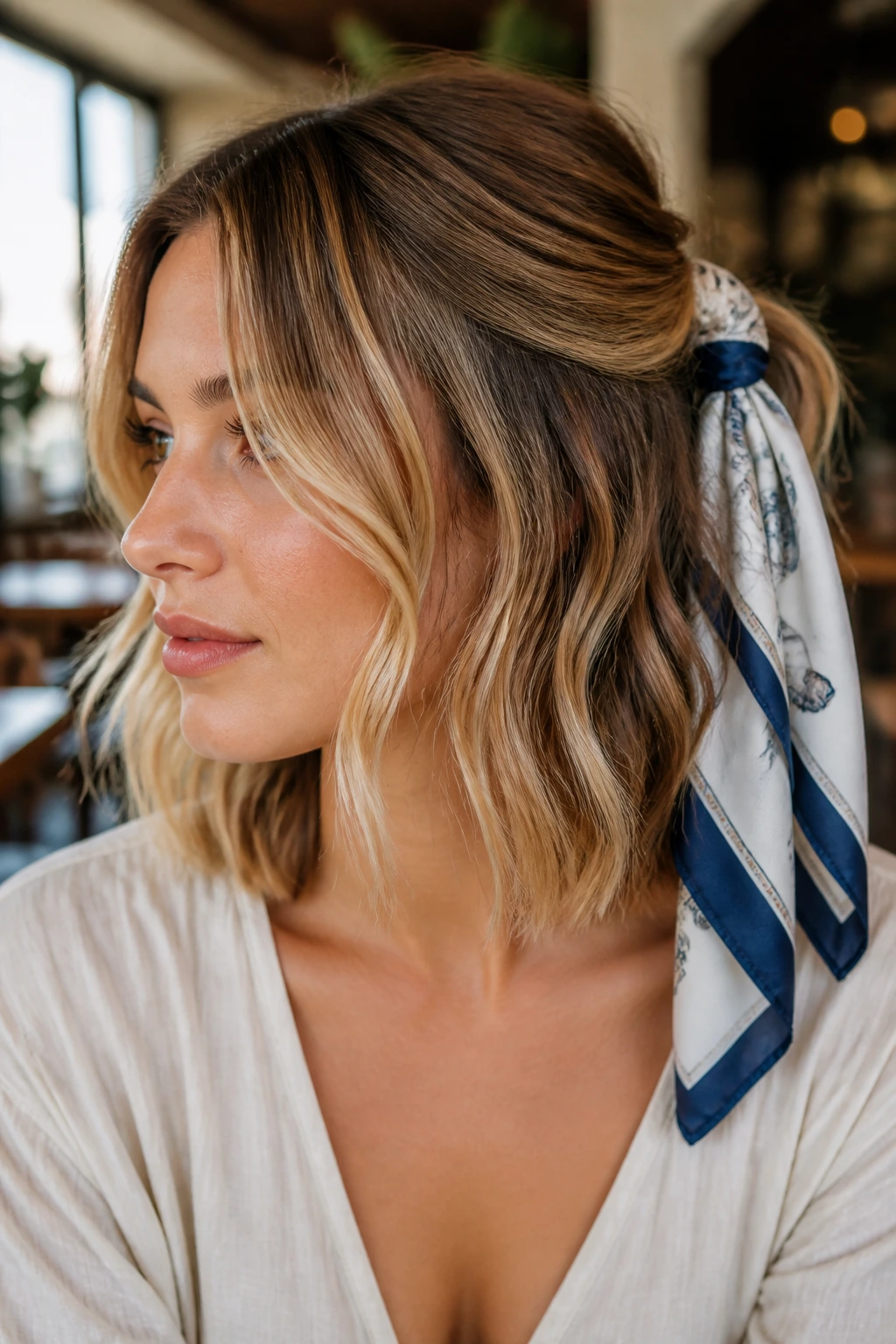
A scarf changes a lob fast. Wrap one around a low half-up tie, a loose pony, or even the crown, and the haircut suddenly looks intentional without needing a full restyle.
The best part is that the waves can stay loose underneath. You’re not hiding the texture; you’re framing it. That makes this a good option for hair that’s between wash days or a little frizzy at the ends. The scarf gives the eye something pretty to focus on while the movement underneath does its thing.
Keep the knot soft and don’t cinch it tight against the head. A scarf-tied lob looks better when it has a little air around the face. Tight styling kills the charm. Loose folds and messy ends make the whole thing feel lighter.
14. Sleek Root, Wavy End Lob
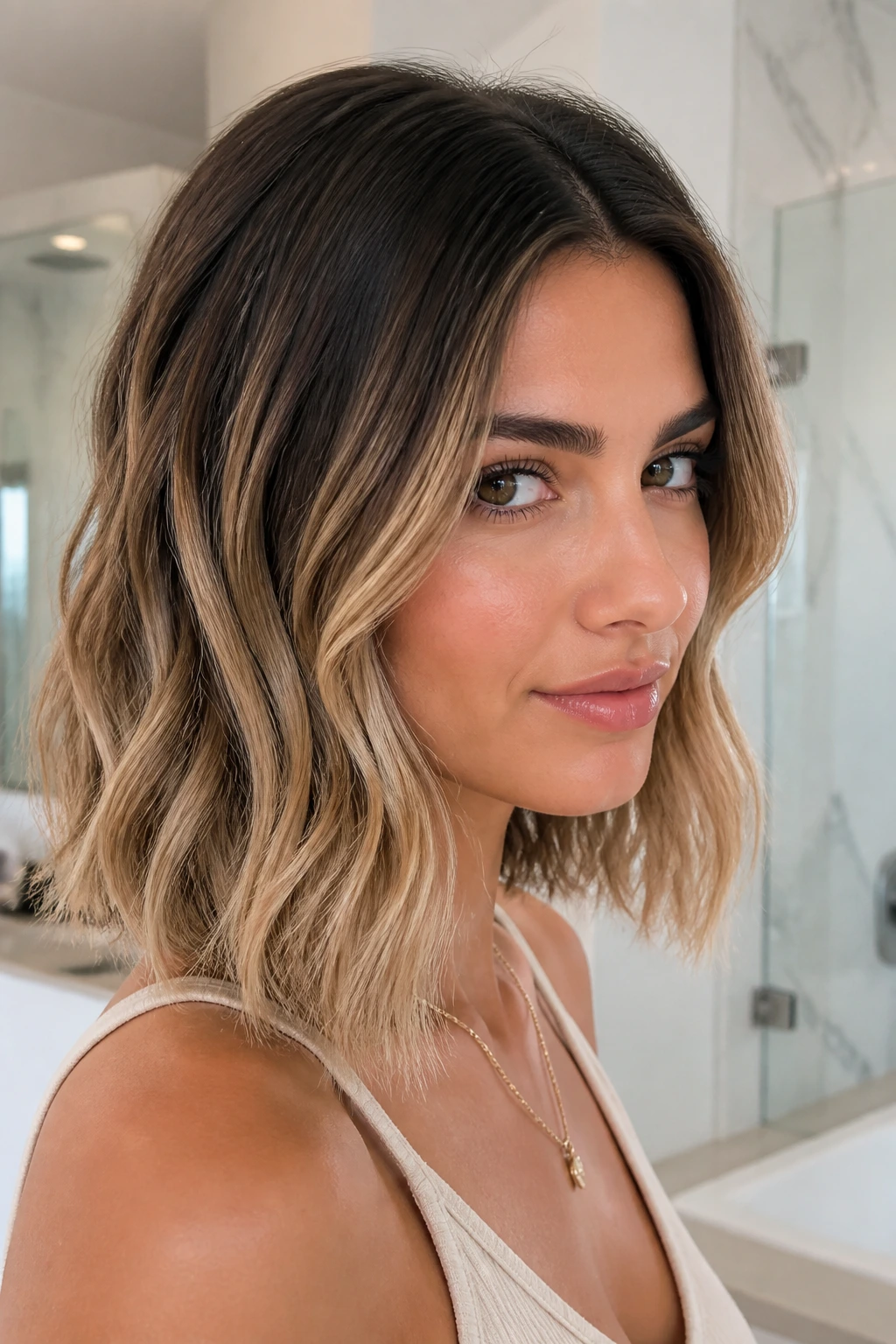
This is the version I recommend when someone wants polish at the top and softness at the bottom. The roots are smoothed down enough to look neat, but the ends stay wavy so the haircut never turns stiff.
It’s a smart compromise for frizz-prone hair. Blow-dry the roots with a nozzle and brush, then let the mids and ends keep their natural pattern. If you want more separation, wrap only the last third of the hair around a large iron for a bend instead of a curl.
The contrast matters. Smooth roots make the lob look more controlled, and wavy ends keep it from feeling too formal. That’s a very usable combination. Clean where the eye starts. Loose where the hair moves.
15. Shaggy Lob

A shaggy lob is what happens when movement stops being a small detail and becomes the whole point. Layers are more obvious here, the fringe can be softer, and the ends are cut to fall apart a little instead of staying neat.
This one loves wavy hair, especially when the hair has decent density. The shape lifts at the crown, breaks up around the cheeks, and gives the lob a lived-in feel that doesn’t need a perfect finish. It can go too far on very fine hair, though. Too many short layers and you lose the body fast.
If you want a shaggy lob to behave, keep the longest layer around the collarbone and let the shorter pieces sit mostly around the face and crown. That balance keeps the haircut from looking over-hacked.
16. Asymmetrical Lob
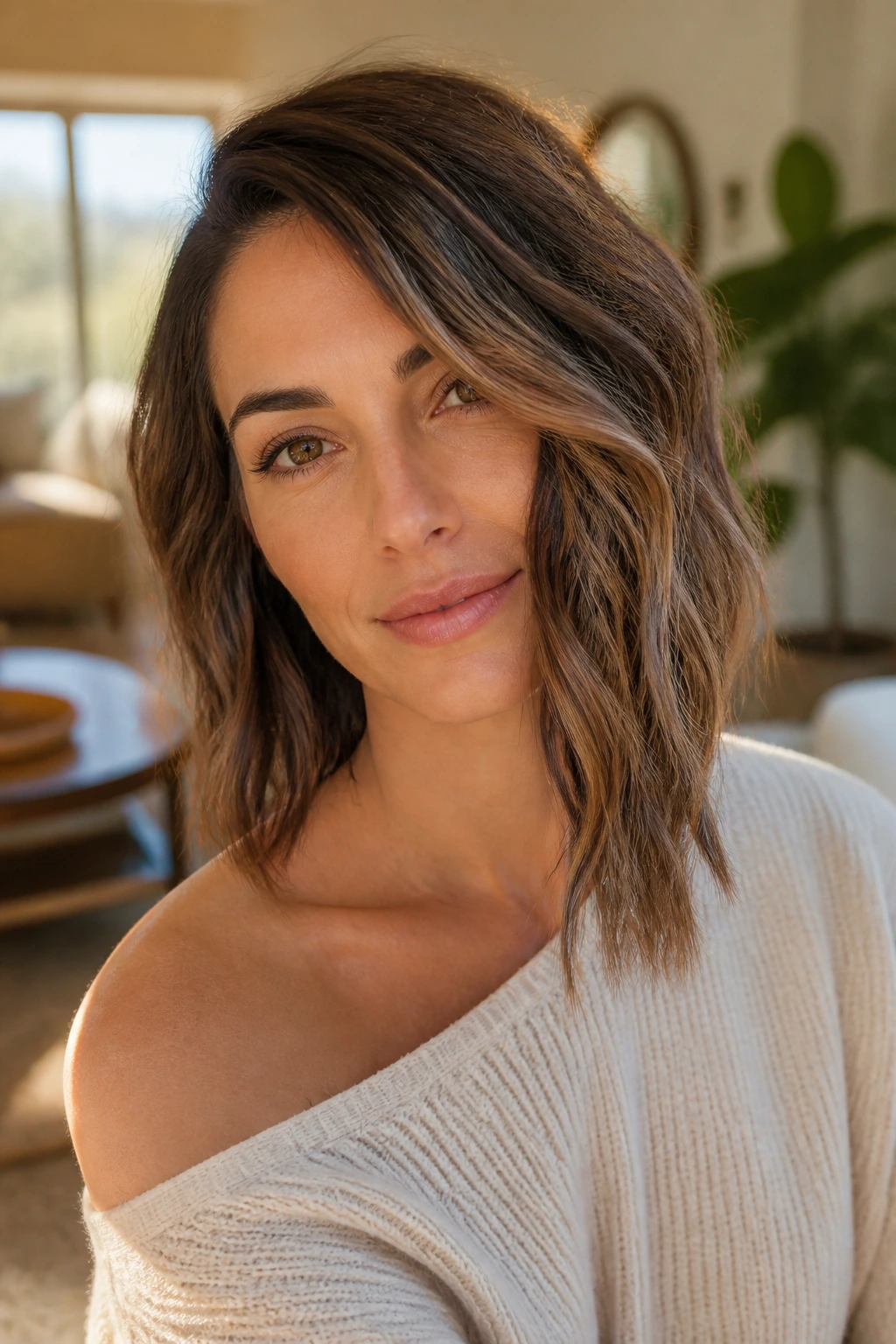
One side slightly longer than the other is enough to change the whole mood. An asymmetrical lob adds a diagonal line that makes wavy hair look sharper and more deliberate, even when the styling is loose.
This cut works well if you want something a little off-center without going extreme. The length difference can be subtle—barely an inch—or more noticeable, depending on how bold you want the shape to feel. The trick is to keep the waves soft so the asymmetry reads as design, not accident.
It’s especially good on straight-wavy hair that tends to fall in a predictable way. The uneven hem gives the eye a reason to keep moving. And that, honestly, is the whole game with these cuts.
17. Dimensional Balayage Lob
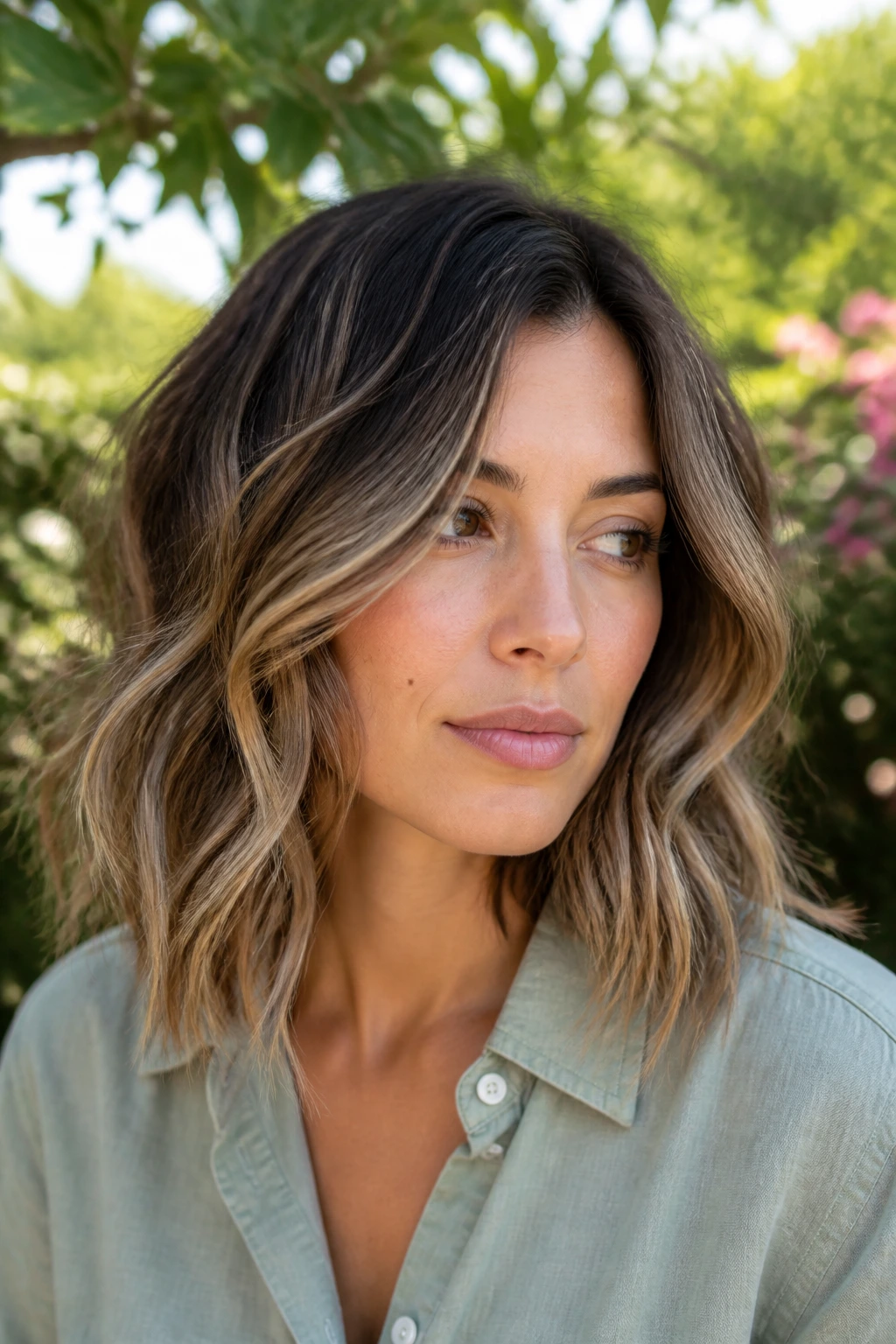
If the waves disappear in one flat color, the haircut loses some of its motion. Dimensional balayage fixes that by placing lighter ribbons where the hair bends, so every curve catches the eye for a second longer.
This is not just about color vanity. On a wavy lob, highlights can make the cut look more layered even when the shape itself is fairly simple. Lighter ends and face-framing pieces show off the twist in the wave pattern and stop the length from reading heavy.
The best version keeps the color woven through the surface, not streaked in obvious stripes. That soft contrast makes the movement visible from a distance. It’s one of those rare cases where color and cut are doing the same job.
18. Blunt Lob with Undone Bend
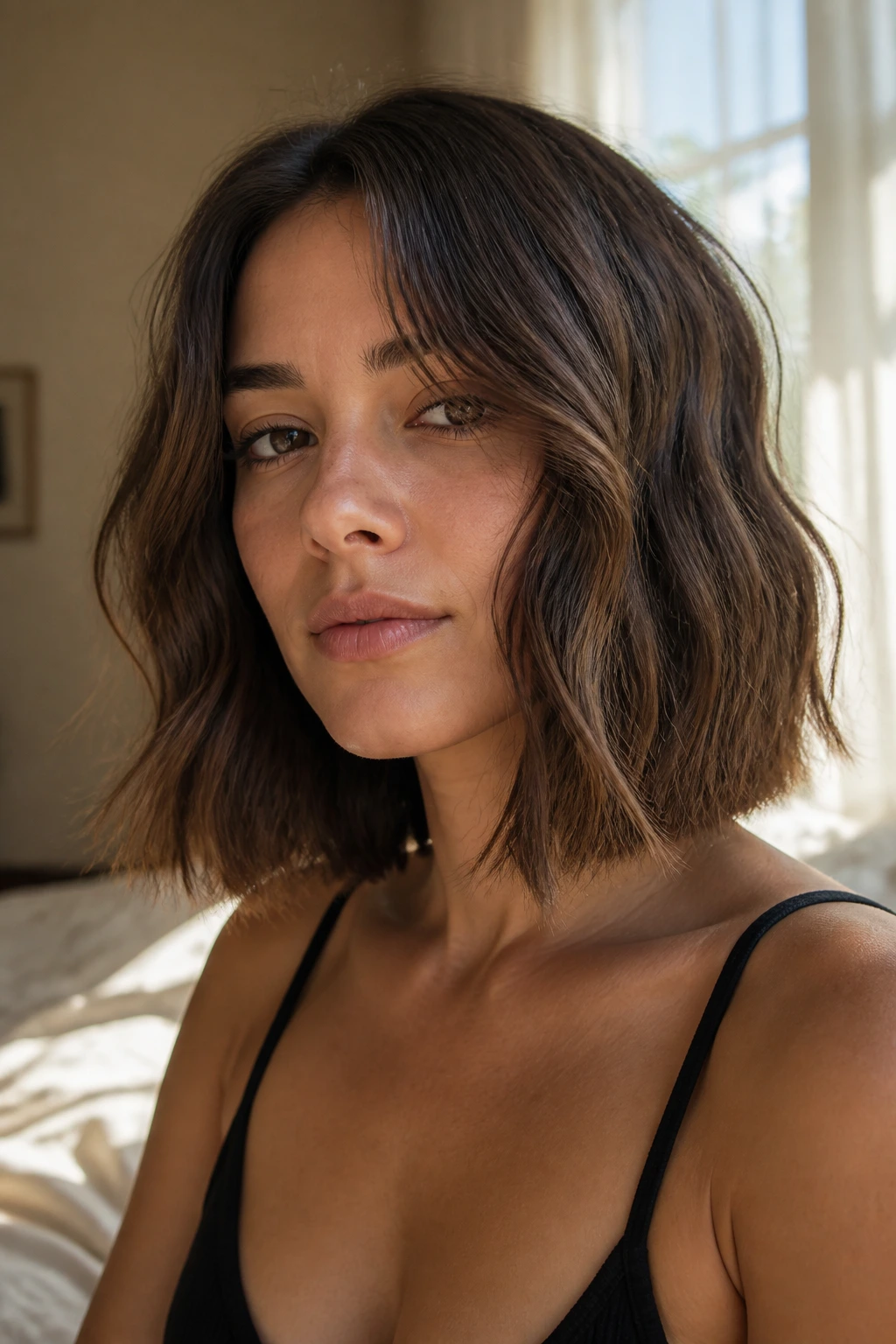
A blunt lob can still move. It just needs the wave pattern to stay loose enough that the perimeter remains strong while the inside of the shape bends and shifts.
This is a good choice for fine wavy hair because the blunt line gives the ends more density. Too many layers can make the bottom go thin and see-through. With a blunt edge, the hair looks fuller, and the undone bend keeps it from becoming helmet-like.
You do need to style it with a light hand. A little bend through the mids, not a full curl. Let the last inch stay straighter if you want the cut to keep its clean line. That contrast is what keeps the shape from getting fussy.
19. Rounded Lob with Internal Layers
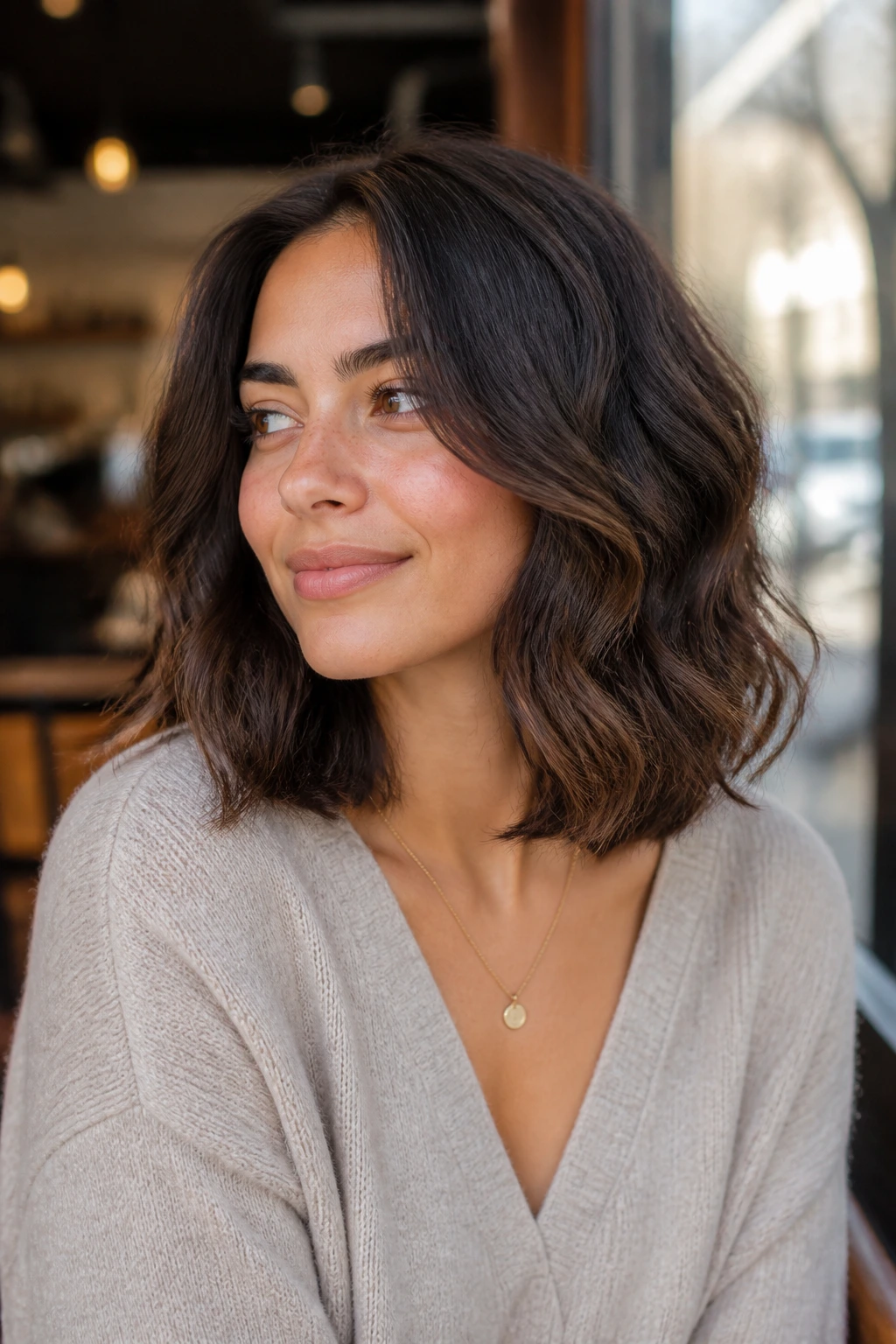
A rounded lob curves softly inward at the ends, which can be a nice correction when the hair naturally kicks out in a messy way. Internal layers help the shape bend without leaving obvious steps in the surface.
This cut is especially useful for thicker wavy hair that likes to spread wide. The rounded outline brings the silhouette closer to the head while still leaving enough movement that the style doesn’t sit flat. It’s polished, but not rigid.
The best version lands right at or just below the collarbone and keeps the front pieces a touch longer. That extra length in front gives the face room and keeps the curve from looking too severe. A little softness goes a long way here.
20. Grown-Out Bob Lob
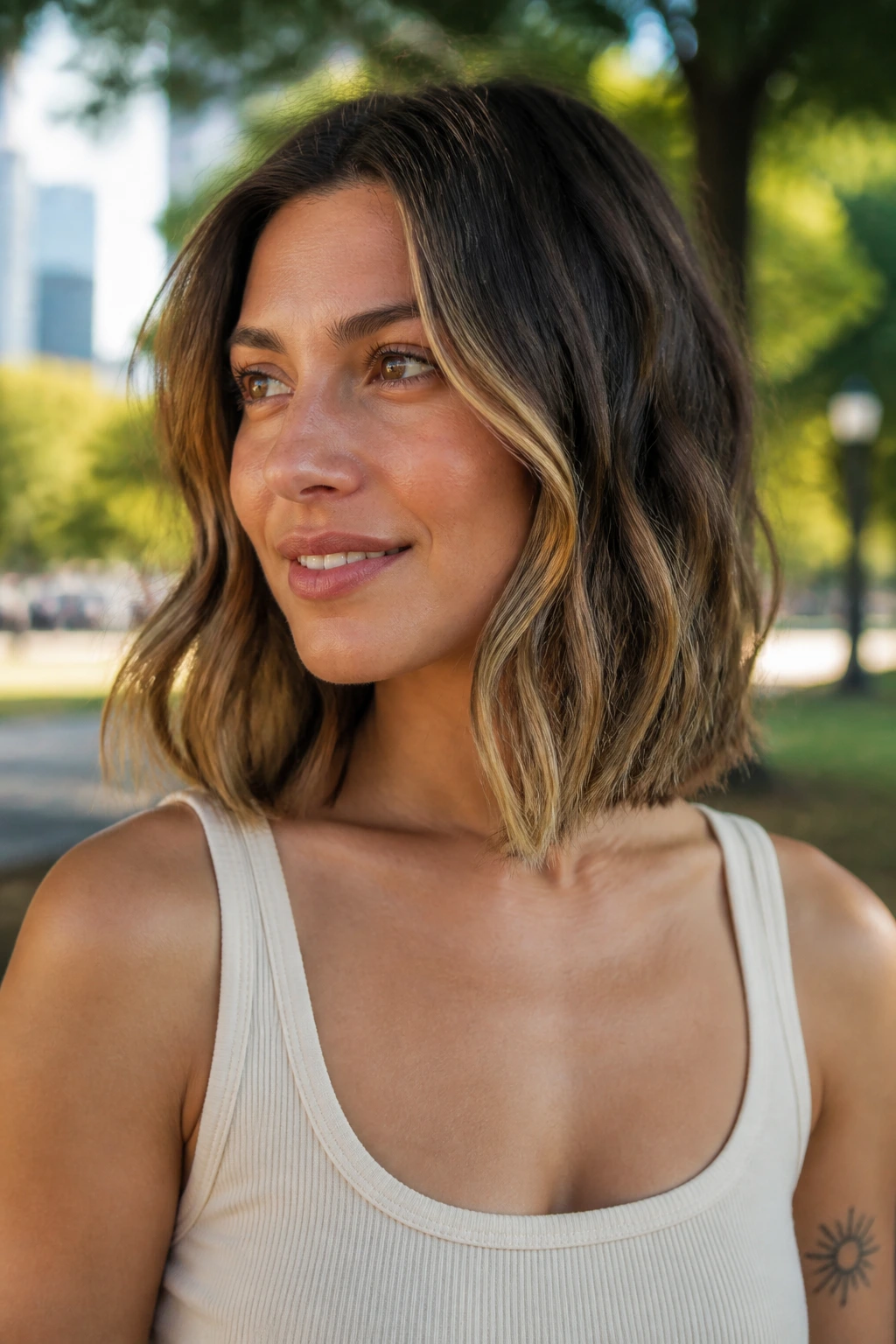
This is the in-between shape that happens when a bob gets a little longer and starts to relax into a lob. The grown-out version often looks better than the freshly cut one because the waves have enough length to bend, but not enough to drag.
I like this on people who are transitioning from a shorter cut and don’t want to jump straight to shoulder length. The line is familiar, but the movement is looser. A few face-framing pieces can help the shape feel intentional while it grows.
The main thing to watch is the ends. If they start flipping in random directions, a tiny trim and a light point-cut through the front usually resets the whole look. Small corrections matter a lot at this length.
21. Soft Wave Lob with Micro Layers
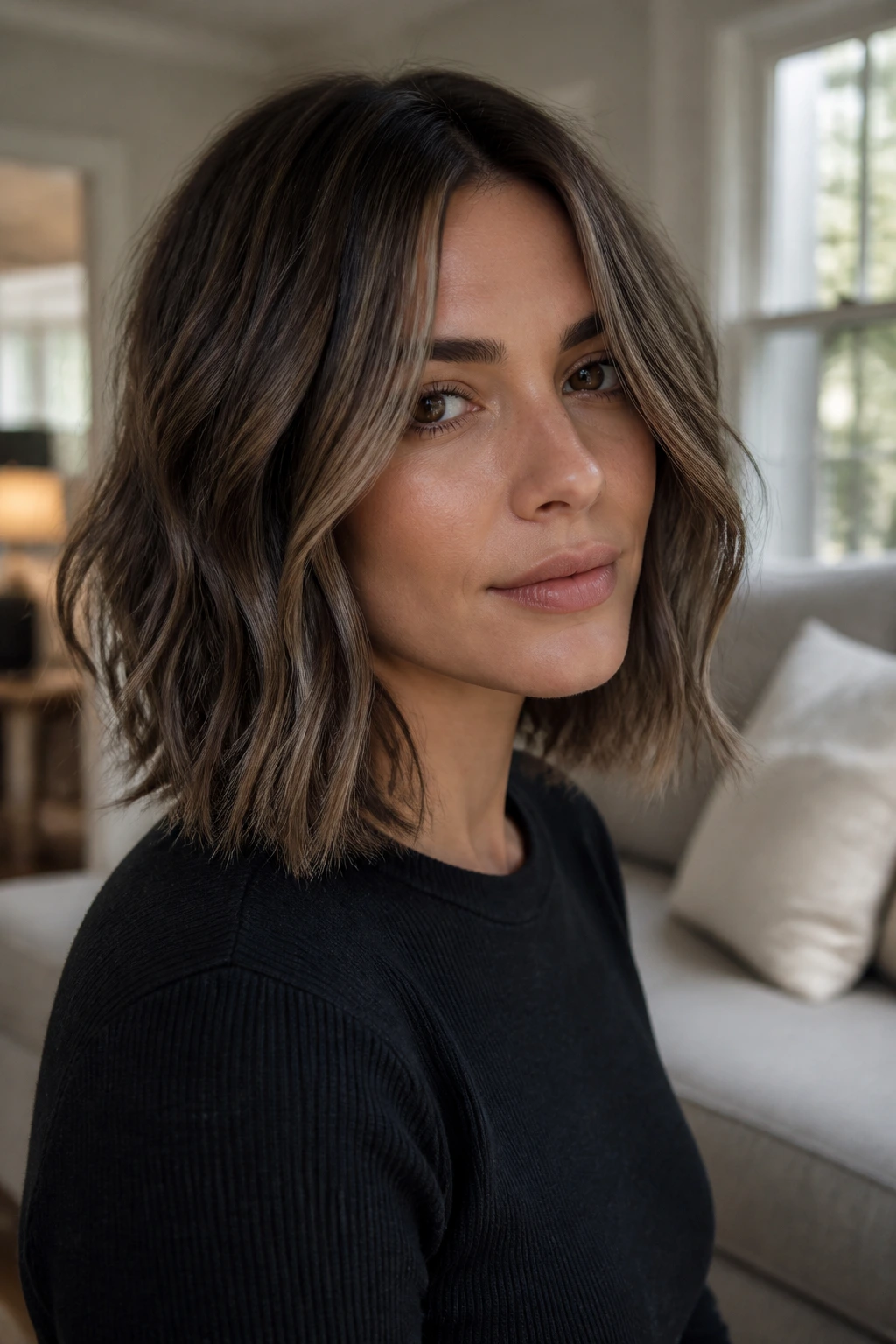
Micro layers are barely-there layers cut in close to the ends and around the interior, and they’re useful when you want movement without an obvious layered haircut. The result is soft, but not fluffy.
This style works nicely on dense wavy hair that needs a little breathing room. The micro layers let the waves separate, so the haircut doesn’t feel heavy around the shoulders. You still keep a clean outline, which is what keeps this version from drifting into shag territory.
It’s a quiet haircut. Not boring. Quiet. The movement is there when the hair swings, but from the front it still reads smooth and controlled.
22. Side-Tucked Lob
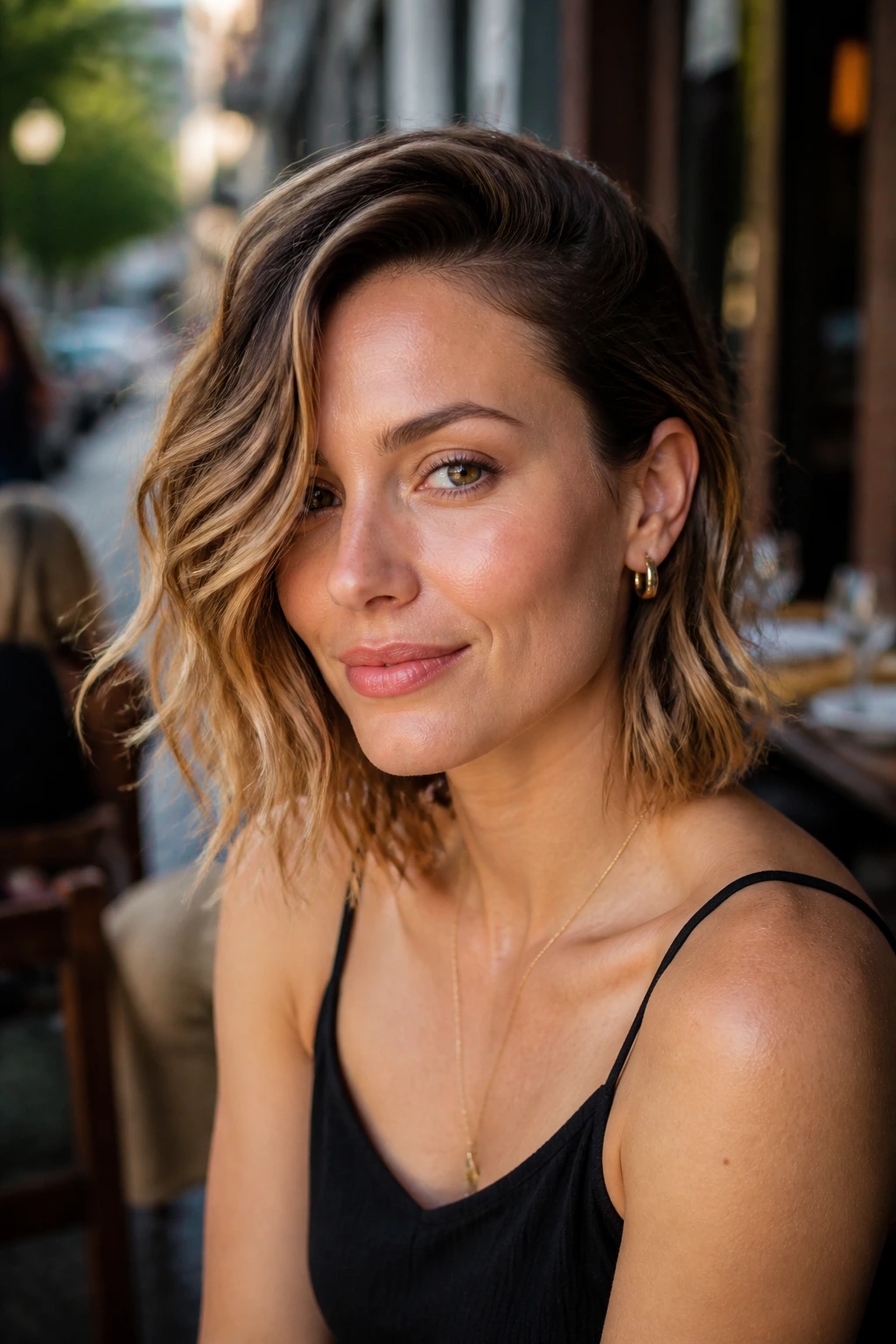
A side tuck sounds small because it is small, and that’s why it works. Tuck one side behind the ear, leave the other side loose, and the lob instantly shows off its shape, the wave pattern, and the jawline.
This is one of the easiest ways to make a wavy lob look styled without changing the cut. It helps when the front pieces are falling flat or when you want the hair out of your face but don’t want a full updo. Add a flat clip or a small ear cuff if you want the tuck to stay put.
The loose side does the heavy lifting. It gives you movement at the cheek and neck, while the tucked side opens up the whole profile. Simple. Effective. No drama.
23. Diffused Root-Lift Lob
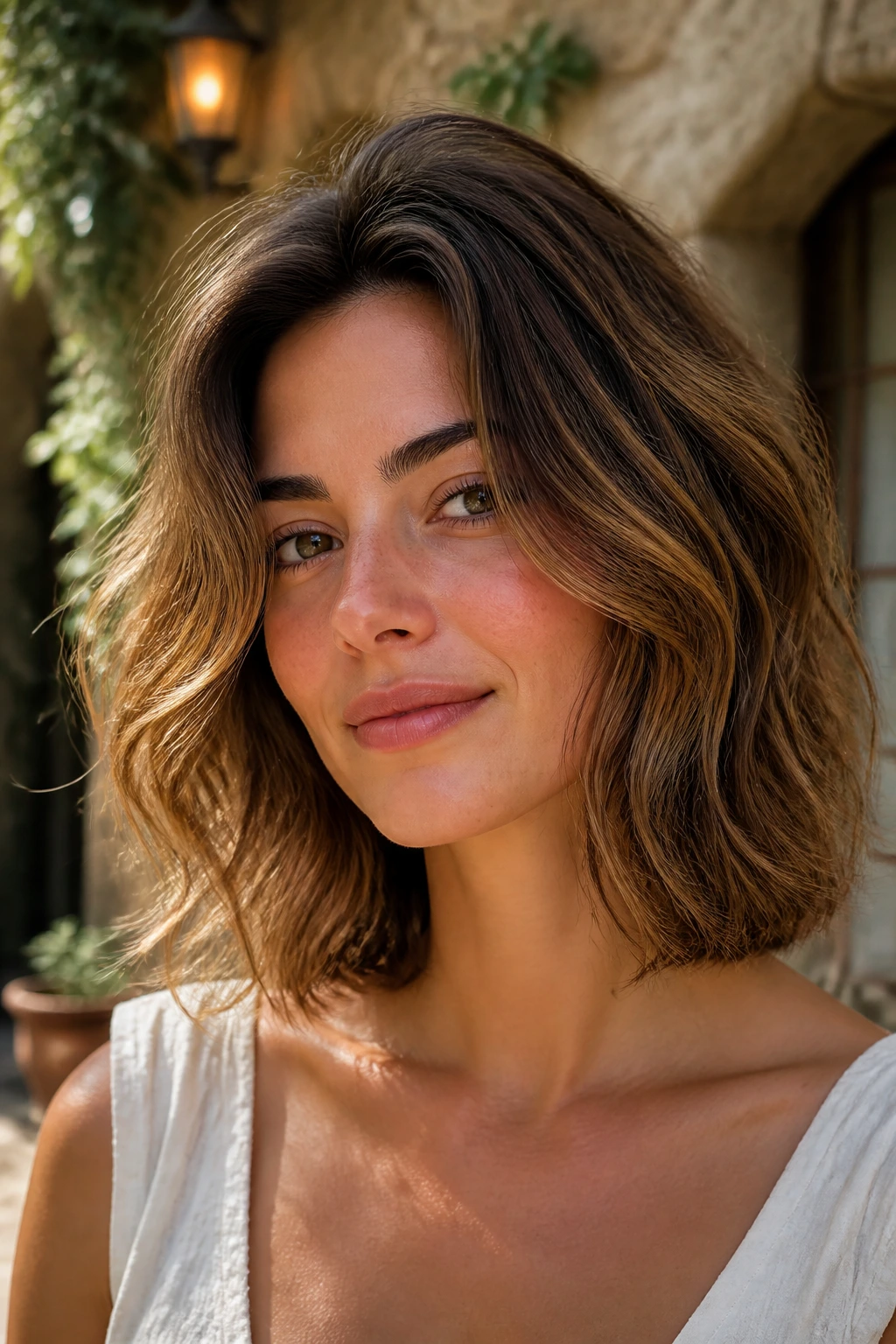
If your roots stick close to the scalp, a diffuser can change the entire shape. A diffused root-lift lob keeps the wave pattern soft while giving the crown enough height that the haircut doesn’t collapse inward.
This is a good answer for fine to medium wavy hair that needs body without a lot of product. Tip the head side to side, let the diffuser cup the roots, and stop before the hair gets frizzy and half-dry. The goal is lift at the base, not puff through the lengths.
I especially like this on humid days because the diffuser sets the shape without roughing up the cuticle too much. You get more movement at the root, which makes the lob feel lighter from the start.
24. Feathered Flip Lob
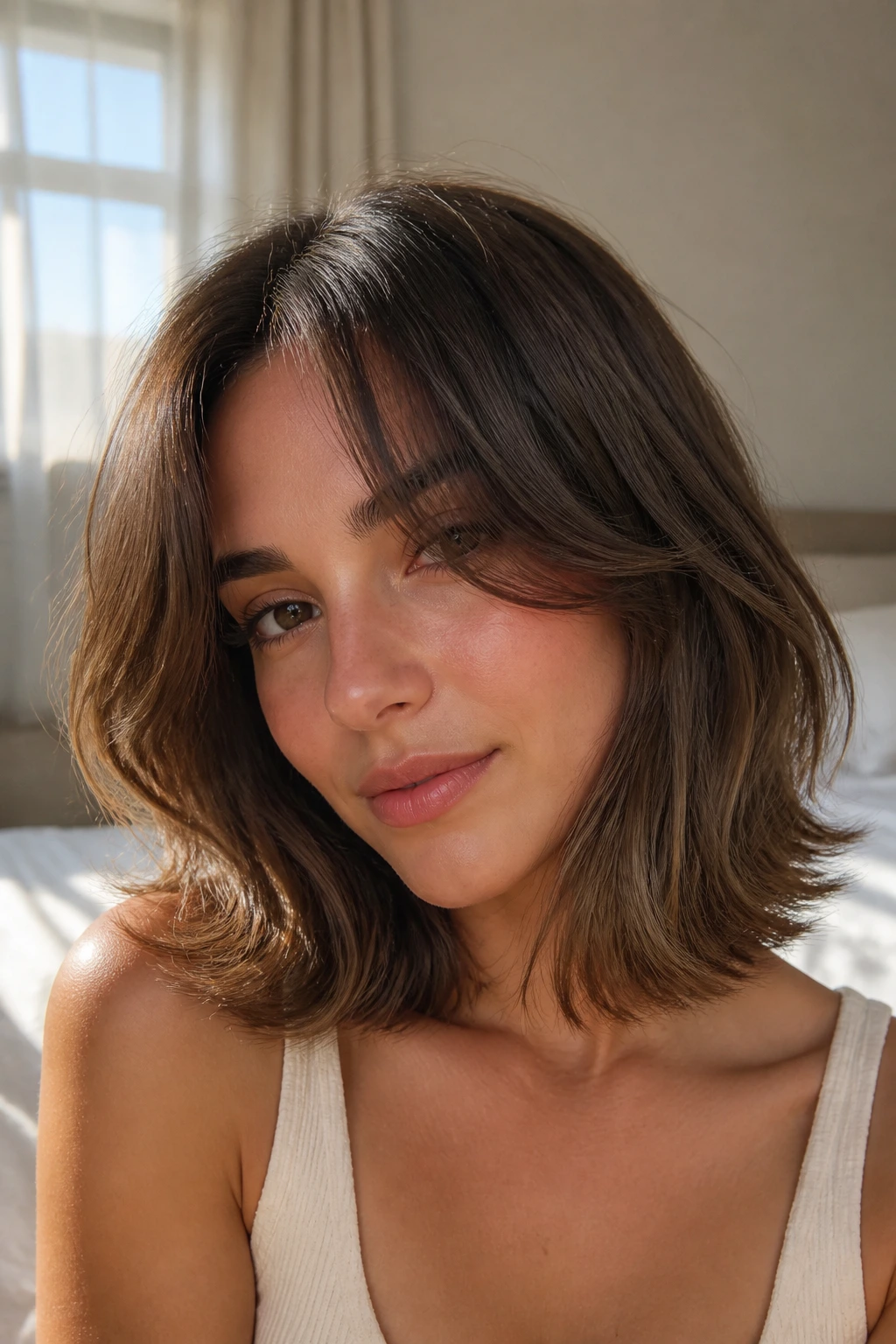
Feathered layers and a gentle flip at the ends make a lob feel lighter without making it thin. The effect is more floating than shaggy, more brushed than beachy.
This shape is useful when you want motion around the face and neck but don’t want the haircut to look heavily styled. The feathering keeps the front from dragging downward, and the flipped finish opens the silhouette just enough to keep it lively.
A medium round brush works well here, especially if you like a quick blow-dry that doesn’t take forever. The end result should move when you turn your head. That’s the test. If it stays stuck, the flip wasn’t soft enough.
25. Crown-Volume Lob
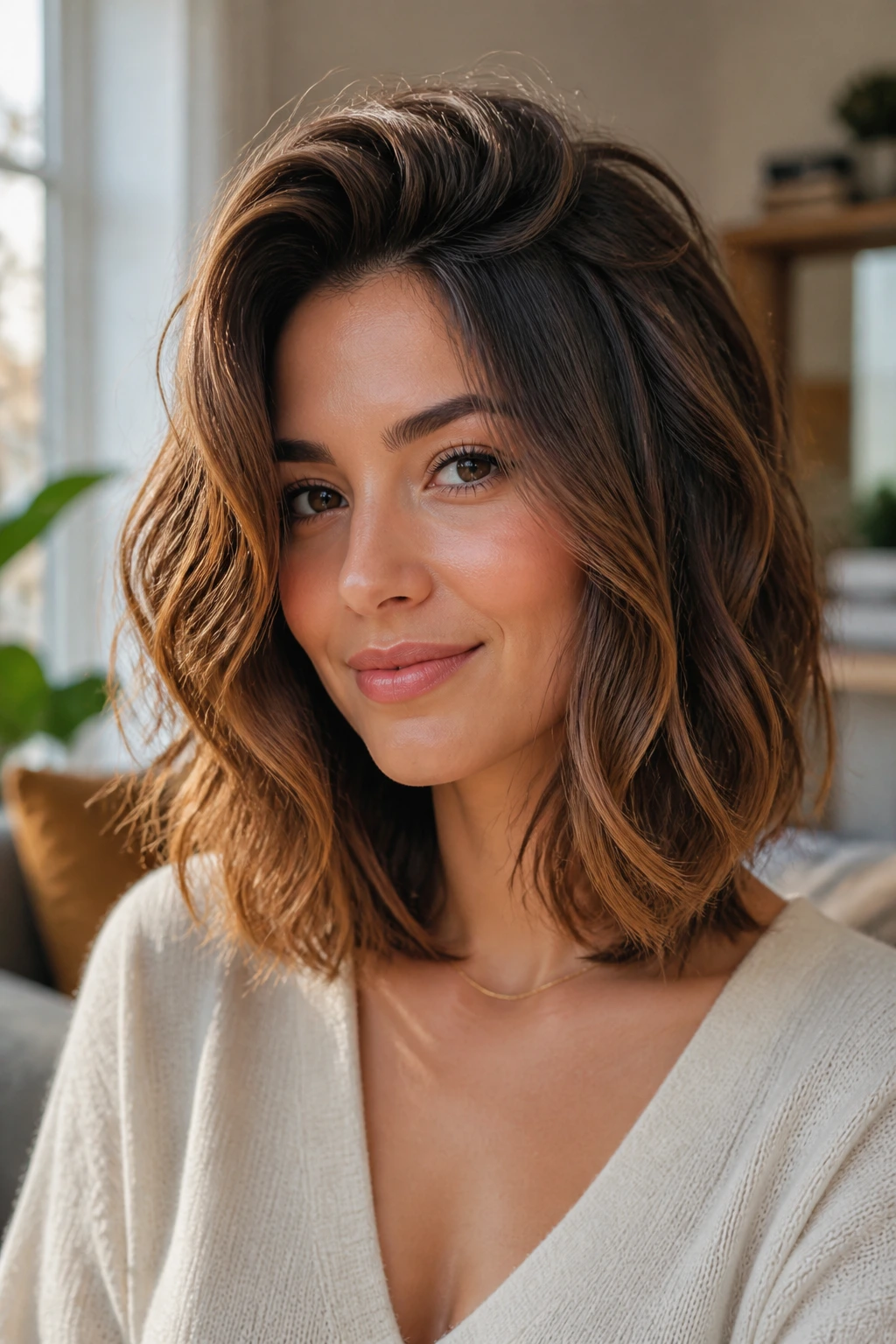
Sometimes the whole haircut lives or dies at the crown. A crown-volume lob builds lift at the top first, then lets the rest fall in a more relaxed line so the shape feels balanced instead of bottom-heavy.
This style is good when the waves are pretty but the top goes flat. Use velcro rollers, a root clip, or a brief blow-dry with the hair lifted away from the scalp. Once the crown has memory, the lob suddenly looks more awake.
It pairs well with looser waves through the ends because the contrast is appealing: tall at the top, soft at the bottom. That combination keeps the face open and the length from reading dense.
26. Braided-Texture Lob
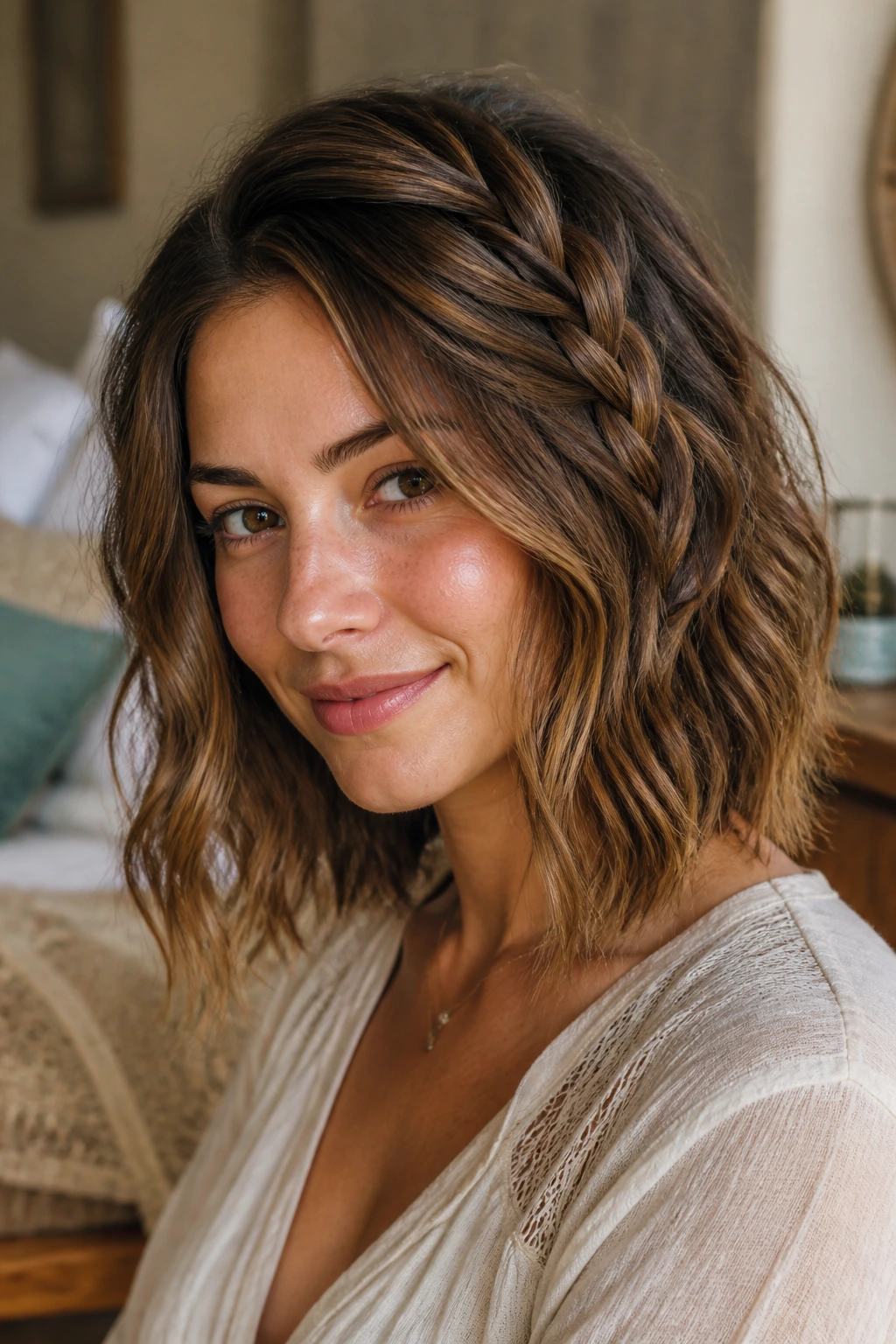
A braid can be a styling tool, not just an accessory. On a lob, a loose braid set overnight or for a few hours gives the hair a broken-up texture that feels different from a simple wave.
This is great for second-day hair or for someone who wants a bend that isn’t perfectly uniform. A single side braid, two loose braids, or a half-braid through the front all create movement that looks a little more lived-in than iron curls.
The trick is not to braid too tightly. Tight braids make the wave too crimped and can leave the ends odd-looking. Loose tension gives you bend, body, and a little irregularity, which is exactly what this length likes.
27. Retro Blowout Lob
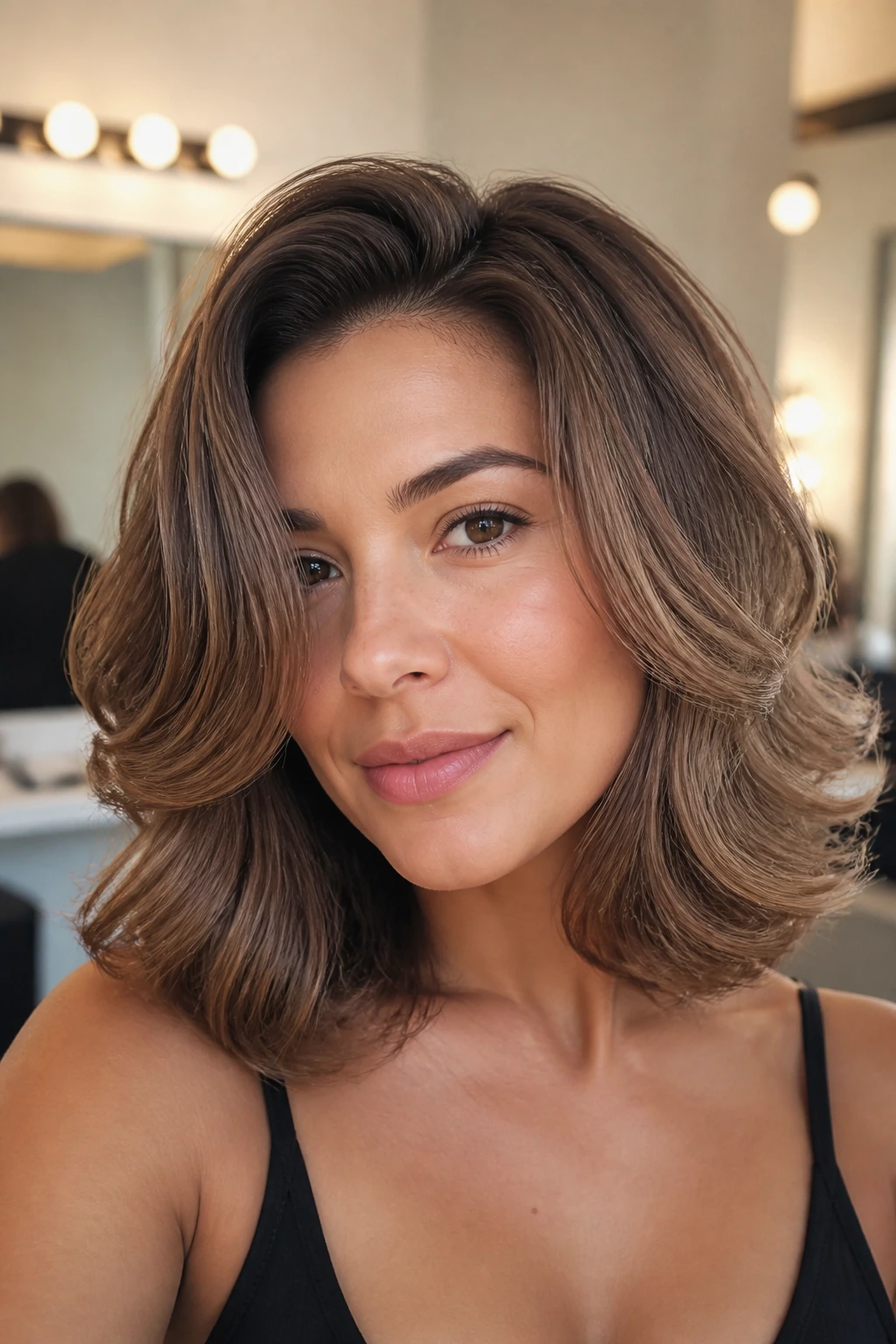
A retro blowout lob has bounce. That’s the whole pitch. The roots lift, the mids curve, and the ends flip just enough that the haircut feels buoyant instead of sleepy.
This is one of the more polished options on the list, but it still works on wavy hair because the bend can be brushed out and softened. A round brush, a big barrel brush, or large rollers all help the hair remember the shape without turning it rigid.
It’s the style I’d pick for someone who wants movement but doesn’t want “messy” movement. The line still reads clean. The body just has more presence.
28. Low Pony Lob with Face Framing
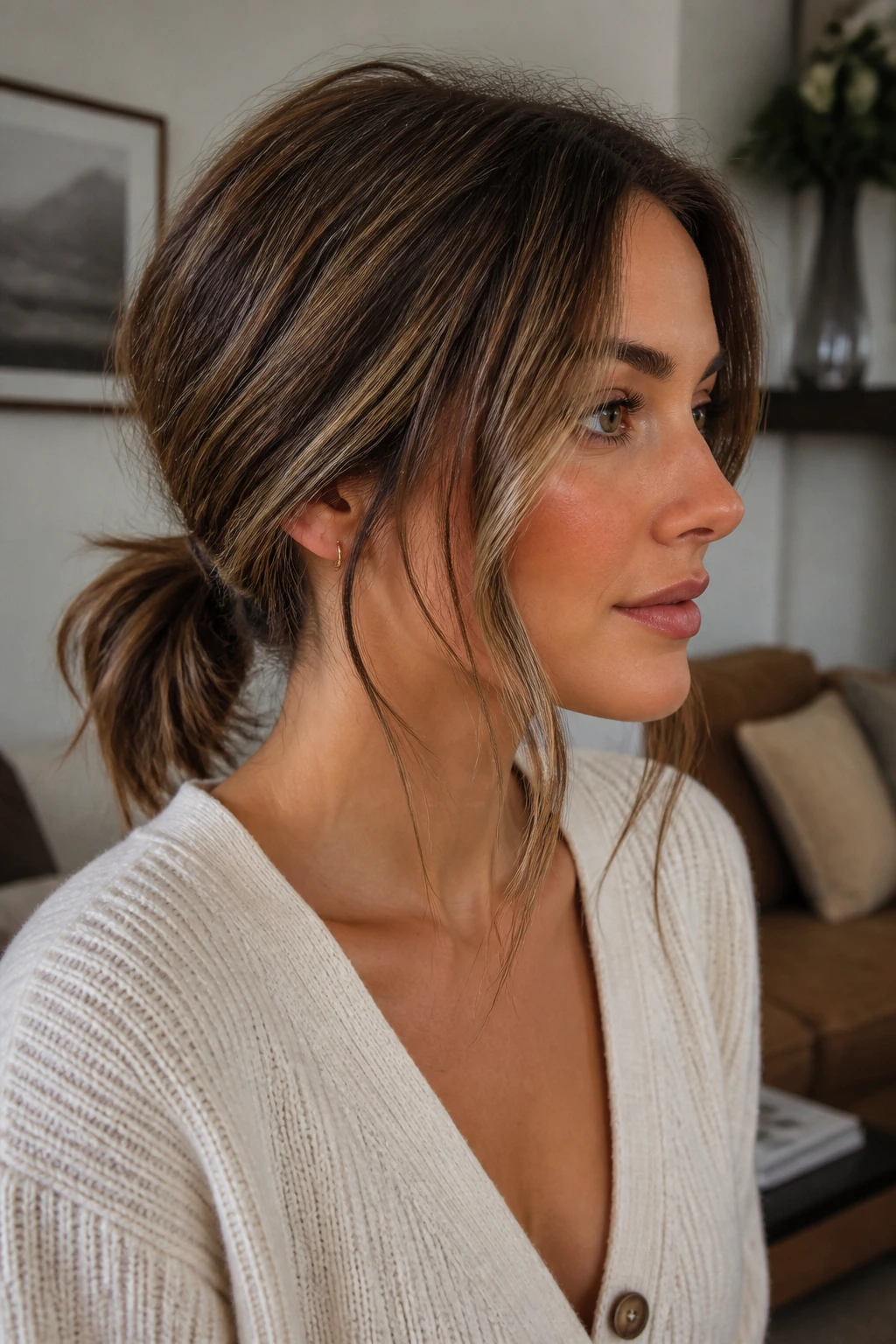
A low ponytail on a lob is a very specific kind of practical. It keeps the neck clear, but the cut still shows itself through the face-framing pieces and the little tail that escapes at the ends.
That escape is not a flaw. On wavy hair, the stray bits give the style some softness and keep it from looking like a scraped-back afterthought. Leave the front pieces out, wrap a strand around the elastic, and let the pony sit low enough that the lob’s length still peeks through.
This works when you need the hair to behave but don’t want to erase the movement completely. It’s tidy at a glance, loose up close. Good balance.
29. Polished Off-Center Lob
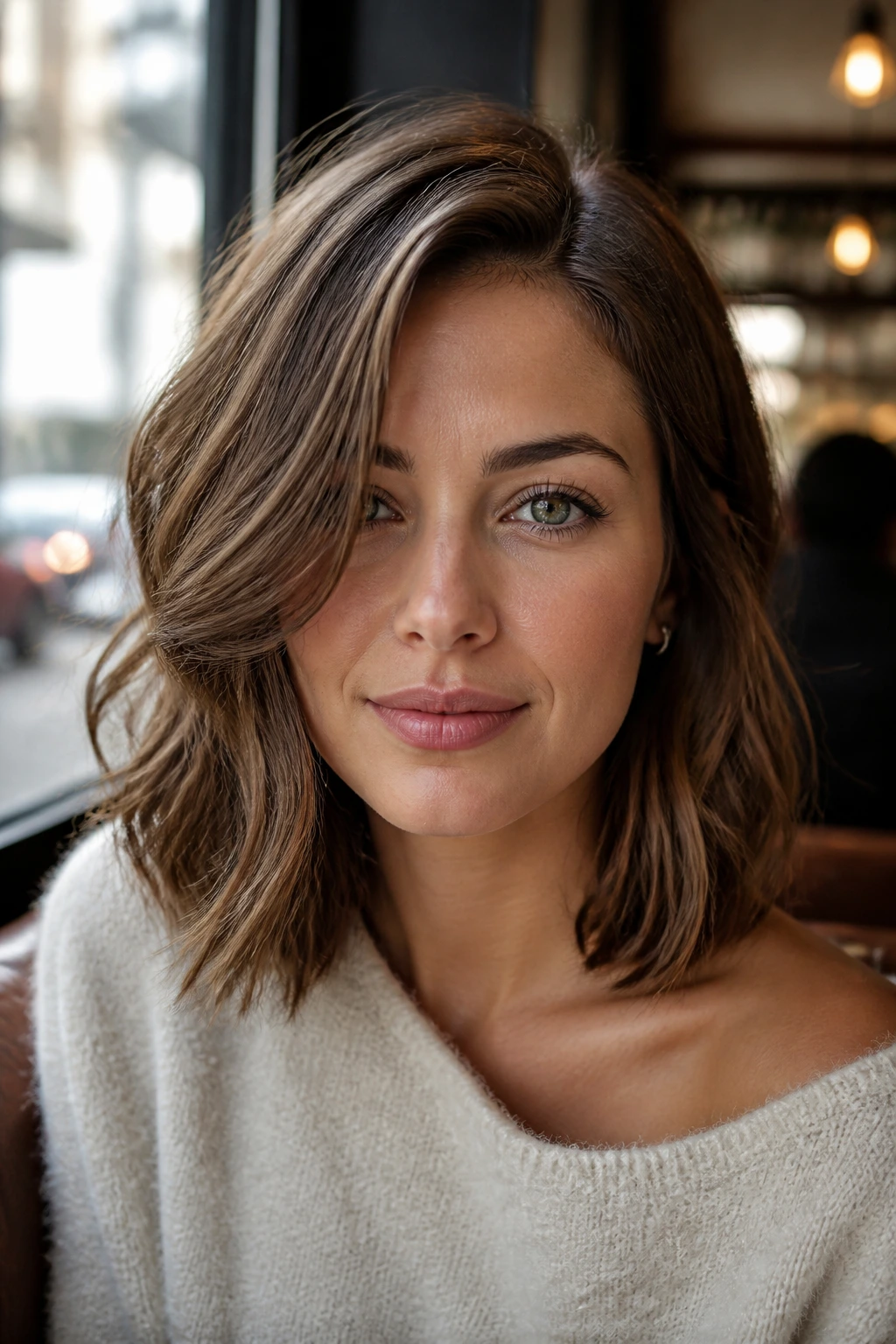
An off-center part only a touch away from the middle can be more flattering than a hard side part and less severe than dead center. It gives the hair a subtle drift, which is enough to make the lob feel arranged without looking formal.
This is a strong option for wavy hair that wants to split the difference between casual and finished. The hair still falls naturally, but the part keeps the shape from looking too symmetrical. That symmetry issue matters more than people think.
I like this on days when the wave is cooperating but the roots need a little direction. It’s the sort of change that reads immediately, even if the cut itself hasn’t changed at all.
30. Wet-Texture Lob
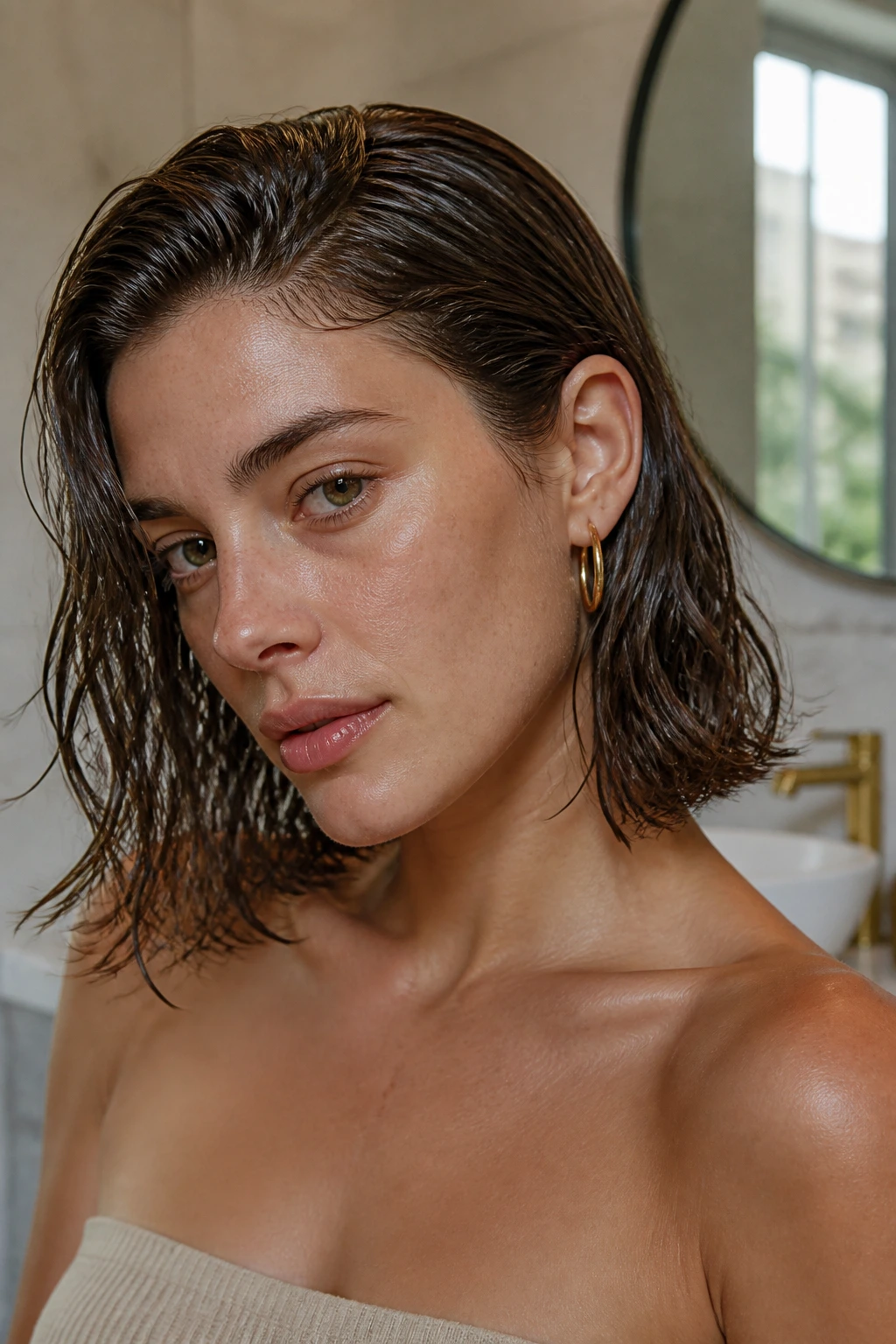
A wet-texture lob is not for everyone, and that’s fine. When it works, though, it looks sharp and modern in a way that dry, fluffy texture never will.
The trick is to comb gel or a cream-gel mix through damp hair, then let the wave pattern set with a bit of structure. You can tuck it behind the ears, push it back, or leave the part clean. The ends should still move, but the surface stays glossy and close.
This look is best on shorter lobs, where the hair doesn’t have too much weight to fight the product. It feels deliberate. Slightly editorial. And it’s a good reminder that wavy hair does not always have to be fluffy to be interesting.
31. French-Girl Tousled Lob

A French-girl tousled lob is really just a lob with better restraint. The waves are loose, the ends are a little imperfect, and nothing looks like it spent an hour being fussed over.
This shape works because it leaves enough softness around the face without turning into a full shag. A little texturizing cream, a rough dry, and maybe one or two bends around the front pieces are enough. The haircut does the rest.
It’s especially good if you don’t want your hair to announce itself every time you step outside. The texture is there, but it’s relaxed. The line stays visible. That balance is what makes the style feel easy without looking lazy.
32. Collarbone Curved Lob
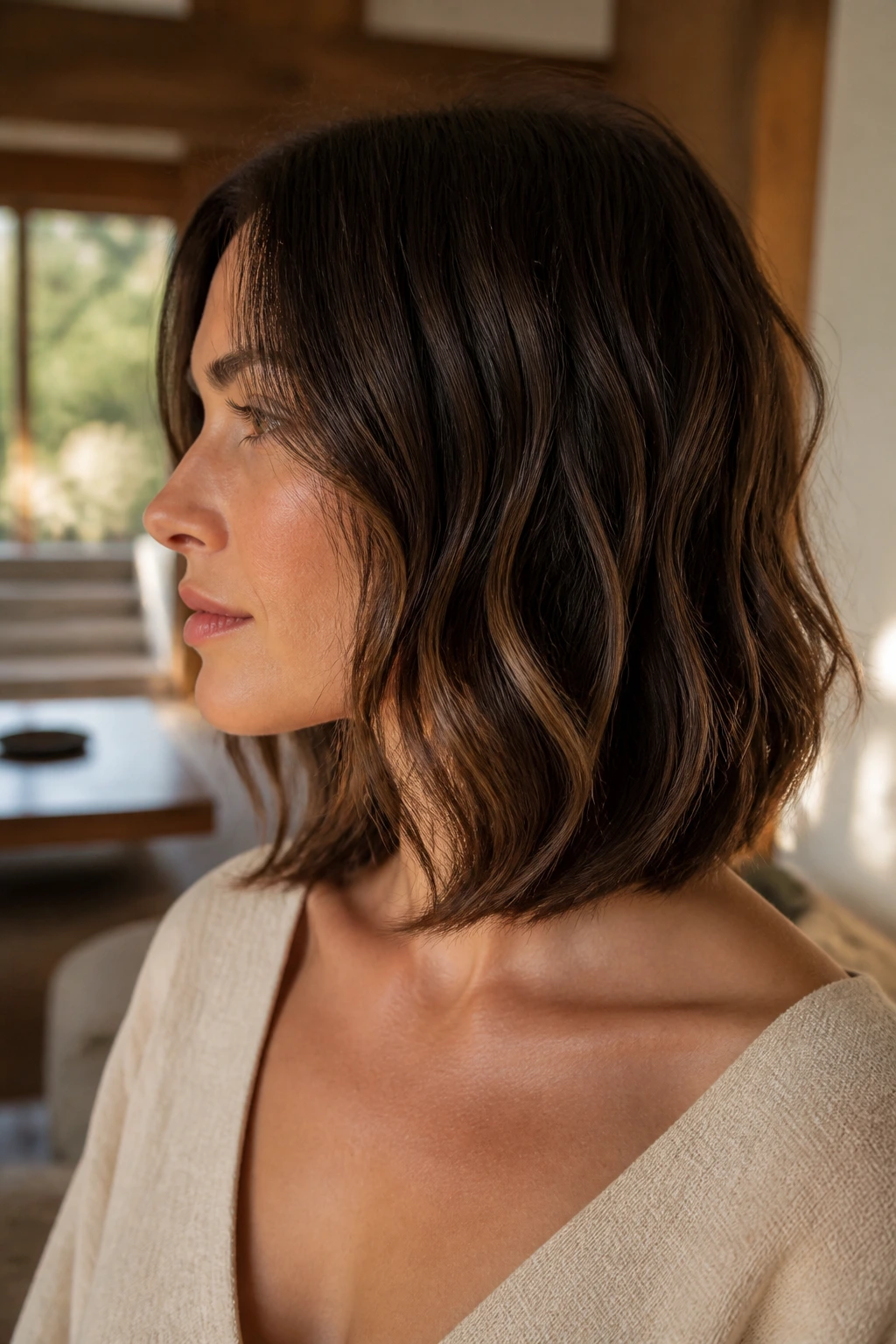
Would a lob look more expensive if the ends curved instead of hanging straight? Usually, yes. A collarbone-curved lob follows the body a little more closely, which keeps the silhouette soft and prevents the hair from sitting like one blunt shelf.
This shape benefits from internal shaping and a careful finish at the ends. A soft inward curve around the collarbone can make wavy hair look cleaner while still letting the mids move. It’s a subtle change, but on this length, subtle changes matter.
The best result has a gentle swing when you turn your head. Not too much bounce. Just enough shape that the haircut feels alive.
33. Undone Airy Lob with Overlap Layers
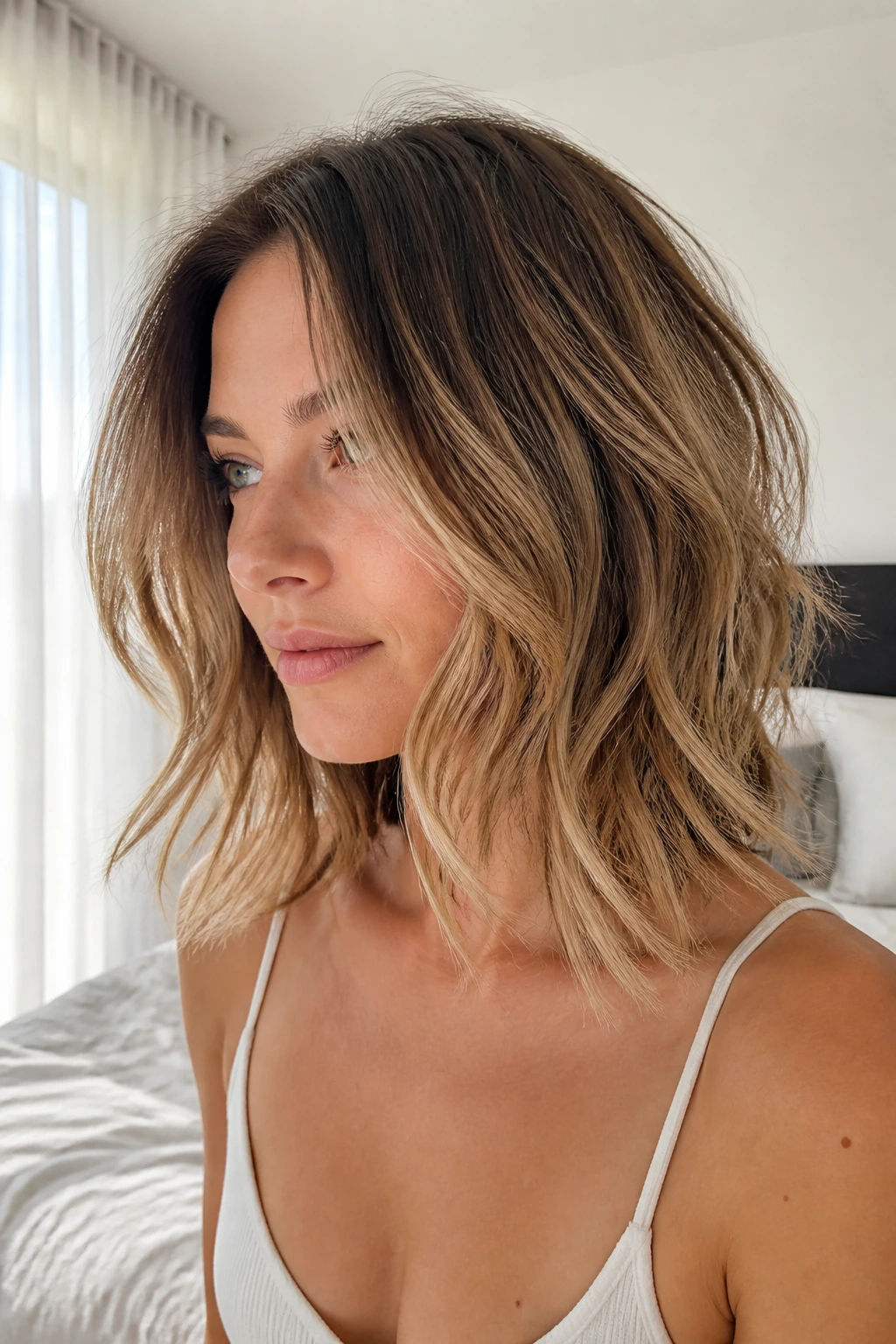
The last style on the list is the one I’d hand to someone who wants movement without obvious styling work. Overlap layers sit one over the other in a soft stack, so the lob looks airy and loose instead of chunky or over-cut.
This cut is a good match for wavy hair that wants body but not a lot of weight removal. The overlap keeps the edges from looking too blunt and gives the waves room to break apart naturally. The result is soft, touchable, and a little messy in a way that reads intentional.
If your hair tends to sit heavy at the bottom, this shape helps. If your hair already has lots of body, it keeps that body from ballooning. It’s one of the few cuts that can go either direction without getting fussy.
Why a Lob Gives Wavy Hair More Swing Than Length Does
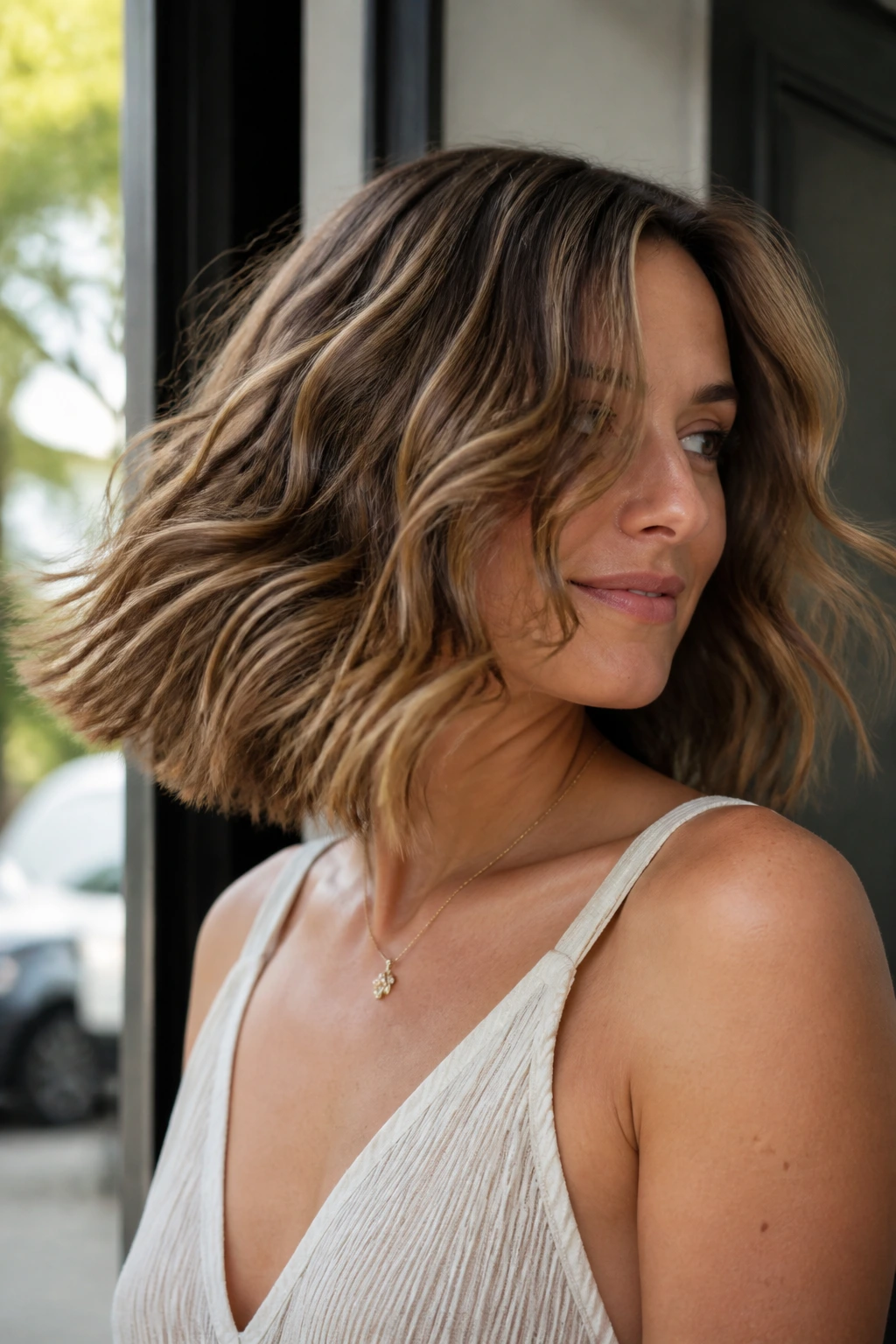
A lot of people assume movement comes from longer hair, but wavy hair often behaves better when the length gets trimmed back to the collarbone zone. Past that point, the bend starts to stretch out under its own weight. The wave is still there. It just looks tired.
That’s why a good lob works. The shape gives waves enough room to form without dragging them down. The cut can be blunt, layered, rounded, or piecey, but the useful part is the balance between lift and length. Too much of one thing, and the hair starts to argue with you.
There’s also a practical side to it. A lob is easier to refresh with a little mist, a clip, or a quick bend from a flat iron. You are not rebuilding a whole mid-back style every morning. You’re nudging a shape back into place. And that difference shows up in real life, not just in a mirror.
Tools That Make These Styles Easier to Shape
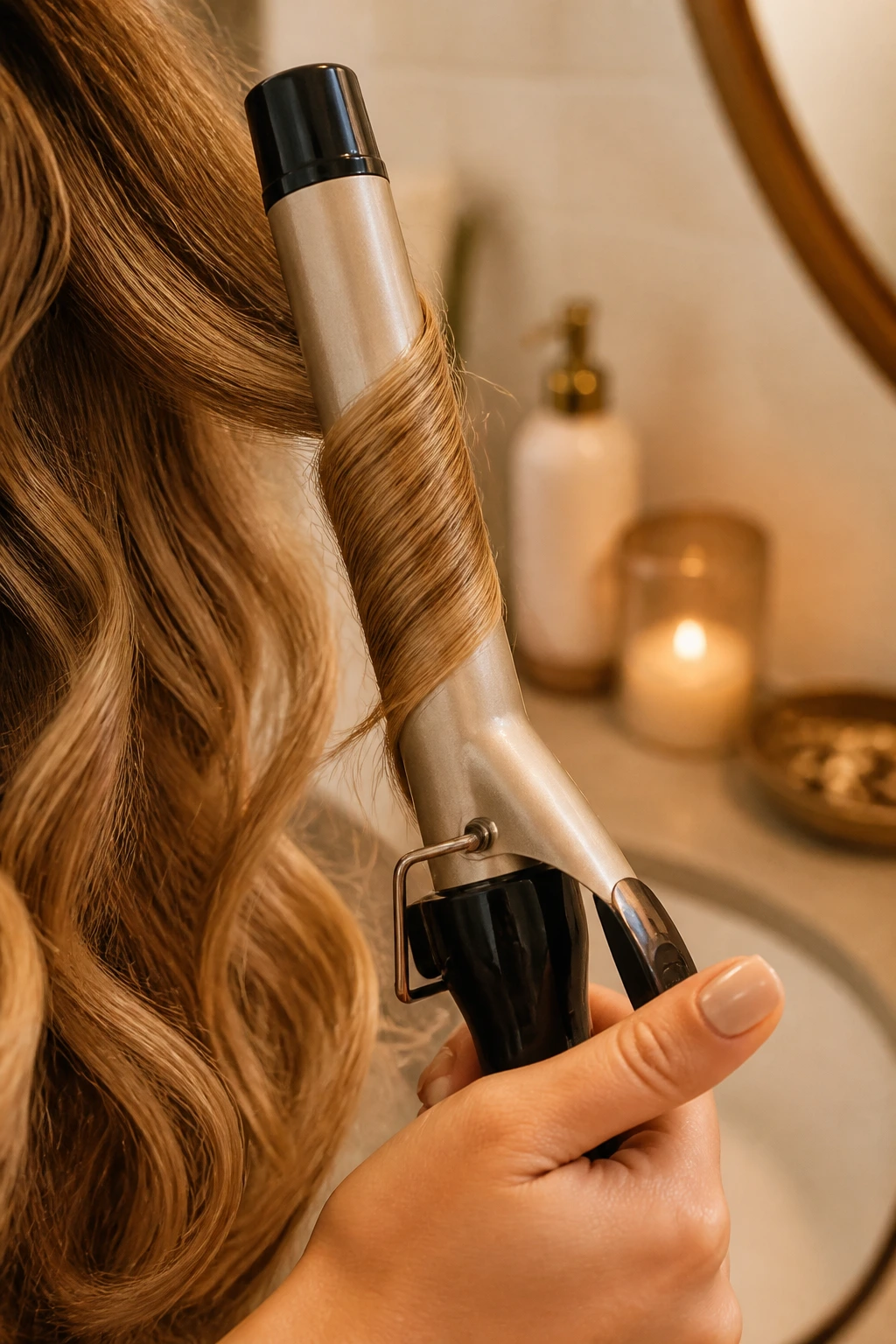
- 1.25-inch curling iron: Big enough to make soft bends without turning the whole head into ringlets.
- Flat iron with rounded edges: Useful for S-bends, flips, and loose face-framing pieces.
- Diffuser attachment: Keeps wave pattern intact while adding root lift and reducing chaos in the crown.
- Mousse: Gives damp waves memory so the finished shape holds instead of sagging.
- Texture spray: Helps piecey ends and tousled styles separate without feeling sticky.
- Lightweight serum: Best for smoothing just the final inch or two of the hair.
- Root clips or duckbill clips: Great for setting lift at the crown while the hair dries.
- Round brush: Handy for curtain bangs, blowouts, and ends that need a soft curve.
- Heat protectant: Worth using every time you touch the hair with heat, even if the pass is quick.
- Microfiber towel or T-shirt: Cuts down on frizz before the styling even starts.
How to Ask Your Stylist for the Right Lob Shape
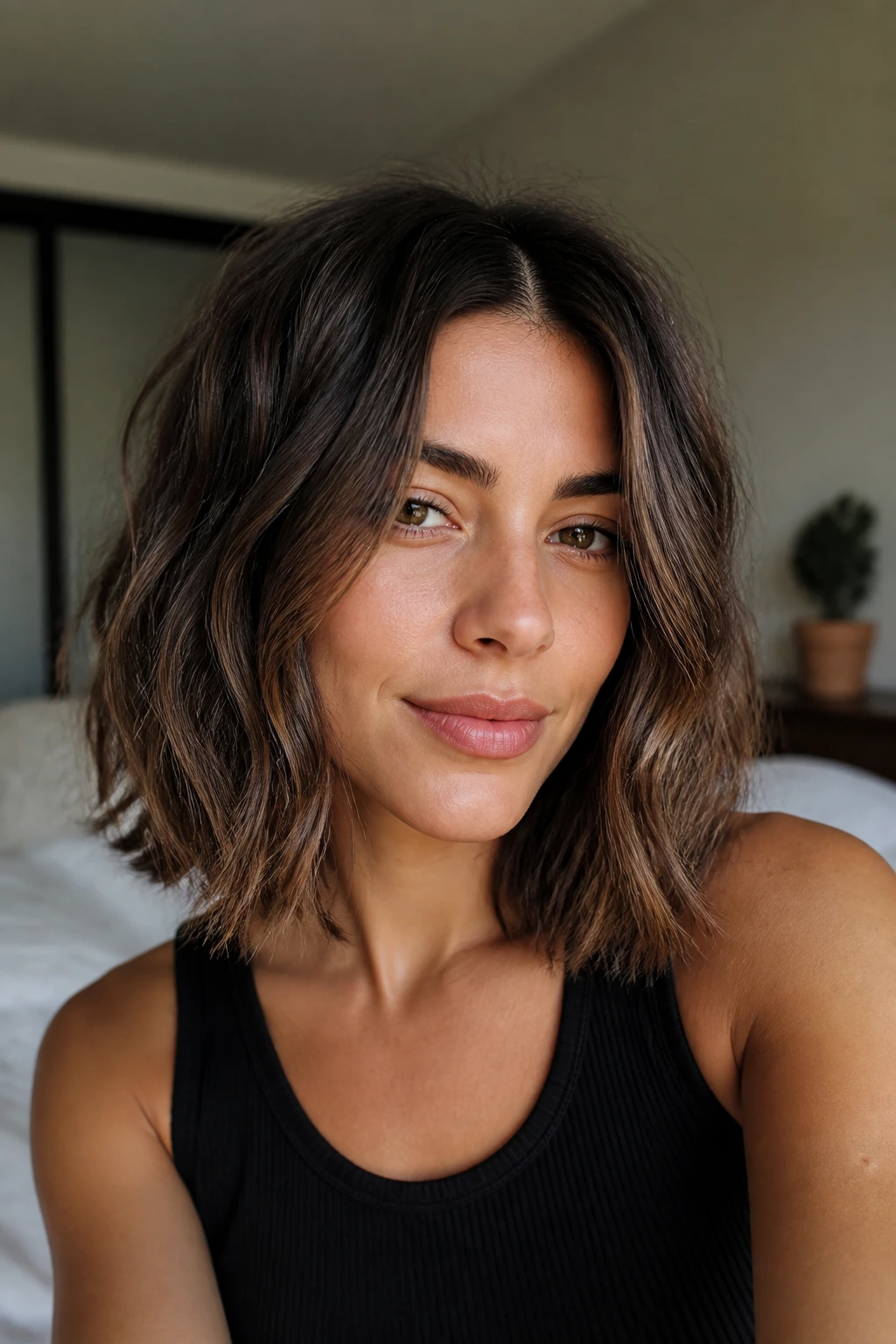
Bring photos, yes, but don’t stop there. Tell the stylist where you want the length to sit when the hair is dry, not wet, because wavy hair usually springs up a little and shrinks in a way that surprises people who are not used to it.
Be specific about the perimeter. If you want swing, ask for a lob that lands at the collarbone or just under it, with the ends point-cut if your hair puffs and left stronger if your hair is fine. If you want movement without obvious layers, ask for internal shaping or invisible layers. If you want a clearer edge, say so. Haircut language matters here.
Face framing is the other piece people skip. Mention whether you want curtain bangs, a deep side part, longer front angles, or no fringe at all. A good stylist can build the wave pattern around those choices, but only if you say them out loud. Quiet assumptions are where bad lobs are born.
How to Style a Wavy Lob for Air-Dry Days, Blowout Days, and Everything Between
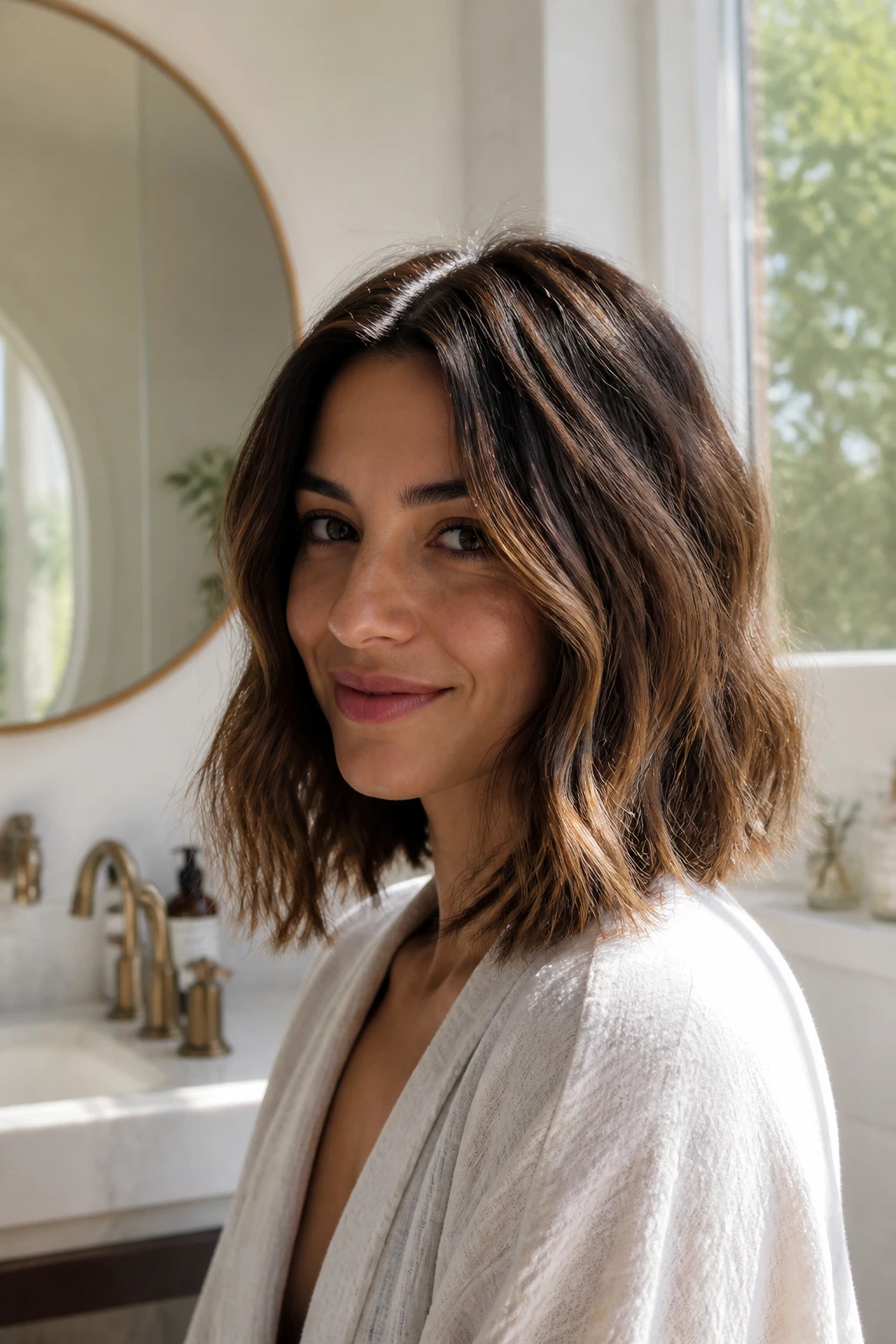
Air-Dry Days: Use mousse, scrunch the ends, and leave the hair alone until it’s fully dry. If the crown flattens, clip it up while the rest sets.
Blowout Days: Smooth the roots with a nozzle and brush, then bend the mids and ends with a round brush or large iron. Keep the curve loose. Stiff curls kill the movement.
Office-Smooth: Go for a center part or off-center part, polish the top layer, and keep the ends curved under just enough that the line looks neat. This is the safest version for a more controlled day.
Busy Morning Fix: Mist the waves lightly, twist two front sections away from the face, then let them fall after five minutes. It’s fast and it wakes up a lob that slept in the wrong direction.
Night-Out Finish: Swap the middle part for a deep side part, add shine spray through the mids, and tuck one side behind the ear. That tiny change shifts the whole haircut.
Extra Texture Tricks That Keep the Hair Soft
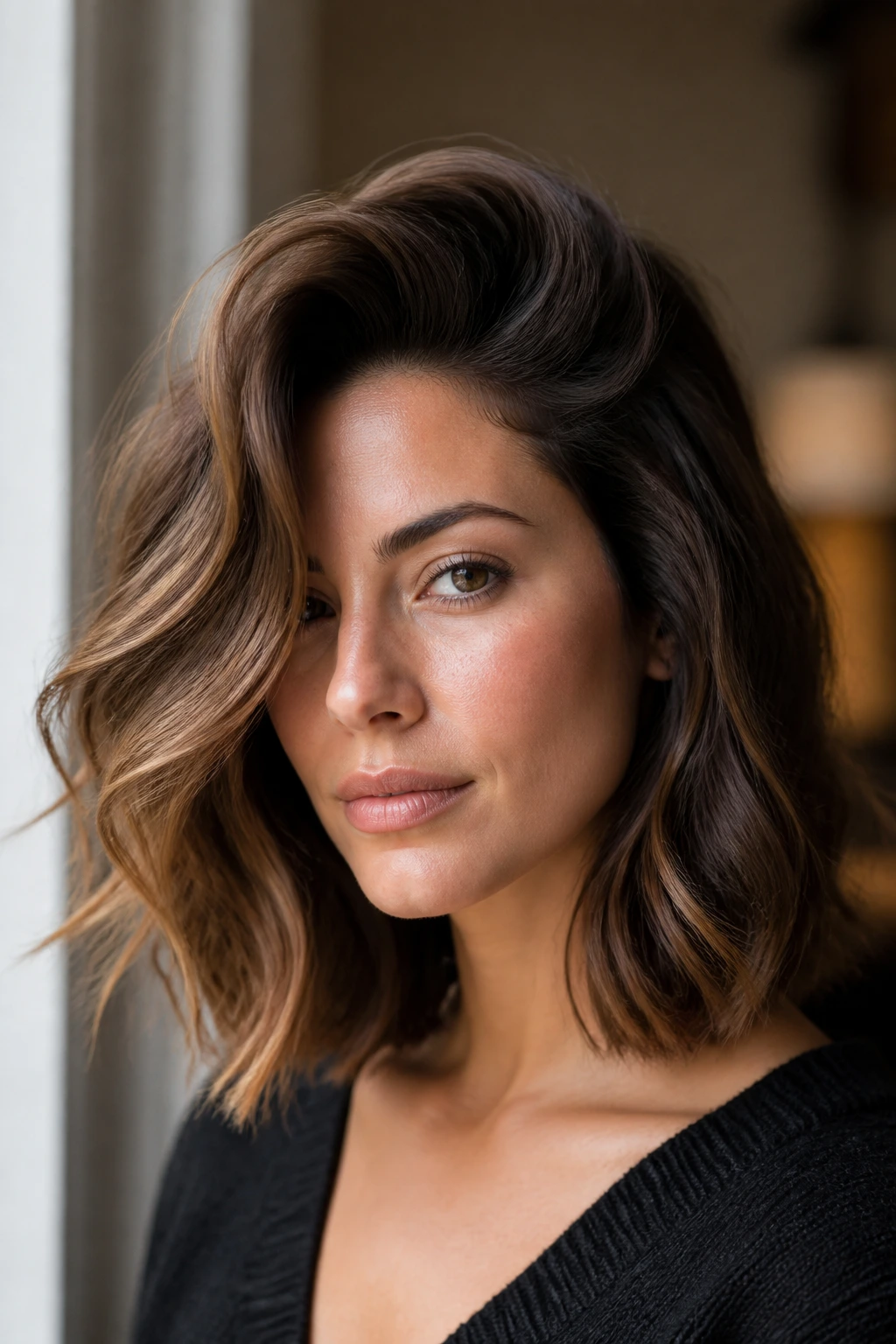
Root Lift: Set a few clips at the crown for 10 to 15 minutes while the hair cools or air-dries. The lift holds better than trying to fake volume later with a ton of spray.
Wave Memory: Wrap only the mid-lengths around a large iron and leave the last inch straight. That keeps the ends from looking too curled and gives the wave a more relaxed shape.
Frizz Control: Put serum on damp palms and press it lightly over the surface after the hair is dry. Do not rake it through like lotion; that usually makes the frizz louder, not quieter.
Make-It-Yours: Fine hair usually likes fewer layers and more root lift. Thick hair usually likes internal removal and stronger perimeter shaping. The cut should answer the density, not fight it.
Keeping the Cut Fresh Between Washes and Trims
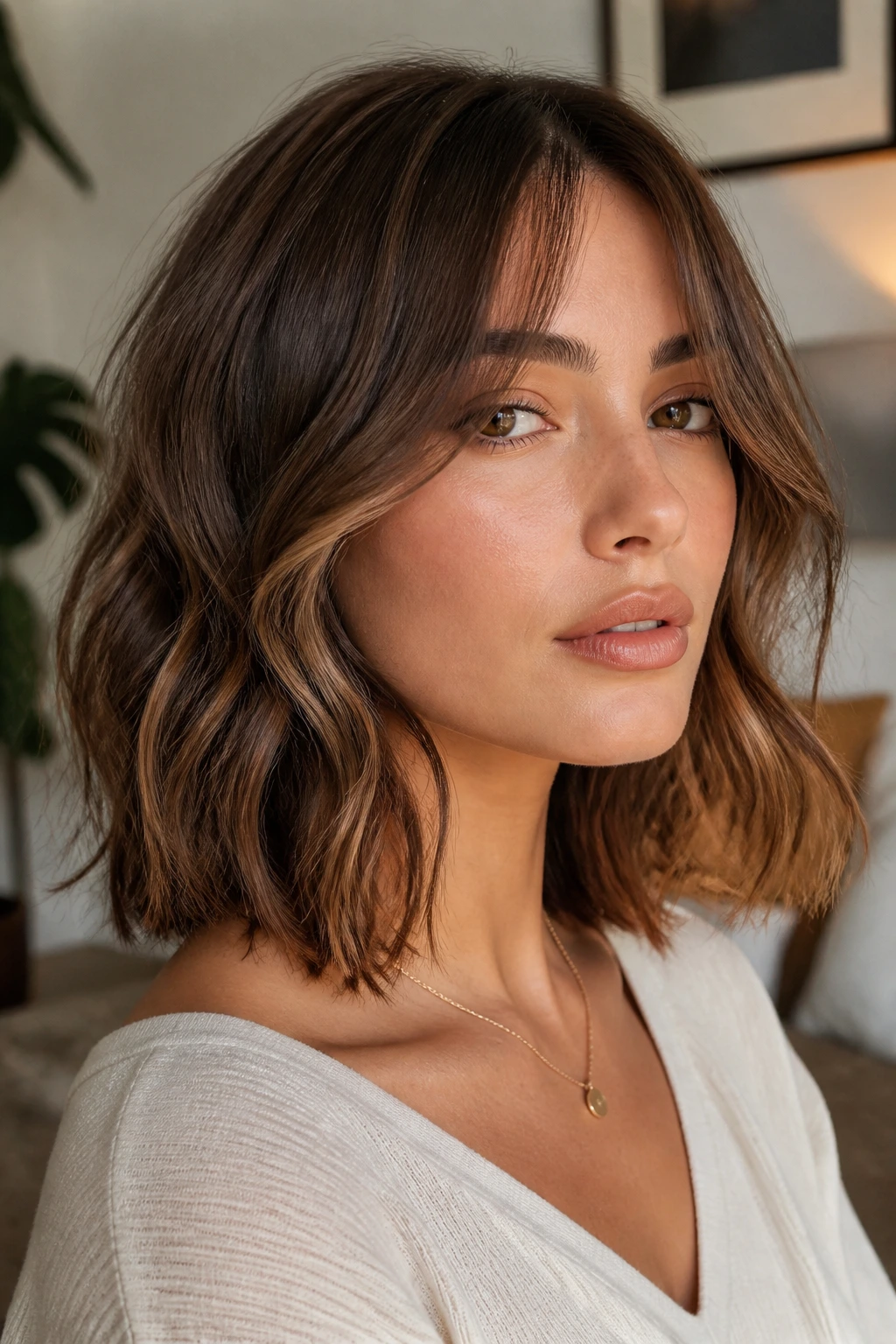
A wavy lob can look better on day two than on wash day if you know how to wake it up. Dry shampoo at the roots, a small mist of water on the mids, and a few finger-twisted sections at the front usually bring the shape back without a full restyle. If the ends start sticking out in odd directions, a touch of serum on the last inch can calm them down.
Trim timing matters more than people admit. Most lobs lose their shape before they look “long.” Once the collarbone length starts dipping past the line and the ends begin to collapse, the movement fades. For many heads of hair, that happens around 6 to 10 weeks, though thick or fast-growing hair can ask for a trim sooner.
Night care helps too. A silk or satin pillowcase reduces the roughing-up that makes waves frizz at the sides. If the hair tangles easily, a loose clip at the crown or a soft scrunch at the nape keeps the shape from getting smashed flat while you sleep.
Variations and Adaptations for Fine, Thick, Frizzy, or Straight-Bent Waves
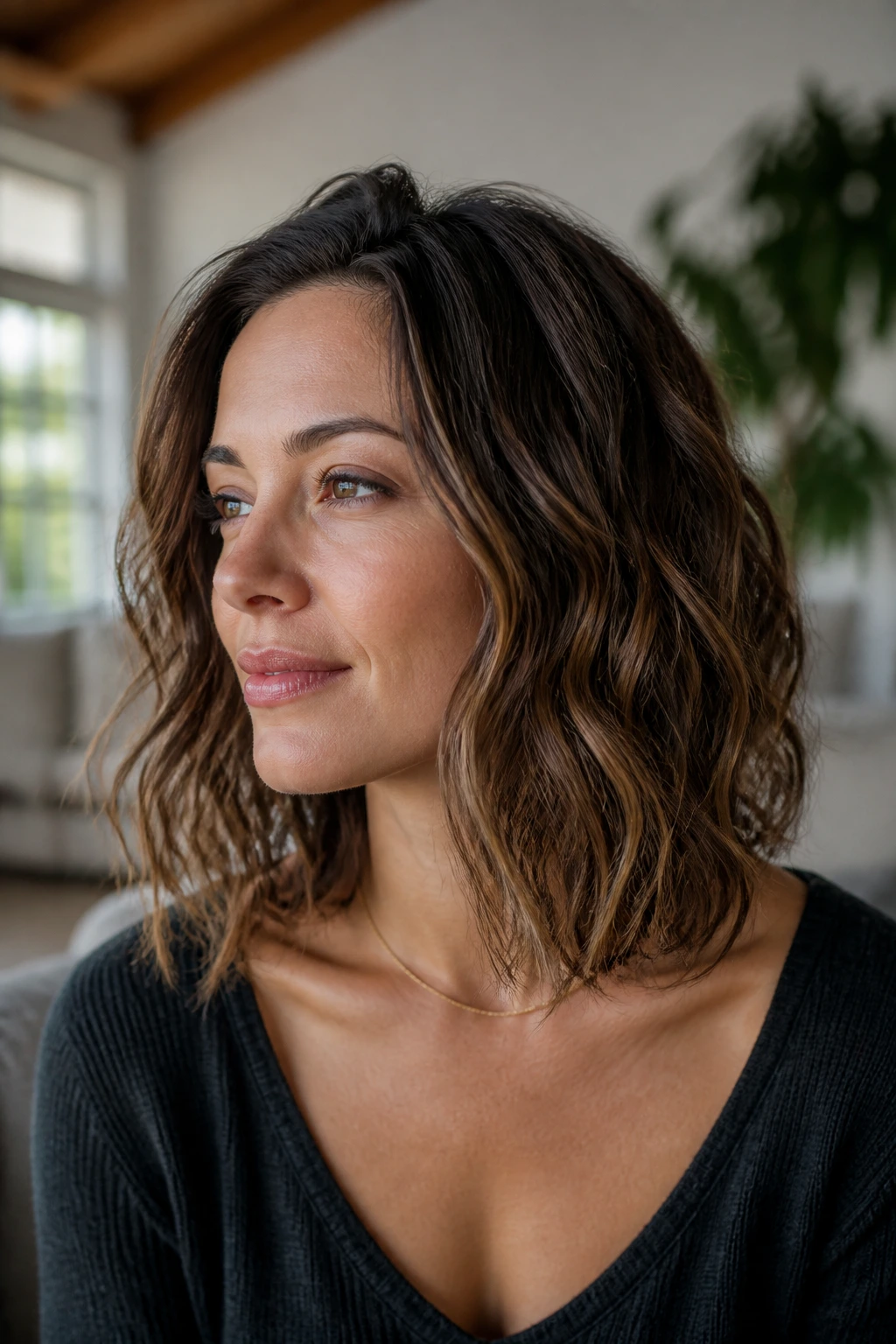
The Fine-Hair Lift Lob: Keep the layers subtle, the perimeter strong, and the roots lifted with mousse or clips. This keeps the hair from looking see-through at the bottom.
The Thick-Hair Weight-Remover Lob: Ask for internal shaping and point-cut ends so the lob doesn’t spread out like a triangle. A blunt edge with hidden removal often works better than obvious layering.
The Frizz-Prone Smooth Lob: Use a sleek root finish and keep the wave soft at the mids and ends. A little serum at the finish beats a heavy cream in most cases.
The Low-Effort Air-Dry Lob: Choose a cut with enough built-in movement—curtain bangs, invisible layers, or a soft shag. That way the hair still looks shaped when you skip heat.
The Polished Event Lob: Go for a glossy S-bend, off-center part, or retro blowout. These styles hold structure better under light and look deliberate without needing a dramatic updo.
The Grown-Out Transition Lob: If you are coming from a bob or a shorter cut, keep the front slightly longer first. That extra length helps the shape settle as it grows.
Common Mistakes That Flatten or Puff Out a Lob
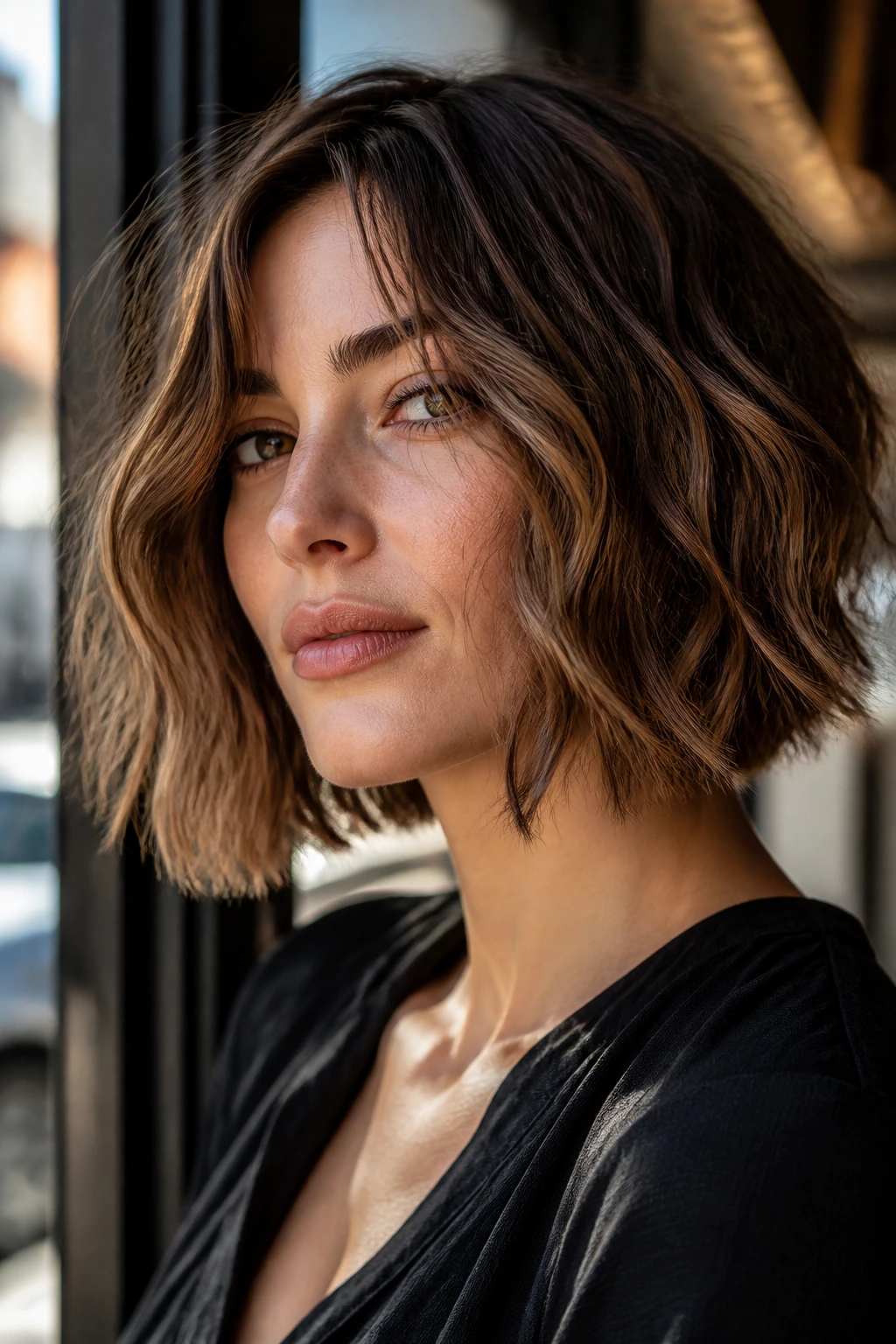
Cutting too short at the collarbone on springy waves: The hair can kick up and sit higher than expected, which changes the whole balance. Leave room for shrinkage.
Taking too much weight out near the crown: The result can be a puffed-up top and thin-looking ends. Keep the removal where the hair actually collects bulk.
Using heavy cream on loose waves: The hair goes stringy at the roots and dull at the ends. Lightweight mousse or spray usually works better.
Curling every section the same direction: The hair starts to look like one long barbered wave instead of a natural bend. Alternate direction or brush it out lightly.
Skipping the part change: Wavy hair often settles into one habit, and that habit can flatten one side forever. Flipping the part now and then keeps the lift more even.
Letting the ends grow past the shape: Once the lob gets too long, the movement starts to sag. A small trim can fix what styling cannot.
Questions People Ask Before They Cut It

How short should a lob be on wavy hair?
For most wavy heads, the safest starting point is around the collarbone or just above it. That keeps the bend visible without letting the weight drag the shape down.
Are layers necessary for a wavy lob?
Not always. Fine hair can look better with a blunt line, while thicker hair often needs internal or face-framing layers to stop the cut from ballooning out.
Will a center part make my waves look flat?
Not if the crown has enough lift and the cut isn’t too heavy. A center part can actually make the shape look calmer and more balanced than a hard side part.
Can I wear bangs with a lob if my hair is wavy?
Yes, but the fringe should usually be longer than people expect. Curtain bangs and bottleneck bangs are easier to live with because they blend instead of sitting as a hard block.
What if my waves are uneven from one side to the other?
That is normal. Most people have one side that bends better than the other. A good stylist can adjust the cut slightly so the weaker side does not drag the whole shape down.
How do I keep the lob from puffing out at the sides?
Ask for weight removal in the right spots and avoid loading the mids with heavy cream. A diffuser on low heat or a smoother root finish also helps.
Can this length still work if I hate spending time on my hair?
Yes, if the cut is shaped for air-drying. The wrong lob will demand daily fixing; the right one can be scrunched, clipped, and left alone.
How often should I trim it?
Usually before the ends start losing their line, which for many people means every 6 to 10 weeks. If the shape is the whole reason you like the haircut, don’t wait until it has already gone floppy.
The Lob Length That Keeps Its Bounce
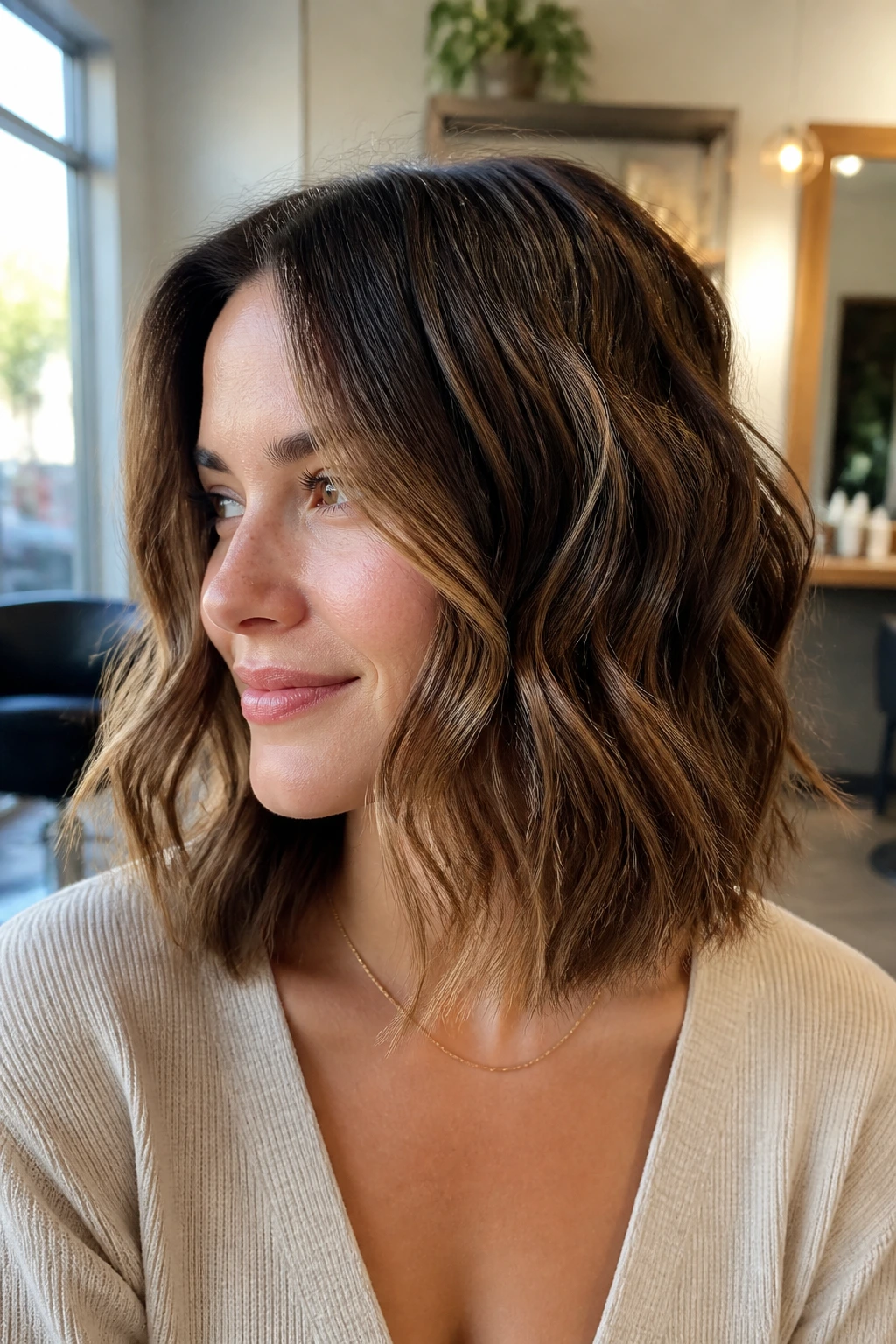
The reason these cuts keep showing up is simple: a good lob respects the hair you already have. It doesn’t bully wavy texture into submission, and it doesn’t leave enough length for the bend to get lazy. That middle ground is the whole trick.
Pick the version that matches your density, your face shape, and your patience for styling. Then keep the ends clean enough that the movement stays visible. That’s what makes a lob feel current without chasing anything flashy.
A haircut this useful earns its place by holding shape on ordinary days. Not just the polished ones. And when wavy hair is sitting at the right length, with the right line and the right amount of air around it, you don’t need to force movement at all. It’s already there.
