



Straight hair is the harshest test for balayage, and that’s exactly why it looks so good when it’s done well. There’s nowhere for a sloppy blend to hide. No wave to blur a hard line. No curl to break up a chunky highlight. On pin-straight lengths, every ribbon, root shadow, and toner choice shows up plainly, which is both the risk and the reward.
Summer makes the whole thing even more unforgiving. Sunlight pulls warmth forward, chlorine steals gloss, salt dries out the ends, and a color that looked soft under salon lights can turn stripey by the time you’re standing near a window. The best balayage looks for straight hair lean into that reality instead of fighting it. They use feathered placement, cleaner tonal families, and a little root depth so the color still looks expensive when the hair lies flat against your shoulders.
I’ve always thought straight hair gets shortchanged in balayage inspiration galleries. Too many examples are taken on waves or curls, then the actual result on straight hair looks harsher than expected. The looks below are built for the flat surface, the crisp line of a blunt cut, the clean reveal you get when the hair moves over one shoulder. Some are warm and beachy, some are smoky and cool, and a few keep the lift so subtle that only the sunlight gives the game away.
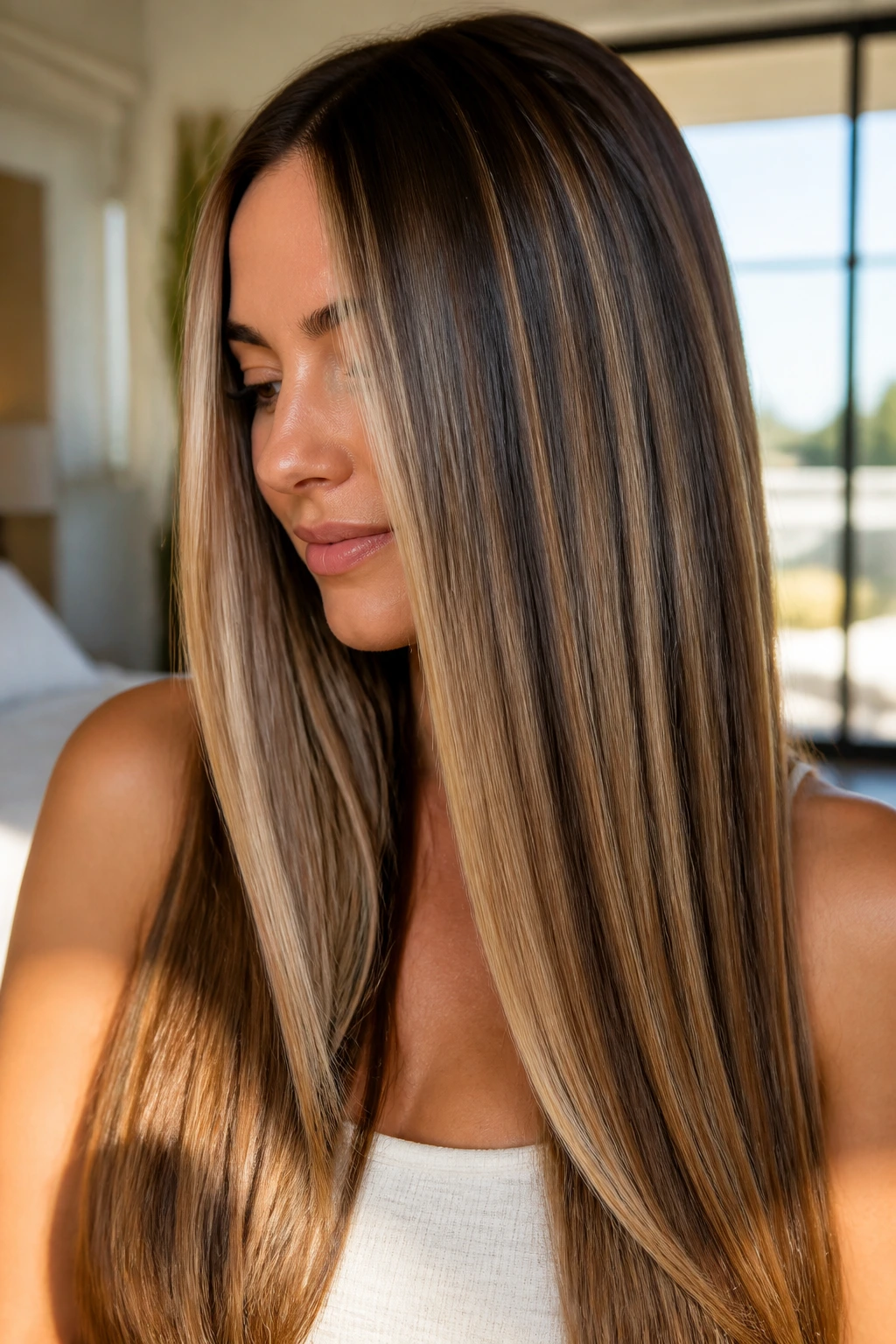
Why Straight Hair Shows Off Balayage So Cleanly
-
The line is visible in the best way: Straight hair lays the highlight pattern flat, so a good ribbon placement reads like design instead of noise.
-
Root shadows matter more here: A soft 1- to 2-level deeper root keeps the grow-out from looking like a band across the top of the head.
-
Summer light exposes tone shifts: Beige, honey, pearl, and bronze all behave differently in daylight, so the tone family you choose matters more than the photo filter.
-
Blunt cuts and long lobs love dimension: Straight hair can look heavy fast, and balayage around the face and ends gives it movement without needing curl.
-
Low-maintenance options exist: If you keep the brightest pieces off the root and use micro-ribbons instead of chunky panels, the color can grow out for weeks without looking ragged.
-
The right gloss makes the whole thing feel polished: One clear or tinted gloss every few weeks can keep blonde from going chalky and brunette tones from looking flat.
1. Honey Beige Ribbon Balayage
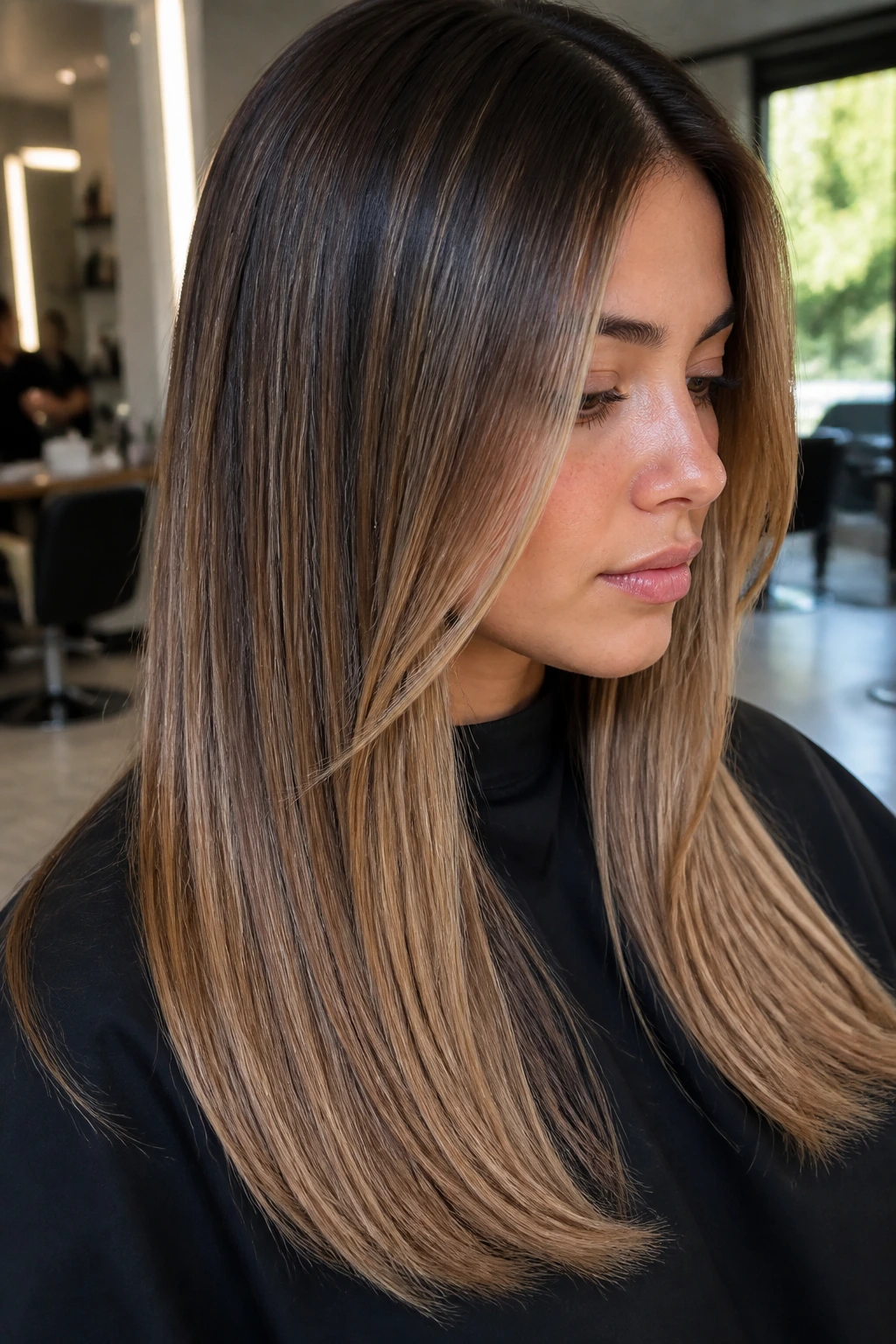
Honey beige is the shade I reach for when someone wants straight hair to look lit from inside instead of striped on the outside. The ribbons sit in that sweet spot between golden and neutral, so the color feels warm in sunlight but not brassy in shade.
Placement Notes
- Keep the root about one shade deeper than the mids.
- Paint the lightest pieces from cheekbone level down.
- Ask for fine, feathered ribbons rather than chunky panels.
A straight blowout shows this placement cleanly, especially if the ends are trimmed blunt. The whole look reads soft, but not sleepy. It has enough warmth to flatter summer skin without drifting orange by the second wash.
2. Champagne Face-Frame Balayage
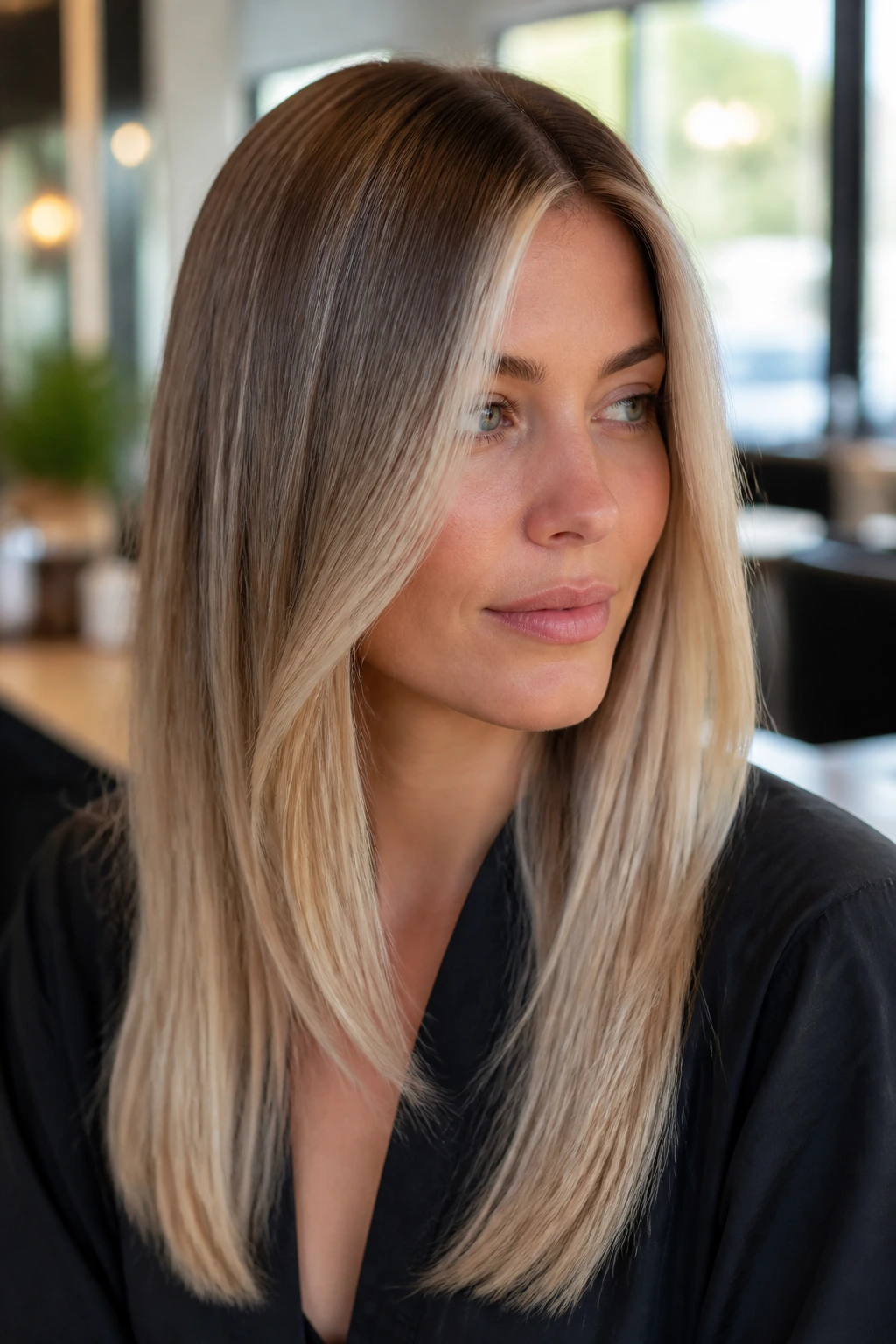
Champagne around the face can look almost expensive on straight hair, and I mean that in the plainest way possible. The pale beige-gold pieces catch daylight the second you turn your head, which is exactly what you want when the rest of the hair lies smooth and controlled.
The trick is not to let the front pieces get too wide. Thin, airy money pieces look sharper on straight strands than thick streaks do, and that matters if your cut is one length or only lightly layered. Keep the crown a little deeper so the brightness stays where your eye lands first.
If you wear a middle part, this one earns its keep. If you wear a side part, it softens the front without stealing the whole show.
3. Mushroom Brown Melt
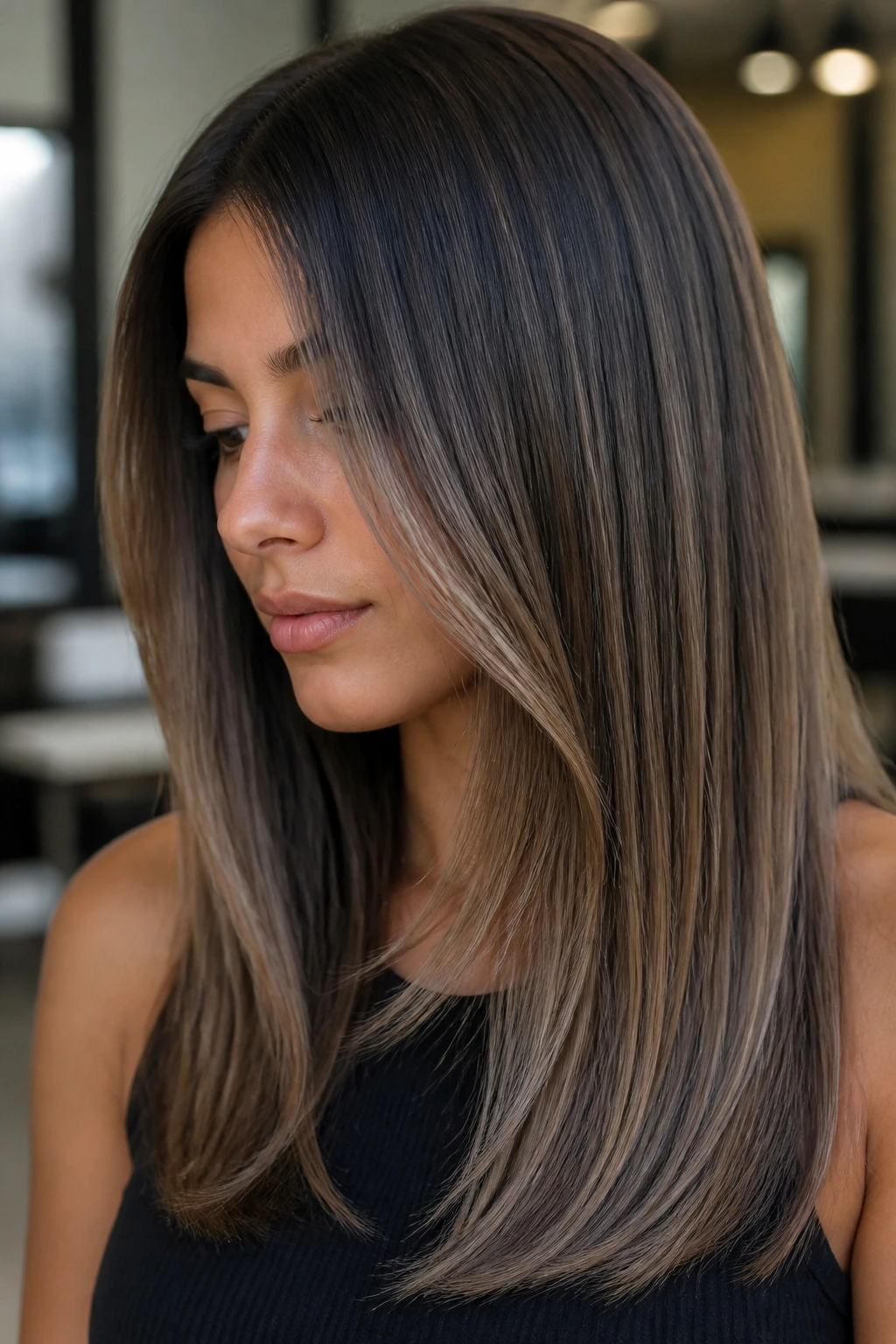
Why does mushroom brown keep showing up in straight-hair color boards? Because the cool taupe and smoky brown tones don’t fight the flatness of straight hair; they work with it.
Mushroom brown is a good answer for anyone who wants dimension without obvious blonde. The lighter pieces live in the mids and ends, but the tone stays muted, almost suede-like, so the color looks calm rather than bright. On summer skin, that can be a relief.
Best For
- Medium to dark brunettes who want less contrast
- People who like cool tones and hate brass
- Straight lobs that can look bulky with warm highlights
4. Caramel-Toffee Ends
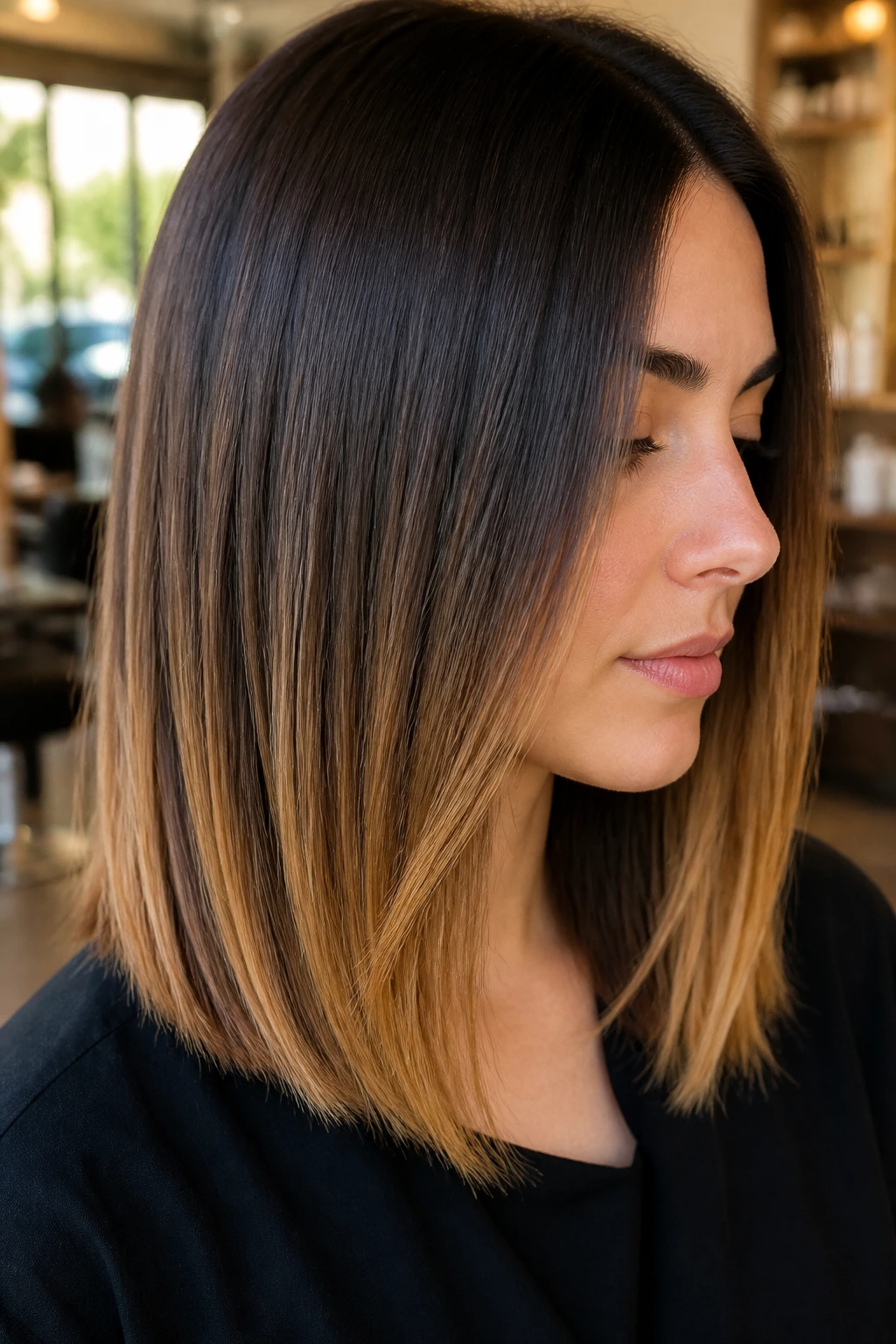
A blunt, straight cut with caramel ends has a clean, graphic feel that waves can hide and straight hair can show off. The lighter color is concentrated below the mid-lengths, so the eye travels down the hair instead of getting stuck at the root.
This is one of my favorite choices for shoulder-length hair because it gives the ends something to do. Without it, the bottom half can sit there looking like one heavy block. With it, the line feels intentional, almost tailored.
Tell your colorist you want the brightness focused low, not spread all through the top layer. That one detail changes the whole mood.
5. Icy Pearl Beige
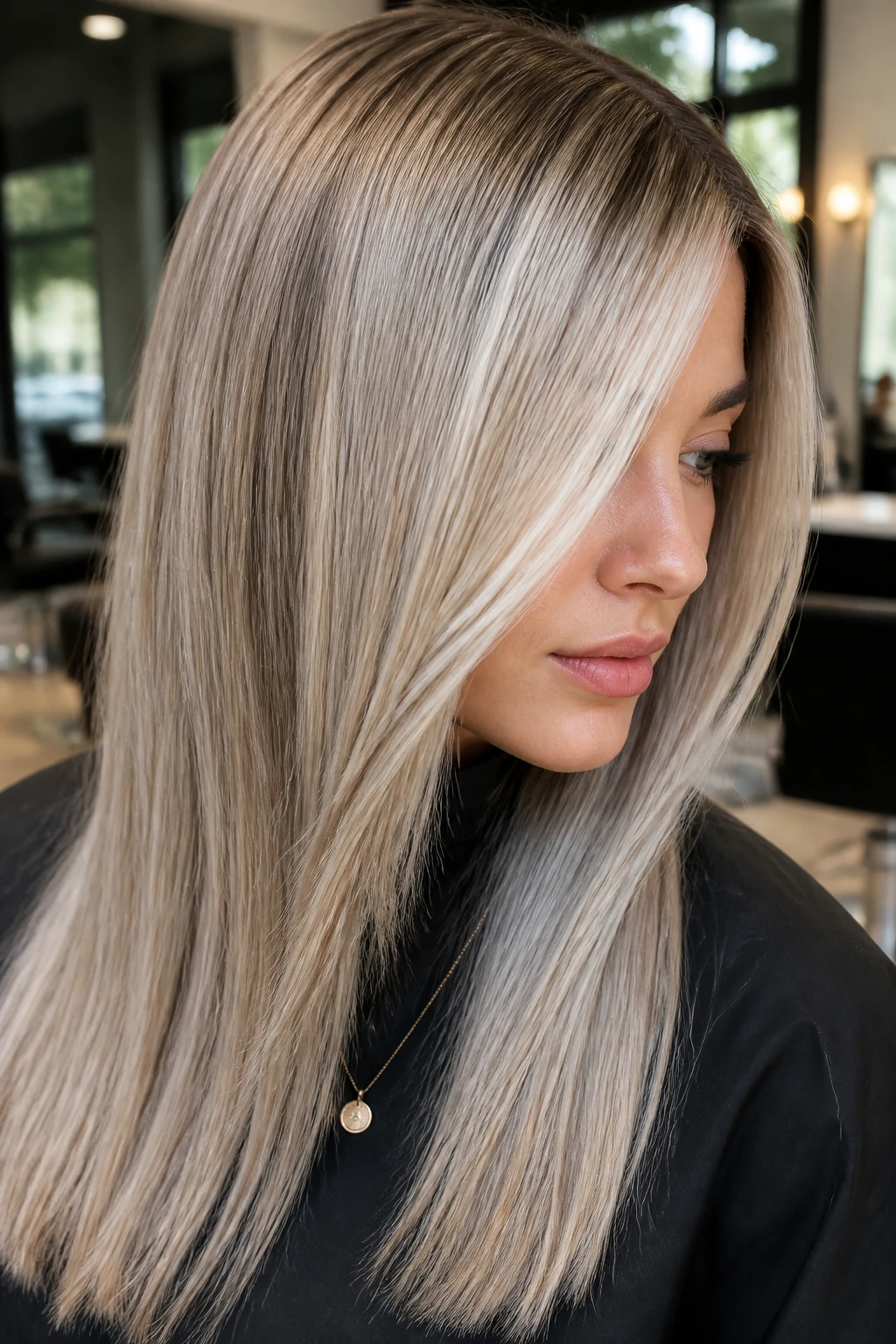
Icy pearl beige is the crisp, cool answer for blondes who hate yellow and brunettes who like a brighter finish. On straight hair, the pearl tone reads cleaner than it does on waves, where the bend can make it look softer and more blended than intended.
The price of that brightness is upkeep. Pearl tones need a gloss or toner refresh sooner than warm honey shades, and they show hard water and sun fade faster. Still, if you want a high-contrast summer blonde that looks sleek with a flat iron, this is the one.
Keep the roots soft and the lightest pieces around the face and top layer. That prevents the color from turning into one pale sheet.
6. Bronde Smoke Shadow
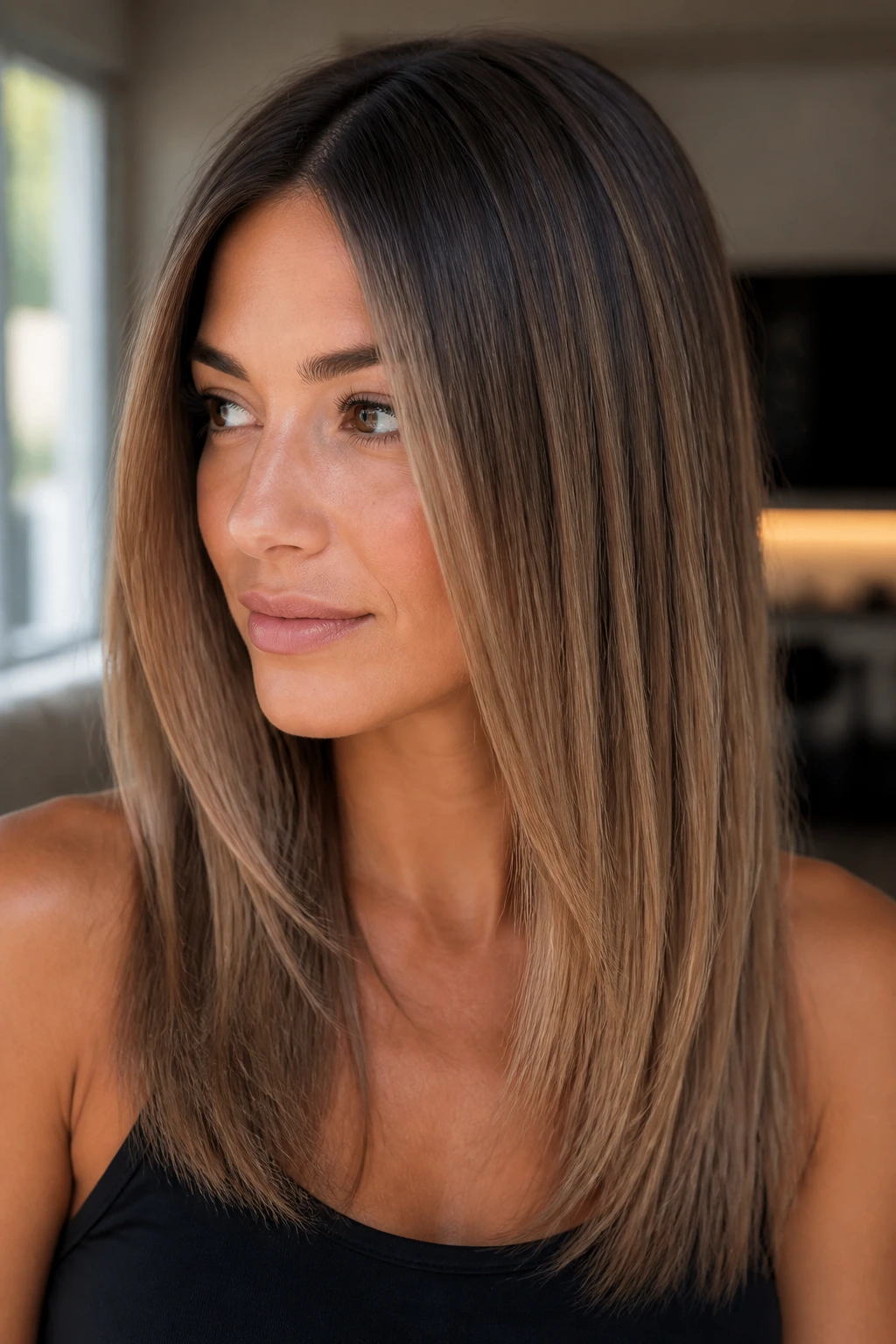
Bronde smoke shadow is the quiet middle path, and it’s one of the smartest balayage looks for straight hair in summer. Not blonde. Not brunette. A smoky in-between with a shadowed root that makes regrowth less obvious.
The reason it works is simple: straight hair can make contrast look harsh, so blending the dark root into cool beige-brown mids smooths the whole surface. If your natural color sits around level 5 to 6, this look can be especially flattering because it doesn’t ask the hair to cross too far in either direction.
It’s the sort of color that still looks put together after a long day, which matters when the humidity has already done its worst.
7. Vanilla Cream Money Piece
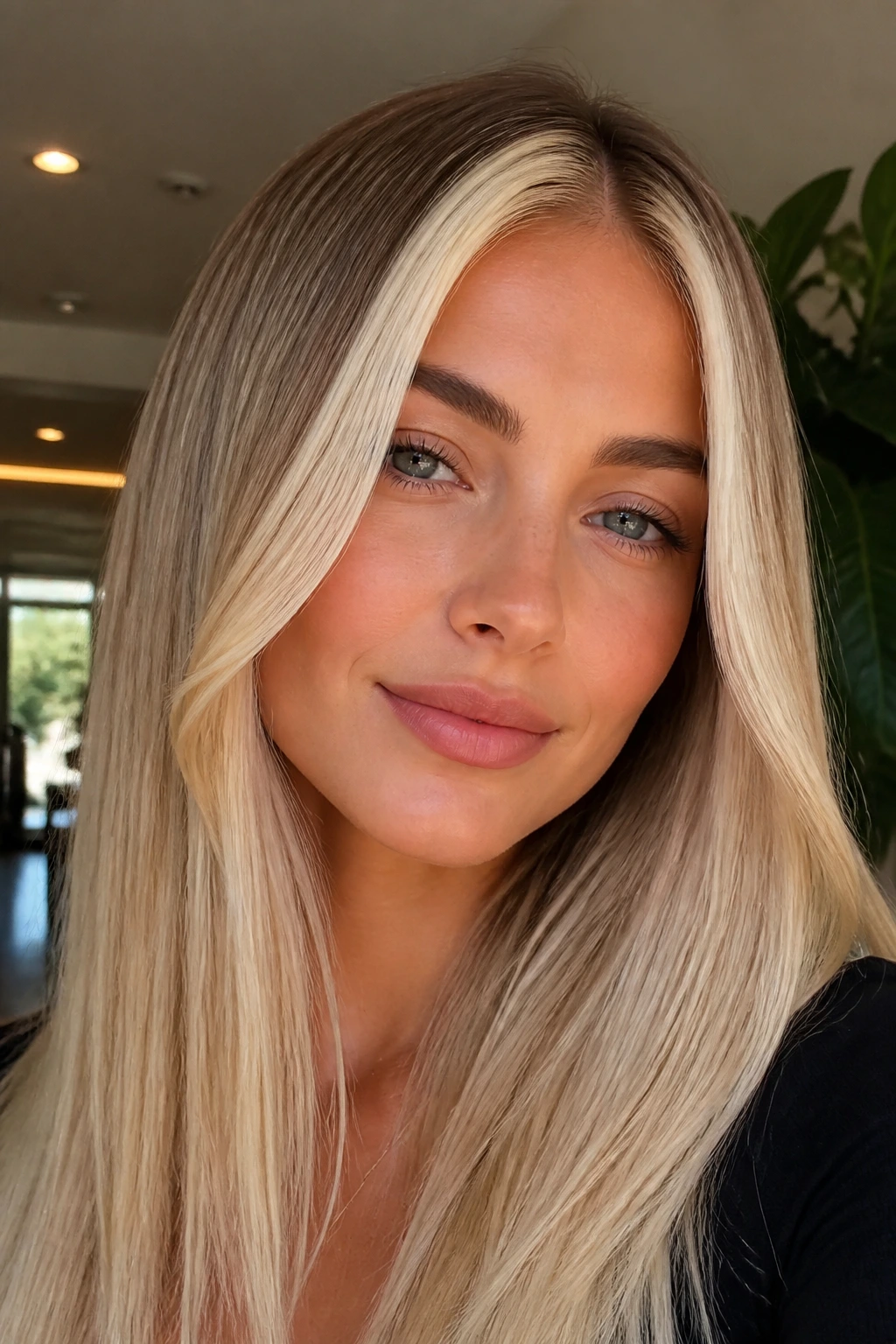
Vanilla cream around the front is bold in the exact right spot. The face-framing pieces go a touch lighter than the rest, then the mids and ends stay creamy instead of icy, so the whole thing feels bright without screaming for attention.
Why It Works
Straight hair gives the money piece a clean edge. A wavy style can blur it; a straight style shows the contrast immediately, especially when the part is centered.
- Ask for the brightest pieces to start near the brow bone.
- Keep the rest of the balayage one step softer.
- Pair it with a blunt cut if you want a sharper finish.
This is the look for someone who likes strong light around the face and a calmer body through the lengths.
8. Copper-Gold Wash
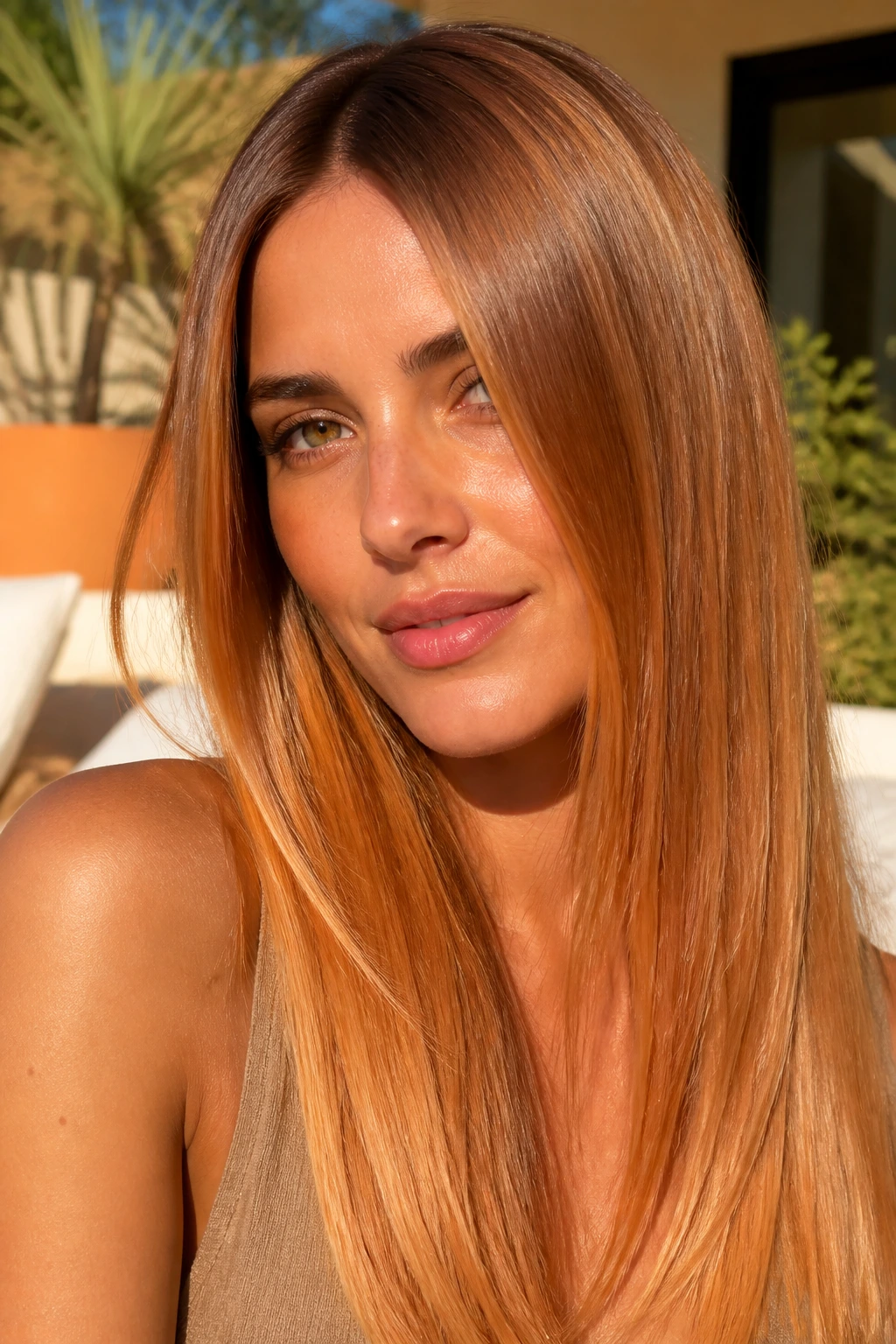
Copper-gold is heat in the best sense. It glows on straight hair because the color sits smooth, almost lacquered, instead of getting broken up by bends and texture.
I like this on medium brunettes and darker blondes who want summer warmth without sliding all the way into orange. The gold keeps the copper from going heavy, and the copper keeps the gold from looking too pale. If your skin tans easily, this shade has that easy, sun-touched effect that photographs well under daylight and still looks rich indoors.
Ask for a soft glaze rather than a hard copper panel. You want warmth that moves, not a block of red.
9. Strawberry Bronze
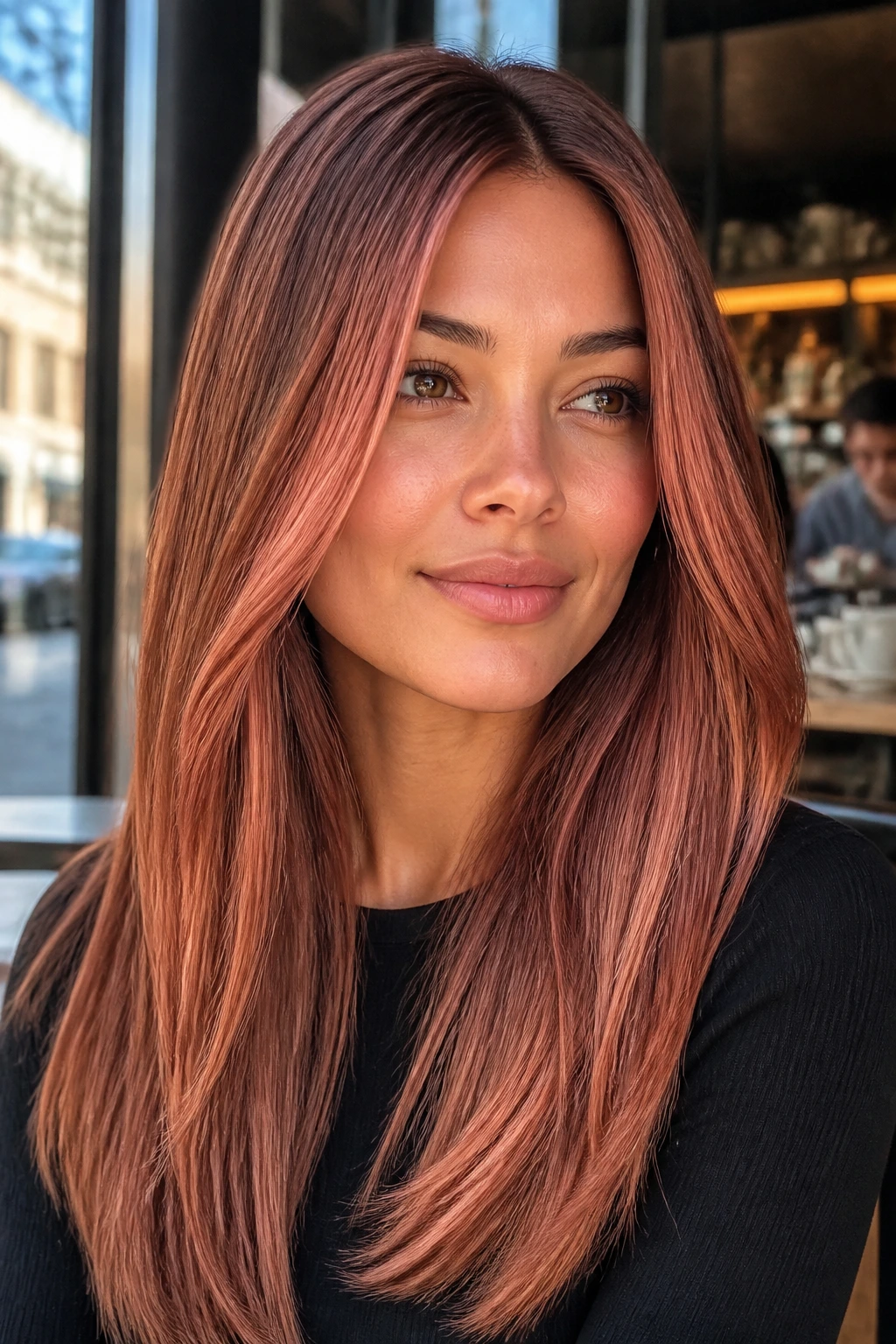
Does red belong in balayage for straight hair? Yes, if you keep it soft. Strawberry bronze is the version I’d point to first because it mixes rose-gold warmth with deeper brunette ribbons, so it never turns neon.
The color feels playful without losing depth. On straight strands, that matters; any red tone sits on the surface a little more visibly, so you need enough brown underneath to keep it grounded. This look flatters warmer complexions especially well, though a neutral skin tone can wear it too if the red is kept in the mid-lengths instead of the root.
It’s a good choice when you want something less expected than beige but less dramatic than copper.
10. Sandy Blonde Veil
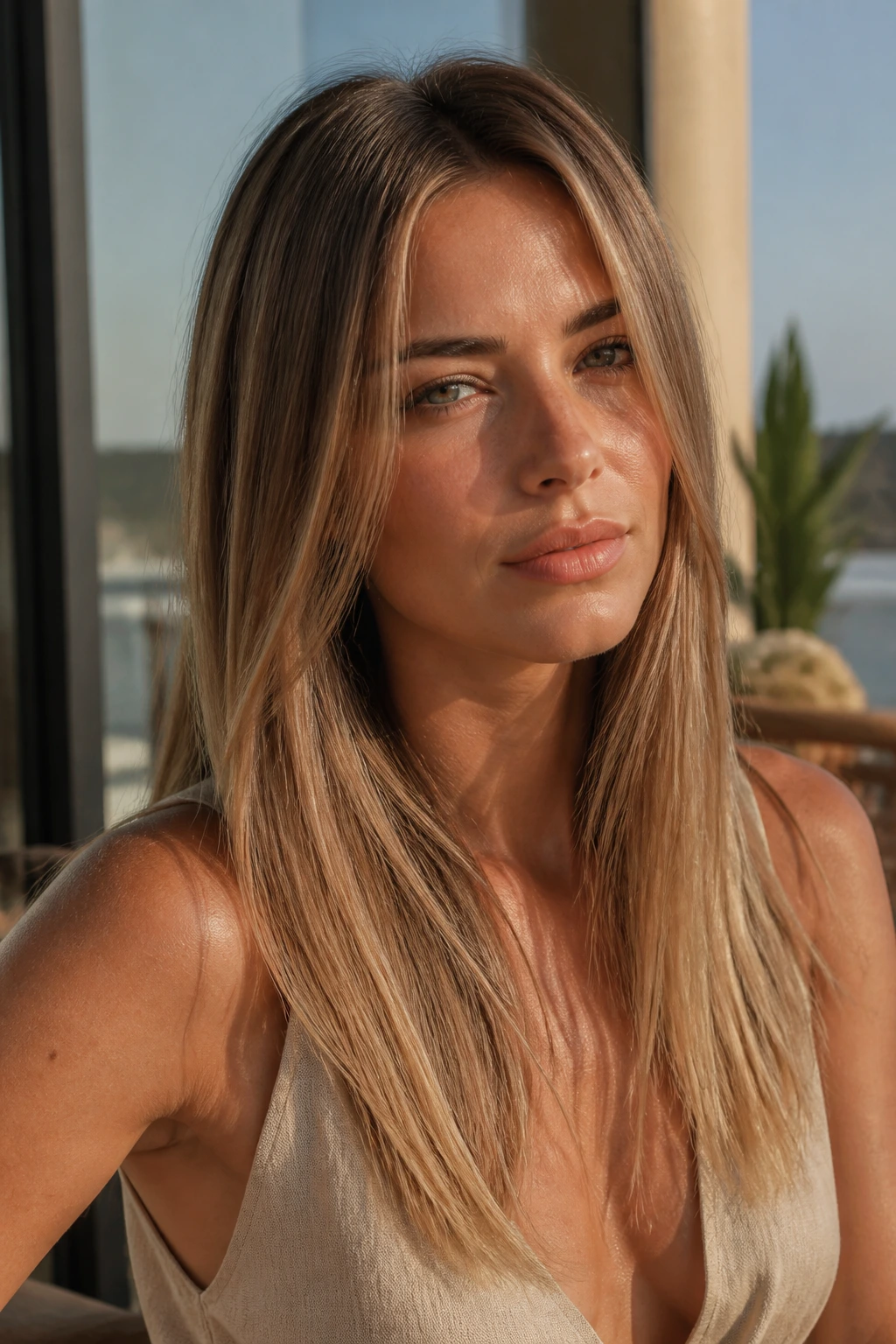
A sandy blonde veil is what happens when you want brightness but refuse to let the color take over the whole haircut. The highlights are whisper-fine, almost misted across the hair, so the base color still does most of the talking.
Straight hair makes this look read as clean, not beachy in a messy way. The lighter pieces sit like a haze over the mids and ends, which is especially pretty on long, narrow lengths that need a little movement without a big contrast jump. It’s low-drama, but not dull.
This is the one I’d suggest if you like your hair to look sun-faded rather than highlighted.
11. Smoky Cocoa Dimension
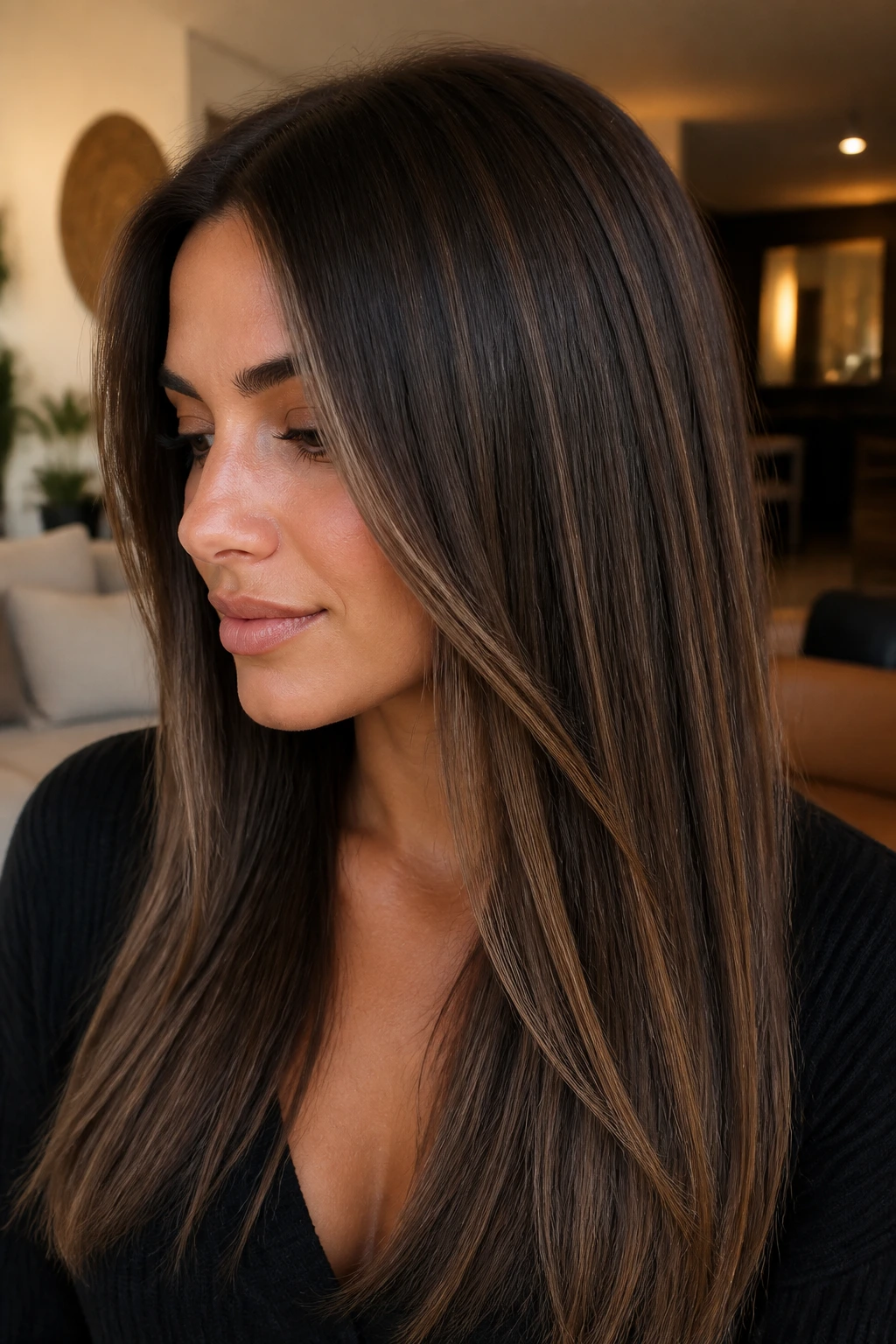
Smoky cocoa is what I recommend to brunettes who want dimension but don’t want to lose the richness of their natural color. The light pieces are there, but they stay in the cocoa family, so the result looks deeper and more expensive than a classic caramel melt.
Straight hair is the right canvas for this because the ribbons stay visible instead of getting swallowed by texture. You get movement when the hair swings, then a smooth, polished surface when it settles. That contrast is half the appeal.
A gloss every 6 to 8 weeks keeps the smoke from turning flat. Skip that, and the cool brown can lose its shape fast.
12. Golden Mocha Ribbons
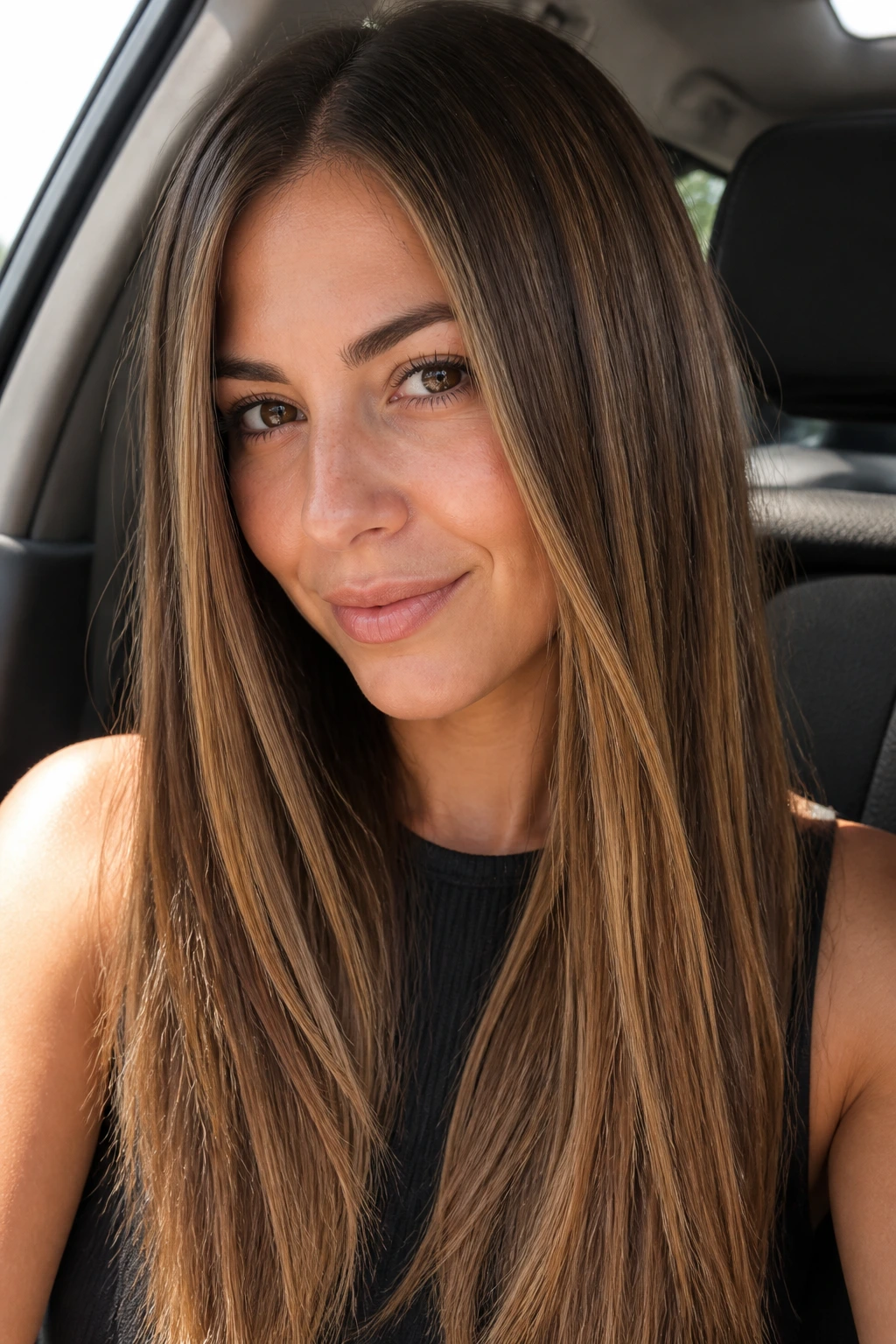
Golden mocha is the opposite of ash-heavy brown, and that’s why it works so well in summer. The warmth sits inside the brown rather than on top of it, so the color stays dimensional even when the sun is blasting through a car window.
This is a smart middle-ground shade if your natural hair is medium brown and you don’t want a huge lift. The ribbons can be thin and spaced out, which keeps the grow-out soft. On straight hair, those narrow streaks move enough to catch light, but they never look fussy.
If you’ve tried cool brown and found it went gray on you, this is the better answer.
13. Espresso Tip Lights
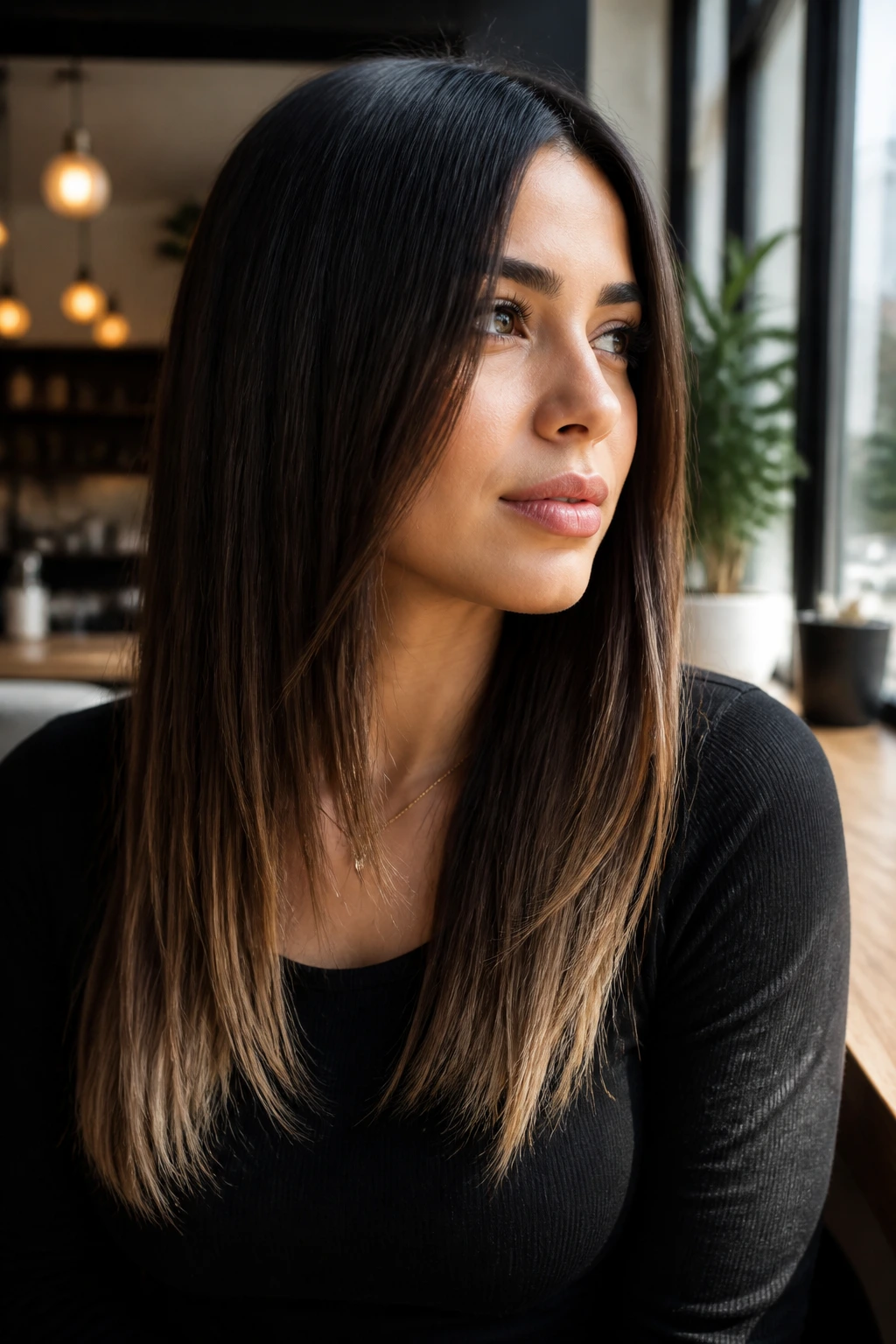
Dark roots with lightened tips can look surprisingly sleek on a blunt straight cut. The color is concentrated where the eye lands at the ends, so the whole haircut feels longer and more deliberate.
Placement Notes
- Keep the root close to espresso or dark chocolate.
- Lighten only the final 2 to 4 inches.
- Use a soft beige or caramel toner, not a pale blonde.
This is a strong look for anyone who wants contrast without frequent root work. The ends do the visual lifting, and because the top stays dark, the regrowth stays easy to live with. It’s sharp. A little moody, too.
14. Baby Blonde Veil
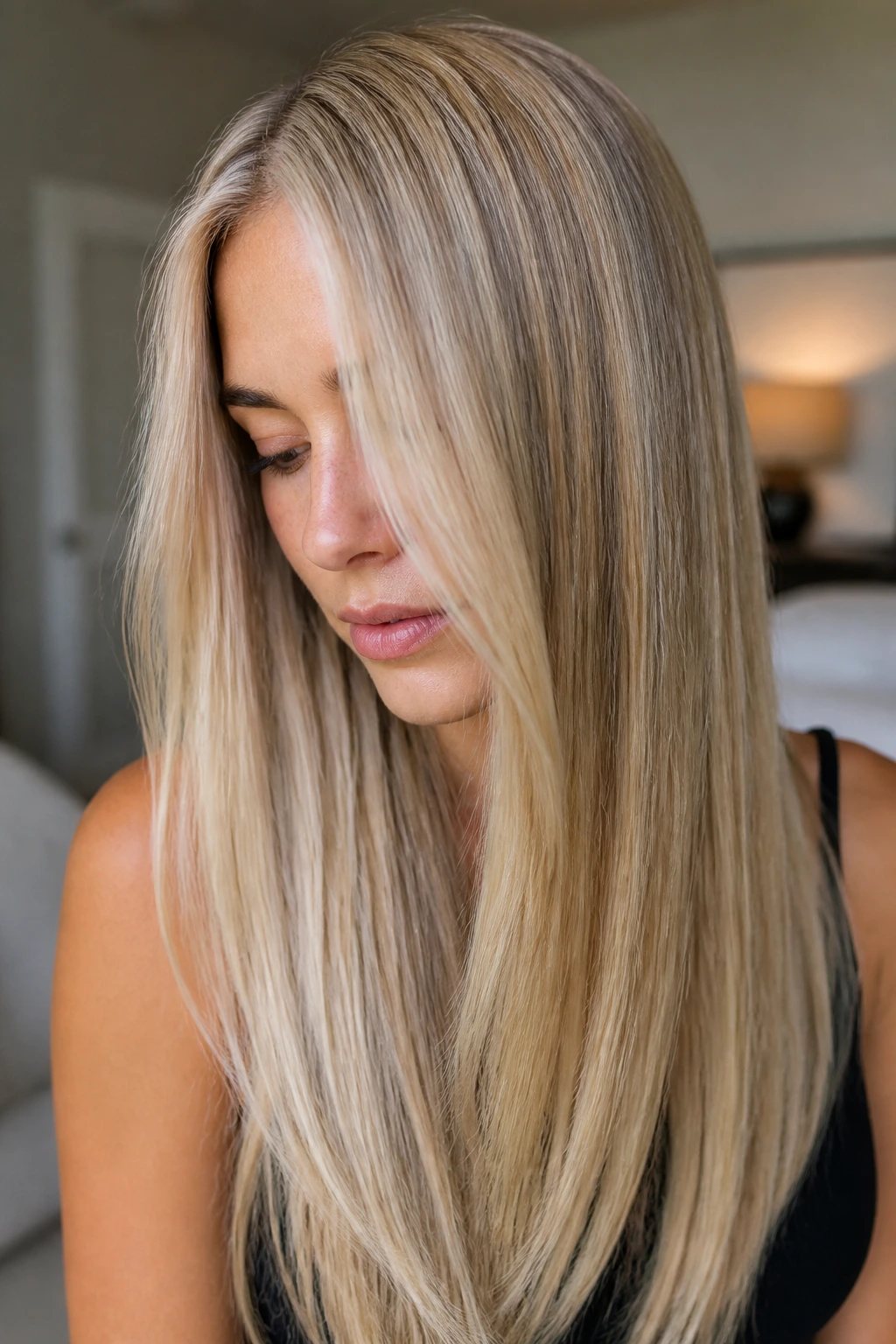
Baby blonde is for people who want the lightest possible touch without full bleach-blonde energy. The highlights are tiny, woven close together, and the whole effect lands like a soft veil instead of a stripe pattern.
On straight hair, that micro-weave matters. Bigger highlights can look too obvious on a smooth surface, but these tiny pieces blur together and read as brightness rather than streaks. The downside is maintenance. Light blondes show brass fast, and straight hair doesn’t hide the toner fade for you.
If you like sleek, polished hair and don’t mind a gloss schedule, this shade delivers.
15. Peach Apricot Balayage
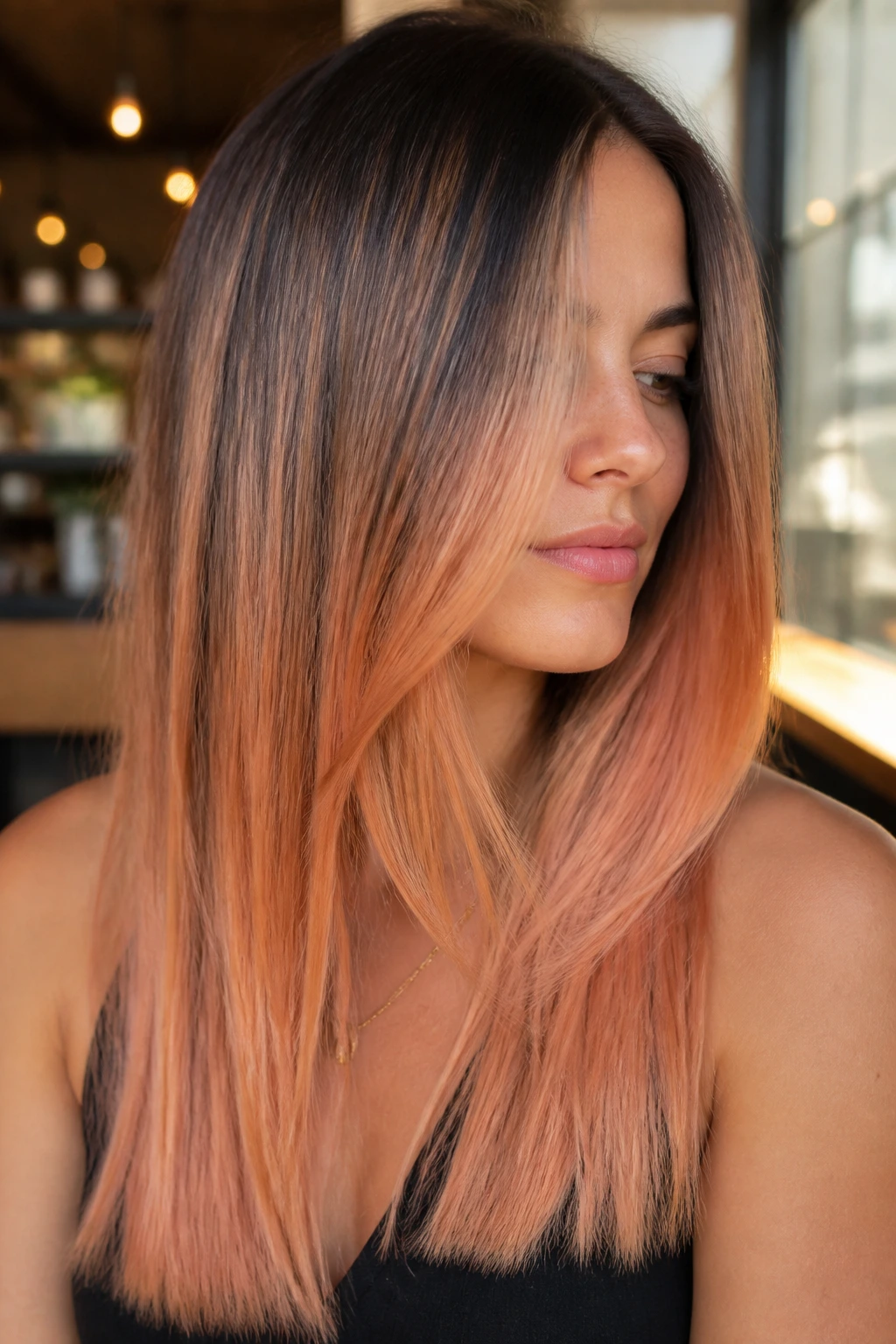
Can peach tones work in straight hair? Absolutely, if the base is light enough and the color stays soft. Peach apricot has enough warmth to feel fresh in summer, but it avoids the harshness that some copper shades can bring to smooth, flat hair.
The look is best when the peach lives through the mids and fades toward apricot at the ends. That gives the color a little movement without making it look painted on. On straight hair, the tone reads playful and smooth rather than fluffy or pastel-heavy.
I’d steer this toward lighter brunettes and dark blondes. On very dark hair, the lift needed can get rough on the ends.
16. Rosy Beige Melt
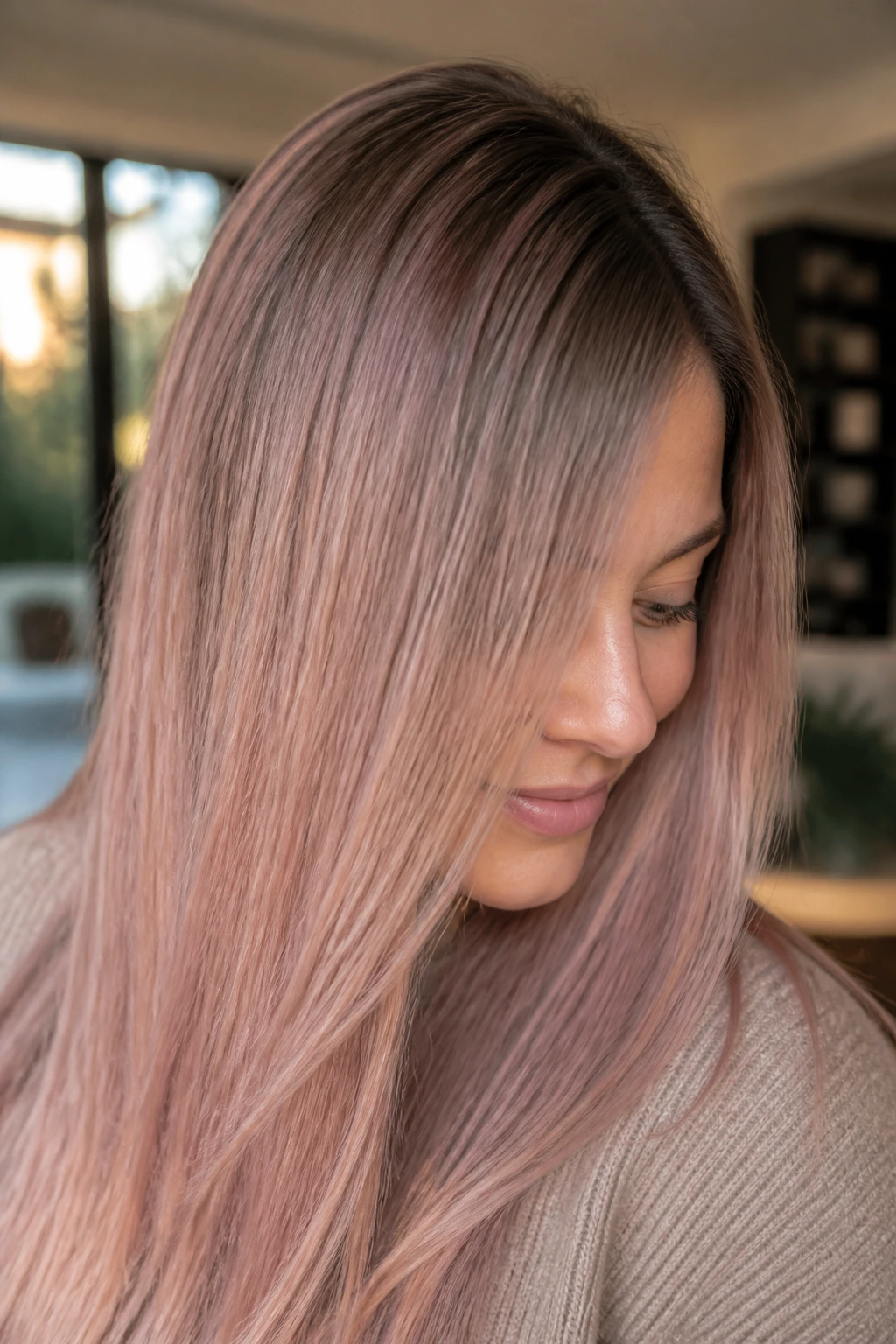
A rosy beige melt is the sleeper choice on neutral straight hair. It’s subtle enough to fly under the radar, but the pink-beige cast gives the color a soft edge that plain blonde often lacks.
This one works because the rose note is muted, not candy pink. The beige keeps it grown-up, and the root shadow keeps the color from looking washed out. Straight hair loves that kind of tonal control; it exposes every little shift, so the fact that this shade changes a bit in different light becomes part of the appeal.
If your skin tends to look tired under icy blonde, rosy beige can be a better fit.
17. Bronze Bob Balayage
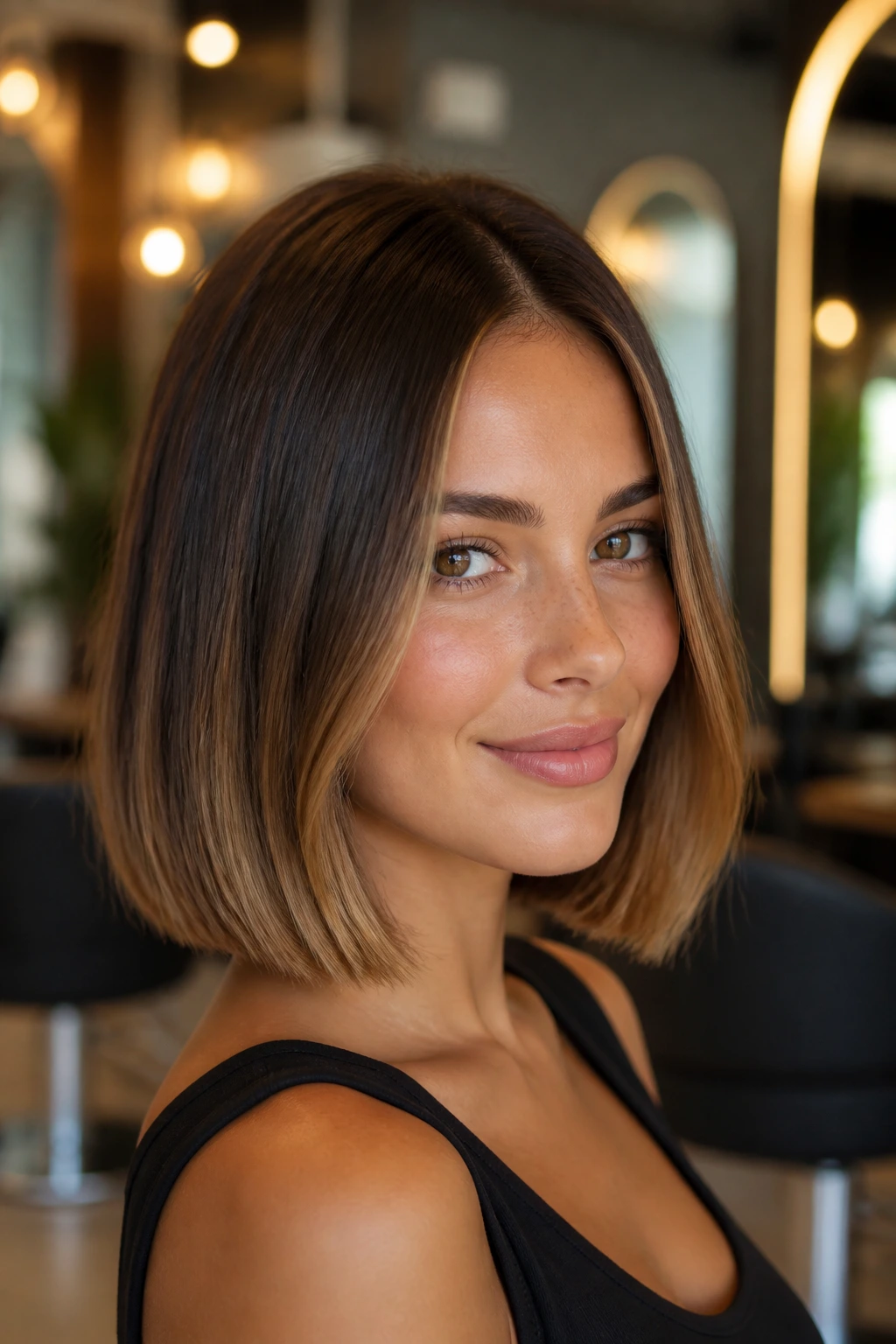
A bob and balayage can fight each other if the placement is wrong. Bronze bob balayage solves that by concentrating the lightness around the lower half and the face frame, which keeps the top looking smooth and the shape looking intentional.
The bronze tone is warmer than ash, richer than beige, and it sits well on straight hair because the surface stays glossy. You don’t need much contrast to make a bob feel alive; you need smart placement. A few bronze ribbons under the top layer do more work than a whole head of obvious streaks.
If your bob is blunt and sits right at the jaw, this is worth a serious look.
18. Soft Mushroom Blonde
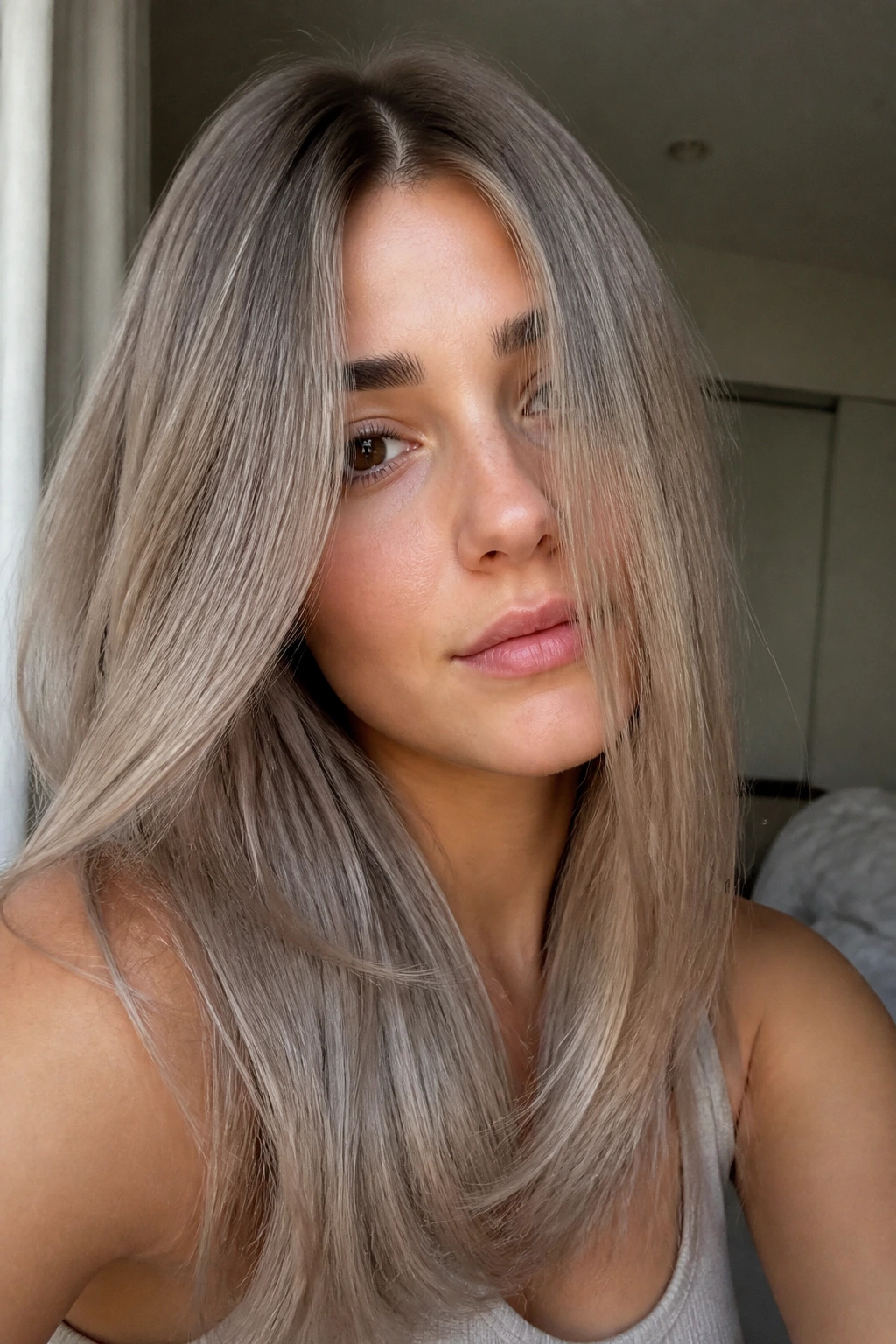
Mushroom blonde is for people who like blonde, but not the kind that shouts. The tone sits in a cool beige-gray lane, which looks modern on straight hair because the smooth surface lets the smoky undertone stay visible.
This is a better pick than platinum if you want less maintenance and a softer finish. The highlights don’t have to start high on the head, either; keeping them lower preserves that earthy feel. On warm skin, ask for a little beige in the toner so it doesn’t turn flat.
It’s quiet in a good way. Not boring. Just controlled.
19. Chestnut Veil
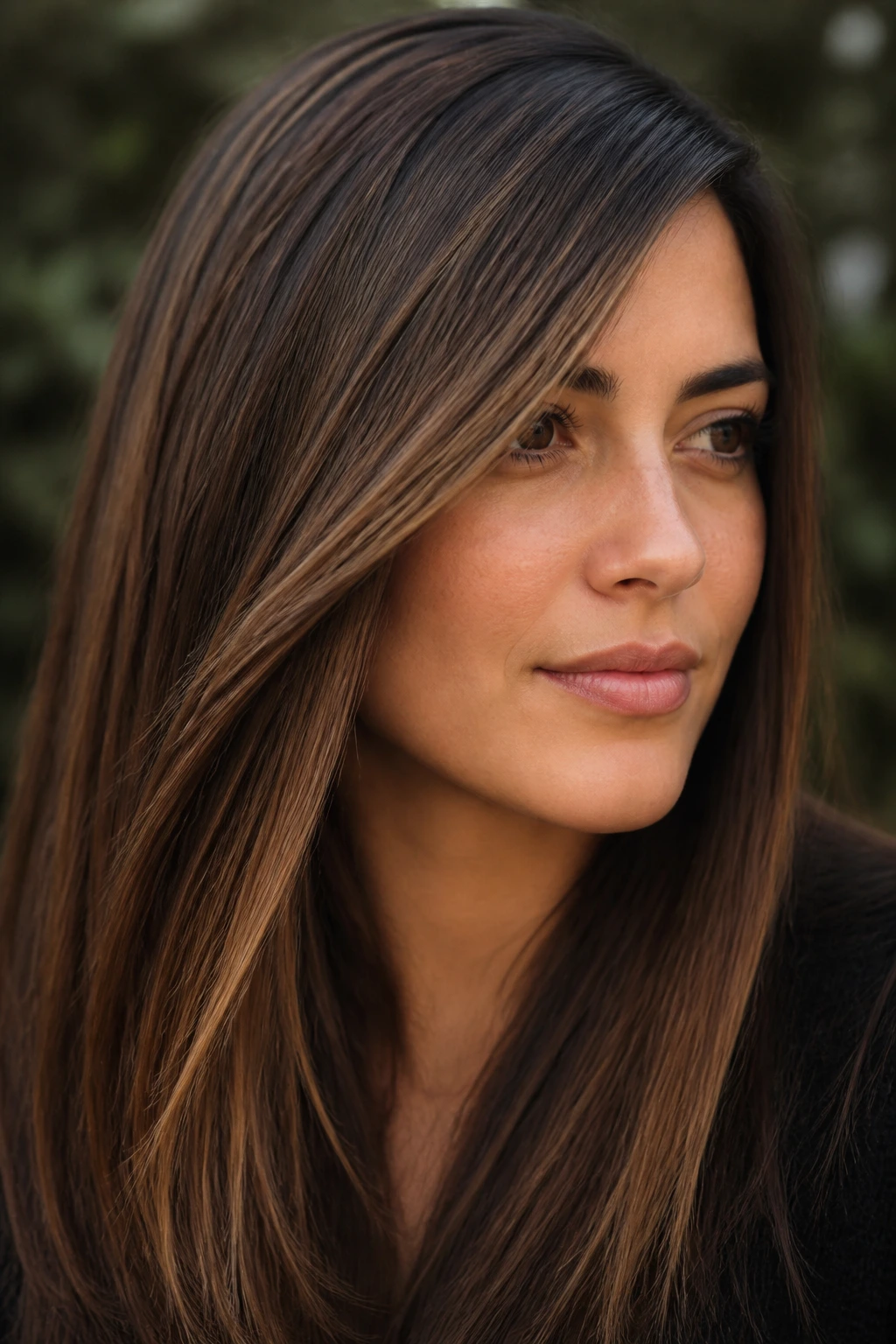
What if you want balayage but you still want to look brunette? Chestnut veil is the answer I’d hand you first. The lighter pieces stay inside the chestnut family, so the color adds movement without changing the identity of the hair.
This is a useful shade for long, straight hair because the veil of lighter brown threads breaks up the length without making the ends look thin. It also grows out gracefully, which matters if you’d rather not see the salon every six weeks.
A subtle chestnut veil works especially well with a side part. The sweep gives the highlights somewhere to land.
20. Toffee Latte Stripes
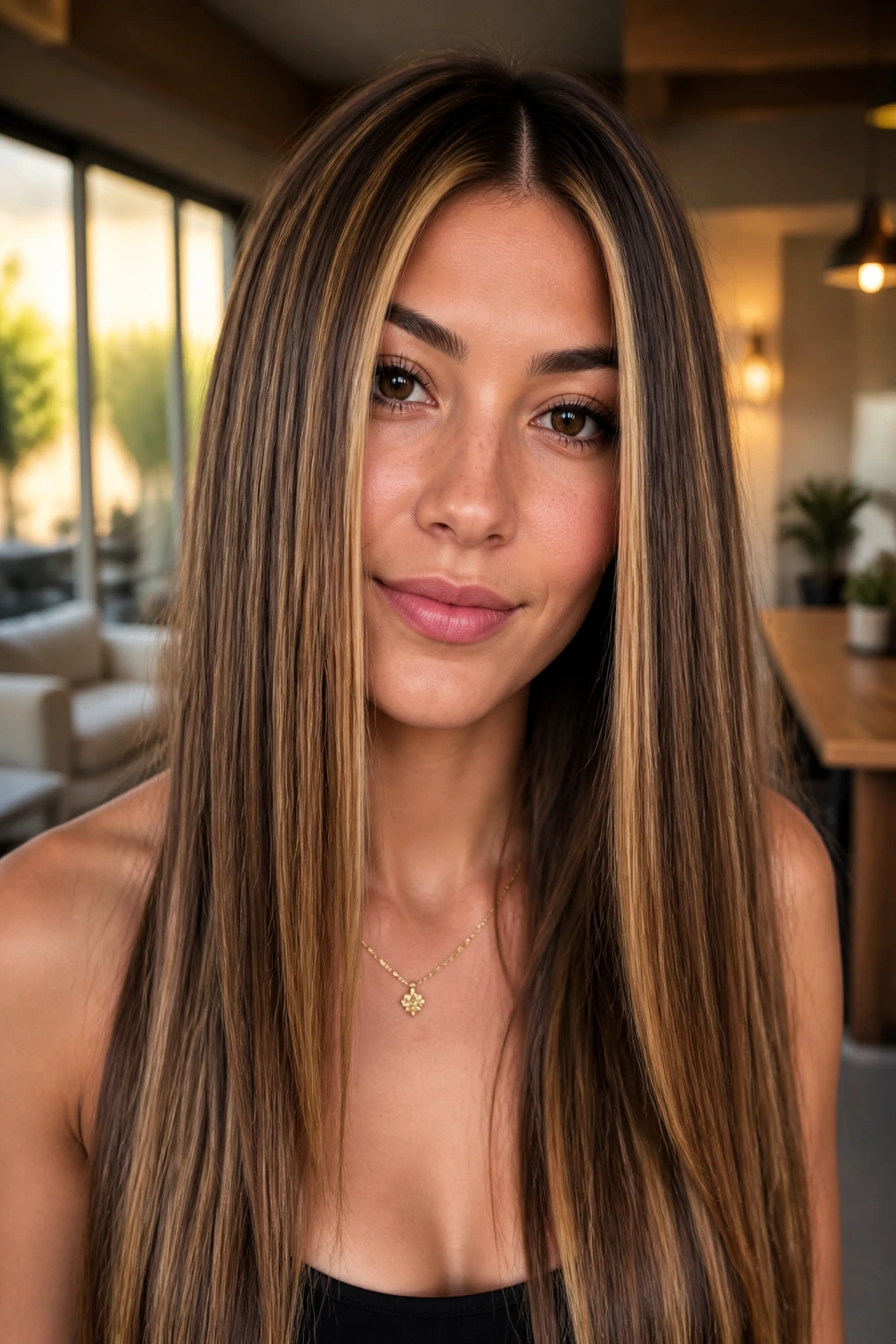
Toffee latte stripes have more visible contrast than the softer looks above, and that’s the point. Straight hair can take a sharper highlight pattern if the lines are placed carefully and the toner stays warm enough to blend the edges.
I like this on people with a lot of hair density. When the strands are thick, a few more deliberate ribbons stop the style from looking like one heavy block. The toffee tone keeps the brightness friendly instead of icy, which feels right for summer.
If you wear your hair poker-straight and want people to actually notice the color from across the room, this is one to screenshot.
21. Dimensional Ash Brown
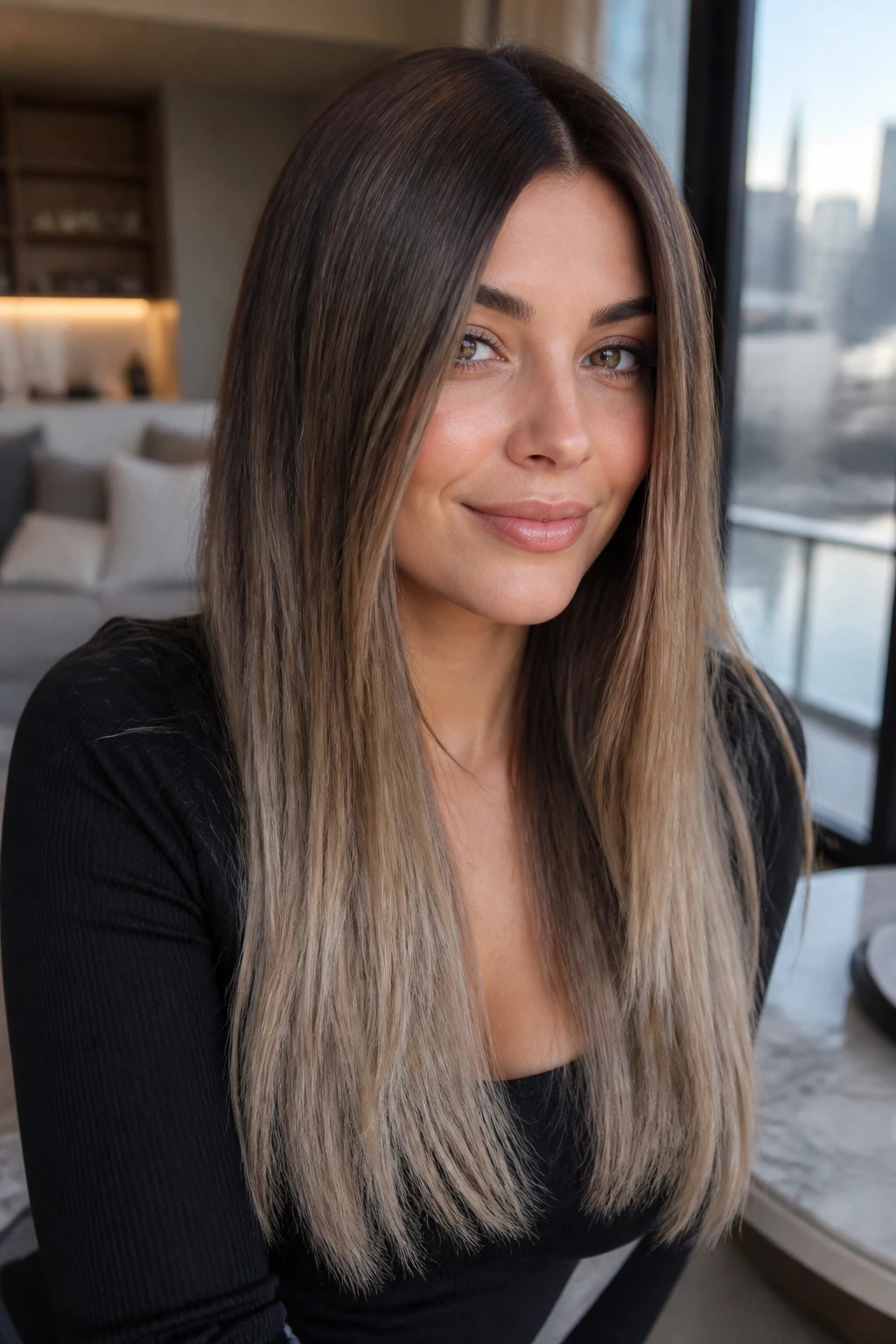
Is ash brown too flat for straight hair? Not if you keep the dimension alive. Dimensional ash brown uses a cool root, a softer middle, and a slightly lighter ash-beige ribbon through the ends so the color still moves when the light shifts.
The danger with ash is that it can go dull fast, especially on smooth strands. The fix is tonal variety, not more lightness. Keep at least two cool brown shades in the mix, and don’t let the lightest pieces climb too high on the head. That keeps the look sleek instead of chalky.
This one is made for neutral and cool complexions that don’t want warmth creeping in.
Best For
- Straight hair that gets oily at the root
- People who prefer muted color over brightness
- Cool skin tones that fight golden blonde
22. Honeyed Money Piece
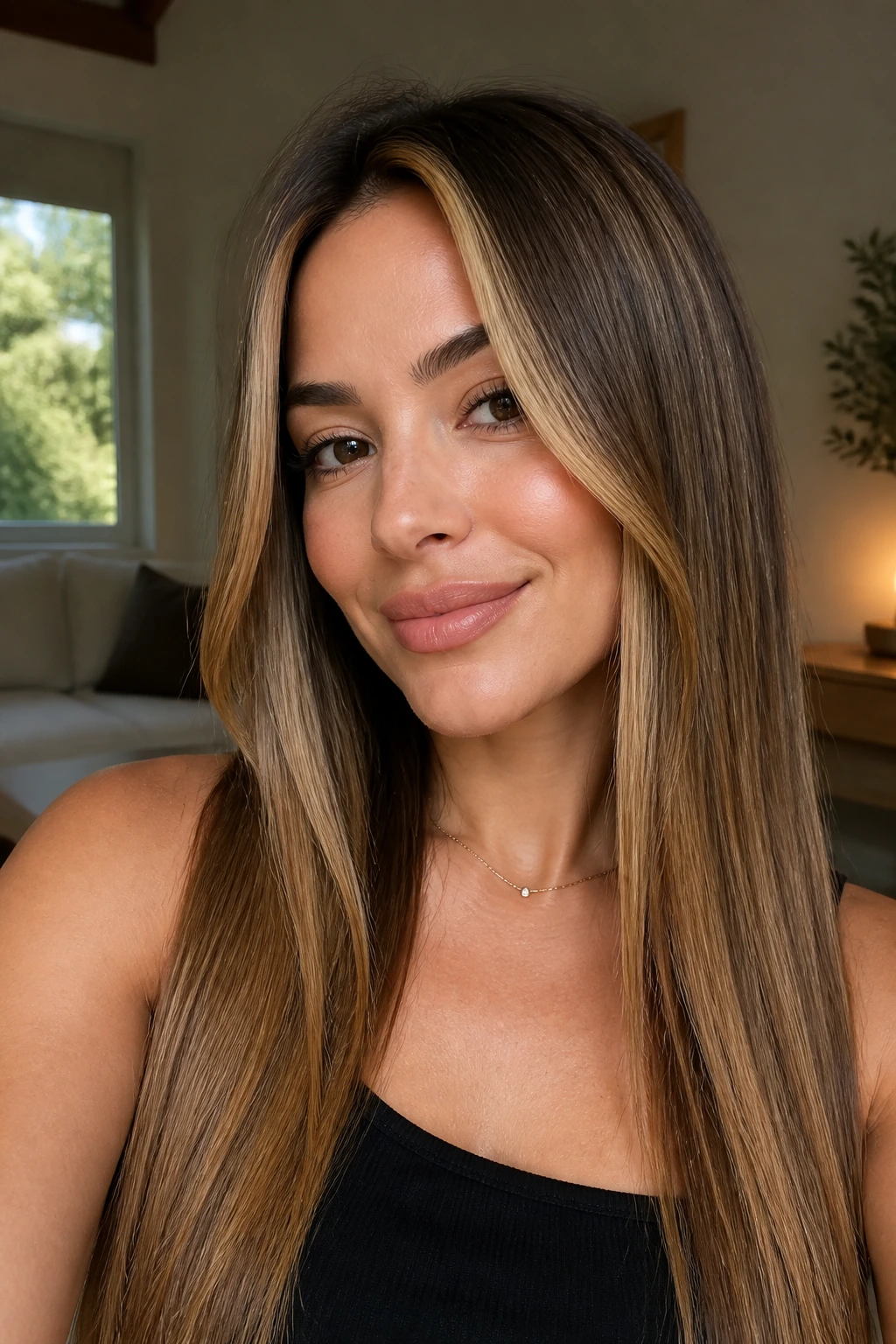
A honeyed money piece can wake up straight hair faster than a full-head lightening job. The front sections brighten the face, while the rest of the balayage stays warm and controlled through the lengths.
This is a smart choice if you like to tuck your hair behind your ears or wear it half-down. The lighter pieces are always visible, even when the rest of the style is plain. On straight hair, that makes the front look intentional instead of accidental.
Tell your colorist not to let the front pieces get too thick. Thin, face-hugging ribbons look cleaner and age better as the color grows out.
23. Lemon Drop Blonde
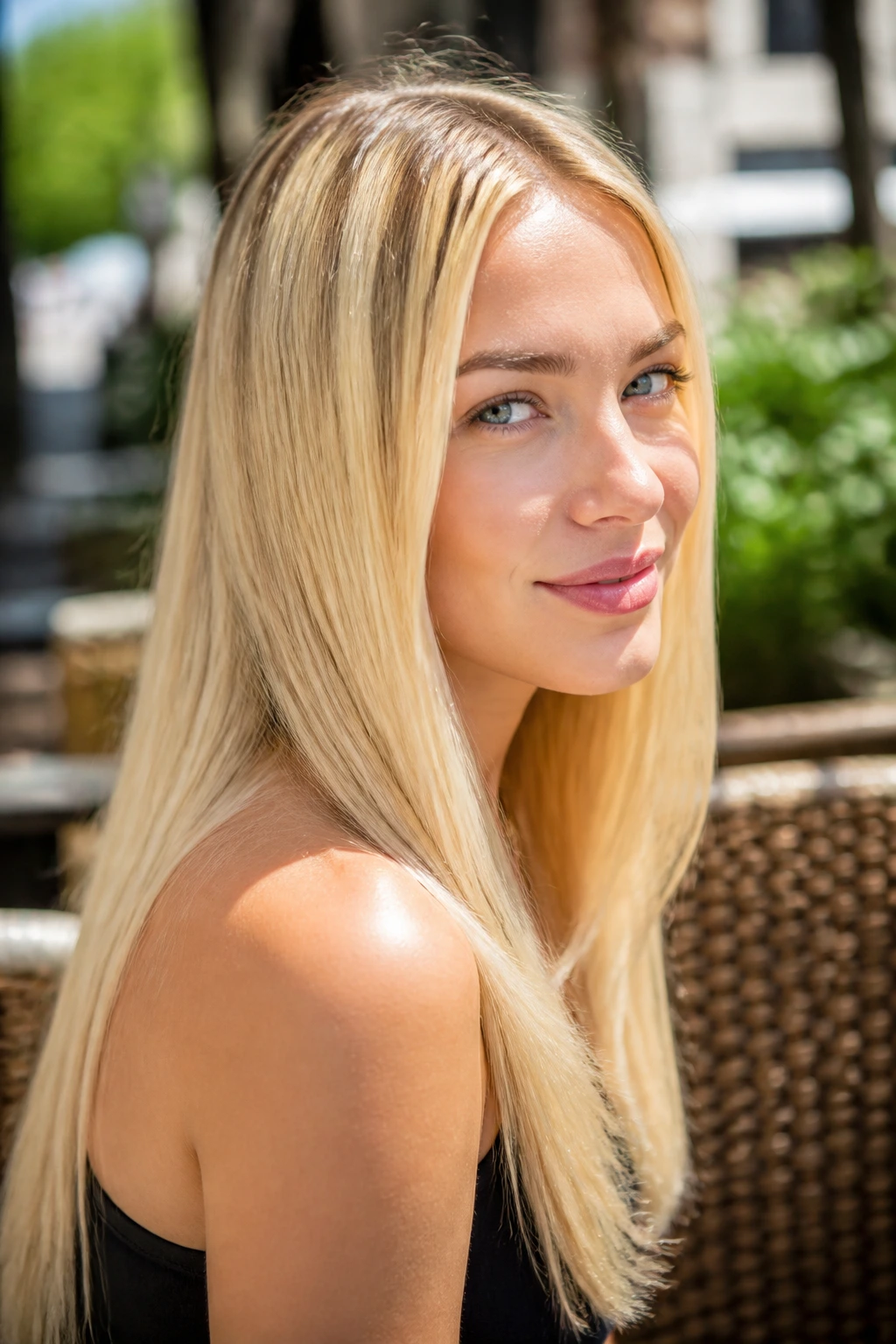
Lemon drop blonde sounds loud, but in practice it can be a soft, sunny blonde with a pale yellow warmth that reads bright rather than brassy. The trick is to keep the tone clean and the placement airy.
Straight hair shows this color in a very crisp way. You don’t get the blur that waves give, so the tone needs to be controlled with a good gloss. If that sounds fussy, it is. Still, the payoff is a blonde that looks fresh in direct light and not icy in shade.
I’d keep this one for lighter starting levels. The lift is much kinder that way.
24. Cinnamon Swirl Balayage
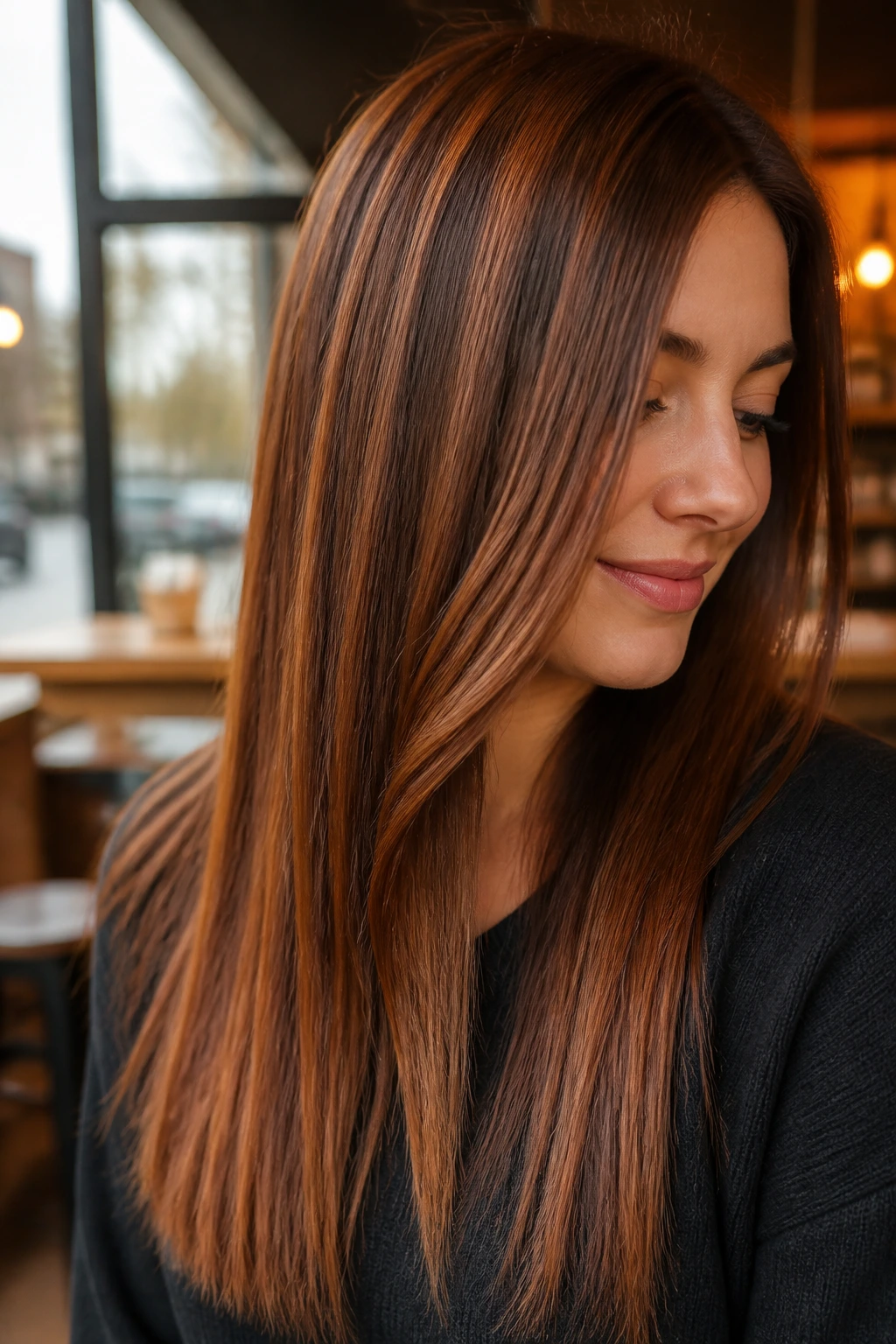
Cinnamon swirl is warmer than copper and more grounded than strawberry. On straight hair, that means the color reads as rich and dimensional instead of bright and flashy.
This is one of the easiest ways to add life to medium brown hair without crossing into full red territory. The ribbons can be a little thicker here, especially if your cut has layers, because the cinnamon tone already has enough movement built in. The result feels cozy but not autumn-heavy.
If you want summer warmth without gold overload, this sits in a very useful middle lane.
25. Beige-on-Beige Blending
Some people want the quietest possible transition, and beige-on-beige is for them. Multiple beige tones are painted in small variations, so the final effect looks soft, almost seamless, with just enough contrast to stop the hair from flattening out.
Placement Notes
- Use at least two beige tones, not one.
- Keep the root soft and natural.
- Ask for micro-ribbons around the face and crown.
This is a strong choice for straight, fine hair because it adds texture without making the color heavy. If chunky highlights have looked too loud on you before, this is the correction.
26. Brushed Bronze Glow
Brushed bronze has more warmth and shine than a beige balayage, and straight hair is the right place for it because the surface reflects the bronze tone so cleanly. The highlight line should feel brushed through the hair, not stamped on.
I like this on darker blondes and lighter brunettes who want to keep a rich look. The bronze color can be concentrated through the mids, with a few brighter pieces near the face. That keeps the whole head from turning one-note.
It’s one of those shades that looks polished even when the cut is simple. Sometimes that’s exactly the goal.
27. Rooted Blonde Lob
Why do rooted blondes work so well on a lob? Because the deep root gives the blunt length some weight, and the blonde mids and ends keep the cut from looking boxy.
This look is all about grow-out. The root can sit for a couple of inches before the blonde begins, which makes maintenance easier than a high-saturation blonde. On straight hair, the transition looks clean, especially if the brightest pieces are kept just off the face and through the bottom layer.
If you wear a lob and don’t want to babysit your roots, this one makes sense.
Best For
- Collarbone cuts and blunt lobs
- People who like a lived-in blonde
- Anyone who wants a softer root line between salon visits
28. Smoky Caramel Gradient
Smoky caramel keeps the sweetness of caramel but trims the yellow. That makes a big difference on straight hair, because overly golden tones can look blocky once the hair lies flat.
The gradient is deeper at the root, lighter through the mids, then softly luminous at the ends. It’s a smart layout for long hair that needs movement more than it needs obvious blonde. You get depth, a little shine, and a color that still feels wearable after a few weeks of sun exposure.
If your skin leans warm but you hate bright gold, this is the kinder version.
29. Soft Copper Melt
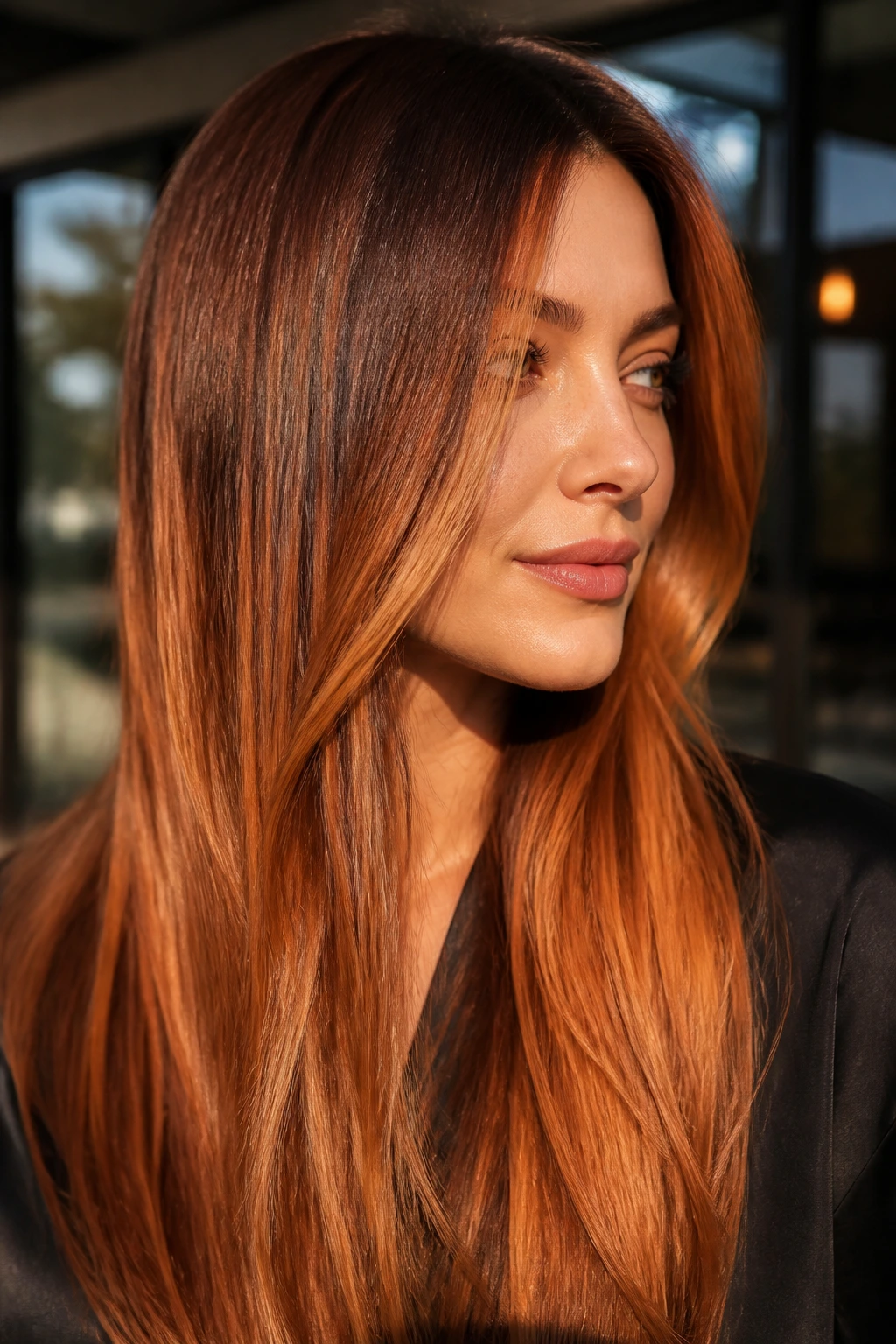
A soft copper melt is for people who want warmth that looks like it belongs in the hair, not sitting on top of it. The root can stay close to your natural base, while the mids and ends pick up copper-gold reflect in thin ribbons.
This shade loves straight hair because the smooth surface shows the tonal shift without turning the whole style fuzzy. A good gloss matters here; copper can go patchy if it’s not refreshed. Still, when it’s maintained, it has one of the nicest summer finishes in the whole group.
I’d book this if you like warmth but want something a little richer than honey.
30. Sun-Tea Brown
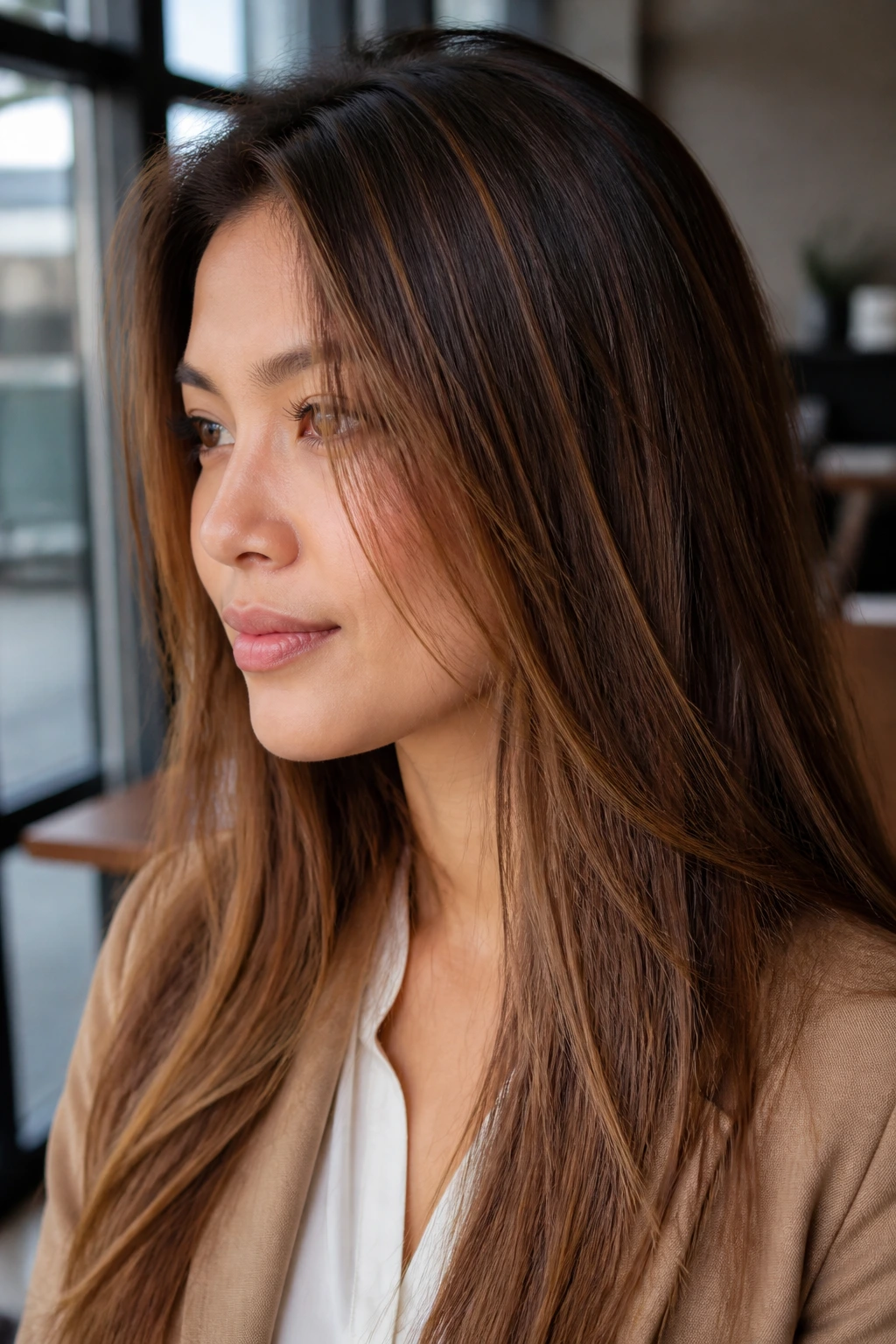
Sun-tea brown is a nice answer for anyone who wants dimension without becoming “highlighted.” The tone feels like brown brewed with a little warmth and light, so the color stays natural-looking even on very straight strands.
Compared with ash brown, it has more life. Compared with caramel, it’s quieter. That middle space is useful for people with straight hair who want the color to enhance the cut instead of becoming the cut.
It’s a strong choice for office-friendly color that still reads fresh in sunlight. Not flashy. Just well judged.
31. Glacier Blonde
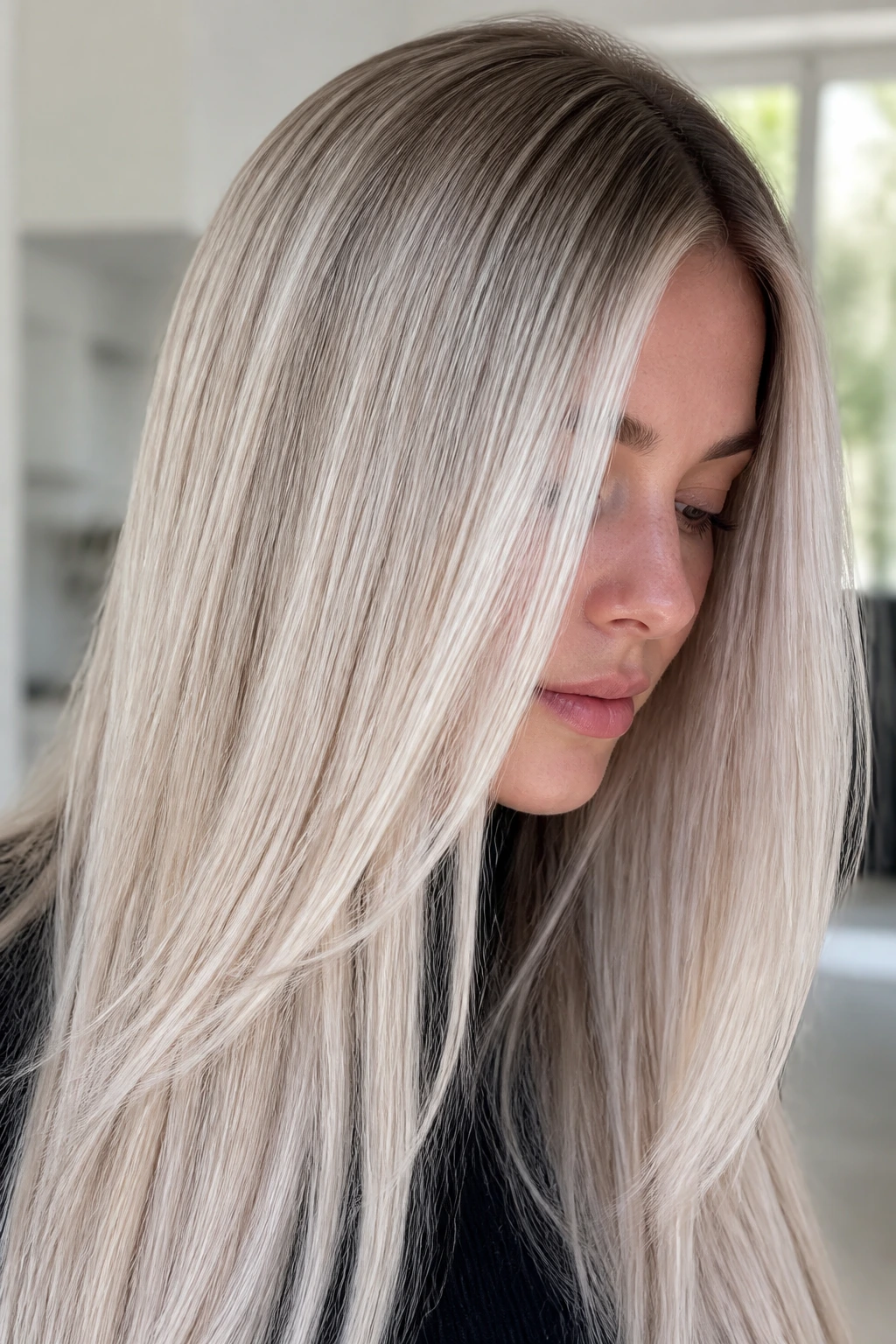
Glacier blonde is the coldest look in this lineup, and it is not for the lazy. Straight hair shows every tone shift, so if you go icy, the toner has to stay clean and the ends have to be kept healthy enough to hold that pale finish.
Placement Notes
- Keep the root shadow soft but visible.
- Use pale, cool ribbons through the top layer.
- Trim dry ends regularly so the blonde doesn’t look frayed.
When it works, it looks sharp and bright in a way that flatteringly contrasts with summer skin. When it doesn’t, it goes dull fast. That’s the trade.
32. Almond Biscotti Balayage
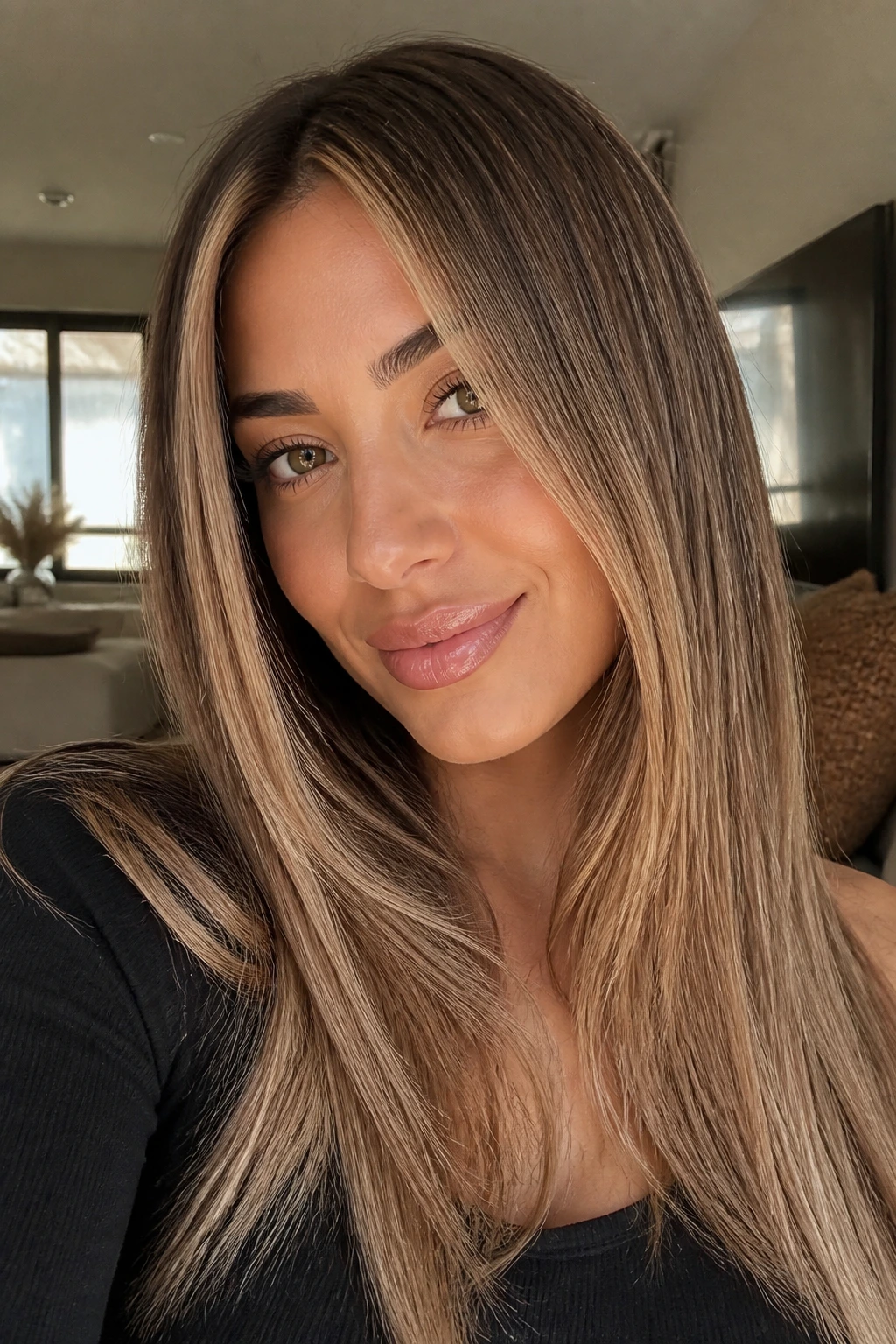
Almond biscotti sits in the warm beige family, but it has a nuttier, slightly deeper cast than plain honey. On straight hair, that gives the color more body and keeps it from drifting too light in the sun.
I like this on medium brunettes who want to stay soft and wearable. The ribbons can be layered through the mid-lengths and ends, with a little extra brightness around the face if needed. The result looks polished, calm, and easy to wear with a blunt cut or a long one.
It’s not loud. That’s the appeal.
33. Mocha Smoke Shadow
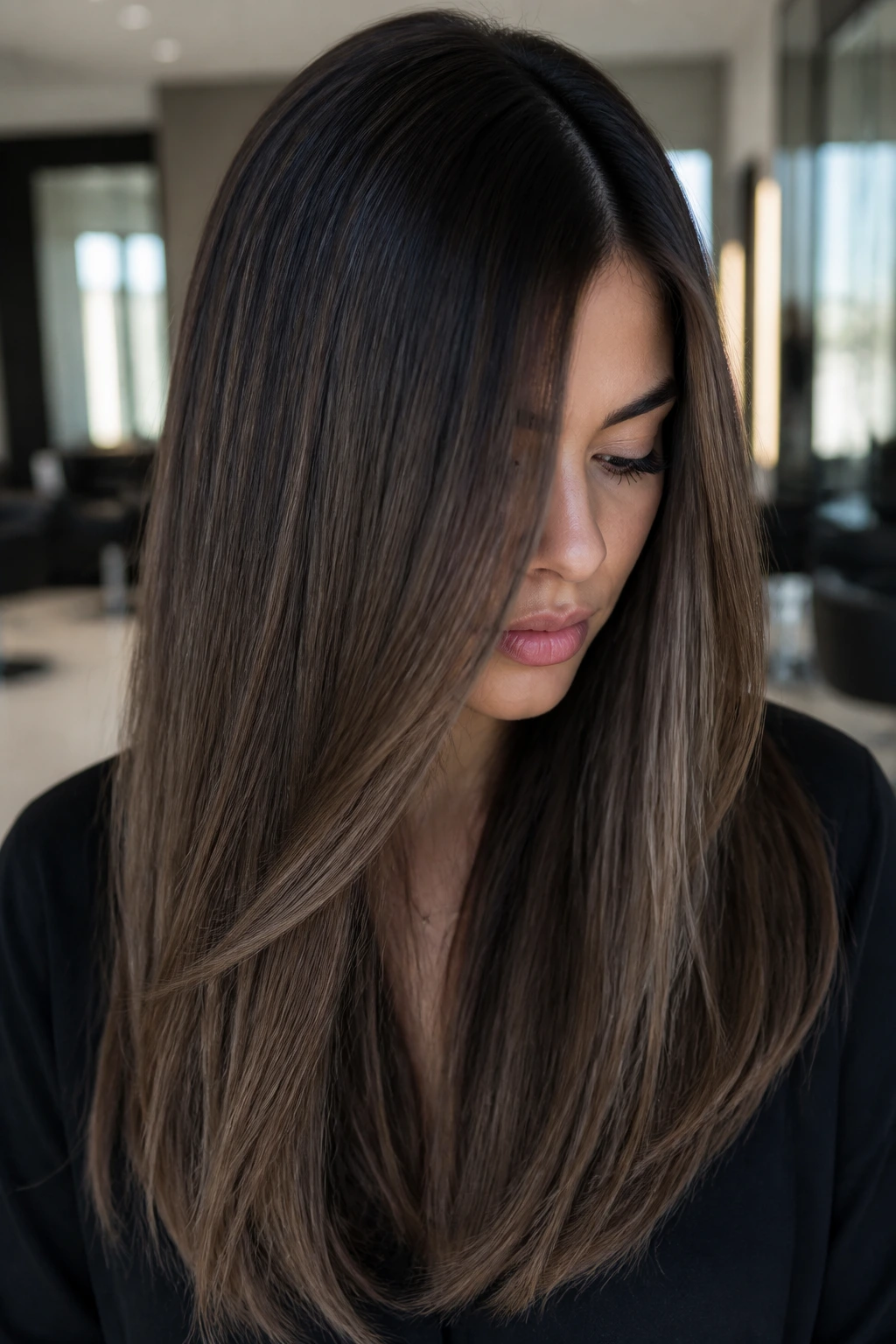
Mocha smoke shadow is the shade for brunettes who want a hint of light without leaving the brunette family. The root stays deep, the mids get smoky mocha ribbons, and the whole thing blends into a darker finish that looks sleek on straight hair.
The best part is how forgiving it is. A few weeks of grow-out won’t wreck the shape, and the cooler undertone keeps the color from getting too red in summer heat. If you hate warm highlights but don’t want solid dark hair, this hits a useful middle point.
Best For
- Dark brown bases
- People who want low-contrast dimension
- Sleek, straight styles with a center part
34. Peach Gold Glow
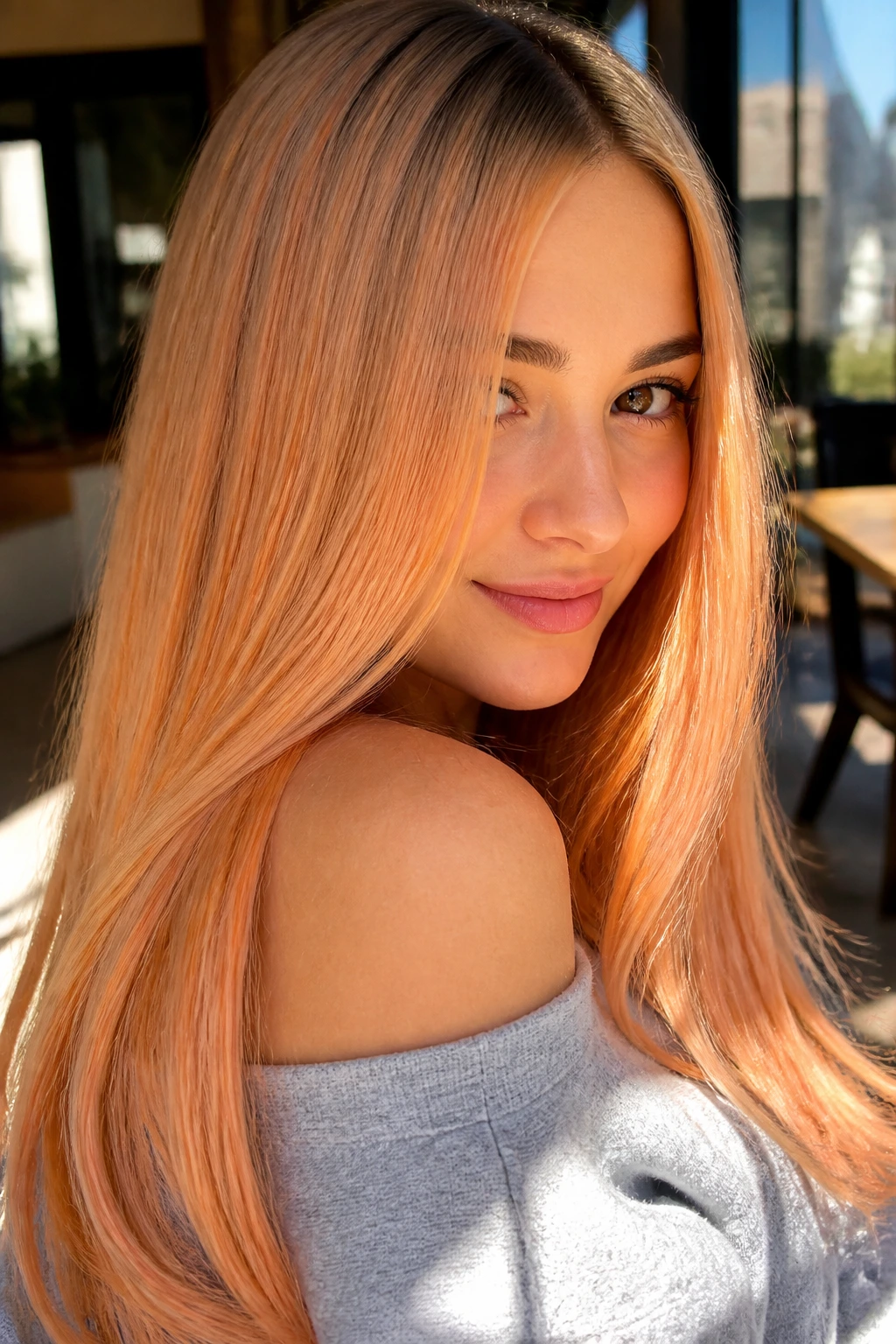
Peach gold glow is brighter and softer than copper, which gives it a youthful feel without tipping into candy color. The peach note shows up in the sunlight first; the gold keeps the ends from looking washed out.
Straight hair is the right setting for it because the color stays smooth and readable. On waves, peach can disappear into texture. On straight lengths, you see the tone shift clearly from root to end, which makes the look feel more deliberate.
It works especially well if you like warm makeup, blush-heavy cheeks, and golden accessories. A small thing, but it matters.
35. Espresso Ribbon Ends
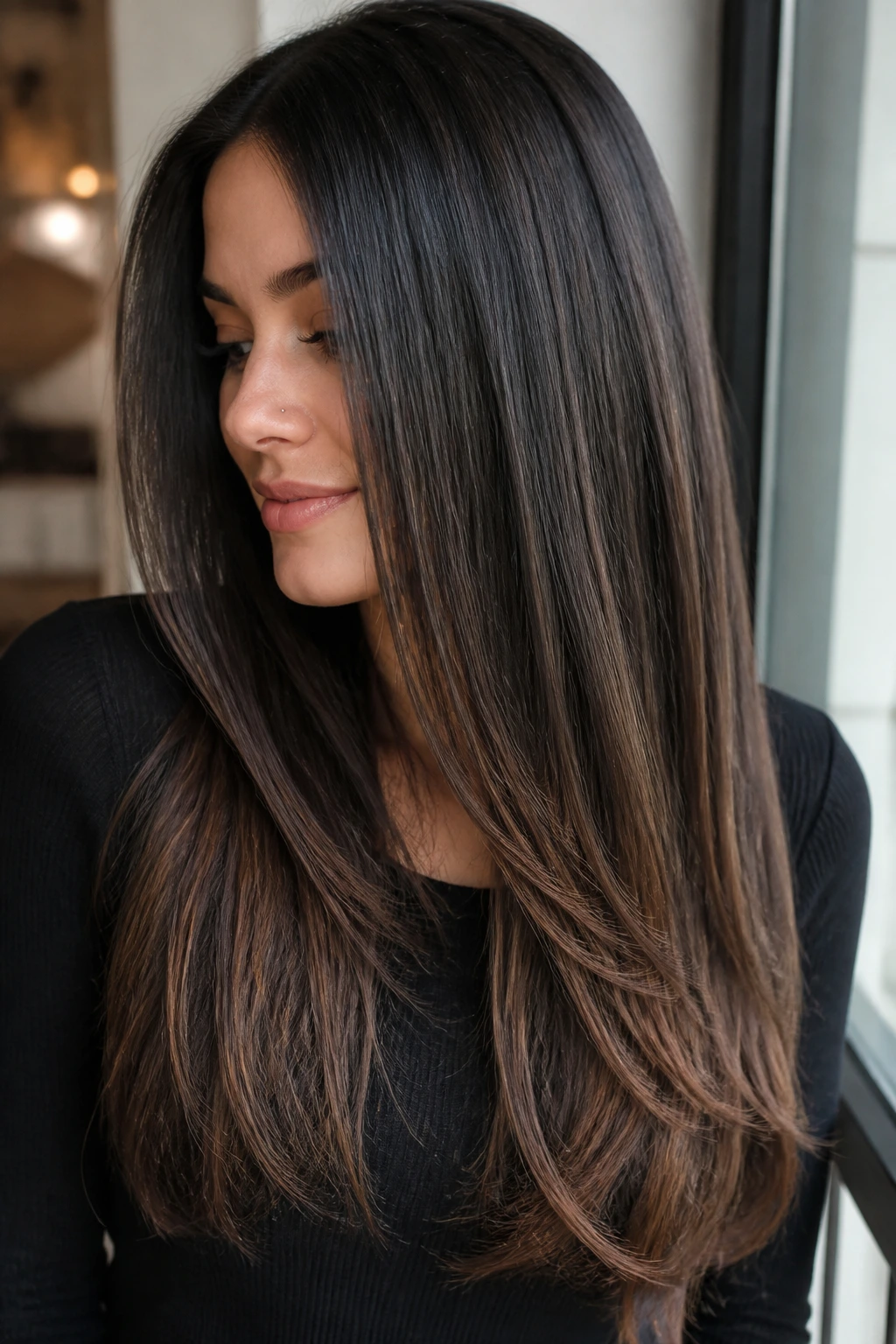
Espresso ribbon ends are for the person who wants the smallest possible color change with the biggest visual payoff. The top stays dark and sleek; the ends carry thin ribbons of mocha, bronze, or soft caramel so the bottom of the hair catches light instead of sinking into one solid block.
That makes straight hair look longer and cleaner. It also keeps maintenance manageable, because the root remains almost untouched. If your hair is naturally dark and you only want a little dimension, this is one of the smartest ways to do it.
It’s subtle. But subtle is not boring when the placement is right.
Why Straight Hair Changes the Balayage Rulebook
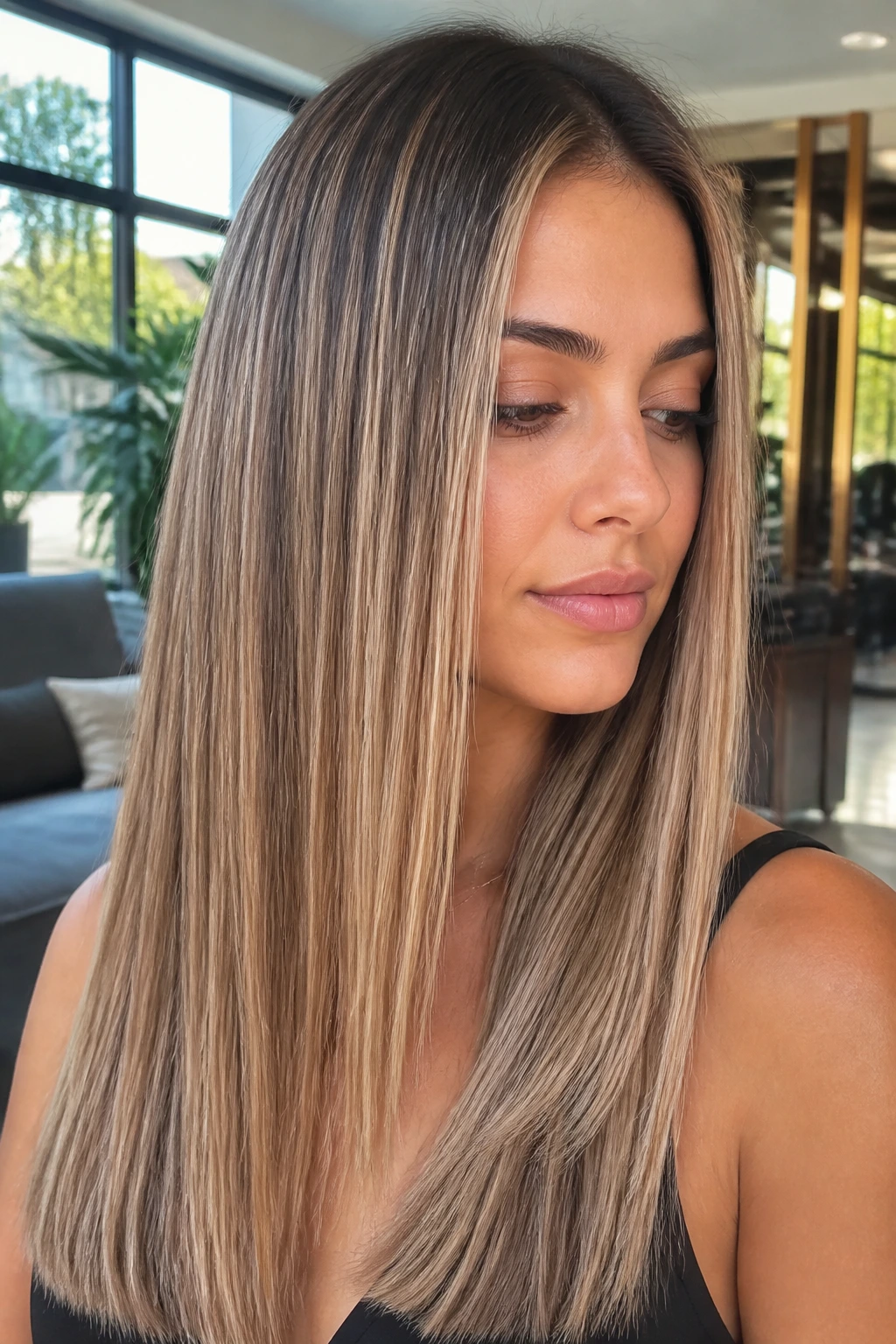
Straight hair asks for cleaner decisions from a colorist. There’s no wave pattern to soften a heavy foil line, no curl to disguise a blunt shift in tone, and no texture to make a too-bright highlight feel smaller than it is. That means placement matters more than drama. A feathered ribbon in the right spot will do more than a wide strip shoved near the root.
Summer light also punishes lazy color. Beige can turn yellow if the toner is weak. Cool brown can look muddy if the gloss is overdone. Copper can go brassy by the third wash if the porosity is uneven. Straight hair makes all of that obvious, which is why a root shadow, a gloss schedule, and a careful lift level matter so much. The haircut itself matters, too; blunt ends can make balayage look chic, while ragged ends make even good color look tired.
Tools and Products That Make These Looks Behave
-
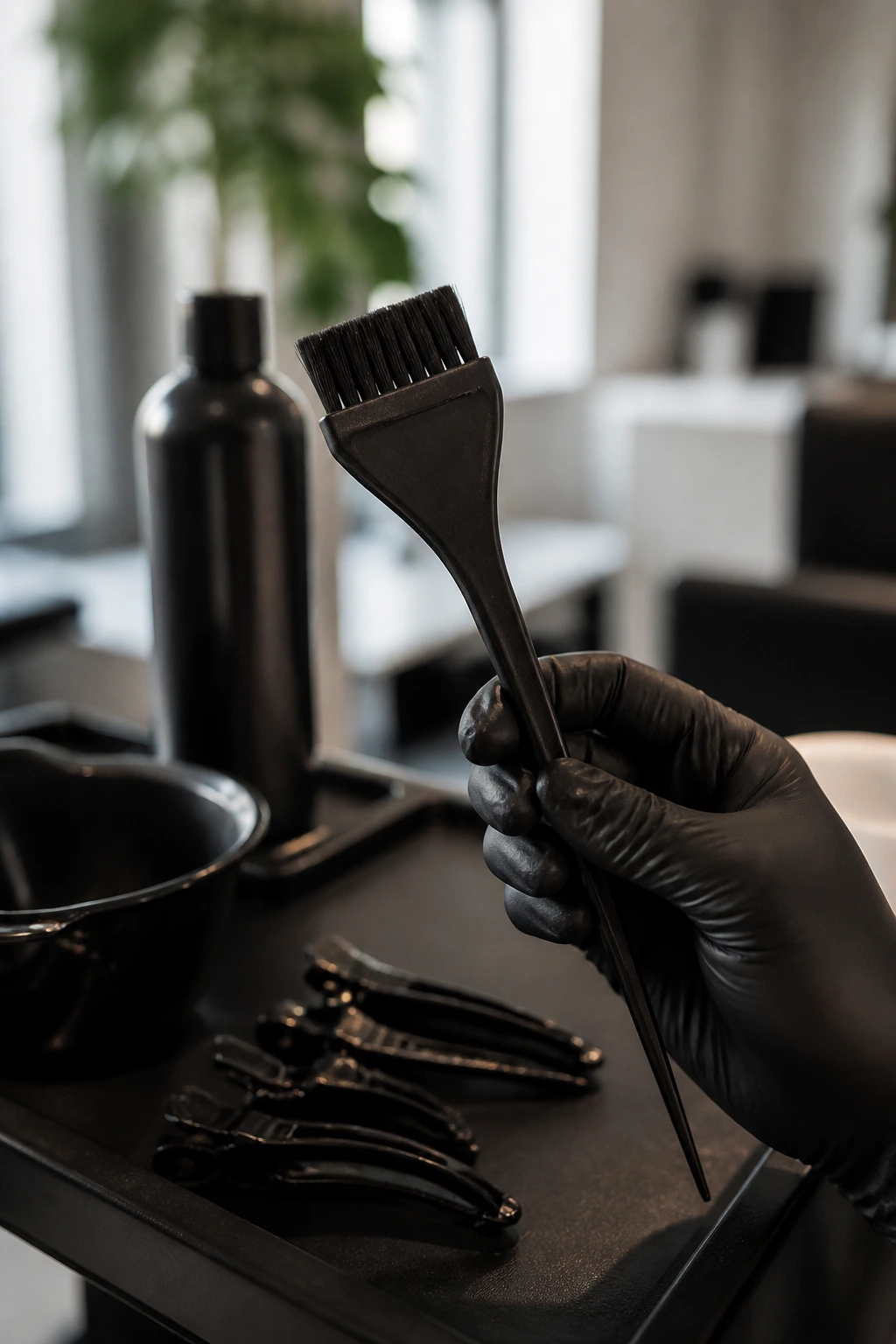
Sectioning clips: Clean partings make it easier to see where each ribbon lands, especially if you’re asking for face-framing pieces.
-
Tint or color brush: A narrow brush gives better control for micro-ribbons and soft money pieces than a wide brush.
-
Mixing bowl: Useful for glosses, toners, or at-home mask treatments.
-
Sulfate-free shampoo: Helps keep warm and beige tones from fading too quickly and keeps the hair less stripped between washes.
-
Purple shampoo: Best for blonde, pearl, and glacier looks; use it sparingly so straight hair doesn’t pick up a dull cast.
-
Blue shampoo: Handy for brunettes with unwanted orange warmth in the mids and ends.
-
Heat protectant: Straight hair often gets flat-ironed more often, and high heat is one of the fastest ways to kill shine.
-
Shine serum or light oil: A pea-size amount on the ends keeps balayage looking smooth instead of dusty.
-
Gloss or toning treatment: Salon glosses are the easiest way to refresh beige, pearl, copper, or smoky brown tones.
-
Microfiber towel: Less rough on the cuticle than a standard terry towel, which matters when the ends are lightened.
How to Wear Balayage on Straight Hair Without Losing the Dimension
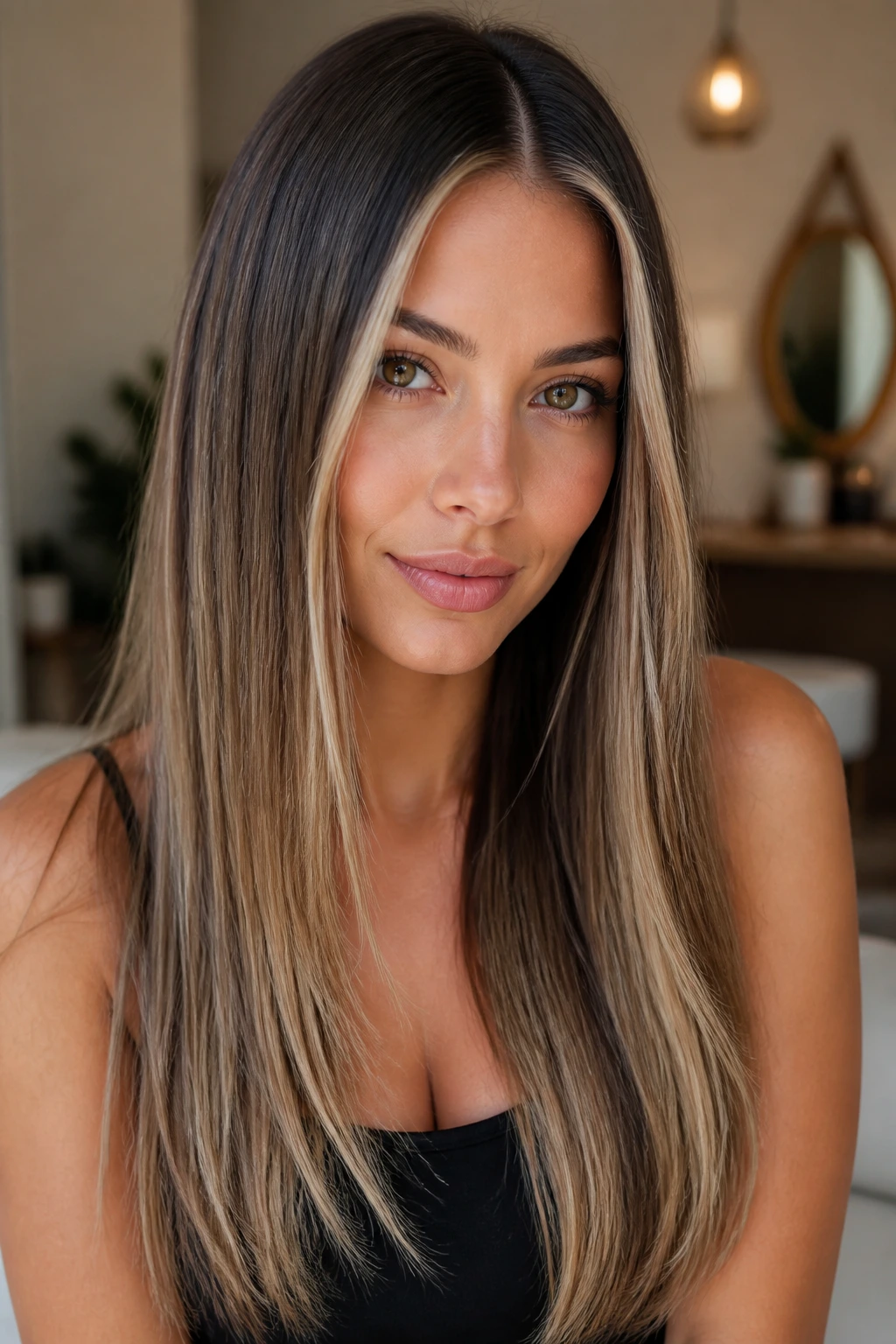
Parting: A middle part shows off face-framing pieces and keeps the look symmetrical; a side part softens a stronger blonde or copper placement. If your hair is very straight and very sleek, changing the part is one of the fastest ways to make the color feel different without touching the dye.
Styling Match: A single pass with a flat iron or a round brush blowout works better than tight curls. You want the strands aligned enough to show the ribbons, but not so flat that the color becomes a hard stripe. A slight bevel at the ends keeps the cut from looking stiff.
Cut Pairing: Blunt lobs, collarbone cuts, and long layers all pair well with balayage because they give the color a place to land. A one-length cut can still work, but it needs careful placement near the bottom half so the whole head doesn’t turn into one dark slab.
Finishing Touch: A small amount of shine serum on the mids and ends makes straight balayage look polished, especially after a day in the sun or on dry indoor air.
Extra Tips for More Shine and Better Dimension
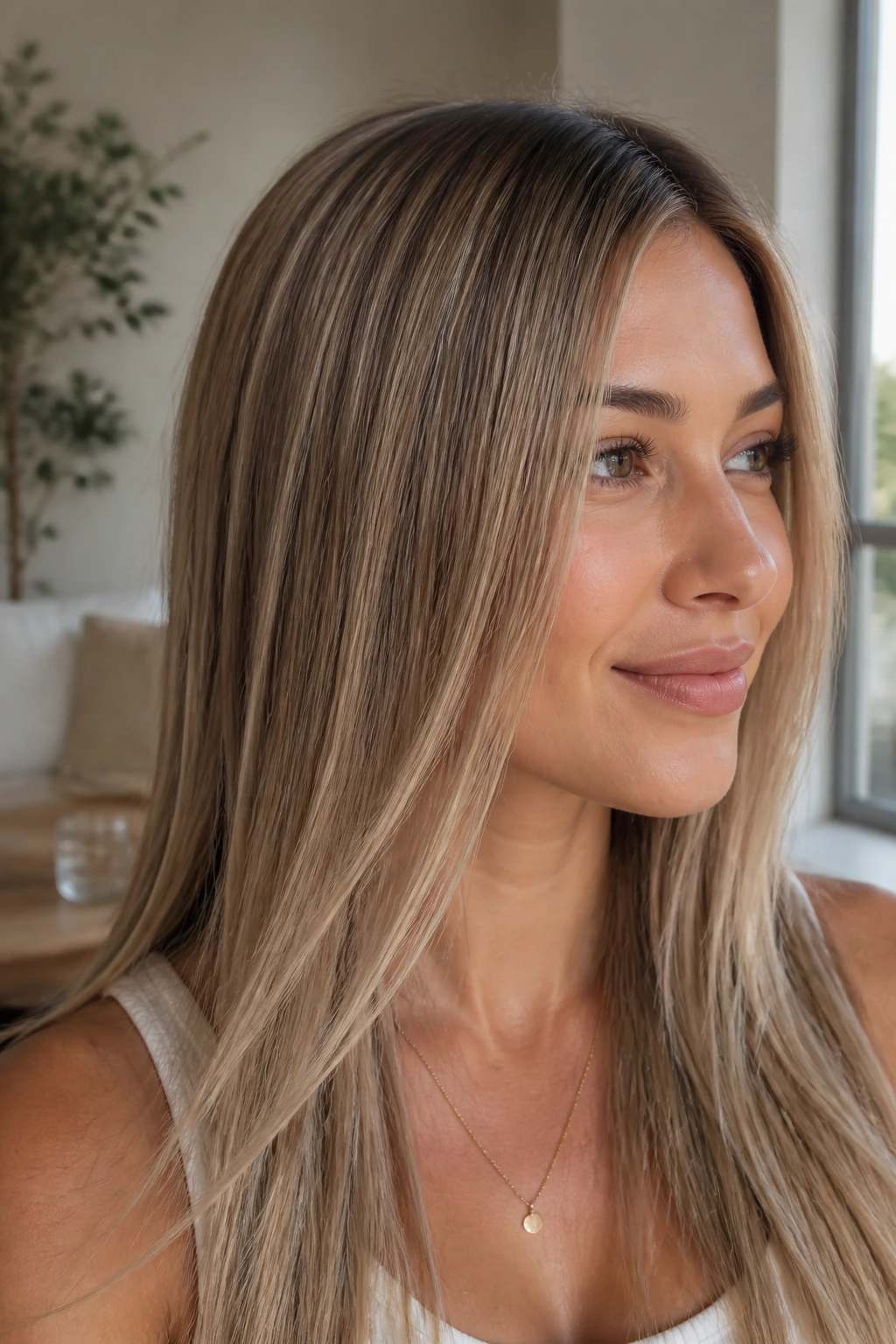
Gloss Choice: Ask for a beige, honey, copper, or smoke gloss that matches the shade family you picked. The wrong gloss can flatten the whole look, and straight hair shows that mistake fast.
Dimension Trick: Keep at least one tone deeper at the root and one tone lighter through the ends. A single flat shade can look tidy, but it rarely looks rich.
Humidity Fix: Use a lightweight anti-frizz cream before blow-drying so the color isn’t hidden under puffed-up texture. Straight hair gets frizzy at the crown long before people admit it.
Make-It-Yours: If your skin runs warm, lean honey, bronze, toffee, or copper. If your skin is cool or neutral, mushroom, pearl, ash brown, and rosy beige usually sit better.
Summer Habit: If you swim often, wet the hair with clean water first and apply a leave-in conditioner before getting in the pool. It won’t make the color invincible, but it does reduce how much chlorine the hair grabs.
Common Mistakes That Flatten Straight-Hair Balayage
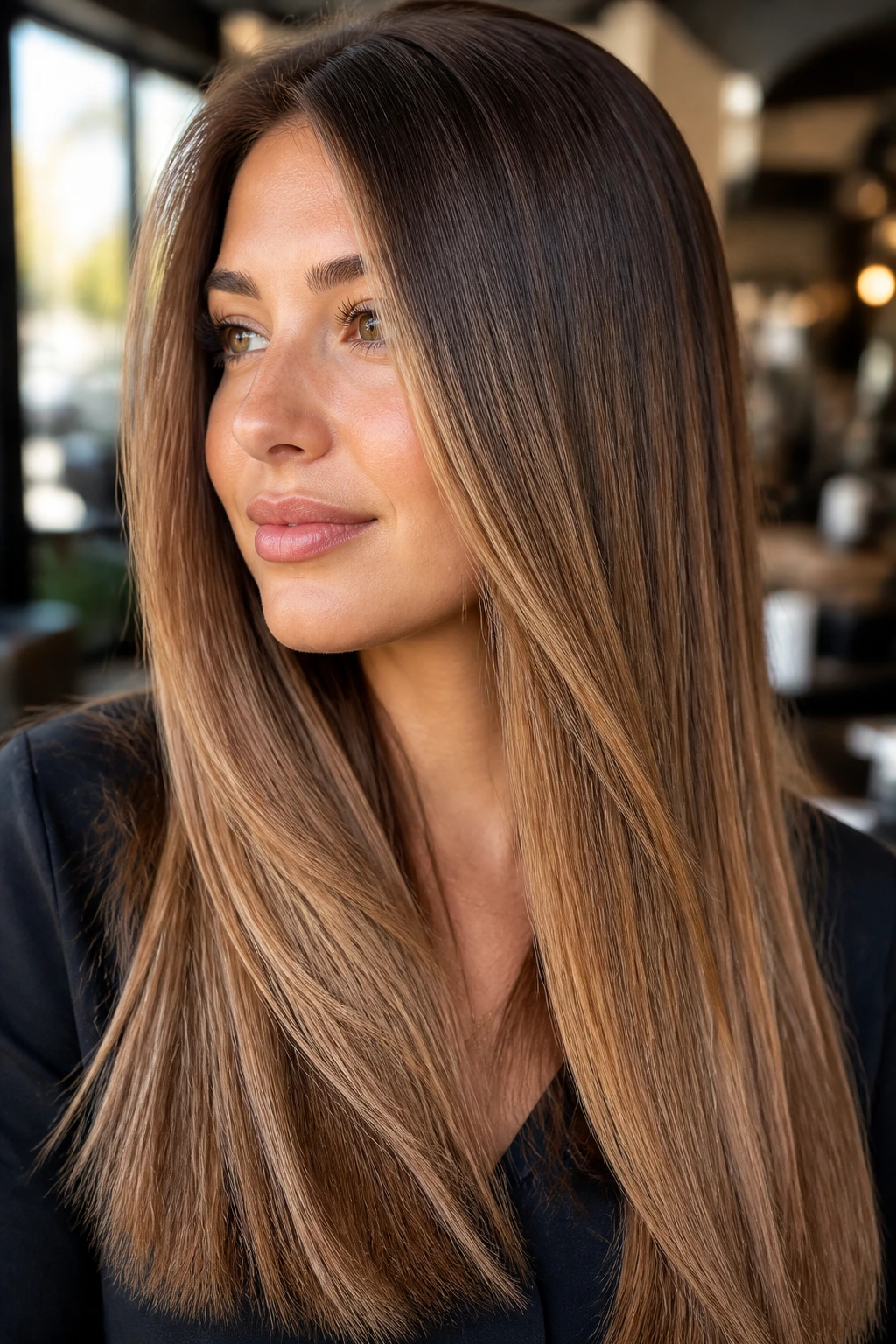
The biggest mistake is painting the highlights too wide. Wide ribbons can look pretty on wavy hair and loud on straight hair. The fix is thinner placement, especially around the face and crown.
Another one is starting the light pieces too high. On straight hair, brightness at the root can create a stripe that reads harsh the second the hair is combed flat. A soft root shadow or root smudge gives the color room to breathe.
Then there’s choosing a tone without checking your skin and base color. Icy blonde on a warm base can look chalky. Copper on a cool complexion can feel noisy. The fix is to stay inside a tonal family that makes sense with your natural pigment.
The last common error is skipping maintenance because the grow-out looks soft at first. Straight hair hides less than curls do. Once toner fades, brass or mud shows quickly, so glosses, masks, and careful washing are not optional if you want the look to stay clean.
Ways to Shift These Looks Without Starting Over
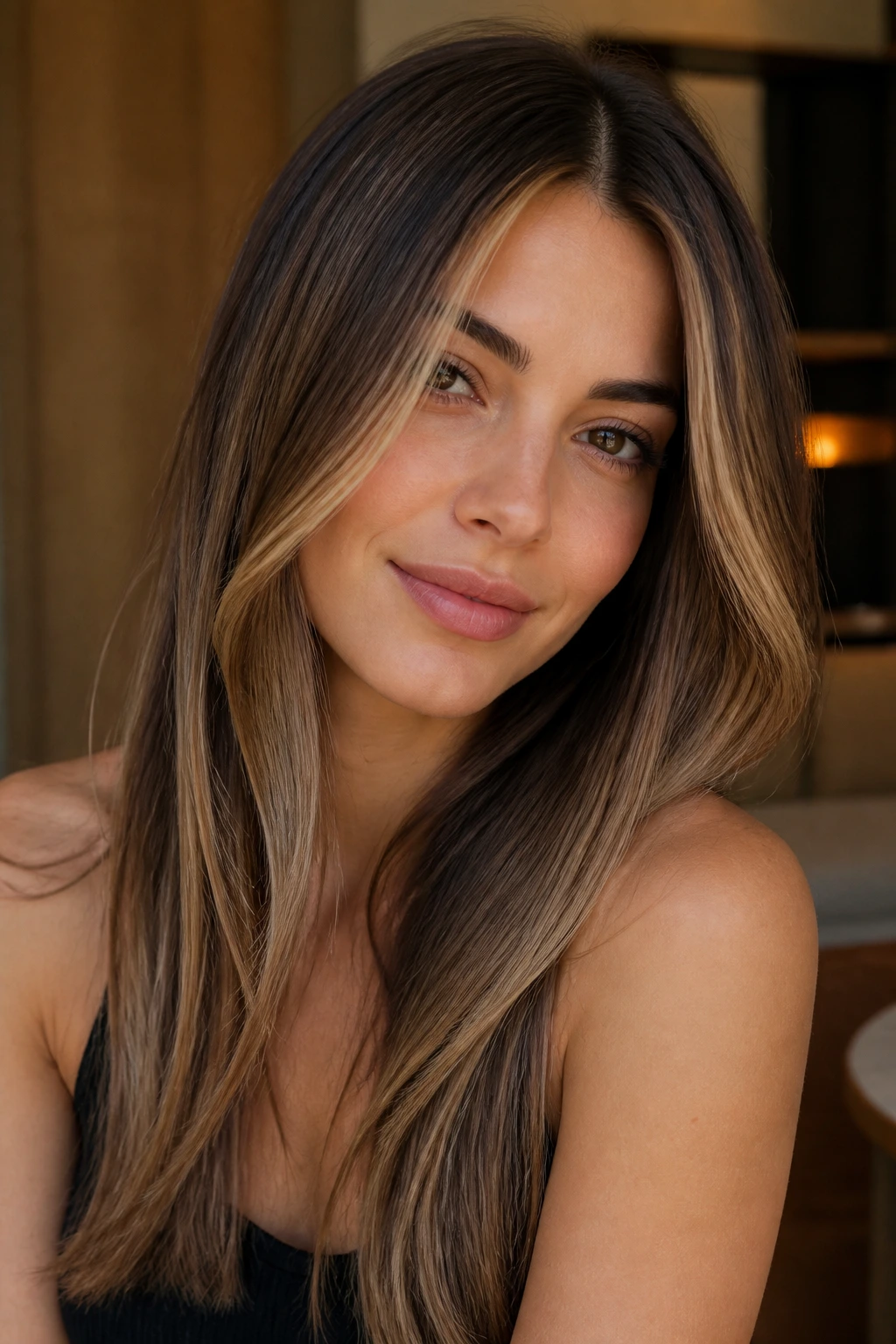
Low-Maintenance Brunette Edit: Keep the root deeper and let the lightness live only from the cheekbone down. This works especially well with smoky caramel, mocha smoke, and chestnut veil shades.
Brighter Summer Blonde Edit: Push the face frame lighter and lift the mids one step higher, but keep the ends healthy. Honey beige, champagne, and baby blonde all handle this move well.
Warm-Toned Edit: Add honey, bronze, copper, or peach underlayers to make the color feel sunnier. This is a nice way to keep straight hair from looking too cool or flat under strong light.
Cool-Toned Edit: Lean into mushroom, ash brown, pearl beige, or glacier tones and keep the gloss clean. If your hair pulls orange, this is the lane that keeps it orderly.
Blunt-Cut Edit: Concentrate the brightness lower, then use a very soft money piece at the front. It keeps the haircut looking sharp instead of busy.
Fine-Hair Edit: Use micro-ribbons and a slightly deeper root so the hair doesn’t look wispy. Fine hair can handle dimension, but it hates chunky color blocks.
Make the Color Last Between Salon Visits
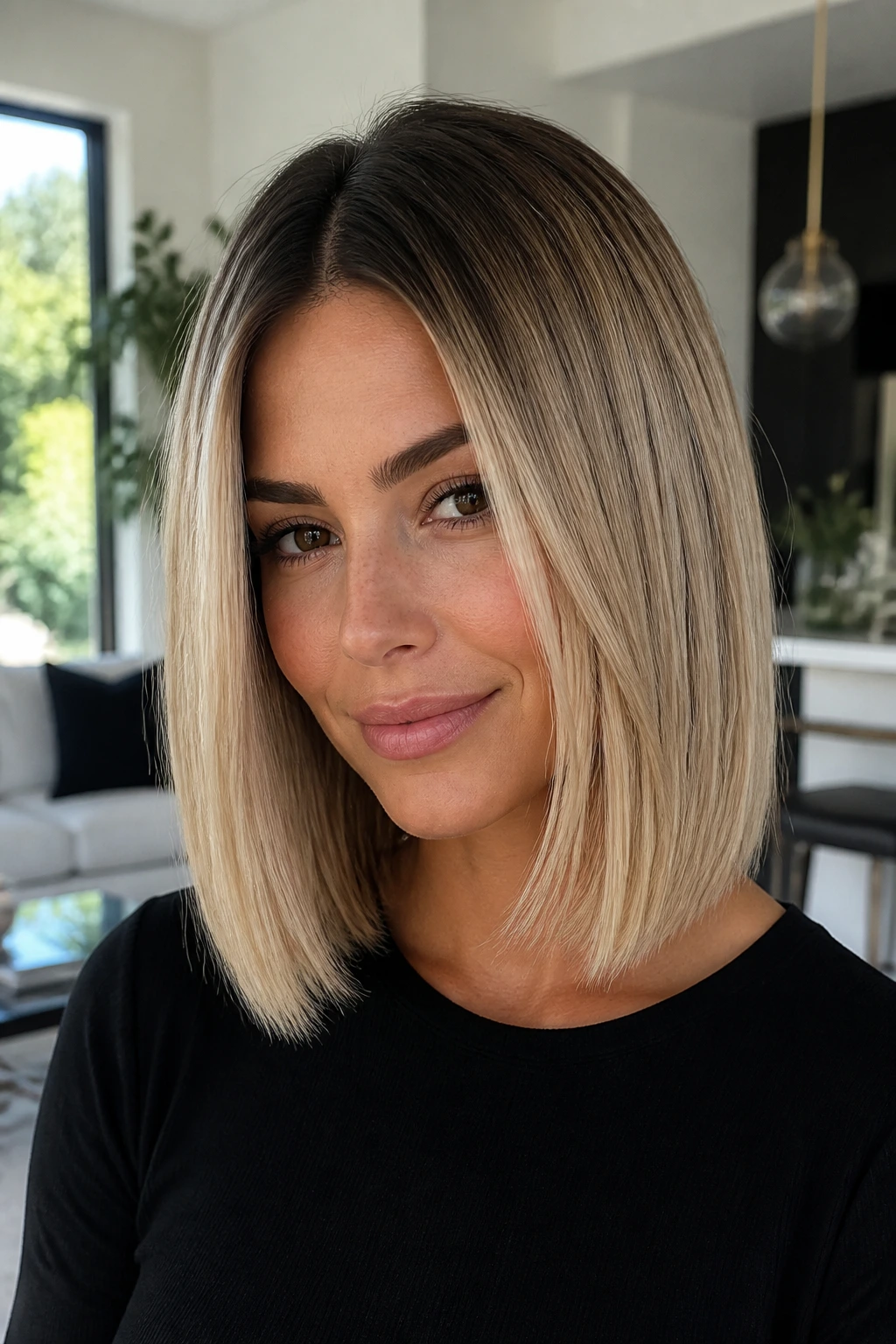
Balayage on straight hair usually keeps its shape better than a full-head highlight, but the tone still needs care. Most shades look best washed two or three times a week with cool or lukewarm water. Hot water opens the cuticle more than people expect, and on lightened ends that means faster fading and rougher texture.
A weekly mask helps, but it should be light enough that it doesn’t coat the hair into a dull sheet. If your look is blonde, pearl, or glacier, use purple shampoo every one to two weeks rather than every wash. Brunettes with brassiness can use blue shampoo less often, usually when the mids start to look orange rather than rich brown.
Glosses are the unsung hero here. A salon gloss every 6 to 8 weeks keeps beige from going muddy and copper from going patchy. If your hair is darker and the balayage is subtle, you can usually stretch that longer. For swimming, the old rule still works: wet the hair before the pool, use leave-in protection, and rinse as soon as you can afterward.
Questions People Ask Before They Book
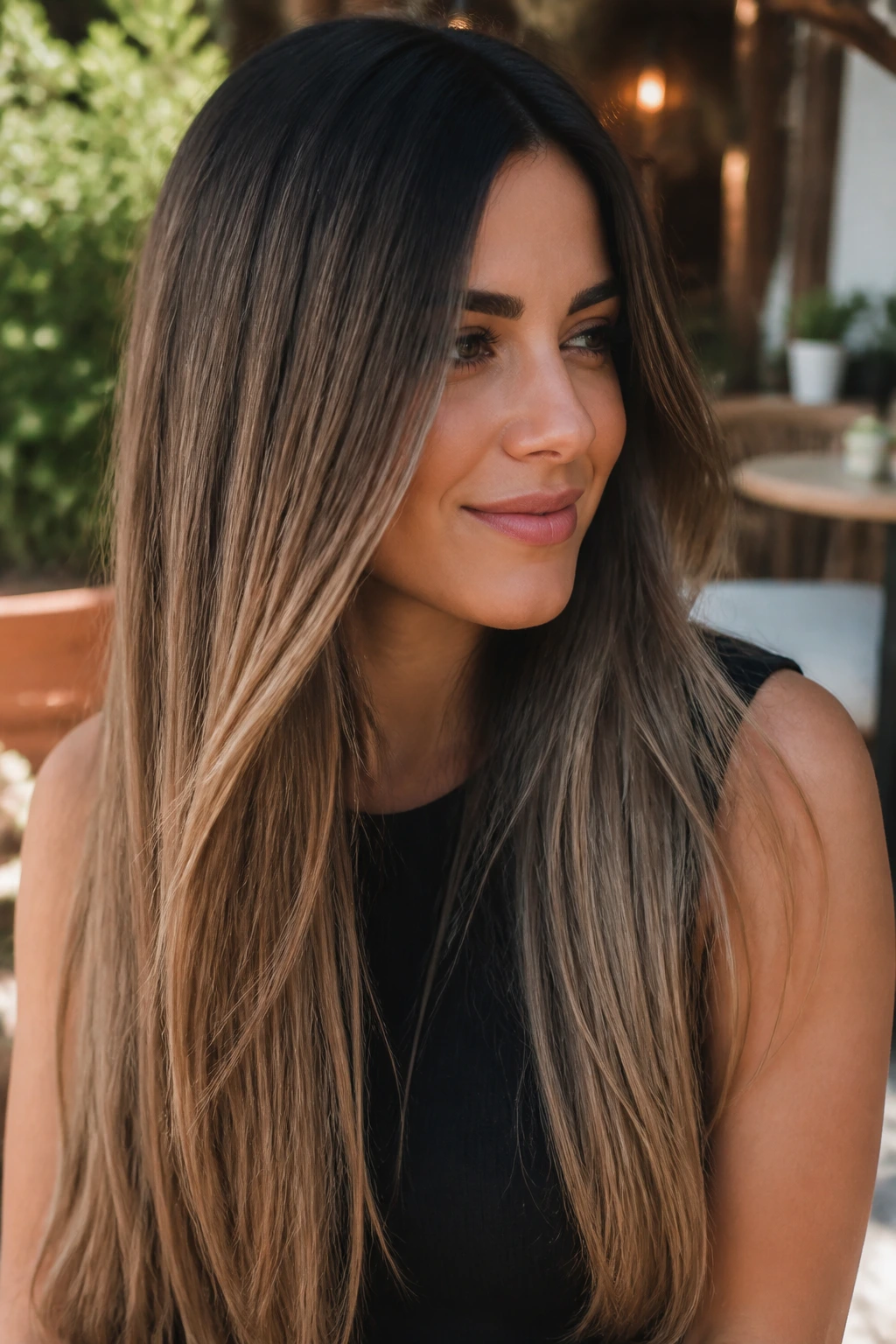
Which balayage tones look best on very straight hair?
Honey beige, champagne, mushroom brown, smoky caramel, and bronzed brown are especially forgiving because they show dimension without relying on texture. Very icy blondes can work too, but they need more maintenance to stay clean on a flat surface.
Does balayage need more upkeep on straight hair than on wavy hair?
The color itself doesn’t grow out faster, but straight hair shows the grow-out line sooner. A root shadow and a thoughtful placement plan help a lot, and a gloss schedule keeps the tone from looking tired.
Can dark brown hair get balayage without looking chunky?
Yes, but the lightness should be built in thin, feathered ribbons. Micro-weaving and hand-painted pieces at the mids and ends usually look cleaner than broad highlights on dark straight hair.
How do I keep blonde balayage from looking yellow?
Use a toner or gloss in the right family, not just purple shampoo. Purple shampoo helps, but it can’t fix over-warm lightening by itself, especially if the hair is porous.
What if my straight hair looks striped after balayage?
The highlight sections were probably too wide or too close together in the wrong spots. A colorist can soften that with a root gloss, a toner refresh, or by adding finer pieces between the existing ones.
Can I get balayage if I wear my hair in a blunt bob?
Absolutely. In fact, blunt bobs often look better with balayage when the lightness is concentrated low and around the face. The contrast keeps the cut from reading heavy.
How often should I use heat on balayaged straight hair?
As little as you can manage, but if you flat iron often, use a protectant every single time. High heat on lightened ends is one of the fastest ways to lose shine and make the color look dry.
Is balayage with no blonde at all worth it?
Yes. Smoky brown, chestnut veil, sun-tea brown, and mocha smoke shadow prove the point. You can get dimension, movement, and grow-out softness without crossing into blonde territory.
The Shade That Actually Moves
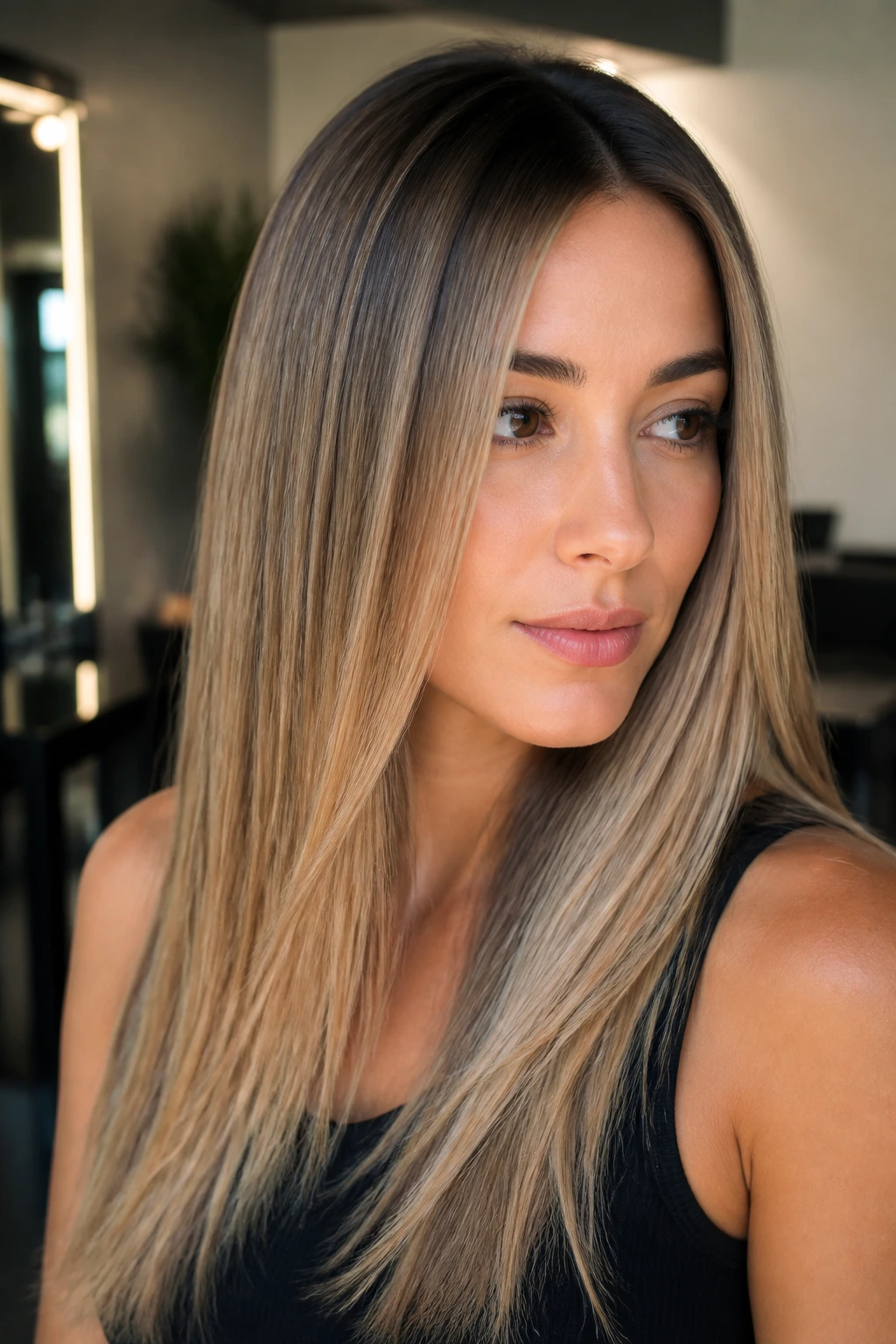
Straight hair doesn’t need curls to look dimensional. It needs smart placement, a tone that fits the base, and enough root depth to keep the whole thing from snapping into one hard line. That’s the thread running through every look here.
The best balayage on straight hair in summer isn’t necessarily the brightest. It’s the one that still looks clean after a long day, a hot sidewalk, a flat-iron pass, and a few washes that were a little too quick. Pick the tone family first, then let the placement do the rest.
