



Red hair on short hair does not whisper. It lands. A copper pixie lights up cheekbones before your makeup has even had a chance to do its job, and a cherry bob can make a plain T-shirt look deliberately chosen instead of thrown on. That’s the part people sometimes miss: with short cuts, the color sits closer to the face, so every shift in tone — copper, auburn, ruby, burgundy, ginger — changes the whole mood of the haircut.
The catch is that short red hair is unforgiving in a way long hair isn’t. A muddy auburn can flatten a textured crop. A too-bright orange-red can look brassy in one wash and neon in the next. And because there’s less length to hide behind, shape matters just as much as shade. A bob with a blunt perimeter reads one way in deep cherry and another way entirely in strawberry copper. Same cut. Different personality.
That’s exactly why these 24 red hair looks for women with short hair are worth slowing down for. The good ones don’t just look “red.” They use placement, depth, finish, and texture to make the cut do more work. Some are sharp. Some are soft. A few are a little dangerous in the best way. All of them can be adapted, toned, or grown out without turning into a maintenance disaster if you pick the right version from the start.
Why These Short Red Looks Hit Different
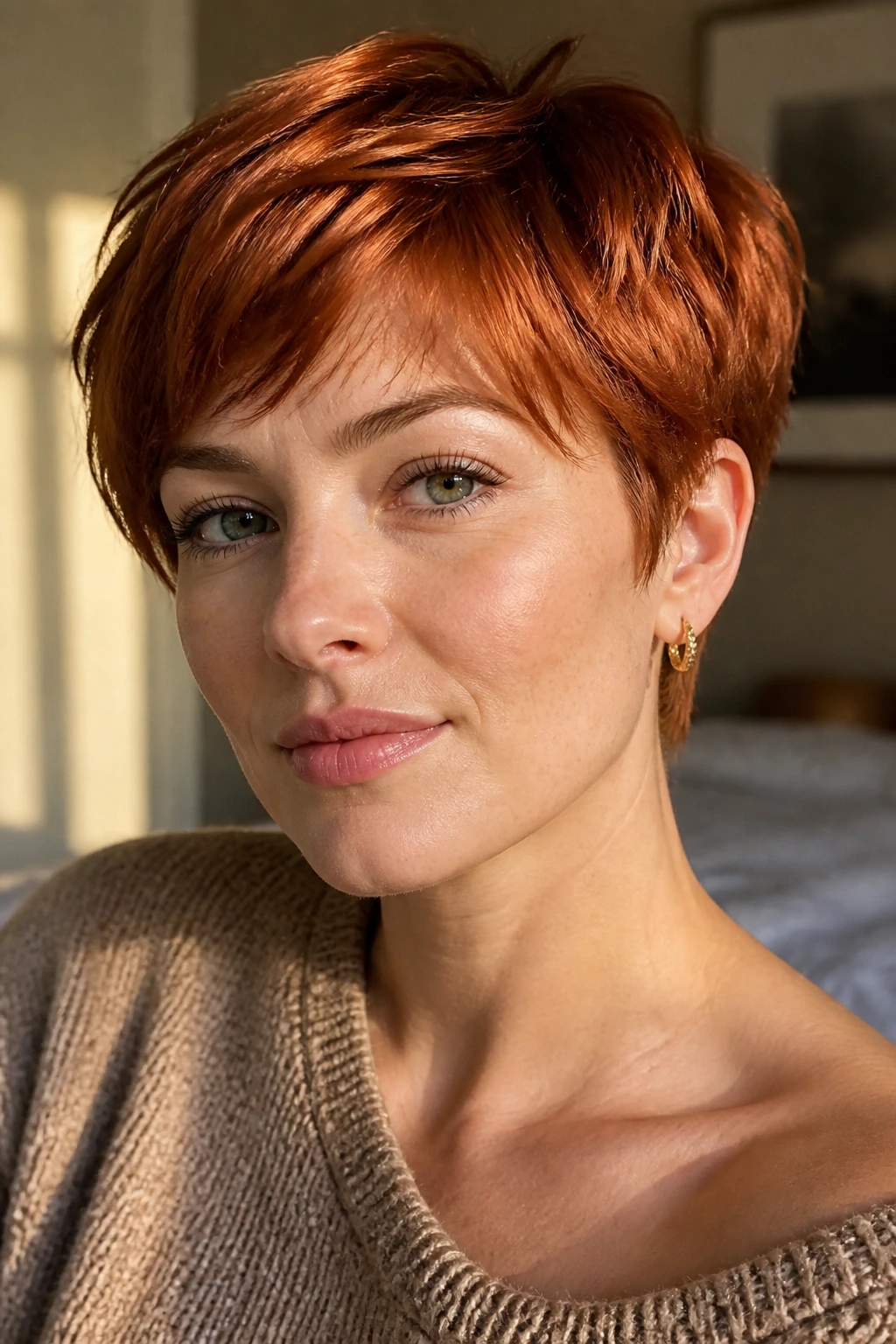
Face-framing impact: Short red hair pushes color right up against the eyes, lips, and jawline, which is why even a small copper glaze can change the whole read of a face.
Less room for weak color: Long hair can sometimes carry a flat tone and still look fine. A pixie or bob exposes patchiness, so these looks reward crisp placement and clean toning.
Texture shows faster: Waves, bends, and choppy ends catch red pigment in a way straight lengths often don’t. A layered crop can look twice as lively with the right copper or auburn formula.
Lower-commitment options exist: Not every red needs a full permanent color service. Glosses, balayage ribbons, money pieces, and demi-permanent shades all work well on short cuts.
Short cuts make bold color feel polished: A strong red on a compact shape tends to read intentional instead of overwhelming. That’s the sweet spot.
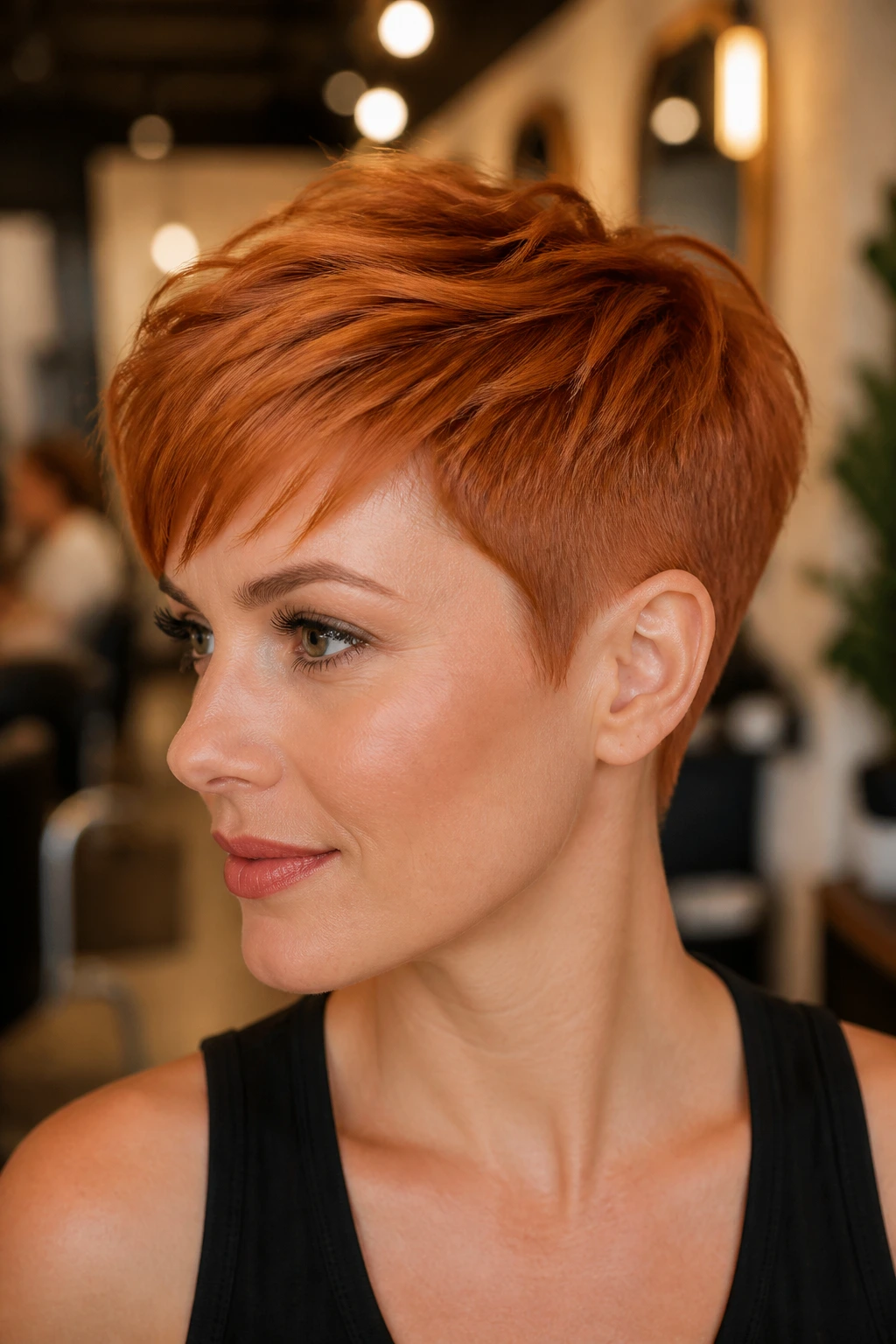
1. Copper Pixie Crop
A copper pixie crop is the kind of look that makes a short haircut feel expensive without trying too hard. The color sits in that warm zone between orange and gold, so it throws light off the top layers and keeps the sides from disappearing into the scalp. On a fine head of hair, that matters. Copper gives the illusion of thickness because every little strand reflects a bit differently.
What Makes It Work
The cleanest version keeps the sides snug and the top slightly longer, usually with enough length to sweep forward or sideways. That little bit of extra height on top gives the copper somewhere to live. If the whole cut is clipped too tight, the color can lose its shape and start looking like a helmet instead of a haircut.
A gloss between level 7 and 8 with copper and gold reflects works especially well here. It fades gracefully, too, which is useful because pixies need shape-ups before color loss becomes the main event. I like this look best with a paste or matte cream worked through the crown in tiny amounts — not a glob, just enough to separate the pieces.
Best for: fine to medium hair, warm or neutral undertones, and anyone who wants the haircut to look styled even on low-effort days.
Keep an eye on: the ends. Pixies get dry fast, and dry copper can go dull in a week if you overwash.
2. Cherry Red Micro Bob
Cherry red on a micro bob has a sharper edge than copper, and that is the point. The shade is deeper, cooler, and a little more dramatic, so it makes a blunt jaw-length cut look crisp rather than cute. There’s a glossy, lacquered feel to it when it’s done well — not shiny in a plastic way, but sleek enough that the bob reads as a single shape.
Why It Reads So Strongly
Do you want the color to lead or the cut to lead? With a cherry red micro bob, both show up together. The blunt perimeter gives the red a clean boundary, while the color keeps the shape from feeling too severe. That balance is why this version works so well on straight or softly waved hair.
Ask for a red with a blue or violet base if you want that deep cherry note instead of a tomato-red finish. On very light hair, it can go bright fast. On brunette hair, it may need pre-lightening on the mid-lengths if you want real saturation. Either way, a center part makes the color look deliberate, while a soft off-center part takes a little of the edge off.
This is one of those cuts that likes a flat iron bend at the ends — not a curl, just a tiny turn under. It keeps the outline neat without making the style stiff.
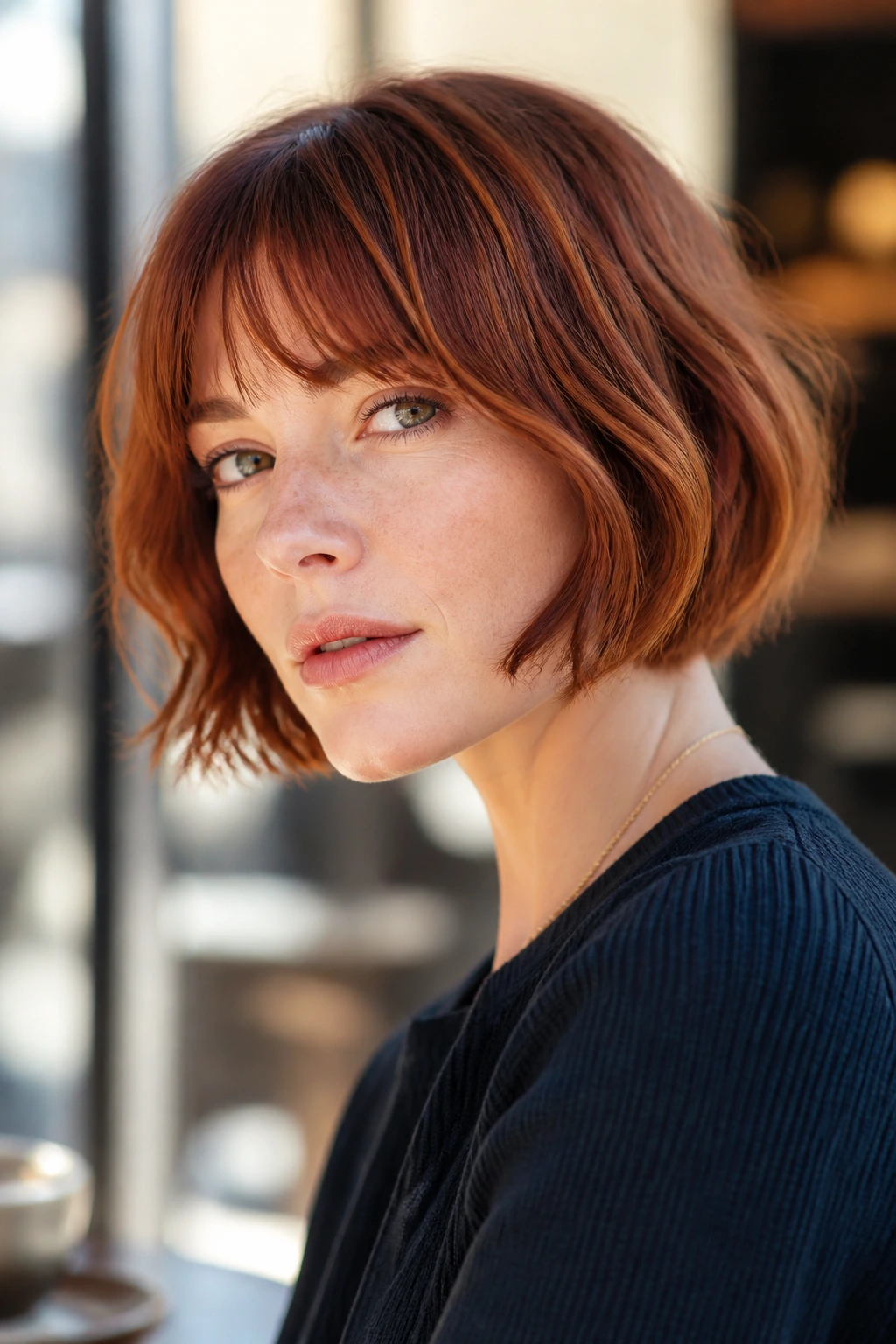
3. Soft Auburn French Bob
The French bob loves auburn. It just does. That chin-skimming line, a little bend through the ends, and a soft fringe or cheekbone-grazing piece in front all seem to wake up when the color sits in that brown-red range. It’s not loud. It doesn’t need to be. The point is polish, not volume.
The Texture Story
Auburn is a useful shade if you want red hair on short hair without the maintenance of a brighter copper or scarlet. It can live on a brunette base, deepen a natural warm tone, or add a refined red cast over a bob that already has shape. The cut stays visible, which is half the battle with darker reds.
A French bob with a touch of wave at the ends looks especially good because auburn catches the light in small shifts rather than one big flash. That makes the hair look richer. Not brighter — richer. There’s a difference, and on short hair you can tell it immediately.
For styling, a round brush or a quick pass with a flat iron gives the ends that little tucked-under movement. Keep the fringe soft. Too much stiffness breaks the whole mood.
4. Ginger Shag with Choppy Ends
A ginger shag is for someone who likes movement first and neatness second. The layers do the heavy lifting here. They push the color around, break up the shape, and give the hair enough lift that the red doesn’t just sit on top like paint.
What to Watch For
This cut works because shag layers create little pockets of shadow and shine. Ginger, with its orange-gold warmth, looks especially good when it’s broken up by texture. A one-length cut can make ginger feel flat. A shag makes it flicker.
If your hair naturally bends, this is one of the easiest short red looks to wear. Air-dry cream, a bit of scrunching, and maybe a diffuser if you want more body. That’s usually enough. If your hair is straight, ask for choppy ends and a few face-framing layers so the cut doesn’t collapse.
The maintenance is moderate rather than fussy. A ginger shag can tolerate some root softness, which means grow-out feels intentional. That is a relief. It also means you can let the haircut live a little between salon visits.
5. Ruby Pixie with a Swept Fringe
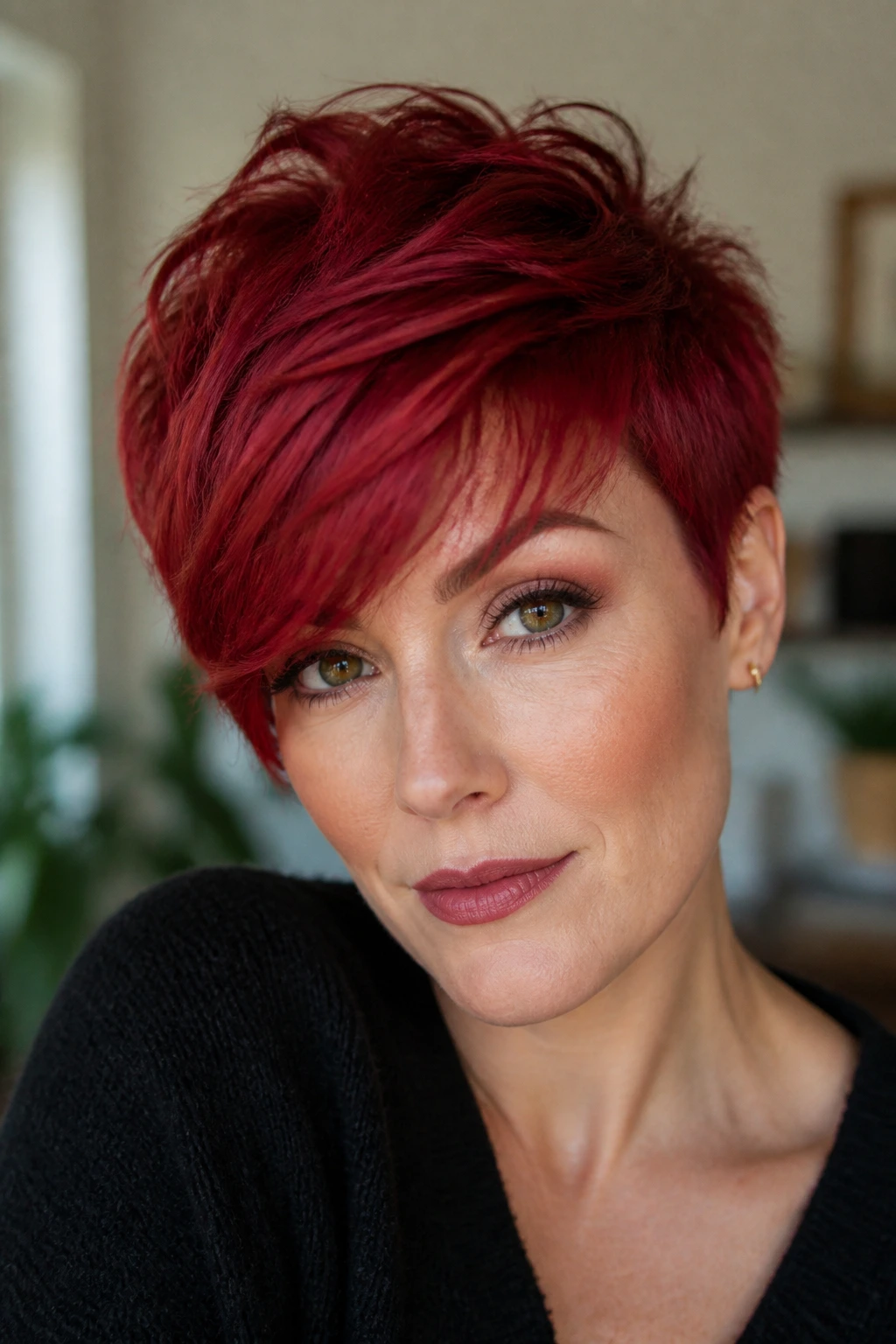
A ruby pixie looks richer than a bright candy red and more vivid than auburn. It sits in that jewel-toned lane that makes short hair feel precise. Add a swept fringe, and the whole cut softens just enough to avoid looking severe. The fringe gives the color a front row seat.
Best When You Want Drama Without Chaos
This is one of my favorite short red looks for women who want impact but do not want their hair announcing itself from across the room. Ruby has depth. It has shine. It behaves better in low light than a bright scarlet and still looks bold in daylight.
The swept fringe matters because it breaks up the shape of the face and gives the red a moving focal point. Without it, a pixie this saturated can feel boxy. With it, the cut gets rhythm. If your hair is thick, ask for internal texture so the fringe doesn’t sit like a heavy shelf. If it’s fine, keep the layers light and use a root-lifting spray at the crown.
Quick styling note
A small round brush or your fingers and a blow-dryer nozzle are enough. Keep the fringe directional, not perfectly smooth. A little bend looks better than a rigid swoop.
6. Cinnamon Balayage Bob
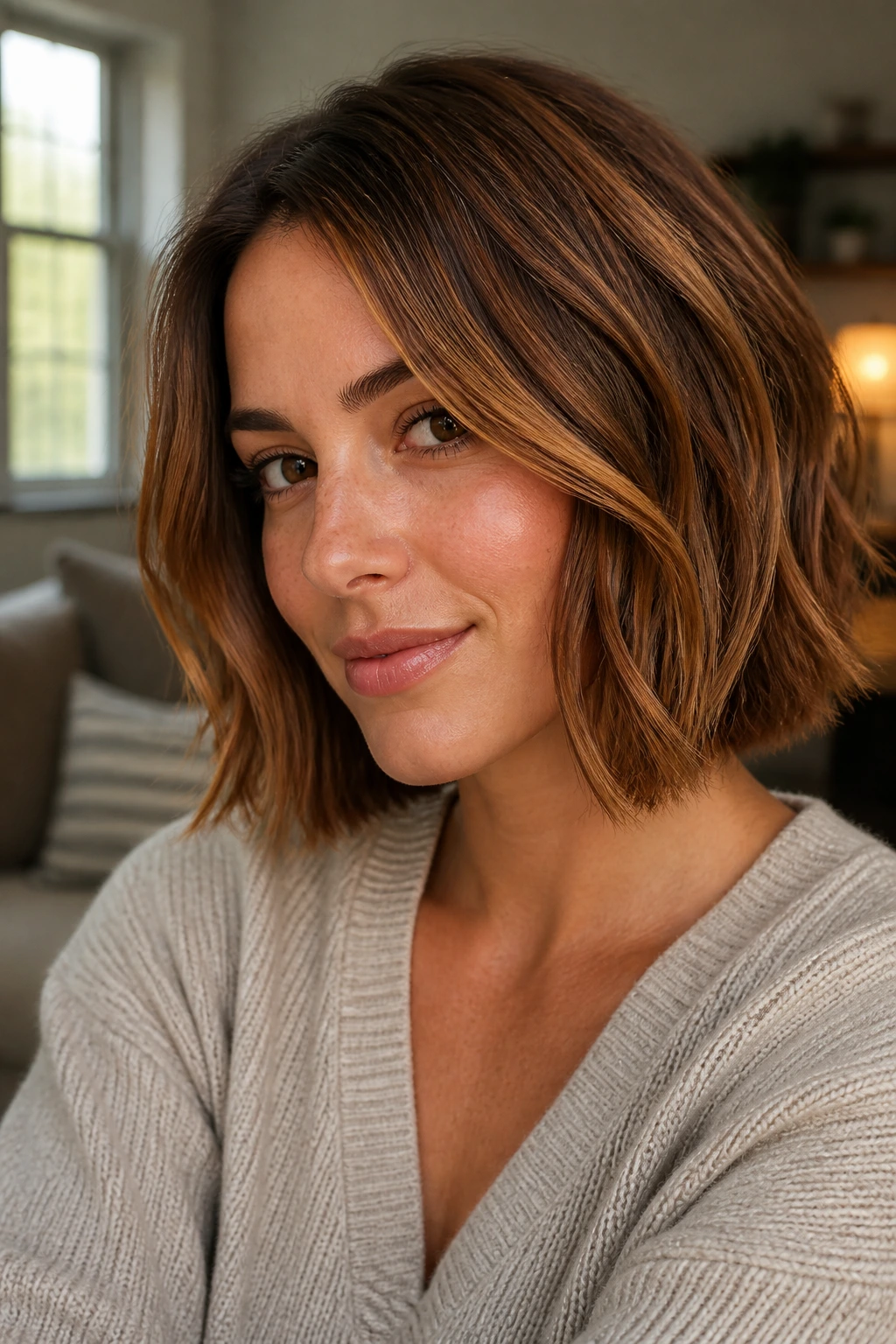
Cinnamon balayage on a bob is one of those looks that buys you dimension without screaming for attention. The base can stay deeper, usually in brunette or dark auburn territory, while cinnamon ribbons get painted through the mid-lengths and ends. On short hair, that placement matters more than people think. Too much lightness at the root and the color loses its depth. Too little at the ends and the whole thing reads one-note.
Why It Stays So Wearable
Balayage works well on a bob because the cut already has a perimeter. The painted ribbons soften that edge without making the style busy. Cinnamon is warm but not cartoon-bright, so it behaves nicely when the hair moves. You see flashes of copper, a bit of gold, then the darker base comes back in. That back-and-forth keeps the haircut from looking heavy.
This is a solid choice if you want red hair that grows out with less drama than full coverage color. The root line is softer, and the dimension hides minor fade. For styling, a loose wave with a 1-inch iron brings the ribbons to life. Straightened flat, it looks sleeker and a little more modern.
Tiny detail that helps: ask for the brightest pieces around the front half of the face. That placement does more than extra saturation through the back ever will.
7. Burnt Orange Undercut
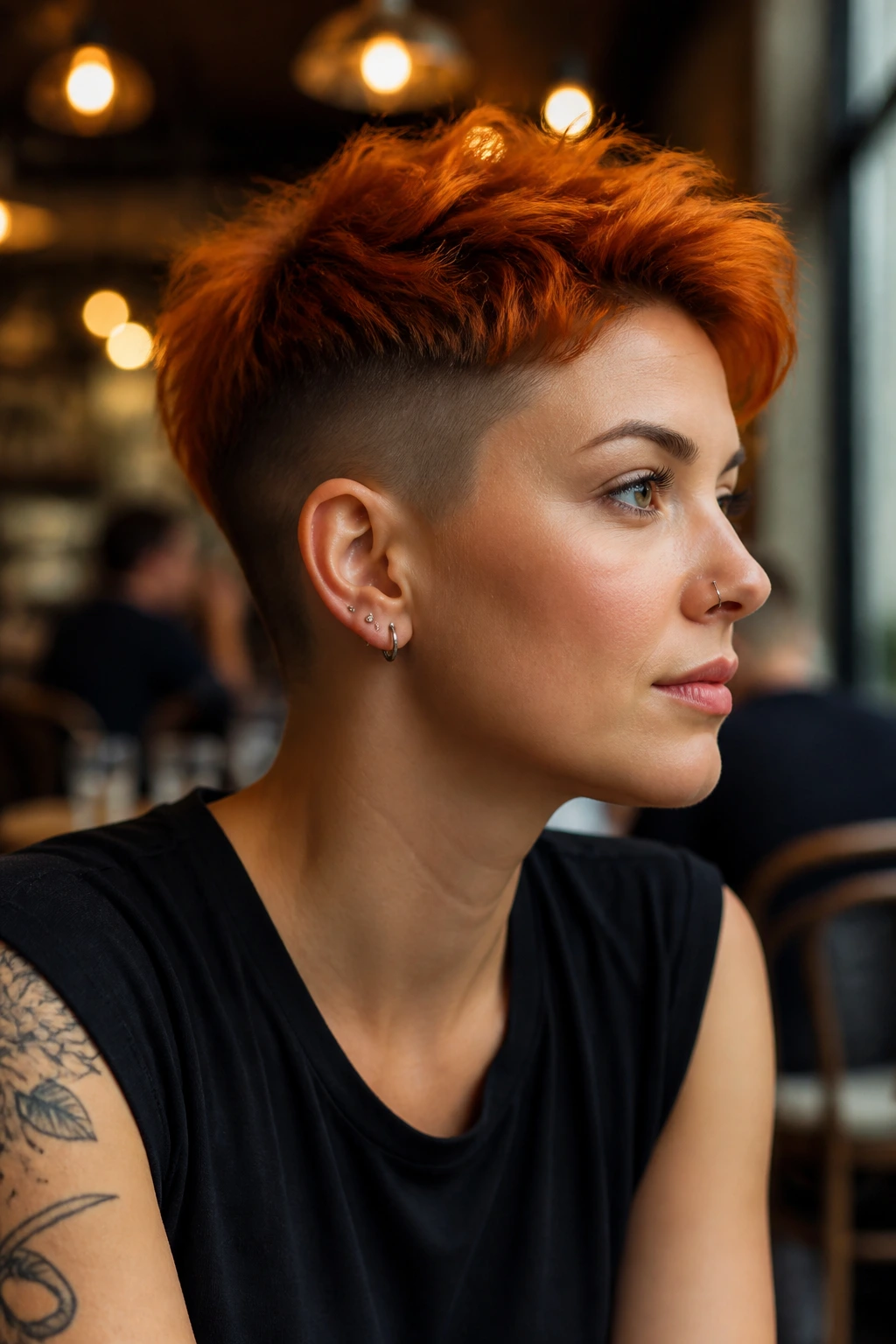
Burnt orange on an undercut is not shy, and that’s exactly why it works. The shaved or closely clipped sides create a hard edge, while the longer top carries the warm orange-red color in a way that feels deliberate rather than flashy. The contrast is the whole story here. Without the undercut, burnt orange can go loud. With it, the shape feels controlled.
A Look With Actual Attitude
Short hair like this needs a color that can stand up to the cut. Burnt orange does that because it has enough red in it to keep from looking neon, and enough orange to stay energetic. If you want the look to feel less costume-like, keep the top slightly deeper at the root and brighter through the ends. That creates a natural shadow and makes the shape look more expensive.
I like this best with matte styling paste on top, not glossy gel. Gloss can make the cut feel flat, while matte separation shows off the texture of the top section. If you wear glasses, this cut is even better. The frames and the undercut play off each other in a way that feels clean, not crowded.
8. Strawberry Copper Waves

Strawberry copper is softer than true copper and a little less intense than strawberry blonde. On short waves, it gives the hair a warm shimmer that feels airy rather than heavy. The shade has enough red to register, but it still leaves room for the texture to be the headline.
Why It Flatters Waves So Well
Waves break up light, which makes this shade look richer than it does on pin-straight hair. Every bend catches a slightly different note of the color. One piece reads peach. Another reads copper. Then you get that faint red glint at the crown, and the whole style looks lived-in instead of overworked.
This look is a good bridge for someone who wants to move toward red hair without jumping straight into a saturated ruby or cherry. It also grows out gently because the color sits in a lighter register. That’s useful if you prefer a bob that can go five or six weeks without looking neglected.
Styling cue
Use a wave spray or a soft mousse, then scrunch and air-dry or diffuse. The texture should stay touchable. If it feels crunchy, the shade loses its softness.
9. Merlot Tapered Crop
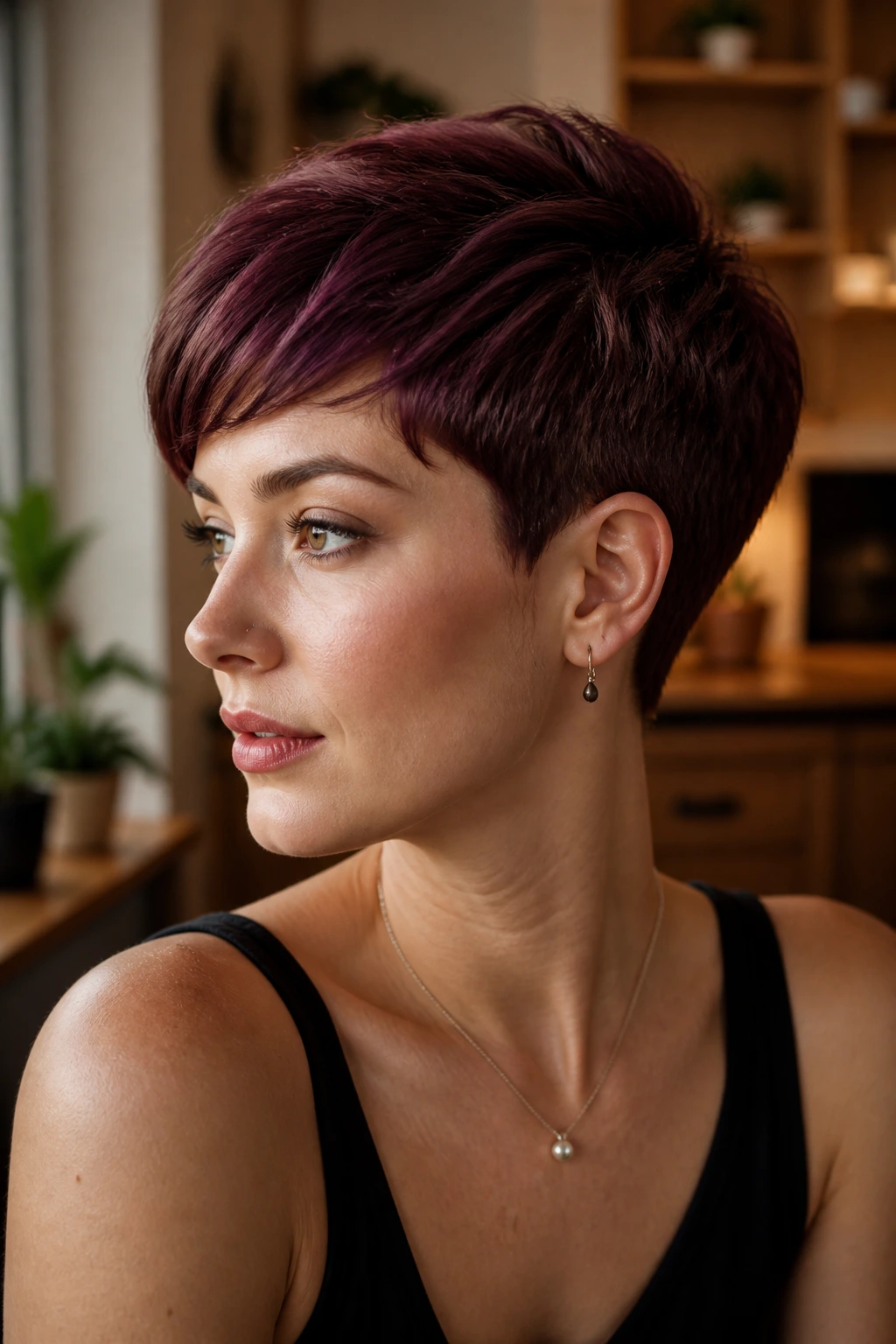
Merlot on a tapered crop has a moody, polished quality that a lot of brighter reds cannot touch. It is deep enough to look almost plum indoors, then it reveals a richer wine-red edge when light hits it. The taper at the nape keeps the cut clean, which matters because darker reds can look heavy if the outline is too blunt.
The Shape Does the Work
A tapered crop is useful when you want the color to feel elegant instead of loud. The neckline sits close, the top has a little lift, and the whole shape feels intentional from every angle. Merlot supports that because it brings depth without needing high contrast. It is especially good if you like sleek styling or tuck one side behind the ear.
A demi-permanent formula is often enough here if your base is already dark. If you’re covering some gray, a permanent merlot with a red-violet undertone gives the best result. Keep the shine high. Dark red looks flat when it dries out, and this shade deserves more gloss than that.
One sentence of honesty: if your hair is very fine and very dark, merlot can disappear in low light. Add a few brighter face-framing pieces if you want more visible dimension.
10. Face-Framing Scarlet Bob
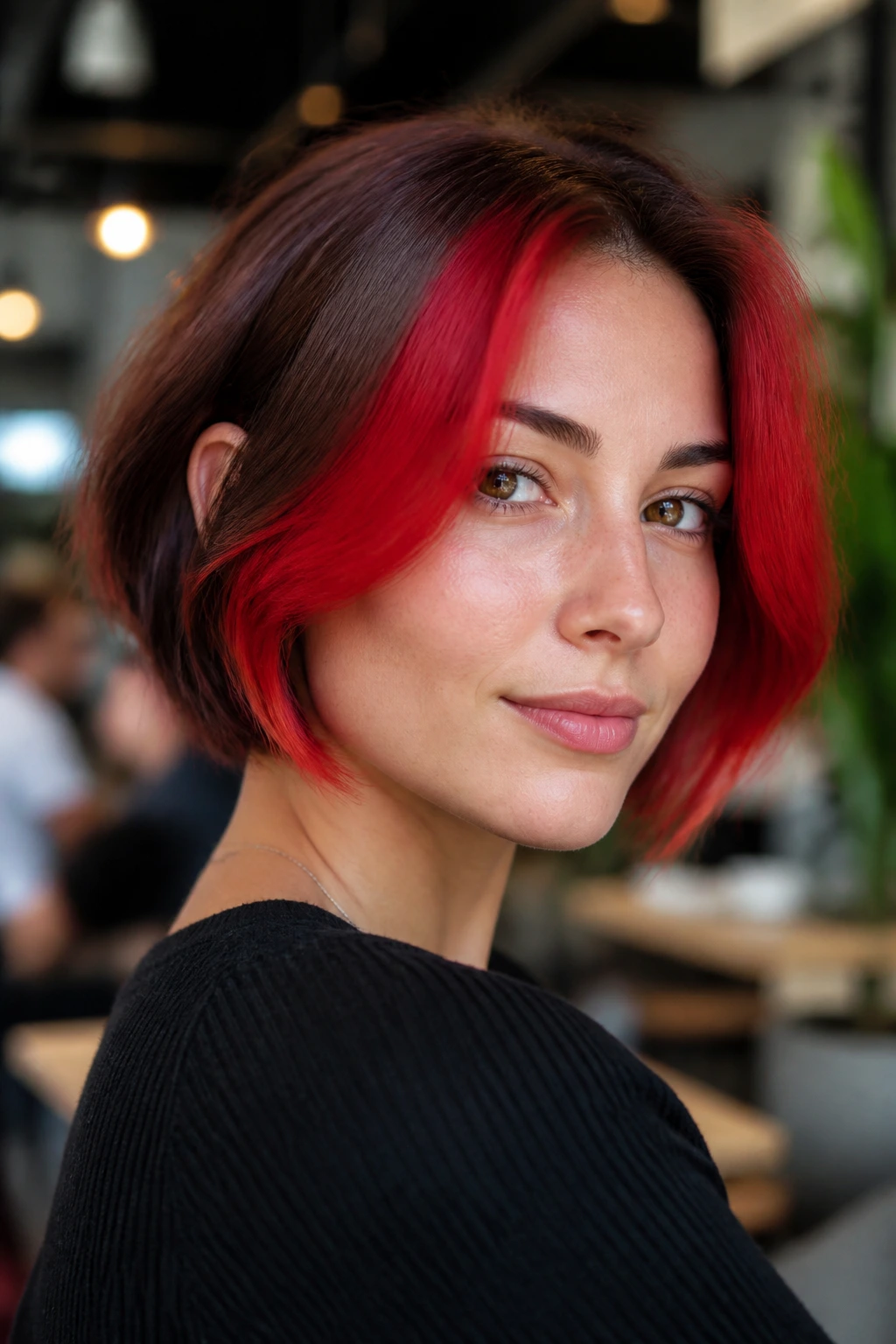
Scarlet around the face changes the entire bob. The rest of the hair can stay softer — auburn, brown-red, or even a neutral brunette — while the front sections carry that vivid red impact right where the eye lands first. It is a smart way to wear red without committing to an all-over bright shade.
How to Keep It From Looking Too Harsh
The trick is placement. The scarlet pieces should begin just off the hairline and melt back into a softer base, not stop in a hard stripe. If the contrast is too abrupt, the look can veer into costume territory. A good colorist will feather the transition with a balayage brush or a soft foil technique.
This style works especially well with a side part because the front brightness gets more shape. The bob itself can stay chin-length or just above the shoulders, but short enough that the scarlet frames the face instead of competing with it.
A flat iron bend at the ends helps keep the bob from feeling too boxy. If your wardrobe leans neutral — black, white, denim, tan — this look does a lot of the work for you.
H3: Who It Suits Best
It suits people who want a vivid red moment but need something more controlled than a full scarlet head. It also works if you want a grow-out path that does not require monthly panic.
11. Mahogany Curly Crop
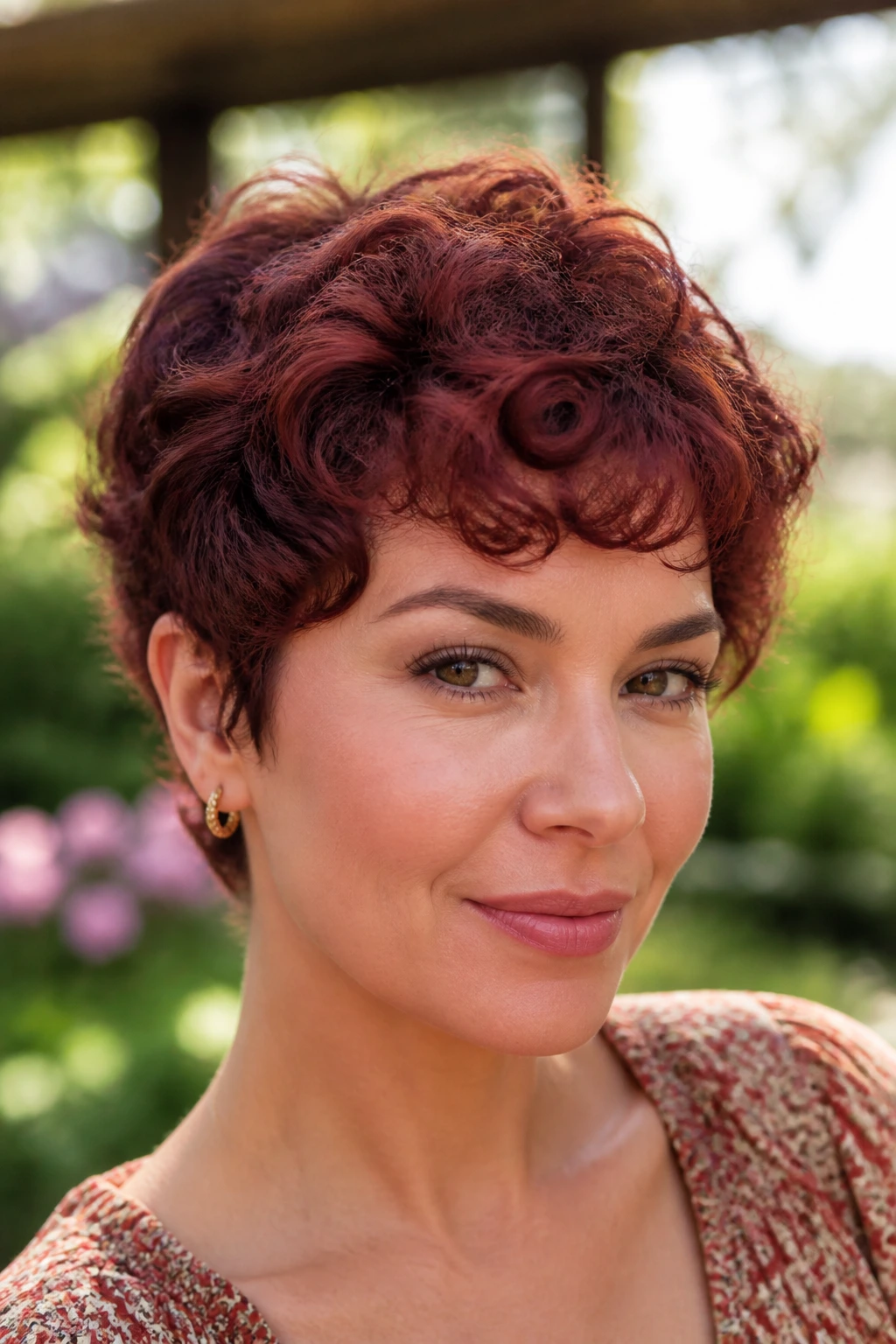
Mahogany on curls is one of the least fussy ways to wear red on short hair. The shade is deep, brown-leaning, and rich enough to sit inside the curl pattern instead of sitting on top of it. On a short crop, that depth lets the curls stay visible without making the cut look overly busy.
The Curl Factor
Curly hair tends to eat color differently from straight hair. Some parts look lighter, some parts hold pigment longer, and some ends turn dry if you over-process them. Mahogany helps because it doesn’t need maximum brightness to read as red. The color can move through the curls and still show up.
Keep the cut layered, but not so heavily that the shape frizzes into a halo. Short curly reds need structure. Too many short layers and the profile gets puffy. A defined curl cream and a light gel cast solve a lot of that, especially if you diffuse on low heat and stop when the curls are about 90 percent dry.
This is a good one if you want low drama and high polish. The color is dimensional, the cut is manageable, and the grow-out tends to look soft rather than blunt.
12. Paprika Layered Pixie
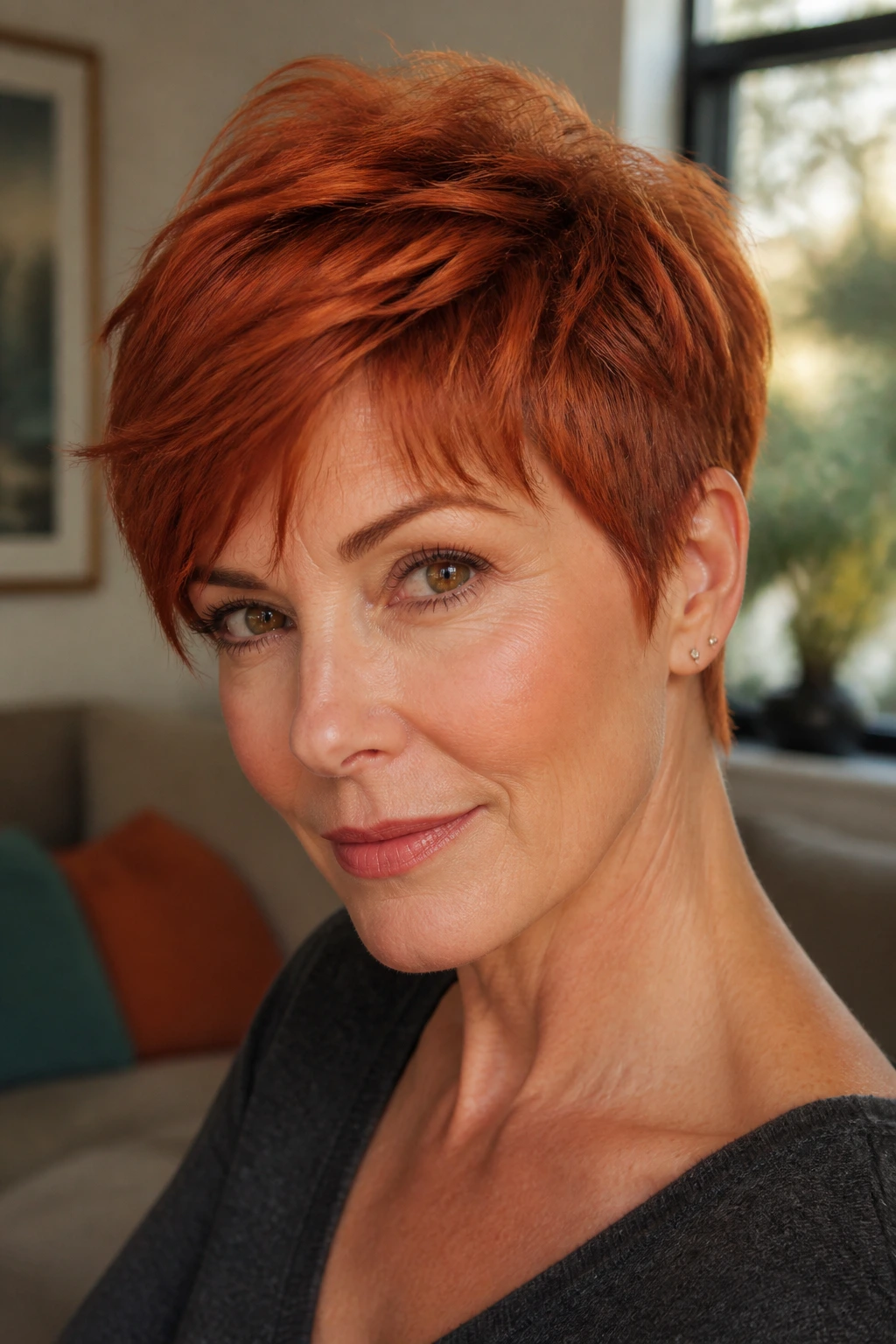
Paprika is the fiery cousin in the red family — brighter than auburn, warmer than cherry, and more playful than merlot. On a layered pixie, it brings the kind of lift that makes short hair look airy, especially around the crown and temple area. The layers keep the color from sitting flat, which matters because paprika needs movement to show its full personality.
Where It Shines
This cut is one of the better choices for women with naturally dense hair. The layering removes bulk, and the color keeps the shape from feeling too practical. If you want short red hair that reads energetic but not cartoon-bright, paprika is a sweet spot.
A gloss with a copper-red base can refresh this tone between full services. If your base is dark blonde or light brown, you may only need a gentle color deposit. If the hair is already lightened, watch the ends. Paprika can turn patchy fast on porous sections.
I like this look with a side-swept top and slightly shorter sides. It gives the color a little movement at the forehead, which is where paprika looks freshest.
13. Rose Gold Short Cut
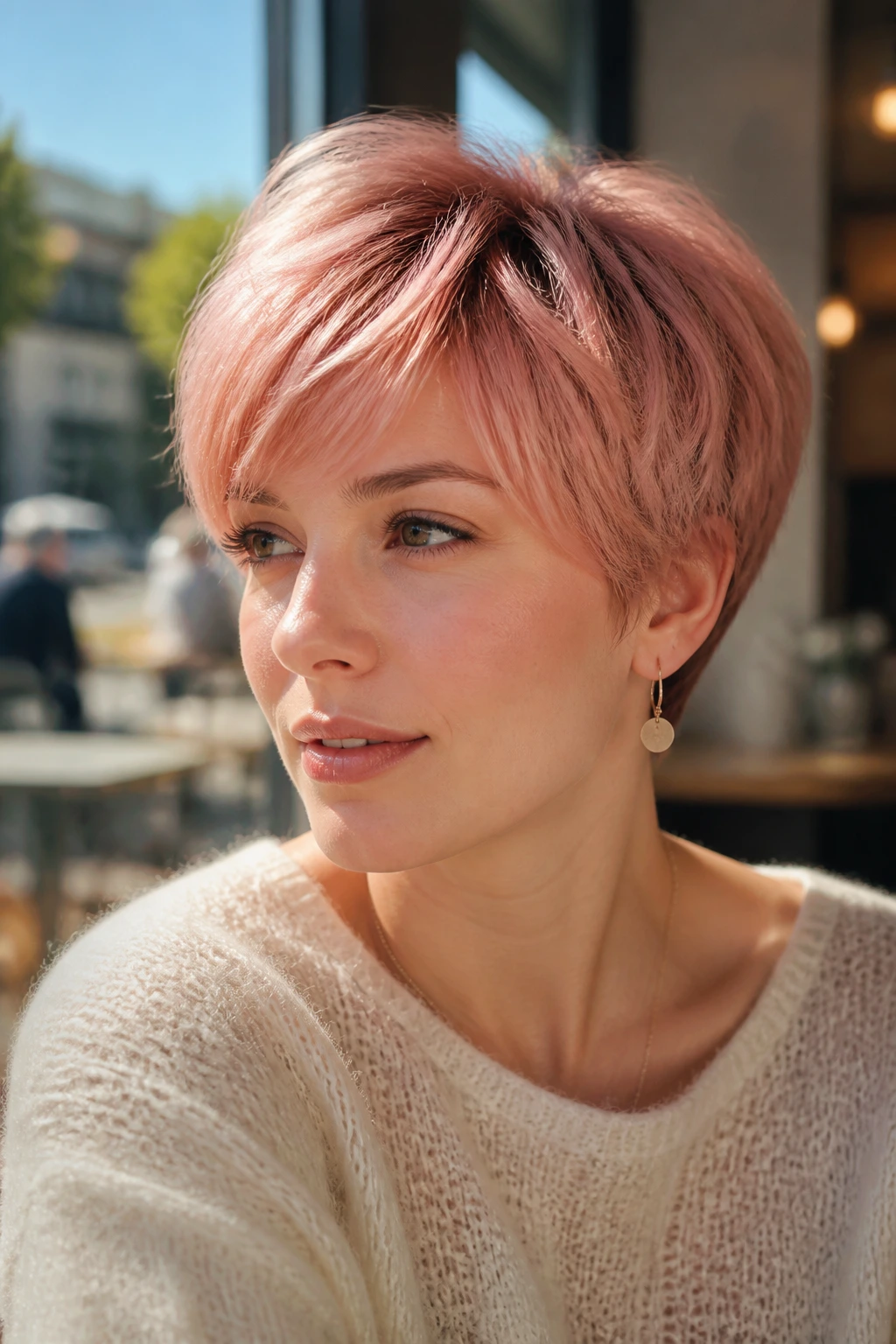
Rose gold on short hair is lighter, softer, and more forgiving than the deeper reds, which is why I keep recommending it to people who want to test the water. It has copper, peach, and a faint pink sheen in it, and that blend can make a short crop feel modern without becoming loud. The finish matters more than the shade here. Shine is everything.
A Gentle Way Into Red
Rose gold works well when you want red-adjacent hair, not a full red commitment. It tends to fade gracefully into warm blonde or soft copper, which is useful if you don’t want a hard root line. On a crop or bob, the softer tone keeps the shape light around the face.
This shade is especially nice on short hair with a bit of texture because the pink-copper reflects off the layers. Keep the styling soft: a loose bend, a side part, maybe a tucked-behind-the-ear moment on one side. Too much structure can make rose gold feel more metallic than flattering.
A color-depositing mask once a week can help preserve the blushy warmth. If your hair is highly porous, though, use it sparingly. Rose gold can go muddy if you pile on too much pigment too often.
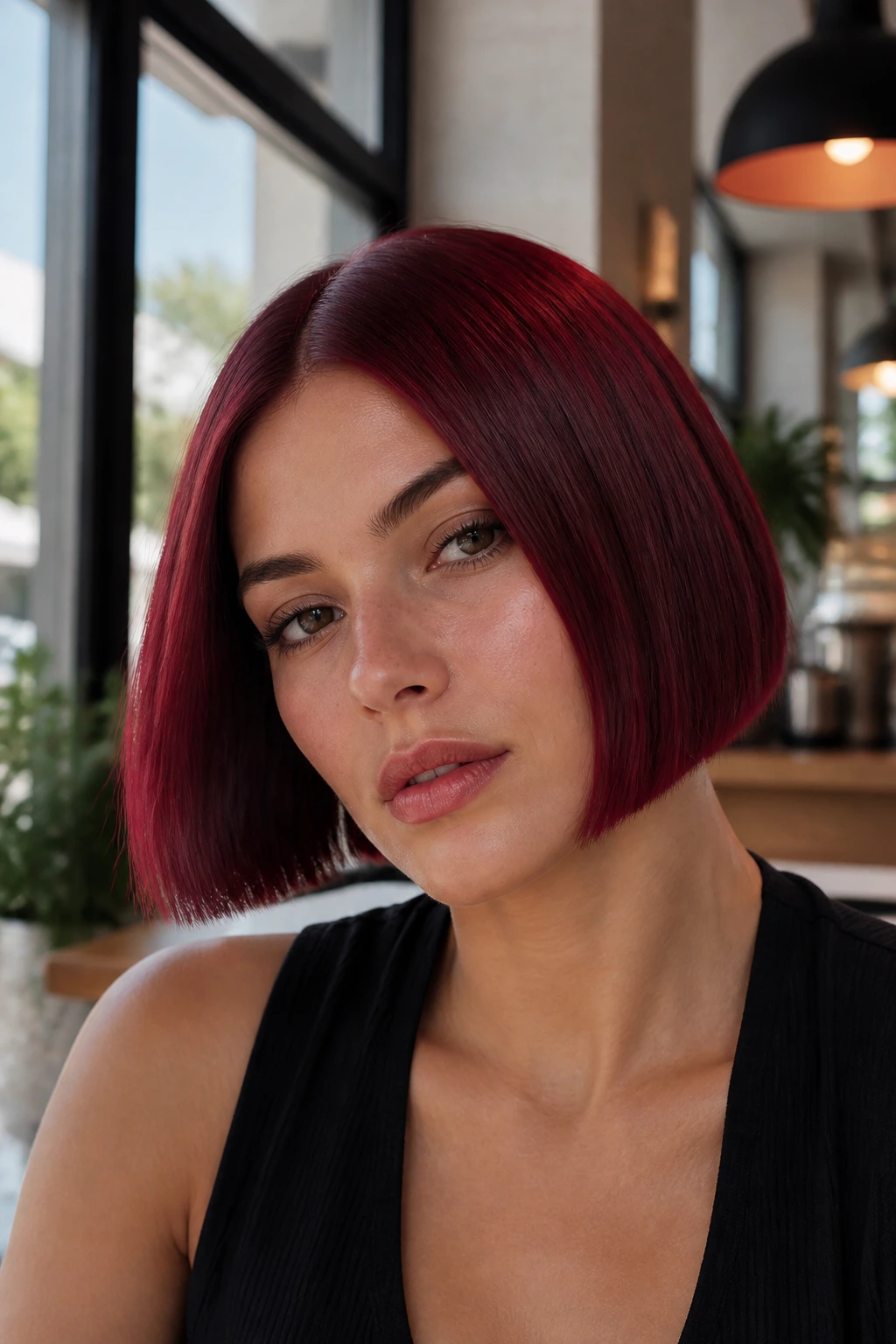
14. Burgundy Micro Bob
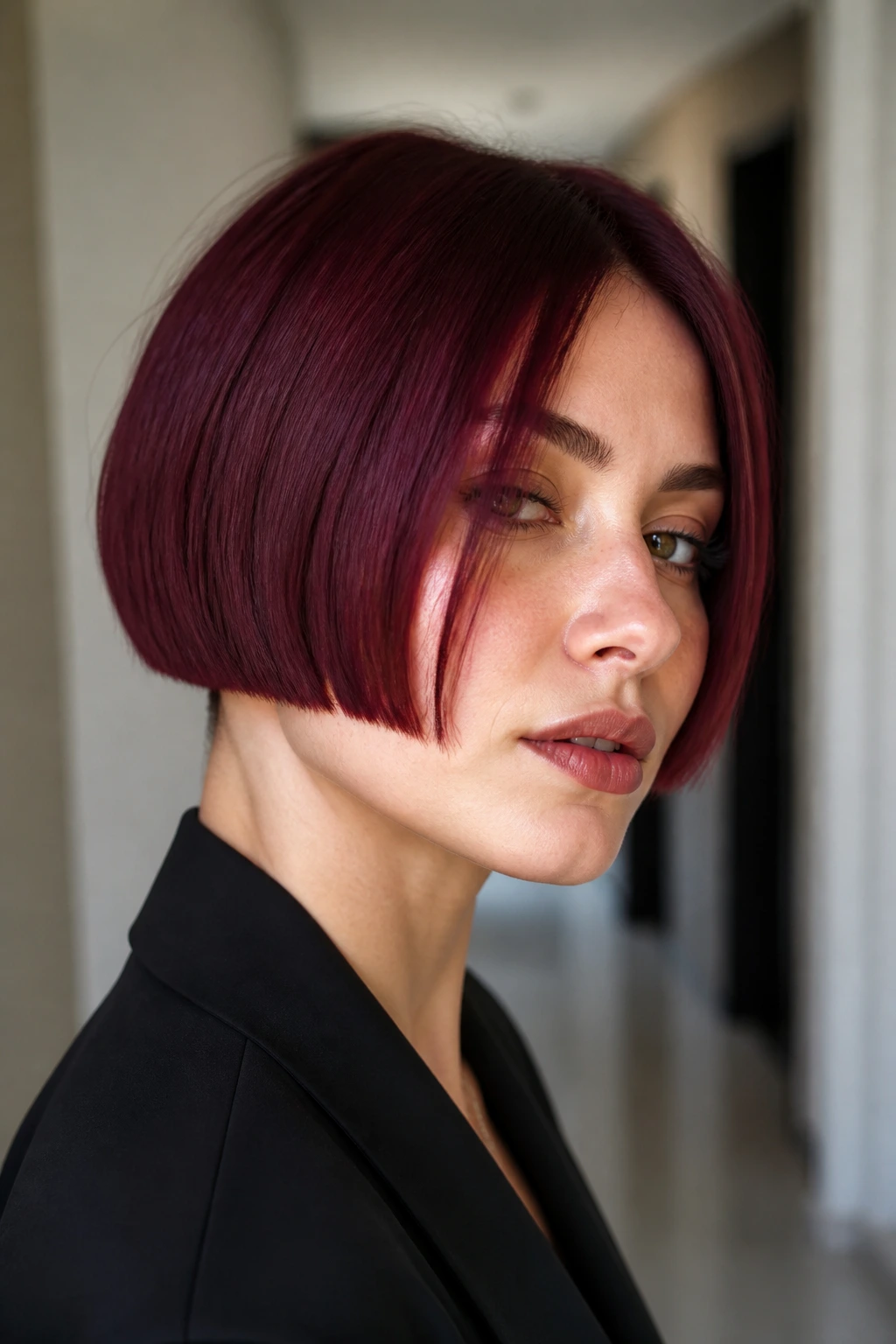
A burgundy micro bob has that clean, editorial feel that works best when the color is deep and the cut is sharp. Burgundy sits in the red-violet family, which gives it more coolness than copper and more depth than cherry. On a micro bob, the result is sleek and a little severe in the good sense.
Why It Feels So Polished
The short length keeps burgundy from tipping into “too much” territory. The color has room to breathe because the cut is small and geometric. If you want a bob that looks strong without needing texture, this is one of the easiest places to land.
Ask for a glossy finish. Burgundy loses its appeal when it goes flat. A root smudge can help if you want a softer grow-out, especially if your natural base is medium brown or darker. The red-violet undertone tends to be flattering on cooler complexions, but honestly, the bigger factor is how much depth you want the hair to carry near the face.
This is a good choice for straight hair that likes to lie cleanly. It also works well with a minimalist wardrobe, because the hair becomes the statement without fighting the rest of the look.
15. Apricot Copper Crop
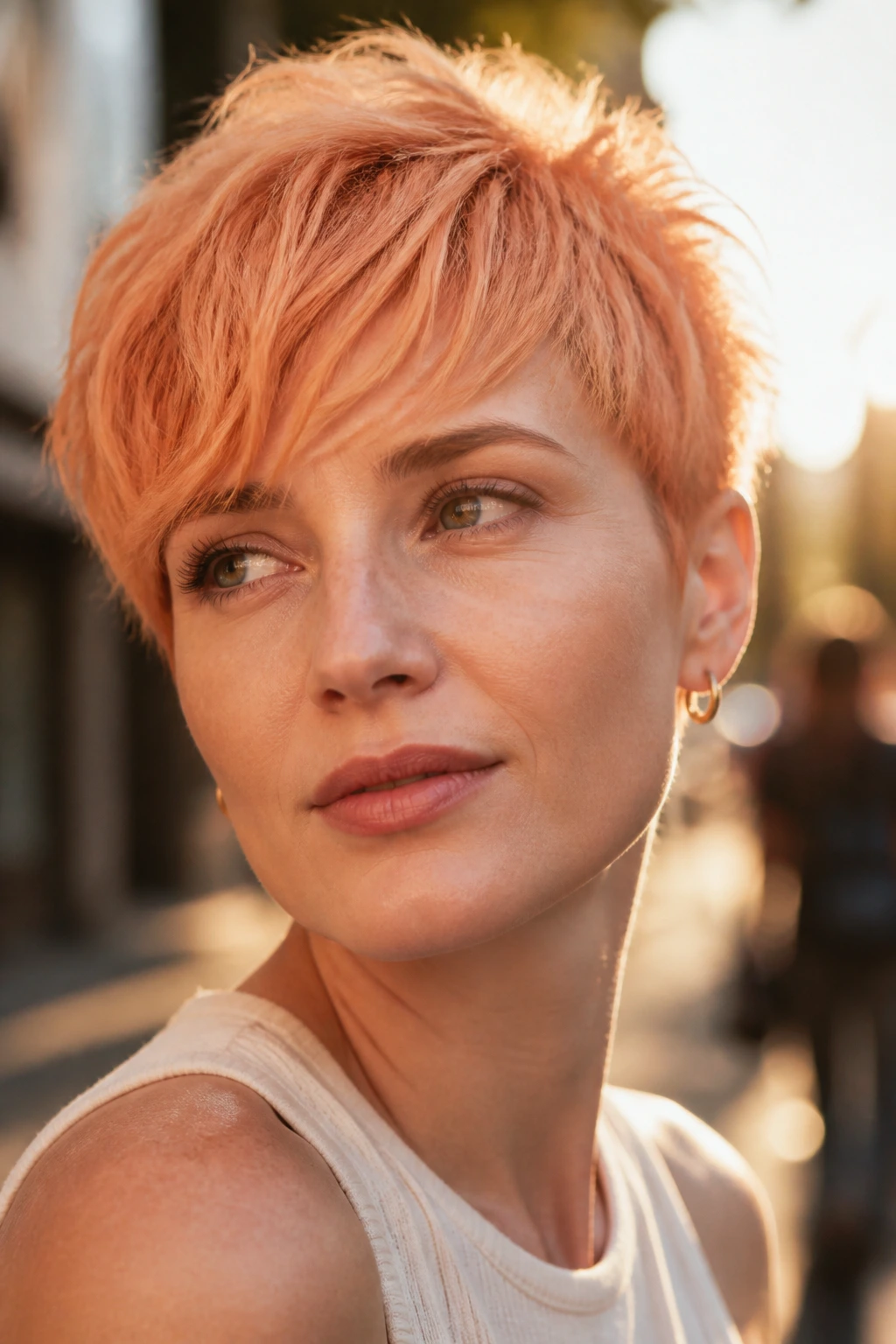
Apricot copper has more brightness and less depth than many of the richer reds, and that makes it useful on short hair that needs a lighter touch. It leans peachy-gold rather than dark auburn, which keeps the crop from feeling heavy. On a sunny day, it gives off that soft glow people often want from red hair without the full commitment of a vivid copper.
Why It Can Look Expensive
The best apricot copper is never flat. It should have a translucent quality, almost like light passing through a tinted glass. That effect is easier to get on a short crop because the hair doesn’t have to carry the color for long lengths. The ends can stay slightly lighter, which helps the cut look airy.
This is a nice choice if your hair is fine and you want the illusion of volume. The lighter warmth reflects off the shorter pieces and gives the impression of density. Use a light mousse or volumizing spray at the roots and keep the rest clean. Too much product will steal the softness.
If you want something cheerful without tipping into orange overload, this is one of the safest shades in the red family.
16. Foxy Auburn Shag

A foxier version of auburn — that’s what this shag is. The color sits in the medium red-brown zone, but the shag cut keeps it from feeling old-fashioned. All the movement is in the layers, the fringe, and the way the ends flick out just a little. The result is a cut that looks casual but still chosen.
A Good Middle Ground
Some red shades feel too bright, and some short cuts feel too neat. This is the middle ground. The shag breaks the shape so the auburn can catch on the ends and the fringe without looking blocky. It is especially flattering if your hair has a natural wave or a slight bend that refuses to behave perfectly.
You can air-dry this look with a curl cream if your hair is textured, or rough-dry it with a diffuser on low heat if you want more body. Don’t chase perfection here. The charm is in the rough edges. A foxier auburn shag always looks better with a little separation.
One thing I like about this shade is how well it hides minor fade. It ages gracefully between salon visits, which is not something every red can claim.
17. Cinnamon Money-Piece Pixie
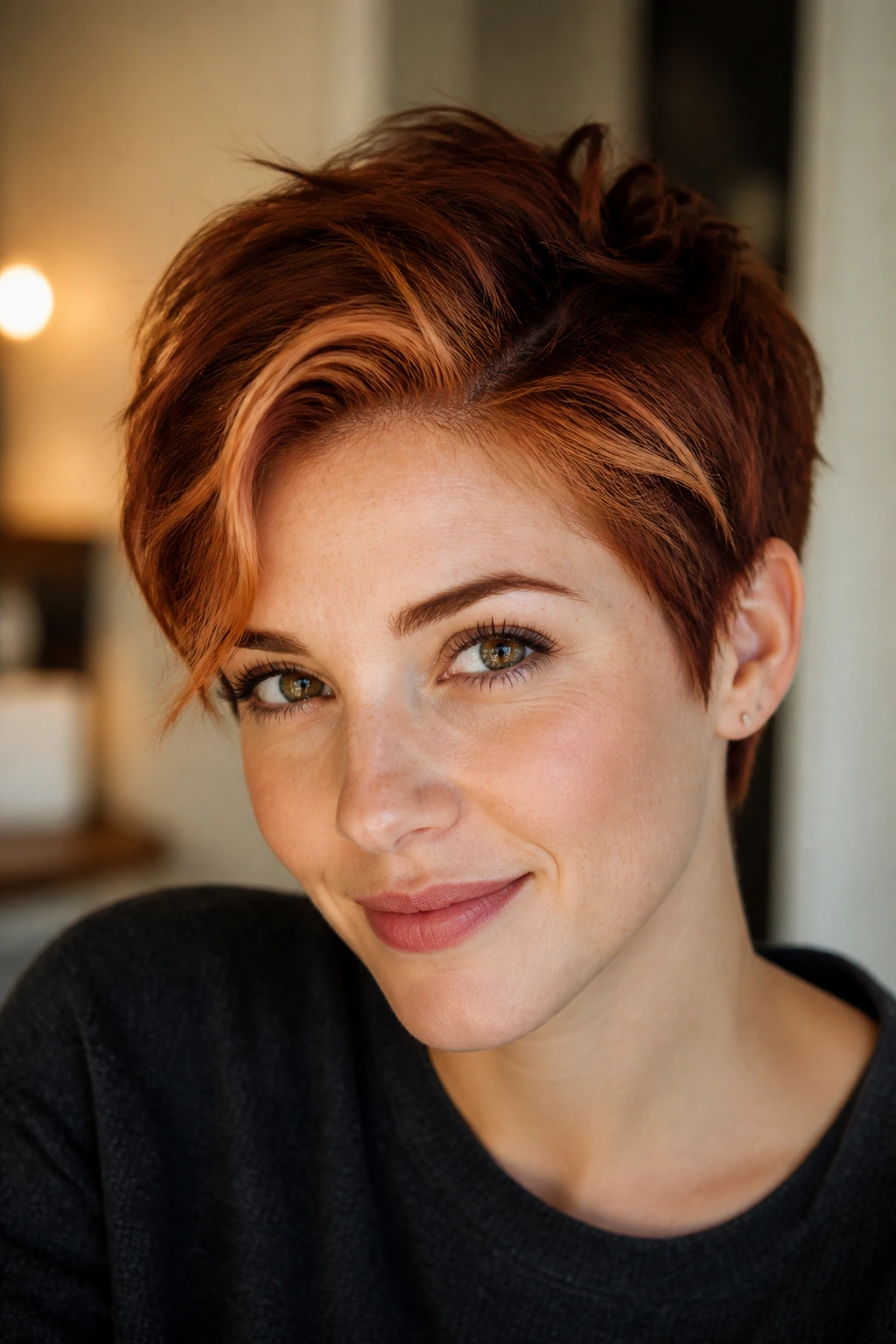
A cinnamon money-piece pixie is a smart, modern way to wear red without recoloring every strand. The bulk of the hair stays deeper — brunette, auburn, or dark copper — while the front sections are lifted with cinnamon-toned brightness. That gives you face-framing color with less maintenance and more control.
Why It’s So Useful
The money-piece placement matters more on short hair than people expect. Because the hair sits close to the face, even a two-inch bright section can change the whole look. Cinnamon is warm enough to feel rich but soft enough that the regrowth isn’t a crisis after three weeks.
This is the kind of style I’d recommend to someone who wants red but works in a setting where an all-over scarlet crop might feel like a lot. It still reads creative. It just doesn’t announce itself in every direction. Add a bit of root lift and piece the front sections apart with your fingers so the brightness shows in a few deliberate streaks.
Small detail, big payoff
If your eyebrows are darker, this style looks especially balanced when you leave the root area a touch deeper. That contrast stops the front from floating away from the face.
18. Scarlet Slicked-Back Crop
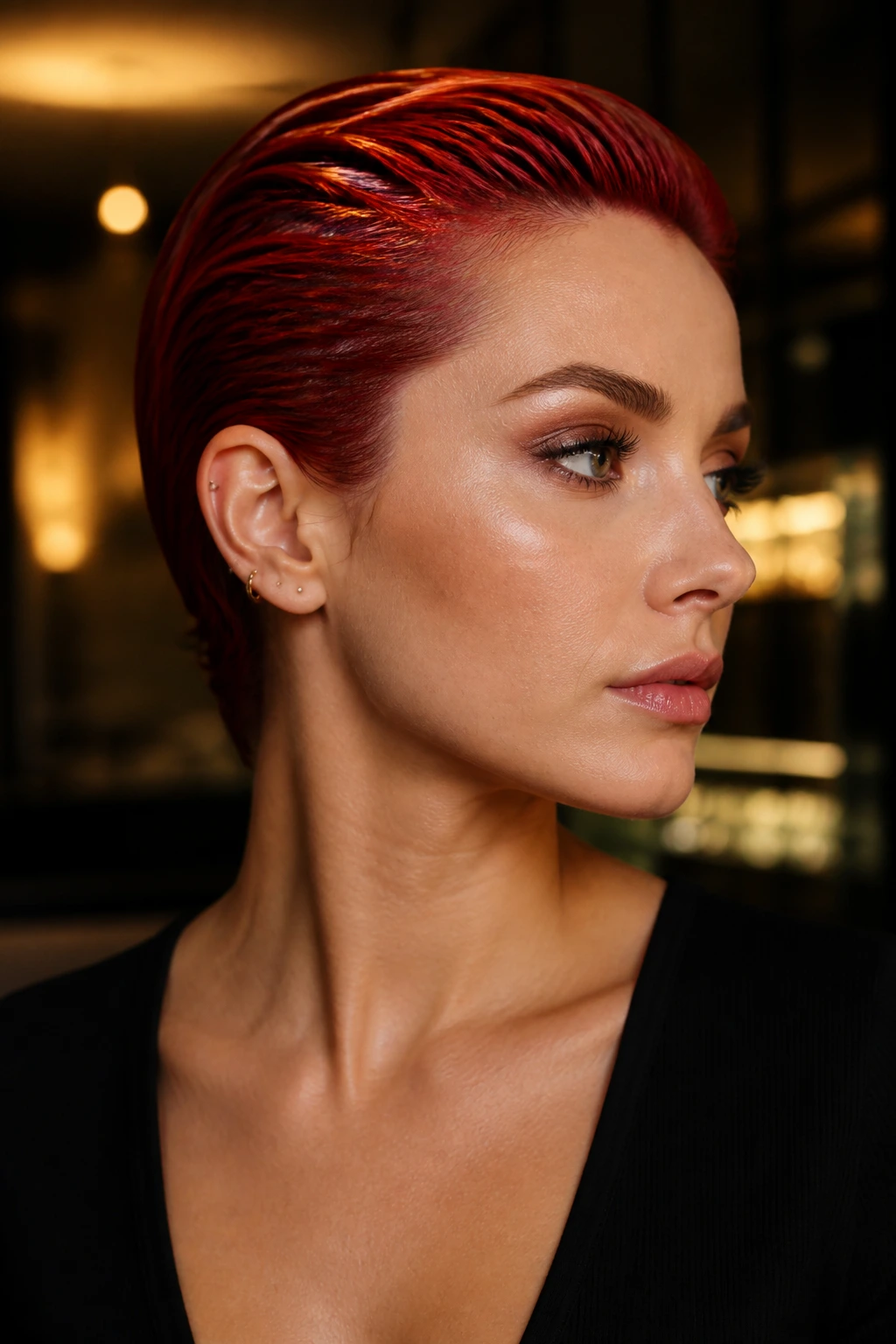
Scarlet slicked back is not subtle, and it should not be. The whole point is that glossy, high-impact finish where the hair hugs the head and the color does all the talking. On short hair, that slicked-back shape makes scarlet feel refined instead of chaotic. It’s bold with a clean outline.
Best for Strong Shape and Shine
This style depends on control. The cut needs enough length on top to comb back, but the sides should stay tight so the silhouette doesn’t turn puffy. Scarlet, with its intense red-orange energy, becomes more wearable when the shape is disciplined. Gel or a strong smoothing cream helps, but stop short of making it crunchy. That glassy, flexible hold is the sweet spot.
I like this look for evenings, events, or any day you want the haircut to feel like a statement piece. It pairs especially well with a black top, a sharp collar, or a bare neckline. The color becomes the accessory.
If your hairline is uneven or your crown swirls in odd directions, this may take a little more product and brush work than you’d think. Worth it, though. The result is hard to ignore.
19. Tangerine Layered Bob
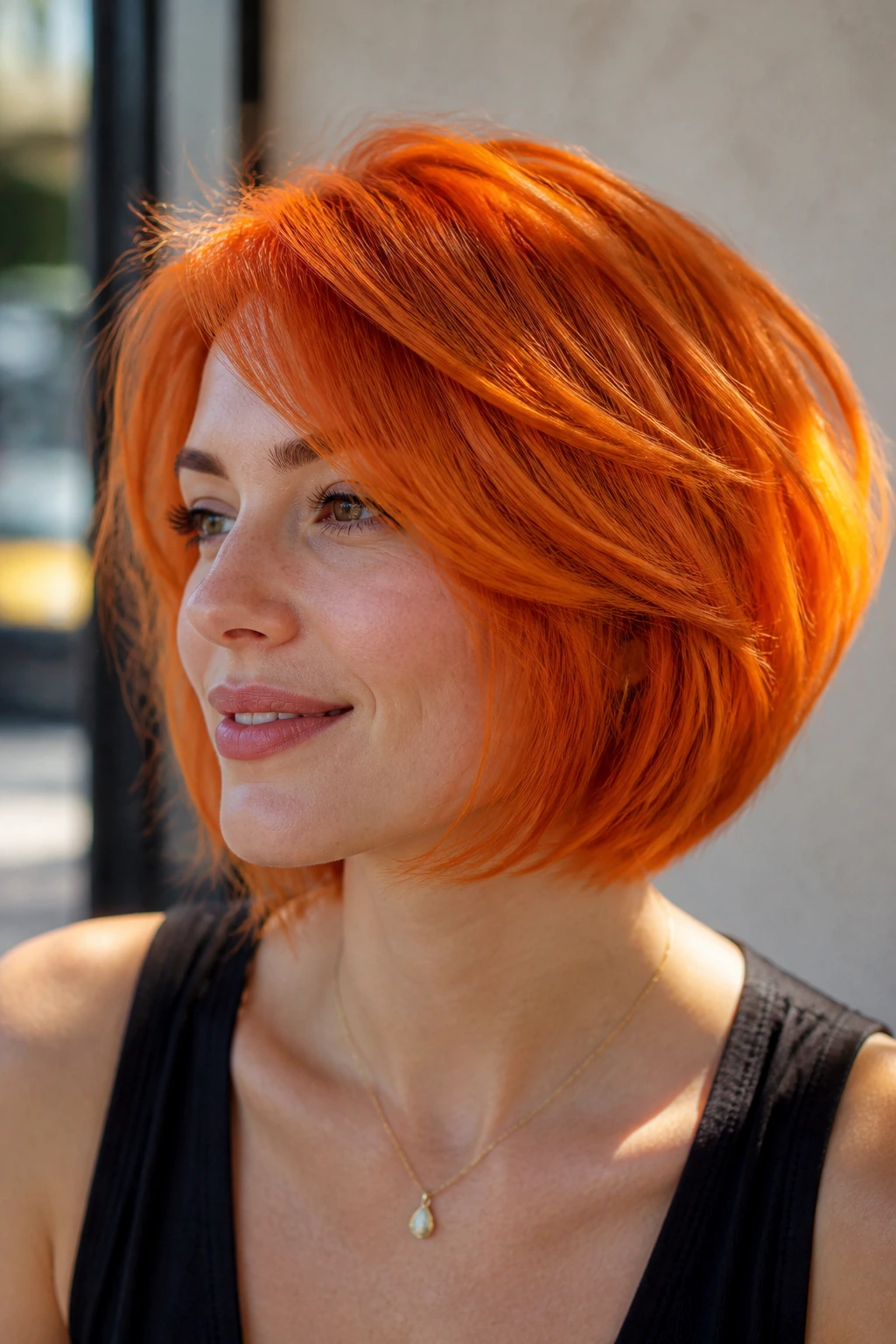
Tangerine on a layered bob is bright, juicy, and a little mischievous. It’s the sort of color that can make a short haircut feel younger without looking childish, as long as the cut has enough structure to support it. Layers are what keep this from turning into a single block of orange-red.
A Bright Shade Needs Air
The layering creates lift, and that lift gives the tangerine tones somewhere to flash. Without it, the color can feel too flat and too orange. With it, you get motion. The bob should have enough internal texture that the layers peek through as you move your head.
This is a good style if your hair is straight but not limp. Straight hair makes the color look crisp, while the layers stop the shape from feeling heavy. A blowout with a round brush can make the cut look clean; a more casual bend gives it a playful edge.
One caution: tangerine is a shade that rewards good toning. If the underlying blonde is too yellow or too pale, the color can skew brass. A clean base makes the whole look sharper.
20. Dark Cherry Asymmetrical Bob
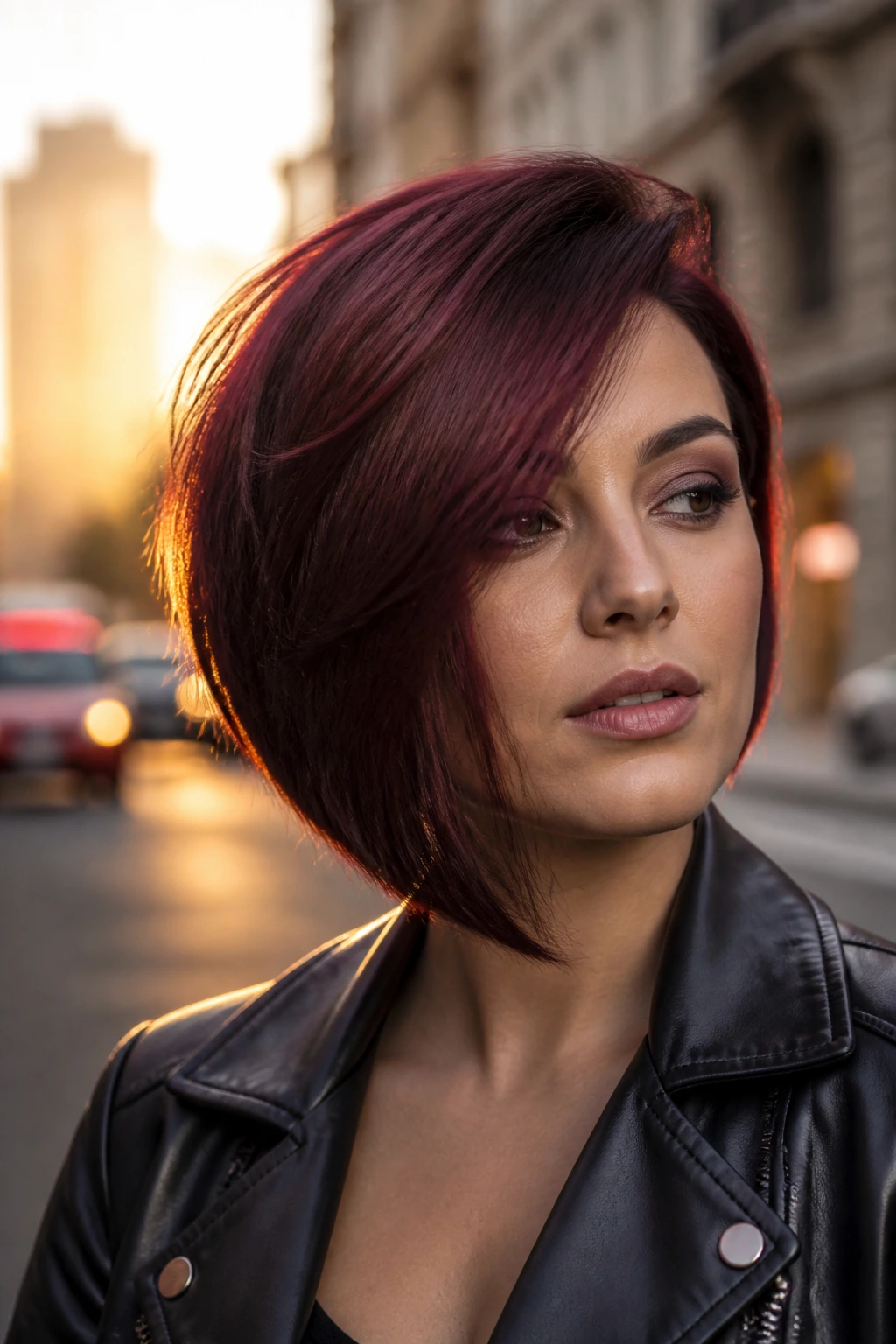
A dark cherry asymmetrical bob has just enough drama to feel interesting before the color even enters the conversation. Then the red-violet tone deepens the effect. One side longer than the other creates movement; the dark cherry keeps it grounded. This is a style that likes angles.
The Shape Changes the Mood
Asymmetry gives your eye something to follow, which matters when the color is rich and deep. Dark cherry can sometimes flatten a cut if the shape is too standard. Break the line, and the whole thing wakes up. The longer side can skim the jaw while the shorter side exposes the neck or ear, which makes the haircut feel more tailored.
This shade also works well if you want a red that leans moody rather than bright. It photographs as a deep wine red in shade, then picks up a ruby cast when you move into daylight. The contrast is subtle but useful.
I would keep the finish sleek here. Loose curls can blur the asymmetry too much. A flat iron bend through the ends is enough.
21. Autumn Maple Pixie
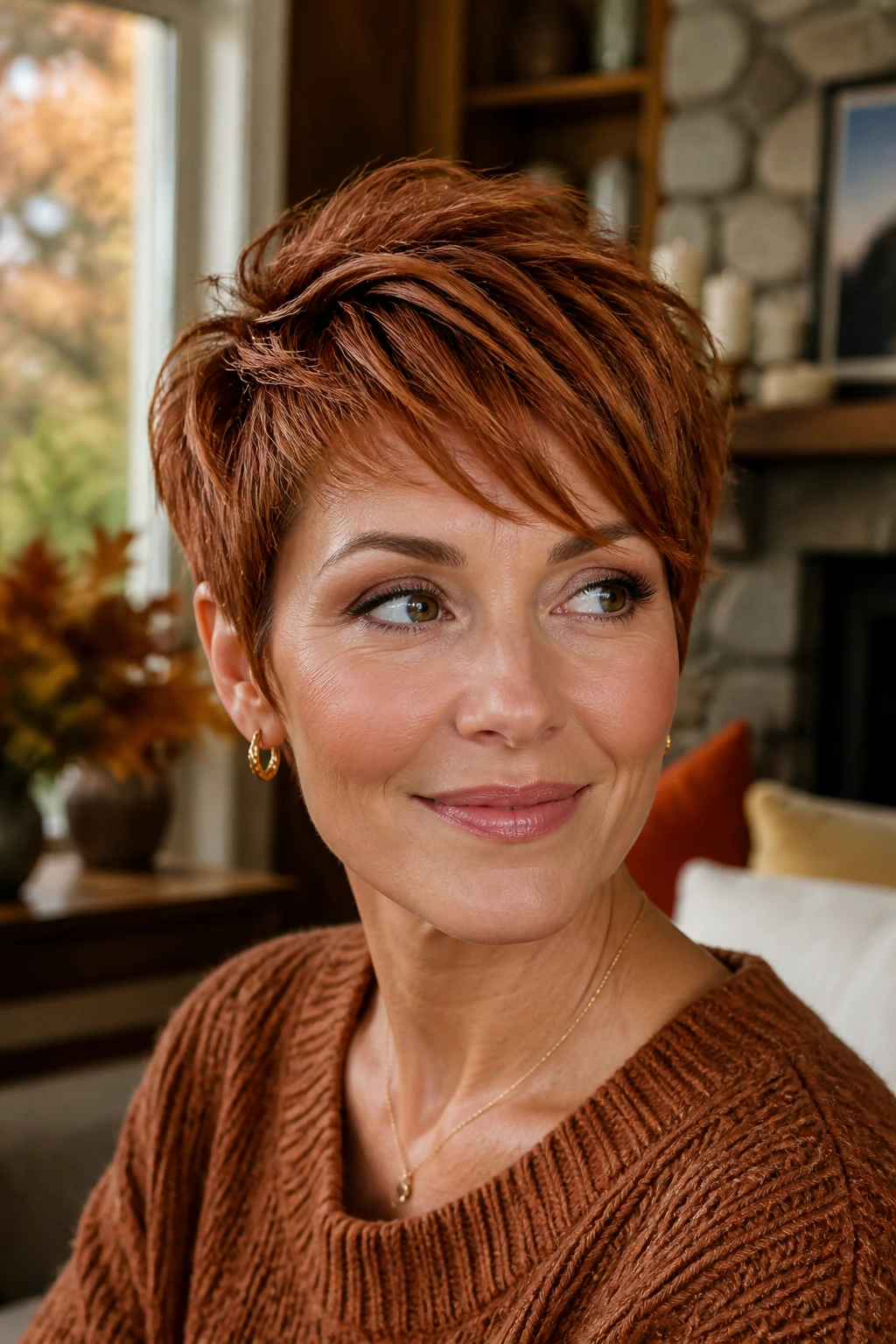
Autumn maple sounds seasonal, but the color itself is evergreen enough to wear all year. It’s a warm red-brown with a little copper baked in, which makes it friendlier than scarlet and more textured than standard auburn. On a pixie, it can look earthy, polished, and easy to live with.
Why It’s So Easy to Wear
The shade is muted in the right way. It lets the cut speak. If you have strong facial features or like a minimalist wardrobe, this color won’t bully the rest of your look. It sits in the background until the light catches it, and then it gives you that warm red shift people notice when you turn your head.
A pixie this tone is also useful if you want red hair without frequent corrective toning. It ages better than brighter shades and tends to look good even when the color softens a little. That is a practical win.
Keep the styling loose and a little piecey. Over-smoothing an autumn maple pixie can make the shade look dull. A bit of movement keeps the warmth alive.
22. Red Velvet Short Undercut
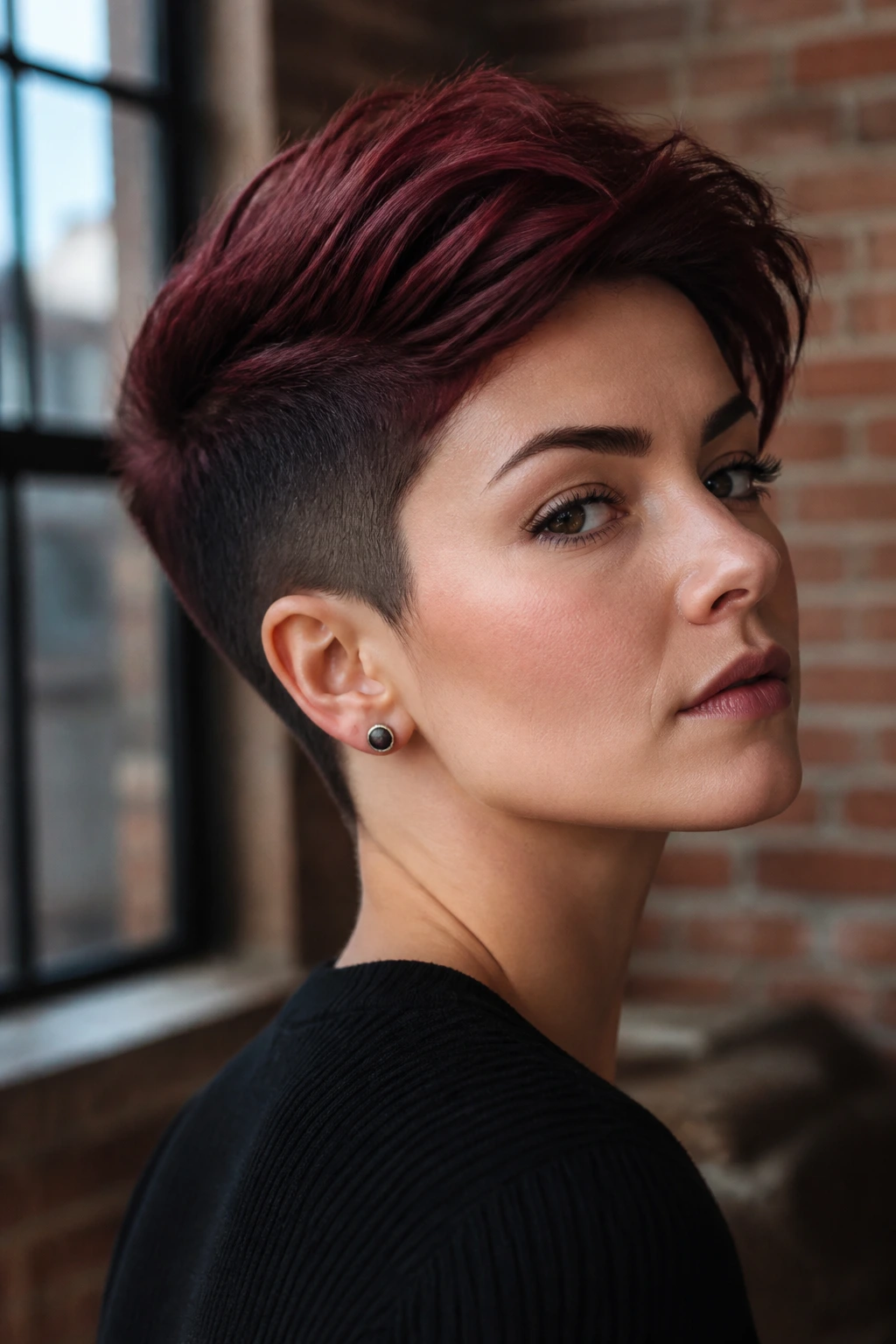
Red velvet on an undercut has a plush, rich quality that feels more refined than fiery. The shade is deep, red-brown, and smooth-looking, which helps the shaved or closely cut sections feel intentional rather than harsh. It’s one of the best options when you want a short red style with a little edge but not a lot of brightness.
Where It Lands Best
The longer top section should carry the density of the color, while the undercut stays clean and dark beneath it. That contrast makes the top look fuller. Red velvet is especially good on thicker hair, because the color depth helps control visual bulk.
This is not the shade I’d choose if you want loud contrast. It works better when the focus is on texture, shape, and finish. A smoothing serum on the ends and a matte paste near the roots can keep the look from going too glossy or too flat. The goal is depth, not shine for shine’s sake.
If you’re nervous about red hair, this is a strong halfway point. It still says red. It just says it in a lower voice.
23. Soft Copper Curly Bob
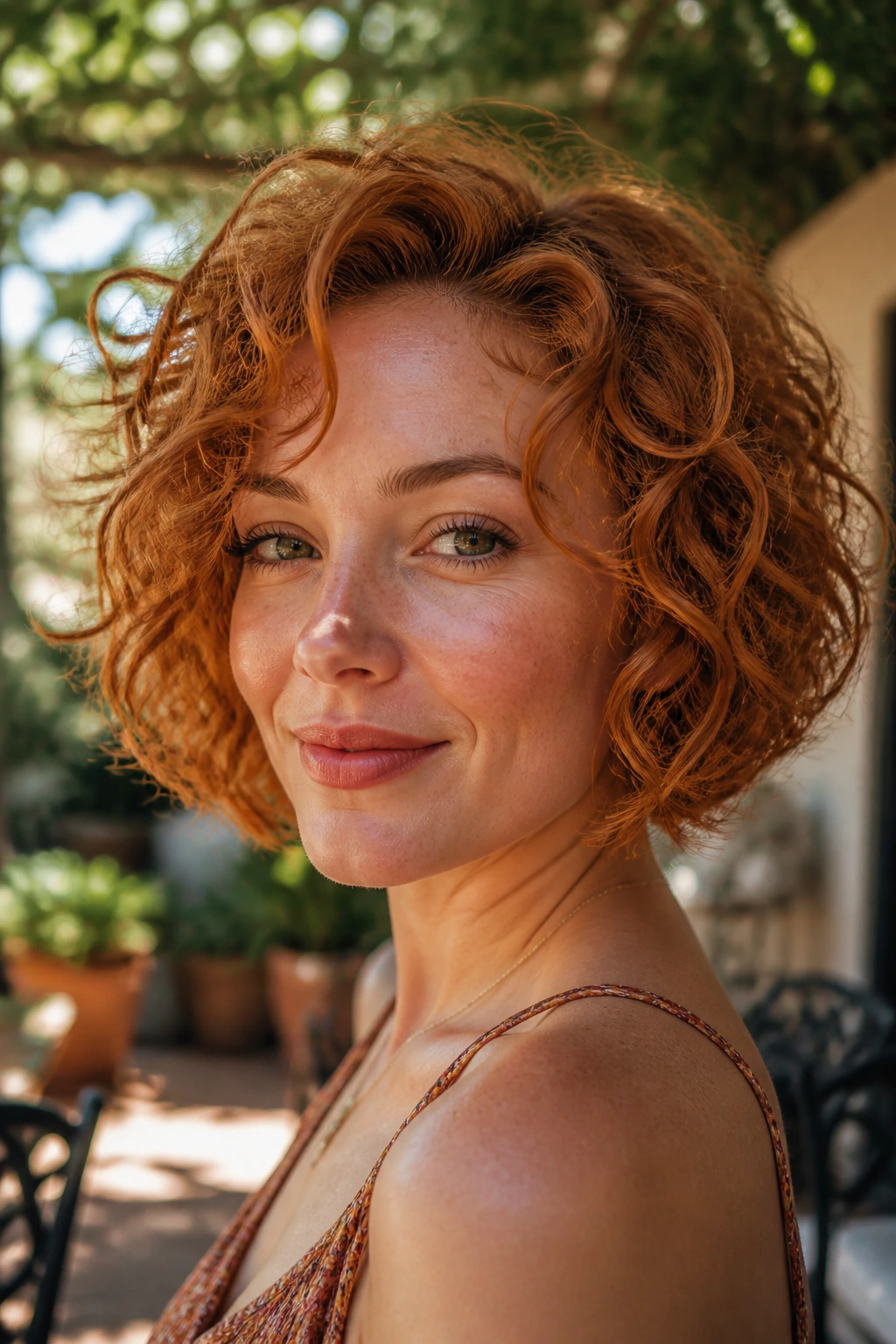
A soft copper curly bob is a lovely place to land if your hair already has texture and you want the color to support that instead of fighting it. Copper brings warmth to the curls, and the shorter length keeps the shape springy rather than weighed down. On curls, red reads more alive when it’s light enough to catch on each coil.
Curl-Friendly Red
The main trick is not to overload the hair with pigment or heavy creams. Copper needs movement, and curls need definition. A light curl cream, a leave-in that does not leave residue, and a diffuse-dry at low heat can be enough. If the hair is lightened underneath, keep a close eye on moisture. Porous curls fade fast and go frizzy even faster.
This bob looks especially good when the curl pattern is a little uneven in the best way. Perfect symmetry can make it feel stiff. A little variation in the curls gives the copper something to do. And if your hair is thick, a dry cut or carefully placed layers can keep the shape from turning into a triangle.
Honestly, this is one of the most flattering short red looks on the list when the curl pattern cooperates.
24. Crimson Peekaboo Pixie
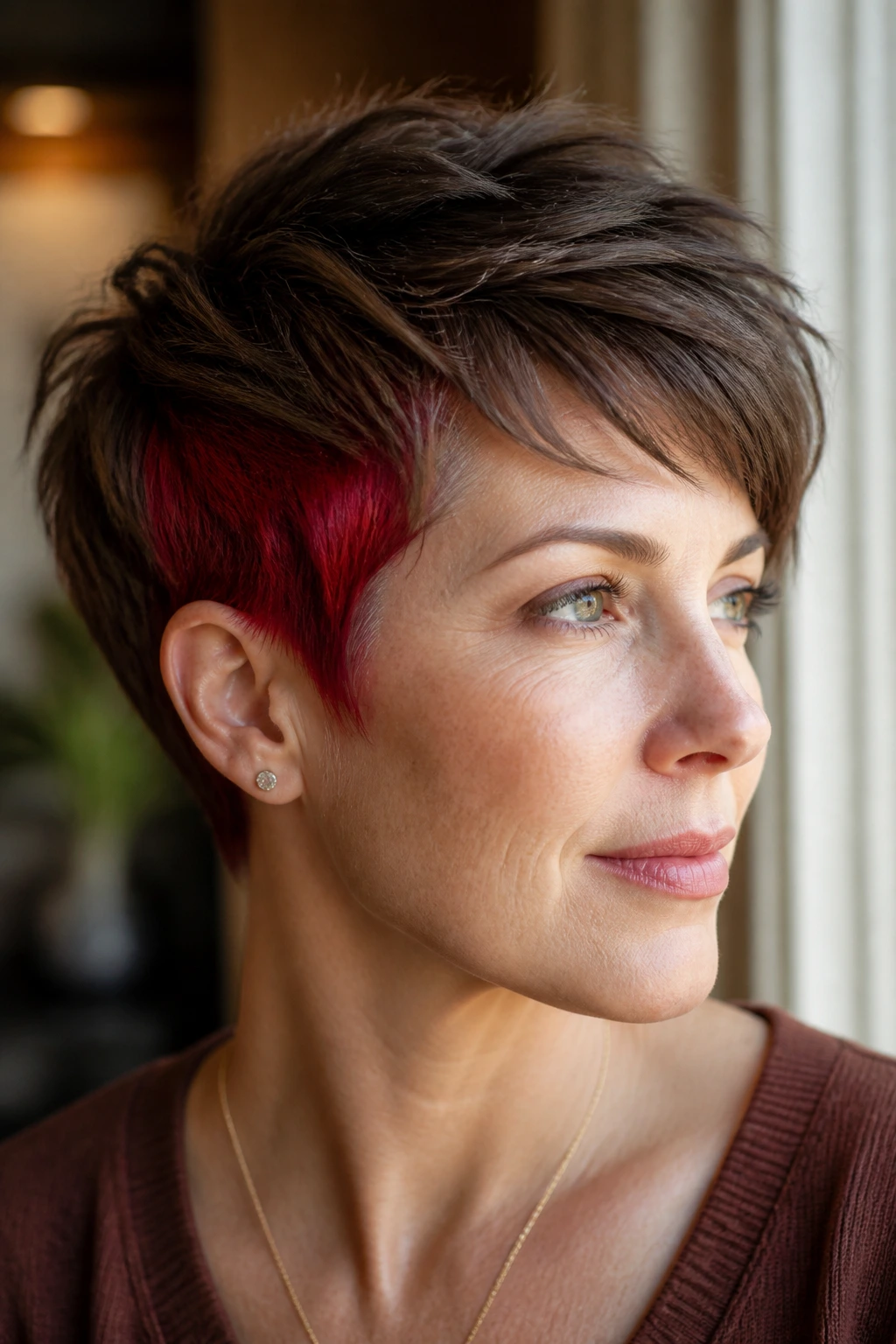
A crimson peekaboo pixie is for someone who wants a red surprise without committing the whole head to it. The top layers can stay neutral or softly auburn, while crimson panels peek through underneath or at the temples. When the hair moves, the red flashes. When it doesn’t, the look stays controlled.
Why It Feels Fun Without Being One-Note
Peekaboo color works well on short hair because the layers are already stacked close together. You don’t need a lot of hidden red for it to show up. A few well-placed sections under the top layer can make the haircut feel far more dynamic than an all-over solid tone.
This is also one of the easiest ways to try a bold red if you’re color-curious but not ready for constant upkeep. The visible surface can stay soft while the red lives underneath, waiting for movement, wind, or a tucked-back side to reveal it. That makes it a smart pick for anyone who likes a little secret in their haircut.
Keep the top in a complimentary shade — auburn, chestnut, or warm brown — and let the crimson do the surprise work.
Why Short Red Hair Works So Well in the First Place

Short red hair has a built-in advantage: the color has less distance to travel before it reaches the eye. That sounds obvious, but the effect is bigger than people expect. On a bob or pixie, red doesn’t get diluted by long layers. It lands fast. The cut edges, the fringe, the nape, the crown — all of it becomes part of the color story.
The other thing short hair does well is show shape. A red bob with a blunt line reads differently from a red shag with choppy ends because the color can’t hide what the cut is doing. That’s a gift, not a problem. It means you can use placement to make the haircut look denser, softer, sharper, or more playful without changing the length.
And red, unlike a lot of other color families, can be tuned in several directions with small changes. Add copper and warmth. Push it toward cherry and you get edge. Lean into burgundy and the whole thing feels deeper. Short hair takes those adjustments well because there’s less canvas to color and less room for error. If the red is off, you notice immediately. If it’s right, you notice that too. Fast.
The Tools That Keep Short Red Hair Looking Intentional
Color-safe shampoo: Choose a sulfate-free formula that won’t strip the red out in two washes. Short hair doesn’t hold onto over-cleansed color kindly.
Color-depositing conditioner or mask: A copper, auburn, or red deposit can stretch the time between glosses, especially on porous ends.
Heat protectant: A lightweight spray that can handle temperatures up to 350°F is enough for most short red styles. Use it every time you touch a flat iron or dryer.
Small round brush or vent brush: Short hair needs control near the root and lift through the crown. Big brushes tend to be clumsy here.
1-inch curling iron or flat iron: These are the sweet spots for bobs and shags. A large barrel can be awkward on short lengths.
Texturizing paste or matte cream: Pixies and crops need separation, not helmet shine. Use a pea-sized amount and build slowly.
Root-touch-up spray or powder: Handy for grow-out between appointments, especially on deep cherry or burgundy shades.
Microfiber towel: Red hair that’s rubbed hard with a rough towel can frizz fast. A gentler towel keeps the cut cleaner.
UV-protective finishing spray: Sun steals warmth out of red hair faster than people like to admit. A light UV layer helps.
Smart Shade Selection and Salon Communication
Picking red for short hair is not just about “warm” or “cool.” It’s about depth, saturation, and where the color sits against the cut. If you want a short red look that feels rich, bring photos that show the color indoors and in daylight. One photo under warm light and one in natural light can save you from a mismatch that only shows up once you get home.
Tell your colorist whether you want full coverage, a gloss, a balayage effect, or just face-framing pieces. Those are four different jobs. A copper pixie gloss behaves very differently from a cherry bob with painted ends. If you say “red” and leave it at that, you may get a tone that is technically red but not the one living in your head.
Porosity matters, too. Short hair that’s been lightened before can grab red fast and fade unevenly. If your hair is porous at the ends, ask whether it needs a filler first or a softer demi-permanent formula instead of a harsh permanent one. That one question can keep the ends from going too dark, too muddy, or too patchy.
One more practical thing: short hair grows fast in visual terms. A half-inch of root on a pixie can feel louder than an inch of root on long hair. If you want a crisp look, ask for a root shadow or a soft transition so regrowth doesn’t hit like a hard line.
How to Style These Red Cuts So the Color Shows Up
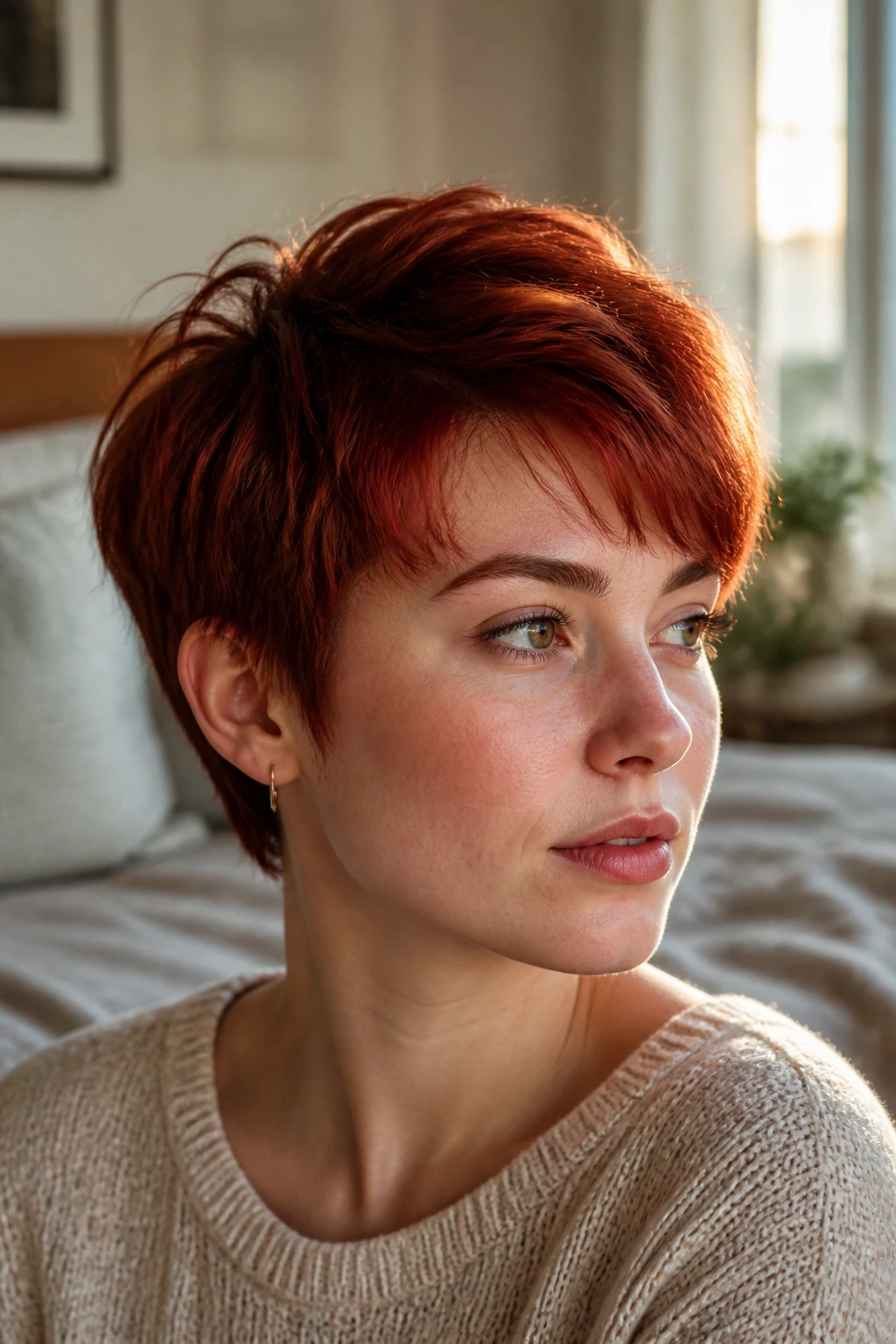
Texture: Piecey texture makes copper, paprika, and strawberry tones come alive. Use paste, wave spray, or a light mousse depending on whether the cut is sleek or messy.
Parting: A deep side part gives volume to fine hair and can soften scarlet or cherry shades. A center part makes blunt bobs feel sharper and more modern.
Finish: Straight, shiny hair shows off burgundy, merlot, and cherry. Matte separation works better for shaggy cuts and undercuts, where the goal is movement rather than gloss.
Makeup: Warm reds often love soft peach blush, brown liner, and a neutral lip. Deep burgundy or ruby can take a berry lip if you want a stronger look, but I would not stack heavy red lipstick on top of bright copper unless you want the color to compete with itself.
Wardrobe: Black, cream, forest green, navy, plum, and denim all sit nicely beside short red hair. If the hair is bright, keep the clothing clean. If the red is deep, a lighter top can keep it from looking too heavy.
A small ear tuck can change the whole effect. So can a barrette, a pin, or a narrow headband. Short red hair likes a little interruption. It keeps the color from feeling static.
Additional Tips and Color Boosters
Tone Boost: If your red starts drifting orange or flat, a gloss with a copper-gold, red-violet, or neutral red base can bring it back without a full recolor. The right toner depends on what the hair is doing, not on the shade name on the bottle.
Customization: Add a money piece for a face-brightening hit, or keep the root area deeper for a more rooted, expensive feel. On short hair, even a half-inch change in placement can shift the whole mood.
Serving Suggestions: Use a shine spray on sleek bobs, a soft wax on pixies, and a diffuser when curls need shape. A tiny bit of product goes farther on short hair than most people expect.
Make-It-Yours: If you want lower commitment, choose a demi-permanent auburn, cinnamon, or rose-gold glaze. If you want longer wear and gray coverage, go with a permanent formula and build dimension through highlights or a shadow root.
Personal favorite move: leave one section near the face a touch brighter than the rest. It looks intentional even when the rest of the color softens.
Common Mistakes to Avoid With Short Red Hair
Choosing the wrong red undertone: A copper that leans too orange can fight the skin tone and make the cut feel loud in the wrong way. A red that leans too blue can go too dark on fine hair. The fix is simple: decide whether you want warmth, depth, or brightness first, then match the formula to that goal.
Going too flat at the root: Short red hair needs depth at the base, not just color everywhere. If the roots are too light or too bright, the style can lose shape. A root shadow or a deeper lowlight keeps the haircut grounded.
Skipping upkeep on porous ends: Short hair may be small, but the ends still fade first. If they turn dry and see-through, the color looks cheap fast. Trim regularly and use a color mask or gloss before the ends start looking dusty.
Overusing heavy styling cream: Pixies and short bobs need movement. Too much cream or oil can make the red look dull and the cut collapse against the head. Start with a tiny amount and add only if the hair still feels dry.
Ignoring regrowth plans: A crisp short cut with bright red color and a thick dark root can be a striking look — or a mess, depending on the plan. If you don’t want a hard line, ask for a softer fade from the start.
Washing too hot: Hot water strips red faster than most people think. Cool or lukewarm water helps the cut hold its tone and keeps the shine from disappearing after one shampoo.
Variations and Adaptations to Try
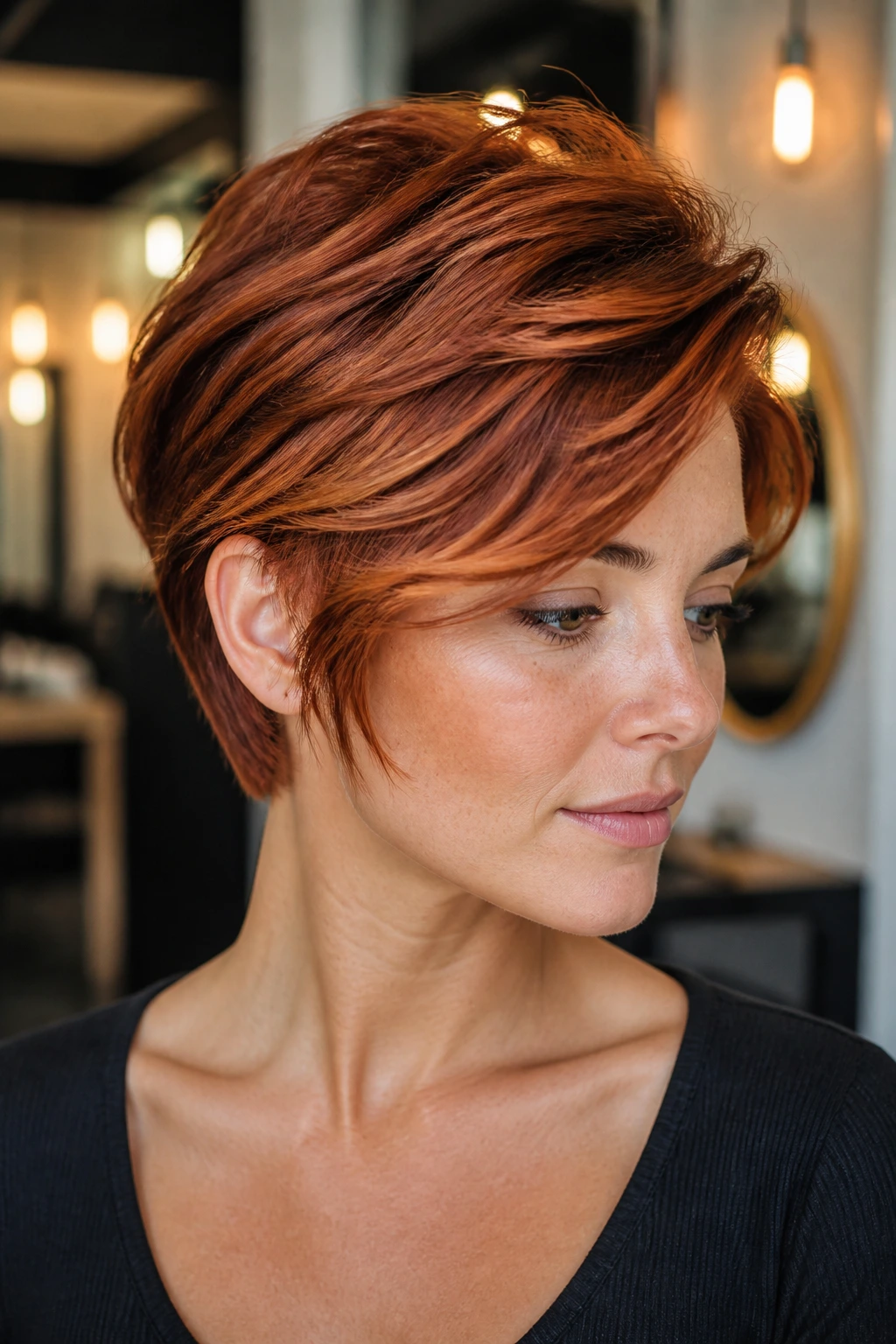
Soft-Entry Auburn: If you’re not ready for full red, choose a demi-permanent auburn that sits close to your natural base. It gives short hair a red cast without demanding a monthly color appointment.
Bold Cherry Face Frame: Keep the base neutral or dark and place vivid cherry only around the hairline and fringe. This is a good way to test high-impact red without coloring the whole head.
Copper Balayage Refresh: On a bob or shag, paint copper only through the mids and ends for a sunlit effect. It grows out with less stress and still reads as red from across the room.
Wine-Dark Crop: Burgundy, merlot, or dark cherry work well if you want a richer, moodier red. These shades are especially good on straight bobs and tapered pixies where shine matters.
Curly Copper Edit: Keep the color lighter and warmer, then let the curl pattern do the shaping. The result feels softer and more dimensional than a flat red on curls.
Peekaboo Red for the Office: Hide crimson or paprika beneath the top layer so the color only shows when the hair moves or gets tucked behind the ear. It’s the easiest way to wear red with a little secret built in.
Keeping the Color Fresh Between Salon Visits
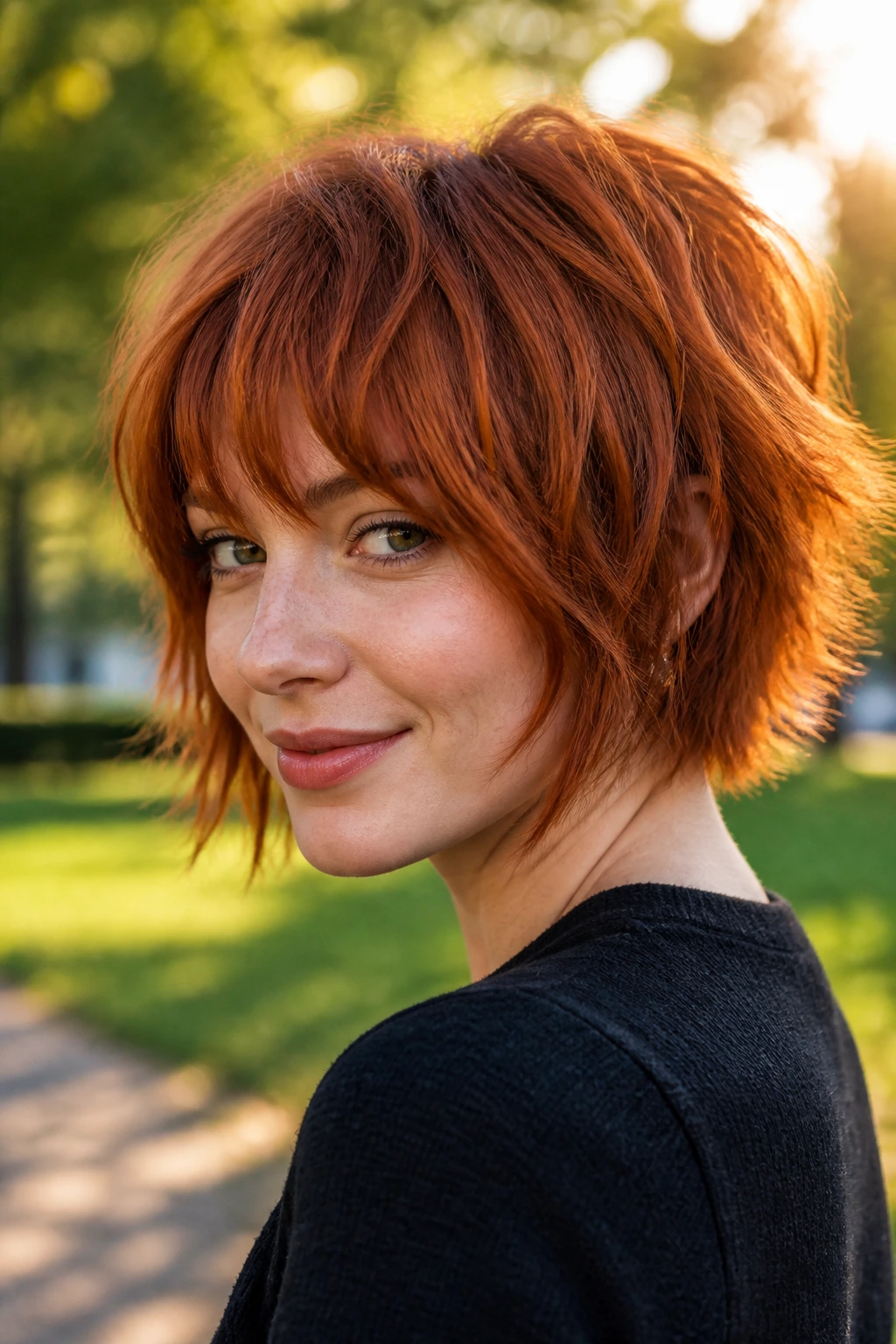
Red fades faster than brown, and short hair shows that fade sooner because the color sits close to the face. A realistic maintenance plan matters more than wishful thinking. For most red shades on short hair, washing two to three times a week is enough. Daily washing tends to pull the warmth out too quickly, especially if the water runs hot.
A color-depositing conditioner once a week can keep copper, auburn, or cherry from drifting too far. Use it on damp hair and leave it on for the recommended time, then rinse cool. If the ends are porous, start with a shorter processing window. They’ll grab pigment faster than the roots.
Glosses are useful every 4 to 6 weeks for vibrant reds, and root touch-ups often land in the 5- to 8-week range depending on how fast your hair grows and how precise the cut is. Pixies usually need shape-ups sooner than bobs because the silhouette changes faster. That does not mean the color is failing. It means the cut is growing.
If you heat-style often, protect the hair every single time. Short red hair can dry out at the crown and along the fringe in a hurry. A lightweight leave-in plus a heat protectant goes a long way. And if you swim, rinse before you get in the water and after you get out. Chlorine and red pigment are not friends.
Questions People Ask Before Going Red on Short Hair

What red shade works best on short hair?
The best shade depends on how much contrast you want. Copper and strawberry copper feel lively on pixies and bobs, while auburn, cherry, and burgundy give more depth and polish. If you want the haircut to look sharper, lean deeper; if you want it to look lighter and more playful, go warmer and brighter.
Do I need bleach for red hair on short hair?
Not always. Dark auburn, merlot, and burgundy can work on darker bases without much lightening. Copper, scarlet, and bright cherry usually need some level of pre-lightening if you want them to show up cleanly and not just sit as a tint.
How do I keep red from fading fast?
Wash less often, use cool water, and switch to sulfate-free shampoo. A weekly color mask or gloss can hold the tone longer, and heat protection matters because hot tools dull red faster than people expect.
Can short red hair work on curly hair?
Yes, and it can look excellent. Curly short cuts give red color a lot of movement, especially in copper, mahogany, and soft auburn shades. Just keep the cut shaped so the curls don’t puff outward and hide the color work.
What if my hair is dark brown?
Then deeper reds usually behave better than bright ones. Mahogany, burgundy, merlot, and dark cherry can add red without a heavy lightening session. If you want copper or scarlet, you’ll probably need some pre-lightening in selected areas.
How often should I touch up short red hair?
For vivid red looks, plan on a gloss or refresh every 4 to 6 weeks. Root touch-ups can stretch a little longer on bobs, but pixies often need reshaping sooner because the cut changes the look faster than the color does.
Can I get these looks at home?
Some of them, yes. A copper gloss, auburn deposit, or soft red mask is manageable if your base is close and your expectations are realistic. Bright scarlet, layered balayage, and any look that needs precise placement are better left to a colorist, especially on short hair where one bad line shows fast.
What if the red turns too orange?
That usually means the undertone is too warm or the hair was lifted too far without enough toning. A blue-violet or red-violet toner can help, but the safer fix is prevention: choose the right base tone before you color, not after the hair has already drifted brassy.
A Short Cut, Worn Loudly or Softly
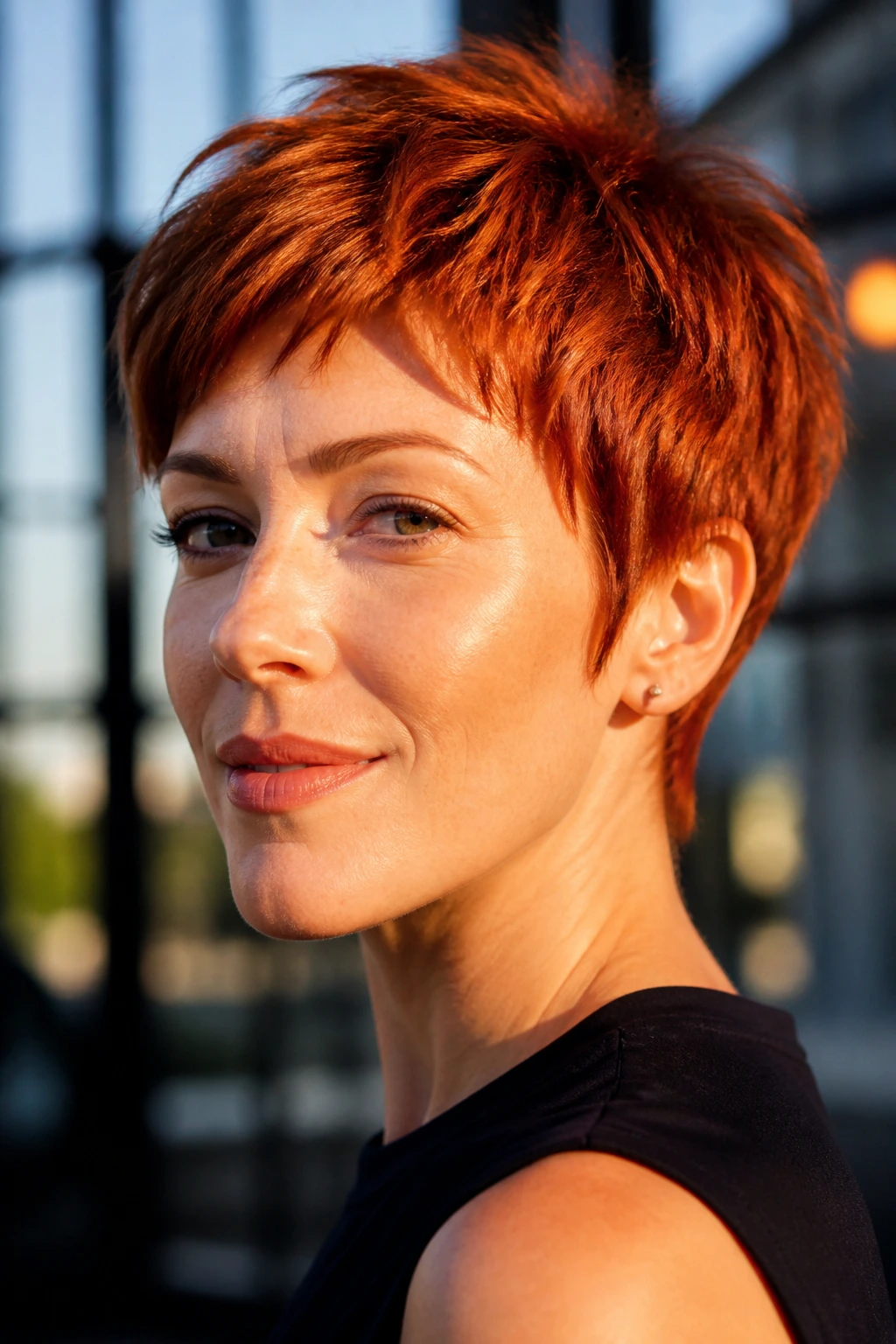
Short red hair works because it has range. It can look like a quick gloss and a blazer, or it can look like a sharp bob with a little edge and no apologies. The cut does not need to be loud for the color to matter, and the color does not need to be neon for the style to land.
The best versions of these looks share one thing: the shape and the shade respect each other. When that happens, a pixie stops feeling practical and starts feeling like a style choice. A bob stops feeling safe and starts feeling edited. That’s the whole point, really.
Choose the red that matches the haircut you actually want to wear, then keep the maintenance honest. The rest tends to fall into place.
