



Wavy hair has a built-in advantage that straight hair spends all its time trying to fake. The bends catch light, hide shadow, then catch light again. A good set of highlights plays into that motion instead of fighting it, which is why the best highlights ideas for wavy hair look richer, softer, and more expensive than the same color on a flat ironed head.
The mistake I see over and over is overloading the hair with one bright tone from root to tip. On waves, that can turn the whole thing stripey in a hurry. What tends to work better is a smarter mix: lighter pieces where the hair curves, a softer shadow near the root, and a tone that sits close enough to the base color to keep the texture from looking chopped up.
I keep coming back to the same truth with wavy hair color: movement matters more than brightness. A few caramel ribbons, a smoky brunette veil, or a cool blonde frame can change the whole shape of the haircut because the waves do part of the showing-off for you. That’s the fun part. Now comes the useful part.
Why These Highlight Ideas Work So Well on Wavy Hair
Movement does half the styling work: Waves create peaks and troughs, so even narrow highlights look dimensional instead of flat when the hair shifts.
Soft grow-out matters: Balayage, babylights, and shadow-root placement can stretch the time between salon visits without the obvious line you get from a hard foil pattern.
Tone matters as much as lightness: A level 7 caramel and a level 7 ash brown do not read the same on wavy hair; one warms the curl, the other sharpens it.
Fine hair gets a lift: Narrow highlights through the canopy make wavy hair look fuller because the eye reads multiple ribbons, not one solid sheet.
Styling stays flexible: These color ideas still look good air-dried, diffused, or polished with a curling wand, which is why they’re so easy to live with.
1. Honey Caramel Balayage
Honey caramel is the safest warm choice, and I mean that in the best way. On a medium brown base, the color lands like melted sugar brushed through the bends of the wave. It gives you brightness without the orange flash that can make brown hair look brassy.
Ask for soft balayage placement with the lightest pieces around the face and the upper half of the head. A level 7 to 8 caramel sits nicely on level 5 or 6 brunette hair, and it looks especially good when the ends are left a shade deeper than the mids. That small shift keeps the waves from looking puffy.
If your hair dries with a little frizz around the surface, this is still a solid pick. The warm tone hides roughness better than icy blondes do, and a gloss every 6 to 8 weeks keeps the caramel from turning too gold.
2. Mushroom Brown Babylights
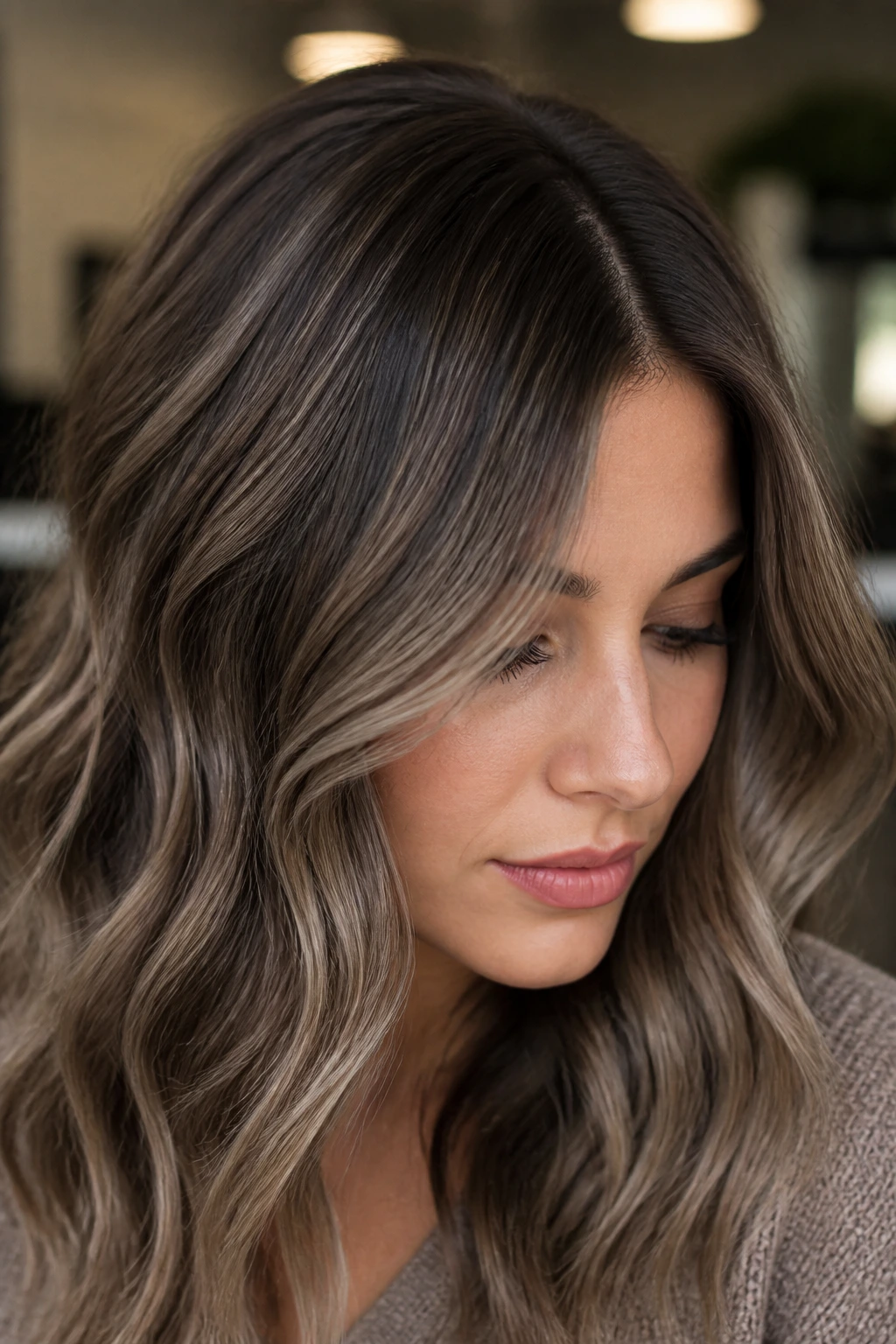
Mushroom brown is for the person who wants dimension but hates screaming color. It lives in that cool taupe zone between beige and ash, which means the highlights blend into wavy hair instead of sitting on top of it. Under indoor light, it can look like soft mocha; outside, you get that smoky, expensive-looking shift.
Babylights are the key here. You want tiny sections, not chunky ribbons, because wavy hair already has texture doing the visual work. Thin slices through the crown and around the part keep the whole style looking denser, not lighter in a patchy way.
This shade is one of my favorites for medium brunettes with a cool or neutral undertone. It fades gracefully, too. If you do not want to babysit brass, this is a calm, smart choice.
3. Champagne Blonde Ribbons
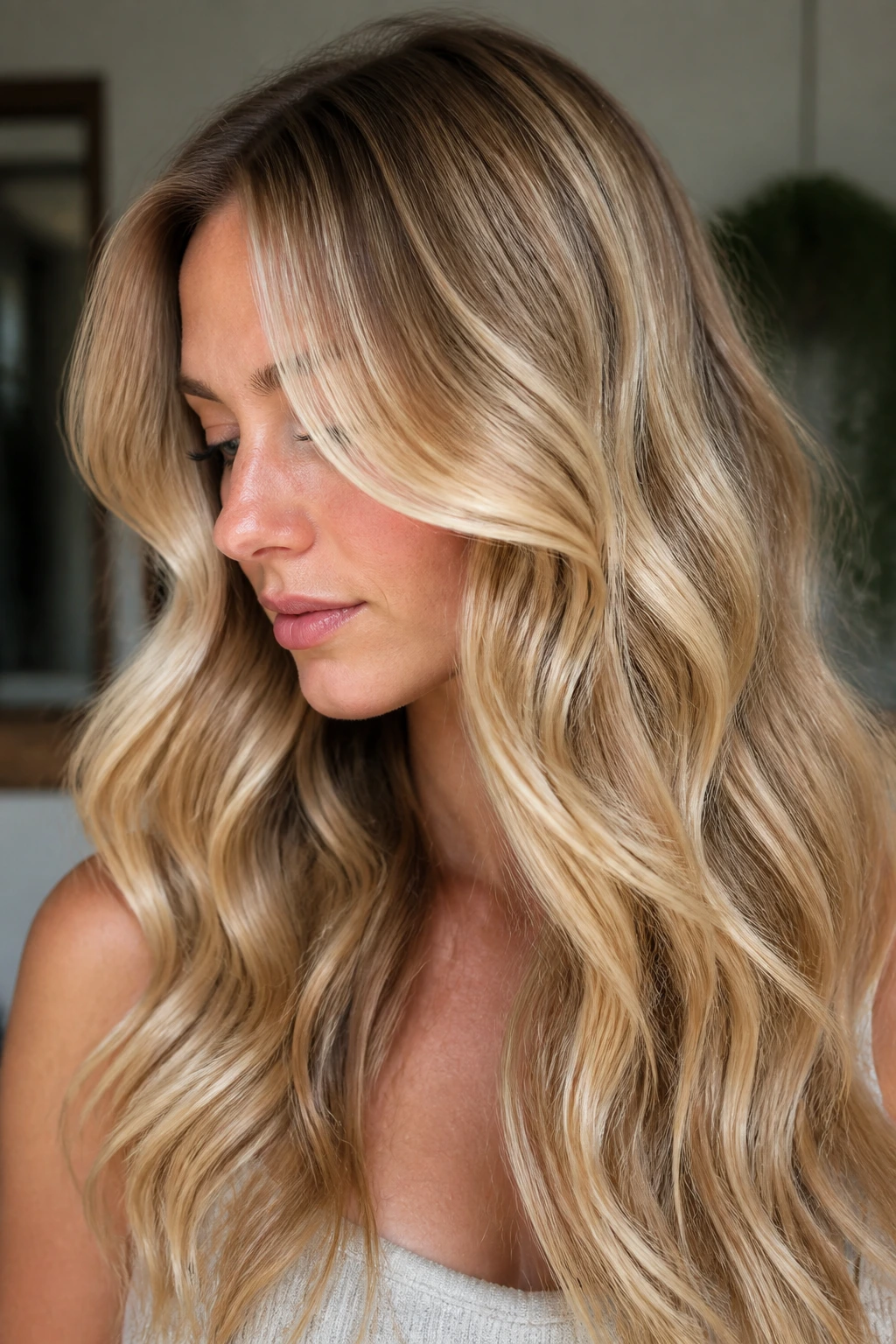
Champagne blonde is what happens when blonde gets a little softer and a little more grown-up. It has a pale beige-gold tone that feels airy on wavy hair, especially if the base is dark blonde or light brown. The wave bends pick up the pale pieces and make them shimmer without going flat.
I like this as ribbon highlights rather than an all-over blonde shift. Ask for pieces that are a shade or two lighter than a butter blonde, not a stark platinum lift. That keeps the look expensive instead of icy in a harsh way.
It works best when the hair has long layers or a collarbone-length cut. The movement gives those champagne pieces somewhere to land. A purple shampoo once every week or so is usually enough to keep the tone clean.
4. Copper Money Piece
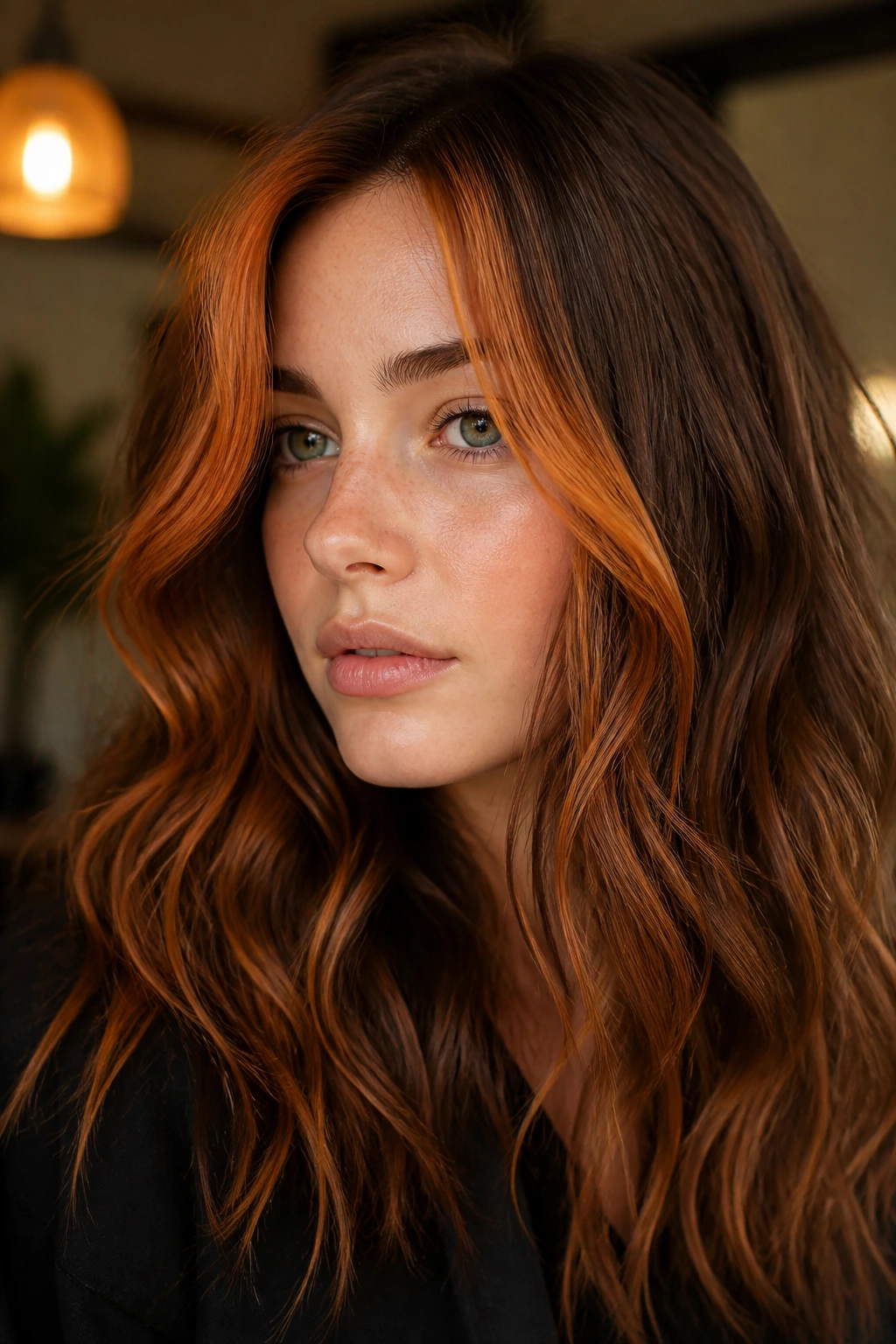
Copper around the face does a lot of work fast. It frames the cheekbones, warms the skin, and gives wavy hair a bit of swagger the second you tuck one side behind your ear. On chestnut or dark brown hair, it reads bold without needing full-head lightening.
The trick is placement. Keep the copper concentrated in two front sections and maybe a few thin threads around the temples. If you pull it too deep into the sides, the face-framing effect gets muddy and the whole look loses its punch.
I like this most on shag cuts, wolf cuts, and layered lobs because those haircuts let the front pieces swing. Copper also fades in a charming way on wavy hair; the tone softens to auburn, which is still a win.
5. Espresso-to-Toffee Melt
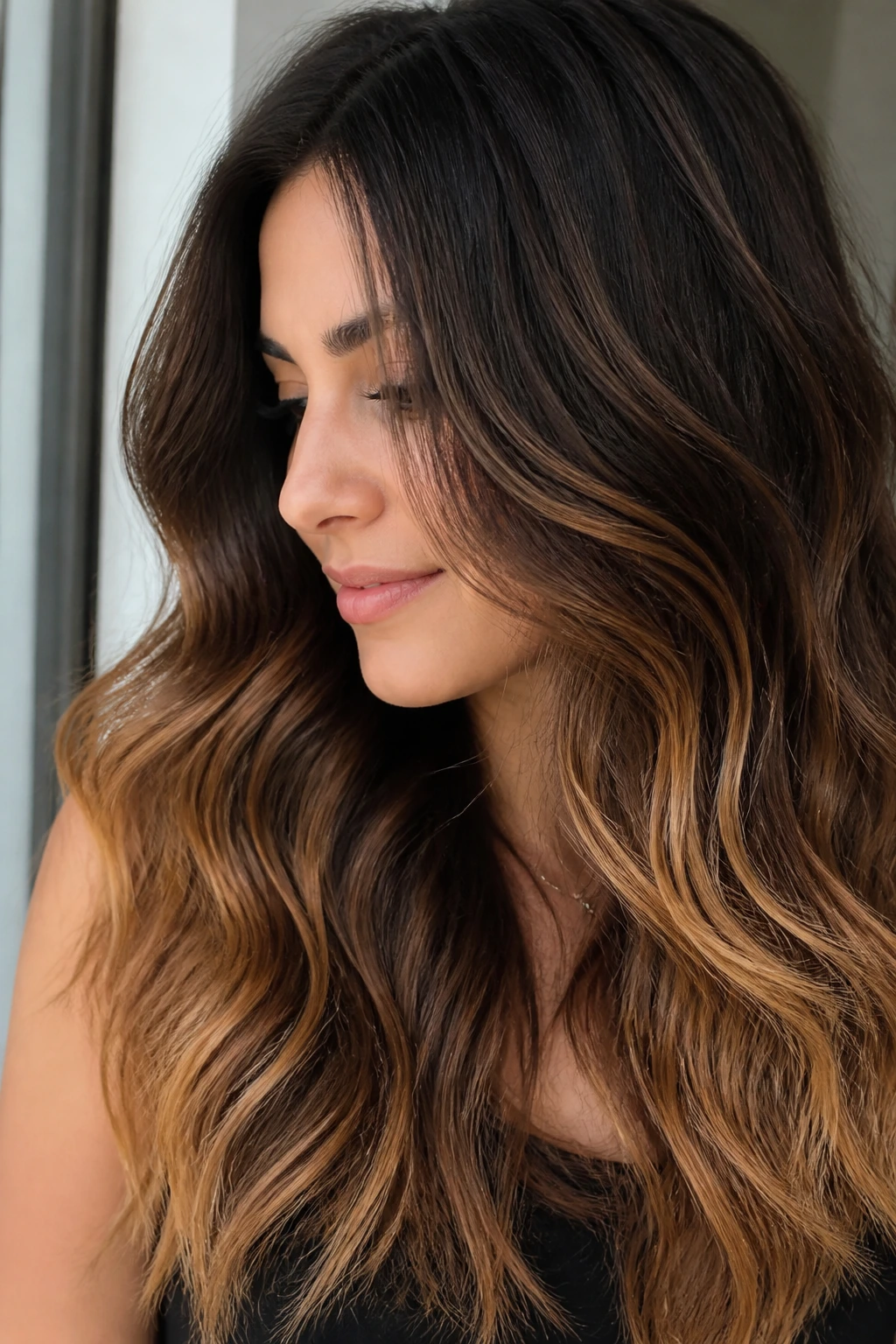
This is for people who want the color to glide from dark to light without a hard line. Espresso at the root, toffee through the mids, and a slightly lighter finish on the ends gives wavy hair a long, fluid look that feels deliberate. The gradient matters more than the exact shade names.
A melt like this looks best when the lightest pieces stay one to three levels above the base. If you push the ends too blonde, the wave pattern can break apart visually and the hair starts looking thinner. Keep the transition soft and the shine high.
This is the kind of color I recommend to anyone who hates root touch-ups. The grow-out is easy because the root shadow is built in from the start. It is low-drama color, and I say that as a compliment.
6. Bronze Halo Lights
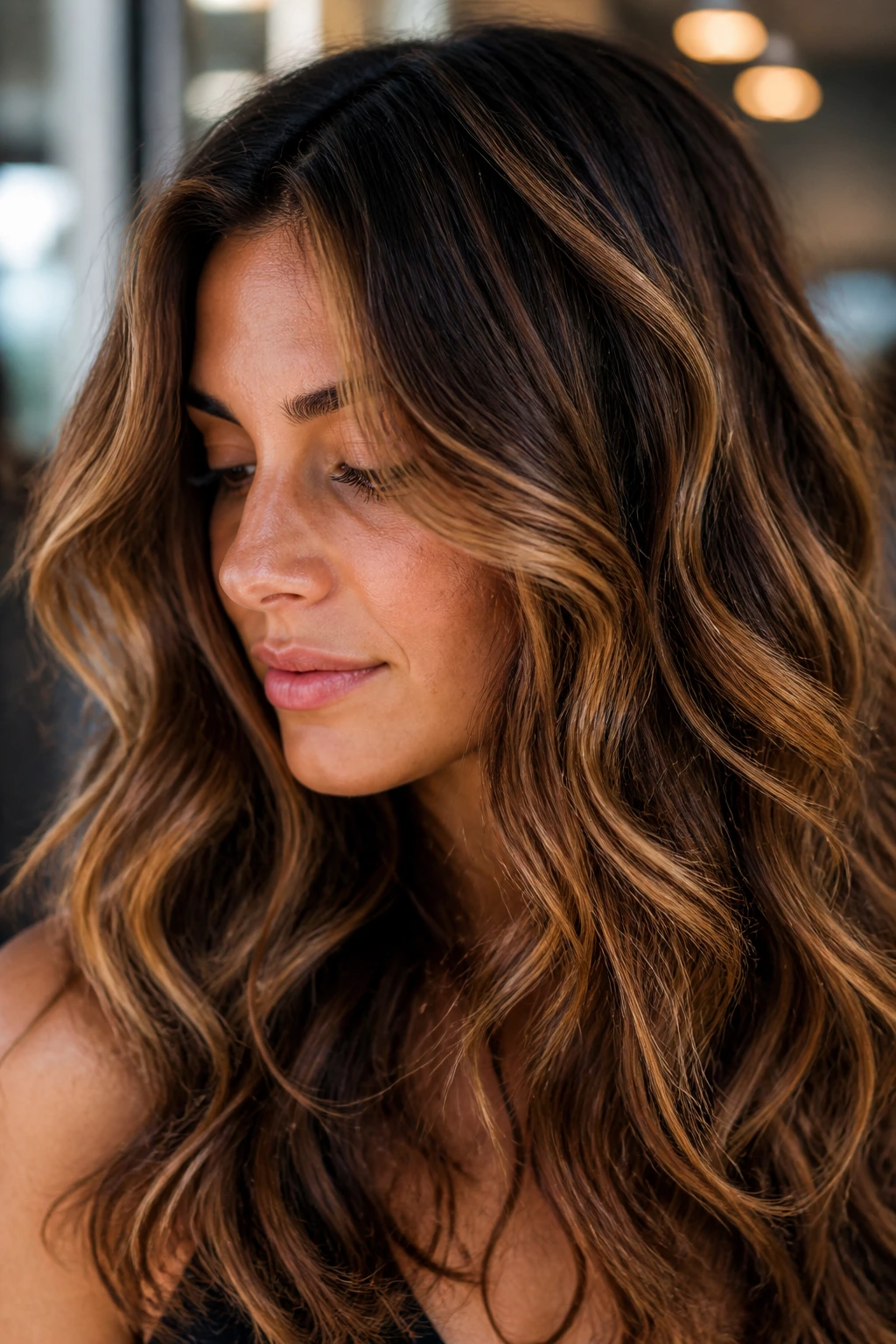
Bronze halo lights are warmer than mushroom brown, cooler than caramel, and prettier than people expect. They sit around the crown, temples, and upper sides of the head, so the light catches at the top of the wave instead of only at the ends. That placement makes the hair look fuller right away.
I like bronze on medium to deep brown bases because it adds shimmer without turning the whole style golden. The tone is especially kind to olive and neutral skin tones. On wavy hair, bronze gives you that soft metallic edge without going full reflective.
If the hair is thick, this shade helps break up heavy-looking sections. If the hair is fine, keep the streaks narrow so the bronze threads read as glow, not stripes.
7. Beige Blonde Foilayage
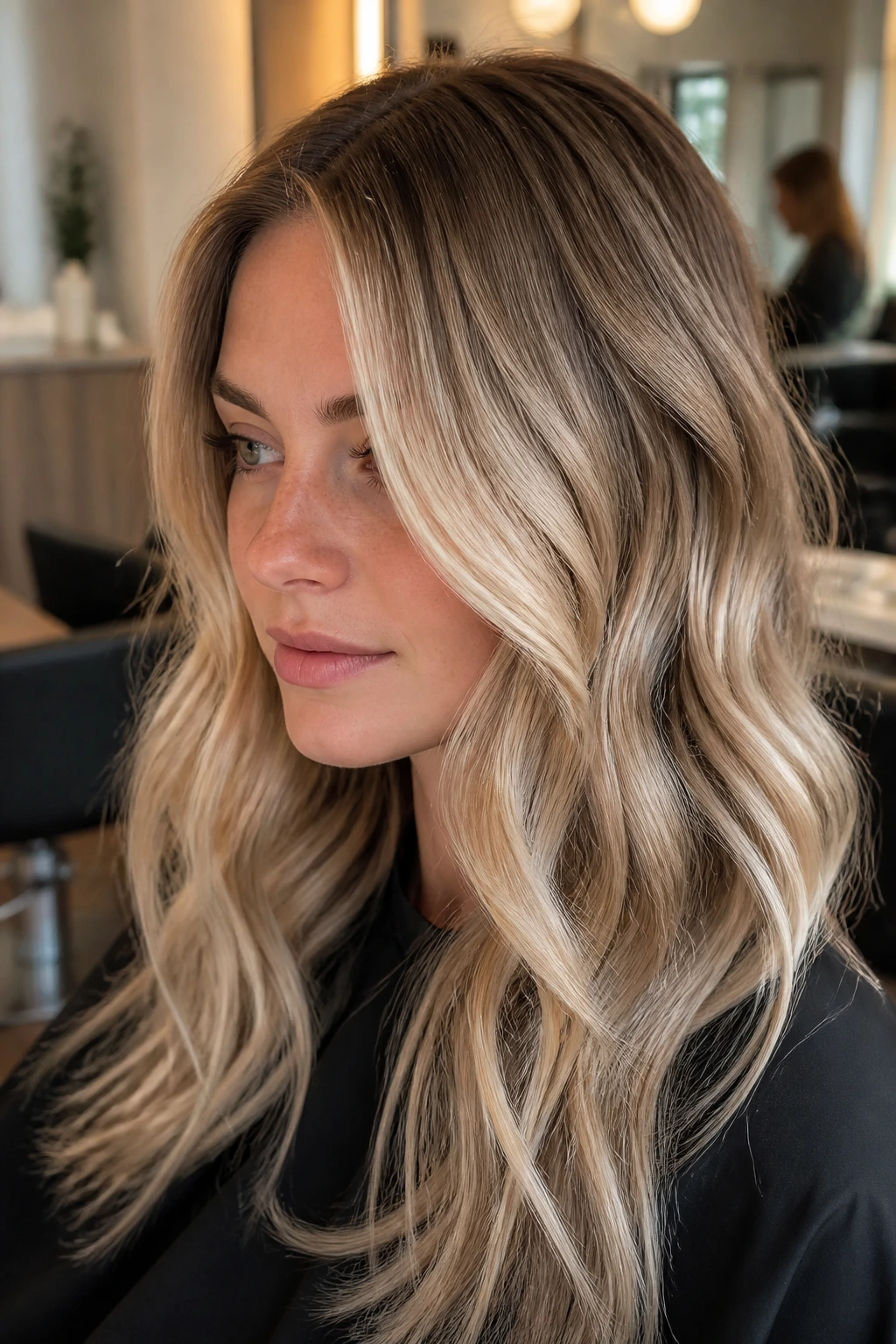
Foilayage is one of those salon terms that sounds fussy until you see the result. You get lift from the foil and softness from the hand-painted placement, which is a smart combination for waves because the color can climb higher near the face and stay subtler through the back.
Beige blonde keeps the result from looking too warm or too icy. It is the middle lane: clean, soft, and easy to wear. On wavy hair, beige looks especially good when the root stays slightly deeper, because the contrast makes the bends more obvious.
This one suits people who want brightness but not the obvious root line of traditional blonde highlights. If you air-dry a lot, foilayage can still read clearly because the pieces are placed where waves naturally separate.
8. Soft Auburn Veil
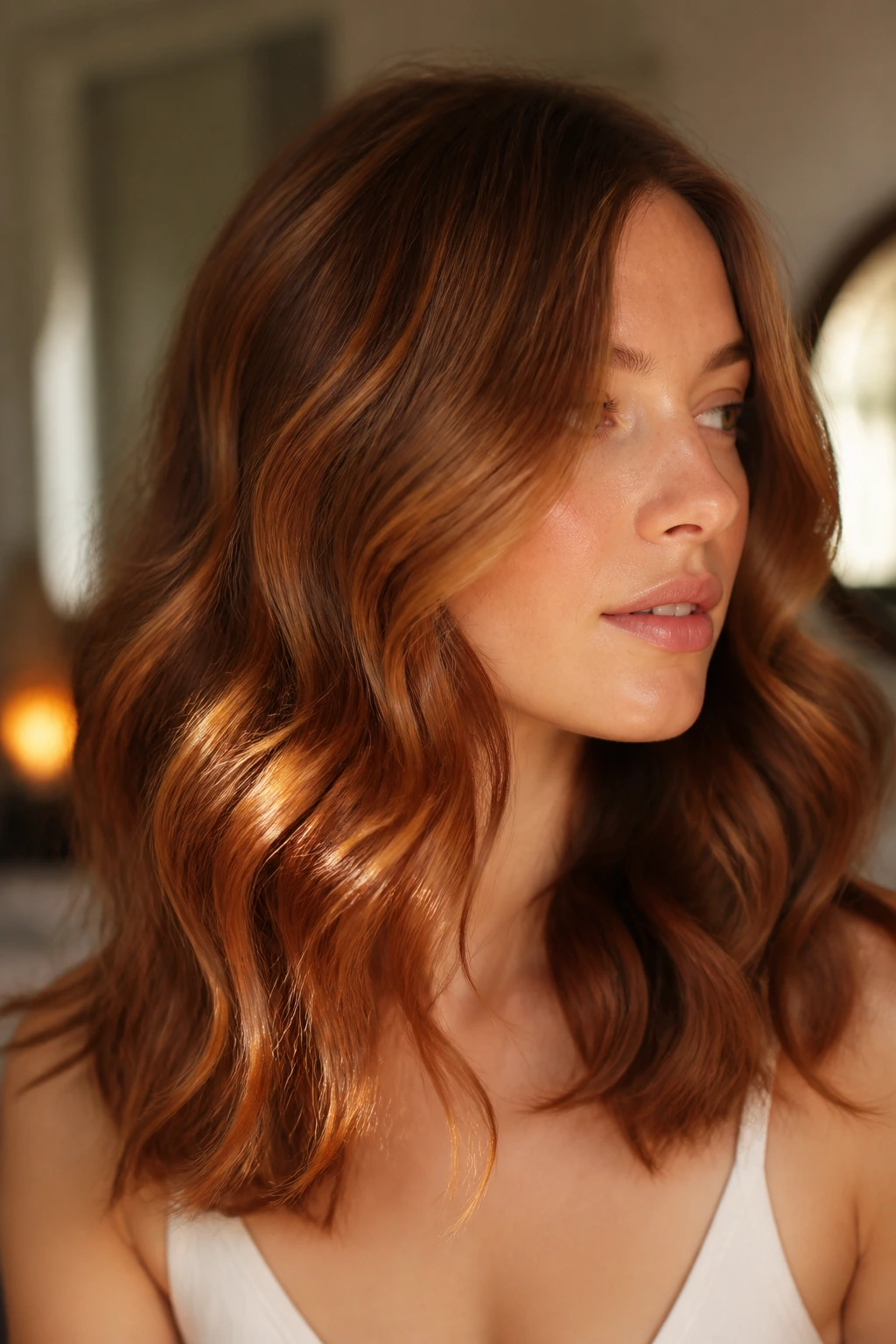
Soft auburn is the color for someone who wants warmth with a little depth, not a full copper blast. The effect is almost like a transparent red-brown veil laid over the waves. In sunlight, it glows. Indoors, it settles into a richer brown-red that still has movement.
This works best when the highlights are semi-permanent or gloss-based, especially on previously colored hair. Auburn can turn bricky if it is pushed too hard, and that is not the same thing at all. On wavy hair, a softer auburn keeps the texture looking plush.
I like this on shoulder-length cuts because the color can move from root to tip without getting lost. A sulfate-free shampoo helps preserve the tone, and cool water at the rinse stage keeps the red from slipping out too fast.
9. Icy Beige Ends
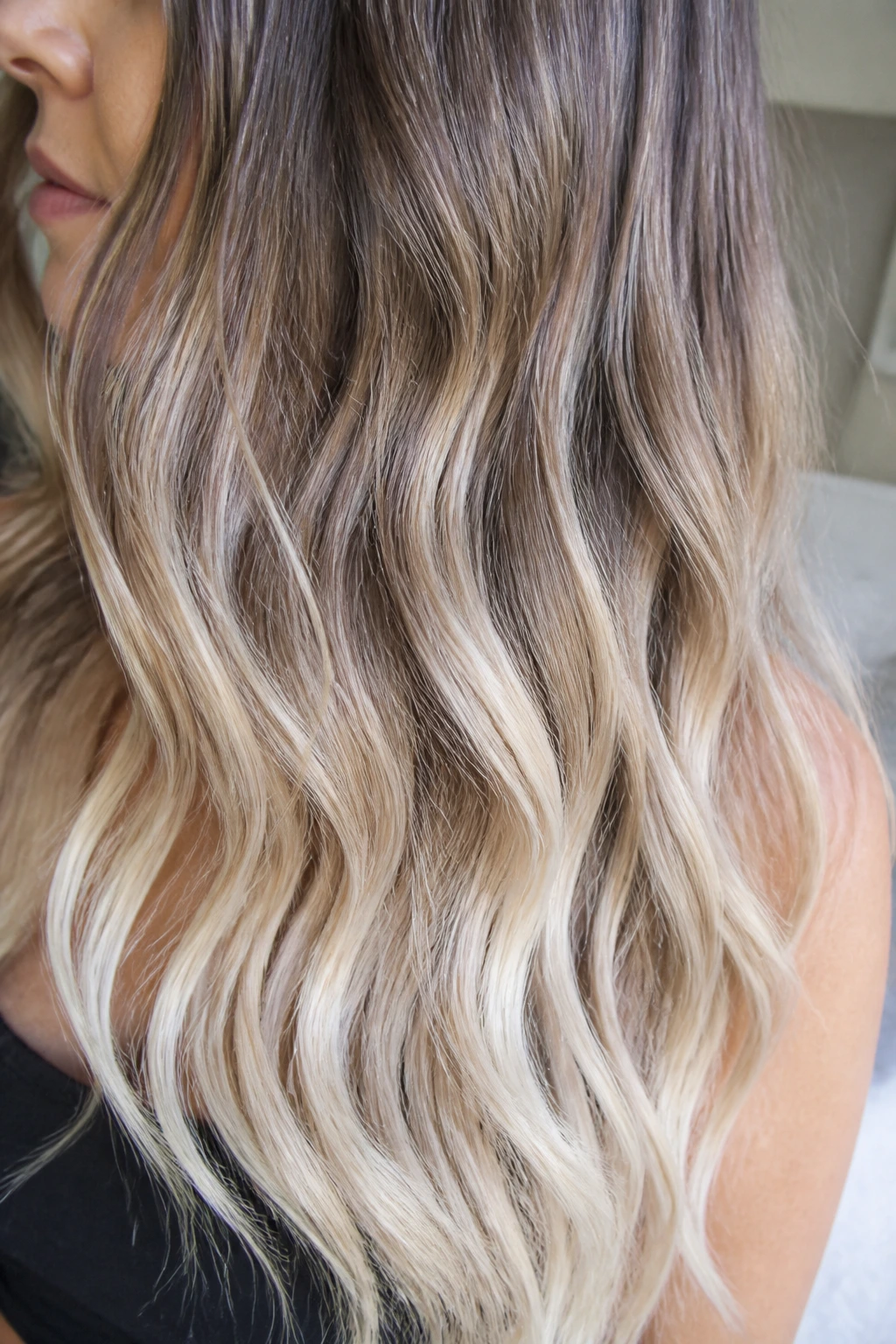
Icy beige ends are the cool-girl version of ombré, but they work best when the transition is gradual. You want the brightness concentrated at the lower half of the hair with a neutral root shadow and a beige base underneath the frost. That keeps the ends from looking bleached-out and thirsty.
On wavy hair, the icy pieces show up in the bends first, then soften at the troughs. That gives the color movement. If the ends are too stark, the wave pattern can go stiff; if they’re too warm, the icy effect disappears.
This idea is strongest on dark blonde or medium brown hair that can lift cleanly. If your hair is porous, I’d keep the ends more beige than platinum. Porous ends can swallow toner and go muddy fast.
10. Cinnamon Swirl Highlights
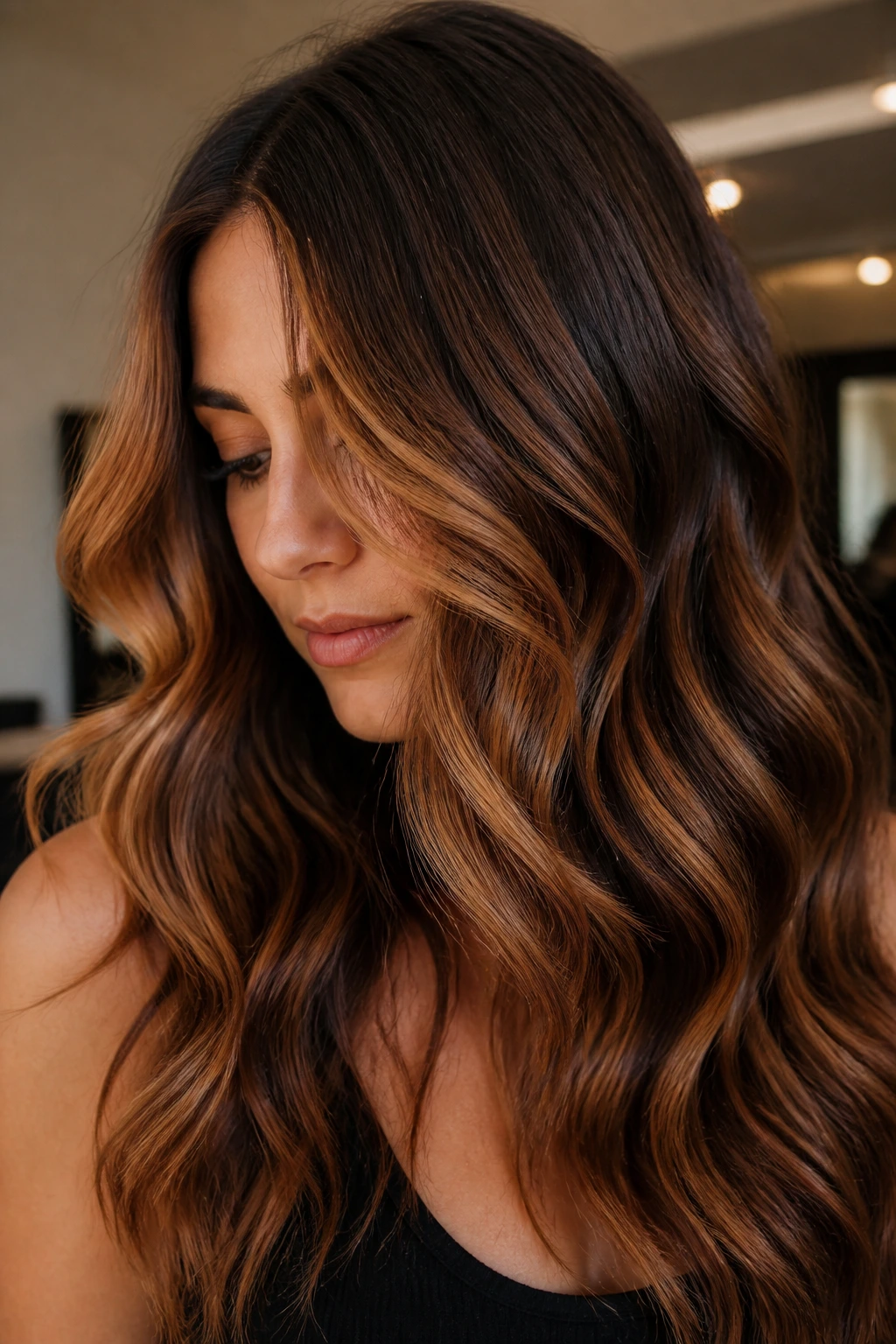
Cinnamon swirl is what I recommend when you want warmth but still want depth. The shade sits between copper and caramel, which makes it feel richer than gold and less loud than red. On wavy hair, it flashes differently every time the wave turns.
The placement should be loose, not stripey. Think thin cinnamon threads through the mids and a few brighter pieces near the face. That gives the hair a swirled, layered look rather than a streaked one.
This color is especially good on chestnut or dark brunette bases. It keeps the overall palette warm, and warm palettes tend to make waves look rounder. If your hair needs visual softness, cinnamon does the job.
11. Rose Gold Tint
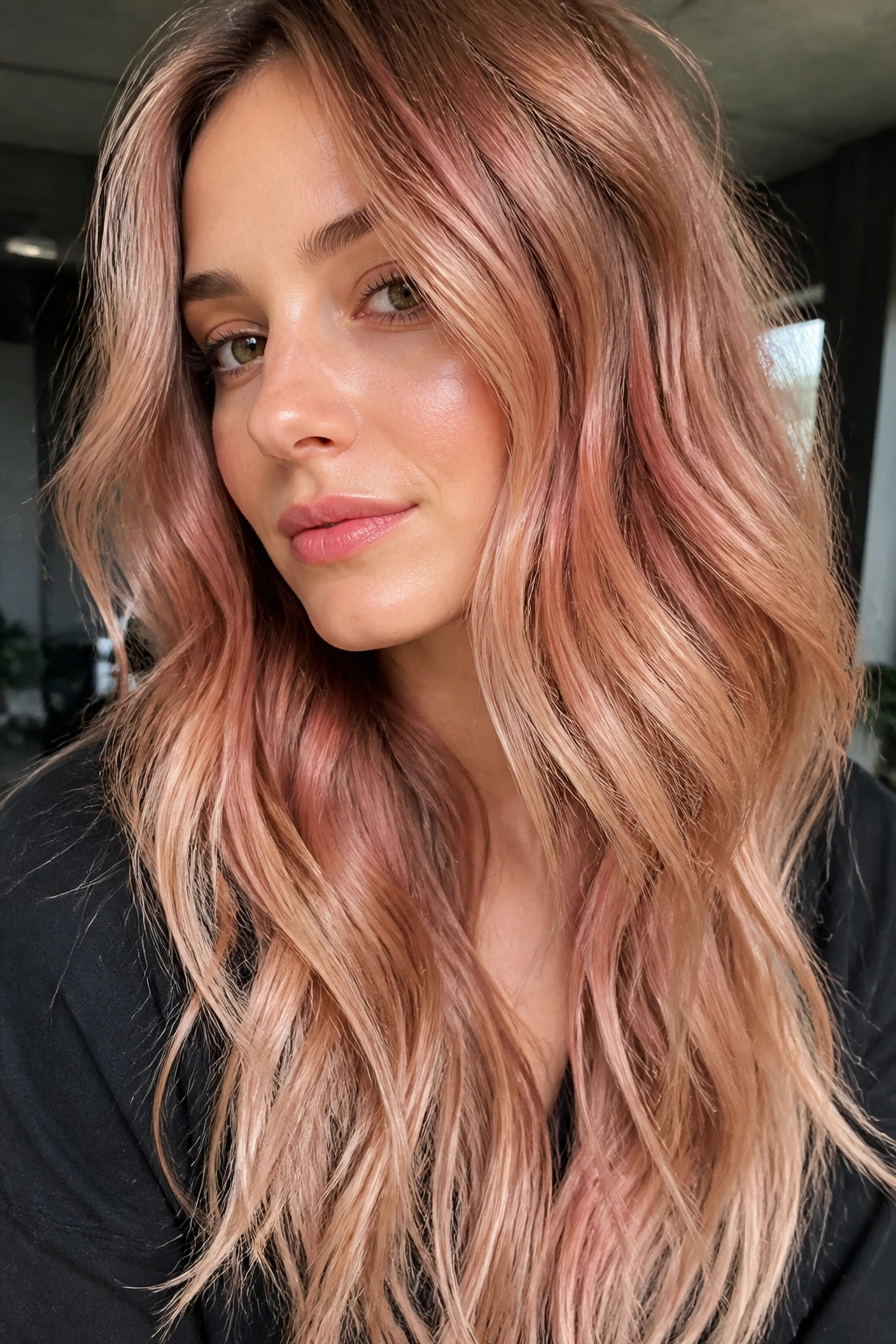
Rose gold can go cheesy fast if it’s too pink, so the smarter version is subtle. On light brown or blonde wavy hair, a rose gold tint adds a soft blush that shows up best when the hair bends. It’s one of the few pink-toned ideas that can still feel grown-up.
I like rose gold as a gloss, not a permanent commitment, unless the client truly wants that color to stay. The best version looks peach-pink at certain angles and beige-gold at others. That shift is what makes it work on waves.
This is a good fit for shorter cuts and airy layers because the tone sits on the surface more than deep in the hair shaft. If you wear a lot of cool makeup, rose gold gives the hair enough warmth to keep the face from looking washed out.
12. Golden Bronde
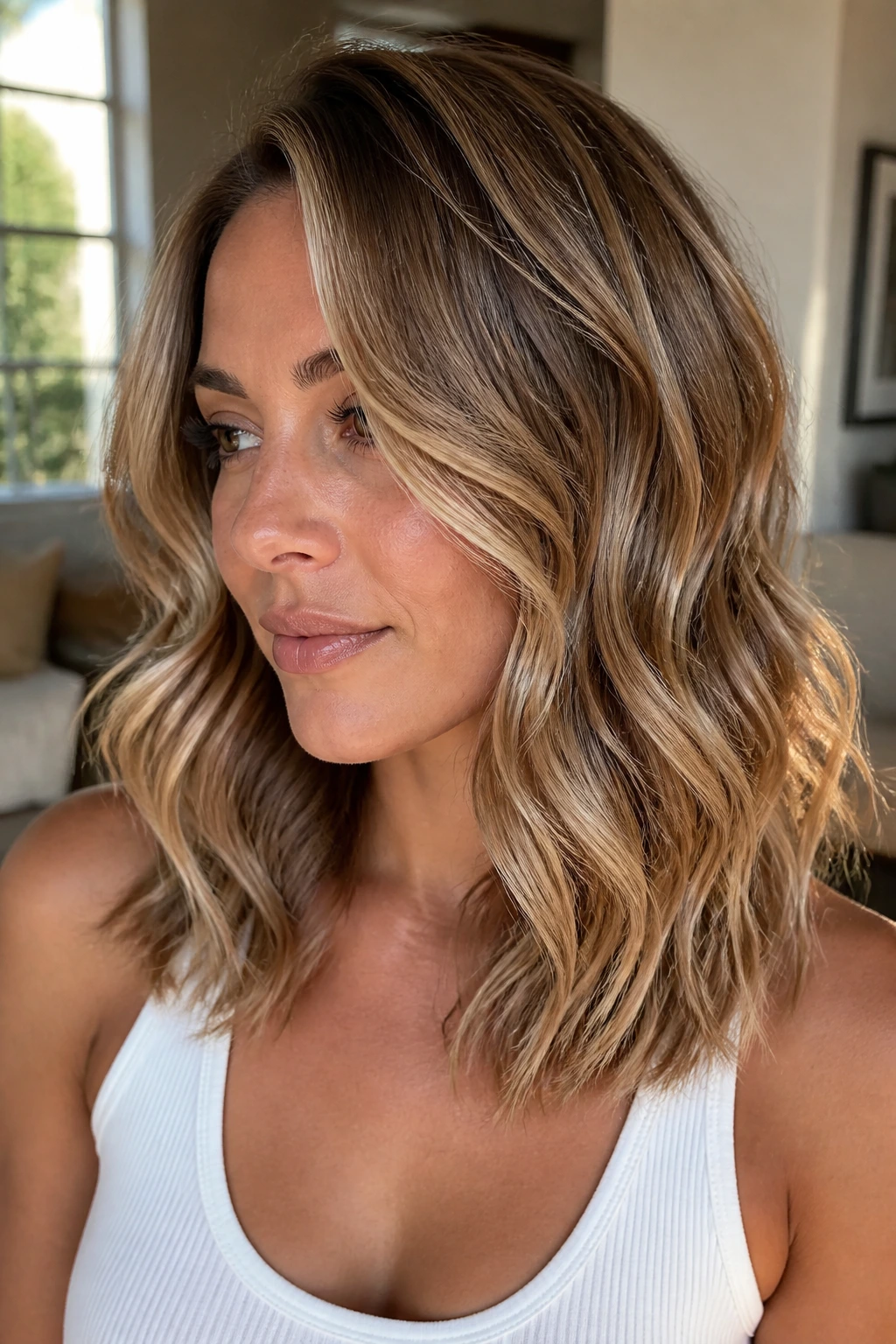
Bronde is the middle road between brunette and blonde, and honestly, that middle road can be the prettiest one. Golden bronde leans warm enough to catch light, but not so light that you lose the base color. On waves, that balance makes the hair look thicker and more dimensional.
The key is to keep some lowlight depth underneath the golden threads. Without it, bronde can flatten into a washed blonde-brown blur. With it, the wave pattern stays visible all the way through the mids and ends.
I like this color on medium-density hair because it adds movement without demanding constant toning. It also works across a wide shade range, which is useful if you’re not chasing a dramatic change.
13. Ash Brown Shadow Highlights
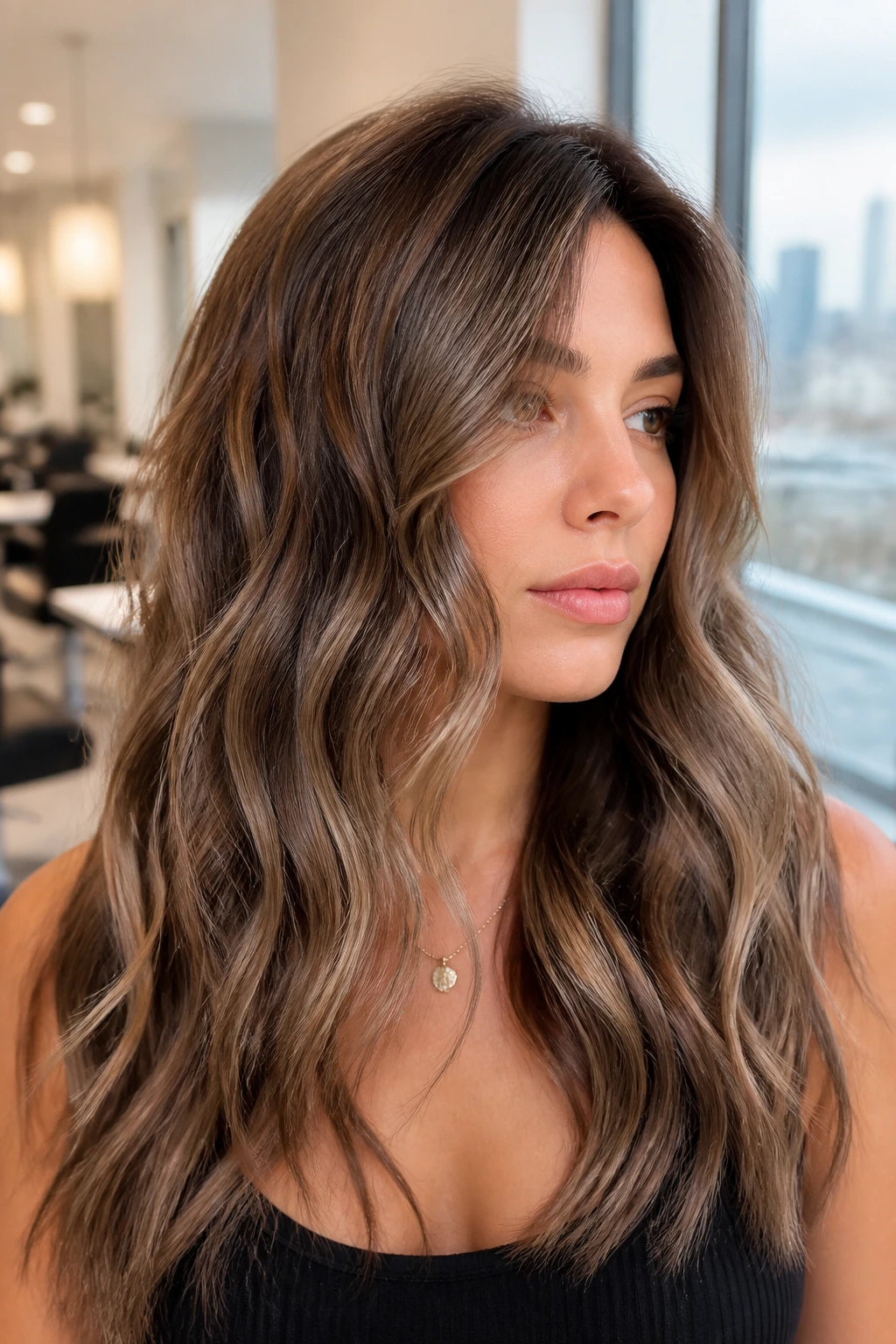
Ash brown highlights are for people who want dimension, not brightness. They live only a notch or two above the base, but the cooler tone makes the wave pattern sharper. The result is subtle in a way that still changes the whole head.
This is a smart choice if your natural hair is dark brown and you want the color to stay understated. On wavy hair, ash ribbons can make the haircut look fuller by separating the surface into layers of tone. That’s the whole trick.
A shadowy highlight like this needs a good haircut. If the ends are blunt and the waves are weak, the color can disappear. Long layers or a textured lob give the ash pieces somewhere to play.
14. Sunlit Copper Balayage
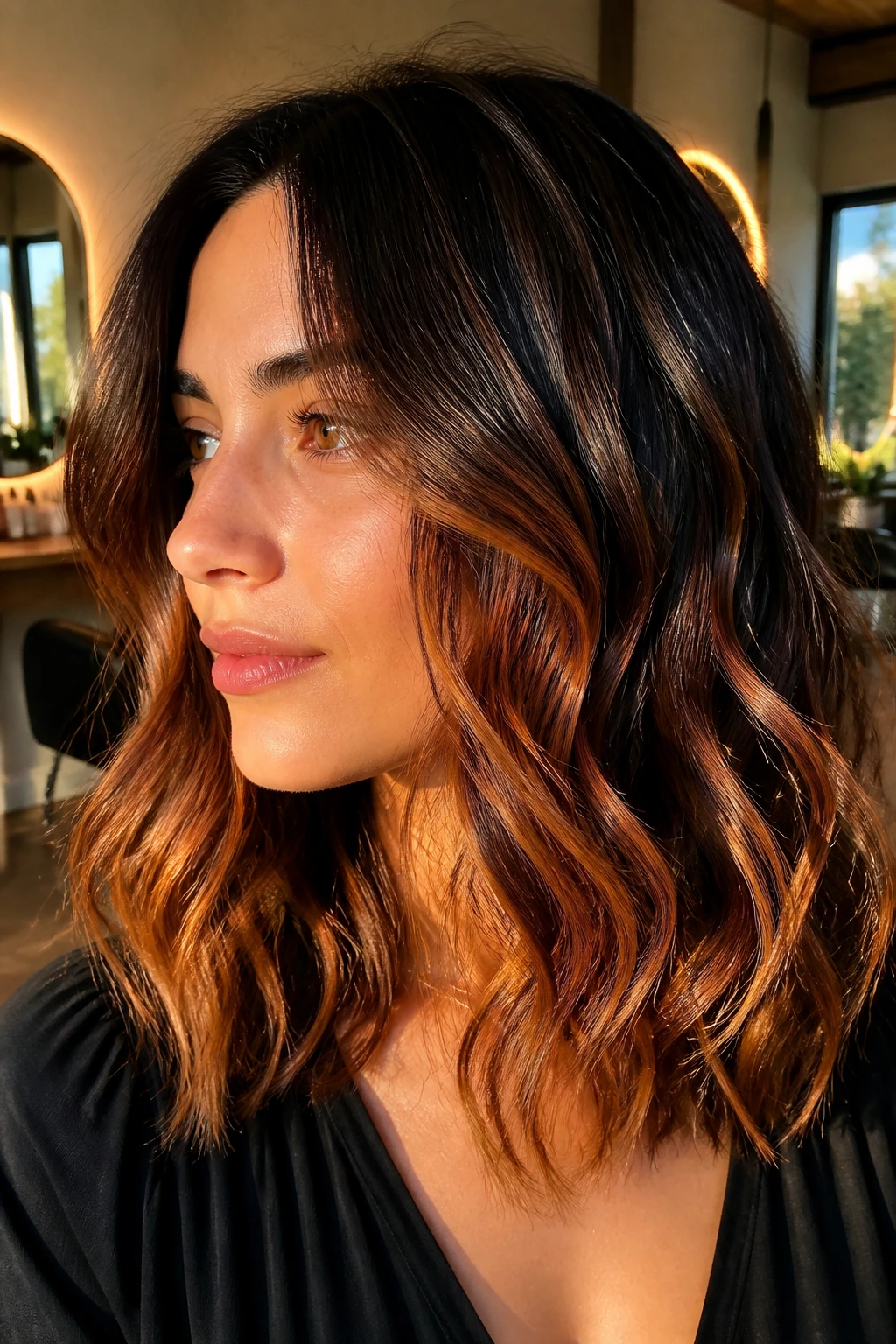
This is the brighter cousin of the copper money piece. Instead of staying near the face, sunlit copper balayage threads through the mid-lengths and ends, which gives the whole wave a warm, glowing cast. It is lively, but it still has room to breathe.
I like this on brunette hair that needs warmth more than lightness. Copper brings movement to hair that can otherwise look a little heavy, especially when the wave pattern is loose. The shade catches in the curves and makes the bends feel more deliberate.
The downside is fade. Copper does not stay vivid forever, and that is fine if you plan for it. A color-depositing mask every couple of weeks keeps the tone alive without making the hair look painted on.
15. Vanilla Cream Babylights
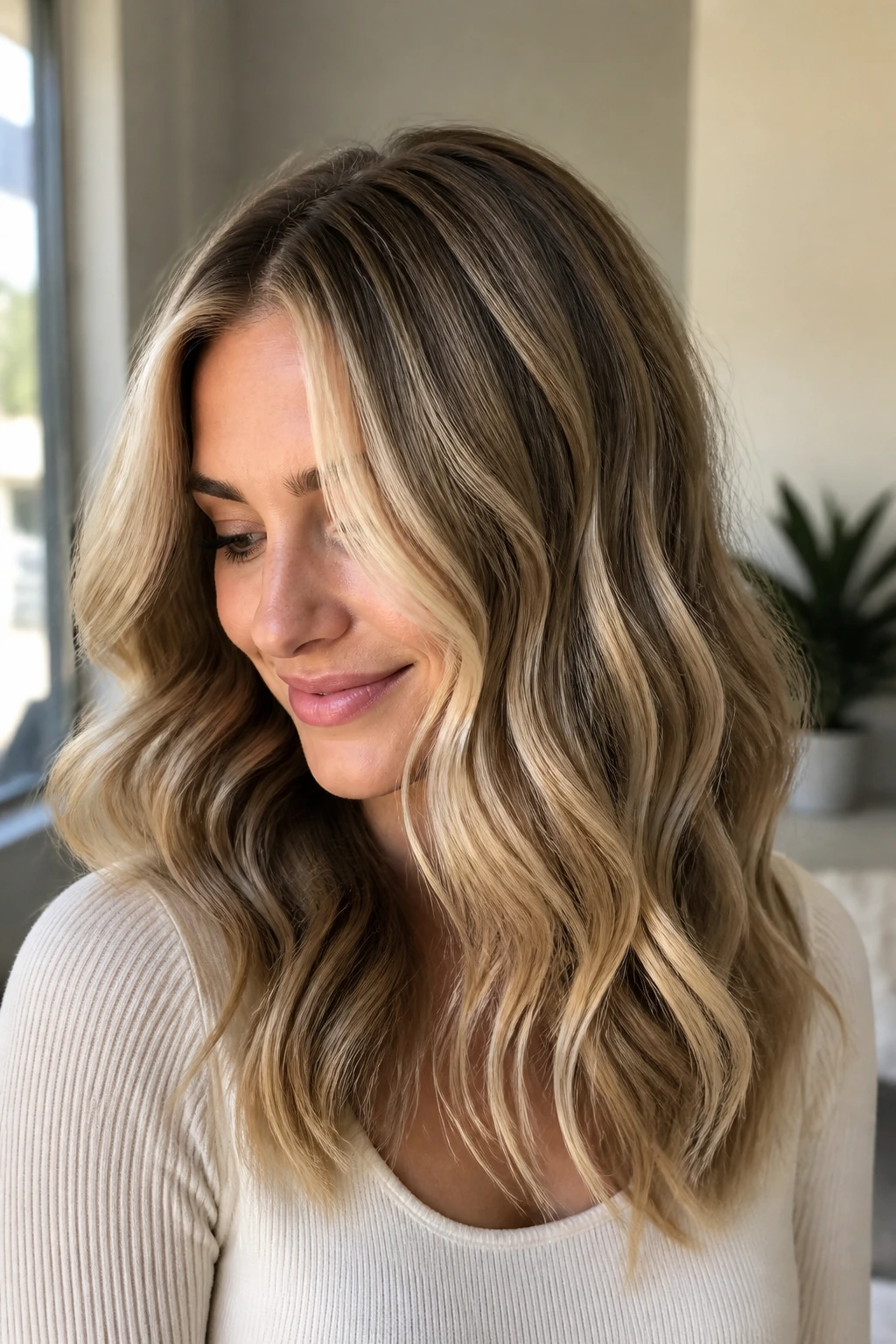
Vanilla cream babylights are delicate in the best way. They’re softer than a bright blonde and paler than beige, which makes them ideal for fine wavy hair that needs movement without obvious chunks. The tiny ribbons blend into the texture and make the hair look airy.
This is one of the easiest ways to brighten light brown or dark blonde waves without losing the softness of the base. Because the pieces are so fine, they do not overwhelm the pattern. Instead, they sit inside it.
I’d avoid going too thick with vanilla cream. The beauty of the look is that it feels like light scattered through the top layer, not a set of stripes. A light toner or gloss can keep the cream tone from drifting yellow.
16. Mocha Ribbon Lights
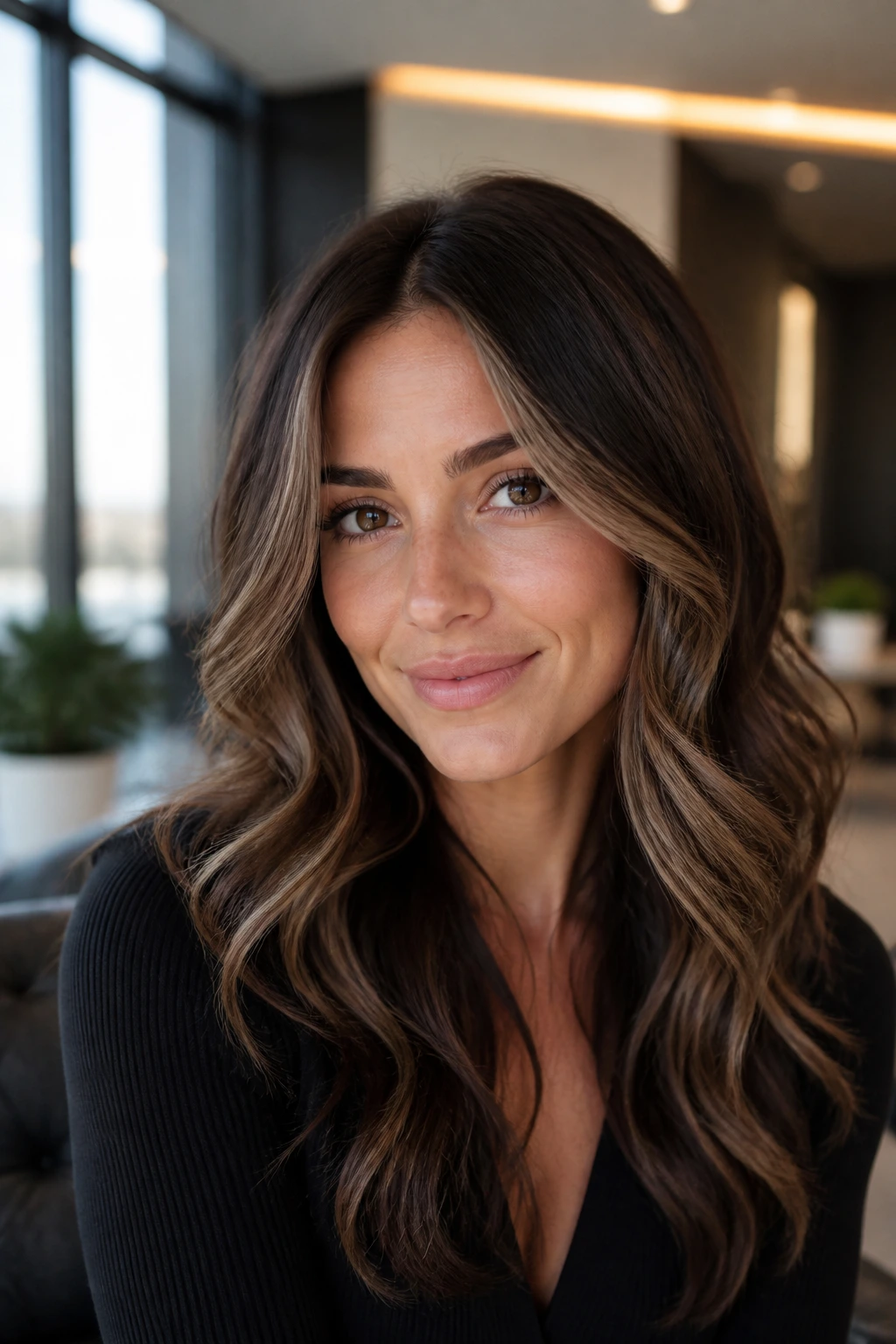
Mocha ribbon lights are a quiet kind of pretty. They do not scream highlight at all. They just make dark wavy hair look more layered by lifting a few pieces around the face and through the canopy a shade or two above the base.
This is the right call if you want dimension without a lot of maintenance. On waves, the mocha pieces show up when the hair moves, which is half the pleasure. From a distance, the hair still reads dark and rich; up close, you see the ribboning.
It is a good fit for people with professional dress codes or anyone who wants their color to look expensive without looking loud. A clear gloss between appointments keeps the mocha shine sharp.
17. Strawberry Brunette Pieces
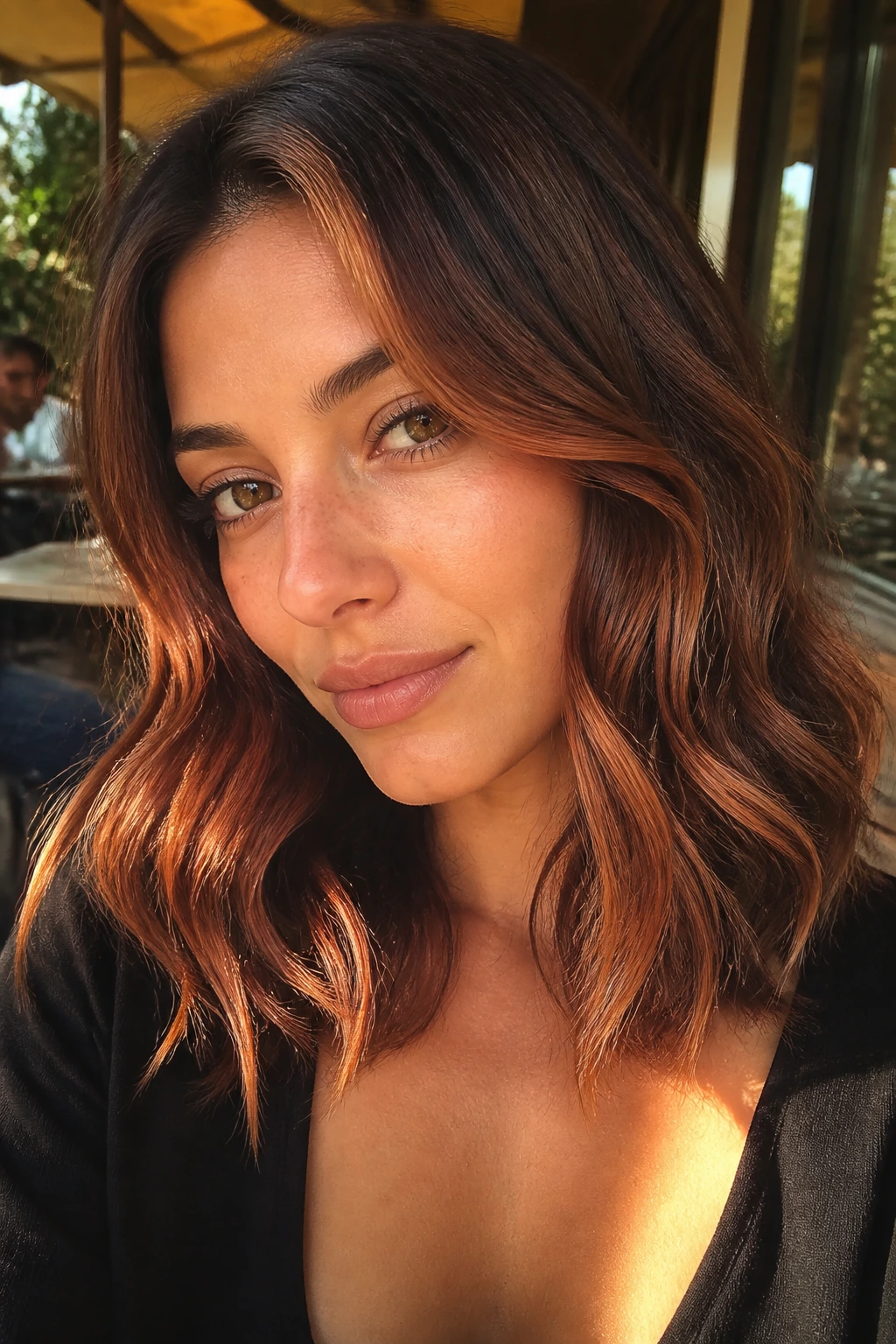
Strawberry brunette is a sneaky color. It sits between brown and strawberry blonde, which means it gives waves a warm, almost peachy-red undertone without turning the whole head copper. When the light hits, it feels soft and slightly playful.
I like this on hair that already has a warm natural base. It can be woven through the mids and around the front pieces so the waves show a little red-gold every time they move. The color is especially nice on medium-length cuts because the contrast doesn’t get lost.
If you want a red tone that won’t take over the room, this is the one. It fades in a gentler way than true red, but it still gives the hair a lived-in glow. A color-safe conditioner matters here; red tones fade fast when the wash routine is rough.
18. Smoky Quartz Highlights
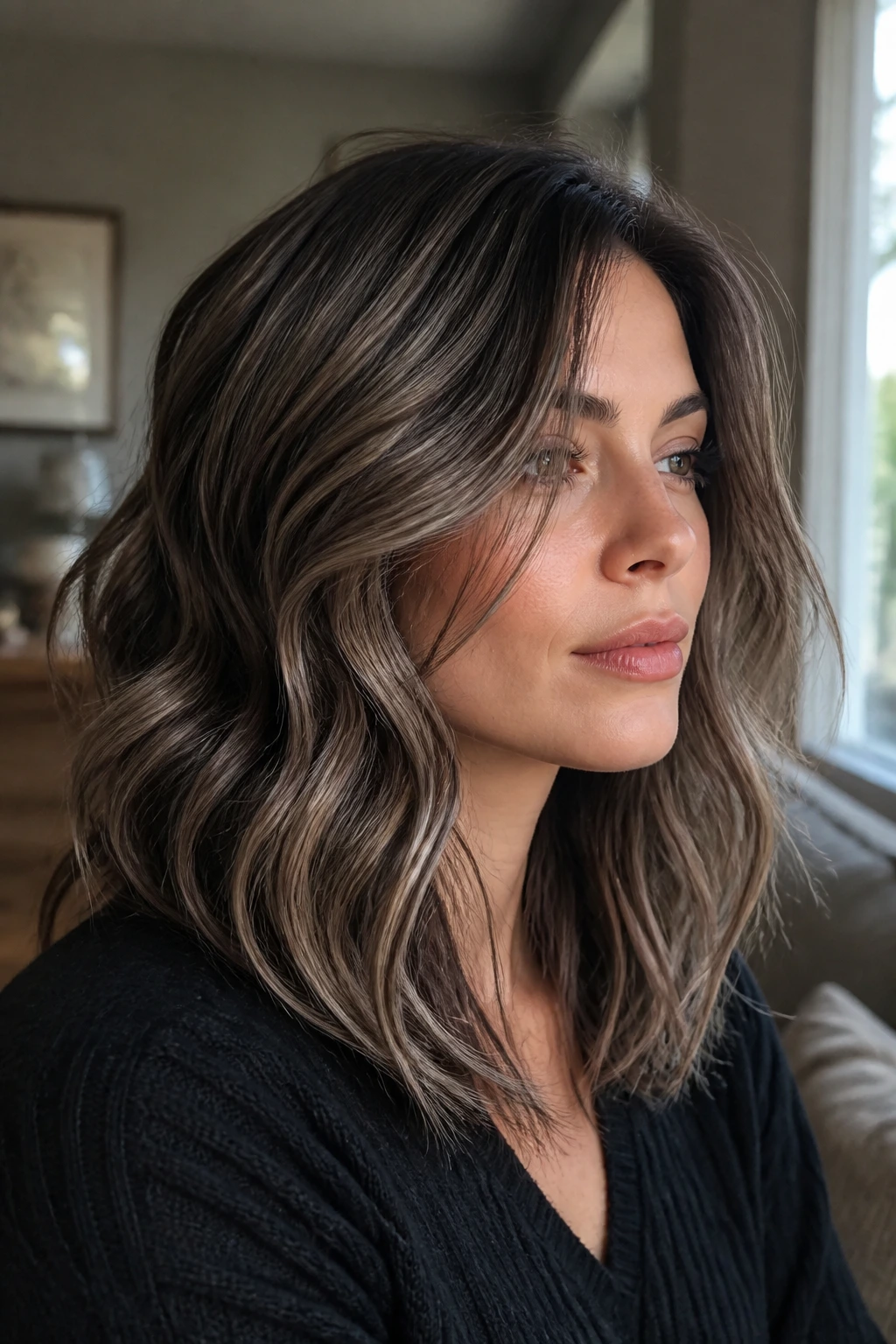
Smoky quartz is a cool brown-silver blend that looks polished without looking stiff. It works on wavy hair because the mixture of ash, beige, and brown shifts as the waves turn. One minute it reads soft taupe, the next minute it looks mineral-dark and sleek.
This is a nice choice for darker brunettes who want something more interesting than plain brown but are not chasing blonde. The tone is subtle enough to keep the base dominant. That means the grow-out is easy, and the wave pattern stays in charge.
If your hair leans naturally cool, smoky quartz can be gorgeous. If your hair is very warm, you may need a gloss now and then to keep it from turning muddy. That’s the tradeoff.
19. Butterscotch Face Frame
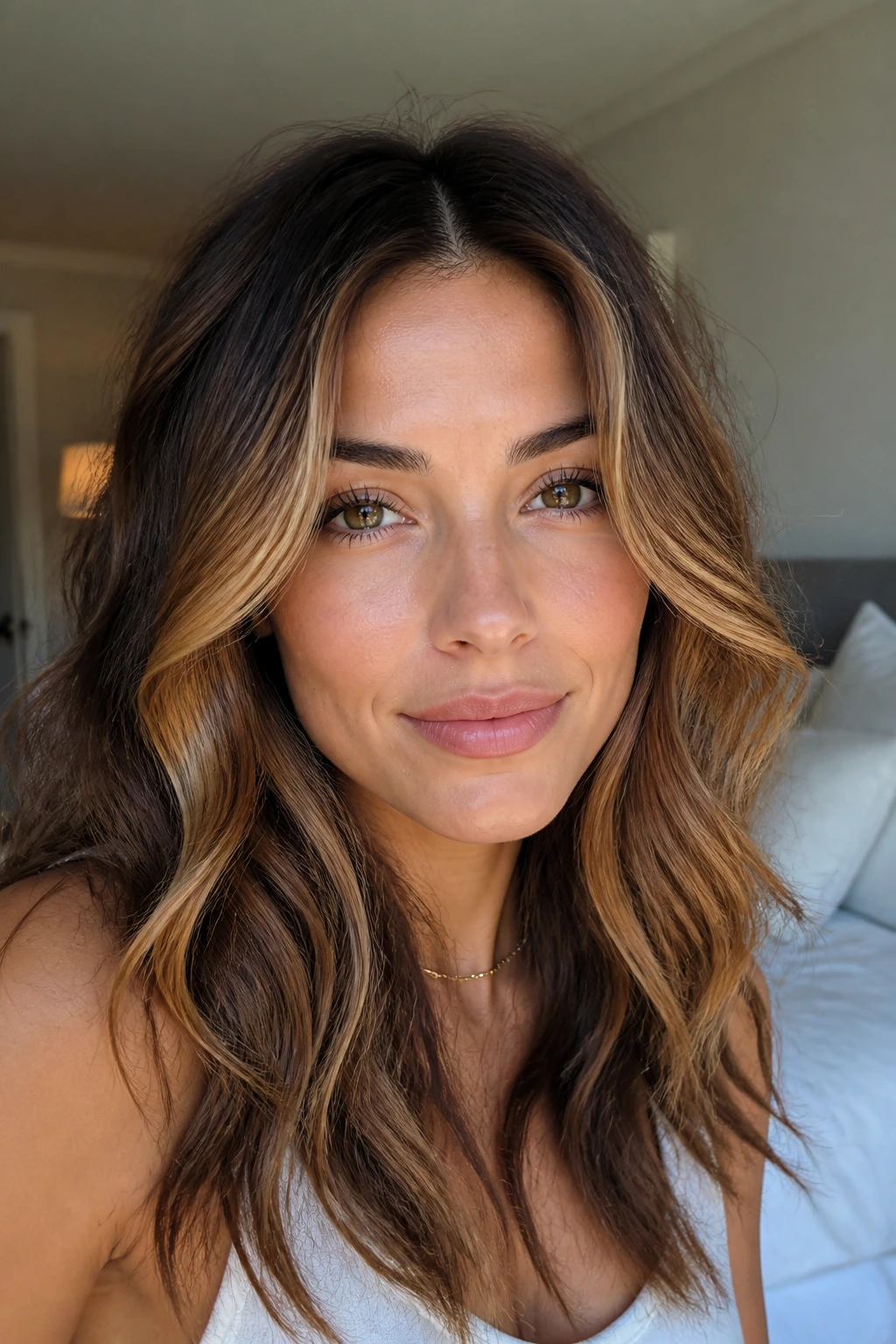
Butterscotch around the face is the hair equivalent of turning a lamp toward your cheekbones. It adds warmth, brightness, and a little sweetness without needing a full color overhaul. On wavy hair, the front pieces curl and bend in a way that makes the shade read even softer.
This works especially well when the rest of the hair stays deeper. That contrast makes the front frame pop. If the whole head is lifted equally, the butterscotch loses some of its impact.
I like this for lobs, shags, and layered medium cuts because the front pieces can swing forward naturally. It also plays nicely with curtain bangs if you want that split-fringe effect to look intentional rather than heavy.
20. Pearl Blonde Weave
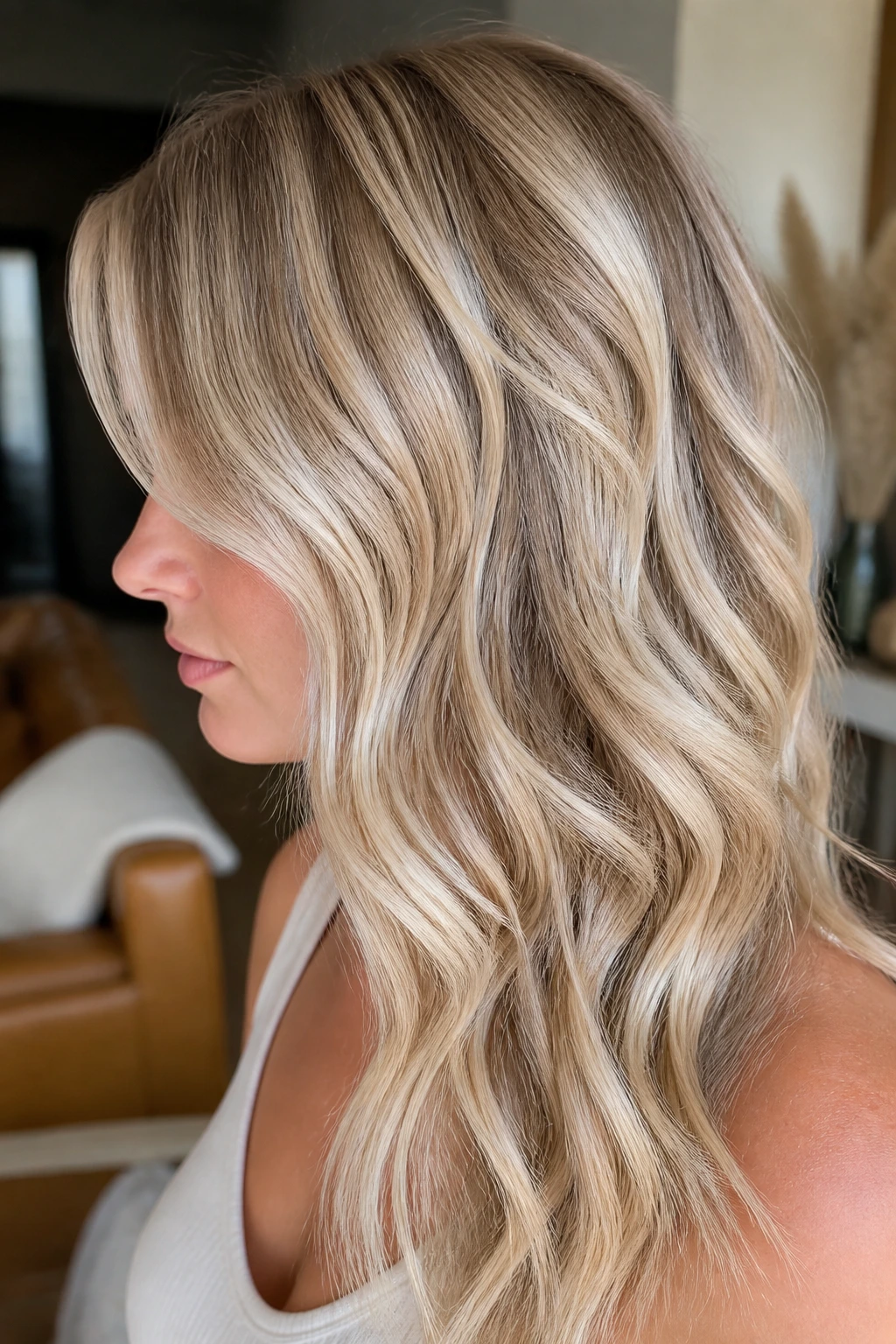
Pearl blonde is cooler than champagne and softer than platinum. It has a pale, almost creamy sheen that makes wavy hair look smooth without turning it flat. The weave part matters here; you want the blonde to be stitched through the hair in fine, visible lines, not dropped in as huge panels.
This is a strong choice for someone who already lives in the blonde family but wants a cleaner, less yellow finish. On waves, pearl blonde reflects light across the bends, so the color can look more expensive than a simple pale blonde.
If your hair is coarse, keep the light pieces a little thicker so the tone does not disappear inside the texture. If your hair is fine, babylights are cleaner. Either way, purple shampoo stays in the routine.
21. Chocolate Cherry Dimension
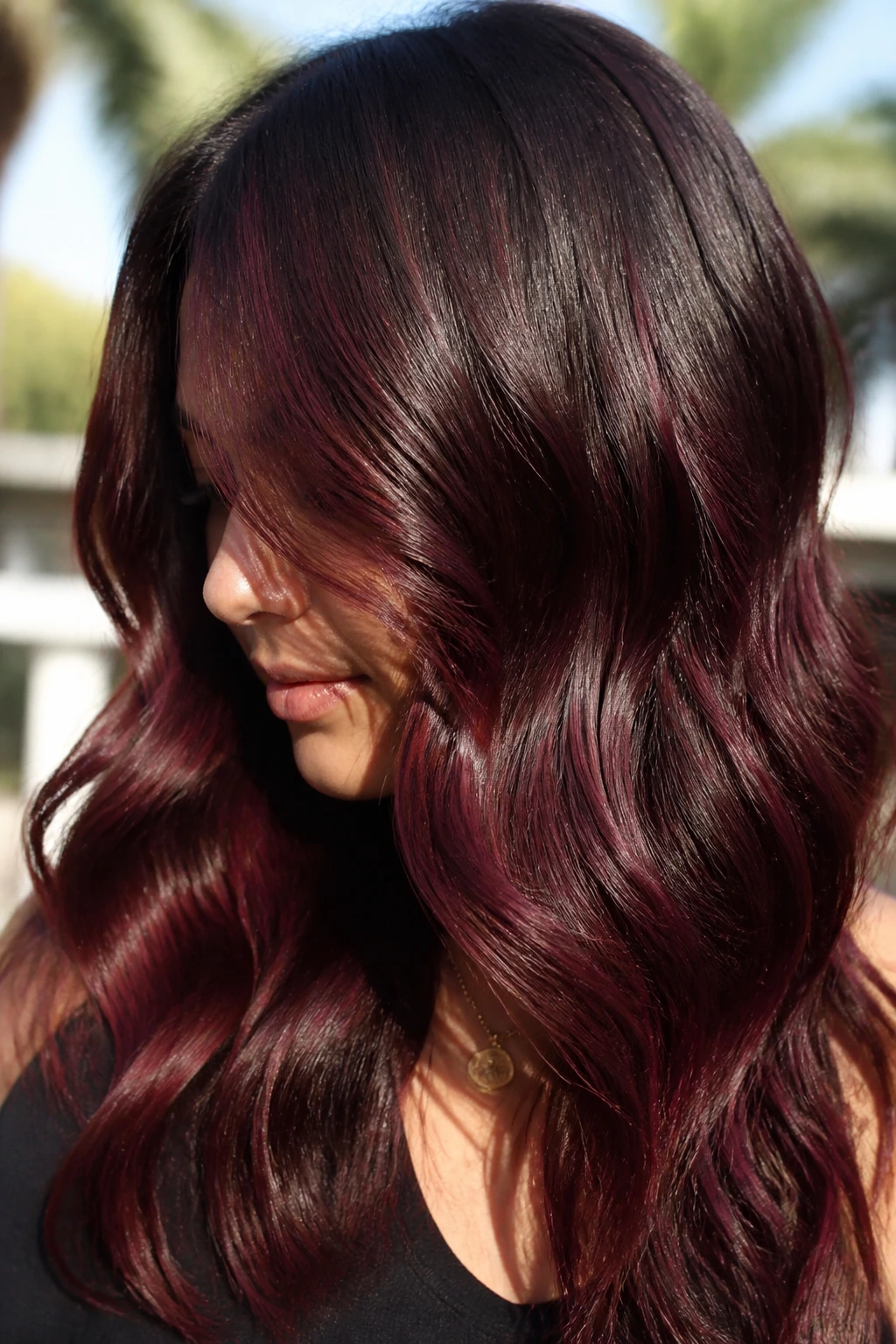
Chocolate cherry is dark, glossy, and a little dramatic without being loud about it. It works by slipping burgundy-red threads into a chocolate base, so the waves catch a wine-colored glow in sunlight and a deeper brown indoors. That shift is the entire point.
On wavy hair, chocolate cherry can look richer than a plain red because the darker base keeps it grounded. I especially like it on thicker hair where the wave pattern needs a bit of visual breaking up. The red threads stop the hair from reading as one heavy block.
This is a good option if you want something richer than copper and less common than caramel. It also fades into a deep berry brown that still looks intentional. A gloss helps a lot here.
22. Caramel Dip-Dye Ends
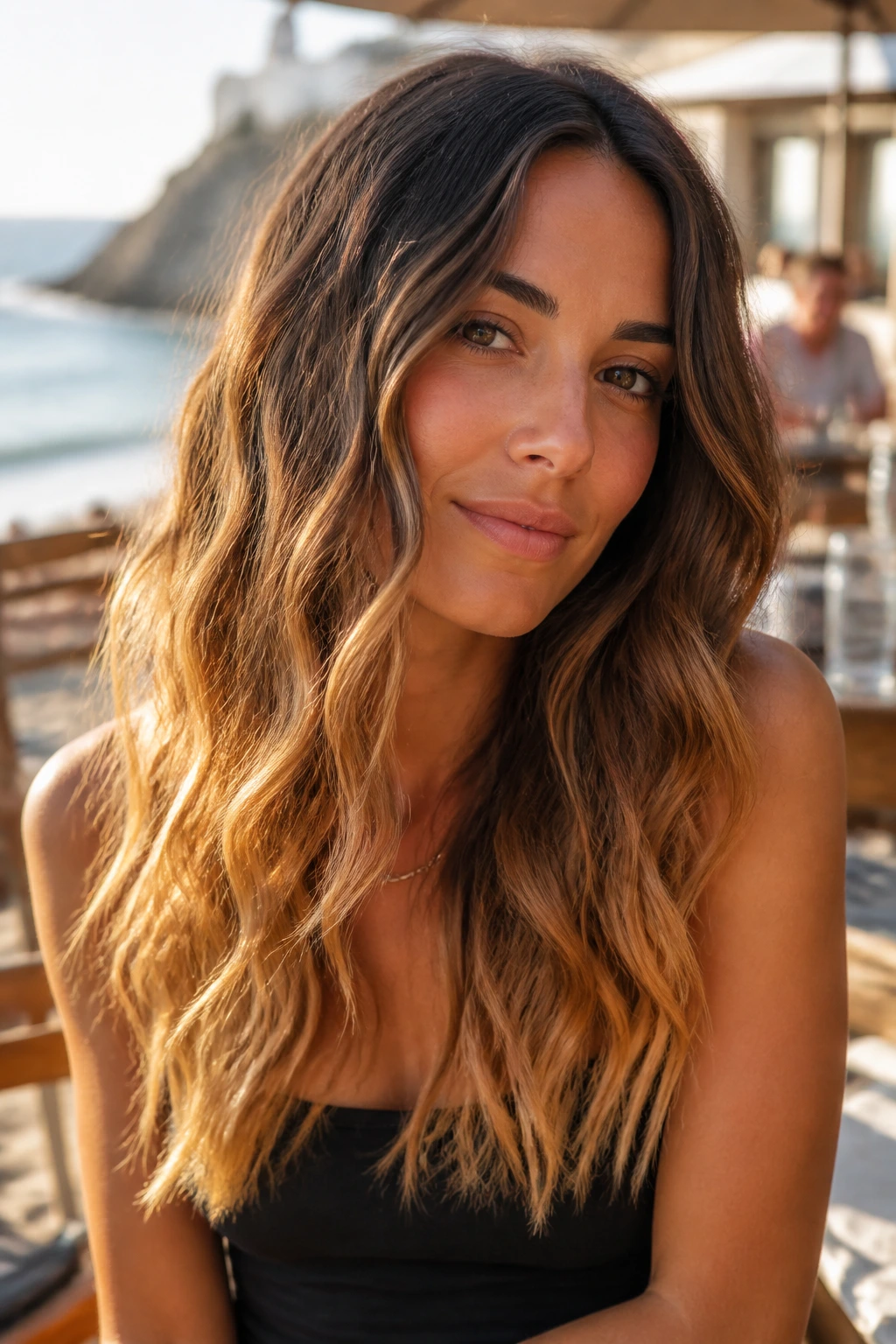
Dip-dye ends can look dated if the line is blunt. Soft caramel dip-dye on wavy hair is different. The transition should be blurred, with the brightness building gradually from the mids to the tips so the color looks like it has settled there over time.
This idea is especially good on longer waves where the ends have room to move. A looser wave pattern makes the caramel catch at the tips and underneath the bends, which gives you a beachy effect without chasing a heavy ombré. Keep the root and upper mids deeper so the contrast stays clean.
I like this for people who want the lightest color concentrated where the hair gets the most motion. If the ends are dry, though, go easy. Caramel reads best when the ends still have a little shine.
23. Sandy Beige Streaks
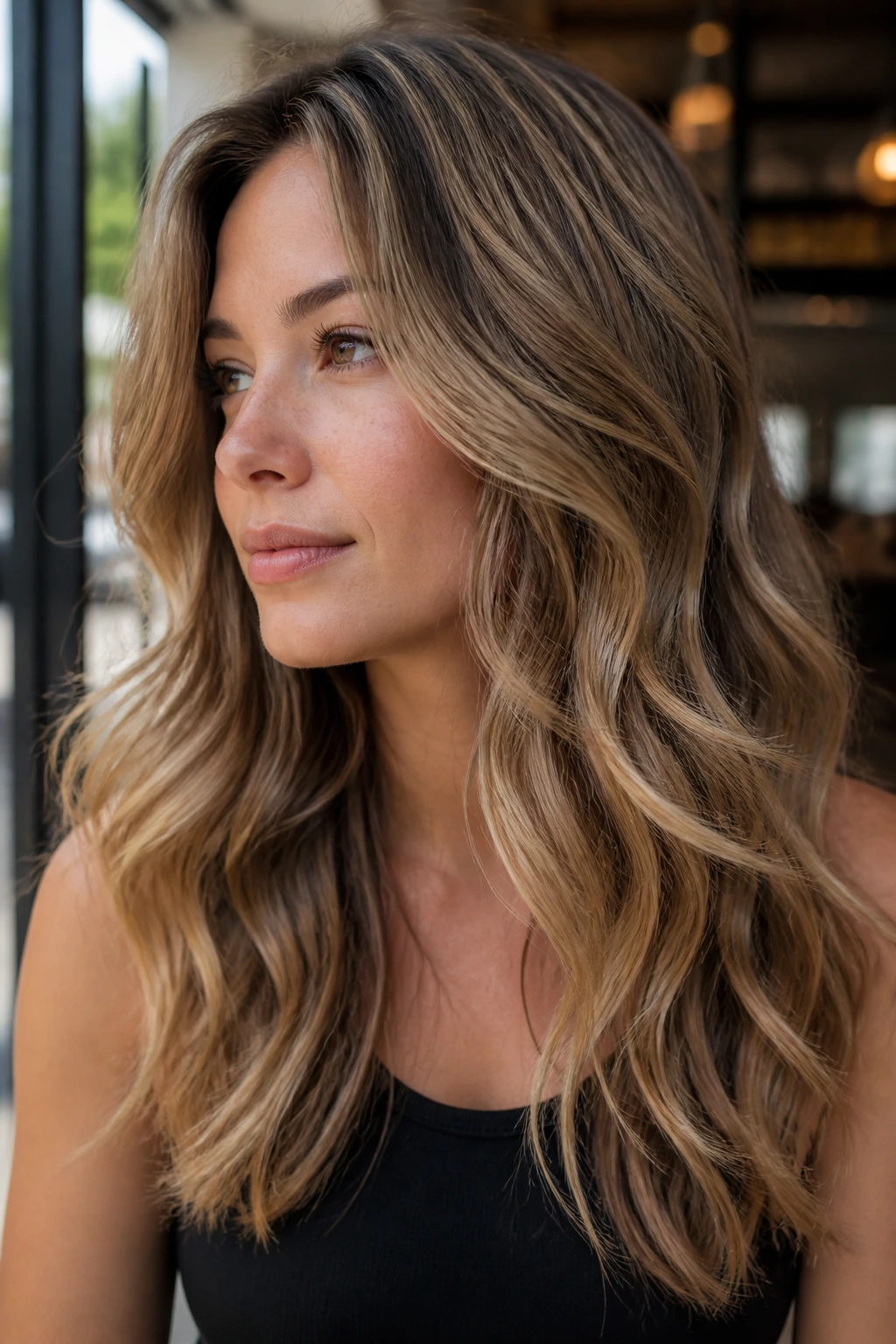
Sandy beige sits in a quiet spot between warm and cool, which is why it works on so many wavy bases. It is not as golden as honey and not as icy as ash. That neutrality makes it one of the easiest highlight ideas to wear if you change makeup or clothing styles often.
The placement should be loose and blended, with pieces through the canopy and a few brighter threads around the face. On waves, sandy beige makes the surface look like it has more air between the strands. That can be a very good thing if your hair feels heavy.
This is one of the better choices for someone who wants to test highlights without committing to a strong tone family. It grows out softly and does not tend to pick up as much brass as warmer blondes do.
24. Platinum Crown Highlights
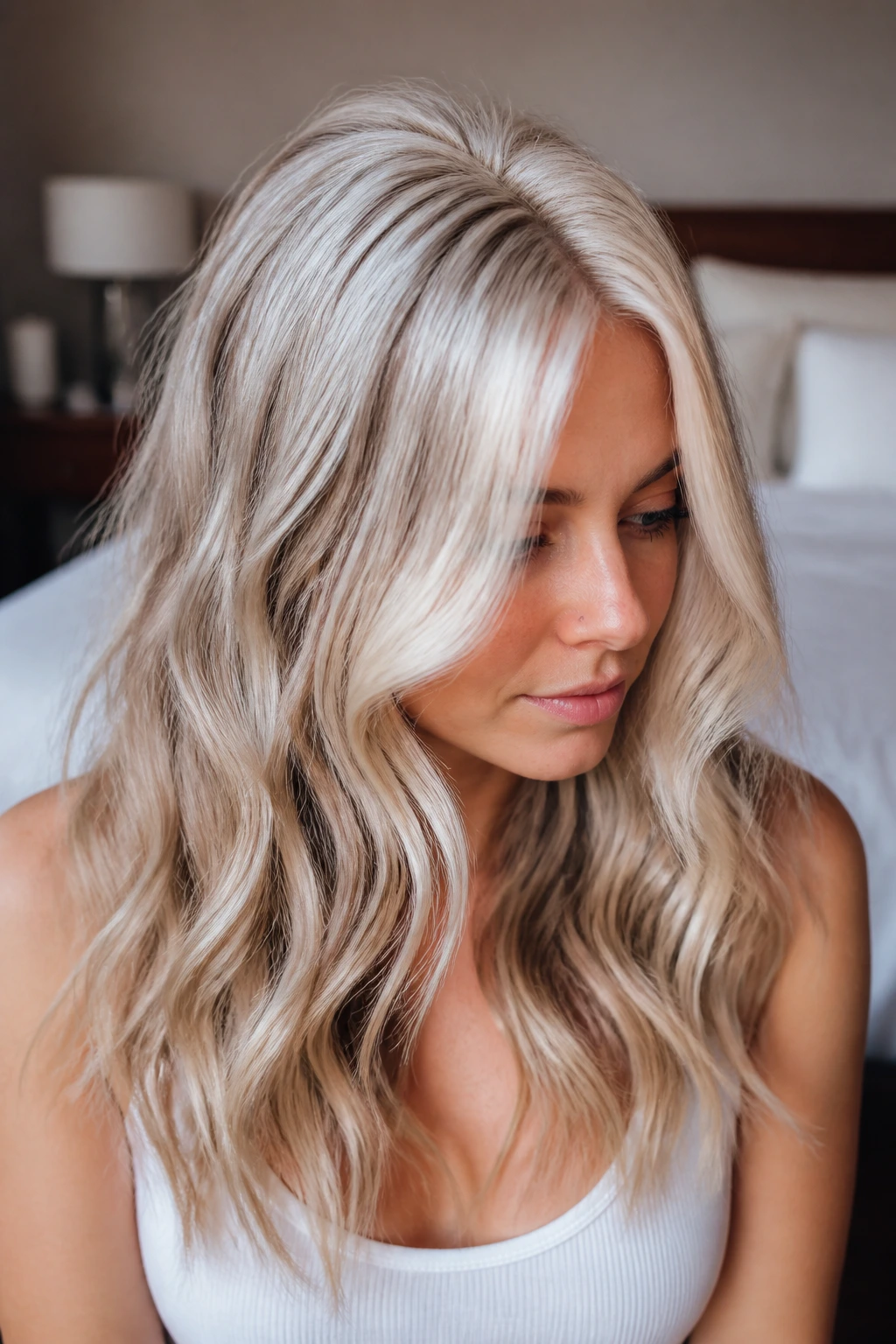
Platinum crown highlights are not full platinum, and that distinction matters. The brightness stays concentrated around the part and the upper crown so the roots lift visually, while the ends can stay softer. On wavy hair, that gives you the feeling of a lighter head without bleaching every inch of it.
I like this when the haircut needs a little lift at the top. Waves can go flat near the crown, especially if the weight is heavy or the part is very fixed. A few platinum pieces there make the whole shape feel higher and lighter.
It’s a bolder look than most on this list, so the tone maintenance matters. If the platinum turns yellow, the effect goes cheap fast. A clean toner schedule and a careful wash routine keep it sharp.
25. Peekaboo Plum Panels
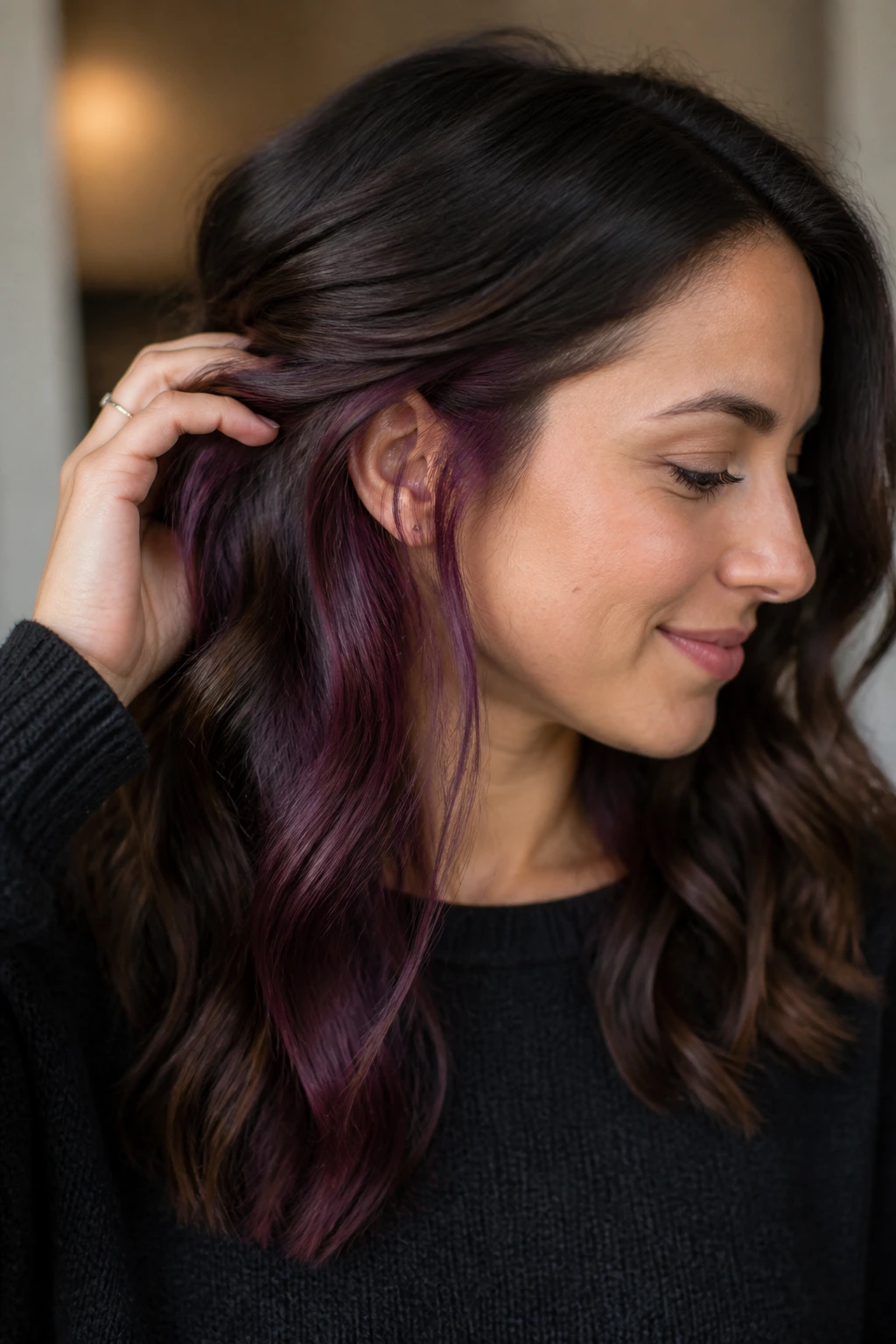
Peekaboo plum is the fun one. The color lives under the top layer, so it only shows when the waves open or when you tuck the hair behind your ear. That hidden placement is why it works so well on wavy hair: the movement reveals the color in flashes instead of all at once.
I prefer plum over neon shades here because it keeps the look rich and wearable. Against a dark brunette or black-brown base, the plum can look almost velvet-like indoors and a bit more red-purple in sun. It is one of the few vivid ideas that still feels grown-up.
If you want personality without a full commitment to fantasy color, this is a smart compromise. It also grows out more quietly than a full-panel vivid look, since the top layer hides a good bit of the transition.
Why Wavy Hair Makes Highlights Read Differently
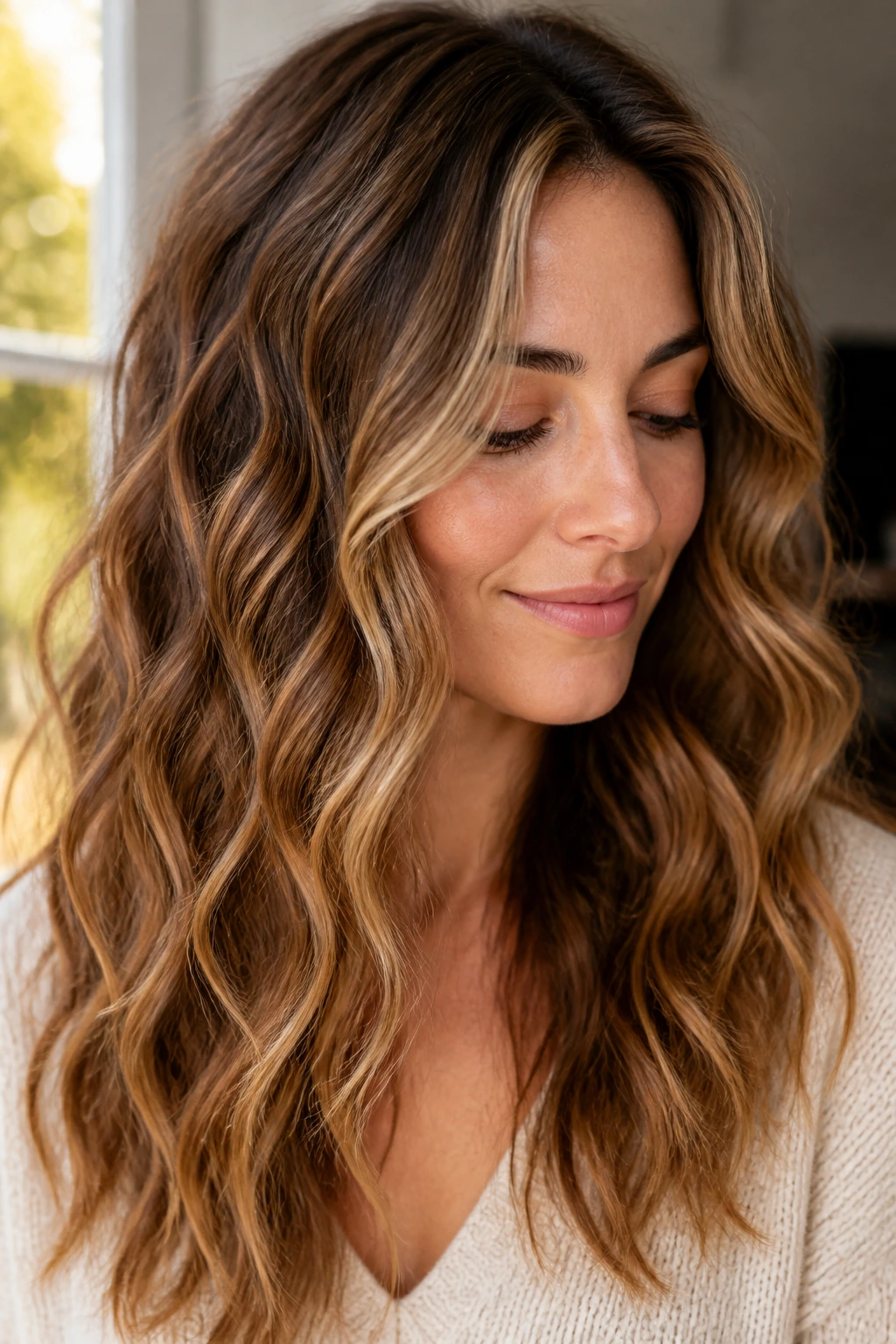
Wavy hair bends light in a way that straight hair cannot fake. Every curve creates a little ridge and a little valley, so a highlight never sits in one flat strip for long. It flashes, disappears, then flashes again as the head turns. That movement is why subtle color can look richer on waves than brighter color does on straight strands.
The real trick is depth. If all the light pieces sit in the same place, the wave pattern gets blurred. If some pieces are painted higher near the crown, some through the mids, and some left to peek out only at the ends, the hair looks fuller and the cut looks more expensive. I keep saying that word because it matters: placement often matters more than the actual shade.
Waves also forgive a little softness. A root shadow, a blurred transition, or a babylight that isn’t perfectly uniform all help the color look natural. That is not a flaw. That’s the point.
Placement Maps for Loose Waves, Medium Waves, and Stronger Bends
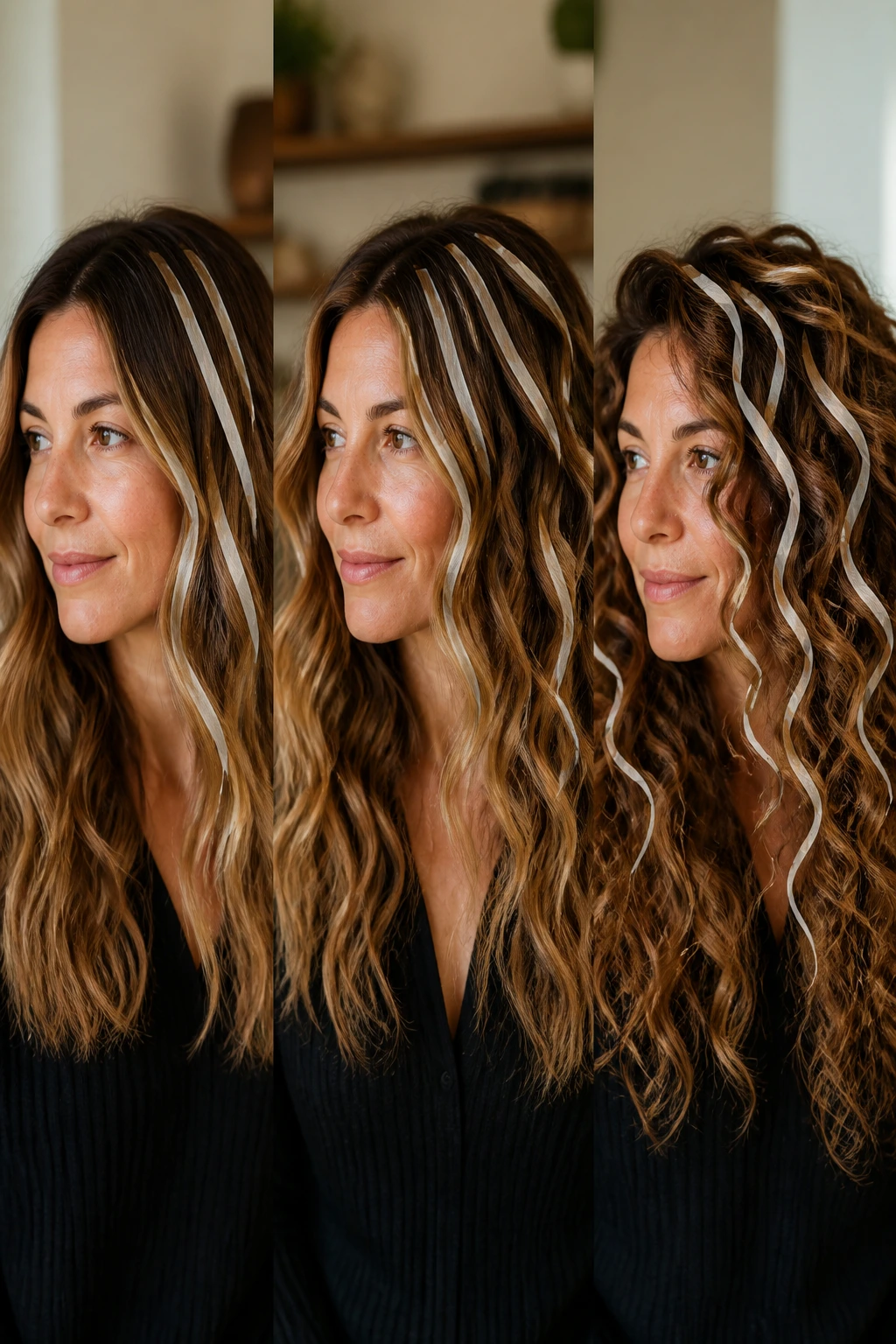
Loose, open waves
Loose waves usually want wider ribbons and more surface placement. The color has room to show without getting swallowed by the texture, so you can place a few brighter sections through the upper canopy and around the face. If the highlights are too tiny, they vanish into the movement.
Medium S-waves
Medium waves are the easiest canvas for most highlight ideas for wavy hair. They can hold a money piece, a melt, or babylights without looking too busy. I like a mix of narrow and medium sections here, because that keeps the hair from looking like a single painted sheet.
Stronger bends and frizz-prone waves
With stronger bends, tiny highlights tend to blur into the curl pattern, which can be gorgeous if you want subtlety. If the hair is frizz-prone, keep the brightest pieces a bit lower and avoid over-lightening the outermost layer. That way the frizz does not fight the color.
The haircut matters more here than people think. Long layers, a shag, or a textured lob give the waves a cleaner stage, which means the color reads as intentional instead of accidental.
Tools and Products Worth Having Nearby
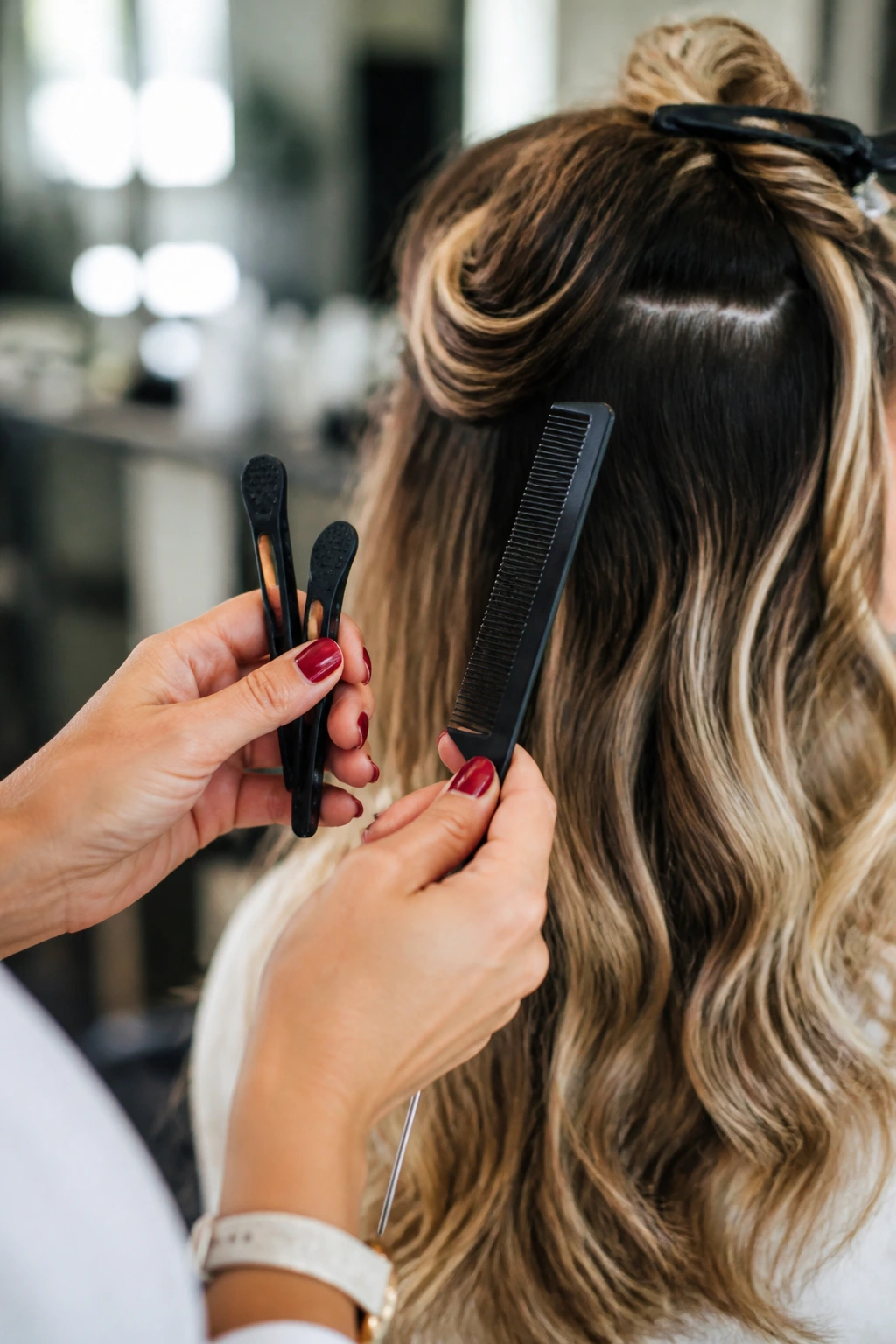
- Tail comb — Helpful for clean part lines, thin highlight sections, and checking where the light lands on the hair.
- Sectioning clips — Four to six clips keep waves separate while you style, tone, or dry.
- Color-safe shampoo and conditioner — These help keep the tone from fading too quickly or getting dull at the mid-lengths.
- Purple shampoo — Best for blonde, beige, pearl, or champagne pieces; use it lightly so the hair does not go chalky.
- Blue shampoo — Better for brunette bases that pick up orange brass.
- Deep conditioner or bond-repair mask — Lightened wavy hair usually wants more moisture than people expect.
- Heat protectant spray — Non-negotiable if you use a diffuser, curling wand, or flat iron.
- Wide-tooth comb — Easier on wavy sections than a brush, especially when the hair is damp.
- Microfiber towel or cotton T-shirt — Cuts down on frizz while the hair is still forming its wave pattern.
- 1.25-inch curling iron or wand — Optional, but useful if you want a few polished bends to show off the ribbons.
- Gloss brush or bowl — Handy for at-home toner or gloss touch-ups if you maintain color yourself.
Choosing Warm, Cool, and Neutral Tones for Your Base Color
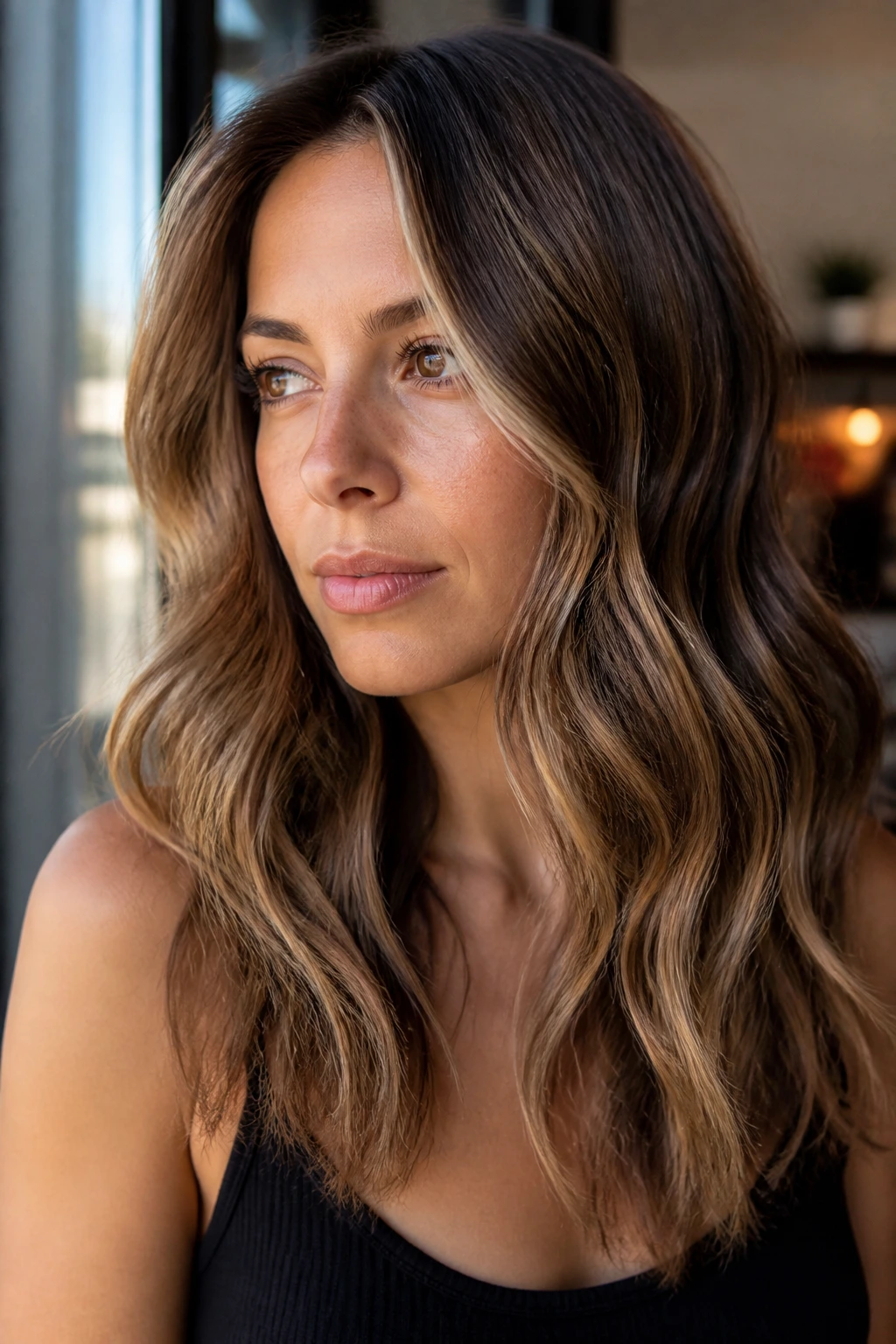
Warm bases
If your hair naturally leans golden, copper, or chestnut, warm highlights usually behave best. Honey, caramel, copper, butterscotch, and cinnamon all keep the base from looking muddy. Warm waves tend to look fuller when the highlight family stays warm too.
Cool bases
Ash brown, mushroom, smoky quartz, pearl blonde, and icy beige fit cooler bases nicely. They keep the overall look clean instead of orange. On waves, cool tones also sharpen the shadow between the bends, which can make the texture read more clearly.
Neutral bases
Neutral brunettes and dark blondes have the easiest time. You can go warm, cool, or split the difference with beige. If you’re unsure, ask your colorist for a tone that lands between gold and ash; that tends to age well as the color softens.
The best move is to bring photos in daylight and in indoor light. Hair color shifts more than people expect, and wavy hair exaggerates that shift because it keeps moving. A shade that looks creamy in one room can look flat in another, so seeing both matters.
How to Style Highlighted Waves So the Light Pieces Show Up
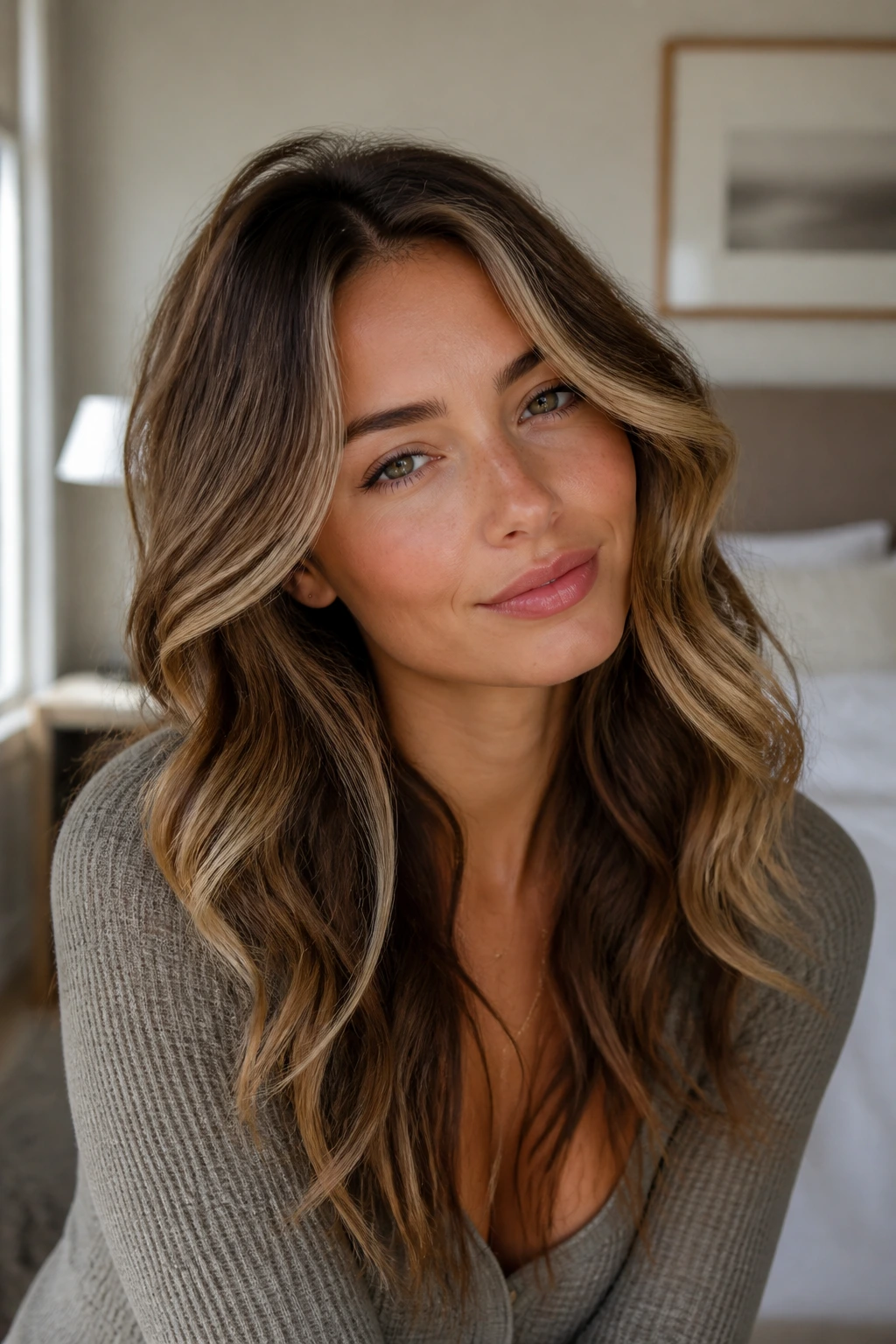
Air-dried texture
Air-drying works best when you keep product light. A small amount of curl cream or mousse from ears down is enough. Too much cream can coat the light pieces and make the whole head look dull, which is a shame because the color is doing the work.
Diffused waves
A diffuser gives the color more lift at the crown, which is useful if your highlights sit higher on the head. I like to diffuse until the hair is about 80 percent dry, then stop and let the rest air-dry. That keeps the wave from getting overhandled.
Polished bends
If you want the highlights to read loudly, use a 1.25-inch iron to bend just a few front pieces and the top layer. Don’t curl every strand. That’s too much. You only need enough bend to make the ribbons separate.
A final mist of lightweight shine spray on the mids and ends can help the light pieces catch, but keep it off the roots. Roots with too much product go limp fast.
Extra Shine and Dimension Tricks
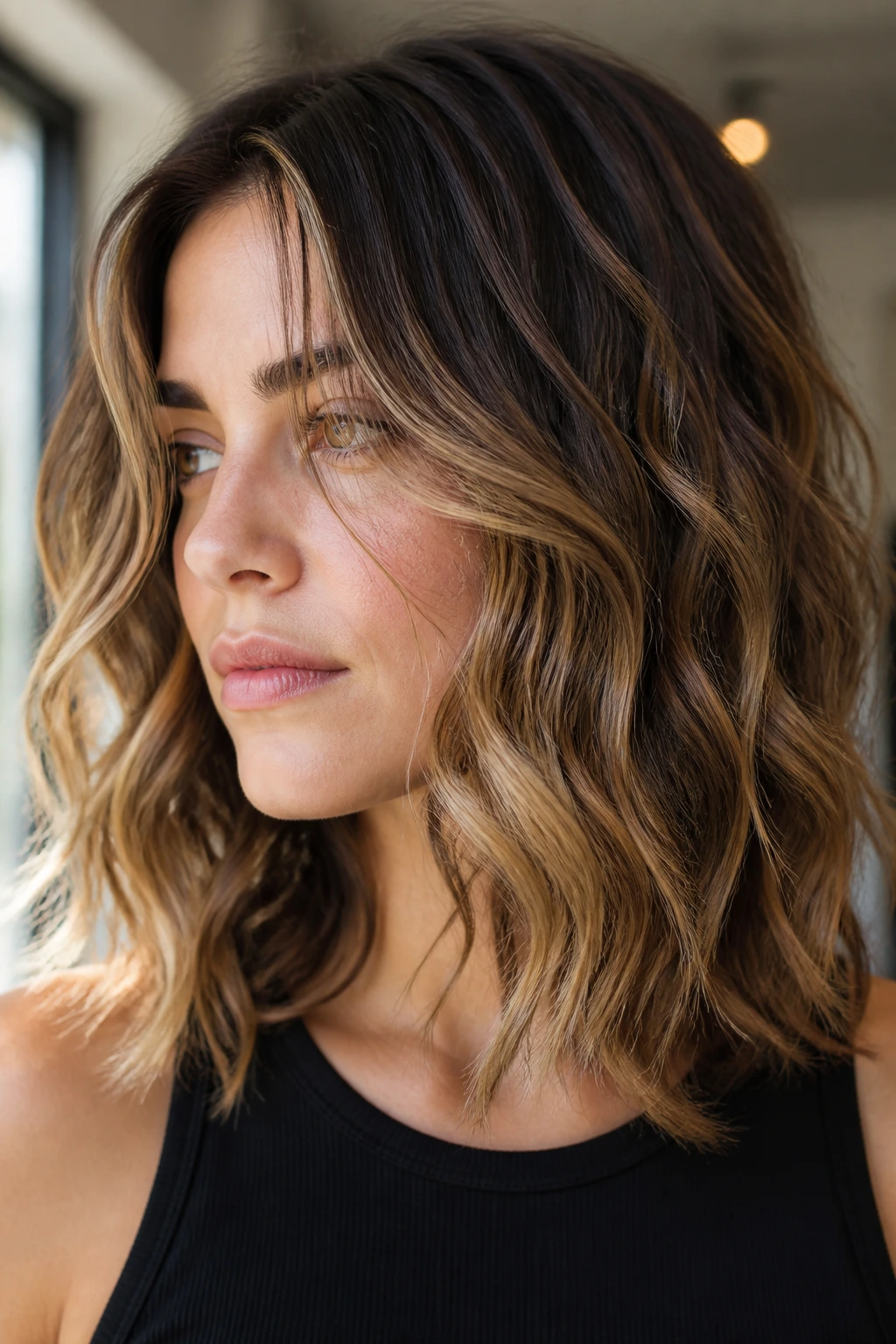
Gloss boost: A clear or tinted gloss every 4 to 8 weeks keeps caramel, beige, and copper from looking dry or flat. It is one of the cheapest ways to make highlighted waves look cared for.
Dimension: If the color starts to feel too one-note, ask for a few lowlights between the brighter pieces. That small contrast keeps wavy hair from turning fluffy or washed out.
Customization: A face frame one shade lighter than the rest of the highlight pattern can change the whole haircut. You do not always need more light everywhere; sometimes you need it in the right spot.
Cost-saver: If you want a lower-maintenance appointment, keep most of the lightest pieces on the top half and around the face, then leave the underside deeper. The grow-out is softer, and you use less color.
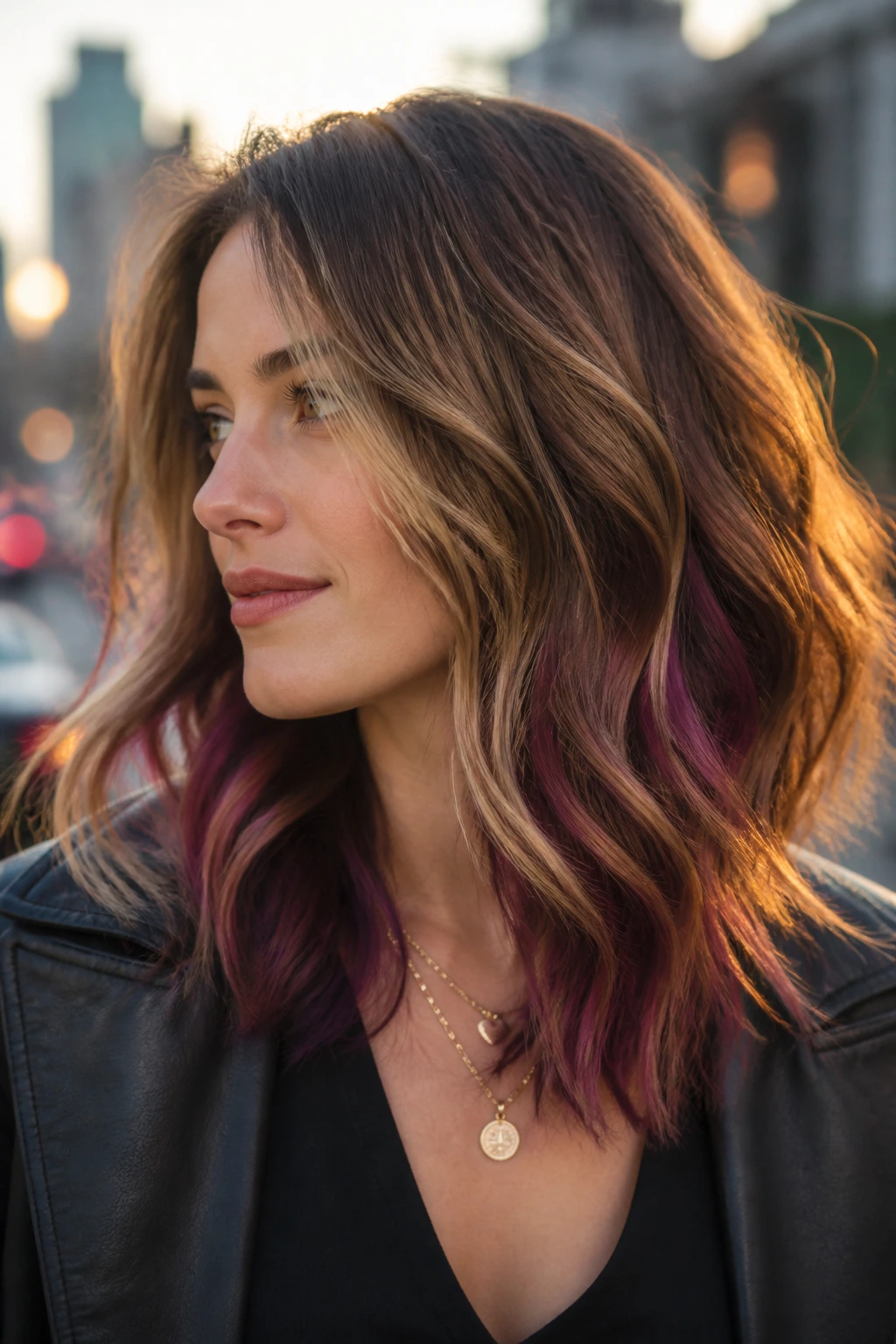
Make-it-yours: If you like personality, tuck in one hidden vivid panel—plum, teal, or rose—under the top layer. It peeks out when the waves move, and it does not need to dominate the whole head.
Maintenance, Toner Refreshes, and Grow-Out Timing
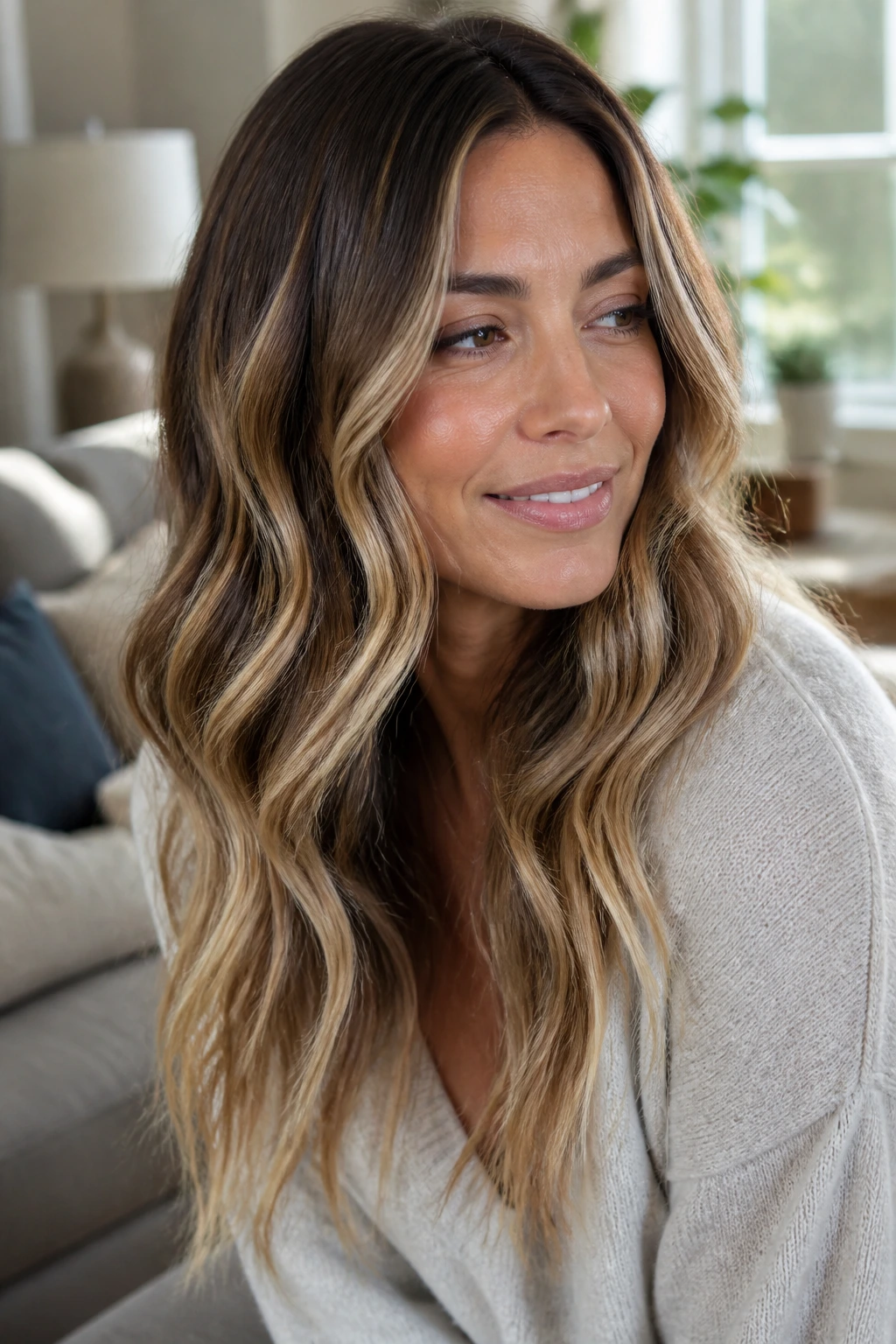
Highlights on wavy hair usually look best when they are maintained on a schedule that matches the tone, not the calendar on the wall. Bright blondes, platinum pieces, and cool beige tones need more frequent toner refreshes than caramel or mocha shades. If your hair is light and porous, the front pieces may need attention first because they get washed and styled more often.
For most balayage and babylight looks, a salon gloss every 6 to 8 weeks is enough to keep the tone clean. If you have a stronger money piece or a platinum crown, 4 to 6 weeks may be more realistic. That is especially true if your waves live in a humid climate or you heat-style often.
At home, use purple shampoo only when the blonde starts to look yellow, not every wash. Once a week is enough for many people. Brunette tones that go orange are better handled with blue shampoo, again used sparingly. Too much toning product can leave the hair dry and dull, and dry waves never show color as well as hydrated ones do.
A trim every 8 to 10 weeks helps the ends keep their shape. Highlighted waves rely on movement, and split ends kill movement faster than brass ever will.
Variations and Adaptations to Try
Low-Commitment Ribboning: Ask for very fine babylights only 1 or 2 levels lighter than your base. This is the best route if you want dimension without obvious lightness, and it grows out quietly.
High-Contrast Face Frame: Keep the face-framing pieces much brighter than the rest of the head. The contrast makes the haircut pop, especially on layered waves, and you can leave the back softer.
Cool Smoke Blend: Mix ash brown, mushroom, and pearl tones for a cooler finish. It works best on naturally cool brunettes and dark blondes who want less gold and more shadow.
Warm Copper Wash: Add copper or cinnamon to the mids and ends but leave the roots dark. The result is rich and warm, and it can make dense hair look less heavy.
Gray-Blending Threading: Weave in beige, silver, and taupe pieces around natural gray. The goal is not to hide gray but to blend it into the pattern so the grow-out looks soft.
Vivid Underlayer Pop: Place plum, teal, or rose panels underneath the top layer. Wavy hair opens and closes over the color, which makes the vivid pieces feel playful without becoming the whole story.
Common Mistakes That Flatten Wavy Hair Color
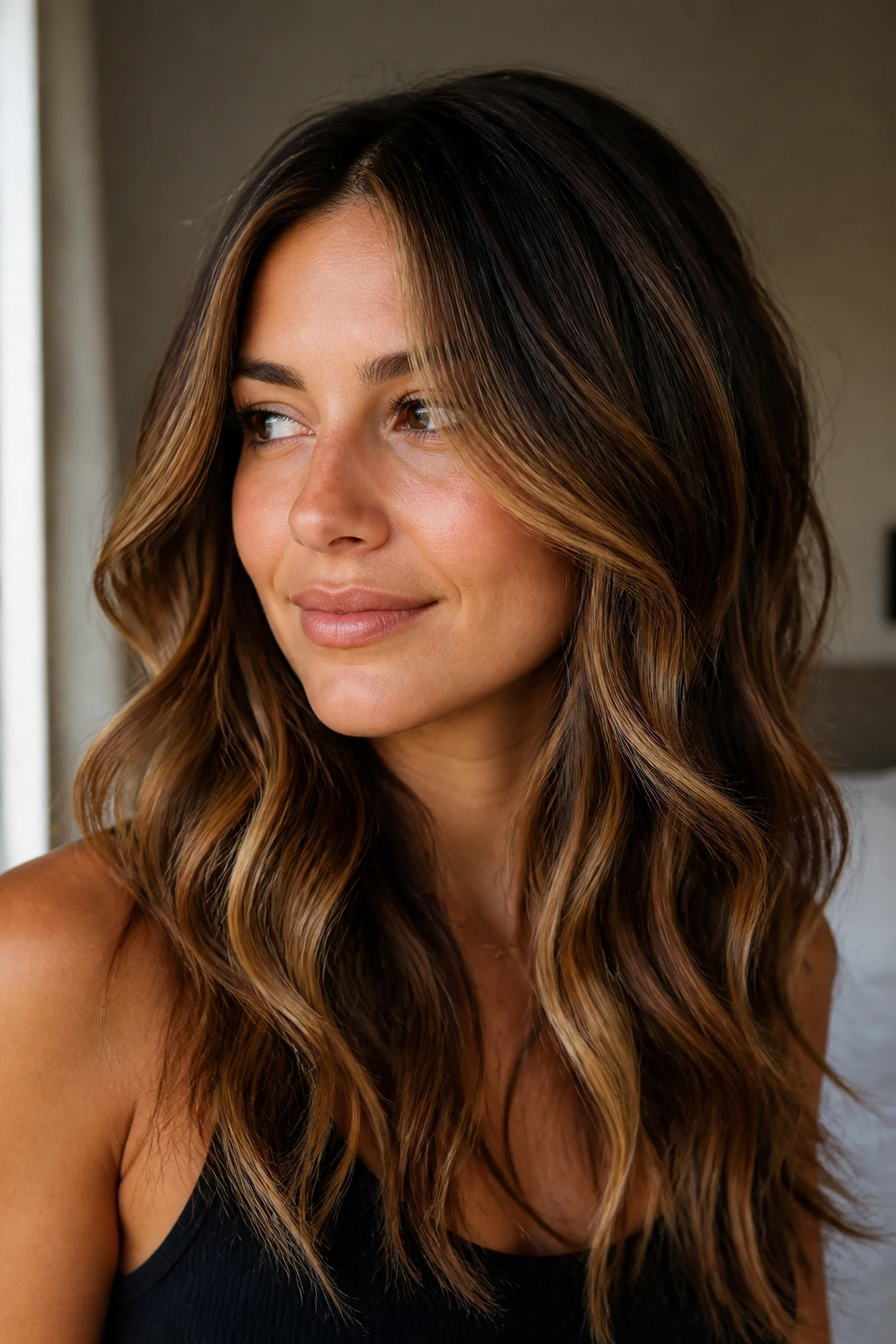
Making every highlight the same width: Uniform streaks can make wavy hair look stripy and narrow. Mix fine and medium sections so the color follows the wave pattern instead of ignoring it.
Lifting too far too fast: Over-lightening the ends can leave them porous and fuzzy. If your hair already frizzes, keep the lightness softer and let the contrast come from placement, not damage.
Skipping root shadow: A hard blonde line at the scalp can make waves look obvious in a bad way. A soft root stretch keeps the head from looking patchy as the color grows out.
Using heavy styling cream everywhere: Thick cream can coat the light pieces and hide the very dimension you paid for. Use a light hand and keep richer products lower on the hair.
Ignoring the haircut: Highlights cannot rescue a cut that has no movement. If the hair is all one length and the waves are weak, the color has nowhere to show up.
Choosing a tone that fights the base: A warm honey on a very cool brunette, or a smoky ash on a strongly golden base, can look disconnected. Match the tone family to the undertone unless you want a bold mismatch on purpose.
Frequently Asked Questions
Are balayage or foils better for wavy hair?
Balayage is usually softer and easier to grow out, while foils give more lift and clearer brightness. On wavy hair, a mix of both often works best: hand-painted softness where you want movement, and foils where you want a stronger pop.
What highlight width looks best on waves?
Fine to medium slices usually work best because they blur into the bend pattern instead of sitting on top of it. Chunkier ribbons can work on thicker, looser waves, but they need careful placement or they’ll look stripy.
Will highlights make my wavy hair frizzier?
They can if the hair is over-lightened or dried out. Lightened waves need more moisture, a gentler wash routine, and less heat, especially on the ends and surface layer.
How often should I refresh toner?
Most beige, blonde, and pearl tones need a gloss or toner every 4 to 8 weeks. Warm caramel or copper can go a little longer, but once the tone looks dull or muddy, it’s time for a refresh.
Can I get highlights if my waves are fine?
Yes, and fine waves often look fuller with the right placement. Keep the pieces narrow and avoid over-lightening the whole head, or the scalp can start to show too much.
Do highlights work on dark brown wavy hair?
Absolutely. Caramel, bronze, copper, mocha, and smoky brunette ribbons all work well on dark brown bases. The trick is to keep enough depth so the hair still has contrast.
How do I keep blonde highlights from turning yellow?
Use purple shampoo sparingly, not every wash, and keep heat protection in the routine. A salon gloss every few weeks also helps the tone stay clean and keeps the blonde from drifting brassy.
What if my waves disappear after coloring?
That usually means the hair is too dry or the styling product is too heavy. Switch to a lighter mousse or foam, cut back on cream at the roots, and use a diffuser or scrunching method that supports the wave instead of weighing it down.
Color That Moves With the Wave
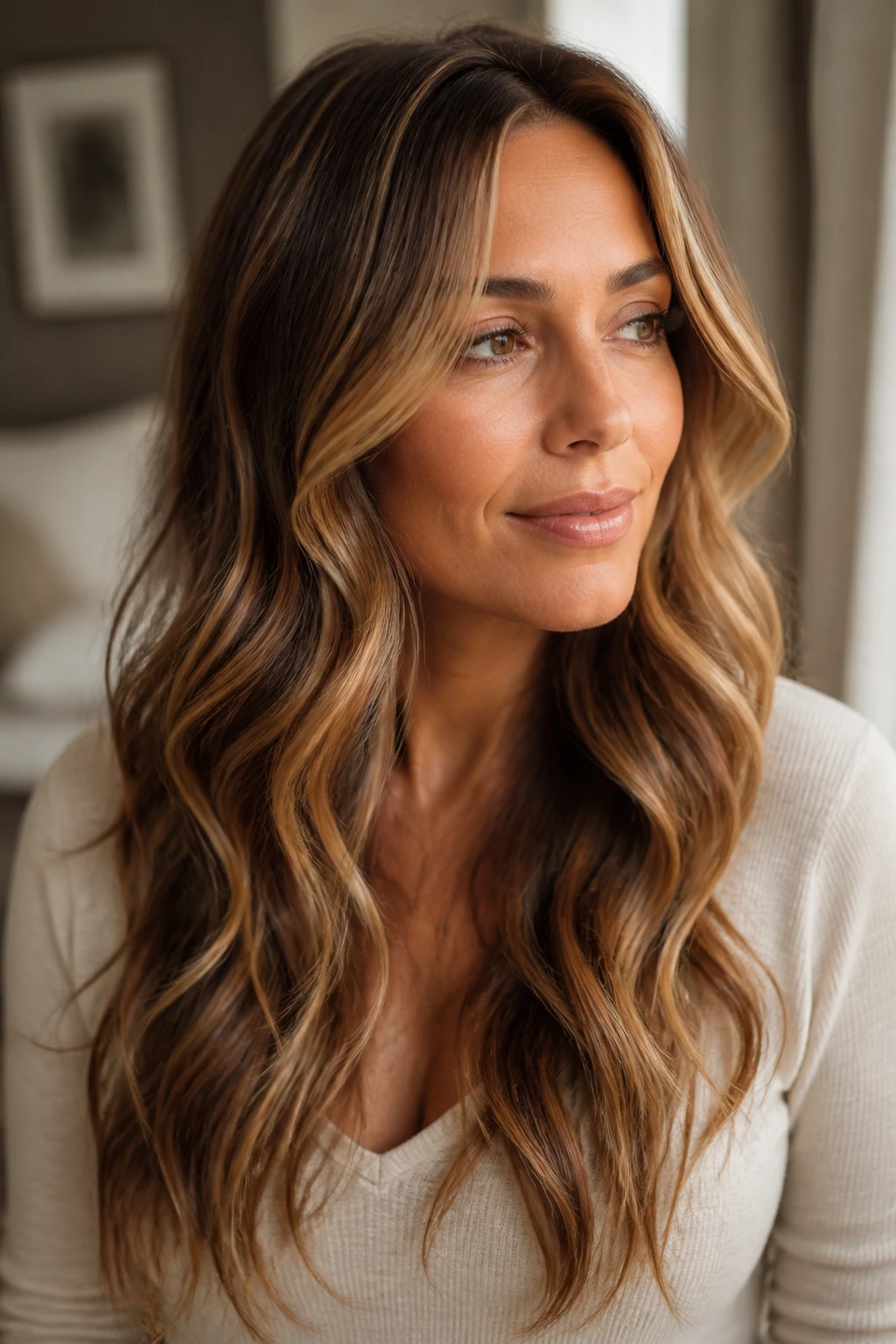
The best highlights for wavy hair do not sit still. They bend, flash, and soften as the hair moves, which is why placement matters just as much as shade. A good caramel, a smoky brunette ribbon, or a bright face frame can change the shape of the haircut in a way flat color never will.
If you keep one thing in mind, make it this: do not ask highlights to do the work of a haircut, and do not ask a haircut to carry flat color. When the two cooperate, wavy hair looks fuller, softer, and far more alive. That is the sweet spot, and it holds up long after the salon mirror is gone.
