



Curly hair on a boy can look sharp one day and explode into a halo the next, and the haircut is usually the whole story. Leave the shape too wide, and the head starts to read as puffy. Cut the top too blunt, and the curls lose their spring and turn into little hooks. Get the balance right, though, and the same hair that looked unruly in the bathroom mirror suddenly looks deliberate, clean, and easy to live with.
That’s why boys haircuts for curly hair need a different lens than straight-hair cuts. Curls shrink. They bend. They stack on each other. A style that looks “fine” while wet can look three sizes smaller and twice as full once it dries, which is why barbers who understand curl pattern tend to talk about shape, not just length. The best cuts work with that movement instead of fighting it.
And that matters at home, too. A good curly cut should still look decent after a nap, after school, after a soccer game, and after someone has run a hand through it ten times. If the style only works in the chair, it isn’t a good kid haircut. Start with the right shape, and the rest gets easier.
Why These 22 Cuts Work Better on Curly Hair
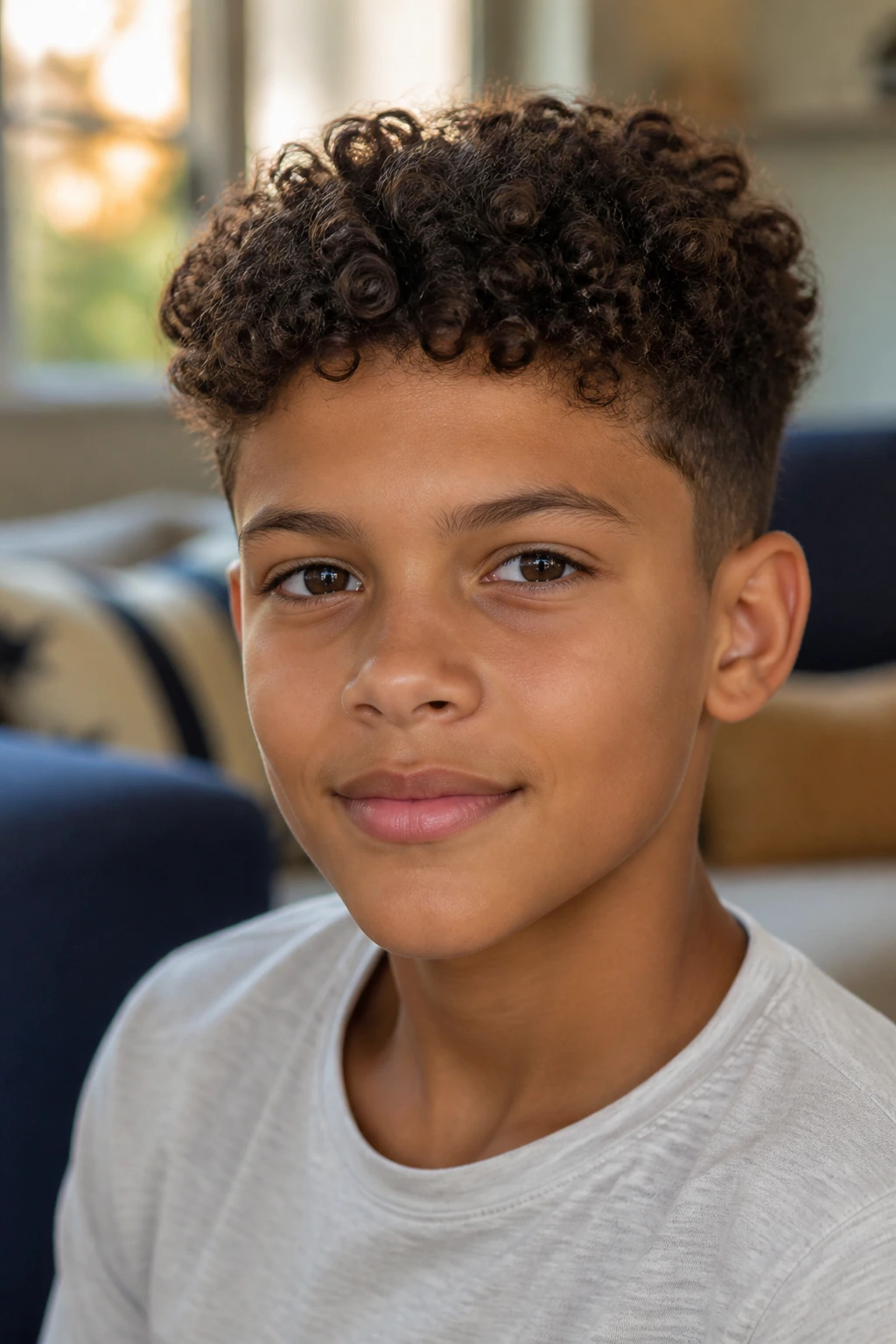
-
They respect shrinkage: Curly hair lifts as it dries, so a style that looks neat at the barber can still hold its shape at home instead of puffing into a triangle.
-
They control the sides: A taper, fade, or clean side shape keeps the bulk from spreading around the ears and makes the curls on top look intentional.
-
They grow out in stages: The best boys’ curly cuts still look okay two, three, even four weeks later because the shape blurs gradually instead of collapsing all at once.
-
They fit real mornings: Most of these cuts need a little leave-in, a quick scrunch, and that’s it. No one wants a nine-step routine before school.
-
They let the curl pattern show: Instead of flattening the hair into a helmet, these cuts keep the bend and texture visible. That’s the good stuff.
-
They work for more than one curl type: Loose waves, springy ringlets, and tight coils each need a different frame, but the right haircut can make each one look cleaner without stripping away personality.
1. Curly Crop With a Low Taper
A curly crop with a low taper is the haircut I reach for when a family wants low drama and a clean outline. The top stays short enough to keep morning styling fast, usually around 1 to 2 inches, while the taper around the ears and neckline trims away the fluff that makes curly hair look wider than it is.
Why It Works for Kids Who Hate Fussy Hair
The shape is compact. That’s the whole trick. The low taper keeps the sides from blooming out, and the short top still leaves enough curl to look like hair, not a buzz cut with a memory of texture.
What to Tell the Barber
Ask for a short curly top with a low taper around the ears and nape, then say you want the top cut to follow the curl pattern, not forced flat. If the curls are tight, dry cutting or a dry check at the end helps a lot.
- Keep the top about 1 to 2 inches.
- Blend the taper softly at the temple.
- Leave the fringe natural instead of razor-straight.
Best for: boys with springy curls who need a tidy school haircut that won’t turn into a project by lunchtime.
2. Curly Fringe With Tapered Sides
A curly fringe lands right on the forehead and gives the cut a softer, younger look. The fringe is the star here; the tapered sides just keep the whole thing from puffing outward like a mushroom.
You want enough length in front for the curls to fall forward naturally, usually 2 to 3 inches, depending on how tight the curl is. Too short, and the fringe stands up in odd little spikes. Too long, and it starts living in the eyes.
This style works especially well for boys who like to touch their hair. They can scrunch it, flip it, or push it to one side without destroying the shape. The curls do the decorating for you. Honestly, that’s half the appeal.
3. Mini Afro With a Clean Shape-Up
The mini afro is one of those cuts that looks simple and then quietly reveals whether the barber understands curly hair. The shape should be rounded, not square, and the edges should be neat without looking carved to death.
A clean shape-up at the forehead and sideburns sharpens the outline, but I’d keep the lines a little softer on younger boys. Hard lines on very soft curls can look pasted on if the rest of the head is still fluffy.
How to Ask for It
Ask for a rounded mini afro with a light shape-up at the front and temples. If the hair is dense, the barber can remove bulk by trimming into the curl, not hacking across it.
- Keep the crown rounded.
- Let the top sit slightly longer than the sides.
- Avoid over-thinning; curly hair needs some weight.
Tip: A little oil or leave-in on the ends keeps the shape from looking dry and fuzzy.
4. Curly High Top
The curly high top brings height, and with the right texture it looks strong without feeling stiff. This cut works best when the sides are tight enough to let the top lift, but not so tight that the whole thing turns into a cartoon.
On tighter curls, the top can stand up naturally with only a small amount of product. On looser curls, the barber may need to leave more length so the shape reads as height instead of a flattened wave.
It’s a bold cut. No pretending otherwise. But when the balance is right, it gives curly hair a crisp outline and makes the curls look fuller instead of messy.
5. Burst Fade Mohawk for Curls
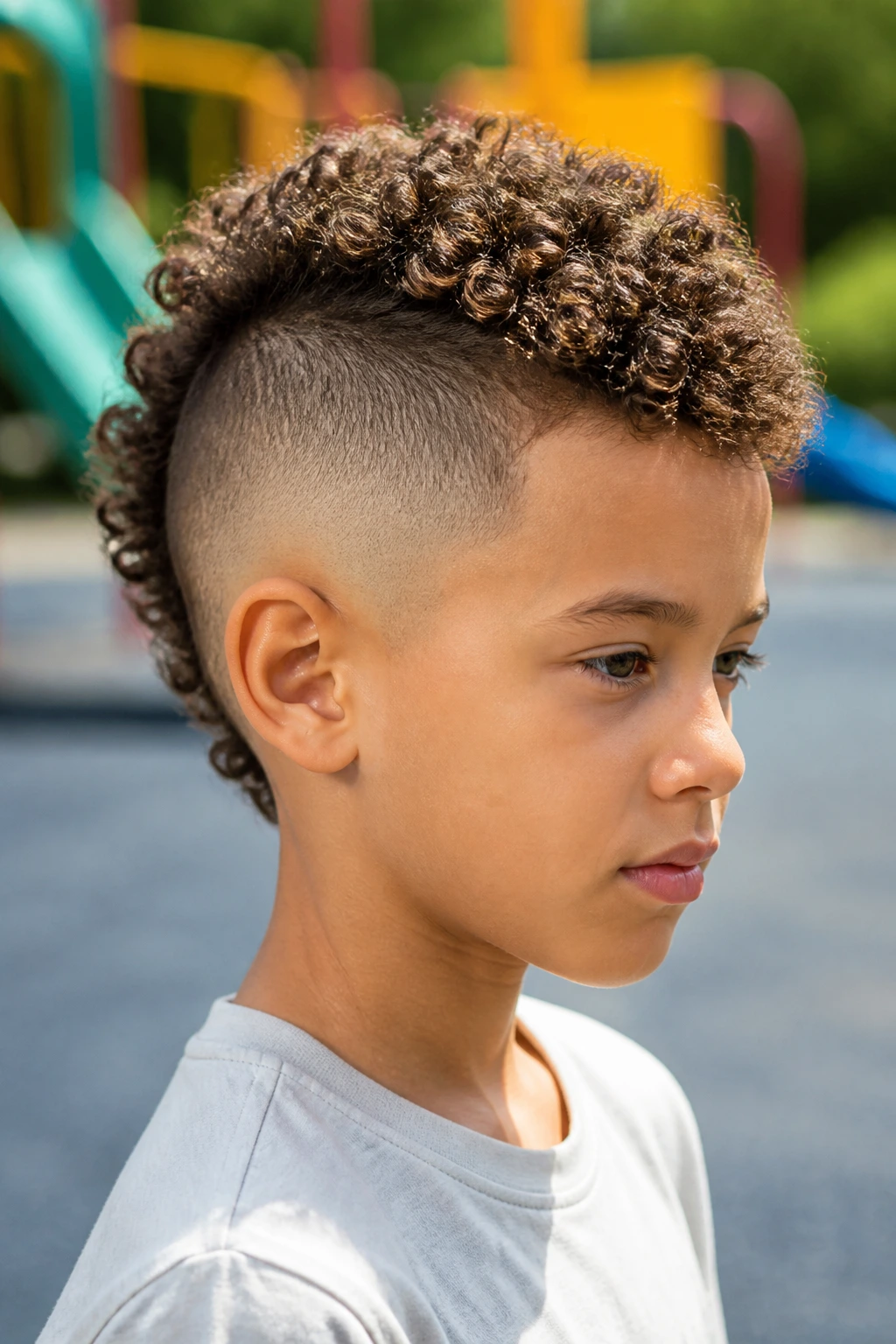
This one has energy. A burst fade mohawk keeps the curls concentrated down the center while the fade curves around the ears, so the style feels sporty without going full punk.
The center strip should have enough length to show the curl, usually 2 to 4 inches, depending on thickness. The burst fade matters because it gives the eyes a clear path from front to back. Without that curve, the cut can look choppy.
Who It Suits
Boys who like a louder haircut usually love this. So do kids with dense curls that need room to sit up instead of spreading out.
A mohawk cut can look rough if the edges are too sharp. I prefer a burst fade with a soft line on the crown rather than a harsh strip. It ages better. It also grows out with less weirdness, which matters more than people admit.
6. Shaggy Layers for Loose Curls
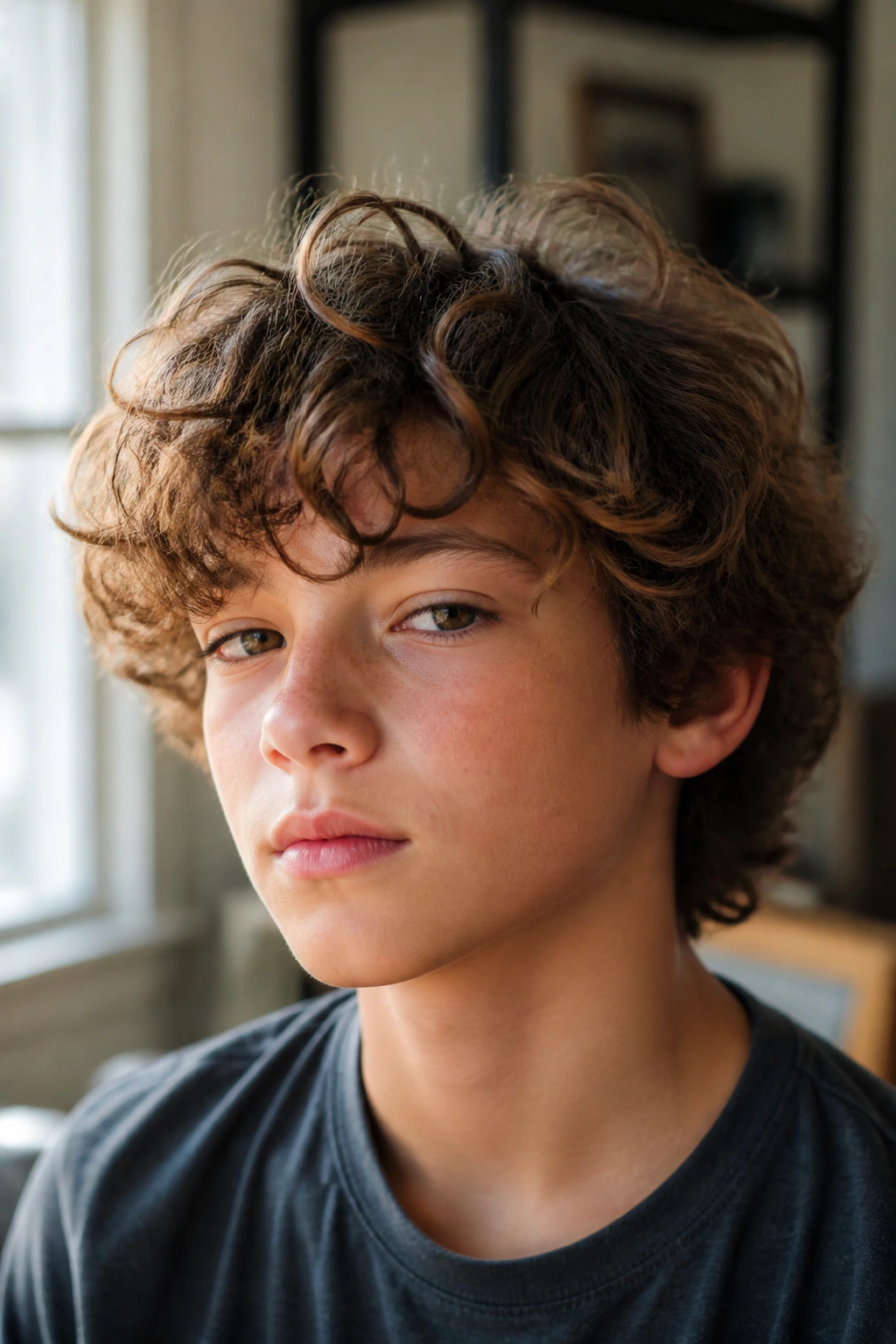
Loose curls behave differently from tight coils, and they usually need layers, not bluntness. A shaggy layered cut lets the curls fall in pieces, which breaks up the wide, triangular shape that loose curly hair likes to make on its own.
The best version keeps the top and sides from all ending at the same point. That’s what creates the puff. Layers around the cheekbone and crown let the curls move without stacking into one giant shape.
What Makes It Nice
It looks relaxed. It also grows out gracefully. A shag on loose curls can go from fresh to grown-in without crossing the line into sloppy, which is more useful than a lot of polished cuts that fall apart in ten days.
If the child has a sensitive head or hates anything too tight around the sides, this cut usually feels comfortable. There’s less clipper work and more shears. That tends to matter.
7. Curly French Crop
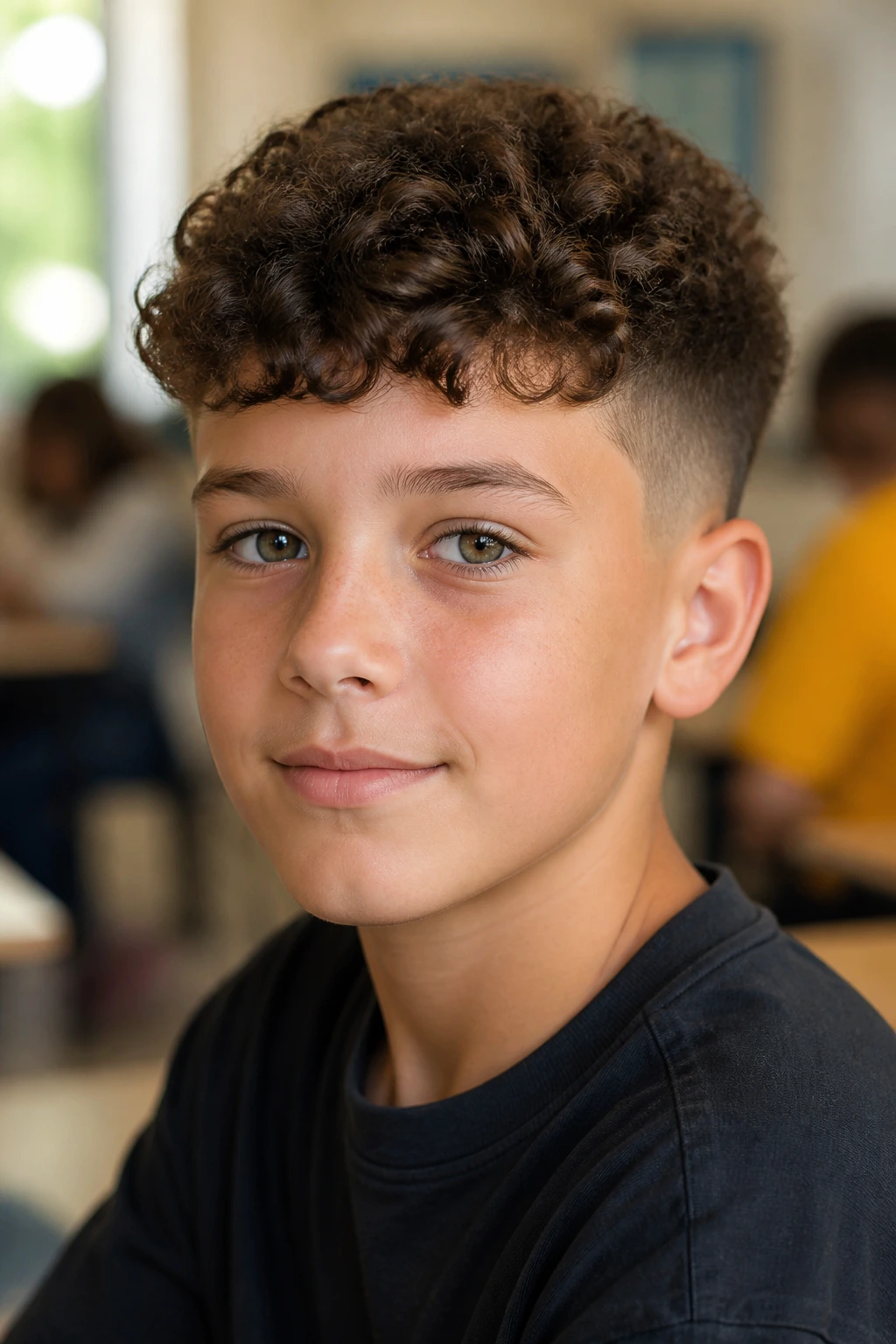
The curly French crop is short, tidy, and easy to live with. The fringe is cut forward, the sides are tapered or faded, and the top stays textured so the curls still show through.
It’s one of the better boys curly haircuts for school rules because it stays neat without looking severe. The front can be blunt-ish, but not boxy. That small difference matters a lot on curly hair. Too blunt, and the fringe sticks up in odd little ridges.
Ask for This
Say you want a short textured crop with a soft curly fringe and low sides. The barber should leave enough length on top to let the curl bend, then clean up the perimeter so the silhouette stays compact.
- Keep the fringe short enough to stay out of the eyes.
- Leave texture on top.
- Blend the sides low for a softer grow-out.
Good haircut. Quiet haircut. Parents tend to love that part.
8. Side-Part Curly Cut
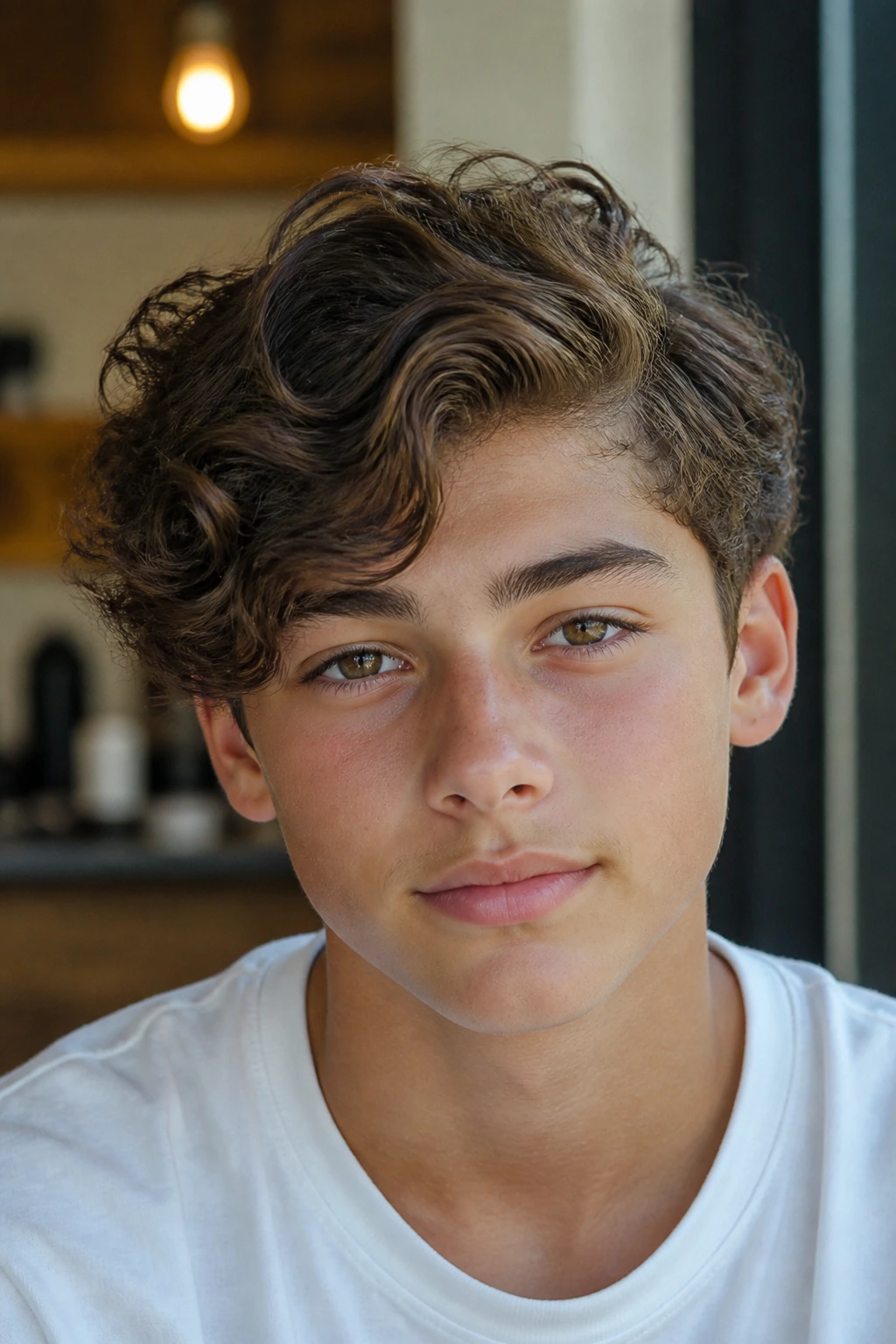
A side part on curly hair works best when the part is soft, not engraved. The point is to guide the curls, not force them to obey a hard line they’ll ignore by 2 p.m.
This cut looks especially good on boys with looser curls or strong waves. The top has enough length to fall one way, and the part gives it direction. Without the part, the same hair can feel shapeless. With it, the curls seem more deliberate and a little dressier.
One nice thing here: it doesn’t have to be stiff. A little curl cream or light mousse, combed once and then finger-shaped, is usually enough.
9. Curly Mullet
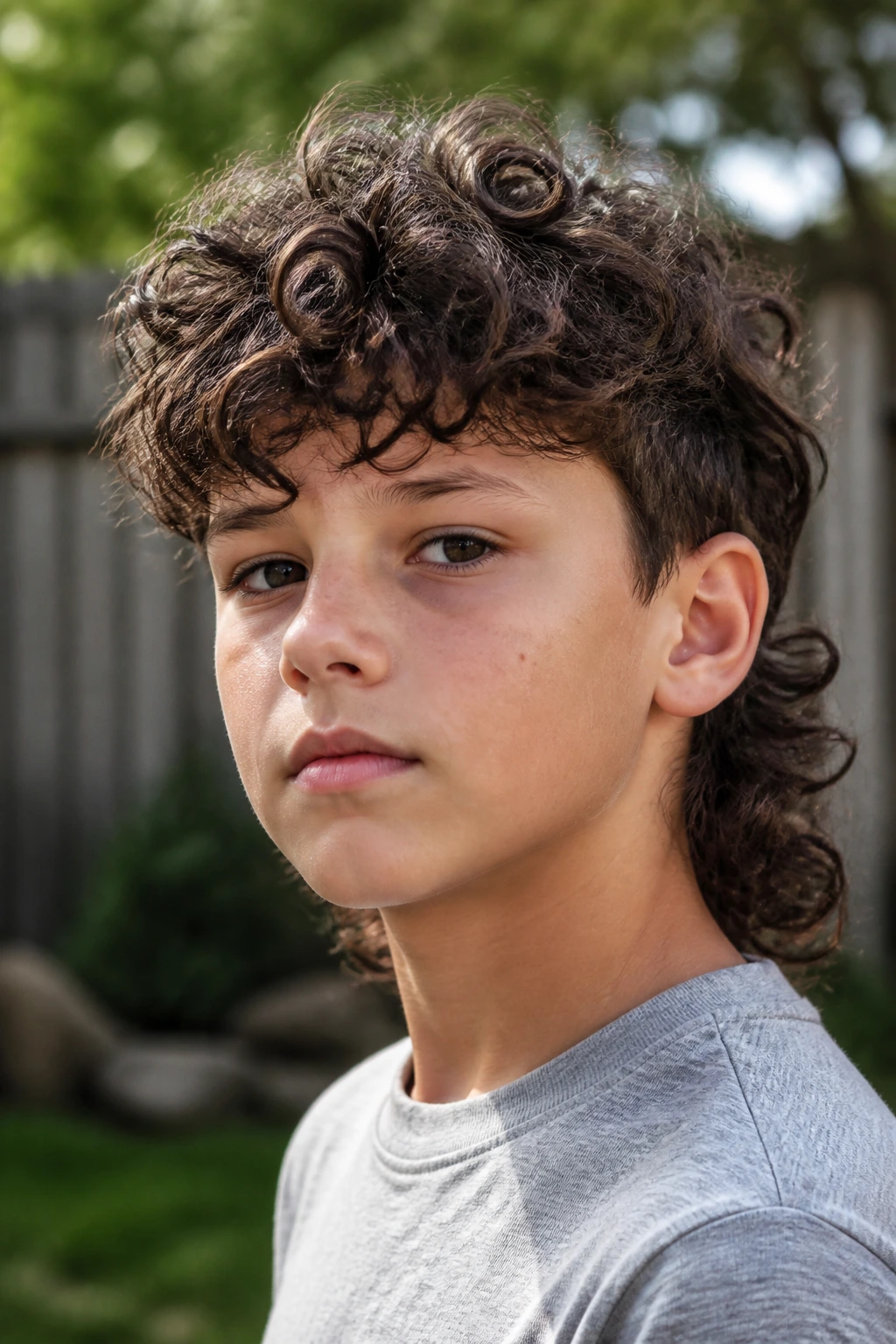
Yes, the curly mullet can be a real haircut. And yes, when it’s done well, it’s better than people expect. The front and sides stay shorter, while the back keeps more length, so the curls have somewhere to fall without crowding the face.
The key is restraint. A curly mullet should feel playful, not like the hair was forgotten. The back needs shape, the sides need taper, and the top should connect to the rest instead of hanging like a separate costume piece.
Best Use Case
This is for the kid who wants something with personality. It also suits curls that go flat on top but live beautifully in the back, which is more common than people think.
If the child plays sports, the back length can be kept just long enough to move, not drag. That way the cut reads modern instead of messy.
10. Temple Fade With Defined Curls
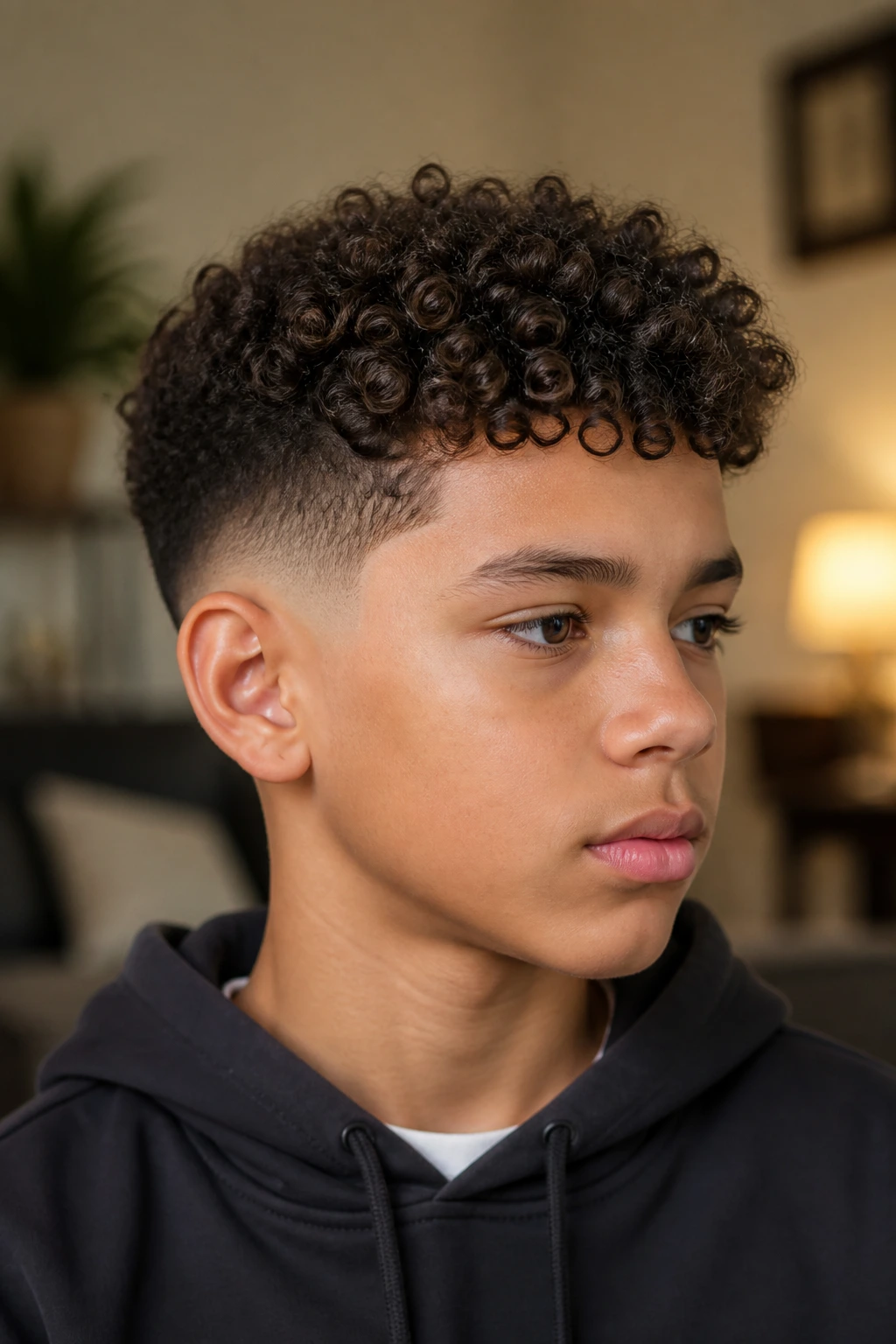
A temple fade is a smart move when you want the curls to stay the focus. The fade stays tight around the temples and sideburns, which gives the head a cleaner outline without removing too much length from the top.
That makes the curls on top look denser. It also reduces the puffy side effect that can happen when curly hair reaches the ears and starts spreading sideways. The clean temple area gives the haircut breathing room.
If the curls are tight, this is one of those cuts that looks fresh even with minimal styling. If they’re loose, a tiny bit of leave-in helps the shape hold after the hair dries.
11. Medium-Length Layered Curls
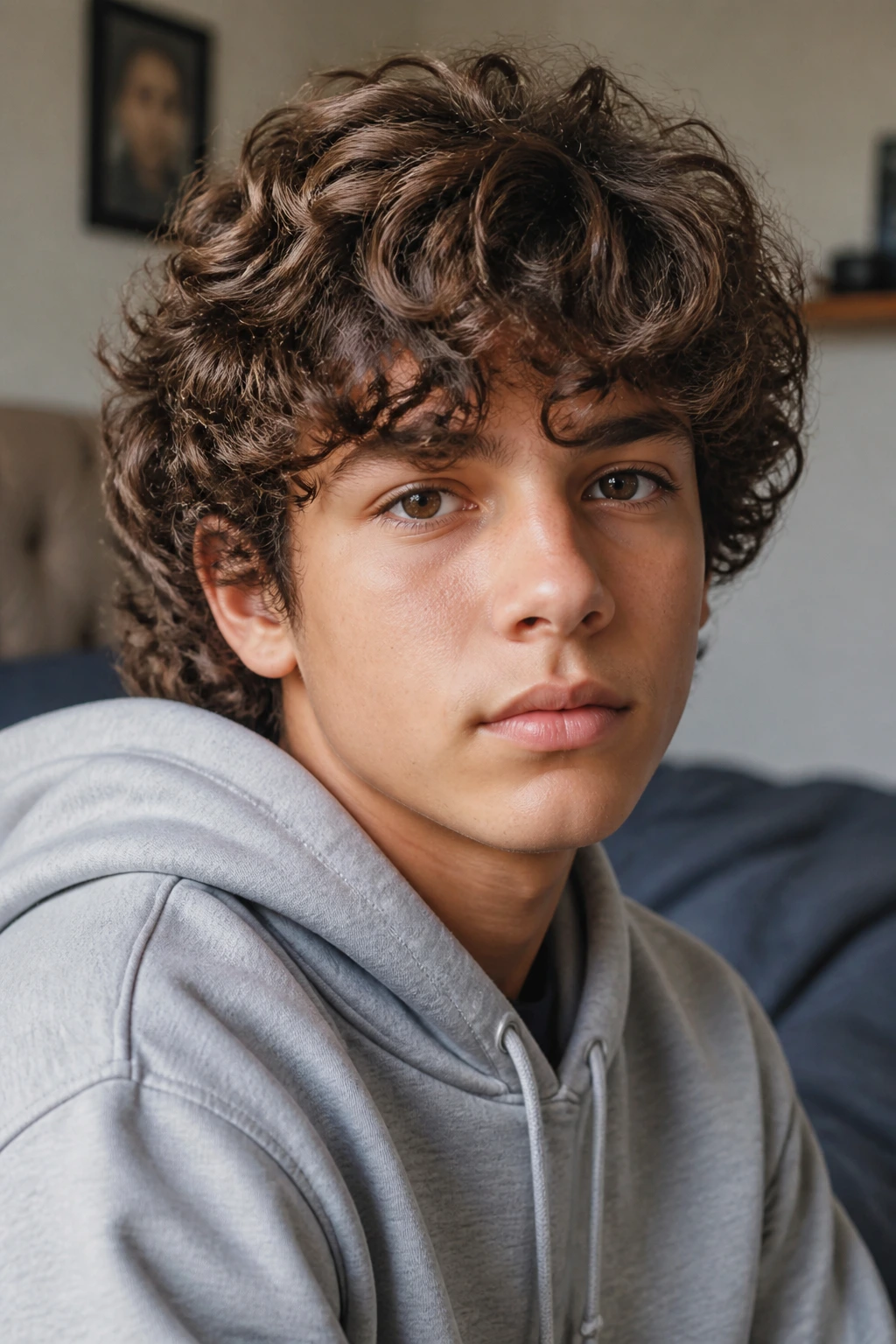
Medium-length curly hair can look fantastic if it’s layered correctly. Without layers, the weight pulls the curls down in weird clumps. With them, the curls move.
This is the cut for boys who are growing their hair out but don’t want it to feel like they’re “growing it out.” There’s a difference. The first looks intentional. The second looks forgotten.
What to Tell the Barber
Ask for scissor-cut layers through the top and sides, with length kept around the ears if you want movement. That line matters. If the barber takes too much from the crown, the cut can spring up and lose its shape.
- Keep the ends soft.
- Ask for a dry check after the scissor work.
- Trim the perimeter before the curls reach the collar.
It’s one of the nicest cuts on the list, honestly. Not flashy. Just solid.
12. Curly Quiff
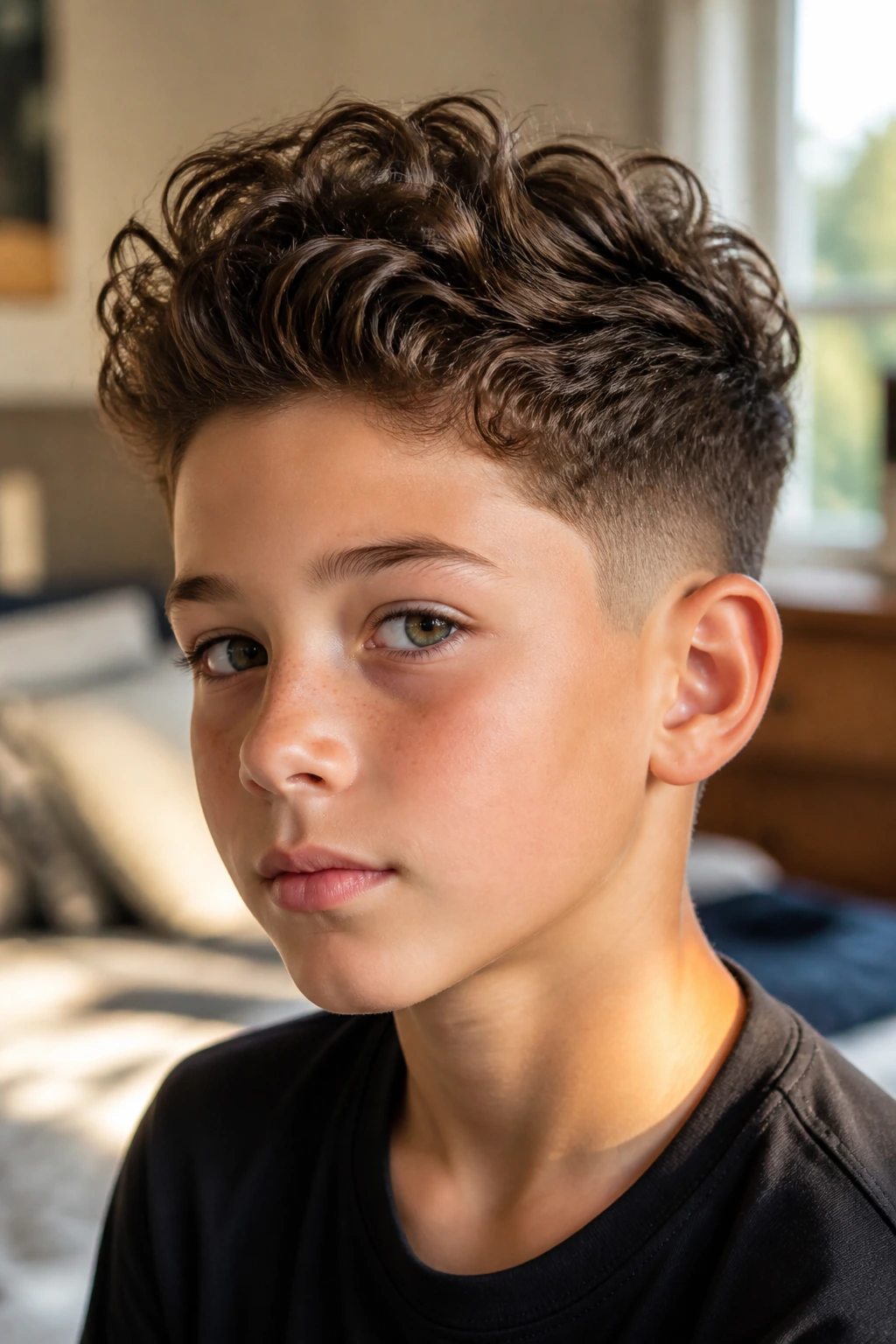
A curly quiff works when the front has enough length to lift and sweep back a little. It’s a good choice for boys with looser curls who want a bit of height without the sharp edges of a pompadour.
The sides should stay shorter, but not too tight. If the fade climbs too high, the quiff can look separate from the rest of the head. A lower taper gives the top room to do the work.
I like this style for photo day, special occasions, or any kid who likes hair with a little attitude. It still needs curl-friendly product, though. Dry, crunchy curls kill the shape. Use a soft cream or mousse and keep the finish touchable.
13. Soft Undercut for Thick Curls
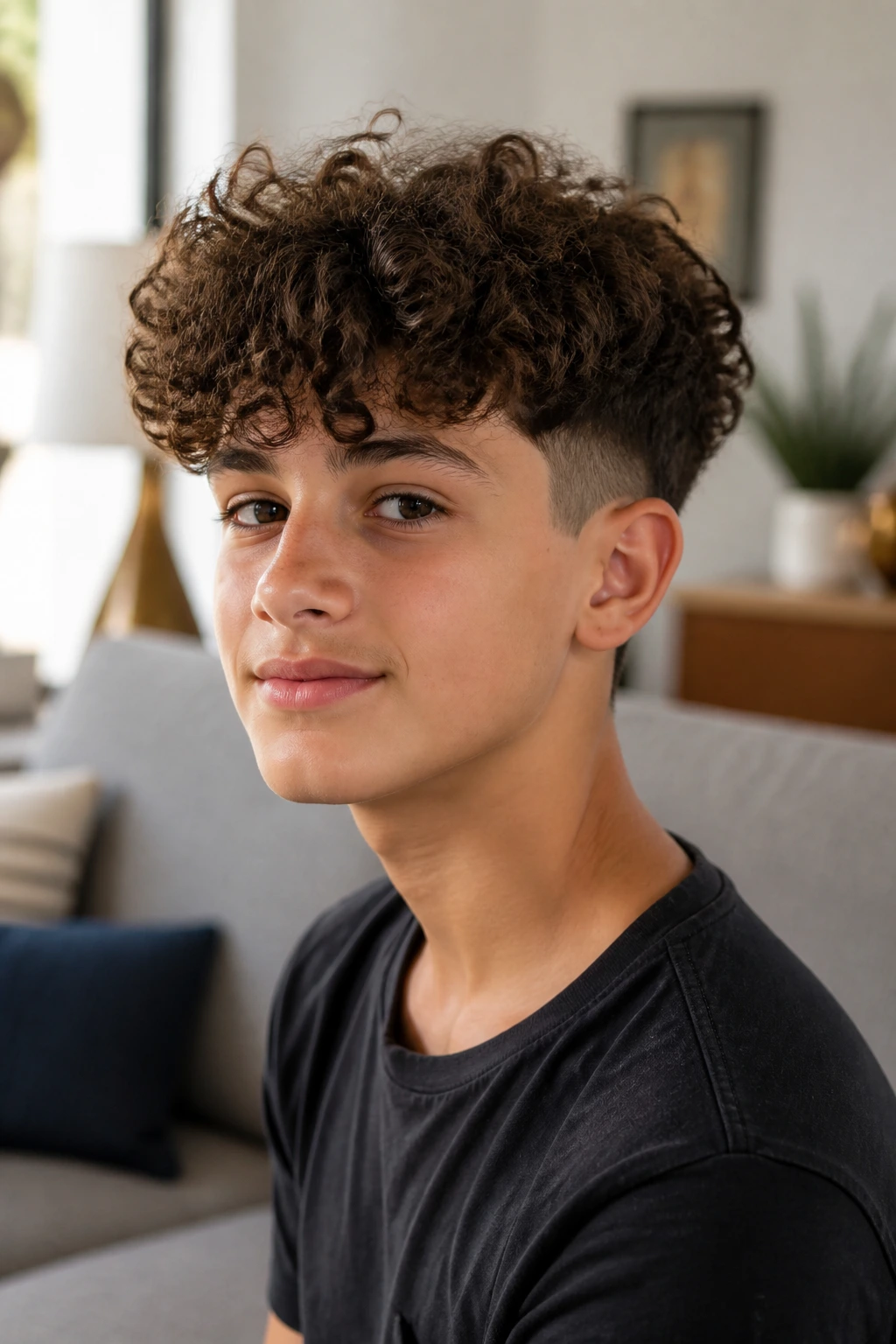
A soft undercut takes bulk off the sides and keeps the top big, which is ideal for thick curls that refuse to stay in line. Unlike a harsh disconnected undercut, the soft version blends enough that it doesn’t feel severe when the hair grows.
That matters with kids. Hair grows fast. Sharp edges blur fast. A softer disconnect buys you more time before the cut starts looking fuzzy around the border.
When It Works Best
This is a strong choice for dense hair, especially if the top is heavy enough to sit on its own. It can also make morning styling easier because the top is allowed to sit up instead of fighting the sides.
If the child has a round face, keep the top a bit taller and avoid over-shortening the sides all the way down to the scalp. A little length keeps the proportions balanced.
14. Drop Fade With Curls on Top
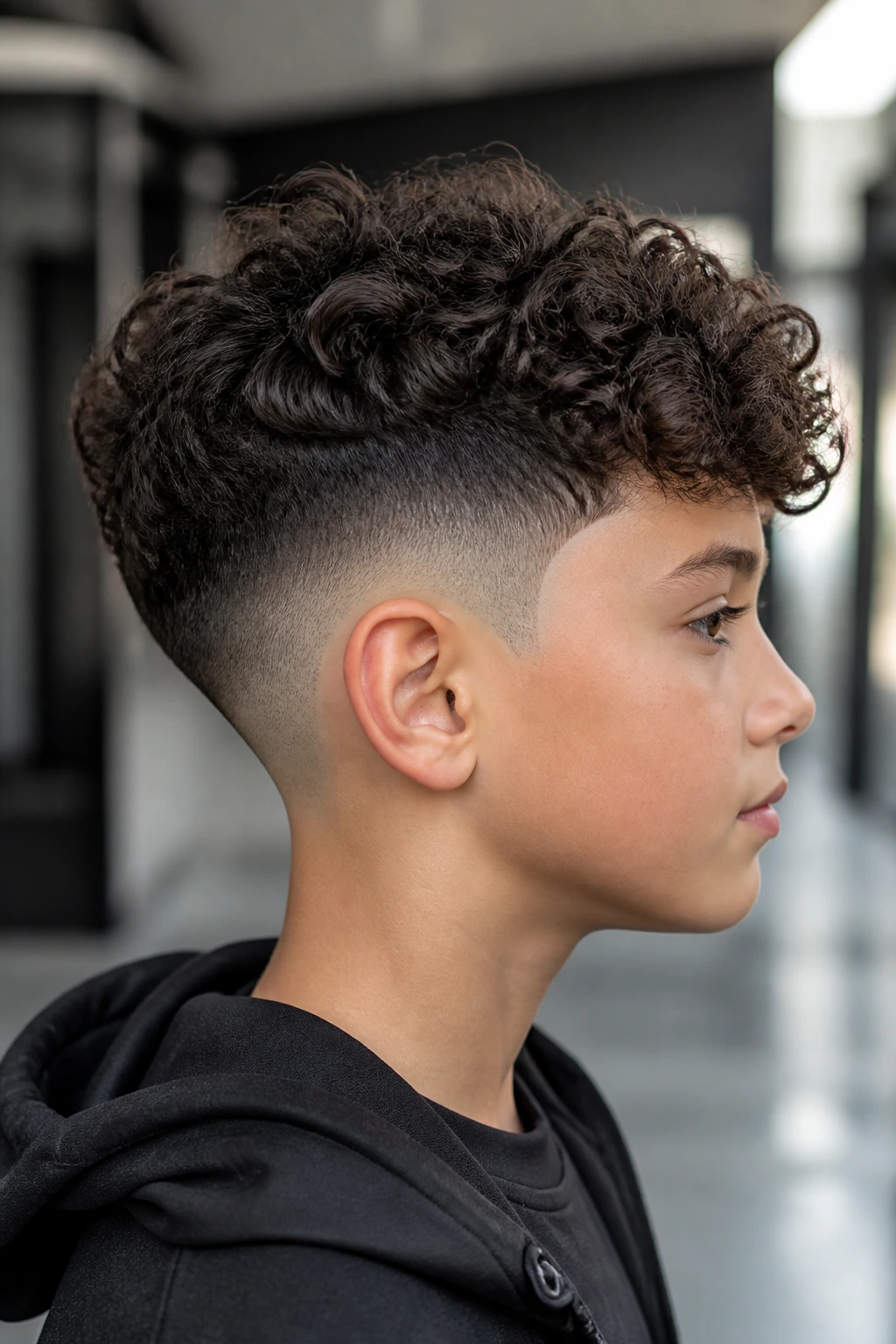
A drop fade curves down behind the ear, which sounds like a small detail until you see the cut on a curly head. Then it makes sense. The line follows the shape of the head instead of cutting across it like a flat shelf.
That creates a cleaner silhouette, especially for boys with fuller curls on top. The fade takes the weight out of the sides while keeping the hairline shape softer around the back.
This is a good choice if you want the curls to look lifted but not overly styled. It also works well when the head shape is rounder, because the fade can slim the outline without making the haircut look harsh.
15. Sponge-Twisted Top
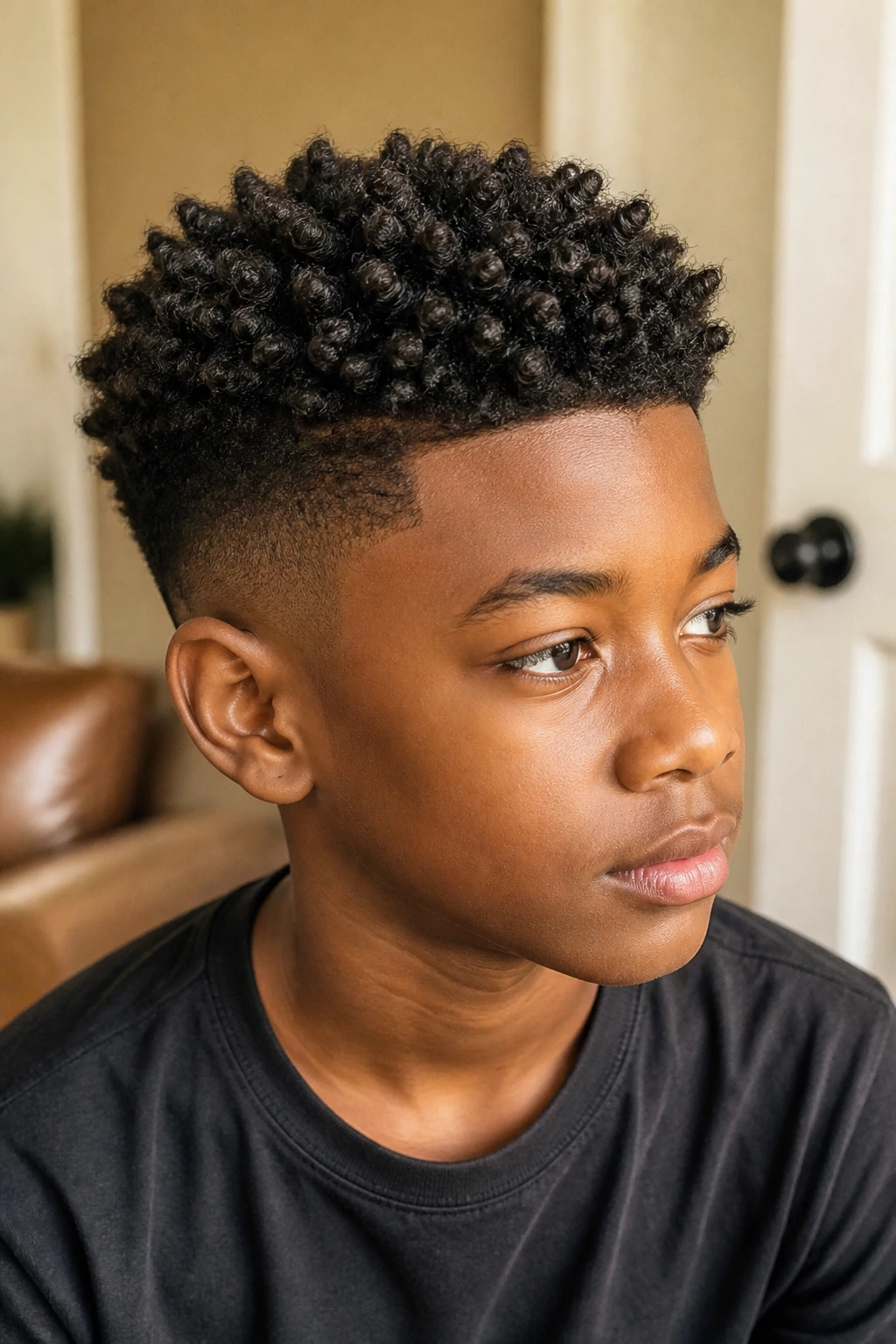
This one is all about tight coils and defined texture. A sponge-twisted top keeps the curls organized on purpose, which can be useful if the hair tends to separate into little spikes instead of forming a coherent shape.
The top is usually kept short to medium-short, and the sides are tapered so the twist pattern has a clean frame. If you’ve ever seen a cut where the top looks lively but not chaotic, this is often the reason.
How It Feels in Practice
It’s quick to style. A damp top, a little curl cream, and a few passes with a sponge can give the hair a neat, even texture. Don’t overdo the product. Too much and the twists clump into sticky little ropes.
This cut looks especially good when the line at the forehead is kept tidy. Not overly sharp. Just clean.
16. Tapered Afro With a Rounded Crown
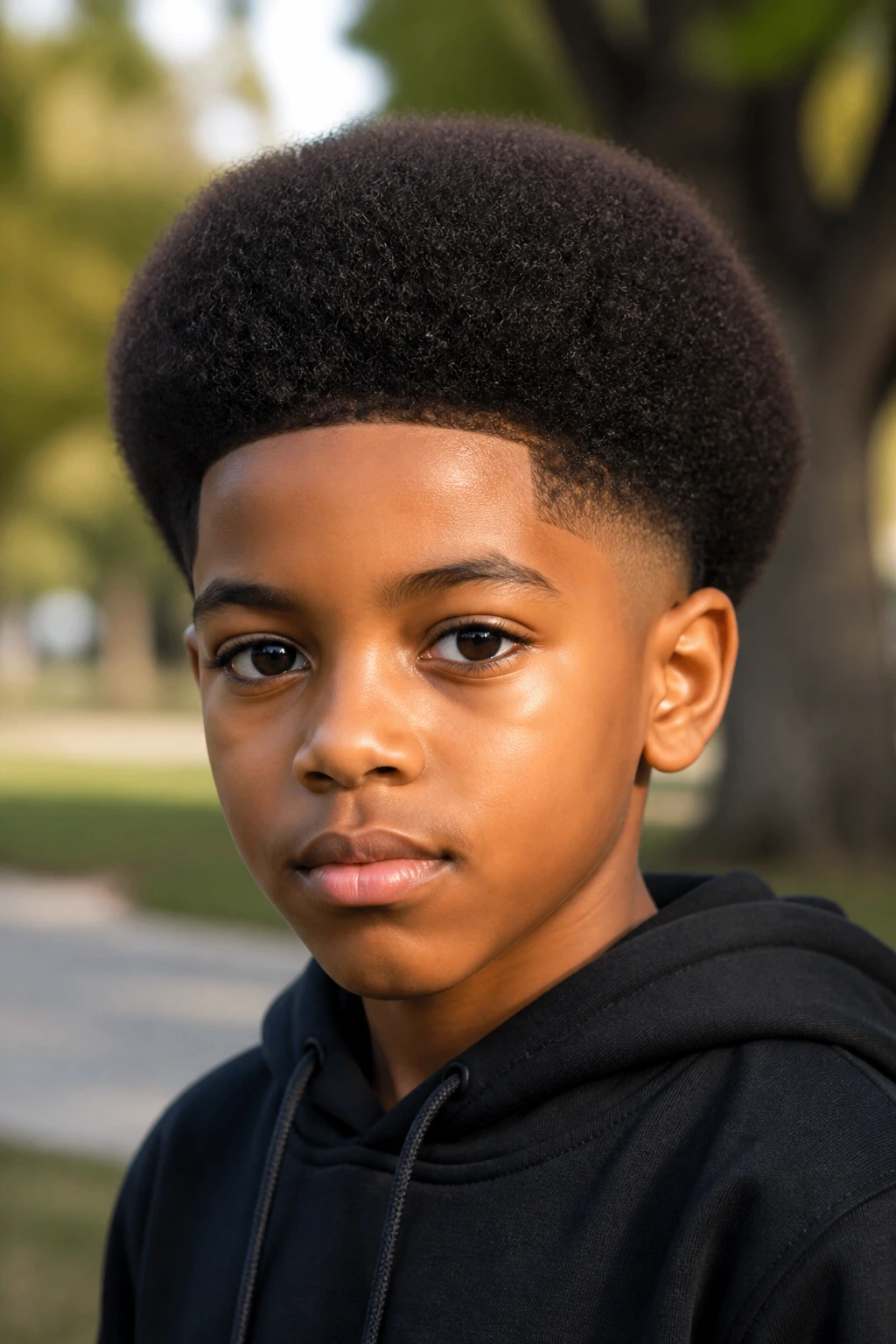
The tapered afro is one of the cleanest curly cuts a boy can wear. The whole idea is to keep the natural fullness while tightening the sides, neckline, and temple area so the shape reads rounded instead of fuzzy.
The crown should stay smooth and lifted, not flat on top. A rounded crown makes the cut look balanced from every angle, which is hard to get right and easy to ruin if the barber trims too aggressively.
The beauty of this cut is how naturally it sits. It doesn’t need much. A comb-out and a bit of moisture are usually enough.
17. Curly Caesar
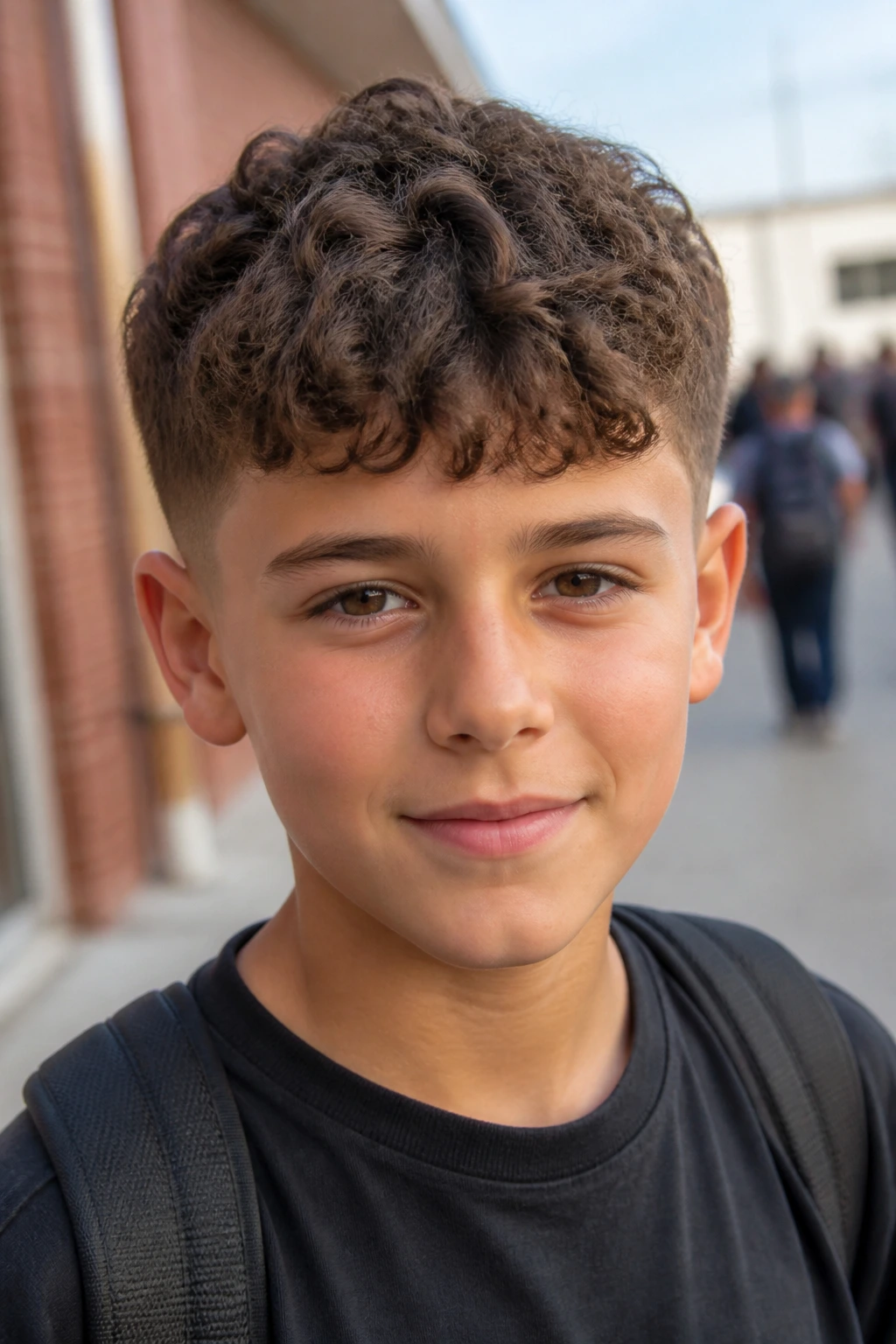
A curly Caesar keeps the top short and forward, with the fringe cut across the front in a controlled line. On curly hair, that line should stay soft enough to move with the curl, not so blunt that it turns into a shelf.
This is a good cut for boys who need something almost maintenance-free. There’s not much to style, and the short length makes it hard for the hair to get wild in the morning.
It’s also useful if the curls are tighter and the family wants a neat shape without taking the hair down too low. Short does not have to mean boring. Short can be tidy and still textured.
18. Wavy Bowl Cut
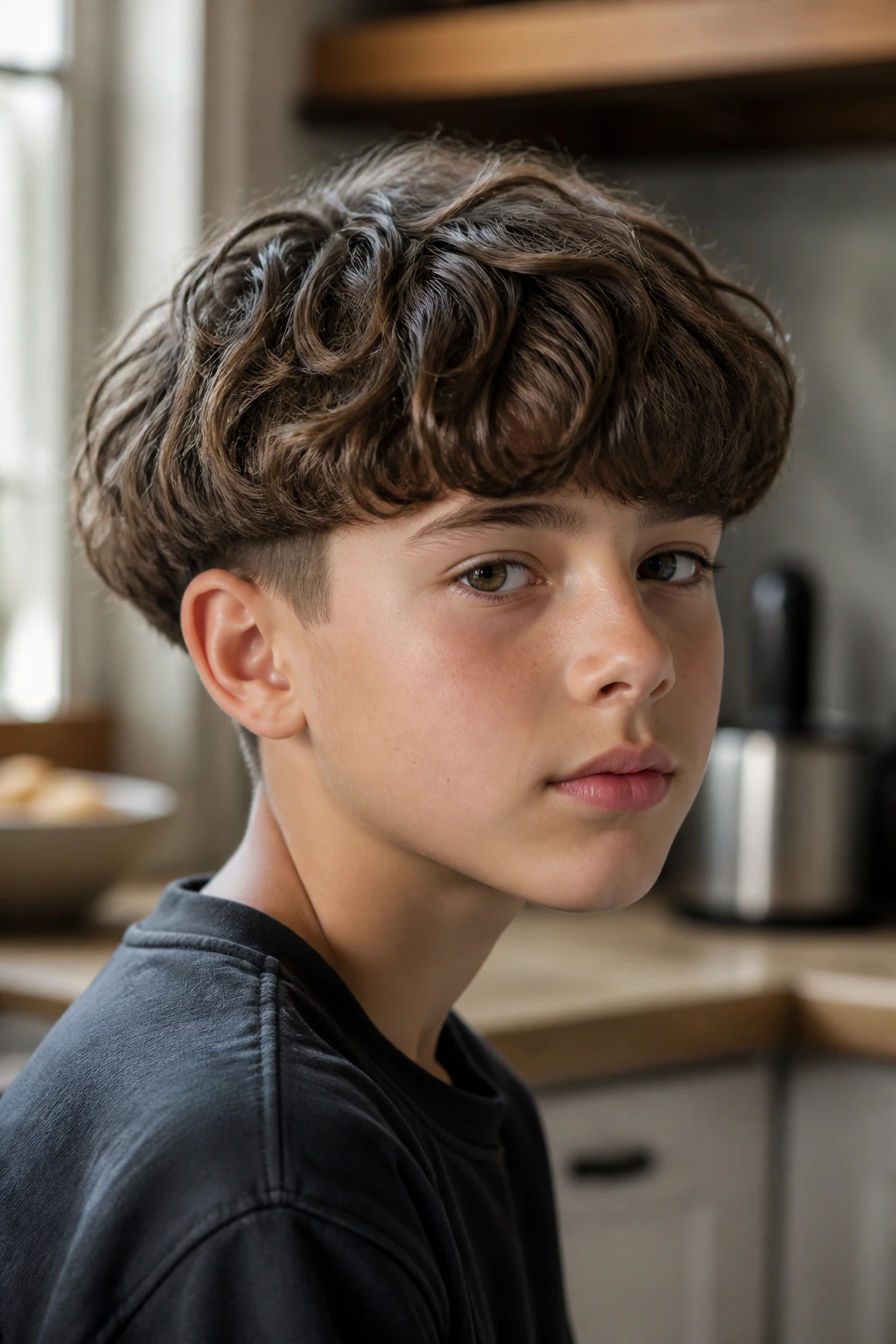
The modern wavy bowl cut is nothing like the hard, helmet-like version people remember from old school photos. The shape is softer, the edges are textured, and the perimeter follows the head instead of cutting it into a perfect circle.
This cut works best on loose waves or soft curls that fall in a uniform direction. It can be surprisingly flattering when the barber leaves a little length around the top and breaks the edge just enough to keep it from looking stiff.
Why It Stays Fresh Longer
Because the shape is intentional, the grow-out is gentler than you’d expect. The fringe doesn’t suddenly collapse, and the sides don’t flare outward as quickly as they do in some layered cuts.
It’s a niche style. But when it fits the hair, it really fits.
19. Long Curls With a Shape-Up
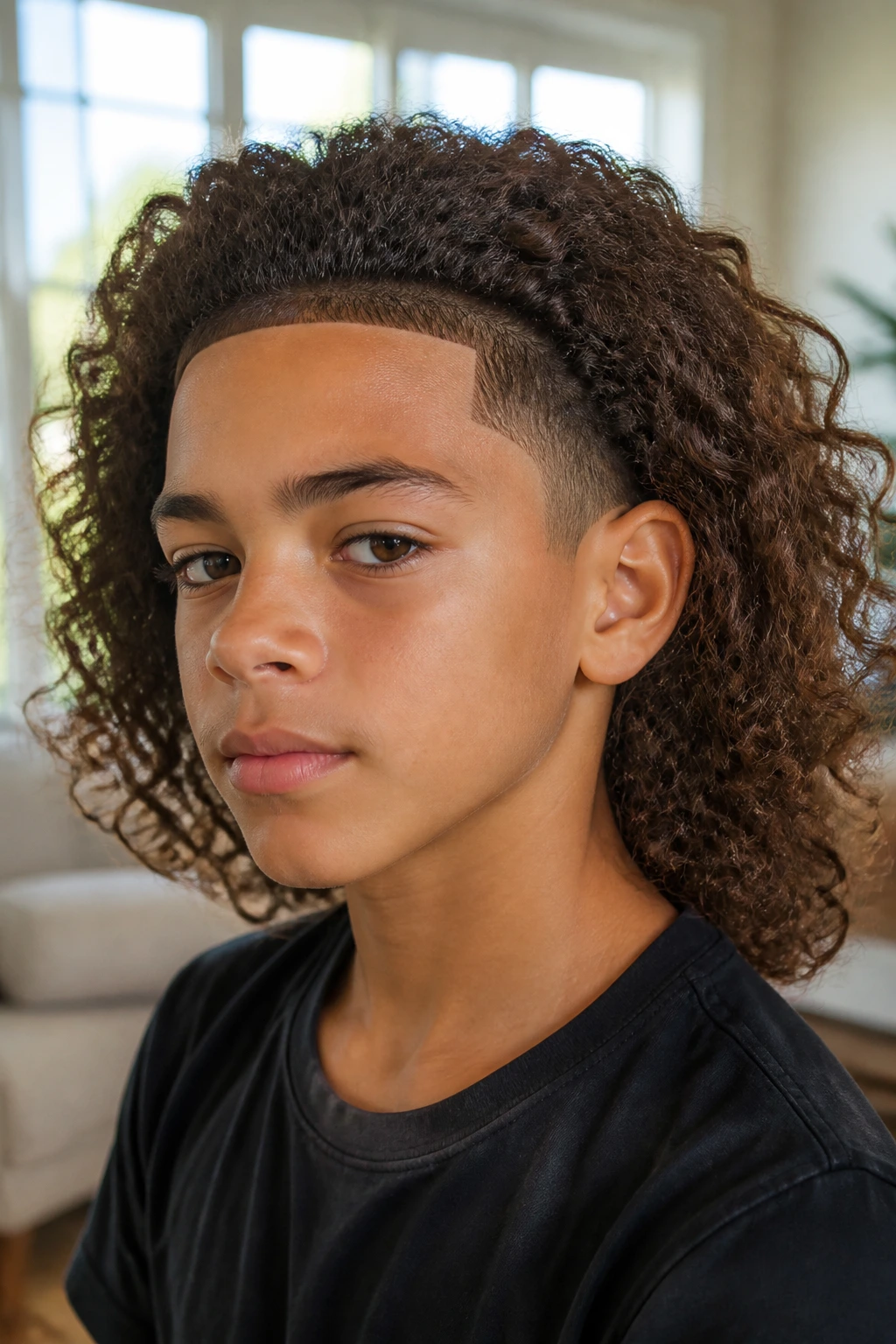
Long curls on boys can be lovely, but they need structure or they start looking like the haircut got lost halfway home. A shape-up around the edges keeps the line clean while the length stays free to move.
This is the cut for families who want to keep length without losing all sense of order. The trick is trimming the ends before they split and growing the top and back in a balanced way. If one area is ignored, the shape starts slumping to one side.
It’s also a good option for kids who don’t want clippers near the scalp. A careful scissor trim, a bit of shape at the temples, and regular dusting of the ends can keep the hair looking full instead of frayed.
20. Frohawk for Active Kids
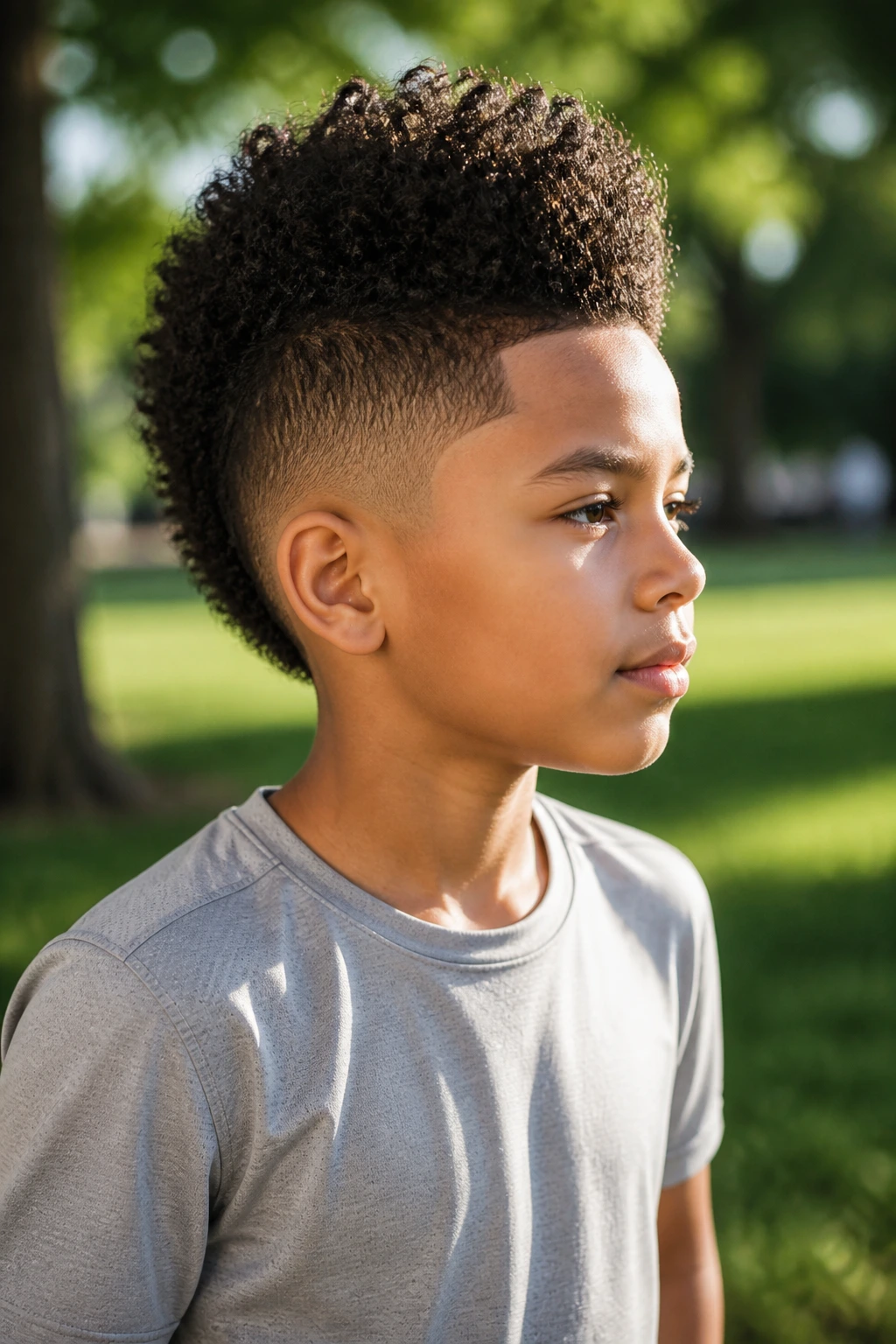
A frohawk narrows the curls into a center strip while the sides taper down, which makes it a little less extreme than a mohawk and a little more interesting than a standard taper. It’s a strong choice for active boys because the shape stays out of the face and feels sporty.
The center section should be tall enough to show texture but not so tall that it needs daily repair. The fade or taper on the sides does most of the visual work. That’s where the clean edge comes from.
It’s practical, too. Helmets, hoodies, and fast mornings don’t usually wreck it as badly as they wreck longer styles.
21. Scissor-Cut Curly Shag

A scissor-cut shag is one of my favorites for boys who have enough curl to create shape but enough softness to wear a longer cut. The layers are the whole point. They break up bulk, let the curls sit in pieces, and keep the hair from making one giant rounded mass.
This cut feels lived-in in the best way. Not messy. Lived-in. There’s a difference. The fringe, crown, and back all carry some length, which makes the shape flow instead of spike.
Good to Know
Ask for scissor work rather than a heavy clipper fade if you want the softness to stay. This cut can be trimmed dry or mostly dry so the barber can see how the curls actually fall.
It’s a good grow-out cut, which is a polite way of saying it won’t punish you between appointments.
22. Curly Top With a Low Skin Fade
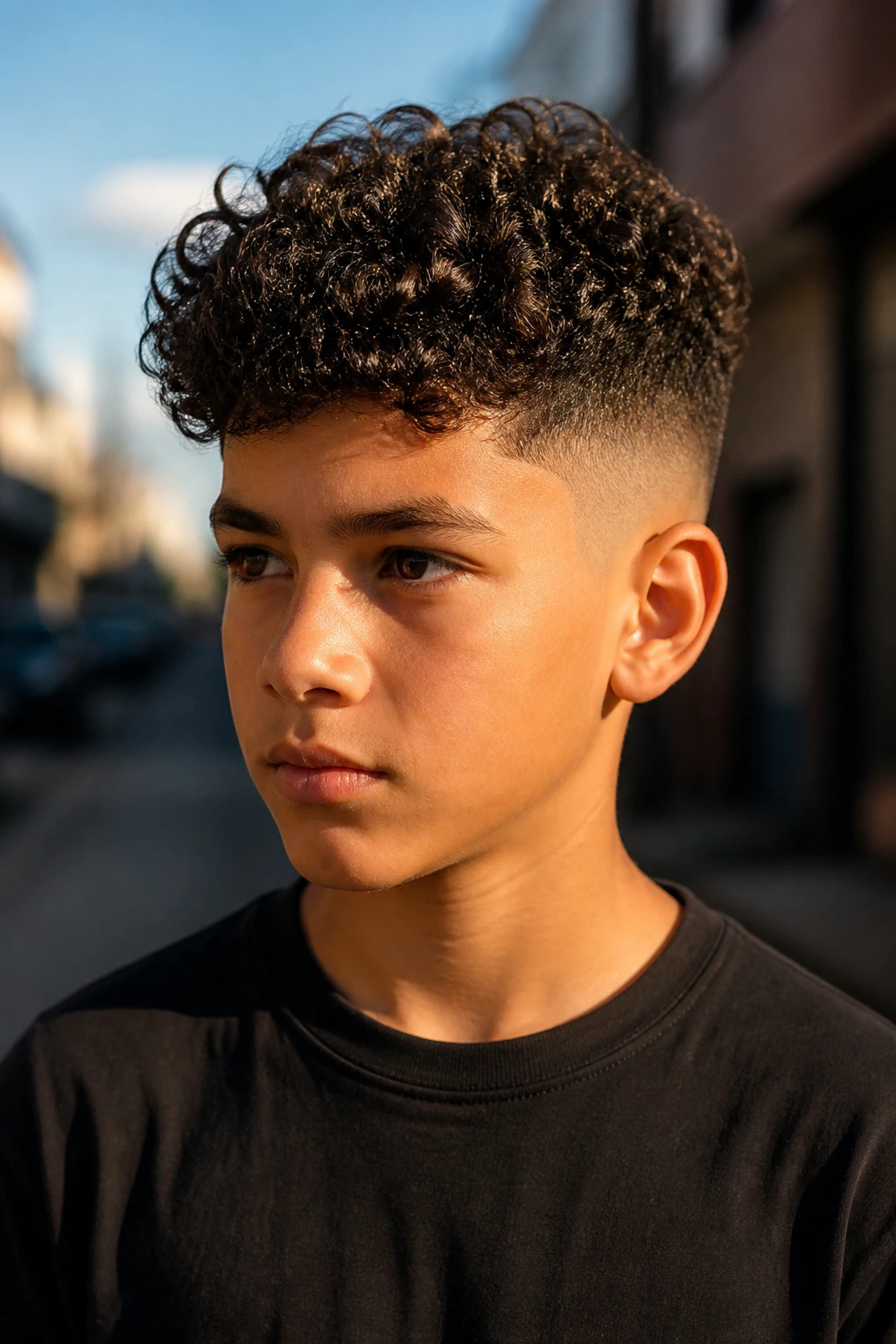
A low skin fade gives curly hair a crisp base and a lot of contrast. The top stays the focus, and the fade drops cleanly to the skin near the bottom without climbing too high up the sides.
This works best when the top has enough length to stand apart from the fade, usually 2 to 4 inches depending on curl tightness. Tight curls can handle less length and still read full. Loose curls usually need a bit more to keep the texture visible.
It’s sharp. It’s clean. It also grows out faster than the softer fades, so it rewards families who don’t mind frequent touch-ups.
Why Curly Hair Changes the Cut Shape
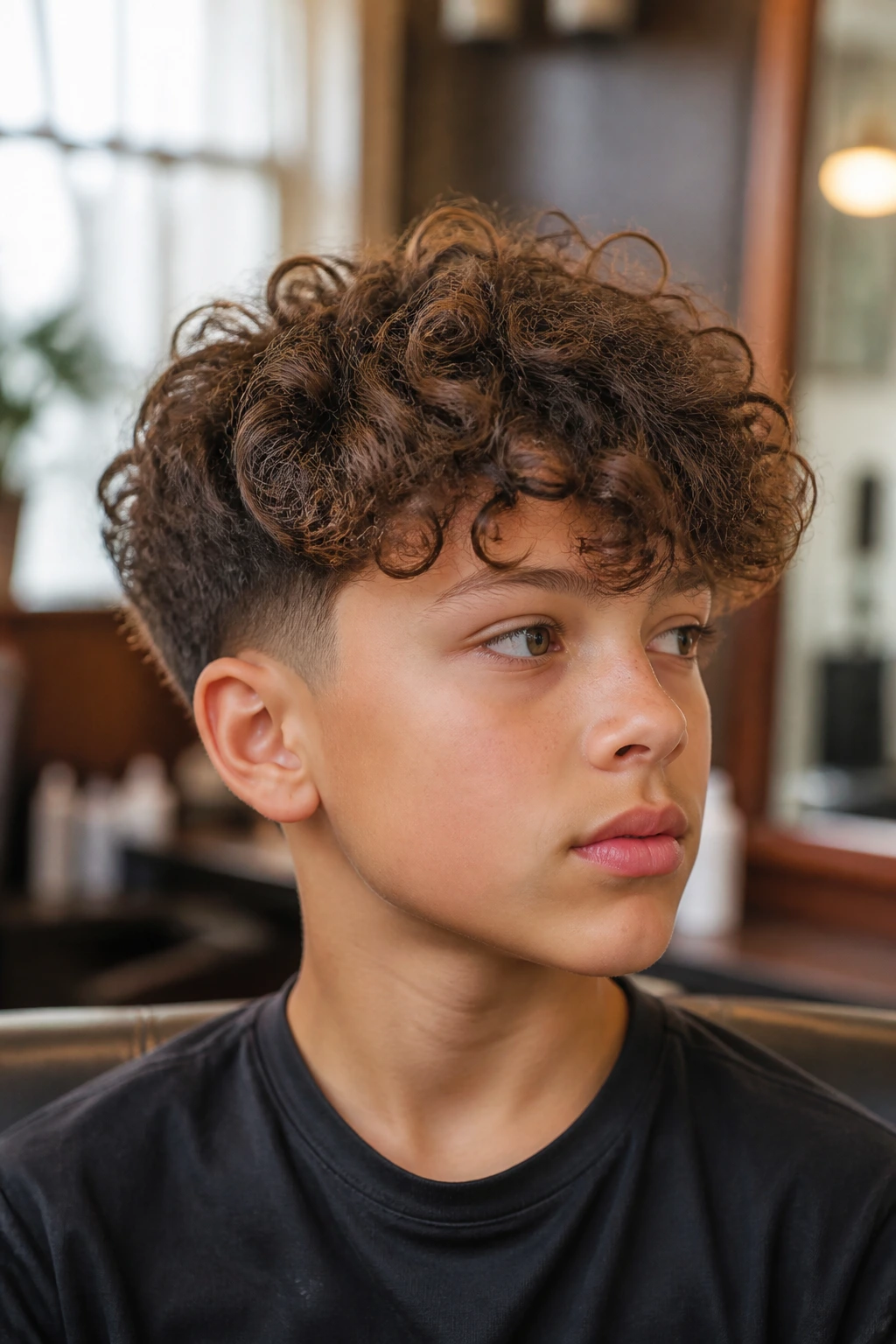
Curly hair doesn’t sit where you leave it. That’s the first rule, and it explains half the confusion people have with curly boys’ haircuts. A curl bends back on itself, so a half-inch trim can look like a full inch gone once the hair dries. If you cut a curly head the same way you’d cut straight hair, the outline can end up too wide on the sides and too short on top.
The smarter approach is shape first, length second. A low taper, temple fade, or soft scissor layering usually does more for the haircut than hacking off bulk everywhere. Those details change how the silhouette reads from across the room, which is what parents usually care about whether they say it out loud or not.
The other thing people forget is growth direction. Curls often push forward, up, or out at different angles on the same head. That means one barber’s “short” can look neat, while another’s “short” can look uneven because the curl pattern wasn’t read correctly. Dry checks help. So does looking at the child’s hair after it has been worn for a full day.
And yes, some cuts can look a little too good on day one. Then the kid sleeps on them, runs around in them, and the shape changes. That is not failure. It’s curly hair doing curly hair things. The best curly cuts are built to survive that.
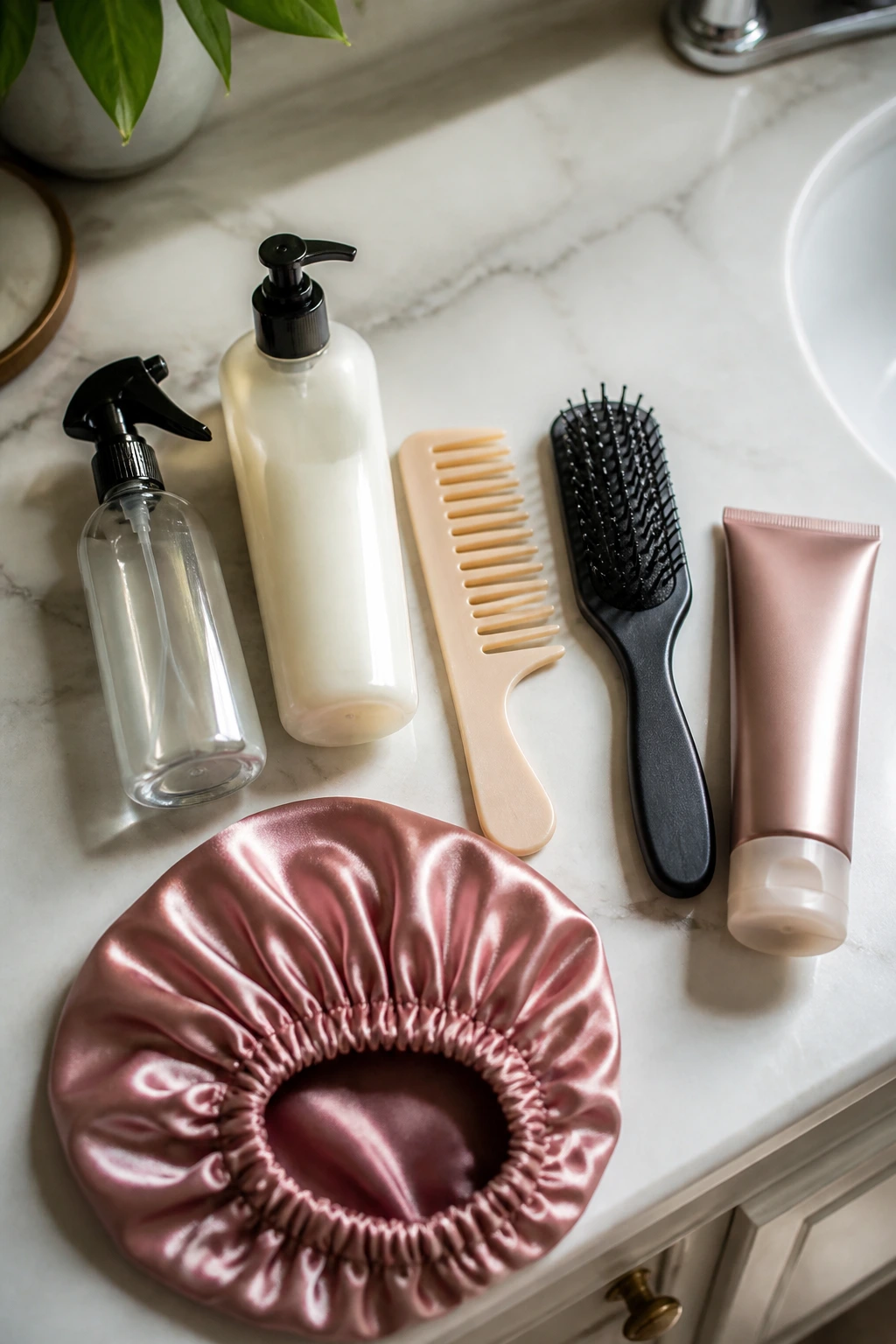
The Tools That Make Home Care Easier
-
Spray bottle with clean water: A few misted sprays can wake curls up in the morning without soaking the whole head.
-
Leave-in conditioner: This keeps dry ends from frizzing, especially on tighter curls and longer tops.
-
Wide-tooth comb: Best for detangling after a wash without ripping through curl clumps.
-
Detangling brush: Useful on thicker curls or coils when the hair needs a little more control than a comb can give.
-
Curl cream or light mousse: Helps hold the curl pattern without turning the hair hard or shiny.
-
Hair dryer with a diffuser: Good when you need faster drying and don’t want the curls blasted into a frizz cloud.
-
Clippers with guards: Helpful for clean necklines or in-between side cleanups if you trim at home.
-
Sharp barber shears: Better than dull household scissors, which chew the ends and leave them uneven.
-
Satin pillowcase or bonnet: Keeps the cut from getting flattened and fuzzy overnight.
-
Hand mirror: Sounds basic, but it helps check the back and neckline so the cut doesn’t drift into “unkempt” territory between appointments.
What to Tell the Barber Before the Clippers Start
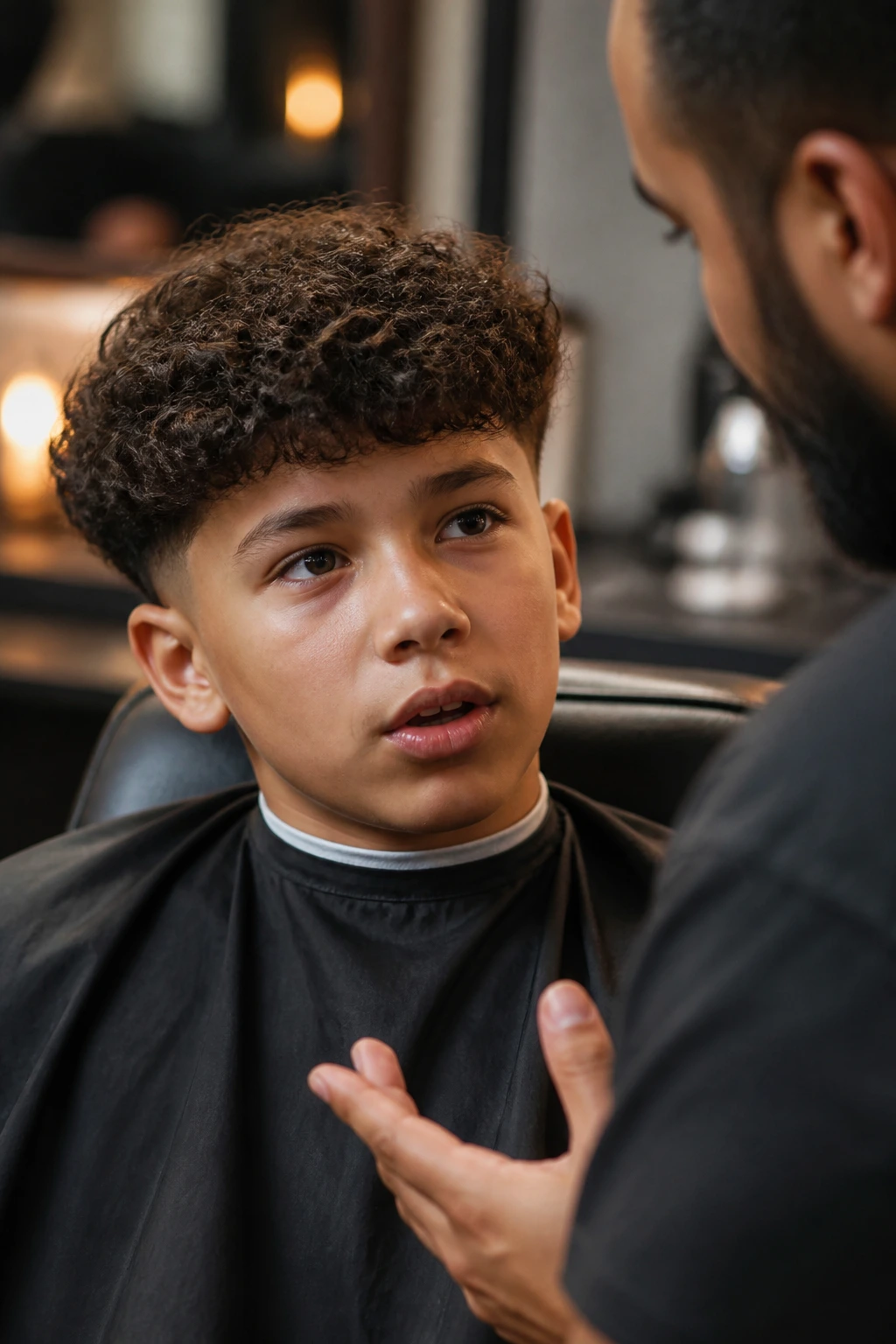
The quickest way to get a curly haircut wrong is to say, “Just make it short.” Short where? How short? On curls, that can mean three very different things. Bring photos. Better yet, bring two: one of the front and one of the side, because the back is where surprises hide.
Say how the hair behaves when it dries. If it shrinks a lot, tell them that. If the sides puff out after two days, say that too. Barbering curly hair is part haircut, part memory job. The person cutting it needs to know what the hair does after the cape comes off.
I also like the phrase “shape the top to the curl pattern, then clean the sides to match” because it keeps the focus where it belongs. It stops the barber from making the top too flat or the sides too tight just because that looks neat in the chair. Sometimes neat in the chair is the exact opposite of neat at school.
If you want a low-maintenance cut, say that plainly. If you’re fine with a fade every three weeks, say that too. Maintenance matters. A curly crop that grows out well is not the same as a curly top that needs weekly attention. Those are different asks, and the haircut changes with them.
How to Wear the Cut From School Morning to Weekend
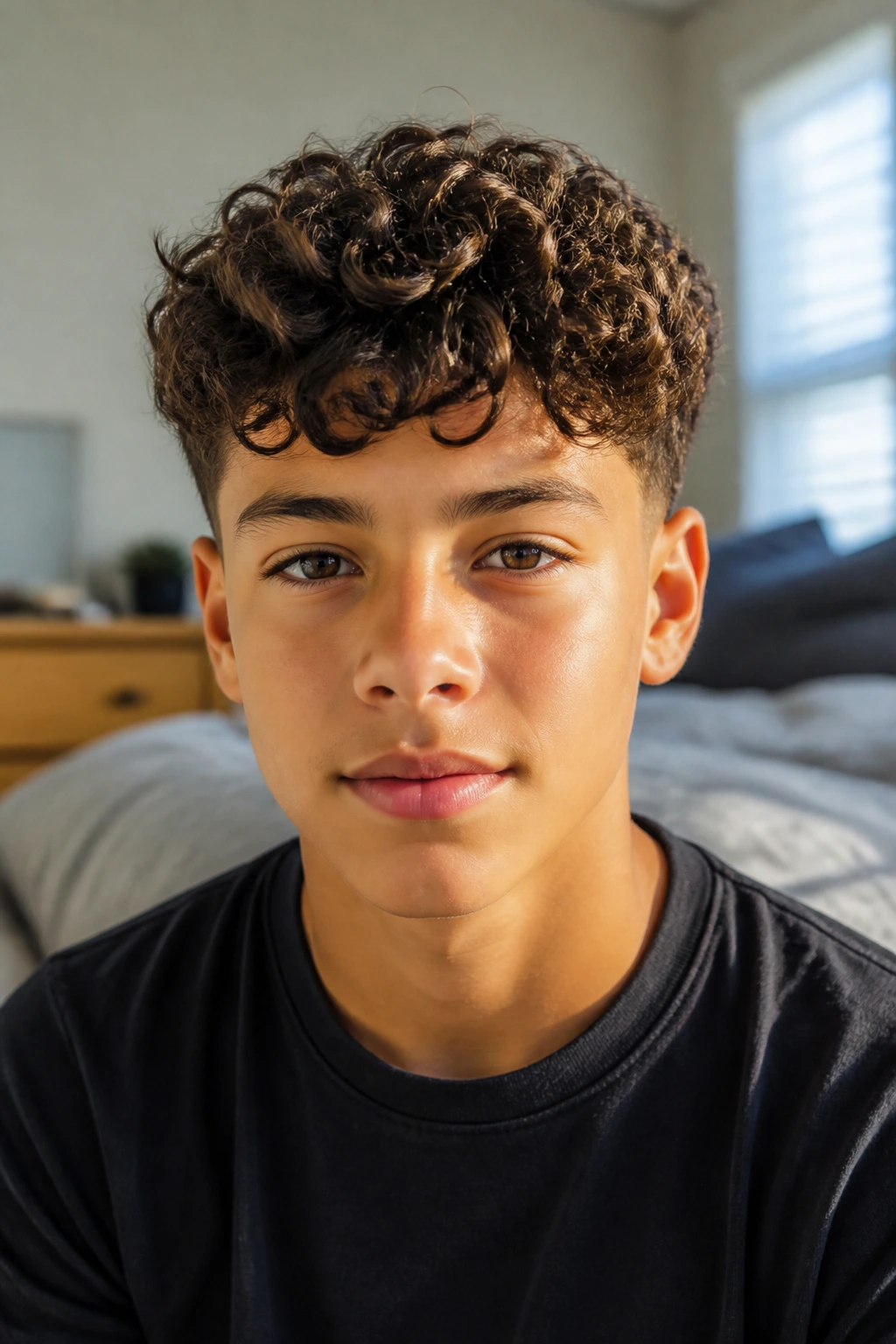
Presentation: The haircut should still have a shape when the curls dry. You want the outline to look tidy from the front and the side, not just from the bathroom mirror.
Products: For most boys’ curly haircuts, a light leave-in or curl cream is enough. Tight curls may want a touch more moisture. Loose curls usually do better with less product and a little finger-shaping.
Length balance: Shorter cuts work when the sides stay cleaner than the top. Medium cuts work when the layers are staggered so nothing piles up into one bulky line. Longer curls need the ends trimmed before they split and fluff out.
Best match: The right haircut should match the kid’s routine. School, sports, hats, hoodies, naps, and morning rushes all matter more than a glossy photo. If a style only looks good with a full 20-minute styling session, it’s not practical for most families.
Extra Tricks That Make Curly Cuts Easier
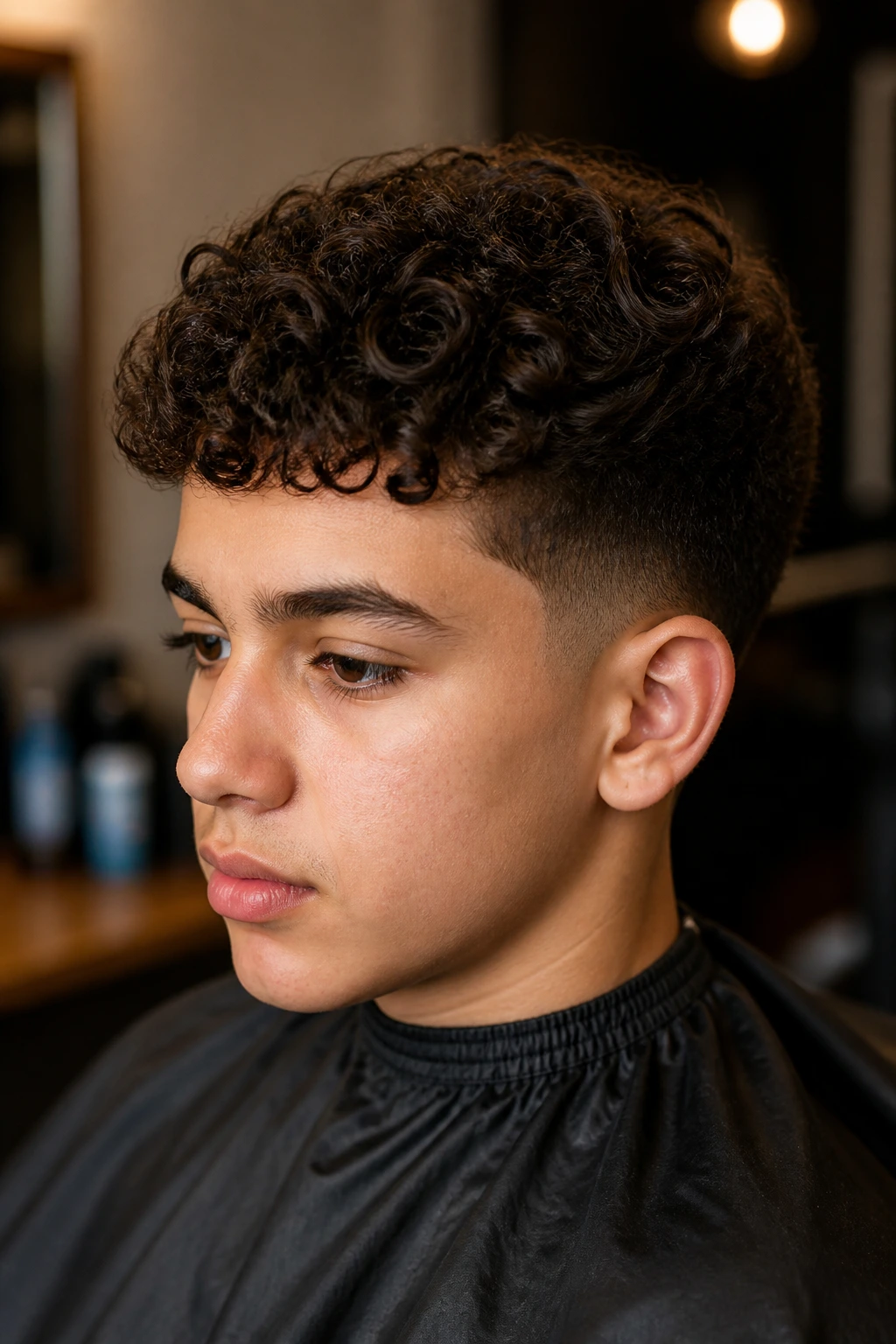
Moisture first: Curly hair looks better when it isn’t thirsty. A little leave-in on damp hair does more than ten minutes of brushing on dry hair ever will.
Time-saver: Refresh the top with a spray bottle and finger-shaping instead of rewashing every day. That keeps the curl pattern intact and saves a lot of bathroom time.
Pro move: Ask the barber to leave the neckline a touch softer if the cut is meant to last more than two weeks. A razor-sharp neckline can start looking messy faster once the hair begins to grow.
Texture fix: If the curls clump too much, use a tiny amount of mousse and scrunch upward. If they go frizzy, stop touching them while they dry. That one is annoyingly simple, but it works.
School-morning trick: Let the cut air-dry as much as possible before adding product. Wet product on soaking curls can make the whole head look greasy or heavy.
Common Mistakes to Avoid
-
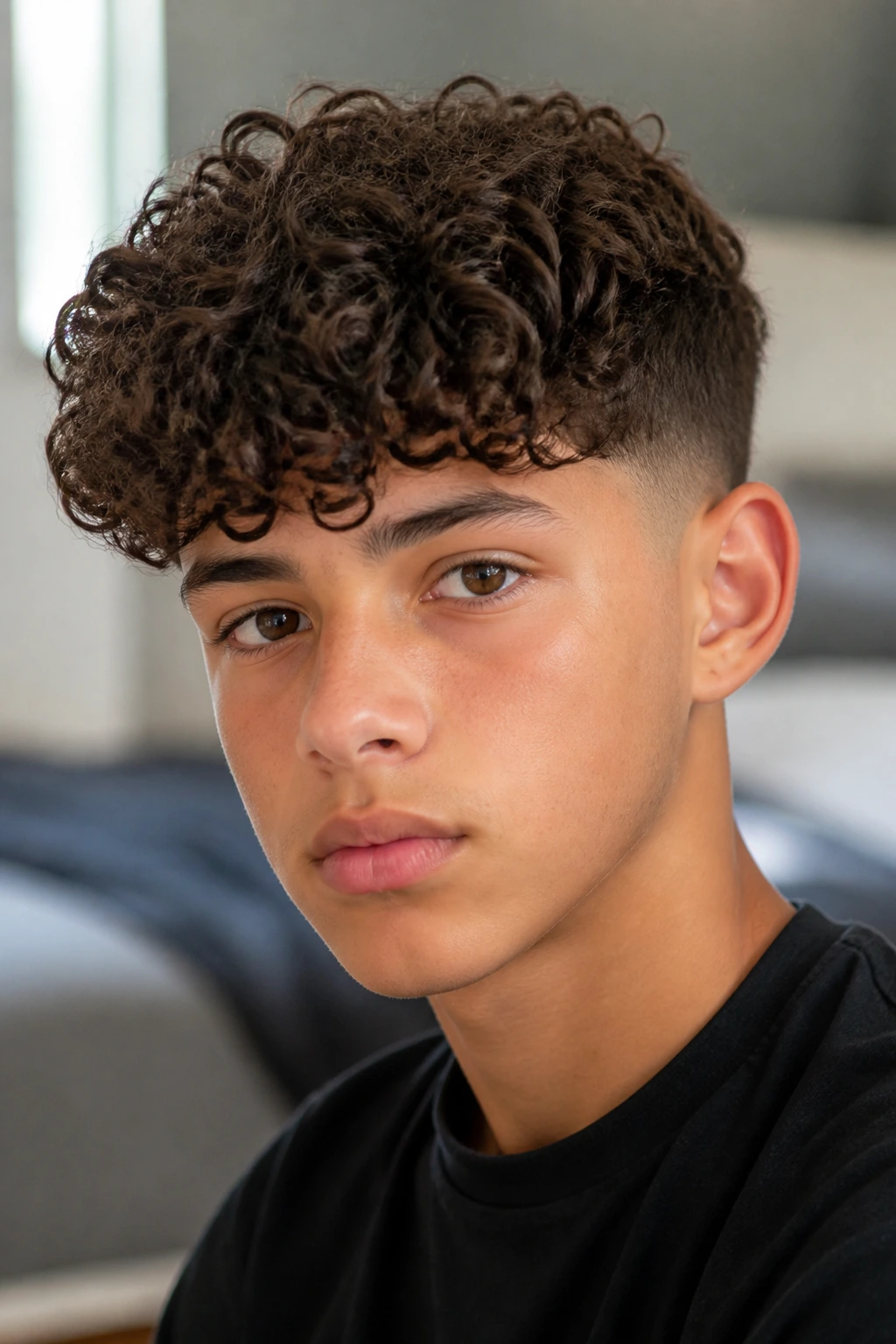
Cutting curls too short on the first pass: Wet curls lie. A haircut that looks safe while wet can be much shorter once dry. Ask the barber to leave a little length, then refine after the curls spring up.
-
Pushing the sides too high too fast: If the fade climbs too far on a round or dense curly head, the top can look like it’s sitting on a pedestal. The fix is usually a lower taper or a softer blend around the temple.
-
Using too much product: Heavy cream or gel can make curls look stringy and greasy instead of defined. Start with a pea-sized amount, then add only if the hair drinks it up.
-
Ignoring the back of the head: Parents check the front first. Bad idea. Curly hair often builds bulk in the back before anyone notices, and that’s where a good shape gets lost.
-
Blunt-cutting loose curls across one line: This creates a shelf that puffs at the bottom and collapses on top. Layers are safer when the hair is medium or long.
-
Waiting too long between trims on fade-based cuts: A clean taper can blur fast. Once the side shape starts spreading around the ears, the whole haircut reads messier than it actually is.
Variations and Adaptations to Try
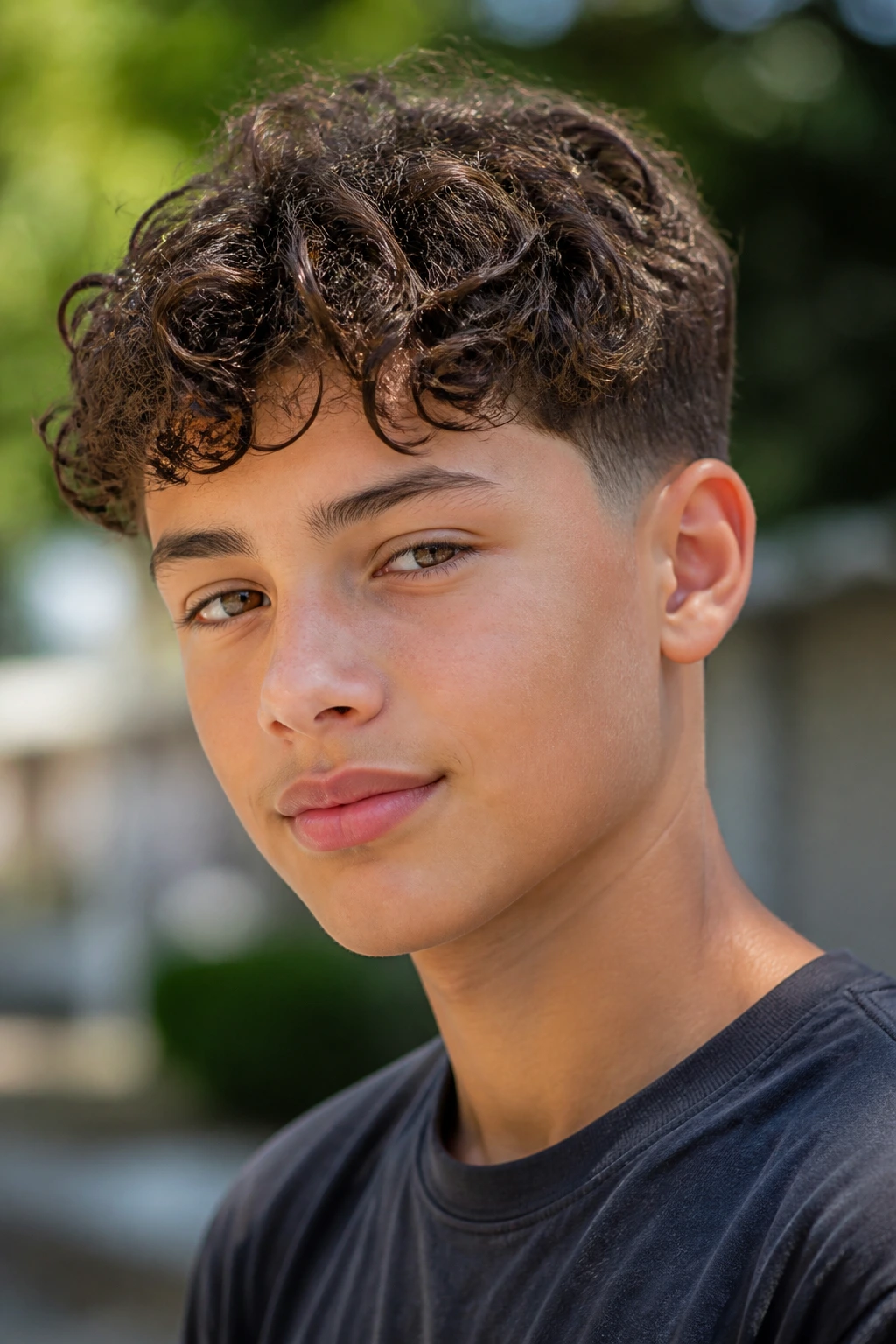
School-Uniform Short Cut: Keep the top cropped and the sides tapered low so the haircut stays tidy under hoodies and school rules. This works well when the family wants almost no morning styling.
Sports-Ready Fade: Go for a burst fade, low taper, or temple fade with a slightly shorter top. It stays out of the face better during practice and doesn’t need much repair after a helmet.
Grow-Out Friendly Shape: Choose layers, a shag, or a medium curly top with soft edges. These cuts grow in stages and give you more time between barber visits without looking abandoned.
Tight-Coil Shape-Up: Keep the crown rounded, the sides tapered, and the edges neat without making them too sharp. This is the sweet spot for dense hair that needs structure but still wants to move.
Loose-Wave Clean Cut: Ask for scissor layers, not heavy clippers on top. Waves need direction more than they need removal, and too much cutting can flatten the movement out of them.
Low-Maintenance Weekend Style: A curly crop, Caesar, or short French crop will usually win here. A spray bottle and a little leave-in are enough, which is exactly the point.
Keeping the Shape Between Haircuts
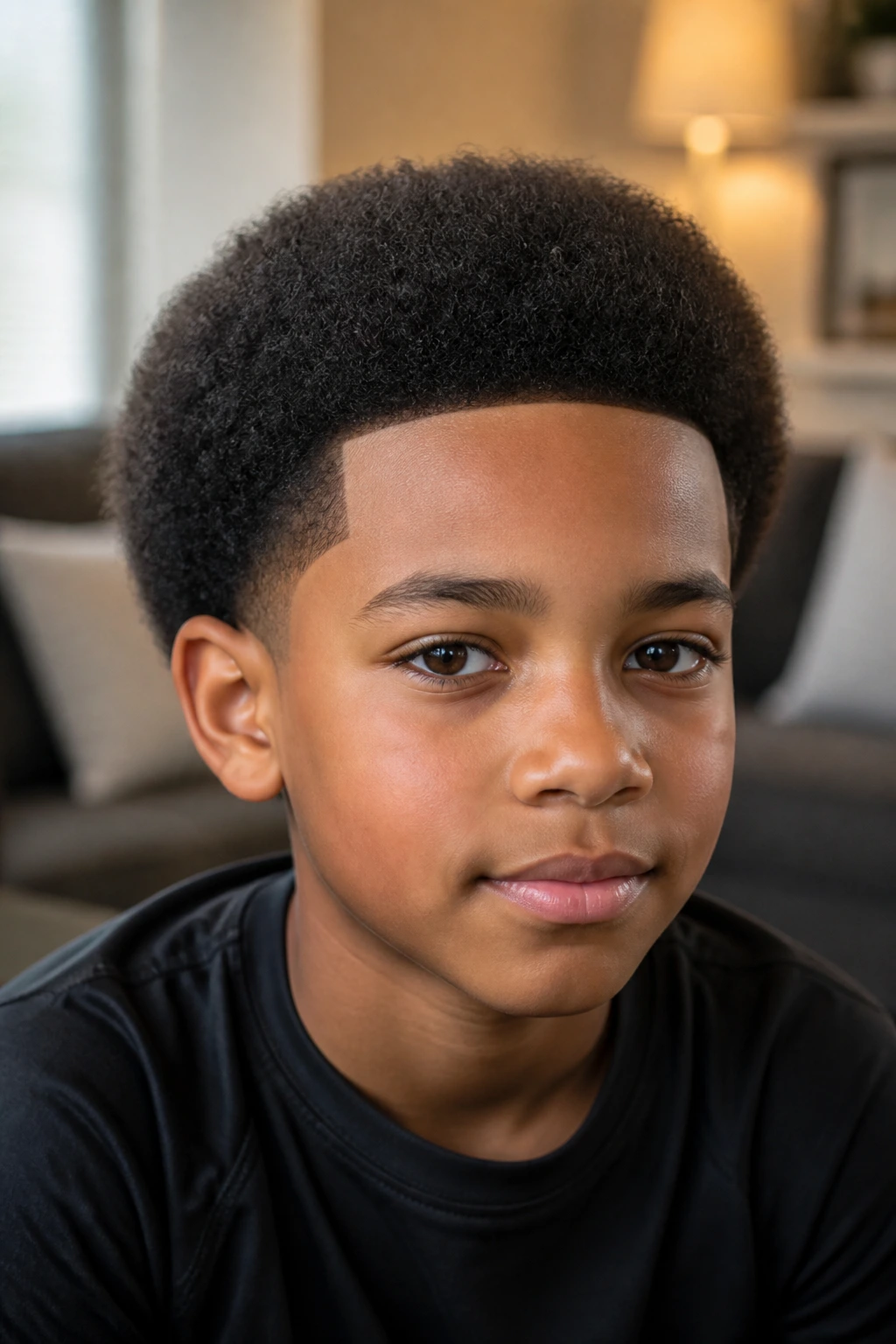
Curly hair usually needs a rhythm, not constant fuss. For tight fades and temple work, a touch-up every 3 to 4 weeks keeps the outline clean. For layered medium cuts or shags, 5 to 7 weeks is often fine because the shape grows out more slowly and hides the trim line better.
Wash days matter, but not in the way most people think. Overwashing can dry curls out and make them frizz faster. For many boys, 1 to 3 washes a week is enough, depending on scalp oil, sports, and sweat. Use a light conditioner or leave-in after washing, then let the hair dry without rough towel rubbing. Pat it. Don’t sandpaper it.
At night, a satin pillowcase does more than people expect. It cuts down on friction, which means fewer flattened spots and fewer fuzzy ends in the morning. If the hair is longer, a loose pineapple or a soft bonnet can keep the curls together. If the hair is shorter, just keeping the head off rough cotton helps.
Between appointments, clean up the neckline only if you can do it safely. Don’t chase every tiny fuzzy hair. Curly cuts look worse when the home cleanup gets too aggressive and the shape starts looking patched.
Frequently Asked Questions
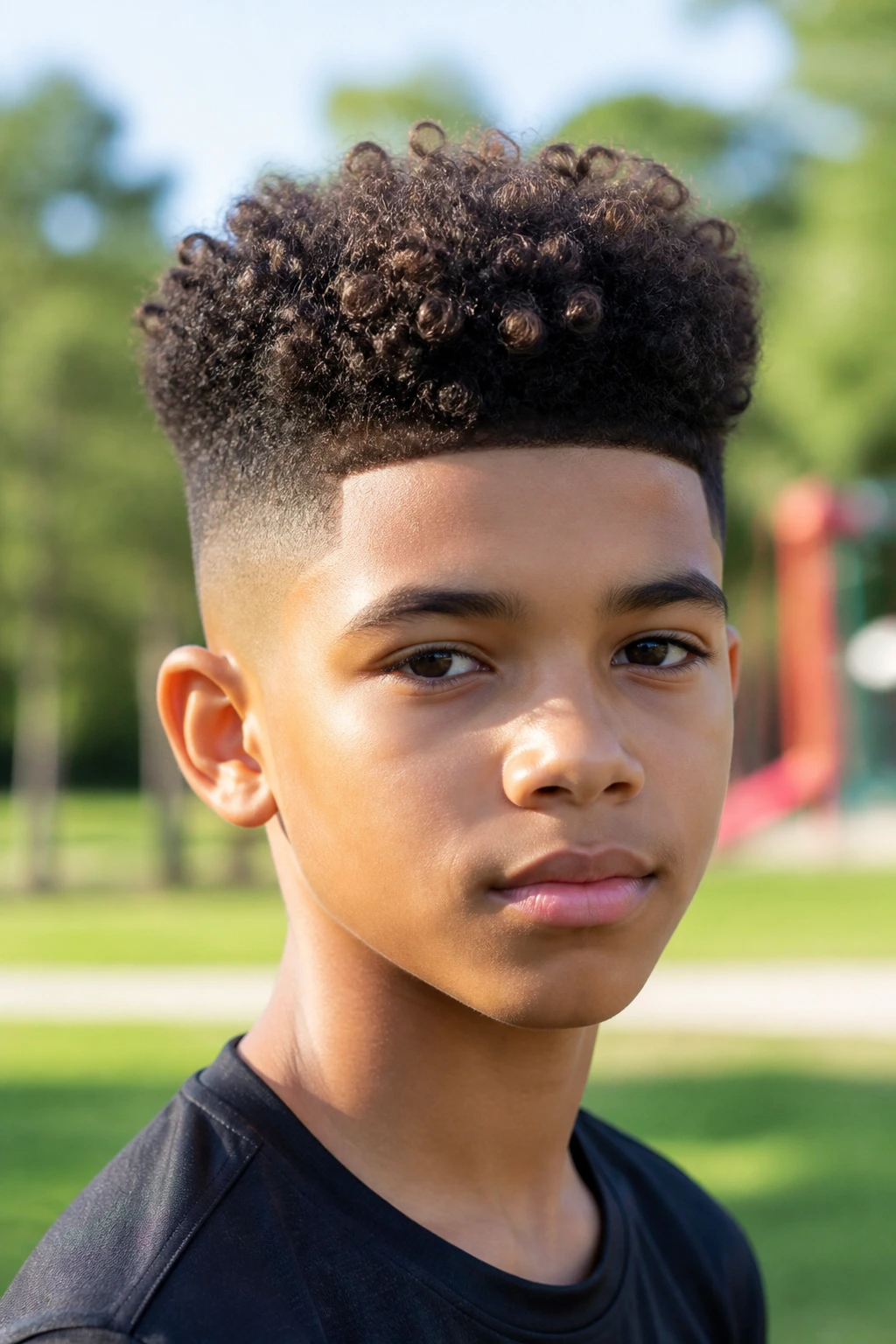
Should boys’ curly hair be cut wet or dry?
Both can work, but dry or mostly dry cutting gives a barber a better read on shrinkage and curl pattern. Wet cutting can still be useful for cleanup and shaping the sides, as long as there’s a dry check at the end.
What’s the easiest curly haircut to manage every day?
A curly crop, French crop, or curly Caesar usually wins on simplicity. These cuts keep the top short enough to need only a little moisture and finger-shaping in the morning.
How do I stop curly hair from looking like a triangle?
Take weight out of the sides and keep the top layered or rounded, depending on length. Triangle shape usually means the sides stayed too wide while the top sat too flat.
Can a side part work on curly hair?
Yes, but it should be a soft part, not a hard razor line unless the hair is thick and cooperative. Loose curls and waves usually hold a side part better than very tight coils.
How often should a fade get cleaned up?
Most fade-based boys’ curly haircuts look best when they’re touched up every 3 to 4 weeks. If the cut is softer and more layered, you can stretch that longer.
What haircut works best for thick curly hair that gets bulky fast?
A low taper, temple fade, or soft undercut usually handles the bulk without flattening the hair. If the top is very dense, ask for scissor work to thin the shape rather than just clipping everything shorter.
Can my child keep long curls and still look neat?
Absolutely. The trick is edge control and regular end trims. Long curls look much cleaner when the neckline and temples are shaped every few weeks.
What if the curls puff up after the haircut?
That usually means the cut was too blunt or the hair is too dry. Add a little leave-in, avoid brushing it dry, and talk to the barber about layers or a lower taper next time.
Do tight curls need a lot of product?
Not usually. Tight curls often need moisture more than hold, so a light cream or leave-in works better than a heavy gel. Too much product can weigh the curls down and make the scalp feel sticky.
The Shape That Grows Well
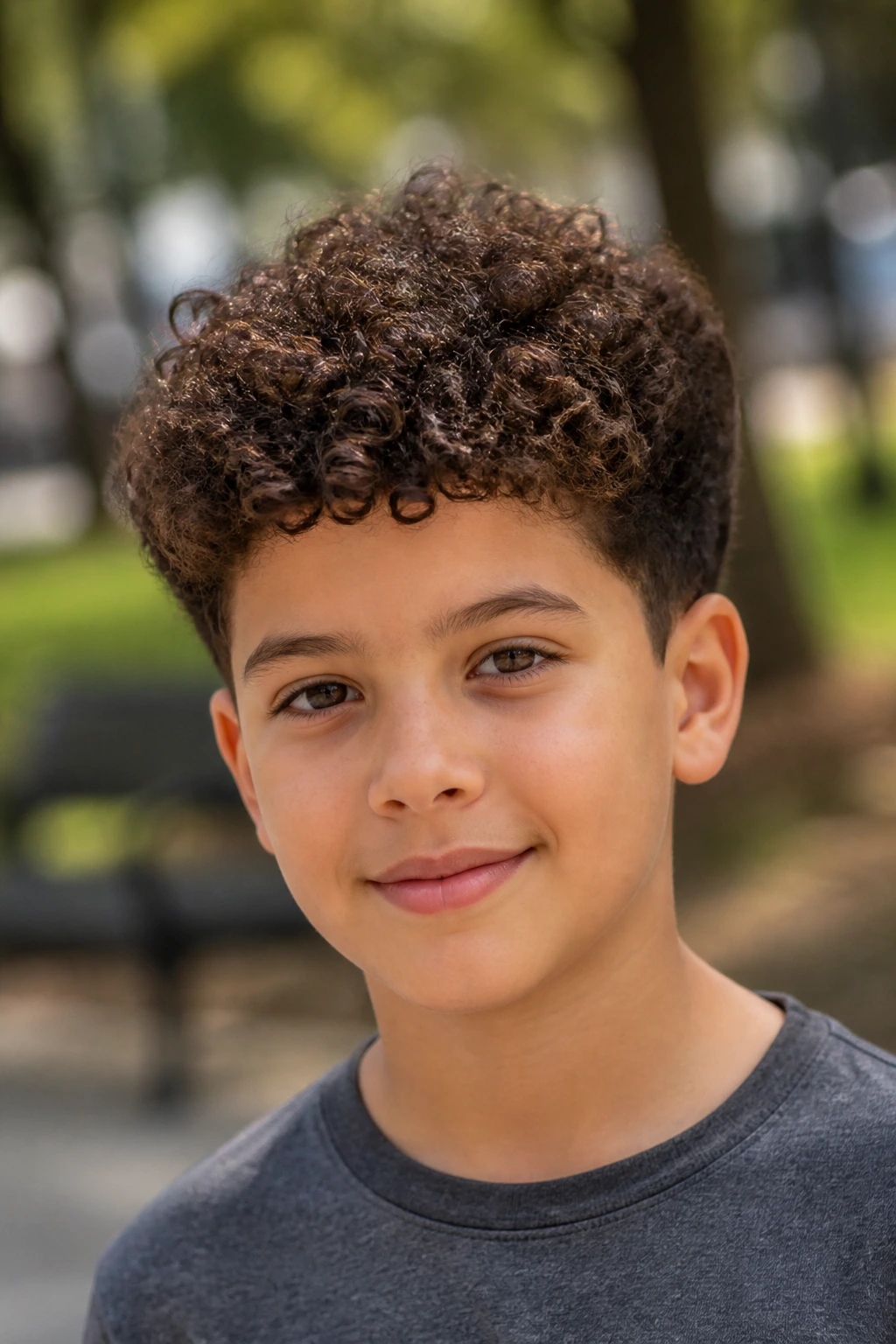
The best boys’ haircut for curly hair is the one that still makes sense when it stops being fresh. That’s the real test. If the sides blur a little, the top stretches a little, and the cut still looks like it was meant to be there, you’ve picked well.
I like curly haircuts that let the texture stay visible and the outline stay calm. Clean sides, honest length, and just enough room for the curl to do its thing. That combination saves time, and it saves arguments in the bathroom mirror, which is probably the more useful part.
Pick the shape that matches the curl pattern you actually have, not the one you wish would show up on wash day. The right haircut makes that hair easier to live with from the first trim to the next one, and that’s where the real win is.
