



Short hair doesn’t need to look plain. In fact, the best hairstyle ideas for men with short hair usually work because they’re stripped down: a tight outline, a little texture, a clean neckline, and one clear shape that holds together from the front and the side.
The problem is that short hair exposes everything. A cowlick at the crown. A temple that sits higher on one side. A front hairline that wants to do its own thing. Long hair can hide a messy plan. Short hair can’t. That’s why a good short cut feels so satisfying when it’s done right — the shape is doing the heavy lifting, not the product.
I keep coming back to the same truth: the right short haircut should make your morning easier, not more dramatic. If you need a bathroom shelf full of waxes and sprays to force the style into place, the cut is probably wrong. The better versions here work with a towel, a dab of matte clay, and a barber who knows how to leave enough weight where your hair actually needs it.
Why These Short Hair Ideas Earn Their Keep
-
They don’t fight your growth pattern: A strong short cut works with cowlicks, temple recession, thick spots, and flat crowns instead of trying to flatten them into submission.
-
They style fast: Most of these looks take 2 to 5 minutes, and several of them look finished with nothing more than towel-dried hair and a fingertip of product.
-
They grow out better than people expect: A good crew cut, crop, or taper still looks intentional two weeks later, which matters when you’re not living at the barber chair.
-
They give you options with or without facial hair: A buzz cut, side part, or French crop can look clean next to a beard, stubble, or a bare jawline, depending on how you balance the edges.
-
They speak barber clearly: These cuts are easy to describe with guard numbers, inches, fade height, and fringe length. That saves you from the classic “short on the sides, longer on top” disaster.
-
They handle real life: Wind, hats, commuting, workouts, humidity — short hair has fewer fragile bits to collapse, which is why these styles keep showing up in barbershops.
1. Buzz Cut with a Skin Fade
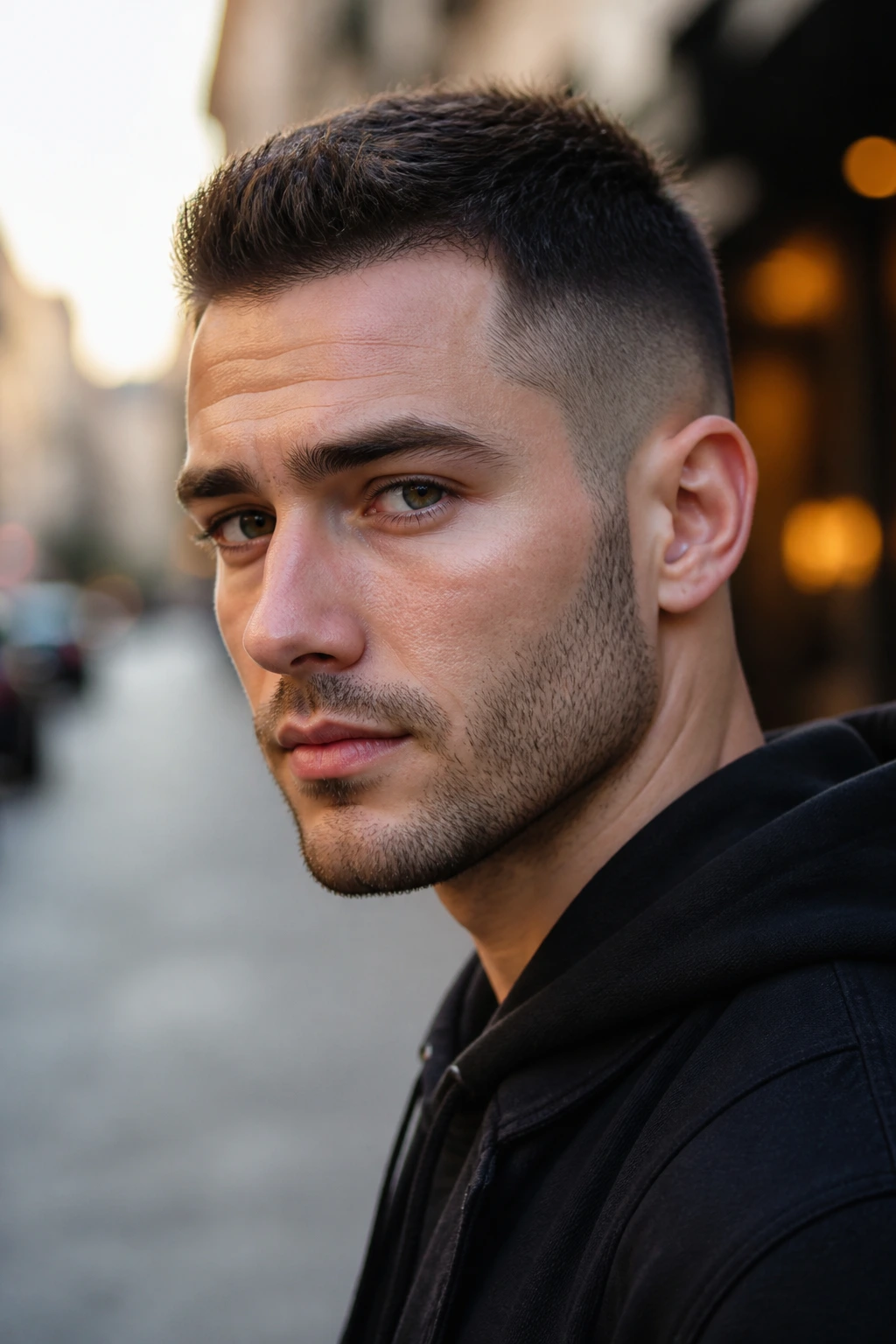
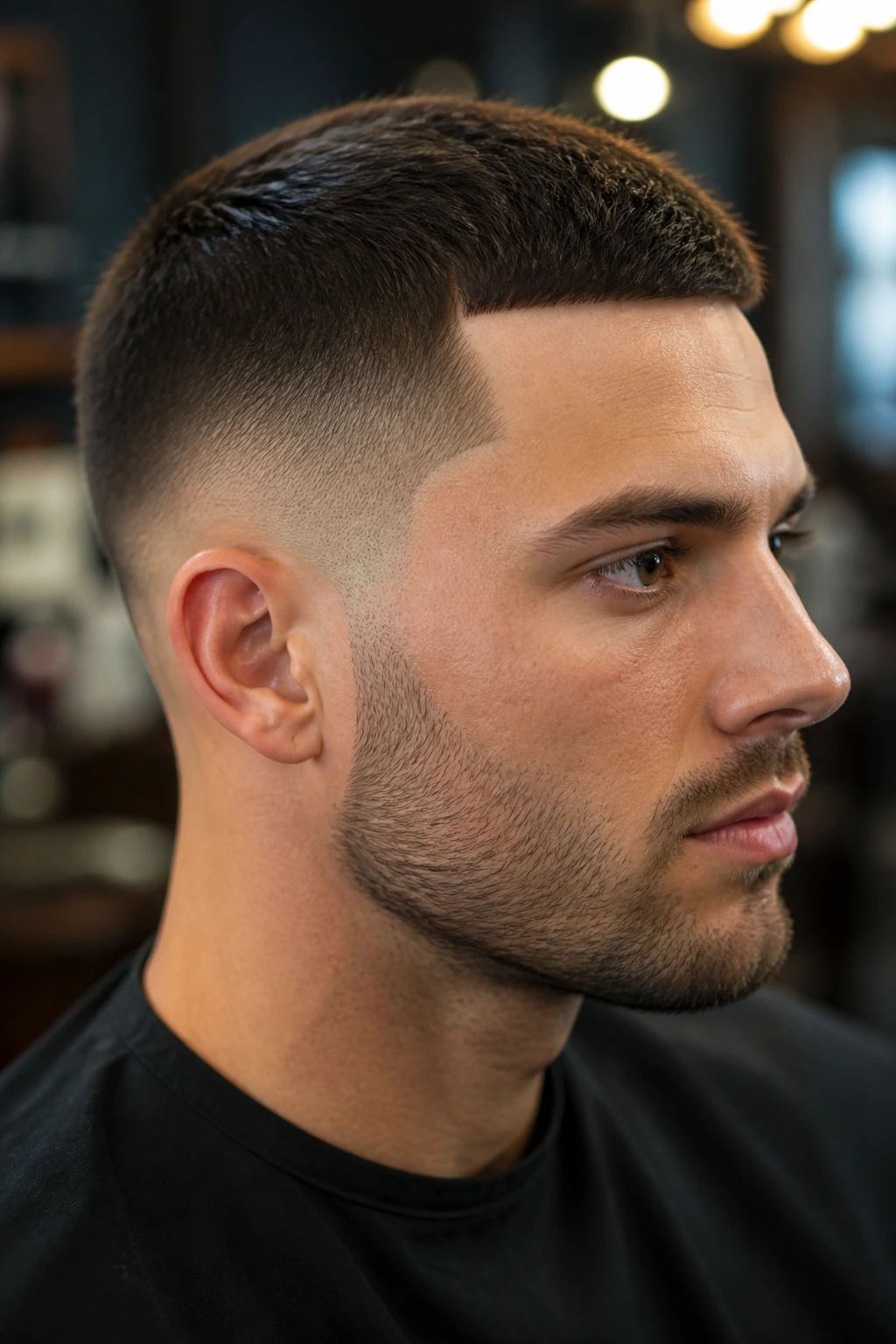
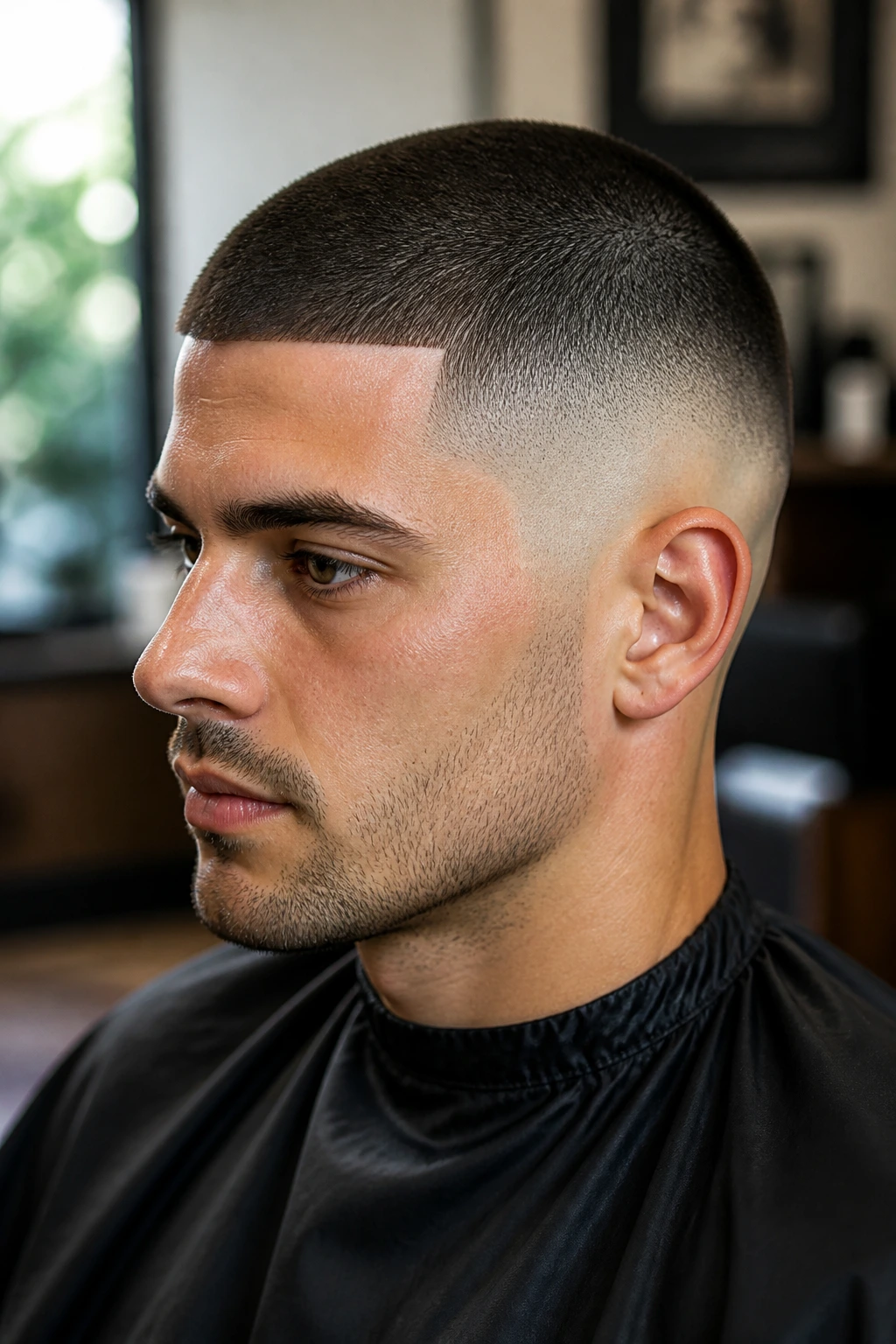
A buzz cut with a skin fade is the haircut equivalent of a hard reset. No fluff, no stray length, no awkward cowlick pretending to be a personality trait. When the fade is clean around the temples and the neckline is squared or gently rounded, the whole cut looks deliberate instead of lazy.
Why it works: The short top keeps the head shape honest, while the skin fade gives the cut a sharper edge than a plain all-over buzz. It’s especially useful if your hair grows fast or if you want a style that still looks tidy on day 18, not just day 1.
What to ask for: Top at a #1, #2, or #3 guard depending on how much scalp you want to show, with a skin fade that blends up cleanly around the ears. If your hairline is uneven, keep the front line soft instead of pushing it into a harsh square.
Best for: Guys who want almost zero morning styling, men with strong jaws, and anyone whose hair gets poofy when it’s longer.
A small warning: A buzz cut is merciless on head shape. If you’ve got a pronounced bump, a flat crown, or a scar you’d rather not spotlight, leave a little more length on top.
2. Crew Cut with a Taper
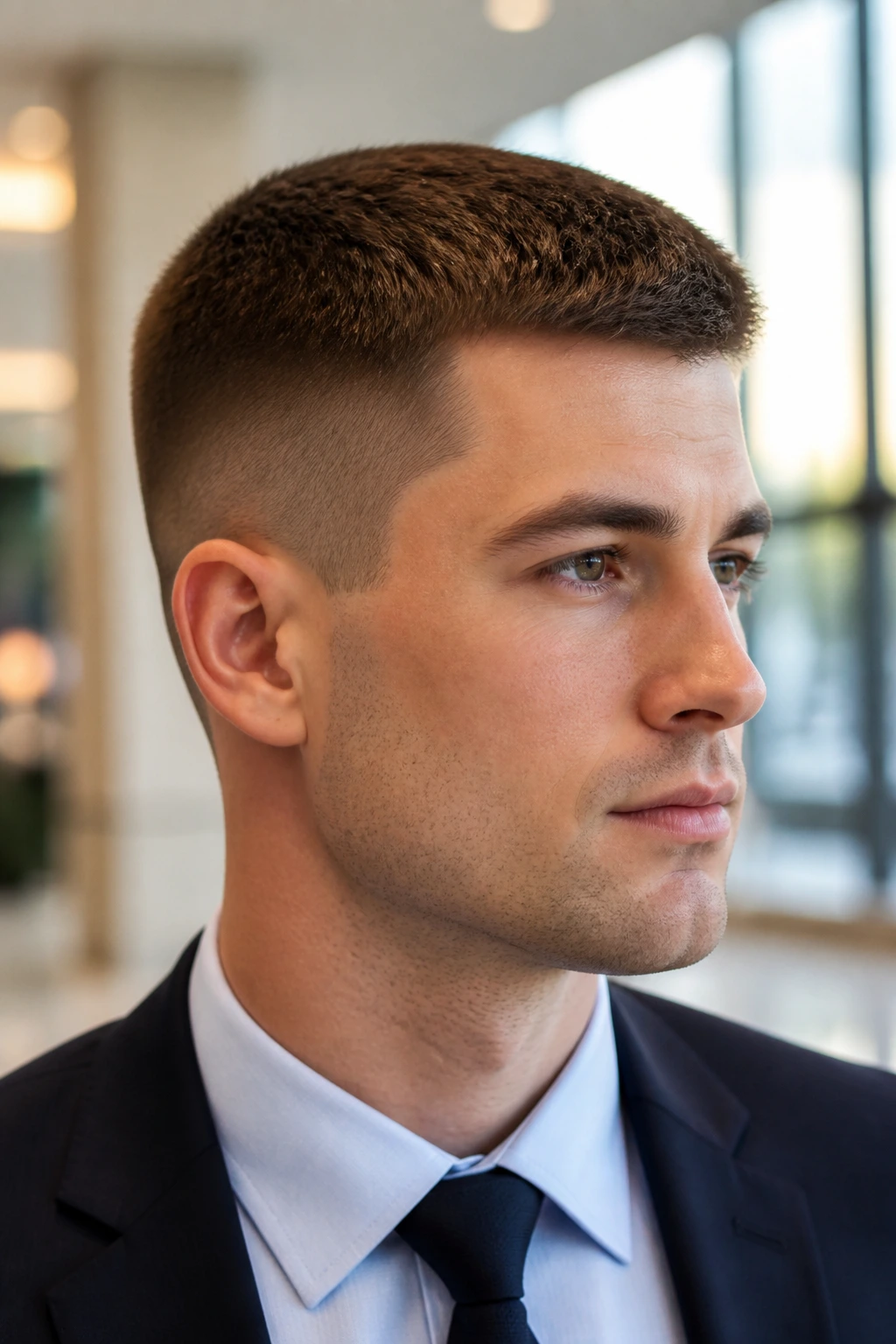
The crew cut is the haircut that looks like you tried, even when you didn’t. It has just enough length on top to lift forward or up, but it stays close enough to the head that it never feels fussy. A taper instead of a skin fade keeps it softer and more classic.
Why it works: The front usually sits a touch longer than the crown, which gives the cut some direction. That tiny difference matters. It lets the hair lean forward on busy mornings and still look intentional when you push it back with a little water and a touch of cream.
How to wear it: Ask for about 1 to 1.5 inches on top, slightly longer at the front, with the sides tapered neatly into the sideburns and neckline. If your hair is thick, tell the barber to remove bulk inside the top so it doesn’t puff outward like a mushroom.
Who should pick it: Men who want a clean office-friendly cut without the stiffness of a side part. It also suits guys who exercise a lot, because it doesn’t collapse into a greasy mess when your forehead gets warm.
Short, tidy, uncomplicated. That’s the whole appeal.
3. French Crop with a Choppy Fringe
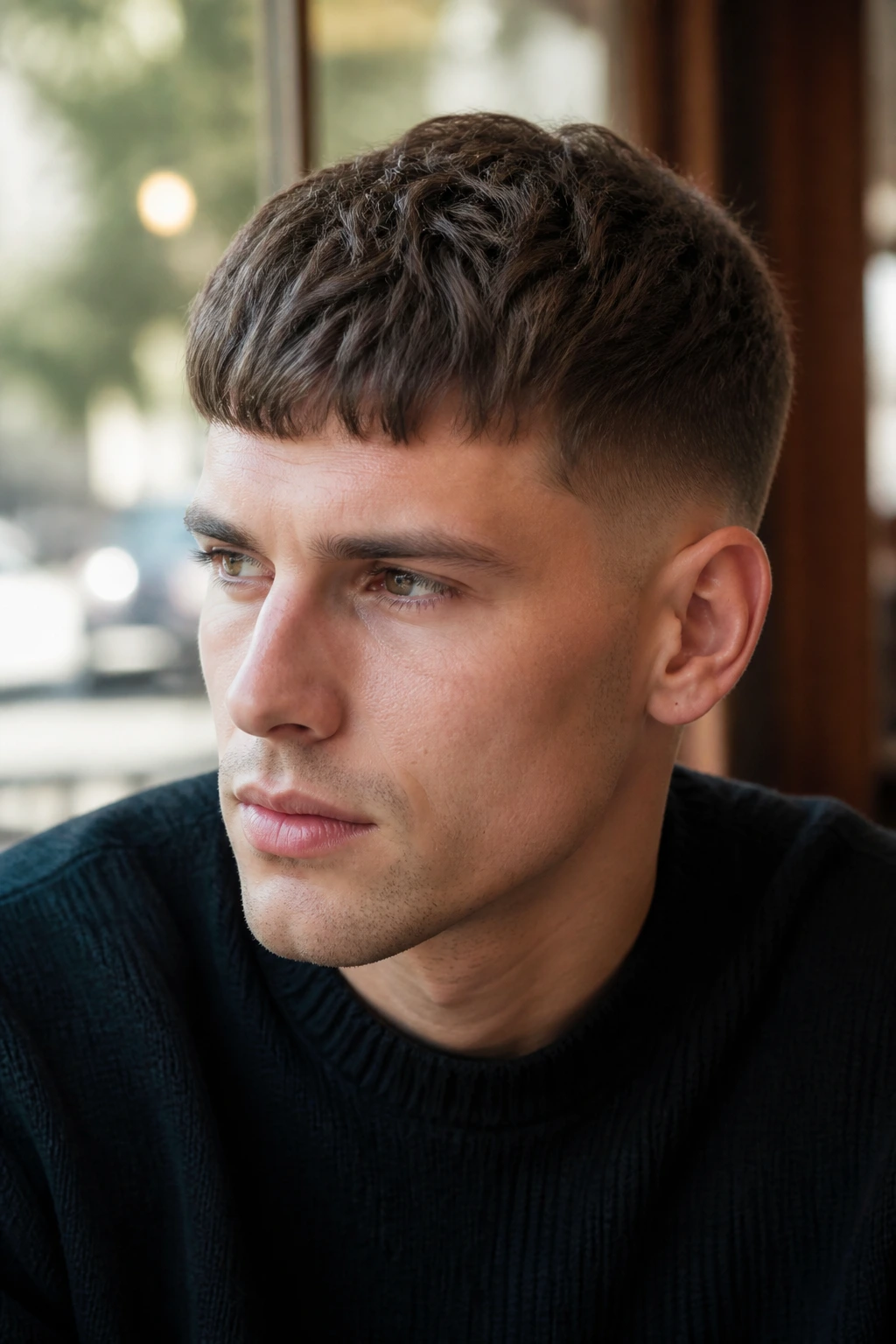
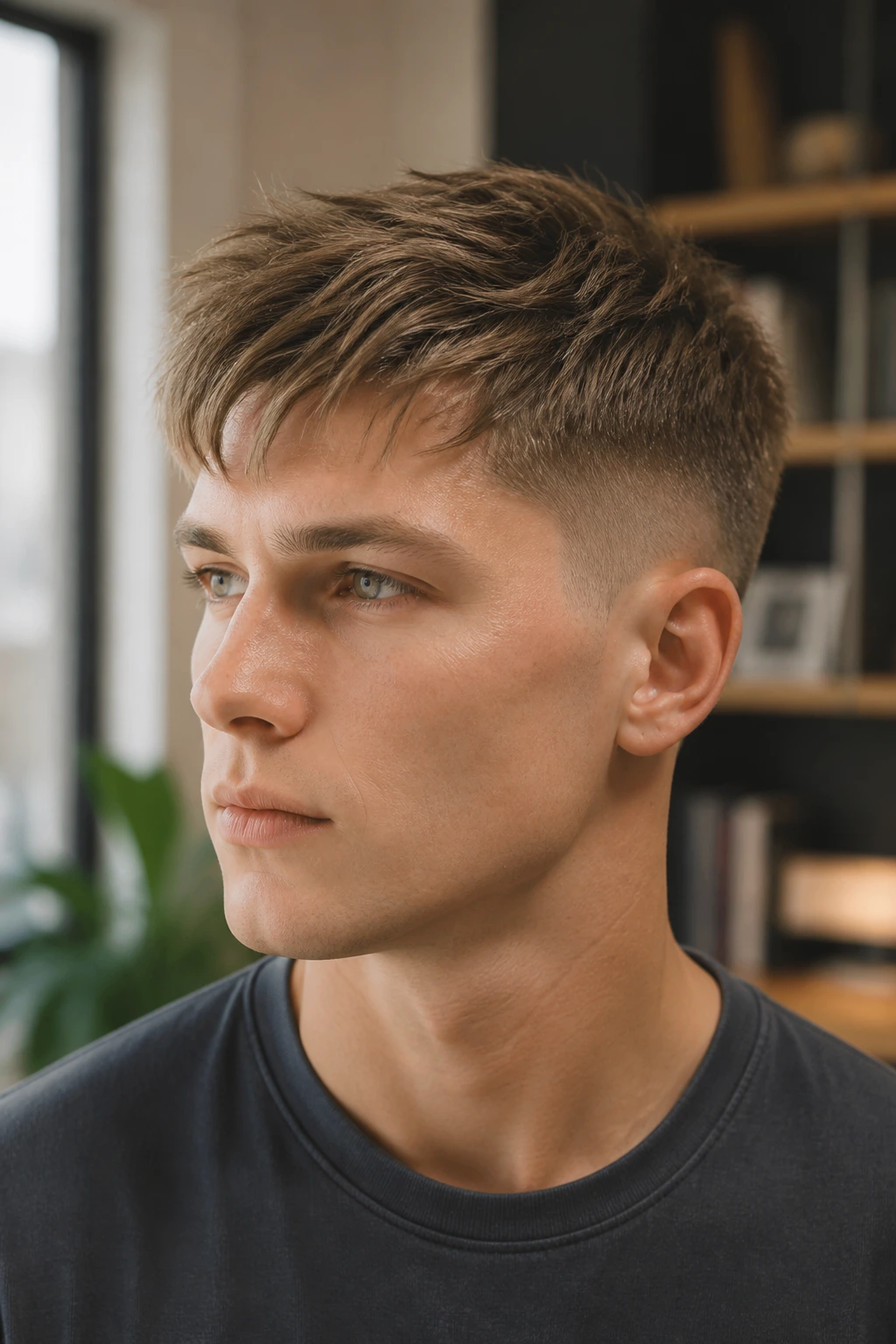
A French crop is one of those cuts that looks sharp even when the texture is a little messy. The fringe sits forward, usually blunt or slightly broken up, and the sides stay tight enough to keep the shape compact. It has a bit of attitude without trying too hard.
Why it works: The forward fringe pulls attention down and across the forehead, which is useful if your hairline is starting to move back or if your forehead is naturally broader. The cropped top also keeps thick hair from ballooning upward.
What to ask your barber for
- Top length: About 1.5 to 2 inches, with choppy texture cut in.
- Fringe: Forward, blunt, or softly jagged — not a full curtain, not a perfect ruler line.
- Sides: Low to mid taper or fade, depending on how crisp you want the outline.
- Finish: Point-cut texture on top so the fringe sits with some separation.
If you style it, use a matte clay or paste and push the fringe forward with your fingers. Don’t overcomb it. The whole point is that it looks a little broken up, not like a helmet.
4. Caesar Cut with a Clean Edge
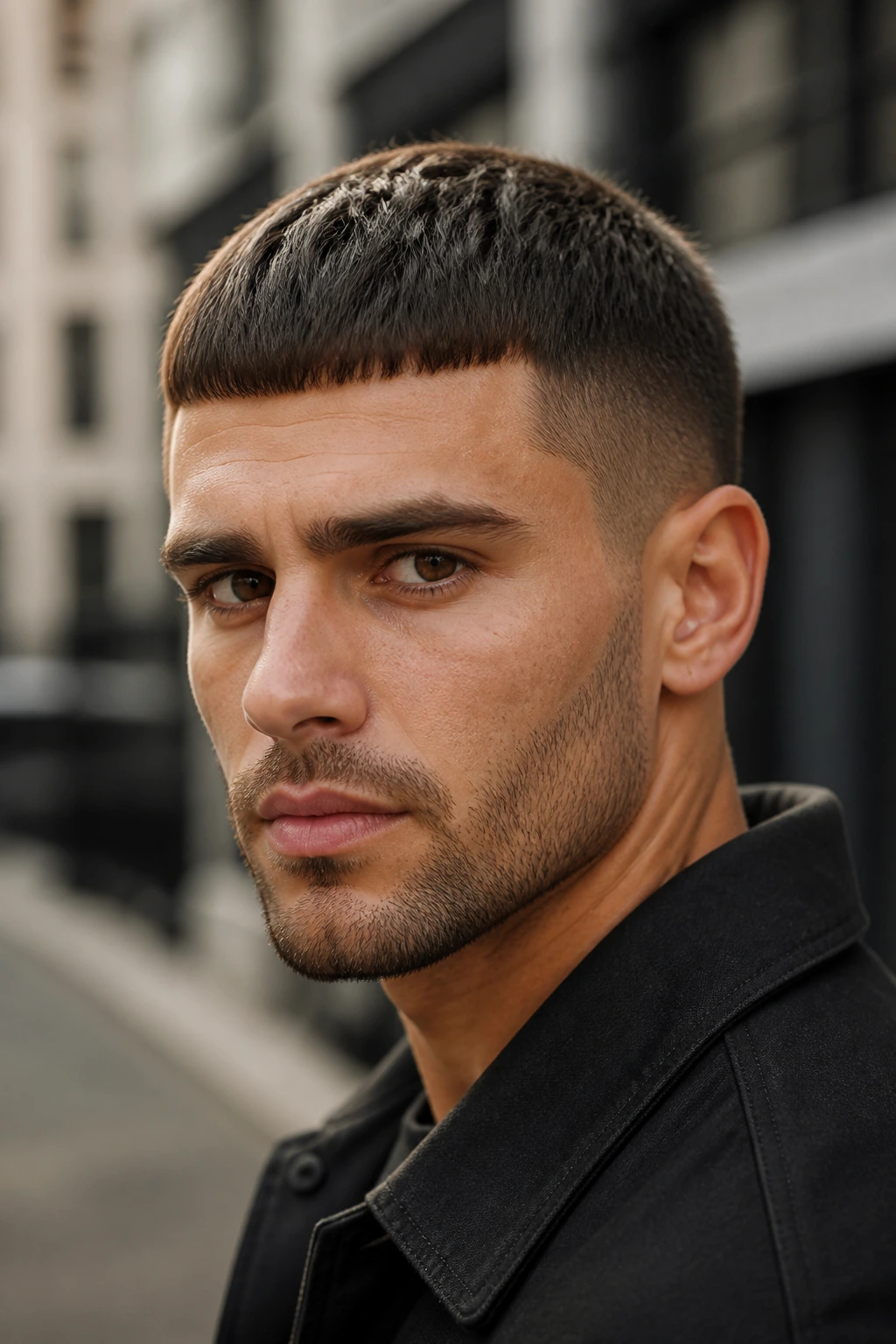
The Caesar cut is blunt in the best possible way. Short top, short fringe, minimal drama. It has that old-school Roman soldier vibe, but on a modern head it reads as tidy and direct, especially when the barber keeps the edges controlled.
Why it works: The short fringe creates a solid front line that can soften the look of a receding hairline. It also works well if your hair tends to stand up at the front, because the cut keeps enough weight there to keep things down.
Best version: Leave the top around three-quarters of an inch to 1 inch, with the fringe cut straight across or very slightly textured. The sides can be tapered low or faded if you want more contrast, but the Caesar usually looks best when the whole shape stays compact.
My take: This is one of the few short cuts that can look almost severe in a good way. If you like your hair neat, structured, and easy to keep in line, it’s a solid choice. If you want movement and lift, look elsewhere.
5. Ivy League with a Side Part
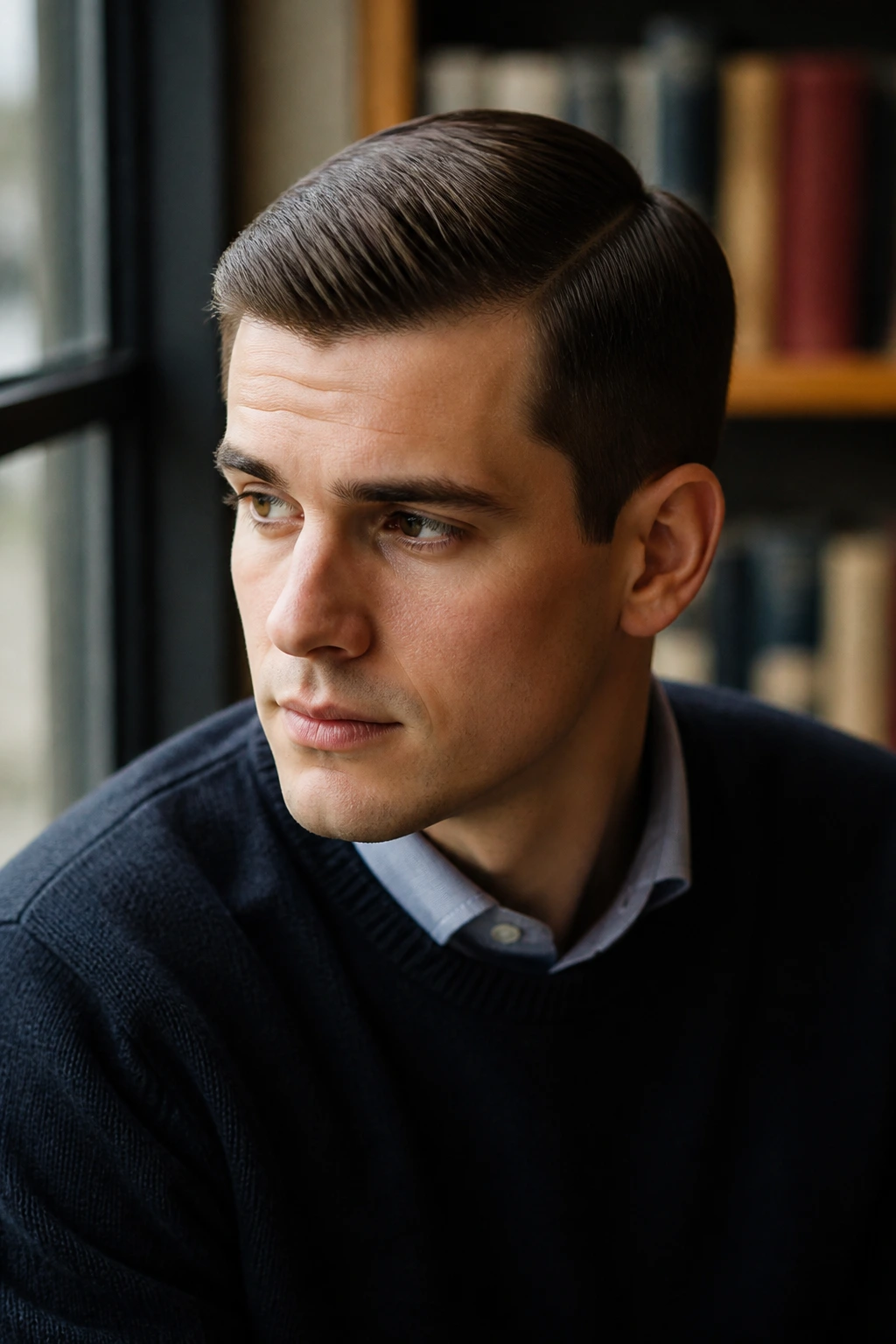
The Ivy League is the short haircut for men who want polish without looking stiff. It’s a close cousin of the crew cut, but it gives you enough length to part the hair and sweep it to one side. That tiny bit of extra room changes the whole mood.
Why it works: You get structure on the sides and a touch of movement on top, which means the cut can handle both formal settings and casual clothes. It’s also forgiving if your hair is fine, because the side sweep creates the appearance of more coverage than a very short crop.
The barber should leave around 2 to 3 inches on top, with the front just long enough to guide into a part. Keep the sides tapered, not bulky. If your hair grows in a strong direction, work with the grain instead of forcing a dramatic side part that won’t stay put by noon.
Use a light cream or low-shine pomade. Too much product and it stops looking like an Ivy League and starts looking like a wet paperweight.
6. Textured Crop with a Mid Fade
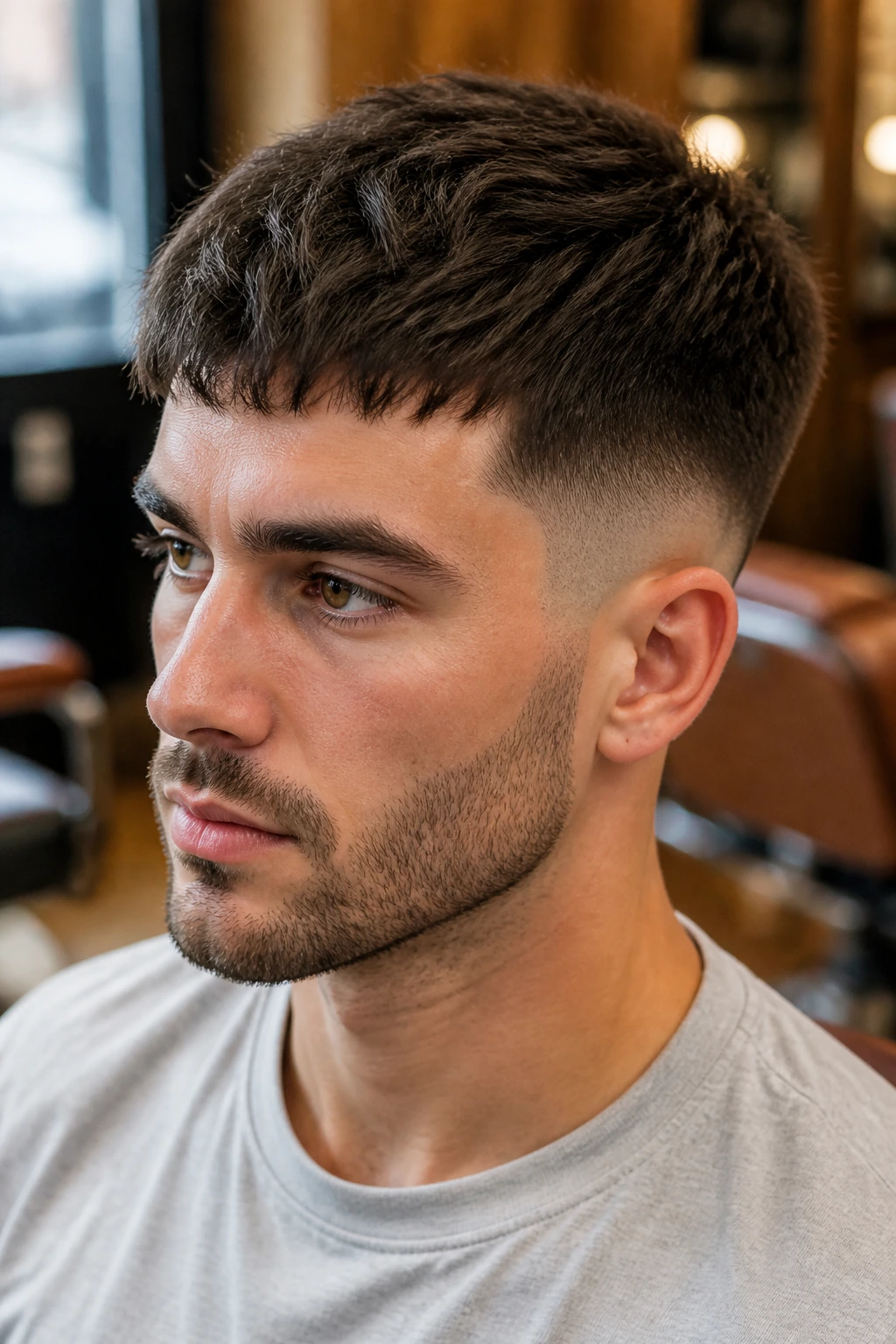
This is the modern short cut that still looks like hair, not a helmet. The textured crop relies on choppy ends and short layers on top, then uses a mid fade to clean up the sides. It’s a strong choice if your hair is thick, straight, or a little stubborn.
Why it works: Texture breaks up heavy hair so it doesn’t sit in one blunt block. The mid fade also gives the style shape without making the contrast so high that it feels severe.
Ask for 1.5 to 2.5 inches on top, cut with texture rather than left in one uniform length. Tell the barber you want the front to sit forward or slightly up, not slicked down. If your hair is dense, mention the crown specifically — that’s where thick hair likes to puff out when nobody pays attention.
This cut looks best with a matte finish. A pea-sized amount of fiber or clay rubbed into dry hair is usually enough. No shine. No crunch.
7. Short Quiff with Tapered Sides
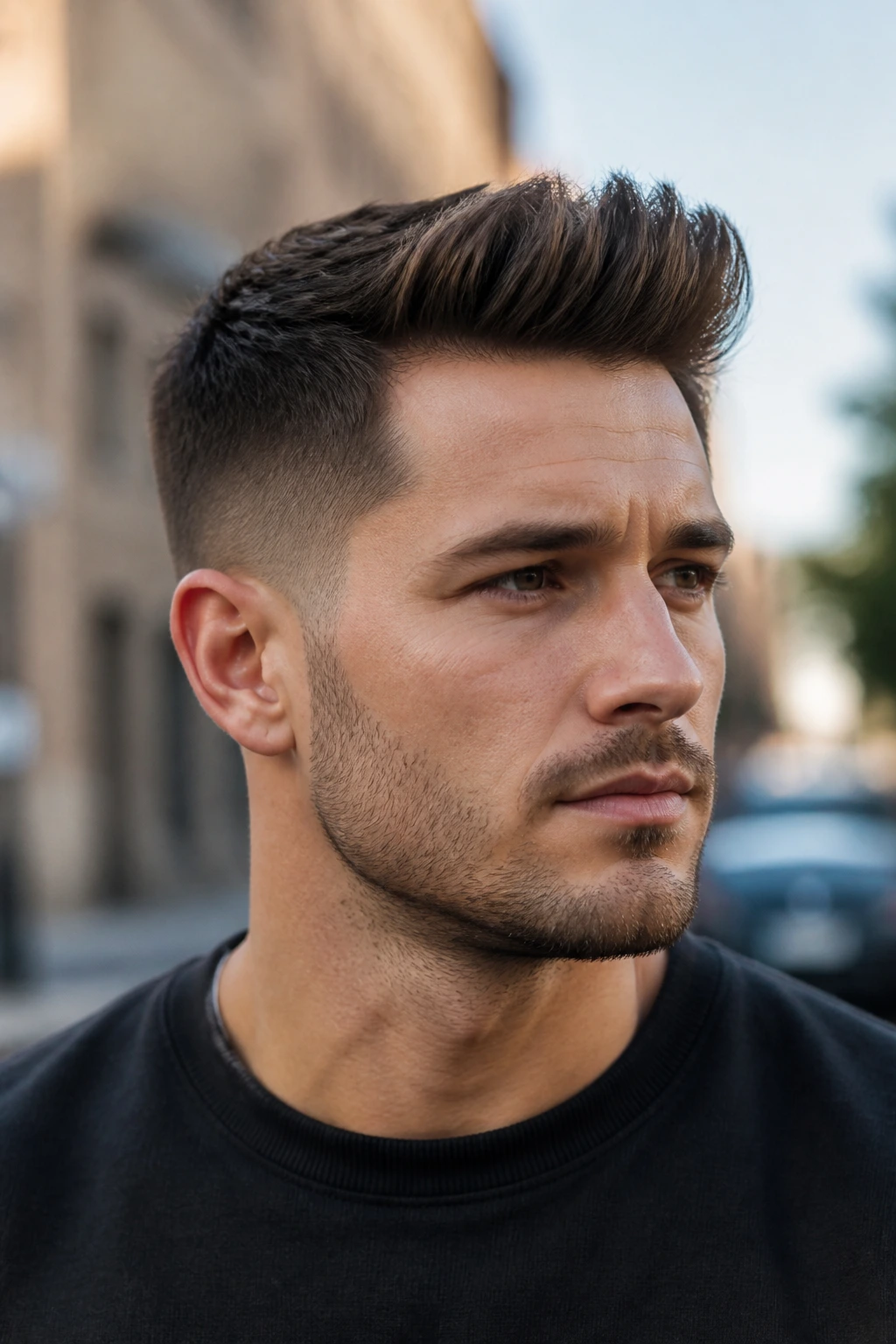
A short quiff is for men who want a little lift without signing up for a full retro pompadour. The front rises just enough to give the face some vertical shape, while the rest stays short and controlled. It’s one of the better short hair options if you like a bit of movement.
Why it works: The quiff gives the forehead a cleaner line and adds height where your face can use it. It also works well if your hair has some natural bend, because the front can be pushed up with a blow-dryer and hold without needing a hard shell of product.
Keep the front around 2.5 to 3 inches, with shorter length moving back toward the crown. The sides should stay tapered or faded so the height at the front feels intentional. If your hair is very fine, don’t leave too much length — it’ll collapse. If it’s thick, ask for internal texturing so the quiff doesn’t balloon.
A round brush and a quick blast of heat will help more than another scoop of wax.
8. High and Tight with a Sharp Outline
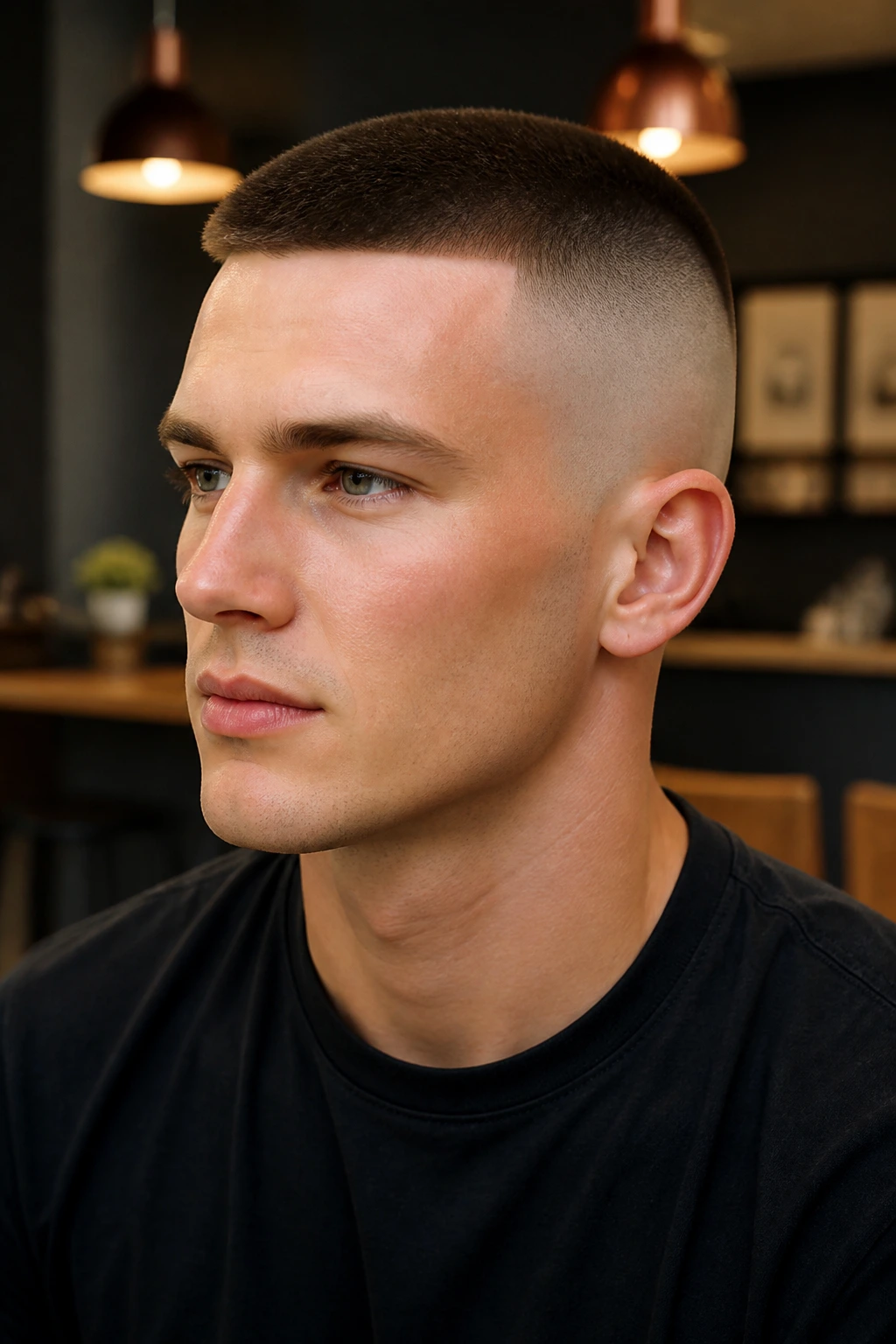
The high and tight is blunt, military, and efficient. It’s one of the cleanest short cuts for men who want almost no upkeep and don’t mind a stronger contrast between the top and the sides. The look is spare. That’s the point.
Why it works: The sides are cut very close, often with a skin fade or near-skin finish, while the top stays short enough to stand on its own without lying flat in a weird way. It’s especially good if your hair is thick and tends to puff at the temples.
Where it shines
- Hot weather: Less hair around the ears and neck.
- Busy routines: You can wash, towel-dry, and leave.
- Strong facial hair: A beard can balance the severe top very well.
The one catch: this cut can feel too severe if your head shape is very round or if you want softness around the hairline. In that case, ask for a slightly lower fade and leave a touch more length on top.
9. Curly Top with a Low Taper
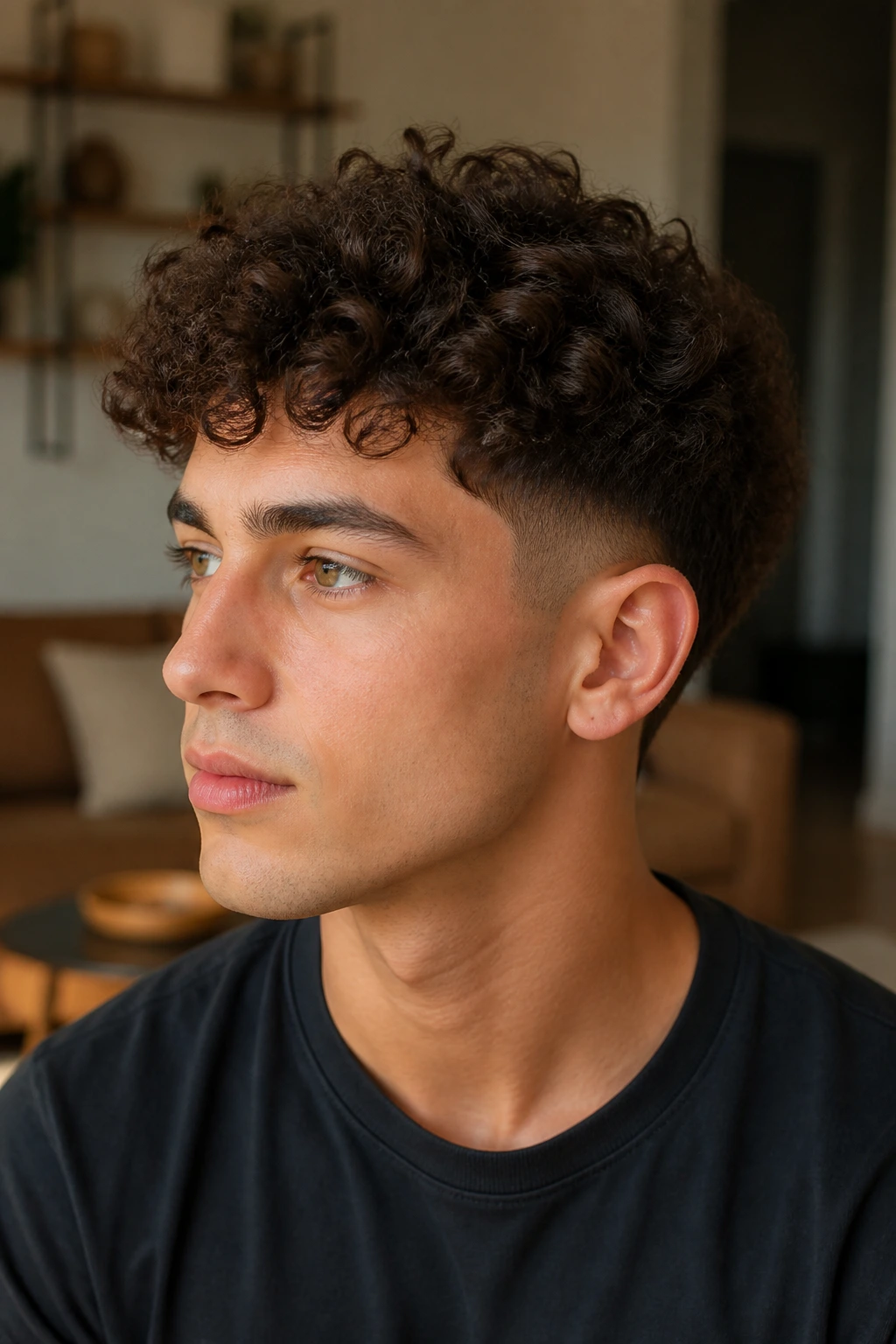
Curly hair and short hair can get along beautifully, but only if you leave enough length for the curls to form. A curly top with a low taper keeps the outline neat while letting the curls do their own thing up top. It’s tidy at the edges and alive in the center.
Why it works: Curls need a little room. If you cut them too short, they spring up in odd directions and lose shape. Leaving the top at around 2 to 4 inches, depending on curl tightness, gives the hair enough length to form a pattern instead of a fuzz cloud.
Ask for a low taper around the ears and neckline so the cut looks clean without chopping the curls into a harsh shape. If your curls are loose, a little cream may be enough. Tighter curls usually benefit from a curl cream or light gel on damp hair.
This style looks best when it’s allowed to dry naturally or with a diffuser. Don’t rake through it too much once it starts drying. That’s how you turn curls into frizz.
10. Side Part with a Hard Line
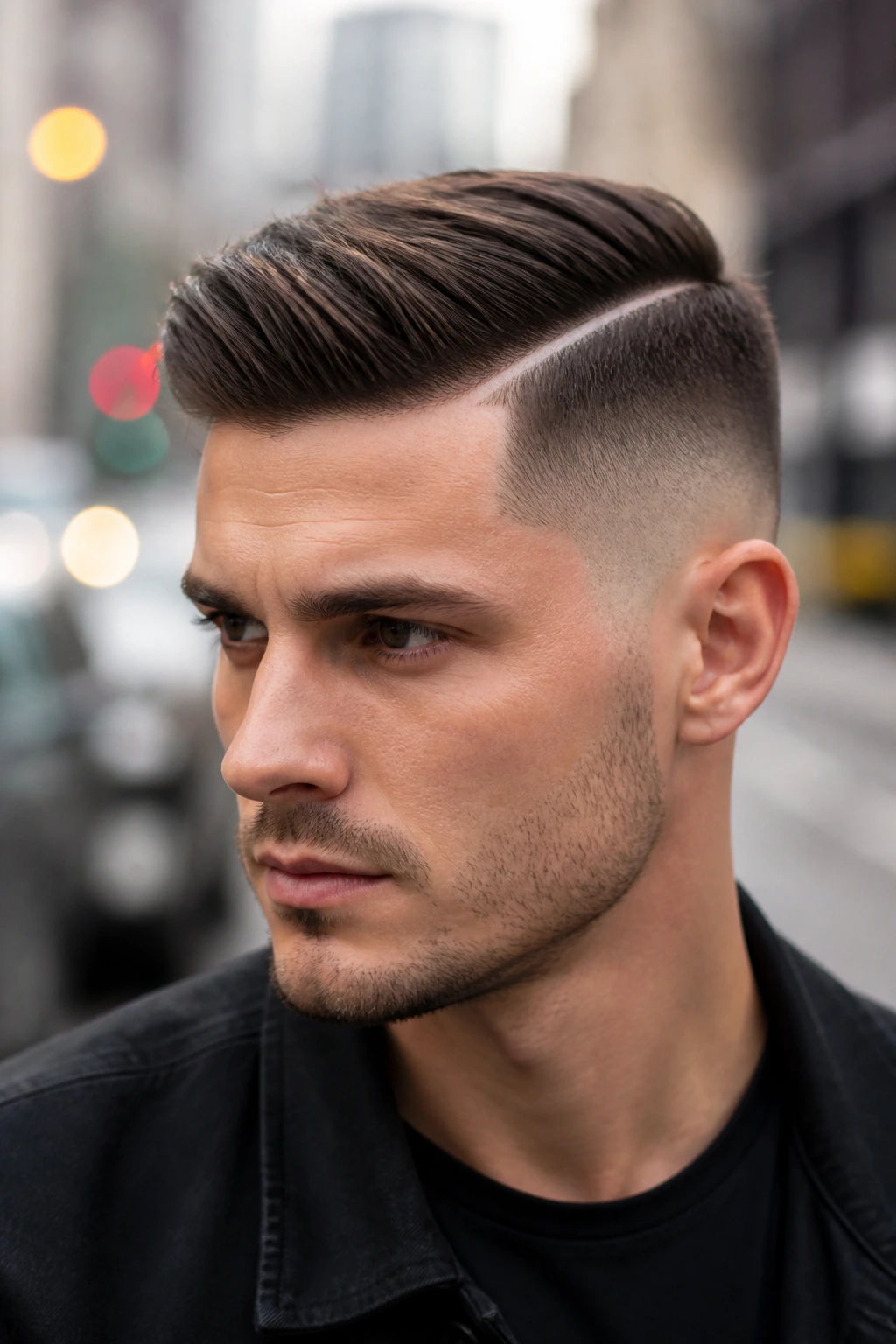
A side part with a hard line is a neat, grown-up haircut that still has some edge. The part itself does a lot of the work, and the shaved line makes the separation obvious. It’s a strong choice if you want structure that reads from across the room.
Why it works: The side part creates order, and the hard line makes it unmistakable. On straight or slightly wavy hair, it gives the cut a crisp frame that works well with short sides and a controlled top.
Ask the barber for 2 to 3 inches on top, enough to sweep across without fighting the scalp. The sides can be faded low or mid, but keep the transition clean so the hard part doesn’t look pasted on. A light pomade gives the line better hold than a dry clay, especially if your hair is resistant.
This is one of those cuts that can look too sharp if everything else is sharp too. A bit of stubble or a beard keeps it from feeling overworked.
11. Brush Up with Short Sides
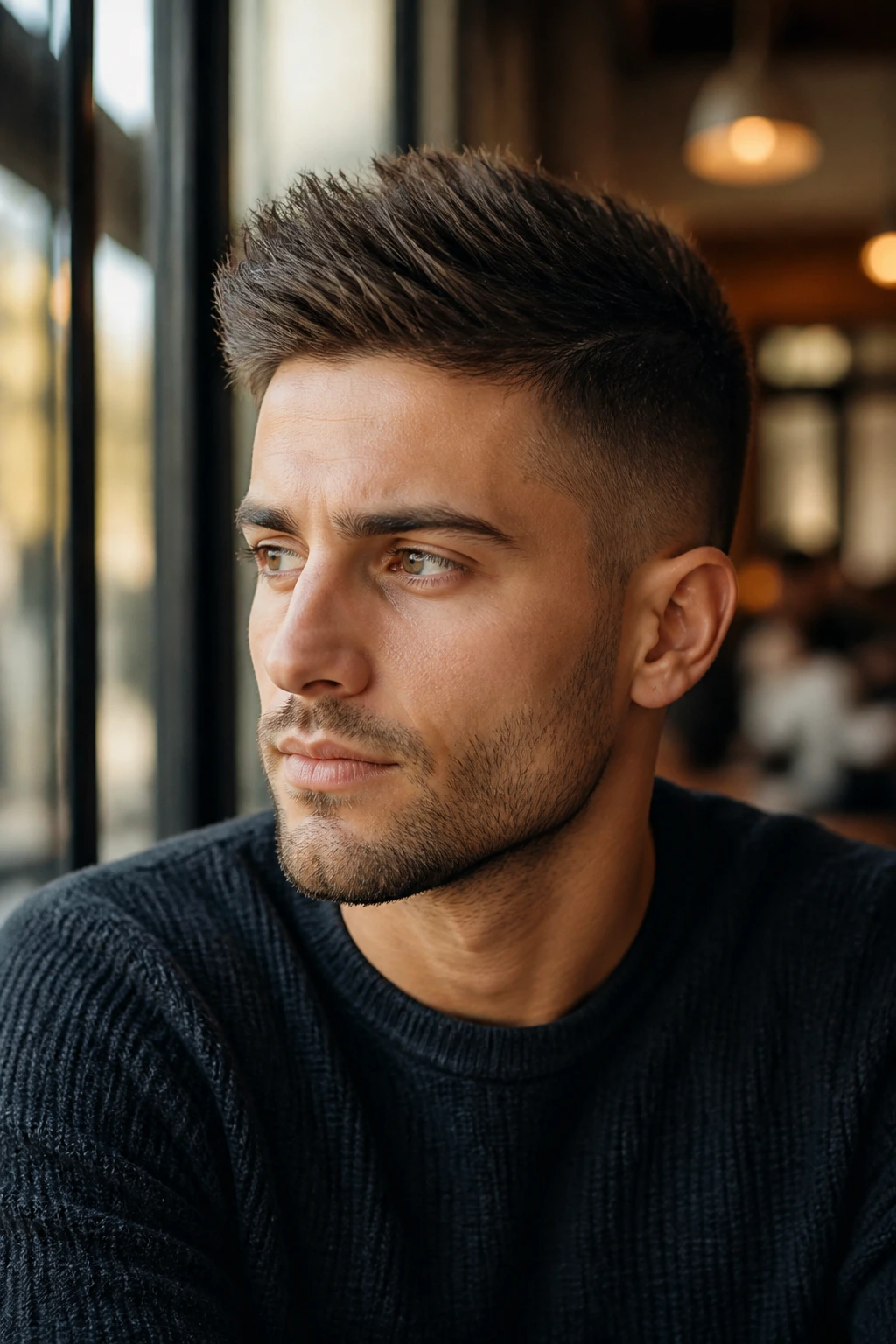
Brush up is not the same as a quiff. The quiff tends to lean back; the brush up pushes upward with a bit more vertical attitude. It’s a short cut that likes lift, texture, and a quick blast from the dryer.
Why it works: The short sides keep the shape tight, while the top is just long enough to stand up and break into separated pieces. If you have flat hair that always wants to lie down, this gives you a cleaner way to make it move.
Ask for the top to stay around 2 to 3 inches, with the front slightly longer if you want extra height. Keep the crown textured so it doesn’t collapse into one heavy ridge. A vent brush or your fingers can push the hair upward while you dry it.
Use a matte paste or clay, not a heavy pomade. You want lift, not shine. The finished look should feel a little airy at the front and solid at the edges.
12. Short Pompadour
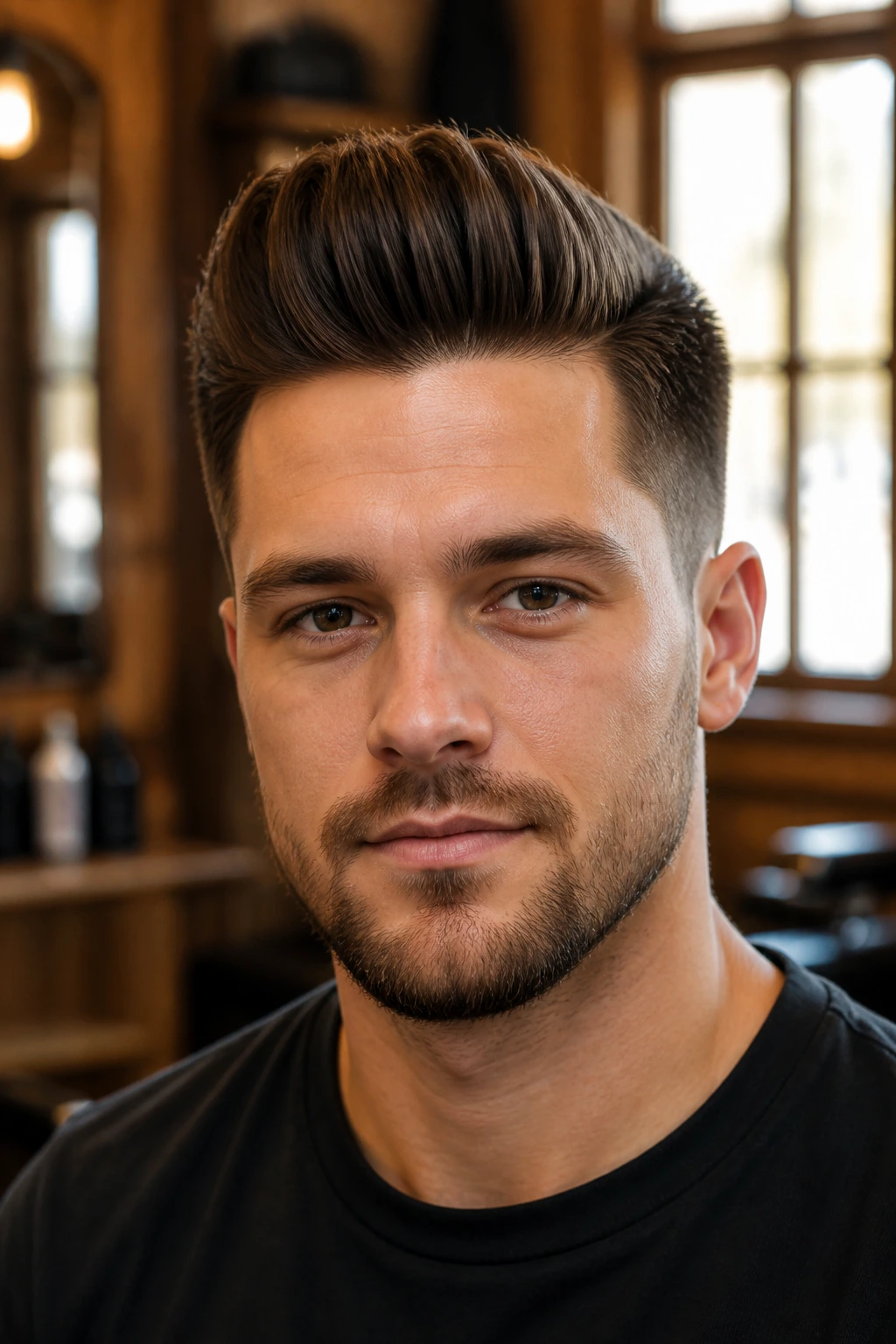
A short pompadour takes the old shape and shrinks it into something wearable for everyday life. You still get height at the front, but the sides stay short enough that the whole cut feels modern instead of theatrical.
Why it works: The height draws the eye upward, which adds structure to the face. Because the top stays short, it doesn’t need the same amount of product or heat as a longer pompadour, and that makes it easier to manage.
Ask for the front to stay around 2.5 to 3 inches, with the length gradually reduced toward the crown. The barber should leave enough weight in front to brush back, but not so much that it droops. If your hair is coarse, ask for some internal texture so it can bend without turning into a block.
This is one of the better short hair ideas for men who want a little dressiness without a lot of maintenance. A round brush and a touch of blow-dryer work better than loading it up with pomade.
13. Spiky Top with a Taper Fade
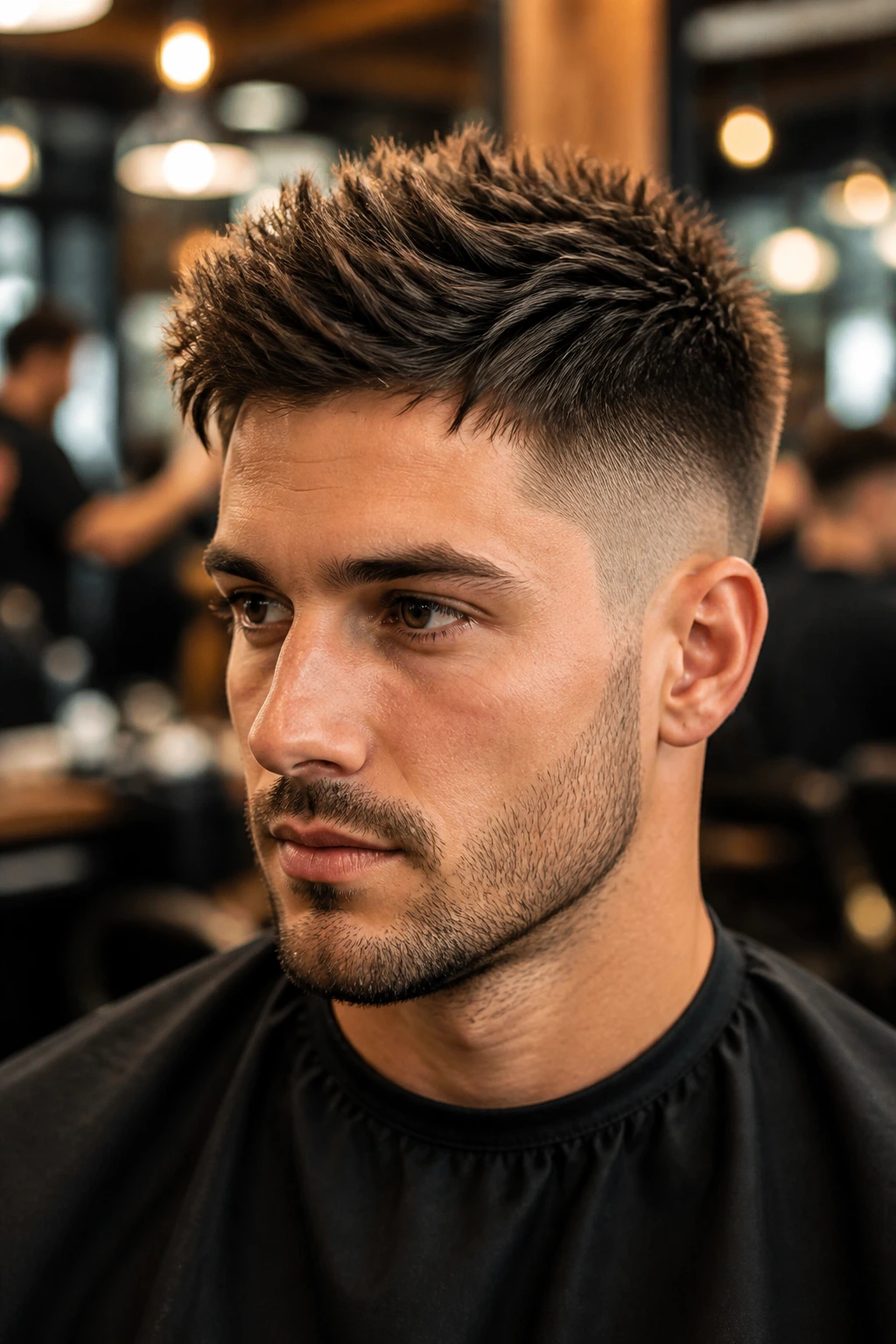
Spiky hair gets mocked when it’s stiff and overdone. Done right, though, it’s just a piecey short style with texture and energy. The spikes should look separated, not glued into a row.
Why it works: Short, choppy layers let the hair stand up in little pieces instead of forming a smooth sheet. That gives the cut movement, especially when the sides are tapered low or faded clean.
Keep the top around 1.5 to 2 inches, with the ends cut unevenly so they break apart. The best product here is a fiber or matte wax worked into dry hair. If your hair is fine, use less product than you think you need. If it’s thick, use a little more and shape with your fingertips.
This cut suits guys who want something casual and a touch youthful without looking like they raided a catalog from a different decade. The spikes should be short enough to move, not sharp enough to poke the ceiling.
14. Comb Over Fade
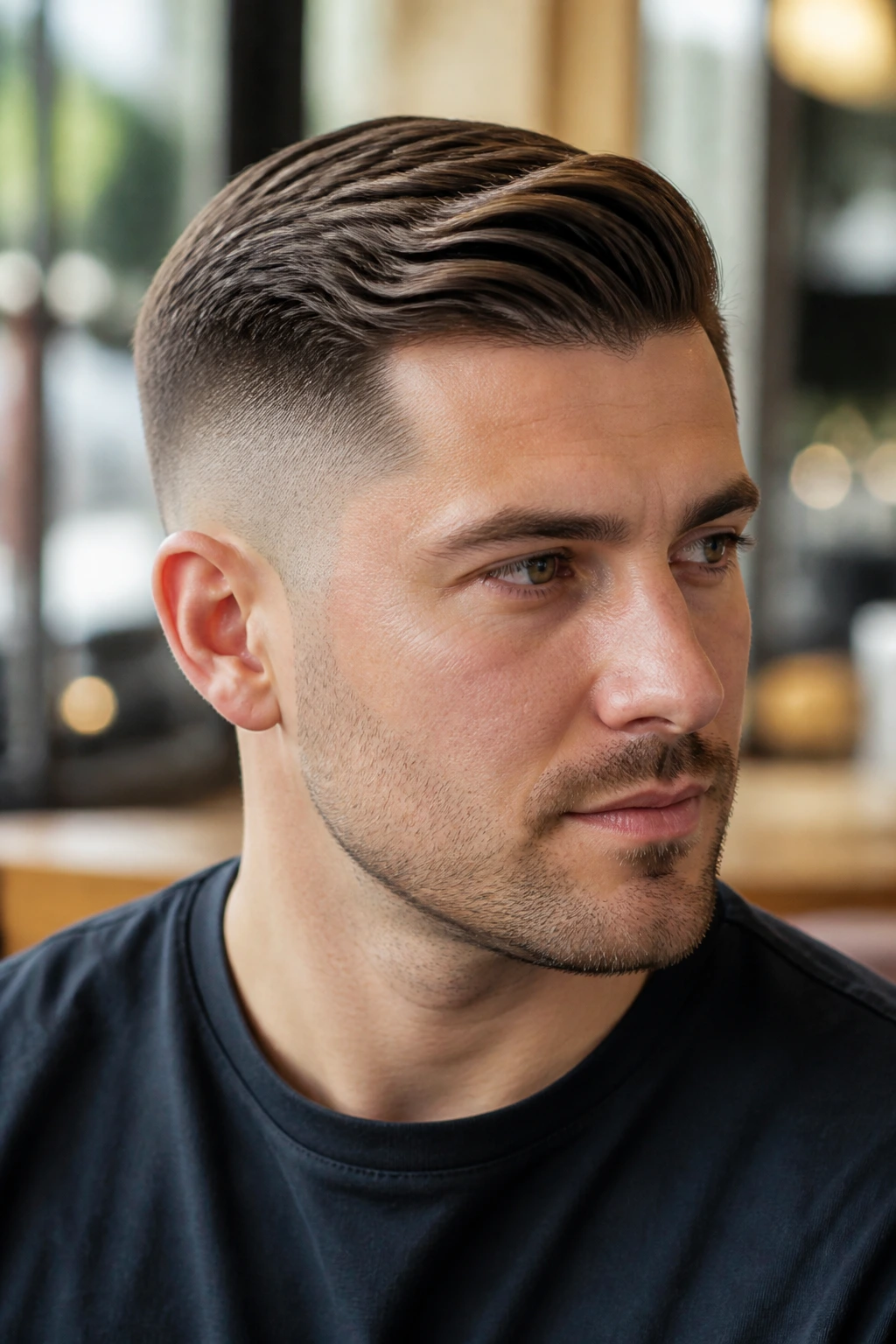
A comb over fade gets a bad reputation because people picture a stiff, obvious side sweep. The better version is softer. It uses a clean fade on the sides and a top long enough to move over naturally, not combed into place like a board.
Why it works: The side sweep gives you direction, and the fade keeps the cut from feeling heavy around the ears. It’s a smart choice if your hair is straight, medium-thick, and easy to part.
Ask for 2 to 3 inches on top with a low or mid fade. The barber should leave enough weight on the side you want to sweep toward, but not so much bulk that the hair falls in one hard flap. Light pomade or cream keeps the sweep together without making it wet.
If your hairline is thinning a bit at the corners, this cut can still work — just keep it natural and don’t force a deep, shiny part. That’s where it starts looking like you’re trying too hard.
15. Curly Crop with a Temple Fade
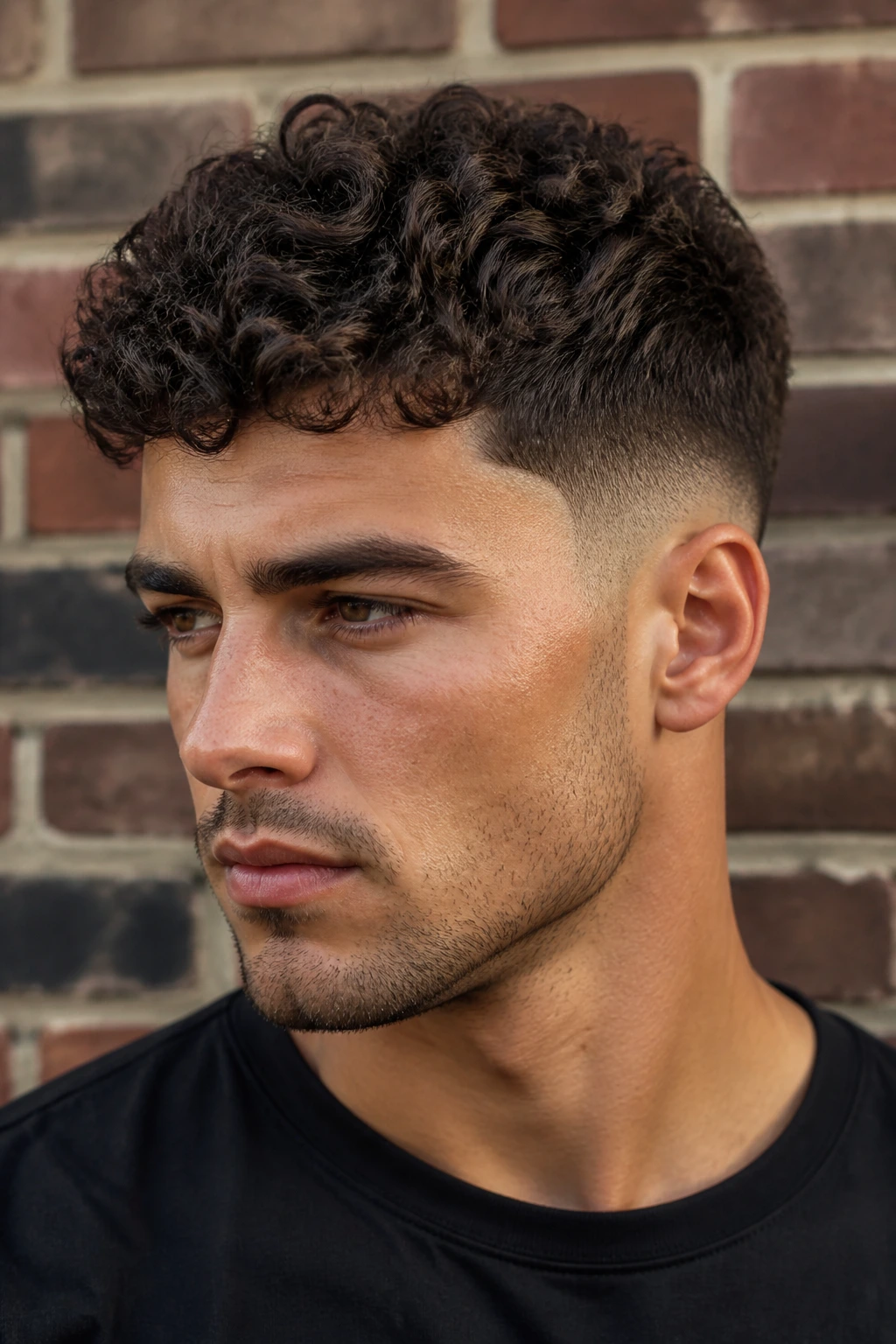
A curly crop is one of the easiest ways to make short curls look tidy without killing them. The temple fade cleans up the sides where curls often puff first, while the top stays loose enough to keep its shape.
Why it works: Curly hair needs room to bend, and a crop gives that room without letting the top spread out too far. The temple fade sharpens the outline around the face, which helps the curls feel styled even when they’re air-dried.
Ask for the curls on top to stay at about 2 to 3 inches, depending on texture, and request a soft taper or fade at the temples. If your barber cuts curly hair dry, even better — curls tell the truth better when they’re not stretched wet.
Use curl cream or a light mousse, then let it dry with your hands off it. That “hands off” part matters. Constant touching is how you turn definition into fuzz.
16. Wavy Fringe with a Scissor Taper
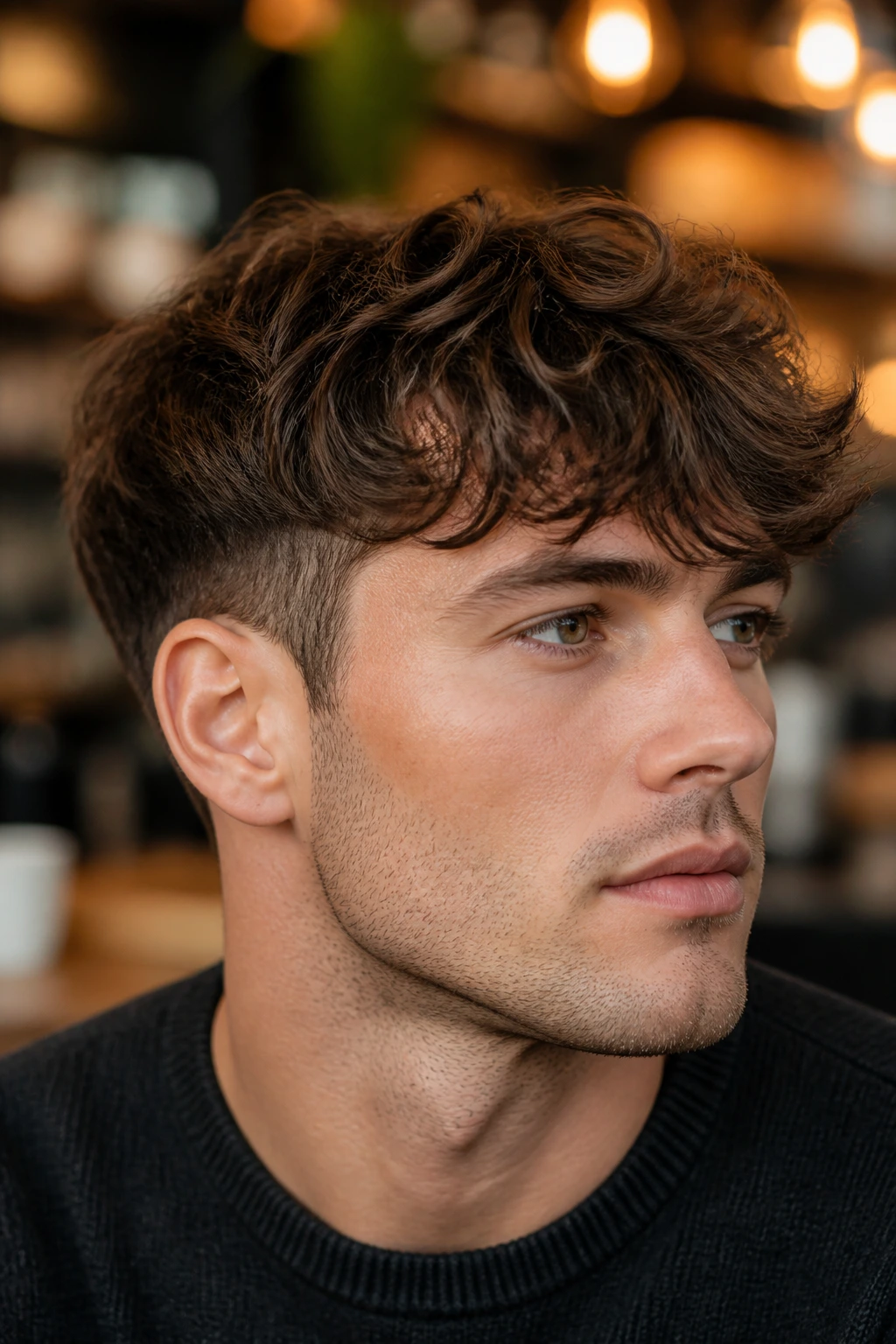
Waves can be a gift or a nuisance, depending on how the haircut handles them. A wavy fringe lets the natural bend sit at the front, where it adds movement and softness. A scissor taper keeps the sides controlled without making the whole cut too severe.
Why it works: The fringe gives the hair a place to fall, which is useful if your wave pattern wants to push forward anyway. Instead of fighting it, you let the wave shape the front and keep the rest of the cut clean.
Keep the fringe around 2 inches, maybe a bit more if your waves are loose. Too short and the wave disappears. Too long and it drops into the eyes in a way that looks accidental instead of styled. A bit of sea-salt spray can help encourage the bend, but don’t turn the hair crunchy.
This cut suits guys who want something relaxed that still has a clear silhouette. It looks especially good when the front has a little separation rather than being brushed flat.
17. Regulation Cut

The regulation cut lives in the space between strict and easygoing. It’s shorter than an Ivy League, cleaner than a crew cut, and more controlled than a textured crop. If you want a haircut that feels plain in the best sense, this is one to keep in mind.
Why it works: The shape is balanced. The top has enough length to part or sweep, but the sides stay short enough to keep the silhouette sharp. That means it can read as professional without turning into a stiff office helmet.
Ask for 1.5 to 2.5 inches on top with short, tapered sides and a neat back. The front should not be dramatically longer than the crown; this cut works because it’s even and restrained. A little cream or light pomade gives it polish.
It’s a good fit for men who want to look put together without spending much time on it. Also, it grows out politely. That alone is worth something.
18. Butch Cut
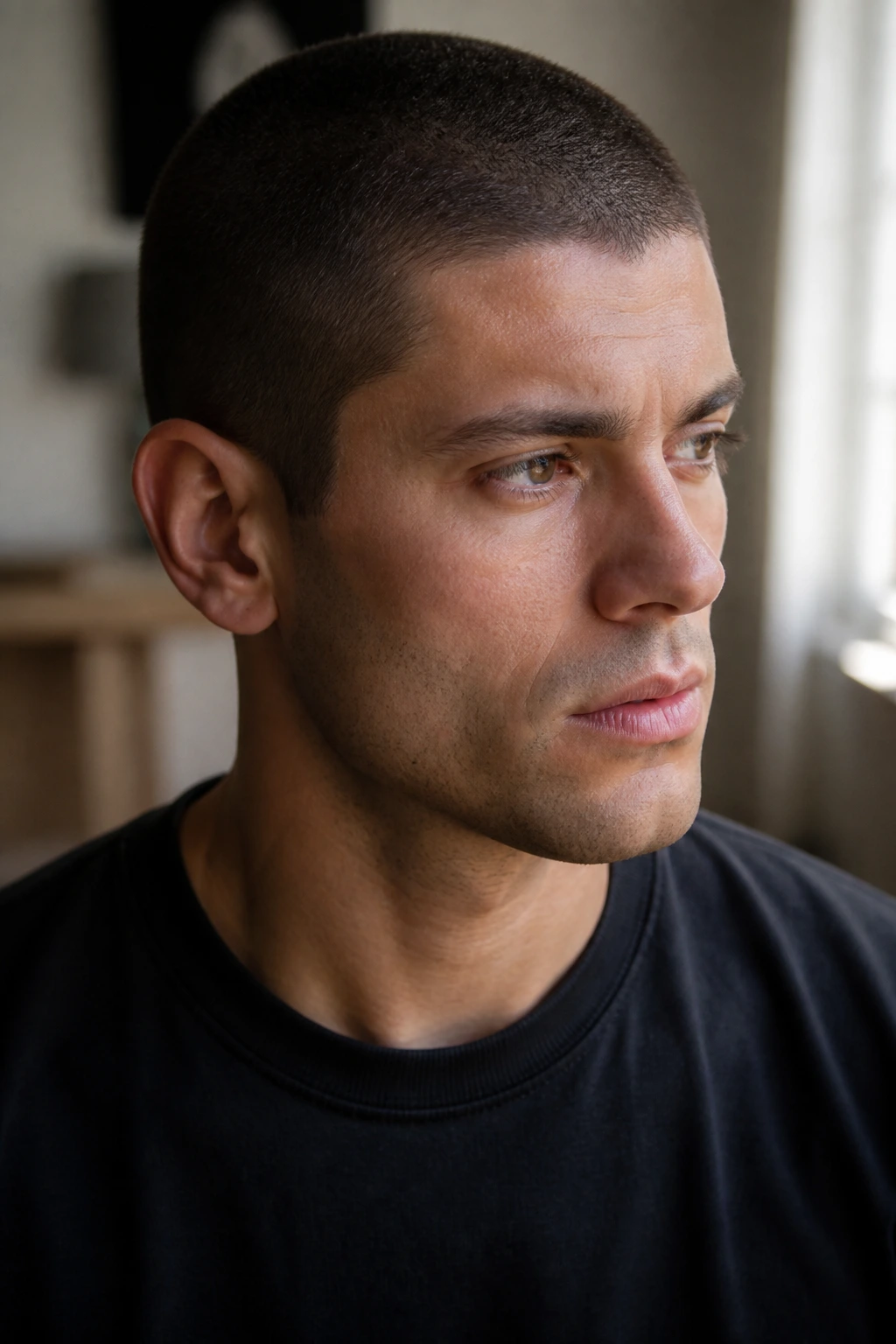
The butch cut is a step up from a buzz and a step down from a crew, which makes it a nice middle ground if you like very short hair but don’t want the scalp to show too much. The whole head is usually clipped to a single guard length.
Why it works: Uniform length makes the hair look denser than a tighter buzz, and it smooths out little irregularities in the growth pattern. If your hair is coarse, curly, or just stubborn, this is a low-friction answer.
Ask for a #3 or #4 guard all over. If your hair grows unevenly, you can leave the top half a guard longer than the sides, but the charm of this cut is that it stays simple. No styling product is required. A matte scalp moisturizer can help if your skin gets dry.
This is the haircut for men who want to wake up and get on with life. It’s plain. It’s practical. That’s not a knock.
19. Flat Top with Tight Sides
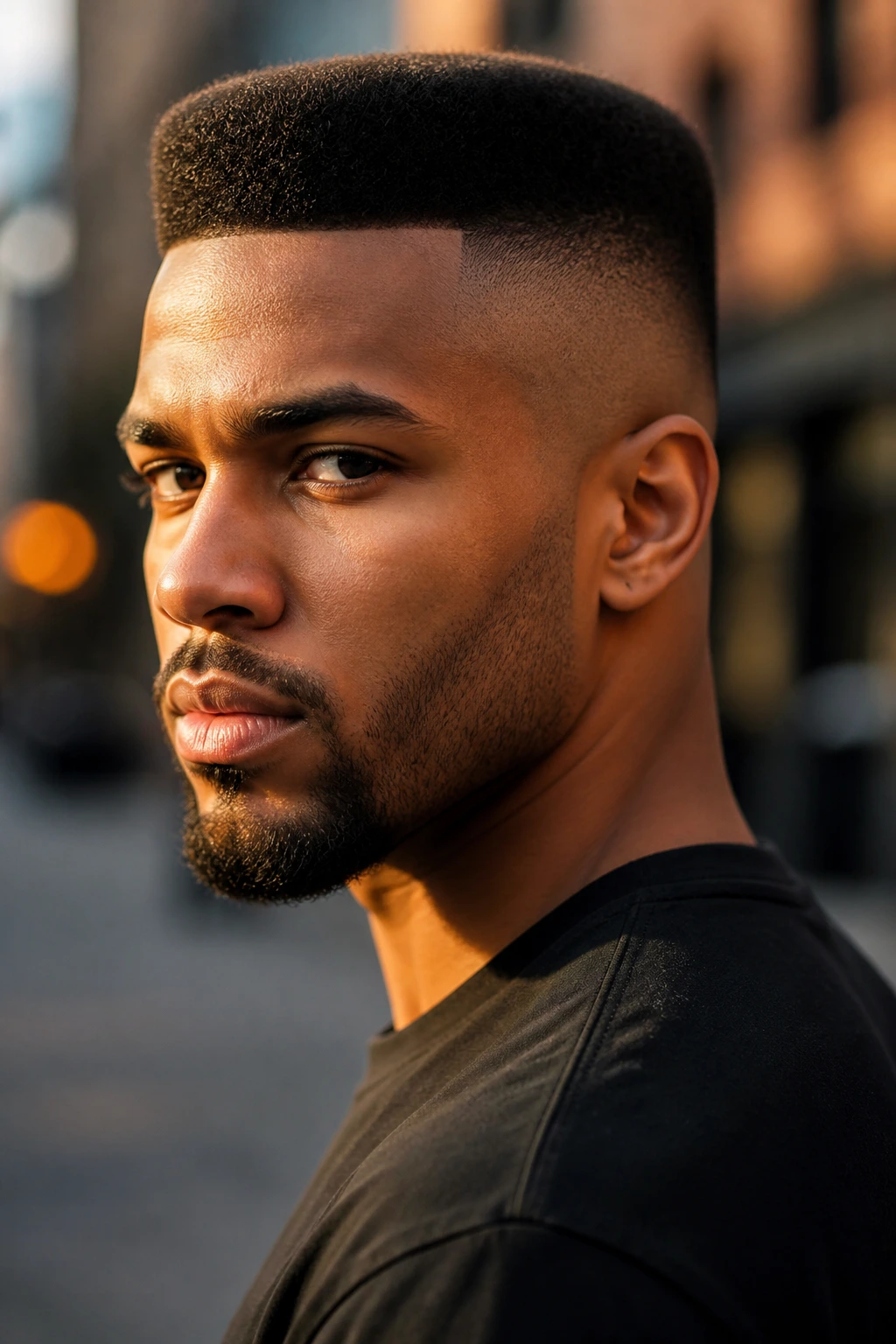
A flat top is not subtle, and that’s exactly why it works when the hair type is right. The top is cut into a level plane, which gives the cut a square, graphic shape that stands apart from rounder short styles. If you’ve got thick, upright hair, it can look fantastic.
Why it works: The flat top creates a strong silhouette. The sides stay tight, so the eye goes straight to the level top, which is the whole point. It’s a shape haircut, not a texture haircut.
This one needs a barber who knows how to keep the top even from front to back. Ask for enough length to hold a flat line — usually around 1.5 to 2.5 inches, depending on density — and keep the sides very neat. If your hair is fine or floppy, skip it. The shape won’t hold.
It’s a bold choice, but it can look unexpectedly modern when the fade is clean and the top is kept crisp. Not a casual compromise. A statement.
20. Short Faux Hawk
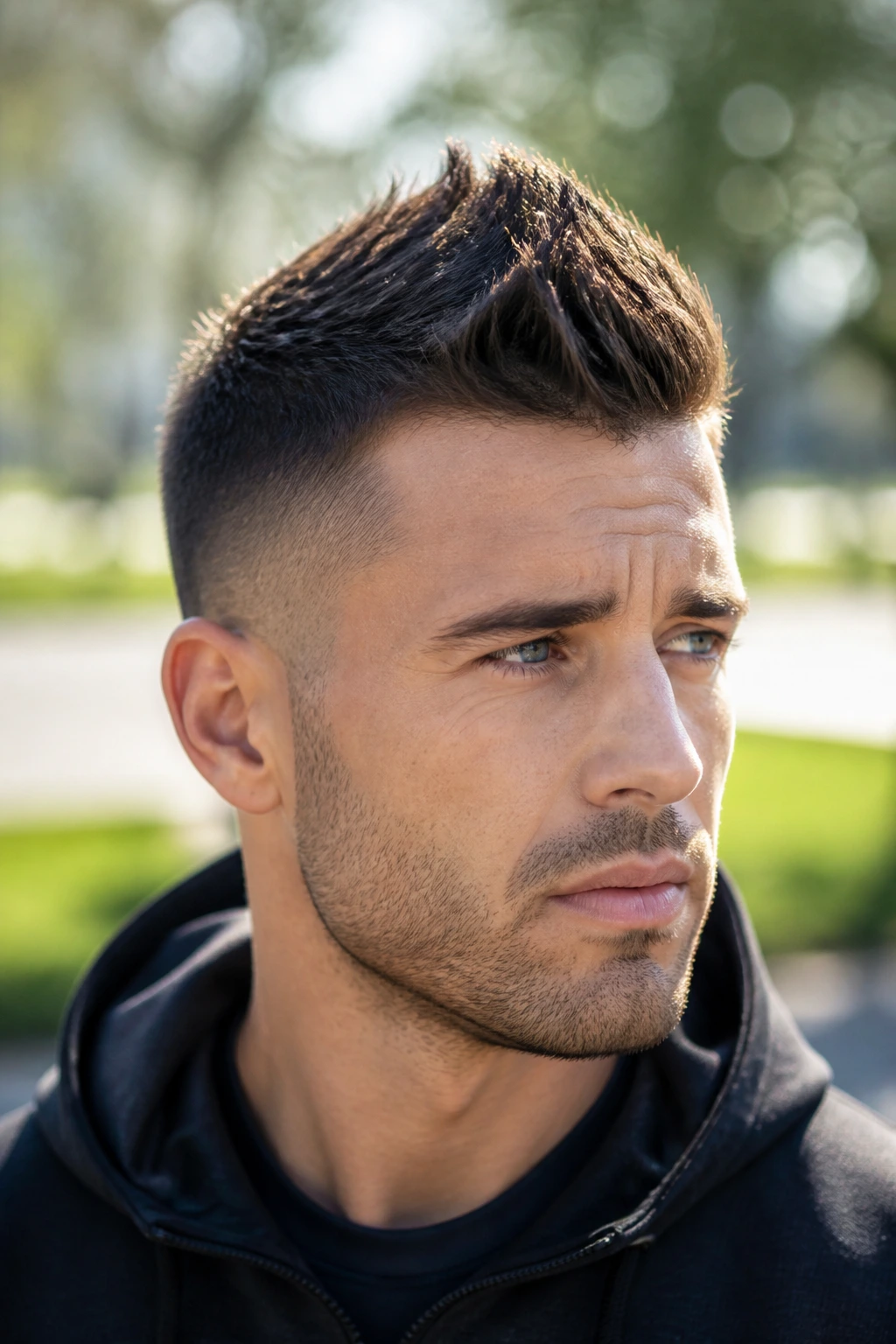
A short faux hawk gives you the energy of a mohawk without the commitment or the shock factor. The center strip stays a little longer, the sides taper down, and the whole cut keeps its shape without screaming for attention.
Why it works: The center line adds height and direction, while the tapered sides keep the style wearable. It’s a useful cut if your hair naturally pushes up in the middle or if you want something with a bit more edge than a standard crop.
Ask for the center to stay around 2 to 3 inches, with the sides tapered close but not shaved bare. The top should be textured so it can lift into a ridge rather than a smooth ridge cap. Use matte paste and pinch the hair upward in sections.
This cut is better than people give it credit for. Done cleanly, it doesn’t look rebellious for the sake of it. It just looks like a short haircut with some backbone.
21. Slick Back Taper
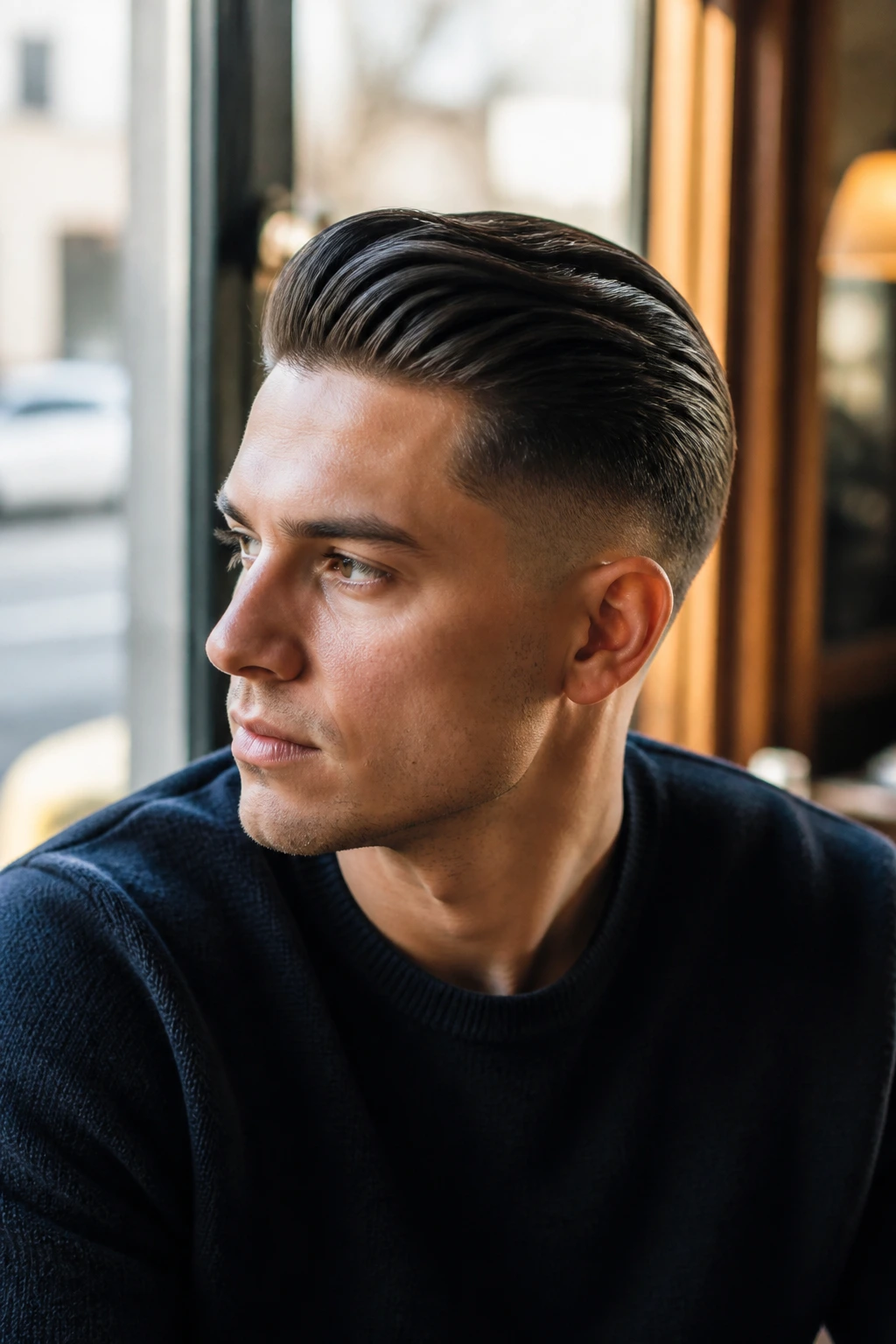
A slick back on short hair has a different feel from a long one. It’s cleaner, tighter, and less glossy, which makes it easier to wear in daily life. The taper on the sides keeps it from turning into a blocky throwback.
Why it works: The top needs just enough length to move backward, but not so much that it flops into your eyes. When the hair is cut with some layering, it can slide back without splitting down the middle in a weird way.
Leave 2 to 3 inches on top, shorter through the crown, and keep the sides tapered rather than completely faded. Use a light pomade or cream if you want a bit of shine. Use a matte product if you want it to look more relaxed.
This is a smart choice if you wear jackets, collared shirts, or anything that benefits from a neater outline. It’s one of the few slicked-back looks that still feels like short hair.
22. Drop Fade with a Messy Top
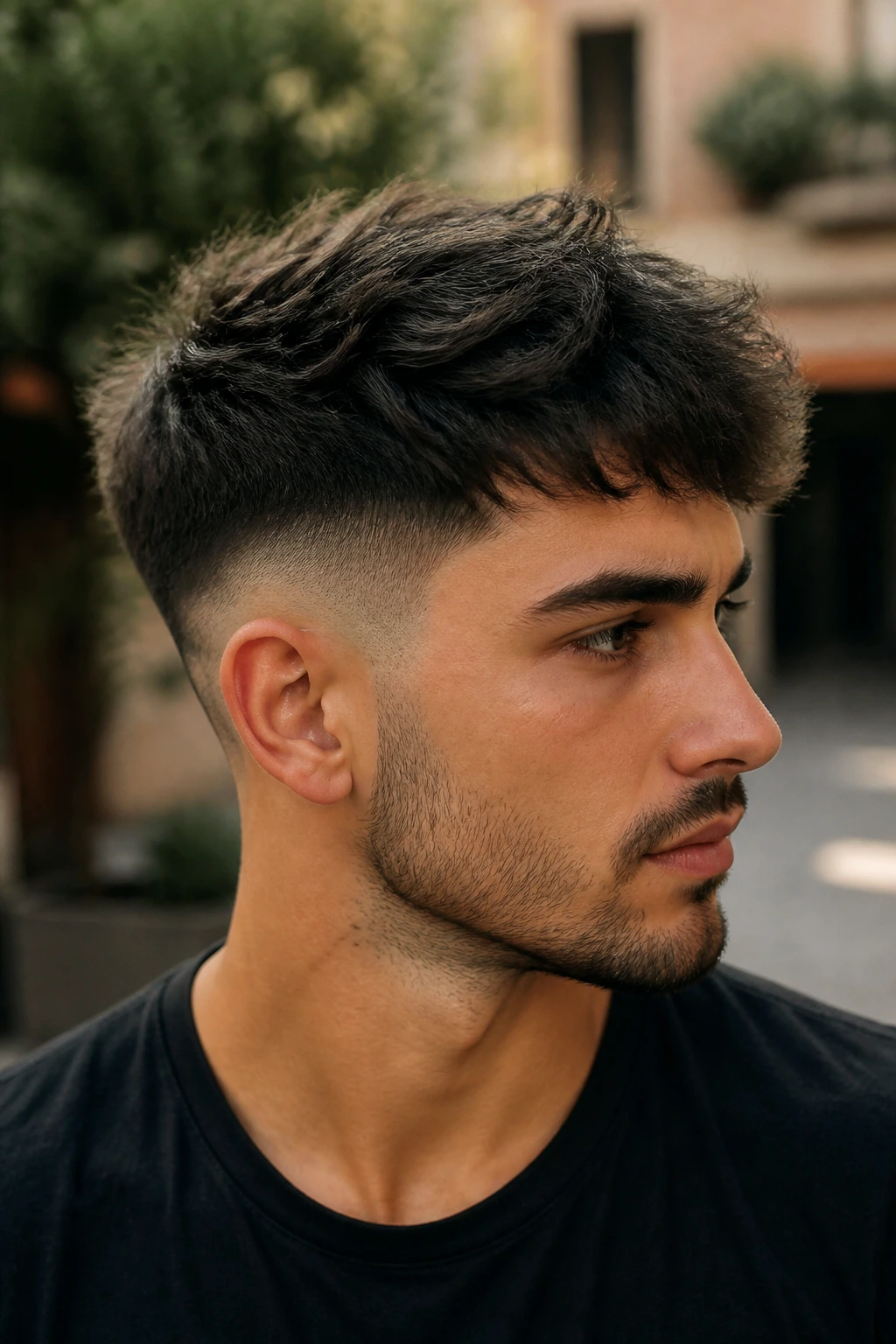
A drop fade follows the curve behind the ear, which makes the haircut feel a little more sculpted than a standard straight fade. Add a messy short top and you get a shape that looks deliberate without looking polished to death.
Why it works: The drop in the fade gives the haircut some contour around the head. That contour is useful when your hair is thick or wavy, because it keeps the sides from ballooning and gives the top room to stay casual.
Ask for the top to stay around 1.5 to 3 inches, textured enough to move but not so long that it falls flat. The barber should let the fade dip behind the ear and then rise into the back. That little curve makes the shape feel more finished than a simple straight fade.
This is a nice cut if you want something modern but not obviously styled. It looks good when it’s a little messy, which is a rare and useful trait.
23. Disconnected Side Sweep
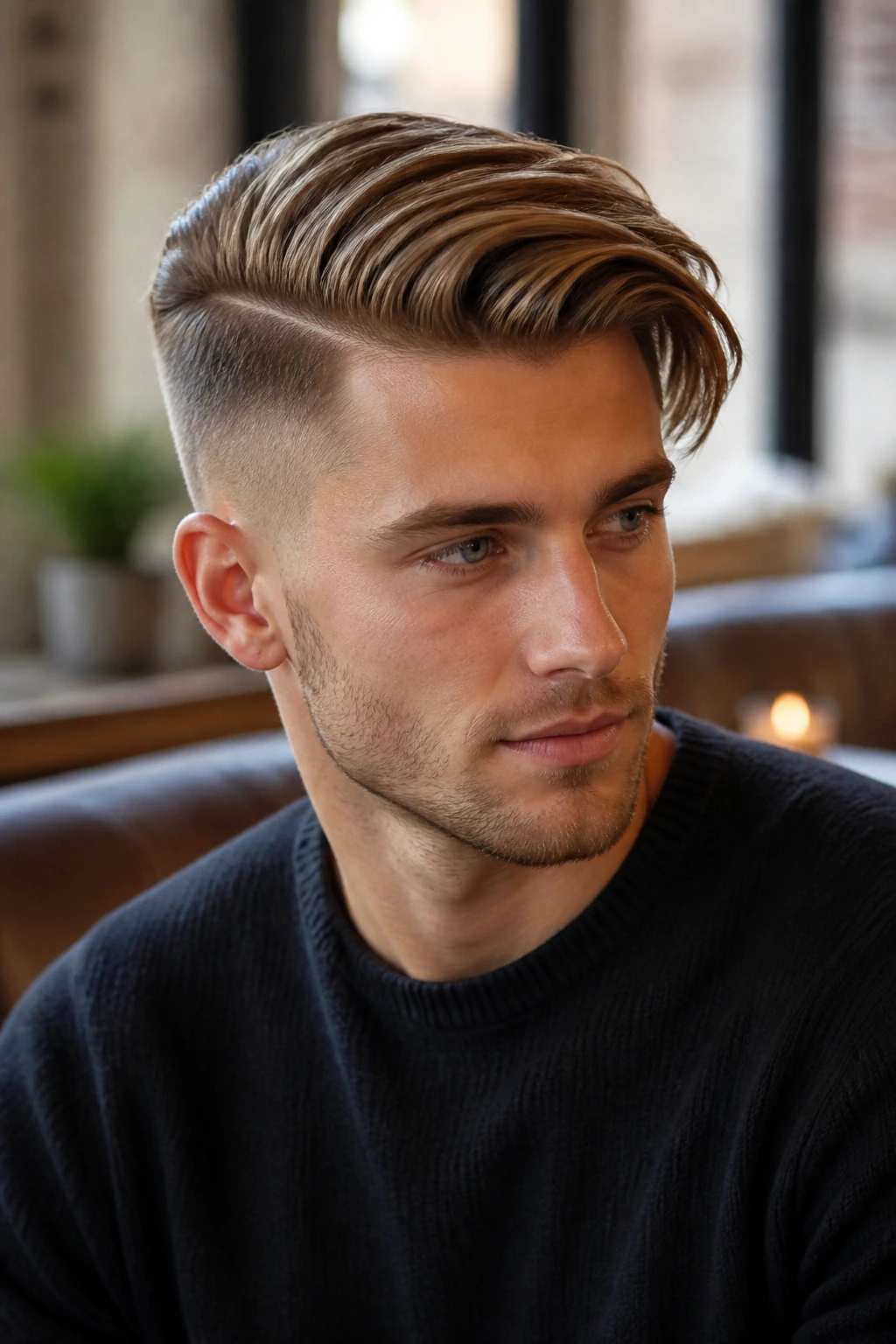
A disconnected side sweep keeps the top and sides visually separate, and that contrast gives the cut a little edge. It’s not as polished as an Ivy League and not as severe as a slick side part. It sits in that useful middle zone where the style is clear but not stiff.
Why it works: The long top sweeps to one side, while the sides stay extremely short or faded low enough to create a clean break. That separation makes the top look fuller and the face a little sharper.
Ask for about 3 inches on top, with the sides cut short enough that the contrast is obvious. Keep the sweep natural, not sprayed into a stiff wave. A cream or light paste gives it enough control to stay in place without killing movement.
If you want one short haircut that can lean dressed-up or casual depending on the shirt and beard, this is a strong finish to the list. It has enough shape to stand out, but it doesn’t box you into one mood.
How to Choose the Right Short Haircut for Your Hairline and Texture
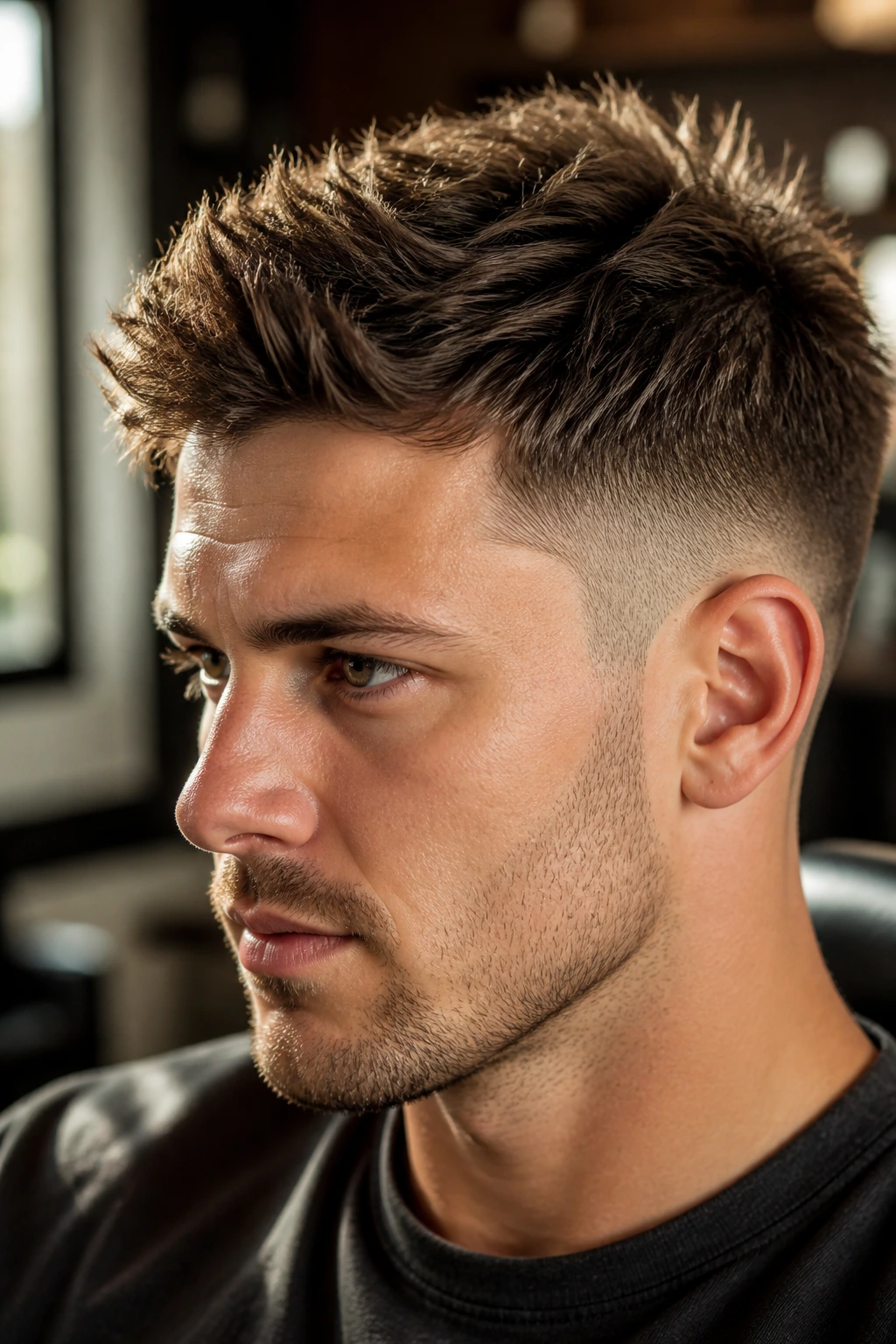
The best short cut is the one that behaves on your worst hair day. Not your best one. Your worst. That’s the real test.
If your hair is fine, keep the top shorter and texture the ends. Heavy pomades make fine hair look greasy and sparse at the same time, which is a brutal combination. A crew cut, Ivy League, textured crop, or short quiff usually gives fine hair more shape than a long, floppy style ever will.
If your hair is thick, the barber needs to remove bulk inside the cut, not just shorten the outside. Thick hair looks clean when the weight is managed around the crown and temples. Textured crops, high and tights, regulation cuts, and short pompadours usually behave well if the layers are handled properly.
Cowlicks are their own animal. A front cowlick often behaves better with a French crop, Caesar, or short quiff, because those styles work with the direction the hair wants to go. A crown swirl usually needs either more top length to lay over it or a shorter cut that removes the struggle entirely.
What to Tell Your Barber So the Cut Comes Out Right
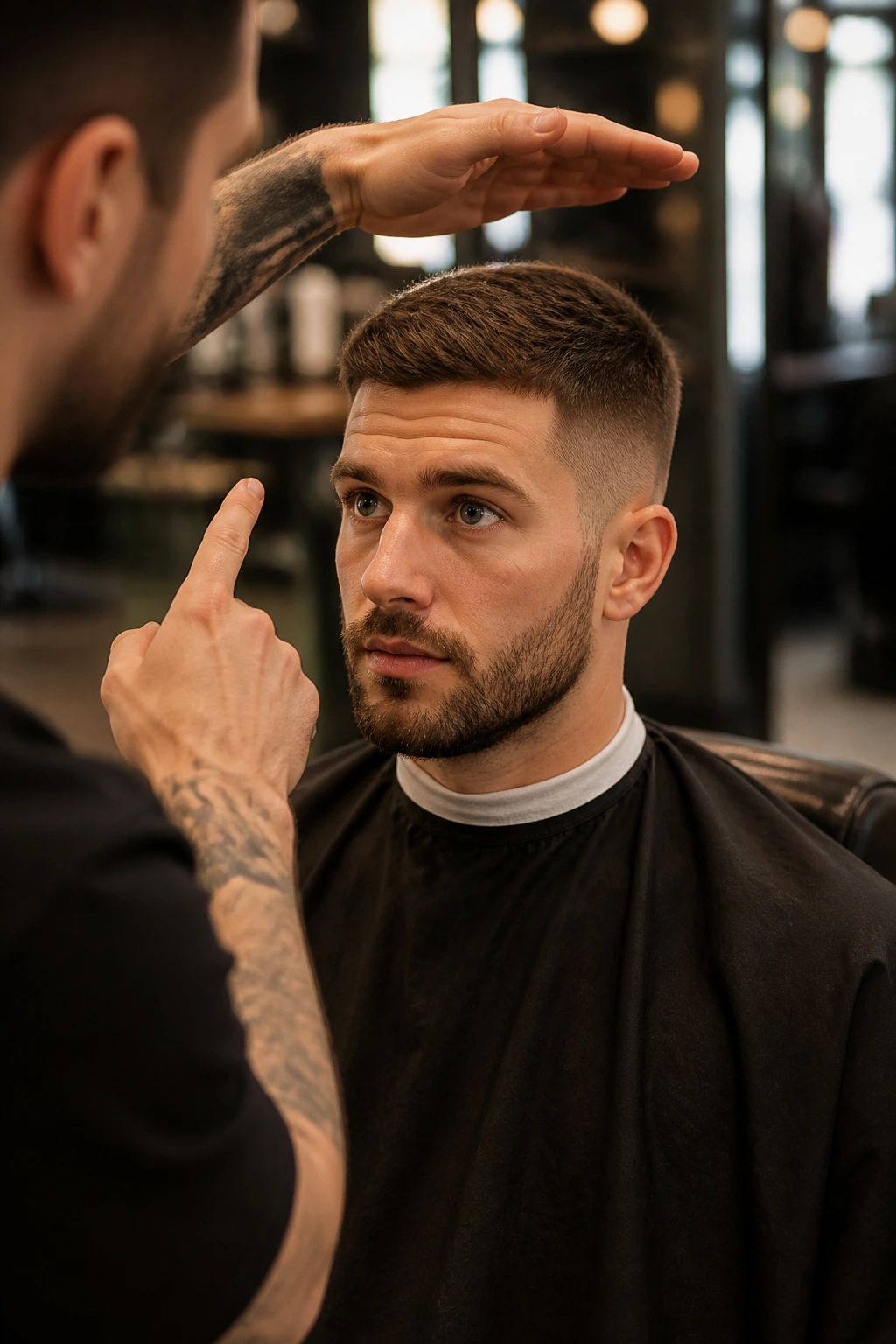
“Short on the sides, longer on top” is not a haircut request. It’s a setup for disappointment.
Bring the barber three things: the top length in inches, the side length or fade height, and the direction you want the front to move. That alone clears up most confusion. If you want a French crop, say the fringe should sit forward and be choppy. If you want an Ivy League, say you want enough length to part it naturally without a lot of product.
Texture matters too. Say whether you want the top point-cut, chopped, blended, or left more blunt. Those choices change how the haircut behaves after you wash it. A blunt top can look denser; a point-cut top can move better. If you have a cowlick or a receding temple, say so before the barber starts clipping. Silence is expensive.
And bring a photo, sure — but pair it with words. Photos show shape. Words explain what you want the cut to do.
The Tools and Products That Make Short Hair Behave
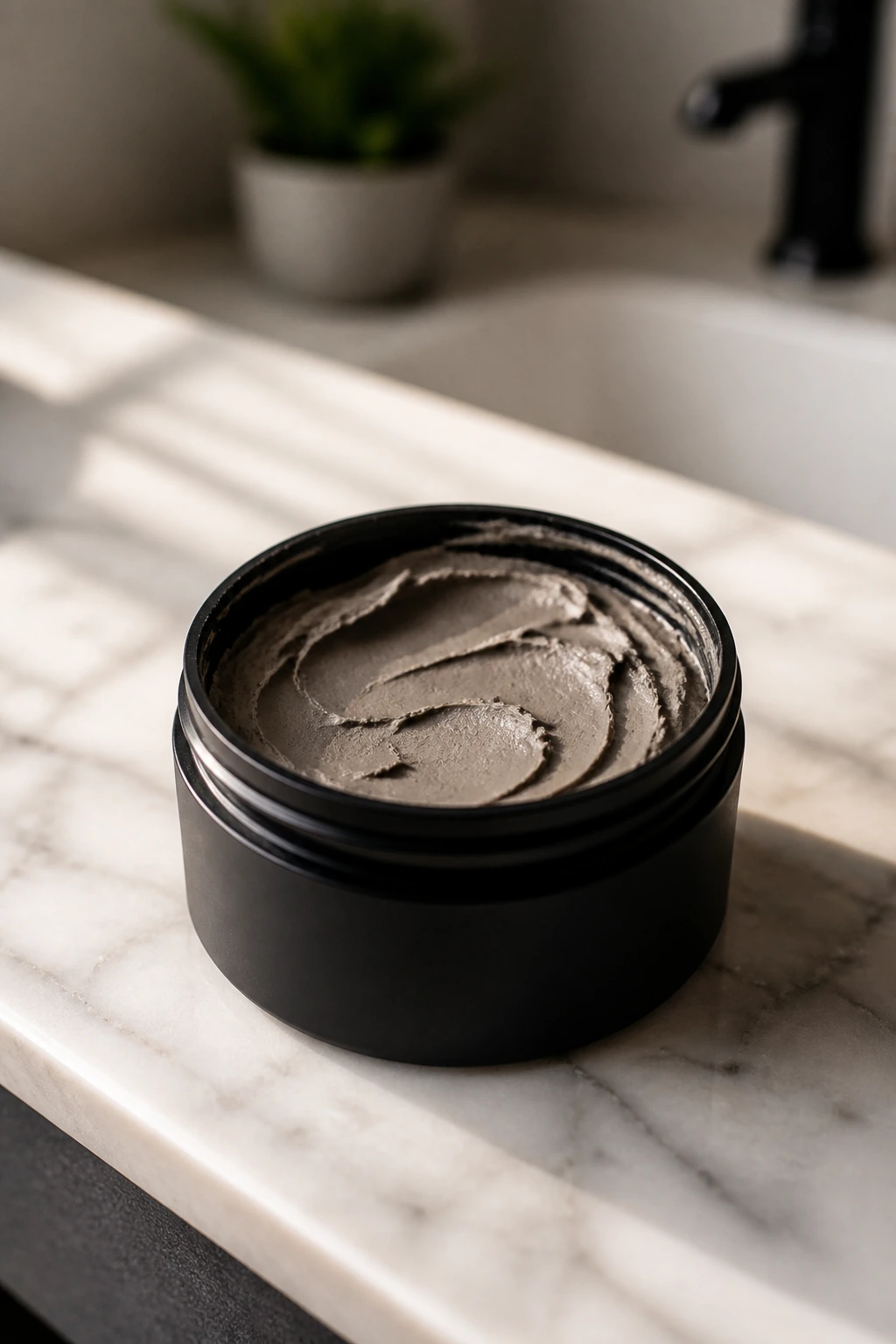
You do not need a bathroom drawer full of hair stuff. You need the right few things, and that’s it.
- Clippers with guard attachments: Useful for keeping a buzz, butch, or neckline cleanup consistent between appointments.
- Detail trimmer: Helps sharpen around the ears and sideburns without cutting into the whole haircut.
- Matte clay or fiber: Best for crops, quiffs, brush-ups, and anything that needs texture without shine.
- Light cream: Better for side parts, Ivy Leagues, and slicked-back short hair that needs a softer finish.
- Sea-salt spray: Handy for wavy, fine, or loose-textured hair when you want a bit of grip before drying.
- Blow dryer with a nozzle: More useful than people think, especially for quiffs, brush-ups, and pompadours.
- Wide-tooth comb: A small thing, but it matters for curls and waves so you don’t pull the shape apart.
- Hand mirror: Lets you check the back of the neck and the fade line without guessing.
- Scalp moisturizer or light leave-in: Worth having if you wear ultra-short cuts and your skin gets dry or itchy.
Keeping Short Hair Sharp Between Cuts
Short hair grows fast enough to betray you. That’s the part nobody likes to admit. A clean fade can start looking fuzzy at the neck in a week, and a crop loses its edge when the fringe gets long enough to hit the eyelashes.
If you wear a buzz cut, high and tight, or butch cut, plan on a barber visit every 2 to 3 weeks if you want it to stay crisp. Crew cuts, crops, and side parts can often stretch to 3 to 5 weeks, depending on how fast your hair grows and how tidy you like the outline. Curly cuts usually need attention a little sooner because the shape changes faster as the hair expands.
Between appointments, wash as needed, towel-dry gently, and use only the amount of product the cut actually needs. If the top looks flat, wet your hands, rake them through the hair once, and reshape before adding more clay. That tiny reset saves you from stacking product on top of old product, which is how short hair turns dull and crusty.
If you own a trimmer, a quick cleanup around the neck every 7 to 10 days can make the haircut look fresher without touching the top. Small effort. Big payoff.
Common Mistakes That Make Good Short Cuts Look Off
Asking for vague length.
“Short” means one thing to you and another thing to the barber. One person means a #2 buzz; another means a scissor crop. Give an actual guard number, inch length, or a photo with clear sides and front.
Ignoring your hairline and crown.
A cut that looks perfect in the chair can fight you every morning if it ignores the way your hair grows. Cowlicks need room or a sharper plan. Receding corners usually look better with a forward fringe, not a combed-back fantasy.
Using too much product.
Short hair only needs a little help. Heavy pomade, wax, or gel can make the style look greasy, stiff, or dusty. Start with a pea-sized amount, then add only if the hair still feels loose.
Cutting the top too short for the style.
A French crop needs fringe. A quiff needs front length. A curly crop needs enough curl pattern to survive the cut. If the top is clipped down too far, there’s nothing left to shape.
Letting the neckline grow wild.
Even the best short haircut starts to look sleepy when the neck hair creeps down the collar. A quick cleanup every week or two keeps the cut looking planned.
Ways to Bend These Cuts for Fine Hair, Thick Hair, Curls, and Cowlicks
The Fine-Hair Lift
Choose a crew cut, Ivy League, or short quiff, and keep the top textured but not too long. Fine hair looks fuller when the ends are broken up and the product stays matte. Skip heavy shine; it makes the scalp show more.
The Thick-Hair Tamer
Go for a textured crop, regulation cut, or high and tight with real debulking inside the top. Thick hair needs shape cut into it, not just length taken off the outside. Ask for the crown to be handled carefully, or it’ll puff where you least want it.
The Curl-Friendly Crop
Use a curly top, curly crop, or low-taper style that leaves room for curl spring. Cutting curls dry can help the barber see where they land. A leave-in cream or curl cream keeps the shape soft instead of fuzzy.
The Hairline Softener
A Caesar, French crop, or buzz with a taper can be friendlier when the corners are moving back. These cuts draw attention to the front line without forcing a dramatic part. Forward movement is your friend here.
The Low-Maintenance Reset
If styling sounds irritating, keep it simple with a butch cut, high and tight, or clean buzz. These are the cuts that let you stop negotiating with the mirror every morning. Sometimes that is the whole point.
Frequently Asked Questions About Short Hair on Men
Which short haircut is easiest to maintain?
A buzz cut, butch cut, or high and tight is the simplest route because the shape does most of the work. If you want a little more style without much effort, a crew cut is the next best step. It still behaves well when you skip product.
What short haircut is best for a receding hairline?
French crops, Caesar cuts, and some buzz cuts usually handle a receding hairline better than styles that try to sweep everything straight back. The forward movement softens the corners and keeps the hairline from being the first thing people see. A hard part can make recession stand out if it’s too sharp.
Can men with curly hair wear short hair well?
Yes, but the cut has to leave enough length for the curls to form. A curly crop, short curly top with a low taper, or temple fade works because it respects the curl pattern instead of crushing it flat. Short curls need shape, not punishment.
How often should I get a short haircut trimmed?
Most short styles need a touch-up every 3 to 5 weeks to stay clean, while very short cuts like buzzes and high and tights often need a visit every 2 to 3 weeks. If you clean up the neckline and sideburns at home, you can stretch that a little longer.
What product should I use on short hair?
Matte clay or fiber is the safest bet for textured crops, quiffs, brush-ups, and spiky styles. Light cream or low-shine pomade works better for side parts, Ivy Leagues, and slicked-back short hair. If the cut is ultra-short, you may not need product at all.
How do I ask for a haircut if I don’t know barber terms?
Bring a photo and say what the cut should do. Mention the top length, how short you want the sides, whether you want a fade or taper, and whether the front should sit forward, up, or over. That gets you much farther than trying to describe a vibe.
What if my hair sticks straight up after the cut?
That usually means the top was cut too short for your growth pattern, or the barber didn’t account for a strong cowlick. Ask for a little more length next time and use a small amount of matte product to weigh the hair down. Sometimes the fix is not more styling; it’s more length.
Can short hair still look formal?
Absolutely. An Ivy League, side part, regulation cut, or slick back taper can look sharp with a blazer or even a plain button-down. The difference is in the edge work and the finish, not in the length alone.
The Short-Hair Sweet Spot
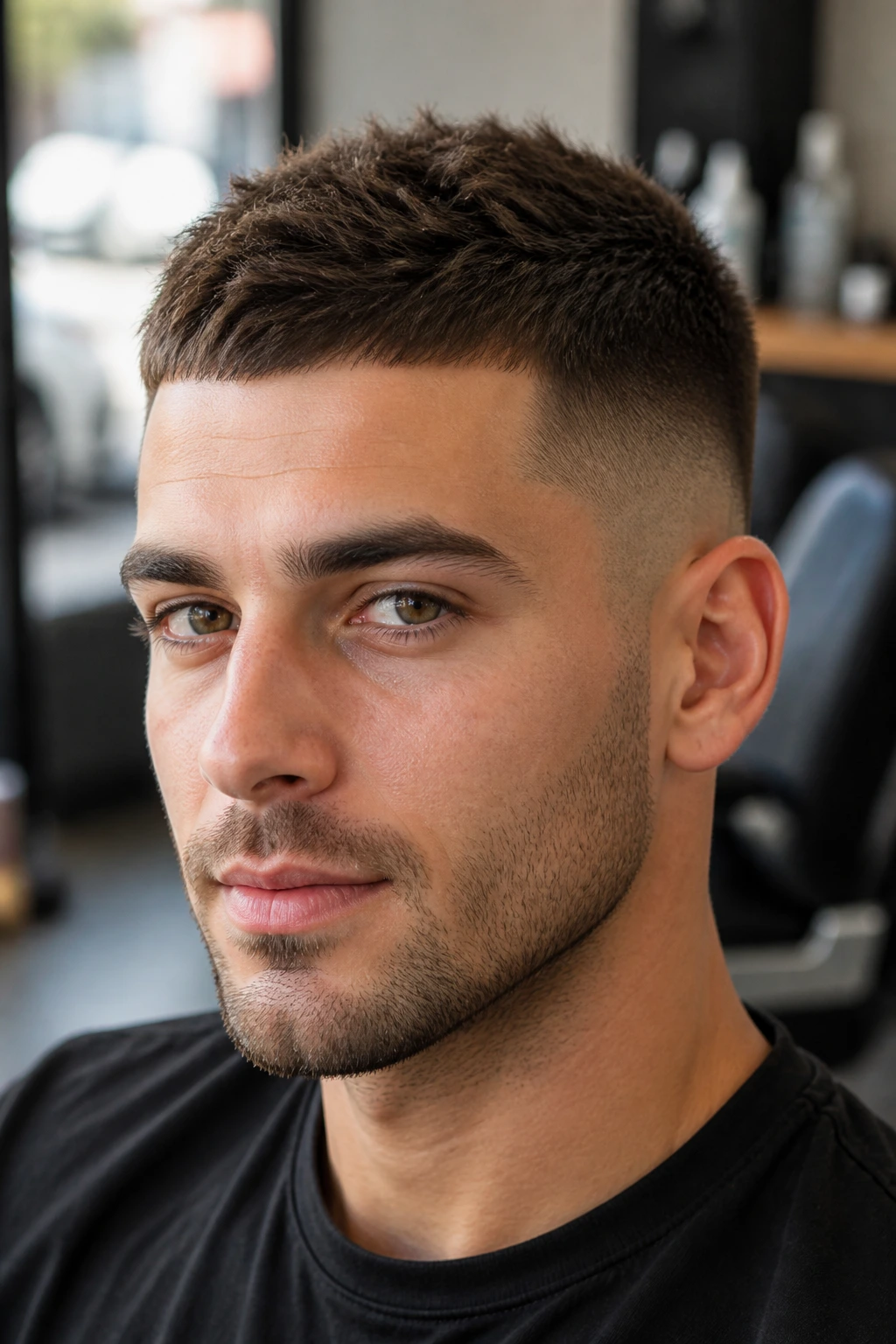
Short hair works best when it looks chosen, not surrendered to. That’s the real thread running through these cuts: a buzz with intention, a crop with texture, a taper that knows where to stop, a part that doesn’t fight the scalp. The shape does the talking. You just have to give it enough room.
Pick the version that matches your hairline, your texture, and the amount of effort you’re willing to spend on a weekday morning. Then tell your barber what you want in actual lengths and actual shape, not in vague hope. The result should feel easier the second day, not just fresher the first.
