



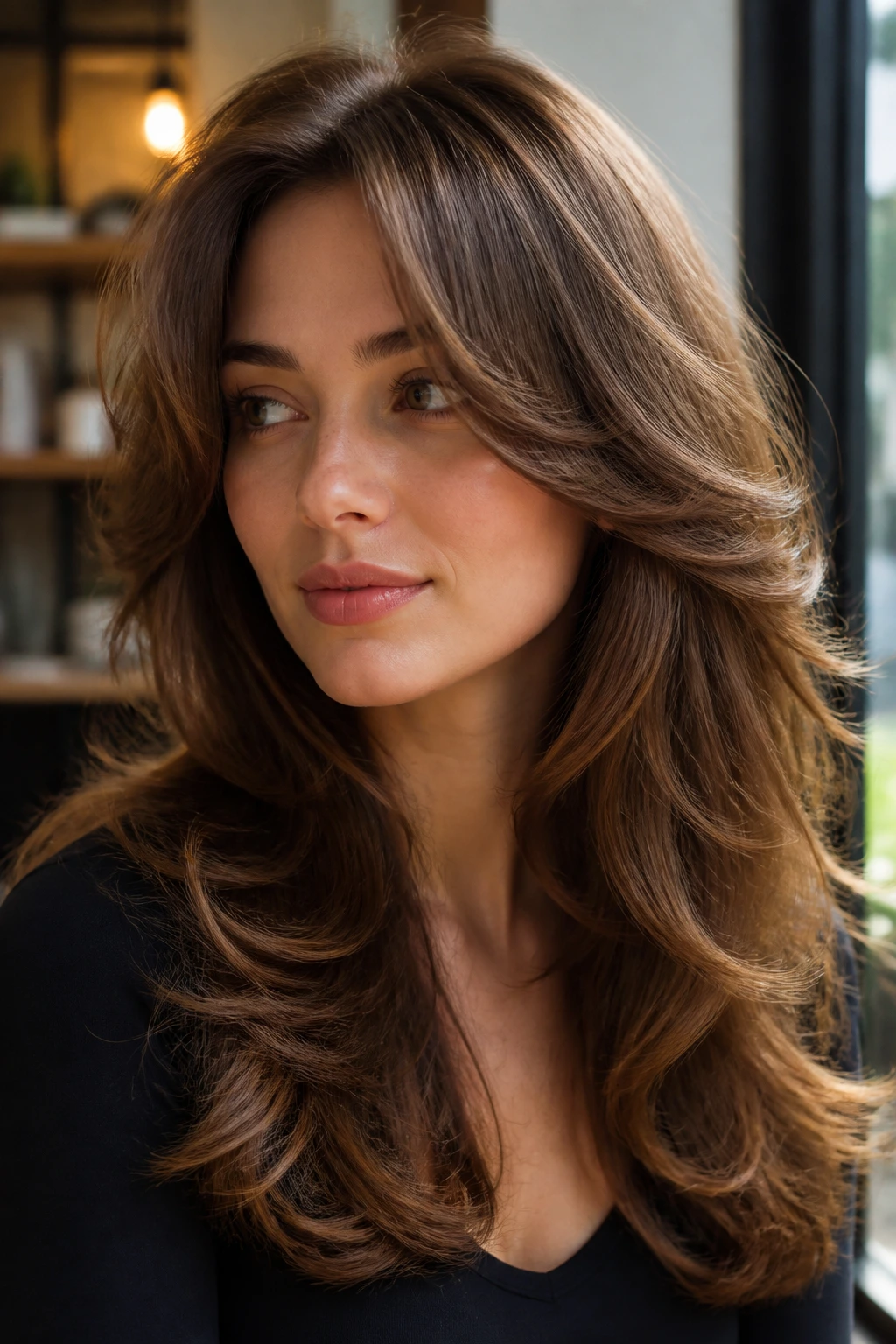
A blunt, one-length haircut can behave itself in the mirror and then go flat the second you move. Face-framing layers with a vintage vibe do the opposite. They catch a cheekbone, soften a jaw, and give the front of the hair enough swing that even a simple blow-dry feels more styled than it really is. The whole point is motion with structure. Not chaos. Not mushy, over-thinned ends. Just enough shaping around the face to make the cut look like it has a memory of being set with a round brush.
That’s why this look keeps circling back in one form or another: feathered 70s layers, glossy 90s blowout cuts, curtain fringe, flipped ends, shaggy softness, the whole slippery family of shapes that sit somewhere between polished and lived-in. The best versions don’t scream “trend.” They look like somebody knew exactly where the hair should break at the cheekbone, where the longest front piece should graze the collarbone, and how much weight to leave so the ends don’t fray into nothing.
And yes, the details matter. A half-inch too much layering can make fine hair collapse. A front piece cut too short can turn a pretty face frame into a permanent grow-out headache. The sweet spot is in the angle, the balance, and the way the front pieces blend into the rest of the cut without losing their own shape. That’s where the good stuff lives.
Why These Face-Framing Layers Keep Their Shape
- They change the way the whole haircut moves: The front pieces swing first, so even air-dried hair looks like it was touched on purpose.
- They flatter without locking you into one look: A cheekbone-length piece can read soft and romantic one day, then more dramatic with a side part the next.
- They borrow from real vintage cuts: Feathering, flips, rounded ends, and curtain fringe all pull from old-school styling without feeling costume-y.
- They make grow-out less annoying: When the front is already layered, the cut doesn’t fall off a cliff the minute it loses a little length.
- They work with more styling habits than blunt cuts do: You can round-brush them, bend them with a flat iron, or let them dry into loose texture and still keep the outline.
- They give thin and thick hair different wins: Fine hair gets lift at the front; dense hair gets shape without looking boxy.
1. Butterfly Layers With Soft Curtain Pieces
Butterfly layers are the easiest place to start if you want the vintage look without tipping into anything too fussy. The front section is cut shorter and blown back so it reads almost like a second haircut sitting on top of the length. That gives you a soft, airy frame around the face while the back stays long and swishy.
What makes this one feel vintage is the volume at the cheekbones and the way the ends curve away from the face. It has that old blowout energy that used to live in salon chairs under giant dryers. Ask for the shortest front layer to graze the cheekbone or just below it, then keep the back layers long enough to preserve weight. If you go much shorter at the crown, the whole cut can start feeling too choppy.
2. Farrah Fawcett Feathering Around the Jaw
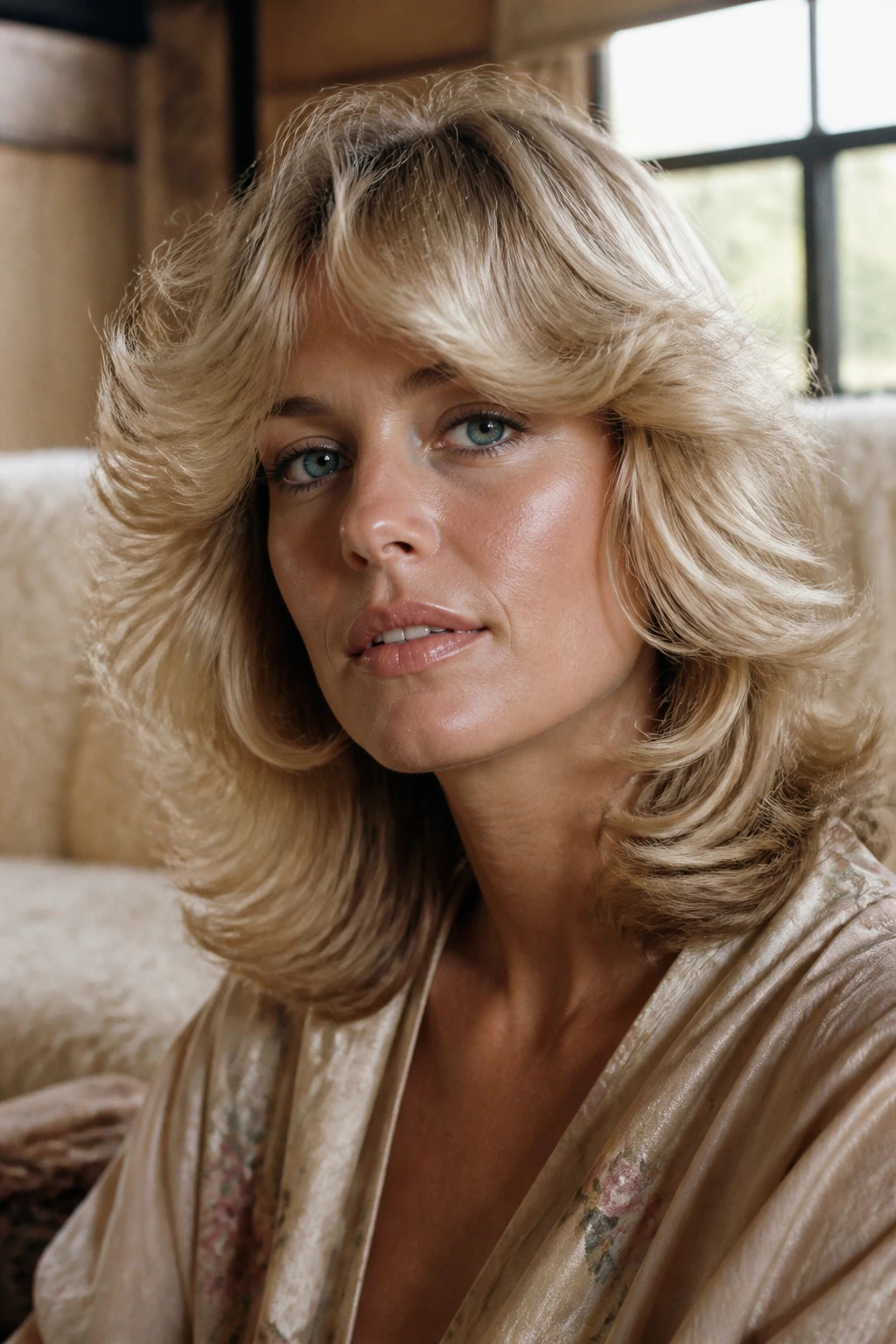
This is the cut people think of when they picture classic feathered hair. The front layers are sliced so they turn back from the face, not inward, which creates that soft winged shape around the jaw. It’s glossy, bouncy, and a little dramatic in the best way.
The trick is restraint. Too much feathering and the hair starts looking wispy in a bad, over-layered way. A good Farrah-inspired cut keeps some bulk in the mid-lengths and lets the front pieces open out like curtains. It works especially well on hair that can hold a bend from a round brush or large Velcro rollers. If you want the vintage vibe to show up, finish with a soft side part and keep the ends polished, not ragged.
3. The 70s Shag With Wispy Face Layers

A shag can go punk, modern, or messy-fast if it’s cut too hard. The vintage version is softer. You want feathery movement around the face, a little lift at the crown, and ends that move instead of hang like a curtain. The face-framing layers should start near the cheekbone and fade down with a light, uneven texture.
This cut is at its best when the hair has a bit of grit. Freshly washed hair can look too clean and sleepy, so a little mousse or texture spray helps the shape live. I like this look on people who want shape without a perfectly smooth blowout; the shag’s whole personality is that it looks better with a touch of disorder. Keep the fringe wispy, not blunt. That’s the line between retro and costume.
4. Long Layers With Bottleneck Bangs
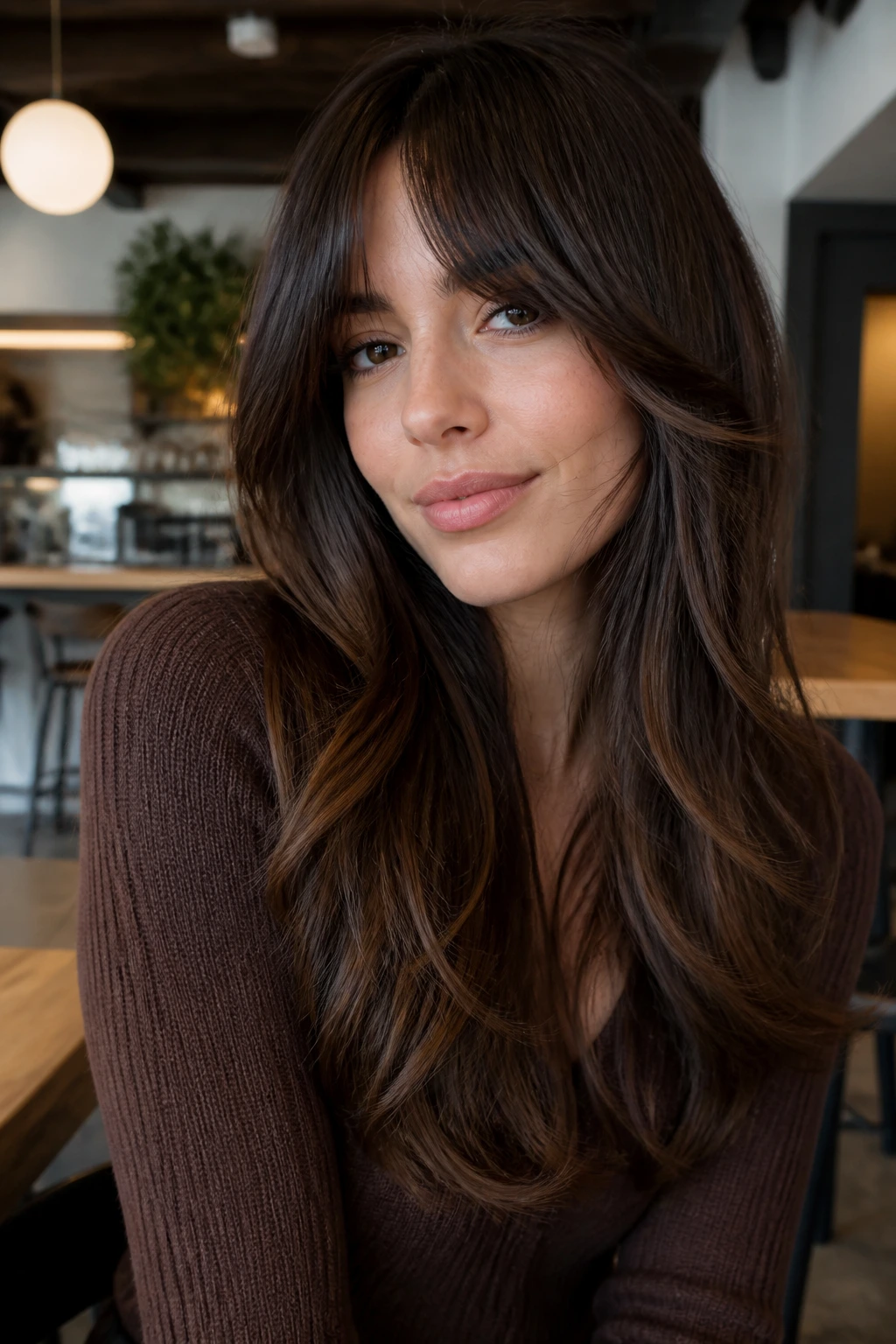
Bottleneck bangs are one of those small details that change the whole mood of a cut. They start narrower between the brows, then widen out as they reach the cheekbones, which gives the front a little vintage tension without committing to a full fringe. Paired with long layers, they make the whole haircut feel softer and more expensive-looking.
The best version keeps the lengths below the shoulders so the bangs don’t feel too heavy against the rest of the hair. If your face is longer, this shape can be a gift because the wider side pieces break up the length without burying your features. If your hair is fine, don’t let the bangs get too sparse at the ends. You want a gentle curtain, not two sad wisps hanging on for dear life.
5. The Rachel-Inspired Mid-Length Cut
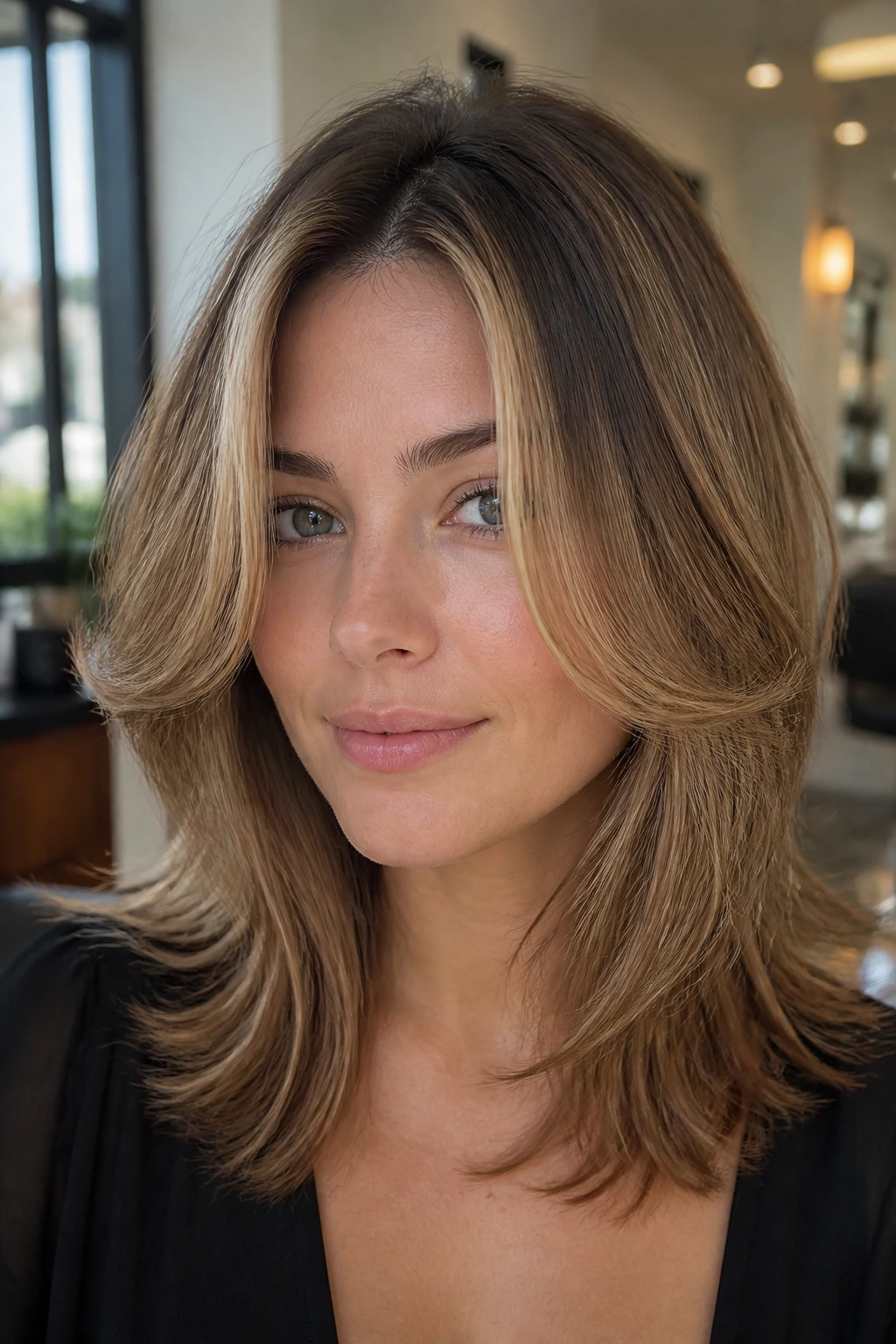
Yes, it still works. The reason the Rachel cut keeps being copied is that the face-framing layers are doing a lot of the heavy lifting. The shorter front pieces swing out from the cheekbones, then connect to fuller layers through the ends, which creates that familiar, lifted, blown-out shape.
The key is getting the face frame right for your own head, not somebody else’s reference photo. On many people, the shortest pieces need to land somewhere between the cheekbone and the chin to avoid a helmet effect. And if you have a square jaw, letting the layers turn away from the face instead of inward helps soften the angle. This cut looks best when the front is brushed with intention. Even a rough air-dry benefits from a quick round-brush pass.
6. Soft Wolf Cut With Retro Fringe
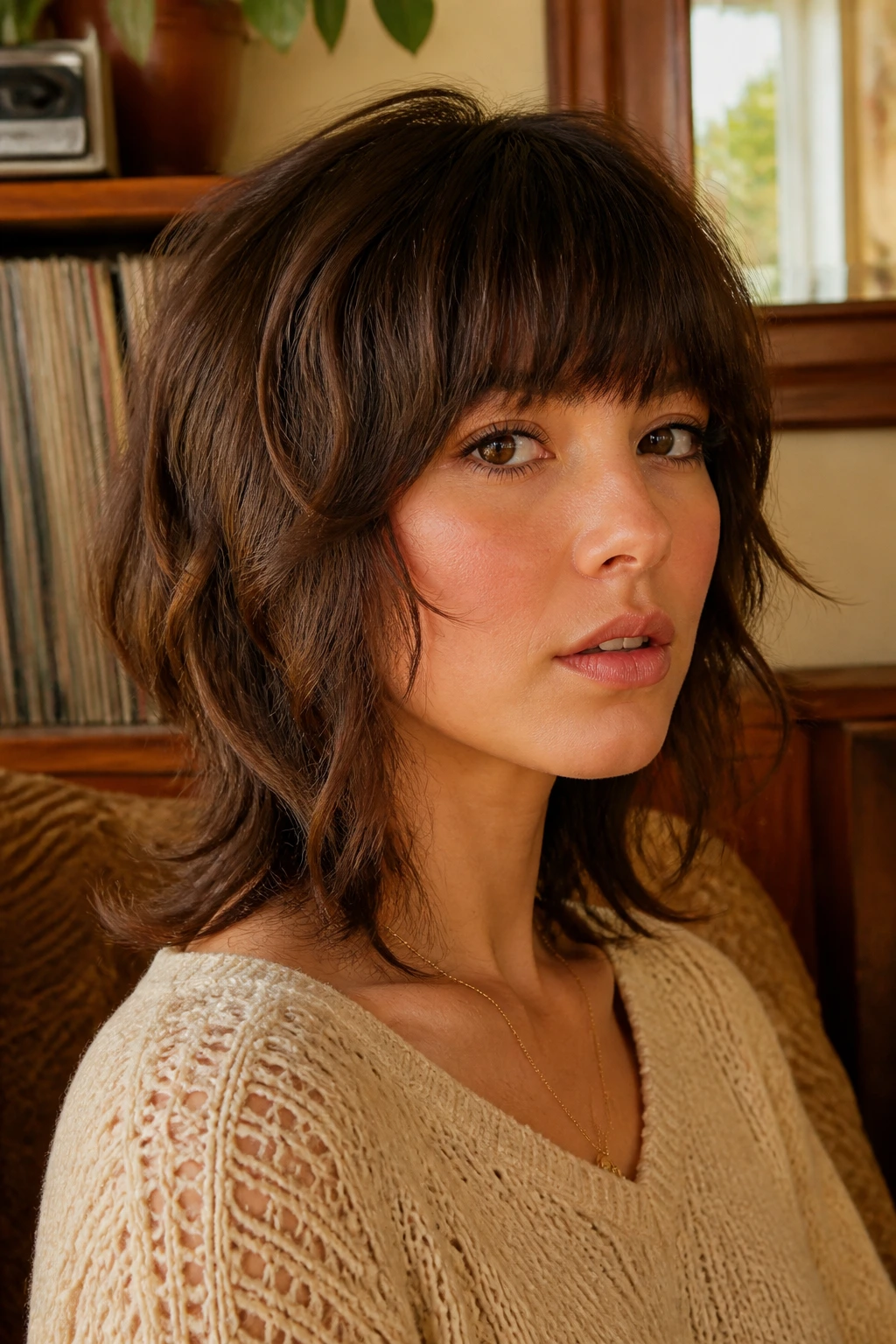
The wolf cut gets a bad reputation when it’s too choppy, too high at the crown, or too aggressive around the perimeter. The softer vintage version keeps the shaggy spirit but smooths out the edges. You get a face frame that’s piecey and a little wild, but not so fractured that the haircut loses shape.
What gives it a retro bend is the fringe and the way the layers fall around the cheek and temple. Think less punk club, more faded record sleeve. This is a smart choice if you like texture but don’t want the haircut to fight your styling habits every morning. It can air-dry with attitude, which is half the charm. If your hair is thick, ask for internal removal rather than aggressive surface texturizing, or the ends can puff out.
7. A Layered Lob With Old-School Swing
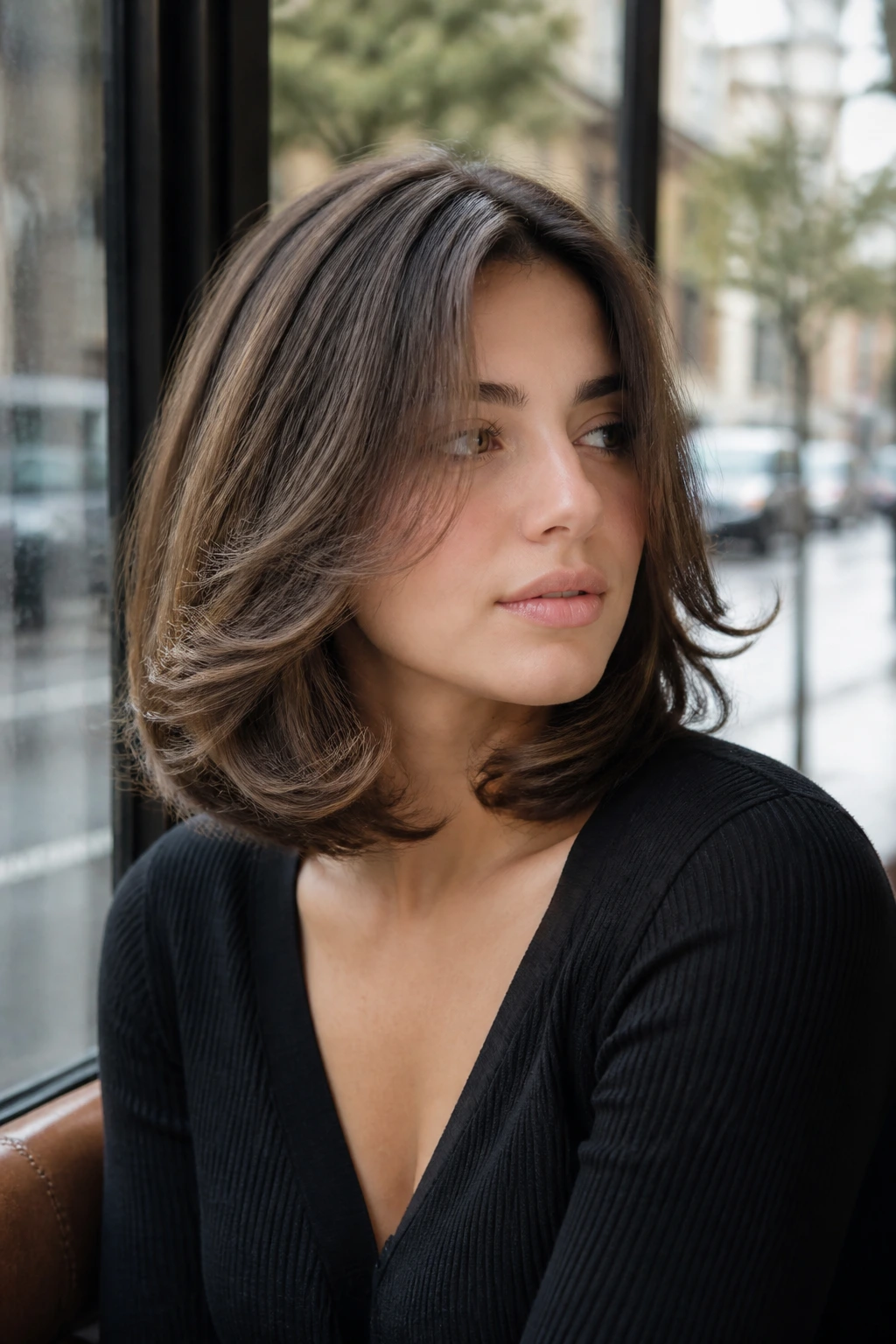
A lob lives in that useful middle ground where it can look sharp or romantic depending on how it’s finished. Add face-framing layers, and you get a cut that flips between polished and casual without much effort. The vintage vibe comes from the end shape: slightly rounded, slightly tucked, never chopped flat across the bottom.
I like this on people who want movement around the face but aren’t ready to go full feathered or shaggy. The layers should begin around the chin and blend down toward the collarbone. That keeps the front open and stops the haircut from puffing at the sides. A 1.25-inch curling iron, wrapped away from the face, gives it that old salon-bounce without making the curl too tight.
8. The Italian Bob With Side-Swept Front Pieces
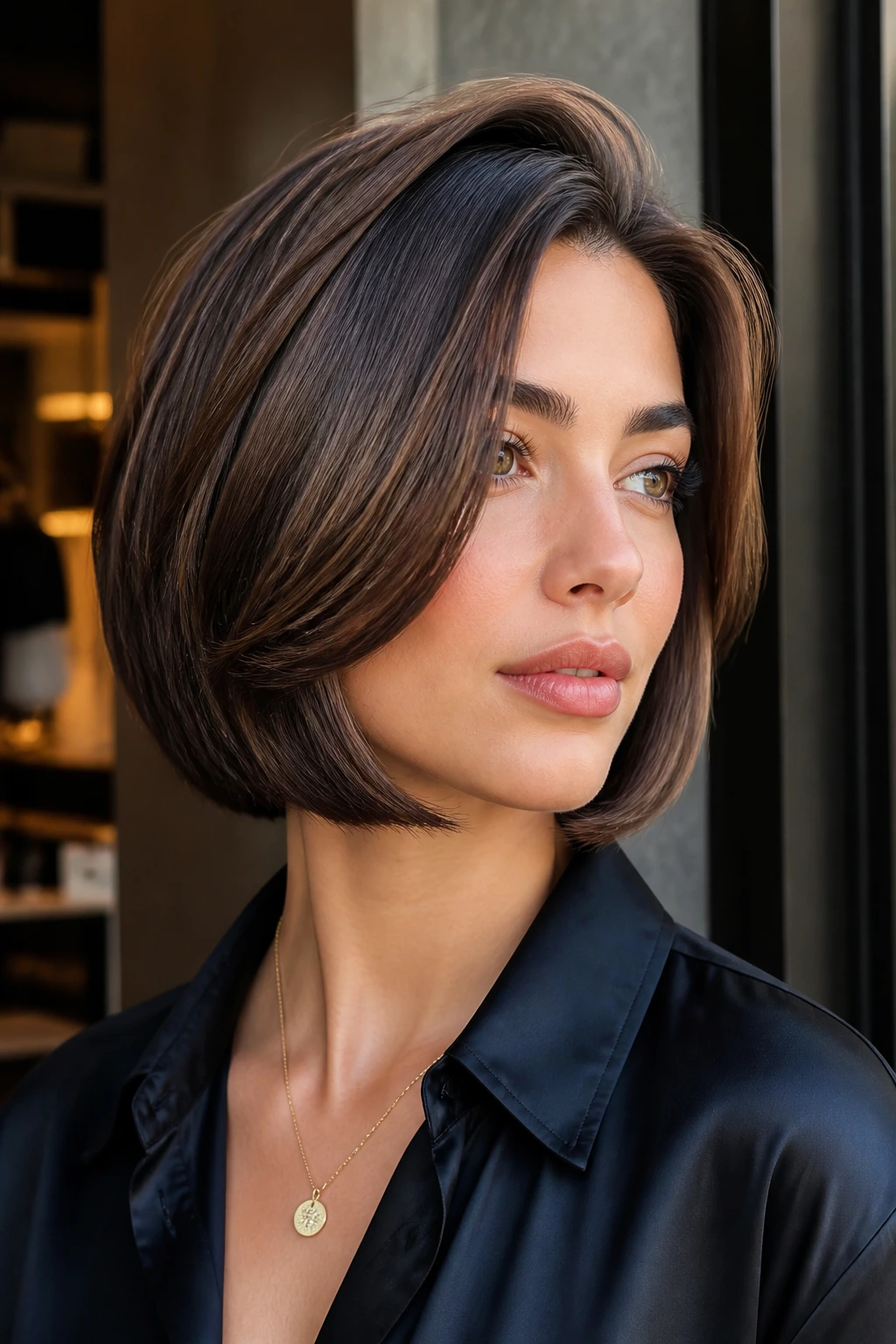
The Italian bob is all about weight, shine, and a little swing at the ends. When it’s paired with side-swept front pieces, the whole haircut gets a softer, more cinematic feel. It’s less blunt and more sculpted, which is why it reads so well with a vintage wardrobe or a simple lipstick-and-earrings kind of look.
This one needs a clean perimeter. If the bob is cut too shredded, it loses its polish fast. Ask for front pieces that skim the jaw and blend into the length without turning into obvious layers. The side part matters here too; it helps the front fall into that gentle swoop that makes the style feel lived-in rather than severe. It’s a good choice if you want your hair to look styled even when you’ve only spent ten minutes on it.
9. Hollywood Blowout Layers on Long Hair
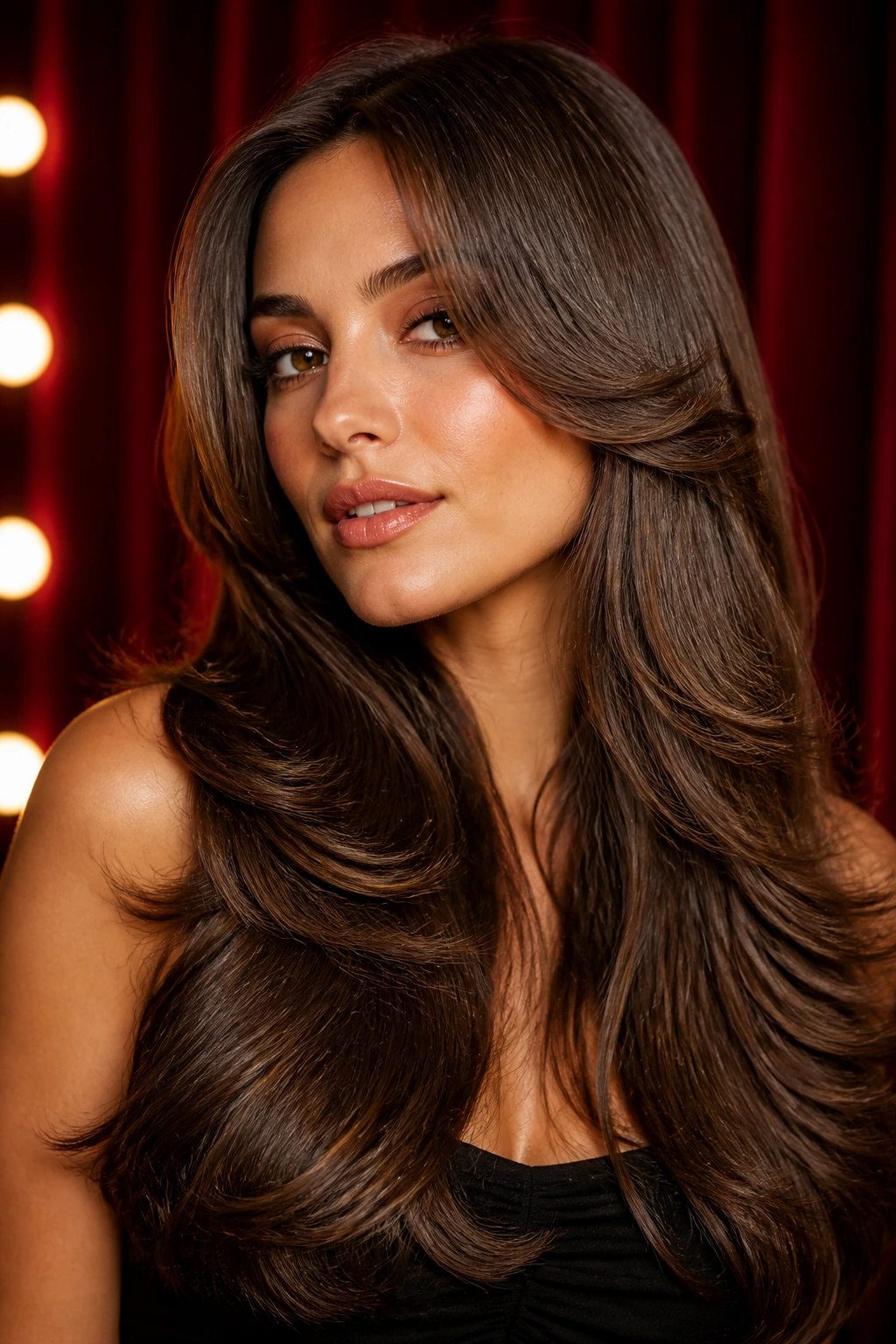
This is the kind of cut that wants a round brush, a large roller, or a blow-dryer nozzle that knows what it’s doing. Long layers keep the ends from becoming a heavy sheet, while the face-framing pieces lift off the cheekbones and create that soft, glossy cascade you see in old movie stills and salon ads with impossible hair.
The cut itself should not be too heavily layered. That’s the mistake. You need enough weight in the back so the style can bounce instead of frizzing apart. The front pieces can start near the lips or cheekbones depending on face shape, but they should always connect smoothly to the rest of the length. If your hair tends to collapse, this shape benefits from a little root lift spray at the crown before blow-drying. Small thing. Big difference.
10. Razor-Cut Layers That Feather at the Cheeks
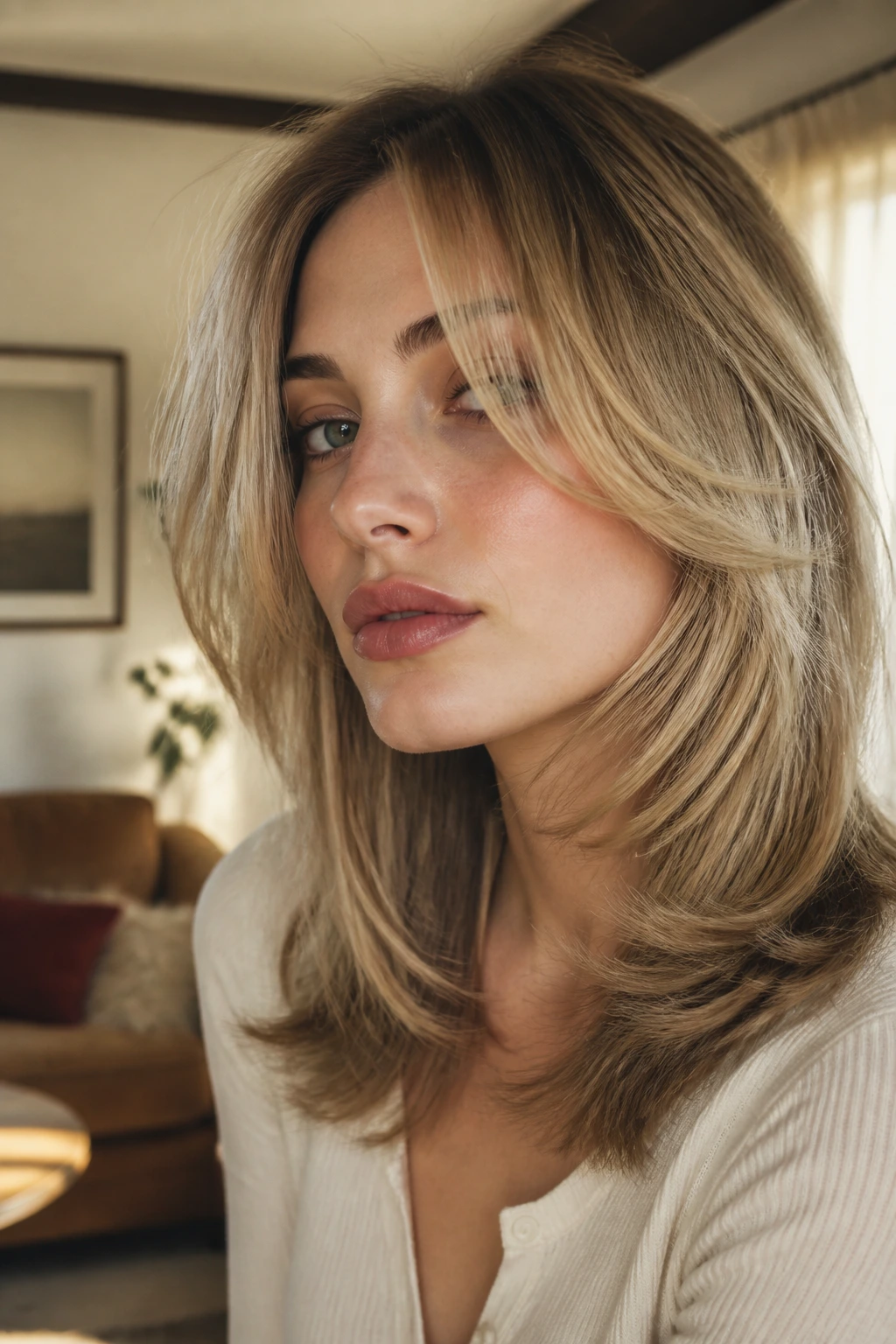
A razor cut can go wrong fast if it’s used like a shortcut instead of a tool. Done well, though, it gives the face frame a soft, airy edge that feels very late-70s and early-90s at the same time. The front pieces get a lighter finish, which helps them fall away from the face instead of sitting in stiff, blunt blocks.
This works best on medium to thick hair that can handle some texturizing. Fine hair can use it too, but the razor should stay gentle or the ends will look thin before their time. The appeal is in the motion. You want the hair to move when you turn your head, not just hang there and behave. A center part keeps it more retro; a deep side part pushes it toward old glamour.
11. The Collarbone Cut With Rounded Layers
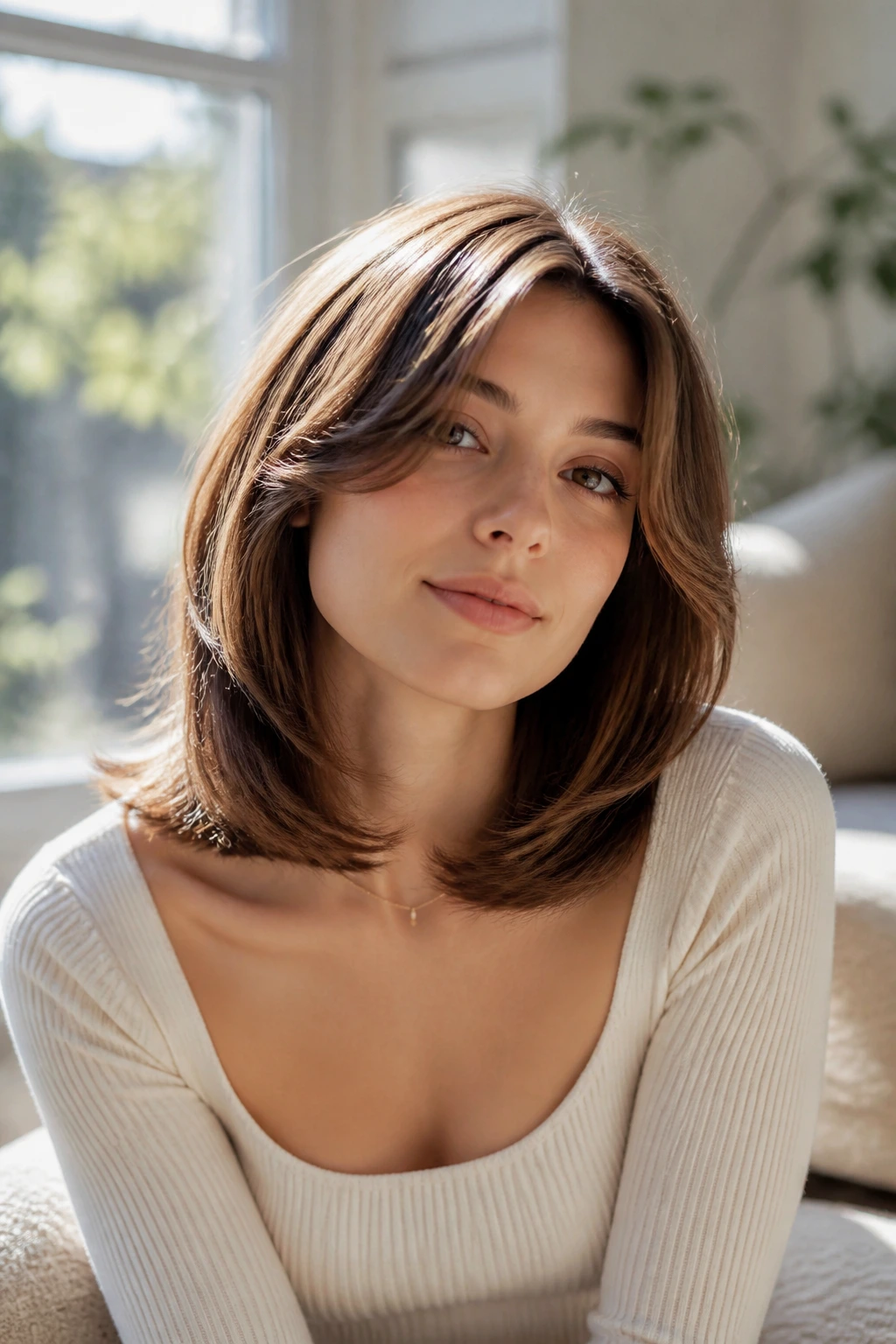
A collarbone cut is one of the most flattering lengths because it lands right where a lot of faces want a little softness. Add rounded layers around the front, and the whole shape feels classic instead of plain. The ends curve inward or softly under, which gives that polished salon finish without a harsh edge.
It’s especially good if you like volume around the sides of the face but don’t want a lot of obvious graduation. The front pieces should skim the collarbone or rest just above it, with the shortest bits opening around the cheekbone. That length does a nice job of framing the neck, jaw, and shoulder line at once. If your hair has a natural bend, this cut will work for you with very little convincing.
12. The C-Shape Cut With Soft Front Sweep
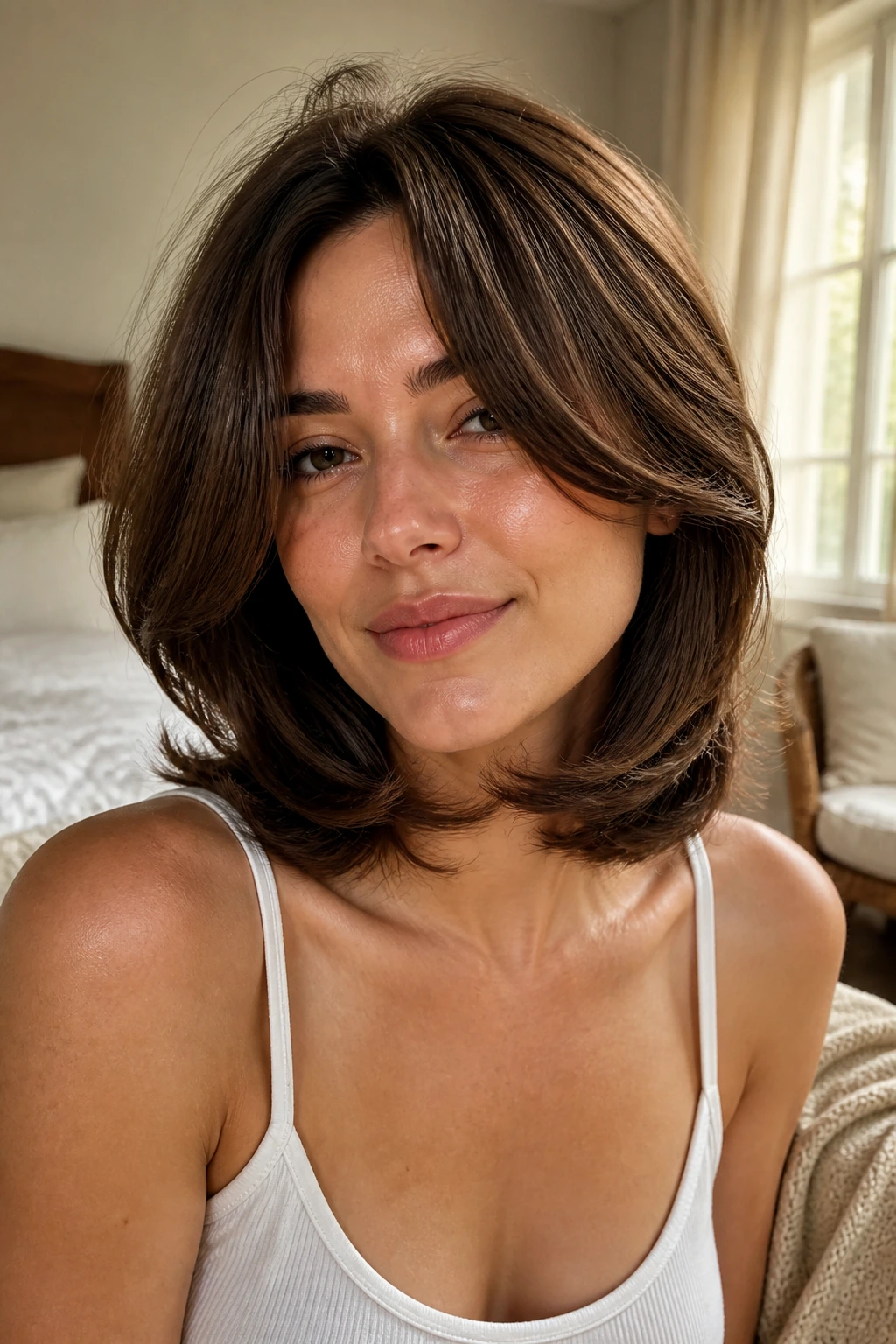
C-shape layers are the quiet overachiever of vintage-inspired haircuts. The shape curves gently around the face and back toward the shoulders, almost like a soft outline drawn in one continuous motion. It feels polished, but not stiff. Think of it as the more relaxed cousin of the blowout cut.
What makes it vintage is the way the hair turns under at the ends. That bend gives you a little 60s and 90s energy at the same time, especially if the front sweep is kept full enough to see from the front. This is one of my favorites for hair that needs structure but not too much chopping. It preserves weight, which matters if your hair is dense or frizzy. Too many layers and the shape collapses. Too few and it just sits there.
13. U-Shaped Long Layers With a Soft Center Part
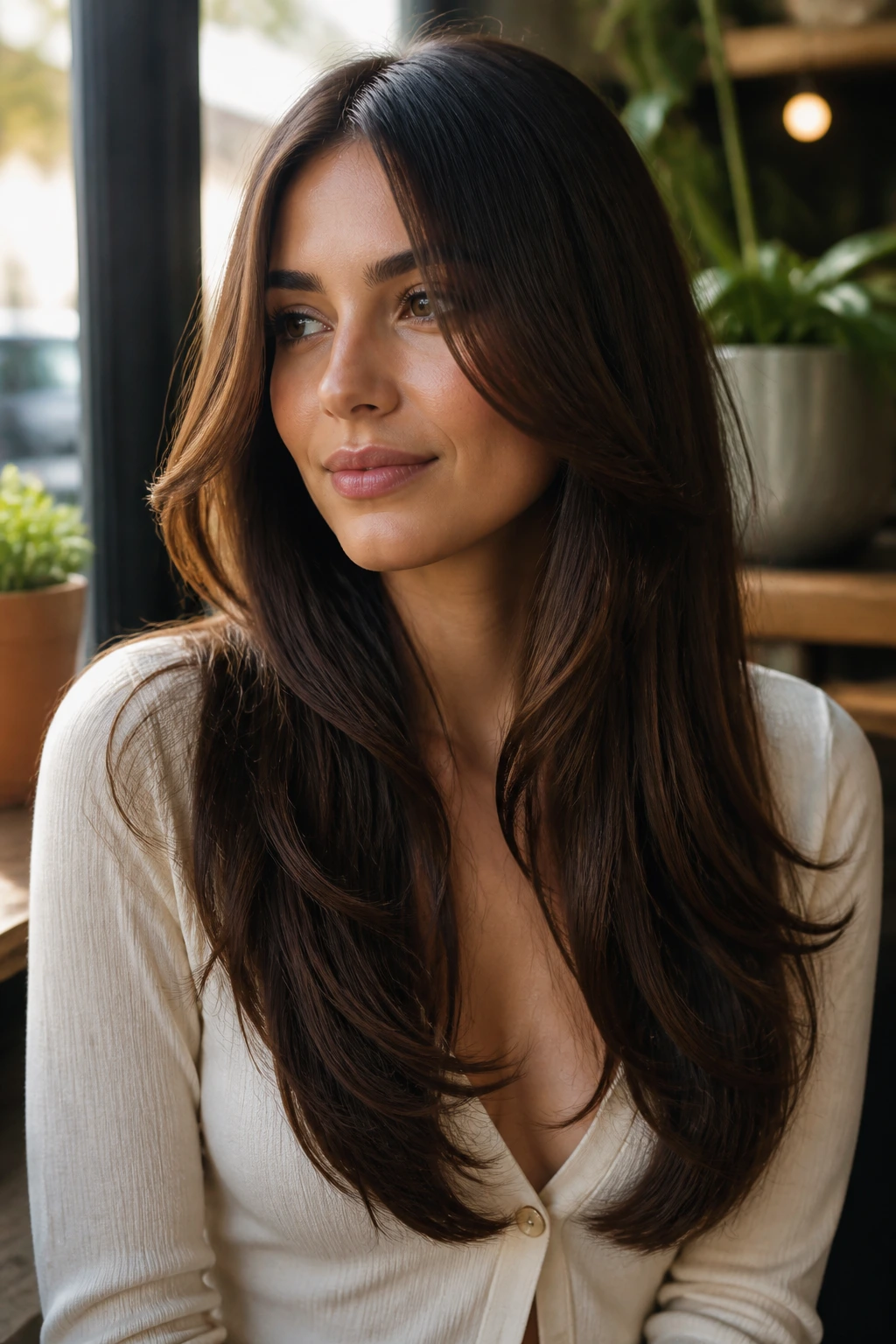
A U-shape is one of the most useful foundations for face-framing layers because it keeps the ends full while still making room for movement. The front pieces are cut to soften the cheek and jaw, then the back drops slightly longer, which creates that gentle curved outline that feels old-school in the nicest way.
This cut is a good match for someone who wants long hair to look intentional, not heavy. A center part keeps the front symmetrical and lets the layers drape on both sides of the face. If you want more drama, the shortest pieces can start near the cheekbone; if you want something quieter, begin closer to the chin. I prefer this cut when the hair is thick enough to hold a shape but not so dense that it swallows the layers.
14. Flipped Ends With Face-Framing Flicks
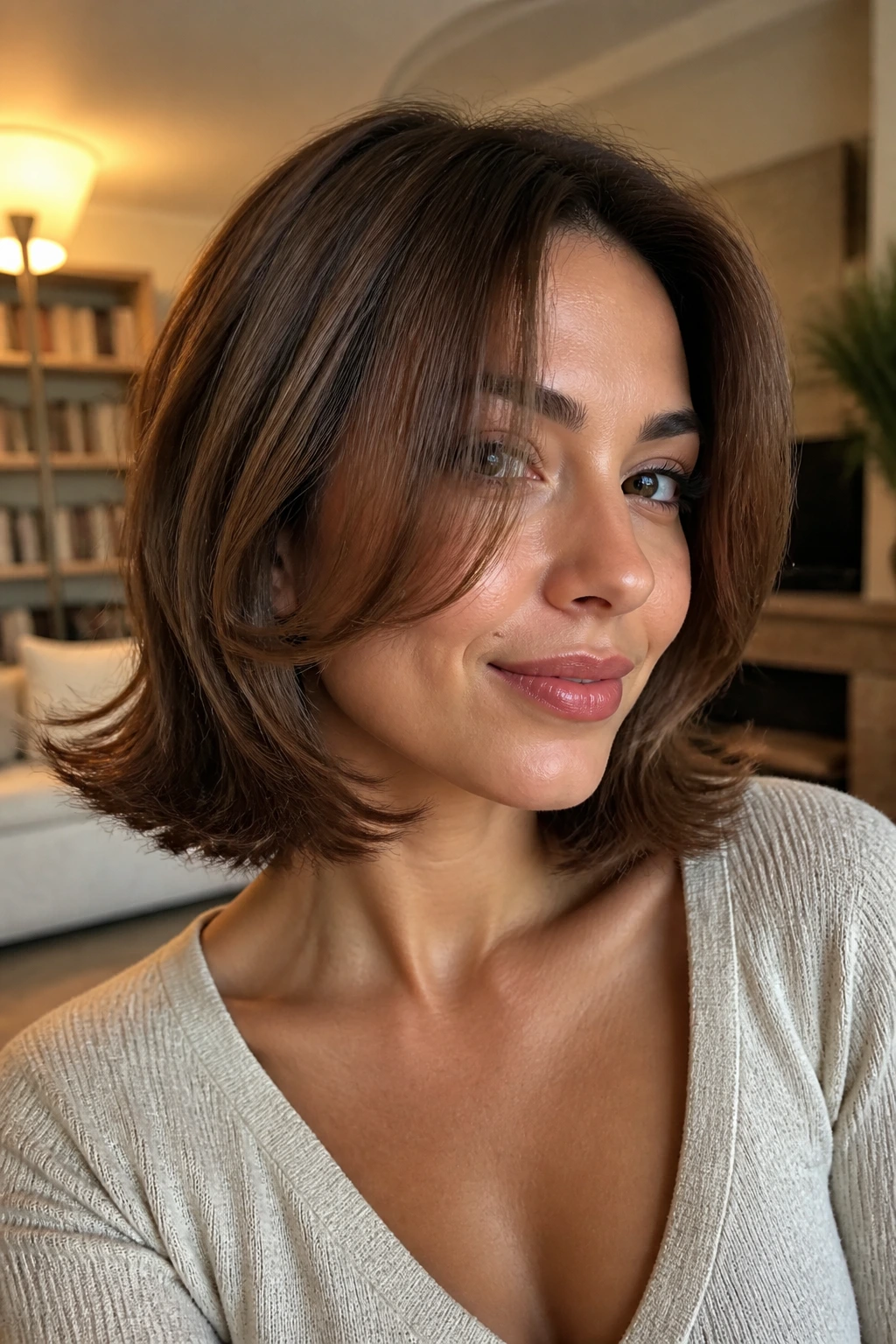
A flip at the ends can do more for a haircut than a ton of visible layering. The vintage vibe comes from that outward bend — the kind you get from a round brush, a flat iron turned with a little wrist, or a roller set left to cool before brushing out. Around the face, those flicked pieces soften the line and keep the cut from feeling flat.
The haircut underneath should be clean and controlled. If the layers are too choppy, the flip looks random instead of styled. You want enough length in the front to create a clear bend, usually around the chin or collarbone, depending on the cut. This one looks especially good with a side part and a smooth crown. It has that “I went to a proper salon” mood, even if you did the finishing work in ten minutes.
15. 90s Supermodel Layers With Glossy Face Framing
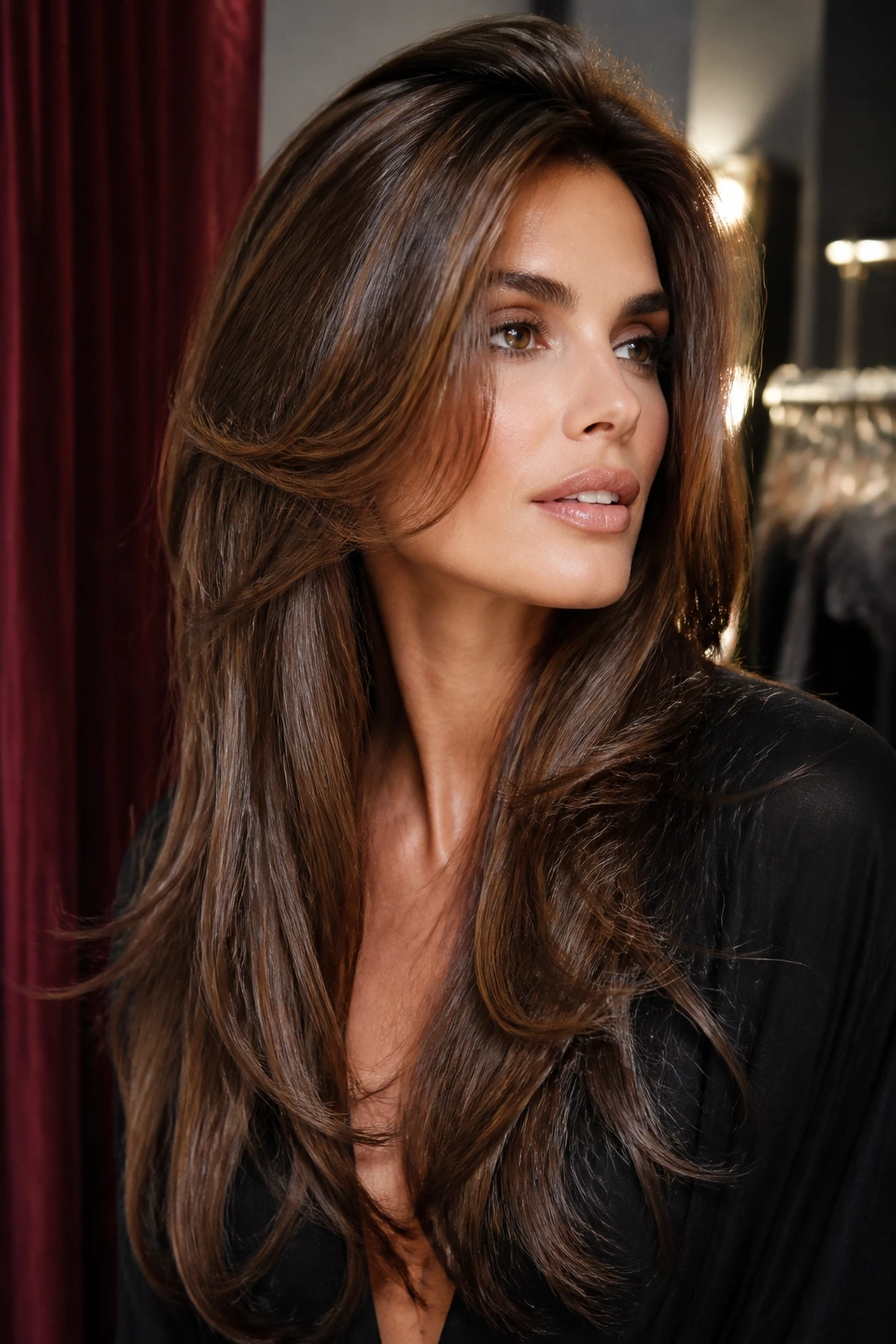
There’s a reason this shape refuses to disappear. The layers are long enough to stay luxurious, but the front pieces still give the face a lift. Everything moves away from the face in a soft, expensive-looking arc. That’s the whole trick. Nothing feels chopped.
The best version has a strong blowout and a bit of root volume at the crown. Without that, the layers can just flatten into length. Ask for the front to start around the cheekbone or lower, then blend the layers so the ends remain full. This is not the haircut for people who want piecey, shredded texture. It wants shine. It wants body. It wants a brush set or at least the illusion of one.
16. A Bouncy Lob With Sabrina-School Energy
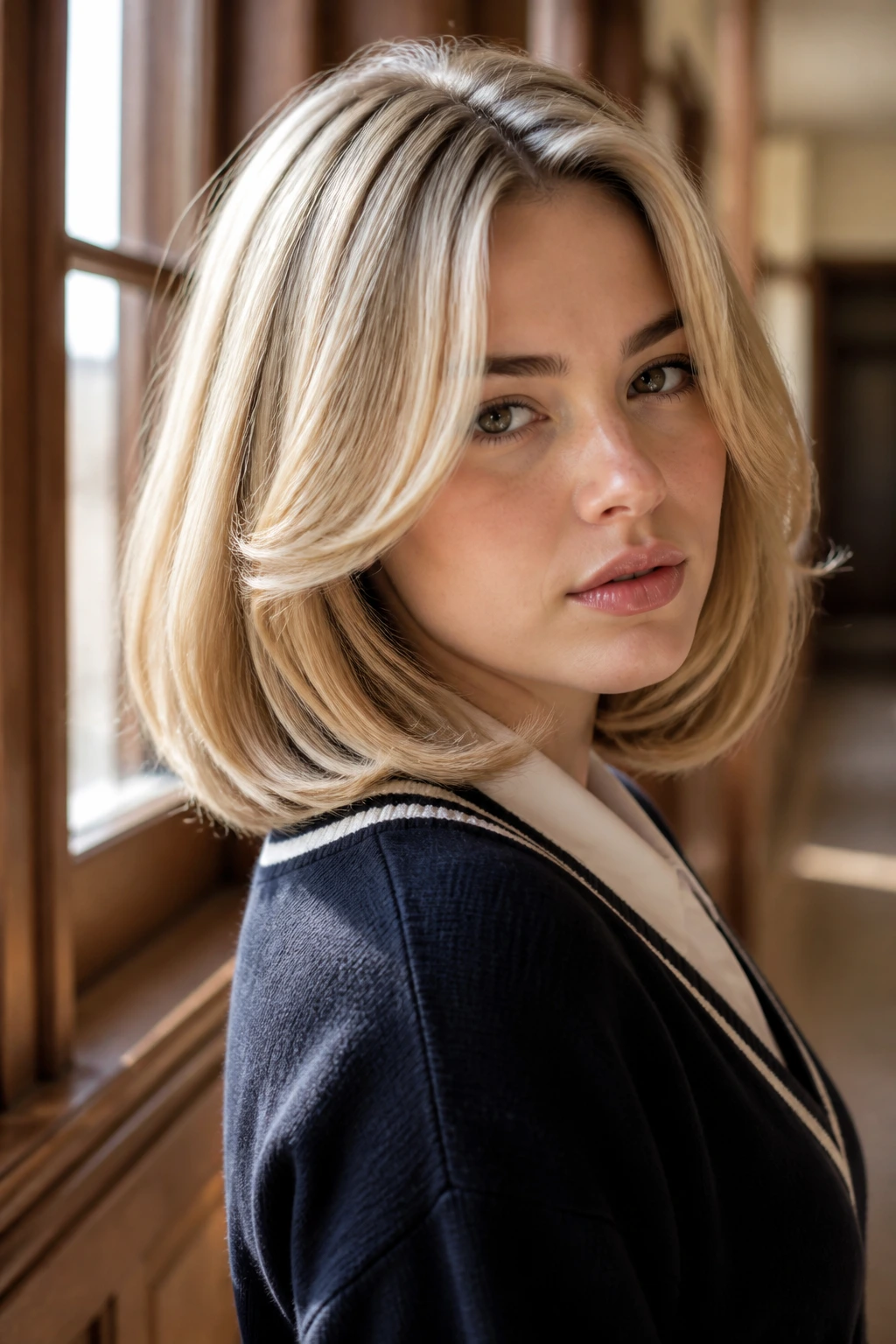
A shoulder-grazing lob with face-framing layers can lean very sweet, very polished, and just retro enough to feel charming rather than precious. The shape is usually rounded at the ends, with front pieces that open the face and keep the haircut from becoming boxy. It’s a little bit sitcom star, a little bit polished school photo, and that’s why it works.
The part matters a lot here. A soft side part gives it more of a vintage wave. A center part pulls it cleaner and more modern. If your hair is straight, this cut benefits from a gentle bend near the ends so it doesn’t look too geometric. If it’s wavy, let the texture do most of the work and focus your styling on the front pieces only. That alone can make the whole haircut feel finished.
17. Soft Mullet Layers With Face Lift
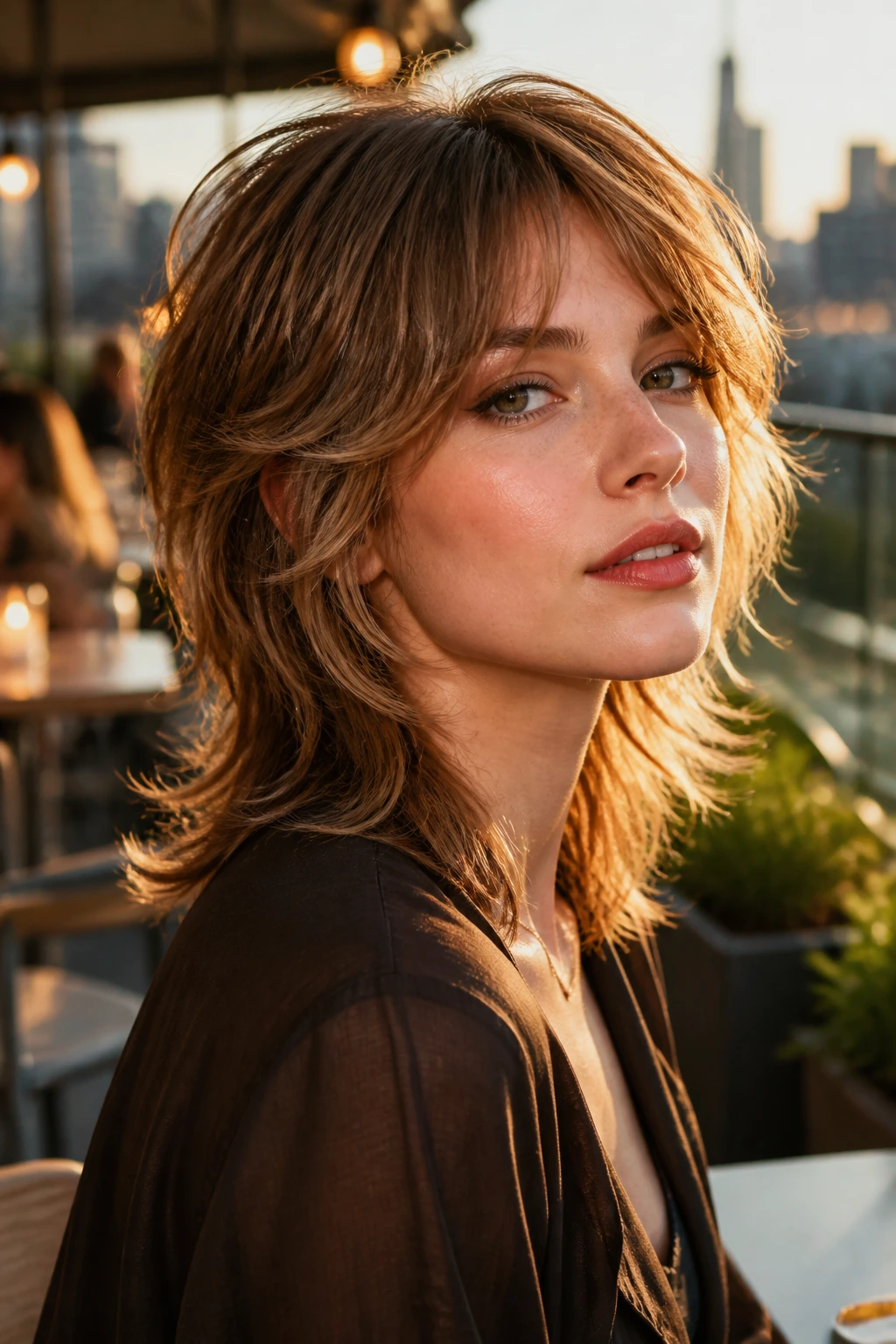
The phrase “soft mullet” sounds more intimidating than the haircut usually is. The vintage-inspired version keeps length in the back, shortens the crown just enough to create lift, and lets the front pieces feather around the cheekbones. It has a little rocker edge, but the softness keeps it wearable.
This is a good haircut if you like some attitude in the shape. The face-framing layers should connect to the rest of the cut without a hard shelf line. That connection is what makes it feel retro instead of costume-like. It works best when the texture has some movement, either natural waves or a loose bend from styling. If your hair is pin-straight and stubborn, you’ll need a bit more product to keep the top from falling flat.
18. Wispy Face Layers for Fine Hair

Fine hair needs a careful hand here. Too many layers and you get the sad, stringy look nobody asked for. The right vintage-inspired face frame gives lift right where the hair is weakest, around the front and crown, while keeping enough weight in the rest of the cut to avoid that see-through feeling at the ends.
The best move is a soft, graduated frame that starts around the cheek or chin, not a bunch of tiny chopped pieces. Keep the ends blunt enough to hold density. Then style with a lightweight mousse or root spray so the front doesn’t collapse by noon. This cut can look especially pretty with a blown-under finish, because that little bend makes the hair look thicker than it is.
19. Internal Layers for Thick Hair That Still Feels Light
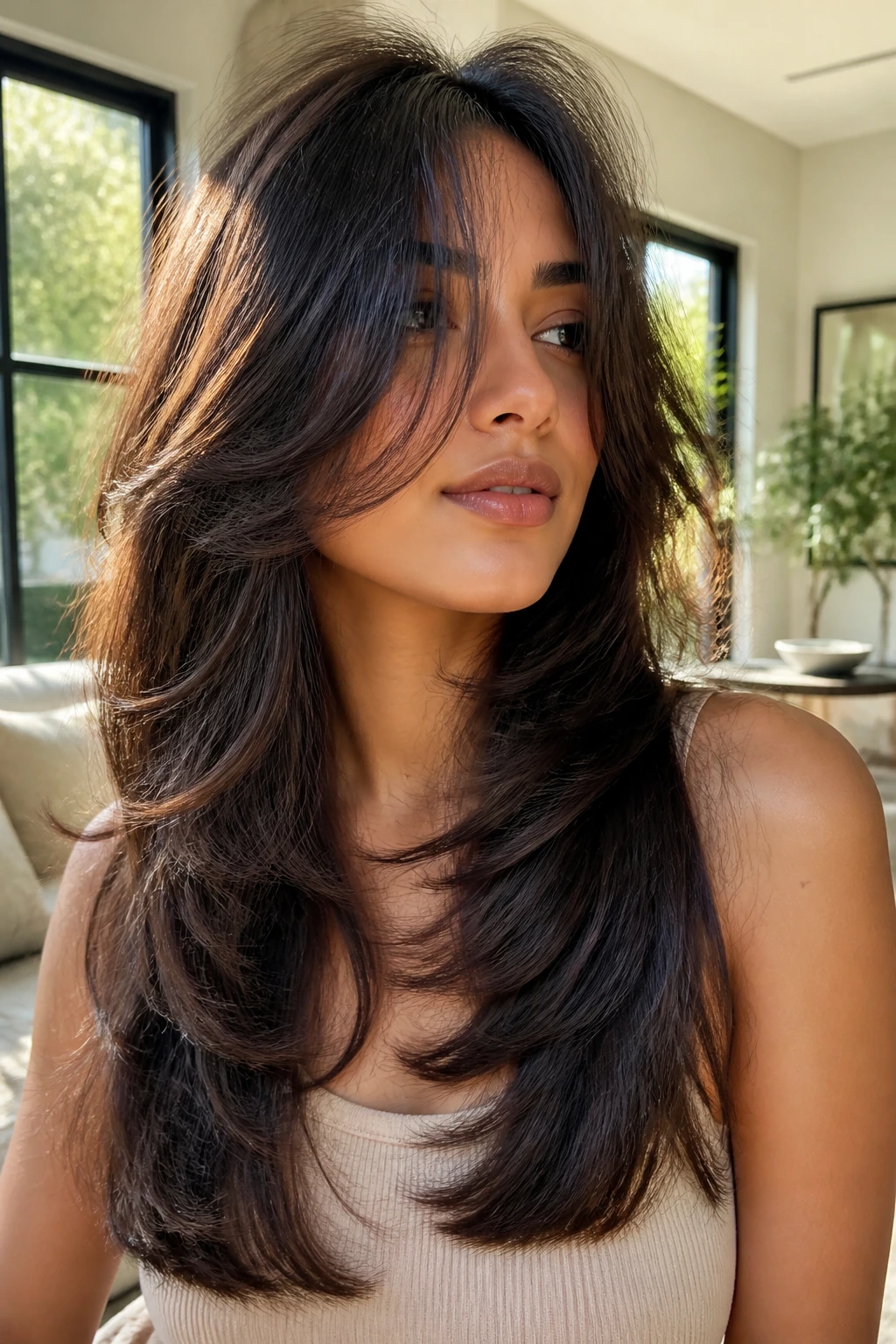
Thick hair can wear face-framing layers beautifully, but only if the inside of the cut gets enough attention. The vintage vibe comes from shape, not just reduction. You want the front pieces to soften the face while the internal layers remove bulk from the middle so the hair moves instead of sitting like a block.
I’d avoid taking too much from the surface. That’s how thick hair ends up looking frizzy at the ends and flat at the top. Ask for internal layering and a front frame that begins near the lips or chin. The result is cleaner, shinier, and easier to blow-dry. Thick hair wants room to breathe, not a dozen uneven snips around the perimeter.
20. Curly Face-Framing Layers With a Retro Halo
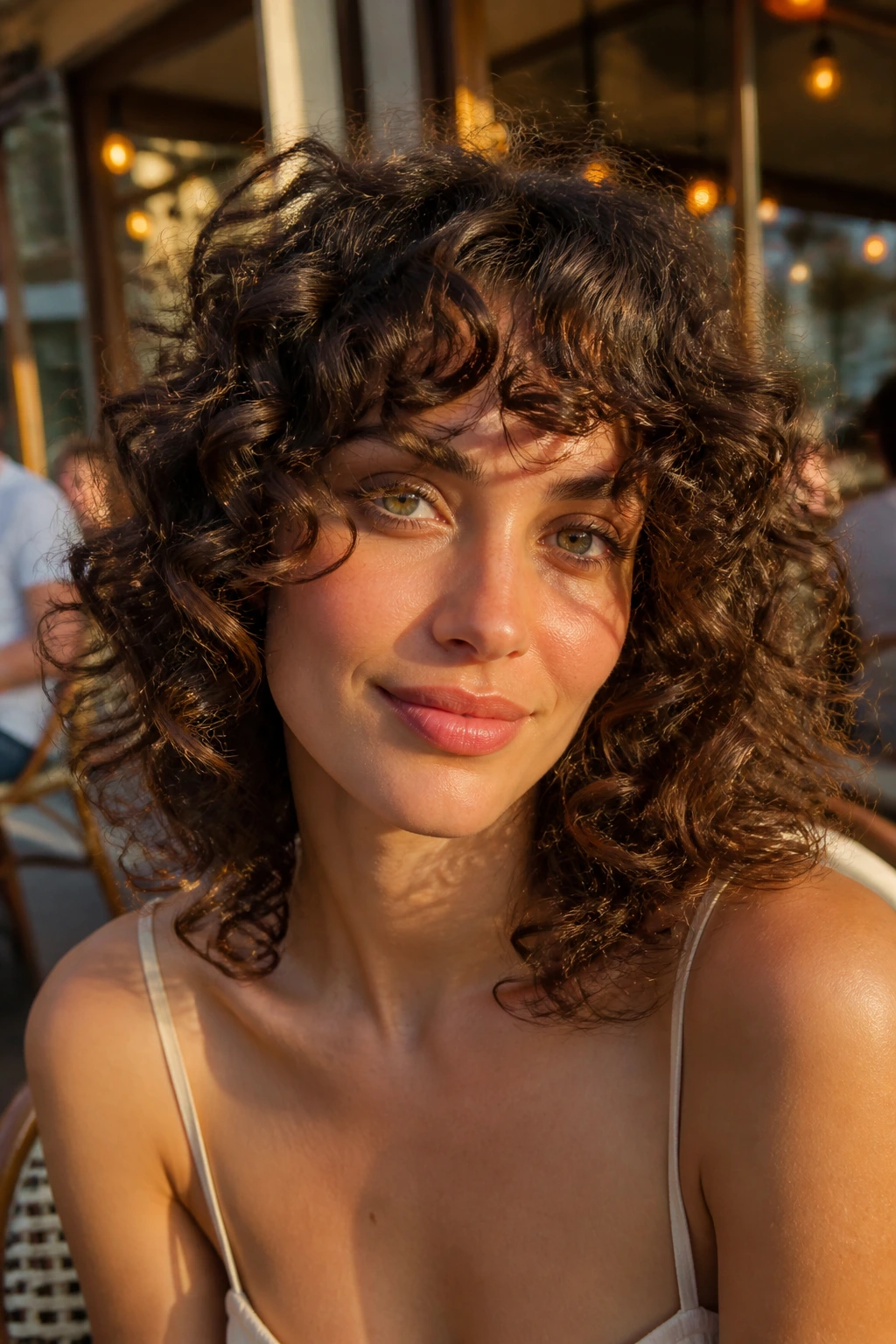
Curly hair and vintage layers are a strong pair when the cut respects the curl pattern. The front frame should follow the curl’s spring rather than fight it. Done well, the hair creates a soft halo around the face, with shorter pieces that sit at the cheekbone and longer curls that keep the silhouette full.
The biggest mistake is cutting curls as if they’re straight. Don’t. Curly hair shrinks, and the front pieces can jump much shorter than expected once they dry. A good stylist will cut with the curl’s behavior in mind, not against it. This style looks especially nice when the curls are separated with a light cream instead of heavy gel. You want definition and bounce, not a stiff shell.
21. A Chin-Length Bob With Swingy Front Pieces
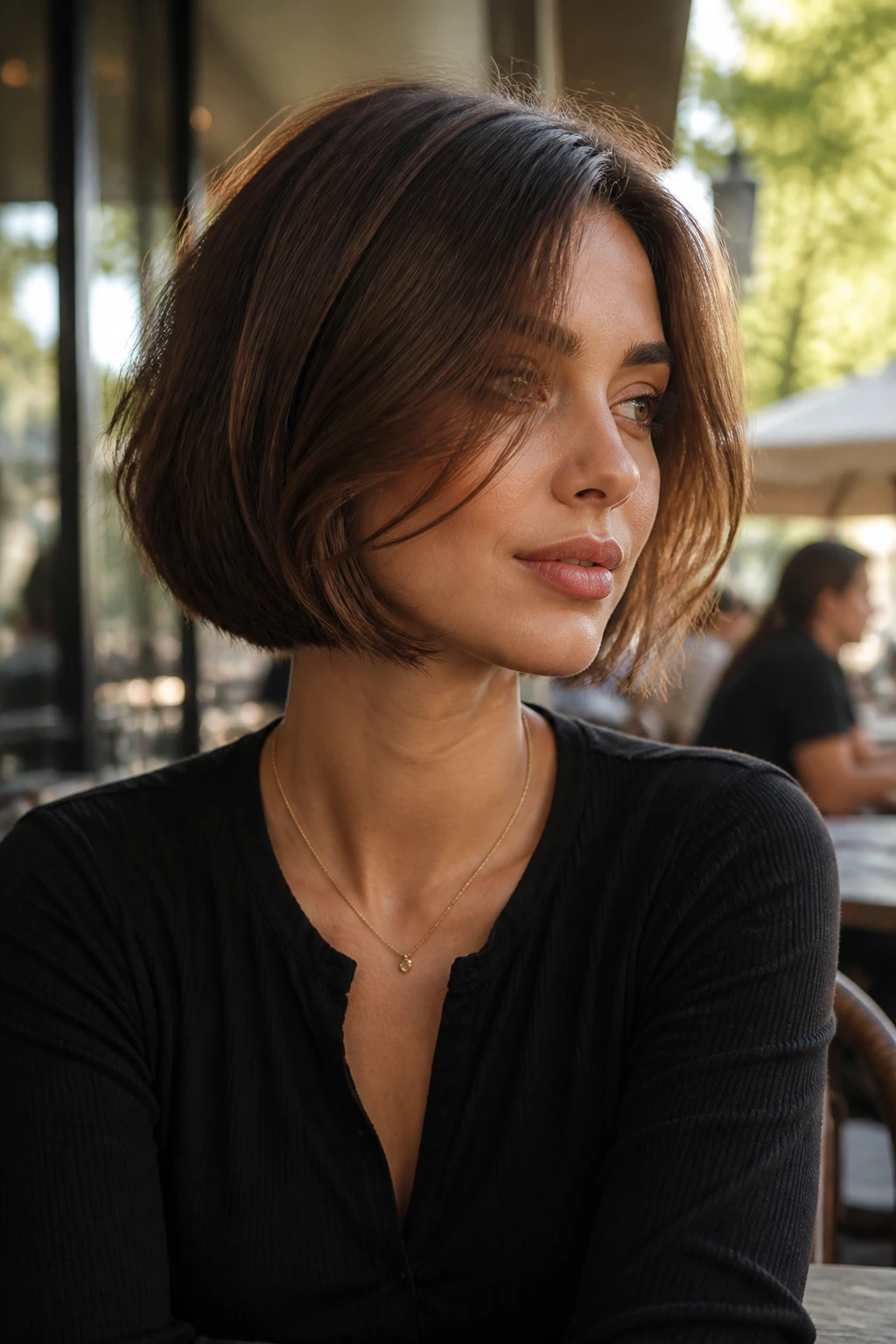
A chin-length bob gets a lot more personality when the front pieces are a little longer and softer than the back. That small shift creates movement around the face and keeps the cut from feeling too helmet-like. The vintage note comes from the swing. You can almost hear the brush hitting the ends.
This cut is sharp, but not harsh. The front can angle down gently toward the jaw or curve under just enough to keep it feminine and clean. It works especially well with a side part, which gives the layers room to drape instead of sitting dead center on the face. If you’ve got strong cheekbones, this shape frames them well. If your jaw is wider, let the front stay a touch longer so the line feels softer.
22. The Pageboy-Inspired Cut With Rounded Fronts
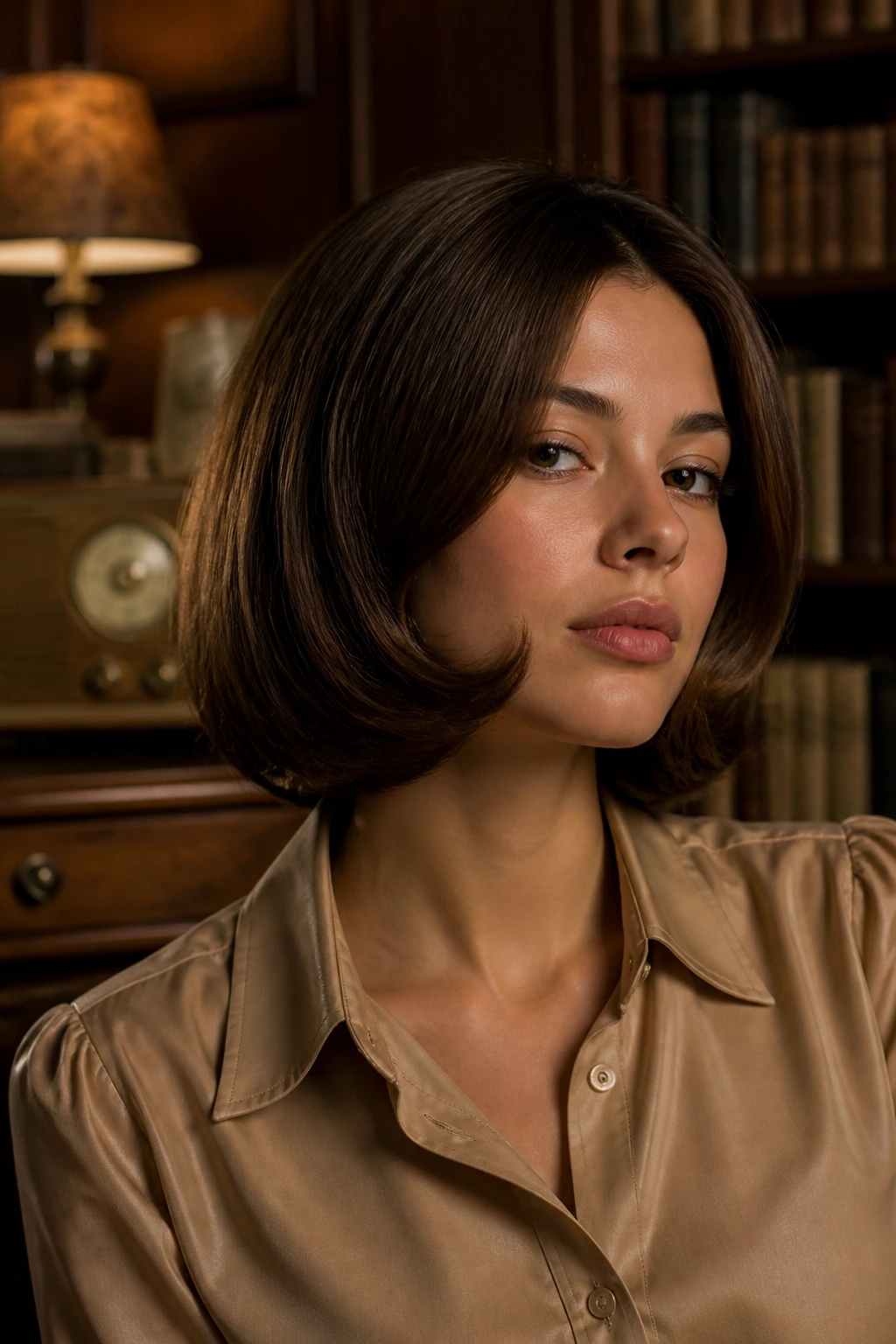
A true pageboy shape has a clean arc, tucked ends, and a little bit of old-fashioned polish. The vintage vibe is obvious, but it can still look fresh if the front is softened with face-framing layers rather than left blunt and stiff. That little bit of softness makes the cut feel wearable outside of a retro photo shoot.
This one depends on the ends being neatly controlled. Blow-dry them under with a brush, or set them with a large roller if your hair holds shape well. The face pieces should curve around the cheekbones and flow into the body of the bob. If you want a stronger retro note, keep the part clean and the shine high. If you want it quieter, mess the top up just a little and let the shape speak for itself.
23. Shoulder-Grazing Layers With Flipped Curtain Ends
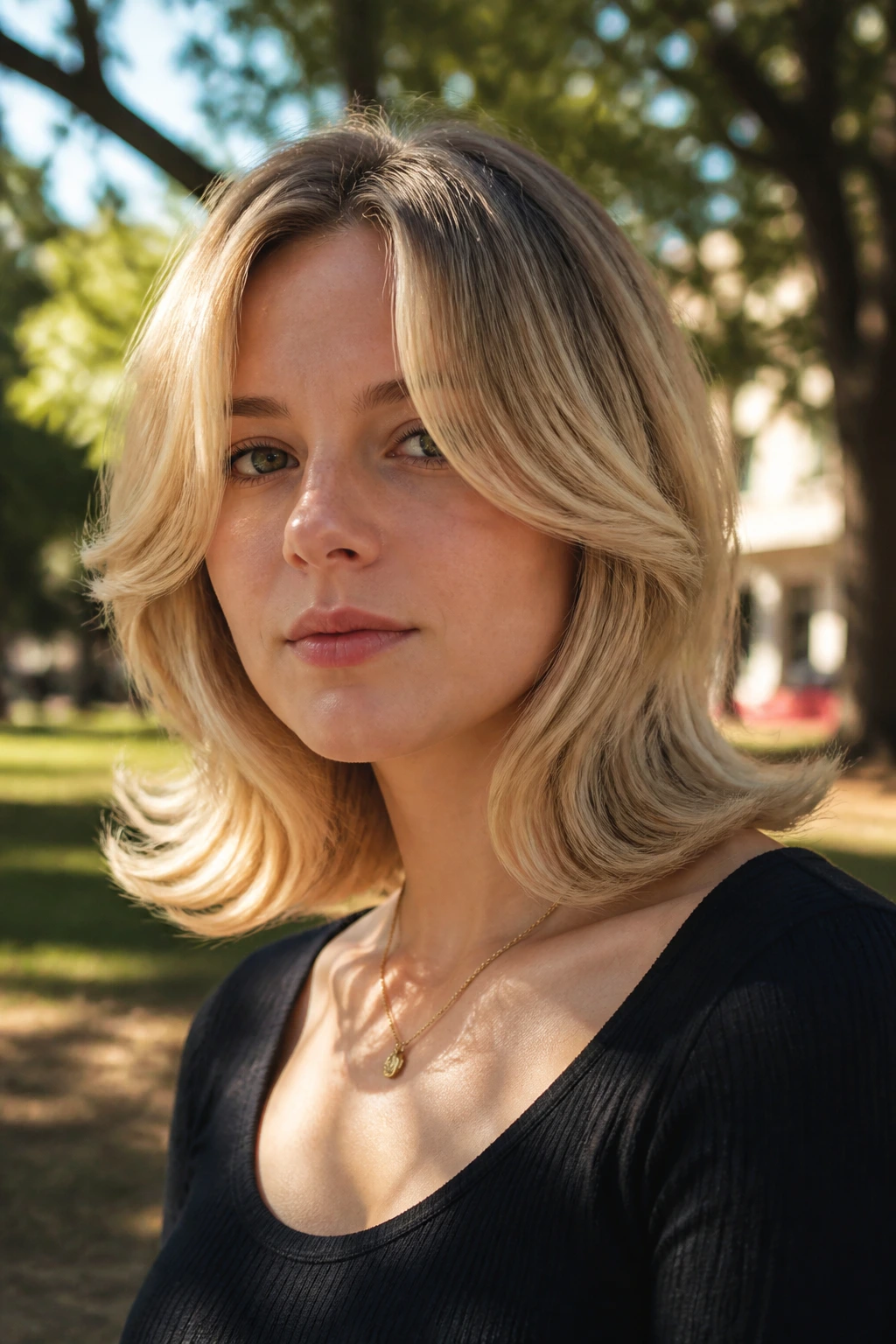
Shoulder length is a sweet spot for people who want face-framing layers but don’t want to lose too much hair. Add flipped curtain pieces, and the whole thing gets a little 70s, a little 90s, and a lot more interesting than a basic shoulder cut. The ends should move away from the neck, not sit heavy on it.
The face frame is the star here. It needs enough length to split around the cheek and jaw without looking like a separate bang section. A round brush or a wide flat iron bend at the ends gives the style that soft outward kick. If your hair is layered too high through the crown, this cut can get fluffy. Keep the top controlled. Let the front do the talking.
24. A Rounded Midi Cut With Invisible Layers
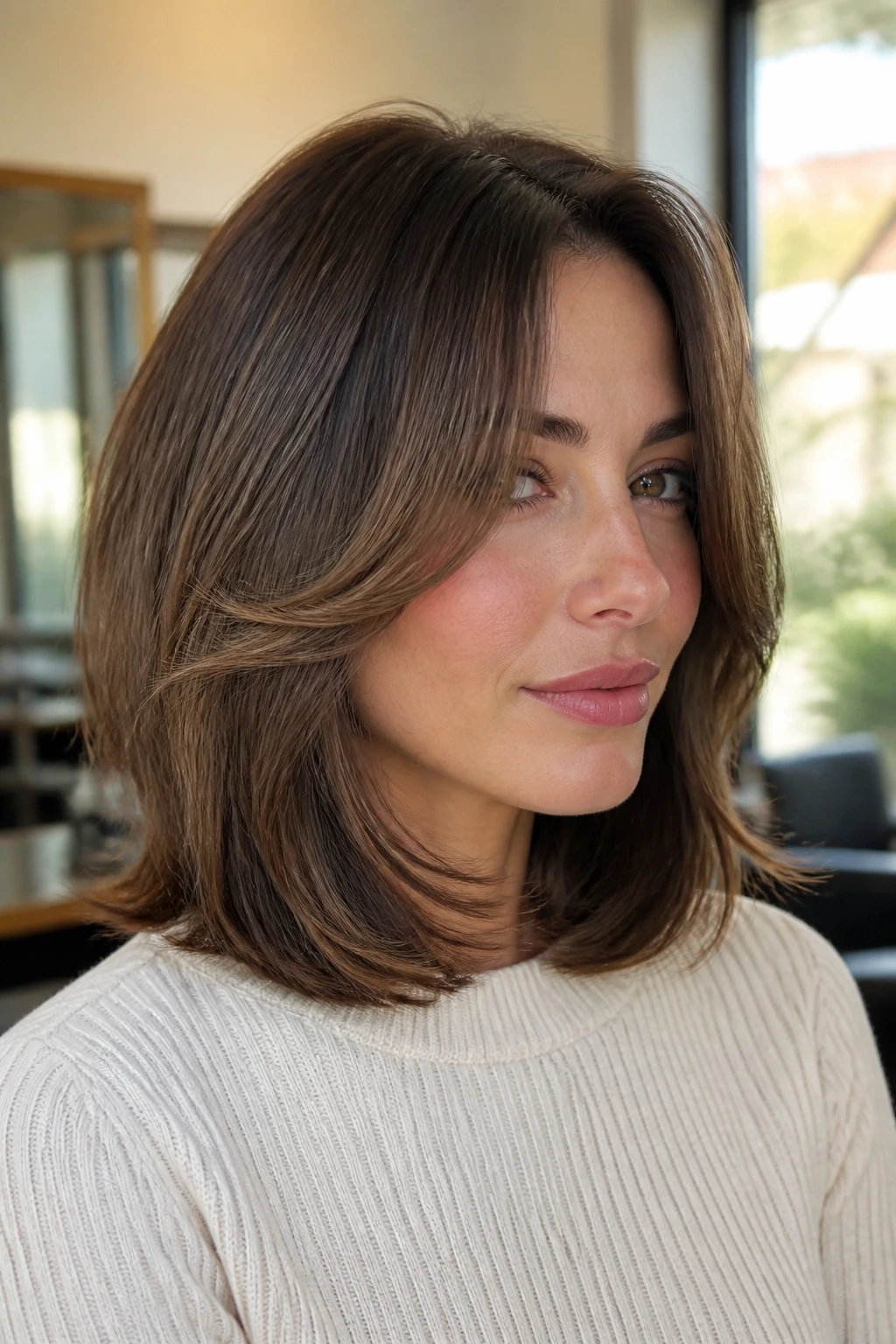
Invisible layers are underrated. They give the haircut shape without flashing obvious steps through the hair. That makes them perfect for a vintage vibe that leans polished instead of choppy. Around the face, the layers should gently open the front and then disappear into the rest of the cut.
This is a smart pick if you want the feeling of layering more than the look of layering. It suits hair that already has some bend and wants movement without losing fullness. You can wear it with a center part for a softer, more editorial effect, or with a side part if you want more lift at the roots. If the cut is done right, it looks like the hair just naturally grows that way. Which is a nice trick.
25. Cheekbone Layers With a Soft 60s Bend
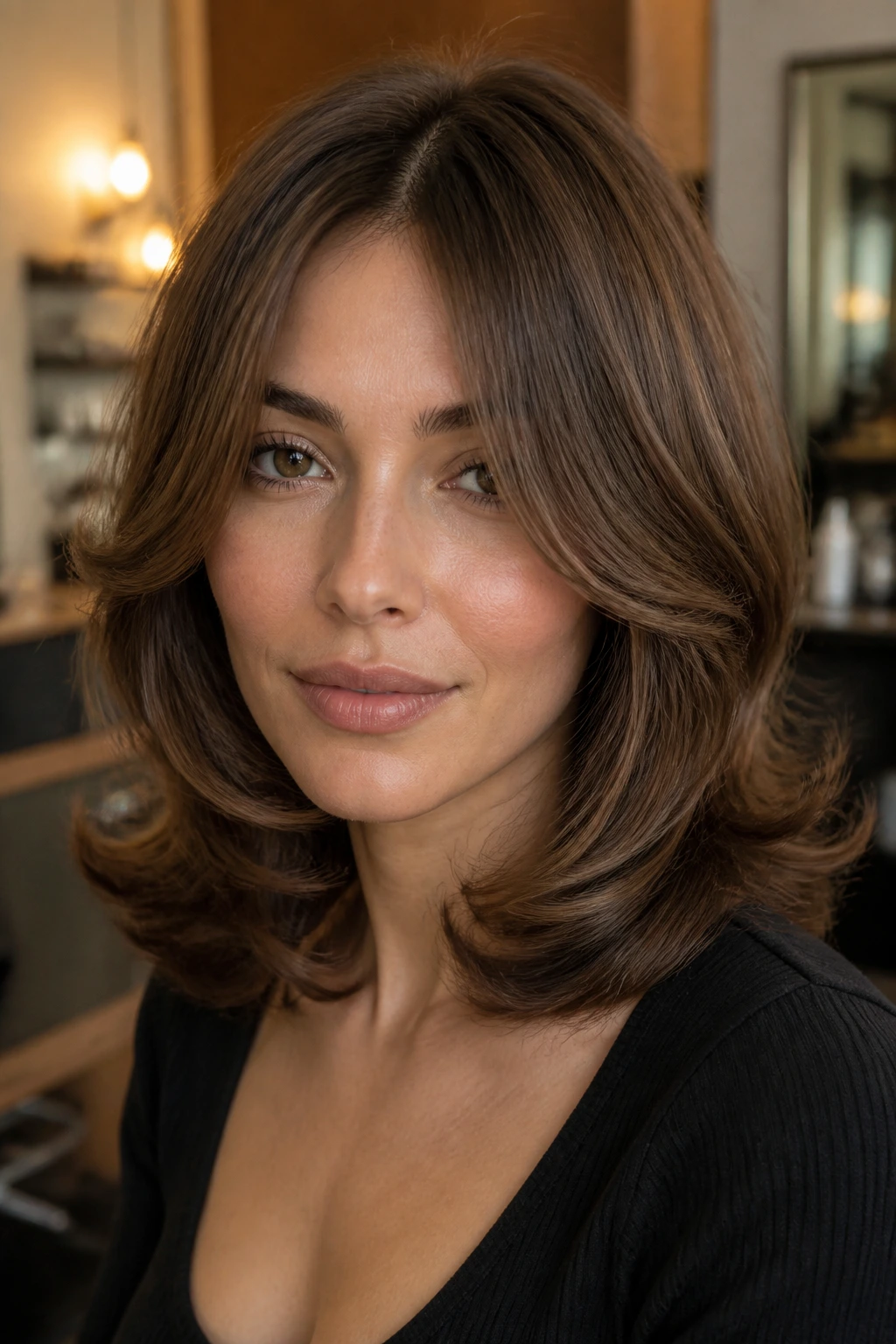
A 60s-inspired bend is all about polish around the face and a gentle outward turn at the ends. The layers here are shorter and more focused around the cheekbone, which gives the haircut that pretty, lifted frame you see in old publicity photos and stylized salon books. It’s neat without being rigid.
What keeps it from feeling dated in a bad way is softness. You don’t want a hard, lacquered helmet. You want movement, but contained movement. If your hair is medium density, this shape can hold a curl with very little product. If it’s fine, a mousse before blow-drying helps the front keep its bend. Keep the part tidy. That clean line does a lot of work.
26. A Modern Wedge With Soft Front Pieces
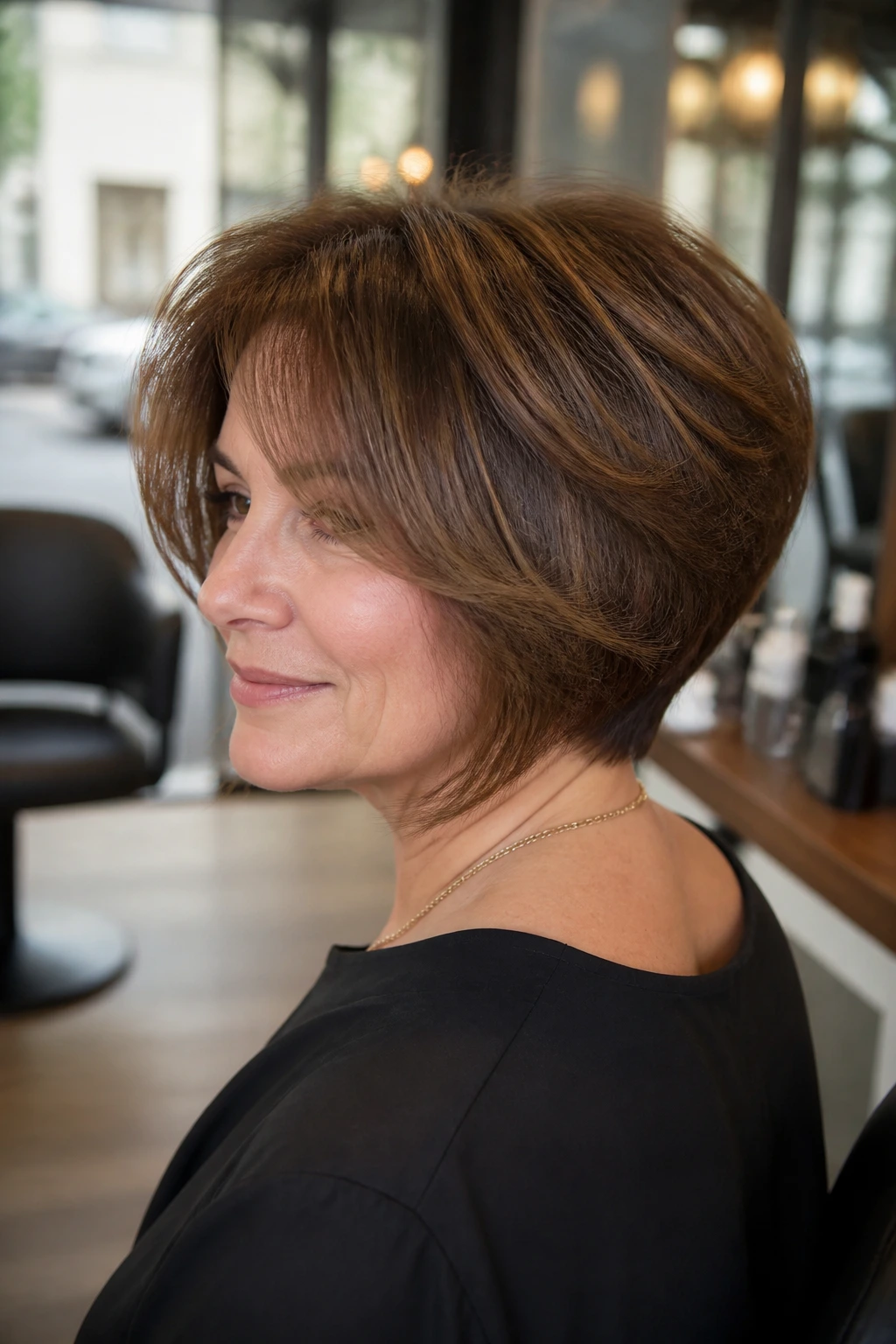
The wedge cut has a strong silhouette, which is part of the appeal. The vintage version softens the line with face-framing pieces that break up the geometry just enough. The back can stay fuller and slightly stacked, while the front falls in gentler layers that make the whole thing feel less severe.
This cut is a little bolder than some of the others on the list, and I like that. It has shape even when the styling is minimal. A blow-dry with a round brush gives the back its curve and keeps the front from looking too square. If you like haircuts with definition, this one gives it to you without needing a lot of extra fuss every morning.
27. Long Glam Layers With Cheekbone Bangs
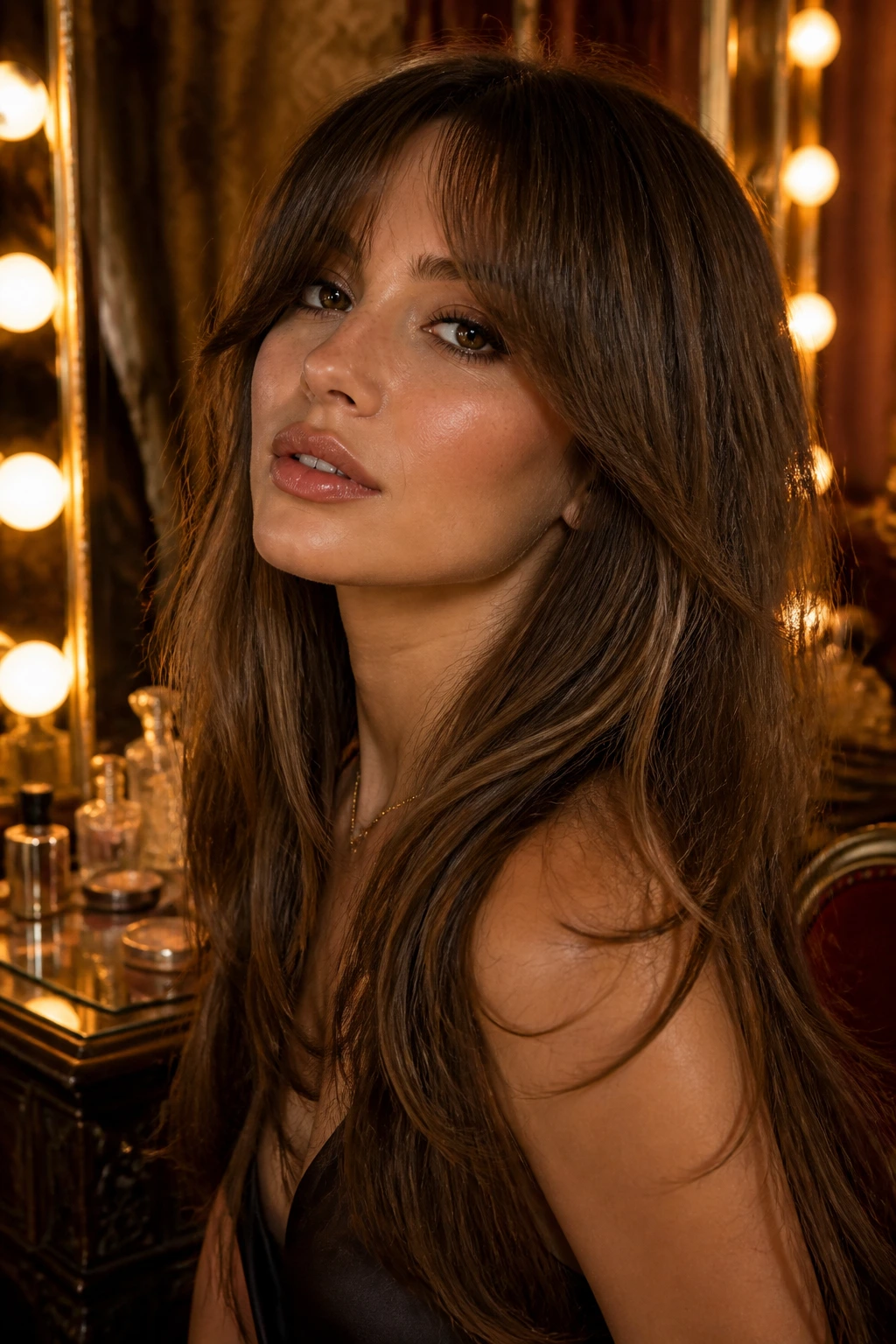
Cheekbone bangs are one of the best ways to frame the face while keeping the rest of the hair long and flowing. They sit longer than straight bangs, which makes them easier to live with, and they blend into long layers in a way that feels very old Hollywood. The shape is softer, more luxe, and a little more forgiving on grow-out.
The cut works because the bangs act like a spotlight. They pull attention upward and inward, right to the eyes and cheekbones, while the rest of the layers keep things fluid. If your hair is thick, ask for the bangs to be thinned carefully at the ends so they don’t sit like a curtain wall. If your hair is fine, keep them dense enough to show. Thin bangs on fine hair can disappear fast.
28. Flowy Layers With a Deep Side Part
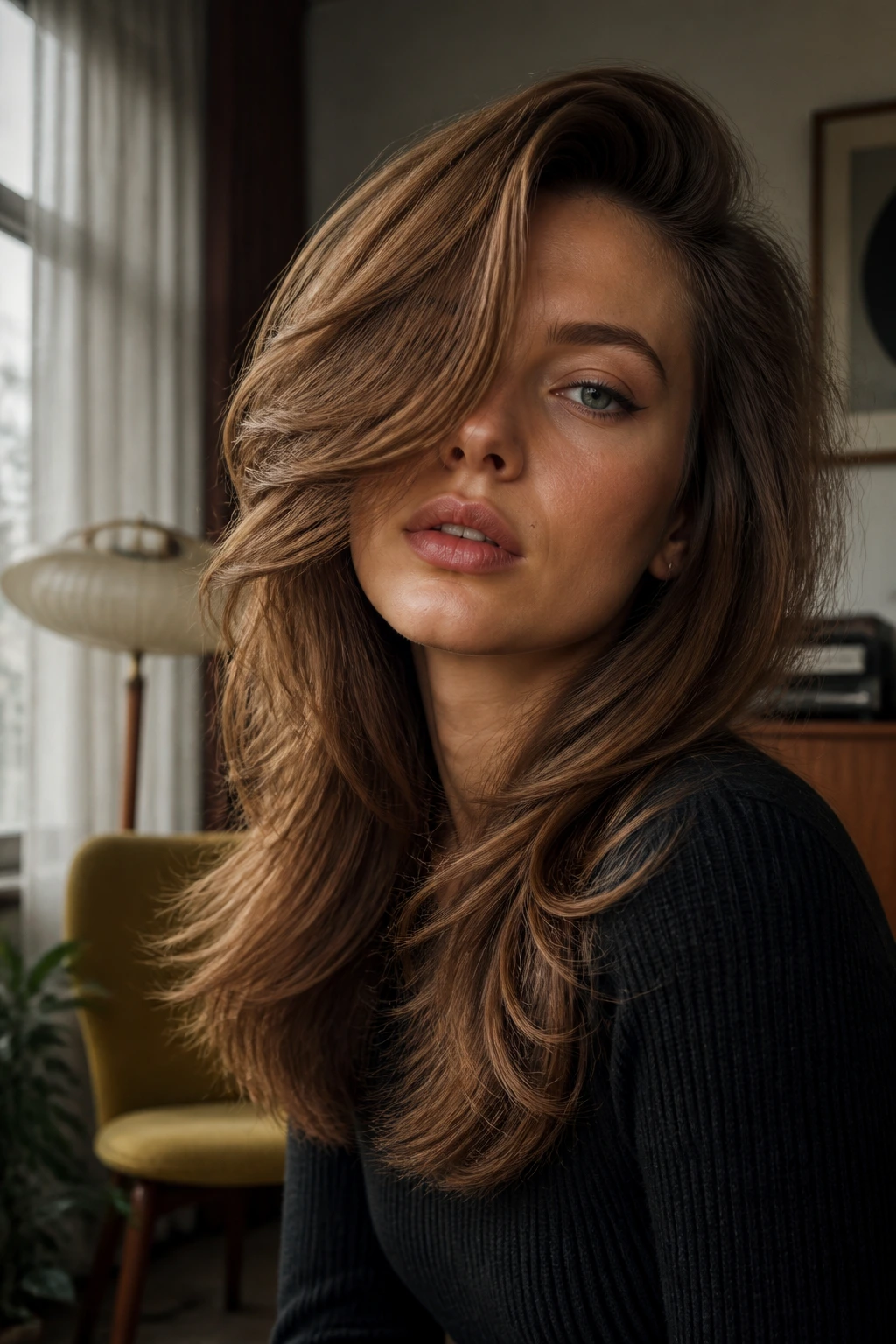
A deep side part changes the whole conversation. Even a simple layered cut can suddenly feel more dramatic, more polished, and more vintage the second the hair falls over one eye and the front pieces sweep into place. The layers don’t need to be extreme; the part gives them attitude.
This is a good ending note because it proves how much styling matters. A cut with face-framing layers doesn’t live only in the scissors. It lives in the way you direct the hair after washing it. A deep side part can make a soft lob feel like a 40s screen-goddess style, or give longer layers a richer, more sculpted finish. If you want the fastest route to vintage mood without changing much length, start here.
How to Ask for the Right Version at the Salon
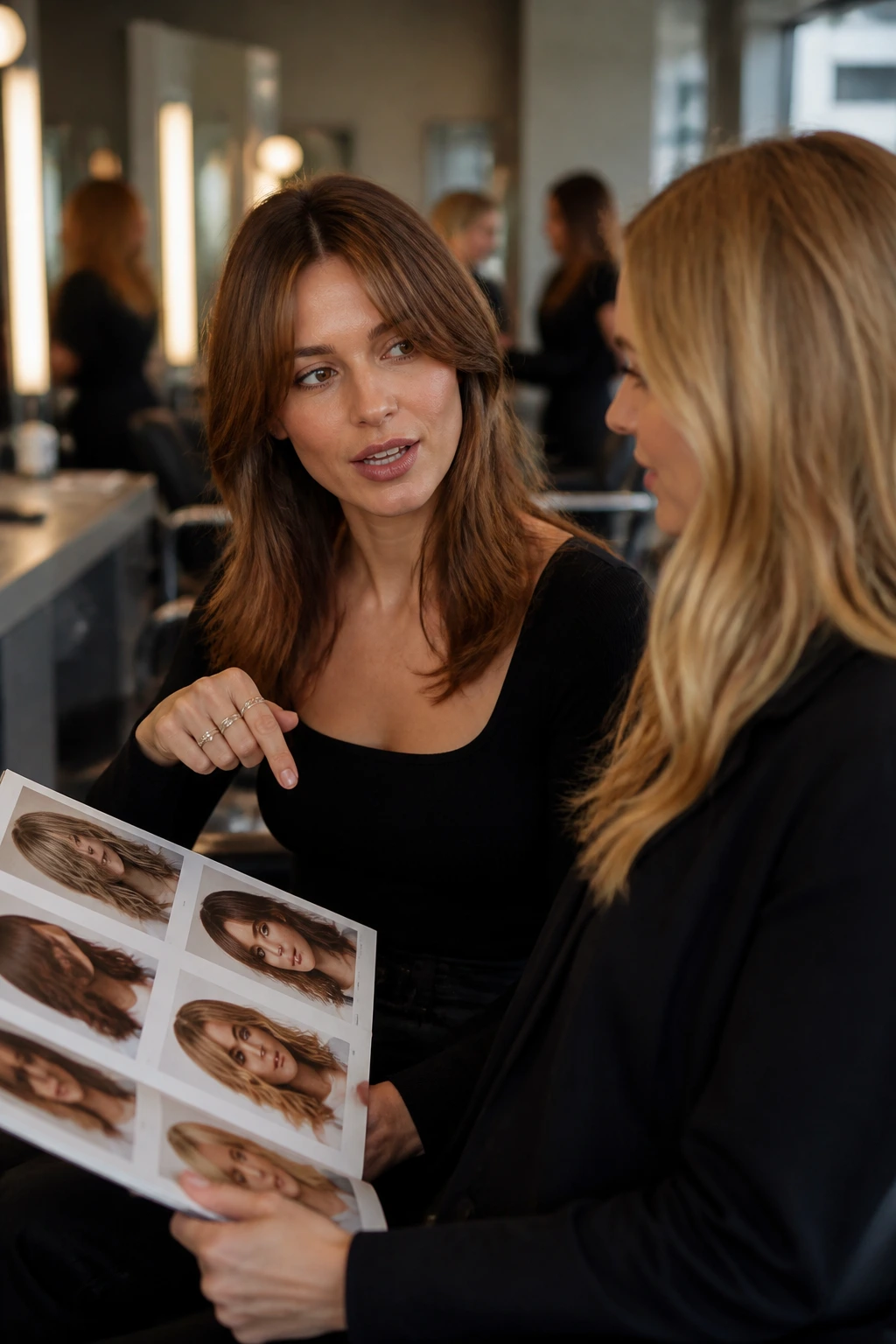
Bring more than one photo, and pick images where the hair is cut to a similar length and texture to your own. A lot of disappointment comes from showing a layered blowout on silky, dense hair when your hair is fine and a little wavy. The silhouette matters more than the pose. If the front pieces in the photo hit the cheekbone, say that out loud. If they brush the jaw, say that too.
Use plain language with your stylist: where should the shortest face-framing piece fall, how much weight should stay at the perimeter, and how much movement do you want at the crown? That three-part conversation usually gets you farther than asking for “layers” and hoping for the best. “Vintage vibe” can mean feathered, flipped, rounded, or shaggy. Be specific about which one you want, because those are very different haircuts once they’re off the chair.
One more thing. Show your stylist how you wear your hair most days. Air-dried, brushed out, curled under, side-parted, whatever it is. A cut that looks amazing with a hot roller set can fall apart if you never touch a round brush.
Essential Tools for Styling These Layers
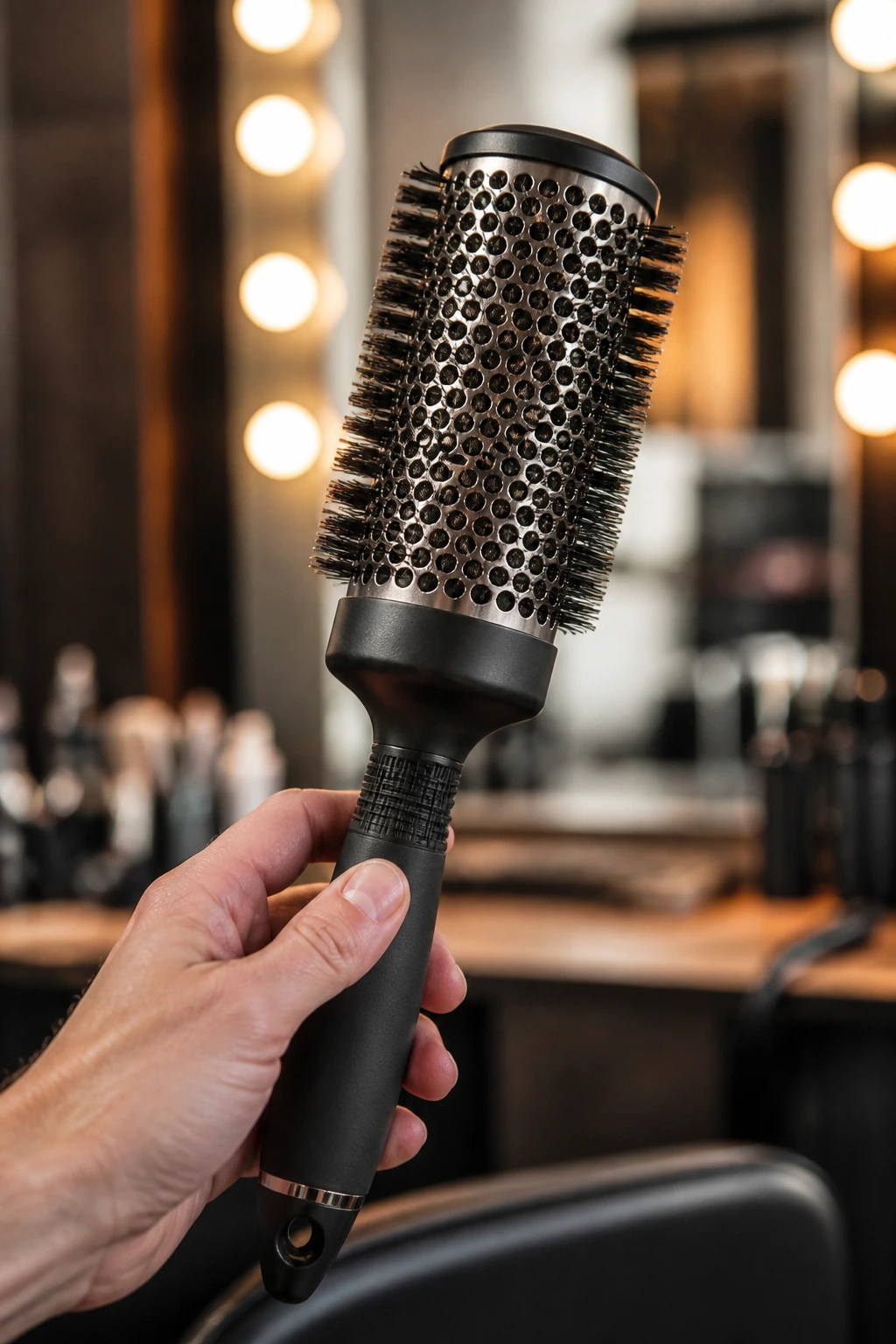
- Round brush, 1 to 1.5 inches: Best for shaping the front pieces inward or outward without making them too curled.
- Blow-dryer with nozzle attachment: Helps keep the cut smooth at the roots and stops the ends from scattering.
- Large Velcro rollers or foam rollers: Useful when you want a soft vintage bend through the face frame.
- Lightweight mousse: Gives fine or slippery hair enough grip to hold the shape.
- Heat protectant spray: Non-negotiable if you use a hot tool on the front pieces more than once a week.
- Tail comb: Handy for clean parts and for separating the face-framing section before styling.
- 1.25-inch curling iron or wand: Good for flipping the ends or adding that soft old-Hollywood curve.
- Texturizing spray or dry shampoo: Helps shaggy or layered shapes keep some air and texture through the day.
- Small sectioning clips: Useful for blowouts, especially when the front pieces need to cool in place.
- A good haircutting reference photo folder: Not glamorous, but it saves a lot of awkward salon guessing.
How to Choose the Best Version for Your Hair Texture
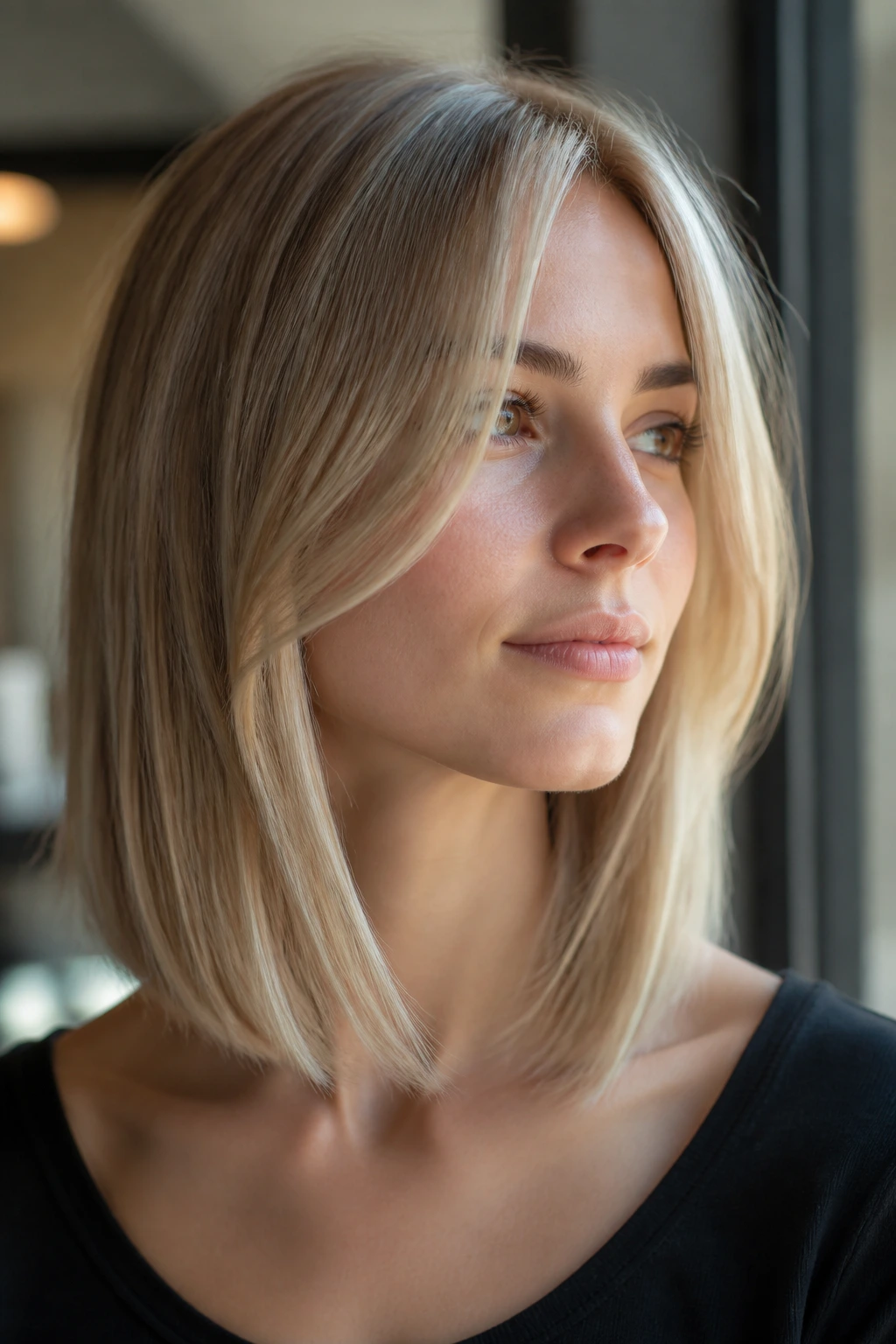
Fine hair likes a lighter frame and a cleaner perimeter. If the layers are too high or too numerous, the ends can look thin and the whole shape loses body. For that texture, I’d lean toward collarbone cuts, soft lobs, or rounded mid-length styles with one or two deliberate front pieces.
Thick hair can handle more movement, but it needs internal control or the style gets puffy. Think feathered layers, long blowout cuts, or a softened shag with enough weight left at the bottom. Curly hair should follow its natural spring. The front pieces need room to shrink and settle, which means a curl-specific cut matters more than any trendy name.
Straight hair often benefits from more obvious styling support. A round brush, a bend at the ends, or a side part helps keep the layers from looking flat and textless. Wavy hair gets the easiest win of the bunch because the face frame can dry in shape with very little help. That’s the nice part. The annoying part is that a bad layer placement on wavy hair also shows faster, so the cut has to be thoughtful.
How to Wear the Vintage Shape Without Overstyling It
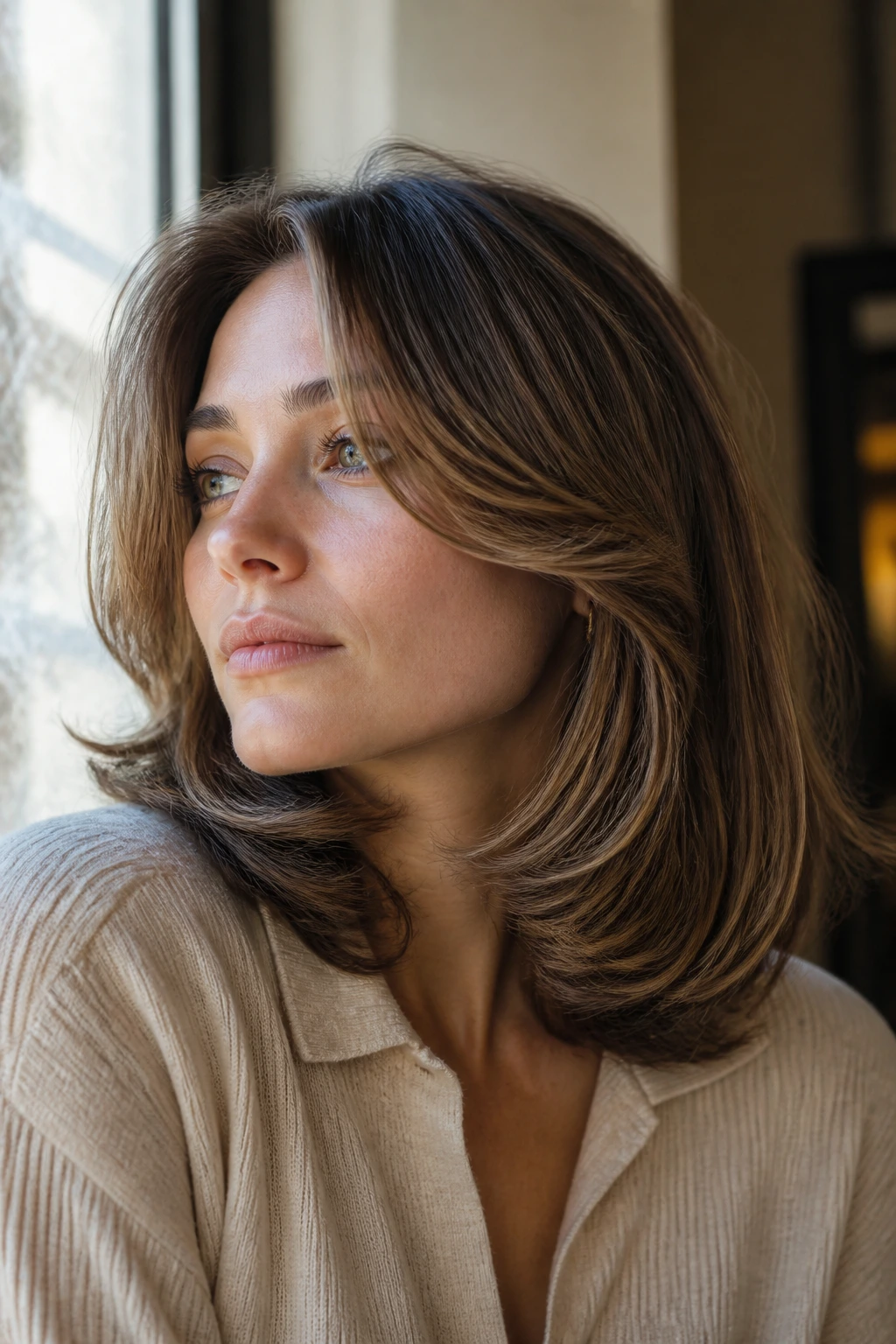
The point is not to make every strand obey. The point is to direct the front pieces so they sit where the haircut makes sense. That often means drying the roots first, then shaping only the pieces around the face and the top layer that connects to them. The back can stay a little looser. It often looks better that way.
A soft bend at the cheekbone can do more than tight curls through the entire head. So can a side part that moves a layer off the center line. If you’ve ever wondered why some layered haircuts look expensive even when they’re not heavily styled, it’s usually because the front is doing the framing and the rest is left with room to breathe. That balance matters.
Let the ends cool before you touch them. Seriously. Warm hair lies, and then it changes shape the moment you step into humid air. Clip the front pieces up while they cool if you want them to hold a curve. Small habit. Big payoff.
Common Mistakes That Flatten the Whole Look
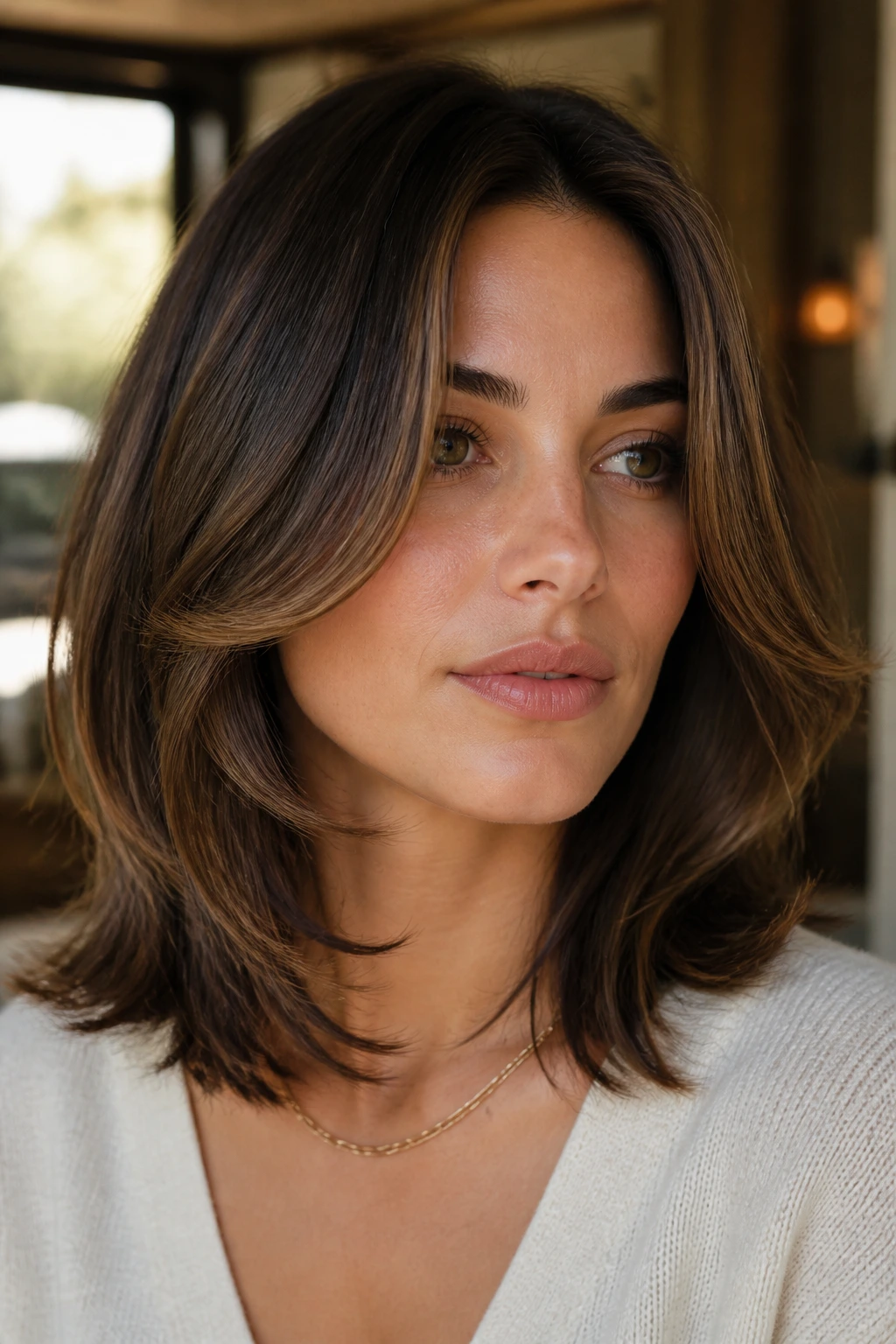
The biggest mistake is asking for too many short layers around the face. That can make the haircut puff out near the cheeks while the ends look thin and tired. The fix is simple: keep the front pieces long enough to connect to the rest of the cut, and leave enough weight in the perimeter that the haircut still has a base.
Another common problem is treating every face-framing layer like a bang. They’re not the same thing. Bangs sit higher, close to the brows or cheekbones, while frame pieces need a smoother drop so they can grow out cleanly. If the front is cut too short, you spend months styling around the mistake. Nobody wants that.
Overtexturizing is a sneaky one. It looks light in the chair and frizzy at home. You’ll spot it when the ends separate into little threads instead of holding a soft shape. The fix is less thinning and more purposeful shaping.
And then there’s the styling trap: people blow-dry the back and forget the front. The front is the whole point here. If the face pieces are flat or bent the wrong way, the haircut loses its vintage character fast.
Vintage-Inspired Variations to Try
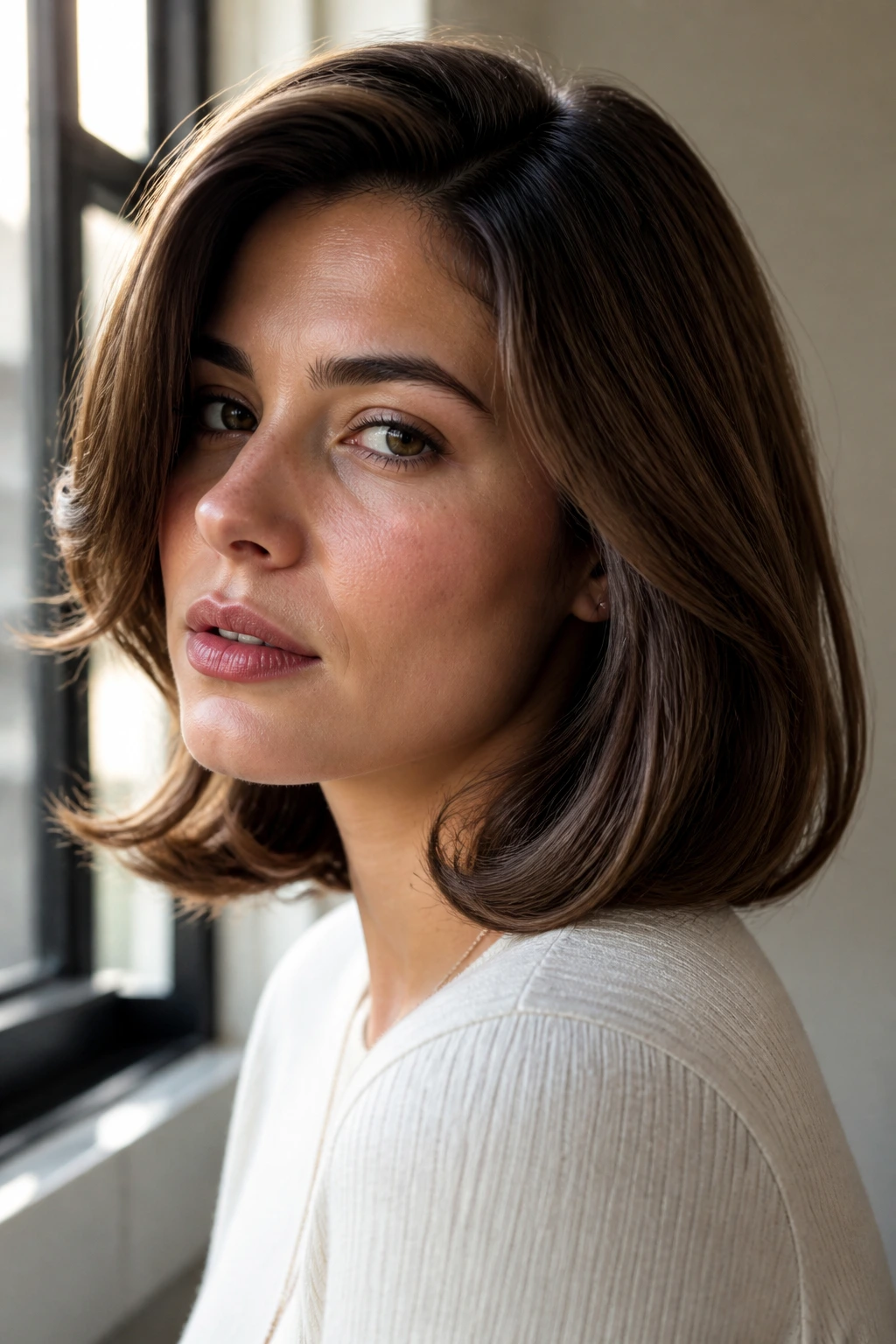
The Soft Side-Part Flip: Keep the cut mostly classic, then style the front away from the face with a deep side part and a single outward flip at the ends. It’s the easiest way to make a layered cut feel more glamorous without changing the shape.
The Curtain-Heavy Version: Push the shortest front pieces into a fuller curtain fringe and keep the layers long. This works well if you want more face framing without the commitment of full bangs.
The Shag-Smooth Hybrid: Take the movement of a shag, then smooth the ends so they don’t feel too punk. It’s a nice middle road if you like texture but still want the haircut to look clean.
The Glossy Blowout Version: Keep the layers long and smooth, then finish with a round brush and a shine spray. This one gives the strongest old-Hollywood note and the least fuss once the cut is in place.
The Air-Dry Texture Version: Ask for softer layers and more separation at the front, then let the hair dry naturally with cream or mousse. It reads a little more undone, which can be a relief if hot tools are not your favorite thing.
Care, Trims, and Overnight Habits
Face-framing layers grow out fast, and the front shows it first. A trim every 8 to 12 weeks usually keeps the shape readable, though longer cuts can stretch a bit farther if you’re fine with a softer outline. The front pieces are the part to watch. Once they drop past the intended point, the whole style starts feeling heavy.
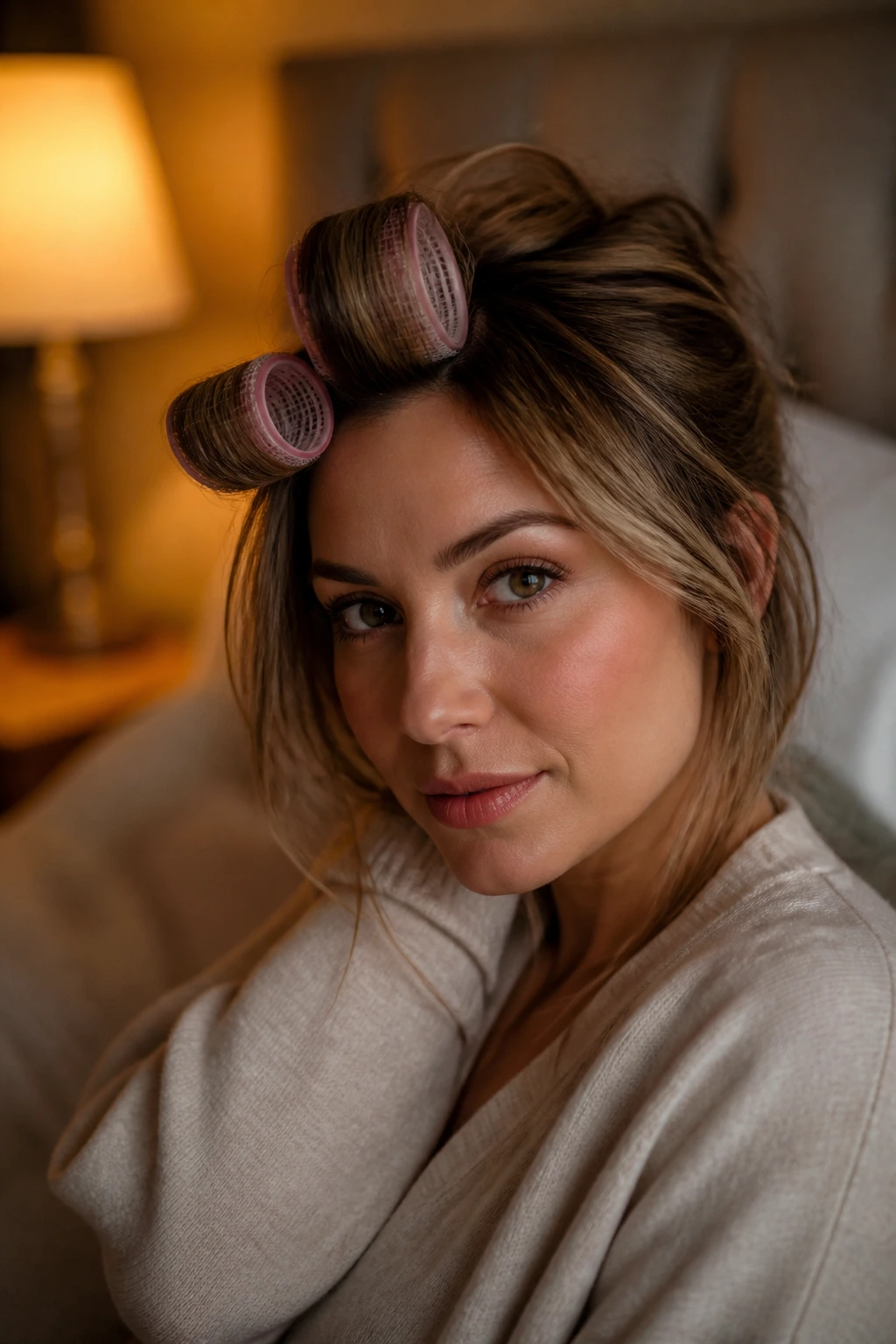
At night, a loose Velcro roller or two at the front can keep the bend from disappearing. If you prefer sleeping with the hair loose, a silk pillowcase helps cut down on the frizz that ruins the polished ends. Morning refreshes are easier if you keep a mist bottle nearby; a little water and a quick round-brush pass can revive the front without restyling the whole head.
If you use heat often, your ends will start telling on you. Dryness shows first at the face frame because that hair gets touched, brushed, and heated more than the rest. A light leave-in on the lower half of the hair helps, but don’t smear heavy cream through the front or you’ll kill the movement you wanted in the first place.
Frequently Asked Questions
What face shape works best with these layers?
Most face shapes can wear some version of this cut, but the placement changes. Softer jawlines often look great with cheekbone or lip-length face pieces, while rounder or square faces usually benefit from layers that start a little lower and turn away from the cheeks.
Do I need bangs to get the vintage look?
No. Curtain pieces, side-swept front layers, and cheekbone framing can give a strong retro feel without full bangs. Bangs just push the style further into old-school territory.
Can I air-dry face-framing layers and still have them look styled?
Yes, if the cut is placed well and your texture has some bend. Fine, straight hair may need a little mousse or root support, but wavy and curly hair usually cooperate better with air-drying.
How often should I trim the front pieces?
The front usually needs attention before the rest of the cut. A light trim every 8 to 10 weeks keeps the framing from drooping into your eyes or jaw in an awkward way.
Will this make thin hair look even thinner?
Not if the layers are kept soft and the perimeter still has weight. Thin hair suffers when the cut is over-thinned or the crown is chopped too high. A cleaner, fuller outline works better.
What if my hair flips out in the wrong direction?
That usually means the ends are either too blunt or the styling direction is inconsistent from section to section. Set the face pieces away from the face, let them cool, and avoid brushing them aggressively while they’re warm.
Can I wear this cut up most of the time?
Absolutely, and that’s one of its better traits. Face-framing layers make ponytails, clips, and loose buns look intentional because the front pieces fall out on purpose instead of escaping by accident.
The Shape That Keeps Coming Back
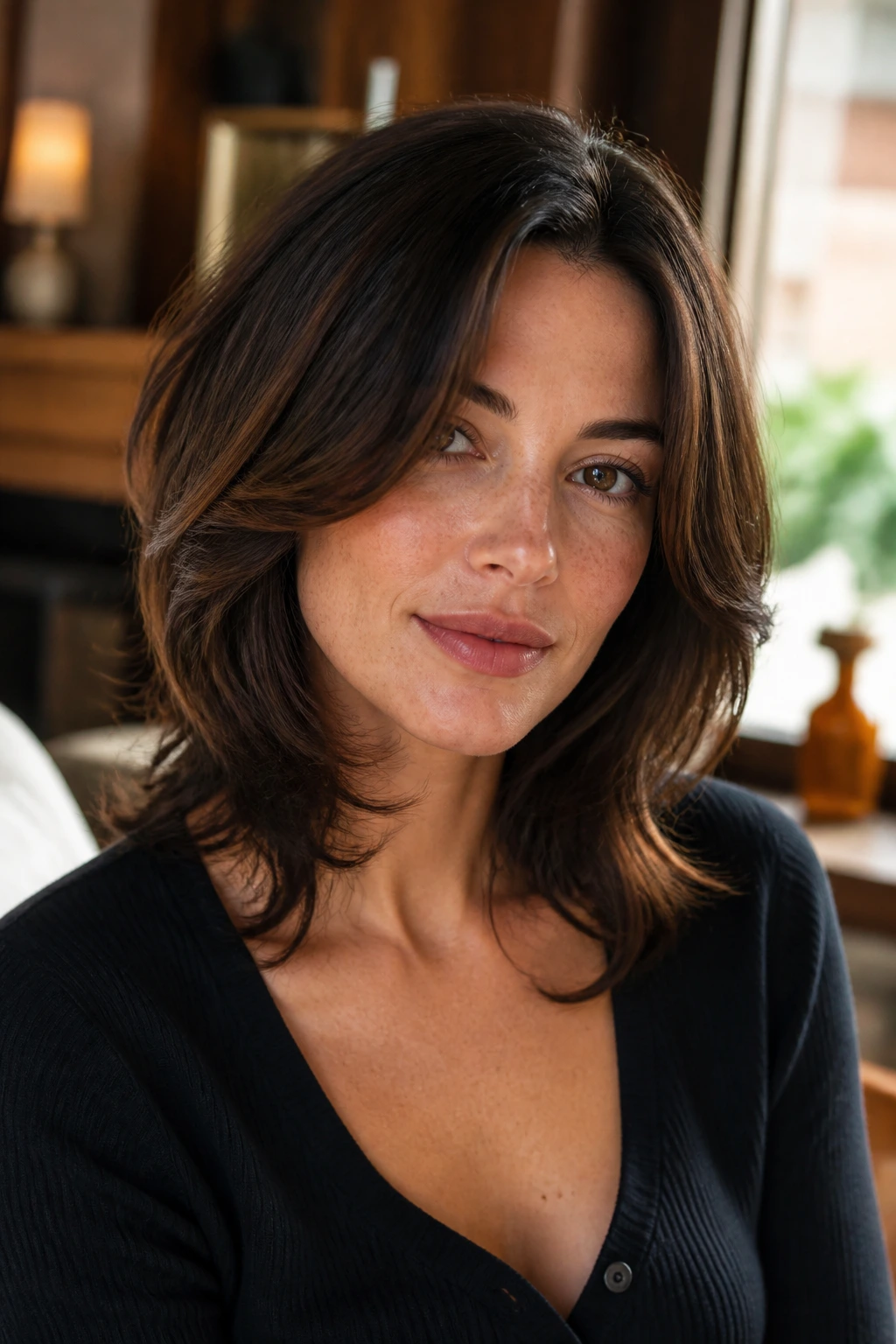
Face-framing layers with a vintage vibe work because they know where to stop. They soften the face, add motion, and borrow the best parts of older cuts without turning into a costume. That balance is harder to get than people think. When it’s done well, the haircut keeps its outline even on busy days, after a hat, or on the kind of morning when you only have six minutes and a brush.
The real win is how personal these layers can be. Long, short, feathered, rounded, shaggy, glossy, flipped — the same idea can land in a dozen different ways and still feel familiar. Pick the version that matches how you actually wear your hair, not the one that looks best in a still photo, and the cut will pay you back every time you turn your head.
