



Straight hair does not forgive a sloppy bob. It shows every angle, every blunt line, every tiny mistake in the back panel where the cut meets the nape. That can be a blessing if you like precision. It can also be a disaster if the shape is off by half an inch.
That’s why bob haircuts for straight hair have such a strong personality. A good one looks crisp, expensive, and deliberate even when you’ve done almost nothing to it beyond a quick pass with a brush. A bad one falls flat at the crown, kicks out at the ends, or sits heavy in the wrong place and makes your jawline look shorter than it is. Straight hair is honest. No hiding.
The trick is knowing which bob shape does what. Some cuts sharpen the jaw. Some soften a square face. Some create the illusion of density on fine hair, while others take weight out of thick hair so the whole style stops fighting your head. The difference is usually not dramatic in theory, but it matters a lot once the hair is cut and you’re standing in front of the mirror with one side tucked behind your ear.
Why This Collection Is Worth Your Time
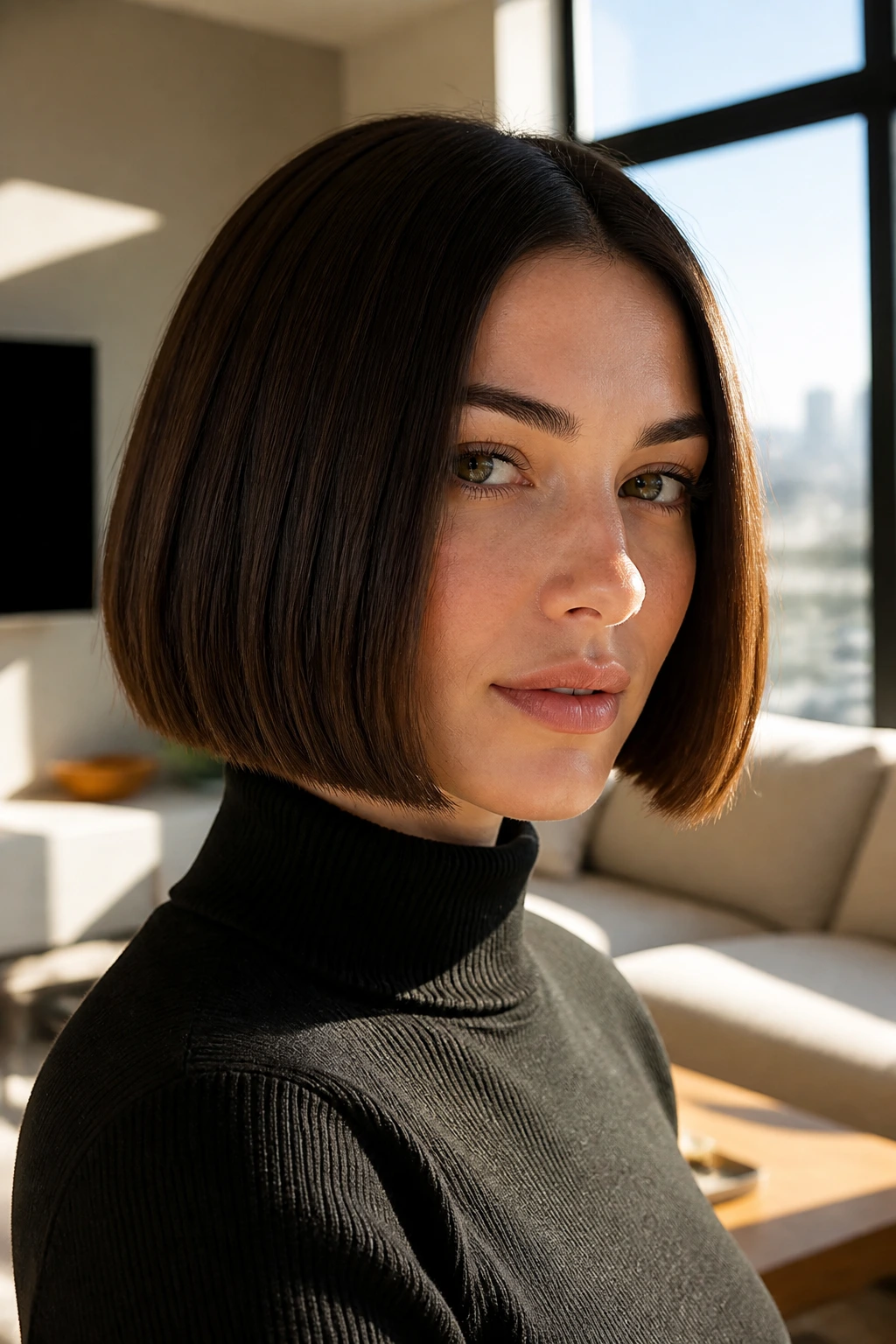
- Sharp Lines, Big Payoff: Straight hair shows off clean edges better than almost any other texture, so a bob can look precise without a lot of styling.
- Face Shape Gets Real Help Here: The right length can lengthen a round face, soften a long one, or keep a strong jaw from dominating the whole look.
- Fine Hair and Thick Hair Both Get Options: Some bobs create lift and air; others remove bulk and let the ends sit where they should.
- Low-Fuss Styling Is Built In: A lot of these cuts need little more than a blow-dry, a flat brush, and one smoothing pass at the ends.
- There’s Room for Personality: From French-girl fringe to blunt glassy lengths, straight hair bobs can read polished, cool, edgy, or softly retro without changing the basic shape.
- Grow-Out Doesn’t Have to Be Awkward: The right bob can slide into a lob or face-framing shape without turning into a shapeless middle stage.
1. Blunt Chin-Length Bob
A blunt chin-length bob is the cut that makes straight hair look like it was measured with a ruler. The perimeter lands right around the chin, and the whole point is that the ends sit in one clean line. On straight hair, that line looks especially crisp because there’s no wave pattern to blur the edges.
This is the bob I recommend when someone wants structure more than softness. It draws attention to the jaw, which can be a gift on a round or oval face. It can feel too severe on a long face if it’s cut too short, so keep the length grazing the chin rather than floating above it unless you want that sharper, editorial feel.
Styling is mercifully simple. Blow-dry with a flat brush, tuck the ends under by a quarter turn, and leave the crown flat and smooth. If the ends start flipping out, that usually means the cut is too heavy or the blow-dry direction was sloppy. Fix the root before you chase the tips.
2. Glass Bob
A glass bob is all about shine and surface. The hair sits in a single, polished sheet, with the ends trimmed clean and blunt so the whole shape reflects light in a smooth way. On straight hair, this cut can look almost architectural.
I like this one best when the hair is medium to thick and naturally cooperative. Fine hair can wear it too, but the cut has to be precise; otherwise the ends look wispy instead of sleek. The finish matters as much as the shape. A light smoothing cream, a careful blow-dry, and a flat iron used only on the outer layer can make the difference between “done” and “flat in the wrong way.”
The glass bob also exposes bad habits fast. If you rough-dry it, it will show. If you over-layer it, it will show. If your neck hairline is uneven, the mirror will tell on you. That honesty is the charm.
3. French Bob
The French bob usually lands shorter, somewhere between lip level and the top of the chin, and it often comes with a fringe that sits softly across the forehead. On straight hair, the shape reads clean rather than fussy, which is why it has stayed so appealing. It looks like a deliberate choice, not a compromise.
This cut works especially well if you like your face framed tightly. It brings the eyes forward and gives the whole style a compact, slightly undone finish. I prefer it on hair that has a little natural density at the front, because very sparse hair can make the fringe look stringy instead of airy.
Don’t over-style it. A French bob gets better when the fringe falls with a little separation and the ends curve in just enough to follow the jaw. If you flat iron every strand pin-straight, you lose the softness that makes this cut feel alive.
4. Italian Bob
The Italian bob is one of the best bobs for straight hair when you want shape without stiffness. It usually sits just below the chin or skims the top of the neck, with enough weight at the ends to make the hair look full and healthy. The outline is polished, but it doesn’t feel boxed in.
What makes this cut work is the balance between volume and control. It keeps enough length to swing, but not so much that it drags down the face. On straight hair, that matters because the hair already wants to lie close to the head. A little body at the root and a rounded edge at the bottom help the cut breathe.
If your hair is fine, ask for a solid perimeter with minimal internal layers. If it’s thick, a stylist can remove bulk underneath so the surface stays smooth. Either way, this bob looks best when the ends feel dense, not wispy.
5. A-Line Bob
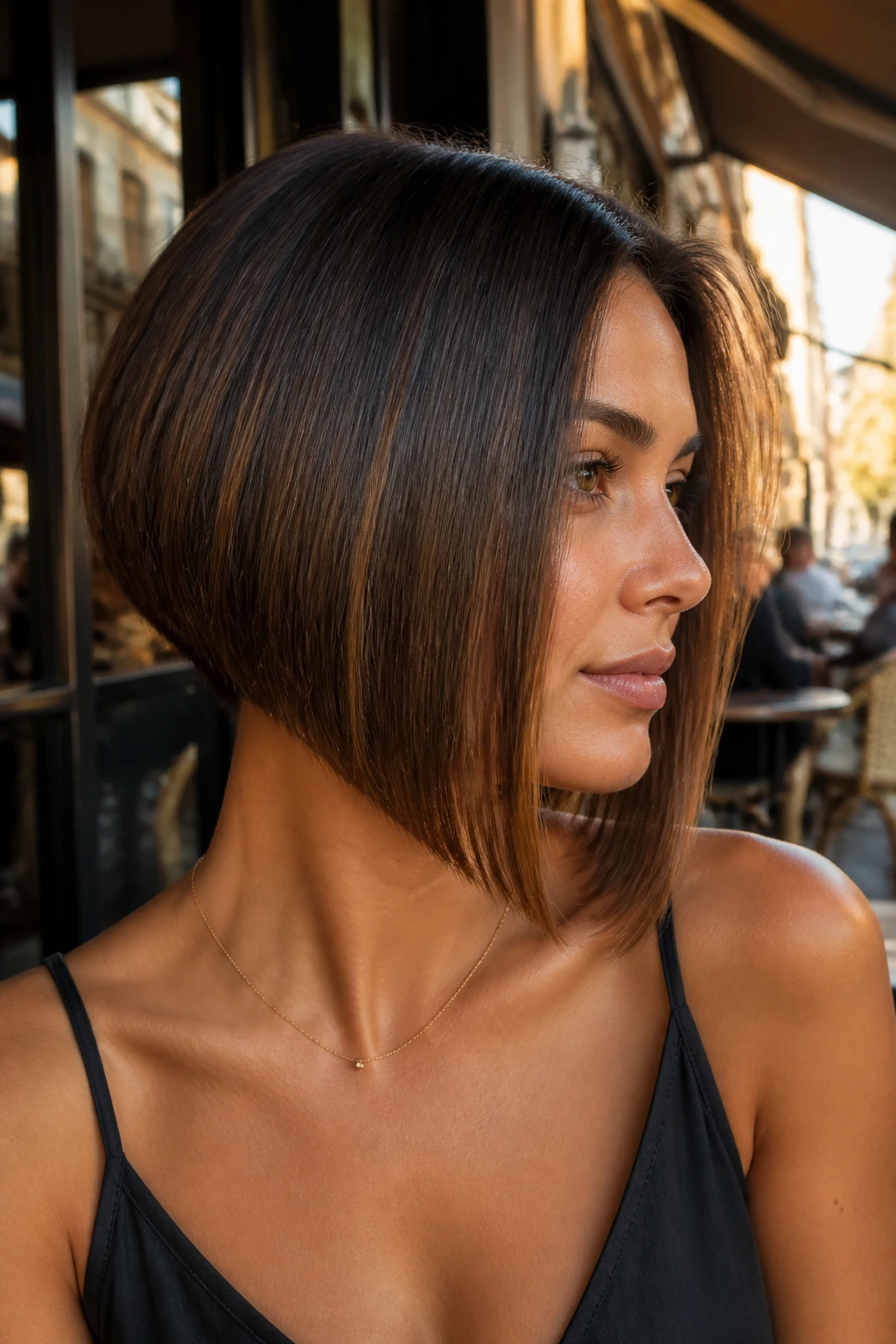
An A-line bob is shorter in the back and longer in the front, and that slope does more than people expect. It gives straight hair a directional shape, so the eye moves forward toward the face rather than dropping straight down. That makes it a smart cut if you want a little length around the jaw without losing the neatness of a bob.
I like this one for anyone whose hair grows outward at the nape. The slight angle keeps the back from puffing out like a shelf. It also helps narrow a wide jaw or soften a square chin, especially if the front pieces graze just below the jawline.
The key is restraint. If the angle is too dramatic, the cut starts to look dated fast. A subtle slope is cleaner and easier to live with. Keep the blow-dry smooth at the back and give the front a soft bend inward; that tiny curve is what makes the shape look intentional.
6. Curved-Under Bob
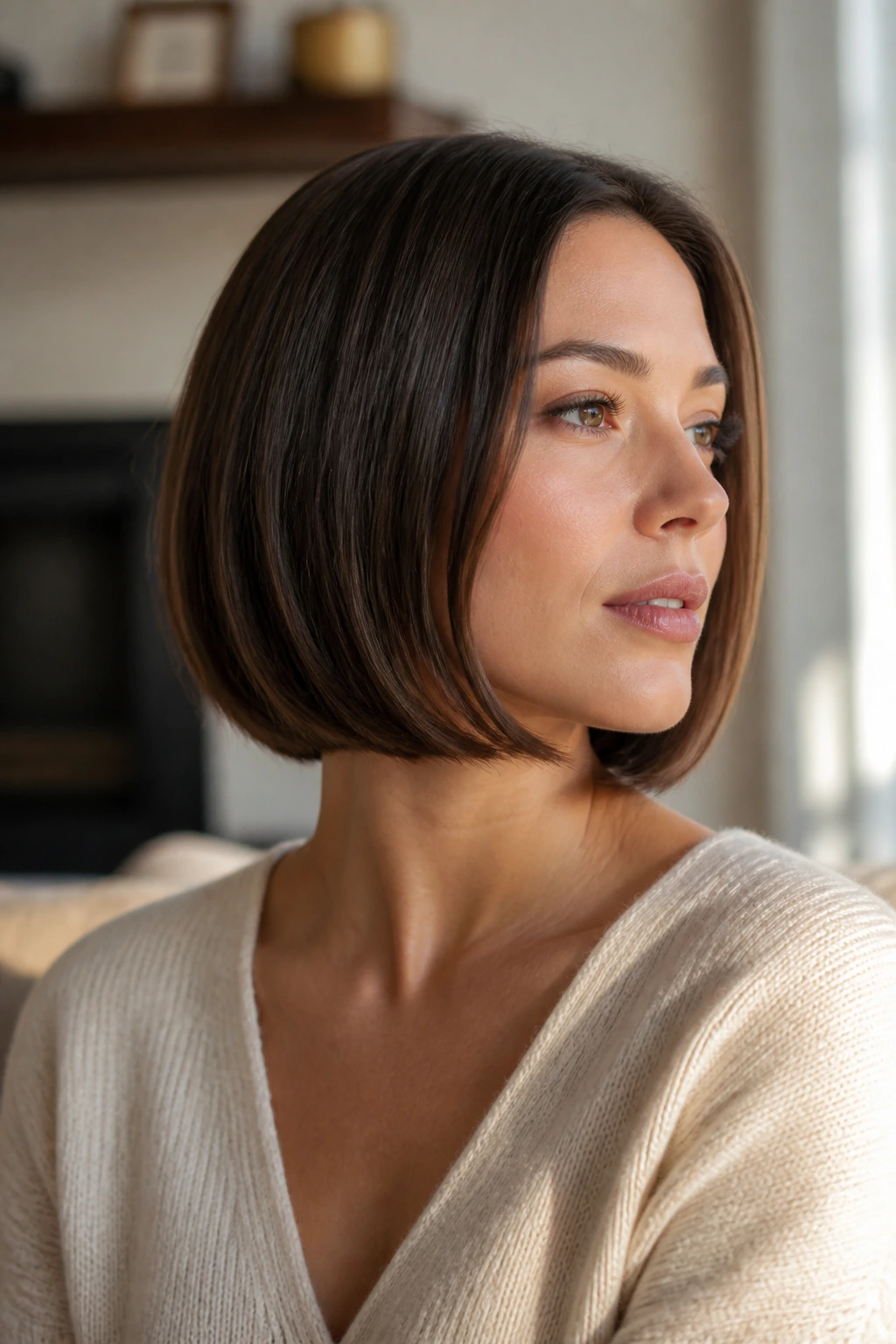
A curved-under bob has ends that tuck slightly toward the neck instead of flipping out or hanging dead straight. On straight hair, that inward bend gives the cut a finished look, almost like the line has been polished into place.
This is a good choice when you want a bob that feels tidy without being severe. The curve softens the lower edge, which can be useful on a strong jaw or a narrow face that needs a little roundness. It also works well for people who wear sweaters, high collars, or jackets a lot, because the shape doesn’t get lost under fabric.
To style it, use a round brush or a flat brush with a subtle wrist turn at the ends. Don’t force a curl. You want the hair to sit under itself, not bounce. That one distinction is where a lot of home blowouts go wrong.
7. Jaw-Skimming Bob

A jaw-skimming bob hits right at the line of the jaw, and straight hair makes that placement obvious in the best way. The cut frames the face tightly, which can sharpen cheekbones or bring more definition to a softer profile. It’s a small change on paper. In the mirror, it’s a different story.
This length is a little less forgiving than a chin-length bob because it sits exactly where the face is widest on some people. That’s why I like it best when the stylist customizes the front pieces slightly longer or angles them forward by a fraction. That tiny adjustment can keep the style from feeling boxy.
If your hairline tends to kick out at the sides, ask for the ends to be beveled under. Otherwise the bob can fan outward at the corners and lose its crisp shape by noon.
8. Collarbone Lob
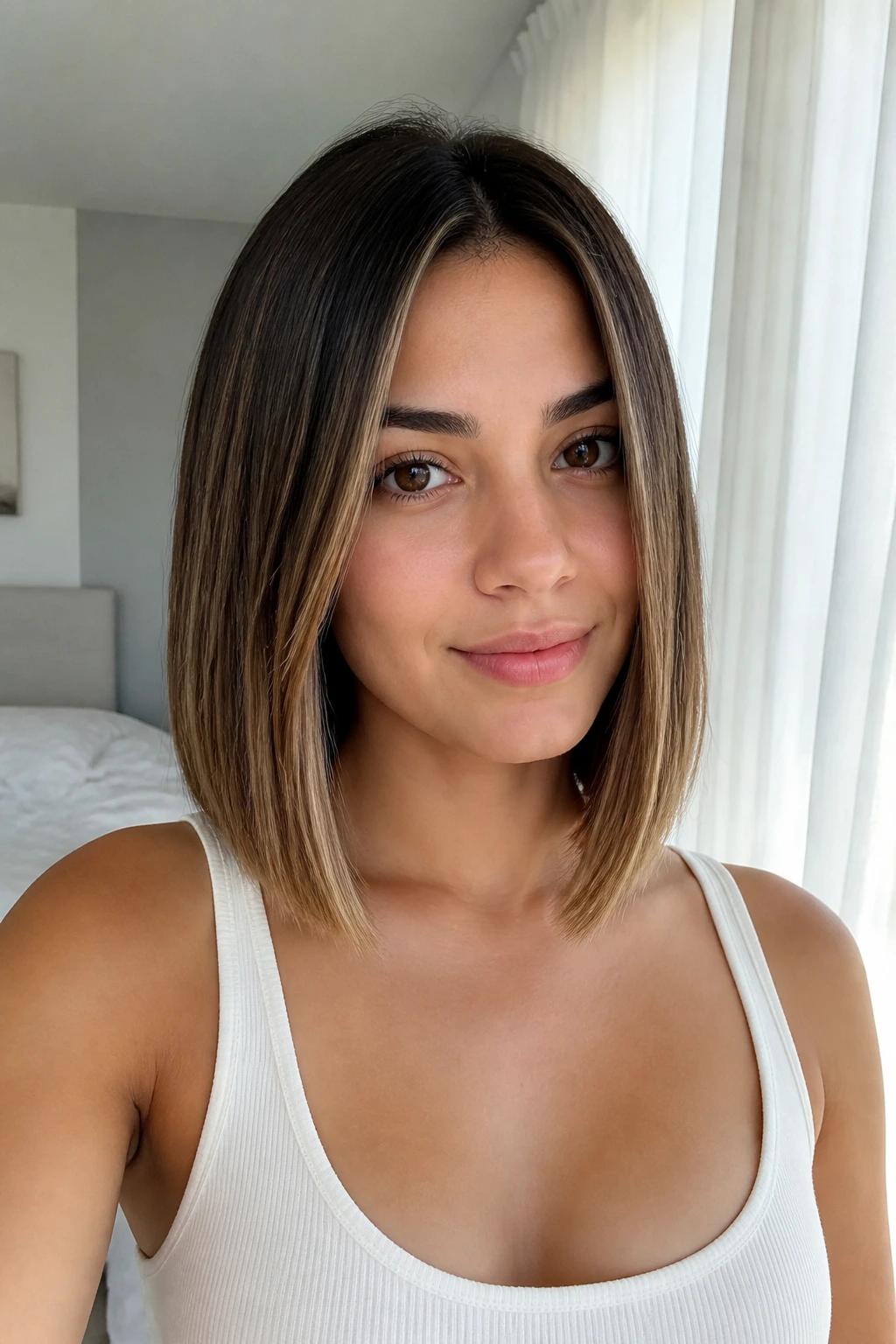
A collarbone lob is the long-bob version that hits right around the collarbone, and straight hair wears it with an almost calm, clean simplicity. There’s enough length to tuck behind the ears, throw into a half-up clip, or let hang with a little movement. It’s the least dramatic cut in this set, which is exactly why it works for so many people.
If you’re testing the bob life for the first time, start here. The length is forgiving while still giving you that straight-line look around the shoulders. It’s especially useful if your hair is thick and you don’t want to lose too much weight at once, or if your face shape feels a little long and you want extra vertical balance.
The lob looks best with a precise bottom line and very light face framing. Too many layers, and it turns into a generic shoulder cut. Keep the edge clean. That’s where the style lives.
9. Deep Side-Part Bob

A deep side-part bob adds instant lift at the crown without changing the cut very much at all. Straight hair often lies flat where it parts, so shifting the part several inches over creates a little built-in volume and a lot of attitude. It’s one of the easiest ways to make a bob look more styled.
This cut is useful if your hair tends to collapse at the top of the head or if you want one side to sweep across the forehead more dramatically. It can soften a square forehead and give round faces a longer line. The trick is not to over-tease the roots. You only need enough lift to break up the flatness.
When you blow-dry, direct the roots away from the part first, then set the hair back into the new line. That keeps the root from sticking to the scalp in the old pattern. Small move. Big payoff.
10. Center-Part Minimal Bob
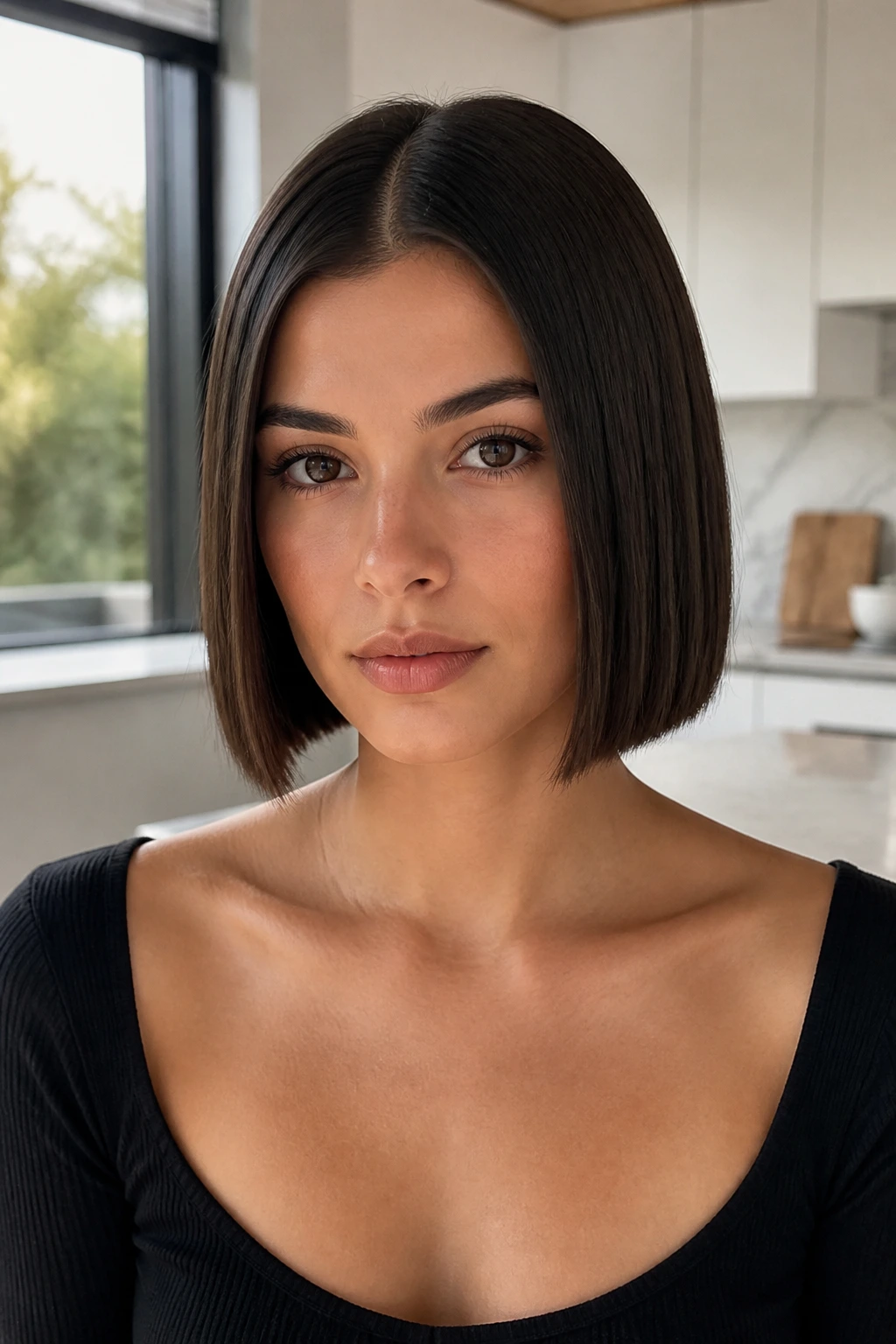
A center-part bob is clean, symmetrical, and a little severe in a good way. Straight hair makes the center part look especially tidy because there’s no wave pattern tugging the two sides in different directions. The result can be sleek, modern, and quietly sharp.
I think this one works best when the perimeter is cut evenly and the ends are blunt. If you add too many layers, the simplicity disappears. It’s a good option for someone with balanced features or a straight nose line, because the part creates a direct vertical channel down the face.
There’s one catch: center parts expose everything. If your hairline is uneven, if one side naturally falls shorter, or if your crown swirls in a stubborn direction, you may need to train the part with a little damp setting and a clip while it dries. Worth the effort. Not everyone wants the trouble, but the line is worth it if you like a very clean finish.
11. Inverted Bob
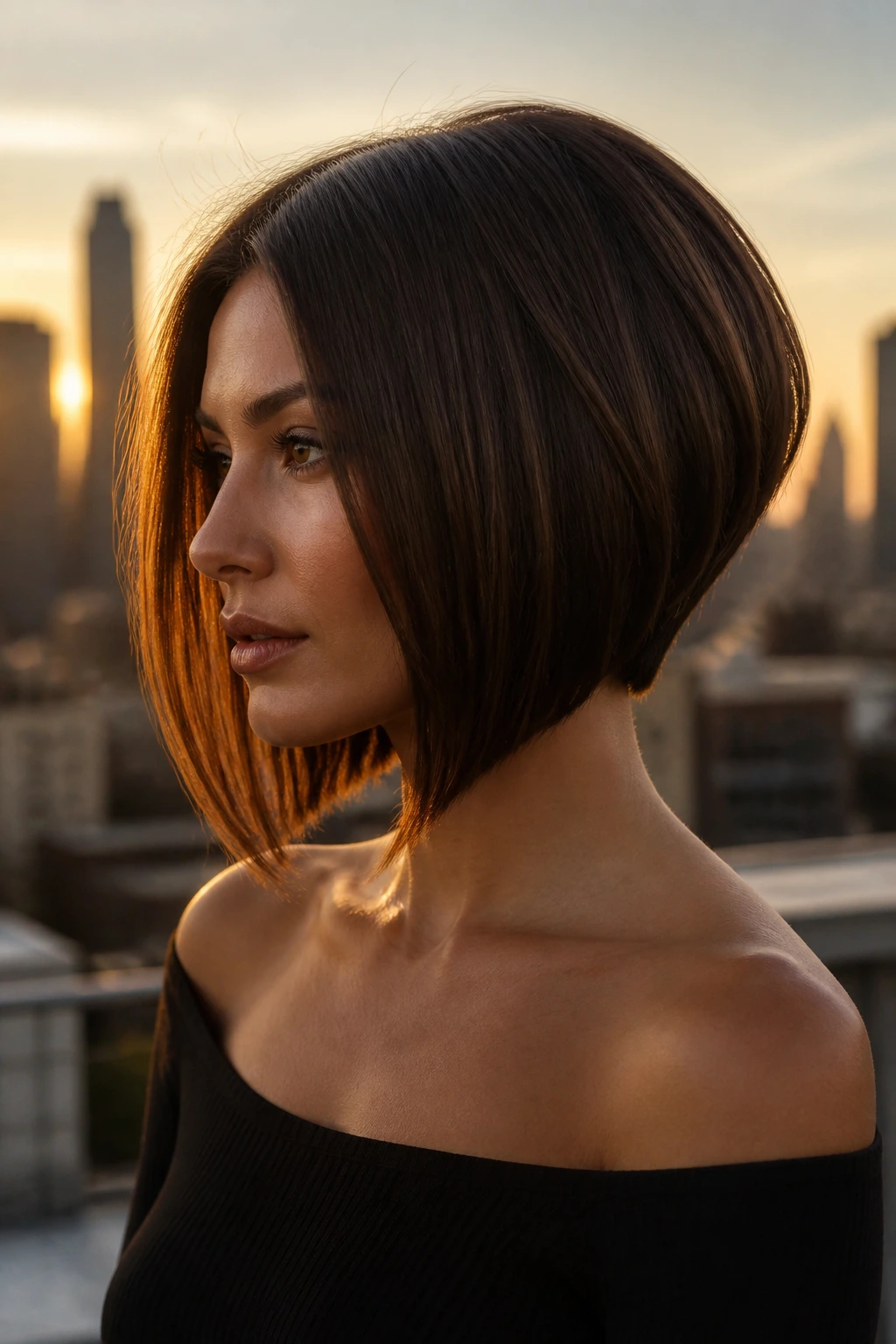
An inverted bob is shorter in the back and longer toward the front, but compared with an A-line cut, the shape usually feels more dramatic and more stacked. On straight hair, the back can look very sleek if the graduation is controlled, almost like the hair is folded under itself.
This is a strong choice for thick hair because the back structure removes bulk where it tends to puff up most. It can also make the neck look longer by keeping the shortest point clean and close. On fine hair, though, too much stacking can make the crown look thin. A light hand is better.
Ask for a soft transition rather than a hard step. You want the curve of the cut to move smoothly from back to front, not jump suddenly. The difference matters a lot when the hair sits straight and doesn’t hide the architecture.
12. Graduated Bob
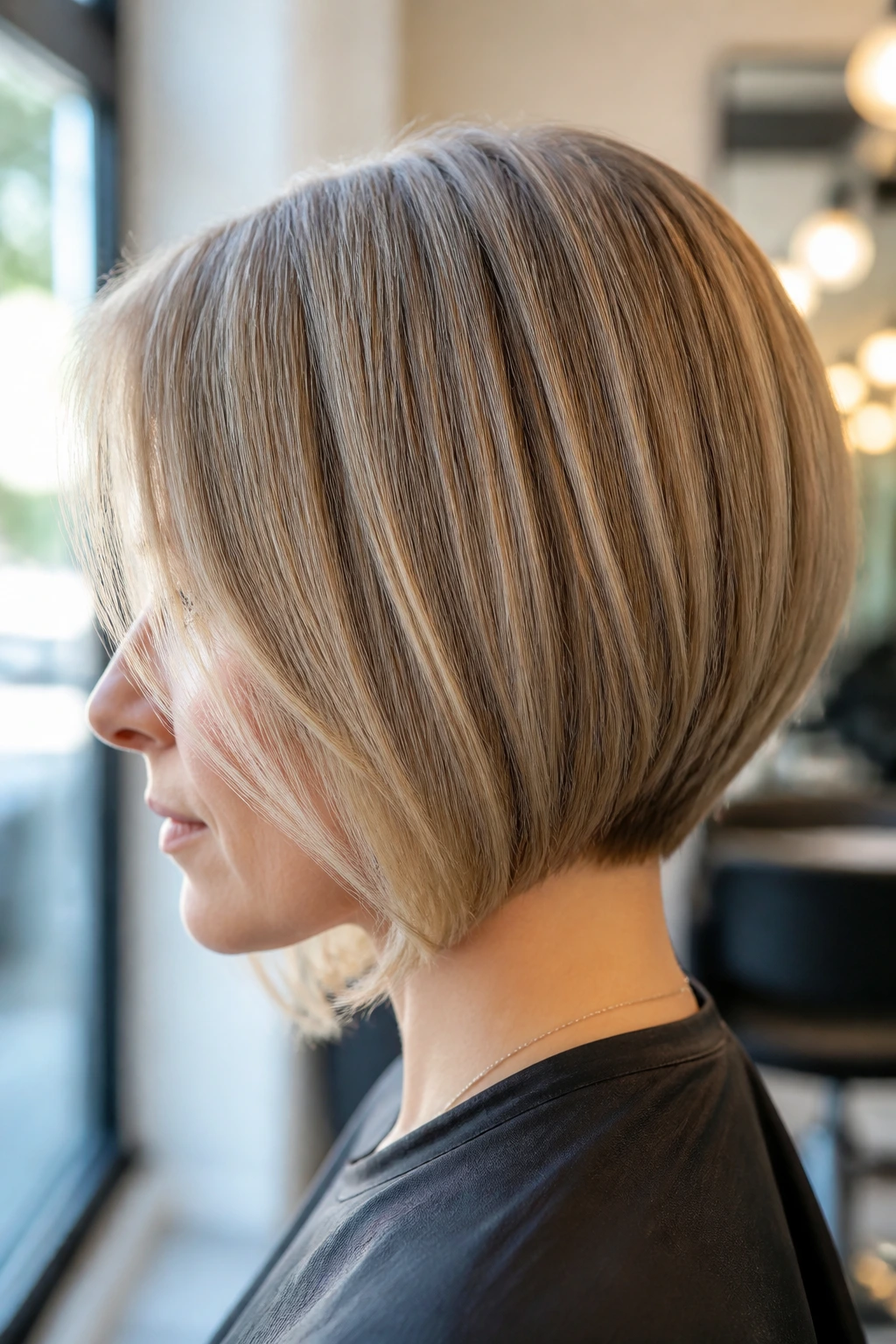
A graduated bob is a quieter cousin of the inverted shape. The stacking at the back is still there, but it’s gentler, so the line feels lifted rather than sharply angled. Straight hair shows that graduation cleanly, which is useful if you want body at the nape without a heavy-looking shelf.
This is one of my favorite cuts for hair that grows flat at the back of the head. The shorter layers underneath support the top layer so the bob doesn’t collapse the minute you turn your head or take off a coat. It also helps thick hair sit closer to the head without removing all the weight.
The important part is keeping the perimeter crisp. If the back is too long or too layered, the cut loses the stacked effect and just looks puffy. Graduated bobs need regular trims, because the shape gets fuzzy faster than people expect.
13. Box Bob
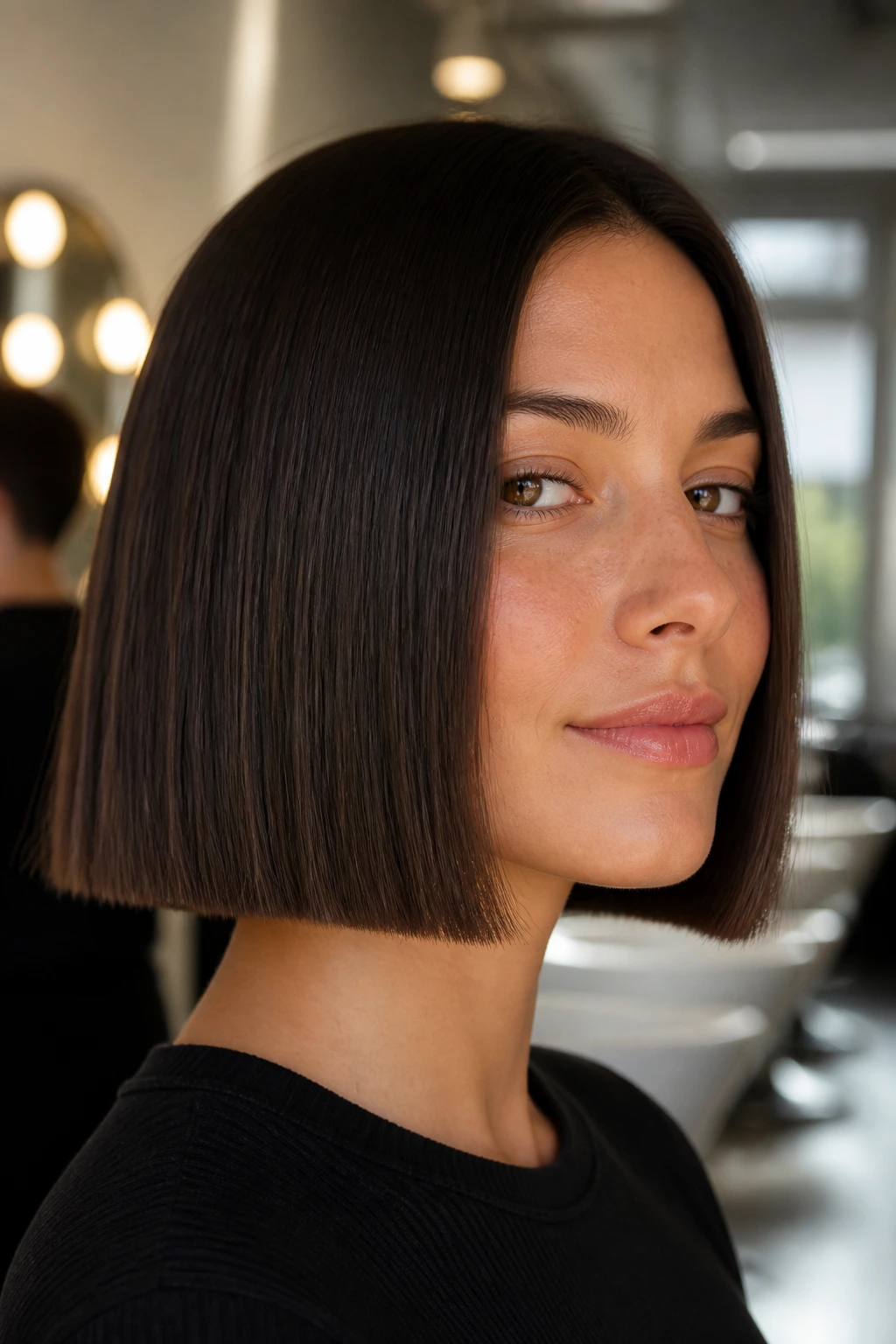
A box bob has a square, blunt outline with very little tapering at the edges. It feels strong, direct, and a little graphic. Straight hair is the right texture for it because the cut depends on the perimeter staying visible.
This one suits people who like structure and don’t mind a cut that announces itself. It can make fine hair look denser because the ends all land at the same point. It can also make a narrow face look more substantial through the lower half, which is handy if your features are sharp and you want a little balance.
It is not the easiest bob to grow out gracefully. That square edge grows into a softer shape, but there’s a stage where it can feel heavy around the ears. If you’re patient about trims every 6 to 8 weeks, though, it stays very clean.
14. Rounded Bubble Bob
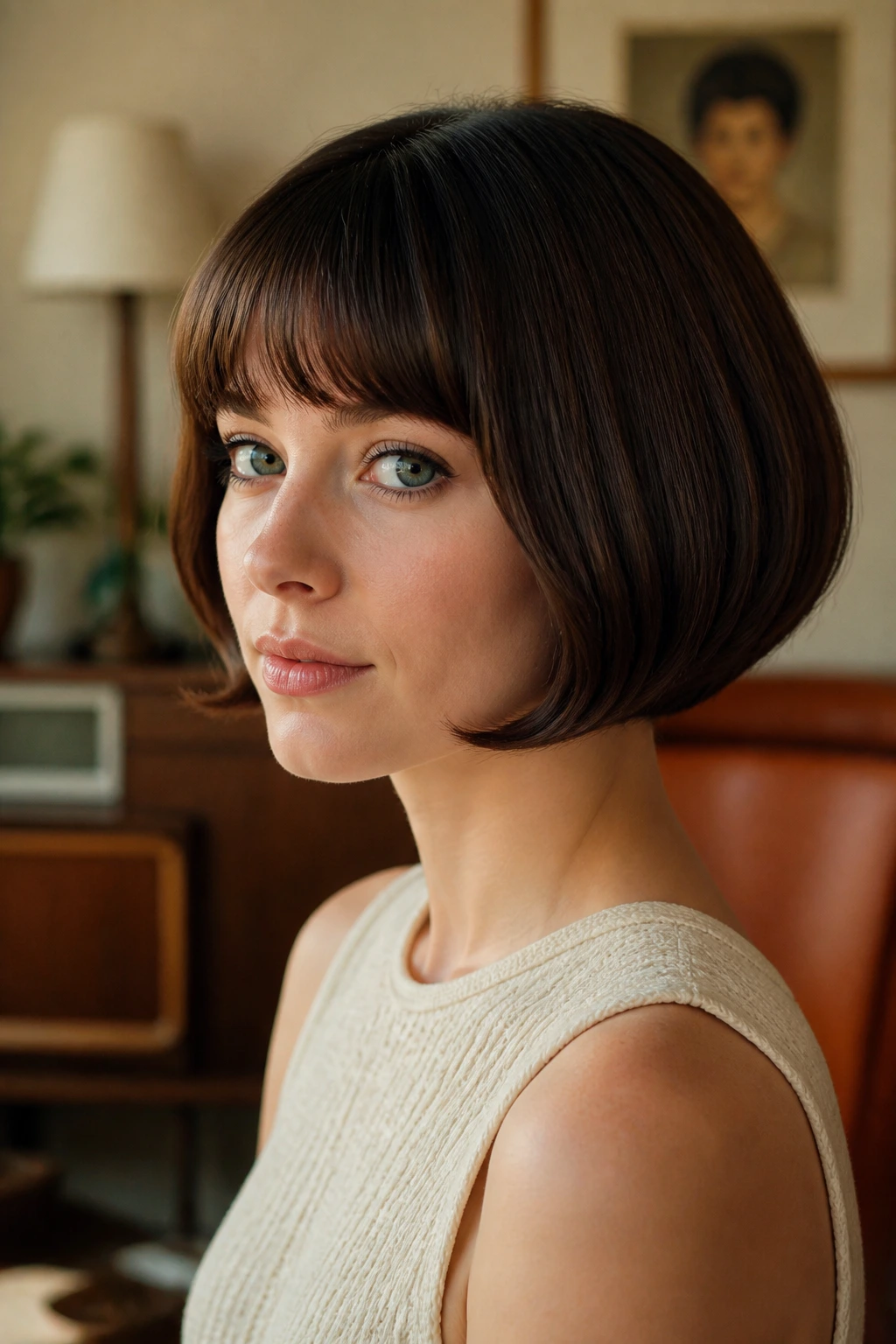
A rounded bubble bob curves inward at the bottom and lifts slightly through the sides, which gives the whole haircut a soft, contained silhouette. On straight hair, that shape has a neat, almost retro feel without crossing into costume territory.
I like this one when a blunt line feels too hard but layers feel too loose. The rounded edge gives movement without breaking the shape. It’s especially flattering on a longer face because the curve adds width near the cheek and jaw instead of dragging everything down.
The styling trick is to keep the volume controlled at the crown and fuller around the mid-lengths. Too much lift at the top and the bubble effect disappears. Too much flatness underneath and the shape turns into a basic bob. Tiny difference, but it matters.
15. Curtain-Bang Bob
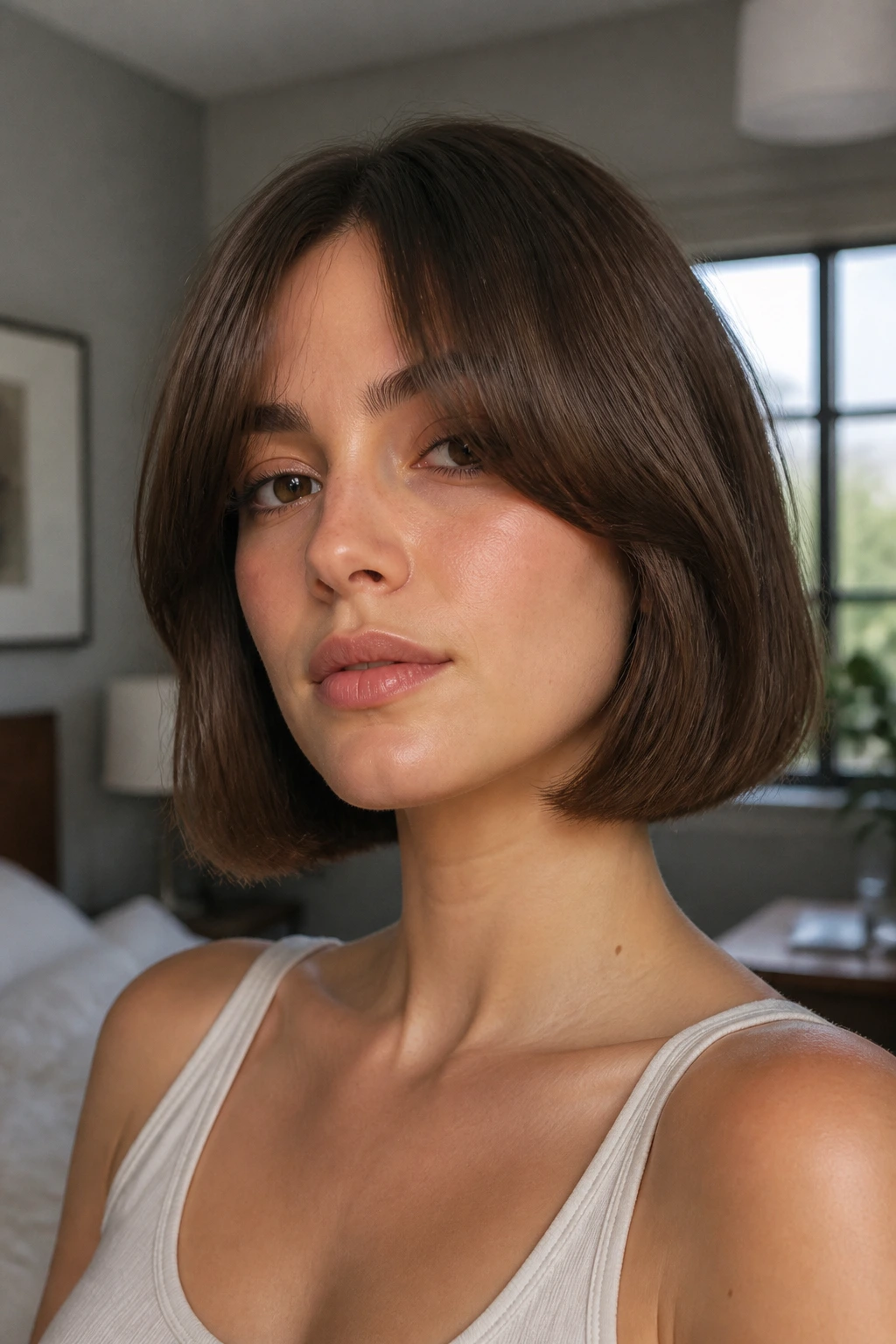
A curtain-bang bob is one of the easiest ways to soften straight hair without giving up the clean bob line. The bangs split near the middle and sweep out toward the cheekbones, which draws attention to the eyes and gives the front of the cut some movement.
This shape works well if you want a little framing around the face but do not want full fringe upkeep. Curtain bangs on straight hair need a bit of bend, not a helmet shape. Blow-dry them with a round brush or even your fingers and a small nozzle, pulling them away from the face as they dry.
The bob underneath can be blunt, curved, or slightly layered. That flexibility is part of the appeal. If the bangs are too heavy, though, they can swallow the face. Keep them light enough that they split cleanly and do not sit like a solid wall.
16. Wispy-Fringe Bob

A wispy-fringe bob trades heaviness for air. The fringe is light, separated, and softly textured, which helps a straight bob feel less rigid around the forehead. On straight hair, this can be a smart move if you like fringe but don’t want the strong geometry of a blunt bang.
The cut works best when the bob itself stays fairly clean underneath. Too many layers in the body of the cut and the wispy fringe starts looking disconnected. You want contrast, not chaos. The fringe should fall softly and move when you blink, not stick out like a separate piece.
If your hairline is low or your forehead is short, keep the fringe longer and thinner. If your forehead is taller, a slightly denser wispy fringe can make the proportions feel more balanced. Don’t slice it too short. That is how it starts to look accidental.
17. Razor-Piece Bob

A razor-piece bob has ends that feel sliced rather than blunt-cut, so the perimeter breaks into soft little pieces instead of one hard edge. Straight hair can wear this beautifully when the goal is movement without full-on layers. The shape still reads as a bob, but it doesn’t feel as rigid.
This cut is good if your hair is naturally flat and you want the ends to look lighter. It can also help thick hair move more easily around the jaw. The risk is overdoing it. If too much razor work goes into the perimeter, the ends become feathery and can look thin fast.
I prefer this version when the bob is worn a little undone, with a touch of separation at the ends. A small amount of cream or light paste is enough. You’re not trying to create texture everywhere. Just enough to keep the line from feeling too polished.
18. Choppy Bob

A choppy bob uses piecey texture to break up the silhouette, and on straight hair it can feel fresh in a way that a smooth blunt cut cannot. The goal is movement through the ends and a bit of irregularity through the body, as if the cut has been softened by living in it for a week.
This is a good option for people who hate hair that feels too “done.” It works especially well with a slight bend from a flat iron or a quick wave at the mid-lengths. If you wear it poker-straight, the choppy layers are still visible, but the style can look more severe than intended.
The best versions keep the weight line intact while adding texture only where it helps. If every layer is chopped to pieces, the bob loses its shape. A little mess belongs here. Too much and the haircut starts to look tired.
19. Asymmetrical Bob
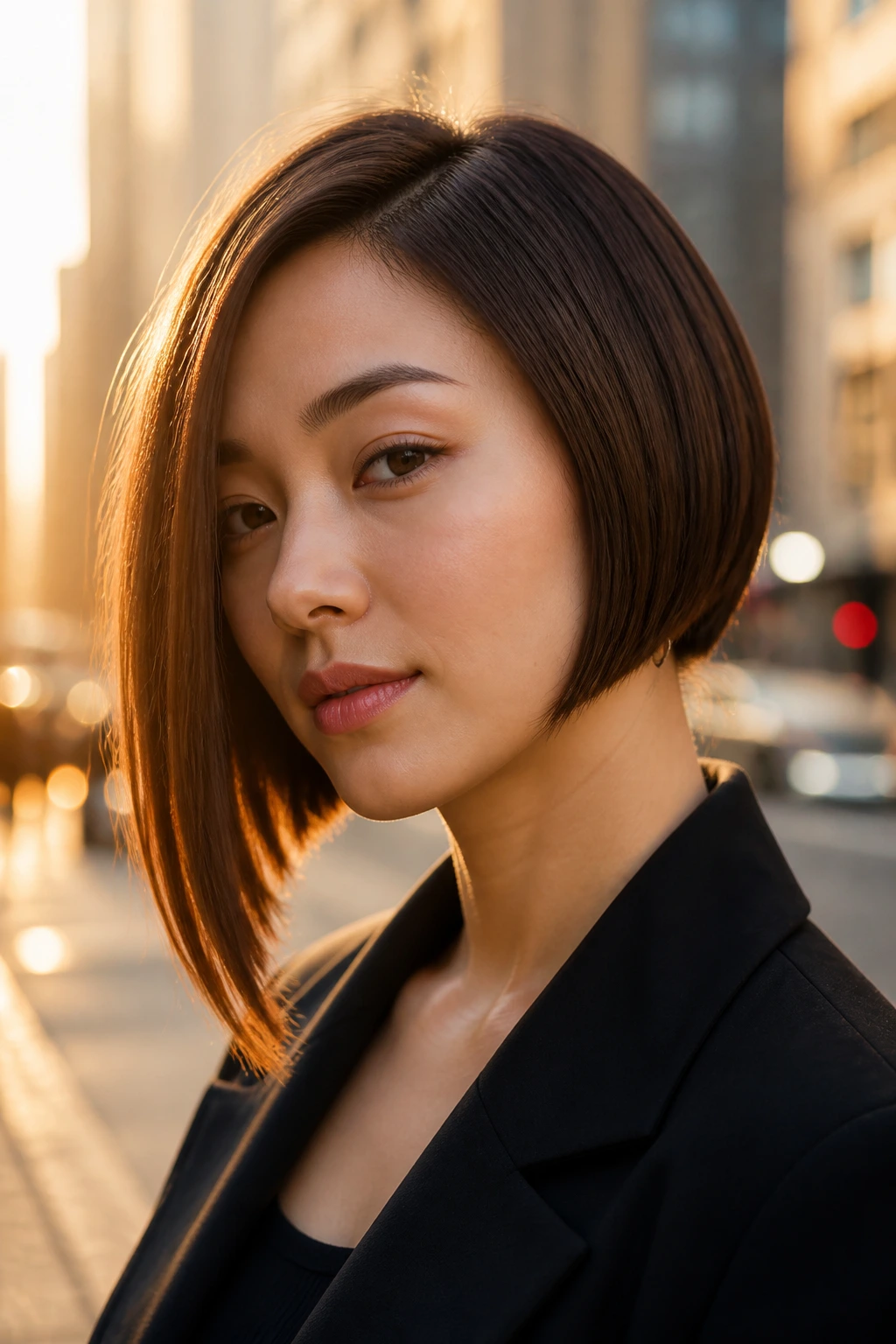
An asymmetrical bob is longer on one side than the other, and straight hair makes that difference obvious in the cleanest possible way. It reads modern without needing a lot of styling because the cut itself carries the shape.
I like this one for someone who wants a bob but doesn’t want it to feel traditional. The off-balance line can lengthen the neck on one side and create a little drama around the face. It’s also useful if one side of the jaw feels fuller than the other, because the longer side can soften the visual weight.
The key is subtlety unless you want the asymmetry to be the whole point. A gentle difference of an inch or two can look refined. A huge difference starts leaning avant-garde, which is fine if that’s your mood, but it’s not the easiest everyday cut.
20. Tucked Bob
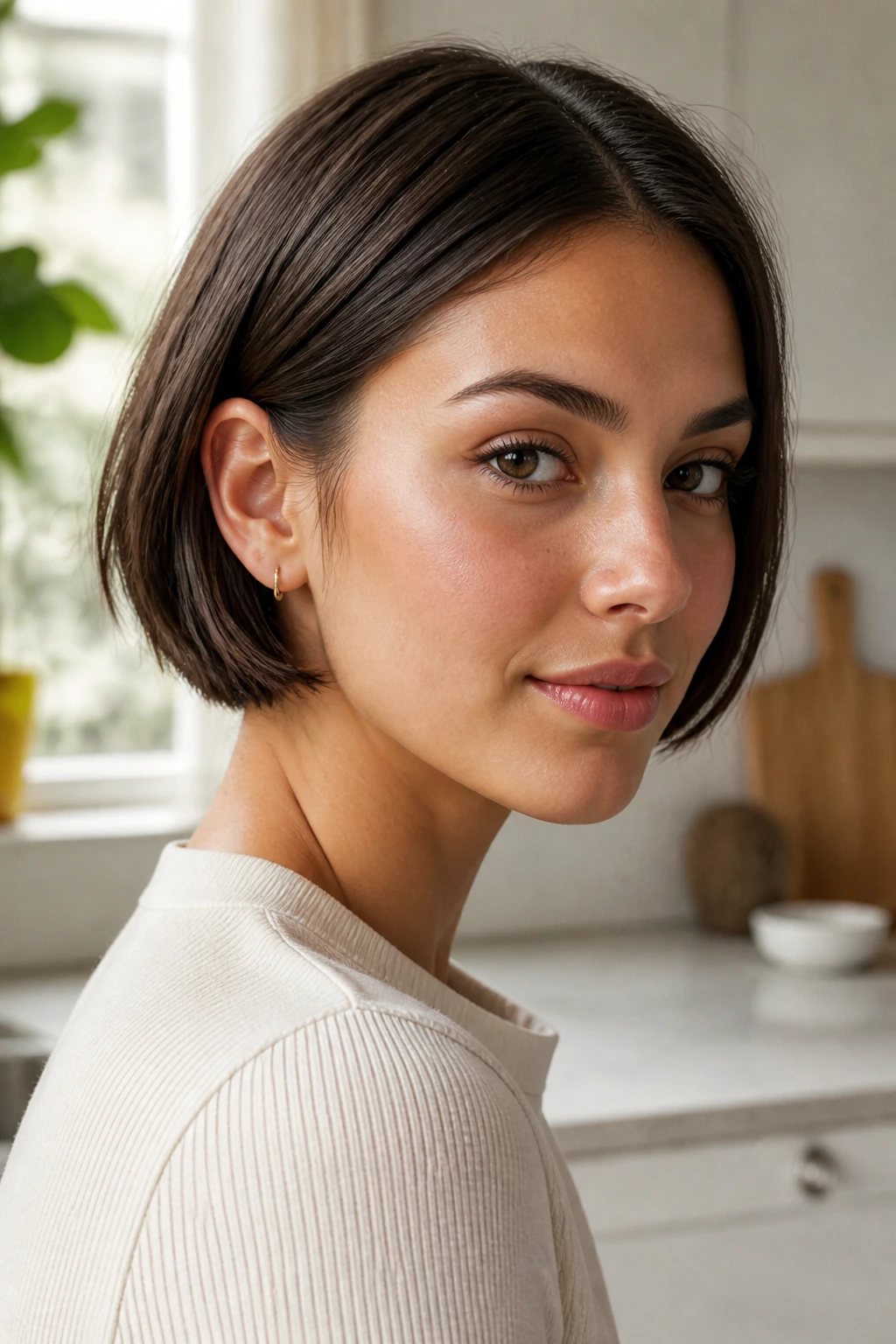
A tucked bob is cut to look especially good when the ends are slid behind the ears. Straight hair loves this because the hair stays smooth enough to show the shape even when half of it is tucked away. The result feels casual, clean, and a little self-assured.
This style is not as trivial as it sounds. A good tucked bob needs weight at the front so the tucked section doesn’t puff out weirdly. It also needs enough length to graze the ear without flipping. If it’s too short, you’ll fight it all day.
I’d choose this bob if you wear earrings, glasses, or sharp collars often. The tucked shape frames those details instead of competing with them. It’s one of those cuts that looks like you thought about it, even if you didn’t spend much time styling it.
21. Pageboy Bob

The pageboy bob has a retro backbone: a fuller shape, a blunt fringe or soft front section, and ends that curve under rather than out. On straight hair, it can look polished in a way that feels almost old-school but not costume-y if it’s cut cleanly.
This cut is stronger on hair with medium density or more. Very fine hair can lose the rounded body that makes the pageboy feel distinctive. Ask your stylist to keep enough weight at the perimeter so the silhouette remains rounded through the bottom.
Styling needs a little discipline. If you rough-dry it, the shape can collapse. If you blow-dry the ends under and keep the crown smooth, it becomes one of the neatest bobs in the bunch. There’s a reason this shape keeps coming back.
22. Shaggy Bob
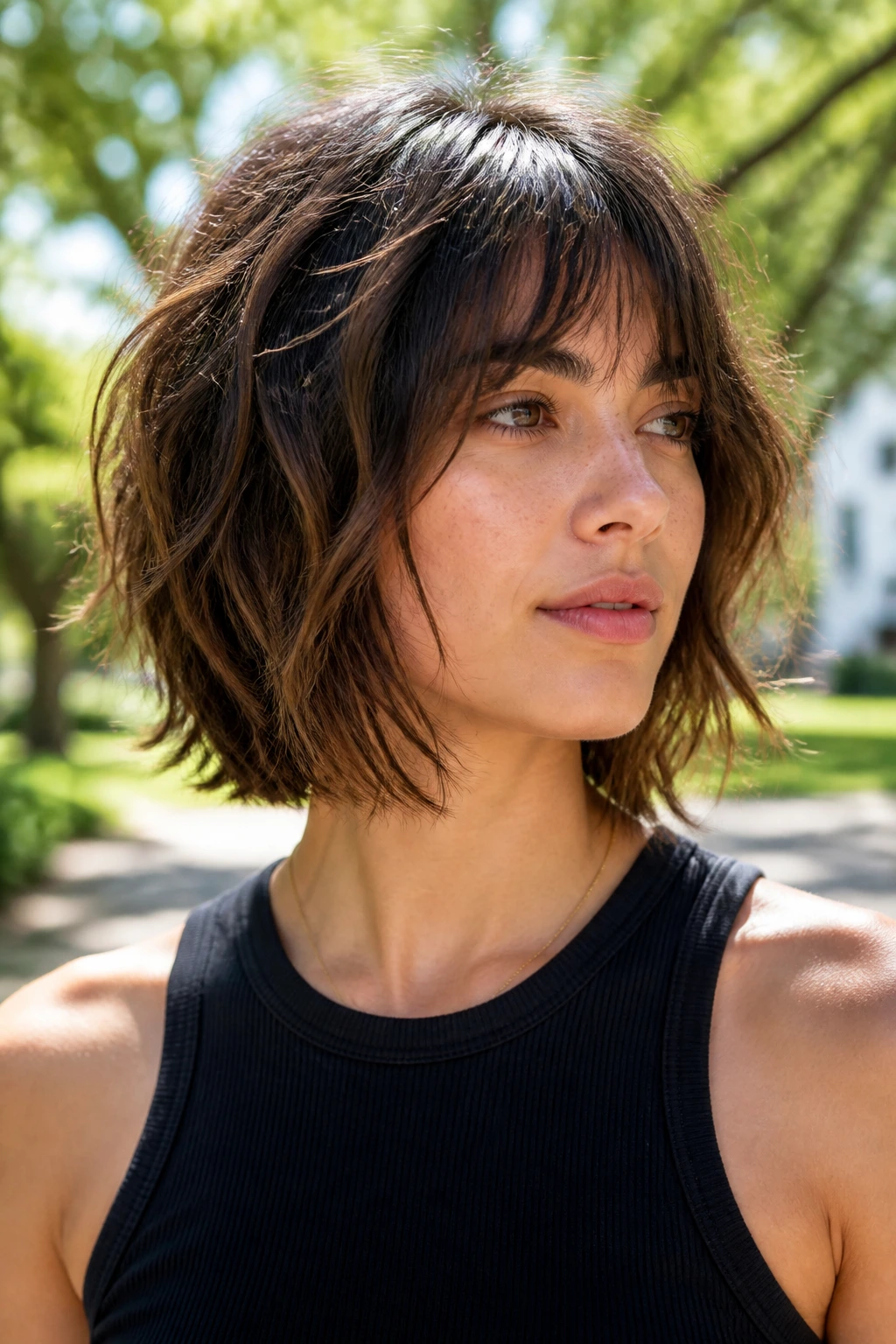
A shaggy bob loosens the line and makes straight hair feel more casual. It uses softer layers and a less precise perimeter, which means the haircut can move a little more and hold a little less obvious structure. Some people love that. Some people need to be talked into it.
I think it works best when you want a bob that doesn’t feel too precious. The texture gives straight hair some lift and stops the ends from sitting like a shelf. It can also help if your hair is dense and needs air removed around the sides.
The downside is simple: if the layers are too short, the cut starts to spread out and lose the bob shape. Ask for softness, not a full shag. Those are not the same thing. One keeps the outline; the other can drift away from it.
23. Hidden-Layer Bob
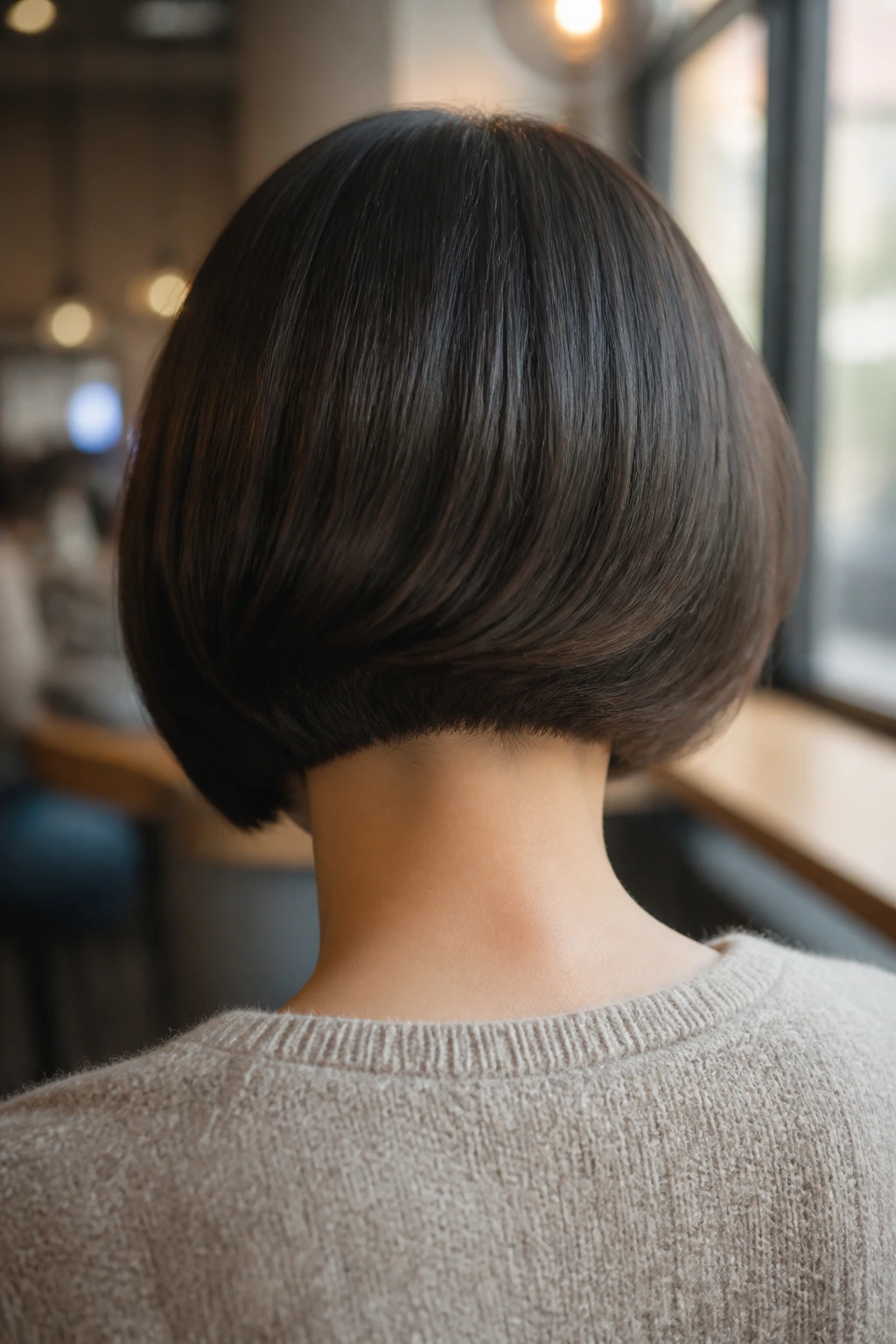
A hidden-layer bob keeps the outer shape smooth while removing bulk underneath. Straight hair is a natural fit because the top layer stays clean and glossy, so you get movement without seeing obvious choppy steps in the surface.
This is one of the smartest cuts for thick hair. It takes weight out where you feel it most — around the back, behind the ears, and under the crown — without making the haircut look thinner on the outside. If you’ve ever had a bob that looked fine from the front and bulky from the side, this is the fix.
The layers should be internal, not visible. That means the stylist has to be thoughtful with sectioning and weight distribution. A badly done hidden-layer bob just looks uneven. A well-done one feels lighter every time you move your head.
24. Soft Layer Bob
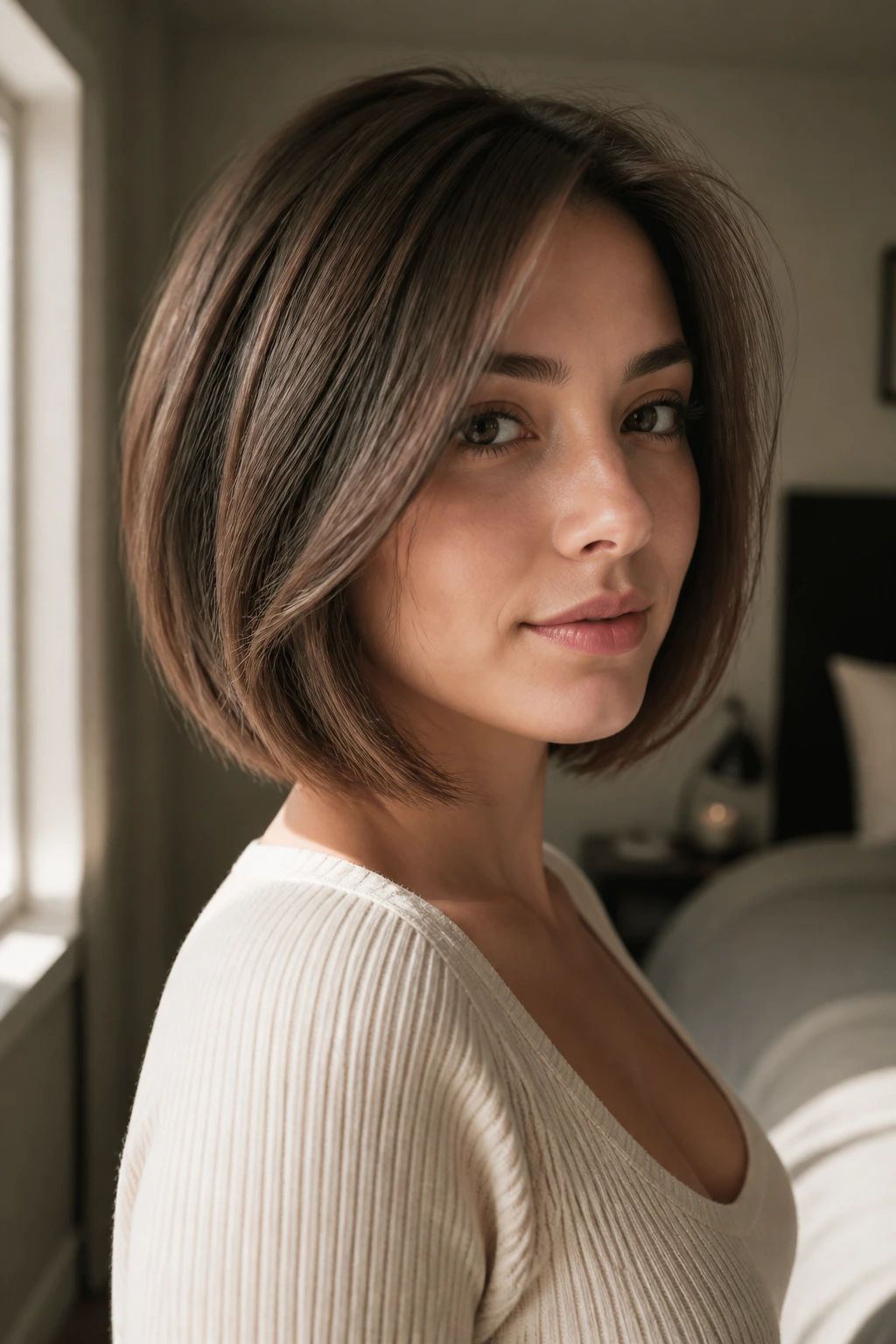
A soft-layer bob is for people who want movement but do not want the haircut to lose its outline. The layers are long, blended, and subtle, so straight hair gets a little lift around the ends without turning frizzy or wispy.
This is a good compromise cut for someone who likes a bob but hates the hard stop of a blunt edge. It’s also friendly to hair that sits flat at the sides, because the light layering helps the shape bend around the face instead of hanging in one block. On the other hand, if your hair is very fine, too many soft layers can take away the density you need.
The best version keeps the perimeter almost solid and lets the layers do their work inside the shape. That way the bob still looks like a bob from across the room. Close up, you get the movement.
25. Face-Framing Angle Bob
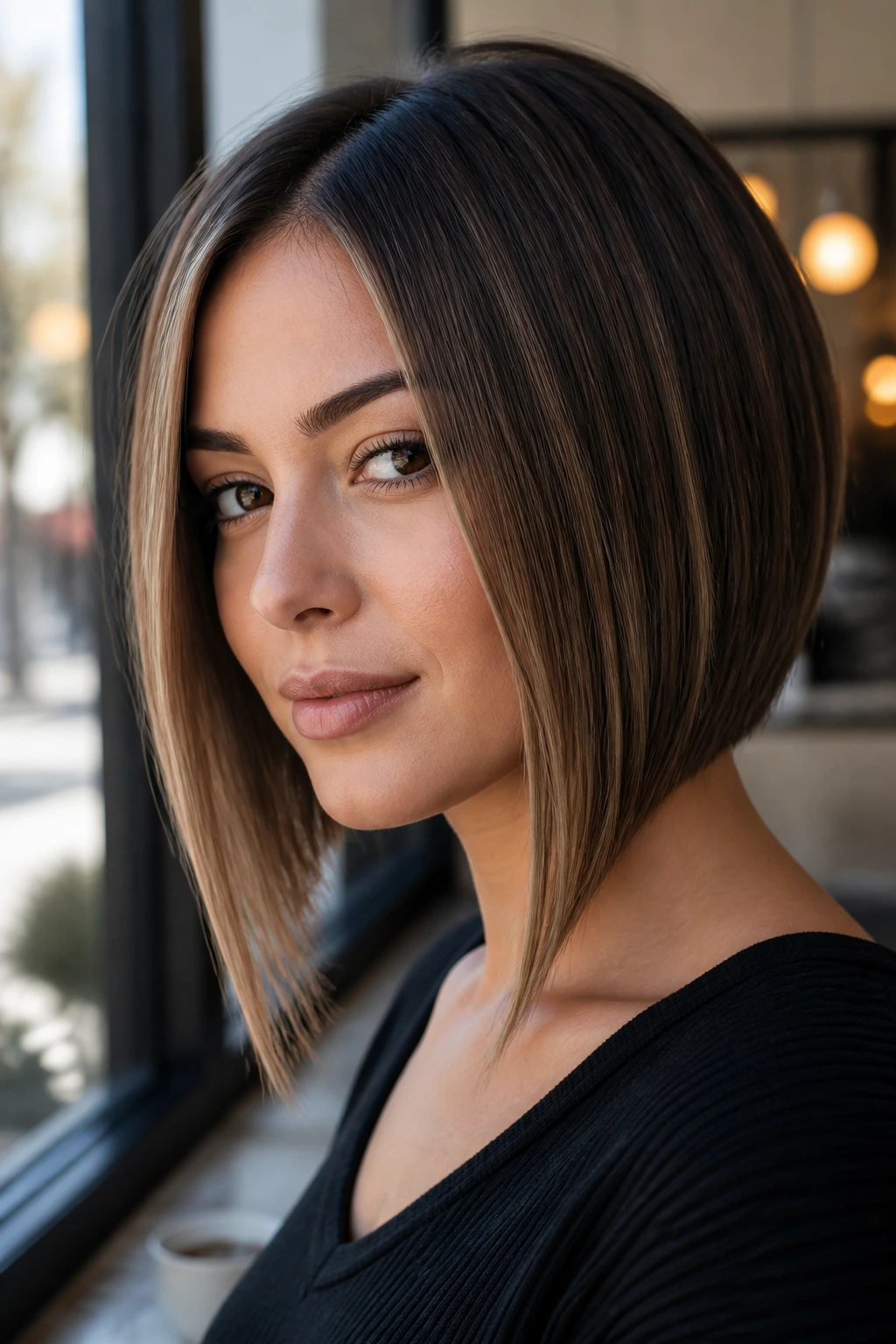
A face-framing angle bob uses longer front pieces to guide the eye along the cheekbones and jaw. Straight hair shows the angle clearly, which makes this cut useful if you want your face to look a little longer or slimmer without going dramatically short.
This one does a nice job of softening a square face. The front pieces can start around the lips or chin and taper longer toward the shoulders, depending on how much length you want to keep. If your cheekbones are strong, the angle can make them the star.
I’d avoid making the front too heavy. The point is motion and direction, not a curtain of hair sitting beside the face. Keep the back neat and the front cleanly stepped forward. That contrast is what gives the cut its shape.
26. Wet-Look Bob
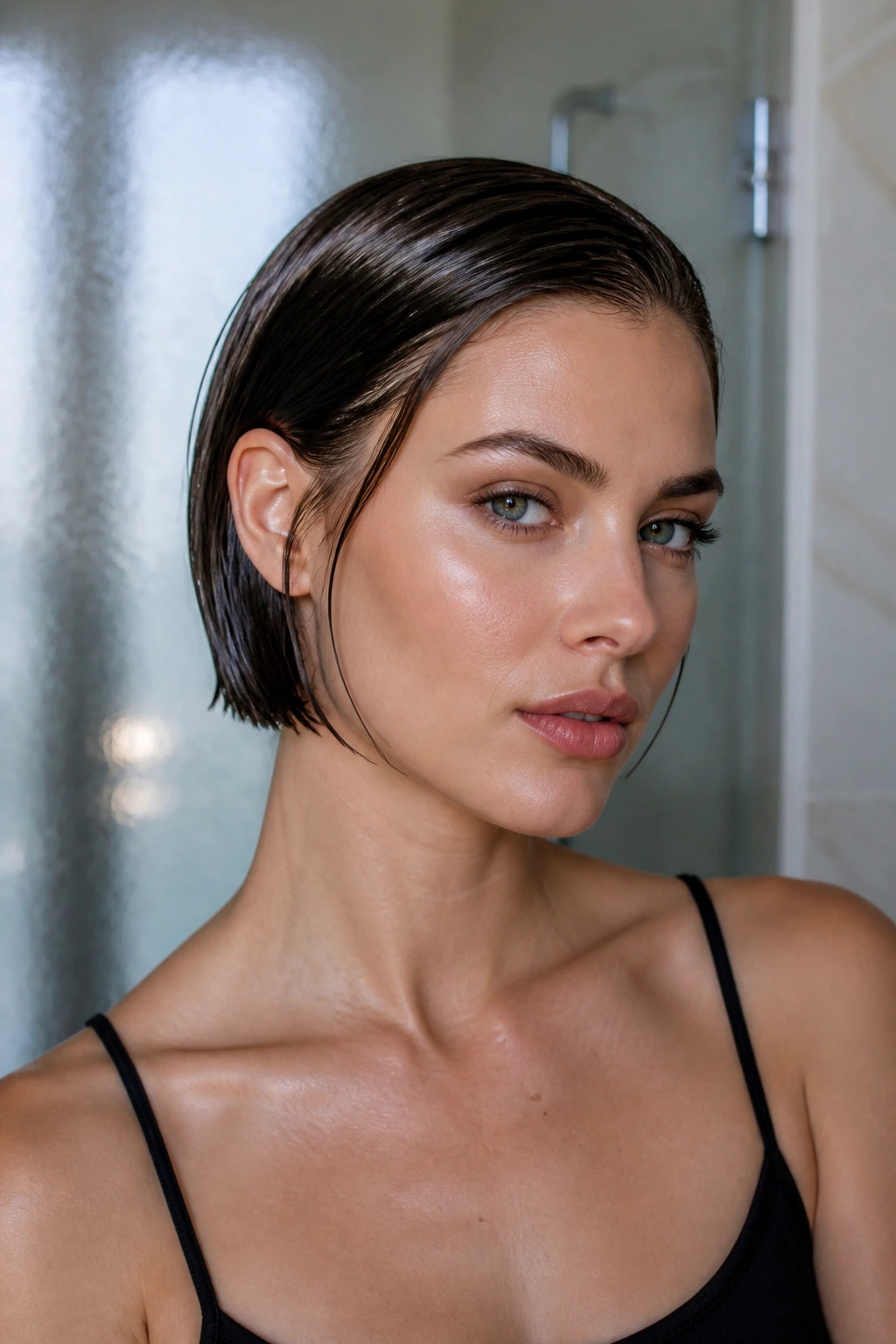
A wet-look bob is less about the haircut itself and more about how the bob is styled, but on straight hair the result can be striking. The hair is smoothed close to the head with shine and separation, so the cut line becomes the main event. Every edge is visible.
This style works best on a precise bob with a clean perimeter. A wobbly cut does not get rescued by gel. It gets exposed. If the shape is good, though, the wet finish can make even a simple chin-length bob feel deliberate and a little fashion-forward.
Use a small amount of gel or shine cream and comb the hair into place while it’s damp. Too much product and it turns greasy rather than glossy. The sweet spot is controlled, not crunchy.
27. Blown-Out Bob
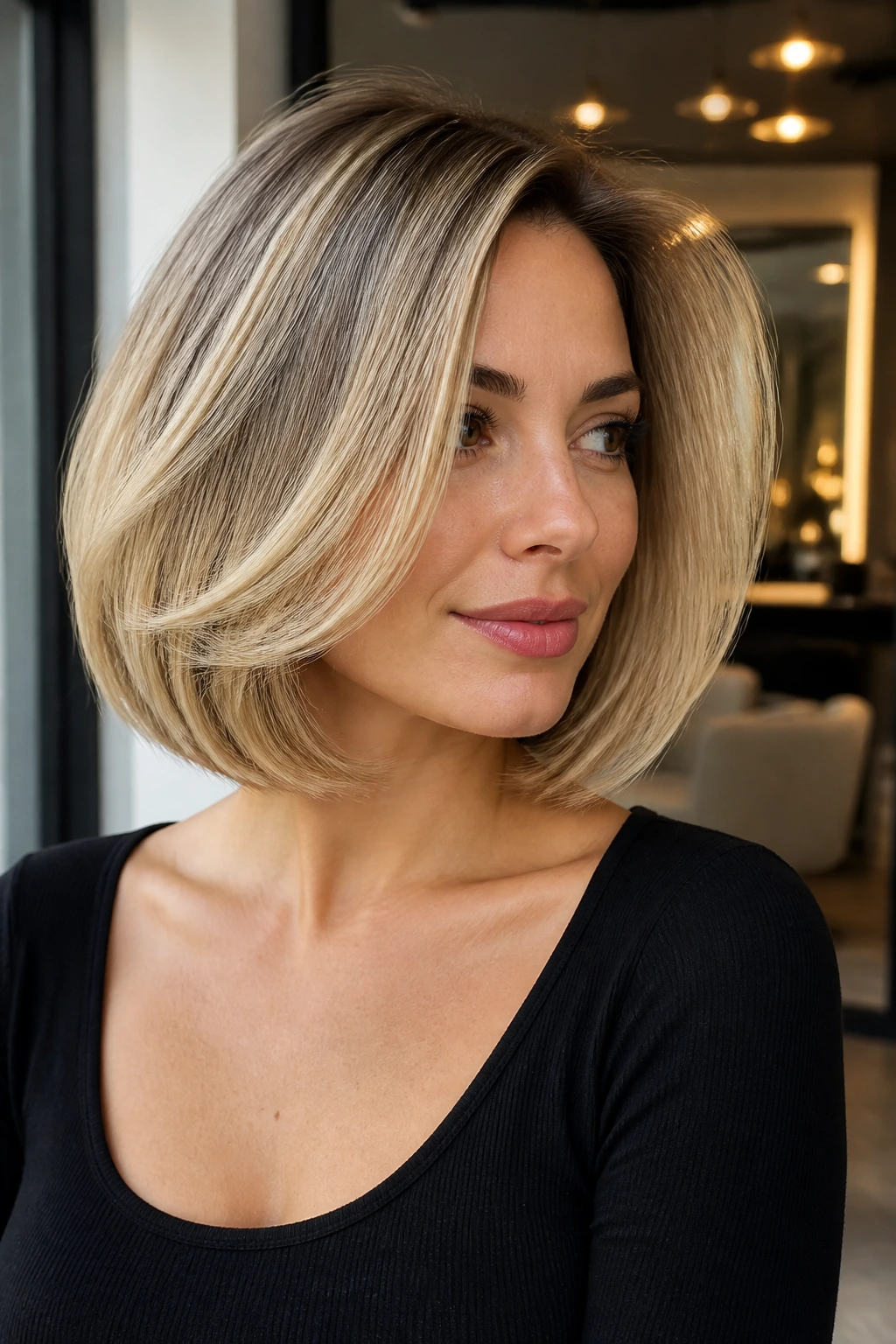
A blown-out bob keeps the line clean but adds a little roundness through the ends and crown. Straight hair can look a touch severe if it’s air-dried too flat, so this cut benefits from a proper blowout with lift at the roots and a soft bend at the bottom.
I like this version when a client wants movement without curl. The blowout adds shape that a flat iron can miss. It also keeps the bob from clinging too tightly to the head, which is a problem on fine, straight hair that tends to collapse by lunchtime.
The trick is not to chase perfection. A good blowout should look smooth, not frozen. Let the brush guide the hair, then stop before every strand becomes stiff. That little bit of softness keeps the cut from feeling old-fashioned.
28. Rounded Jaw Bob
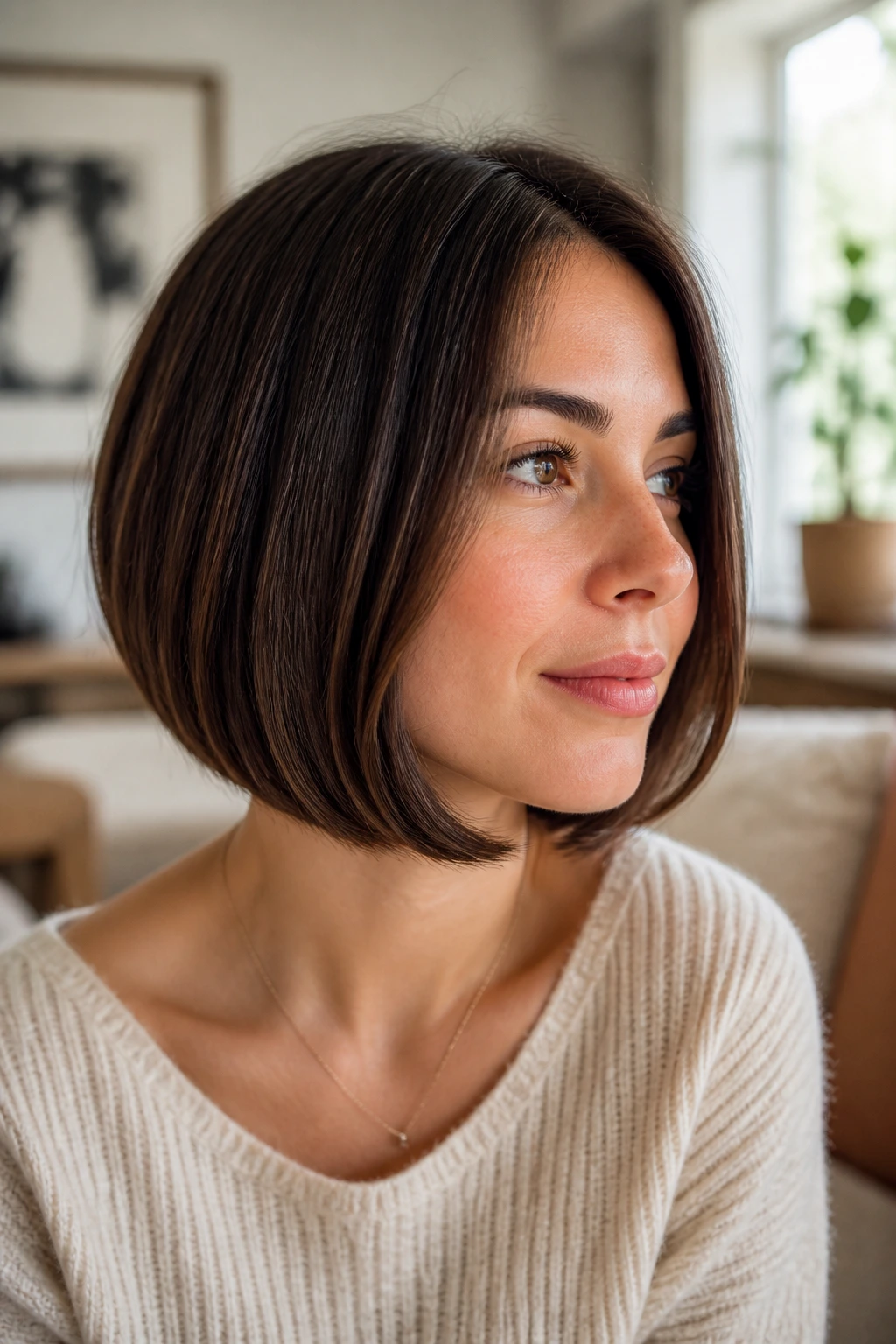
A rounded jaw bob curves gently around the jawline instead of sitting as a hard block. Straight hair gives that shape a very readable outline, and that can be useful if you want the lower part of the face to look softer.
This cut is flattering on strong or square jaws because the ends move around the face rather than cutting across it. It also works on finer hair, since the rounded shape can create the illusion of a fuller silhouette. If the bob is too short, though, it can hug the face too tightly and make it look smaller than you want.
Ask for softness at the corners. That’s the detail people miss. The rounded bob is not about curling the ends under aggressively; it’s about letting the line bend naturally around the face.
29. Ear-Length Bob
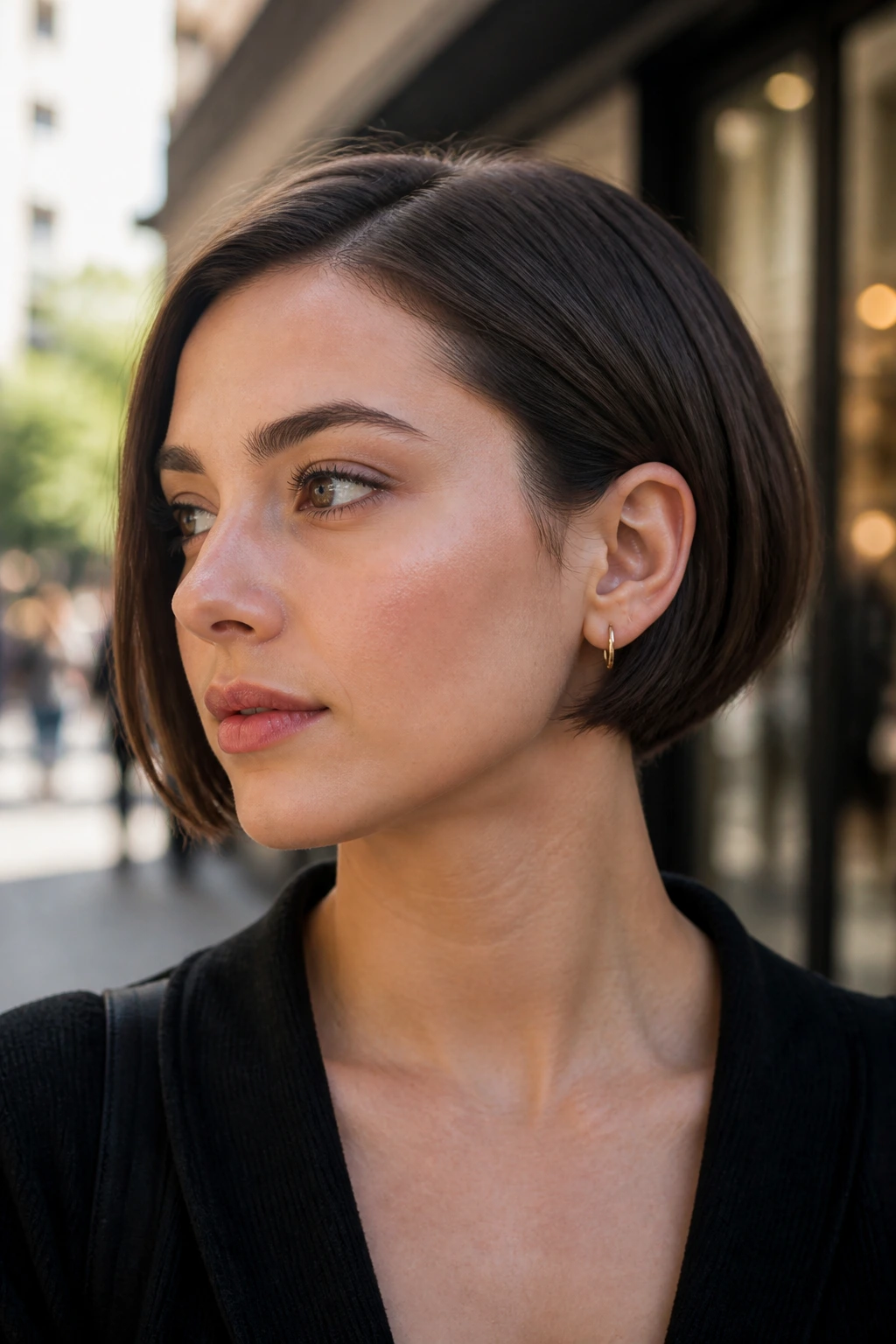
An ear-length bob is short, sharp, and a little fearless. Straight hair suits the length because the cut shows every contour around the ears, temples, and nape without needing extra volume to hold it up. It can look playful, but it can also look polished in a very minimal way.
This length is best if you’re comfortable with your face being front and center. It highlights earrings, brows, and cheekbones. It also needs regular trimming, because even a half inch of growth changes the whole mood of the cut.
I wouldn’t call this the easiest bob to live with if you’re someone who tucks hair constantly or wants flexibility. But if you like a neat shape that clears the neck and dries fast, it has real charm. There’s no dragging weight here.
30. Collarbone-Grazing Lob With Long Layers
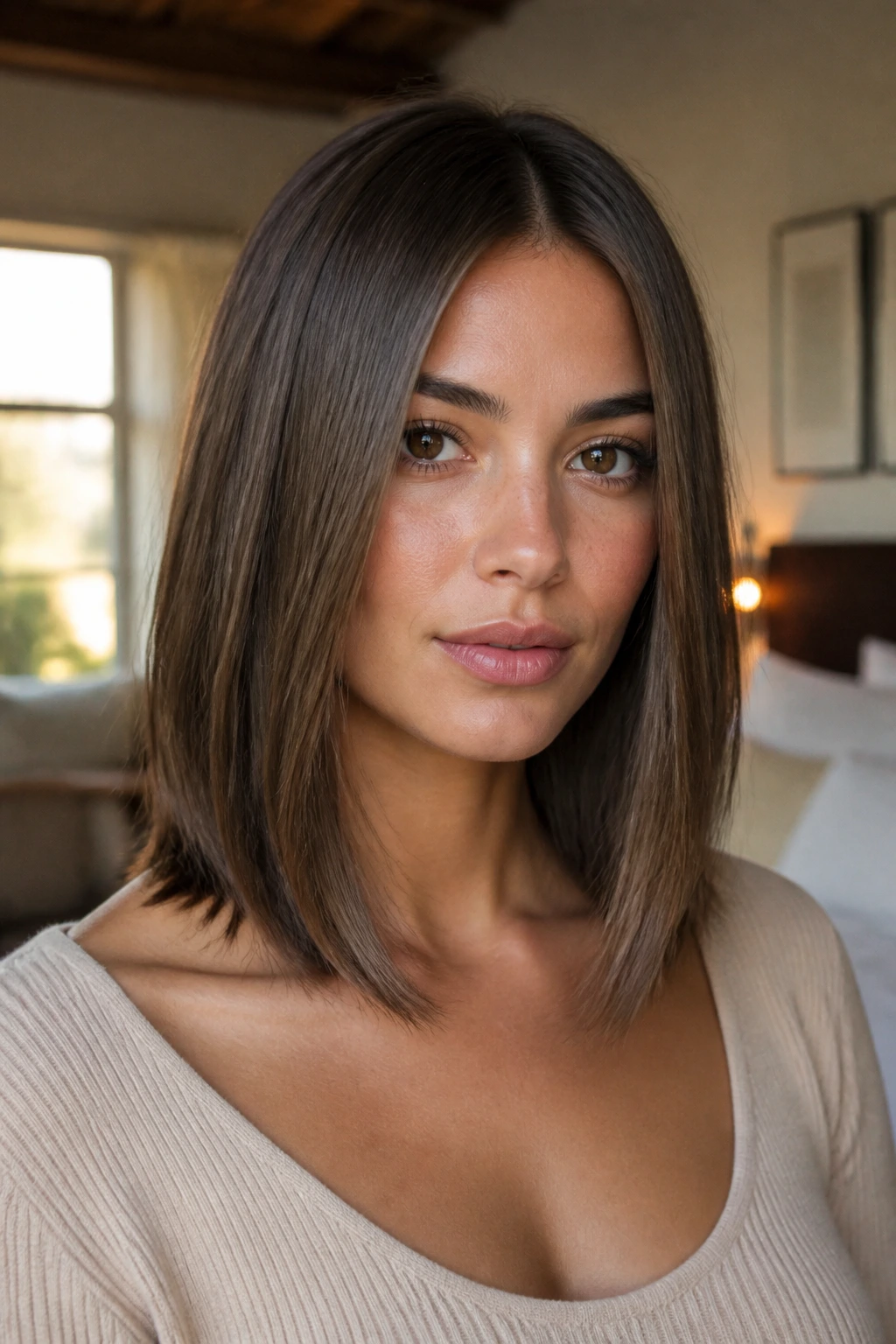
A collarbone-grazing lob with long layers is a good answer when you want the bob family but don’t want to lose shoulder-length versatility. Straight hair gives the longer pieces a sleek line, while the long layers keep the ends from feeling heavy.
This cut is a nice middle ground for thick hair that needs movement and for fine hair that can’t afford too much thinning. The layers should be long enough to blend rather than break up the shape. If they’re cut too high, the lob starts to feel wispy and less deliberate.
Wear it center-parted for a clean look or side-parted for more lift. It can tuck, clip, and half-up without much trouble. That kind of flexibility is why I keep recommending it to people who want change but not commitment.
31. Undercut Bob
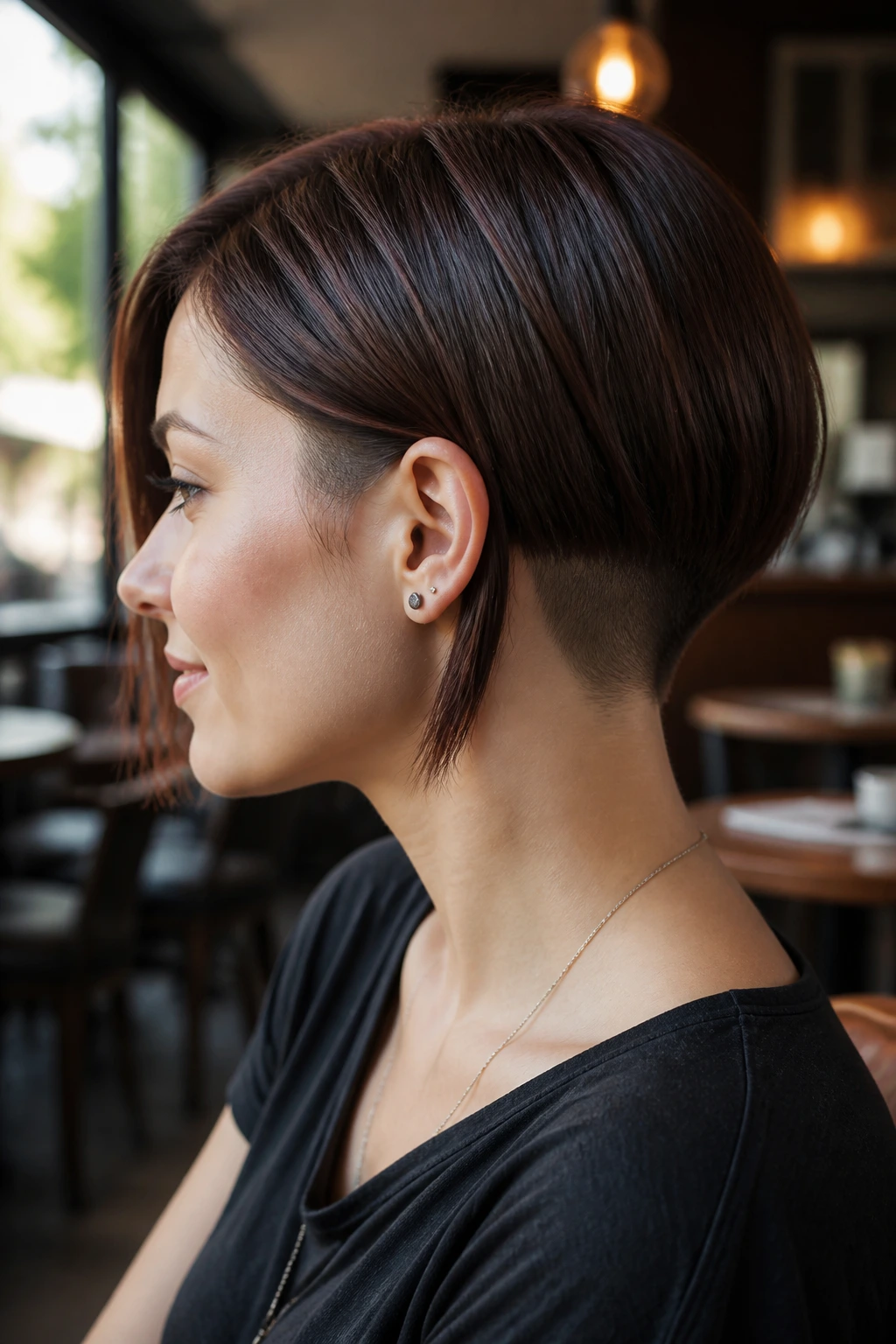
An undercut bob takes weight out from underneath, usually at the nape or lower back section, while leaving the visible top layer clean and full. On straight hair, that hidden reduction can make a huge difference because it removes the bulk that usually makes bobs sit too wide.
This is a smart move for dense hair or hair that swells under hats and collars. The outside still looks like a proper bob, but the inside behaves better. You get less puff at the back and less resistance when you style it.
It’s not a casual decision, though. Once the undercut is in, you’ll need regular maintenance to keep it neat. If you like hidden structure and less daily weight, it’s a good trade. If you want a low-maintenance grow-out, maybe skip it.
32. Flipped-End Bob

A flipped-end bob leans into a little outward curve at the bottom, which gives straight hair a retro, lively finish. The flip keeps the cut from feeling too serious and can add a bit of movement around the jaw and neck.
This is one of my favorite options when the hair naturally wants to kick out anyway. Instead of fighting that tendency, you work with it. A slight flip can make the cut look intentional, especially if the rest of the hair is smooth and controlled.
The danger is over-flipping. If the ends turn out too much, the bob starts looking dated in a bad way. Keep the flip subtle and let it act like punctuation rather than decoration. That’s enough.
33. Breezy Lob

A breezy lob sits just long enough to brush the shoulders, with soft ends and a light, easy feel. Straight hair gives this cut a clean line, but the softness at the bottom keeps it from feeling heavy or boxy. It’s the kind of bob-adjacent cut that lets you keep length while still getting the shape.
This is the one I’d suggest if you want the least drama and the most flexibility. You can wear it smooth, tuck it behind the ears, clip it half up, or give the ends a slight bend. It grows out gracefully too, which is worth something. Haircuts are not only about the first week after the salon.
If you’re unsure whether you want a true bob or a longer cut, start here. It gives you the silhouette without the sharp commitment.
Why Straight Hair Makes Bob Shapes Look So Clean
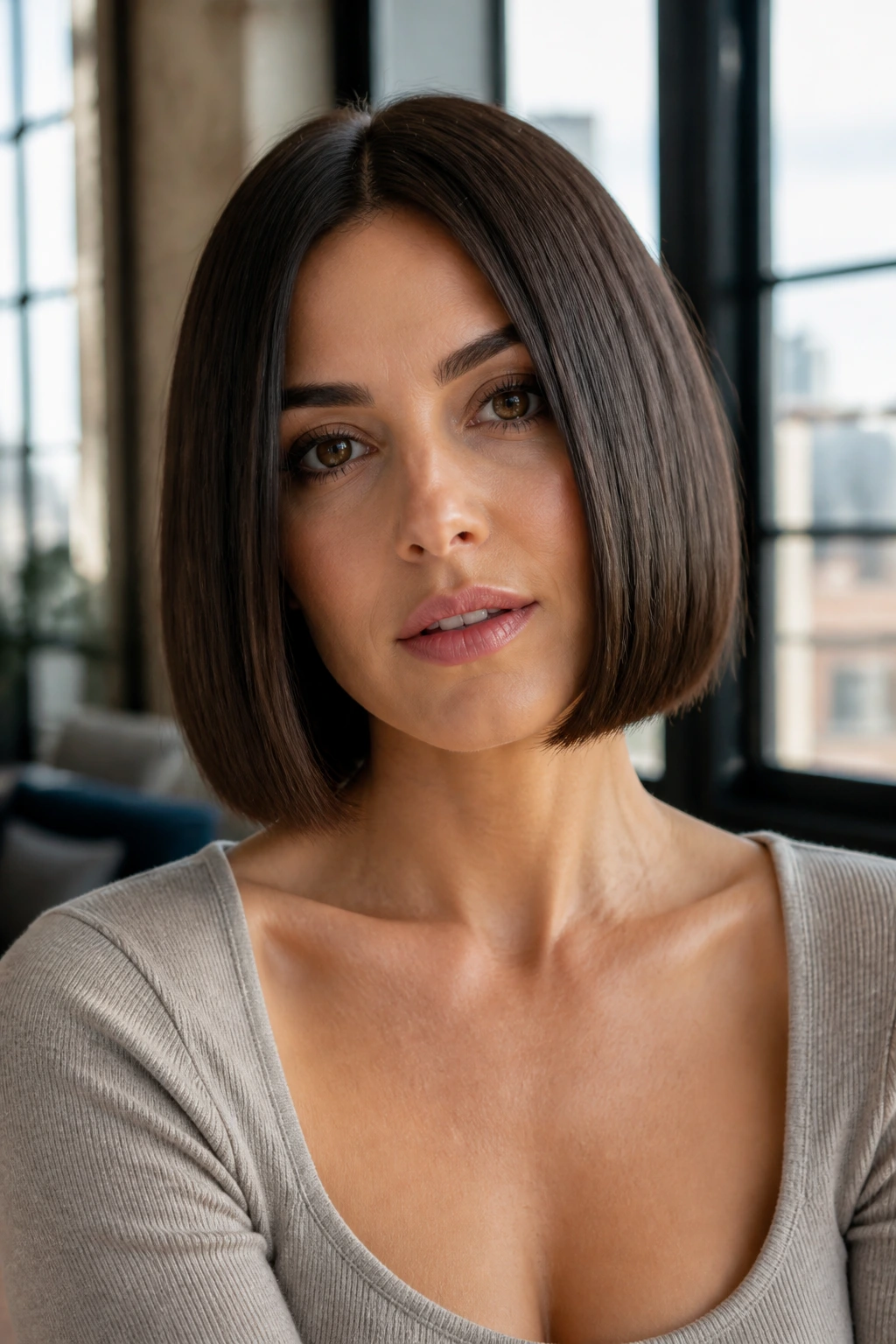
Straight hair is unforgiving, and that is exactly why it works so well with bob haircuts. The hair lies where it’s cut, so a strong perimeter actually stays visible instead of disappearing into waves or curls. A blunt edge looks blunt. A slope looks like a slope. You get the shape you asked for, not a softened version of it.
That also means the haircut has to be built with weight in mind. Straight hair often shows the heaviest part of the cut around the ends, so if the perimeter is too thick, the bob can look like a shelf. If it’s too thinned out, it can look weak and wispy. The sweet spot sits in the middle: enough density to hold the line, enough internal control to let the shape move.
Cowlicks, growth patterns, and neck hairlines matter more here than people think. A bob that looks perfect from the front can kick out at the back if the crown or nape fights the cut. A good stylist reads those patterns before the scissors touch the hair. That’s the real difference between a bob that sits well and one that needs daily negotiation.
The Cutting Tools and Styling Gear That Actually Help
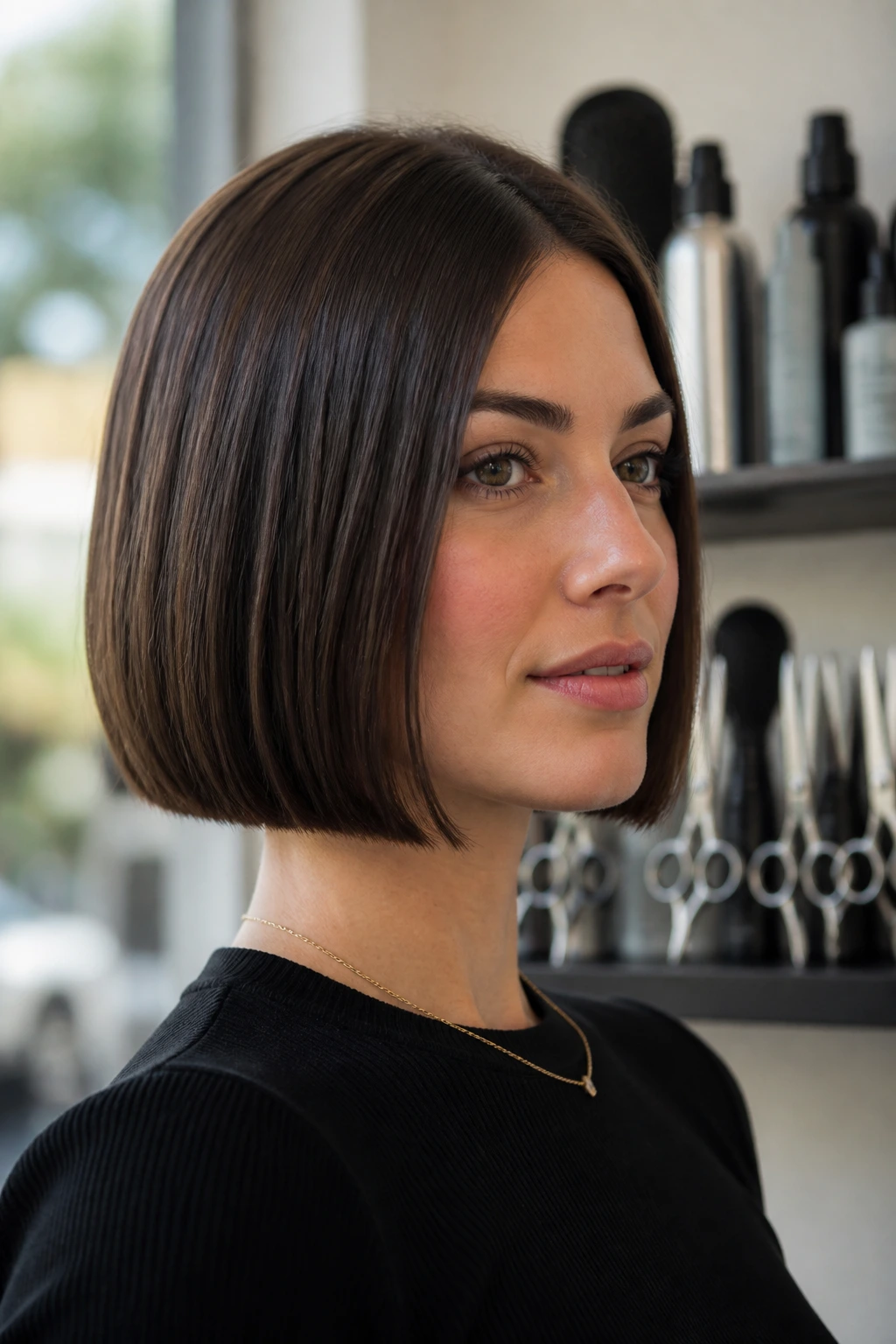
You do not need a drawer full of gadgets, but a few specific tools make straight-hair bobs easier to live with.
- Sharp haircutting shears: Dull blades chew the ends and make a blunt bob fray faster than it should.
- Fine-tooth comb: Useful for clean parting and checking whether both sides fall evenly.
- Tail comb: Handy for sectioning the crown and keeping the part line straight.
- Blow dryer with a nozzle attachment: Directs the air so the cut dries smooth instead of puffy.
- Paddle brush: Best for smoothing the surface on longer bobs and lobs.
- Small round brush: Good for tucking ends under on chin-length or jaw-skimming cuts.
- Flat iron with adjustable heat: Helpful for a glass bob or a subtle bend at the ends.
- Heat protectant spray: Keeps the surface from getting fried after repeated smoothing.
- Light smoothing cream or serum: Tames flyaways without making the hair sticky.
- Dry shampoo: Useful at the roots when a straight bob starts to separate and show oil.
- Hair clips: Needed for sectioning when you blow-dry or set the part.
- Mirror with a rear view: Non-negotiable if you want to check the nape and back corners.
How to Pick the Right Bob for Your Face, Density, and Cowlicks
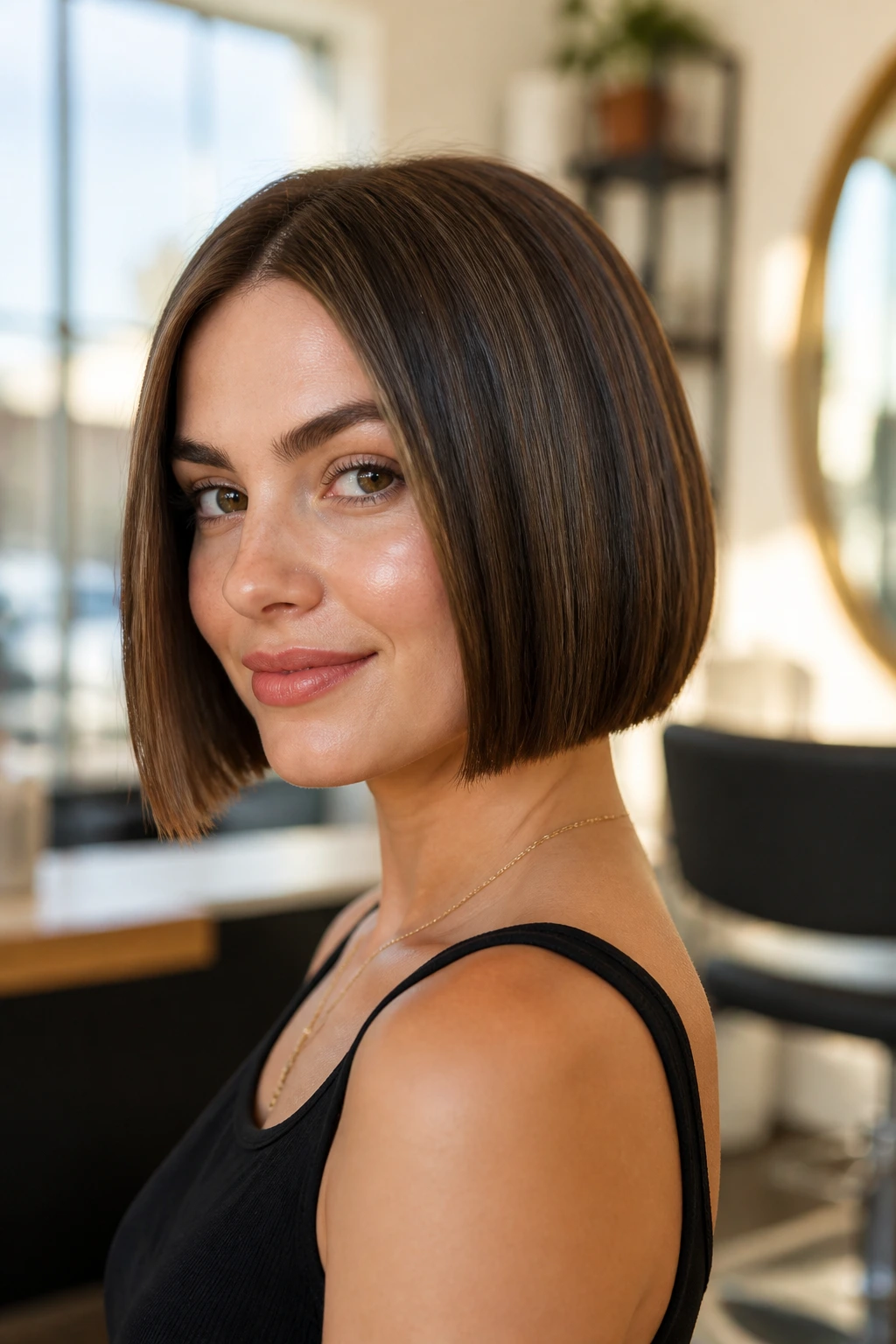
A bob is not one cut with 33 names. It’s a set of small shape decisions. The length, the weight line, the part, and the edge all work together, and straight hair makes every one of those choices visible.
If your face is round, a slightly longer front piece often helps more than a strict chin line. If your face is long, a blunt chin-length or rounded bob can add width in the lower half and stop the face from looking even longer. Square faces usually benefit from some curve or face-framing softness around the jaw, because a hard boxy edge can feel too severe.
Hair density changes the game too. Fine straight hair usually does better with a clean perimeter and minimal internal layering. Thick straight hair often needs hidden weight removal or a graduated back so it does not balloon out. If your hair falls flat at the crown, a side part or a lightly stacked back can give the illusion of lift without daily teasing.
Cowlicks deserve respect. If you have a stubborn swirl at the nape, do not fight it with a razor-sharp, ultra-short back unless you enjoy wrestling with your blow-dryer every morning. A slightly longer nape or a more graduated shape is easier to live with. That one detail can save you a lot of irritation.
How to Style These Bobs Without Making Them Look Overworked
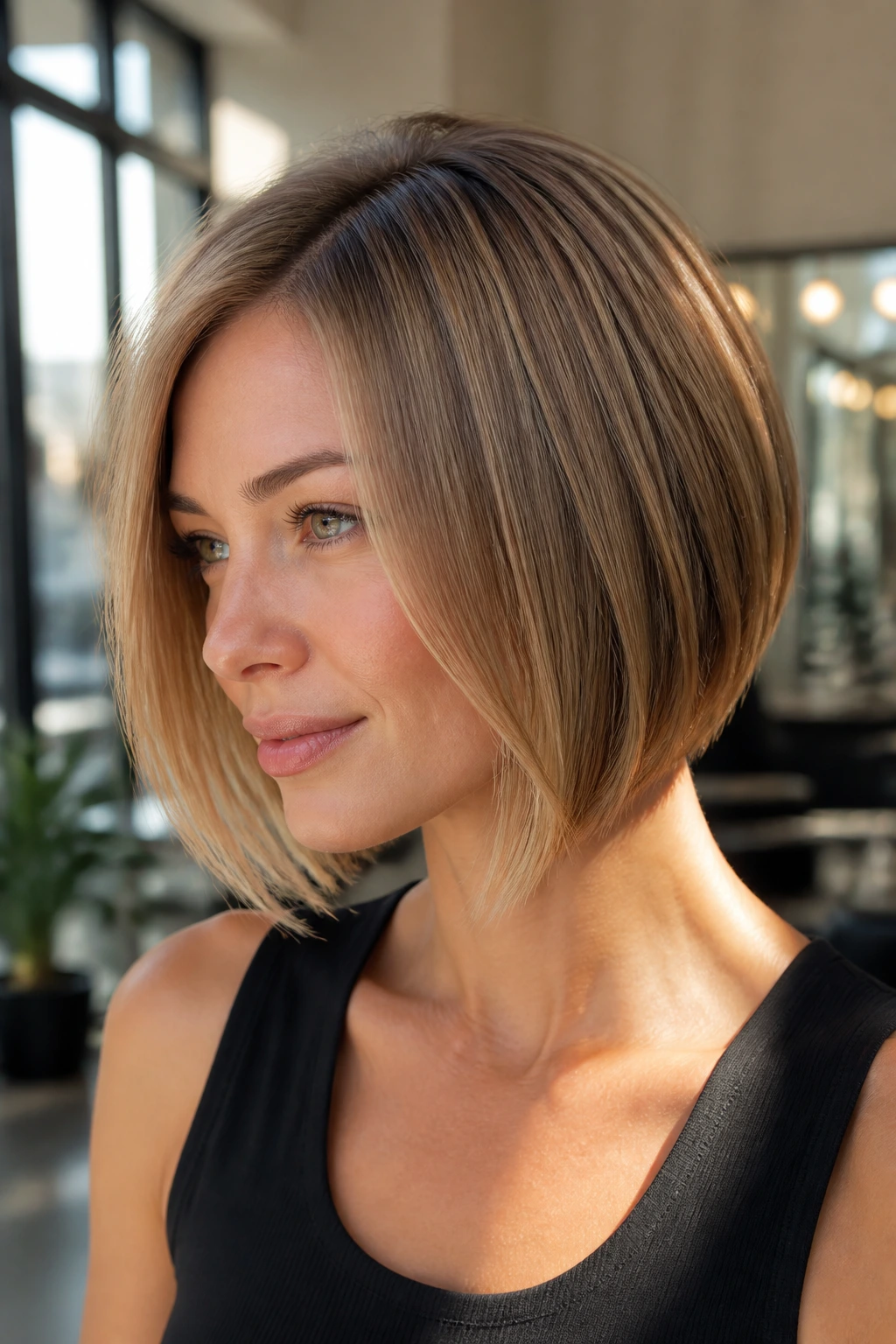
Blow-Dry Direction: Point the nozzle from root to ends and keep the airflow moving downward. Straight hair gets dull and puffy when the cuticle is roughed up by hot air coming from every angle.
Root Control: Lift the crown with your fingers or a flat brush for a few seconds, then let it fall back into place. You want enough height to keep the top from collapsing, not a helmet of volume.
End Shape: For blunt bobs, wrap the ends slightly under. For angled or flipped cuts, use a soft wrist turn so the hair curves where the cut wants to move. Don’t force a curl that the haircut never asked for.
Product Use: A pea-sized amount of smoothing cream or a light serum goes farther than most people think. Put it on the mid-lengths and ends, then stop. Too much product makes straight hair limp fast.
Flat Iron Rule: If you use heat, touch only the pieces that need it. A bob that is re-flattened every day can start to look lifeless by midweek, especially on fine hair.
Common Mistakes That Throw Off a Straight-Hair Bob
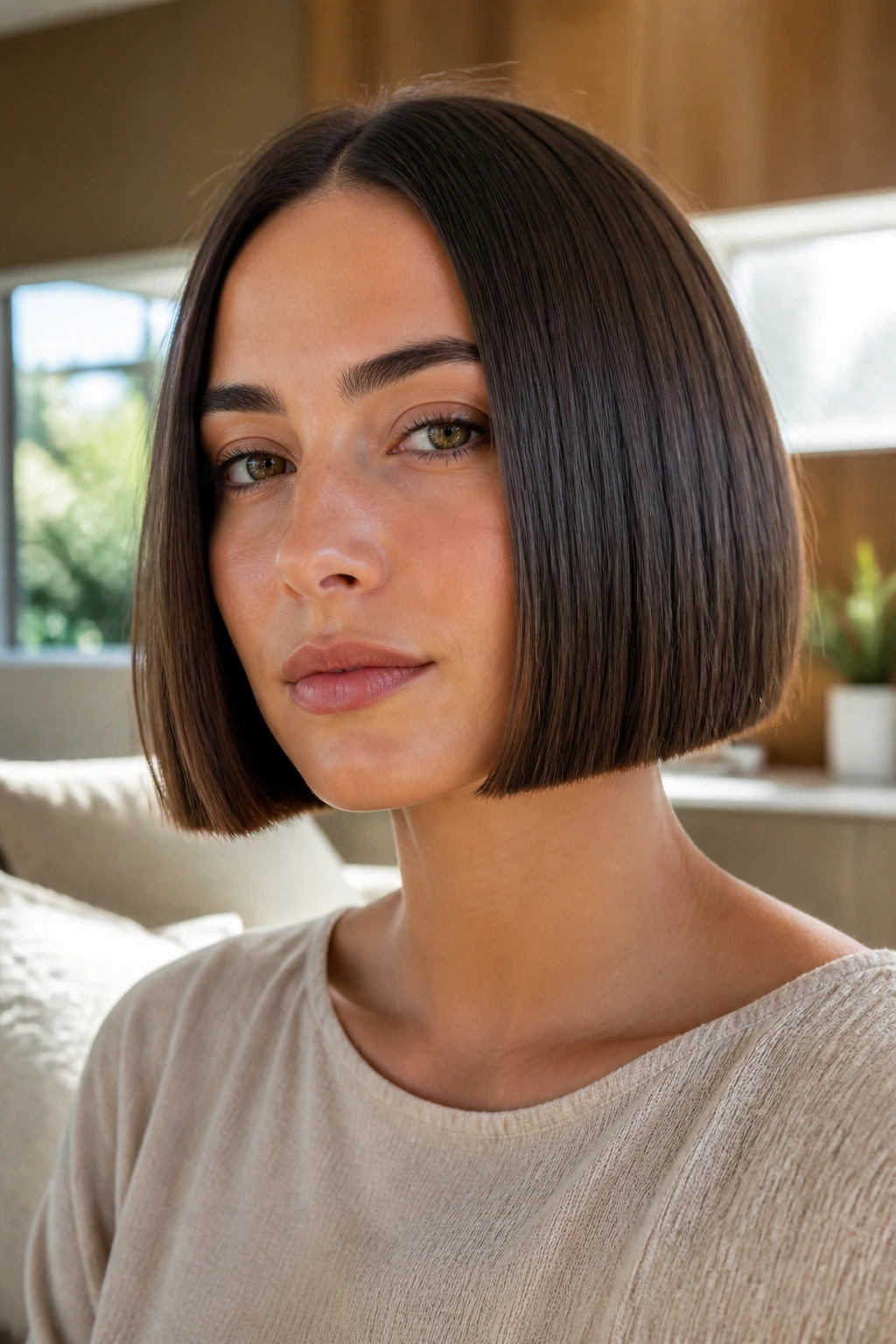
The first mistake is cutting too many short layers into hair that already lies flat. The result is often a bob that looks thinner than expected and separates awkwardly at the ends. If you want movement, ask for internal shaping or longer layers instead of a stack of short pieces.
Another problem is ignoring the part. A bob cut to look good only on a center part can fall apart the minute you wear it elsewhere. If you know you switch sides often, tell the stylist. The balance should hold from both directions.
People also fight their hairline too hard. If the nape kicks out, the side corners puff, or one side grows faster, the cut should account for that. Forcing a severe shape onto an unwilling growth pattern usually means more daily styling and less enjoyment.
And then there’s over-straightening. Straight hair does not need to be ironed into a sheet every day. A little bend at the ends keeps the bob from looking stripped of life. Flat and shiny is good. Flat and lifeless is not.
Variations and Adaptations to Ask Your Stylist About
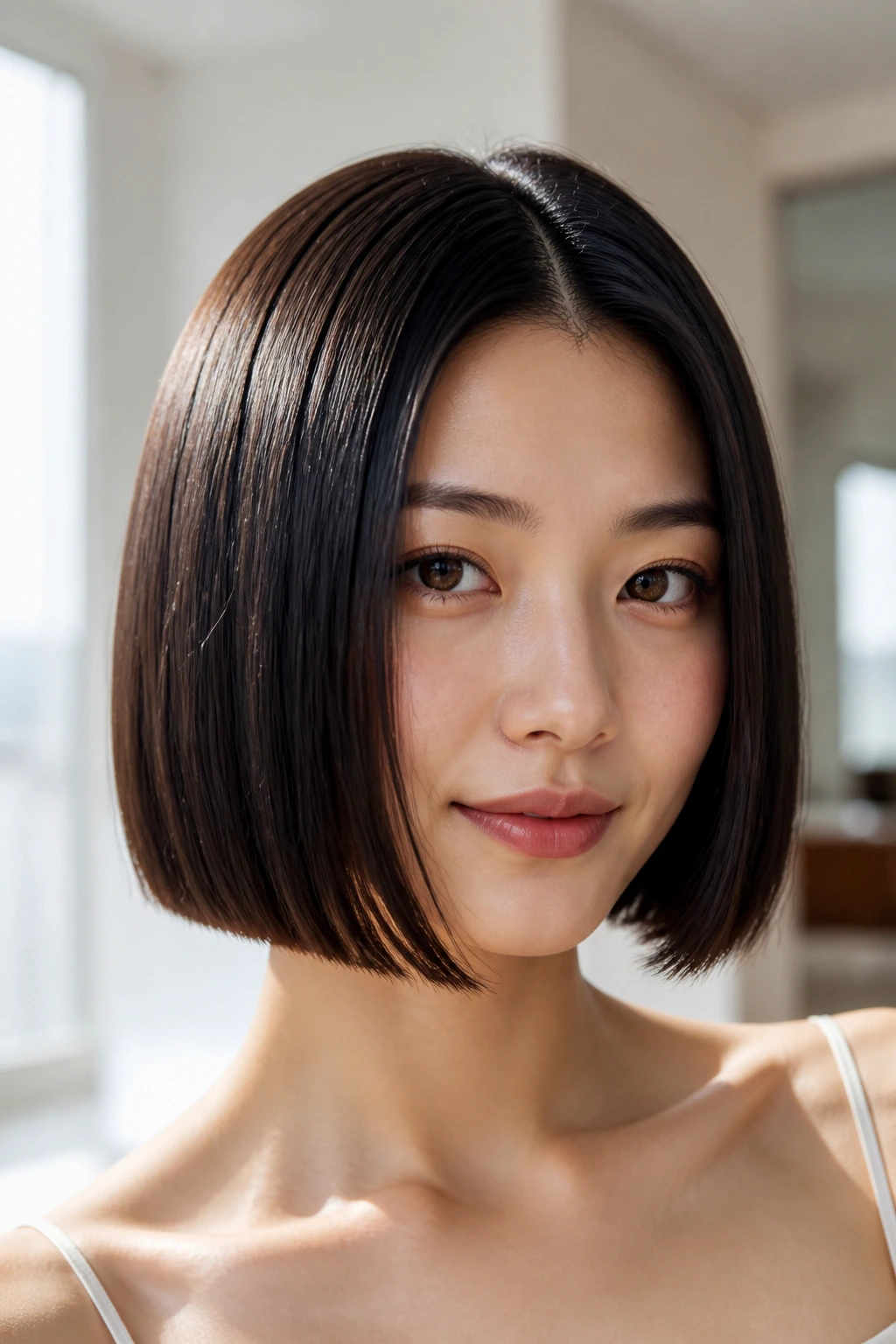
Longer Face-Framing Fronts: If you want the bob to feel softer, ask for front pieces that fall a little below the chin while the back stays cleaner. That gives you shape without boxing the face in.
Invisible Internal Layers: This is the answer for thick hair that needs movement but not visible texture. The outer line stays smooth while the inside loses bulk.
Banged-Up, But Gently: Full fringe, curtain bangs, or a wispy fringe can all change the feel of a bob without altering the length. Fringe is the fastest way to shift the mood of the cut.
Shorter Nape, Softer Sides: If your hair puffs at the back but you like fullness near the face, a light graduation in the nape can help. Keep the side panels longer so the cut doesn’t go too boxy.
Slightly Off-Center Part: A tiny shift in the part line can create lift and reduce the hard symmetry that some straight bobs can have. You do not need a huge side part to change the shape.
Keeping the Shape Sharp Between Trims

Straight-hair bobs show growth fast. Around 6 to 8 weeks is usually the point where the outline starts to lose its snap, especially on blunt or jaw-skimming cuts. Longer lobs can stretch farther, but if the ends begin to feel fuzzy or the corners stop sitting where they should, the shape is already drifting.
Between trims, dry shampoo at the roots can buy you a day or two of lift, but it will not fix a heavy perimeter. If the ends start kicking out, a quick flat-iron pass on the lowest setting that works for your hair can calm them down. Use heat protectant, always. No heroic shortcuts needed.
Sleep matters too. A satin pillowcase reduces friction, which helps straight hair keep its surface smooth instead of waking up with creases at the cheek line. If one side always bends weirdly overnight, pin it loosely or wrap it under a silk scarf. Small habits. Big difference.
If you blow-dry after washing, keep the airflow moving from root to end and finish with a cool shot. That locks the hair into the direction you set. Straight bobs are good at holding shape when they are set correctly, but they are also good at betraying lazy drying.
Frequently Asked Questions
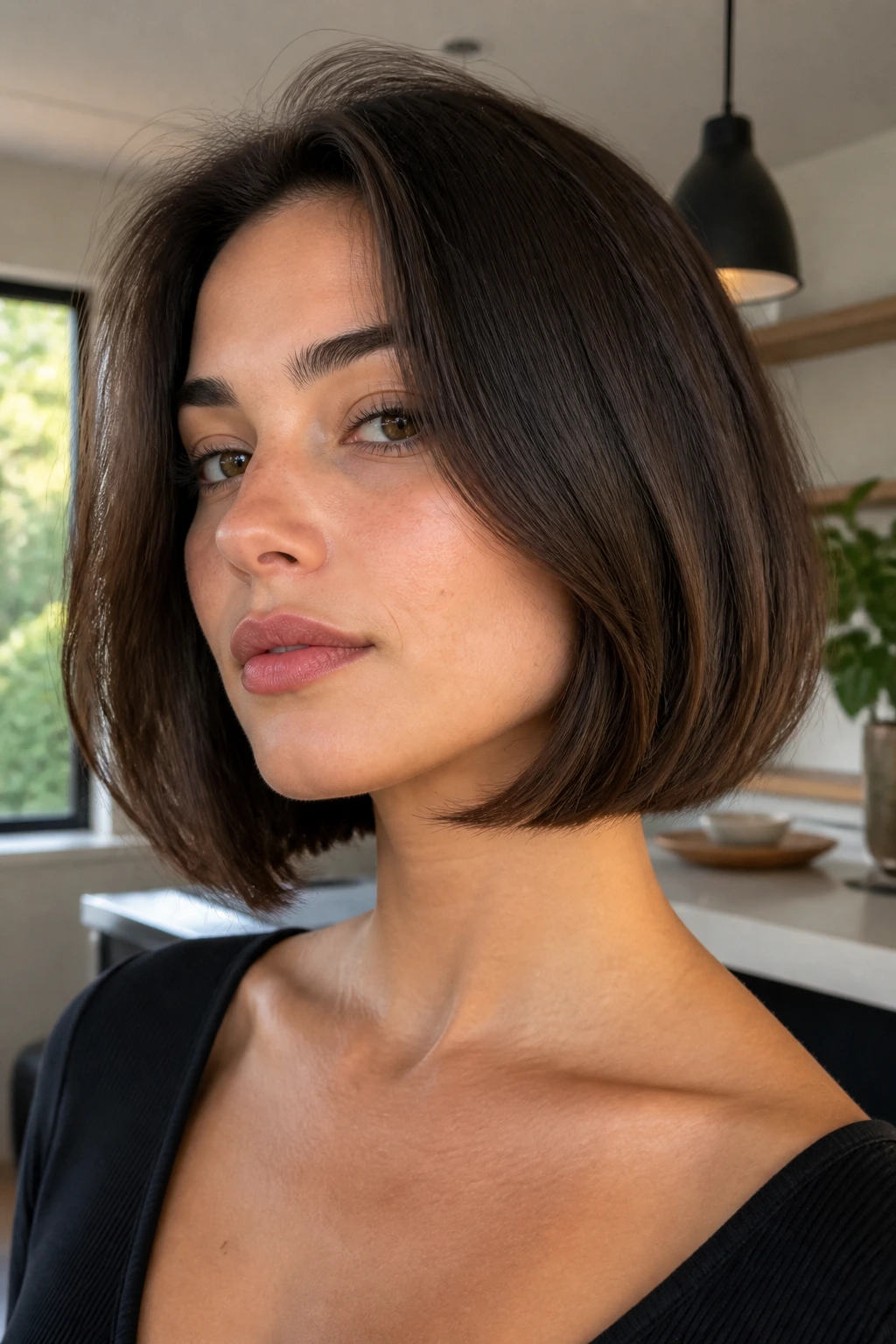
Which bob length is easiest to live with on straight hair?
A collarbone lob usually wins for flexibility. It still looks intentional, but it gives you enough length to tuck, clip, and tie back without feeling trapped by the cut.
Will a bob make fine straight hair look thinner?
It can, if the cut is overly layered or thinned out at the ends. A blunt or softly graduated bob usually keeps fine hair looking denser because the perimeter stays full.
How often should straight-hair bobs be trimmed?
Most need a trim every 6 to 8 weeks to keep the line sharp. Softer lobs can stretch longer, but blunt chin-length cuts lose their shape fast once they grow.
What if my hair flips out at the ends?
That usually means the cut or the blow-dry direction is encouraging the flip. Ask for a bit more weight at the perimeter, then dry the ends under with a brush instead of letting them air-dry wild.
Can I wear a bob if my hair is thick and straight?
Yes, but the inside of the cut needs control. Hidden layers, light graduation, or a subtle undercut can remove bulk so the bob sits close to the head instead of expanding outward.
Do curtain bangs work with a straight bob?
They do, as long as the bangs are cut light enough to split cleanly. Heavy curtain bangs can swallow the face; softer ones sit beside the eyes and cheekbones instead of crowding them.
Is a center part always the best choice for a straight bob?
No. A center part can look sleek, but a side part often gives more lift and can soften a face that feels too long or narrow. The cut should work with your face, not fight it.
How do I grow a bob out without the awkward stage becoming a mess?
Let it turn into a lob on purpose. Ask for longer face-framing pieces and keep the back clean enough that the shape still reads as deliberate while it gets longer.
The Bob That Fits Your Hair, Not Your Wishlist
The nicest bob is not the one with the fanciest name. It’s the one that sits where your hair already wants to sit and sharpens the things you like about your face without demanding a full-time styling job. Straight hair gives you that kind of clarity. You can see the cut for what it really is.
That’s why the details matter so much here. A quarter inch at the chin, a deeper part, a softer corner at the jaw — those tiny decisions change how the whole haircut behaves. Pick the shape that matches your hair’s habits, and the rest gets easier.
