



Fine hair and a shag mullet have a better relationship than most people give them credit for. The cut doesn’t bully the hair into looking fuller with heavy blunt ends; it cheats a little, in the best way, by moving weight to the right places, breaking up the outline, and letting the crown sit higher than it would in a one-length cut.
That matters because fine hair can go flat fast. Too blunt, and it looks thin at the perimeter. Too layered, and the ends start to look wispy in a bad way, like the haircut ran out of material halfway down the shaft. A well-built female shag mullet avoids both traps. It keeps the silhouette soft, leaves enough length in the back to feel intentional, and gives the top section some lift without turning the whole head into a pile of frizz.
The sweet spot is not “more layers.” It’s smarter layers. Some of these cuts are barely rebellious at all; others lean harder into the mullet shape. All of them have one thing in common: they’re designed to make fine hair look like it has movement, not just less hair. And that difference is everything.
Why This Collection Works on Fine Hair
-
Crown lift without teasing: Shorter top layers around the crown make the roots stand up on their own, so you do not need to backcomb the hell out of them every morning.
-
Airy ends instead of see-through ends: The best shag mullets leave the perimeter soft but not shredded, which keeps the haircut from looking sparse where the light hits most.
-
Shape that survives a lazy day: These cuts still look deliberate when you air-dry them, toss in mousse, and go.
-
Bang options for every forehead: Micro fringe, curtain bangs, bottleneck bangs, and side-swept pieces all change the balance of the cut without demanding thick hair.
-
Easy to personalize: You can push these styles softer or choppier, longer or shorter, without losing the mullet shape that gives the haircut its backbone.
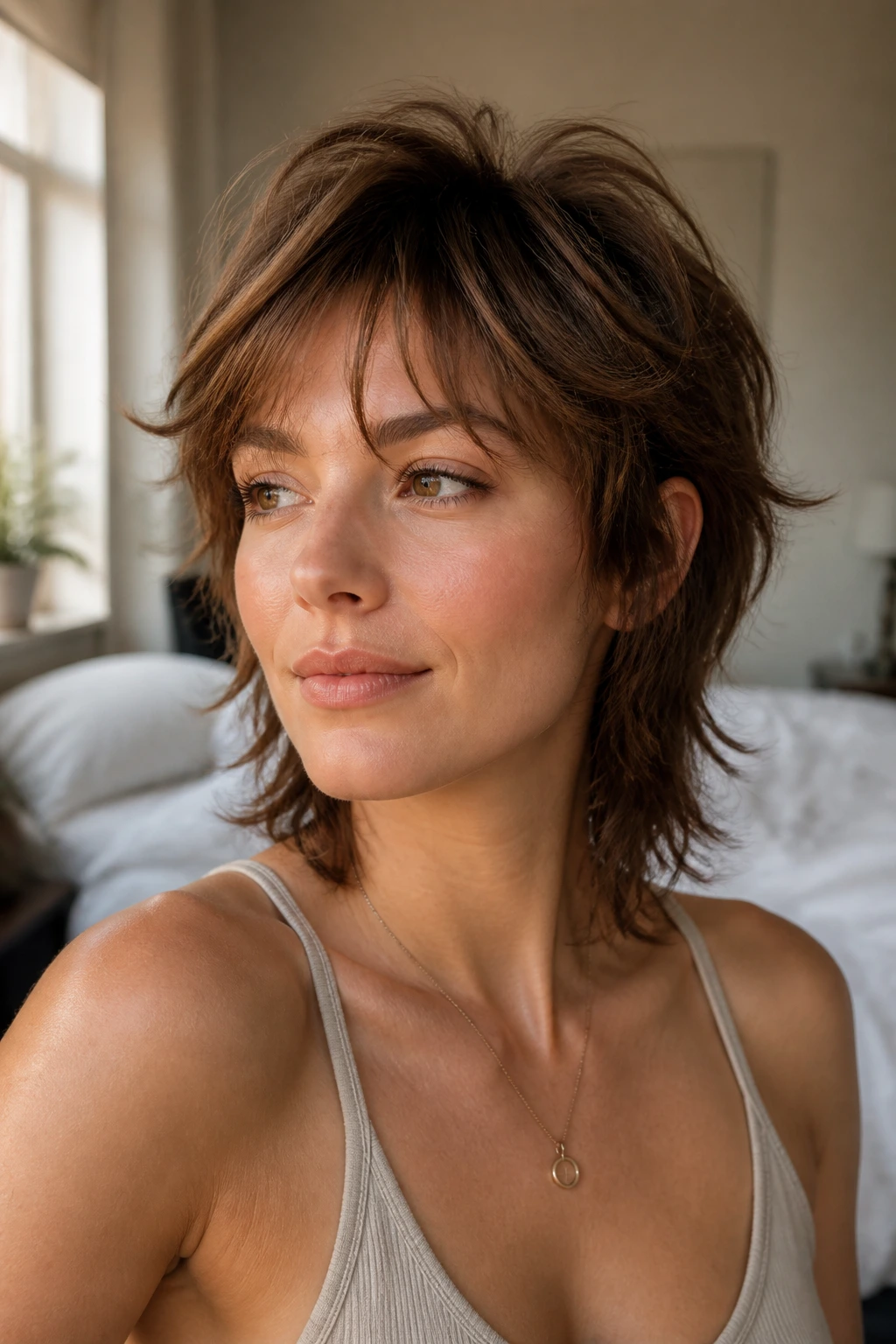
1. Soft Crown Lift Shag Mullet
This is the one I’d hand to someone who keeps saying, “I want volume, but I do not want a haircut that announces itself from across the room.” The top is cut to sit shorter through the crown, with the back left long enough to skim the neck. On fine hair, that little bit of crown height matters more than another half-inch off the ends ever will.
Why it works on fine hair
The haircut builds lift where fine hair usually collapses first. Ask for the shortest layers to start around the upper crown and the face frame to begin near the cheekbones, not the temples. That keeps the shape soft.
A pea-size puff of mousse at the roots, then a quick upside-down blow-dry, gives this cut its best version of itself. Not fussy. Just clean, airy, and not too precious.
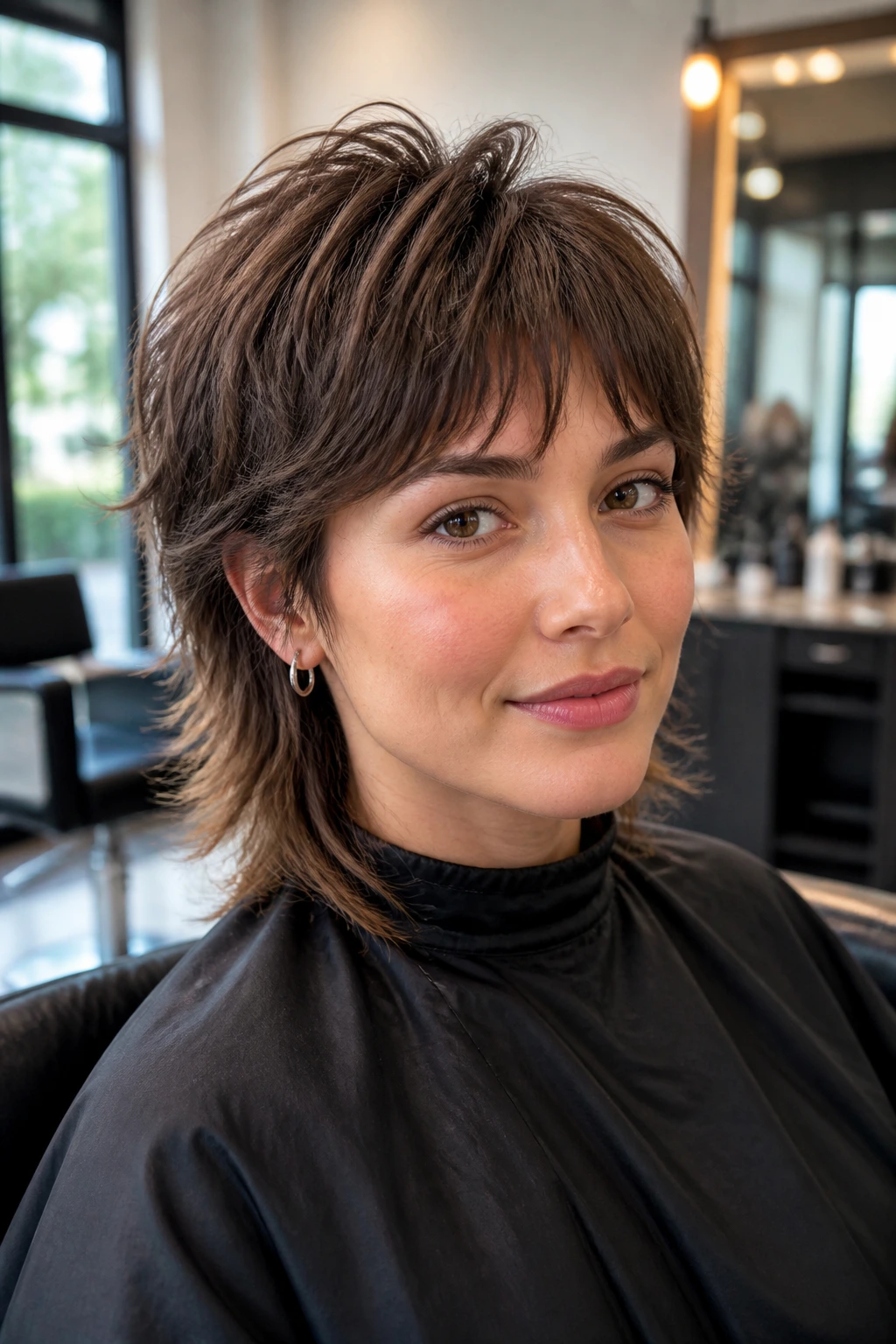
2. Micro-Bang Mullet with Feathered Ends
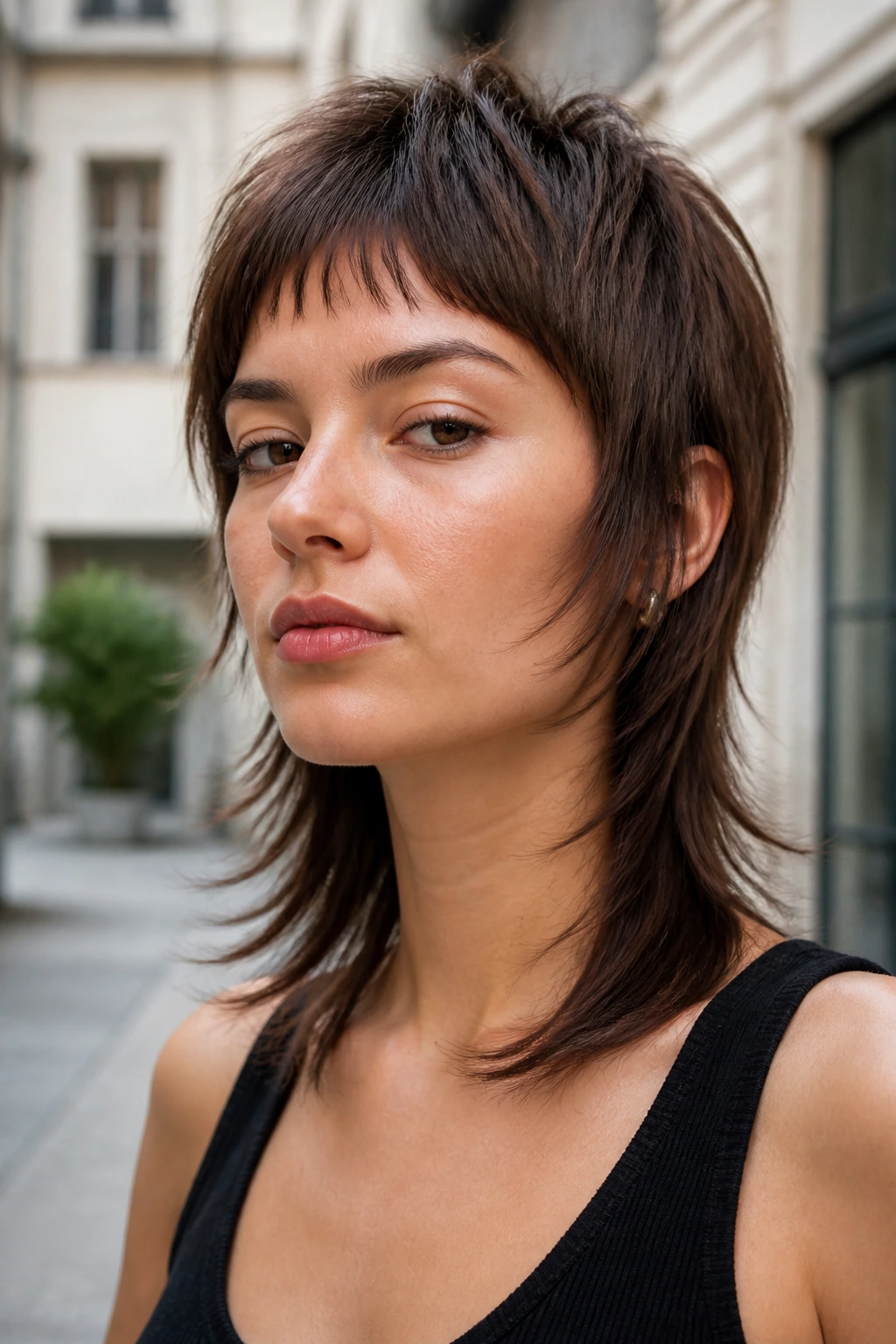
Tiny bangs change the whole mood here. The fringe sits high, usually just above the brows, while the sides stay feathered and the back keeps a little length. It looks sharp on paper and surprisingly sweet in real life, especially on fine hair that needs a bit of edge to avoid looking too wispy.
The trick is not to make the fringe dense. That’s where people go wrong. A micro bang on fine hair should feel see-through in the right way, with narrow pieces that let a little forehead show through. Pair that with soft, broken-up ends and the whole cut stays light instead of heavy.
3. Chin-Length Shag Mullet with Airy Layers
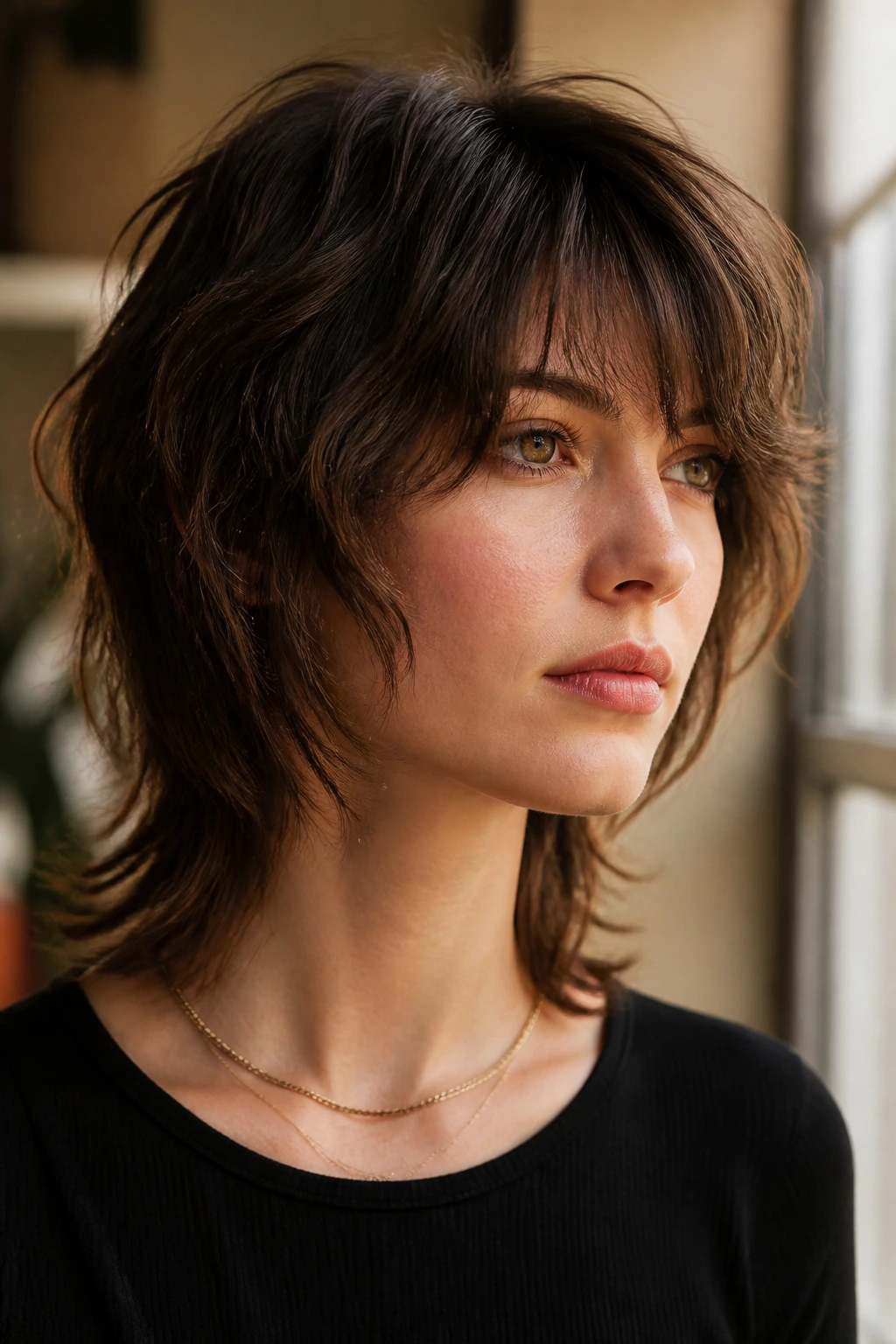
This one sits in that useful middle zone between bob and mullet, which is why so many fine-haired people end up loving it after they’ve been burned by harsher cuts. The front grazes the chin, the layers move up toward the cheekbones, and the back drops long enough to keep the profile interesting.
What I like here is the balance. You get enough shape around the face to make the hair feel fuller, but the ends don’t get so shredded that they vanish. If your hair tends to flop straight down by noon, this cut gives you a bit of bend without asking for a full styling session.
4. Curly-Wave Shag Mullet with Tapered Nape
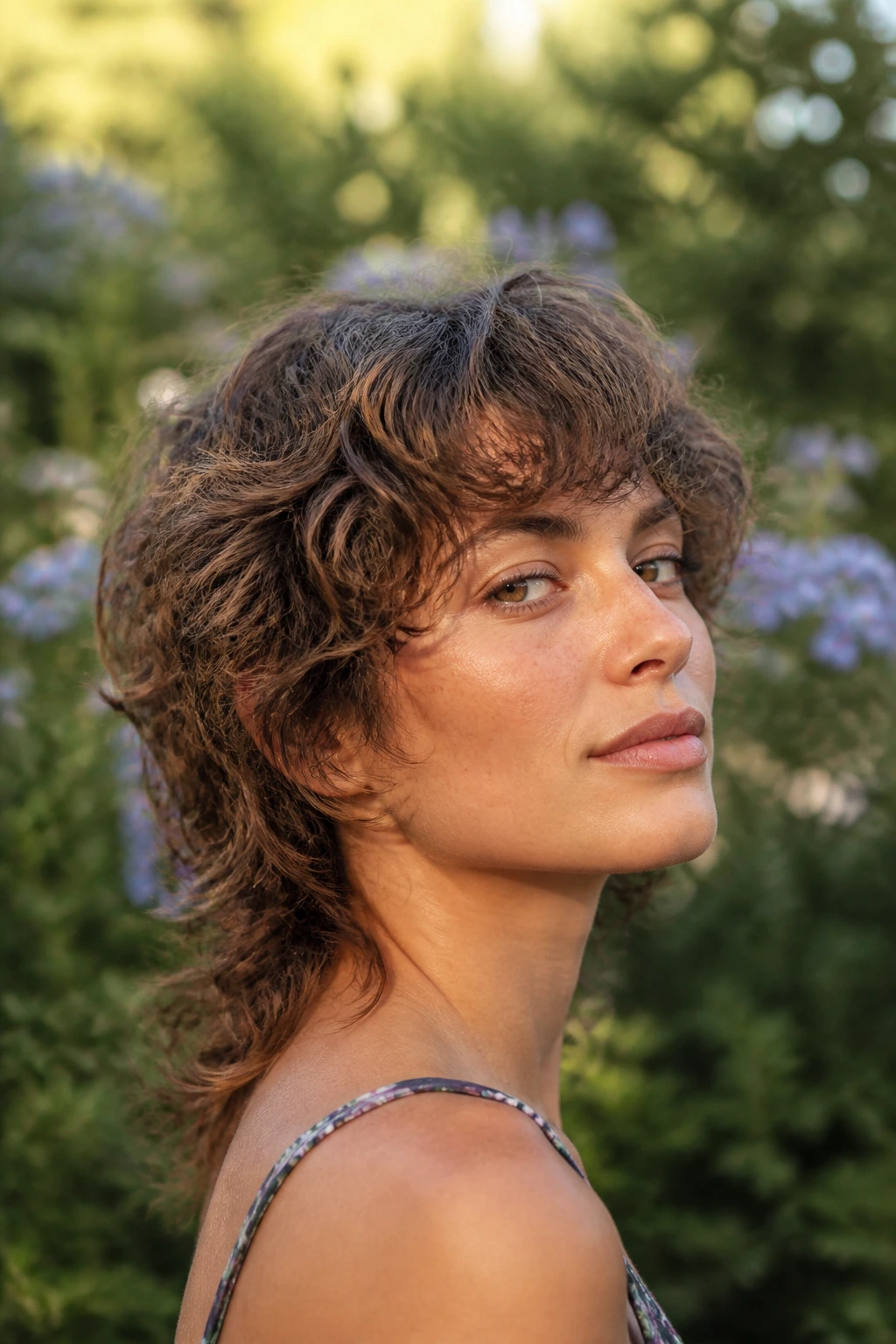
Fine hair with natural wave often gets treated as if it needs to be “managed.” It usually just needs the right cut. This version keeps a lighter top, encourages the wave to spring instead of stretch, and tapers the nape so the neckline doesn’t feel boxy.
The back should not be over-thinned. That’s the whole point. Fine wavy hair can look gorgeous with a mullet shape when the stylist leaves enough weight for the curls or bends to gather into soft clumps. A diffuser helps, yes, but the cut does the real work.
5. Razor-Edged Mullet with Curtain Bangs
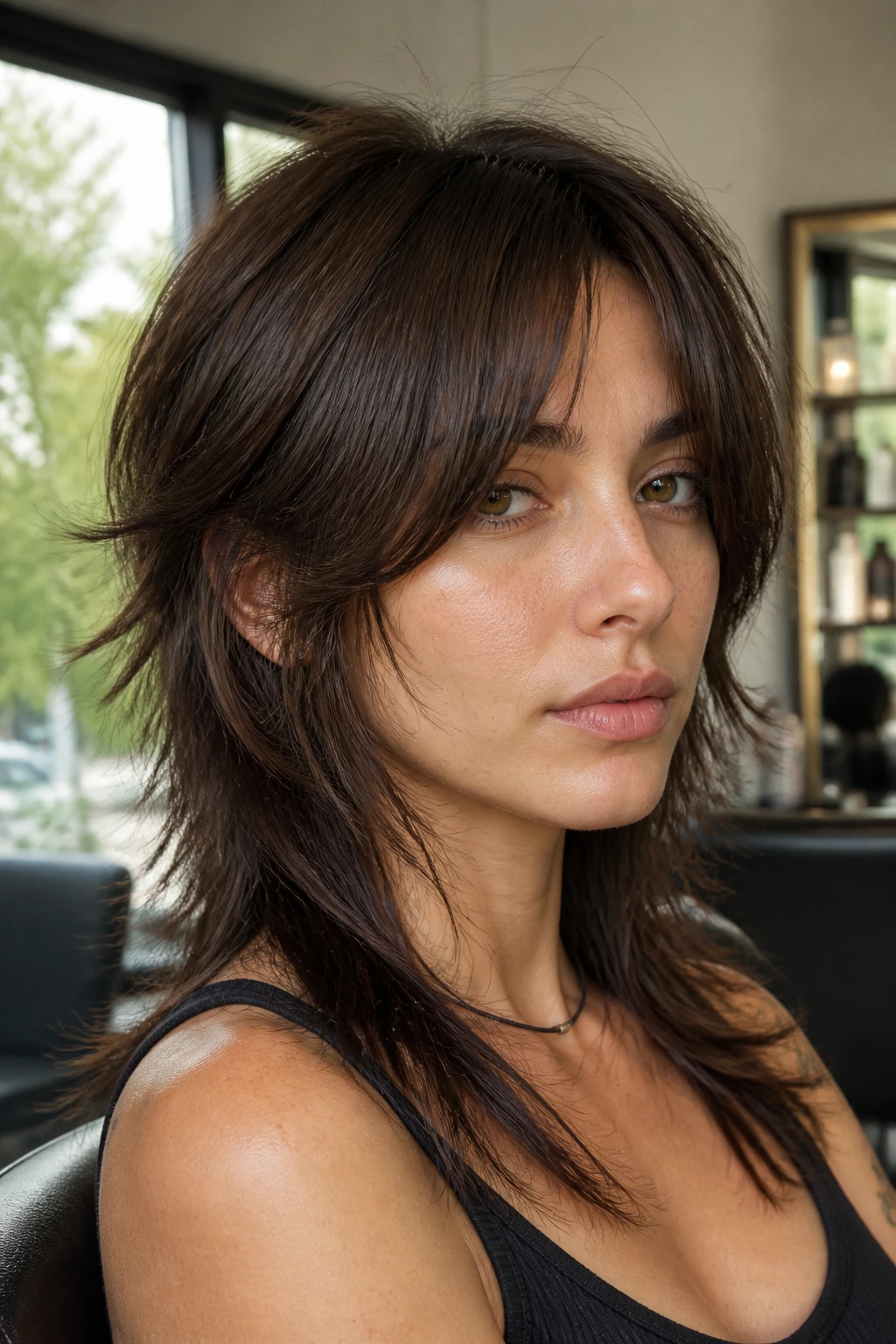
This is a prettier, softer-edged take on the shag mullet, and it can be a smart move if your hair is fine but not fragile. The razor work creates a bit of swing through the layers, while the curtain bangs keep the front open and easy.
Here’s the catch: razor-cutting on very fragile fine hair can fray the ends faster than scissors would. So this version is best when the hair has some density or a little natural movement. The payoff is excellent when it’s done well—the front pieces fall away from the face, and the back still keeps enough length to feel like a mullet, not a chopped bob.
6. Collarbone Shag Mullet with Piecey Fringe
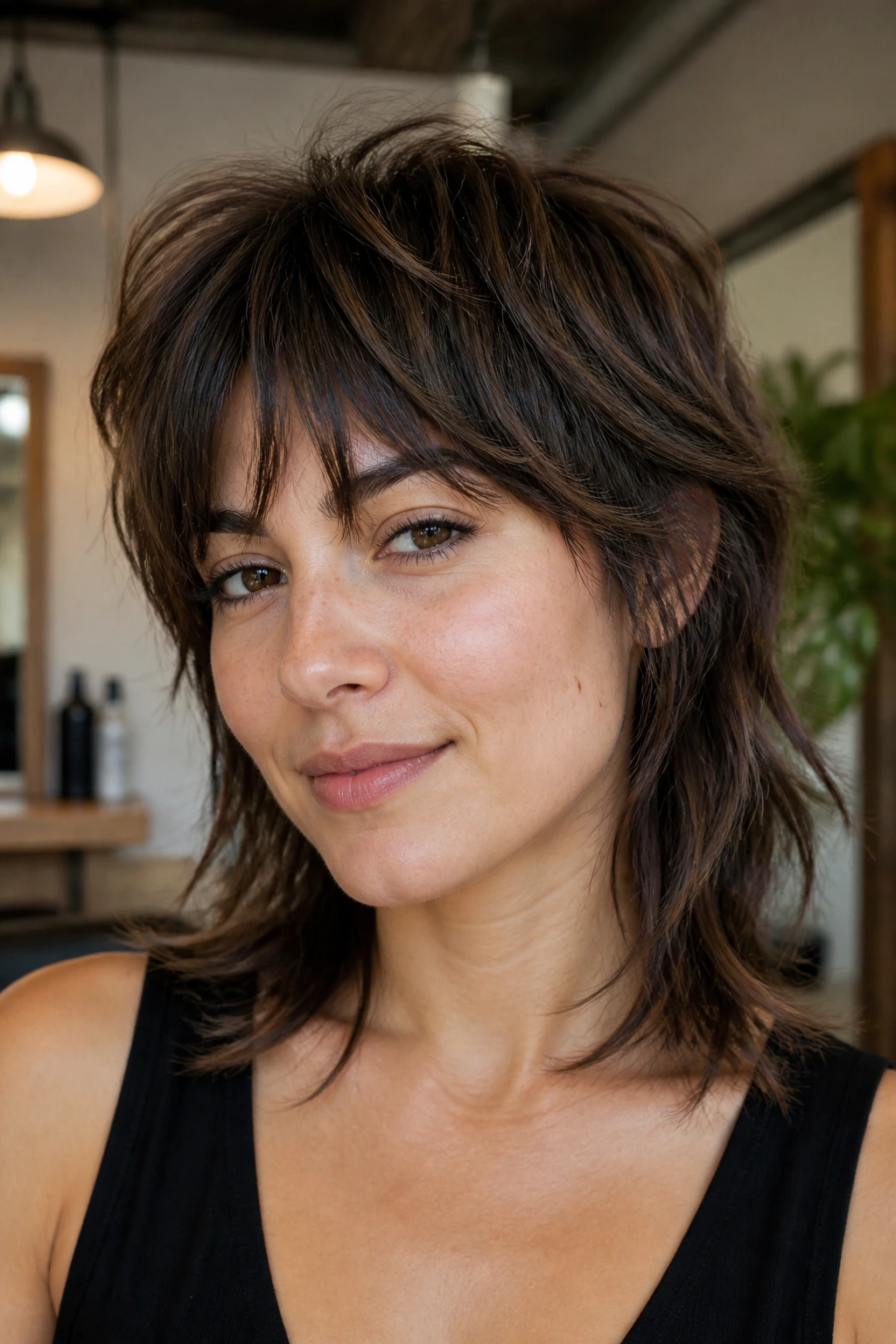
If you need a haircut that can go to work without causing side-eye, start here. The collarbone length gives fine hair a little extra body simply because there’s more material to work with, and the piecey fringe keeps the cut from sliding into safe and boring.
This shape is especially good if your hair lies flat at the sides. The longer front sections can be bent with a round brush or a flat iron, and the back keeps moving when you turn your head. It’s tidy from the front and a little rebellious from behind, which is honestly the best part.
7. Wispy Wolf-Shag Mullet

This one leans softer than a classic mullet and less styled than a polished shag. It keeps the wolf-cut influence, but it doesn’t carve the hair up so hard that fine strands disappear. The top is broken up enough to create motion, and the lower sections are left loose enough to avoid a chopped, airy mess.
I’d recommend this for someone who likes texture but hates obvious separation. Fine hair can handle a mild wolf-shag beautifully when the layers are long enough to overlap. Add a little dry texture spray and rough the ends with your fingers. That’s usually enough.
8. Face-Framing Shag Mullet with Long Back
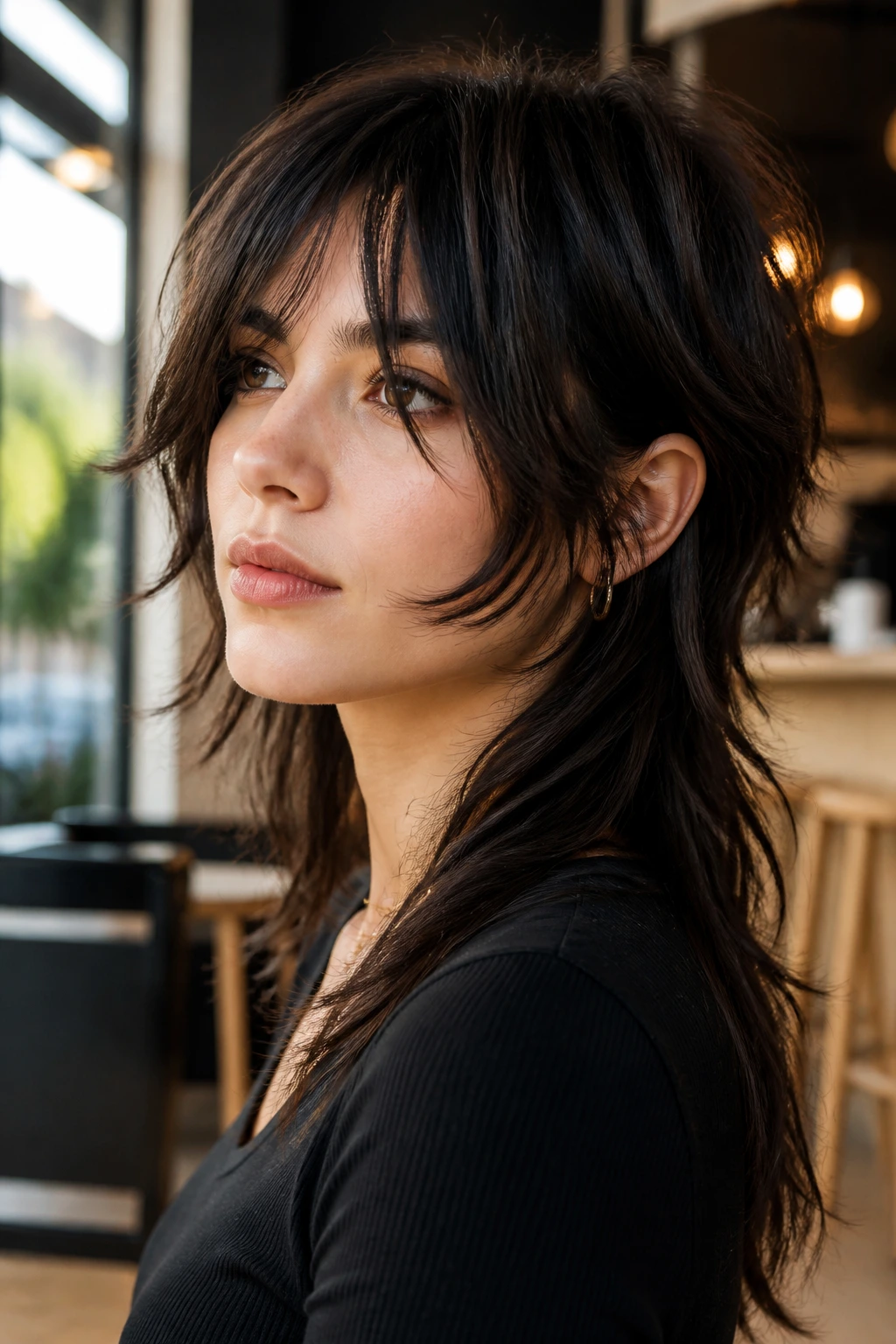
Some faces need more front than back, and this cut understands that. The front pieces are built to soften the cheekbones and jaw, while the back stays longer and keeps the mullet line visible without turning severe. On fine hair, that front framing matters because it creates the illusion of width where the hair is closest to the face.
The look is strongest when the layers are kept clean and not overly sliced. If the front pieces are too thin, you lose the frame. If they’re too heavy, the whole haircut drags downward. This one lives in the narrow middle, and when it lands there, it’s gorgeous.
9. Bottleneck Bang Mullet
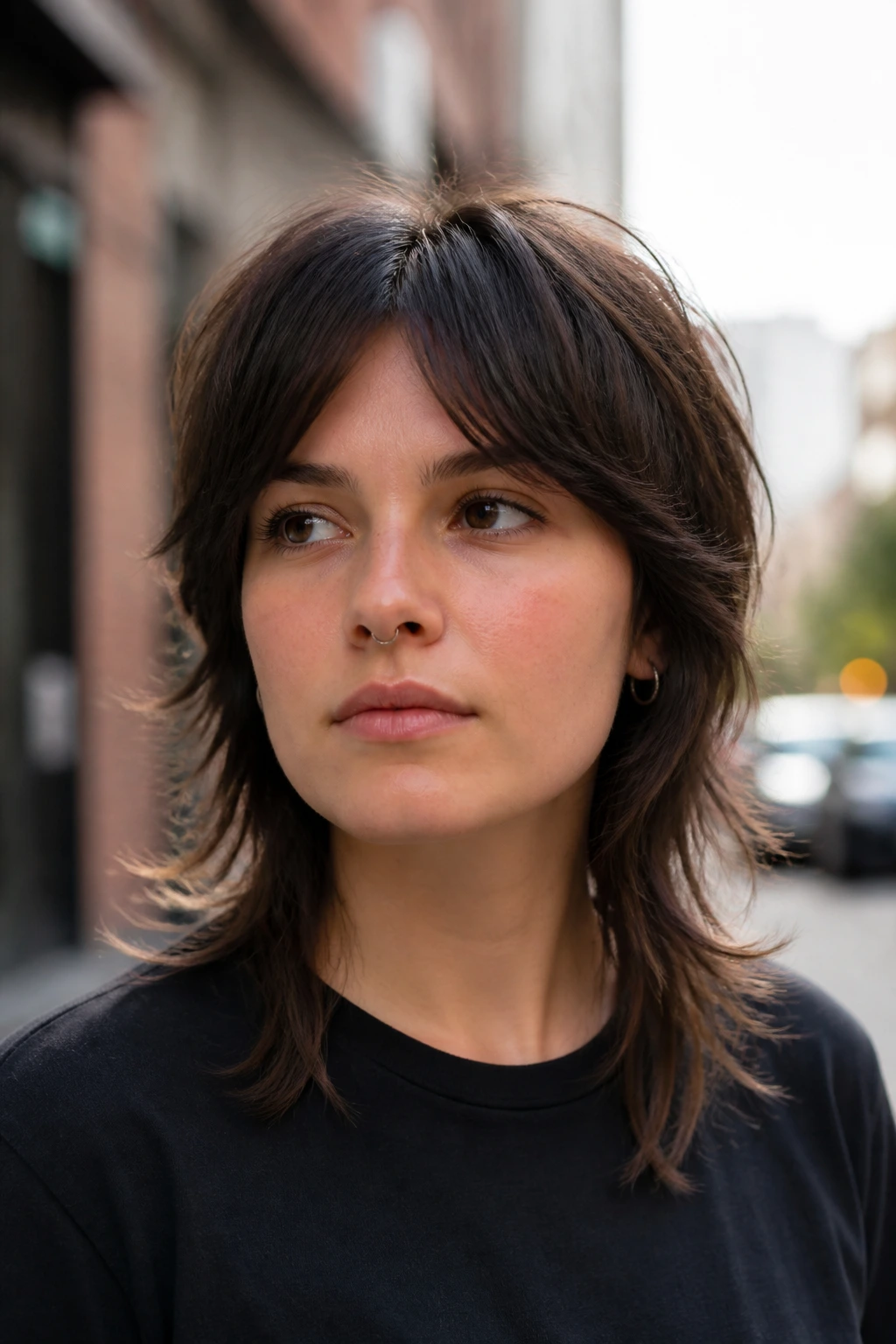
Bottleneck bangs do a lot of heavy lifting for fine hair. They open in the center, narrow through the middle, then widen near the temples, which means the fringe looks fuller without needing a dense wall of hair across the forehead. That shape also helps the crown read taller.
The rest of the cut should stay light and broken up enough to match the fringe. If you keep the bangs airy but pair them with a heavy, blunt back, the contrast can feel off. The better version softens the sides and lets the back fall just past the neck so the whole head feels connected.
10. Feathered Pixie-Mullet
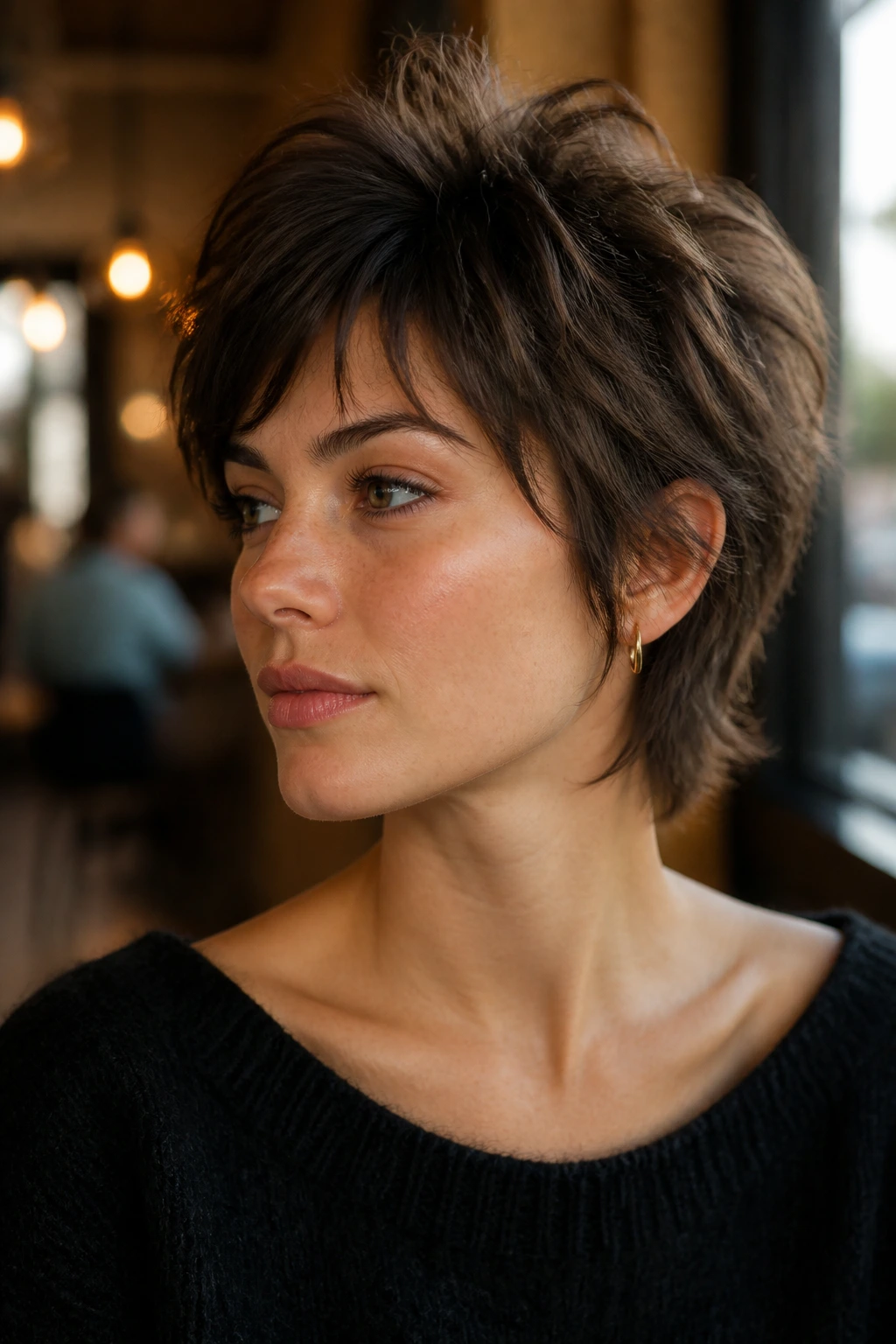
This is for the person who wants short hair with a little bite. The top is cropped enough to create lift, the nape stays soft and tapered, and the feathering gives the haircut movement without asking for a lot of hair to begin with. Fine hair often loves this shape because there’s less weight dragging it down.
The best part is how fast it styles. A small round brush, a shot of root spray, and a quick finger-tousle can make it look finished in minutes. If you like earrings, necklines, and a little bit of cheekbone visibility, this cut does a lot with very little.
11. Soft Copper Shag Mullet
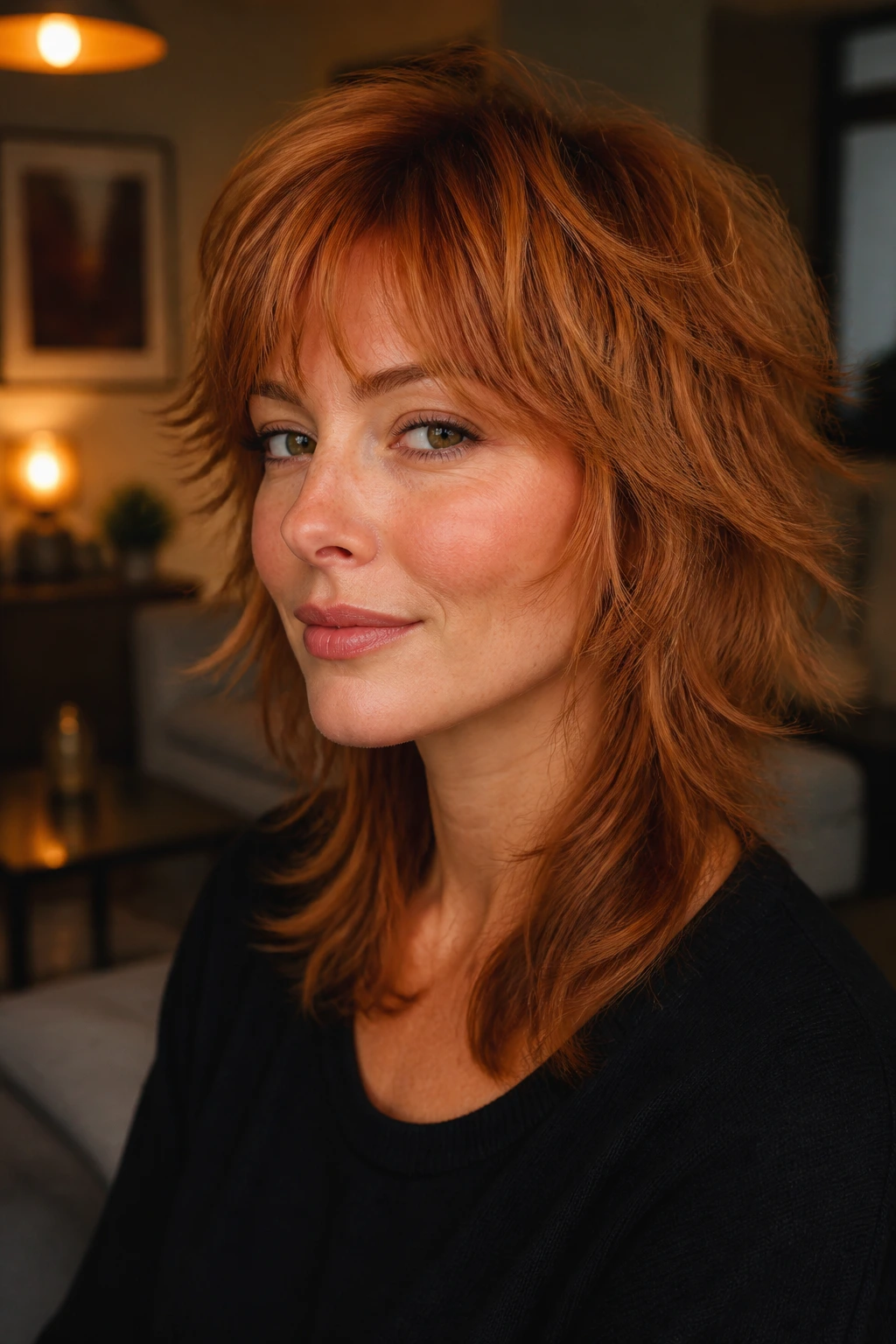
Color matters more on fine hair than people admit. A soft copper, warm auburn, or even a honeyed brown can make the layers in a shag mullet read fuller because the light catches different tones instead of one flat surface. The haircut does the shape work; the color adds depth.
This is not about going bright for the sake of it. It’s about dimension. Fine hair with a little tonal variation looks thicker around the crown and ends, especially when the cut has feathered bits around the face. If you want the haircut to feel richer without adding bulk, this is a smart route.
12. Center-Part Shag Mullet with Airy Sides
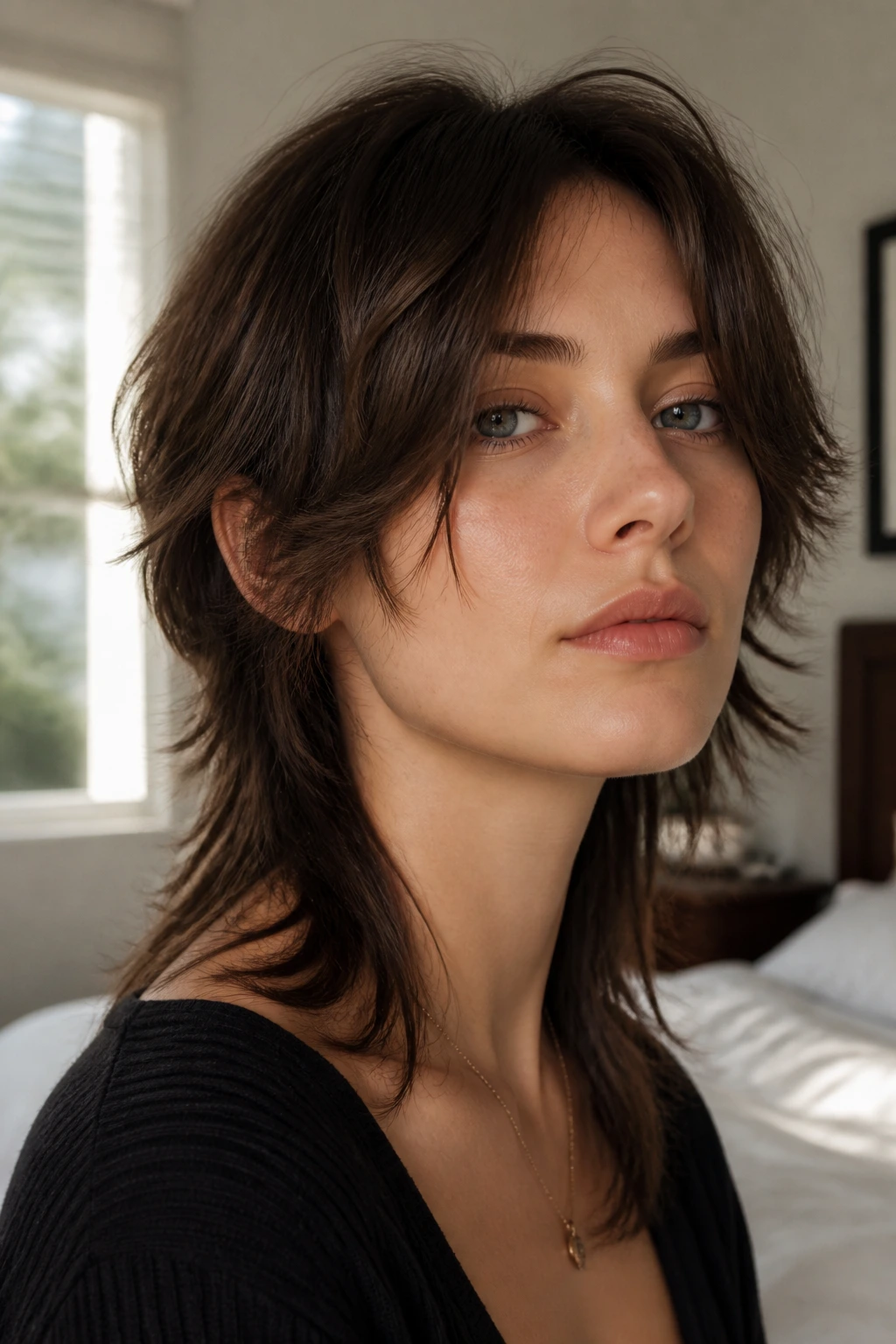
A center part can be tricky on fine hair if the cut is too flat. But when the layers are placed well, it can look neat and clean in a way a side part never quite matches. The sides stay airy, the front pieces graze the cheekbones, and the back hangs long enough to keep the silhouette from feeling too tidy.
This version works best when the hair has a little bend or can be encouraged into one with a blow-dryer and a round brush. Keep the layers subtle. You want movement, not a split personality. The center part does make the face read longer, so it’s a strong choice for rounder features.
13. Side-Swept Fringe Mullet
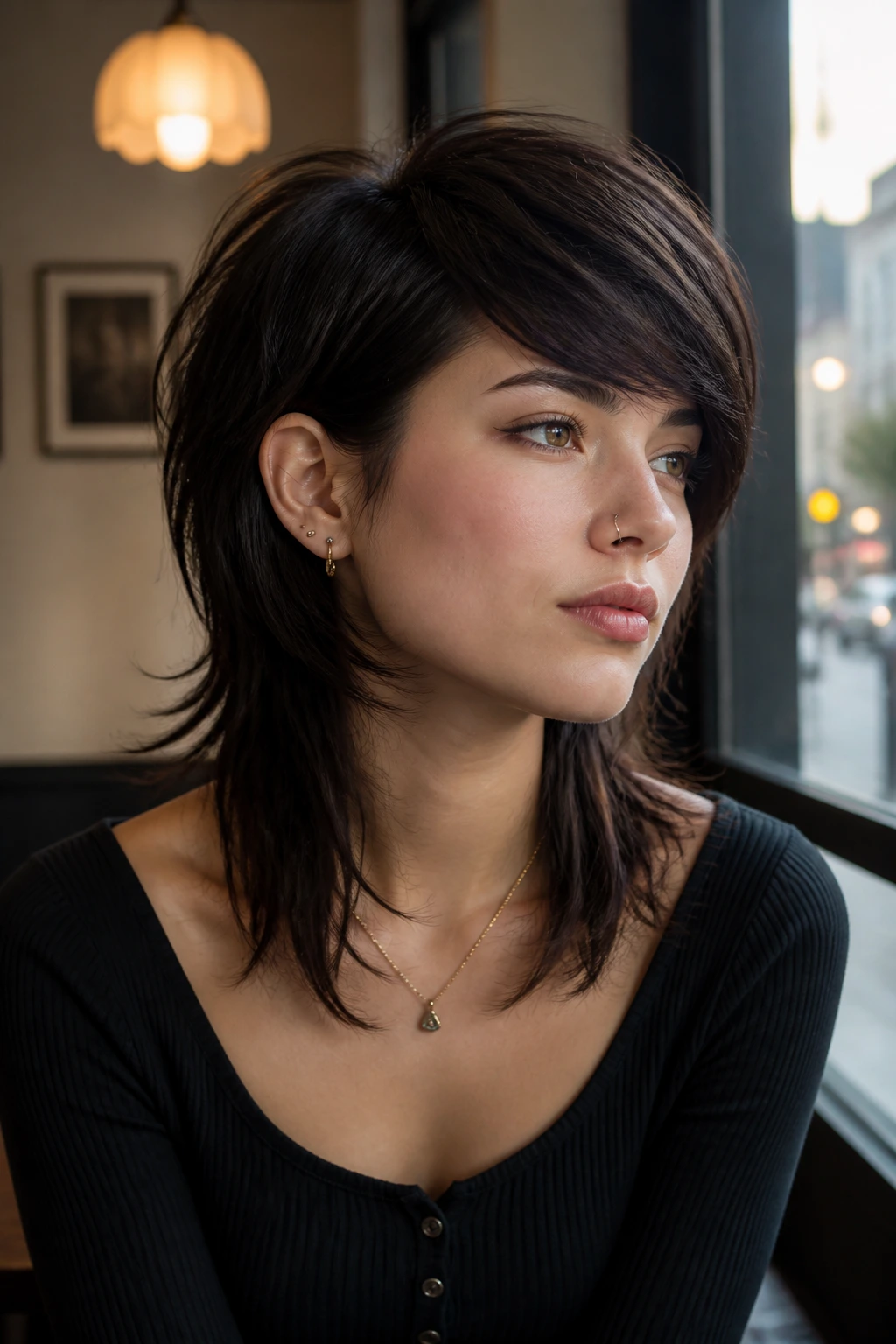
Side-swept fringe is underrated on fine hair. It creates a diagonal line that gives the top section a sense of lift, and that diagonal line is doing a lot of visual work the moment the haircut dries. The side sweep also hides a flat root better than a blunt fringe does.
The rest of the cut should stay soft around the ears and longer through the back. If the fringe is side-swept but the back is too tight, the proportions feel off. Keep the shape loose, and let one side fall a little heavier than the other. That asymmetry is the point.
14. Grown-Out Salon Shag Mullet

This is the version for people who are never in love with the day they leave the salon, but adore the haircut three weeks later. It’s shaped to grow out in a soft, gradual way, with enough length in the face frame and back to avoid a hard shelf as the weeks pass.
Fine hair often looks better with a grow-out plan baked in. If the layers are too short, the cut can go from chic to awkward fast. This one keeps the lines soft and the nape gentle, so when it starts to grow, it still looks like it belongs on your head.
15. Tousled Bob-Mullet Hybrid
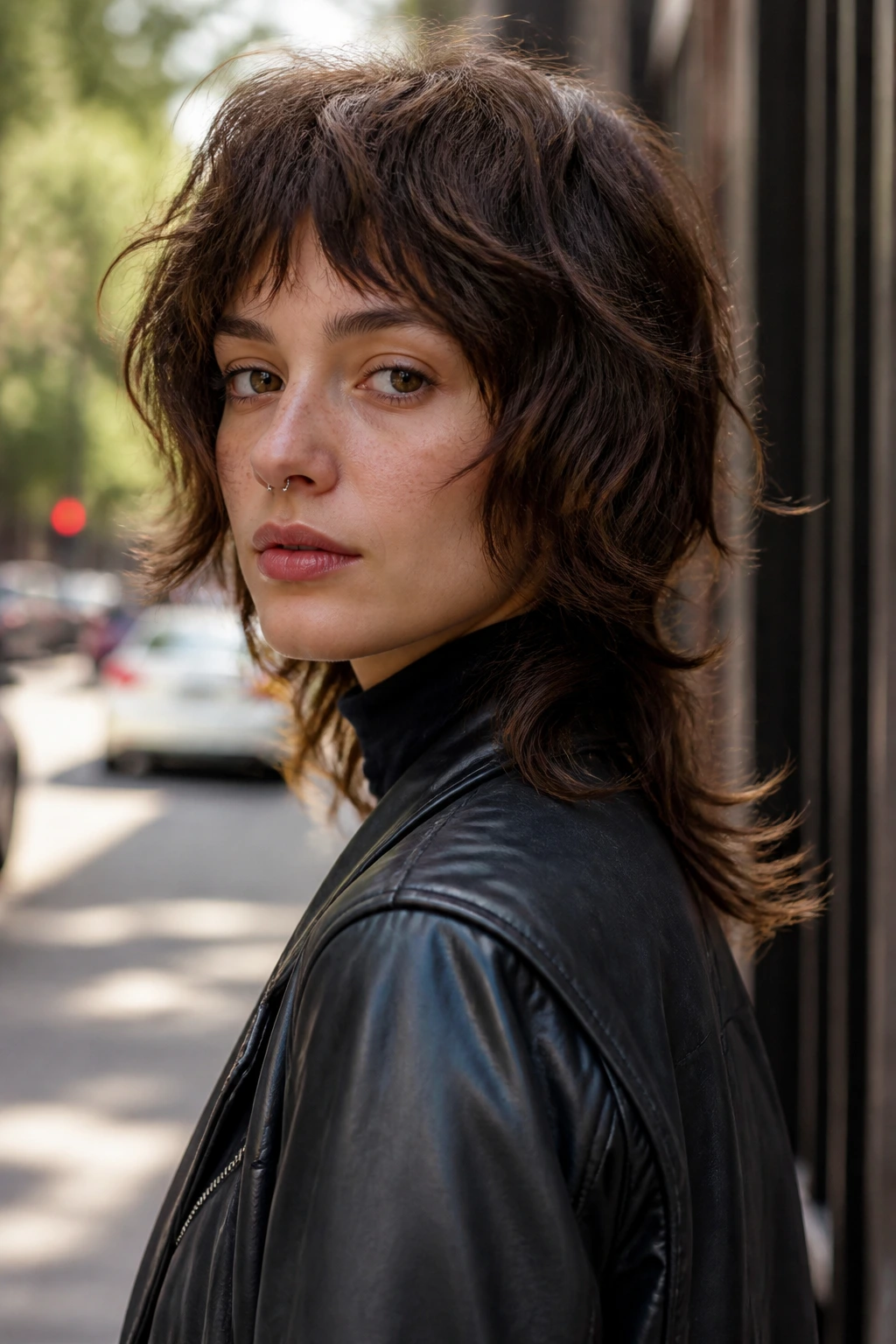
This cut lives between “I want a bob” and “I want more attitude.” The front is short enough to read like a bob from a distance, but the back length and interior layers give it that mullet rhythm. On fine hair, that hybrid shape keeps things from looking stringy because the outline stays a little fuller.
It’s a good choice if you’re nervous about committing to a stark mullet. The styling is easy too: a little wave through the mid-lengths, a bend at the ends, and maybe a touch of dry paste on the crown. It’s casual, but not accidental.
16. Shoulder-Skimming Razor Shag
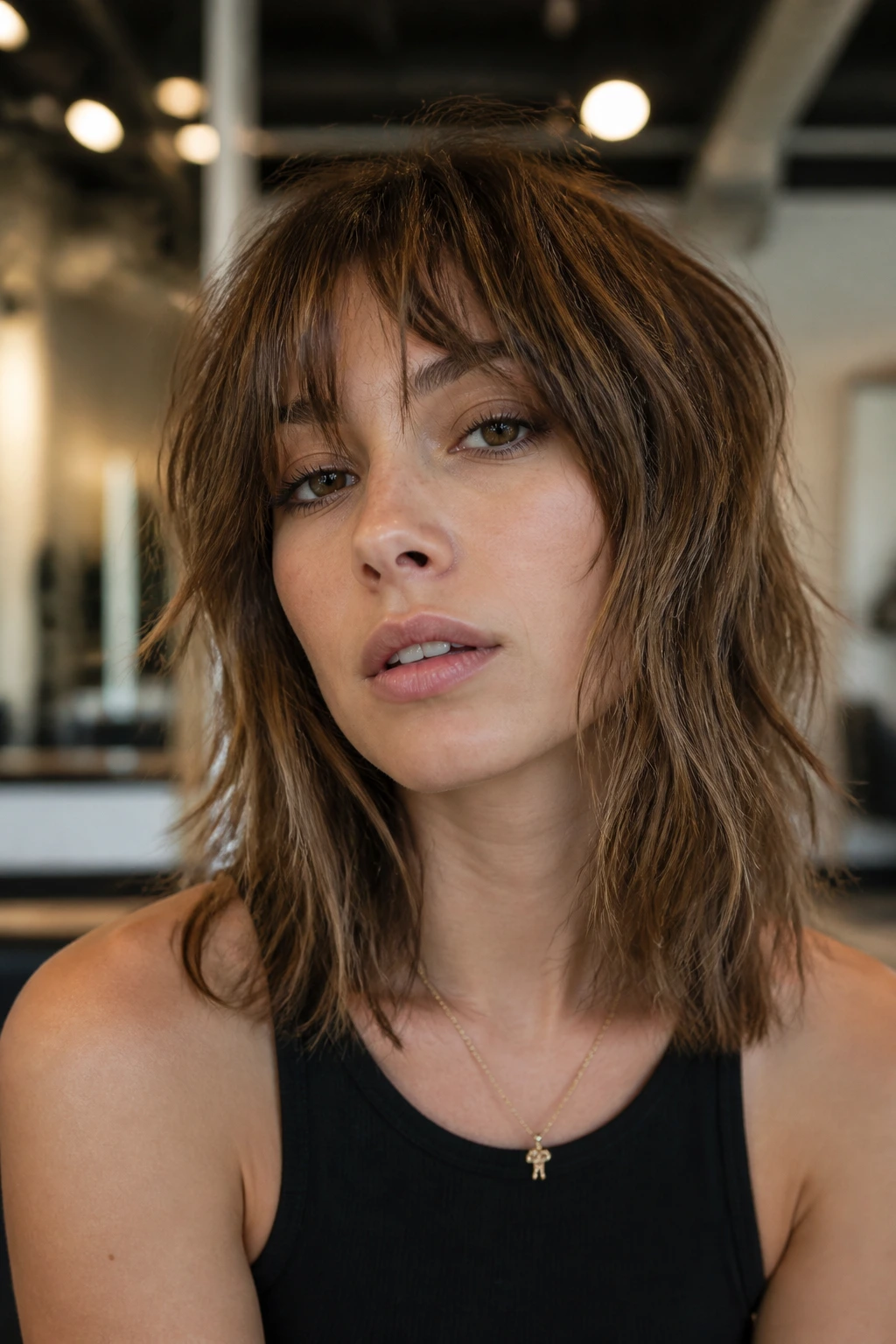
Shoulder length can be a sweet spot for fine hair because it gives the cut enough surface area to look plush while still letting the layers move. When the ends skim the shoulders, they flip and bounce in a way shorter cuts sometimes can’t manage.
The razor shaping keeps the outline soft, especially around the collarbone and the back. That softness matters. A hard shoulder-length line can make fine hair look narrower than it is. This version keeps the edge broken and the movement visible, which is a much better deal.
17. Featherlight Layered Mullet with Micro Layers
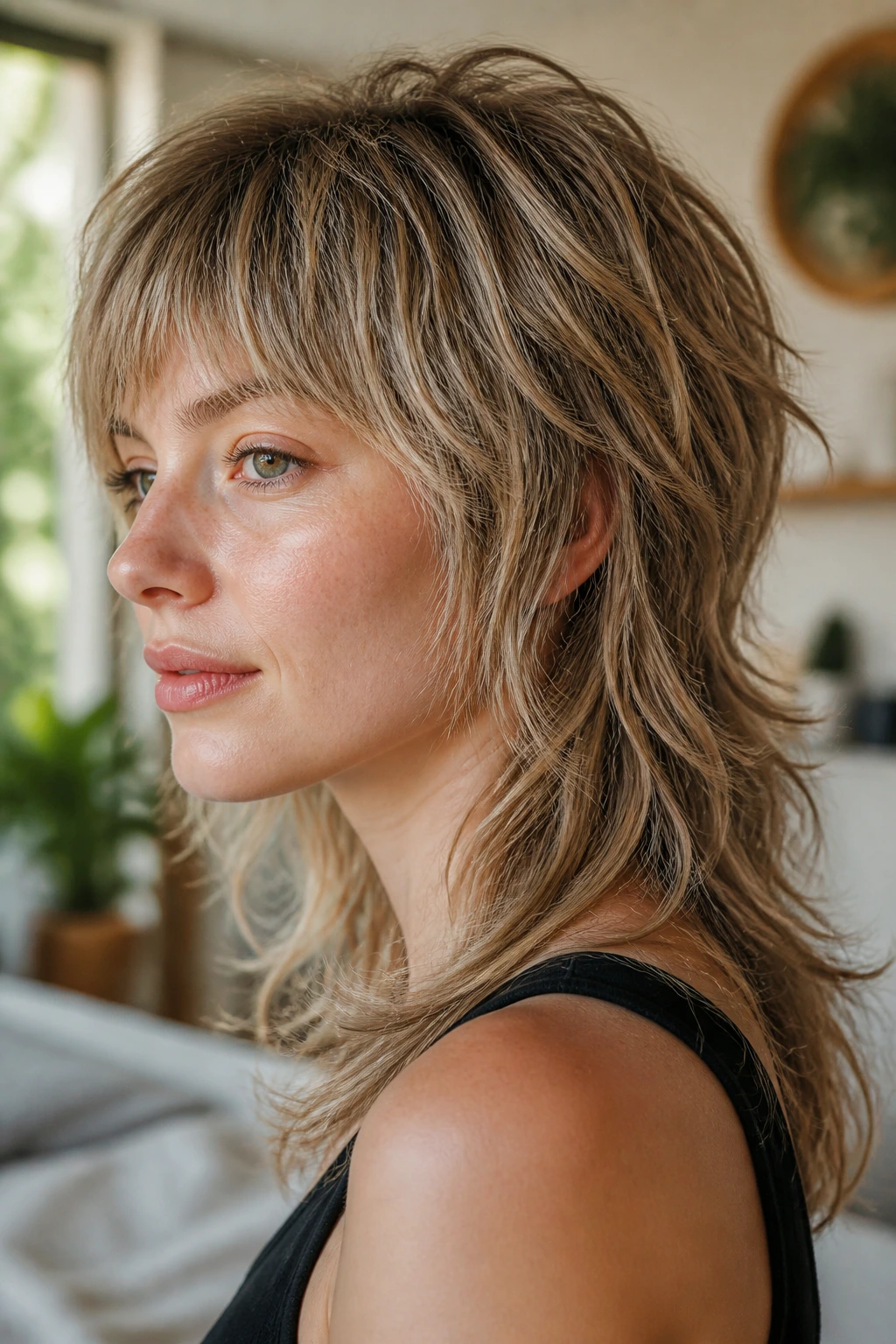
Micro layers sound tiny because they are, and that’s the point. Fine hair does not always need dramatic chopping; sometimes it only needs little internal cuts that release a bit of tension and let the roots stand up. This is the haircut for that job.
The danger here is overdoing it. Too many micro layers and the hair starts to look hollow, especially near the ends. But a careful version gives you movement without sacrificing the overall body. If your stylist likes to texturize, make sure they know you want lift, not a shredded finish.
18. Shag Mullet with Invisible Layers
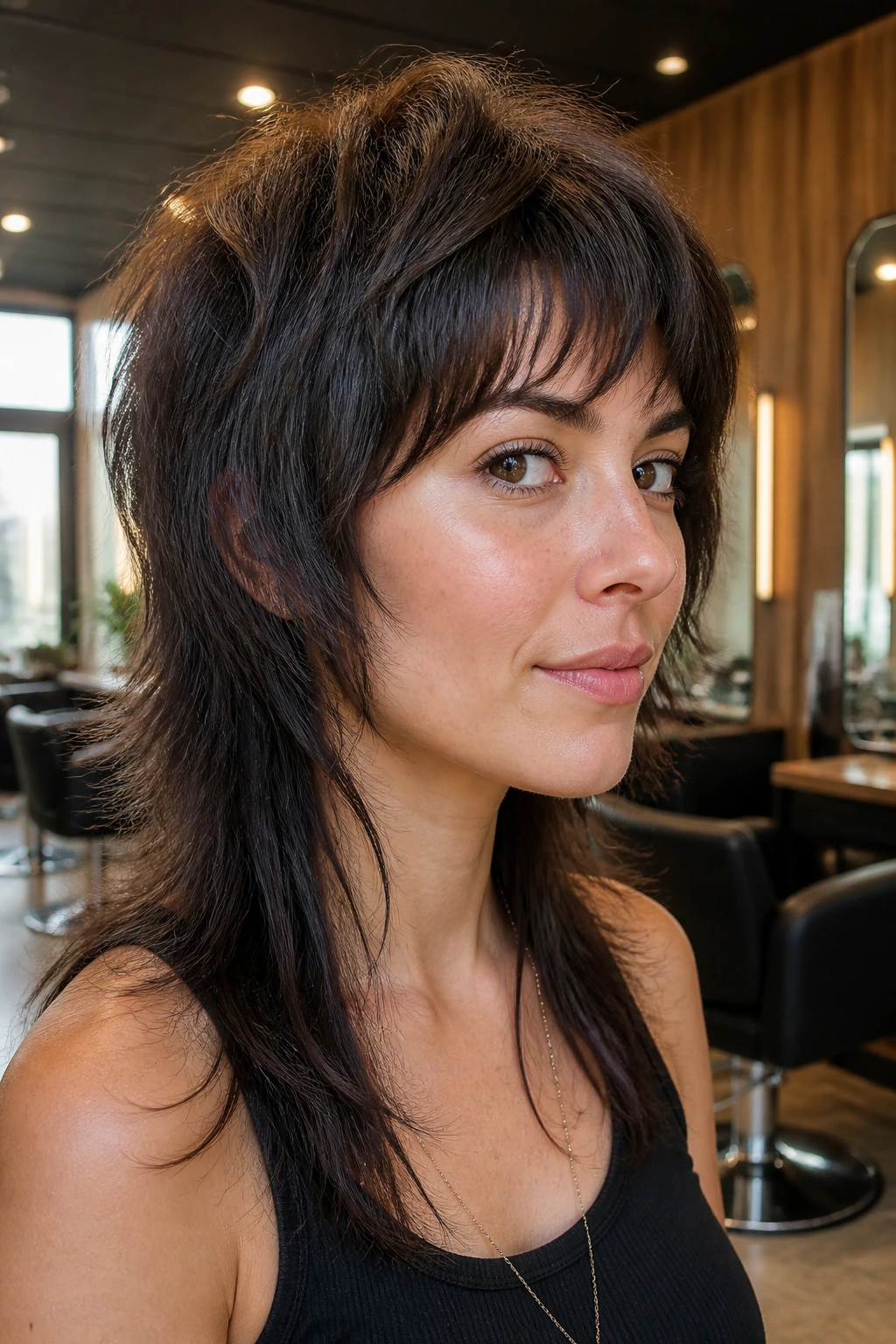
Invisible layers are one of my favorite moves for fine hair because they keep the outer contour smooth while building body underneath. From the outside, the haircut still looks polished. Inside the shape, it’s full of little changes in length that help the hair bend and settle.
That makes this version especially good for anyone who hates that choppy, overworked look. You can wear it straight, tuck it behind the ears, or rough it up a bit, and the haircut still reads as intact. It’s a quiet cut, but not a boring one.
19. Air-Dried Beachy Mullet
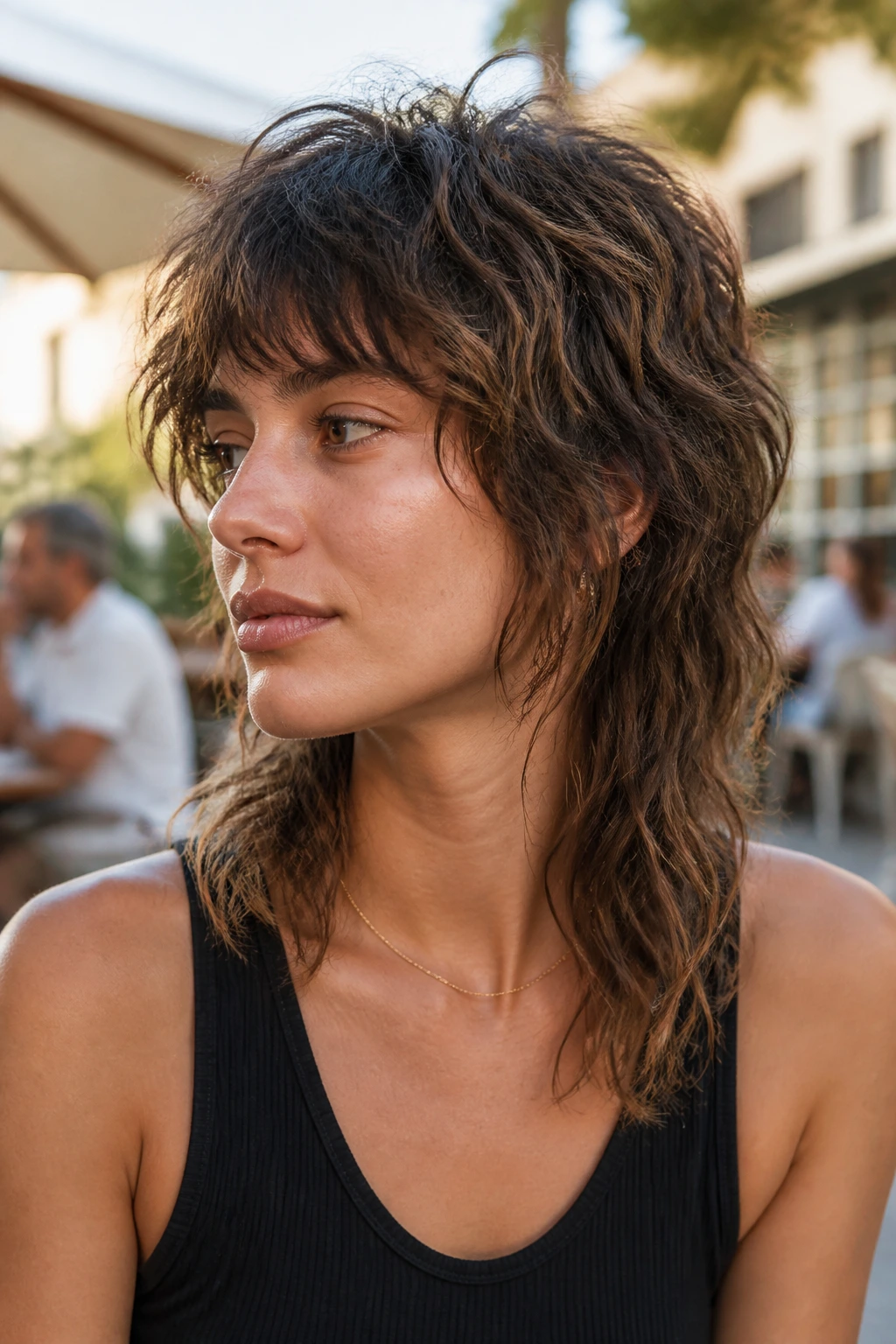
If your fine hair already has a little wave, this cut is begging to be air-dried. The layers are placed so they break up the outline and encourage the wave pattern to settle into loose bends, not a stiff triangle. Add salt spray or a light mousse and let it do its thing.
The best thing about this version is that it doesn’t require perfect styling. In fact, perfect styling can make it worse. A little unevenness is part of the charm here. The goal is soft separation, not a glassy finish.
20. Choppy Mullet with Rounded Fringe

Rounded fringe softens a mullet in a way that makes the whole cut easier to wear. Instead of a hard horizontal line, the bangs curve a little at the sides, which gives the face a gentler frame. On fine hair, that rounded shape also makes the fringe appear denser than it actually is.
The choppy pieces through the sides and back should stay controlled. Choppy does not mean random. The best version keeps the shape balanced so the fringe can do the pretty work up front while the rest of the haircut stays lively and light.
21. Long Shag Mullet with Tail-End Flip
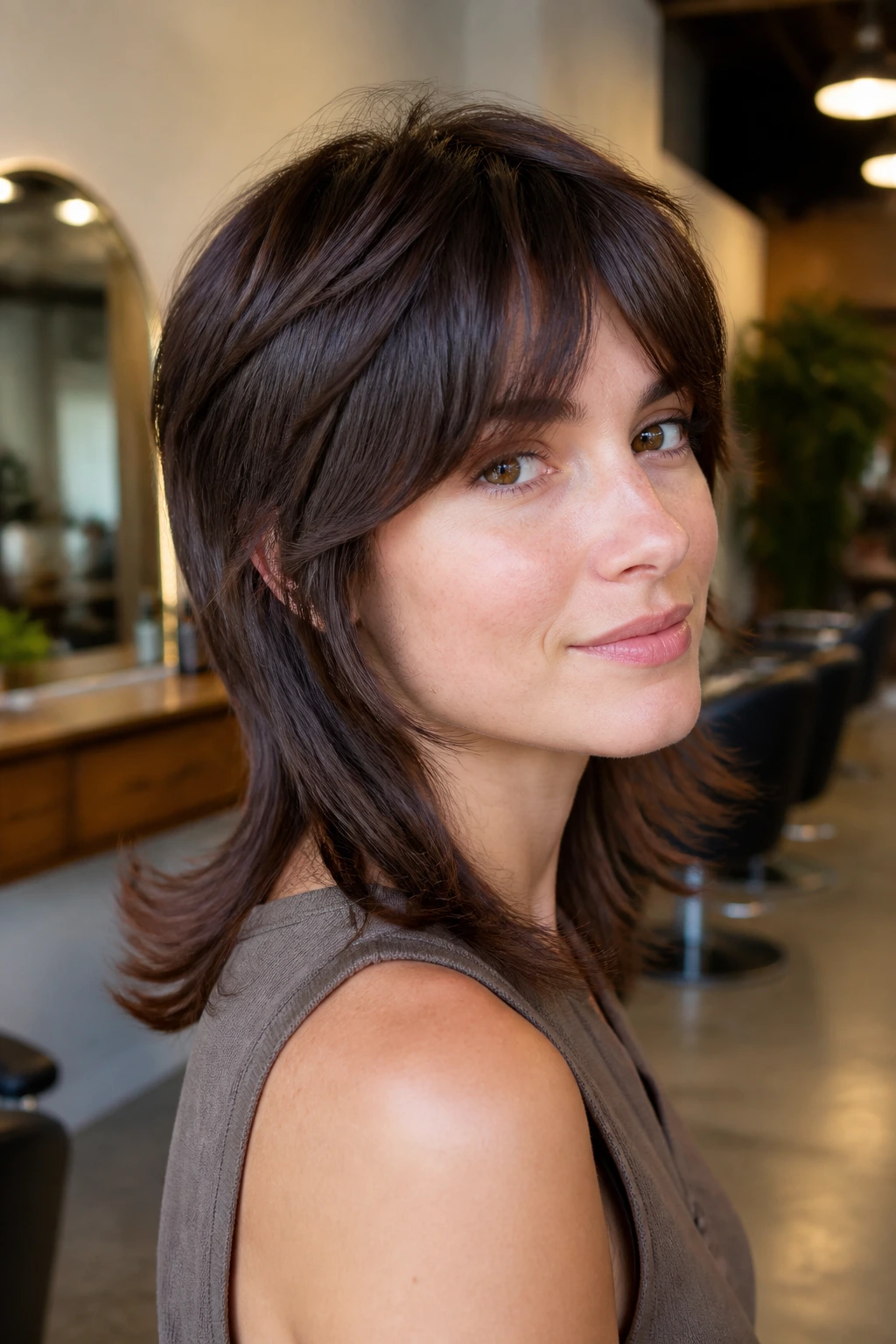
This is for anyone who wants length and movement in the same sentence. The hair stays long enough to keep that soft tail effect in the back, but the shag layers and flipped ends stop it from hanging like a single curtain. Fine hair can wear this style better than people expect because the length gives it room to show shape.
I like this version with a large-barrel iron or a round brush that bends the bottom inch or two outward. That tiny flip at the ends is what keeps the haircut from collapsing into a plain long cut. It’s subtle. Also effective.
22. Dimensional Highlight Shag Mullet
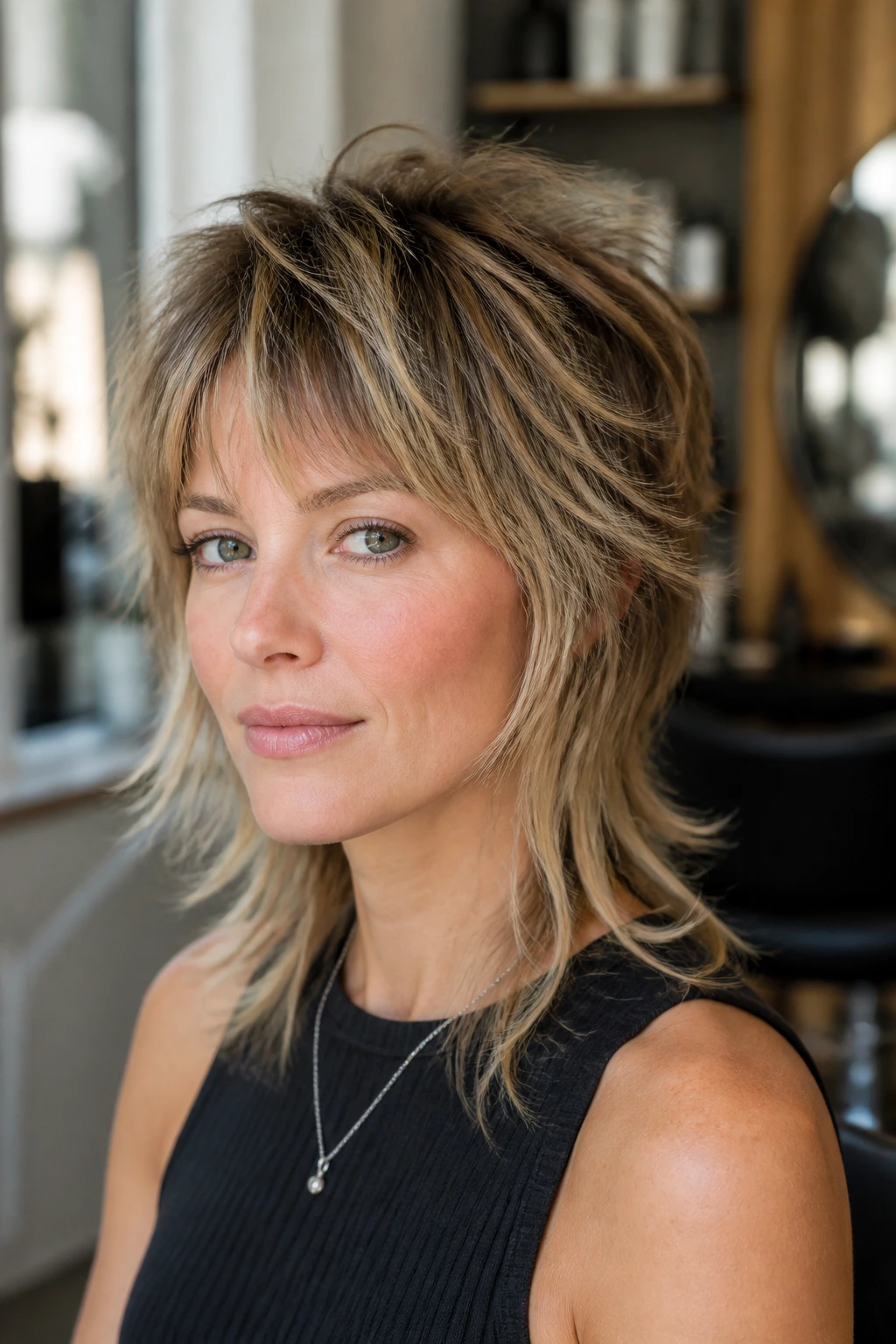
Sometimes the smartest way to make fine hair look fuller is to stop relying on the cut alone. Highlights, especially lighter ribbons around the crown and face frame, make the layers read with more depth. The haircut does not change much here; the visual texture does.
This works best when the color placement follows the shape of the cut. Put brightness where the hair lifts, not just everywhere. That way the crown looks higher, the ends look more layered, and the whole style gets a sense of movement even when it’s worn straight.
23. Shag Mullet for Fine Straight Hair
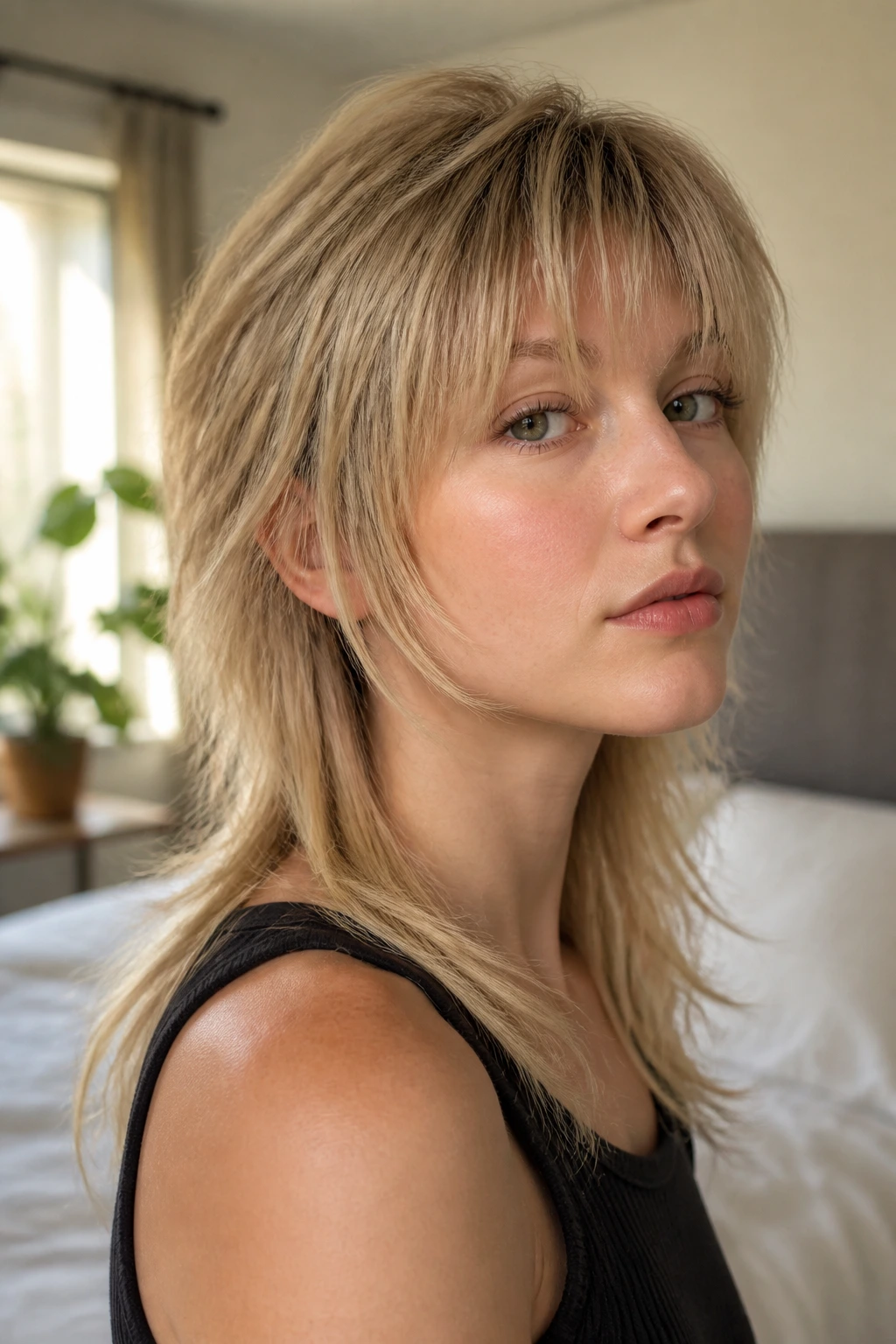
Straight fine hair needs a different strategy than wavy hair. You want enough layering to create motion, but not so much that the ends turn brittle and thin. The right version usually keeps a cleaner outer line, with soft internal layers and a little bevel at the bottom so the cut doesn’t hang flat.
This is the place where root lift matters. Blow-dry the crown first, then smooth the mid-lengths with a brush, not a heavy iron. A tiny bit of texture spray through the ends can keep the haircut from looking too neat. Straight hair needs help pretending it’s not straight sometimes.
24. Shag Mullet for Fine Wavy Hair

Wavy fine hair can wear a shag mullet in a way that almost looks effortless, even when there’s a bit of work behind it. The wave gives you built-in movement, and the layers keep that movement from puffing out in the wrong places. The key is leaving enough weight at the ends so the wave has something to gather into.
A diffuser can help, but the haircut has to be honest first. If the layers are cut too high, the wave can spring too much and the shape gets frizzy. A softer, mid-length version usually wins here because it lets the wave fall in loose, clear bends.
25. Shag Mullet with Bottleneck Bangs and Crown Volume
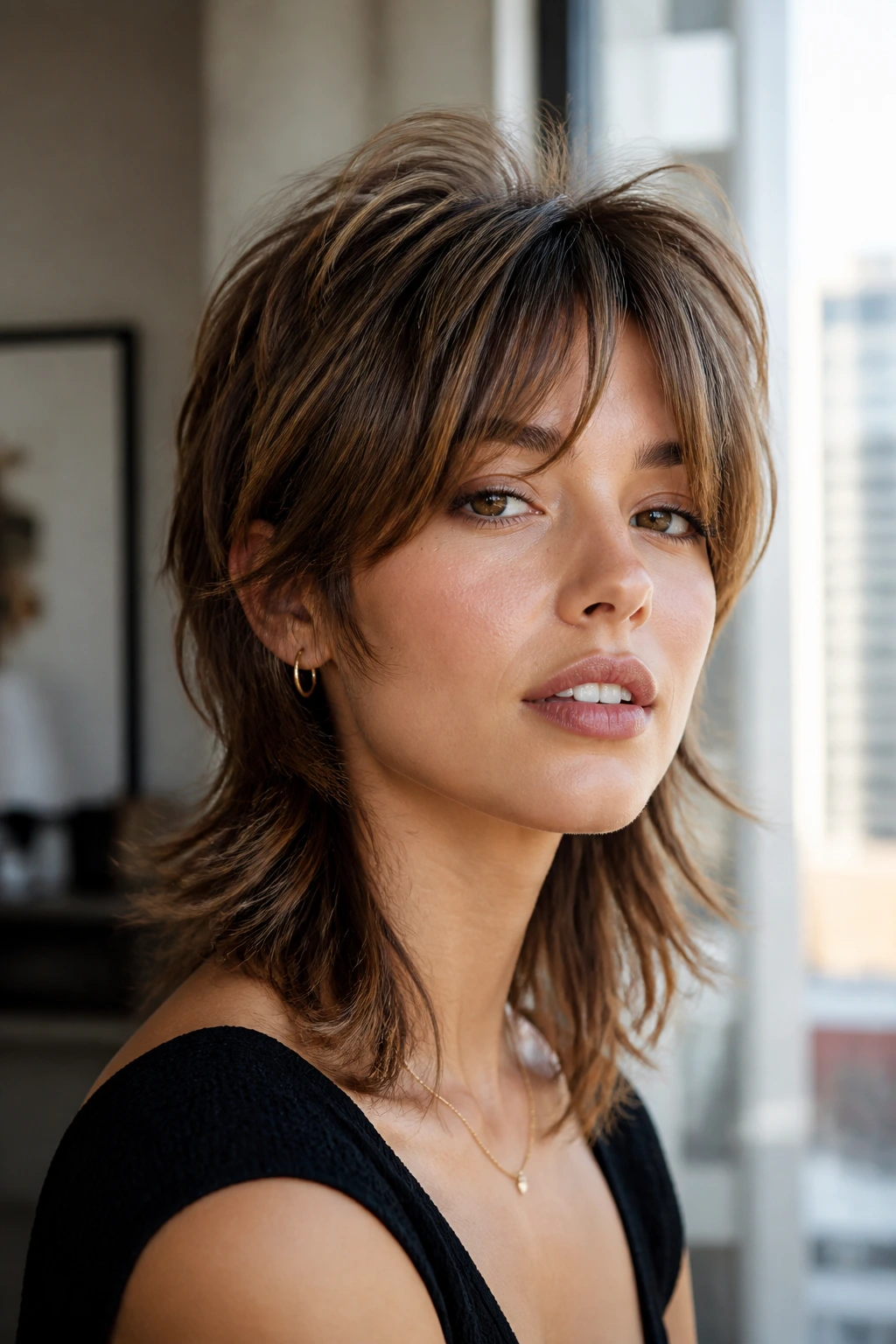
This version has a little more attitude than the softer cuts, but it still plays nicely with fine hair. Bottleneck bangs open the face, the crown gets a boost from shorter top layers, and the back stays soft enough to keep the silhouette from going too severe.
The combination is useful because it builds two kinds of fullness at once. The fringe reads thicker, and the crown stands up better. If your hair tends to lie flat at the roots, this is one of the smartest pairings in the whole list.
26. Soft Rocker Mullet
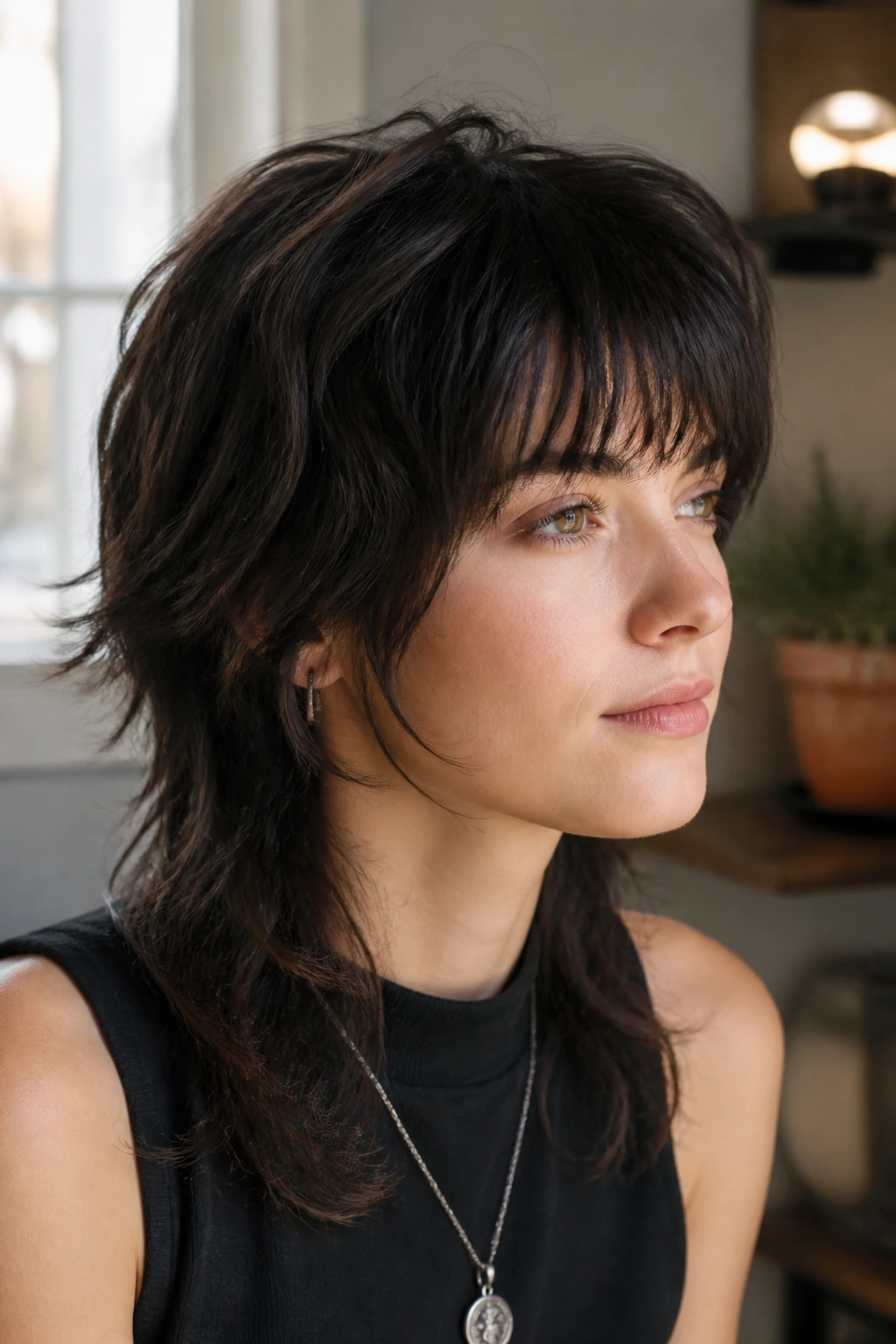
This cut has a bit of grit, but not the kind that makes it hard to wear. Think lived-in texture, not spiky chaos. Fine hair often looks better with this softer rocker angle than with a hard, choppy version because the movement feels intentional instead of overworked.
The styling is part of the mood. Work a small amount of matte paste through the ends, pinch a few pieces around the face, and leave the rest alone. Too much product ruins the effect fast. This cut wants shape, not shine.
27. Minimalist Mullet with Clean Perimeter
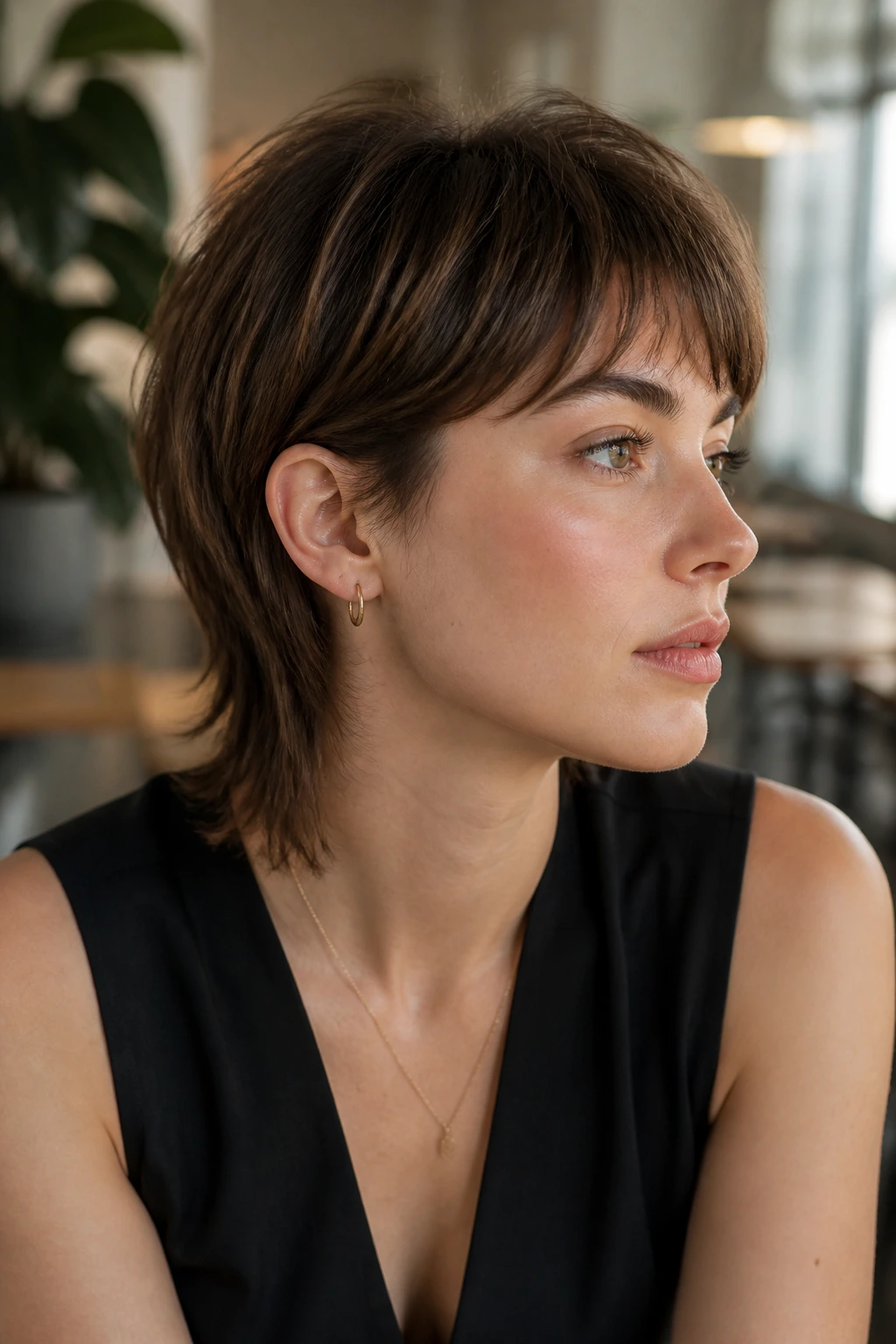
A lot of people assume mullets have to look loud. They don’t. This minimalist version keeps the perimeter clean, which is a smart move for very fine hair because it preserves density where the eye lands first. The layers are still there, but they’re tucked inside the shape instead of screaming for attention.
This is the cut for someone who wants the movement of a shag mullet without the choppiness. It pairs well with a middle part or a soft side part, and it grows out gracefully because the lines are controlled. Understated? Sure. But also practical.
28. Flippy Ends Shag Mullet
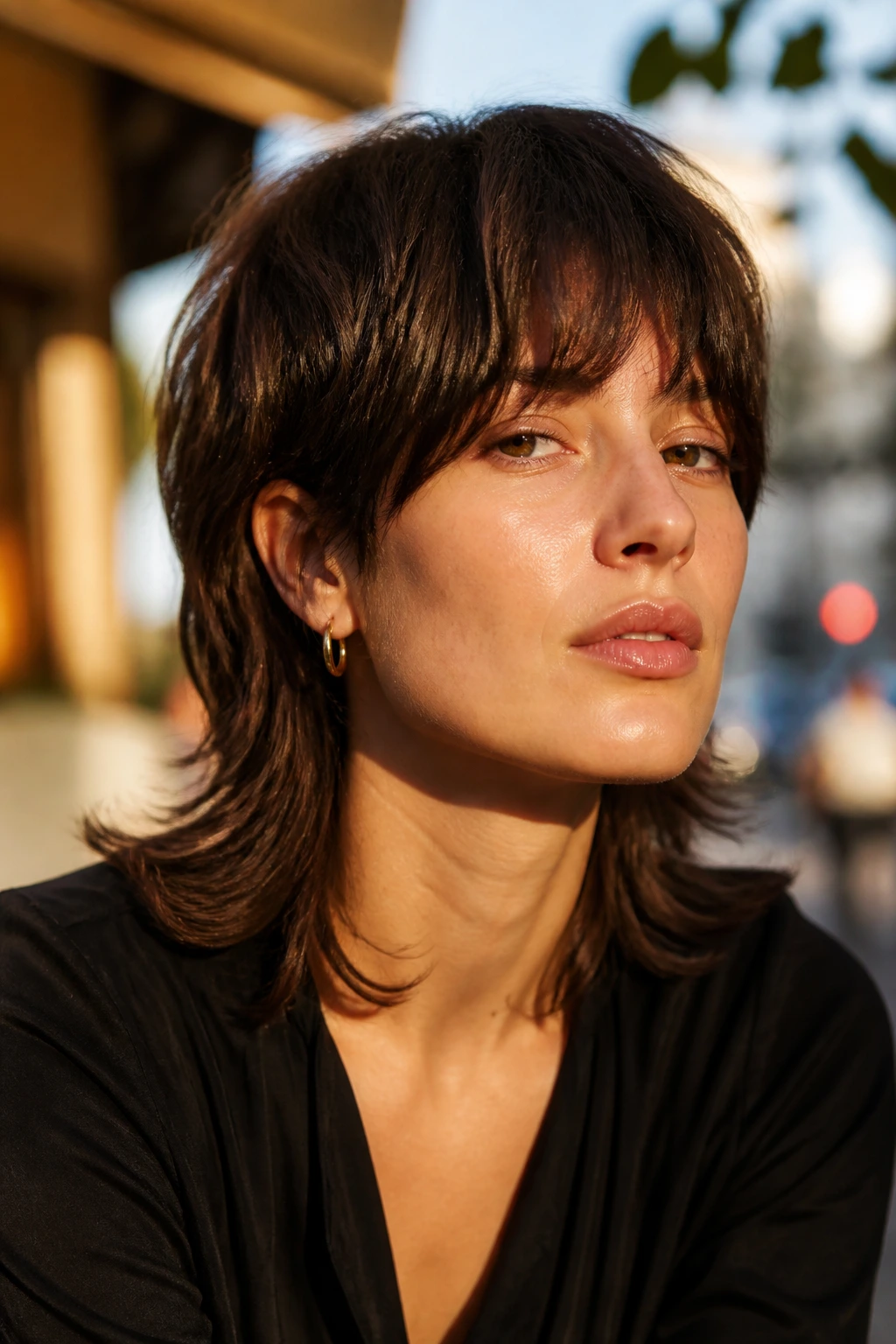
Flippy ends are one of those details that can make fine hair look much more alive with almost no extra work. The cut is built so the bottoms turn outward or inward slightly instead of falling dead straight. That small bend keeps the haircut from hanging flat against the shoulders.
You can get that flip from a round brush, a flat iron twist, or even just the way the layers are cut. The important part is not to overdo it. A little bend at the last inch is enough. More than that starts to look like a retro costume.
29. Piecey Gamine Mullet
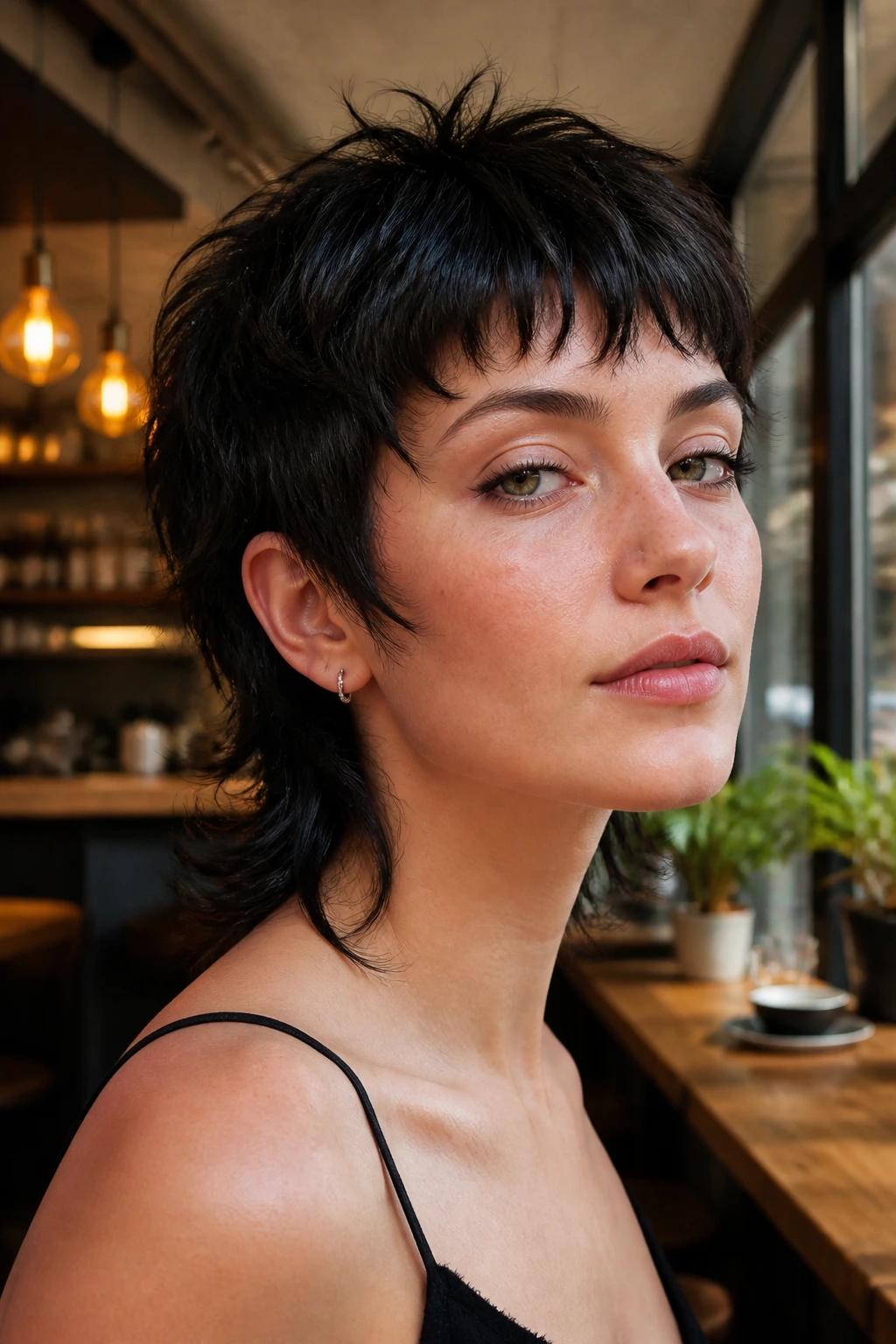
This is a small, sharp little haircut with a soft side. The gamine influence keeps it compact around the face, while the mullet back gives it a tiny bit of rebellion. Fine hair often loves this kind of shape because it doesn’t need density to look deliberate.
It works especially well on smaller features and strong cheekbones. The pieces should be separated enough to show movement, but not so separated that the cut loses shape. If you want something that feels a little French, a little artsy, and easy to style with a dab of paste, this one has a nice bite.
30. Velvet Bang Shag Mullet

Velvet bangs are fuller than wispy fringe, but they still need air in them. That balance matters on fine hair because you want the bang to look plush without becoming a heavy curtain that eats up the rest of the haircut. Paired with shag layers, they make the face frame feel soft and intentional.
The back should stay light, almost brushed through by hand. If you keep the fringe lush and the sides too thin, the haircut can feel top-heavy. Match the bang’s softness with a gently broken-up body, and the whole thing sits better.
31. Airy Mid-Length Mullet with Long Layers

This is the middle-of-the-road option for people who aren’t ready to go short and don’t want a dramatic disconnect. The lengths sit somewhere between collarbone and upper back, with long layers that keep the outline moving. Fine hair gets the gift of motion without sacrificing too much bulk.
Long layers are safer than aggressive chopping here. They let the hair keep its body while still creating that mullet rhythm in the back. If you’re nervous about going too short, this is one of the easiest places to start.
32. Disconnected Shag Mullet
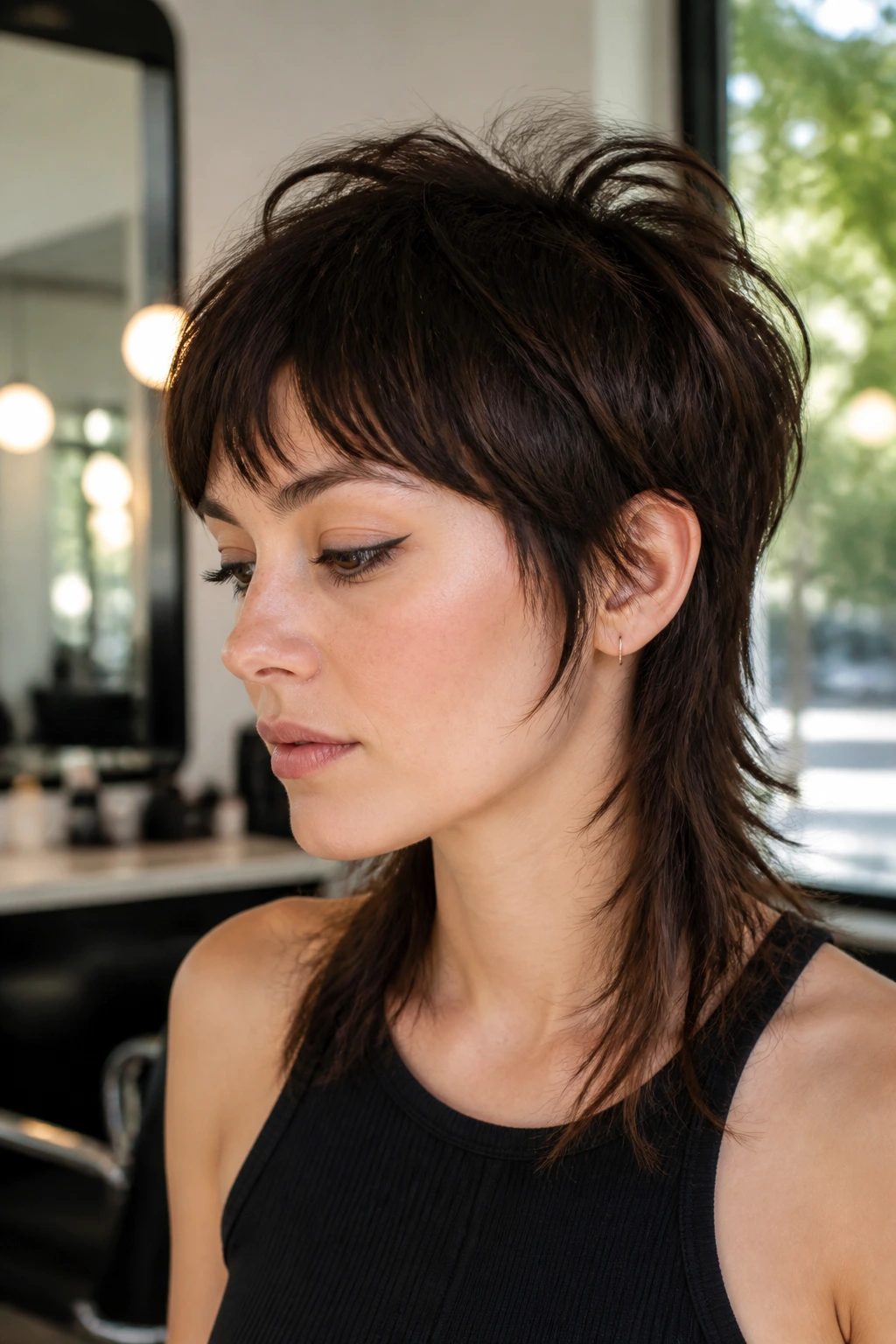
If you want to see the mullet shape clearly, this is the louder version. The front and back are more obviously separated, which can be surprisingly flattering on fine hair when the contrast is controlled. The shorter crown pieces lift the top, and the longer back keeps the shape from looking like a cropped shag.
The danger is making the disconnect too severe. Fine hair can lose its fullness if the lengths are separated too abruptly. Keep the transition clean but not abrupt, and the haircut gets a nice, graphic line without looking patchy.
33. Low-Drama Shag Mullet with Fluffy Ends
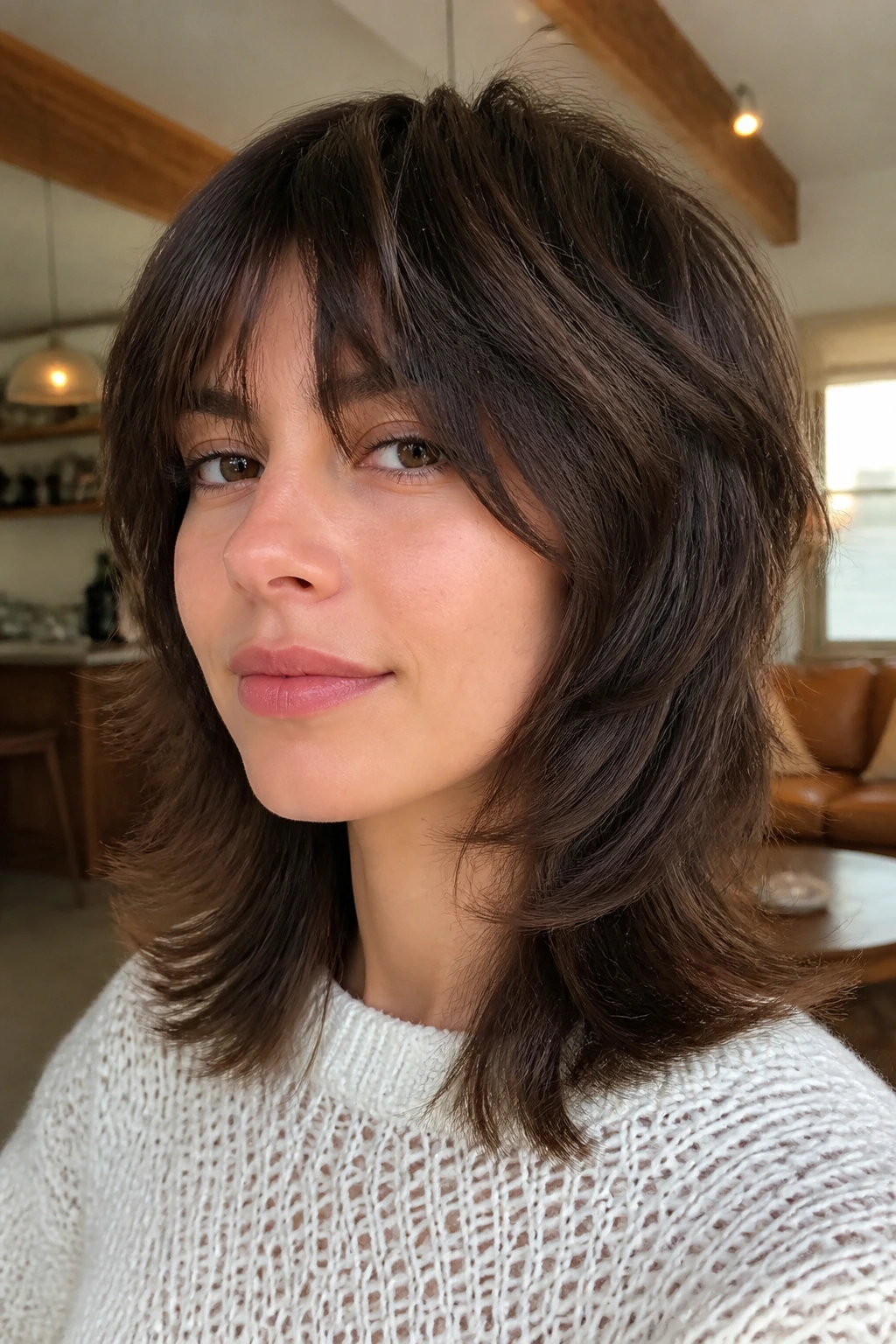
This is the gentlest version in the set, and for a lot of people, it’s the smartest one to try first. The ends stay fluffy rather than shredded, the layers blend smoothly, and the mullet shape shows up more through movement than through hard contrast. Fine hair usually prefers this kind of restraint.
It’s the cut that can survive a rushed morning and still look like you meant to do something interesting. A little mousse, a quick rough-dry, maybe a soft bend at the ends, and you’re done. No drama. No helmet hair. Just shape.
Why the Shag Mullet Flatters Fine Hair
The shag mullet works on fine hair because it solves the two things fine strands struggle with most: weight and collapse. A blunt cut can make fine hair look like it has less movement than it really does. A shag mullet breaks that line, lifts the crown, and keeps the ends from sitting like a flat sheet.
The best versions also respect density. That’s the part people miss. Fine hair does not need a thousand snips. It needs thoughtful placement: shorter layers where the roots need help, longer pieces where the length needs to look full, and enough perimeter left behind so the haircut does not look see-through. If your hair is fine but abundant, you can handle more texture. If it is fine and sparse, keep the layers softer and the outline cleaner.
There’s also a nice trick of proportion happening here. The mullet shape moves the eye upward and downward at the same time, so the haircut feels active. Movement reads as fullness. That’s why these styles can look thicker in real life than a photo of the same hair would suggest. The hair is not necessarily denser. It just has more going on.
What to Tell Your Stylist Before the Scissors Come Out
Bring photos, yes, but say more than “I want this vibe.” Fine hair needs precise direction. Tell your stylist whether you want the shortest layers around the crown, cheekbones, or jaw; that one decision changes the whole shape. If you have very fine hair, ask to keep some weight at the perimeter so the ends don’t go ragged.
I would also be very specific about texture work. Point cutting usually gives a softer finish. A razor can add movement, but it can also fray fragile ends if it’s used too aggressively. Thinning shears are not automatically your friend here, either. They can make already-fine hair look weaker at the bottom if they’re used like a blunt instrument.
If you style your hair with a round brush, say so. If you air-dry, say that too. The right cut for fine hair should match the way you actually live with it, not the way it looks pinned up in a salon mirror. That’s the difference between a cut you keep and a cut you curse every morning.
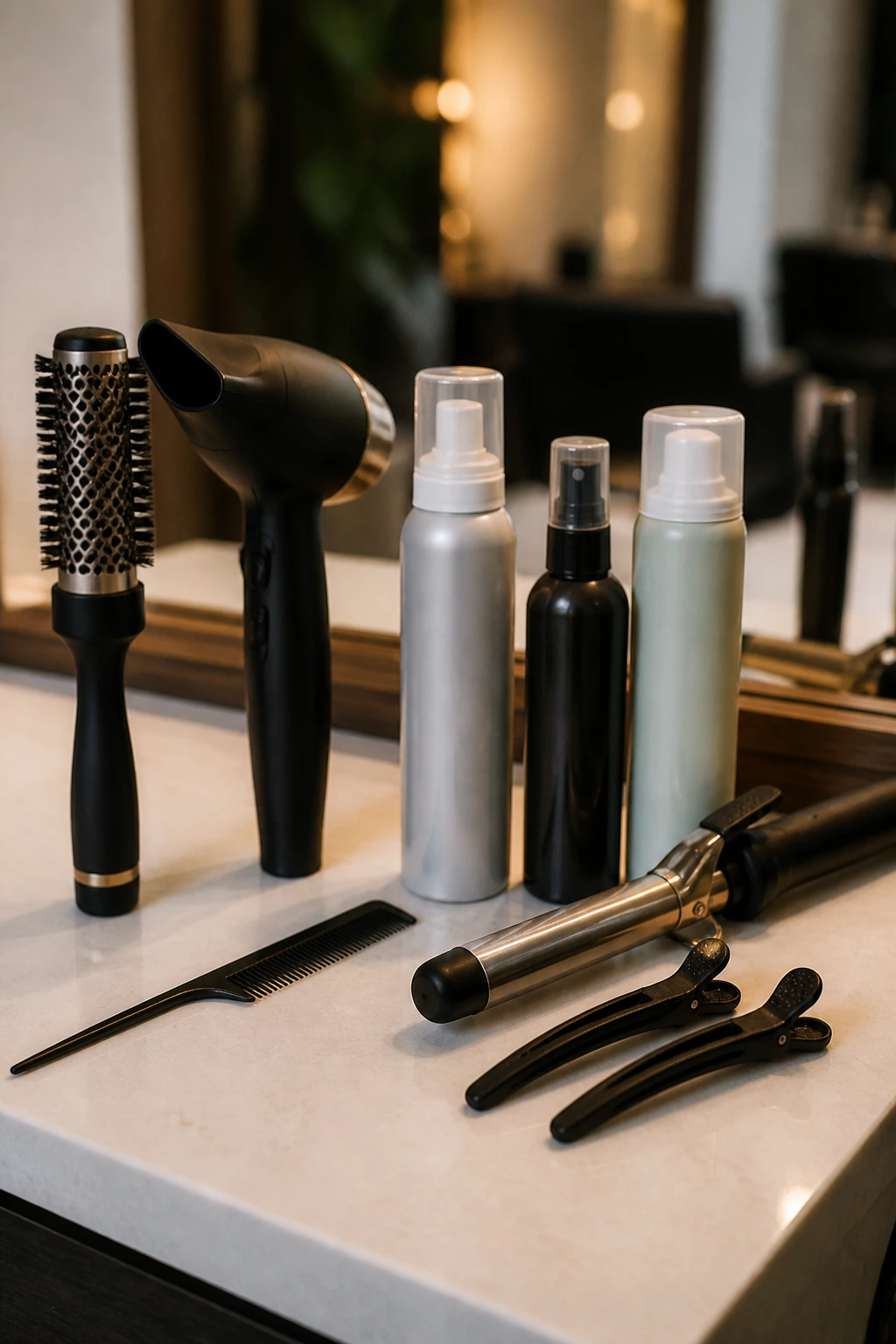
The Tools That Actually Help This Cut
-
Small round brush: Best for lifting the crown and bending the front pieces without making the ends curl too much.
-
Blow dryer with a nozzle: Concentrates airflow so fine hair doesn’t blow apart before the roots set.
-
Volumizing mousse: Gives the crown some grip before drying; use a golf-ball sized amount, not a palmful.
-
Texture spray: Good for piecey ends and a little separation through the shag layers.
-
Dry shampoo: Useful on day two or three when the roots start to sit close to the scalp.
-
1-inch or 1.25-inch curling iron: Helpful for flipping the ends and making the mullet shape read more clearly.
-
Rat-tail comb: Lets you section the crown cleanly and aim product right at the roots.
-
Duckbill or sectioning clips: Keep the top layers out of the way while you dry the lower ones first.
How to Wear the Shape on Ordinary Days

Presentation: Start with damp roots, work in mousse, and rough-dry the crown first so it lifts before the rest of the hair settles. If you want a softer finish, bend only the front two sections away from the face and leave the back to air-dry.
Accompaniments: Small hoops, narrow sunglasses, and open necklines play nicely with the cut because they let the layers show. High-neck tops can work too, but they look best with a longer version that skims the collarbone instead of sitting high and boxy.
Portions: If your hair is fine and sparse, keep the bangs or crown layers a touch longer so the scalp does not peek through at the part line. If your hair is fine but plentiful, you can push the layers shorter and choppier without losing fullness. The cut should match the amount of hair on your head, not the idea of “fine hair” in general.
Beverage Pairing: A sharper, more disconnected mullet feels right with a black coffee, crisp shirt, and a clean liner. A softer shag version looks better with iced tea, a loose knit, and barely-there makeup. It’s not about the drink, obviously; it’s about the mood sitting around the haircut.
Extra Styling Moves for More Lift and Movement
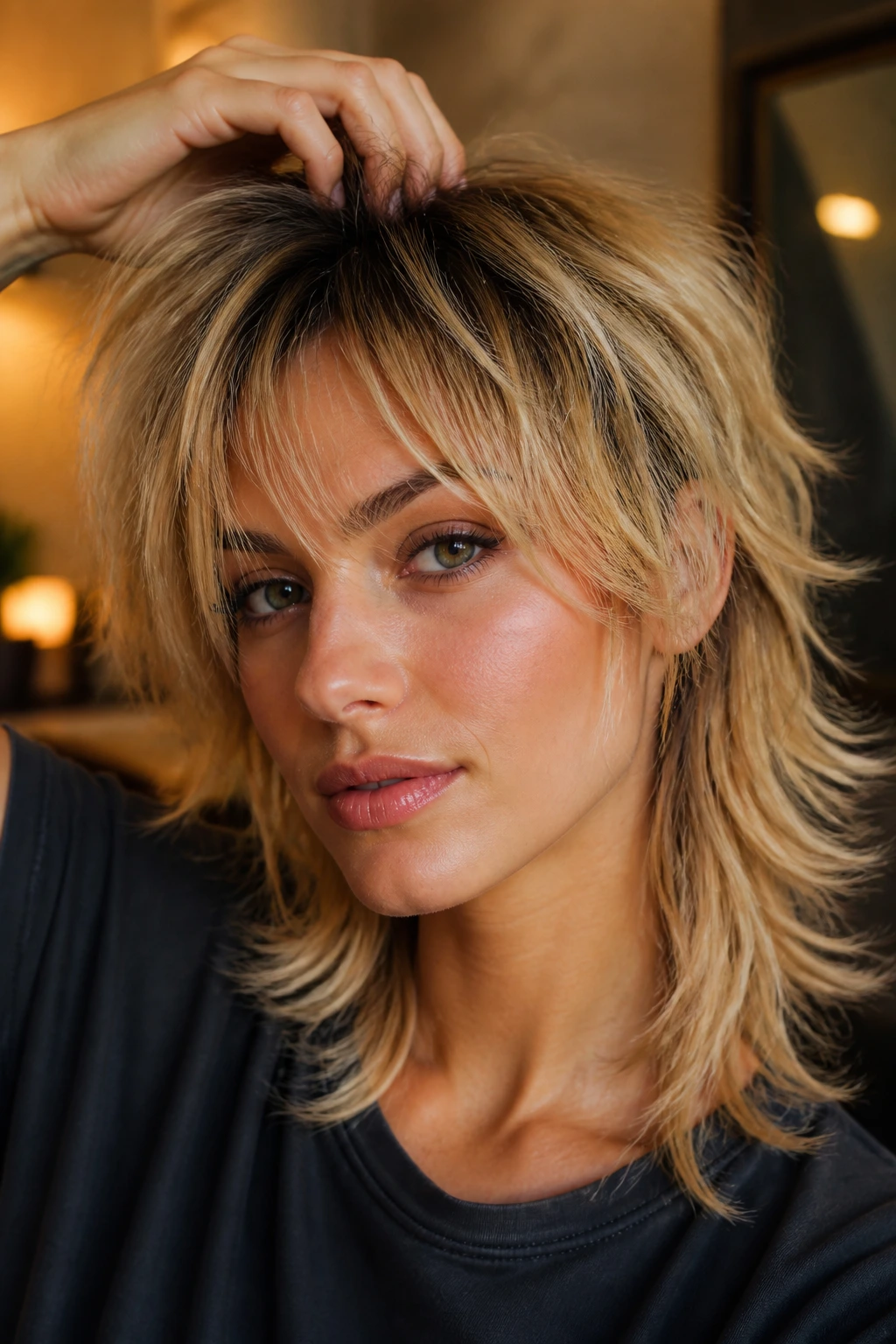
Texture Boost: Put mousse at the roots while the hair is still damp, then lift the crown with your fingers while you blow-dry. If you only spray product on the ends, you’ll miss the part that needs help most.
Customization: For a softer finish, keep the face frame longer and bend the ends inward. For a stronger shag feel, piece out the front sections with a tiny bit of paste and let the back stay more undone.
Serving Suggestions: If you want the haircut to look fuller at once, try a side part for the first few days after a cut. A slight change in part can wake up fine hair better than another bottle of serum ever will.
Make-It-Yours: Straight hair likes cleaner layers and more root lift. Wavy hair can handle softer separation and more air-drying. If your hair is very fine and easily flattened, keep conditioners off the roots and choose lightweight styling foam over heavy creams. If your hair is fine but dense, you can ask for more visible choppiness without ending up sparse.
Mistakes That Make Fine Hair Fall Flat
-
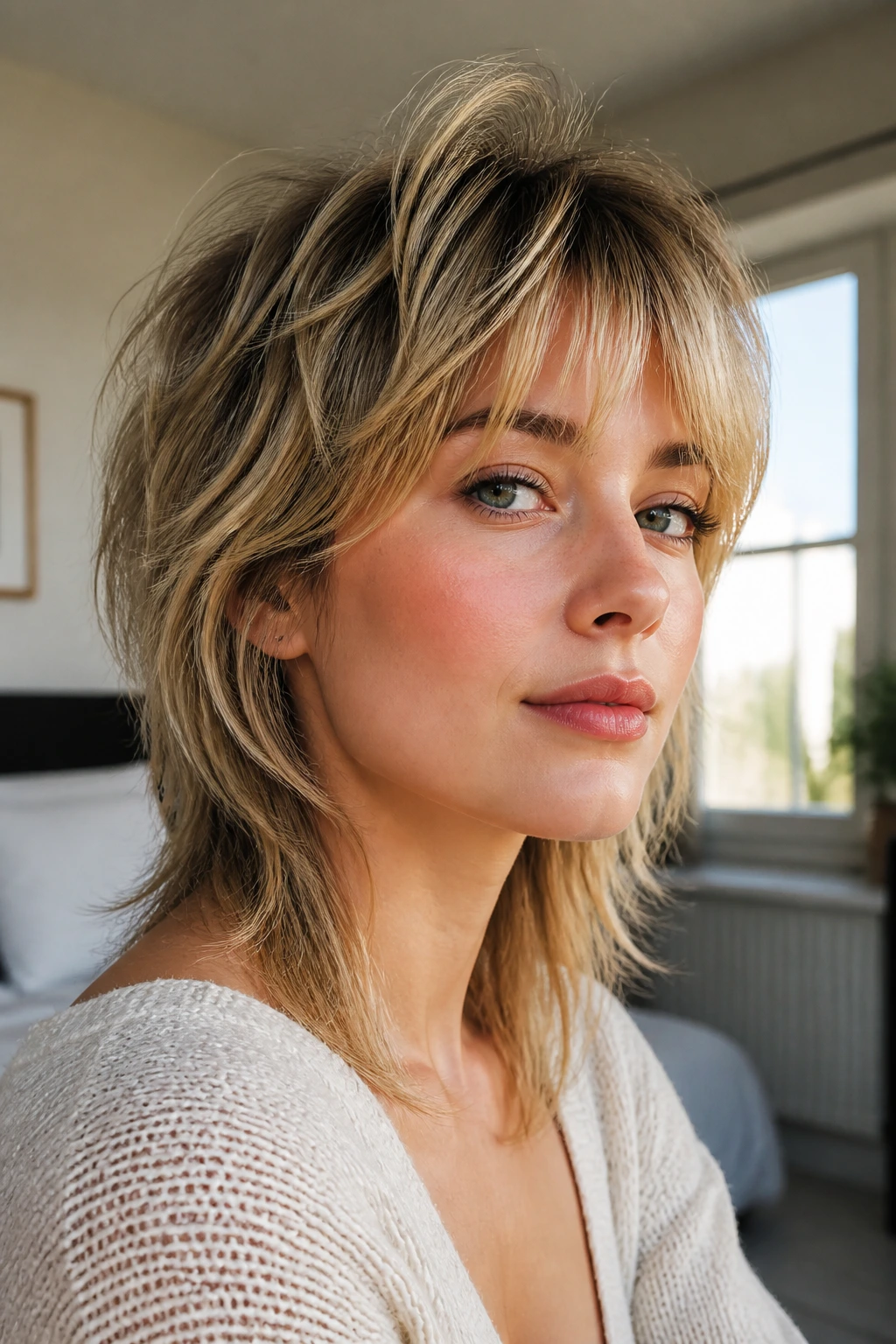
Over-thinning the ends: The haircut starts looking see-through and stringy instead of airy. Ask for controlled texturizing, not a heavy thinning-shear session.
-
Making the fringe too dense: Thick bangs on fine hair can split in ugly ways and expose the scalp. A wispy, bottleneck, or side-swept fringe usually behaves better.
-
Starting the shortest layers too high: If the crown pieces are cut too short, the top can stick up while the rest hangs limp. Keep the shortest point chosen on purpose, not by habit.
-
Using rich creams and oils all over: Heavy products collapse the lift and make the ends hang. Save richer formulas for a tiny bit on the very ends, if at all.
-
Skipping the root area when styling: Fine hair needs product at the base, not just the lengths. Put volume where the hair leaves the scalp, or the style drops before lunch.
Variations and Adaptations Worth Trying
The Office-Soft Version: Keep the layers longer, the fringe looser, and the disconnect gentle. It still reads as a shag mullet, but nobody at a meeting will call it dramatic.
The Rocker Cut: Shorten the crown, add more texture through the sides, and push the ends piecey. This works best if you like a little grit and don’t mind touching up the shape with paste.
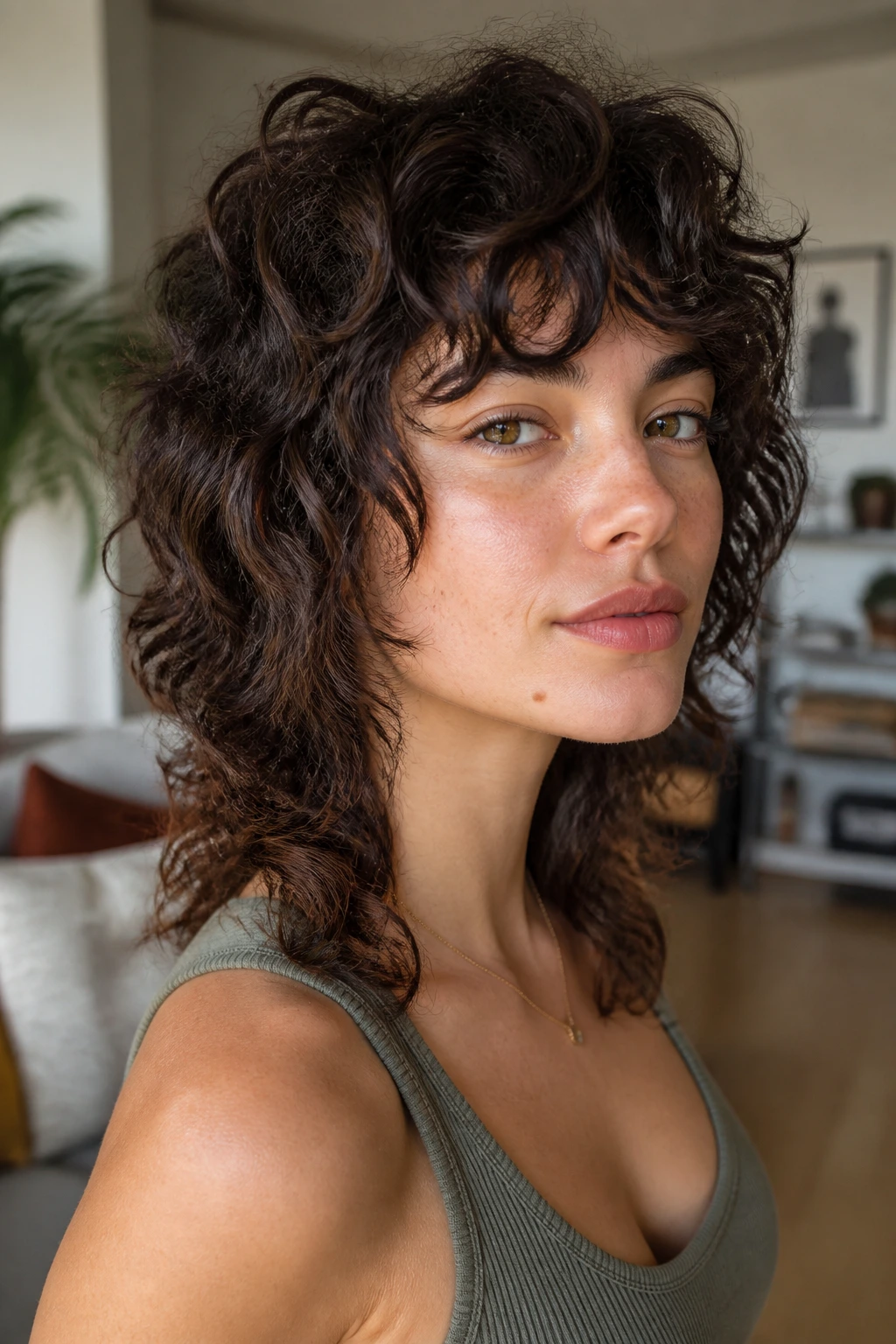
The Curly-Friendly Version: Leave the layers longer and avoid over-razoring. Fine curls need room to clump, not just room to frizz.
The Straight-Hair Version: Ask for cleaner outlines, a bit of bevel at the ends, and subtle internal layers. Straight fine hair often needs structure more than roughness.
The Color-Boosted Version: Add light highlights around the face frame and crown, or a warm all-over tone if the hair looks washed out. Dimension helps the layers read fuller.
The Grow-Out Version: Keep the nape soft and the front pieces long enough to tuck behind the ears. That way the haircut still looks intentional after a few weeks of growth.
Keeping the Cut Looking Fresh Between Trims

Fine hair usually holds a shag mullet best when it’s trimmed on a schedule, not whenever you remember. Shorter versions tend to need cleanup every 5 to 7 weeks. Longer versions can often go 8 to 10 weeks, especially if the grow-out is soft and the nape is not too chopped up.
Washing less often can help the roots keep a little body, but there’s a balance. If your scalp gets oily fast, use dry shampoo on day two and day three, not a giant cloud of it on day one. If you use mousse, texture spray, or root powder often, a clarifying shampoo every 2 to 4 weeks keeps the hair from going dull and sticky.
Conditioner should stay from mid-length to ends only. That one habit alone can save a fine-hair shag mullet from collapsing. At night, a loose clip or a silk pillowcase helps preserve the crown volume better than sleeping with the hair jammed under your head.
Frequently Asked Questions
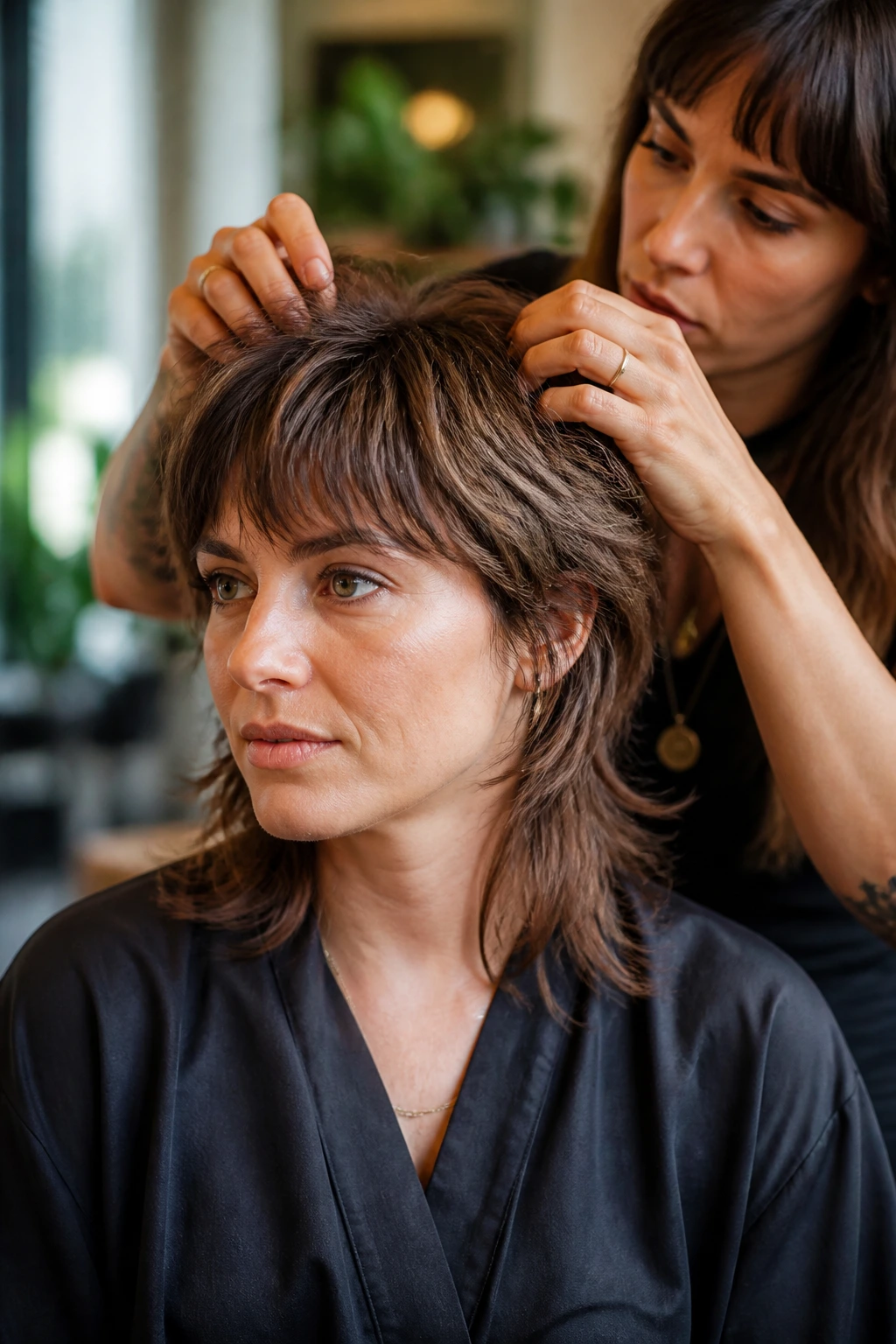
Will a shag mullet make fine hair look thinner?
Not if it’s cut with restraint. The haircut can make fine hair look fuller by moving weight to the crown and keeping the ends soft, but too much thinning does the opposite. Ask for shape, not shredding.
What fringe works best on very fine hair?
Bottleneck bangs, side-swept fringe, and soft curtain bangs tend to be safer than a dense blunt bang. They let a little forehead show through, which keeps the fringe from looking heavy or separated.
Can I get a shag mullet if my hair is pin-straight?
Yes, but the cut should be more controlled. Straight fine hair usually needs a cleaner perimeter, subtle layers, and root lift at styling time so the shape doesn’t fall flat.
How often should I trim it?
Shorter versions usually need shaping every 5 to 7 weeks. Longer versions can stretch to 8 or 10 weeks if the layers are soft and the ends still move well.
Should I ask for a razor cut?
Only if your hair can handle it. A razor can create a nice soft edge, but very fragile fine hair may fray and look thinner if the stylist gets too aggressive.
What if my crown stays flat no matter what I do?
That usually means the cut is too heavy at the top or the styling product is too rich. Ask for shorter crown layers, use mousse at the roots, and dry the crown first so it sets before the rest of the hair pulls it down.
Can this haircut grow into a bob later?
Yes, if the layers are blended with the grow-out in mind. Softer versions slide into a bob more easily than hard disconnected mullets, so mention that goal before the first cut.
Does color help fine hair look fuller?
It often does. A few lighter pieces around the crown and face frame can make the layers read with more depth, which gives the haircut more visual body without changing the cut itself.
The Cut That Keeps Moving
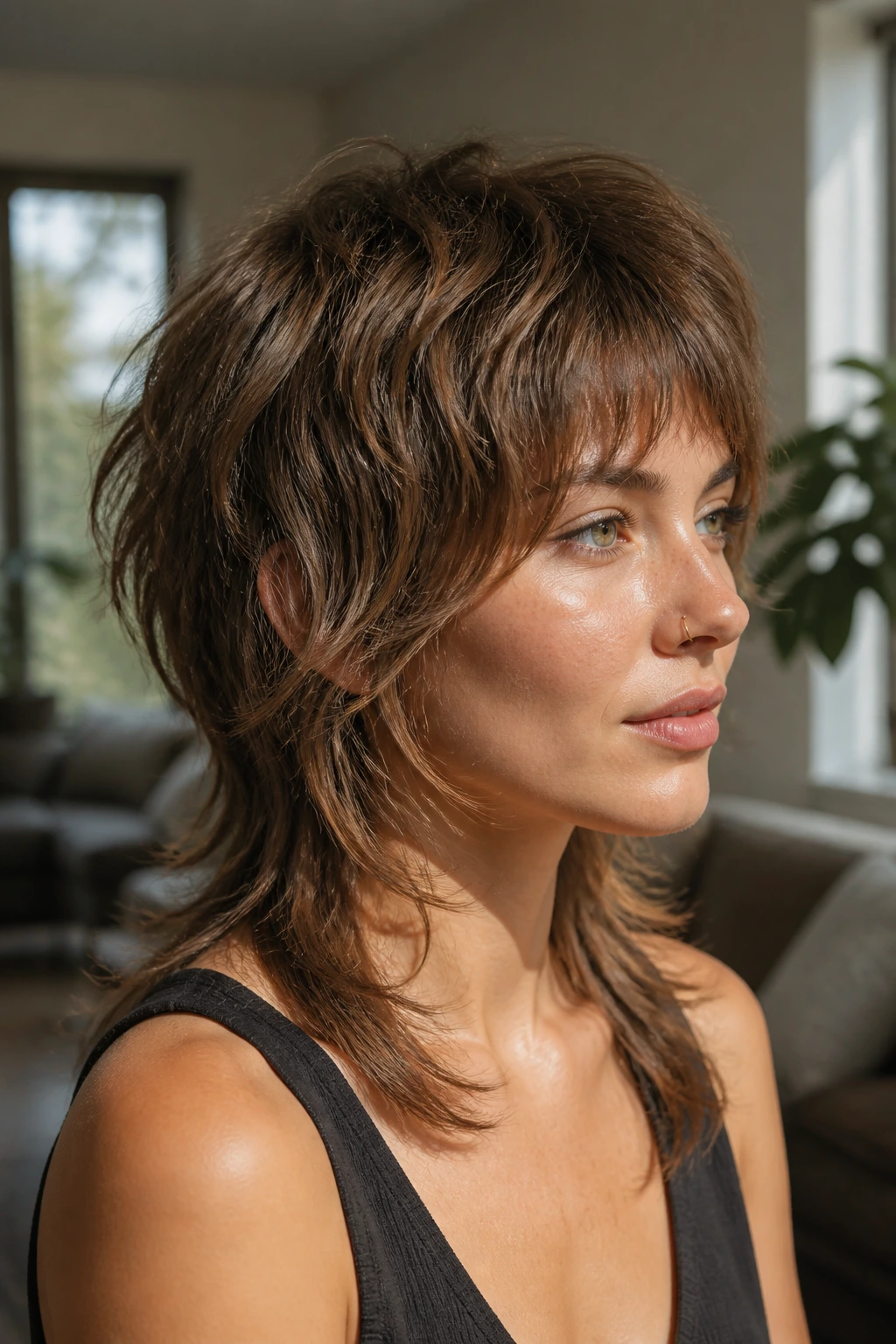
The nicest thing about a shag mullet on fine hair is that it doesn’t demand fake perfection. It wants movement, a little air, and a shape that knows where to hold weight and where to let go. That’s why the cut can look soft in the morning, lived-in by noon, and still intentional at night.
Bring photos, yes, but bring a point of view too. Ask for the crown height, bang length, and back length you actually want, because those three details decide whether the haircut flatters your hair or fights it. If you get the balance right, the result is one of those rare cuts that looks better when it has a little life in it.
