



A square face can make a blunt haircut look harsher than it really is. That’s the wrong fight to pick. Short shaggy hair without bangs for square faces works because it breaks the hard line at the jaw, keeps the crown alive, and lets the ends fall in pieces instead of one heavy shelf.
Bang-free shags are underrated for this face shape. Without a fringe sitting across the forehead, the whole shape depends on the part, the cheekbone pieces, and where the perimeter lands. Get those three things right, and the face reads softer without losing its structure.
The best versions are not all the same length, and that’s part of the point. Some sit at the chin, some hover at the ears, and some hang just long enough to brush the neck. The right one depends on hair density, texture, and how much styling you’re actually willing to do on a Tuesday morning.
Why These Short Shaggy Cuts Work on a Square Face
-
They break the jawline: A square face already has strong corners, so a shag with shattered ends keeps the haircut from ending in one flat line right at the jaw.
-
They keep the forehead open: No bangs means the eye travels to the side part, the cheekbone pieces, and the crown lift instead of stopping at the brow.
-
They add movement where it matters: Texture around the temples and along the sides softens the widest part of the face without making the cut look fluffy.
-
They grow out with less drama: A good short shag still looks intentional when the layers start to settle, which matters more than salon-day perfection.
-
They work with real hair, not magazine hair: Wavy, straight, thick, fine, or curly hair can all wear a shag; the trick is changing the amount of layering, not forcing one shape onto every head.
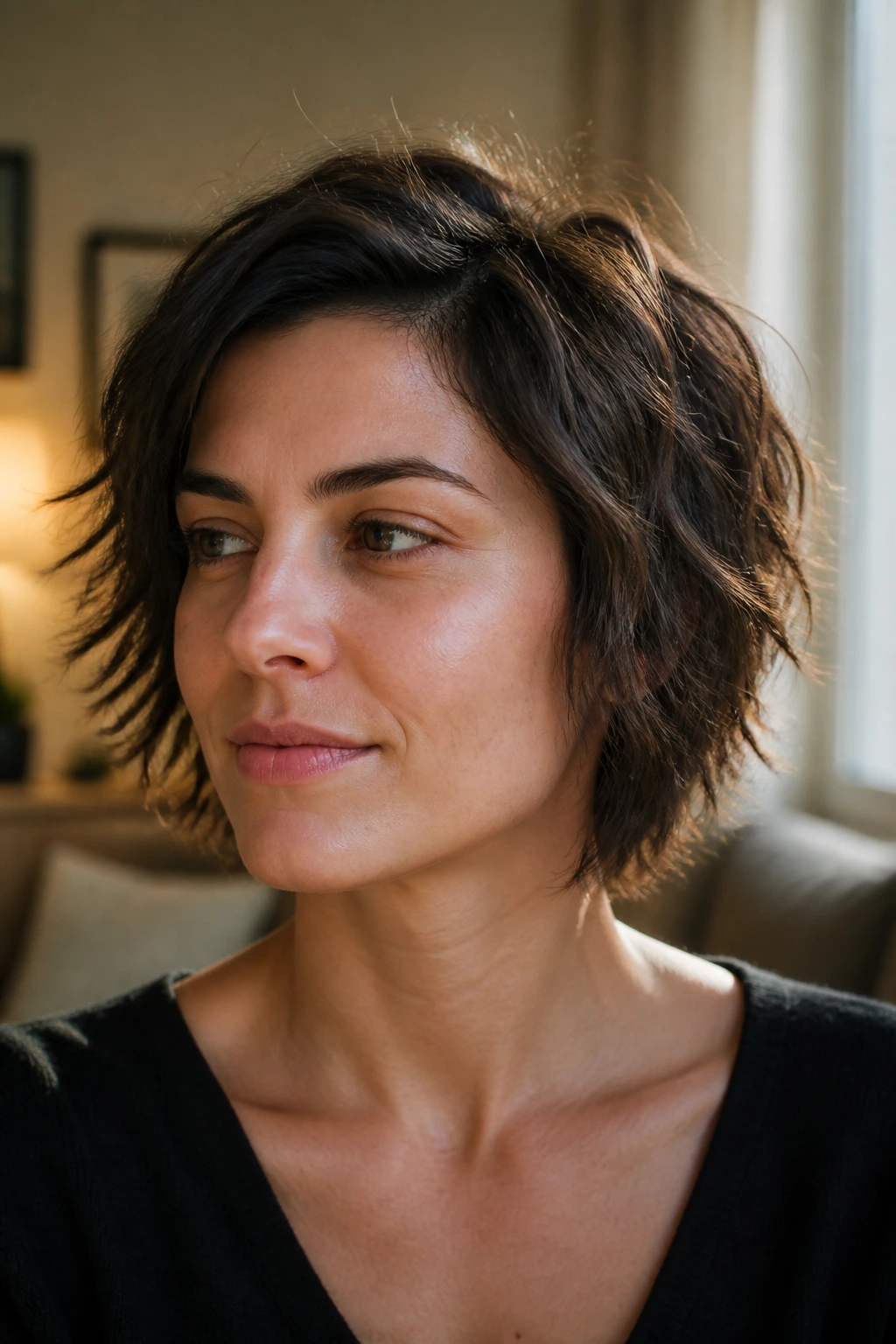
1. Chin-Skimming Razor Shag
The chin disappears first. That’s the magic here. A chin-skimming razor shag keeps the weight below the jawline and breaks the front into little chips rather than a shelf, so the eye keeps sliding downward instead of stopping at the widest point.
What to ask for
- A perimeter that lands just below the chin, not at the jaw.
- Point-cut or razor-finished ends.
- Shorter crown layers for lift, but nothing that balloons the sides.
- A side part or off-center part if your hair tends to split down the middle on its own.
This cut is my pick for square faces that want softness without going full pixie. It gives you enough length to tuck behind an ear or flip forward on one side, and that little bit of movement matters more than an extra inch. If your hair is straight and a little stubborn, a rough blow-dry with a round brush at the roots helps the shape come alive.
2. Rounded French Bob Shag
A rounded French bob shag looks tidy from a distance and broken up up close, which is the sweet spot for a square face. The outline stays soft and curved, but the interior layers keep it from turning helmet-like.
The important part is where the length lands. I like this cut just under the chin or grazing the top of the neck, never stopping exactly at the jaw. That tiny shift changes everything. With no bangs to hide behind, the part becomes part of the design, so a soft center part or a side part with a little lift at the roots does more work than most people expect.
This one is especially good for fine hair that needs the illusion of thickness without a lot of weight. Use a mousse at the roots, blow-dry with your fingers, and bend just the ends with a brush. You want movement, not polish.
3. Bixie With Choppy Ends
Can a pixie work on a square face without bangs? Absolutely, if the top is soft and the sides aren’t carved too tight. The bixie sits between a bob and a pixie, which means you get cheekbone interest without the hard line of a classic short crop.
The part that matters
Ask your stylist for length through the crown and temples, then keep the nape neat and light. The choppy ends should be irregular, not spiky. That softness makes the cut feel modern instead of severe, and it stops the shape from boxing in the face.
This is a strong choice if your hair is dense or if you like a cut that dries quickly. It works with a little bend, a little paste, and not much else. If you have a strong jaw and want to show it off instead of hiding it, this is one of the cleanest ways to do that without adding a bang line.
4. Collarbone Ghost Shag

A collarbone ghost shag is for the person who says they want short hair but still likes to tuck pieces behind the ear and forget about them. It sits longer than a true bob, but the layers are light enough that the cut still feels airy.
The “ghost” part comes from the interior layering. You don’t see a dramatic stair-step effect. You feel it when the hair moves. On a square face, that matters because the shape stays open around the cheeks and jaw without sitting in a hard, flat block.
This is one of the easiest cuts to live with if you air-dry most days. A little leave-in conditioner, a dab of styling cream, and a side-to-side scrunch is usually enough. If your hair has a slight wave, even better. The shape wakes up on its own.
5. Curly Halo Shag

Curly hair changes the whole conversation. A curly halo shag is built to let the curls rise around the head without turning the silhouette into a triangle, which is a common problem when the sides are left too heavy.
The best version is usually cut dry, curl by curl, so the stylist can see where the spring lands. For square faces, the goal is to keep the volume round and slightly lifted, not wide at the jaw. The curls around the temples and upper cheeks soften the angles naturally, which means you do not need bangs to create balance.
I like this cut for people who want the face open and the texture doing the talking. A diffuser, a light gel, and a hands-off dry-down are the whole game here. If the curls are good, don’t crush them with too much brushing after the fact.
6. Side-Parted Cropped Shag

A side part does more than move hair to one side. It changes the whole geometry of the haircut. On a square face, that asymmetry helps because the eye stops reading the face as a perfect box and starts noticing the lift, the angle, and the movement.
This cropped shag keeps the nape tight and the top slightly longer, then lets the layers fall unevenly across the forehead and temples without crossing into bang territory. The result feels a little sharper than a bob, but not severe.
If your hair lies flat, this cut can be a relief. The part creates instant height, and the shorter sides keep the silhouette from growing too wide. Ask for point cutting through the top and sides so the layers don’t look chopped in one straight line.
7. Soft Wolf-Cut, Shortened

The wolf cut gets a bad reputation when it turns into a shag-mullet hybrid with too much drama at the back. Shortened and softened, though, it’s one of the easiest shapes for a square face to wear.
The crown stays lively, the sides stay broken up, and the nape doesn’t drag the eye downward in a blunt way. That mix gives you movement around the face without exposing every angle. If your jaw is strong and your hair is thick, the shorter wolf cut can take out some bulk while keeping the style interesting.
What I would avoid here is an overgrown tail at the back. That can make the cut feel accidental instead of deliberate. Keep the layers around the cheekbones and jaw piecey, and leave enough length on top that the whole thing falls with a bit of attitude.
8. Feathered Pixie Shag
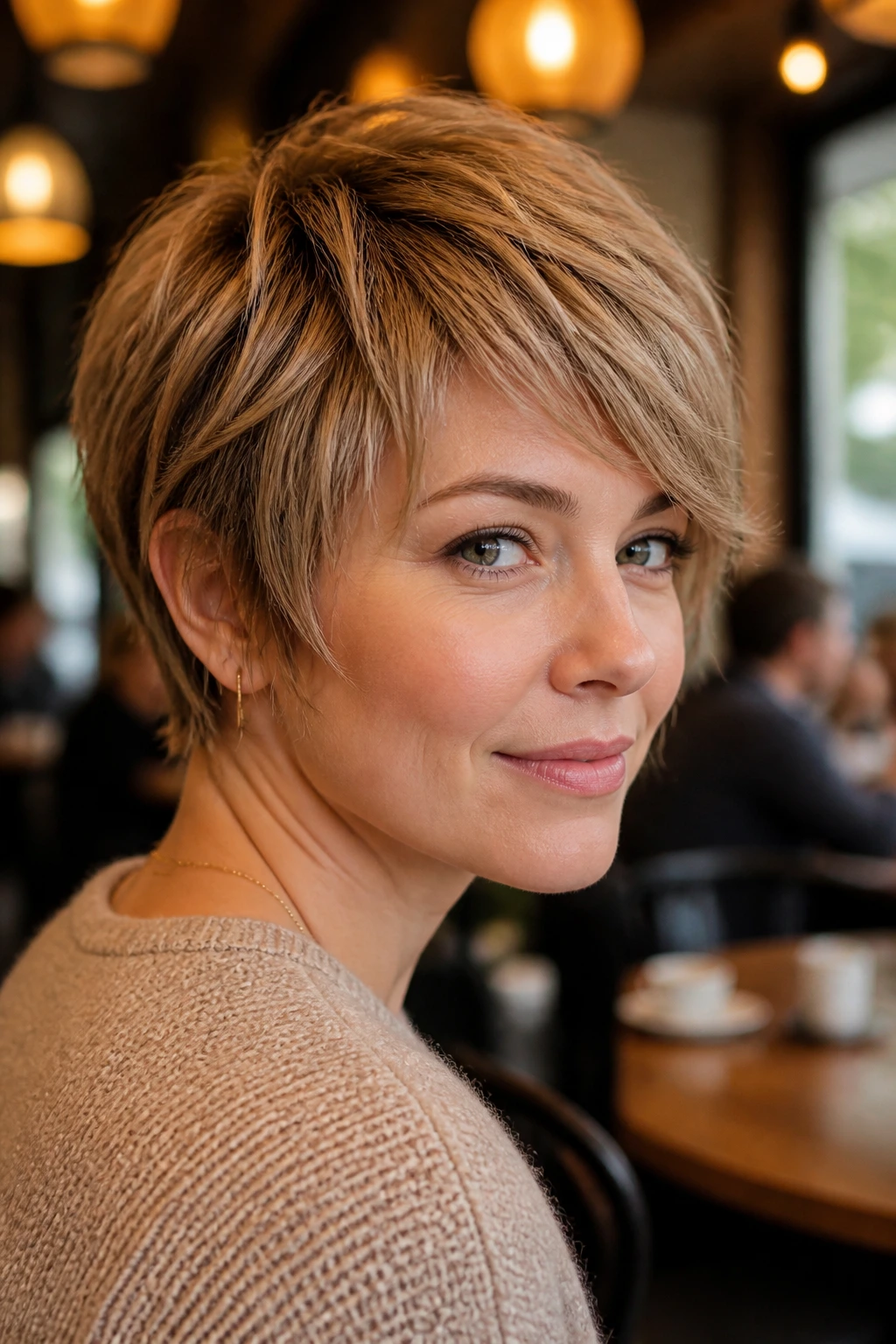
A feathered pixie shag is less about drama and more about air. It gives a square face softness through the temples, around the ears, and at the nape, where a blunt pixie can look too clean for its own good.
This cut works best when the layers are feathered, not stripped. You want the edges to move, not fray. The top can be lifted a little, which pulls attention upward and away from the jaw. Without bangs, the front simply joins the rest of the shape, usually with a side sweep or a short, broken fall across the forehead that never turns into a full fringe.
Fine hair loves this cut because the feathering makes it look lighter and fuller. Thick hair can wear it too, but the stylist has to remove weight with restraint. Too much thinning, and the shape starts looking wispy in the wrong way.
9. Messy A-Line Shag Bob

A classic A-line bob can look boxy on a square face if the front is too precise. A messy A-line shag bob fixes that by keeping the length slightly longer in front, then shaving the perfection off the edge with texture.
The front pieces should bypass the jaw, not sit on it. That’s the whole point. Once they drop below that line, the face reads longer and softer. Meanwhile, the back stays light enough to keep the neck visible, which is a nice break from heavier bob shapes.
This one is especially good if you like a shape that looks better with a little mess than with a lot of fuss. A rough blow-dry, a small amount of texture spray, and finger-combing at the ends are enough. If you brush it into a neat, sleek triangle, you miss the point.
10. Neck-Length Piecey Shag
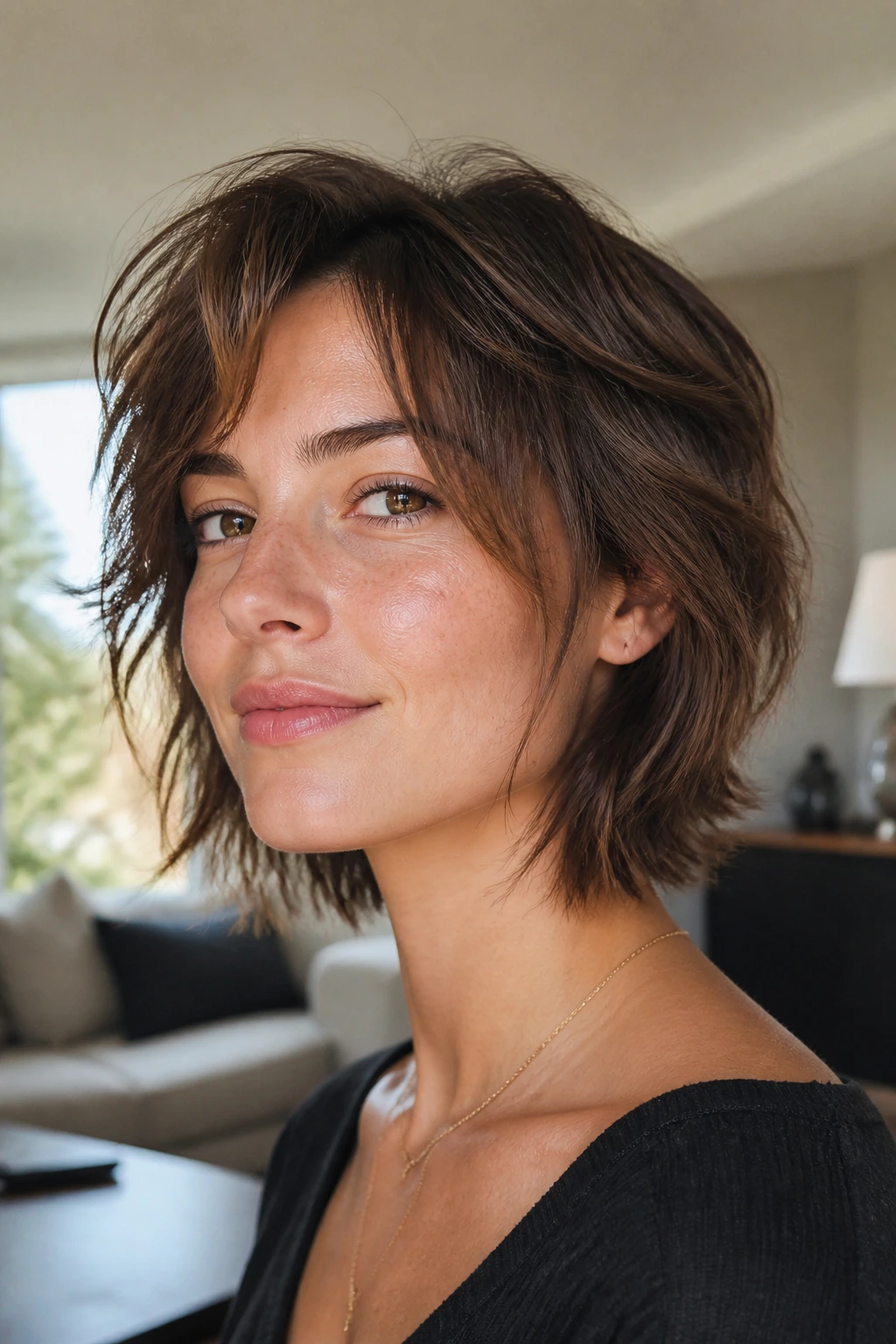
What if “short” for you means hair that still brushes the neck? Then a neck-length piecey shag is the safer, more wearable answer. It gives square faces room around the jaw without asking for the commitment of a full bob or pixie.
Why it flatters strong angles
The length sits low enough to avoid ending right at the jaw, and the piecey layers keep the silhouette broken up. That means you get softness around the face without losing the option to tuck the sides, pin one side back, or wear it half-behind the ear.
I like this cut on hair that has a bit of wave but not enough to become wild. It’s also one of the easiest shapes to grow into something longer later. If your life changes your hairstyle more often than your mood does, this is a sensible place to start.
11. Razor-Cut Wavy Crop

A razor-cut wavy crop has that slightly torn edge that makes wavy hair look intentional instead of accidental. On a square face, the looseness helps a lot. The hair bends around the sides instead of sitting in one stiff block.
The razor matters here, but only in the hands of someone who knows when to stop. Too much razoring on fine hair can leave the ends see-through, and that’s a fast way to make the cut look tired. Used well, though, the razor creates movement at the temples, in the crown, and through the perimeter.
This is one of the best options if you want a casual shape that dries with character. Work in a little sea-salt spray or lightweight mousse, then twist sections as they dry. You’re aiming for bend, not a perfectly uniform wave pattern.
12. Tapered Crown-Volume Cut
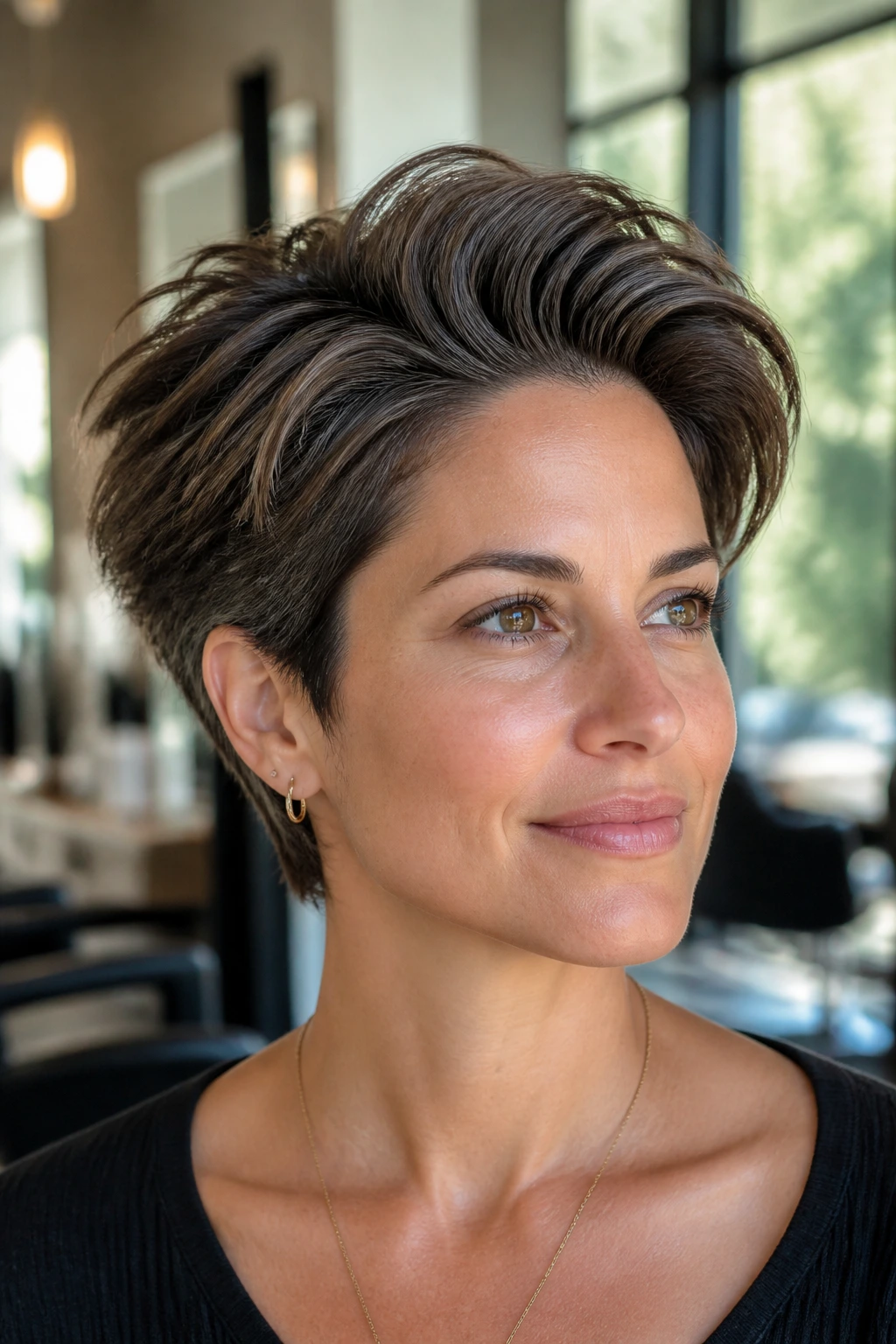
Some square faces need a little more lift than length. A tapered crown-volume cut solves that by stacking the energy at the top and keeping the sides and nape tighter.
That shift changes where people look first. The eye goes up. The face feels less wide because the silhouette has height and a narrow base, which is a smart move when the jaw is the strongest part of the outline. With no bangs, the front can stay open and slightly off-center so the crown does the talking.
This cut is a good fit for flat hair, especially if it goes limp by lunch. A root spray at the salon is not enough; you’ll want a blow-dry that lifts the roots in the opposite direction of the part, then a cool shot to lock that shape in. It’s a little more work, but the payoff is clean.
13. Jawline-Bypassing Lob Shag
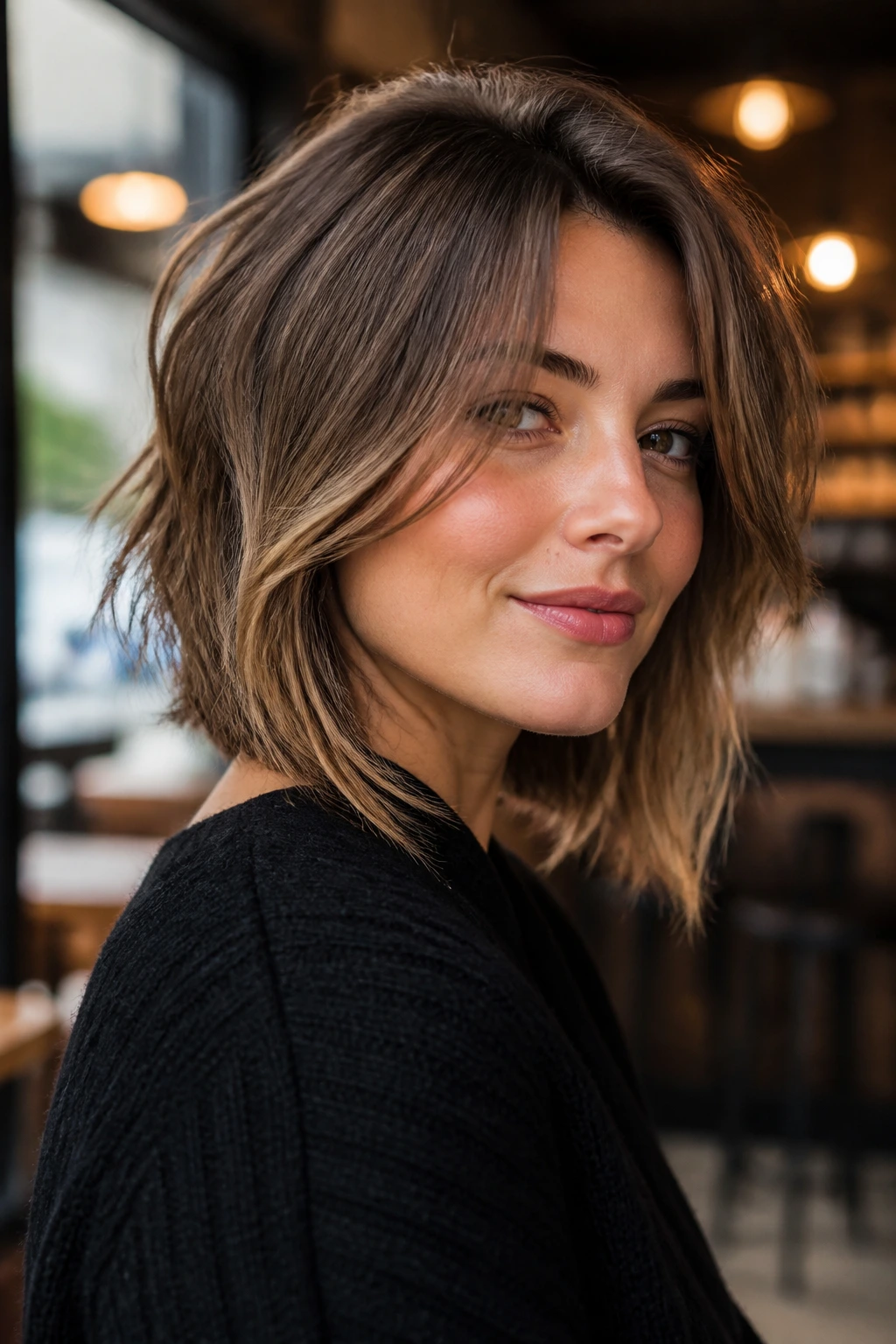
Unlike a blunt lob, a jawline-bypassing lob shag doesn’t stop where the face is widest. That one detail makes it far easier on square faces. The layers and texture keep the long bob from reading heavy or boxy.
The front pieces should fall below the jaw, almost grazing the neck, while the internal layers live higher up around the cheekbone. That creates a downward line through the cut without turning the whole thing flat. If your hair is medium density, this is a smart middle ground between short and shoulder-skimming.
I’d pick this if you want the feel of a short shag but you’re not ready to go above the chin. It also works well when you wear your hair down most of the time. The cut has enough shape to look good loose and enough length to tuck when you want it out of the way.
14. Mini Mullet With Soft Sides
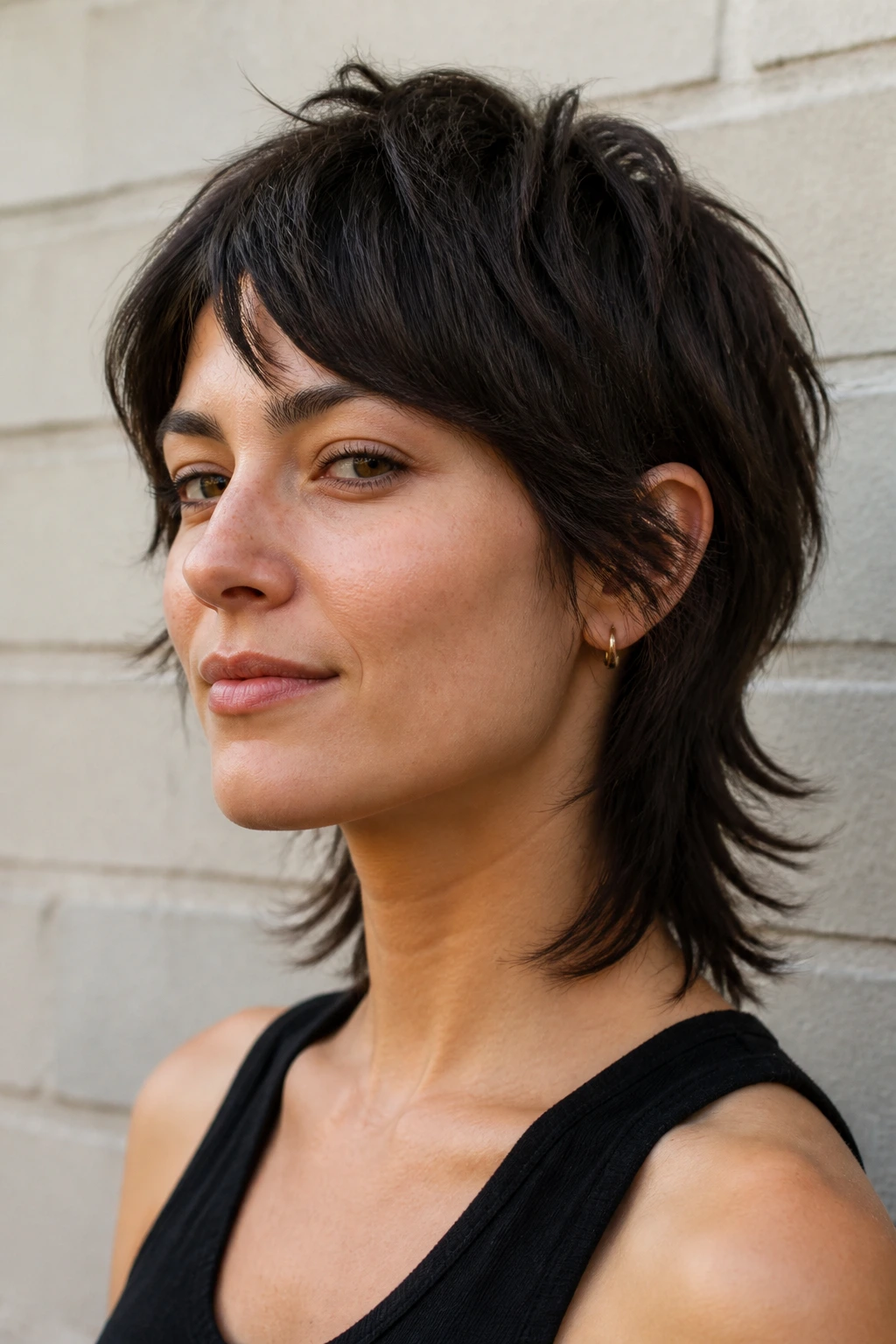
A mini mullet sounds more extreme than it usually is. Done well, it’s just a short shag with a touch more length in the back and a softer frame around the face.
That shape can look very good on a square face because the sides don’t widen the jaw, and the back creates a bit of vertical line instead of one broad horizontal shape. The key is softness. If the sides are too sharp or the nape gets too stringy, the whole thing tips into costume territory fast.
I like this cut on thick hair that needs direction. It removes bulk, keeps movement, and lets the crown sit lively without needing a bang to finish the look. You either love this kind of edge or you don’t, but the square face part of the equation is easy: the softer the sides, the better it behaves.
15. Tousled Curly Bob Shag

A tousled curly bob shag works because it respects the curl pattern instead of forcing the hair into a box. On a square face, the round shape around the cheeks and temples softens the jaw without needing any front fringe at all.
This cut should be planned around shrinkage. Curls jump. A lot. If the stylist cuts it too short while wet, the shape can land much higher than expected and start to feel wide. Dry cutting, or at least a careful wet cut with lots of room left for spring, usually gives a better result.
I love this version for curls that want to be bouncy but not fluffy. A little cream, a little gel, and a good diffuser are enough. If the curls are brushed out after drying, though, the shape loses all that lovely round movement.
16. Soft Inverted Shag
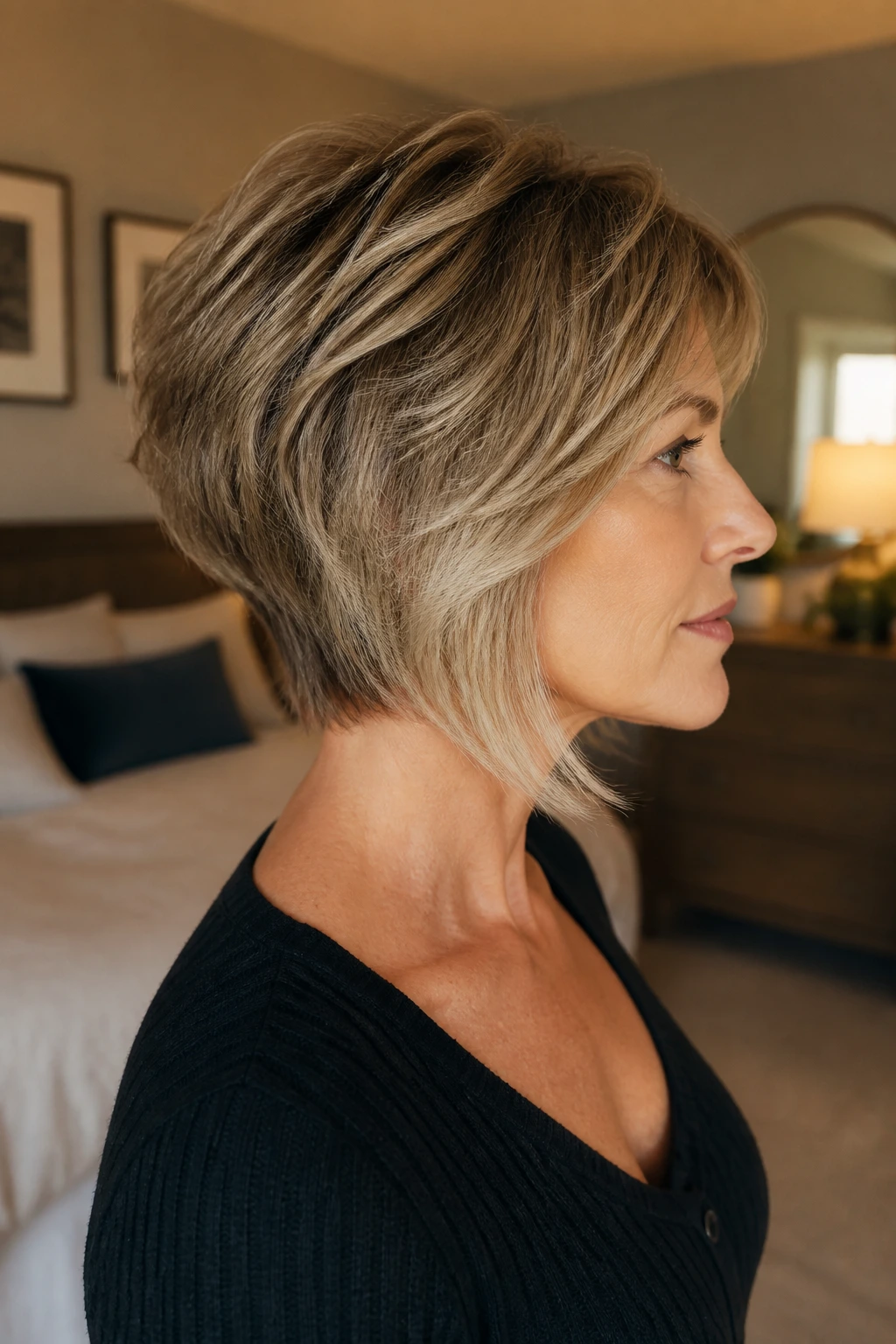
A soft inverted shag borrows the angle of an inverted bob, then takes the stiffness out of it. The back is a touch shorter, the front is longer, and the whole cut is broken up so it doesn’t turn severe.
That diagonal line is useful on a square face because it pulls the eye downward and inward. It breaks the boxy feeling without pretending the face isn’t square. I actually prefer this to a fully straight inverted bob, which can feel too neat when the jaw is already strong.
This cut works especially well on straight or lightly wavy hair. The angle gives shape even when the hair is not freshly styled, and the shag layers keep it from sitting like a helmet. If you want something that looks polished but not flat, this is a strong option.
17. Layered Mushroom-Soft Shag

A mushroom cut can be a disaster on a square face if it’s too round and too blunt. A layered mushroom-soft shag keeps the rounded idea but breaks the cap open with irregular layers and airy edges.
The best version does not sit like a bowl. It floats. The sides stay soft, the crown gets texture, and the perimeter is shattered just enough to stop the outline from turning heavy. That’s what saves it from looking old-fashioned in the wrong way.
I like this on dense straight hair that tends to look too solid when it’s all one length. The layers remove the weight and make the cut feel lighter around the cheeks. It’s one of those shapes that sounds odd on paper and looks better on the head than you’d expect.
18. Textured Crop With Long Sides
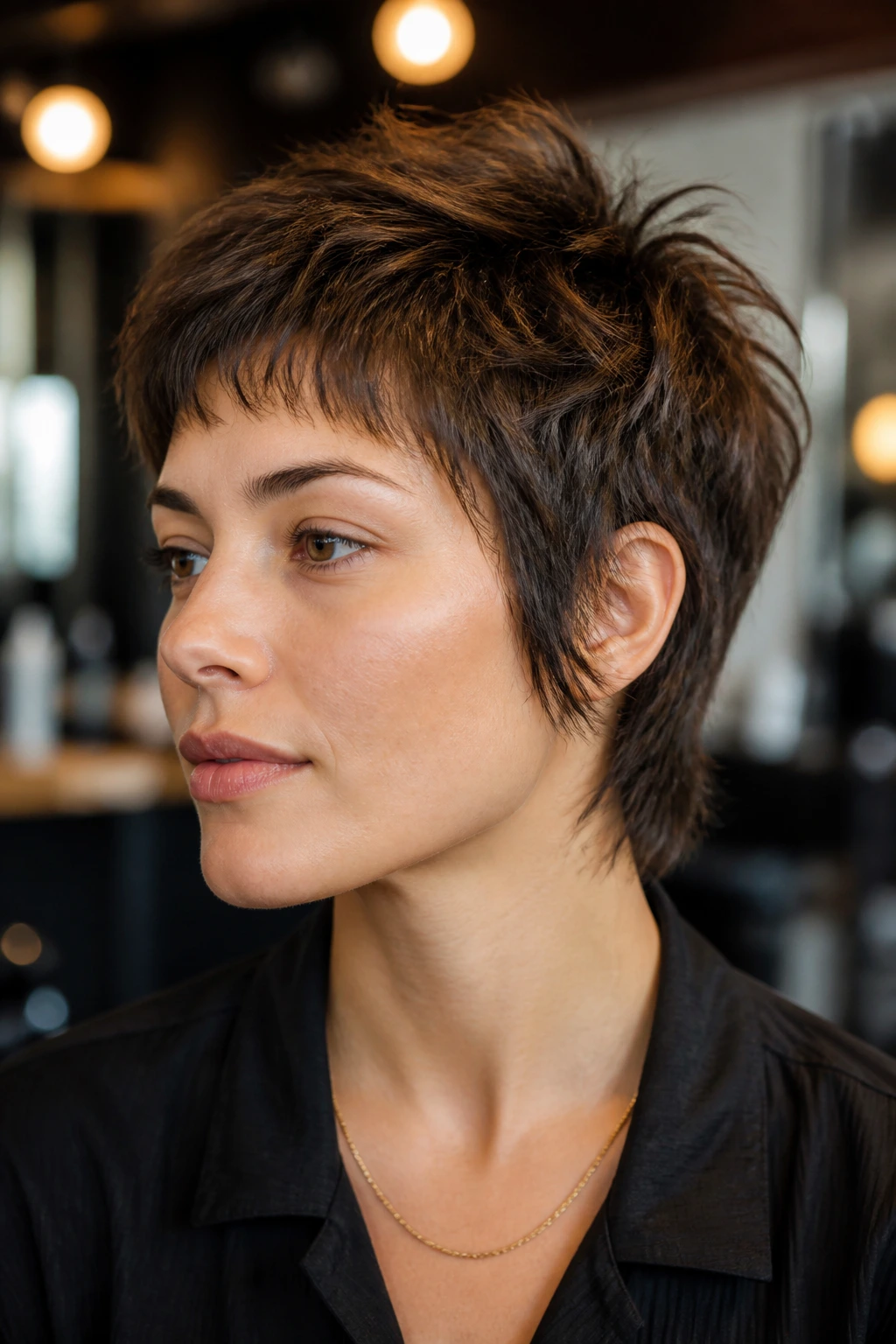
If you like short hair but hate the feeling of everything being exposed, a textured crop with long sides gives you a little cover where you want it. The temples and sideburn area stay longer, which is useful on a square face because that’s where the strongest width often shows.
This cut is quiet in a good way. It doesn’t scream for attention, but it still has structure. The crown can be lifted with a bit of paste or foam, while the sides stay softer and more broken up. Without bangs, the forehead remains open, which keeps the cut from feeling heavy.
It works best when the stylist keeps the top textured but not shredded. Too much texture can make the crop look thin, especially on fine hair. Done with restraint, though, it gives square faces a cleaner outline and a little edge at the same time.
19. Sliced Shoulder Brush-Up
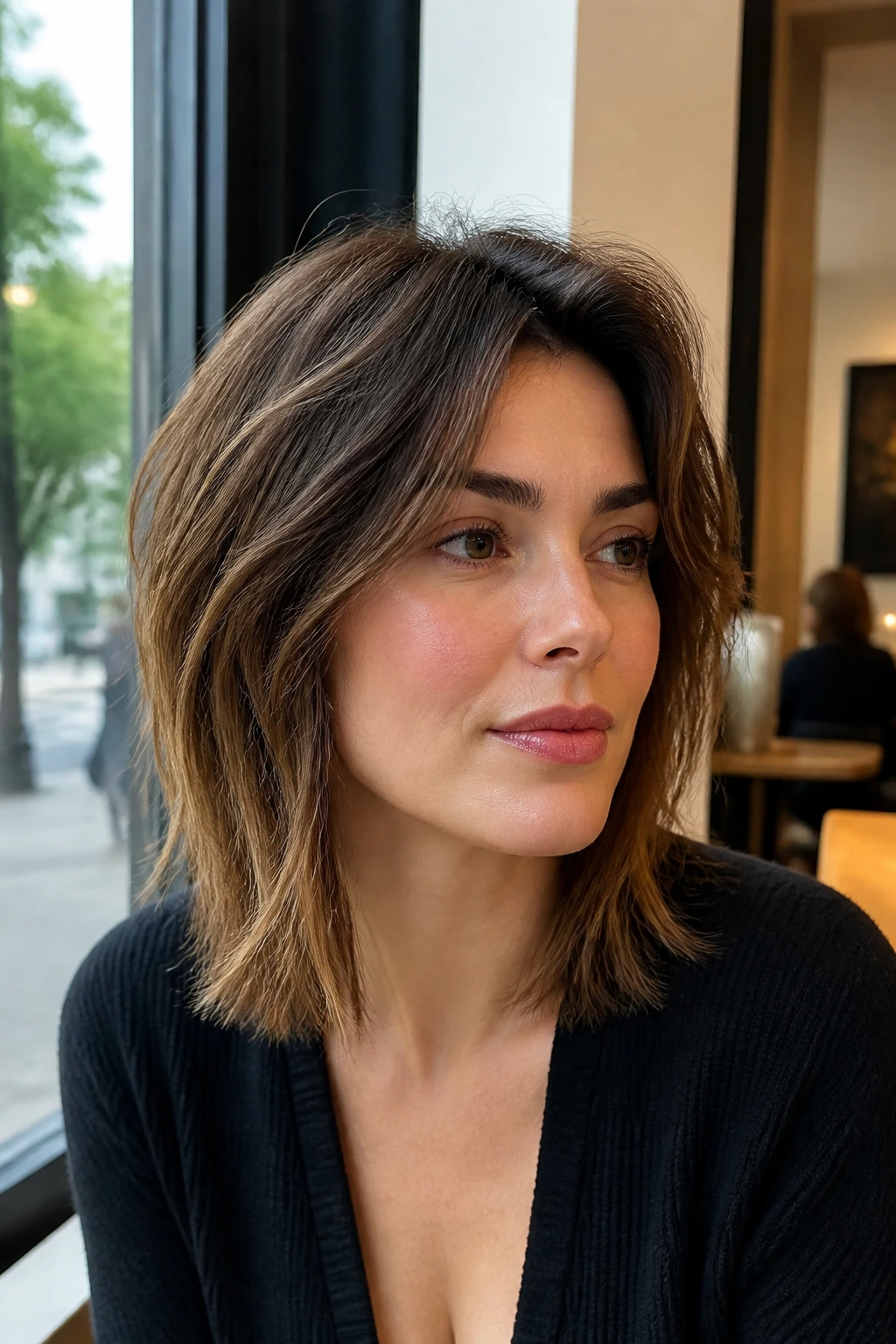
A shoulder-skimming shag is still a short shag if the overall feel is light and the layers are doing real work. This version is for someone who wants the ease of short hair without giving up the option to toss it over a shoulder.
The “brush-up” part comes from the way the layers lift away from the face instead of hanging straight down. That lift makes a square face look softer because the hair bends around the head rather than forming one rectangular block. The ends should be chipped and broken, never blunt.
I’d choose this if you’re growing out a shorter cut and want the next step to feel deliberate. It’s forgiving. You can air-dry it, rough-dry it, or wrap a few sections around a brush if you want more bend. The shape doesn’t need a lot of ceremony.
20. Wraparound Shag Bob
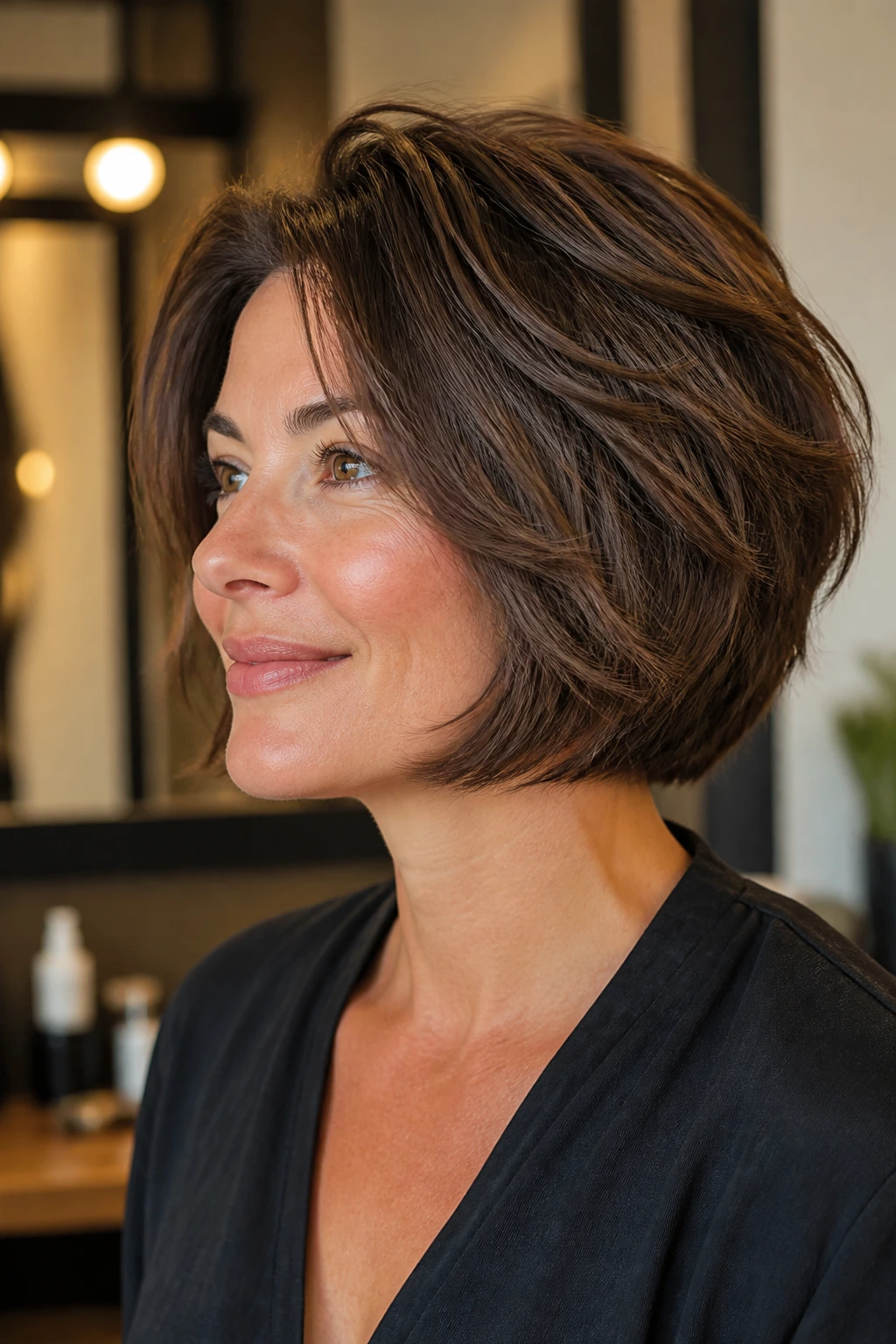
A wraparound shag bob is one of the smartest shapes for square faces because it curves around the head instead of stopping abruptly. The layers move from temple to nape in a way that feels continuous, so the jaw never gets boxed in by a hard perimeter.
That wraparound feeling matters more than people think. Hair that rounds inward just a little at the sides can soften the corners of the face better than a bunch of random layers that don’t talk to each other. This is the cut I’d pick for someone who wants a clean-looking shag without a lot of visible chaos.
It also behaves nicely in real life. The shape still reads when you toss it behind one ear or wear a side part for a few days in a row. If you want a haircut that does not collapse the second the weather gets weird, this one holds up well.
21. Airy Tapered Grow-Out Shag
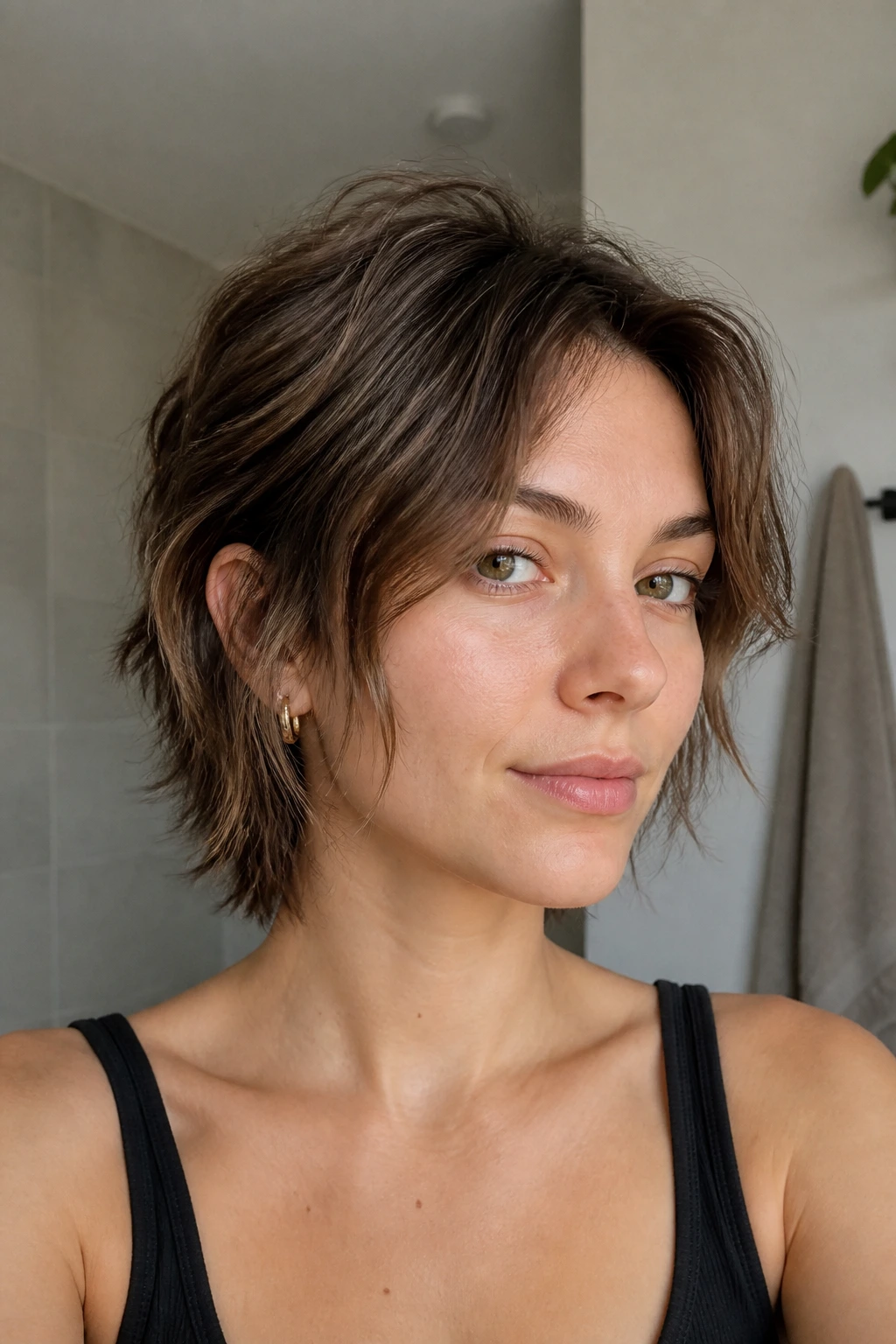
This is the version for people who hate doing a full haircut every six weeks but still want the shape to look decent as it grows. The sides are tapered, the crown stays airy, and the ends are soft enough that the outline doesn’t snap into a box.
The reason it works on square faces is simple: nothing hard lands right on the jaw. The cut keeps a light, moving perimeter and enough length through the front to avoid a harsh stop. It’s not the flashiest option in the room. It is one of the most practical.
I’d call this the quiet winner for busy people, because the grow-out looks planned. That matters. A lot of short cuts are only attractive on salon day, and that gets old fast. This one keeps its shape longer, which is a better use of your time than fussing over a perfect blowout every morning.
Why the Shag Shape Beats a Blunt Line on a Square Face
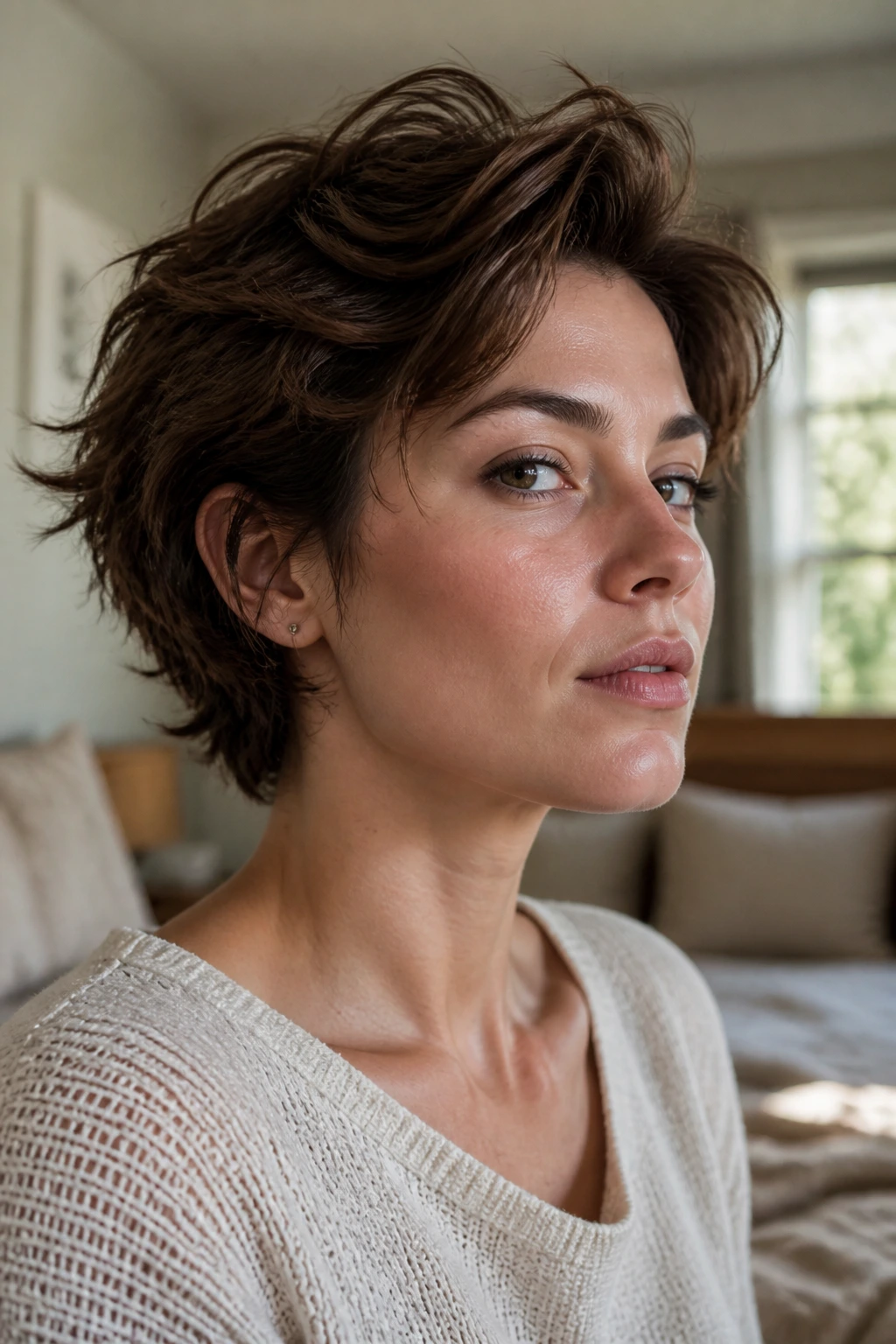
A square face already has strong architecture. The jaw holds weight. The forehead and chin often read broad enough that a blunt haircut can make the whole outline feel even more rectilinear than it really is. A shag changes the silhouette by breaking the line.
The hard line problem
A straight perimeter sitting right at the jaw is the thing to watch out for. It creates a visual stop where the face is already widest, and that makes the width more obvious. Shag layers do the opposite. They fracture the edge and keep the eye moving.
Where the eye should go
The best short shaggy hair without bangs for square faces pushes attention toward the crown, the cheekbones, and the vertical drop of the front pieces. That does not mean the face gets hidden. It means the angles are softened by motion instead of being boxed in by a clean outline.
Why no bangs can help
No bangs sounds risky at first, but it can actually simplify the shape. With the forehead open, the haircut has room to breathe. The part, the side layers, and the texture around the temple become the real features, and that usually suits a square face better than a heavy fringe that chops the face in half.
Tools and Notes to Bring to the Salon
-
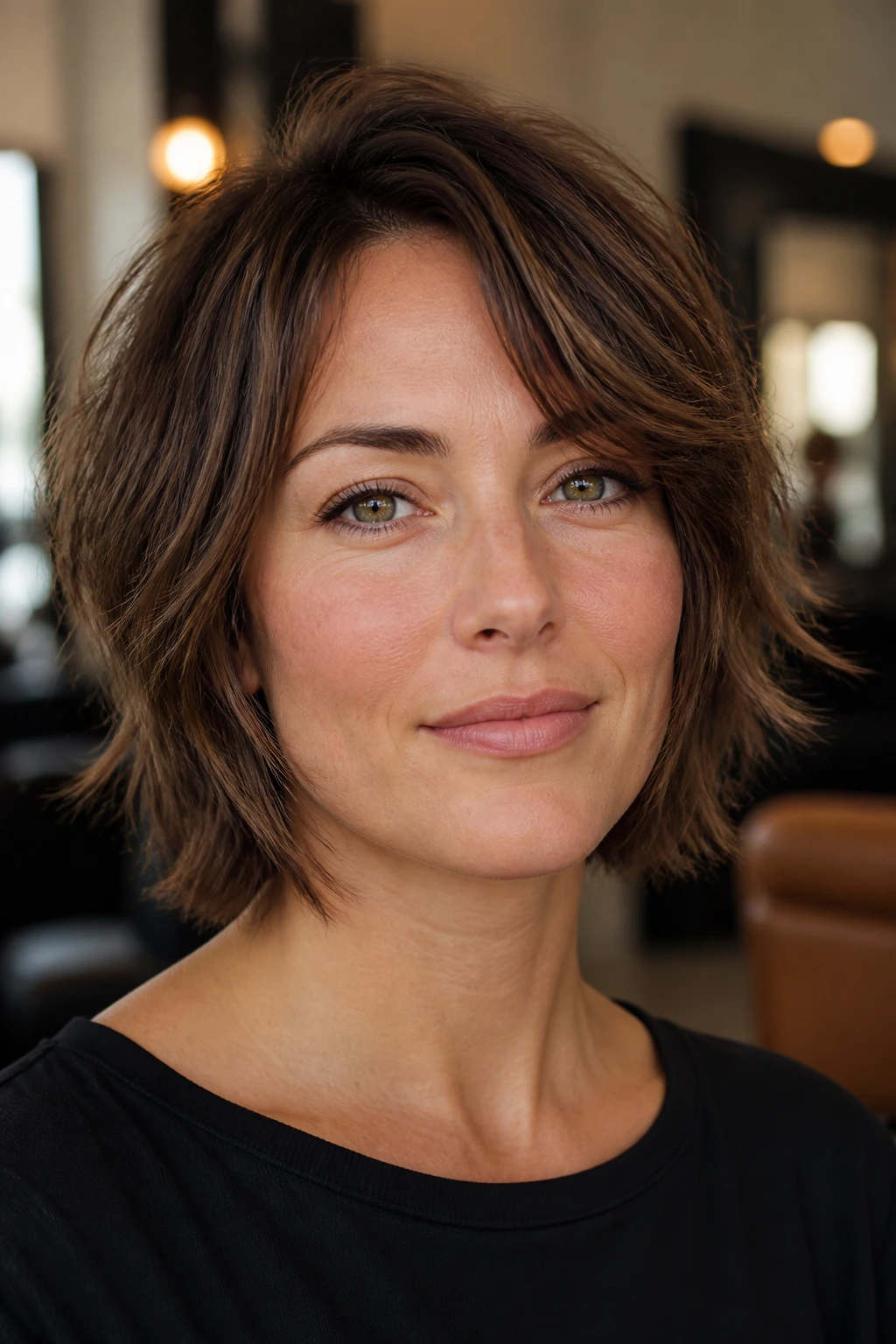
Two reference photos: Bring one front view and one side view so your stylist can see the length, the part, and how much texture you mean.
-
A note on your texture: Tell them whether your hair is straight, wavy, curly, fine, or dense, because the same shag looks wildly different on each one.
-
A clear length goal: Say where you want the front to land — chin, neck, collarbone, or above the jaw — and point to the exact spot if you can.
-
Your usual styling habit: If you air-dry 90% of the time, say that out loud. A shag built for a blowout will not behave the same way at home.
-
A comb or phone note about your part: If your hair naturally splits to one side or fights the middle, let the stylist see it while it’s dry.
-
Product examples you already own: A lightweight mousse, texture spray, leave-in conditioner, or soft paste can tell a stylist what finish you like.
-
A blunt warning about thinning: If your hair is fine, say you do not want it over-texturized. That one sentence can save a bad cut.
How to Style It Without Turning It Puffy
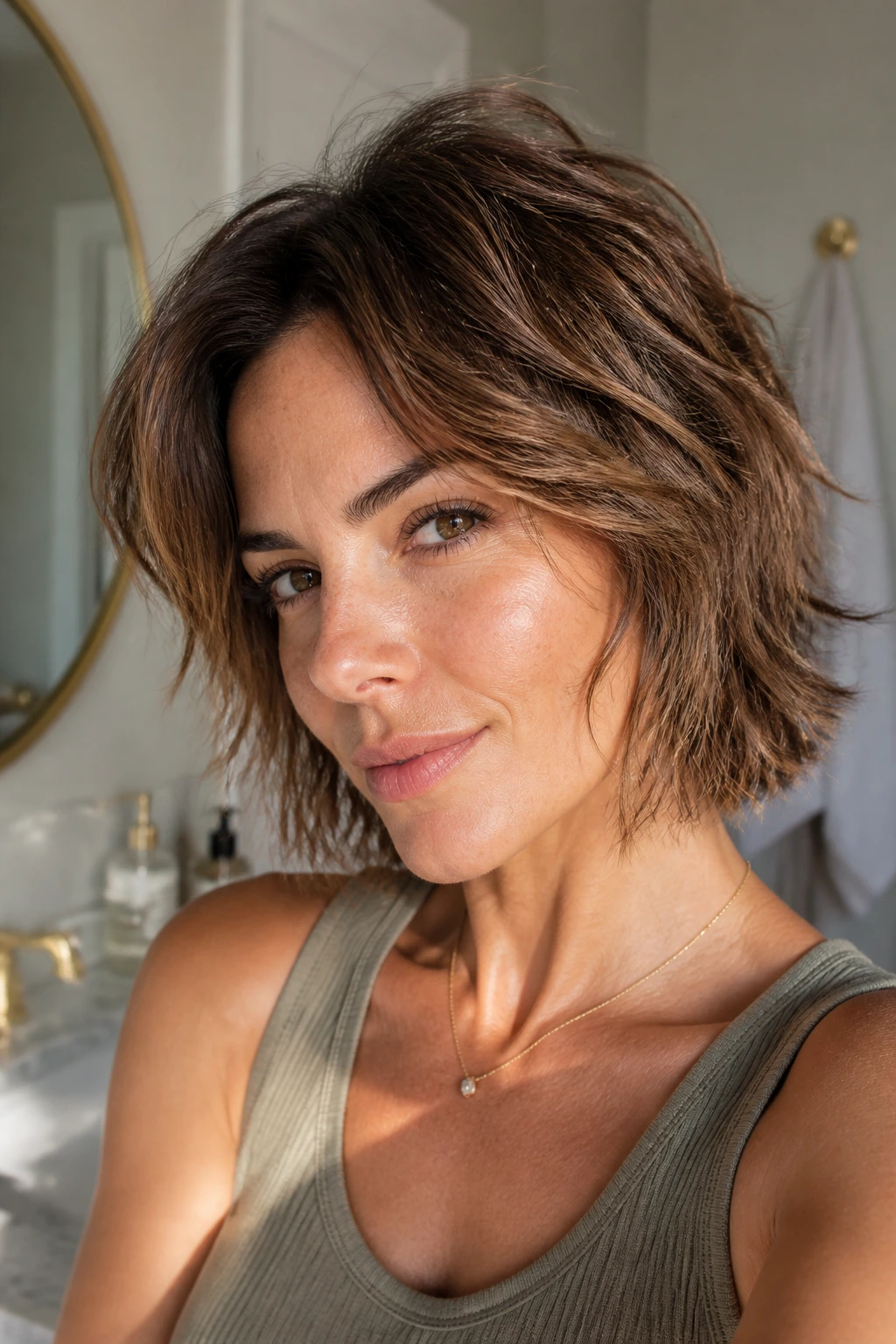
A short shag lives or dies by the finish. Let it dry in the wrong direction and the sides spread. Let it dry with too much product and the ends turn sticky. The goal is movement, not volume everywhere.
Root lift: Start with a mousse or root spray on damp hair, then blow-dry the crown first. Lift sections at the root with your fingers or a small brush and keep the airflow moving side to side so the top wakes up without building a giant mound.
Drying direction: If you wear a side part, dry against the part for the first few minutes, then switch back. That little flip helps the roots stand up instead of lying in the same flat direction every day. For wavy hair, scrunching the ends while the hair is still damp keeps the texture loose.
Finish: Use the smallest amount of cream or paste. Seriously, a pea-sized amount is plenty for many short shags. Warm it in your hands and touch only the ends and a few front pieces. If the product hits the roots, the cut can go limp fast.
Second-day rescue: Mist the hair lightly with water, twist a few front pieces, and revive the roots with dry shampoo. The nice thing about a good shag is that it usually looks better with a little lived-in texture than with a fresh, overdone blowout.
Common Mistakes That Make It Boxy
-
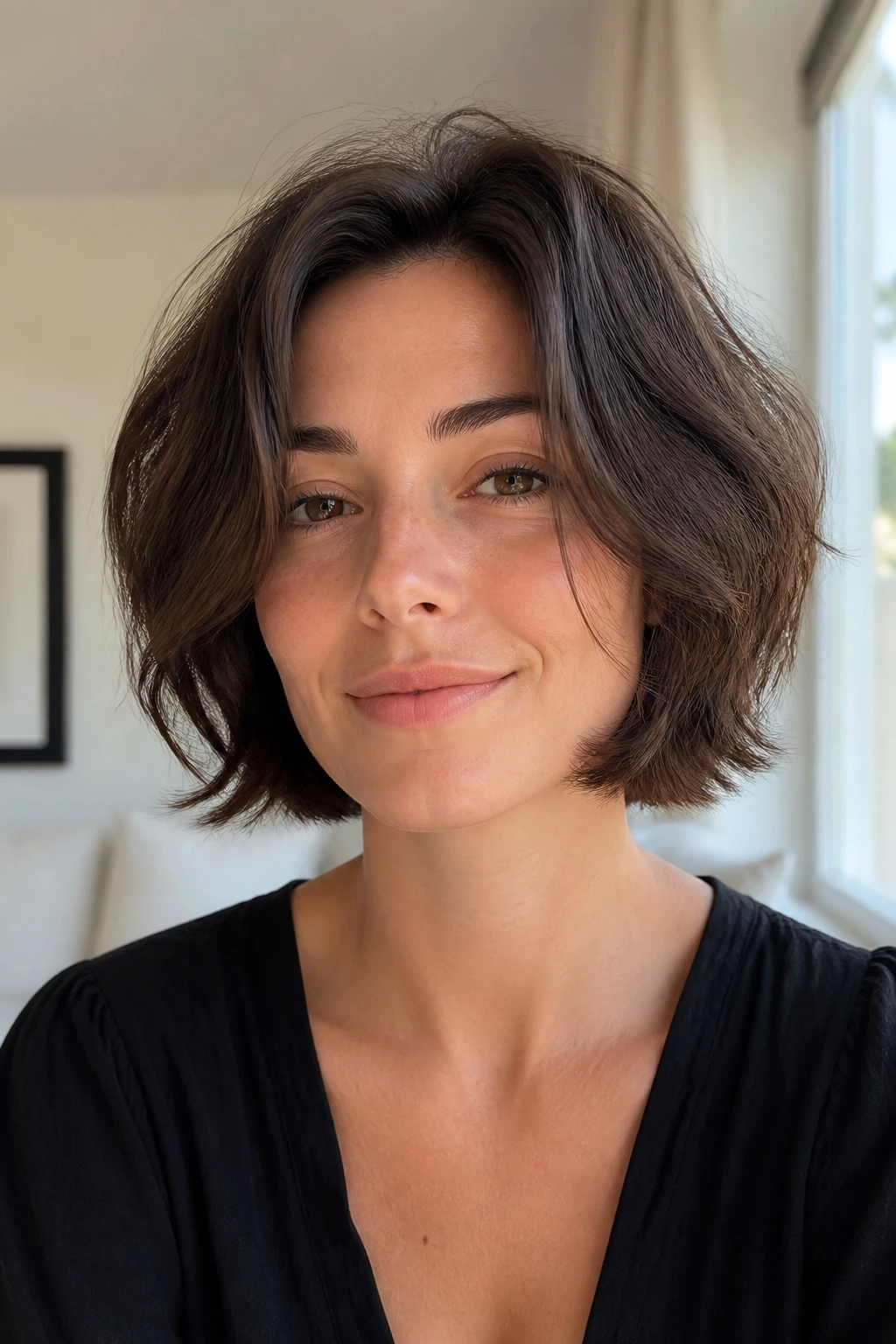
Cutting the first layer right at the jaw: That’s the fastest way to make a square face look wider. Ask for pieces that start above the jaw or fall below it.
-
Making the sides too full: Big side volume can make the face feel broader. The fix is subtle tapering at the temples and a lighter perimeter.
-
Thinning fine hair too hard: Over-texturizing fine strands leaves gaps, and gaps make the whole cut look stringy instead of airy. A softer point cut is safer.
-
Choosing a blunt center part with flat hair: If your hair sits flat and straight, a hard center part can make the face look more symmetrical and boxy. A slight offset usually works better.
-
Using too much cream or oil: The shag needs movement. Heavy product clumps the layers together and kills the broken texture that makes the cut work.
-
Ignoring the nape: A messy nape can ruin a clean silhouette. Even shag cuts need a tidy outline so the shape feels intentional.
Best Variations for Different Hair Types

Fine-Hair Airlift: Keep the layers longer and lighter, with soft crown lift and only a little texture at the ends. Too much internal cutting can leave fine hair looking thin at the sides, so the shape should stay airy, not shredded.
Thick-Hair Debulk: Ask for interior removal through the back and sides, but keep the perimeter soft. Thick hair needs weight taken out from underneath or the cut swells outward and starts looking square again.
Curl-Respect Shape: This version is cut dry or mostly dry so the curl pattern can guide the outline. The crown stays round, the sides stay soft, and the face-framing pieces land where the curls naturally settle.
Low-Drama Grow-Out: Keep the length at the neck or just below the jaw, with the shortest layers sitting high enough to stay invisible as they grow. This is the best pick if you want something that can survive a missed trim.
Sharper Edge Version: If you like a little attitude, keep the crown lifted and the nape shorter, then leave the front pieces longer and broken. It reads edgy, but the softness around the face keeps it from feeling too severe for a square jaw.
How to Keep the Shape Between Haircuts
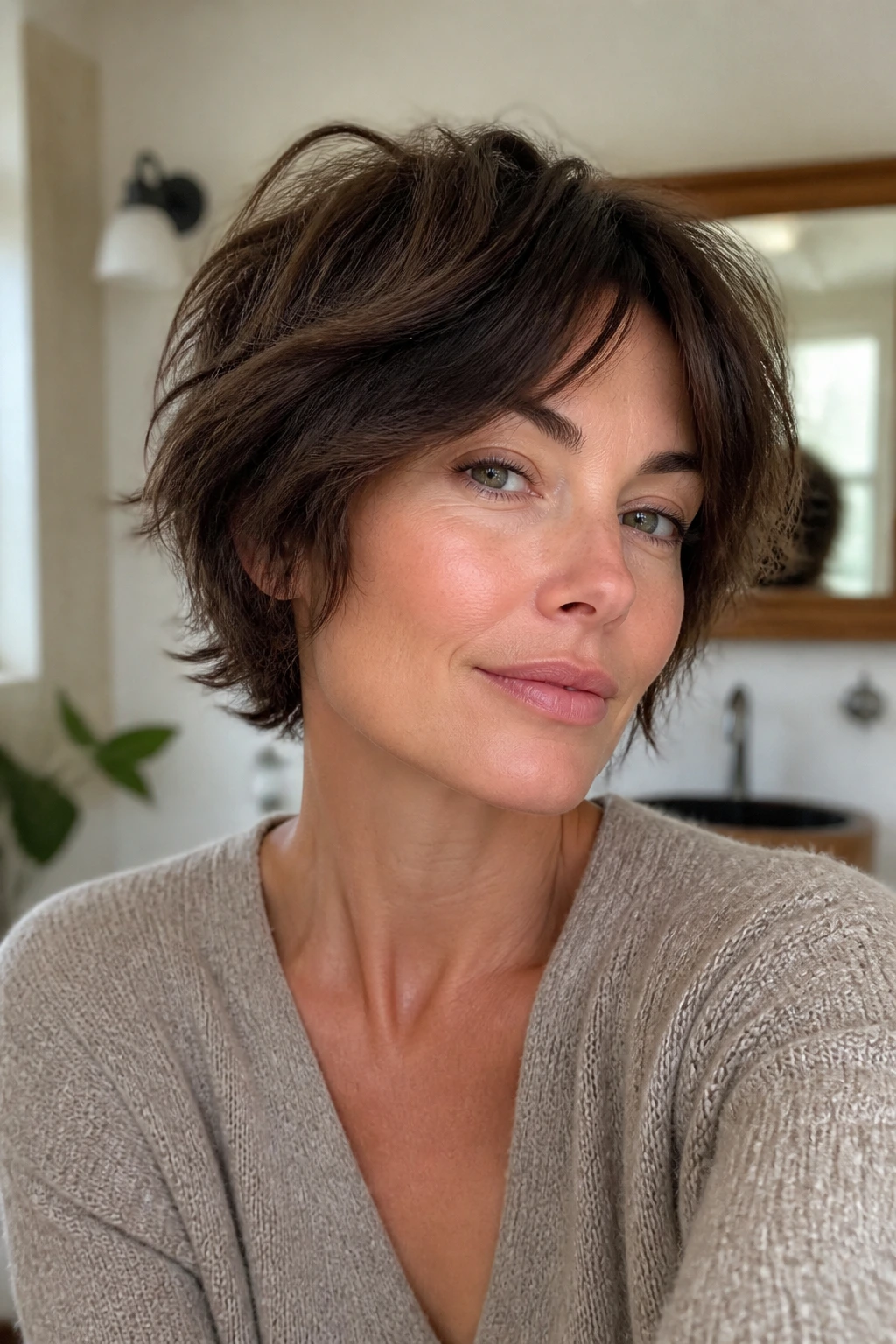
Short shags need a little upkeep, but not the obsessive kind. If the cut is above the chin or especially cropped, plan on a trim every 5 to 7 weeks. If it sits closer to the bob or lob side of short, 7 to 9 weeks is usually enough before the outline starts to lose its shape.
Wash day matters. Texture spray and dry shampoo build up fast on shaggy hair, and that buildup can make the layers feel heavy. A clarifying shampoo every 2 to 4 weeks clears that film so the hair moves again. If your hair is curly or dry, use a lighter clarifier and follow it with a hydrating conditioner so you do not strip the shape out of it.
Between visits, the nape and sideburns are the first places to go fuzzy. If you’re comfortable cleaning those areas yourself, use small scissors and tiny snips only on obvious stray hairs. If not, ask for a quick shape-up at a salon around the halfway point between full cuts.
Sleep matters too. A satin pillowcase cuts down on frizz and keeps the texture from getting flattened into one side. That tiny switch is boring, but it helps. So does not sleeping with soaking-wet hair plastered to the head.
Questions People Ask in the Chair
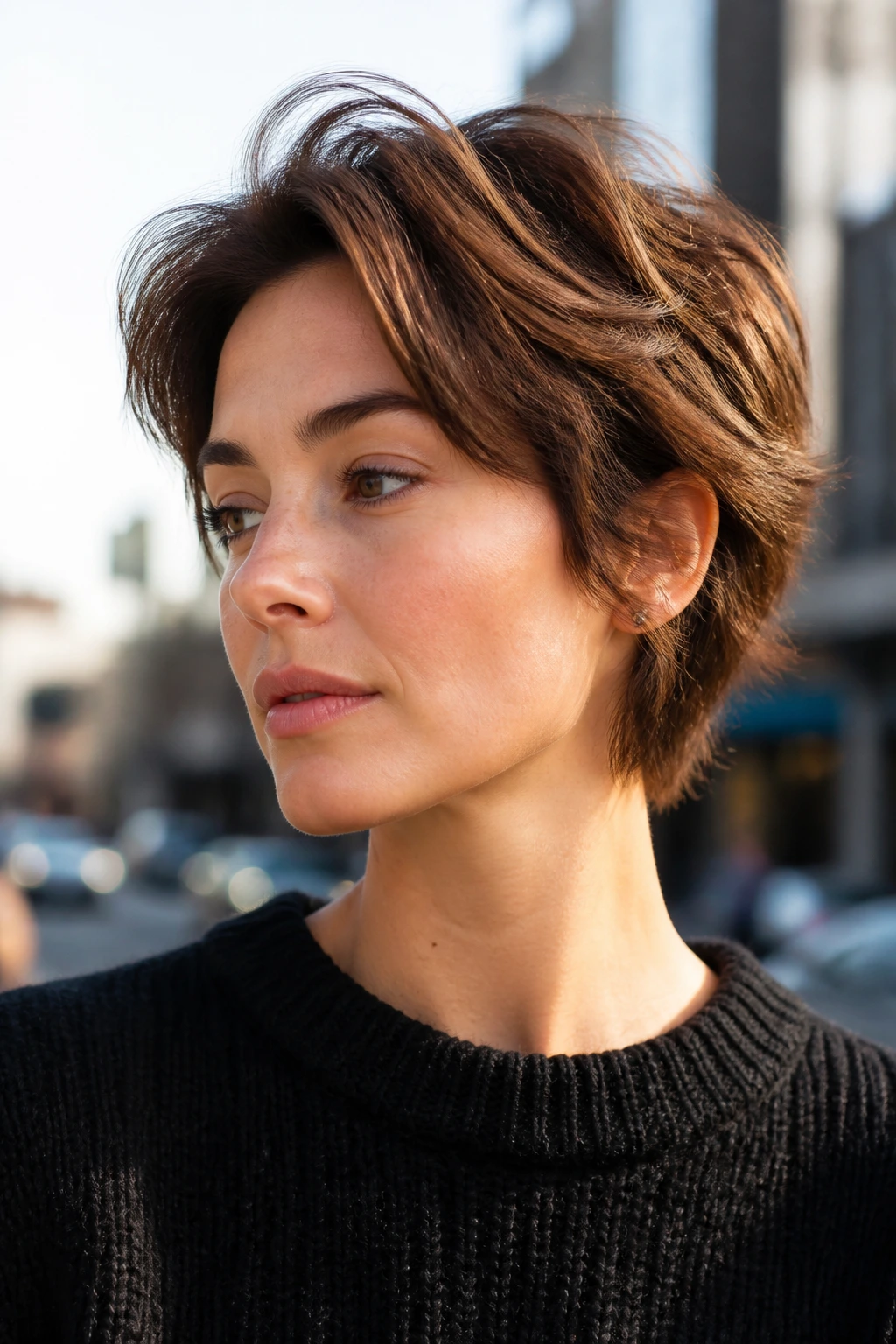
Will short shaggy hair without bangs make a square face look wider?
Not when the shape is cut well. The wider look usually comes from blunt ends sitting at the jaw or too much side volume, not from the shag itself. Keep the perimeter broken and the front pieces either above or below the jawline.
What length is safest for a square face?
The safest lengths are usually chin-skimming, neck-length, or just below the jaw. Those lengths keep the eye moving instead of stopping at the strongest part of the face.
Can fine hair wear a shag without looking thin?
Yes, but the cut has to stay gentle. Fine hair usually does better with light point cutting and fewer aggressive layers, plus a root-lifting product at the crown.
Does a side part matter that much?
Sometimes, yes. A side part breaks symmetry, adds lift, and keeps the cut from sitting like a geometric frame around the face. On square faces, that little shift can soften the whole look.
What if my hair is curly and shrinks a lot?
Then the cut has to be planned with shrinkage in mind. A dry cut or a cut with plenty of extra length left in the front usually works better than guessing where the curl will land after it dries.
How do I ask for this cut without sounding vague?
Say where you want the length, where you do not want it to land, and how much styling you’re willing to do. Phrases like “soft perimeter,” “broken ends,” “no blunt line at the jaw,” and “layers that move around the temple” are useful.
Can I still tuck it behind my ears?
Yes, and that’s one of the nice things about these cuts. The best versions keep enough length at the front and sides to tuck or pin without losing the shape.
What if my shag turns puffier than I expected?
That usually means the sides were layered too high or the styling product was too heavy. On the next cut, ask for less width at the temples and a softer perimeter, then use less product and more root lift at home.
The Soft Edge

Square faces do not need to be hidden. They need a better outline. The right short shag gives you that — enough movement to blur the jaw, enough structure to keep the cut from collapsing, and enough softness that the face still looks like itself.
The best part is how personal these cuts can get. One version leans airy and clean. Another looks chopped and cool. Another just quietly sits there and makes the jaw look less severe than it did with the old cut. If you bring one strong reference photo, point to the exact length you want, and ask for soft ends with no blunt line at the jaw, the rest gets easier from there.
