



A clean side part can do more for a man than a loud cut ever will. That’s the quiet appeal behind vintage vibe hairstyle ideas for men: they don’t need neon dye, razor lines everywhere, or some overworked texture trick to look finished. They just need shape, a clean taper, and a little respect for how hair actually grows.
The best old-school cuts have a useful discipline to them. The sides stay neat, the top has enough length to move, and the front is shaped instead of sprayed into a stiff little monument. When that balance is right, the cut still looks sharp after a week of living in it. When it’s wrong, you get a helmet. Fast.
Some of these styles lean polished. Some carry a bit of grease, wave, or edge. That mix is why they keep coming back. A barbershop cut with a good outline can feel more current than a trendy shape that never settles down, and the list below leans hard into that kind of honest, wearable throwback.
Why These Vintage Cuts Keep Coming Back
- They grow out with manners: A low taper, side part, or brushed-back top still looks intentional when it’s 10 or 14 days past the chair.
- They work with normal hair: Straight, wavy, thick, or thinning hair all have a place here, which is more than you can say for a lot of trend cuts.
- They don’t need a drawer full of products: One comb and one reliable styling product handle most of the looks in this collection.
- They play well with facial hair: A tidy neckline, short beard, or clean shave can change the whole read in one move.
- They look like a choice, not a stunt: That’s the part I like most. These cuts say you know what your head wants to do, and you’re not fighting it.
1. Classic Side Part with a Low Taper
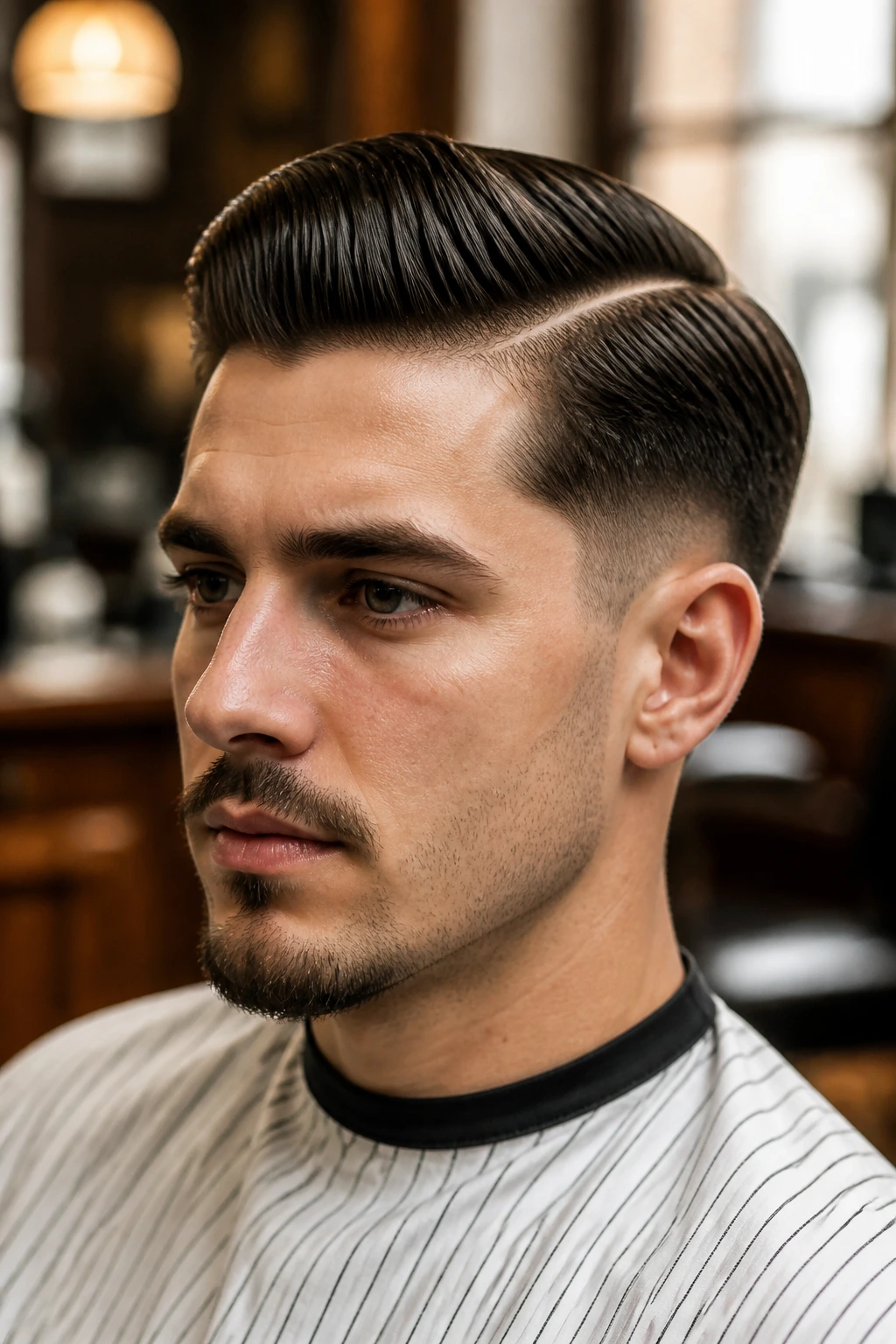
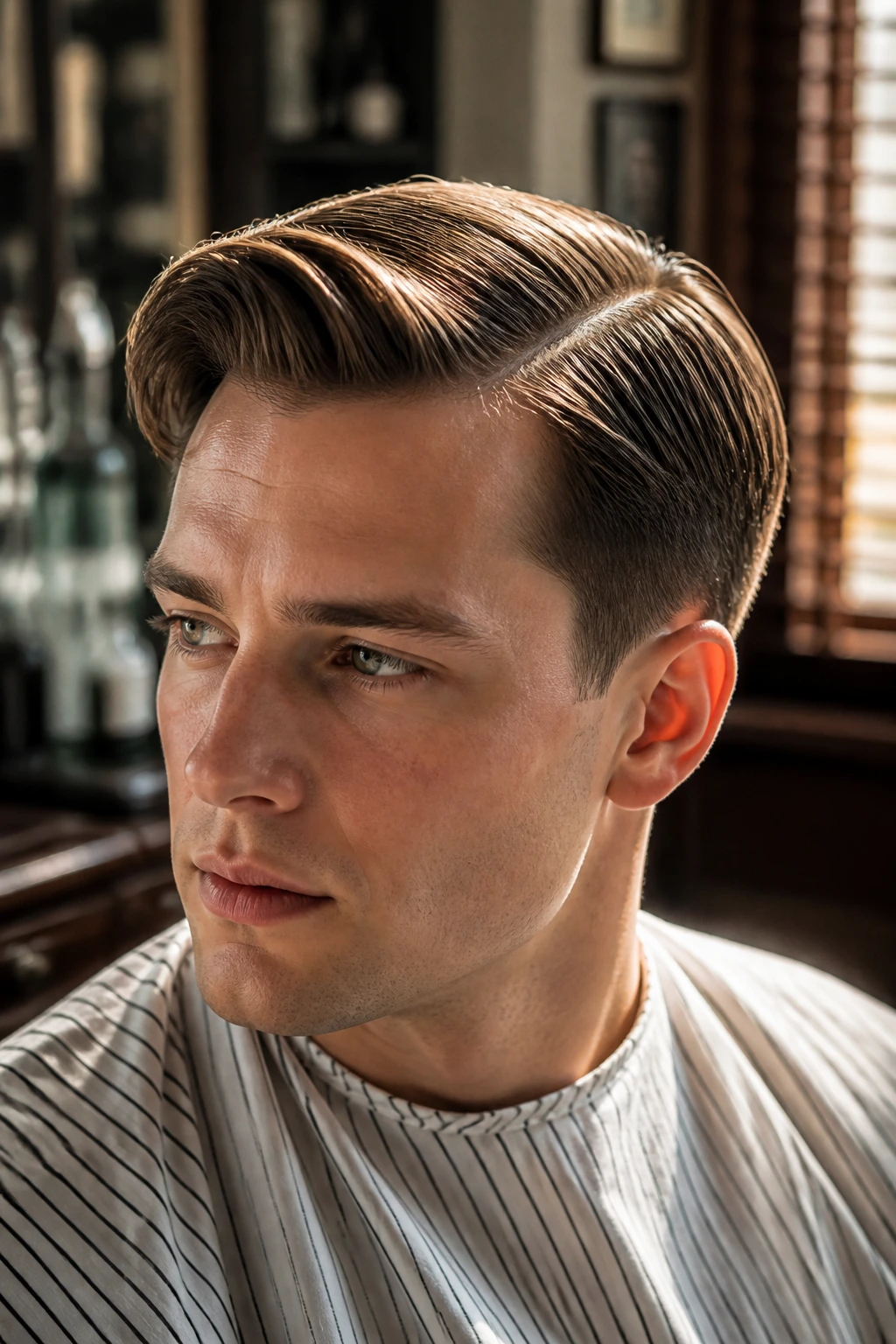
A classic side part with a low taper is the haircut I’d hand to someone who wants vintage without looking costume-y. Keep about 2.5 to 3 inches on top, let the part sit where your hair naturally breaks, and bring the taper down low around the ears and nape. The shape stays clean, but it doesn’t scream for attention.
It works because the line is readable without being hard. A medium-hold water-based pomade, about a nickel-sized amount, gives enough control to keep the top in place without turning it shiny and stiff. If the part is pushed too high or too perfect, the whole cut loses its ease.
Barber note
- Ask for a low taper, not a high fade.
- Keep enough length through the crown so the comb can lie flat.
- If your hair has a cowlick, move the part a little instead of fighting it.
Best move: comb the hair once from front to back, then trace the part. That tiny extra step keeps the line from wandering by midday.
2. Slick Back with Medium Shine
A slick back with medium shine is what happens when thick hair finally behaves. Leave roughly 3.5 to 4 inches on top, blow-dry the front backward with a vent brush, then work in a medium-shine pomade while the hair is still warm. The shine should feel controlled, not greasy.
A slick back only looks right when the front keeps a little lift for the first inch or two before it settles. Fine hair can pull this off too, but only if you go lighter on product. Heavy oil-based pomade on thin hair tends to flatten the root and make the style slump by lunch.
That bend at the hairline matters. It keeps the cut from looking painted on.
3. Ivy League with a Clean Side Sweep
Can a short haircut still feel old-school? Absolutely. The Ivy League does that job well because it keeps the top short enough to stay neat, but long enough to side sweep with a comb or your fingers.
How to ask for it
- 1.5 to 2 inches on top
- Clean taper through the sides
- Enough front length to sweep without spiking
This is the cut I’d point to if you want something that works under a jacket collar, at a desk, or out at dinner without changing a thing. A matte cream keeps it soft. If you wear glasses, the shape is especially forgiving because the side sweep doesn’t crash into the frame line.
4. Soft Pompadour with Tapered Sides
Walk into a room with a soft pompadour and people notice the front first. That’s the deal. The trick is keeping the lift in the front while the sides stay tapered and tidy, so the shape has some swagger without turning cartoonish.
Keep 4 to 5 inches at the front and a little less at the crown. Blow-dry up and back with a round brush until the front holds its own shape, then lock it with a medium-hold product. If your hair is fine, use a volumizing mousse before the dryer. If it’s thick, a small amount of pomade is enough.
This one asks for patience. Not much, but enough. The payoff is a front curve that looks deliberate instead of inflated.
5. Brush Back with Natural Texture

I reach for a brush-back with natural texture when I want the old-school outline without the lacquered finish. Keep 3 to 4 inches on top, dry the hair away from the face, then break the shape apart with your fingers instead of a comb. The top should move a little when you do.
A cream or matte paste keeps the style soft. Heavy shine kills the texture and turns the whole thing into one solid block, which is the opposite of what makes this cut work. If the crown wants to puff up, dry that area backward first so the lift starts in the right place.
Better than it sounds: this grows out nicely. The top keeps moving even when the cut is not freshly trimmed.
6. Ducktail with Tight Sides
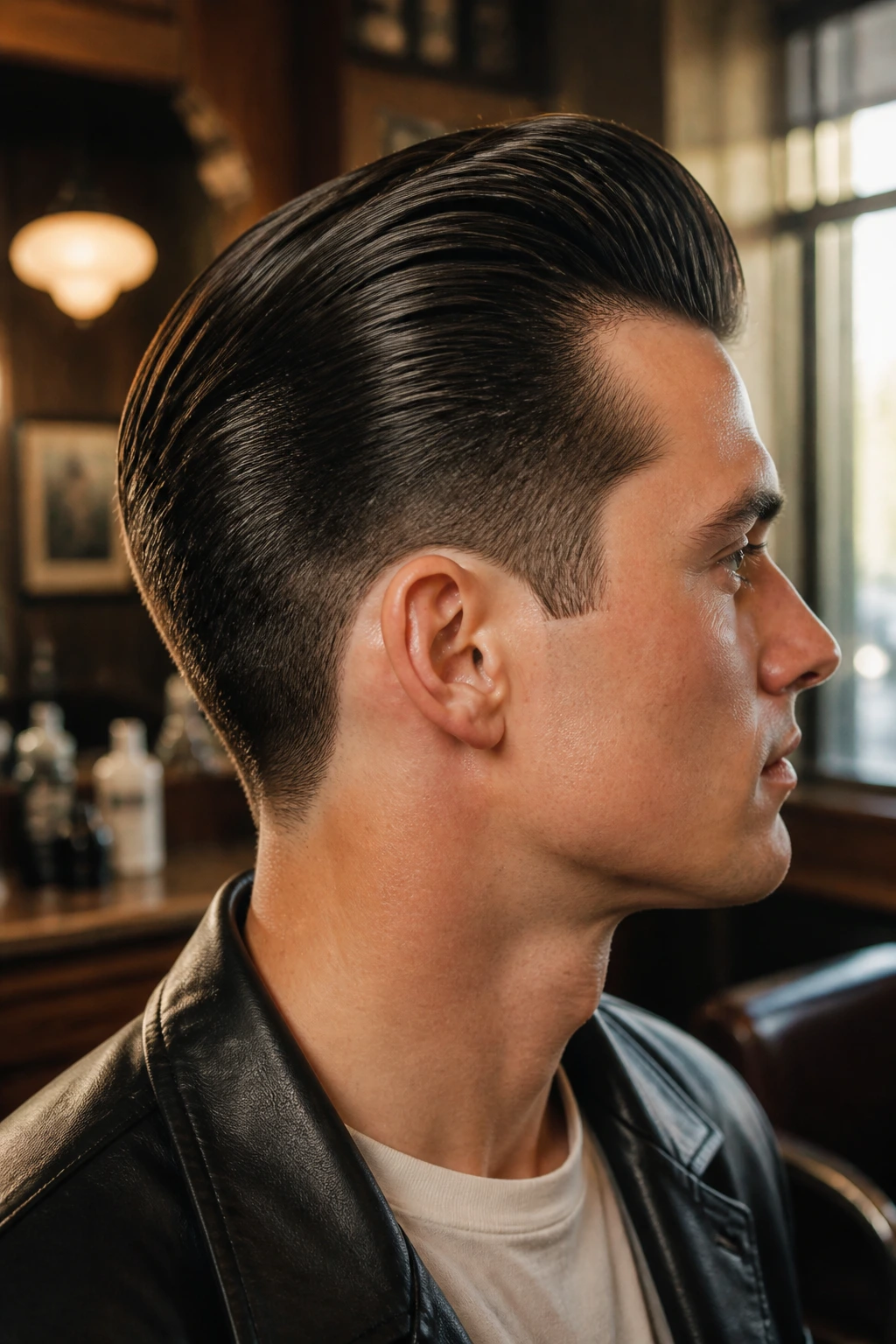
The ducktail is a little brash, and that’s why it still has a following. Ask for enough length on top — 4 inches or more — so the sides can comb back and meet near the center line. The nape stays tapered, not fluffy, and the back narrows until it looks like the hair is folding into a point.
A medium-to-high shine pomade belongs here. So does a comb that can hold a line. If the parting is too neat, the style starts to feel theatrical, so let the comb marks exist without trying to make them perfect. This cut likes confidence and a mirror that lets you check the back without guessing.
7. Flat Top with a Square Crown
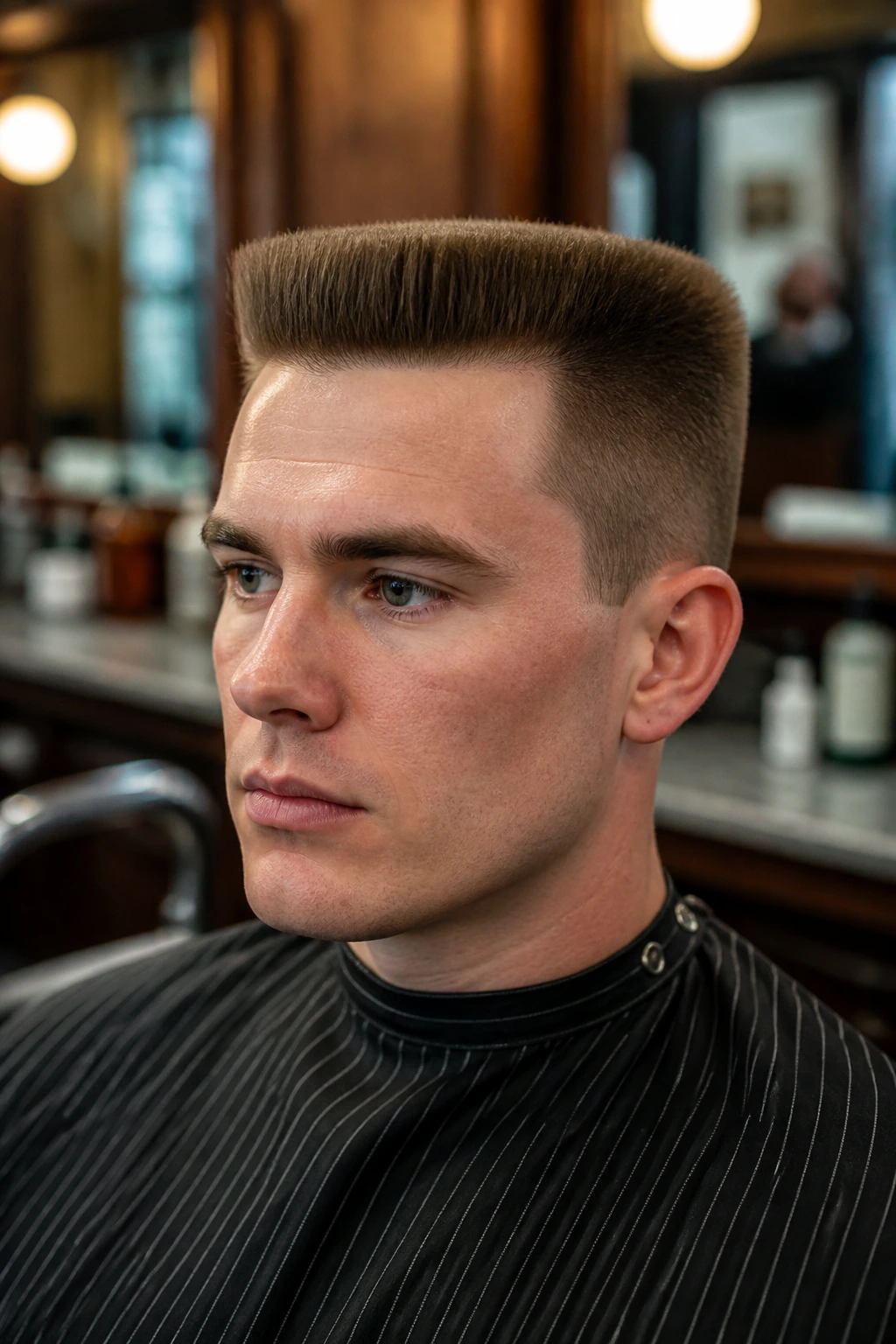
Flat tops are not subtle. They are architecture.
The top usually sits around 1.5 to 2.5 inches long, then gets cut level so the silhouette stays square from the front. Dense, coarse, or coily hair tends to hold the shape best, because it gives the flat plane enough body to stand on. Ask for crisp side planes and a top that stays truly flat, not rounded.
- Keep the edges lined up every 2 to 3 weeks.
- Ask for corners that stay square, not softened.
- Use a light hold product or spray so the top doesn’t fuzz out.
My take: the cut looks best when it is almost too precise. That little bit of severity is the whole point.
8. Regulation Cut with a Sharp Neckline
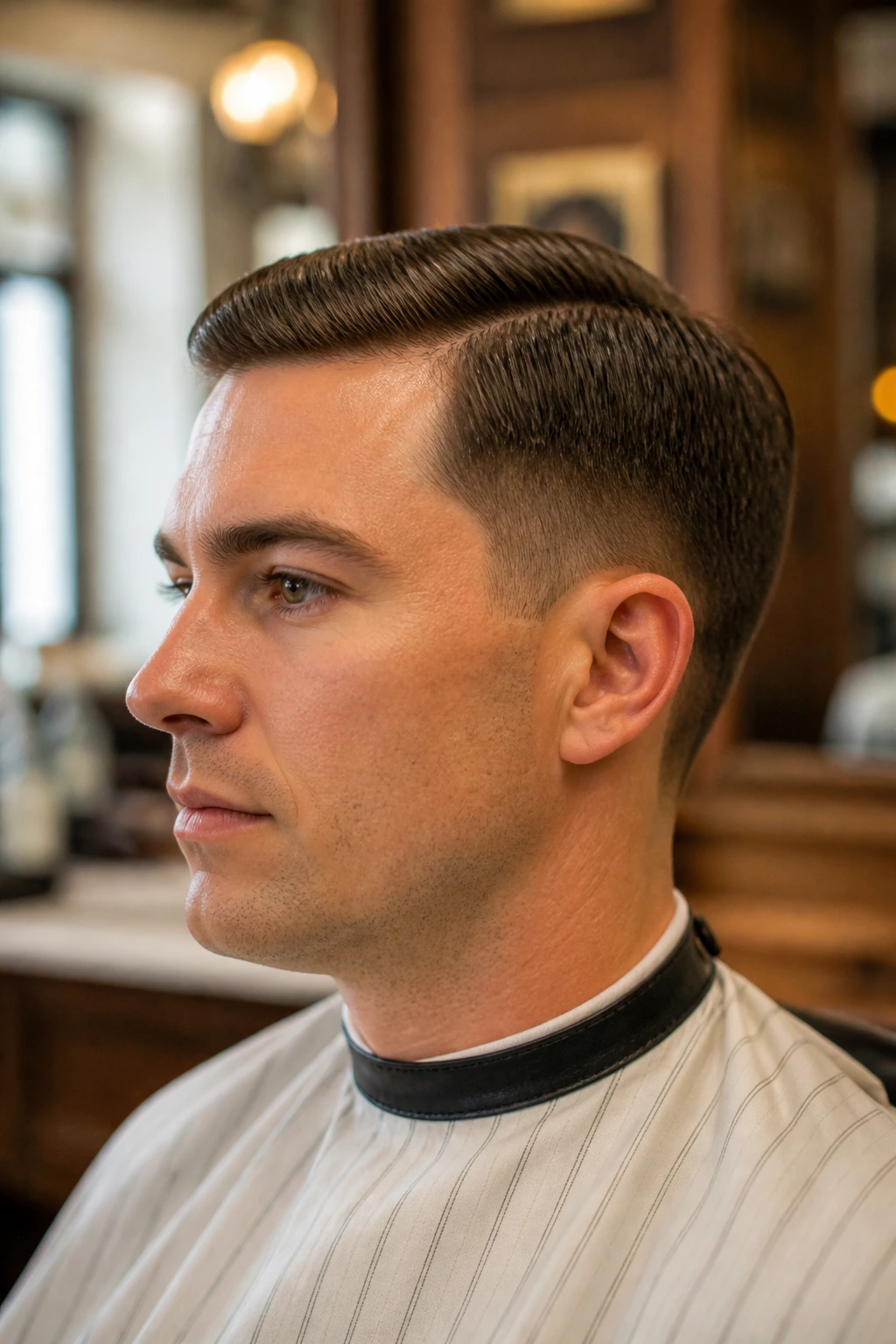
A regulation cut is the haircut version of a shirt with proper sleeves. Short on top, tapered at the sides, clean at the neckline. It reads vintage because there is nowhere for fuss to hide.
Keep about an inch on top, maybe a touch more at the front, and tell the barber you want something tidy enough to dry in place with almost no product. A touch of cream is enough. The sharp neckline matters more than most guys think; if it gets fuzzy, the whole haircut starts to look tired.
This one is ideal when mornings are short and you want to get out the door without a long mirror session.
9. Hard-Part Comb Over
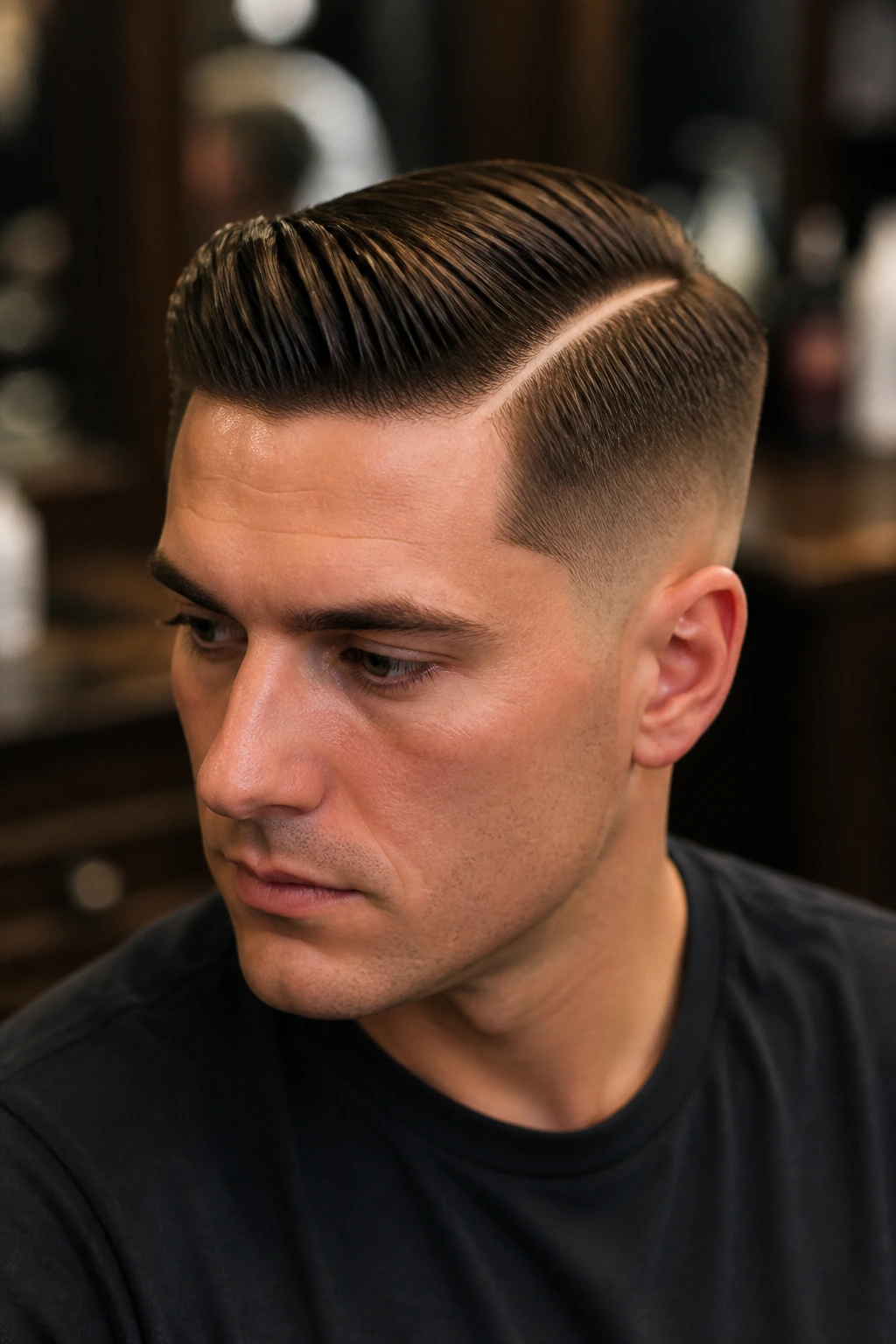
If you want a part with a little attitude, the hard-part comb over does the job. Have the barber carve the part just wide enough to stay visible when the hair moves, then keep the top around 3 to 4 inches so it can sweep across without falling flat.
The trick is restraint. The comb over should show the part, not shout about it. A light-to-medium pomade works better than something heavy, and the comb should travel from the crown toward the part before it moves across. Keep touching it and the top starts to separate, which ruins the neat barbershop edge.
This style looks best when the part is clear and the rest of the hair stays calm.
10. Crew Cut with a Tapered Neck
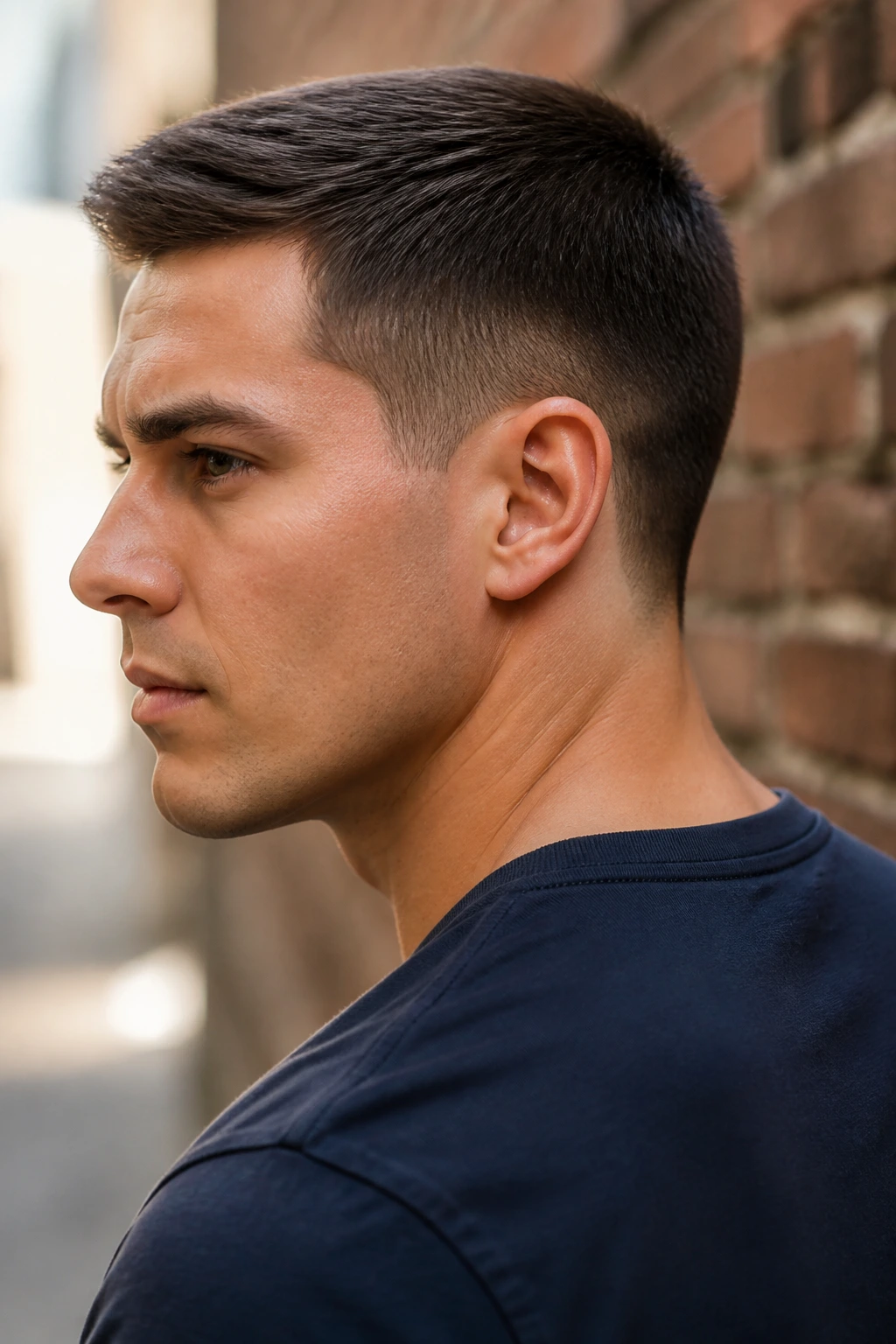
The crew cut barely needs an introduction, but people forget how good it looks when it’s cut right. Keep the top short enough to lie down, but not so short that it becomes a buzz cut with opinions. A tapered neck and a softer front line make it feel more period-correct.
A crew cut around 0.75 to 1.25 inches on top usually does the trick. A dab of cream is enough if you want a little control. This cut works when you want a clean outline, a hard-working shape, and almost no styling drama. It’s simple. That’s the charm.
11. Curtain Part with Longer Top
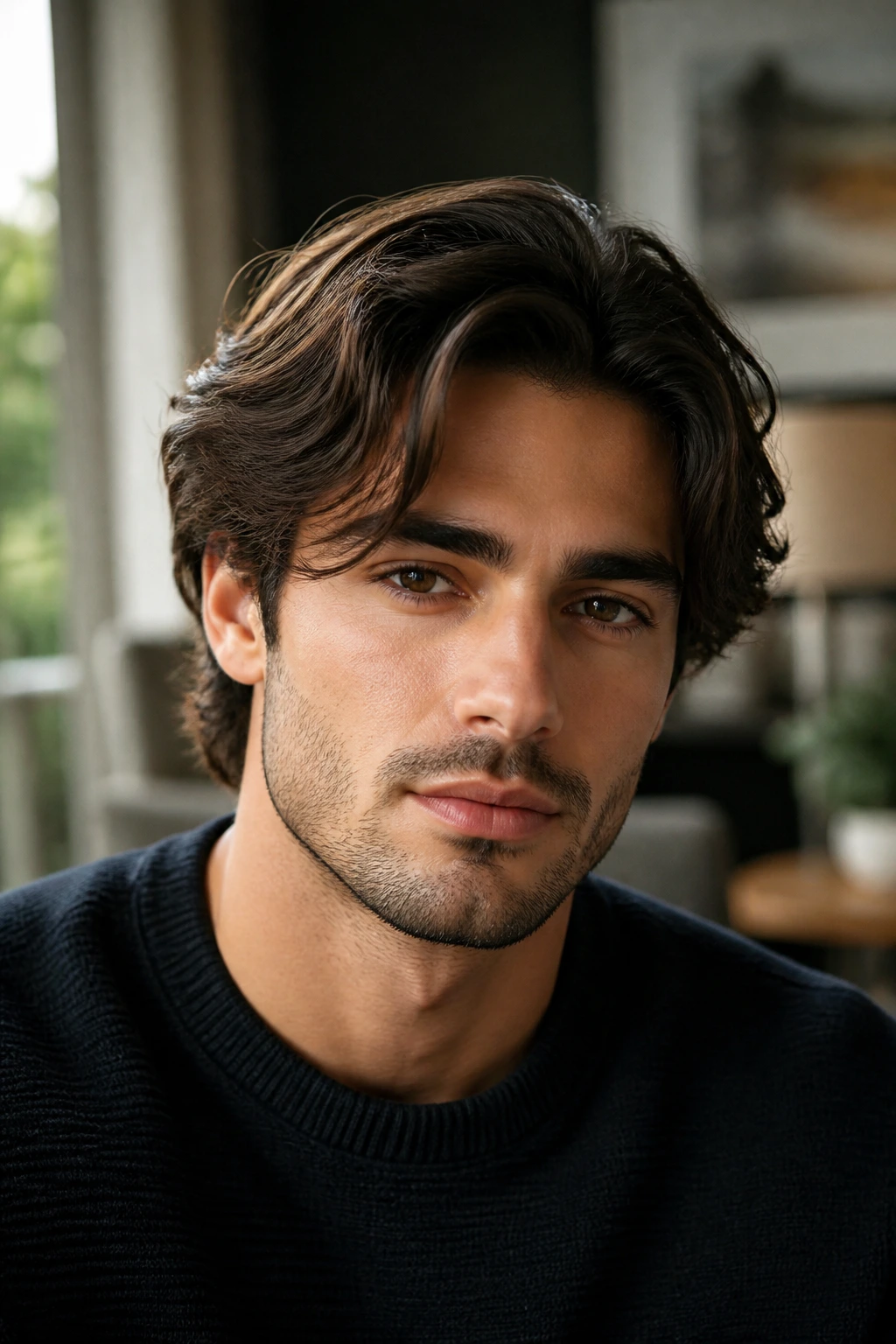
Curtains can go wrong fast. Too much length and the face gets hidden. Too little and there is no split to work with.
Keep enough length to reach the brows — usually 4 to 6 inches — and let the part sit slightly off center if your face likes a softer line. A little sea-salt spray and finger-drying can make the bend feel loose instead of flat. The reason this works in a vintage collection is simple: it brings back that easy, middle-part energy without forcing the hair into a hard shape.
Best for
- Straight or slightly wavy hair
- Wider foreheads that need some balance
- Men who want movement more than shine
12. Feathered Brush-Back
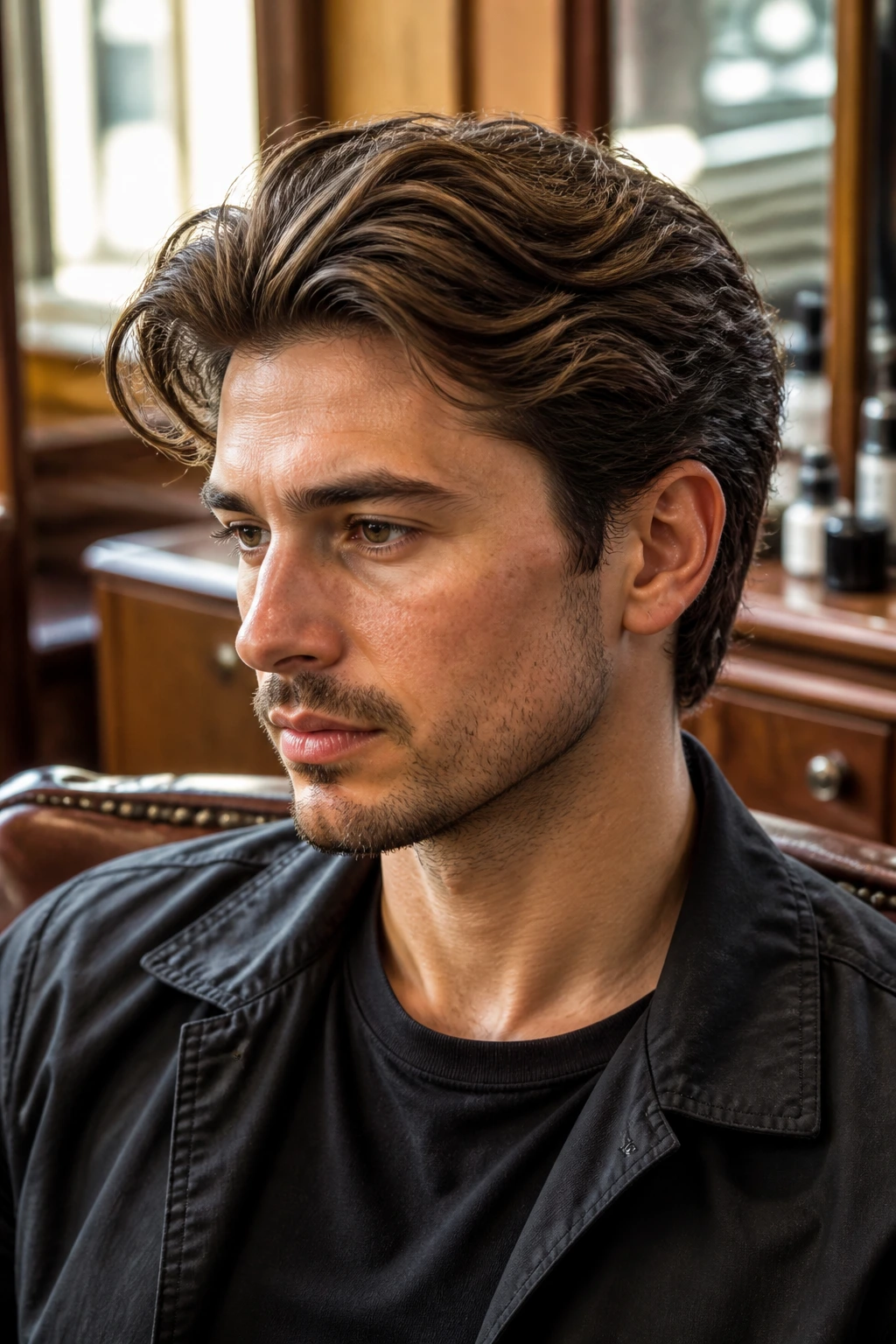
A feathered brush-back sits between a combed style and natural movement. Ask for layered length on top and softer ends, then direct the hair back with a dryer so the top fans out instead of lying in one sheet.
The feathering should show at the edges, not in choppy chunks. Medium-length wavy hair loves this cut because the layers give the wave somewhere to go. A lightweight cream or grooming tonic keeps the style alive. Heavy pomade kills the feathering and turns the top into a block, which misses the whole point.
This is one of the easiest looks here to make feel lived-in without looking sloppy.
13. French Crop with a Straight Fringe
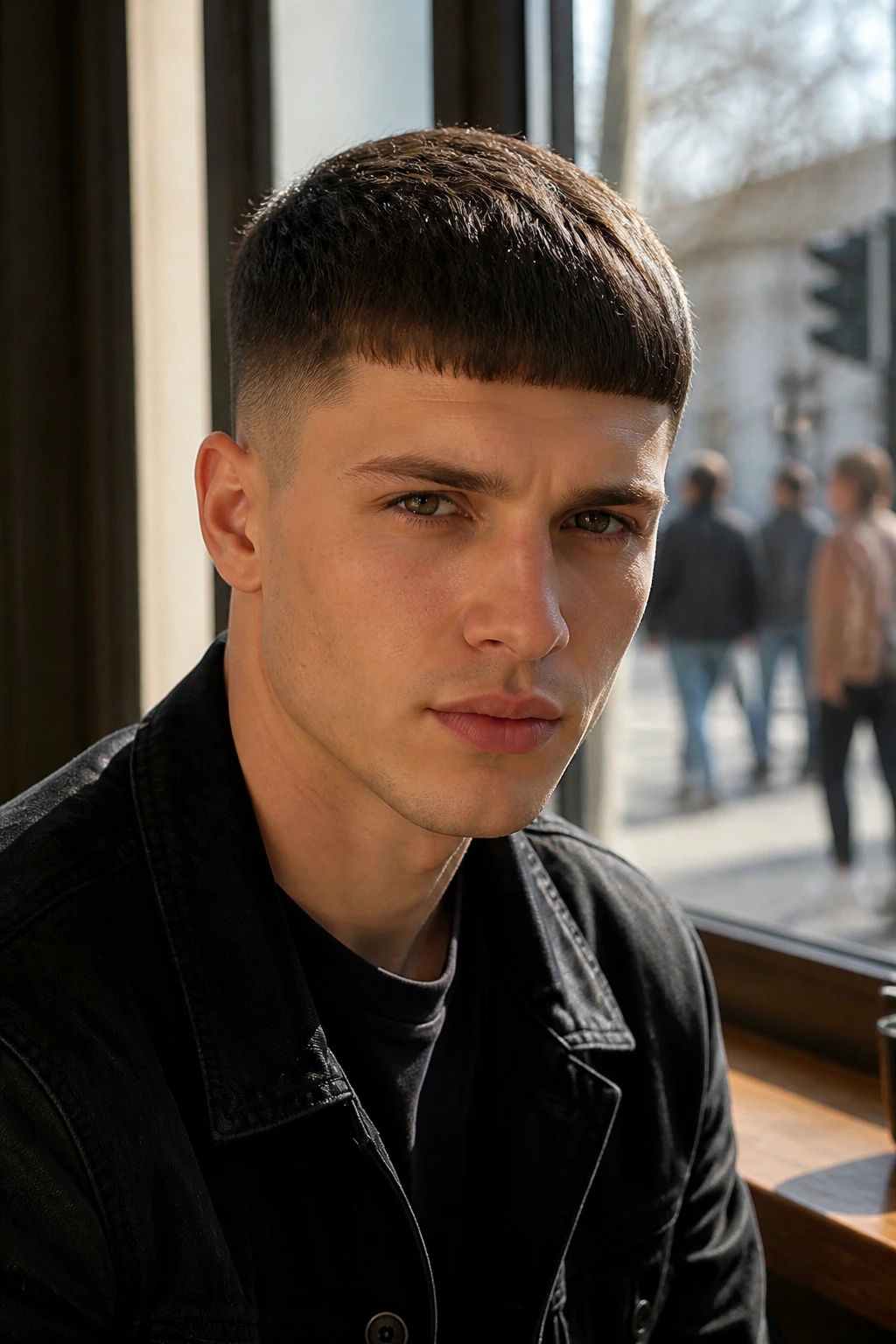
The French crop is what happens when the fringe gets disciplined. Keep about 1.5 to 2 inches on top, ask for a blunt fringe, and taper the sides and nape so the front becomes the main event.
What to tell the barber
- Short, straight fringe
- Tapered sides with a clean finish
- Enough texture on top to keep the front from lying dead-flat
This cut is kind to fine hair because the shorter front disguises thin spots without asking the hair to do too much. Matte paste works better than shine, and finger-styling usually beats a comb here. The shape stays tidy even after a long day, which is part of why I keep recommending it.
14. Caesar Cut with a Short Edge
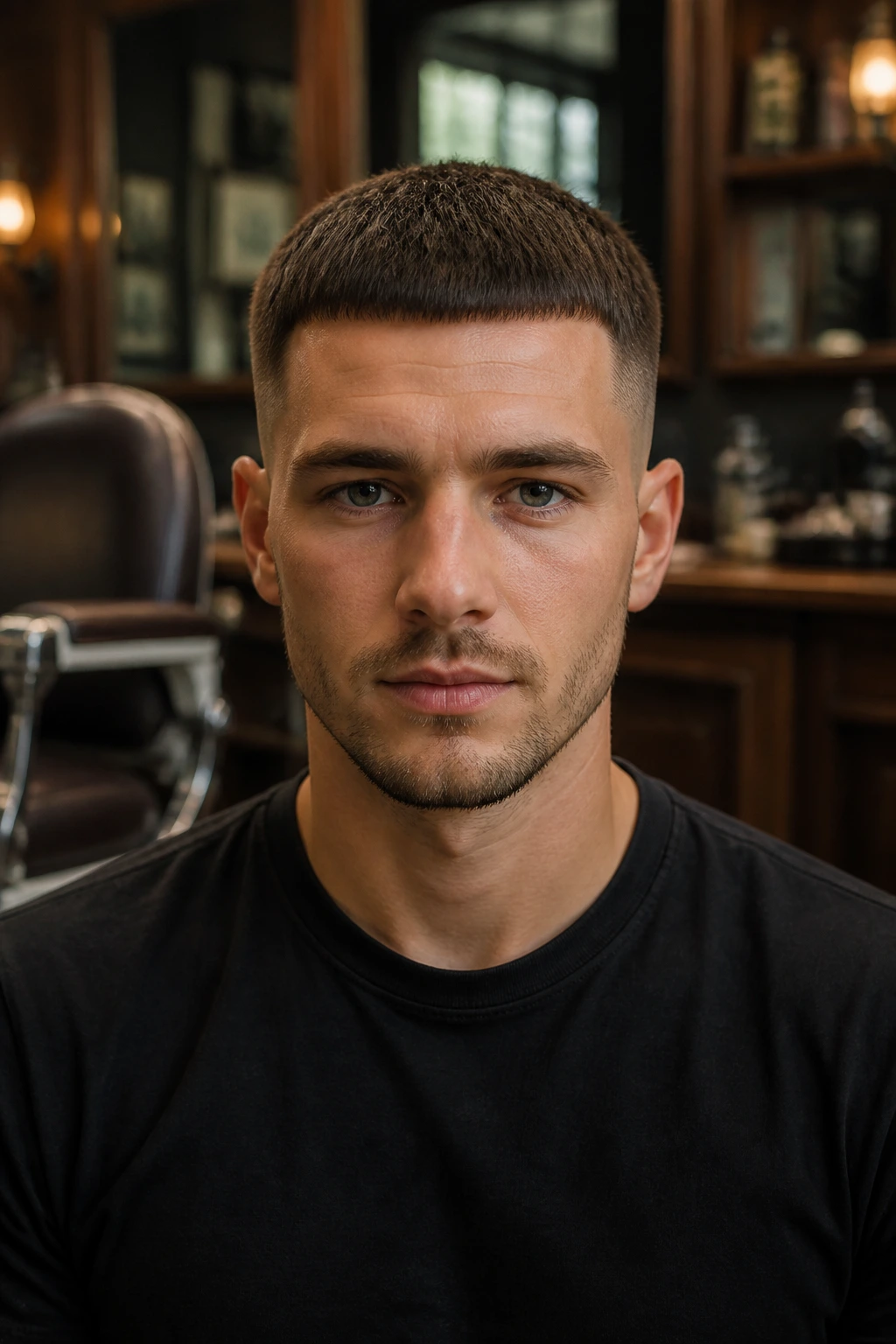
A Caesar cut keeps the front short on purpose, and that honesty is part of the appeal. The fringe sits straight across, the top stays close, and the sides taper neatly enough to hold the shape together. It’s one of the easiest vintage-inspired cuts to wear if you don’t want height.
If the temples are thinning or the face is a bit long, this cut gives the front a firm edge without pretending the hairline isn’t changing. Use a matte product and keep the fringe controlled, not glossy. Done right, it feels Roman, barbershop, and practical all at once.
That blunt front line does more work than it looks like it should.
15. Gentleman’s Wave with a Side Bend
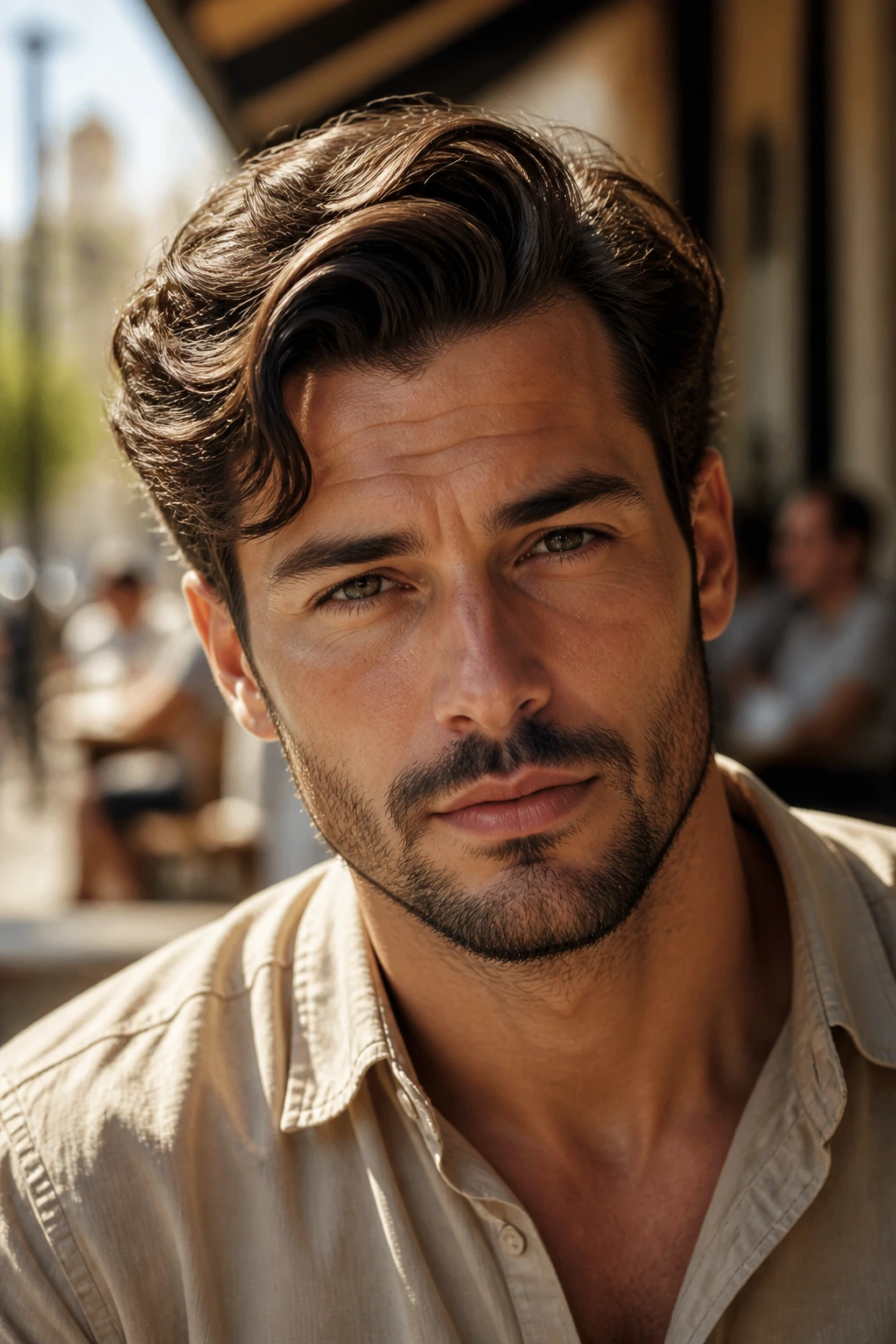
A side-bent wave looks calm until the light hits it. Then you notice the curve. Leave 3 to 4 inches on top, part it softly, and guide the front into a broad wave rather than a hard sweep.
A blow dryer and your hand can set the bend while the hair is still warm. A light cream keeps the wave visible without locking it into one shape. This style works well with a short beard because the beard gives the soft front some structure below.
- Best on naturally wavy or thick straight hair
- Keep the sides tapered low
- Don’t over-comb the wave out of the hair
16. Shaped Short Afro with a Temple Taper
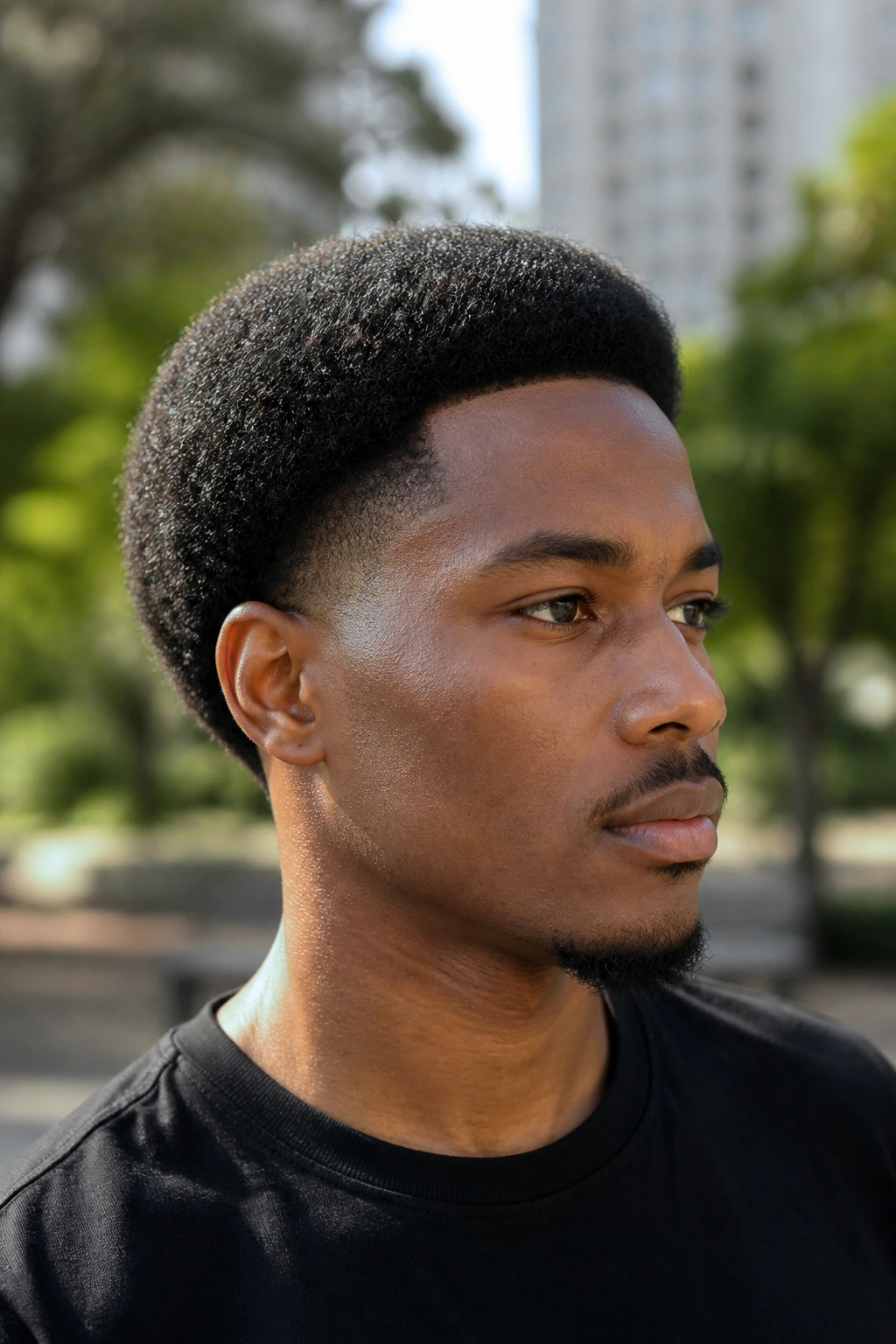
On coily hair, a clean outline does more work than a mountain of product. Ask for a shaped short afro with a gentle temple taper and enough length on top to show the curl pattern. The crown should stay rounded, not boxed flat.
I prefer this over a hard line-up when the goal is vintage rather than hyper-sharp. The shape does the talking: tidy sides, balanced top, and a neckline that doesn’t wander. A little curl cream is enough. Too much product weighs the hair down and steals the shape.
The vintage feel comes from the silhouette. That’s the part to protect.
17. High Top with a Boxy Outline
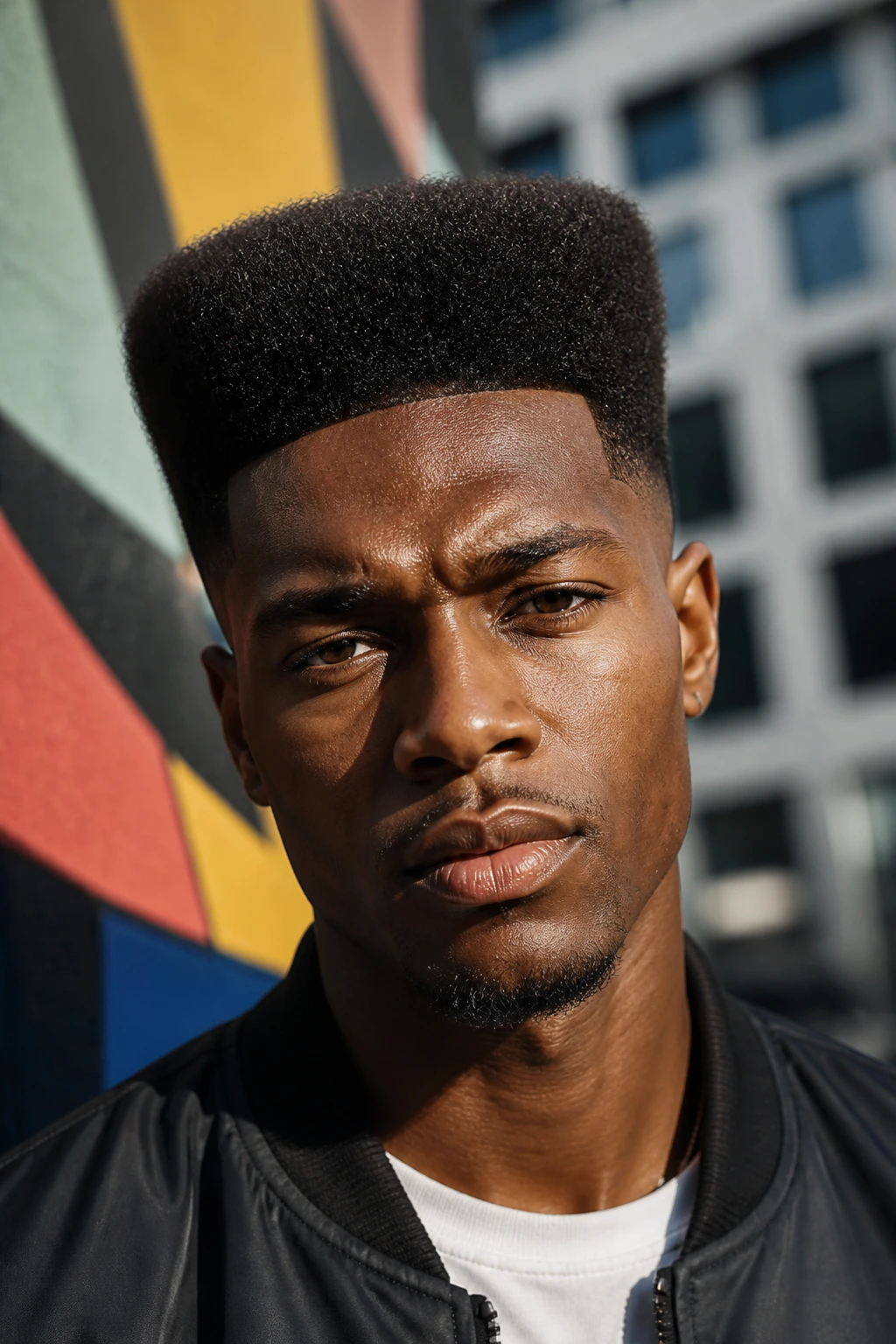
A high top lives or dies by its corners. Keep the top long enough to stand, usually around 2.5 to 4 inches, and ask for a square outline instead of a rounded one. The sides should stay tight so the top can read clearly.
- Works best on dense hair with real texture
- Keep the edge-up clean if you want the shape to stay defined
- A light spray or foam helps the top hold without stiffness
This style needs regular upkeep, but that’s part of the deal. If the sides start creeping or the corners soften, the whole shape shrinks. Keep it crisp and it has real presence.
18. Mod Mop Top

The mod mop top lives on movement. Ask for length that brushes the brows and ears, but keep the ends light so the shape doesn’t drag down the face. A side or center split both work; the difference is how much symmetry you want.
If your hair is straight, a touch of cream and a quick blow-dry forward give it that lived-in fall. This cut is not about polish. It’s about the line where the fringe meets the eyes and how the back settles near the collar. Leave the edges too blunt and it turns heavy. Feather them out and the whole thing breathes.
This one has a little youthful mischief in it, which is probably why it keeps hanging around.
19. Tapered Shag with a Side Flip

A tapered shag looks better the less you overthink it. The layers should move, not stack. Keep the back grazing the collar and let the sides taper softly so the cut doesn’t puff out around the ears.
Medium-length hair with a wave or bend makes this style sing. Straight hair can wear it too, but it needs texture spray and a little finger work. The finish should feel loose, not messy for the sake of it. That distinction matters.
- Good if you want length without a blocky shape
- Better with cream than gel
- Easy to pair with denim, boots, or a leather jacket
20. Executive Contour with a Polished Front
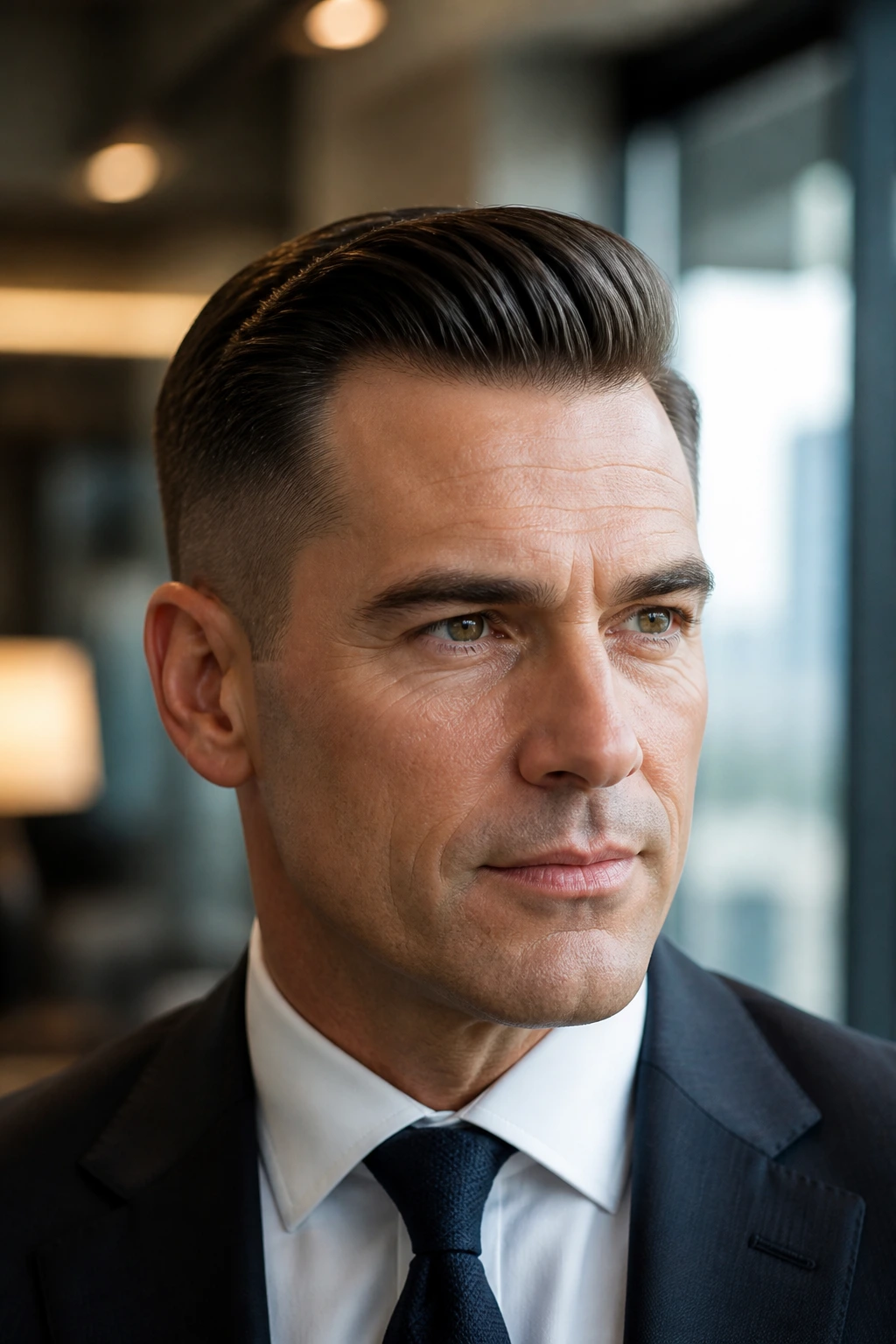
The executive contour is for men who want polish without looking frozen. Think of it as a side part with a sharper front line and a cleaner temple area. Keep the top around 3 inches, lift the front slightly, then guide it back with a comb so the shape has a clear ridge.
A low-shine pomade gives the hair enough control to hold under office lights. The front does something subtle here, which is the whole charm. It’s not a tall pomp. It’s not a flat comb over. It sits in the middle and looks expensive because of that restraint.
This is one of the best cuts on the list if you want the suit-and-shirt version of vintage.
21. Rockabilly Roll
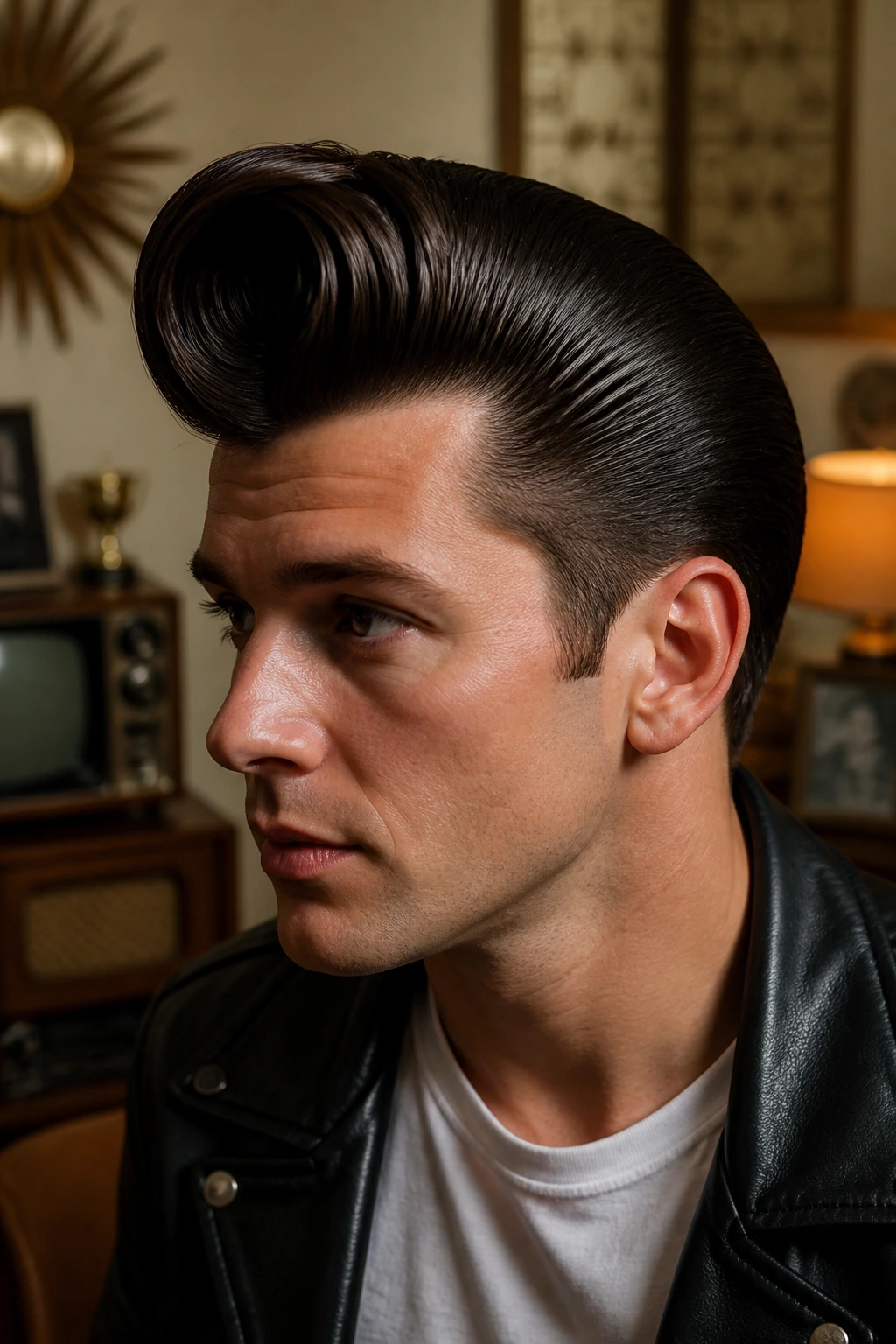
Rockabilly roll is the loudest shape here. Ask for 4 to 5 inches at the front and keep the sides tapered tight. Then blow-dry the front up and back before shaping it into a soft roll with a comb and a medium-to-high shine product.
The curve needs to hold its own line. If it droops, the whole look gets sleepy. Thick hair is the easiest canvas. Fine hair can work too, but it needs pre-styler and a dryer, or the front won’t stay up long enough to matter.
Best move: keep the rest of the outfit simple. The haircut already brings enough personality.
22. Side-Swept Quiff
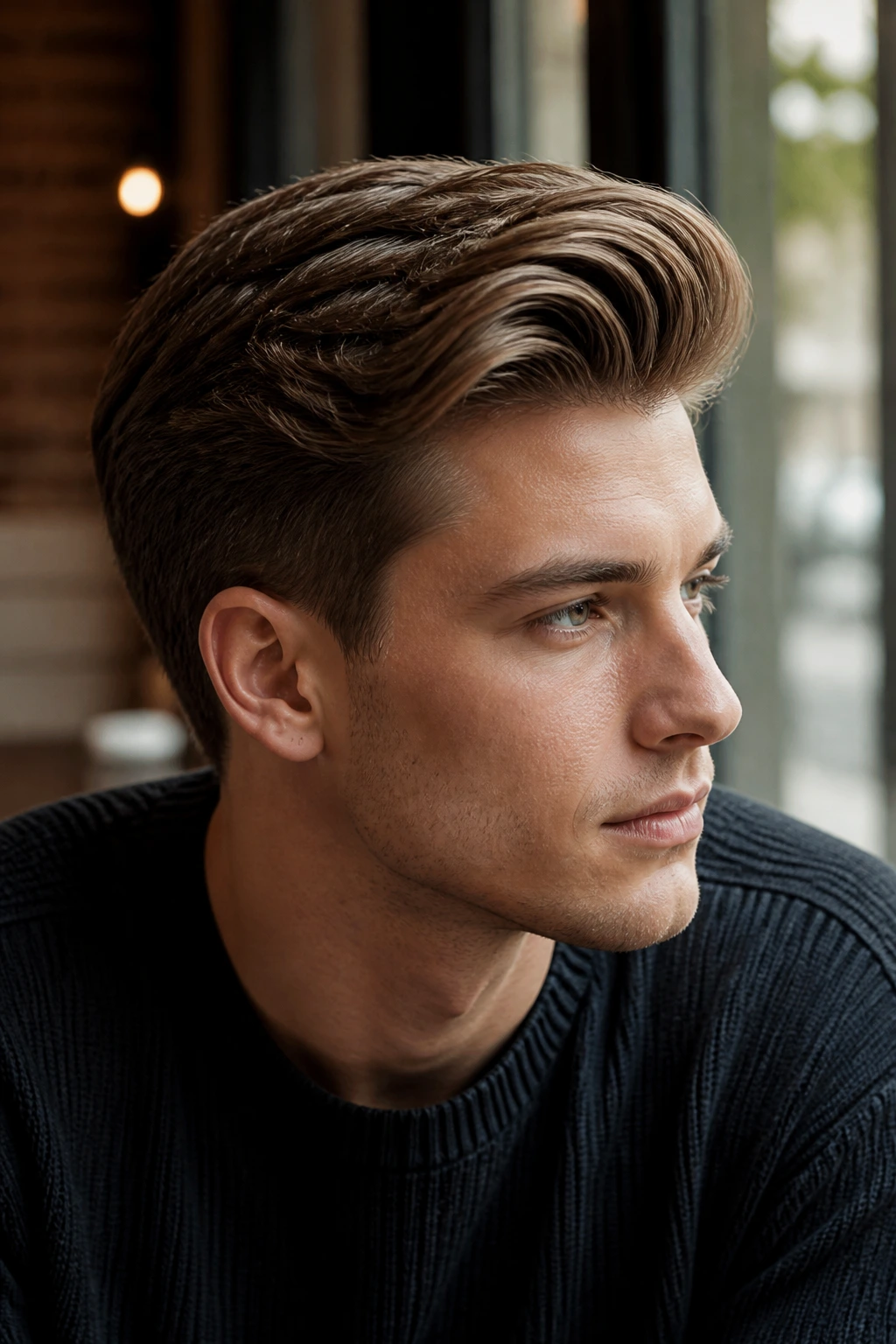
A side-swept quiff lands between pomp and brush-back. Leave the front longer than the crown, then blow it upward and bend it toward one side. The lift should start near the hairline and relax as it moves back.
Matte clay is better than glossy pomade if you want the shape to stay soft. That finish keeps the texture visible and stops the front from turning into a rigid strip. This is a good choice for thick or wavy hair, and it works best when the sides stay tapered instead of shaved down hard.
- Better with a dry finish
- Keep the front lifted, not spiky
- Use a brush first, then your fingers to soften the bend
23. Loose Brush-Up
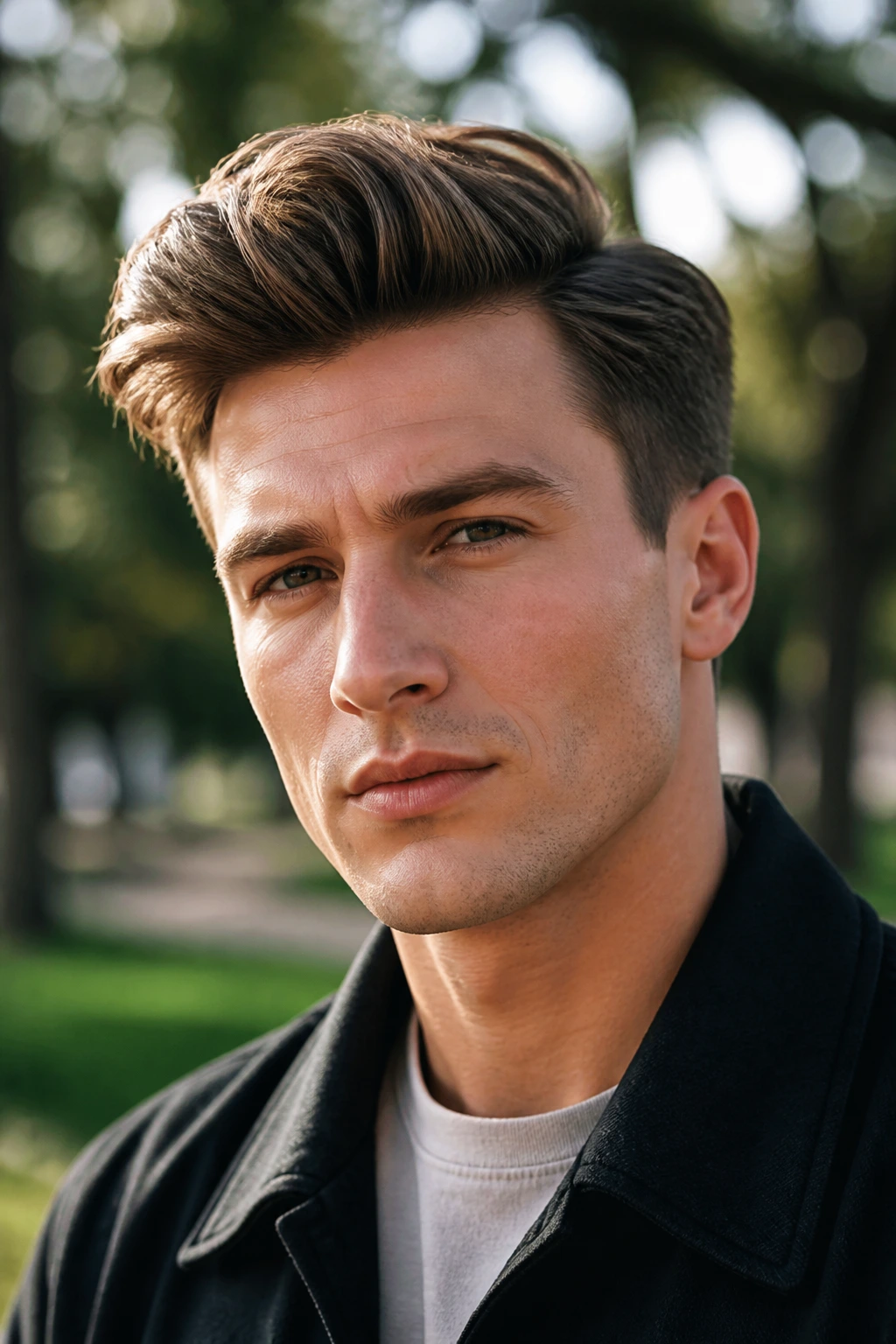
Loose brush-up is the haircut I reach for when I want height without stiffness. Compared with a pomp, the front stays lower and the texture stays visible. Use a blow dryer to coax the hair upward, then break it apart with your fingers and a small amount of cream or paste.
The shape should feel lifted, not built. That matters. This is a good middle ground for men who like a vintage outline but hate helmet hair. It grows out better than a hard pompadour, and it doesn’t ask for a mirror every hour.
This one has a casual confidence to it that a lot of sharper styles can’t match.
24. Tucked-Back Medium Length
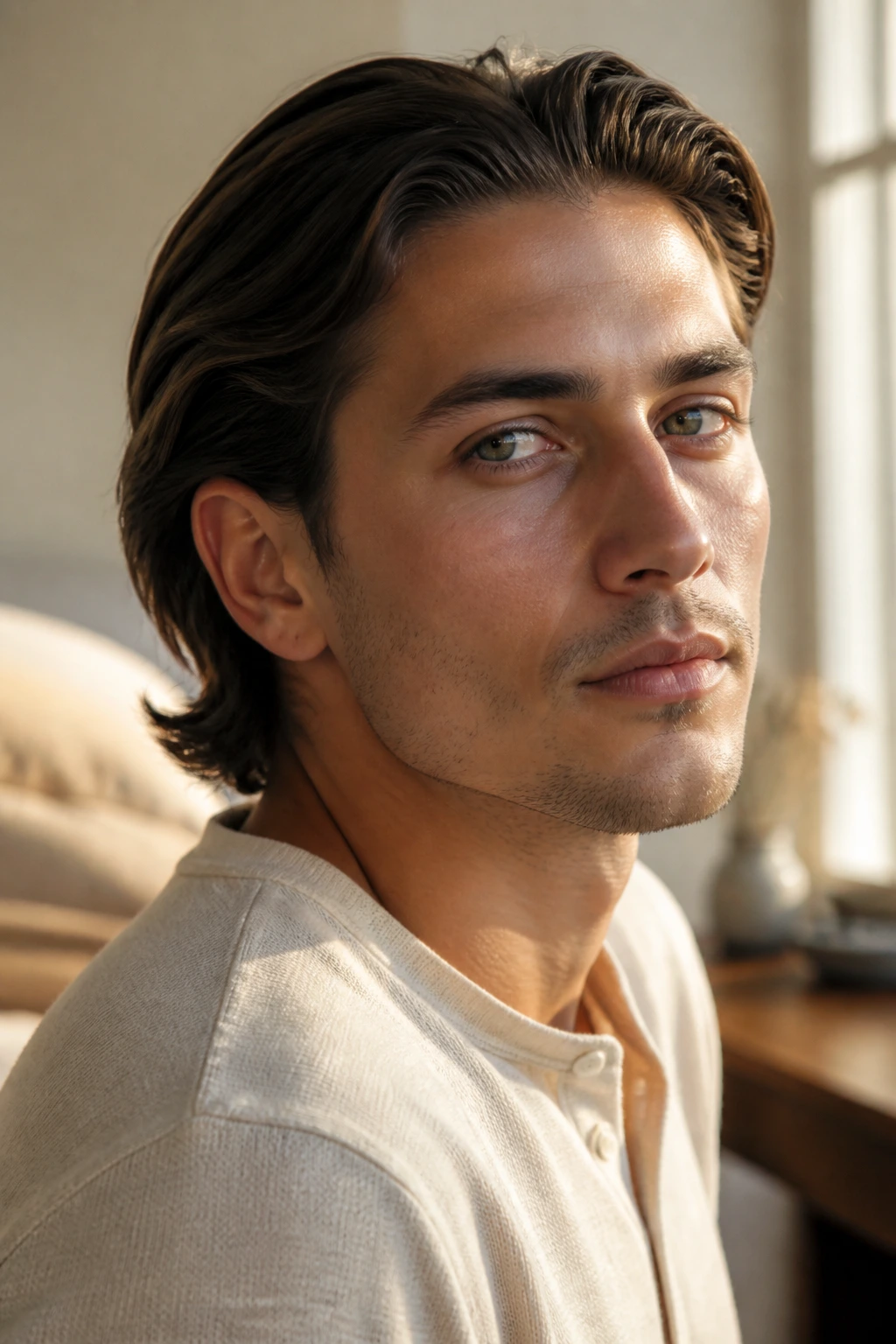
Medium length hair starts to look old-movie handsome when the sides stay tucked back. Keep enough length to brush behind the ears, then taper the sides and back so the outline remains neat. A light grooming cream or a touch of oil at the ends keeps the hair from frizzing out.
If the top splits naturally, let it. This is not a strict style. The charm sits in how the hair falls away from the face while the neckline stays controlled. It’s one of the better options for men who want to grow their hair out without losing the sense of shape.
A cut like this feels relaxed, but not careless.
25. Wavy Side Part
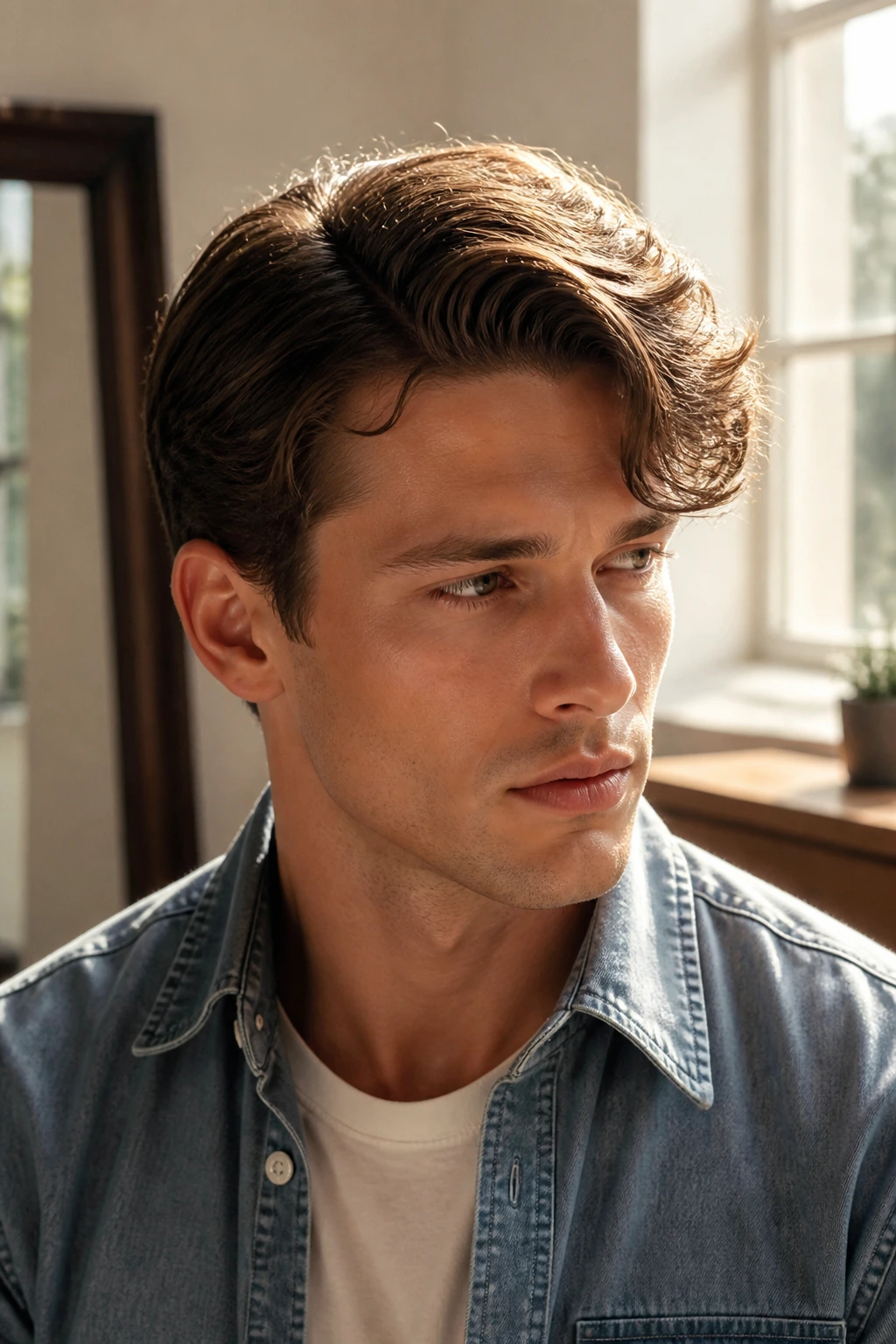
Wavy side parts are proof that not every classic needs a hard line. The part can sit soft and slightly off center, which helps when the wave pattern wants to move on its own. Let the hair dry with a little sea-salt spray, then guide the front across with your fingers, not a comb.
The result feels less staged than a glossy side part but still keeps the old-school outline. On stronger waves, a touch of cream is enough. On looser waves, a dryer can help the shape settle where you want it. The key is not flattening the wave out of the hair.
That would be a waste.
26. Disconnected Undercut with Vintage Finish
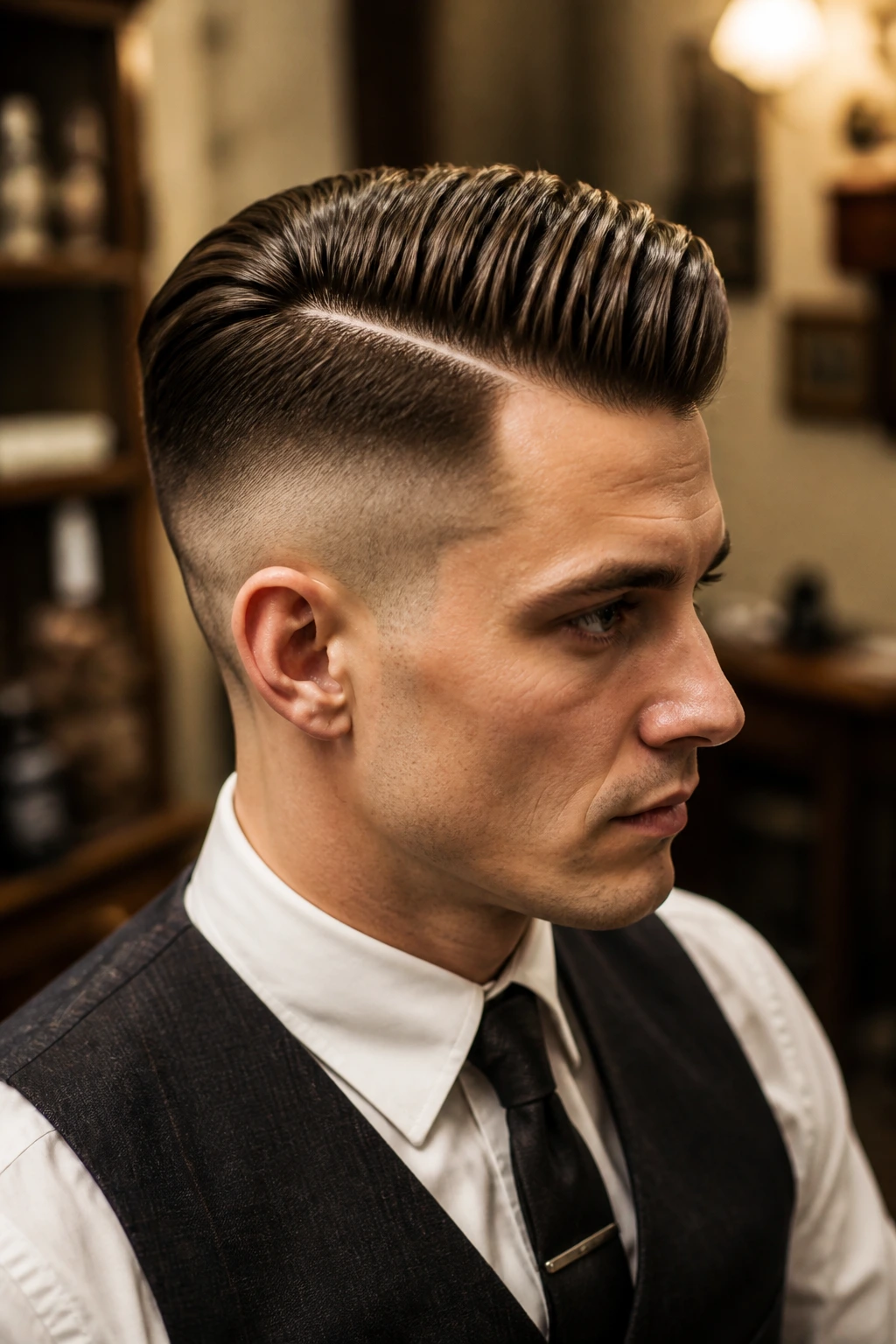
A disconnected undercut can still feel vintage when the top is styled like a proper classic. Keep the sides sharp, then shape the top as a slick back, pompadour, or side sweep with enough shine to make the contrast intentional.
The disconnect should be neat, not choppy. If the top is left dry and fuzzy, the cut stops looking like a choice. This one suits men who want a stronger outline and don’t mind keeping up with it. It’s the most modern-looking shape on the list, but the finish pulls it back into retro territory fast.
This is where product matters more than people like to admit.
27. Longer Top with Slick Temples
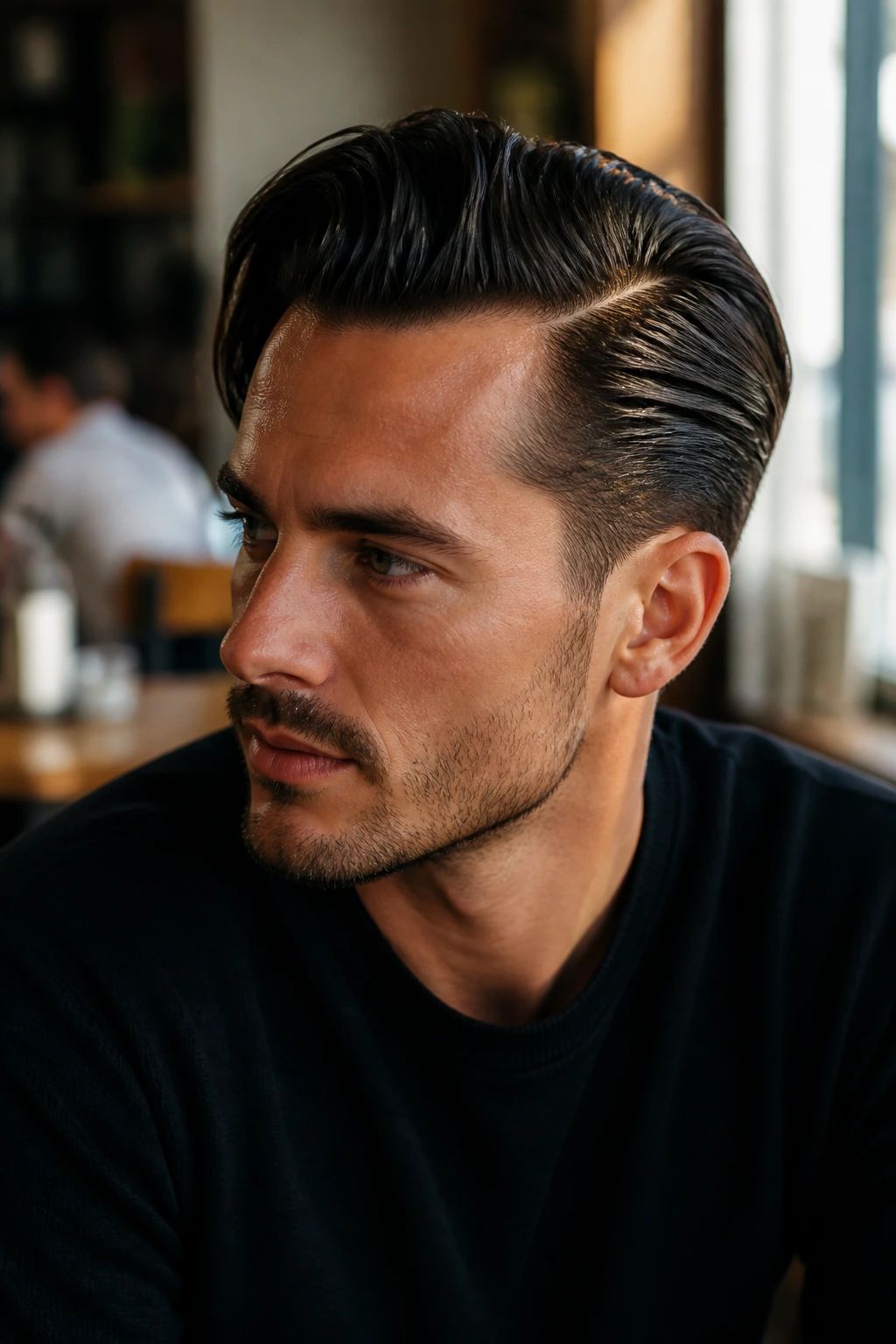
Longer tops with slick temples have a nice push-pull to them. Keep 5 to 7 inches on top, brush the sides and temples tight, then let the crown and front keep some movement. That contrast gives the cut a movie-star edge without locking every strand into place.
A cream or light pomade on the temples and almost nothing heavy through the top keeps the length from looking muddy. This style works especially well on straight or wavy hair that already wants to fall. A short beard or clean shave both fit. The neckline just needs to stay neat so the length feels deliberate.
- Best for hair that has some natural bend
- Good if you want long top length without a full shag
- Keep the temples clean or the whole thing goes soft in the wrong way
28. Retro Mullet with a Clean Crown
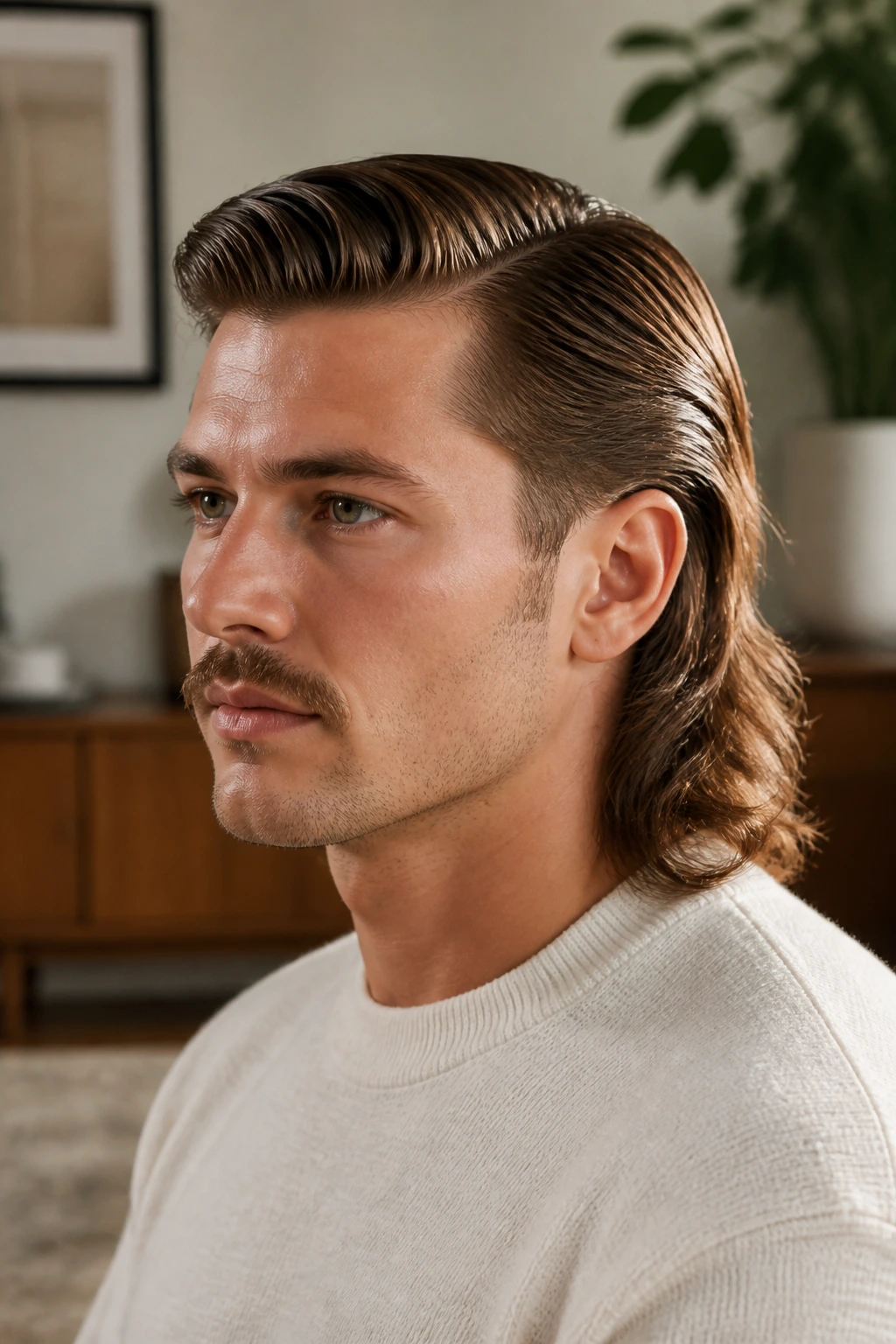
The retro mullet works best when the crown is clean and the back is deliberate. Ask for a tighter top through the crown, then let the back sit longer with a soft taper around the ears and nape. The goal is not chaos. It’s shape.
If the front and crown are tidy, the longer back reads like a choice instead of a dare. That balance is what makes the style feel vintage rather than messy. Keep the sides controlled, let the back move a little, and skip the urge to over-texturize everything.
This is the last cut on the list for a reason. It needs confidence, but it rewards restraint.
Why Vintage Men’s Hairstyles Still Work on Real Hair
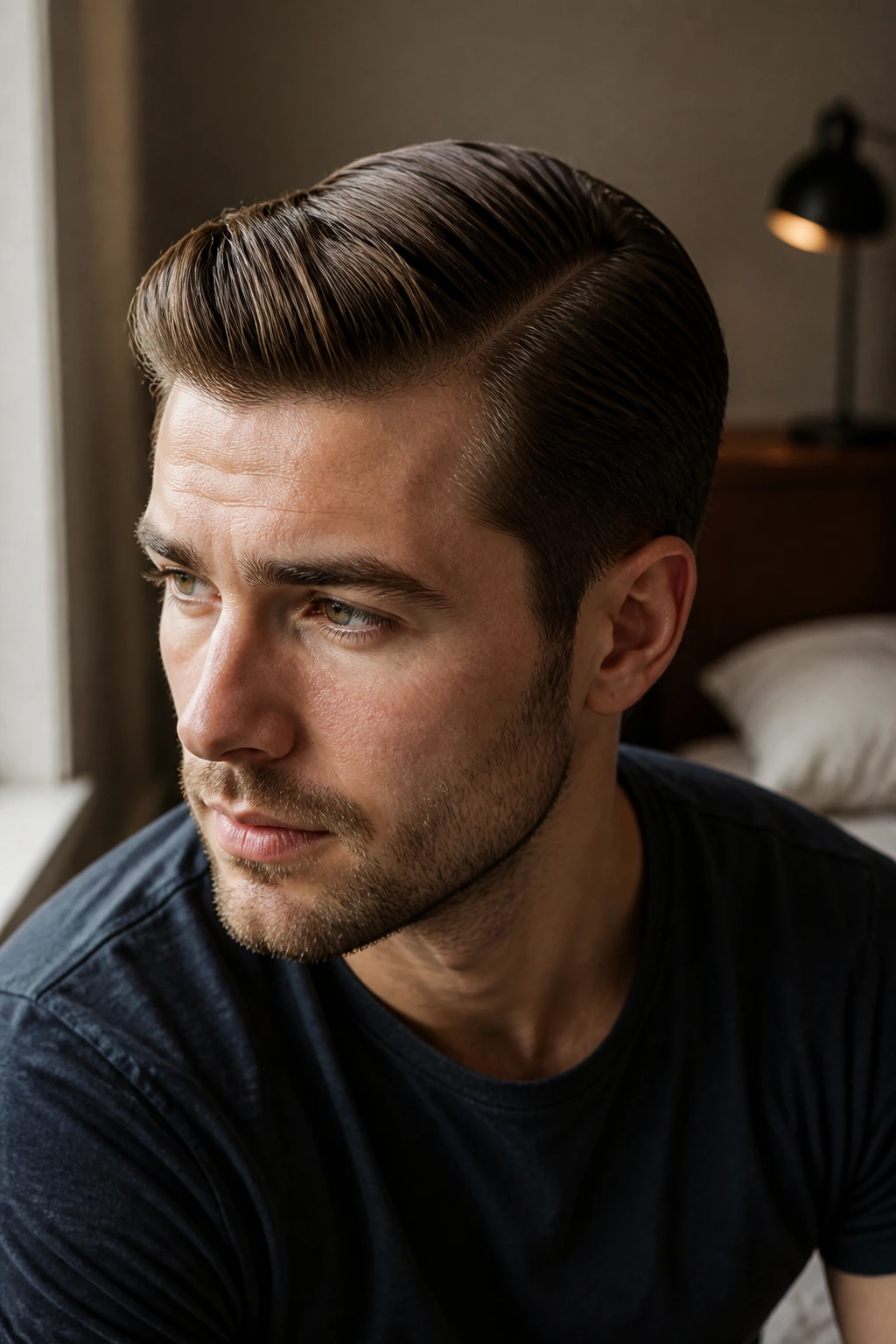
Classic barber shapes keep showing up because the geometry makes sense. A side part, brush-back, slick back, or crew cut gives the eye a clean line to follow. Shorter sides sharpen the profile. Enough length on top lets the hair bend, part, or lift without fighting the crown swirl. That balance is why these cuts still look right when the air is sticky or when the trim is a little overdue.
They also need less product than a lot of modern styles. A quarter-sized dab of pomade or a few sprays of tonic can do more than a heavy wax piled on top of the hair. Once you know where your front cowlick and crown sit, the style gets easier, not harder. The cut starts working with your growth pattern instead of against it.
There’s another reason I keep coming back to them. They pair well with clothes and facial hair because the outline is clear. A blunt neckline with stubble looks deliberate. A low taper with an oxford shirt or chore jacket looks sharp without trying too hard. The cut doesn’t need to shout to be noticed.
Essential Tools for Styling These Looks
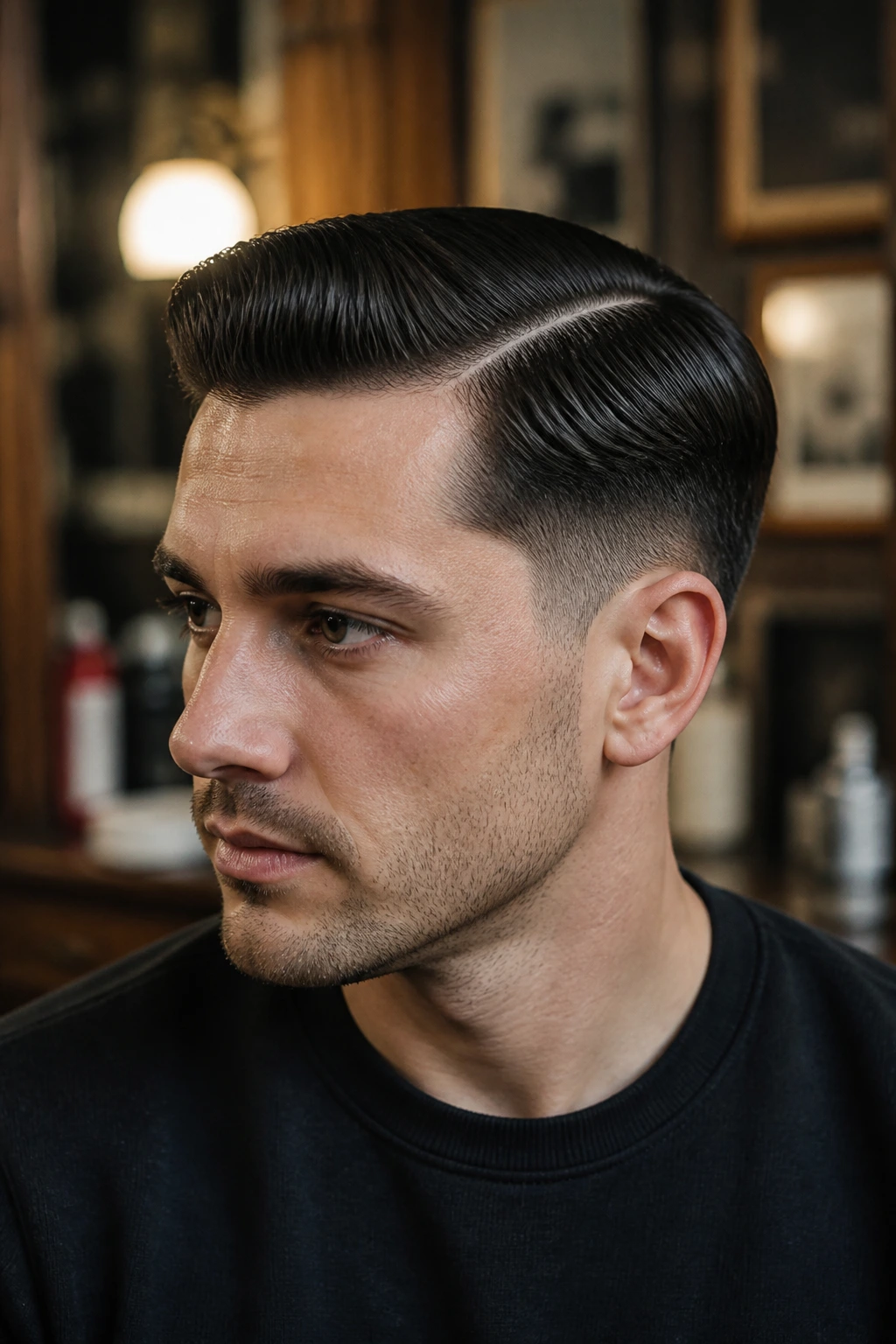
- Fine-tooth comb: Best for side parts, hard parts, and slick backs that need a clean line.
- Wide-tooth comb or pick: Helps waves, curls, and looser brush-backs keep their shape without getting pulled flat.
- Vent or round brush: Useful when you want lift at the front for a pomp, quiff, or brush-up.
- Blow dryer with a nozzle: Directs heat where you need it and sets the shape before product locks in.
- Water-based pomade: Gives shine and hold, then washes out without much fuss.
- Matte clay or paste: Keeps texture visible on crops, brush-ups, and looser vintage cuts.
- Styling cream or grooming tonic: Good for longer, wavy, or dry hair that needs light control.
- Hairspray: One light pass can keep the front from folding in humidity.
- Hand mirror: Worth owning if you plan to keep ducktails, tight necklines, or any sharp back shape in order.
- Small trimmer: Handy for sideburns and neck cleanup between appointments.
How to Choose the Right Vintage Hairstyle for Your Hair Type
Fine Hair
Fine hair usually does best when the cut stays short enough to support itself. Ivy League cuts, French crops, Caesar cuts, and crew cuts are friendly choices because they keep the shape close to the head. Too much height on fine hair tends to expose the weak spots and make the top collapse by noon.
Use lightweight product. Heavy pomade and thick wax make the hair sit low and greasy. A small amount of cream or a soft matte paste gives just enough control without turning the front limp. If your hair is fine and straight, a soft side part is usually safer than a tall pomp.
Thick Hair
Thick hair gives you more room to play with slick backs, pompadours, ducktails, rockabilly rolls, and brush-ups. It also needs more control. A dryer matters here, because thick hair often resists movement until it gets warmed up and shaped first.
Ask the barber to remove bulk where the crown gets too heavy. If the top is left too dense, it can puff out instead of laying in the right direction. Medium-to-strong hold products help, but the cut itself does most of the work.
Wavy or Curly Hair
Waves and curls usually look best when the style keeps some room for movement. Brush-backs, feathered styles, curtains, side parts, and mod mop tops all leave space for the wave to show instead of flattening it out. A little sea-salt spray or curl cream can help the shape settle without feeling crunchy.
Don’t try to force every wave straight. That fight usually ends with frizz. Let the bend stay visible and use the cut to frame it.
Coily or Dense Hair
Short afros, high tops, flat tops, and other structured shapes work well when the outline stays clean. With this hair type, the silhouette matters more than shine. A tight temple taper, a tidy neckline, and a clear top shape can carry the whole look.
Ask for the shape to be maintained, not just shortened. Those are different things. The barber should see the crown, the corners, and the side profile as a single shape, not separate pieces.
Receding Hairlines
Caesar cuts, French crops, regulation cuts, and softer side parts are usually kinder here than big-height styles. A hard push for volume at the front can make thinning temples more obvious. A shorter, cleaner top tends to read better.
A blunt fringe or a soft forward sweep can keep the hairline from becoming the focus. That’s the trick. You’re shaping the eye away from the weak spots, not pretending they aren’t there.
How to Wear These Styles with Face Shape, Facial Hair, and Clothes

Face Shape: Longer faces usually look better with less height and a bit more width near the temples. Round faces can handle more lift on top, especially with side parts, pomps, or quiffs. Square faces are the easiest to work with because they take blunt lines and cleaner edges without looking harsh.
Facial Hair: Stubble sharpens soft shapes fast. A short beard can balance a slick back, brush-back, or side-bent wave. Clean shaves work especially well with regulation cuts, Ivy League trims, and hard-part looks because the haircut gets to carry the whole story by itself.
Wardrobe Pairing: A polished part or executive contour sits naturally with an oxford shirt, blazer, knit polo, or a clean work jacket. A ducktail, rockabilly roll, or retro mullet wants a little more edge — denim, leather, or sturdy cotton helps the haircut feel at home. If the clothes are too sporty, a very slick cut can feel pasted on.
Best Setting: Side parts, crew cuts, and Ivy League shapes are the easiest daily choices. Pompadours, ducktails, and rockabilly rolls bring more personality, so they suit nights out or dressier days. If you want one cut that moves across settings, a brush-back or soft side part is usually the safest bet.
Small Styling Moves That Change the Whole Read
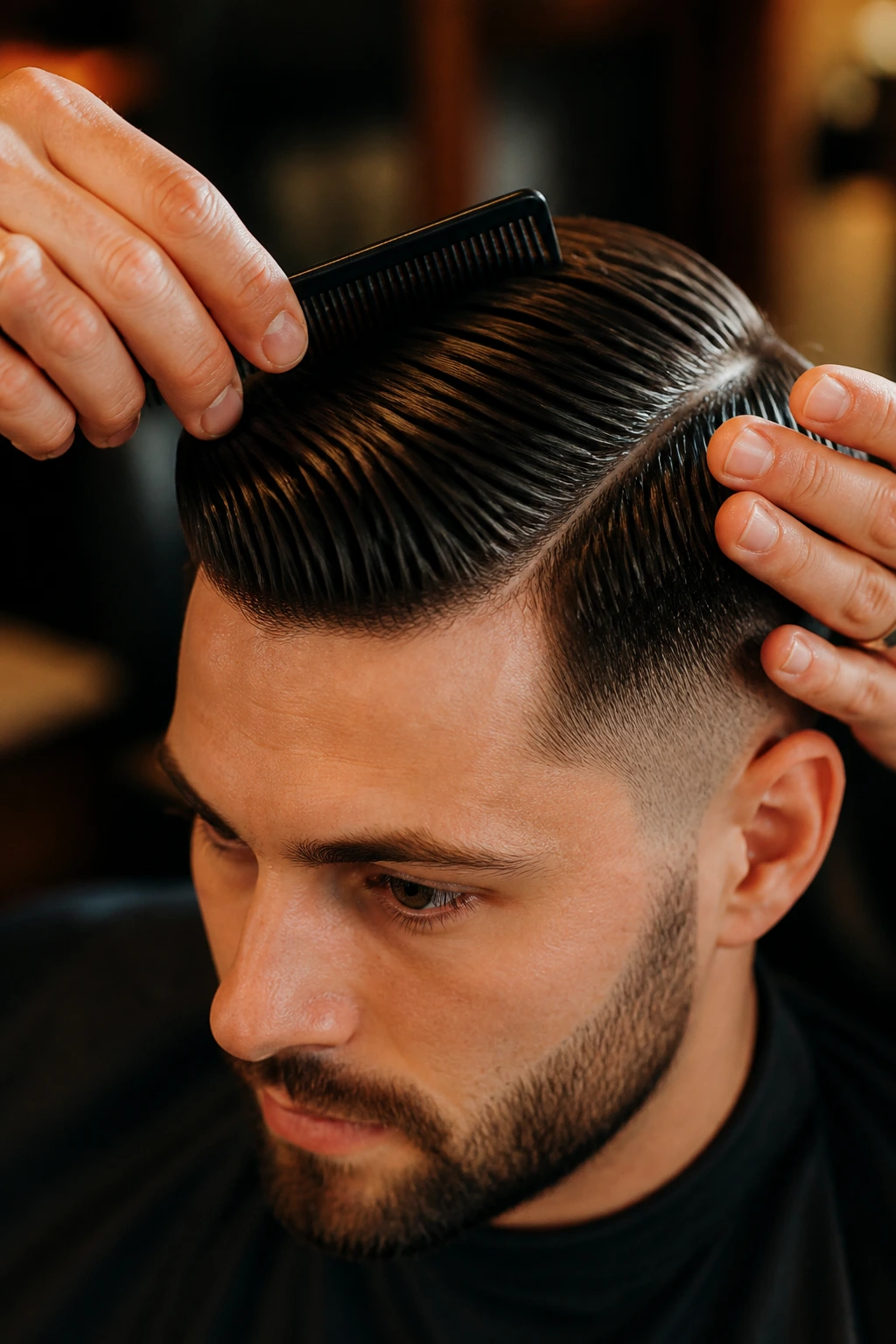
Shape First: Dry the hair into position before you add much product. Warm hair holds a line better than cold hair, and this matters most on pomp, quiff, and slick-back styles.
Product Amount: Start with less than you think you need. A pea-sized amount can cover a side part or short crop; a nickel-sized amount is enough for longer tops. If the hair gets crunchy or greasy, you went too far.
Texture vs Shine: Matte finish shows movement. Shine shows discipline. Pick one on purpose. A French crop with gloss can look off, while a ducktail without shine can feel unfinished.
Edge Work: Clean sideburns, a tidy neckline, and a soft trim above the ears keep the whole haircut from sliding into “grown out” territory. Those small lines matter more than another pass with product.
Part Placement: Move a side part half an inch and the face changes. That sounds tiny, but it changes the way the forehead, temples, and crown all read together.
Common Mistakes That Flatten a Vintage Look
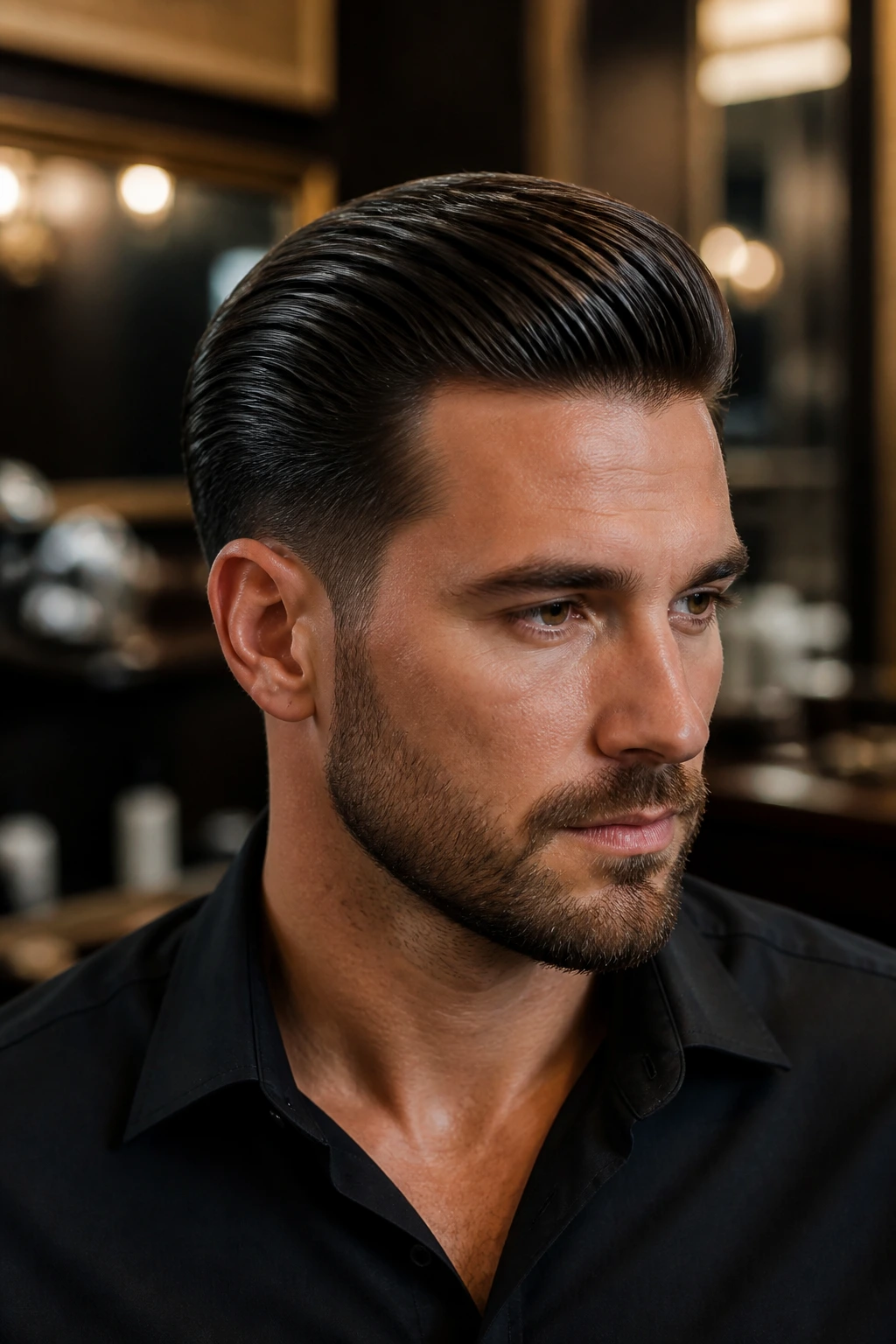
- Forcing the part where the hair doesn’t want to split: The front puffs up or separates by lunch. Move the part to the natural ridge or ask the barber to cut the part where it already lives.
- Using heavy pomade on fine hair: The roots go flat, the ends look greasy, and the cut loses lift. Switch to a cream, light paste, or a smaller amount of product.
- Cutting the sides too tight on styles that need balance: The top starts looking wider than the rest of the head, which throws off the shape. Keep more weight in the taper if the top has height or width.
- Skipping the blow-dry on pomp, quiff, and brush-back styles: Product sits on top instead of setting the hair. Use heat first, then product, then a quick second pass if needed.
- Letting the neckline grow wild: The haircut starts looking soft in the wrong way. A quick cleanup every 2 to 3 weeks keeps the outline deliberate.
- Making every vintage style shiny: Shine has its place, but it can kill texture on crops, shags, and feathered looks. Match the finish to the cut.
Vintage-Inspired Variations for Different Hair Types
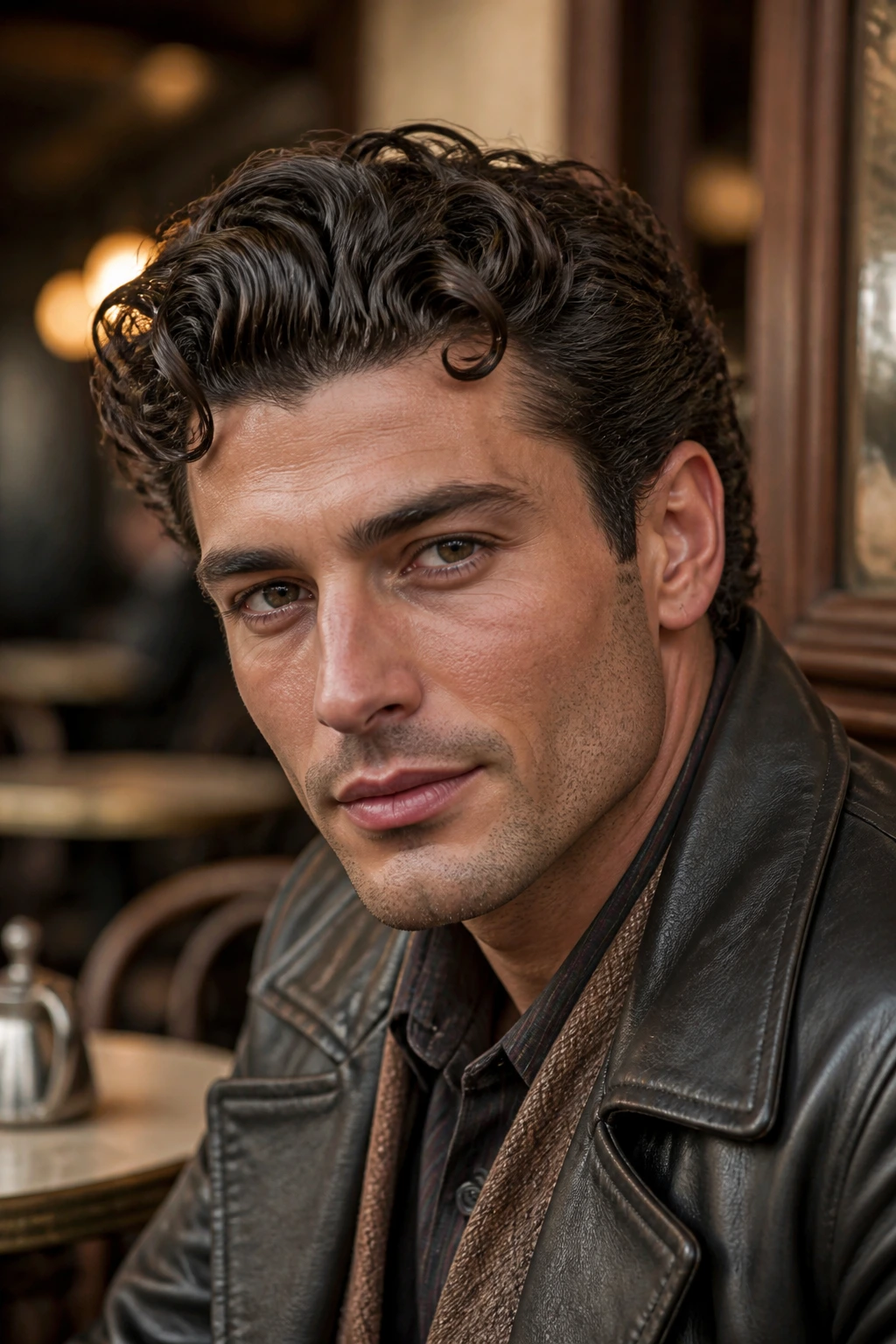
The Low-Key Office Version: Start with a side part, Ivy League, or regulation cut, then keep the taper low and the shine soft. It reads classic without looking stiff, and it behaves well in a jacket or collar.
The Thick-Hair Greaser: Use a slick back, pompadour, or ducktail with stronger hold and a dryer to shape the front first. Thick hair needs the control, and the shine gives it that old-barbershop feel.
The Curly Retro Shape: Lean into brush-backs, feathered tops, or a mod mop instead of flattening the curl pattern. Leave extra length on top, use curl cream, and let the hair keep its bend.
The Fine-Hair Saver: Choose a French crop, Caesar cut, or crew cut with a short side taper. Light product only. Anything too tall or too glossy will show the scalp and flatten the top.
The Beard-Balanced Throwback: Pair a side part, executive contour, or slick back with a neat beard line and cleaner sideburns. The beard gives the haircut weight below the jaw, which helps the whole look feel grounded.
Keeping the Shape Between Barber Visits
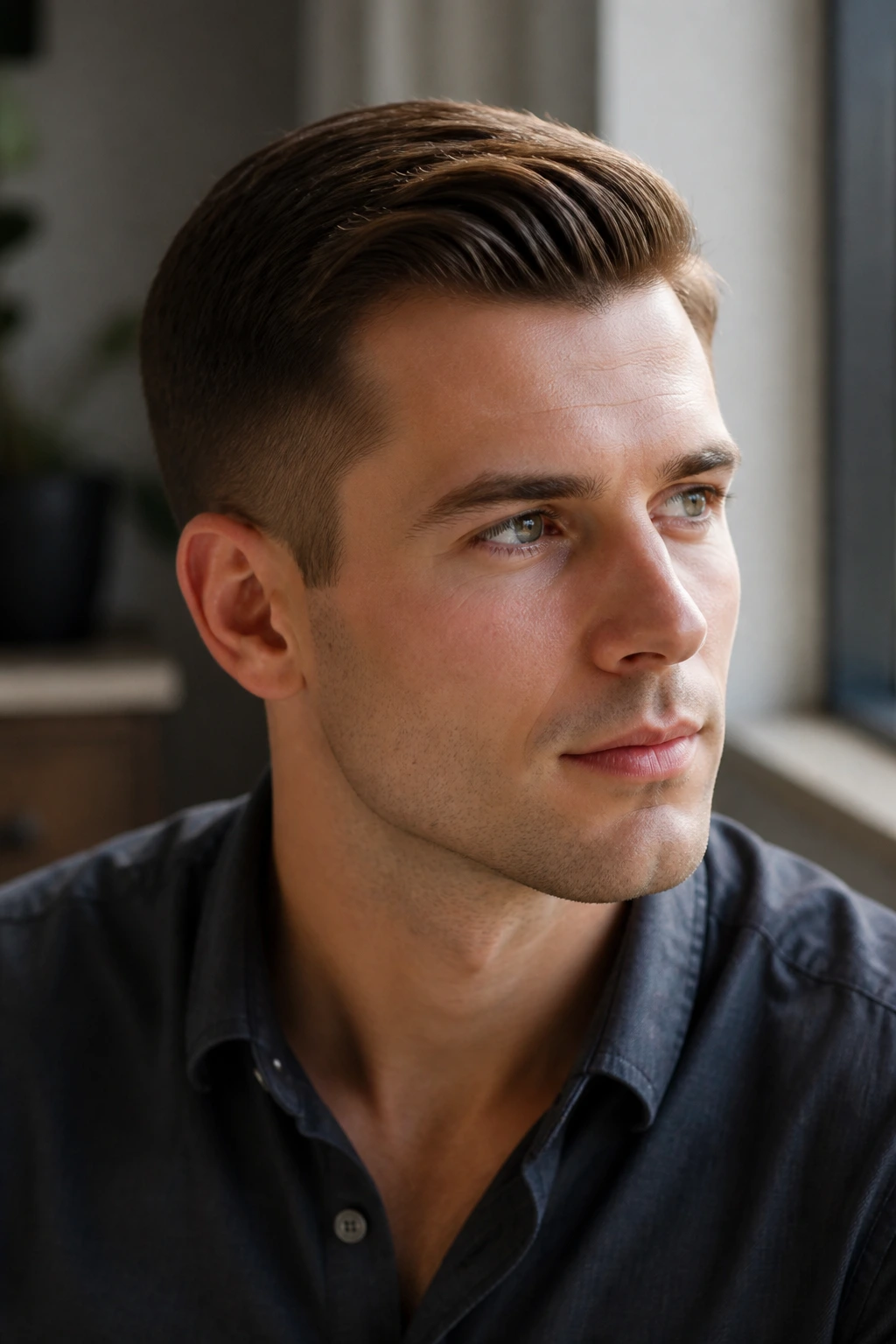
Shorter vintage cuts need more frequent upkeep than people expect. Crew cuts, regulation cuts, flat tops, and sharp crops usually want a trim every 2 to 3 weeks if you want the outline to stay clean. Side parts, Ivy League cuts, pompadours, and quiffs can often go 3 to 5 weeks before they start losing shape. Longer brush-backs, tucked-back lengths, and shags can stretch farther, but only if the ends stay healthy.
At home, clean up the neckline and sideburns every week or two if you have a trimmer. That tiny bit of maintenance keeps the haircut looking intentional. If you use pomade often, a clarifying shampoo once every 1 to 2 weeks helps stop buildup from dulling the front and making the roots feel heavy.
For daily resets, a little water on the hands or a light mist from a spray bottle can wake the hair back up. Comb the shape back into place while the hair is damp, then let it dry where you want it. If your hair runs dry or frizzy, a touch of cream on the ends is better than piling on more hold.
Frequently Asked Questions
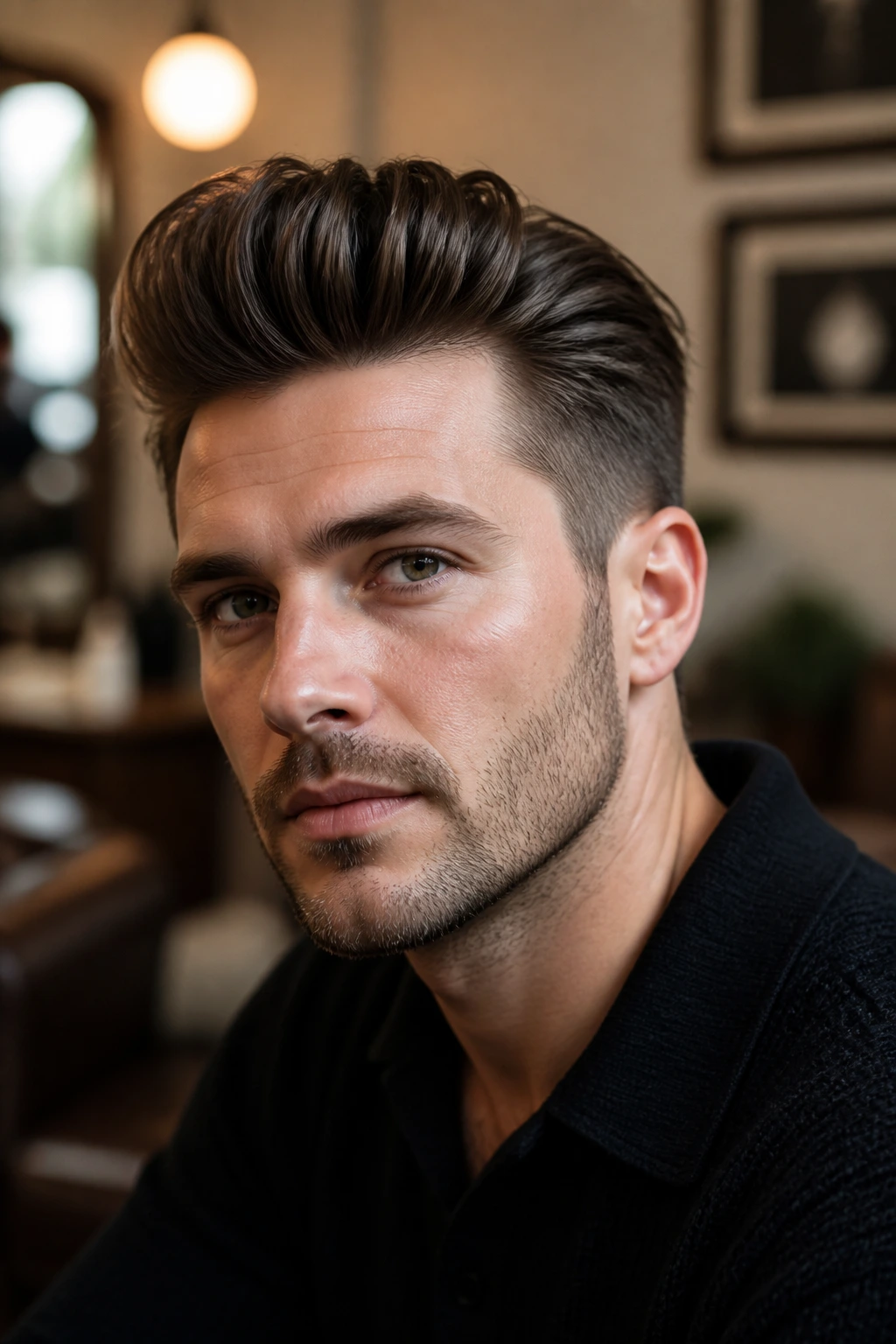
Which vintage hairstyle works best for thin hair?
A French crop, Caesar cut, Ivy League, or short side part usually gives thin hair the most help. These cuts keep the top short enough to support itself and avoid the tall shape that makes sparse spots more obvious.
Can curly hair pull off a vintage look?
Absolutely. Brush-backs, feathered tops, side parts, and mod mop styles all work well when the cut follows the curl pattern instead of flattening it. The trick is to leave enough length for the curl to show.
What product should I buy first if I only want one?
Start with a medium-hold water-based pomade if you want side parts, slick backs, or sharper vintage shapes. If your hair is more textured or you want a softer look, matte clay or paste is the better first buy.
Do these styles need a blow-dryer?
Not all of them, but the taller shapes do better with one. Pompadours, quiffs, brush-ups, and slick backs usually hold shape longer when you set them warm first. Short crops and crew cuts can live without it.
How often should I get a trim?
Tight cuts usually need attention every 2 to 3 weeks. Medium-length vintage styles can last longer, but the neckline and sideburns still need cleanup if you want the shape to stay sharp.
Can I wear one of these styles with a beard?
Yes, and a beard can help a lot. A short beard or stubble gives slick backs, side parts, and longer top styles more weight around the jaw. Just keep the sideburns and neckline tidy so the cut and beard look connected.
What if my hair has a strong cowlick at the front?
Don’t fight it head-on. Shift the part a little, let the front bend with the growth pattern, or choose a cut that works with forward movement, like a crop or Caesar. Forcing the hair against the swirl usually creates the wrong kind of volume.
Can I keep a vintage look without shine?
Yes. Plenty of these cuts work with matte clay, cream, or even dry texture spray. The classic shape matters more than the finish, and some of the best looks here — especially crops, brush-ups, and shags — look better with very little shine.
A Cut That Knows Its Shape
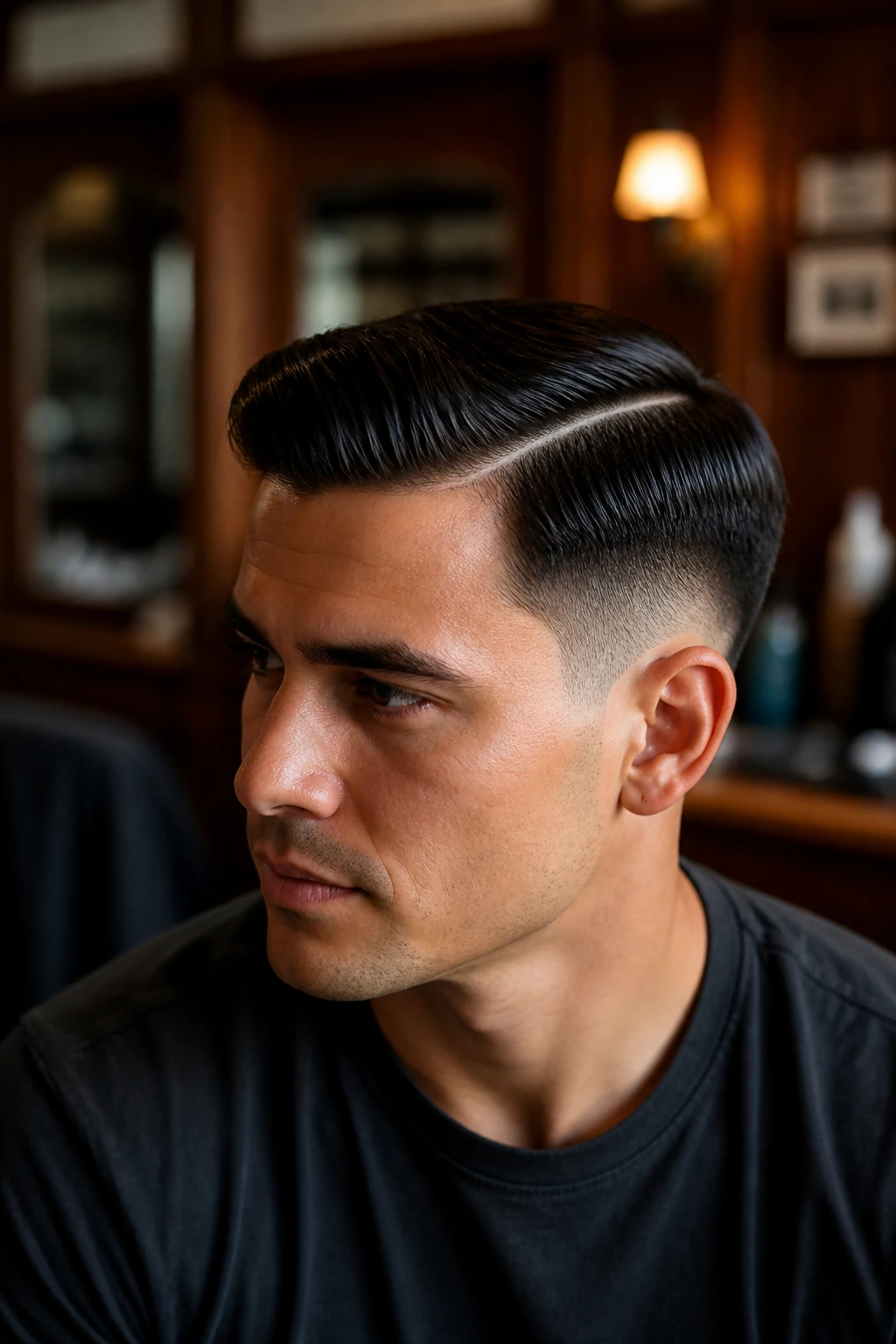
Vintage hair still earns its place because it has structure. That’s the real advantage. A good side part, brush-back, crop, or pomp doesn’t need tricks to feel finished; it needs the right length, a sane taper, and a finish that matches the cut instead of fighting it.
Pick the shape that works with your hair, not the one that fights the mirror. Bring a barber a clear idea of top length, taper, and part placement, and you’ll save yourself a lot of guessing later. The best throwback cuts are the ones that settle in fast and keep looking like you meant them.
