



Thick hair can make a bob look expensive or look like you lost a fight with a boxy silhouette. There isn’t much middle ground. If the cut lands in the wrong spot, the shape balloons at the sides, kicks out at the ends, and sits heavy at the nape. If the layers are placed with care, the whole thing moves.
That’s why medium layered bob haircuts for thick hair keep showing up in good salon chairs. The length is long enough to keep weight, short enough to keep the outline clean, and layered enough to stop the haircut from turning into a helmet by lunchtime. A well-cut medium bob does something very specific: it lets thick hair bend instead of spread.
You can usually tell when a bob was designed for dense hair. It falls in a soft curve instead of a shelf. The ends have direction. The crown isn’t puffed up like a mushroom cap. And yes, it still looks decent on the second day, which matters more than anyone likes to admit.
Why These Cuts Work So Well on Thick Hair
- Weight moves out of the wrong places: Thick hair tends to hold bulk at the sides and nape, and these cuts carve that weight away so the shape doesn’t flare out.
- The length still feels intentional: Medium bobs keep enough length for movement and polish, but not so much that the cut starts hanging flat and tired.
- You get room for texture without losing structure: Layers give waves, bends, and natural fluff somewhere to go instead of forcing them into a block.
- They grow out with less drama: A good medium bob doesn’t fall apart after three weeks; it usually softens in a way that still looks deliberate.
- They work with a lot of styling moods: Smooth blowout, bent ends, air-dried wave, tucked-behind-the-ear polish — the same cut can handle all of it.
1. Collarbone Bob With Hidden Layers
A collarbone bob with hidden layers is the cut I reach for when thick hair needs shape without shouting about it. The perimeter sits right around the collarbone, so the hair still has swing, but the weight lives inside the haircut instead of piling up at the outline.
Why It Works
Hidden layers take bulk out from the interior, which is where thick hair usually becomes stubborn. You still see a clean edge from the outside, but the inside isn’t packed like a suitcase. That makes the bob sit flatter at the sides and move better through the ends.
What to Ask For
- Collarbone length at the front
- Soft internal layers, not choppy surface layers
- A light face frame that starts around the chin
- No heavy thinning at the ends
Best styling note: blow-dry with a medium round brush and turn the ends under just a touch. Too much bend and the cut loses its clean line.
2. Rounded Bob With Cheekbone Pieces
A rounded bob is the easiest way to make dense hair look deliberate. The curve around the head gives thick hair somewhere to sit, instead of letting it spread out like a triangle. Cheekbone pieces keep the front from feeling too boxed in.
If your hair tends to puff at the sides, this shape helps because the outline is controlled from root to tip. The line is soft, not stiff. That matters. A sharply geometric bob on thick hair can look fabulous for about ten minutes, then the fullness returns with a vengeance.
Wear this one with a side part and a small amount of smoothing cream if you want the curve to stay neat. Or rough-dry it and let the shape go a little looser. Either way, the rounded silhouette does the heavy lifting.
3. Choppy Textured Lob
Why does one choppy lob look cool and another look like it lost a brush fight? Placement. On thick hair, texture works when the layers are broken up, not shredded into random pieces.
The sweet spot is a lob that skims the shoulders or lands just above them, with choppy ends concentrated near the lower third of the haircut. That keeps the top from puffing up while still giving the bottom enough separation to move. You want the ends to look piecey, not stringy.
How to Style It
Use a heat protectant, then wrap large sections around a 1-inch iron for a loose bend. Finish with a dry texturizing spray at the mids and ends, not the roots. If you put too much product at the scalp, the whole thing collapses into fuzz.
4. Soft A-Line Bob
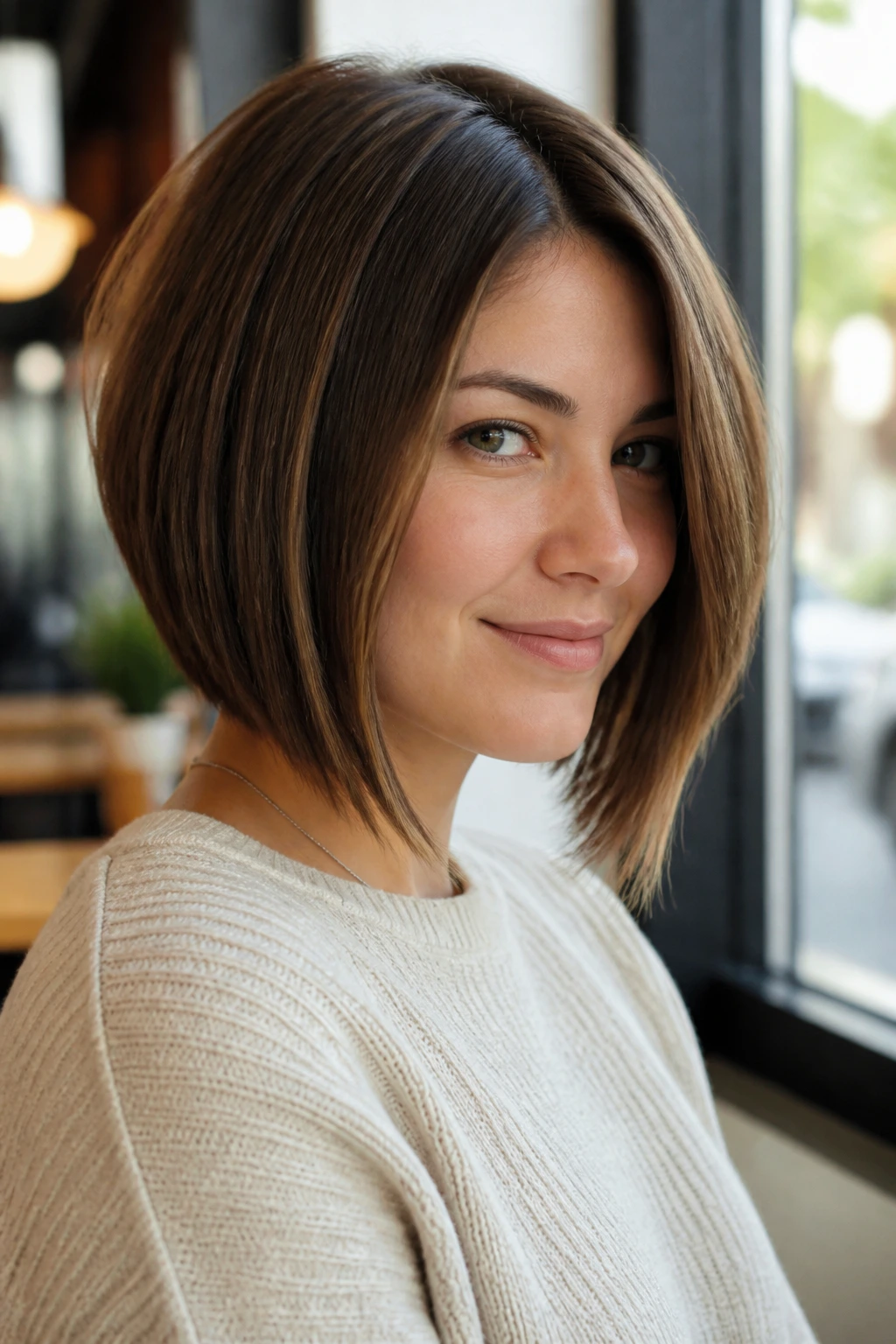
Picture a bob that’s a little longer in front and slightly shorter in back. That gentle angle is doing real work on thick hair. It pulls the eye forward, keeps the neckline neat, and stops the back from becoming a brick.
The trick is subtlety. A hard A-line on thick hair can look severe in a hurry, especially if the front pieces are too long and the back is too stacked. A soft version keeps the shape modern without turning it into architecture.
If you have a wide jaw or just like a haircut that nudges the face forward, this one earns its keep. Blow it smooth with the front pieces wrapped slightly away from the face. The angle shows best when the ends stay sleek.
5. French Bob With Long Fringe
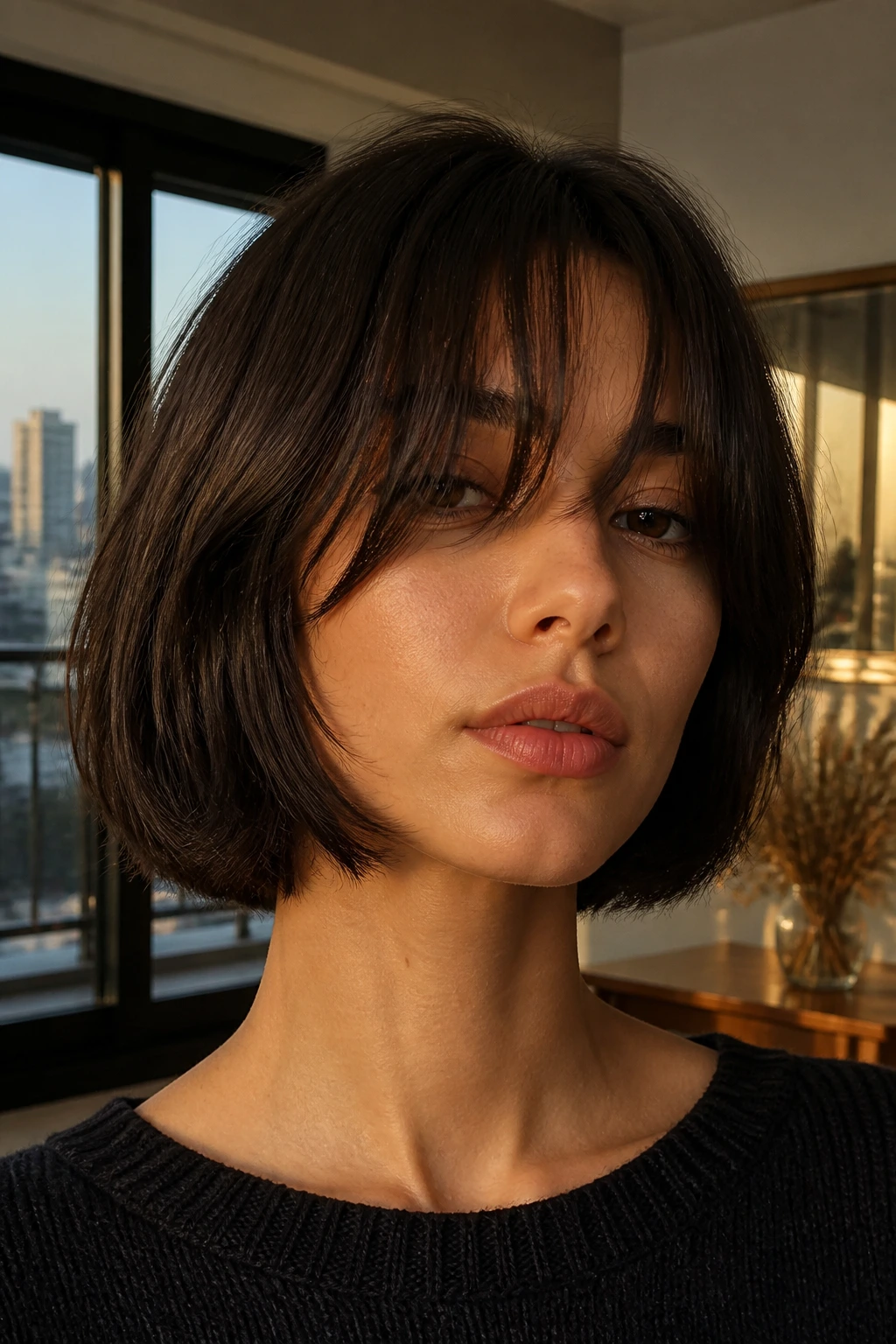
A French bob on thick hair works best when it’s not trying to be tiny. Keep the length around chin to upper neck, and let the fringe sit longer and softer so it doesn’t fight the rest of the cut. That bit of length in the bangs matters. It stops the style from going puffy at the forehead.
The appeal here is the tension between bluntness and looseness. The outline is compact, but the fringe and light layering keep it from feeling heavy. Thick hair gives this style a nice little body that fine hair often can’t fake.
Wear it with a slight bend through the ends and a bit of separation at the fringe. Don’t overbrush it. The charm is in the movement, not in forcing every hair into place.
6. Wavy Lob With Long Cascading Layers
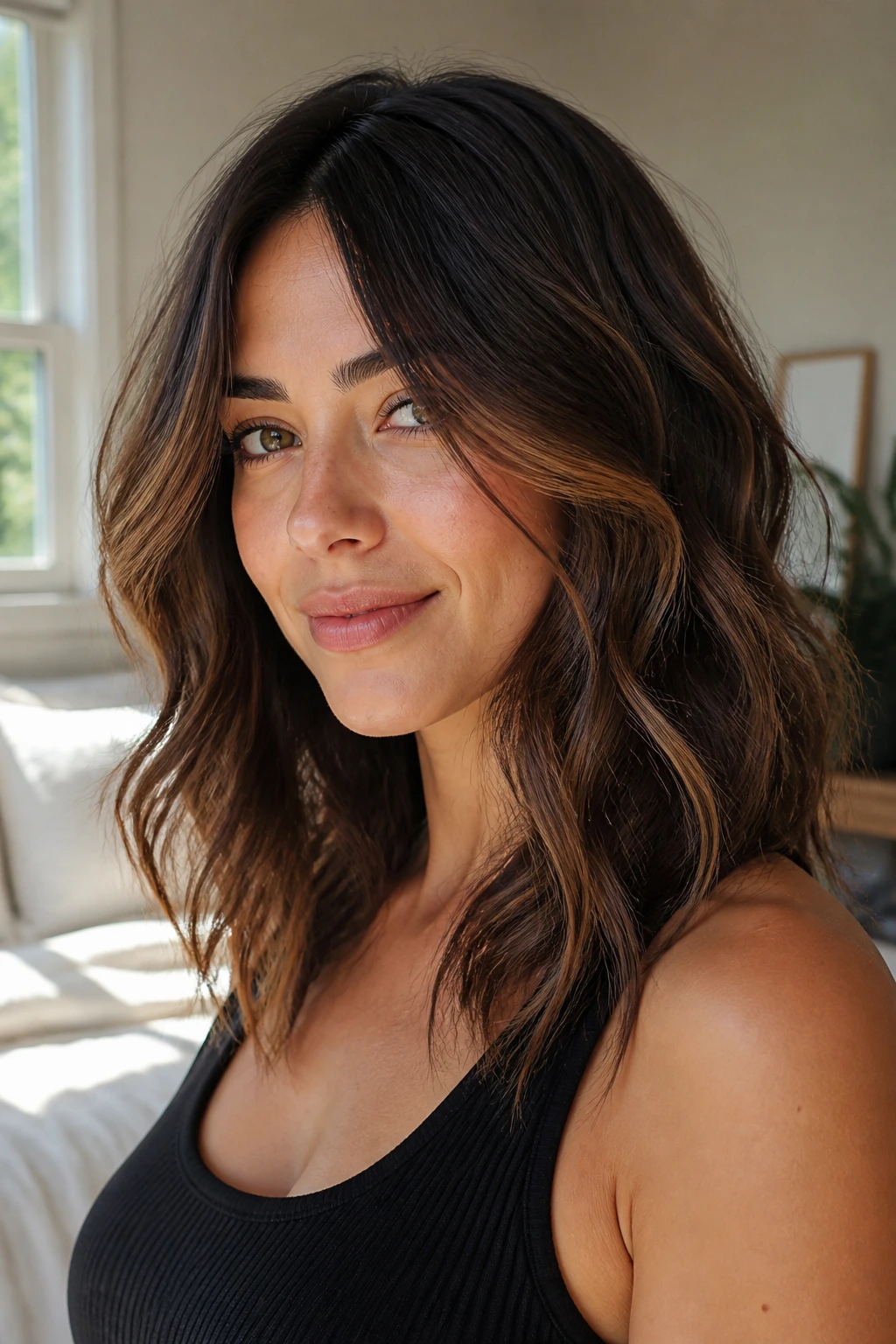
Unlike a blunt lob, this version leaves room for waves to stack without making the sides explode. Long cascading layers begin well below the cheekbones, so the top stays full and smooth while the bottom moves. That’s the whole trick.
This is the cut for thick hair that already wants to wave on its own. You’re not fighting the texture. You’re guiding it. The length stays medium, but the layers prevent the bend from turning into a blunt wall.
Best for air-drying? Absolutely. Scrunch in curl cream or a light mousse, then let it dry without touching it too much. The layers fall into each other instead of forming one heavy curtain.
7. Razored Bob With Airy Ends
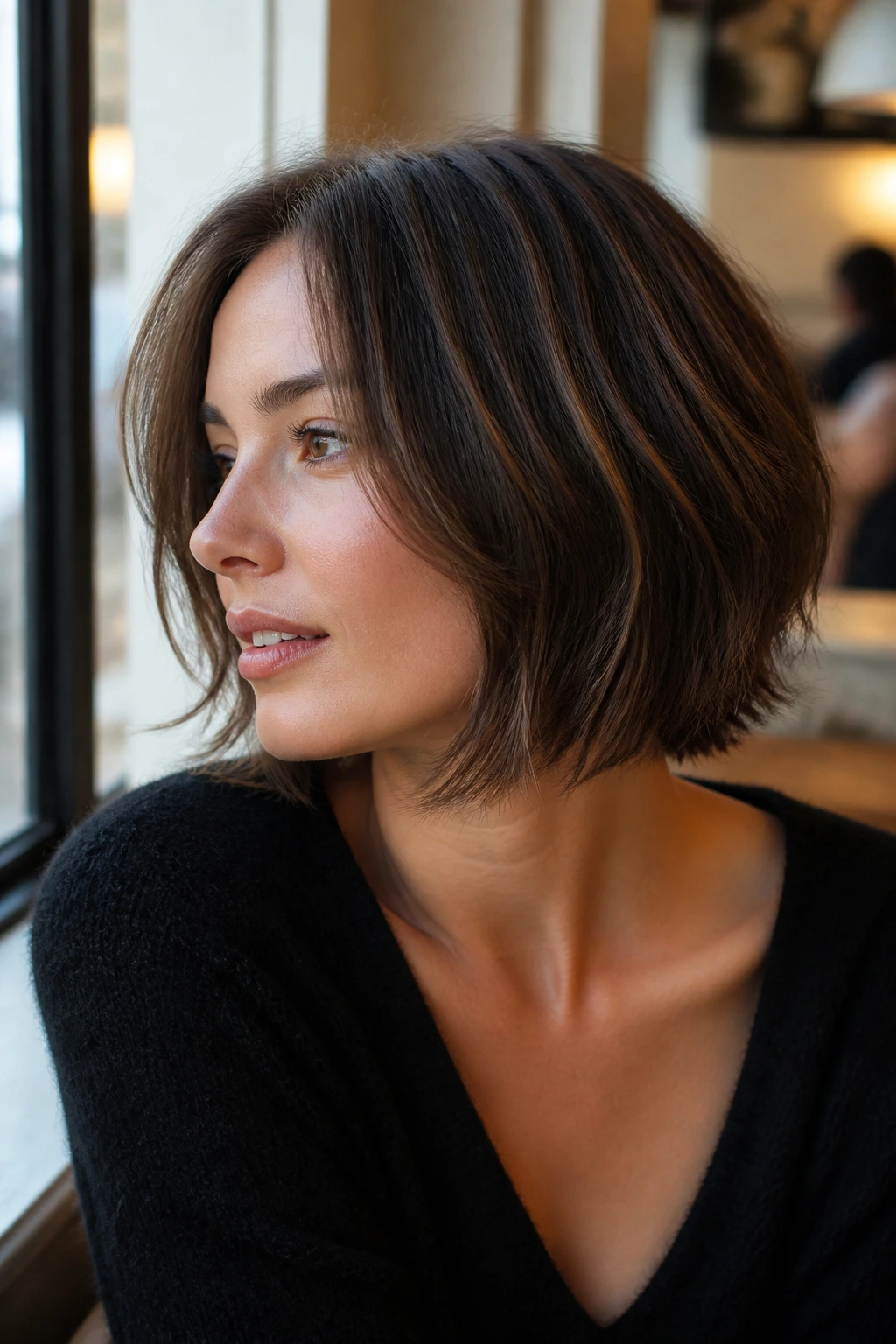
A razor-cut bob on thick hair can be brilliant — or a mess. The difference is restraint. When the razor is used only on the ends and a few interior sections, the haircut gets a light, airy finish that blocks the “thick hair helmet” problem without chewing up the shape.
This cut looks especially good if your hair is straight but stubborn. The razor softens the perimeter so it bends instead of sticking straight out. It also helps if your hair has that coarse, wiry feel at the ends that refuses to settle.
The downside is simple: too much razor work can make the haircut fray. Ask for controlled texturing, not a full shred-fest. There’s a big difference.
8. Inverted Bob With Crown Lift
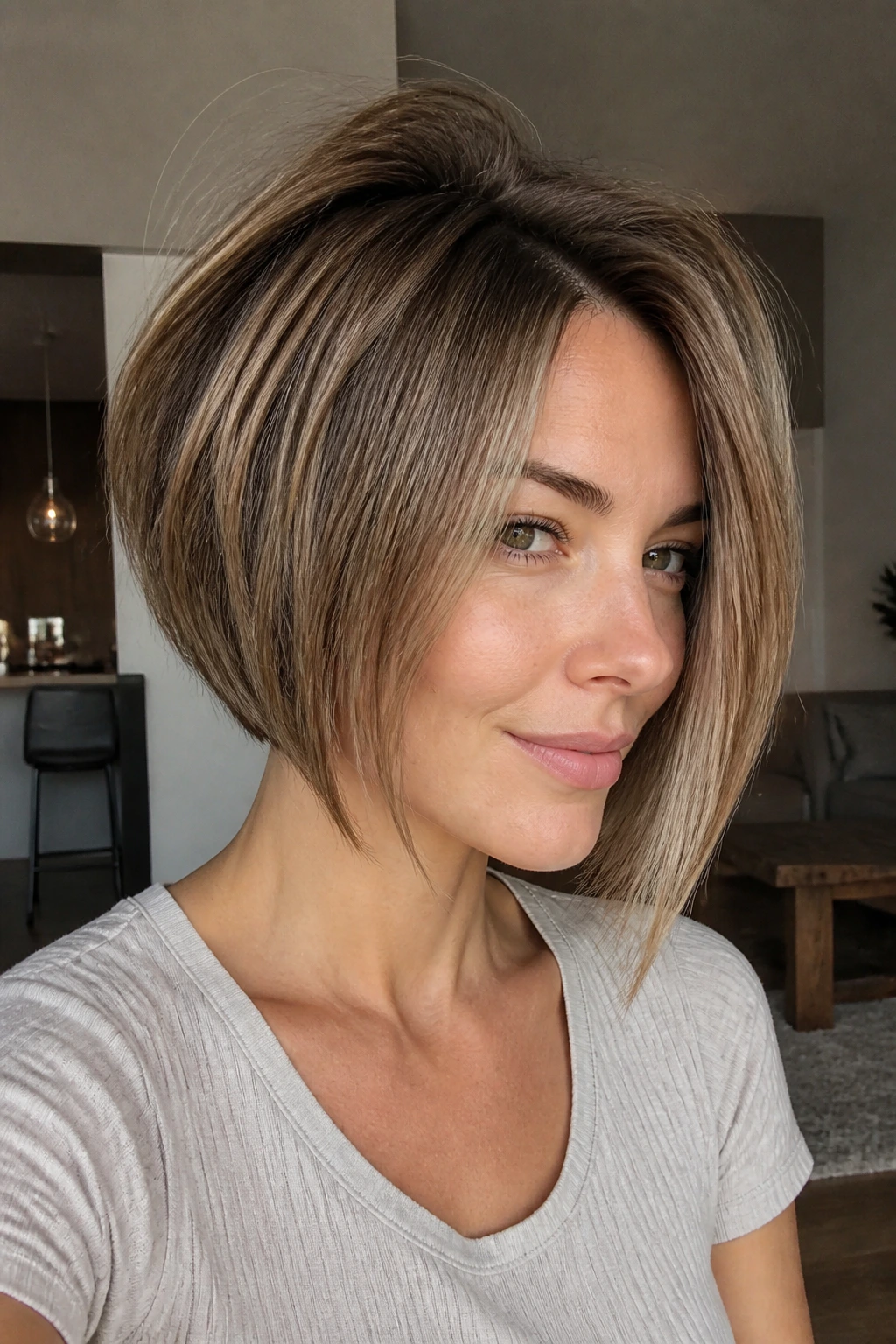
The inverted bob gives thick hair somewhere to go. Shorter in the back, longer in the front, it lifts the crown and keeps the nape from getting bulky. On dense hair, that shorter back section can be a relief.
What I like most is how it shapes the silhouette without needing a ton of product. The cut itself creates movement. That means less daily work with a round brush, which is usually the part people tire of first.
If your hair grows straight out at the crown, this cut can look sharp with a quick root blast from the dryer. Direct the airflow backward at the roots, then smooth the front pieces forward and slightly under. You get height where you need it, not all over the place.
9. Deep Side-Part Bob
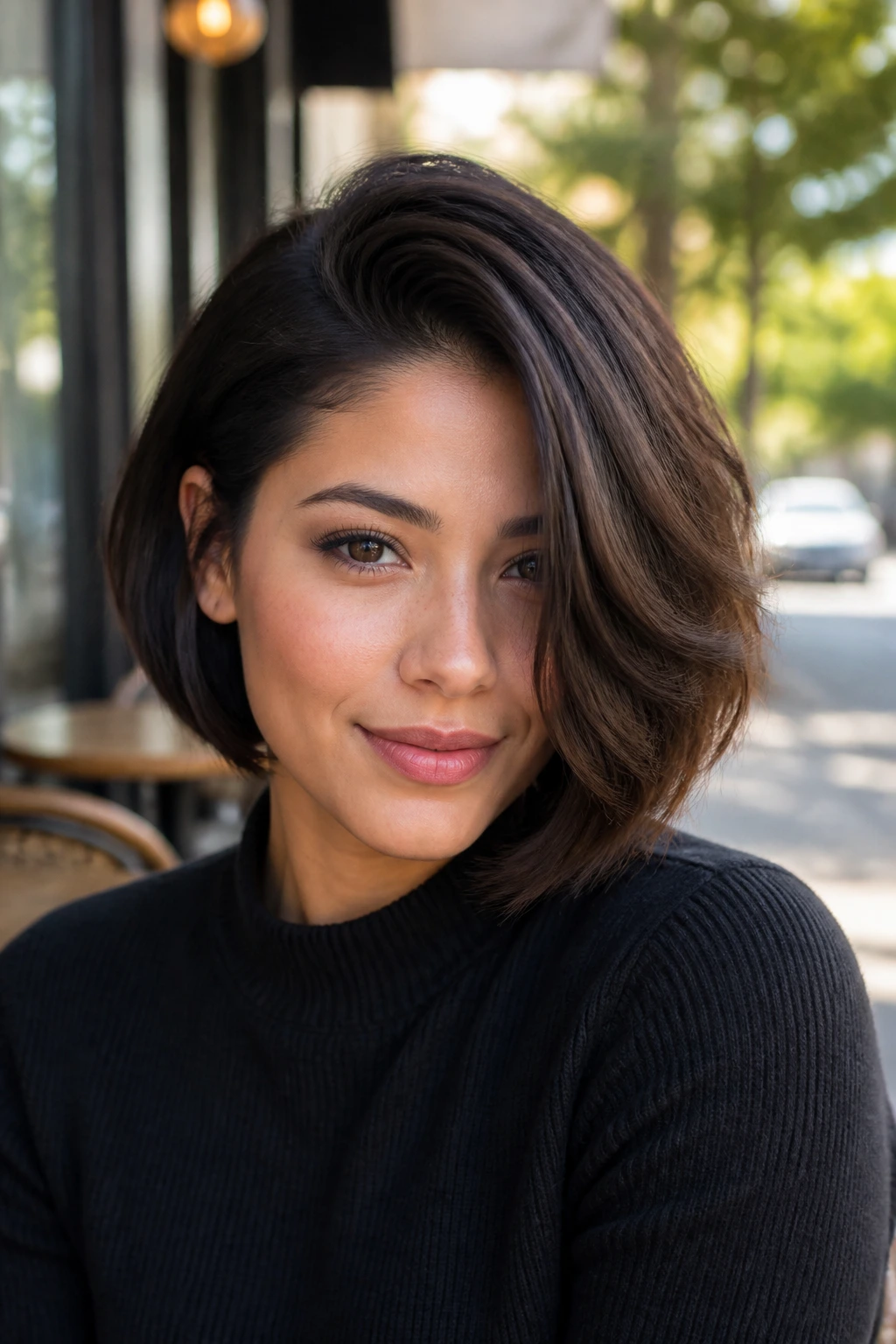
A deep side part changes everything on thick hair. It breaks up symmetry, redistributes volume, and gives the front pieces a natural sweep that softens the entire haircut. Same bob. Different attitude.
The reason it works so well is simple: thick hair often wants to stand up around the part line. Moving the part over by a few inches shifts the weight and keeps the roots from feeling too puffy. It also creates an easy bit of lift without teasing.
This is one of those cuts that looks more expensive when the part is slightly imperfect. Don’t glue it into place with product. Let the front fall with a little bend and a little swing.
10. Curly Layered Bob
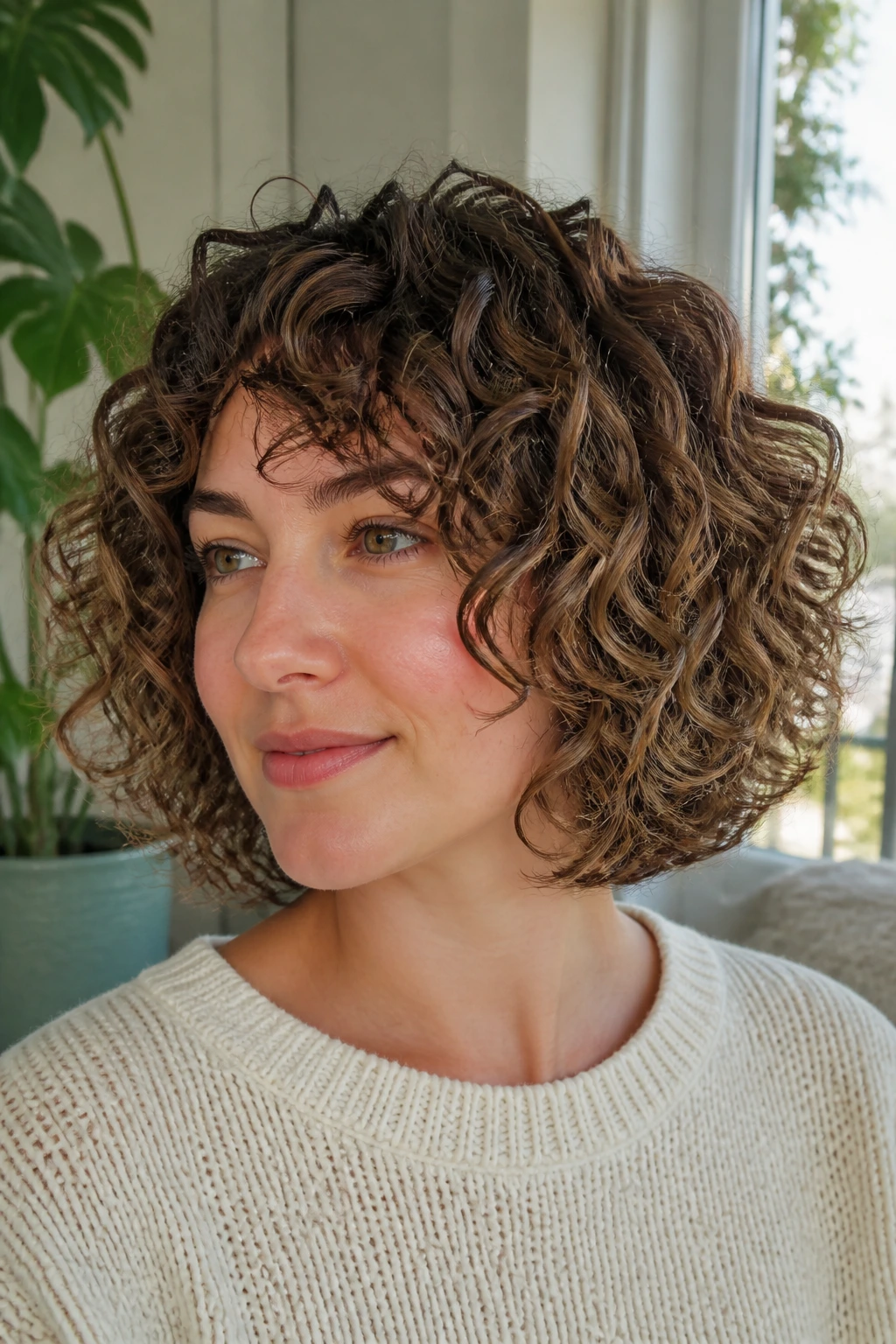
Curly thick hair and a medium bob can be a very good match, if the layers are cut for curl pattern instead of just length. The shape should be rounded enough to let the curls stack, with the bottom kept light so the haircut doesn’t turn into a triangle.
Dry curl by curl. Don’t judge the shape when the hair is soaking wet; curls lie when they’re wet. Once dry, the layers should show up as soft tiers that release bulk without scattering the curls.
A diffuser helps, but use a low setting and stop before the hair is bone dry. Leaving a little moisture in the ends keeps the curl clumped and less frizzy. Thick curls need a little respect there.
11. Bottleneck Fringe Bob

A bottleneck fringe gives thick hair a softer front than a heavy blunt bang. Narrower in the middle, a bit fuller at the sides, it opens the face without making the hairline feel crowded.
This bob is useful if your hairline gets bulky easily. The fringe takes attention upward, while the medium bob keeps the lower half from becoming too wide. There’s a nice balance here, and that balance is the point.
Wear the fringe slightly separated, not sealed into one solid wall. A tiny bit of serum on the ends is enough. Anything more and the bangs lose that airy curve that makes them work.
12. Sleek Straight Bob With Underlayers
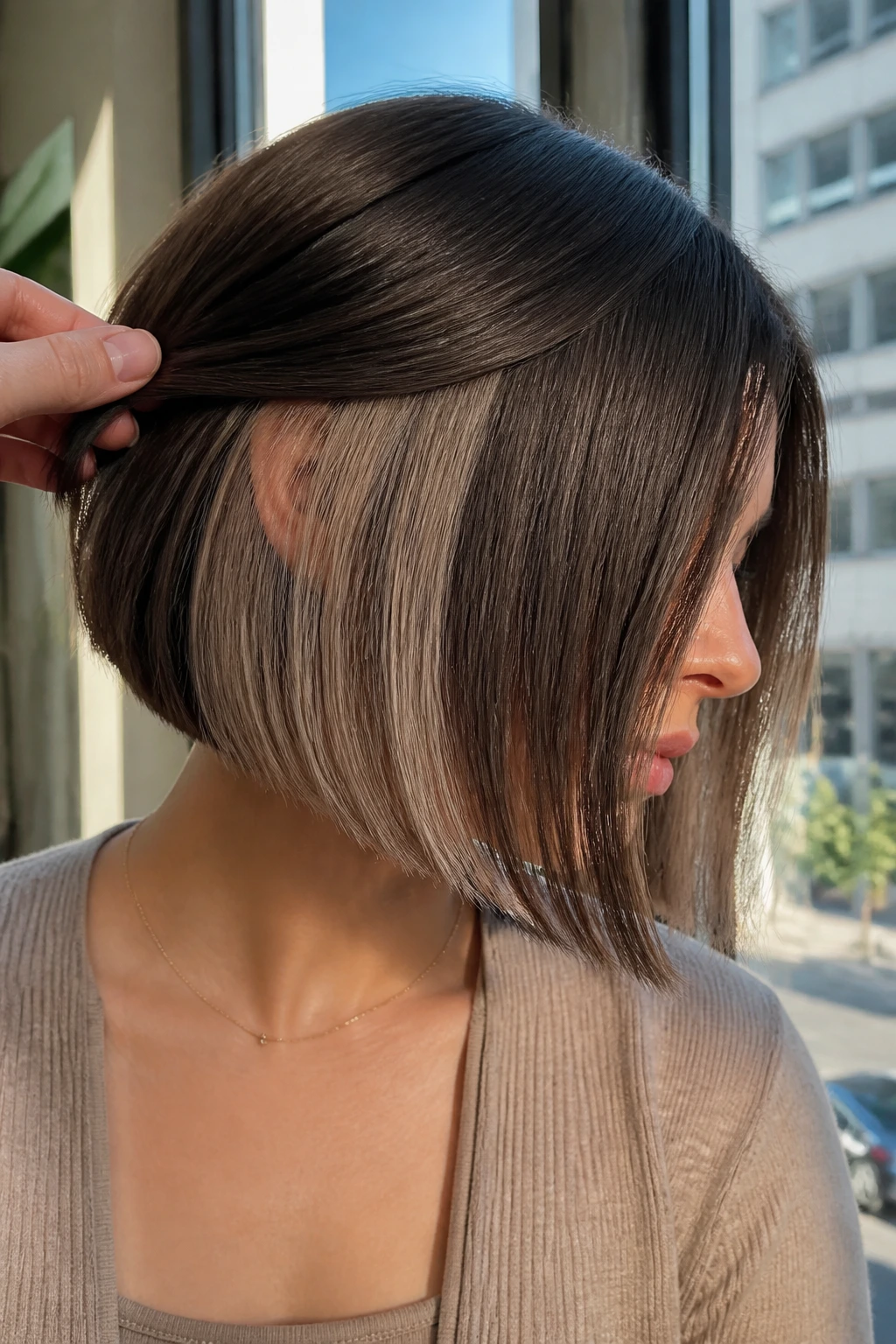
A sleek bob on thick hair lives or dies by what’s underneath. The surface might look smooth and polished, but the underlayers are quietly cutting down the bulk. That’s what keeps the style from turning into a thick, solid block.
This shape is for people who like a cleaner, sharper look. It’s not trying to be shaggy or messy. The effect comes from contrast: smooth top, lighter interior, crisp outline.
A flat iron can help, but don’t drag it over huge sections. Work in 1-inch pieces and let the ends move just slightly inward. That tiny bend keeps the haircut from looking too severe.
13. Shaggy Bob With Piecey Ends

A shaggy bob brings a little rebellion into thick hair, which can be useful when the hair has a mind of its own anyway. The pieces are uneven in a controlled way, so the haircut feels lived-in instead of over-finished.
This cut is especially good if your hair dries with a natural wave. The shag structure takes advantage of that bend and stops the lower half from getting bulky. It’s a friendlier shape than a strict bob, and sometimes that’s the smarter choice.
Use mousse at the roots and a touch of curl cream through the mids. Then scrunch and leave some of the ends imperfect on purpose. The whole point is to look like the hair settled itself.
14. Blended Lob With Curtain Bangs
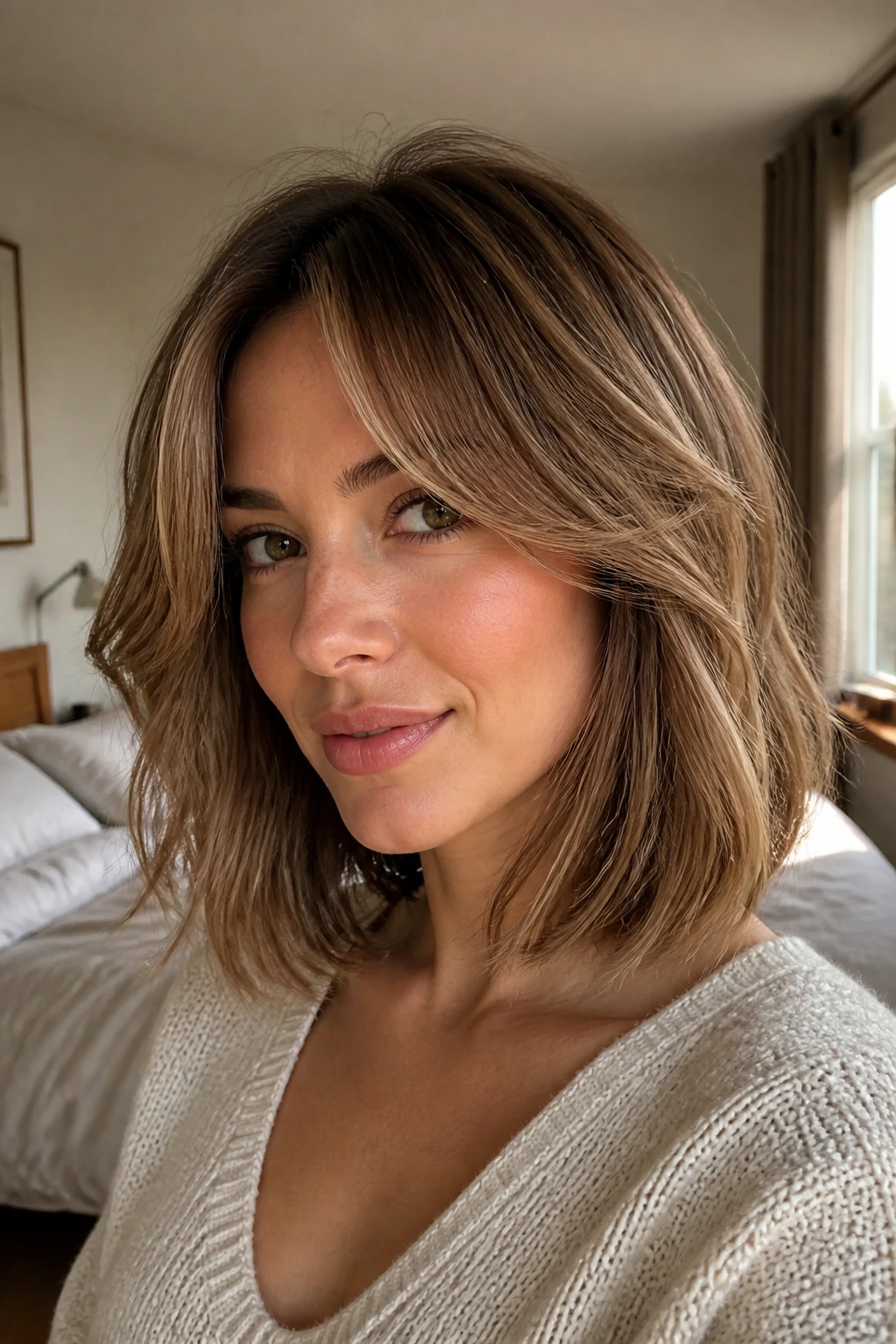
Curtain bangs make thick hair feel lighter around the face, and a blended lob gives them room to breathe. The layers sweep away from the center part and fall into the rest of the cut instead of sitting on top like a separate helmet piece.
This is a good option when you want softness without losing the bob shape. The bangs soften the forehead area, while the lob length keeps the neckline neat. The blended layers keep the look from feeling chopped into separate sections.
If your hair is especially dense, ask for a dry-cut check on the bangs. Curtain fringe can shrink up once it dries, and thick hair has a habit of doing exactly that.
15. Tapered Nape Bob
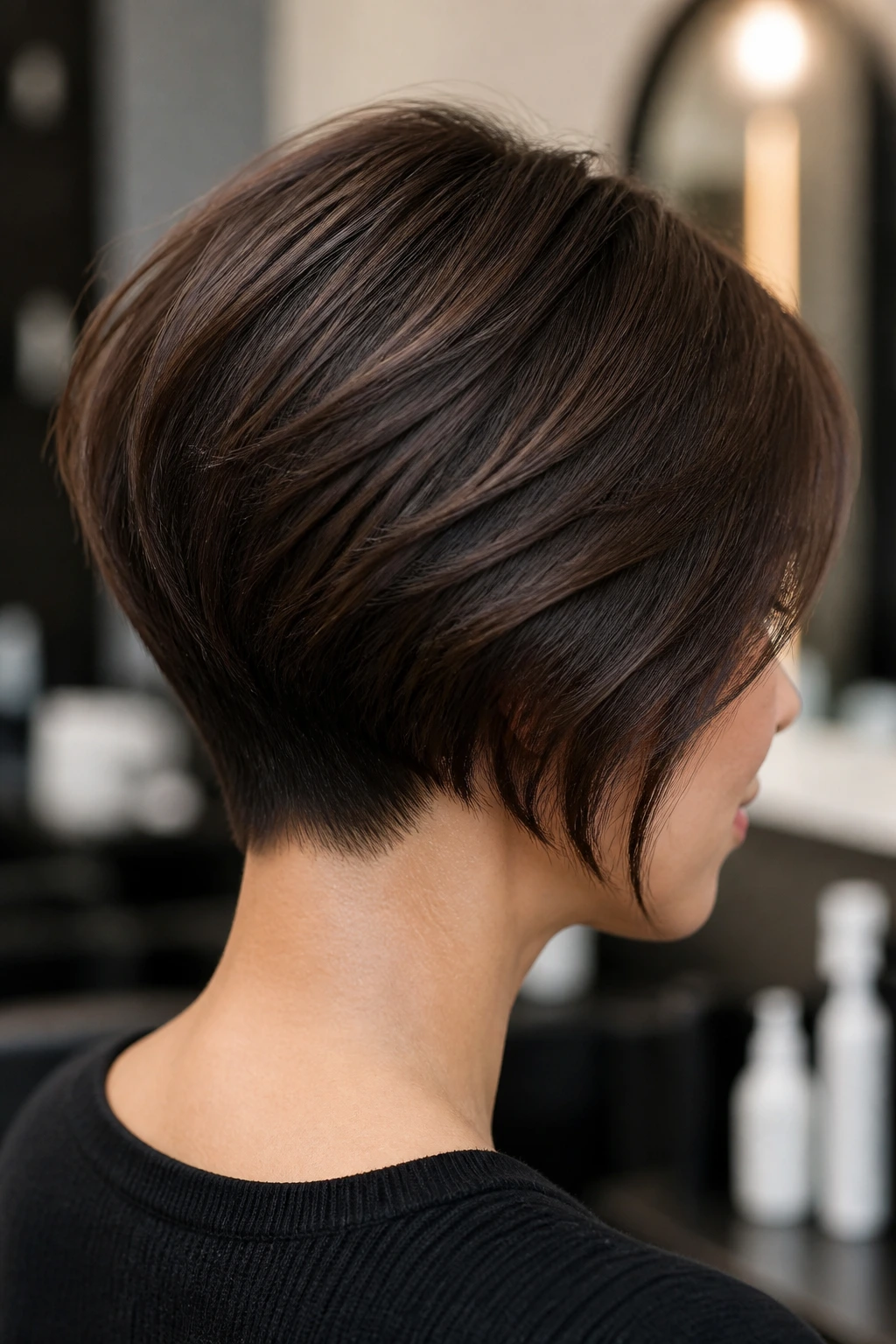
The tapered nape bob is one of those cuts that makes thick hair behave in the back. The neckline is shorter and cleaner, so the haircut sits close instead of flaring out at the collar.
What makes it useful is the contrast between the snug nape and the fuller front pieces. You still get medium length where it matters, but the back stays trimmed down enough to avoid that clunky, overbuilt feeling.
This one looks best when the nape is blown smooth first, then the rest is shaped around it. If the back is left to air-dry wildly, the taper gets lost. Clean, controlled drying matters here.
16. Blunt Bob With Internal Weight Removal
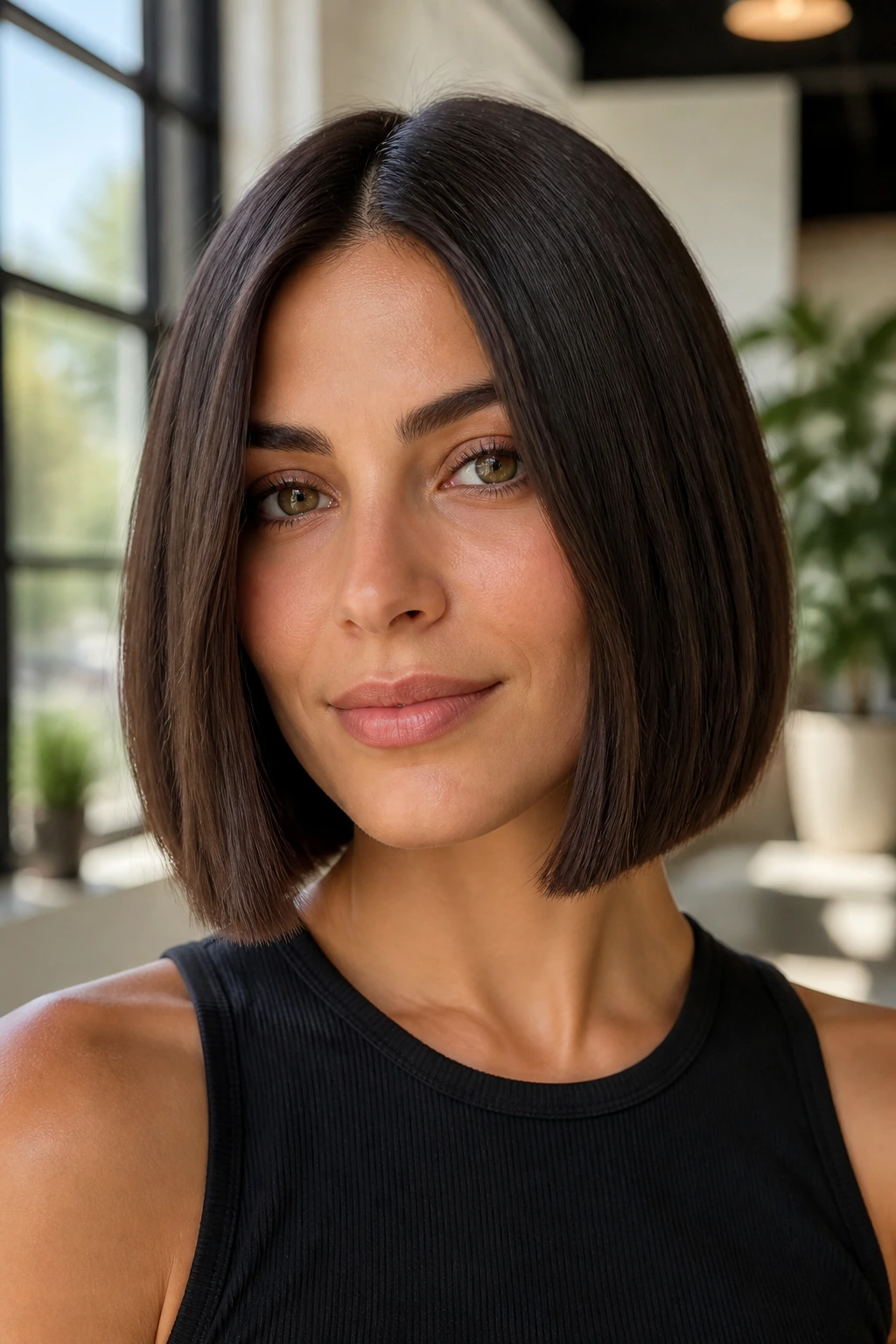
A blunt bob can work on thick hair, and I’d argue it often works better than people expect — if the inside is trimmed with care. The outer line stays strong and full, while hidden weight removal keeps the haircut from sitting like a cardboard box.
That’s the difference between blunt and bulky. Bulky is just too much hair in one place. Blunt is deliberate. On thick hair, that distinction matters a lot.
Ask for internal debulking rather than surface thinning. Surface thinning can leave the ends wispy and weird. Internal removal lets the perimeter stay strong, which is where the polish lives.
17. Piecey Bob With Side Sweep
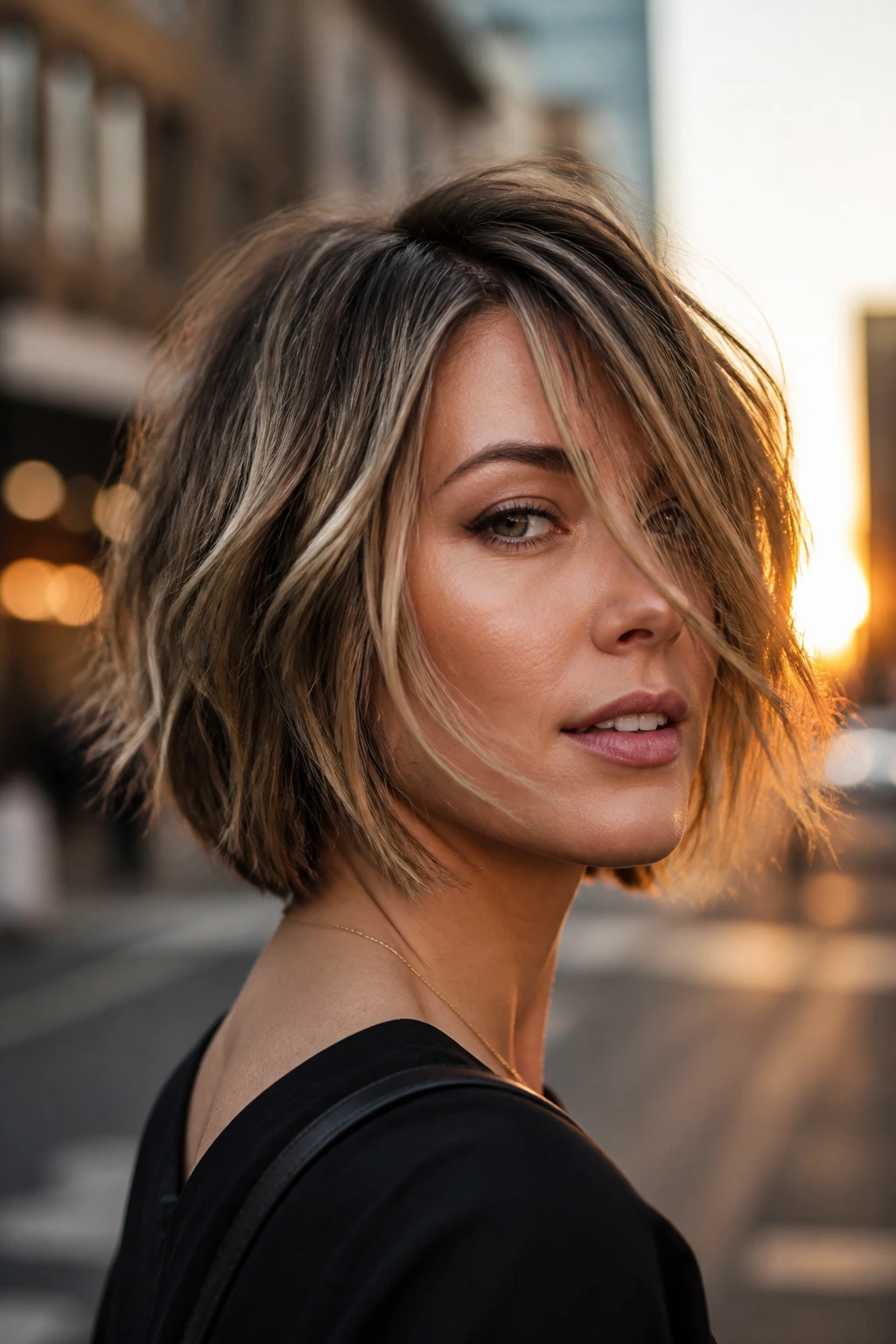
A side-swept fringe changes the entire mood of a thick bob. It softens the front, hides a heavy part line, and gives the haircut a bit of motion that keeps the shape from feeling fixed in place.
This cut works especially well if your hair tends to hold a bend. The side sweep can be tucked behind one ear, fluffed forward, or left to brush across the cheekbone. That flexibility is handy.
A small round brush at the front and a matte cream at the ends are usually enough. You don’t need a lot of product here. Too much will make the pieces stick together and lose that separated look.
18. Hidden Undercut Bob
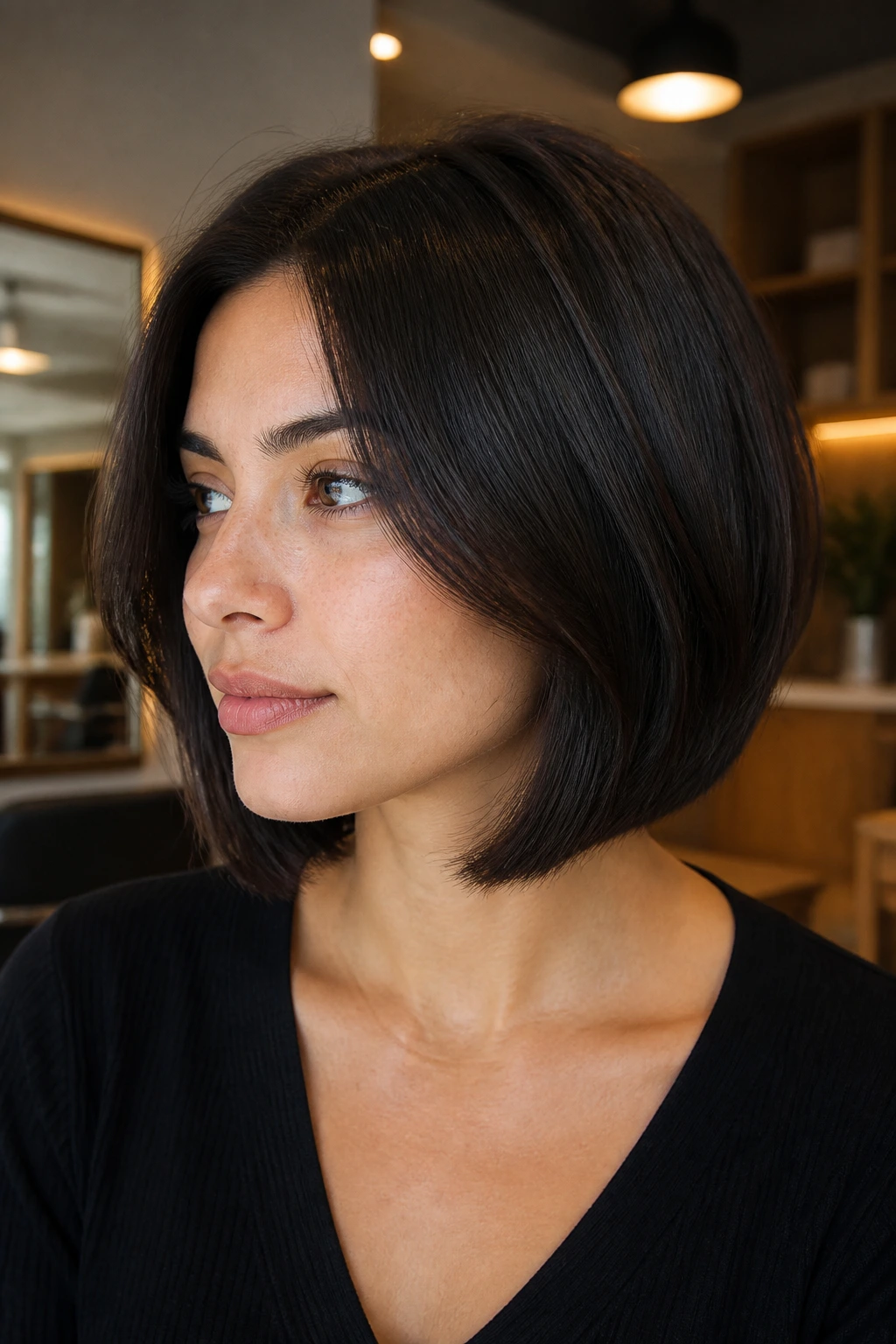
A hidden undercut is the practical person’s answer to very thick hair. It removes bulk underneath the surface, so the outside still looks like a normal medium bob while the interior stops fighting back.
This is not a haircut for someone who wants to keep every last strand. It is for someone who is tired of the base puffing out at the neck or the head shape getting swallowed by hair volume. Sometimes less is the smarter call.
The nice part is that the cut can look completely conventional from the outside. Nobody has to know the underlayer is doing the heavy lifting. That’s the appeal.
19. Feathered Bob

Feathering softens thick hair in a way that feels old-school in the best sense. The ends break into light, directional pieces instead of sitting as one heavy edge. That makes the haircut read lighter without needing a massive amount of length removed.
This style is friendly to people who hate rigid outlines. It brings movement back, especially if your hair naturally wants to fold inward or kick outward. Feathering gives those ends a place to land.
Blow-dry with a medium brush and keep the tension gentle. If you yank the hair too hard, you lose the soft finish and make it look overworked. Feathered cuts need a light hand.
20. Tousled Beach Bob

Tousled doesn’t mean sloppy. On thick hair, a beachy bob works because the layers are built to hold shape while the texture spray gives separation. The hair should look bent and lived-in, not dry and fried.
The cut itself should be medium length with layers placed low enough to keep the top from puffing out. Then you add movement with a salt-free texture spray or a light wave mist. If you use too much gritty product, thick hair can go from tousled to sticky fast.
This is one of the easier styles to wear on a busy day. Air-dry partway, twist a few sections around your fingers, and let the rest do its own thing. It doesn’t need perfect curls to work.
21. Graduated Bob With Polished Volume
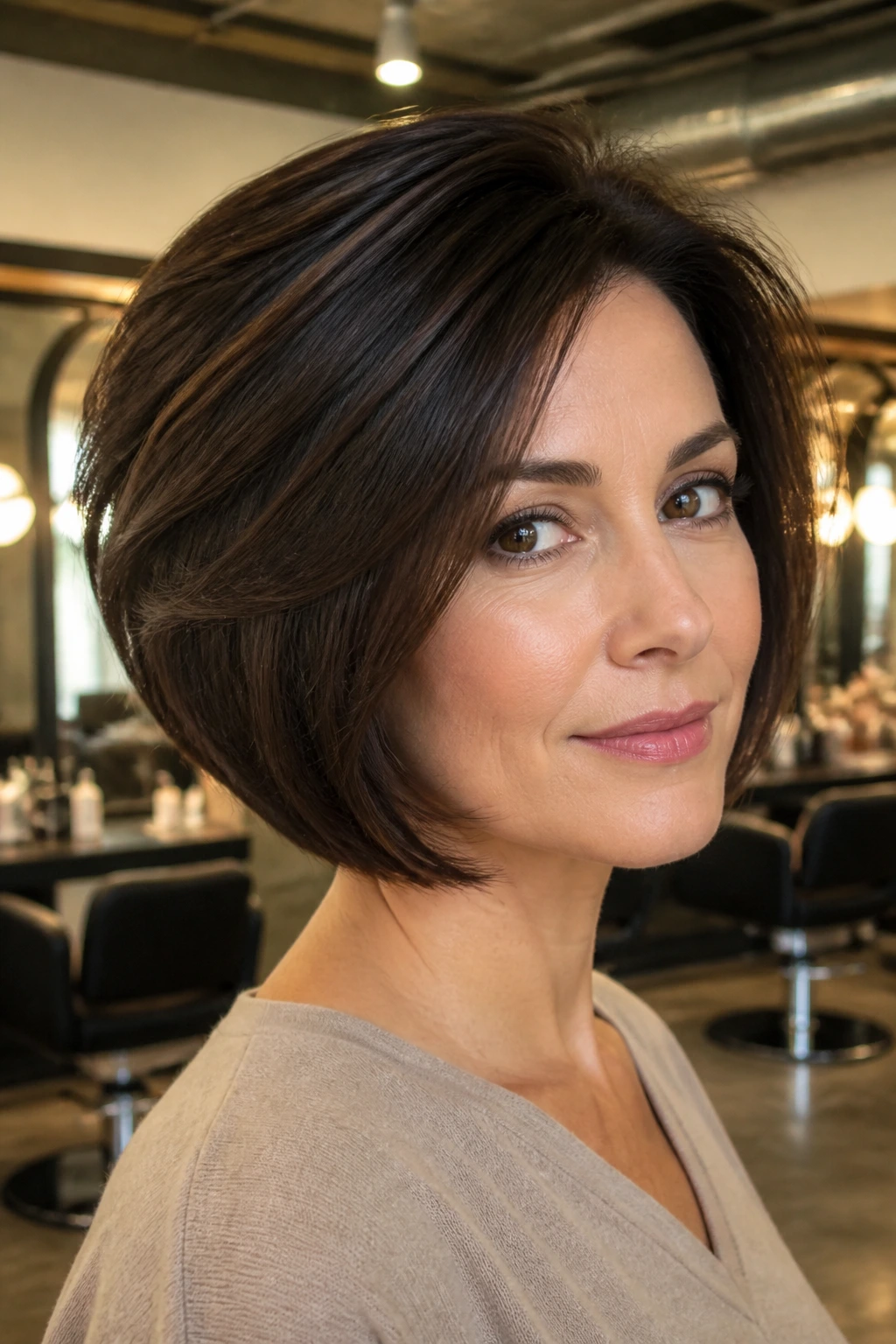
A graduated bob gives thick hair a built-in shape at the back, and polished volume at the crown. The graduation is subtle, though. Too much stack and the haircut can start looking old-fashioned in a hurry.
The reason this works is the controlled lift. Thick hair already has volume, but it isn’t always in the right place. Graduation redirects some of that fullness to the back curve and lets the front stay cleaner.
I like this cut best on hair that blow-dries well with a brush. It rewards a little effort. If you prefer a wash-and-go shape, you may want the graduation softened so the outline still behaves when air-dried.
22. Asymmetrical Bob
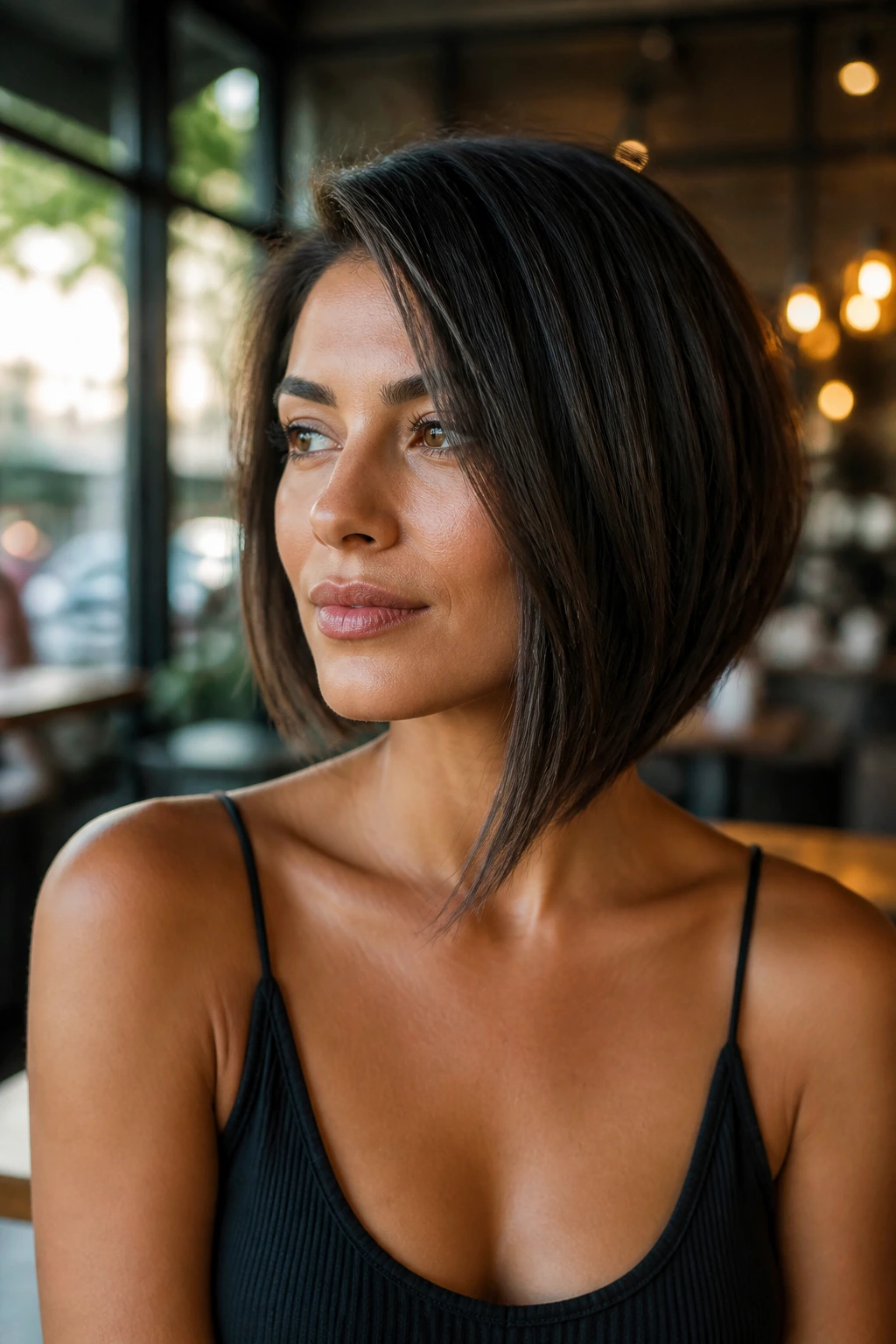
An asymmetrical bob brings edge without needing a lot of length change. One side hangs a little longer than the other, which breaks up the mass of thick hair and makes the shape feel more deliberate.
This is a strong choice if your hair tends to look too symmetrical and heavy. The offset line keeps the eye moving, and that movement distracts from bulk in the best way. It also looks sharp tucked behind one ear.
Keep the difference subtle unless you want the haircut to make a louder statement. A half-inch to an inch can be enough on thick hair. You do not need to swing for drama to get the effect.
23. Long Side-Bang Bob
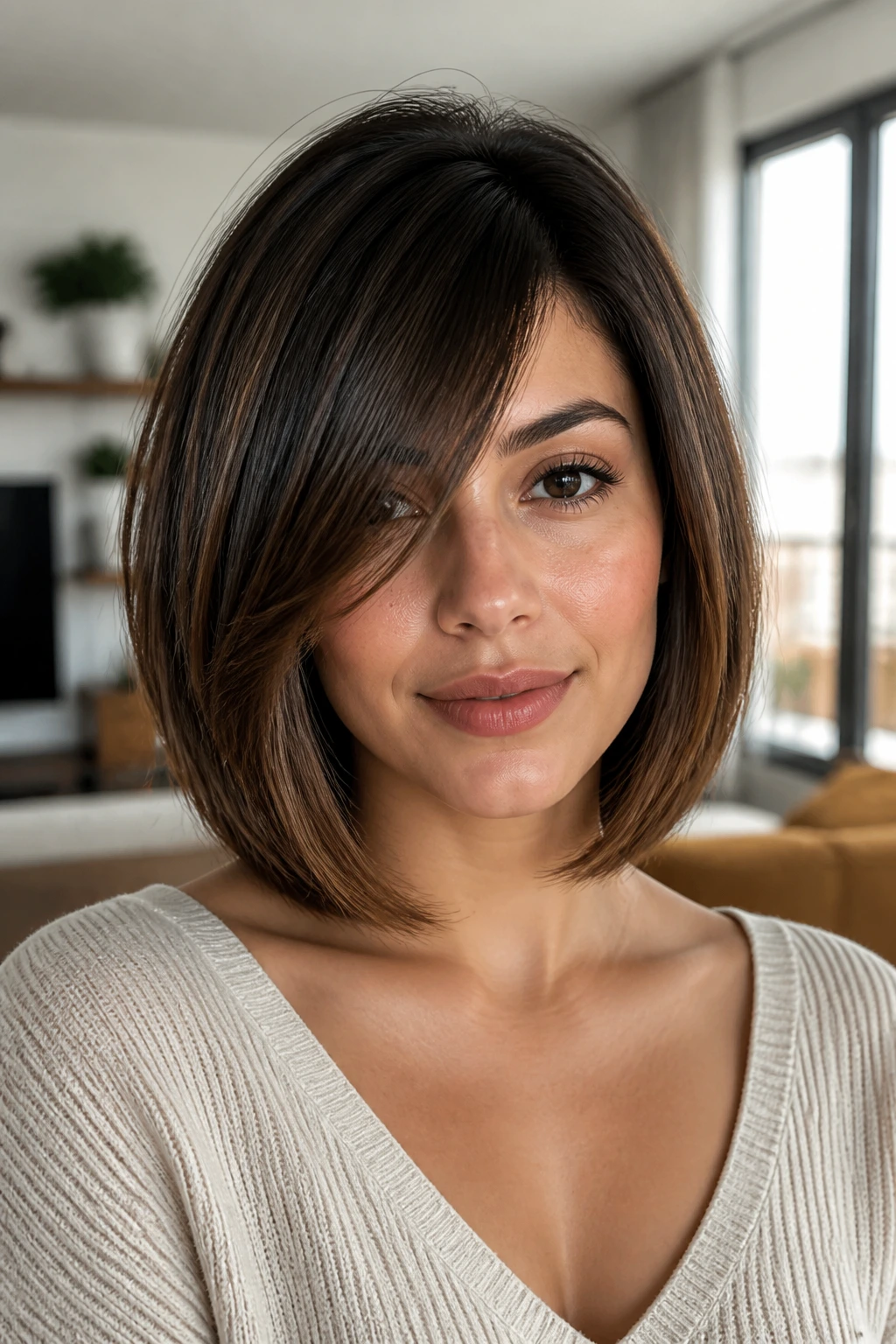
A long side bang can do more for thick hair than a full fringe, mainly because it doesn’t crowd the forehead. It cuts into the density at the front while letting the rest of the bob stay medium and balanced.
This is the one I’d pick if you want softness near the face without giving up room for styling. The bang can blend into the front layers, tuck back, or fall forward when you want a little more shape around the eyes.
If your hair has a strong cowlick near the part, this style can help calm it down. The longer length gives the fringe enough weight to stay put without needing a ton of spray.
24. Air-Dried Natural-Wave Bob

Some thick hair behaves better if you stop trying to flatten it. An air-dried bob with natural waves keeps the haircut honest. The layers are cut to support the wave pattern, not fight it, and that often means less frizz by the end of the day.
The shape should sit somewhere between bob and lob, with enough length that the wave can drop instead of bouncing up too much. The top stays cleaner, the mids stay mobile, and the ends don’t bulk up.
A leave-in conditioner, a bit of cream, and hands off. That’s usually the formula. Over-touching while it dries is where a lot of the puff starts.
25. Minimal-Layer Bob With Weight Release
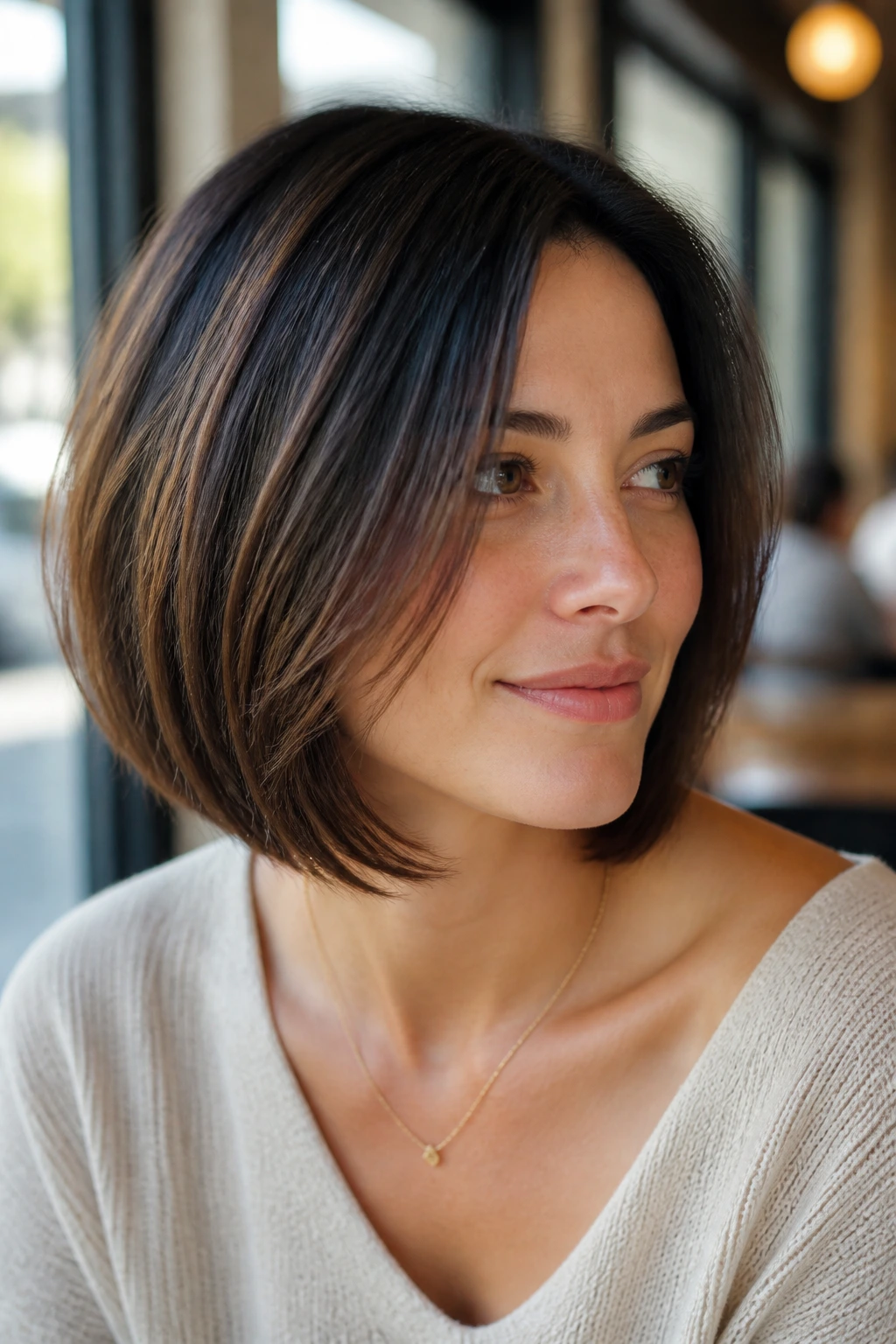
Not every thick bob needs obvious layers. Sometimes the smartest move is a mostly clean outline with just enough internal release to remove bulk. That keeps the haircut full and polished, while still stopping the sides from ballooning.
This cut is a good fit if you like a classic shape but hate how thick hair can make the perimeter feel too heavy. The outline remains strong. The inside gets lighter. That’s the balance.
Ask for small interior cuts instead of obvious steps. You want the effect to show in movement, not in visible choppiness. The best version of this cut almost looks simple — which is the point.
26. Chin-To-Collarbone Transitional Bob

A transitional bob sits in that useful middle zone between a chin-length cut and a longer lob. Thick hair benefits from that extra length because it gives the layers more room to fall without making the haircut feel oversized.
This is a practical choice if you’re growing out a shorter bob or trimming down from a long cut. It doesn’t force a dramatic change. The shape just settles into something cleaner and easier to manage.
It also gives you options. Wear it tucked, waved, or brushed smooth. The length is long enough to be forgiving, which is nice when you are not in the mood to wrestle your hair every morning.
27. Layered Bob With Money-Piece Highlights
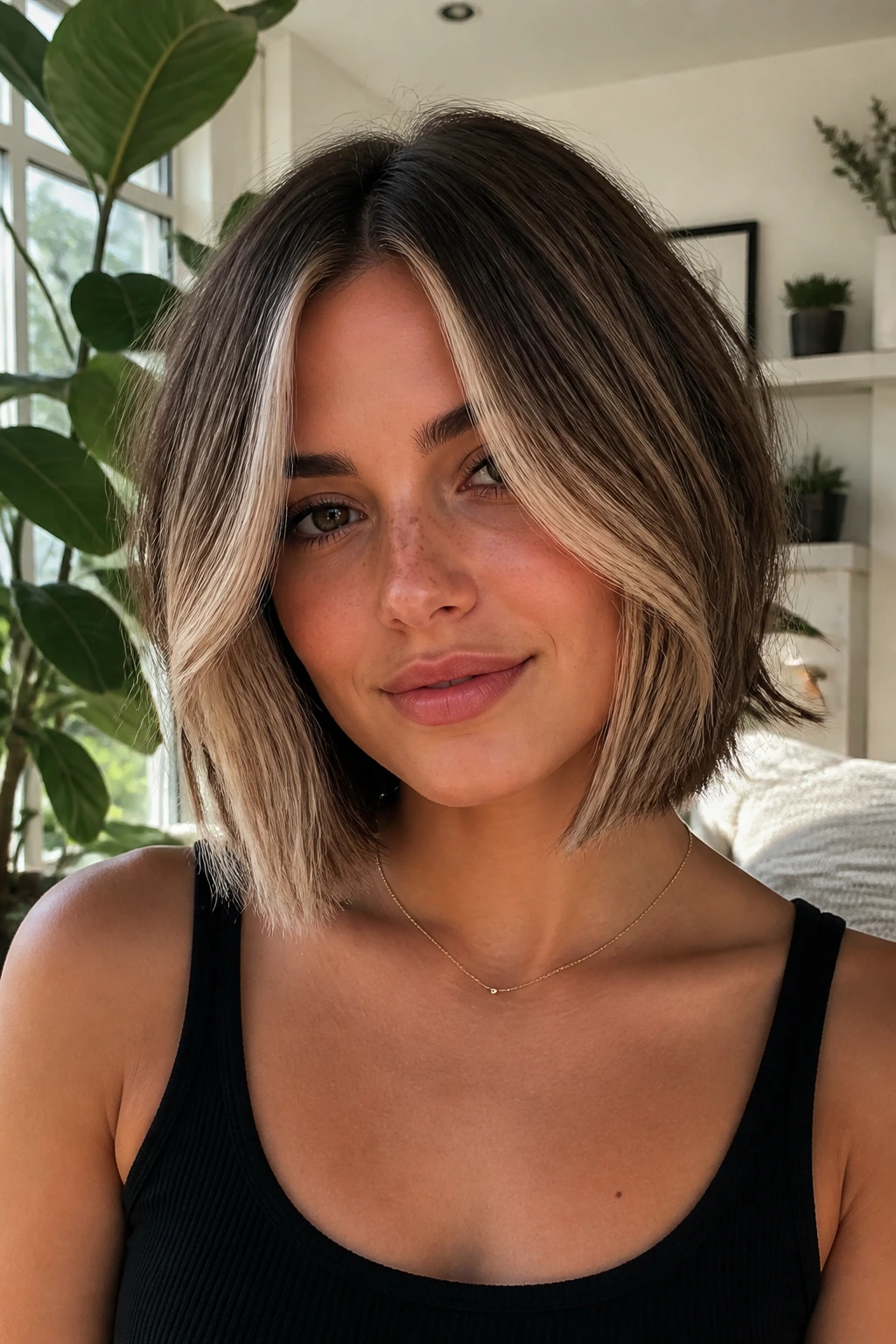
Color changes the way a layered bob reads, and face-framing highlights can make thick hair feel lighter even when the cut itself stays fairly full. The bright pieces around the front catch the eye and break up the mass of darker lengths.
This works especially well with medium layers because the movement in the haircut lets the color show in pieces, not as one flat streak. The result is more dimension around the face and less visual heaviness at the edges.
If you go this route, keep the layers soft. Harsh layers plus bright front pieces can make the haircut look overdone. Soft movement and careful placement give you the cleaner result.
28. Flipped-End Bob
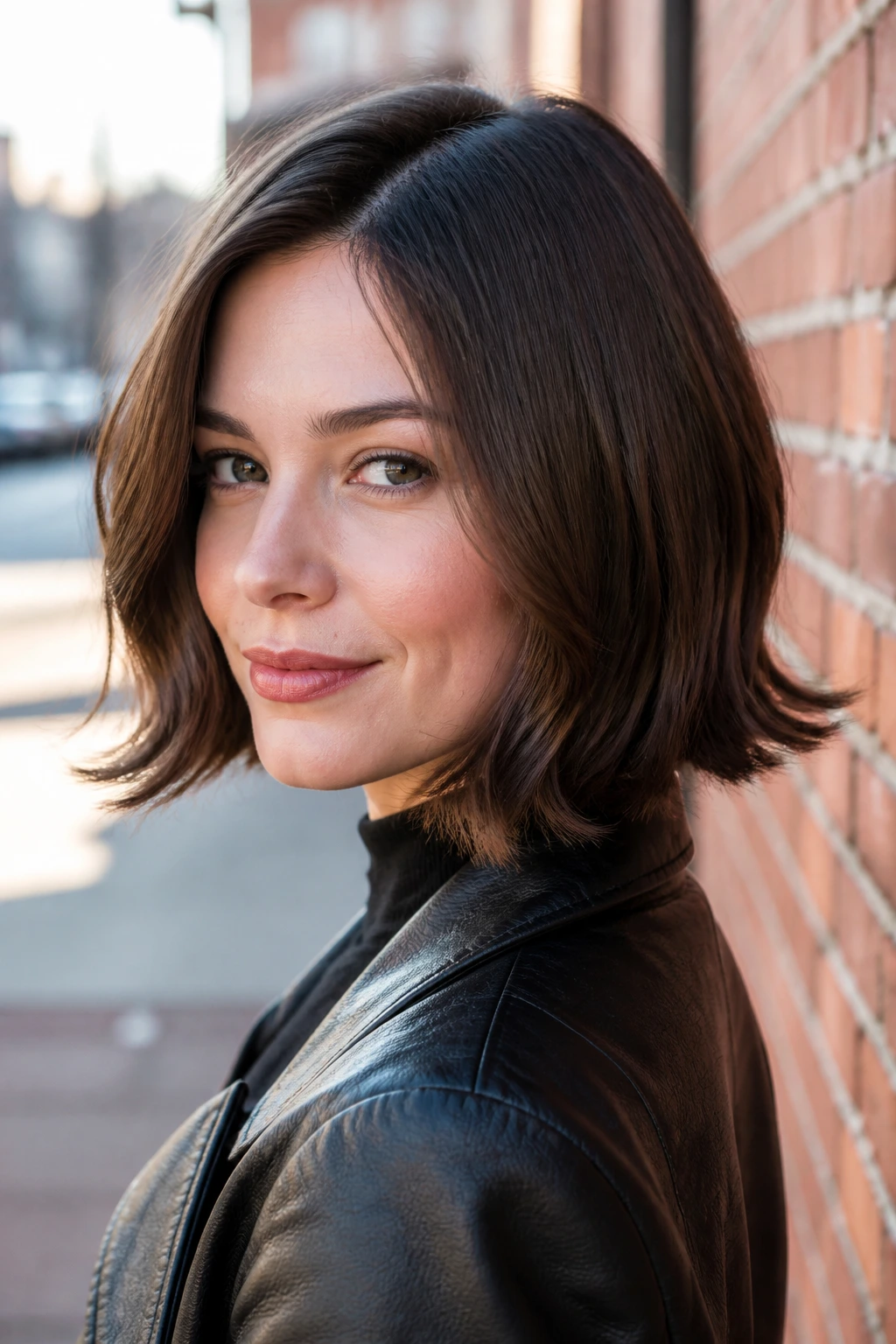
Flipped ends are back in a way that makes sense for thick hair. A medium bob with ends turned outward has energy, and the flip can help the haircut avoid sitting flat against the neck.
The trick is restraint. A tiny flip at the ends gives lift and movement. A giant cartoon flick makes the whole haircut look dated fast.
Use a round brush or a flat iron to push just the last inch outward. The rest of the bob should stay controlled. That contrast keeps it current without trying too hard.
29. Curved-Under Bob
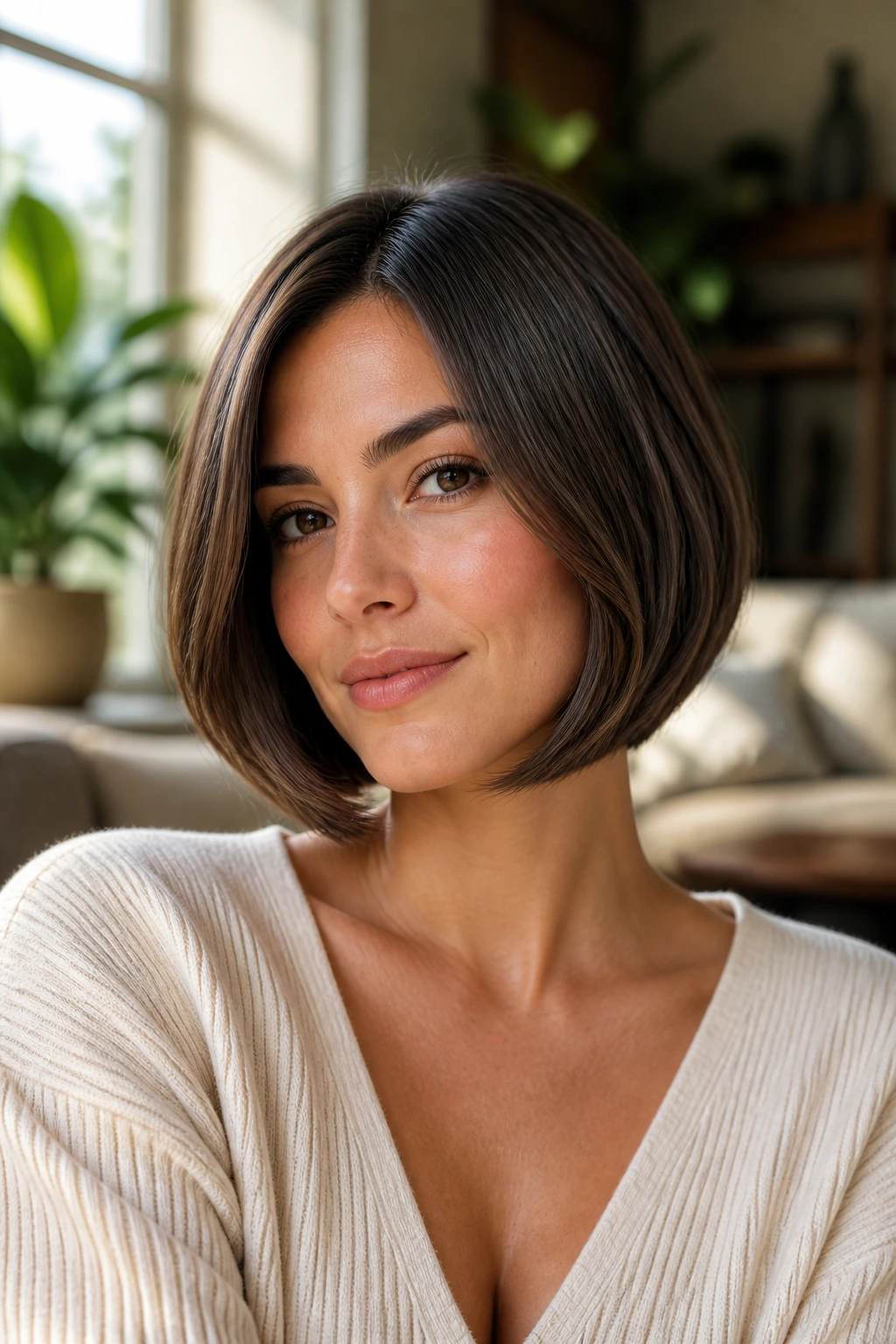
A curved-under bob gives thick hair a neat, soft edge that tucks inward instead of flaring out. It’s one of the best looks for people who want the haircut to feel clean around the jaw and collar.
The curve also helps the cut sit closer to the neck, which is useful if your hair has a habit of growing wide. Thick hair often needs an invitation to bend. This shape provides it.
A blow-dry with a round brush works, but even a quick pass with a paddle brush and a finishing bend at the ends can get you most of the way there. It’s a calm haircut. I like that.
30. Soft Shag Bob
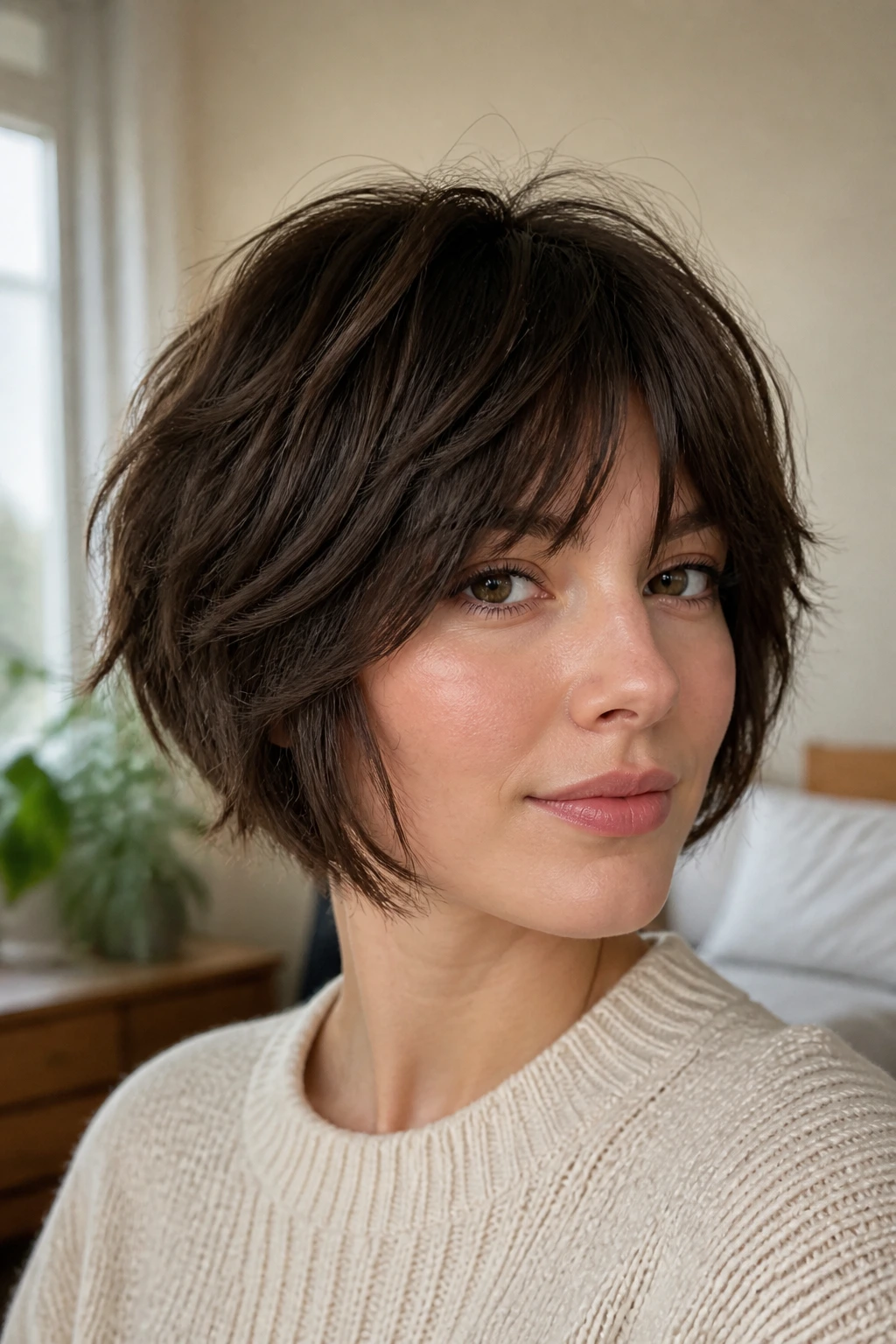
A soft shag bob keeps the spirit of a shag while staying short enough to count as a bob. The layers are broken up, but not so heavily that the haircut loses its outline. On thick hair, that matters.
The style is especially good when you want movement around the face and less bulk at the ends. The layers add air, the bob length keeps things grounded, and the whole shape feels a little more relaxed than a polished blunt cut.
If your hair has texture already, this cut is friendly. If your hair is straight and dense, you’ll probably need a bit more styling to wake it up. Either way, it’s not a fussy haircut.
31. Romantic Curled Bob

A curled bob on thick hair can look soft instead of stiff when the layers are cut long enough to let the bend overlap. Think loose barrel curls, not tight ringlets. The medium length gives the curls room to stack without exploding outward.
This is the cut I’d choose for events or days when you want the haircut to feel a little dressed up. Thick hair holds curl well, sometimes almost too well, which means the shape lasts if you prep it right with heat protectant and a light setting spray.
The key is to brush the curls out just enough to turn them into waves, not into frizz. A wide-tooth comb or fingers are enough. Anything harsher ruins the finish.
32. Razor-Cut Collarbone Lob
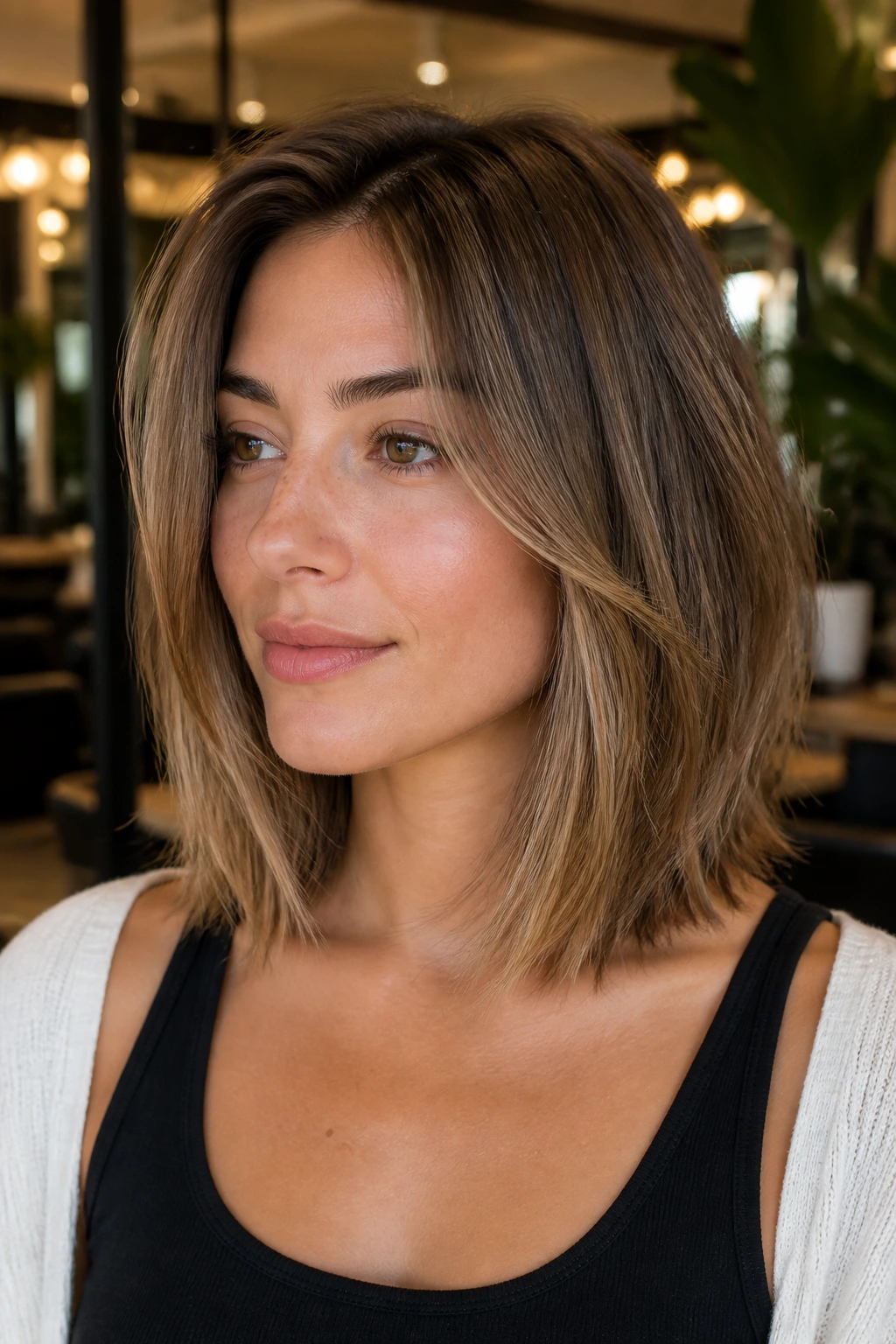
A razor-cut collarbone lob is a good closing note because it shows how little extra length thick hair sometimes needs. The collarbone sits at the exact point where the hair can still move, but not enough to drown the face. Add razor-softened ends, and the whole thing feels lighter.
This cut is best when you want texture without obvious choppiness. It lands in that nice middle ground between sleek and messy. You can wear it tucked behind the ears, bent with a flat iron, or air-dried with just enough product to keep the ends separated.
If you only remember one thing from the whole list, make it this: thick hair does not need to be thinned into weakness. It needs shape. This lob has it.
Why Thick Hair Loves a Medium Layered Bob
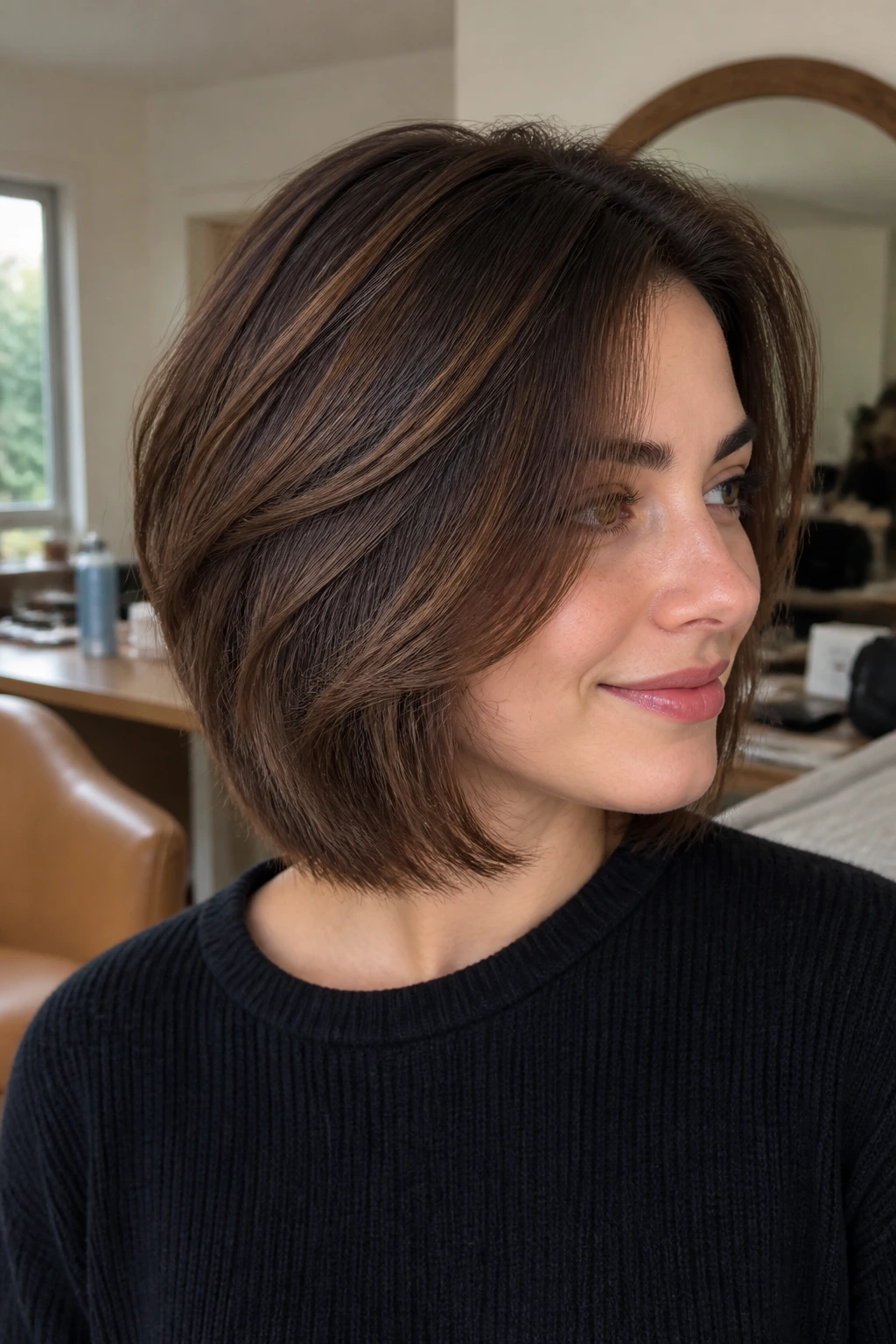
Thick hair usually behaves best when the haircut respects weight instead of trying to erase it. That’s the part people miss. The goal is not to make the hair “smaller.” The goal is to move the mass so the outline stops puffing out at the sides and dragging at the ends.
Medium length is the sweet spot because it gives the layers enough room to do their work. Go too short and the hair can spring outward. Go too long and the layers get buried under their own density. A medium bob keeps the perimeter visible, which is half the battle.
There’s also the practical side. Thick hair tends to hold a blowout longer, but it also takes more time to dry. A layered bob cuts down on both the drying time and the daily bulk. If you’ve ever spent twenty minutes trying to get a blunt bob to stop flaring, you already know why this matters.
And the grow-out is kinder. Layers soften first, the perimeter stays readable, and the cut doesn’t collapse the minute it grows an inch. That makes it one of the few styles that can look better after a few weeks instead of worse.
Essential Tools for Styling These Cuts
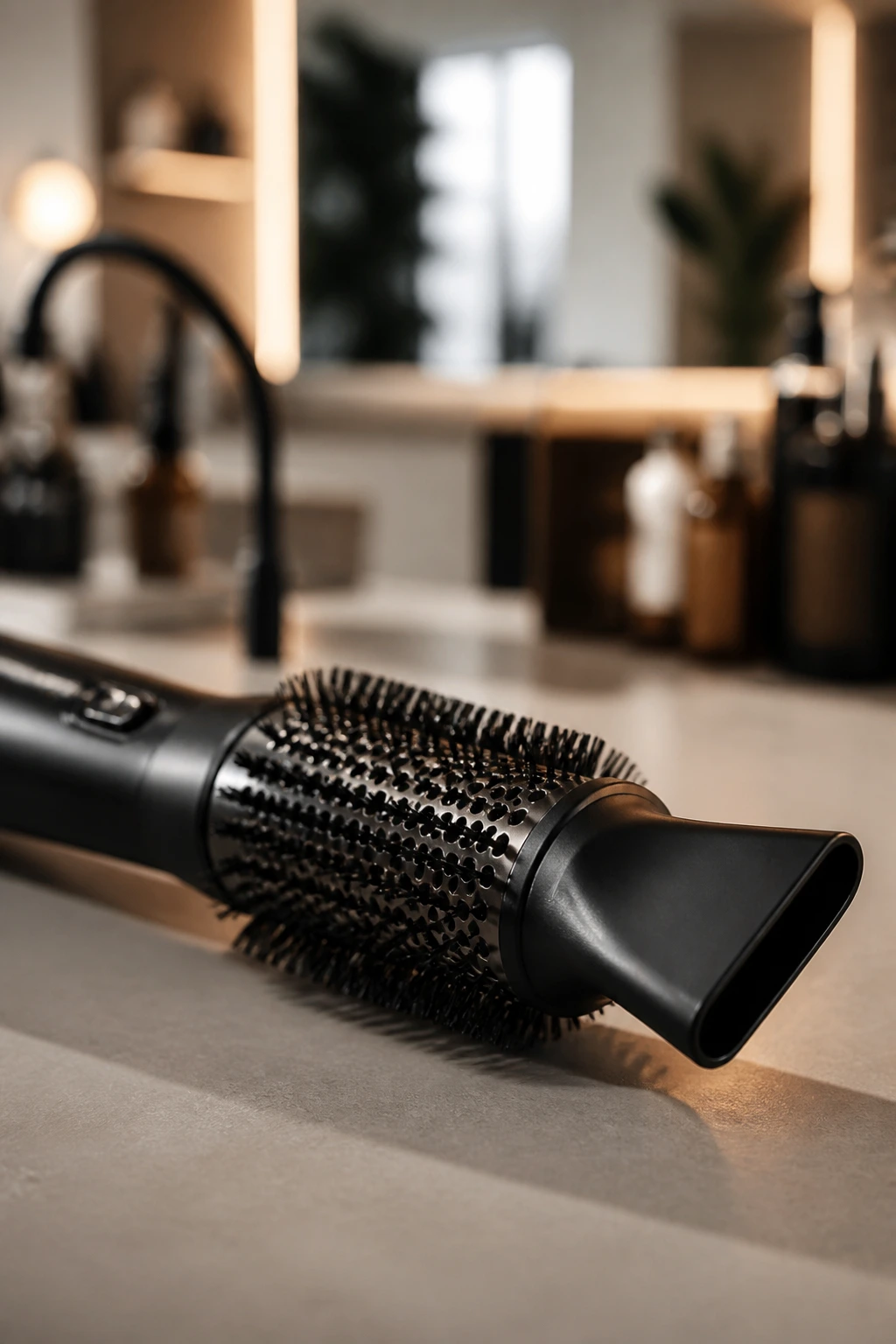
- Blow dryer with a nozzle attachment: The nozzle directs air down the hair shaft, which helps thick hair lie smoother and lose some of its puff.
- Medium round brush, 1.5 to 2.5 inches: Use this for bends, inward curves, and soft volume at the crown. The brush size changes the whole finish.
- Flat iron with adjustable heat: Handy for a smooth bend or a tucked-under end. Keep it on the lower end of the heat range if your hair is fine at the ends.
- Root-lifting mousse or spray: Thick hair can hold shape, but it still benefits from lift at the roots, especially near the crown.
- Heat protectant: Non-negotiable if you’re styling with hot tools. Thick hair often hides damage until the ends get rough.
- Wide-tooth comb or detangling brush: Good for distributing product without blowing the texture apart.
- Texturizing spray or light finishing cream: One adds separation, the other adds polish. You usually need one, not both at full strength.
- Sectioning clips: Thick hair takes forever if you try to style it all at once. Clips save time and frustration.
- Diffuser: If your bob is wavy or curly, a diffuser keeps the pattern intact and reduces frizz around the face.
How to Ask for Medium Layered Bob Haircuts for Thick Hair
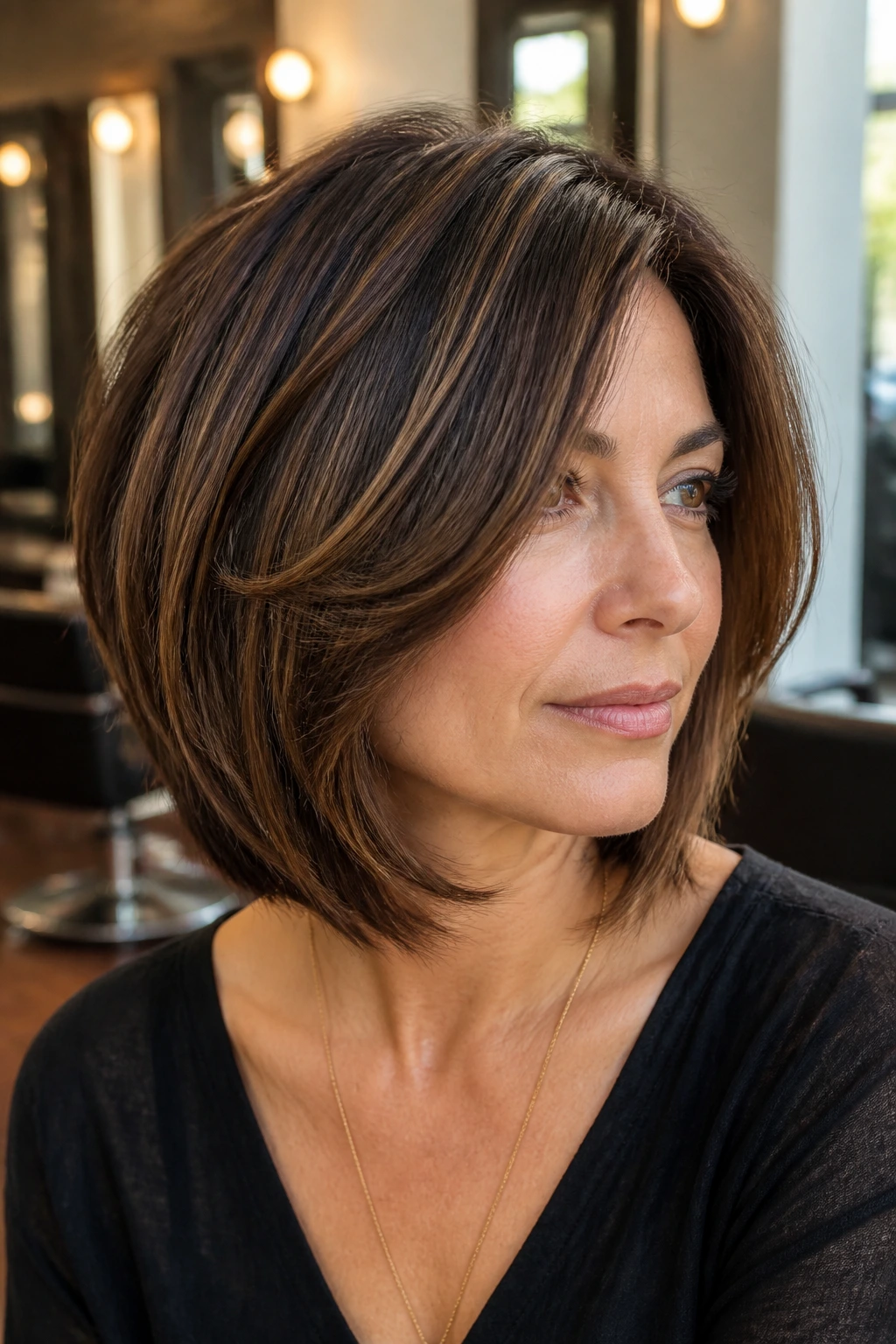
Bring photos, but bring the right ones. A picture of a bob on fine hair will not tell your stylist what thick hair does to a shape. Show examples with similar density and texture if you can. Even better, show one photo you like and one you dislike, then explain why.
Say where the weight lives. That’s the phrase I wish more people used. If your hair blows out at the sides, if the nape feels too heavy, if the crown flattens while the ends kick out — tell them. Those details matter more than saying you want “layers,” because layers alone can mean almost anything.
Be specific about the front. Do you want cheekbone pieces, chin-length face framing, a side sweep, or curtain bangs? Thick hair can swallow a vague request. The front needs a plan.
Ask whether they cut thick hair wet, dry, or in both states. Some stylists prefer a dry detail pass to see how the hair falls; others shape the bulk wet and refine later. Both can work. What matters is that they understand how your hair behaves when it leaves the chair.
Styling Medium Layered Bob Haircuts for Thick Hair at Home
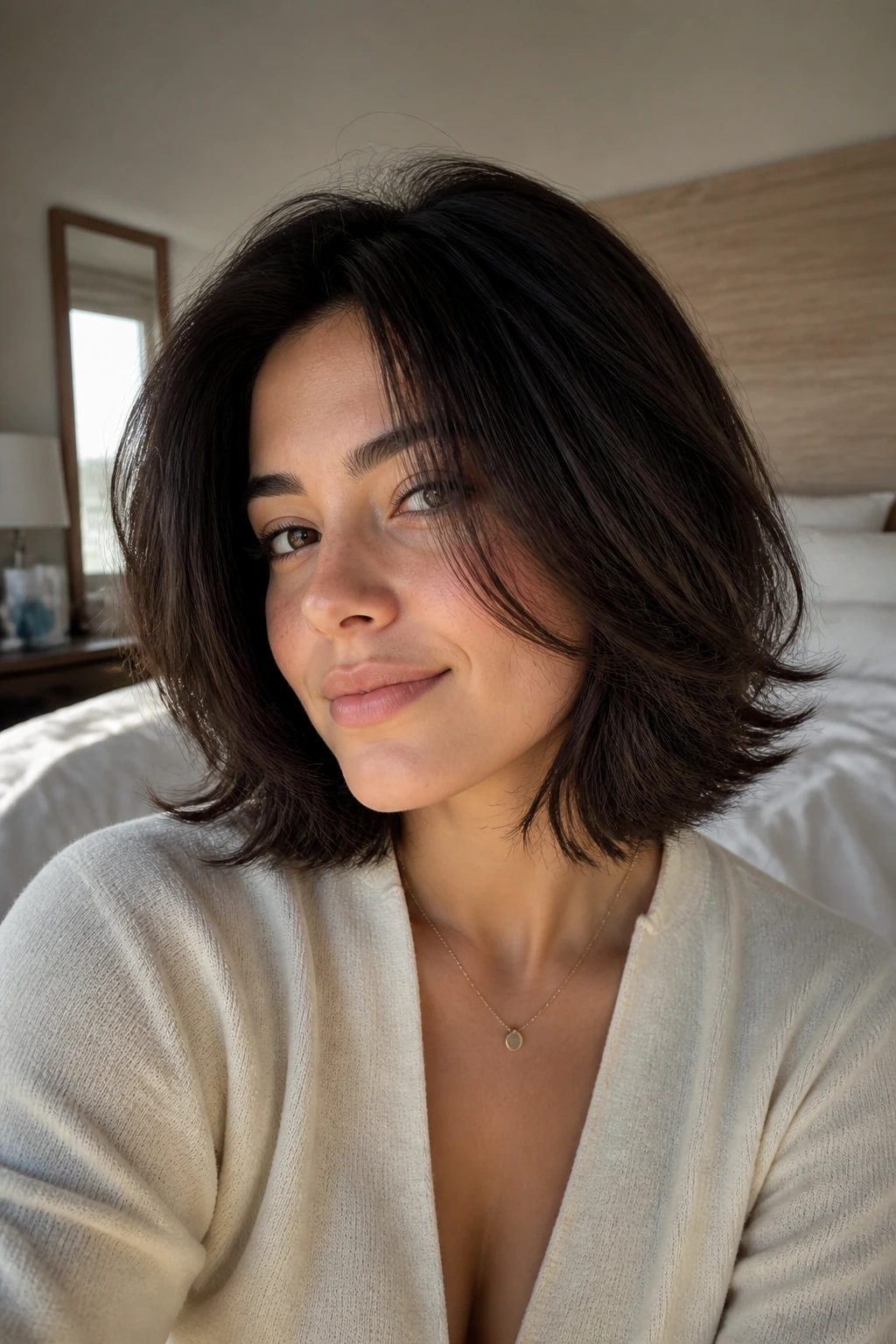
Straight thick hair likes direction. If you want a smooth bob, rough-dry the roots first, then switch to a brush and work in sections from the nape upward. Aim the airflow downward so the cuticle lies flatter, then finish the ends with a slight turn under or out — just enough to keep the line alive.
Wavy thick hair wants restraint. Use a light mousse or cream, scrunch once or twice, and let the layers find each other. If you keep touching the hair while it dries, the wave separates into frizz. A diffuser helps, but don’t chase perfect symmetry. That usually backfires.
Curly thick hair needs shape before it needs polish. Detangle in the shower, apply curl cream while the hair is still damp, and dry in sections so the layers don’t collapse. If the curl pattern is uneven, finger-coil only the pieces that need help. Doing every strand is a waste of time.
One small trick helps almost all of these cuts: bend only the mid-lengths and ends. Leave the roots with a little natural lift. Flat roots plus curved ends often look cleaner on thick hair than a full round-brush blowout that tries to smooth every inch.
Small Tweaks That Make the Shape Hold
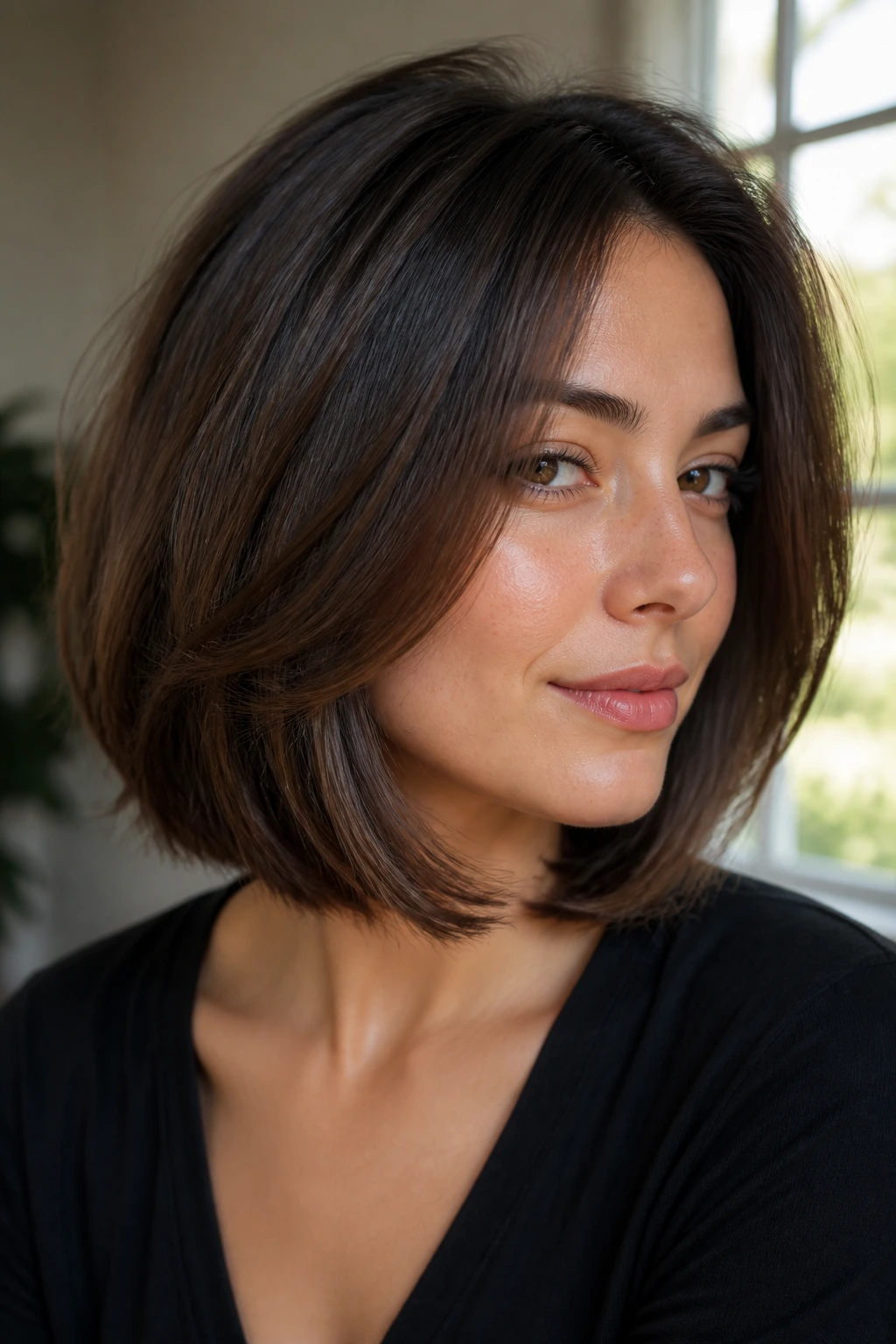
Root Lift: Put mousse or spray only at the crown and upper sides if your bob tends to collapse. Thick hair can carry the rest.
Heat Direction: Blow-dry the top sections forward, then back, then forward again before settling them. That little reset helps the roots stand in a direction you actually want.
Texture Placement: Use texturizing spray at the lower third of the haircut, not the scalp. That keeps the style piecey without making it dusty.
Finishing Cream: A pea-sized amount is often enough. Warm it in your hands and press it only into the outer ends if the bob feels too airy.
Bend, Don’t Curl: A gentle bend from a flat iron or round brush usually looks better on thick bobs than a full curl. The shape stays softer and the cut still feels modern.
Maintenance, Trims, and Grow-Out Strategy
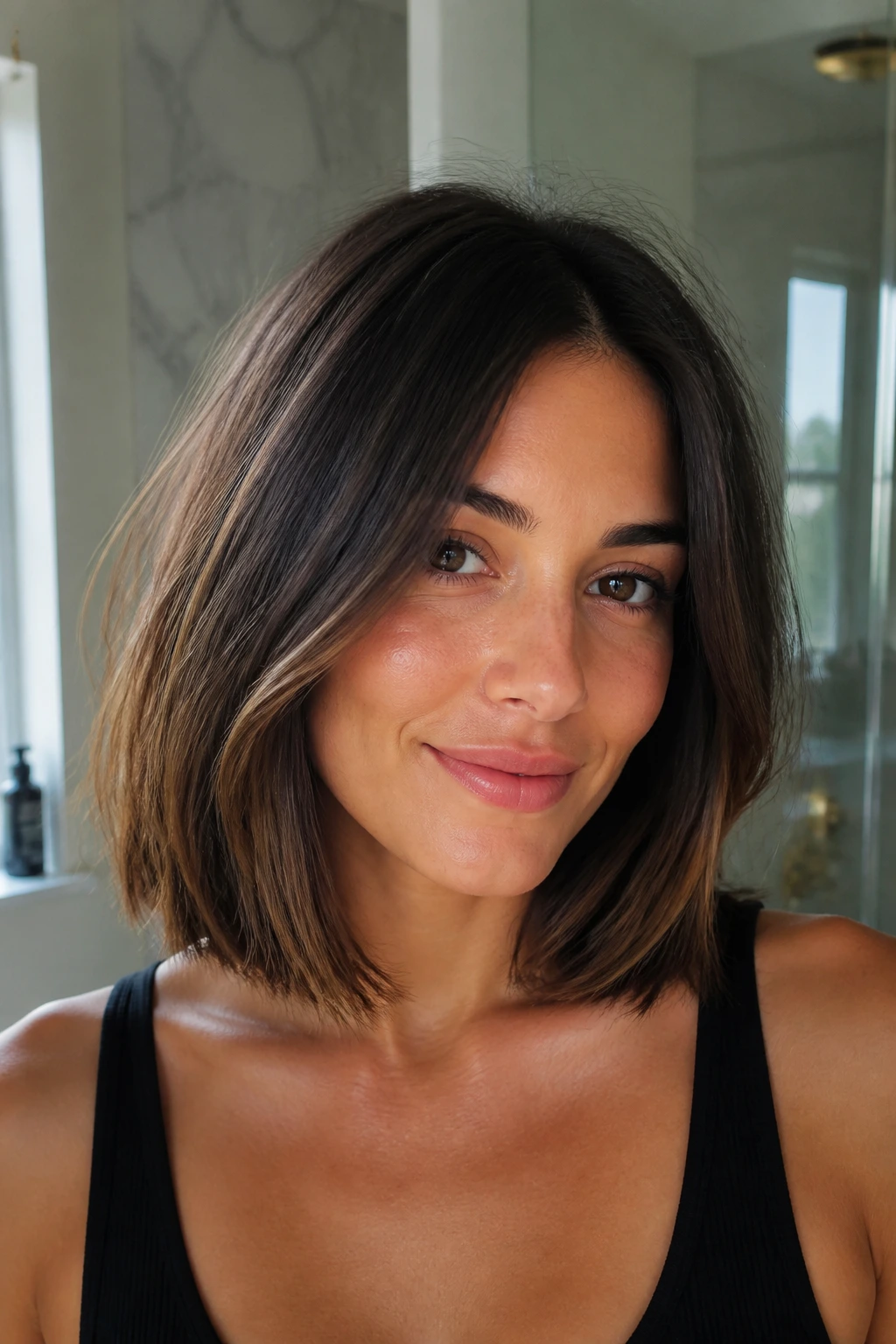
Thick hair will tell on you when it needs a trim. The outline gets wider, the ends stop sitting together, and the bob starts losing its curve. For most medium layered bobs, a trim every 6 to 8 weeks keeps the shape honest. If you have bangs or a strong face frame, you may want a small cleanup sooner.
The fringe usually needs the most attention. Curtain bangs and side bangs can drift into your eyes long before the rest of the haircut feels ready for a full cut. A tiny bang trim around the 3- to 4-week mark keeps the front from swallowing the face.
Sleep matters more than people think. Thick bobs can flatten on one side overnight, especially if the cut is sleek. A loose clip at the crown, or even just changing your part before bed now and then, can keep the roots from setting in one direction for too long. If you do a lot of blow-drying, give the ends a break now and then. Overheated thick hair starts looking dull at the bottom first.
Common Mistakes That Make Thick Bobs Puff Out

- Too much surface layering: If the top layers are cut too high, the haircut can balloon and lose its outline. Ask for interior removal instead of obvious steps.
- Over-thinning the ends: This makes thick hair look frayed and can leave the bob wide at the base and wispy at the tip. A blunt or softly textured end usually holds better.
- Ignoring the neckline: Thick hair loves to collect at the nape. If the back isn’t cleaned up well, the whole bob can look heavy from behind.
- Cutting it too short for the density: A bob that’s too short on thick hair may spring outward and sit like a shelf. Medium length gives the weight a place to settle.
- Using too much product: Heavy creams and oils can flatten the top and make the lower half feel sticky. Start small. You can always add more.
- Blow-drying in random directions: Thick hair needs direction while it dries, or it will dry exactly how it pleases, which is rarely the finish you wanted.
Variations and Adaptations to Try
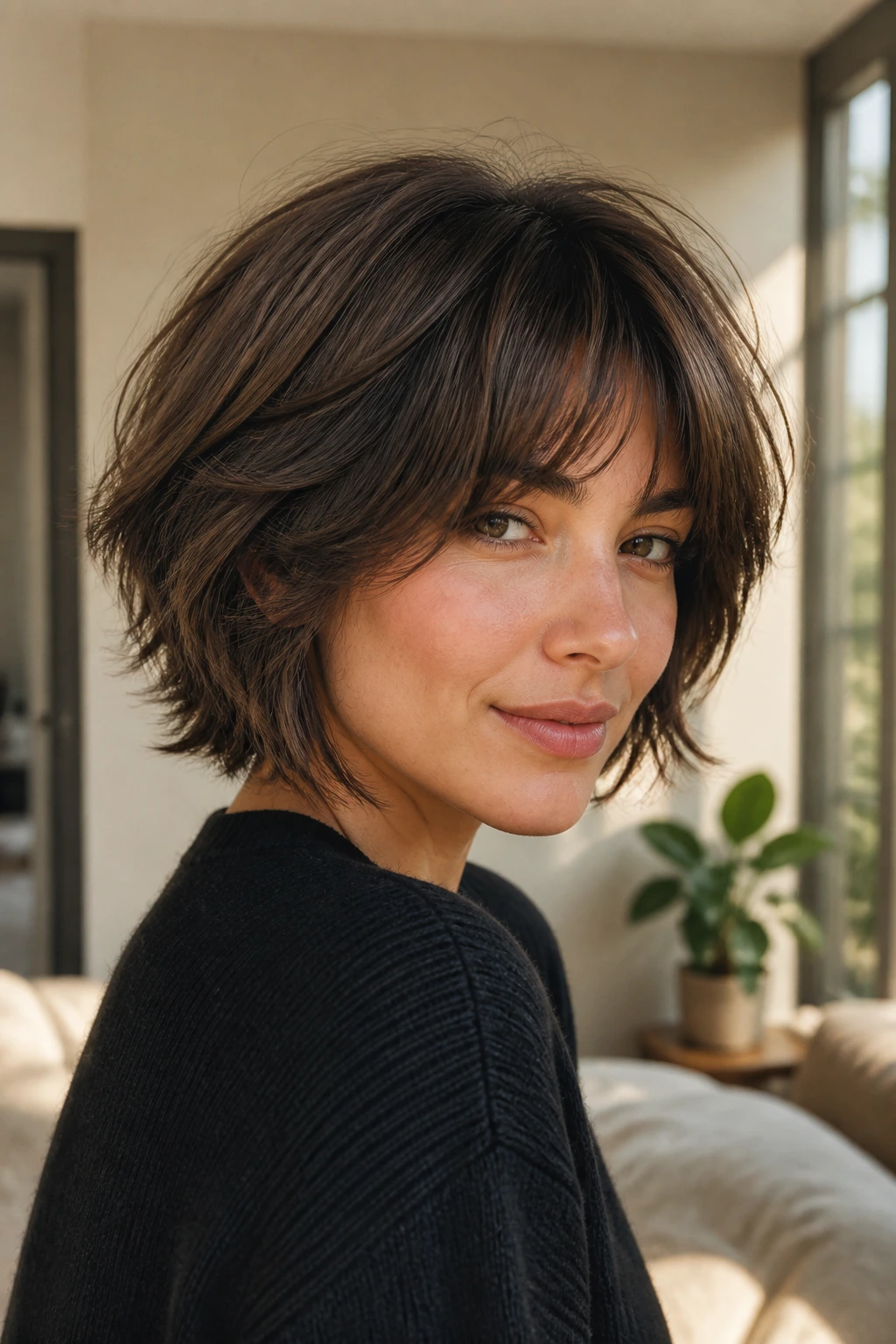
Curly-First Bob: If your hair curls on its own, lean into a rounded layered shape and keep the layers long enough to avoid a pyramid. Diffuse it with low heat and let the curl pattern do the styling.
Polished Office Lob: Keep the perimeter cleaner, the layers softer, and the finish smoother. This version works well if you want a haircut that looks neat under a blazer and still moves when you wear it loose.
Air-Dry Friendly Shape: Ask for more internal layers and fewer visible chops. This version is built for people who hate hot tools and want the haircut to settle on its own.
Soft Shag Hybrid: Blend bob length with shaggy texture around the crown and face. It suits thick hair that has some wave and likes a less formal outline.
Low-Fuss Blunt-Layer Mix: Keep the perimeter blunt, then remove weight underneath. If you like clean edges but hate bulk, this is the safest middle road.
Side-Part Lift Version: Shift the part deeper and keep a little more length in the front. It gives thick hair an easy bend and helps the shape feel less square.
Frequently Asked Questions

What’s the best medium bob length for very thick hair?
Collarbone to just above the shoulders is usually the easiest range to live with. That length gives the hair enough room to drop under its own weight without forcing the sides to flare out.
Are layers or thinning shears better for thick hair?
Layers usually win. Thinning shears can help in small doses, but overuse often leaves thick ends frizzy and uneven. Clean internal layering keeps the shape more predictable.
Can a medium layered bob work if my hair is straight and coarse?
Yes, and it often looks sharper than people expect. Straight coarse hair holds a bob line well, but it benefits from internal weight removal so the cut doesn’t sit like a block.
How often should I trim this kind of haircut?
Most thick bobs need a tidy-up every 6 to 8 weeks. If you wear bangs, trim those sooner so the face frame stays where it should.
Will this cut still work if I air-dry my hair?
It can, especially if the layers are placed for movement rather than drama. Air-dried thick hair tends to look best when the shape is built to support natural bend instead of forcing a blowout finish.
What if my bob flips out at the ends?
That usually means the ends are either too blunt for your texture or the cut is drying with too much tension at the brush. A small inward bend with a flat iron, or a softer finish at the perimeter, usually fixes it.
Is this a good cut for a round face?
It can be, especially with longer front pieces that skim the jaw or collarbone. The front should create a vertical line somewhere, not stop right at the widest part of the face.
Can I wear a layered bob in a ponytail or clip?
Sort of, and that’s part of the appeal. Medium lengths with layers still pull back into a small clip or half-up style, even if they aren’t meant for a sleek full ponytail.
What should I avoid if I hate big volume at the sides?
Skip short, stacked layers near the cheekbones and ask for internal weight removal instead. That keeps the outline from flaring outward where thick hair tends to puff the most.
The Shape That Stays Put
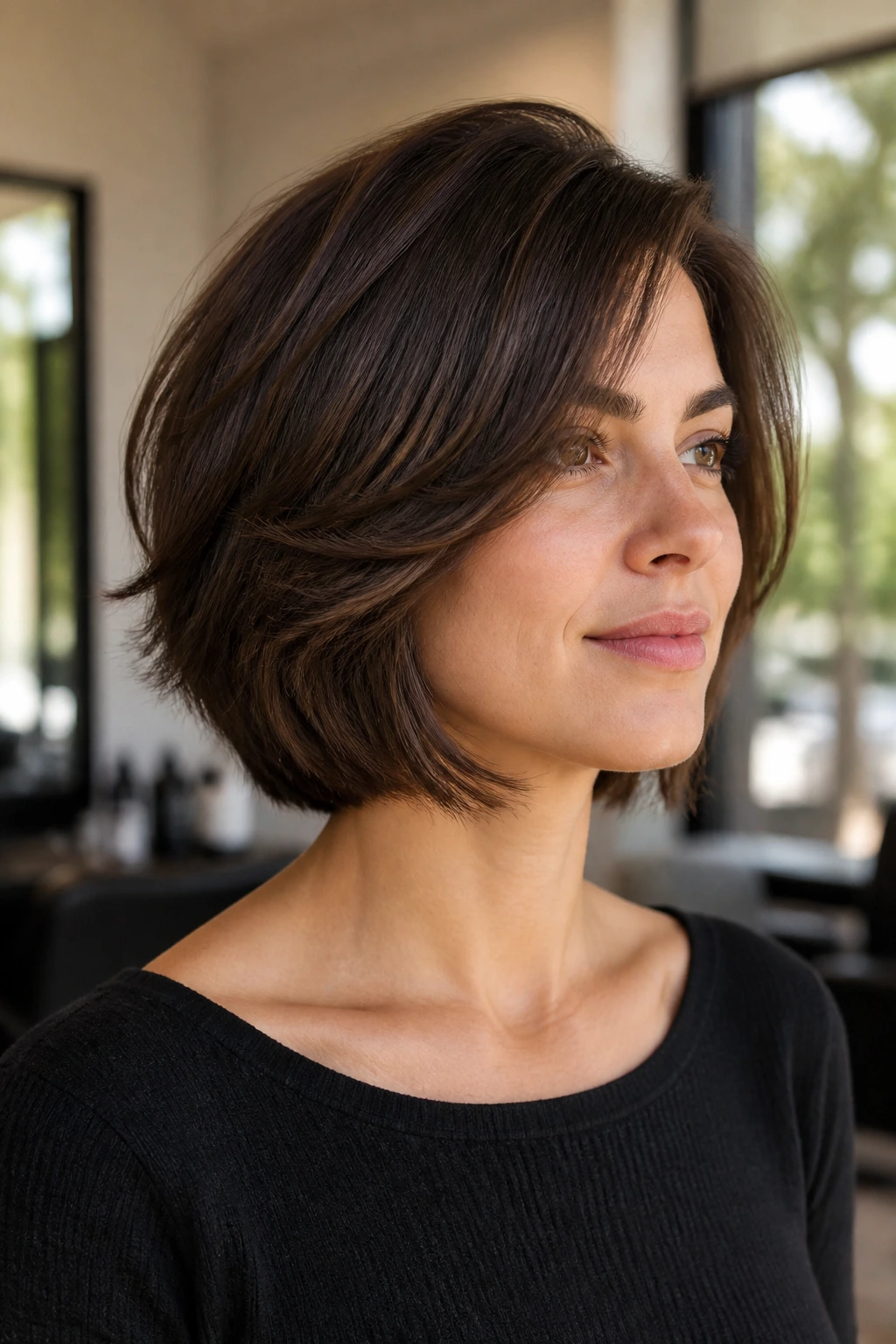
The best medium layered bob on thick hair doesn’t fight the hair’s density. It redirects it. That’s the whole game. Once the weight sits in the right places, the cut starts doing the useful work for you — cleaner outline, easier drying, less side puff, less daily wrestling.
I’m partial to the versions that keep a strong perimeter and use layers quietly, underneath, where they earn their keep. Those are the cuts that still look like hair on the second day, not a science project. And when thick hair behaves like that, it’s hard to go back to anything fussier.
Pick the shape that matches how you actually wear your hair, not how you imagine you’ll style it after a perfect morning. That’s where the good bobs live.
