



A bob haircut on curls asks for a different kind of planning. Bob haircuts for curly hair can look crisp, airy, and sculpted, but only when the cut respects shrinkage, density, and the way your curls stack on each other once they dry. Ignore that, and the same shape turns into a puffed-out triangle or a flat shelf with no movement. That’s the whole game.
Shrinkage is not the villain. Bad geometry is.
The tricky part is that curls don’t sit still while you cut them. A line that looks tidy when wet can land two inches higher once it dries, and a bob that seems too full in the salon chair can settle into one of the cleanest shapes you’ve ever worn. That’s why curly bobs deserve more than a generic “cut it to the jaw” answer. The right version depends on curl pattern, face shape, density, and whether you want the silhouette to feel soft, sharp, chunky, or light enough to swing.
Some bob haircuts are built for springy ringlets that want to stack into a halo. Others work better for loose waves that need a little internal weight removed so they don’t balloon at the sides. The best ones give the curls a job. They don’t fight them.
Why These Curly Bob Haircuts Keep Getting Saved
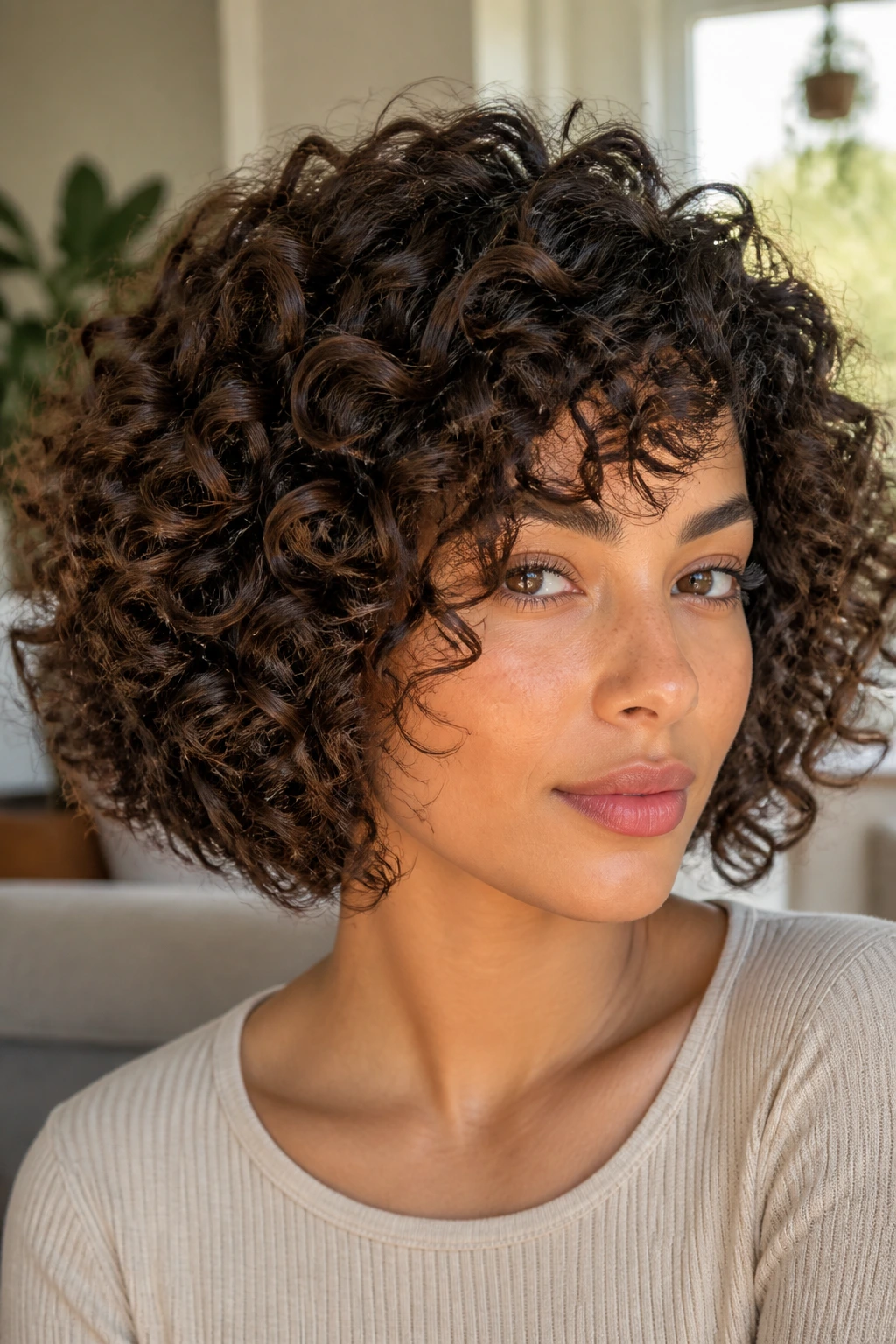
-
They work with shrinkage instead of pretending it doesn’t exist: A good curly bob lands in the right place when dry, which means the shape still reads after your curls bounce up.
-
They can be tailored to thick, fine, loose, or tight curls: The same bob length can look sleek on one head and huge on another, so the cut has to be adjusted, not copied.
-
They solve the triangle problem fast: Strategic layers, smarter weight removal, and the right perimeter line keep the sides from spreading out like a bell.
-
They show off curl pattern instead of burying it: Curls need room to form their own shape, and a bob gives them a frame, not a prison.
-
They can read polished or relaxed with a tiny styling shift: Diffuse a little longer, add a side part, or smooth the ends with gel, and the whole mood changes.
1. Chin-Length Curly Bob With Soft Interior Layers
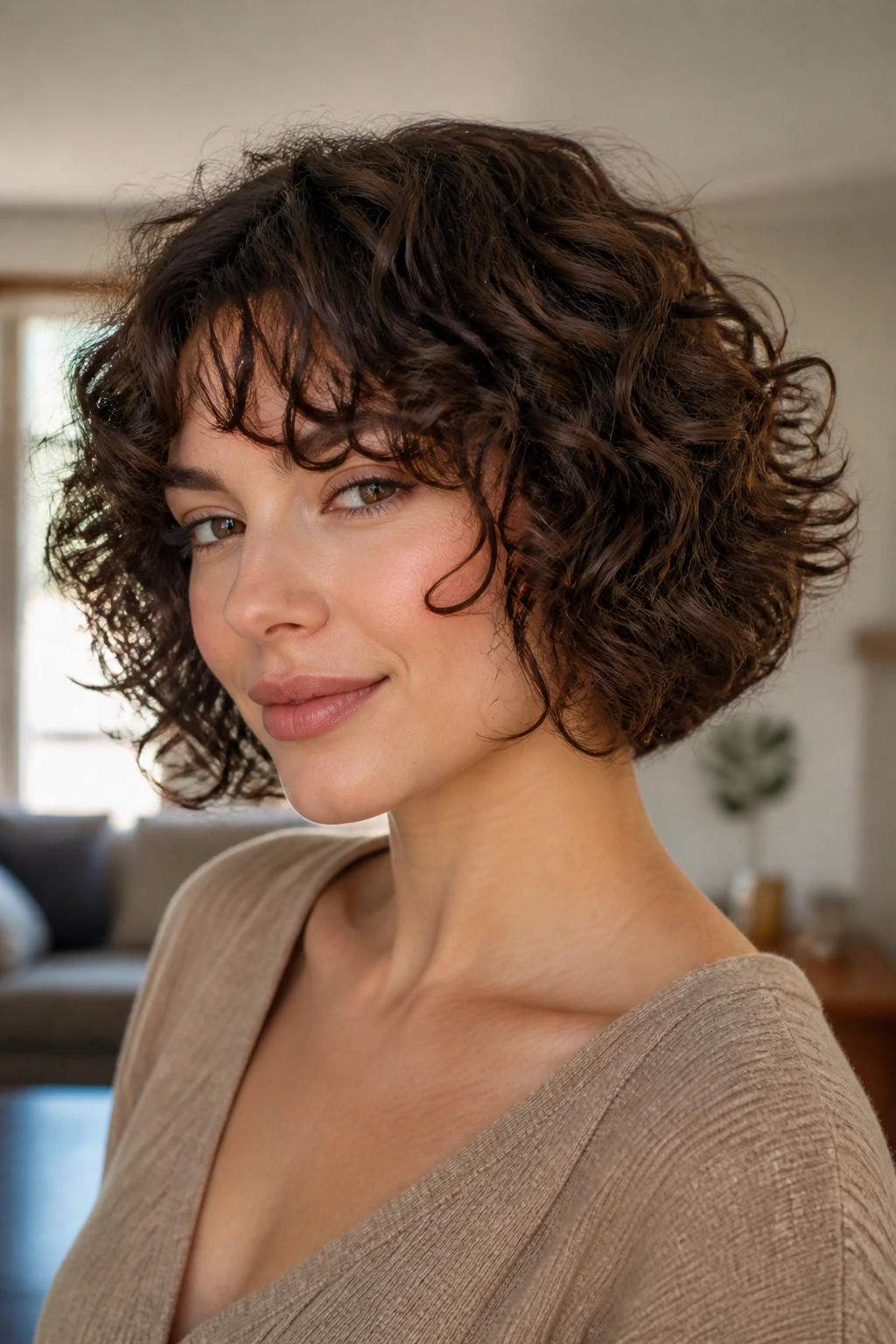
This is the curly bob that gets people to say, “Wait, your hair can do that?” The perimeter lands around the chin, but the secret is the soft internal layering that keeps the shape from turning boxy. You get a clean outline from the front and enough movement underneath that the curls don’t sit like a helmet.
It works especially well on medium-density curls that need direction more than they need thinning. Ask for the cut to be shaped in its dry state if your stylist knows curly hair, because chin length changes fast once curls spring up. A little weight removed from the middle section keeps the ends from collapsing into one heavy line. If your curls are springy and compact, this length has a sharp little swing to it that long hair never quite gets.
2. Jaw-Grazing French Bob

The French bob on curls has a different attitude than the straight-hair version. It sits shorter, often right at the jaw, and it usually looks best when the outline is a little soft rather than razor-sharp. Think cheekbones, not precision engineering.
On curly hair, this cut depends on shape more than length. If the curls are loose, the jawline gets a tidy frame. If they’re tighter, the cut reads rounder and fuller, which is exactly what makes it charming instead of severe. A side part gives it a little Parisian looseness, while a middle part turns it more modern and graphic. It’s a good cut if you like a face-framing line that doesn’t need heavy styling to make sense.
3. Curly Lob With Blunt Ends
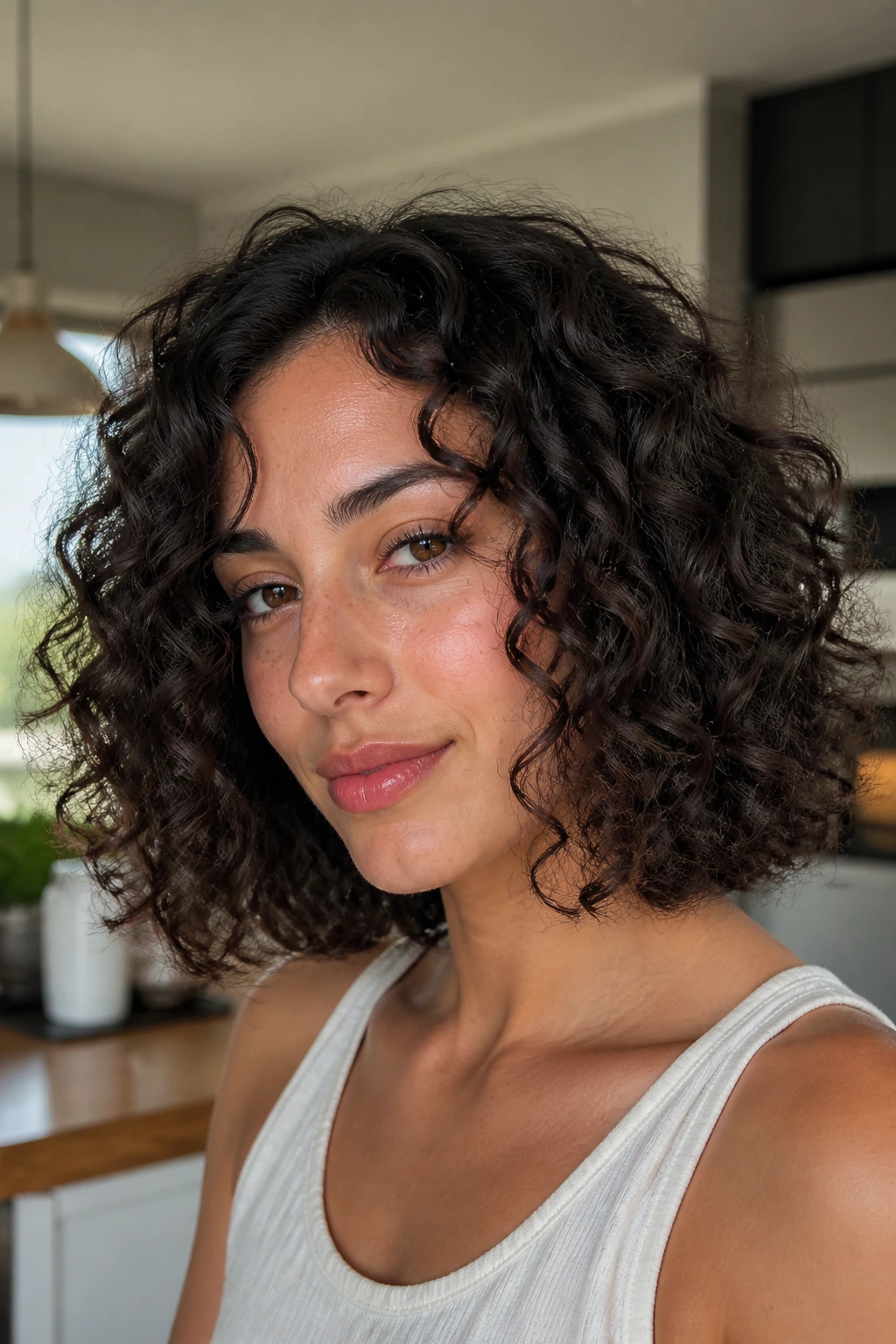
The curly lob is the safe choice that rarely looks boring. It usually lands between the chin and collarbone, and the blunt ends give curls a heavier edge so they don’t fan outward. That extra weight is useful if your hair is fine, porous, or prone to frizzing up the second humidity walks into the room.
Blunt doesn’t mean flat, though. On curls, blunt ends can still bounce, especially if the interior has just enough shaping to keep the line from feeling blocky. I like this cut on people who are growing out shorter hair but do not want the awkward in-between phase to look accidental. It has that calm, expensive-looking finish without needing a ton of product.
4. Stacked Curly Bob
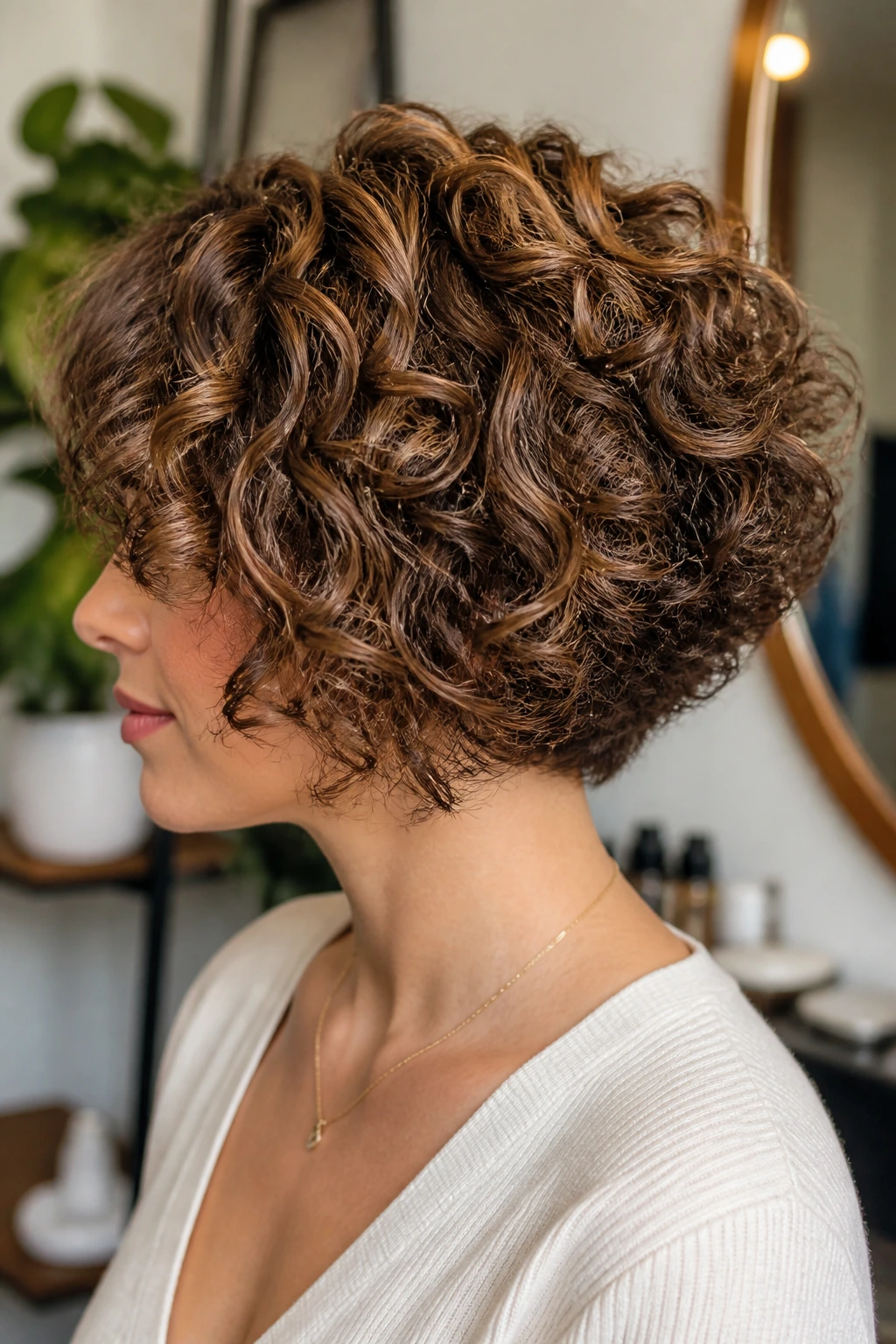
A stacked bob puts the lift where it matters most: the back of the head. The layers are shorter at the nape and gradually build length toward the front, which gives the crown a little architecture. On curly hair, that matters because a flat back can make the whole shape sag.
This is a strong choice for thick curls that need internal structure. The stack helps the bob sit up instead of mushrooming out at the bottom. It’s also one of the few curly bob haircuts that can make shorter hair feel deliberately shaped rather than merely cropped. If you like a little drama in profile, this cut has it.
5. Rounded Curly Bob
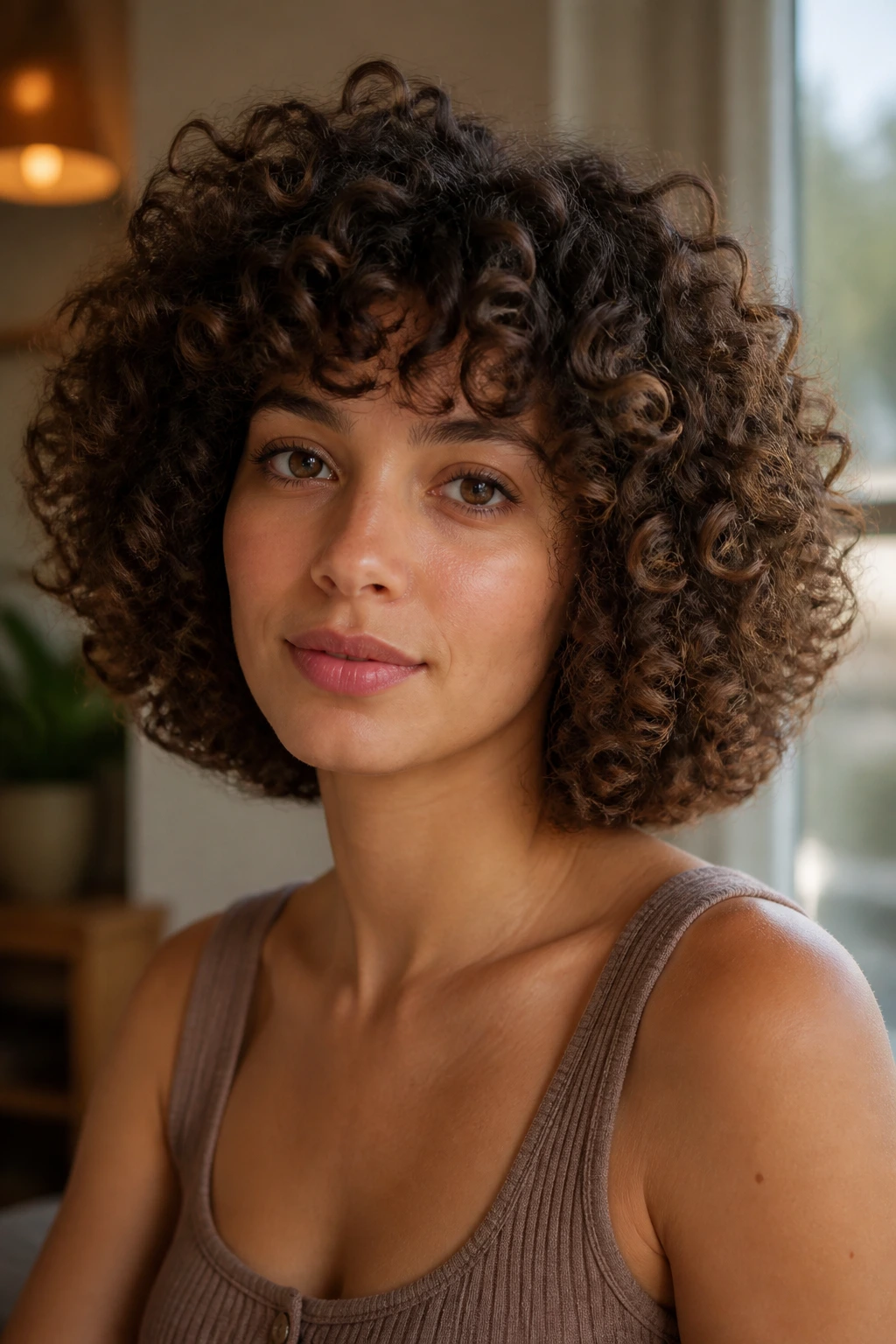
A rounded bob is made for curls that already want to build a halo. The outline curves around the head instead of dropping in a straight line, so the result feels softer and more balanced. Tight ringlets and coils often wear this shape especially well because the natural volume becomes part of the design instead of something you have to knock down.
The danger here is over-shaping. Too much layering and the cut can lose its weight; too little and it turns into a triangle. The sweet spot is a round perimeter with careful interior structure. It’s a good cut if you want the curl pattern to look lush and intentional from every angle, not just from the front.
6. Asymmetrical Curly Bob
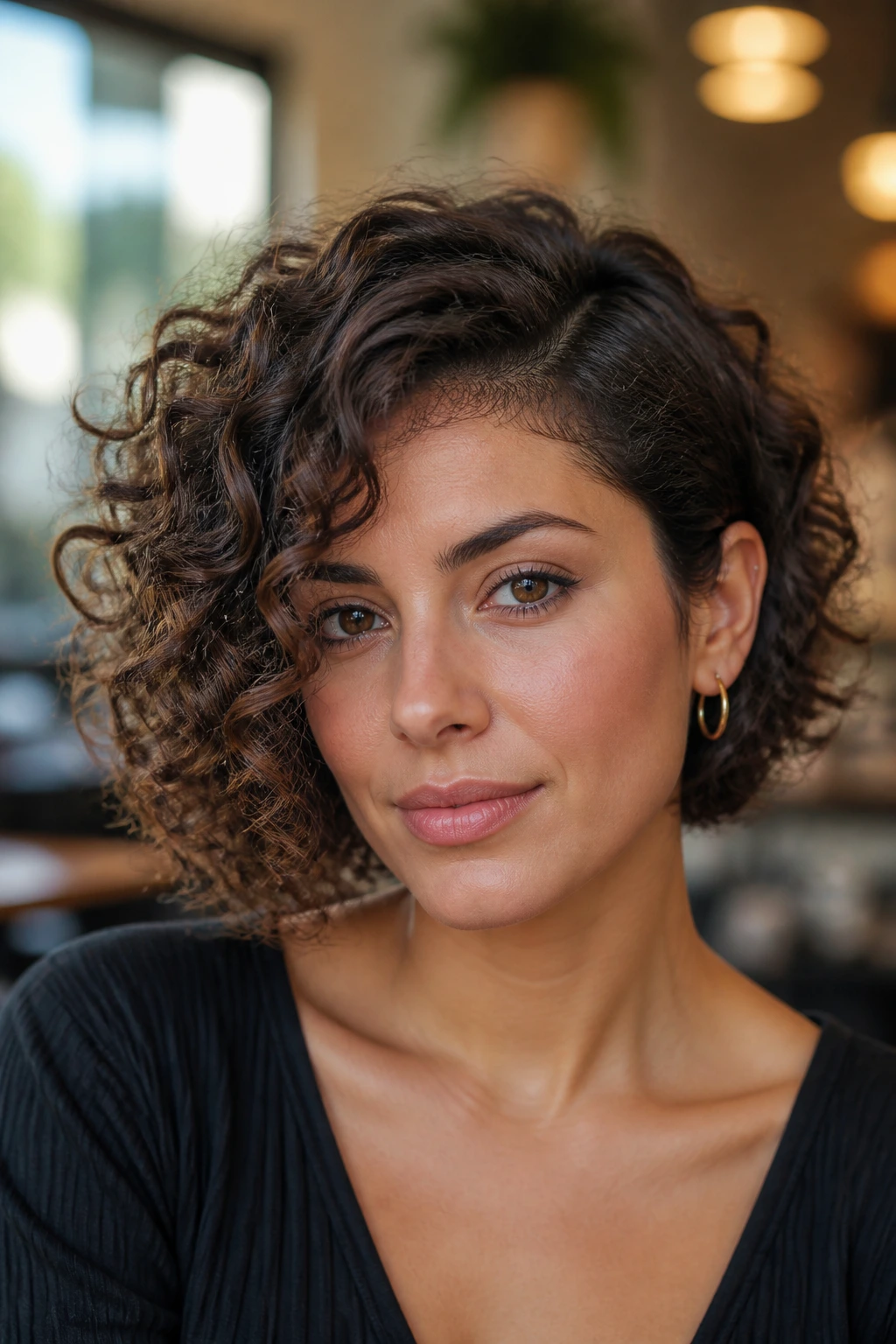
One side longer than the other sounds bold, and it is, but the best asymmetrical curly bob isn’t loud for the sake of it. It uses uneven length to make curls fall in a more interesting way across the face. On one side, the curls can skim the cheekbone. On the other, they may hit the jaw or neck, which gives the shape movement even when it’s not freshly styled.
This cut works best when the curl pattern is fairly consistent from side to side. If one side of your hair behaves wildly differently, the asymmetry can look accidental instead of chic. Keep the difference subtle unless you want a sharp editorial look. A half-inch to an inch and a half is often enough. More than that, and the bob starts feeling like two different cuts glued together.
7. A-Line Curly Bob
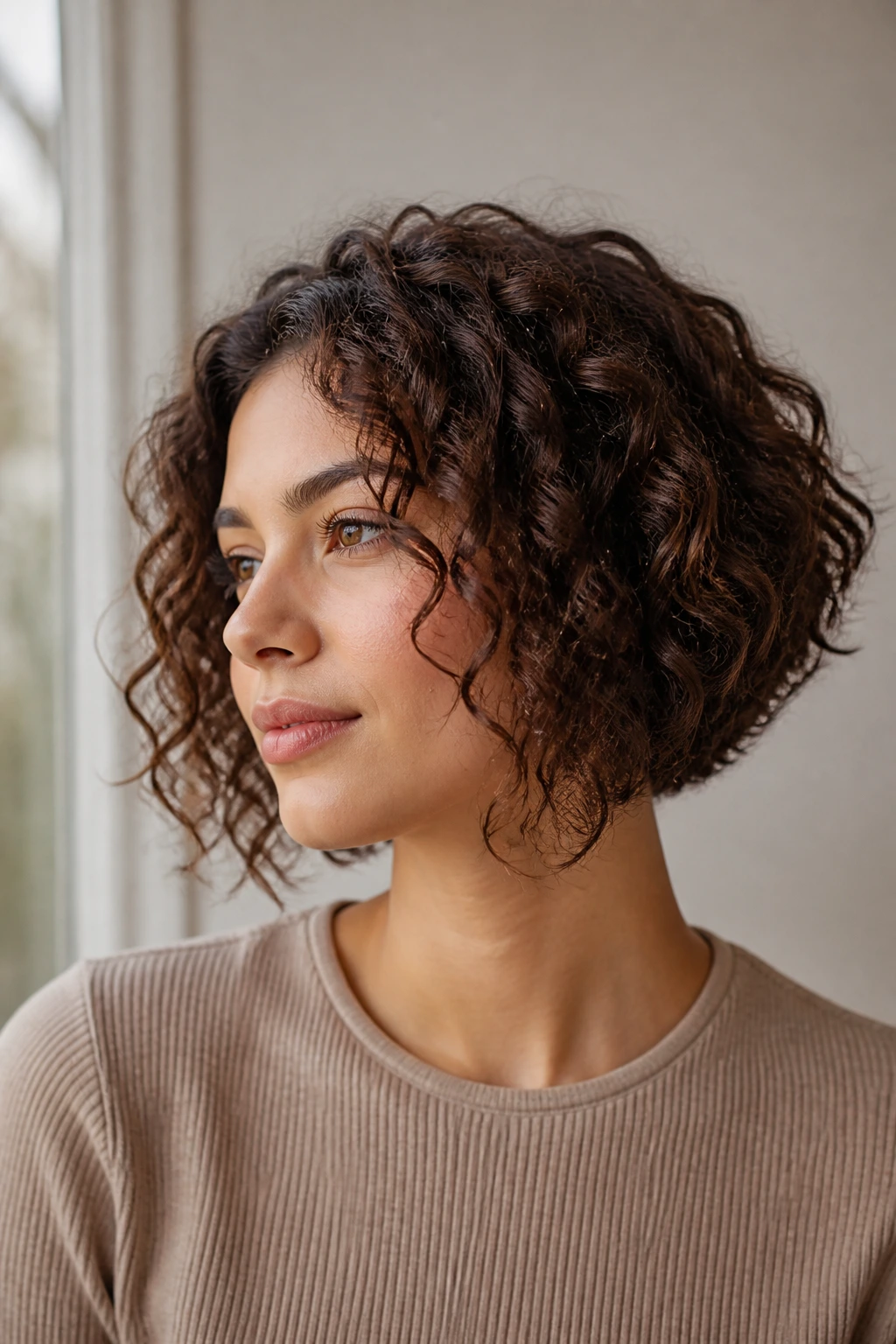
An A-line bob is shorter in the back and gradually longer in the front, which sounds simple until curls get involved. On curly hair, that front angle can be a lifesaver because it lets you keep length near the face while removing bulk at the nape. The result feels light without looking thin.
This cut is especially handy for people whose curls expand at the back and pile up under jackets, scarves, or collars. It keeps the silhouette cleaner. The longer front pieces also soften the transition from jaw to shoulders, so it can be a smart pick if you want a shorter shape but are nervous about going all the way up to the chin.
8. Shaggy Curly Bob

The shaggy curly bob is the cut for anyone who likes a little disorder in the right places. It uses layers to let the curls separate and move instead of forming one dense mass. The shape feels casual, but it’s not sloppy when it’s done well. You can tell because the curls sit in clear little clusters instead of blending into a puff.
This style is friendly to looser curls and wave patterns, but it can work on tighter textures too if the layers are placed carefully. The trick is not to over-thin the hair. You want air, not fray. A shaggy bob is one of those cuts that looks best when you stop fussing with it halfway through styling. Leave some pieces alone. That’s the point.
9. Curly Bob With Curtain Bangs

Curtain bangs on curly hair can be brilliant when the curl pattern cooperates. They split softly at the center, then fall to either side of the face, which means they blend into the bob instead of chopping the forehead in half. The result is soft, a little flirty, and much easier to grow out than blunt bangs.
This style likes a bit of bend. Loose curls and medium spirals tend to carry it well, though tighter curls can do it too with a longer bang length. The bangs should be cut to dry naturally, not straightened into a shape that vanishes when the hair springs back. Keep the bob around chin to shoulder length so the fringe has space to breathe. Shorter than that, and the whole thing can get busy fast.
10. Curly Bob With Micro Bangs
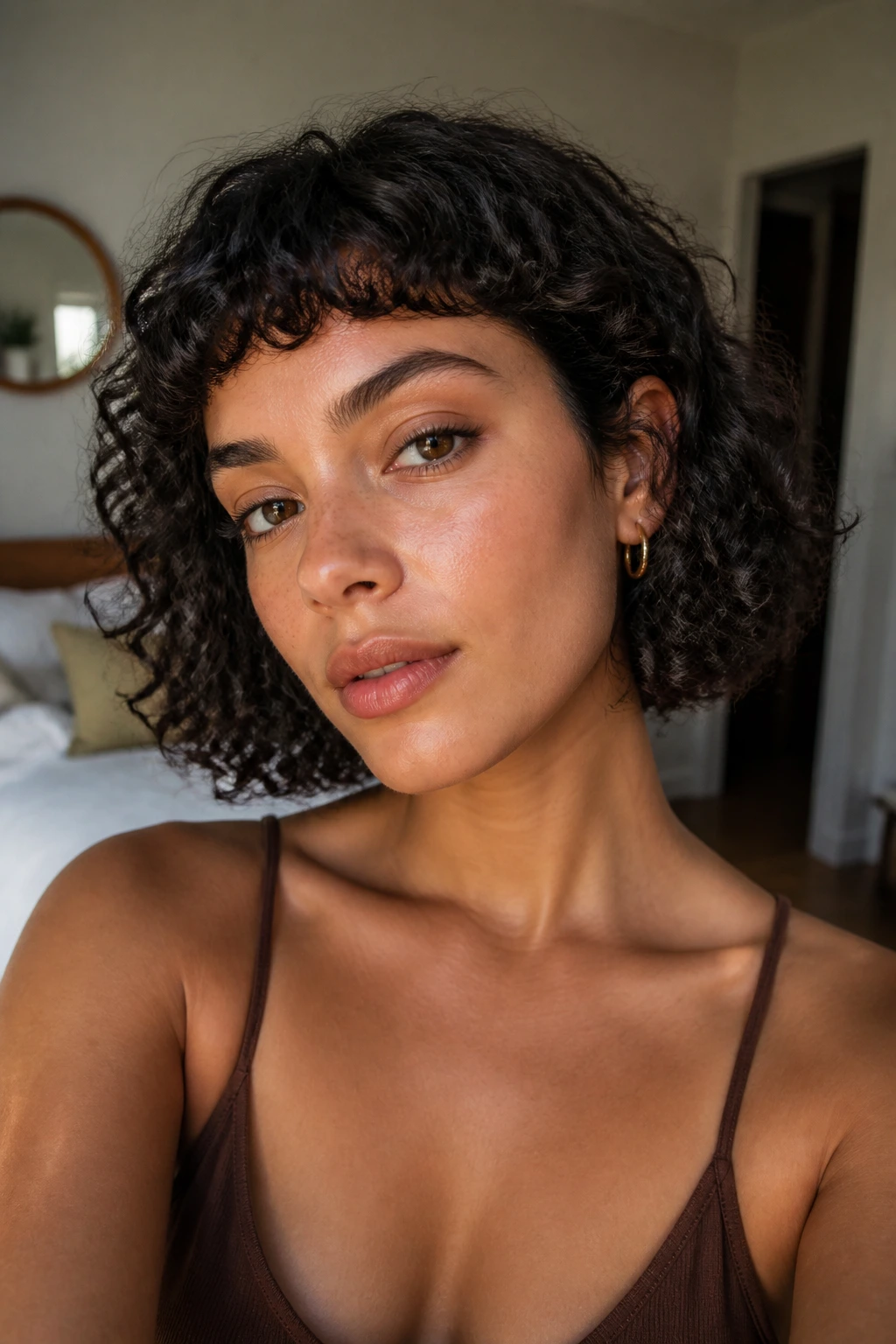
Micro bangs on curls are not for the faint of heart, and that’s part of the appeal. They land high on the forehead and make the eyes and cheekbones the center of the cut. On curly hair, they can look playful, sharp, or artsy depending on how defined the curls are.
This style needs a stylist who understands how much bounce the fringe will have once it dries. A micro bang cut too long loses its edge. Cut too short, and it can spring up into a tiny fringe that feels disconnected from the bob. Tight curls wear this especially well when the lengths are kept tidy around the ears and neck. It’s a cut that likes confidence. No polite hedging. Just commit.
11. Side-Part Curly Bob
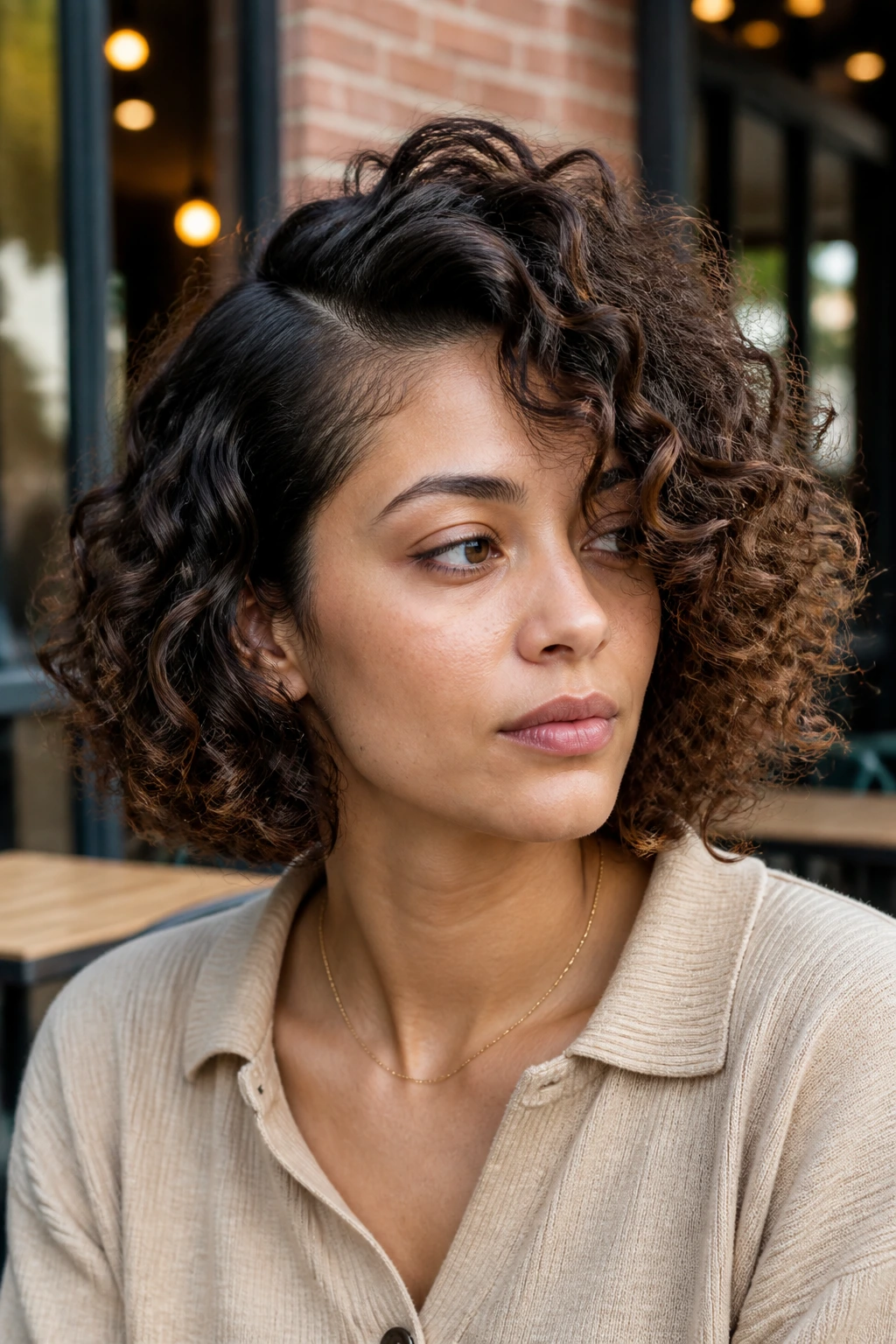
A side part can rescue a curly bob that feels too symmetrical or too heavy through the middle. It shifts the volume, opens one side of the face, and gives the curls a diagonal line to follow. That diagonal matters more than people think. It breaks up bulk and makes the haircut feel more deliberate.
This is a good option if your curls naturally lean or if one side tends to be flatter than the other. The deeper the part, the more lift you get at the crown. A side-part curly bob can also hide a cowlick more easily than a centered style, which is useful if your hair has a mind of its own near the front. Some cuts fight that. This one uses it.
12. Middle-Part Curly Bob
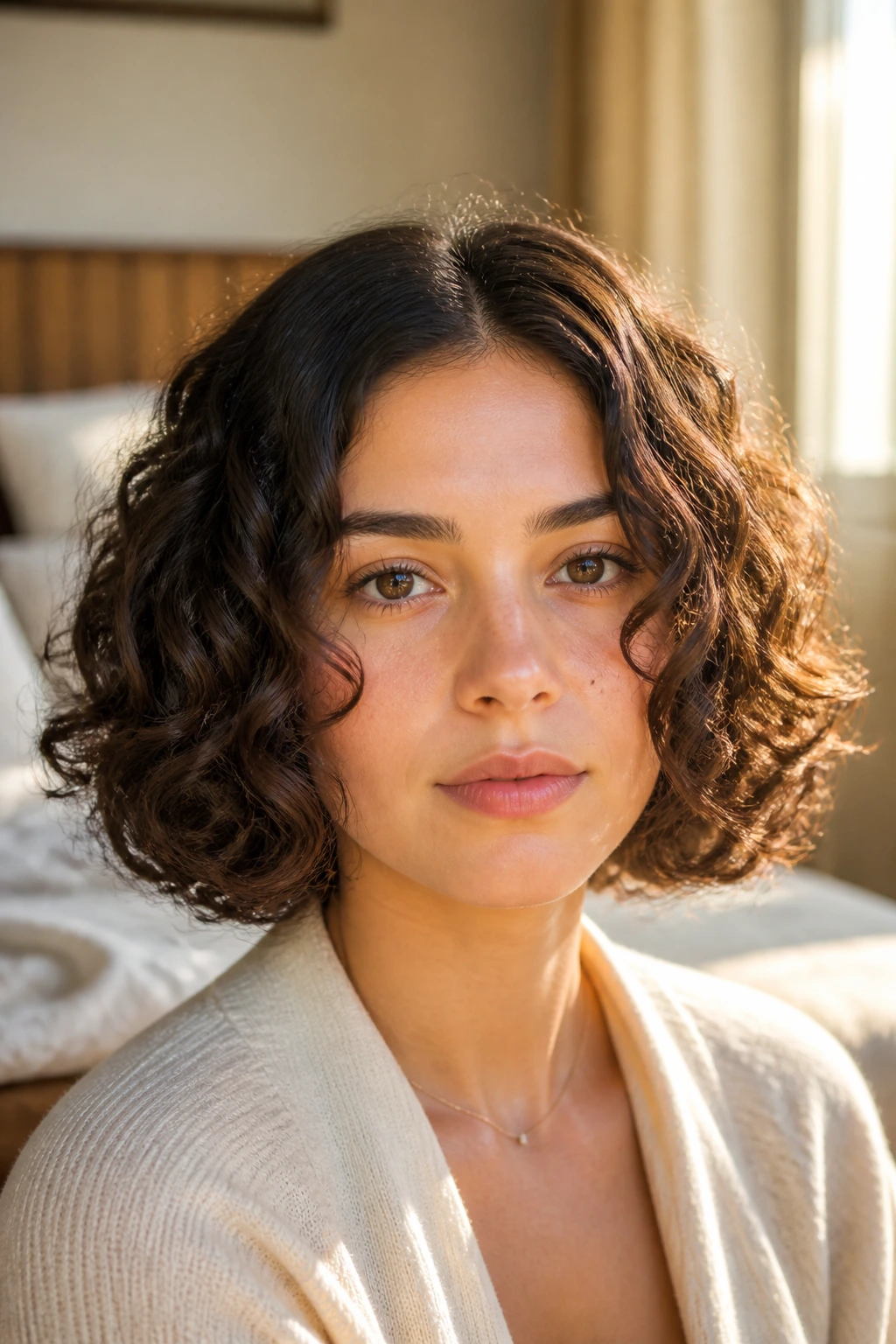
The middle-part curly bob looks cleanest when the curls are balanced on both sides and the perimeter has enough shape to keep the face from disappearing in volume. It reads modern, direct, and a little sharper than the same cut with a side part. On loose to medium curls, the center line can make the whole shape feel calm.
The catch is symmetry. If your curls are uneven or your crown swirls off to one side, a center part can expose that quickly. A good stylist can work with it, though, by adjusting the layers so the parts fall back into place naturally. Keep this cut if you like a face-framing shape that feels straightforward and unfussy. It doesn’t need much persuasion.
13. Inverted Curly Bob
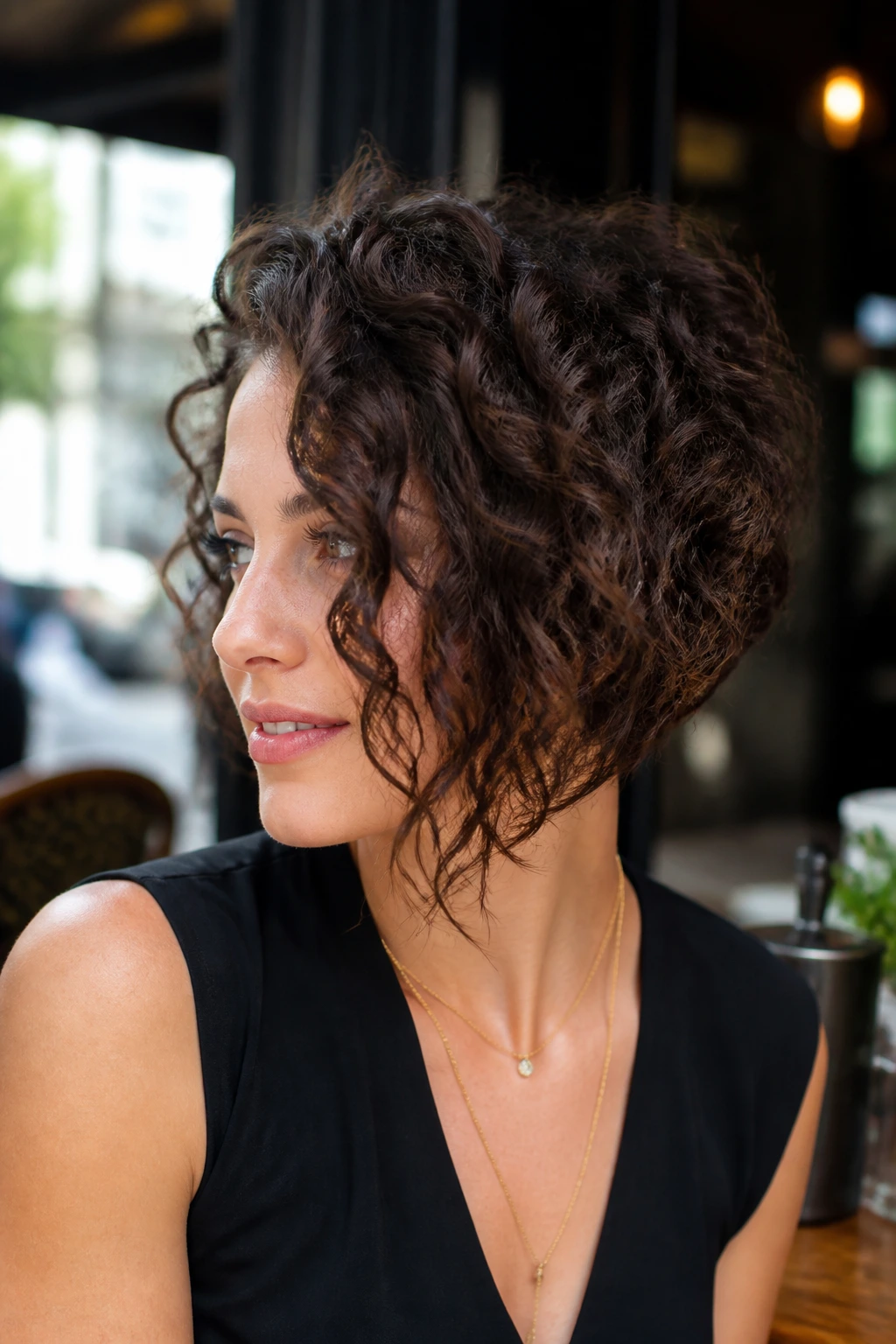
An inverted bob leans into the angle. The back sits shorter, the front drops longer, and the whole shape has a little forward motion that suits curly hair better than people expect. Curls soften the geometry, which keeps the cut from looking severe.
What makes the inverted bob work is the way it builds lift at the back while still keeping some length near the face. That’s useful for thick curls that tend to spread outward if they’re all cut to one length. It can also make fine curls look fuller through the crown. Ask for the front to be long enough to survive shrinkage. If it’s too short, the angle disappears.
14. Collarbone Layered Bob

This is the bob for anyone who likes the idea of shorter hair but doesn’t want to live at the salon. Collarbone length gives curls enough room to form without constant reshaping, and the layers keep the body from turning square. It’s one of the easier curly bob haircuts to grow out, which matters more than people admit.
The collarbone length also plays well with jackets, sweaters, and scarves, because the hair still clears the neck a little. That reduces friction, which can help with frizz. If your hair is dense, the layers should be long and careful, not choppy. You want movement through the mid-lengths, not a stacked mess at the ends.
15. Tapered Curly Bob
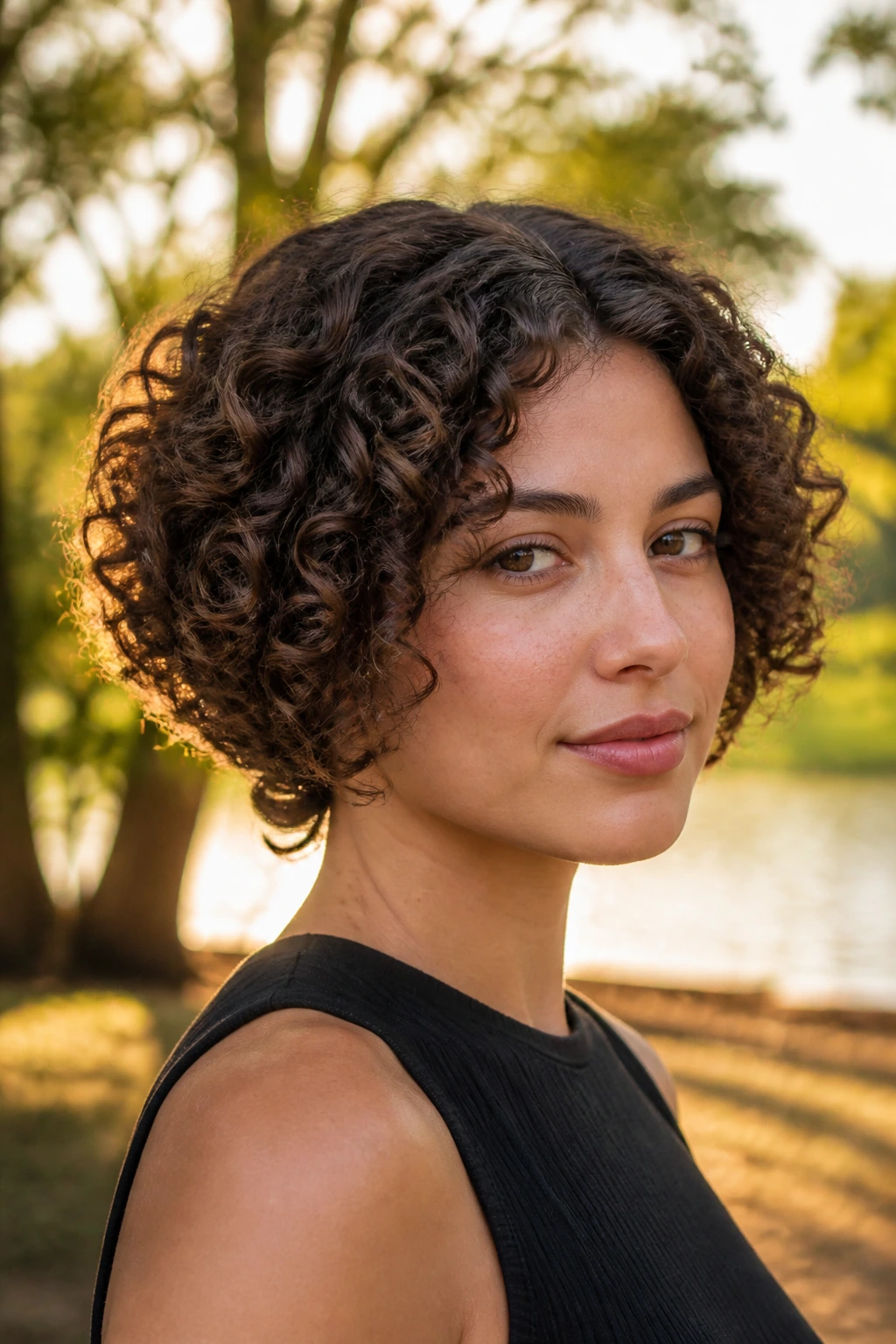
A tapered bob narrows gently toward the neck and opens up around the face, which gives curls a neat, sculpted outline. It’s especially useful for coily hair that wants shape without too much bulk at the sides. The taper keeps the silhouette from puffing outward all around the head.
This cut needs balance. Too much taper and you lose fullness; too little and the shape turns rectangular. A good taper lets the curls rest closer to the neck while still leaving enough volume to feel alive. It’s a strong choice if you like structure but don’t want anything stiff. There’s movement here, just not chaos.
16. Curly Bob With Undercut
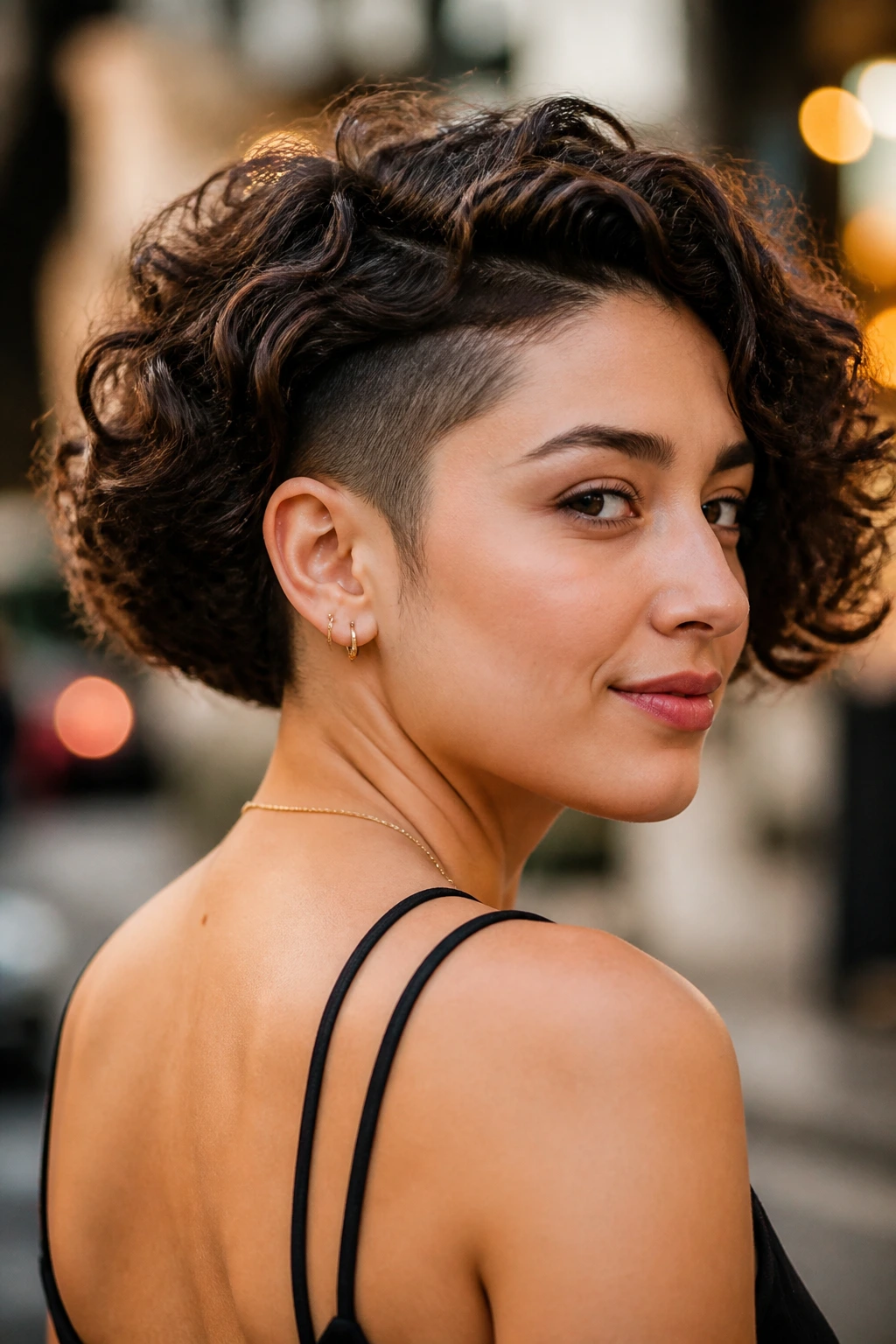
An undercut sounds dramatic because it is dramatic, but on curly hair it’s often practical first and edgy second. Removing some weight from underneath can take a huge amount of bulk out of a dense bob, especially if the hair tends to swell at the nape. The top layer then falls better and dries faster.
This style is a smart fix for very thick curls or coils that expand like a cloud after washing. The shaved or closely cropped area can be hidden or shown off depending on how the top is styled. If you want the shape to look clean from the outside but feel much lighter on your head, this is one of the most effective tricks in the whole lineup.
17. Boxy Blunt Bob
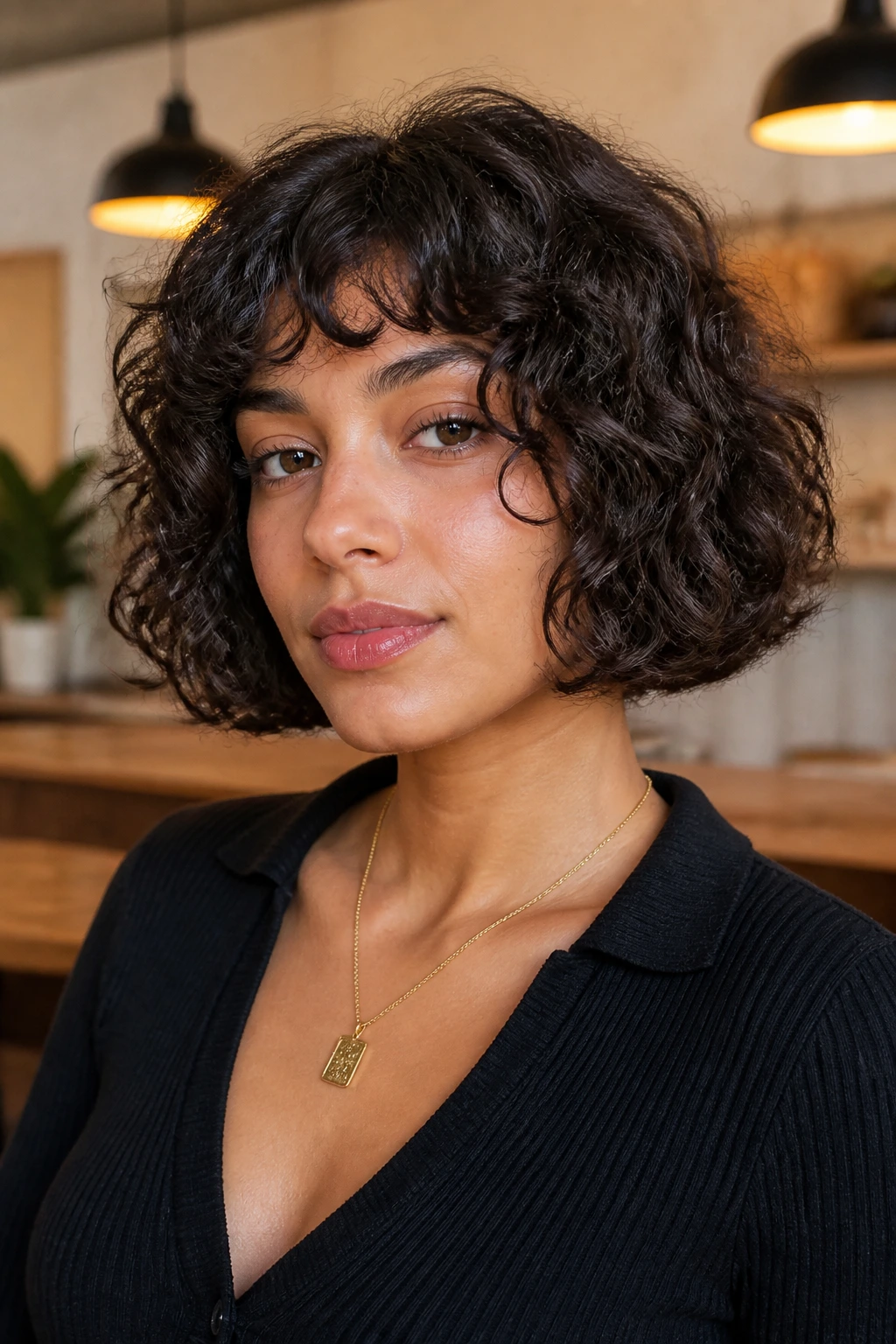
A boxy blunt bob is not shy. It keeps a strong, straight edge around the bottom, which can be a gorgeous contrast to curls that want to frizz in every direction. The blunt edge gives the style seriousness. The curls do the rest.
This cut works best when density is high enough to support the line. Fine curly hair can look stringy with too much bluntness, but thicker curls can hold it well. I like this cut on people who want their curls to look controlled without being flattened. It has a modern edge, and if the styling is clean, it reads expensive in that quiet, non-fussy way people always try to describe and usually miss.
18. Piecey Ringlet Bob
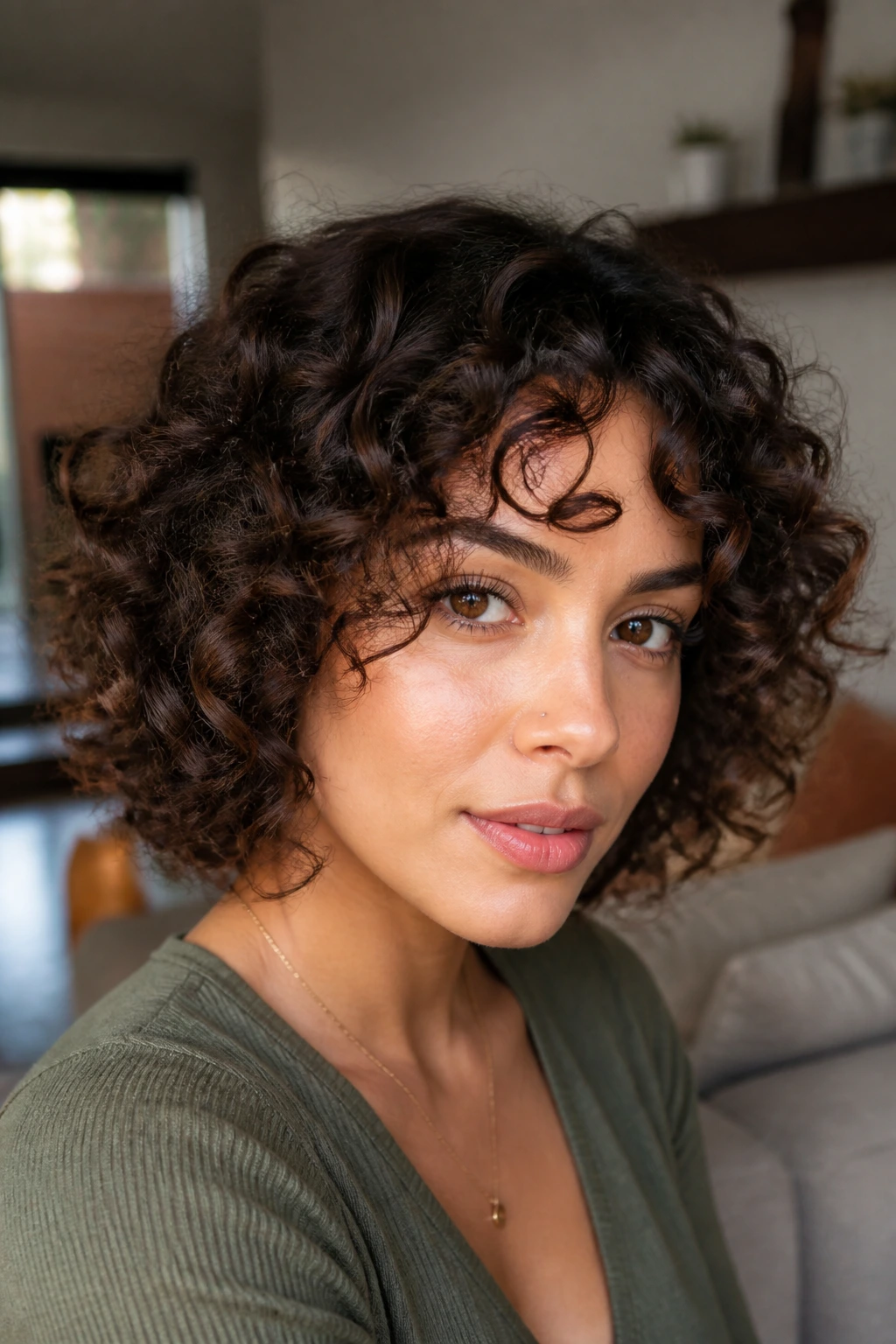
If your curls form distinct spirals, this cut is all about letting those pieces show. The bob is shaped so the ringlets fall in small groups instead of one large cloud. It’s a little more defined, a little more playful, and less dependent on a perfect wash day than a lot of shiny Instagram cuts.
The key is product, but not too much. A light cream plus a gel or mousse can help separate the curls without making them crunchy. This bob tends to look especially good when the ends are healthy and trimmed often, because the ringlets have somewhere clean to land. It’s a strong choice if you like seeing individual curl clumps rather than one blended shape.
19. Tousled Beachy Bob
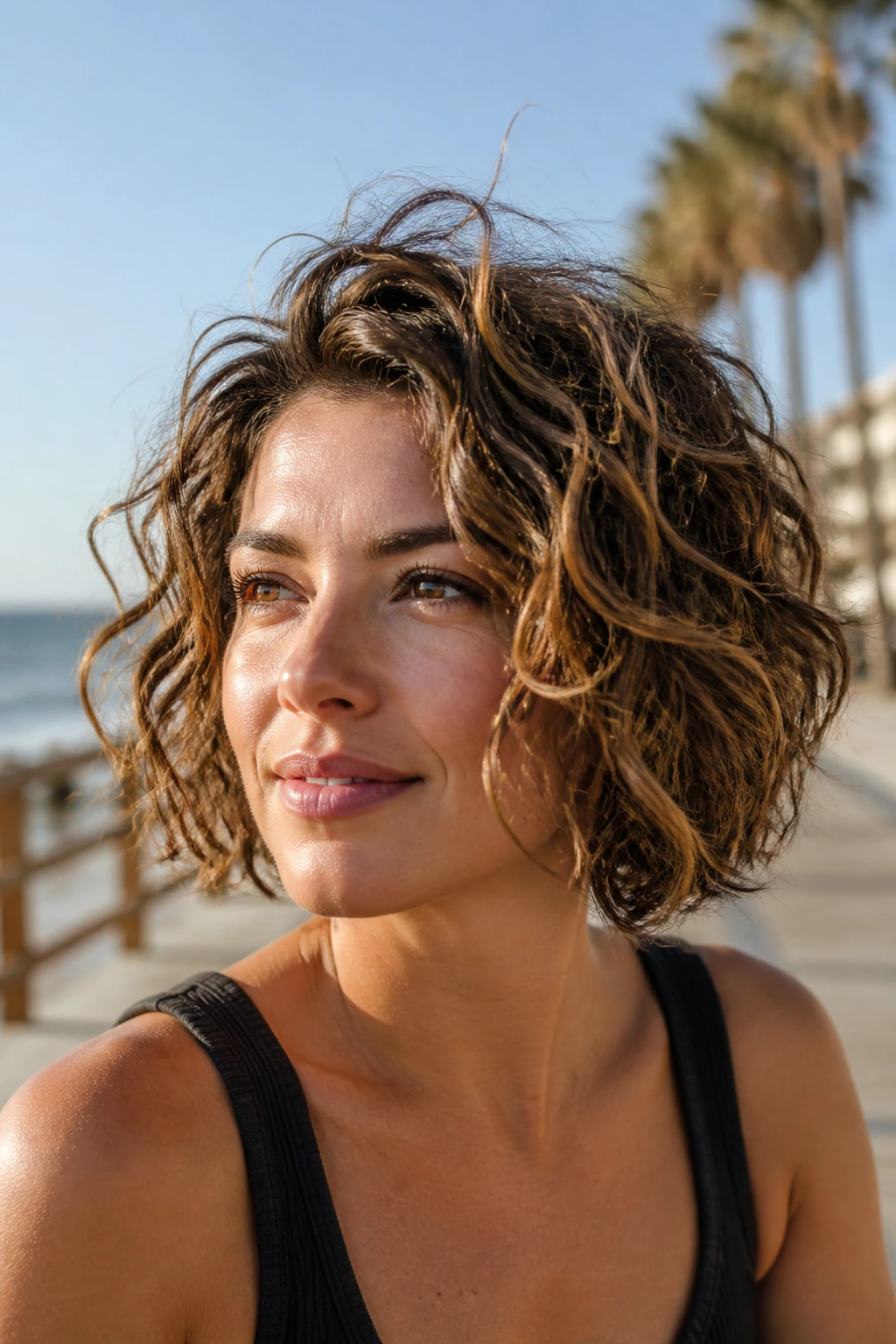
A tousled bob on curls leans soft and slightly undone, which sounds simple until you see how many people overdo it and end up with frizz instead of texture. The best version keeps some structure at the perimeter and lets the surface stay airy. It looks casual, but the cut is doing most of the work.
This is a forgiving style for looser curls and waves. It’s also a nice answer if you want a bob that doesn’t look overly “done” on day one and “gone” on day three. A bit of sea-salt spray can help, but only if your hair can take it. Dry curls don’t need punishment. They need shape.
20. Shoulder-Skimming Curly Lob With Long Face-Framing Pieces
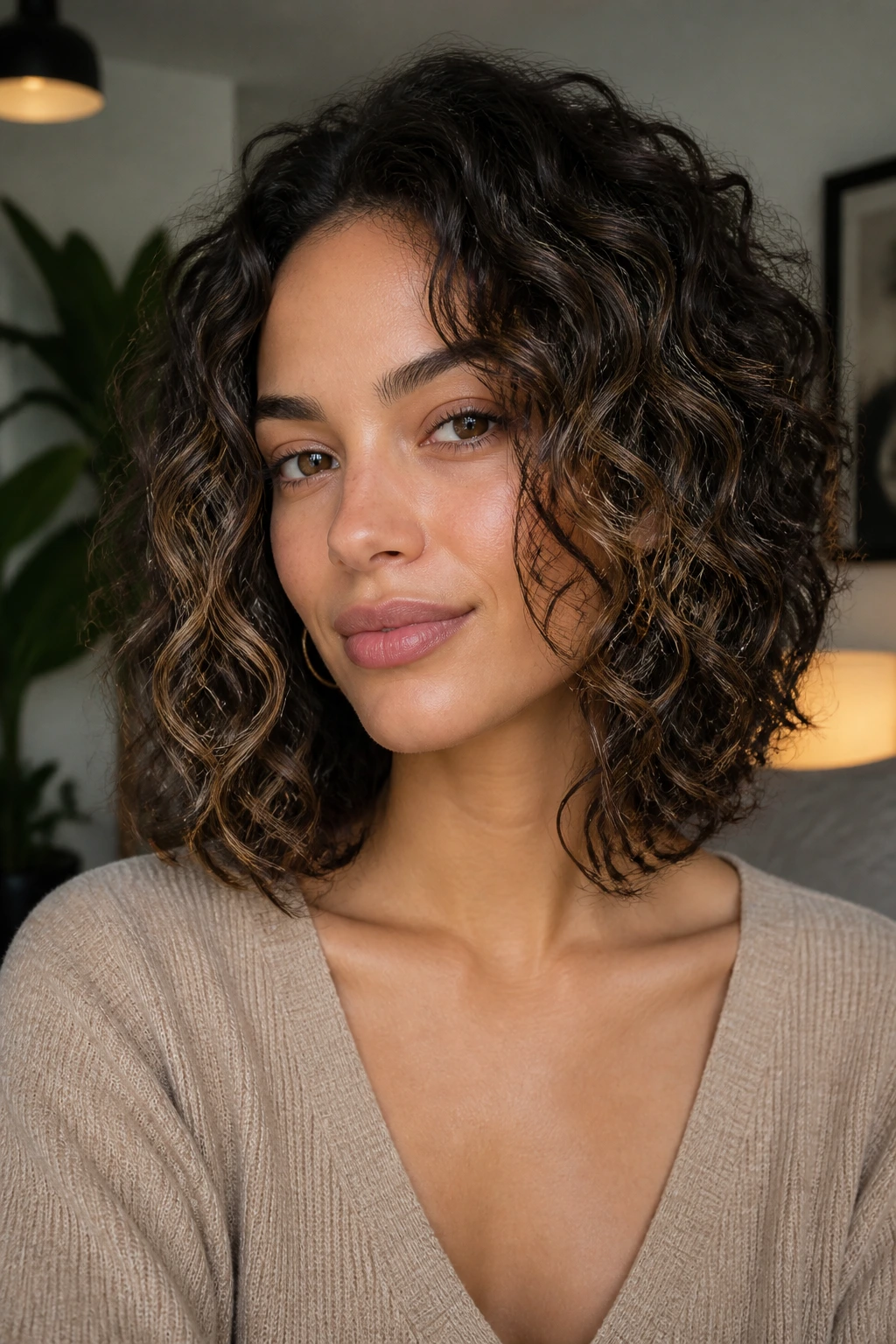
This one is for the person who wants the bob shape without the commitment of going short-short. A shoulder-skimming lob gives curls room to fall, and the long pieces around the face add softness without drowning the features. It’s one of the easiest curly cuts to wear if you’re still figuring out how much length you want to lose.
The face-framing pieces matter. They keep the front from feeling heavy and let the curl pattern create a little line around the cheekbones. If your curls shrink a lot, tell the stylist to leave extra length in the front. A lob that looks too long in the chair is usually the one that ends up sitting exactly right once it dries.
21. Side-Swept Fringe Bob

A side-swept fringe can cool down a curly bob that feels too open across the forehead. It gives the cut a diagonal motion and creates a soft curtain of curls that drops into the face without closing it off. That makes this style useful for anyone who wants a bit of coverage but does not want full bangs.
This version works best when the fringe is cut long enough to move. If it’s too short, it just bounces up and sits awkwardly above the brow. The side-sweep also helps longer faces and strong jawlines by redirecting attention across the face instead of straight down. It’s an easy shape to live with because it grows out in a fairly forgiving way.
22. Deva-Cut Style Bob
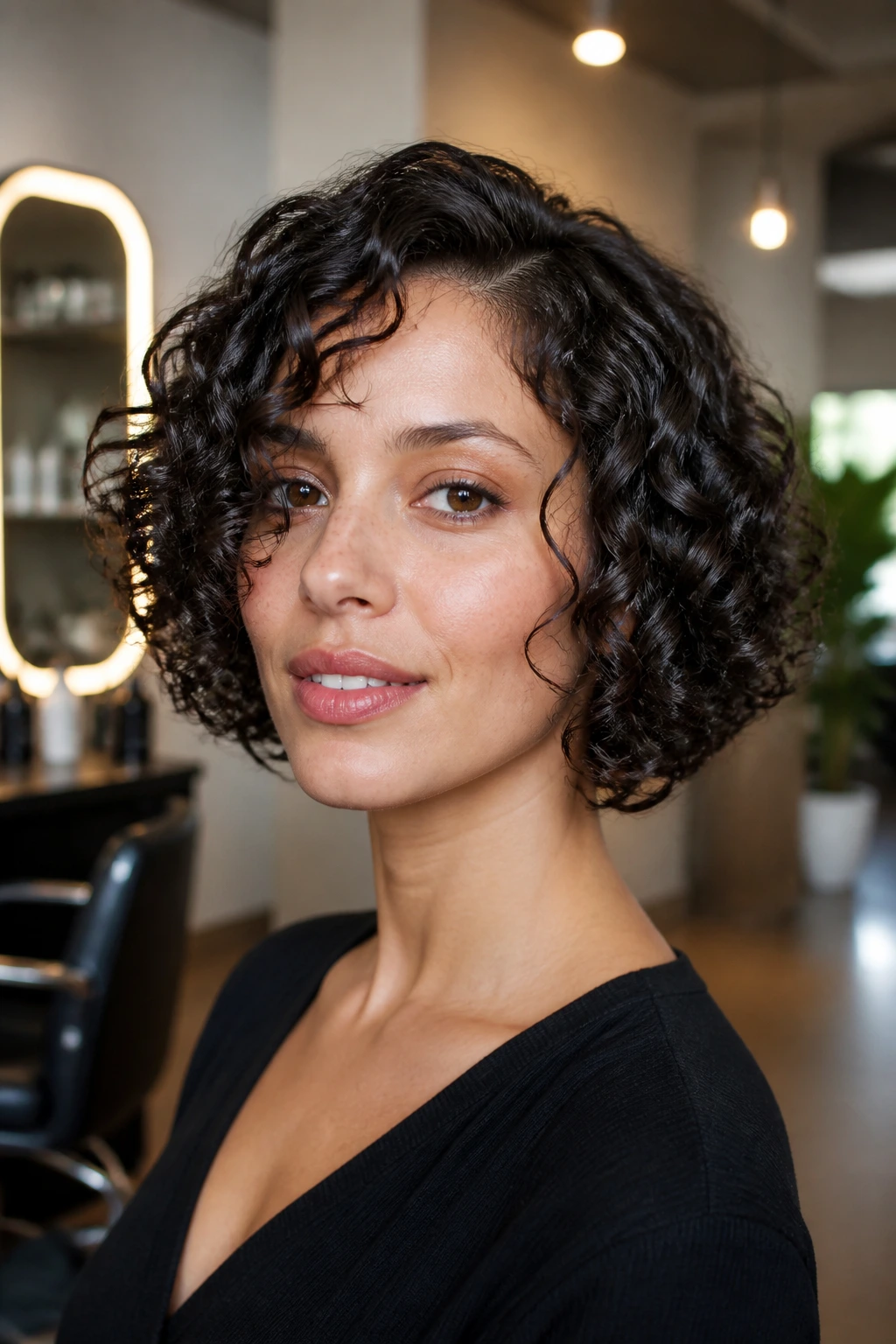
The Deva-cut approach treats each curl like it has its own agenda, because it does. Rather than shaping the whole bob as one block, the cut is done curl by curl in its natural form, usually dry. That lets the stylist see exactly how each piece springs, bends, and collapses.
For curly bobs, this method can be the difference between a shape that sits and one that fights itself. It’s especially useful if your curls vary from section to section or if your pattern is mixed. The result often looks more sculpted around the face and less bulky at the bottom. If you’ve ever had a cut that was technically even but still looked wrong, this is the kind of method that fixes the problem.
23. One-Length Bob With Hidden Weight Removal
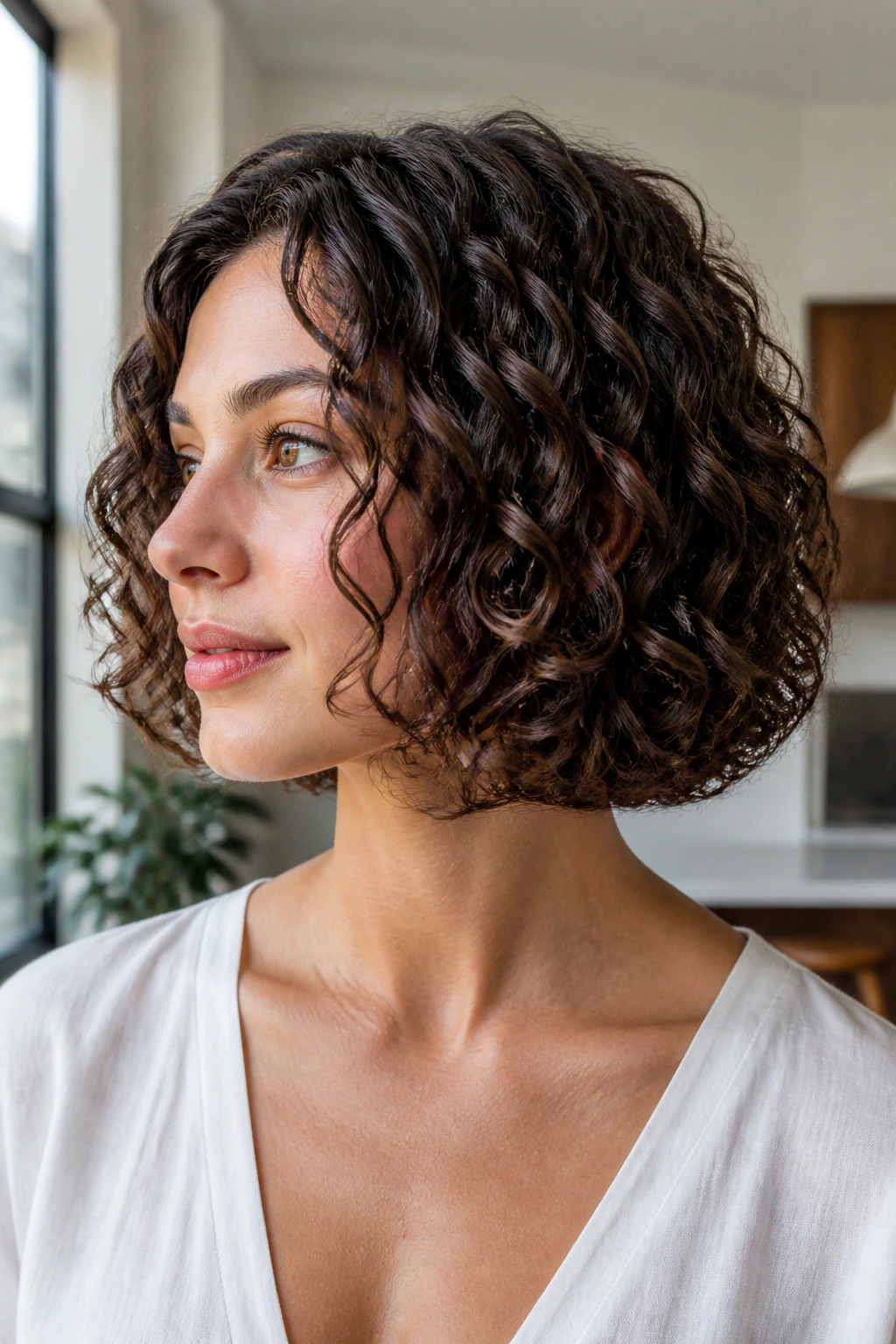
A one-length bob on curly hair sounds simple, and that simplicity is the point. The perimeter stays mostly even, which gives the curls a clean edge, but the inside can be lightly debulked so the shape doesn’t turn into a wide block. It’s the haircut equivalent of a well-cut coat: not flashy, just well built.
This style works for people who want a neat outline but hate the triangle effect. Hidden weight removal keeps the bob from ballooning under the top layer. The trick is restraint. Too much internal cutting and the strong line disappears. Done right, though, this cut gives you a calm, tidy shape that still moves when you turn your head.
24. Graduated Bob With Nape Stack
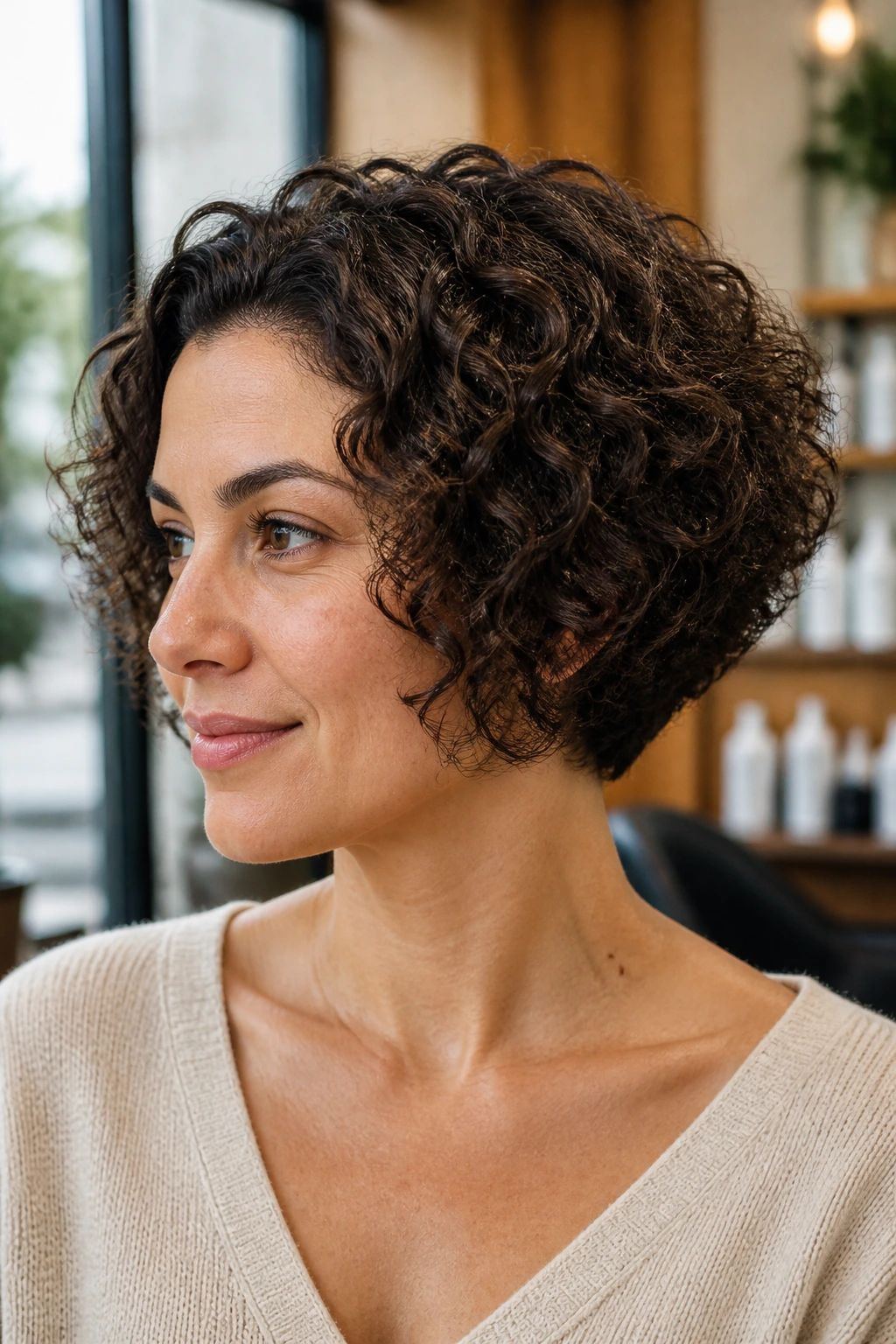
This is one of the classic salon shapes, and curls actually suit it better than straight hair in some cases. The graduation at the back gives the crown lift, while the stacked nape removes that heavy shelf some curly bobs get when the back grows too dense. You end up with a shape that feels lifted and contained at the same time.
It’s especially useful if your curls are thick and you like a shorter back. The front can stay a little longer to keep the look soft around the face. Ask for the stack to be gradual, not abrupt, unless you want a stronger architectural feel. This cut has a polished edge that holds up well between wash days.
25. Soft Wedge Bob
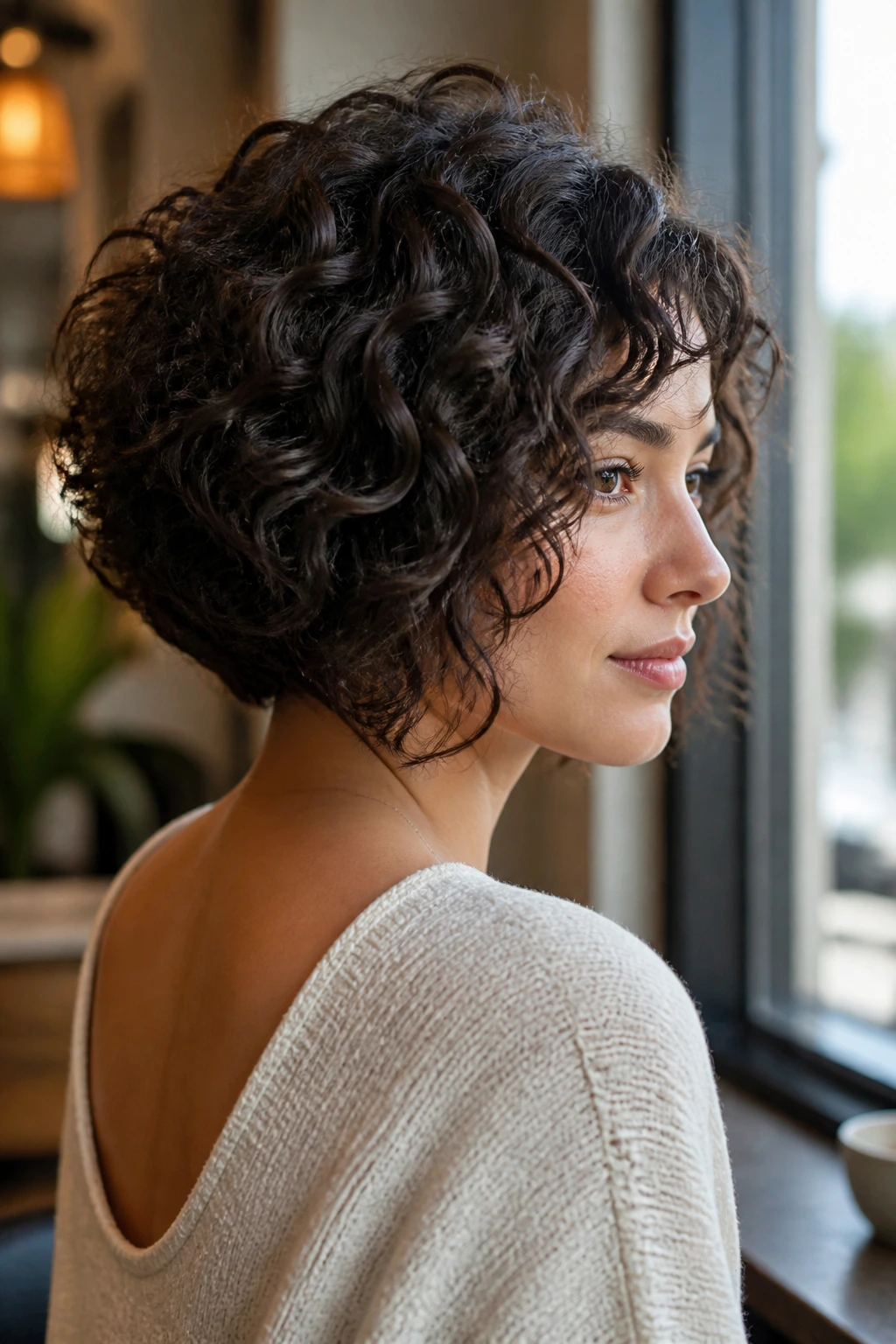
A soft wedge bob narrows toward the neck and curves outward just a touch through the back, which creates a neat contour without turning hard or severe. On curls, that shape can feel much lighter than a blunt bob because the silhouette has built-in movement.
This cut works if you want short hair with a little lift but not a severe stack. It’s especially good for medium-density curls that need some shaping but don’t need to be stripped down. The “soft” part matters. You want the edge to curve, not snap. That’s the difference between a bob that feels current and one that feels like it was borrowed from a dated salon photo.
26. Curly Bob With Face-Framing Angles
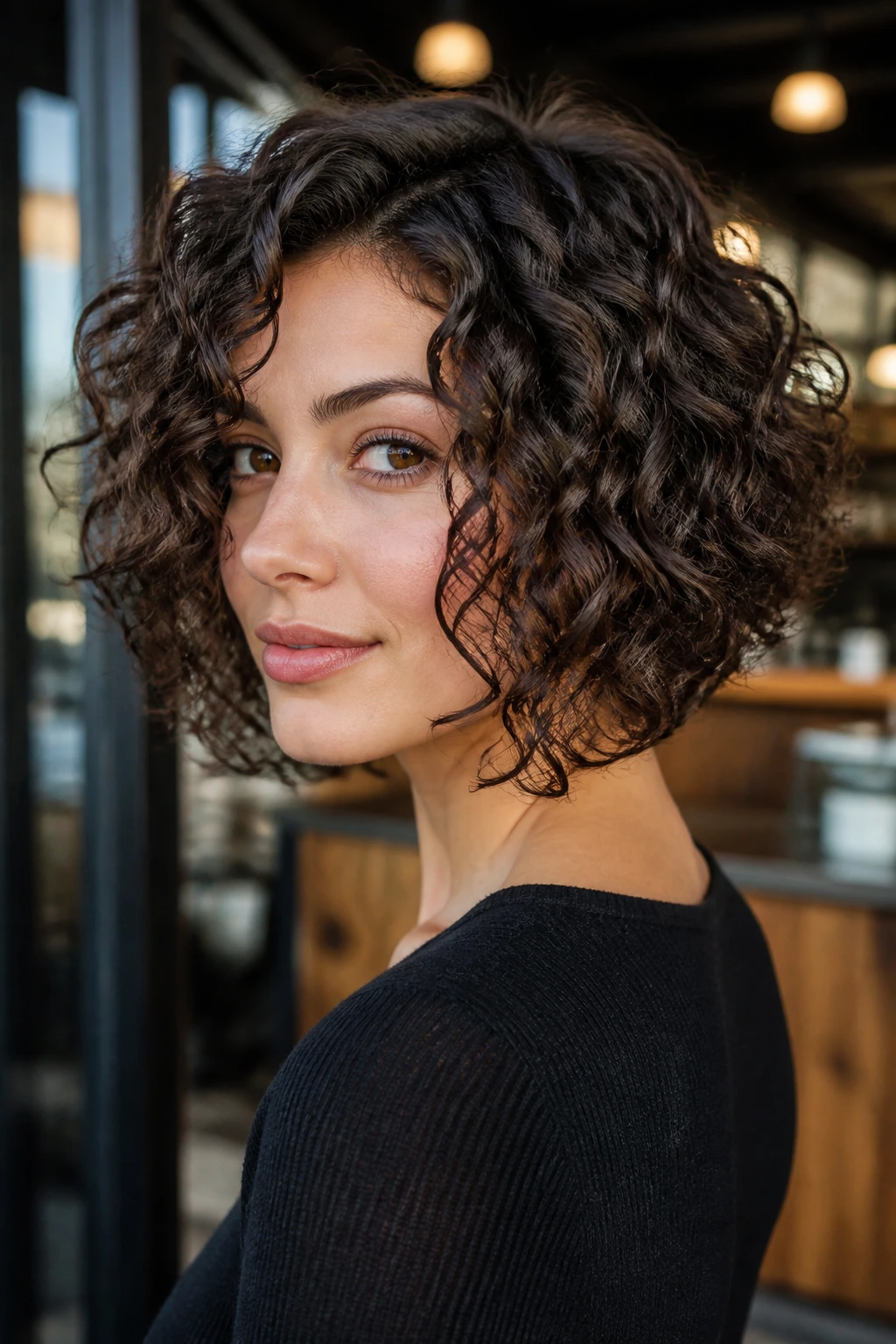
Face-framing angles are the easiest way to make a curly bob feel tailored. The front pieces are left a bit longer and cut to angle inward toward the cheekbones or jaw, which can sharpen the face without making the whole cut look pointy. It’s one of my favorite ways to make curls behave in the front while keeping the back compact.
This shape is useful for rounder faces, but it can work anywhere if the angle is handled lightly. Too much contrast and the front starts competing with the rest of the bob. Keep the angle subtle and the curls will do the rest. The best versions look like the hair naturally fell that way, even though they absolutely did not.
27. Curly Bob With Tucked-Back Sides
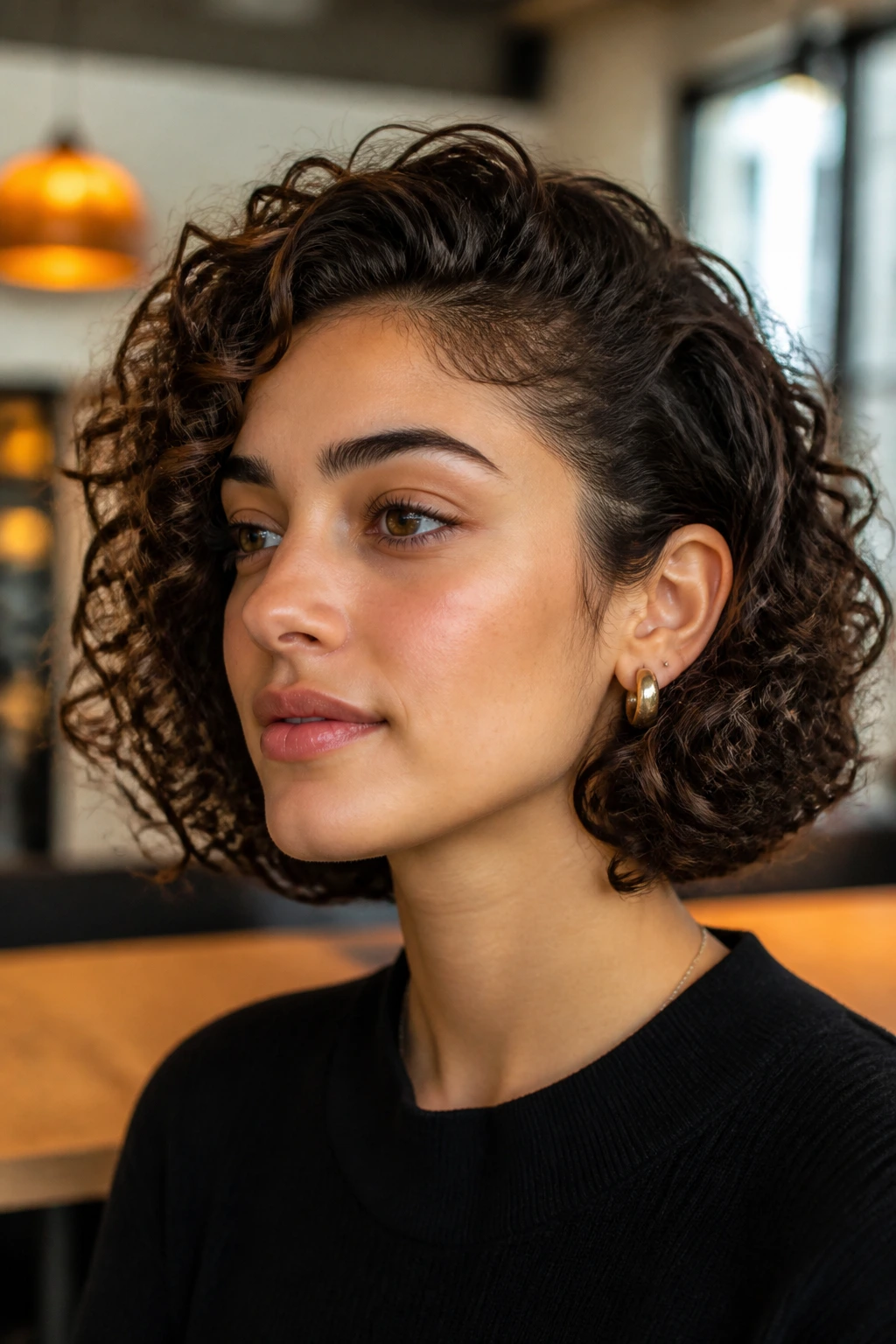
A tucked-back side area can make a curly bob feel cleaner around the ears and jaw. It opens the face a bit, which is helpful if your curls get big at the cheeks or if you wear glasses and don’t want the hair fighting the frames. The shape feels neat without being stiff.
This cut works well when the side sections are shaped to sit closer to the head, while the top keeps enough volume to show off the curl pattern. It’s a good move for anyone who likes a refined outline and hates side bulk. The trick is not to flatten the sides too much, or the cut can lose its texture and start to look pinned down.
28. Curly Bob With Deep Side Sweep
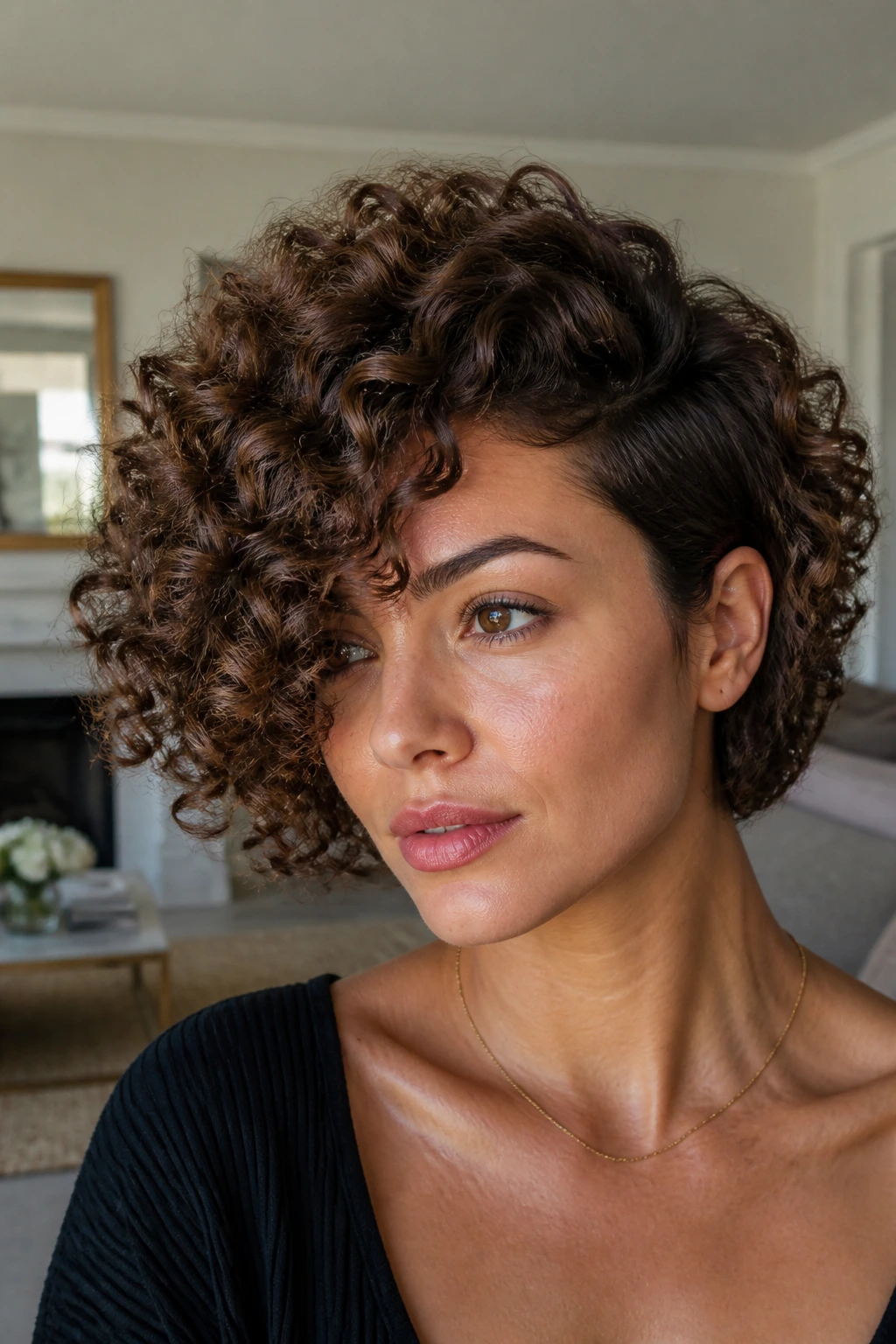
A deep side sweep gives curly hair instant drama, even when the cut itself is simple. The hair is shifted over to one side, which creates lift at the root and a cascade of curls across the forehead and cheek. That asymmetry is flattering in a way that’s hard to fake with styling alone.
This bob works best when the front has enough length to sweep rather than stick up. It can help soften a strong forehead or bring attention to the eyes. If you want a cut that feels a little more dressed up without adding more length, this is one of the smartest moves in the set. It changes the whole expression of the haircut.
29. Curly Bob for Fine Hair
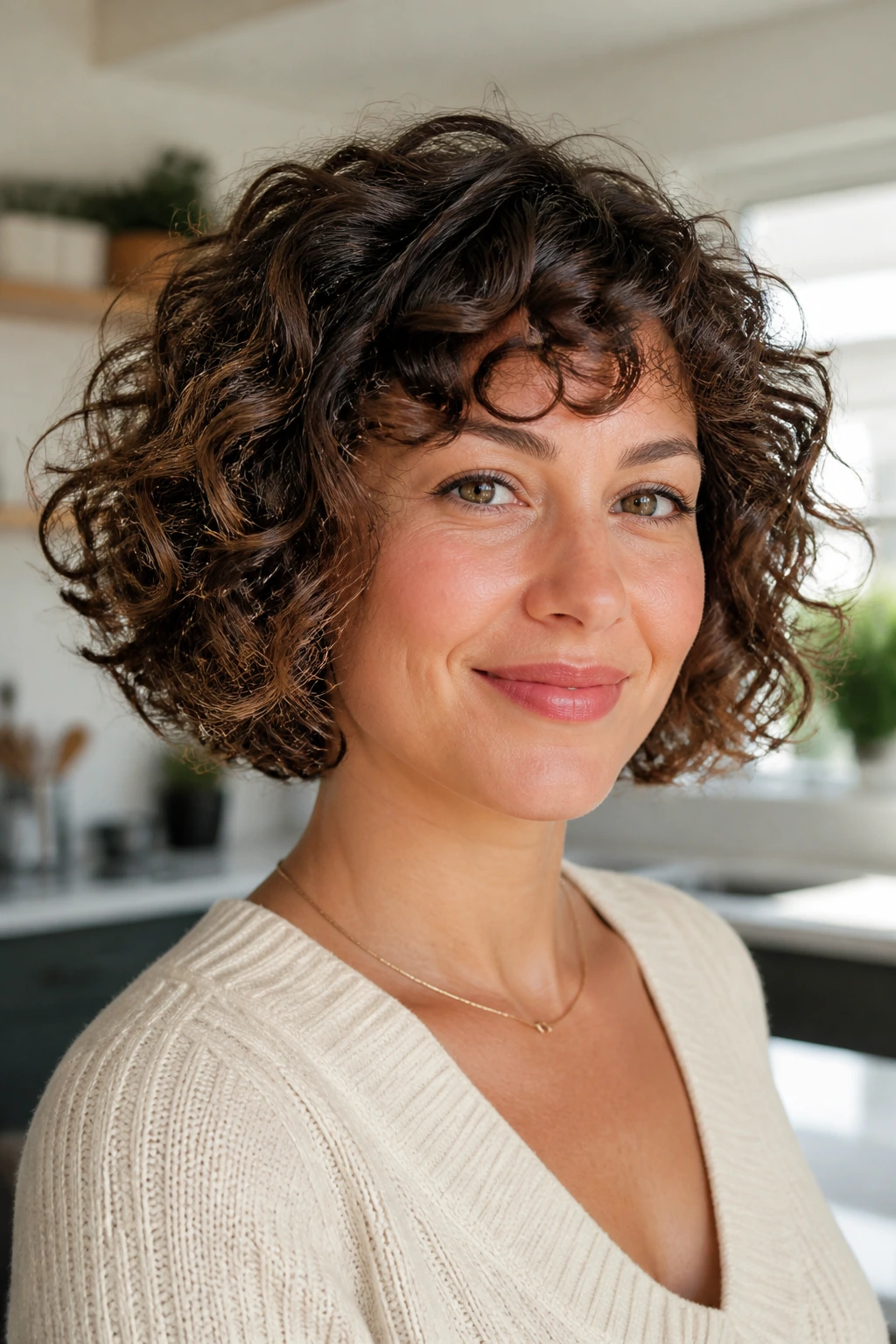
Fine curly hair needs a bob that gives it shape without stealing its body. The best version usually keeps the layers light, the ends clean, and the perimeter strong enough to create the illusion of fullness. A cut that’s too heavily thinned can make fine curls look wispy and tired.
This is where a little bluntness helps. The ends need something to land on. A collarbone or chin-length bob often works better than a very short crop because it lets the curls overlap enough to look denser. Styling matters here too: a lightweight mousse or foam can lift the roots without weighing them down. Fine curls usually hate heavy cream and love clean structure.
30. Curly Bob for Thick Hair
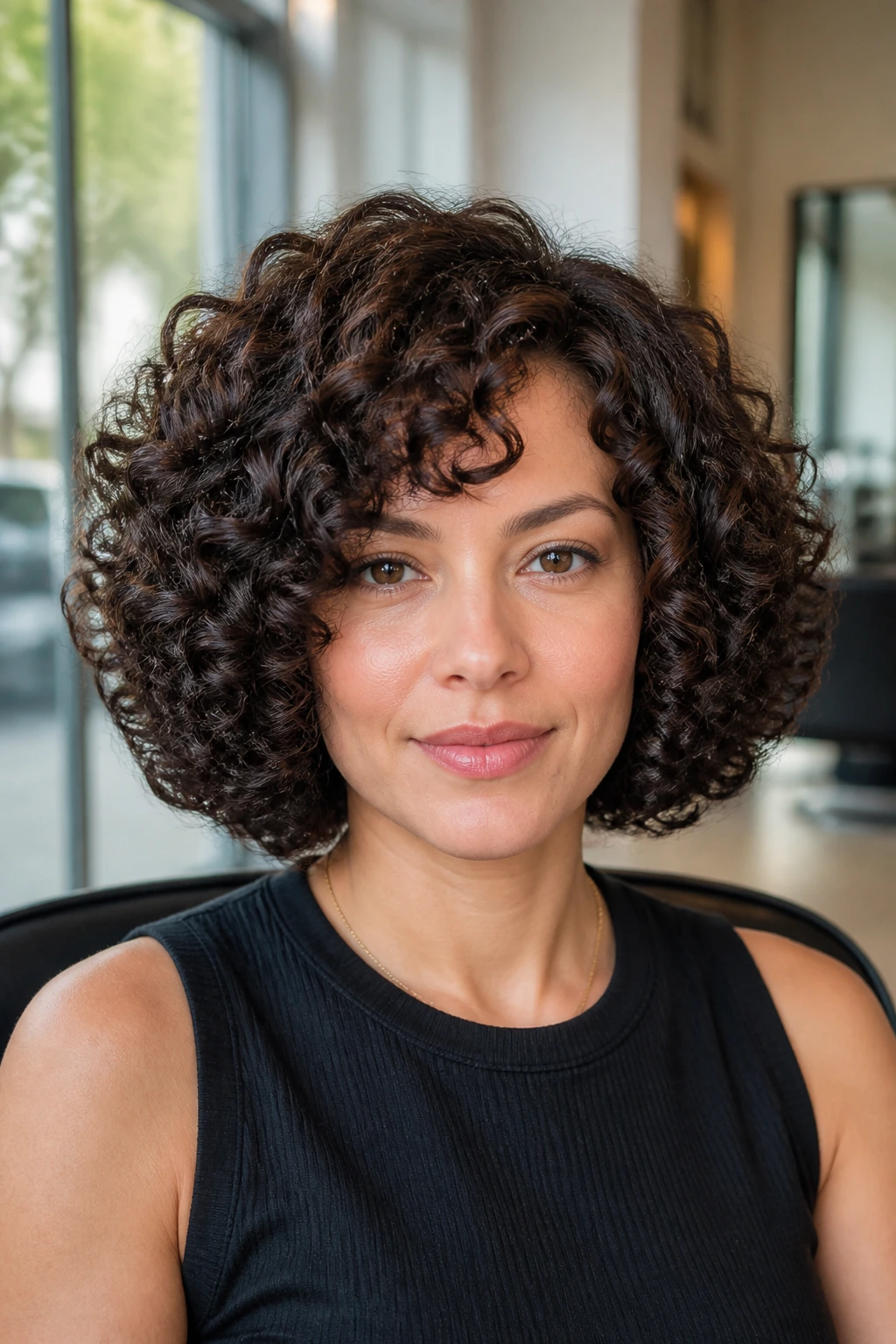
Thick curly hair can wear a bob, but it needs an editor. Without enough internal debulking, the shape turns wide and heavy at the bottom, especially when it dries. The right cut removes bulk in the places that puff up while keeping enough length to show the pattern.
This is where stacked backs, hidden layering, and careful perimeter control earn their keep. You do not want the stylist to slice the volume out of the hair at random. You want it distributed. Thick curls can look luxurious in a bob, but only if the shape is designed to collapse inward a little instead of outward. If the cut feels too full in the chair, it probably needs more thought, not more scissors.
31. Curly Bob for Type 4 Coils
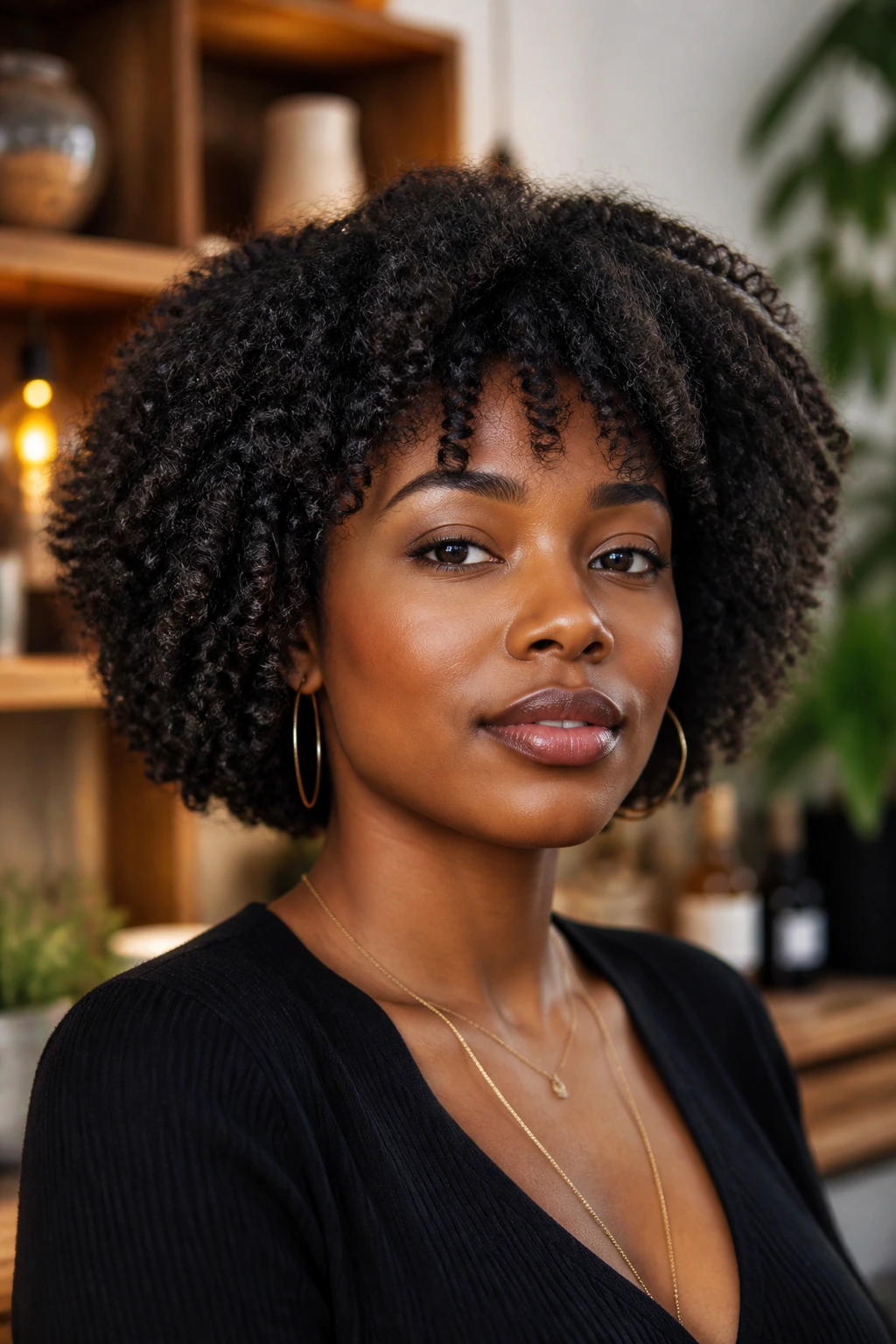
Type 4 coils can look extraordinary in a bob when the cut respects their density and natural spring. A rounded shape often works best because it lets the coils build a controlled halo instead of forcing them into a blunt box. The line should be shaped with shrinkage in mind, and usually with extra room left for bounce.
Moisture matters here, but the cut matters first. If the interior is too heavy, the bob can feel dense and sit too low around the face. If it’s too layered, the shape can turn uneven fast. A good Type 4 bob feels balanced from the crown to the nape, with enough room for the coils to move without collapsing into a block. It’s a precise cut, not a timid one.
32. Curly Bob for Wavy Hair
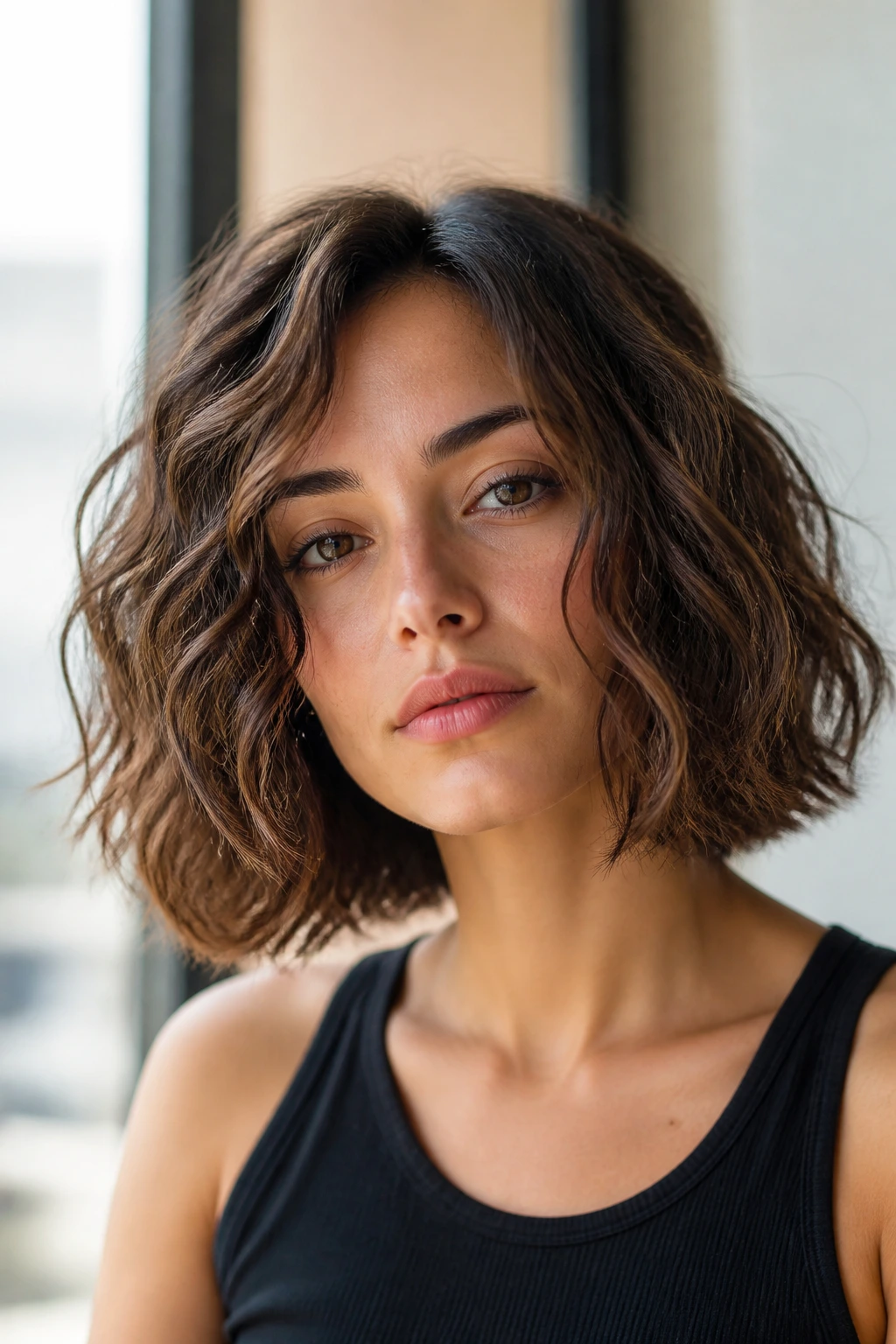
Wavy hair doesn’t always want the same bob as tighter curls. It usually behaves better with a slightly longer length and fewer aggressive layers, because the waves can lose their shape if they’re thinned too much. A lob or shoulder-skimming bob often gives waves the best chance to look full and bendy.
The goal here is not to create curl where there isn’t any. It’s to keep the waves from bending in odd directions or sticking flat at the crown. A soft middle part, a little face-framing, and a clean perimeter often do more than a dozen styling tricks. This cut can look very effortless, but that ease depends on the right length. Too short, and the waves may flip out instead of curling under.
33. Polished Curly Bob With Glossy Finish
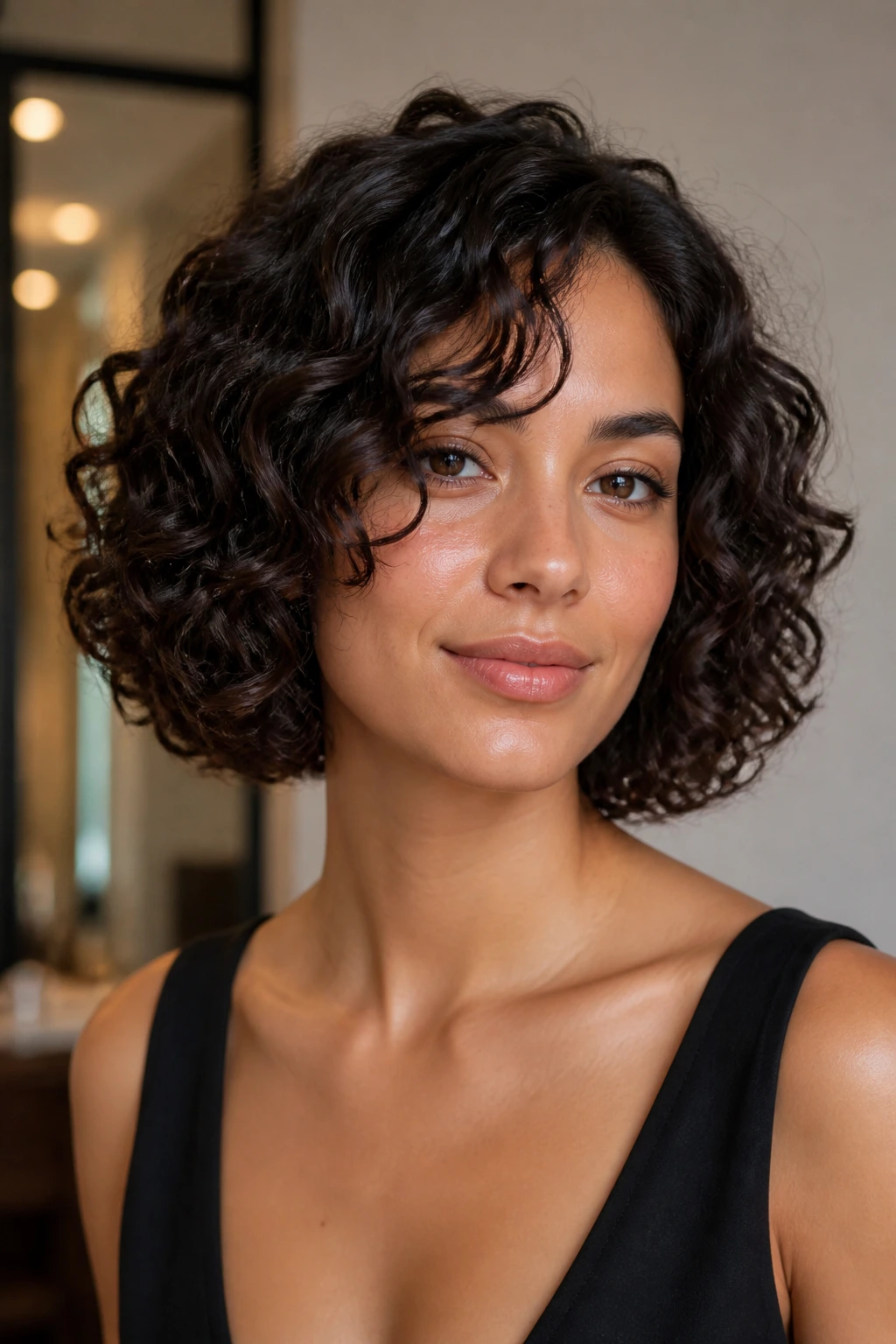
A polished curly bob has a different energy from the tousled versions earlier in the list. The curls are defined, the surface is smoothed down, and the whole shape looks like it was finished on purpose. That sheen comes from using enough product to seal the cuticle without coating the hair into a sticky shell.
This style suits people who like a neat outline and don’t mind a little styling time. It can lean formal, but not stiff. A diffuser on low heat, a touch of serum on the ends, and a careful part can make the bob look glossy rather than puffy. It’s one of the easiest ways to make a short curly cut look deliberate on a day when your hair wants to rebel.
Why Curly Hair Changes the Bob Conversation
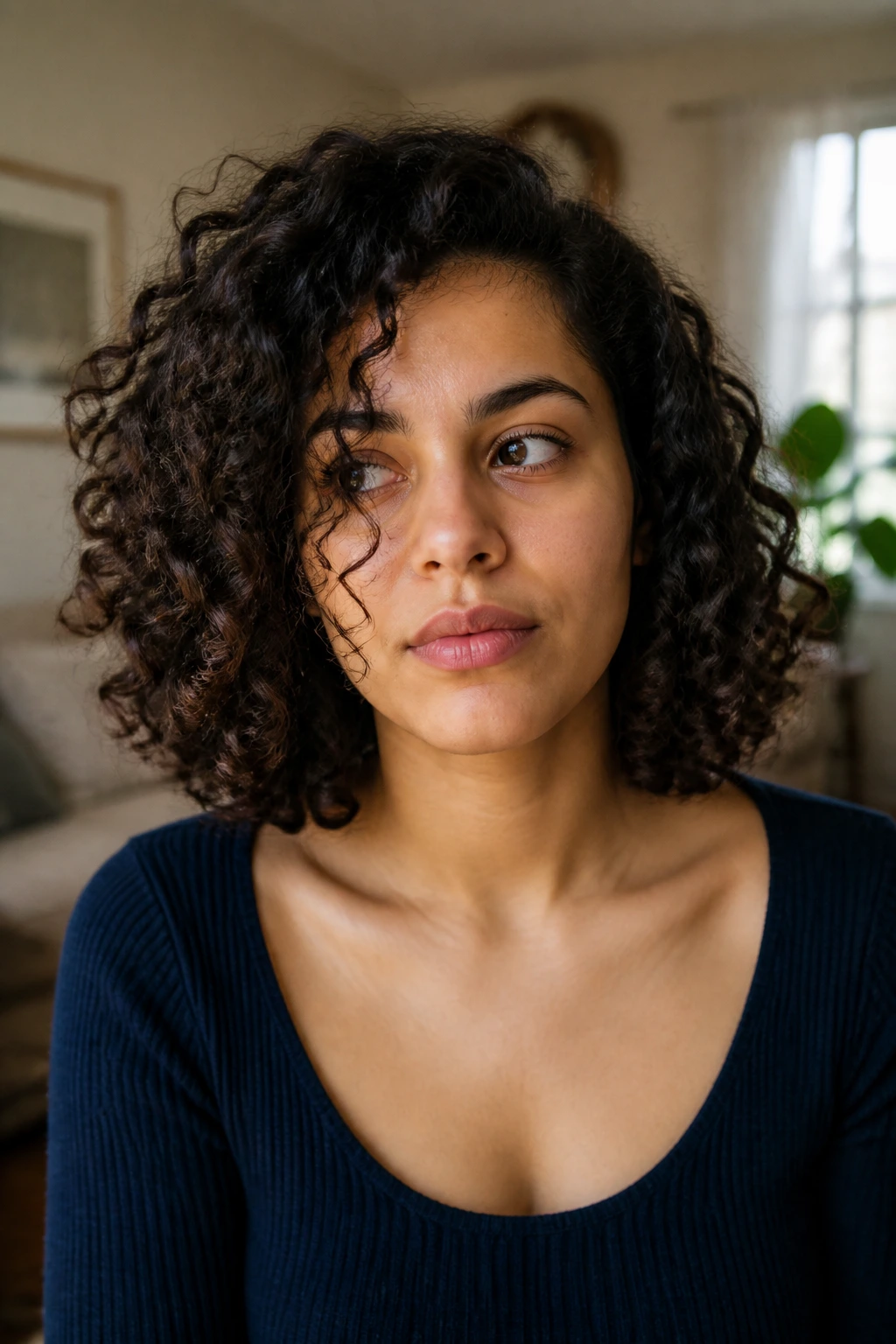
A straight-hair bob depends on a single visible line. Curly hair gives you a line and then interrupts it with spring, bend, and volume. That’s why the same haircut can look exacting on one person and wildly unbalanced on another. The cut has to account for where the curl bends, where it stacks, and where it expands after drying.
Dry cutting helps because you can see the shape as it exists, not as a wet guess. So does talking honestly about shrinkage. A curl pattern that lifts one inch after washing is easy enough to predict. A tighter pattern that bounces up three or four inches needs a different plan altogether. The best curly bob haircuts are built with that reality in mind.
Weight distribution matters too. Too much bulk at the bottom gives you the triangle. Too much layering gives you a puff that loses its edge. The sweet spot sits between the two, and it changes with density, porosity, and how much time you actually want to spend diffusing. That part gets ignored in a lot of salon conversations. It should not.
What to Bring to the Salon Chair
Photos help, but only if they match your hair’s behavior. Bring images of people with a similar curl pattern, density, and length goal. A photo of a sleek chin bob on pin-straight hair will only confuse the conversation unless you’re using it as a reference for shape, not texture.
Say where you normally part your hair, how far your curls shrink, and whether you diffuse or air-dry. If you always tuck one side behind your ear, mention that too. Small habits shape a bob more than people realize. A stylist can cut for the way you live, but only if they know what your routine actually looks like.
A few useful things to say out loud:
- How much length you’re comfortable losing when the hair dries
- Whether you want a crisp perimeter or a softer edge
- If your curls are looser at the crown and tighter underneath
- How much time you want to spend styling on wash day
- Whether you want bangs, face-framing, or none of the above
That conversation is worth more than showing up with one vague photo and hoping for the best.
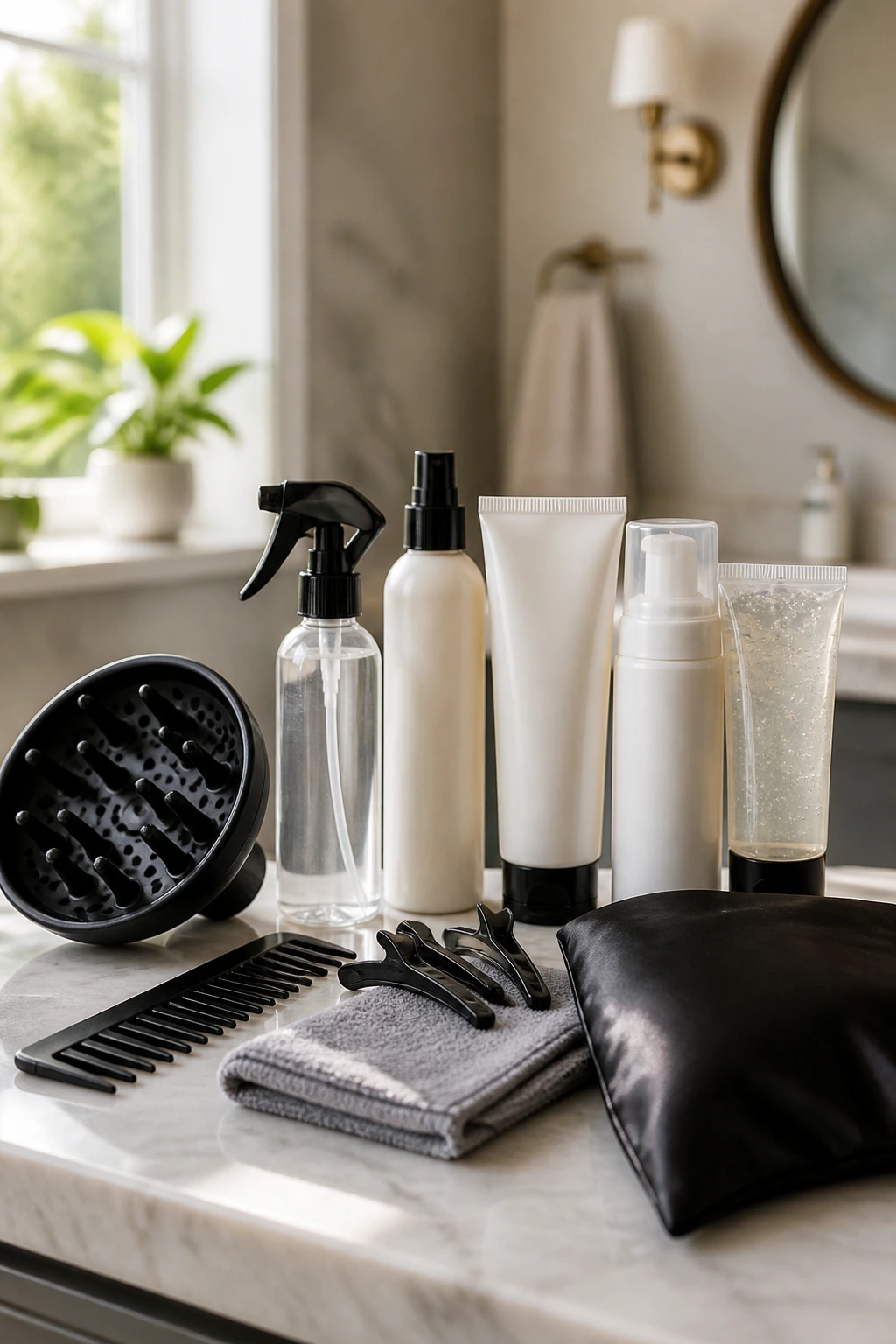
Essential Tools for Styling and Maintenance
-
Wide-tooth comb: Detangles wet curls without tearing apart the clumps you want to keep.
-
Spray bottle with water: Useful for reactivating product on day two or three without fully rewashing.
-
Leave-in conditioner: Helps curls stay soft and keeps the bob from looking dry at the ends.
-
Curl cream or light mousse: Adds control and shape without weighing the cut down too much.
-
Strong-hold gel: Gives sharper definition when you want the bob to dry with cleaner edges.
-
Diffuser attachment: Helps dry the cut without blasting the curl pattern into frizz.
-
Duckbill clips: Handy for root lift while the hair dries, especially at the crown.
-
Microfiber towel or cotton T-shirt: Better than rough terry cloth, which can rough up the curl surface fast.
-
Silk or satin pillowcase: Cuts down on friction overnight, which matters more on shorter hair than people think.
How to Wear These Cuts Day to Day
Presentation: Let the silhouette do the work. A curly bob looks strongest when the perimeter is visible and the curls are encouraged to sit where the cut placed them, not when every strand is stretched and over-fluffed.
Accompaniments: Earrings, glasses, scarves, and collar shapes all matter. Shorter bobs pair nicely with hoops or studs, while longer lob versions play well with collars that frame the neck instead of swallowing it.
Portions: Keep the length in mind when shrinkage is big. If your curls spring up two inches or more, the “right” chin length in the salon chair may need to be closer to the jaw or upper neck before it dries.
Mood Pairing: Sharp bobs feel cleaner with a side part and a smooth finish. Softer bobs look better when a few pieces are left loose around the face and the surface isn’t polished into submission.
Extra Tips That Keep the Shape from Puffing Out
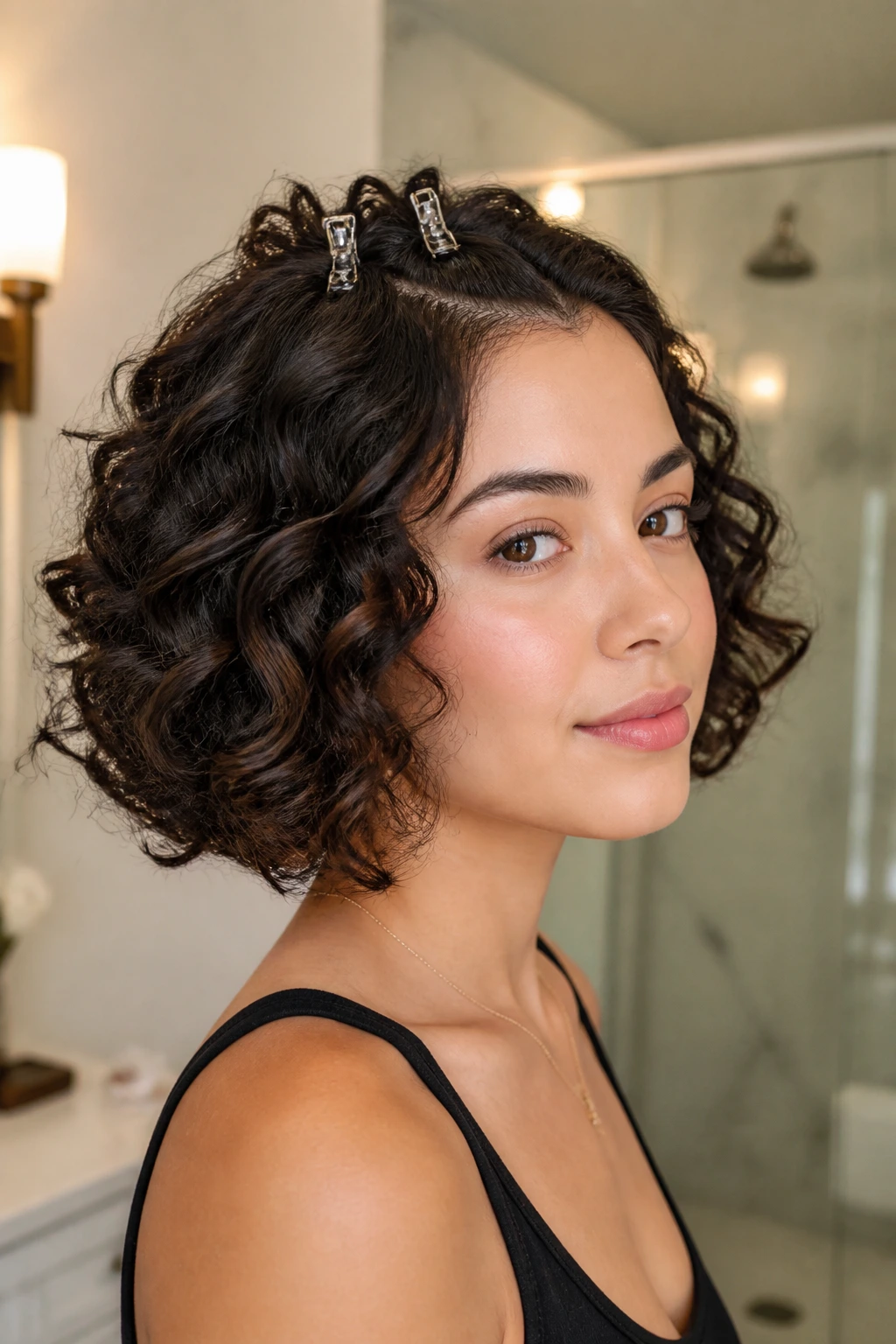
Root Lift: Clip the roots at the crown while the hair dries if the top goes flat. Even two or three small clips can keep the bob from pressing down at the scalp.
Frizz Control: Apply product on soaking-wet hair, not damp hair. Wet curls clump better, which makes the bob look more intentional once it sets.
Face-Framing: If the front feels heavy, stretch only those pieces with your fingers while they dry. Do not stretch the whole head unless you want the bob to lose its shape.
Make-It-Yours: Fine hair usually likes light mousse and less cream. Thick curls usually want more hold and a cleaner perimeter. Coily hair often needs stronger moisture and a rounder outline.
How to Keep the Cut Fresh Between Trims
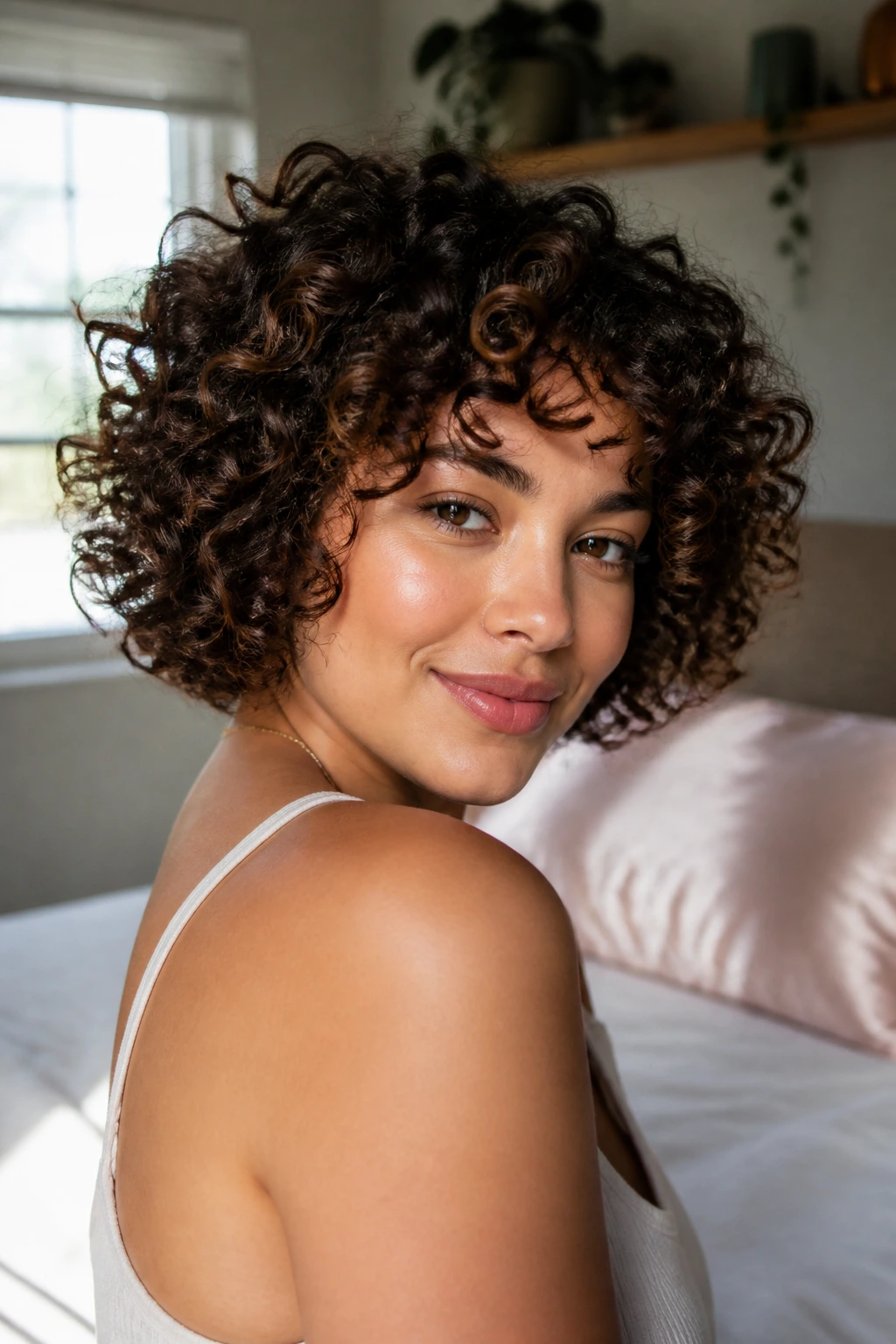
A curly bob usually holds its shape for a while, but the maintenance rhythm matters. Most people do well with a trim every 8 to 12 weeks. Shorter, more structured cuts may want a clean-up closer to 6 to 8 weeks, especially if the perimeter starts flipping or the nape gets bulky. Letting it grow too long without shaping can turn even a good bob into a fuzzy middle-length situation.
At night, a satin pillowcase or bonnet helps more than a lot of fancy products. If your bob is long enough, you can loosely pineapple it high on the head, but shorter cuts usually need a gentler approach — a soft clip, a silk wrap, or just sleeping on satin and letting the curls fall where they may. In the morning, mist the shape lightly, add a pea-size amount of leave-in or curl cream if needed, then scrunch the ends back into place.
A wash day reset every 3 to 5 days works for many curl patterns, though dense or dry hair may stretch that a little longer. On non-wash days, a spray bottle and a tiny bit of gel on the outer layer can keep the bob from turning puffy by the afternoon. If the ends start to look frayed before the next cut, that’s usually a sign the perimeter needs attention, not more product.
Common Mistakes That Make Curly Bobs Collapse
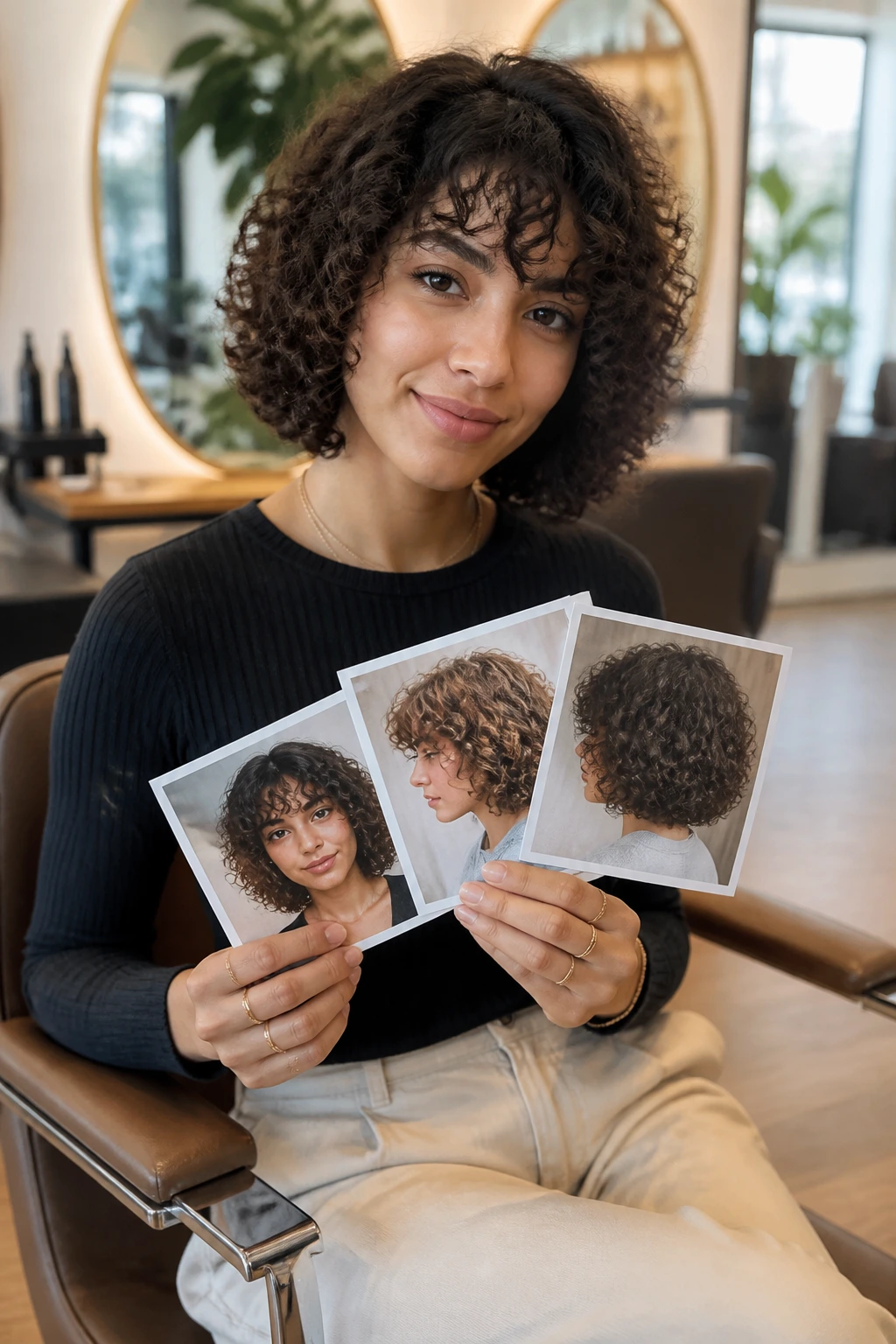
Cutting it too short before shrinkage is checked: The symptom is a bob that lands above the jaw once it dries, then keeps climbing. The fix is to discuss shrinkage in inches, not vibes, and leave extra length in the chair.
Over-thinning the sides: The shape looks airy at first, then the ends go wispy and the crown gets big. Ask for careful internal shaping instead of aggressive thinning shears, especially on fine curls.
Ignoring the natural part: If your hair always falls left but the cut is centered, the bob can look crooked even when it’s technically even. Work with the part your hair prefers unless you’re ready to retrain it.
Styling curls only when they’re half-dry: Frizz shows up faster that way. Apply leave-in, cream, or gel on soaking-wet hair so the curl clumps stay intact while they set.
Skipping regular shape-ups: Bobs need edge maintenance. Even if the rest of the style still looks fine, the perimeter can lose its clean line fast, and that’s usually the first thing people notice.
Variations and Adaptations to Try
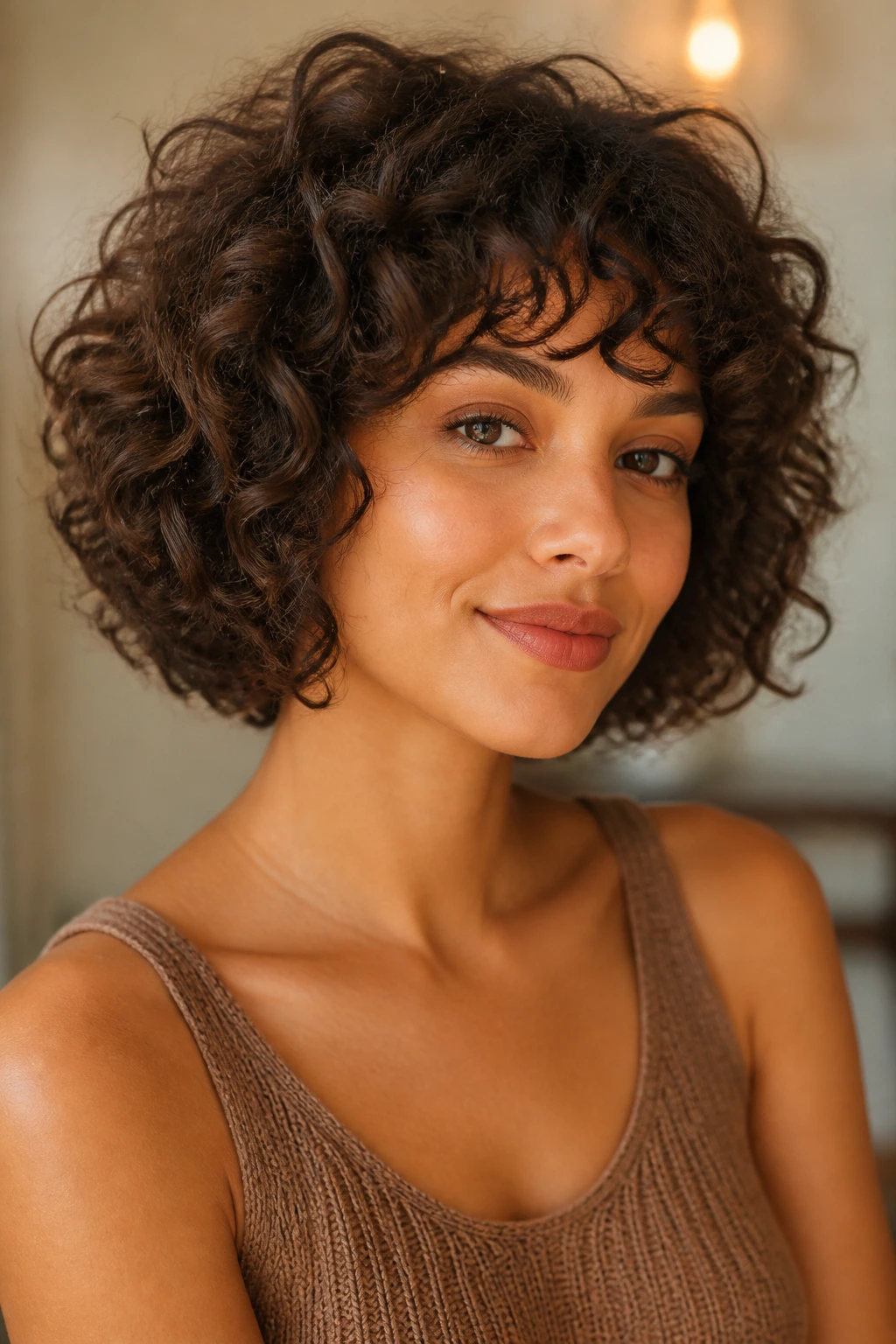
The Low-Fuss Grow-Out Bob: Keep the length closer to the collarbone, soften the layers, and ask for a perimeter that still looks tidy even after three or four weeks of growth. This is the one to choose if you want fewer salon visits and less panic when the shape starts to shift.
The Bigger-Than-Life Bob: Go shorter, add a stronger stack in the back, and let the curls build height at the crown. It works best on dense hair that can handle structure without collapsing.
The Soft Edge Bob: Keep the line round, the layers long, and the finish loose. This version suits people who want movement more than precision.
The Bang-Forward Bob: Add curtain bangs, side-swept fringe, or micro bangs depending on curl pattern and forehead height. Bangs change the whole mood, and they’re easier to grow out than a chopped perimeter if you decide to switch gears later.
The Glossy Finish Bob: Use more hold, a little serum on the ends, and a careful diffusing routine for a smoother, more polished look. It’s a good pick for event days or for curls that naturally clump into neat pieces.
Frequently Asked Questions
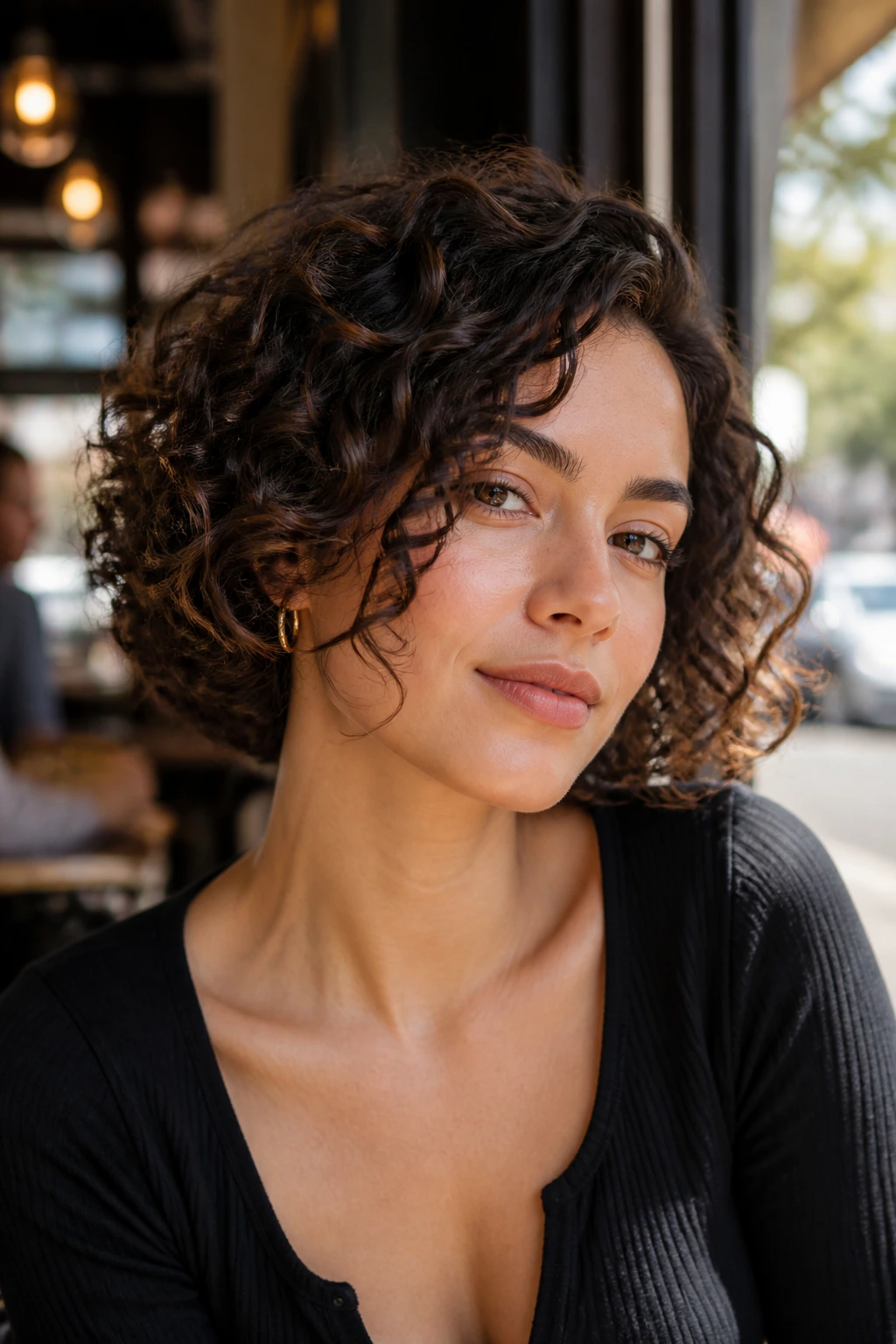
Can curly hair actually pull off a bob without looking wide?
Yes, but the shape has to be planned around your density and curl pattern. A bob with the right perimeter and a little internal weight removal can look narrower and cleaner than long hair that’s fighting its own volume.
Should a curly bob be cut wet or dry?
Dry cutting usually gives better control because curls show their true length, bend, and spring. Some stylists use a mix of wet and dry methods, which is fine, but the final shape should be checked in the hair’s natural state.
What length is safest if I’m nervous about shrinkage?
A collarbone bob or lob is the least risky starting point. It gives you bob shape without jumping straight to chin length, and you can always shorten it later if you want more edge.
How do I stop my curly bob from turning into a triangle?
Ask for internal shaping, a clean perimeter, and less bulk at the bottom. Then style on soaking-wet hair so the curls dry in clumps instead of puffing outward.
Can I get bangs with a curly bob?
Yes, but the bang length needs to respect your curl pattern. Curtain bangs and longer side-swept fringe are the easiest to live with, while micro bangs need a curl type that springs neatly and consistently.
Is a curly bob high maintenance?
It can be if you want a polished finish every day, but many curly bobs are easier than long hair because there’s less to detangle and less weight pulling the curl out. The real maintenance is in the trim schedule and the morning refresh.
Will a bob work on fine curly hair?
Absolutely, as long as the cut isn’t over-thinned. Fine curls usually need a strong perimeter, light layers, and products that support lift without coating the hair.
What if my bob flips out at the ends?
That usually means the perimeter is too blunt for the way your curls fall, or it needs a tiny adjustment at the next trim. In the meantime, smoother styling cream and a better diffusing angle can calm the ends down a bit.
The Shape That Stays Interesting
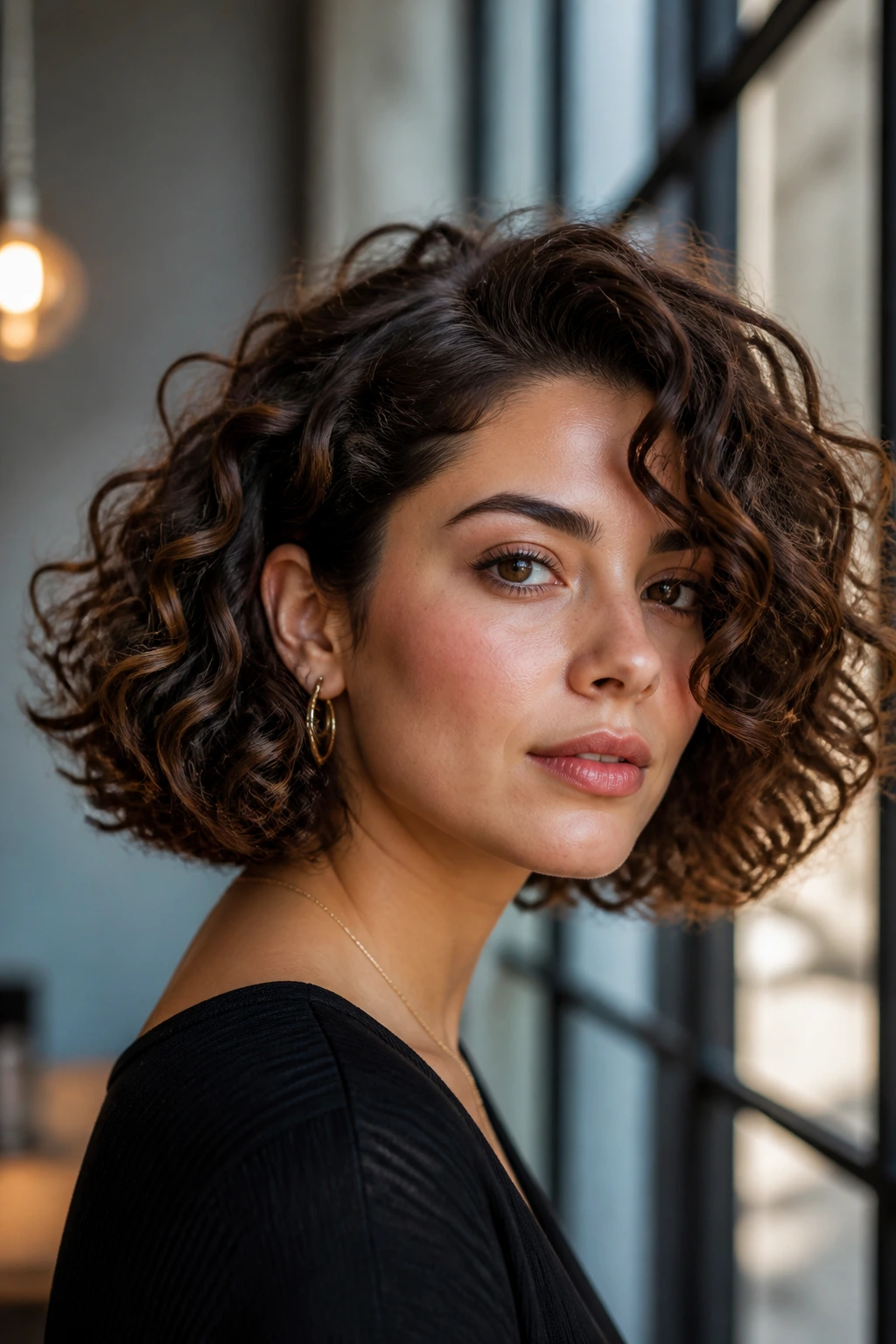
A curly bob is not one haircut with 33 decorations on top. It’s a shape language, and the difference between a good version and a frustrating one usually comes down to how well the cut respects the curls that are already there. When that happens, the haircut stops fighting the hair and starts giving it a frame.
The best part is that this shape can change tone without changing length by much. A side part makes it sharper. A fringe softens it. A little stack in the back gives it lift, while a blunt edge makes the whole thing look cleaner. That range is why curly bob haircuts keep earning space on real heads, not just mood boards.
Choose the version that fits your curl pattern, your morning routine, and your tolerance for trims. The good ones do their work fast.
