



Bob hair ombre works best when the fade behaves like a whisper, not a stripe. On a cut that stops at the jaw, cheekbone, or collarbone, there’s nowhere for a harsh line to hide. The color has to melt, and the haircut has to help it.
That’s why the prettiest ombré bobs usually look more expensive than dramatic. The root stays a shade or two deeper, the mid-lengths carry the bridge tone, and the ends only lighten enough to catch the eye when the hair moves. One inch too high and the whole thing can start to look chopped in half. One inch lower, and suddenly the shape feels soft, airy, and finished.
I’ve always thought bob-length color is a little more honest than long-hair color. Long hair can swallow a mistake. A bob shows every decision. A blunt edge, an angled line, a French bob with a bend at the ends — each one changes how the fade reads, which is exactly why this style range is so good for experimentation. The right ombré bob can go smoky, honeyed, coppery, silver-beige, or berry-toned and still keep that gentle gradient people want when they ask for a soft color fade.
Why These Ombre Bobs Work Better Than One-Note Color
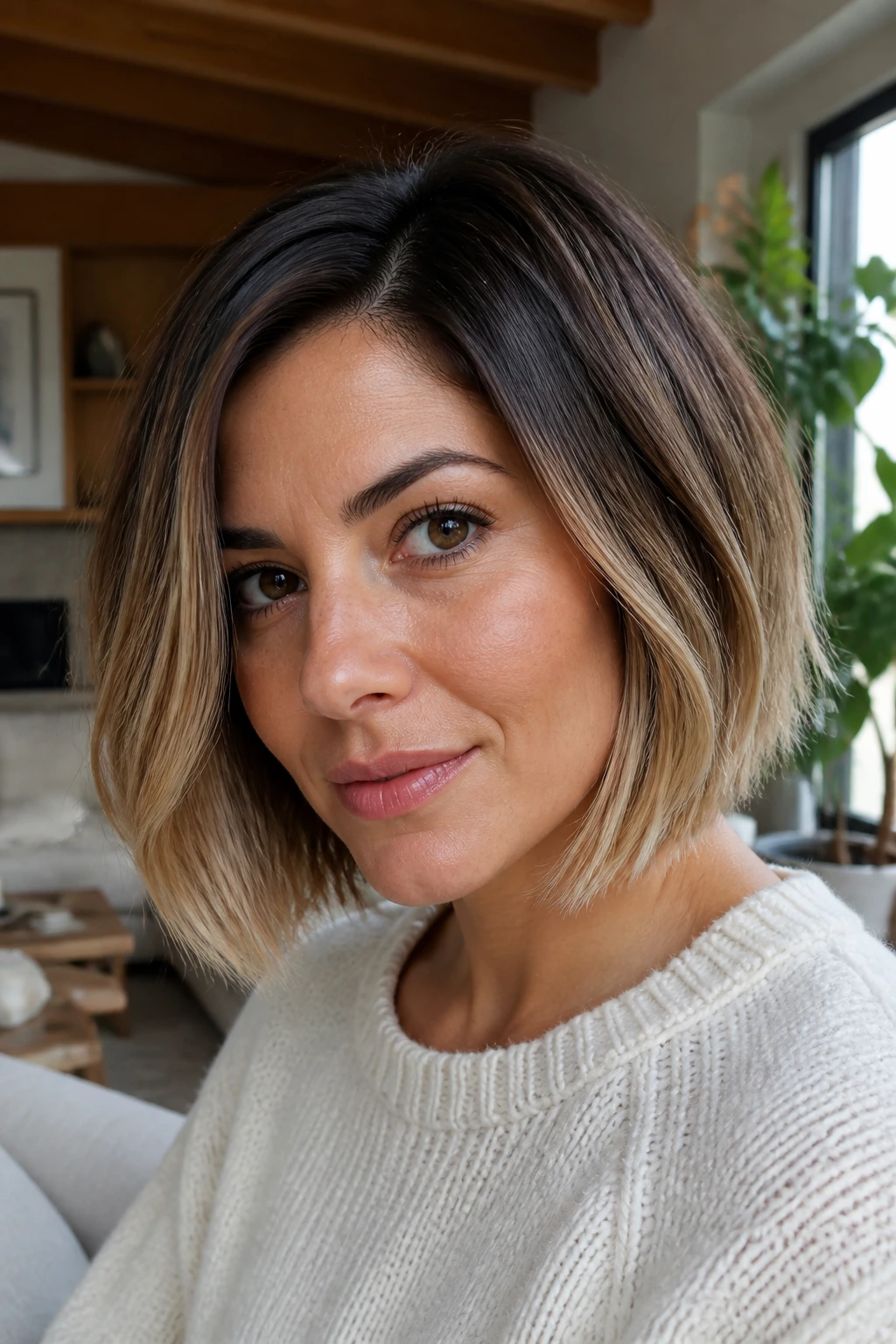
- The cut does some of the blending for you: A bob already has a strong shape, so a soft root shadow and lighter ends look intentional instead of overprocessed.
- Grow-out looks cleaner: Keeping the lightest color below the mid-lengths gives you a more forgiving line when the roots start coming back.
- The fade can flatter straight or wavy texture: Soft bends make the transition look airbrushed; sleek styling makes the tonal shift feel polished and crisp.
- Brunettes get a lot of room to play: Espresso, mocha, chestnut, caramel, beige, and honey all sit naturally on a bob without needing a huge color leap.
- Shorter length makes the color look fresher: A bob shows shine at the ends, so even a subtle gradient can look lively and deliberate.
- The style can be loud or quiet: You can keep it close to one color family or push it into rose gold, mauve, or silver-beige if you want more contrast.
1. Espresso Root Melt on a Blunt Bob
A blunt bob and a soft fade sound like opposites, but they’re actually a smart pair. The cut gives you a clean bottom edge, and the color keeps that edge from feeling heavy. Espresso at the root flowing into caramel through the last third of the hair makes the line look carved, not chopped.
The key is restraint. If the lighter shade starts too high, the bob loses that solid blocky shape that makes it so good in the first place. I like this look best when the root is only one shade deeper than the natural base and the ends are just warm enough to catch light on a smooth blowout. On straight hair, you’ll see the color drift without needing waves to do the work.
What I like about this version is how quietly confident it is. No stripey ends. No obvious dip-dye. Just a dark, glossy top that softens into something richer at the bottom.
2. Mushroom Brown Fade on a French Bob
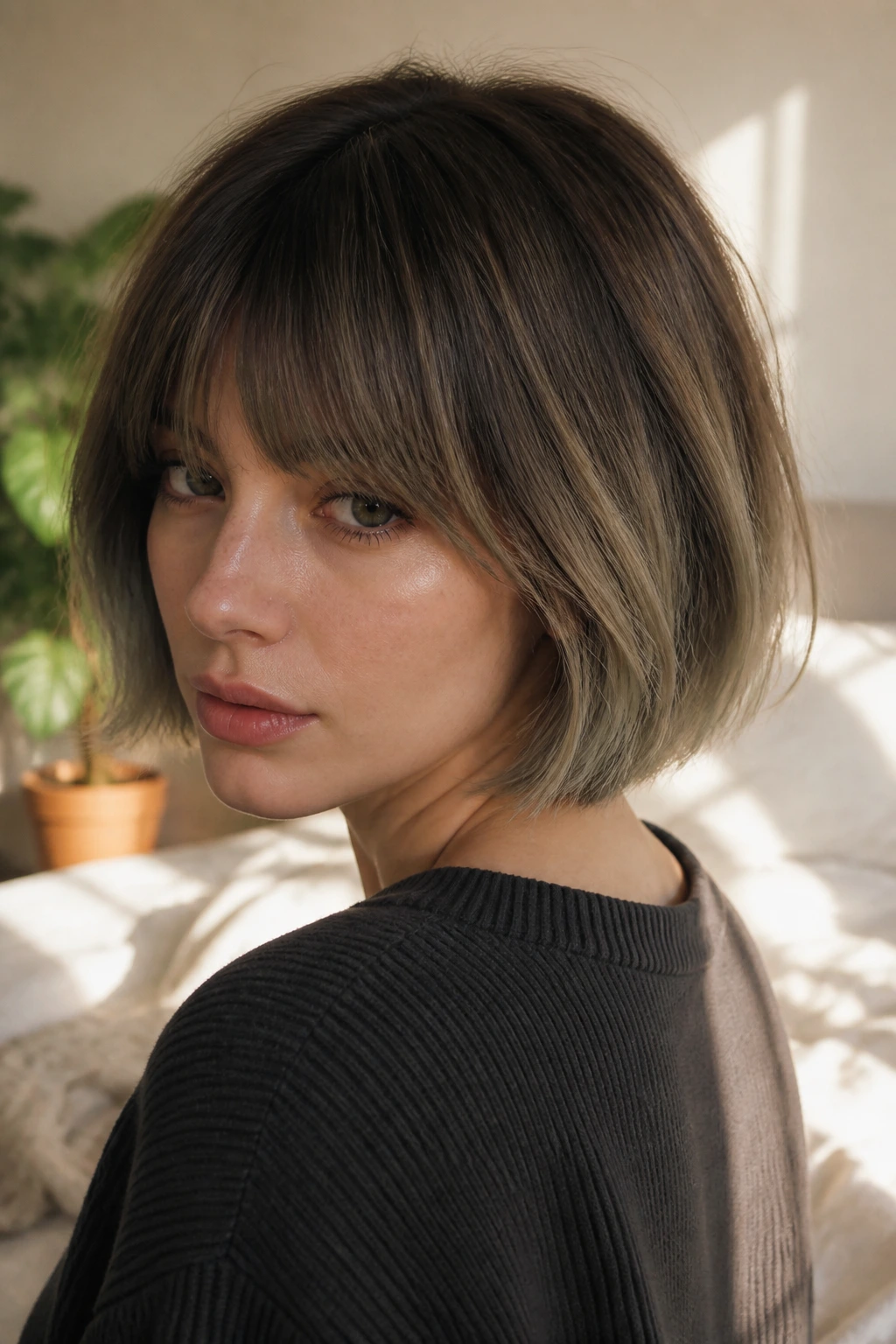
Can a cool brunette fade still look soft? Absolutely — and mushroom brown is one of the best ways to do it. On a French bob, that smoky taupe-brown root moving into beige ends keeps the cut from looking too severe, especially if the hair has a bit of natural bend.
This one works because the tones stay muted. There’s no harsh golden jump, no bleach-blonde surprise near the hemline. Instead, the color slides from cool brown into sandy beige with a little ash in the middle, which gives the whole bob that airy, lived-in feel people want from a French cut. The shape stays short and chic. The color does the softening.
I’d ask for the lightest pieces to stay below the cheekbone and the toner to lean beige rather than silver. Too much ash and the ends can go flat. Too much gold and the whole thing loses that smoky finish.
- Best for: natural brunettes who want low-contrast dimension
- Avoid if: you want a warm, sun-kissed result
- Styling note: a slight inward bend at the ends makes the fade look smoother
3. Black to Chestnut on a Curved Bob
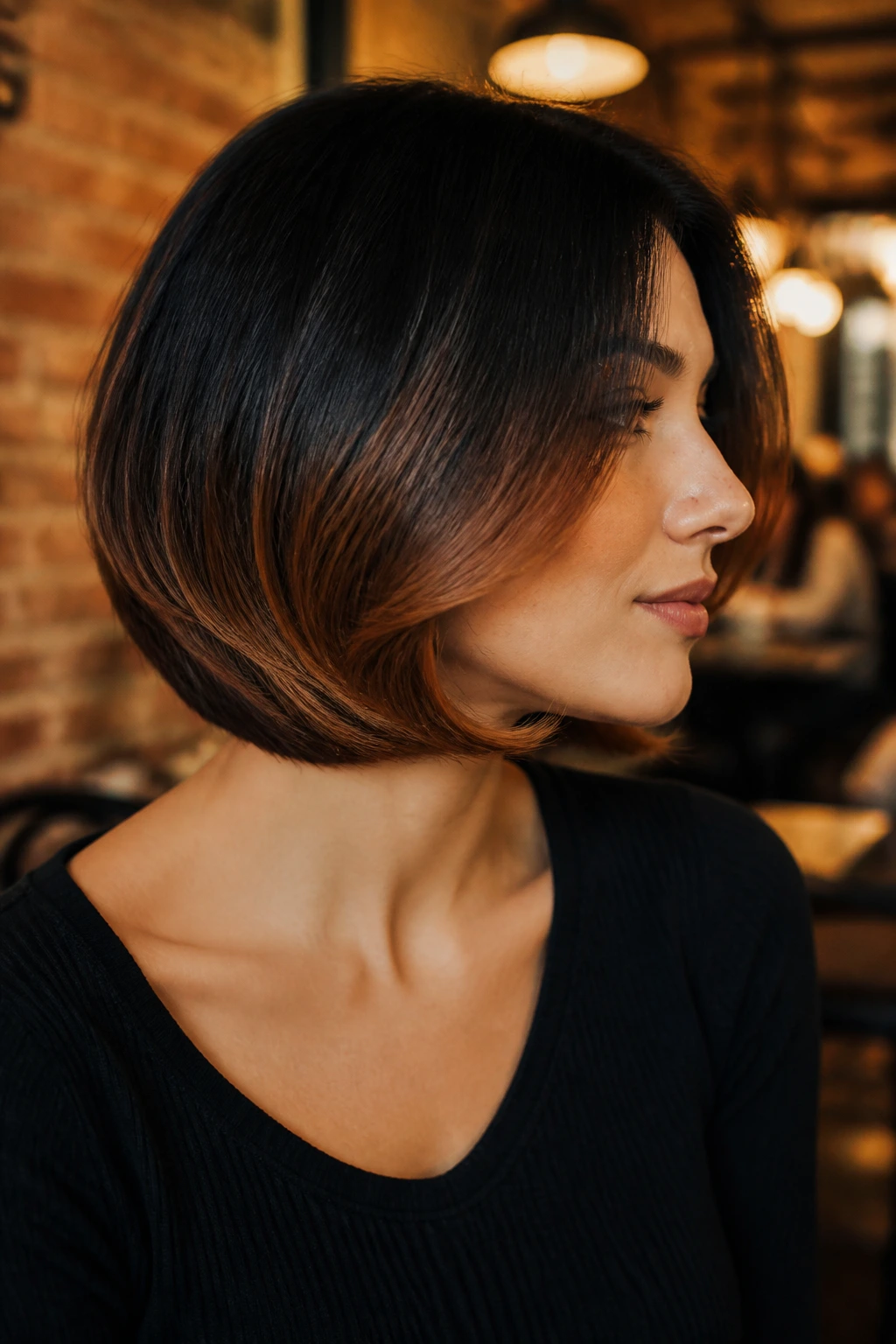
This is the version for people who want depth first and brightness second. A curved bob already hugs the jaw a little, so black roots melting into chestnut ends feel plush rather than stark. The color shift is small on paper, but on hair it changes the entire mood.
A lot of black-to-light ombre looks fail because the fade is too aggressive. This one avoids that problem by staying in the brown family. The root can sit near blue-black or soft black, and the ends can land in warm chestnut or walnut. That gives the hair movement without making the bottom look bleached. It’s one of the easiest ways to keep dark hair looking rich instead of flat.
This is also a good choice if your strands are thick or coarse. Warm brown reflects light better than flat black, so the ends don’t disappear in shadow. A curved blowout, where the brush turns the bottom under just a little, makes the shift feel almost velvety.
4. Copper Melt on a Textured Bob
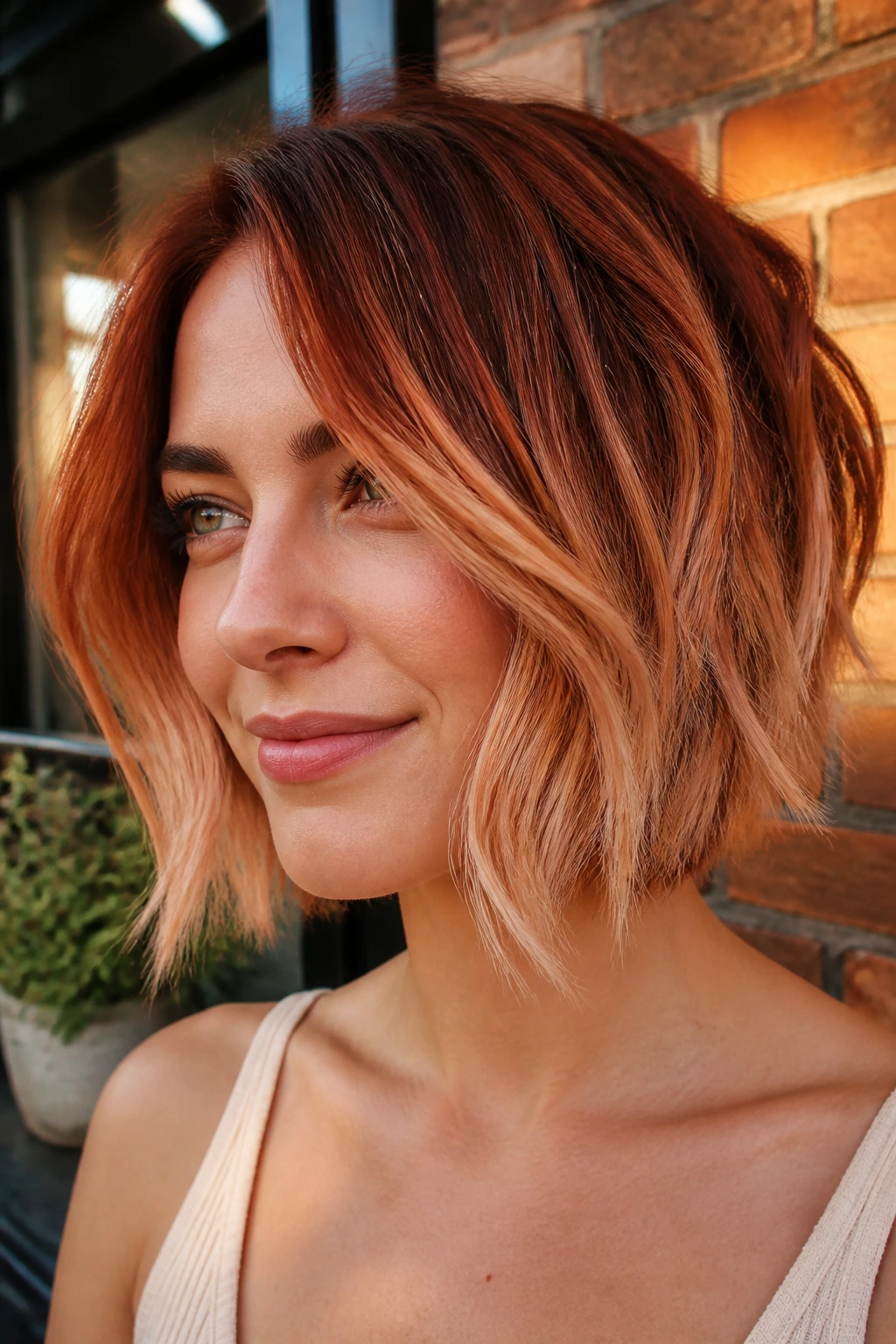
Copper on a bob is one of those looks that sounds louder than it actually wears. When the fade is soft, it reads like warmth, not costume color. Rooted copper sliding into apricot and pale ginger at the ends looks especially good on a textured bob because the layers break up the color in a natural way.
The trick here is keeping the root deeper and the brighter pieces concentrated on the lower third. If the copper starts too high, the whole cut can look one-note. Keep the top closer to cinnamon, then let the ends brighten into a sun-warmed orange-gold. That’s where the softness comes from.
What to ask for
Ask for a root smudge first, then a copper gloss through the mid-lengths, then a lighter apricot tone just at the tips. If the hair is already wavy, you’re halfway there. The bend in the hair will make the fade look more expensive than a perfectly flat finish ever could.
5. Auburn to Strawberry Blonde on a Rounded Bob
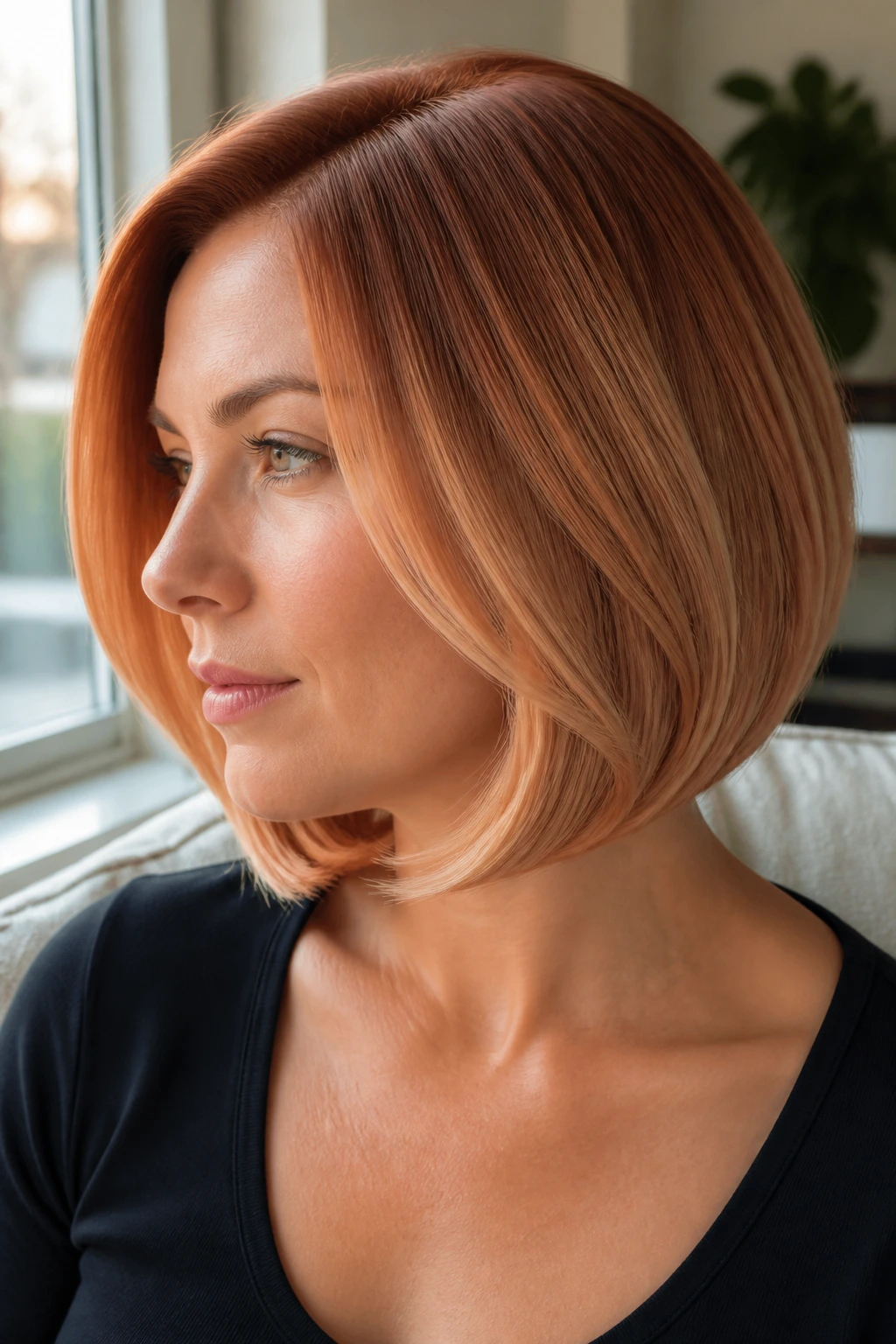
A rounded bob gives red tones somewhere to breathe. The curve of the cut softens the transition, so auburn at the root melting into strawberry blonde at the ends feels lush instead of loud. This is one of those color ideas that looks especially good in daylight, where the copper and gold tones show up separately.
The important thing is not to over-lighten the ends. Strawberry blonde should still feel like a red family color, not a pastel blonde with a pink filter. If the ends go too peachy, the bob starts looking disconnected. Keep them warm, glossy, and one step lighter than you think you need.
I like this one for hair that already leans warm. Natural redheads, dark auburn brunettes, and golden brown bases all wear it well. The rounded shape pulls the eye toward the middle of the face, while the lighter ends soften the outline of the haircut.
One small detail matters here: use a gloss after the lightening session. Red fades fast, and the gloss keeps the ends from turning muddy.
6. Walnut to Toffee on an A-Line Bob
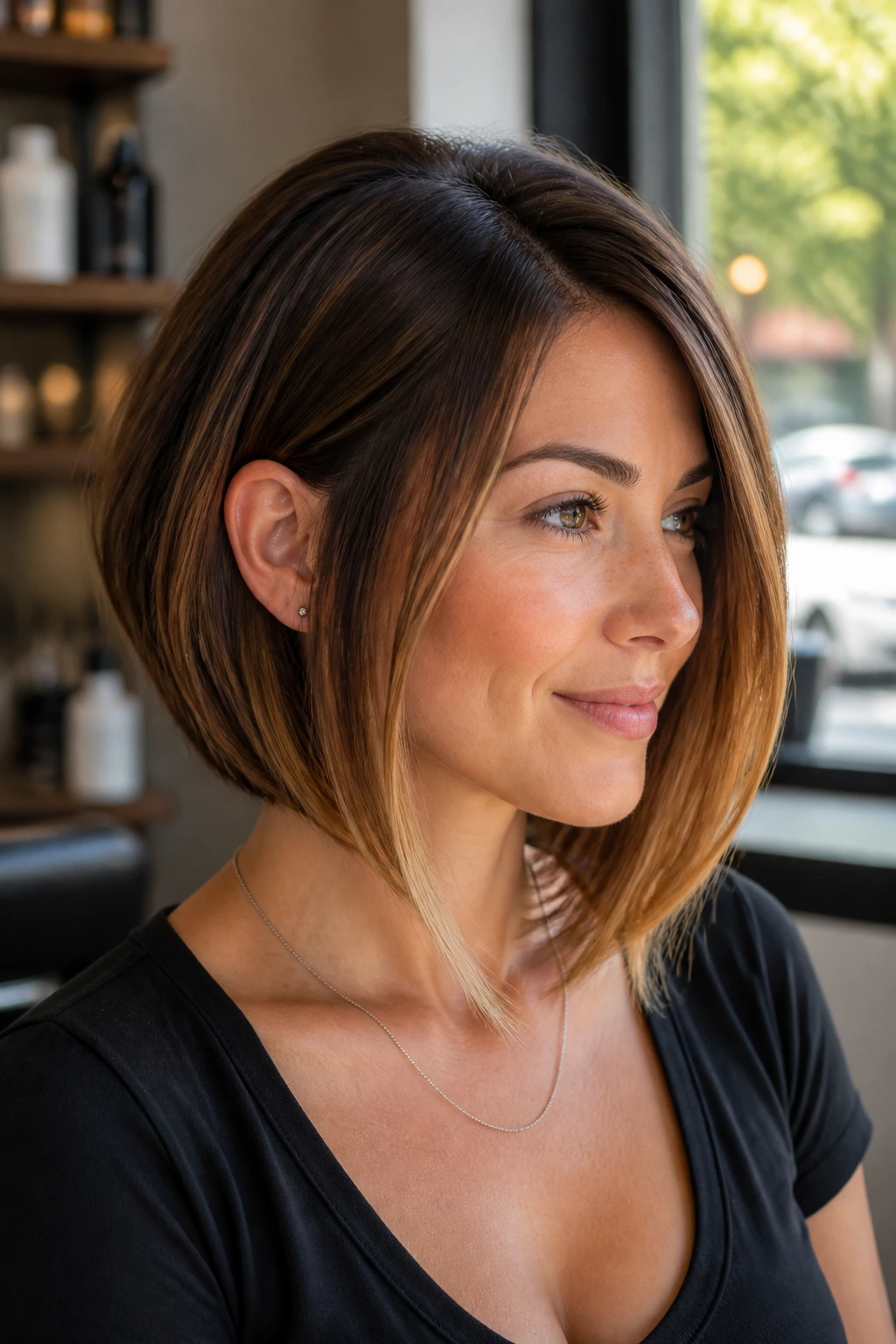
An A-line bob almost begs for ombré. The back is shorter, the front hangs longer, and that angled line gives you a built-in path for color to follow. Walnut roots drifting into toffee ends work beautifully here because the fade runs along the haircut instead of fighting it.
The darker back keeps the neck area clean and crisp. The longer front pieces get the richer toffee tone, which draws the eye forward toward the face. It’s a very flattering placement if you like structure, because the color emphasizes the angle without turning the bob into two separate blocks.
I’d keep the transition zone around the jaw and cheekbone, not higher. The front ends can be slightly lighter than the back, which creates motion when you tuck one side behind the ear. That little bit of asymmetry is where this look comes alive.
7. Bronde Bob with Honey Ends
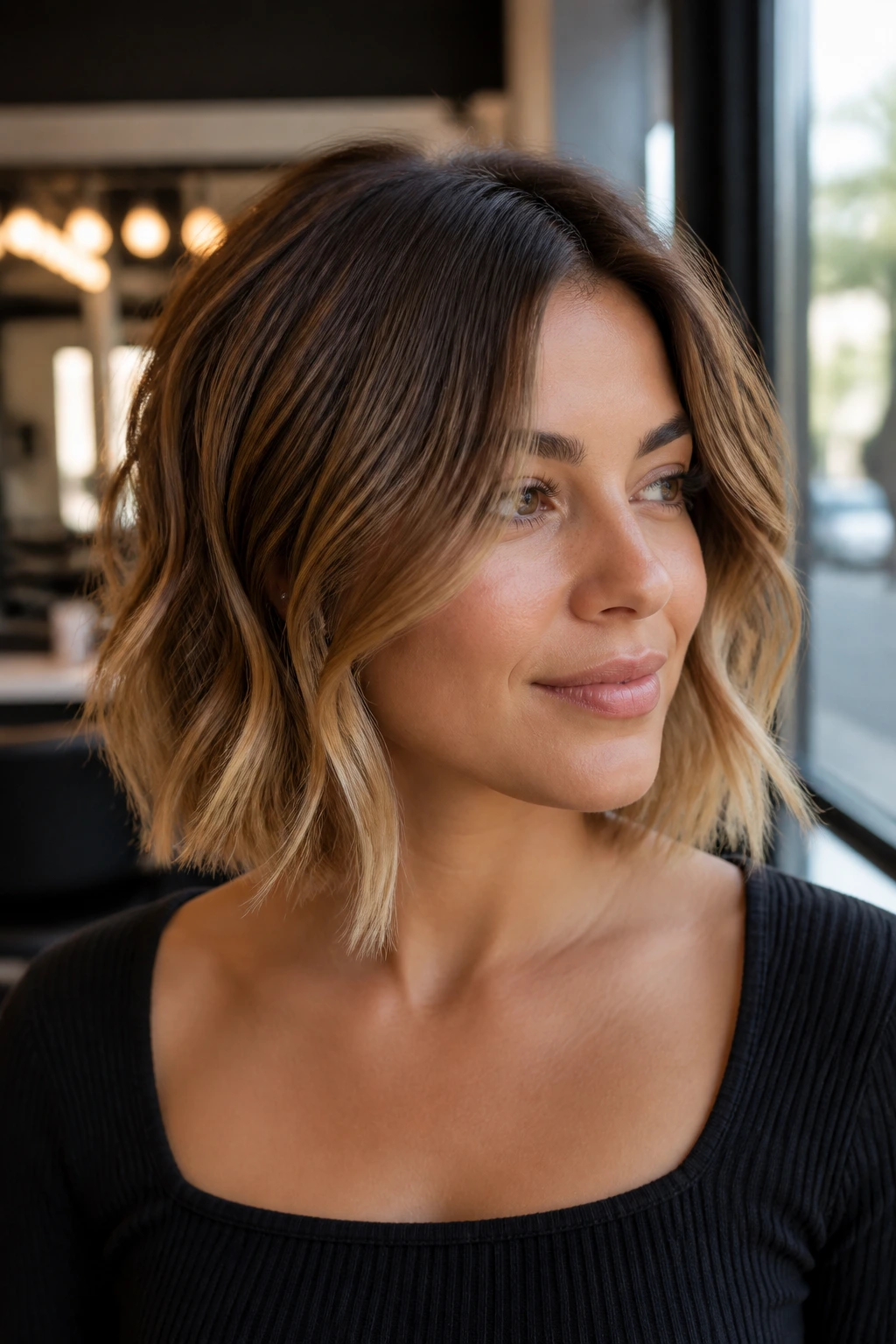
If you want the safest soft fade in the bunch, bronde is where I’d start. Brown at the top, blonde at the bottom, but never too far from the middle. On a bob, that balance keeps the ends bright enough to show movement while the root stays grounded and easy to live with.
The honey tone at the bottom is what makes this one feel warm instead of stark. Beige ends can look a little dusty on some hair types; honey keeps the color breathing. On a wave, the lighter pieces catch just enough light to separate the texture. On straight hair, the gradient still shows, but more quietly.
This is the kind of bob color that works when you want people to notice shine before they notice dye. I’d ask for a low root shadow and a beige-to-honey toner, not a yellow blonde finish. The difference is subtle in the bowl and obvious on the head.
Best on: medium brown bases and grown-out highlights
Styling note: loose waves make the transition softer
Maintenance: toner refresh every 6 to 8 weeks
8. Ash Brown to Champagne on a Lob
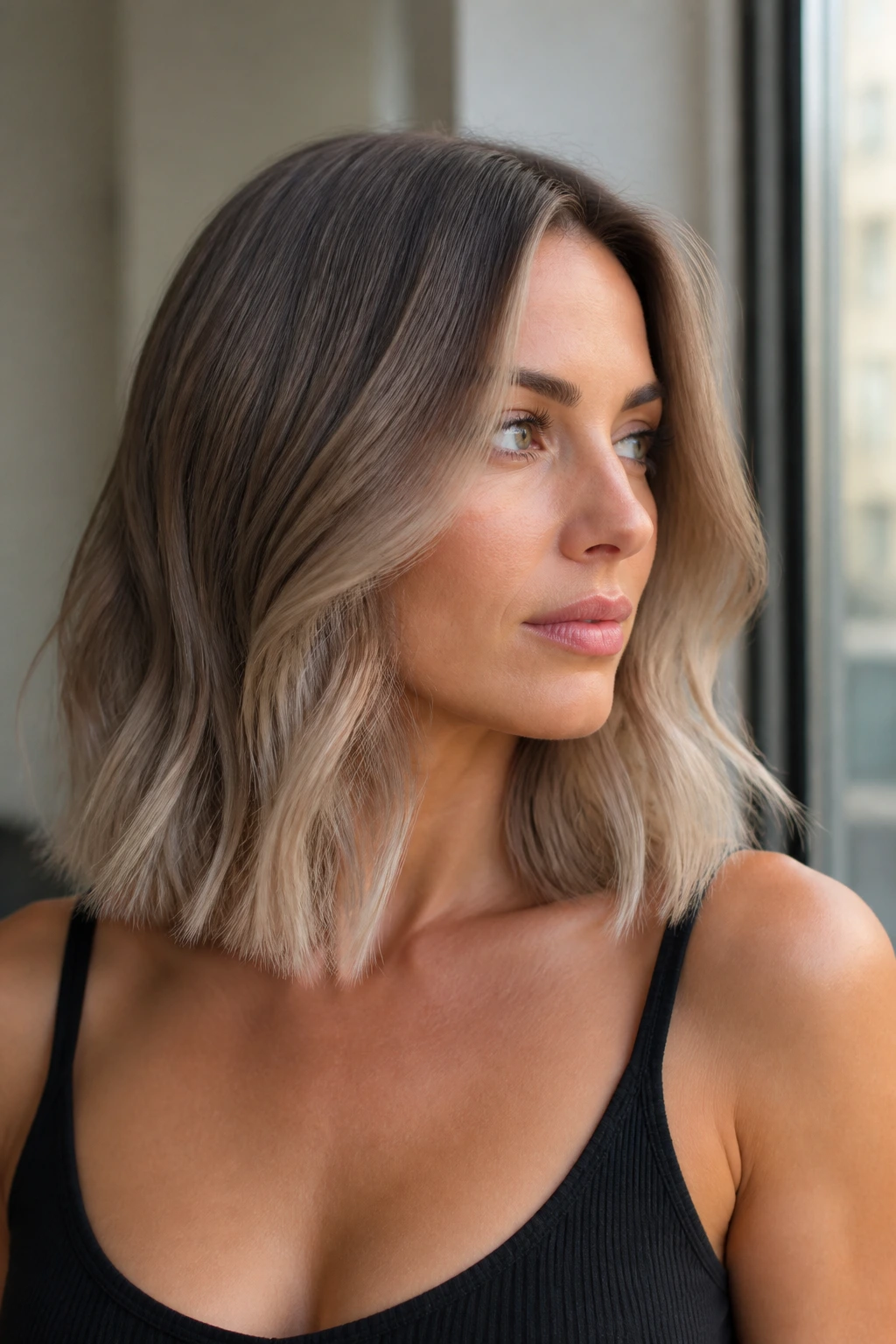
A collarbone lob gives cooler colors a little more room to stretch, which is why ash brown to champagne is such a good pairing. The ash root keeps the base calm, and the champagne ends add brightness without going icy or harsh.
This look is especially smart if your hair tends to pull orange. The cool root and neutral-blonde ends help balance that warmth. The fade should stay soft through the mid-lengths — think smoky beige, not silver block color. Too much ash can look muddy. Too much gold and the effect disappears.
I like this one best with soft bends rather than tight curls. You want the champagne to move across the surface, not sit in obvious ribbons. A round brush or a large curling iron wrapped loosely once or twice around the barrel keeps the bob from looking overstyled.
It’s a neat color when it’s done well. Quiet, but not dull.
9. Rose Gold on a Wavy Bob
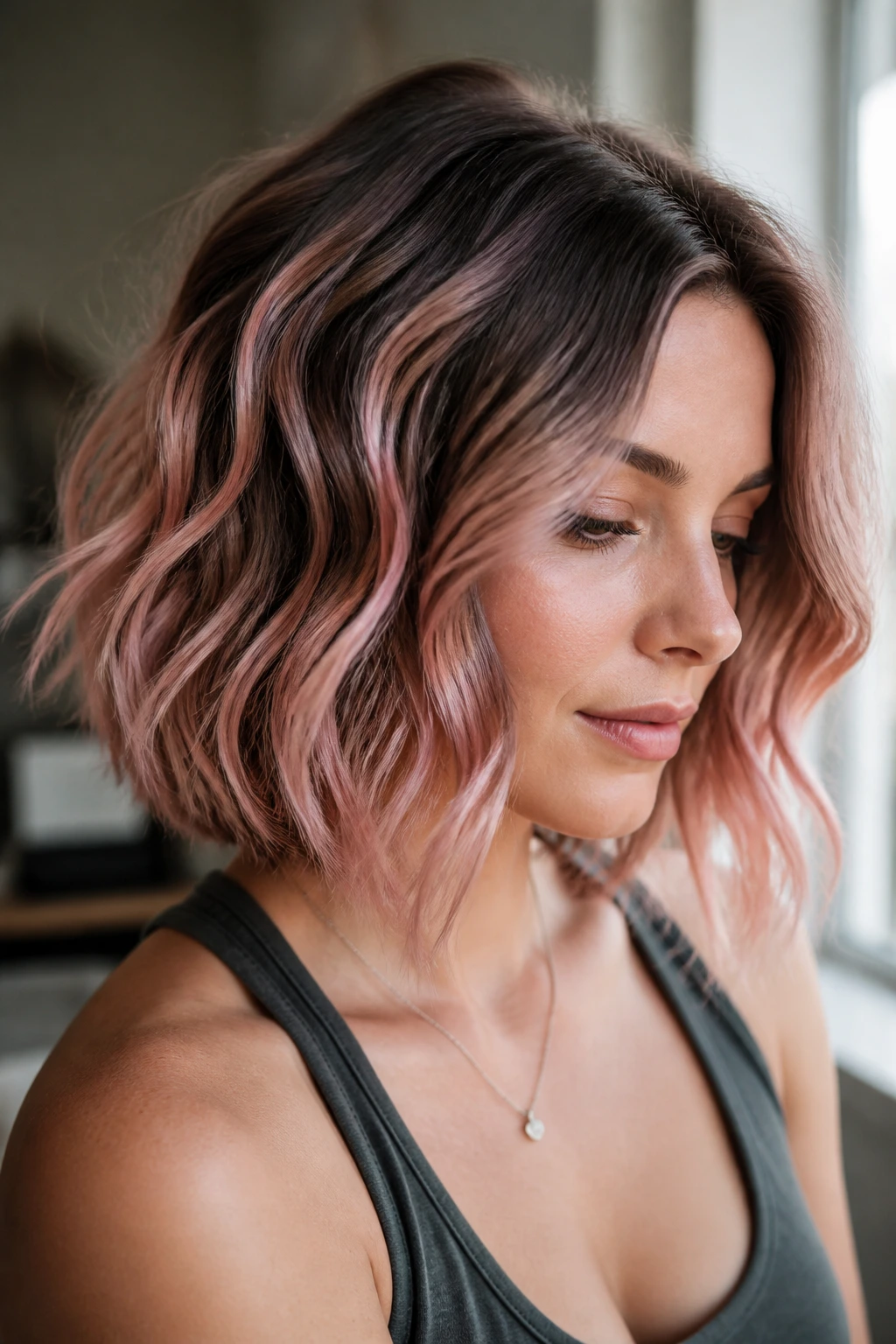
Rose gold on a bob can go sugary fast, so the secret is to keep the root smoky and the pink tone muted. On a wavy bob, though, the color looks lovely when it’s kept soft and a little dusty — more blush metal than candy floss.
The best version starts with a neutral brunette or dark blonde root, then shifts into apricot, peach, and a whisper of pink toward the ends. The waves do a lot of the work here. Every bend catches a different tone, which keeps the color from feeling flat. If the waves are too uniform, the pink can look staged. If they’re slightly messy, the whole thing feels much more natural.
I’d skip this on hair that’s already heavily damaged. Rose gold needs a clean canvas because porous ends can soak up the pink unevenly and go patchy. A gloss helps, and so does keeping the root a bit deeper than you think you need.
There’s a fine line between pretty and precious here. Stay on the softer side, and it lands beautifully.
10. Plum Brown to Smoky Mauve on a Short Bob
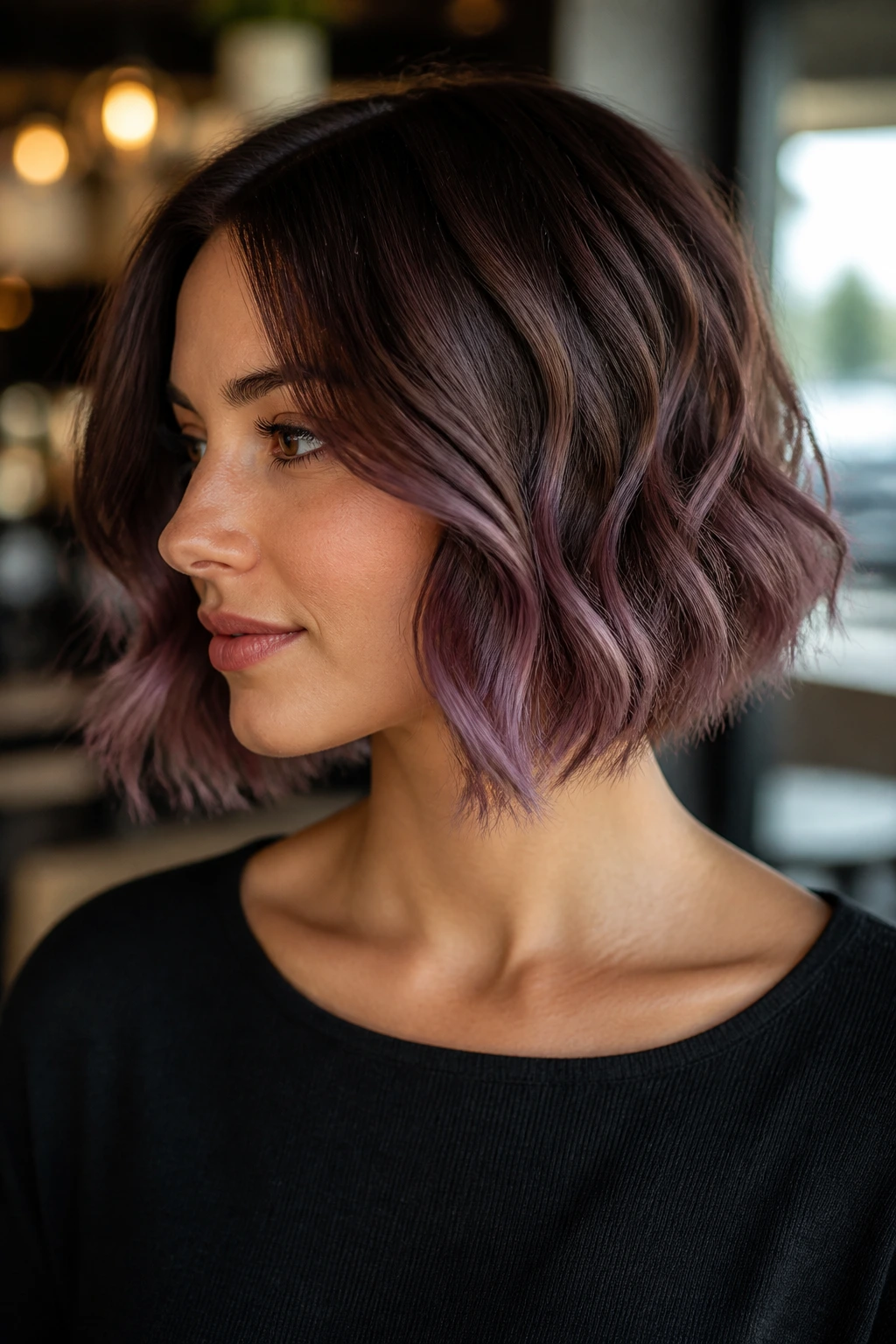
Plum brown into smoky mauve is for anyone who wants something a little unexpected without going neon. On a short bob, the color reads like a berry stain that’s been softened with smoke. That’s the charm of it. It looks deliberate, but not loud.
The fade should never be too clean with this shade family. A little blur between plum, mauve, and cool brown makes the style feel wearable rather than costume-like. I’d keep the brightest tones on the top layer of the ends and let the interior stay darker. That way, the hair still has depth when it moves.
This one works best when the bob has a gentle curve or a bit of bend at the bottom. Straight and flat can make the mauve feel more obvious. A soft wave helps the red-violet notes catch light in a more flattering way.
Best ask at the chair
Request a plum root melt, then a muted mauve toner on the lower third. If your colorist suggests a little brown mixed into the mauve, take that advice. It’s what keeps the finish from tipping into purple chalk.
11. Silver Beige with a Shadow Root
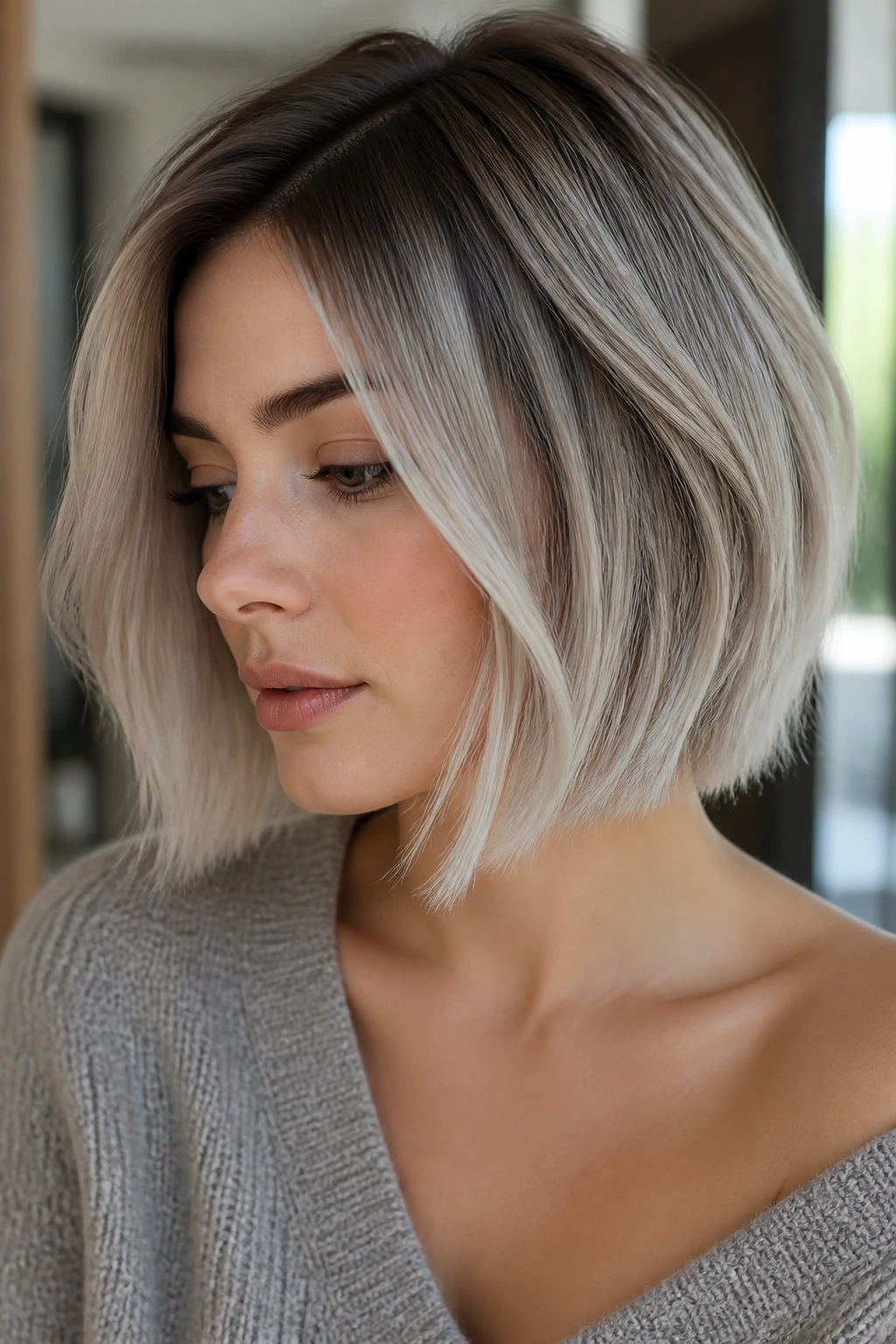
Silver beige on a bob can look icy in the wrong hands and beautiful in the right ones. The difference is usually the root. A soft shadow root keeps the color from feeling like one solid pale block, and the beige in the silver helps the ends stay wearable.
This is a strong choice if you like light hair but hate the hard edge that some platinum bobs get. The fade should be gradual, with the brightest silver sitting only near the ends and the face-framing pieces. On a sleek bob, the shine is gorgeous. On a slightly tousled one, the color feels more lived-in.
If your hair is naturally light, this can be a gentler route to brightness than all-over platinum. If your hair is darker, the lift still needs to be clean or the beige will turn brassy under the silver. Toner matters here. A lot.
I love this on a curved-under bob. It makes the ends look polished without flattening the movement.
12. Caramel Face-Frame Fade on a Curly Bob
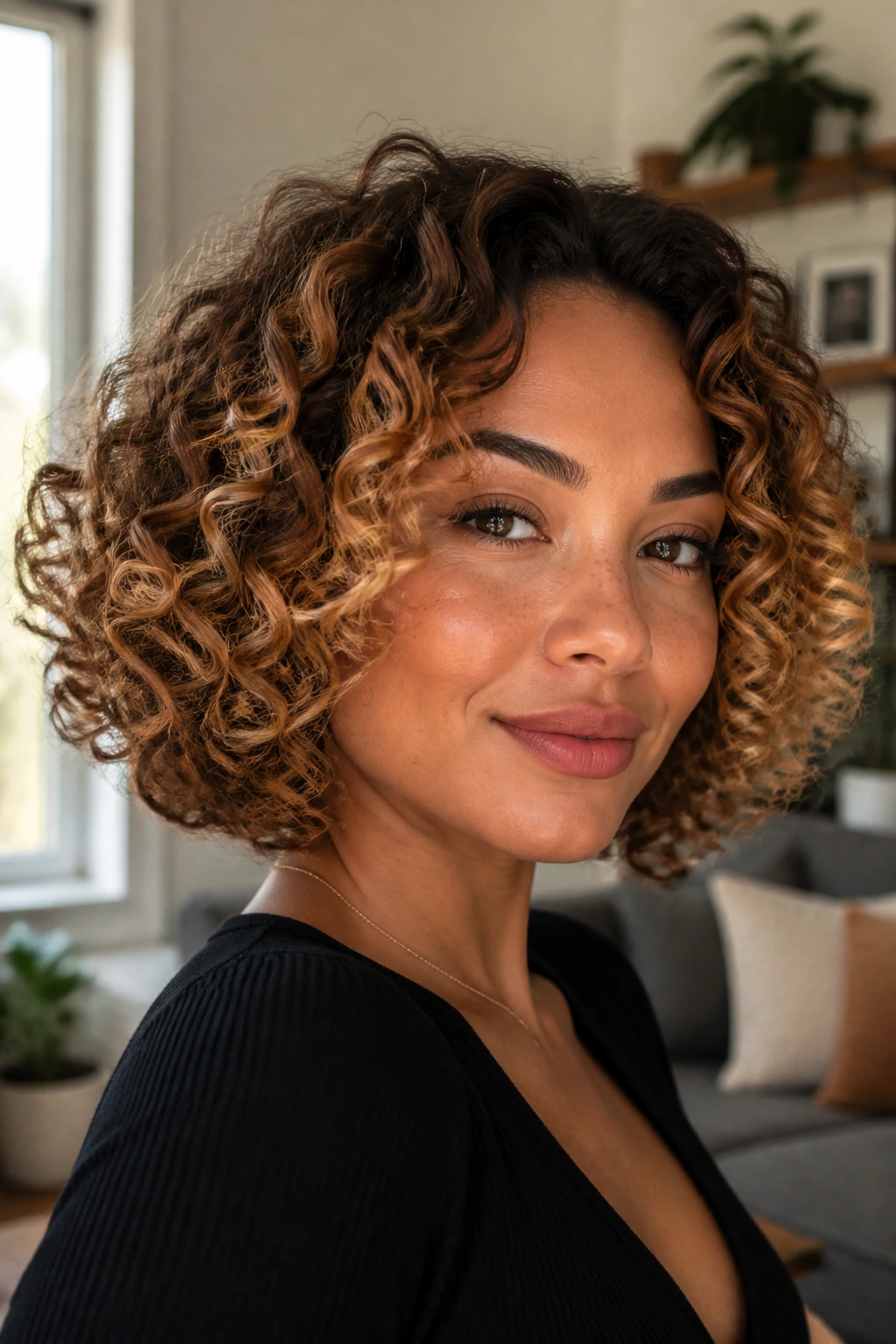
Curly bobs don’t need tiny highlights everywhere. They need placement. A caramel face-frame fade works because the brightness sits where curls move the most — around the cheeks, along the perimeter, and on the lower ring of the shape.
That means the interior can stay deeper and more dimensional. The fade feels soft because the curls do the blending for you, but only if the pieces are broad enough to show. Thin stripes disappear in curls. Broader ribbons read as glow.
The best version starts with a deeper brunette or chestnut base, then lifts the outer curls to caramel and golden toffee. A diffuser helps the color look uniform, and a curl cream with enough hold keeps the shape from frizzing the lighter ends into fuzz.
One thing I always tell people with curly bobs: don’t ask for the same placement you’d use on straight hair. Curls shrink and stack. If the light pieces are too high, they can land in the middle of the head when dry. That’s how good color goes weird.
13. Cocoa to Milk Tea on a Sleek Bob
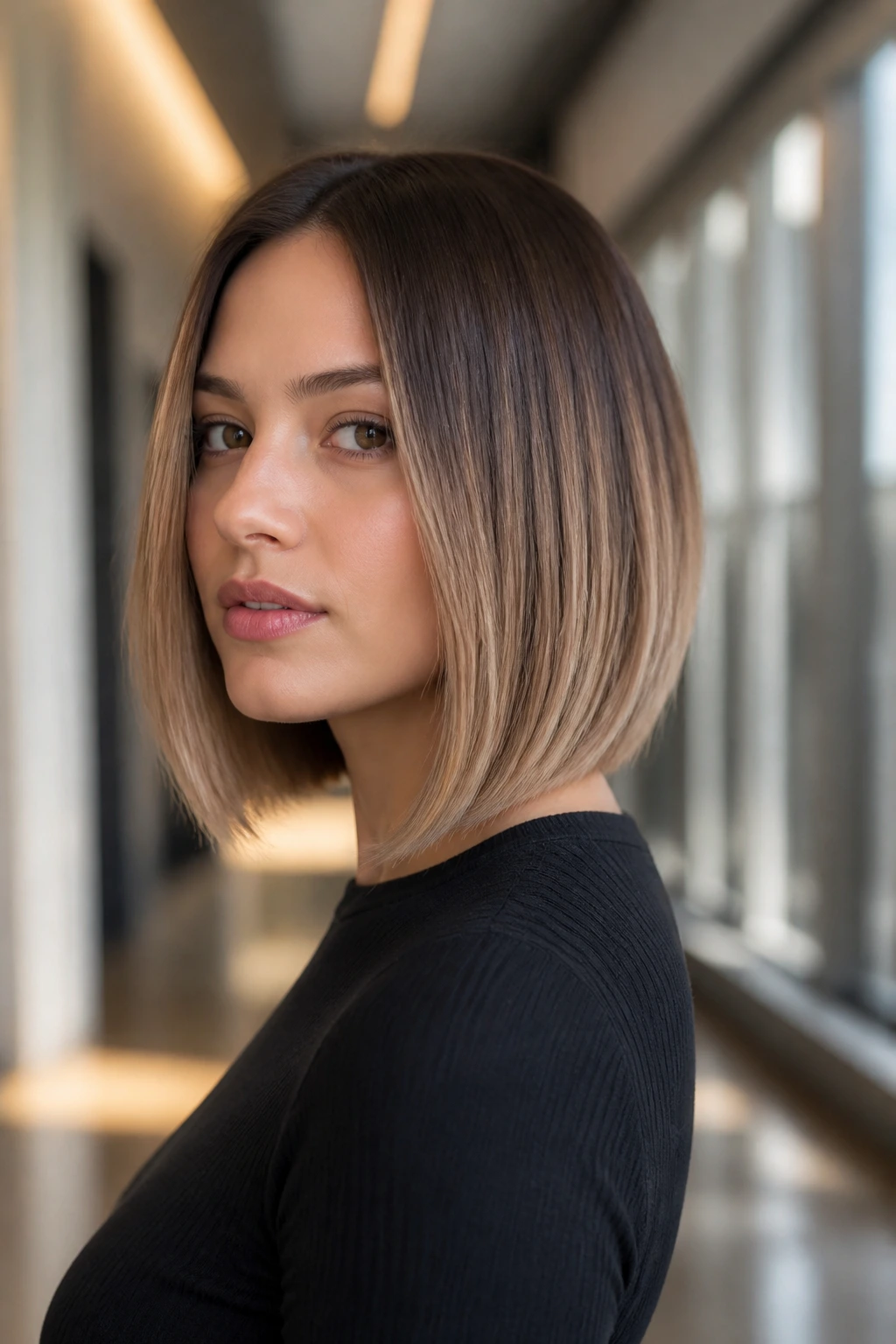
A cocoa-to-milk-tea bob is all about softness through contrast control. The root stays cocoa — deep, smooth, and a little cool — while the ends drift into a creamy beige-brown that looks lighter without turning blonde. On a sleek bob, the finish is clean enough to feel modern but gentle enough to avoid a heavy stripe.
This is one of my favorite versions for straight hair because the shape does not need any help. The ombré is subtle enough that it shows in motion, not in a loud color block. You can tuck one side behind the ear and suddenly the lightened ends pop. Pull it straight and the effect gets quieter again. That kind of flexibility is useful.
The phrase “milk tea” gets tossed around a lot, but on a bob it makes sense when the beige is muted and slightly creamy. Too much warmth and it turns caramel. Too much ash and it looks dusty. The middle zone is where the good stuff happens.
If you want a bob that looks polished without shouting for attention, this is a strong pick.
14. Smoky Bronde on a Shag Bob
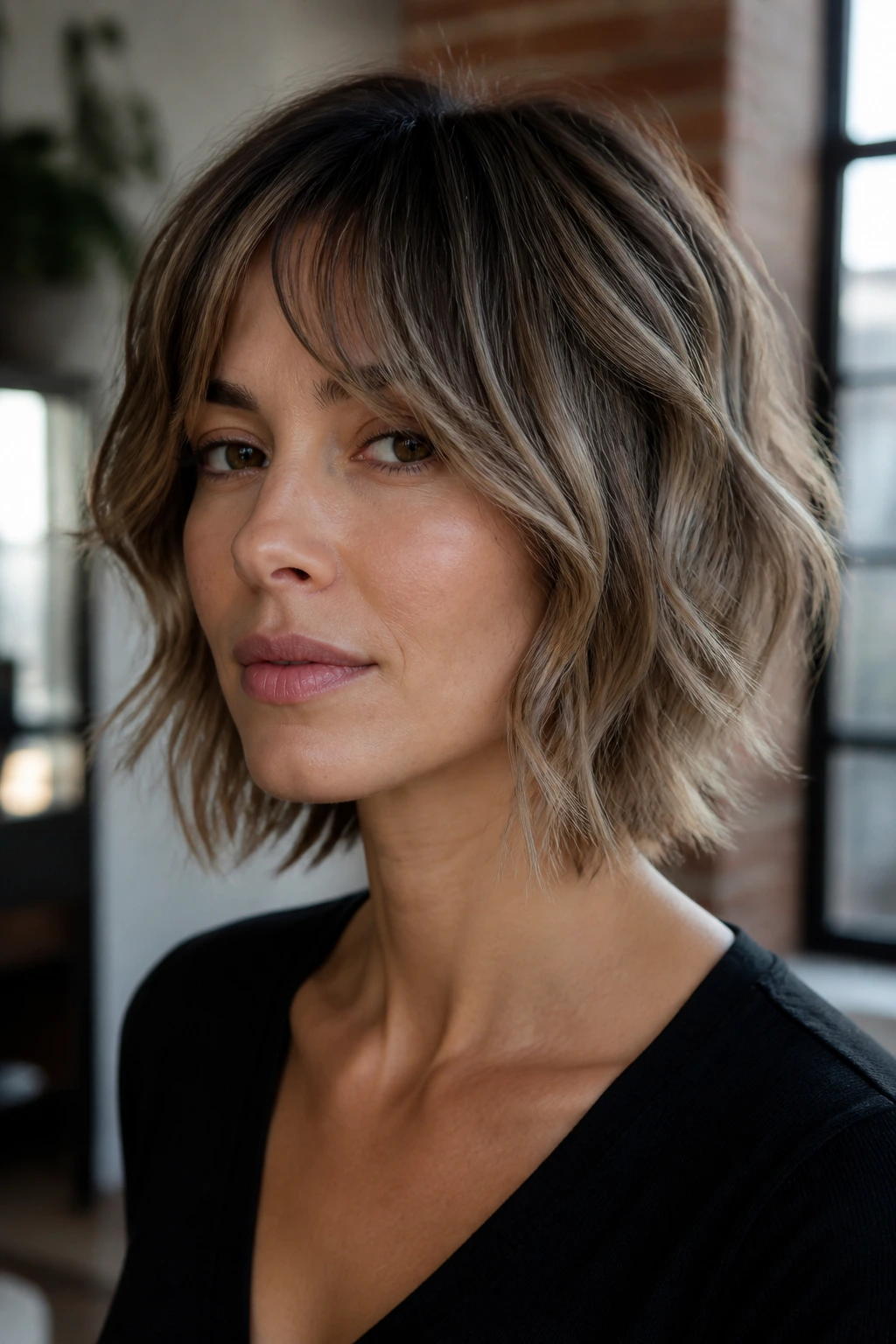
A shag bob has texture built in, so the color should follow that same loose, broken-up logic. Smoky bronde — that brown-blonde middle ground with a little ash — keeps the layers from looking busy. It gives the cut movement without turning every strand into its own event.
What makes this work is diffusion. The root stays a touch deeper, the ends go lighter, and the brightest pieces sit on the bends rather than the straight lines. That’s how you get a shaggier version of ombré that still feels soft. If the highlights are placed too neatly, the whole cut gets fussy. A shag should look touchable, not lined up.
This is a good choice if your hair has natural wave or if you like to rough-dry it with a little mousse. The undone texture lets the color mix together visually. On a shag bob, the fade almost looks accidental — which, in this case, is a compliment.
A matte texture spray can help here. Not too much. Just enough to keep the ends separated and the layers visible.
15. Honey Beige on a Fine-Hair Bob
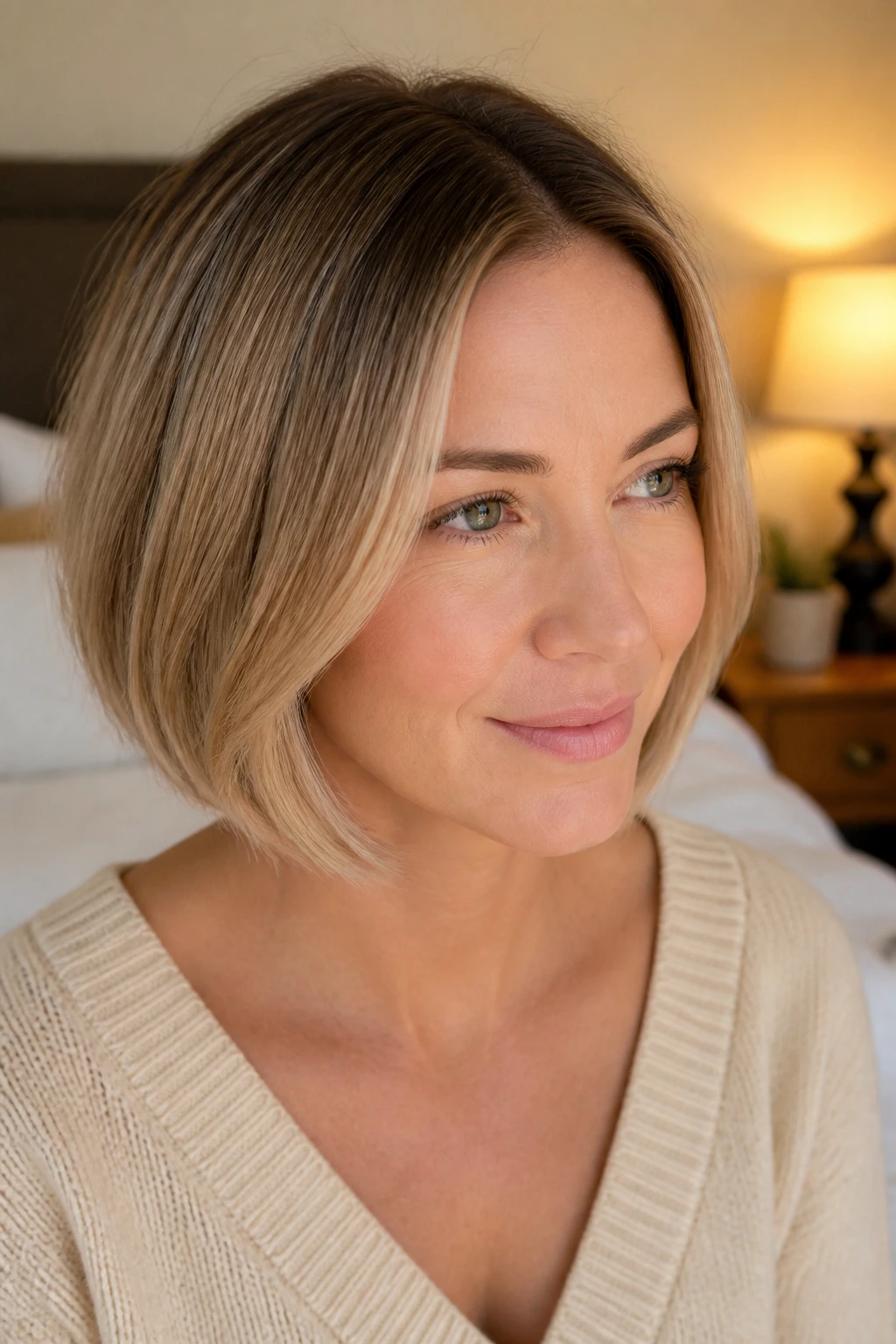
Can fine hair wear ombré without looking thin? Yes, if the fade is handled carefully. Honey beige on a bob works because the root stays slightly deeper, which keeps the hair looking fuller at the scalp, while the lighter ends add shine instead of bulk.
The mistake people make with fine hair is lifting too much of the mid-length. That exposes too much scalp-light contrast and makes the hair look see-through. Keep the brightest pieces near the ends and the outer edge of the bob. That way the perimeter looks airy, but the body of the haircut still feels solid.
Honey beige is a smart tone because it reflects light in a soft way. It’s not icy, which can flatten fine hair, and it’s not orange, which can make the color look brassy. A smooth blowout with a small round brush helps the fade read as intentional. So does a little root volume spray at the crown.
- Best placement: below the ears and around the perimeter
- Best finish: smooth, glossy, not over-textured
- Best upkeep: gloss every 6 to 8 weeks
16. Cherry Cola on a Rounded Bob
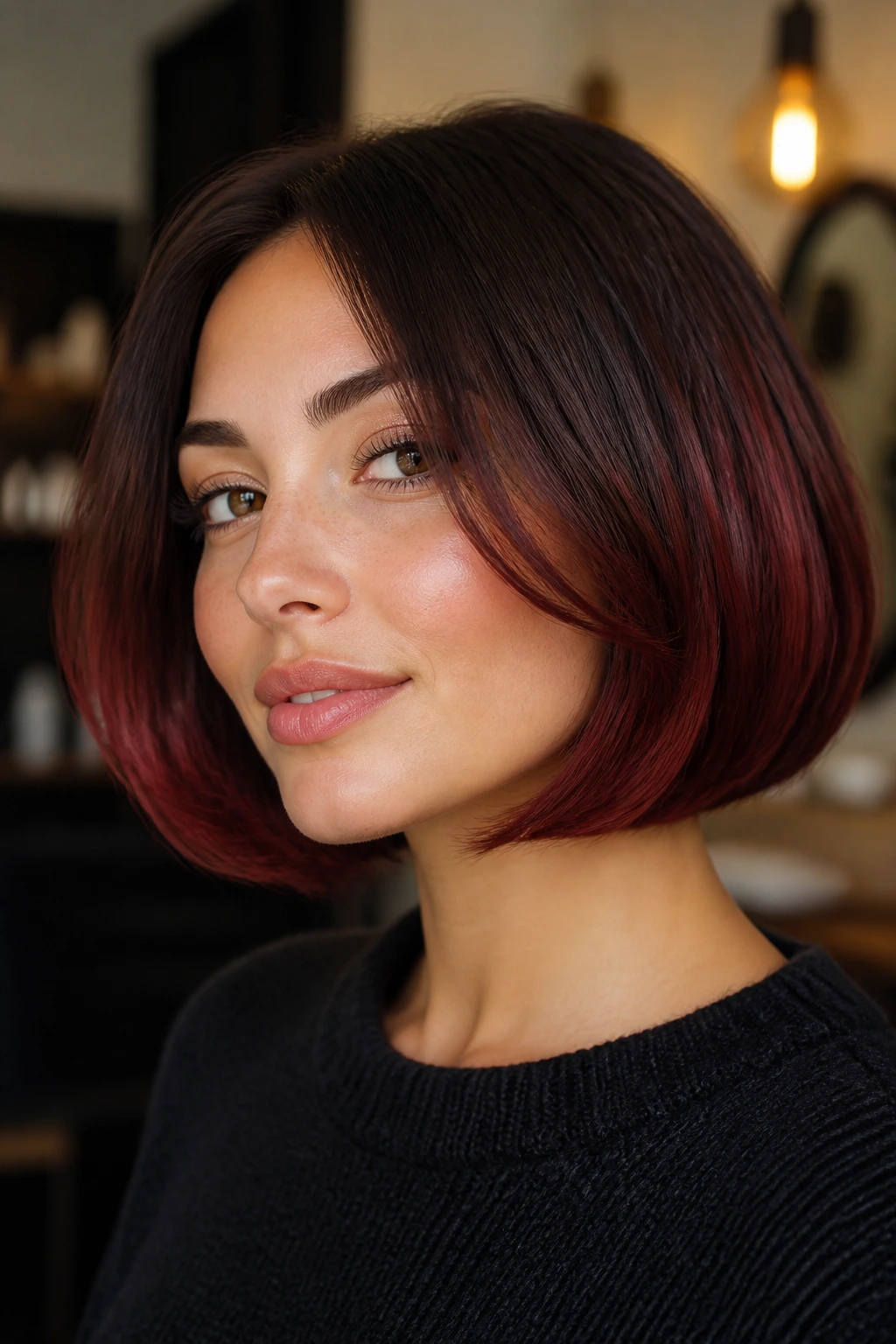
Cherry cola on a rounded bob feels plush. The darker base keeps it moody, the cherry tones add a wine-red sheen, and the rounded shape makes the whole thing feel full and soft around the face. It’s a smart way to wear red if you don’t want copper screaming from the chair.
This one works because cherry cola sits between brown and burgundy. That middle ground matters. Pure red can look too bright on short hair, while a brown-red fade keeps the ends glossy and dimensional. The bob shape helps too. The rounded bottom acts like a frame, so the lighter red ends appear richer, not thinner.
I’d recommend this for anyone who likes warm color but wants something a little deeper than copper. The fade can start as a dark brunette near the crown, then move through cola brown into a cherry glaze near the hemline. It’s especially good under indoor light, where the red notes seem to wake up.
A little shine serum on the ends goes a long way here. Red colors need gloss to stay plush.
17. Taupe to Vanilla Cream on a Chin-Length Bob
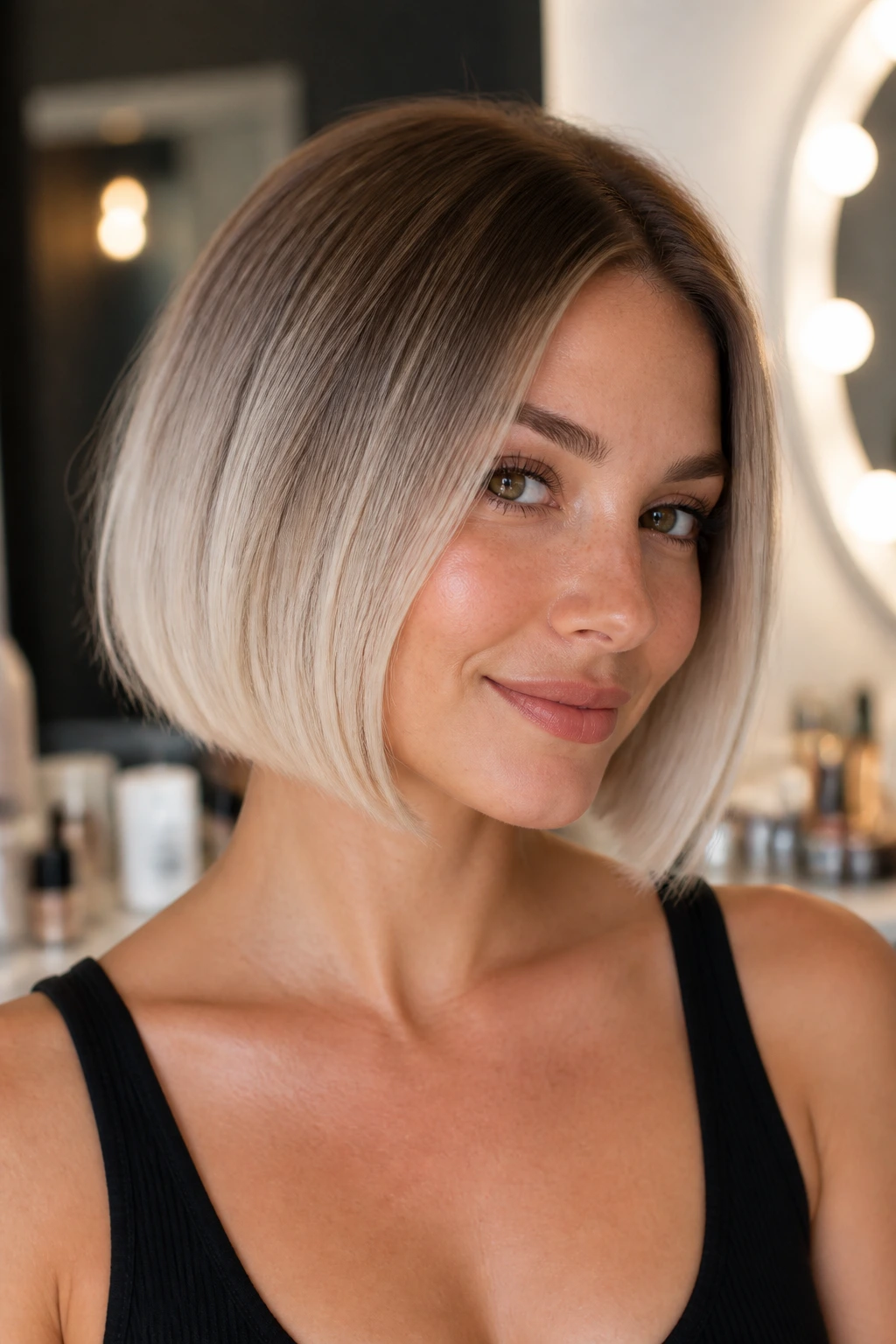
This is one of the softest combinations in the whole set. Taupe at the root, vanilla cream at the ends, and a chin-length bob that keeps everything close to the face. The result feels powdery and light, not yellow or icy.
The reason it works is contrast control. Taupe has enough gray-brown in it to keep the base calm, while vanilla cream brightens the edges without turning them white. On a short bob, that balance matters because the ends sit near the jaw and can easily dominate the whole cut. Keep the lightest tone in the last inch or so and let the middle tone do the talking.
This is a nice option if you like polished hair that doesn’t look overworked. It can be worn sleek, tucked behind one ear, or flipped under at the ends. Each version shows the fade a little differently.
If your skin undertone runs cool or neutral, this palette tends to feel especially balanced. But what really sells it is the finish: smooth, glossy, and softly diffused.
18. Mocha Root Melt with Platinum Tips
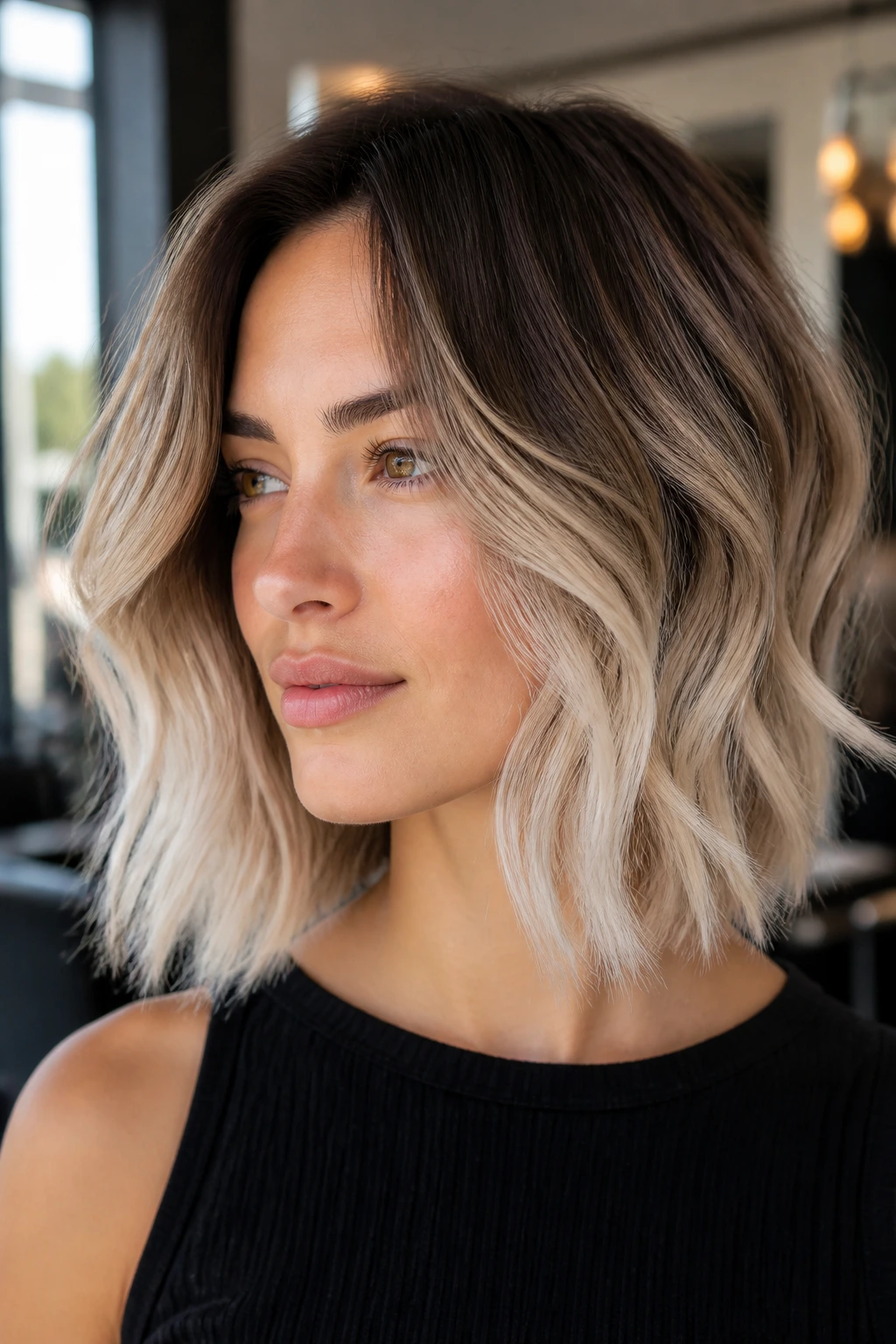
This is the boldest look on the list, and the reason it works is the melt. Mocha roots into platinum tips can go hard in a hurry, but on a bob, you can keep the platinum limited to the last inch or two and let the dark-to-light transition stay long and gradual.
That’s the whole game. If the platinum starts too high, the bob loses its shape and starts looking sliced. Keep the lightest pieces where the hair naturally tapers, and the contrast becomes a feature instead of a problem. A wavy or beveled bob helps even more, because the platinum tips move instead of sitting like a hard line.
This look suits people who want a high-contrast fade but still want softness in the finish. It’s not delicate in the same way a beige bob is delicate. It’s more dramatic, more graphic, but still blurred enough to feel wearable.
I’d warn against doing this on fragile ends. Platinum is unforgiving. The color can be stunning, though, when the hair is healthy and the gloss is clean.
19. Ginger Spice on a Textured Bob
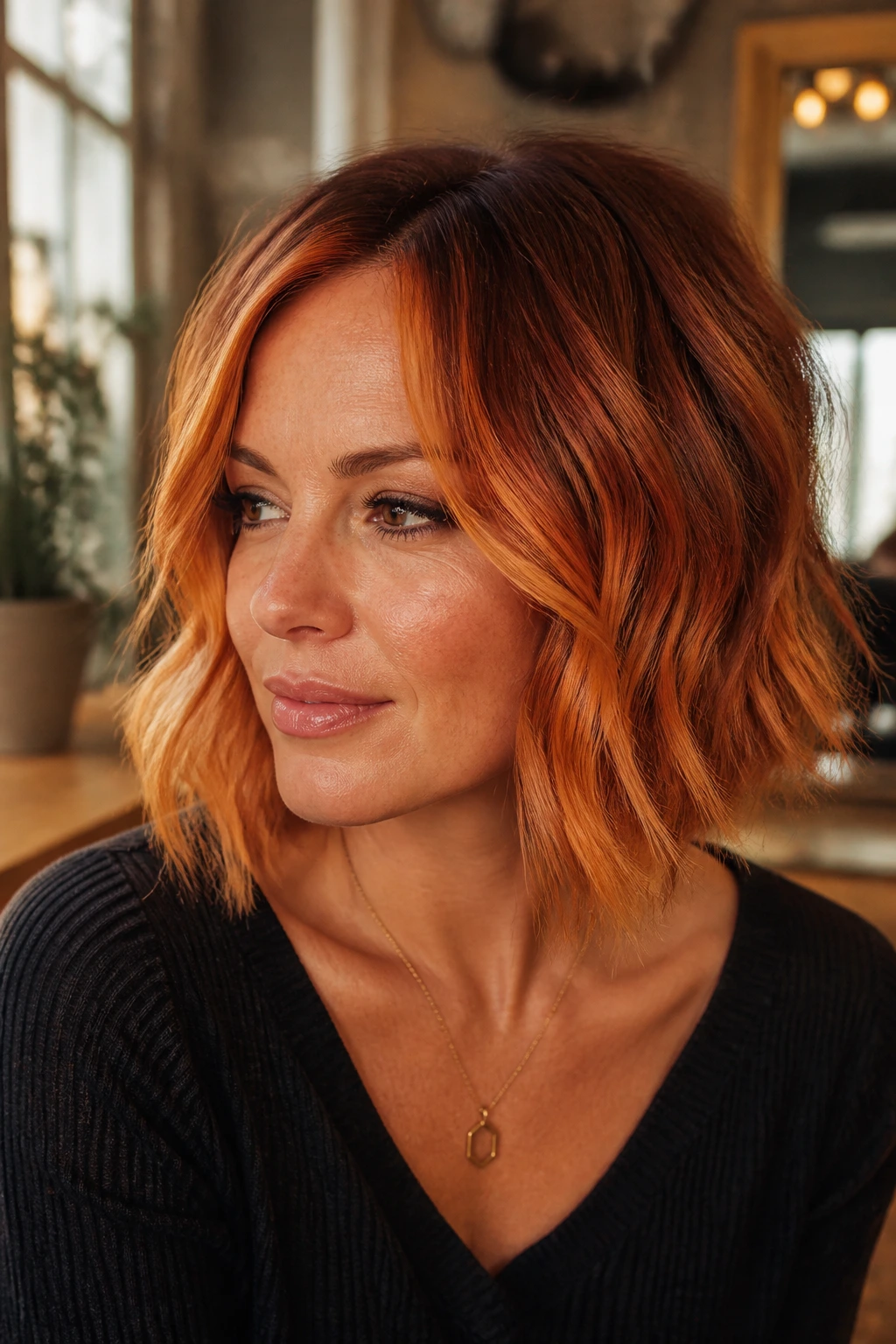
Ginger spice is warmer than copper and a little more golden than auburn. On a textured bob, it gives the haircut a lively, almost toasted look. The color starts deeper at the root, moves through cinnamon and amber in the middle, and finishes with ginger-bright ends that look better tousled than perfectly polished.
This is one of those colors that thrives on movement. A textured bob with little bends and bitty layers makes the spice tones shift around as you turn your head. If you wear it too sleek, some of that character disappears. If you rough it up a little, the color feels alive.
A lot of people ask for copper when what they actually want is ginger spice. The difference is the warmth level. Ginger is softer, less orange, and often a little sunnier. That makes it a nice option if you want a warm fade without crossing into bright red territory.
- Good match for: naturally warm brunettes
- Style it with: a small curling iron and finger-combing
- Avoid: too much gloss that pushes the color toward orange
20. Gray-Blend Ombre on a Salt-and-Pepper Bob
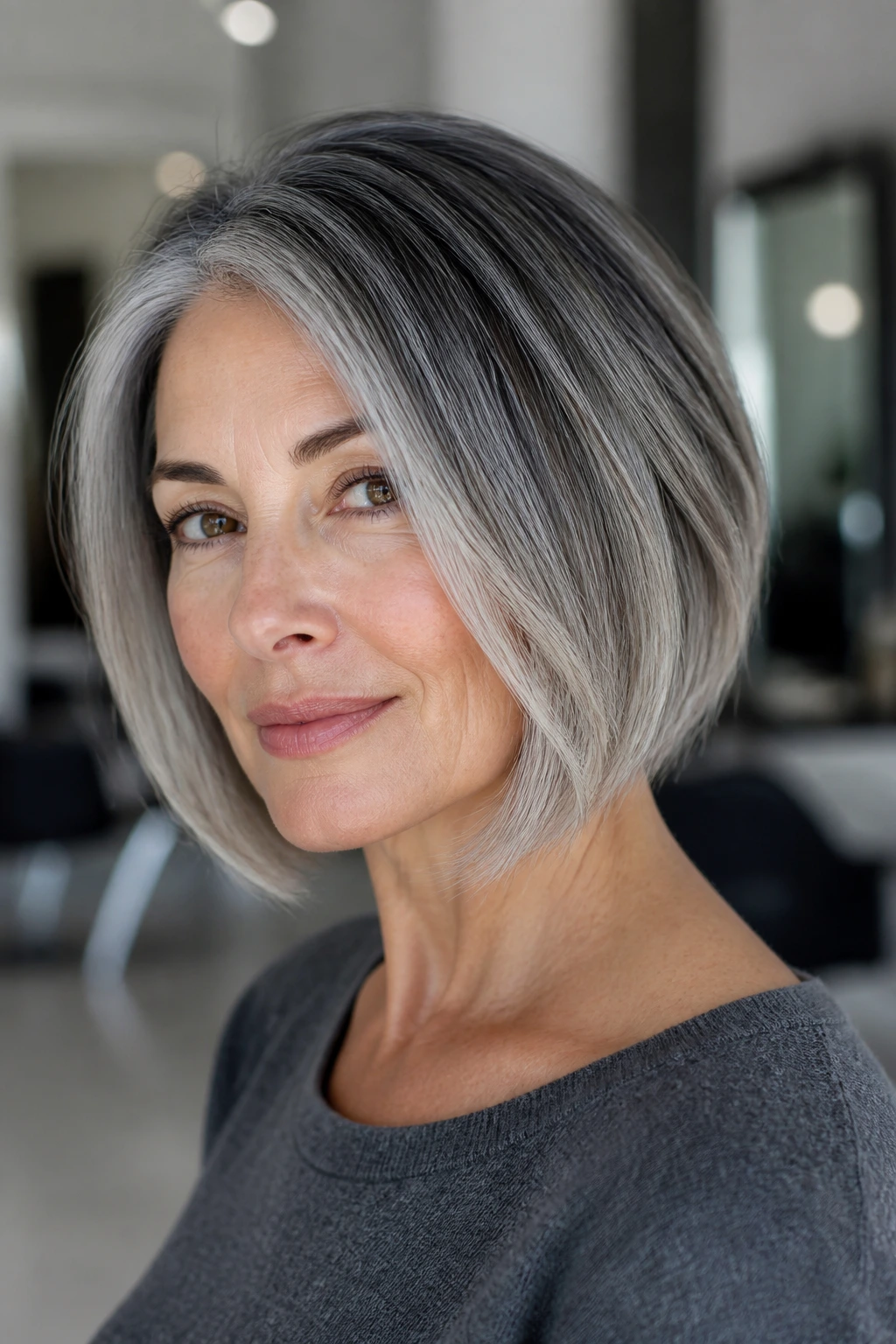
Gray blending on a bob is a different kind of ombré, but it belongs in the conversation. Instead of trying to hide the gray, you let it soften into the rest of the color. On a salt-and-pepper bob, the fade can move from charcoal or cool brown at the roots into silvered beige or soft slate at the ends.
The point is not to erase the gray. It’s to make the transition look smooth and intentional. That’s why this style can be such a smart choice for people who are starting to see natural silver at the temples or along the hairline. The bob length keeps the grow-out neat, and the fade makes the silver look like part of the design rather than an interruption.
A little root shadow helps. So does a cooler toner that doesn’t push the silver into yellow. If the haircut is blunt or slightly angled, the color looks even better because the edge stays clean while the tone shifts softly above it.
What makes it different
It’s a softness trick, not a disguise. The hair still reads as real, just more blended.
21. Biscotti Bob with Soft Beige Ends
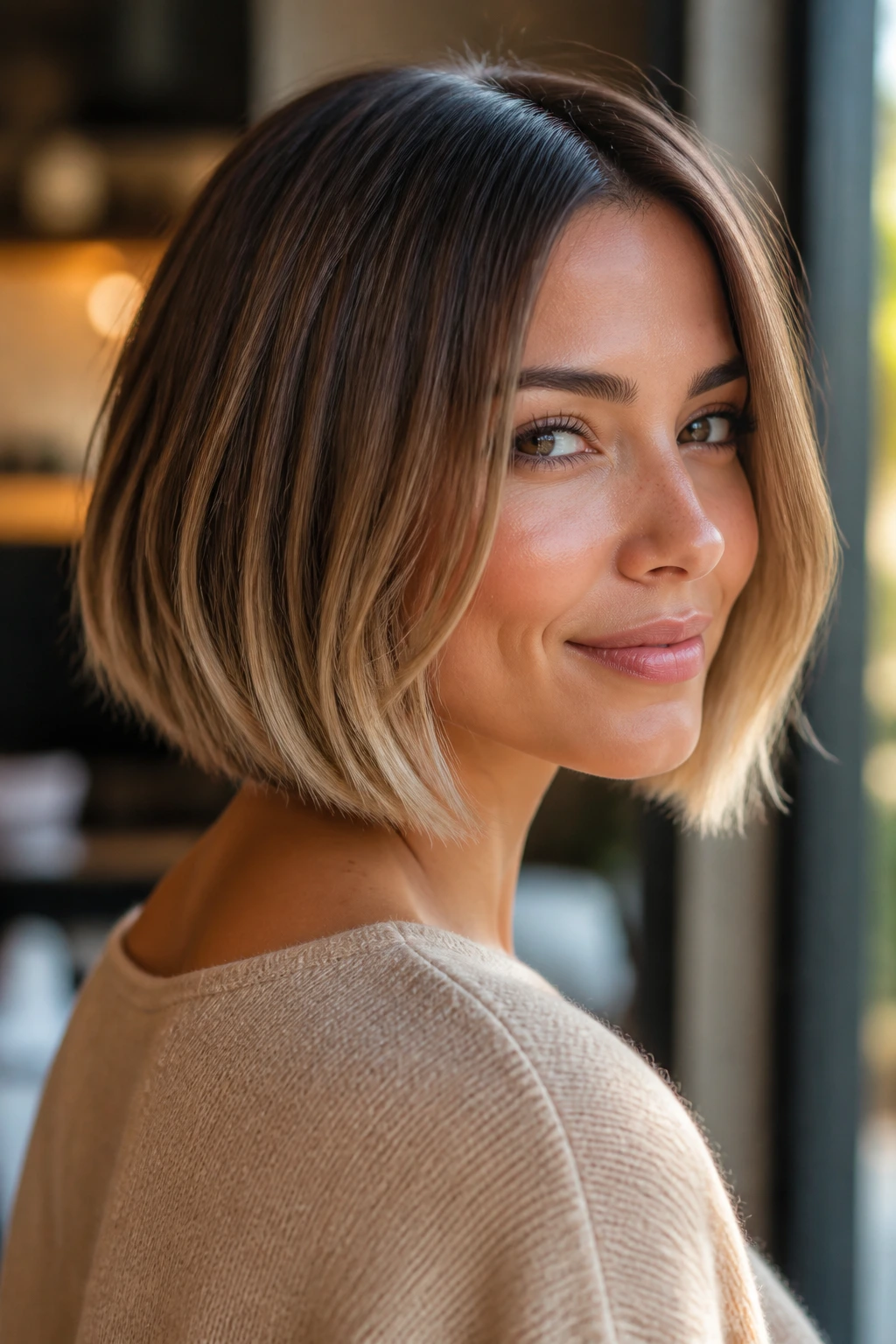
Want brunette color that never feels flat? Biscotti is one of my favorite answers. It’s a creamy brown with a gentle beige fade at the ends, and on a bob it gives you the feeling of dimension without the drama of a big blonde contrast.
This shade works because it sits in that middle zone between caramel and ash. It’s warm enough to feel rich, cool enough to avoid brass, and soft enough to flatter a simple cut. On a bob, that matters. You want the color to support the haircut, not fight for attention.
The best version keeps the ends just a touch lighter than the mid-lengths. Not a huge leap. Just enough to make the haircut look glossy and layered even when it’s only one length. If you wear your bob tucked, the lighter tips peek out and give the style a little movement.
I’d choose this for someone who wants low-drama color with a clean finish. It’s one of those shades that looks quiet in the chair and polished in real life.
22. Midnight Brown to Warm Cinnamon on a Bob
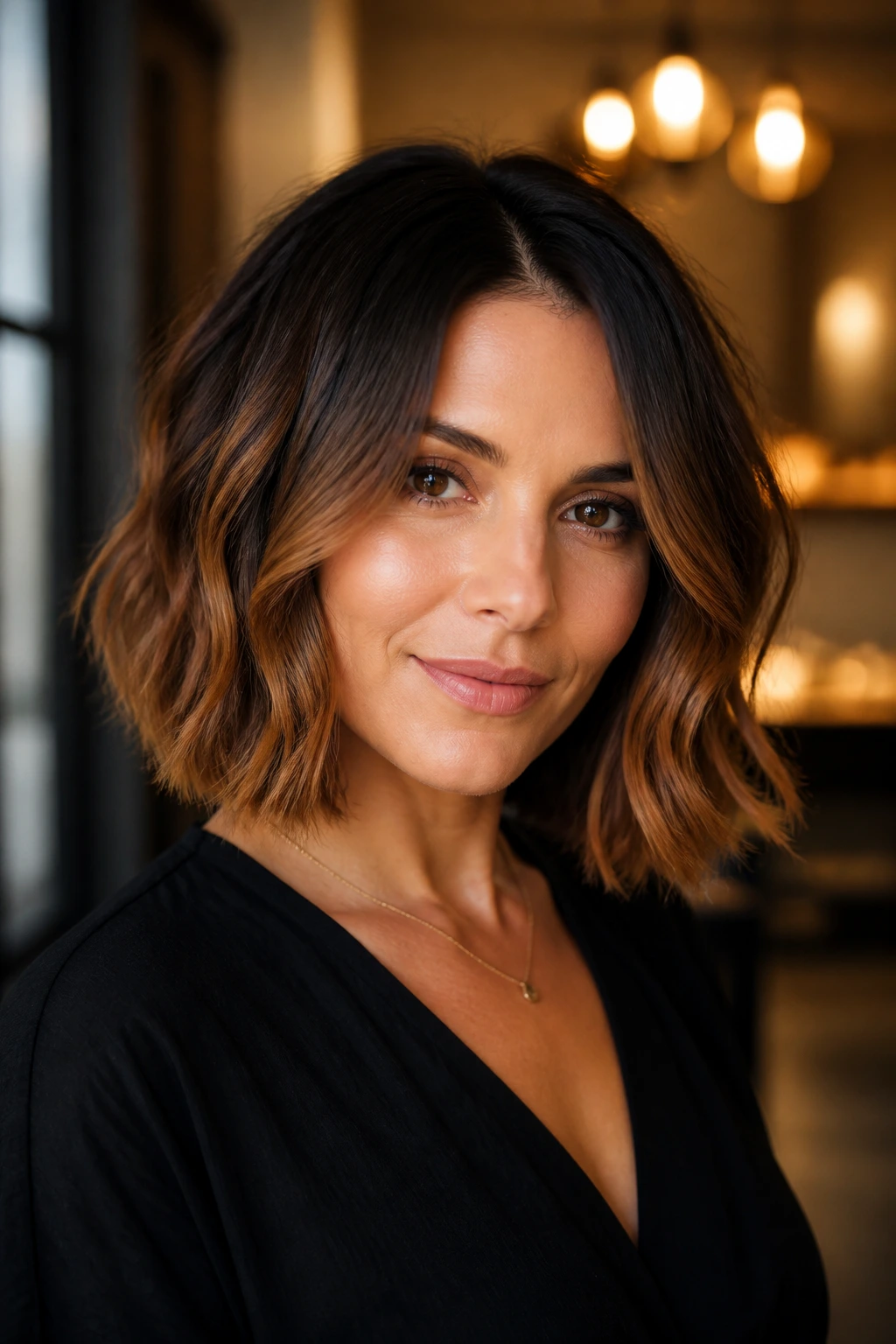
Midnight brown into warm cinnamon is the kind of ombré that rewards a clean cut. On a bob, the dark root keeps the style dense and glossy, while the cinnamon ends add a gentle glow that stops the whole thing from feeling too heavy.
The beauty here is in the warmth shift. You’re not jumping to blonde, and you’re not chasing red. You’re staying in the brown family and turning up the temperature at the ends. That makes it a smart option for people who want softness without obvious contrast. It also grows out beautifully, which is a nice side effect of keeping the fade close to your natural depth.
This one looks especially good on a bob with a slight bevel at the bottom. The curved ends catch the cinnamon tone and make it look like the hair has a soft halo. Straightened perfectly flat, it’s subtler. With a tiny bend, it wakes up.
That’s the kind of finish I keep coming back to. Quiet. Warm. Easy to wear.
Why Ombre and Bob Length Play So Well Together
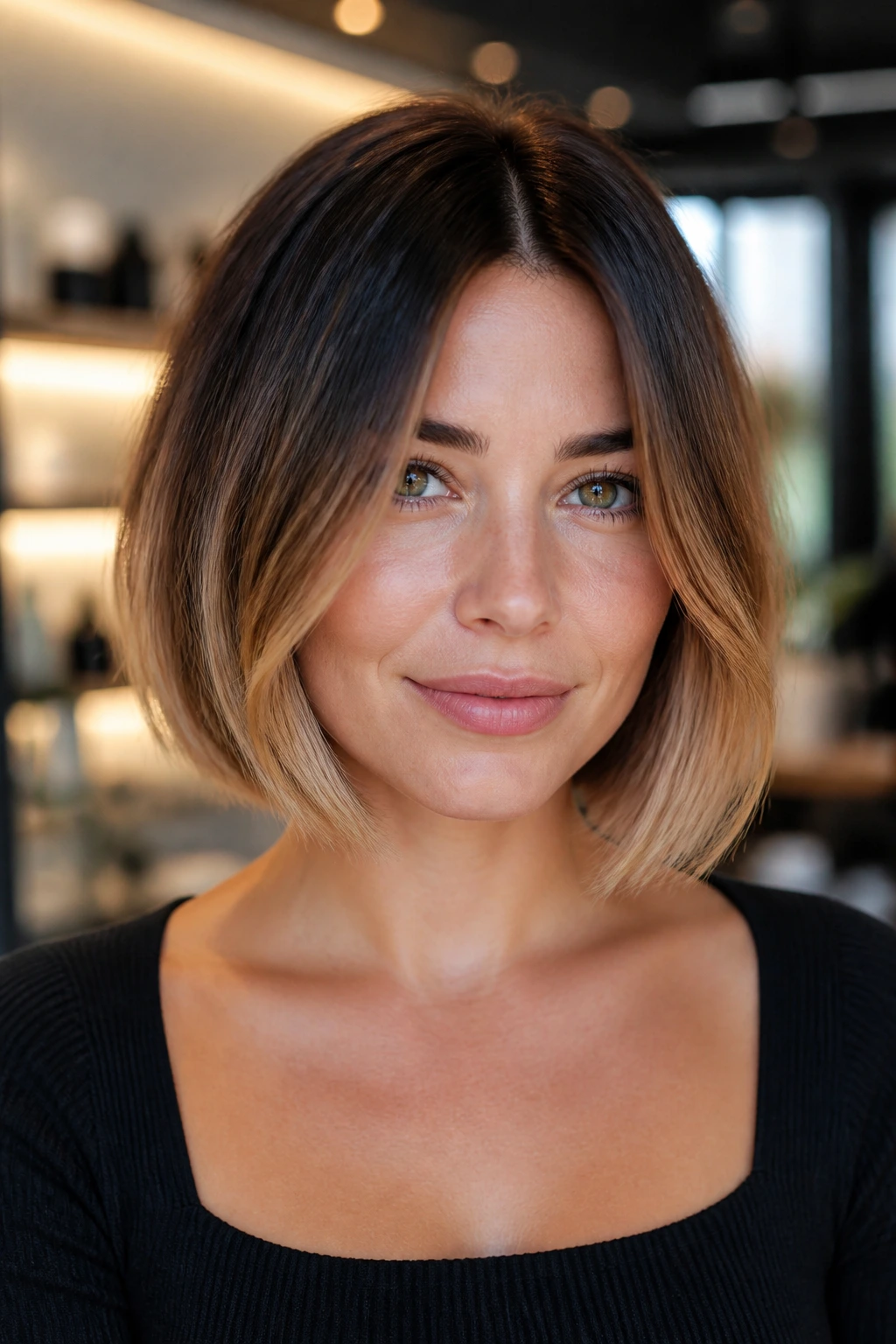
A bob gives ombré a job to do. On long hair, the fade can drift for inches before anyone notices where it starts. On a bob, the transition has to be smarter. That’s what makes it interesting. You have less length to work with, so the root shadow, bridge tone, and end color all matter more.
The haircut also helps with softness. A blunt bob can make a fade look graphic in a good way. A French bob can make it look airy and effortless. An A-line bob can stretch the color along the angle so the whole thing feels designed, not random. Even a curly bob changes the rules, because the curl pattern breaks up the line for you.
I like that this style asks for restraint. The best bob ombré usually isn’t the lightest version in the room. It’s the one that looks believable when the hair moves. If you can see the transition before you see the dye, the colorist did their job.
Essential Tools for Coloring and Styling Ombre Bobs
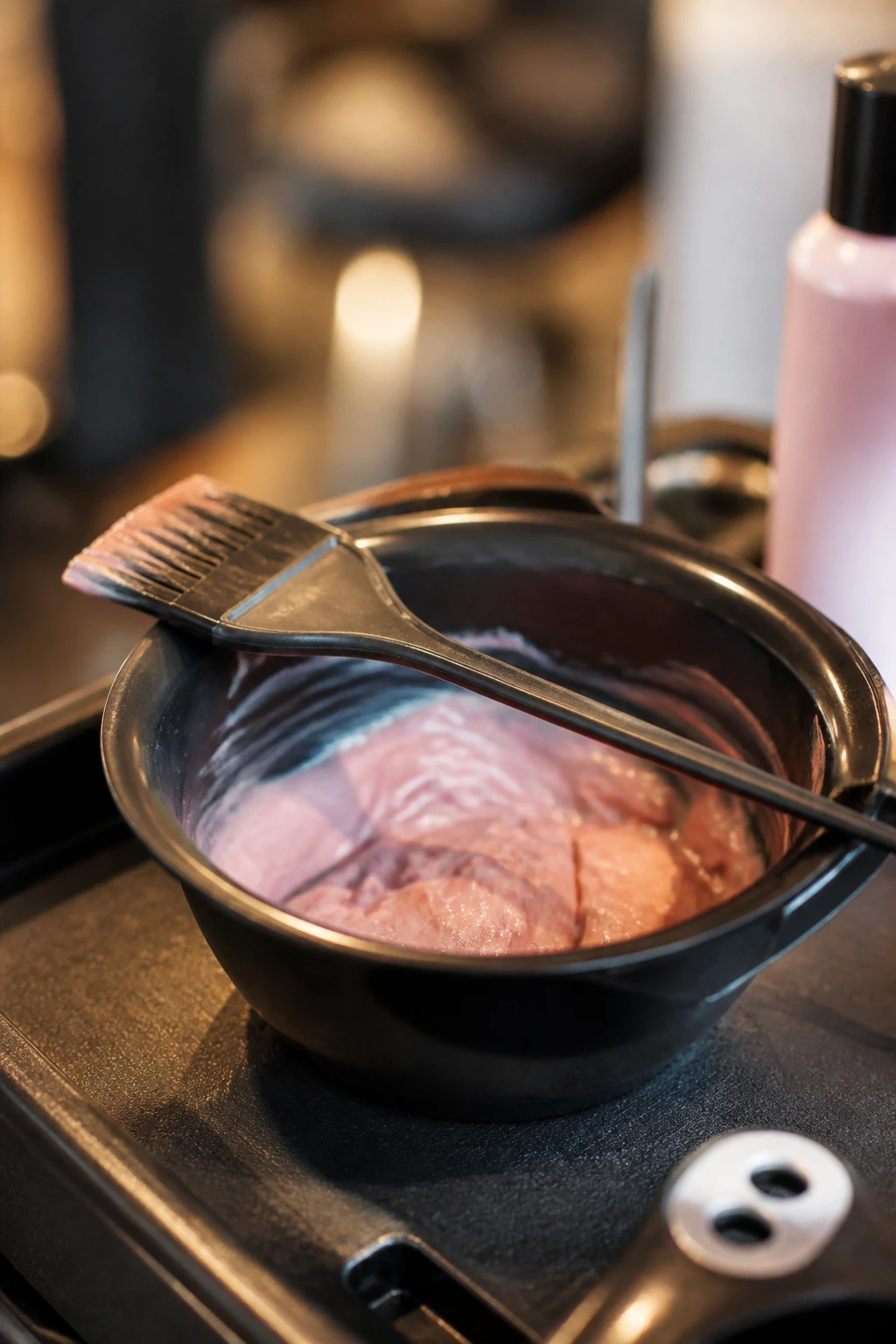
- Color bowl and tint brush: Useful for root smudges, lowlights, and glosses; a narrow brush gives cleaner placement around short hair.
- Tail comb: Essential for sectioning a bob cleanly, especially around the nape and front hairline.
- Duckbill clips: Keep short sections controlled so the fade lands where you want it.
- Balayage brush or soft feathering brush: Helps blur the color through the mid-lengths instead of painting on a hard stripe.
- Foils or meche strips: Optional, but handy if the ends need extra lift or if the base is dark and resistant.
- Color-safe shampoo and conditioner: Non-negotiable for keeping the tone from fading into dullness.
- Purple shampoo or blue shampoo: Choose purple for blonde and beige ends, blue for brunettes that pull orange.
- Heat protectant: Needed before any blow-dry, round-brush pass, or flat-iron bend.
- Round brush or large barrel brush: Gives blunt and A-line bobs a smoother, more blended finish.
- Microfiber towel and wide-tooth comb: Helps curly or wavy bobs keep their shape without frizzing the lighter ends.
Smart Shade Selection and Placement for a Soft Fade
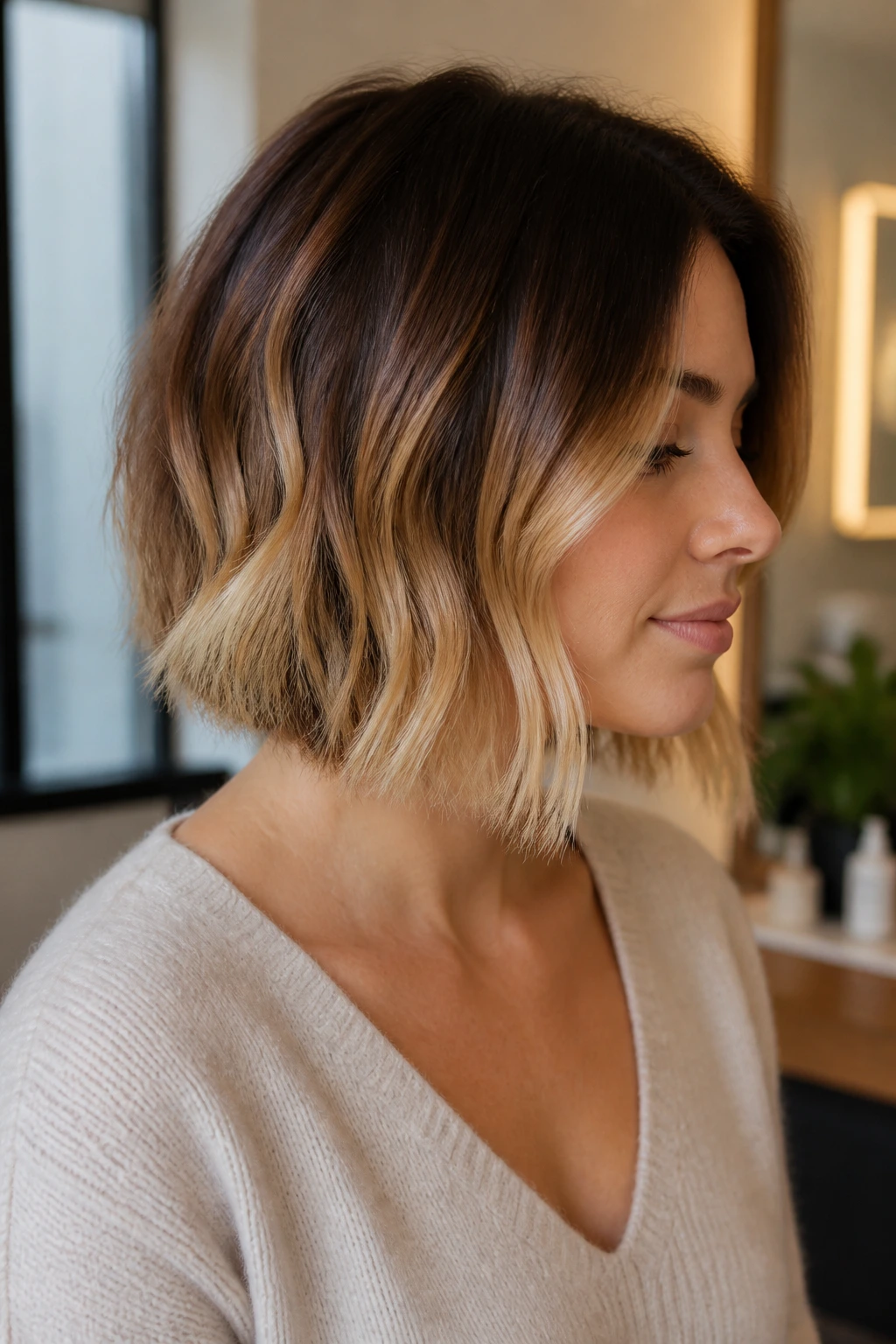
The softest bob ombré usually starts with a simple rule: think in levels, not just names. Espresso, mocha, chestnut, caramel, beige, honey, champagne — those words sound nice, but the real question is how many levels of lift you’re asking the hair to carry. On a bob, a two- to three-level shift is often enough. More than that, and the fade can start looking split.
Base color matters too. Dark brown and black hair usually look best with warm bridge tones like chestnut, walnut, or caramel before they go beige or blonde. Medium brown hair can handle honey, beige, or champagne more easily. Red bases are a different animal; auburn, copper, strawberry, and cherry-cola tones tend to blend more naturally than ash or platinum.
Placement is where the magic lives. Keep the brightest pieces below the mid-length on blunt cuts. Put them a little higher on shaggy or curly bobs, where texture will break them up. On angled cuts, let the color follow the line of the haircut. That gives the illusion that the fade was built into the shape from day one.
How to Style an Ombre Bob So the Blend Shows
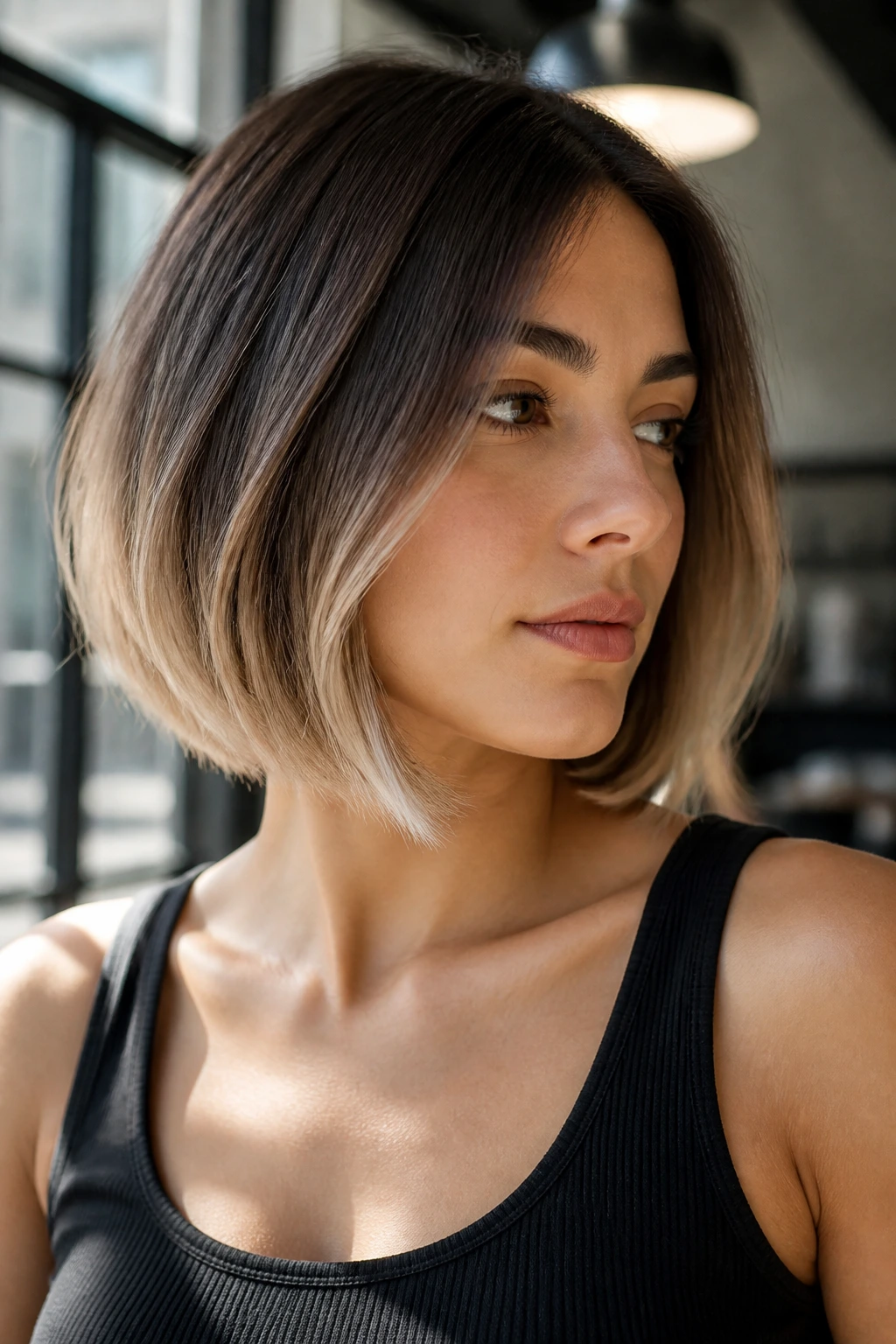
A soft fade can disappear if the styling is too uniform. That’s why the finish matters. The easiest way to show off the color is to give the ends some movement — a bevel, a bend, or a loose wave — so the lighter pieces catch light at different angles.
Smooth and polished: Best for blunt, A-line, and mushroom-brown bobs. Use a round brush or flat iron to turn the ends under slightly, not into a curl. That keeps the color line soft and the cut clean.
Loose wave: Best for bronde, rose gold, caramel, and honey fades. Wrap the hair around a 1-inch or 1.25-inch iron, then break the wave with your fingers so the fade doesn’t look too neat.
Air-dried texture: Best for shag bobs and curly bobs. Use curl cream or a light mousse, then scrunch or diffuse until the lighter ends sit on the outside of the shape.
High shine finish: Best for dark-to-chestnut, cocoa-to-milk-tea, and cherry cola looks. A little gloss serum on the ends brings out the depth and keeps the fade from reading dry.
Additional Tips and Finish Ideas
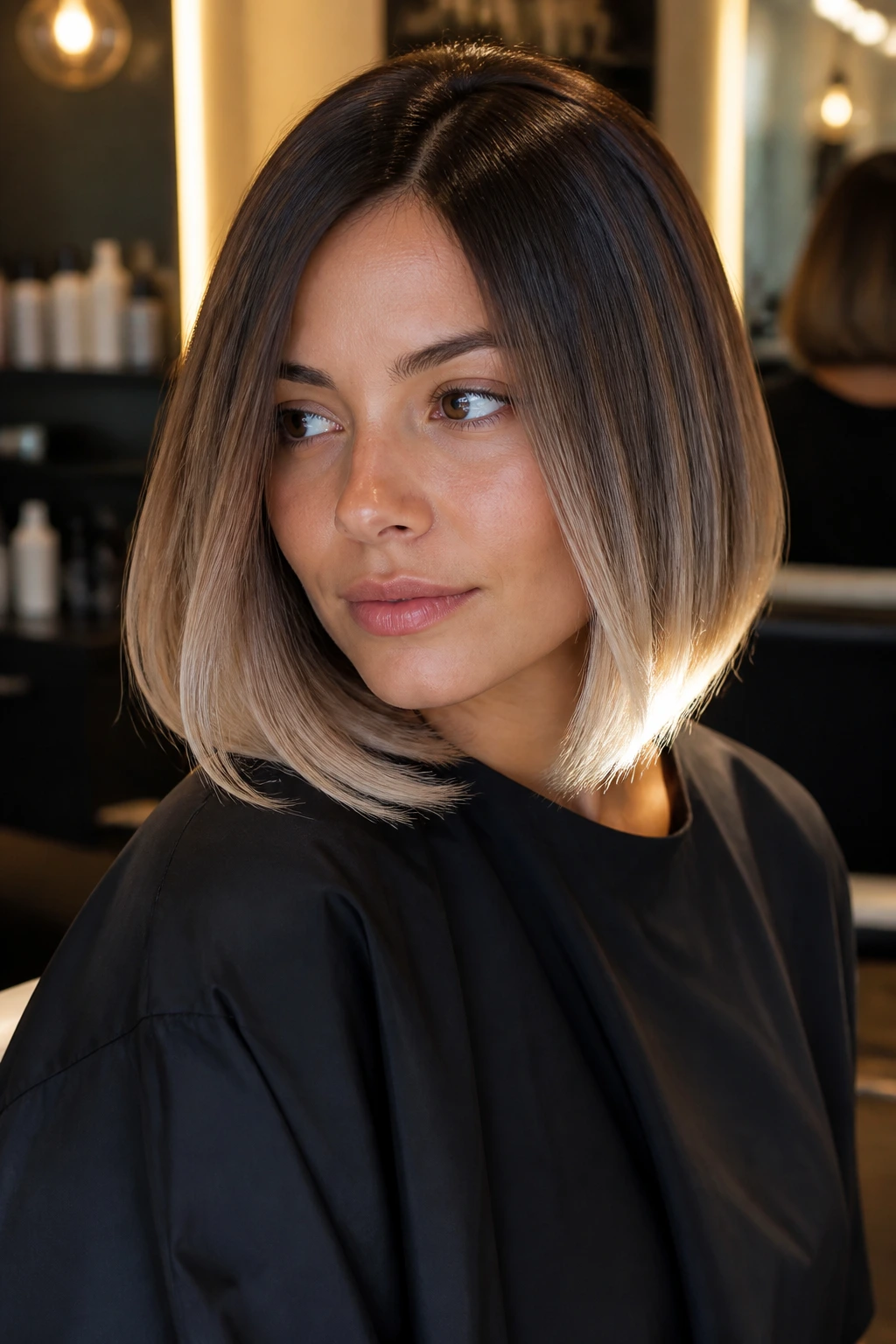
- Flavor Enhancement: Ask for a gloss after the main color service. A neutral beige or warm brown glaze can pull the whole fade together and keep the ends from turning patchy.
- Customization: If you want the color softer, keep the lightest pieces only around the face and bottom edge of the bob. If you want more contrast, brighten the front corners and leave the back deeper.
- Serving Suggestions: For styling, a tucked-behind-the-ear side with a slightly bent front piece shows the fade better than a perfectly center-parted, rigid blowout.
- Make-It-Yours: Fine hair usually does better with a deeper root shadow and less brightness at the ends; thick hair can handle more contrast because the density supports it. Curly hair needs broader color placement, not tighter streaks. Dark hair usually benefits from a warm bridge shade before it goes blonde.
Common Mistakes That Make the Fade Look Harsh
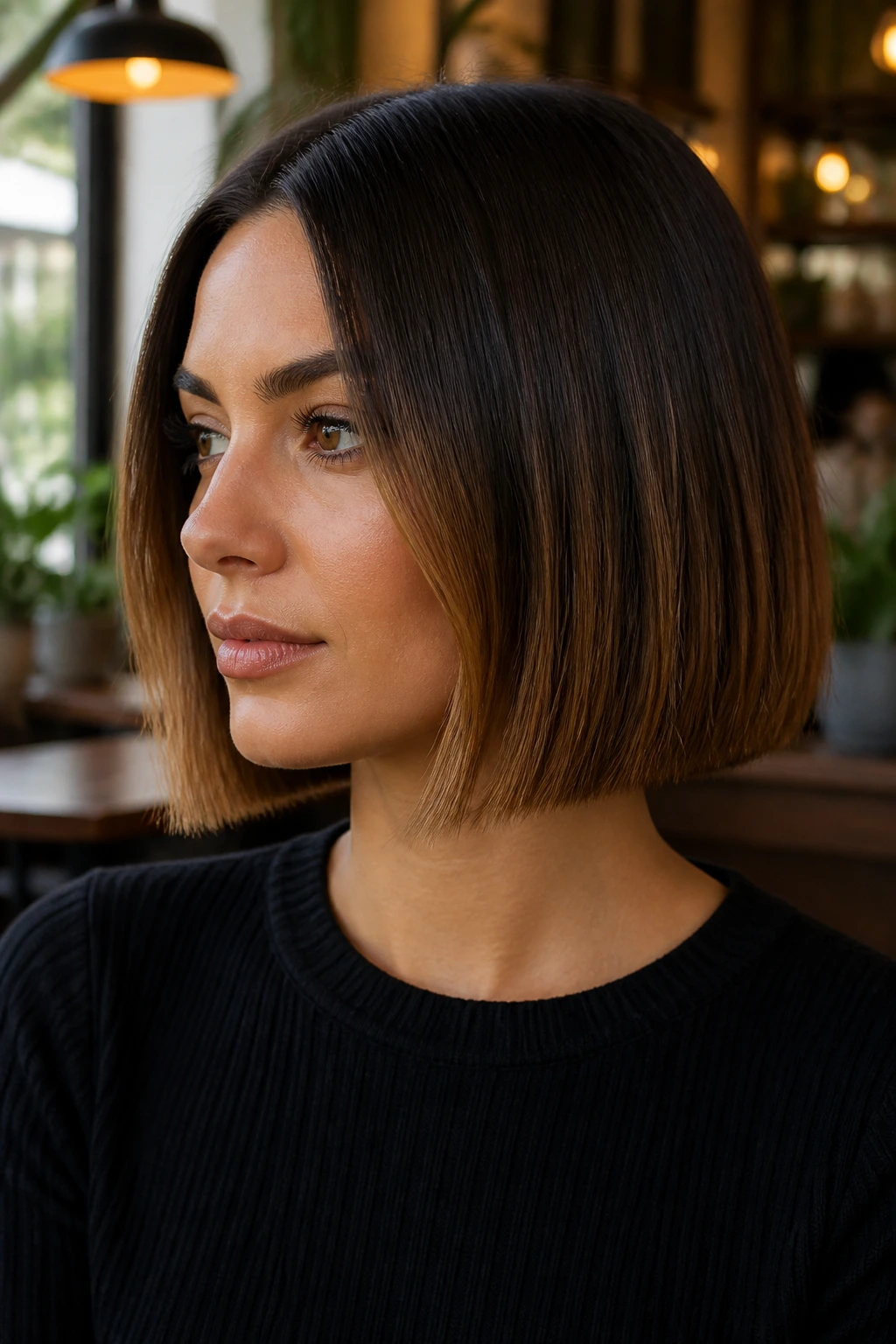
The biggest mistake is lifting the lightest color too high. On a bob, that makes the haircut look split into two halves instead of one smooth shape. The fix is simple: keep the brightest tone in the lower third and let the middle zone do the blending.
Another problem is choosing a toner that fights the base. Ash on ash can go dull. Gold on gold can turn brassy. If the root is already warm, a beige or caramel bridge tone usually looks softer than a too-cool blonde. Same with red families — if the base is copper, the ends need to stay in that warm lane.
Texture can also work against the fade if it’s styled too uniformly. A bob with every strand curled the same direction can make the color line obvious. Break the pattern. Alternate curl directions, or smooth the cut and then add just a little bend at the ends.
Finally, don’t ignore the haircut itself. A fade that looks lovely on a blunt bob may look heavy on a shag, and a color that sings on a lob may vanish on a micro bob. The cut and the color have to be planned together, or one of them starts yelling.
Variations and Adaptations to Try
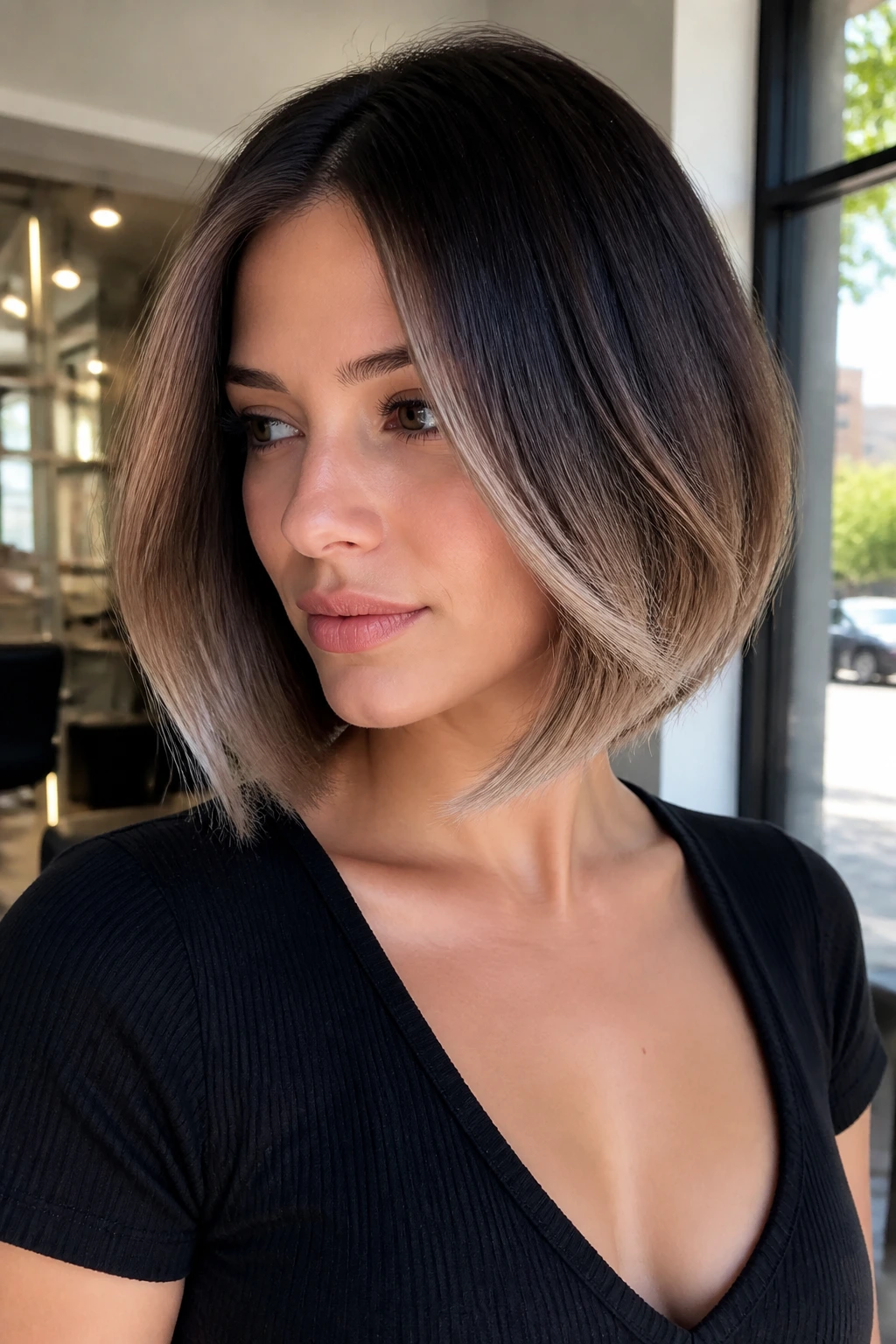
Ultra-Soft Shadow Melt: Keep the difference between root and ends to only one or two levels. This version is ideal if you want the ombré effect to show mostly in motion, not as a big visual shift.
Face-Frame Bright Bob: Leave the inside of the bob darker and concentrate the lighter tone around the front corners. It’s a smart move when you want the color to lift the face without changing the whole head.
Curly-First Placement: For curly bobs, move the brightness to the outer ring and lower perimeter instead of painting narrow streaks through the interior. The curl pattern will blend the fade better and keep it from looking striped.
Gray-Blend Version: Use a soft charcoal, silver-beige, or cool taupe transition if you’re blending natural gray. The goal is not to cover everything, but to make the silver part of the design.
Gloss-Only Refresh: If your color is already in a good place, skip a major lift and just refresh the root shadow and ends with a toner or gloss. That keeps the fade soft without stressing the hair.
Bold Contrast Reset: If you love drama, keep the root deep and let the ends go platinum, cherry, or silver, but only on the last inch or two. On a bob, the line is small enough that even a bold contrast can still read as refined if the transition is long enough.
Keeping the Color Soft Between Appointments
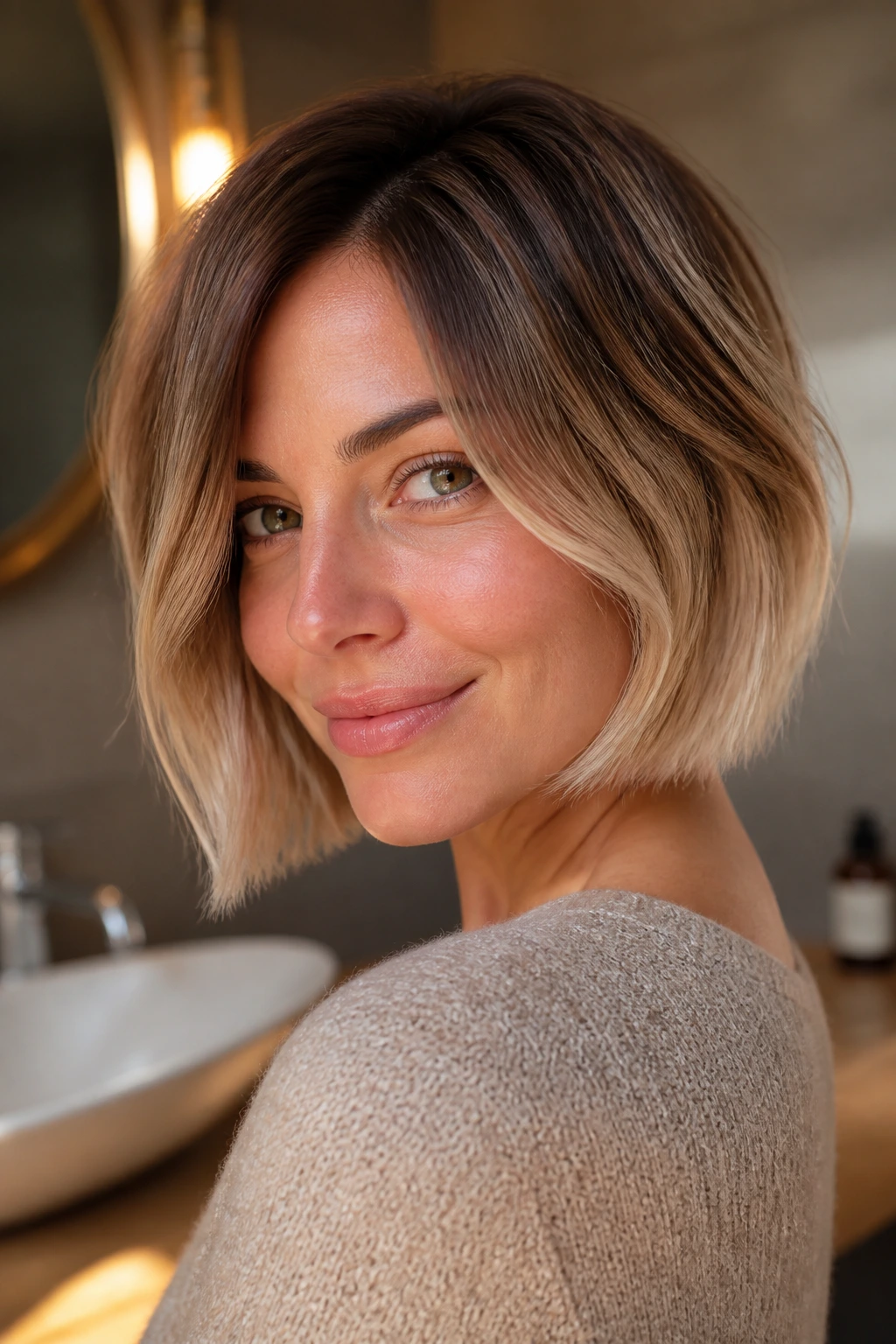
Soft ombré on a bob looks best when the tone stays clean. For most brunettes, a color-safe shampoo twice or three times a week is enough. If the ends are blonde, beige, or champagne, purple shampoo once every 7 to 10 days helps keep brass from creeping in. Blue shampoo is the better pick for brown hair that starts turning orange.
Glosses and toner refreshes matter more on short cuts than people expect. Because the ends sit close to the face, faded color shows quickly. A salon gloss every 6 to 8 weeks keeps the transition polished. If your hair is porous, ask for a gentler formula or a clear gloss mixed with pigment so the ends don’t overgrab.
Heat is the other thing to watch. A bob gets blow-dried and flat-ironed more often than long hair, which means the lighter ends can dry out fast. Heat protectant before styling isn’t optional here. It’s the difference between smooth color and fried-looking tips.
If you’re growing the color out, keep the root shadow intact and trim the bob every 6 to 10 weeks. The shape stays crisp, and the fade continues to look deliberate instead of overdue.
Questions People Ask Before They Commit to Ombre on a Bob
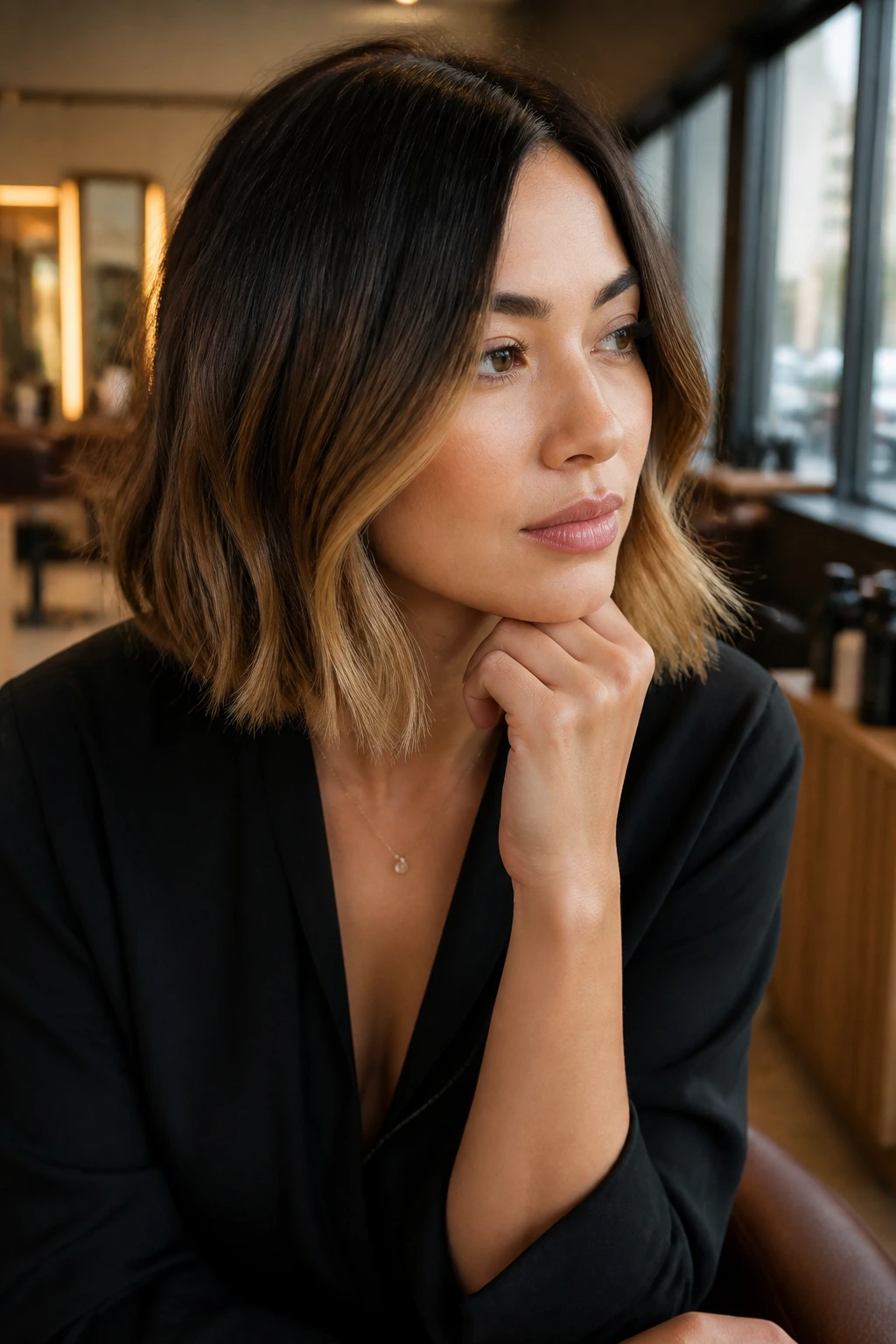
What bob length works best for ombre?
Chin-length bobs, French bobs, and collarbone lobs are the easiest lengths to fade because they give the color enough space to shift. Micro bobs can still work, but the transition has to be much subtler. The shorter the cut, the less room you have for a dramatic contrast.
Does ombre work on dark hair?
Yes, but dark hair usually looks better with a warm bridge tone first. Chestnut, walnut, caramel, and mocha soften the jump before you get to beige, honey, or blonde. That keeps the ends from looking harsh against the root.
Is balayage the same as ombre on a bob?
Not quite. Balayage is a placement technique; ombré describes the fade from darker roots to lighter ends. On a bob, many colorists use balayage to build the ombré effect, which is why the two terms get mixed together so often.
How do I keep a bob ombre from looking stripey?
Keep the lightest shade low, blur the mid-section with a root smudge, and avoid narrow highlights that sit in straight bands. Styling matters too — a little bend or wave helps break up the line.
Can fine hair pull this off?
Absolutely, as long as the color doesn’t get too high on the shaft. Fine hair usually looks better with a deeper root and lighter perimeter, not a big bright swath through the middle.
How often does it need toner?
Most ombré bobs need a toner or gloss refresh every 6 to 10 weeks, depending on how light the ends are and how often you wash. Blonde and silver-beige fades usually need the most upkeep.
What if the fade turns out too dark?
You can brighten the ends with a glossed lightener service or push the contrast a little more at the next appointment. Don’t rush to strip it out at home. Darker ombré on a bob often looks softer after a few washes.
Can curly hair wear ombre without looking messy?
Yes, but the placement needs to be broader and lower. Curly hair compresses color, so tiny streaks vanish. Bigger ribbons around the outer ring of the bob usually work much better.
The Soft Fade That Keeps a Bob Moving
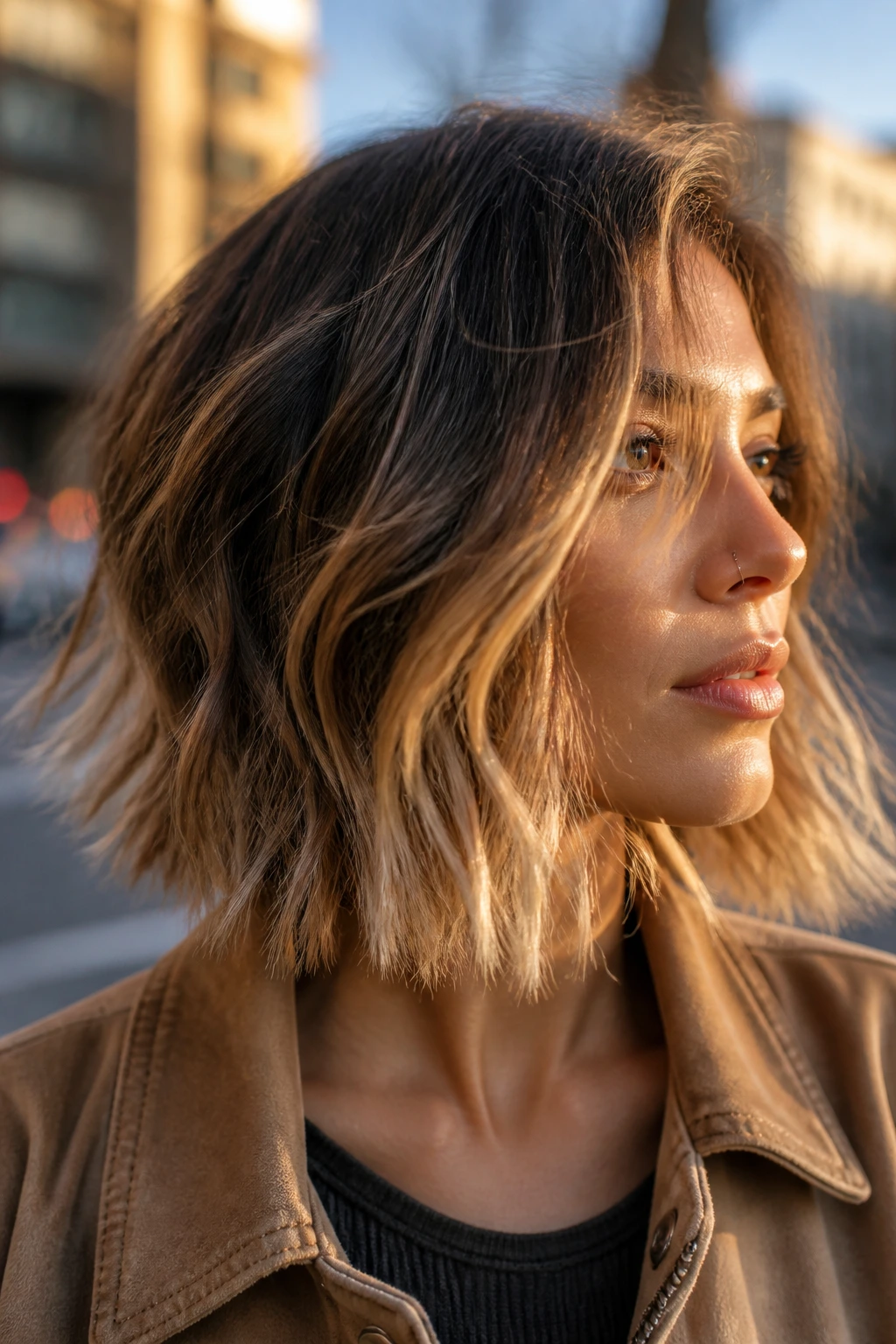
A good bob ombré doesn’t need to call attention to itself. It just needs to make the haircut look richer at the ends and cleaner at the roots. When the transition is planned well, the whole shape feels more alive — even if the color shift is only a couple of levels.
That’s why these looks keep working. They rely on the bob’s natural structure, then soften it with tone instead of forcing the hair into a dramatic color break. Pick the palette that matches your texture, your upkeep habits, and how much contrast you actually want to see in the mirror. The prettiest version is usually the one that looks like it grew there.
