



Faux loc hairstyles for a polished natural look rely on the small things people skip: a part that stays honest, a fiber that doesn’t shine like cheap plastic, and a shape that fits your neck, shoulders, and daily routine. When those three line up, the style looks calm before it looks decorative.
The difference between tidy and tired usually shows up at the roots. A loc set can be beautifully installed and still look off if the front is too tight, the parts wander, or the weight sits like a curtain at the temples. I’ve seen a blunt shoulder-length bob look more refined than a waist-length install that tried to do too much. Length is not the whole story. Never is.
What earns a faux loc style its polished feel is restraint. Clean geometry, one or two smart accents, and enough softness around the face to keep the style from looking boxed-in—that’s the formula. The versions that hold up best are the ones that know where to stay simple and where to show a little personality.
Why These Faux Loc Styles Feel So Put Together
-
Clean parting matters more than extra length: A crisp middle part, triangle sections, or a careful side sweep changes the whole read of the style before anyone notices the ends.
-
Texture can make or break the look: Matte Marley hair, lightly textured wrap hair, and soft curls at the ends usually look more believable than glossy fibers that catch light like plastic.
-
Weight has to match the haircut shape: Waist-length locs are lovely, but if your neck and shoulders are already carrying a lot of hair, a bob or tapered cut can look sharper and feel better all day.
-
Small accents beat clutter: One scarf, a line of gold cuffs, or a few beads can feel finished; all three at once can tip the style into costume territory.
-
The front deserves the most care: If the hairline is neat, the style reads intentional from across the room. If the front is messy, the whole install starts fighting itself.
-
These styles work with real life: The strongest faux loc looks can survive commuting, wind, a blazer collar, and a long day without turning into a frizzy cloud by lunch.
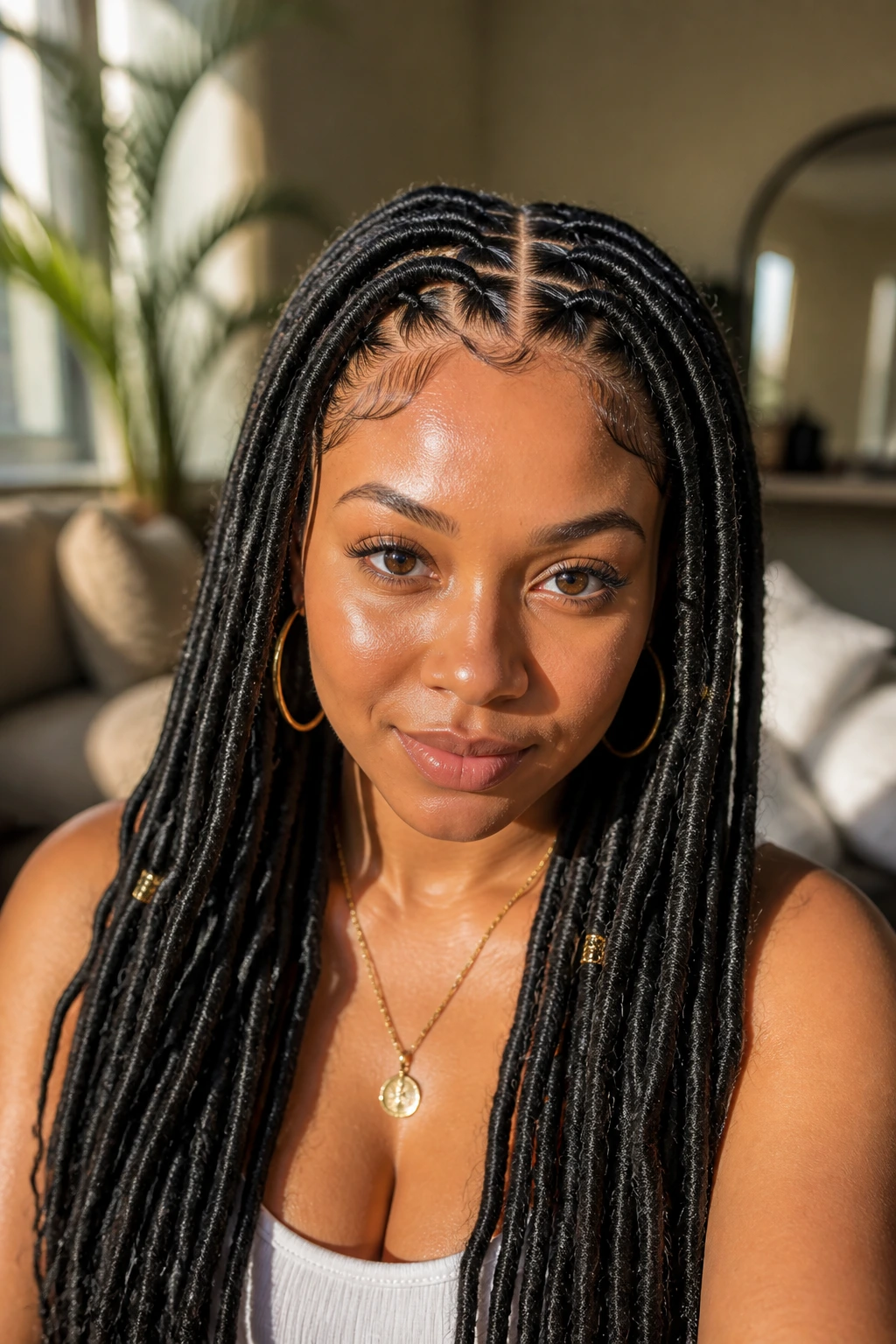
1. Center-Part Waist-Length Faux Locs
A clean center part does more than split the hair. It gives waist-length faux locs a spine, and that one line keeps the whole style from drifting into heaviness. When the sections are even and the front locs sit flat, the result looks calm and expensive in the best sense of the word.
Why It Reads So Clean
The symmetry is the point. A center part pulls the eye down the face and makes the length feel deliberate instead of simply long. It works especially well when the locs are medium thickness and the first inch or so at the root is wrapped neatly, not puffed up like a knot.
Quick Shape Notes
- Best with 1/4- to 3/8-inch parts so the scalp pattern stays tidy.
- Looks sharp in 1B, dark brown, or soft ombré shades.
- A few slightly shorter face-framing pieces can stop the front from looking blocky.
- Keep the ends sealed and neat; frayed tips can undo the polish fast.
Pro tip: Keep the first two locs on either side of the part a touch smaller than the rest. That keeps the center line from looking bulky, and the whole style sits flatter at the hairline.
2. Shoulder-Grazing Faux Loc Bob
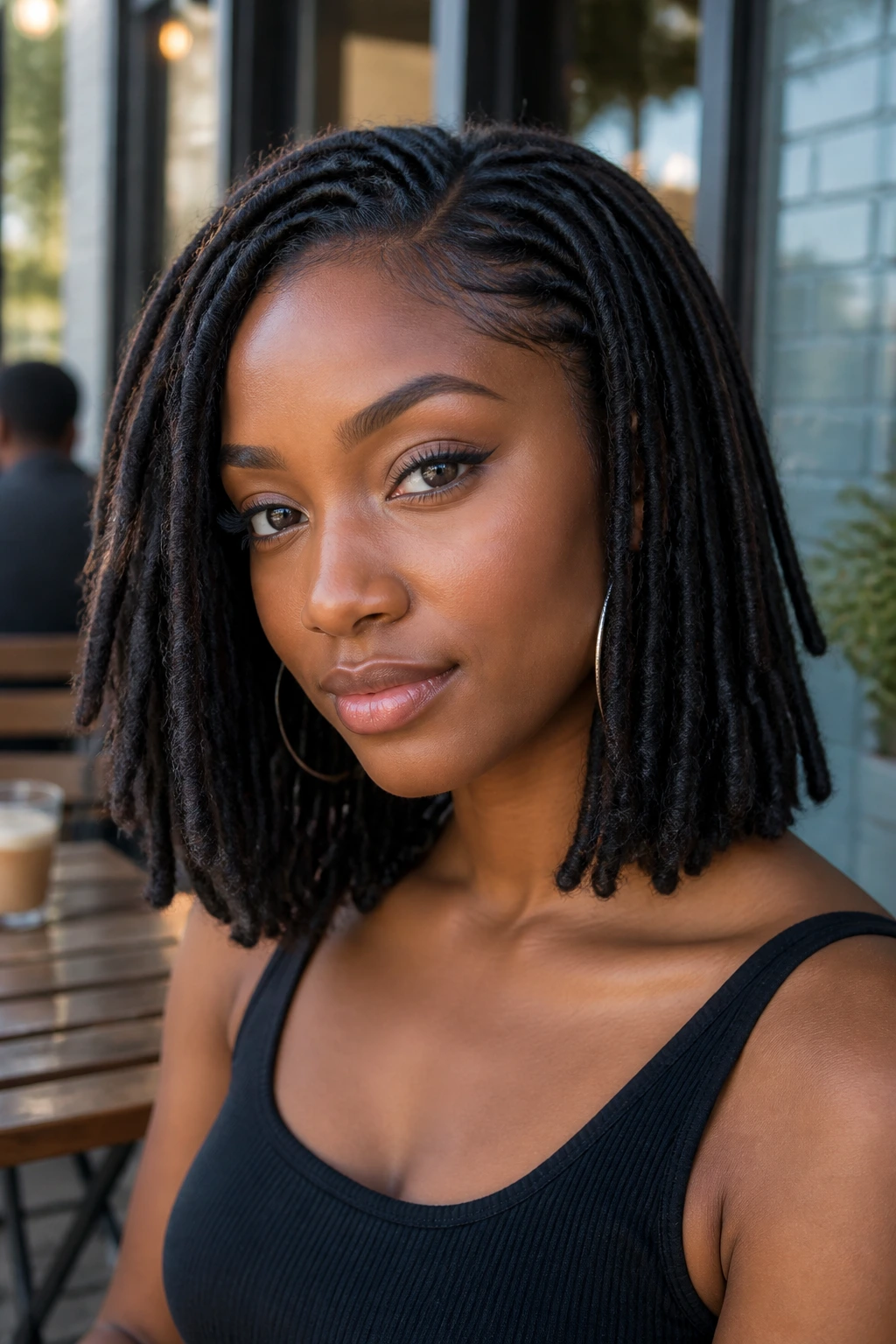
The bob is the easiest way to make faux locs look expensive. Not flashy. Not heavy. Just controlled. When the ends hit around the collarbone or skim the shoulders, the style keeps its shape without dragging your frame down, which is why this length looks so good with sharp earrings and clean necklines.
The trick is the cut line. A blunt or slightly rounded bob reads polished; a bob that’s uneven by accident reads unfinished. I like it best when the front is just a hair longer than the back, because that tiny angle gives the locs movement without making the whole shape wobble.
This is the set I’d choose for someone who wants locs that can go straight from errands to dinner without much fixing. It’s also kinder to the scalp if you’re sensitive to weight. No tugging at the nape. No constant shoulder friction. That matters more than people think.
3. Goddess Faux Locs With Soft Tendrils
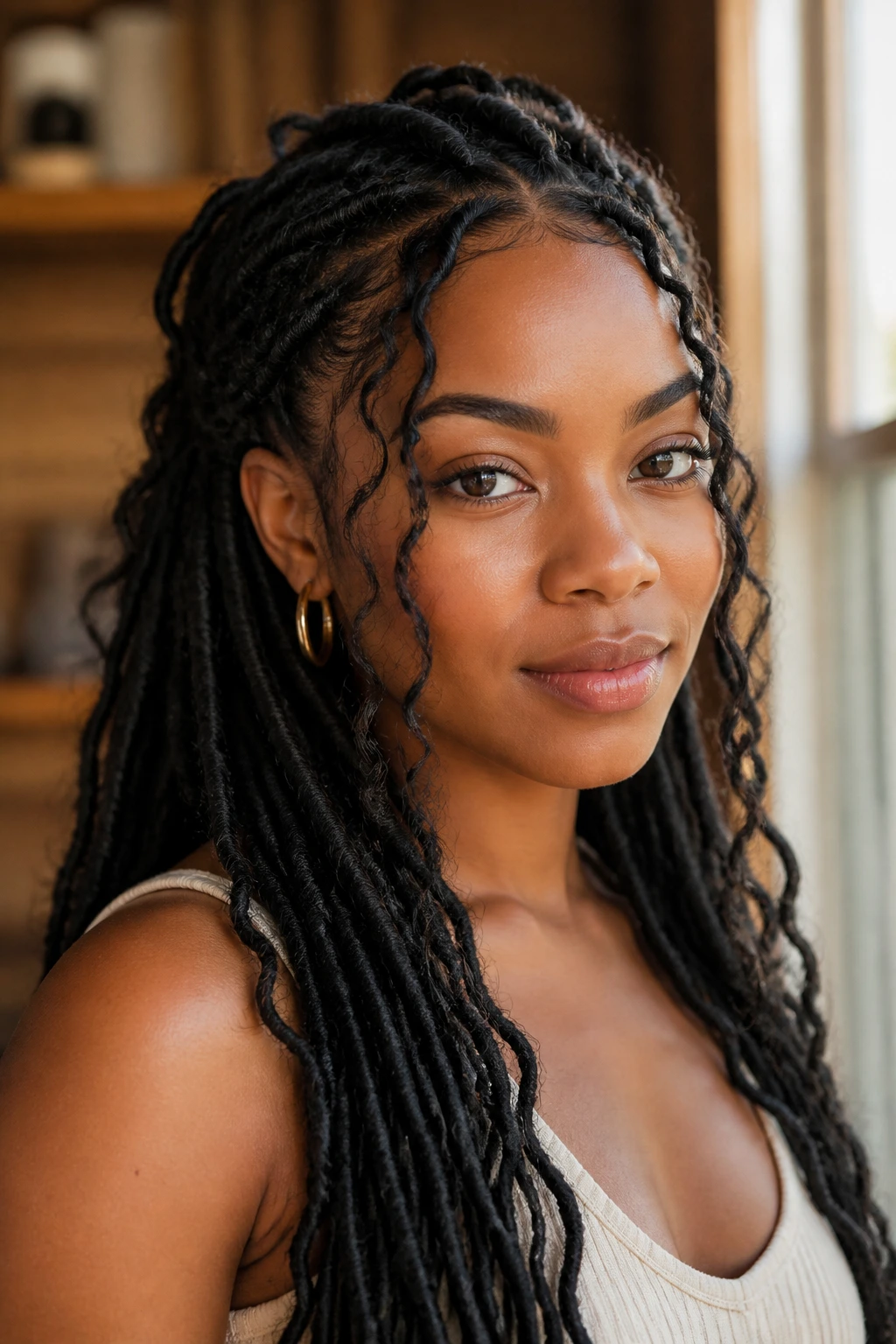
Why do a few loose curls change the whole mood? Because they break up the hard line of the locs and soften the edges around the face, neck, and shoulders. Goddess faux locs still feel grounded, but the tendrils keep them from looking stiff or overbuilt.
How to Keep the Curl Work Tidy
Use the curls with intention. A few strands near the front and ends are enough; if every loc has loose hair wrapped around it, the style starts to look busy and loses that clean finish. The sweetest version uses curls as accents, not as the entire headline.
A flexi-rod set or pre-curled hair can help, but the curls should be uniform enough to look planned. Oddly enough, the messy goddess look only works when the mess is controlled. That’s the part most people miss.
Best for: Anyone who wants softness around the face without giving up the structure of locs. The curls add movement in photos and in person, but the style still sits neatly if you keep the curl count down.
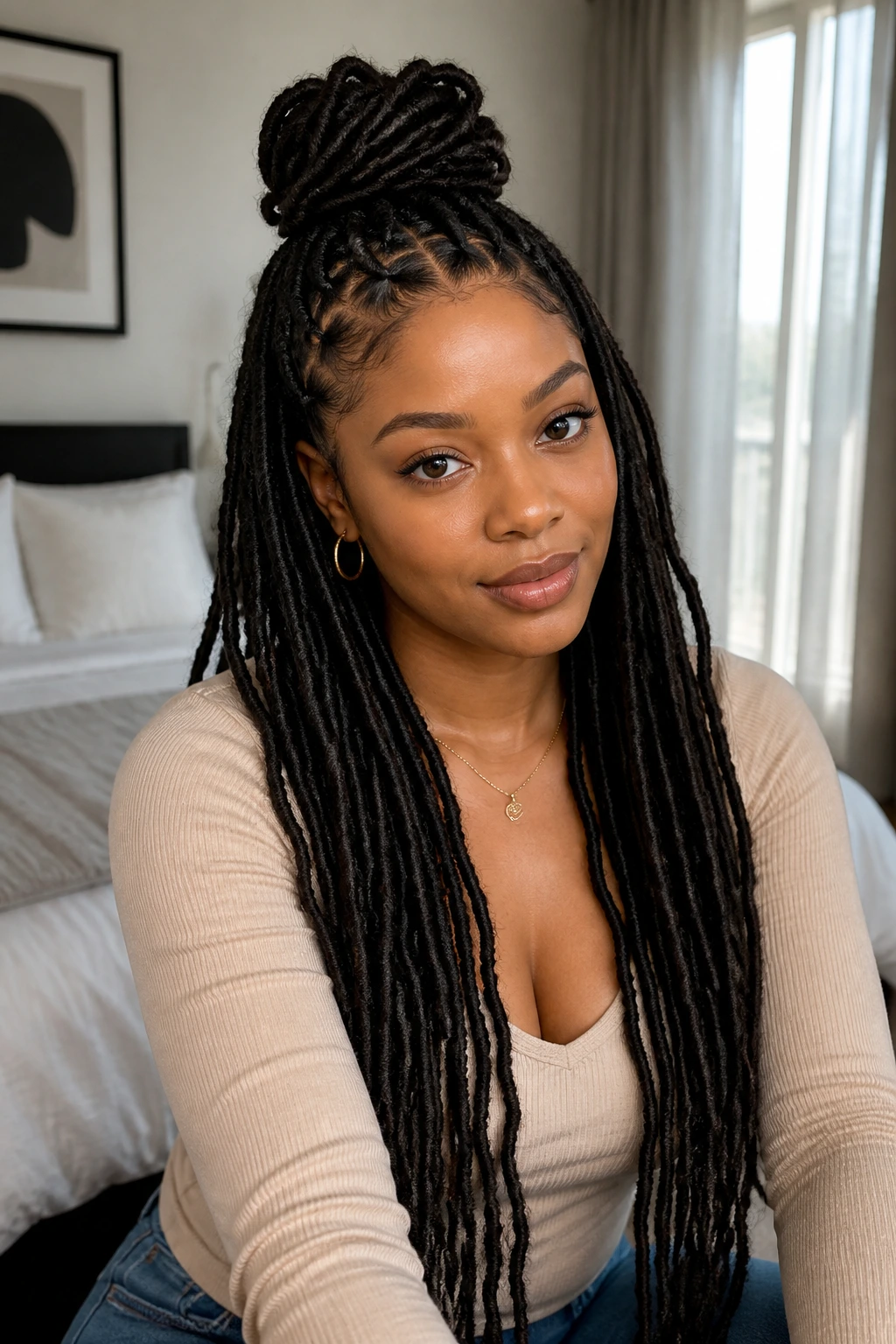
4. Half-Up Half-Down Faux Locs
On the third day of a long install, this is the style I reach for when I want the front off my face and the length still visible. Half-up half-down faux locs take pressure off the hairline, which is one reason they stay looking neat longer than a loose style that’s been touched a dozen times.
The top section should be gathered gently, not yanked into a tiny elastic that leaves a dent. A loose knot, a small top puff, or a wrapped pony at the crown keeps the shape relaxed while still making the locs look styled. If the hair is very dense, split the top half a little lower than your instinct says to; too much hair in the top section makes the style feel top-heavy.
I also like this style because it shows off detail. Clean parts at the scalp, a little length in the back, a few polished front pieces—nothing has to fight for attention. That balance is the whole game.
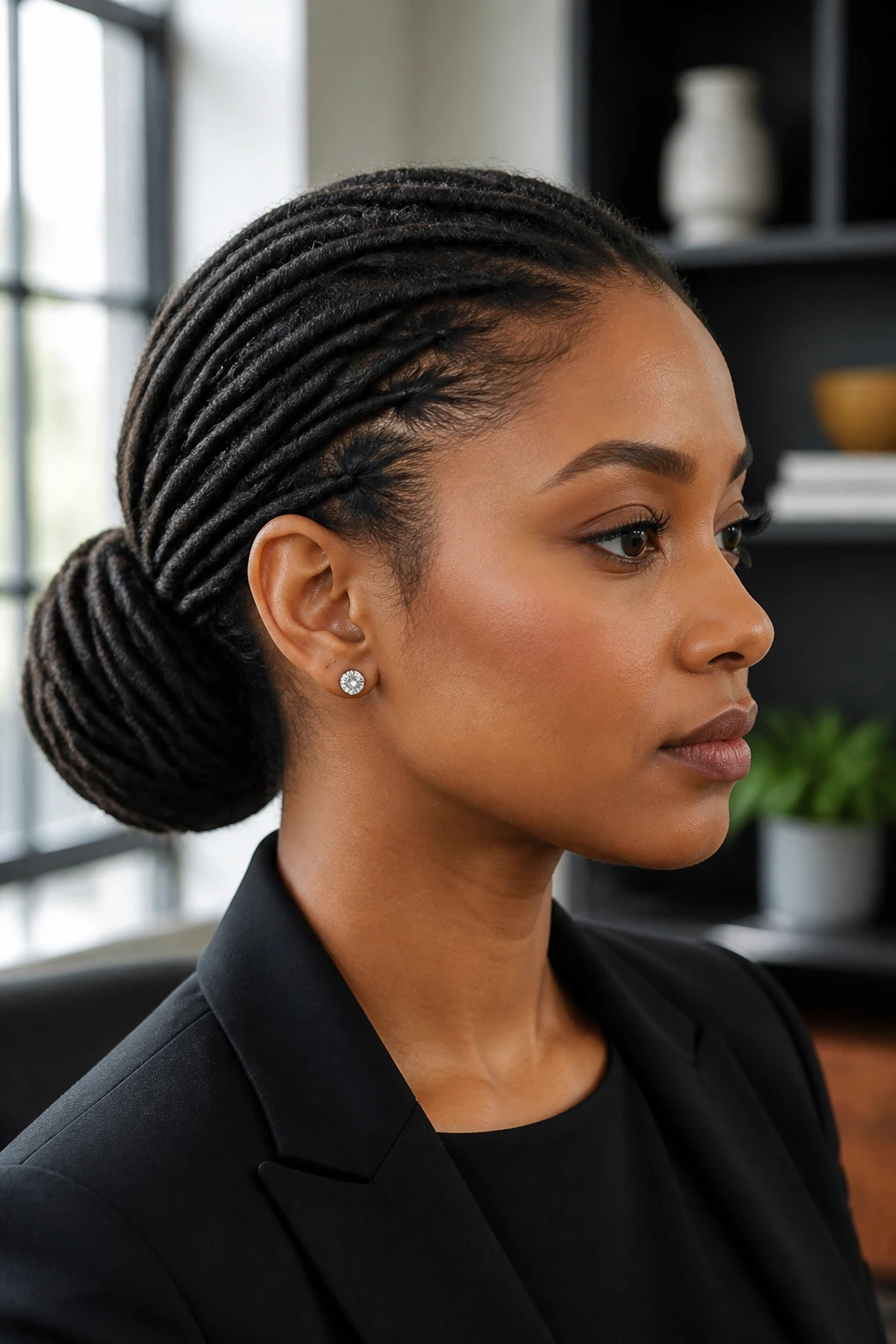
5. Sleek Low Bun Faux Locs
A low bun with faux locs is pure discipline, and I mean that as a compliment. The hair gets pulled back, the nape stays neat, and the whole style reads orderly in a way that feels almost tailored. It’s the version you wear when you want earrings, makeup, or a strong neckline to do some of the visual work.
The bun looks best when the locs are gathered at the base of the skull and twisted into a compact coil. If the locs are long, divide them into two or three sections first so the bun doesn’t become a lumpy knot. Pinning in an X pattern helps more than people expect. It keeps the shape from sagging by the second hour.
This is one of the easiest ways to make faux locs feel formal without adding anything decorative. No beads. No scarf. No extra texture. Just a clean line and a bun that sits where it should.
6. Deep Side-Part Faux Locs
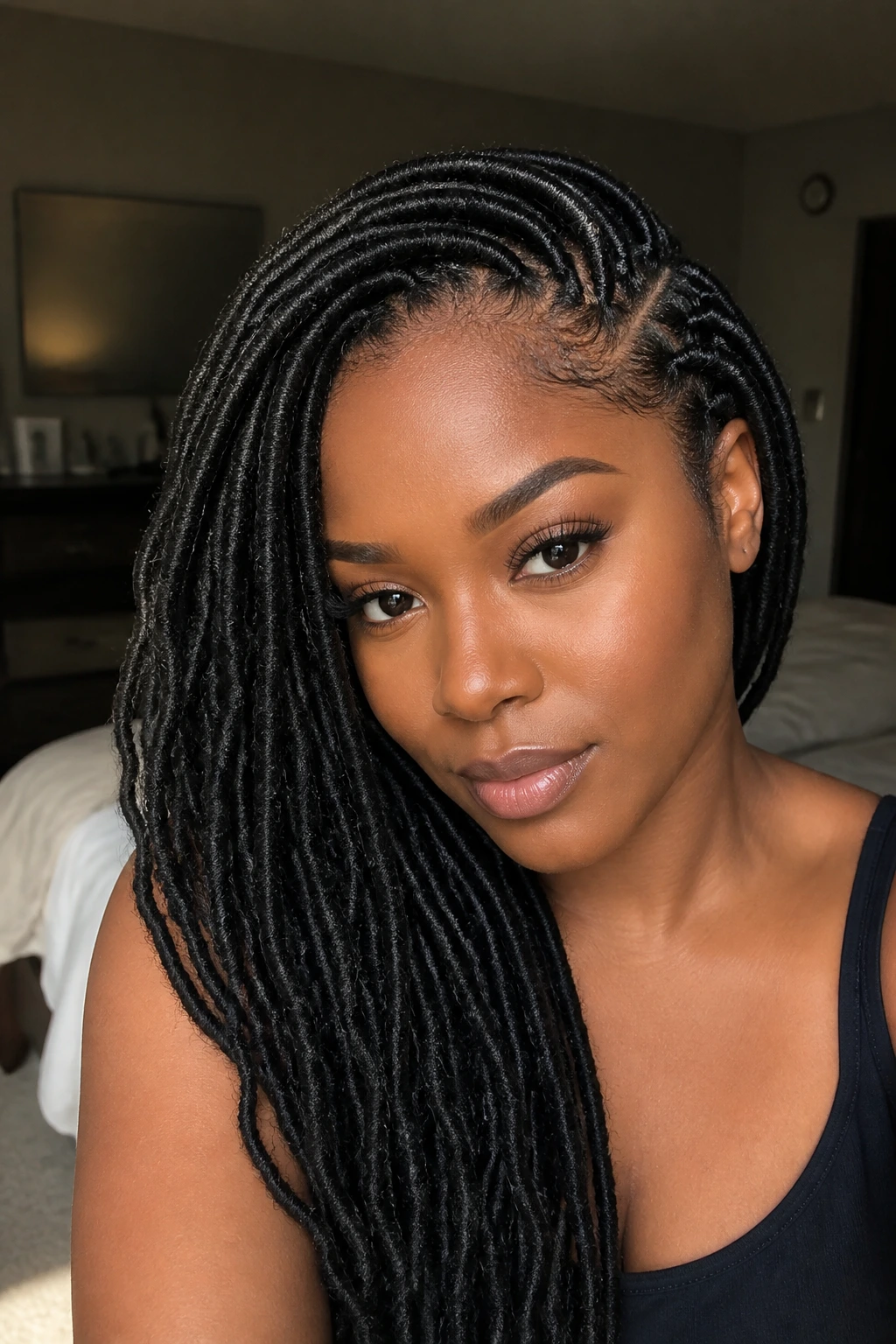
A deep side part changes the whole attitude of faux locs. Instead of the face being framed evenly, one side carries more volume, and that asymmetry gives the style movement without requiring curls, beads, or extra color. It’s a good move when you want the hair to look soft but still controlled.
The part should start with conviction. A timid side part that barely shifts the hair doesn’t do much. A deeper part, one that leaves around 60 percent of the locs on one side, creates a visible sweep that feels deliberate. Too deep, though, and the style can collapse toward the heavier side by the end of the day.
I like this shape for people who wear glasses, statement earrings, or strong brows. There’s room for the face to breathe. The locs still make a statement, but they aren’t crowding every part of it.
7. Faux Locs With Beaded Ends
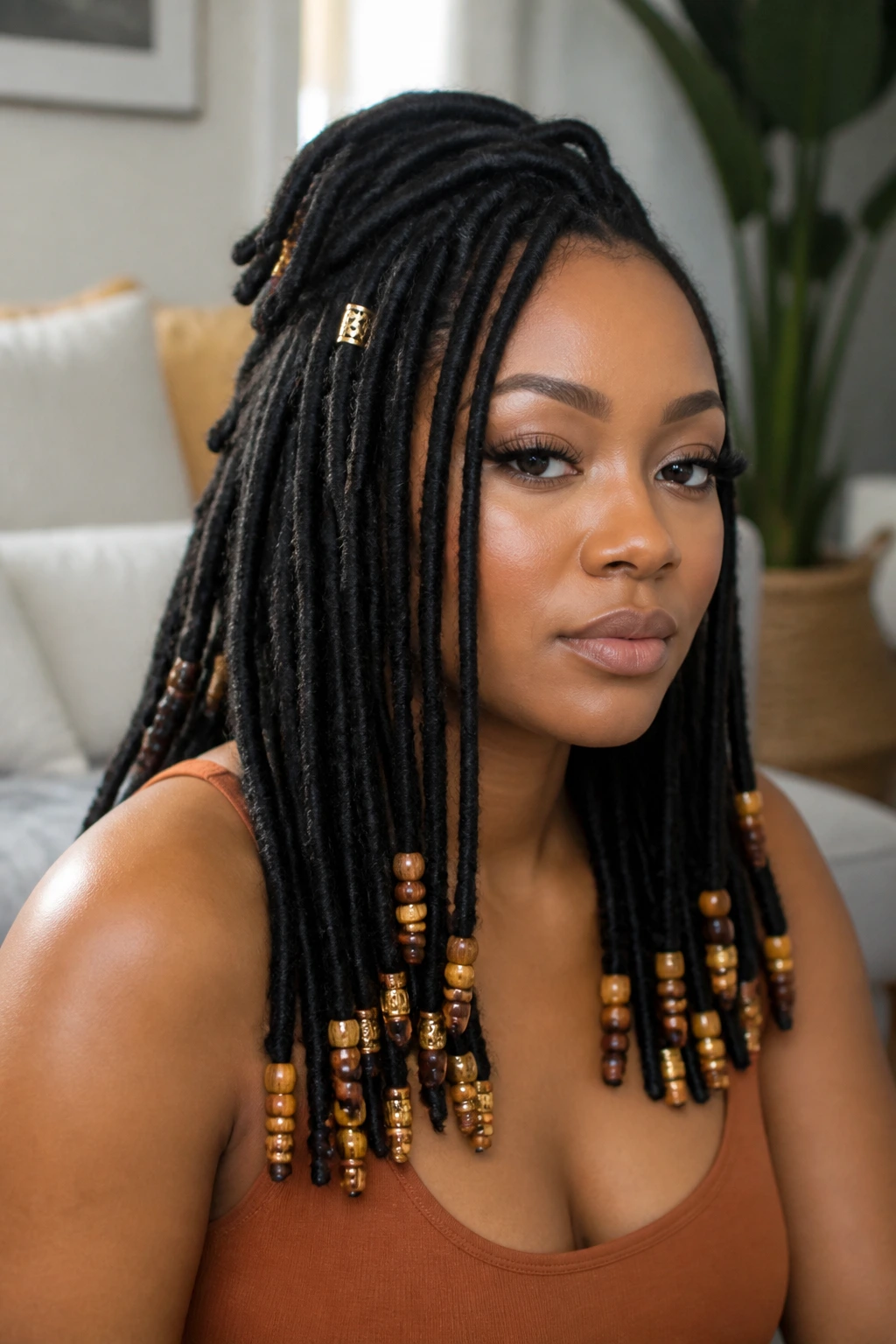
Beads can make faux locs feel finished instead of fussy if you keep them disciplined. One line of wood beads at the ends, a few clear accents near the front, or a restrained gold bead cluster can sharpen the style without turning it playful in the wrong way. Sound matters here too. Soft clicks at the ends feel intentional; a tangle of mismatched plastic does not.
The best beaded styles keep the rest of the install calm. If you’re using beads, skip curly tendrils and skip heavy scarf prints. Let the beads be the punctuation. One or two repeated tones—wood and gold, or clear and brown—look cleaner than a rainbow of extras.
What to Watch
- Put beads on a few selected locs, not the whole head.
- Use lighter beads near the temples so the front doesn’t droop.
- Keep the spacing even; clustered beads on one side can feel accidental.
- If the beads are loud, make the locs themselves plain and matte.
8. Triangle-Part Faux Locs
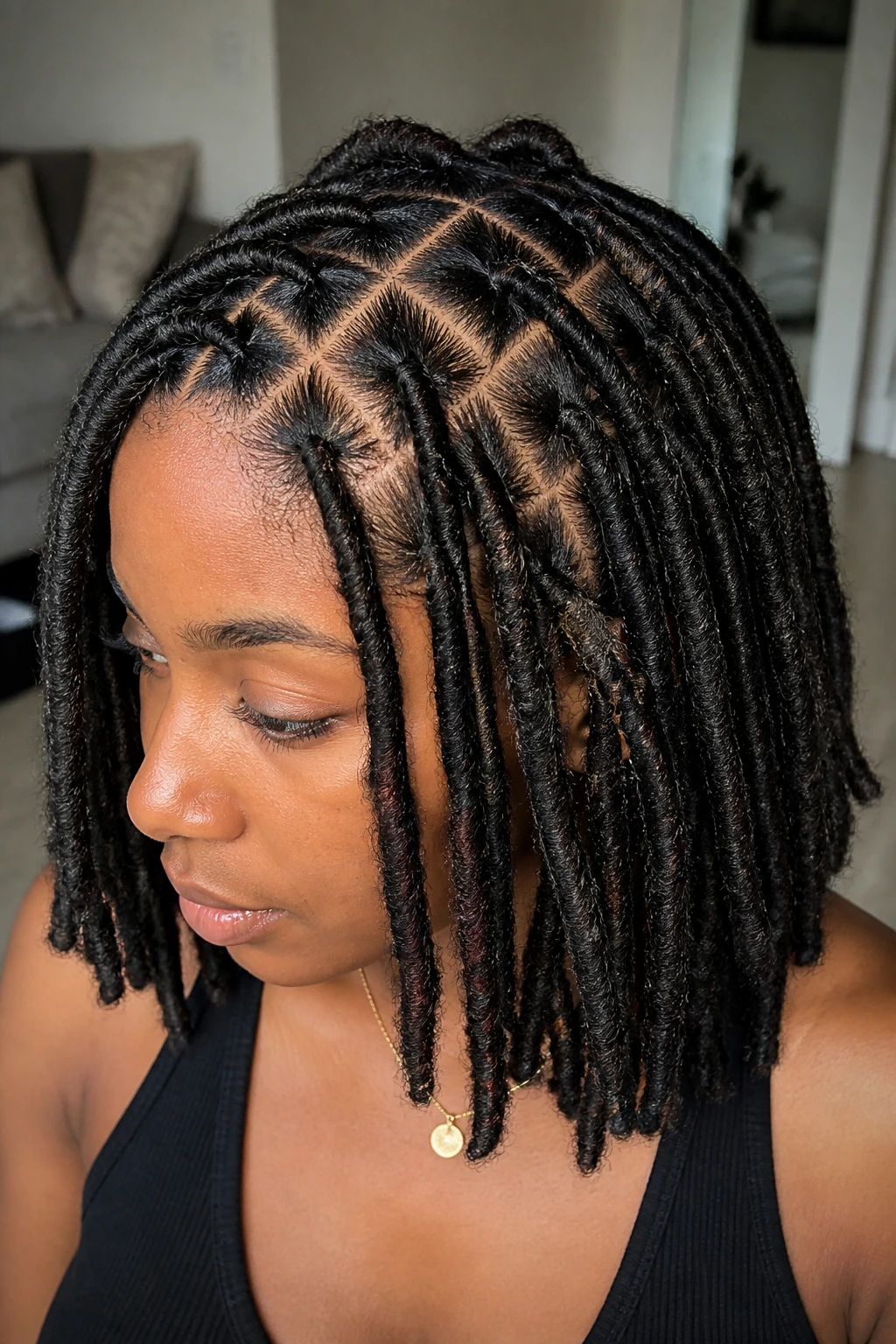
Triangle parts do the clean-work for you. The geometry breaks up the scalp in a way that feels sharper than standard squares, and the pattern stays interesting even when the locs themselves are simple. That’s the appeal: the parting becomes the design.
The style is especially strong on medium and long lengths because the scalp pattern gets room to show before the locs take over the frame. If the parts are consistent, triangle sections can make even a straightforward install look custom. If they’re sloppy, though, the whole thing reads uneven quickly. There’s no hiding it.
I’d choose triangle parts for someone who wants a little edge without extra color or accessory work. The shape itself is the accessory. That’s enough.
9. High Ponytail Faux Locs
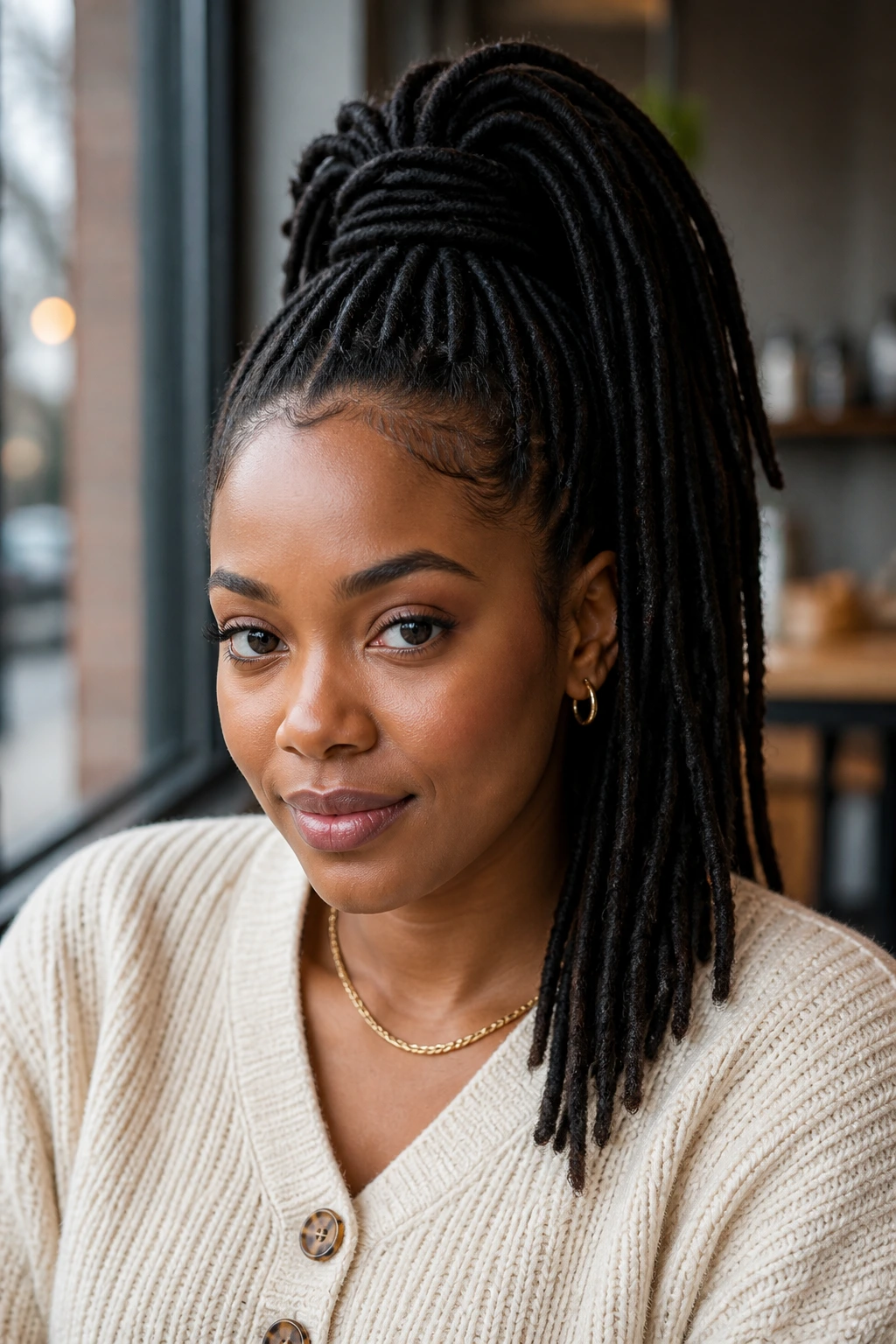
A high ponytail with faux locs looks polished when the base is smooth and the pony sits at the crown, not jammed against the forehead. The lift opens the face, shows the neck, and gives the locs a clean fall that feels energetic without being chaotic.
The base matters more than the pony itself. Wrap a loc or a thin strip of hair around the elastic so the tie doesn’t show, and keep the front hair gently smoothed rather than shellacked down. Too much gel makes the hairline look stiff and can flake by the afternoon. A soft hold is enough.
This is the style I’d choose for warm weather, active days, or outfits with a lot happening around the shoulders. It keeps the locs out of the way and still looks finished when you turn your head.
10. Chunky Faux Locs With Clean Partings
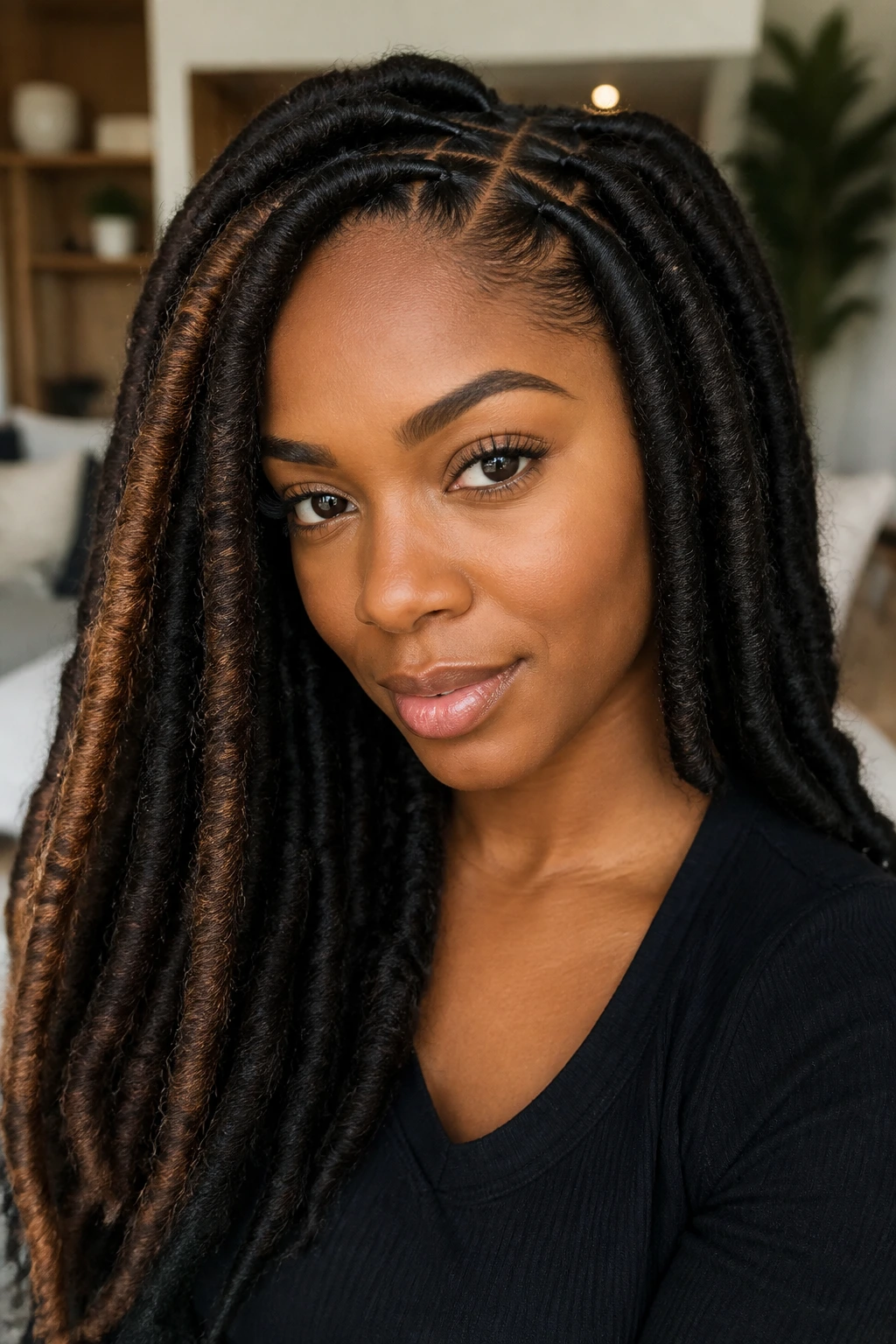
Chunky faux locs have a presence that smaller locs don’t. The thicker diameter gives the style more visible texture, and when the parts are crisp, the whole set feels modern in a strong, quiet way. They’re less fussy than tiny locs and easier to read from across the room.
The danger is bulk. Too many oversized locs packed too tightly can make the head look wider than it is. The cleaner approach is to keep the parts narrow, keep the locs consistent in thickness, and stop the length at a place that makes sense for your frame. Mid-back usually feels balanced; full waist length can tip into drag if the locs are too chunky.
A few things that help
- Ask for uniform diameter from root to end.
- Keep the front row slightly lighter than the back.
- Use matte hair if you want the texture to read more natural.
- Choose this size when you want the install to look full without becoming heavy.
11. Petite Faux Locs With Skinny Sections
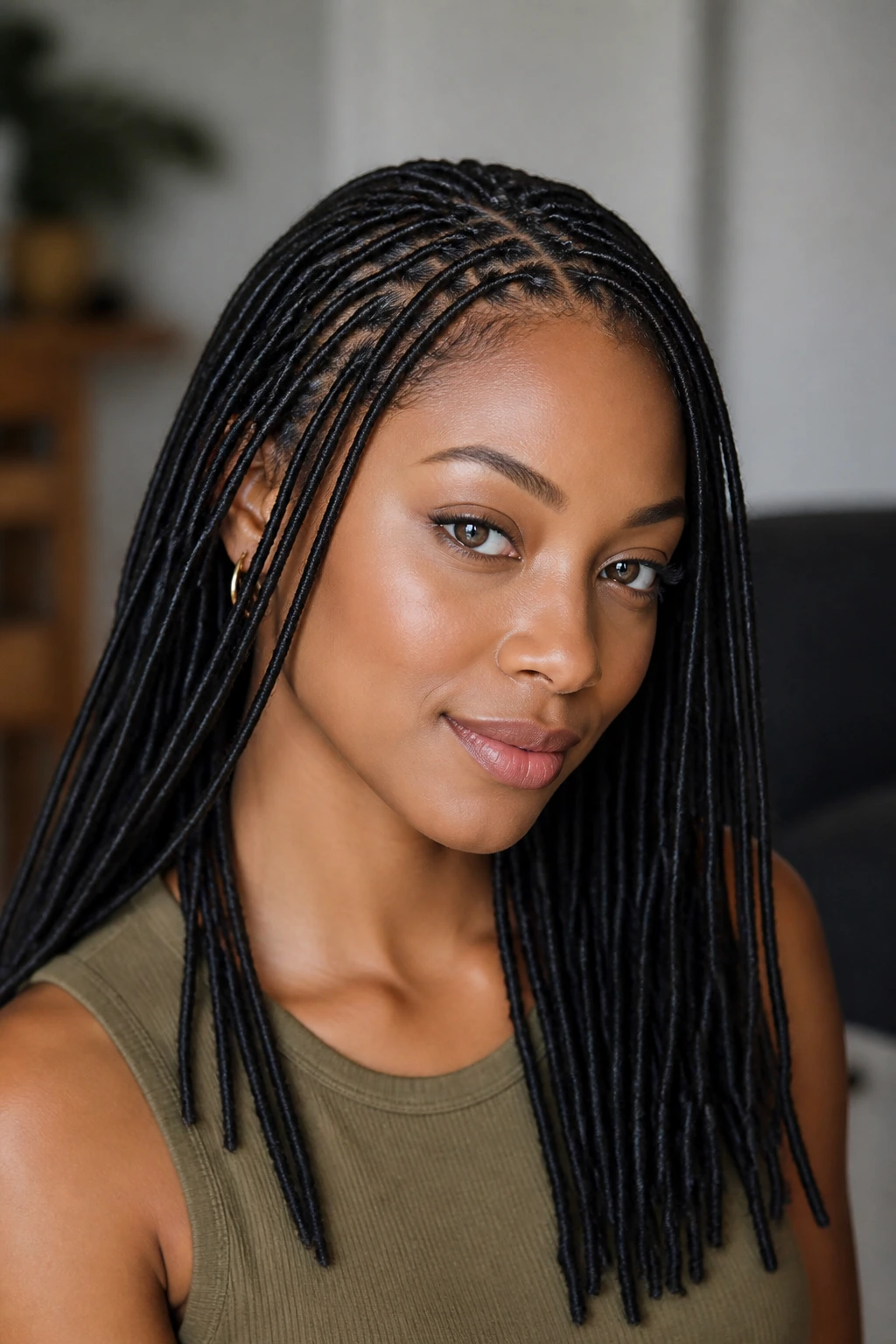
Petite faux locs take longer to install, and that’s the tradeoff. In return, they sit with a finer, more detailed finish that often looks closer to natural loc growth. The smaller sections give the hair more movement, and the scalp pattern can look beautifully neat when the parts are consistent.
The style is especially good if you do not want the locs to dominate your face. Skinny sections lie flatter under scarves and hats, and they tend to drape with more softness than thicker sets. The downside is patience. More pieces mean more install time, more movement around the shoulders, and more chances for the front to get fuzzy if you ignore it.
Still, when petite faux locs are done well, they’re hard to beat for a refined finish. The whole head looks deliberate. Nothing feels oversized.
12. Marley-Texture Faux Locs
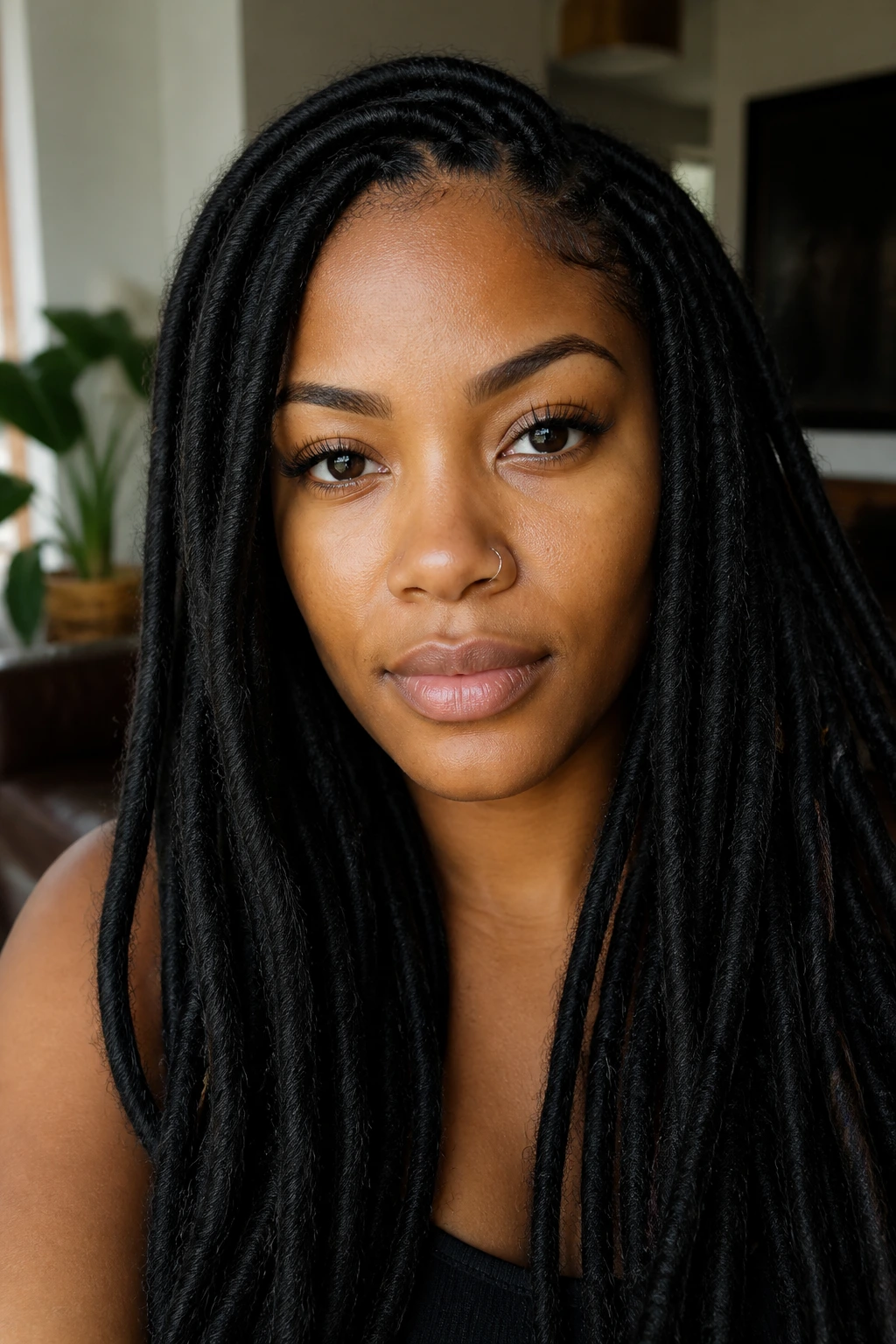
Marley-texture faux locs are the matte, soft-focus version of the style. The fiber has a dry, kinky finish that blends better with coarser natural hair and hides small mistakes in the wrapping. If a part is a little imperfect or a root isn’t wrapped like a machine did it, the texture covers a lot of that business.
That’s why I reach for Marley hair when the goal is polished but not glossy. It has less shine, less slip, and more grip, which makes the locs sit in place with a muted finish. The look is strong even without beads or curls. It’s the texture itself that carries the style.
If your natural hair has a coarser pattern, Marley texture can make the transition from root to loc look more believable. If your hair is finer, it still works, but a lighter install and smaller sections usually help the style sit better.
13. Ombre Faux Locs
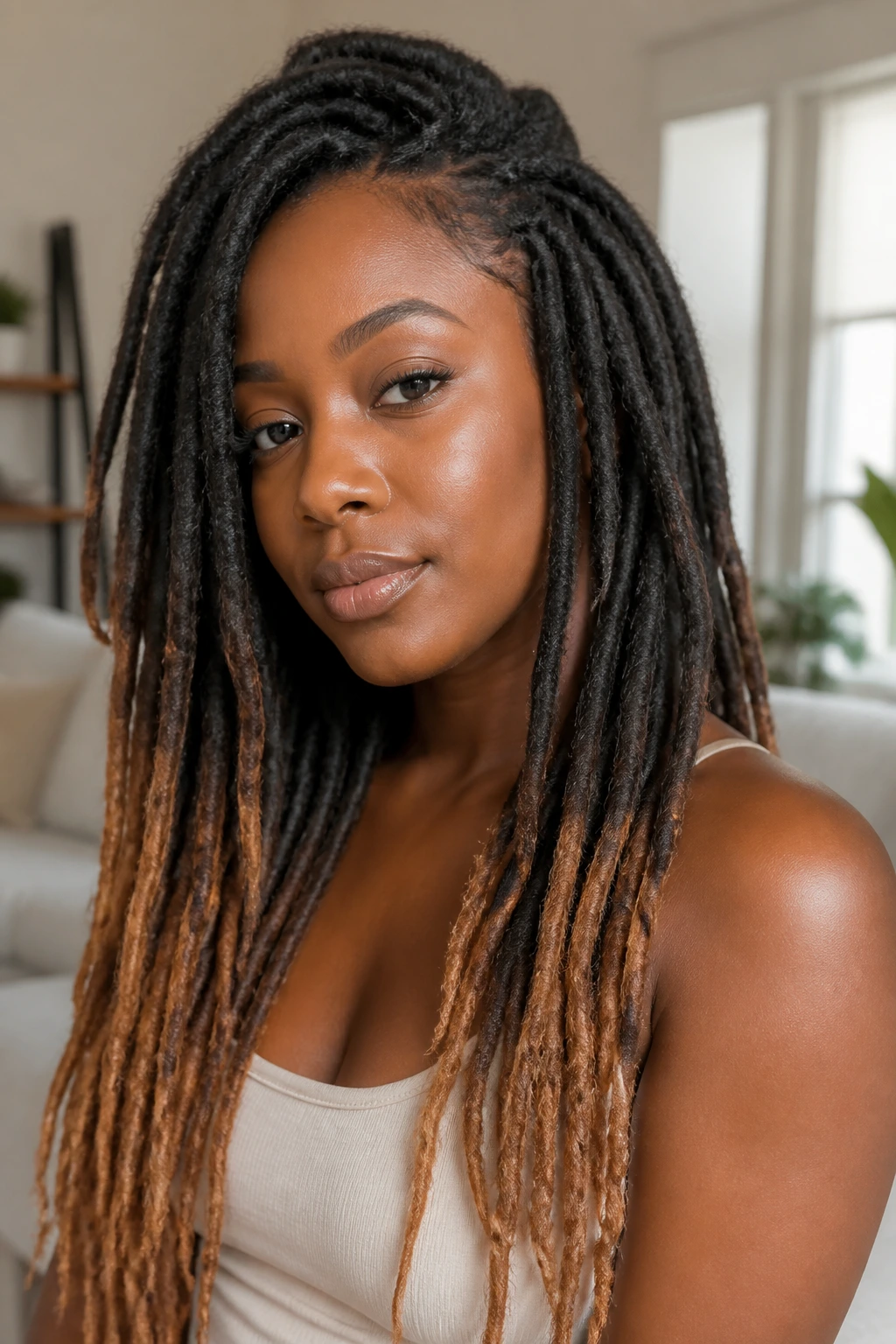
A subtle color melt is the easiest way to make faux locs look custom. Dark roots fading into caramel, cinnamon, honey, or auburn ends create shape without screaming for attention. The eye moves through the color, and that movement makes the locs feel softer and more tailored.
The key is restraint. One transition is enough. Two, maybe. Once you start stacking high-contrast streaks, the style stops feeling polished and starts feeling loud in a way that competes with the loc shape. A deep brown root with warm ends usually looks more natural than a black-to-blonde jump.
Best color moves
- 1B to warm brown for a gentle change.
- Rooted cinnamon if you want warmth without brass.
- Honey ends if the install needs more light around the face.
- Soft burgundy when you want dimension that still feels controlled.
14. Scarf-Wrapped Faux Locs
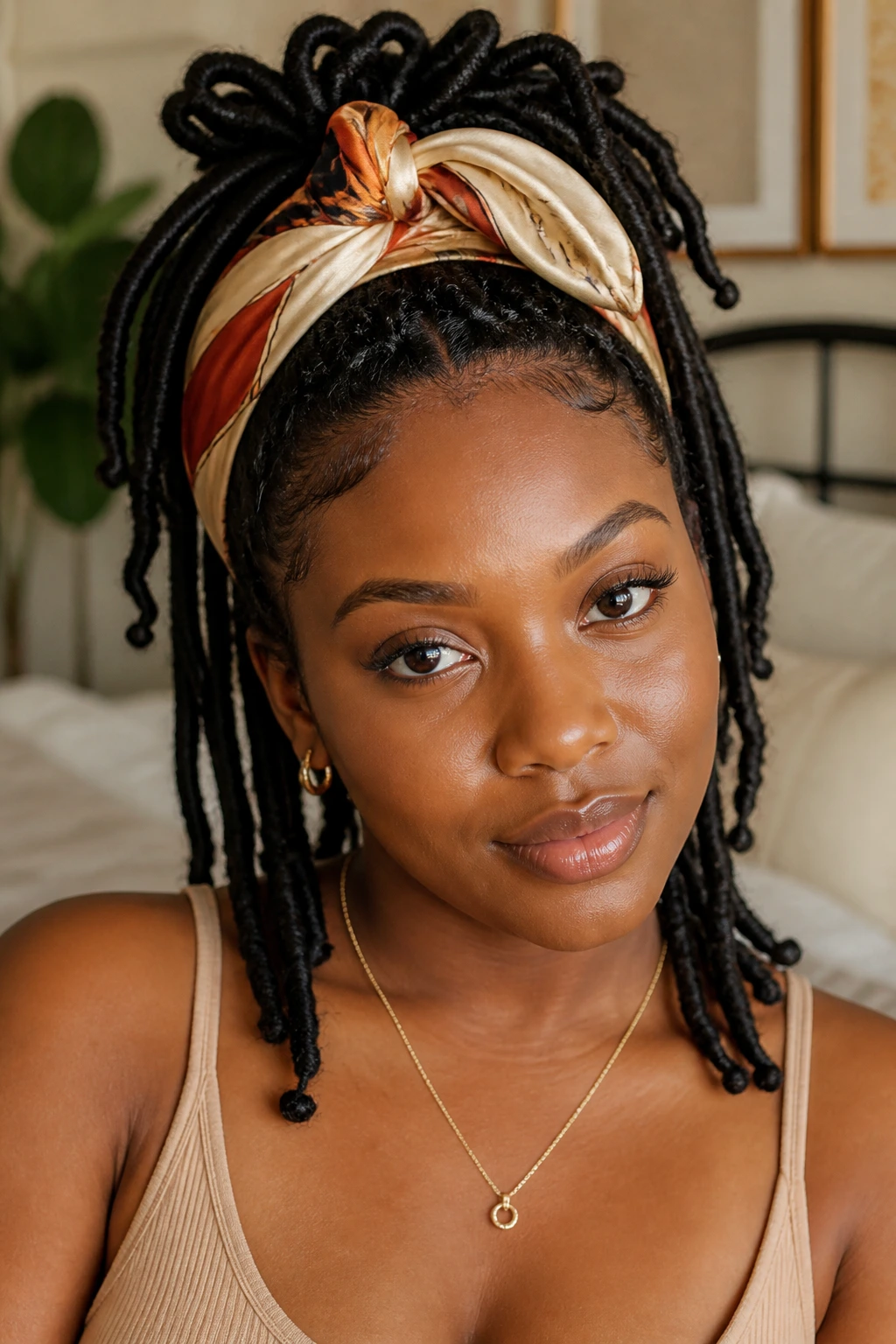
A scarf around faux locs can save a style on the day it needs a little help. Wrap it at the crown, tie it low at the nape, or fold it into a band that sits over the front line, and suddenly the whole set looks styled rather than merely worn. A silk or satin scarf is best because it slides against the hair instead of roughing it up.
The trick is to treat the scarf like part of the outfit, not an afterthought. One clean print or one solid color reads stronger than a busy pattern that competes with the locs. If the hair is already textured and full, a plain scarf often looks more refined anyway.
This is also one of the smartest ways to deal with a style that’s getting a little old around the hairline. You’re not hiding the locs. You’re framing them.
15. Low Chignon Faux Locs
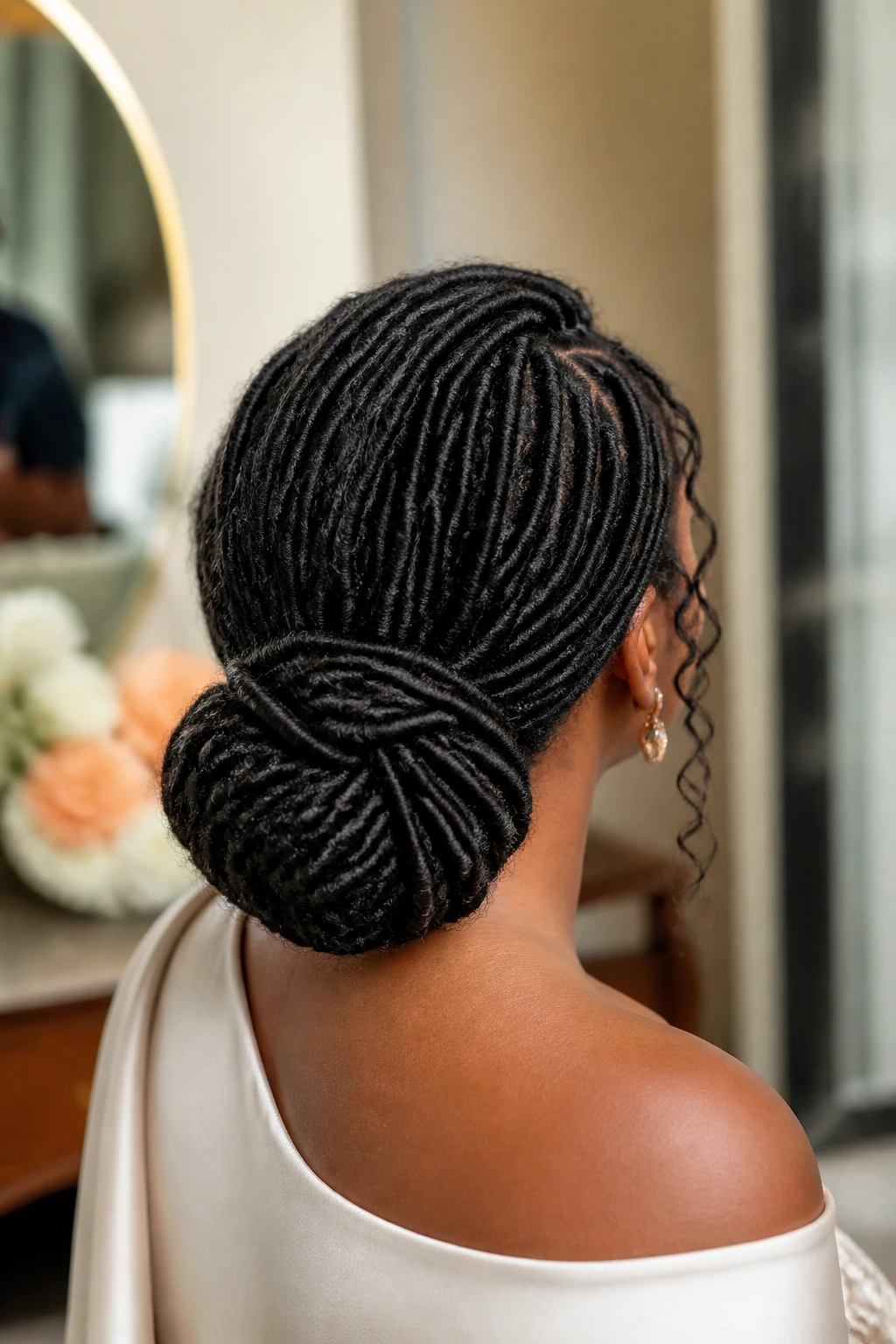
The low chignon is the cousin of the low bun, but it twists with more polish. Instead of a compact ball, the locs fold into a smooth knot or coil at the nape, which gives the style a softer, more formal finish. It’s the version that works when you want structure but don’t want the bun to look heavy.
The reason it looks so good is the visible twist. A chignon makes the hair appear intentionally arranged, almost like fabric gathered at the back of a dress. That visual cue matters. It keeps the style from reading like a quick tie-back.
I’d choose this for dinners, ceremonies, and settings where you want the neck open and the shoulders clear. It also pairs well with locs that have a little length, because the extra hair gives the knot enough substance to hold shape.
16. Braided Crown Faux Locs
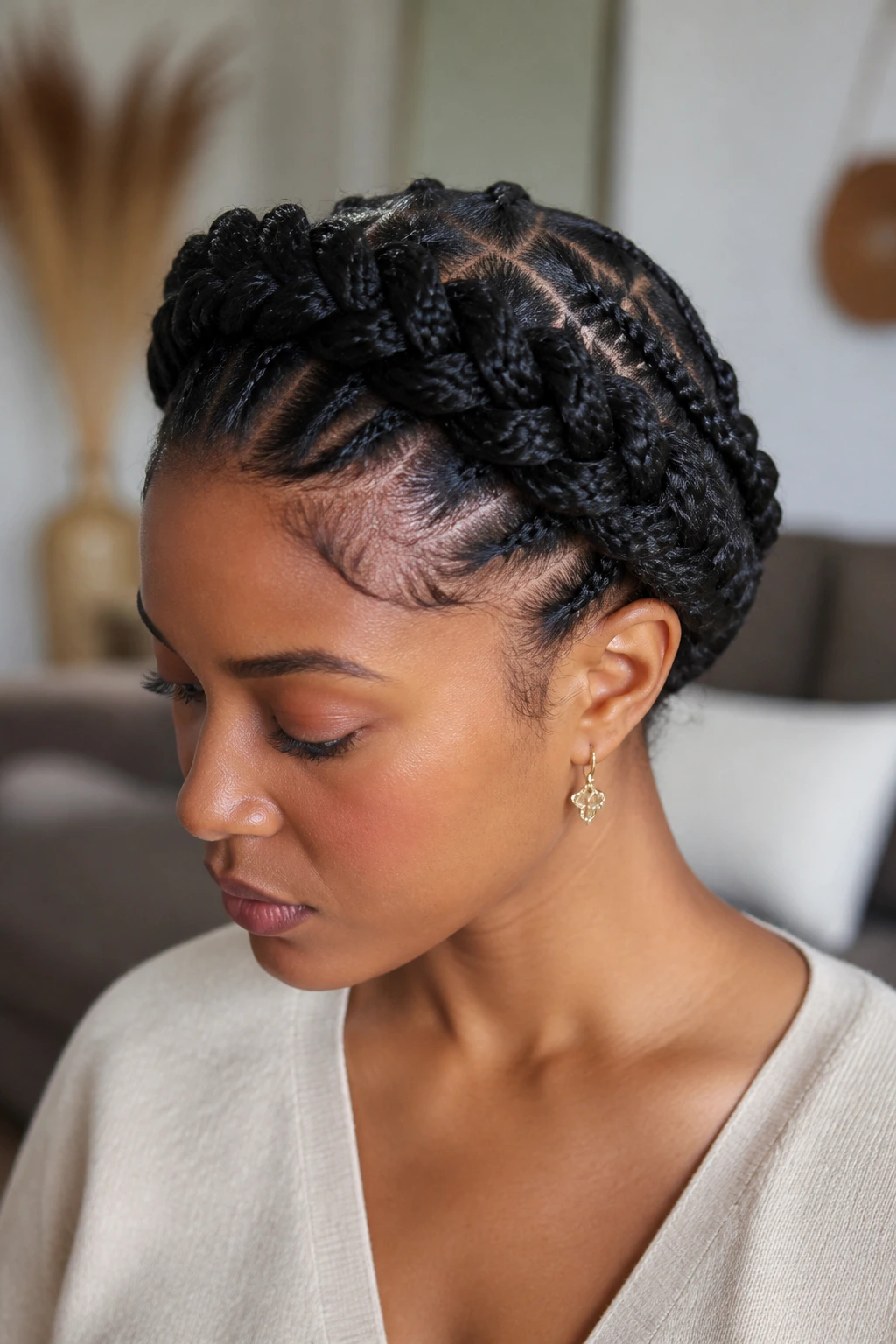
Why does a braided crown make faux locs look so finished? Because it puts the hairline and the scalp pattern on display in the best way. The locs wrap around the head like a halo, and that circular shape instantly feels more composed than letting the hair hang loose.
How to keep the crown neat
Start with locs that are already smooth at the root. If the base is fuzzy, the braid will expose it. Keep the wrap snug enough to stay put, but not so tight that it starts squeezing the temples. A crown that sits just above the ear line usually looks cleaner than one that rides too high.
This style has a formal feel without needing accessories. If you want to add something, one cuff or a narrow ribbon is enough. Anything more and the crown starts losing its quiet shape.
17. Faux Locs With Curled Ends
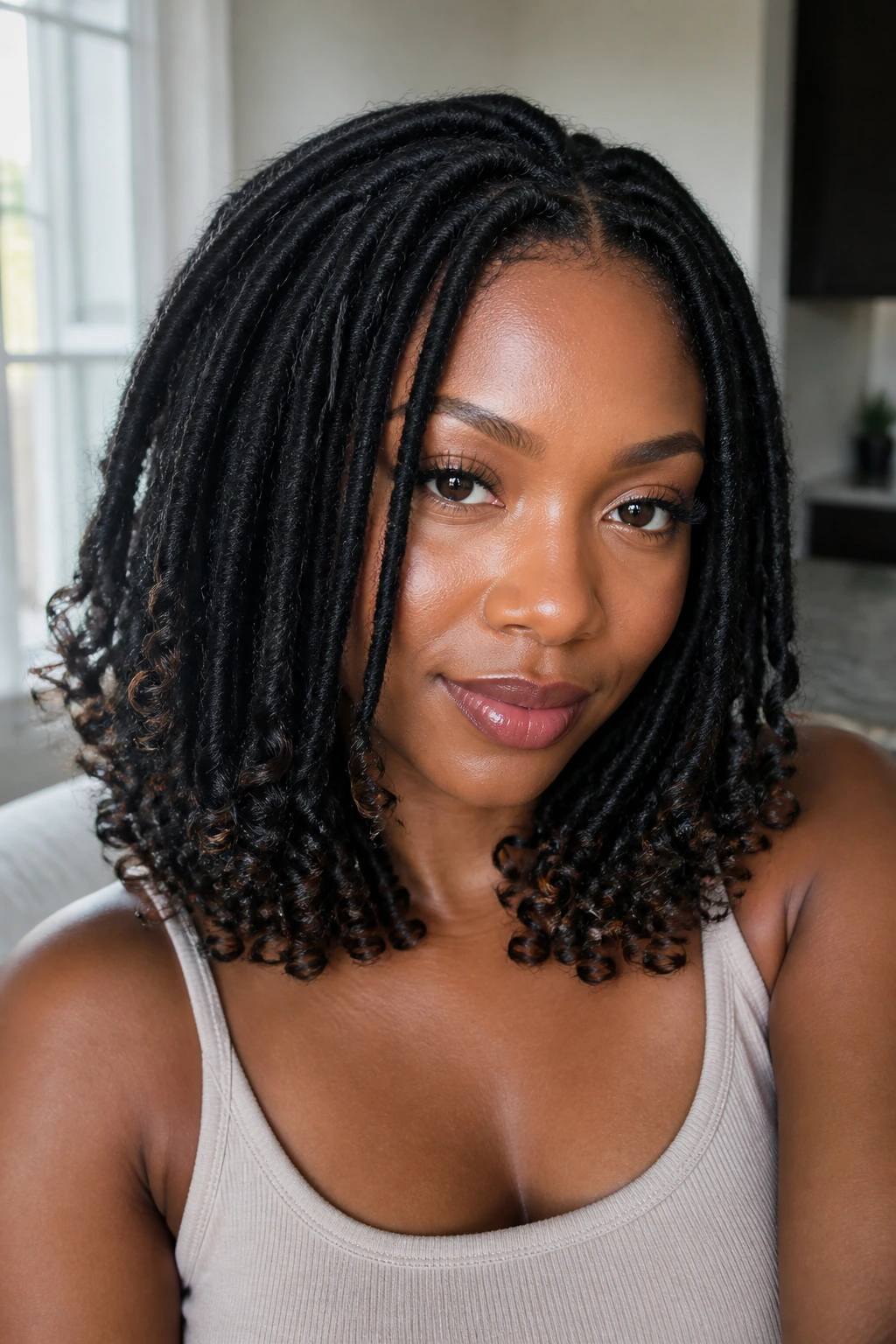
Curled ends are a small move with a big payoff. The last few inches of hair soften the silhouette, and that softness keeps the locs from looking like a row of identical sticks. If the install feels a little severe, curled ends fix that fast.
The best version uses the curl only at the bottom third or so of the loc, not all the way up. Flexi rods, perm rods, or a careful setting pass can do the job, but the curl pattern should stay consistent. Random spiral shapes at every end make the style look messy. Uniform bends read polished.
I like this look when the locs are medium or shoulder length. The curls add enough movement to keep the style from feeling boxy, especially around the collarbone.
18. Shoulder-Length Feathered Faux Locs
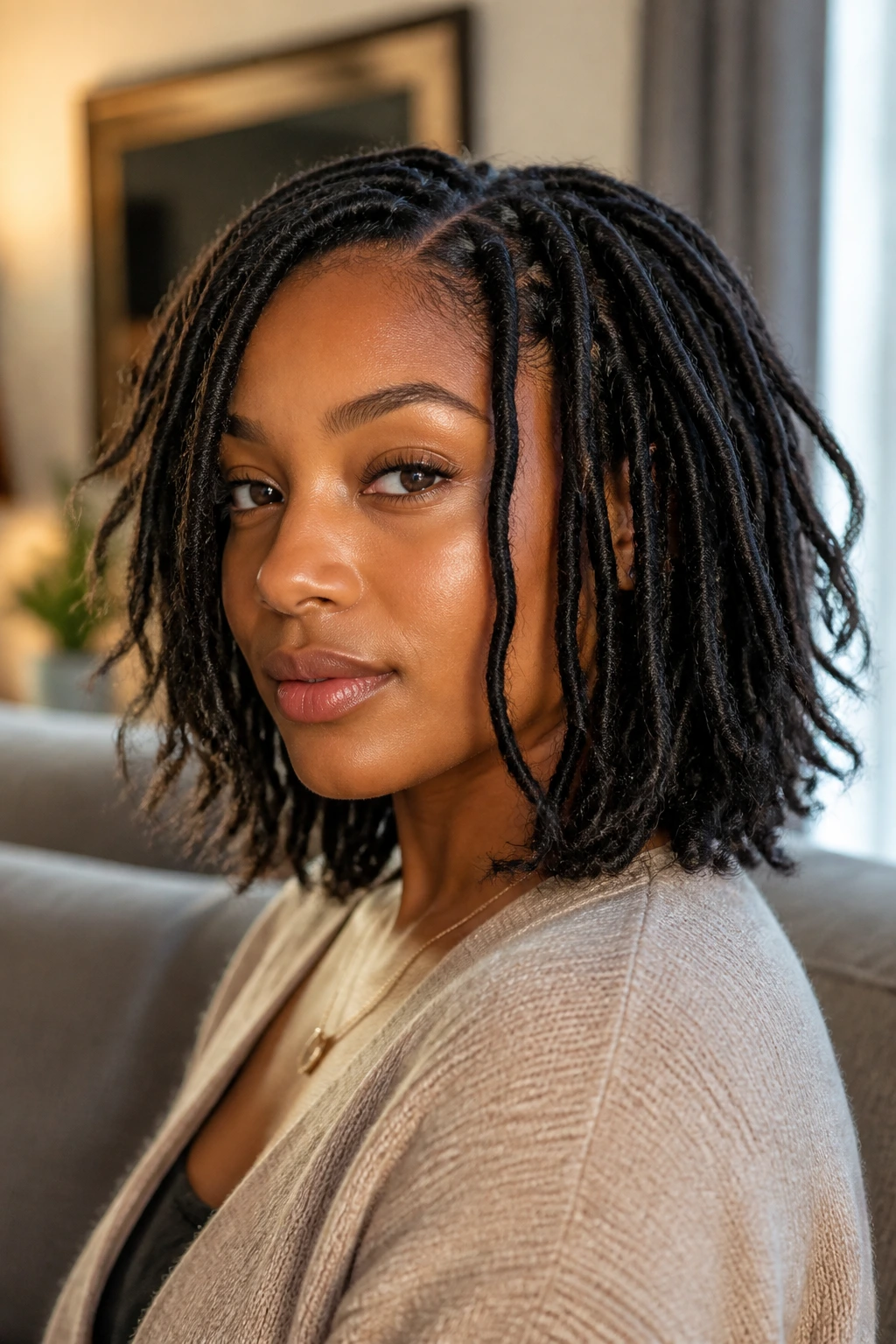
A shoulder-length install can turn square fast if the ends stop all at the same place. Feathering the finish—slightly varying the length, softening the ends, or adding a few face-framing pieces—keeps the shape from looking like a cardboard block. That small adjustment changes the whole read of the style.
The haircut energy here matters. You do not want a choppy layer job; you want movement. A few locs that graze the chin or skim the jaw can make the entire style feel lighter, and the shoulder line becomes a place for the locs to rest rather than a wall they hit.
This version works well for people who want faux locs but do not want the hair to become the headline. It’s neat, wearable, and a little more relaxed than the strict bob.
19. Feed-In Faux Loc Ponytail
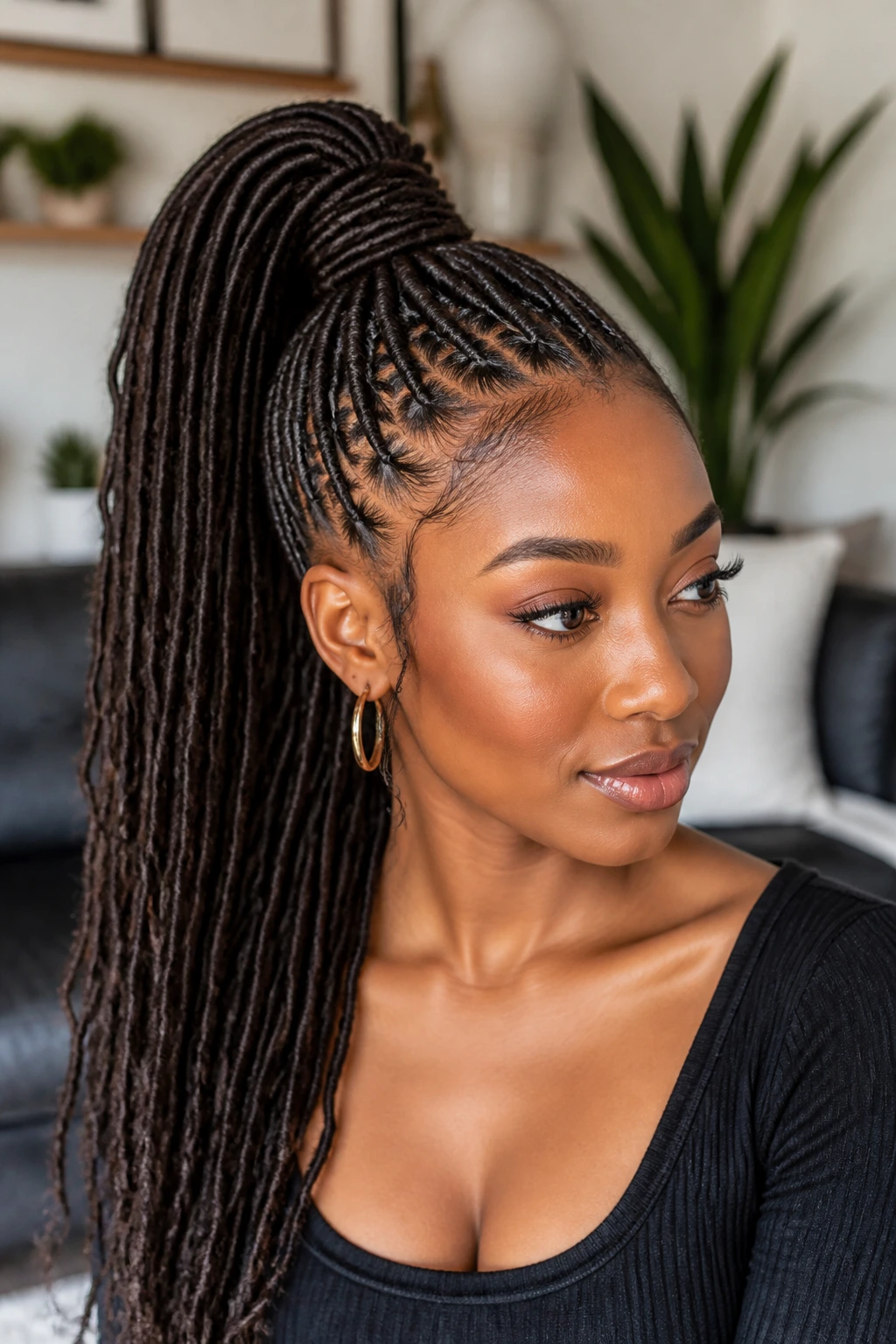
A feed-in ponytail with faux locs looks cleaner than a standard tie-back because the base builds gradually instead of bunching all at once. That slow build reduces bulk at the crown, which keeps the ponytail from sitting like a lump. It also helps the style feel smoother from the front.
The pony should sit high enough to lift the face, but not so high that the hairline strains. A wrapped base hides the tie and gives the ponytail a finished edge. If you have thick locs, that wrap matters even more, because it turns a utilitarian style into something that looks planned.
Best reasons to choose it
- Keeps weight off the neck.
- Shows off earrings and cheekbones.
- Works when you want movement without loose hair everywhere.
- Handles long locs better than a standard low tie.
20. Tapered Faux Loc Bob
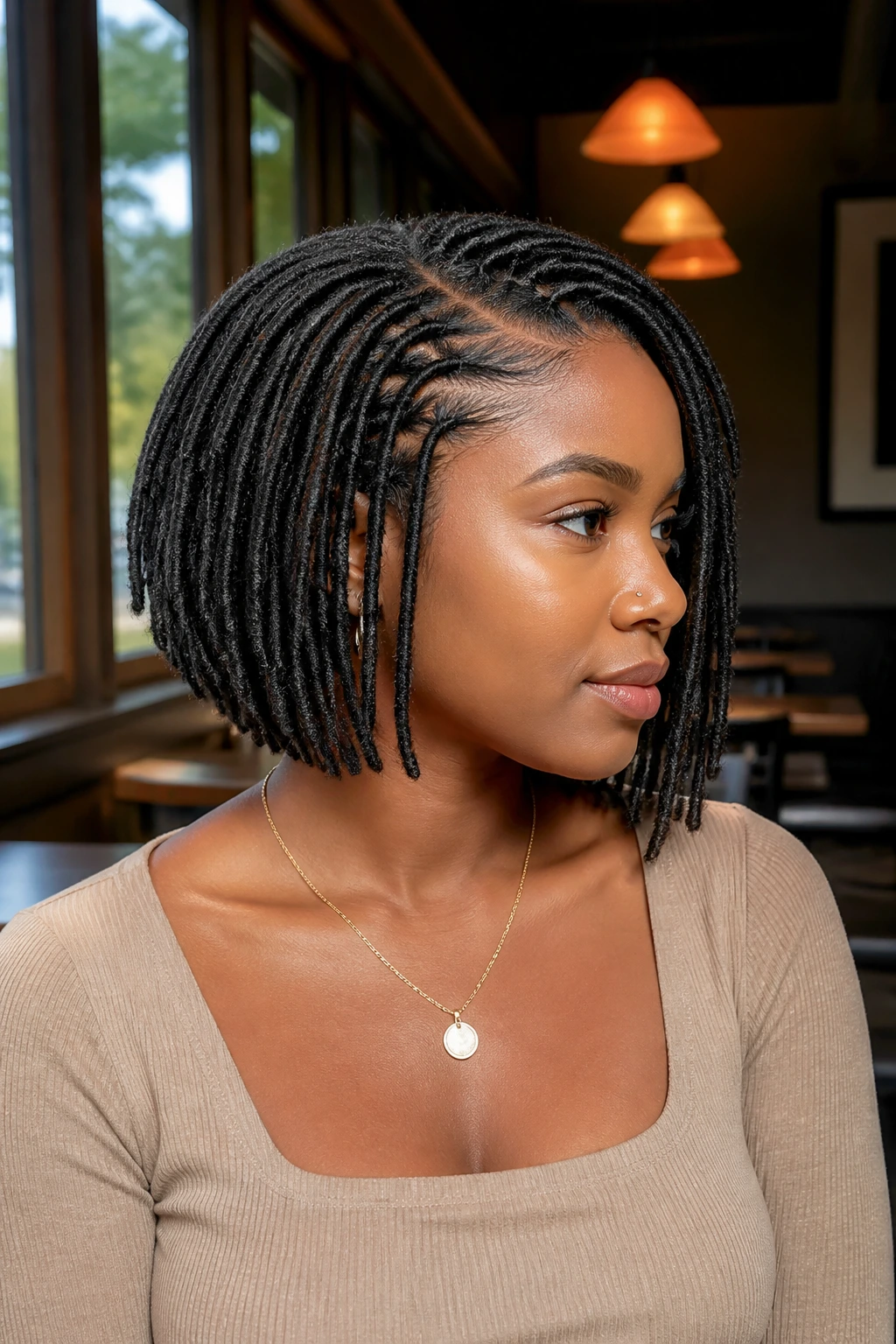
A tapered bob is a smarter cut than most people give it credit for. Shorter in the back, a little longer in the front, and often slightly angled toward the jawline, it gives faux locs a shape that feels tailored instead of flat. The taper keeps the nape light and gives the face room.
This is one of the best options if you like a bob but don’t want it to feel blunt. The angle pulls the eye forward, and that makes the whole style feel sharper. The only rule is moderation. If the front is dramatically longer than the back, the cut starts looking like an accident. A subtle taper is what keeps it polished.
I’d choose this for someone who wants a neat everyday style with a little movement. It’s clean, but it still has character.
21. Faux Locs With Gold Cuffs
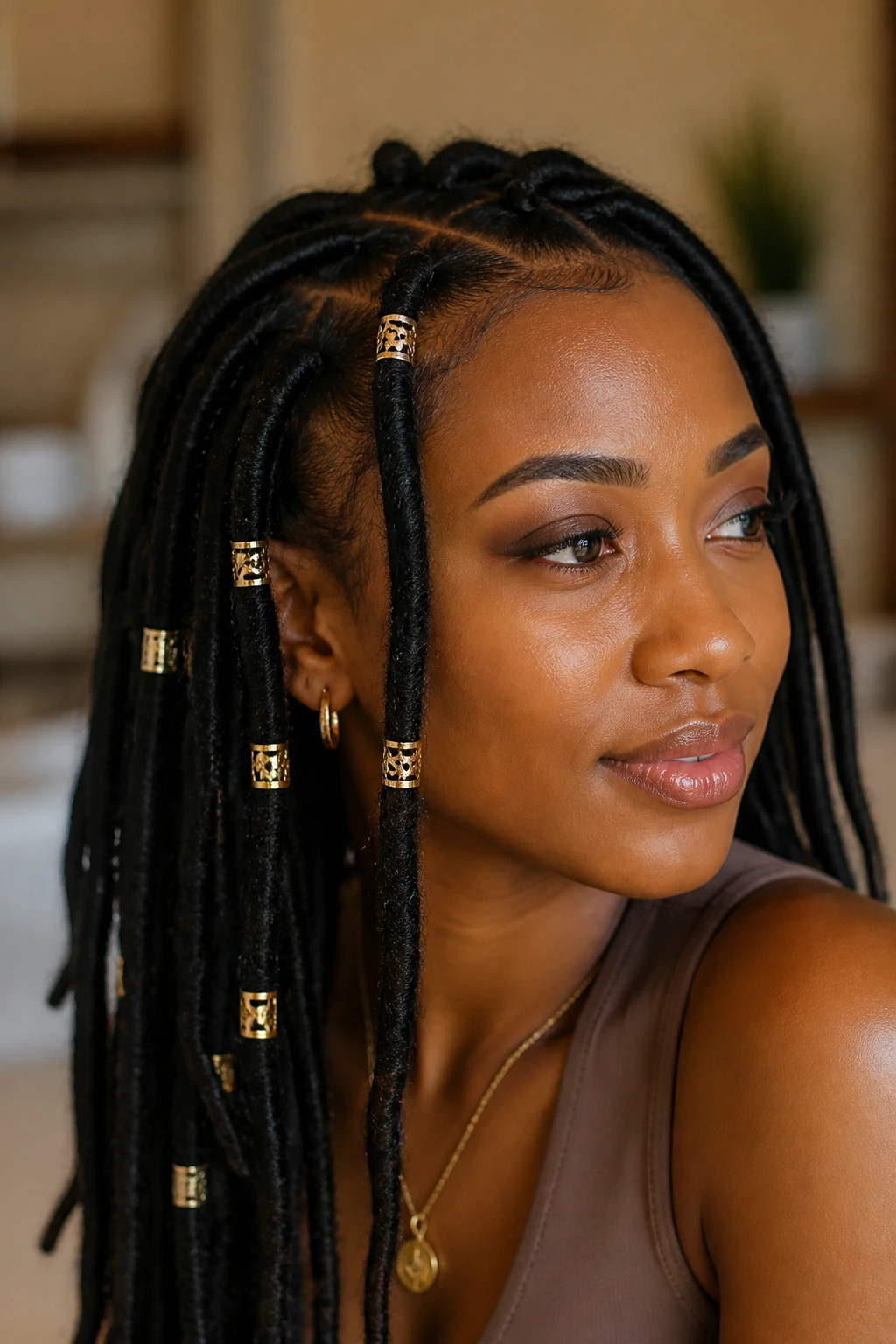
Gold cuffs turn faux locs into something that looks finished in the way a good jacket does. The shine is small, controlled, and repetitive enough to feel intentional. One cuff every few locs is enough. More than that and the style starts rattling visually.
Placement matters. Put cuffs where the eye naturally lands: near the front pieces, a touch below the cheekbone, or at the lower half of the length. If you crowd them near the roots, they can make the scalp area look busy. If you scatter them evenly without rhythm, they lose impact.
I prefer gold because it reads warm against most hair shades. Silver can look beautiful too, but gold usually feels softer next to loc texture, especially if the hair itself is dark or brown.
22. Faux Locs With Soft Face-Framing Layers
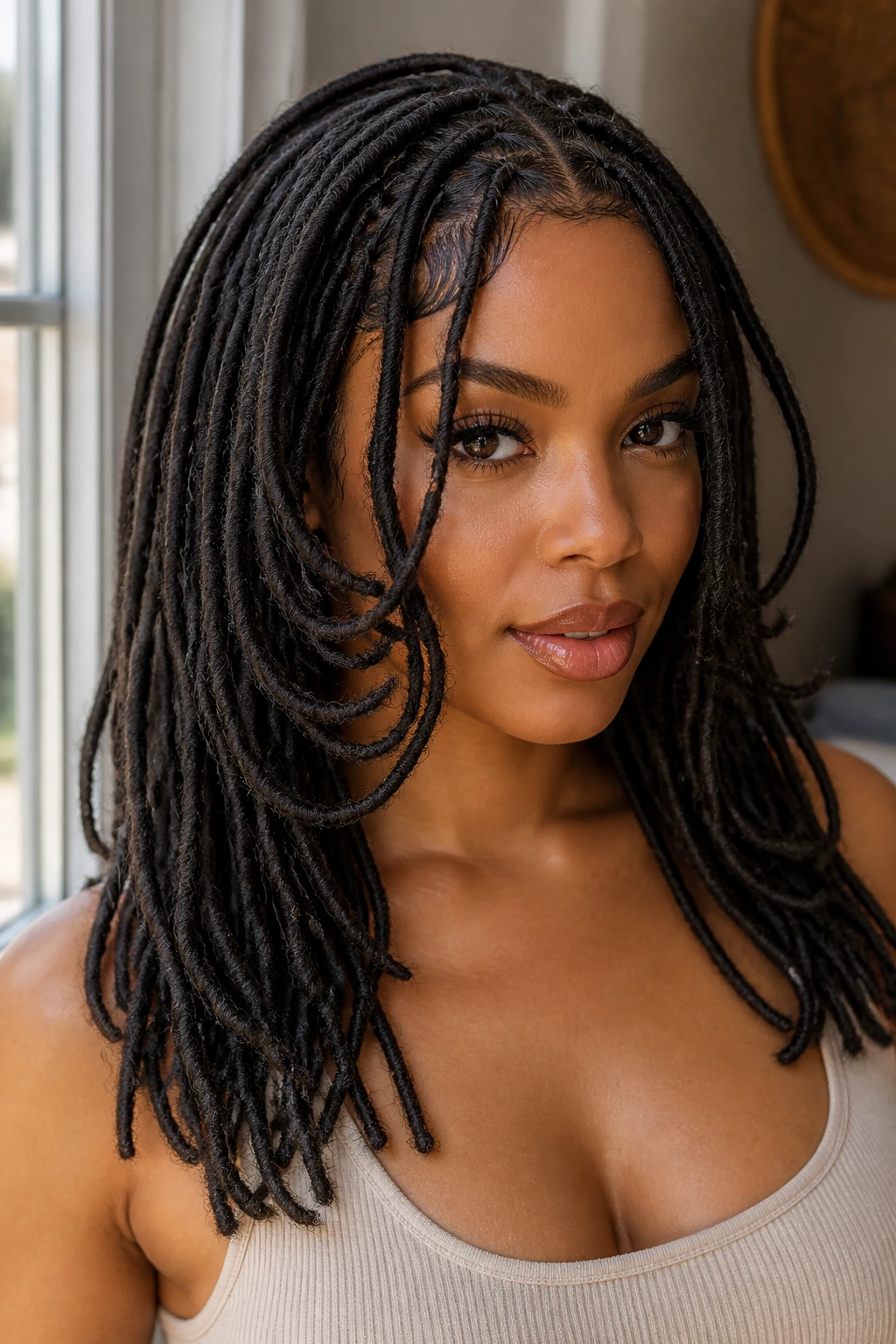
Do you want locs that still feel light around the face? Soft layers are the answer. A few shorter pieces near the cheekbones, jaw, or collarbone stop the style from looking like one big curtain and make the whole install sit closer to the face in a flattering way.
The key is that the layers need to look deliberate. They should be clearly part of the shape, not the result of breakage or random trimming. When done well, the shorter front pieces help the hair move with your expression and keep the style from swallowing smaller features.
This is the set I’d recommend to someone who wants the polish of locs but not the weight of a fully uniform length. It’s the quietest way to make the style feel custom.
What Makes Faux Locs Look Polished Instead of Puffy
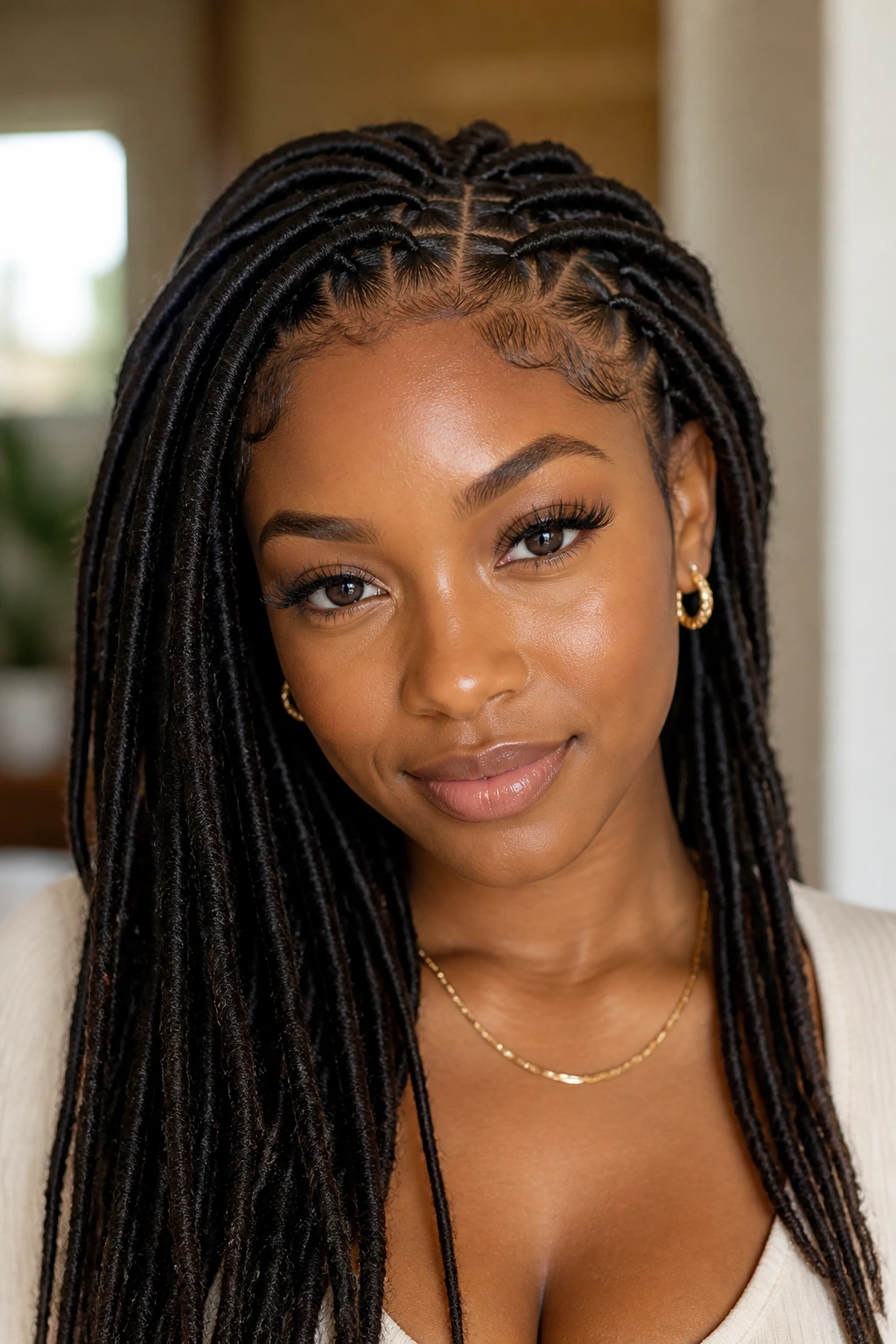
Polished faux locs aren’t about perfection. They’re about line, weight, and finish. When the parting is clean, the loc size makes sense, and the texture stays under control, the style reads intentional from the front row and the back of the room.
The biggest mistake is trying to make every part of the style do the same job. If the locs are extra long, the accessories should stay minimal. If the parting is very detailed, the color can stay simple. If the ends are curly, the base should be calm. One strong idea at a time is enough. Two at a push. Three is where most installs start wobbling.
A polished look also depends on what the locs are doing around the hairline. If the first row is too tight, the scalp starts to look angry. If it’s too loose, the set looks unfinished. I like a front row that sits flat, rests comfortably, and gives the edges room to breathe. That tiny gap between neat and tight is where the best faux loc styles live.
And there’s a practical piece people forget: movement. The more the locs swing, the more any mistake shows. That’s why the cleaner styles often feel more “expensive” in person. They don’t fight the head.
Essential Tools for Installing and Styling Faux Locs
-
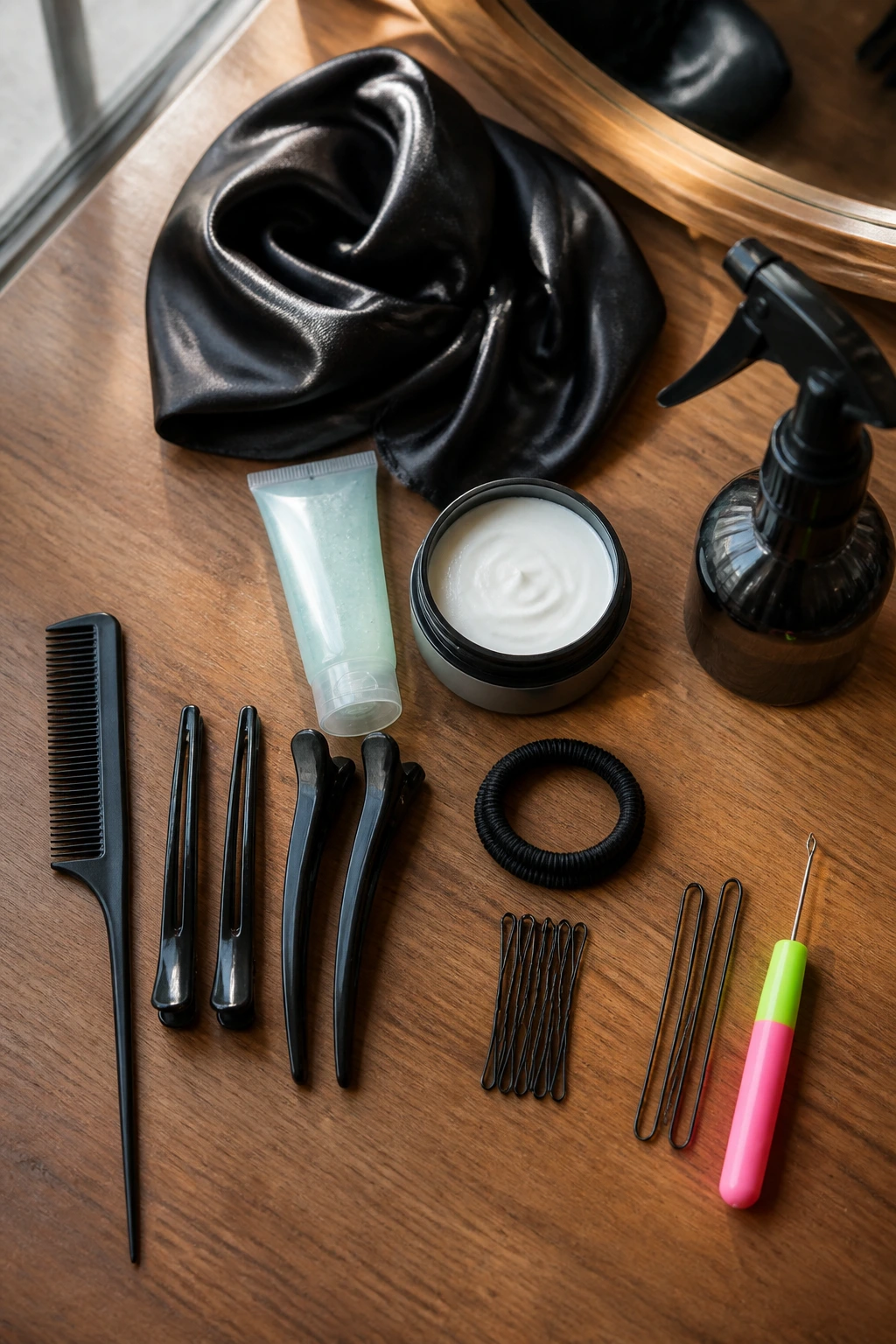
Rat-tail comb: The tail makes crisp parts; a smooth plastic one is gentler if your scalp gets tender easily.
-
Sectioning clips: These keep the hair out of the way while you work and stop the parts from collapsing before you’re ready.
-
Duckbill clips: Handy for holding wrapped sections, especially if you’re styling a bun, crown, or ponytail.
-
Light-hold gel or edge control: Use a small amount for the hairline and part edges; too much can flake and look chalky.
-
Mousse: Good for smoothing flyaways and softening the overall finish without making the locs greasy.
-
Satin scarf or bonnet: Non-negotiable at night if you want the roots to stay neat and the ends to stay smoother.
-
Snag-free hair ties: Useful for ponytails and half-up styles; regular elastics can pull fibers and leave dents.
-
Bobby pins and U-pins: Best for low buns, chignons, and braided crowns; a few well-placed pins beat a dozen random ones.
-
Spray bottle: Fill it with water or a light leave-in mix for refreshing the scalp and calming the front.
-
Crochet hook or latch hook: Only if you’re doing crochet faux locs or feeding in hair; a workable substitute is a small loop tool, but a proper hook is easier.
Choosing Hair, Length, and Finish Without Guessing
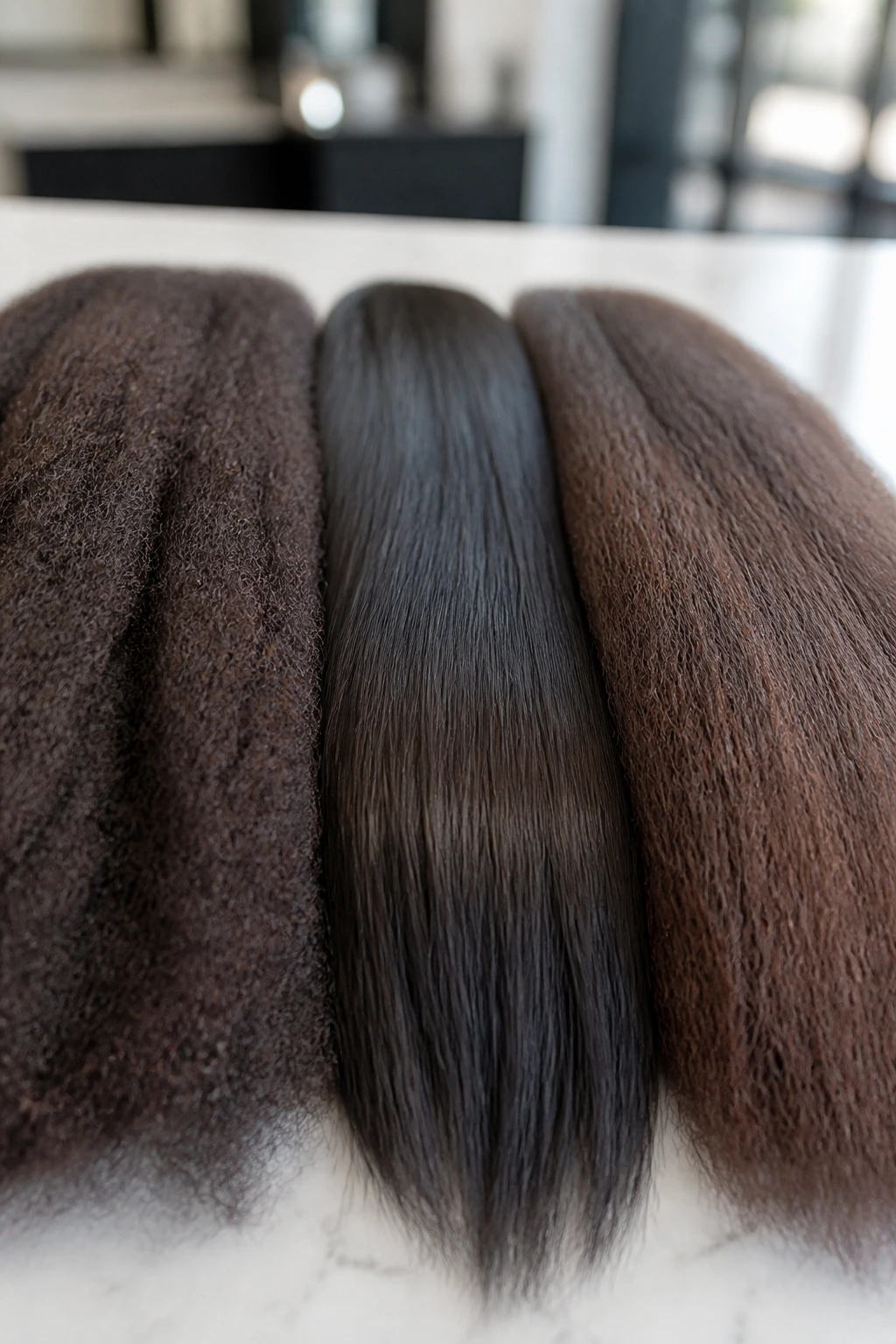
The hair you choose changes the whole personality of the style. Marley hair gives a drier, softer finish that blends well with textured natural hair. Kanekalon and pre-stretched synthetic hair can look smoother and more uniform, which is useful for center parts, ponytails, and bobs where clean lines matter more than fuzz.
Length should fit your actual life, not just a mood board. Shoulder-length and collarbone-length locs stay lighter on the neck and usually look neater longer because they don’t rub against coats, seats, or scarves as much. Waist-length installs give drama, but they need more maintenance, more patience, and a little more respect at the hairline.
Color matters too, and a good color choice is often quieter than people expect. 1B, 2, and dark brown blend in well and read natural in most lighting. Soft ombrés—brown into honey, auburn, or caramel—add dimension without looking loud. If the fiber is too glossy or the contrast too harsh, the style starts to look synthetic before anyone notices the shape.
For quantity, remember that fuller and longer installs usually need more packs. A shoulder-length bob often works with fewer packs than a long, chunky set. If you’re in doubt, buy one extra pack of the same shade and texture so you don’t end up scrambling halfway through an install with mismatched hair.
How to Wear Faux Locs for Workdays, Weekends, and Events
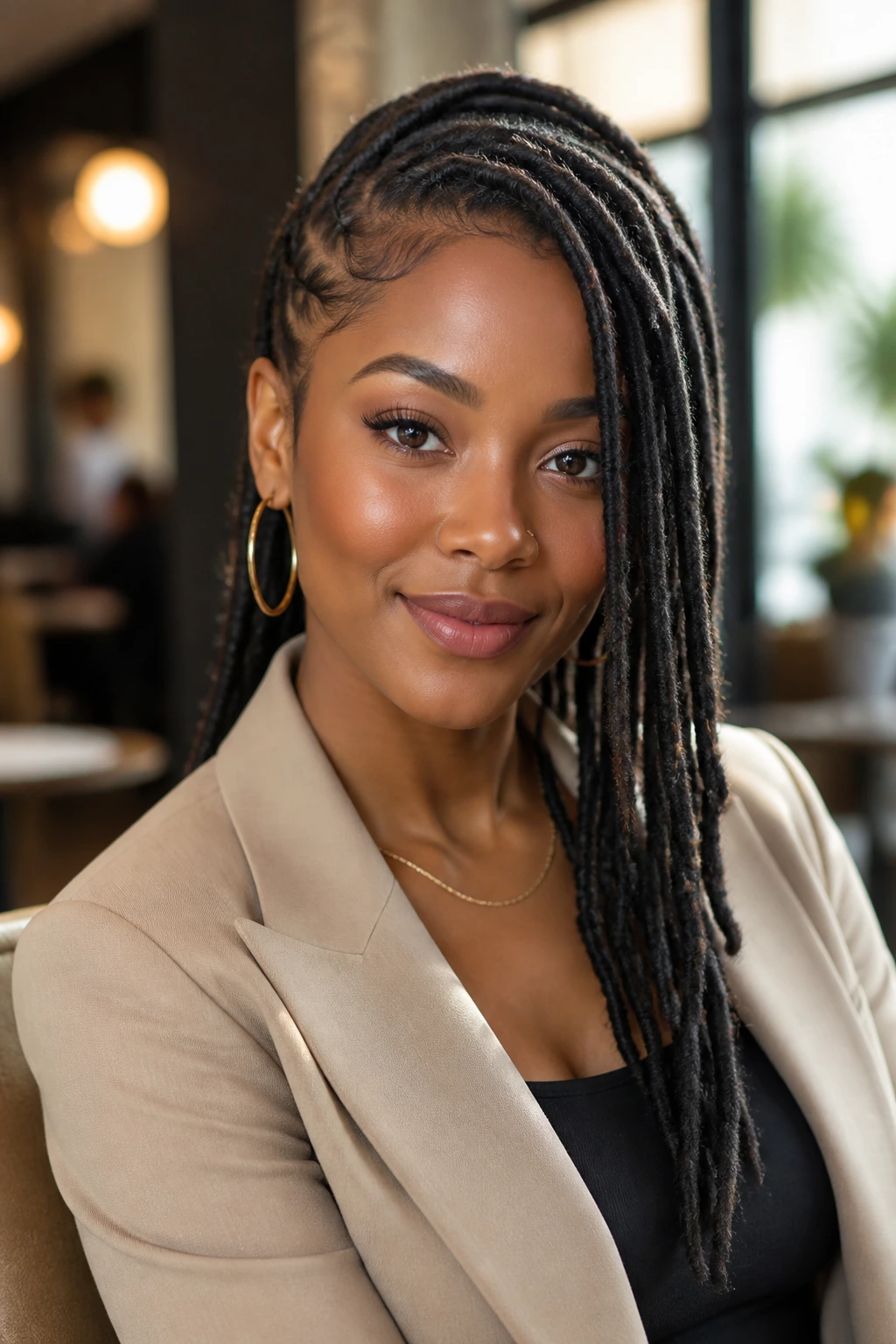
Face Framing: If you want a softer look, choose a deep side part, a few layered pieces, or goddess tendrils that stay close to the cheekbone. If you want the face more open, a low bun or braided crown shows the features cleanly and keeps the style from crowding the eyes.
Outfit Pairing: High-neck tops and structured blazers usually pair well with low buns, chignons, and bobs because the neckline stays clear. Sweaters, off-shoulder tops, and softer fabrics tend to look better with half-up styles, curly ends, or a little movement around the face.
Occasion: For work, a bob, low bun, or tapered cut reads tidy without looking stiff. For weddings, dinners, and formal photos, the braided crown, gold cuffs, or a polished side part can feel more complete. For daily wear, half-up styles and shoulder-length locs keep the look easy without losing shape.
Finish: Matte finishes, minimal flyaways, and one well-chosen accessory make the cleanest impression. If the style already has texture, skip the extra shine serum. If the locs are smooth and simple, one scarf or cuff can be enough to keep them interesting.
Small Styling Tweaks That Change the Whole Look
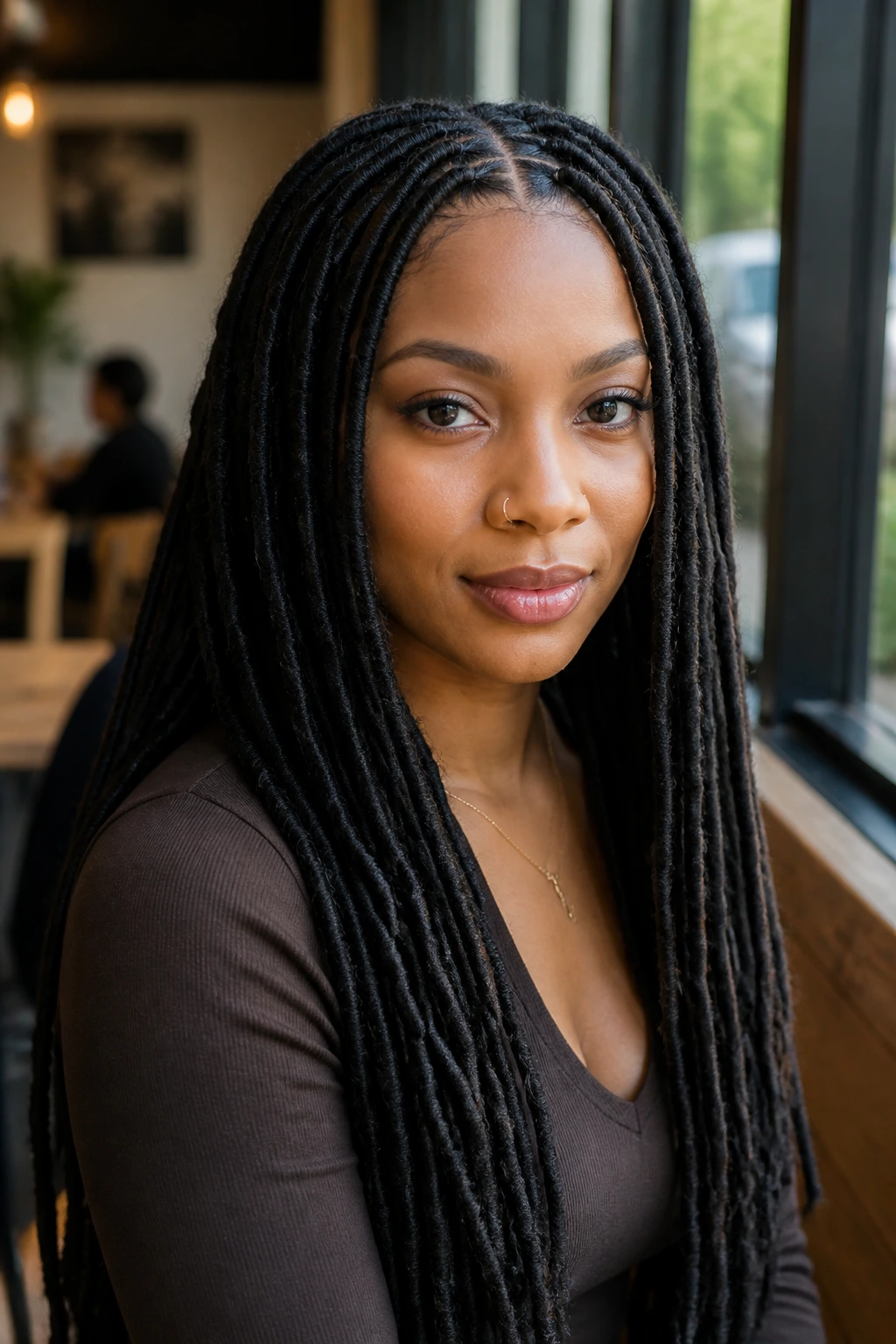
Parting Precision: Use a rat-tail comb and a mirror, and take the time to straighten the first few rows. A crooked front line shows up faster than a slightly uneven back section, so place your energy where the eye lands first.
Accessory Strategy: Pick one family of accents and stay there. Gold cuffs, wooden beads, or a scarf with one color story usually looks stronger than a head full of mixed materials.
Edge Control: A pea-sized amount is plenty for most hairlines. Anything more can turn white, hard, or flaky after a few hours, which is the exact opposite of polished.
Custom Length: If your locs hang right at the shoulders, ask yourself how often you wear collars, coats, or backpacks. A half-inch difference can change how often the hair catches or frizzes at the ends.
Make-It-Yours: Add one curl cluster, one scarf wrap, or one bead line rather than stacking every decoration you own. The cleanest styles usually have one clear gesture, not five small ones.
Keeping Faux Locs Neat Between Wash Days
The night routine does half the job. A satin bonnet or scarf cuts down on friction, and if the locs are long, gathering them loosely before bed helps keep the roots from flattening in odd directions. For high ponytails or top sections, a loose pineapple wrap works; for bobs and shorter installs, a simple bonnet is usually enough.
Scalp care matters too. Every one to two weeks, depending on buildup and activity, use a nozzle bottle to clean the scalp with diluted shampoo or a gentle cleanser. Focus on the parts, not the loc lengths, and rinse thoroughly. Damp roots trapped under synthetic fiber smell bad fast. That’s not drama. It’s just hair and moisture doing what they do.
Dry the scalp all the way. A microfiber towel, a bit of air drying, and, if needed, a hooded dryer or fan can keep mildew from sneaking in. Heavy oils are a trap here. A little lightweight scalp oil is fine, but if the roots look wet all the time, the style starts to feel heavy and can collect lint.
Frizz at the front is normal. Smooth it with a tiny bit of mousse, warm the product in your palms, and press rather than rub. If the frizz is local and small, a quick rewrap or a few snips of stray fibers can restore the shape. If the roots are loosening everywhere, the style is telling you it’s time to refresh.
Common Mistakes That Make Faux Locs Look Heavy or Frizzy
-
Pulling the hairline too tight: Sore temples, bumps along the edge, and a headache are the obvious signs. The fix is simple: give the front row a little breathing room and stop trying to make the style disappear into the scalp.
-
Choosing a size that doesn’t fit the head shape: Extra-chunky locs can swallow a small face, while tiny locs can look busy on a very full style. Match the loc diameter to the visual weight you want, not to whatever looked good on someone else.
-
Mixing too many textures and accents: Curly ends, beads, cuffs, and a scarf all at once can feel noisy. Pick one or two details and leave the rest clean.
-
Skipping the night wrap: Morning frizz starts at night. A satin scarf, bonnet, or pillowcase makes a bigger difference than almost any styling product.
-
Overusing oils and creams: Synthetic locs don’t need a rich moisture routine. Too much product leaves residue on the fiber and buildup near the roots.
-
Letting the front grow wild while the back stays neat: That contrast looks unfinished. Refresh the edges and parts on the same schedule you’d use to tidy the rest.
Frequently Asked Questions About Faux Loc Hairstyles
How long do faux locs usually last?
Most styles stay neat for about four to eight weeks, depending on the size of the locs, how tight the install is, and how well you protect them at night. Smaller, lighter styles tend to hold shape longer; heavier waist-length installs usually need attention sooner around the edges.
Can you make faux locs on short natural hair?
Yes, as long as there’s enough length to grip the base securely. Crochet methods, wrap methods, and braid foundation installs can all work on shorter hair, but the hairline and parting need extra care so the roots don’t slip or feel sore.
Which faux loc style looks the most polished for a professional setting?
A shoulder-length bob, low bun, tapered bob, or center-part waist-length style with minimal accessories usually reads the cleanest. The safest choice is the one with controlled volume and a neat hairline, not the one with the most hair.
Do faux locs damage the edges?
They can if the front row is too tight, the locs are too heavy, or the style is worn too long without a break. A comfortable install with light tension, proper night care, and a sensible removal schedule is a different story.
Can you wash faux locs without ruining them?
Yes, but the scalp should be the focus, not the length. Use a diluted cleanser, squeeze the roots gently, and dry everything thoroughly afterward so moisture doesn’t stay trapped near the braids or wraps underneath.
What hair gives faux locs the most natural finish?
Matte, textured fibers like Marley hair usually blend well with natural hair and hide small inconsistencies better than shiny synthetics. If you want a smoother finish, pre-stretched hair can still look clean, but the sheen needs to stay low.
How do you keep faux locs from getting frizzy around the front?
Use a satin wrap at night, avoid overhandling the roots, and smooth the front with a little mousse instead of piling on gel. If a few strands are fuzzy, fix those spots directly rather than soaking the whole style in product.
Are beads and cuffs okay for everyday wear?
Yes, if you use them sparingly and keep the weight balanced. A few beads or cuffs placed in the right spots can sharpen the look, but too many near the front can pull the locs down and make the style feel cluttered.
Can faux locs be made lighter without cutting the length?
Sometimes. Lighter fibers, fewer rows at the front, and a size that isn’t overly chunky can reduce weight without changing the silhouette much. If the install still feels too heavy, shortening the length is usually the cleaner fix.
A Cleaner Way to Wear Faux Locs
The best faux loc hairstyles don’t shout. They settle. A neat part, a sensible length, and one or two restrained details can turn locs into a style that looks put together without looking overworked. That’s the sweet spot most people are chasing, even if they don’t say it out loud.
If you want the easiest path, start with the silhouette that fits your life first—bob, bun, ponytail, or waist length—and then add one detail that feels like you. A scarf. A few cuffs. Soft curls at the ends. Leave the rest calm. That’s where the polished look really lives.
